EP2273751B1 - System und Verfahren für die verbesserte browserinterne Benachrichtigung - Google Patents
System und Verfahren für die verbesserte browserinterne Benachrichtigung Download PDFInfo
- Publication number
- EP2273751B1 EP2273751B1 EP10165880.5A EP10165880A EP2273751B1 EP 2273751 B1 EP2273751 B1 EP 2273751B1 EP 10165880 A EP10165880 A EP 10165880A EP 2273751 B1 EP2273751 B1 EP 2273751B1
- Authority
- EP
- European Patent Office
- Prior art keywords
- data packets
- notification
- server
- address
- http
- Prior art date
- Legal status (The legal status is an assumption and is not a legal conclusion. Google has not performed a legal analysis and makes no representation as to the accuracy of the status listed.)
- Active
Links
Images


Classifications
-
- H—ELECTRICITY
- H04—ELECTRIC COMMUNICATION TECHNIQUE
- H04L—TRANSMISSION OF DIGITAL INFORMATION, e.g. TELEGRAPHIC COMMUNICATION
- H04L51/00—User-to-user messaging in packet-switching networks, transmitted according to store-and-forward or real-time protocols, e.g. e-mail
- H04L51/04—Real-time or near real-time messaging, e.g. instant messaging [IM]
- H04L51/046—Interoperability with other network applications or services
-
- H—ELECTRICITY
- H04—ELECTRIC COMMUNICATION TECHNIQUE
- H04L—TRANSMISSION OF DIGITAL INFORMATION, e.g. TELEGRAPHIC COMMUNICATION
- H04L61/00—Network arrangements, protocols or services for addressing or naming
- H04L61/50—Address allocation
- H04L61/5007—Internet protocol [IP] addresses
-
- H—ELECTRICITY
- H04—ELECTRIC COMMUNICATION TECHNIQUE
- H04L—TRANSMISSION OF DIGITAL INFORMATION, e.g. TELEGRAPHIC COMMUNICATION
- H04L67/00—Network arrangements or protocols for supporting network services or applications
- H04L67/01—Protocols
- H04L67/02—Protocols based on web technology, e.g. hypertext transfer protocol [HTTP]
-
- H—ELECTRICITY
- H04—ELECTRIC COMMUNICATION TECHNIQUE
- H04L—TRANSMISSION OF DIGITAL INFORMATION, e.g. TELEGRAPHIC COMMUNICATION
- H04L67/00—Network arrangements or protocols for supporting network services or applications
- H04L67/50—Network services
- H04L67/53—Network services using third party service providers
-
- H—ELECTRICITY
- H04—ELECTRIC COMMUNICATION TECHNIQUE
- H04L—TRANSMISSION OF DIGITAL INFORMATION, e.g. TELEGRAPHIC COMMUNICATION
- H04L67/00—Network arrangements or protocols for supporting network services or applications
- H04L67/50—Network services
- H04L67/55—Push-based network services
-
- H—ELECTRICITY
- H04—ELECTRIC COMMUNICATION TECHNIQUE
- H04L—TRANSMISSION OF DIGITAL INFORMATION, e.g. TELEGRAPHIC COMMUNICATION
- H04L67/00—Network arrangements or protocols for supporting network services or applications
- H04L67/50—Network services
- H04L67/56—Provisioning of proxy services
- H04L67/561—Adding application-functional data or data for application control, e.g. adding metadata
-
- H—ELECTRICITY
- H04—ELECTRIC COMMUNICATION TECHNIQUE
- H04L—TRANSMISSION OF DIGITAL INFORMATION, e.g. TELEGRAPHIC COMMUNICATION
- H04L69/00—Network arrangements, protocols or services independent of the application payload and not provided for in the other groups of this subclass
- H04L69/22—Parsing or analysis of headers
-
- H—ELECTRICITY
- H04—ELECTRIC COMMUNICATION TECHNIQUE
- H04L—TRANSMISSION OF DIGITAL INFORMATION, e.g. TELEGRAPHIC COMMUNICATION
- H04L12/00—Data switching networks
- H04L12/02—Details
- H04L12/16—Arrangements for providing special services to substations
- H04L12/18—Arrangements for providing special services to substations for broadcast or conference, e.g. multicast
- H04L12/1895—Arrangements for providing special services to substations for broadcast or conference, e.g. multicast for short real-time information, e.g. alarms, notifications, alerts, updates
Definitions
- aspects of the disclosure relate to providing notifications to subscribers via an internet browser. More specifically, aspects of the disclosure relate to methods and related systems for sending in-browser messages to subscribers in real-time.
- ISP internet service provider
- One method is to deploy a system that inspects all packets traversing through the ISP's network and inject extra packets into the stream to notify the user when needed.
- the technology underlying this method is commonly referred to as Deep Packet Inspection and may serve many other purposes but requires that the technology be deployed throughout the ISP's network in order to view all packets.
- This technique is not passive and requires connections to be reset.
- the system has to spoof the server response to an HTTP request packet in order to insert a notification. Therefore, the perception of authenticity from the subscriber's point-of-view may be reduced.
- a second current method for performing in-browser notifications is to have a software application deployed on the subscribers' computer that automatically displays a notification when needed.
- this method is inefficient as it requires the user to install the ISP's software package on each PC for the notification to be read.
- US 2006/0262789 discloses methods and corresponding devices for packet classification featuring pattern recognition, and not content recognition or port matching.
- the methods and corresponding devices are able to recognize traffic in the background and/or offline, without overloading the system
- a notification system and method provides for implementation of in-browser messaging for the communication of information between an ISP and a subscriber.
- the in-browser notification method allows an ISP provider to provide weather updates, emergency broadcasts, and other messages to subscribers that need such notification.
- FIG. 1 A block diagram illustrating an exemplary computing environment in accordance with the present disclosure.
- FIG. 1 A block diagram illustrating an exemplary computing environment in accordance with the present disclosure.
- FIG. 1 A block diagram illustrating an exemplary computing environment in accordance with the present disclosure.
- FIG. 1 A block diagram illustrating an exemplary computing environment in accordance with the present disclosure.
- FIG. 1 A block diagram illustrating an exemplary computing environment in accordance with the present disclosure.
- FIG. 1 A block diagram illustrating an exemplary computing environment in accordance with the present disclosure.
- FIG. 1 A block diagram illustrating an exemplary computing environment in accordance with the present disclosure.
- FIG. 1 A block diagram illustrating an exemplary computing environment in accordance with the present disclosure.
- FIG. 1 A block diagram illustrating an exemplary computing environment in accordance with the present disclosure.
- FIG. 1 A block diagram illustrating an exemplary computing environment in accordance with the present disclosure.
- FIG. 1 A block diagram illustrating an exemplary computing environment in accordance with the present disclosure.
- Figure 1 illustrates a block diagram of a generic computing device 101 (e.g., a computer server) in network 100 that may be used according to an illustrative embodiment of the disclosure.
- the computer server 101 may have a processor 103 for controlling overall operation of the server and its associated components, including RAM 105, ROM 107, input/output module 109, and memory 115.
- I/O module 109 may include a microphone, keypad, touch screen, and/or stylus through which a user of device 101 may provide input, and may also include one or more of a speaker for providing audio output and a video display device for providing textual, audiovisual and/or graphical output.
- Software may be stored within memory 115 and/or storage to provide instructions to processor 103 for enabling server 101 to perform various functions.
- memory 115 may store software used by the server 101, such as an operating system 117, application programs 119, and an associated database 121.
- some or all of server 101 computer executable instructions may be embodied in hardware or firmware (not shown).
- the server 101 may operate in a networked environment supporting connections to one or more remote computers, such as terminals 141 and 151.
- the terminals 141 and 151 may be personal computers or servers that include many or all of the elements described above relative to the server 101.
- the network connections depicted in Figure 1 include a local area network (LAN) 125 and a wide area network (WAN) 129, but may also include other networks.
- LAN local area network
- WAN wide area network
- the server 101 When used in a LAN networking environment, the server 101 may include a modem 127 or other means for establishing communications over the WAN 129, such as the internet 131.
- the network connections shown are illustrative and other means of establishing a communications link between the computers may be used. The existence of any of various well-known protocols such as TCP/IP, Ethernet, FTP, HTTP and the like is presumed.
- Computing device 101 and/or terminals 141 or 151 may also be mobile terminals including various other components, such as a battery, speaker, and antennas (not shown).
- the disclosure is operational with numerous other general purpose or special purpose computing system environments or configurations.
- Examples of well known computing systems, environments, and/or configurations that may be suitable for use with the disclosure include, but are not limited to, personal computers, server computers, handheld or laptop devices, multiprocessor systems, microprocessor-based systems, set top boxes, programmable consumer electronics, network PCs, minicomputers, mainframe computers, distributed computing environments that include any of the above systems or devices, and the like.
- program modules include routines, programs, objects, components, data structures, etc. that perform particular tasks or implement particular abstract data types.
- the disclosure may also be practiced in distributed computing environments where tasks are performed by remote processing devices that are linked through a communications network.
- program modules may be located in both local and remote computer storage media including memory storage devices.
- Figure 2 illustrates a high level diagram of a system 200 that may be used to provide in-browser notifications in real-time in accordance with an illustrative embodiment of the disclosure.
- system 200 depicts a notification platform (NP) 202, an application manager 204, a policy server 206, a PC 208, a cable modem 210, a cable modem termination system (CMTS) 212, routers 214 and 218, a load balancer 220, an internet server 222, a proxy server 224, and an internet content adoption protocol (ICAP) server 226.
- the components of system 200 may be connected by one or more communications links (as designated by the arrows in Figure 2 ) to a single or multiple networks.
- the NP 202 may receive and process a request from an external system to notify a subscriber of an in-browser notification in accordance with an aspect of the disclosure.
- the NP 202 may also identify subscriber details, determine which notification template to invoke, and may maintain state information on whether a subscriber has acknowledged an in-browser notification.
- the application manager 204 and policy server 206 may be utilized to establish a service flow, such as in accordance with the PacketCable Multi-Media specification, between the subscriber's cable modem 210 and CMTS 212.
- the CMTS 212 may maintain a service-flow to the cable modem 210 and add a Differentiated Services Code Point (DSCP) marking for TCP port 80 traffic.
- DSCP marking may be set on a router directly for a given IP address and as such the application manager 204, policy server 206, cable modem 210 and CMTS 212 may be less pertinent.
- Routers 214 and 218 may be utilized in system 200 to policy route traffic over a Generic Routing Encapsulated (GRE) tunnel 216. As packets traverse through the router 214, they may be forked based on a routing policy. DSCP-tagged packets may be sent over the GRE tunnel 216 while all other packets may be normally forwarded to internet server 222. Another router 218 may be used as a GRE-end point and a default routing policy may be set to forward all packets to the load balancer 220. The load balancer 220 may be responsible for forking HTTP traffic on port 80 to a proxy server 224 and all other port 80 traffic back to the internet server 222.
- GRE Generic Routing Encapsulated
- the load balancer 220 may also send a "HTTP 304 Use Proxy" response back to the PC 208 for any HTTP requests.
- the use proxy response may contain the location in URL format of the proxy server 224.
- the PC 208 may then directly contact the proxy server 224 to access web content.
- the proxy server 224 may maintain state information on the session between the subscriber's internet browsing session and the internet. As packets traverse through the proxy 224, it may query the ICAP server 226 to determine whether the request may be fit for notification insertion. The ICAP server 226 may respond with a confirmation and once an HTTP 200 OK response is received, the proxy server 224 may forward the packets to the ICAP server 226 for notification insertion. The ICAP server 226 may contact the NP 202 to retrieve the notification(s) that needs to be inserted. The ICAP Server 226 may also cache the notification internally or externally for the purpose of improving response times.
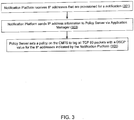
- Figure 3 illustrates a flow chart depicting a method for setting a policy on the CMTS to tag HTTP packets with a DSCP value in accordance with various aspects of the disclosure.
- the process begins at step 301 when NP 202 associated with an entity may receive IP addresses of subscribers that need to be notified.
- the entity may include any IP service provider having a plurality of users supported by these services.
- the NP 202 may receive this information from a variety of sources, including a business policy engine also associated with the entity and/or other sources directly from a third party.
- the ultimate source of third party information may be weather stations, police stations, hospitals, and/or an emergency broadcast station, among other places.
- the content of the notification may determine the ultimate source; for instance, weather stations may issue hurricane/tornado alerts for a particular community in a particular area and police stations may issue alerts for escaped criminals or amber alerts for missing children.
- the IP service provider may issue a notification to provide subscriber information about service outages, security threats, service alerts, and/or byte usage.
- the process may move to step 303 where the NP may transmit the IP address information to an application manager 204 and/or policy server 206.
- the application manager 204 and policy server 206 may transmit information for setting a policy on the CMTS 212 to tag all TCP port 80 data packets coming from a subscriber's PC 208 and/or cable modem 210 with a DSCP value in step 305.
- This DSCP value may indicate that the IP addresses that have transmitted the corresponding data packets may need to be notified with a message.
- TCP port 80 data packets are tagged with a DSCP value in an exemplary embodiment
- the tagging of packets on other ports outside of port 80 using other indicators outside of DSCP values is within the scope of the present disclosure.
- application manager 204 and policy server 206 are shown as two different hardware components, in other embodiments, both of these components may be incorporated into a single piece of hardware.
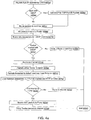
- Figure 4a shows a flow chart depicting a method for marking appropriate data packets in an improved in-browser notification system in accordance with various aspects of the disclosure.
- the process in Figure 4a may start at step 401a where data packets may be received by the CMTS 212 from a subscriber device such as cable modem 210 and/or PC 208. These data packets may include messages related to an HTTP GET request for accessing a particular webpage among other types of content.
- the process may then move to decision step 403a where the CMTS 212 may decide if the port 80 packets received from the subscriber should be marked with a DSCP value for receiving a notification message. If not, then the packets may be routed normally without being marked to default next hop as illustrated in 407a. If the port 80 packets do need to be marked with the appropriate DSCP value, the packets may be marked by the CMTS 212 in step 405a.
- step 409a packets may arrive at router 214.
- the router 214 may check whether data packets are marked with a specific DSCP value. If yes, as noted in 413a, then data packets are routed to a GRE endpoint through routers 214 and 218 using tunnel 216 as noted in 417a and 419a. If no, the data packets are routed to the default next hop in step 415a. In certain embodiments, multiple routers may not need to be used and only a single router routes the packets within system 200.
- step 421a the data packets may be transmitted to a load balancer 220.
- step 423a a decision is made by the load balancer 220 as to whether the data packets may be categorized as either HTTP or non-HTTP traffic on TCP port 80 as illustrated in step 425a. If the packets are not both port 80 and HTTP, the packets may be routed to the internet server 222 in step 427a. This routing mechanism may occur by transmitting the data packets back to router 218 for transmitting to the internet server 222.
- the process then may move to step 429a where they may be sent to a proxy 224.
- the proxy server 224 may route the packets to the appropriate internet server 222 in step 431a.
- the load balancer 220 and proxy 224 are shown as two separate entities, a single component that combines the functionalities of both entities may also be used.
- the load balancer 220 functionality may also be served by alternate means. For example, this functionality may occur via a server capable of identifying HTTP traffic and non-HTTP traffic on TCP port 80, capable of preserving existing TCP sessions and relaying HTTP traffic from the PC 208 to the proxy 224.
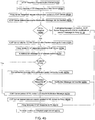
- Figure 4b shows a flow chart depicting a method for inserting a notification in an improved in-browser notification system in accordance with various aspects of the disclosure.
- the ICAP server 226 may respond with a message instructing that proxy 224 that no modifications are needed. The process may then jump to step 431b where the proxy 224 may forward response packets to the PC 208 and/or cable modem 210 without inserting a notification message.
- the ICAP server 226 may return 100 OK message to the proxy 224.
- the 100 OK message instructs the proxy 224 that a notification message may be inserted in the response.
- the proxy 224 may send all the packets in the HTTP response to the ICAP server 226.
- the ICAP server 226 may check whether any notification messages for the IP address are cached locally. If no, then the ICAP server 226 may attempt to fetch the notification message from the NP 202 as noted in step 421b and cache the notification locally for content adaption on subsequent requests from the PC 208.
- step 423b the system may check to see if a message is present for the subscriber IP. If no message is present for the subscriber IP, as noted in step 425b, then a notification message may not be inserted and the process may jump to step 431b where the proxy 224 may forward the response data packets to the PC 208. If a notification message is present for the IP address, then the ICAP server 226 may parse the HTTP content and insert the notification message in the response data packets as noted in step 427b. The message insertion is done in a manner that does not alter the original content of the response. After insertion is complete, the ICAP server 226 may reassemble the content before forwarding the response packets back to the proxy server 224 as noted in step 429b.
- the data packets may be routed to back to the PC 208 and/or cable modem 210 in step 431b and the browser on the PC 208 may render the HTML content plus the notification, if inserted earlier, as an overlay in step 433b.
- WCHI may notify the Internet Service Provider (assume it is Comcast) of a tornado alert in the metro Chicago area.
- the ISP may initiate a notification message through one of its internal servers. This notification may state that Chicago residents should take necessary precautions against the impending tornado.
- the internal server may be any storage device capable of communication through a network with other devices in the IP network, including a business policy engine or a NP. Alternatively, a business policy engine and NP may both play a part in provisioning the proper IP addresses for receiving the notification of a tornado approaching.
- the server may then communicate with an application manager.
- the application manager may set a policy on the CMTS associated with the IP service provider for marking traffic on TCP port 80 with a DSCP value of 8 in the header of the data packets from the IP addresses in question. Assume that a DSCP value of 8 indicates that the data packets associated with that IP address are port 80 traffic. It should be noted that HTTP traffic on other ports may also be marked in other embodiments of the disclosure.
- the CMTS may realize that the port 80 traffic from the subscribers' IP addresses needs to be marked with a DSCP value, for example 8, to indicate that this IP address should receive a notification about the tornado.
- the CMTS may mark the TCP port 80 traffic from the data packets associated with the subscriber and transmit the packet upstream to another router.
- a policy based route may be defined on the router that would then route all traffic with a DSCP 8 marking to an end point such as a router. The router then forwards all packets to a load balancer.
- data packets from other IP addresses requesting http://www.example.com may be transmitted straight to the internet server for Example.com via a router.
- data packets from other IP addresses not provisioned for receiving the tornado warning message and requesting any other internet server content may move straight to that server since these IP addresses may not need to receive a tornado warning.
- the data packets associated with the IP address in question may be forked into two different directions.
- the data packets that are HTTP traffic on TCP port 80 may be forwarded to a proxy server, which then forwards them to the Example.com server. All other non-HTTP traffic on TCP port 80 may be routed to the destination server using other routers in the system.
- the Example.com server assume that the server has no objections to the subscriber accessing its website and hence decides to send a HTTP 200 OK response code along with the message body and any other response data packets.
- the response data packets may be forwarded back to the proxy server.
- the proxy server may then determine that the response data packets contain HTTP traffic on port 80 and are provisioned for an IP address that should receive a notification; hence the proxy server may contact the ICAP server about the notification message that should be inserted into the response data packets.
- the ICAP server may parse the response data packets associated with the IP address in question, insert the notification as an overlay into these packets, reassemble them after insertion of the notification, and finally forward the response data packets back to the proxy server after reassembly.
- the notification message may read "Comcast has received a tornado warning from WCHI for the metro Chicago area from 5:30pm to 5:57pm. Please take all necessary precautions.”
- the ICAP server may or may not contact an internal server such as the NP to generate a message template. It should be noted that in inserting the notification into the response data packets, the ICAP server may not tamper with the response data itself; the notification message may be overlaid with minimal change to the response data content.
- the proxy server may then forward the response data packets delivering the website http://www.example.com along with the notification stated above to the subscriber's web browser.
- the notification may be placed at any position on the webpage.
- the notification may allow the subscriber to get rid of it by acknowledging that she has read it (i.e., clicking on a dialog box in a window containing the notification). In this way the notification may allow the subscriber to continue with reading the news on http://www.example.com and minimize the amount of disruption to her activity on the internet.
- the user may also choose to "snooze" the reminder whereby which the notification is disabled temporarily and the user is notified at a later time.
Landscapes
- Engineering & Computer Science (AREA)
- Computer Networks & Wireless Communication (AREA)
- Signal Processing (AREA)
- Computer Security & Cryptography (AREA)
- Library & Information Science (AREA)
- Data Exchanges In Wide-Area Networks (AREA)
- Alarm Systems (AREA)
Claims (18)
- Verfahren, beinhaltend:Empfangen (301) von IP-Adressinformationen (IP, Internet Protocol) einschließlich einer Vielzahl von IP-Adressen, um eine Verfahrensweise zu setzen, gemäß der Verkehr mit einem Indikator markiert wird, der angibt, dass eine IP-Adresse eine Benachrichtigung empfangen soll;Empfangen (401a) eines ersten Satzes Datenpakete aus einem Nutzergerät;Feststellen (403a), ob der erste Satz Datenpakete von einer IP-Adresse gesendet wird, die die einer aus der Vielzahl von IP-Adressen entspricht, die eine Benachrichtigung empfangen sollen;auf die Feststellung hin, dass der erste Satz Datenpakete von einer Adresse gesendet wird, die einer aus der Vielzahl von Adressen entspricht, die die Benachrichtigung empfangen sollen:Markieren (405a) des ersten Satzes Datenpakete mit dem Indikator; undSenden (407a, 409a, 411a) des ersten Satzes Datenpakete.
- Verfahren nach Anspruch 1, bei dem der Indikator ein DSCP-Wert (DSCP, Differential Service Code Point) ist, wobei nur Verkehr über den Port 80 mit dem Indikator markiert werden darf.
- Verfahren, beinhaltend:Empfangen (409a) eines ersten Satzes Datenpakete, die mit einem Indikator markiert sind, der angibt, dass eine einer Quelle der Datenpakete zugeordnete IP-Adresse eine Benachrichtigung empfangen sollte;Senden (415a) des ersten Satzes Datenpakete direkt an einen Internet-Server, falls der erste Satz Datenpakete kein HTTP-Verkehr (HTTP, Hypertext Transfer Protocol) ist;Senden des ersten Satzes Datenpakete an den Internet-Server über eine alternative Route, falls der erste Satz Datenpakete HTTP-Verkehr ist;Empfangen (403b) aus dem Internet-Server eines zweiten Satzes Datenpakete ansprechend auf den ersten Satz Datenpakete aus dem Internet-Server;Ansprechen (405b) eines ICAP-Servers (ICAP, Internet Content Adoption Protocol) zwecks Einfügens der Benachrichtigung in den zweiten Satz Datenpakete, wenn der zweite Satz Datenpakete HTTP-Verkehr für eine IP-Adresse ist, die mit Raum zum Empfang der Benachrichtigung versehen ist;Senden (431b) des zweiten Satzes Datenpakete an ein Gerät, wobei ein Browser auf dem Gerät den zweiten Satz Datenpakete mit der Benachrichtigung auf einer Web-Seite ausgibt.
- Verfahren nach Anspruch 3, bei dem weiterhin alle Markierungen im ersten Satz Datenpakete nach deren Empfang beseitigt werden.
- Verfahren nach Anspruch 3 oder 4, bei dem der erste Satz Datenpakete über einen Router aus einem Kabelmodem-Abschlusssystem (CMTS, Cable Modem Termination System) empfangen wird.
- Verfahren nach Anspruch 5, bei dem das CMTS den ersten Satz Datenpakete mit dem Indikator nur markiert, wenn der erste Satz Datenpakete aus einer IP-Adresse gesendet wird, die einer einer Vielzahl von IP-Adressen entspricht, die in aus einem Verfahrensweisen-Server empfangenen IP-Adressinformationen enthalten ist.
- Verfahren nach einem der Ansprüche 3 bis 6, bei dem der Indikator ein DSCP-Wert ist,
wobei nur Port-80-Verkehr markiert werden darf und das Verfahren weiterhin beinhalten kann, andere existierende TCP-Sitzungen (TCP, Transmission Control Protocol) beizubehalten, während der erste und der zweite Satz Datenpakete durchgeschaltet werden; und
wobei das Verfahren weiterhin beinhalten kann, eine HTTP-304-Use-Proxy-Anwort an das Gerät zu senden. - Verfahren nach einem der Ansprüche 3 bis 7, bei dem weiterhin das Ansprechen des ICAP-Servers zwecks Einfügens der Benachrichtigung nur erfolgt, wenn die Datenpakete des zweiten Satzes eine HTTP-200-OK-Status-zeile enthalten.
- Verfahren nach einem der Ansprüche 3 bis 8, bei dem der ICAP-Server für die Benachrichtigung eine Maske entsprechend der IP-Adresse aus einer Benachrichtigungsplattform (NP) anfordert.
- Verfahren nach Anspruch 9, bei dem die Benachrichtigungsplattform mit der Maske entsprechend der IP-Adresse antwortet.
- Verfahren nach Anspruch 10, bei dem der ICAP-Server weiterhin die Datenpakete des zweiten Satzes analysiert.
- Verfahren nach Anspruch 11, bei dem weiterhin der ICAP-Server die Benachrichtigung in den zweiten Satz Datenpakete einfügt.
- Verfahren nach Anspruch 12, bei dem der ICAP-Server weiterhin den zweiten Satz Datenpakete neu assembliert.
- Verfahren nach einem der Ansprüche 3 bis 13, bei dem der erste Satz Datenpakete letztlich aus dem Gerät stammt.
- Vorrichtung mit einem Prozessor und einem Speicher, in dem computerlesbare Befehle abgelegt sind, die, wenn vom Prozessor ausgeführt, bewirken, dass die Vorrichtung das Verfahren nach Anspruch 1 oder 2 ausführt.
- System mit einer Recheneinrichtung, die ausgeführt ist, das Verfahren nach Anspruch 1 oder 2 auszuführen, und einem Server, der ausgeführt ist, der Recheneinrichtung die IP-Adressinformationen zu liefern.
- Vorrichtung mit einem Prozessor und einem Speicher, in dem computerlesbare Befehle abgelegt sind, die, wenn vom Prozessor ausgeführt, bewirken, dass die Vorrichtung das Verfahren nach einem der Ansprüche 3 bis 14 ausführt.
- Vorrichtung mit einer Recheneinrichtung, die ausgeführt ist, das Verfahren nach einem der Ansprüche 3 bis 14 auszuführen, und einem Server, der ausgeführt ist, der Recheneinrichtung den ersten Satz Datenpakete zu liefern.
Applications Claiming Priority (1)
| Application Number | Priority Date | Filing Date | Title |
|---|---|---|---|
| US12/488,264 US8200821B2 (en) | 2009-06-19 | 2009-06-19 | System and method for improved in-browser notification |
Publications (3)
| Publication Number | Publication Date |
|---|---|
| EP2273751A2 EP2273751A2 (de) | 2011-01-12 |
| EP2273751A3 EP2273751A3 (de) | 2011-11-02 |
| EP2273751B1 true EP2273751B1 (de) | 2018-01-24 |
Family
ID=43218913
Family Applications (1)
| Application Number | Title | Priority Date | Filing Date |
|---|---|---|---|
| EP10165880.5A Active EP2273751B1 (de) | 2009-06-19 | 2010-06-14 | System und Verfahren für die verbesserte browserinterne Benachrichtigung |
Country Status (3)
| Country | Link |
|---|---|
| US (4) | US8200821B2 (de) |
| EP (1) | EP2273751B1 (de) |
| CA (1) | CA2704964C (de) |
Families Citing this family (16)
| Publication number | Priority date | Publication date | Assignee | Title |
|---|---|---|---|---|
| US8200821B2 (en) | 2009-06-19 | 2012-06-12 | Comcast Cable Communications, Llc | System and method for improved in-browser notification |
| US8214505B2 (en) * | 2009-06-22 | 2012-07-03 | Citrix Systems, Inc. | Systems and methods of handling non-HTTP client or server push on HTTP Vserver |
| US8276203B2 (en) * | 2009-11-09 | 2012-09-25 | Time Warner Cable Inc. | System and method for mitigating a denial of service attack in a subscriber network |
| US8874711B1 (en) * | 2010-07-13 | 2014-10-28 | Cisco Technology, Inc. | Classifying objects on a cable modem termination system using tagging |
| US8873717B2 (en) | 2010-11-23 | 2014-10-28 | Centurylink Intellectual Property Llc | Emergency alert signaling |
| US9013996B2 (en) | 2012-05-16 | 2015-04-21 | Centurylink Intellectual Property Llc | Customer configuration of broadband services |
| US20140006081A1 (en) * | 2012-07-02 | 2014-01-02 | Stephen D David | System, software, and method for consolidating appointment information |
| US9342490B1 (en) * | 2012-11-20 | 2016-05-17 | Amazon Technologies, Inc. | Browser-based notification overlays |
| US10425351B2 (en) | 2013-11-08 | 2019-09-24 | Telefonaktiebolaget Lm Ericsson (Publ) | Allocation of resources for real-time communication |
| EP3069490A4 (de) * | 2013-11-15 | 2017-07-05 | Telefonaktiebolaget LM Ericsson (publ) | Verfahren und vorrichtung zum betreiben eines icap-servers |
| US10382591B2 (en) * | 2014-10-13 | 2019-08-13 | International Business Machines Corporation | Transparent inline content inspection and modification in a TCP session |
| EP3015984A1 (de) | 2014-10-29 | 2016-05-04 | Hewlett-Packard Development Company, L.P. | Bereitstellung von Daten aus Datenquellen |
| CN105959248B (zh) * | 2015-08-26 | 2019-06-07 | 杭州迪普科技股份有限公司 | 报文访问控制的方法及装置 |
| CN107689874B (zh) * | 2016-08-03 | 2021-04-20 | 中国电信股份有限公司 | 定向流量处理方法、系统和分组数据网网关 |
| CN108183885A (zh) * | 2017-12-06 | 2018-06-19 | 北京明朝万达科技股份有限公司 | 一种基于icap协议的数据防泄漏方法及系统 |
| US11726995B2 (en) | 2019-12-17 | 2023-08-15 | Hewlett Packard Enterprise Development Lp | System and method for value pack generation using generic SQL plugin for unified console |
Citations (1)
| Publication number | Priority date | Publication date | Assignee | Title |
|---|---|---|---|---|
| US20090100458A1 (en) * | 2007-10-14 | 2009-04-16 | Raymond Chan | System and Method for Instantaneous Information Reporting on Portable Devices |
Family Cites Families (17)
| Publication number | Priority date | Publication date | Assignee | Title |
|---|---|---|---|---|
| US6535509B2 (en) | 1998-09-28 | 2003-03-18 | Infolibria, Inc. | Tagging for demultiplexing in a network traffic server |
| US6874011B1 (en) * | 2000-07-31 | 2005-03-29 | Cisco Technology, Inc. | Scalable IP-based notification architecture for unified messaging |
| JP2002111729A (ja) * | 2000-09-29 | 2002-04-12 | Kddi Corp | ポリシーベース管理システムの管理装置および被管理装置 |
| US20020138427A1 (en) * | 2001-03-20 | 2002-09-26 | Trivedi Prakash A. | Systems and methods for communicating from an integration platform to a billing unit |
| EP1251669A1 (de) * | 2001-04-19 | 2002-10-23 | BRITISH TELECOMMUNICATIONS public limited company | Kommunikationsnetzwerk |
| US7272651B1 (en) * | 2001-08-28 | 2007-09-18 | Cisco Technology, Inc. | RSVP transmitter proxy |
| US7233781B2 (en) * | 2001-10-10 | 2007-06-19 | Ochoa Optics Llc | System and method for emergency notification content delivery |
| WO2003096210A1 (en) * | 2002-05-08 | 2003-11-20 | Starrete Communications, Inc. | System and method for providing video telephony over a cable access network infrastructure |
| US20060262789A1 (en) | 2005-05-20 | 2006-11-23 | Go Networks Inc. | Method and corresponding device for packets classification |
| GR1005329B (el) * | 2005-08-25 | 2006-10-18 | Μεθοδος και συστημα διανομης περιεχομενου στο διαδικτυο, διαφοροποιουμενου αναλογα με την γεωγραφικη προελευση του χρηστη | |
| US7515041B2 (en) * | 2006-04-29 | 2009-04-07 | Trex Enterprises Corp. | Disaster alert device and system |
| US20080034114A1 (en) * | 2006-07-12 | 2008-02-07 | Spectrarep | System and method for managing emergency notifications over network |
| GB2460199A (en) * | 2007-03-08 | 2009-11-25 | Promptalert Inc | System and method for processing and updating event related information using automated reminders |
| US8862747B2 (en) | 2007-03-10 | 2014-10-14 | Bridge And Post, Inc. | Method and apparatus for tagging network traffic using extensible fields in message headers |
| US20090012798A1 (en) * | 2007-07-02 | 2009-01-08 | Verizon Corporate Services Group, Inc. | Traveler safety information correlation system and associated methods |
| JP4958741B2 (ja) * | 2007-11-15 | 2012-06-20 | キヤノン株式会社 | サービスの制御装置、及び方法 |
| US8200821B2 (en) * | 2009-06-19 | 2012-06-12 | Comcast Cable Communications, Llc | System and method for improved in-browser notification |
-
2009
- 2009-06-19 US US12/488,264 patent/US8200821B2/en active Active
-
2010
- 2010-05-20 CA CA2704964A patent/CA2704964C/en active Active
- 2010-06-14 EP EP10165880.5A patent/EP2273751B1/de active Active
-
2012
- 2012-05-15 US US13/471,944 patent/US8751651B2/en active Active
-
2014
- 2014-04-30 US US14/265,884 patent/US9166938B2/en active Active
-
2015
- 2015-09-11 US US14/852,036 patent/US20160234142A1/en not_active Abandoned
Patent Citations (1)
| Publication number | Priority date | Publication date | Assignee | Title |
|---|---|---|---|---|
| US20090100458A1 (en) * | 2007-10-14 | 2009-04-16 | Raymond Chan | System and Method for Instantaneous Information Reporting on Portable Devices |
Also Published As
| Publication number | Publication date |
|---|---|
| EP2273751A3 (de) | 2011-11-02 |
| US20140324996A1 (en) | 2014-10-30 |
| US8200821B2 (en) | 2012-06-12 |
| US20160234142A1 (en) | 2016-08-11 |
| CA2704964C (en) | 2018-02-06 |
| US9166938B2 (en) | 2015-10-20 |
| CA2704964A1 (en) | 2010-12-19 |
| EP2273751A2 (de) | 2011-01-12 |
| US20120224572A1 (en) | 2012-09-06 |
| US8751651B2 (en) | 2014-06-10 |
| US20100325217A1 (en) | 2010-12-23 |
Similar Documents
| Publication | Publication Date | Title |
|---|---|---|
| CA2704964C (en) | System and method for improved in-browser notification | |
| US10659354B2 (en) | Processing data packets using a policy based network path | |
| CN100588175C (zh) | 在不对称路由网络中处理通信流 | |
| KR101567386B1 (ko) | 콘텐츠 라우터 기반의 인터넷 프로토콜을 위한 방법 및 장치 | |
| US7143169B1 (en) | Methods and apparatus for directing messages to computer systems based on inserted data | |
| US8599695B2 (en) | Selective internet priority service | |
| US10812421B2 (en) | Conveying instant messages via HTTP | |
| CN101401366A (zh) | 中继设备、通信系统、通信方法以及计算机程序 | |
| EP1914933B1 (de) | Verfahren und Vorrichtung zur Reduktion von Wiederholungsanfragen in einem Netzwerk | |
| CN106612284A (zh) | 一种流数据的传输方法和装置 | |
| US7505484B2 (en) | Remote discovery and storage of a path maximum transmission unit (PMTU) value | |
| CN107154917B (zh) | 数据传输方法及服务器 | |
| US20120331551A1 (en) | Detecting Phishing Attempt from Packets Marked by Network Nodes | |
| US8238335B2 (en) | Multi-route transmission of packets within a network | |
| US20060293068A1 (en) | Method for communicating messages to an electronic communication equipment | |
| CN116455532A (zh) | 一种数据的可靠传输方法、装置、设备及电子介质 | |
| CN102938739B (zh) | 深度报文检查方法与装置 | |
| US20120191850A1 (en) | Networked Probe System | |
| EP3829134B1 (de) | Verfahren zur übertragung grosser datenmengen durch ein telematisches netzwerk effizient und zuverlässig und mit hoher geschwindigkeit | |
| CN103718518A (zh) | 数据传输方法及网络设备、网关 |
Legal Events
| Date | Code | Title | Description |
|---|---|---|---|
| PUAI | Public reference made under article 153(3) epc to a published international application that has entered the european phase |
Free format text: ORIGINAL CODE: 0009012 |
|
| AK | Designated contracting states |
Kind code of ref document: A2 Designated state(s): AL AT BE BG CH CY CZ DE DK EE ES FI FR GB GR HR HU IE IS IT LI LT LU LV MC MK MT NL NO PL PT RO SE SI SK SM TR |
|
| AX | Request for extension of the european patent |
Extension state: BA ME RS |
|
| PUAL | Search report despatched |
Free format text: ORIGINAL CODE: 0009013 |
|
| AK | Designated contracting states |
Kind code of ref document: A3 Designated state(s): AL AT BE BG CH CY CZ DE DK EE ES FI FR GB GR HR HU IE IS IT LI LT LU LV MC MK MT NL NO PL PT RO SE SI SK SM TR |
|
| AX | Request for extension of the european patent |
Extension state: BA ME RS |
|
| RIC1 | Information provided on ipc code assigned before grant |
Ipc: H04L 29/06 20060101AFI20110928BHEP Ipc: H04L 29/08 20060101ALI20110928BHEP |
|
| 17P | Request for examination filed |
Effective date: 20120501 |
|
| 17Q | First examination report despatched |
Effective date: 20141217 |
|
| GRAP | Despatch of communication of intention to grant a patent |
Free format text: ORIGINAL CODE: EPIDOSNIGR1 |
|
| STAA | Information on the status of an ep patent application or granted ep patent |
Free format text: STATUS: GRANT OF PATENT IS INTENDED |
|
| INTG | Intention to grant announced |
Effective date: 20170629 |
|
| GRAJ | Information related to disapproval of communication of intention to grant by the applicant or resumption of examination proceedings by the epo deleted |
Free format text: ORIGINAL CODE: EPIDOSDIGR1 |
|
| STAA | Information on the status of an ep patent application or granted ep patent |
Free format text: STATUS: EXAMINATION IS IN PROGRESS |
|
| INTC | Intention to grant announced (deleted) | ||
| GRAR | Information related to intention to grant a patent recorded |
Free format text: ORIGINAL CODE: EPIDOSNIGR71 |
|
| GRAS | Grant fee paid |
Free format text: ORIGINAL CODE: EPIDOSNIGR3 |
|
| STAA | Information on the status of an ep patent application or granted ep patent |
Free format text: STATUS: GRANT OF PATENT IS INTENDED |
|
| GRAA | (expected) grant |
Free format text: ORIGINAL CODE: 0009210 |
|
| STAA | Information on the status of an ep patent application or granted ep patent |
Free format text: STATUS: THE PATENT HAS BEEN GRANTED |
|
| INTG | Intention to grant announced |
Effective date: 20171214 |
|
| AK | Designated contracting states |
Kind code of ref document: B1 Designated state(s): AL AT BE BG CH CY CZ DE DK EE ES FI FR GB GR HR HU IE IS IT LI LT LU LV MC MK MT NL NO PL PT RO SE SI SK SM TR |
|
| REG | Reference to a national code |
Ref country code: GB Ref legal event code: FG4D |
|
| REG | Reference to a national code |
Ref country code: CH Ref legal event code: EP |
|
| REG | Reference to a national code |
Ref country code: AT Ref legal event code: REF Ref document number: 966369 Country of ref document: AT Kind code of ref document: T Effective date: 20180215 |
|
| REG | Reference to a national code |
Ref country code: IE Ref legal event code: FG4D |
|
| REG | Reference to a national code |
Ref country code: DE Ref legal event code: R096 Ref document number: 602010048191 Country of ref document: DE |
|
| REG | Reference to a national code |
Ref country code: NL Ref legal event code: MP Effective date: 20180124 |
|
| REG | Reference to a national code |
Ref country code: LT Ref legal event code: MG4D |
|
| REG | Reference to a national code |
Ref country code: AT Ref legal event code: MK05 Ref document number: 966369 Country of ref document: AT Kind code of ref document: T Effective date: 20180124 |
|
| REG | Reference to a national code |
Ref country code: FR Ref legal event code: PLFP Year of fee payment: 9 |
|
| PG25 | Lapsed in a contracting state [announced via postgrant information from national office to epo] |
Ref country code: NL Free format text: LAPSE BECAUSE OF FAILURE TO SUBMIT A TRANSLATION OF THE DESCRIPTION OR TO PAY THE FEE WITHIN THE PRESCRIBED TIME-LIMIT Effective date: 20180124 |
|
| PG25 | Lapsed in a contracting state [announced via postgrant information from national office to epo] |
Ref country code: LT Free format text: LAPSE BECAUSE OF FAILURE TO SUBMIT A TRANSLATION OF THE DESCRIPTION OR TO PAY THE FEE WITHIN THE PRESCRIBED TIME-LIMIT Effective date: 20180124 Ref country code: FI Free format text: LAPSE BECAUSE OF FAILURE TO SUBMIT A TRANSLATION OF THE DESCRIPTION OR TO PAY THE FEE WITHIN THE PRESCRIBED TIME-LIMIT Effective date: 20180124 Ref country code: CY Free format text: LAPSE BECAUSE OF FAILURE TO SUBMIT A TRANSLATION OF THE DESCRIPTION OR TO PAY THE FEE WITHIN THE PRESCRIBED TIME-LIMIT Effective date: 20180124 Ref country code: NO Free format text: LAPSE BECAUSE OF FAILURE TO SUBMIT A TRANSLATION OF THE DESCRIPTION OR TO PAY THE FEE WITHIN THE PRESCRIBED TIME-LIMIT Effective date: 20180424 Ref country code: ES Free format text: LAPSE BECAUSE OF FAILURE TO SUBMIT A TRANSLATION OF THE DESCRIPTION OR TO PAY THE FEE WITHIN THE PRESCRIBED TIME-LIMIT Effective date: 20180124 Ref country code: HR Free format text: LAPSE BECAUSE OF FAILURE TO SUBMIT A TRANSLATION OF THE DESCRIPTION OR TO PAY THE FEE WITHIN THE PRESCRIBED TIME-LIMIT Effective date: 20180124 |
|
| PG25 | Lapsed in a contracting state [announced via postgrant information from national office to epo] |
Ref country code: SE Free format text: LAPSE BECAUSE OF FAILURE TO SUBMIT A TRANSLATION OF THE DESCRIPTION OR TO PAY THE FEE WITHIN THE PRESCRIBED TIME-LIMIT Effective date: 20180124 Ref country code: LV Free format text: LAPSE BECAUSE OF FAILURE TO SUBMIT A TRANSLATION OF THE DESCRIPTION OR TO PAY THE FEE WITHIN THE PRESCRIBED TIME-LIMIT Effective date: 20180124 Ref country code: AT Free format text: LAPSE BECAUSE OF FAILURE TO SUBMIT A TRANSLATION OF THE DESCRIPTION OR TO PAY THE FEE WITHIN THE PRESCRIBED TIME-LIMIT Effective date: 20180124 Ref country code: BG Free format text: LAPSE BECAUSE OF FAILURE TO SUBMIT A TRANSLATION OF THE DESCRIPTION OR TO PAY THE FEE WITHIN THE PRESCRIBED TIME-LIMIT Effective date: 20180424 Ref country code: IS Free format text: LAPSE BECAUSE OF FAILURE TO SUBMIT A TRANSLATION OF THE DESCRIPTION OR TO PAY THE FEE WITHIN THE PRESCRIBED TIME-LIMIT Effective date: 20180524 Ref country code: PL Free format text: LAPSE BECAUSE OF FAILURE TO SUBMIT A TRANSLATION OF THE DESCRIPTION OR TO PAY THE FEE WITHIN THE PRESCRIBED TIME-LIMIT Effective date: 20180124 Ref country code: GR Free format text: LAPSE BECAUSE OF FAILURE TO SUBMIT A TRANSLATION OF THE DESCRIPTION OR TO PAY THE FEE WITHIN THE PRESCRIBED TIME-LIMIT Effective date: 20180425 |
|
| REG | Reference to a national code |
Ref country code: DE Ref legal event code: R097 Ref document number: 602010048191 Country of ref document: DE |
|
| PG25 | Lapsed in a contracting state [announced via postgrant information from national office to epo] |
Ref country code: AL Free format text: LAPSE BECAUSE OF FAILURE TO SUBMIT A TRANSLATION OF THE DESCRIPTION OR TO PAY THE FEE WITHIN THE PRESCRIBED TIME-LIMIT Effective date: 20180124 Ref country code: RO Free format text: LAPSE BECAUSE OF FAILURE TO SUBMIT A TRANSLATION OF THE DESCRIPTION OR TO PAY THE FEE WITHIN THE PRESCRIBED TIME-LIMIT Effective date: 20180124 Ref country code: EE Free format text: LAPSE BECAUSE OF FAILURE TO SUBMIT A TRANSLATION OF THE DESCRIPTION OR TO PAY THE FEE WITHIN THE PRESCRIBED TIME-LIMIT Effective date: 20180124 Ref country code: IT Free format text: LAPSE BECAUSE OF FAILURE TO SUBMIT A TRANSLATION OF THE DESCRIPTION OR TO PAY THE FEE WITHIN THE PRESCRIBED TIME-LIMIT Effective date: 20180124 |
|
| PG25 | Lapsed in a contracting state [announced via postgrant information from national office to epo] |
Ref country code: SM Free format text: LAPSE BECAUSE OF FAILURE TO SUBMIT A TRANSLATION OF THE DESCRIPTION OR TO PAY THE FEE WITHIN THE PRESCRIBED TIME-LIMIT Effective date: 20180124 Ref country code: SK Free format text: LAPSE BECAUSE OF FAILURE TO SUBMIT A TRANSLATION OF THE DESCRIPTION OR TO PAY THE FEE WITHIN THE PRESCRIBED TIME-LIMIT Effective date: 20180124 Ref country code: DK Free format text: LAPSE BECAUSE OF FAILURE TO SUBMIT A TRANSLATION OF THE DESCRIPTION OR TO PAY THE FEE WITHIN THE PRESCRIBED TIME-LIMIT Effective date: 20180124 Ref country code: CZ Free format text: LAPSE BECAUSE OF FAILURE TO SUBMIT A TRANSLATION OF THE DESCRIPTION OR TO PAY THE FEE WITHIN THE PRESCRIBED TIME-LIMIT Effective date: 20180124 |
|
| PLBE | No opposition filed within time limit |
Free format text: ORIGINAL CODE: 0009261 |
|
| STAA | Information on the status of an ep patent application or granted ep patent |
Free format text: STATUS: NO OPPOSITION FILED WITHIN TIME LIMIT |
|
| 26N | No opposition filed |
Effective date: 20181025 |
|
| REG | Reference to a national code |
Ref country code: CH Ref legal event code: PL |
|
| PG25 | Lapsed in a contracting state [announced via postgrant information from national office to epo] |
Ref country code: SI Free format text: LAPSE BECAUSE OF FAILURE TO SUBMIT A TRANSLATION OF THE DESCRIPTION OR TO PAY THE FEE WITHIN THE PRESCRIBED TIME-LIMIT Effective date: 20180124 |
|
| REG | Reference to a national code |
Ref country code: BE Ref legal event code: MM Effective date: 20180630 |
|
| REG | Reference to a national code |
Ref country code: IE Ref legal event code: MM4A |
|
| PG25 | Lapsed in a contracting state [announced via postgrant information from national office to epo] |
Ref country code: LU Free format text: LAPSE BECAUSE OF NON-PAYMENT OF DUE FEES Effective date: 20180614 Ref country code: MC Free format text: LAPSE BECAUSE OF FAILURE TO SUBMIT A TRANSLATION OF THE DESCRIPTION OR TO PAY THE FEE WITHIN THE PRESCRIBED TIME-LIMIT Effective date: 20180124 |
|
| PG25 | Lapsed in a contracting state [announced via postgrant information from national office to epo] |
Ref country code: LI Free format text: LAPSE BECAUSE OF NON-PAYMENT OF DUE FEES Effective date: 20180630 Ref country code: IE Free format text: LAPSE BECAUSE OF NON-PAYMENT OF DUE FEES Effective date: 20180614 Ref country code: CH Free format text: LAPSE BECAUSE OF NON-PAYMENT OF DUE FEES Effective date: 20180630 |
|
| PG25 | Lapsed in a contracting state [announced via postgrant information from national office to epo] |
Ref country code: BE Free format text: LAPSE BECAUSE OF NON-PAYMENT OF DUE FEES Effective date: 20180630 |
|
| PG25 | Lapsed in a contracting state [announced via postgrant information from national office to epo] |
Ref country code: MT Free format text: LAPSE BECAUSE OF NON-PAYMENT OF DUE FEES Effective date: 20180614 |
|
| PG25 | Lapsed in a contracting state [announced via postgrant information from national office to epo] |
Ref country code: TR Free format text: LAPSE BECAUSE OF FAILURE TO SUBMIT A TRANSLATION OF THE DESCRIPTION OR TO PAY THE FEE WITHIN THE PRESCRIBED TIME-LIMIT Effective date: 20180124 |
|
| PG25 | Lapsed in a contracting state [announced via postgrant information from national office to epo] |
Ref country code: HU Free format text: LAPSE BECAUSE OF FAILURE TO SUBMIT A TRANSLATION OF THE DESCRIPTION OR TO PAY THE FEE WITHIN THE PRESCRIBED TIME-LIMIT; INVALID AB INITIO Effective date: 20100614 Ref country code: PT Free format text: LAPSE BECAUSE OF FAILURE TO SUBMIT A TRANSLATION OF THE DESCRIPTION OR TO PAY THE FEE WITHIN THE PRESCRIBED TIME-LIMIT Effective date: 20180124 |
|
| PG25 | Lapsed in a contracting state [announced via postgrant information from national office to epo] |
Ref country code: MK Free format text: LAPSE BECAUSE OF NON-PAYMENT OF DUE FEES Effective date: 20180124 |
|
| REG | Reference to a national code |
Ref country code: DE Ref legal event code: R079 Ref document number: 602010048191 Country of ref document: DE Free format text: PREVIOUS MAIN CLASS: H04L0029060000 Ipc: H04L0065000000 |
|
| P01 | Opt-out of the competence of the unified patent court (upc) registered |
Effective date: 20230504 |
|
| PGFP | Annual fee paid to national office [announced via postgrant information from national office to epo] |
Ref country code: DE Payment date: 20250627 Year of fee payment: 16 |
|
| PGFP | Annual fee paid to national office [announced via postgrant information from national office to epo] |
Ref country code: GB Payment date: 20250627 Year of fee payment: 16 |
|
| PGFP | Annual fee paid to national office [announced via postgrant information from national office to epo] |
Ref country code: FR Payment date: 20250625 Year of fee payment: 16 |