EP2270686B1 - Optimierte Plazierung von Datenbanken auf Servern entsprechend einem Service Level Agreement - Google Patents
Optimierte Plazierung von Datenbanken auf Servern entsprechend einem Service Level Agreement Download PDFInfo
- Publication number
- EP2270686B1 EP2270686B1 EP10006450.0A EP10006450A EP2270686B1 EP 2270686 B1 EP2270686 B1 EP 2270686B1 EP 10006450 A EP10006450 A EP 10006450A EP 2270686 B1 EP2270686 B1 EP 2270686B1
- Authority
- EP
- European Patent Office
- Prior art keywords
- servers
- chromosome
- chromosomes
- tenant
- constraints
- Prior art date
- Legal status (The legal status is an assumption and is not a legal conclusion. Google has not performed a legal analysis and makes no representation as to the accuracy of the status listed.)
- Active
Links
Images




Classifications
-
- G—PHYSICS
- G06—COMPUTING OR CALCULATING; COUNTING
- G06F—ELECTRIC DIGITAL DATA PROCESSING
- G06F16/00—Information retrieval; Database structures therefor; File system structures therefor
- G06F16/20—Information retrieval; Database structures therefor; File system structures therefor of structured data, e.g. relational data
- G06F16/27—Replication, distribution or synchronisation of data between databases or within a distributed database system; Distributed database system architectures therefor
Definitions
- the placement manager may include a chromosome combiner configured to combine chromosomes of the selected subset of the plurality of chromosomes to obtain a next generation of chromosomes for output to the chromosome comparator and for subsequent comparison therewith of the next generation of chromosomes with respect to the SLA constraints and the computational constraints, as part of an evolutionary loop of the plurality of chromosomes between the chromosome comparator and the chromosome combiner.
- the placement manager may include a placement selector configured to monitor the evolutionary loop and to select a selected chromosome therefrom for implementation of the placement based thereon.
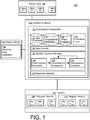
- the system 100 also allows the tenants 104 and servers 106 to comply with an underlying SLA that may include, for example, fault tolerance and load balancing, and that considers possible heterogeneity between (available) computational resources of the servers 106 (e.g., processing resources and storage resources).
- an underlying SLA may include, for example, fault tolerance and load balancing, and that considers possible heterogeneity between (available) computational resources of the servers 106 (e.g., processing resources and storage resources).
- the system 100 may implement a randomized algorithm approach known as a genetic algorithm (GA), which refers generally to a computer simulation of Darwinian natural selection that iterates through successive generations to converge toward the best solution in the problem/solution space.
- GA genetic algorithm
- Such a genetic algorithm is used by the system 100 to incorporate SLA requirements into the placement optimization process.
- the system 100 is capable of proposing "best-available" placements of the tenants 104 to the servers 106, even when there is no known solution that matches all of the SLA requirements completely.
- Computational constraints 114 refer to inputs related to the computing resources of the servers 106a-106n.
- each such server may vary to some extent in terms of processing power (e.g., maximum number or size of job requests that may be handled in a given unit of time) or storage capacity.
- the tenant context(s) 116 may refer to the specific needs or characteristics of each tenant 104. For example, some tenants may have requirements for large databases, yet may access the databases relatively infrequently, while other tenants may conversely have smaller databases which are accessed more frequently, to give but two examples.
- SLA constraints 112 may be required to be met in order for a placement solution (expressed as a chromosome) to be considered viable, while other SLA constraints 112 may be relaxed or removed.
- a preference tuner 118 is thus illustrated which may be used to provide such designations between required and optional SLA constraints, and also to provide, for non-required SLA constraints, a degree to which such constraints may be relaxed or removed.
- the SLA constraints may specify that premium tenants 108 should be placed with servers having X% less load than servers provided to regular tenants 110 (which implies a faster response time for the premium tenants).
- an input handler 120 may be configured to determine some or all of the inputs 112-118, including, e.g., the SLA constraints 112 governing the association of the plurality of tenant databases with the plurality of servers, and the computational constraints 114 associated with the plurality of servers 106a-106n. Then, a genetic algorithm manager 122 may be configured to use the received inputs to create a plurality of chromosomes representing possible solutions of placements of the tenants 104 to the servers 106a-106n, where such possible solutions may be evaluated against, e.g., the SLA constraints 112.
- the genetic algorithm manager 120 may include a chromosome generator 124 configured to generate tenant-server chromosomes. Such generation may occur at random, or may include some initial guidelines or restrictions with respect to placing or not placing a particular tenant(s) with a particular server(s). As referenced above, examples of such chromosomes are provided below with respect to Figures 2 and 3 . But in general, it may be appreciated that the chromosomes are simply potential solutions to the tenant-server placement problem described above, and which may be implemented as data structures including arrays of size T for a total number of tenants (including original and replicated tenant databases), and having element values from 1 to S, where S represents the total number of available servers.
- the chromosome generator 126 generates an initial population or set of chromosomes, which are then evaluated by a chromosome comparator 128, which may be configured to compare the population of chromosomes based on compliance with the SLA constraints 112 and relative to the computational constraints 114 (and also, e.g., the tenant context(s) 116 and/or the user preferences received from the preference tuner 118), to thereby output a selected subset of the plurality of chromosomes, which represent the best available matches/placements of the tenants 104 to the servers 106a-106n. Details and examples of the comparison and evaluation processes of the chromosome comparator 128 are provided below.
- a chromosome combiner 130 may receive the selected subset of the plurality of chromosomes and may be configured to combine chromosomes of the selected subset of the plurality of chromosomes to obtain a next generation (population) of chromosomes for output to the chromosome comparator 128, which may then perform another, subsequent comparison therewith of the next generation of chromosomes with respect to the inputs of the input handler 120, including, e.g., the inputs 112-118, as part of an evolutionary loop of successive generations of the plurality of chromosomes between the chromosome comparator 128 and the chromosome combiner 130.
- the system 100 is capable of finding the optimal assignments of the tenants 104 to the servers 106a-106n such that required SLA constraints are met absolutely, while optional SLA constraints are met following user-provided prioritization, and such that a maximum completion time across all the tenants' jobs is minimized.
- a maximum completion time across all jobs may be referred to as the makespan.
- the system 100 may thus be configured to minimize the makespan during a given measurement period. Such a measurement period may be hourly, daily, or weekly, to give a few examples.
- the tenants 104 represent businesses which experience significant and somewhat predictable variations in usage over a typical 24 hour day.
- the time unit of one hour is used, so that load distribution across the servers 106a-106n may be balanced across a 24-hour time series, using hourly average loads.
- the placement selector 124 may be configured to monitor the evolutionary loop and to select a selected chromosome therefrom for implementation of the placement based thereon.
- the selected chromosome/solution may represent either the best (optimal) solution, or may represent a best-available solution.
- the placement selector 124 may be tasked with determining whether, when, and how to interrupt or otherwise end the evolutionary loop and extract the best or best-available solution. Then, the placement selector 124 may output the selected chromosome and/or execute the actual transmission and/or installation of the tenant data on the appropriate server(s).
- system 100 is illustrated using various functional blocks or modules representing more-or-less discrete functionality. Such illustration is provided for clarity and convenience, but it may be appreciated that the various functionalities may overlap or be combined within a described module(s), and/or may be implemented by one or more module(s) not specifically illustrated in Figure 1 .
- conventional functionality that may be useful to the system 100 of Figure 1 may be included as well, such as, for example, functionality to replicate tenant databases as needed. Again, such conventional elements are not illustrated explicitly, for the sake of clarity and convenience.
- the system 100 may thus transform a state(s) of the server(s) 106a-106n between being empty and being filled to various degrees with one or more tenant databases.
- the system 100 may transform the tenant databases from a first state of being stored at a first server (either one of the servers 106a-106n or another offsite server, e.g., of the tenant in question) to a second state of being stored at a (different) server of the servers 106a-106n.
- the tenant databases may store virtually any type of data, such as, for example, in the business arena, where data may include physical things including customers, employees, or merchandise for sale.
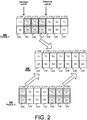
- Such pairs of chromosomes may be input to the chromosome combiner 130 and then combined in the role of parent chromosomes to execute a simulation of sexual crossover to obtain a new child chromosome 206, which, as described above, is thus part of a new generation of chromosomes which may be input back into the chromosome comparator 128 with other members of the same generation as part of an evolutionary loop to optimize the placement of tenants 104 to servers 106a-106n.
- the genetic algorithm manager 122 provides a genetic algorithm as a computer simulation of Darwinian natural selection that iterates through various generations to converge toward the best solution in the problem space.
- FIG 2 further illustrates the concept of genetic recombination as executed in the genetic algorithm manager 122.
- Figure 2 shows a recombination of chromosomes applied to the two parents 202, 204 by the chromosome combiner 130 to produce the new child chromosome 206, using a two-point crossover scheme.
- a randomly chosen contiguous subsection of the first parent 202 (defined by random cuts 1 and 2) is copied to the child 206, and then all remaining items in the second parent 204 are added that have not already been taken from the first parent's subsection.
- the chromosome comparator may implement an evaluation function which incorporates or reflects, e.g., the various inputs 112-118.
- the evaluation function may be applied for every hour over a 24 hour period to obtain a total score, which may then be used to select the best subset of children chromosomes to be the parent chromosomes of the next generation. Specific examples of the evaluation function are provided in more detail, below.
- Figure 3 shows an example in which two premium tenants 306, 308 are each replicated twice, while four regular tenants 310-316 are each replicated once, so that there are a total of (two) (three) + (four) (two) or fourteen total original and replicated tenant databases to be distributed among the four available servers.
- the result is a chromosome 362 of array size 14 having values defined with respect to S1-S4 (346-352), as already referenced above with respect to Figure 2 .
- Selected chromosomes of a first generation of chromosomes may then be combined to form a second generation of chromosomes, whereupon the process of evaluating the chromosomes based on the inputs 112-118 may be repeated so that a subset of the second generation may be selected for use in reproducing a third generation of chromosomes. Subsequent iterations or repetitions of such evolutionary loops allow for a process of natural selection to take place in which members of the generations converge toward optimal placement solutions.
- some or all of the various inputs 112-118 may be implicitly and straight-forwardly incorporated into such a genetic algorithm, such that the resulting optimized solutions are guaranteed to satisfy SLA constraints 112 and other inputs to a desired degree (i.e., wholly or partially).
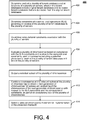
- Computational constraints associated with the plurality of servers may be determined (406).
- the input handler 120 may determine the computational constraints 114, which may relate to the capabilities of the servers 106a-106n.
- the servers 106a-106n may have heterogeneous computing capabilities (e.g., differing processing speeds or storage capacities).
- Such computational constraints 114 may be relevant to evaluating the SLA constraints 112. For example, if an SLA constraint specifies that every tenant database must fit completely onto its assigned server, then if the computational constraints 114 specify that a given server has too little memory capacity to contain the entire tenant database, then that server may be eliminated as a placement candidate for the tenant database in question.
- the preference tuner 118 may specify that actual load balancing that is within a certain percent difference of complete equality may be acceptable, where the preference tuner 118 may be used to raise or lower the acceptable percent difference.
- Other examples of tunable preferences relative to the inputs 112-116 are provided herein.
- Evaluation may proceed based on one or more evaluation functions. Specific examples of such evaluation function(s) are provided below with respect to Figures 5-9 . As referenced above, evaluation may proceed based on any or all of the inputs 112-118.
- the result of performing the evaluation(s) may include assignment of a score to each chromosome of the generated plurality of chromosomes.
- a third constraint may specify that premium tenants are provided with servers with X percent less load than those provided to regular clients.
- assigning more servers to premium tenants does not necessarily ensure better response time, since, e.g., response times also may depend on load levels of the premium tenants, the numbers of regular tenants assigned to the same servers, and the regular tenants' loads.
- a premium load distribution manager 506 may be included to enforce this constraint.
- daily load distribution is considered based on the recognition that a tenant's load may vary greatly in a day. For example, a tenant may have a heavier load during its business hours, and business hours themselves may vary for different tenants, different industries, and different geographical regions. Consequently, a temporal locality of traffic patterns may be considered, and a load distribution may be treated as a time series of hourly average loads for higher accuracy of load balancing.
- constraints may be implemented to varying desired degrees, and do not represent absolute or all-or-nothing requirements to be imposed on the resulting placement(s).
- system administrators may configure the importance of load balance during normal operation, as opposed to when a system failure occurs.
- loads need not be balanced exactly evenly, as referenced above, but may be balanced evenly within a certain window or margin of error and still be acceptable.
- the extent to which such parameters may be implemented or adjusted may be specified by the preference tuner 118.
- a fourth SLA constraint may specify that data for both premium and regular tenant databases should be replicated, where the degree of fault-tolerance via replication may vary by tenant class differentiation.
- the level of fault tolerance may be the same for all tenants in the same tenant class, with the premium tenants are provided with a higher level of fault tolerance via replication across more servers than the regular tenant class, with the examples herein assuming two replications for premium tenants and one replication for regular tenants.
- a fault tolerance manager 508 may be included to enforce this constraint.
- a fifth SLA constraint may specify that replicas of the same tenant database should not be placed on the same server, since such an assignment would provide no merit.
- a duplication manager 510 may be included to enforce this fifth constraint.
- a score compiler 514 may be used as needed to track ongoing score parameters as they are calculated, and then to aggregate or otherwise compile one or more scores associated with the evaluation function(s) of the chromosome comparator (128).
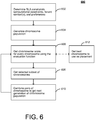
- Figure 6 is a first flowchart 600 illustrating example operations of the system of Figures 1 and 5 .
- the input handler 120 may determine some or all of the SLA constraints 112 as represented by the six SLA constraints just described, computational constraints 114 related to processing and storage limits of the servers 106a-106n, tenant context(s) 116 related to workload requirements and database sizes of the various tenants 104, and preferences related to some or all of the above as received through preference tuner 118 (602).
- the chromosome generator 124 may generate a first or initial chromosome population (604). For example, the chromosome generator 124 may generate a pre-determined number of chromosomes simply by randomly assigning tenants to servers. Then, the chromosome comparator 126 may execute an evaluation function for each chromosome to associate a score with each chromosome (606). The evaluation function may be executed using components 502-514, and specific examples of the evaluation function are provided below with respect to Figures 7-9 .
- a selected subset of the chromosomes may be obtained (608) by the chromosome comparator 126. Then, this selected subset may be passed to the chromosome combiner 128, which may then combine pairs of the chromosomes to obtain a next generation of chromosomes (610).
- Figure 2 provides an example of how such combinations may be executed, although other techniques may be used, as would be apparent.
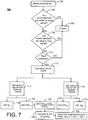
- a chromosome from a population of chromosomes is selected (702).
- the chromosome comparator 128 may first check for SLA constraints which are required and which may be easily verified. For example, the fifth SLA constraint may be checked by the duplication manager 510 to ensure that no tenant database is duplicated (replicated) on the same server (704), since, as referenced, such a placement would serve no purpose from a fault tolerance standpoint. Thus, if such duplication occurs, the chromosome in question may be discarded (706).
- the capacity manager 512 may verify the sixth SLA constraint requiring that tenant database(s) must fit, each in their entirety, on at least one server onto which it might be placed (708). If any tenant database is too large n this sense, then again the relevant chromosome may be discarded (706).
- the fault tolerance manager 508 may check the chromosome to ensure that the chromosome includes three total tenant databases (one original and two replicas) for each premium tenant, and two total tenant databases (one original and one replica) for each regular tenant. If not, then the chromosome may be discarded (706). In this way, the required difference in level of fault tolerance may be maintained.
- the servers 106a-106n may be heterogeneous in terms of their computational power/constraints. Each server may thus have a normalized load with respect to its computational power, where such a normalized load of a server S may be represented as L s .
- S pre and Sreg may have overlap.
- the load balance manager 502 and/or load distribution manager 504 may mandate and/or execute operations regarding obtaining the loads of servers with premium tenants (714) and regular tenants (716).
- ⁇ pre may be the standard deviation of ⁇ L sp1 , L sp2 ... L spi ⁇
- ⁇ reg may be the standard deviation of ⁇ L sr1 , L sr2 , ... , L srj ⁇ .
- ⁇ pre indicates a more consistent load distribution over all the servers that contain premium tenants, and thus a more smooth experience of the premium tenants.
- ⁇ reg for regular tenants, although a larger value of ⁇ reg may be tolerated for servers with regular tenants and no premium tenants.
- preferred placements should minimize both ⁇ pre and ⁇ reg to the extent possible, to provide better user experience.
- the load balance manager 502 may calculate the parameters ⁇ pre (720) and ⁇ reg (722).
- the third constraint may specify that premium tenants are provided with servers with X percent less load than those provided to regular tenants.
- This constraint reflects the business value of providing premium tenants with better service that is associated with light loaded servers. For example, if it is desired that premium tenants be provided with servers that have X% less load than the ones provided to regular tenants, and a placement results in an average load AVG pre for premium tenants and an average load AVG reg for regular tenants, the closer the differential (AVG reg - AVG pre )/ AVG reg is to X%, the closer the third SLA constraint is to being satisfied.
- the load distribution manager 504 may be configured to calculate AVGpre (720), and AVG reg (724).
- the premium load distribution manager 506 may be configured to determine a percent difference between these parameters (726) as described above. This percent difference may then be compared to the parameter X% to determine a parameter ⁇ diff (728) to use in judging the degree to which the third SLA constraint is realized for the chromosome in question.
- the chromosome being scored in Figure 7 may have an initial score as shown in Eq. 1: ⁇ pre + ⁇ reg + ⁇ diff , where a smaller score is preferred as representing smaller standard deviations and a smaller percent difference relative to the X% constraint of the third SLA constraint.
- preference parameters may be received through the preference tuner 118 which define an extent or manner in which the above score components are valued.
- Figure 8 is a third flowchart 800 illustrating example operations of the system of Figures 1 and 5 .
- Figure 8 illustrates specific techniques for providing fault tolerance including load balancing in the presence of a server failure, such as described above with respect to Figure 3 , and such as may be executed by the fault tolerance manager 508 together with the load balance manager 502 and/or the load distribution manager 504 of Figure 5 .
- chromosomes such as chromosome variants 364-370
- the chromosomes and chromosome variants may be scored according to the evaluation function described above with respect to Figures 6 and 7 . Further, as described below, user preferences may be received and included with respect to an extent to which such fault tolerant load-balancing is required in a given implementation of the larger evaluation function.
- a server S i is removed from the chromosome to create a first chromosome variant (802) in which the server S i fails and all future requests to the server must be re-routed to other servers. Then, the parameters above of ⁇ pre , ⁇ reg , and ⁇ diff are re-calculated for the chromosome variant (804). If S i is not the last server in the chromosome, then the process continues with removing the next server (802).
- Figure 9 is a fourth flowchart 900 illustrating example operations of the system of Figures 1 and 5 .
- a final score is computed for an hour h i to get an hourly score (902). If not the final hour, e.g., of a 24 hour period/day (904), then the next hourly score may be computed (902). Otherwise, the hourly scores may be averaged to get a total chromosome score (906).
- the final score may be used with respect to the chromosome in question, and similarly, a final score may be computed for each chromosome of a given population/generation. Then, as described, the chromosome comparator 128 may rank the chromosomes accordingly and forward a selected subset thereof onto the chromosome combiner 130, as part of the evolutionary loop of the genetic algorithm as described above.
- Figures 6-9 describe operations of a particular evaluation function that may be used with the systems of Figures 1 and 5 , and are described at a level to convey the included functions and characteristics thereof.
- many variations and optimizations may be employed. For example, when calculating the hourly scores in Figure 9 , a number of parameters which do not change on an hourly basis (such as whether a particular tenant database is replicated on a single server, as prohibited by the fifth SLA constraint, above) need not be re-calculated.
- Other efficiencies and optimizations may be included in actual implementations of the systems of Figures 1 and 5 , as would be apparent.
- the chromosome combiner 130 in some implementations may include one or more mutations into a chromosome population. That is, a particular aspect of one or more chromosomes may be randomly altered or mutated in order to explore portions of the solution space that otherwise would not be reached during normal execution of the genetic algorithm.
- Algorithm 1 represents an overall execution of the genetic algorithm and associated operations, similarly to the examples of Figures 4 and 6 , above. Note that in the following Algorithms, the first-sixth SLA constraints are referred to as REQ1-REQ6, respectively.
- Algorithm 2 provides further details of how such an evaluation function may be implemented. Specifically, for example, in line 5, it computes the score for each chromosome under a normal operation with no server failure, similarly to the operations of FIG 7 . To do so, Algorithm 2 calls Algorithm 3 as described below. Then, from line 7 to line 10, it evaluates the performance of same placement when a server failure occurs, again using Algorithm 3, and similarly to the operations of FIG 8 . In each iteration, one of the servers is assumed failed and the original load placed at the failed server is redirected to other server containing replicas of the same tenant databases as the failed server.
- the final score of the chromosome is computed by applying parameter ⁇ to respect the preference of the fault tolerance ability with respect to load balancing.
- the placement is evaluated across 24 hours in an hour by hour manner, as shown in Figure 9 .
- Statistics of the servers occupied by premium and regular tenants are updated (line 20-29) and the score of that hour is calculated by incorporating the user preferences at line 30.
- the average score across the 24 hours is returned as the final score of the chromosome.
- Figures 1-9 and the above-described equations and algorithms provide general and specific examples of how tenant database may be assigned to a plurality of servers of the server farm 106 in a way that implicitly incorporates the SLA constraints 112 and other inputs 114-118. Thus, potentially essential constraints may be definitely incorporated, while other constraints may be incorporated to varying extents that are modifiable by the user in a desired manner, using the preference tuner 118.
- the preference parameter ⁇ may be used to represent a user preference for balancing a load of servers occupied by premium and regular tenants, so that a greater ⁇ indicates that it is more important to balance the load(s) of the premium tenants, while a relatively smaller ⁇ indicates that it is more important to balance the load(s) of the regular tenants.
- the preference parameter ⁇ is used to enforce the differential load between different classes of tenants, i.e., to determine an extent to which an actual differential load may vary from a specified or desired differential load.
- the preference parameter ⁇ may be used as described such that a larger (or smaller) value for this parameter indicates that the user cares more (or less) about the normal cases with rare server failures (or cases where server failure is more common).
- the parameters ⁇ , ⁇ , and ⁇ may be set to vary between 0 and 1, except that the parameter ⁇ may be set to infinity or effective infinity as referenced above to effectively remove a given chromosome from consideration.
- this parameter relates to the preference of the user on enforcing differential load. If the user puts more emphasis on enforcing the differential load between different classes of tenants, i.e. a larger ⁇ , then the algorithm responds effecitvely to meet that requirement.
- the underlying parameter (s) of X% and ⁇ diff the desired differential load between premium and regular tenants and the extent to which a chromosome matches that desired differential
- relatively smaller or larger values of ⁇ may be more or less difficult to enforce, particularly dependent on any server disk space limitations.
- the function ⁇ as defined above may itself be adjusted to meet different preferences. For example, if the premium tenants receive worse service than the regular tenants (as would be defined by a condition in which the average response time of the regular tenants is less than that of the premium tenants), then the parameter ⁇ diff may be set to infinity or effective infinity since such a situation may generally be completely unacceptable. On the other hand, if the premium tenants get too much benefit relative to the regular tenants, it is possible that the service provided to regular tenants will deteriorate dramatically. So, when the difference between regular and premium tenants exceeds X% (which is not necessary with respect to the SLA constraints and at best provides an undue benefit to the premium tenants), then again a value of infinity or effective infinity may be assigned.
- the parameter ⁇ may be used to specify whether a user cares more about the normal cases (in which server failure rarely happens) or the cases in which server failure happens relatively frequently. To express this, it may be considered that a server i crashes, and the resulting load deviations of the servers occupied by premium and regular tenants are then defined as dev pre (i) and dev reg (i), while when no server crashes the deviations may be expressed just as dev pre and dev reg .
- Implementations of the various techniques described herein may be implemented in digital electronic circuitry, or in computer hardware, firmware, software, or in combinations of them. Implementations may implemented as a computer program product, i.e., a computer program tangibly embodied in an information carrier, e.g., in a machine-readable storage device or in a propagated signal, for execution by, or to control the operation of, data processing apparatus, e.g., a programmable processor, a computer, or multiple computers.
- data processing apparatus e.g., a programmable processor, a computer, or multiple computers.
- a computer program such as the computer program(s) described above, can be written in any form of programming language, including compiled or interpreted languages, and can be deployed in any form, including as a stand-alone program or as a module, component, subroutine, or other unit suitable for use in a computing environment.
- a computer program can be deployed to be executed on one computer or on multiple computers at one site or distributed across multiple sites and interconnected by a communication network.
- processors suitable for the execution of a computer program include, by way of example, both general and special purpose microprocessors, and any one or more processors of any kind of digital computer.
- a processor will receive instructions and data from a read-only memory or a random access memory or both.
- Elements of a computer may include at least one processor for executing instructions and one or more memory devices for storing instructions and data.
- a computer also may include, or be operatively coupled to receive data from or transfer data to, or both, one or more mass storage devices for storing data, e.g., magnetic, magneto-optical disks, or optical disks.
- Information carriers suitable for embodying computer program instructions and data include all forms of non-volatile memory, including by way of example semiconductor memory devices, e.g., EPROM, EEPROM, and flash memory devices; magnetic disks, e.g., internal hard disks or removable disks; magneto-optical disks; and CD-ROM and DVD-ROM disks.
- semiconductor memory devices e.g., EPROM, EEPROM, and flash memory devices
- magnetic disks e.g., internal hard disks or removable disks
- magneto-optical disks e.g., CD-ROM and DVD-ROM disks.
- the processor and the memory may be supplemented by, or incorporated in special purpose logic circuitry.
Landscapes
- Engineering & Computer Science (AREA)
- Databases & Information Systems (AREA)
- Theoretical Computer Science (AREA)
- Computing Systems (AREA)
- Data Mining & Analysis (AREA)
- Physics & Mathematics (AREA)
- General Engineering & Computer Science (AREA)
- General Physics & Mathematics (AREA)
- Hardware Redundancy (AREA)
- Information Retrieval, Db Structures And Fs Structures Therefor (AREA)
Claims (13)
- Computersystem mit auf einem computerlesbaren Medium aufgezeichneten Befehlen, wobei das System Folgendes umfasst:einen Platzierungsmanager (102), der dafür ausgelegt ist, eine Platzierung jeder von mehreren Mandantendatenbanken (104) bei einem von mehreren Servern (106) zu bestimmen, wobei die mehreren Mandantendatenbanken (104) ursprüngliche Mandantendatenbanken und replizierte Mandantendatenbanken, die anhand der ursprünglichen Mandantendatenbanken dupliziert wurden, einschließen, wobei der Platzierungsmanager (102) Folgendes aufweist:einen Eingabe-Handler (120), der dafür ausgelegt ist, Randbedingungen (112), in der Art eines Lastausgleichs und einer Fehlertoleranz, einer Dienstgütevereinbarung (SLA), welche eine Assoziation der mehreren Mandantendatenbanken (104) mit den mehreren Servern (106) festlegt, zu bestimmen, und dafür ausgelegt ist, Rechenrandbedingungen (114) in Bezug auf Rechenressourcen in Zusammenhang mit den mehreren Servern (106) in der Art der Verarbeitungsleistung oder Speicherkapazität jedes dieser Server (106) zu bestimmen, wobei die Randbedingungen SLA-Randbedingungen einschließen, welche eine Premiumklasse von Mandanten und eine gewöhnliche Klasse von Mandanten in Zusammenhang mit den mehreren Mandantendatenbanken spezifizieren, wobei die Premiumklasse Zugang zu einer größeren Anzahl replizierter Datenbanken hat als die gewöhnliche Klasse, wobei die Premiummandanten (118) an Servern platziert werden, die X % weniger Last haben als Server, die gewöhnlichen Mandanten (110) bereitgestellt werden,einen Chromosomengenerator (124), der dafür ausgelegt ist, mehrere anfängliche Chromosomen zu erzeugen, wobei jedes Chromosom eine potenzielle Platzierung jeder der mehreren Mandantendatenbanken (104) bei einem der mehreren Server (106) aufweist,einen Chromosomenvergleicher (128), der dafür ausgelegt ist, jedes der mehreren Chromosomen auf der Grundlage der Konformität mit den SLA-Randbedingungen (112) und in Bezug auf die Rechenrandbedingungen (114) zu vergleichen, um dadurch eine ausgewählte Untermenge der mehreren Chromosomen auszugeben, welche beste verfügbare Platzierungen der Mandantendatenbanken (104) an den Servern (106) repräsentiert, wobei der Chromosomenvergleicher (128) dafür ausgelegt ist, jedes Chromosom einschließlich der Erzeugung mehrerer Chromosomenvarianten, wobei jede Chromosomenvariante einem möglichen Ausfall eines entsprechenden Servers von den mehreren Servern (106) zugeordnet ist, zu beurteilen und/oder jedes Chromosom einschließlich des Normierens einer Last jedes Servers von den mehreren Servern (106) und des Berechnens einer Standardabweichung der Lasten der Server zu beurteilen und/oder jedes der mehreren Chromosomen für jeden von mehreren Zeiträumen zu beurteilen und dann die sich ergebenden mehreren Beurteilungen zu kombinieren, um eine Gesamtbeurteilung für ein entsprechendes Chromosom zu erhalten,einen Chromosomenkombinierer (130), der dafür ausgelegt ist, die ausgewählte Untermenge der mehreren Chromosomen zu empfangen und Chromosomen der ausgewählten Untermenge der mehreren Chromosomen zu kombinieren, um eine nächste Generation von Chromosomen zur Ausgabe an den Chromosomenvergleicher (128) zu erhalten, welcher einen nachfolgenden Vergleich der nächsten Generation von Chromosomen damit in Bezug auf die SLA-Randbedingungen (112) und die Rechenrandbedingungen (114) als Teil einer iterativen evolutionären Schleife der nachfolgenden Generationen der mehreren Chromosomen zwischen dem Chromosomenvergleicher (128) und dem Chromosomenkombinierer (130) ausführt, undeinen Platzierungswähler (124), der dafür ausgelegt ist, die evolutionäre Schleife zu überwachen und ein bestimmtes der Chromosomen zur Verwendung bei der Ausführung einer tatsächlichen Platzierung der Mandantendatenbanken (104) bei den Servern (106) auszuwählen, wobei der Platzierungswähler damit beauftragt ist, zu bestimmen, ob, wann und wie die evolutionäre Schleife zu unterbrechen oder auf andere Weise zu beenden ist und das beste oder beste verfügbare Chromosom zu extrahieren ist, und eine tatsächliche Übertragung und Installation der Mandantendatenbanken an dem einen oder den mehreren geeigneten Servern auszuführen.
- System nach Anspruch 1, wobei die SLA-Randbedingungen (112) sowohl einen Lastausgleich als auch eine Fehlertoleranz für die mehreren Mandantendatenbanken (104) für einen entsprechenden Mandanten in Bezug auf die mehreren Server (106) spezifizieren, die durch Installation von wenigstens zwei der mehreren Mandantendatenbanken (104) des entsprechenden Mandanten auf wenigstens zwei der mehreren Server (106) bereitgestellt sind.
- System nach Anspruch 1, wobei die SLA-Randbedingungen (112) spezifizieren, dass der höherwertige Zugriff in Bezug auf die Platzierung von Mandantendatenbanken der Premiummandanten (108) auf Servern von den mehreren Servern (106), die eine geringere Last aufweisen, verglichen mit der Platzierung von Mandantendatenbanken der gewöhnlichen Mandanten (110) spezifiziert ist, wobei die SLA-Randbedingungen (112) spezifizieren, dass der höherwertige Zugriff eine höherwertige Fehlertoleranz aufweist, die in Bezug auf die Platzierung von Mandantendatenbanken der Premiummandanten (108) auf einer größeren Anzahl der mehreren Server (106) verglichen mit der Platzierung von Mandantendatenbanken der gewöhnlichen Mandanten (110) auf den mehreren Servern (106) spezifiziert ist.
- System nach einem der vorhergehenden Ansprüche, wobei der Eingabe-Handler (120) dafür ausgelegt ist, Folgendes auszuführen:Eingeben wenigstens eines Mandantenkontexts (116) in Zusammenhang mit Mandanten, die den mehreren Mandantendatenbanken (104) zugeordnet sind, wobei der wenigstens eine Mandantenkontext (116) eine Datengröße und Auftragsanforderungscharakteristik der zugeordneten Mandantendatenbanken spezifiziert und wobei der Chromosomenvergleicher (128) dafür ausgelegt ist, die mehreren Vergleicher in Bezug auf die SLA-Randbedingungen (112) und die Rechenrandbedingungen (114) unter Verwendung des wenigstens einen Mandantenkontexts (116) zu beurteilen, und/oderEingeben von Präferenzparametern, die von einer Präferenzabstimmeinrichtung (118) empfangen wurden und eine Art ausdrücken, in der wenigstens eine der SLA-Randbedingungen (112) durch den Chromosomenvergleicher (128) beurteilt wird.
- System nach einem der vorhergehenden Ansprüche, wobei der Platzierungsmanager (102) einen Chromosomengenerator (126) umfasst, der dafür ausgelegt ist, eine anfängliche Chromosomenpopulation zur Beurteilung durch den Chromosomenvergleicher (128) zu erzeugen, wobei die anfängliche Chromosomenpopulation jeweils als ein Feld mit der Größe T mit von 1 bis S nummerierten Elementen gebildet ist, wobei T die Anzahl der mehreren Mandantendatenbanken (104) ist und S die Anzahl der mehreren Server (106) ist.
- System nach einem der vorhergehenden Ansprüche, wobei der Chromosomenkombinierer (130) dafür ausgelegt ist, Paare der mehreren Chromosomen zu kombinieren, wobei jedes Element von jedem Paar in Abschnitte zerlegt wird und dann wenigstens einige der Abschnitte von jedem Paar zu einem neuen Chromosom kombiniert werden.
- System nach einem der vorhergehenden Ansprüche, wobei der Platzierungswähler (124) dafür ausgelegt ist, das ausgewählte Chromosom nach einer vorgegebenen Anzahl von Erzeugungen der evolutionären Schleife oder nach einer Bestimmung, dass das ausgewählte Chromosom die SLA-Randbedingungen (112) bis zu einem vorgegebenen Grad erfüllt, auszuwählen.
- Computerimplementiertes Verfahren, welches Folgendes umfasst:Bestimmen (402) einer Platzierung von jeder von mehreren Mandantendatenbanken (104) bei einem von mehreren Servern (106), wobei die Mandantendatenbanken (104) ursprüngliche Mandantendatenbanken und replizierte Mandantendatenbanken, die anhand der ursprünglichen Mandantendatenbanken dupliziert wurden, einschließen,Bestimmen (404) von Randbedingungen (112), in der Art eines Lastausgleichs und einer Fehlertoleranz, einer Dienstgütevereinbarung (SLA), welche eine Assoziation der mehreren Mandantendatenbanken (104) mit den mehreren Servern (106) festlegt, wobei die Randbedingungen SLA-Randbedingungen einschließen, welche eine Premiumklasse von Mandanten und eine gewöhnliche Klasse von Mandanten in Zusammenhang mit den mehreren Mandantendatenbanken spezifizieren, wobei die Premiumklasse Zugang zu einer größeren Anzahl replizierter Datenbanken hat als die gewöhnliche Klasse, wobei die Premiummandanten (118) an Servern platziert werden, die X % weniger Last haben als Server, die gewöhnlichen Mandanten (110) bereitgestellt werden,Bestimmen (406) von Rechenrandbedingungen (114) in Bezug auf Rechenressourcen in Zusammenhang mit den mehreren Servern (106) in der Art der Verarbeitungsleistung oder der Speicherkapazität jedes Servers (106),Erzeugen mehrerer anfänglicher Chromosomen, wobei jedes Chromosom eine potenzielle Platzierung jeder der mehreren Mandantendatenbanken (104) bei einem der mehreren Server (106) aufweist,Vergleichen (408) jedes von mehreren Chromosomen auf der Grundlage der Konformität mit den SLA-Randbedingungen (112) und in Bezug auf die Rechenrandbedingungen (114), wobei das Beurteilen jedes Chromosoms Folgendes aufweist:Erzeugen mehrerer Chromosomenvarianten, wobei jede Chromosomenvariante einem möglichen Ausfall eines entsprechenden Servers von den mehreren Servern (106) zugeordnet wird, und/oderNormieren einer Last jedes Servers von den mehreren Servern (106) und Berechnen einer Standardabweichung der Lasten der Server und/oderBeurteilen jedes der mehreren Chromosomen während mehrerer Zeiträume und anschließendes Kombinieren der sich ergebenden mehreren Beurteilungen, um eine Gesamtbeurteilung für ein entsprechendes Chromosom zu erhalten,Ausgeben (410) einer ausgewählten Untermenge der mehreren Chromosomen,Kombinieren (412) von Chromosomen der ausgewählten Untermenge der mehreren Chromosomen, um eine nächste Generation von Chromosomen für einen nachfolgenden Vergleich der Chromosomen der nächsten Generation von Chromosomen in Bezug auf die SLA-Randbedingungen (112) und die Rechenrandbedingungen (114) als Teil einer evolutionären Schleife nachfolgender Generationen der mehreren Chromosomen zu erhalten,Überwachen der evolutionären Schleife undAuswählen (414) eines bestimmten der Chromosomen zur Verwendung bei der Ausführung einer tatsächlichen Platzierung der Mandantendatenbanken (104) bei den Servern (106), wobei ein Platzierungswähler damit beauftragt wird, zu bestimmen, ob, wann und wie die evolutionäre Schleife zu unterbrechen oder auf andere Weise zu beenden ist und das beste oder beste verfügbare Chromosom zu extrahieren ist,Ausführen einer tatsächlichen Übertragung und Installation der Mandantendatenbanken auf dem einen oder den mehreren geeigneten Servern.
- Verfahren nach Anspruch 8, wobei die SLA-Randbedingungen (112)
sowohl einen Lastausgleich als auch eine Fehlertoleranz für die mehreren Mandantendatenbanken (104) für einen entsprechenden Mandanten in Bezug auf die mehreren Server (106) spezifizieren, die durch die Installation von wenigstens zwei der mehreren Mandantendatenbanken (104) des entsprechenden Mandanten auf wenigstens zwei der mehreren Server (106) bereitgestellt sind, und/oder
wenigstens zwei Klassen von Mandanten in Zusammenhang mit den mehreren Mandantendatenbanken (104) spezifizieren, wobei die wenigstens zwei Klassen eine Premiumklasse (108) einschließen, die einen höherwertigen Zugriff auf Ressourcen der mehreren Server (106) aufweist als eine gewöhnliche Klasse (110). - Verfahren nach einem der Ansprüche 8 oder 9, wobei beim Bestimmen der SLA-Randbedingungen (112) Präferenzparameter empfangen werden, die eine Art ausdrücken, in der wenigstens eine der SLA-Randbedingungen (112) durch den Chromosomenvergleicher (128) beurteilt wird.
- Verfahren nach einem der Ansprüche 8 bis 10, wobei das Erzeugen der mehreren anfänglichen Chromosomen Folgendes umfasst: Ausdrücken möglicher Platzierungen der mehreren Mandantendatenbanken (104) an den mehreren Servern (106) als Chromosomen, die als Felder mit einer Größe T mit von 1 bis S nummerierten Elementen ausgedrückt sind, wobei T die Anzahl der mehreren Mandantendatenbanken (104) ist und S die Anzahl der mehreren Server (106) ist.
- Verfahren nach einem der Ansprüche 8 bis 11, wobei die aufeinanderfolgenden Generationen bestimmt werden, indem eine ausgewählte Untermenge der aktuellen Generation auf der Grundlage der Beurteilung bestimmt wird, Paare der ausgewählten Untermenge kombiniert werden, um eine nächste Generation zu erhalten, und dann die Beurteilung für die nächste Generation erneut ausgeführt wird, um eine zweite ausgewählte Untermenge davon zu erhalten.
- Computerprogrammprodukt, wobei das Computerprogrammprodukt gegenständlich auf einem computerlesbaren Medium verwirklicht ist und Befehle umfasst, die, wenn sie ausgeführt werden, dafür ausgelegt sind, ein Verfahren nach einem der Ansprüche 8 bis 12 auszuführen.
Applications Claiming Priority (1)
| Application Number | Priority Date | Filing Date | Title |
|---|---|---|---|
| CN200910146215.3A CN101931609B (zh) | 2009-06-22 | 2009-06-22 | 多租户数据库应用的遵守服务等级协议的布局 |
Publications (2)
| Publication Number | Publication Date |
|---|---|
| EP2270686A1 EP2270686A1 (de) | 2011-01-05 |
| EP2270686B1 true EP2270686B1 (de) | 2018-03-28 |
Family
ID=42752151
Family Applications (1)
| Application Number | Title | Priority Date | Filing Date |
|---|---|---|---|
| EP10006450.0A Active EP2270686B1 (de) | 2009-06-22 | 2010-06-22 | Optimierte Plazierung von Datenbanken auf Servern entsprechend einem Service Level Agreement |
Country Status (3)
| Country | Link |
|---|---|
| US (1) | US20100325281A1 (de) |
| EP (1) | EP2270686B1 (de) |
| CN (1) | CN101931609B (de) |
Families Citing this family (30)
| Publication number | Priority date | Publication date | Assignee | Title |
|---|---|---|---|---|
| US8458334B2 (en) * | 2010-02-11 | 2013-06-04 | International Business Machines Corporation | Optimized capacity planning |
| US8434088B2 (en) * | 2010-02-18 | 2013-04-30 | International Business Machines Corporation | Optimized capacity planning |
| JP5760843B2 (ja) * | 2011-08-19 | 2015-08-12 | 富士通株式会社 | ストレージ装置、制御装置、およびデータコピー方法 |
| US9224121B2 (en) * | 2011-09-09 | 2015-12-29 | Sap Se | Demand-driven collaborative scheduling for just-in-time manufacturing |
| US8660949B2 (en) | 2011-09-09 | 2014-02-25 | Sap Ag | Method and system for working capital management |
| CN102437965B (zh) * | 2012-01-13 | 2016-04-27 | 北京润通丰华科技有限公司 | 目标站点的访问方法及装置 |
| US8744888B2 (en) * | 2012-04-04 | 2014-06-03 | Sap Ag | Resource allocation management |
| US9311376B2 (en) | 2012-05-02 | 2016-04-12 | Microsoft Technology Licensing, Llc | Performance service level agreements in multi-tenant database systems |
| US20130339424A1 (en) * | 2012-06-15 | 2013-12-19 | Infosys Limited | Deriving a service level agreement for an application hosted on a cloud platform |
| US20140019415A1 (en) * | 2012-07-11 | 2014-01-16 | Nec Laboratories America, Inc. | Method and System for Database Cloud Bursting |
| US20140067601A1 (en) * | 2012-09-06 | 2014-03-06 | Sap Ag | Supply chain finance planning |
| US9760847B2 (en) | 2013-05-29 | 2017-09-12 | Sap Se | Tenant selection in quota enforcing request admission mechanisms for shared applications |
| US9584588B2 (en) | 2013-08-21 | 2017-02-28 | Sap Se | Multi-stage feedback controller for prioritizing tenants for multi-tenant applications |
| CN104461728B (zh) * | 2013-09-18 | 2019-06-14 | Sap欧洲公司 | 迁移事件调度管理的计算机系统、介质和方法 |
| CN104516635B (zh) | 2013-09-26 | 2022-03-08 | Sap欧洲公司 | 一种管理内容显示的方法、系统及存储介质 |
| CN104516910B (zh) | 2013-09-26 | 2018-01-12 | Sap欧洲公司 | 在客户端服务器环境中推荐内容 |
| CN105683941A (zh) * | 2013-10-16 | 2016-06-15 | 慧与发展有限责任合伙企业 | 调节企业数据仓库资源使用 |
| EP3234774B1 (de) * | 2014-11-13 | 2021-01-27 | Telefonaktiebolaget LM Ericsson (publ) | Elastizität für hochverfügbare anwendungen |
| WO2016110936A1 (ja) * | 2015-01-05 | 2016-07-14 | 株式会社日立製作所 | 計算機システム、及び、データ管理方法 |
| US11030171B2 (en) * | 2015-01-09 | 2021-06-08 | Ariba, Inc. | Elastic sharding of data in a multi-tenant cloud |
| US10505862B1 (en) * | 2015-02-18 | 2019-12-10 | Amazon Technologies, Inc. | Optimizing for infrastructure diversity constraints in resource placement |
| US10223649B2 (en) * | 2015-10-16 | 2019-03-05 | Sap Se | System and method of multi-objective optimization for transportation arrangement |
| US10848334B2 (en) * | 2016-08-30 | 2020-11-24 | Dwelo Inc. | Automatic transitions in automation settings |
| US10637964B2 (en) | 2016-11-23 | 2020-04-28 | Sap Se | Mutual reinforcement of edge devices with dynamic triggering conditions |
| US10841020B2 (en) | 2018-01-31 | 2020-11-17 | Sap Se | Online self-correction on multiple data streams in sensor networks |
| US12615317B2 (en) | 2018-09-24 | 2026-04-28 | Salesforce, Inc. | Interactive customized push notifications with customized actions |
| CN112308298B (zh) * | 2020-10-16 | 2022-06-14 | 同济大学 | 一种面向半导体生产线的多场景性能指标预测方法及系统 |
| US12074471B2 (en) | 2020-12-18 | 2024-08-27 | Eaton Intelligent Power Limited | Apparatus and methods for distribution of UPS-associated energy storage |
| US20230214233A1 (en) * | 2021-12-30 | 2023-07-06 | Pure Storage, Inc. | Dynamic Storage Instance Sizing For Application Deployments |
| CN117171261B (zh) * | 2023-07-31 | 2024-05-03 | 蒲惠智造科技股份有限公司 | 面向多数据库单元的弹性扩展智能调用方法和系统 |
Family Cites Families (17)
| Publication number | Priority date | Publication date | Assignee | Title |
|---|---|---|---|---|
| GB2299729B (en) * | 1995-04-01 | 1999-11-17 | Northern Telecom Ltd | Traffic routing in a telecommunications network |
| US7047169B2 (en) * | 2001-01-18 | 2006-05-16 | The Board Of Trustees Of The University Of Illinois | Method for optimizing a solution set |
| US6957200B2 (en) * | 2001-04-06 | 2005-10-18 | Honeywell International, Inc. | Genotic algorithm optimization method and network |
| US7000141B1 (en) * | 2001-11-14 | 2006-02-14 | Hewlett-Packard Development Company, L.P. | Data placement for fault tolerance |
| EP1345167A1 (de) * | 2002-03-12 | 2003-09-17 | BRITISH TELECOMMUNICATIONS public limited company | Verfahren zur kombinatorischen multimodalen Optimierung |
| DE602004011890T2 (de) * | 2004-02-10 | 2009-03-12 | Sap Ag | Verfahren zur Neuverteilung von Objekten an Recheneinheiten |
| ATE479287T1 (de) * | 2004-10-28 | 2010-09-15 | Telecom Italia Spa | Verfahren zur verwaltung von betriebsmitteln in einer plattform für telekommunikationsdienst und/oder netzverwaltung, entsprechende plattform und computerprogrammprodukt dafür |
| WO2007056915A1 (fr) * | 2005-11-17 | 2007-05-24 | Huawei Technologies Co., Ltd. | Procede pour mesurer un parametre concernant les performances d'un reseau mpls, et dispositif et systeme pour envoyer un paquet |
| US20080177700A1 (en) * | 2007-01-19 | 2008-07-24 | Wen-Syan Li | Automated and dynamic management of query views for database workloads |
| US8073790B2 (en) * | 2007-03-10 | 2011-12-06 | Hendra Soetjahja | Adaptive multivariate model construction |
| US8301776B2 (en) * | 2007-11-19 | 2012-10-30 | Arris Solutions, Inc. | Switched stream server architecture |
| US8429096B1 (en) * | 2008-03-31 | 2013-04-23 | Amazon Technologies, Inc. | Resource isolation through reinforcement learning |
| US20100023564A1 (en) * | 2008-07-25 | 2010-01-28 | Yahoo! Inc. | Synchronous replication for fault tolerance |
| US8615400B2 (en) * | 2008-08-19 | 2013-12-24 | International Business Machines Corporation | Mapping portal applications in multi-tenant environment |
| EP2161902A1 (de) * | 2008-09-05 | 2010-03-10 | BRITISH TELECOMMUNICATIONS public limited company | Lastausgleich in einem Datennetzwerk |
| US8424059B2 (en) * | 2008-09-22 | 2013-04-16 | International Business Machines Corporation | Calculating multi-tenancy resource requirements and automated tenant dynamic placement in a multi-tenant shared environment |
| US8380960B2 (en) * | 2008-11-04 | 2013-02-19 | Microsoft Corporation | Data allocation and replication across distributed storage system |
-
2009
- 2009-06-22 CN CN200910146215.3A patent/CN101931609B/zh active Active
-
2010
- 2010-04-12 US US12/758,597 patent/US20100325281A1/en not_active Abandoned
- 2010-06-22 EP EP10006450.0A patent/EP2270686B1/de active Active
Non-Patent Citations (1)
| Title |
|---|
| None * |
Also Published As
| Publication number | Publication date |
|---|---|
| CN101931609A (zh) | 2010-12-29 |
| CN101931609B (zh) | 2014-07-30 |
| US20100325281A1 (en) | 2010-12-23 |
| EP2270686A1 (de) | 2011-01-05 |
Similar Documents
| Publication | Publication Date | Title |
|---|---|---|
| EP2270686A1 (de) | Optimierte Plazierung von Datenbanken auf Servern entsprechend eines Service Level Agreements | |
| US11861352B2 (en) | Smart deployment using graph optimization | |
| US11061718B2 (en) | Pattern-based artificial intelligence planner for computer environment migration | |
| US8719835B2 (en) | Ranking service units to provide and protect highly available services using the Nway redundancy model | |
| US10839255B2 (en) | Load-balancing training of recommender system for heterogeneous systems | |
| US8788501B2 (en) | Parallelization of large scale data clustering analytics | |
| KR102738485B1 (ko) | 멀티-클라우드 환경에서 워크로드들의 구현 | |
| US9380107B2 (en) | Migration event scheduling management | |
| US20170344401A1 (en) | Method of achieving intra-machine workload balance for distributed graph-processing systems | |
| WO2022029516A1 (en) | Automated etl workflow generation | |
| US12455743B2 (en) | Configurable pipelines for training and deploying machine learning processes in distributed computing environments | |
| US10685305B2 (en) | Evaluating adoption of computing deployment solutions | |
| US11087255B2 (en) | System and methods for fulfilling an order by determining an optimal set of sources and resources | |
| CN111858615A (zh) | 数据库表生成方法、系统、计算机系统和可读存储介质 | |
| US20220114401A1 (en) | Predicting performance of machine learning models | |
| US10545941B1 (en) | Hash based data processing | |
| US10694002B1 (en) | Data compression optimization based on client clusters | |
| US9424260B2 (en) | Techniques for data assignment from an external distributed file system to a database management system | |
| US11055655B1 (en) | Method and system for generating an alimentary combination help update | |
| Liu et al. | An Approach to Modeling and Analyzing Reliability for Microservice‐Oriented Cloud Applications | |
| US10672078B1 (en) | Scoring of insurance data | |
| US20230267177A1 (en) | Hybrid clustered prediction computer modeling | |
| US10748104B2 (en) | System and method of parallelizing order-by-order planning | |
| CN116266291B (zh) | 一种资源投放的方法及设备 | |
| Chowdhury et al. | Cloud database failure prediction using multi agent system |
Legal Events
| Date | Code | Title | Description |
|---|---|---|---|
| PUAI | Public reference made under article 153(3) epc to a published international application that has entered the european phase |
Free format text: ORIGINAL CODE: 0009012 |
|
| AK | Designated contracting states |
Kind code of ref document: A1 Designated state(s): AL AT BE BG CH CY CZ DE DK EE ES FI FR GB GR HR HU IE IS IT LI LT LU LV MC MK MT NL NO PL PT RO SE SI SK SM TR |
|
| AX | Request for extension of the european patent |
Extension state: BA ME RS |
|
| 17P | Request for examination filed |
Effective date: 20110525 |
|
| RAP1 | Party data changed (applicant data changed or rights of an application transferred) |
Owner name: SAP SE |
|
| 17Q | First examination report despatched |
Effective date: 20160802 |
|
| STAA | Information on the status of an ep patent application or granted ep patent |
Free format text: STATUS: EXAMINATION IS IN PROGRESS |
|
| GRAP | Despatch of communication of intention to grant a patent |
Free format text: ORIGINAL CODE: EPIDOSNIGR1 |
|
| STAA | Information on the status of an ep patent application or granted ep patent |
Free format text: STATUS: GRANT OF PATENT IS INTENDED |
|
| INTG | Intention to grant announced |
Effective date: 20170628 |
|
| GRAJ | Information related to disapproval of communication of intention to grant by the applicant or resumption of examination proceedings by the epo deleted |
Free format text: ORIGINAL CODE: EPIDOSDIGR1 |
|
| STAA | Information on the status of an ep patent application or granted ep patent |
Free format text: STATUS: EXAMINATION IS IN PROGRESS |
|
| GRAJ | Information related to disapproval of communication of intention to grant by the applicant or resumption of examination proceedings by the epo deleted |
Free format text: ORIGINAL CODE: EPIDOSDIGR1 |
|
| GRAS | Grant fee paid |
Free format text: ORIGINAL CODE: EPIDOSNIGR3 |
|
| STAA | Information on the status of an ep patent application or granted ep patent |
Free format text: STATUS: GRANT OF PATENT IS INTENDED |
|
| GRAS | Grant fee paid |
Free format text: ORIGINAL CODE: EPIDOSNIGR3 |
|
| GRAP | Despatch of communication of intention to grant a patent |
Free format text: ORIGINAL CODE: EPIDOSNIGR1 |
|
| INTC | Intention to grant announced (deleted) | ||
| INTG | Intention to grant announced |
Effective date: 20171129 |
|
| GRAA | (expected) grant |
Free format text: ORIGINAL CODE: 0009210 |
|
| STAA | Information on the status of an ep patent application or granted ep patent |
Free format text: STATUS: THE PATENT HAS BEEN GRANTED |
|
| AK | Designated contracting states |
Kind code of ref document: B1 Designated state(s): AL AT BE BG CH CY CZ DE DK EE ES FI FR GB GR HR HU IE IS IT LI LT LU LV MC MK MT NL NO PL PT RO SE SI SK SM TR |
|
| REG | Reference to a national code |
Ref country code: GB Ref legal event code: FG4D |
|
| REG | Reference to a national code |
Ref country code: CH Ref legal event code: EP |
|
| REG | Reference to a national code |
Ref country code: AT Ref legal event code: REF Ref document number: 984022 Country of ref document: AT Kind code of ref document: T Effective date: 20180415 |
|
| REG | Reference to a national code |
Ref country code: IE Ref legal event code: FG4D |
|
| REG | Reference to a national code |
Ref country code: DE Ref legal event code: R096 Ref document number: 602010049444 Country of ref document: DE |
|
| REG | Reference to a national code |
Ref country code: FR Ref legal event code: PLFP Year of fee payment: 9 |
|
| PG25 | Lapsed in a contracting state [announced via postgrant information from national office to epo] |
Ref country code: FI Free format text: LAPSE BECAUSE OF FAILURE TO SUBMIT A TRANSLATION OF THE DESCRIPTION OR TO PAY THE FEE WITHIN THE PRESCRIBED TIME-LIMIT Effective date: 20180328 Ref country code: HR Free format text: LAPSE BECAUSE OF FAILURE TO SUBMIT A TRANSLATION OF THE DESCRIPTION OR TO PAY THE FEE WITHIN THE PRESCRIBED TIME-LIMIT Effective date: 20180328 Ref country code: LT Free format text: LAPSE BECAUSE OF FAILURE TO SUBMIT A TRANSLATION OF THE DESCRIPTION OR TO PAY THE FEE WITHIN THE PRESCRIBED TIME-LIMIT Effective date: 20180328 Ref country code: NO Free format text: LAPSE BECAUSE OF FAILURE TO SUBMIT A TRANSLATION OF THE DESCRIPTION OR TO PAY THE FEE WITHIN THE PRESCRIBED TIME-LIMIT Effective date: 20180628 |
|
| REG | Reference to a national code |
Ref country code: NL Ref legal event code: MP Effective date: 20180328 |
|
| REG | Reference to a national code |
Ref country code: LT Ref legal event code: MG4D |
|
| PG25 | Lapsed in a contracting state [announced via postgrant information from national office to epo] |
Ref country code: BG Free format text: LAPSE BECAUSE OF FAILURE TO SUBMIT A TRANSLATION OF THE DESCRIPTION OR TO PAY THE FEE WITHIN THE PRESCRIBED TIME-LIMIT Effective date: 20180628 Ref country code: LV Free format text: LAPSE BECAUSE OF FAILURE TO SUBMIT A TRANSLATION OF THE DESCRIPTION OR TO PAY THE FEE WITHIN THE PRESCRIBED TIME-LIMIT Effective date: 20180328 Ref country code: SE Free format text: LAPSE BECAUSE OF FAILURE TO SUBMIT A TRANSLATION OF THE DESCRIPTION OR TO PAY THE FEE WITHIN THE PRESCRIBED TIME-LIMIT Effective date: 20180328 Ref country code: GR Free format text: LAPSE BECAUSE OF FAILURE TO SUBMIT A TRANSLATION OF THE DESCRIPTION OR TO PAY THE FEE WITHIN THE PRESCRIBED TIME-LIMIT Effective date: 20180629 |
|
| PG25 | Lapsed in a contracting state [announced via postgrant information from national office to epo] |
Ref country code: AL Free format text: LAPSE BECAUSE OF FAILURE TO SUBMIT A TRANSLATION OF THE DESCRIPTION OR TO PAY THE FEE WITHIN THE PRESCRIBED TIME-LIMIT Effective date: 20180328 Ref country code: ES Free format text: LAPSE BECAUSE OF FAILURE TO SUBMIT A TRANSLATION OF THE DESCRIPTION OR TO PAY THE FEE WITHIN THE PRESCRIBED TIME-LIMIT Effective date: 20180328 Ref country code: PL Free format text: LAPSE BECAUSE OF FAILURE TO SUBMIT A TRANSLATION OF THE DESCRIPTION OR TO PAY THE FEE WITHIN THE PRESCRIBED TIME-LIMIT Effective date: 20180328 Ref country code: EE Free format text: LAPSE BECAUSE OF FAILURE TO SUBMIT A TRANSLATION OF THE DESCRIPTION OR TO PAY THE FEE WITHIN THE PRESCRIBED TIME-LIMIT Effective date: 20180328 Ref country code: IT Free format text: LAPSE BECAUSE OF FAILURE TO SUBMIT A TRANSLATION OF THE DESCRIPTION OR TO PAY THE FEE WITHIN THE PRESCRIBED TIME-LIMIT Effective date: 20180328 Ref country code: NL Free format text: LAPSE BECAUSE OF FAILURE TO SUBMIT A TRANSLATION OF THE DESCRIPTION OR TO PAY THE FEE WITHIN THE PRESCRIBED TIME-LIMIT Effective date: 20180328 Ref country code: RO Free format text: LAPSE BECAUSE OF FAILURE TO SUBMIT A TRANSLATION OF THE DESCRIPTION OR TO PAY THE FEE WITHIN THE PRESCRIBED TIME-LIMIT Effective date: 20180328 |
|
| REG | Reference to a national code |
Ref country code: DE Ref legal event code: R079 Ref document number: 602010049444 Country of ref document: DE Free format text: PREVIOUS MAIN CLASS: G06F0017300000 Ipc: G06F0016000000 |
|
| PG25 | Lapsed in a contracting state [announced via postgrant information from national office to epo] |
Ref country code: SK Free format text: LAPSE BECAUSE OF FAILURE TO SUBMIT A TRANSLATION OF THE DESCRIPTION OR TO PAY THE FEE WITHIN THE PRESCRIBED TIME-LIMIT Effective date: 20180328 Ref country code: SM Free format text: LAPSE BECAUSE OF FAILURE TO SUBMIT A TRANSLATION OF THE DESCRIPTION OR TO PAY THE FEE WITHIN THE PRESCRIBED TIME-LIMIT Effective date: 20180328 Ref country code: CZ Free format text: LAPSE BECAUSE OF FAILURE TO SUBMIT A TRANSLATION OF THE DESCRIPTION OR TO PAY THE FEE WITHIN THE PRESCRIBED TIME-LIMIT Effective date: 20180328 |
|
| REG | Reference to a national code |
Ref country code: AT Ref legal event code: MK05 Ref document number: 984022 Country of ref document: AT Kind code of ref document: T Effective date: 20180328 |
|
| PG25 | Lapsed in a contracting state [announced via postgrant information from national office to epo] |
Ref country code: PT Free format text: LAPSE BECAUSE OF FAILURE TO SUBMIT A TRANSLATION OF THE DESCRIPTION OR TO PAY THE FEE WITHIN THE PRESCRIBED TIME-LIMIT Effective date: 20180730 |
|
| REG | Reference to a national code |
Ref country code: DE Ref legal event code: R097 Ref document number: 602010049444 Country of ref document: DE |
|
| PG25 | Lapsed in a contracting state [announced via postgrant information from national office to epo] |
Ref country code: DK Free format text: LAPSE BECAUSE OF FAILURE TO SUBMIT A TRANSLATION OF THE DESCRIPTION OR TO PAY THE FEE WITHIN THE PRESCRIBED TIME-LIMIT Effective date: 20180328 Ref country code: AT Free format text: LAPSE BECAUSE OF FAILURE TO SUBMIT A TRANSLATION OF THE DESCRIPTION OR TO PAY THE FEE WITHIN THE PRESCRIBED TIME-LIMIT Effective date: 20180328 |
|
| REG | Reference to a national code |
Ref country code: CH Ref legal event code: PL |
|
| PLBE | No opposition filed within time limit |
Free format text: ORIGINAL CODE: 0009261 |
|
| STAA | Information on the status of an ep patent application or granted ep patent |
Free format text: STATUS: NO OPPOSITION FILED WITHIN TIME LIMIT |
|
| 26N | No opposition filed |
Effective date: 20190103 |
|
| REG | Reference to a national code |
Ref country code: BE Ref legal event code: MM Effective date: 20180630 |
|
| REG | Reference to a national code |
Ref country code: IE Ref legal event code: MM4A |
|
| PG25 | Lapsed in a contracting state [announced via postgrant information from national office to epo] |
Ref country code: LU Free format text: LAPSE BECAUSE OF NON-PAYMENT OF DUE FEES Effective date: 20180622 Ref country code: MC Free format text: LAPSE BECAUSE OF FAILURE TO SUBMIT A TRANSLATION OF THE DESCRIPTION OR TO PAY THE FEE WITHIN THE PRESCRIBED TIME-LIMIT Effective date: 20180328 |
|
| PG25 | Lapsed in a contracting state [announced via postgrant information from national office to epo] |
Ref country code: LI Free format text: LAPSE BECAUSE OF NON-PAYMENT OF DUE FEES Effective date: 20180630 Ref country code: IE Free format text: LAPSE BECAUSE OF NON-PAYMENT OF DUE FEES Effective date: 20180622 Ref country code: CH Free format text: LAPSE BECAUSE OF NON-PAYMENT OF DUE FEES Effective date: 20180630 |
|
| PG25 | Lapsed in a contracting state [announced via postgrant information from national office to epo] |
Ref country code: SI Free format text: LAPSE BECAUSE OF FAILURE TO SUBMIT A TRANSLATION OF THE DESCRIPTION OR TO PAY THE FEE WITHIN THE PRESCRIBED TIME-LIMIT Effective date: 20180328 Ref country code: BE Free format text: LAPSE BECAUSE OF NON-PAYMENT OF DUE FEES Effective date: 20180630 |
|
| PG25 | Lapsed in a contracting state [announced via postgrant information from national office to epo] |
Ref country code: MT Free format text: LAPSE BECAUSE OF NON-PAYMENT OF DUE FEES Effective date: 20180622 |
|
| PG25 | Lapsed in a contracting state [announced via postgrant information from national office to epo] |
Ref country code: TR Free format text: LAPSE BECAUSE OF FAILURE TO SUBMIT A TRANSLATION OF THE DESCRIPTION OR TO PAY THE FEE WITHIN THE PRESCRIBED TIME-LIMIT Effective date: 20180328 |
|
| PG25 | Lapsed in a contracting state [announced via postgrant information from national office to epo] |
Ref country code: HU Free format text: LAPSE BECAUSE OF FAILURE TO SUBMIT A TRANSLATION OF THE DESCRIPTION OR TO PAY THE FEE WITHIN THE PRESCRIBED TIME-LIMIT; INVALID AB INITIO Effective date: 20100622 |
|
| PG25 | Lapsed in a contracting state [announced via postgrant information from national office to epo] |
Ref country code: MK Free format text: LAPSE BECAUSE OF NON-PAYMENT OF DUE FEES Effective date: 20180328 Ref country code: CY Free format text: LAPSE BECAUSE OF FAILURE TO SUBMIT A TRANSLATION OF THE DESCRIPTION OR TO PAY THE FEE WITHIN THE PRESCRIBED TIME-LIMIT Effective date: 20180328 |
|
| PG25 | Lapsed in a contracting state [announced via postgrant information from national office to epo] |
Ref country code: IS Free format text: LAPSE BECAUSE OF FAILURE TO SUBMIT A TRANSLATION OF THE DESCRIPTION OR TO PAY THE FEE WITHIN THE PRESCRIBED TIME-LIMIT Effective date: 20180728 |
|
| PGFP | Annual fee paid to national office [announced via postgrant information from national office to epo] |
Ref country code: DE Payment date: 20250618 Year of fee payment: 16 |
|
| PGFP | Annual fee paid to national office [announced via postgrant information from national office to epo] |
Ref country code: GB Payment date: 20250618 Year of fee payment: 16 |
|
| PGFP | Annual fee paid to national office [announced via postgrant information from national office to epo] |
Ref country code: FR Payment date: 20250624 Year of fee payment: 16 |