EP2269607A1 - Trigonelline as a muscle stimulant - Google Patents
Trigonelline as a muscle stimulant Download PDFInfo
- Publication number
- EP2269607A1 EP2269607A1 EP09162470A EP09162470A EP2269607A1 EP 2269607 A1 EP2269607 A1 EP 2269607A1 EP 09162470 A EP09162470 A EP 09162470A EP 09162470 A EP09162470 A EP 09162470A EP 2269607 A1 EP2269607 A1 EP 2269607A1
- Authority
- EP
- European Patent Office
- Prior art keywords
- muscle
- trigonelline
- weight
- animals
- ester
- Prior art date
- Legal status (The legal status is an assumption and is not a legal conclusion. Google has not performed a legal analysis and makes no representation as to the accuracy of the status listed.)
- Ceased
Links
- 210000003205 muscle Anatomy 0.000 title claims abstract description 55
- WWNNZCOKKKDOPX-UHFFFAOYSA-N N-methylnicotinate Chemical compound C[N+]1=CC=CC(C([O-])=O)=C1 WWNNZCOKKKDOPX-UHFFFAOYSA-N 0.000 title claims abstract description 51
- 230000000694 effects Effects 0.000 claims abstract description 14
- 150000002148 esters Chemical class 0.000 claims description 14
- 150000003839 salts Chemical class 0.000 claims description 12
- 238000012549 training Methods 0.000 claims description 12
- 238000000034 method Methods 0.000 claims description 8
- 239000002417 nutraceutical Substances 0.000 claims description 6
- 235000021436 nutraceutical agent Nutrition 0.000 claims description 6
- 235000013305 food Nutrition 0.000 claims description 3
- 238000004519 manufacturing process Methods 0.000 claims description 2
- 230000007423 decrease Effects 0.000 claims 1
- 230000003247 decreasing effect Effects 0.000 claims 1
- TZSYLWAXZMNUJB-UHFFFAOYSA-N 1-methylpyridin-1-ium-3-carboxylic acid;chloride Chemical class [Cl-].C[N+]1=CC=CC(C(O)=O)=C1 TZSYLWAXZMNUJB-UHFFFAOYSA-N 0.000 description 54
- 241001465754 Metazoa Species 0.000 description 35
- 210000002027 skeletal muscle Anatomy 0.000 description 33
- 230000037396 body weight Effects 0.000 description 24
- 241000699670 Mus sp. Species 0.000 description 8
- 239000012591 Dulbecco’s Phosphate Buffered Saline Substances 0.000 description 7
- IAZDPXIOMUYVGZ-UHFFFAOYSA-N Dimethylsulphoxide Chemical compound CS(C)=O IAZDPXIOMUYVGZ-UHFFFAOYSA-N 0.000 description 6
- 210000004027 cell Anatomy 0.000 description 6
- 210000003141 lower extremity Anatomy 0.000 description 6
- 206010020880 Hypertrophy Diseases 0.000 description 5
- PVNIIMVLHYAWGP-UHFFFAOYSA-N Niacin Chemical compound OC(=O)C1=CC=CN=C1 PVNIIMVLHYAWGP-UHFFFAOYSA-N 0.000 description 5
- 239000000203 mixture Substances 0.000 description 5
- WSFSSNUMVMOOMR-UHFFFAOYSA-N Formaldehyde Chemical compound O=C WSFSSNUMVMOOMR-UHFFFAOYSA-N 0.000 description 4
- 206010028311 Muscle hypertrophy Diseases 0.000 description 4
- 235000013361 beverage Nutrition 0.000 description 4
- 230000004069 differentiation Effects 0.000 description 4
- 238000000338 in vitro Methods 0.000 description 4
- 238000005259 measurement Methods 0.000 description 4
- 230000012042 muscle hypertrophy Effects 0.000 description 4
- 210000003098 myoblast Anatomy 0.000 description 4
- 238000011084 recovery Methods 0.000 description 4
- 208000001076 sarcopenia Diseases 0.000 description 4
- 208000024891 symptom Diseases 0.000 description 4
- 238000012360 testing method Methods 0.000 description 4
- 206010003694 Atrophy Diseases 0.000 description 3
- 239000006144 Dulbecco’s modified Eagle's medium Substances 0.000 description 3
- 241000699666 Mus <mouse, genus> Species 0.000 description 3
- 206010028289 Muscle atrophy Diseases 0.000 description 3
- 230000037444 atrophy Effects 0.000 description 3
- 235000005911 diet Nutrition 0.000 description 3
- 230000000378 dietary effect Effects 0.000 description 3
- 239000003814 drug Substances 0.000 description 3
- 238000003304 gavage Methods 0.000 description 3
- 238000001727 in vivo Methods 0.000 description 3
- -1 methyl ester chloride Chemical class 0.000 description 3
- 230000020763 muscle atrophy Effects 0.000 description 3
- 210000000663 muscle cell Anatomy 0.000 description 3
- 201000000585 muscular atrophy Diseases 0.000 description 3
- 210000000107 myocyte Anatomy 0.000 description 3
- 210000001087 myotubule Anatomy 0.000 description 3
- 229960003512 nicotinic acid Drugs 0.000 description 3
- 235000001968 nicotinic acid Nutrition 0.000 description 3
- 239000011664 nicotinic acid Substances 0.000 description 3
- 239000000419 plant extract Substances 0.000 description 3
- 238000001356 surgical procedure Methods 0.000 description 3
- 239000000725 suspension Substances 0.000 description 3
- 239000003981 vehicle Substances 0.000 description 3
- VEXZGXHMUGYJMC-UHFFFAOYSA-M Chloride anion Chemical compound [Cl-] VEXZGXHMUGYJMC-UHFFFAOYSA-M 0.000 description 2
- 208000034657 Convalescence Diseases 0.000 description 2
- 208000036119 Frailty Diseases 0.000 description 2
- ZDXPYRJPNDTMRX-VKHMYHEASA-N L-glutamine Chemical compound OC(=O)[C@@H](N)CCC(N)=O ZDXPYRJPNDTMRX-VKHMYHEASA-N 0.000 description 2
- 229930182816 L-glutamine Natural products 0.000 description 2
- 229930182555 Penicillin Natural products 0.000 description 2
- JGSARLDLIJGVTE-MBNYWOFBSA-N Penicillin G Chemical compound N([C@H]1[C@H]2SC([C@@H](N2C1=O)C(O)=O)(C)C)C(=O)CC1=CC=CC=C1 JGSARLDLIJGVTE-MBNYWOFBSA-N 0.000 description 2
- JUJWROOIHBZHMG-UHFFFAOYSA-N Pyridine Chemical compound C1=CC=NC=C1 JUJWROOIHBZHMG-UHFFFAOYSA-N 0.000 description 2
- LCTONWCANYUPML-UHFFFAOYSA-M Pyruvate Chemical compound CC(=O)C([O-])=O LCTONWCANYUPML-UHFFFAOYSA-M 0.000 description 2
- 208000026214 Skeletal muscle atrophy Diseases 0.000 description 2
- 108010090804 Streptavidin Proteins 0.000 description 2
- 244000250129 Trigonella foenum graecum Species 0.000 description 2
- 235000001484 Trigonella foenum graecum Nutrition 0.000 description 2
- 230000032683 aging Effects 0.000 description 2
- 206010003549 asthenia Diseases 0.000 description 2
- 230000015572 biosynthetic process Effects 0.000 description 2
- 230000001447 compensatory effect Effects 0.000 description 2
- 238000002591 computed tomography Methods 0.000 description 2
- 239000001963 growth medium Substances 0.000 description 2
- 230000004220 muscle function Effects 0.000 description 2
- 229940049954 penicillin Drugs 0.000 description 2
- 108090000623 proteins and genes Proteins 0.000 description 2
- 102000004169 proteins and genes Human genes 0.000 description 2
- 230000009467 reduction Effects 0.000 description 2
- 230000008439 repair process Effects 0.000 description 2
- 230000025185 skeletal muscle atrophy Effects 0.000 description 2
- 210000001057 smooth muscle myoblast Anatomy 0.000 description 2
- 239000013589 supplement Substances 0.000 description 2
- 235000001019 trigonella foenum-graecum Nutrition 0.000 description 2
- XLYOFNOQVPJJNP-UHFFFAOYSA-N water Substances O XLYOFNOQVPJJNP-UHFFFAOYSA-N 0.000 description 2
- OSCCDBFHNMXNME-WDCZJNDASA-N (2s,3s,4r)-2-amino-4-hydroxy-3-methylpentanoic acid Chemical compound C[C@@H](O)[C@@H](C)[C@H](N)C(O)=O OSCCDBFHNMXNME-WDCZJNDASA-N 0.000 description 1
- 206010002091 Anaesthesia Diseases 0.000 description 1
- 241000282832 Camelidae Species 0.000 description 1
- 241000282472 Canis lupus familiaris Species 0.000 description 1
- KRKNYBCHXYNGOX-UHFFFAOYSA-K Citrate Chemical compound [O-]C(=O)CC(O)(CC([O-])=O)C([O-])=O KRKNYBCHXYNGOX-UHFFFAOYSA-K 0.000 description 1
- 102000012422 Collagen Type I Human genes 0.000 description 1
- 108010022452 Collagen Type I Proteins 0.000 description 1
- 241000196324 Embryophyta Species 0.000 description 1
- 241000283086 Equidae Species 0.000 description 1
- 241000220485 Fabaceae Species 0.000 description 1
- 208000035150 Hypercholesterolemia Diseases 0.000 description 1
- 208000031226 Hyperlipidaemia Diseases 0.000 description 1
- 206010061218 Inflammation Diseases 0.000 description 1
- 241000261227 Mappia foetida Species 0.000 description 1
- 208000029549 Muscle injury Diseases 0.000 description 1
- 102000003505 Myosin Human genes 0.000 description 1
- 108060008487 Myosin Proteins 0.000 description 1
- 229910019142 PO4 Inorganic materials 0.000 description 1
- 241001107098 Rubiaceae Species 0.000 description 1
- 241000188143 Schumanniophyton magnificum Species 0.000 description 1
- 241000533293 Sesbania emerus Species 0.000 description 1
- 241000194019 Streptococcus mutans Species 0.000 description 1
- 244000166550 Strophanthus gratus Species 0.000 description 1
- 208000027418 Wounds and injury Diseases 0.000 description 1
- 230000004913 activation Effects 0.000 description 1
- 230000006978 adaptation Effects 0.000 description 1
- 229930013930 alkaloid Natural products 0.000 description 1
- 150000003797 alkaloid derivatives Chemical class 0.000 description 1
- 230000037005 anaesthesia Effects 0.000 description 1
- 230000000202 analgesic effect Effects 0.000 description 1
- 238000010171 animal model Methods 0.000 description 1
- 230000003110 anti-inflammatory effect Effects 0.000 description 1
- 230000008901 benefit Effects 0.000 description 1
- 235000013339 cereals Nutrition 0.000 description 1
- 238000006243 chemical reaction Methods 0.000 description 1
- 150000001875 compounds Chemical class 0.000 description 1
- 230000006378 damage Effects 0.000 description 1
- 230000003412 degenerative effect Effects 0.000 description 1
- 208000002925 dental caries Diseases 0.000 description 1
- 238000011161 development Methods 0.000 description 1
- 230000018109 developmental process Effects 0.000 description 1
- 229940079593 drug Drugs 0.000 description 1
- 239000003937 drug carrier Substances 0.000 description 1
- 125000004494 ethyl ester group Chemical group 0.000 description 1
- 230000037406 food intake Effects 0.000 description 1
- 239000008098 formaldehyde solution Substances 0.000 description 1
- 235000020510 functional beverage Nutrition 0.000 description 1
- 235000013376 functional food Nutrition 0.000 description 1
- OSCCDBFHNMXNME-UHFFFAOYSA-N gamma-hydroxyisoleucine Natural products CC(O)C(C)C(N)C(O)=O OSCCDBFHNMXNME-UHFFFAOYSA-N 0.000 description 1
- 230000006377 glucose transport Effects 0.000 description 1
- 230000036541 health Effects 0.000 description 1
- QAOWNCQODCNURD-UHFFFAOYSA-M hydrogensulfate Chemical compound OS([O-])(=O)=O QAOWNCQODCNURD-UHFFFAOYSA-M 0.000 description 1
- 208000006575 hypertriglyceridemia Diseases 0.000 description 1
- 238000010191 image analysis Methods 0.000 description 1
- 238000003384 imaging method Methods 0.000 description 1
- 230000004054 inflammatory process Effects 0.000 description 1
- 208000014674 injury Diseases 0.000 description 1
- 238000002372 labelling Methods 0.000 description 1
- 230000007246 mechanism Effects 0.000 description 1
- 239000002609 medium Substances 0.000 description 1
- 230000013663 muscle adaptation Effects 0.000 description 1
- 230000004070 myogenic differentiation Effects 0.000 description 1
- 210000005036 nerve Anatomy 0.000 description 1
- 150000002814 niacins Chemical class 0.000 description 1
- 235000016709 nutrition Nutrition 0.000 description 1
- 230000036407 pain Effects 0.000 description 1
- 230000008823 permeabilization Effects 0.000 description 1
- 239000008194 pharmaceutical composition Substances 0.000 description 1
- NBIIXXVUZAFLBC-UHFFFAOYSA-K phosphate Chemical compound [O-]P([O-])([O-])=O NBIIXXVUZAFLBC-UHFFFAOYSA-K 0.000 description 1
- 239000010452 phosphate Substances 0.000 description 1
- 230000037081 physical activity Effects 0.000 description 1
- 230000037074 physically active Effects 0.000 description 1
- 239000000843 powder Substances 0.000 description 1
- 230000008569 process Effects 0.000 description 1
- 239000000047 product Substances 0.000 description 1
- 230000002035 prolonged effect Effects 0.000 description 1
- 150000003180 prostaglandins Chemical class 0.000 description 1
- UMJSCPRVCHMLSP-UHFFFAOYSA-N pyridine Natural products COC1=CC=CN=C1 UMJSCPRVCHMLSP-UHFFFAOYSA-N 0.000 description 1
- 230000001105 regulatory effect Effects 0.000 description 1
- 230000000717 retained effect Effects 0.000 description 1
- 238000007493 shaping process Methods 0.000 description 1
- 235000014268 sports nutrition Nutrition 0.000 description 1
- 210000000130 stem cell Anatomy 0.000 description 1
- 230000003637 steroidlike Effects 0.000 description 1
- 239000000126 substance Substances 0.000 description 1
- 230000009469 supplementation Effects 0.000 description 1
- 238000003786 synthesis reaction Methods 0.000 description 1
- 210000002435 tendon Anatomy 0.000 description 1
- 239000001313 trigonella foenum graecum l. seed extract Substances 0.000 description 1
- 210000002700 urine Anatomy 0.000 description 1
Images



Classifications
-
- A—HUMAN NECESSITIES
- A23—FOODS OR FOODSTUFFS; TREATMENT THEREOF, NOT COVERED BY OTHER CLASSES
- A23L—FOODS, FOODSTUFFS OR NON-ALCOHOLIC BEVERAGES, NOT OTHERWISE PROVIDED FOR; PREPARATION OR TREATMENT THEREOF
- A23L33/00—Modifying nutritive qualities of foods; Dietetic products; Preparation or treatment thereof
- A23L33/10—Modifying nutritive qualities of foods; Dietetic products; Preparation or treatment thereof using additives
- A23L33/105—Plant extracts, their artificial duplicates or their derivatives
-
- A—HUMAN NECESSITIES
- A23—FOODS OR FOODSTUFFS; TREATMENT THEREOF, NOT COVERED BY OTHER CLASSES
- A23L—FOODS, FOODSTUFFS OR NON-ALCOHOLIC BEVERAGES, NOT OTHERWISE PROVIDED FOR; PREPARATION OR TREATMENT THEREOF
- A23L33/00—Modifying nutritive qualities of foods; Dietetic products; Preparation or treatment thereof
- A23L33/10—Modifying nutritive qualities of foods; Dietetic products; Preparation or treatment thereof using additives
Definitions
- This invention relates to the use of trigonelline compounds to increase muscle weight during periods of activity or to inhibit muscle loss during periods of inactivity.
- skeletal muscle One of the most characteristic features of skeletal muscle is its remarkable ability to adapt to different stimuli. Throughout life the skeletal muscle is permanently adapting to internal (ageing/sarcopenia resulting in muscle loss) or external changes (physical activity results in muscle hypertrophy; while injury results in muscle recovery; and bed rest results in muscle atrophy). These influences modify structural, biochemical and molecular variables of the different skeletal muscle fibers.
- myofibers For the adaptation of myofibers the activation and myogenic differentiation of satellite cells, the so-called stem cells of the skeletal muscle, are required. After exercise training, for example, satellite cells fuse together with the enlarging or repairing myofibers.
- Trigonelline is an alkaloid with chemical formula C 7 H 7 NO 2 .
- Trigonelline is a niacin (vitamin B3) metabolite which is excreted in the urine.
- Trigonelline is also found in coffee, where it may help to prevent dental caries by preventing the bacteria Streptococcus mutans from adhering to teeth.
- US 2005/0226948 discloses a Fenugreek seed extract containing 4-hydroxyisoleucine and a number of other compounds, including trigonelline. These combinations are used to enhance glucose transport into muscle cells.
- US2007/0105793 discloses a composition useful for treatment of hyperlipidemia, hypercholesterolemia and hyperglyceridemia that contains niacin and derivatives.
- NSAID non-steroidal antinflammatory drug
- prostaglandin mimetic which can include various niacin derivatives.
- trigonelline can increase muscle weight during a training period, and can reduce muscle loss during periods of lesser activity or immobility.
- one aspect of this invention is the use of trigonelline, and/or a salt or ester thereof, in the manufacture of a nutraceutical or food to increase muscle weight during training, or to reduce the amount of muscle loss during inactivity.
- Another aspect of this invention is a method of increasing muscle mass during exercise comprising administering an effective amount of trigonelline or salt or ester thereof to an individual undergoing training.
- a further aspect of this invention is a method of reducing the muscle loss of a less active or immobile person at risk of muscle loss by administering trigonelline or a salt or ester thereof.
- Trigonelline refers to any form of trigonelline suitable for a nutraceutical, including trigonelline, and trigonelline hydrate of a trigonelline salt or ester.
- Trigonelline salt or ester refers to any salt or ester form of trigonelline which can be used to formulate trigonelline into a nutraceutically acceptable form, or into a foodstuff.
- the salt or ester should be one which is allowable for ingestion by the applicable regulatory agency.
- suitable trigonelline salts include sulfate, hydrogen sulfate, chloride, phosphate, and citrate.
- suitable trigonelline esters include the methyl ester chloride, and ethyl ester chloride.
- Prevent includes reduction of severity of symptoms and or conditions, reducing the risk of developing a symptom or condition, increasing the time before symptoms or conditions develop, early intervention, as well as negation of a symptom or condition.
- Trigonelline can be found in a large variety of plants such as green and roasted coffee beans, Trigonella foenum graecum (fenugreek, Leguminosae), Schumanniophyton magnificum , (Rubiaceae) Mappia foetida, and Strophanthus spp., to name just a few.
- trigonelline may be present in a plant extract.
- the plant extract contains at least about 20 wt % of trigonelline.
- trigonelline can be made synthetically from nicotinic acid.
- An example of a synthesis is DE 344030 (1921 ) "Betaines of the pyridine series” (Merck, E.).
- trigonelline can boost the weight of muscles when used in combination with exercise, and that it can delay the onset of muscle atrophy when muscle is not being used or not being used strenuously.
- trigonelline has applications in veterinary medicine as well as human medicine
- another aspect of this invention is the use of trigonelline to improve muscle health in non-human animals, particularly racing horses, dogs, camels or other animals used for racing or as pack animals, or other animals used for their strength.
- the trigonelline can be administered to healthy animals, or to injured/sick animals to speed their convalescence.
- Trigonelline or a salt or ester thereof has these specific benefits:
- trigonelline helps when the skeletal muscle is adapting to stimuli like training - muscle load (hypertrophy) or to unloading (atrophy). It helps to strengthen the effects of training and prevents skeletal muscle loss. Therefore trigonelline supports an efficient training program and promotes muscle hypertrophy when combined with exercise/muscle loading.
- trigonelline helps to prevent sarcopenia, frailty in elderly, and muscle loss during bed rest due to illness, surgery and longer hospital stays. Furthermore, trigonelline promotes muscle recovery and repair.
- dosages may vary, they may range from at least 5 mg per day for a human; preferably from 5 to 5,000 mg/day for a human, more preferably from 10 to 3000 mg/day for a human and even more preferably from 50-500 mg/day for a human.
- Animal dosages are similar, and can be adjusted accordingly for the weight of the animal.
- the trigonelline or salt or ester thereof is present in a dietary, nutraceutical, or pharmaceutical composition.
- Preferred compositions comprise trigonelline or a salt or ester thereof and a suitable dietary, nutraceutical or pharmaceutical carrier.
- the dietary products or nutraceuticals of this invention can be in any format acceptable to the consumer, including functional food and beverages.
- suitable nutritional formats include various foods and beverages, including shots, cereal or other bars, drinks, protein-rich drinks, supplements, instant beverages, effervescents and the like.
- formats which are suitable for sports nutrition including beverages, protein powders, bars, supplements and instant beverages.
- C2C12 mouse myoblast cells which are commonly used to study muscle adaptation.
- C2C12 cells were seeded on 96 well collagen-I plates (1600cells/well) in growth medium (Dulbecco's modified Eagle's medium (DMEM) supplemented with 10% FBS, 2mM L-Glutamine, 1mM pyruvate, 50IU/ml penicillin, 50ug/ml streptavidin) until it reaches100% confluency, approximately 3 days.
- DMEM Dulbecco's modified Eagle's medium
- DMEM differentiation medium
- 2%FBS 2mM L-Glutamine
- 1mM pyruvate 50IU/ml penicillin, 50ug/ml streptavidin
- DMSO control
- 10 ⁇ g/ml trigonelline monohydrate 50IU/ml penicillin, 50ug/ml streptavidin
- the samples were washed with 1x DPBS and fluorescently labelled with secondary antibody (1:250 Alexa 488 IgG antimouse secondary antibody plus 1:2000 Hoechst in 1x DPBS) for 1h. Finally, the cells were washed twice with 1x DPBS and plates were sealed for imaging on the ArrayScan® HCS Reader.
- myosin labelled myotubes were quantified on the ArrayScan HCS Reader using BioApplication Morphology Explorer.V2.
- Myocytes were selected with Object Area larger than 500 and Object Total Intensity greater than 1000.
- the number of myocytes from triplicate samples are shown in FIGURE 1 .
- Trigonelline was seen to increase the differentiation in C2C12 mouse myoblast cells by 36%.
- trigonelline was first tested in a hypertophy animal model to see the effects during muscle load.
- the gastrocnemius muscle from one hindlimb of the animals was removed to induce compensatory hypertrophy in the plantaris and soleus muscles by multiple mechanisms.
- This model increases the muscle weight under muscle load/training. It simulates the human condition of an average human who is physically active or an athlete to support skeletal muscle function during exercise.
- mice Female C57B1/6 mice were delivered at a weight of 18-20 g and acclimatized to the facilities for a period of one week. At the beginning of the study the animals were randomized into two groups (10 animals per group).
- the animals were anesthetized and the left hindlimb of the animals was fixed. A small incision was made through the skin over the gastrocnemius muscle. The complete gastrocnemius muscle and its tendons were exposed. Both heads of the gastrocnemius muscle were carefully dissected from the underlying intact muscles and care was taken not to rupture nerves and vessels. The skin was closed with a silk and the animals were returned separately into their cages. After recovering from anesthesia, the animals could move immediately without problems. All animals received an analgesic. Animals were treated for three weeks by gavage with trigonelline-hydrochloride at a daily dosage of 300mg/kg BW and the control group received vehicle.
- the wet weight of the non-operated gastrocnemius muscle (relative to the body weight) increased by 7% in the group receiving trigonelline ( FIGURE 2 ).
- the results can be transferred to the human situation: sarcopenia (degenerative loss of skeletal muscle mass and strength during the process of ageing) or immobilization of skeletal muscle (e.g. after prolonged bed rest).
- mice Female C57B1/6 mice were delivered at a weight of 18-20 g and acclimatized to the facilities for a period of one week. At the beginning of the study the animals were randomized into two groups (10 animals per group).
- mice were placed in special cages and the hindlimbs were unloaded (tail suspension) for a duration of three weeks. All mice were housed separately and had access to feed and water ad libidum. Animals were treated for three weeks by gavage with trigonelline-hydrochloride at a daily dosage of 300 mg/kg/BW and the control group received vehicle.
- mice Female C57B1/6 mice were delivered at a weight of 18-20 g and acclimatized to the facilities for a period of one week. At the beginning of the study the animals were randomized into two groups (10 animals per group). All mice were housed separately and had access to feed and water ad libidum. Animals were treated for three weeks by gavage with trigonelline-hydrochloride at a daily dosage of 300 mg/kg/BW and the control group received vehicle.
Landscapes
- Life Sciences & Earth Sciences (AREA)
- Mycology (AREA)
- Health & Medical Sciences (AREA)
- Nutrition Science (AREA)
- Chemical & Material Sciences (AREA)
- Engineering & Computer Science (AREA)
- Food Science & Technology (AREA)
- Polymers & Plastics (AREA)
- Botany (AREA)
- Acyclic And Carbocyclic Compounds In Medicinal Compositions (AREA)
Abstract
This invention relates to the use of trigonelline compounds to increase muscle weight during periods of activity or to inhibit muscle loss during periods of inactivity.
Description
- This invention relates to the use of trigonelline compounds to increase muscle weight during periods of activity or to inhibit muscle loss during periods of inactivity.
- One of the most characteristic features of skeletal muscle is its remarkable ability to adapt to different stimuli. Throughout life the skeletal muscle is permanently adapting to internal (ageing/sarcopenia resulting in muscle loss) or external changes (physical activity results in muscle hypertrophy; while injury results in muscle recovery; and bed rest results in muscle atrophy). These influences modify structural, biochemical and molecular variables of the different skeletal muscle fibers. For the adaptation of myofibers the activation and myogenic differentiation of satellite cells, the so-called stem cells of the skeletal muscle, are required. After exercise training, for example, satellite cells fuse together with the enlarging or repairing myofibers.
- Trigonelline is an alkaloid with chemical formula C7H7NO2. Trigonelline is a niacin (vitamin B3) metabolite which is excreted in the urine. Trigonelline is also found in coffee, where it may help to prevent dental caries by preventing the bacteria Streptococcus mutans from adhering to teeth.
-
US 2005/0226948 (Lee et al ) discloses a Fenugreek seed extract containing 4-hydroxyisoleucine and a number of other compounds, including trigonelline. These combinations are used to enhance glucose transport into muscle cells.US2007/0105793 (Hendrix ) discloses a composition useful for treatment of hyperlipidemia, hypercholesterolemia and hyperglyceridemia that contains niacin and derivatives. -
US2007/0259861 (Krantz ) discloses compositions containing a non-steroidal antinflammatory drug (NSAID) in combination with a prostaglandin mimetic (which can include various niacin derivatives. These combinations are used for pain and/or inflammation relief. - It has been found, in accordance with this invention that trigonelline can increase muscle weight during a training period, and can reduce muscle loss during periods of lesser activity or immobility. Thus, one aspect of this invention is the use of trigonelline, and/or a salt or ester thereof, in the manufacture of a nutraceutical or food to increase muscle weight during training, or to reduce the amount of muscle loss during inactivity. Another aspect of this invention is a method of increasing muscle mass during exercise comprising administering an effective amount of trigonelline or salt or ester thereof to an individual undergoing training. A further aspect of this invention is a method of reducing the muscle loss of a less active or immobile person at risk of muscle loss by administering trigonelline or a salt or ester thereof.
-
-
FIGURE 1 shows the results of in vitro effects of trigonelline on myotube formation in mouse muscle cells. -
FIGURE 2 shows wet weight of the gastrocnemius muscle relative to body weight (BW) from control and treated mice (hypertrophy model). -
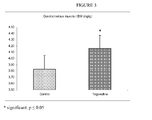
FIGURE 3 shows results of the tail suspension model gastrocnemius muscle wet weight relative to BW for control and treated mice. -
FIGURE 4 shows wet weight of gastrocnemius muscle after treadmill running. - As used throughout the specification and claims, the following definitions apply: "Trigonelline" refers to any form of trigonelline suitable for a nutraceutical, including trigonelline, and trigonelline hydrate of a trigonelline salt or ester.
- "Trigonelline salt or ester" refers to any salt or ester form of trigonelline which can be used to formulate trigonelline into a nutraceutically acceptable form, or into a foodstuff. The salt or ester should be one which is allowable for ingestion by the applicable regulatory agency. Examples of suitable trigonelline salts include sulfate, hydrogen sulfate, chloride, phosphate, and citrate. Examples of suitable trigonelline esters include the methyl ester chloride, and ethyl ester chloride.
- "Prevent" includes reduction of severity of symptoms and or conditions, reducing the risk of developing a symptom or condition, increasing the time before symptoms or conditions develop, early intervention, as well as negation of a symptom or condition.
- Trigonelline can be found in a large variety of plants such as green and roasted coffee beans, Trigonella foenum graecum (fenugreek, Leguminosae), Schumanniophyton magnificum, (Rubiaceae) Mappia foetida, and Strophanthus spp., to name just a few. Thus, trigonelline may be present in a plant extract. Preferably, if using a plant extract as the source of trigonelline, the plant extract contains at least about 20 wt % of trigonelline.
- Alternatively, trigonelline can be made synthetically from nicotinic acid. An example of a synthesis is
DE 344030 (1921 ) "Betaines of the pyridine series" (Merck, E.). - It was found that trigonelline can boost the weight of muscles when used in combination with exercise, and that it can delay the onset of muscle atrophy when muscle is not being used or not being used strenuously.
- As trigonelline has applications in veterinary medicine as well as human medicine, another aspect of this invention is the use of trigonelline to improve muscle health in non-human animals, particularly racing horses, dogs, camels or other animals used for racing or as pack animals, or other animals used for their strength. The trigonelline can be administered to healthy animals, or to injured/sick animals to speed their convalescence.
- Trigonelline or a salt or ester thereof has these specific benefits:
- Helps to prevent muscle loss
- Supports healthy muscle function together with exercise
- Helps to prevent sarcopenia (risk reduction, reduce severity, delay progression)
- Helps to prevent muscle loss during illness or after surgery, thus contributing to faster convalescence and shorter hospital stays
- Helps to prevent frailty in elderly, thus contributing to improved mobility, quality of life and helps to postpone loss of independent living
- Helps one retain muscle development when circumstances prevent one from exercising
- Supports an efficient exercise program
- Supports recovery from muscle damage
- Helps one retain exercise success /training effects longer
- Helps one maintain one's shape/condition longer
- Helps you to find the physical power you need
- Improves body composition together with exercise
- Supports body toning and body shaping
- Promotes myoblast differentiation
- Promotes muscle recovery and repair
- Promotes muscle hypertrophy, when combined with exercise
- We surprisingly found that trigonelline helps when the skeletal muscle is adapting to stimuli like training - muscle load (hypertrophy) or to unloading (atrophy). It helps to strengthen the effects of training and prevents skeletal muscle loss. Therefore trigonelline supports an efficient training program and promotes muscle hypertrophy when combined with exercise/muscle loading.
- Thus trigonelline helps to prevent sarcopenia, frailty in elderly, and muscle loss during bed rest due to illness, surgery and longer hospital stays. Furthermore, trigonelline promotes muscle recovery and repair.
- While dosages may vary, they may range from at least 5 mg per day for a human; preferably from 5 to 5,000 mg/day for a human, more preferably from 10 to 3000 mg/day for a human and even more preferably from 50-500 mg/day for a human. Animal dosages are similar, and can be adjusted accordingly for the weight of the animal.
- In accordance with this invention, the trigonelline or salt or ester thereof is present in a dietary, nutraceutical, or pharmaceutical composition. Preferred compositions comprise trigonelline or a salt or ester thereof and a suitable dietary, nutraceutical or pharmaceutical carrier. The dietary products or nutraceuticals of this invention can be in any format acceptable to the consumer, including functional food and beverages.
- Examples of suitable nutritional formats include various foods and beverages, including shots, cereal or other bars, drinks, protein-rich drinks, supplements, instant beverages, effervescents and the like. Especially preferred are formats which are suitable for sports nutrition, including beverages, protein powders, bars, supplements and instant beverages.
- The following non-limiting Examples are presented to better illustrate the invention.
- We first tested the influence of trigonelline on myoblast differentiation in vitro using C2C12 mouse myoblast cells which are commonly used to study muscle adaptation. C2C12 cells were seeded on 96 well collagen-I plates (1600cells/well) in growth medium (Dulbecco's modified Eagle's medium (DMEM) supplemented with 10% FBS, 2mM L-Glutamine, 1mM pyruvate, 50IU/ml penicillin, 50ug/ml streptavidin) until it reaches100% confluency, approximately 3 days. Cells were then induced to differentiate using differentiation medium (DMEM, 2%FBS, 2mM L-Glutamine, 1mM pyruvate, 50IU/ml penicillin, 50ug/ml streptavidin) with either DMSO (control) or 10 µg/ml trigonelline monohydrate for 24h. Final DMSO concentration was standardized to 0.5% in all wells. Cells were cultured at 37°C, with 5% CO2.
- Cells were fixed with 3.7% formaldehyde solution (37% formaldehyde diluted in growth medium, sterile filtered before used) for 10 min. at room temperature, and washed twice with 1x DPBS (1x Dulbecco's Phosphate Buffered Saline). After permeabilization with 0.1% TritonX-100 (diluted in 1x DPBS) for 2 min. the samples were blocked with 1x DPBS plus 2% BSA for 1h. For myocyte labelling, the cells were labelled with 1:20 anti-alpha-myosin heavy chain antibody (MF-20) for 1hour. The samples were washed with 1x DPBS and fluorescently labelled with secondary antibody (1:250 Alexa 488 IgG antimouse secondary antibody plus 1:2000 Hoechst in 1x DPBS) for 1h. Finally, the cells were washed twice with 1x DPBS and plates were sealed for imaging on the ArrayScan® HCS Reader.
- For image analysis myosin labelled myotubes were quantified on the ArrayScan HCS Reader using BioApplication Morphology Explorer.V2. Myocytes were selected with Object Area larger than 500 and Object Total Intensity greater than 1000. The number of myocytes from triplicate samples are shown in
FIGURE 1 . Trigonelline was seen to increase the differentiation in C2C12 mouse myoblast cells by 36%. - To confirm our in vitro results, trigonelline was first tested in a hypertophy animal model to see the effects during muscle load. The gastrocnemius muscle from one hindlimb of the animals was removed to induce compensatory hypertrophy in the plantaris and soleus muscles by multiple mechanisms. This model increases the muscle weight under muscle load/training. It simulates the human condition of an average human who is physically active or an athlete to support skeletal muscle function during exercise.
- Female C57B1/6 mice were delivered at a weight of 18-20 g and acclimatized to the facilities for a period of one week. At the beginning of the study the animals were randomized into two groups (10 animals per group).
- The animals were anesthetized and the left hindlimb of the animals was fixed. A small incision was made through the skin over the gastrocnemius muscle. The complete gastrocnemius muscle and its tendons were exposed. Both heads of the gastrocnemius muscle were carefully dissected from the underlying intact muscles and care was taken not to rupture nerves and vessels. The skin was closed with a silk and the animals were returned separately into their cages. After recovering from anesthesia, the animals could move immediately without problems. All animals received an analgesic. Animals were treated for three weeks by gavage with trigonelline-hydrochloride at a daily dosage of 300mg/kg BW and the control group received vehicle.
- Using this technique we have identified and quantified increased skeletal muscle weight of the plantaris and soleus muscle in the operated (pQCT-measurement) and in the gastrocnemius, plantaris and soleus muscle of the non-operated leg (weight measurement). The hypertrophy in the operated leg is a compensatory reaction of the remaining muscles after the gastrocnemius muscle has been removed. The hypertrophy on the non-operated leg is due to a special training effect, because this leg was used more.
- The wet weight of the non-operated gastrocnemius muscle (relative to the body weight) increased by 7% in the group receiving trigonelline (
FIGURE 2 ). - The absolute and the relative (compared to body weight of the animals) wet weight of all analyzed muscles from the non-operated leg were increased.
- In the operated leg, the total leg weight and the muscle cross-sectional area, as assessed using computer-tomography measurement were also increased. Data are shown in Table 1.
TABLE 1 Parameters Control
(n=10)Trigonelline-hydrochloride
300 mg/kgBW
(n=10)M. gastrocnemius wet weight (mg) (non-operated leg) 98.5 99.3 M. plantaris wet weight (mg) (non-operated leg) 12.4 13 M. soleus wet weight (mg) (non-operated leg) 7.1 7.2 M. gastrocnemius wet weight / body weight (mg/g) (non-operated leg) 4.44 4.57 M. plantaris wet weight / body weight (mg/g) (non-operated leg) 0.56 0.60 M. soleus wet weight / body weight (mg/g) (non-operated leg) 0.32 0.33 Gastrocnemius-Plantaris-Soleus muscle weight (whole leg) / body weight (mg/g) (non-operated leg) 5.32 5.50 Total leg cross-sectional area (mm2) - non operated leg 33.90 35.05 Muscle cross-sectional area (mm2) - non operated leg 26.27 32.15 Total leg cross-sectional area (mm2) - operated leg 25.40 26.79 Muscle cross-sectional area (mm2) - operated leg 19.13 23.72 - These results show that under loading (after surgery of the gastrocnemius the muscle - hypertrophy)/training conditions, skeletal muscle wet weight increased in the animals.
- To extend our in vitro and in vivo results we were also interested in testing the effects of trigonelline during skeletal muscle unloading (atrophy conditions). Therefore we conducted a second in vivo study were the hindlimbs of the animals were unloaded to induce skeletal muscle atrophy.
- Tail suspension leads to skeletal muscle atrophy in the unloaded hindlimbs of the animals. The results can be transferred to the human situation: sarcopenia (degenerative loss of skeletal muscle mass and strength during the process of ageing) or immobilization of skeletal muscle (e.g. after prolonged bed rest).
- Female C57B1/6 mice were delivered at a weight of 18-20 g and acclimatized to the facilities for a period of one week. At the beginning of the study the animals were randomized into two groups (10 animals per group).
- Thereafter the groups were placed in special cages and the hindlimbs were unloaded (tail suspension) for a duration of three weeks. All mice were housed separately and had access to feed and water ad libidum. Animals were treated for three weeks by gavage with trigonelline-hydrochloride at a daily dosage of 300 mg/kg/BW and the control group received vehicle.
- We found that the wet weight of the gastrocnemius muscle (relative to the body weight) increased by 9% (
FIGURE 3 ), a statistically significant result. - We also compared the other two muscles from the operated hindlimb (plantaris muscle and soleus muscle). The results, presented in TABLE 2 below, show an increase of the wet weights of the muscles in animals treated with trigonelline-hydrochloride compared to the control animals (absolute muscle weight). Furthermore, when muscle weights were normalized to the body weights, animals treated with trigonelline-hydrochloride demonstrated an increased muscle weight / body weight ratio (relative muscle weight), i.e, an improved body composition. The total weight for muscles in one leg was also significantly increased when treated with trigonelline-hydrochloride (whole leg relative to body weight). Computer tomography measurements of total and muscle leg area confirmed that trigonelline-hydrochloride treatment increases skeletal muscle mass.
TABLE 2 Parameters Control
(n=10)Trigonelline-hydrochloride
300 mg/kgBW
(n=10)M. gastrocnemius wet weight (mg) 78.13 86.01 * M. plantaris wet weight (mg) 9.84 10.53 M. soleus wet weight (mg) 4.29 4.62 M. gastrocnemius wet weight / body weight (mg/g) 3.83 4.16 * M. plantaris wet weight / body weight (mg/g) 0.48 0.51 * M. soleus wet weight / body weight (mg/g) 0.21 0.22 Gastrocnemius-Plantaris-Soleus muscle weight (whole leg) / body weight (mg/g) 4.52 489 * Total leg cross-sectional area (mm2) 29.1 30.4 Muscle cross-sectional area (mm2) 26.6 27.8 * significant: p ≤ 0.05 - The results show that under unloading/atrophy of the animal total leg cross-sectional area, the muscle weights increase; i.e. more of the muscle mass is retained during inactivity in trigonelline- supplemented animals versus controls.
- To test the effect of trigonelline in non-trained animals, we performed a maximal endurance test after a treatment period of three weeks.
- Female C57B1/6 mice were delivered at a weight of 18-20 g and acclimatized to the facilities for a period of one week. At the beginning of the study the animals were randomized into two groups (10 animals per group). All mice were housed separately and had access to feed and water ad libidum. Animals were treated for three weeks by gavage with trigonelline-hydrochloride at a daily dosage of 300 mg/kg/BW and the control group received vehicle.
- For acclimatization, animals were placed on the treadmill for 5 minutes after two weeks. The maximal endurance test was performed two day before the section of the animals.
- We found that the wet weight of the gastrocnemius muscle was equal in both groups (
FIGURE 4 ), as was the wet weight of the other muscles assessed (data not shown). Also, endurance of untrained animals was not influenced by 3 weeks of trigonelline supplementation.Parameters Control
(n=10)Trigonelline-hydrochloride
300 mg/kgBW
(n=10)Mean running time (minutes) 39.00 38.70 M. gastrocnemius wet weight (mg) 100.65 100.66 M. plantaris wet weight (mg) 12.16 12.12 M. soleus wet weight (mg) 6.28 6.29 M. gastrocnemius wet weight / body weight (mg/g) 4.64 4.57 M. plantaris wet weight / body weight (mg/g) 0.56 0.55 M. soleus wet weight / body weight (mg/g) 0.29 0.29 Gastrocnemius-Plantaris-Soleus muscle weight (whole leg) / body weight (mg/g) 5.49 5.41 - These results show that trigonelline has no effect on endurance and skeletal muscle mass in untrained mice.
Claims (8)
- Use of trigonelline and/or a salt or ester thereof, for the manufacture of a nutraceutical or food product which enhances muscle mass in combination with exercise and /or decreases the amount of muscle loss during times of lesser muscle activity.
- Use according to Claim 1 which is for human use.
- Use according to Claim 1 which is for veterinary use.
- Use according to Claim 1 or 2 wherein the exercise is body building or weight training.
- A method of increasing muscle mass in combination with exercise, or decreasing the amount of muscle mass lost during time of lesser muscle activity comprising administering trigonelline and/or a salt or ester thereof.
- A method according to Claim 5 wherein the trigonelline and/or a salt or ester thereof is administered to a human.
- A method according to Claim 5 wherein the trigonelline and/or salt or ester thereof is administered to a non-human animal.
- A method according to Claim 5 or 6 wherein administration is during weight training.
Priority Applications (14)
| Application Number | Priority Date | Filing Date | Title |
|---|---|---|---|
| EP09162470A EP2269607A1 (en) | 2009-06-11 | 2009-06-11 | Trigonelline as a muscle stimulant |
| ES10725100.1T ES2688424T3 (en) | 2009-06-11 | 2010-06-10 | Trigonelline as a muscle stimulant |
| US13/321,971 US8772230B2 (en) | 2009-06-11 | 2010-06-10 | Niacin and/or trigonelline as a muscle stimulant |
| PCT/EP2010/058124 WO2010142750A1 (en) | 2009-06-11 | 2010-06-10 | Niacin and/or trigonelline as a muscle stimulant |
| JP2012514471A JP5910495B2 (en) | 2009-06-11 | 2010-06-10 | Niacin and / or trigonelline as muscle stimulants |
| PL10725100T PL2440206T3 (en) | 2009-06-11 | 2010-06-10 | Trigonellin as a muscle stimulator |
| DK10725100.1T DK2440206T3 (en) | 2009-06-11 | 2010-06-10 | Trigonellin as a muscle stimulant |
| KR1020127000714A KR101810698B1 (en) | 2009-06-11 | 2010-06-10 | Niacin and/or trigonelline as a muscle stimulant |
| EP10725100.1A EP2440206B1 (en) | 2009-06-11 | 2010-06-10 | Trigonellin as a muscle stimulant |
| CN201080025327.4A CN102802626B (en) | 2009-06-11 | 2010-06-10 | Niacin and/or Trigonelline as muscle stimulants |
| BRPI1011245-6A BRPI1011245B1 (en) | 2009-06-11 | 2010-06-10 | USE OF TRIGONELINE AS A MUSCLE STIMULATOR. |
| US12/959,621 US8323707B2 (en) | 2009-06-11 | 2010-12-03 | Trigonelline as a muscle stimulant |
| US13/606,369 US20130018076A1 (en) | 2009-06-11 | 2012-09-07 | Trigonelline as a muscle stimulant |
| US14/548,437 US9241938B2 (en) | 2009-06-11 | 2014-11-20 | Trigonelline as a muscle stimulant |
Applications Claiming Priority (1)
| Application Number | Priority Date | Filing Date | Title |
|---|---|---|---|
| EP09162470A EP2269607A1 (en) | 2009-06-11 | 2009-06-11 | Trigonelline as a muscle stimulant |
Publications (1)
| Publication Number | Publication Date |
|---|---|
| EP2269607A1 true EP2269607A1 (en) | 2011-01-05 |
Family
ID=41059622
Family Applications (1)
| Application Number | Title | Priority Date | Filing Date |
|---|---|---|---|
| EP09162470A Ceased EP2269607A1 (en) | 2009-06-11 | 2009-06-11 | Trigonelline as a muscle stimulant |
Country Status (1)
| Country | Link |
|---|---|
| EP (1) | EP2269607A1 (en) |
Cited By (5)
| Publication number | Priority date | Publication date | Assignee | Title |
|---|---|---|---|---|
| JP2015029503A (en) * | 2013-08-06 | 2015-02-16 | 日本メナード化粧品株式会社 | Stem cell undifferentiated state maintenance agent and growth promoter |
| WO2019141627A1 (en) * | 2018-01-17 | 2019-07-25 | University Of Southampton | Methods to predict risk of and to stratify sarcopenia and nad deficiency |
| WO2021004913A1 (en) * | 2019-07-05 | 2021-01-14 | Société des Produits Nestlé S.A. | Compositions and methods using trigonelline and high protein for preventing or treating conditions or disorders in skeletal muscle |
| WO2021004915A1 (en) * | 2019-07-05 | 2021-01-14 | Société des Produits Nestlé S.A. | Compositions and methods using trigonelline and minerals for preventing or treating conditions or disorders in skeletal muscle |
| US20220249462A1 (en) * | 2019-07-05 | 2022-08-11 | Societe Des Produits Nestle S.A. | Compositions and methods using trigonelline to produce intracellular nad+ |
Citations (8)
| Publication number | Priority date | Publication date | Assignee | Title |
|---|---|---|---|---|
| DE344030C (en) | ||||
| WO2005021596A2 (en) * | 2003-08-28 | 2005-03-10 | Technical Sourcing International, Inc. | Compositions and methods for glycogen synthesis |
| US20050226948A1 (en) | 2004-03-02 | 2005-10-13 | Lee Steve S | Methods for enhancing the transport of glucose into muscle |
| US20050233014A1 (en) * | 2004-03-02 | 2005-10-20 | Lee Steve S | Methods for affecting homeostasis and metabolism in a mammalian body |
| US20070105793A1 (en) | 2005-11-04 | 2007-05-10 | Curt Hendrix | Compositions and methods using nicotinic acid for treatment of hypercholesterolemia, hyperlipidemia nd cardiovascular disease |
| US20070259861A1 (en) | 2006-03-08 | 2007-11-08 | Pharmena North America Inc. | Combination therapy with non-selective COX inhibitors to prevent COX-related gastric injuries |
| US20080199517A1 (en) * | 2007-02-19 | 2008-08-21 | Indus Biotech Private Ltd | Composition and a process thereof |
| WO2009073942A1 (en) * | 2007-12-12 | 2009-06-18 | Iovate T. & P. Inc. | Tropane alkaloids and trigonelline combinations and methods for administering the same |
-
2009
- 2009-06-11 EP EP09162470A patent/EP2269607A1/en not_active Ceased
Patent Citations (9)
| Publication number | Priority date | Publication date | Assignee | Title |
|---|---|---|---|---|
| DE344030C (en) | ||||
| US20050176827A1 (en) * | 2002-05-10 | 2005-08-11 | Lee Steve S. | Compositions and methods for glycogen synthesis |
| WO2005021596A2 (en) * | 2003-08-28 | 2005-03-10 | Technical Sourcing International, Inc. | Compositions and methods for glycogen synthesis |
| US20050226948A1 (en) | 2004-03-02 | 2005-10-13 | Lee Steve S | Methods for enhancing the transport of glucose into muscle |
| US20050233014A1 (en) * | 2004-03-02 | 2005-10-20 | Lee Steve S | Methods for affecting homeostasis and metabolism in a mammalian body |
| US20070105793A1 (en) | 2005-11-04 | 2007-05-10 | Curt Hendrix | Compositions and methods using nicotinic acid for treatment of hypercholesterolemia, hyperlipidemia nd cardiovascular disease |
| US20070259861A1 (en) | 2006-03-08 | 2007-11-08 | Pharmena North America Inc. | Combination therapy with non-selective COX inhibitors to prevent COX-related gastric injuries |
| US20080199517A1 (en) * | 2007-02-19 | 2008-08-21 | Indus Biotech Private Ltd | Composition and a process thereof |
| WO2009073942A1 (en) * | 2007-12-12 | 2009-06-18 | Iovate T. & P. Inc. | Tropane alkaloids and trigonelline combinations and methods for administering the same |
Non-Patent Citations (9)
| Title |
|---|
| AGASTHIYAR: "Balavakadam", 1933, pages: 310 |
| ANONYMOUS: "Aide-prise-poid. Grossir", FORUM NUTRITION, 30 April 2009 (2009-04-30), XP002546149, Retrieved from the Internet <URL:http://forum.doctissimo.fr/nutrition/grossir/aide-prise-poid-sujet_147967_1.htm> [retrieved on 20090916] * |
| ANONYMOUS: "Phytothérapie", INTERNET ARTICLE, 25 January 2008 (2008-01-25), XP002546150, Retrieved from the Internet <URL:http://www.musculationmultisports.com/Plantes%20baseball%20baseball.html> [retrieved on 20090916] * |
| DATABASE TKDL [online] "Alkhubs Birrayib", XP003027257, Database accession no. MH5/1100 |
| DATABASE TKDL [online] "Ilaneer Ennai", XP003027259, Database accession no. AM04/337 |
| DATABASE TKDL [online] "Rasamata", XP003027258, Database accession no. VS/803 |
| MOHAMMAD AKBAR ARZANI: "Qaraabaadeen Qaari", 1968, pages: 167 |
| Retrieved from the Internet <URL:http://web.archive.org/web/*///http://www.musculationmultisports.com/Plantes%20baseball%20baseball.html> [retrieved on 20090917] * |
| VAIDYA PANDITA HARIPRANNA: "RASAYOGA SAGARA", vol. II, 1998, pages: 242 |
Cited By (8)
| Publication number | Priority date | Publication date | Assignee | Title |
|---|---|---|---|---|
| JP2015029503A (en) * | 2013-08-06 | 2015-02-16 | 日本メナード化粧品株式会社 | Stem cell undifferentiated state maintenance agent and growth promoter |
| WO2019141627A1 (en) * | 2018-01-17 | 2019-07-25 | University Of Southampton | Methods to predict risk of and to stratify sarcopenia and nad deficiency |
| US11815515B2 (en) | 2018-01-17 | 2023-11-14 | University Of Southampton | Methods to predict risk of and to stratify sarcopenia and NAD deficiency |
| WO2021004913A1 (en) * | 2019-07-05 | 2021-01-14 | Société des Produits Nestlé S.A. | Compositions and methods using trigonelline and high protein for preventing or treating conditions or disorders in skeletal muscle |
| WO2021004915A1 (en) * | 2019-07-05 | 2021-01-14 | Société des Produits Nestlé S.A. | Compositions and methods using trigonelline and minerals for preventing or treating conditions or disorders in skeletal muscle |
| CN114072147A (en) * | 2019-07-05 | 2022-02-18 | 雀巢产品有限公司 | Compositions and methods for preventing or treating skeletal muscle disorders or disorders using trigonelline and high protein |
| CN114126630A (en) * | 2019-07-05 | 2022-03-01 | 雀巢产品有限公司 | Compositions and methods for preventing or treating skeletal muscle disorders or disorders using trigonelline and minerals |
| US20220249462A1 (en) * | 2019-07-05 | 2022-08-11 | Societe Des Produits Nestle S.A. | Compositions and methods using trigonelline to produce intracellular nad+ |
Similar Documents
| Publication | Publication Date | Title |
|---|---|---|
| US9241938B2 (en) | Trigonelline as a muscle stimulant | |
| RU2751638C2 (en) | Compositions containing nicotine amidriboside and urolitin | |
| CN101495112B (en) | Dietary or pharmaceutical composition containing tricyclic diterpenes and derivatives thereof for treating depression | |
| KR20090037403A (en) | Aging inhibitor | |
| KR20090082908A (en) | Rosemary extracts, dietary and pharmaceutical compositions containing them and their uses | |
| EP2269607A1 (en) | Trigonelline as a muscle stimulant | |
| WO2010146078A2 (en) | Novel uses of hydroxyproline compositions | |
| US11504413B2 (en) | Multi-nutrient composition | |
| US20250186418A1 (en) | Compositions containing nicotinamide and vitamin b6 and methods of using such compositions for rehabilitation | |
| JP6677775B2 (en) | Muscle builders | |
| US20230390264A1 (en) | Compositions containing nicotinamide and vitamin b6 and methods of using such compositions for promoting muscle growth | |
| US20230390262A1 (en) | Compositions containing nicotinamide and vitamin b6 and methods of using such compositions for treating sarcopenia and frailty | |
| RU2859945C2 (en) | Compositions comprising nicotinamide and vitamin b6, and methods of using such compositions for stimulating muscle growth | |
| EP4311549A1 (en) | Composition comprising creatine for use in the treatment of post viral fatigue syndrome | |
| JP2012180331A (en) | Oral ingestion medicine for inducement of early recovery of muscle damage | |
| US20190350224A1 (en) | Method for improving muscle force or physical function | |
| CN119255795A (en) | Compositions comprising creatine for treating post-viral fatigue syndrome | |
| WO2026068685A1 (en) | Compositions and methods using a combination of nicotinamide and glycine | |
| JP2023160181A (en) | Ornithine blood concentration improver | |
| US20260034171A1 (en) | Composition for Improving Cognitive Function | |
| HK40000293A (en) | Compositions comprising nicotinamide riboside and a urolithin |
Legal Events
| Date | Code | Title | Description |
|---|---|---|---|
| PUAI | Public reference made under article 153(3) epc to a published international application that has entered the european phase |
Free format text: ORIGINAL CODE: 0009012 |
|
| AK | Designated contracting states |
Kind code of ref document: A1 Designated state(s): AT BE BG CH CY CZ DE DK EE ES FI FR GB GR HR HU IE IS IT LI LT LU LV MC MK MT NL NO PL PT RO SE SI SK TR |
|
| AX | Request for extension of the european patent |
Extension state: AL BA RS |
|
| STAA | Information on the status of an ep patent application or granted ep patent |
Free format text: STATUS: THE APPLICATION HAS BEEN REFUSED |
|
| TPAC | Observations filed by third parties |
Free format text: ORIGINAL CODE: EPIDOSNTIPA |
|
| 18R | Application refused |
Effective date: 20110210 |