EP2267862A2 - Charging system and method for managing the charging process depending on temperature and voltage - Google Patents
Charging system and method for managing the charging process depending on temperature and voltage Download PDFInfo
- Publication number
- EP2267862A2 EP2267862A2 EP10161040A EP10161040A EP2267862A2 EP 2267862 A2 EP2267862 A2 EP 2267862A2 EP 10161040 A EP10161040 A EP 10161040A EP 10161040 A EP10161040 A EP 10161040A EP 2267862 A2 EP2267862 A2 EP 2267862A2
- Authority
- EP
- European Patent Office
- Prior art keywords
- battery
- temperature
- electric quantity
- threshold
- voltage
- Prior art date
- Legal status (The legal status is an assumption and is not a legal conclusion. Google has not performed a legal analysis and makes no representation as to the accuracy of the status listed.)
- Withdrawn
Links
Images

Classifications
-
- H—ELECTRICITY
- H02—GENERATION; CONVERSION OR DISTRIBUTION OF ELECTRIC POWER
- H02J—ELECTRIC POWER NETWORKS; CIRCUIT ARRANGEMENTS OR SYSTEMS FOR SUPPLYING OR DISTRIBUTING ELECTRIC POWER; SYSTEMS FOR STORING ELECTRIC ENERGY
- H02J7/00—Circuit arrangements for charging or discharging batteries or for supplying loads from batteries
- H02J7/90—Regulation of charging or discharging current or voltage
- H02J7/971—Regulation of charging or discharging current or voltage the charge cycle being controlled or terminated in response to non-electric parameters
- H02J7/975—Regulation of charging or discharging current or voltage the charge cycle being controlled or terminated in response to non-electric parameters in response to temperature
- H02J7/977—Regulation of charging or discharging current or voltage the charge cycle being controlled or terminated in response to non-electric parameters in response to temperature of the battery
-
- H—ELECTRICITY
- H02—GENERATION; CONVERSION OR DISTRIBUTION OF ELECTRIC POWER
- H02J—ELECTRIC POWER NETWORKS; CIRCUIT ARRANGEMENTS OR SYSTEMS FOR SUPPLYING OR DISTRIBUTING ELECTRIC POWER; SYSTEMS FOR STORING ELECTRIC ENERGY
- H02J7/00—Circuit arrangements for charging or discharging batteries or for supplying loads from batteries
- H02J7/90—Regulation of charging or discharging current or voltage
- H02J7/96—Regulation of charging or discharging current or voltage in response to battery voltage
Definitions
- the invention relates to a method for charging a battery and, more particularly, to a technique for charging a battery at a high temperature.
- a typical battery charger includes three control circuits, a constant current control circuit, a constant voltage control circuit, and a constant temperature control circuit.
- the battery charger enters a constant current mode.
- the constant current control circuit may keep a stable charging current to charge the battery.
- the temperature of a conventional charger is between 0 degree centigrade (°C) and 45 °C, and the conventional charger may charge the battery continuously in the constant current mode as long as the voltage of the battery is less than 4.2 volts (V).
- V 4.2 volts
- the conventional charger When the voltage of the battery reaches a preset voltage which is usually 4.2V, the conventional charger enters the constant voltage mode. At that moment, the constant voltage control circuit in the conventional charger may charge the battery with a constant voltage.
- the constant temperature control circuit detects that the temperature of the battery is higher than 45 °C, to avoid the expansion and liquid leakage caused by charging the battery at 4.2V voltage and high temperature, even the voltage of the battery does not reach 4.2V, the conventional charger stops charging the battery immediately when the preset temperature such as 45 °C is reached.
- a battery cell may be charged with a small constant voltage such as 4.1 V at the temperature between 45°C and 60 °C. The conventional charger cannot switch the charging voltage according to the temperature change.
- the invention discloses a charging system which may charge a battery in a wider temperature range.
- the battery may achieve high voltage in the charge process at high temperature without changing hardware or a charging chip greatly.
- the invention discloses a method for managing electric quantity of a battery, which may charge a battery normally in different temperatures and avoid problems such as the expansion of a battery cell.
- the invention discloses a charging system which may charge a battery in a wider range.
- the invention includes a charger and a detecting unit.
- the detecting unit may measure a plurality of electrical parameters of the battery. When the temperature of the battery is lower than a first threshold temperature, the charger may charge the battery normally. When the temperature of the battery is higher than the first threshold temperature but lower than a second threshold temperature, the detecting unit may determine whether the electric quantity of the battery is lower than a first threshold voltage. If the temperature of the battery is between the first threshold temperature and the second threshold temperature, and the electric quantity of the battery is lower than the first threshold temperature, the charger charges the battery continuously.
- the detecting unit makes the charger stop charging the battery any more.
- the detecting system also may be used for stopping charging the battery.
- the battery may be coupled to an electronic device during charging. Therefore, when the detecting unit determines that the temperature of the battery is larger than the second threshold temperature and the electric quantity is larger than a second threshold voltage, if the battery is coupled to an electronic device, the detecting unit may start the electronic device to discharge the battery to power the electronic device.
- the second threshold voltage is lower than the first threshold voltage.
- the invention also discloses a method for managing the electric quantity of a battery.
- the method including the following steps. First, when the temperature of the battery is lower than a first threshold temperature, a battery is charged normally. Second, when the temperature of the battery is higher than the first threshold temperature and is lower than a second threshold temperature, and the electric quantity of the battery is lower than a first threshold voltage, the battery is charged continuously. On the contrary, when the temperature of the battery is between the first threshold temperature and the second threshold temperature, and the electric quantity of the battery is higher than the first threshold voltage, the battery is not charged any more.
- the battery is also not charged any more.
- the battery may be charged continuously without changing hardware or charging chip greatly when the temperature of the battery is between the first threshold temperature and the second threshold temperature, and the electric quantity of the battery is lower than a first threshold voltage. Therefore, the battery may be charged in a wider temperature range, and the expansion of the battery is usually avoided when the battery is charged at a high temperature and a high voltage.
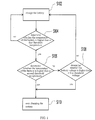
- FIG. 1 is a flow chart showing a method for managing an electric quantity of a battery in an embodiment of the invention
- FIG. 2 is a block diagram showing a charging system in an embodiment of the invention
- FIG. 3 is a block diagram showing a charging system in another embodiment of the invention.
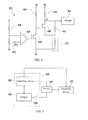
- FIG. 4 is a circuit diagram showing the detecting unit in FIG. 3 in an embodiment of the invention.
- FIG. 5 is a circuit diagram showing that the battery is coupled to an electronic device during a charging process in an embodiment of the invention.
- FIG. 1 is a flow chart showing a method for managing an electric quantity of a battery in an embodiment of the invention.
- the battery adapted to the managing method disclosed in the embodiment may be a lithium battery.
- step S102 is performedis performedneedingeddch as 45 onic deviceatteryure teh abexceeds the f't'v or teh f'f't and the s't't, bu the e'q of the batt, and then step S104 is performed to determine whether the temperature of the battery is higher than a first threshold temperature.
- the first threshold temperature is preferably 45 °C, but it is not limited thereto.
- step S102 If the temperature of the battery does not exceed the first threshold temperature ("no" denoted in step S104), step S102 is continuously performed to charge the battery normally. However, if the temperature of the battery exceeds the first threshold temperature ("yes" denoted in step S104), step S106 is further performed to determine whether the temperature of the battery is higher than a second threshold temperature.
- the second threshold temperature is preferably 60 °C, but it is not limited thereto.
- step S 108 is selectively performed, and that is, whether the electric quantity(voltage values) of the battery exceeds a first threshold voltage is further determined.
- the first threshold voltage may be higher than 3.1V but lower than 4.2V, and for example, it may be 4.1V.
- step S108 if the temperature of the battery is determined between first threshold temperature and the second threshold temperature, and the electric quantity(voltage values) of the battery does not exceed the first threshold voltage ("no" denoted in step S 108), the method goes back to step S 102 to charge the battery continuously.
- step S106 if the temperature of the battery exceeds the second threshold temperature ("yes" denoted in step S106), as shown in step S 110 in the embodiment, the battery is not charged any more.
- the battery is not charged any more to avoid possible problems such as the battery expansion.
- FIG. 2 is a block diagram showing a charging system in the embodiment of the invention.
- a charging system 200 in the embodiment may charge a battery 210 (a lithium battery).
- the charging system 200 includes a detecting unit 202 and a charger 204.
- the detecting unit 202 is coupled to the charger 204.
- the detecting unit 202 may be realized by software in some embodiment or a microprocessor, in some other embodiments, and it is not limited in the invention.
- the charging system 200 also includes a switch unit 206 coupled to an end of the charger 204 and an end of the battery 210.
- the charger 204 may control the switch unit 206 to be on or off. Then, the charger 204 determines whether the voltage at an output end reaches a preset voltage (and a detecting result DET is also outputted to the charger 204).
- the preset voltage is, for example, 4.2V. If the voltage at the outputted end of the charger 204 does not reach the preset voltage, a constant current is provided to charge the battery 210, and the constant current may be 500 mill amperes (mA).
- the charger 204 if the voltage outputted by the charger 204 reaches the preset voltage, the charger 204 provides a constant voltage source to the battery 210.
- the potential of the voltage source may be the same as the preset voltage, and they are both 4.2 V However, it is also not limited in the invention.
- the battery 210 may have a testing unit 212.
- the detecting unit 202 may obtain a plurality of instant electrical parameters of the battery 210 via the testing unit 212.
- the electrical parameters include a temperature of the battery, a voltage, a current and so on.
- the detecting unit 202 obtains the instant electrical parameters of the battery 210, the electrical parameters may be taken as a detecting result DET to be sent to the charger 204.
- a first threshold temperature such as 45 °C
- the detecting unit 202 may determine whether the electric quantity (voltage values)of the battery 210 exceeds the first threshold voltage (such as 4.1 V).
- the charger 204 charges the battery 210 continuously.
- the charger 204 may open the switch unit 206 according to the detecting result DET to stop charging the battery 210.
- the charger 204 also may open the switch unit 206 according to the detecting result DET to stop charging the battery 210.
- the charging system 200 also may turn off the switch unit 206 to stop charging the battery.
- the testing unit 212 is disposed in the battery 210. In other embodiments, the testing unit 212 also may be disposed in the charger 204 or separately disposed in the electronic device, and it is not limited in the invention.
- FIG. 3 is a block diagram showing a charging system in another embodiment of the invention.
- a charging system 300 in the embodiment also may charge a battery 310 (lithium battery).
- the charging system 300 also includes a detecting unit 302, a charger 304, and a switch unit 306.
- the detecting unit 302 may be coupled to a positive pole and a negative pole of the battery 310, and it also may be coupled to the charger 304.
- the charger 304 may be coupled to the battery 310 via the switch unit 306.
- the battery 310 in the embodiment does not have the testing unit 212 in FIG. 2 . Therefore, the detecting unit 302 needs to detect the electric quantity (voltage values) of the battery 310 by measuring the voltage difference between the positive pole and negative pole of the battery 310.
- the battery 310 also may include a thermal sensing unit 312 such as a thermal resistor.
- the electrical characteristic of the thermal sensing unit 312, such as the resistance value, may change along with an environment temperature. Therefore, the charger 304 may determine the temperature of the battery 310 according to the electrical characteristic of the thermal sensing unit 312.
- other operating modes are the same as those in FIG. 2 , and they are not illustrated herein for a concise purpose.
- FIG. 4 is a circuit diagram showing the detecting unit in FIG. 3 in an embodiment of the invention.
- the detecting unit 302 includes a comparator 402, transistors 404 and 406, and resistors 408, 410, 412, 414 and 416.
- a first input end of the comparator 402 may receive an output voltage Vbat of the battery 310 namely the voltage difference between the positive pole and negative pole of the battery 310 via the resistor 408.
- the first input end of the comparator 402 also may be connected to the ground via the resistor 410.
- the second input end of the comparator 402 may be coupled to a reference voltage Vref.
- the output end of the comparator 402 is coupled to the gate of the transistor 404, a first source end and the first drain end of the transistor 404 is coupled to a first voltage bias V1 via the resistor 412, and a second source end and the second drain end is connected to the ground.
- the gate of the transistor 406 is coupled to the first source end and the first drain end of the transistor 404, and the first source end and the first drain end of the transistor 406 is coupled to a second voltage bias V2 via the resistor 414.
- the second source end and the second drain end of the transistor 406 may be connected to the ground via the thermal sensing unit 312 and coupled to the first source end the first drain end of the transistor 406 to form a node A1 via the resistor 416.
- both the transistors 404 and 406 may be N-mental-oxide-semiconductor (NMOS) transistors.
- the first input end of the comparator 402 receives a partial voltage of the output voltage Vbat of the battery 310.
- R1, R2 and R3 are the resistances of resistors 414 and 416, and the thermal sensing unit 312, respectively.
- the resistance of the thermal sensing unit 312 may change along with the temperature change.
- V A ⁇ 1 V ⁇ 1 ⁇ R ⁇ 3 R ⁇ 1 + R ⁇ 3
- the potential of the node A1 when the voltage of the battery Vbat exceeds the first threshold voltage may exceeds the potential of the node A1 when the voltage of the battery Vbat is lower than the first threshold voltage.
- a cut off charging temperature set by the charger 304 is higher, which may be 60 °C.
- the charger 304 may reduce the cut off charging temperature to a temperature such as 45 °C by changing the resistance or the partial voltage via the above circuit.
- the charger 304 allows the temperature of the battery 310 to be low. For example, when the voltage of the battery Vbat exceeds 4.1V, and the temperature of the battery 310 is higher than 45 °C (but lower than 60 °C), the charger 304 may open the switching unit 306 to stop charging the battery 310. On the contrary, when the voltage of the battery Vbat is lower than 4.1V, even the temperature of the battery 310 is between 45 °C to 60 °C, the charger 304 also may conduct the switching unit 306 to charge the battery 310 continuously.
- FIG. 5 is a circuit diagram showing that the battery is coupled to an electronic device during a charging process in an embodiment of the invention.
- the charging system 500 in the embodiment also includes a detecting unit 502, a charger 504, and a switch unit 506.
- the coupling modes of the three components are the same as those in the above two embodiments, and they are not illustrated herein for a concise purpose.
- the battery 510 is still coupled to an electronic device while it is charged.
- the charger may be a simplified charger (a travel charger or a vehicle charger) directly charging the battery of the electronic device (such as a portable phone).
- the charger 504 opens the switch unit 506.
- the detecting unit 502 further may determine whether the electric quantity (voltage values) of the battery 510 exceeds a second threshold voltage.
- the second threshold voltage is lower than the first threshold voltage, and it may be 3.8V.
- the charger 504 If the temperature of the battery 510 exceeds the second threshold temperature, but the electric quantity (voltage values) of the battery 510 does not exceed the second threshold voltage, the charger 504 only opens the switch unit 506. On the contrary, if the temperature of the battery 510 exceeds the second threshold temperature, and the electric quantity (voltage values) of the battery 510 exceeds the second threshold voltage, the charger 504 opens the switch unit 506, and the detecting unit 502 also may start the electronic device 512 to discharge the battery to power the electronic device 512. Therefore, in the embodiment, the battery expansion due to overlarge electric quantity (voltage values) in an over high temperature environment is avoided.
- the discharge function is also usable without the travel charger or the vehicle charger.
- the charging system 500 may be disposed in the electronic device 512.
- the invention may allow the battery to be charged in a wider temperature range.
- the battery in the charging process, if the temperature of the battery is determined to be between the first threshold temperature and the second threshold temperature, but the electric quantity(voltage values) of the battery exceeds the first threshold voltage, or the temperature of the battery exceeds the second threshold temperature, the battery is not charged any more. Therefore, the battery may be protected to avoid the expansion due to high temperature when the battery is charged.
Landscapes
- Engineering & Computer Science (AREA)
- Power Engineering (AREA)
- Secondary Cells (AREA)
- Charge And Discharge Circuits For Batteries Or The Like (AREA)
Abstract
Description
- The invention relates to a method for charging a battery and, more particularly, to a technique for charging a battery at a high temperature.
- A typical battery charger includes three control circuits, a constant current control circuit, a constant voltage control circuit, and a constant temperature control circuit. When a battery with less electric quantity is charged, the battery charger enters a constant current mode. At that moment, the constant current control circuit may keep a stable charging current to charge the battery. Generally, the temperature of a conventional charger is between 0 degree centigrade (°C) and 45 °C, and the conventional charger may charge the battery continuously in the constant current mode as long as the voltage of the battery is less than 4.2 volts (V). When the voltage of the battery reaches 4.2 V, the charger switches to a constant voltage mode. At that moment, the current becomes less and less gradually until the battery is fully charged.
- When the voltage of the battery reaches a preset voltage which is usually 4.2V, the conventional charger enters the constant voltage mode. At that moment, the constant voltage control circuit in the conventional charger may charge the battery with a constant voltage. When the constant temperature control circuit detects that the temperature of the battery is higher than 45 °C, to avoid the expansion and liquid leakage caused by charging the battery at 4.2V voltage and high temperature, even the voltage of the battery does not reach 4.2V, the conventional charger stops charging the battery immediately when the preset temperature such as 45 °C is reached. However, a battery cell may be charged with a small constant voltage such as 4.1 V at the temperature between 45°C and 60 °C. The conventional charger cannot switch the charging voltage according to the temperature change. Therefore, when the temperature is between 45 °C and 60 °C, even if the voltage is low, the battery cannot be charged. Therefore, conventionally, when the temperature is higher than 45 °C, the battery cannot be charged, and the battery is charged when the temperature is lower than 45 °C.
- The invention discloses a charging system which may charge a battery in a wider temperature range. The battery may achieve high voltage in the charge process at high temperature without changing hardware or a charging chip greatly.
- The invention discloses a method for managing electric quantity of a battery, which may charge a battery normally in different temperatures and avoid problems such as the expansion of a battery cell.
- The invention discloses a charging system which may charge a battery in a wider range. The invention includes a charger and a detecting unit. The detecting unit may measure a plurality of electrical parameters of the battery. When the temperature of the battery is lower than a first threshold temperature, the charger may charge the battery normally. When the temperature of the battery is higher than the first threshold temperature but lower than a second threshold temperature, the detecting unit may determine whether the electric quantity of the battery is lower than a first threshold voltage. If the temperature of the battery is between the first threshold temperature and the second threshold temperature, and the electric quantity of the battery is lower than the first threshold temperature, the charger charges the battery continuously. On the contrary, when the temperature of the battery is between the first threshold temperature and the second threshold temperature, and the electric quantity of the battery is higher than the first threshold voltage, the detecting unit makes the charger stop charging the battery any more. When the temperature of the battery is higher than a second threshold temperature, besides the charging chip, the detecting system also may be used for stopping charging the battery.
- In an embodiment of the invention, the battery may be coupled to an electronic device during charging. Therefore, when the detecting unit determines that the temperature of the battery is larger than the second threshold temperature and the electric quantity is larger than a second threshold voltage, if the battery is coupled to an electronic device, the detecting unit may start the electronic device to discharge the battery to power the electronic device. The second threshold voltage is lower than the first threshold voltage.
- In another aspect, the invention also discloses a method for managing the electric quantity of a battery. The method including the following steps. First, when the temperature of the battery is lower than a first threshold temperature, a battery is charged normally. Second, when the temperature of the battery is higher than the first threshold temperature and is lower than a second threshold temperature, and the electric quantity of the battery is lower than a first threshold voltage, the battery is charged continuously. On the contrary, when the temperature of the battery is between the first threshold temperature and the second threshold temperature, and the electric quantity of the battery is higher than the first threshold voltage, the battery is not charged any more.
- In addition, if the temperature of the battery is higher than the second threshold temperature, the battery is also not charged any more.
- In the invention, the battery may be charged continuously without changing hardware or charging chip greatly when the temperature of the battery is between the first threshold temperature and the second threshold temperature, and the electric quantity of the battery is lower than a first threshold voltage. Therefore, the battery may be charged in a wider temperature range, and the expansion of the battery is usually avoided when the battery is charged at a high temperature and a high voltage.
- These and other features, aspects and advantages of the present invention will become better understood with regard to the following description, appended claims, and accompanying drawings.
-
FIG. 1 is a flow chart showing a method for managing an electric quantity of a battery in an embodiment of the invention; -
FIG. 2 is a block diagram showing a charging system in an embodiment of the invention; -
FIG. 3 is a block diagram showing a charging system in another embodiment of the invention; -
FIG. 4 is a circuit diagram showing the detecting unit inFIG. 3 in an embodiment of the invention; and -
FIG. 5 is a circuit diagram showing that the battery is coupled to an electronic device during a charging process in an embodiment of the invention. -
FIG. 1 is a flow chart showing a method for managing an electric quantity of a battery in an embodiment of the invention. As shown inFIG. 1 , the battery adapted to the managing method disclosed in the embodiment may be a lithium battery. When the battery is charged, step S102 is performedis performedneedingeddch as 45 onic deviceatteryure teh abexceeds the f't'v or teh f'f't and the s't't, bu the e'q of the batt, and then step S104 is performed to determine whether the temperature of the battery is higher than a first threshold temperature. In the embodiment, the first threshold temperature is preferably 45 °C, but it is not limited thereto. - If the temperature of the battery does not exceed the first threshold temperature ("no" denoted in step S104), step S102 is continuously performed to charge the battery normally. However, if the temperature of the battery exceeds the first threshold temperature ("yes" denoted in step S104), step S106 is further performed to determine whether the temperature of the battery is higher than a second threshold temperature. The second threshold temperature is preferably 60 °C, but it is not limited thereto.
- If the temperature of the battery is higher than the first threshold temperature but lower than the second threshold temperature ("no" denoted in step S106),
step S 108 is selectively performed, and that is, whether the electric quantity(voltage values) of the battery exceeds a first threshold voltage is further determined. In the embodiment, the first threshold voltage may be higher than 3.1V but lower than 4.2V, and for example, it may be 4.1V. - In step S108, if the temperature of the battery is determined between first threshold temperature and the second threshold temperature, and the electric quantity(voltage values) of the battery does not exceed the first threshold voltage ("no" denoted in step S 108), the method goes back to step S 102 to charge the battery continuously.
- In step S106, if the temperature of the battery exceeds the second threshold temperature ("yes" denoted in step S106), as shown in
step S 110 in the embodiment, the battery is not charged any more. Correspondingly, even if the temperature of the battery does not exceed the second threshold temperature, and that is, the temperature is between the first threshold temperature and the second threshold temperature, if the electric quantity (voltage values) of the battery exceeds the first threshold voltage ("yes" denoted in step S108), as instep S 110 in the embodiment, the battery is not charged any more to avoid possible problems such as the battery expansion. -
FIG. 2 is a block diagram showing a charging system in the embodiment of the invention. As shown inFIG. 2 , acharging system 200 in the embodiment may charge a battery 210 (a lithium battery). Thecharging system 200 includes a detectingunit 202 and acharger 204. The detectingunit 202 is coupled to thecharger 204. The detectingunit 202 may be realized by software in some embodiment or a microprocessor, in some other embodiments, and it is not limited in the invention. - In the embodiment, the
charging system 200 also includes aswitch unit 206 coupled to an end of thecharger 204 and an end of thebattery 210. When thebattery 210 is disposed in thecharging system 200 to be charged, thecharger 204 may control theswitch unit 206 to be on or off. Then, thecharger 204 determines whether the voltage at an output end reaches a preset voltage (and a detecting result DET is also outputted to the charger 204). Generally, the preset voltage is, for example, 4.2V. If the voltage at the outputted end of thecharger 204 does not reach the preset voltage, a constant current is provided to charge thebattery 210, and the constant current may be 500 mill amperes (mA). - Correspondingly, if the voltage outputted by the
charger 204 reaches the preset voltage, thecharger 204 provides a constant voltage source to thebattery 210. In the embodiment, the potential of the voltage source may be the same as the preset voltage, and they are both 4.2 V However, it is also not limited in the invention. - In the embodiment, the
battery 210 may have atesting unit 212. The detectingunit 202 may obtain a plurality of instant electrical parameters of thebattery 210 via thetesting unit 212. The electrical parameters include a temperature of the battery, a voltage, a current and so on. When the detectingunit 202 obtains the instant electrical parameters of thebattery 210, the electrical parameters may be taken as a detecting result DET to be sent to thecharger 204. As shown inFIG 1 , when the temperature of the battery exceeds a first threshold temperature (such as 45 °C), the detectingunit 202 may determine whether the electric quantity (voltage values)of thebattery 210 exceeds the first threshold voltage (such as 4.1 V). - At that moment, if the temperature of the
battery 210 exceeds the first threshold temperature, but the stored electric quantity (voltage values) does not exceed the first threshold voltage, thecharger 204 charges thebattery 210 continuously. Correspondingly, if the temperature of thebattery 210 exceeds the first threshold temperature, and the electric quantity stored in thebattery 210 exceeds the first threshold voltage, thecharger 204 may open theswitch unit 206 according to the detecting result DET to stop charging thebattery 210. In addition, if the temperature of thebattery 210 increases continuously and exceeds the second threshold temperature (such as 60 °C), thecharger 204 also may open theswitch unit 206 according to the detecting result DET to stop charging thebattery 210. In some other embodiments, thecharging system 200 also may turn off theswitch unit 206 to stop charging the battery. - In
FIG. 2 , thetesting unit 212 is disposed in thebattery 210. In other embodiments, thetesting unit 212 also may be disposed in thecharger 204 or separately disposed in the electronic device, and it is not limited in the invention. -
FIG. 3 is a block diagram showing a charging system in another embodiment of the invention. As shown inFIG. 3 , acharging system 300 in the embodiment also may charge a battery 310 (lithium battery). Thecharging system 300 also includes a detectingunit 302, acharger 304, and aswitch unit 306. The detectingunit 302 may be coupled to a positive pole and a negative pole of thebattery 310, and it also may be coupled to thecharger 304. In addition, thecharger 304 may be coupled to thebattery 310 via theswitch unit 306. - The
battery 310 in the embodiment does not have thetesting unit 212 inFIG. 2 . Therefore, the detectingunit 302 needs to detect the electric quantity (voltage values) of thebattery 310 by measuring the voltage difference between the positive pole and negative pole of thebattery 310. In addition, thebattery 310 also may include athermal sensing unit 312 such as a thermal resistor. The electrical characteristic of thethermal sensing unit 312, such as the resistance value, may change along with an environment temperature. Therefore, thecharger 304 may determine the temperature of thebattery 310 according to the electrical characteristic of thethermal sensing unit 312. In the embodiment, other operating modes are the same as those inFIG. 2 , and they are not illustrated herein for a concise purpose. -
FIG. 4 is a circuit diagram showing the detecting unit inFIG. 3 in an embodiment of the invention. As shown inFIG. 4 , the detectingunit 302 includes acomparator 402,transistors resistors comparator 402 may receive an output voltage Vbat of thebattery 310 namely the voltage difference between the positive pole and negative pole of thebattery 310 via theresistor 408. In addition, the first input end of thecomparator 402 also may be connected to the ground via theresistor 410. The second input end of thecomparator 402 may be coupled to a reference voltage Vref. The output end of thecomparator 402 is coupled to the gate of thetransistor 404, a first source end and the first drain end of thetransistor 404 is coupled to a first voltage bias V1 via theresistor 412, and a second source end and the second drain end is connected to the ground. In addition, the gate of thetransistor 406 is coupled to the first source end and the first drain end of thetransistor 404, and the first source end and the first drain end of thetransistor 406 is coupled to a second voltage bias V2 via theresistor 414. The second source end and the second drain end of thetransistor 406 may be connected to the ground via thethermal sensing unit 312 and coupled to the first source end the first drain end of thetransistor 406 to form a node A1 via theresistor 416. Then, the node A1 is coupled to a connecting port of thecharger 304 which is used to receive the detecting result DET. In the embodiment, both thetransistors - As shown in
FIG. 4 , the first input end of thecomparator 402 receives a partial voltage of the output voltage Vbat of thebattery 310. When the voltage of the battery Vbat exceeds the first threshold voltage, the output end of thecomparator 402 has high potential to make thetransistor 404 conducted to pull down the potential of the gate of thetransistor 406 to the grounding potential. Therefore, thetransistor 406 is in an off state, and the potential VA1 of the node A1 may be represented as below:
- R1, R2 and R3 are the resistances of
resistors thermal sensing unit 312, respectively. The resistance of thethermal sensing unit 312 may change along with the temperature change. - In addition, when the voltage of the battery Vbat does not exceed the first threshold voltage, the output end of the
comparator 402 has low potential. Therefore, thetransistor 404 is off, and the potential of the gate of thetransistor 406 is pulled up to V1 to make thetransistor 406 on. In other words, theresistor 416 may be considered as a short circuit. Therefore, the potential VA1 of the node A1 is represented as below:
- As shown in formulas (1) and (2), in the same temperature, and that is, the
thermal sensing unit 312 has the same resistance value, the potential of the node A1 when the voltage of the battery Vbat exceeds the first threshold voltage may exceeds the potential of the node A1 when the voltage of the battery Vbat is lower than the first threshold voltage. In other words, when the voltage of the battery is lower than the first threshold voltage, a cut off charging temperature set by thecharger 304 is higher, which may be 60 °C. When the voltage of the battery exceeds the first threshold voltage, thecharger 304 may reduce the cut off charging temperature to a temperature such as 45 °C by changing the resistance or the partial voltage via the above circuit. For example, when the voltage of the battery Vbat exceeds the first threshold voltage, thecharger 304 allows the temperature of thebattery 310 to be low. For example, when the voltage of the battery Vbat exceeds 4.1V, and the temperature of thebattery 310 is higher than 45 °C (but lower than 60 °C), thecharger 304 may open theswitching unit 306 to stop charging thebattery 310. On the contrary, when the voltage of the battery Vbat is lower than 4.1V, even the temperature of thebattery 310 is between 45 °C to 60 °C, thecharger 304 also may conduct theswitching unit 306 to charge thebattery 310 continuously. -
FIG. 5 is a circuit diagram showing that the battery is coupled to an electronic device during a charging process in an embodiment of the invention. As shown inFIG. 5 , thecharging system 500 in the embodiment also includes a detectingunit 502, acharger 504, and aswitch unit 506. The coupling modes of the three components are the same as those in the above two embodiments, and they are not illustrated herein for a concise purpose. In some cases, thebattery 510 is still coupled to an electronic device while it is charged. In those cases, the charger may be a simplified charger (a travel charger or a vehicle charger) directly charging the battery of the electronic device (such as a portable phone). - As shown in
FIG. 5 , in the embodiment, when the temperature of thebattery 510 exceeds the second threshold temperature, thecharger 504 opens theswitch unit 506. In other embodiments, the detectingunit 502 further may determine whether the electric quantity (voltage values) of thebattery 510 exceeds a second threshold voltage. The second threshold voltage is lower than the first threshold voltage, and it may be 3.8V. - If the temperature of the
battery 510 exceeds the second threshold temperature, but the electric quantity (voltage values) of thebattery 510 does not exceed the second threshold voltage, thecharger 504 only opens theswitch unit 506. On the contrary, if the temperature of thebattery 510 exceeds the second threshold temperature, and the electric quantity (voltage values) of thebattery 510 exceeds the second threshold voltage, thecharger 504 opens theswitch unit 506, and the detectingunit 502 also may start theelectronic device 512 to discharge the battery to power theelectronic device 512. Therefore, in the embodiment, the battery expansion due to overlarge electric quantity (voltage values) in an over high temperature environment is avoided. The discharge function is also usable without the travel charger or the vehicle charger. In addition, thecharging system 500 may be disposed in theelectronic device 512. - To sum up, in the charging process, if the temperature of the battery is determined to be between the first threshold temperature and the second threshold temperature, but the electric quantity (voltage values) of the battery does not exceed the first threshold voltage, the battery is charged continuously. Therefore, the invention may allow the battery to be charged in a wider temperature range.
- In addition, in the charging process, if the temperature of the battery is determined to be between the first threshold temperature and the second threshold temperature, but the electric quantity(voltage values) of the battery exceeds the first threshold voltage, or the temperature of the battery exceeds the second threshold temperature, the battery is not charged any more. Therefore, the battery may be protected to avoid the expansion due to high temperature when the battery is charged.
- Although the present invention has been described in considerable detail with reference to certain preferred embodiments thereof, the disclosure is not for limiting the scope of the invention. Persons having ordinary skill in the art may make various modifications and changes without departing from the scope. Therefore, the scope of the appended claims should not be limited to the description of the preferred embodiments described above.
Claims (23)
- A charging system (200) adapted to charge a battery (210), the charging system (200) comprising:a charger (204) coupled to the battery (210) to charge the battery; anda detecting unit (202) coupled to the charger (204) and the battery (210) to measure a plurality of electrical parameters of the battery (210) ;wherein when the temperature of the battery (210) is lower than a first threshold temperature, the charger (204) charges the battery (210) normally,when the temperature of the battery (210) is higher than the first threshold temperature but lower than a second threshold temperature, the detecting unit (202) determines whether electric quantity of the battery is lower than a first threshold voltage,when the temperature of the battery (210) is between the first threshold temperature and the second threshold temperature, and the electric quantity of the battery (210) is lower than the first threshold voltage, the charger (204) charges the battery (210) continuously; andWhen the temperature of the battery (210) is between the first threshold temperature and the second threshold temperature, and the electric quantity (voltage values) of the battery (210) is higher than the first threshold voltage, the charger (204) stops charging the battery (210).
- The charging system (200) according to claim 1, wherein when the temperature of the battery (210) is higher than the second threshold temperature, the charger (204) stops charging the battery (210).
- The charging system (200) according to claim 1, wherein the battery has a testing unit (212) and the detecting unit (202) obtains the electrical parameters of the battery (210) via the testing unit (212).
- The charging system (200) according to claim 3, wherein the detecting unit (202) obtains instant electric quantity and temperature of the battery (210) via the testing unit (212).
- The charging system (200) according to claim 1, wherein the detecting unit (202) obtains the electric quantity of the battery (210) by measuring a voltage difference between a positive pole and a negative pole of the battery (210) .
- The charging system (200) according to claim 1, wherein the battery (310) has a thermal sensing unit (312) and the detecting unit (302) determines the temperature of the battery (310) according to a resistance of the thermal sensing unit (312) .
- The charging system (200) according to claim 1, wherein when the battery is coupled to an electronic device, the temperature of the battery (510) is higher than the second threshold temperature, and the electric quantity of the battery is higher than a second threshold voltage, the detecting unit (502) starts the electronic device (512) and discharges the battery (510) to power the electronic device, and the second threshold voltage is lower than the first threshold voltage.
- The charging system (200) according to claim 7, wherein the second threshold voltage is higher than 3.1 volts (V) and lower than 4.1V.
- The charging system (200) according to claim 8, wherein the second threshold voltage is 3.8V.
- The charging system (200) according to claim 1, wherein the first threshold voltage is higher than 3.1V and lower than 4.2V
- The charging system (200) according to claim 10, wherein the first threshold voltage is 4.1V.
- The charging system (200) according to claim 1, wherein the first threshold temperature is 45 degree centigrade (°C) and the second threshold temperature is 60 °C.
- A method for managing electric quantity of a battery, comprising the steps of:measuring the electric quantity and temperature of the battery;charging the battery normally (S102) when the temperature of the battery is lower than a first threshold temperature;charging the battery continuously when the temperature of the battery is higher than the first threshold temperature but lower than a second threshold temperature and the electric quantity of the battery is lower than a first threshold voltage; andstopping charging the battery (S 110) when the temperature of the battery is between the first threshold temperature and the second threshold temperature, and the electric quantity of the battery is higher than the first threshold voltage.
- The method for managing the electric quantity according to claim 13, wherein when the temperature of the battery is higher than the second threshold temperature, the battery is not charged any more.
- The method for managing the electric quantity according to claim 13, wherein the step of measuring the electric quantity and temperature of the battery comprises obtaining a plurality of electrical parameters of the battery.
- The method for managing the electric quantity according to claim 13, wherein the step of measuring the electric quantity and the temperature of the battery comprises measuring a voltage difference between a positive pole and a negative pole of the battery to obtain the electric quantity of the battery.
- The method for managing the electric quantity according to claim 13, wherein the step of measuring the temperature of the battery comprises measuring an environment temperature of the battery to obtain the temperature of the battery.
- The method for managing the electric quantity according to claim 13, further comprising:starting an electronic device and discharging the battery to power the electronic device when the battery is coupled to the electronic device, the temperature of the battery is higher than the second threshold temperature, and the electric quantity is higher than a second threshold voltage, wherein the second threshold voltage is lower than the first threshold voltage.
- The method for managing the electric quantity according to claim 18, wherein the second threshold voltage is higher than 3. 1V and is lower than 4.1V
- The method for managing the electric quantity according to claim 19, wherein the second threshold voltage is 3.8V.
- The method for managing the electric quantity according to claim 13, wherein the first threshold voltage is higher than 3.1 V and is lower than 4.2V
- The method for managing the electric quantity according to claim 21, wherein the first threshold voltage is 4.1V
- The method for managing the electric quantity according to claim 13, wherein the first threshold temperature is 45°C and the second threshold temperature is 60°C .
Applications Claiming Priority (1)
| Application Number | Priority Date | Filing Date | Title |
|---|---|---|---|
| TW098121601A TWI396357B (en) | 2009-06-26 | 2009-06-26 | Charging system and battery power management method |
Publications (2)
| Publication Number | Publication Date |
|---|---|
| EP2267862A2 true EP2267862A2 (en) | 2010-12-29 |
| EP2267862A3 EP2267862A3 (en) | 2015-12-30 |
Family
ID=43048923
Family Applications (1)
| Application Number | Title | Priority Date | Filing Date |
|---|---|---|---|
| EP10161040.0A Withdrawn EP2267862A3 (en) | 2009-06-26 | 2010-04-26 | Charging system and method for managing the charging process depending on temperature and voltage |
Country Status (3)
| Country | Link |
|---|---|
| US (1) | US8395357B2 (en) |
| EP (1) | EP2267862A3 (en) |
| TW (1) | TWI396357B (en) |
Cited By (2)
| Publication number | Priority date | Publication date | Assignee | Title |
|---|---|---|---|---|
| EP2723046A4 (en) * | 2011-06-15 | 2014-11-26 | Zte Corp | MOBILE TERMINAL AND PROCESSING METHOD THEREOF |
| US10298043B2 (en) | 2011-12-23 | 2019-05-21 | Semiconductor Energy Laboratory Co., Ltd. | Method for charging lithium ion secondary battery and battery charger |
Families Citing this family (12)
| Publication number | Priority date | Publication date | Assignee | Title |
|---|---|---|---|---|
| US9013455B2 (en) * | 2012-09-18 | 2015-04-21 | Blackberry Limited | Rechargeable active pen and electronic device with corresponding charging dock |
| US9197097B2 (en) * | 2012-09-26 | 2015-11-24 | Energy Pass Incorporation | Temperature-controlled power supply system and method |
| CN103580249B (en) * | 2013-10-29 | 2016-01-06 | 广东欧珀移动通信有限公司 | A kind of temperature rise excessive method and system when suppressing to charge call |
| US10122193B2 (en) * | 2014-05-23 | 2018-11-06 | Htc Corporation | Portable device and method for controlling charging current thereof |
| WO2016033927A1 (en) * | 2014-09-01 | 2016-03-10 | 广东欧珀移动通信有限公司 | Terminal |
| KR20160027847A (en) * | 2014-09-02 | 2016-03-10 | 삼성전자주식회사 | Electronic device and method for charging controlling of the electronic device |
| US10099562B2 (en) | 2014-10-15 | 2018-10-16 | Johnson Controls Technology Company | Cooling strategy for battery systems |
| TWI611649B (en) * | 2016-07-22 | 2018-01-11 | Chicony Power Technology Co., Ltd. | Charging device and charging system |
| CN106786931A (en) * | 2016-12-30 | 2017-05-31 | 滁州昭阳电信通讯设备科技有限公司 | Method and mobile terminal that a kind of mobile terminal charges |
| DE102020209400A1 (en) * | 2020-07-24 | 2022-01-27 | Robert Bosch Gesellschaft mit beschränkter Haftung | Method for controlling a charging or discharging current of an exchangeable battery pack and/or an electrical device and system for carrying out the method |
| CN113131602A (en) * | 2021-04-21 | 2021-07-16 | 东莞市水利勘测设计院有限公司 | Power supply method, system and equipment for water conservancy information acquisition station and readable storage medium |
| CN114665558A (en) * | 2022-04-07 | 2022-06-24 | 济宁市海豚科技有限公司 | Wireless charging method |
Family Cites Families (13)
| Publication number | Priority date | Publication date | Assignee | Title |
|---|---|---|---|---|
| US5241259A (en) | 1992-06-04 | 1993-08-31 | Motorola, Inc. | Method and apparatus for rapidly charging a battery at high temperature |
| WO1997006591A1 (en) * | 1995-08-10 | 1997-02-20 | Sony Corporation | Charging method, charging device and integrated circuit |
| US5904707A (en) * | 1997-08-15 | 1999-05-18 | Heartstream, Inc. | Environment-response method for maintaining an external medical device |
| JP3212963B2 (en) * | 1999-03-16 | 2001-09-25 | 松下電器産業株式会社 | Secondary battery control circuit |
| US6326767B1 (en) | 1999-03-30 | 2001-12-04 | Shoot The Moon Products Ii, Llc | Rechargeable battery pack charging system with redundant safety systems |
| US7176654B2 (en) * | 2002-11-22 | 2007-02-13 | Milwaukee Electric Tool Corporation | Method and system of charging multi-cell lithium-based batteries |
| JP2005110337A (en) * | 2003-09-26 | 2005-04-21 | Sanyo Electric Co Ltd | Multiple battery charger |
| US7626362B2 (en) * | 2005-09-30 | 2009-12-01 | International Components Corporation | Rapid charge lithium ion battery charger |
| JP4877181B2 (en) * | 2006-10-23 | 2012-02-15 | ソニー株式会社 | Charging apparatus and charging method |
| US7807290B2 (en) * | 2006-12-01 | 2010-10-05 | Zero Motorcycles Inc. | Battery cell assembly |
| CN100578889C (en) | 2007-07-25 | 2010-01-06 | 中兴通讯股份有限公司 | Method for charging the battery of a portable handheld device |
| JP4660523B2 (en) | 2007-09-19 | 2011-03-30 | レノボ・シンガポール・プライベート・リミテッド | Charging system that controls charging at the surface temperature of the battery cell |
| TWI351779B (en) * | 2007-12-03 | 2011-11-01 | Advance Smart Ind Ltd | Apparatus and method for correcting residual capac |
-
2009
- 2009-06-26 TW TW098121601A patent/TWI396357B/en active
-
2010
- 2010-04-20 US US12/763,214 patent/US8395357B2/en active Active
- 2010-04-26 EP EP10161040.0A patent/EP2267862A3/en not_active Withdrawn
Non-Patent Citations (1)
| Title |
|---|
| None |
Cited By (5)
| Publication number | Priority date | Publication date | Assignee | Title |
|---|---|---|---|---|
| EP2723046A4 (en) * | 2011-06-15 | 2014-11-26 | Zte Corp | MOBILE TERMINAL AND PROCESSING METHOD THEREOF |
| US9344134B2 (en) | 2011-06-15 | 2016-05-17 | Zte Corporation | Mobile terminal that determines a type of an external device |
| US10298043B2 (en) | 2011-12-23 | 2019-05-21 | Semiconductor Energy Laboratory Co., Ltd. | Method for charging lithium ion secondary battery and battery charger |
| US10476289B2 (en) | 2011-12-23 | 2019-11-12 | Semiconductor Energy Laboratory Co., Ltd. | Method for charging lithium ion secondary battery and battery charger |
| US11075533B2 (en) | 2011-12-23 | 2021-07-27 | Semiconductor Energy Laboratory Co., Ltd. | Method for charging lithium ion secondary battery and battery charger |
Also Published As
| Publication number | Publication date |
|---|---|
| EP2267862A3 (en) | 2015-12-30 |
| TW201101645A (en) | 2011-01-01 |
| US8395357B2 (en) | 2013-03-12 |
| TWI396357B (en) | 2013-05-11 |
| US20100327812A1 (en) | 2010-12-30 |
Similar Documents
| Publication | Publication Date | Title |
|---|---|---|
| EP2267862A2 (en) | Charging system and method for managing the charging process depending on temperature and voltage | |
| CN110429673B (en) | A power supply system, method, chip and terminal device for terminal equipment | |
| US10622819B2 (en) | Rechargeable battery protection integrated circuit, rechargeable battery protection device, and battery pack | |
| US7847519B2 (en) | Smart battery protector with impedance compensation | |
| KR100966871B1 (en) | Charge / discharge protection circuit, battery pack with built-in charge / discharge protection circuit, and electronic device using the battery pack | |
| CN101421902B (en) | Charging method and battery pack | |
| JP3713770B2 (en) | Secondary battery pack | |
| US6320354B1 (en) | Method and apparatus for battery charging | |
| US6642694B2 (en) | Overcharge protection circuit capable of preventing damage to a charge control switch on flowing an excessive current | |
| CN101123356B (en) | Charging and discharging control circuit and charging type power supply device | |
| US7626360B2 (en) | Charge-pump biased battery protection circuit | |
| US6407534B1 (en) | Detecting a microcurrent and a microcurrent detecting circuit | |
| JPH10136578A (en) | Battery charger | |
| CN101931247B (en) | Charging system and battery power management method | |
| CN102122734A (en) | Battery pack | |
| CN103185866B (en) | Battery detection circuit, detection method and detection system | |
| US6194873B1 (en) | Power source supplying circuit and method comprising a constant-voltage control arrangement | |
| CA2278704C (en) | Power supply monitoring ic and battery pack | |
| US20070103143A9 (en) | Battery protection method and battery protection circuit | |
| US7268520B2 (en) | Sense amplifier for use with wake-up charging current | |
| CN113169564A (en) | Battery pack and electrical equipment system | |
| EP3716011A1 (en) | Power management integrated circuit | |
| JPH09257841A (en) | Overcurrent detection circuit for secondary battery | |
| JP2019062656A (en) | Inspection device | |
| CN119154464A (en) | Protection device and energy storage equipment of energy storage battery |
Legal Events
| Date | Code | Title | Description |
|---|---|---|---|
| PUAI | Public reference made under article 153(3) epc to a published international application that has entered the european phase |
Free format text: ORIGINAL CODE: 0009012 |
|
| AK | Designated contracting states |
Kind code of ref document: A2 Designated state(s): AT BE BG CH CY CZ DE DK EE ES FI FR GB GR HR HU IE IS IT LI LT LU LV MC MK MT NL NO PL PT RO SE SI SK SM TR |
|
| AX | Request for extension of the european patent |
Extension state: AL BA ME RS |
|
| PUAL | Search report despatched |
Free format text: ORIGINAL CODE: 0009013 |
|
| AK | Designated contracting states |
Kind code of ref document: A3 Designated state(s): AT BE BG CH CY CZ DE DK EE ES FI FR GB GR HR HU IE IS IT LI LT LU LV MC MK MT NL NO PL PT RO SE SI SK SM TR |
|
| AX | Request for extension of the european patent |
Extension state: AL BA ME RS |
|
| RIC1 | Information provided on ipc code assigned before grant |
Ipc: H02J 7/00 20060101AFI20151124BHEP |
|
| 17P | Request for examination filed |
Effective date: 20160531 |
|
| RBV | Designated contracting states (corrected) |
Designated state(s): AT BE BG CH CY CZ DE DK EE ES FI FR GB GR HR HU IE IS IT LI LT LU LV MC MK MT NL NO PL PT RO SE SI SK SM TR |
|
| STAA | Information on the status of an ep patent application or granted ep patent |
Free format text: STATUS: EXAMINATION IS IN PROGRESS |
|
| 17Q | First examination report despatched |
Effective date: 20170516 |
|
| STAA | Information on the status of an ep patent application or granted ep patent |
Free format text: STATUS: THE APPLICATION HAS BEEN WITHDRAWN |
|
| 18W | Application withdrawn |
Effective date: 20170725 |