EP2264632B1 - Elektronische Vorrichtung mit zwei Kommunikationsschnittstellen und zugehöriges Verfahren zur Sicherung solch einer Vorrichtung - Google Patents
Elektronische Vorrichtung mit zwei Kommunikationsschnittstellen und zugehöriges Verfahren zur Sicherung solch einer Vorrichtung Download PDFInfo
- Publication number
- EP2264632B1 EP2264632B1 EP10165572.8A EP10165572A EP2264632B1 EP 2264632 B1 EP2264632 B1 EP 2264632B1 EP 10165572 A EP10165572 A EP 10165572A EP 2264632 B1 EP2264632 B1 EP 2264632B1
- Authority
- EP
- European Patent Office
- Prior art keywords
- interface
- communication
- indicator
- delay
- time
- Prior art date
- Legal status (The legal status is an assumption and is not a legal conclusion. Google has not performed a legal analysis and makes no representation as to the accuracy of the status listed.)
- Active
Links
Images


Classifications
-
- G—PHYSICS
- G07—CHECKING-DEVICES
- G07F—COIN-FREED OR LIKE APPARATUS
- G07F7/00—Mechanisms actuated by objects other than coins to free or to actuate vending, hiring, coin or paper currency dispensing or refunding apparatus
- G07F7/08—Mechanisms actuated by objects other than coins to free or to actuate vending, hiring, coin or paper currency dispensing or refunding apparatus by coded identity card or credit card or other personal identification means
- G07F7/10—Mechanisms actuated by objects other than coins to free or to actuate vending, hiring, coin or paper currency dispensing or refunding apparatus by coded identity card or credit card or other personal identification means together with a coded signal, e.g. in the form of personal identification information, like personal identification number [PIN] or biometric data
-
- G—PHYSICS
- G06—COMPUTING OR CALCULATING; COUNTING
- G06Q—INFORMATION AND COMMUNICATION TECHNOLOGY [ICT] SPECIALLY ADAPTED FOR ADMINISTRATIVE, COMMERCIAL, FINANCIAL, MANAGERIAL OR SUPERVISORY PURPOSES; SYSTEMS OR METHODS SPECIALLY ADAPTED FOR ADMINISTRATIVE, COMMERCIAL, FINANCIAL, MANAGERIAL OR SUPERVISORY PURPOSES, NOT OTHERWISE PROVIDED FOR
- G06Q20/00—Payment architectures, schemes or protocols
- G06Q20/30—Payment architectures, schemes or protocols characterised by the use of specific devices or networks
- G06Q20/32—Payment architectures, schemes or protocols characterised by the use of specific devices or networks using wireless devices
- G06Q20/327—Short range or proximity payments by means of M-devices
- G06Q20/3278—RFID or NFC payments by means of M-devices
-
- G—PHYSICS
- G06—COMPUTING OR CALCULATING; COUNTING
- G06Q—INFORMATION AND COMMUNICATION TECHNOLOGY [ICT] SPECIALLY ADAPTED FOR ADMINISTRATIVE, COMMERCIAL, FINANCIAL, MANAGERIAL OR SUPERVISORY PURPOSES; SYSTEMS OR METHODS SPECIALLY ADAPTED FOR ADMINISTRATIVE, COMMERCIAL, FINANCIAL, MANAGERIAL OR SUPERVISORY PURPOSES, NOT OTHERWISE PROVIDED FOR
- G06Q20/00—Payment architectures, schemes or protocols
- G06Q20/30—Payment architectures, schemes or protocols characterised by the use of specific devices or networks
- G06Q20/34—Payment architectures, schemes or protocols characterised by the use of specific devices or networks using cards, e.g. integrated circuit [IC] cards or magnetic cards
- G06Q20/341—Active cards, i.e. cards including their own processing means, e.g. including an IC or chip
-
- G—PHYSICS
- G07—CHECKING-DEVICES
- G07F—COIN-FREED OR LIKE APPARATUS
- G07F7/00—Mechanisms actuated by objects other than coins to free or to actuate vending, hiring, coin or paper currency dispensing or refunding apparatus
- G07F7/08—Mechanisms actuated by objects other than coins to free or to actuate vending, hiring, coin or paper currency dispensing or refunding apparatus by coded identity card or credit card or other personal identification means
- G07F7/10—Mechanisms actuated by objects other than coins to free or to actuate vending, hiring, coin or paper currency dispensing or refunding apparatus by coded identity card or credit card or other personal identification means together with a coded signal, e.g. in the form of personal identification information, like personal identification number [PIN] or biometric data
- G07F7/1025—Identification of user by a PIN code
- G07F7/1075—PIN is checked remotely
Definitions
- the present invention concerns an electronic device and an associated method. It applies in particular to electronic entities having two interfaces and means for processing a secret item of data, for example means for authentication of the user.
- An electronic entity such as a smart card, for example, which generally includes electronic circuits able to store information, includes means for communication with the exterior, in order in particular to exchange information held by the electronic entity with external devices, of the reader or terminal type.
- contact communication means for which physical electrically conductive contact between the electronic entity and the terminal is a necessary condition for setting up communication
- remote (or contactless) communication means thanks to which communication between the electronic entity and a reader is possible without physical contact between these two elements, by way of communication by means of an electromagnetic wave, generally with a range of the order of a few centimeters.
- error counters in a secured microcircuit
- PIN personal identification number
- a fault counter is incremented by one. If the next PIN is correct, the fault counter is reset to zero. If not, the counter is incremented again. In this way, the fault counter retains a count of the number of successive incorrect PINs. When the value of this counter reaches a certain limit, use of the card is blocked.
- the cards are generally provided with a mechanism that authorizes access, by way of different secret codes, for unblocking a blocked card.
- These secret codes are normally held by the provider of the card, for example a bank. Thus the cardholder can (and must) turn to the provider of the card or a similar authority to unblock their card.
- the invention aims to prevent or to impede such an attack aiming to render the mobile electronic entity incapable of responding to the requests of its user.
- a mobile electronic device including two interfaces and security means adapted to detect a type of attack and to prevent communication using one of the two interfaces, each interface having its own failure counter.
- the use of the secret value is secured, since the two different interfaces are protected by inhibitions, and moreover, thanks to the presence of an indicator value for which one of the interfaces is inhibited differently from the other, the user retains access to the secret value even in the case of enhanced protection caused by a denial of service type attack.
- the means for using a secret value include security means adapted to authorize access to a function of the mobile electronic device in reaction to a successful authentication.
- the device is associated with a particular user or a particular other device (a machine), which must be authenticated before a protected function of the device can be used.
- control means are further adapted to update an indicator of incorrect use of said means for using a secret key via either interface.
- the indicator is a count of incorrect uses of the security means via either interface.
- the user Thanks to the presence of an indicator value for which the first of the interfaces is blocked but not the other, the user retains access to the function of the electronic device even in the case of disconnection of an interface following a denial of service attack.
- control means are adapted
- the presence of two different thresholds enables definition of a range of finite length of values of the indicator in which one inhibition is applied but not the other, thus protecting the mobile electronic device without blocking access by the user to the function or the secret value.
- At least one of the two inhibitions includes application of a time-delay following incorrect use of the means for using a secret value, communication with said means for using a secret value via the corresponding interface being delayed during said time-delay and the time-delay increasing at an increasing rate with the count.
- Use of an inhibition in the form of a delay protects the mobile electronic device without blocking access by the user to the function or the secret value, since the user can wait for the end of the delay and then use the interface.
- one of the inhibitions can include reduction of the range of communication via a contactless interface, for example through scrambling or slowing the bit rate via the interface.
- each of the two inhibitions includes application of a time-delay after incorrect use of the means for using a secret value, communication with said means for using a secret value via the corresponding interface being delayed during said time-delay, the time-delay increasing at an increasing rate with the count, and the time-delay applied at the second interface being at least twice the time-delay applied at the first interface for the same count.
- This feature secures both interfaces, whilst enabling a user to recover the use of each of the two interfaces by waiting long enough, and by making one of the interfaces more available to the user than the other.
- the second interface is more accessible to an attack, for example of the denial of service type, than the first interface.
- the invention protects the device firstly against attacks targeting the more accessible interface, since for at least one count value communication via the less accessible second interface is authorized.
- control means are adapted to count successive failures of authentication, the device being adapted to initialize the indicator in reaction to detection of a successful authentication.
- This feature shows, when authentication has succeeded, that an authorized user has used the device, and that it is not necessary to block the device immediately if the security means are used incorrectly thereafter on the next use.
- the counting means are adapted to count authentication failures within a continuous period of time of predefined length.
- the means for using a secret value advantageously use a personal identification secret code.
- the security means use a cryptographic key or biometric data. These different security means can be combined.
- Said second interface advantageously includes data receiving means using a contactless communication protocol, for example one conforming to the ISO 14443 standard.
- said first interface includes means for receiving data using a contact communication protocol, for example using a protocol conforming to the ISO 7816 standard.
- the device is a smart card or a USB key.
- the device can moreover conform to the FIPS or to the common criterion standard.
- the invention also proposes a method according to claim 11. Thanks to the use of this method, the use of the secret value is secured, since the two different interfaces are protected by inhibitions, and moreover, thanks to the presence of a count value for which one of the interfaces is inhibited differently from the other, the user retains access to the secret value even in the case of enhanced protection caused by a denial of service type attack.
- the method also includes steps of requesting an identification code from the user and of verifying that an identification code provided by the user via the contactless interface is correct.
- the microcircuit card 1000 further includes a microcontroller 1100, flush contacts 1200 on the surface of the card 100 conforming to the ISO 7816 standard and an antenna 1300.
- the microcontroller is also able to exchange input and output information either via the flush contacts 1200 or via the antenna 1300.
- the microcontroller 1100 is electrically powered by an alternating magnetic field via the antenna 1300 or via the flush contacts 1200. It can also be powered by an internal energy source.
- the card 1000 is referred to as dual card.
- a contactless communication protocol designed for communicating at distances up to 20 centimeters, for example according to the ISO 14443 standard or the NFC (Near Field Communication) standard or the ZigBeeTM protocol for communication at greater distances, of a few meters.
- the terminal 2000 is a contactless payment terminal which includes a screen 2400, a keyboard 2500 and a contactless radio interface 2300.
- the microcontroller 1110 of the card 1000 and the terminal 2000 are adapted to communicate via the antenna 1300 and the radio interface 2300 using a communication protocol conforming to the appropriate standards, for example those referred to above.
- the microcontroller 1100 contains in its non-volatile memory instructions relating to an application 1110, which can be an operating system or any other application, itself including different linked or independent application modules.
- the non-volatile memory can be a read-only memory (ROM), for example.
- the application 1110 includes a module or code 1112 for verifying a personal identification number (PIN).
- the microcontroller includes a register 1114 storing the PIN associated with the microcircuit card 1000. This register can be stored in a rewritable non-volatile memory, for example an EEPROM (Electrically Erasable Programmable Read Only Memory) or a flash memory, or where appropriate in a read-only memory.
- EEPROM Electrical Erasable Programmable Read Only Memory
- flash memory or where appropriate in a read-only memory.
- the application 1110 includes a function 1111 whose execution by the microcontroller 1100 is conditioned by the successful communication of the personal identification number (PIN) to the microcontroller 1100 via one of the communication interfaces.
- PIN personal identification number
- This function 1111 can be execution of a software application (autonomous or included in a wider application) stored in the microcontroller 1100 or access to a memory of the microcontroller 1100. It can be a payment application, for example for effecting a transaction conforming to the Europay Mastercard Visa (EMV) standard.
- EMV Europay Mastercard Visa
- the microcontroller 1100 also includes a register 1113 (or memory register) storing a number of successive incorrect communications of a PIN, as detected by the PIN verification code 1112.
- This register 1113 can be stored in a rewritable non-volatile memory, for example an EEPROM or a Flash memory.
- the content of the register 1113 is initialized to the maximum acceptable number of failures (which can be set at the value 3, for example), beyond which the card is blocked.
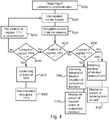
- the holder of the card 1000 uses the card at a terminal 2000 to carry out a contactless transaction via the antenna 1300 and the radio interface 2300. This process begins with a step 4005 of initiating near field communication between the card and the terminal.
- the contactless payment terminal 2000 displays on its screen 2400 a message requesting the user to enter their PIN.
- the user enters into the terminal a PIN value P using the keyboard 2500.
- the value P is sent to the operating system 1110 via the radio interface 2300 and the antenna 1300 in an APDU (application protocol data unit) command between a microcircuit card and an associated reader, as defined by the ISO 7816 standard.
- APDU application protocol data unit
- this is the VERIFY PIN command (ISO 7816).
- the application 1110 is in a position to take account of information to the effect that the value P was sent to it via the contactless interface 1300. This is possible if the program being executed ( figure 4 ) is specific to the situation where the value P was sent via the contactless interface and is therefore separate from the program that is being executed when the value P was sent via the contact interface (see figure 5 , as described below).
- the application 1110 therefore contains two subapplications 1110a and 1110b.
- the application 1110 can store information to the effect that the value P was sent via the contactless interface.
- This information can be Boolean or binary, can be stored in a random-access memory (RAM) or another volatile memory of the microcontroller 1100. It can be updated after the step 4005 or after the step 4020, and the program then includes, when necessary, test steps for verifying the value of this information.
- the application 1110 verifies if the content of the register 1113 is strictly greater than 1.
- the application 1110 verifies if the content of the register 1113 is strictly greater than 2 or another predefined value if the counter is initialized to a value greater than 2.
- the application 1110 launches the verification application 1112 that compares the content of the register 1114 to P during a step 4040.
- the application 1110 launches the function 1111, during a step 4050, and the content of the register 1113 is reinitialized to the number of attempts authorized, during a step 4060.
- the number of attempts authorized is a value stored in a memory (read-only memory or volatile memory) of the microcontroller 1100, and that is not modified during execution of the method to which the invention relates.
- the card 1000 therefore includes means (not shown) for initializing the content of the register 1113, which means can be included in the application 1110.
- the application 1110 decrements the content of the register 1113 during a step 4070, after which it begins a new iteration of the algorithm that has just been described, commencing with the step of interrogation via the screen 4010.
- the application 1100 effects a test step 4080 to find out if the content of the register 1113 is equal to 0.
- the application 1110 sends, during a step 4090, the terminal 2000 via the antenna 1300 and the radio interface 2300 a "CONDITION OF USE NOT SATISFIED" APDU response conforming to the ISO 7816 standard, indicating to the terminal that the conditions for access by the APDU command previously used ("Verify PIN" via the contactless interface) are not satisfied.
- the terminal displays a message indicating to the user that the contactless interface has been deactivated, during a step 4100.
- the application 1110 stores in a memory of the microcontroller information indicating that the contactless interface is blocked or that access to the function 1111 via the contactless interface is prohibited.
- This preferably Boolean information item is stored in a rewritable non-volatile memory of the microcontroller 1100.
- the content of the register 1113 serves as equivalent information, the fact that it is less than or equal to 1 being sufficient to indicate that the contactless interface is blocked.
- the application 1110 sends the terminal 2000 via the antenna 1300 and the radio interface 2300 an "AUTHENTICATION METHOD BLOCKED" APDU response conforming to the ISO 7816 standard (this means that the use of the card is blocked by the security means, i.e. the code 1112, and that use of the function 1111 is blocked).
- the terminal 2000 then displays a message on its screen indicating to the user that the card 1000 is blocked, during a step 4120.
- the application 1110 stores in a memory of the microcontroller 1100 information indicating that the card 1000 is blocked or that access to the function 1111 is prohibited, whatever interface is used.
- This preferably Boolean information is stored in a rewritable non-volatile memory of the microcontroller 1100.
- the content of the register 1113 serves as equivalent information, the fact that it is less than or equal to 0 being sufficient to indicate that the card is blocked or that access to the function 1111 is prohibited, whatever interface is used.
- the holder of the card 1000 uses the card at a terminal 3000 able to communicate with the card 1000 by contact in accordance with a standard compatible with the flush contacts 1200.
- the terminal 3000 can be the same terminal 2000 described above, for a different device.
- the communication process begins with a step 5005 of triggering communication of the card and the terminal by contact.
- the terminal displays on its screen a message prompting the user to enter their PIN.
- the user enters into the terminal a PIN value P using the keyboard, and that value is sent to the microcontroller 1100 during a step 5020, via the flush contacts 1200.
- the application 1110 is in a position to take account of the fact that the value P was sent to it via the contact interface 1200. As previously explained with reference to figure 4 , this is possible if the program that is being executed ( figure 5 ) is specific to the case where the value P was sent via the contactless interface, and is therefore separate from the program that is being executed when the value P was sent via the contact interface ( figure 4 ).
- the application 1110 can store information to the effect that the value P was sent to it via the contact interface 1200. As before, this information can be stored in a rewritable volatile memory, for example a RAM of the microcontroller 1100. It can be updated after the step 5005 or after the step 5020, depending on the embodiment.
- the application 1110 verifies if the content of the register 1113 is greater than the value 0.
- the application 1110 launches the verification code 1112 that compares the content of the register 1114 to the value P, during a step 5040.
- the application 1110 launches the function 1111, during a step 5050, and the content of the register 1113 is reinitialized to the maximum number of attempts authorized, which as explained above is contained and preserved unchanged in a memory of the microcontroller during normal use of the card 1000.
- the operating system 1110 decrements the content of the register 1113 by one unit, during a step 5070.
- the application 1110 finds that the content of the register 1113 is not strictly greater than 0, then, during a step 5080, the application 1110 sends the terminal 3000 via the flush contacts 1200 an "AUTHENTICATION METHOD BLOCKED" APDU response.
- the terminal 3000 then displays a message on its screen indicating to the user that the card 1000 is blocked, during a step 5090.
- the latter is protected against a denial of service type attack at the contactless interface (the antenna 1300), since if the latter is attacked, communication via the antenna is blocked (steps 4090 and 4100) when the content of the register 1113 reaches 1, but communication via the flush contact is still possible.
- the holder of the smart card is authenticated by the EXTERNAL AUTH command (ISO 7816).
- the module 1112 authenticates the user by means of a cryptography key (or other secret data) or biometric data such as a fingerprint.
- the register 1113 is not decremented during the steps 4070 and 5070, but incremented.
- the comparison steps 4030 and 5030 which are of the type "is the content of the register above a limit value?", are replaced by comparison steps of the type "is the content of the register below a limit value?".
- the register 1113 contains, instead of a value linked to the number of successive failures, a number of uses of the card since a certain date, or in a past period predefined relative to the time at which the content of the register is updated.
- the uses counted in this way can be attempts at authentication (leading to success or failure), or another form of use of the card 1000, of one of its functions, or an attempt at such use, on the understanding that use above a given frequency in this embodiment constitutes incorrect use of the card.
- a secret value for example a cryptographic key stored in the memory of the microcontroller 1100, for example in the register 1114, this use being triggered by the reception of a command (for example an APDU command, conforming to the ISO 7816 standard) via the interface 1200 or 1300.
- the code 1112 effects encryption or decryption using the key
- the register 1113 is used to store a value linked to a count of decryption or encryption operations using the key, or of uses of the secret data.
- the content of the register 1113 can be used to evaluate the frequency of use over a defined time period.
- the frequency of use determined in this way is compared to a predetermined limit frequency of use value (for example 1000 uses in a defined time period).
- a predetermined limit frequency of use value for example 1000 uses in a defined time period.
- a large number of uses or a high frequency of use can be considered as characteristic of a differential power analysis (DPA) type attack, measured moreover by analysis of the power consumption of the card.
- DPA differential power analysis
- the register 1113 contains instead of a value linked to the number of uses a value linked to the number of authentication failures since a certain date, or in a past period predefined relative to the time at which the register is updated.
- the content of the register can be used to evaluate the frequency of failure of authentication over a defined time period.
- the frequency determined in this way is compared to a predetermined authentication failure frequency limit value. If a first limit value is reached, only use of the contact interface is authorized. If a second limit value, higher than the first limit, is reached, the use of both interfaces is blocked.
- the application 1110 does not send a blocking response to the terminal 2000 (in the step 4090), but effects a time-delay step of length T and modifies the content of a counter register (in a similar way to the step 4070), before proceeding to another iteration beginning with interrogation via the screen (similar to the step 4010) and involving an attempt (successful or failed, as a function of circumstances) at authentication, involving use of the verification module 1112.
- the length T increases with the number of authentication failures in a reference period, determined by the content of a register, decremented (or incremented, depending on the implementation) on each authentication failure.
- the reference period can be the period running from the last successful authentication.
- the form of growth can be a multiplication of the value of T by a multiplication factor n on each failure, n being equal to 2 for example (i.e. exponential growth, also known as geometrical growth).
- the application 1110 is adapted to effect a time-delay step of length T as explained above and, after another failed attempt at authentication, this time via the contact interface 1200, also to effect a time-delay step of length T'.
- the length time T' is then made different from the length T, for example twice as long, or three times as long.
- the length T' can also evolve exponentially, with the same multiplication factor as the length T, or in one embodiment with a higher multiplication factor.
- the application 1110 is adapted to effect a time-delay step of length T as explained above, the length T increasing with the number of failures noted in a predefined time period.
- the application 1110 is also adapted, during a step similar to the step 4090 previously described, to send the terminal 2000 via the antenna 1300 and the radio interface 2300 a "CONDITION OF USE NOT SATISFIED" APDU response, conforming to ISO 7816, indicating that authentication via the contact interface 1200 is no longer functional.
- the application 1110 first effects time-delay steps and then, if the number of authentication failures exceeds a predetermined limit value - or threshold - denoted L, the application 1110 proceeds to deactivate the interface 1200, in the manner described.
- the limit L can take a value of 5, 6 or 10 occurrences, for example.
- authentication via the contact interface 1200 it is also possible for authentication via the contact interface 1200 to remain authorized whatever the number of failures noted, but with time-delay steps of increasing duration between each interrogation of the user via the screen (step 5010) and the next.
- the smart card 1000 is replaced by a USB (Universal Serial Bus) key, a communicating mobile terminal, a personal digital assistant or a passport.
- this device conforms to the FIPS (Federal Information Processing Standards) or to the common criteria (CC) standard.
- the flush contacts 1200 are those of a USB plug, for example.
Landscapes
- Engineering & Computer Science (AREA)
- Physics & Mathematics (AREA)
- Business, Economics & Management (AREA)
- General Physics & Mathematics (AREA)
- Computer Networks & Wireless Communication (AREA)
- Accounting & Taxation (AREA)
- Strategic Management (AREA)
- General Business, Economics & Management (AREA)
- Theoretical Computer Science (AREA)
- Microelectronics & Electronic Packaging (AREA)
- Storage Device Security (AREA)
- Mobile Radio Communication Systems (AREA)
- Telephone Function (AREA)
Claims (11)
- Mobile elektronische Vorrichtung (1000), dadurch gekennzeichnet, dass sie enthält
eine erste Schnittstelle (1200), die geeignet ist, eine Kommunikation mit einer externen elektronischen Entität aufzubauen,
eine zweite Schnittstelle (1300), die auch geeignet ist, eine Kommunikation mit einer externen elektronischen Entität aufzubauen, Einrichtungen (1111, 1112, 1114) zur Verarbeitung eines Geheimwerts, die geeignet sind, auf den Empfang einer Nachricht über jede der Schnittstellen zu reagieren,
Steuereinrichtungen (1110), die geeignet sind- einen Indikator (1113) zum Zählen unzulässiger Nutzungen der Einrichtungen zur Nutzung eines Geheimwerts über jede der Schnittstellen zu aktualisieren,- eine erste Sperre an eine die erste Schnittstelle nutzende Kommunikation abhängig vom Indikator anzuwenden,- eine zweite Sperre an eine die zweite Schnittstelle nutzende Kommunikation abhängig vom Indikator anzuwenden,wobei die Vorrichtung so ist, dass für mindestens einen Wert des Indikators die zweite Sperre sich von der ersten unterscheidet,
wobei die zweite Schnittstelle (1300) Daten empfangende Einrichtungen enthält, die ein Kontaktlos-Kommunikationsprotokoll verwenden, und die erste Schnittstelle (1200) Einrichtungen zum Empfang von Daten enthält, die ein Kontakt-Kommunikationsprotokoll verwenden,
wobei zwei verschiedene Schwellen genutzt werden, um die erste bzw. die zweite Sperre anzuwenden,
wobei für mindestens einen Wert des Indikators entsprechend dem durch die zwei verschiedenen Schwellen definierten Wertebereich des Indikators eine die zweite und Kontaktlos-Schnittstelle (1300) nutzendende Kommunikation blockiert wird, während eine die erste und Kontakt-Schnittstelle (1200) nutzendende Kommunikation autorisiert wird. - Vorrichtung nach Anspruch 1, dadurch gekennzeichnet, dass die Einrichtungen zur Nutzung eines Geheimwerts Sicherheitseinrichtungen (1112, 1114) enthalten, die geeignet sind, den Zugriff auf eine Funktion (1111) der mobilen elektronischen Vorrichtung als Reaktion auf eine erfolgreiche Authentifizierung zu genehmigen.
- Vorrichtung nach Anspruch 1 oder Anspruch 2, dadurch gekennzeichnet, dass die Steuereinrichtungen (1110) weiter geeignet sind, einen Indikator einer unzulässigen Nutzung der Einrichtungen zur Nutzung eines Geheimschlüssels über eine der Schnittstellen zu aktualisieren.
- Mobile elektronische Vorrichtung (1000) nach einem der Ansprüche 1 bis 3, dadurch gekennzeichnet, dass der Indikator eine Anzahl unzulässiger Nutzungen der Sicherheitseinrichtungen (1112, 1114) über jede der Schnittstellen ist.
- Mobile elektronische Vorrichtung nach einem der Ansprüche 1 bis 4, dadurch gekennzeichnet, dass mindestens eine der zwei Sperren die Anwendung einer Zeitverzögerung nach einer unzulässigen Nutzung der Einrichtungen (1111, 1112, 1114) zur Verarbeitung eines Geheimwerts enthält, wobei die Kommunikation mit den Einrichtungen zur Nutzung eines Geheimwerts über die entsprechende Schnittstelle während der Zeitverzögerung verzögert ist und die Zeitverzögerung in zunehmendem Maße mit der Anzahl zunimmt.
- Mobile elektronische Vorrichtung (1000) nach einem der Ansprüche 1 bis 5, dadurch gekennzeichnet, dass jede der zwei Sperren die Anwendung einer Zeitverzögerung nach einer unzulässigen Nutzung der Einrichtungen (1111, 1112, 1114) zur Verarbeitung eines Geheimwerts enthält, wobei die Kommunikation mit den Einrichtungen zur Nutzung eines Geheimwerts über die entsprechende Schnittstelle während der Zeitverzögerung verzögert ist, wobei die Zeitverzögerung in zunehmendem Maße mit der Anzahl zunimmt, und die an die zweite Schnittstelle (1300) angewendete Zeitverzögerung mindestens doppelt so groß ist wie die an die erste Schnittstelle (1200) für die gleiche Anzahl angewendete Zeitverzögerung.
- Mobile elektronische Vorrichtung (1000) nach einem der Ansprüche 1 bis 6, dadurch gekennzeichnet, dass die zweite Schnittstelle (1300) eher zugänglich ist für einen Angriff, zum Beispiel der Art Denial-of-Service-Angriff, als die erste Schnittstelle (1200).
- Vorrichtung nach einem der Ansprüche 1 bis 7, dadurch gekennzeichnet, dass die Steuereinrichtungen (1110) geeignet sind, um aufeinanderfolgende Authentifizierungsfehler zu zählen, wobei die Vorrichtung geeignet ist, den Indikator als Reaktion auf die Erfassung einer erfolgreichen Authentifizierung zu initialisieren.
- Vorrichtung nach einem der Ansprüche 1 bis 8, dadurch gekennzeichnet, dass die Einrichtungen (1111, 1112, 1114) zur Verarbeitung eines Geheimwerts einen Geheimcode persönlicher Identifikation verarbeiten.
- Vorrichtung nach einem der Ansprüche 1 bis 9, dadurch gekennzeichnet, dass sie eine Smart-Card (1000) oder ein USB-Stick ist.
- Verfahren zur Nutzung einer mobilen elektronischen Vorrichtung (1000) mit ersten und zweiten Schnittstellen (1200, 1300), wobei die zweite Schnittstelle (1300) Daten empfangende Einrichtungen enthält, die ein Kontaktlos-Kommunikationsprotokoll nutzen, und die erste Schnittstelle (1200) Einrichtungen zum Empfang von Daten enthält, die ein Kontakt-Kommunikationsprotokoll nutzen,
dadurch gekennzeichnet, dass es die folgenden Schritte enthält- Zählen unzulässiger Nutzungen der Einrichtungen (1111, 1112, 1114) zur Verarbeitung eines Geheimwerts über jede der Schnittstellen bis zu einer ersten Zählschwelle- Sperren einer die zweite Schnittstelle (1300) nutzenden Kommunikation durch Blockieren der zweiten und Kontaktlos-Schnittstelle (1300), während die die erste und Kontakt-Schnittstelle (1200) nutzende Kommunikation autorisiert wird- Zählen unzulässiger Nutzungen bis zu einer zweiten Schwelle höher als die erste Schwelle- Sperren einer die erste und Kontakt-Schnittstelle (1200) nutzenden Kommunikation.
Priority Applications (1)
| Application Number | Priority Date | Filing Date | Title |
|---|---|---|---|
| PL10165572T PL2264632T3 (pl) | 2009-06-12 | 2010-06-10 | Urządzenie elektroniczne z dwoma interfejsami komunikacyjnymi i skojarzony sposób zabezpieczania takiego urządzenia |
Applications Claiming Priority (1)
| Application Number | Priority Date | Filing Date | Title |
|---|---|---|---|
| US12/483,498 US8430323B2 (en) | 2009-06-12 | 2009-06-12 | Electronic device and associated method |
Publications (2)
| Publication Number | Publication Date |
|---|---|
| EP2264632A1 EP2264632A1 (de) | 2010-12-22 |
| EP2264632B1 true EP2264632B1 (de) | 2018-04-04 |
Family
ID=42555933
Family Applications (1)
| Application Number | Title | Priority Date | Filing Date |
|---|---|---|---|
| EP10165572.8A Active EP2264632B1 (de) | 2009-06-12 | 2010-06-10 | Elektronische Vorrichtung mit zwei Kommunikationsschnittstellen und zugehöriges Verfahren zur Sicherung solch einer Vorrichtung |
Country Status (4)
| Country | Link |
|---|---|
| US (1) | US8430323B2 (de) |
| EP (1) | EP2264632B1 (de) |
| ES (1) | ES2675859T3 (de) |
| PL (1) | PL2264632T3 (de) |
Families Citing this family (2)
| Publication number | Priority date | Publication date | Assignee | Title |
|---|---|---|---|---|
| EP2608478A1 (de) * | 2011-12-21 | 2013-06-26 | Gemalto SA | Verfahren zum Schutz einer Vorrichtung gegen Dienstverweigerungsangriffe |
| CN105321069A (zh) * | 2014-07-16 | 2016-02-10 | 中兴通讯股份有限公司 | 一种实现远程支付的方法及装置 |
Family Cites Families (13)
| Publication number | Priority date | Publication date | Assignee | Title |
|---|---|---|---|---|
| JPS60207957A (ja) * | 1984-03-31 | 1985-10-19 | Toshiba Corp | デ−タ保護方式 |
| GB2196504B (en) * | 1986-10-18 | 1990-09-26 | Gen Electric Plc | A focussing technique for an optical sensing system |
| FR2705810B1 (fr) * | 1993-05-26 | 1995-06-30 | Gemplus Card Int | Puce de carte à puce munie d'un moyen de limitation du nombre d'authentifications. |
| EP0946923B1 (de) * | 1997-10-22 | 2007-11-21 | Nxp B.V. | Hybrid-datenträger und schaltung dafür mit vereinfachtem datenübertragungsmittel |
| FR2786006B1 (fr) * | 1998-11-17 | 2001-10-12 | Schlumberger Systems & Service | Dispositif pour la limitation de fraudes dans une carte a circuit integre |
| FR2803933B1 (fr) * | 2000-01-14 | 2002-11-29 | Gemplus Card Int | Procede de protection contre le vol du code dans les cartes a puces(s) multi-applications et cartes a puce(s) mettant en oeuvre le procede |
| US6899277B2 (en) * | 2001-05-17 | 2005-05-31 | Matsushita Electric Industrial Co., Ltd. | IC card and electronic devices |
| JP4682498B2 (ja) * | 2003-04-09 | 2011-05-11 | ソニー株式会社 | 通信装置及び通信装置のメモリ管理方法 |
| US20060113381A1 (en) * | 2004-11-29 | 2006-06-01 | John Hochstein | Batteryless contact fingerprint-enabled smartcard that enables contactless capability |
| WO2006138440A2 (en) * | 2005-06-16 | 2006-12-28 | Visa International Service Association | Contactless activation systems and methods |
| FR2888976B1 (fr) | 2005-07-25 | 2007-10-12 | Oberthur Card Syst Sa | Entite electronique avec moyens de communication par contact et a distance |
| JP2008059245A (ja) * | 2006-08-31 | 2008-03-13 | Yoshikawa Rf System Kk | データキャリア及びデータキャリアシステム |
| FR2910666B1 (fr) | 2006-12-26 | 2013-02-08 | Oberthur Card Syst Sa | Dispositif electronique portable et procede de securisation d'un tel dispositif |
-
2009
- 2009-06-12 US US12/483,498 patent/US8430323B2/en active Active
-
2010
- 2010-06-10 PL PL10165572T patent/PL2264632T3/pl unknown
- 2010-06-10 EP EP10165572.8A patent/EP2264632B1/de active Active
- 2010-06-10 ES ES10165572.8T patent/ES2675859T3/es active Active
Non-Patent Citations (4)
| Title |
|---|
| CARDLOGIX: "PIV Smart Card - Credentsys-J(TM) Dual Interface FIPS 201", INTERNET ARTICLE, 25 April 2008 (2008-04-25), XP055029277, Retrieved from the Internet <URL:http://www.cardlogix.com/docs/pis/CardLogix_7200028_PIS_PIVCard.pdf> [retrieved on 20120608] * |
| MARTIN SAUTER: "The Web Server For Your Pocket Gets Released By Nokia Labs", INTERNET ARTICLE, 29 June 2007 (2007-06-29), XP055028693, Retrieved from the Internet <URL:http://mobilesociety.typepad.com/mobile_life/2007/06/nokia-labs-rele.html> [retrieved on 20120601] * |
| RAFE BLANDFORD: "Previewing Nokia's Mobile Web Server", INTERNET ARTICLE, 18 June 2007 (2007-06-18), XP055028692, Retrieved from the Internet <URL:http://www.allaboutsymbian.com/features/item/Previewing_Nokias_Mobile_Web_Server.php> [retrieved on 20120601] * |
| SEBASTIAN HANS: "Java Card PLATFORM Overview", INTERNET ARTICLE, 31 March 2008 (2008-03-31), XP055028698, Retrieved from the Internet <URL:http://www.gemalto.com/simagine/2009/download/java_card_platform.pdf> [retrieved on 20120601] * |
Also Published As
| Publication number | Publication date |
|---|---|
| PL2264632T3 (pl) | 2019-03-29 |
| US20100314451A1 (en) | 2010-12-16 |
| ES2675859T3 (es) | 2018-07-13 |
| US8430323B2 (en) | 2013-04-30 |
| EP2264632A1 (de) | 2010-12-22 |
Similar Documents
| Publication | Publication Date | Title |
|---|---|---|
| US9047727B2 (en) | Portable electronic device and method for securing such device | |
| EP3807831B1 (de) | Verfahren und system zur erzeugung einer vertrauenswürdigen aufzeichnung oder nachricht und verwendung für eine sichere aktivierung oder starke kundenauthentifizierung | |
| GB2551907B (en) | Method and system for providing a symmetric keypair with a master key and a transient derived key | |
| EP2291947B1 (de) | Entkopplung der messung der ansprechzeit eines transponders und seiner authentifikation | |
| CN1489748B (zh) | 安全模块、使用其计算算法代码结果的方法及通信方法 | |
| CA2554300C (en) | System and method for encrypted smart card pin entry | |
| EP2991263B1 (de) | Offline-pin-authentifizierungsverfahren und -system für eine ic-karte | |
| EP2940882B1 (de) | Näheüberprüfung für Kommunikationsvorrichtungen | |
| US20110251958A1 (en) | Method of Controlling a Device Able to Function in a Mode With or Without Code Verification to Effect a Transaction | |
| WO2015171939A1 (en) | Establishment of a secure session between a card reader and a mobile device | |
| CN101842792A (zh) | 保护芯片卡未经授权而被使用的方法、芯片卡以及芯片卡终端 | |
| US8117449B2 (en) | Method to detect man-in-the-middle (MITM) or relay attacks | |
| US8316221B2 (en) | Recording of a key in an integrated circuit | |
| US8683211B2 (en) | Method of projecting a secure USB key | |
| EP2264632B1 (de) | Elektronische Vorrichtung mit zwei Kommunikationsschnittstellen und zugehöriges Verfahren zur Sicherung solch einer Vorrichtung | |
| CN102546169A (zh) | 控制用户认证保护功能执行的方法和系统尤其对资源访问 | |
| US8812840B2 (en) | Method for fast pre-authentication by distance recognition | |
| KR101748172B1 (ko) | 지문 인증을 통한 서비스 제공 방법 및 이를 수행하는 스마트카드 | |
| KR101675162B1 (ko) | 비접촉형 스마트카드의 복제 방지 및 데이터 변조 방지 방법 | |
| US9183160B2 (en) | Integrated circuit board with secured input/output buffer | |
| CN116882429B (zh) | 用于智能卡芯片的数据传输方法及装置、智能卡 | |
| US20260019269A1 (en) | Ic card and method of controlling ic card | |
| JP6226373B2 (ja) | Icカード | |
| KR101188701B1 (ko) | 스마트 카드 판독기 드라이버에 의한 결제 처리 방법 | |
| KR101224886B1 (ko) | 스마트 카드 판독기 드라이버에 의한 데이터 처리 방법 |
Legal Events
| Date | Code | Title | Description |
|---|---|---|---|
| PUAI | Public reference made under article 153(3) epc to a published international application that has entered the european phase |
Free format text: ORIGINAL CODE: 0009012 |
|
| 17P | Request for examination filed |
Effective date: 20100610 |
|
| AK | Designated contracting states |
Kind code of ref document: A1 Designated state(s): AL AT BE BG CH CY CZ DE DK EE ES FI FR GB GR HR HU IE IS IT LI LT LU LV MC MK MT NL NO PL PT RO SE SI SK SM TR |
|
| AX | Request for extension of the european patent |
Extension state: BA ME RS |
|
| 17Q | First examination report despatched |
Effective date: 20110914 |
|
| STAA | Information on the status of an ep patent application or granted ep patent |
Free format text: STATUS: EXAMINATION IS IN PROGRESS |
|
| GRAP | Despatch of communication of intention to grant a patent |
Free format text: ORIGINAL CODE: EPIDOSNIGR1 |
|
| STAA | Information on the status of an ep patent application or granted ep patent |
Free format text: STATUS: GRANT OF PATENT IS INTENDED |
|
| INTG | Intention to grant announced |
Effective date: 20171026 |
|
| RIN1 | Information on inventor provided before grant (corrected) |
Inventor name: GOYET, CHRISTOPHE |
|
| GRAS | Grant fee paid |
Free format text: ORIGINAL CODE: EPIDOSNIGR3 |
|
| GRAA | (expected) grant |
Free format text: ORIGINAL CODE: 0009210 |
|
| STAA | Information on the status of an ep patent application or granted ep patent |
Free format text: STATUS: THE PATENT HAS BEEN GRANTED |
|
| AK | Designated contracting states |
Kind code of ref document: B1 Designated state(s): AL AT BE BG CH CY CZ DE DK EE ES FI FR GB GR HR HU IE IS IT LI LT LU LV MC MK MT NL NO PL PT RO SE SI SK SM TR |
|
| REG | Reference to a national code |
Ref country code: GB Ref legal event code: FG4D |
|
| REG | Reference to a national code |
Ref country code: CH Ref legal event code: EP |
|
| REG | Reference to a national code |
Ref country code: AT Ref legal event code: REF Ref document number: 986317 Country of ref document: AT Kind code of ref document: T Effective date: 20180415 |
|
| REG | Reference to a national code |
Ref country code: IE Ref legal event code: FG4D |
|
| REG | Reference to a national code |
Ref country code: DE Ref legal event code: R096 Ref document number: 602010049602 Country of ref document: DE |
|
| REG | Reference to a national code |
Ref country code: FR Ref legal event code: PLFP Year of fee payment: 9 |
|
| REG | Reference to a national code |
Ref country code: ES Ref legal event code: FG2A Ref document number: 2675859 Country of ref document: ES Kind code of ref document: T3 Effective date: 20180713 |
|
| REG | Reference to a national code |
Ref country code: NL Ref legal event code: FP |
|
| RAP2 | Party data changed (patent owner data changed or rights of a patent transferred) |
Owner name: IDEMIA AMERICA CORP. |
|
| REG | Reference to a national code |
Ref country code: LT Ref legal event code: MG4D |
|
| RAP2 | Party data changed (patent owner data changed or rights of a patent transferred) |
Owner name: IDEMIA AMERICA CORP. |
|
| REG | Reference to a national code |
Ref country code: FR Ref legal event code: CA Effective date: 20180731 Ref country code: FR Ref legal event code: CD Owner name: IDEMIA AMERICA CORP., US Effective date: 20180731 |
|
| REG | Reference to a national code |
Ref country code: DE Ref legal event code: R081 Ref document number: 602010049602 Country of ref document: DE Owner name: IDEMIA AMERICA CORP., WILMINGTON, US Free format text: FORMER OWNER: OBERTHUR TECHNOLOGIES OF AMERICA CORP., CHANTILLY, VA., US |
|
| REG | Reference to a national code |
Ref country code: EE Ref legal event code: FG4A Ref document number: E015969 Country of ref document: EE Effective date: 20180809 |
|
| PG25 | Lapsed in a contracting state [announced via postgrant information from national office to epo] |
Ref country code: SE Free format text: LAPSE BECAUSE OF FAILURE TO SUBMIT A TRANSLATION OF THE DESCRIPTION OR TO PAY THE FEE WITHIN THE PRESCRIBED TIME-LIMIT Effective date: 20180404 Ref country code: LT Free format text: LAPSE BECAUSE OF FAILURE TO SUBMIT A TRANSLATION OF THE DESCRIPTION OR TO PAY THE FEE WITHIN THE PRESCRIBED TIME-LIMIT Effective date: 20180404 Ref country code: NO Free format text: LAPSE BECAUSE OF FAILURE TO SUBMIT A TRANSLATION OF THE DESCRIPTION OR TO PAY THE FEE WITHIN THE PRESCRIBED TIME-LIMIT Effective date: 20180704 Ref country code: AL Free format text: LAPSE BECAUSE OF FAILURE TO SUBMIT A TRANSLATION OF THE DESCRIPTION OR TO PAY THE FEE WITHIN THE PRESCRIBED TIME-LIMIT Effective date: 20180404 Ref country code: BG Free format text: LAPSE BECAUSE OF FAILURE TO SUBMIT A TRANSLATION OF THE DESCRIPTION OR TO PAY THE FEE WITHIN THE PRESCRIBED TIME-LIMIT Effective date: 20180704 Ref country code: FI Free format text: LAPSE BECAUSE OF FAILURE TO SUBMIT A TRANSLATION OF THE DESCRIPTION OR TO PAY THE FEE WITHIN THE PRESCRIBED TIME-LIMIT Effective date: 20180404 |
|
| PG25 | Lapsed in a contracting state [announced via postgrant information from national office to epo] |
Ref country code: HR Free format text: LAPSE BECAUSE OF FAILURE TO SUBMIT A TRANSLATION OF THE DESCRIPTION OR TO PAY THE FEE WITHIN THE PRESCRIBED TIME-LIMIT Effective date: 20180404 Ref country code: LV Free format text: LAPSE BECAUSE OF FAILURE TO SUBMIT A TRANSLATION OF THE DESCRIPTION OR TO PAY THE FEE WITHIN THE PRESCRIBED TIME-LIMIT Effective date: 20180404 Ref country code: GR Free format text: LAPSE BECAUSE OF FAILURE TO SUBMIT A TRANSLATION OF THE DESCRIPTION OR TO PAY THE FEE WITHIN THE PRESCRIBED TIME-LIMIT Effective date: 20180705 |
|
| REG | Reference to a national code |
Ref country code: AT Ref legal event code: MK05 Ref document number: 986317 Country of ref document: AT Kind code of ref document: T Effective date: 20180404 |
|
| PG25 | Lapsed in a contracting state [announced via postgrant information from national office to epo] |
Ref country code: PT Free format text: LAPSE BECAUSE OF FAILURE TO SUBMIT A TRANSLATION OF THE DESCRIPTION OR TO PAY THE FEE WITHIN THE PRESCRIBED TIME-LIMIT Effective date: 20180806 |
|
| REG | Reference to a national code |
Ref country code: DE Ref legal event code: R097 Ref document number: 602010049602 Country of ref document: DE |
|
| REG | Reference to a national code |
Ref country code: NL Ref legal event code: HC Owner name: IDEMIA AMERICA CORP.; US Free format text: DETAILS ASSIGNMENT: CHANGE OF OWNER(S), CHANGE OF OWNER(S) NAME; FORMER OWNER NAME: OBERTHUR TECHNOLOGIES OF AMERICA CORP. Effective date: 20181128 |
|
| PG25 | Lapsed in a contracting state [announced via postgrant information from national office to epo] |
Ref country code: SK Free format text: LAPSE BECAUSE OF FAILURE TO SUBMIT A TRANSLATION OF THE DESCRIPTION OR TO PAY THE FEE WITHIN THE PRESCRIBED TIME-LIMIT Effective date: 20180404 Ref country code: DK Free format text: LAPSE BECAUSE OF FAILURE TO SUBMIT A TRANSLATION OF THE DESCRIPTION OR TO PAY THE FEE WITHIN THE PRESCRIBED TIME-LIMIT Effective date: 20180404 Ref country code: AT Free format text: LAPSE BECAUSE OF FAILURE TO SUBMIT A TRANSLATION OF THE DESCRIPTION OR TO PAY THE FEE WITHIN THE PRESCRIBED TIME-LIMIT Effective date: 20180404 Ref country code: RO Free format text: LAPSE BECAUSE OF FAILURE TO SUBMIT A TRANSLATION OF THE DESCRIPTION OR TO PAY THE FEE WITHIN THE PRESCRIBED TIME-LIMIT Effective date: 20180404 Ref country code: CZ Free format text: LAPSE BECAUSE OF FAILURE TO SUBMIT A TRANSLATION OF THE DESCRIPTION OR TO PAY THE FEE WITHIN THE PRESCRIBED TIME-LIMIT Effective date: 20180404 |
|
| REG | Reference to a national code |
Ref country code: CH Ref legal event code: PL |
|
| PLBE | No opposition filed within time limit |
Free format text: ORIGINAL CODE: 0009261 |
|
| STAA | Information on the status of an ep patent application or granted ep patent |
Free format text: STATUS: NO OPPOSITION FILED WITHIN TIME LIMIT |
|
| PG25 | Lapsed in a contracting state [announced via postgrant information from national office to epo] |
Ref country code: SM Free format text: LAPSE BECAUSE OF FAILURE TO SUBMIT A TRANSLATION OF THE DESCRIPTION OR TO PAY THE FEE WITHIN THE PRESCRIBED TIME-LIMIT Effective date: 20180404 |
|
| REG | Reference to a national code |
Ref country code: BE Ref legal event code: MM Effective date: 20180630 |
|
| 26N | No opposition filed |
Effective date: 20190107 |
|
| REG | Reference to a national code |
Ref country code: IE Ref legal event code: MM4A |
|
| PG25 | Lapsed in a contracting state [announced via postgrant information from national office to epo] |
Ref country code: MC Free format text: LAPSE BECAUSE OF FAILURE TO SUBMIT A TRANSLATION OF THE DESCRIPTION OR TO PAY THE FEE WITHIN THE PRESCRIBED TIME-LIMIT Effective date: 20180404 Ref country code: LU Free format text: LAPSE BECAUSE OF NON-PAYMENT OF DUE FEES Effective date: 20180610 |
|
| PG25 | Lapsed in a contracting state [announced via postgrant information from national office to epo] |
Ref country code: IE Free format text: LAPSE BECAUSE OF NON-PAYMENT OF DUE FEES Effective date: 20180610 Ref country code: LI Free format text: LAPSE BECAUSE OF NON-PAYMENT OF DUE FEES Effective date: 20180630 Ref country code: CH Free format text: LAPSE BECAUSE OF NON-PAYMENT OF DUE FEES Effective date: 20180630 |
|
| PG25 | Lapsed in a contracting state [announced via postgrant information from national office to epo] |
Ref country code: SI Free format text: LAPSE BECAUSE OF FAILURE TO SUBMIT A TRANSLATION OF THE DESCRIPTION OR TO PAY THE FEE WITHIN THE PRESCRIBED TIME-LIMIT Effective date: 20180404 Ref country code: BE Free format text: LAPSE BECAUSE OF NON-PAYMENT OF DUE FEES Effective date: 20180630 |
|
| PG25 | Lapsed in a contracting state [announced via postgrant information from national office to epo] |
Ref country code: AL Free format text: LAPSE BECAUSE OF FAILURE TO SUBMIT A TRANSLATION OF THE DESCRIPTION OR TO PAY THE FEE WITHIN THE PRESCRIBED TIME-LIMIT Effective date: 20180404 |
|
| PGRI | Patent reinstated in contracting state [announced from national office to epo] |
Ref country code: AL Effective date: 20180704 |
|
| PG25 | Lapsed in a contracting state [announced via postgrant information from national office to epo] |
Ref country code: MT Free format text: LAPSE BECAUSE OF NON-PAYMENT OF DUE FEES Effective date: 20180610 |
|
| PG25 | Lapsed in a contracting state [announced via postgrant information from national office to epo] |
Ref country code: TR Free format text: LAPSE BECAUSE OF FAILURE TO SUBMIT A TRANSLATION OF THE DESCRIPTION OR TO PAY THE FEE WITHIN THE PRESCRIBED TIME-LIMIT Effective date: 20180404 |
|
| PG25 | Lapsed in a contracting state [announced via postgrant information from national office to epo] |
Ref country code: HU Free format text: LAPSE BECAUSE OF FAILURE TO SUBMIT A TRANSLATION OF THE DESCRIPTION OR TO PAY THE FEE WITHIN THE PRESCRIBED TIME-LIMIT; INVALID AB INITIO Effective date: 20100610 |
|
| PG25 | Lapsed in a contracting state [announced via postgrant information from national office to epo] |
Ref country code: CY Free format text: LAPSE BECAUSE OF FAILURE TO SUBMIT A TRANSLATION OF THE DESCRIPTION OR TO PAY THE FEE WITHIN THE PRESCRIBED TIME-LIMIT Effective date: 20180404 Ref country code: MK Free format text: LAPSE BECAUSE OF NON-PAYMENT OF DUE FEES Effective date: 20180404 |
|
| PG25 | Lapsed in a contracting state [announced via postgrant information from national office to epo] |
Ref country code: IS Free format text: LAPSE BECAUSE OF FAILURE TO SUBMIT A TRANSLATION OF THE DESCRIPTION OR TO PAY THE FEE WITHIN THE PRESCRIBED TIME-LIMIT Effective date: 20180804 |
|
| P01 | Opt-out of the competence of the unified patent court (upc) registered |
Effective date: 20230428 |
|
| PGFP | Annual fee paid to national office [announced via postgrant information from national office to epo] |
Ref country code: NL Payment date: 20250520 Year of fee payment: 16 |
|
| PGFP | Annual fee paid to national office [announced via postgrant information from national office to epo] |
Ref country code: PL Payment date: 20250526 Year of fee payment: 16 Ref country code: DE Payment date: 20250520 Year of fee payment: 16 |
|
| PGFP | Annual fee paid to national office [announced via postgrant information from national office to epo] |
Ref country code: GB Payment date: 20250520 Year of fee payment: 16 |
|
| PGFP | Annual fee paid to national office [announced via postgrant information from national office to epo] |
Ref country code: AL Payment date: 20250623 Year of fee payment: 16 Ref country code: IT Payment date: 20250520 Year of fee payment: 16 |
|
| PGFP | Annual fee paid to national office [announced via postgrant information from national office to epo] |
Ref country code: EE Payment date: 20250605 Year of fee payment: 16 Ref country code: FR Payment date: 20250520 Year of fee payment: 16 |
|
| PGFP | Annual fee paid to national office [announced via postgrant information from national office to epo] |
Ref country code: ES Payment date: 20250701 Year of fee payment: 16 |