EP2263977A1 - Copper indium sulfide nanoparticles and a preparation method thereof - Google Patents
Copper indium sulfide nanoparticles and a preparation method thereof Download PDFInfo
- Publication number
- EP2263977A1 EP2263977A1 EP09718518A EP09718518A EP2263977A1 EP 2263977 A1 EP2263977 A1 EP 2263977A1 EP 09718518 A EP09718518 A EP 09718518A EP 09718518 A EP09718518 A EP 09718518A EP 2263977 A1 EP2263977 A1 EP 2263977A1
- Authority
- EP
- European Patent Office
- Prior art keywords
- copper
- indium
- indium sulfide
- nanoparticles
- copper indium
- Prior art date
- Legal status (The legal status is an assumption and is not a legal conclusion. Google has not performed a legal analysis and makes no representation as to the accuracy of the status listed.)
- Withdrawn
Links
Images

Classifications
-
- B—PERFORMING OPERATIONS; TRANSPORTING
- B82—NANOTECHNOLOGY
- B82Y—SPECIFIC USES OR APPLICATIONS OF NANOSTRUCTURES; MEASUREMENT OR ANALYSIS OF NANOSTRUCTURES; MANUFACTURE OR TREATMENT OF NANOSTRUCTURES
- B82Y30/00—Nanotechnology for materials or surface science, e.g. nanocomposites
-
- C—CHEMISTRY; METALLURGY
- C01—INORGANIC CHEMISTRY
- C01G—COMPOUNDS CONTAINING METALS NOT COVERED BY SUBCLASSES C01D OR C01F
- C01G15/00—Compounds of gallium, indium or thallium
- C01G15/006—Compounds containing gallium, indium or thallium, with or without oxygen or hydrogen, and containing two or more other elements
-
- C—CHEMISTRY; METALLURGY
- C01—INORGANIC CHEMISTRY
- C01P—INDEXING SCHEME RELATING TO STRUCTURAL AND PHYSICAL ASPECTS OF SOLID INORGANIC COMPOUNDS
- C01P2002/00—Crystal-structural characteristics
- C01P2002/70—Crystal-structural characteristics defined by measured X-ray, neutron or electron diffraction data
- C01P2002/72—Crystal-structural characteristics defined by measured X-ray, neutron or electron diffraction data by d-values or two theta-values, e.g. as X-ray diagram
-
- C—CHEMISTRY; METALLURGY
- C01—INORGANIC CHEMISTRY
- C01P—INDEXING SCHEME RELATING TO STRUCTURAL AND PHYSICAL ASPECTS OF SOLID INORGANIC COMPOUNDS
- C01P2002/00—Crystal-structural characteristics
- C01P2002/80—Crystal-structural characteristics defined by measured data other than those specified in group C01P2002/70
- C01P2002/82—Crystal-structural characteristics defined by measured data other than those specified in group C01P2002/70 by IR- or Raman-data
-
- C—CHEMISTRY; METALLURGY
- C01—INORGANIC CHEMISTRY
- C01P—INDEXING SCHEME RELATING TO STRUCTURAL AND PHYSICAL ASPECTS OF SOLID INORGANIC COMPOUNDS
- C01P2004/00—Particle morphology
- C01P2004/01—Particle morphology depicted by an image
- C01P2004/03—Particle morphology depicted by an image obtained by SEM
-
- C—CHEMISTRY; METALLURGY
- C01—INORGANIC CHEMISTRY
- C01P—INDEXING SCHEME RELATING TO STRUCTURAL AND PHYSICAL ASPECTS OF SOLID INORGANIC COMPOUNDS
- C01P2004/00—Particle morphology
- C01P2004/01—Particle morphology depicted by an image
- C01P2004/04—Particle morphology depicted by an image obtained by TEM, STEM, STM or AFM
-
- C—CHEMISTRY; METALLURGY
- C01—INORGANIC CHEMISTRY
- C01P—INDEXING SCHEME RELATING TO STRUCTURAL AND PHYSICAL ASPECTS OF SOLID INORGANIC COMPOUNDS
- C01P2004/00—Particle morphology
- C01P2004/60—Particles characterised by their size
- C01P2004/64—Nanometer sized, i.e. from 1-100 nanometer
-
- C—CHEMISTRY; METALLURGY
- C01—INORGANIC CHEMISTRY
- C01P—INDEXING SCHEME RELATING TO STRUCTURAL AND PHYSICAL ASPECTS OF SOLID INORGANIC COMPOUNDS
- C01P2006/00—Physical properties of inorganic compounds
- C01P2006/40—Electric properties
-
- Y—GENERAL TAGGING OF NEW TECHNOLOGICAL DEVELOPMENTS; GENERAL TAGGING OF CROSS-SECTIONAL TECHNOLOGIES SPANNING OVER SEVERAL SECTIONS OF THE IPC; TECHNICAL SUBJECTS COVERED BY FORMER USPC CROSS-REFERENCE ART COLLECTIONS [XRACs] AND DIGESTS
- Y10—TECHNICAL SUBJECTS COVERED BY FORMER USPC
- Y10T—TECHNICAL SUBJECTS COVERED BY FORMER US CLASSIFICATION
- Y10T428/00—Stock material or miscellaneous articles
- Y10T428/29—Coated or structually defined flake, particle, cell, strand, strand portion, rod, filament, macroscopic fiber or mass thereof
- Y10T428/2982—Particulate matter [e.g., sphere, flake, etc.]
Definitions
- the present invention relates to copper indium sulfide semiconducting nanoparticles and process for preparing the same.
- nano-material science has become an indispensable important field in the current material science development.
- the progress of nano-material research is bound to push physics, chemistry, biology and many other disciplines to a new level, and at the same time, will also bring new opportunities in technological research in the 21 st century.
- solar cells With a growing urgency in energy issues, solar cells as a renewable, clean energy has attracted worldwide attention.
- Applying nano-material and technology to the solar cells might greatly increase the conversion efficiency of the current solar cells, lower the production cost of the solar cells, and promote the development of new types of solar cells. Under such circumstances, the development of nano-material to be used in solar cells is becoming a new challenge.
- CuInS 2 is a type of I-III-VI 2 semiconducting compound material, which has a structure of chalcopyrite, a bandgap of 1.50eV, and a relatively large absorption coefficient, and in addition, because CuInS 2 does not contain any toxic component, it is a perfect material for solar cells.
- CuInS 2 -based thin-film solar cells have reached a conversion efficiency of 14.4%.
- the major processes for preparing such solar cells are chemical vapor deposition, magnetron sputtering technology, and electrochemical deposition, etc. However, these processes require relatively more critical conditions, have complicated preparation methods, and have a relatively high cost.
- a process of first synthesizing CuInS 2 nanoparticles, afterwards forming film with spin coating, followed by sintering is a good solution to industrialize CuInS 2 solar cells.
- the radius of the exciton of CuInS 2 semiconductor is 4.1 nm, which was calculated theoretically; therefore, as expected a very strong quantum confinement effect will be illustrated when the size of CuInS 2 semiconducting nanoparticles corresponds to the exciton radius.
- CuInS 2 semiconducting nanoparticles with a particle size of around 2nm by photolysis of similar precursors with ultra-violet light ( Nairn, J. J. et al. Nano Lett. 2006, 6, 1218 ).
- Du Wenmin et al. used a hydrothermal technique to prepare CuInS 2 semiconducting nanoparticles with a particle size of 13-17nm ( Du et al. Chem. Eur. J. 2007, 13, 8840, 8846 ).
- the object of the present invention is to provide copper indium sulfide semiconducting nanoparticles and a process for preparing such copper indium sulfide semiconducting nanoparticles.
- the process for preparing copper indium sulfide semiconducting nanoparticles of the present invention comprises the following steps:
- Said copper indium sulfide semiconducting nanoparticles are in a tetragonal crystal form, with a particle size of 2-10nm and an emission spectrum in the near-infrared region of 600 ⁇ 800nm.
- the process for preparing copper indium sulfide semiconducting nanoparticles adopts low-cost copper salts, indium salts, and alkanethiols as raw materials, and through a simple solution reaction and pyrolysis heating method prepares ternary semiconducting copper indium sulfide (CuInS 2 ) nanoparticles with controllable particle sizes.
- the process has the advantages of being simple to prepare, low-cost, non-toxic, capable of large-scale preparation, and easy to control, etc.
- the process for preparing copper indium sulfide semiconducting nanoparticles of the present invention comprises the following steps:
- the product yield of the preparation process provided in this present invention is up to 90%.
- the copper indium sulfide semiconducting nanoparticles are in a tetragonal crystal form, with a particle size of 2-10nm and an emission spectrum in the near-infrared region of 600 ⁇ 800nm.
- the copper indium sulfide semiconducting nanoparticles in the present invention are in the shape of a sphere, a triangle, flake-like and/or rod-like, etc.
- Said copper salt and indium salt in step (a) of the process of the present invention preferably have a molar ratio of 1-2:1-2, and the molar content of the alkanethiols is preferably in excess of the molar content of the copper salt or the indium salt, and preferably the molar ratio is 100-1.5:1, more preferably 50-2:1, and particularly preferably 12-3:1.
- the temperature for said heating and stirring in step (a) is preferably between 100°C and 350°C, more preferably between 200°C and 300°C, and particularly preferably between 240°C and 270°C, and the time period is preferably between 10 minutes and 30 hours, more preferably between 20 minutes and 6 hours, and particularly preferably between 1 hour and 2 hours.
- Said cleaning is preferably carried out by dispersing the copper indium sulfide semiconducting nanoparticles obtained in a solvent of hexane, chloroform or toluene, followed by adding methanol and proceeding with centrifugal sedimentation, and the cleaning process is optionally repeated until the desired copper indium sulfide semiconducting nanoparticles are obtained.
- Said copper salt can be copper (I) acetate, copper (II) acetate, copper (II) chloride, copper (I) chloride, copper (II) sulfate, or any mixture thereof.
- Said indium salt can be indium acetate, indium chloride, indium sulfate, indium nitrate, or any mixture thereof.
- Said alkanethiols can be mercaptans having one or more sulfhydryl functional groups, or a mixture of the mercaptans having one or more sulfhydryl functional groups.
- Said mercaptan having one sulfhydryl functional group is preferably octyl mercaptan, iso-octyl-mercaptan, dodecyl mercaptan, hexadecanethiol or octadecanethiol, etc.
- Said mercaptans having more than one sulfhydryl functional group are preferably 1,8-dioctyl mercaptans or 1,6-dioctyl mercaptans, etc.
- Said non-polar organic solvent is preferably octadecene, paraffin wax, diphenyl ether, dioctyl ether, octadecane, or any solvent mixture thereof, etc.
- Said polar solvent is preferably methanol, ethanol, isopropanol, acetone, or any solvent mixture thereof, etc.
- Said inert gas is preferably argon or nitrogen, etc.
- the copper indium sulfide semiconducting nanoparticles obtained with the process preparation in the present invention can be applied in the fields of bio-labeling, light-emitting diodes, thin-film solar cells, polymer solar cells, etc.
- the present invention has the following advantages:
- a mixture of copper (I) acetate, indium acetate, and dodecyl mercaptan and 50 ml of octadecene were added into a 100ml three-neck boiling flask, wherein the molar ratio of the copper (I) acetate, indium acetate, and dodecyl mercaptan was 1:1:10, and argon gas or nitrogen gas was introduced to flow therethrough for 30 minutes to expel air therein; after heating and stirring at 240°C, a clear pale-yellowish solution was obtained, and then the solution was continuously heated at a constant temperature of 240°C, the color of the colloidal solution gradually changing from pale yellow to dark red. The total reaction time of heating was 2 hours.
- the colloidal solution obtained from the above reaction was cooled down to room temperature, and 100 ml of acetone were added. Centrifugal sedimentation was carried out, the upper layer of the solution was removed and copper indium sulfide semiconducting nanoparticles were obtained. Different shapes and particle sizes of copper indium sulfide semiconducting nanoparticles could be obtained by changing the reaction time (the specific conditions being listed in Table 1). Tests of absorption spectrum and fluorescence spectrum revealed that the absorption spectrum and fluorescence spectrum of the CuInS 2 semiconducting nanoparticles were adjustable (the absorption spectrum and fluorescence spectrum being respectively illustrated in Figures 1a and 1b ).
- a mixture of copper (II) acetate, indium acetate, and hexadecyl mercaptan and 25 ml of octadecene were added into a 100ml three-neck boiling flask, wherein the molar ratio of the copper (II) acetate, indium acetate, and hexadecyl mercaptan was 1:1:10, and argon gas or nitrogen gas was introduced to flow therethrough for 30 minutes to expel air therein; after heating and stirring at 270°C, a clear pale-yellowish solution was obtained, and then the solution was continuously heated at a constant temperature of 270°C, the total reaction time of heating being 20 minutes.
- the colloidal solution obtained was cooled down to room temperature, and 100 ml of acetone were added.
- the copper indium sulfide semiconducting nanoparticles with an average particle size of 3.3nm were obtained by centrifugal sedimentation.
- a mixture of copper (II) acetate, indium acetate, and hexadecyl mercaptan and 50 ml of octadecene were added into a 250ml three-neck boiling flask, wherein the molar ratio of the copper (II) acetate, indium acetate, and hexadecyl mercaptan was 1:1:100, and argon gas or nitrogen gas was introduced to flow therethrough for 30 minutes to expel the air therein; after heating and stirring at 240°C, a clear pale-yellowish solution was obtained, and then the solution was continuously heated at a constant temperature of 240°C to obtain a black sol, the total reaction time of heating being 3 hours.
- the colloidal solution obtained was cooled down to room temperature, and 100 ml of acetone were added.
- the copper indium sulfide semiconducting nanoparticles with an average particle size of 3.5nm were obtained by centrifugal sedimentation.
- a mixture of copper (I) acetate, indium acetate, and dodecyl mercaptan and 50 ml of octadecene were added into a 50ml three-neck boiling flask, wherein the molar ratio of the copper (I) acetate, indium acetate, and dodecyl mercaptan was 1:1:10, and argon gas or nitrogen gas was introduced to flow therethrough for 30 minutes to expel the air therein; after heating and stirring at 240°C, a clear pale-yellowish solution was obtained, and then the solution was continuously heated at a constant temperature of 240°C, the total reaction time of heating being 2 hours.
- the colloidal solution obtained was cooled down to room temperature, and 100 ml of acetone were added.
- the copper indium sulfide semiconducting nanoparticles with an average particle size of 2.5nm were obtained by centrifugal sedimentation.
Landscapes
- Chemical & Material Sciences (AREA)
- Engineering & Computer Science (AREA)
- Nanotechnology (AREA)
- Organic Chemistry (AREA)
- Condensed Matter Physics & Semiconductors (AREA)
- Composite Materials (AREA)
- Physics & Mathematics (AREA)
- General Physics & Mathematics (AREA)
- Materials Engineering (AREA)
- Crystallography & Structural Chemistry (AREA)
- Inorganic Chemistry (AREA)
- Luminescent Compositions (AREA)
- Manufacture Of Metal Powder And Suspensions Thereof (AREA)
- Inorganic Compounds Of Heavy Metals (AREA)
- Photovoltaic Devices (AREA)
Abstract
Description
- The present invention relates to copper indium sulfide semiconducting nanoparticles and process for preparing the same.
- With the development of nanotechnology, nano-material science has become an indispensable important field in the current material science development. The progress of nano-material research is bound to push physics, chemistry, biology and many other disciplines to a new level, and at the same time, will also bring new opportunities in technological research in the 21 st century. With a growing urgency in energy issues, solar cells as a renewable, clean energy has attracted worldwide attention. Applying nano-material and technology to the solar cells might greatly increase the conversion efficiency of the current solar cells, lower the production cost of the solar cells, and promote the development of new types of solar cells. Under such circumstances, the development of nano-material to be used in solar cells is becoming a new challenge.
- CuInS2 is a type of I-III-VI2 semiconducting compound material, which has a structure of chalcopyrite, a bandgap of 1.50eV, and a relatively large absorption coefficient, and in addition, because CuInS2 does not contain any toxic component, it is a perfect material for solar cells. CuInS2-based thin-film solar cells have reached a conversion efficiency of 14.4%. At present, the major processes for preparing such solar cells are chemical vapor deposition, magnetron sputtering technology, and electrochemical deposition, etc. However, these processes require relatively more critical conditions, have complicated preparation methods, and have a relatively high cost.
- A process of first synthesizing CuInS2 nanoparticles, afterwards forming film with spin coating, followed by sintering is a good solution to industrialize CuInS2 solar cells. In addition, the radius of the exciton of CuInS2 semiconductor is 4.1 nm, which was calculated theoretically; therefore, as expected a very strong quantum confinement effect will be illustrated when the size of CuInS2 semiconducting nanoparticles corresponds to the exciton radius. These characteristics make CuInS2 semiconducting nanoparticles potentially applicable in the fields of polymer solar cells, dye-sensitized solar cells, bio-markers, and chemical detections.
- However, since the synthesis preparation of CuInS2 ternary semiconducting nanoparticles is relatively difficult, there are only a few reports at present. For example, S. L. Castro et al. of the U.S.A. obtained CuInS2 semiconducting nanoparticles with a particle size of 2-4nm by first preparing (PPh3)2CuIn(SEt)4 precursors and then cracking the precursors in hexadecyl mercaptan (Castro, S. L. et al. J. Phys. Chem. B 2004, 108, 12429). Nairn et al. of the U.S.A. also obtained CuInS2 semiconducting nanoparticles with a particle size of around 2nm by photolysis of similar precursors with ultra-violet light (Nairn, J. J. et al. Nano Lett. 2006, 6, 1218). Du Wenmin et al. used a hydrothermal technique to prepare CuInS2 semiconducting nanoparticles with a particle size of 13-17nm (Du et al. Chem. Eur. J. 2007, 13, 8840, 8846). However, there are several defects in the existing preparation methods: (1) the synthesis steps are complicated, and most of them require prior synthesis of precursors, which is not suitable for large-scale preparation; (2) some of the reactants used in the synthesis include toxic substances; and (3) the synthesized nanoparticles have relatively poor performance, and the particle sizes and optical properties are not adjustable.
- The object of the present invention is to provide copper indium sulfide semiconducting nanoparticles and a process for preparing such copper indium sulfide semiconducting nanoparticles.
- The process for preparing copper indium sulfide semiconducting nanoparticles of the present invention comprises the following steps:
- (a) adding copper salt, indium salt, and alkanethiols into a non-polar organic solvent, then under an inert gas, heating and stirring, and dissolving until a dark red colloidal solution is obtained ; and
- (b) cooling the colloidal solution obtained in step (a) down to room temperature, adding a polar solvent, and then carrying out centrifugal sedimentation to obtain copper indium sulfide semiconducting nanoparticles; optionally further cleaning and vacuum drying to obtain copper indium sulfide semiconducting nanoparticle powder.
- Said copper indium sulfide semiconducting nanoparticles are in a tetragonal crystal form, with a particle size of 2-10nm and an emission spectrum in the near-infrared region of 600∼800nm.
-
-
Figure 1 shows an absorption spectrum and a fluorescence spectrum of the CuInS2 nanoparticles in Embodiment 1 of the present invention obtained at a temperature of 240°C with different reaction times; whereinFigure 1a shows the absorption spectrum andFigure 1b shows the fluorescence spectrum. -
Figure 2 shows transmission electron microscope images of the CuInS2 nanoparticles prepared in Embodiment 1 of the present invention; whereinFigure 2a shows a transmission electron microscope image of the CuInS2 nanoparticles prepared at a temperature of 240°C with a reaction time of 2 hours, andFigure 2b shows a transmission electron microscope image of the CuInS2 nanoparticles prepared at a temperature of 240°C with a reaction time of 4 hours. -
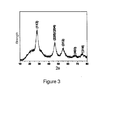
Figure 3 shows an X-ray diffraction curve of the CuInS2 nanoparticle powder prepared in Embodiment 1 of the present invention at a temperature of 240°C with reaction time of 2 hours. - In the present invention, the process for preparing copper indium sulfide semiconducting nanoparticles adopts low-cost copper salts, indium salts, and alkanethiols as raw materials, and through a simple solution reaction and pyrolysis heating method prepares ternary semiconducting copper indium sulfide (CuInS2) nanoparticles with controllable particle sizes. The process has the advantages of being simple to prepare, low-cost, non-toxic, capable of large-scale preparation, and easy to control, etc.
- The process for preparing copper indium sulfide semiconducting nanoparticles of the present invention comprises the following steps:
- (a) adding copper salt, indium salt, and alkanethiols into a non-polar organic solvent, then under an inert gas, heating and stirring, and dissolving until a dark red colloidal solution is obtained; and
- (b) cooling the colloidal solution obtained in step (a) down to room temperature, adding a polar solvent, and then carrying out centrifugal sedimentation to obtain copper indium sulfide semiconducting nanoparticles; optionally further cleaning and vacuum drying to obtain copper indium sulfide semiconducting nanoparticle powder.
- The product yield of the preparation process provided in this present invention is up to 90%.
- The copper indium sulfide semiconducting nanoparticles are in a tetragonal crystal form, with a particle size of 2-10nm and an emission spectrum in the near-infrared region of 600∼800nm.
- Preferably, the copper indium sulfide semiconducting nanoparticles in the present invention are in the shape of a sphere, a triangle, flake-like and/or rod-like, etc.
- Said copper salt and indium salt in step (a) of the process of the present invention preferably have a molar ratio of 1-2:1-2, and the molar content of the alkanethiols is preferably in excess of the molar content of the copper salt or the indium salt, and preferably the molar ratio is 100-1.5:1, more preferably 50-2:1, and particularly preferably 12-3:1.
- The temperature for said heating and stirring in step (a) is preferably between 100°C and 350°C, more preferably between 200°C and 300°C, and particularly preferably between 240°C and 270°C, and the time period is preferably between 10 minutes and 30 hours, more preferably between 20 minutes and 6 hours, and particularly preferably between 1 hour and 2 hours.
- Said cleaning is preferably carried out by dispersing the copper indium sulfide semiconducting nanoparticles obtained in a solvent of hexane, chloroform or toluene, followed by adding methanol and proceeding with centrifugal sedimentation, and the cleaning process is optionally repeated until the desired copper indium sulfide semiconducting nanoparticles are obtained.
- Said copper salt can be copper (I) acetate, copper (II) acetate, copper (II) chloride, copper (I) chloride, copper (II) sulfate, or any mixture thereof.
- Said indium salt can be indium acetate, indium chloride, indium sulfate, indium nitrate, or any mixture thereof.
- Said alkanethiols can be mercaptans having one or more sulfhydryl functional groups, or a mixture of the mercaptans having one or more sulfhydryl functional groups.
- Said mercaptan having one sulfhydryl functional group is preferably octyl mercaptan, iso-octyl-mercaptan, dodecyl mercaptan, hexadecanethiol or octadecanethiol, etc.
- Said mercaptans having more than one sulfhydryl functional group are preferably 1,8-dioctyl mercaptans or 1,6-dioctyl mercaptans, etc.
- Said non-polar organic solvent is preferably octadecene, paraffin wax, diphenyl ether, dioctyl ether, octadecane, or any solvent mixture thereof, etc.
- Said polar solvent is preferably methanol, ethanol, isopropanol, acetone, or any solvent mixture thereof, etc.
- Said inert gas is preferably argon or nitrogen, etc.
- The copper indium sulfide semiconducting nanoparticles obtained with the process preparation in the present invention can be applied in the fields of bio-labeling, light-emitting diodes, thin-film solar cells, polymer solar cells, etc.
- In comparison with the existing technology, the present invention has the following advantages:
- 1. The present invention requires no prior preparation with precursors containing toxic materials, but carries out the reaction with low-cost copper salts, indium salts, and alkanethiols, and the preparation process is simple, easy to control, and easy to implement in large-scale production.
- 2. In the present invention, only the reaction time and temperature are required to be controlled to obtain ternary semiconducting copper indium sulfide (CuInS2) nanoparticles in different absorption wavelength ranges.
- 3. The fluorescence quantum efficiency of ternary semiconducting copper indium sulfide (CuInS2) nanoparticles provided by the present invention is close to 10%, and their emission spectrum is in the near-infrared region. Through exchange of ligands, these nanoparticles can be dissolved into an aqueous phase.
- 4. The ternary semiconducting copper indium sulfide (CuInS2) nanoparticles provided by the present invention can be dispersed in non-polar solvents for a long time, and the copper indium sulfide semiconducting nanoparticle powder obtained with vacuum drying can be re-dispersed in non-polar solvents.
- The following embodiments are used for illustrating the present invention, and shall not be considered as limitations to the present invention.
- A mixture of copper (I) acetate, indium acetate, and dodecyl mercaptan and 50 ml of octadecene were added into a 100ml three-neck boiling flask, wherein the molar ratio of the copper (I) acetate, indium acetate, and dodecyl mercaptan was 1:1:10, and argon gas or nitrogen gas was introduced to flow therethrough for 30 minutes to expel air therein; after heating and stirring at 240°C, a clear pale-yellowish solution was obtained, and then the solution was continuously heated at a constant temperature of 240°C, the color of the colloidal solution gradually changing from pale yellow to dark red. The total reaction time of heating was 2 hours. The colloidal solution obtained from the above reaction was cooled down to room temperature, and 100 ml of acetone were added. Centrifugal sedimentation was carried out, the upper layer of the solution was removed and copper indium sulfide semiconducting nanoparticles were obtained. Different shapes and particle sizes of copper indium sulfide semiconducting nanoparticles could be obtained by changing the reaction time (the specific conditions being listed in Table 1). Tests of absorption spectrum and fluorescence spectrum revealed that the absorption spectrum and fluorescence spectrum of the CuInS2 semiconducting nanoparticles were adjustable (the absorption spectrum and fluorescence spectrum being respectively illustrated in
Figures 1a and 1b ). The sediment was dissolved in toluene again, methanol which was three times the volume of the toluene was added, and then centrifugal sedimentation was carried out. This process was repeated three times, and finally the sediment was cleaned and vacuum dried to obtain the black powder of the copper indium sulfide nanoparticle, the yield being 90%. Tests of the sample powder obtained were executed with X-ray diffraction, and the results illustrated that the copper indium sulfide nanoparticles obtained all had a tetragonal crystal structure.Figure 3 shows an X-ray diffraction curve of copper indium sulfide nanoparticles obtained in a total reaction time of 2 hours.Table 1 reaction
temperaturetotal reaction
timeshape average
particle sizeSample 1 240°C 1 hr sphere 1.9nm Sample 2 240°C 2 hrs sphere 2.2 nm Sample 3 240° C 3 hrs sphere and rod 2.8nm Sample 4 240°C 4 hrs rod 3.3 nm Sample 5 240°C 6 hrs sphere, triangle, and rod 3-10nm - A mixture of copper (II) acetate, indium acetate, and hexadecyl mercaptan and 25 ml of octadecene were added into a 100ml three-neck boiling flask, wherein the molar ratio of the copper (II) acetate, indium acetate, and hexadecyl mercaptan was 1:1:10, and argon gas or nitrogen gas was introduced to flow therethrough for 30 minutes to expel air therein; after heating and stirring at 270°C, a clear pale-yellowish solution was obtained, and then the solution was continuously heated at a constant temperature of 270°C, the total reaction time of heating being 20 minutes. The colloidal solution obtained was cooled down to room temperature, and 100 ml of acetone were added. The copper indium sulfide semiconducting nanoparticles with an average particle size of 3.3nm were obtained by centrifugal sedimentation.
- A mixture of copper (II) acetate, indium acetate, and hexadecyl mercaptan and 50 ml of octadecene were added into a 250ml three-neck boiling flask, wherein the molar ratio of the copper (II) acetate, indium acetate, and hexadecyl mercaptan was 1:1:100, and argon gas or nitrogen gas was introduced to flow therethrough for 30 minutes to expel the air therein; after heating and stirring at 240°C, a clear pale-yellowish solution was obtained, and then the solution was continuously heated at a constant temperature of 240°C to obtain a black sol, the total reaction time of heating being 3 hours. The colloidal solution obtained was cooled down to room temperature, and 100 ml of acetone were added. The copper indium sulfide semiconducting nanoparticles with an average particle size of 3.5nm were obtained by centrifugal sedimentation.
- A mixture of copper (I) acetate, indium acetate, and dodecyl mercaptan and 50 ml of octadecene were added into a 50ml three-neck boiling flask, wherein the molar ratio of the copper (I) acetate, indium acetate, and dodecyl mercaptan was 1:1:10, and argon gas or nitrogen gas was introduced to flow therethrough for 30 minutes to expel the air therein; after heating and stirring at 240°C, a clear pale-yellowish solution was obtained, and then the solution was continuously heated at a constant temperature of 240°C, the total reaction time of heating being 2 hours. The colloidal solution obtained was cooled down to room temperature, and 100 ml of acetone were added. The copper indium sulfide semiconducting nanoparticles with an average particle size of 2.5nm were obtained by centrifugal sedimentation.
Claims (10)
- A process for preparing copper indium sulfide semiconducting nanoparticles, characterized in that the process comprises the following steps:(a) adding copper salt, indium salt, and alkanethiols into a non-polar organic solvent, then under an inert gas, heating and stirring, and dissolving until a dark red colloidal solution is obtained ; and(b) cooling the colloidal solution obtained in step (a) down to room temperature, adding a polar solvent, and then carrying out centrifugal sedimentation to obtain copper indium sulfide semiconducting nanoparticles.
- The process according to Claim 1, characterized in that the copper indium sulfide semiconducting nanoparticles obtained are further subjected to cleaning and vacuum drying to obtain copper indium sulfide semiconducting nanoparticle powder.
- The process according to Claim 2, characterized in that said cleaning is carried out by dispersing the copper indium sulfide semiconducting nanoparticles obtained in a solvent of hexane, chloroform, or toluene, followed by adding methanol and proceeding with a centrifugal sedimentation process.
- The process according to Claim 1, characterized in that in step (a), the copper salt and indium salt have a molar ratio of 1-2:1-2, and the molar content of alkanethiols is in excess of the molar content of copper salt or indium salt.
- The process according to Claim 1, characterized in that the temperature for said heating and stirring in step (a) is 100-350°C, and the time is 10 minutes-30 hours.
- The process according to Claim 1, characterized in that said copper salt is copper (I) acetate, copper (II) acetate, copper (II) chloride, copper (I) chloride, copper (II) sulfate, or a mixture thereof.
- The process according to Claim 1, characterized in that said indium salt is indium acetate, indium chloride, indium sulfate, indium nitrate, or a mixture thereof.
- The process according to Claim 1, characterized in that said alkanethiol is mercaptan having one or more sulfhydryl functional groups, or a mixture of mercaptans having one or more sulfhydryl functional groups.
- The process according to Claim 1, characterized in that said non-polar organic solvent is octadecene, paraffin wax, diphenyl ether, dioctyl ether, octadecane or a solvent mixture thereof; and said polar solvent is methanol, ethanol, isopropanol, acetone, or a solvent mixture thereof.
- A copper indium sulfide semiconducting nanoparticle, wherein said nanoparticles have a tetragonal crystal structure, the particle size is 2-10nm, and the emission spectrum is in the near infrared region of 600-800nm.
Applications Claiming Priority (2)
| Application Number | Priority Date | Filing Date | Title |
|---|---|---|---|
| CNA200810101428XA CN101234779A (en) | 2008-03-06 | 2008-03-06 | Preparation method of copper indium sulfur semiconductor nanoparticles |
| PCT/CN2009/000237 WO2009109110A1 (en) | 2008-03-06 | 2009-03-06 | Copper indium sulfide nanoparticles and a preparation method thereof |
Publications (2)
| Publication Number | Publication Date |
|---|---|
| EP2263977A1 true EP2263977A1 (en) | 2010-12-22 |
| EP2263977A4 EP2263977A4 (en) | 2014-01-29 |
Family
ID=39918722
Family Applications (1)
| Application Number | Title | Priority Date | Filing Date |
|---|---|---|---|
| EP09718518.5A Withdrawn EP2263977A4 (en) | 2008-03-06 | 2009-03-06 | Copper indium sulfide nanoparticles and a preparation method thereof |
Country Status (7)
| Country | Link |
|---|---|
| US (1) | US20110039104A1 (en) |
| EP (1) | EP2263977A4 (en) |
| JP (1) | JP2011513181A (en) |
| KR (1) | KR20100124802A (en) |
| CN (2) | CN101234779A (en) |
| IL (1) | IL207814A0 (en) |
| WO (1) | WO2009109110A1 (en) |
Cited By (1)
| Publication number | Priority date | Publication date | Assignee | Title |
|---|---|---|---|---|
| WO2012163976A1 (en) | 2011-06-03 | 2012-12-06 | Bayer Intellectual Property Gmbh | Continuous process for the synthesis of ternary or quaternary semiconducting nanoparticles based on ib, iiia, via elements of the periodic classification |
Families Citing this family (29)
| Publication number | Priority date | Publication date | Assignee | Title |
|---|---|---|---|---|
| CN101234779A (en) * | 2008-03-06 | 2008-08-06 | 中国科学院化学研究所 | Preparation method of copper indium sulfur semiconductor nanoparticles |
| CN101870458B (en) * | 2009-04-22 | 2012-05-09 | 钟润文 | Preparation method of multi-element metal chalcogen compound, target material and coating material |
| CN102126708B (en) * | 2010-01-20 | 2013-03-27 | 电子科技大学 | Preparation method of Cu-In-Ga-Se-S nano powder material |
| CN101804971A (en) * | 2010-04-19 | 2010-08-18 | 西安交通大学 | Preparation method of copper indium selenide nanocrystalline material |
| FR2964044B1 (en) * | 2010-08-26 | 2012-09-14 | Commissariat Energie Atomique | LIQUID METAL EMULSION |
| CN102041555A (en) * | 2011-01-14 | 2011-05-04 | 南开大学 | A kind of preparation method of CuInS2 nanocrystalline material |
| WO2012168192A2 (en) | 2011-06-07 | 2012-12-13 | Bayer Intellectual Property Gmbh | Synthesis of highly fluorescing semiconducting core-shell nanoparticles based on ib, iib, iiia, via elements of the periodic classification. |
| CN102502788B (en) * | 2011-10-13 | 2014-12-24 | 中国科学院过程工程研究所 | Simple and controllable preparation method of copper-indium-sulfur ternary semiconductor nano granules |
| CN102517003B (en) * | 2011-11-03 | 2013-12-11 | 吉林大学 | Hydro-thermal preparation method for novel near infrared water-soluble copper-indium-sulfur three-element quantum dots |
| CN102583263A (en) * | 2012-02-14 | 2012-07-18 | 北京理工大学 | Method for aqueous synthesis of Cu-In-X triatomic nanoparticles with adjustable forbidden bands |
| US8231848B1 (en) | 2012-04-10 | 2012-07-31 | Sun Harmonics Ltd | One-pot synthesis of chalcopyrite-based semi-conductor nanoparticles |
| CN102709381B (en) * | 2012-05-03 | 2014-11-26 | 北京工业大学 | Method for preparing CIS [CuIn (SSe) 2] films |
| CN103112885A (en) * | 2012-12-12 | 2013-05-22 | 南京工业大学 | Preparation method of copper-based nano solar cell material |
| CN103137340B (en) * | 2013-01-23 | 2016-05-11 | 中国科学院过程工程研究所 | High efficiency, low cost DSSC is to the nanocrystalline preparation method of electrode material one dimension copper indium sulphur-zinc sulfide heterojunction |
| KR101935270B1 (en) | 2013-03-04 | 2019-01-04 | 나노코 테크놀로지스 리미티드 | Copper-Indium-Gallium-Chalcogenide Nanoparticle Precursors for Thin-Film Solar Cells |
| CN103310992A (en) * | 2013-05-21 | 2013-09-18 | 东莞上海大学纳米技术研究院 | A kind of photoanode of dye-sensitized solar cell and preparation method thereof |
| JP6281835B2 (en) * | 2013-09-06 | 2018-02-21 | 国立大学法人 宮崎大学 | Method for producing compound semiconductor nanoparticles for solar cells |
| CN104016590B (en) * | 2014-04-29 | 2016-06-15 | 北京理工大学 | A kind of preparation method of nanocrystalline doping optical glass |
| CN104891555B (en) * | 2015-05-22 | 2016-06-15 | 温州大学 | A kind of three-dimensional hollow CuInS2The preparation method of microballoon |
| CN105369358A (en) * | 2015-11-04 | 2016-03-02 | 北京理工大学 | Method for performing ligand exchange on surface of semiconductor nanocrystalline material |
| CN106830055B (en) * | 2017-02-24 | 2018-08-07 | 武汉理工大学 | A kind of indium sulphur of the twin structure containing buergerite is nanocrystalline and preparation method thereof |
| CN108910939B (en) * | 2018-08-06 | 2020-11-10 | 桂林电子科技大学 | A kind of ultrathin CuInS2 nanosheet and its preparation method and application |
| WO2021111777A1 (en) | 2019-12-02 | 2021-06-10 | 信越化学工業株式会社 | Quantum dot, wavelength conversion material, backlight unit, image display device, and method for manufacturing quantum dot |
| CN112062149A (en) * | 2020-09-16 | 2020-12-11 | 泉州师范学院 | Preparation method of nano copper sulfide |
| CN115197695B (en) * | 2021-04-14 | 2024-01-19 | 中国科学院理化技术研究所 | CuInS 2 Preparation method of quantum dot superlattice structure |
| CN114538498B (en) * | 2022-02-23 | 2022-11-29 | 西安交通大学 | Preparation method and application of copper sulfide nano wire |
| CN114933327B (en) * | 2022-06-13 | 2023-12-01 | 佛山(华南)新材料研究院 | Hydrogen production material and preparation method and application thereof |
| CN115340866A (en) * | 2022-08-30 | 2022-11-15 | 北华大学 | CuAlInS quantum dot and preparation method thereof |
| CN116603542B (en) * | 2023-06-30 | 2026-02-27 | 合肥工业大学 | A CuInS2-In2S3 nanoheterojunction catalyst, its preparation method and application |
Family Cites Families (9)
| Publication number | Priority date | Publication date | Assignee | Title |
|---|---|---|---|---|
| JPS6191005A (en) * | 1984-10-08 | 1986-05-09 | Ryuichi Yamamoto | Metal sulfide |
| KR100621309B1 (en) * | 2004-04-20 | 2006-09-14 | 삼성전자주식회사 | Method for producing metal sulfide nanocrystal using thiol compound as sulfur precursor |
| JP4714859B2 (en) * | 2005-03-01 | 2011-06-29 | 国立大学法人 名古屋工業大学 | Method for synthesizing copper sulfide nanoparticles |
| JP2007169605A (en) * | 2005-11-24 | 2007-07-05 | National Institute Of Advanced Industrial & Technology | Phosphor and method for producing the same |
| US20080038558A1 (en) * | 2006-04-05 | 2008-02-14 | Evident Technologies, Inc. | I-iii-vi semiconductor nanocrystals, i-iii-vi water stable semiconductor nanocrystals, and methods of making same |
| JP4829046B2 (en) * | 2006-08-30 | 2011-11-30 | 国立大学法人 名古屋工業大学 | Method for producing metal sulfide nanoparticles and photoelectric conversion element |
| JP5188070B2 (en) * | 2007-02-07 | 2013-04-24 | Jx日鉱日石エネルギー株式会社 | Method for producing chalcopyrite nanoparticles and photoelectric conversion element |
| CN100494068C (en) * | 2007-05-17 | 2009-06-03 | 上海交通大学 | Preparation method of monodisperse ternary sulfide CuInS2 |
| CN101234779A (en) * | 2008-03-06 | 2008-08-06 | 中国科学院化学研究所 | Preparation method of copper indium sulfur semiconductor nanoparticles |
-
2008
- 2008-03-06 CN CNA200810101428XA patent/CN101234779A/en active Pending
-
2009
- 2009-03-06 JP JP2010549003A patent/JP2011513181A/en active Pending
- 2009-03-06 KR KR1020107022221A patent/KR20100124802A/en not_active Withdrawn
- 2009-03-06 US US12/920,665 patent/US20110039104A1/en not_active Abandoned
- 2009-03-06 EP EP09718518.5A patent/EP2263977A4/en not_active Withdrawn
- 2009-03-06 WO PCT/CN2009/000237 patent/WO2009109110A1/en not_active Ceased
- 2009-03-06 CN CN200980107584XA patent/CN102105400A/en active Pending
-
2010
- 2010-08-26 IL IL207814A patent/IL207814A0/en unknown
Cited By (1)
| Publication number | Priority date | Publication date | Assignee | Title |
|---|---|---|---|---|
| WO2012163976A1 (en) | 2011-06-03 | 2012-12-06 | Bayer Intellectual Property Gmbh | Continuous process for the synthesis of ternary or quaternary semiconducting nanoparticles based on ib, iiia, via elements of the periodic classification |
Also Published As
| Publication number | Publication date |
|---|---|
| CN102105400A (en) | 2011-06-22 |
| CN101234779A (en) | 2008-08-06 |
| WO2009109110A1 (en) | 2009-09-11 |
| EP2263977A4 (en) | 2014-01-29 |
| IL207814A0 (en) | 2010-12-30 |
| JP2011513181A (en) | 2011-04-28 |
| KR20100124802A (en) | 2010-11-29 |
| US20110039104A1 (en) | 2011-02-17 |
Similar Documents
| Publication | Publication Date | Title |
|---|---|---|
| EP2263977A1 (en) | Copper indium sulfide nanoparticles and a preparation method thereof | |
| KR101960945B1 (en) | Copper-Indium-Gallium-Chalcogenide Nanoparticle Precursors for Thin-Film Solar Cells | |
| Yang et al. | Facile synthesis of ZnO/CuInS2 nanorod arrays for photocatalytic pollutants degradation | |
| TWI460281B (en) | Preparation of nanoparticle materials | |
| CA2684535C (en) | Fabrication of electrically active films based on multiple layers | |
| JP6371764B2 (en) | Selenide group 13 nanoparticles | |
| KR101638470B1 (en) | Ink Composition Comprising Metal Nano Particle for Preparation of Light Absorbing Layer and Manufacturing Method of Solar Cell Thin Film Using the Same | |
| CN102502788B (en) | Simple and controllable preparation method of copper-indium-sulfur ternary semiconductor nano granules | |
| Wang et al. | Facile synthesis of Cu3Se2/Cu2Se/Cu2O hollow microspheres by sacrificial template method at room temperature and excellent photodegradation activity | |
| Liu et al. | Scalable noninjection phosphine-free synthesis and optical properties of tetragonal-phase CuInSe 2 quantum dots | |
| CN114105107B (en) | Highly monodisperse MoSe with different morphologies 2 Method for preparing nano material | |
| CN105819490B (en) | Method for preparing different-morphology and self-assembly Cu2S nanometer materials | |
| CN114082425A (en) | A kind of preparation method of Bi2S3/AgBiS2 nano-cluster | |
| CN102674435B (en) | Solvothermal synthesis method for copper, zinc, tin and sulfur nanocrystals | |
| CN106830055A (en) | A kind of indium sulphur containing buergerite twin structure is nanocrystalline and preparation method thereof | |
| CN114538388B (en) | Preparation method of zinc selenide nanowire with controllable composition | |
| CN105642910A (en) | Au nanoparticle composite nanosheets and preparation method thereof | |
| CN110508224A (en) | A kind of inorganic semiconductor/conjugated polymer Janus microballoon and preparation method thereof | |
| Li et al. | Inorganic Sn–X complex ligands capped CuInS2 nanocrystals with high electron mobility | |
| Huang et al. | Synthesis of CuInS2/ZnS Nanocrystals with Thick Shell: The Effect of Temperature and Sulfur Precursor | |
| Ilić et al. | Hot injection synthesis parameters effects on the structure, crystallinity, microstructure and optical properties of Sb2S3 nanopowders | |
| TWI510437B (en) | A method for producing a compound having a chalcopyrite structure | |
| Li et al. | Template-free synthesis of CuSCN and Cu2S crystallites with a facile hydrothermal method at different temperatures | |
| HK1132844A (en) | Fabrication of electrically active films based on multiple layers |
Legal Events
| Date | Code | Title | Description |
|---|---|---|---|
| PUAI | Public reference made under article 153(3) epc to a published international application that has entered the european phase |
Free format text: ORIGINAL CODE: 0009012 |
|
| 17P | Request for examination filed |
Effective date: 20101006 |
|
| AK | Designated contracting states |
Kind code of ref document: A1 Designated state(s): AT BE BG CH CY CZ DE DK EE ES FI FR GB GR HR HU IE IS IT LI LT LU LV MC MK MT NL NO PL PT RO SE SI SK TR |
|
| AX | Request for extension of the european patent |
Extension state: AL BA RS |
|
| DAX | Request for extension of the european patent (deleted) | ||
| RAP1 | Party data changed (applicant data changed or rights of an application transferred) |
Owner name: BAYER INTELLECTUAL PROPERTY GMBH |
|
| A4 | Supplementary search report drawn up and despatched |
Effective date: 20140108 |
|
| RIC1 | Information provided on ipc code assigned before grant |
Ipc: C01G 15/00 20060101ALI20131220BHEP Ipc: C01G 3/12 20060101ALI20131220BHEP Ipc: C01G 1/12 20060101AFI20131220BHEP |
|
| STAA | Information on the status of an ep patent application or granted ep patent |
Free format text: STATUS: THE APPLICATION IS DEEMED TO BE WITHDRAWN |
|
| 18D | Application deemed to be withdrawn |
Effective date: 20140805 |