EP2263803A1 - Method of controlling chemical in wet decarburization of fly ash - Google Patents
Method of controlling chemical in wet decarburization of fly ash Download PDFInfo
- Publication number
- EP2263803A1 EP2263803A1 EP09727020A EP09727020A EP2263803A1 EP 2263803 A1 EP2263803 A1 EP 2263803A1 EP 09727020 A EP09727020 A EP 09727020A EP 09727020 A EP09727020 A EP 09727020A EP 2263803 A1 EP2263803 A1 EP 2263803A1
- Authority
- EP
- European Patent Office
- Prior art keywords
- fly ash
- foaming agent
- concentration
- slurry
- wet
- Prior art date
- Legal status (The legal status is an assumption and is not a legal conclusion. Google has not performed a legal analysis and makes no representation as to the accuracy of the status listed.)
- Withdrawn
Links
Images


Classifications
-
- B—PERFORMING OPERATIONS; TRANSPORTING
- B03—SEPARATION OF SOLID MATERIALS USING LIQUIDS OR USING PNEUMATIC TABLES OR JIGS; MAGNETIC OR ELECTROSTATIC SEPARATION OF SOLID MATERIALS FROM SOLID MATERIALS OR FLUIDS; SEPARATION BY HIGH-VOLTAGE ELECTRIC FIELDS
- B03D—FLOTATION; DIFFERENTIAL SEDIMENTATION
- B03D1/00—Flotation
- B03D1/02—Froth-flotation processes
-
- B—PERFORMING OPERATIONS; TRANSPORTING
- B03—SEPARATION OF SOLID MATERIALS USING LIQUIDS OR USING PNEUMATIC TABLES OR JIGS; MAGNETIC OR ELECTROSTATIC SEPARATION OF SOLID MATERIALS FROM SOLID MATERIALS OR FLUIDS; SEPARATION BY HIGH-VOLTAGE ELECTRIC FIELDS
- B03D—FLOTATION; DIFFERENTIAL SEDIMENTATION
- B03D1/00—Flotation
- B03D1/08—Subsequent treatment of concentrated product
- B03D1/10—Removing adhering liquid from separated materials
-
- B—PERFORMING OPERATIONS; TRANSPORTING
- B03—SEPARATION OF SOLID MATERIALS USING LIQUIDS OR USING PNEUMATIC TABLES OR JIGS; MAGNETIC OR ELECTROSTATIC SEPARATION OF SOLID MATERIALS FROM SOLID MATERIALS OR FLUIDS; SEPARATION BY HIGH-VOLTAGE ELECTRIC FIELDS
- B03D—FLOTATION; DIFFERENTIAL SEDIMENTATION
- B03D1/00—Flotation
- B03D1/12—Agent recovery
-
- B—PERFORMING OPERATIONS; TRANSPORTING
- B09—DISPOSAL OF SOLID WASTE; RECLAMATION OF CONTAMINATED SOIL
- B09B—DISPOSAL OF SOLID WASTE NOT OTHERWISE PROVIDED FOR
- B09B3/00—Destroying solid waste or transforming solid waste into something useful or harmless
-
- C—CHEMISTRY; METALLURGY
- C04—CEMENTS; CONCRETE; ARTIFICIAL STONE; CERAMICS; REFRACTORIES
- C04B—LIME, MAGNESIA; SLAG; CEMENTS; COMPOSITIONS THEREOF, e.g. MORTARS, CONCRETE OR LIKE BUILDING MATERIALS; ARTIFICIAL STONE; CERAMICS; REFRACTORIES; TREATMENT OF NATURAL STONE
- C04B18/00—Use of agglomerated or waste materials or refuse as fillers for mortars, concrete or artificial stone; Treatment of agglomerated or waste materials or refuse, specially adapted to enhance their filling properties in mortars, concrete or artificial stone
- C04B18/04—Waste materials; Refuse
- C04B18/06—Combustion residues, e.g. purification products of smoke, fumes or exhaust gases
- C04B18/08—Flue dust, i.e. fly ash
- C04B18/084—Flue dust, i.e. fly ash obtained from mixtures of pulverised coal and additives, added to influence the composition of the resulting flue dust
-
- Y—GENERAL TAGGING OF NEW TECHNOLOGICAL DEVELOPMENTS; GENERAL TAGGING OF CROSS-SECTIONAL TECHNOLOGIES SPANNING OVER SEVERAL SECTIONS OF THE IPC; TECHNICAL SUBJECTS COVERED BY FORMER USPC CROSS-REFERENCE ART COLLECTIONS [XRACs] AND DIGESTS
- Y02—TECHNOLOGIES OR APPLICATIONS FOR MITIGATION OR ADAPTATION AGAINST CLIMATE CHANGE
- Y02W—CLIMATE CHANGE MITIGATION TECHNOLOGIES RELATED TO WASTEWATER TREATMENT OR WASTE MANAGEMENT
- Y02W30/00—Technologies for solid waste management
- Y02W30/50—Reuse, recycling or recovery technologies
- Y02W30/91—Use of waste materials as fillers for mortars or concrete
Definitions
- the present invention relates to a method of managing chemical used for removing unburned carbon in fly ash with wet floatation.
- fly ash generated at a coal fired power plant and the like is used for a mixing material for cement, an admixture for concrete, a raw material for an artificial lightweight aggregate and the like, since various problems will occur when much unburned carbon is contained in fly ash, it is necessary to remove the unburned carbon. Therefore, many arts have been proposed. Especially, when the fly ash is used as a mixing material for cement, it is considered to be the most economical method to reduce facility and operating costs that after decarbonization treatment with wet floatation, wet ash is fed to a cement mill.
- fly ash After storing fly ash transported as a waste from a coal fired power plant and so on in a fly ash tank 1, the fly ash is supplied to a slurry tank 2 and mixed with water to generate slurry S1.
- the fly ash slurry S1 in the slurry tank 2 is supplied to a surface reformer 4 through a pump 3.
- to the surface reformer 4 is supplied light oil as a hydrophobizing agent from a hydrophobizing agent tank 5 through a pump 6.
- the surface reformer 4 to the slurry S1 to which hydrophobizing agent is added is added shearing force, and particles contained in the slurry S1 are crushed into micro pieces.
- the slurry S1 to which shearing force is added and other treatments are performed is supplied to an adjustment tank 7 from the surface reformer 4.
- a foaming agent from a foaming agent tank 8 through a pump 9
- the adjustment tank 7 are mixed the slurry S1 and the foaming agent to generate slurry S2.
- froth F containing unburned carbon discharged from the floatation machine 11 is solid-liquid separated with a filter press 13 to recover the unburned carbon. It is possible to utilize the recovered unburned carbon as an auxiliary fuel in a cement kiln and the like.
- filtrate L1 generated by the filter press 13 is added to the adjustment tank 7 through a pump 14, or in the floatation machine 11, the filtrate L1 is reused for defoaming to cause unburned carbon to be adhered to the bubbles.
- tail T containing fly ash from the floatation machine 11 is solid-liquid separated with a filter press 12, and the fly ash whose unburned carbon content was made under 0.5 mass percent is used as a cement mixing material.
- filtrate L2 solid-liquid separated with a filter press 12 (hereinafter referred to as "circulating water C") is cause to be circulated to the slurry tank 2 through a pump 15 to reduce chemical cost by reusing foaming agent remaining in the circulating water C.
- the present invention has been made in consideration of the above problems in the conventional art, and the object thereof is to provide a chemical management method in wet decarbonization of fly ash capable of reducing the quantity of foaming agent used for removing unburned carbon in fly ash with wet floatation to reduce chemical cost as well as preventing decrease in the activity index of the fly ash.
- the present inventors to achieve the above object, have made diligent studies and found that when sedimentation component at wet floatation separation for removing unburned carbon in fly ash is solid-liquid separated, and obtained liquid phase (corresponds to the above "circulating water C") is reused for floatation separation for new fly ash, managing a concentration of foaming agent in the liquid phase is able to reduce the quantity of foaming agent.
- the present invention has been made based on the above knowledge, and relates to a chemical management method in wet decarbonization of fly ash comprising the steps of: adding water to the fly ash to generate slurry; adding hydrophobizing agent and foaming agent to the slurry and agitating them to generate bubbles; and adhering unburned carbon in the fly ash to the bubbles to float them to remove the unburned carbon in the fly ash, and this method is characterized by comprising the steps of: solid-liquid separating sedimentation component at the wet floatation separation; and reusing obtained liquid phase by the solid-liquid separation for another floatation separation for new fly ash, wherein quantity of the foaming agent added to the slurry is adjusted such that a concentration of the foaming agent in the liquid phase is in a predetermined range.
- the concentration of foaming agent in the liquid phase In adjusting the concentration of foaming agent in the liquid phase to a predetermined range, it is possible to measure COD (Chemical Oxygen Demand) concentration of the liquid phase and adjust the quantity of foaming agent added to the slurry such that the COD concentration is in a predetermined range. Since the concentration of foaming agent in the liquid phase has a close relation with the COD concentration in the liquid phase, and measurement of the COD concentration can be carried out easily and quickly through a simple method such as a pack test and a method with a COD measurement device 16, the quantity of foaming agent can efficiently be managed at low cost.
- COD Chemical Oxygen Demand
- the concentration of foaming agent in the liquid phase is possibly be set between 200mg and 4000mg per 1kg of the fly ash separated through wet floatation separation.
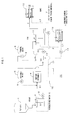
- Figure 1 shows a wet decarbonization system of fly ash to which a chemical management method according to the present invention is applied, and the basic construction of this system 20 is the same as the conventional system shown in Fig. 3 , so that to the same constituent factors are attached the same reference numbers and the explanation thereof will be omitted.
- the system 20 is characterized by having, in addition to the construction of the system shown in Fig. 3 ; a COD measurement device 16 on a circulation route 17 for returning the filtrate L2 (hereinafter referred to as "circulating water C") to the slurry tank 2, and managing quantity of foaming agent supplied to the adjustment tank 7 from the foaming agent tank 8 with the pump 9 in accordance with the COD concentration in the circulating water C that is measured with this COD measurement device 16.
- circulating water C filtrate L2
- the COD concentration in the circulating water C has a close relation with the foaming agent concentration in the circulating water C, and the COD concentration can easily and quickly be measured with the COD measurement device 16 and so on, so that instead of directly measuring the foaming agent concentration in the circulating water C, it is more efficient to measure the COD concentration in the circulating water C with the COD measurement device 16 and convert this measurement value into the foaming agent concentration in the circulating water C.
- the target value of foaming agent concentration in the circulating water C is set to be 1500mg/kg of fly ash
- the COD concentration in the circulating water C becomes approximately 80mg/L.
- the foaming agent concentration in the circulating water C is preferably be controlled between 200mg and 4000mg per 1kg of the fly ash (between 200mg/ kg-FA and 4000mg/ kg-FA) supplied to the floatation machine 11. Therefore, from the relation shown in Fig.2 , the quantity of the foaming agent supplied to the adjustment tank 7 from the foaming agent tank 8 is controlled to retain the COD concentration in the circulating water C measured with the COD measurement device 16 between 11 mg/L and 220 mg/L.
- the foaming agent concentration in the circulating water C is less than 11mg/kg-FA, the quantity of foaming agent in the floatation machine 11 is insufficient, so that the floatation efficiency decreases.
- the foaming agent concentration in the circulating water C exceeds 220mg/kg-FA, it is not desirable since improvement in the floatation efficiency corresponding to the increase in quantity of foaming agent is not expected and the activity index of the fly ash decreases.
- an automation with a generally used automatic control device may be adopted, and it is also possible to carry out the measurement by an operator at a plant site, or in a different place with a collected sample by using the COD measurement device 16, and adjust the additional amount of foaming agent to the adjustment tank 7 from the foaming agent tank 8 at the plant site or by remote control according to the measured value.
- Activity indices were measured in connection with modified fly ash (modified powder) subjected to wet decarbonization with the above chemical management method, and fly ash (raw powder) without the wet decarbonization, in which the foaming agent concentration in the circulating water C changes over 3 levels. Measurement results are shown in Table 1.
- the activity index means a compressive strength ratio of mortar, to which fly ash is mixed, to cement mortar itself, which is based on JIS A 6201, and the mixing ratio of the fly ash was made into 25%.
- the regulation values of JIS A 6201 (fly ash for concrete) are 80% or higher at 28 days of material age and 90% or higher at 91 days of material age.
- maintaining the foaming agent concentration in the circulating water C in a predetermined range allows unburned carbon in the fly ash to be removed with a necessary minimum amount of foaming agent, so that the foaming agent concentration in the floatation machine 11 becomes stable, resulting in reduction in the amount of foaming agent used, that is, reduction in the chemical cost, while avoiding an excessive supply of foaming agent, decrease in the activity index of the fly ash, and in its turn, decrease in the initial strength of cement for which the modified fly ash is utilized as a mixing material.
- the COD concentration in the circulating water C can more easily and quickly be measured, and the COD concentration and the foaming agent concentration in the circulating water C have a close relation between them, without directly measuring the foaming agent concentration in the circulating water C, the COD concentration in the circulating water C is measured and the COD concentration is controlled to be in a predetermined range to obtain the same effect as the case where the foaming agent concentration in the circulating water C is directly controlled, as a matter of course, it is possible to directly measure the foaming agent concentration in the circulating water C. In addition, it is also possible to indirectly obtain the foaming agent concentration in the circulating water C from measurement value other than the COD concentration in the circulating water C.
Landscapes
- Chemical & Material Sciences (AREA)
- Engineering & Computer Science (AREA)
- Environmental & Geological Engineering (AREA)
- Ceramic Engineering (AREA)
- Dispersion Chemistry (AREA)
- Combustion & Propulsion (AREA)
- Civil Engineering (AREA)
- Materials Engineering (AREA)
- Structural Engineering (AREA)
- Organic Chemistry (AREA)
- Processing Of Solid Wastes (AREA)
Abstract
Description
- The present invention relates to a method of managing chemical used for removing unburned carbon in fly ash with wet floatation.
- Conventionally, although fly ash generated at a coal fired power plant and the like is used for a mixing material for cement, an admixture for concrete, a raw material for an artificial lightweight aggregate and the like, since various problems will occur when much unburned carbon is contained in fly ash, it is necessary to remove the unburned carbon. Therefore, many arts have been proposed. Especially, when the fly ash is used as a mixing material for cement, it is considered to be the most economical method to reduce facility and operating costs that after decarbonization treatment with wet floatation, wet ash is fed to a cement mill.
- Here, as an example of a method of removing unburned carbon in fly ash that is utilized as a mixing material for cement, a method described in
patent document 1 will briefly be explained with reference toFig. 3 . - After storing fly ash transported as a waste from a coal fired power plant and so on in a
fly ash tank 1, the fly ash is supplied to aslurry tank 2 and mixed with water to generate slurry S1. Next, the fly ash slurry S1 in theslurry tank 2 is supplied to asurface reformer 4 through a pump 3. And, to thesurface reformer 4 is supplied light oil as a hydrophobizing agent from ahydrophobizing agent tank 5 through apump 6. - Next, in the
surface reformer 4, to the slurry S1 to which hydrophobizing agent is added is added shearing force, and particles contained in the slurry S1 are crushed into micro pieces. The slurry S1 to which shearing force is added and other treatments are performed is supplied to anadjustment tank 7 from thesurface reformer 4. Besides, to theadjustment tank 7 is supplied a foaming agent from afoaming agent tank 8 through apump 9, and in theadjustment tank 7 are mixed the slurry S1 and the foaming agent to generate slurry S2. - Then, while the slurry S2 is supplied to a
floatation machine 11 through apump 10, air is supplied to thefloatation machine 11 to generate bubbles in thefloatation machine 11, and to the bubbles are adhered unburned carbon adsorbed to the hydrophobizing agent, and floating bubbles to which the unburned carbon are adhered are removed. With this, unburned carbon contained in the fly ash can be removed. - After that, froth F containing unburned carbon discharged from the
floatation machine 11 is solid-liquid separated with afilter press 13 to recover the unburned carbon. It is possible to utilize the recovered unburned carbon as an auxiliary fuel in a cement kiln and the like. On the other hand, filtrate L1 generated by thefilter press 13 is added to theadjustment tank 7 through apump 14, or in thefloatation machine 11, the filtrate L1 is reused for defoaming to cause unburned carbon to be adhered to the bubbles. - Meanwhile, tail T containing fly ash from the
floatation machine 11 is solid-liquid separated with afilter press 12, and the fly ash whose unburned carbon content was made under 0.5 mass percent is used as a cement mixing material. On the other hand, filtrate L2 solid-liquid separated with a filter press 12 (hereinafter referred to as "circulating water C") is cause to be circulated to theslurry tank 2 through apump 15 to reduce chemical cost by reusing foaming agent remaining in the circulating water C. - Patent document 1: Japan Patent
3613347 - However, in the conventional method of removing unburned carbon in fly ash described above, in order to continue stable operation of the
floatation machine 11, the degree of foaming of the foaming agent in thefloatation machine 11 was observed with eyes to determine an additional amount of foaming agent from thefoaming agent tank 8 to theadjustment tank 7, so that management of the additional amount of foaming agent was not enough, which causes effect of reducing chemical cost not to reach an expected extent. - Further, since the management of additional amount of foaming agent was not sufficient, there was a case where the foaming agent was excessively supplied to the
adjustment tank 7, and in such a case, the activity index of the fly ash lowered, and when the fly ash with a low activity index was utilized for a mixing material for cement, it might cause lowered initial strength of cement. - Therefore, the present invention has been made in consideration of the above problems in the conventional art, and the object thereof is to provide a chemical management method in wet decarbonization of fly ash capable of reducing the quantity of foaming agent used for removing unburned carbon in fly ash with wet floatation to reduce chemical cost as well as preventing decrease in the activity index of the fly ash.
- The present inventors, to achieve the above object, have made diligent studies and found that when sedimentation component at wet floatation separation for removing unburned carbon in fly ash is solid-liquid separated, and obtained liquid phase (corresponds to the above "circulating water C") is reused for floatation separation for new fly ash, managing a concentration of foaming agent in the liquid phase is able to reduce the quantity of foaming agent.
- The present invention has been made based on the above knowledge, and relates to a chemical management method in wet decarbonization of fly ash comprising the steps of: adding water to the fly ash to generate slurry; adding hydrophobizing agent and foaming agent to the slurry and agitating them to generate bubbles; and adhering unburned carbon in the fly ash to the bubbles to float them to remove the unburned carbon in the fly ash, and this method is characterized by comprising the steps of: solid-liquid separating sedimentation component at the wet floatation separation; and reusing obtained liquid phase by the solid-liquid separation for another floatation separation for new fly ash, wherein quantity of the foaming agent added to the slurry is adjusted such that a concentration of the foaming agent in the liquid phase is in a predetermined range.
- And, with this invention, instead of observing, with eyes, the degree of foaming of the foaming agent in the floatation machine as before, managing the concentration of foaming agent in the liquid phase obtained by solid-liquid separating sedimentation component at wet floatation separation in a predetermined range is able to settle the concentration of foaming agent at the floatation separation, which makes it possible to remove the unburned carbon in the fly ash by a necessary minimum amount of foaming agent. In addition, as the concentration of foaming agent becomes stable, foaming agent is not supplied excessively, and reduction in the activity index of the fly ash can be prevented.
- In adjusting the concentration of foaming agent in the liquid phase to a predetermined range, it is possible to measure COD (Chemical Oxygen Demand) concentration of the liquid phase and adjust the quantity of foaming agent added to the slurry such that the COD concentration is in a predetermined range. Since the concentration of foaming agent in the liquid phase has a close relation with the COD concentration in the liquid phase, and measurement of the COD concentration can be carried out easily and quickly through a simple method such as a pack test and a method with a
COD measurement device 16, the quantity of foaming agent can efficiently be managed at low cost. - In the above chemical management method in wet decarbonization of fly ash, the concentration of foaming agent in the liquid phase is possibly be set between 200mg and 4000mg per 1kg of the fly ash separated through wet floatation separation.
- As mentioned above, with this invention, while reducing the quantity of foaming agent and others used when removing unburned carbon in fly ash with wet floatation to reduce cost of chemical, it is possible to prevent decrease in the activity index of the fly ash.
- Next, embodiments of the present invention will be explained with reference to figures.
-
Figure 1 shows a wet decarbonization system of fly ash to which a chemical management method according to the present invention is applied, and the basic construction of thissystem 20 is the same as the conventional system shown inFig. 3 , so that to the same constituent factors are attached the same reference numbers and the explanation thereof will be omitted. - The
system 20 is characterized by having, in addition to the construction of the system shown inFig. 3 ; aCOD measurement device 16 on acirculation route 17 for returning the filtrate L2 (hereinafter referred to as "circulating water C") to theslurry tank 2, and managing quantity of foaming agent supplied to theadjustment tank 7 from thefoaming agent tank 8 with thepump 9 in accordance with the COD concentration in the circulating water C that is measured with thisCOD measurement device 16. - As shown in
Fig. 2 , the COD concentration in the circulating water C has a close relation with the foaming agent concentration in the circulating water C, and the COD concentration can easily and quickly be measured with theCOD measurement device 16 and so on, so that instead of directly measuring the foaming agent concentration in the circulating water C, it is more efficient to measure the COD concentration in the circulating water C with theCOD measurement device 16 and convert this measurement value into the foaming agent concentration in the circulating water C. For example, in case that the target value of foaming agent concentration in the circulating water C is set to be 1500mg/kg of fly ash, the COD concentration in the circulating water C becomes approximately 80mg/L. - In removing unburned carbon in fly ash with the
floatation machine 11, the foaming agent concentration in the circulating water C is preferably be controlled between 200mg and 4000mg per 1kg of the fly ash (between 200mg/ kg-FA and 4000mg/ kg-FA) supplied to thefloatation machine 11. Therefore, from the relation shown inFig.2 , the quantity of the foaming agent supplied to theadjustment tank 7 from thefoaming agent tank 8 is controlled to retain the COD concentration in the circulating water C measured with theCOD measurement device 16 between 11 mg/L and 220 mg/L. In case that the foaming agent concentration in the circulating water C is less than 11mg/kg-FA, the quantity of foaming agent in thefloatation machine 11 is insufficient, so that the floatation efficiency decreases. On the other hand, when the foaming agent concentration in the circulating water C exceeds 220mg/kg-FA, it is not desirable since improvement in the floatation efficiency corresponding to the increase in quantity of foaming agent is not expected and the activity index of the fly ash decreases. - In the above control of the additional amount of foaming agent to the
adjustment tank 7 based on the measurement value of the COD concentration with theCOD measurement device 16, an automation with a generally used automatic control device may be adopted, and it is also possible to carry out the measurement by an operator at a plant site, or in a different place with a collected sample by using theCOD measurement device 16, and adjust the additional amount of foaming agent to theadjustment tank 7 from thefoaming agent tank 8 at the plant site or by remote control according to the measured value. - Activity indices were measured in connection with modified fly ash (modified powder) subjected to wet decarbonization with the above chemical management method, and fly ash (raw powder) without the wet decarbonization, in which the foaming agent concentration in the circulating water C changes over 3 levels. Measurement results are shown in Table 1. The activity index means a compressive strength ratio of mortar, to which fly ash is mixed, to cement mortar itself, which is based on JIS A 6201, and the mixing ratio of the fly ash was made into 25%. The regulation values of JIS A 6201 (fly ash for concrete) are 80% or higher at 28 days of material age and 90% or higher at 91 days of material age.
Table 1 Activity index(%) Ig.loss(%) Concentration of foaming agent in circulating water Raw powder Modified powder Raw powder Modified powder Level I Age 28 days(%) 85 76 2.7 0.7 5000mg/kg-FA Age 91 days(%) 99 89 Level II Age 28 days(%) 81 79 5.9 1.8 2000mg/kg-FA Age 91 days(%) 91 89 Level III Age 28 days(%) 78 78 3.0 0.8 -
(COD concentration < 100mg/Litre)Age 91 days(%) 91 90 - As shown in the table, though there is much difference in activity indices between the raw powder and the modified powder when the foaming agent concentration in the circulating water C in level I is 5000 mg/kg-FA, the difference becomes almost the same in 2000 mg/kg-FA, and further lowering the foaming agent concentration allows the both activity indices to become the same, or the difference between them to become very little.
- As mentioned above, in this invention, maintaining the foaming agent concentration in the circulating water C in a predetermined range allows unburned carbon in the fly ash to be removed with a necessary minimum amount of foaming agent, so that the foaming agent concentration in the
floatation machine 11 becomes stable, resulting in reduction in the amount of foaming agent used, that is, reduction in the chemical cost, while avoiding an excessive supply of foaming agent, decrease in the activity index of the fly ash, and in its turn, decrease in the initial strength of cement for which the modified fly ash is utilized as a mixing material. - Meanwhile, in the above embodiment, since the COD concentration in the circulating water C can more easily and quickly be measured, and the COD concentration and the foaming agent concentration in the circulating water C have a close relation between them, without directly measuring the foaming agent concentration in the circulating water C, the COD concentration in the circulating water C is measured and the COD concentration is controlled to be in a predetermined range to obtain the same effect as the case where the foaming agent concentration in the circulating water C is directly controlled, as a matter of course, it is possible to directly measure the foaming agent concentration in the circulating water C. In addition, it is also possible to indirectly obtain the foaming agent concentration in the circulating water C from measurement value other than the COD concentration in the circulating water C.
-
-
Figure 1 : A flowchart showing a whole construction of a wet decarbonization system of fly ash to which a chemical management method according to the present invitation is applied. -
Figure 2 : A graph showing the relation between foaming agent concentration and COD concentration in circulating water. -
Figure 3 : A flowchart showing an example of a whole construction of a conventional wet decarbonization system of fly ash. -
- 1 fly ash tank
- 2 slurry tank
- 3 pump
- 4 surface reformer
- 5 hydrophobizing agent tank
- 6 pump
- 7 adjustment tank
- 8 foaming agent tank
- 9 pump
- 10 pump
- 11 floatation machine
- 12 filter press
- 13 filter press
- 14 pump
- 15 pump
- 16 COD measurement device
- 17 circulation route
- 20 wet decarbonization system of fly ash
Claims (3)
- In wet decarbonization of fly ash comprising the steps of: adding water to fly ash to generate slurry; adding hydrophobizing agent and foaming agent to the slurry and agitating them to generate bubbles; and adhering unburned carbon in said fly ash to the bubbles to float them to remove the unburned carbon in the fly ash,
a chemical management method comprising the steps of:solid-liquid separating sedimentation component at said wet floatation separation; andreusing liquid phase obtained by said solid-liquid separation for another floatation separation for new fly ash,wherein quantity of said foaming agent added to the slurry is adjusted such that a concentration of the foaming agent in the liquid phase is in a predetermined range. - The chemical management method in wet decarbonization of fly ash as claimed in claim 1, wherein to adjust said concentration of the foaming agent in the liquid phase in a predetermined range, a COD concentration in the liquid phase is measured; and the quantity of the foaming agent added to the slurry is adjusted such that the COD concentration is in a predetermined range.
- The chemical management method in wet decarbonization of fly ash as claimed in claim 1 or 2, wherein said concentration of the foaming agent in the liquid phase is set between 200mg and 4000mg per 1kg of the fly ash separated with the wet floatation separation.
Applications Claiming Priority (2)
| Application Number | Priority Date | Filing Date | Title |
|---|---|---|---|
| JP2008090830A JP5301189B2 (en) | 2008-03-31 | 2008-03-31 | Chemical management method in wet decarburization of fly ash |
| PCT/JP2009/055116 WO2009122895A1 (en) | 2008-03-31 | 2009-03-17 | Method of controlling chemical in wet decarburization of fly ash |
Publications (2)
| Publication Number | Publication Date |
|---|---|
| EP2263803A1 true EP2263803A1 (en) | 2010-12-22 |
| EP2263803A4 EP2263803A4 (en) | 2011-08-10 |
Family
ID=41135281
Family Applications (1)
| Application Number | Title | Priority Date | Filing Date |
|---|---|---|---|
| EP09727020A Withdrawn EP2263803A4 (en) | 2008-03-31 | 2009-03-17 | METHOD FOR CHEMICAL REGULATION OF THE MOISTURIZED ATMOSPHERE DECARBURATION OF FLY ASH |
Country Status (7)
| Country | Link |
|---|---|
| US (1) | US8454745B2 (en) |
| EP (1) | EP2263803A4 (en) |
| JP (1) | JP5301189B2 (en) |
| KR (1) | KR101547987B1 (en) |
| CN (1) | CN101970118B (en) |
| TW (1) | TW200946235A (en) |
| WO (1) | WO2009122895A1 (en) |
Families Citing this family (3)
| Publication number | Priority date | Publication date | Assignee | Title |
|---|---|---|---|---|
| US8871021B2 (en) * | 2011-03-08 | 2014-10-28 | Staker & Parson Companies | Concrete mixtures including carbon encapsulating admixture |
| CN108116892A (en) * | 2016-11-29 | 2018-06-05 | 中冶京诚工程技术有限公司 | Conveying device and method for blast furnace dust removal ash |
| EP4241077B1 (en) * | 2020-11-06 | 2026-01-21 | Kimberly-Clark Worldwide, Inc. | Method and system for determining surfactant concentration in industrial processes |
Family Cites Families (6)
| Publication number | Priority date | Publication date | Assignee | Title |
|---|---|---|---|---|
| US6041941A (en) * | 1997-06-26 | 2000-03-28 | Boc Gases Australia Limited | Reagent consumption in mineral separation circuits |
| JP3613347B1 (en) * | 2003-10-09 | 2005-01-26 | 太平洋セメント株式会社 | How to remove unburned carbon in fly ash |
| JP2006015190A (en) * | 2004-06-30 | 2006-01-19 | Taiheiyo Cement Corp | Fly ash treatment method |
| JP4751139B2 (en) * | 2005-08-26 | 2011-08-17 | 三井造船株式会社 | Equipment for removing unburned carbon in fly ash |
| JP4917309B2 (en) * | 2005-12-26 | 2012-04-18 | 三井造船株式会社 | How to remove unburned carbon in fly ash |
| JP4859459B2 (en) * | 2005-12-29 | 2012-01-25 | 三井造船株式会社 | How to remove unburned carbon in fly ash |
-
2008
- 2008-03-31 JP JP2008090830A patent/JP5301189B2/en not_active Expired - Fee Related
-
2009
- 2009-03-12 TW TW98108011A patent/TW200946235A/en unknown
- 2009-03-17 EP EP09727020A patent/EP2263803A4/en not_active Withdrawn
- 2009-03-17 US US12/922,645 patent/US8454745B2/en not_active Expired - Fee Related
- 2009-03-17 WO PCT/JP2009/055116 patent/WO2009122895A1/en not_active Ceased
- 2009-03-17 KR KR1020107020040A patent/KR101547987B1/en not_active Expired - Fee Related
- 2009-03-17 CN CN2009801089467A patent/CN101970118B/en not_active Expired - Fee Related
Also Published As
| Publication number | Publication date |
|---|---|
| CN101970118A (en) | 2011-02-09 |
| TW200946235A (en) | 2009-11-16 |
| US8454745B2 (en) | 2013-06-04 |
| KR101547987B1 (en) | 2015-08-27 |
| WO2009122895A1 (en) | 2009-10-08 |
| EP2263803A4 (en) | 2011-08-10 |
| JP2009240934A (en) | 2009-10-22 |
| US20110036271A1 (en) | 2011-02-17 |
| KR20110000628A (en) | 2011-01-04 |
| JP5301189B2 (en) | 2013-09-25 |
| CN101970118B (en) | 2013-10-02 |
Similar Documents
| Publication | Publication Date | Title |
|---|---|---|
| KR101441877B1 (en) | System for producing cement and production method | |
| CN104245601A (en) | Method for treating a waste stream using a bioreactor and a membrane filter | |
| EP2263803A1 (en) | Method of controlling chemical in wet decarburization of fly ash | |
| Houghton et al. | The impact of digestion on sludge dewaterability | |
| JP5562057B2 (en) | Method and apparatus for removing unburned carbon in fly ash | |
| CN113511771A (en) | A high-concentration landfill leachate membrane concentrate treatment process and its application | |
| Wang et al. | Enhancing aerobic digestion of full-scale waste activated sludge using free nitrous acid pre-treatment | |
| US3994804A (en) | Sewage sludge treatment system | |
| JP5119200B2 (en) | Operation method of sewage treatment facility | |
| US8439202B2 (en) | Coal ash treatment method and apparatus | |
| US11319222B2 (en) | Method and process arrangement of removing cations from water | |
| CN108529839A (en) | A kind of drilling mud processing method and its system | |
| KR20070100619A (en) | Sludge dewatering device and sludge dewatering method | |
| KR20160095280A (en) | Method for enhancing the dewatering ability of sludge using activated persulfate and dewatering method using the same | |
| JP2008237948A (en) | Waste stabilization processing method and stabilization processing apparatus | |
| JP2009091189A (en) | Gypsum board and fly ash processing method and processing apparatus | |
| CN116065985A (en) | Harmless advanced treatment method for solid-liquid waste of water-based drilling fluid | |
| CN207845362U (en) | A kind of device handling desulfurization wastewater using nano zero valence iron and persulfate | |
| EP4682128A1 (en) | Cement recycled material manufacturing method | |
| JP2021143109A (en) | Production method of cement admixture, production apparatus of cement admixture, and separation method of unburned carbon in coal ash | |
| JP6768036B2 (en) | Method for manufacturing modified fly ash and method for judging the quality of raw fly ash powder | |
| RU2181436C1 (en) | Method of preparation of inert filter of filling mixtures | |
| RU2627382C2 (en) | Method of biological wastewater treatment | |
| JP6823476B2 (en) | Incineration ash desalination method and incineration ash desalination treatment system | |
| JP2025145874A (en) | Wastewater treatment method and device |
Legal Events
| Date | Code | Title | Description |
|---|---|---|---|
| PUAI | Public reference made under article 153(3) epc to a published international application that has entered the european phase |
Free format text: ORIGINAL CODE: 0009012 |
|
| 17P | Request for examination filed |
Effective date: 20100831 |
|
| AK | Designated contracting states |
Kind code of ref document: A1 Designated state(s): AT BE BG CH CY CZ DE DK EE ES FI FR GB GR HR HU IE IS IT LI LT LU LV MC MK MT NL NO PL PT RO SE SI SK TR |
|
| AX | Request for extension of the european patent |
Extension state: AL BA RS |
|
| DAX | Request for extension of the european patent (deleted) | ||
| A4 | Supplementary search report drawn up and despatched |
Effective date: 20110708 |
|
| RIC1 | Information provided on ipc code assigned before grant |
Ipc: C04B 18/08 20060101ALI20110704BHEP Ipc: B09B 3/00 20060101ALI20110704BHEP Ipc: B03D 1/12 20060101ALI20110704BHEP Ipc: B03D 1/10 20060101ALI20110704BHEP Ipc: B03D 1/02 20060101AFI20110704BHEP |
|
| STAA | Information on the status of an ep patent application or granted ep patent |
Free format text: STATUS: THE APPLICATION IS DEEMED TO BE WITHDRAWN |
|
| 18D | Application deemed to be withdrawn |
Effective date: 20151001 |