EP2263752A1 - Feuerwehrbekleidung - Google Patents
Feuerwehrbekleidung Download PDFInfo
- Publication number
- EP2263752A1 EP2263752A1 EP10177706A EP10177706A EP2263752A1 EP 2263752 A1 EP2263752 A1 EP 2263752A1 EP 10177706 A EP10177706 A EP 10177706A EP 10177706 A EP10177706 A EP 10177706A EP 2263752 A1 EP2263752 A1 EP 2263752A1
- Authority
- EP
- European Patent Office
- Prior art keywords
- layer
- garment
- heat
- apertured
- insulating material
- Prior art date
- Legal status (The legal status is an assumption and is not a legal conclusion. Google has not performed a legal analysis and makes no representation as to the accuracy of the status listed.)
- Withdrawn
Links
- 230000004888 barrier function Effects 0.000 claims abstract description 83
- 239000004744 fabric Substances 0.000 claims abstract description 52
- 239000011810 insulating material Substances 0.000 claims abstract description 44
- 230000001681 protective effect Effects 0.000 claims abstract description 28
- 238000005299 abrasion Methods 0.000 claims abstract description 10
- 239000003779 heat-resistant material Substances 0.000 claims abstract description 7
- 239000000463 material Substances 0.000 claims description 46
- 239000012528 membrane Substances 0.000 claims description 14
- 239000004760 aramid Substances 0.000 claims description 12
- 229920003235 aromatic polyamide Polymers 0.000 claims description 12
- 239000000758 substrate Substances 0.000 claims description 9
- 239000004753 textile Substances 0.000 claims description 5
- 239000005871 repellent Substances 0.000 claims description 2
- 239000010410 layer Substances 0.000 description 72
- 239000007788 liquid Substances 0.000 description 13
- XLYOFNOQVPJJNP-UHFFFAOYSA-N water Substances O XLYOFNOQVPJJNP-UHFFFAOYSA-N 0.000 description 13
- 238000010276 construction Methods 0.000 description 8
- 238000010521 absorption reaction Methods 0.000 description 7
- 239000004809 Teflon Substances 0.000 description 6
- 229920006362 Teflon® Polymers 0.000 description 6
- BFKJFAAPBSQJPD-UHFFFAOYSA-N tetrafluoroethene Chemical compound FC(F)=C(F)F BFKJFAAPBSQJPD-UHFFFAOYSA-N 0.000 description 6
- 229920000784 Nomex Polymers 0.000 description 5
- 239000004763 nomex Substances 0.000 description 5
- 230000000694 effects Effects 0.000 description 4
- 230000000712 assembly Effects 0.000 description 3
- 238000000429 assembly Methods 0.000 description 3
- 238000005516 engineering process Methods 0.000 description 3
- 239000000203 mixture Substances 0.000 description 3
- 229920000271 Kevlar® Polymers 0.000 description 2
- 229920006232 basofil Polymers 0.000 description 2
- 230000003247 decreasing effect Effects 0.000 description 2
- 239000012530 fluid Substances 0.000 description 2
- 231100001261 hazardous Toxicity 0.000 description 2
- 239000004761 kevlar Substances 0.000 description 2
- 238000004519 manufacturing process Methods 0.000 description 2
- 238000002844 melting Methods 0.000 description 2
- 230000008018 melting Effects 0.000 description 2
- 238000005065 mining Methods 0.000 description 2
- 238000007789 sealing Methods 0.000 description 2
- 239000002356 single layer Substances 0.000 description 2
- 229920013683 Celanese Polymers 0.000 description 1
- 241000288673 Chiroptera Species 0.000 description 1
- 239000000853 adhesive Substances 0.000 description 1
- 230000001070 adhesive effect Effects 0.000 description 1
- 229920006231 aramid fiber Polymers 0.000 description 1
- 239000002131 composite material Substances 0.000 description 1
- 238000001816 cooling Methods 0.000 description 1
- 239000002657 fibrous material Substances 0.000 description 1
- 239000006260 foam Substances 0.000 description 1
- 239000000383 hazardous chemical Substances 0.000 description 1
- 239000012774 insulation material Substances 0.000 description 1
- 238000003475 lamination Methods 0.000 description 1
- 230000007774 longterm Effects 0.000 description 1
- 238000000034 method Methods 0.000 description 1
- 230000035515 penetration Effects 0.000 description 1
- 229920001343 polytetrafluoroethylene Polymers 0.000 description 1
- 239000004810 polytetrafluoroethylene Substances 0.000 description 1
- 230000001012 protector Effects 0.000 description 1
- 230000002940 repellent Effects 0.000 description 1
- 238000002791 soaking Methods 0.000 description 1
- 230000035900 sweating Effects 0.000 description 1
- 239000002759 woven fabric Substances 0.000 description 1
Images

Classifications
-
- A—HUMAN NECESSITIES
- A41—WEARING APPAREL
- A41D—OUTERWEAR; PROTECTIVE GARMENTS; ACCESSORIES
- A41D13/00—Professional, industrial or sporting protective garments, e.g. surgeons' gowns or garments protecting against blows or punches
-
- A—HUMAN NECESSITIES
- A41—WEARING APPAREL
- A41D—OUTERWEAR; PROTECTIVE GARMENTS; ACCESSORIES
- A41D31/00—Materials specially adapted for outerwear
- A41D31/04—Materials specially adapted for outerwear characterised by special function or use
- A41D31/08—Heat resistant; Fire retardant
- A41D31/085—Heat resistant; Fire retardant using layered materials
-
- A—HUMAN NECESSITIES
- A62—LIFE-SAVING; FIRE-FIGHTING
- A62B—DEVICES, APPARATUS OR METHODS FOR LIFE-SAVING
- A62B17/00—Protective clothing affording protection against heat or harmful chemical agents or for use at high altitudes
- A62B17/003—Fire-resistant or fire-fighters' clothes
Definitions
- the present invention relates to hazardous duty garments and, more particularly, to lightweight firefighting garments that protect a wearer from extreme ambient conditions.
- a conventional firefighting ensemble comprises a turnout coat and pant, each of which includes an outer shell, a moisture barrier located within the outer shell, a thermal liner located within the moisture barrier and an innermost face cloth layer.
- the outer shell typically is constructed of an abrasion-, flame- and heat-resistant material such as a woven aramid material, typically NOMEX or KEVLAR (both are trademarks of E. I. DuPont de Nemours & Co., Inc.) or a polybenzamidazole such a PBI (a trademark of Celanese Corp.) fiber material.
- the moisture barrier typically includes a semipermeable membrane layer which is moisture vapor permeable but impermeable to liquid moisture, such as CROSSTECH (a trademark of W.L. Gore & Associates, Inc.).
- the membrane layer is bonded to a substrate of high flame- and heat-resistant material, such as an aramid or PBI material.
- the firefighting garment will include three types of seams: Major A Seams, Major B Seams and Major Seams.
- Major A Seams are the outer shell layer seam assemblies where a rupture of the seam could reduce protection of the garment by exposing the inner layers of the garment (such as the moisture barrier or thermal liner), the wearer's station/work uniform, other clothing or skin.
- the Major A Seam must have a seam strength equal to or greater than 675 N (150 lbf).
- Major B Seams are moisture barrier or thermal barrier seam assemblies where a rupture of the seam could reduce protection of the garment by exposing the next inner layer of the garment, the wearer's station/work uniform, other clothing or skin.
- the Major B Seam must have a seam strength equal to or greater than 337.5 N (75 lbf).
- Major Seams are seam assemblies not classified as Major A or Major B Seams and must have a seam strength equal to or greater than 180 N (40 lbf).
- the thermal liner is typically positioned within the moisture barrier in order to prevent the thermal liner from soaking up liquid moisture flowing through the outer shell from the ambient.
- the thermal liner typically comprises a layer of insulation material, such as a relatively thick layer of aramid fiber batting or needlepunch, which is often quilted to a lightweight aramid fabric substrate or face cloth.
- the batting of the thermal barrier traps air and possesses sufficient loft to provide the necessary thermal resistance, and the fabric substrate protects the batting of the thermal liner from abrasion from the wearer.
- the aforementioned components typically are arranged within the garment so that the moisture barrier layer is positioned between the thermal liner and the outer shell. This is necessary to prevent the insulating material of the thermal liner from absorbing an excessive amount of liquid moisture from the ambient, which increases the overall weight of the garment and reduces breathability of the thermal liner, thereby increasing the stress imposed by the garment on the wearer, and reduces its loft and thermal resistance characteristics.
- the laminated membrane of the moisture barrier is relatively delicate and can be damaged by heat, abrasion or puncture. Such damage results in increased exposure of the thermal liner to liquid moisture, which increases liquid moisture absorption.
- the moisture barrier layer adds to the bulk and weight of the garment and inhibits freedom of movement of the wearer, producing a "hobbling effect," increasing the stress imposed on the wearer in situations requiring high activity, and accelerates the onset of fatigue. Furthermore, with such an ensemble some perspiration from the wearer is absorbed by the thermal liner. Moreover, the combination of a discrete moisture barrier and thermal liner limits breathability, especially if the thermal liner is positioned within the moisture barrier.
- thermal liner while positioned within the moisture barrier, actually promotes the absorption of fluids, such as a firefighter's perspiration. While such a garment may provide the firefighter short term comfort by keeping the firefighter's skin relatively dry, in the long term, such a thermal liner will tend to lose its insulating characteristics (much like a wet potholder) because moisture conducts heat energy better than air.
- a protective garment in which the susceptibility of the thermal liner to absorption of perspiration moisture and other moisture is minimized; a protective garment which is relatively thin and lightweight, yet provides adequate thermal protection; a protective garment which is inherently able to withstand a temperature of 500 deg. F. for at least five minutes without igniting, melting or dripping, making it suitable for use as a firefighting garment; and a protective garment which minimizes the restriction of movement and hobbling effect characteristic of conventional firefighting garments.
- the present invention is a protective garment, such as a firefighting garment, that is relatively thin and light weight.
- the garment possesses relatively high resistance to liquid water absorption, yet also possesses high THL (Total Heat Loss) characteristics as tested with the guarded sweating hotplate test under the N.F.P.A. (National Fire Protection Association) 1971 Standard on Protective Ensemble for Fire Fighting, 2000 edition (higher THL translates into high moisture vapor transport characteristics).
- THL Total Heat Loss
- a protective garment such as a firefighting garment, including an outer shell of abrasion, flame and heat-resistant material; at least one first layer of insulating material positioned within the outer shell; a moisture barrier layer positioned within the first layer of insulating material, at least one second layer of insulating material positioned within the moisture barrier, and a face cloth positioned within the second layer of insulating material.
- the first layer of insulating material is preferably is taken from a group consisting of one or more layers of, or a combination of layers of: a heat and flame resistant woven textile, an apertured spunlace non woven heat and flame resistant material, an apertured knit heat and flame resistant material, an apertured heat and flame resistant batting, a non-apertured spunlace non woven heat and flame resistant material, a non-apertured knit heat and flame resistant material, and a non-apertured heat and flame resistant batting.
- the second layer of insulating material is preferably is taken from a group consisting of one or more layers of, or a combination of layers of: a heat and flame resistant woven textile, an apertured spunlace non woven heat and flame resistant material, an apertured knit heat and flame resistant material, an apertured heat and flame resistant batting, a non-apertured spunlace non woven heat and flame resistant material, a non-apertured knit heat and flame resistant material, and a non-apertured heat and flame resistant batting. Additionally, it is preferred that at least the first layer of insulating material is treated with a durable, water repellant finish.
- Suitable durable, water repellant finishes may be provided by treating the thermal liner with a commercially available perfluorohydrocarbon finish, such as TEFLON (a trademark of E. I. DuPont de Nemours & Co., Inc.) and/or SCOTCHGUARD (a trademark of Minnesota Mining & Manufacturing Company).
- TEFLON a trademark of E. I. DuPont de Nemours & Co., Inc.
- SCOTCHGUARD a trademark of Minnesota Mining & Manufacturing Company
- the face cloth may be woven from a filament yarn material to provide a degree of lubricity between the face cloth and a wearer of the garment.
- the moisture barrier may be an aramid fabric substrate coated on at least one side with a substantially liquid-impermeable membrane, and wherein the membrane faces towards a wearer of the garment.
- the first layer of insulating material and the moisture barrier may be hung via a sewn and sealed Major B Seam to provide a combination moisture barrier/thermal barrier; and the second layer of insulating material may be quilted to the face cloth to provide a combination face cloth/thermal barrier.
- the combination moisture barrier/thermal barrier and the combination face cloth/thermal barrier may be bound together to form a discrete liner that is received within the outer shell.
- the first layer of insulating material may be attached to the outer shell via a Major A Seam, and the second layer of insulating material and the face cloth may be attached to the moisture barrier layer via a sewn and sealed Major B Seam
- a protective garment in which the thermal liner absorbs a minimal amount of liquid moisture; a protective garment in which the moisture barrier is positioned within the thermal barrier of the garment; a protective garment in which the moisture barrier is sandwiched by a pair of thermal barriers; a protective garment which reduces the amount of moisture absorbed by the thermal liner; a protect garment which is relatively thin and light weight, thereby minimizing the bulk and reducing the hobbling effect of such a garment, and also reducing material costs of the garment; and a protective garment that enhances the transport of moisture vapor there through for breathability and greater cooling (higher THL characteristics).
- the present invention is a protective garment, such as a firefighting garment, that is relatively thin and light weight.
- the garment possesses relatively high resistance to liquid water absorption, yet also possesses relatively high moisture vapor transport characteristics when compared to conventional firefighting garments.
- the garment of the present invention includes an outer shell; a thermal liner positioned within the outer shell; a moisture barrier positioned within the thermal liner and a face cloth positioned within the moisture barrier.
- the thermal liner is an apertured or non-apertured batting, knit, spunlace, woven textile or other suitable construction of a high heat- and flame-resistant material (such as an aramid or PBI material, or combinations thereof) that is treated with a durable, water repellant finish to minimize liquid moisture absorption by the thermal liner.
- a high heat- and flame-resistant material such as an aramid or PBI material, or combinations thereof
- a suitable durable, water repellant finishes may be provided by treating the thermal liner with a commercially available perfluorohydrocarbon finish, such as TEFLON (a trademark of E. I. DuPont de Nemours & Co., Inc.) and/or SCOTCHGUARD (a trademark of Minnesota Mining & Manufacturing Company).
- TEFLON a trademark of E. I. DuPont de Nemours & Co., Inc.
- SCOTCHGUARD a trademark of Minnesota Mining & Manufacturing Company
- a loading of at least 2.5% on weight of fabric of TEFLON is used.
- a commercially available method for finishing the relevant components of the garment with TEFLON Fabric Protector is provided by E.I DuPont de Nemours & Co., Inc. of Wilmington, Del., 19898.
- the moisture barrier is protected from damage due to excessive heat from the ambient transmitted through the outer shell and from abrasion and wear caused by the outer shell. Additionally, by orienting the moisture barrier within the thermal barrier, the TPP (Thermal Protection Performance) of the garment is substantially increased. This allows for the reduction in the overall thickness and/or weight of the thermal liner throughout the garment as will be seen in the several exemplary embodiments of the invention described herein.
- an exemplary embodiment of the present invention is a protective garment in the form of a firefighter garment, generally designated 10. It is to be understood that the present invention is not limited to firefighter garments, but can be incorporated into work garments and other hazardous duty garments, such as brush fire and EMS garments, in both coat and pant combinations and "jumpsuit" styles, without departing from the scope of the invention.
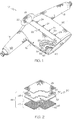
- the garment 10 illustrated in Fig. 1 is a firefighter turn-out coat having a body portion 12, sleeves 14, 16, a neck opening 18, a collar 20 surrounding the neck opening, and a front closure, generally designated 22.
- the front closure 22 is of a conventional design and includes a storm flap 23.
- the closure 22 is secured by snaps, or alternatively, strips of hook and loop fastener material (not shown) in combination with mechanical locking means such as hook and "D" combinations 24 extending between the flap 23 and the body portion 12, or a slide fastener (not shown).
- the garment 10 includes an abrasion, heat and flame resistant outer shell, generally designated 26, which covers substantially the entire outer surface of the garment.
- the outer shell 26 is a compact weave of an aramid material such as NOMEX or KEVLAR, a blend of such aramid materials, a PBI material, or a blend of aramid and PBI materials.
- the outer shell 26 is treated with a durable, water repellant finish.
- a first layer of insulating material 28 is positioned immediately within the outer shell and extends substantially throughout the garment 10.
- the layer of insulating material 28 is preferably a woven fabric of aramid or PBI (or combinations thereof) spun yarn that is treated with a durable, water repellant finish such as TEFLON and/or SCOTCHGUARD.
- a durable, water repellant finish such as TEFLON and/or SCOTCHGUARD.
- a durable, water repellant finish such as TEFLON and/or SCOTCHGUARD.
- a durable, water repellant finish such as TEFLON and/or SCOTCHGUARD.
- a durable, water repellant finish such as TEFLON and/or SCOTCHGUARD.
- a durable, water repellant finish such as TEFLON and/or SCOTCHGUARD.
- Such a material is commercially available from Safety Components Fabric Technologies Inc., as "Chambray” cloth.
- the Chambray cloth material has a weight of approximately 3.20osy, but it is within the scope of the invention to provide other high heat- and flame
- the cloth of the first insulating layer 28 be a "slick" cloth woven from a high heat- and flame- resistant filament yarn so as to impart a degree of lubricity between the insulating layer 28 and the outer shell 26.
- An example of such a "slick” cloth is a "Glide II" face cloth commercially available from Safety Components Fabric Technologies, Inc.
- the moisture barrier 30 Positioned immediately within the first insulating layer 28 is a moisture barrier 30 that extends substantially throughout the garment 10.
- the moisture barrier 30 includes a semi-permeable membrane layer 32 that is moisture vapor permeable but impermeable to liquid moisture, such as CROSSTECH, laminated to a substrate 34 of flame- and heat-resistant material, such as an aramid or PBI (or combinations thereof) material.
- a well known suitable example of such a substrate material 34 includes a pajama check weave NOMEX material.
- Other suitable examples of the substrate material 34 include an Araflo E-89 or a PTFE Vilene material.
- the moisture barrier 30 is preferably oriented such that the semi-permeable membrane 32 faces a wearer of the garment.
- first insulating layer 28 and the moisture barrier 30 are combined via a sewn and sealed Major B Seam, thus providing a combination thermal barrier/moisture barrier component 36.
- Sealing the Major B Seam involves the application of a sealing tape (commercially available from W.L Gore & Associates) to the seams to prevent the transport of fluid through the holes punched in the membrane layer 32 by stitching.
- insulating material 38 Positioned immediately within the moisture barrier 30 is a second layer of insulating material 38, which is preferably a single layer of approximately 1.5osy apertured Araflo E-89 spunlace material, commercially available from E. I. DuPont de Nemours & Co. It is also within the scope of the invention that the insulating layer 38 can be an apertured or non-apertured batting, knit, spunlace or other suitable construction of a high heat- and flame-resistant material (such as an aramid or PBI material, or combinations thereof). This second insulating layer 38 extends substantially throughout the garment 10.
- a face cloth 40 Positioned immediately within the second layer of insulating material 38 is a face cloth 40, preferably woven from a filament yarn so as to provide a degree of lubricity between the garment 10 and a wearer of the garment.
- a "slick" face cloth material for use as the face cloth 40 is a "Glide II” face cloth commercially available from Safety Components Fabric Technologies Inc.
- the face cloth 40 also extends substantially throughout the entire garment 10.
- the second insulating layer 38 and the face cloth 40 are preferably quilted together to form a combination thermal barrier/face cloth 42.
- the combination thermal barrier/moisture barrier 36 and the combinations thermal barrier/face cloth 42 are bound together to form a liner 44 that is received within the outer shell 26. It has been found that by "sandwiching" the moisture barrier 30 between the two layers of insulating material 28, 38, the overall combined thickness and weight of insulating material used in the liner 44 can be significantly decreased while still maintaining adequate TPP ratings under the N.F.P.A. 1971 standard and exceptional moisture vapor transport characteristics.
- the above preferred construction of this liner 44 (including the Chambray layer 28, the Crosstech-PJC layer 30, the E-89 apertured Araflo layer 38 and the Glide II layer 40) has a nominal thickness of approximately 80 mils 5 mils and a nominal weight of approximately 13.1osy. Accordingly, this preferred embodiment of the liner 44 is significantly thin in comparison to conventional firefighting garment liners, yet maintaining adequate TPP ratings and exceptional moisture vapor transport characteristics.
- this invention also provides for a substantial increase in TPP ratings for a protective garment if the combined thickness and weight of insulating material is increased to be consistent with, or slightly less than that of conventional firefighting garments. For example, as shown in Fig. 3 , by replacing the woven spun yard fabric with a thicker batting 28' of high heat- and flame-resistant material, treated with a durable, water repellant finish, the TPP ratings of the garment are increased significantly while maintaining a substantially thin and light weight liner 44 and overall garment.
- the insulating layer 28' be constructed from other suitable layer(s) of high heat- and flame- resistant, apertured or non-apertured, knit, spunlace or bats that have been treated with a durable, water repellant finish.
- the layer(s) of insulating material 28, 28' could be attached to the outer shell 26 via a Major A Seam; the orientation of the moisture barrier 30 can be reversed (such that the membrane 32 faces away from a wearer of the garment); and the moisture barrier 30, second insulating layer(s) 38 and face cloth 40 can be attached together via a sewn and sealed Major B Seam to form a discrete liner.
- an alternate exemplary embodiment of the present invention includes an outer shell 46 of abrasion, heat and flame resistant material that covers substantially the entire outer surface of the garment 10.
- a thermal barrier 48 extending substantially throughout the garment 10, that consists of a first layer 50 of high heat- and flame-resistant insulating material quilted to a second layer 52 of high heat- and flame-resistant insulating material.
- the first layer 50 is a 2.3 osy E-89 spunlace non-woven material and the second layer 52 is an apertured 1.5osy Araflo E-89 spunlace non-woven material.
- each of these layers 50, 52 are treated with a durable, water repellent finish such as TEFLON and/or SCOTCHGUARD. It is noted that the quilting of the two layers 50, 52 together substantially alleviates the necessity for an additional protective face cloth stitched to the layers of insulating material.
- the first and second layers 50, 52 may be layers of 0.9osy NOMEX E-88 spunlace non-woven materials that are laminated together by an adhesive.
- the resultant laminate composite provides additional strength and thermal protection performance vs. a single layer of batting. Additionally, this lamination of the two layers will help protect the thermal liner 48 from wear and abrasion caused by the outer shell 46. It is to be understood that in this alternate construction of the thermal barrier, both layers of the insulating material are also treated with the durable, water repellant finish.
- a moisture barrier 54 Positioned immediately within the thermal barrier 48 is a moisture barrier 54 extending substantially throughout the garment, which includes a semi permeable membrane layer 56 laminated or bonded to a substrate 58 of flame- and heat-resistant material.
- the moisture barrier is oriented such that the semi permeable membrane 56 faces outwardly away from a wearer of the garment.
- a "slick" face cloth 60 Positioned immediately within the moisture barrier 54 is a "slick" face cloth 60 extending substantially throughout the garment.
- the moisture barrier 54 and the face cloth 60 are preferably combined via a sewn and sealed Major B Seam to provide a combination moisture barrier/face cloth 62.
- the combination moisture banier/face cloth 62 is bound together with the thermal barrier 48 to form a liner 64 that is positioned within the outer shell 46.
- this liner 64 (including the two quilted layers of apertured 1.5 osy Araflo E89 and non-apertured 2.3 osy Araflo 50, 52, the Crosstech-PJC layer 30, and the Glide II layer 40) has a nominal thickness of approximately 96 mils and a nominal weight of approximately 12.2 osy.
- the thermal barrier 48 can be constructed from other insulating materials such as one or more layers, or combinations of layers, of apertured or non-apertured non-woven, spunlace, woven or knitted high heat- and flame-resistant material that is treated with a durable, water repellant finish.
- the thermal barrier 48 be constructed from a layer of Chambray face cloth quilted to a layer of Araflo E-89 spun-lace non-woven insulating material (having a combined nominal weight of approximately 4.7 osy and combined nominal thickness of approximately 51 mils).
- thermal liner that includes a layer of apertured, closed cell foam as described in U.S. Patent 5,924,134 , the disclosure of which is enclosed herein by reference.
- a thermal liner does not absorb significant amounts of liquid moisture and can be made thinner than conventional thermal liners, yet still meets the overall thermal requirements for firefighting garments.
- the moisture barriers 30, 54 discussed above can also be constructed from a semipermeable membrane laminated to a non-woven spunlace having a nominal weight of approximately 4.0 osy and a nominal thickness of approximately 30 mils. Such a moisture barrier would allow the insulating layers of the various embodiments to be even thinner and possibly lighter.
- the layer(s) of insulating material of the thermal barrier 48 may be attached to the outer shell 46 via a Major A Seam, and the combination moisture barrier/face cloth 62 would thus provide the liner of the garment.
- each garment resists igniting, melting or dripping when exposed to 500 deg. F for at least 5 minutes; each garment passes the liquid penetration test and each garment passes all other tests comprising the standard.
Landscapes
- Health & Medical Sciences (AREA)
- Engineering & Computer Science (AREA)
- Textile Engineering (AREA)
- General Health & Medical Sciences (AREA)
- Toxicology (AREA)
- Business, Economics & Management (AREA)
- Emergency Management (AREA)
- Physical Education & Sports Medicine (AREA)
- Professional, Industrial, Or Sporting Protective Garments (AREA)
- Respiratory Apparatuses And Protective Means (AREA)
Applications Claiming Priority (3)
| Application Number | Priority Date | Filing Date | Title |
|---|---|---|---|
| US09/517,919 US6430754B1 (en) | 2000-03-03 | 2000-03-03 | Firefighting garment |
| EP01912744A EP1259294B1 (de) | 2000-03-03 | 2001-02-15 | Feuerwehrbekleidung |
| EP06122328A EP1741472B1 (de) | 2000-03-03 | 2001-02-15 | Feuerwehrbekleidung |
Related Parent Applications (2)
| Application Number | Title | Priority Date | Filing Date |
|---|---|---|---|
| EP01912744.8 Division | 2001-02-15 | ||
| EP06122328.5 Division | 2006-10-16 |
Publications (1)
| Publication Number | Publication Date |
|---|---|
| EP2263752A1 true EP2263752A1 (de) | 2010-12-22 |
Family
ID=24061771
Family Applications (7)
| Application Number | Title | Priority Date | Filing Date |
|---|---|---|---|
| EP10177712A Ceased EP2263755A1 (de) | 2000-03-03 | 2001-02-15 | Feuerwehrbekleidung |
| EP10177706A Withdrawn EP2263752A1 (de) | 2000-03-03 | 2001-02-15 | Feuerwehrbekleidung |
| EP10177704.3A Expired - Lifetime EP2260905B1 (de) | 2000-03-03 | 2001-02-15 | Feuerwehrbekleidung |
| EP06122328A Expired - Lifetime EP1741472B1 (de) | 2000-03-03 | 2001-02-15 | Feuerwehrbekleidung |
| EP01912744A Expired - Lifetime EP1259294B1 (de) | 2000-03-03 | 2001-02-15 | Feuerwehrbekleidung |
| EP10177711A Withdrawn EP2263754A1 (de) | 2000-03-03 | 2001-02-15 | Feuerwehrbekleidung |
| EP10177708A Ceased EP2263753A1 (de) | 2000-03-03 | 2001-02-15 | Feuerwehrbekleidung |
Family Applications Before (1)
| Application Number | Title | Priority Date | Filing Date |
|---|---|---|---|
| EP10177712A Ceased EP2263755A1 (de) | 2000-03-03 | 2001-02-15 | Feuerwehrbekleidung |
Family Applications After (5)
| Application Number | Title | Priority Date | Filing Date |
|---|---|---|---|
| EP10177704.3A Expired - Lifetime EP2260905B1 (de) | 2000-03-03 | 2001-02-15 | Feuerwehrbekleidung |
| EP06122328A Expired - Lifetime EP1741472B1 (de) | 2000-03-03 | 2001-02-15 | Feuerwehrbekleidung |
| EP01912744A Expired - Lifetime EP1259294B1 (de) | 2000-03-03 | 2001-02-15 | Feuerwehrbekleidung |
| EP10177711A Withdrawn EP2263754A1 (de) | 2000-03-03 | 2001-02-15 | Feuerwehrbekleidung |
| EP10177708A Ceased EP2263753A1 (de) | 2000-03-03 | 2001-02-15 | Feuerwehrbekleidung |
Country Status (6)
| Country | Link |
|---|---|
| US (1) | US6430754B1 (de) |
| EP (7) | EP2263755A1 (de) |
| AU (2) | AU4149101A (de) |
| CA (1) | CA2400668C (de) |
| DE (2) | DE60125328T2 (de) |
| WO (1) | WO2001066193A1 (de) |
Families Citing this family (54)
| Publication number | Priority date | Publication date | Assignee | Title |
|---|---|---|---|---|
| FR2811520B1 (fr) * | 2000-07-13 | 2002-12-13 | Europrotect France | Tissu de protection thermique |
| US20040253891A1 (en) * | 2000-09-12 | 2004-12-16 | Schierenbeck Alan W. | Composite structure for protective garment |
| US20040266297A1 (en) * | 2000-09-12 | 2004-12-30 | Schierenbeck Alan W. | Composite structure for protective garment |
| JP4113762B2 (ja) * | 2002-11-07 | 2008-07-09 | 株式会社ト−ヨ | 溶融金属保護衣 |
| US20060038140A1 (en) * | 2003-02-05 | 2006-02-23 | Morning Pride Manufacturing, L.L.C. | Protective item for firefighter or for emergency rescue worker and opaque to hazardous radiation |
| GB2401164B (en) * | 2003-04-29 | 2006-01-18 | Abb Offshore Systems Ltd | Pipeline protection system |
| US7111327B1 (en) * | 2003-06-23 | 2006-09-26 | Blauer Manufacturing Company, Inc. | Lightweight protective clothing and textile material incorporated therein |
| US7013496B2 (en) | 2003-09-05 | 2006-03-21 | Southern Mills, Inc. | Patterned thermal liner for protective garments |
| CA2542091C (en) * | 2003-10-10 | 2012-07-03 | Lion Apparel, Inc. | Protective garment with hang-down pockets |
| US7168103B2 (en) * | 2003-12-31 | 2007-01-30 | Lion Apparel, Inc. | Height adjustable protective garment |
| EP1593314A1 (de) * | 2004-05-04 | 2005-11-09 | Teiken Limited | Schutzkleidung gegen geschmolzenes Metall |
| US20050251900A1 (en) * | 2004-05-17 | 2005-11-17 | Harlacker John A | Hazardous duty garments |
| AU2004322482B2 (en) * | 2004-07-22 | 2010-04-22 | Lion Group, Inc. | Vented protective garment |
| US20060019566A1 (en) * | 2004-07-26 | 2006-01-26 | Lloyd Ralph B | Protective garments for firefighters |
| US6983490B1 (en) | 2004-09-15 | 2006-01-10 | Morning Pride Manufacturing, L.L.C. | Protective garment comprising outer shell, outer moisture barrier, thermal liner within outer moisture barrier, and inner moisture barrier at distal edges or at hems |
| US20060191054A1 (en) * | 2004-10-27 | 2006-08-31 | Noe James W | Hazardous environment protective suit |
| US20060260020A1 (en) * | 2005-05-17 | 2006-11-23 | Catherine Seguin | Multi-purpose protective garment |
| US7682997B2 (en) | 2005-07-21 | 2010-03-23 | Gore Enterprise Holdings, Inc. | Barrier laminates and articles made therefrom |
| KR101270782B1 (ko) * | 2005-08-09 | 2013-06-04 | 데이진 가부시키가이샤 | 2 층 구조 직물 및 그것을 사용한 내열 방호 의료 |
| US7816289B2 (en) * | 2005-08-12 | 2010-10-19 | Gore Enterprise Holdings, Inc. | Fire resistant barrier laminates and articles made therefrom |
| JP5346586B2 (ja) * | 2005-12-16 | 2013-11-20 | サザンミルズ インコーポレイテッド | 耐熱性を提供する防護服 |
| US8151371B2 (en) * | 2007-01-08 | 2012-04-10 | Innotex Inc. | Collar configuration for firefighter garment |
| CA2625538C (en) * | 2007-03-14 | 2017-01-03 | Sperian Protective Apparel Ltd | A protective garment including a mesh liner layer |
| US20090029618A1 (en) * | 2007-07-27 | 2009-01-29 | General Electric Company | Waterproof breathable high-vis arc resistant laminate |
| USD581136S1 (en) * | 2007-11-28 | 2008-11-25 | Cross James E | Convertible T-shirt |
| CA2708960C (en) | 2008-01-04 | 2016-03-08 | Southern Mills, Inc. | Flame resistant fabrics having improved resistance to surface abrasion or pilling and methods for making them |
| US20090188017A1 (en) * | 2008-01-30 | 2009-07-30 | Viking Life-Saving Equipment A/S | Sensor equipped flame retardant clothing |
| US8347420B2 (en) * | 2008-04-02 | 2013-01-08 | E I Du Pont De Nemours And Company | Thermal liner subassembly, fabric and method of use |
| US8327469B2 (en) * | 2008-04-09 | 2012-12-11 | Lion Apparel, Inc. | Protective garment with low friction characteristics |
| WO2009158479A1 (en) * | 2008-06-27 | 2009-12-30 | Lion Apparel, Inc. | Protective garment with thermal liner having varying moisture attraction |
| EP2186428B2 (de) | 2008-11-13 | 2018-01-17 | Otmar Schneider | Gewebeaufbau für Schutzbekleidung |
| US8898821B2 (en) | 2009-05-19 | 2014-12-02 | Southern Mills, Inc. | Flame resistant fabric with anisotropic properties |
| US10433593B1 (en) * | 2009-08-21 | 2019-10-08 | Elevate Textiles, Inc. | Flame resistant fabric and garment |
| EP2630880B1 (de) * | 2010-10-20 | 2017-05-31 | Teijin Limited | Geschichtete hitzebeständige schutzkleidung |
| EP2739361B8 (de) | 2011-08-02 | 2018-03-07 | Lion Group, Inc. | Schutzkleidung mit lüftungsfunktionen |
| US9386816B2 (en) | 2012-02-14 | 2016-07-12 | International Textile Group, Inc. | Fire resistant garments containing a high lubricity thermal liner |
| USD743105S1 (en) * | 2012-08-13 | 2015-11-10 | Kathleen T. Bien | Reflective work shirt or similar article of clothing |
| US9409378B2 (en) | 2012-09-25 | 2016-08-09 | Pbi Performance Products, Inc. | Thermal liner for protective garments |
| US20140259328A1 (en) | 2013-03-15 | 2014-09-18 | W. L. Gore & Associates, Inc. | Moisture-insensitive thermally protective materials and garments made therefrom |
| US11350690B2 (en) * | 2015-04-09 | 2022-06-07 | Up In Smoke Welding Apparel Inc. | Upper garment worn during overhead welding |
| US10405594B2 (en) | 2015-05-21 | 2019-09-10 | International Textile Group, Inc. | Inner lining fabric |
| EP3402355A4 (de) * | 2016-01-14 | 2019-11-13 | Southern Mills, Inc. | Verbesserte flammhemmende thermische auskleidungen und kleidungsstücke damit |
| CN109996912B (zh) * | 2016-11-28 | 2021-10-29 | 格兰博格国际有限公司 | 三维3d针织织物及其制造方法 |
| JP2020528968A (ja) * | 2017-07-27 | 2020-10-01 | インヴィスタ テキスタイルズ(ユー.ケー.)リミテッド | 消防士及び第一対応者のための耐炎性通気性防護衣服 |
| EP3560556A1 (de) * | 2018-04-24 | 2019-10-30 | Autoflug GmbH | Modularer schutzanzug zum schutz gegen gesundheitsschädliche substanzen |
| CA3171137A1 (en) | 2019-03-28 | 2020-10-01 | Southern Mills, Inc. | Flame resistant fabrics |
| MX2021014209A (es) | 2019-05-24 | 2022-01-31 | Southern Mills Inc | Telas con acabado, resistentes a la flama, que exhiben repelencia al agua y metodos para fabricar las mismas. |
| US11758956B2 (en) * | 2019-12-09 | 2023-09-19 | Firecraft Safety Products, Llc | Protective fire glove |
| DE102021115724A1 (de) | 2021-06-17 | 2022-12-22 | Hubert Schmitz Gmbh | Schutzbekleidungsstück |
| KR20240037351A (ko) | 2021-08-10 | 2024-03-21 | 써던 밀즈, 인코포레이티드 | 방염성 직물 |
| CN114577066A (zh) * | 2021-12-30 | 2022-06-03 | 广东军铠防护科技有限公司 | 一种具有抗打击防撕裂功能的防护服 |
| CN114343257A (zh) * | 2021-12-30 | 2022-04-15 | 三门峡市天康成套设备有限责任公司 | 一种多功能战训防护服 |
| US12146244B1 (en) | 2022-07-21 | 2024-11-19 | Milliken & Company | Fire-resistant textile |
| EP4431162A1 (de) | 2023-03-17 | 2024-09-18 | Lenzing Aktiengesellschaft | Gestepptes textilmaterial für persönliche schutzkleidung |
Citations (4)
| Publication number | Priority date | Publication date | Assignee | Title |
|---|---|---|---|---|
| US5136723A (en) * | 1991-02-15 | 1992-08-11 | Lion Apparel, Inc. | Firefighter garment with mesh liner |
| US5724673A (en) * | 1993-11-12 | 1998-03-10 | Lion Apparel, Inc. | Firefighter garment with low friction liner system including patches |
| US5920905A (en) * | 1993-11-12 | 1999-07-13 | Lion Apparel, Inc. | Firefighter garment with combination facecloth and moisture barrier |
| WO1999038398A1 (en) * | 1998-01-29 | 1999-08-05 | Lion Apparel, Inc. | Lightweight firefighter garment |
Family Cites Families (23)
| Publication number | Priority date | Publication date | Assignee | Title |
|---|---|---|---|---|
| US3925823A (en) * | 1973-03-08 | 1975-12-16 | Us Navy | Wettable fire fighters{3 {0 garment |
| US4188445A (en) | 1977-12-12 | 1980-02-12 | Chromatex, Inc. | Laminated fabric of polypropylene |
| GB2125734B (en) | 1982-02-12 | 1986-01-15 | Arthur L Fingerhut | A composite insulation material |
| US4502153A (en) * | 1982-08-30 | 1985-03-05 | Lion Uniform, Inc. | Apparel liner |
| US4696066A (en) | 1986-09-15 | 1987-09-29 | Ball Joyce A | Heated coat liner |
| US4843646A (en) | 1988-04-18 | 1989-07-04 | Grilliot William L | Firefighter's garments having enhanced flexibility and minimum weight |
| FR2637919B1 (fr) | 1988-10-14 | 1991-06-28 | Picardie Lainiere | Textile composite anti-feu impermeable vetement et siege comportant un tel textile |
| CA1316804C (en) | 1988-11-22 | 1993-04-27 | Sylvie Boisse | Absorbent liner for impermeable clothing |
| US4897886A (en) | 1988-11-30 | 1990-02-06 | Grilliot William L | Firefighter's garments having minimum weight and excellent protective qualities |
| US5189737A (en) | 1989-08-10 | 1993-03-02 | Ramwear, Inc. | Fireman's turnout coat |
| FR2673207B1 (fr) * | 1991-02-25 | 1994-07-22 | Picardie Lainiere | Doublure composite anti-feu de vetement. |
| US5150476A (en) | 1991-03-22 | 1992-09-29 | Southern Mills, Inc. | Insulating fabric and method of producing same |
| US5399418A (en) | 1991-12-21 | 1995-03-21 | Erno Raumfahrttechnik Gmbh | Multi-ply textile fabric especially for protection suits and the like |
| US5924134A (en) | 1993-09-10 | 1999-07-20 | Lion Apparel, Inc. | Protective garment with apertured closed-cell foam liner |
| US5468537A (en) | 1993-09-30 | 1995-11-21 | E. I. Du Pont De Nemours And Company | Protective garments comprising an outer shell fabric of woven aramid fibers which elongate when exposed to a flame |
| US5447787A (en) | 1995-01-30 | 1995-09-05 | E. I. Du Pont De Nemours And Company | Reinforced fabric |
| US5685015A (en) * | 1995-06-05 | 1997-11-11 | Lion Apparel, Inc. | Multi-use hazardous duty garment |
| US5727401A (en) | 1995-08-09 | 1998-03-17 | Southern Mills, Inc. | Fire resistant fleece fabric and garment |
| US5928971A (en) | 1996-02-01 | 1999-07-27 | Southern Mills, Inc. | Firefighter's garment |
| US5860163A (en) | 1996-05-21 | 1999-01-19 | Lion Apparel, Inc. | Garment thermal liner having insulating beads |
| US5858888A (en) | 1996-07-15 | 1999-01-12 | Safety Components Fabric Technologies, Inc. | Firefighter garment utilizing improved high-lubricity lining material |
| US5787503A (en) | 1996-09-04 | 1998-08-04 | Murphy, Iii; Edward J. | Multi-layer sweater |
| US5965223A (en) | 1996-10-11 | 1999-10-12 | World Fibers, Inc. | Layered composite high performance fabric |
-
2000
- 2000-03-03 US US09/517,919 patent/US6430754B1/en not_active Expired - Lifetime
-
2001
- 2001-02-15 EP EP10177712A patent/EP2263755A1/de not_active Ceased
- 2001-02-15 EP EP10177706A patent/EP2263752A1/de not_active Withdrawn
- 2001-02-15 EP EP10177704.3A patent/EP2260905B1/de not_active Expired - Lifetime
- 2001-02-15 EP EP06122328A patent/EP1741472B1/de not_active Expired - Lifetime
- 2001-02-15 EP EP01912744A patent/EP1259294B1/de not_active Expired - Lifetime
- 2001-02-15 AU AU4149101A patent/AU4149101A/xx active Pending
- 2001-02-15 DE DE60125328T patent/DE60125328T2/de not_active Expired - Lifetime
- 2001-02-15 CA CA002400668A patent/CA2400668C/en not_active Expired - Lifetime
- 2001-02-15 DE DE60143716T patent/DE60143716D1/de not_active Expired - Lifetime
- 2001-02-15 WO PCT/US2001/004784 patent/WO2001066193A1/en not_active Ceased
- 2001-02-15 AU AU2001241491A patent/AU2001241491B2/en not_active Expired
- 2001-02-15 EP EP10177711A patent/EP2263754A1/de not_active Withdrawn
- 2001-02-15 EP EP10177708A patent/EP2263753A1/de not_active Ceased
Patent Citations (4)
| Publication number | Priority date | Publication date | Assignee | Title |
|---|---|---|---|---|
| US5136723A (en) * | 1991-02-15 | 1992-08-11 | Lion Apparel, Inc. | Firefighter garment with mesh liner |
| US5724673A (en) * | 1993-11-12 | 1998-03-10 | Lion Apparel, Inc. | Firefighter garment with low friction liner system including patches |
| US5920905A (en) * | 1993-11-12 | 1999-07-13 | Lion Apparel, Inc. | Firefighter garment with combination facecloth and moisture barrier |
| WO1999038398A1 (en) * | 1998-01-29 | 1999-08-05 | Lion Apparel, Inc. | Lightweight firefighter garment |
Non-Patent Citations (1)
| Title |
|---|
| "N.F.P.A. Standard for Protective Ensemble for Structural Firefighting", 1997 |
Also Published As
| Publication number | Publication date |
|---|---|
| EP2263753A1 (de) | 2010-12-22 |
| AU4149101A (en) | 2001-09-17 |
| AU2001241491B2 (en) | 2005-02-17 |
| EP1741472A3 (de) | 2007-02-21 |
| EP1741472A2 (de) | 2007-01-10 |
| EP1259294B1 (de) | 2006-12-20 |
| WO2001066193A1 (en) | 2001-09-13 |
| EP2263754A1 (de) | 2010-12-22 |
| CA2400668A1 (en) | 2001-09-13 |
| HK1099722A1 (en) | 2007-08-24 |
| DE60125328T2 (de) | 2007-07-05 |
| EP2263755A1 (de) | 2010-12-22 |
| CA2400668C (en) | 2008-11-18 |
| DE60125328D1 (de) | 2007-02-01 |
| EP1259294A1 (de) | 2002-11-27 |
| DE60143716D1 (de) | 2011-02-03 |
| EP2260905A1 (de) | 2010-12-15 |
| EP2260905B1 (de) | 2014-10-22 |
| EP1741472B1 (de) | 2010-12-22 |
| US6430754B1 (en) | 2002-08-13 |
Similar Documents
| Publication | Publication Date | Title |
|---|---|---|
| EP2260905B1 (de) | Feuerwehrbekleidung | |
| AU2001241491A1 (en) | Firefighting garment | |
| US5983409A (en) | Lightweight firefighter garment | |
| US5136723A (en) | Firefighter garment with mesh liner | |
| US5720045A (en) | Protective garment with apertured closed-cell foam liner | |
| CA2625538C (en) | A protective garment including a mesh liner layer | |
| US20090320176A1 (en) | Protective garment with thermal liner having varying moisture attraction | |
| WO1997043917A1 (en) | Garment thermal liner having insulating beads | |
| WO1996039056A1 (en) | Multi-use hazardous duty garment | |
| US20210086004A1 (en) | Flame resistant, breathable protective garments for fire fighters and first responders | |
| AU2005200963B2 (en) | Firefighting garment | |
| EP0979044B1 (de) | Leichte feuerwehrbekleidung mit dauerhaftem material für kragen und manschetten | |
| HK1099722B (en) | Firefighting garment | |
| CA2570821C (en) | Firefighting hood treated with a water repellant finish | |
| EP1270045B1 (de) | Schutzbekleidung mit Streifen aus geschlossenzelligem Schaumstoff | |
| EP1020128A1 (de) | Schutzbekleidung | |
| CA2487985C (en) | Firefighter garment with combination facecloth and moisture barrier | |
| HK1154337B (en) | Protective garment with thermal liner having varying moisture attraction |
Legal Events
| Date | Code | Title | Description |
|---|---|---|---|
| PUAI | Public reference made under article 153(3) epc to a published international application that has entered the european phase |
Free format text: ORIGINAL CODE: 0009012 |
|
| AC | Divisional application: reference to earlier application |
Ref document number: 1741472 Country of ref document: EP Kind code of ref document: P Ref document number: 1259294 Country of ref document: EP Kind code of ref document: P |
|
| AK | Designated contracting states |
Kind code of ref document: A1 Designated state(s): DE FR GB IT |
|
| STAA | Information on the status of an ep patent application or granted ep patent |
Free format text: STATUS: THE APPLICATION IS DEEMED TO BE WITHDRAWN |
|
| 18D | Application deemed to be withdrawn |
Effective date: 20110623 |