EP2261214A1 - Compounds useful to treat premature aging and in particular progeria - Google Patents
Compounds useful to treat premature aging and in particular progeria Download PDFInfo
- Publication number
- EP2261214A1 EP2261214A1 EP09162630A EP09162630A EP2261214A1 EP 2261214 A1 EP2261214 A1 EP 2261214A1 EP 09162630 A EP09162630 A EP 09162630A EP 09162630 A EP09162630 A EP 09162630A EP 2261214 A1 EP2261214 A1 EP 2261214A1
- Authority
- EP
- European Patent Office
- Prior art keywords
- group
- hydrogen atom
- formula
- compound
- quinolin
- Prior art date
- Legal status (The legal status is an assumption and is not a legal conclusion. Google has not performed a legal analysis and makes no representation as to the accuracy of the status listed.)
- Withdrawn
Links
- VVLYDFPOGMTMFJ-UHFFFAOYSA-N Cc1ccc(cccc2Cl)c2n1 Chemical compound Cc1ccc(cccc2Cl)c2n1 VVLYDFPOGMTMFJ-UHFFFAOYSA-N 0.000 description 1
Images


Classifications
-
- C—CHEMISTRY; METALLURGY
- C07—ORGANIC CHEMISTRY
- C07D—HETEROCYCLIC COMPOUNDS
- C07D401/00—Heterocyclic compounds containing two or more hetero rings, having nitrogen atoms as the only ring hetero atoms, at least one ring being a six-membered ring with only one nitrogen atom
- C07D401/02—Heterocyclic compounds containing two or more hetero rings, having nitrogen atoms as the only ring hetero atoms, at least one ring being a six-membered ring with only one nitrogen atom containing two hetero rings
- C07D401/12—Heterocyclic compounds containing two or more hetero rings, having nitrogen atoms as the only ring hetero atoms, at least one ring being a six-membered ring with only one nitrogen atom containing two hetero rings linked by a chain containing hetero atoms as chain links
-
- A—HUMAN NECESSITIES
- A61—MEDICAL OR VETERINARY SCIENCE; HYGIENE
- A61P—SPECIFIC THERAPEUTIC ACTIVITY OF CHEMICAL COMPOUNDS OR MEDICINAL PREPARATIONS
- A61P43/00—Drugs for specific purposes, not provided for in groups A61P1/00-A61P41/00
-
- C—CHEMISTRY; METALLURGY
- C07—ORGANIC CHEMISTRY
- C07D—HETEROCYCLIC COMPOUNDS
- C07D215/00—Heterocyclic compounds containing quinoline or hydrogenated quinoline ring systems
- C07D215/02—Heterocyclic compounds containing quinoline or hydrogenated quinoline ring systems having no bond between the ring nitrogen atom and a non-ring member or having only hydrogen atoms or carbon atoms directly attached to the ring nitrogen atom
- C07D215/16—Heterocyclic compounds containing quinoline or hydrogenated quinoline ring systems having no bond between the ring nitrogen atom and a non-ring member or having only hydrogen atoms or carbon atoms directly attached to the ring nitrogen atom with hetero atoms or with carbon atoms having three bonds to hetero atoms with at the most one bond to halogen, e.g. ester or nitrile radicals, directly attached to ring carbon atoms
- C07D215/38—Nitrogen atoms
Definitions
- the present invention is generally dedicated to the use of compounds for the manufacture of compositions useful to treat diseases related to premature aging.
- the compounds and compositions containing them and compositions according to the invention may in particular be used to inhibit, prevent and/or treat Progeria.
- the present invention focuses on premature aging. Said premature aging may be encountered in patients suffering from various diseases and in particular from the Hutchinson-Gilford progeria syndrome (HGPS) and from the HIV infection.
- HGPS Hutchinson-Gilford progeria syndrome
- Hutchinson-Gilford progeria syndrome is a rare genetic disorder phenotypically characterized by many features of premature aging. It is clinically characterized by postnatal growth retardation, midface hypoplasia, micrognathia, premature atherosclerosis, absence of subcutaneous fat, alopecia and generalized osteodysplasia ( Khalifa, 1989 - Hutchinson-Gilford progeria syndrome: report of a Malawin family and evidence of autosomal recessive inheritance. Clin. Genet. 35, 125-132 .).
- At birth the appearance of patients is generally normal, but by 1 year of age patients show severe growth retardation, balding and sclerodermatous skin changes. They average about 1m in height and usually weigh less than 15 kg even as teenagers. The age at death ranges from 7 to 28 years, with a median of 13.4 years. Over 80% of deaths are due to heart attacks or congestive heart failure.
- Premature aging syndrome has been observed in patients suffering from HIV infections.
- One mechanical pathway underlying said premature aging could be associated, as for the HGPS and as exposed beneath, with an aberrant splicing of the nuclear lamin A gene.
- protease inhibitors against HIV also block the transformation of prelamin A into lamin A as it turned out in HGPS.
- FTIs farnesyltransferase inhibitors
- Nicolas Levy's team has used a combination of a statin and an aminobisphosphonate to prevent the fixation of the fatty acid to the progerin, and thus reduce its toxicity ( Varela et al., 2008 - Combined treatment with statins and aminobisphosphonates extends longevity in a mouse model of human premature aging. Nat. Med. 14, 767-772 .).
- WO2006/081444 has been reported a method for reducing at least one cellular defect in a cell from a subject susceptible to a disease or condition characterized by farnesylation on an abnormally farnesylated form of a lamin, comprising administering to the cell a therapeutically effective dose of farnesylstransferase inhibitor.
- HMG-CoA hydroxymethylglutaryl-coenzyme A reductase inhibtor and a farnesyl-pyrophosphate synthase inhibitor, or one of their associated physiologically acceptable salts, in the preparation of a composition, for use in the treatment of human or animal, pathological or nonpathological situations related to the accumulation and/or the persistence of prenylated proteins in cells, such as during progeria, restrictive dermopathy or physiological aging.
- the present invention therefore relates to compounds of formula (I) as defined below for use as agents for preventing, inhibiting or treating pathological or nonpathological conditions linked with premature aging.
- the present invention moreover relates to a method of preventing, inhibiting or treating pathological or nonpathological conditions linked with premature aging, which comprises at least one step consisting in administering to a patient suffering there from an effective amount of a compound as defined in formula (I) below or one of its pharmaceutically acceptable salts.
- the present invention further relates to some particular derivatives as such, as defined below.
- the present invention also provides pharmaceutical compositions comprising at least one of said particular compounds.
- the present invention is based on a novel approach based on the inhibition of aberrant splicing leading to progerin production.
- the truncated Lamin A protein lacking the last 150 base pairs of exon 11 also called "progerin", acting as a dominant negative mutant, is predicted to be responsible for the characteristic manifestations seen in HGPS patients.
- progerin acting as a dominant negative mutant
- therapeutic molecules that interfere with the usage of the cryptic splice site will prevent side effects associated with accumulation of progerin during physiological aging.
- the compounds according to the present invention prevent usage of the cryptic 5' splice site in exon 11 of LMNA, allowing overcoming deleterious effect associated with progerin.
- a subject-matter of the present invention relates to a compound of formula (I) wherein:
- the present invention relates to a compound of formula (I) as defined above, wherein V is N, for use as an agent for preventing, inhibiting or treating pathological or nonpathological conditions linked with premature aging.
- the present invention relates to a compound of formula (I) as defined above, wherein Z is N, V is C, Y is N, X is C and W is C, for use as an agent for preventing, inhibiting or treating pathological or nonpathological conditions linked with premature aging.
- the present invention relates to a compound of formula (I) as defined above, wherein Z is C, V is C, Y is N, X is C and W is C, for use as an agent for preventing, inhibiting or treating pathological or nonpathological conditions linked with premature aging.
- the present invention relates to a compound of formula (I) as defined above, wherein Z is N, V is C, Y is C, X is N and W is C, for use as an agent for preventing, inhibiting or treating pathological or nonpathological conditions linked with premature aging.
- the present invention relates to a compound of formula (I) as defined above, wherein Z is N, V is C, Y is C, X is C and W is N, for use as an agent for preventing, inhibiting or treating pathological or nonpathological conditions linked with premature aging.
- the compounds of the invention may exist in the form of free bases or of addition salts with pharmaceutically acceptable acids.
- Suitable physiologically acceptable acid addition salts of compounds of formula (I) include hydrochloride, hydrobromide, tartrate, fumarate, citrate, trifluoroacetate, ascorbate, and malate.
- the compounds of formula (I) and or salts thereof may form solvates (e.g. hydrates) and the invention includes all such solvates.
- the present invention is directed to a compound of formula (I) wherein:
- the compound of formula (I) may be defined as a compound of formula (IIa) as follows: wherein:
- the present invention extends to a compound of formula (IIa) as defined above for use as an agent for preventing, inhibiting or treating pathological or nonpathological conditions linked with premature aging.
- the present invention further relates to a compound of formula (IIb) wherein:
- the present invention further relates to a compound of formula (IIc) wherein:
- an additional subject-matter of the present invention is a compound of formula (Ia) wherein:
- the present invention further relates to a compound of formula (Ia) as defined above, as such, wherein:
- an additional subject-matter of the present invention is a compound of formula (Ib) wherein:
- the present invention further relates to a compound of formula (Ib) as defined above, as such wherein:
- an additional subject-matter of the present invention is a compound of formula (Ic) wherein:
- the present invention further relates to a compound of formula (Ic) as defined above, as such wherein:
- an additional subject-matter of the present invention is a compound of formula (Id): wherein:
- the compounds of formulae (I), (IIa), (IIb), (IIc), (Ia), (Ib), (Ic) and (Id) can comprise one or more asymmetric carbon atoms. They can thus exist in the form of enantiomers or of diastereoisomers. These enantiomers, diastereoisomers and their mixtures, including the racemic mixtures, are encompassed within the scope of the present invention.
- the compound is chosen from:
- the present invention therefore extends to compounds (2), (3), (4) and (8) or one of its pharmaceutically acceptable salts for use as an agent for preventing, inhibiting or treating pathological or nonpathological conditions linked with premature aging.
- the compounds of the present invention can be prepared by conventional methods of organic synthesis practiced by those skilled in the art.
- the general reaction sequences outlined below represent a general method useful for preparing the compounds of the present invention and are not meant to be limiting in scope or utility.
- the synthesis is based on a coupling reaction alternatively starting from a chloro-bicyle of formula (III), wherein X, Y, W, R' and R" are as defined above or from a chloro-monocycle of formula (V), wherein Z, V, n and R are as defined above.
- the compound of formula (III) is placed in a protic solvent such as tert -butanol.
- the compound of formula (IV) is then added in a molar ratio ranging from1 and 1.5 with respect to the compound of formula (III) in presence of an inorganic base, such as Cs 2 CO 3 in a molar ratio ranging from 1 and 2, in the presence of a diphosphine, such as Xantphos (4,5-Bis(diphenylphosphino)-9,9-dimethylxanthene) in an amount ranging from 2 mol% and 10 mol% relative to the total amount of compound of formula (III), and in the presence of a catalyst, such as Pd(OA C ) 2 in an amount ranging from 2 mol% and 10 mol% relative to the total amount of compound of formula (III).
- a protic solvent such as tert -butanol.
- the compound of formula (IV) is then added in a molar ratio ranging from1 and 1.5 with
- the reaction mixture can then be heated at a temperature ranging from 80 and 120°C, for example at 90°C and stirred for a time ranging form 15 and 25 hours, for example during 20 hours under inert gas and for example argon.
- the reaction mixture can be concentrated under reduced pressure.
- the compound of formula (V) is placed in a protic solvent such as tert -butanol.
- the compound of formula (VI) is then added in a molar ratio ranging from1 and 1.5 with respect to the compound of formula (V) in presence of an inorganic base, such as Cs 2 CO 3 in a molar ratio ranging from 1 and 2, in the presence of a diphosphine, such as Xantphos (4,5-Bis(diphenylphosphino)-9,9-dimethylxanthene) in an amount ranging from 2 mol% and 10 mol% relative to the total amount of compound of formula (V), and in the presence of a catalyst, such as Pd(OAc) 2 in an amount ranging from 2 mol% and 10 mol% relative to the total amount of compound of formula (V).
- a protic solvent such as tert -butanol.
- the reaction mixture can then be heated at a temperature ranging from 80 and 120°C, for example at 90°C and stirred for a time ranging form 15 and 25 hours, for example during 20 hours under inert gas and for example argon.
- the reaction mixture can be concentrated under reduced pressure.
- the compounds of the invention have been the subject of pharmacological tests which have demonstrated their relevance as active substances in therapy and in particular for preventing, inhibiting or treating pathological or nonpathological conditions linked with premature aging.
- the luciferase assay is an extremely sensitive and rapid assay. Linear results are seen over at least eight orders of magnitude of enzyme concentration. Moreover, the luciferase assay is well suited for high-throughput applications.
- MTS Mid-throughput screening
- a plasmid in which exon 11, intron 11 and part of exon 12 of LMNA gene were fused with luciferase cDNA Fig. 2 . Both wild type (WtLMNA-luc) and mutant (MutLMNA-luc) substrate harbouring exon 11 mutation have been constructed.
- Plasmids constructs Plasmids constructs .
- LMNA sequences (1278 bp of exon 11, intron 11 and 46 bp of exon 11) were PCR-amplified from either control or patient's cells genomic DNA with specific primer PCR fragments were purified with Concert Rapid PCR purification system (Invitrogen) and subcloned at the BamHI and EcoRI restriction sites of the pSp ⁇ m3S1 plasmid containing the ⁇ Globin cassette ( Labourier et al., 1999 - Recognition of exonic splicing enhancer sequences by the Drosophila splicing repressor RSF1. Nucleic Acids Res.
- LMNAlucWT Fyrefly luciferase cDNA
- LNAIucMut usage of the cryptic splice site of mutated exon 11
- a stable 293 cell line containing a single copy of LMNAlucMut minigene was obtained using the Flp-In system from (Invitrogen) according to manufacture procedure. Several clones were obtained and only one clone was used to screen the whole chemical library (293FLP LMNA LUC cells #8).
- HeLa cells nuclear extracts were prepared according to ( Dignam et al., 1983 - Eukaryotic gene transcription with purified components. Methods Enzymol. 101, 582-598 ). Pre-mRNA were synthesized by in vitro transcription in the presence of 20 units of T7 RNA polymerase, 1 ⁇ g of the suitable linearized plasmids and 5 ⁇ M [ ⁇ - 32 P] UTP (3000 Ci/mmol) in 25 ⁇ l reactions according to manufacturer conditions. In vitro transcripts were quantified by Cerenkov counting.
- Splicing reactions were performed under standard conditions as described previously ( Tazi et al., 1986 - A protein that specifically recognizes the 3' splice site of mammalian pre-mRNA introns is associated with a small nuclear ribonucleoprotein. Cell 47, 755-766 ). Splicing products were analyzed by electrophoresis on 7% denaturing polyacrylamide gels and revealed by autoradiography.
- D-MEM Dulbecco's Modified Eagle Medium (1X) + GlutaMAX, liquid (invitrogen 31966-021)
- D-PBS Dulbecco's Phosphate Buffered Saline (1X), liquid (invitrogen 14190-169)
- FCS Foetal calf serum
- V-shape In a 96 Well Plate sterile, V-shape one put 0.5 ⁇ l of drug compounds at 50 mM and then add 49,5 ⁇ l of 10% DMSO.
- Cell concentration is brought at 105 cells per ml with DMEM + Hygromycin B to have 104 cells per 100 ⁇ l.
- the compounds according to the present invention demonstrate an increase of luciferase activity ranging between 3 and 7 fold compared to control untreated MutLMNA-luc cell line.
- said compounds may be useful to inhibit, prevent and/or treat diseases with premature aging and that are likely related to an aberrant splicing of the nuclear lamin A gene.
- said disease may include Hutchinson Guilford Progeria Syndrome (HGPS), progeria, premature aging associated with HIV infection, muscular dystrophy, Charcot-Marie-Tooth disorder, Werner syndrome, but also atherosclerosis, insulin resistant type II diabetes, cataracts, osteoporosis and aging of the skin such as restrictive dermopathy.
- HGPS Hutchinson Guilford Progeria Syndrome
- an effective amount of a said compound may be administered to a patient suffering from premature aging and in particular from progeria, and from the previous cited diseases.
- the present invention is also related to the use of a compound of anyone of formula (I), (IIa), (IIb), (IIc), (Ia), (Ib), (Ic), (Id), and (1) to (16) or one of its pharmaceutically acceptable salts according to the present invention for the manufacture of a pharmaceutical composition intended for the treatment of pathological or nonpathological conditions linked with premature aging and in particular progeria.
- the present invention also encompasses pharmaceutical compositions comprising at least a compound chosen among new compounds of formula (Ia), (Ib), (Ic) or (Id) as defined above and compounds (1) to (16), as defined above or any pharmaceutically acceptable salt thereof.
- compositions contain an effective amount of said compound, and one or more pharmaceutical excipients.
- excipients are selected according to the dosage form and the desired mode of administration.
- any pharmaceutical form which is suitable for enteral or parenteral administration, in association with appropriate excipients, for example in the form of plain or coated tablets, hard gelatine, soft shell capsules and other capsules, suppositories, or drinkable, such as suspensions, syrups, or injectable solutions or suspensions, in doses which enable the daily administration of from 0.1 to 1000 mg of active substance.
- the present invention is also related to the use of a compound of anyone of formula (I), (IIa), (IIb), (IIc), (Ia), (Ib), (Ic), (Id) and (1) to (16) or one of its pharmaceutically acceptable salts according to the present invention for the manufacture of a pharmaceutical composition intended for inhibiting, preventing and/or treating pathological or nonpathological conditions linked with premature aging and in particular progeria but also all the previous listed diseases.
- the present invention further relates to a method of treatment of patients suffering form premature aging or anyone of the previous listed disease, which comprises at least a step of administration to a patient suffering thereof of an effective amount of a compound of anyone of formula (I), (IIa), (IIb), (IIc), (Ia), (Ib), (Ic), (Id) and (1) to (16) or one of its pharmaceutically acceptable salts.
Landscapes
- Organic Chemistry (AREA)
- Chemical & Material Sciences (AREA)
- Health & Medical Sciences (AREA)
- Nuclear Medicine, Radiotherapy & Molecular Imaging (AREA)
- Bioinformatics & Cheminformatics (AREA)
- Chemical Kinetics & Catalysis (AREA)
- General Chemical & Material Sciences (AREA)
- Medicinal Chemistry (AREA)
- Engineering & Computer Science (AREA)
- Pharmacology & Pharmacy (AREA)
- Life Sciences & Earth Sciences (AREA)
- Animal Behavior & Ethology (AREA)
- General Health & Medical Sciences (AREA)
- Public Health (AREA)
- Veterinary Medicine (AREA)
- Pharmaceuticals Containing Other Organic And Inorganic Compounds (AREA)
Abstract
The present invention relates to a compound of formula (I):

wherein:
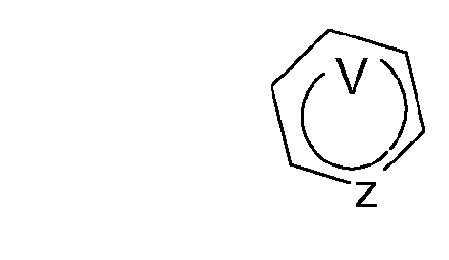
means an aromatic ring wherein V is C or N and when V is N, V is in ortho, meta or para of Z, i.e. forms respectively a pyridazine, a pyrimidine or a pyrazine group,
R independently represents a hydrogen atom, a halogen atom or a group chosen among a (C1-C3)alkyl group, a -CN group, a -COOH group, a (C1-C3)fluoroalkyl group, a (C1-C3)fluoroalkoxy group, a -NO2 group, a -NR1R2 group and a (C1-C3)alkoxy group,
R1 and R2 are independently a hydrogen atom or a (C1-C3)alkyl group,
n is 1 or 2,
R' is a hydrogen atom or a group chosen among a (C1-C3)alkyl group, a halogen atom, a hydroxy group, a -COOH group and a -CN group,
R" is a hydrogen atom or a (C1-C4)alkyl group,
Z is N or C,
Y is N or C,
X is N or C,
W is N or C,
and wherein at most two of the groups Z, Y, X and W are N,
or anyone of its pharmaceutically acceptable salt,
for use as an agent for preventing, inhibiting or treating pathological or nonpathological conditions linked with premature aging.
R independently represents a hydrogen atom, a halogen atom or a group chosen among a (C1-C3)alkyl group, a -CN group, a -COOH group, a (C1-C3)fluoroalkyl group, a (C1-C3)fluoroalkoxy group, a -NO2 group, a -NR1R2 group and a (C1-C3)alkoxy group,
R1 and R2 are independently a hydrogen atom or a (C1-C3)alkyl group,
n is 1 or 2,
R' is a hydrogen atom or a group chosen among a (C1-C3)alkyl group, a halogen atom, a hydroxy group, a -COOH group and a -CN group,
R" is a hydrogen atom or a (C1-C4)alkyl group,
Z is N or C,
Y is N or C,
X is N or C,
W is N or C,
and wherein at most two of the groups Z, Y, X and W are N,
or anyone of its pharmaceutically acceptable salt,
for use as an agent for preventing, inhibiting or treating pathological or nonpathological conditions linked with premature aging.
Description
- The present invention is generally dedicated to the use of compounds for the manufacture of compositions useful to treat diseases related to premature aging. The compounds and compositions containing them and compositions according to the invention may in particular be used to inhibit, prevent and/or treat Progeria.
- The present invention focuses on premature aging. Said premature aging may be encountered in patients suffering from various diseases and in particular from the Hutchinson-Gilford progeria syndrome (HGPS) and from the HIV infection.
- Hutchinson-Gilford progeria syndrome (HGPS) is a rare genetic disorder phenotypically characterized by many features of premature aging. It is clinically characterized by postnatal growth retardation, midface hypoplasia, micrognathia, premature atherosclerosis, absence of subcutaneous fat, alopecia and generalized osteodysplasia (Khalifa, 1989 - Hutchinson-Gilford progeria syndrome: report of a Libyan family and evidence of autosomal recessive inheritance. Clin. Genet. 35, 125-132.). At birth, the appearance of patients is generally normal, but by 1 year of age patients show severe growth retardation, balding and sclerodermatous skin changes. They average about 1m in height and usually weigh less than 15 kg even as teenagers. The age at death ranges from 7 to 28 years, with a median of 13.4 years. Over 80% of deaths are due to heart attacks or congestive heart failure.
- Premature aging syndrome has been observed in patients suffering from HIV infections. One mechanical pathway underlying said premature aging could be associated, as for the HGPS and as exposed beneath, with an aberrant splicing of the nuclear lamin A gene. Indeed it has recently been hypothesized that protease inhibitors against HIValso block the transformation of prelamin A into lamin A as it turned out in HGPS.
- Most of the patients suffering from premature aging carry a heterozygous silent mutation that activates the use of a cryptic 5' splice site in
exon 11 of LMNA pre-mRNA. This aberrant splicing event leads to the production of a truncated protein (progerin) with a dominant negative effect which is responsible for the observed phenotype (De Sandre-Giovannoli et al., 2003 - Lamin A truncation in Hutchinson-Gilford progeria. Science 300, 2055 / Pendas et al., 2002a - Defective prelamin A processing and muscular and adipocyte alterations in Zmpste24 metalloproteinase-deficient mice. Nat. Genet. 31, 94-99.). - Most of the premature aging syndromes in particular associated withHutchinson-Gilford progeria and HIV infection are due to a recurrent, de novo point mutation in LMNA exon 11: c.1824C>T. This mutation is localized in the part of the gene specifically encoding lamin A (De Sandre-Giovannoli et al., 2003 / De Sandre-Giovannoli and Levy, 2006 - Altered splicing in prelamin A-associated premature aging phenotypes. Prog. Mol. Subcell. Biol. 44, 199-232). Its predicted effect is a silent amino acid change at codon 608 (p.G608G). In fact, this sequence variation is not silent as it occurs in a probable exon splicing enhancer. As a result, a cryptic splice site is activated in transcripts issued from the mutated allele, which is located 5 nucleotides upstream of the mutation.
- So far, therapeutic approaches have been mainly focused on progerin which is attached to a lipid anchor (a farnesyl lipid anchor). This lipid anchor is attached to progerin by a specific cellular enzyme, protein farnesyltransferase. Experiments in mouse models suggest that farnesyltransferase inhibitors (FTIs) may have beneficial effects in humans with progeria (Fong et al., 2006 - A protein farnesyltransferase inhibitor ameliorates disease in a mouse model of progeria. Science 311, 1621-1623). More recently, Nicolas Levy's team has used a combination of a statin and an aminobisphosphonate to prevent the fixation of the fatty acid to the progerin, and thus reduce its toxicity (Varela et al., 2008 - Combined treatment with statins and aminobisphosphonates extends longevity in a mouse model of human premature aging. Nat. Med. 14, 767-772.).
- In
WO2006/081444 has been reported a method for reducing at least one cellular defect in a cell from a subject susceptible to a disease or condition characterized by farnesylation on an abnormally farnesylated form of a lamin, comprising administering to the cell a therapeutically effective dose of farnesylstransferase inhibitor. - It has been recently reported in
WO2008/003864 the use of a hydroxymethylglutaryl-coenzyme A (HMG-CoA) reductase inhibtor and a farnesyl-pyrophosphate synthase inhibitor, or one of their associated physiologically acceptable salts, in the preparation of a composition, for use in the treatment of human or animal, pathological or nonpathological situations related to the accumulation and/or the persistence of prenylated proteins in cells, such as during progeria, restrictive dermopathy or physiological aging. - In
WO 2008/115870 substituted quinoline are described, which are useful for treating cancer. - In
US 2008/0161353 other substituted quinoline are disclosed as agents to treat neurological conditions. - It has now been found that derivatives of formula (I) as defined in formula (I) hereinafter are able to interfere with the usage of the cryptic splice and demonstrate efficient inhibition of aberrant splicing leading to progerin production as illustrated in the experimental data herein after and, on the basis of such activity, the compounds are useful in the treatment of premature aging and in particular of progeria.
- The present invention therefore relates to compounds of formula (I) as defined below for use as agents for preventing, inhibiting or treating pathological or nonpathological conditions linked with premature aging.
- The present invention moreover relates to a method of preventing, inhibiting or treating pathological or nonpathological conditions linked with premature aging, which comprises at least one step consisting in administering to a patient suffering there from an effective amount of a compound as defined in formula (I) below or one of its pharmaceutically acceptable salts.
- The present invention further relates to some particular derivatives as such, as defined below.
- The present invention also provides pharmaceutical compositions comprising at least one of said particular compounds.
- The present invention is based on a novel approach based on the inhibition of aberrant splicing leading to progerin production.
- The truncated Lamin A protein lacking the last 150 base pairs of
exon 11 also called "progerin", acting as a dominant negative mutant, is predicted to be responsible for the characteristic manifestations seen in HGPS patients. Given that similar alteration of lamin A/C splicing was observed in aged individuals, it is proposed here that therapeutic molecules that interfere with the usage of the cryptic splice site will prevent side effects associated with accumulation of progerin during physiological aging. In other words, the compounds according to the present invention prevent usage of the cryptic 5' splice site inexon 11 of LMNA, allowing overcoming deleterious effect associated with progerin. - According to a first aspect, a subject-matter of the present invention relates to a compound of formula (I)

-

- R independently represents a hydrogen atom, a halogen atom or a group chosen among a (C1-C3)alkyl group, a -CN group, a -COOH group, a (C1-C3)fluoroalkyl group, a (C1-C3)fluoroalkoxy group, a -NO2 group, a -NR1R2 group and a (C1-C3)alkoxy group,
- R1 and R2 are independently a hydrogen atom or a (C1-C3)alkyl group,
- n is 1 or 2,
- R' is a hydrogen atom or a group chosen among a (C1-C3)alkyl group, a halogen atom, a hydroxy group, a -COOH group and a -CN group,
- R" is a hydrogen atom or a (C1-C4)alkyl group,
- Z is N or C,
- Y is N or C,
- X is N or C,
- W is N or C,
- According to one aspect, the present invention relates to a compound of formula (I) as defined above, wherein V is N, for use as an agent for preventing, inhibiting or treating pathological or nonpathological conditions linked with premature aging.
- According to one aspect, the present invention relates to a compound of formula (I) as defined above, wherein Z is N, V is C, Y is N, X is C and W is C, for use as an agent for preventing, inhibiting or treating pathological or nonpathological conditions linked with premature aging.
- According to another aspect, the present invention relates to a compound of formula (I) as defined above, wherein Z is C, V is C, Y is N, X is C and W is C, for use as an agent for preventing, inhibiting or treating pathological or nonpathological conditions linked with premature aging.
- According to another aspect, the present invention relates to a compound of formula (I) as defined above, wherein Z is N, V is C, Y is C, X is N and W is C, for use as an agent for preventing, inhibiting or treating pathological or nonpathological conditions linked with premature aging.
- According to another aspect, the present invention relates to a compound of formula (I) as defined above, wherein Z is N, V is C, Y is C, X is C and W is N, for use as an agent for preventing, inhibiting or treating pathological or nonpathological conditions linked with premature aging.
- The compounds of the invention may exist in the form of free bases or of addition salts with pharmaceutically acceptable acids.
- Suitable physiologically acceptable acid addition salts of compounds of formula (I) include hydrochloride, hydrobromide, tartrate, fumarate, citrate, trifluoroacetate, ascorbate, and malate.
- The compounds of formula (I) and or salts thereof may form solvates (e.g. hydrates) and the invention includes all such solvates.
- In the context of the present invention, the term:
- "halogen" is understood to mean chlorine, fluorine, bromine, or iodine, and in particular denotes chlorine, fluorine or bromine,
- "(C1-C3)alkyl" as used herein respectively refers to C1-C3 normal, secondary or tertiary saturated hydrocarbon. Examples are, but are not limited to, methyl, ethyl, 1-propyl, 2-propyl,
- "fluoroalkyl group" and "fluoroalkoxy group" refers respectively to alkyl group and alkoxy group as above-defined, said groups being substituted by at least one fluorine atom. Examples are perfluoroalkyl groups, such as trifluoromethyl or perfluoropropyl, and
- "patient" may extend to humans or mammals, such as cats or dogs.
- In one particular variant, the present invention is directed to a compound of formula (I) wherein:
- Z is N or C, Y is N or C, X is N or C and W is C,
- n is equal to 1,
- R is a hydrogen atom, a -COOH group, a (C1-C3)alkyl group or a (C1-C3)fluoroalkoxy group,
- R' is a hydrogen atom,
- R" is a hydrogen atom, and
- wherein at most two of the groups Z, Y and X are N,
- or anyone of its pharmaceutically acceptable salt,
- for use as an agent for preventing, inhibiting or treating pathological or nonpathological conditions linked with premature aging.
- Still in another particular variant, the compound of formula (I) may be defined as a compound of formula (IIa) as follows:

- Z is N or C, Y is N or C, X is N or C,
- at least one of R3 and R4 is a hydrogen atom and the other is a -COOH group, a (C1-C3)alkyl group or a (C1-C3)fluoroalkoxy group, or anyone of its pharmaceutically acceptable salt.
- Therefore, the present invention extends to a compound of formula (IIa) as defined above for use as an agent for preventing, inhibiting or treating pathological or nonpathological conditions linked with premature aging.
- The present invention further relates to a compound of formula (IIb)
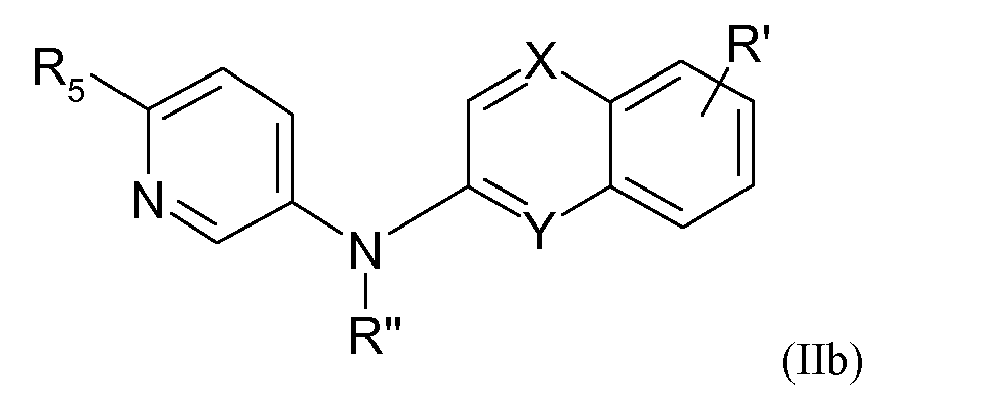
- Y is N or C,
- X is N or C,
- R5 is a hydrogen atom, a halogen atom or a group chosen among a (C1-C3)alkyl group, a -CN group, a(C1-C3)alkoxy group, a -NO2 group and a (C1-C3)fluoroalkyl group, and
- R' and R" are as defined above,
- The present invention further relates to a compound of formula (IIc)

- Y is N or C,
- X is N or C,
- R5 is a hydrogen atom, a halogen atom or a group chosen among a (C1-C3)alkyl group, a -CN group, a (C1-C3)alkoxy group, a -NO2 group and a (C1-C3)fluoroalkyl group, and
- R' and R" are as defined above,
- According to a first particular embodiment, an additional subject-matter of the present invention is a compound of formula (Ia)

- R independently represent a hydrogen atom, a halogen atom, or a group chosen among a (C1-C3)alkyl group, a -CN group, a -COOH group, a (C1-C3)fluoroalkyl group, a (C1-C3)fluoroalkoxy group, a -NO2 group and a (C1-C3)alkoxy group,
- R" is as defined above and is advantageously a hydrogen atom,
- n is 1 or 2, and advantageously 1, and
- R' is a hydrogen atom or a group chosen among a (C1-C3)alkyl group, a halogen atom, a hydroxy group, a -COOH group and a -CN group,
- The present invention further relates to a compound of formula (Ia) as defined above, as such,
wherein: - R, R" and n are as defined above,
- R' is a hydrogen atom or a group chosen among a (C1-C3)alkyl group, a halogen atom, a -COOH group and a -CN group, and
- wherein R and R' are not simultaneously a hydrogen atom or a methyl group and R is not a bromine atom,
- Still according to this particular embodiment, the present invention more particularly focuses on compounds of formula (Ia')

- at least one of R3 and R4 is a hydrogen atom and the other is a hydrogen atom, a -COOH group or a (C1-C3)alkyl group, and
- R" is as defined above and is advantageously a hydrogen atom,
- According to a second particular embodiment, an additional subject-matter of the present invention is a compound of formula (Ib)

- R independently represent a hydrogen atom, a halogen atom, or a group chosen among a (C1-C3)alkyl group, a -CN group, a -COOH group, a (C1-C3)fluoroalkyl group, a (C1-C3)fluoroalkoxy group, a -NO2 group, a -NR1R2 group and a (C1-C3)alkoxy group,
- R1 and R2 are independently a hydrogen atom or a (C1-C3)alkyl group,
- n is 1 or 2, and advantageously 1,
- R' is a hydrogen atom or a group chosen among a (C1-C3)alkyl group, a halogen atom, a hydroxy group, a -COOH group and a -CN group, and
- R" is as defined above and is advantageously a hydrogen atom,
- The present invention further relates to a compound of formula (Ib) as defined above, as such
wherein: - R' and R" are as defined above,
- n is 1, and
- R is a (C1-C3)fluoroalkoxy group,
- Still according to this particular embodiment, the present invention more particularly focuses on compounds of formula (Ib')

- at least one of R3 and R4 is a hydrogen atom and the other is a (C1-C3)fluoroalkoxy group or a (C1-C4)alkoxy group,
- or one of its pharmaceutically acceptable salt,
- for use as an agent for preventing, inhibiting or treating pathological or nonpathological conditions linked with premature aging.
- According to a third particular embodiment, an additional subject-matter of the present invention is a compound of formula (Ic)

- R independently represent a hydrogen atom, a halogen atom, or a group chosen among a (C1-C3)alkyl group a -CN group, a -COOH group, a (C1-C3)fluoroalkyl group, a -NO2 group and a (C1-C3)alkoxy group,
- n is 1 or 2, and advantageously 1,
- R' is a hydrogen atom or a (C1-C3)alkyl group, and in particular is a hydrogen atom, and
- R" is as defined above and is advantageously a hydrogen atom,
- The present invention further relates to a compound of formula (Ic) as defined above, as such
wherein: - R, R' R" and n are as defined above, and
- wherein R and R' are not simultaneously a hydrogen atom,
- Still according to this particular embodiment, the present invention more particularly focuses on compounds of formula (Ic'):

- at least one of R3 and R4 is a hydrogen atom and the other is a (C1-C3)alkyl group,
- or one of its pharmaceutically acceptable salt,
- for use as an agent for preventing, inhibiting or treating pathological or nonpathological conditions linked with premature aging.
- According to a fourth particular embodiment, an additional subject-matter of the present invention is a compound of formula (Id):

- R independently represent a hydrogen atom, a halogen atom, or a group chosen among a (C1-C3)alkyl group, a -CN group, a -COOH group, a (C1-C3)fluoroalkyl group, a (C1-C3)fluoroalkoxy group and a -NO2 group,
- n is 1 or 2, and advantageously 1,
- R' is a hydrogen atom or a (C1-C3)alkyl group, and in particular is a hydrogen atom, and
- R" is as defined above and is advantageously a hydrogen atom,
- The compound of formula (Id) as such and as defined above also form part of the present invention, with the proviso that when R' is a hydrogen atom, R is different from a -NO2 group, or one of its pharmaceutically acceptable salt.
- The compounds of formulae (I), (IIa), (IIb), (IIc), (Ia), (Ib), (Ic) and (Id) can comprise one or more asymmetric carbon atoms. They can thus exist in the form of enantiomers or of diastereoisomers. These enantiomers, diastereoisomers and their mixtures, including the racemic mixtures, are encompassed within the scope of the present invention.
- According to a preferred embodiment of the present invention, the compound is chosen from:
- (1) (8-Chloro-quinolin-2-yl)-pyridin-2-yl-amine,
- (2) 2-(Quinolin-2-ylamino)-isonicotinic acid,
- (3) (4-Methyl-pyridin-2-yl)-quinolin-2-yl-amine,
- (4) Pyridin-2-yl-quinolin-2-yl-amine,
- (5) 2-(8-Chloro-quinolin-2-ylamino)-isonicotinic acid,
- (6) (8-Chloro-quinolin-2-yl)-(4-methyl-pyridin-2-yl)-amine,
- (7) 6-(Quinolin-2-ylamino)-nicotinonitrile,
- (8) Quinolin-2-yl-(4-trifluoromethoxy-phenyl)-amine,
- (9) Pyridin-2-yl-quinolin-3-yl-amine,
- (10) (3-Methoxy-pyridin-2-yl)-quinolin-3-yl-amine,
- (11) Quinolin-3-yl-(5-trifluoromethyl-pyridin-2-yl)-amine,
- (12) (5-Nitro-pyridin-2-yl)-quinolin-3-yl-amine,
- (13) (5-Methyl-pyridin-2-yl)-quinolin-3-yl-amine,
- (14) 2-(Quinolin-3-ylamino)-isonicotinic acid,
- (15) Quinolin-6-yl-(5-trifluoromethyl-pyridin-2-yl)-amine,
- (16) (6-Methyl-pyridin-2-yl)-quinolin-6-yl-amine, and
- their pharmaceutically acceptable salts.
- Among said compounds, compounds (2), (3), (4) and (8) are of particular interest.
- The present invention therefore extends to compounds (2), (3), (4) and (8) or one of its pharmaceutically acceptable salts for use as an agent for preventing, inhibiting or treating pathological or nonpathological conditions linked with premature aging.
- Some compounds of said compounds (1) to (16), which are also reported in table I below, form part of the invention, as well as their pharmaceutically acceptable salts, such as hydrochloride, tartrate and fumarate: compounds (1), (2), (5), (6), (7), (8), (10), (11), (12), (13), (14), (15) and (16).
- The compounds of the present invention can be prepared by conventional methods of organic synthesis practiced by those skilled in the art. The general reaction sequences outlined below represent a general method useful for preparing the compounds of the present invention and are not meant to be limiting in scope or utility.
- The compounds of general formula (I) can be prepared according to scheme 1 below.

- As appears in said scheme two routes are available for recovering a compound of formula (I) according to the present invention.
- The synthesis is based on a coupling reaction alternatively starting from a chloro-bicyle of formula (III), wherein X, Y, W, R' and R" are as defined above or from a chloro-monocycle of formula (V), wherein Z, V, n and R are as defined above.
- According to route (A), the compound of formula (III) is placed in a protic solvent such as tert-butanol. The compound of formula (IV) is then added in a molar ratio ranging from1 and 1.5 with respect to the compound of formula (III) in presence of an inorganic base, such as Cs2CO3 in a molar ratio ranging from 1 and 2, in the presence of a diphosphine, such as Xantphos (4,5-Bis(diphenylphosphino)-9,9-dimethylxanthene) in an amount ranging from 2 mol% and 10 mol% relative to the total amount of compound of formula (III), and in the presence of a catalyst, such as Pd(OAC)2 in an amount ranging from 2 mol% and 10 mol% relative to the total amount of compound of formula (III). The reaction mixture can then be heated at a temperature ranging from 80 and 120°C, for example at 90°C and stirred for a time ranging form 15 and 25 hours, for example during 20 hours under inert gas and for example argon. The reaction mixture can be concentrated under reduced pressure.
- According to route (B) the compound of formula (V) is placed in a protic solvent such as tert-butanol. The compound of formula (VI) is then added in a molar ratio ranging from1 and 1.5 with respect to the compound of formula (V) in presence of an inorganic base, such as Cs2CO3 in a molar ratio ranging from 1 and 2, in the presence of a diphosphine, such as Xantphos (4,5-Bis(diphenylphosphino)-9,9-dimethylxanthene) in an amount ranging from 2 mol% and 10 mol% relative to the total amount of compound of formula (V), and in the presence of a catalyst, such as Pd(OAc)2 in an amount ranging from 2 mol% and 10 mol% relative to the total amount of compound of formula (V). The reaction mixture can then be heated at a temperature ranging from 80 and 120°C, for example at 90°C and stirred for a time ranging form 15 and 25 hours, for example during 20 hours under inert gas and for example argon. The reaction mixture can be concentrated under reduced pressure.
- The starting compounds of formula (III), (IV), (V) and (VI) are commercially available or can be prepared according to methods known to the person skilled in the art.
- The chemical structures and physical data of some compounds of formula (I) of the invention are illustrated in the following Table I.
Table I 
N° 
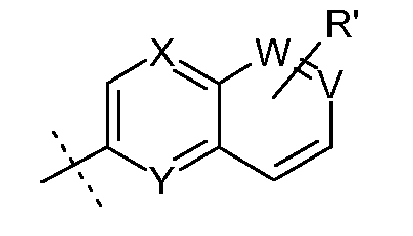
MS [M+H]+ Formula (Ia) 1 

256.1 2 

266.1 3 

236.2 4 

222.2 5 

300.1 6 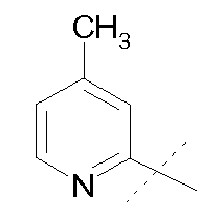

270.1 7 

247.2 Formula (Ib) 8 

305.0 Formula (Ic) 9 
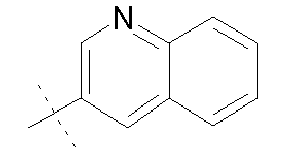
222.2 10 

252.1 11 

290.1 12 

267.1 13 
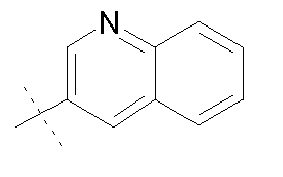
236.1 14 

266.1 Formula (Id) 15 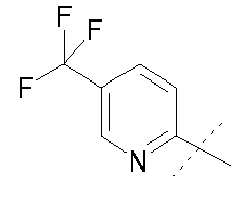

290.1 16 

236.1 MS: Mass Spectrometry ESI + - The following examples illustrate in detail the preparation of compounds (2), (3), (4) and (8) according to the invention. The structures of the products obtained have been confirmed by NMR spectra.
- To a solution of 2-chloro quinoline (82 mg, 0.5 mmol, 1 equiv) in tert-butanol (2 mL) were added the amino pyridine derivative / aniline (0.55 mmol, 1.1 equiv), Cs2CO3 (456 mg, 1.4 mmol, 2.8 equiv), Xantphos (5.8 mg, 0.01 mmol, 2 mol%), Pd(OAc)2 (2.2 mg, 0.01 mmol, 2 mol%). The reaction mixture was heated at 90°C and stirred for 20 hours under argon. The reaction mixture was concentrated under reduced pressure. The residue was purified by column chromatography on silica gel to yield compounds (2), (3), (4) and (8).
- 1H NMR (300 MHz, DMSO) δ 13.16 (s, 1H), 8.72 (d, J = 5.2, 1H), 8.63 (d, J = 9.0, 1H), 8.28 - 8.13 (m, 2H), 8.05 (d, J = 8.0, 1H), 7.90 (t, J = 7.5, 1H), 7.74 - 7.67 (m, 2H), 7.67 - 7.59 (m, 2H).
- MS (electrospray) m/z (%) 266.1 (100) [M+H]+.
- 1H NMR (300 MHz, CDC13) δ 8.92 (s, 1H), 8.21 (d, J = 5.3, 2H), 7.95 (d, J = 8.9, 1H), 7.89 (d, J = 8.4, 1H), 7.67 (d, J = 8.0, 1H), 7.62 (t, J = 7.7, 1H), 7.40 - 7.28 (m, 2H), 6.78 (d, J = 5.1, 1H), 2.41 (s, 3H).
- 13C NMR (75 MHz, CDC13) δ 154.3, 153.3, 149.5, 147.3, 137.7, 129.8, 127.6, 127.1, 124.6, 123.7, 118.7, 114.1, 113.4, 21.7.
- MS (electrospray) m/z (%) 236.2 (100) [M+H]+.
- 1H NMR (300 MHz, CDC13) δ 8.38 (d, J = 8.4, 1H), 8.31 (dd, J = 1.0,4.9, 1H), 8.01 (d, J = 8.9, 1H), 7.87 (d, J = 8.4, 1H), 7.77 - 7.68 (m, 3H), 7.64 (t, J = 7.7, 1H), 7.36 (t, J = 7.5, 1H), 7.31 (d, J = 8.9, 1H), 6.94 (dd, J = 5.0, 7.2, 1H).
- 13C NMR (75 MHz, CDC13) δ 154.1, 153.1, 147.8, 147.3, 138.3, 137.8, 129.9, 127.6, 127.2, 124.6, 123.8, 117.4, 114.0, 113.0.
- MS (electrospray) m/z (%) 222.2 (100) [M+H]+.
- 1H NMR (300 MHz, CDC13) δ 7.97 (d, J = 8.8, 1H), 7.82 (d, J = 8.4, 1H), 7.69 (t, J = 9.4, 3H), 7.62 (t, J = 7.7, 1H), 7.34 (t, J = 7.5, 1H), 7.23 (d, J = 8.7, 2H), 6.92 (d, J = 8.9, 1H), 6.74 (s, 1H).
- 13C NMR (75 MHz, CDC13) δ 153.9, 147.6, 144.4, 139.3, 138.1, 130.1, 127.7, 127.1, 124.4, 123.7, 122.5, 122.2, 121.0, 119.1, 112.2.
- MS (electrospray) m/z (%) 305.0 (100) [M+H]+.
- The compounds of the invention have been the subject of pharmacological tests which have demonstrated their relevance as active substances in therapy and in particular for preventing, inhibiting or treating pathological or nonpathological conditions linked with premature aging.
- The following materials and methods have been used.
- In order to identify and characterize the factor(s) involved in the use of the cryptic 5' splice site in
exon 11 of LMNA, an ex vivo system has been developed that recapitulates this splicing event. The cloning of mutant and wild type constructs (Fig. 1A , for schematic representation) were carried out using a TOPO-TA cloning vector in which is inserted a minigene containing 142 nts of β-Globin fist exon, 130 nts β-Globin first intron, 270nts LMNA exon 11 either wild type or mutant, 322nts intron nts exon 12. Using this system the splicing event activated by the GGC>GGT mutation inexon 11 of the LMNA gene was confirmed by transfections in cultured HeLa cells (Fig. 1B , lanes WT and Mut) as well as in vitro splicing experiments using in vitro synthesized radiolabeled substrate (Panel C). Transfection experiments of minigene constructs containing or not the point mutation demonstrated that like in Progeria patients the mutation leads to a switch from the use of the normal splice site (intron 11 position 1) to the use of the cryptic splice site upstream of the mutation (exon 11 position 1819) (Fig. 1 , Panel C, compare lanes WT and Mut). Note that following a kinetics of in vitro splicing for 150 minutes, aberrant splicing is observed with the wild type substrate (Fig1C , Lanes 1-7), implying that the mutation is not a perquisite for cryptic splice site usage. The mutation simply enhances the efficacy of selection of this cryptic splice site (Fig1C , Lanes 8-15). - Advantage has been taken of the luciferase system. The luciferase assay is an extremely sensitive and rapid assay. Linear results are seen over at least eight orders of magnitude of enzyme concentration. Moreover, the luciferase assay is well suited for high-throughput applications. To conduct a Mid-throughput screening (MTS) for compounds repressing LMNA aberrant splicing, we have constructed a plasmid in which
exon 11,intron 11 and part ofexon 12 of LMNA gene were fused with luciferase cDNA (Fig. 2 ). Both wild type (WtLMNA-luc) and mutant (MutLMNA-luc)substrate harbouring exon 11 mutation have been constructed. In these constructs we have generated a single initiation codon inexon 11 such as correct splicing will lead to luciferase expression, while aberrant splicing will skip the initiation codon and thereby prevent luciferase expression. After transfection in HeLa cells, Luciferase assays (Fig. 2B ) and RT-PCR (Fig. 2C ) indicate that WtLMNA-luc produces predominantly wild type splicing and large amount of luciferase activity, whereas MutLMNA-luc recapitulate the aberrant splicing profile with reduced luciferase expression (Fig.2 B and C , compare Wt and Mut). In order to use this system in MTS, we have generated a stable 293 cell lines containing a single integrated copy of luciferase reporter containing LMNA mutation (MutLMNA-luc cell line) using the flp system from INVITROGEN. This system allows us to perform a MTS for compounds able to enhance luciferase activity. - Plasmids constructs. LMNA sequences (1278 bp of
exon 11,intron exon 11 of LMNA and LMNA sequences described above were fused at their 3' end to Fyrefly luciferase cDNA (LMNAlucWT) in order that removal ofintron 11 generates a transcript that encode a fusion protein harbouring luciferase activity, whereas usage of the cryptic splice site of mutated exon 11 (LMNAIucMut) will remove the initiation codon preventing luciferase expression. Both sequences were cloned in pcDNA3 Flp-In vector (Invitrogen). - Transfection and RT-PCR. HeLa cells transfections with splicing reporter constructs were performed with lipofectAMINE 2000 reagent (Invitrogen) according to the manufacturer's instructions. Twenty four hours after transfection, total RNA was purified with RNA-PLUSTM (Quantum Bioprobe). First strand cDNA was synthesized from 2 µg of RNA with the Amersham-Pharmacia First strand cDNA synthesis kit. For PCR analyses, 1/15 of the reaction was amplified with Taq polymerase (Invitrogen). The cycle number was kept to a minimum to maintain linearity. PCR products were separated on a 1.5% agarose gel containing ethidium bromide and visualized under UV light.
- A stable 293 cell line containing a single copy of LMNAlucMut minigene was obtained using the Flp-In system from (Invitrogen) according to manufacture procedure. Several clones were obtained and only one clone was used to screen the whole chemical library (293FLP LMNA LUC cells #8).
- Nuclear extracts preparation, splicing and complementation assays. HeLa cells nuclear extracts were prepared according to (Dignam et al., 1983 - Eukaryotic gene transcription with purified components. Methods Enzymol. 101, 582-598). Pre-mRNA were synthesized by in vitro transcription in the presence of 20 units of T7 RNA polymerase, 1µg of the suitable linearized plasmids and 5 µM [α-32P] UTP (3000 Ci/mmol) in 25 µl reactions according to manufacturer conditions. In vitro transcripts were quantified by Cerenkov counting. Splicing reactions were performed under standard conditions as described previously (Tazi et al., 1986 - A protein that specifically recognizes the 3' splice site of mammalian pre-mRNA introns is associated with a small nuclear ribonucleoprotein. Cell 47, 755-766). Splicing products were analyzed by electrophoresis on 7% denaturing polyacrylamide gels and revealed by autoradiography.
- 293FLP LMNA LUC cells #8
- Hygromycin B at 50 mg/mL (invitrogen 10687-010)
- Dulbecco's Modified Eagle Medium (D-MEM) (1X) + GlutaMAX, liquid (invitrogen 31966-021)
- Dulbecco's Phosphate Buffered Saline (D-PBS) (1X), liquid (invitrogen 14190-169)
- Trypsin 2.5%
- Foetal calf serum (FCS)
- Penicillin (P)
- Streptomycin (S)
- Passive Lysis Buffer (PLB) (5X) (Promega)
- Bradford Reagent (B6916)
- Luciferase assay buffer
- 96 Well Plate sterile, V-shape (greiner bio-one 651180)
- 96 Well Microplate sterile, flat bottom (greiner bio-one 655180)
- 96 Well Microplate, flat bottom, Chimney Well (greiner bio-one 655075)
- CellTiter 96® AQueous One Solution (Promega G3581)
- In a 96 Well Plate sterile, V-shape one put 0.5 µl of drug compounds at 50 mM and then add 49,5 µl of 10% DMSO.
- One pipets 47 µl of drug at 500 µM and add 200 µL of DMEM + Hygromycin B. At this stage the concentration of drug compound is 10 µM. One shares out 100 µl in a 96 Well Microplate sterile, flat bottom (further called luciferase plate) and 50 µl in other one (further called toxicity plate).
- One wash 293FLP LMNA LUC cells once with D-PBS then add 1 ml trypsin EDTA. Incubation at 37°C for 2-3 minutes is proceeded. Then one add 9 ml DMEM (with 10% FCS, P/S).
- One takes 7 µl of cell suspension and adds 14 µL blue trypan to count cells. Meanwhile cell suspension is centrifugated at 1200 rpm for 5 minutes at room temperature (RT).
- Cell concentration is brought at 105 cells per ml with DMEM + Hygromycin B to have 104 cells per 100 µl.
- 100 µl of suspension cells is added (at 104 cells per 100 µl) so final concentration of compounds is 5 µM.
- 50 µl of suspension cells is added. The final concentration of compounds is 5 µM.
- 20 µl of CellTiter 96® AQueous One Solution is added per well. Incubation is proceeded at 37°C for 2 h. Absorbance is red at 490 nm.
- Medium of the wells is gently removed then washed once by adding slowly 150 µl of D-PBS 1X. D-PBS is removed. 40 µl of PLB 1X is added and incubated at RT for 30 minutes.
- 20 µl of cell lysate is put in a 96 Well Microplate, flat bottom, Chimney Well. 70 µl of luciferin assay substrate is added. One read luminescence for 1 second.
- 200 µl of Bradford reagent is added on the remaining cell lysate (20 µl). Incubation is proceeded at RT for 30 min then one can read absorbance at 595 nm. A range has to be made. Usually 5 different concentrations are tested: 0.25, 0.5, 0.75, 1 and 1.25 mg/ml.
- The compounds according to the present invention demonstrate an increase of luciferase activity ranging between 3 and 7 fold compared to control untreated MutLMNA-luc cell line.
- Therefore, the result of the tests carried out on the compounds disclosed in the present invention show that said compounds may be useful to inhibit, prevent and/or treat diseases with premature aging and that are likely related to an aberrant splicing of the nuclear lamin A gene. Among all, said disease may include Hutchinson Guilford Progeria Syndrome (HGPS), progeria, premature aging associated with HIV infection, muscular dystrophy, Charcot-Marie-Tooth disorder, Werner syndrome, but also atherosclerosis, insulin resistant type II diabetes, cataracts, osteoporosis and aging of the skin such as restrictive dermopathy.
- For this purpose an effective amount of a said compound may be administered to a patient suffering from premature aging and in particular from progeria, and from the previous cited diseases.
- The present invention is also related to the use of a compound of anyone of formula (I), (IIa), (IIb), (IIc), (Ia), (Ib), (Ic), (Id), and (1) to (16) or one of its pharmaceutically acceptable salts according to the present invention for the manufacture of a pharmaceutical composition intended for the treatment of pathological or nonpathological conditions linked with premature aging and in particular progeria.
- The present invention also encompasses pharmaceutical compositions comprising at least a compound chosen among new compounds of formula (Ia), (Ib), (Ic) or (Id) as defined above and compounds (1) to (16), as defined above or any pharmaceutically acceptable salt thereof.
- Thus, these pharmaceutical compositions contain an effective amount of said compound, and one or more pharmaceutical excipients.
- The aforementioned excipients are selected according to the dosage form and the desired mode of administration.
- In this context they can be present in any pharmaceutical form which is suitable for enteral or parenteral administration, in association with appropriate excipients, for example in the form of plain or coated tablets, hard gelatine, soft shell capsules and other capsules, suppositories, or drinkable, such as suspensions, syrups, or injectable solutions or suspensions, in doses which enable the daily administration of from 0.1 to 1000 mg of active substance.
- The present invention is also related to the use of a compound of anyone of formula (I), (IIa), (IIb), (IIc), (Ia), (Ib), (Ic), (Id) and (1) to (16) or one of its pharmaceutically acceptable salts according to the present invention for the manufacture of a pharmaceutical composition intended for inhibiting, preventing and/or treating pathological or nonpathological conditions linked with premature aging and in particular progeria but also all the previous listed diseases.
- The present invention further relates to a method of treatment of patients suffering form premature aging or anyone of the previous listed disease, which comprises at least a step of administration to a patient suffering thereof of an effective amount of a compound of anyone of formula (I), (IIa), (IIb), (IIc), (Ia), (Ib), (Ic), (Id) and (1) to (16) or one of its pharmaceutically acceptable salts.
or anyone of its pharmaceutically acceptable salt,
for use as an agent for preventing, inhibiting or treating pathological or nonpathological conditions linked with premature aging.
for use as an agent for preventing, inhibiting or treating pathological or nonpathological conditions linked with premature aging.
for use as an agent for preventing, inhibiting or treating pathological or nonpathological conditions linked with premature aging.
for use as an agent for preventing, inhibiting or treating pathological or nonpathological conditions linked with premature aging.
for use as an agent for preventing, inhibiting or treating pathological or nonpathological conditions linked with premature aging.
for use as an agent for preventing, inhibiting or treating pathological or nonpathological conditions linked with premature aging.
for use as an agent for preventing, inhibiting or treating pathological or nonpathological conditions linked with premature aging.
for use as an agent for preventing, inhibiting or treating pathological or nonpathological conditions linked with premature aging.
Claims (15)
- A compound of formula (I):

 R independently represents a hydrogen atom, a halogen atom or a group chosen among a (C1-C3)alkyl group, a -CN group, a -COOH group, a (C1-C3)fluoroalkyl group, a (C1-C3)fluoroalkoxy group, a -NO2 group, a -NR1R2 group and a (C1-C3)alkoxy group,R1 and R2 are independently a hydrogen atom or a (C1-C3)alkyl group,n is 1 or 2,R' is a hydrogen atom or a group chosen among a (C1-C3)alkyl group, a halogen atom, a hydroxy group, a -COOH group and a -CN group,R" is a hydrogen atom or a (C1-C4)alkyl group,Z is N or C,Y is N or C,X is NorC,W is N or C,and wherein at most two of the groups Z, Y, X and W are N,or anyone of its pharmaceutically acceptable salt,
for use as an agent for preventing, inhibiting or treating pathological or nonpathological conditions linked with premature aging. - A compound of formula (I) according to claim 1, wherein alternatively:- Z is N, V is C, Y is N, X is C and W is C,- Z is C, V is C, Y is N, X is C and W is C,- Z is N, V is C, Y is C, X is N and W is C,- Z is N, V is C, Y is C, X is C and W is N,for use as an agent for preventing, inhibiting or treating pathological or nonpathological conditions linked with premature aging.
- A compound of formula (I) according to claim 1 or 2, wherein
Z is N or C, V is C, Y is N or C, X is N or C and W is C,
n is equal to 1,
R is a hydrogen atom, a -COOH group, a (C1-C3)alkyl group or a (C1-C3)fluoroalkoxy group,
R' is a hydrogen atom,
R" is a hydrogen atom, and
wherein at most two of the groups Z, Y and X are N,
for use as an agent for preventing, inhibiting or treating pathological or nonpathological conditions linked with premature aging. - A compound of formula (I) according to anyone of the preceding claims, defined by a formula (IIa)
 Z is N or C, Y is N or C, X is N or C,at least one of R3 and R4 is a hydrogen atom and the other is a -COOH group, a (C1-C3)alkyl group or a (C1-C3)fluoroalkoxy group,or anyone of its pharmaceutically acceptable salt,for use as an agent for preventing, inhibiting or treating pathological or nonpathological conditions linked with premature aging.
 - A compound of formula (Ia) according to anyone of the preceding claims
 R independently represent a hydrogen atom, a halogen atom or a group chosen among a (C1-C3)alkyl group, a -CN group, a -COOH group, a (C1-C3)fluoroalkyl group, a (C1-C3)fluoroalkoxy group, a -NO2 group, a (C1-C3)alkoxy group,R" is as defined in claim 1 and is advantageously a hydrogen atom,n is 1 or 2, and advantageously 1,R' is a hydrogen atom or a group chosen among a (C1-C3)alkyl group, a halogen atom, a hydroxy group, a -COOH group and a -CN group,or one of its pharmaceutically acceptable salt,for use as an agent for preventing, inhibiting or treating pathological or nonpathological conditions linked with premature aging.
 - A compound of formula (Ia), which formula (Ia) is such as defined in the preceding claim,
wherein
R, R" and n are as defined in the preceding claim,
R' is a hydrogen atom or a group chosen among a (C1-C3)alkyl group, a halogen atom, a -COOH group and a -CN group, and
wherein R and R' are not simultaneously a hydrogen atom or a methyl group and R is not a bromine atom,
or one of its pharmaceutically acceptable salt. - A compound of formula (Ib) according to anyone of claims 1 to 4
 R independently represents a hydrogen atom, a halogen atom or a group chosen among a (C1-C3)alkyl group, a -CN group, a -COOH group, a (C1-C3)fluoroalkyl group, a (C1-C3)fluoroalkoxy group, a -NO2 group, a -NR1R2 group and a (C1-C3)alkoxy group,R1 and R2 are independently a hydrogen atom or a (C1-C3)alkyl group,n is 1 or 2, and advantageously 1,R' is a hydrogen atom or a group chosen among a (C1-C3)alkyl group, a halogen atom, a hydroxy group, a -COOH group and a -CN group, andR" is as defined in claim 1 and is advantageously a hydrogen atom,or one of its pharmaceutically acceptable salt,for use as an agent for preventing, inhibiting or treating pathological or nonpathological conditions linked with premature aging.
 - A compound of formula (Ib), which formula (Ib) is such as defined in the preceding claim, wherein:R' and R" are as defined in the preceding claim,n is 1, andR is a (C1-C3)fluoroalkoxy group,or one of its pharmaceutically acceptable salt.
- A compound of formula (Ic) according to anyone of claims 1 to 4:
 R independently represent a hydrogen atom, a halogen atom, or a group chosen among a (C1-C3)alkyl group, a -CN group, a -COOH group, a (C1-C3)fluoroalkyl group, a -NO2 group, and a (C1-C3)alkoxy group,n is 1 or 2, and advantageously 1,R' is a hydrogen atom or a (C1-C3)alkyl group, and in particular is a hydrogen atom, andR" is as defined in the preceding claim and is advantageously a hydrogen atom,or one of its pharmaceutically acceptable salt,for use as an agent for preventing, inhibiting or treating pathological or nonpathological conditions linked with premature aging.
 - A compound of formula (Ic), which formula (Ic) is such as defined in the preceding claim, wherein:R, R' R" and n are as defined in the preceding claim, and
wherein R and R' are not simultaneously a hydrogen atom,or one of its pharmaceutically acceptable salt. - A compound of formula (Id) according to anyone of the claims 1 to 4
 R independently represent a hydrogen atom, a halogen atom or a group chosen among a (C1-C3)alkyl group, a -CN group, a -COOH group, a (C1-C3)fluoroalkyl group, a (C1-C3)fluoroalkoxy group and a -NO2 group,n is 1 or 2, and advantageously 1,R' is a hydrogen atom or a (C1-C3)alkyl group, and in particular is a hydrogen atom, andR" is as defined in claim 1 and is advantageously a hydrogen atom,or one of its pharmaceutically acceptable salt,for use as an agent for preventing, inhibiting or treating pathological or nonpathological conditions linked with premature aging.
 - A compound of formula (Id), which formula (Id) is such as defined in the preceding claim, with the proviso that when R' is a hydrogen atom, R is different from a -NO2 group,
or one of its pharmaceutically acceptable salt. - A compound chosen among:- (1) (8-Chloro-quinolin-2-yl)-pyridin-2-yl-amine,- (2) 2-(Quinolin-2-ylamino)-isonicotinic acid,- (3) (4-Methyl-pyridin-2-yl)-quinolin-2-yl-amine,- (4) Pyridin-2-yl-quinolin-2-yl-amine,- (5) 2-(8-Chloro-quinolin-2-ylamino)-isonicotinic acid,- (6) (8-Chloro-quinolin-2-yl)-(4-methyl-pyridin-2-yl)-amine,- (7) 6-(Quinolin-2-ylamino)-nicotinonitrile,- (8) Quinolin-2-yl-(4-trifluoromethoxy-phenyl)-amine,- (9) Pyridin-2-yl-quinolin-3-yl-amine,- (10) (3-Methoxy-pyridin-2-yl)-quinolin-3-yl-amine,- (11) Quinolin-3-yl-(5-trifluoromethyl-pyridin-2-yl)-amine,- (12) (5-Nitro-pyridin-2-yl)-quinolin-3-yl-amine,- (13) (5-Methyl-pyridin-2-yl)-quinolin-3-yl-amine,- (14) 2-(Quinolin-3-ylamino)-isonicotinic acid,- (15) Quinolin-6-yl-(5-trifluoromethyl-pyridin-2-yl)-amine,- (16) (6-Methyl-pyridin-2-yl)-quinolin-6-yl-amine,- their pharmaceutically acceptable saltsfor use as an agent for preventing, inhibiting or treating pathological or nonpathological conditions linked with premature aging.
- A compound chosen among the compounds (1), (2), (5), (6), (7), (8), (10), (11), (12), and (13), (14), (15) and (16) as well as their pharmaceutically acceptable salts, such as hydrochloride, tartrate and fumarate.
- A pharmaceutical composition comprising at least one compound as defined in anyone of claims 6, 8, 10 12 and 14.
Priority Applications (140)
| Application Number | Priority Date | Filing Date | Title |
|---|---|---|---|
| EP09162630A EP2261214A1 (en) | 2009-06-12 | 2009-06-12 | Compounds useful to treat premature aging and in particular progeria |
| US13/377,760 US9145367B2 (en) | 2009-06-12 | 2010-06-14 | Compounds useful for treating AIDS |
| ES10757474T ES2938532T3 (en) | 2009-06-12 | 2010-06-14 | New chemical molecules that inhibit the splicing mechanism for the treatment of diseases derived from splicing defects |
| EP10728369.9A EP2440546B1 (en) | 2009-06-12 | 2010-06-14 | Compounds useful for treating premature aging and in particular progeria |
| ES19157827T ES2985082T3 (en) | 2009-06-12 | 2010-06-14 | Compounds useful for treating cancer |
| HUE10728368A HUE045548T2 (en) | 2009-06-12 | 2010-06-14 | Compounds useful for treating cancer |
| US13/377,745 US20120277230A1 (en) | 2009-06-12 | 2010-06-14 | Compounds useful for treating cancer |
| KR1020187025624A KR101973348B1 (en) | 2009-06-12 | 2010-06-14 | Compounds useful for treating premature aging in particular progeria |
| RU2011149571/04A RU2567752C2 (en) | 2009-06-12 | 2010-06-14 | Compounds suitable for cancer treatment |
| CA3070823A CA3070823C (en) | 2009-06-12 | 2010-06-14 | Quinoline and isoquinoline compounds useful for treating cancer |
| US13/377,753 US20120329796A1 (en) | 2009-06-12 | 2010-06-14 | Compounds useful for treating premature aging and in particular progeria |
| DK10728369.9T DK2440546T3 (en) | 2009-06-12 | 2010-06-14 | COMPOUNDS USEFUL IN THE TREATMENT OF PREMATURE AGING AND IN PARTICULAR PROGERIA |
| CA2764026A CA2764026C (en) | 2009-06-12 | 2010-06-14 | Compounds useful for treating aids |
| CN201410106644.9A CN103948594B (en) | 2009-06-12 | 2010-06-14 | Compounds for the treatment of cancer |
| CU2011000230A CU24093B1 (en) | 2009-06-12 | 2010-06-14 | ISOQUINOLINE DERIVATIVES LINKED TO THE CELLULAR EMPALME PROCESS |
| BRPI1010772A BRPI1010772B8 (en) | 2009-06-12 | 2010-06-14 | quinoline compounds, their pharmaceutical compositions and their uses to treat AIDS |
| CA2965791A CA2965791C (en) | 2009-06-12 | 2010-06-14 | Quinoline and isoquinoline compounds useful for treating cancer |
| AU2010258214A AU2010258214B2 (en) | 2009-06-12 | 2010-06-14 | Compounds useful for treating premature aging and in particular progeria |
| CN201080032036.8A CN102574835B (en) | 2009-06-12 | 2010-06-14 | Compounds Used to Treat Cancer |
| KR1020127000914A KR20120051643A (en) | 2009-06-12 | 2010-06-14 | Compounds useful for treating premature aging in particular progeria |
| BRPI1012892A BRPI1012892B8 (en) | 2009-06-12 | 2010-06-14 | compounds of formula (I), as such, pharmaceutical composition comprising them and their use in the treatment of hgps, progeria, charcot-marie-tooth disorder, werner syndrome, diabetes, osteoporosis and skin aging |
| CN201080032045.7A CN102625804B (en) | 2009-06-12 | 2010-06-14 | Compounds for the treatment of AIDS |
| CN202110307700.5A CN113004249A (en) | 2009-06-12 | 2010-06-14 | Compounds for the treatment of premature aging and especially premature aging |
| CUP2015000024A CU24245B1 (en) | 2009-06-12 | 2010-06-14 | QUINOLIN-6 AMINA AND QUINOLINA-7-AMINA DERIVED FROM THE FORMULA (Id) and (Go), AND SALES DERIVED |
| JP2012514585A JP6041671B2 (en) | 2009-06-12 | 2010-06-14 | Compounds useful for treating cancer |
| HRP20230143TT HRP20230143T1 (en) | 2009-06-12 | 2010-06-14 | New chemical molecules that inhibit the splicing mechanism for the treatment of diseases resulting from splicing defects |
| PL10757474.1T PL2440547T3 (en) | 2009-06-12 | 2010-06-14 | New chemical molecules that inhibit the splicing mechanism for the treatment of diseases resulting from splicing defects |
| BRPI1010768A BRPI1010768C8 (en) | 2009-06-12 | 2010-06-14 | compound of formula (i) |
| JP2012514587A JP5905385B2 (en) | 2009-06-12 | 2010-06-14 | Compounds useful for treating premature aging, especially progeria |
| MX2018009425A MX373120B (en) | 2009-06-12 | 2010-06-14 | COMPOUNDS USEFUL FOR TREATING AIDS. |
| MX2015016290A MX364282B (en) | 2009-06-12 | 2010-06-14 | COMPOUNDS USEFUL FOR TREATING PREMATURE AGING and IN PARTICULAR PROGERIA. |
| KR1020177021820A KR101863021B1 (en) | 2009-06-12 | 2010-06-14 | Compounds useful for treating cancer |
| KR1020187025625A KR101982462B1 (en) | 2009-06-12 | 2010-06-14 | Compounds useful for treating premature aging in particular progeria |
| KR1020187025626A KR101982463B1 (en) | 2009-06-12 | 2010-06-14 | Compounds useful for treating premature aging in particular progeria |
| CA2764027A CA2764027C (en) | 2009-06-12 | 2010-06-14 | Quinoline or isoquinoline compounds useful for treating premature aging and in particular progeria |
| JP2012514586A JP5826745B2 (en) | 2009-06-12 | 2010-06-14 | Compounds useful for treating AIDS |
| RU2011149572/04A RU2575845C2 (en) | 2009-06-12 | 2010-06-14 | Compounds applicable for treating aids |
| MX2016003039A MX359575B (en) | 2009-06-12 | 2010-06-14 | Compounds useful for treating aids. |
| CN201710158474.2A CN106928194B (en) | 2009-06-12 | 2010-06-14 | Compounds for the treatment of premature aging and especially premature aging |
| HRP20230248TT HRP20230248T1 (en) | 2009-06-12 | 2010-06-14 | Compounds useful for treating premature aging and in particular progeria |
| CN201710122014.4A CN106905232B (en) | 2009-06-12 | 2010-06-14 | Compounds for the treatment of premature aging and especially premature aging |
| PCT/IB2010/052652 WO2010143170A2 (en) | 2009-06-12 | 2010-06-14 | Compounds useful for treating premature aging and in particular progeria |
| KR1020197004604A KR102016889B1 (en) | 2009-06-12 | 2010-06-14 | Compounds useful for treating premature aging in particular progeria |
| TR2019/10781T TR201910781T4 (en) | 2009-06-12 | 2010-06-14 | Compounds useful for cancer therapy. |
| SI201032127T SI2440547T1 (en) | 2009-06-12 | 2010-06-14 | New chemical molecules that inhibit the splicing mechanism for the treatment of diseases resulting from splicing defects |
| BR122019013687A BR122019013687B1 (en) | 2009-06-12 | 2010-06-14 | compound of formula (i) |
| FIEP10728369.9T FI2440546T3 (en) | 2009-06-12 | 2010-06-14 | Compounds useful for treating premature aging and in particular progeria |
| HRP20240582TT HRP20240582T1 (en) | 2009-06-12 | 2010-06-14 | Compounds useful for treating cancer |
| AU2010258295A AU2010258295B2 (en) | 2009-06-12 | 2010-06-14 | Compounds useful for treating AIDS |
| CUP2011000229A CU24124B1 (en) | 2009-06-12 | 2010-06-14 | N-FENIL-NAFTALEN-2-AMINAS REPLACED FOR THE TREATMENT OF CANCER. |
| MX2015016291A MX364279B (en) | 2009-06-12 | 2010-06-14 | Compounds useful for treating premature aging and in particular progeria. |
| KR1020197004607A KR102016892B1 (en) | 2009-06-12 | 2010-06-14 | Compounds useful for treating premature aging in particular progeria |
| HK13100736.4A HK1173726B (en) | 2009-06-12 | 2010-06-14 | Compounds useful for treating aids |
| HK13100731.9A HK1173447B (en) | 2009-06-12 | 2010-06-14 | Compounds useful for treating premature aging and in particular progeria |
| MX2011013122A MX340095B (en) | 2009-06-12 | 2010-06-14 | Compounds useful for treating aids. |
| KR1020187025623A KR101982461B1 (en) | 2009-06-12 | 2010-06-14 | Compounds useful for treating premature aging in particular progeria |
| ES10728368T ES2736198T3 (en) | 2009-06-12 | 2010-06-14 | Useful compounds to treat cancer |
| MX2011013120A MX338823B (en) | 2009-06-12 | 2010-06-14 | Compounds useful for treating premature aging and in particular progeria. |
| CN201080032055.0A CN102596935B (en) | 2009-06-12 | 2010-06-14 | Compounds for the treatment of premature aging and especially premature aging |
| CN201510020820.1A CN104945378B (en) | 2009-06-12 | 2010-06-14 | Compounds for the treatment of premature aging and especially premature aging |
| KR1020177031675A KR101897221B1 (en) | 2009-06-12 | 2010-06-14 | Compounds useful for treating premature aging in particular progeria |
| PL10728368T PL2440545T3 (en) | 2009-06-12 | 2010-06-14 | Compounds useful for treating cancer |
| CN201510023124.6A CN104844570B (en) | 2009-06-12 | 2010-06-14 | Compounds for the treatment of premature aging and especially progeria |
| CN201510023109.1A CN104844510B (en) | 2009-06-12 | 2010-06-14 | Compounds for the treatment of premature aging and especially premature aging |
| MX2015016293A MX364989B (en) | 2009-06-12 | 2010-06-14 | COMPOUNDS USEFUL FOR TREATING PREMATURE AGING and IN PARTICULAR PROGERIA. |
| CA2764024A CA2764024C (en) | 2009-06-12 | 2010-06-14 | Quinoline and isoquinoline compounds useful for treating cancer |
| CN201710158473.8A CN106928205B (en) | 2009-06-12 | 2010-06-14 | Compounds for the treatment of premature aging and especially premature aging |
| HK13100514.2A HK1173153B (en) | 2009-06-12 | 2010-06-14 | Compounds useful for treating cancer |
| PT107574741T PT2440547T (en) | 2009-06-12 | 2010-06-14 | Compounds useful for treating aids |
| EP19157827.7A EP3517534B1 (en) | 2009-06-12 | 2010-06-14 | Compounds useful for treating cancer |
| KR1020127000915A KR101789275B1 (en) | 2009-06-12 | 2010-06-14 | Compounds useful for treating AIDS |
| CN201910120757.7A CN109776496B (en) | 2009-06-12 | 2010-06-14 | Compounds for the treatment of premature aging and especially premature aging |
| EP22193611.5A EP4198022A1 (en) | 2009-06-12 | 2010-06-14 | Preparation of compounds useful for treating aids |
| FIEP10757474.1T FI2440547T3 (en) | 2009-06-12 | 2010-06-14 | New chemical molecules that inhibit the splicing mechanism for the treatment of diseases resulting from splicing defects |
| HUE10757474A HUE061262T2 (en) | 2009-06-12 | 2010-06-14 | New chemical molecules that inhibit the splicing mechanism for the treatment of diseases resulting from splicing defects |
| MX2015016292A MX364280B (en) | 2009-06-12 | 2010-06-14 | COMPOUNDS USEFUL FOR TREATING PREMATURE AGING and IN PARTICULAR PROGERIA. |
| PT10728368T PT2440545T (en) | 2009-06-12 | 2010-06-14 | Compounds useful for treating cancer |
| PCT/IB2010/052651 WO2010143169A2 (en) | 2009-06-12 | 2010-06-14 | Compounds useful for treating aids |
| DK19157827.7T DK3517534T3 (en) | 2009-06-12 | 2010-06-14 | COMPOUNDS USEFUL IN THE TREATMENT OF CANCER |
| MX2016007353A MX367601B (en) | 2009-06-12 | 2010-06-14 | Compounds useful for treating cancer. |
| EP19157824.4A EP3521283B1 (en) | 2009-06-12 | 2010-06-14 | Compounds useful for treating cancer |
| MX2011013119A MX353776B (en) | 2009-06-12 | 2010-06-14 | Compounds useful for treating cancer. |
| CN201510021597.2A CN104945379B (en) | 2009-06-12 | 2010-06-14 | Compounds for the treatment of premature aging and especially premature aging |
| PT107283699T PT2440546T (en) | 2009-06-12 | 2010-06-14 | Compounds useful for treating premature aging and in particular progeria |
| DK10757474.1T DK2440547T3 (en) | 2009-06-12 | 2010-06-14 | New chemical molecules that inhibit the splicing mechanism to treat diseases caused by splicing defects |
| EP10757474.1A EP2440547B1 (en) | 2009-06-12 | 2010-06-14 | New chemical molecules that inhibit the splicing mechanism for the treatment of diseases resulting from splicing defects |
| HRP20191460 HRP20191460T1 (en) | 2009-06-12 | 2010-06-14 | COMPOUNDS USEFUL FOR TREATMENT OF CANCER |
| ES10728369T ES2940885T3 (en) | 2009-06-12 | 2010-06-14 | Compounds useful for treating premature aging and in particular progeria |
| PL10728369.9T PL2440546T3 (en) | 2009-06-12 | 2010-06-14 | Compounds useful for treating premature aging and in particular progeria |
| PT191578277T PT3517534T (en) | 2009-06-12 | 2010-06-14 | Compounds useful for treating cancer |
| AU2010258294A AU2010258294B2 (en) | 2009-06-12 | 2010-06-14 | Compounds useful for treating cancer |
| KR1020197004608A KR102016893B1 (en) | 2009-06-12 | 2010-06-14 | Compounds useful for treating premature aging in particular progeria |
| KR1020197004606A KR102016891B1 (en) | 2009-06-12 | 2010-06-14 | Compounds useful for treating premature aging in particular progeria |
| FIEP19157827.7T FI3517534T3 (en) | 2009-06-12 | 2010-06-14 | Compounds useful for treating cancer |
| PCT/IB2010/052650 WO2010143168A2 (en) | 2009-06-12 | 2010-06-14 | Compounds useful for treating cancer |
| LTEPPCT/IB2010/052651T LT2440547T (en) | 2009-06-12 | 2010-06-14 | New chemical molecules that inhibit the splicing mechanism for the treatment of diseases resulting from splicing defects |
| EP10728368.1A EP2440545B1 (en) | 2009-06-12 | 2010-06-14 | Compounds useful for treating cancer |
| KR1020197004605A KR102016890B1 (en) | 2009-06-12 | 2010-06-14 | Compounds useful for treating premature aging in particular progeria |
| PL19157827.7T PL3517534T3 (en) | 2009-06-12 | 2010-06-14 | Compounds useful for treating cancer |
| KR1020127000916A KR101769616B1 (en) | 2009-06-12 | 2010-06-14 | Compounds useful for treating cancer |
| BR122019013686-6A BR122019013686B1 (en) | 2009-06-12 | 2010-06-14 | COMPOUND OF FORMULA (I), COMPOUND OF FORMULA (IQ) AND PHARMACEUTICAL COMPOSITION |
| DK10728368.1T DK2440545T3 (en) | 2009-06-12 | 2010-06-14 | Compounds useful for treating cancer |
| CU2011000228A CU24461B1 (en) | 2009-06-12 | 2010-06-14 | USEFUL COMPOUNDS TO TREAT PREMATURE AGING AND IN PARTICULAR PROGERIA |
| MX2019008390A MX2019008390A (en) | 2009-06-12 | 2011-12-07 | Compounds useful for treating cancer. |
| ZA2011/09031A ZA201109031B (en) | 2009-06-12 | 2011-12-08 | Compounds useful for treating aids |
| ZA2011/09032A ZA201109032B (en) | 2009-06-12 | 2011-12-08 | Compounds useful for treating premature aging and in particular progeria |
| HK16101060.5A HK1212990B (en) | 2009-06-12 | 2013-01-17 | Compounds useful for treating premature aging and in particular progeria |
| HK16101079.4A HK1213246B (en) | 2009-06-12 | 2013-01-17 | Compounds useful for treating premature aging and in particular progeria |
| HK16101080.1A HK1213247B (en) | 2009-06-12 | 2013-01-17 | Compounds useful for treating premature aging and in particular progeria |
| HK16100761.9A HK1212702B (en) | 2009-06-12 | 2013-01-17 | Compounds useful for treating premature aging and in particular progeria |
| US14/087,762 US9108919B2 (en) | 2009-06-12 | 2013-11-22 | Compounds useful for treating cancer |
| US14/256,334 US9908869B2 (en) | 2009-06-12 | 2014-04-18 | Compounds useful for treating aids |
| HK15101062.4A HK1200363B (en) | 2009-06-12 | 2015-01-30 | Compounds useful for treating cancer |
| JP2015090437A JP2015155453A (en) | 2009-06-12 | 2015-04-27 | Compound useful for treating cancer |
| JP2015120567A JP6158250B2 (en) | 2009-06-12 | 2015-06-15 | Compounds useful for treating AIDS |
| JP2015120566A JP2015187150A (en) | 2009-06-12 | 2015-06-15 | Compounds useful for treating aids |
| JP2015120568A JP6158251B2 (en) | 2009-06-12 | 2015-06-15 | Compounds useful for treating AIDS |
| AU2015203256A AU2015203256B2 (en) | 2009-06-12 | 2015-06-16 | Compounds useful for treating cancer |
| US14/789,149 US9637475B2 (en) | 2009-06-12 | 2015-07-01 | Compounds for treating cancer |
| US14/789,250 US10017498B2 (en) | 2009-06-12 | 2015-07-01 | Compounds useful for treating AIDS |
| JP2016006101A JP6149127B2 (en) | 2009-06-12 | 2016-01-15 | Compounds useful for treating premature aging, especially progeria |
| JP2016006105A JP6150445B2 (en) | 2009-06-12 | 2016-01-15 | Compounds useful for treating premature aging, especially progeria |
| JP2016006103A JP6154922B2 (en) | 2009-06-12 | 2016-01-15 | Compounds useful for treating premature aging, especially progeria |
| JP2016006102A JP6149128B2 (en) | 2009-06-12 | 2016-01-15 | Compounds useful for treating premature aging, especially progeria |
| JP2016006104A JP6149129B2 (en) | 2009-06-12 | 2016-01-15 | Compounds useful for treating premature aging, especially progeria |
| JP2017070251A JP6419243B2 (en) | 2009-06-12 | 2017-03-31 | Compounds useful for treating AIDS |
| JP2017071704A JP6336650B2 (en) | 2009-06-12 | 2017-03-31 | Compounds useful for treating cancer |
| US15/486,836 US10253020B2 (en) | 2009-06-12 | 2017-04-13 | Compounds for preventing, inhibiting, or treating cancer, AIDS and/or premature aging |
| AU2017202500A AU2017202500B2 (en) | 2009-06-12 | 2017-04-18 | Compounds useful for treating cancer |
| JP2017101011A JP6378802B2 (en) | 2009-06-12 | 2017-05-22 | Compounds useful for treating premature aging, especially progeria |
| JP2018119761A JP6694476B2 (en) | 2009-06-12 | 2018-06-25 | Compounds useful for treating AIDS |
| JP2018119763A JP2018162292A (en) | 2009-06-12 | 2018-06-25 | Compounds useful for treating AIDS |
| JP2018119762A JP6606577B2 (en) | 2009-06-12 | 2018-06-25 | Compounds useful for treating AIDS |
| US16/050,551 US10683284B2 (en) | 2009-06-12 | 2018-07-31 | Compounds for preventing, inhibiting, or treating cancer, aids and/or premature aging |
| AU2019203896A AU2019203896B2 (en) | 2009-06-12 | 2019-06-04 | Compounds useful for treating cancer |
| US16/502,663 US10975063B2 (en) | 2009-06-12 | 2019-07-03 | Compound, and production method thereof, and methods of treatment using the compound |
| JP2019191500A JP7042245B2 (en) | 2009-06-12 | 2019-10-18 | Compounds useful for treating AIDS |
| US16/787,471 US11014918B2 (en) | 2009-06-12 | 2020-02-11 | Compounds and pharmaceutical compositions containing at least one of the compounds |
| US17/327,079 US20220127253A1 (en) | 2009-06-12 | 2021-05-21 | Compounds for preventing, inhibiting, or treating cancer, aids and/or premature aging |
| US18/435,619 US20240343716A1 (en) | 2009-06-12 | 2024-02-07 | Compounds for preventing, inhibiting, or treating cancer, aids and/or premature aging |
Applications Claiming Priority (1)
| Application Number | Priority Date | Filing Date | Title |
|---|---|---|---|
| EP09162630A EP2261214A1 (en) | 2009-06-12 | 2009-06-12 | Compounds useful to treat premature aging and in particular progeria |
Publications (1)
| Publication Number | Publication Date |
|---|---|
| EP2261214A1 true EP2261214A1 (en) | 2010-12-15 |
Family
ID=41318965
Family Applications (1)
| Application Number | Title | Priority Date | Filing Date |
|---|---|---|---|
| EP09162630A Withdrawn EP2261214A1 (en) | 2009-06-12 | 2009-06-12 | Compounds useful to treat premature aging and in particular progeria |
Country Status (1)
| Country | Link |
|---|---|
| EP (1) | EP2261214A1 (en) |
Cited By (1)
| Publication number | Priority date | Publication date | Assignee | Title |
|---|---|---|---|---|
| WO2016113713A1 (en) * | 2015-01-15 | 2016-07-21 | Biocant - Associação De Transferência De Tecnologia | Treatment of hutchinson-gilford progeria syndrome and diseases related to vascular ageing |
Citations (7)
| Publication number | Priority date | Publication date | Assignee | Title |
|---|---|---|---|---|
| WO2000059875A2 (en) * | 1999-04-05 | 2000-10-12 | City Of Hope | Novel inhibitors of formation of advanced glycation endproducts (age's) |
| WO2006081444A2 (en) | 2005-01-28 | 2006-08-03 | The Government Of The Usa As Represented By The Secretary Of The Dept. Of Health And Human Services | Farnesyltransferase inhibitors for treatment of laminopathies, cellular aging and atherosclerosis |
| WO2008003864A1 (en) | 2006-07-05 | 2008-01-10 | Universite De La Mediterranee Aix-Marseille Ii | Combination of an hmg-coa reductase inhibitor and a farnesyl-pyrophosphatase synthase inhibitor for the treatment of diseases related to the persistence and/or accumulation of prenylated proteins |
| WO2008008234A1 (en) * | 2006-07-07 | 2008-01-17 | Targegen, Inc. | 2-amino-5-substituted pyrimidine inhibitors |
| US20080161353A1 (en) | 2002-07-16 | 2008-07-03 | Kevin Jeffrey Barnham | 8-Hydroxy quinoline derivatives |
| WO2008115870A2 (en) | 2007-03-16 | 2008-09-25 | Mount Sinai School Of Medicine | Induction and/or maintenance of tumor dormancy by disruption of urokinase plasminogen activator receptor-integrin interaction |
| WO2008143440A1 (en) * | 2007-05-17 | 2008-11-27 | Lg Chem, Ltd. | New anthracene derivatives and organic electronic device using the same |
-
2009
- 2009-06-12 EP EP09162630A patent/EP2261214A1/en not_active Withdrawn
Patent Citations (7)
| Publication number | Priority date | Publication date | Assignee | Title |
|---|---|---|---|---|
| WO2000059875A2 (en) * | 1999-04-05 | 2000-10-12 | City Of Hope | Novel inhibitors of formation of advanced glycation endproducts (age's) |
| US20080161353A1 (en) | 2002-07-16 | 2008-07-03 | Kevin Jeffrey Barnham | 8-Hydroxy quinoline derivatives |
| WO2006081444A2 (en) | 2005-01-28 | 2006-08-03 | The Government Of The Usa As Represented By The Secretary Of The Dept. Of Health And Human Services | Farnesyltransferase inhibitors for treatment of laminopathies, cellular aging and atherosclerosis |
| WO2008003864A1 (en) | 2006-07-05 | 2008-01-10 | Universite De La Mediterranee Aix-Marseille Ii | Combination of an hmg-coa reductase inhibitor and a farnesyl-pyrophosphatase synthase inhibitor for the treatment of diseases related to the persistence and/or accumulation of prenylated proteins |
| WO2008008234A1 (en) * | 2006-07-07 | 2008-01-17 | Targegen, Inc. | 2-amino-5-substituted pyrimidine inhibitors |
| WO2008115870A2 (en) | 2007-03-16 | 2008-09-25 | Mount Sinai School Of Medicine | Induction and/or maintenance of tumor dormancy by disruption of urokinase plasminogen activator receptor-integrin interaction |
| WO2008143440A1 (en) * | 2007-05-17 | 2008-11-27 | Lg Chem, Ltd. | New anthracene derivatives and organic electronic device using the same |
Non-Patent Citations (12)
Cited By (1)
| Publication number | Priority date | Publication date | Assignee | Title |
|---|---|---|---|---|
| WO2016113713A1 (en) * | 2015-01-15 | 2016-07-21 | Biocant - Associação De Transferência De Tecnologia | Treatment of hutchinson-gilford progeria syndrome and diseases related to vascular ageing |
Similar Documents
| Publication | Publication Date | Title |
|---|---|---|
| EP2440546B1 (en) | Compounds useful for treating premature aging and in particular progeria | |
| JP6378802B2 (en) | Compounds useful for treating premature aging, especially progeria | |
| JP7843542B2 (en) | Tetracyclic compounds and their uses | |
| CN109963834A (en) | Novel azetidine derivatives useful as modulators of cortical catecholaminergic neurotransmission | |
| EP4175633B1 (en) | Thieno[3,4-c]pyrazol-3-yl acetamides as autotaxin inhibitors | |
| CN116406266A (en) | 2-[(thiophen-2-yl)carboxamido]-N-(phenyl)-2-methylpropionamide derivatives and their use as medicines | |
| HK1239661A1 (en) | Compounds useful for treating premature aging and in particular progeria | |
| HK1239659A1 (en) | Compounds useful for treating premature aging and in particular progeria | |
| HK1173447B (en) | Compounds useful for treating premature aging and in particular progeria | |
| JP2004256527A (en) | PDE4 inhibitor |
Legal Events
| Date | Code | Title | Description |
|---|---|---|---|
| PUAI | Public reference made under article 153(3) epc to a published international application that has entered the european phase |
Free format text: ORIGINAL CODE: 0009012 |
|
| AK | Designated contracting states |
Kind code of ref document: A1 Designated state(s): AT BE BG CH CY CZ DE DK EE ES FI FR GB GR HR HU IE IS IT LI LT LU LV MC MK MT NL NO PL PT RO SE SI SK TR |
|
| STAA | Information on the status of an ep patent application or granted ep patent |
Free format text: STATUS: THE APPLICATION IS DEEMED TO BE WITHDRAWN |
|
| 18D | Application deemed to be withdrawn |
Effective date: 20110616 |