EP2256114A1 - Amide derivative and pharmaceutical composition containing the same - Google Patents
Amide derivative and pharmaceutical composition containing the same Download PDFInfo
- Publication number
- EP2256114A1 EP2256114A1 EP09711609A EP09711609A EP2256114A1 EP 2256114 A1 EP2256114 A1 EP 2256114A1 EP 09711609 A EP09711609 A EP 09711609A EP 09711609 A EP09711609 A EP 09711609A EP 2256114 A1 EP2256114 A1 EP 2256114A1
- Authority
- EP
- European Patent Office
- Prior art keywords
- methyl
- amino
- morpholinyl
- chloro
- piperidinyl
- Prior art date
- Legal status (The legal status is an assumption and is not a legal conclusion. Google has not performed a legal analysis and makes no representation as to the accuracy of the status listed.)
- Granted
Links
- 0 Cc(c(*)c1)cc(Cl)c1N Chemical compound Cc(c(*)c1)cc(Cl)c1N 0.000 description 3
- PMQULZMQQDVWIU-UHFFFAOYSA-N CCOc(c(C(NCC1OCCN(CC2CCNCC2)C1)=O)c1)cc(N)c1Cl Chemical compound CCOc(c(C(NCC1OCCN(CC2CCNCC2)C1)=O)c1)cc(N)c1Cl PMQULZMQQDVWIU-UHFFFAOYSA-N 0.000 description 2
- QWYQVSWOXZYDOV-UHFFFAOYSA-N Cc(cc(c(N)c1)Cl)c1OCC=C Chemical compound Cc(cc(c(N)c1)Cl)c1OCC=C QWYQVSWOXZYDOV-UHFFFAOYSA-N 0.000 description 2
- OUZMXGRHTLIQAX-AWEZNQCLSA-N BC(N1CCC(CN2C[C@H](CNC(c(cc3Cl)c4OCCc4c3N)=O)OCC2)CC1)=O Chemical compound BC(N1CCC(CN2C[C@H](CNC(c(cc3Cl)c4OCCc4c3N)=O)OCC2)CC1)=O OUZMXGRHTLIQAX-AWEZNQCLSA-N 0.000 description 1
- IEMMBWWQXVXBEU-UHFFFAOYSA-N CC(c1ccc[o]1)=O Chemical compound CC(c1ccc[o]1)=O IEMMBWWQXVXBEU-UHFFFAOYSA-N 0.000 description 1
- MUKOYRJZZPTNHT-UHFFFAOYSA-N CC1N(C)C=CC1 Chemical compound CC1N(C)C=CC1 MUKOYRJZZPTNHT-UHFFFAOYSA-N 0.000 description 1
- MDCKFNKKOORZPU-UHFFFAOYSA-N CCOc(c(C(NCC1OCCN(CC(CC2)CCN2C(N)=O)C1)=O)c1)cc(N)c1Cl Chemical compound CCOc(c(C(NCC1OCCN(CC(CC2)CCN2C(N)=O)C1)=O)c1)cc(N)c1Cl MDCKFNKKOORZPU-UHFFFAOYSA-N 0.000 description 1
- OXALGUYWGFGIAN-UHFFFAOYSA-N CCOc(c(C)c1)cc(CN)c1Cl Chemical compound CCOc(c(C)c1)cc(CN)c1Cl OXALGUYWGFGIAN-UHFFFAOYSA-N 0.000 description 1
- WGVJMLYQPNCPSD-UHFFFAOYSA-N Cc(c(OC)c1)cc(Br)c1N Chemical compound Cc(c(OC)c1)cc(Br)c1N WGVJMLYQPNCPSD-UHFFFAOYSA-N 0.000 description 1
- AOVGIHSVBJBLIY-UHFFFAOYSA-N Cc1cc(Cl)c(N)nc1OC Chemical compound Cc1cc(Cl)c(N)nc1OC AOVGIHSVBJBLIY-UHFFFAOYSA-N 0.000 description 1
Classifications
-
- C—CHEMISTRY; METALLURGY
- C07—ORGANIC CHEMISTRY
- C07D—HETEROCYCLIC COMPOUNDS
- C07D413/00—Heterocyclic compounds containing two or more hetero rings, at least one ring having nitrogen and oxygen atoms as the only ring hetero atoms
- C07D413/02—Heterocyclic compounds containing two or more hetero rings, at least one ring having nitrogen and oxygen atoms as the only ring hetero atoms containing two hetero rings
- C07D413/06—Heterocyclic compounds containing two or more hetero rings, at least one ring having nitrogen and oxygen atoms as the only ring hetero atoms containing two hetero rings linked by a carbon chain containing only aliphatic carbon atoms
-
- A—HUMAN NECESSITIES
- A61—MEDICAL OR VETERINARY SCIENCE; HYGIENE
- A61P—SPECIFIC THERAPEUTIC ACTIVITY OF CHEMICAL COMPOUNDS OR MEDICINAL PREPARATIONS
- A61P1/00—Drugs for disorders of the alimentary tract or the digestive system
-
- A—HUMAN NECESSITIES
- A61—MEDICAL OR VETERINARY SCIENCE; HYGIENE
- A61P—SPECIFIC THERAPEUTIC ACTIVITY OF CHEMICAL COMPOUNDS OR MEDICINAL PREPARATIONS
- A61P1/00—Drugs for disorders of the alimentary tract or the digestive system
- A61P1/04—Drugs for disorders of the alimentary tract or the digestive system for ulcers, gastritis or reflux esophagitis, e.g. antacids, inhibitors of acid secretion, mucosal protectants
-
- A—HUMAN NECESSITIES
- A61—MEDICAL OR VETERINARY SCIENCE; HYGIENE
- A61P—SPECIFIC THERAPEUTIC ACTIVITY OF CHEMICAL COMPOUNDS OR MEDICINAL PREPARATIONS
- A61P1/00—Drugs for disorders of the alimentary tract or the digestive system
- A61P1/06—Anti-spasmodics, e.g. drugs for colics, esophagic dyskinesia
-
- A—HUMAN NECESSITIES
- A61—MEDICAL OR VETERINARY SCIENCE; HYGIENE
- A61P—SPECIFIC THERAPEUTIC ACTIVITY OF CHEMICAL COMPOUNDS OR MEDICINAL PREPARATIONS
- A61P1/00—Drugs for disorders of the alimentary tract or the digestive system
- A61P1/08—Drugs for disorders of the alimentary tract or the digestive system for nausea, cinetosis or vertigo; Antiemetics
-
- A—HUMAN NECESSITIES
- A61—MEDICAL OR VETERINARY SCIENCE; HYGIENE
- A61P—SPECIFIC THERAPEUTIC ACTIVITY OF CHEMICAL COMPOUNDS OR MEDICINAL PREPARATIONS
- A61P1/00—Drugs for disorders of the alimentary tract or the digestive system
- A61P1/10—Laxatives
-
- A—HUMAN NECESSITIES
- A61—MEDICAL OR VETERINARY SCIENCE; HYGIENE
- A61P—SPECIFIC THERAPEUTIC ACTIVITY OF CHEMICAL COMPOUNDS OR MEDICINAL PREPARATIONS
- A61P1/00—Drugs for disorders of the alimentary tract or the digestive system
- A61P1/14—Prodigestives, e.g. acids, enzymes, appetite stimulants, antidyspeptics, tonics, antiflatulents
-
- A—HUMAN NECESSITIES
- A61—MEDICAL OR VETERINARY SCIENCE; HYGIENE
- A61P—SPECIFIC THERAPEUTIC ACTIVITY OF CHEMICAL COMPOUNDS OR MEDICINAL PREPARATIONS
- A61P13/00—Drugs for disorders of the urinary system
- A61P13/02—Drugs for disorders of the urinary system of urine or of the urinary tract, e.g. urine acidifiers
-
- A—HUMAN NECESSITIES
- A61—MEDICAL OR VETERINARY SCIENCE; HYGIENE
- A61P—SPECIFIC THERAPEUTIC ACTIVITY OF CHEMICAL COMPOUNDS OR MEDICINAL PREPARATIONS
- A61P13/00—Drugs for disorders of the urinary system
- A61P13/08—Drugs for disorders of the urinary system of the prostate
-
- A—HUMAN NECESSITIES
- A61—MEDICAL OR VETERINARY SCIENCE; HYGIENE
- A61P—SPECIFIC THERAPEUTIC ACTIVITY OF CHEMICAL COMPOUNDS OR MEDICINAL PREPARATIONS
- A61P17/00—Drugs for dermatological disorders
-
- A—HUMAN NECESSITIES
- A61—MEDICAL OR VETERINARY SCIENCE; HYGIENE
- A61P—SPECIFIC THERAPEUTIC ACTIVITY OF CHEMICAL COMPOUNDS OR MEDICINAL PREPARATIONS
- A61P25/00—Drugs for disorders of the nervous system
- A61P25/18—Antipsychotics, i.e. neuroleptics; Drugs for mania or schizophrenia
-
- A—HUMAN NECESSITIES
- A61—MEDICAL OR VETERINARY SCIENCE; HYGIENE
- A61P—SPECIFIC THERAPEUTIC ACTIVITY OF CHEMICAL COMPOUNDS OR MEDICINAL PREPARATIONS
- A61P25/00—Drugs for disorders of the nervous system
- A61P25/22—Anxiolytics
-
- A—HUMAN NECESSITIES
- A61—MEDICAL OR VETERINARY SCIENCE; HYGIENE
- A61P—SPECIFIC THERAPEUTIC ACTIVITY OF CHEMICAL COMPOUNDS OR MEDICINAL PREPARATIONS
- A61P25/00—Drugs for disorders of the nervous system
- A61P25/24—Antidepressants
-
- A—HUMAN NECESSITIES
- A61—MEDICAL OR VETERINARY SCIENCE; HYGIENE
- A61P—SPECIFIC THERAPEUTIC ACTIVITY OF CHEMICAL COMPOUNDS OR MEDICINAL PREPARATIONS
- A61P25/00—Drugs for disorders of the nervous system
- A61P25/28—Drugs for disorders of the nervous system for treating neurodegenerative disorders of the central nervous system, e.g. nootropic agents, cognition enhancers, drugs for treating Alzheimer's disease or other forms of dementia
-
- A—HUMAN NECESSITIES
- A61—MEDICAL OR VETERINARY SCIENCE; HYGIENE
- A61P—SPECIFIC THERAPEUTIC ACTIVITY OF CHEMICAL COMPOUNDS OR MEDICINAL PREPARATIONS
- A61P3/00—Drugs for disorders of the metabolism
- A61P3/08—Drugs for disorders of the metabolism for glucose homeostasis
- A61P3/10—Drugs for disorders of the metabolism for glucose homeostasis for hyperglycaemia, e.g. antidiabetics
-
- A—HUMAN NECESSITIES
- A61—MEDICAL OR VETERINARY SCIENCE; HYGIENE
- A61P—SPECIFIC THERAPEUTIC ACTIVITY OF CHEMICAL COMPOUNDS OR MEDICINAL PREPARATIONS
- A61P43/00—Drugs for specific purposes, not provided for in groups A61P1/00-A61P41/00
-
- C—CHEMISTRY; METALLURGY
- C07—ORGANIC CHEMISTRY
- C07D—HETEROCYCLIC COMPOUNDS
- C07D413/00—Heterocyclic compounds containing two or more hetero rings, at least one ring having nitrogen and oxygen atoms as the only ring hetero atoms
- C07D413/14—Heterocyclic compounds containing two or more hetero rings, at least one ring having nitrogen and oxygen atoms as the only ring hetero atoms containing three or more hetero rings
Definitions
- the present invention relates to a novel amide derivative which is useful as an enterokinesis-promoting agent, etc. and has an agonist activity against serotonin 4 receptor, which is also referred to as a 5-HT 4 receptor hereinafter, and a pharmaceutical composition comprising the same.
- a 5-HT 4 receptor which was a subtype of serotonin receptor has been found in an action mechanism study of metoclopramide [4-amino-5-chloro-N-(2-diethylaminoethyl)-2-methoxybenzamide] which was an enterokinesis-promoting agent or a digestive tract function-improving agent in widespread clinical use.
- 5-HT 4 receptor agonist tegaserod [2-(5-methoxy-1H-indol-3-ylmethylene)-N-pentylhydrazinecarboxyimidamide] was approved for indications for chronic constipation and constipation-type irritable bowel syndrome in the United States and Europe, and defecation improvement activities by stimulation of 5-HT 4 receptors have been verified.
- metoclopramide has a 5-HT 4 receptor agonistic action, while it also has a dopamine D 2 receptor antagonism contributing adverse effects which causes central depressant, which has been one of clinical problems.
- Tegaserod has been temporarily withdrawn from the market of the United States due to its increased risk of serious ischemic cardiovascular adverse effects. Since patients suffering from digestive system-indefinite complaint tend to be increased, development of excellent enterokinesis-promoting agents or improving agents for digestive tract function with less adverse effects is aspired in clinical practice. It has been known that morpholine derivatives etc. with benzyl group etc.
- N-carboxyalkylmorpholine derivatives have a prokinetic effect on digestive tract function and an antiemetic action and are useful as a therapeutic agent for digestive system disease (see Patent Document 2).
- N-substituted morpholine derivatives etc. have enterokinesis-stimulating properties and accelerate the gastric emptying (see Patent Document 3).
- the problem to be resolved by the invention is to provide a serotonin 4 receptor agonist useful as an enterokinesis-promoting agent, etc..
- benzamide derivatives wherein an amine moiety is morpholine ring or 1,4-hexahydroxazepine ring and a saturated nitrogen-containing heterocycle is substituted on 4-position of each ring via methylene chain show excellent agonist activities against 5-HT 4 receptors and are useful as an enterokinesis-promoting agent or a digestive tract function-improving agent with strong defecation-improving activities, and have achieved the present invention.
- the present invention is as follows.
- A is a group selected from the group consisting of (1) to (6):
- the present invention is allowed to provide novel amide derivatives having an agonistic activity against a serotonin 4 receptor which are useful as enterokinesis-promoting agents or digestive tract function-improving agents with defecation accelerating activities etc., and pharmaceutical compositions comprising the same.
- halogen includes fluorine, chlorine, bromine or iodine.
- alkyl includes straight- or branched-chain C 1-10 alkyl, specifically methyl, ethyl, propyl, isopropyl, butyl, isobutyl, see-butyl, tert-butyl, pentyl and hexyl, etc..
- alkenyl includes straight- or branched-chain C 2-10 alkenyl, which preferably includes, but not be limited to, alkenyl containing 1 to 2 double bonds, specifically ethenyl, 1-propenyl, 1-methylvinyl, 2-propenyl, 1-butenyl, 2-butenyl, 3-butenyl, 2-methyl-1-propenyl, 2-methyl-2-propenyl, 1-pentenyl, 2-pentenyl, 3-pentenyl, 4-pentenyl, 2-methyl-1-butenyl, 2-methyl-2-butenyl, 2-methyl-3-butenyl, 1-hexenyl, 2-hexenyl, 3-hexenyl, 4-hexenyl, 5-hexenyl, 2-methyl-1-pentenyl, 2-propyl-2-propenyl, 1-ethyl-2-methyl-2-propenyl, 1-methyl-3-methyl-3-butenyl, 4-methyl-4-pentenyl, 1,3-but
- alkynyl includes straight- or branched-chain C 2-10 alkynyl, which preferably includes, but not be limited to, alkynyl containing 1 to 2 triple bonds, more preferably 1 triple bond, specifically ethynyl, 1-propynyl, 2-propynyl, 1-butynyl, 1-methyl-2-propynyl, 3-butynyl, 2-butynyl, 1-pentynyl, 1-ethyl-2-propynyl, 4-pentynyl, 3-pentynyl, 2-pentynyl, 1-methyl-2-butynyl, 1-hexynyl, 2-hexynyl, 3-hexynyl, 4-hexynyl, 5-hexynyl, etc.
- alkoxy includes straight- or branched-chain C 1-10 alkoxy, specifically methoxy, ethoxy, propoxy, isopropoxy, butoxy, isobutoxy, sec-butoxy, tert-butoxy, pentyloxy and hexyloxy, etc..
- alkanoyl includes straight- or branched-chain C 2-10 alkanoyl, specifically acetyl, propanoyl, butanoyl, 2-methylpropanoyl, pentanoyl, 3-methylbutanoyl, 2-methylbutanoyl, hexanoyl, etc..
- alkoxycarbonyl includes straight- or branched-chain C 2-10 alkoxycarbonyl, specifically methoxycarbonyl, ethoxycarbonyl, propoxycarbonyl, isopropoxycarbonyl, butoxycarbonyl, isobutoxycarbonyl, sec-butoxycarbonyl, tert-butoxycarbonyl, pentyloxycarbonyl and hexyloxycarbonyl, etc..
- alkylsulfonyl includes straight- or branched-chain C 1-10 alkylsulfonyl, specifically methylsulfonyl, ethylsulfonyl, propylsulfonyl, isopropylsulfonyl, butylsulfonyl, isobutylsulfonyl, sec-butylsulfonyl, tert-butylsulfonyl, pentylsulfonyl and hexylsulfonyl, etc.
- haloalkyl includes C 1-3 haloalkyl substituted by the same or different 1 to 5 halogen atoms, specifically fluoromethyl, difluoromethyl, trifluoromethyl, pentafluoroethyl, 2-fluoroethyl, 2,2-difluoroethyl, etc..
- haloalkoxy includes C 1-3 haloalkoxy substituted by the same or different 1 to 5 halogen atoms, specifically fluoromethoxy, difluoromethoxy, trifluoromethoxy, pentafluoroethoxy, 2-fluoroethoxy, 2,2-difluoroethoxy, etc..
- the "cycloalkyl” includes 3 to 7-membered cycloalkyl, specifically cyclopropyl, cyclobutyl, cyclopentyl, cyclohexyl, cycloheptyl, etc..
- the "cycloalkenyl” includes 5 to 7-membered cycloalkenyl, specifically 1-cyclopentenyl, 3-cyclopentenyl, 4-cyclopentenyl, 1-cyclohexenyl, 3-cyclohexenyl, 4-cyclohexenyl, 1-cycloheptenyl, 3-cycloheptenyl, 4-cycloheptenyl, 5-cycloheptenyl, etc.
- the "aryl” includes 6 to 10-membered monocyclic or bicyclic aryl, specifically phenyl, 1-naphthyl, 2-naphthyl, etc..
- the "heteroaryl” includes 5 to 10-membered monocyclic or bicyclic heteroaryl containing 1 to 4 heteroatoms selected from 1 to 4 nitrogen atoms, 1 oxygen atom or 1 sulfur atom.
- the monocyclic heteroaryl includes pyrrolyl, imidazolyl, triazolyl, tetrazolyl, furyl, thienyl, oxazolyl, thiazolyl, pyridyl, pyrimidinyl, pyrazinyl, pyridazinyl, triazinyl, etc..
- the bicyclic heteroaryl includes indolyl, benzofuryl, benzothienyl, quinolinyl, benzoisoxazolyl, etc..
- the heteroaryl may be bonded on any carbon or nitrogen atoms so as to be chemically stable without a limitation.
- the "monocyclic or bicyclic nonaromatic unsaturated heterocyclyl” includes 5 to 10-membered monocyclic or bicyclic nonaromatic unsaturated heterocyclyl containing 1 to 4 heteroatoms selected from 1 to 4 nitrogen atoms, 1 oxygen atom or 1 sulfur atom.
- the monocyclic nonaromatic unsaturated heterocyclyl includes 5-membered nonaromatic unsaturated heterocyclyl containing 1 double bond, or 6 or 7-membered one containing 1 or 2 double bonds, specifically pyrrolinyl or 2,5-dihydrofuryl, etc..
- the bicyclic nonaromatic unsaturated heterocyclyl includes 8 to 10-membered nonaromatic unsaturated heterocyclyl wherein 1 or multiple double bonds of bicyclic heteroaryl are replaced by a single bond, specifically 2,3-dihydrobenzofuryl, 2,3-dihydrobenzothienyl, etc..
- the nonaromatic unsaturated heterocyclyl may be bonded on any carbon or nitrogen atoms so as to be chemically stable without a limitation.
- the "monocyclic or bicyclic saturated heterocyclyl” includes 5 to 10-membered monocyclic or bicyclic saturated heterocyclyl containing 1 to 4 heteroatoms selected from 1 to 4 nitrogen atoms, 1 oxygen atom or 1 sulfur atom.
- the monocyclic saturated heterocyclyl includes 4 to 7-membered saturated heterocyclyl, specifically azetidinyl, pyrrolidinyl, tetrahydrofuryl, tetrahydrothienyl, piperazinyl, piperidinyl, morpholinyl, thiomorpholinyl, tetrahydropyranyl, hexahydroazepinyl, 1,4-hexahydroxazepinyl and 1,4-hexahydrodiazepinyl, etc..
- the bicyclic saturated heterocyclyl includes 8 to 10-membered saturated heterocyclyl, specifically quinuclidinyl, etc.. Any carbon atoms on the saturated heterocyclyl may be optionally substituted by oxo, and the oxo-substituted saturated heterocyclyl, specifically, includes 2-oxopyrrolidinyl, 2-oxotetrahydrofuryl, etc..
- the saturated heterocyclyl may be bonded on any carbon or nitrogen atoms so as to be chemically stable without a limitation.
- the "saturated or unsaturated monocyclic nitrogen-containing heterocyclyl" which R 12 and R 13 , R 15 and R 16 R 18 and R 19 , R 12a and R 13a , and R 15a and R 16a respectively combine each other together with the adjacent nitrogen atom to form includes 4 to 7-membered saturated or unsaturated monocyclic nitrogen-containing heterocyclyl with 1 to 3 heteroatoms containing at least one nitrogen atom selected from 1 to 3 nitrogen atoms, 1 oxygen atom or 1 sulfur atom.
- the saturated monocyclic nitrogen-containing heterocyclyl specifically includes azetidinyl, pyrrolidinyl, piperidinyl, piperazinyl, morpholinyl, thiomorpholinyl, perhydroazepinyl, etc..
- the unsaturated monocyclic nitrogen-containing heterocyclyl specifically includes imidazolyl, oxazolyl, thiazolyl, triazolyl, etc..
- the substituent as used herein includes the above groups of (a) to (d).
- R 14 , R 15 and R 16 are alkyl, alkenyl or alkynyl in the above (b), preferable ones are C 1-3 alkyl, C 2-3 alkenyl or C 2-3 alkynyl.
- the alkyl, alkenyl and alkynyl may be optionally substituted with 1 to 5 substituents selected from the group consisting of: halogen, hydroxy, carboxy, amino, carbamoyl, -OR 17 , -COOR 17 , -NR 18 -COR 17 , -NR 18 -COOR 17 , -NR 18 -SO 2 R 17 ,-NR 18 R 19 , and -CONR 18 R 19 , wherein R 17 , R 18 and R 19 are defined as above.
- the alkyl, alkenyl and alkynyl in R 17 , R 18 and R 19 preferably include C 1-3 alkyl, C 2-3 alkenyl and C 2-3 alkynyl.
- the cycloalkyl in the above (c) preferably includes cyclopropyl, cyclobutyl, cyclopentyl or cyclohexyl.
- the cycloalkenyl in (c) includes cyclopentenyl or cyclohexenyl, specifically 1-cyclopentenyl, 1-cyclohexenyl.
- the monocyclic or bicyclic nonaromatic unsaturated heterocyclyl in (c) includes pyrrolinyl, 2,5-dihydrofuryl.
- the monocyclic or bicyclic saturated heterocyclyl in (c) includes pyrrolidinyl, piperidinyl, specifically 4-piperidinyl.
- the aryl in the above (d) includes phenyl.
- the heteroaryl in (d) includes thienyl, furyl, pyridyl.
- the substituent as used herein includes the above groups of (e).
- the substituent as used herein includes the above groups of (e).
- the alkyl preferably includes C 1-3 alkyl
- the alkoxy preferably includes C 1-3 alkoxy.
- the substituent includes the above groups of (f).
- the alkyl preferably includes C 1-4 alkyl.
- the alkanoyl preferably includes C 2-4 alkanoyl.
- the alkoxycarbonyl preferably includes C 2-4 alkoxycarbonyl.
- the alkylsulfonyl preferably includes C 1-4 alkylsulfonyl.
- the substituent as used herein includes the above groups of (g) to (i).
- Preferable embodiments of R 14 , R 15 and R 16 in the above (h) are the same as the above (b).
- the substituent includes the above groups of (e), preferably C 1-3 alkyl, C 1-3 alkoxy or oxo.
- the substituent includes the above groups of (f), preferably C 1-4 alkyl, C 2-4 alkanoyl or C 2-4 alkoxycarbonyl.
- R 1 is preferably halogen, specifically chlorine, bromine or iodine. More preferable R 1 includes chlorine or bromine, particularly chlorine.
- R 2 is preferably hydrogen or C 1-3 alkyl, more preferably hydrogen.
- R 3 is preferably hydrogen or C 1-3 alkyl, more preferably hydrogen or methyl, particularly hydrogen.
- R 4 is preferably C 1-4 alkyl, more preferably methyl, ethyl or isopropyl, particularly methyl or ethyl.
- R 5 and R 6 are preferably the same or different and each hydrogen or methyl, and more preferably both are hydrogen.
- 1 is preferably 1 or 2, more preferably 1.
- m is preferably 1.
- a combination of n and o specifically includes that o is 1 to 3 if n is 0, that o is 0 to 3 if n is 1, and that o is 0 to 3 if n is 2, preferably that o is 0 to 2 if n is 1, and that o is 0 to 2 if n is 2, more preferably that o is 1 if n is 2.
- Preferable compounds among a compound of formula (1) include a compound wherein R 1 is halogen, both R 2 and R 3 are hydrogen and R 4 is C 1-3 alkyl in formula (Ar-1), or a compound wherein R 1 is halogen, both R 2 and R 3 are hydrogen, R 5 is hydrogen, R 6 is hydrogen or methyl and h is 1 in formula (Ar-2). More preferable compounds of formula (1) include a compound wherein R 1 is chlorine or bromine, R 4 is methyl, ethyl or isopropyl in formula (Ar-1), or a compound wherein R 1 is chlorine or bromine, R 5 and R 6 are hydrogen, h is 1 in formula (Ar-2).
- the optionally substituted cycloalkyl in R 7 is preferably optionally substituted cyclopropyl, cyclobutyl, cyclopentyl or cyclohexyl.
- the optionally substituted cycloalkenyl in R 7 is preferably optionally substituted cyclopentenyl or cyclohexenyl, specifically 1-cyclopentenyl or 1-cyclohexenyl.
- the substituent includes the above groups of (e), preferably halogen, hydroxy, alkyl or alkoxy.
- the optionally substituted monocyclic or bicyclic saturated heterocyclyl in R 7 wherein heterocyclyl is attached via any ring carbon atoms is preferably tetrahydrofuryl, pyrrolidinyl or piperidinyl.
- the optionally substituted monocyclic or bicyclic nonaromatic unsaturated heterocyclyl in R 7 wherein heterocyclyl is attached via any ring carbon atoms is preferably 2,3-dihydrobenzofuryl or pyrrolinyl.
- the substituent includes the above groups of (e), preferably halogen, hydroxy, C 1-4 alkyl or C 1-4 alkoxy.
- the substituent includes the above groups of (f), preferably C 1-4 alkyl, C 2-5 alkanoyl, C 2-5 alkoxycarbonyl or C 1-4 alkylsulfonyl.
- the optionally substituted aryl in R 7 is preferably phenyl.
- the optionally substituted heteroaryl in R 7 is preferably thienyl, furyl, pyridyl or pyrrolyl.
- the substituent includes 1 to 5 substituents selected from the above groups of (g) to (i).
- a preferable one is selected from the group consisting of:
- R 7b is preferably C 1-4 alkyl, C 1-4 alkyl substituted with optionally substituted phenyl, or optionally substituted phenyl.
- the phenyl may be optionally substituted with 1 to 5, preferably 1 to 3, substituents selected from the group consisting of halogen, hydroxy, C 1-3 alkyl, C 1-3 alkoxy, C 2-4 alkanoyl, C 1-3 haloalkyl, C 1-3 haloalkoxy, C 2-4 alkoxycarbonyl, carboxy, amino and carbamoyl.
- a in a compound of formula (1) is -COR 7c or -CO-COR 7c , wherein R 7c is the same as defined above, and R 7c is optionally substituted alkyl or optionally substituted alkenyl
- the alkyl is preferably C 1-3 alkyl and the alkenyl is preferably C 2-3 alkenyl.
- the substituent of alkyl or alkenyl may include the following (a-2) to (d-2):
- R 7c is optionally substituted alkyl or optionally substituted alkenyl
- the substituent of alkyl or alkenyl may be more preferably the following groups:
- a in a compound of formula (1) is -COR 7c wherein R 7c is substituted alkyl
- R 7c specifically includes hydroxymethyl, 2-hydroxyisopropyl, acetoxymethyl, methoxymethyl, ethoxymethyl, 2-methoxycarbonylethyl, 2-ethoxycarbonylethyl, carbamoylmethyl, 2-carbamoylethyl, dimethylaminomethyl, diethylaminomethyl, 2-diethylaminoethyl, 3-dimethylaminopropyl, 3-aminopropyl, acetaminomethyl, 3-(tert-butoxycarbonyl)aminopropyl, 1-piperidinylmethyl, 2-(1-piperidinyl)ethyl, 2-carboxyethyl, 4-piperidinylmethyl, cyanomethyl, 1-cyanoethyl or 2-cyanoethyl.
- a in a compound of formula (1) is -COR 7c wherein R 7c is substituted alkenyl
- R 7c specifically includes 2-cyclopropylvinyl, 2-furylvinyl or 2-(2-thienyl)vinyl.
- a in a compound of formula (1) is -CO-COR 7c wherein R 7c is the same as defined above, R 7c is preferably alkyl, more preferably C 1-3 alkyl.
- a in a compound of formula (1) is -COR 7d wherein R 7d is the same as defined above and is optionally substituted cycloalkyl, optionally substituted cycloalkenyl, optionally substituted monocyclic or bicyclic nonaromatic unsaturated heterocyclyl, or optionally substituted monocyclic or bicyclic saturated heterocyclyl, cycloalkyl is preferably cyclopropyl, cyclobutyl, cyclopentyl or cyclohexyl, and cycloalkenyl is preferably cyclopentenyl or cyclohexenyl.
- the monocyclic nonaromatic unsaturated heterocyclyl includes pyrrolinyl or 2,5-dihvdrofuryl.
- the bicyclic nonaromatic unsaturated heterocyclyl includes 2,3-dihydrobenzofuryl.
- the monocyclic saturated heterocyclyl includes pyrrolidinyl, piperidinyl or tetrahydrofuryl.
- the substituent of each ring carbon atom is preferably halogen, hydroxy, C 1-3 alkyl or C 1-3 alkoxy.
- the substituent of each ring nitrogen atom is preferably C 1-3 alkyl, C 2-4 alkanoyl, C 2-4 alkoxycarbonyl or C 1-3 alkylsulfonyl.
- a in a compound of formula (1) is -COR 7e wherein R 7e is the same as defined above and is optionally substituted aryl or optionally substituted heteroaryl, aryl is preferably phenyl and heteroaryl is preferably thienyl, furyl, pyrrolyl or pyridyl.
- R 7e is the same as defined above and is optionally substituted aryl or optionally substituted heteroaryl
- aryl is preferably phenyl and heteroaryl is preferably thienyl, furyl, pyrrolyl or pyridyl.
- the substituents of these groups are preferably the following groups:
- a in a compound of formula (1) is -COR 7e wherein R 7e is optionally substituted phenyl
- R 7e specifically includes phenyl, 2-, 3- or 4-chlorophenyl, 2-, 3- or 4-bromophenyl, 2-, 3- or 4-fluorophenyl, 2-, 3- or 4-methylphenyl, 2-, 3- or 4-cyanophenyl, 4-ethylphenyl, 4-t-butylphenyl, 2-, 3-or 4-acetoxyphenyl, 2-, 3- or 4-acetylaminophenyl, 2-, 3- or 4-dimethylaminophenyl, 4-methoxycarbonylphenyl, 2-, 3- or 4-phenoxyphenyl, 2-, 3- or 4-biphenyl, or 3-chloro-4-aminophenyl.
- a in a compound of formula (1) is -COOR 7f wherein R 7f is the same as defined above, R 7f is preferably C 1-4 alkyl, C 2-4 alkenyl, or optionally substituted phenyl wherein phenyl may be preferably optionally substituted with the same or different 1 to 5, preferably 1 to 3, substituents selected from the group consisting of halogen, nitro, hydroxy, C 1-3 alkyl, C 1-3 alkoxy, C 2-4 alkanoyl, C 1-3 haloalkyl and C 1-3 haloalkyl. More preferable R 7f is C 1-3 alkyl or C 2-3 alkenyl.
- a in a compound of formula (1) is -CO-COOR 8 wherein R 8 is the same as defined above, R 8 is preferably C 1-4 alkyl, more preferably C 1-2 alkyl.
- a in a compound of formula (1) is -CONR 9a -OR 10a wherein R 9a and R 10a are the same as defined above, R 9a and R 10a are preferably the same or different and each hydrogen, C 1-3 alkyl, C 2-3 alkenyl or C 2-3 alkynyl, and more preferably, R 9a and R 10a are C 1-3 alkyl.
- R 12a is preferably hydrogen, C 1-3 alkyl, C 2-3 alkenyl, C 1-3 alkyl substituted with C 2-3 alkoxycarbonyl, C 1-3 alkyl substituted with optionally substituted phenyl, or optionally substituted phenyl.
- the substituent of phenyl is preferably halogen, nitro, hydroxy, carboxy, C 1-3 haloalkyl, C 1-3 haloalkoxy, amino, carbamoyl, C 1-3 alkyl, C 1-3 alkoxy, C 2-4 alkanoyl, C 2-4 alkoxycarbonyl or C 2-4 alkanoyloxy.
- R 13a is preferably hydrogen or C 1-3 alkyl, or R 12a and R 13a combine each other together with the adjacent nitrogen atom to form optionally substituted saturated or unsaturated monocyclic nitrogen-containing heterocycle.
- the saturated monocyclic nitrogen-containing heterocycle includes pyrrolidine, piperidine or morpholine
- the unsaturated monocyclic nitrogen-containing heterocycle includes imidazole or pyrroline.
- R 12a and R 13a are the same or different C 1-3 alkyl, or R 12a is hydrogen and R 13a is phenyl which may be optionally substituted with 1 to 2 halogens, C 1-3 haloalkyl, hydroxy, C 1-3 alkyl, C 1-3 alkoxy, C 2-4 alkanoyl, C 2-4 alkanoyloxy, C 2-4 alkoxycarbonyl, carboxy, amino or carbamoyl.
- R 12a and R 13a preferably combine each other together with the adjacent nitrogen atoms to form pyrrolidine, piperidine, morpholine or imidazole.
- a compound of formula (1) may encompass all tautomers, geometric isomers, stereoisomers and a mixture thereof depending on types of substituents.
- a compound of formula (1) with one or more chiral carbon atoms exists in the form of a diastereomer or optical isomer, and the present invention encompasses a mixture or an isolated one of the diastereomer or optical isomer.
- a pharmaceutically acceptable salt includes an acid addition salt and a base addition salt.
- the acid addition salt includes an inorganic acid salt such as hydrochloride, hydrobromide, sulfate, hydroiodide, nitrate or phosphate, or an organic acid salt such as citrate, oxalate, acetate, formate, propionate, benzoate, trifluoroacetate, fumarate, maleate, malonate, succinate, tartrate, lactate, malate, pyruvate, methanesulfonate, benzenesulfonate or p-toluenesulfonate.
- the base addition salt includes an inorganic base salt such as sodium salt, potassium salt, calcium salt, magnesium salt, ammonium salt, or an organic base salt such as triethylammonium salt, triethanolammonium salt, pyridinium or diisopropylammonium salt.
- a basic amino acid salt or an acidic amino acid salt such as alginate, aspartate or glutamate may be also included.
- a compound of formula (1) and a pharmaceutically acceptable salt thereof may be a solvate such as a hydrate or an ethanolate, and the hydrate and/or solvate may be included in the invented compound.
- a compound of formula (1) may be prepared according to the following methods. Any starting materials which are not listed below may be prepared according to the following methods, or the conventional methods well known to those skilled in the art or any equivalent methods.
- a compound of formula (1) may be prepared according to the following method.
- a compound of formula (1) may be prepared by reacting a compound of formula (1-1) with a reative derivative of formula (1-2) in the presence of an appropriate additive such as a base.
- the reactive derivative may include a carboxylic acid compound of formula (1-3): R 7 -COOH (1-3) wherein R 7 is the same as defined above; and an alkyl ester, particularly methylester, an active ester, an acid anhydride, an acid halide, particularly an acid chloride, of the carboxylic acid compound.
- a compound of formula (1-3) may be reacted in the presence of a condensing agent such as 1,3-dicyclohexylcarbodiimide, 1-ethyl-3-(3-dimethylaminopropyl)carbodiimide hydrochloride, N,N'-carbonyldiimidazole, benzotriazol-1-yloxytris(dimethylamino)phosphonium hexafluorophosphate, N,N'-carbonyldisuccinic imide, 1-ethoxycarbonyl-2-ethoxy-1,2-dihydroquinoline, diphenylphosphoryl azide, or propanephosphonic anhydride.
- a condensing agent such as 1,3-dicyclohexylcarbodiimide, 1-ethyl-3-(3-dimethylaminopropyl)carbodiimide hydrochloride, N,N'-carbonyldiimidazole, benzotriazol-1-y
- 1,3-dicyclohexylcarbodiimide or 1-ethyl-3-(3-dimethylaminopropyl)carbodiimide hydrochloride is used as the condensing agent
- N-hydroxysuccinic imide, 1-hydroxybenzotriazole, 3-hydroxy-1,2,3-benzotriazin-4(3H)-one, N-hydroxy-5-norbornene-2,3-dicarboxyimide, etc. may be added to react.
- the active ester includes p-nitrophenyl ester, pentachlorophenyl ester, pentafluorophenyl ester, N-hydroxysuccinic imide ester, N-hydroxyphthalimide ester, 1-hydroxybenzotriazole ester, 8-hydroxyquinoline ester, 2-hydroxyphenyl ester, etc..
- a symmetrical acid anhydride or mixed acid anhydride may be used as the acid anhydride, and the mixed acid anhydride includes that with chlorocarbonic acid alkyl ester such as ethyl chlorocarbonate or isobutyl chlorocarbonate, that with chlorocarbonic acid aralkyl ester such as benzyl chlorocarbonate, that with chlorocarbonic acid aryl ester such as phenyl chlorocarbonate, and that with alkanoic acid such as isovaleric acid or pivalic acid.
- a compound of formula (I-1) is reacted with a compound of formula (1-2) in a solvent or under neat.
- the solvent used herein should be optionally selected depending on types of starting compounds, etc., and by way of example, includes aromatic hydrocarbon such as benzene, toluene or xylene, ether such as diethyl ether, tetrahydrofuran, dioxane or cyclopentylmethyl ether, halogenated hydrocarbon such as methylene chloride or chloroform, ketone such as acetone or methylethylketone, ethyl acetate, acetonitrile, N,N-dimethylformamide, or dimethylsulfoxide, which is used alone or in a mixture of two or more solvents.
- aromatic hydrocarbon such as benzene, toluene or xylene
- ether such as diethyl ether, tetrahydrofuran, dioxane or cyclopentylmethyl ether
- halogenated hydrocarbon such as methylene chloride or chloroform
- ketone such
- the reaction may be optionally carried out in the presence of a base which includes alkali hydroxide such as sodium hydroxide or potassium hydroxide, alkaline carbonate such as sodium carbonate or potassium carbonate, alkaline bicarbonate such as sodium bicarbonate or potassium bicarbonate, or an organic base such as triethylamine, tributylamine, diisopropylethylamine or N-methylmorpholine, and the base may be replaced with excess amounts of a compound of formula (1-1).
- a reaction temperature depends on types of starting compounds used herein, and it is usually about -30°C to about 200°C, preferably about -10°C to about 150°C.
- a compound of formula (1-1) of Preparation 1 corresponds to a compound wherein A is hydrogen in formula (1), i.e. an intermediate, and may be prepared according to the following Preparation 2 or 3.
- L 2 , L 3 and L 4 are protective groups which can be eliminated via hydrolysis or hydrogenolysis, L 2 and L 3 , and L 2 and L 4 can be deprotected under different reaction conditions each other, and L 5 is -CH 2 -L 6 , wherein L 6 is a leaving group, formyl or carboxy.
- Steps 1 to 10 in the above Preparation 2 or 3 are illustrated as follows.
- Steps 1, 3, 5, 6, 8 and 10 are a deprotection reaction step.
- a protective group which can be eliminated via hydrolysis among that used as L 2 , L 3 and L 4 includes ethoxycarbonyl, tert-butoxycarbonyl, acetyl, benzoyl, trifluoroacetyl, benzyloxycarbonyl, 3- or 4-chlorobenzyloxycarbonyl, triphenylmethyl, methanesulfonyl, p-toluenesulfonyl, etc., and one which can be eliminated via hydrogenolysis includes benzyloxycarbonyl, 3- or 4-chlorobenzyloxycarbonyl, benzylsulfonyl, etc..
- a deprotection via hydrolysis may be carried out according to conventional methods, for example by contacting with water in an appropriate solvent under acidic or basic conditions.
- the solvent used in the deprotection includes alcohol such as methanol, ethanol or isopropanol, acetonitrile, dioxane, water, or a mixture thereof.
- the acid used therein includes a mineral acid such as hydrochloric acid, hydrobromic acid, hydroiodic acid or sulfuric acid, or an organic acid such as formic acid, acetic acid, trifluoroacetic acid, p-toluenesulfonic acid or methanesulfonic acid.
- the base used therein includes alkaline hydroxide such as sodium hydroxide or potassium hydroxide, or alkaline carbonate such as sodium carbonate or potassium carbonate.
- the reaction temperature is usually about 0°C to 150°C.
- a deprotection via hydrogenolysis may be also carried out according to conventional methods, for example by the treatment in an appropriate solvent in the presence of a catalyst such as palladium carbon or Raney nickel and in the presence of hydrogen or a hydrogen donor such as ammonium formate or cyclohexene.
- the solvent used in the deprotection includes, for example, alcohol such as ethanol or methanol, water, acetic acid, dioxane, tetrahydrofuran, ethyl acetate, N,N-dimethylformamide.
- the reaction temperature is usually about 0°C to about 80°C, and the reaction may be carried out under normal or increased pressure.
- a protective group L 2 is deprotected under different conditions from those of L 3 and L 4 .
- L 2 HN- is phthalimide
- L 3 is t-butoxycarbonyl
- L 4 is acetyl.
- steps 2 and 9 are an alkylation reaction in a solvent or under neat.
- the solvent used therein should be optionally selected depending on types of starting compounds, etc., but it includes, for example, aromatic hydrocarbon such as benzene, toluene or xylene, ether such as diethylether, tetrahydrofuran, cyclopentylmenthylether or dioxane, halogenated hydrocarbon such as methylene chloride or chloroform, alcohol such as ethanol, isopropanol or ethylene glycol, ketone such as acetone or methylethylketone, ethyl acetate, acetonitrile, N,N-dimethylformamide, or dimethylsulfoxide.
- the solvent may be used alone or in a mixture.
- the reaction may be carried out in the presence of a base as appropriate, and the base includes alkali hydroxide such as sodium hydroxide or potassium hydroxide, alkali carbonate such as sodium carbonate or potassium carbonate, alkali bicarbonate such as sodium bicarbonate or potassium bicarbonate, or an organic base such as triethylamine, tributylamine, diisopropylethylamine or N-methylmorpholine. Excess amount of an amine which is a substrate of the alkylation may be also used as the base.
- alkali hydroxide such as sodium hydroxide or potassium hydroxide
- alkali carbonate such as sodium carbonate or potassium carbonate
- alkali bicarbonate such as sodium bicarbonate or potassium bicarbonate
- organic base such as triethylamine, tributylamine, diisopropylethylamine or N-methylmorpholine. Excess amount of an amine which is a substrate of the alkylation may be also used as the base.
- L 6 is an leaving group which includes, for example, halogen such as chlorine, bromine or iodine, alkylsulfonyloxy such as methanesulfonyloxy, arylsulfonyloxy such as benzenesulfonyloxy or p-toluenesulfonyloxy, preferably halogen, particularly chlorine and bromine, or methanesulfonyloxy and p-toluenesulfonyloxy.
- the reaction in which L 6 is chlorine or bromine may smoothly proceed by the addition of an alkali metal iodide such as sodium iodide or potassium iodide.
- the reaction temperature depends on types of starting compounds used therein, but usually, about 0°C to about 200°C, preferably about 20°C to about 150°C.
- a compound of formula (2-3) is commercially available or may be prepared according to known methods. Specifically, the corresponding alcohol derivative of formula (2-3a) may be converted into a leaving group by a conventional method to give a compound of formula (2-3b).
- n, o, L 4 and L 6 are the same as defined above.
- a compound of formula (2-3a) may be reacted with carbon tetrachloride or carbon tetrabromide and triphenylphosphine to give a compound wherein L 6 is chlorine atom or bromine atom.
- a compound of formula (2-3a) may be also reacted with sulfonyl chloride compound such as benzenesulfonyl chloride in the presence of a base to give a compound wherein L 6 is arylsulfonyloxy or alkylsulfonyloxy.
- steps 2 and 9 are a reductive alkylation reaction which is carried out by a catalytic reduction using platinum oxide as a catalyst in the presence of a catalytic amount of an acid, or in the presence of a borane complex such as pyridine borane or triethyl borane, sodium borohydride, sodium triacetoxyhydroborate, or sodium cyanoborohydride.
- the solvent used therein includes a solvent used in the above 2).
- the acid used therein includes p-toluenesulfonic acid.
- the reaction temperature is usually about 0°C to about 100°C, preferably about 20°C to about 80°C.
- a compound of formula (2-3) used herein is commercially available or may be prepared according to known methods.
- the corresponding alcohol derivative of formula (2-3a) may be oxidized by a conventional method to give a formyl derivative of formula (2-3c).
- a compound of formula (2-3a) may be oxidized by phosgene, dimethylsulfoxide and triethylamine.
- the corresponding carboxylic acid or an ester thereof may be reduced by a conventional method to give a compound of formula (2-3c).
- a compound of formula (2-3d) may be reduced by DIBAH (diisobutylaluminum hydride).
- n, o, L 4 and L 6 are the same as defined above.
- a compound of formula (2-3d) used in the above step is commercially available or may be prepared according to known methods.
- step 2 is a process of amidating followed by reducing.
- the amidation reaction may be carried out according to the method described in the above Preparation 1.
- the reductive reaction may be carried out according to the method described in the following 5).
- the amidation reaction in step 4 of Preparation 2 and step 7 of Preparation 3 may be also carried out by the following method.
- a compound of formula (2-7) may be prepared by treating a compound of formula (2-5) with a compound of formula (2-6) or a reactive derivative thereof.
- a compound of formula (3-2) may be prepared by treating a compound of formula (3-1) with a compound of formula (2-6) or a reactive derivative thereof.
- the reactive derivative of a compound of formula (2-6) includes, for example, a lower alkyl ester, particularly methyl ester, an active ester, an acid anhydride, or an acid halide, particularly acid chloride.
- the active ester includes p-nitrophenyl ester, pentachlorophenyl ester, pentafluorophenyl ester, N-hydroxysuccinic imide ester, N-hydroxyphthalimide ester, 1-hydroxybenzotriazole ester, 8-hydroxyquinoline ester or 2-hydroxyphenyl ester.
- the acid anhydride includes a symmetrical acid anhydride or a mixed acid anhydride
- the mixed acid anhydride includes a mixed acid anhydride with chlorocarbonic alkyl ester such as ethyl chlorocarbonate or isobutyl chlorocarbonate, a mixed acid anhydride with chlorocarbonic aralkyl ester such as benzyl chlorocarbonate, a mixed acid anhydride with chlorocarbonic aryl ester such as phenyl chlorocarbonate, or a mixed acid anhydride with alkanoic acid such as isovaleric acid or pivalic acid.
- chlorocarbonic alkyl ester such as ethyl chlorocarbonate or isobutyl chlorocarbonate
- chlorocarbonic aralkyl ester such as benzyl chlorocarbonate
- chlorocarbonic aryl ester such as phenyl chlorocarbonate
- alkanoic acid such as isovaleric acid or pivalic acid.
- a carboxylic acid of formula (2-6) may be reacted in the presence of a condensing agent such as 1,3-dicyclohexylcarbodiimide, 1-ethyl-3-(3-dimethylaminopropyl)carbodiimide hydrochloride, N,N'-carbonyldiimidazole, benzotriazol-1-yloxytris(dimethylamino)phosphonium hexafluorophosphate, N,N'-carbonyldisuccinic imide, 1-ethoxycarbonyl-2-ethoxy-1,2-dihydroquinoline, diphenylphosphoryl azide, or propanephosphonic acid anhydride.
- a condensing agent such as 1,3-dicyclohexylcarbodiimide, 1-ethyl-3-(3-dimethylaminopropyl)carbodiimide hydrochloride, N,N'-carbonyldiimidazole, benzotria
- N-hydroxysuccinic imide 1-hydroxybenzotriazole, 3-hydroxy-1,2,3-benzotriazin-4(3H)-one or N-hydroxy-5-norbornene-2,3-dicarboxyimide may be added in the reaction.
- a carboxylic acid of formula (2-6) or a reactive derivative thereof may react with a compound of formula (2-5) or a compound of formula (3-1) in a solvent or under neat.
- the solvent used therein should be optionally selected depending on types of starting compounds, and for example, includes aromatic hydrocarbon such as benzene, toluene or xylene, ether such as diethylether, tetrahydrofuran, cyclopentylmethyl ether or dioxane, halogenated hydrocarbon such as methylene chloride or chloroform, ketone such as acetone or methylethylketone, ethyl acetate, acetonitrile, N,N-dimethylformamide, or dimethylsulfoxide.
- aromatic hydrocarbon such as benzene, toluene or xylene
- ether such as diethylether, tetrahydrofuran, cyclopentylmethyl ether or dioxane
- halogenated hydrocarbon such as methylene chloride or chloroform
- ketone such as acetone or methylethylketone, ethyl acetate,
- the reaction may be carried out in the presence of a base as appropriate, and the base includes an alkali hydroxide such as sodium hydroxide or potassium hydroxide, an alkali carbonate such as sodium carbonate or potassium carbonate, an alkali bicarbonate such as sodium bicarbonate or potassium bicarbonate, or an organic base such as triethylamine, tributylamine, diisopropylethylamine or N-methylmorpholine. Excess amount of a compound of formula (2-5) or a compound of formula (3-1) may be also used as the base.
- the reaction temperature depends on types of starting compounds, usually about -30°C to about 200°C, preferably about -10°C to about 150°C.
- a compound of formula (2-6) may be prepared according to, for example, methods described in JP11-209347 , JP11-217372 and JP11-228541 .
- the reductive reaction following the amidation in step 2 of Preparation 2 may be carried out by using an appropriate reducing agent.
- the reducing agent used therein includes, for example, diborane, lithium aluminum hydride and an alkoxy complex or a transition metal salt thereof, aluminum chloride, boron trifluoride, phosphorus oxychloride, or sodium borohydride with carboxylic acid (e.g., acetic acid, trifluoroacetic acid).
- the reductive reaction may be carried out in a solvent such as ether including diethylether, tetrahydrofuran, cyclopentylmethylether, dimethoxyethane, dioxane or diglyme, toluene, chloroform, or methylene chloride, and optionally selected depending on types of reducing agents used therein.
- a solvent such as ether including diethylether, tetrahydrofuran, cyclopentylmethylether, dimethoxyethane, dioxane or diglyme, toluene, chloroform, or methylene chloride, and optionally selected depending on types of reducing agents used therein.
- the reaction temperature depends on types of reducing agents, usually about 0°C to about 160°C, preferably about 10°C to 80°C.
- a starting compound of formula (2-1) in the above Preparations 2 and 3 is commercially available, or may be prepared according to known methods.
- a compound of formula (1) wherein A is -CONR 12 R 13 , -CSNR 12 R 13 or -SO 2 NR 12 R 13 in which R 12 and R 13 are the same as defined above may be prepared by a similar reaction to that of Preparation 1.
- a reactive derivative of formula (1-2) may include a compound wherein L 1 is halogen.
- the halogen includes chlorine atom, bromine atom or iodine atom, more preferably chlorine atom.
- the reaction of a compound of formula (1-1) with a compound of formula (1-2) is carried out in a solvent or under neat.
- the solvent used therein should be optionally selected depending on types of starting compounds, and for example, includes aromatic hydrocarbon such as benzene, toluene or xylene, ether such as diethylether, tetrahydrofuran, cyclopentylmethyl ether or dioxane, halogenated hydrocarbon such as methylene chloride or chloroform, ketone such as acetone or methylethylketone, ethyl acetate, acetonitrile, N,N-dimethylformamide, or dimethylsulfoxide.
- aromatic hydrocarbon such as benzene, toluene or xylene
- ether such as diethylether, tetrahydrofuran, cyclopentylmethyl ether or dioxane
- halogenated hydrocarbon such as methylene chloride or chloroform
- ketone such as acetone or methylethylketone, ethyl acetate,
- the reaction is carried out in the presence of a base as appropriate, and the base includes alkali hydroxide such as sodium hydroxide or potassium hydroxide, alkali carbonate such as sodium carbonate or potassium carbonate, alkali bicarbonate such as sodium bicarbonate or potassium bicarbonate, or an organic base such as triethylamine, tributylamine, diisopropylethylamine or N-methylmorpholine. Excess amount of a compound of formula (1-1) may be also used as the base.
- the reaction temperature depends on types of starting compounds used therein, etc., usually about -20°C to about 150°C, preferably about -10°C to about 80°C.
- a compound of formula (1) wherein A is -CONR 12 R 13 may be also prepared by treating a chloromethyl carbamate compound, which may be obtained by treating chloromethyl chlorocarbonate with A-H, with a compound of formula (1-1) under a similar condition of the above Preparation according to Synth. Commun., 1996, 26, 4253 . Alcohol such as ethanol may be also used as a solvent in the reaction.
- a compound of formula (1-2) is commercially available, or may be prepared according to known methods.
- the reaction of a compound of formula (1-1) with a compound of formula (1-5) or (1-6) may be carried out in a solvent or under neat.
- the solvent used therein should be optionally selected depending on types of starting compounds, etc., and for example, a solvent of the above Preparation 2 may be used.
- the reaction temperature depends on types of starting compounds used therein, etc. usually about 0°C to about 250°C, preferably about 25°C to about 200°C.
- a compound of formula (1-5) or (1-6) is commercially available, or may be prepared according to known methods.
- a compound of formula (1) wherein A is -CONR 12 R 13 or -CSNR 12 R 13 in which R 12 and R 13 are the same as defined above may be also prepared by the following Preparation:
- reaction is carried out in a solvent or under neat.
- the solvent used therein should be optionally selected depending on types of starting compounds, etc., and for example, a solvent of the above Preparation 2, 2) may be used.
- the reaction temperature depends on types of starting compounds, etc., usually about 0°C to about 250°C, preferably about 25°C to about 200°C.
- a compound of formula (1-7) may be prepared by reacting a compound of formula (1-1) with N,N'-carbonyldiimidazole, phosgene, diphosgene, triphosgene, thiophosgene, sulfuryl chloride, di(2-pyridyl) carbonate, N,N'-disuccinimidyl carbonate, bis(4-nitrophenyl) carbonate, bis(trichloromethyl) carbonate, phenoxycarbonyltetrazole, phenyl chlorocarbonate, chloromethyl chloroformate, 2,4,5-trichlorophenyl chlorocarbonate, trichloromethyl chlorocarbonate, 1-chloroethyl chlorocarbonate, 1,2,2,2-tetrachloroethyl chlorocarbonate or norborn-5-ene-2,3-dicarboxyimidyl chlorocarbonate in the presence of a base used in Preparation 2, 2), and a leaving group L 7 depends on each rea
- L 7 is imidazole in case that N,N'-carbonyldiimidazole is used, and L 7 is chlorine atom in case that phosgene is used.
- the reaction may be carried out in a solvent and under reaction conditions of the above Preparation 2, 2).
- a compound of formula (1-8) is commercially available, or may be prepared according to known methods.
- a compound of formula (1) wherein A is -SO 2 R 7 in which R 7 is the same as defined above may be prepared by reacting a compound of formula (1-1) with a compound of formula (1-9): L 1 -SO 2 -R 7 (1-9) wherein L 1 and R 7 are the same as defined above.
- the reaction of a compound of formula (1-1) with a compound of formula (1-9) is carried out in a solvent or under neat.
- the solvent used therein should be optionally selected depending on types of starting compounds, etc., and for example, includes aromatic hydrocarbon such as benzene, toluene or xylene, ether such as diethylether, tetrahydrofuran, cyclopentylmethyl ether or dioxane, halogenated hydrocarbon such as methylene chloride or chloroform, ketone such as acetone or methylethyl ketone, ethyl acetate, acetonitrile, N,N-dimethylformamide, or dimethylsulfoxide.
- aromatic hydrocarbon such as benzene, toluene or xylene
- ether such as diethylether, tetrahydrofuran, cyclopentylmethyl ether or dioxane
- halogenated hydrocarbon such as methylene chloride or chloroform
- ketone such as acetone or methylethyl ketone, ethy
- the reaction may be carried out in the presence of a base as appropriate, and the base includes alkali hydroxide such as sodium hydroxide or potassium hydroxide, alkali carbonate such as sodium carbonate or potassium carbonate, alkali bicarbonate such as sodium bicarbonate or potassium bicarbonate, or an organic base such as triethylamine, tributylamine, diisopropylethylamine or N-methylmorpholine. Excess amount of a compound of formula (1-1) may be used as the base.
- the reaction temperature depends on types of starting compounds, etc., usually about -20°C to about 150°C, preferably about -10°C to about 80°C.
- a compound of formula (1-9) is commercially available, or may be prepared according to known methods.
- a compound of formula (1) wherein A is optionally substituted alkyl, optionally substituted alkenyl or optionally substituted alkynyl may be prepared by reacting a compound of formula (1-2) or formula (1-10): OHC-A 2 (1-10) wherein A 2 is optionally substituted alkyl, optionally substituted alkenyl or optionally substituted alkynyl.
- the reaction of a compound of formula (1-1) with a compound of formula (1-2) may be carried out by the alkylation reaction of the above Preparation 2, 2).
- the reaction of a compound of formula (1-1) with a compound of formula (1-10) may be carried out by the reductive alkylation reaction of the above Preparation 2, 3).
- a compound of formula (1-2) or formula (1-10) is commercially available, or may be prepared according to known methods.
- a compound of formula (1) wherein A is cyano may be prepared by reacting a compound of formula (1-1) with a compound of formula (1-11): L 1 -CN (1-11) wherein L 1 is the same as defined above.
- the reaction of a compound of formula (1-1) with a compound of formula (1-11) may be carried out under a similar condition to that of the alkylation reaction of the following Preparation 2, 2).
- a compound of formula (1-11) is commercially available, or may be prepared according to known methods.
- a compound of formula (1) may be also prepared by reacting a compound of formula (2-6) or a reactive derivative thereof with a compound of formula (10-1):
- the reactive derivative of a compound of formula (2-6) may include the same reactive derivative of a compound of formula (1-3).
- the reaction of a carboxylic acid compound of formula (2-6) or a reactive derivative thereof with a compound of formula (10-1) may be carried out under a similar condition of the reaction of a compound of formula (1-3) with a compound of formula (1-1).
- a compound of formula (10-1) may be prepared by the following preparation step.
- L 2 , L 4 , A, l, m, n and o are the same as defined above.
- the reaction of the above step 2 may be carried out according to any one of methods described in the above Preparations 1 to 9.
- the reactions of the above steps 1 and 3 may be carried out by using a deprotection reaction of the above Preparation 2, 1).
- Compounds of formula (11-1) and formula (11-2) may be also prepared according to methods described in the following Reference Examples 12 to 19.
- a compound of formula (1) may be also prepared according to the following Preparation.
- a compound of formula (1) may be prepared by reacting a compound of formula (3-3) of the above Preparation 3 with a compound of formula (12-1). The reaction may be carried out in a similar manner to the step 2 in the above Preparation 2 and the step 9 in the above Preparation 3.
- a compound of formula (12-1) may be prepared according to the following Preparation. Specifically, a compound of formula (12-3) may be treated according to methods described in the above Preparations 2 and 3 to give a compound of formula (12-1) via a compound of formula (12-7).
- A, n, o and L 4 have the same meanings as defined above, and L 8 is a protective group.
- a compound of formula (12-3) is commercially available, or may be prepared according to known methods. Protection and deprotection reactions of the step 1, 2 and 4 may be carried out according to the above Preparation 2, 1).
- a protective group L 2 should be selected so as to be deprotected under different conditions from that of a protective group L 8 .
- a compound of formula (12-5) is reacted under a similar condition to that described in the above Preparations 1 to 9 to give a compound of formula (12-6).
- a compound of formula (12-7) may be treated according to methods described in the above Preparations 2 and 3 to give a compound of formula (12-1).
- a compound of formula (1) wherein A is -CSR 7 , -COOR 7 or -CO-COR 7 may be prepared in a similar manner to Preparation 1.
- a compound of formula (1) wherein A is -CO-COOR 8 may be prepared in a similar manner to Preparation 1 or a method described in Example 110.
- a compound of formula (1) wherein A is -CONR 9 -OR 10 may be prepared in a similar manner to Preparation 1 or a method described in Example 205.
- a compound of formula (1) may be obtained in the form of a free base or an acid addition salt depending on selections or reaction or treatment conditions of starting compounds, etc..
- the acid addition salt may be converted into a free base by a conventional method, for example treatment with a base such as alkali carbonate or alkali hydroxide.
- the free base may be converted into an acid addition salt by a conventional method, for example treatment with various acids.
- a protection or deprotection technique may be applied to a compound of formula (1) or an intermediate thereof which has a functional group such as amino, carboxy, hydroxy or oxo, as needed.
- a preferable protective group and a preferable method for protection and deprotection may include a method described in the above Preparation 2, 1) as well as a conventional method in the field of chemistry, particularly peptide chemistry. For example, see “ Protective Groups in Organic Chemistry, T. W. Greene, Wiley-Interscience, New York, 2nd edition, 1991 ", in detail.
- the present invention also encompasses a compound of formula (1) or an intermediate thereof which is protected by a protective group.
- a compound of formula (1) or an intermediate for preparing the same may be purified according to a method known to those skilled in the art. For example, it may be isolated and/or purified by column chromatography (e.g., silica gel column chromatography or ion-exchange column chromatography), recrystallization or reprecipitation, etc..
- a compound of formula (1) which has one or more asymmetric centers may be prepared by starting from any starting compounds with the corresponding asymmetric centers, or introducing asymmetric centers in any middle steps of a series of reaction steps according to a conventional method.
- optical isomers may be obtained by starting from any optically-active starting materials, or optically resolving in an appropriate step of preparation.
- the optical resolution may be carried out by a diastereomer method wherein a compound of formula (1) or an intermediate thereof with a basic group is treated with an optically-active acid such as mandelic acid, N-benzyloxyalanine, lactic acid, tartaric acid, o-diisopropylidene tartaric acid, malic acid, camphorsulfonic acid or bromocamphorsulfonic acid to form a salt in an appropriate solvent.
- the optical resolution may be also carried out by treating a compound of formula (1) or an intermediate thereof with an acidic group with an optically-active base such as ⁇ -phenethylamine, quinine, quinidine, cinchonidine, cinchonine or strychnine to form a salt.
- the optically-resolved salt may be treated with an acid or a base in a conventional manner to give a compound of formula (1).
- a compound of formula (1) or a pharmaceutically acceptable salt thereof shows an agonistic effect on serotonin 4 receptors, and is useful as an active ingredient of a pharmaceutical composition.
- Pharmacological test results of typical compounds in the present invention are shown below.
- Test Example 1 Serotonin 4 (5-HT 4 ) Receptor Binding Assay
- 5-HT 4 receptor binding assay and preparations of receptor membrane preparations were carried out according to a method of Grossman et al. [see British J. Pharmacol., (1993) 109, 618 ].
- Sle-Hartley guinea pigs (body weight 300 to 400 g) were decapitated to remove brain rapidly, and striatum was isolated.
- To the obtained tissues were added fifteenfold of Hepes buffer (50 mM, pH7.4, 4°C), and the mixture was homogenized by Teflon® homogenizer and centrifuged at 48,000 x g (4°C) for 15 minutes.
- Hepes buffer (1 ml) to 30 mg by wet weight of tissues, and the mixture was suspended to give receptor membrane preparations.
- Test Compound IC 50 (nM) Test Compound IC 50 (nM) Test Compound IC 50 (nM) 47 8.04 118 1.70 172 0.87 52 1.94 119 2.05 174 8.52 53 1.46 120 2.63 175 6.13 54 5.91 121 0.23 176 0.72 56 2.90 122 0.87 177 1.62 57 1.82 123 2.11 178 1.24 58 1.97 124 1.95 194 10.14 59 2.83 125 3.51 198 25.85 60 1.86 126 2.32 201 4.45 61 3.70 131 6.96 202 4.52 62 2.51 134 1.50 206 10.63 63 8.60 135 6.04 208 4.79 72 9.04 136 4.26 220 25.85 89 7.33 138 2.80 221 45.2 90 6.98 140 2.84 222 17.2 93 9.36 157 5.54 223 18.6 94 11.85 158 2.80 224 14.5 98 9.62 159 3.53 225 20.2 102 6.79 162 7.90 226 21.2
- mice Male Slc-ddy mice (body weight 25 to 30 g) were used and allowed to ingest food and water ad libitum until commencement of experiments. A group of 25 mice was divided into 5 groups, which 5 mice each per group were respectively transferred to fasting cages to adjust to new environments for about 1 hour. Then, each mouse was orally administered 3 mg/kg suspension of a test compound in 0.5% tragacanth solution to measure each stool weight of each group 30, 60, and 120 minutes after oral administration. Results of mouse defecation assay are shown in Table 2. The term "test compound" in Table means the following Example number. Efficacies were evaluated by Dunnett assay between test compounds and control. -: No Effect, +: Moderately Improved (p ⁇ 0.05), ++: Significantly Improved (p ⁇ 0.01)
- Test Compound Effect Test Compound Effect Test Compound Effect 52 122 + 222 ++ 54 + 124 + 223 ++ 58 + 125 ++ 224 ++ 72 ++ 132 ++ 225 ++ 80 + 135 ++ 226 ++ 88 ++ 138 ++ 227 ++ 89 + 166 ++ 228 ++ 92 + 169 ++ 229 ++ 94 ++ 182 ++ 230 ++ 100 ++ 197 ++ 231 ++ 115 + 198 ++ 232 ++ 116 + 207 ++ 233 ++ 119 + 220 ++ Cisapride - 121 ++ 221 ++
- Test Example 3 Electrocardiographic Assay for Guinea Pig
- test compound in Table means the following Example number.
- Test Compound ED 5% (mg/kg,i.v.) 72 >30 169 >30 80 >30 182 >30 92 >30 197 >30 94 >30 198 >30 100 >30 207 >30 116 >30 220 >30 119 >30 221 >30 121 >30 222 >30 122 >30 224 >30 124 >30 225 >30 125 >30 226 >30 132 >30 228 >30 135 >30 229 >30 166 >30 Cisapride 0.3
- a compound of formula (1) or a pharmaceutically acceptable salt thereof may be used as a highly safety 5-HT 4 receptor agonist for treating or preventing diseases or disorders resulting from lacks of stimuli of 5-HT 4 receptors, since it shows (1) a strong affinity for 5-HT 4 receptors, (2) a gastrointestinal prokinetic activity such as a strong defecation improvement effect in oral administration, and (3) no effect on the heart (QTc extension).
- said diseases or disorders include the following conditions of (i) to (v):
- the "preventive agent” used herein refers to an agent for preventing patients who do not suffer from diseases or do not have poor health at the time of administration from affecting with diseases, or for preventing symptoms thereof from worsening. Particularly, "preventing” is expected to be appropriate to a person who has had previous diseases or who has an increasing risk of affecting with diseases.
- An administration route of a compound of formula (1) or a pharmaceutically acceptable salt thereof may be oral, parenteral or rectal administration, but it is not limited thereto.
- a dosage depends on types of compounds, administration methods, conditions or ages of patients, usually in the range of 0.01 to 30 mg/kg/day, preferably 0.05 to 10 mg/kg/day.
- the frequency of administration is one or more times a day, for example 1, 2 or 3 doses each time.
- a preparation for oral administration may include tablet, capsule, granule, powder, syrup, subtle granule, liquid, suspension, etc.
- a preparation for parenteral administration may include a formulation for injection, drop, suppository (colorectal administration), transnasal, sublingual, percutaneous absorption [lotion, emulsion, ointment, cream, jelly, gel, patch including tape, transdermal patch or poultice, or external powder], etc.
- a pharmaceutical carrier includes a substance which is conventionally used in the pharmaceutical field and may not react with a compound of formula (1) or a pharmaceutically acceptable salt thereof.
- a pharmaceutical composition comprising a compound of formula (1) or a pharmaceutically acceptable salt thereof may comprise a pharmceutical carrier such as excipient, binder, lubricant, stabilizer, disintegrant, buffer, solubilizing agent, tonicity agent, solubilizing agent, pH regulator, surfactant, emulsion, suspension, dispersant, anti-setting agent, thickener, viscosity modifier, gelator, soothing agent, preservative, plasticizer, transdermal enhancing agent, antioxidant, humectant, antiseptic, perfume, and two or more pharmaceutical carriers may be also optionally selected among them.
- a pharmceutical carrier such as excipient, binder, lubricant, stabilizer, disintegrant, buffer, solubilizing agent, tonicity agent, solubilizing agent, pH regulator, surfactant, emulsion, suspension, dispersant, anti-setting agent, thickener, viscosity modifier, gelator, soothing agent, preservative, plasticizer, transdermal
- a pharmaceutical carrier specifically includes lactose, inositol, glucose, sucrose, fructose, mannitol, dextran, sorbitol, cyclodextrin, starch (potato starch, cornstarch, amylopectin, etc.), partly pregelatinized starch, saccharose, magnesium aluminometasilicate, synthetic aluminum silicate, sodium alginate, crystalline cellulose, carboxymethylcellulose sodium, hydroxypropyl starch, carboxymethylcellulose calcium, ion-exchange resin, methylcellulose, gelatin, gum arabic, pullulan, hydroxypropylcellulose, low-substituted hydroxypropylcellulose, hydroxypropylmethylcellulose, carboxymethylcellulose, hydroxyethylcellulose, polyvinylpyrrolidone, polyvinyl alcohol, gelatin, alginic acid, sodium alginate, light anhydrous silicic acid, magnesium stearate, calcium stearate, aluminum stearate
- a compound of formula (1) or a pharmaceutically acceptable salt thereof for the above pharmaceutical use may be usually administered in the form of a formulation prepared by mixing with a pharmaceutical carrier according to a conventional method.
- a pharmaceutical composition may comprise a compound of formula (1) or a pharmaceutically acceptable salt thereof as the active ingredient in the range of 0.01 to 99% by weight, preferably 0.05 to 80% by weight, more preferably 0.1 to 70% by weight, more preferably 0.1 to 50% by weight.
- the formulation may further comprise a therapeutically effective additive.
- the present invention includes a combination therapy for diseases disclosed herein wherein a compound of formula (1), a pharmaceutically acceptable salt thereof, or a pharmaceutical composition comprising the same is sequentially or simultaneously administered in combination with one or more other agents as below.
- the other agents for digestive system diseases associated with constipation include a saline purgative such as magnesium sulfate, magnesium oxide or magnesium citrate, an invasive purgative such as dioctyl sodium sulfosuccinate or casanthranol, a distensible purgative such as carmellose, a colon-irritant purgative such as bisacodyl, picosulfate, senna or sennoside, a small intestine-irritant purgative such as castor oil, an intestinal lavage solution such as Magcorol® or Niflec®, etc..
- the other agents for digestive system diseases such as functional dyspepsia, acute-chronic gastritis, reflux esophagitis, non-diffuse gastroesophageal reflux disease, diabetic gastroparesis, gastric ulcer, duodenal ulcer, NSAID ulcer, gastric neurosis, postoperative paralytic ileus, senile ileus, postgastrectomy syndrome, or pseudo-bowel obstruction include a proton pump inhibitor such as omeprazole, rabeprazole or lansoprazole, an antacid such as a histamine H 2 receptor inhibitor including cimetidine, ranitidine or famotidine, a digestive tract functional regulator such as mosapride or domperidone, a gastric mucosa-protective agent, an antiflatulent, etc.
- a proton pump inhibitor such as omeprazole, rabeprazole or lansoprazole
- an antacid such as a histamine H 2 receptor
- the other agents for depression or anxiety include an antidepressant or antianxiety drug including a selective serotonin reuptake inhibitor (SSRI) such as paroxetine or sertraline, a serotonin-norepinephrine reuptake inhibitor (SNRI) such as venlafaxine or duloxetine, a tricyclic antidepressant such as amitriptyline or imipramine, a tetracyclic antidepressant such as mianserin or maprotiline, etc.
- the other agents for memory disorder include a cholinesterase inhibitor such as donepezil or rivastigmine, an impaired cognition improving agent such as memantine, etc..
- the other agents for dysuria associated with prostatic hyperplasia include a therapeutic agent for dysuria such as tamsulosin or terazosin, etc..
- the present invention is specifically illustrated by the following Reference Examples and Examples, but is not limited thereto. Obtained compounds were identified by element assay, mass spectrum, IR spectrum, liquid chromatography mass spectrometry (LC-MS), hydrogen nuclear magnetic resonance spectroscopy ( 1 H-NMR spectrum), powder X-ray diffraction measurement (XRD), etc.. A powder X-ray diffraction measurement was carried out by using X'Pert Pro manufactured by Spectris Co., Ltd.
- Optically-active compounds T. Morie, et al., Heterocycles, (1994) 38, 1033-1040 ) were treated as starting materials in the similar manner to Reference Example 12 (Alternative Method 2) to give the following compounds of Reference Examples 13 to 14. Each product was a pale yellow oil.
- Example 2 4-amino-5-chloro-2-methoxybenzoic acid of Example 1, 4-amino-5-chloro-2-ethoxybenzoic acid was treated in the similar manner to Example 1 to give an amorphous solid which was sequentially treated with fumaric acid to give the titled compound as a powder.
- Example 10 and 12 to 17 were prepared in the similar manner to Example 1 and Example 1 (Alternative Method). Each product was an amorphous solid.
- Example 2 In place of 4-amino-5-chloro-2-methoxybenzoic acid of Example 1, 4-amino-5-bromo-2-ethoxybenzoic acid was treated in the similar manner to Example 1 to give an amorphous solid which was sequentially treated with fumaric acid to give the titled compound as a powder.
- Example 3 4-amino-5-chloro-2-methoxy-N-(2-morpholinylmethyl)benzamide of Example 1 (Alternative Method) was treated in the similar manner to Example 1 (Alternative Method) to give the titled compound as an amorphous solid.
- Example 1 In place of 1-(tert-butoxycarbonyl)-4-[(p-toluenesulfonyloxy)methyl]piperidine of Example 1 (Alternative Method), 1-(tert-butoxycarbonyl)-3-[(p-toluenesulfonyloxy)methyl]azetidine (Reference Example 1) was treated in the similar manner to Example 1 (Alternative Method) to give the titled compound as a white amorphous solid.
- Example 22 In place of 4-amino-N-[ ⁇ 4-[(1-(tert-butoxycarbonyl)-4-piperidinyl)methyl]-2-morpholinyl ⁇ -methyl]-5-chloro-2-ethoxybenzamide of Example 22, the corresponding amide compounds were treated in the similar manner to Example 22 to give the following compounds of Examples 23-42 as a powder or an amorphous solid.
- Example 43 In place of 4-amino-5-chloro-2-ethoxy-N-[ ⁇ 4-(4-piperidinylmethyl)-2-morpholinyl ⁇ methyl]-benzamide of Example 43, the corresponding amide compounds and the corresponding isocyanates were treated in the similar manner to Example 43 to give the following compounds of Table 4 as an amorphous solid or a powder. Certain amorphous solids were treated with fumaric acid to form a salt.
- Example 23 To 4-amino-5-chloro-2-methoxy-N-[ ⁇ 4-(4-piperidinylmethyl)-2-morpholinyl ⁇ methyl]-benzamide (Example 23) (1.0 g) and a solution of TEA (0.53 ml) in methylene chloride (20 ml) was added dropwise dimethylcarbamoyl chloride (0.30 g) under ice-cooling. After completion of addition, the internal temperature of the reaction solution was warmed to room temperature, and the solution was stirred for 3 hours. The reaction solution was washed with water, then brine, and then dried over anhydrous magnesium sulfate. The solvent was removed in vacuo.
- Example 67 In place of 4-amino-5-chloro-2-methoxy-N-[ ⁇ 4-(4-piperidinylmethyl)-2-morpholinyl ⁇ methyl]-benzamide of Example 67, the corresponding amide compounds and the corresponding acid chlorides were treated in the similar manner to Example 67 to give the following compounds of Tables 14 to 16 as an amorphous solid or a powder. Certain amorphous solids were treated with fumaric acid or hydrochloric acid to form a salt.
- Example 67 In place of 4-amino-5-chloro-2-methoxy-N-[ ⁇ 4-(4-piperidinylmethyl)-2-morpholinyl ⁇ methyl]-benzamide of Example 67, racemic or optically-active 4-amino-5-chloro-N-[ ⁇ 4-(4-piperidinylmethyl)-2-morpholinyl ⁇ methyl]-2,3-dihydrobenzo[b]furan-7-carboxamide and the corresponding acid chlorides were treated in the similar manner to Example 67 to give the following compounds of Table 17 as an amorphous form or a solid. Certain amorphous solids were treated with fumaric acid to form a salt.
- Example 70 Compounds of Example 70, Example 71, Example 82, Example 83, Example 84, Example 85 and Example 86 were prepared according to Alternative Method (a method described in Example 43 (Alternative Method)) to give a solid.
- Alternative Method a method described in Example 43 (Alternative Method) to give a solid.
- the data is shown in Table 18.
- Example 135 A compound of Example 135 was prepared according to Alternative Method (a method described in Example 43 (Alternative Method)) as a solid. The data is shown in Table 19.
- Example 142 The corresponding starting compounds in place of 4-amino-5-chloro-2-methoxy-N-[ ⁇ 4-(4-piperidinylinethyl)-2-morpholinyl ⁇ methyl]benzamide of Example 142 and the corresponding carboxylic acids in place of ethoxyacetic acid were treated in the similar manner to Example 142 to give compounds of Tables 20 to 23 as an amorphous solid or a powder. Certain amorphous solids were treated with fumaric acid to form a salt.
- Example 22 In place of 4-amino-N-[ ⁇ 4-[(1-(tert-butoxycarbonyl)-4-piperidinyl)methyl]-2-morpholinyl ⁇ -methyl]-5-chloro-2-ethoxybenzamide of Example 22, the corresponding starting compounds were treated in the similar manner to Example 22 to give the following compounds of Table 24 as an amorphous solid.
- Example 196 In place of N-[ ⁇ 4-[(1-acetoxyacetyl-4-piperidinyl)methyl]-2-morpholinyl ⁇ methyl]-4-amino-5-chloro-2-ethoxybenzamide of Example 196, the corresponding starting compounds were treated in the similar manner to Example 196 to give the following compounds of Table 25 as an amorphous solid. Certain amorphous solids were treated with hydrochloric acid or fumaric acid to form a salt.
- Example 141 N-[ ⁇ 4-[(1-acetoxyacetyl-4-piperidinyl)methyl]-2-morpholinyl ⁇ methyl]-4-amino-5-chloro-2-ethoxybenzamide of Example 196, N-[ ⁇ 4-[(1-acetoxyacetyl-4-piperidinyl)methyl]-2-morpholinyl ⁇ methyl]-4-amino-5-chloro-2,3-dihydrobenzo[b]furan-7-carboxamide (Example 141) was treated in the similar manner to Example 196 to give the titled compound as an amorphous solid.
- reaction solution was washed with water, then brine, and then dried over anhydrous magnesium sulfate.
- the solvent was removed in vacuo.
- the solid was treated with fumaric acid to give the titled compound as a powder.
- reaction solution was washed with water, then brine, and then dried over anhydrous magnesium sulfate.
- the solvent was removed in vacuo.
- Example 142 The corresponding starting compounds in place of 4-amino-5-chloro-2-methoxy-N-[ ⁇ 4-(4-piperidinylmethyl)-2-morpholinyl ⁇ methyl]benzamide of Example 142 and the corresponding carboxylic acids in place of ethoxyacetic acid were treated in the similar manner to Example 142 to give the following compounds of Tables 26 and 27 as an amorphous solid or a powder.
- the inventive compound shows strong affinity for 5-HT 4 receptor, may be used in the treatment or prevention of various diseases such as digestive system diseases, including an irritable bowel syndrome, an atonic constipation, a habitual constipation, a chronic constipation, a constipation induced by drug such as morphine or an antipsychotic agent, a constipation or dyschezia by contrast agents, functional dyspepsia, acute-chronic gastritis, reflux esophagitis, gastric ulcer, duodenal ulcer, gastric neurosis, postoperative paralytic ileus, senile ileus, postgastrectomy syndrome or pseudo-bowel obstruction, neuropsychiatric diseases, including schizophrenia, Alzheimer disease, depression, memory disorder or anxiety, urinary system diseases, including dysuria by urinary obstruction or enlarged prostate, and various functional aberration in gastrointestinal system associated with treatment for various diseases, including anorexia, nausea, emesis or abdomen enlarged feeling, and may be particularly useful as an enterokinesis-promoting agent or a digestive tract
Landscapes
- Health & Medical Sciences (AREA)
- Chemical & Material Sciences (AREA)
- Organic Chemistry (AREA)
- Engineering & Computer Science (AREA)
- Bioinformatics & Cheminformatics (AREA)
- General Chemical & Material Sciences (AREA)
- Chemical Kinetics & Catalysis (AREA)
- Medicinal Chemistry (AREA)
- Nuclear Medicine, Radiotherapy & Molecular Imaging (AREA)
- Pharmacology & Pharmacy (AREA)
- Life Sciences & Earth Sciences (AREA)
- Animal Behavior & Ethology (AREA)
- General Health & Medical Sciences (AREA)
- Public Health (AREA)
- Veterinary Medicine (AREA)
- Biomedical Technology (AREA)
- Neurology (AREA)
- Neurosurgery (AREA)
- Psychiatry (AREA)
- Diabetes (AREA)
- Hospice & Palliative Care (AREA)
- Urology & Nephrology (AREA)
- Otolaryngology (AREA)
- Dermatology (AREA)
- Nutrition Science (AREA)
- Emergency Medicine (AREA)
- Endocrinology (AREA)
- Hematology (AREA)
- Obesity (AREA)
- Pain & Pain Management (AREA)
- Pharmaceuticals Containing Other Organic And Inorganic Compounds (AREA)
- Plural Heterocyclic Compounds (AREA)
Abstract
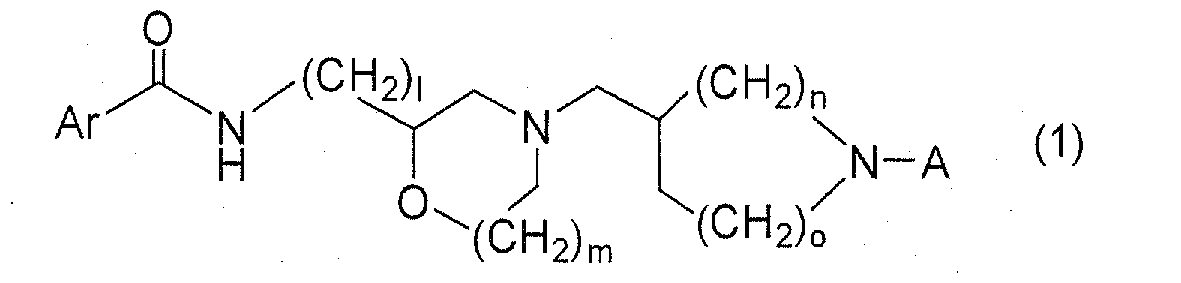
Description
- The present invention relates to a novel amide derivative which is useful as an enterokinesis-promoting agent, etc. and has an agonist activity against serotonin 4 receptor, which is also referred to as a 5-HT4 receptor hereinafter, and a pharmaceutical composition comprising the same.
- A 5-HT4 receptor which was a subtype of serotonin receptor has been found in an action mechanism study of metoclopramide [4-amino-5-chloro-N-(2-diethylaminoethyl)-2-methoxybenzamide] which was an enterokinesis-promoting agent or a digestive tract function-improving agent in widespread clinical use. Thereafter, it became clear that an enterokinesis-promotion activity of benzamide derivatives such as metoclopramide or cisapride {cis-4-amino-5-chloro-N-[1-[3-(4-fluorophenoxy)propyl]-3-methoxy-4-piperidinyl]-2-methoxybenzamide} was caused by stimulating 5-HT4 receptors (see Nonpatent Documents I and 2). Further, a 5-HT4 receptor agonist tegaserod [2-(5-methoxy-1H-indol-3-ylmethylene)-N-pentylhydrazinecarboxyimidamide] was approved for indications for chronic constipation and constipation-type irritable bowel syndrome in the United States and Europe, and defecation improvement activities by stimulation of 5-HT4 receptors have been verified.
However, metoclopramide has a 5-HT4 receptor agonistic action, while it also has a dopamine D2 receptor antagonism contributing adverse effects which causes central depressant, which has been one of clinical problems. Additionally, the sale of cisapride was stopped due to its adverse effects to the heart, e.g., serious ventricular arrhythmia and QT extension as well as its central depressant action based on a dopamine D2 receptor antagonism. Tegaserod has been temporarily withdrawn from the market of the United States due to its increased risk of serious ischemic cardiovascular adverse effects.
Since patients suffering from digestive system-indefinite complaint tend to be increased, development of excellent enterokinesis-promoting agents or improving agents for digestive tract function with less adverse effects is aspired in clinical practice.
It has been known that morpholine derivatives etc. with benzyl group etc. on nitrogen atom on 4-position among morpholine ring or 1,4-hexahydroxazepine ring compounds have selectively agoustic effects on 5-HT4 receptors, and are useful as an enterokinesis-promoting agent or a digestive tract function-improving agent (see Patent Document 1).
Additionally, it has been known that N-carboxyalkylmorpholine derivatives have a prokinetic effect on digestive tract function and an antiemetic action and are useful as a therapeutic agent for digestive system disease (see Patent Document 2).
Further, it has been known that N-substituted morpholine derivatives etc. have enterokinesis-stimulating properties and accelerate the gastric emptying (see Patent Document 3). - However, a compound wherein a saturated nitrogen-containing heterocycle binds to nitrogen on 4-position in morpholine ring or 1,4-hexahydroxazepine ring via methylene group has not been reported.
- Nonpatent Document 1: J. Pharmacol. Exp. Ther., (1990) 252, p 1378
- Nonpatent Document 2: J. Pharmacol. Exp. Ther., (1991) 257, p 781
- Patent Document 1: European Patent Application Publication No.:
243959 - Patent Document 2:
WO92/14705 - Patent Document 3:
WO96/37486 - The problem to be resolved by the invention is to provide a serotonin 4 receptor agonist useful as an enterokinesis-promoting agent, etc..
- According to extensive studies, the present inventors have found that benzamide derivatives wherein an amine moiety is morpholine ring or 1,4-hexahydroxazepine ring and a saturated nitrogen-containing heterocycle is substituted on 4-position of each ring via methylene chain show excellent agonist activities against 5-HT4 receptors and are useful as an enterokinesis-promoting agent or a digestive tract function-improving agent with strong defecation-improving activities, and have achieved the present invention.
- Specifically, the present invention is as follows.
- [1] A compound of formula (1):

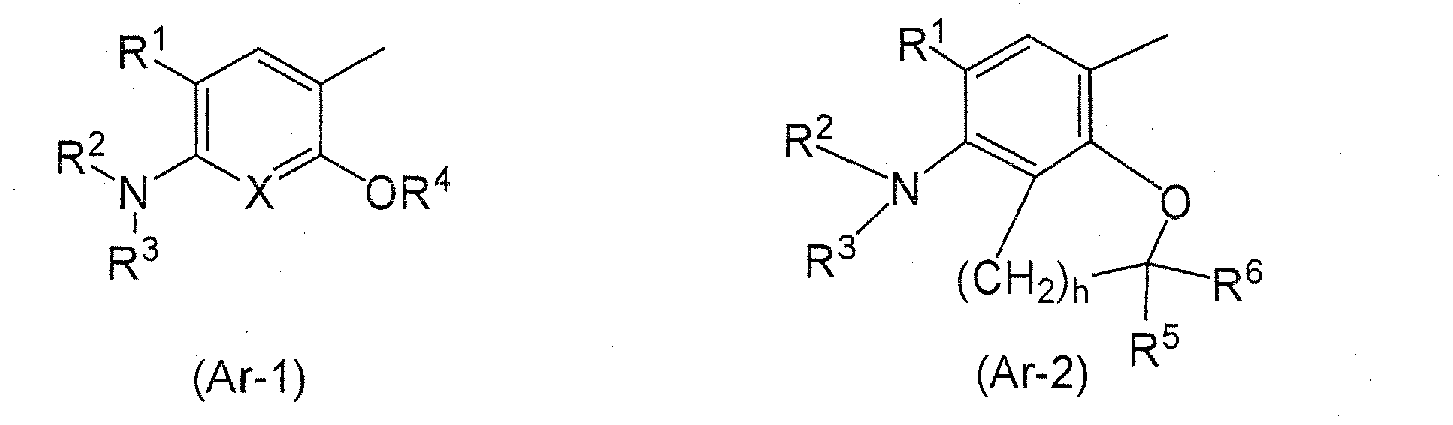
1 is 1, 2 or 3;
m is 1 or 2;
n is 0, 1 or 2;
o is an integer of 0 to 3, provided that n and o are not simultaneously 0; - A is a group selected from the group consisting of (1) to (6):
- (1) hydrogen, cyano or formyl;
- (2) optionally substituted alkyl, optionally substituted alkenyl or optionally substituted alkynyl;
- (3) -COR7, -CSR7, -COOR7, -SO2R7or -CO-COR7
wherein R7 is optionally substituted alkyl, optionally substituted alkenyl, optionally substituted alkynyl, optionally substituted cycloalkyl, optionally substituted cycloalkenyl, optionally substituted aryl, optionally substituted heteroaryl, optionally substituted monocyclic or bicyclic nonaromatic unsaturated heterocyclyl in which the heterocyclyl is bonded via any carbon atoms on the heterocycle, or optionally substituted monocyclic or bicyclic saturated heterocyclyl in which the heterocyclyl is bonded via any carbon atoms on the heterocycle; - (4) -CO-COOR8
wherein R8 is alkyl; - (5) -CONR9-OR10
wherein R9 and R10 are the same or different and each hydrogen, alkyl, alkenyl or alkynyl; and - (6) -CONR12R13, -CSNR12R13 or -SO2NR12R13
wherein R12 is hydrogen or any one of groups in R7, R13 is hydrogen, alkyl, alkenyl or alkynyl; or both R12 and R13 may combine each other together with the adjacent nitrogen atom to form optionally substituted saturated or unsaturated monocyclic nitrogen-containing heterocycle containing I to 3 heteroatoms selected from 1 to 3 nitrogen, 1 oxygen or 1 sulfur;
provided that if alkyl, alkenyl or alkynyl in A or R7 is substituted, then alkyl, alkenyl and alkynyl are optionally substituted by the same or different 1 to 5 substituents selected from the group consisting of (a) to (d):- (a) halogen, cyano, nitro, hydroxy, carboxy, amino, carbamoyl or trifluoromethyl;
- (b) -OR14, -SR14, -COR14, -COOR14, -O-COR14, -NR15-COR14, -NR15-COOR14, -NR15-SO2R14,-NR15R16 or -CONR15R16
wherein R14 is alkyl, alkenyl or alkynyl optionally substituted by the same or different 1 to 5 substituents selected from the group consisting of the following group: - (b') halogen, hydroxy, carboxy, amino, carbamoyl, -OR17, -COOR17, -NR18-COR17, -NR18-COOR17, -NR18-SO2R17, -NR18R19 or -CONR18R19 in which R17 is alkyl, alkenyl or alkynyl, R18 is hydrogen or alkyl, R19 is alkyl, alkenyl or alkynyl, or both R18 and R19 may combine each other together with the adjacent nitrogen atom to form optionally substituted saturated or unsaturated monocyclic nitrogen-containing heterocycle containing 1 to 3 heteroatoms selected from 1 to 3 nitrogen, 1 oxygen or 1 sulfur,
R15 is hydrogen, or alkyl, alkynyl or alkynyl optionally substituted by the same or different 1 to 5 substituents selected from the above (b'),
R16 is alkyl, alkenyl or alkynyl optionally substituted by the same or different 1 to 5 substituents selected from the above (b'), or both R15 and R16 may combine each other together with the adjacent nitrogen atom to form optionally substituted saturated or unsaturated monocyclic nitrogen-containing heterocycle containing 1 to 3 heteroatoms selected from 1 to 3 nitrogen, 1 oxygen or 1 sulfur; - (c) -R20, -OR20 or -NR15-COR20
wherein R15 has the same meaning as defined above, R20 is optionally substituted cycloalkyl, optionally substituted cycloalkenyl, optionally substituted monocyclic or bicyclic nonaromatic unsaturated heterocyclyl, optionally substituted monocyclic or bicyclic saturated heterocyclyl; and (d) -R21, -OR21, -COR21, -SR21, -SO2R21 or -NR15-COR21
wherein R15 has the same meaning as defined above, R21 is optionally substituted aryl or optionally substituted heteroaryl;
provided that if cycloalkyl or cycloalkenyl is substituted, then cycloalkyl and cycloalkenyl are optionally substituted by the same or different 1 to 5 substituents selected from the following (e): - (e) halogen, hydroxy, alkyl, alkoxy or oxo;
provided that if any ring carbon atoms are substituted in the monocyclic or bicyclic nonaromatic unsaturated heterocyclyl, monocyclic or bicyclic saturated heterocyclyl, or saturated or unsaturated monocyclic nitrogen-containing heterocyclyl, then the carbon atoms are optionally substituted by the same or different 1 to 5 substituents selected from the above (e),
provided that if any ring nitrogen atoms are substituted, then the nitrogen atoms are optionally substituted by the following (f): - (f) alkyl, alkanoyl, alkoxycarbonyl or alkylsulfonyl;
provided that if aryl or heteroaryl are substituted, then the aryl and heteroaryl are selected from the group consisting of the following (g) to (i): - (g) halogen, cyano, nitro, hydroxy, carboxy, haloalkyl, haloalkoxy, amino, carbamoyl, -(CH2)2-O-or -O-CH2-O-;
- (h) -R14, -OR14, -SR14, -COR14, -COOR14, -O-COR14, -NR15-COR14, -NR15-COOR14, -NR15-SO2R14, -NR15R16 or -CONR15R16
wherein R14, R15 and R16 have the same meanings as defined above; and - (i) phenyl or phenoxy which is optionally substituted by 1 to 5 substituents selected from the group consisting of halogen, hydroxy, alkyl and alkoxy; or a pharmaceutically acceptable salt thereof.
-
- [2] The compound of [1], wherein R1 is chlorine, bromine or iodine, R4 is alkyl; R5 and R6 are the same or different and each hydrogen or methyl, or a pharmaceutically acceptable salt thereof.
-
- [3] The compound of [2], wherein R4 is methyl, ethyl, propyl or isopropyl, or a pharmaceutically acceptable salt thereof.
-
- [4] The compound of [1] to [3], wherein R2 is hydrogen, R3 is hydrogen or methyl, or a pharmaceutically acceptable salt thereof.
-
- [5] The compound of [4], wherein R2 and R3 are hydrogen, or a pharmaceutically acceptable salt thereof.
-
- [6] The compound of [1] to [5], wherein 1 is 1 or 2, m is 1 or 2, n is 1 or 2, o is 1 or 2, or a pharmaceutically acceptable salt thereof.
-
- [7] The compound of [1], wherein R1 is chlorine or bromine, R2 and R3 are hydrogen, R4 is methyl or ethyl, R5 and R6 are hydrogen, h is 1, 1 is 1, m is 1, n is 2, o is 1, or a pharmaceutically acceptable salt thereof.
-
- [8] The compound of [1] to [7], wherein A is
- (1-1) hydrogen, cyano or formyl; or
- (2-1) alkyl, or phenyl-substituted alkyl wherein phenyl is optionally substituted by the same or different 1 to 5 substituents selected from the group consisting of halogen, hydroxy, alkyl, alkoxy, alkanoyl, haloalkyl, haloalkoxy, amino and carboxy; or a pharmaceutically acceptable salt thereof.
-
- [9] The compound of [1] to [7], wherein A is
(3-1) -COR7a, -COOR7a, -SO2R7a or -CO-COR7a
wherein R7a is optionally substituted alkyl, optionally substituted alkenyl, optionally substituted alkynyl, optionally substituted cycloalkyl, optionally substituted cycloalkenyl, optionally substituted aryl, optionally substituted heteroaryl, optionally substituted monocyclic or bicyclic nonaromatic unsaturated heterocyclyl, or optionally substituted monocyclic or bicyclic saturated heterocyclyl;
provided that if alkyl, alkenyl or alkynyl in R7a is substituted, then the alkyl, alkenyl and alkynyl are optionally substituted by 1 to 5 substituents selected from the group consisting of (a-1) to (d-1).- (a-1) halogen, cyano, hydroxy, carboxy, amino or carbamoyl;
- (b-1) -OR14a, -COR14a, -COOR14a, -O-COR14a, -NR15a-COR14a, -NR15a-COOR14a -NR15aR16a or-CONR15aR16a
wherein R14a is alkyl, R15a is hydrogen or alkyl, R16a is alkyl, or both R15a and R16a may combine each other together with the adjacent nitrogen atom to form saturated monocyclic nitrogen-containing heterocycle containing 1 to 3 heteroatoms selected from 1 to 3 nitrogen, 1 oxygen or 1 sulfur, and the nitrogen atom on the monocyclic nitrogen-containing heterocycle is optionally substituted by alkyl, alkanoyl or alkoxycarbonyl; - (c-1) cycloalkyl which is optionally substituted by the same or different 1 to 5 substituents selected from halogen, hydroxy, alkyl or alkoxy, monocyclic or bicyclic saturated heterocyclyl wherein the ring carbon atom is optionally substituted by the same or different 1 to 5 substituents selected from halogen, hydroxy, alkyl or alkoxy and the ring nitrogen atom is optionally substituted by alkyl, alkanoyl or alkoxycarbonyl; and
- (d-1) -R21a or -NR15a-COR21a
wherein R15a has the same meaning as defined above, R21a is aryl or heteroaryl, and the aryl and heteroaryl are optionally substituted by the same or different 1 to 5 substituents selected from halogen, hydroxy, carboxy, haloalkyl, haloalkoxy, amino, carbamoyl, cyano, -R14a, -OR14a, -COR14a, -NR15a-COR14a or -NR15aR16a wherein R14a, R15a and R16a have the same meanings as defined above;
provided that if cycloalkyl or cycloalkenyl in R7a is substituted, then cycloalkyl and cycloalkenyl are optionally substituted by the same or different 1 to 5 substituents selected from the following (e-1): - (e-1) halogen, hydroxy, alkyl or alkoxy;
provided that if any ring carbon atoms are substituted in optionally substituted monocyclic or bicyclic nonaromatic unsaturated heterocyclyl, and optionally substituted monocyclic or bicyclic saturated heterocyclyl in R7a, then the carbon atoms are optionally substituted by the same or different 1 to 5 substituents selected from the above (e-1), and if any ring nitrogen atoms are substituted, then the nitrogen atoms are optionally substituted by the same or different 1 to 5 substituents selected from the following (f-1): - (f-1) alkyl, alkanoyl, alkoxycarbonyl or alkylsulfonyl;
provided that if aryl or heteroaryl in R7a is substituted, then the aryl and heteroaryl are optionally substituted by the same or different 1 to 5 substituents selected from the group consisting of the following groups: - (g-1) halogen, nitro, hydroxy, carboxy, amino, carbamoyl, haloalkyl, haloalkoxy or cyano;
- (h-1) -R14a, -OR14a, -COR14a, -COOR14a, -O-COR14a, -NR15a-COR14a, -NR15a-COOR14a or -NR15aR16a wherein R14a, R15a and R16a have the same meanings as defined above; and
- (i-1) phenyl or phenoxy which is optionally substituted by 1 to 5 substituents selected from the group consisting of halogen, hydroxy, alkyl and alkoxy; or a pharmaceutically acceptable salt thereof.
-
- [10] The compound of [9], wherein A is
(3-2) -SO2R7b
wherein R7b is alkyl, alkyl substituted by optionally substituted phenyl, or optionally substituted phenyl, provided that if phenyl is substituted, then the phenyl is optionally substituted by the same or different 1 to 5 substituents selected from the group consisting of halogen, hydroxy, carboxy, haloalkyl, haloalkoxy, amino, carbamoyl, -R14b, -OR14b, -COR14b, -COOR14b and -O-COR14b wherein R14b is alkyl; or a pharmaceutically acceptable salt thereof. -
- [11] The compound of [10], wherein R7b is C1-3 alkyl, or a pharmaceutically acceptable salt thereof.
-
- [12] The compound of [9], wherein A is
(3-3) -COR7c or -CO-COR7c
wherein R7c is optionally substituted alkyl or optionally substituted alkenyl;
provided that if alkyl or alkenyl in R7c is substituted, then the alkyl and alkenyl are optionally substituted by I to 5 substituents selected from the group consisting of (a-2) to (d-2):- (a-2) hydroxy, halogen, carbamoyl or cyano;
- (b-2) -OR14c, -COR14c, -COOR14c, -O-COR14c, -NR15c-COR14c, -NR15cR16c or -CONR15cR16c wherein R14c and R16c are the same or different alkyl and R15c is hydrogen or alkyl;
- (c-2) cycloalkyl, or monocyclic or bicyclic saturated heterocyclyl wherein the nitrogen atom on the monocyclic or bicyclic saturated heterocyclyl is optionally substituted by alkyl, alkanoyl or alkoxycarbonyl; and
- (d-2) -R21c or -NR15c-COR21c wherein R15c has the same meaning as defined above, R21c is aryl or heteroaryl, and the aryl and heteroaryl are optionally substituted by the same or different 1 to 5 substituents selected from the group consisting of halogen, hydroxy, carboxy, haloalkyl, haloalkoxy, amino, carbamoyl, cyano, -R14c, -OR14c and -COR14c wherein R14c has the same meaning as defined above; or a pharmaceutically acceptable salt thereof.
-
- [13] The compound of [12], wherein R7c is C1-3 alkyl optionally substituted by a group selected from the group consisting of the following (a-3) and (b-3):
- (a-3) hydroxy, carbamoyl or cyano; and
- (b-3) -OR14d, -COR14d, -COOR14d, -O-COR14d, -NR15d-COR14d, -NR15dR16d or -CONR15dR16d wherein R14d and R16d are the same or different C1-3 alkyl, and R15d is hydrogen or C1-3 alkyl; or
- C2-3 alkenyl optionally substituted by a group selected from the group consisting of the above (a-3) and (b-3), or a pharmaceutically acceptable salt thereof.
-
- [14] The compound of [9], wherein A is
(3-4) -COR7d
wherein R7d is optionally substituted cycloalkyl, optionally substituted cycloalkenyl, optionally substituted monocyclic or bicyclic nonaromatic unsaturated heterocyclyl, or optionally substituted monocyclic saturated heterocyclyl;
provided that if any ring carbon atoms are substituted, then the carbon atoms are optionally substituted by the same or different 1 to 5 substituents selected from halogen, hydroxy, alkyl or alkoxy, and if the ring nitrogen atoms are substituted, then the nitrogen atoms are optionally substituted by alkyl, alkanoyl, alkoxycarbonyl or alkylsulfonyl; or a pharmaceutically acceptable salt thereof. -
- [15] The compound of [9], wherein A is
(3-5) -COR7e
wherein R7e is optionally substituted aryl or optionally substituted heteroaryl;
provided that if aryl or heteroaryl is substituted, then the aryl and heteroaryl are optionally substituted by the same or different 1 to 5 substituents selected from the group consisting of the following (g-2) to (i-2):- (g-2) halogen, amino, carbamoyl or cyano;
- (h-2) -R14e, -OR14e, -O-COR14e, -NR15e-COR14e, -NR15e-COOR14e or -NR15eR16e wherein R14e and R16e are the same or different and each alkyl, R15e is hydrogen or alkyl; and
- (i-2) phenyl or phenoxy; or a pharmaceutically acceptable salt thereof.
-
- [16] The compound of [9], wherein A is
(3-6) -COOR7f
wherein R7f is alkyl, alkenyl or optionally substituted phenyl;
provided that if phenyl is substituted, then the phenyl is optionally substituted by the same or different 1 to 5 substituents selected from the group consisting of halogen, nitro, hydroxy, haloalkyl, haloalkoxy, -R14f, -OR14f and -COR14f wherein R14f is alkyl; or a pharmaceutically acceptable salt thereof. -
- [17] The compound of [16], wherein R7f is C1-3 alkyl or C2-3 alkenyl, or a pharmaceutically acceptable salt thereof.
-
- [18] The compound of [1] to [7], wherein A is
(6-1) -CONR12aR13a, -CSNR12aR13a or -SO2NR12aR13a
wherein R12a is hydrogen, C1-3 alkyl, C2-3 alkenyl, C1-3 alkyl substituted by C2-3 alkoxycarbonyl, C1-3 alkyl substituted by optionally substituted phenyl, or optionally substituted phenyl, provided that if phenyl is substituted, then the phenyl is optionally substituted by the same or different 1 to 5 substituents selected from the group consisting of halogen, nitro, hydroxy, carboxy, haloalkyl, haloalkoxy, amino, carbamoyl, -R14a, -OR14a, -COR14a, -COOR14a and -O-COR14a wherein R14a is alkyl;
R13a is hydrogen or alkyl, or both R12a and R13a may combine each other together with the adjacent nitrogen atom to form optionally substituted saturated or unsaturated 4- to 6-membered monocyclic nitrogen-containing heterocycle containing 1 to 3 heteroatoms selected from the group consisting of 1 to 3 nitrogen, 1 oxygen and 1 sulfur, and the nitrogen atom on the monocyclic nitrogen-containing heterocycle is optionally substituted by alkyl, alkanoyl or alkoxycarbonyl; or a pharmaceutically acceptable salt thereof. -
- [19] The compound of [18], wherein R12a and R13a are the same or different and each C1-3 alkyl;
R12a is optionally substituted phenyl wherein phenyl is optionally substituted by 1 to 2 halogen, hydroxy, carboxy, haloalkyl, amino, carbamoyl, -R14a, -OR14a, -COR14a, -COOR14a or -O-COR14a wherein R14a is alkyl, and R13a is hydrogen; or
both R12a and R13a combine each other together with the adjacent nitrogen atom to form pyrrolidinyl, piperidinyl, morpholinyl or imidazolyl; or a pharmaceutically acceptable salt thereof. -
- [20] The compound of [1] to [7], wherein A is
(5-1) -CONR9a-OR10a
wherein R9a and R10a are the same or different and each alkyl, or a pharmaceutically acceptable salt thereof. -
- [21] The compound of [1], selected from the group consisting of the following compounds:
- 4-amino-N-[{4-[(1-(1-azetidinecarbonyl)-4-piperidinyl)methyl)1-2-morpholinyl}methyl]-5-chloro-2-ethoxybenzamide;
- 4-amino-5-chloro-2-methoxy-N-[{4-[(1-pyrrolidinecarbonyl-4-piperidinyl)methyl]-2-morpholinyl}-methyl]benzamide;
- 4-amino-5-chloro-2-ethoxy-N-[{4-[(1-(1-pyrrolidinecarbonyl)-4-piperidinyl)methyl]-2-morpholinyl}-methyl]benzamide;
- 4-amino-5-chloro-N-[{4-[(1-dimethylcarbamoyl-4-piperidinyl)methyl]-2-morpholinyl}methyl]-2-methoxybenzamide;
- 4-amino-5-chloro-N-[{4-[(1-dimethylcarbamoyl-4-piperidinyl)methyl]-2-morpholinyl}methyl]-2-ethoxybenzamide; 4-amino-5-chloro-N-[{4-[(1-dimethylthiocarbamoyl-4-piperidinyl)methyl]-2-morpholinyl}methyl]-2-ethoxybenzamide;
- 4-amino-5-chloro-N-[{4-[(1-dimethylsulfamoyl-4-piperidinyl)methyl)-2-morpholinyl}methyl]-2-methoxybenzamide;
- 4-amino-5-chloro-N-[{4-[(1-dimethylsulfamoyl-4-piperidinyl)methyl]-2-morpholinyl}methyl]-2-ethoxybenzamide;
- 4-amino-5-chloro-N-[{4-[(1-dimethylcarbamoyl-4-piperidinyl)methyl]-2-morpholinyl}methyl]-2-isopropoxybenzamide;
4-amino-5-chloro-N-[{4-[(1-diethylcarbamoyl-4-piperidinyl)methyl]-2-morpholinyl}methyl]-2-ethoxybenzamide;
4-amino-5-chloro-N-[{4-[(1-diisopropylcarbamoyl-4-piperidinyl)methyl]-2-morpholinyl}methyl]-2-methoxybenzamide;
6-amino-5-chloro-N-[{4-[(1-dimethylcarbamoyl-4-piperidinyl)methyl]-2-morpholinyl}methyl]-2-methoxypyridine-3 -carboxamide;
N-[{4-[(1-allylmethylcarbamoyl-4-piperidinyl)methyl]-2-morpholinyl}methyl]-4-amino-5-chloro-2-ethoxybenzamide;
4-amino-5-chloro-N-[{4-[(1-(1-pyrrolidinecarbonyl)-4-piperidinyl)methyl]-2-morpholinyl}methyl]-2,3-dihydrobenzo[b]furan-7-carboxamide;
4-amino-5-chloro-N-[{4-[(1-dimethylcarbamoyl-4-piperidinyl)methyl]-2-morpholinyl}methyl]-2,3-dihydrobenzo[b]furan-7-carboxamide;
4-amino-5-chloro-2-ethoxy-N-[{4-[(1-methylcarbamoyl-4-piperidinyl)methyl]-2-morpholinyl}methyl]-benzamide;
4-amino-5-chloro-2-ethoxy-N-[{4-[(1-ethylcarbamoyl-4-piperidinyl)methyl]-2-morpholinyl}methyl]-benzamide;
4-amino-5-chloro-2-methoxy-N-[{4-[(1-phenylcarbamoyl-4-piperidinyl)methyl]-2-morpholinyl}-methyl]benzamide;
4-amino-5-chloro-2-methoxy-N-[{4-[(1-(2-methoxyphenyl)carbamoyl-4-piperidinyl)methyl]-2-morpholinyl}methyl]benzamide;
4-amino-5-chloro-2-methoxy-N-[{4-[(1-(3-trifluoromethylphenyl)carbamoyl-4-piperidinyl)methyl]-2-morpholinyl}methyl]benzamide;
N-[{4-[(1-(3-acetylphenyl)carbamoyl-4-piperidinyl)methyl]-2-morpholinyl}methyl]-4-amino-5-chloro-2-methoxybenzamide;
4-amino-5-chloro-N-[{4-[(1-(3,5-dimethylphenyl)carbamnoyl-4-piperidinyl)methyl]-2-morpholinyl}-methyl]-2-methoxybenzamide;
4-amino-5-chloro-N-[{4-[(1-(3,4-dichlorophenyl)carbamoyl-4-piperidinyl)methyl]-2-morpholinyl}-methyl]-2-methoxybenzamide;
4-amino-N-[{4-[(1-benzylcarbamoyl-4-piperidinyl)methyl]-2-morpholinyl}methyl]-5-chloro-2-methoxybenzamide;
4-amino-5-chloro-2-methoxy-N-[{4-[(1-(2-methylbenzyl)carbamoyl-4-piperidinyl)methyl]-2-morpholinyl}methyl]benzamide;
4-amino-5-chloro-2-methoxy-N-[{(4-[(1-(4-methoxybenzyl)carbamoyl-4-piperidinyl)methyl]-2-morpholinyl}methyl]benzamide;
4-amino-5-chloro-N-[{4-[(1-(2,4-dichlorobenzyl)carbamoyl-4-piperidinyl)methyl]-2-morpholinyl}-methyl]-2-methoxybenzamide;
4-amino-5-chloro-2-methoxy-N-[{4-[(1-(2-phenethyl)carbamoyl-4-piperidinyl)methyl]-2-morpholinyl}methyl]benzamide;
4-amino-5-chloro-2-ethoxy-N-[{4-[(1-methoxycarbonyl-4-piperidinyl)methyl]-2-morpholinyl}methyl]-benzamide;
4-amino-5-chloro-N-[{4-[(1-methanesulfonyl-4-piperidinyl)methyl]-2-morpholinyl}methyl]-2-methoxybenzamide; - amino-5-chloro-2-ethoxy-N-[{4-[(1-methanesulfonyl-4-piperidinyl)methyl]-2-morpholinyl}methyl]-benzamide;
- 4-amino-5-chloro-2-methoxy-N-[{4-[(1-(1-propoxycarbonyl)-4-piperidinyl)methyl]-2-morpholinyl}-methyl]benzamide;
- N-[{4-[(1-allyloxycarbonyl-4-piperidinyl)methyl]-2-morpholinyl}methyl]-4-amino-5-chloro-2-methoxybenzamide;
- 4-amino-5-chloro-N-[{4-[(1-isobutoxycarbonyl-4-piperidinyl)methyl]-2-morpholinyl}methyl]-2-methoxybenzamide;
- 4-amino-5-chloro-2-methoxy-N-[{4-[(1-phenoxycarbonyl-4-piperidinyl)methyl]-2-morpholinyl}-methyl]benzamide;
- 4-amino-5-chloro-2-methoxy-N-[{4-[(1-(2-methoxyphenoxycarbonyl)-4-pipcridinyl)methyl]-2-morpholinyl}methyl]benzamide;
- N-[{4-[(1-acetoxyacetyl-4-piperidinyl)methyl]-2-morpholinyl}methyl]-4-amino-5-chloro-2-ethoxybenzamide;
- 4-amino-5-chloro-N-[{4-[(1-(1-cyclopentenecarbonyl)-4-piperidinyl)methyl]-2-morpholinyl}methyl]-2-ethoxybenzamide;
- 4-amino-5-chloro-N-[{4-[(1-(2-cyclopropylvinylcarbonyl)-4-piperidinyl)methyl]-2-morpholinyl}-methyl]-2-ethoxybenzamide;
- 4-amino-5-chloro-2-ethoxy-N-[{4-[(1-[2-(furan-2-yl)vinylcarbonyl]-4-piperidinyl)methyl]-2-morpholinyl}methyl]benzamide;
- 4-amino-5-chloro-2-ethoxy-N-[{4-[(1-[2-(thiophen-2-yl)vlnylcarbonyl]-4-piperidinyl)methyl]-2-morpholinyl}methyl]benzamide;
- 4-amino-N-[{4-[(1-(3-butenecarbonyl)-4-piperidinyl)methyl]-2-morpholinyl}methyl]-5-chloro-2-ethoxybenzamide;
- 4-amino-5-chloro-2-ethoxy-N-[{4-[(1-(5-hexenecarbonyl)-4-piperidinyl)methyl]-2-morpholinyl}-methyl]benzamide;
- 4-amino-N-[{4-[(1-(1,3-butadienecarbonyl)-4-piperidinyl)methyl]-2-morpholinyl}methyl]-5-chloro-2-ethoxybenzamide;
- 4-amino-5-chloro-2-ethoxy-N-[{4-[(1-(1,5-hexadienecarbonyl)-4-piperidinyl)methyl]-2-morpholinyl}-methyl]benzamide;
- 4-amino-N-[{4-[(1-[1-(1-propyne)carbonyl]-4-piperidinyl)methyl]-2-morpholinyl}methyl]-5-chloro-2-ethoxybenzamide;
- 4-amino-5-chloro-N-[{4-[(1-methoxycarbonyl-4-piperidinyl)methyl]-2-morpholinyl}methyl]-2,3-dihydrobenzo[b]furan-7-carboxamide;
- N-[{4-[(1-acetyl-4-piperidinyl)methyl]-2-morpholinyl}methyl]-4-amino-5-chloro-2,3-dihydrobenzo [b]furan-7-carboxamide;
- 4-amino-5-chloro-N-[{4-[(1-methanesulfonyl-4-piperidinyl)methyl]-2-morpholinyl}methyl]-2,3-dihydrobenzo[b]furan-7-carboxamide;
- 4-amino-N-[{4-[(1-benzoyl-4-piperidinyl)methyl]-2-morpholinyl}methyl]-5-chloro-2-ethoxybenzamide;
- 4-amino-5-chloro-N-[{4-[(1-(3-fluorobenzoyl)-4-piperidinyl)methyl]-2-morpholinyl}methyl]-2-methoxybenzamide;
- 4-amino-5-chloro-2-ethoxy-N-[{4-[(1-(3-fluorobenzoyl)-4-piperidinyl)methyl]-2-morpholinyl}-methyl]benzamide;
- 4-amino-5-chloro-N-[{4-[(1-(4-chlorobenzoyl)-4-piperidinyl)methyl]-2-morpholinyl}methyl]-2-methoxybenzamide;
- 4-amino-5-chloro-N-[{4-[(1-(4-chlorobenzoyl)-4-piperidinyl)methyl]-2-morpholinyl}methyl]-2-ethoxybenzamide;
- 4-amino-N-[{4-[(1-(3-bromobenzoyl)-4-piperidinyl)methyl]-2-morpholinyl}methyl]-5-chloro-2-methoxybenzamide;
- 4-amino-5-chloro-2-methoxy-N-[{4-[(1-(2-methylbenzoyl)-4-piperidinyl)methyl]-2-morpholinyl}-methyl]benzamide;
- 4-amino-5-chloro-2-methoxy-N-[{4-[(1-(3-methylbenzoyl)-4-piperidinyl)methyl]-2-morpholinyl}-methyl]benzamide;
- 4-amino-5-chloro-2-methoxy-N-[{4-[(1-(4-methylbenzoyl)-4-piperidinyl)methyl]-2-morpholinyl}-methyl]benzamide;
- 4-amino-5-chloro-2-ethoxy-N-[{4-[(1-(4-methylbenzoyl)-4-piperidinyl)methyl]-2-morpholinyl}-methyl]benzamide;
- 4-amino-5-chloro-N-[{4-[(1-(4-ethylbenzoyl)-4-piperidinyl)methyl]-2-morpholinyl}methyl]-2-methoxybenzamide;
- 4-amino-N-[{4-[(1-(tert-butylbenzoyl)-4-piperidinyl)methyl]-2-morpholinyl}methyl]-5-chloro-2-methoxybenzamide;
- 4-amino-5-chloro-N-[{4-[(1-(3-hydroxybenzoyl)-4-piperidinyl)methyl]-2-morpholinyl}methyl]-2-methoxybenzamide;
- 4-amino-5-chloro-N-[{4-[(1-(4-hydroxybenzoyl)-4-piperidinyl)methyl]-2-morpholinyl}methyl]-2-methoxybenzamide;
- N-[{4-[(1-(2-acetoxybenzoyl)-4-piperidinyl)methyl]-2-morpholinyl}methyl]-4-amino-5-chloro-2-methoxybenzamide;
- N-[{4-[(1-(2-acetoxybnenzoyl)-4-piperidinyl)methyl]-2-morpholinyl}methyl]-4-amino-5-chloro-2-ethoxybenzamide;
- N-[{4-[(1-(3-acetoxybenzoyl)-4-piperidinyl)methyl]-2-morpholinyl}methyl]-4-amino-5-chloro-2-methoxybenzamide;
- N-[{4-[(1-(4-acetoxybenzoyl)-4-piperidinyl)methyl]-2-morpholinyl}methyl]-4-amino-5-chloro-2-methoxybenzamide;
- 4-amino-5-chloro-2-methoxy-N-[{4-[(1-(3-methoxybenzoyl)-4-piperidinyl)methyl]-2-morpholinyl}-methyl]benzamide;
- 4-amino-5-chloro-2-methoxy-N-[{4-[(1-(4-methoxybenzoyl)-4-piperidinyl)methyl]-2-morpholinyl}-methyl]benzamide;
- 4-amino-5-chloro-2-ethoxy-N-[{4-[(1-(4-methoxybenzoyl)-4-piperidinyl)methyl]-2-morpholinyl}-methyl]benzamide;
- 4-amino-5-chloro-2-methoxy-N-[{4-[(1-(2-phenoxybenzoyl)-4-piperidinyl)methyl]-2-morpholinyl}-methyl]benzamid;
- 4-amino-5-chloro-N-[{4-[(1-(3-dimethylaminobenzoyl)-4-piperidinyl)methyl]-2-morpholinyl}methyl]-2-methoxybenzamide;
- 4-amino-5-chloro-N-[{4-[(1-(4-dimethylaminobenzoyl)-4-piperidinyl)methyl]-2-morpholinyl}methyl]-2-methoxybenzamide;
- 4-amino-5-chloro-2-methoxy-N-[{4-[(1-(4-methoxycarbonylbenzoyl)-4-piperidinyl)methyl]-2-morpholinyl}methyl]benzamide;
- 4-amino-5-chloro-2-methoxy-N-[{4-[(1-(4-phenylbenzoyl)-4-piperidinyl)methyl]-2-morpholinyl}-methyl]benzamide;
- 4-amino-N-[{4-[1(-(4-amino-3-chlorophenylbenzoyl)-4-piperidinyl)methyl]-2-morpholinyl}methyl]-5-chloro-2-methoxybenzamide;
- 4-amino-5-chloro-N-[{4-[(1-(2-furancarbonyl)-4-piperidinyl)methyl]-2-morpholinyl}methyl]-2-methoxybenzamide;
- 4-amino-5-chloro-N-[{4-[(1-(1-imidazolecarbonyl)-4-piperidinyl)methyl]-2-morpholinyl}methyl]-2-methoxybenzamide;
- 4-amino-5-chloro-N-[{4-[(1-[(1,2-dihydrobenzofuran-7-yl)carbonyl]-4-piperidinyl)methyl]-2-morpholinyl}methyl]-2-methoxybenzamide;
- 4-amino-5-chloro-2-methoxy-N-[{4-[(1-[(5-methylthiophen-2-yl)carbonyl]-4-piperidinyl)methyl]-2-morpholinyl}methyl]benzamide;
- 4-amino-5-chloro-2-methoxy-N-[{4-[(1-[(S)-2-tetrahydrofurylcarbonyl]-4-piperidinyl)methyl]-2-morpholinyl}methyl]benzamide;
- 4-amino-5-chloro-2-methoxy-N-[{4-[(1-methoxyacetyl-4-piperidinyl)methyl]-2-morpholinyl}methyl]-benzamide;
- 4-amino-5-chloro-2-ethoxy-N-[{4-[(1-methoxyacetyl-4-piperidinyl)methyl)-2-morpholinyl}methyl]-benzamide;
- 4-amino-5-chloro-N-[{4-[(1-hydroxyacetyl-4-piperidinyl)methyl]-2-morpholinyl}methyl]-2-methoxybenzamide;
- 4-amino-5-chloro-2-ethoxy-N-[{4-[(1-hydroxyacetyl-4-piperidinyl)methyl]-2-morpholinyl}methyl]-benzamide;
- 4-amino-5-chloro-N-[{4-[(1-hydroxyacetyl-4-piperidinyl)methyl]-2-morpholinyl}methyl]-2,3-dihydrobenzo[b]furan-7-carboxamide;
- 4-amino-5-chloro-2-methoxy-N-[{4-[(1-(4-piperidinylmethylcarbonyl)-4-piperidinyl)methyl]-2-morpholinyl}methyl]benzamide;
- N-[{4-[(1-acetyl-4-piperidinyl)methyl]-2-morpholinyl}methyl]-4-amino-5-chloro-2-methoxybenzamide;
- 4-amino-N-[{4-[(1-benzoylaminoacetyl-4-piperidinyl)methyl]-2-morpholinyl}methyl]-5-chloro-2-methoxybenzamide;
- 4-amino-5-chloro-N-[{4-[(1-cyanoacetyl-4-piperidinyl)methyl]-2-morpholinyl}methyl]-2-methoxybenzamide;
- 4-amino-5-chloro-N-{[4-{[1-(3-methoxypropionyl)-4-piperidinyl]methyl}-2-morpholinyl]methyl}-2-methoxybenzamide;
- 4-amino-5-chloro-N-{[4-{[1-((S)-2-methoxypropionyl)-4-piperidinyl]methyl}-2-morpholinyl]methyl}-2-methoxybenzamide;
- 4-amino-5-chloro-2-methoxy-N-{[4-{[1-(3-tetrahydrofurylcarbonyl)-4-piperidinyl]methyl}-2-morpholinyl]methyl}benzamide;
- 4-amino-5-chloro-N-{[4-{[1-(1,2-dioxopropyl)-4-piperidinyl]methyl}-2-morpholinyl]methyl}-2-methoxybenzamide;
- 4-amino-5-chloro-2-methoxy-N-{[4-{[-(4-oxazolylcarbonyl)-4-piperidinyl]methyl}-2-morpholinyl]-methyl}benzamide;
- 4-amino-5-chloro-2-methoxy-N-{[4-{[1-(3-triazolylcarbonyl)-4-piperidinyl]methyl}-2-morpholinyl]-methyl}benzamide;
- 4-amino-5-chloro-N-{[4-{[1-(4-cyanobenzoyl)-4-piperidinyl]methyl}-2-morpholinyl]methyl}-2-methoxybenzamide;
- N-[{4-[(1-acetyl-4-piperidinyl)methyl]-2-morpholinyl}methyl]-4-amino-5-chloro-2,3-dihydrobenzo[b]furan-7-carboxamide;
- 4-amino-5-chloro-N-{[4-{[1-(3-tetrahydrofurylcarbonyl)-4-piperidinyl]methyl}-2-morpholinyl]-methyl}-2,3-dihydrobenzo[b]furan-7-carboxamide; and
- 4-amino-5-chloro-N-[{4-[(1-hydroxyacetyl-4-piperidinyl)methyl]-2-morpholinyl}methyl]-2,3-dihydrobenzo[b]furan-7-carboxamide; or a pharmaceutically acceptable salt thereof.
-
- [22] The compound of [21], wherein a carbon atom on 2-position of morpholinyl is in S-configuration.
-
- [23] A pharmaceutical composition, comprising the compound of [1] to [22] or a pharmaceutically acceptable salt thereof.
-
- [24] A serotonin 4 receptor agonist, comprising as an active ingredient the compound of [1] to [22] or a pharmaceutically acceptable salt thereof.
-
- [25] An enterokinesis-promoting agent or digestive tract function-improving agent, comprising as an active ingredient the compound of [1] to [22] or a pharmaceutically acceptable salt thereof.
- The present invention is allowed to provide novel amide derivatives having an agonistic activity against a serotonin 4 receptor which are useful as enterokinesis-promoting agents or digestive tract function-improving agents with defecation accelerating activities etc., and pharmaceutical compositions comprising the same.
- The terms used herein are set forth as below.
The "halogen" includes fluorine, chlorine, bromine or iodine.
The "alkyl" includes straight- or branched-chain C1-10 alkyl, specifically methyl, ethyl, propyl, isopropyl, butyl, isobutyl, see-butyl, tert-butyl, pentyl and hexyl, etc.. - The "alkenyl" includes straight- or branched-chain C2-10 alkenyl, which preferably includes, but not be limited to, alkenyl containing 1 to 2 double bonds, specifically ethenyl, 1-propenyl, 1-methylvinyl, 2-propenyl, 1-butenyl, 2-butenyl, 3-butenyl, 2-methyl-1-propenyl, 2-methyl-2-propenyl, 1-pentenyl, 2-pentenyl, 3-pentenyl, 4-pentenyl, 2-methyl-1-butenyl, 2-methyl-2-butenyl, 2-methyl-3-butenyl, 1-hexenyl, 2-hexenyl, 3-hexenyl, 4-hexenyl, 5-hexenyl, 2-methyl-1-pentenyl, 2-propyl-2-propenyl, 1-ethyl-2-methyl-2-propenyl, 1-methyl-3-methyl-3-butenyl, 4-methyl-4-pentenyl, 1,3-butadienyl, 1,5-hexadienyl, etc..
- The "alkynyl" includes straight- or branched-chain C2-10 alkynyl, which preferably includes, but not be limited to, alkynyl containing 1 to 2 triple bonds, more preferably 1 triple bond, specifically ethynyl, 1-propynyl, 2-propynyl, 1-butynyl, 1-methyl-2-propynyl, 3-butynyl, 2-butynyl, 1-pentynyl, 1-ethyl-2-propynyl, 4-pentynyl, 3-pentynyl, 2-pentynyl, 1-methyl-2-butynyl, 1-hexynyl, 2-hexynyl, 3-hexynyl, 4-hexynyl, 5-hexynyl, etc..
- The "alkoxy" includes straight- or branched-chain C1-10 alkoxy, specifically methoxy, ethoxy, propoxy, isopropoxy, butoxy, isobutoxy, sec-butoxy, tert-butoxy, pentyloxy and hexyloxy, etc..
The "alkanoyl" includes straight- or branched-chain C2-10 alkanoyl, specifically acetyl, propanoyl, butanoyl, 2-methylpropanoyl, pentanoyl, 3-methylbutanoyl, 2-methylbutanoyl, hexanoyl, etc..
The "alkoxycarbonyl" includes straight- or branched-chain C2-10 alkoxycarbonyl, specifically methoxycarbonyl, ethoxycarbonyl, propoxycarbonyl, isopropoxycarbonyl, butoxycarbonyl, isobutoxycarbonyl, sec-butoxycarbonyl, tert-butoxycarbonyl, pentyloxycarbonyl and hexyloxycarbonyl, etc..
The "alkylsulfonyl" includes straight- or branched-chain C1-10 alkylsulfonyl, specifically methylsulfonyl, ethylsulfonyl, propylsulfonyl, isopropylsulfonyl, butylsulfonyl, isobutylsulfonyl, sec-butylsulfonyl, tert-butylsulfonyl, pentylsulfonyl and hexylsulfonyl, etc..
The "haloalkyl" includes C1-3 haloalkyl substituted by the same or different 1 to 5 halogen atoms, specifically fluoromethyl, difluoromethyl, trifluoromethyl, pentafluoroethyl, 2-fluoroethyl, 2,2-difluoroethyl, etc..
The "haloalkoxy" includes C1-3 haloalkoxy substituted by the same or different 1 to 5 halogen atoms, specifically fluoromethoxy, difluoromethoxy, trifluoromethoxy, pentafluoroethoxy, 2-fluoroethoxy, 2,2-difluoroethoxy, etc.. - The "cycloalkyl" includes 3 to 7-membered cycloalkyl, specifically cyclopropyl, cyclobutyl, cyclopentyl, cyclohexyl, cycloheptyl, etc..
The "cycloalkenyl" includes 5 to 7-membered cycloalkenyl, specifically 1-cyclopentenyl, 3-cyclopentenyl, 4-cyclopentenyl, 1-cyclohexenyl, 3-cyclohexenyl, 4-cyclohexenyl, 1-cycloheptenyl, 3-cycloheptenyl, 4-cycloheptenyl, 5-cycloheptenyl, etc.. - The "aryl" includes 6 to 10-membered monocyclic or bicyclic aryl, specifically phenyl, 1-naphthyl, 2-naphthyl, etc..
- The "heteroaryl" includes 5 to 10-membered monocyclic or bicyclic heteroaryl containing 1 to 4 heteroatoms selected from 1 to 4 nitrogen atoms, 1 oxygen atom or 1 sulfur atom. Specifically, the monocyclic heteroaryl includes pyrrolyl, imidazolyl, triazolyl, tetrazolyl, furyl, thienyl, oxazolyl, thiazolyl, pyridyl, pyrimidinyl, pyrazinyl, pyridazinyl, triazinyl, etc.. The bicyclic heteroaryl includes indolyl, benzofuryl, benzothienyl, quinolinyl, benzoisoxazolyl, etc.. The heteroaryl may be bonded on any carbon or nitrogen atoms so as to be chemically stable without a limitation.
- The "monocyclic or bicyclic nonaromatic unsaturated heterocyclyl" includes 5 to 10-membered monocyclic or bicyclic nonaromatic unsaturated heterocyclyl containing 1 to 4 heteroatoms selected from 1 to 4 nitrogen atoms, 1 oxygen atom or 1 sulfur atom.
The monocyclic nonaromatic unsaturated heterocyclyl includes 5-membered nonaromatic unsaturated heterocyclyl containing 1 double bond, or 6 or 7-membered one containing 1 or 2 double bonds, specifically pyrrolinyl or 2,5-dihydrofuryl, etc..
The bicyclic nonaromatic unsaturated heterocyclyl includes 8 to 10-membered nonaromatic unsaturated heterocyclyl wherein 1 or multiple double bonds of bicyclic heteroaryl are replaced by a single bond, specifically 2,3-dihydrobenzofuryl, 2,3-dihydrobenzothienyl, etc..
The nonaromatic unsaturated heterocyclyl may be bonded on any carbon or nitrogen atoms so as to be chemically stable without a limitation. - The "monocyclic or bicyclic saturated heterocyclyl" includes 5 to 10-membered monocyclic or bicyclic saturated heterocyclyl containing 1 to 4 heteroatoms selected from 1 to 4 nitrogen atoms, 1 oxygen atom or 1 sulfur atom. The monocyclic saturated heterocyclyl includes 4 to 7-membered saturated heterocyclyl, specifically azetidinyl, pyrrolidinyl, tetrahydrofuryl, tetrahydrothienyl, piperazinyl, piperidinyl, morpholinyl, thiomorpholinyl, tetrahydropyranyl, hexahydroazepinyl, 1,4-hexahydroxazepinyl and 1,4-hexahydrodiazepinyl, etc.. The bicyclic saturated heterocyclyl includes 8 to 10-membered saturated heterocyclyl, specifically quinuclidinyl, etc..
Any carbon atoms on the saturated heterocyclyl may be optionally substituted by oxo, and the oxo-substituted saturated heterocyclyl, specifically, includes 2-oxopyrrolidinyl, 2-oxotetrahydrofuryl, etc..
The saturated heterocyclyl may be bonded on any carbon or nitrogen atoms so as to be chemically stable without a limitation. - The "saturated or unsaturated monocyclic nitrogen-containing heterocyclyl" which R12 and R13, R15 and R16 R18 and R19, R12a and R13a, and R15a and R16a respectively combine each other together with the adjacent nitrogen atom to form includes 4 to 7-membered saturated or unsaturated monocyclic nitrogen-containing heterocyclyl with 1 to 3 heteroatoms containing at least one nitrogen atom selected from 1 to 3 nitrogen atoms, 1 oxygen atom or 1 sulfur atom. The saturated monocyclic nitrogen-containing heterocyclyl specifically includes azetidinyl, pyrrolidinyl, piperidinyl, piperazinyl, morpholinyl, thiomorpholinyl, perhydroazepinyl, etc.. The unsaturated monocyclic nitrogen-containing heterocyclyl specifically includes imidazolyl, oxazolyl, thiazolyl, triazolyl, etc..
- In case that optionally substituted alkyl, optionally substituted alkenyl and optionally substituted alkynyl are substituted, the substituent as used herein includes the above groups of (a) to (d).
In case that R14, R15 and R16 are alkyl, alkenyl or alkynyl in the above (b), preferable ones are C1-3 alkyl, C2-3 alkenyl or C2-3 alkynyl. The alkyl, alkenyl and alkynyl may be optionally substituted with 1 to 5 substituents selected from the group consisting of: halogen, hydroxy, carboxy, amino, carbamoyl, -OR17, -COOR17, -NR18-COR17, -NR18-COOR17, -NR18-SO2R17,-NR18R19, and -CONR18R19 , wherein R17, R18 and R19 are defined as above. The alkyl, alkenyl and alkynyl in R17, R18 and R19 preferably include C1-3 alkyl, C2-3 alkenyl and C2-3 alkynyl. - The cycloalkyl in the above (c) preferably includes cyclopropyl, cyclobutyl, cyclopentyl or cyclohexyl. The cycloalkenyl in (c) includes cyclopentenyl or cyclohexenyl, specifically 1-cyclopentenyl, 1-cyclohexenyl. The monocyclic or bicyclic nonaromatic unsaturated heterocyclyl in (c) includes pyrrolinyl, 2,5-dihydrofuryl. The monocyclic or bicyclic saturated heterocyclyl in (c) includes pyrrolidinyl, piperidinyl, specifically 4-piperidinyl.
The aryl in the above (d) includes phenyl. The heteroaryl in (d) includes thienyl, furyl, pyridyl. - In case that optionally substituted cycloalkyl and cycloalkenyl are substituted, the substituent as used herein includes the above groups of (e).
In case that ring carbon atoms in optionally substituted monocyclic or bicyclic nonaromatic unsaturated heterocyclyl or monocyclic or bicyclic saturated heterocyclyl are substituted, the substituent as used herein includes the above groups of (e).
In the above (e), the alkyl preferably includes C1-3 alkyl, and the alkoxy preferably includes C1-3 alkoxy. - In case that ring nitrogen atoms in optionally substituted monocyclic or bicyclic nonaromatic unsaturated heterocyclyl or monocyclic or bicyclic saturated heterocyclyl are substituted, the substituent includes the above groups of (f).
In the above (f), the alkyl preferably includes C1-4 alkyl. The alkanoyl preferably includes C2-4 alkanoyl. The alkoxycarbonyl preferably includes C2-4 alkoxycarbonyl. The alkylsulfonyl preferably includes C1-4 alkylsulfonyl. - In case that optionally substituted aryl or heteroaryl is substituted, the substituent as used herein includes the above groups of (g) to (i).
Preferable embodiments of R14, R15 and R16 in the above (h) are the same as the above (b). - In case that ring carbon atoms in "saturated or unsaturated monocyclic nitrogen-containing heterocyclyl" which R12 and R13, R15 and R16, R18 and R19, R12a and R13a, and R15a and R16a respectively combine each other together with the adjacent nitrogen atom to form are substituted, the substituent includes the above groups of (e), preferably C1-3 alkyl, C1-3 alkoxy or oxo. In case that ring nitrogen atoms in the "saturated or unsaturated monocyclic nitrogen-containing heterocyclyl" are substituted, the substituent includes the above groups of (f), preferably C1-4 alkyl, C2-4 alkanoyl or C2-4 alkoxycarbonyl.
- Preferable embodiments of a compound of formula (1) are described in detail as below.
R1 is preferably halogen, specifically chlorine, bromine or iodine. More preferable R1 includes chlorine or bromine, particularly chlorine.
R2 is preferably hydrogen or C1-3 alkyl, more preferably hydrogen.
R3 is preferably hydrogen or C1-3 alkyl, more preferably hydrogen or methyl, particularly hydrogen.
R4 is preferably C1-4 alkyl, more preferably methyl, ethyl or isopropyl, particularly methyl or ethyl.
R5 and R6 are preferably the same or different and each hydrogen or methyl, and more preferably both are hydrogen. - 1 is preferably 1 or 2, more preferably 1.
m is preferably 1.
A combination of n and o specifically includes that o is 1 to 3 if n is 0, that o is 0 to 3 if n is 1, and that o is 0 to 3 if n is 2, preferably that o is 0 to 2 if n is 1, and that o is 0 to 2 if n is 2, more preferably that o is 1 if n is 2. - Preferable compounds among a compound of formula (1) include a compound wherein R1 is halogen, both R2 and R3 are hydrogen and R4 is C1-3 alkyl in formula (Ar-1), or a compound wherein R1 is halogen, both R2 and R3 are hydrogen, R5 is hydrogen, R6 is hydrogen or methyl and h is 1 in formula (Ar-2).
More preferable compounds of formula (1) include a compound wherein R1 is chlorine or bromine, R4 is methyl, ethyl or isopropyl in formula (Ar-1), or a compound wherein R1 is chlorine or bromine, R5 and R6 are hydrogen, h is 1 in formula (Ar-2). -
- (1) In case that A in a compound of formula (1) is hydrogen, cyano or formyl, A is preferably hydrogen or cyano.
- (2) In case that A in a compound of formula (1) is optionally substituted alkyl, optionally substituted alkenyl or optionally substituted alkynyl, the alkyl includes C1-4 alkyl, the alkenyl includes C2-4 alkenyl, and the alkynyl includes C2-4 alkynyl. In case that these groups are substituted, the substituent includes the above groups of (a) to (d). A is preferably C1-4 alkyl, or C1-4 alkyl substituted with phenyl wherein phenyl may be further optionally substituted with the same or different 1 to 5 substituents selected from the group consisting of halogen, hydroxy, alkyl, alkoxy, alkanoyl, haloalkyl, haloalkoxy, amino and carbamoyl.
-
- (3) In case that A in a compound of formula (1) is -COR7, -CSR7, -COOR7, -SO2R7 or -CO-COR7 wherein R7 is defined as above, alkyl, alkenyl and alkynyl in R7 are preferably C1-3 alkyl, C2-3 alkenyl and C2-3 alkynyl, respectively, and the substituents of alkyl, alkenyl and alkynyl are 1 to 5, preferably 1 to 3, substituents selected from the above (a) to (d).
Preferable substituents of the above (a) may be- (a-1) halogen, hydroxy, carboxy, amino, carbamoyl or cyano.
Preferable substituents of the above (b) may be - (b-1) -OR14a, -COR14a, -COOR14a, -0-COR14a, -NR15a-COR14a, -NR15a-COOR14a, -NR15aR16a or - CONR15aR16a wherein R14a, R15a and R16a are the same as defined above.
Preferable substituents of the above (c) may be - (c-1) cycloalkyl which may be optionally substituted with the same or different 1 to 5 substituents selected from the group consisting of halogen, hydroxy, alkyl and alkoxy; or monocyclic or bicyclic saturated heterocyclyl wherein ring carbon atoms may be substituted with the same or different 1 to 5 substituents selected from the group consisting of halogen, hydroxy, alkyl and alkoxy, and ring nitrogen atoms may be optionally substituted with alkyl, alkanoyl or alkoxycarbonyl.
Preferable substituents of the above (d) may be - (d-1) -R21a or -NR15a-COR21a, wherein R15a is the same as defined above, R21a is aryl or heteroaryl, and the group of (d-1) may be optionally substituted with the same or different 1 to 5 substituents selected from the group consisting of halogen, hydroxy, carboxy, haloalkyl, haloalkoxy, amino, carbamoyl, cyano, -R14a, -OR14a, -COR14a, -NR15a-COR14a and -NR15aR16a wherein R14a, R15a and R16a are the same as defined above.
- (a-1) halogen, hydroxy, carboxy, amino, carbamoyl or cyano.
- The optionally substituted cycloalkyl in R7 is preferably optionally substituted cyclopropyl, cyclobutyl, cyclopentyl or cyclohexyl. The optionally substituted cycloalkenyl in R7 is preferably optionally substituted cyclopentenyl or cyclohexenyl, specifically 1-cyclopentenyl or 1-cyclohexenyl. In case that cycloalkyl or cycloalkenyl in R7 is substituted, the substituent includes the above groups of (e), preferably halogen, hydroxy, alkyl or alkoxy.
The optionally substituted monocyclic or bicyclic saturated heterocyclyl in R7 wherein heterocyclyl is attached via any ring carbon atoms is preferably tetrahydrofuryl, pyrrolidinyl or piperidinyl. The optionally substituted monocyclic or bicyclic nonaromatic unsaturated heterocyclyl in R7 wherein heterocyclyl is attached via any ring carbon atoms is preferably 2,3-dihydrobenzofuryl or pyrrolinyl. In case that monocyclic or bicyclic saturated heterocyclyl, or monocyclic or bicyclic nonaromatic unsaturated heterocyclyl is substituted on any ring carbon atoms, the substituent includes the above groups of (e), preferably halogen, hydroxy, C1-4 alkyl or C1-4 alkoxy. In case that monocyclic or bicyclic saturated heterocyclyl, or monocyclic or bicyclic nonaromatic unsaturated heterocyclyl is substituted on any ring nitrogen atoms, the substituent includes the above groups of (f), preferably C1-4 alkyl, C2-5 alkanoyl, C2-5 alkoxycarbonyl or C1-4 alkylsulfonyl.
The optionally substituted aryl in R7 is preferably phenyl. The optionally substituted heteroaryl in R7 is preferably thienyl, furyl, pyridyl or pyrrolyl. In case that aryl or heteroaryl in R7 is substituted, the substituent includes 1 to 5 substituents selected from the above groups of (g) to (i). A preferable one is selected from the group consisting of: - (g-1) halogen, nitro, hydroxy, carboxy, amino, carbamoyl, haloalkyl, haloalkoxy or cyano;
- (h-1) -R14a, -OR14a, -COR14a, -COOR14a, -O-COR14a, -NR15a-COR14a, -NR15a-COOR14a or -NR15aR16a wherein R14a, R15a and R16a are the same as defined above; and
- (i-1) phenyl or phenoxy, wherein the groups of (i-1) may be further optionally substituted with 1 to 5 substituents selected from the group consisting of halogen, hydroxy, alkyl and alkoxy.
- (3-2) In case that A in a compound of formula (1) is -SO2-R7b wherein R7b is the same as defined above, R7b is preferably C1-4 alkyl, C1-4 alkyl substituted with optionally substituted phenyl, or optionally substituted phenyl. The phenyl may be optionally substituted with 1 to 5, preferably 1 to 3, substituents selected from the group consisting of halogen, hydroxy, C1-3 alkyl, C1-3 alkoxy, C2-4 alkanoyl, C1-3 haloalkyl, C1-3 haloalkoxy, C2-4 alkoxycarbonyl, carboxy, amino and carbamoyl.
- (3-3) In case that A in a compound of formula (1) is -COR7c or -CO-COR7c, wherein R7c is the same as defined above, and R7c is optionally substituted alkyl or optionally substituted alkenyl, the alkyl is preferably C1-3 alkyl and the alkenyl is preferably C2-3 alkenyl. The substituent of alkyl or alkenyl may include the following (a-2) to (d-2):
- (a-2) hydroxy, halogen, carbamoyl or cyano;
- (b-2) -OR14c, -COR14c, -COOR14c, -O-COR14c, -NR15c-COR14c, -NR15cR16c or -CONR15cR16c, wherein R14c and R16c are the same or different alkyl, and R15c is hydrogen or alkyl;
- (c-2) cycloalkyl, or monocyclic or bicyclic saturated heterocyclyl, wherein each nitrogen atom of the monocyclic or bicyclic saturated heterocyclyl is optionally substituted with alkyl, alkanoyl or alkoxycarbonyl;
- (d-2) -R21c or -NR15c-COR21c, wherein R15c is the same as defined above and R21c is aryl or heteroaryl, and the groups of (d-2) are optionally substituted with the same or different 1 to 5 substituents selected from the group consisting of halogen, hydroxy, carboxy, haloalkyl, haloalkoxy, amino, carbamoyl, cyano, -R14c, -OR14c, -COR14c and -COOR14c wherein R14c is the same as defined above.
- In case that R7c is optionally substituted alkyl or optionally substituted alkenyl, the substituent of alkyl or alkenyl may be more preferably the following groups:
- (a-3) hydroxy, carbamoyl or cyano;
- (b-3) -OR14d, -COR14d, -COOR14d, -O-COR14d, -NR15d-COR14d, -NR15dR16d or -CONR15dR16d, wherein R14d and R16a are the same or different C1-3 alkyl, R15d is hydrogen or C1-3 alkyl.
- In case that A in a compound of formula (1) is -COR7c wherein R7c is substituted alkyl, R7c specifically includes hydroxymethyl, 2-hydroxyisopropyl, acetoxymethyl, methoxymethyl, ethoxymethyl, 2-methoxycarbonylethyl, 2-ethoxycarbonylethyl, carbamoylmethyl, 2-carbamoylethyl, dimethylaminomethyl, diethylaminomethyl, 2-diethylaminoethyl, 3-dimethylaminopropyl, 3-aminopropyl, acetaminomethyl, 3-(tert-butoxycarbonyl)aminopropyl, 1-piperidinylmethyl, 2-(1-piperidinyl)ethyl, 2-carboxyethyl, 4-piperidinylmethyl, cyanomethyl, 1-cyanoethyl or 2-cyanoethyl.
In case that A in a compound of formula (1) is -COR7c wherein R7c is substituted alkenyl, R7c specifically includes 2-cyclopropylvinyl, 2-furylvinyl or 2-(2-thienyl)vinyl. - In case that A in a compound of formula (1) is -CO-COR7c wherein R7c is the same as defined above, R7c is preferably alkyl, more preferably C1-3 alkyl.
- (3-4) In case that A in a compound of formula (1) is -COR7d wherein R7d is the same as defined above and is optionally substituted cycloalkyl, optionally substituted cycloalkenyl, optionally substituted monocyclic or bicyclic nonaromatic unsaturated heterocyclyl, or optionally substituted monocyclic or bicyclic saturated heterocyclyl, cycloalkyl is preferably cyclopropyl, cyclobutyl, cyclopentyl or cyclohexyl, and cycloalkenyl is preferably cyclopentenyl or cyclohexenyl. The monocyclic nonaromatic unsaturated heterocyclyl includes pyrrolinyl or 2,5-dihvdrofuryl. The bicyclic nonaromatic unsaturated heterocyclyl includes 2,3-dihydrobenzofuryl. The monocyclic saturated heterocyclyl includes pyrrolidinyl, piperidinyl or tetrahydrofuryl. The substituent of each ring carbon atom is preferably halogen, hydroxy, C1-3 alkyl or C1-3 alkoxy. The substituent of each ring nitrogen atom is preferably C1-3 alkyl, C2-4 alkanoyl, C2-4 alkoxycarbonyl or C1-3 alkylsulfonyl.
- (3-5) In case that A in a compound of formula (1) is -COR7e wherein R7e is the same as defined above and is optionally substituted aryl or optionally substituted heteroaryl, aryl is preferably phenyl and heteroaryl is preferably thienyl, furyl, pyrrolyl or pyridyl. The substituents of these groups are preferably the following groups:
- (g-1) halogen, nitro, hydroxy, carboxy, amino, carbamoyl, haloalkyl, haloalkoxy or cyano;
- (h-1) -R14a, -OR14a, -COR14a, -COOR14a, -O-COR14a, -NR15a-COR14a, -NR15a-COOR14a or -NR15aR16a, wherein R14a,R15a and R16a are the same as defined above; or
- (i-1) phenyl or phenoxy, wherein the groups of (i-1) may be optionally substituted with 1 to 5 substituents selected from the group consisting of halogen, hydroxy, alkyl and alkoxy. More preferable one is selected from the following groups:
- (g-2) halogen, amino, carbamoyl or cyano;
- (h-2) -R14e, -OR14e, -O-COR14e, -NR15e-COR14e, -NR15e-COOR14e or -NR15eR16e, wherein R14e, R15e and R16e is the same as defined above; or
- (i-2) phenyl or phenoxy.
- In case that A in a compound of formula (1) is -COR7e wherein R7e is optionally substituted phenyl, R7e specifically includes phenyl, 2-, 3- or 4-chlorophenyl, 2-, 3- or 4-bromophenyl, 2-, 3- or 4-fluorophenyl, 2-, 3- or 4-methylphenyl, 2-, 3- or 4-cyanophenyl, 4-ethylphenyl, 4-t-butylphenyl, 2-, 3-or 4-acetoxyphenyl, 2-, 3- or 4-acetylaminophenyl, 2-, 3- or 4-dimethylaminophenyl, 4-methoxycarbonylphenyl, 2-, 3- or 4-phenoxyphenyl, 2-, 3- or 4-biphenyl, or 3-chloro-4-aminophenyl.
- (3-6) In case that A in a compound of formula (1) is -COOR7f wherein R7f is the same as defined above, R7f is preferably C1-4 alkyl, C2-4 alkenyl, or optionally substituted phenyl wherein phenyl may be preferably optionally substituted with the same or different 1 to 5, preferably 1 to 3, substituents selected from the group consisting of halogen, nitro, hydroxy, C1-3 alkyl, C1-3 alkoxy, C2-4 alkanoyl, C1-3 haloalkyl and C1-3 haloalkyl. More preferable R7f is C1-3 alkyl or C2-3 alkenyl.
- (4) In case that A in a compound of formula (1) is -CO-COOR8 wherein R8 is the same as defined above, R8 is preferably C1-4 alkyl, more preferably C1-2 alkyl.
- (5-1) In case that A in a compound of formula (1) is -CONR9a-OR10a wherein R9a and R10a are the same as defined above, R9a and R10a are preferably the same or different and each hydrogen, C1-3 alkyl, C2-3 alkenyl or C2-3 alkynyl, and more preferably, R9a and R10a are C1-3 alkyl.
- (6-1) In case that A in a compound of formula (1) is -CONR12aR13a, -CSNR12aR13a or -SO2NR12aR13a wherein R12a and R13a are the same as defined above, R12a is preferably hydrogen, C1-3 alkyl, C2-3 alkenyl, C1-3 alkyl substituted with C2-3 alkoxycarbonyl, C1-3 alkyl substituted with optionally substituted phenyl, or optionally substituted phenyl. The substituent of phenyl is preferably halogen, nitro, hydroxy, carboxy, C1-3 haloalkyl, C1-3 haloalkoxy, amino, carbamoyl, C1-3 alkyl, C1-3 alkoxy, C2-4 alkanoyl, C2-4 alkoxycarbonyl or C2-4 alkanoyloxy. R13a is preferably hydrogen or C1-3 alkyl, or R12a and R13a combine each other together with the adjacent nitrogen atom to form optionally substituted saturated or unsaturated monocyclic nitrogen-containing heterocycle. The saturated monocyclic nitrogen-containing heterocycle includes pyrrolidine, piperidine or morpholine, and the unsaturated monocyclic nitrogen-containing heterocycle includes imidazole or pyrroline.
More preferably, R12a and R13a are the same or different C1-3 alkyl, or R12a is hydrogen and R13a is phenyl which may be optionally substituted with 1 to 2 halogens, C1-3 haloalkyl, hydroxy, C1-3 alkyl, C1-3 alkoxy, C2-4 alkanoyl, C2-4 alkanoyloxy, C2-4 alkoxycarbonyl, carboxy, amino or carbamoyl. Alternatively, R12a and R13a preferably combine each other together with the adjacent nitrogen atoms to form pyrrolidine, piperidine, morpholine or imidazole. - A compound of formula (1) may encompass all tautomers, geometric isomers, stereoisomers and a mixture thereof depending on types of substituents.
In other words, a compound of formula (1) with one or more chiral carbon atoms exists in the form of a diastereomer or optical isomer, and the present invention encompasses a mixture or an isolated one of the diastereomer or optical isomer. - A pharmaceutically acceptable salt includes an acid addition salt and a base addition salt. For example, the acid addition salt includes an inorganic acid salt such as hydrochloride, hydrobromide, sulfate, hydroiodide, nitrate or phosphate, or an organic acid salt such as citrate, oxalate, acetate, formate, propionate, benzoate, trifluoroacetate, fumarate, maleate, malonate, succinate, tartrate, lactate, malate, pyruvate, methanesulfonate, benzenesulfonate or p-toluenesulfonate. The base addition salt includes an inorganic base salt such as sodium salt, potassium salt, calcium salt, magnesium salt, ammonium salt, or an organic base salt such as triethylammonium salt, triethanolammonium salt, pyridinium or diisopropylammonium salt. A basic amino acid salt or an acidic amino acid salt such as alginate, aspartate or glutamate may be also included.
A compound of formula (1) and a pharmaceutically acceptable salt thereof may be a solvate such as a hydrate or an ethanolate, and the hydrate and/or solvate may be included in the invented compound. - A compound of formula (1) may be prepared according to the following methods. Any starting materials which are not listed below may be prepared according to the following methods, or the conventional methods well known to those skilled in the art or any equivalent methods.
- For example, a compound of formula (1) may be prepared according to the following method.
-

Specifically, a compound of formula (1) may be prepared by reacting a compound of formula (1-1) with a reative derivative of formula (1-2) in the presence of an appropriate additive such as a base.
In case that A is -COR7 wherein R7 is the same as defined above, the reactive derivative may include a carboxylic acid compound of formula (1-3):
R7-COOH (1-3)
wherein R7 is the same as defined above; and an alkyl ester, particularly methylester, an active ester, an acid anhydride, an acid halide, particularly an acid chloride, of the carboxylic acid compound.
A compound of formula (1-3) may be reacted in the presence of a condensing agent such as 1,3-dicyclohexylcarbodiimide, 1-ethyl-3-(3-dimethylaminopropyl)carbodiimide hydrochloride, N,N'-carbonyldiimidazole, benzotriazol-1-yloxytris(dimethylamino)phosphonium hexafluorophosphate, N,N'-carbonyldisuccinic imide, 1-ethoxycarbonyl-2-ethoxy-1,2-dihydroquinoline, diphenylphosphoryl azide, or propanephosphonic anhydride. In case that 1,3-dicyclohexylcarbodiimide or 1-ethyl-3-(3-dimethylaminopropyl)carbodiimide hydrochloride is used as the condensing agent, N-hydroxysuccinic imide, 1-hydroxybenzotriazole, 3-hydroxy-1,2,3-benzotriazin-4(3H)-one, N-hydroxy-5-norbornene-2,3-dicarboxyimide, etc. may be added to react. The active ester includes p-nitrophenyl ester, pentachlorophenyl ester, pentafluorophenyl ester, N-hydroxysuccinic imide ester, N-hydroxyphthalimide ester, 1-hydroxybenzotriazole ester, 8-hydroxyquinoline ester, 2-hydroxyphenyl ester, etc.. A symmetrical acid anhydride or mixed acid anhydride may be used as the acid anhydride, and the mixed acid anhydride includes that with chlorocarbonic acid alkyl ester such as ethyl chlorocarbonate or isobutyl chlorocarbonate, that with chlorocarbonic acid aralkyl ester such as benzyl chlorocarbonate, that with chlorocarbonic acid aryl ester such as phenyl chlorocarbonate, and that with alkanoic acid such as isovaleric acid or pivalic acid.
A compound of formula (I-1) is reacted with a compound of formula (1-2) in a solvent or under neat. The solvent used herein should be optionally selected depending on types of starting compounds, etc., and by way of example, includes aromatic hydrocarbon such as benzene, toluene or xylene, ether such as diethyl ether, tetrahydrofuran, dioxane or cyclopentylmethyl ether, halogenated hydrocarbon such as methylene chloride or chloroform, ketone such as acetone or methylethylketone, ethyl acetate, acetonitrile, N,N-dimethylformamide, or dimethylsulfoxide, which is used alone or in a mixture of two or more solvents.
The reaction may be optionally carried out in the presence of a base which includes alkali hydroxide such as sodium hydroxide or potassium hydroxide, alkaline carbonate such as sodium carbonate or potassium carbonate, alkaline bicarbonate such as sodium bicarbonate or potassium bicarbonate, or an organic base such as triethylamine, tributylamine, diisopropylethylamine or N-methylmorpholine, and the base may be replaced with excess amounts of a compound of formula (1-1).
A reaction temperature depends on types of starting compounds used herein, and it is usually about -30°C to about 200°C, preferably about -10°C to about 150°C. - A compound of formula (1-1) of Preparation 1 corresponds to a compound wherein A is hydrogen in formula (1), i.e. an intermediate, and may be prepared according to the following Preparation 2 or 3.
-

-

- Steps 1 to 10 in the above Preparation 2 or 3 are illustrated as follows.
- Steps 1, 3, 5, 6, 8 and 10 are a deprotection reaction step. In Preparations 2 and 3, a protective group which can be eliminated via hydrolysis among that used as L2, L3 and L4 includes ethoxycarbonyl, tert-butoxycarbonyl, acetyl, benzoyl, trifluoroacetyl, benzyloxycarbonyl, 3- or 4-chlorobenzyloxycarbonyl, triphenylmethyl, methanesulfonyl, p-toluenesulfonyl, etc., and one which can be eliminated via hydrogenolysis includes benzyloxycarbonyl, 3- or 4-chlorobenzyloxycarbonyl, benzylsulfonyl, etc..
A deprotection via hydrolysis may be carried out according to conventional methods, for example by contacting with water in an appropriate solvent under acidic or basic conditions. The solvent used in the deprotection includes alcohol such as methanol, ethanol or isopropanol, acetonitrile, dioxane, water, or a mixture thereof. The acid used therein includes a mineral acid such as hydrochloric acid, hydrobromic acid, hydroiodic acid or sulfuric acid, or an organic acid such as formic acid, acetic acid, trifluoroacetic acid, p-toluenesulfonic acid or methanesulfonic acid. The base used therein includes alkaline hydroxide such as sodium hydroxide or potassium hydroxide, or alkaline carbonate such as sodium carbonate or potassium carbonate. The reaction temperature is usually about 0°C to 150°C.
A deprotection via hydrogenolysis may be also carried out according to conventional methods, for example by the treatment in an appropriate solvent in the presence of a catalyst such as palladium carbon or Raney nickel and in the presence of hydrogen or a hydrogen donor such as ammonium formate or cyclohexene. The solvent used in the deprotection includes, for example, alcohol such as ethanol or methanol, water, acetic acid, dioxane, tetrahydrofuran, ethyl acetate, N,N-dimethylformamide. The reaction temperature is usually about 0°C to about 80°C, and the reaction may be carried out under normal or increased pressure.
A protective group L2 is deprotected under different conditions from those of L3 and L4. For example, "L2HN-" is phthalimide, L3 is t-butoxycarbonyl, and L4 is acetyl. - When a compound of formula (2-3), an intermediate of Preparations 2 and 3, wherein L5 is - CH2-L6 in which L6 is a leaving group is used, steps 2 and 9 are an alkylation reaction in a solvent or under neat. The solvent used therein should be optionally selected depending on types of starting compounds, etc., but it includes, for example, aromatic hydrocarbon such as benzene, toluene or xylene, ether such as diethylether, tetrahydrofuran, cyclopentylmenthylether or dioxane, halogenated hydrocarbon such as methylene chloride or chloroform, alcohol such as ethanol, isopropanol or ethylene glycol, ketone such as acetone or methylethylketone, ethyl acetate, acetonitrile, N,N-dimethylformamide, or dimethylsulfoxide. The solvent may be used alone or in a mixture.
- The reaction may be carried out in the presence of a base as appropriate, and the base includes alkali hydroxide such as sodium hydroxide or potassium hydroxide, alkali carbonate such as sodium carbonate or potassium carbonate, alkali bicarbonate such as sodium bicarbonate or potassium bicarbonate, or an organic base such as triethylamine, tributylamine, diisopropylethylamine or N-methylmorpholine. Excess amount of an amine which is a substrate of the alkylation may be also used as the base.
- L6 is an leaving group which includes, for example, halogen such as chlorine, bromine or iodine, alkylsulfonyloxy such as methanesulfonyloxy, arylsulfonyloxy such as benzenesulfonyloxy or p-toluenesulfonyloxy, preferably halogen, particularly chlorine and bromine, or methanesulfonyloxy and p-toluenesulfonyloxy. The reaction in which L6 is chlorine or bromine may smoothly proceed by the addition of an alkali metal iodide such as sodium iodide or potassium iodide. The reaction temperature depends on types of starting compounds used therein, but usually, about 0°C to about 200°C, preferably about 20°C to about 150°C.
- A compound of formula (2-3) is commercially available or may be prepared according to known methods. Specifically, the corresponding alcohol derivative of formula (2-3a) may be converted into a leaving group by a conventional method to give a compound of formula (2-3b).
-

For example, a compound of formula (2-3a) may be reacted with carbon tetrachloride or carbon tetrabromide and triphenylphosphine to give a compound wherein L6 is chlorine atom or bromine atom. A compound of formula (2-3a) may be also reacted with sulfonyl chloride compound such as benzenesulfonyl chloride in the presence of a base to give a compound wherein L6 is arylsulfonyloxy or alkylsulfonyloxy. - When a compound of formula (2-3), an intermediate of Preparations 2 and 3, wherein L5 is formyl is used, steps 2 and 9 are a reductive alkylation reaction which is carried out by a catalytic reduction using platinum oxide as a catalyst in the presence of a catalytic amount of an acid, or in the presence of a borane complex such as pyridine borane or triethyl borane, sodium borohydride, sodium triacetoxyhydroborate, or sodium cyanoborohydride. The solvent used therein includes a solvent used in the above 2). The acid used therein includes p-toluenesulfonic acid. The reaction temperature is usually about 0°C to about 100°C, preferably about 20°C to about 80°C.
- A compound of formula (2-3) used herein is commercially available or may be prepared according to known methods. Specifically, the corresponding alcohol derivative of formula (2-3a) may be oxidized by a conventional method to give a formyl derivative of formula (2-3c). For example, a compound of formula (2-3a) may be oxidized by phosgene, dimethylsulfoxide and triethylamine. Alternatively, the corresponding carboxylic acid or an ester thereof may be reduced by a conventional method to give a compound of formula (2-3c). For example, a compound of formula (2-3d) may be reduced by DIBAH (diisobutylaluminum hydride).
-

A compound of formula (2-3d) used in the above step is commercially available or may be prepared according to known methods. - When a compound of formula (2-3), an intermediate of Preparations 2 and 3, wherein L5 is carboxy is used, step 2 is a process of amidating followed by reducing. The amidation reaction may be carried out according to the method described in the above Preparation 1. The reductive reaction may be carried out according to the method described in the following 5).
The amidation reaction in step 4 of Preparation 2 and step 7 of Preparation 3 may be also carried out by the following method. Specifically, a compound of formula (2-7) may be prepared by treating a compound of formula (2-5) with a compound of formula (2-6) or a reactive derivative thereof. A compound of formula (3-2) may be prepared by treating a compound of formula (3-1) with a compound of formula (2-6) or a reactive derivative thereof.
The reactive derivative of a compound of formula (2-6) includes, for example, a lower alkyl ester, particularly methyl ester, an active ester, an acid anhydride, or an acid halide, particularly acid chloride. The active ester includes p-nitrophenyl ester, pentachlorophenyl ester, pentafluorophenyl ester, N-hydroxysuccinic imide ester, N-hydroxyphthalimide ester, 1-hydroxybenzotriazole ester, 8-hydroxyquinoline ester or 2-hydroxyphenyl ester. The acid anhydride includes a symmetrical acid anhydride or a mixed acid anhydride, and the mixed acid anhydride includes a mixed acid anhydride with chlorocarbonic alkyl ester such as ethyl chlorocarbonate or isobutyl chlorocarbonate, a mixed acid anhydride with chlorocarbonic aralkyl ester such as benzyl chlorocarbonate, a mixed acid anhydride with chlorocarbonic aryl ester such as phenyl chlorocarbonate, or a mixed acid anhydride with alkanoic acid such as isovaleric acid or pivalic acid.
A carboxylic acid of formula (2-6) may be reacted in the presence of a condensing agent such as 1,3-dicyclohexylcarbodiimide, 1-ethyl-3-(3-dimethylaminopropyl)carbodiimide hydrochloride, N,N'-carbonyldiimidazole, benzotriazol-1-yloxytris(dimethylamino)phosphonium hexafluorophosphate, N,N'-carbonyldisuccinic imide, 1-ethoxycarbonyl-2-ethoxy-1,2-dihydroquinoline, diphenylphosphoryl azide, or propanephosphonic acid anhydride. When 1,3-dicyclohexylcarbodiimide or 1-ethyl-3-(3-dimethylaminopropyl)carbodiimide hydrochloride is used as a condensing agent, N-hydroxysuccinic imide, 1-hydroxybenzotriazole, 3-hydroxy-1,2,3-benzotriazin-4(3H)-one or N-hydroxy-5-norbornene-2,3-dicarboxyimide may be added in the reaction.
A carboxylic acid of formula (2-6) or a reactive derivative thereof may react with a compound of formula (2-5) or a compound of formula (3-1) in a solvent or under neat. The solvent used therein should be optionally selected depending on types of starting compounds, and for example, includes aromatic hydrocarbon such as benzene, toluene or xylene, ether such as diethylether, tetrahydrofuran, cyclopentylmethyl ether or dioxane, halogenated hydrocarbon such as methylene chloride or chloroform, ketone such as acetone or methylethylketone, ethyl acetate, acetonitrile, N,N-dimethylformamide, or dimethylsulfoxide. The solvent may be used alone or in a mixture.
The reaction may be carried out in the presence of a base as appropriate, and the base includes an alkali hydroxide such as sodium hydroxide or potassium hydroxide, an alkali carbonate such as sodium carbonate or potassium carbonate, an alkali bicarbonate such as sodium bicarbonate or potassium bicarbonate, or an organic base such as triethylamine, tributylamine, diisopropylethylamine or N-methylmorpholine. Excess amount of a compound of formula (2-5) or a compound of formula (3-1) may be also used as the base.
The reaction temperature depends on types of starting compounds, usually about -30°C to about 200°C, preferably about -10°C to about 150°C.
A compound of formula (2-6) may be prepared according to, for example, methods described inJP11-209347 JP11-217372 JP11-228541 - The reductive reaction following the amidation in step 2 of Preparation 2 may be carried out by using an appropriate reducing agent. Specifically, the reducing agent used therein includes, for example, diborane, lithium aluminum hydride and an alkoxy complex or a transition metal salt thereof, aluminum chloride, boron trifluoride, phosphorus oxychloride, or sodium borohydride with carboxylic acid (e.g., acetic acid, trifluoroacetic acid). The reductive reaction may be carried out in a solvent such as ether including diethylether, tetrahydrofuran, cyclopentylmethylether, dimethoxyethane, dioxane or diglyme, toluene, chloroform, or methylene chloride, and optionally selected depending on types of reducing agents used therein. The reaction temperature depends on types of reducing agents, usually about 0°C to about 160°C, preferably about 10°C to 80°C.
A starting compound of formula (2-1) in the above Preparations 2 and 3 is commercially available, or may be prepared according to known methods. - A compound of formula (1) wherein A is -CONR12R13, -CSNR12R13 or -SO2NR12R13 in which R12 and R13 are the same as defined above may be prepared by a similar reaction to that of Preparation 1. A reactive derivative of formula (1-2) may include a compound wherein L1 is halogen. The halogen includes chlorine atom, bromine atom or iodine atom, more preferably chlorine atom.
The reaction of a compound of formula (1-1) with a compound of formula (1-2) is carried out in a solvent or under neat. The solvent used therein should be optionally selected depending on types of starting compounds, and for example, includes aromatic hydrocarbon such as benzene, toluene or xylene, ether such as diethylether, tetrahydrofuran, cyclopentylmethyl ether or dioxane, halogenated hydrocarbon such as methylene chloride or chloroform, ketone such as acetone or methylethylketone, ethyl acetate, acetonitrile, N,N-dimethylformamide, or dimethylsulfoxide. The solvent may be used alone or in a mixture.
The reaction is carried out in the presence of a base as appropriate, and the base includes alkali hydroxide such as sodium hydroxide or potassium hydroxide, alkali carbonate such as sodium carbonate or potassium carbonate, alkali bicarbonate such as sodium bicarbonate or potassium bicarbonate, or an organic base such as triethylamine, tributylamine, diisopropylethylamine or N-methylmorpholine. Excess amount of a compound of formula (1-1) may be also used as the base. The reaction temperature depends on types of starting compounds used therein, etc., usually about -20°C to about 150°C, preferably about -10°C to about 80°C.
A compound of formula (1) wherein A is -CONR12R13 may be also prepared by treating a chloromethyl carbamate compound, which may be obtained by treating chloromethyl chlorocarbonate with A-H, with a compound of formula (1-1) under a similar condition of the above Preparation according to Synth. Commun., 1996, 26, 4253. Alcohol such as ethanol may be also used as a solvent in the reaction.
A compound of formula (1-2) is commercially available, or may be prepared according to known methods. - A compound of formula (1) wherein A is -CONHR12 or -CSNHR12 in which R12 is the same as defined above may be prepared by treating a compound of formula (1-1) with a compound of formula (1-5) or formula (1-6):
O=C=N-R12 (1-5)
S=C=N-R12 (1-6)
wherein R12 is the same as defined above.
The reaction of a compound of formula (1-1) with a compound of formula (1-5) or (1-6) may be carried out in a solvent or under neat. The solvent used therein should be optionally selected depending on types of starting compounds, etc., and for example, a solvent of the above Preparation 2 may be used. The reaction temperature depends on types of starting compounds used therein, etc. usually about 0°C to about 250°C, preferably about 25°C to about 200°C.
A compound of formula (1-5) or (1-6) is commercially available, or may be prepared according to known methods. - A compound of formula (1) wherein A is -CONR12R13 or -CSNR12R13 in which R12 and R13 are the same as defined above may be also prepared by the following Preparation:
-

The reaction is carried out in a solvent or under neat. The solvent used therein should be optionally selected depending on types of starting compounds, etc., and for example, a solvent of the above Preparation 2, 2) may be used. The reaction temperature depends on types of starting compounds, etc., usually about 0°C to about 250°C, preferably about 25°C to about 200°C.
A compound of formula (1-7) may be prepared by reacting a compound of formula (1-1) with N,N'-carbonyldiimidazole, phosgene, diphosgene, triphosgene, thiophosgene, sulfuryl chloride, di(2-pyridyl) carbonate, N,N'-disuccinimidyl carbonate, bis(4-nitrophenyl) carbonate, bis(trichloromethyl) carbonate, phenoxycarbonyltetrazole, phenyl chlorocarbonate, chloromethyl chloroformate, 2,4,5-trichlorophenyl chlorocarbonate, trichloromethyl chlorocarbonate, 1-chloroethyl chlorocarbonate, 1,2,2,2-tetrachloroethyl chlorocarbonate or norborn-5-ene-2,3-dicarboxyimidyl chlorocarbonate in the presence of a base used in Preparation 2, 2), and a leaving group L7 depends on each reagent. For example, L7 is imidazole in case that N,N'-carbonyldiimidazole is used, and L7 is chlorine atom in case that phosgene is used. The reaction may be carried out in a solvent and under reaction conditions of the above Preparation 2, 2).
A compound of formula (1-8) is commercially available, or may be prepared according to known methods. - A compound of formula (1) wherein A is -SO2R7 in which R7 is the same as defined above may be prepared by reacting a compound of formula (1-1) with a compound of formula (1-9):
L1-SO2-R7 (1-9)
wherein L1 and R7 are the same as defined above.
The reaction of a compound of formula (1-1) with a compound of formula (1-9) is carried out in a solvent or under neat. The solvent used therein should be optionally selected depending on types of starting compounds, etc., and for example, includes aromatic hydrocarbon such as benzene, toluene or xylene, ether such as diethylether, tetrahydrofuran, cyclopentylmethyl ether or dioxane, halogenated hydrocarbon such as methylene chloride or chloroform, ketone such as acetone or methylethyl ketone, ethyl acetate, acetonitrile, N,N-dimethylformamide, or dimethylsulfoxide. The solvent may be used alone or in a mixture.
The reaction may be carried out in the presence of a base as appropriate, and the base includes alkali hydroxide such as sodium hydroxide or potassium hydroxide, alkali carbonate such as sodium carbonate or potassium carbonate, alkali bicarbonate such as sodium bicarbonate or potassium bicarbonate, or an organic base such as triethylamine, tributylamine, diisopropylethylamine or N-methylmorpholine. Excess amount of a compound of formula (1-1) may be used as the base. The reaction temperature depends on types of starting compounds, etc., usually about -20°C to about 150°C, preferably about -10°C to about 80°C.
A compound of formula (1-9) is commercially available, or may be prepared according to known methods. - A compound of formula (1) wherein A is optionally substituted alkyl, optionally substituted alkenyl or optionally substituted alkynyl may be prepared by reacting a compound of formula (1-2) or formula (1-10):
OHC-A2 (1-10)
wherein A2 is optionally substituted alkyl, optionally substituted alkenyl or optionally substituted alkynyl.
The reaction of a compound of formula (1-1) with a compound of formula (1-2) may be carried out by the alkylation reaction of the above Preparation 2, 2). The reaction of a compound of formula (1-1) with a compound of formula (1-10) may be carried out by the reductive alkylation reaction of the above Preparation 2, 3).
A compound of formula (1-2) or formula (1-10) is commercially available, or may be prepared according to known methods. - A compound of formula (1) wherein A is cyano may be prepared by reacting a compound of formula (1-1) with a compound of formula (1-11):
L1-CN (1-11)
wherein L1 is the same as defined above.
The reaction of a compound of formula (1-1) with a compound of formula (1-11) may be carried out under a similar condition to that of the alkylation reaction of the following Preparation 2, 2).
A compound of formula (1-11) is commercially available, or may be prepared according to known methods. - A compound of formula (1) may be also prepared by reacting a compound of formula (2-6) or a reactive derivative thereof with a compound of formula (10-1):
-

The reactive derivative of a compound of formula (2-6) may include the same reactive derivative of a compound of formula (1-3). The reaction of a carboxylic acid compound of formula (2-6) or a reactive derivative thereof with a compound of formula (10-1) may be carried out under a similar condition of the reaction of a compound of formula (1-3) with a compound of formula (1-1). - A compound of formula (10-1) may be prepared by the following preparation step.
-

The reaction of the above step 2 may be carried out according to any one of methods described in the above Preparations 1 to 9. The reactions of the above steps 1 and 3 may be carried out by using a deprotection reaction of the above Preparation 2, 1).
Compounds of formula (11-1) and formula (11-2) may be also prepared according to methods described in the following Reference Examples 12 to 19. - A compound of formula (1) may be also prepared according to the following Preparation.
-

Specifically, a compound of formula (1) may be prepared by reacting a compound of formula (3-3) of the above Preparation 3 with a compound of formula (12-1). The reaction may be carried out in a similar manner to the step 2 in the above Preparation 2 and the step 9 in the above Preparation 3.
A compound of formula (12-1) may be prepared according to the following Preparation. Specifically, a compound of formula (12-3) may be treated according to methods described in the above Preparations 2 and 3 to give a compound of formula (12-1) via a compound of formula (12-7). -

A compound of formula (12-3) is commercially available, or may be prepared according to known methods. Protection and deprotection reactions of the step 1, 2 and 4 may be carried out according to the above Preparation 2, 1). A protective group L2 should be selected so as to be deprotected under different conditions from that of a protective group L8.
In the step 3, a compound of formula (12-5) is reacted under a similar condition to that described in the above Preparations 1 to 9 to give a compound of formula (12-6).
A compound of formula (12-7) may be treated according to methods described in the above Preparations 2 and 3 to give a compound of formula (12-1). - A compound of formula (1) wherein A is -CSR7, -COOR7 or -CO-COR7 may be prepared in a similar manner to Preparation 1.
A compound of formula (1) wherein A is -CO-COOR8 may be prepared in a similar manner to Preparation 1 or a method described in Example 110.
A compound of formula (1) wherein A is -CONR9-OR10 may be prepared in a similar manner to Preparation 1 or a method described in Example 205. - A compound of formula (1) may be obtained in the form of a free base or an acid addition salt depending on selections or reaction or treatment conditions of starting compounds, etc.. The acid addition salt may be converted into a free base by a conventional method, for example treatment with a base such as alkali carbonate or alkali hydroxide. On the other hand, the free base may be converted into an acid addition salt by a conventional method, for example treatment with various acids.
- A protection or deprotection technique may be applied to a compound of formula (1) or an intermediate thereof which has a functional group such as amino, carboxy, hydroxy or oxo, as needed. A preferable protective group and a preferable method for protection and deprotection may include a method described in the above Preparation 2, 1) as well as a conventional method in the field of chemistry, particularly peptide chemistry. For example, see "Protective Groups in Organic Chemistry, T. W. Greene, Wiley-Interscience, New York, 2nd edition, 1991", in detail. The present invention also encompasses a compound of formula (1) or an intermediate thereof which is protected by a protective group.
- A compound of formula (1) or an intermediate for preparing the same may be purified according to a method known to those skilled in the art. For example, it may be isolated and/or purified by column chromatography (e.g., silica gel column chromatography or ion-exchange column chromatography), recrystallization or reprecipitation, etc..
A compound of formula (1) which has one or more asymmetric centers may be prepared by starting from any starting compounds with the corresponding asymmetric centers, or introducing asymmetric centers in any middle steps of a series of reaction steps according to a conventional method. For example, optical isomers may be obtained by starting from any optically-active starting materials, or optically resolving in an appropriate step of preparation. The optical resolution may be carried out by a diastereomer method wherein a compound of formula (1) or an intermediate thereof with a basic group is treated with an optically-active acid such as mandelic acid, N-benzyloxyalanine, lactic acid, tartaric acid, o-diisopropylidene tartaric acid, malic acid, camphorsulfonic acid or bromocamphorsulfonic acid to form a salt in an appropriate solvent. The optical resolution may be also carried out by treating a compound of formula (1) or an intermediate thereof with an acidic group with an optically-active base such as α-phenethylamine, quinine, quinidine, cinchonidine, cinchonine or strychnine to form a salt. The optically-resolved salt may be treated with an acid or a base in a conventional manner to give a compound of formula (1). - A compound of formula (1) or a pharmaceutically acceptable salt thereof shows an agonistic effect on serotonin 4 receptors, and is useful as an active ingredient of a pharmaceutical composition.
Pharmacological test results of typical compounds in the present invention are shown below. - 5-HT4 receptor binding assay and preparations of receptor membrane preparations were carried out according to a method of Grossman et al. [see British J. Pharmacol., (1993) 109, 618].
Sle-Hartley guinea pigs (body weight 300 to 400 g) were decapitated to remove brain rapidly, and striatum was isolated. To the obtained tissues were added fifteenfold of Hepes buffer (50 mM, pH7.4, 4°C), and the mixture was homogenized by Teflon® homogenizer and centrifuged at 48,000 x g (4°C) for 15 minutes. To the resulting precipitate was added Hepes buffer (1 ml) to 30 mg by wet weight of tissues, and the mixture was suspended to give receptor membrane preparations.
0.1 nM [3H]-GR113808
50% inhibition concentrations (IC50) were determined from inhibition rates of test compounds to specific bindings which were obtained by subtracting nonspecific bindings from total binding amounts of [3H]-GR113808 -
[Table 1] Test Compound IC50 (nM) Test Compound IC50 (nM) Test Compound IC50 (nM) 47 8.04 118 1.70 172 0.87 52 1.94 119 2.05 174 8.52 53 1.46 120 2.63 175 6.13 54 5.91 121 0.23 176 0.72 56 2.90 122 0.87 177 1.62 57 1.82 123 2.11 178 1.24 58 1.97 124 1.95 194 10.14 59 2.83 125 3.51 198 25.85 60 1.86 126 2.32 201 4.45 61 3.70 131 6.96 202 4.52 62 2.51 134 1.50 206 10.63 63 8.60 135 6.04 208 4.79 72 9.04 136 4.26 220 25.85 89 7.33 138 2.80 221 45.2 90 6.98 140 2.84 222 17.2 93 9.36 157 5.54 223 18.6 94 11.85 158 2.80 224 14.5 98 9.62 159 3.53 225 20.2 102 6.79 162 7.90 226 21.2 106 6.12 163 6.58 227 6.2 107 3.43 164 7.50 228 13.1 112 3.01 166 6.93 229 18.1 113 2.23 167 6.36 230 0.64 114 2.22 168 5.17 231 9.18 115 2.48 169 6.09 232 7.34 116 0.68 170 5.65 233 12.1 117 0.04 171 2.16 Cisapride 23.0 - Male Slc-ddy mice (body weight 25 to 30 g) were used and allowed to ingest food and water ad libitum until commencement of experiments.
A group of 25 mice was divided into 5 groups, which 5 mice each per group were respectively transferred to fasting cages to adjust to new environments for about 1 hour. Then, each mouse was orally administered 3 mg/kg suspension of a test compound in 0.5% tragacanth solution to measure each stool weight of each group 30, 60, and 120 minutes after oral administration. Results of mouse defecation assay are shown in Table 2. The term "test compound" in Table means the following Example number.
Efficacies were evaluated by Dunnett assay between test compounds and control.
-: No Effect, +: Moderately Improved (p<0.05), ++: Significantly Improved (p<0.01) -
[Table 2] Test Compound Effect Test Compound Effect Test Compound Effect 52 122 + 222 ++ 54 + 124 + 223 ++ 58 + 125 ++ 224 ++ 72 ++ 132 ++ 225 ++ 80 + 135 ++ 226 ++ 88 ++ 138 ++ 227 ++ 89 + 166 ++ 228 ++ 92 + 169 ++ 229 ++ 94 ++ 182 ++ 230 ++ 100 ++ 197 ++ 231 ++ 115 + 198 ++ 232 ++ 116 + 207 ++ 233 ++ 119 + 220 ++ Cisapride - 121 ++ 221 ++ - Male Slc-Hartley guinea pigs were anesthetized to determine electrocardiogram (lead II) under artificial respiration. A drug solution was continuously and intravenously infused via cannula indwelled in cervical veins at a flow rate: 0.2 ml/kg/min for 15 minutes. Table 3 shows doses extending 5% of QTc (ED5%). The term "test compound" in Table means the following Example number.
-
[Table 3] Test Compound ED5% (mg/kg,i.v.) Test Compound ED5% (mg/kg,i.v.) 72 >30 169 >30 80 >30 182 >30 92 >30 197 >30 94 >30 198 >30 100 >30 207 >30 116 >30 220 >30 119 >30 221 >30 121 >30 222 >30 122 >30 224 >30 124 >30 225 >30 125 >30 226 >30 132 >30 228 >30 135 >30 229 >30 166 >30 Cisapride 0.3 - As is obvious from the above Tests, a compound of formula (1) or a pharmaceutically acceptable salt thereof may be used as a highly safety 5-HT4 receptor agonist for treating or preventing diseases or disorders resulting from lacks of stimuli of 5-HT4 receptors, since it shows (1) a strong affinity for 5-HT4 receptors, (2) a gastrointestinal prokinetic activity such as a strong defecation improvement effect in oral administration, and (3) no effect on the heart (QTc extension).
- Specifically, said diseases or disorders include the following conditions of (i) to (v):
- (i) digestive system diseases, including an irritable bowel syndrome, an atonic constipation, a habitual constipation, a chronic constipation, a constipation induced by drug such as morphine or an antipsychotic agent, a constipation associated with Parkinson disease, a constipation associated with multiple sclerosis, a constipation associated with diabetes, or a constipation or defecation disorder by contrast agents (as a pretreatment of endoscopy or barium enema X-ray examination);
- (ii) digestive system diseases, including functional dyspepsia, acute-chronic gastritis, reflux esophagitis, gastric ulcer, duodenal ulcer, gastric neurosis, postoperative paralytic ileus, senile ileus, non-diffuse gastroesophageal reflux disease, NSAID ulcer, diabetic gastroparesis, postgastrectomy syndrome, or pseudo-bowel obstruction;
- (iii) digestive system diseases, including digestive system diseases described in the above (i) and (ii), scleroderma, diabetes, anorexia in esophagus-biliary diseases, nausea, vomiting, abdomen enlarged feeling, upper abdominal discomfort, abdominal pains, heartburn, or eructations;
- (iv) neuropsychiatric diseases, including schizophrenia, Alzheimer disease, depression, memory disorder, or anxiety; or
- (v) urinary system diseases associated with dysuria by urinary obstruction or enlarged prostate.
The compound of the present invention may be used for treating and preventing the above diverse diseases, particularly digestive system diseases, or various functional gastrointestinal disorders associated with treatment of the above diverse diseases. In other words, the compound of the present invention is useful as an enterokinesis-promoting agent or a digestive tract function-improving agent with strong defecation improving effects, particularly a therapeutic or preventive agent for the above diseases of (1), due to its significant locomotor stimulant effect on the gastrointestinal tract, particularly a lower digestive tract of colon or rectum. - The "preventive agent" used herein refers to an agent for preventing patients who do not suffer from diseases or do not have poor health at the time of administration from affecting with diseases, or for preventing symptoms thereof from worsening. Particularly, "preventing" is expected to be appropriate to a person who has had previous diseases or who has an increasing risk of affecting with diseases.
- An administration route of a compound of formula (1) or a pharmaceutically acceptable salt thereof may be oral, parenteral or rectal administration, but it is not limited thereto. A dosage depends on types of compounds, administration methods, conditions or ages of patients, usually in the range of 0.01 to 30 mg/kg/day, preferably 0.05 to 10 mg/kg/day. The frequency of administration is one or more times a day, for example 1, 2 or 3 doses each time.
- A preparation for oral administration may include tablet, capsule, granule, powder, syrup, subtle granule, liquid, suspension, etc., and a preparation for parenteral administration may include a formulation for injection, drop, suppository (colorectal administration), transnasal, sublingual, percutaneous absorption [lotion, emulsion, ointment, cream, jelly, gel, patch including tape, transdermal patch or poultice, or external powder], etc..
A pharmaceutical carrier includes a substance which is conventionally used in the pharmaceutical field and may not react with a compound of formula (1) or a pharmaceutically acceptable salt thereof. Specifically, a pharmaceutical composition comprising a compound of formula (1) or a pharmaceutically acceptable salt thereof may comprise a pharmceutical carrier such as excipient, binder, lubricant, stabilizer, disintegrant, buffer, solubilizing agent, tonicity agent, solubilizing agent, pH regulator, surfactant, emulsion, suspension, dispersant, anti-setting agent, thickener, viscosity modifier, gelator, soothing agent, preservative, plasticizer, transdermal enhancing agent, antioxidant, humectant, antiseptic, perfume, and two or more pharmaceutical carriers may be also optionally selected among them. - A pharmaceutical carrier specifically includes lactose, inositol, glucose, sucrose, fructose, mannitol, dextran, sorbitol, cyclodextrin, starch (potato starch, cornstarch, amylopectin, etc.), partly pregelatinized starch, saccharose, magnesium aluminometasilicate, synthetic aluminum silicate, sodium alginate, crystalline cellulose, carboxymethylcellulose sodium, hydroxypropyl starch, carboxymethylcellulose calcium, ion-exchange resin, methylcellulose, gelatin, gum arabic, pullulan, hydroxypropylcellulose, low-substituted hydroxypropylcellulose, hydroxypropylmethylcellulose, carboxymethylcellulose, hydroxyethylcellulose, polyvinylpyrrolidone, polyvinyl alcohol, gelatin, alginic acid, sodium alginate, light anhydrous silicic acid, magnesium stearate, calcium stearate, aluminum stearate, cetostearyl alcohol, wax, paraffin, talc, tragacanth, bentonite, VEEGUM®, carboxyvinylpolymer, titanium oxide, fatty acid ester, sorbitan fatty acid ester, sodium lauryl sulfate, glycerin, glycerin fatty acid ester, purified lanolin, glycerogelatin, polysorbate, macrogol, squalane, silicone oil, vegetable oil (sesame oil, olive oil, soy oil, cotton oil, castor oil, etc.), liquid paraffin, soft paraffin, white vaseline, yellow vaseline, paraffin, wool fat, wax (bees wax, carnauba wax, bleached wax, etc.), water, propylene glycol, polyethylene glycol, glycerol, lauryl alcohol, myristyl alcohol, oleyl alcohol, cetyl alcohol, ethanol, sodium chloride, sodium hydroxide, hydrochloric acid, citric acid, lauric acid, myristic acid, stearic acid, oleic acid, benzylalcohol, glutamic acid, glycine, methyl paraoxybenzoate, propyl paraoxybenzoate, p-hydroxybenzoic acid ester, cholesterol ester, ethylene glycol monoalkyl ester, propyleneglycol monoalkyl ester, glyceryl monostearate, sorbitan fatty acid ester, isopropyl myristate, isopropyl palmitate, carboxypolymethylene, saccharin, strawberry flavor, peppermint flavor, cacao butter, polyisobutylene, vinyl acetate copolymer, acrylic copolymer, triethyl citrate, acetyl triethyl citrate, diethyl phthalate, diethyl sebacate, dibutyl sebacate, acetylated monoglyceride, diethylene glycol, dodecylpyrrolidone, urea, ethyl laurate, azone, kaolin, bentonite, zinc oxide, agarose, carrageenan, acacia gum, xanthan gum, potassium laurate, potassium palmitate, potassium myristate, sodium cetylsulfate, castor oil sulfoxide (turkey red oil), Span (sorbitan stearate, sorbitan monooleate, sorbitan sesquioleate, sorbitan trioleate, etc.), Tween (polysorbate 20, polysorbate 40, polysorbate 60, polysorbate 65, polysorbate 80, polysorbate 85, polyoxyethylene sorbitan fatty acid ester, etc.), polyoxyethylene hydrogenated castor oil (so-called HCO), polyoxyethylene lauryl ether, polyoxyethylene cetyl ether, polyoxyethylene oleyl ether, polyethylene glycol monolaurate, polyethylene glycol monostearate, poloxamer (so-called Pluronic®), lecitin (including a purified phospholipid isolated from lecitin such as phosphatidylcholine or phosphatidylserine), a hydrogen additive of lecitin, etc..
- A compound of formula (1) or a pharmaceutically acceptable salt thereof for the above pharmaceutical use may be usually administered in the form of a formulation prepared by mixing with a pharmaceutical carrier according to a conventional method. For example, a pharmaceutical composition may comprise a compound of formula (1) or a pharmaceutically acceptable salt thereof as the active ingredient in the range of 0.01 to 99% by weight, preferably 0.05 to 80% by weight, more preferably 0.1 to 70% by weight, more preferably 0.1 to 50% by weight. The formulation may further comprise a therapeutically effective additive.
- The present invention includes a combination therapy for diseases disclosed herein wherein a compound of formula (1), a pharmaceutically acceptable salt thereof, or a pharmaceutical composition comprising the same is sequentially or simultaneously administered in combination with one or more other agents as below.
Specifically, the other agents for digestive system diseases associated with constipation include a saline purgative such as magnesium sulfate, magnesium oxide or magnesium citrate, an invasive purgative such as dioctyl sodium sulfosuccinate or casanthranol, a distensible purgative such as carmellose, a colon-irritant purgative such as bisacodyl, picosulfate, senna or sennoside, a small intestine-irritant purgative such as castor oil, an intestinal lavage solution such as Magcorol® or Niflec®, etc..
The other agents for digestive system diseases such as functional dyspepsia, acute-chronic gastritis, reflux esophagitis, non-diffuse gastroesophageal reflux disease, diabetic gastroparesis, gastric ulcer, duodenal ulcer, NSAID ulcer, gastric neurosis, postoperative paralytic ileus, senile ileus, postgastrectomy syndrome, or pseudo-bowel obstruction include a proton pump inhibitor such as omeprazole, rabeprazole or lansoprazole, an antacid such as a histamine H2 receptor inhibitor including cimetidine, ranitidine or famotidine, a digestive tract functional regulator such as mosapride or domperidone, a gastric mucosa-protective agent, an antiflatulent, etc.. The other agents for depression or anxiety include an antidepressant or antianxiety drug including a selective serotonin reuptake inhibitor (SSRI) such as paroxetine or sertraline, a serotonin-norepinephrine reuptake inhibitor (SNRI) such as venlafaxine or duloxetine, a tricyclic antidepressant such as amitriptyline or imipramine, a tetracyclic antidepressant such as mianserin or maprotiline, etc.. The other agents for memory disorder include a cholinesterase inhibitor such as donepezil or rivastigmine, an impaired cognition improving agent such as memantine, etc.. The other agents for dysuria associated with prostatic hyperplasia include a therapeutic agent for dysuria such as tamsulosin or terazosin, etc.. - The present invention is specifically illustrated by the following Reference Examples and Examples, but is not limited thereto. Obtained compounds were identified by element assay, mass spectrum, IR spectrum, liquid chromatography mass spectrometry (LC-MS), hydrogen nuclear magnetic resonance spectroscopy (1H-NMR spectrum), powder X-ray diffraction measurement (XRD), etc.. A powder X-ray diffraction measurement was carried out by using X'Pert Pro manufactured by Spectris Co., Ltd. under conditions of CuKal ray (wave length: 1.54060 angstrom) in the range of diffraction angles of 2θ4° to 65°, X-ray tube current: 40 milliamperes, voltage: 45 kilovolts, step: 0.01700° and measurement time: 101.41770 seconds/step.
The following abbreviations may be also used for the simplification in the following Reference Examples and Examples. - Me: methyl, Et: ethyl, Pr: propyl, iPr: isopropyl, Bu: butyl, iBu: isobutyl, tBu: tert-butyl, Ph: phenyl, Ac: acetyl, Boc: tert-butoxycarbonyl, THF: tetrahydrofuran, E: ethanol, M: methanol, IP: isopropanol, A: acetone, H: hexane, DE: diethylether, EA: ethyl acetate, DIP: diisopropyl ether, AN: acetonitrile, DMF: N,N-dimethylformamide, TEA: triethylamine, s: singlet, d: doublet, t: triplet, q: quartet, quint: quintet, dd: double doublet, td: triple doublet, ddd: tetra doublet, sex: sextet, m: multiplet, br s: broad singlet, br d: broad doublet, br t: broad triplet, br q: broad quartet, br dd: broad double doublet, J: coupling constant.
-

- (1) To a solution of 1-diphenylmethyl-3-hydroxyazetidine (1.0 g) and TEA (1.11 ml) in methylene chloride (5 ml) was added dropwise a solution of methanesulfonyl chloride (0.72 g) in methylene chloride (5 ml) over 20 minutes under ice-cooling. After the addition, the reaction solution was allowed to warm to room temperature, and stirred for 2 hours. To the reaction solution was added water, and the mixture was extracted with chloroform. The extract was sequentially washed with water and brine, then dried over anhydrous magnesium sulfate, and the solvent was removed in vacuo. The residue was purified by silica gel column chromatography (eluent: hexane to hexane/ethyl acetate = 7/3) to give 1-diphenylmethyl-3-methanesulfonyloxyazetidine (1.0 g) as a white powder.
1H-NMR (CDCl3, δppm); 2.98 (3H, s), 3.14-3.25 (2H, m), 3.59-3.68 (2H, m), 4.40 (1H, s), 5.10 (1H, quint, J = 5.9 Hz), 7.15-7.3, 7.3-7.4 (10H, m). LC-MS, m/z; 318 (MH+). - (2) A mixture of the above product (0.77 g), sodium cyanide (0.18 g) and DMF (7 ml) was warmed to 70°C for 7 hours with stirring. To the reaction solution was added ice water, and the precipitated solid was filtered under reduced pressure, washed with water and dried to give 3-cyano-1-diphenylmethylazetidine (0.48 g) as a yellow powder. 1H-NMR (CDCl3, δppm); 3.2-3.33 (3H, m), 3.42-3.53 (2H, m), 4.36 (1H, s), 7.15-7.3, 7.3-7.45 (10H, m). LC-MS, m/z; 249 (MH+).
- (3) A mixture of the above product (5.79 g), sodium hydroxide (2.57 g) and 50% aqueous ethanol (50 ml) was heated to reflux for 6 hours with stirring. After cooled to 0°C, the mixture was adjusted to pH3 with concentrated hydrochloric acid, and extracted with chloroform. The extract was sequentially washed with water and brine, and then dried over anhydrous magnesium sulfate. The solvent was removed in vacuo to give 1-diphenylmethylazetidine-3-carboxylic acid (about 6.5 g) as a yellow amorphous solid. The solid was used in the next step without any purification.
- (4) To a solution of the above product (about 6.5 g) in methanol (60 ml) was added concentrated sulfuric acid (6 ml), and the mixture was heated to reflux for 1 hour with stirring. After cooled to room temperature, the solvent was removed in vacuo, and the residue was dissolved in chloroform. The solution was washed with water, 5% sodium bicarbonate aqueous solution, water and brine in that order, and then dried over anhydrous magnesium sulfate. The solvent was removed in vacuo to give 1-diphenylmethylazetidine-3-carboxylic acid methyl ester (4.9 g) as a brown powder.
1H-NMR (CDCl3, δppm); 3.2-3.4, 3.4-3.5 (5H, m), 3.69 (3H, s), 4.39 (1H, s), 7.2-7.3, 7.3-7.45 (10H, m). LC-MS, m/z; 282 (MH+). - (5) To a suspension of lithium aluminum hydride (1.32 g) in anhydrous THF (50 ml) was added dropwise a solution of the above product (4.9 g) in anhydrous THF (20 ml) at 0°C of inside temperature over 15 minutes. After stirring for 30 minutes at the same temperature, to the reaction solution was gradually added dropwise an aqueous solution of saturated potassium sodium tartrate, and an excess amount of lithium aluminum hydride was degraded. Supernatant THF was filtered and the insoluble was washed with THF, and then the combined THF was dried over anhydrous magnesium sulfate and the solvent was removed in vacuo. The residue was purified by silica gel column chromatography (eluent: chloroform/methanol = 97/3) to give 1-diphenylmethyl-3-azetidine-methanol (3.56 g) as a yellow oil. The oil was used in the next step without any purification.
- (6) To a solution of the above product (3.74 g) in ethanol (70 ml) was added 10% palladium carbon (1.1 g), and the mixture was hydrogenated at 50°C under normal pressure. After absorption of theoretical amount of hydrogen, the reaction solution was cooled to room temperature and filtered through Celite® to remove catalysts. To the filtrate was added di-tert-butyl dicarbonate (3.56 g), and the mixture was stirred at room temperature for 2 hours. The reaction solution was dried under reduced pressure to be solidified, and the residue was purified by silica gel column chromatography (eluent: chloroform/methanol = 96/4) to give 1-(tert-butoxycarbonyl)-3-azetidine-methanol (2.66 g) as a white oil.
1H-NMR (CDCl3, δppm); 1.44 (9H, s), 1.7 (1H, br s), 2.70 (1H, m), 3.69 (2H, dd, J = 5.1, 8.6 Hz), 3.78 (2H, br t, J = 5.1 Hz), 3.99 (2H, dd, J = 8.6, 8.6 Hz). LC-MS, m/z; 188 (MH+). - (7) A mixture of the above product (2.66 g), p-toluenesulfonyl chloride (2.40 g), TEA (2.98 ml), 4-dimethylaminopyridine (0.17 g) and methylene chloride (27 ml) was stirred at room temperature for 1 day. The reaction solution was dried under reduced pressure to be solidified, and to the residue was added ethyl acetate. Then, the mixture was sequentially washed with water, 30% aqueous sodium bicarbonate solution, 30% aqueous solution of citric acid, water and brine, and then dried over anhydrous magnesium sulfate. The solvent was removed in vacuo to give the titled compound (3.99 g) as a yellow oil.
1H-NMR (CDCl3, δppm); 1.42 (9H, s), 2.46 (3H, s), 2.85 (1H, m), 3.59 (2H, br dd, J = 5.3, 8.7 Hz), 3.96 (2H, dd, J = 8.7, 8.7 Hz), 4.14 (2H, d, J = 7.0 Hz), 7.37 (2H, d, J = 8.1 Hz), 7.80 (2H, d, J = 8.1 Hz). LC-MS, m/z; 242. -

- (1) To a suspension of N-[(4-benzyl-2-morpholinyl)methyl]phthalimide (S. Kato, et al., J. Med. Chem., (1990) 33, 1406-1413) (2.0 g) in 3N hydrochloric acid (48 ml), water (10 ml) and ethanol (15 ml) was added 10% palladium carbon (0.3 g), and the mixture was hydrogenated at room temperature under 4 kgf/cm2 for 18 hours. After affirmation of disappearance of a starting material, the reaction solution was filtered through Celite® to remove catalysts, and the filtrate was alkalified by addition of excess amounts of potassium carbonate powder. Then, the filtrate was extracted with chloroform. The extract was dried over anhydrous magnesium sulfate, and the solvent was removed in vacuo to give N-(2-morpholinylmethyl)phthalimide (1.45 g) as a solid.
1H-NMR (CDCl3, δppm); 2.66 (1H, dd, J = 9.5, 12.1 Hz), 2.77 (1H, br d, J = 12.3 Hz), 2.86 (1H, dd, J = 3.3, 14.1 Hz), 2.96 (1H, dd, J = 2.0, 12.5 Hz), 3.52 (1H, td, J = 2.9, 13.9 Hz), 3.63 (1H, dd, J = 3.9, 16.8 Hz), 3.73-3.88 (4H, m), 7.68-7.78 (2H, m), 7.82-7.92 (2H, m). LC-MS, m/z; 247 (MH+). - (2) To a solution of the above product (1.0 g) and TEA (0.41 g) in methanol (10 ml) was gradually added a solution of di-tert-butyl dicarbonate (0.98 g) in methanol (5 ml), and after completion of addition, the mixture was stirred at room temperature for 4 hours. The reaction solution was dried under reduced pressure to be solidified. The residue was dissolved in chloroform, and then sequentially washed with water and brine, and dried over anhydrous magnesium sulfate. The solvent was removed in vacuo, and the residue was purified by silica gel column chromatography (eluent: chloroform/methanol = 10/1) to give N-[{4-(tert-butoxycarbonyl)-2-morpholinyl}methyl]phthalimide (1.4 g) as a white powder.
1H-NMR (CDCl3, δppm); 1.46 (9H, s), 2.75 (1H, br d like), 3.0 (1H, br t like), 3.45 (1H, m), 3.6-4.1 (6H, m), 7.7-7.85 (2H, m), 7.85-8.0 (2H, m). LC-MS, m/z; 247. - (3) A solution of the above product (1.4 g) and hydrazine monohydrate (0.18 g) in ethanol (10 ml) was heated to reflux for 1.5 hours with stirring. After cooling to room temperature, the solvent was removed in vacuo, and to the residue was added 30% aqueous solution of citric acid. Then, the insoluble was filtered off under reduced pressure. The filtrate was washed with chloroform, adjusted to pH10 by 2N aqueous sodium hydroxide solution, and then extracted with chloroform. The extract was washed with brine, dried over anhydrous magnesium sulfate, and then the solvent was removed in vacuo to give 2-aminomethyl-4-(tert-butoxycarbonyl)morpholine (0.34 g) as a pale yellow oil. 1H-NMR (CDCl3, δppm); 1.46 (9H, s), 1.8 (2H, br s), 2.55-2.85 (3H, m), 2.93 (1H, br d like), 3.37 (1H, m), 3.53 (1H, td, J = 2.8, 14.4 Hz), 3.7-3.95 (3H, m). LC-MS, m/z; 217 (MH+), 117.
- (4) To a suspension of 4-amino-5-chloro-2-methoxybenzoic acid (0.32 g) and N,N'-carbonyldiimidazole (0.30 g) in THF (10 ml) was added a solution of the above product (0.34 g) in THF (2 ml), and the mixture was stirred at room temperature for 3 days. To the reaction solution was added water, and the mixture was concentrated in vacuo. The precipitated insoluble was filtered in vacuo, and then washed with water and dried to give 4-amino-N-[{4-(tert-butoxycarbonyl)-2-morpholinyl}methyl]-5-chloro-2-methoxybenzamide (0.5 g) as a white powder. LC-MS, m/z; 400 (MH+), 300.
- (5) To a solution of the above product (8.0 g) in ethanol (40 ml) was added concentrated hydrochloric acid (40 ml), and the mixture was stirred at room temperature for 1 hour. The reaction solution was concentrated in vacuo and adjusted to pH10 by 2N aqueous sodium hydroxide solution under ice-cooling, and then extracted with chloroform. The extract was washed with water, then brine, and dried over anhydrous magnesium sulfate. Then, the solvent was removed in vacuo to give the titled compound (6.0 g) as a white powder. LC-MS, m/z; 300 (MH+).
-

- (1) To a mixed solution of 2-aminomethyl-4-benzyl-1,4-hexahydroxazepine (H. Harada, et al., Chem. Pharm, Bull., (1995) 43, 1364-1378) (1.75 g) and sodium bicarbonate (2.0 g) in methylene chloride (10 ml) and water (10 ml) was added dropwise acetyl chloride (1.73 ml) at 0°C. After completion of addition, the mixture was stirred at the same temperature for 0.5 hours. The organic layer was separated, washed with water, then brine, and dried over anhydrous magnesium sulfate, and then the solvent was removed in vacuo. The residue was purified by silica gel column chromatography (eluent: chloroform/methanol = 95/5) to give 2-acetylaminomethyl-4-benzyl-1,4-hexahydroxazepine (1.66 g) as a yellow oil.
1H-NMR (CDCl3, δppm); 1.75-2.0 (2H, m), 1.94 (3H, s), 2.44 (1H, dd, J = 5.9, 13.6 Hz), 2.55-2.8 (3H, m), 3.0 (1H, m), 3.45 (1H, m), 3.64 (2H, dd like), 3.65-3.85 (2H, m), 3.9 (1H, m), 5.75 (1H, br s), 7.2-7.45 (5H, m). LC-MS, m/z; 263 (MH+). - (2) To a mixed solution of the above product (1.66 g) in ethanol (20 ml) and acetic acid (3 ml) was added 10% palladium carbon (0.5 g), and the mixture was hydrogenated at 50°C under normal pressure. After absorption of theoretical amount of hydrogen (about 2 hours), the reaction solution was filtered through Celite® to remove catalyst. To the filtrate were added TEA (5 ml) and di-tert-butyl dicarbonate (1.60 g), and the solution was stirred at room temperature for 1 day. The reaction solution was dried under reduced pressure to be solidified. The residue was dissolved in chloroform, and then washed with water, then brine, and dried over anhydrous magnesium sulfate. The solvent was removed in vacuo to give 2-acetylaminomethyl-4-(tert-butoxycarbonyl)-1,4-hexahydroxazepine (1.68 g) as a yellow oil.
1H-NMR (CDCl3, δppm); 1.47 (9H, s), 1.75 (1H, m), 1.8-2.0 (2H, m), 2.00 (3H, s), 2.9-3.7 (6H, m), 3.76 (1H, dd, J = 3.0, 14.4 Hz), 4.05 (1H, m), 5.85, 6.00 (1H, br s). LC-MS, m/z; 173. - (3) A solution of the above product (1.68 g) and granulated sodium hydroxide (2.23 g) in 50% aqueous ethanol (16 ml) was heated to reflux for 4 hours with stirring. After cooling to room temperature, the reaction solution was dried under reduced pressure to be solidified, and the residue was dissolved in chloroform, washed with water, then brine, and dried over anhydrous magnesium sulfate. The solvent was removed in vacuo to give 2-aminomethyl-4-(tert-butoxycarbonyl)-1,4-hexahydroxazepine (1.18 g) as a yellow oil.
1H-NMR (CDCl3, δppm); 1.47 (9H, s), 1.7-2.1 (3H, m), 2.7 (1H, m), 2.95 (1H, m), 3.3 (1H, m), 3.45 (2H, m), 3.7 (2H, m), 4.1 (1H, m). LC-MS, m/z; 231 (MH+), 131. - (4) A mixture of the above product (1.18 g), 4-amino-5-chloro-2-methoxybenzoic acid (1.03 g), 1-ethyl-3-(3-dimethylaminopropyl)carbodiimide hydrochloride (1.28 g) and methylene chloride (10 ml) was stirred at room temperature overnight. The reaction solution was sequentially washed with water, 1N aqueous sodium hydroxide solution, water and brine, and then dried over anhydrous magnesium sulfate, and the solvent was removed in vacuo. The residue was purified by silica gel column chromatography (eluent: chloroform/methanol = 99/1) to give 4-amino-N-[[4-(tert-butoxycarbonyl)-1,4-hexahydroxazepin-2-yl]methyl]-5-chloro-2-methoxybenzamide (1.24 g) as a white amorphous solid. 1H-NMR (CDCl3, δppm); 1.45 (9H, s), 1.75-2.05 (2H, m), 3.05 (1H, m), 3.1-3.5, 3.5-4.0 (7H, m), 3.90 (3H, s), 4.1 (1H, m), 4.40 (2H, br s), 6.29 (1H, s), 8.05 (1H, br s like), 8.10 (1H, s). LC-MS, m/z; 414 (MH+). 314.
- (5) In place of 4-amino-N-[{4-(tert-butoxycarbonyl)-2-morpholinyl}methyl]-5-chloro-2-methoxybenzamide in Reference Example 2(5), the above product was treated in the similar manner to Reference Example 2(5) to give the titled compound as a white powder.
1H-NMR (DMSO-d6, δppm); 1.7-1.8 (2H, m), 2.7 (1H, m), 2.75-3.0 (1H, m), 3.10 (1H, m), 3.35 (1H, m), 3.5-3.7 (2H, m), 3.8-4.0 (2H, m), 3.83 (3H, s), 5.94 (2H, s), 6.48 (1H, s), 7.70 (1H, s), 8.05 (1H, t like, J = 5.2 Hz). LC-MS, m/z; 314 (MH+). - Compounds of Reference Examples 4 to 9 were prepared in the similar manner to Reference Example 2. Each product was a white powder.
-

-
[Table 4] Reference Example Compound Name R- LC-MS, m/z 4 4-amino-5-chloro-N-(2-morpholinylmethyl)-2-propoxybenzamide 
328 (MH+) 5 4-amino-5-chloro-2-isopropoxy-N-(2-morpholinylmethyl)benzamide 
328 (MH+) 6 4-amino-5-chloro-N-(2-morpholinylmethyl)-2,3-dihydrobenzo[b]furan-7-carboxamide 
312 (MH-) 7 2-allyloxy-4-amino-5-chloro-N-(2-morpholinylmethyl)benzamide 
326 (MH+) 8 6-amino-5-chloro-2-methoxy-N-(2-morpholinylmethyl)pyridine-3-carboxamide 
301 (MH+) 9 4-amino-5-bromo-2-methoxy-N-(2-morpholinylmethyl)benzamide 
346 (MH+) -

- (1) 4-Amino-N-[(4-benzyl-2-morpholinyl)methyl]-5-chloro-2-methoxybenzamede (S. Kato, et al., J. Med. Chem., (1990) 33, 1406-1413) (45.0 g) was dissolved in a mixed solvent of ethanol (650 ml), acetic acid (100 ml) and water (50 ml), and then thereto was added 10% palladium carbon (4 g). The mixture was hydrogenated at about 50°C under normal pressure. After absorption of theoretical amount of hydrogen (about 3 hours), the reaction solution was cooled to room temperature and filtered through Celite® to remove catalysts. The filtrate was concentrated in vacuo, and alkalified with 30% aqueous potassium hydroxide solution. Then, the precipitated powder was filtered in vacuo, washed with water and dried to give 4-amino-2-methoxy-N-(2-morpholinylmethyl)benzamide (23.2 g). LC-MS, m/z; 266 (MH+).
- (2) To a suspension of the above product (48.5 g) in methanol (400 ml) was added acetic anhydride (52.8 g), and the mixture was stirred at room temperature for 3 hours. The solvent was removed in vacuo, and the residue was dissolved in water, alkalified with 30% aqueous potassium hydroxide solution under ice-cooling, and then extracted with chloroform. The extract was washed with water, then brine, and dried over anhydrous magnesium sulfate. The solvent was removed in vacuo to give N-[(4-acetyl-2-morpholinyl)methyl]-4-acetylamino-2-methoxybenzamide (50.0 g) as a light brown amorphous solid. LC-MS, m/z; 350 (MH+).
- (3) A solution of the above product (50.0 g) and N-bromosuccinic imide (24.4 g) in DMF (300 ml) was stirred at 70°C for 1 hour. After cooling to room temperature, the reaction solution was dried under reduced pressure to be solidified, and then to the residue was added water. The precipitated crystal was filtered in vacuo to give white N-[(4-acetyl-2-morpholinyl)methyl]-4-acetylamino-5-bromo-2-methoxybenzamide. The crystal was used in the next step without dryness. LC-MS, m/z; 430 (MH+).
- (4) To the above compound was added 10% hydrochloric acid (360 ml), and the suspension was heated to reflux for 3 hours with stirring. The reaction solution was ice-cooled, and then alkalified with 30% aqueous potassium hydroxide solution and extracted with chloroform. The extract was washed with water, then brine, and dried over anhydrous magnesium sulfate. Then, the solvent was removed in vacuo to give the titled compound (25.0 g) as a white powder.
- The following compounds of Reference Examples 10 to 11 were prepared in the similar manner to Reference Example 9 (Alternative Method). Each product was a white powder.
-

-
[Table 5] Reference Example Compound Name R- LC-MS, m/z 10 6-amino-5-bromo-2-methoxy-N-(2-morpholinyl-methyl)pyridine-3-carboxamide 
347 (MH+) 11 4-amino-5-bromo-2-ethoxy-N-(2-morpholinyl-methyl)benzamide 
360 (MH+) -

- (1) To a solution of 2-acetylaminomethyl-4-benzylmorpholine (S. Kato, et al., J. Med. Chem., (1990) 33, 1406-1413) (56.2 g) in ethanol (800 ml), acetic acid (80 ml) and water (20 ml) was added 10% palladium carbon (6 g), and the mixture was hydrogenated at about 50°C under normal pressure. After absorption of theoretical amount of hydrogen, the reaction solution was cooled to room temperature and filtered through Celite® to remove catalysts. The filtrate was removed in vacuo. To the colorless oily residue containing 2-acetylaminomethylmorpholine were added 1-(tert-butoxycarbonyl)-4-[(p-toluenesulfonyloxy)methyl]piperidine (83.7 g), anhydrous potassium carbonate (156.6 g), potassium iodide (5 g) and acetonitrile (1500 ml), and the mixture was heated to reflux with stirring for 1 day. After cooling to room temperature, the reaction solution was dried under reduced pressure to be solidified, and the residue was dissolved in chloroform. The solution was washed with water, then brine, and then dried over anhydrous magnesium sulfate. The solvent was removed in vacuo, and the residue was purified by silica gel column chromatography (eluent: ethyl acetate to ethyl acetate/methanol = 9/1) to give 2-acetylaminomethyl-4-[{1-(tert-butoxycarbonyl)-4-piperidinyl}methyl]morpholine (58.5 g) as a fawn oil. LC-MS, m/z; 356 (MH+).
- (2) To a solution of the above product (46.8 g) in ethanol (300 ml) was added aqueous potassium hydroxide solution (potassium hydroxide (73.3 g)/water (500 ml)), and the mixture was heated to reflux with stirring for 62 hours. After cooling to room temperature, the solvent was removed in vacuo, and the residue was dissolved in chloroform. The solution was washed with water, then brine, and then dried over anhydrous magnesium sulfate. The solvent was removed in vacuo to give the titled compound (39.3 g) as a pale yellow oil.
1H-NMR (CDCl3, δppm); 0.95-1.25 (3H, m), 1.46 (9H, s), 1.5-1.8 (5H, m), 2.0-2.2 (3H, m), 2.6-2.8 (6H,m), 3.45 (1H, m), 3.65 (1H, td, J = 2.4, 13.7 Hz), 3.86 (1H, d like, J = 9.7 Hz), 4.07 (2H, br d). LC-MS, m/z; 314 (MH+). -

- (1) A mixture of N-(2-morpholinylmethyl)phthalimide (Reference Example 2(2)) (1.5 g), 1-(tert-butoxycarbonyl)-4-[(p-toluenesulfonyloxy)methyl]piperidine (2.15 g), anhydrous potassium carbonate (2.52 g), potassium iodide (0.91 g) and acetonitrile (35 ml) was heated to reflux with stirring overnight. After cooling to room temperature, the reaction solution was dried under reduced pressure to be solidified, and the residue was dissolved in ethyl acetate. The solution was washed with water, then brine, and then dried over anhydrous magnesium sulfate. The solvent was removed in vacuo to give N-[{4-[(1-(tert-butoxycarbonyl)-4-piperidinyl)methyl]-2-morpholinyl}methyl]phthalimide (1.75 g) as a white solid.
1H-NMR (CDCl3, δppm); 0.9-1.15 (2H, m), 1.45 (9H, s), 1.5-1.8 (3H, m), 1.98 (1H, t, J = 10.1 Hz),
2.16 (3H, d like, J = 6.8 Hz), 2.5-2.85 (4H, m), 3.5-3.8 (2H,m), 3.8-4.9 (3H, m), 4.1 (2H, br s), 7.6-7.8 (2H, m), 7.8-7.9 (2H, m). LC-MS, m/z; 444 (MH+). - (2) In place of N-[{4-(tert-butoxycarbonyl)-2-morpholinyl}methyl]phthalimide in Reference Example 2(3), the above product was treated in the similar manner to Reference Example 2(3) to give the titled compound as a pale yellow oil.
-

- (1) To a mixture of a solution of 2-aminomethyl-4-(4-fluorobenzyl)morpholine (S. Kato, et al., J. Med. Chem., (1991) 34, 616-624) (22.9 g) in chloroform (200 ml) and 1N aqueous sodium hydroxide solution (100 ml) was added dropwise a solution of benzyl chloroformate (18.7 g) in chloroform (20 ml) under ice-cooling with vigorously stirring. After completion of addition, the internal temperature of the reaction solution was warmed to room temperature, and the solution was stirred for additional 2 hours. The organic layer was separated, washed with water, then brine, and dried over anhydrous magnesium sulfate. Then, the solvent was removed in vacuo to give 2-benzyloxycarbonylaminomethyl-4-(4-fluorobenzyl)morpholine (34.0 g) as a light brown amorphous solid. LC-MS, m/z; 359 (MH+).
- (2) To a solution of the above product (65.1 g) in methylene chloride (500 ml) was added 98% α-chloroethyl chloroformate (3.4 g), and the mixture was stirred at room temperature for 4 hours. The solvent was removed in vacuo, and the residue was dissolved in methanol (500 ml), and then heated to reflux with stirring for 1 hour. After cooling to room temperature, the solvent was removed in vacuo again. The residue was dissolved in ice water, and the iced solution was washed with ethyl acetate three times, alkalified with 30% aqueous potassium hydroxide solution, and then extracted with chloroform. The extract was washed with water, then brine, and then dried over anhydrous magnesium sulfate. The solvent was removed in vacuo to give 2-benzyloxycarbonylamino methylmorpholine (43.6 g) as a pale yellow oil. The oil was used in the next step without any purification. LC-MS, m/z; 251 (MH+).
- (3) A mixture of the above product (43.6 g), 1-(tert-butoxycarbonyl)-4-[(p-toluenesulfonyloxy)methyl]piperidine (64.4 g), anhydrous potassium carbonate (48.2 g), potassium iodide (2 g) and acetonitrile (500 ml) was heated to reflux with stirring overnight. After cooling to room temperature, the reaction solultion was dried under reduced pressure to be solidified, and the residue was dissolved in chloroform. The solution was washed with water, then brine, and then dried over anhydrous magnesium sulfate, and the solvent was removed in vacuo. The residue was purified by silica gel column chromatography (eluent: ethyl acetate/hexane = 1/1 to ethyl acetate) to give 2-benzyloxycarbonylaminomethyl-4-[{1-(tert-butoxycarbonyl)-4-piperidinyl}methyl]morpholine (45.7 g) as a pale yellow oil. LC-MS, m/z; 448 (MH+).
- (4) To a solution of the above product (5.0 g) in ethanol (100 ml) was added 10% aqueous palladium carbon (1.5 g), and the mixture was hydrogenated at room temperature under normal pressure.
After absorption of theoretical amount of hydrogen, the reaction solution was filtered through Celite® to remove catalysts, and the filtrate was dried under reduced pressure to be solidified. The residue was dissolved in chloroform, washed with brine, and dried over anhydrous magnesium sulfate, and then the solvent was removed in vacuo to give the titled compound (about 3.8 g) as a pale yellow oil. LC-MS, m/z; 314 (MH+). - Optically-active compounds (T. Morie, et al., Heterocycles, (1994) 38, 1033-1040) were treated as starting materials in the similar manner to Reference Example 12 (Alternative Method 2) to give the following compounds of Reference Examples 13 to 14. Each product was a pale yellow oil.
-
[Table 6] Reference Example Compound Name LC-MS, m/z 13 (S)-2-aminomethyl-4-[{1-(tert-butoxycarbonyl)-4-piperidinyl}-methyl]morpholine 314 (MH+) 14 (R)-2-aminomethyl-4-[{1-(tert-butoxycarbonyl)-4-piperidinyl}-methyl]morpholine 314 (MH+) -

- (1) To a solution of 2-aminomethyl-4-benzylmorpholine (S. Kato, et al., J. Med. Chem., (1990) 33, 1406-1413) (1.0 g) in methylene chloride (10 ml) was added di-tert-butyl dicarbonate (1.08 g), and the mixture was stirred at room temperature overnight. The solvent was removed in vacuo, and the residue was purified by silica gel column chromatography (eluent: chloroform/methanol = 30/1) to give 4-benzyl-2-(tert-butoxycarbonyl)aminomethylmorpholine (1.4 g) as a yellow oil.
1H-NMR (CDCl3, δppm); 1.42 (9H, s), 1.90 (1H, t, J = 10.5 Hz), 2.15 (1H, td, J = 3.4, 14.7 Hz), 2.68 (2H, dd, J = 11.3, 33.3 Hz), 3.05 (1H, m), 3.28 (1H, m), 3.49 (2H, s), 3.5-3.7 (2H, m), 3.83 (1H, m), 4.86 (1H, br s), 7.2-7.35 (5H, m). LC-MS, m/z; 307 (MH+). - (2) To a solution of the above product (1.4 g) in ethanol (15 ml) was added 10% palladium carbon (0.3 g), and the mixture was hydrogenated at room temperature under normal pressure. After absorption of theoretical amount of hydrogen, the reaction solution was filtered through Celite® to remove catalysts, and the filtrate was dried under reduced pressure to be solidified. To the residue containing 2-(tert-butoxycarbonyl)aminomethylmorpholine were added 1-acetyl-4-(p-toluenesulfonyloxy)methylpiperidine (1.71 g), anhydrous potassium carbonate (1.89 g), sodium iodide (0.68 g) and acetonitrile (30 ml), and the mixture was heated to reflux with stirring overnight. After cooling to room temperature, the reaction solution was dried under reduced pressure to be solidified, and the residue was dissolved in ethyl acetate, washed with water, then brine, and dried over anhydrous magnesium sulfate. The solvent was removed in vacuo, and the residue was purified by silica gel column chromatography (eluent: chloroform/methanol = 30/1) to give the titled compound (1.43 g) as a pale yellow oil.
1H-NMR (CDCl3, δppm); 0.95-1.15 (2H, m), 1.45 (9H, s), 1.52-1.9 (4H, m), 2.08 (3H, s), 2.16 (3H, d like, J = 6.8 Hz), 2.45-2.75 (3H, m), 2.95-3.13 (2H, m), 3.3 (1H, m), 3.5-3.7 (2H, m), 3.82 (2H, t like, J = 12.1 Hz), 4.59 (1H, br d, J = 13.4 Hz), 4.88 (1H, br s). LC-MS, m/z; 356 (MH+). -

- (1) To a solution of 2-benzyloxycarbonylaminomethyl-4-[{1-(tert-butoxycarbonyl)-4-piperidinyl}methyl]morpholine (Reference Example 12 (Alternative Method 2) (3)) (25.0 g) in methanol (50 ml) was added 6N hydrochloric acid (100 ml), and the mixture was stirred at room temperature for 3 hours. The internal temperature of the reaction solution was adjusted to 0°C or less, and then the reaction solution was alkalified with granulated sodium hydroxide and extracted with chloroform. The extract was washed with a small amount of brine and dried over anhydrous magnesium sulfate, and the solvent was removed in vacuo to give 2-benzyloxycarbonylaminomethyl-4-(4-piperidinylmethyl)morpholine (18.6 g) as a pale yellow oil.
1H-NMR (CDCl3, δppm); 1.0-1.2 (2H, m), 1.5-1.8 (5H, m), 2.0-2.2 (3H, m), 2.5-2.75 (4H, m), 3.0-3.25 (3H, m), 3.35 (1H, m), 3.5-3.7 (2H, m), 3.73 (1H, d like), 5.1 (1H, m), 5.11 (2H, s), 7.25-7.9 (5H, m). LC-MS, m/z; 348 (MH+). - (2) To a solution of the above product (5.0 g) and TEA (3.0 ml) in methylene chloride (75 ml) was added dropwise dimethylcarbamoyl chloride (1.6 ml) under ice-cooling. After addition, the internal temperature of the reaction solution was warmed to room temperature, and the solution was stirred overnight. The reaction solution was washed with water twice and sequentially washed with 10% aqueous solution of citric acid and brine, and then dried over anhydrous magnesium sulfate, and the solvent was removed in vacuo. The residue was purified by silica gel column chromatography (eluent: chloroform/methanol = 40/1) to give 2-benzyloxycarbonylaminomethyl-4-[(1-dimethylcarbamoyl-4-piperidinyl)methyl]morpholine (4.1 g) as a pale yellow oil. 1H-NMR (CDCl3, δppm); 1.0-1.25 (2H, m), 1.65-1.9 (4H, m), 2.0-2.25 (3H, m), 2.5-2.8 (4H, m), 2.81 (6H, s), 3.15 (1H, m), 3.4 (1H, m), 3.5-3.8 (4H, m), 3.83 (1H, d like, J = 9.7 Hz), 5.1 (1H, m), 5.11 (2H, s), 7.25-7.5 (5H, m). LC-MS, m/z; 419 (MH+).
- (3) To a solution of the above product (10.7 g) in ethanol (100 ml) was added 10% palladium carbon (2.0 g), and the mixture was hydrogenated at room temperature under 4 kgf/cm2. After absorption of theoretical amount of hydrogen, the reaction solution was filtered through Celite® to remove catalysts, and the filtrate was dried under reduced pressure to be solidified. The residue was dissolved in chloroform, washed with brine, and dried over anhydrous magnesium sulfate, and then the solvent was removed in vacuo to give the titled compound (about 7.3 g) as a pale yellow oil.
1H-NMR (CDCl3, δppm); 1.0-1.25 (2H, m), 1.55-1.7 (3H, m), 1.91 (1H, t, J = 10.4 Hz), 2.19 (3H, d like, J = 6.8 Hz), 2.55-2.7 (5H, m), 2.81 (6H, s), 2.85-3.15 (3H, m), 3.52 (2H, br s), 3.5-4.0 (3H, m). LC-MS, m/z; 285 (MH+). - An optically-active compound (S)-2-benzyloxycarbonylaminomethyl-4-[{1-(tert-butoxycarbonyl)-4-piperidinyl}methyl]morpholine (a synthetic intermediate of Reference Example 13) was treated as a starting material in the similar manner to Reference Example 16 to give a compound of Reference Example 17. The starting material was prepared with reference to methods described in (1) to (3) of Reference Example 12 (Alternative Method 2).
-
[Table 7] Reference Example Compound Name Form LC-MS, m/z 17 (S)-2-aminomethyl-4-[(1-dimethylcarbamoyl-4-piperidinyl)methyl]morpholine pale yellow oil 285 (MH+) -

- (1) To a solution of trichloromethyl chloroformate (0.35 ml) in methylene chloride (10 ml) was added dropwise 2-benzyloxycarbonylaminomethyl-4-(4-piperidinylmethyl)morpholine (Reference Example 16(1)) (2.0 g) in methylene chloride (20 ml) over 20 minutes with ice-cooling. The internal temperature of the reaction solution was warmed to room temperature, and then stirred for 1.5 hours. The reaction solution was ice-cooled again, and then thereto were added dropwise 2N solution of methylamine in THF (11.6 ml) and a solution of TEA (3.2 ml) in methylene chloride (10 ml) over 15 minutes. After completion of addition, the internal temperature of the reaction solution was warmed to room temperature. The reaction solution was stirred overnight, and then washed with water, then brine. Then, the solution was dried over anhydrous magnesium sulfate, and the solvent was removed in vacuo. The residue was purified by silica gel column chromatography (eluent: chloroform/methanol = 30/1) to give 2-benzyloxycarbonylaminomethyl-4-[(1-methylcarbamoyl-4-piperidinyl)methyl]morpholine (2.3 g) as a pale yellow oil.
1H-NMR (CDCl3, δppm); 1.0-1.2 (2H, m), 1.55-1.8 (4H, m), 2.0-2.2 (3H, m), 2.55-2.8 (4H, m), 2.81 (3H, d like, J = 4.3 Hz), 3.15 (1H, m), 3.38 (1H, m), 3.5-3.7 (2H, m), 3.25-4.0 (3H, m), 4.4 (1H, d like), 5.10 (2H, s), 5.1 (1H, m), 7.25-7.4 (5H, m). LC-MS, m/z; 405 (MH+). - (2) In place of 2-benzyloxycarbonylaminomethyl-4-[(1-dimethylcarbamoyl-4-piperidinyl)methyl]morpholine of Reference Example 16(3), the above product was treated in the similar manner to Reference Example 16(3) to give the titled compound as a pale yellow oil.
1H-NMR (CDCl3, δppm); 1.1-1.3 (2H, m), 1.94 (2H, br t, J = 14.6 Hz), 2.16 (1H, br s), 2.77 (3H, s), 2.7-2.9 (2H, m), 2.9-3.3 (10H, m), 3.7 (1H, m), 3.99 (2H, br d, J = 13.0 Hz), 4.10 (1H, br d, J = 11.5 Hz), 4.31 (1H, br t, J = 12.2 Hz), 4.49 (1H, br s). LC-MS, m/z; 271 (MH+). -

- (1) To a solution of 2-benzyloxycarbonylaminomethyl-4-(4-piperidinylmethyl)morpholine (Reference Example 16(1)) (1.0 g) in methylene chloride (10 ml) was added trimethylsilyl isocyanate (0.40 g) at room temperature, and the mixture was stirred overnight. The reaction solution was washed with water, then brine, and then dried over anhydrous magnesium sulfate, and the solvent was removed in vacuo. The residue was purified by silica gel column chromatography (eluent: chloroform/methanol = 30/1) to give 2-benzyloxycarbonylaminomethyl-4-[(1-carbamoyl-4-piperidinyl)methyl]morpholine (0.75 g) as a pale yellow oil.
1H-NMR (CDCl3, δppm); 1.12 (2H, ddd, J = 3.9, 16.1, 40.2 Hz), 1.55-1.8 (4H, m), 2.05-2.2 (3H, m), 2.62 (1H, dd, J = 10.9, 35.5 Hz), 2.80 (2H, t, J = 12.2 Hz), 3.15 (1H, m), 3.4 (1H, m), 3.5-3.7 (2H,m), 3.83 (1H, d like, J = 11.4 Hz), 3.92 (2H, br d, J = 12.1 Hz), 4.45 (2H, s), 5.11 (2H, s), 5.15 (1H, m), 7.25-7.4 (5H,m). LC-MS, m/z; 391 (MH+). - (2) In place of 2-benzyloxycarbonylaminomethyl-4-[(1-dimethylearbamoyl-4-piperidinyl)methyl]-morpholine of Reference Example 16(3), the above product was treated in the similar manner to Reference Example 16(3) to give the titled compound as a pale yellow oil. LC-MS, m/z; 257 (MH+).
-

-

- Optically-active compounds (Reference Example 13, Reference Example 14) were treated as starting materials in the similar manner to Example 1 to give the following compounds of Example 2 to 3.
-
[Table 8] Example Compound Name Form LC-MS, m/z 2 (S)-4-amino-N-[{4-[(1-(tert-butoxycarbonyl)-4-piperidinyl)methyl]-2-morpholinyl}methyl]-5-chloro-2-methoxybenzamide amorphous solid 497 (MH+) 3 (R)-4-amino-N-[{4-[(1-(tert-butoxycarbonyl)-4-piperidinyl)methyl]-2-morpholinyl}methyl]-5-chloro-2-methoxybenzamide amorphous solid 497 (MH+) -

1H-NMR (DMSO-d6, δppm); 0.8-1.0 (2H, br q, J = 10.4 Hz), 1.3-1.5 (4H, m), 1.37 (9H, s), 1.40 (3H, t, J = 7.0 Hz), 1.65 (2H, br d, J = 10.6 Hz), 1.81 (1H, t, J = 10.6 Hz), 2.02 (1H, t like, J = 10.6 Hz), 2.13 (2H, d, J = 6.0 Hz), 2.5-2.75 (4H, m), 3.2 (1H,m), 3.35-3.6 (3H,m), 3.80 (1H, d, J = 11.3 Hz), 3.89 (2H, d like, J = 12.1 Hz), 4.06 (2H, q, J = 7.0 Hz), 5.93 (2H, s), 6.46 (1H, s), 6.61 (3H, s), 7.70 (1H, s), 8.06 (1H, t like, J = 4.8 Hz). LC-MS, m/z; 511 (MH+). - Optically-active compounds (Reference Example 13, Reference Example 14) were treated as starting materials in the similar manner to Example 4 to give the following compounds of Examples 5 to 6.
-
[Table 9] Example Compound Name Form LC-MS, m/z 5 (S)-4-amino-N-[{4-[(1-(tert-butoxycarbonyl)-4-piperidinyl)methyl]-2-morpholinyl}methyl]-5-chloro-2-ethoxybenzamide amorphous solid 511 (MH+) 6 (R)-4-amino-N-[{4-[(1-(tert-butoxycarbonyl)-4-piperidinyl}methyl]-2-morpholinyl}methyl]-5-chloro-2-ethoxybenzamide amorphous solid 511 (MH+) -

1H-NMR (CDCl3, δppm); 0.92-1.13 (2H, m), 1.45 (9H, s), 1.5-1.8 (4H, m), 1.87 (1H, d, J = 10.3 Hz), 2.05-2.2 (3H, m), 2.55-2.85 (4H,m), 3.06 (2H, t, J = 8.8 Hz), 3.35 (1H, m), 3.6-3.75 (3H, m), 3.87 (1H, br d, J = 9.7 Hz), 3.95-4.2 (2H, br d), 4.2 (1H, m), 4.78 (2H, t, J = 8.8 Hz), 7.61 (1H, br t, J = 5.9 Hz), 7.86 (1H, s). LC-MS, m/z; 509 (MH+). - In place of 4-amino-5-chloro-2-methoxy-N-(2-morpholinylmethyl)benzamide of Example 1 (Alternative Method), 4-amino-5-chloro-N-(2-morpholinylmethyl)-2,3-dihydrobenzo[b]furan-7-carboxamide (Reference Example 6) was treated in the similar manner to Example 1 (Alternative Method) to give the titled compound as an amorphous solid.
- Optically-active compounds (Reference Example 13, Reference Example 14) were treated as starting materials in the similar manner to Example 7 to give the following compounds of Examples 8 to 9.
-
[Table 10] Example Compound Name Form LC-MS, m/z 8 (S)-4-amino-N-[{4-[(1-(tert-butoxycarbonyl)-4-piperidinyl)methyl]-2-morpholinyl}methyl]-5-chloro-2,3-dihydrobenzo[b]furan-7-carboxamide amorphous solid 509 (MH+) 9 (R)-4-amino-N-[{4-[(1-(tert-butoxycarbonyl)-4-piperidinyl)methyl]-2-morpholinyl}methyl]-5-chloro-2,3-dihydrobenzo[b]furan-7-carboxamide amorphous solid 509 (MH+) - The following compounds of Examples 10 and 12 to 17 were prepared in the similar manner to Example 1 and Example 1 (Alternative Method). Each product was an amorphous solid.
-

-
[Table 11] Example Compound Name R- LC-MS,m/z 10 4-amino-5-bromo-N-[{4-[(1-(tert-butoxycarbonyl)-4-piperidinyl)methyl]-2-morpholinyl}methyl]-2-methoxybenzamide 
543 (MH+) 12 (S)-4-amino-5-bromo-N-[{4-[(1-(tert-butoxycarbonyl)-4-piperidinyl)methyl]-2-morpholinyl}methyl]-2-ethoxybenzamide 
557 (MH+) 13 4-amino-N-[{4-[(1-(tert-butoxycarbonyl)-4-piperidinyl)methyl]-2-morpholinyl}methyl]-5-chloro-2-propoxybenzamide 
525 (MH+) 14 4-amino-N-[{4-[(1-(tert-butoxycarbonyl)-4-piperidinyl)methyl]-2-morpholinyl}methyl]-5-chloro-2-isopropoxybenzamide 
525 (MH+) 15 2-allyloxy-4-amino-N-[{4-[(1-(tert-butoxycarbonyl)-4-piperidinyl)methyl]-2-morpholinyl}methyl]-5-chlorobenzamide 
523 (MH+) 16 6-amino-N-[{4-[(1-(tert-butoxycarbonyl)-4-piperidinyl)methyl]-2-morpholinyl}methyl]-5-chloro-2-methoxypyridine-3-carboxamide 
498 (MH+) 17 6-amino-5-bromo-N-[{4-[(1-(tert-butoxycarbonyl)-4-piperidinyl)methyl]-2-morpholinyl}methyl]-2-methoxypyridine-3-carboxamide 
544 (MH+) -

1H-NMR (DMSO-d6, δppm); 0.8-1.0 (2H, m), 1.37 (9H, s), 1.40 (3H, t, J = 7.1 Hz), 1.65 (3H, br d, J = 10.8 Hz), 1.81 (1H, t, J = 10.5 Hz), 2.01 (1H, br t), 2.12 (2H, d like, J = 6.4 Hz), 2.70 (4H, dd, J = 11.4, 29.3 Hz), 3.2 (1H,m), 3.4-3.6 (3H,m), 3.80 (1H, d, J = 10.6 Hz), 3.89 (2H, br d, J = 12.3 Hz), 4.06 (2H, q, J = 7.1 Hz), 5.87 (2H, s), 6.47 (1H, s), 6.61 (3H, s), 7.85 (1H, s), 8.04 (1H, t like). LC-MS, m/z; 557
(MH+). -

- In place of 4-amino-5-chloro-2-methoxy-N-(2-morpholinylmethyl)benzamide of Example 1 (Alternative Method), 4-amino-5-chloro-N-[(1,4-hexahydroxazepin-2-yl)methyl]-2-methoxybenzamide (Reference Example 3) was treated in the similar manner to Example 1 (Alternative Method) to give the titled compound as an amorphous solid.
1H-NMR (CDCl3, δppm); 0.95-1.1 (2H, m), 1.44 (9H, s), 1.5-2.0 (5H, m), 2.32 (2H, d, J = 7.1 Hz), 2.45 (1H, m), 2.55-2.85 (5H, m), 3.15 (1H, m), 3.65-3.8 (3H, m), 3.89 (3H, s), 3.9 (1H, m), 4.0-4.15 (2H, m), 4.37 (2H, s), 6.29 (1H, s), 8.04 (1H, br t like), 8.10 (1H, s). LC-MS, m/z; 511 (MH+), 411. -

1H-NMR (CDCl3, δppm); 1.1 (1H, m), 1.45 (9H, s), 1.50 (3H, t, J = 7.0 Hz), 1.5-2.2 (8H, m), 2.6-2.8 (4H, m), 3.35 (1H, m), 3.6-3.75 (3H, m), 3.8-4.0 (3H, m), 4.08 (2H, q, J = 7.0 Hz), 4.35 (2H, s), 6.27 (1H,s), 8.11 (1H, s), 8.22 (1H, t like). LC-MS, m/z; 511 (NH+). -

1H-NMR (CDCl3, δppm); 1.43 (9H, s), 1.50 (3H, t, J = 7.0 Hz), 1.97 (1H, br t, J = 10.5 Hz), 2.17 (1H, td, J = 3.3, 11.2 Hz), 2.5-2.65, 2.65-2.8 (5H, m), 3.2-3.4 (2H, m), 3.5-3.75 (6H, m), 3.87 (1H, m), 4.09 (2H, q, J = 7.0Hz), 4.35 (2H, s), 6.27 (1H,s), 8.11 (1H, s), 8.21 (1H, t like). LC-MS, m/z; 314. -

1H-NMR (CDCl3, δppm); 1.46 (9H, s), 1.50 (3H, t, J = 7.0 Hz), 1.8-2.0 (2H, m), 2.15 (1H, m), 2.2-2.45 (3H, m), 2.65-2.8 (2H, m), 3.0 (1H, m), 3.1-3.55 (5H, m), 3.67 (3H, br s), 3.86 (1H, br d, J = 10.3 Hz), 4.09 (2H, q, J = 7.0 Hz), 4.34 (2H, s), 6.27 (1H,s), 8.11 (1H, s), 8.21 (1H, t like). LC-MS, m/z; 497 (MH+), 397. -

- In place of 4-amino-N-[{4-[(1-(tert-butoxycarbonyl)-4-piperidinyl)methyl]-2-morpholinyl}-methyl]-5-chloro-2-ethoxybenzamide of Example 22, the corresponding amide compounds were treated in the similar manner to Example 22 to give the following compounds of Examples 23-42 as a powder or an amorphous solid.
-

-
[Table 12] Example V *1) R1 Y l m n Q LC-MS m/z (MH+) 23 CH RS Me Cl 1 2 1 2F2) 397/ 24 CH S Me Cl I 2 1 - 397 25 CH R Me Cl 1 2 1 - 397 26 CH S Et Cl 1 2 1 - 411 27 CH R Et Cl 1 2 1 - 411 28 C- RS -CH2-CH2 Cl 1 2 1 - 409 29 C- S -CH2-CH2 Cl I 2 1 - 409 30 C- R -CH2-CH2 Cl 1 2 1 - 409 31 CH RS Me Br 1 2 1 - 443 32 CH RS Et Br 1 2 1 - 457 33 CH S Et Br 1 2 1 - 457 34 CH RS Pr Cl 1 2 1 - 425 35 CH RS iPr Cl 1 2 1 - 425 36 CH RS CH2CH=CH2 Cl 1 2 1 - 423 37 N RS Me Cl 1 2 1 - 398 38 N RS Me Br 1 2 1 - 444 39 CH RS Me Cl 2 2 1 - 411 40 CH RS Et Cl 1 1 2 411 41 CH RS Et Cl 1 1 0 383 42 CH RS Et Cl 1 1 1 397 1) Symbols refer to configurations.
2) "F" refers to fumaric acid. Melting point of a compound of Example 23 was 104-107°C (recrystallizing solvent: E). -

1H-NMR (CDCl3, δppm); 1.12 (2H, ddd, J = 3.7, 12.0, 20.4 Hz), 1.50 (3H, t, J = 7.0 Hz), 1.64 (2H, s), 1.62-1.82 (2H, m), 1.92 (1H, t, J = 10.5 Hz), 2.08-2.22 (3H, m), 2.62 (1H, d like, J = 9.9 Hz), 2.78 (3H, br q, J = 12.2 Hz), 3.38 (1H, m), 3.58-3.77 (3H,m), 3.8-4.0 (3H, m), 4.05 (2H, q, J = 7.0 Hz), 4.24-4.44 (3H, m), 6.27 (1H, s), 8.11 (1H, s), 8.23 (1H, t like). LC-MS, m/z; 454 (MH+) -

- In place of 4-amino-5-chloro-2-ethoxy-N-[{4-(4-piperidinylmethyl)-2-morpholinyl}methyl]-benzamide of Example 43, the corresponding amide compounds and the corresponding isocyanates were treated in the similar manner to Example 43 to give the following compounds of Table 4 as an amorphous solid or a powder. Certain amorphous solids were treated with fumaric acid to form a salt.
-

-
[Table 13] Example *1) R1 B Q LC-MS m/z; (MH+) 44 S Et NH2 - 454 45 RS Me NHMe -2) 454 46-1 RS Et NHMe -3) 468 47 S Et NHMe - 468 48 R Et NHMe - 468 49 S Me NHEt - 468 50 RS Et NHEt 3/2F4) 482 51 S Me NHtBu - 496 52 S Me NHPh - 516 53 S Me NH(2-MeOC6H4) - 546 54 S Me NH(3-CF3C6H4) - 584 55 S Me NH(4-CO2EtC6H4) - 588 56 S Me NH(3-COMeC6H4) - 558 57 S Me NH(3,5-Me2C6H3) - 544 58 S Me NH(3,4-Cl2C6H3) - 586 59 S Me NHCH2Ph - 530 60 S Me NHCH2(2-MeC6H4) - 544 61 S Me NHCH2(4-MeOC6H4) - 560 62 S Me NHCH2(2,4-Cl2C6H3) - 600 63 S Me NH(CH2)2Ph - 544 64 S Me NHCH2CO2Et -5) 526 65 S Me NH(CH2)2CO2Et -6) 540 66 S Me NH(CH2)3CO2Et -7) 554 1) Symbols refer to configurations.
2) Melting point of a compound of Example 45 was 155-156°C (recrystallizing solvent: EA/DE).
3) Melting point of a compound of Example 46-1 was 161-162°C (recrystallizing solvent: EA).
4) "F" refers to fumaric acid. Melting point of a compound of Example 50 was 176-178°C (recrystallizing solvent: E/DE).
5) Melting point of a compound of Example 64 was 135-137°C (recrystallizing solvent: E/EA).
6) Melting point of a compound of Example 65 was 47-149°C (recrystallizing solvent: E/EA).
7) Melting point of a compound of Example 66 was 160-162°C (recrystallizing solvent: E/EA). - Preparation of 4-amino-5-chloro-2-ethoxy-N-[{4-[(1-methylcarbamoyl-4-piperidinyl)methyl]-2-morpholinyl}methyl]benzamide:
- In place of 2-aminomethyl-4-(1-carbamoyl-4-piperidinylmethyl)morpholine of Example 43 (Alternative Method), 2-aminomethyl-4-[(1-methylcarbamoyl-4-piperidinyl)methyl]morpholine (Reference Example 18) was treated in the similar manner to Example 43 (Alternative Method) to give the titled compound as a solid.
1H-NMR (CDCl3, δppm); 0.8-1.2 (2H, m), 1.50 (3H, t, J = 7.0 Hz), 1.5-1.8 (3H, m), 1.91 (1H, t, J = 10.4 Hz), 2.0-2.3 (3H, m), 2.3-3.0 (4H, m), 2.81 (3H, d, J = 4.6 Hz), 3.35 (1H, m), 3.5-3.8 (3H,m), 3.75-4.1 (3H, m), 4.09 (2H, q, J = 7.0 Hz), 4.35 (2H, s), 4.4 (1H, m), 6.27 (1H, s), 8.11 (1H, s), 8.22 (1H, t like). -

1H-NMR (CDCl3, δppm); 1.0-1.2 (2H, m), 1.55-1.8 (3H, m), 1.89 (1H, t, J = 10.4 Hz), 2.05-2.2 (3H, m), 2.55-2.8 (4H,m), 2.81 (6H, s), 3.33 (1H, m), 3.55-3.75 (5H, m), 3.86 (1H, m), 3.89 (3H, s), 4.37 (2H, br s), 6.29 (1H, s), 8.00 (1H, brt), 8.09 (1H, s). LC-MS, m/z; 468 (MH+). - In place of 4-amino-5-chloro-2-methoxy-N-[{4-(4-piperidinylmethyl)-2-morpholinyl}methyl]-benzamide of Example 67, the corresponding amide compounds and the corresponding acid chlorides were treated in the similar manner to Example 67 to give the following compounds of Tables 14 to 16 as an amorphous solid or a powder. Certain amorphous solids were treated with fumaric acid or hydrochloric acid to form a salt.
-

-
[Table 14] Example *1) Y V R1 R l m n Q LC-MS:m/z(MH+)/ mp (Recrystallizing Solvent) 68 S Cl CH Me CONMe2 1 2 1 - 468/ 196-197°C (EA) 69 R Cl CH Me CONMe2 1 2 1 - 468/ 169°C (E) 70 RS Br CH Me CONMe2 1 2 1 3/2F2) 514/ 182-183°C (E) 71 RS Cl CH Et CONMe2 1 2 1 - 482/ 180-181°C (E/DE) 72 S Cl CH Et CONMe2 1 2 1 - 482/ 157-158°C (EA) 73 R Cl CH Et CONMe2 1 2 1 - 482/ 153-154°C (EA/DE) 74 RS Br CH Et CONMe2 1 2 1 F2) 528/ 180-182°C2) (E) 75 RS Cl CH Me CONMe2 2 2 1 F2) 482/ 135-137°C (E) 76 RS Cl CH Et CONMe2 1 1 2 F2) 482/ 110°C (E/EA) 77 RS Cl CH Et CONMe2 1 1 0 4/5F2) 454/ 158°C (E) 78 RS Cl CH Et CONMe2 1 1 1 3/2F2) 468/ 169°C2) (E) 79 RS Cl CH Et CSNMe2 1 2 1 - 498/ 169°C (E) 80 S Cl CH Me SO2NMe2 1 2 1 F2) 504/ 132-134°C (E) 81 RS Cl CH Et SO2NMe2 1 2 1 F2) 518/ 200°C2) (E) 82 RS Cl CH Pr CONMe2 1 2 1 - 496/ 148-150°C (EA) 83 RS Cl CH iPr CONMe2 I 2 1 2F2) 496/ 170-173°C (E) 84 RS Cl CH CH2CH=CH2 CONMe2 1 2 1 - 494/ 69-71°C (EA) 85 RS Cl N Me CONMe2 1 2 1 - 469/ 149-151°C (EA/DE) 86 RS Br N Me CONMe2 1 2 1 3/2F2) 515/ 182-183°C (E) 87 RS Cl CH Et CONEt2 1 2 1 - 510/ 178-180°C (EA/DE) 88 S Cl CH Me CON1Pr2 1 2 1 HCl 524/ 211-213°C (AN) 89 S Cl CH Me 
1 2 1 - 494/ 150-152°C (EA/H) 90 RS Cl CH Et 
1 2 1 3/2F2) 508/ 201-202°C (E) 91 RS Cl CH Et 
1 2 1 - 524/ 150-160°C (E/DE) 92 S Cl CH Me CO2Me 1 2 1 - 455 93 RS Cl CH Et CO2Me 1 2 1 F2) 469/ 175°C2) (E) 94 S Cl CH Me SO2Me 1 2 1 - 475 95 RS Cl CH Et SO2Me 1 2 1 - 489/ 178-179°C (E) 96 S Cl CH Me CO2Et 1 2 1 - 469/ 97 RS Cl CH Me SO2Et 1 2 1 - 489/ 98 S Cl CH Me CO2Pr 1 2 1 - 483/ 99 S Cl CH Me CO2 iPr 1 2 1 - 483/ 100 S Cl CH Me CO2CH2CH= CH2 1 2 1 - 481/ 101 S Cl CH Me CO2Bu 1 2 1 - 497/ 102 S Cl CH Me CO2 iBu 1 2 1 - 497/ 103 S Cl CH Me CO2CH2 tBu 1 2 1 - 511/ 104 S Cl CH Me CO2(CH2)7Me 1 2 1 - 553/ 1) Symbols refer to configurations.
2) "F" refers to fumaric acid. -
[Table 15] Example *1) Y V R1 R l m n Q LC-MS:m/z(MH+)/ mp (Recrystallizing Solvent) 105 S Cl CH Me CO2(CH2)9Me 1 2 1 - 581 106 S Cl CH Me CO2Ph 1 2 1 - 517 107 S Cl CH Me CO2(2-MeOC6H4) 1 2 1 - 547 108 S Cl CH Me CO2(4-NO2C6H4) 1 2 1 - 562 109 RS Cl CH Et SO2CH2Ph 1 2 1 3/2F2) 565/ 194-198°C (E) 110 S Cl CH Me COCO2Et 1 2 1 F2) 497/ 134-136°C (E) 111 RS Cl CH Me COMe 1 2 1 F2) 439/ 150-152°C (IP) 112 RS Cl CH Et COPh 1 2 1 - 515/ 198-200°C (E/EA) 113 S Cl CH Me CO(3-FC6H4) 1 2 1 - 519 114 RS Cl CH Et CO(3-FC6H4) 1 2 1 - 533/ 183-185°C (E/DE) 115 S Cl CH Me CO(4-ClC6H4) 1 2 1 - 537 116 S Cl CH Et CO(4-ClC6H4) 1 2 1 - 551 117 S Cl CH Me CO(3-BrC6H4) 1 2 1 - 581 118 S Cl CH Me CO(2-MeC6H4) 1 2 1 - 515 119 S Cl CH Me CO(3-MeC6H4) 1 2 1 - 515 120 S Cl CH Me CO(4-MeC6H4) 1 2 1 - 515 121 S Cl CH Et CO(4-MeC6H4) 1 2 1 - 529 122 S Cl CH Me CO(4-EtC6H4) 1 2 1 - 529 123 S Cl CH Me CO(4-tBuC6H4) 1 2 1 - 557 124 S Cl CH Me CO(3-MeOC6H4) 1 2 1 - 531 125 S Cl CH Me CO(4-MeOC6H4) 1 2 1 - 531 126 S Cl CH Et CO(4-MeOC6H4) 1 2 1 - 545 1) Symbols refer to configurations.
2) "F" refers to fumaric acid. -
[Table 16] Example *1) Y V R1 R I m n Q LC-MS:m/z(MH+)/ mp (Recrystallizing Solvent) 127 S Cl CH Me COCH2OAc 1 2 1 - 497 128 RS Cl CH Et COCH2OAc I 2 1 1/2F1) 511/ 182°C3) (E) 129 S Cl CH Et COCH2OAc 1 2 1 - 511 130 RS Cl CH Et COCMe2OAc 1 2 1 F1) 539/ 160°C (E) 131 S Cl CH Me 
I 2 1 - 491 132 S Cl CH Me COCH2OMe 1 2 1 - 469 133 S Cl CH Et COCH2OMe 1 2 1 - 483 1) Symbols refer to configurations.
2) "F" refers to fumaric acid.
3) Values refer to a collapse temperature. - In place of 4-amino-5-chloro-2-methoxy-N-[{4-(4-piperidinylmethyl)-2-morpholinyl}methyl]-benzamide of Example 67, racemic or optically-active 4-amino-5-chloro-N-[{4-(4-piperidinylmethyl)-2-morpholinyl}methyl]-2,3-dihydrobenzo[b]furan-7-carboxamide and the corresponding acid chlorides were treated in the similar manner to Example 67 to give the following compounds of Table 17 as an amorphous form or a solid. Certain amorphous solids were treated with fumaric acid to form a salt.
-

-
[Table 17] Example *1) R Q LC-MS:m/z(MH+)/ mp (Recrystallizing Solvent) 134 RS 
- 506 135 RS CONMe2 3/2F2) 480/ 183-184°C (E) 136 S CONMe2 - 480/ 145-148°C (EA/DE) 137 R CONMe2 - 480/ 142-146°C (EA/DE) 138 RS CO2Me - 467 139 RS COMe - 451 140 RS SO2Me - 487 141 RS COCH2OAc - 509 1) Symbols refer to configurations.
2) "F" refers to fumaric acid. - Compounds of Example 70, Example 71, Example 82, Example 83, Example 84, Example 85 and Example 86 were prepared according to Alternative Method (a method described in Example 43 (Alternative Method)) to give a solid. The data is shown in Table 18.
-

-
[Table 18] Example Compound Name R- 1H-NMR 70 (Alternat ive) 4-amino-5-bromo-N-[{4-[(1-dimethylcarbamoyl-4-piperidinyl)methyl]-2-morpholinyl}methyl]-2-methoxybenzamide 1.5 fumarate 
(DMSO-d6,δppm);0.9-1.15 (2H, m), 1.65 (3H, br d, J = 10.8 Hz), 1.78 (1H, t, J = 10.7 Hz), 2.00 (1H, br t, J = 11.6 Hz), 2.14 (2H, br d, J = 6.6 Hz), 2.4-2.9 (5H, m), 2.68 (6H, s), 3.0-4.0 (6H, m), 3.81 (3H,s), 5.89 (2H, s), 6.47 (1H, s), 6.61 (3H, s), 7.82 (1H, s), 7.96 (1H, t like, J = 5.3 Hz). 71 (Alternat ive) 4-amino-5-chloro-N-[{4-[(1-dimethylcarbamoyl-4-piperidinyl)methyl]-2-morpholinyl}methyl]-2-ethoxybenzamide 
(CDCl3,δppm); 1.0-1.25 (2H, m), 1.50 (3H, t, J = 6.9 Hz), 1.55-1.8 (3H, m), 1.91 (1H, br t, J = 10.5 Hz), 2.05-2.25 (3H, m), 2.55-2.85 (4H,m), 2.81 (6H, s), 3.35 (1H, m), 3.55-3.8 (5H, m), 3.86 (1H, m), 4.09 (2H, s), 4.33 (2H, br d like), 6.27 (1H, s), 8.11 (1H, s), 8.22 (1H, t like). 82 (Alternat ive) 4-amino-5-chloro-N-[{4-[(1-dimethylcarbamoyl-4-piperidinyl)methyl]-2-morpholinyl}methyl]-2-propoxybenzamide 
(CDCl3,δppm); 1.06 (3H, t, J = 7.4 Hz), 1.0-1.25 (2H, m), 1.5-1.8 (3H, m), 1.90 (2H, sex, J = 7.0 Hz), 2.05-2.25 (3H, m), 2.55-2.85 (5H,m), 2.81 (6H, s), 3.35 (1H, m), 3.55-3.75 (5H, m), 3.85 (1H, br d like, J = 11.5 Hz), 3.99 (2H, td, J = 1.8, 6.4 Hz), 4.34 (2H, br d like), 6.28 (1H, s), 8.11 (1H, s), 8.18 (1H, t like). 83 (Alternat ive) 4-amino-5-chloro-N-[{4-[(1-dimethylcarbamoyl-4-piperidinyl)methyl]-2-morpholinyl}methyl]-2-isopropoxybenzamide 2 fumarate 
(DMSO-d6,δppm); 0.95-1.15 (3H, m), 1.33 (6H, d, J = 5.7 Hz), 1.65 (3H, br d like, J = 10.4 Hz), 1.79 (1H, t, J = 10.0 Hz), 2.00 (2H, t like, J = 9.8 Hz), 2.0-2.3 (2H, m), 2.5-2.8 (5H, m), 2.69 (6H, s), 2.8-4.0 (3H, m), 3.80 (1H,br d, J = 9.9 Hz), 4.61 (1H, m), 5.89 (2H, s), 6.51 (1H, s), 6.61 (4H, s), 7.71 (1H, s), 8.12 (1H, br t like). 84 (Alternat ive) 2-allyloxy-4-amino-5-chloro-N-[{4-[(1-dimethylcarbamoyl-4-piperidinyl)methyl]-2-morpholinyl}methyl]benzami de 
(CDCl3,δppm); 1.05-1.25 (2H, m), 1.6-1.75 (2H, m), 1.90 (1H, t, J = 10.4 Hz), 2.05-2.25 (3H, m), 2.6-2.85 (5H,m), 2.81 (6H, s), 3.35 (1H, m), 3.6-3.75 (5H, m), 3.86 (1H, m), 4.35 (2H, s), 4.59 (2H, d, J = 5.7 Hz), 5.36 (1H, d, J = 10.4 Hz), 5.45 (1H, d, J = 17.0 Hz), 6.1 (1H, m), 6.28 (1H, s), 8.10 (1H, br t like), 8.11 (1H, s). 85 (Alternat ive) 6-amino-5-chloro-N-[{4-[(1-dimethylcarbamoyl-4-piperidinyl)methyl]-2-morpholinyl}methyl]-2-methoxypyridine-3-carboxamide 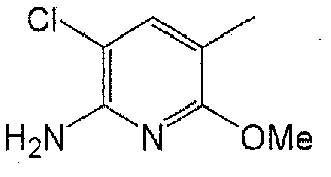
(CDCl3,δppm); 1.0-1.25 (2H, m), 1.5-1.8 (5H, m), 1.88 (1H, t, J = 10.5 Hz), 2.0-2.25 (3H, m), 2.7 (1H, m), 2.81 (6H, s), 3.3 (1H, m), 3.5-3.8 (6H, m), 3.88 (1H, d like, J = 11.2 Hz), 3.98 (3H, s), 5.06 (2H, br s), 8.11 (1H, br t), 8.29 (1H, s). 86 (Alternat ive) 6-amino-5-bromo-N-[{4-[(1-dimethylcarbamoyl-4-piperidinyl)methyl]-2-morpholinyl }methyl]-2-methoxypyridine-3-carboxamide 1.5 fumarate 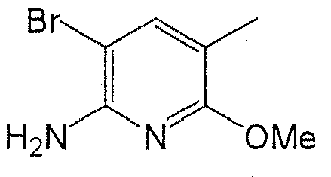
(DMSO-d6,δppm); 0.9-1.15 (2H, m), 1.65 (3H, br d, J = 10.8 Hz), 1.78 (1H, t, J = 10.7 Hz), 2.00 (1H, br t like, J = 11.6 Hz), 2.14 (2H, br d, J = 6.6 Hz), 2.4-2.9 (5H, m), 2.68 (6H,s), 3.0-4.0 (6H,m), 3.81 (3H, s), 5.89 (2H, s), 6.47 (1H, s), 6.61 (3H, s), 7.82 (1H, s), 7.96 (1H, t like, J = 5.3 Hz). -

- (1) To an anhydrous THF (1500 ml) were added calcium chloride (110.9 g), sodium borohydride (75.6 g), and sequentially ethyl 1-phenoxycarbonyl-4-piperidinecarboxylic acid (300 g), and then the internal temperature of the mixture was cooled to 10°C or below. To the mixture was slowly added dropwise ethanol (1000 ml), and after completion of addition, the mixture was stirred about 20 hours under ice-cooling. The reaction solution which rose to room temperature was ice-cooled again, and thereto was gradually added dropwise 18% cooled hydrochloric acid so that the solution became acidic. The reaction solution in which an insoluble was precipitated was filtered through Celite® to remove the insoluble, and then the solvent was removed in vacuo. To the residue was added water, and the mixture was extracted with chloroform. The extract was sequentially washed with water, 2N aqueous sodium hydroxide solution, water and brine, and then dried over anhydrous magnesium sulfate. The solvent was removed in vacuo to give 1-phenoxvcarbonyl-4-piperidine-methanol (232 g) as a pale yellow oil. The oil was used in the next step without any purification. LC-MS, m/z; 236 (MH+).
- (2) A mixture of the above product (232 g) and pyrrolidine (1200 ml) was heated to reflux for 6 hours with stirring. After cooling to room temperature, the reaction solution was dried under reduced pressure to be solidified. The residue was dissolved in chloroform, washed with water, 2N hydrochloric acid, 2N aqueous sodium hydroxide solution, water, then brine, and then dried over anhydrous magnesium sulfate. The solvent was removed in vacuo to give I-pyrrolidinecarbonyl-4-piperidinemethanol (183.5 g) as a light brown oil. The oil was used in the next step without any purification. LC-MS, m/z; 213 (MH+).
- (3) To a solution of the above product (183.5 g), 4-dimethylaminopyridine (2.1 g) and TEA (131.1 g) in methylene chloride (1000 ml) was gradually added p-toluenesulfonyl chloride (198 g) at room temperature, and after completion of addition, the mixture was stirred for 2 days. The reaction solution was sequentially washed with water, 2N hydrochloric acid, 2N aqueous sodium hydroxide solution, water and brine, and then dried over anhydrous magnesium sulfate. The solvent was removed in vacuo to give 1-pyrrolidinecarbonyl-4-(p-toluenesulfonyloxymethyl)piperidine (215 g) as a light brown solid. LC-MS, m/z; 367 (MH+).
- (4) A mixture of the above product (2.34 g), 4-amino-5-chloro-2-ethoxy-N-(2-morpholinylmethyl)benzamide (S. Kato, et al., Chem. Pharm, Bull., (1995) 43, 699-702) (2.0 g), anhydrous potassium carbonate (1.3 g), potassium iodide (0.1 g) and acetonitrile (80 ml) was heated to reflux for 23 hours with stirring. After cooling to room temperature, the reaction solution was dried under reduced pressure to be solidified, and to the residue was added water and the mixture was extracted with chloroform. The extract was washed with brine and dried over anhydrous magnesium sulfate, and the solvent was removed in vacuo. The residue was purified by silica gel column chromatography (eluent: chloroform/methanol = 19/1 to 9/1) to give an amorphous solid which was further treated with fumaric acid to give the titled compound (0.7 g) as a powder.
1H-NMR (DMSO-d6, δppm); 0.96-1.08 (2H, m), 1.41 (3H, t, J = 6.9 Hz), 1.6-1.8 (7H, m), 1.8 (1H, t, J = 10.5 Hz), 2.04 (1H, t like), 2.16 (2H, d like, J = 6.4 Hz), 2.64-2.85 (4H, m), 3.2-3.3 (5H, m), 3.4-3.65 (5H, m), 3.81 (1H, d, J = 11 Hz), 4.07 (2H, q, J = 6.9 Hz), 5.95 (2H, s), 6.47 (1H, s), 6.62 (3H,s), 7.71 (1H, s), 8.07 (1H, t, J = 5.1 Hz). - A compound of Example 135 was prepared according to Alternative Method (a method described in Example 43 (Alternative Method)) as a solid. The data is shown in Table 19.
-

-
[Table 19] Example Compound Name R- 1H-NMR 135 (Alternati ve) 4-amino-5-chloro-N-[{4-[(1-dimethylcarbamoyl-4-piperidinyl)methyl]-2-morpholinyl}methyl]-2,3-dihydrobenzo[b]furan-7-carboxamide 1.5 fumarate 
(DMSO-d6,δppm); 0.9-1.15 (2H, m), 1.65 (3H, br d, J = 10.6 Hz), 1.76 (1H, t, J = 10.7 Hz), 1.99 (1H, br t, J = 9.9 Hz), 2.13 (2H, br d, J = 6.6 Hz), 2.5-2.75 (4H, m), 2.68 (6H, s), 3.02 (2H, t, J = 8.8 Hz), 3.2 (1H, m), 3.3-3.7 (5H,m), 3.78 (1H, br d, J = 11.2 Hz), 4.71 (2H, t, J = 8.8 Hz), 5.88 (2H, s), 6.61 (2H, s), 7.45 (1H, s), 7.50 (1H, t like, J = 5.6 Hz). -

1H-NMR (CDCl3, δppm); 0.95-1.2 (2H, m), 1.6-2.0 (5H, m), 2.08 (3H, s), 2.16 (2H, d, J = 6.8 Hz), 2.45-2.7 (2H, m), 2.75 (1H, m), 3.0 (1H, m), 3.06 (2H, t, J = 8.8 Hz), 3.35 (1H, m), 3.55-3.75 (3H, m), 3.79 (1H, br d, J = 13.5 Hz), 3.87 (1H,br d, J = 10.4 Hz), 4.29 (2H, s), 4.58 (1H, br d, J = 13.0 Hz), 4.78 (2H, t, J = 8.8 Hz), 7.62 (1H, br t like), 7.85 (1H, s). -

1H-NMR (DMSO-d6, δpom); 0.8-1.2 (2H, m), 1.11 (3H, t, J = 7.0 Hz), 1.41 (3H, t, J = 6.9 Hz), 1.6-1.8 (4H, m), 2.03 (1H, dd, J = 8.2, 11.4 Hz), 2.14 (2H, d like, J = 6.6 Hz), 2.67 (1H, d, J = 10.9 Hz), 2.77 (1H, d, J = 10.9 Hz), 2.93 (1H, t like, J = 12.4 Hz), 3.25 (1H, m), 3.35-3.65 (6H, m), 3.80 (2H, br t, J = 11.8 Hz), 3.95-4.2 (4H,m), 4.29 (1H, br t, J = 11.2 Hz), 5.94 (2H, s), 6.47 (1H, s), 6.63 (3H, s), 7.71 (1H, s), 8.07 (1H, t like, J = 5.0 Hz). LC-MS, m/z; 497 (MH+). - The corresponding starting compounds in place of 4-amino-5-chloro-2-methoxy-N-[{4-(4-piperidinylinethyl)-2-morpholinyl}methyl]benzamide of Example 142 and the corresponding carboxylic acids in place of ethoxyacetic acid were treated in the similar manner to Example 142 to give compounds of Tables 20 to 23 as an amorphous solid or a powder. Certain amorphous solids were treated with fumaric acid to form a salt.
-
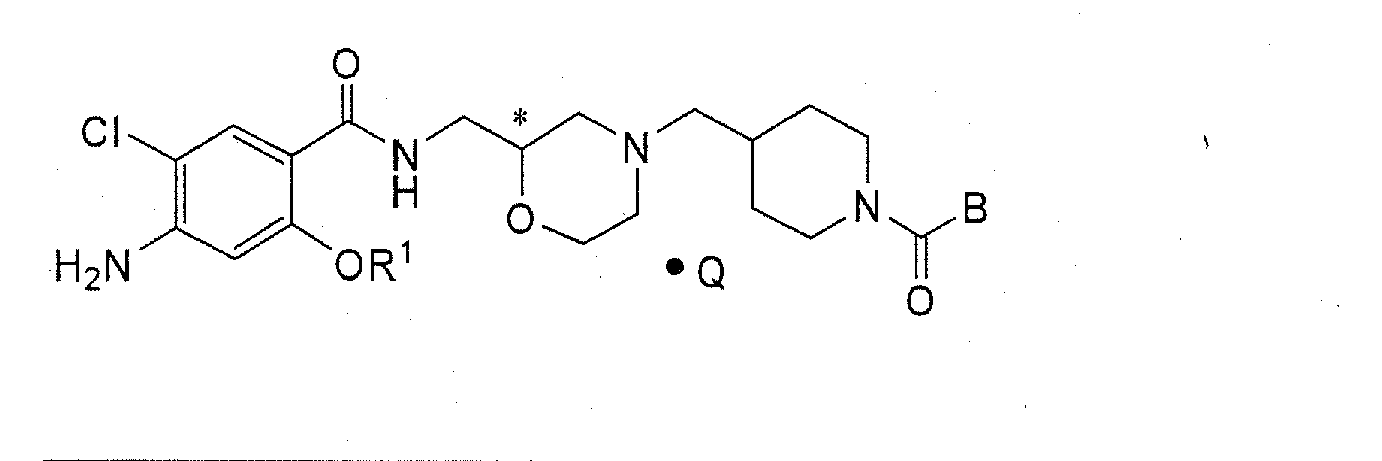
-
[Table 20] Example *1) R1 B Q LC-MS:m/z(MH+) 143 S Et CH2OEt - 497 144 S Me CH2OEt - 483 145 S Me CH2NHAc - 496 146 S Et CH2NHAc - 510 147 S Me CH2NMe2 - 482 148 S Me (CH2)2CONH2 - 496 149 S Me (CH2)2CO2Me - 511 150 S Me (CH2)2CO2Et - 525 151 S Me (CH2)2NEt2 - 524 152 S Me 
- 536 153 S Me (CH2)3NHBoc - 582 154 S Me (CH2)3NMe2 - 510 1) Symbols refer to configurations. -
[Table 21] Example *1) R1 B Q LC-MS:m/z(MH+)/ mp (Recrystallizing Solvent) 155 RS Et 
- 505/ 169°C (E/EA) 156 RS Et CMe=CH2 3/2F2) 479/ 185-187°C2) (E/EA) 157 RS Et 
3/2F2) 505/ 193°C2) (E) 158 RS Et 
3/2F2) 531/ 181-183°C (E/A) 159 RS Et 
547/ 208°C (E) 160 RS Et CH2CH=CH2 6/5F2) 479/ 97-99°C (E/EA) 161 RS Et (CH2)2CH=CH2 F1) 493/ 92-95°C (E) 162 RS Et (CH2)4CH=CH2 3/2F2) 521/ 135°C (E/EA) 163 RS Et CH=CHCH=CH2 3/2F2) 491/ 175°C (E) 164 RS Et CH=CH(CH2)2CH=CH2 9/5F2) 519/ 145°C3) (E/EA) 165 RS Et 
F2) 477/ 120°C (E/EA) 166 S Me 2-AcOC6H4 - 559 167 S Et 2-AcOC6H4 - 573 168 S Me 3-AcOC6H4 - 559 169 S Me 4-AcOC6H4 - 559 170 S Me 2-PhOC6H4 - 593 171 S Me 3-Me2NC6H4 - 544 172 S Me 4-Me2NC6H4 - 544 173 S Me 4-AcNHC6H4 - 558 1) Symbols refer to configurations.
2) "F" refers to fumaric acid.
3) A value refers to a decomposition point. -
[Table 22] Example *1) R1 B Q LC-MS:m/z(MH+)/ mp (Recrystallizing Solvent) 174 S Me 4-CO2MeC6H4 - 559 175 S Me 4-PhC6H4 - 577 176 S Me 3-Cl-4-NH2C6H3 - 552 177 S Me 
- 543 178 S Me 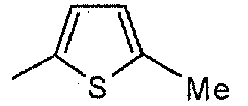
- 521 179 S Me 
- 504 180 S Me 
- 495 181 RS Et 
3/2F2) 509/ 168°C3) (E/EA) 182 S Me 
- 495/ 185-187°C (EA/DIP) 183 RS Et 
3/2F2) 509/ 169°C (E/EA) 184 S Me 
- 594 185 s Me 
- 594 186 s Me 
- 594 1) Symbols refer to configurations.
2) "F" refers to fumaric acid.
3) A value refers to a decomposition point. -
[Table 23] Example *1) R1 B Q LC-MS:m/z(MH+) 187 S Me 
- 608 188 S Me 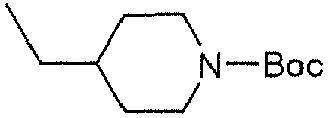
- 622 189 S Me 
- 522 1) Symbols refer to configurations. - In place of 4-amino-N-[{4-[(1-(tert-butoxycarbonyl)-4-piperidinyl)methyl]-2-morpholinyl}-methyl]-5-chloro-2-ethoxybenzamide of Example 22, the corresponding starting compounds were treated in the similar manner to Example 22 to give the following compounds of Table 24 as an amorphous solid.
-

-
[Table 24] Example B LC-MS: m/z (MH+) 190 
494 191 
494 192 
494 193 
508 194 
522 195 (CH2)3NH2 482 -

1H-NMR (DMSO-d6, δppm); 0.8-1.2 (2H, m), 1.41 (3H, t, J = 7.0 Hz), 1.6-1.8 (4H, m), 2.01 (1H, td, J = 8.3, 2.9 Hz), 2.13 (2H, br d, J = 6.8 Hz), 2.64 (1H, br t, J = 13.0 Hz), 2.76 (1H, br d, J = 11.5 Hz), 2.90 (2H, br t, J = 12.5 Hz), 3.2 (1H, m), 3.35-3.7 (4H, m), 3.81 (1H, br d, J = 11.5 Hz), 3.95-4.1 (4H,m), 4.31 (1H, br d, J = 12.6 Hz), 4.4 (1H, br s), 5.94 (2H, s), 6.47 (1H, s), 6.63 (2H, s), 7.71 (1H, s), 8.07 (1H, t like, J = 5.1 Hz). LC-MS, m/z; 469 (MH+). - In place of N-[{4-[(1-acetoxyacetyl-4-piperidinyl)methyl]-2-morpholinyl}methyl]-4-amino-5-chloro-2-ethoxybenzamide of Example 196, the corresponding starting compounds were treated in the similar manner to Example 196 to give the following compounds of Table 25 as an amorphous solid. Certain amorphous solids were treated with hydrochloric acid or fumaric acid to form a salt.
-

-
[Table 25] Example *1) R1 B Q LC-MS:m/z(MH+)/ mp (Recrystallizing Solvent) 197 S Et CH2OH - 469 198 S Me CH2OH HCl 455/ 164-167°C (A) 199 RS Et CMe2OH F2) 497/ 142°C (E) 200 S Me (CH2)2CO2H - 497 201 S Me 3-HOC6H4 - 517 202 S Me 4-HOC6H4 - 517 1) Symbols refer to configurations.
2) "F" refers to fumaric acid. -

1H-NMR (DMSO-d6, δppm); 0.97-1.20 (2H, m), 2.01 (2H, m), 2.13 (1H, m), 2.63 (1H, br t, J = 12.0 Hz), 2.77 (1H, br q, J = 11.2 Hz), 2.90-3.10 (4H, m), 3.27-3.62 (6H, m), 3.62 (1H, br d, J = 13.2 Hz), 3.84 (3H, s), 3.84-4.12 (3H, m), 4.06 (2H, d, J = 7.1 Hz), 4.31 (1H, br d, J = 11.5 Hz), 6.02 (2H, s), 6.49 (1H, s), 7.70 (1H, s), 8.09 (1H, t like, J = 7.7 Hz). LC-MS, m/z; 455 (MH+). -

1H-NMR (CDCl3, δppm); 0.9-1.2 (2H, m), 1.55-2.0 (4H, m), 2.18 (3H, br d, J = 6.6 Hz), 2.55-2.85 (3H, m), 2.94 (1H, br d, J = 11.6 Hz), 3.04 (2H, t, J = 8.7 Hz), 3.35 (1H, m), 3.47 (1H, br d, J = 13.4 Hz), 3.5-3.8 (4H, m), 3.88 (1H, br d, J = 11.0 Hz), 4.13 (2H, s), 4.43 (2H, s), 4.54 (1H, br d, J = 13.2 Hz), 4.76 (2H, t, J = 8.7 Hz), 7.61 (1H, t like), 7.80 (1H, s). LC-MS, m/z; 467 (MH+). -

-

1H-NMR (CDCl3, δppm); 1.01-1.22 (2H, m), 1.51 (3H, t, J = 7.0 Hz), 1.62-1.85 (3H, m), 1.92 (1H, br t, J = 10.4 Hz), 2.05-2.25 (3H, m), 2.62 (1H, br d, J = 11.3 Hz), 2.78 (3H,br q, J = 11.7 Hz), 2.84 (3H, s), 3.37 (1H, m), 3.58 (3H, s), 3.61-3.76 (3H, m), 3.87 (1H, br d, J = 10.1 Hz), 4.09 (2H, q, J = 7.0 Hz), 4.0-4.3 (2H, m), 4.33 (2H, s), 6.27 (1H, s), 8.11 (1H, s), 8.22 (1H, br t). LC-MS, m/z; 498 (MH+). -

1H-NMR (CDCl3, δppm); 1.1-1.3 (2H, m), 1.50 (3H, t, J = 7.0 Hz), 1.7-2.0 (3H, m), 2.1-2.3 (4H, m), 2.62 (1H, br d, J = 10.6 Hz), 2.74 (1H, br d, J = 11.2 Hz), 3.02 (2H, t like, J = 11.9 Hz), 3.4 (1H, m), 3.6-3.8 (3H, m), 3.87 (1H, br d, J = 9.7 Hz), 4.09 (2H, q, J = 7.0 Hz), 4.0-4.25 (2H, m), 4.36 (2H, s), 6.27 (1H, s), 7.09 (1H, s), 7.19 (1H, s), 7.85 (1H, s), 8.11 (1H, s), 8.22 (1H, t like). LC-MS, m/z; 505
(MH+). -

-

1H-NMR (CDCl3, δppm); 0.98-1.17 (2H, m), 1.50 (3H, t, J = 7.0 Hz), 1.57-1.8 (3H, m), 1.91 (1H, br t, J = 10.4 Hz), 2.2-2.3 (3H, m), 2.21 (2H, t, J = 7.7 Hz), 2.57-2.7 (2H, m), 2.73 (2H,br d, J = 12.6 Hz), 3.35 (1H, m), 3.58-3.78 (3H, m), 3.78-3.92 (3H, m), 3.98 (4H, t, J = 7.7 Hz), 4.09 (2H, q, J = 7.0 Hz), 4.34 (2H, s), 6.27 (1H, s), 8.11 (1H, s), 8.22 (1H, t like). LC-MS, m/z; 494 (MH+). -

1H-NMR (CDCl3, δppm); 1.09 (3H, t, J = 7.2 Hz), 1.27 (2H, br q, J = 11.5 Hz), 1.50 (3H, t, J = 7.0 Hz), 1.5 (1H, m), 1.6-2.3 (9H, m), 2.43 (2H, q, J = 7.2 Hz), 2.62 (1H, br d, J = 10.8 Hz), 2.74 (1H, br d, J = 10.8 Hz), 2.98 (2H, br d, J = 11.0 Hz), 3.3 (1H, m), 3.6-3.75 (3H, m), 3.86 (1H, br d, J = 11.3 Hz), 4.08 (2H, q, J = 7.0 Hz), 4.33 (1H, br d, J = 6.8 Hz), 6.27 (1H, s), 8.11 (1H, s), 8.23 (1H, br t). LC-MS, m/z; 439 (MH+), 314. -

1H-NMR (CDCl3, δppm); 1.12-1.33 (2H, m), 1.50 (3H, t, J = 7.0 Hz), 1.55-1.85 (4H, m), 1.85-2.04 (3H, m), 2.05-2.2 (3H, m), 2.62 (1H, br d, J = 11.7 Hz), 2.74 (1H, br d, J = 11.3 Hz), 2.85 (2H, br d, J = 11.5 Hz), 3.35 (1H, m), 3.48 (2H, s), 3.6-3.75 (3H, m), 3.85 (1H,m), 4.08 (2H, q, J = 7.0 Hz), 4.32 (1H, br d, J = 6.8 Hz), 6.26 (1H, s), 6.92 (1H, m), 7.02-7.12 (2H, m), 7.26 (1H, m), 8.11 (1H, s), 8.23 (1H, t like). LC-MS, m/z; 519 (MH+). -

- The corresponding starting compounds in place of 4-amino-5-chloro-2-methoxy-N-[{4-(4-piperidinylmethyl)-2-morpholinyl}methyl]benzamide of Example 142 and the corresponding carboxylic acids in place of ethoxyacetic acid were treated in the similar manner to Example 142 to give the following compounds of Tables 26 and 27 as an amorphous solid or a powder.
-

-
[Table 26] Example * R1 -B LC-MS:m/z(MH+) 212 S Me 
502 213 S Me 
509 214 S Me 
509 215 S Me 
508 216 S Me 
508 -

-
[Table 27] Example * -R LC-MS:m/z(MH+) 217 S 
579 218 S -CO2CH2CCl3 571 219 S 
567 -

1H-NMR (DMSO-d6, δppm); 0.95-1.22 (2H, m), 1.67-1.80 (2H, m), 2.07 (1H, m), 2.63 (1H, br t, J = 12.7 Hz), 2.81 (1H, m), 2.90-3.12 (4H, m), 3.25-3.55 (6H, m), 3.64-3.82 (2H, m), 3.84 (3H,s), 3.93 (1H, m), 4.00-4.13 (3H, m), 4.33 (1H, d, J = 11.7 Hz), 6.02 (2H, br s); 6.49 (1H, s), 7.70 (1H, s), 8.10 (1H, t like, J = 6.0 Hz), 9.37 (1H, br s). LC-MS, m/z; 455 (MH+). XRD ; 2θ=9.5, 17.7, 20.4, 24.4, 25.5°. - (S)-4-amino-5-chloro-2-methoxy-N-[{4-(4-piperidinylmethyl)-2-morpholinyl}methyl]-benzamide and the corresponding carboxylic acid compounds were treated in the simmilar manner to Example 142 to give the following compounds of Table 28 as an amorphous solid or a powder.
-

-
[Table 28] Example -B LC-MS: m/z (MH+) 1H-NMR 221 Me 439 (CDCl3, δppm); 0.98-1.16 (2H, m), 1.66-1.94 (4H, m), 2.05-2.20 (3H, m), 2.08 (3H, m), 2.48-2.68 (2H, m), 2.75 (1H, m), 3.02 (1H, dt, J = 12.8, 2.6 Hz), 3.34 (1H, m), 3.62-3.90 (5H, m), 3.88 (3H, s), 4.48 (2H, br s), 4.59 (1H, br d, J = 13.4 Hz), 6.30 (1H, s), 8.01 (1H, br t), 8.08 (1H, s). 222 CH2NHCOPh 558 (CDCl3, δppm); 1.03-1.18 (2H, m), 1.70-1.95 (4H, m), 2.09-2.24 (3H, m), 2.48-2.80 (3H, m), 3.04 (1H, br t), 3.35 (1H, m), 3.64-3.74 (3H, m), 3.78 (1H, br d, J = 13.7 Hz), 3.88 (1H, m), 3.89 (3H, s), 4.18-4.31 (2H, m), 4.42 (2H, s), 4.59 (1H, br d, J = 12.9 Hz), 6.30 (1H, s), 7.38-7.53 (4H, m), 7.84 (2H, d, J = 6.8 Hz), 8.01 (1H, br t), 8.09 (1H, s). 223 CH2CN 464 (CDCl3, δppm); 1.03-1.26 (2H, m), 1.68-1.98 (4H, m), 2.10-2.27 (3H, m), 2.56-2.68 (2H, m), 2.76 (1H, br t), 3.14 (1H, br t), 3.35 (1H, m), 3.48 (2H, d, J = 2.9 Hz), 3.64-3.76 (4H, m), 3.90 (1H, m), 3.89 (3H, s), 4.40 (2H, s), 4.55 (1H, br d, J = 13.2 Hz), 6.30 (1H, s), 8.01 (1H, br s), 8.09 (1H, s). 224 CH2CH2OMe 483 (CDCl3, δppm); 0.97-1.12 (2H, m), 1.68-1.95 (4H, m), 2.07-2.22 (3H, m), 2.50-2.66 (4H, m), 2.75 (1H, br t, J = 9.5 Hz), 2.98 (1H, br t), 3.35 (1H, m), 3.36 (3H, s), 3.63-3.75 (5H, m), 3.83-3.94 (2H, m), 3.89 (3H, s), 4.43 (2H, br s), 4.61 (1H, br d, J = 13.4 Hz), 6.30 (1H, s), 8.00 (1H, br s), 8.09 (1H, s). 225 
483 (CDCl3, δppm); 1.00-1.15 (2H, m), 1.35-1.43 (3H, m), 1.65-1.96 (4H, m), 2.07-2.24 (3H, m), 2.53-2.67 (2H, m), 2.76 (1H, br t, J = 9.3 Hz), 2.97 (1H, br t), 3.35 (1H, m), 3.36 (3H, s), 3.63-3.73 (3H, m), 3.90 (1H, m), 3.89 (3H, s), 4.12-4.23 (2H, m), 4.40 (2H, br s), 4.60 (1H, br d, J = 11.4 Hz), 6.30 (1H, s), 8.01 (1H, br s), 8.10 (1H, s). 226 
495 (CDCl3, δppm); 0.96-1.15 (2H, m), 1.65-1.95 (4H, m), 2.02-2.29 (5H, m), 2.53-2.67 (2H, m), 2.76 (1H, br t, J = 11.2 Hz), 3.04 (1H, m), 3.19-3.42 (2H, m), 3.64-3.75 (3H, m), 3.83-3.96 (5H, m), 3.89 (3H, s), 4.01 (1H, br t, J = 4.3 Hz), 4.40 (2H, br s), 4.61 (1H, br d, J = 12.4 Hz), 6.30 (1H, s), 8.01 (1H, br s), 8.10 (1H, s). 227 COMe 467 (CDCl3, δppm); 1.05-1.22 (2H, m), 1.68-1.92 (4H, m), 2.09-2.20 (3H, m), 2.41 (3H, s), 2.57-2.78 (3H, m), 3.02 (1H, m), 3.34 (1H, m), 3.63-3.78 (4H, m), 3.90 (1H, m), 3.91 (3H, s), 4.39 (2H, br s), 4.48 (1H, br d, J = 13.4 Hz), 6.30 (1H, s), 8.00 (1H, br t), 8.10 (1H, s). 228 
492 (CDCl3, δppm); 1.13-1.28 (2H, m), 1.75-1.98 (4H, m), 2.09-2.26 (3H, m), 2.58-2.84 (3H, m), 3.09 (1H, br t), 3.35 (1H, m), 3.64-3.80 (3H, m), 3.87 (1H, m), 3.89 (3H, s), 4.39 (2H, br s), 4.72 (2H, br dd, J = 43.3, 11.0 Hz), 6.30 (1H, s), 7.86 (1H, s), 8.00 (1H brt), 8.10 (1H, s), 8.16 (1H, s). 229 
492 (DMSO-d6, δppm); 0.97-1.13 (2H, m), 1.64-2.24 (7H, m), 2.56-2.85 (3H, m), 3.08 (1H, br t), 3.20-3.64 (5H, m), 3.81 (1H, m), 3.83 (3H, s), 4.46 (1H, br d, J = 12.7 Hz), 5.98 (2H, s), 6.48 (1H, s), 7.69 (1H, s), 7.99 (1H, br t), 8.43 (1H, br s), 14.5 (1H, br s). 230 
526 (CDCl3, δppm); 0.97-1.30 (2H, m), 1.69-1.97 (4H, m), 2.09-2.24 (3H, m), 2.61 (1H, br d, J = 9.8 Hz), 2.73-2.86 (2H, m), 3.01 (1H, br t, J = 13.2 Hz), 3.34 (1H, m), 3.54-3.73 (4H, m), 3.87 (1H, m), 3.89 (3H, s), 4.41 (2H, s), 4.69 (1H, br d, J = 12.0 Hz), 6.30 (1H, s), 7.46-7.51 (2H, m), 7.68-7.73(2H, m), 8.01 (1H, br t), 8.09 (1H, s). - (S)-4-amino-5-chloro-N-[{4-(4-piperidinylmethyl)-2,3-dihydrobenzo[b]furan-7-carboxamide and the corresponding carboxylic acid compounds were treated in the similar manner to Example 142 to give the following compounds of Table 29 as an amorphous solid or a powder.

-
[Table 29] Example -B LC-MS: m/z (MH+) 1H-NMR 231 Me 451 (CDCl3, δppm); 0.99-1.08 (2H, m), 1.59-1.96 (4H, m), 2.08-2.12 (3H, m), 2.08 (3H, s), 2.48-2.64 (2H, m), 2.75 (1H, br t, J = 10 Hz), 3.04 (1H, m), 3.06 (2H, t, J = 8.6 Hz), 3.34 (1H, m), 3.62-3.74 (3H, m), 3.75-3.92 (2H, m), 4.28 (2H, s), 4.59 (1H, br d, J = 13.4 Hz), 4.78 (2H, t, J = 9.0 Hz), 7.62 (1H, br s), 7.86 (1H, s). 232 
507 (CDCl3, δppm); 0.94-1.12 (2H, m), 1.68-1.94 (4H, m), 2.02-2.29 (5H, m), 2.53-2.65 (2H, m), 2.76 (1H, br t, J = 11.0 Hz), 3.03 (1H, m), 3.06 (2H, t, J = 8.5 Hz), 3.19-3.40 (2H, m), 3.62-3.73 (3H, m), 3.82-3.95 (5H, m), 4.01 (1H, br t), 4.27 (2H, s), 4.61 (1H, br d, J = 12.2 Hz), 4.78 (2H, t, J = 9.0 Hz), 7.62 (1H, br s), 7.86 (1H, s). -

1H-NMR (CDCl3, δppm); 1.00-1.15 (2H, m), 1.70-1.92 (4H, m), 2.08-2.21 (3H, m), 2.55-2.83 (3H, m), 2.94 (1H, m), 3.06 (2H, t, J = 8.8 Hz), 3.34 (1H, m), 3.47 (1H, br d, J = 13.4 Hz), 3.62-3.76 (4H, m), 3.87 (1H, br d, J = 11.7 Hz), 4.13-4.20 (2H, m), 4.27 (2H, s), 4.57 (1H, br d, J = 13.2 Hz), 4.78 (2H, t, J = 9.0 Hz), 7.62 (1H, br s), 7.86 (1H, s). - 4-Amino-5-chloro-N-[{4-[(1-dimethylcarbamoyl-4-piperidinyl)methyl]-2-morpholinyl}-methyl]-2-ethoxybenzamide (5 g), lactose (80 g), cornstarch (30 g), crystalline cellulose (25 g), hydroxypropylcellulose (3 g), light anhydrous silicic acid (0.7 g) and magnesium stearate (1.3 g) were mixed in the conventional manner, granulated and tableted to give 1000 tablets in 145 mg/tablet.
- 4-Amino-5-chloro-N-[{4-[(1-dimethylcarbamoyl-4-piperidinyl)methyl]-2-morpholinyl}-methyl]-2-ethoxybenzamide (10 g), lactose (960 g), hydroxypropylcellulose (25 g) and light anhydrous silicic acid (5 g) were mixed in the conventional manner to give powders.
- The inventive compound shows strong affinity for 5-HT4 receptor, may be used in the treatment or prevention of various diseases such as digestive system diseases, including an irritable bowel syndrome, an atonic constipation, a habitual constipation, a chronic constipation, a constipation induced by drug such as morphine or an antipsychotic agent, a constipation or dyschezia by contrast agents, functional dyspepsia, acute-chronic gastritis, reflux esophagitis, gastric ulcer, duodenal ulcer, gastric neurosis, postoperative paralytic ileus, senile ileus, postgastrectomy syndrome or pseudo-bowel obstruction, neuropsychiatric diseases, including schizophrenia, Alzheimer disease, depression, memory disorder or anxiety, urinary system diseases, including dysuria by urinary obstruction or enlarged prostate, and various functional aberration in gastrointestinal system associated with treatment for various diseases, including anorexia, nausea, emesis or abdomen enlarged feeling, and may be particularly useful as an enterokinesis-promoting agent or a digestive tract function-improving agent.
In (c-2), cycloalkyl is preferably cyclopropyl, cyclobutyl, cyclopentyl or cyclohexyl, and monocyclic or bicyclic saturated heterocyclyl is preferably piperidinyl or pyrrolidinyl wherein each nitrogen atom of the monocyclic or bicyclic saturated heterocyclyl may be preferably optionally substituted with C1-3 alkyl, C2-3 alkanoyl or C2-3 alkoxycarbonyl.
In (d-2), aryl includes phenyl, and heteroaryl is preferably thienyl, furyl or pyridyl. The substituent of aryl or heteroaryl is preferably halogen, hydroxy, carboxy, C1-3 haloalkyl, C1-3 haloalkoxy, amino, carbamoyl, C1-3 alkyl, C1-3 alkoxy, C2-3 alkanoyl orC2-3 alkoxycarbonyl.
Claims (25)
- A compound of formula (1):

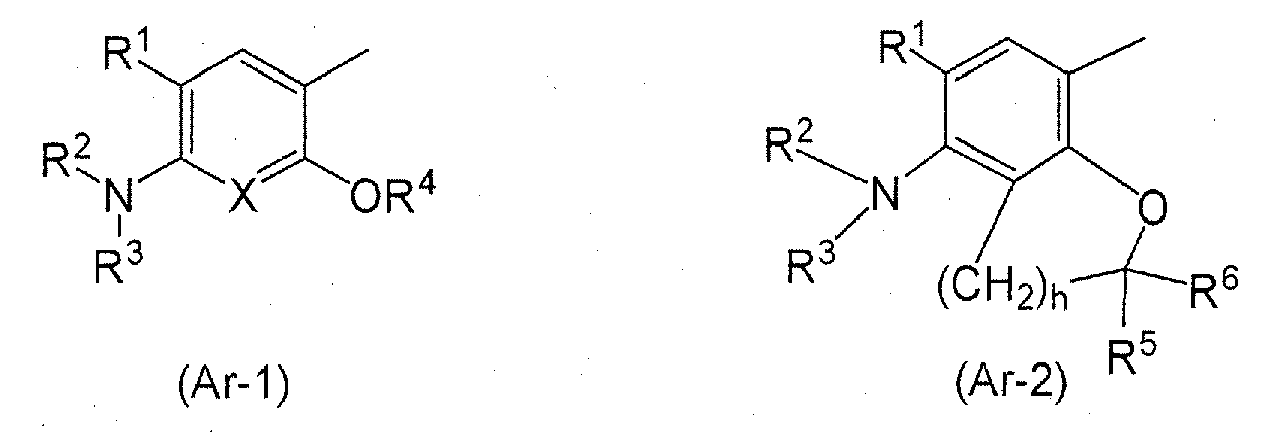
1 is 1, 2 or 3;
m is 1 or 2;
n is 0, 1 or 2;
o is an integer of 0 to 3, provided that n and o are not simultaneously 0;
A is a group selected from the group consisting of (1) to (6):(1) hydrogen, cyano or formyl;(2) optionally substituted alkyl, optionally substituted alkenyl or optionally substituted alkynyl;(3) -COR7, -CSR7, -COOR7, -SO2R7 or -CO-COR7
wherein R7 is optionally substituted alkyl, optionally substituted alkenyl, optionally substituted alkynyl, optionally substituted cycloalkyl, optionally substituted cycloalkenyl, optionally substituted aryl, optionally substituted heteroaryl, optionally substituted monocyclic or bicyclic nonaromatic unsaturated heterocyclyl in which the heterocyclyl is bonded via any carbon atoms on the heterocycle, or optionally substituted monocyclic or bicyclic saturated heterocyclyl in which the heterocyclyl is bonded via any carbon atoms on the heterocycle;(4) -CO-COOR8
wherein R8 is alkyl;(5) -CONR9-OR10
wherein R9 and R10 are the same or different and each hydrogen, alkyl, alkenyl or alkynyl; and(6) -CONR12R13, -CSNR12R13 or -SO2NR12R13
wherein R12 is hydrogen or any one of groups in R7, R13 is hydrogen, alkyl, alkenyl or alkynyl; or both R12 and R13 may combine each other together with the adjacent nitrogen atom to form optionally substituted saturated or unsaturated monocyclic nitrogen-containing heterocycle containing 1 to 3 heteroatoms selected from 1 to 3 nitrogen, 1 oxygen or 1 sulfur;
provided that if alkyl, alkenyl or alkynyl in A or R7 is substituted, then alkyl, alkenyl and alkynyl are optionally substituted by the same or different 1 to 5 substituents selected from the group consisting of (a) to (d):(a) halogen, cyano, nitro, hydroxy, carboxy, amino, carbamoyl or trifluoromethyl;(b) -OR14, -SR14, -COR14, -COOR14, -O-COR14, -NR15-COR14, -NR15-COOR14, -NR15-SO2R14,-NR15R16 or -CONR15R16
wherein R14 is alkyl, alkenyl or alkynyl optionally substituted by the same or different 1 to 5 substituents selected from the group consisting of the following group:(b') halogen, hydroxy, carboxy, amino, carbamoyl, -OR17, -COOR17, -NR18-COR17, -NR18-COOR17, -NR18-SO2R17, -NR18R19 or -CONR18R19 in which R17 is alkyl, alkenyl or alkynyl, R18 is hydrogen or alkyl, R19 is alkyl, alkenyl or alkynyl, or both R18 and R19 may combine each other together with the adjacent nitrogen atom to form optionally substituted saturated or unsaturated monocyclic nitrogen-containing heterocycle containing 1 to 3 heteroatoms selected from 1 to 3 nitrogen, 1 oxygen or 1 sulfur,
R15 is hydrogen, or alkyl, alkenyl or alkynyl optionally substituted by the same or different 1 to 5 substituents selected from the above (b'),
R16 is alkyl, alkenyl or alkynyl optionally substituted by the same or different 1 to 5 substituents selected from the above (b'), or both R15 and R16 may combine each other together with the adjacent nitrogen atom to form optionally substituted saturated or unsaturated monocyclic nitrogen-containing heterocycle containing 1 to 3 heteroatoms selected from 1 to 3 nitrogen, 1 oxygen or 1 sulfur;(c) -R20, -OR20 or -NR15-COR20
wherein R15 has the same meaning as defined above, R20 is optionally substituted cycloalkyl, optionally substituted cycloalkenyl, optionally substituted monocyclic or bicyclic nonaromatic unsaturated heterocyclyl, optionally substituted monocyclic or bicyclic saturated heterocyclyl; and(d) -R21, -OR21, -COR21, -SR21, -SO2R21 or -NR15-COR21
wherein R15 has the same meaning as defined above, R21 is optionally substituted aryl or optionally substituted heteroaryl;
provided that if cycloalkyl or cycloalkenyl is substituted, then cycloalkyl and cycloalkenyl are optionally substituted by the same or different 1 to 5 substituents selected from the following (e):(e) halogen, hydroxy, alkyl, alkoxy or oxo;
provided that if any ring carbon atoms are substituted in the monocyclic or bicyclic nonaromatic unsaturated heterocyclyl, monocyclic or bicyclic saturated heterocyclyl, or saturated or unsaturated monocyclic nitrogen-containing heterocyclyl, then the carbon atoms are optionally substituted by the same or different 1 to 5 substituents selected from the above (e),
provided that if any ring nitrogen atoms are substituted, then the nitrogen atoms are optionally substituted by the following (f):(f) alkyl, alkanoyl, alkoxycarbonyl or alkylsulfonyl;
provided that if aryl or heteroaryl are substituted, then the aryl and heteroaryl are selected from the group consisting of the following (g) to (i):(g) halogen, cyano, nitro, hydroxy, carboxy, haloalkyl, haloalkoxy, amino, carbamoyl, -(CH2)2-O-or -O-CH2-O-;(h) -R14, -OR14, -SR14, -COR14, -COOR14, -O-COR14, -NR15-COR14, -NR15-COOR14, -NR15-SO2R14, -NR15R16 or -CONR15R16
wherein R14, R15 and R16 have the same meanings as defined above; and(i) phenyl or phenoxy which is optionally substituted by 1 to 5 substituents selected from the group consisting of halogen, hydroxy, alkyl and alkoxy; or a pharmaceutically acceptable salt thereof. - The compound as claimed in claim 1, wherein R1 is chlorine, bromine or iodine, R4 is alkyl, R5 and R6 are the same or different and each hydrogen or methyl, or a pharmaceutically acceptable salt thereof.
- The compound as claimed in claim 2, wherein R4 is methyl, ethyl, propyl or isopropyl, or a pharmaceutically acceptable salt thereof.
- The compound as claimed in any one of claims 1 to 3, wherein R2 is hydrogen, R3 is hydrogen or methyl, or a pharmaceutically acceptable salt thereof.
- The compound as claimed in claim 4, wherein R2 and R3 are hydrogen, or a pharmaceutically acceptable salt thereof.
- The compound as claimed in any one of claims 1 to 5, wherein 1 is 1 or 2, m is 1 or 2, n is 1 or 2, o is 1 or 2, or a pharmaceutically acceptable salt thereof.
- The compound as claimed in claim 1, wherein R1 is chlorine or bromine, R2 and R3 are hydrogen, R4 is methyl or ethyl, R5 and R6 are hydrogen, h is 1, 1 is 1, m is 1, n is 2, o is 1, or a pharmaceutically acceptable salt thereof.
- The compound as claimed in any one of claims 1 to 7, wherein A is
(1-1) hydrogen, cyano or formyl; or
(2-1) alkyl, or phenyl-substituted alkyl wherein phenyl is optionally substituted by the same or different 1 to 5 substituents selected from the group consisting of halogen, hydroxy, alkyl, alkoxy, alkanoyl, haloalkyl, haloalkoxy, amino and carboxy; or a pharmaceutically acceptable salt thereof. - The compound as claimed in any one of claims 1 to 7, wherein A is
(3-1) -COR7a, -COOR7a, -SO2R7a or -CO-COR7a
wherein R7a is optionally substituted alkyl, optionally substituted alkenyl, optionally substituted alkynyl, optionally substituted cycloalkyl, optionally substituted cycloalkenyl, optionally substituted aryl, optionally substituted heteroaryl, optionally substituted monocyclic or bicyclic nonaromatic unsaturated heterocyclyl, or optionally substituted monocyclic or bicyclic saturated heterocyclyl;
provided that if alkyl, alkenyl or alkynyl in R7a is substituted, then the alkyl, alkenyl and alkynyl are optionally substituted by 1 to 5 substituents selected from the group consisting of (a-1) to (d-1):(a-1) halogen, cyano, hydroxy, carboxy, amino or carbamoyl;(b-1) -OR14a, -COR14a, -COOR14a, -O-COR14a, -NR15a-COR14a , -NR15a-COOR14a, -NR15aR16a or-CONR15aR16a
wherein R14a is alkyl, R15a is hydrogen or alkyl, R16a is alkyl, or both R15a and R16a may combine each other together with the adjacent nitrogen atom to form saturated monocyclic nitrogen-containing heterocycle containing 1 to 3 heteroatoms selected from 1 to 3 nitrogen, 1 oxygen or 1 sulfur, and the nitrogen atom on the monocyclic nitrogen-containing heterocycle is optionally substituted by alkyl, alkanoyl or alkoxycarbonyl;(c-1) cycloalkyl which is optionally substituted by the same or different 1 to 5 substituents selected from halogen, hydroxy, alkyl or alkoxy, monocyclic or bicyclic saturated heterocyclyl wherein the ring carbon atom is optionally substituted by the same or different 1 to 5 substituents selected from halogen, hydroxy, alkyl or alkoxy and the ring nitrogen atom is optionally substituted by alkyl, alkanoyl or alkoxycarbonyl; and(d-1) -R21a or -NR15a-COR21a
wherein R15a has the same meaning as defined above, R21a is aryl or heteroaryl, and the aryl and heteroaryl are optionally substituted by the same or different 1 to 5 substituents selected from halogen, hydroxy, carboxy, haloalkyl, haloalkoxy, amino, carbamoyl, cyano, -R14a, -OR14a, -COR14a, -NR15a-COR14a or -NR15aR16a wherein R14a, R15a and R16a have the same meanings as defined above;
provided that if cycloalkyl or cycloalkenyl in R7a is substituted, then cycloalkyl and cycloalkenyl are optionally substituted by the same or different 1 to 5 substituent selected from the following (e-1):(e-1) halogen, hydroxy, alkyl or alkoxy;
provided that if any ring carbon atoms are substituted in optionally substituted monocyclic or bicyclic nonaromatic unsaturated heterocyclyl, and optionally substituted monocyclic or bicyclic saturated heterocyclyl in R7a, then the carbon atoms are optionally substituted by the same or different 1 to 5 substituents selected from the above (e-1), and if any ring nitrogen atoms are substituted, then the nitrogen atoms are optionally substituted by the same or different 1 to 5 substituents selected from the following (f-1):(f-1) alkyl, alkanoyl, alkoxycarbonyl or alkylsulfonyl;
provided that if aryl or heteroaryl in R7a is substituted, then the aryl and heteroaryl are optionally substituted by the same or different 1 to 5 substituents selected from the group consisting of the following groups:(g-1) halogen, nitro, hydroxy, carboxy, amino, carbamoyl, haloalkyl, haloalkoxy or cyano;(h-1) -R14a, -OR14a, -COR14a, -COOR14a, -O-COR14a, -NR15a-COR14a, -NR15a-COOR14a or -NR15aR16a wherein R14a, R15a and R16a have the same meanings as defined above; and(i-1) phenyl or phenoxy which is optionally substituted by 1 to 5 substituents selected from the group consisting of halogen, hydroxy, alkyl and alkoxy; or a pharmaceutically acceptable salt thereof. - The compound as claimed in claim 9, wherein A is
(3-2) -SO2R7b
wherein R7b is alkyl, alkyl substituted by optionally substituted phenyl, or optionally substituted phenyl, provided that if phenyl is substituted, then the phenyl is optionally substituted by the same or different 1 to 5 substituents selected from the group consisting of halogen, hydroxy, carboxy, haloalkyl, haloalkoxy, amino, carbamoyl, -R14b, -OR14b, -COR14b, COOR14b and -O-COR14b wherein R14b is alkyl; or a pharmaceutically acceptable salt thereof. - The compound as claimed in claim 10, wherein R7b is C1-3 alkyl, or a pharmaceutically acceptable salt thereof.
- The compound as claimed in claim 9, wherein A is (3-3) -COR7c or -CO-COR7c wherein R7c is optionally substituted alkyl or optionally substituted alkenyl;
provided that if alkyl or alkenyl in R7c is substituted, then the alkyl and alkenyl are optionally substituted by 1 to 5 substituents selected from the group consisting of (a-2) to (d-2): (a-2) hydroxy, halogen, carbamoyl or cyano;
(b-2) -OR14c, -COR14c, -COOR14c, -O-COR14c, -NR15c-COR14c, -NR15cR16c or -CONR15cR16c wherein R14c and R16c are the same or different alkyl and R15c is hydrogen or alkyl;
(c-2) cycloalkyl, or monocyclic or bicyclic saturated heterocyclyl wherein the nitrogen atom on the monocyclic or bicyclic saturated heterocyclyl is optionally substituted by alkyl, alkanoyl or alkoxycarbonyl; and
(d-2) -R21c or -NR15c-COR21c wherein R15c has the same meaning as defined above, R21c is aryl or heteroaryl, and the aryl and heteroaryl are optionally substituted by the same or different 1 to 5 substituents selected from the group consisting of halogen, hydroxy, carboxy, haloalkyl, haloalkoxy, amino, carbamoyl, cyano, -R14c, -OR14c and -COR14c wherein R14c has the same meaning as defined above; or a pharmaceutically acceptable salt thereof. - The compound as claimed in claim 12, wherein R7c is C1-3 alkyl optionally substituted by a group selected from the group consisting of the following (a-3) and (b-3):(a-3) hydroxy, carbamoyl or cyano; and(b-3) -OR14d, -COR14d, -COOR14d, -O-COR14d, -NR15d-COR14d, -NR15dR16d or -CONR15dR16d wherein R14d and R16d are the same or different C1-3 alkyl, and R15d is hydrogen or C1-3 alkyl; or C2-3 alkenyl optionally substituted by a group selected from the group consisting of the above (a-3) and (b-3), or a pharmaceutically acceptable salt thereof.
- The compound as claimed in claim 9, wherein A is
(3-4) -COR7d
wherein R7d is optionally substituted cycloalkyl, optionally substituted cycloalkenyl, optionally substituted monocyclic or bicyclic nonaromatic unsaturated heterocyclyl, or optionally substituted monocyclic saturated heterocyclyl;
provided that if any ring carbon atoms are substituted, then the carbon atoms are optionally substituted by the same or different 1 to 5 substituents selected from halogen, hydroxy, alkyl or alkoxy, and if the ring nitrogen atoms are substituted, then the nitrogen atoms are optionally substituted by alkyl, alkanoyl, alkoxycarbonyl or alkylsulfonyl; or a pharmaceutically acceptable salt thereof. - The compound as claimed in claim 9, wherein A is (3-5) -COR7e
wherein R7e is optionally substituted aryl or optionally substituted heteroaryl;
provided that if aryl or heteroaryl is substituted, then the aryl and heteroaryl are optionally substituted by the same or different 1 to 5 substituents selected from the group consisting of the following (g-2) to (i-2):(g-2) halogen, amino, carbamoyl or cyano;(h-2) -R14e, -OR14e, -O-COR14e, -NR15e-COR14e, -NR15e-COOR14e or -NR15eR16e wherein R14e and R16e are the same or different and each alkyl, R15e is hydrogen or alkyl; and(i-2) phenyl or phenoxy; or a pharmaceutically acceptable salt thereof. - The compound as claimed in claim 9, wherein A is
(3-6) -COOR7f
wherein R7f is alkyl, alkenyl or optionally substituted phenyl;
provided that if phenyl is substituted, then the phenyl is optionally substituted by the same or different 1 to 5 substituents selected from the group consisting of halogen, nitro, hydroxy, haloalkyl, haloalkoxy, -R14f, -OR14f and -COR14f wherein R14f is alkyl; or a pharmaceutically acceptable salt thereof. - The compound as claimed in claim 16, wherein R7f is C1-3 alkyl or C2-3 alkenyl, or a pharmaceutically acceptable salt thereof.
- The compound as claimed in any one of claims 1 to 7, wherein A is
(6-1) -CONR12aR13a, -CSNR12aR13a or -SO2NR12aR13a
wherein R12a is hydrogen, C1-3 alkyl, C2-3 alkenyl, C1-3 alkyl substituted by C2-3 alkoxycarbonyl, C1-3 alkyl substituted by optionally substituted phenyl, or optionally substituted phenyl, provided that if phenyl is substituted, then the phenyl is optionally substituted by the same or different 1 to 5 substituents selected from the group consisting of halogen, nitro, hydroxy, carboxy, haloalkyl, haloalkoxy, amino, carbamoyl, -R14a, -OR14a, -COR14a, -COOR14a and -O-COR14a wherein R14a is alkyl;
R13a is hydrogen or alkyl, or both R12a and R13a may combine each other together with the adjacent nitrogen atom to form optionally substituted saturated or unsaturated 4- to 6-membered monocyclic nitrogen-containing heterocycle containing 1 to 3 heteroatoms selected from the group consisting of 1 to 3 nitrogen, 1 oxygen and 1 sulfur, and the nitrogen atom on the monocyclic nitrogen-containing heterocycle is optionally substituted by alkyl, alkanoyl or alkoxycarbonyl; or a pharmaceutically acceptable salt thereof. - The compound as claimed in claim 18, wherein R12a and R13a are the same or different and each C1-3 alkyl;
R12a is optionally substituted phenyl wherein phenyl is optionally substituted by 1 to 2 halogen, hydroxy, carboxy, haloalkyl, amino, carbamoyl, -R14a, -OR14a, -COR14a, -COOR14a or -O-COR14a wherein R14a is alkyl, and R13a is hydrogen; or
both R12a and R13a combine each other together with the adjacent nitrogen atom to form pyrrolidinyl, piperidinyl, morpholinyl or imidazolyl; or a pharmaceutically acceptable salt thereof. - The compound as claimed in any one of claims 1 to 7, wherein A is
(5-1) -CONR9a-OR10a
wherein R9a and R10a are the same or different and each alkyl, or a pharmaceutically acceptable salt thereof. - The compound as claimed in claim 1, selected from the group consisting of the following compounds:4-amino-N-[{4-[(1-(1-azetidinecarbonyl)-4-piperidinyl)methyl)]-2-morpholinyl}methyl]-5-chloro-2-ethoxybenzamide;4-amino-5-chloro-2-methoxy-N-[{4-[(1-pyrrolidinecarbonyl-4-piperidinyl)methyl]-2-morpholinyl}-methyl]benzamide;4-amino-5-chloro-2-ethoxy-N-[{4-[(1-(1-pyrrolidinecarbonyl)-4-piperidinyl)methyl]-2-morpholinyl}-methyl]benzamide;4-amino-5-chloro-N-[{4-[(1-dimethylearbamoyl-4-piperidinyl)methyl]-2-morpholinyl}methyl]-2-methoxybenzamide;4-amino-5-chloro-N-[{4-[(1-dimethylcarbamoyl-4-piperidinyl)methyl]-2-morpholinyl}methyl]-2-ethoxybenzamide;4-amino-5-chloro-N-[{4-[(1-dimethylthiocarbamoyl-4-piperidinyl)methyl]-2-morpholinyl}methyl]-2-ethoxybenzamide;4-amino-5-chloro-N-[{4-[(1-dimethylsulfamoyl-4-piperidinyl)methyl)-2-morpholinyl}methyl]-2-methoxybenzamide;4-amino-5-chloro-N-[{4-(1-dimethylsulfamoyl-4-piperidinyl)methyl]-2-morpholinyl}methyl]-2-ethoxybenzamide;4-amino-5-chloro-N-[{4-[(1-dimethylcarbamoyl-4-piperidinyl)methyl]-2-morpholinyl}methyl]-2-isopropoxybenzamide;4-amino-5-chloro-N-[{4-[(1-diethylcarbamoyl-4-piperidinyl)methyl]-2-morpholinyl}methyl]-2-ethoxybenzamide;4-amino-5-chloro-N-[{4-[(1-diisopropylcarbamoyl-4-piperidinyl)methyl]-2-morpholinyl}methyl]-2-methoxybenzamide;6-amino-5-chloro-N-[{4-[(1-dimethylcarbamoyl-4-piperidinyl)methyl]-2-morpholinyl}methyl]-2-methoxypyridine-3-carboxamide;N-[{4-[(1-allylmethylcarbamoyl-4-piperidinyl)methyl]-2-morpholinyl}methyl]-4-amino-5-chloro-2-ethoxybenzamide;4-amino-5-chloro-N-[{4-[(1-(1-pyrrolidinecarbonyl)-4-piperidinyl)methyl]-2-morpholinyl}methyl]-2,3-dihydrobenzo[b]furan-7-carboxamide;4-amino-5-chloro-N-[{4-[(1-dimethylcarbamoyl-4-piperidinyl)methyl]-2-morpholinyl}methyl]-2,3-dihydrobenzo[b]furan-7-carboxamide;4-amino-5-chloro-2-ethoxy-N-[{4-[(1-methylcarbamoyl-4-piperidinyl)methyl]-2-morpholinyl}methyl]-benzamide;4-amino-5-chloro-2-ethoxy-N-[{4-[(1-ethylcarbamoyl-4-piperidinyl)methyl]-2-morpholinyl}methyl]-benzamide;4-amino-5-chloro-2-methoxy-N-[{4-[(1-phenylcarbamoyl-4-piperidinyl)methyl]-2-morpholinyl}-methyl]benzamide;4-amino-5-chloro-2-methoxy-N-[{4-[(1-(2-methoxyphenyl)carbamoyl-4-piperidinyl)methyl]-2-morpholinyl}methyl]benzamide;4-amino-5-chloro-2-methoxy-N-[{4-[(1-(3-trifluoromethylphenyl)carbamoyl-4-piperidinyl)methyl]-2-morpholinyl}methyl]benzamide;N-[{4-[(1-(3-acetylphenyl)carbamoyl-4-piperidinyl)methyl]-2-morpholinyl}methyl]-4-amino-5-chloro-2-methoxybenzamide;4-amino-5-chloro-N-[{4-[(1-(3,5-dimethylphenyl)carbamoyl-4-piperidinyl)methyl]-2-morpholinyl}-methyl]-2-methoxybenzamide;4-amino-5-chloro-N-[{4-[(1-(3,4-dichlorophenyl)carbamoyl-4-piperidinyl)methyl]-2-morpholinyl}-methyl]-2-methoxybenzamide;4-amino-N-[{4-[(1-benzylcarbamoyl-4-piperidinyl)methyl]-2-morpholinyl}methyl]-5-chloro-2-methoxybenzamide;4-amino-5-chloro-2-methoxy-N-[{4-[(1-(2-methylbenzyl)carbamoyl-4-piperidinyl)methyl]-2-morpholinyl}methyl]benzamide;4-amino-5-chloro-2-methoxy-N-[{4-[(1-(4-methoxybenzyl)carbamoyl-4-piperidinyl)methyl]-2-morpholinyl}methyl]benzamide;4-amino-5-chloro-N-[{4-[(1-(2,4-dichlorobenzyl)carbamoyl-4-piperidinyl)methyl]-2-morpholinyl}-methyl]-2-methoxybenzamide;4-amino-5-chloro-2-methoxy-N-[{4-[(1-(2-phenethyl)carbamoyl-4-piperidinyl)methyl]-2-morpholinyl}methyl]benzamide;4-amino-5-chloro-2-ethoxy-N-[{4-[(1-methoxycarbonyl-4-piperidinyl)methyl]-2-morpholinyl}methyl]-benzamide;4-amino-5-chloro-N-[{4-[(1-methanesulfonyl-4-piperidinyl)methyl-2-morpholinyl}methyl]-2-methoxybenzamide;amino-5-chloro-2-ethoxy-N-[{4-[(1-methanesulfonyl-4-piperidinyl)methyl]-2-morpholinyl}methyl]-benzamide;4-amino-5-chloro-2-methoxy-N-[{4-[(1-(1-propoxycarbonyl)-4-piperidinyl)methyl]-2-morpholinyl}-methyl]benzamide;N-[{4-[(1-allyloxycarbonyl-4-piperidinyl)methyl]-2-morpholinyl}methyl]-4-amino-5-chloro-2-methoxybenzamide;4-amino-5-chloro-N-[{4-[(1-isobutoxycarbonyll-4-piperidinyl)methyl]-2-morpholinyl}methyl]-2-methoxybenzamide;4-amino-5-chloro-2-methoxy-N-[{4-[(1-phenoxycarbonyl-4-piperidinyl)methyl]-2-morpholinyl}-methyl]benzamide;4-amino-5-chloro-2-methoxy-N-[{4-[(1-(2-methoxyphenoxycarbonyl)-4-piperidinyl)methyl]-2-morpholinyl}methyl]benzamide;N-[{4-[(1-acetoxyacetyl-4-piperidinyl)methyl]-2-morpholinyl}methyl]-4-amino-5-chloro-2-ethoxybenzamide:4-amino-5-chloro-N-[{4-[(1-(1-cyclopentenecarbonyl)-4-piperidinyl)methyl]-2-morpholinyl}methyl]-2-ethoxybenzamide;4-amino-5-chloro-N-[{4-[(1-(2-cyclopropylvinylcarbonyl)-4-piperidinyl)methyl]-2-morpholinyl}-methyl]-2-ethoxybenzamide;4-amino-5-chloro-2-ethoxy-N-[{4-[(1-[2-(furan-2-yl)vinylcarbonyl]-4-piperidiny)methy]-2-morpholinyl}methyl]benzamide;4-amino-5-chloro-2-ethoxy-N-[{4-[(1-[2-(thiophen-2-yl)vinylcarbonyl]-4-piperidinyl)methyl]-2-morpholinyl}methytjbenzamide;4-amino-N-[{4-[(1-(3-butenecarbonyl)-4-piperidinyl)methyl]-2-morpholinyl}methyl]-5-chloro-2-ethoxybenzamide;4-amino-5-chloro-2-ethoxy-N-[{4-[(1-(5-hexenecarbonyl)-4-piperidinyl)methyl]-2-morpholinyl}-methyl]benzamide;4-amino-N-[{4-[(1-(1,3-butadienecarbonyl)-4-piperidinyl)methyl]-2-morpholinyl}methyl]-5-chloro-2-ethoxybenzamide;4-amino-5-chloro-2-ethoxy-N-[{4-[(1-(1,5-hexadienecarbonyl)-4-piperidinyl)methyl]-2-morpholinyl}-methyl]benzamide;4-amino-N-[{4-[(1-[1-(1-propyne)carbonyl]-4-piperidinyl)methyl]-2-morpholinyl}metbyl]-5-cliloro-2-ethoxybenzamide;4-amino-5-chloro-N-[{4-[(1-methoxyearbonyl-4-piperidinyl)methyl]-2-morpholinyl}methyl]-2,3-dihydrobenzo[b]furan-7-carboxamide;N-[{4-[(1-acetyl-4-piperidinyl)methyl]-2-morpholinyl}methyl]-4-amino-5-chloro-2,3-dihydrobenzo[b]furan-7-carboxamide;4-amino-5-chloro-N-[{4-[(1-methanesulfonyl-4-piperidinyl)methyl]-2-morpholinyl}methyl]-2,3-dihydrobenzo[b]furan-7-carboxamide;4-amino-N-[{4-[(1-benzoyl-4-piperidinyl)methyl]-2-morpholinyl}methyl]-5-chloro-2-ethoxybenzamide;4-amino-5-chloro-N-[{4-[(1-(3-fluorobenzoyl)-4-piperidinyl)methyl]-2-morpholinyl}methyl]-2-methoxybenzamide;4-amino-5-chloro-2-ethoxy-N-[{4-[(1-(3-fluorobenzoyl)-4-piperidinyl)methyl]-2-morpholinyl}-methyl]benzamide;4-amino-5-chloro-N-[{4-[(1-(4-chlorobenzoyl)-4-piperidinyl)methyl]-2-morpholinyl}methyl]-2-methoxybenzamide;4-amino-5-chloro-N-[{4-[(1-(4-chlorobenzoyl)-4-piperidinyl)methyl]-2-morpholinyl}methyl]-2-ethoxybenzamide;4-amino-N-[{4-[(1-(3-bromobenzoyl)-4-piperidinyl)methyl]-2-morpholinyl}methyl]-5-chloro-2-methoxybenzamide;4-amino-5-chloro-2-methoxy-N-[{4-[(1-(2-methylbenzoyl)-4-piperidinyl)methyl]-2-morpholinyl}-methyl]benzamide;4-amino-5-chloro-2-methoxy-N-[{4-[(1-(3-methylbenzoyl)-4-piperidinyl)methyl]-2-morpholinyl}-methyl]benzamide;4-amino-5-chloro-2-methoxy-N-[{4-[(1-(4-methylbenzoyl)-4-piperidinyl)methyl]-2-morpholinyl}-methyl]benzamide;4-amino-5-chloro-2-ethoxy-N-[{4-[(1-(4-methylbenzoyl)-4-piperidinyl)methyl]-2-morpholinyl}-methyl]benzamide;4-amino-5-chloro-N-[{4-[(1-(4-ethylbenzoyl)-4-piperidinyl)methyl]-2-morpholinyl}methyl]-2-methoxybenzamide;4-amino-N-[{4-[(1-(tert-butylbenzoyl)-4-piperidinyl)methyl]-2-morpholinyl}methyl]-5-chloro-2-methoxybenzamide;4-amino-5-chloro-N-[{4-[(1-(3-hydroxybenzoyl)-4-piperidinyl)methyl]-2-morpholinyl}methyl]-2-methoxybenzamide;4-amino-5-chloro-N-[{4-[(1-(4-hydroxybenzoyl)-4-piperidinyl)methyl]-2-morpholinyl}methyl]-2-methoxybenzamide;N-[{4-[(1-(2-acetoxybenzoyl)-4-piperidinyl)methyl]-2-morpholinyl}methyl]-4-amino-5-chloro-2-methoxybenzamide;N-[{4-[(1-(2-acetoxybenzoyl)-4-piperidinyl)methyl]-2-morpholinyl}inethyl]-4-amino-5-chloro-2-ethoxybenzamide;N-[{4-[(1-(3-acetoxybenzoyl)-4-piperidinyl)methyl]-2-morpholinyl}methyl]-4-amino-5-chloro-2-methoxybenzamide;N-[{4-[(1-(4-acetoxybenzoyl)-4-piperidinyl)methyl]-2-morpholinyl}methyl]-4-amino-5-chloro-2-methoxybenzamide;4-amino-5-chloro-2-methoxy-N-[{4-[(1-(3-methoxybenzoyl)-4-piperidinyl)methyl]-2-morpholinyl}-methyl]benzamide;4-amino-5-chloro-2-methoxy-N-[{4-[(1-(4-methoxybenzoyl)-4-piperidinyl)methyl]-2-morpholinyl}-methyl]benzamide;4-amino-5-chloro-2-ethoxy-N-[{4-[(1-(4-methoxybenzoyl)-4-piperidinyl)methyl]-2-morpholinyl}-methyl]benzamide;4-amino-5-chloro-2-methoxy-N-[{4-[(1-(2-phenoxybenzoyl)-4-piperidinyl)methyl]-2-morpholinyl}-methyl]benzamide;4-amino-5-chloro-N-[{4-[(1-(3-dimethylaminobenzoyl)-4-piperidinyl)methyl]-2-morpholinyl}methyl]-2-methoxybenzamide;4-amino-5-chloro-N-[{4-[(1-(4-dimethylaminobenzoyl)-4-piperidinyl)methyl]-2-morpholinyl}methyl]-2-methoxybenzamide;4-amino-5-chloro-2-methoxy-N-[{4-[(1-(4-methoxycarbonylbenzoyl)-4-piperidinyl)methyl]-2-morpholinyl}methyl]benzamide;4-amino-5-chloro-2-methoxy-N-[{4-[(1-(4-phenylbenzoyl)-4-piperidinyl)methyl]-2-morpholinyl}-methyl]benzamide;4-amino-N-[{4-[1(-(4-amino-3-chlorophenylbenzoyl)-4-piperidinyl)methyl]-2-morpholinyl}methyl]-5-chloro-2-methoxybenzamide;4-amino-5-chloro-N-[{4-[(1-(2-fhrancarbonyl)-4-piperidinyl)methyl]-2-morpholinyl}methyl]-2-methoxybenzamide;4-amino-5-chloro-N-[{4-[(1-(1-imidazolecarbonyl)-4-piperidinyl)methyl]-2-morpholinyl}methyl]-2-methoxybenzamide;4-amino-5-chloro-N-[{4-[(1-[(1,2-dihydrobcnzofuran-7-yl)carbonyl]-4-piperidinyl)methyl]-2-morpholinyl}methyl]-2-methoxybenzamide;4-amino-5-chloro-2-methoxy-N-[{4-[(1-[(5-methylthiophen-2-yl)carbonyl]-4-piperidinyl)methyl]-2-morpholinyl}methyl]benzamide;4-amino-5-chloro-2-methoxy-N-[{4-[(1-[(S)-2-tetrahydrofurylcarbonyl]-4-piperidinyl)methyl]-2-morpholinyl}methyl]benzamide;4-amino-5-chloro-2-methoxy-N-[{4-[{1-methoxyacetyl-4-piperidinyl)methyl]-2-morpholinyl}methyl]-benzamide;4-amino-5-chloro-2-ethoxy-N-[{4-[(1-methoxyacetyl-4-piperidinyl)methyl)-2-morpholinyl}methyl]-benzamide;4-amino-5-chloro-N-[{4-[(1-hydroxyacetyl-4-piperidinyl)methyl]-2-morpholinyl}methyl]-2-methoxybenzamide;4-amino-5-chloro-2-ethoxy-N-[{4-[(1-hydroxyacetyl-4-piperidinyl)methyl]-2-morpholinyl}methyl]-benzamide;4-amino-5-chloro-N-[{4-[(1-hydroxyacetyl-4-piperidinyl)methyl]-2-morpholinyl}methyl]-2,3-dihydrobenzo[b]furan-7-carboxamide;4-amino-5-chloro-2-methoxy-N-[{4-[(1-(4-piperidinylmethylcarbonyl)-4-piperidinyl)methyl]-2-morpholinyl}methyl]benzamide;N-[{4-[(1-acetyl-4-piperidinyl)methyl]-2-morpholinyl}methyl]-4-amino-5-chloro-2-methoxybenzamide;4-amino-N-[{4-[(1-benzoylaminoacetyl-4-piperidinyl)methyl]-2-morpholinyl}methyl]-5-chloro-2-methoxybenzamide;4-amino-5-chloro-N-[{4-[(1-cyanoacetyl-4-piperidinyl)methyl]-2-morpholinyl}methyl]-2-methoxybenzamide;4-amino-5-chloro-N-{[4-{[1-(3-methoxypropionyl)-4-piperidinyl]methyl}-2-morpholinyl]methyl}-2-methoxybenzamide;4-amino-5-chloro-N-{[4-{[1-((S)-2-methoxypropionyl)-4-piperidinyl]methyl}-2-morpholinyl]methyl}-2-methoxybenzamide;4-amino-5-chloro-2-methoxy-N-{[4-{[1-(3-tetrahydrofurylcarbonyl)-4-piperidinyl]methyl}-2-morpholinyl]methyl}benzamide;4-amino-5-chloro-N-{[4-{[1-(1,2-dioxopropyl)-4-piperidinyl]methyl}-2-morpholinyl]methyl}-2-methoxybenzamide;4-amino-5-chloro-2-methoxy-N-{[4-{[1-(4-oxazolylcarbonyl)-4-piperidinyl]methyl}-2-morpholinyl]-methyl}benzamide;4-amino-5-chloro-2-methoxy-N-{[4-{[1-(3-triazolylcarbonyl)-4-piperidinyl]methyl}-2-morpholinyl]-methyl}benzamide;4-amino-5-chloro-N-{[4-{[1-(4-cyanobenzoyl)-4-piperidinyl]inethyl)-2-morpholinyl]methyl}-2-methoxybenzamide;N-[{4-[(1-acetyl-4-piperidinyl)methyl]-2-morpholinyl}methyl]-4-amino-5-chloro-2,3-dihydrobenzo[b]furan-7-carboxamide;4-amino-5-chloro-N-{[4-{[1-(3-tetrahydrofurylcarbonyl)-4-piperidinyl]methyl}-2-morpholinyl]-methyl}-2,3-dihydrobenzo[b]furan-7-carboxamide; and4-ainino-5-chloro-N-[{4-[(1-hydroxyacetyl-4-piperidinyl)methyl]-2-morpholinyl}methyl]-2,3-dihydrobenzo[b]furan-7-carboxamide; or a pharmaceutically acceptable salt thereof.
- The compound as claimed in claim 21, wherein a carbon atom on 2-position of morpholinyl is in S-configuration.
- A pharmaceutical composition, comprising the compound as claimed in any one of claims 1 to 22 or a pharmaceutically acceptable salt thereof.
- A serotonin 4 receptor agonist, comprising as an active ingredient the compound as claimed in any one of claims 1 to 22 or a pharmaceutically acceptable salt thereof.
- An enterokinesis-promoting agent or digestive tract function-improving agent, comprising as an active ingredient the compound as claimed in any one of claims 1 to 22 or a pharmaceutically acceptable salt thereof.
Applications Claiming Priority (2)
| Application Number | Priority Date | Filing Date | Title |
|---|---|---|---|
| JP2008040029 | 2008-02-21 | ||
| PCT/JP2009/053011 WO2009104729A1 (en) | 2008-02-21 | 2009-02-20 | Amide derivative and pharmaceutical composition containing the same |
Publications (3)
| Publication Number | Publication Date |
|---|---|
| EP2256114A1 true EP2256114A1 (en) | 2010-12-01 |
| EP2256114A4 EP2256114A4 (en) | 2012-05-09 |
| EP2256114B1 EP2256114B1 (en) | 2014-06-25 |
Family
ID=40985606
Family Applications (1)
| Application Number | Title | Priority Date | Filing Date |
|---|---|---|---|
| EP09711609.9A Not-in-force EP2256114B1 (en) | 2008-02-21 | 2009-02-20 | Amide derivative and pharmaceutical composition containing the same |
Country Status (14)
| Country | Link |
|---|---|
| US (1) | US7906510B2 (en) |
| EP (1) | EP2256114B1 (en) |
| JP (1) | JP5101639B2 (en) |
| KR (1) | KR101586507B1 (en) |
| CN (1) | CN102015697B (en) |
| AU (1) | AU2009216149B2 (en) |
| BR (1) | BRPI0907833A2 (en) |
| CA (1) | CA2713412C (en) |
| ES (1) | ES2478042T3 (en) |
| IL (1) | IL207423A (en) |
| MX (1) | MX2010009244A (en) |
| RU (1) | RU2481343C2 (en) |
| TW (1) | TWI423967B (en) |
| WO (1) | WO2009104729A1 (en) |
Families Citing this family (5)
| Publication number | Priority date | Publication date | Assignee | Title |
|---|---|---|---|---|
| CN107513044A (en) * | 2017-09-20 | 2017-12-26 | 安徽修制药有限公司 | A kind of green synthetic method of mosapride citrate |
| WO2019131891A1 (en) * | 2017-12-28 | 2019-07-04 | 大日本住友製薬株式会社 | Bitterness-masked drug-containing particles and formulation containing said drug-containing particles |
| JPWO2019230937A1 (en) * | 2018-06-01 | 2021-07-01 | 大日本住友製薬株式会社 | Oral solid preparation with excellent dissolution |
| CN110938068B (en) * | 2019-11-06 | 2022-12-23 | 广东东阳光药业有限公司 | N- (morpholin-2-ylmethyl) amide derivatives and uses thereof |
| CN115975210B (en) * | 2023-01-14 | 2023-07-14 | 厦门立方幻境科技有限公司 | Medical silica gel and preparation method thereof |
Family Cites Families (17)
| Publication number | Priority date | Publication date | Assignee | Title |
|---|---|---|---|---|
| CZ284687B6 (en) * | 1986-04-30 | 1999-02-17 | Dainippon Pharmaceutical Co., Ltd. | Substituted benzamide derivative, process of its preparation and pharmaceutical composition based thereon |
| JPS63264467A (en) | 1986-04-30 | 1988-11-01 | Dainippon Pharmaceut Co Ltd | Benzamide derivative |
| US5395832A (en) | 1991-02-15 | 1995-03-07 | Hokuriku Seiyaku Co., Ltd. | Benzamide derivatives |
| TW243449B (en) | 1991-02-15 | 1995-03-21 | Hokuriku Pharmaceutical | |
| ES2167563T3 (en) * | 1995-05-23 | 2002-05-16 | Janssen Pharmaceutica Nv | DERIVATIVES OF (2-MORFOLINILMETIL) BENZAMIDA. |
| JPH111472A (en) | 1996-04-30 | 1999-01-06 | Dainippon Pharmaceut Co Ltd | Benzamide derivative and pharmaceutical composition containing the same |
| US6294555B1 (en) | 1998-04-28 | 2001-09-25 | Dainippon Pharmaceutical Co., Ltd. | 1-[(1-Substituted-4-piperidinyl)methyl]-4-piperidine derivative, process for producing the same, medicinal compositions containing the same and intermediates of these compounds |
| JP2000080081A (en) | 1998-06-24 | 2000-03-21 | Dainippon Pharmaceut Co Ltd | 1-[(1-Substituted-4-piperidinyl) methyl] -4-piperidine derivatives and pharmaceutical compositions containing the same |
| JP2001122784A (en) | 1999-10-27 | 2001-05-08 | Dainippon Pharmaceut Co Ltd | Drug comprising 1-[(1-substituted-4-piperidinyl) methyl] -4-piperidine derivative |
| EP1289965B1 (en) * | 2000-05-25 | 2005-10-26 | F. Hoffmann-La Roche Ag | Substituted 1-aminoalkyl-lactams and their use as muscarinic receptor antagonists |
| US6696468B2 (en) * | 2002-05-16 | 2004-02-24 | Dainippon Pharmaceutical Co., Ltd. | (s)-4-amino-5-chloro-2-methoxy-n-[1-[1-(2-tetrahydrofuryl-carbonyl)-4-piperidinylmethyl]-4-piperidinyl]benzamide, process for the preparation thereof, pharmaceutical composition containing the same, and intermediate therefor |
| JP2004277319A (en) | 2003-03-14 | 2004-10-07 | Dainippon Pharmaceut Co Ltd | 1- (4-piperidinylmethyl) piperidinylamide derivative and pharmaceutical composition containing the same |
| JP2004277318A (en) | 2003-03-14 | 2004-10-07 | Dainippon Pharmaceut Co Ltd | 1- (1-substituted carbonyl-4-piperidinylmethyl) piperidine derivatives and pharmaceutical compositions containing the same |
| JP2004277320A (en) | 2003-03-14 | 2004-10-07 | Dainippon Pharmaceut Co Ltd | 1,4-disubstituted piperidine derivatives and pharmaceutical compositions containing them |
| JP2005082508A (en) | 2003-09-05 | 2005-03-31 | Dainippon Pharmaceut Co Ltd | 2-alkoxy-6-amino-5-halogeno-N- (1-substituted-4-piperidinyl) pyridine-3-carboxamide derivatives and pharmaceutical compositions containing the same |
| JP2005104896A (en) | 2003-09-30 | 2005-04-21 | Dainippon Pharmaceut Co Ltd | 2-alkoxy-6-amino-5-halogenopyridine-3-carboxamide derivatives and pharmaceutical compositions containing the same |
| JP2005170933A (en) | 2003-11-14 | 2005-06-30 | Dainippon Pharmaceut Co Ltd | (S) -4-amino-5-chloro-2-methoxy-N- [1- [1- (2-tetrahydrofurylcarbonyl) -4-piperidinylmethyl] -4-piperidinyl] benzamide |
-
2009
- 2009-02-19 TW TW098105307A patent/TWI423967B/en not_active IP Right Cessation
- 2009-02-20 CA CA2713412A patent/CA2713412C/en active Active
- 2009-02-20 RU RU2010138788/04A patent/RU2481343C2/en not_active IP Right Cessation
- 2009-02-20 JP JP2009554392A patent/JP5101639B2/en not_active Expired - Fee Related
- 2009-02-20 WO PCT/JP2009/053011 patent/WO2009104729A1/en not_active Ceased
- 2009-02-20 MX MX2010009244A patent/MX2010009244A/en active IP Right Grant
- 2009-02-20 CN CN200980114696.8A patent/CN102015697B/en not_active Expired - Fee Related
- 2009-02-20 BR BRPI0907833A patent/BRPI0907833A2/en not_active IP Right Cessation
- 2009-02-20 KR KR1020107017907A patent/KR101586507B1/en not_active Expired - Fee Related
- 2009-02-20 US US12/734,224 patent/US7906510B2/en active Active
- 2009-02-20 ES ES09711609.9T patent/ES2478042T3/en active Active
- 2009-02-20 AU AU2009216149A patent/AU2009216149B2/en not_active Ceased
- 2009-02-20 EP EP09711609.9A patent/EP2256114B1/en not_active Not-in-force
-
2010
- 2010-08-05 IL IL207423A patent/IL207423A/en not_active IP Right Cessation
Also Published As
| Publication number | Publication date |
|---|---|
| CA2713412C (en) | 2016-03-22 |
| TWI423967B (en) | 2014-01-21 |
| CN102015697B (en) | 2015-06-17 |
| JP5101639B2 (en) | 2012-12-19 |
| EP2256114A4 (en) | 2012-05-09 |
| KR101586507B1 (en) | 2016-01-19 |
| AU2009216149A1 (en) | 2009-08-27 |
| US20100249399A1 (en) | 2010-09-30 |
| IL207423A0 (en) | 2010-12-30 |
| BRPI0907833A2 (en) | 2016-08-02 |
| US7906510B2 (en) | 2011-03-15 |
| EP2256114B1 (en) | 2014-06-25 |
| RU2481343C2 (en) | 2013-05-10 |
| AU2009216149B2 (en) | 2013-05-23 |
| TW200951129A (en) | 2009-12-16 |
| ES2478042T3 (en) | 2014-07-18 |
| IL207423A (en) | 2016-06-30 |
| KR20100126684A (en) | 2010-12-02 |
| MX2010009244A (en) | 2010-09-24 |
| RU2010138788A (en) | 2012-03-27 |
| HK1145837A1 (en) | 2011-05-06 |
| CN102015697A (en) | 2011-04-13 |
| CA2713412A1 (en) | 2009-08-27 |
| JPWO2009104729A1 (en) | 2011-06-23 |
| WO2009104729A1 (en) | 2009-08-27 |
Similar Documents
| Publication | Publication Date | Title |
|---|---|---|
| ES2227500T3 (en) | (S) -4-AMINO.5-CHLORO-2-METOXI-N- (1- (1- (2-TETRAHYDROFURIL-CARBON) -4-PIPERIDINILMETIL) -4-PIPERIDINIL) BENZAMINE FOR THE TREATMENT OF MOTILITY DISORDERS GASTROINTESTINAL. | |
| WO1999055674A1 (en) | 1-[(1-substituted-4-piperidinyl)methyl]-4-piperidine derivatives, process for producing the same, medicinal compositions containing the same and intermediates of these compounds | |
| HUT65396A (en) | Process for producing piperidine derivatives and pharmaceutical preparations containing them | |
| CA2806051C (en) | Cyclic n,n'-diarylthioureas and n,n'-diarylureas - androgen receptor antagonists, anticancer agent, method for preparation and use thereof | |
| TW202134229A (en) | Cycloalkylurea derivative | |
| TW201002685A (en) | Heterocyclic compound and use thereof | |
| KR20080075236A (en) | Derivatives of N- [phenyl (piperidin-2-yl) methyl] benzamide, methods of making the same and uses thereof in therapies | |
| WO2006102308A2 (en) | Beta-lactamyl vasopressin v1b antagonists | |
| EP2256114B1 (en) | Amide derivative and pharmaceutical composition containing the same | |
| JP2007055940A (en) | Pyrazolopyrimidine derivatives | |
| KR20090116716A (en) | Combination of Cannabinoid-CB1 Antagonism and Acetylcholinesterase Inhibition | |
| JP2004277318A (en) | 1- (1-substituted carbonyl-4-piperidinylmethyl) piperidine derivatives and pharmaceutical compositions containing the same | |
| PT855397E (en) | (R) -5-BROMO-N- (1-ETHYL-4-METHYL-HEXA-1H-1,4-DIAZEPIN-6-YL) -2-METHOXY-6-METHYLAMINO-3-PYRIDINOCARBOXAMIDE PROCESS FOR THE THEIR PREPARATION AND PHARMACEUTICAL COMPOSITION CONTAINING THE COMPOUND | |
| JP2002508764A (en) | α1a adrenergic receptor antagonist | |
| MXPA98000620A (en) | (r) -5-bromo-n- (1-ethyl-4-methylhexahidro-1h-1,4-diazepin-6-il) -2-metoxy-6-methylamin-3-pyridincarboxamide, process for preparation of the same and pharmaceutical composition containing such compue | |
| ES2244243T3 (en) | DEERIVATED FROM QUINAZOLINONA. | |
| JP2004277319A (en) | 1- (4-piperidinylmethyl) piperidinylamide derivative and pharmaceutical composition containing the same | |
| JPH111472A (en) | Benzamide derivative and pharmaceutical composition containing the same | |
| JP2001122784A (en) | Drug comprising 1-[(1-substituted-4-piperidinyl) methyl] -4-piperidine derivative | |
| JP5156806B2 (en) | Medicaments comprising amide derivatives | |
| US9085539B2 (en) | Cyclic N,N′-diarylthiourea—androgen receptor antagonist, anti breast cancer composition and use thereof | |
| HK1145837B (en) | Amide derivative and pharmaceutical composition containing the same | |
| JP2000080081A (en) | 1-[(1-Substituted-4-piperidinyl) methyl] -4-piperidine derivatives and pharmaceutical compositions containing the same | |
| JP3007675B2 (en) | New indole derivatives | |
| JPWO1999055674A1 (en) | 1-[(1-substituted-4-piperidinyl)methyl]-4-piperidine derivatives, their preparation method, pharmaceutical compositions containing them, and intermediates for said compounds |
Legal Events
| Date | Code | Title | Description |
|---|---|---|---|
| PUAI | Public reference made under article 153(3) epc to a published international application that has entered the european phase |
Free format text: ORIGINAL CODE: 0009012 |
|
| 17P | Request for examination filed |
Effective date: 20100921 |
|
| AK | Designated contracting states |
Kind code of ref document: A1 Designated state(s): AT BE BG CH CY CZ DE DK EE ES FI FR GB GR HR HU IE IS IT LI LT LU LV MC MK MT NL NO PL PT RO SE SI SK TR |
|
| AX | Request for extension of the european patent |
Extension state: AL BA RS |
|
| REG | Reference to a national code |
Ref country code: HK Ref legal event code: DE Ref document number: 1145837 Country of ref document: HK |
|
| DAX | Request for extension of the european patent (deleted) | ||
| A4 | Supplementary search report drawn up and despatched |
Effective date: 20120405 |
|
| RIC1 | Information provided on ipc code assigned before grant |
Ipc: C07D 413/14 20060101ALI20120330BHEP Ipc: A61P 25/24 20060101ALI20120330BHEP Ipc: A61P 25/22 20060101ALI20120330BHEP Ipc: A61P 43/00 20060101ALI20120330BHEP Ipc: A61K 31/553 20060101ALI20120330BHEP Ipc: A61P 13/02 20060101ALI20120330BHEP Ipc: A61P 1/04 20060101ALI20120330BHEP Ipc: A61P 1/06 20060101ALI20120330BHEP Ipc: C07D 413/06 20060101AFI20120330BHEP Ipc: A61P 1/00 20060101ALI20120330BHEP Ipc: A61P 1/10 20060101ALI20120330BHEP Ipc: A61P 13/08 20060101ALI20120330BHEP Ipc: A61K 31/5377 20060101ALI20120330BHEP Ipc: A61P 1/08 20060101ALI20120330BHEP Ipc: A61P 25/18 20060101ALI20120330BHEP Ipc: A61P 25/28 20060101ALI20120330BHEP |
|
| GRAP | Despatch of communication of intention to grant a patent |
Free format text: ORIGINAL CODE: EPIDOSNIGR1 |
|
| INTG | Intention to grant announced |
Effective date: 20130719 |
|
| GRAS | Grant fee paid |
Free format text: ORIGINAL CODE: EPIDOSNIGR3 |
|
| GRAP | Despatch of communication of intention to grant a patent |
Free format text: ORIGINAL CODE: EPIDOSNIGR1 |
|
| INTG | Intention to grant announced |
Effective date: 20140221 |
|
| GRAA | (expected) grant |
Free format text: ORIGINAL CODE: 0009210 |
|
| AK | Designated contracting states |
Kind code of ref document: B1 Designated state(s): AT BE BG CH CY CZ DE DK EE ES FI FR GB GR HR HU IE IS IT LI LT LU LV MC MK MT NL NO PL PT RO SE SI SK TR |
|
| REG | Reference to a national code |
Ref country code: GB Ref legal event code: FG4D |
|
| REG | Reference to a national code |
Ref country code: CH Ref legal event code: EP |
|
| REG | Reference to a national code |
Ref country code: AT Ref legal event code: REF Ref document number: 674610 Country of ref document: AT Kind code of ref document: T Effective date: 20140715 |
|
| REG | Reference to a national code |
Ref country code: IE Ref legal event code: FG4D |
|
| REG | Reference to a national code |
Ref country code: ES Ref legal event code: FG2A Ref document number: 2478042 Country of ref document: ES Kind code of ref document: T3 Effective date: 20140718 |
|
| REG | Reference to a national code |
Ref country code: DE Ref legal event code: R096 Ref document number: 602009024894 Country of ref document: DE Effective date: 20140807 |
|
| REG | Reference to a national code |
Ref country code: DE Ref legal event code: R082 Ref document number: 602009024894 Country of ref document: DE Representative=s name: VOSSIUS & PARTNER PATENTANWAELTE RECHTSANWAELT, DE |
|
| RAP2 | Party data changed (patent owner data changed or rights of a patent transferred) |
Owner name: SUMITOMO DAINIPPON PHARMA CO., LTD. |
|
| REG | Reference to a national code |
Ref country code: DE Ref legal event code: R081 Ref document number: 602009024894 Country of ref document: DE Owner name: SUMITOMO DAINIPPON PHARMA CO., LTD., JP Free format text: FORMER OWNER: DAINIPPON SUMITOMO PHARMA CO., LTD., OSAKA, JP Effective date: 20140909 Ref country code: DE Ref legal event code: R081 Ref document number: 602009024894 Country of ref document: DE Owner name: SUMITOMO DAINIPPON PHARMA CO., LTD., OSAKA-SHI, JP Free format text: FORMER OWNER: DAINIPPON SUMITOMO PHARMA CO., LTD., OSAKA, JP Effective date: 20140909 Ref country code: DE Ref legal event code: R082 Ref document number: 602009024894 Country of ref document: DE Representative=s name: VOSSIUS & PARTNER PATENTANWAELTE RECHTSANWAELT, DE Effective date: 20140909 |
|
| PG25 | Lapsed in a contracting state [announced via postgrant information from national office to epo] |
Ref country code: NO Free format text: LAPSE BECAUSE OF FAILURE TO SUBMIT A TRANSLATION OF THE DESCRIPTION OR TO PAY THE FEE WITHIN THE PRESCRIBED TIME-LIMIT Effective date: 20140925 Ref country code: FI Free format text: LAPSE BECAUSE OF FAILURE TO SUBMIT A TRANSLATION OF THE DESCRIPTION OR TO PAY THE FEE WITHIN THE PRESCRIBED TIME-LIMIT Effective date: 20140625 Ref country code: CY Free format text: LAPSE BECAUSE OF FAILURE TO SUBMIT A TRANSLATION OF THE DESCRIPTION OR TO PAY THE FEE WITHIN THE PRESCRIBED TIME-LIMIT Effective date: 20140625 Ref country code: GR Free format text: LAPSE BECAUSE OF FAILURE TO SUBMIT A TRANSLATION OF THE DESCRIPTION OR TO PAY THE FEE WITHIN THE PRESCRIBED TIME-LIMIT Effective date: 20140926 Ref country code: LT Free format text: LAPSE BECAUSE OF FAILURE TO SUBMIT A TRANSLATION OF THE DESCRIPTION OR TO PAY THE FEE WITHIN THE PRESCRIBED TIME-LIMIT Effective date: 20140625 |
|
| REG | Reference to a national code |
Ref country code: ES Ref legal event code: PC2A Owner name: SUMITOMO DAINIPPON PHARMA CO., LTD. Effective date: 20141104 |
|
| REG | Reference to a national code |
Ref country code: AT Ref legal event code: MK05 Ref document number: 674610 Country of ref document: AT Kind code of ref document: T Effective date: 20140625 |
|
| REG | Reference to a national code |
Ref country code: NL Ref legal event code: VDEP Effective date: 20140625 |
|
| REG | Reference to a national code |
Ref country code: FR Ref legal event code: CD Owner name: SUMITOMO DAINIPPON PHARMA CO., LTD., JP Effective date: 20141022 |
|
| REG | Reference to a national code |
Ref country code: LT Ref legal event code: MG4D |
|
| PG25 | Lapsed in a contracting state [announced via postgrant information from national office to epo] |
Ref country code: LV Free format text: LAPSE BECAUSE OF FAILURE TO SUBMIT A TRANSLATION OF THE DESCRIPTION OR TO PAY THE FEE WITHIN THE PRESCRIBED TIME-LIMIT Effective date: 20140625 Ref country code: SE Free format text: LAPSE BECAUSE OF FAILURE TO SUBMIT A TRANSLATION OF THE DESCRIPTION OR TO PAY THE FEE WITHIN THE PRESCRIBED TIME-LIMIT Effective date: 20140625 Ref country code: HR Free format text: LAPSE BECAUSE OF FAILURE TO SUBMIT A TRANSLATION OF THE DESCRIPTION OR TO PAY THE FEE WITHIN THE PRESCRIBED TIME-LIMIT Effective date: 20140625 |
|
| PG25 | Lapsed in a contracting state [announced via postgrant information from national office to epo] |
Ref country code: SK Free format text: LAPSE BECAUSE OF FAILURE TO SUBMIT A TRANSLATION OF THE DESCRIPTION OR TO PAY THE FEE WITHIN THE PRESCRIBED TIME-LIMIT Effective date: 20140625 Ref country code: EE Free format text: LAPSE BECAUSE OF FAILURE TO SUBMIT A TRANSLATION OF THE DESCRIPTION OR TO PAY THE FEE WITHIN THE PRESCRIBED TIME-LIMIT Effective date: 20140625 Ref country code: PT Free format text: LAPSE BECAUSE OF FAILURE TO SUBMIT A TRANSLATION OF THE DESCRIPTION OR TO PAY THE FEE WITHIN THE PRESCRIBED TIME-LIMIT Effective date: 20141027 Ref country code: RO Free format text: LAPSE BECAUSE OF FAILURE TO SUBMIT A TRANSLATION OF THE DESCRIPTION OR TO PAY THE FEE WITHIN THE PRESCRIBED TIME-LIMIT Effective date: 20140625 Ref country code: CZ Free format text: LAPSE BECAUSE OF FAILURE TO SUBMIT A TRANSLATION OF THE DESCRIPTION OR TO PAY THE FEE WITHIN THE PRESCRIBED TIME-LIMIT Effective date: 20140625 |
|
| PG25 | Lapsed in a contracting state [announced via postgrant information from national office to epo] |
Ref country code: NL Free format text: LAPSE BECAUSE OF FAILURE TO SUBMIT A TRANSLATION OF THE DESCRIPTION OR TO PAY THE FEE WITHIN THE PRESCRIBED TIME-LIMIT Effective date: 20140625 Ref country code: PL Free format text: LAPSE BECAUSE OF FAILURE TO SUBMIT A TRANSLATION OF THE DESCRIPTION OR TO PAY THE FEE WITHIN THE PRESCRIBED TIME-LIMIT Effective date: 20140625 Ref country code: IS Free format text: LAPSE BECAUSE OF FAILURE TO SUBMIT A TRANSLATION OF THE DESCRIPTION OR TO PAY THE FEE WITHIN THE PRESCRIBED TIME-LIMIT Effective date: 20141025 Ref country code: AT Free format text: LAPSE BECAUSE OF FAILURE TO SUBMIT A TRANSLATION OF THE DESCRIPTION OR TO PAY THE FEE WITHIN THE PRESCRIBED TIME-LIMIT Effective date: 20140625 |
|
| REG | Reference to a national code |
Ref country code: DE Ref legal event code: R097 Ref document number: 602009024894 Country of ref document: DE |
|
| PG25 | Lapsed in a contracting state [announced via postgrant information from national office to epo] |
Ref country code: DK Free format text: LAPSE BECAUSE OF FAILURE TO SUBMIT A TRANSLATION OF THE DESCRIPTION OR TO PAY THE FEE WITHIN THE PRESCRIBED TIME-LIMIT Effective date: 20140625 |
|
| PLBE | No opposition filed within time limit |
Free format text: ORIGINAL CODE: 0009261 |
|
| STAA | Information on the status of an ep patent application or granted ep patent |
Free format text: STATUS: NO OPPOSITION FILED WITHIN TIME LIMIT |
|
| 26N | No opposition filed |
Effective date: 20150326 |
|
| PG25 | Lapsed in a contracting state [announced via postgrant information from national office to epo] |
Ref country code: BE Free format text: LAPSE BECAUSE OF FAILURE TO SUBMIT A TRANSLATION OF THE DESCRIPTION OR TO PAY THE FEE WITHIN THE PRESCRIBED TIME-LIMIT Effective date: 20140625 |
|
| REG | Reference to a national code |
Ref country code: HK Ref legal event code: GR Ref document number: 1145837 Country of ref document: HK |
|
| PG25 | Lapsed in a contracting state [announced via postgrant information from national office to epo] |
Ref country code: LU Free format text: LAPSE BECAUSE OF FAILURE TO SUBMIT A TRANSLATION OF THE DESCRIPTION OR TO PAY THE FEE WITHIN THE PRESCRIBED TIME-LIMIT Effective date: 20150220 |
|
| REG | Reference to a national code |
Ref country code: CH Ref legal event code: PL |
|
| PG25 | Lapsed in a contracting state [announced via postgrant information from national office to epo] |
Ref country code: CH Free format text: LAPSE BECAUSE OF NON-PAYMENT OF DUE FEES Effective date: 20150228 Ref country code: LI Free format text: LAPSE BECAUSE OF NON-PAYMENT OF DUE FEES Effective date: 20150228 Ref country code: MC Free format text: LAPSE BECAUSE OF FAILURE TO SUBMIT A TRANSLATION OF THE DESCRIPTION OR TO PAY THE FEE WITHIN THE PRESCRIBED TIME-LIMIT Effective date: 20140625 |
|
| REG | Reference to a national code |
Ref country code: IE Ref legal event code: MM4A |
|
| PG25 | Lapsed in a contracting state [announced via postgrant information from national office to epo] |
Ref country code: SI Free format text: LAPSE BECAUSE OF FAILURE TO SUBMIT A TRANSLATION OF THE DESCRIPTION OR TO PAY THE FEE WITHIN THE PRESCRIBED TIME-LIMIT Effective date: 20140625 |
|
| REG | Reference to a national code |
Ref country code: FR Ref legal event code: PLFP Year of fee payment: 8 |
|
| PG25 | Lapsed in a contracting state [announced via postgrant information from national office to epo] |
Ref country code: IE Free format text: LAPSE BECAUSE OF NON-PAYMENT OF DUE FEES Effective date: 20150220 |
|
| PG25 | Lapsed in a contracting state [announced via postgrant information from national office to epo] |
Ref country code: MT Free format text: LAPSE BECAUSE OF FAILURE TO SUBMIT A TRANSLATION OF THE DESCRIPTION OR TO PAY THE FEE WITHIN THE PRESCRIBED TIME-LIMIT Effective date: 20140625 |
|
| REG | Reference to a national code |
Ref country code: FR Ref legal event code: PLFP Year of fee payment: 9 |
|
| PG25 | Lapsed in a contracting state [announced via postgrant information from national office to epo] |
Ref country code: BG Free format text: LAPSE BECAUSE OF FAILURE TO SUBMIT A TRANSLATION OF THE DESCRIPTION OR TO PAY THE FEE WITHIN THE PRESCRIBED TIME-LIMIT Effective date: 20140625 Ref country code: HU Free format text: LAPSE BECAUSE OF FAILURE TO SUBMIT A TRANSLATION OF THE DESCRIPTION OR TO PAY THE FEE WITHIN THE PRESCRIBED TIME-LIMIT; INVALID AB INITIO Effective date: 20090220 |
|
| REG | Reference to a national code |
Ref country code: FR Ref legal event code: PLFP Year of fee payment: 10 |
|
| PG25 | Lapsed in a contracting state [announced via postgrant information from national office to epo] |
Ref country code: MK Free format text: LAPSE BECAUSE OF FAILURE TO SUBMIT A TRANSLATION OF THE DESCRIPTION OR TO PAY THE FEE WITHIN THE PRESCRIBED TIME-LIMIT Effective date: 20140625 |
|
| PGFP | Annual fee paid to national office [announced via postgrant information from national office to epo] |
Ref country code: TR Payment date: 20200219 Year of fee payment: 12 |
|
| PGFP | Annual fee paid to national office [announced via postgrant information from national office to epo] |
Ref country code: GB Payment date: 20220223 Year of fee payment: 14 Ref country code: DE Payment date: 20220217 Year of fee payment: 14 |
|
| PGFP | Annual fee paid to national office [announced via postgrant information from national office to epo] |
Ref country code: IT Payment date: 20220218 Year of fee payment: 14 Ref country code: FR Payment date: 20220216 Year of fee payment: 14 |
|
| PGFP | Annual fee paid to national office [announced via postgrant information from national office to epo] |
Ref country code: ES Payment date: 20220426 Year of fee payment: 14 |
|
| REG | Reference to a national code |
Ref country code: DE Ref legal event code: R081 Ref document number: 602009024894 Country of ref document: DE Owner name: SUMITOMO PHARMA CO., LTD., JP Free format text: FORMER OWNER: SUMITOMO DAINIPPON PHARMA CO., LTD., OSAKA-SHI, JP |
|
| REG | Reference to a national code |
Ref country code: ES Ref legal event code: PC2A Owner name: SUMITOMO PHARMA CO., LTD. Effective date: 20230525 |
|
| REG | Reference to a national code |
Ref country code: DE Ref legal event code: R119 Ref document number: 602009024894 Country of ref document: DE |
|
| GBPC | Gb: european patent ceased through non-payment of renewal fee |
Effective date: 20230220 |
|
| PG25 | Lapsed in a contracting state [announced via postgrant information from national office to epo] |
Ref country code: GB Free format text: LAPSE BECAUSE OF NON-PAYMENT OF DUE FEES Effective date: 20230220 |
|
| PG25 | Lapsed in a contracting state [announced via postgrant information from national office to epo] |
Ref country code: IT Free format text: LAPSE BECAUSE OF NON-PAYMENT OF DUE FEES Effective date: 20230220 Ref country code: GB Free format text: LAPSE BECAUSE OF NON-PAYMENT OF DUE FEES Effective date: 20230220 Ref country code: FR Free format text: LAPSE BECAUSE OF NON-PAYMENT OF DUE FEES Effective date: 20230228 Ref country code: DE Free format text: LAPSE BECAUSE OF NON-PAYMENT OF DUE FEES Effective date: 20230901 |
|
| REG | Reference to a national code |
Ref country code: ES Ref legal event code: FD2A Effective date: 20240405 |
|
| PG25 | Lapsed in a contracting state [announced via postgrant information from national office to epo] |
Ref country code: ES Free format text: LAPSE BECAUSE OF NON-PAYMENT OF DUE FEES Effective date: 20230221 |
|
| PG25 | Lapsed in a contracting state [announced via postgrant information from national office to epo] |
Ref country code: ES Free format text: LAPSE BECAUSE OF NON-PAYMENT OF DUE FEES Effective date: 20230221 |
|
| PG25 | Lapsed in a contracting state [announced via postgrant information from national office to epo] |
Ref country code: TR Free format text: LAPSE BECAUSE OF NON-PAYMENT OF DUE FEES Effective date: 20210220 |