EP2254963B1 - Core-shell flow improver - Google Patents
Core-shell flow improver Download PDFInfo
- Publication number
- EP2254963B1 EP2254963B1 EP08872453A EP08872453A EP2254963B1 EP 2254963 B1 EP2254963 B1 EP 2254963B1 EP 08872453 A EP08872453 A EP 08872453A EP 08872453 A EP08872453 A EP 08872453A EP 2254963 B1 EP2254963 B1 EP 2254963B1
- Authority
- EP
- European Patent Office
- Prior art keywords
- shell
- repeat units
- core
- polymerizable surfactant
- flow improver
- Prior art date
- Legal status (The legal status is an assumption and is not a legal conclusion. Google has not performed a legal analysis and makes no representation as to the accuracy of the status listed.)
- Not-in-force
Links
- 239000011258 core-shell material Substances 0.000 title claims abstract description 21
- 239000004816 latex Substances 0.000 claims abstract description 56
- 229920000126 latex Polymers 0.000 claims abstract description 56
- 239000002245 particle Substances 0.000 claims abstract description 46
- 238000007720 emulsion polymerization reaction Methods 0.000 claims abstract description 35
- 150000001875 compounds Chemical class 0.000 claims abstract description 30
- 229920000642 polymer Polymers 0.000 claims abstract description 22
- 230000002209 hydrophobic effect Effects 0.000 claims abstract description 20
- 239000004094 surface-active agent Substances 0.000 claims description 48
- 239000000178 monomer Substances 0.000 claims description 43
- 239000012530 fluid Substances 0.000 claims description 32
- 238000000034 method Methods 0.000 claims description 27
- 239000007788 liquid Substances 0.000 claims description 22
- 239000011541 reaction mixture Substances 0.000 claims description 22
- 229920001577 copolymer Polymers 0.000 claims description 21
- 239000007771 core particle Substances 0.000 claims description 19
- 239000000839 emulsion Substances 0.000 claims description 14
- 239000007787 solid Substances 0.000 claims description 10
- WDQMWEYDKDCEHT-UHFFFAOYSA-N 2-ethylhexyl 2-methylprop-2-enoate Chemical compound CCCCC(CC)COC(=O)C(C)=C WDQMWEYDKDCEHT-UHFFFAOYSA-N 0.000 claims description 9
- 239000004215 Carbon black (E152) Substances 0.000 claims description 8
- 229930195733 hydrocarbon Natural products 0.000 claims description 8
- 150000002430 hydrocarbons Chemical class 0.000 claims description 8
- CERQOIWHTDAKMF-UHFFFAOYSA-M methacrylate group Chemical group C(C(=C)C)(=O)[O-] CERQOIWHTDAKMF-UHFFFAOYSA-M 0.000 claims description 4
- 229920001223 polyethylene glycol Polymers 0.000 claims description 4
- 230000000379 polymerizing effect Effects 0.000 claims description 4
- NIXOWILDQLNWCW-UHFFFAOYSA-M Acrylate Chemical compound [O-]C(=O)C=C NIXOWILDQLNWCW-UHFFFAOYSA-M 0.000 claims description 3
- WOBHKFSMXKNTIM-UHFFFAOYSA-N Hydroxyethyl methacrylate Chemical compound CC(=C)C(=O)OCCO WOBHKFSMXKNTIM-UHFFFAOYSA-N 0.000 claims description 2
- 239000002202 Polyethylene glycol Substances 0.000 claims description 2
- 238000005086 pumping Methods 0.000 abstract description 13
- -1 C1-C10 alkyl radical Chemical class 0.000 description 45
- 239000000203 mixture Substances 0.000 description 32
- 238000006116 polymerization reaction Methods 0.000 description 28
- 230000000977 initiatory effect Effects 0.000 description 12
- ROOXNKNUYICQNP-UHFFFAOYSA-N ammonium persulfate Chemical compound [NH4+].[NH4+].[O-]S(=O)(=O)OOS([O-])(=O)=O ROOXNKNUYICQNP-UHFFFAOYSA-N 0.000 description 11
- 150000005840 aryl radicals Chemical class 0.000 description 11
- 239000003112 inhibitor Substances 0.000 description 11
- IJGRMHOSHXDMSA-UHFFFAOYSA-N Atomic nitrogen Chemical compound N#N IJGRMHOSHXDMSA-UHFFFAOYSA-N 0.000 description 10
- 239000003381 stabilizer Substances 0.000 description 9
- LYCAIKOWRPUZTN-UHFFFAOYSA-N Ethylene glycol Chemical compound OCCO LYCAIKOWRPUZTN-UHFFFAOYSA-N 0.000 description 8
- 239000003638 chemical reducing agent Substances 0.000 description 8
- XLYOFNOQVPJJNP-UHFFFAOYSA-N water Substances O XLYOFNOQVPJJNP-UHFFFAOYSA-N 0.000 description 8
- 229910001870 ammonium persulfate Inorganic materials 0.000 description 7
- 239000000872 buffer Substances 0.000 description 7
- 238000006243 chemical reaction Methods 0.000 description 6
- 235000019441 ethanol Nutrition 0.000 description 6
- 238000002347 injection Methods 0.000 description 6
- 239000007924 injection Substances 0.000 description 6
- 239000000376 reactant Substances 0.000 description 6
- DNIAPMSPPWPWGF-UHFFFAOYSA-N Propylene glycol Chemical compound CC(O)CO DNIAPMSPPWPWGF-UHFFFAOYSA-N 0.000 description 5
- 239000003999 initiator Substances 0.000 description 5
- 229910052757 nitrogen Inorganic materials 0.000 description 5
- 239000000243 solution Substances 0.000 description 5
- 238000013112 stability test Methods 0.000 description 5
- 239000000126 substance Substances 0.000 description 5
- 238000012360 testing method Methods 0.000 description 5
- 241001340526 Chrysoclista linneella Species 0.000 description 4
- 150000001298 alcohols Chemical class 0.000 description 4
- 230000015572 biosynthetic process Effects 0.000 description 4
- 230000000052 comparative effect Effects 0.000 description 4
- 235000014113 dietary fatty acids Nutrition 0.000 description 4
- 239000000194 fatty acid Substances 0.000 description 4
- 229930195729 fatty acid Natural products 0.000 description 4
- 150000003254 radicals Chemical class 0.000 description 4
- CIHOLLKRGTVIJN-UHFFFAOYSA-N tert‐butyl hydroperoxide Chemical compound CC(C)(C)OO CIHOLLKRGTVIJN-UHFFFAOYSA-N 0.000 description 4
- OVSKIKFHRZPJSS-UHFFFAOYSA-N 2,4-D Chemical compound OC(=O)COC1=CC=C(Cl)C=C1Cl OVSKIKFHRZPJSS-UHFFFAOYSA-N 0.000 description 3
- CIWBSHSKHKDKBQ-JLAZNSOCSA-N Ascorbic acid Chemical compound OC[C@H](O)[C@H]1OC(=O)C(O)=C1O CIWBSHSKHKDKBQ-JLAZNSOCSA-N 0.000 description 3
- 239000003945 anionic surfactant Substances 0.000 description 3
- 239000007864 aqueous solution Substances 0.000 description 3
- 239000010779 crude oil Substances 0.000 description 3
- 239000008367 deionised water Substances 0.000 description 3
- MTHSVFCYNBDYFN-UHFFFAOYSA-N diethylene glycol Chemical compound OCCOCCO MTHSVFCYNBDYFN-UHFFFAOYSA-N 0.000 description 3
- 239000000463 material Substances 0.000 description 3
- 239000002736 nonionic surfactant Substances 0.000 description 3
- 239000007800 oxidant agent Substances 0.000 description 3
- 229910001220 stainless steel Inorganic materials 0.000 description 3
- 239000010935 stainless steel Substances 0.000 description 3
- 238000010998 test method Methods 0.000 description 3
- 230000007704 transition Effects 0.000 description 3
- JNYAEWCLZODPBN-JGWLITMVSA-N (2r,3r,4s)-2-[(1r)-1,2-dihydroxyethyl]oxolane-3,4-diol Chemical class OC[C@@H](O)[C@H]1OC[C@H](O)[C@H]1O JNYAEWCLZODPBN-JGWLITMVSA-N 0.000 description 2
- LCPVQAHEFVXVKT-UHFFFAOYSA-N 2-(2,4-difluorophenoxy)pyridin-3-amine Chemical compound NC1=CC=CN=C1OC1=CC=C(F)C=C1F LCPVQAHEFVXVKT-UHFFFAOYSA-N 0.000 description 2
- SMZOUWXMTYCWNB-UHFFFAOYSA-N 2-(2-methoxy-5-methylphenyl)ethanamine Chemical compound COC1=CC=C(C)C=C1CCN SMZOUWXMTYCWNB-UHFFFAOYSA-N 0.000 description 2
- NIXOWILDQLNWCW-UHFFFAOYSA-N 2-Propenoic acid Natural products OC(=O)C=C NIXOWILDQLNWCW-UHFFFAOYSA-N 0.000 description 2
- XKRFYHLGVUSROY-UHFFFAOYSA-N Argon Chemical compound [Ar] XKRFYHLGVUSROY-UHFFFAOYSA-N 0.000 description 2
- LFQSCWFLJHTTHZ-UHFFFAOYSA-N Ethanol Chemical compound CCO LFQSCWFLJHTTHZ-UHFFFAOYSA-N 0.000 description 2
- PEDCQBHIVMGVHV-UHFFFAOYSA-N Glycerine Chemical class OCC(O)CO PEDCQBHIVMGVHV-UHFFFAOYSA-N 0.000 description 2
- 238000012695 Interfacial polymerization Methods 0.000 description 2
- CERQOIWHTDAKMF-UHFFFAOYSA-N Methacrylic acid Chemical class CC(=C)C(O)=O CERQOIWHTDAKMF-UHFFFAOYSA-N 0.000 description 2
- 229910019142 PO4 Inorganic materials 0.000 description 2
- QAOWNCQODCNURD-UHFFFAOYSA-N Sulfuric acid Chemical compound OS(O)(=O)=O QAOWNCQODCNURD-UHFFFAOYSA-N 0.000 description 2
- 125000000129 anionic group Chemical group 0.000 description 2
- 238000012662 bulk polymerization Methods 0.000 description 2
- 238000005354 coacervation Methods 0.000 description 2
- 238000002474 experimental method Methods 0.000 description 2
- IMBKASBLAKCLEM-UHFFFAOYSA-L ferrous ammonium sulfate (anhydrous) Chemical compound [NH4+].[NH4+].[Fe+2].[O-]S([O-])(=O)=O.[O-]S([O-])(=O)=O IMBKASBLAKCLEM-UHFFFAOYSA-L 0.000 description 2
- 229920001519 homopolymer Polymers 0.000 description 2
- 239000011261 inert gas Substances 0.000 description 2
- 239000003921 oil Substances 0.000 description 2
- 239000006174 pH buffer Substances 0.000 description 2
- 150000002978 peroxides Chemical class 0.000 description 2
- JRKICGRDRMAZLK-UHFFFAOYSA-L persulfate group Chemical group S(=O)(=O)([O-])OOS(=O)(=O)[O-] JRKICGRDRMAZLK-UHFFFAOYSA-L 0.000 description 2
- 235000021317 phosphate Nutrition 0.000 description 2
- USHAGKDGDHPEEY-UHFFFAOYSA-L potassium persulfate Chemical compound [K+].[K+].[O-]S(=O)(=O)OOS([O-])(=O)=O USHAGKDGDHPEEY-UHFFFAOYSA-L 0.000 description 2
- 238000010926 purge Methods 0.000 description 2
- CHQMHPLRPQMAMX-UHFFFAOYSA-L sodium persulfate Substances [Na+].[Na+].[O-]S(=O)(=O)OOS([O-])(=O)=O CHQMHPLRPQMAMX-UHFFFAOYSA-L 0.000 description 2
- MNCGMVDMOKPCSQ-UHFFFAOYSA-M sodium;2-phenylethenesulfonate Chemical compound [Na+].[O-]S(=O)(=O)C=CC1=CC=CC=C1 MNCGMVDMOKPCSQ-UHFFFAOYSA-M 0.000 description 2
- 150000005846 sugar alcohols Polymers 0.000 description 2
- 238000010557 suspension polymerization reaction Methods 0.000 description 2
- 238000003786 synthesis reaction Methods 0.000 description 2
- 239000004711 α-olefin Substances 0.000 description 2
- 125000000008 (C1-C10) alkyl group Chemical class 0.000 description 1
- 125000006736 (C6-C20) aryl group Chemical group 0.000 description 1
- FFJCNSLCJOQHKM-CLFAGFIQSA-N (z)-1-[(z)-octadec-9-enoxy]octadec-9-ene Chemical compound CCCCCCCC\C=C/CCCCCCCCOCCCCCCCC\C=C/CCCCCCCC FFJCNSLCJOQHKM-CLFAGFIQSA-N 0.000 description 1
- MKPHQUIFIPKXJL-UHFFFAOYSA-N 1,2-dihydroxypropyl 2-methylprop-2-enoate Chemical compound CC(O)C(O)OC(=O)C(C)=C MKPHQUIFIPKXJL-UHFFFAOYSA-N 0.000 description 1
- ARXJGSRGQADJSQ-UHFFFAOYSA-N 1-methoxypropan-2-ol Chemical compound COCC(C)O ARXJGSRGQADJSQ-UHFFFAOYSA-N 0.000 description 1
- SBASXUCJHJRPEV-UHFFFAOYSA-N 2-(2-methoxyethoxy)ethanol Chemical compound COCCOCCO SBASXUCJHJRPEV-UHFFFAOYSA-N 0.000 description 1
- XNWFRZJHXBZDAG-UHFFFAOYSA-N 2-METHOXYETHANOL Chemical compound COCCO XNWFRZJHXBZDAG-UHFFFAOYSA-N 0.000 description 1
- XHZPRMZZQOIPDS-UHFFFAOYSA-N 2-Methyl-2-[(1-oxo-2-propenyl)amino]-1-propanesulfonic acid Chemical compound OS(=O)(=O)CC(C)(C)NC(=O)C=C XHZPRMZZQOIPDS-UHFFFAOYSA-N 0.000 description 1
- NEYTXADIGVEHQD-UHFFFAOYSA-N 2-hydroxy-2-(prop-2-enoylamino)acetic acid Chemical compound OC(=O)C(O)NC(=O)C=C NEYTXADIGVEHQD-UHFFFAOYSA-N 0.000 description 1
- QCAHUFWKIQLBNB-UHFFFAOYSA-N 3-(3-methoxypropoxy)propan-1-ol Chemical compound COCCCOCCCO QCAHUFWKIQLBNB-UHFFFAOYSA-N 0.000 description 1
- CDOUZKKFHVEKRI-UHFFFAOYSA-N 3-bromo-n-[(prop-2-enoylamino)methyl]propanamide Chemical compound BrCCC(=O)NCNC(=O)C=C CDOUZKKFHVEKRI-UHFFFAOYSA-N 0.000 description 1
- IRLPACMLTUPBCL-KQYNXXCUSA-N 5'-adenylyl sulfate Chemical compound C1=NC=2C(N)=NC=NC=2N1[C@@H]1O[C@H](COP(O)(=O)OS(O)(=O)=O)[C@@H](O)[C@H]1O IRLPACMLTUPBCL-KQYNXXCUSA-N 0.000 description 1
- BTBUEUYNUDRHOZ-UHFFFAOYSA-N Borate Chemical compound [O-]B([O-])[O-] BTBUEUYNUDRHOZ-UHFFFAOYSA-N 0.000 description 1
- BVKZGUZCCUSVTD-UHFFFAOYSA-L Carbonate Chemical compound [O-]C([O-])=O BVKZGUZCCUSVTD-UHFFFAOYSA-L 0.000 description 1
- 229920008347 Cellulose acetate propionate Polymers 0.000 description 1
- CIWBSHSKHKDKBQ-DUZGATOHSA-N D-araboascorbic acid Natural products OC[C@@H](O)[C@H]1OC(=O)C(O)=C1O CIWBSHSKHKDKBQ-DUZGATOHSA-N 0.000 description 1
- IAYPIBMASNFSPL-UHFFFAOYSA-N Ethylene oxide Chemical compound C1CO1 IAYPIBMASNFSPL-UHFFFAOYSA-N 0.000 description 1
- 229910016876 Fe(NH4)2(SO4)2 Inorganic materials 0.000 description 1
- DGAQECJNVWCQMB-PUAWFVPOSA-M Ilexoside XXIX Chemical compound C[C@@H]1CC[C@@]2(CC[C@@]3(C(=CC[C@H]4[C@]3(CC[C@@H]5[C@@]4(CC[C@@H](C5(C)C)OS(=O)(=O)[O-])C)C)[C@@H]2[C@]1(C)O)C)C(=O)O[C@H]6[C@@H]([C@H]([C@@H]([C@H](O6)CO)O)O)O.[Na+] DGAQECJNVWCQMB-PUAWFVPOSA-M 0.000 description 1
- 229920003171 Poly (ethylene oxide) Polymers 0.000 description 1
- 239000004698 Polyethylene Substances 0.000 description 1
- 239000004721 Polyphenylene oxide Substances 0.000 description 1
- 229920000388 Polyphosphate Polymers 0.000 description 1
- 229920001214 Polysorbate 60 Polymers 0.000 description 1
- GOOHAUXETOMSMM-UHFFFAOYSA-N Propylene oxide Chemical compound CC1CO1 GOOHAUXETOMSMM-UHFFFAOYSA-N 0.000 description 1
- DBMJMQXJHONAFJ-UHFFFAOYSA-M Sodium laurylsulphate Chemical compound [Na+].CCCCCCCCCCCCOS([O-])(=O)=O DBMJMQXJHONAFJ-UHFFFAOYSA-M 0.000 description 1
- ULUAUXLGCMPNKK-UHFFFAOYSA-N Sulfobutanedioic acid Chemical class OC(=O)CC(C(O)=O)S(O)(=O)=O ULUAUXLGCMPNKK-UHFFFAOYSA-N 0.000 description 1
- LSNNMFCWUKXFEE-UHFFFAOYSA-N Sulfurous acid Chemical class OS(O)=O LSNNMFCWUKXFEE-UHFFFAOYSA-N 0.000 description 1
- 238000012644 addition polymerization Methods 0.000 description 1
- 239000000443 aerosol Substances 0.000 description 1
- 238000013019 agitation Methods 0.000 description 1
- 125000002877 alkyl aryl group Chemical group 0.000 description 1
- 150000008055 alkyl aryl sulfonates Chemical class 0.000 description 1
- 150000008051 alkyl sulfates Chemical class 0.000 description 1
- 150000001412 amines Chemical class 0.000 description 1
- 125000002178 anthracenyl group Chemical group C1(=CC=CC2=CC3=CC=CC=C3C=C12)* 0.000 description 1
- 229910052786 argon Inorganic materials 0.000 description 1
- 150000004945 aromatic hydrocarbons Chemical class 0.000 description 1
- 125000003118 aryl group Chemical group 0.000 description 1
- 235000010323 ascorbic acid Nutrition 0.000 description 1
- 229960005070 ascorbic acid Drugs 0.000 description 1
- 239000011668 ascorbic acid Substances 0.000 description 1
- QVGXLLKOCUKJST-UHFFFAOYSA-N atomic oxygen Chemical compound [O] QVGXLLKOCUKJST-UHFFFAOYSA-N 0.000 description 1
- 239000007853 buffer solution Substances 0.000 description 1
- CQEYYJKEWSMYFG-UHFFFAOYSA-N butyl acrylate Chemical compound CCCCOC(=O)C=C CQEYYJKEWSMYFG-UHFFFAOYSA-N 0.000 description 1
- 229910002091 carbon monoxide Inorganic materials 0.000 description 1
- 239000004359 castor oil Substances 0.000 description 1
- 230000003197 catalytic effect Effects 0.000 description 1
- 125000002091 cationic group Chemical group 0.000 description 1
- 239000013626 chemical specie Substances 0.000 description 1
- 239000000084 colloidal system Substances 0.000 description 1
- 230000001186 cumulative effect Effects 0.000 description 1
- 238000013461 design Methods 0.000 description 1
- 238000010586 diagram Methods 0.000 description 1
- 150000001993 dienes Chemical class 0.000 description 1
- 235000019329 dioctyl sodium sulphosuccinate Nutrition 0.000 description 1
- 150000002009 diols Chemical class 0.000 description 1
- ZPWVASYFFYYZEW-UHFFFAOYSA-L dipotassium hydrogen phosphate Chemical compound [K+].[K+].OP([O-])([O-])=O ZPWVASYFFYYZEW-UHFFFAOYSA-L 0.000 description 1
- 229910000396 dipotassium phosphate Inorganic materials 0.000 description 1
- 235000019797 dipotassium phosphate Nutrition 0.000 description 1
- SZXQTJUDPRGNJN-UHFFFAOYSA-N dipropylene glycol Chemical compound OCCCOCCCO SZXQTJUDPRGNJN-UHFFFAOYSA-N 0.000 description 1
- GVGUFUZHNYFZLC-UHFFFAOYSA-N dodecyl benzenesulfonate;sodium Chemical compound [Na].CCCCCCCCCCCCOS(=O)(=O)C1=CC=CC=C1 GVGUFUZHNYFZLC-UHFFFAOYSA-N 0.000 description 1
- 238000011143 downstream manufacturing Methods 0.000 description 1
- 238000005553 drilling Methods 0.000 description 1
- 235000010350 erythorbic acid Nutrition 0.000 description 1
- 239000004318 erythorbic acid Substances 0.000 description 1
- AEDZKIACDBYJLQ-UHFFFAOYSA-N ethane-1,2-diol;hydrate Chemical compound O.OCCO AEDZKIACDBYJLQ-UHFFFAOYSA-N 0.000 description 1
- 150000002170 ethers Chemical class 0.000 description 1
- 150000004665 fatty acids Chemical class 0.000 description 1
- 235000003891 ferrous sulphate Nutrition 0.000 description 1
- 239000011790 ferrous sulphate Substances 0.000 description 1
- 238000005187 foaming Methods 0.000 description 1
- 230000008014 freezing Effects 0.000 description 1
- 238000007710 freezing Methods 0.000 description 1
- 239000000499 gel Substances 0.000 description 1
- 230000005484 gravity Effects 0.000 description 1
- WGCNASOHLSPBMP-UHFFFAOYSA-N hydroxyacetaldehyde Natural products OCC=O WGCNASOHLSPBMP-UHFFFAOYSA-N 0.000 description 1
- 238000007689 inspection Methods 0.000 description 1
- BAUYGSIQEAFULO-UHFFFAOYSA-L iron(2+) sulfate (anhydrous) Chemical compound [Fe+2].[O-]S([O-])(=O)=O BAUYGSIQEAFULO-UHFFFAOYSA-L 0.000 description 1
- 229910000359 iron(II) sulfate Inorganic materials 0.000 description 1
- 229940026239 isoascorbic acid Drugs 0.000 description 1
- 238000012423 maintenance Methods 0.000 description 1
- 239000003094 microcapsule Substances 0.000 description 1
- 229910000402 monopotassium phosphate Inorganic materials 0.000 description 1
- 235000019796 monopotassium phosphate Nutrition 0.000 description 1
- 125000001624 naphthyl group Chemical group 0.000 description 1
- 239000003129 oil well Substances 0.000 description 1
- 230000003647 oxidation Effects 0.000 description 1
- 238000007254 oxidation reaction Methods 0.000 description 1
- 239000001301 oxygen Substances 0.000 description 1
- 229910052760 oxygen Inorganic materials 0.000 description 1
- 125000001792 phenanthrenyl group Chemical group C1(=CC=CC=2C3=CC=CC=C3C=CC12)* 0.000 description 1
- 125000001997 phenyl group Chemical group [H]C1=C([H])C([H])=C(*)C([H])=C1[H] 0.000 description 1
- NBIIXXVUZAFLBC-UHFFFAOYSA-K phosphate Chemical compound [O-]P([O-])([O-])=O NBIIXXVUZAFLBC-UHFFFAOYSA-K 0.000 description 1
- 239000010452 phosphate Substances 0.000 description 1
- 229920013639 polyalphaolefin Polymers 0.000 description 1
- 238000012643 polycondensation polymerization Methods 0.000 description 1
- 229920000570 polyether Polymers 0.000 description 1
- 229920005862 polyol Polymers 0.000 description 1
- 150000003077 polyols Chemical class 0.000 description 1
- 239000001205 polyphosphate Substances 0.000 description 1
- 235000011176 polyphosphates Nutrition 0.000 description 1
- 229920000136 polysorbate Polymers 0.000 description 1
- GNSKLFRGEWLPPA-UHFFFAOYSA-M potassium dihydrogen phosphate Chemical compound [K+].OP(O)([O-])=O GNSKLFRGEWLPPA-UHFFFAOYSA-M 0.000 description 1
- PNOXUQIZPBURMT-UHFFFAOYSA-M potassium;3-(2-methylprop-2-enoyloxy)propane-1-sulfonate Chemical compound [K+].CC(=C)C(=O)OCCCS([O-])(=O)=O PNOXUQIZPBURMT-UHFFFAOYSA-M 0.000 description 1
- VSFOXJWBPGONDR-UHFFFAOYSA-M potassium;3-prop-2-enoyloxypropane-1-sulfonate Chemical compound [K+].[O-]S(=O)(=O)CCCOC(=O)C=C VSFOXJWBPGONDR-UHFFFAOYSA-M 0.000 description 1
- 150000003138 primary alcohols Chemical class 0.000 description 1
- 230000005855 radiation Effects 0.000 description 1
- XWGJFPHUCFXLBL-UHFFFAOYSA-M rongalite Chemical compound [Na+].OCS([O-])=O XWGJFPHUCFXLBL-UHFFFAOYSA-M 0.000 description 1
- 150000003333 secondary alcohols Chemical class 0.000 description 1
- 239000002002 slurry Substances 0.000 description 1
- 229910052708 sodium Inorganic materials 0.000 description 1
- 239000011734 sodium Substances 0.000 description 1
- 229940080264 sodium dodecylbenzenesulfonate Drugs 0.000 description 1
- KSAVQLQVUXSOCR-UHFFFAOYSA-M sodium lauroyl sarcosinate Chemical compound [Na+].CCCCCCCCCCCC(=O)N(C)CC([O-])=O KSAVQLQVUXSOCR-UHFFFAOYSA-M 0.000 description 1
- 235000019333 sodium laurylsulphate Nutrition 0.000 description 1
- 159000000000 sodium salts Chemical class 0.000 description 1
- 230000000087 stabilizing effect Effects 0.000 description 1
- 238000003756 stirring Methods 0.000 description 1
- 229920001897 terpolymer Polymers 0.000 description 1
- 229910052723 transition metal Inorganic materials 0.000 description 1
- 150000003624 transition metals Chemical class 0.000 description 1
- ZIBGPFATKBEMQZ-UHFFFAOYSA-N triethylene glycol Chemical compound OCCOCCOCCO ZIBGPFATKBEMQZ-UHFFFAOYSA-N 0.000 description 1
Images


Classifications
-
- C—CHEMISTRY; METALLURGY
- C08—ORGANIC MACROMOLECULAR COMPOUNDS; THEIR PREPARATION OR CHEMICAL WORKING-UP; COMPOSITIONS BASED THEREON
- C08F—MACROMOLECULAR COMPOUNDS OBTAINED BY REACTIONS ONLY INVOLVING CARBON-TO-CARBON UNSATURATED BONDS
- C08F2/00—Processes of polymerisation
- C08F2/002—Scale prevention in a polymerisation reactor or its auxiliary parts
-
- C—CHEMISTRY; METALLURGY
- C08—ORGANIC MACROMOLECULAR COMPOUNDS; THEIR PREPARATION OR CHEMICAL WORKING-UP; COMPOSITIONS BASED THEREON
- C08F—MACROMOLECULAR COMPOUNDS OBTAINED BY REACTIONS ONLY INVOLVING CARBON-TO-CARBON UNSATURATED BONDS
- C08F2/00—Processes of polymerisation
- C08F2/12—Polymerisation in non-solvents
- C08F2/16—Aqueous medium
- C08F2/22—Emulsion polymerisation
-
- C—CHEMISTRY; METALLURGY
- C08—ORGANIC MACROMOLECULAR COMPOUNDS; THEIR PREPARATION OR CHEMICAL WORKING-UP; COMPOSITIONS BASED THEREON
- C08F—MACROMOLECULAR COMPOUNDS OBTAINED BY REACTIONS ONLY INVOLVING CARBON-TO-CARBON UNSATURATED BONDS
- C08F265/00—Macromolecular compounds obtained by polymerising monomers on to polymers of unsaturated monocarboxylic acids or derivatives thereof as defined in group C08F20/00
- C08F265/04—Macromolecular compounds obtained by polymerising monomers on to polymers of unsaturated monocarboxylic acids or derivatives thereof as defined in group C08F20/00 on to polymers of esters
-
- C—CHEMISTRY; METALLURGY
- C08—ORGANIC MACROMOLECULAR COMPOUNDS; THEIR PREPARATION OR CHEMICAL WORKING-UP; COMPOSITIONS BASED THEREON
- C08F—MACROMOLECULAR COMPOUNDS OBTAINED BY REACTIONS ONLY INVOLVING CARBON-TO-CARBON UNSATURATED BONDS
- C08F265/00—Macromolecular compounds obtained by polymerising monomers on to polymers of unsaturated monocarboxylic acids or derivatives thereof as defined in group C08F20/00
- C08F265/04—Macromolecular compounds obtained by polymerising monomers on to polymers of unsaturated monocarboxylic acids or derivatives thereof as defined in group C08F20/00 on to polymers of esters
- C08F265/06—Polymerisation of acrylate or methacrylate esters on to polymers thereof
-
- C—CHEMISTRY; METALLURGY
- C08—ORGANIC MACROMOLECULAR COMPOUNDS; THEIR PREPARATION OR CHEMICAL WORKING-UP; COMPOSITIONS BASED THEREON
- C08L—COMPOSITIONS OF MACROMOLECULAR COMPOUNDS
- C08L51/00—Compositions of graft polymers in which the grafted component is obtained by reactions only involving carbon-to-carbon unsaturated bonds; Compositions of derivatives of such polymers
- C08L51/003—Compositions of graft polymers in which the grafted component is obtained by reactions only involving carbon-to-carbon unsaturated bonds; Compositions of derivatives of such polymers grafted on to macromolecular compounds obtained by reactions only involving unsaturated carbon-to-carbon bonds
-
- F—MECHANICAL ENGINEERING; LIGHTING; HEATING; WEAPONS; BLASTING
- F17—STORING OR DISTRIBUTING GASES OR LIQUIDS
- F17D—PIPE-LINE SYSTEMS; PIPE-LINES
- F17D1/00—Pipe-line systems
- F17D1/08—Pipe-line systems for liquids or viscous products
- F17D1/16—Facilitating the conveyance of liquids or effecting the conveyance of viscous products by modification of their viscosity
- F17D1/17—Facilitating the conveyance of liquids or effecting the conveyance of viscous products by modification of their viscosity by mixing with another liquid, i.e. diluting
Definitions
- the present invention relates generally to flow improving compositions.
- the present invention relates to flow improvers comprising a plurality of polymeric core-shell particles.
- EP 0 398 576 discloses multi-stage polymer particles for use as oil well drilling fluid.
- high concentration drag reducing agents are prepared by microencapsulating a polymer drag reducing agent.
- the polymerization is conducted entirely within the microcapsule under bulk polymerization conditions.
- WO 2008/014190 discloses a latex drag reducer comprising an aqueous continuous phase and a plurality of polymeric particles dispersed therein. The particles do not exhibit core/shell configuration.
- pipelines employ one or more pumps to increase the pressure of the fluid and achieve a desired fluid flow rate through the pipe.
- demand for fluids transported via pipeline e.g., crude oil and refined products such as gasoline and diesel
- the flow rate and, correspondingly, the pipeline pumping pressure must increase.
- design limitations e.g., size and pressure rating
- throughput of existing pipelines and building new or upgrading existing pipelines is often very labor-intensive and expensiye.
- flow improvers comprise one or more drag reducing agents (i.e., drag reducers) that are capable of reducing the friction losses by suppressing eddy formation.
- drag reducers i.e., drag reducers
- the drag reducers employed in flow improving compositions comprise ultrahigh molecular weight polymers. Polymeric drag reducing agents can be particularly advantageous for use in hydrocarbon-containing fluids.
- polymeric drag reducers can be produced according to several polymerization techniques, such as bulk polymerization, emulsion polymerization, interfacial polymerization, suspension polymerization, and/or rotating disk or coacervation processes. Consequently, the resulting flow improver can take a variety of physical forms, including, for example, slurries, gels, emulsions, colloids, and solutions.
- colloidal flow improvers are one example of flow improvers comprising polymeric drag reducing particles.
- latex flow improvers are introduced into pipelines used for transporting hydrocarbon-containing liquids via a high pressure injection pump. As the latex flow improver passes through the internals of the injection pump, at least a portion of the surfactant molecules associated with the polymeric latex particles can be sheared off, exposing the surface of the polymer and causing the latex particles to agglomerate. As a result, a polymeric film forms on internals of the pump and on downstream process equipment (e.g., valves, pipe, etc.), thereby causing a reduction in the pipeline system's efficiency. As the pipeline efficiency diminishes, the system operating and maintenance costs increase, while pipeline throughput declines.
- process equipment e.g., valves, pipe, etc.
- a flow improver comprising solid particles having a polymeric core and a polymeric shell at least partly surrounding the core.
- the core comprises a drag reducing polymer
- the shell comprises a shell copolymer having repeat units of a hydrophobic compound and repeat units of an amphiphilic compound.
- a latex flow improver comprising an aqueous continuous phase and a plurality of polymeric particles dispersed in the continuous phase.
- the polymeric particles comprise a core and a shell at least partly surrounding the core.
- the core comprises a drag reducing polymer formed by emulsion polymerization.
- the shell is formed around the core by emulsion polymerizing at least one hydrophobic monomer and at least one polymerizable surfactant in the presence of the core.
- a process for making a flow improver comprising: (a) forming a plurality of core particles of a drag reducing polymer by emulsion polymerization; and (b) forming shells around at least a portion of the core particles by emulsion polymerization to thereby produce a plurality of core-shell particles.
- a process for reducing pressure loss associated with the turbulent flow of a fluid through a conduit comprises using a pump to inject a flow improver into the fluid flowing through the conduit, where the flow improver comprises solid particles having a polymeric core and a polymeric shell at least partly surrounding the core.
- the core of the solid particles comprises a drag reducing polymer
- the shell comprises a shell copolymer having repeat units of a hydrophobic compound and repeat units of an amphiphilic compound.
- a composition capable of reducing pressure drop associated with turbulent fluid flow through a conduit i.e., a flow improving composition or flow improver
- the flow improver can comprise a latex composition including a plurality of solid particles dispersed in a liquid continuous phase (i.e., a latex flow improver).
- the dispersed solids can comprise core-shell particles formed via a two-step emulsion polymerization process described in detail below.
- the resulting core-shell latex flow improver can have a greater pumping stability than conventional latex flow improvers.
- the first step in producing core-shell latex flow improvers is to synthesize the cores of the polymeric particles (i.e., the core particles) via a first emulsion polymerization step.
- the first emulsion polymerization step involves polymerizing one or more monomers in a first reaction mixture comprising a liquid continuous phase, at least one emulsion stabilizer, an initiation system, and, optionally, a buffer and/or a hydrate inhibitor.
- the monomer(s) employed in the first emulsion polymerization step form core particles comprising repeating units of the monomer(s) residues.
- the monomer(s) employed in the first emulsion polymerization step includes one or more monomers selected from the group consisting of:
- an acrylate or methacrylate monomer e.g., 2-ethylhexyl methacrylate
- the monomer(s) employed can exclude alpha olefins (i.e., the monomer(s) can be all non-alpha-olefin(s).").
- the first reaction mixture of the first polymerization step can comprise the monomer(s) in an amount in the range of from about 10 to about 60, about 20 to about 55, or 30 to 50 weight percent.
- the liquid continuous phase of the first reaction mixture can comprise a polar liquid.
- polar liquids can include, but are not limited to, water, organic liquids such as alcohols and diols, and mixtures thereof.
- the first reaction mixture can comprise the liquid continuous phase in an amount in the range of from about 20 to about 80, about 35 to about 75, or 50 to 70 weight percent.
- the emulsion stabilizing compound(s) can be added to the first reaction mixture so that the first reaction mixture comprises in the range of from about 0.1 to about 10, about 0.25 to about 6, or 0.5 to 4 weight percent of an emulsion stabilizer.
- the emulsion stabilizer can comprise a surfactant.
- surfactants suitable for use in the reaction mixture of the first emulsion polymerization step can include at least one high HLB anionic or non-ionic surfactant.
- HLB number refers to the hydrophile-lipophile balance of a surfactant in an emulsion. The HLB number is determined by the methods described by W.C. Griffin in J. Soc. Cosmet.
- the HLB number of surfactants for use with forming the reaction mixture for the first polymerization step can be at least about 8, at least about 10, or at least 12.
- Exemplary high HLB anionic surfactants include, but are not limited to, high HLB alkyl sulfates, alkyl ether sulfates, dialkyl sulfosuccinates, alkyl phosphates, alkyl aryl sulfonates, and sarcosinates.
- Suitable examples of commercially available high HLB anionic surfactants include, but are not limited to, sodium lauryl sulfate (available as RHODAPON LSB from Rhodia Incorporated, Cranbury, NJ), dioctyl sodium sulfosuccinate (available as AEROSOL® OT from Cytec Industries, Inc., West Paterson, NJ), 2-ethylhexyl polyphosphate sodium salt (available from Jarchem Industries Inc., Newark, NJ), sodium dodecylbenzene sulfonate (available as NORFOX® 40 from Norman, Fox & Co., Vernon, CA), and sodium lauroylsarcosinic (available as HAMPOSYL L-30 from Hampshire Chemical Corp., Lexington, MA).
- sodium lauryl sulfate available as RHODAPON LSB from Rhodia Incorporated, Cranbury, NJ
- dioctyl sodium sulfosuccinate available as AEROSOL® OT from Cytec Industries,
- Exemplary high HLB non-ionic surfactants include, but are not limited to, high HLB sorbitan esters, PEG fatty acid esters, ethoxylated glycerine esters, ethoxylated fatty amines, ethoxylated sorbitan esters, block ethylene oxide/propylene oxide surfactants, alcohol/fatty acid esters, ethoxylated alcohols, ethoxylated fatty acids, alkoxylated castor oils, glycerine esters, linear alcohol ethoxylates, and alkyl phenol ethoxylates.
- Suitable examples of commercially available high HLB non-ionic surfactants include, but are not limited to, nonylphenoxy and octylphenoxy poly(ethyleneoxy) ethanols (available as the IGEPAL® CA and CO series, respectively from Rhodia, Cranbury, NJ), C 8 to C 18 ethoxylated primary alcohols (such as RHODASURF® LA-9 from Rhodia Inc., Cranbury, NJ), C 11 to C 15 secondary-alcohol ethoxylates (available as the TERGITOL TM 15-S series, including 15-S-7, 15-S-9, 15-S-12, from Dow Chemical Company, Midland, MI), polyoxyethylene sorbitan fatty acid esters (available as the TWEEN® series of surfactants from Uniquema, Wilmington, DE), polyethylene oxide (25) oleyl ether (available as SIPONIC TM Y-500-70 from American Alcolac Chemical Co., Baltimore, MD), alkylaryl polyether alcohols (available as the TRITON TM X
- the initiation system utilized in the first reaction mixture can be any suitable system for generating free radicals necessary to facilitate emulsion polymerization.
- the initiator can be added in an amount such that the molar ratio of monomer(s) to initiator in the first reaction mixture is in the range of from about 1,000:1 to about 5,000,000:1, about 2,500:1 to about 2,500,000:1, or 5,000:1 to 2,000,000:1.
- examples of possible initiators include, but are not limited to, persulfates (e.g., ammonium persulfate, sodium persulfate, potassium persulfate), peroxy persulfates, and peroxides (e.g., tert-butyl hydroperoxide).
- the initiation system can comprise one or more reducing components and/or one or more accelerators.
- the first reaction mixture can have a molar ratio of monomer(s) to reducing component in the range of from about 1,000:1 to about 5,000,000:1, about 2,500:1 to about 2,500,000:1, or 5,000:1 to 2,000,000:1.
- reducing components can include, but are not limited to, bisulfites, metabisulfites, ascorbic acid, erythorbic acid, and sodium formaldehyde sulfoxylate.
- an accelerator can be added to achieve an accelerator to initiator molar ratio in the range of from about 0.001:1 to about 10:1, about 0.0025:1 to about 5:1, or 0.005:1 to 1:1.
- accelerators can include, but are not limited to, compositions containing a transition metal having two oxidation states such as, for example, ferrous sulfate and ferrous ammonium sulfate.
- thermal and radiation initiation techniques can be employed to generate the free radicals.
- the initiation and/or catalytic methods corresponding to the selected polymerization technique may also be employed. For example, addition or condensation polymerization is performed, the polymerization can be initiated or catalyzed by cationic, anionic, or coordination type methods.
- the first reaction mixture can include at least one hydrate inhibitor.
- the hydrate inhibitor can comprise a thermodynamic hydrate inhibitor.
- Alcohols and polyols are two examples of hydrate inhibitors.
- the hydrate inhibitor can comprise one or more polyhydric alcohols and/or one or more ethers of polyhydric alcohols.
- suitable hydrate inhibitors can include but are not limited to, monoethylene glycol, diethylene glycol, triethylene glycol, monopropylene glycol, dipropylene glycol, ethylene glycol monomethyl ether, diethylene glycol monomethyl ether, propylene glycol monomethyl ether, dipropylene glycol monomethyl ether, and mixtures thereof.
- the first reaction mixture can have a hydrate inhibitor-to-water weight ratio in the range of from about 1:10 to about 10:1, about 1:5 to about 5:1, or 2:3 to 3:2.
- the monomer(s), liquid continuous phase, emulsion stabilizer(s), and hydrate inhibitor (if present) can be combined under a substantially oxygen-free atmosphere comprising less than about 1,000 parts per million by weight (ppmw), less than about 500 ppmw, or less than 100 ppmw of oxygen prior to initiating polymerization.
- the oxygen-free atmosphere can be maintained by continuously purging the reaction vessel with an inert gas such as nitrogen and/or argon.
- the reactor system can be operated at a temperature ranging from about the freezing point of the reaction mixture to about 60°C, about 0 to about 45°C, or 1 to 30°C and a pressure in the range of from about 5 to about 100 pounds per square inch, absolute (psia), about 10 to about 25 psia, or at about atmospheric pressure.
- pressures up to and exceeding about 300 psia may be required to polymerize certain monomers, such as, for example, diolefins.
- the pH of the first reaction mixture can be in the range of from about 5 to about 11, about 6 to about 10.5, or 6.5 to 10.
- a buffer solution can be added to the first reaction mixture prior to the introduction of the initiation system to achieve and/or maintain the desired reaction pH.
- the type of buffer added to the first reaction mixture can be selected according to its compatibility with the chosen initiation system.
- buffers can include, but are not limited to, carbonate, phosphate, and/or borate buffers.
- the initiation system described above can be added to the reactor via a single injection or over a time period of at least about 15 minutes, or in the range of from about 20 minutes to about 5 hours or 30 minutes to 2.5 hours.
- the reactor contents can be continuously stirred and the polymerization can continue for a period of time sufficient to convert at least about 90 weight percent of the monomers in the reaction mixture.
- the first polymerization step can be carried out for a period of time in the range of from about 1 to about 10 hours, about 2 to about 8 hours, or 3 to 5 hours.
- the first emulsion polymerization step yields a latex composition comprising a plurality of solid particles dispersed in a liquid continuous phase.
- the latex can comprise the solid particles in an amount in the range of from about 10 to about 60 weight percent, about 15 to about 55, or 20 to 50 weight percent.
- the liquid continuous phase of the latex composition can comprise water, emulsion stabilizer(s), hydrate inhibitor (if present), and/or buffer (if present).
- the latex can comprise water in an amount in the range of from about 10 to about 80, about 35 to about 75, or 40 to 60 weight percent, and the emulsion stabilizer in an amount in the range of from about 0.1 to about 10, about 0.25 to about 8, or 0.5 to 6 weight percent.
- the latex particles of the latex composition resulting from the first emulsion polymerization step is subsequently used as core particles of a yet-to-be-described second latex composition comprising core-shell particles (i.e., a core-shell latex composition).
- the core particles comprise a drag reducing polymer.
- the core particles can comprise a non-polyalphaolefin drag reducing polymer.
- the core particles can comprise repeating units of the residues of C 4 -C 20 alkyl, C 6 -C 20 substituted or unsubstituted aryl, or aryl-substituted C 1 -C 10 alkyl ester derivatives of methacrylic or acrylic acid.
- the core particles can comprise a copolymer having repeating units of the residues of 2-ethylhexyl methacrylate and the residues of at least one other monomer.
- the core particles can comprise a copolymer having repeating units of the residues of 2-ethylhexyl methacrylate monomers and butyl acrylate monomers.
- the core particles can comprise a homopolymer having repeating units of residues of 2-ethylhexyl methacrylate (EHMA).
- the core particles can be formed of a drag reducing polymer having a weight average molecular weight (M w ) of at least about 5 x 10 6 g/mol, at least about 1 x 10 7 g/mol, or at least 2 x 10 7 g/mol.
- the core particles can have a mean particle size of less than about 10 microns, less than about 1,000 nm (1 micron), in the range of from about 10 to about 500 nm, or in the range of from 50 to 250 nm.
- At least about 95 weight percent of the core particles can have a particle size in the range of from about 10 nm to about 500 nm and at least about 95 weight percent of the particles can have a particle size in the range of from about 25 nm to about 250 nm.
- the first latex composition is exposed to a second polymerization step to thereby produce a core-shell latex composition.
- the second polymerization step comprises emulsion polymerization and does not include interfacial polymerization, suspension polymerization, and/or rotating disk polymerization or complex coacervation processes.
- the second emulsion polymerization step can be carried out by copolymerizing one or more hydrophobic monomers and one or more amphiphilic compounds in the presence of an initiation system to thereby form a shell copolymer.
- the shell copolymer forms shells that at least partly surround or entirely surround at least a portion of the individual core latex particles formed in the first polymerization step to thereby produce a plurality of core-shell latex particles.
- the hydrophobic monomer(s) utilized in the second emulsion polymerization step can include hydrophobic monomers having a weight average molecular weight in the range of from about 50 to about 400, about 100 to about 350, or 150 to 310 grams per mole (g/mole).
- One or more of the monomers (A) - (Q) previously discussed with reference to the first emulsion polymerization step can be employed as the hydrophobic monomer to form the shell copolymer in the second emulsion polymerization step.
- the hydrophobic monomer is an acrylate and/or methacrylate monomer, such as, for example, 2-ethylhexyl methacrylate.
- the amphiphilic compound(s) utilized in the second emulsion polymerization step can have a weight average molecular weight of at least about 100 g/mole or in the range of from about 200 to about 5,000, or 300 to 2,500 g/mole.
- the amphiphilic compounds can comprise one or more surfactants having an HLB number in the range of from about 6 to about 19, about 9 to about 17, or 11 to 16.
- the one or more surfactants utilized in the second polymerization step can comprise an ionic and/or a non-ionic polymerizable surfactant.
- the second emulsion polymerization step can be carried out in the presence of at least one ionic polymerizable surfactant and at least one non-ionic polymerizable surfactant.
- suitable surfactants can include, but are not limited to, polyethylene glycol methacrylate (available as the Blemmer® PE and PEG series of surfactants from Nippon Oil & Fats Co., Ltd., Tokyo, Japan), propylene glycol methacrylate (available as the Blemmer® PP series of surfactants from Nippon Oil & Fats Co., Ltd., Tokyo, Japan), styrene sulfonic acid sodium salt, 2-acrylamidoglycolic acid (available from Sigma-Aldrich Corp., St.
- the initiation system utilized in the second emulsion polymerization step can comprise any of the previously-discussed initiators, including, for example, persulfates (e.g., ammonium persulfate, sodium persulfate, potassium persulfate), peroxy persulfates, and peroxides (e.g., tert-butyl hydroperoxide).
- the reaction mixture of the second polymerization step can also include one or more accelerators and/or reducing components according to the ratios discussed above.
- the second polymerization step can be initiated by first charging a reactor with at least a portion or substantially all of the first latex composition isolated from the reactor of the first polymerization step and stored for a period of time before performing the second polymerization step.
- at least a portion or substantially all of the first latex composition can remain in the reactor and the second polymerization step can be carried out immediately after the first polymerization step in the same reaction vessel.
- the latex composition charged to the reactor can be agitated and purged with an inert gas (e.g., nitrogen) to create a substantially oxygen-free environment.
- the latex composition can then be heated to a temperature greater than about 50°C, or in the range of from about 60 to about 110°C, or 75 to 95°C prior to adding the initiation system, monomer(s), and amphiphilic compound(s).
- the second emulsion polymerization step can be carried out in a semi-continuous manner under monomer-starved conditions by adding the total volume of one or more of the above-described reactant(s) over a time period of at least about 10 minutes, at least about 15 minutes, at least about 30 minutes, at least about 1 hour, or at least 2 hours.
- the second reaction mixture can be continuously agitated during polymerization so that the reaction takes place under high shear conditions.
- the second polymerization step can be continued long enough that at least about 80, at least about 90, or at least 95 weight percent of the monomer(s) have been polymerized.
- the resulting shell copolymer can comprise repeat units of the monomer(s) in an amount in the range of from about 25 to about 98, about 50 to about 95, or 70 to 90 weight percent, based on the total weight of the resulting shell copolymer.
- the resulting shell copolymer can comprise repeat units of the non-ionic polymerizable surfactant in an amount in the range of from about 2 to about 50, about 4 to about 40, or 8 to 25 weight percent and can comprise repeat units of the ionic polymerizable surfactant in an amount in the range of from about 0.05 to about 30, about 1 to about 20, or 2 to 15 weight percent, based on the total weight of the shell copolymer.
- the weight ratio of repeat units of the monomer(s) to repeat units of the non-ionic polymerizable surfactant in the shell copolymer can be in the range of from about 0.5:1 to about 40:1, about 1:1 to about 20:1, or 2:1 to 10:1 and the weight ratio of the monomer repeat units to the repeat units of the ionic polymerizable surfactant can be in the range of from about 1:1 to about 100:1, about 3:1 to about 50:1, or 5:1 to 30:1.
- the weight ratio of the repeat units of the non-ionic polymerizable surfactant to the repeat units of the ionic polymerizable surfactant in the shell copolymer can be in the range of from about 0.25:1 to about 30:1, about 0.75:1 to about 10:1, or 1.5:1 to 6:1.
- the second emulsion polymerization step can yield a latex composition comprising a plurality of solid core-shell particles dispersed a liquid continuous phase.
- the latex can comprise the particles in an amount in the range of from about 10 to about 60 weight percent, about 15 to about 55, or 20 to 50 weight percent.
- the liquid continuous phase of the latex composition can comprise water, emulsion stabilizer(s), and hydrate inhibitor (if present), and/or buffer (if present).
- the latex can comprise water in an amount in the range of from about 10 to about 80, about 35 to about 75, or 40 to 60 weight percent, and the emulsion stabilizer(s) in an amount in the range of from about 0.1 to about 10, about 0.25 to about 8, or 0.5 to 6 weight percent.
- the liquid continuous phase can comprise a mixture of water and ethylene glycol and/or propylene glycol.
- the latex composition can have a viscosity of less than about 1,000 mPa (1,000 centipoise (cp)), or in the range of from 1 to 100 or 2 to 700 mPa (about 1 to about 100 or 2 to 700 cp), measured at a shear rate of 511 sec -1 and a temperature of 24°C (75°F).
- At least a portion of the shells of the dispersed particles of the latex composition produced during the second emulsion polymerization step can at least partly or entirely surround at least a portion of the core particles without being chemically or physically bound to the cores.
- the shell copolymer can be a non-drag-reducing copolymer.
- the core-shell particles can have a mean particle size of less than about 10 microns, less than about 1,000 nm (1 micron), in the range of from about 10 to about 750 nm, or in the range of from 50 to 250 nm. In one embodiment, at least about 90 weight percent of the core-shell particles have a particle size greater than 25 nanometers and/or less than 500 nanometers. According to one embodiment, the core-shell particles can have an average weight ratio of the core to the shell in the range of from about 1.5:1 to about 30:1, about 2:1 to about 20:1, or 4:1 to 15:1.
- the shell constitutes in the range of from about 2 to about 40, about 5 to about 30, or 10 to 25 weight percent of the total weight of the core-shell particle and can have an average thickness in the range of from about 0.1 to about 20, about 0.5 to about 15, or 1 to 10 percent of the mean particle diameter of the total core-shell particle.
- the average shell thickness can be in the range of from about 0.5 to about 30, about 1 to about 20, or 2 to 15 nm.
- the above-described core-shell flow improving composition can be added to a hydrocarbon-containing fluid flowing through a fluid conduit
- the hydrocarbon-containing fluid can comprise crude oil, gasoline, diesel, and/or other refined products.
- the flow improver can be added to the fluid conduit via one or more injection pumps at one or more locations along the length of the conduit.
- the injection pump can have a discharge pressure greater than 3,45 MPa (about 500 psig), or in the range of from 4.14 to 17.2 MPa, or 5.17 to 10.3 MPa (about 600 to about 2,500 psig, or 750 to 1,500 psig).
- the amount of flow improver added to the treated hydrocarbon-containing fluid is such that the fluid can experience a drag reduction of at least about 5 percent, at least about 10 percent, or at least 15 percent compared to the untreated fluid.
- the cumulative concentration of the drag reducing core polymer in the treated fluid can be in the range of from about 0.1 to about 500 ppmw, about 0.5 to about 200 ppmw, about 1 to about 100 ppmw, or 2 to 50 ppmw.
- at least about 50 weight percent, at least about 75 weight percent, or at least 95 weight percent of the core-shell particles of the flow-improving composition can be dissolved by the hydrocarbon-containing fluid.
- FIG. 1 depicts a test apparatus 10 used for the pumping stability tests.
- the pumping stability test were initiated by gravity feeding a latex flow improver from a 165-gallon feed tank 12 into the suction of a Milton Roy C High Performance Diaphragm (HPD) Metering pump 14 (available from Milton Roy USA in Ivyland, Pennsylvania).
- the flow improver was filtered with a 100-micron filter 16 and then pumped at a rate corresponding to 50 percent stroke length through 3000 feet of 1 ⁇ 2 inch diameter (0.049 inch wall thickness) stainless steel coiled tubing 18 prior to reentering feed tank 12 via return line 20, as shown in FIG. 1 .
- the outlet of return line 20 was positioned below the liquid level in feed tank 12.
- the mass flow rate of the circulating flow improver was monitored via an Endress+Hauser coriolis flow meter 22 (available from Endress+Hauser, Inc. in Greenwood, Indiana) and graphically recorded over the duration of the experiment.
- the flow improver was allowed to circulate continuously through test apparatus 10 for a period of 6 weeks or until pump failure occurred. Upon conclusion of the test, apparatus 10 was dismantled and pump 14, filter 16, and coiled tubing 18 were visually inspected and the observations were documented.
- Latex Flow Improver A (comparative) was prepared by emulsion polymerization according to the following procedure.
- Polymerization was performed in a 185-gallon stainless steel, jacketed reactor with a mechanical stirrer, thermocouple, feed ports, and nitrogen inlets/outlets.
- the reactor was charged 199,58 kg (440 lbs) of monomer (2-ethylhexyl methacrylate), 131 kg (288.9 lbs) of de-ionized water, 126.55 kg (279.0 lbs) of monoethylene glycol, 18.78 kg (41.4 lbs) of Polystep® B-5 (surfactant, available from Stepan Company of Northfield, Illinois), 19,96 kg (44 lbs) of Tergitol TM 15-S-7 (surfactant, available from Dow Chemical Company of Midland, Michigan), 0,56 kg (1.24 lbs) of potassium phosphate monobasic (pH buffer), 0.44 kg (0.97 lbs) of potassium phosphate dibasic (pH buffer), and 33.2 grams of ammonium persulfate, (NH 4 ) 2 S 2 O 8 (oxidizer).
- the monomer, water, and monoethylene glycol mixture was agitated at 110 rpm while being cooled to 5°C (41°F)
- the two surfactants were added and the agitation was slowed down to 80 rpm for the remainder of the reaction.
- the buffers and the oxidizer were then added.
- the polymerization reaction was initiated by adding 4.02 grams of ammonium iron(II) sulfate, Fe(NH 4 ) 2 (SO 4 ) 2 ⁇ 6H 2 O in a solution of 0.010 M sulfuric acid solution in de-ionized water at a concentration of 1117 ppm at a rate of 5 g/min into the reactor.
- the solution was injected for 10 hours to complete the polymerization.
- the resulting latex was pressured out of the reactor through a 5-micron bag filter and stored.
- Latex Flow Improver B (inventive) was prepared by emulsion polymerization according to the following procedure.
- Latex Flow Improver A 453,6 kg (One thousand pounds) of Latex Flow Improver A, as prepared according to the procedure of Example 1, was charged into a stainless steel jacketed reactor having a mechanical stirrer, thermocouple, feed ports, and nitrogen inlets and outlets. The flow improver was agitated at a speed of 80 rpm under a constant nitrogen purge while being heated to 176°F. Next, 4011 grams of an aqueous solution comprising 25.21 weight percent ammonium persulfate, (NH 4 ) 2 S 2 O 8 (an oxidizer) was injected into the reactor and the reactor contents were allowed to stir for 30 minutes.
- NH 4 ) 2 S 2 O 8 an oxidizer
- an aqueous solution comprising 25.85 weight percent ammonium persulfate; (2) an aqueous solution comprising methoxypolyethylene glycol 500 methacrylate, 13.33 weight percent sodium styrene sulfonate, and 46.67 weight percent de-ionized water; and (3) 2-ethylhexyl methacrylate.
- Reactant (1) was injected into the reactor at a rate of 20 grams per minute (g/min) for 2.5 hours
- reactant (2) was injected at a rage of 113.4 g/min for 2 hours
- reactant stream (3) was injected into the reactor at 215.0 g/min for 2.25 hours.
- the reactor contents were then held for 30 minutes at 80°C (176 °F) while agitating at 80 rpm.
- the resulting latex was then cooled to below 38°C (100 °F), pressured out of the reactor through a 5-micron bag filter and stored.
- Latex Flow Improver A comparative
- Latex Flow Improver B comparative
- the results of these experiments are illustrated in FIGS. 2 and 3 .
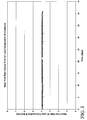
- FIG. 2 is a plot of the mass flow rate of Latex Flow Improver A versus time.
- FIG. 3 is a plot of the mass flow rate of Latex Flow Improver B versus time. As shown in FIG. 3 , Latex Flow Improver B circulated for a period of 41 days without substantial flow interruption. The test was stopped after 41 days and the equipment (pump and downstream filter, valves, and piping) were disassembled. Upon inspection, the pump showed very little film build-up and no material was found in the pump check valves downstream of the pump discharge.
- Latex Flow Improver B demonstrates a higher pumping stability than Latex Flow Improver A.
- amphiphilic refers to a compound having both hydrophobic and hydrophobic moieties.
- the term "and/or,” when used in a list of two or more items, means that any one of the listed items can be employed by itself or any combination of two or more of the listed items can be employed. For example, if a composition is described as containing components A, B, and/or C, the composition can contain A alone; B alone; C alone; A and B in combination; A and C in combination; B and C in combination; or A, B, and C in combination.
- the terms “comprising,” “comprises,” and “comprise” are open-ended transition terms used to transition from a subject recited before the term to one or more elements recited after the term, where the element or elements listed after the transition term are not necessarily the only elements that make up the subject.
- drag reducing polymer refers to a polymer having a weight average molecular weight of at least 5 X 10 6 g/mol that, when added to a fluid flowing through a conduit, is effective to reduce pressure loss associated with turbulent flow of the fluid through the conduit.
- HLB number refers to the hydrophile-lipophile balance of an amphiphilic compound as determined by the methods described by W.C. Griffin in J. Soc. Cosmet. Chem., 1, 311 (1949 ) and J. Soc. Cosmet. Chem., 5, 249 (1954 ).
- polymer refers to homopolymers, copolymers, terpolymers of one or more chemical species.
- polymerizable surfactant refers to a surfactant having at least one ethylenically unsaturated moiety.
- turbulent flow refers to fluid flow having a Reynolds number of at least 2,000.
- weight average molecular weight refers to the molecular weight of a polymer calculated according to the following formula: ⁇ i (N i M i 2 )/ ⁇ i (N i M i ), where N i is the number of molecules of molecular weight M i .
Landscapes
- Chemical & Material Sciences (AREA)
- Health & Medical Sciences (AREA)
- Chemical Kinetics & Catalysis (AREA)
- Organic Chemistry (AREA)
- Polymers & Plastics (AREA)
- Medicinal Chemistry (AREA)
- Engineering & Computer Science (AREA)
- Mechanical Engineering (AREA)
- General Engineering & Computer Science (AREA)
- Water Supply & Treatment (AREA)
- Public Health (AREA)
- Polymerisation Methods In General (AREA)
- Addition Polymer Or Copolymer, Post-Treatments, Or Chemical Modifications (AREA)
- Colloid Chemistry (AREA)
- Inorganic Chemistry (AREA)
- Graft Or Block Polymers (AREA)
Abstract
Description
- The present invention relates generally to flow improving compositions. In another aspect, the present invention relates to flow improvers comprising a plurality of polymeric core-shell particles.
-
EP 0 398 576 - In
US 6,841,593 , high concentration drag reducing agents are prepared by microencapsulating a polymer drag reducing agent. The polymerization is conducted entirely within the microcapsule under bulk polymerization conditions.WO 2008/014190 discloses a latex drag reducer comprising an aqueous continuous phase and a plurality of polymeric particles dispersed therein. The particles do not exhibit core/shell configuration. - In general, fluids transported via pipeline experience a reduction in fluid pressure over the length of the pipeline due to frictional energy losses. This problem is particularly evident in pipelines spanning long distances, such as those transporting crude oil and other liquid hydrocarbon products. In part, these frictional losses are caused by the formation of turbulent eddies within the fluid. To overcome these losses, pipelines employ one or more pumps to increase the pressure of the fluid and achieve a desired fluid flow rate through the pipe. As demand for fluids transported via pipeline (e.g., crude oil and refined products such as gasoline and diesel) increases, the flow rate and, correspondingly, the pipeline pumping pressure must increase. However, design limitations (e.g., size and pressure rating) often limit throughput of existing pipelines and building new or upgrading existing pipelines is often very labor-intensive and expensiye.
- One common solution for increasing the fluid throughput of a pipeline without altering its pressure is to employ a flow improving composition (i.e., a flow improver). Typically, flow improvers comprise one or more drag reducing agents (i.e., drag reducers) that are capable of reducing the friction losses by suppressing eddy formation. As a result, higher fluid flow rates are achievable at a constant pumping pressure. Typically, the drag reducers employed in flow improving compositions comprise ultrahigh molecular weight polymers. Polymeric drag reducing agents can be particularly advantageous for use in hydrocarbon-containing fluids.
- In general, polymeric drag reducers can be produced according to several polymerization techniques, such as bulk polymerization, emulsion polymerization, interfacial polymerization, suspension polymerization, and/or rotating disk or coacervation processes. Consequently, the resulting flow improver can take a variety of physical forms, including, for example, slurries, gels, emulsions, colloids, and solutions.
- Colloidal (i.e., latex) flow improvers are one example of flow improvers comprising polymeric drag reducing particles. Typically, latex flow improvers are introduced into pipelines used for transporting hydrocarbon-containing liquids via a high pressure injection pump. As the latex flow improver passes through the internals of the injection pump, at least a portion of the surfactant molecules associated with the polymeric latex particles can be sheared off, exposing the surface of the polymer and causing the latex particles to agglomerate. As a result, a polymeric film forms on internals of the pump and on downstream process equipment (e.g., valves, pipe, etc.), thereby causing a reduction in the pipeline system's efficiency. As the pipeline efficiency diminishes, the system operating and maintenance costs increase, while pipeline throughput declines.
- In one embodiment of the present invention, there is provided a flow improver comprising solid particles having a polymeric core and a polymeric shell at least partly surrounding the core. The core comprises a drag reducing polymer, while the shell comprises a shell copolymer having repeat units of a hydrophobic compound and repeat units of an amphiphilic compound.
- In another embodiment of the present invention, there is provided a latex flow improver comprising an aqueous continuous phase and a plurality of polymeric particles dispersed in the continuous phase. The polymeric particles comprise a core and a shell at least partly surrounding the core. The core comprises a drag reducing polymer formed by emulsion polymerization. The shell is formed around the core by emulsion polymerizing at least one hydrophobic monomer and at least one polymerizable surfactant in the presence of the core.
- In yet another embodiment of the present invention, there is provided a process for making a flow improver comprising: (a) forming a plurality of core particles of a drag reducing polymer by emulsion polymerization; and (b) forming shells around at least a portion of the core particles by emulsion polymerization to thereby produce a plurality of core-shell particles.
- In still another embodiment of the present invention, there is provided a process for reducing pressure loss associated with the turbulent flow of a fluid through a conduit. The process comprises using a pump to inject a flow improver into the fluid flowing through the conduit, where the flow improver comprises solid particles having a polymeric core and a polymeric shell at least partly surrounding the core. The core of the solid particles comprises a drag reducing polymer, while the shell comprises a shell copolymer having repeat units of a hydrophobic compound and repeat units of an amphiphilic compound.
-
-
FIG. 1 is a schematic diagram of a test apparatus for determining the pumping stability of various flow improvers; -
FIG. 2 is a mass flow rate versus time plot resulting from a pumping stability test performed with the apparatus depicted inFIG. 1 using a comparative latex flow improver; and -
FIG. 3 is a mass flow rate versus time plot resulting from a pumping stability test performed with the apparatus depicted inFIG. 1 using an inventive latex flow improver. - According to one embodiment of the present invention, a composition capable of reducing pressure drop associated with turbulent fluid flow through a conduit (i.e., a flow improving composition or flow improver) is provided. The flow improver can comprise a latex composition including a plurality of solid particles dispersed in a liquid continuous phase (i.e., a latex flow improver). In one embodiment, the dispersed solids can comprise core-shell particles formed via a two-step emulsion polymerization process described in detail below. The resulting core-shell latex flow improver can have a greater pumping stability than conventional latex flow improvers.
- The first step in producing core-shell latex flow improvers according to one embodiment of the present invention is to synthesize the cores of the polymeric particles (i.e., the core particles) via a first emulsion polymerization step. Generally, the first emulsion polymerization step involves polymerizing one or more monomers in a first reaction mixture comprising a liquid continuous phase, at least one emulsion stabilizer, an initiation system, and, optionally, a buffer and/or a hydrate inhibitor.
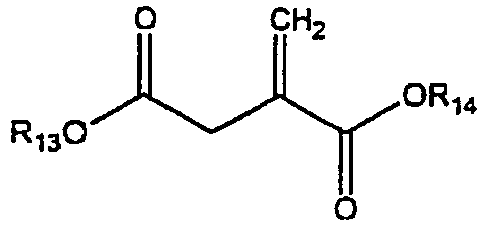
- The monomer(s) employed in the first emulsion polymerization step form core particles comprising repeating units of the monomer(s) residues. In one embodiment, the monomer(s) employed in the first emulsion polymerization step includes one or more monomers selected from the group consisting of:
- (A)

- (B)
R3-arene-R4
wherein arene is a phenyl, naphthyl, anthracenyl, or phenanthrenyl, R3 is CH=CH2 or CH3-C=CH2, and R4 is H, a C1-C30 alkyl radical, a C5-C30 substituted or unsubstituted cycloalkyl radical, Cl, SO3, ORB, or COORC, wherein RB is H, a C1-C30 alkyl radical, a C5-C30 substituted or unsubstituted cycloalkyl radical, a C6-C20 substituted or unsubstituted aryl radical, or an aryl-substituted C1-C10 alkyl radical, and wherein RC is H, a C1-C30 alkyl radical, a C5-C30 substituted or unsubstituted cycloalkyl radical, a C6-C20 substituted or unsubstituted aryl radical, or an aryl-substituted C1-C10 alkyl radical; - (C)

- (D)

- (E)

- (F)

- (G)

- (H)
- (I)

- (J)

- (K)

- (L)

- (M)

- (N)

- (O)

- (P)

- (Q)

- In one embodiment, an acrylate or methacrylate monomer (e.g., 2-ethylhexyl methacrylate) can be employed as the monomer(s) of the first emulsion polymerization step. Further, the monomer(s) employed can exclude alpha olefins (i.e., the monomer(s) can be all non-alpha-olefin(s)."). Generally, the first reaction mixture of the first polymerization step can comprise the monomer(s) in an amount in the range of from about 10 to about 60, about 20 to about 55, or 30 to 50 weight percent.
- The liquid continuous phase of the first reaction mixture can comprise a polar liquid. Examples of polar liquids can include, but are not limited to, water, organic liquids such as alcohols and diols, and mixtures thereof. According to one embodiment, the first reaction mixture can comprise the liquid continuous phase in an amount in the range of from about 20 to about 80, about 35 to about 75, or 50 to 70 weight percent.
- The emulsion stabilizing compound(s) (i.e., emulsion stabilizer) can be added to the first reaction mixture so that the first reaction mixture comprises in the range of from about 0.1 to about 10, about 0.25 to about 6, or 0.5 to 4 weight percent of an emulsion stabilizer. In one embodiment, the emulsion stabilizer can comprise a surfactant. In general, surfactants suitable for use in the reaction mixture of the first emulsion polymerization step can include at least one high HLB anionic or non-ionic surfactant. The term "HLB number" refers to the hydrophile-lipophile balance of a surfactant in an emulsion. The HLB number is determined by the methods described by W.C. Griffin in J. Soc. Cosmet. Chem., 1, 311 (1949) and J. Soc. Cosmet. Chem., 5, 249 (1954) . In one embodiment, the HLB number of surfactants for use with forming the reaction mixture for the first polymerization step can be at least about 8, at least about 10, or at least 12.
- Exemplary high HLB anionic surfactants include, but are not limited to, high HLB alkyl sulfates, alkyl ether sulfates, dialkyl sulfosuccinates, alkyl phosphates, alkyl aryl sulfonates, and sarcosinates. Suitable examples of commercially available high HLB anionic surfactants include, but are not limited to, sodium lauryl sulfate (available as RHODAPON LSB from Rhodia Incorporated, Cranbury, NJ), dioctyl sodium sulfosuccinate (available as AEROSOL® OT from Cytec Industries, Inc., West Paterson, NJ), 2-ethylhexyl polyphosphate sodium salt (available from Jarchem Industries Inc., Newark, NJ), sodium dodecylbenzene sulfonate (available as
NORFOX® 40 from Norman, Fox & Co., Vernon, CA), and sodium lauroylsarcosinic (available as HAMPOSYL L-30 from Hampshire Chemical Corp., Lexington, MA). - Exemplary high HLB non-ionic surfactants include, but are not limited to, high HLB sorbitan esters, PEG fatty acid esters, ethoxylated glycerine esters, ethoxylated fatty amines, ethoxylated sorbitan esters, block ethylene oxide/propylene oxide surfactants, alcohol/fatty acid esters, ethoxylated alcohols, ethoxylated fatty acids, alkoxylated castor oils, glycerine esters, linear alcohol ethoxylates, and alkyl phenol ethoxylates. Suitable examples of commercially available high HLB non-ionic surfactants include, but are not limited to, nonylphenoxy and octylphenoxy poly(ethyleneoxy) ethanols (available as the IGEPAL® CA and CO series, respectively from Rhodia, Cranbury, NJ), C8 to C18 ethoxylated primary alcohols (such as RHODASURF® LA-9 from Rhodia Inc., Cranbury, NJ), C11 to C15 secondary-alcohol ethoxylates (available as the TERGITOL™ 15-S series, including 15-S-7, 15-S-9, 15-S-12, from Dow Chemical Company, Midland, MI), polyoxyethylene sorbitan fatty acid esters (available as the TWEEN® series of surfactants from Uniquema, Wilmington, DE), polyethylene oxide (25) oleyl ether (available as SIPONIC™ Y-500-70 from American Alcolac Chemical Co., Baltimore, MD), alkylaryl polyether alcohols (available as the TRITON™ X series, including X-100, X-165, X-305, and X-405, from Dow Chemical Company, Midland, MI).
- The initiation system utilized in the first reaction mixture can be any suitable system for generating free radicals necessary to facilitate emulsion polymerization. The initiator can be added in an amount such that the molar ratio of monomer(s) to initiator in the first reaction mixture is in the range of from about 1,000:1 to about 5,000,000:1, about 2,500:1 to about 2,500,000:1, or 5,000:1 to 2,000,000:1. Examples of possible initiators include, but are not limited to, persulfates (e.g., ammonium persulfate, sodium persulfate, potassium persulfate), peroxy persulfates, and peroxides (e.g., tert-butyl hydroperoxide).
- Optionally, the initiation system can comprise one or more reducing components and/or one or more accelerators. In one embodiment, the first reaction mixture can have a molar ratio of monomer(s) to reducing component in the range of from about 1,000:1 to about 5,000,000:1, about 2,500:1 to about 2,500,000:1, or 5,000:1 to 2,000,000:1. Examples of reducing components can include, but are not limited to, bisulfites, metabisulfites, ascorbic acid, erythorbic acid, and sodium formaldehyde sulfoxylate. In another embodiment, an accelerator can be added to achieve an accelerator to initiator molar ratio in the range of from about 0.001:1 to about 10:1, about 0.0025:1 to about 5:1, or 0.005:1 to 1:1. Examples of accelerators can include, but are not limited to, compositions containing a transition metal having two oxidation states such as, for example, ferrous sulfate and ferrous ammonium sulfate. Alternatively, thermal and radiation initiation techniques can be employed to generate the free radicals. If a polymerization technique other than emulsion polymerization is utilized, the initiation and/or catalytic methods corresponding to the selected polymerization technique may also be employed. For example, addition or condensation polymerization is performed, the polymerization can be initiated or catalyzed by cationic, anionic, or coordination type methods.
- Optionally, the first reaction mixture can include at least one hydrate inhibitor. The hydrate inhibitor can comprise a thermodynamic hydrate inhibitor. Alcohols and polyols are two examples of hydrate inhibitors. In one embodiment, the hydrate inhibitor can comprise one or more polyhydric alcohols and/or one or more ethers of polyhydric alcohols. Examples of suitable hydrate inhibitors can include but are not limited to, monoethylene glycol, diethylene glycol, triethylene glycol, monopropylene glycol, dipropylene glycol, ethylene glycol monomethyl ether, diethylene glycol monomethyl ether, propylene glycol monomethyl ether, dipropylene glycol monomethyl ether, and mixtures thereof. If a hydrate inhibitor is employed, the first reaction mixture can have a hydrate inhibitor-to-water weight ratio in the range of from about 1:10 to about 10:1, about 1:5 to about 5:1, or 2:3 to 3:2.
- According to one embodiment of the present invention, the monomer(s), liquid continuous phase, emulsion stabilizer(s), and hydrate inhibitor (if present) can be combined under a substantially oxygen-free atmosphere comprising less than about 1,000 parts per million by weight (ppmw), less than about 500 ppmw, or less than 100 ppmw of oxygen prior to initiating polymerization. The oxygen-free atmosphere can be maintained by continuously purging the reaction vessel with an inert gas such as nitrogen and/or argon. Generally, the reactor system can be operated at a temperature ranging from about the freezing point of the reaction mixture to about 60°C, about 0 to about 45°C, or 1 to 30°C and a pressure in the range of from about 5 to about 100 pounds per square inch, absolute (psia), about 10 to about 25 psia, or at about atmospheric pressure. However, pressures up to and exceeding about 300 psia may be required to polymerize certain monomers, such as, for example, diolefins.
- In order to initiate polymerization, the pH of the first reaction mixture can be in the range of from about 5 to about 11, about 6 to about 10.5, or 6.5 to 10. If necessary, a buffer solution can be added to the first reaction mixture prior to the introduction of the initiation system to achieve and/or maintain the desired reaction pH. Typically, the type of buffer added to the first reaction mixture can be selected according to its compatibility with the chosen initiation system. Examples of buffers can include, but are not limited to, carbonate, phosphate, and/or borate buffers.
- To initiate polymerization, the initiation system described above can be added to the reactor via a single injection or over a time period of at least about 15 minutes, or in the range of from about 20 minutes to about 5 hours or 30 minutes to 2.5 hours. As the reaction is carried out, the reactor contents can be continuously stirred and the polymerization can continue for a period of time sufficient to convert at least about 90 weight percent of the monomers in the reaction mixture. Typically, the first polymerization step can be carried out for a period of time in the range of from about 1 to about 10 hours, about 2 to about 8 hours, or 3 to 5 hours.
- The first emulsion polymerization step yields a latex composition comprising a plurality of solid particles dispersed in a liquid continuous phase. In general, the latex can comprise the solid particles in an amount in the range of from about 10 to about 60 weight percent, about 15 to about 55, or 20 to 50 weight percent. The liquid continuous phase of the latex composition can comprise water, emulsion stabilizer(s), hydrate inhibitor (if present), and/or buffer (if present). Typically, the latex can comprise water in an amount in the range of from about 10 to about 80, about 35 to about 75, or 40 to 60 weight percent, and the emulsion stabilizer in an amount in the range of from about 0.1 to about 10, about 0.25 to about 8, or 0.5 to 6 weight percent.
- The latex particles of the latex composition resulting from the first emulsion polymerization step is subsequently used as core particles of a yet-to-be-described second latex composition comprising core-shell particles (i.e., a core-shell latex composition). The core particles comprise a drag reducing polymer. The core particles can comprise a non-polyalphaolefin drag reducing polymer. Additionally, the core particles can comprise repeating units of the residues of C4-C20 alkyl, C6-C20 substituted or unsubstituted aryl, or aryl-substituted C1-C10 alkyl ester derivatives of methacrylic or acrylic acid. In another embodiment, the core particles can comprise a copolymer having repeating units of the residues of 2-ethylhexyl methacrylate and the residues of at least one other monomer. In yet another embodiment, the core particles can comprise a copolymer having repeating units of the residues of 2-ethylhexyl methacrylate monomers and butyl acrylate monomers. In still another embodiment, the core particles can comprise a homopolymer having repeating units of residues of 2-ethylhexyl methacrylate (EHMA).
- In one embodiment of the present invention, the core particles can be formed of a drag reducing polymer having a weight average molecular weight (Mw) of at least about 5 x 10⁶ g/mol, at least about 1 x 10⁷ g/mol, or at least 2 x 10⁷ g/mol. The core particles can have a mean particle size of less than about 10 microns, less than about 1,000 nm (1 micron), in the range of from about 10 to about 500 nm, or in the range of from 50 to 250 nm. In one embodiment, at least about 95 weight percent of the core particles can have a particle size in the range of from about 10 nm to about 500 nm and at least about 95 weight percent of the particles can have a particle size in the range of from about 25 nm to about 250 nm.
- In accordance with the present invention, at least a portion or substantially all of the first latex composition is exposed to a second polymerization step to thereby produce a core-shell latex composition. The second polymerization step comprises emulsion polymerization and does not include interfacial polymerization, suspension polymerization, and/or rotating disk polymerization or complex coacervation processes. Typically, the second emulsion polymerization step can be carried out by copolymerizing one or more hydrophobic monomers and one or more amphiphilic compounds in the presence of an initiation system to thereby form a shell copolymer. The shell copolymer forms shells that at least partly surround or entirely surround at least a portion of the individual core latex particles formed in the first polymerization step to thereby produce a plurality of core-shell latex particles.
- In general, the hydrophobic monomer(s) utilized in the second emulsion polymerization step can include hydrophobic monomers having a weight average molecular weight in the range of from about 50 to about 400, about 100 to about 350, or 150 to 310 grams per mole (g/mole). One or more of the monomers (A) - (Q) previously discussed with reference to the first emulsion polymerization step can be employed as the hydrophobic monomer to form the shell copolymer in the second emulsion polymerization step. In one embodiment, the hydrophobic monomer is an acrylate and/or methacrylate monomer, such as, for example, 2-ethylhexyl methacrylate.
- Generally, the amphiphilic compound(s) utilized in the second emulsion polymerization step can have a weight average molecular weight of at least about 100 g/mole or in the range of from about 200 to about 5,000, or 300 to 2,500 g/mole. In one embodiment, the amphiphilic compounds can comprise one or more surfactants having an HLB number in the range of from about 6 to about 19, about 9 to about 17, or 11 to 16. In addition, the one or more surfactants utilized in the second polymerization step can comprise an ionic and/or a non-ionic polymerizable surfactant. In one embodiment, the second emulsion polymerization step can be carried out in the presence of at least one ionic polymerizable surfactant and at least one non-ionic polymerizable surfactant. Examples of suitable surfactants can include, but are not limited to, polyethylene glycol methacrylate (available as the Blemmer® PE and PEG series of surfactants from Nippon Oil & Fats Co., Ltd., Tokyo, Japan), propylene glycol methacrylate (available as the Blemmer® PP series of surfactants from Nippon Oil & Fats Co., Ltd., Tokyo, Japan), styrene sulfonic acid sodium salt, 2-acrylamidoglycolic acid (available from Sigma-Aldrich Corp., St. Louis, Missouri), (acrylamidomethul)cellulose acetate propionate, ionized or non-ionized 2-acrylamido-2-methyl-1-propanesulfonic acid (available as the AMPS® monomer series from Lubrizol Advanced Materials Inc., Wickliffe, OH), 3-sulfopropyl acrylate potassium salt (available from Taiwan Hopax Chemical Manufacturing Co., Kaohsiung, Taiwan), 3-sulfopropyl methacrylate potassium salt, ionized or non-ionized methacrylic acid, and ionized or non-ionized acrylic acid (each available from Sigma-Aldrich Corp., St. Louis, Missouri).
- The initiation system utilized in the second emulsion polymerization step can comprise any of the previously-discussed initiators, including, for example, persulfates (e.g., ammonium persulfate, sodium persulfate, potassium persulfate), peroxy persulfates, and peroxides (e.g., tert-butyl hydroperoxide). Optionally, the reaction mixture of the second polymerization step can also include one or more accelerators and/or reducing components according to the ratios discussed above.
- As discussed previously, in one embodiment, the second polymerization step can be initiated by first charging a reactor with at least a portion or substantially all of the first latex composition isolated from the reactor of the first polymerization step and stored for a period of time before performing the second polymerization step. Alternatively, at least a portion or substantially all of the first latex composition can remain in the reactor and the second polymerization step can be carried out immediately after the first polymerization step in the same reaction vessel.
- According to one embodiment of the present invention, the latex composition charged to the reactor can be agitated and purged with an inert gas (e.g., nitrogen) to create a substantially oxygen-free environment. The latex composition can then be heated to a temperature greater than about 50°C, or in the range of from about 60 to about 110°C, or 75 to 95°C prior to adding the initiation system, monomer(s), and amphiphilic compound(s). In one embodiment, the second emulsion polymerization step can be carried out in a semi-continuous manner under monomer-starved conditions by adding the total volume of one or more of the above-described reactant(s) over a time period of at least about 10 minutes, at least about 15 minutes, at least about 30 minutes, at least about 1 hour, or at least 2 hours.
- Typically, the second reaction mixture can be continuously agitated during polymerization so that the reaction takes place under high shear conditions. In general, the second polymerization step can be continued long enough that at least about 80, at least about 90, or at least 95 weight percent of the monomer(s) have been polymerized.
- In one embodiment, the resulting shell copolymer can comprise repeat units of the monomer(s) in an amount in the range of from about 25 to about 98, about 50 to about 95, or 70 to 90 weight percent, based on the total weight of the resulting shell copolymer. In one embodiment wherein non-ionic and ionic polymerizable surfactants are used, the resulting shell copolymer can comprise repeat units of the non-ionic polymerizable surfactant in an amount in the range of from about 2 to about 50, about 4 to about 40, or 8 to 25 weight percent and can comprise repeat units of the ionic polymerizable surfactant in an amount in the range of from about 0.05 to about 30, about 1 to about 20, or 2 to 15 weight percent, based on the total weight of the shell copolymer. The weight ratio of repeat units of the monomer(s) to repeat units of the non-ionic polymerizable surfactant in the shell copolymer can be in the range of from about 0.5:1 to about 40:1, about 1:1 to about 20:1, or 2:1 to 10:1 and the weight ratio of the monomer repeat units to the repeat units of the ionic polymerizable surfactant can be in the range of from about 1:1 to about 100:1, about 3:1 to about 50:1, or 5:1 to 30:1. In one embodiment, the weight ratio of the repeat units of the non-ionic polymerizable surfactant to the repeat units of the ionic polymerizable surfactant in the shell copolymer can be in the range of from about 0.25:1 to about 30:1, about 0.75:1 to about 10:1, or 1.5:1 to 6:1.
- The second emulsion polymerization step can yield a latex composition comprising a plurality of solid core-shell particles dispersed a liquid continuous phase. In general, the latex can comprise the particles in an amount in the range of from about 10 to about 60 weight percent, about 15 to about 55, or 20 to 50 weight percent. The liquid continuous phase of the latex composition can comprise water, emulsion stabilizer(s), and hydrate inhibitor (if present), and/or buffer (if present). Typically, the latex can comprise water in an amount in the range of from about 10 to about 80, about 35 to about 75, or 40 to 60 weight percent, and the emulsion stabilizer(s) in an amount in the range of from about 0.1 to about 10, about 0.25 to about 8, or 0.5 to 6 weight percent. In one embodiment, the liquid continuous phase can comprise a mixture of water and ethylene glycol and/or propylene glycol. Generally, the latex composition can have a viscosity of less than about 1,000 mPa (1,000 centipoise (cp)), or in the range of from 1 to 100 or 2 to 700 mPa (about 1 to about 100 or 2 to 700 cp), measured at a shear rate of 511 sec-1 and a temperature of 24°C (75°F).
- According to one embodiment, at least a portion of the shells of the dispersed particles of the latex composition produced during the second emulsion polymerization step can at least partly or entirely surround at least a portion of the core particles without being chemically or physically bound to the cores. In one embodiment, the shell copolymer can be a non-drag-reducing copolymer.
- Typically, the core-shell particles can have a mean particle size of less than about 10 microns, less than about 1,000 nm (1 micron), in the range of from about 10 to about 750 nm, or in the range of from 50 to 250 nm. In one embodiment, at least about 90 weight percent of the core-shell particles have a particle size greater than 25 nanometers and/or less than 500 nanometers. According to one embodiment, the core-shell particles can have an average weight ratio of the core to the shell in the range of from about 1.5:1 to about 30:1, about 2:1 to about 20:1, or 4:1 to 15:1. In general, the shell constitutes in the range of from about 2 to about 40, about 5 to about 30, or 10 to 25 weight percent of the total weight of the core-shell particle and can have an average thickness in the range of from about 0.1 to about 20, about 0.5 to about 15, or 1 to 10 percent of the mean particle diameter of the total core-shell particle. Typically, the average shell thickness can be in the range of from about 0.5 to about 30, about 1 to about 20, or 2 to 15 nm.
- In one embodiment of the present invention, the above-described core-shell flow improving composition can be added to a hydrocarbon-containing fluid flowing through a fluid conduit In one embodiment, the hydrocarbon-containing fluid can comprise crude oil, gasoline, diesel, and/or other refined products. The flow improver can be added to the fluid conduit via one or more injection pumps at one or more locations along the length of the conduit. In one embodiment, the injection pump can have a discharge pressure greater than 3,45 MPa (about 500 psig), or in the range of from 4.14 to 17.2 MPa, or 5.17 to 10.3 MPa (about 600 to about 2,500 psig, or 750 to 1,500 psig).
- Typically, the amount of flow improver added to the treated hydrocarbon-containing fluid is such that the fluid can experience a drag reduction of at least about 5 percent, at least about 10 percent, or at least 15 percent compared to the untreated fluid. In one embodiment, the cumulative concentration of the drag reducing core polymer in the treated fluid can be in the range of from about 0.1 to about 500 ppmw, about 0.5 to about 200 ppmw, about 1 to about 100 ppmw, or 2 to 50 ppmw. Typically, at least about 50 weight percent, at least about 75 weight percent, or at least 95 weight percent of the core-shell particles of the flow-improving composition can be dissolved by the hydrocarbon-containing fluid.
- The following examples are intended to be illustrative of the present invention in order to teach one of ordinary skill in the art to make and use the invention
- In the Examples that follow, the test method described below was used for determining the pumping stability of latex flow improving compositions.
FIG. 1 depicts atest apparatus 10 used for the pumping stability tests. - The pumping stability test were initiated by gravity feeding a latex flow improver from a 165-
gallon feed tank 12 into the suction of a Milton Roy C High Performance Diaphragm (HPD) Metering pump 14 (available from Milton Roy USA in Ivyland, Pennsylvania). The flow improver was filtered with a 100-micron filter 16 and then pumped at a rate corresponding to 50 percent stroke length through 3000 feet of ½ inch diameter (0.049 inch wall thickness) stainless steel coiledtubing 18 prior to reenteringfeed tank 12 viareturn line 20, as shown inFIG. 1 . To minimize product foaming, the outlet ofreturn line 20 was positioned below the liquid level infeed tank 12. The mass flow rate of the circulating flow improver was monitored via an Endress+Hauser coriolis flow meter 22 (available from Endress+Hauser, Inc. in Greenwood, Indiana) and graphically recorded over the duration of the experiment. The flow improver was allowed to circulate continuously throughtest apparatus 10 for a period of 6 weeks or until pump failure occurred. Upon conclusion of the test,apparatus 10 was dismantled and pump 14,filter 16, and coiledtubing 18 were visually inspected and the observations were documented. - Latex Flow Improver A (comparative) was prepared by emulsion polymerization according to the following procedure.
- Polymerization was performed in a 185-gallon stainless steel, jacketed reactor with a mechanical stirrer, thermocouple, feed ports, and nitrogen inlets/outlets. The reactor was charged 199,58 kg (440 lbs) of monomer (2-ethylhexyl methacrylate), 131 kg (288.9 lbs) of de-ionized water, 126.55 kg (279.0 lbs) of monoethylene glycol, 18.78 kg (41.4 lbs) of Polystep® B-5 (surfactant, available from Stepan Company of Northfield, Illinois), 19,96 kg (44 lbs) of Tergitol™15-S-7 (surfactant, available from Dow Chemical Company of Midland, Michigan), 0,56 kg (1.24 lbs) of potassium phosphate monobasic (pH buffer), 0.44 kg (0.97 lbs) of potassium phosphate dibasic (pH buffer), and 33.2 grams of ammonium persulfate, (NH4)2S2O8 (oxidizer).
- The monomer, water, and monoethylene glycol mixture was agitated at 110 rpm while being cooled to 5°C (41°F) The two surfactants were added and the agitation was slowed down to 80 rpm for the remainder of the reaction. The buffers and the oxidizer were then added. The polymerization reaction was initiated by adding 4.02 grams of ammonium iron(II) sulfate, Fe(NH4)2(SO4)2·6H2O in a solution of 0.010 M sulfuric acid solution in de-ionized water at a concentration of 1117 ppm at a rate of 5 g/min into the reactor. The solution was injected for 10 hours to complete the polymerization. The resulting latex was pressured out of the reactor through a 5-micron bag filter and stored.
- Latex Flow Improver B (inventive) was prepared by emulsion polymerization according to the following procedure.
- 453,6 kg (One thousand pounds) of Latex Flow Improver A, as prepared according to the procedure of Example 1, was charged into a stainless steel jacketed reactor having a mechanical stirrer, thermocouple, feed ports, and nitrogen inlets and outlets. The flow improver was agitated at a speed of 80 rpm under a constant nitrogen purge while being heated to 176°F. Next, 4011 grams of an aqueous solution comprising 25.21 weight percent ammonium persulfate, (NH4)2S2O8 (an oxidizer) was injected into the reactor and the reactor contents were allowed to stir for 30 minutes. Next, the following three reactants were simultaneously injected into the reactor: (1) an aqueous solution comprising 25.85 weight percent ammonium persulfate; (2) an aqueous solution comprising methoxypolyethylene glycol 500 methacrylate, 13.33 weight percent sodium styrene sulfonate, and 46.67 weight percent de-ionized water; and (3) 2-ethylhexyl methacrylate. Reactant (1) was injected into the reactor at a rate of 20 grams per minute (g/min) for 2.5 hours, reactant (2) was injected at a rage of 113.4 g/min for 2 hours, and reactant stream (3) was injected into the reactor at 215.0 g/min for 2.25 hours. After the injection of reactant (1) was completed, the reactor contents were then held for 30 minutes at 80°C (176 °F) while agitating at 80 rpm. The resulting latex was then cooled to below 38°C (100 °F), pressured out of the reactor through a 5-micron bag filter and stored.
- Latex Flow Improver A (comparative) and Latex Flow Improver B (inventive) were subjected to the above-described test method to determine the relative pumping stability of each composition. The results of these experiments are illustrated in
FIGS. 2 and3 . -
FIG. 2 is a plot of the mass flow rate of Latex Flow Improver A versus time. - After less than 4 days, the trial was stopped due to extended periods of erratic, low, or no fluid flow, as shown in
FIG. 2 . The pump was disassembled and showed considerable build up of a polymeric film. In addition, large pieces of polymeric material were found in downstream valves and piping. -
FIG. 3 is a plot of the mass flow rate of Latex Flow Improver B versus time. As shown inFIG. 3 , Latex Flow Improver B circulated for a period of 41 days without substantial flow interruption. The test was stopped after 41 days and the equipment (pump and downstream filter, valves, and piping) were disassembled. Upon inspection, the pump showed very little film build-up and no material was found in the pump check valves downstream of the pump discharge. - Thus, as Latex Flow Improver B flowed longer without interruption and showed little evidence of film build up, Latex Flow Improver B demonstrates a higher pumping stability than Latex Flow Improver A.
- As used herein, the terms "a,'' "an," "the," and "said" mean one or more.
- As used herein, the term "amphiphilic" refers to a compound having both hydrophobic and hydrophobic moieties.
- As used herein, the term "and/or," when used in a list of two or more items, means that any one of the listed items can be employed by itself or any combination of two or more of the listed items can be employed. For example, if a composition is described as containing components A, B, and/or C, the composition can contain A alone; B alone; C alone; A and B in combination; A and C in combination; B and C in combination; or A, B, and C in combination.
- As used herein, the terms "comprising," "comprises," and "comprise" are open-ended transition terms used to transition from a subject recited before the term to one or more elements recited after the term, where the element or elements listed after the transition term are not necessarily the only elements that make up the subject.
- As used herein, the terms "containing," "contains," and "contain" have the same open-ended meaning as "comprising," "comprises," and "comprise" provided above.
- As used herein, the terms "including," "includes," and "include" have the same open-ended meaning as "comprising," "comprises," and "comprise" provided above.
- As used herein, the terms "having," "has," and "have" have the same open-ended meaning as "comprising," "comprises," and "comprise" provided above.
- As used herein, the term "drag reducing polymer" refers to a polymer having a weight average molecular weight of at least 5 X 10⁶ g/mol that, when added to a fluid flowing through a conduit, is effective to reduce pressure loss associated with turbulent flow of the fluid through the conduit.
- As used herein, the term "HLB number" refers to the hydrophile-lipophile balance of an amphiphilic compound as determined by the methods described by W.C. Griffin in J. Soc. Cosmet. Chem., 1, 311 (1949) and J. Soc. Cosmet. Chem., 5, 249 (1954).
- As used herein, the term "polymer" refers to homopolymers, copolymers, terpolymers of one or more chemical species.
- As used herein, the term "polymerizable surfactant" refers to a surfactant having at least one ethylenically unsaturated moiety.
- As used herein, the term "turbulent flow" refers to fluid flow having a Reynolds number of at least 2,000.
- As used herein, the term "weight average molecular weight" refers to the molecular weight of a polymer calculated according to the following formula: Σi(NiMi 2)/Σi(NiMi), where Ni is the number of molecules of molecular weight Mi.
Claims (17)
- A flow improver comprising: solid particles having a polymeric core and a polymeric shell at least partly surrounding said core, wherein said core comprises a drag reducing polymer, wherein said shell comprises a shell copolymer having repeat units of a hydrophobic compound and repeat units of a first amphiphilic compound.
- The flow improver of claim 1, wherein said first amphiphilic compound is a polymerizable surfactant, wherein the weight ratio of repeat units of said hydrophobic compound to repeat units of said first amphiphilic compound in said shell copolymer is in the range of from 0.5:1 to 40:1.
- The flow improver of claim 1, wherein said first amphiphilic
compound is polyethylene glycol methacrylate and/or said hydrophobic compound is 2-ethylhexyl methacrylate. - The flow improver of claim 1, wherein said shell copolymer further comprises repeat units of a second amphiphilic compound, wherein said first amphiphilic compound is a non-ionic polymerizable surfactant and said second amphiphilic compound is an ionic polymerizable surfactant, wherein the weight ratio of repeat units of said first amiphiphilic compound to repeat units of said second amphiphilic compound in said shell copolymer is in the range of from 0.25:1 to 30:1.
- A latex flow improver comprising: an aqueous continuous phase and a plurality of polymeric particles dispersed in said continuous phase, wherein said polymeric particles comprise a core and a shell at least partly surrounding said core, wherein said core comprises a drag reducing polymer formed by emulsion polymerization, wherein said shell is formed around said core by emulsion polymerizing at least one hydrophobic monomer and at least one polymerizable surfactant in the presence of said core.
- The flow improver of claim 5, wherein said shell comprises repeat units of said hydrophobic monomer in an amount in the range of from 25 to 98 weight percent.
- The flow improver of claim 6, wherein said hydrophobic monomer is a methacrylate or acrylate monomer.
- The flow improver of claim 6, wherein the emulsion polymerization carried out to form said shell includes the use of a first non-ionic polymerizable surfactant and a second ionic polymerizable surfactant, wherein said shell comprises repeat units of said first polymerizable surfactant in an amount in the range of from 2 to 50 weight percent and repeat units of said second polymerizable surfactant in an amount in the range of from 0.05 to 30 weight percent.
- A process for making a flow improver comprising:(a) forming a plurality of core particles of a drag reducing polymer by emulsion polymerization; and(b) forming shells around at least a portion of said core particles by emulsion polymerization to thereby produce a plurality of core-shell particles.
- The process of claim 9, wherein said emulsion polymerization of step (a) is carried out in a first reaction mixture comprising a first liquid continuous phase, wherein said emulsion polymerization of step (b) is carried out in a second reaction mixture comprising a second liquid continuous phase and at least a portion of said core particles, wherein said second liquid continuous phase comprises at least a portion of said first liquid continuous phase.
- The process of claim 10, wherein said second liquid continuous phase comprises substantially all of said first liquid continuous phase.
- The process of claim 9, wherein said forming of step (b) includes polymerizing one or more shell-forming monomers and at least one polymerizable surfactant so that said shell comprises repeat units of said shell-forming monomer and repeat units of said at least one polymerizable surfactant.
- The process of claim 12, wherein said shell-forming monomers and said polymerizable surfactant do not chemically react with said core particles during said forming of step (b).
- The process of claim 9, wherein said shells comprise repeat units of a hydrophobic monomer, a non-ionic polymerizable surfactant, and an ionic polymerizable surfactant, wherein the weight ratio of repeat units of said hydrophobic monomer to repeat units of said non-ionic polymerizable surfactant in said shells is in the range of from 0.5:1 to 40:1, wherein the weight ratio of repeat units of said non-ionic polymerizable surfactant to repeat units of said ionic polymerizable surfactant in said shells is in the range of from 0.25:1 to 30:1.
- A process for reducing pressure loss associated with the turbulent flow of a fluid through a conduit, said process comprising: using a pump to inject a latex flow improver into said fluid flowing through said conduit, wherein said flow improver comprises solid particles having a polymeric core and a polymeric shell at least partly surrounding said core, wherein said core comprises a drag reducing polymer, wherein said shell comprises a shell copolymer having repeat units of a hydrophobic compound and repeat units of a first amphiphilic compound.
- The process of claim 15, wherein said shell further comprises repeat units of a second amphiphilic compound, wherein said first amphiphilic compound is a non-ionic polymerizable surfactant and said second amphiphilic compound is an ionic polymerizable surfactant, wherein the weight ratio of repeat units of said first polymerizable surfactant to repeat units of said second polymerizable surfactant in said shell is in the range of from 0.25:1 to 30:1.
- The process of claim 15, wherein said pump injects said flow improver at a pressure of at least 3.45 MPa (500 psig) wherein said flow improver is injected into said fluid at a rate sufficient to provide in the range of from about 0.1 to 200 ppmw of said drag reducing polymer in said fluid, wherein said fluid is a hydrocarbon-containing fluid.
Priority Applications (1)
| Application Number | Priority Date | Filing Date | Title |
|---|---|---|---|
| PL08872453T PL2254963T3 (en) | 2008-02-14 | 2008-10-28 | Core-shell flow improver |
Applications Claiming Priority (2)
| Application Number | Priority Date | Filing Date | Title |
|---|---|---|---|
| US12/031,290 US20090209679A1 (en) | 2008-02-14 | 2008-02-14 | Core-shell flow improver |
| PCT/US2008/081454 WO2009102348A1 (en) | 2008-02-14 | 2008-10-28 | Core-shell flow improver |
Publications (2)
| Publication Number | Publication Date |
|---|---|
| EP2254963A1 EP2254963A1 (en) | 2010-12-01 |
| EP2254963B1 true EP2254963B1 (en) | 2012-08-01 |
Family
ID=40280702
Family Applications (1)
| Application Number | Title | Priority Date | Filing Date |
|---|---|---|---|
| EP08872453A Not-in-force EP2254963B1 (en) | 2008-02-14 | 2008-10-28 | Core-shell flow improver |
Country Status (12)
| Country | Link |
|---|---|
| US (3) | US20090209679A1 (en) |
| EP (1) | EP2254963B1 (en) |
| CN (2) | CN101945967B (en) |
| BR (1) | BRPI0821931B1 (en) |
| CA (1) | CA2714384C (en) |
| CO (1) | CO6290778A2 (en) |
| DK (1) | DK2254963T3 (en) |
| EA (1) | EA030160B1 (en) |
| ES (1) | ES2394709T3 (en) |
| MX (1) | MX350323B (en) |
| PL (1) | PL2254963T3 (en) |
| WO (1) | WO2009102348A1 (en) |
Families Citing this family (7)
| Publication number | Priority date | Publication date | Assignee | Title |
|---|---|---|---|---|
| US8282266B2 (en) | 2007-06-27 | 2012-10-09 | H R D Corporation | System and process for inhibitor injection |
| CN102453297B (en) * | 2010-10-28 | 2013-10-16 | 中国石油天然气股份有限公司 | A supramolecular polymer oil drag reducer and preparation method thereof |
| EP2640799B1 (en) | 2010-11-16 | 2019-11-13 | LiquidPower Specialty Products Inc. | Additives for reducing drag |
| DE102012007438A1 (en) * | 2012-04-13 | 2013-10-17 | Fraunhofer-Gesellschaft zur Förderung der angewandten Forschung e.V. | Thermotropic particles, process for their preparation and their use and doped polymers containing them |
| EP3433376A4 (en) * | 2016-03-25 | 2020-03-18 | Floyd, William, Clary | LIGHT-ACTIVATED COATING AND MATERIALS |
| US11767487B2 (en) | 2020-07-13 | 2023-09-26 | Baker Hughes Oilfield Operations Llc | Inverting aids for latex-based drag reducing agents |
| CN114515554A (en) * | 2022-01-18 | 2022-05-20 | 国家石油天然气管网集团有限公司 | Preparation method of poly alpha-olefin drag-reducing high-molecular polymer microcapsule |
Family Cites Families (46)
| Publication number | Priority date | Publication date | Assignee | Title |
|---|---|---|---|---|
| US3493000A (en) * | 1968-02-07 | 1970-02-03 | Exxon Research Engineering Co | Method for reducing the frictional drag of flowing fluids |
| US3661541A (en) * | 1969-04-22 | 1972-05-09 | Exxon Research Engineering Co | Fuel oil compositions containing a mixture of polymers to improve the pour point and flow properties |
| US3679582A (en) * | 1969-10-08 | 1972-07-25 | Shell Oil Co | Flow improvement of waxy hydrocarbon with the aid of polysaccharide derivatives |
| GB1285087A (en) * | 1969-12-18 | 1972-08-09 | Shell Int Research | Oil compositions |
| US3654994A (en) * | 1970-08-06 | 1972-04-11 | Calgon Corp | Friction reducing in flowing hydrocarbon fluids |
| US3758406A (en) * | 1971-10-22 | 1973-09-11 | Halliburton Co | Flow of hydrocarbon liquids methods and compositions for reducing frictional pressure loss in the |
| US3748266A (en) * | 1971-11-01 | 1973-07-24 | Halliburton Co | Methods and compositions for reducing frictional pressure loss in theflow of hydrocarbon liquids |
| US3854893A (en) | 1972-06-14 | 1974-12-17 | Exxon Research Engineering Co | Long side chain polymeric flow improvers for waxy hydrocarbon oils |
| US3857402A (en) * | 1972-08-31 | 1974-12-31 | Nalco Chemical Co | Transmission of oil |
| US3985703A (en) * | 1975-06-24 | 1976-10-12 | Rohm And Haas Company | Process for manufacture of acrylic core/shell polymers |
| US4016894A (en) * | 1975-08-28 | 1977-04-12 | Belknap Corporation | Drag reducing composition and method |
| US4546784A (en) * | 1982-12-29 | 1985-10-15 | Exxon Research And Enginering Co. | Drag reduction agent |
| US4573488A (en) * | 1984-04-12 | 1986-03-04 | The Dow Chemical Company | Additives for nonaqueous liquids |
| GB8412423D0 (en) * | 1984-05-16 | 1984-06-20 | Allied Colloids Ltd | Polymeric compositions |
| US4640945A (en) * | 1985-11-12 | 1987-02-03 | Exxon Research And Engineering Company | Drag reduction with novel hydrocarbon soluble polyampholytes |
| US4693321A (en) * | 1985-11-18 | 1987-09-15 | Conoco Inc. | Method using encapsulated flow improvers to reduce turbulence |
| US4720397A (en) * | 1985-12-12 | 1988-01-19 | General Technology Applications, Inc. | Rapid dissolving polymer compositions and uses therefor |
| US4881566A (en) * | 1988-10-11 | 1989-11-21 | Conoco Inc. | Method for reducing pressure drop in the transportation of drag reducer |
| CA2015832C (en) * | 1989-05-15 | 2002-05-28 | Eric K. Eisenhart | Multi-stage polymer particles having a hydrophobically-modified, ionically-soluble stage |
| US5110874A (en) * | 1989-07-18 | 1992-05-05 | Petrolite Corporation | Methods and compositions for reduction of drag in hydrocarbon fluids |
| US4983186A (en) * | 1989-07-18 | 1991-01-08 | Petrolite Corporation | Methods and compositions for reduction of drag in hydrocarbon fluids |
| US5080121A (en) * | 1990-08-06 | 1992-01-14 | Council Of Scientific & Industrial Research | Process for the preparation of a new polymer useful for drag reduction in hydrocarbon fluids in exceptionally dilute polymer solutions |
| US5096603A (en) * | 1990-08-08 | 1992-03-17 | Exxon Research And Engineering Company | Thermally stable hydrophobically associating rheological control additives for water-based drilling fluids |
| US5449732A (en) * | 1993-06-18 | 1995-09-12 | Conoco Inc. | Solvent free oil soluble drag reducing polymer suspension |
| EA001149B1 (en) * | 1996-03-21 | 2000-10-30 | Сека С.А. | Acrylic copolymers as additives for inhibiting paraffin deposition in crude oils, and compositions containing same |
| FR2767835B1 (en) * | 1997-08-28 | 2003-09-12 | Atochem Elf Sa | LATEX CONTAINING NO VOLATILE ORGANIC COMPOUNDS OR COALESCENCE AGENTS AND CAPABLE OF FORMING A FILM AT LOW TEMPERATURE |
| US6126872A (en) * | 1998-01-27 | 2000-10-03 | Baker Hughes Incorporated | Microencapsulated drag reducing agents |
| US5928830A (en) * | 1998-02-26 | 1999-07-27 | Xerox Corporation | Latex processes |
| GB2354001A (en) | 1998-05-02 | 2001-03-14 | Bp Chem Int Ltd | Polymers and their uses |
| US6178980B1 (en) * | 1998-08-26 | 2001-01-30 | Texaco Inc. | Method for reducing the pipeline drag of heavy oil and compositions useful therein |
| CA2353900C (en) * | 1998-12-21 | 2005-03-08 | Baker Hughes Incorporated | Closed loop chemical injection and monitoring system for oilfield operations |
| BR0108881B1 (en) * | 2000-03-02 | 2010-10-05 | chemical injection system for use in a well, oil well for producing petroleum products, and method of operating an oil well. | |
| CA2322102A1 (en) * | 2000-10-02 | 2002-04-02 | Chemergy Ltd. | Fracturing fluid |
| US20020065352A1 (en) * | 2000-11-28 | 2002-05-30 | Johnston Ray L | Drag-reducing polymers and suspensions thereof |
| WO2002044280A1 (en) * | 2000-11-28 | 2002-06-06 | Conoco Inc | Drag-reducing polymer suspensions |
| US6841593B2 (en) * | 2001-07-05 | 2005-01-11 | Baker Hughes Incorporated | Microencapsulated and macroencapsulated drag reducing agents |
| US6723683B2 (en) * | 2001-08-07 | 2004-04-20 | National Starch And Chemical Investment Holding Corporation | Compositions for controlled release |
| TW553767B (en) * | 2002-12-30 | 2003-09-21 | Ind Tech Res Inst | Method for producing ultra-fine dispersion solution |
| US6894088B2 (en) * | 2003-03-24 | 2005-05-17 | Baker Hughes Incorporated | Process for homogenizing polyolefin drag reducing agents |
| US20050049327A1 (en) * | 2003-09-02 | 2005-03-03 | Vladimir Jovancicevic | Drag reducing agents for multiphase flow |
| US7468402B2 (en) * | 2004-03-17 | 2008-12-23 | Baker Hughes Incorporated | Polymeric nanoemulsion as drag reducer for multiphase flow |
| GB0409570D0 (en) * | 2004-04-29 | 2004-06-02 | Ciba Spec Chem Water Treat Ltd | Particulate compositions and their manufacture |
| US7285582B2 (en) * | 2004-12-30 | 2007-10-23 | Conocophillips Company | Modified latex drag reducer and processes therefor and therewith |
| US7361628B2 (en) * | 2004-12-30 | 2008-04-22 | Conocophillips Company | Remote delivery of latex drag-reducing agent without introduction of immiscible low-viscosity flow facilitator |
| US20080023071A1 (en) * | 2006-07-28 | 2008-01-31 | Smith Kenneth W | Hydrate inhibited latex flow improver |
| US20080058473A1 (en) * | 2006-08-31 | 2008-03-06 | Yakov Freidzon | Latex for low VOC paint having improved block resistance, open time and water-softening resistance |
-
2008
- 2008-02-14 US US12/031,290 patent/US20090209679A1/en not_active Abandoned
- 2008-10-28 CA CA2714384A patent/CA2714384C/en active Active
- 2008-10-28 DK DK08872453.9T patent/DK2254963T3/en active
- 2008-10-28 CN CN200880126858.5A patent/CN101945967B/en not_active Expired - Fee Related
- 2008-10-28 ES ES08872453T patent/ES2394709T3/en active Active
- 2008-10-28 MX MX2010008968A patent/MX350323B/en active IP Right Grant
- 2008-10-28 WO PCT/US2008/081454 patent/WO2009102348A1/en not_active Ceased
- 2008-10-28 PL PL08872453T patent/PL2254963T3/en unknown
- 2008-10-28 EP EP08872453A patent/EP2254963B1/en not_active Not-in-force
- 2008-10-28 EA EA201070960A patent/EA030160B1/en not_active IP Right Cessation
- 2008-10-28 BR BRPI0821931-1A patent/BRPI0821931B1/en not_active IP Right Cessation
- 2008-10-28 CN CN201610183141.0A patent/CN105837709B/en not_active Expired - Fee Related
-
2010
- 2010-09-14 CO CO10113388A patent/CO6290778A2/en not_active Application Discontinuation
-
2016
- 2016-07-15 US US15/210,918 patent/US11028210B2/en active Active
-
2021
- 2021-05-13 US US17/319,669 patent/US12252570B2/en active Active
Also Published As
| Publication number | Publication date |
|---|---|
| ES2394709T3 (en) | 2013-02-05 |
| CO6290778A2 (en) | 2011-06-20 |
| DK2254963T3 (en) | 2012-09-17 |
| EA030160B1 (en) | 2018-06-29 |
| CA2714384C (en) | 2016-04-12 |
| CN105837709B (en) | 2019-08-13 |
| US20160326294A1 (en) | 2016-11-10 |
| CN105837709A (en) | 2016-08-10 |
| PL2254963T3 (en) | 2012-12-31 |
| US12252570B2 (en) | 2025-03-18 |
| BRPI0821931A2 (en) | 2015-06-16 |
| BRPI0821931B1 (en) | 2021-04-27 |
| US20210261707A1 (en) | 2021-08-26 |
| CN101945967B (en) | 2016-04-27 |
| MX350323B (en) | 2017-09-04 |
| EA201070960A1 (en) | 2011-02-28 |
| WO2009102348A1 (en) | 2009-08-20 |
| US20090209679A1 (en) | 2009-08-20 |
| CN101945967A (en) | 2011-01-12 |
| CA2714384A1 (en) | 2009-08-20 |
| EP2254963A1 (en) | 2010-12-01 |
| US11028210B2 (en) | 2021-06-08 |
| MX2010008968A (en) | 2010-09-14 |
Similar Documents
| Publication | Publication Date | Title |
|---|---|---|
| US12252570B2 (en) | Core-shell flow improver | |
| EP3363857B1 (en) | High polymer content hybrid drag reducers | |
| CA2732289C (en) | Drag reducing copolymers for cold fluid applications | |
| CN101120071A (en) | Modified latex drag reducer and methods of making and using the same | |
| CN110982204B (en) | Additives for drag reducing polymers | |
| EP2528951B1 (en) | Miniemulsion polymerization to prepare drag reducers | |
| US12187956B2 (en) | Low glass transition temperature polymer latex drag reducing agent | |
| ITMI20122248A1 (en) | "METHOD TO REDUCE THE PRESSURE FALL ASSOCIATED WITH A FLUID SUBJECT TO A TURBULENT FLOW" |
Legal Events
| Date | Code | Title | Description |
|---|---|---|---|
| PUAI | Public reference made under article 153(3) epc to a published international application that has entered the european phase |
Free format text: ORIGINAL CODE: 0009012 |
|
| 17P | Request for examination filed |
Effective date: 20100901 |
|
| AK | Designated contracting states |
Kind code of ref document: A1 Designated state(s): AT BE BG CH CY CZ DE DK EE ES FI FR GB GR HR HU IE IS IT LI LT LU LV MC MT NL NO PL PT RO SE SI SK TR |
|
| AX | Request for extension of the european patent |
Extension state: AL BA MK RS |
|
| RIN1 | Information on inventor provided before grant (corrected) |
Inventor name: JOHNSTON, RAY, L. Inventor name: MILLIGAN, STUART, N. Inventor name: HARRIS, WILLIAM, F. Inventor name: DREHER, WAYNE, R. Inventor name: SMITH, KENNETH, W. Inventor name: BURDEN, TIMOTHY, L. Inventor name: KLESSE, WOLFGANG Inventor name: SCHMITT, GEROLD Inventor name: WEY, JOHN |
|
| 17Q | First examination report despatched |
Effective date: 20110209 |
|
| DAX | Request for extension of the european patent (deleted) | ||
| REG | Reference to a national code |
Ref country code: DE Ref legal event code: R079 Ref document number: 602008017717 Country of ref document: DE Free format text: PREVIOUS MAIN CLASS: C09K0003000000 Ipc: C08F0265060000 |
|
| GRAP | Despatch of communication of intention to grant a patent |
Free format text: ORIGINAL CODE: EPIDOSNIGR1 |
|
| GRAC | Information related to communication of intention to grant a patent modified |
Free format text: ORIGINAL CODE: EPIDOSCIGR1 |
|
| RIC1 | Information provided on ipc code assigned before grant |
Ipc: C08L 51/00 20060101ALI20111220BHEP Ipc: C08F 265/04 20060101ALI20111220BHEP Ipc: C08F 265/06 20060101AFI20111220BHEP Ipc: C08F 2/00 20060101ALI20111220BHEP Ipc: C08F 2/22 20060101ALI20111220BHEP Ipc: F17D 1/17 20060101ALI20111220BHEP |
|
| GRAS | Grant fee paid |
Free format text: ORIGINAL CODE: EPIDOSNIGR3 |
|
| GRAA | (expected) grant |
Free format text: ORIGINAL CODE: 0009210 |
|
| AK | Designated contracting states |
Kind code of ref document: B1 Designated state(s): AT BE BG CH CY CZ DE DK EE ES FI FR GB GR HR HU IE IS IT LI LT LU LV MC MT NL NO PL PT RO SE SI SK TR |
|
| REG | Reference to a national code |
Ref country code: GB Ref legal event code: FG4D |
|
| REG | Reference to a national code |
Ref country code: CH Ref legal event code: EP Ref country code: AT Ref legal event code: REF Ref document number: 568667 Country of ref document: AT Kind code of ref document: T Effective date: 20120815 |
|
| REG | Reference to a national code |
Ref country code: IE Ref legal event code: FG4D |
|
| REG | Reference to a national code |
Ref country code: DK Ref legal event code: T3 |
|
| REG | Reference to a national code |
Ref country code: DE Ref legal event code: R096 Ref document number: 602008017717 Country of ref document: DE Effective date: 20120927 |
|
| REG | Reference to a national code |
Ref country code: NL Ref legal event code: T3 |
|
| RAP2 | Party data changed (patent owner data changed or rights of a patent transferred) |
Owner name: PHILLIPS 66 COMPANY |
|
| RAP2 | Party data changed (patent owner data changed or rights of a patent transferred) |
Owner name: PHILLIPS 66 COMPANY |
|
| REG | Reference to a national code |
Ref country code: PL Ref legal event code: T3 |
|
| REG | Reference to a national code |
Ref country code: NO Ref legal event code: T2 Effective date: 20120801 |
|
| REG | Reference to a national code |
Ref country code: LT Ref legal event code: MG4D Effective date: 20120801 |
|
| PG25 | Lapsed in a contracting state [announced via postgrant information from national office to epo] |
Ref country code: CY Free format text: LAPSE BECAUSE OF FAILURE TO SUBMIT A TRANSLATION OF THE DESCRIPTION OR TO PAY THE FEE WITHIN THE PRESCRIBED TIME-LIMIT Effective date: 20120801 Ref country code: IS Free format text: LAPSE BECAUSE OF FAILURE TO SUBMIT A TRANSLATION OF THE DESCRIPTION OR TO PAY THE FEE WITHIN THE PRESCRIBED TIME-LIMIT Effective date: 20121201 Ref country code: LT Free format text: LAPSE BECAUSE OF FAILURE TO SUBMIT A TRANSLATION OF THE DESCRIPTION OR TO PAY THE FEE WITHIN THE PRESCRIBED TIME-LIMIT Effective date: 20120801 Ref country code: HR Free format text: LAPSE BECAUSE OF FAILURE TO SUBMIT A TRANSLATION OF THE DESCRIPTION OR TO PAY THE FEE WITHIN THE PRESCRIBED TIME-LIMIT Effective date: 20120801 |
|
| REG | Reference to a national code |
Ref country code: ES Ref legal event code: FG2A Ref document number: 2394709 Country of ref document: ES Kind code of ref document: T3 Effective date: 20130205 |
|
| REG | Reference to a national code |
Ref country code: NL Ref legal event code: TD Effective date: 20130201 |
|
| PG25 | Lapsed in a contracting state [announced via postgrant information from national office to epo] |
Ref country code: SE Free format text: LAPSE BECAUSE OF FAILURE TO SUBMIT A TRANSLATION OF THE DESCRIPTION OR TO PAY THE FEE WITHIN THE PRESCRIBED TIME-LIMIT Effective date: 20120801 Ref country code: SI Free format text: LAPSE BECAUSE OF FAILURE TO SUBMIT A TRANSLATION OF THE DESCRIPTION OR TO PAY THE FEE WITHIN THE PRESCRIBED TIME-LIMIT Effective date: 20120801 Ref country code: GR Free format text: LAPSE BECAUSE OF FAILURE TO SUBMIT A TRANSLATION OF THE DESCRIPTION OR TO PAY THE FEE WITHIN THE PRESCRIBED TIME-LIMIT Effective date: 20121102 Ref country code: BE Free format text: LAPSE BECAUSE OF FAILURE TO SUBMIT A TRANSLATION OF THE DESCRIPTION OR TO PAY THE FEE WITHIN THE PRESCRIBED TIME-LIMIT Effective date: 20120801 Ref country code: LV Free format text: LAPSE BECAUSE OF FAILURE TO SUBMIT A TRANSLATION OF THE DESCRIPTION OR TO PAY THE FEE WITHIN THE PRESCRIBED TIME-LIMIT Effective date: 20120801 Ref country code: PT Free format text: LAPSE BECAUSE OF FAILURE TO SUBMIT A TRANSLATION OF THE DESCRIPTION OR TO PAY THE FEE WITHIN THE PRESCRIBED TIME-LIMIT Effective date: 20121203 |
|
| PG25 | Lapsed in a contracting state [announced via postgrant information from national office to epo] |
Ref country code: EE Free format text: LAPSE BECAUSE OF FAILURE TO SUBMIT A TRANSLATION OF THE DESCRIPTION OR TO PAY THE FEE WITHIN THE PRESCRIBED TIME-LIMIT Effective date: 20120801 Ref country code: RO Free format text: LAPSE BECAUSE OF FAILURE TO SUBMIT A TRANSLATION OF THE DESCRIPTION OR TO PAY THE FEE WITHIN THE PRESCRIBED TIME-LIMIT Effective date: 20120801 Ref country code: CZ Free format text: LAPSE BECAUSE OF FAILURE TO SUBMIT A TRANSLATION OF THE DESCRIPTION OR TO PAY THE FEE WITHIN THE PRESCRIBED TIME-LIMIT Effective date: 20120801 |
|
| PG25 | Lapsed in a contracting state [announced via postgrant information from national office to epo] |
Ref country code: MC Free format text: LAPSE BECAUSE OF NON-PAYMENT OF DUE FEES Effective date: 20121031 Ref country code: SK Free format text: LAPSE BECAUSE OF FAILURE TO SUBMIT A TRANSLATION OF THE DESCRIPTION OR TO PAY THE FEE WITHIN THE PRESCRIBED TIME-LIMIT Effective date: 20120801 |
|
| REG | Reference to a national code |
Ref country code: CH Ref legal event code: PL |
|
| PLBE | No opposition filed within time limit |
Free format text: ORIGINAL CODE: 0009261 |
|
| STAA | Information on the status of an ep patent application or granted ep patent |
Free format text: STATUS: NO OPPOSITION FILED WITHIN TIME LIMIT |
|
| 26N | No opposition filed |
Effective date: 20130503 |
|
| PG25 | Lapsed in a contracting state [announced via postgrant information from national office to epo] |
Ref country code: DE Free format text: LAPSE BECAUSE OF NON-PAYMENT OF DUE FEES Effective date: 20130501 Ref country code: BG Free format text: LAPSE BECAUSE OF FAILURE TO SUBMIT A TRANSLATION OF THE DESCRIPTION OR TO PAY THE FEE WITHIN THE PRESCRIBED TIME-LIMIT Effective date: 20121101 Ref country code: CH Free format text: LAPSE BECAUSE OF NON-PAYMENT OF DUE FEES Effective date: 20121031 Ref country code: LI Free format text: LAPSE BECAUSE OF NON-PAYMENT OF DUE FEES Effective date: 20121031 |
|
| REG | Reference to a national code |
Ref country code: IE Ref legal event code: MM4A |
|
| REG | Reference to a national code |
Ref country code: DE Ref legal event code: R119 Ref document number: 602008017717 Country of ref document: DE Effective date: 20130501 |
|
| PG25 | Lapsed in a contracting state [announced via postgrant information from national office to epo] |
Ref country code: IE Free format text: LAPSE BECAUSE OF NON-PAYMENT OF DUE FEES Effective date: 20121028 |
|
| PG25 | Lapsed in a contracting state [announced via postgrant information from national office to epo] |
Ref country code: MT Free format text: LAPSE BECAUSE OF FAILURE TO SUBMIT A TRANSLATION OF THE DESCRIPTION OR TO PAY THE FEE WITHIN THE PRESCRIBED TIME-LIMIT Effective date: 20120801 |
|
| PG25 | Lapsed in a contracting state [announced via postgrant information from national office to epo] |
Ref country code: LU Free format text: LAPSE BECAUSE OF NON-PAYMENT OF DUE FEES Effective date: 20121028 |
|
| REG | Reference to a national code |
Ref country code: AT Ref legal event code: PC Ref document number: 568667 Country of ref document: AT Kind code of ref document: T Owner name: PHILLIPS 66 COMPANY, US Effective date: 20140610 |
|
| PG25 | Lapsed in a contracting state [announced via postgrant information from national office to epo] |
Ref country code: HU Free format text: LAPSE BECAUSE OF FAILURE TO SUBMIT A TRANSLATION OF THE DESCRIPTION OR TO PAY THE FEE WITHIN THE PRESCRIBED TIME-LIMIT Effective date: 20081028 |
|
| REG | Reference to a national code |
Ref country code: NO Ref legal event code: CREP Representative=s name: BRYN AARFLOT AS, POSTBOKS 449 SENTRUM, 0104 OSLO Ref country code: NO Ref legal event code: CHAD Owner name: LUBRIZOL SPECIALTY PRODUCTS, US |
|
| REG | Reference to a national code |
Ref country code: ES Ref legal event code: PC2A Owner name: LUBRIZOL SPECIALTY PRODUCTS, INC. Effective date: 20141219 |
|
| REG | Reference to a national code |
Ref country code: NL Ref legal event code: SD Effective date: 20150309 |
|
| REG | Reference to a national code |
Ref country code: FR Ref legal event code: PLFP Year of fee payment: 8 |
|
| REG | Reference to a national code |
Ref country code: FR Ref legal event code: TP Owner name: LUBRIZOL SPECIALTY PRODUCTS, INC., US Effective date: 20160301 |
|
| REG | Reference to a national code |
Ref country code: GB Ref legal event code: 732E Free format text: REGISTERED BETWEEN 20160414 AND 20160420 |
|
| REG | Reference to a national code |
Ref country code: FR Ref legal event code: PLFP Year of fee payment: 9 |
|
| REG | Reference to a national code |
Ref country code: FR Ref legal event code: PLFP Year of fee payment: 10 |
|
| REG | Reference to a national code |
Ref country code: FR Ref legal event code: PLFP Year of fee payment: 11 |
|
| REG | Reference to a national code |
Ref country code: NO Ref legal event code: CHAD Owner name: LIQUIDPOWER SPECIALTY PRODUCTS INC., US |
|
| REG | Reference to a national code |
Ref country code: NO Ref legal event code: CREP Representative=s name: ZACCO NORWAY AS, POSTBOKS 488, 0213 OSLO, NORGE |
|
| PGFP | Annual fee paid to national office [announced via postgrant information from national office to epo] |
Ref country code: NL Payment date: 20210920 Year of fee payment: 14 Ref country code: FI Payment date: 20210927 Year of fee payment: 14 Ref country code: FR Payment date: 20210921 Year of fee payment: 14 |
|
| PGFP | Annual fee paid to national office [announced via postgrant information from national office to epo] |
Ref country code: NO Payment date: 20210927 Year of fee payment: 14 Ref country code: PL Payment date: 20210917 Year of fee payment: 14 Ref country code: DK Payment date: 20210927 Year of fee payment: 14 Ref country code: GB Payment date: 20210929 Year of fee payment: 14 |
|
| PGFP | Annual fee paid to national office [announced via postgrant information from national office to epo] |
Ref country code: ES Payment date: 20211112 Year of fee payment: 14 Ref country code: TR Payment date: 20211014 Year of fee payment: 14 Ref country code: AT Payment date: 20210927 Year of fee payment: 14 |
|
| PGFP | Annual fee paid to national office [announced via postgrant information from national office to epo] |
Ref country code: IT Payment date: 20211012 Year of fee payment: 14 |
|
| REG | Reference to a national code |
Ref country code: DK Ref legal event code: EBP Effective date: 20221031 |
|
| REG | Reference to a national code |
Ref country code: NO Ref legal event code: MMEP |
|
| REG | Reference to a national code |
Ref country code: NL Ref legal event code: MM Effective date: 20221101 |
|
| REG | Reference to a national code |
Ref country code: AT Ref legal event code: MM01 Ref document number: 568667 Country of ref document: AT Kind code of ref document: T Effective date: 20221028 |
|
| GBPC | Gb: european patent ceased through non-payment of renewal fee |
Effective date: 20221028 |
|
| PG25 | Lapsed in a contracting state [announced via postgrant information from national office to epo] |
Ref country code: NO Free format text: LAPSE BECAUSE OF NON-PAYMENT OF DUE FEES Effective date: 20221031 Ref country code: NL Free format text: LAPSE BECAUSE OF NON-PAYMENT OF DUE FEES Effective date: 20221101 Ref country code: FR Free format text: LAPSE BECAUSE OF NON-PAYMENT OF DUE FEES Effective date: 20221031 Ref country code: AT Free format text: LAPSE BECAUSE OF NON-PAYMENT OF DUE FEES Effective date: 20221028 |
|
| PG25 | Lapsed in a contracting state [announced via postgrant information from national office to epo] |
Ref country code: IT Free format text: LAPSE BECAUSE OF NON-PAYMENT OF DUE FEES Effective date: 20221028 Ref country code: GB Free format text: LAPSE BECAUSE OF NON-PAYMENT OF DUE FEES Effective date: 20221028 Ref country code: DK Free format text: LAPSE BECAUSE OF NON-PAYMENT OF DUE FEES Effective date: 20221031 |
|
| REG | Reference to a national code |
Ref country code: ES Ref legal event code: FD2A Effective date: 20231201 |
|
| PG25 | Lapsed in a contracting state [announced via postgrant information from national office to epo] |
Ref country code: ES Free format text: LAPSE BECAUSE OF NON-PAYMENT OF DUE FEES Effective date: 20221029 |
|
| PG25 | Lapsed in a contracting state [announced via postgrant information from national office to epo] |
Ref country code: ES Free format text: LAPSE BECAUSE OF NON-PAYMENT OF DUE FEES Effective date: 20221029 |
|
| PG25 | Lapsed in a contracting state [announced via postgrant information from national office to epo] |
Ref country code: FI Free format text: LAPSE BECAUSE OF NON-PAYMENT OF DUE FEES Effective date: 20221028 |
|
| PG25 | Lapsed in a contracting state [announced via postgrant information from national office to epo] |
Ref country code: PL Free format text: LAPSE BECAUSE OF NON-PAYMENT OF DUE FEES Effective date: 20221028 |
|
| PG25 | Lapsed in a contracting state [announced via postgrant information from national office to epo] |
Ref country code: TR Free format text: LAPSE BECAUSE OF NON-PAYMENT OF DUE FEES Effective date: 20221028 |