EP2253089B1 - Verfahren und system zur darstellung von overhead-parameterlängen für eine kommunikation mit zwischenfunktechnologiezugang - Google Patents
Verfahren und system zur darstellung von overhead-parameterlängen für eine kommunikation mit zwischenfunktechnologiezugang Download PDFInfo
- Publication number
- EP2253089B1 EP2253089B1 EP09720472.1A EP09720472A EP2253089B1 EP 2253089 B1 EP2253089 B1 EP 2253089B1 EP 09720472 A EP09720472 A EP 09720472A EP 2253089 B1 EP2253089 B1 EP 2253089B1
- Authority
- EP
- European Patent Office
- Prior art keywords
- wireless communication
- communication network
- wireless
- radio access
- access terminal
- Prior art date
- Legal status (The legal status is an assumption and is not a legal conclusion. Google has not performed a legal analysis and makes no representation as to the accuracy of the status listed.)
- Active
Links
Images


Classifications
-
- H—ELECTRICITY
- H04—ELECTRIC COMMUNICATION TECHNIQUE
- H04W—WIRELESS COMMUNICATION NETWORKS
- H04W56/00—Synchronisation arrangements
- H04W56/001—Synchronization between nodes
- H04W56/0015—Synchronization between nodes one node acting as a reference for the others
-
- H—ELECTRICITY
- H04—ELECTRIC COMMUNICATION TECHNIQUE
- H04W—WIRELESS COMMUNICATION NETWORKS
- H04W56/00—Synchronisation arrangements
- H04W56/001—Synchronization between nodes
- H04W56/002—Mutual synchronization
-
- H—ELECTRICITY
- H04—ELECTRIC COMMUNICATION TECHNIQUE
- H04W—WIRELESS COMMUNICATION NETWORKS
- H04W36/00—Hand-off or reselection arrangements
- H04W36/14—Reselecting a network or an air interface
- H04W36/144—Reselecting a network or an air interface over a different radio air interface technology
- H04W36/1443—Reselecting a network or an air interface over a different radio air interface technology between licensed networks
Definitions
- the present invention relates to wireless communication networks and more specifically to an interworking method and system that allows a wireless access terminal to obtain the system time of a target wireless radio access network while engaged in an active session on a source wires radio access network.
- Wireless technologies are evolving toward broadband information access across multiple networking platforms to meet demand for continuous availability of multimedia applications.
- Recent trends indicate that wide-area cellular networks based on second, third and fourth generation (“2G”, “3G” and “4G”) standards and wireless local area networks (“WLANs”) will co-exist to offer multimedia services to end users.
- 2G second, third and fourth generation
- 3G third and fourth generation
- 4G wireless local area networks
- LTE Long-Term Evolution
- 3G technologies include but are not limited to Code Division Multiple Access (“CDMA”), Wideband Code Division Multiple Access (“WCDMA”), High Rate Data Packet (“HRPD”), High-Speed Downlink Packet Access (“HSDPA”), and High-Speed Uplink Packet Access (“HSUPA”).
- CDMA Code Division Multiple Access
- WCDMA Wideband Code Division Multiple Access
- HRPD High Rate Data Packet
- HSDPA High-Speed Downlink Packet Access
- HSUPA High-Speed Uplink Packet Access
- the actual LTE standard is known as the International Telecommunication Union (“ITU”) 3rd Generation Partnership Project (“3GPP”), Release 8, although the term LTE is often used to reference the standard.
- ITU International Telecommunication Union
- 3GPP 3rd Generation Partnership Project
- LTE is considered by many to be a Fourth Generation (“4G”) technology, both because it is faster than 3G technologies, and because, like the Internet, LTE uses an "all-IP” architecture where all information, including
- Support in this sense means not only simply being able to initiate a session with each of these network technologies, but also being able to hand off an active communication session from one network technology to the other without dropping the session.
- an active session is in progress in the new technology network, but the edge of the LTE network, e.g., the hole, is reached, and the session must be handed off to the 3G, e.g., CDMA, network.
- active mode handover is network timing.
- the system time of the target radio access technology e.g., the CDMA network
- the access terminal has to be known by the access terminal prior to the active mode handoff, e.g., while the wireless access terminal is still camped onto the source radio access technology, e.g., the LTE network.
- One solution that has been proposed is to have the target radio access technology (3G) network periodically, i.e., asynchronously, broadcast a message on a common channel for receipt by the access terminal.
- 3G target radio access technology
- a 49-bit SYSTEM_TIME field has been proposed for use as part of the overhead parameters transmitted on the common channel. While the use of a 49-bit field to carry the system time provides enough resolution to allow the access terminal to find the actual CDMA system time, the size of the field results in inefficient operation because it consumes a huge amount of overhead channel resources.
- At least one parameter of a time interval, for the monitoring of transmissions from a second base station in a second radio communication system are signalled by a first base station in a first radio communication system to a user station, at least one particular event in the transmissions from the second base station is determined by the user station during the signalled time interval and a matching of at least one of the parameters of the time interval is signalled to the first base station by the user station.
- the present invention advantageously provides a method and system that allows a wireless access terminal to synchronously obtain the system time of the target radio access technology network. Doing so in this manner minimizes overhead consumption when compared with asynchronous methods and systems for doing the same.
- a first timing hierarchy in a first wireless communication network is used to operate the wireless access terminal.
- the first wireless communication network has a first radio access technology.
- Operating with the first timing hierarchy includes determining a frame cycle for the first wireless communication network.
- the frame cycle has a frame cycle boundary.
- Broadcast parameters for a second wireless communication network having a second radio access technology different from the first radio access technology are received.
- the broadcast parameters include the system time of the second wireless communication network.
- the system time of second wireless communication network is aligned, from the perspective of the wireless access terminal, with the frame cycle boundary.
- the wireless access terminal engages in a communication session using the second wireless communication network.
- the present invention provides a wireless access terminal.
- the wireless access terminal has a receiver and a central processing unit in electrical communication with the receiver.
- the central processing unit operates to use a first timing hierarchy in a first wireless communication network.
- the first wireless communication network has a first radio access technology.
- Using the first timing hierarchy includes determining a frame cycle for the first wireless communication network in which the frame cycle has a frame cycle boundary.
- the central processing unit also operates to receive broadcast parameters for a second wireless communication network via the receiver.
- the second wireless communication network has a second radio access technology different from the first radio access technology.
- the broadcast parameters include a system time of the second wireless communication network.
- the central processing unit further operates to align, from the perspective of the wireless access terminal, the system time of second wireless communication network with the frame cycle boundary, and engages in a communication session using the second wireless communication network.
- the present invention provides a system for wireless communication.
- the system has a wireless access terminal.
- a first wireless communication network is in communication with the wireless access terminal.
- the first wireless communication network has a first radio access technology using a first timing hierarchy.
- the first timing hierarchy has a frame cycle with a frame cycle boundary.
- a second wireless communication network is in communication with the wireless access terminal in which the second wireless communication network has a second radio access technology different from the first radio access technology.
- the first wireless communication network transmits broadcast parameters to the wireless access terminal in which the broadcast parameters include a system time of the second wireless communication network.
- the wireless access terminal aligns the system time of second wireless communication network with the frame cycle boundary and engages in communication session using the second wireless communication network.
- LTE Long-term evolution
- 3GPP third generation partnership project
- UMTS universal mobile telecommunications system
- IP mobile internet protocol
- PDAs personal digital assistants
- LTE enhances current UMTS capabilities by providing improved efficiency, lower costs, increased peak data rates, lower latency, improved services and improved integration with other open standards.
- relational terms such as “first” and “second,” “top” and “bottom,” and the like, may be used solely to distinguish one entity or element from another entity or element without necessarily requiring or implying any physical or logical relationship or order between such entities or elements.
- System 10 includes first radio access network 12, e.g., an LTE network, second radio access network 14, e.g., a CDMA network, and wireless access terminal 16 in wireless communication with first radio access network 12 and second radio access network 14.
- first radio access network 12 e.g., an LTE network
- second radio access network 14 e.g., a CDMA network
- wireless access terminal 16 in wireless communication with first radio access network 12 and second radio access network 14.
- LTE/CDMA and LTE/HRPD interworking it is understood that the principles of the present invention are readily implementable for other wireless interworking environments where the synchronization with the target system time is desirable to facilitate active mode handover.
- the invention is directed obtaining the system time of the source, e.g., CDMA, network when moving wireless access terminals 16 from the LTE network 12 to the CDMA network 14. Such may be the case when the source LTE network 12 determines that the wireless access terminals 16 will be better served in the CDMA network 16, such as prior to the wireless access terminals 16 falling off the LTE network 12.
- CDMA system time of the source
- CDMA network 14 includes base stations 18a-18n (referred to collectively herein as “base stations 18") in communication with CDMA backbone network 20.
- CDMA backbone network includes devices to facilitate intra-CDMA network 14 communications, e.g., Radio Network Controllers, as well as those devices used to allow communication from CDMA network 14 to remove party 22 via communications network 24. It is understood that details regarding communication from CDMA network 14 to remote party 22 are outside the scope of the present invention and, hence, are not discussed herein.
- Base stations 18 may include transceivers that transmit and receive radio signals, antennas, and equipment for encrypting and decrypting communications (not shown).
- Base stations 18 may include hardware and software that implement the functions described herein to support synchronous mode system time acquisition (not shown).
- base stations 18 may include a central processing unit (“CPU"), transmitter, receiver, and I/O devices and storage, such as volatile and nonvolatile memory, to implement the functions described herein.
- Base stations 18 communicate with the mobile access terminal 16 over a radio communication link 26.
- radio communication link 26 carries CDMA system time information to mobile access terminal 16.
- LTE network 12 may include evolved Node-Bs 28a-28n (referred to collectively herein as "eNB 28") that include a server, transceivers for transmitting and receiving radio signals, and antennas.
- eNB 28 may include two-way transceivers that broadcast data into the surrounding environment and typically act as mediators between wired and wireless networks. include transceivers that transmit and receive radio signals, antennas, and equipment for encrypting and decrypting communications (not shown).
- An eNB28 may include hardware and software that implement the functions described herein to support synchronous mode system time acquisition.
- base stations 18 may include a central processing unit (“CPU”), transmitter, receiver, and I/O devices and storage, such as volatile and nonvolatile memory, to implement the functions described herein.
- the eNBs 28 communicate with the mobile access terminal 16 over an LTE radio communication link 30.
- An eNB 28 typically performs several functions, including radio resource management, such as radio bearer control, radio admission control, connection mobility control, dynamic allocation of resources, e.g., scheduling, to wireless access terminals 16 in both uplink and downlink; IP header compression and encryption of user data streams, selection and use of an MME (not shown) when the mobile access terminal 14 is attached.
- LTE backbone network 32 may provide communications between eNB 28 and the MME as well as with remote party 22 via communication network 24.
- Communication network 24 can be, for example, a transmission control protocol/internet protocol based network such as the Internet.
- the wireless access terminals 16 can be arranged as any of a wide range of portable electronic devices, including but not limited to mobile phones, personal data assistants (“PDA”) and similar devices, which use the various communication technologies described herein such as advanced mobile phone system (“AMPS”), time division multiple access (“TDMA”), code division multiple access (“CDMA”), global system for mobile communications (“GSM”), general packet radio service (“GPRS”), 1x evolution-data optimized (abbreviated as "EV-DO” or “1xEV-DO”), LTE and universal mobile telecommunications system (“UMTS”).
- AMPS advanced mobile phone system
- TDMA time division multiple access
- CDMA code division multiple access
- GSM global system for mobile communications
- GPRS general packet radio service
- 1x evolution-data optimized abbreviated as "EV-DO” or “1xEV-DO”
- LTE universal mobile telecommunications system
- UMTS universal mobile telecommunications system
- Wireless access terminals 16 also include the hardware and software suitable to support the functions needed to engage in wireless communication with eNB 28 and base stations 18. Such functions include operating to synchronously obtain the system time of CDMA network 14.
- Wireless access hardware terminal 16 hardware can include a receiver 34, transmitter 36, central processing unit (“CPU") 38, storage 40 in the form of volatile and nonvolatile memory, and input/output devices 42, among other hardware. These hardware elements can electrically communicate with one another, as needed, within wireless access terminal 16.
- Storage device 40 stores the programmatic code, which when executed by central processing unit 38, performs the functions of the present invention described herein.
- wireless access terminal 16 is described herein as using a CPU to implement the functions of the present invention, it is understood that such description is made solely for ease of explanation. It is contemplated that other devices, such as digital signal processors, programmable arrays, etc. may be used in conjunction with or instead of a traditional CPU.
- the LTE network 12 is the primary network for connecting the wireless access terminals 16 to one or more remote parties 22.
- the wireless access terminals 16 may be moved to the secondary CDMA network 14. In such case, the wireless access terminal synchronously obtains the system time for CDMA network 14.
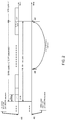
- FIG. 2 is a diagram showing an example of synchronous system timing between LTE wireless communication network 12 and CDMA wireless communication network 14 with a zero offset pseudo-noise sequence for the pilot channel.
- the timing diagram shown in FIG. 2 includes LTE timing hierarchy 44 and CDMA timing hierarchy 46.
- LTE timing hierarchy 44 shows a 10.24 second system frame number ("SFN") cycle.
- SFN cycle includes 1024 SFNs arranged in groups of eight SFNs such that each group of eight SFNs occupies 80ms. In other words, each SFN (LTE packet) is a 10ms time period.
- CDMA timing hierarchy 46 shows a timing hierarchy for a CDMA system with a 0 offset pseudonoise ("PN") sequence. It is understood that for a CDMA system, the system time field is a 36-bit field using an 80ms super frame.
- wireless access device 16 receives broadcast parameters from eNB 28 in LTE network 12 on an overhead, i.e. pilot, channel.
- the broadcast parameters include a system time for CDMA network 14. Assume in this example that the broadcast parameters for CDMA network 14 are received at time 48. As is shown in FIG. 2 , time 48 occurs somewhere within the SFN cycle, but not at an SFN cycle boundary, i.e. between LTE packet 1023 and LTE packet 0 of the next SFN cycle.
- wireless access terminal 16 operates to align the system time of the CDMA network 14 with a frame cycle boundary, shown in FIG. 2 as alignment occurring at alignment point 50. By creating a reference point, less resolution is needed to synchronize with the CDMA network 14 system time because timing is already being tracked for LTE network 12.
- FIG. 2 is described with reference to a zero offset PN sequence
- the present invention is readily implementable in environments that do use a PN sequence offset.
- implementation of the present invention does not have an impact on PN sequence offset considerations.
- wireless access terminal 16 can align with the CDMA hierarchy sector based on the PN sequence offset of that sector. An example of such an implementation is described with reference to FIG. 3 .
- FIG. 3 is a timing diagram showing synchronous system timing between an LTE wireless communication network and a high rate packet data ("HRPD") wireless communication network from the perspective of wireless access terminal 16.
- FIG. 3 includes LTE timing hierarchy 52 and HRPD timing hierarchy 54.
- LTE timing hierarchy 52 in FIG. 3 is the same as the LTE timing hierarchy 44 shown in FIG. 2 .
- LTE timing hierarchy 52 is arranged to highlight the 80ms 8 SFN grouping. In other words, while LTE timing hierarchy 44 in FIG. 2 shows 128 80ms units, LTE timing hierarchy 52 in FIG. 3 zooms in to show a single 80ms unit.
- the wireless access terminal 16 can align with the HRPD (or CDMA) sector based on the PN sequence offset of that particular sector.
- HRPD timing hierarchy 54 is arranged such that an 80ms unit within hierarchy 54 can coincide with the 8 SFN group boundary, also 80ms.
- an 80ms unit within hierarchy 54 can coincide with the 8 SFN group boundary, also 80ms.
- 2 ⁇ 12 8 - chip units in hierarchy 54 equates to 26.666ms which does not align with an SFN boundary in LTE hierarchy 52, e.g., the HRPD system time is received at time point 58.
- three 26.66ms units do equate to 80ms such that aligning the system time of the HRPD network (from the perspective of wireless access terminal 16) aligns with the 8 SFN group boundary at time point 56.
- FIG. 3 is described with respect to an HRPD time hierarchy, the invention is equally applicable to CDMA, e.g., 1xRTT, hierarchy as both technologies share the same frame width.
- CDMA Code Division Multiple Access
- 1xRTT Code Division Multiple Access
- the present invention is described in FIG. 3 with respect to 2 ⁇ 12 8 - chip units, the number of chips in a unit can be adjusted depending on the desired timing resolution. For example, using a 2 ⁇ 11 8 - chip unit, a 13.33ms unit would result. Therefore, the duration to aligning with an SFN 8 group boundary may require a delay of additional HRPD units as compared with that shown in FIG. 3 .
- Any kind of computing system, or other apparatus adapted for carrying out the methods described herein, is suited to perform the functions described herein.
- a typical combination of hardware and software could be a specialized computer system having one or more processing elements and a computer program stored on a storage medium that, when loaded and executed, controls the computer system such that it carries out the methods described herein.
- the present invention can also be embedded in a computer program product, which comprises all the features enabling the implementation of the methods described herein, and which, when loaded in a computing system is able to carry out these methods.
- Storage medium refers to any volatile or non-volatile storage device.
- Computer program or application in the present context means any expression, in any language, code or notation, of a set of instructions intended to cause a system having an information processing capability to perform a particular function either directly or after either or both of the following a) conversion to another language, code or notation; b) reproduction in a different material form.
Landscapes
- Engineering & Computer Science (AREA)
- Computer Networks & Wireless Communication (AREA)
- Signal Processing (AREA)
- Mobile Radio Communication Systems (AREA)
Claims (15)
- Verfahren für ein Endgerät mit drahtlosem Zugang zum Synchronisieren auf Systemzeiten in einem drahtlosen Kommunikationssystem, das Verfahren umfassend:Benutzen einer ersten Zeitplanungshierarchie in einem ersten drahtlosen Kommunikationsnetzwerk zum Betreiben des Endgeräts mit drahtlosem Zugang, wobei das erste drahtlose Kommunikationsnetzwerk eine erste Funkzugangstechnologie aufweist, wobei das Betreiben mit der ersten Zeitplanungshierarchie das Bestimmen eines Framezyklus für das erste drahtlose Kommunikationsnetzwerk beinhaltet, wobei der Framezyklus eine Framezyklusbegrenzung aufweist;gekennzeichnet durch:Empfangen, vom ersten drahtlosen Kommunikationsnetzwerk, von Broadcast-Parametern für ein zweites drahtloses Kommunikationsnetzwerk, das eine zweite Funkzugangstechnologie aufweist, die von der ersten Funkzugangstechnologie abweicht, wobei die Broadcast-Parameter eine Systemzeit des zweiten drahtlosen Kommunikationsnetzwerks enthalten;Abgleichen, aus der Perspektive des Endgeräts mit drahtlosem Zugang, der Systemzeit des zweiten drahtlosen Kommunikationsnetzwerks mit der Framezyklusbegrenzung; undEingreifen in eine Kommunikationssitzung unter Benutzung des zweiten drahtlosen Kommunikationsnetzwerks.
- Verfahren nach Anspruch 1, wobei die erste Funkzugangstechnologie Long-Term Evolution, LTE, ist.
- Verfahren nach Anspruch 2, wobei die erste Zeitplanungshierarchie des LTE-Netzwerks einen Systemframezahl-, "SFN-", Zyklus enthält, wobei die Framezyklusbegrenzung der Beginn eines SFN-Zyklus ist.
- Verfahren nach Anspruch 2, wobei die erste Zeitplanungshierarchie des LTE-Netzwerks einen Systemframezahl-, "SFN-", Zyklus enthält, wobei der SFN-Zyklus mehrere Systemframes aufweist, wobei die Framezyklusbegrenzung der Beginn eines Systemframes ist.
- Verfahren nach Anspruch 2, wobei die erste Zeitplanungshierarchie des LTE-Netzwerks einen Systemframezahl-, "SFN-", Zyklus enthält, wobei der SFN-Zyklus mehrere Systemframes aufweist, wobei die Systemframes in Gruppen von acht Systemframes angeordnet sind, wobei die Framezyklusbegrenzung der Beginn einer Achter-Systemframegruppe ist.
- Verfahren nach Anspruch 5, wobei die zweite Funkzugangstechnologie Hochratendatenpaket, "HRPD", ist.
- Verfahren nach Anspruch 6, wobei eine Zeitplanungshierarchie des HRPD-Netzwerks mehrere Frames enthält, wobei jeder der Frames unter Benutzung einer vorbestimmten Menge von Chipeinheiten angeordnet wird.
- Verfahren nach Anspruch 7, wobei eine Begrenzung einer Gruppe der Frames mit einem Beginn des Beginnens einer Achter-Systemframegruppe zusammenfällt.
- Verfahren nach Anspruch 2, wobei die erste Funkzugangstechnologie einen Pilotkanal benutzt, wobei der Pilotkanal eine Nullversatzpseudorauschsequenz benutzt.
- Verfahren nach Anspruch 1, wobei die zweite Funkzugangstechnologie CDMA ist.
- Verfahren nach Anspruch 1, ferner umfassend das Weiterreichen einer aktiven Kommunikationssitzung vom ersten drahtlosen Kommunikationssystem an das zweite drahtlose Kommunikationssystem.
- Endgerät (16) mit drahtlosem Zugang, das Endgerät mit drahtlosem Zugang umfassend:einen Empfänger (34);eine zentrale Recheneinheit (38) in elektrischer Verbindung mit dem Empfänger, wobei die zentrale Recheneinheit zu folgendem arbeitet:Benutzen einer ersten Zeitplanungshierarchie in einem ersten drahtlosen Kommunikationsnetzwerk, wobei das erste drahtlose Kommunikationsnetzwerk eine erste Funkzugangstechnologie aufweist, wobei das Benutzen der ersten Zeitplanungshierarchie das Bestimmen eines Framezyklus für das erste drahtlose Kommunikationsnetzwerk beinhaltet, wobei der Framezyklus eine Framezyklusbegrenzung aufweist;gekennzeichnet durch:Empfangen, vom ersten drahtlosen Kommunikationsnetzwerk mittels des Empfängers, von Broadcast-Parametern für ein zweites drahtloses Kommunikationsnetzwerk, das eine zweite Funkzugangstechnologie aufweist, die von der ersten Funkzugangstechnologie abweicht, wobei die Broadcast-Parameter eine Systemzeit des zweiten drahtlosen Kommunikationsnetzwerks enthalten;Abgleichen, aus der Perspektive des Endgeräts mit drahtlosem Zugang, der Systemzeit des zweiten drahtlosen Kommunikationsnetzwerks mit der Framezyklusbegrenzung; undEingreifen in eine Kommunikationssitzung unter Benutzung des zweiten drahtlosen Kommunikationsnetzwerks.
- Endgerät mit drahtlosem Zugang nach Anspruch 12, wobei die erste Funkzugangstechnologie Long-Term Evolution, LTE, ist.
- Endgerät mit drahtlosem Zugang nach Anspruch 13, wobei die erste Zeitplanungshierarchie des LTE-Netzwerks einen Systemframezahl-, "SFN-", Zyklus enthält, wobei die Framezyklusbegrenzung der Beginn eines SFN-Zyklus ist.
- Drahtloses Kommunikationssystem (10), umfassend:ein Endgerät (16) mit drahtlosem Zugang;ein erstes drahtloses Kommunikationsnetzwerk (12) in Kommunikation mit dem Endgerät mit drahtlosem Zugang, wobei das erste drahtlose Kommunikationsnetzwerk eine erste Funkzugangstechnologie aufweist, die eine erste Zeitplanungshierarchie benutzt, wobei die erste Zeitplanungshierarchie einen Framezyklus mit einer Framezyklusbegrenzung aufweist;ein zweites drahtloses Kommunikationsnetzwerk (14) in Kommunikation mit dem Endgerät mit drahtlosem Zugang, wobei das zweite drahtlose Kommunikationsnetzwerk eine zweite Funkzugangstechnologie aufweist, die von der ersten Funkzugangstechnologie abweicht,gekennzeichnet durch:wobei das erste drahtlose Kommunikationsnetzwerk Broadcast-Parameter an das Endgerät mit drahtlosem Zugang überträgt, wobei die Broadcast-Parameter eine Systemzeit des zweiten drahtlosen Kommunikationsnetzwerks enthalten; undwobei das Endgerät mit drahtlosem Zugang die Systemzeit des zweiten drahtlosen Kommunikationsnetzwerks mit der Framezyklusbegrenzung abgleicht und in eine Kommunikationssitzung unter Benutzung des zweiten drahtlosen Kommunikationsnetzwerks eingreift.
Priority Applications (1)
| Application Number | Priority Date | Filing Date | Title |
|---|---|---|---|
| EP19179480.9A EP3557789B1 (de) | 2008-03-07 | 2009-03-06 | Verfahren und system zur darstellung von overhead-parameterlängen für eine kommunikation mit zwischenfunktechnologiezugang |
Applications Claiming Priority (2)
| Application Number | Priority Date | Filing Date | Title |
|---|---|---|---|
| US3456908P | 2008-03-07 | 2008-03-07 | |
| PCT/US2009/036331 WO2009114421A2 (en) | 2008-03-07 | 2009-03-06 | Method and system for reduced system-time overhead parameter length representation for inter-radio access technology communication |
Related Child Applications (2)
| Application Number | Title | Priority Date | Filing Date |
|---|---|---|---|
| EP19179480.9A Division EP3557789B1 (de) | 2008-03-07 | 2009-03-06 | Verfahren und system zur darstellung von overhead-parameterlängen für eine kommunikation mit zwischenfunktechnologiezugang |
| EP19179480.9A Division-Into EP3557789B1 (de) | 2008-03-07 | 2009-03-06 | Verfahren und system zur darstellung von overhead-parameterlängen für eine kommunikation mit zwischenfunktechnologiezugang |
Publications (3)
| Publication Number | Publication Date |
|---|---|
| EP2253089A2 EP2253089A2 (de) | 2010-11-24 |
| EP2253089A4 EP2253089A4 (de) | 2014-04-02 |
| EP2253089B1 true EP2253089B1 (de) | 2019-08-28 |
Family
ID=41065771
Family Applications (2)
| Application Number | Title | Priority Date | Filing Date |
|---|---|---|---|
| EP19179480.9A Active EP3557789B1 (de) | 2008-03-07 | 2009-03-06 | Verfahren und system zur darstellung von overhead-parameterlängen für eine kommunikation mit zwischenfunktechnologiezugang |
| EP09720472.1A Active EP2253089B1 (de) | 2008-03-07 | 2009-03-06 | Verfahren und system zur darstellung von overhead-parameterlängen für eine kommunikation mit zwischenfunktechnologiezugang |
Family Applications Before (1)
| Application Number | Title | Priority Date | Filing Date |
|---|---|---|---|
| EP19179480.9A Active EP3557789B1 (de) | 2008-03-07 | 2009-03-06 | Verfahren und system zur darstellung von overhead-parameterlängen für eine kommunikation mit zwischenfunktechnologiezugang |
Country Status (8)
| Country | Link |
|---|---|
| US (2) | US8422616B2 (de) |
| EP (2) | EP3557789B1 (de) |
| JP (1) | JP2011514782A (de) |
| KR (1) | KR20100132012A (de) |
| CN (1) | CN102007716B (de) |
| ES (2) | ES2755403T3 (de) |
| HU (1) | HUE044910T2 (de) |
| WO (1) | WO2009114421A2 (de) |
Families Citing this family (47)
| Publication number | Priority date | Publication date | Assignee | Title |
|---|---|---|---|---|
| US9312929B2 (en) | 2004-04-02 | 2016-04-12 | Rearden, Llc | System and methods to compensate for Doppler effects in multi-user (MU) multiple antenna systems (MAS) |
| US10749582B2 (en) | 2004-04-02 | 2020-08-18 | Rearden, Llc | Systems and methods to coordinate transmissions in distributed wireless systems via user clustering |
| US8654815B1 (en) | 2004-04-02 | 2014-02-18 | Rearden, Llc | System and method for distributed antenna wireless communications |
| US10277290B2 (en) | 2004-04-02 | 2019-04-30 | Rearden, Llc | Systems and methods to exploit areas of coherence in wireless systems |
| US10200094B2 (en) | 2004-04-02 | 2019-02-05 | Rearden, Llc | Interference management, handoff, power control and link adaptation in distributed-input distributed-output (DIDO) communication systems |
| US10985811B2 (en) | 2004-04-02 | 2021-04-20 | Rearden, Llc | System and method for distributed antenna wireless communications |
| US11451275B2 (en) | 2004-04-02 | 2022-09-20 | Rearden, Llc | System and method for distributed antenna wireless communications |
| US8542763B2 (en) | 2004-04-02 | 2013-09-24 | Rearden, Llc | Systems and methods to coordinate transmissions in distributed wireless systems via user clustering |
| US10886979B2 (en) | 2004-04-02 | 2021-01-05 | Rearden, Llc | System and method for link adaptation in DIDO multicarrier systems |
| US11309943B2 (en) | 2004-04-02 | 2022-04-19 | Rearden, Llc | System and methods for planned evolution and obsolescence of multiuser spectrum |
| US11394436B2 (en) | 2004-04-02 | 2022-07-19 | Rearden, Llc | System and method for distributed antenna wireless communications |
| US9826537B2 (en) | 2004-04-02 | 2017-11-21 | Rearden, Llc | System and method for managing inter-cluster handoff of clients which traverse multiple DIDO clusters |
| US10425134B2 (en) | 2004-04-02 | 2019-09-24 | Rearden, Llc | System and methods for planned evolution and obsolescence of multiuser spectrum |
| US9819403B2 (en) | 2004-04-02 | 2017-11-14 | Rearden, Llc | System and method for managing handoff of a client between different distributed-input-distributed-output (DIDO) networks based on detected velocity of the client |
| US9685997B2 (en) | 2007-08-20 | 2017-06-20 | Rearden, Llc | Systems and methods to enhance spatial diversity in distributed-input distributed-output wireless systems |
| EP3557789B1 (de) * | 2008-03-07 | 2021-10-20 | BlackBerry Limited | Verfahren und system zur darstellung von overhead-parameterlängen für eine kommunikation mit zwischenfunktechnologiezugang |
| WO2010107782A2 (en) * | 2009-03-16 | 2010-09-23 | Nortel Networks Limited | Transitioning of a packet-switched emergency call between first and second types of wireless access networks |
| JP5455581B2 (ja) * | 2009-11-27 | 2014-03-26 | 京セラ株式会社 | 無線端末 |
| US8743722B2 (en) | 2009-03-26 | 2014-06-03 | Kyocera Corporation | Radio terminal, radio communication system, and radio base station |
| CN102056283B (zh) * | 2009-10-27 | 2013-10-16 | 电信科学技术研究院 | 移动通信系统中时间同步的方法、系统及装置 |
| US8483732B2 (en) * | 2009-10-27 | 2013-07-09 | Qualcomm Incorporated | Method and apparatus for timestamping uplink messages |
| JP2011259073A (ja) * | 2010-06-07 | 2011-12-22 | Kyocera Corp | 無線端末装置及び制御方法 |
| JP5102383B2 (ja) * | 2010-07-26 | 2012-12-19 | エルジー エレクトロニクス インコーポレイティド | デュアルモード端末におけるsms受信方法及びそのためのデュアルモード端末 |
| US9001778B2 (en) * | 2010-12-23 | 2015-04-07 | Qualcomm Incorporated | System synchronization in TD-SCDMA and TDD-LTE systems |
| KR20120099568A (ko) * | 2011-01-18 | 2012-09-11 | 삼성전자주식회사 | 무선 통신 시스템에서 단말기 내에 복수 개의 이종 통신 모듈이 있을 경우 간섭을 측정하는 방법 및 장치 |
| JP5845340B2 (ja) | 2011-05-20 | 2016-01-20 | アップル インコーポレイテッド | ハイブリッドネットワーク動作における優先度に基づくタスクスケジューリングのための装置及び方法 |
| EP2710849A1 (de) | 2011-05-20 | 2014-03-26 | Apple Inc. | Vorrichtung und verfahren zur optimierung der geplanten operationen in hybriden netzwerkumgebungen |
| KR102092579B1 (ko) | 2011-08-22 | 2020-03-24 | 삼성전자 주식회사 | 이동통신 시스템에서 복수 개의 주파수 밴드 지원 방법 및 장치 |
| US9414409B2 (en) | 2012-02-06 | 2016-08-09 | Samsung Electronics Co., Ltd. | Method and apparatus for transmitting/receiving data on multiple carriers in mobile communication system |
| KR101598104B1 (ko) | 2012-03-19 | 2016-02-26 | 삼성전자주식회사 | 캐리어 집적을 위한 이동통신 시스템에서 파워 헤드룸 보고를 위한 방법 및 장치 |
| CN111818507B (zh) | 2012-03-26 | 2023-06-16 | 三星电子株式会社 | 移动通信系统中的终端、基站、及其方法 |
| US9088919B2 (en) | 2012-04-13 | 2015-07-21 | Qualcomm Incorporated | Method and apparatus for expedited wireless device handover |
| US11190947B2 (en) | 2014-04-16 | 2021-11-30 | Rearden, Llc | Systems and methods for concurrent spectrum usage within actively used spectrum |
| US11050468B2 (en) | 2014-04-16 | 2021-06-29 | Rearden, Llc | Systems and methods for mitigating interference within actively used spectrum |
| US11189917B2 (en) | 2014-04-16 | 2021-11-30 | Rearden, Llc | Systems and methods for distributing radioheads |
| US10194346B2 (en) | 2012-11-26 | 2019-01-29 | Rearden, Llc | Systems and methods for exploiting inter-cell multiplexing gain in wireless cellular systems via distributed input distributed output technology |
| US9973246B2 (en) | 2013-03-12 | 2018-05-15 | Rearden, Llc | Systems and methods for exploiting inter-cell multiplexing gain in wireless cellular systems via distributed input distributed output technology |
| US9923657B2 (en) | 2013-03-12 | 2018-03-20 | Rearden, Llc | Systems and methods for exploiting inter-cell multiplexing gain in wireless cellular systems via distributed input distributed output technology |
| US10488535B2 (en) | 2013-03-12 | 2019-11-26 | Rearden, Llc | Apparatus and method for capturing still images and video using diffraction coded imaging techniques |
| US10164698B2 (en) | 2013-03-12 | 2018-12-25 | Rearden, Llc | Systems and methods for exploiting inter-cell multiplexing gain in wireless cellular systems via distributed input distributed output technology |
| RU2767777C2 (ru) | 2013-03-15 | 2022-03-21 | Риарден, Ллк | Системы и способы радиочастотной калибровки с использованием принципа взаимности каналов в беспроводной связи с распределенным входом - распределенным выходом |
| WO2014190495A1 (zh) * | 2013-05-28 | 2014-12-04 | 华为技术有限公司 | 一种物理帧边界的调整方法、相关设备及系统 |
| KR102207473B1 (ko) * | 2014-02-18 | 2021-01-26 | 삼성전자 주식회사 | 복수의 네트워크가 공존하는 경우의 기지국의 단말관리방법 |
| US11290162B2 (en) | 2014-04-16 | 2022-03-29 | Rearden, Llc | Systems and methods for mitigating interference within actively used spectrum |
| CN105188128B (zh) * | 2015-08-21 | 2018-10-16 | 北京北方烽火科技有限公司 | 一种无线授时和空口同步方法、基站、通讯设备及系统 |
| CN105228240B (zh) * | 2015-10-15 | 2018-10-16 | 北京北方烽火科技有限公司 | 一种定时同步方法、设备及基站 |
| EP3783950A4 (de) * | 2018-04-17 | 2022-01-05 | Ntt Docomo, Inc. | Benutzerendgerät |
Family Cites Families (9)
| Publication number | Priority date | Publication date | Assignee | Title |
|---|---|---|---|---|
| EP1334632A2 (de) * | 2000-11-10 | 2003-08-13 | Siemens Aktiengesellschaft | Verfahren zur beobachtung von nachbarfunkzellen in einem funk-kommunikationssystem |
| US7092409B2 (en) * | 2001-03-21 | 2006-08-15 | Telefonaktiebolaget Lm Ericsson (Publ) | Timing distribution redundacy in a wireless network |
| US20030084190A1 (en) * | 2001-10-25 | 2003-05-01 | Kimball Robert H. | Apparatus and system for maintaining accurate time in a wireless environment |
| US6856611B2 (en) * | 2002-04-11 | 2005-02-15 | Qualcomm Incorporated | Radio interface synchronization |
| KR100895173B1 (ko) * | 2005-08-31 | 2009-05-04 | 삼성전자주식회사 | 디지털 멀티미디어 방송 시스템에서의 핸드오버 방법 및장치 |
| TW200729990A (en) * | 2005-12-22 | 2007-08-01 | Interdigital Tech Corp | Method and system for adjusting uplink transmission timing immediately for long term evolution handover |
| WO2007077476A1 (en) * | 2005-12-30 | 2007-07-12 | Nokia Corporation | Method and apparatus for providing a link adaptation scheme for a wireless communication system |
| US20090005042A1 (en) * | 2007-06-29 | 2009-01-01 | Motorola, Inc. | Method of broadcasting system information in communication cells for handoff |
| EP3557789B1 (de) * | 2008-03-07 | 2021-10-20 | BlackBerry Limited | Verfahren und system zur darstellung von overhead-parameterlängen für eine kommunikation mit zwischenfunktechnologiezugang |
-
2009
- 2009-03-06 EP EP19179480.9A patent/EP3557789B1/de active Active
- 2009-03-06 EP EP09720472.1A patent/EP2253089B1/de active Active
- 2009-03-06 HU HUE09720472 patent/HUE044910T2/hu unknown
- 2009-03-06 WO PCT/US2009/036331 patent/WO2009114421A2/en not_active Ceased
- 2009-03-06 JP JP2010549909A patent/JP2011514782A/ja active Pending
- 2009-03-06 US US12/919,034 patent/US8422616B2/en active Active
- 2009-03-06 ES ES09720472T patent/ES2755403T3/es active Active
- 2009-03-06 KR KR1020107021530A patent/KR20100132012A/ko not_active Ceased
- 2009-03-06 ES ES19179480T patent/ES2900619T3/es active Active
- 2009-03-06 CN CN200980114530.6A patent/CN102007716B/zh active Active
-
2012
- 2012-09-13 US US13/615,317 patent/US8879682B2/en active Active
Non-Patent Citations (1)
| Title |
|---|
| None * |
Also Published As
| Publication number | Publication date |
|---|---|
| EP3557789B1 (de) | 2021-10-20 |
| US20130010757A1 (en) | 2013-01-10 |
| EP3557789A1 (de) | 2019-10-23 |
| JP2011514782A (ja) | 2011-05-06 |
| WO2009114421A3 (en) | 2009-12-30 |
| HUE044910T2 (hu) | 2019-11-28 |
| US20110007856A1 (en) | 2011-01-13 |
| US8422616B2 (en) | 2013-04-16 |
| KR20100132012A (ko) | 2010-12-16 |
| EP2253089A4 (de) | 2014-04-02 |
| CN102007716A (zh) | 2011-04-06 |
| ES2755403T3 (es) | 2020-04-22 |
| BRPI0908546A2 (pt) | 2015-09-29 |
| BRPI0908546A8 (pt) | 2017-07-11 |
| CN102007716B (zh) | 2016-03-09 |
| EP2253089A2 (de) | 2010-11-24 |
| ES2900619T3 (es) | 2022-03-17 |
| WO2009114421A2 (en) | 2009-09-17 |
| US8879682B2 (en) | 2014-11-04 |
Similar Documents
| Publication | Publication Date | Title |
|---|---|---|
| EP3557789B1 (de) | Verfahren und system zur darstellung von overhead-parameterlängen für eine kommunikation mit zwischenfunktechnologiezugang | |
| EP4319299A1 (de) | Kandidatenzellenkonfiguration für l1/l2-basierte mobilität | |
| FI117686B (fi) | Soft Handover menetelmä multimedia yleislähetys/monilähetyspalvelua varten CDMA matkaviestinjärjestelmässä | |
| EP1446976B1 (de) | Verfahren und vorrichtung zur re-synchronisierung des inhalts einer rundsendekommunikation während einer weiterreichung in einem kommunikationssystem | |
| US20230102742A1 (en) | Timing advance acquisition for multiple cells | |
| CN102547829B (zh) | 在td-scdma系统中调度tdd-lte测量 | |
| US20100246525A1 (en) | Pilot scrambling enabling direct pilot sequence detection in initial acquisition in evolved utra | |
| WO2009082111A2 (en) | Communication system and method | |
| CN102573042A (zh) | Td-scdma和tdd-lte系统中的系统同步 | |
| CN114982157A (zh) | 同步方法及装置 | |
| CN102124793B (zh) | 用于针对td-scdma接力切换的同步增强的方法和装置 | |
| WO2012021869A2 (en) | A method and apparatus for window size selection to optimize inter rat handover | |
| KR100937873B1 (ko) | 서로 다른 무선접속 기술을 사용하는 무선통신 시스템 간의핸드오버 방법 및 이를 위한 순방향 동기신호 전송방법 | |
| WO2022147766A1 (zh) | 通信方法、设备及存储介质 | |
| HK40014964A (en) | Method and system for reduced system-time overhead parameter length representation for inter-radio access technology communication | |
| HK40014964B (en) | Method and system for reduced system-time overhead parameter length representation for inter-radio access technology communication | |
| CN1848706B (zh) | 用于进行上行链路同步的方法与系统 | |
| CN120266552A (zh) | 用于维持ta值的方法及设备 | |
| TW201436595A (zh) | 通訊系統中的並行無線電存取技術間(irat)量測 | |
| Proctor | Evolution to 3G services: provision of 3G services over GERAN (GSM/EDGE radio access network) | |
| BRPI0908546B1 (pt) | Método, terminal e sistema para a representação de comprimento de parâmetro de codificação extra de tempo do sistema reduzido para comunicação com tecnologia de acesso entre 5 rádios | |
| AU2002356849A1 (en) | Method and system for hard handoff in a broadcast communication system |
Legal Events
| Date | Code | Title | Description |
|---|---|---|---|
| PUAI | Public reference made under article 153(3) epc to a published international application that has entered the european phase |
Free format text: ORIGINAL CODE: 0009012 |
|
| 17P | Request for examination filed |
Effective date: 20101007 |
|
| AK | Designated contracting states |
Kind code of ref document: A2 Designated state(s): AT BE BG CH CY CZ DE DK EE ES FI FR GB GR HR HU IE IS IT LI LT LU LV MC MK MT NL NO PL PT RO SE SI SK TR |
|
| AX | Request for extension of the european patent |
Extension state: AL BA RS |
|
| DAX | Request for extension of the european patent (deleted) | ||
| RAP1 | Party data changed (applicant data changed or rights of an application transferred) |
Owner name: RESEARCH IN MOTION LIMITED |
|
| RAP1 | Party data changed (applicant data changed or rights of an application transferred) |
Owner name: BLACKBERRY LIMITED |
|
| RAP1 | Party data changed (applicant data changed or rights of an application transferred) |
Owner name: BLACKBERRY LIMITED |
|
| A4 | Supplementary search report drawn up and despatched |
Effective date: 20140304 |
|
| RIC1 | Information provided on ipc code assigned before grant |
Ipc: H04W 36/14 20090101ALI20140226BHEP Ipc: H04J 3/06 20060101AFI20140226BHEP Ipc: H04W 56/00 20090101ALI20140226BHEP |
|
| STAA | Information on the status of an ep patent application or granted ep patent |
Free format text: STATUS: EXAMINATION IS IN PROGRESS |
|
| 17Q | First examination report despatched |
Effective date: 20170301 |
|
| GRAP | Despatch of communication of intention to grant a patent |
Free format text: ORIGINAL CODE: EPIDOSNIGR1 |
|
| STAA | Information on the status of an ep patent application or granted ep patent |
Free format text: STATUS: GRANT OF PATENT IS INTENDED |
|
| INTG | Intention to grant announced |
Effective date: 20181122 |
|
| GRAS | Grant fee paid |
Free format text: ORIGINAL CODE: EPIDOSNIGR3 |
|
| GRAJ | Information related to disapproval of communication of intention to grant by the applicant or resumption of examination proceedings by the epo deleted |
Free format text: ORIGINAL CODE: EPIDOSDIGR1 |
|
| GRAL | Information related to payment of fee for publishing/printing deleted |
Free format text: ORIGINAL CODE: EPIDOSDIGR3 |
|
| STAA | Information on the status of an ep patent application or granted ep patent |
Free format text: STATUS: EXAMINATION IS IN PROGRESS |
|
| GRAJ | Information related to disapproval of communication of intention to grant by the applicant or resumption of examination proceedings by the epo deleted |
Free format text: ORIGINAL CODE: EPIDOSDIGR1 |
|
| GRAP | Despatch of communication of intention to grant a patent |
Free format text: ORIGINAL CODE: EPIDOSNIGR1 |
|
| INTC | Intention to grant announced (deleted) | ||
| GRAP | Despatch of communication of intention to grant a patent |
Free format text: ORIGINAL CODE: EPIDOSNIGR1 |
|
| STAA | Information on the status of an ep patent application or granted ep patent |
Free format text: STATUS: GRANT OF PATENT IS INTENDED |
|
| INTG | Intention to grant announced |
Effective date: 20190503 |
|
| GRAF | Information related to payment of grant fee modified |
Free format text: ORIGINAL CODE: EPIDOSCIGR3 |
|
| GRAA | (expected) grant |
Free format text: ORIGINAL CODE: 0009210 |
|
| STAA | Information on the status of an ep patent application or granted ep patent |
Free format text: STATUS: THE PATENT HAS BEEN GRANTED |
|
| AK | Designated contracting states |
Kind code of ref document: B1 Designated state(s): AT BE BG CH CY CZ DE DK EE ES FI FR GB GR HR HU IE IS IT LI LT LU LV MC MK MT NL NO PL PT RO SE SI SK TR |
|
| REG | Reference to a national code |
Ref country code: GB Ref legal event code: FG4D |
|
| REG | Reference to a national code |
Ref country code: CH Ref legal event code: EP |
|
| REG | Reference to a national code |
Ref country code: AT Ref legal event code: REF Ref document number: 1173717 Country of ref document: AT Kind code of ref document: T Effective date: 20190915 |
|
| REG | Reference to a national code |
Ref country code: IE Ref legal event code: FG4D |
|
| REG | Reference to a national code |
Ref country code: DE Ref legal event code: R096 Ref document number: 602009059606 Country of ref document: DE |
|
| REG | Reference to a national code |
Ref country code: NL Ref legal event code: FP |
|
| REG | Reference to a national code |
Ref country code: HU Ref legal event code: AG4A Ref document number: E044910 Country of ref document: HU |
|
| REG | Reference to a national code |
Ref country code: SE Ref legal event code: TRGR |
|
| REG | Reference to a national code |
Ref country code: LT Ref legal event code: MG4D |
|
| PG25 | Lapsed in a contracting state [announced via postgrant information from national office to epo] |
Ref country code: BG Free format text: LAPSE BECAUSE OF FAILURE TO SUBMIT A TRANSLATION OF THE DESCRIPTION OR TO PAY THE FEE WITHIN THE PRESCRIBED TIME-LIMIT Effective date: 20191128 Ref country code: NO Free format text: LAPSE BECAUSE OF FAILURE TO SUBMIT A TRANSLATION OF THE DESCRIPTION OR TO PAY THE FEE WITHIN THE PRESCRIBED TIME-LIMIT Effective date: 20191128 Ref country code: PT Free format text: LAPSE BECAUSE OF FAILURE TO SUBMIT A TRANSLATION OF THE DESCRIPTION OR TO PAY THE FEE WITHIN THE PRESCRIBED TIME-LIMIT Effective date: 20191230 Ref country code: HR Free format text: LAPSE BECAUSE OF FAILURE TO SUBMIT A TRANSLATION OF THE DESCRIPTION OR TO PAY THE FEE WITHIN THE PRESCRIBED TIME-LIMIT Effective date: 20190828 Ref country code: LT Free format text: LAPSE BECAUSE OF FAILURE TO SUBMIT A TRANSLATION OF THE DESCRIPTION OR TO PAY THE FEE WITHIN THE PRESCRIBED TIME-LIMIT Effective date: 20190828 |
|
| PG25 | Lapsed in a contracting state [announced via postgrant information from national office to epo] |
Ref country code: LV Free format text: LAPSE BECAUSE OF FAILURE TO SUBMIT A TRANSLATION OF THE DESCRIPTION OR TO PAY THE FEE WITHIN THE PRESCRIBED TIME-LIMIT Effective date: 20190828 Ref country code: IS Free format text: LAPSE BECAUSE OF FAILURE TO SUBMIT A TRANSLATION OF THE DESCRIPTION OR TO PAY THE FEE WITHIN THE PRESCRIBED TIME-LIMIT Effective date: 20191228 Ref country code: GR Free format text: LAPSE BECAUSE OF FAILURE TO SUBMIT A TRANSLATION OF THE DESCRIPTION OR TO PAY THE FEE WITHIN THE PRESCRIBED TIME-LIMIT Effective date: 20191129 |
|
| REG | Reference to a national code |
Ref country code: AT Ref legal event code: MK05 Ref document number: 1173717 Country of ref document: AT Kind code of ref document: T Effective date: 20190828 |
|
| PG25 | Lapsed in a contracting state [announced via postgrant information from national office to epo] |
Ref country code: TR Free format text: LAPSE BECAUSE OF FAILURE TO SUBMIT A TRANSLATION OF THE DESCRIPTION OR TO PAY THE FEE WITHIN THE PRESCRIBED TIME-LIMIT Effective date: 20190828 |
|
| REG | Reference to a national code |
Ref country code: ES Ref legal event code: FG2A Ref document number: 2755403 Country of ref document: ES Kind code of ref document: T3 Effective date: 20200422 |
|
| PG25 | Lapsed in a contracting state [announced via postgrant information from national office to epo] |
Ref country code: PL Free format text: LAPSE BECAUSE OF FAILURE TO SUBMIT A TRANSLATION OF THE DESCRIPTION OR TO PAY THE FEE WITHIN THE PRESCRIBED TIME-LIMIT Effective date: 20190828 Ref country code: RO Free format text: LAPSE BECAUSE OF FAILURE TO SUBMIT A TRANSLATION OF THE DESCRIPTION OR TO PAY THE FEE WITHIN THE PRESCRIBED TIME-LIMIT Effective date: 20190828 Ref country code: DK Free format text: LAPSE BECAUSE OF FAILURE TO SUBMIT A TRANSLATION OF THE DESCRIPTION OR TO PAY THE FEE WITHIN THE PRESCRIBED TIME-LIMIT Effective date: 20190828 Ref country code: EE Free format text: LAPSE BECAUSE OF FAILURE TO SUBMIT A TRANSLATION OF THE DESCRIPTION OR TO PAY THE FEE WITHIN THE PRESCRIBED TIME-LIMIT Effective date: 20190828 Ref country code: AT Free format text: LAPSE BECAUSE OF FAILURE TO SUBMIT A TRANSLATION OF THE DESCRIPTION OR TO PAY THE FEE WITHIN THE PRESCRIBED TIME-LIMIT Effective date: 20190828 |
|
| PG25 | Lapsed in a contracting state [announced via postgrant information from national office to epo] |
Ref country code: CZ Free format text: LAPSE BECAUSE OF FAILURE TO SUBMIT A TRANSLATION OF THE DESCRIPTION OR TO PAY THE FEE WITHIN THE PRESCRIBED TIME-LIMIT Effective date: 20190828 Ref country code: SK Free format text: LAPSE BECAUSE OF FAILURE TO SUBMIT A TRANSLATION OF THE DESCRIPTION OR TO PAY THE FEE WITHIN THE PRESCRIBED TIME-LIMIT Effective date: 20190828 Ref country code: IS Free format text: LAPSE BECAUSE OF FAILURE TO SUBMIT A TRANSLATION OF THE DESCRIPTION OR TO PAY THE FEE WITHIN THE PRESCRIBED TIME-LIMIT Effective date: 20200224 |
|
| REG | Reference to a national code |
Ref country code: DE Ref legal event code: R097 Ref document number: 602009059606 Country of ref document: DE |
|
| PLBE | No opposition filed within time limit |
Free format text: ORIGINAL CODE: 0009261 |
|
| STAA | Information on the status of an ep patent application or granted ep patent |
Free format text: STATUS: NO OPPOSITION FILED WITHIN TIME LIMIT |
|
| PG2D | Information on lapse in contracting state deleted |
Ref country code: IS |
|
| 26N | No opposition filed |
Effective date: 20200603 |
|
| PG25 | Lapsed in a contracting state [announced via postgrant information from national office to epo] |
Ref country code: SI Free format text: LAPSE BECAUSE OF FAILURE TO SUBMIT A TRANSLATION OF THE DESCRIPTION OR TO PAY THE FEE WITHIN THE PRESCRIBED TIME-LIMIT Effective date: 20190828 |
|
| PG25 | Lapsed in a contracting state [announced via postgrant information from national office to epo] |
Ref country code: MC Free format text: LAPSE BECAUSE OF FAILURE TO SUBMIT A TRANSLATION OF THE DESCRIPTION OR TO PAY THE FEE WITHIN THE PRESCRIBED TIME-LIMIT Effective date: 20190828 |
|
| REG | Reference to a national code |
Ref country code: CH Ref legal event code: PL |
|
| REG | Reference to a national code |
Ref country code: BE Ref legal event code: MM Effective date: 20200331 |
|
| PG25 | Lapsed in a contracting state [announced via postgrant information from national office to epo] |
Ref country code: LU Free format text: LAPSE BECAUSE OF NON-PAYMENT OF DUE FEES Effective date: 20200306 |
|
| PG25 | Lapsed in a contracting state [announced via postgrant information from national office to epo] |
Ref country code: LI Free format text: LAPSE BECAUSE OF NON-PAYMENT OF DUE FEES Effective date: 20200331 Ref country code: CH Free format text: LAPSE BECAUSE OF NON-PAYMENT OF DUE FEES Effective date: 20200331 |
|
| PG25 | Lapsed in a contracting state [announced via postgrant information from national office to epo] |
Ref country code: BE Free format text: LAPSE BECAUSE OF NON-PAYMENT OF DUE FEES Effective date: 20200331 |
|
| PG25 | Lapsed in a contracting state [announced via postgrant information from national office to epo] |
Ref country code: MT Free format text: LAPSE BECAUSE OF FAILURE TO SUBMIT A TRANSLATION OF THE DESCRIPTION OR TO PAY THE FEE WITHIN THE PRESCRIBED TIME-LIMIT Effective date: 20190828 Ref country code: CY Free format text: LAPSE BECAUSE OF FAILURE TO SUBMIT A TRANSLATION OF THE DESCRIPTION OR TO PAY THE FEE WITHIN THE PRESCRIBED TIME-LIMIT Effective date: 20190828 |
|
| PG25 | Lapsed in a contracting state [announced via postgrant information from national office to epo] |
Ref country code: MK Free format text: LAPSE BECAUSE OF FAILURE TO SUBMIT A TRANSLATION OF THE DESCRIPTION OR TO PAY THE FEE WITHIN THE PRESCRIBED TIME-LIMIT Effective date: 20190828 |
|
| REG | Reference to a national code |
Ref country code: DE Ref legal event code: R082 Ref document number: 602009059606 Country of ref document: DE Ref country code: DE Ref legal event code: R081 Ref document number: 602009059606 Country of ref document: DE Owner name: MALIKIE INNOVATIONS LTD., IE Free format text: FORMER OWNER: BLACKBERRY LIMITED, WATERLOO, ONTARIO, CA |
|
| REG | Reference to a national code |
Ref country code: GB Ref legal event code: 732E Free format text: REGISTERED BETWEEN 20240530 AND 20240605 |
|
| PGFP | Annual fee paid to national office [announced via postgrant information from national office to epo] |
Ref country code: ES Payment date: 20250415 Year of fee payment: 17 |
|
| PGFP | Annual fee paid to national office [announced via postgrant information from national office to epo] |
Ref country code: SE Payment date: 20260323 Year of fee payment: 18 |
|
| PGFP | Annual fee paid to national office [announced via postgrant information from national office to epo] |
Ref country code: GB Payment date: 20260319 Year of fee payment: 18 |
|
| PGFP | Annual fee paid to national office [announced via postgrant information from national office to epo] |
Ref country code: DE Payment date: 20260320 Year of fee payment: 18 Ref country code: IE Payment date: 20260318 Year of fee payment: 18 |
|
| PGFP | Annual fee paid to national office [announced via postgrant information from national office to epo] |
Ref country code: FI Payment date: 20260323 Year of fee payment: 18 Ref country code: IT Payment date: 20260320 Year of fee payment: 18 |
|
| PGFP | Annual fee paid to national office [announced via postgrant information from national office to epo] |
Ref country code: HU Payment date: 20260226 Year of fee payment: 18 Ref country code: NL Payment date: 20260323 Year of fee payment: 18 |
|
| PGFP | Annual fee paid to national office [announced via postgrant information from national office to epo] |
Ref country code: FR Payment date: 20260323 Year of fee payment: 18 |