EP2249249B1 - Systeme und Verfahren zur Modifizierung von Codeerzeugungsvorlagen - Google Patents
Systeme und Verfahren zur Modifizierung von Codeerzeugungsvorlagen Download PDFInfo
- Publication number
- EP2249249B1 EP2249249B1 EP10004455A EP10004455A EP2249249B1 EP 2249249 B1 EP2249249 B1 EP 2249249B1 EP 10004455 A EP10004455 A EP 10004455A EP 10004455 A EP10004455 A EP 10004455A EP 2249249 B1 EP2249249 B1 EP 2249249B1
- Authority
- EP
- European Patent Office
- Prior art keywords
- code
- templates
- framework
- computer
- generated
- Prior art date
- Legal status (The legal status is an assumption and is not a legal conclusion. Google has not performed a legal analysis and makes no representation as to the accuracy of the status listed.)
- Active
Links
Images




Classifications
-
- G—PHYSICS
- G06—COMPUTING OR CALCULATING; COUNTING
- G06F—ELECTRIC DIGITAL DATA PROCESSING
- G06F8/00—Arrangements for software engineering
- G06F8/30—Creation or generation of source code
- G06F8/36—Software reuse
-
- G—PHYSICS
- G06—COMPUTING OR CALCULATING; COUNTING
- G06F—ELECTRIC DIGITAL DATA PROCESSING
- G06F8/00—Arrangements for software engineering
- G06F8/20—Software design
- G06F8/24—Object-oriented
-
- G—PHYSICS
- G06—COMPUTING OR CALCULATING; COUNTING
- G06F—ELECTRIC DIGITAL DATA PROCESSING
- G06F8/00—Arrangements for software engineering
- G06F8/30—Creation or generation of source code
- G06F8/35—Creation or generation of source code model driven
-
- G—PHYSICS
- G06—COMPUTING OR CALCULATING; COUNTING
- G06F—ELECTRIC DIGITAL DATA PROCESSING
- G06F8/00—Arrangements for software engineering
- G06F8/70—Software maintenance or management
- G06F8/74—Reverse engineering; Extracting design information from source code
Definitions
- the present invention relates to code generation, and in particular, systems and methods for automatically modifying code generation templates in a code generation software system.
- code generation paradigms posit that a software developer specify the desired operational behavior of the software, and a functional specification may be used to automatically generate code in any desired language or for any desired platform.
- code generation paradigms posit that a software developer specify the desired operational behavior of the software, and a functional specification may be used to automatically generate code in any desired language or for any desired platform.
- the promise of automatic code generation has not been completely fulfilled because of inherent difficulties in implementing such systems.
- Model-Driven Software Development motivates the lifting of fine-grained code structures and development to coarser-grained models and higher levels of designing. This abstraction process approximates the developer's mental model of the underlying implementation and, hence, reduces the necessary effort in production of such software. Based on readily developed system architecture models, appropriate code generators produce executable runtime code.
- Fig. 1 illustrates a typical MDSD architecture.
- the example MDSD software includes a model 101, template 102, and code generator 103 that generates code 104.
- a model 101 describes the structure and behavior of a software system. This description may be a high level description of states, entities, transitions, and a variety of other factors for describing the software.
- a model may include a declarative description of data structures to be generated or a description of a user interface.
- the model may be an instance of a meta model for describing a system at a higher level of abstraction (i.e., more generally).
- the model may be specified using a modeling language, for example.
- a modeling language is any artificial language that can be used to express information or knowledge or systems in a structure that is defined by a consistent set of rules. The rules are used for interpretation of the meaning of elements in the structure.
- Modeling languages can be used to specify system requirements, structures, and behaviors. Modeling languages are intended to be used to precisely specify systems so that stakeholders (e.g., customers, operators, analysts, designers) can better understand the system being modeled.
- Example modeling technologies are Eclipse Modeling Framework ("EMF'), whose language to create metamodels is called “Ecore” (the metametamodel), and the MetaObject Facility (“MOF') from the Object Management Group with the metametamodel also called “MOF” or a smaller version "EMOF” (essential MOF).
- Templates 102 are used to generate code based on a model in the context of a meta-model. Templates control output code generation. For example, a template may be used to access the model, execute logic, and perform various other tasks. A template may retrieve data structures defined in a model to generate code. The template may be a text file that is interpreted by the code generator 103 (e.g., at runtime of the code generator) to generate code 104. Templates may include one or more import statements, one or more extension statements, and one or more define blocks (i.e., definitions) and may be written in template languages such as XPAND and MOFScript, for example.
- the present invention solves these and other problems by providing systems and methods for automatically modifying code generation templates in a code generation software system.
- Embodiments of the present invention include systems and methods for generating , code.
- the present invention includes a computer-implemented method according to claim 1 of generating computer program code comprising receiving a plurality of templates for generating code, receiving at least one model for generating code, processing the plurality of templates and the model in a code generator executable on a computer system to generate a plurality of code files containing program code based on the model and the plurality of templates, automatically identifying a common program code construct in two or more of the generated code files, and automatically modifying each template used to generate the common program code construct to include a reference to a code framework, said code framework including said common program code construct.
- the method further comprises, after said step of identifying, automatically moving the identified common program code construct to the code framework.
- said common code construct is included in a plurality of different program classes in the generated code files, the method further comprising creating a parent class, storing the common program code construct in the parent class, and creating an inheritance between the parent class and said plurality of different program classes in the generated code files.
- said reference to the code framework is a reference to said parent class.
- the code framework is accessible by the generated code files.
- the common program code construct in said two or more generated code files are each generated based on the same portion of the same template.
- the method further comprises generating modified code based on said model and said modified templates, said modified code including said references to said code framework.
- said generated modified code upon execution of said generated modified code, uses said references to said code framework to access said common program code constructs.
- the code framework is static.
- the present invention includes a computer-implemented system according to claim 7 comprising a code generator, executable on a computer, for receiving at least one software model and a plurality of templates for generating code, wherein the software model specifies the software operations and comprises a plurality of elements to be translated into code constructs, and wherein the template specifies code constructs to be used from the plurality of elements in said software model, the code generator processing the plurality of templates and the software model, and in accordance therewith, generating a plurality of code files containing program code based on the software model and the plurality of templates, a framework generator, executable on said computer, for automatically identifying a common program code construct in two or more of the generated code files and moving said common program code construct in a code framework, and a code-to-template change processor, executable on said computer, for automatically modifying each template used to generate the common program code construct to include a reference to a code framework.
- a code generator executable on a computer, for receiving at least one software model and
- the present invention includes a computer-readable medium containing instructions for controlling a computer system to perform a method as set forth herein.
- Fig. 1 illustrates a typical model driven software development architecture.
- Fig. 2 illustrates templates used to generate code.
- Fig. 3 is an example of modifying code generation templates according to one embodiment of the present invention.
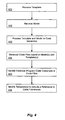
- Fig. 4 illustrates a method according to one embodiment of the present invention.
- Fig. 5 illustrates an example of identifying common code according to one embodiment of the present invention.
- Fig. 6 illustrates an example of generated code according to one embodiment of the present invention.
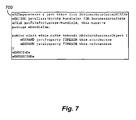
- Fig. 7 illustrates an example of a modified template including a reference according to one embodiment of the present invention.
- Fig. 8 illustrates system including template reverse engineering according to one embodiment of the present invention.
- Fig. 2 illustrates templates used to generate code.
- templates in a code generator are decoupled into different modules. Each module or template may address a dedicated concern or function in code generation.
- the different templates are connected to each other through invocation. For instance, a parent template invokes all child templates. In case a new requirement is to be implemented, multiple generator templates may have to be taken into account.
- template 201 may invoke templates 202-204.
- templates 202-204 may invoke one or more of templates 205-209.
- resulting modifications to one of the templates (e.g., template 207) may affect all parent templates (e.g., templates 202-204) because it is invoked by its ancestors.
- code may be automatically analyzed by software and, if a code generator produces multiple files, the actual differences between these files may be automatically checked by the software.
- Equivalent code constructs common program code
- This process may be referred to herein as refactoring of generated code.
- Fig. 3 illustrates code generation according to an embodiment of the present invention.
- the present example is described in the context of Model-Driven Software Development ("MDSD" or "MDD"), but other embodiments of the present invention may be used in other template-based code generation technologies.
- Fig. 3 illustrates model-driven architecture where one or more templates 301 and one or more models 302 are used to generate code.
- model 302 describes the structure and behavior of a software system and may include model elements that describe states, entities, transitions, for example, of the desired software for which code is to be generated.
- the model may be an instance of a meta model for describing a system at a higher level of abstraction (i.e., more generally) and may be specified using a modeling language such as EMF or MOF, for example.
- Templates 301 are used to generate code based on one or more models in the context of a meta-model. Templates control output code generation and, as mentioned above, may be used to access the model, execute logic, and perform various other tasks.
- the templates may be text files that are interpreted by the code generator 303 to generate code 304.
- the code 304 may be generated in a single file or in a plurality of separate files or modules, for example.
- Embodiments of the present invention include automatically identifying one or more common program code constructs in two or more generated code files. Common code constructs may correspond to features specified in multiple different templates, for example, and may pertain to foundational components of the overall software system to be generated.
- a framework generator 306 may automatically identify one or more common program code constructs in two or more of the generated code files and move the common program code construct in a code framework 307.
- Code framework 307 may include code that is used by multiple different generated code files to provide foundational support for the software system, for example.
- the identified common code constructs may be reflected back into the templates using code-to-template processor 305.
- Code-to-template change processor 305 may automatically modify each template used to generate the common program code constructs to include references to a code framework, rather than the common code constructs themselves, for example. Accordingly, the changes to the generated source code are automatically propagated back into the templates used to generate the code.
- the generated code 304A automatically includes a reference 308 to the framework 307 for accessing the common code constructs.
- the code generated subsequently by the code generator based on the model(s) and modified template(s) automatically generates code 304A that operates together with code in the framework 307 to implement the software system defined by templates 301 and model(s) 302.
- changes to any code in the framework 307 e.g., any changes to foundational coding issues only require changes to the framework code and changes to the templates are reduced or eliminated.
- Fig. 4 illustrates a method according to one embodiment of the present invention.
- the system receives one or more templates for use in generating code.
- the system receives one or more models for use in generating code.
- the template(s) and model(s) are processed in a code generator executable on a computer system.
- source code files containing program code are generated by the code generator based on the specifications in the model(s) and template(s).
- common program code in two or more generated code files is automatically identified.
- each template used to generate a common program code construct is modified to include a reference to a code framework.
- Fig. 5 illustrates an example of identifying common code according to one embodiment of the present invention.
- embodiments of the present invention may specify the extraction of source code constructs that are equal for all generated code artifacts (common program code).
- the identified common program code may then be included as part of a framework, which can be made accessible to generated program code as needed.
- Fig. 5 illustrates an example of three different generated code files 501, 502, and 503 having three different java classes (e.g., CustomerOrder, Quotation, and Consumer).
- the classes in this case may have been generated from corresponding templates, for example.
- the equal code parts in each generated code asset are illustrated at 510.
- the template contains hard coded parts that generated common code.
- These hard coded template parts are moved to the framework.
- the common code construct is identified in the generated code and moved to a parent class (or super class).
- the attribute is a platform-specific detail (e.g., for object-relational database mappings).
- the hard-coded part from the template may be omitted, and generated classes may inherit from a parent class (or superclass) that already defines the id attribute. Accordingly, such a parent class may be moved to the framework. For example, if the code generator generates common code, such common code may be automatically moved to the framework (e.g., into which the code generator generates) and different generated code files may access the framework so that different classes may inherit from the generated parent class.
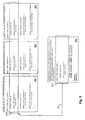
- Fig. 6 illustrates an example of generated code according to one embodiment of the present invention.
- Fig. 6 illustrates the creation of a new abstract parent class 601 "AbstractBusinessObject," which contains the "id" attribute and an associated getter method.
- the generated classes are CustomerOrder 602, Quotation 603, and Consumer 604, each of which now inherits from the abstract parent class 601 to implement the "id" attribute, for example.
- the new abstract parent class 601 (e.g., "AbstractBusinessObject”) may be moved to a framework and each of the generated classes may include a reference (e.g., "extends AbstractBusinessObject") to the parent class. Accordingly, functionality that was previously in multiple different code files, and multiple different templates, may be moved to the framework so that changes to common code may be advantageously simplified.
- the templates may be modified to produce appropriate inheritance code. This is illustrated in code modules 602, 603, and 604, which when generated using modified templates each include "extends" statement referencing the parent class "AbstractBusiriessObject.” Additionally, the template part that produced the "id" attribute can now be omitted in the template and embedded in the framework as described above.
- the framework may be static, in the sense that new templates and models may be developed and modified that leverage off of the resources in the framework. If the software system resulting from the generated code requires modification or updating, a developer may only need to change the templates, while core code components in the framework remain unchanged.
- Fig. 7 illustrates an example of a reference in a template to a parent class including common code according to one embodiment of the present invention.
- the template is modified to include a reference to the newly created parent class (e.g., "AbstractBusinessObject") so that the template can be used to generate code having classes that may inherit from the parent class in the framework.
- a reference to the newly created parent class e.g., "AbstractBusinessObject”
- Identifying common code parts in generated program code assets may be performed by tracing back from the code to the particular generator templates that produced the program code assets.
- a template may be written for a certain part in a metamodel, such as a model element class/type. Therefore, instances of this type (which are contained in the models) visit the template, and the code is generated.
- Common code typically refers to code that is generated based on the same portion of one or more templates. Accordingly, particular code files, and the particular lines of code in each code file, may be linked together and used for refactoring operations. For example, since many templates may generate into the content of one single file, common code may originate from different templates. Additionally, the example template in Fig. 5 illustrates a case where the common code stems from only one template.
- Fig. 2 illustrates advantages of refactoring as described herein.
- template calls may cascade, as illustrated in Fig. 2 .
- a template may use a call signature, hence, it may be invoked in the same manner as a method. If a leaf template is changed such that additional parameters are necessary, another parameter must be introduced into the call signature. This has an effect on all invoking templates which then need to pass the additional parameter (i.e., regardless of whether common code comes from only one or more templates).
- the generated content embeds into already generated other code.
- the leaf template must adhere to a certain context of generated code for the content it produces. If the leaf template must change, it might break this context with the newly generated code portion and the entire generated asset becomes invalid. This entails that parent templates must change their parts in order to adapt the leaf templates context. This may occur where common code comes from more than one template.
- Fig. 8 illustrates system including template reverse engineering computer system and networks according to one embodiment of the present invention.
- Computer system 810 includes a bus 805 or other communication mechanism for communicating information, and a processor 801 coupled with bus 805 for processing information.
- Computer system 810 also includes a memory 802 coupled to bus 805 for storing information and instructions to be executed by processor 801, including instructions for performing the techniques described above.
- This memory may also be used for storing temporary variables or other intermediate information during execution of instructions to be executed by processor 801. Possible implementations of this memory may be, but are not limited to, random access memory (RAM), read only memory (ROM), or both.
- a storage device 803 is also provided for storing information and instructions.
- Storage devices 803 and memory 802 are examples of computer readable mediums for storing software comprising instructions for implementing the techniques described above.
- Computer system 810 may be coupled via bus 805 to a display 812, such as a cathode ray tube (CRT) or liquid crystal display (LCD), for displaying information to a computer user.
- a display 812 such as a cathode ray tube (CRT) or liquid crystal display (LCD)
- An input device 811 such as a keyboard and/or mouse is coupled to bus 805 for communicating information and command selections from the user to processor 801. The combination of these components allows the user to communicate with the system.
- Computer system 810 also includes a network interface 804 coupled with bus 805.
- Network interface 804 may provide two-way data communication between computer system 810 and the local network 820.
- the network interface 804 may be a digital subscriber line (DSL) or a modem to provide data communication connection over a telephone line, for example.
- DSL digital subscriber line
- Another example of the network interface is a local area network (LAN) card to provide a data communication connection to a compatible LAN.
- LAN local area network
- Wireless links is also another example.
- network interface 804 sends and receives electrical, electromagnetic, or optical signals that carry digital data streams representing various types of information.
- Computer system 810 can send and receive information, including models, templates, and other constructs described above, through the network interface 804 to an Intranet or the Internet 830.
- electronic materials described above may reside on multiple different computer systems 810 or servers 831 across the network.
- templates or models described above may be created on a local computer system and deployed on one or more servers, for example.
- a server 831 may transmit such items through Internet 830, local network 820, and network interface 804 to a component on computer system 810.
- Code generators, mapping components, and change processors described above may be implemented on the same system or on different machines than the inputs and outputs they receive and output.
- the templates, code, or other inputs may then be sent to the processor 801 via bus 805 for processing.
- the received information may then be processed by processor 801 and/or stored in storage device 803, or other non-volatile storage for later execution.
- This process of sending and receiving information may be applied to communication between computer system 810 and any of the servers 831 to 835 in either direction. It may also be applied to communication between any two servers 831 to 835.
- a computer-readable medium containing instructions for controlling a computer system to perform a method may comprise: receiving one or more templates for generating code; receiving at least one model for generating code; processing the one or more templates and the model in a code generator executable on a computer system to generate a plurality of code files containing program code based on the model and the one or more templates; automatically identifying a common program code construct in two or more of the generated code files; and automatically modifying each template used to generate the common program code construct to include a reference to a code framework, said code framework including said common program code construct.
- the method may further comprise, after said step of identifying, automatically moving the identified common program code construct to the code framework.
- the common code construct may included in a plurality of different program classes in the generated code files, the method further comprising: creating a parent class; storing the common program code construct in the parent class; and creating an inheritance between the parent class and said plurality of program classes in the generated code files.
- the reference to the code framework may be a reference to said parent class.
- the code framework may be accessible by the generated code files.
- the code framework may be static.
- the method may further comprise generating modified code based on said model and said modified templates, said modified code including said references to said code framework, wherein, upon execution of said generated modified code, said generated modified code uses said references to said code framework to access said common program code construct.
Landscapes
- Engineering & Computer Science (AREA)
- Software Systems (AREA)
- General Engineering & Computer Science (AREA)
- Theoretical Computer Science (AREA)
- Physics & Mathematics (AREA)
- General Physics & Mathematics (AREA)
- Stored Programmes (AREA)
Claims (13)
- Computerimplementiertes Verfahren zum Generieren von Computerprogrammcode, umfassend:Empfangen (401) einer Mehrzahl von Vorlagen (301) zum Generieren von Code;Empfangen (402) zumindest eines Modells (302) zum Generieren von Code;Verarbeiten (403, 404) der Mehrzahl von Vorlagen (301) und des Modells (302) in einem Codegenerator (303), der auf einem Computersystem ausführbar ist, um eine Mehrzahl von Codedateien (304), die Programmcode enthalten, basierend auf dem Modell (302) und der Mehrzahl von Vorlagen (301) zu generieren;automatisches Identifizieren (405) eines gemeinsamen Programmcodekonstrukts in zwei oder mehr der generierten Codedateien (304, 304A) durch Zurückführen bzw. -verfolgen von dem Code zu bestimmten Generatorvorlagen der Mehrzahl von Vorlagen (301), welche die Programmcodedateien erstellten, wobei das gemeinsame Programmcodekonstrukt Merkmalen entspricht, die in mehreren unterschiedlichen Vorlagen spezifiziert sind, die grundlegende Komponenten eines Gesamtsoftwaresystems betreffen, die zu generieren sind;automatisches Bewegen des identifizierten gemeinsamen Programmcodekonstrukts zu einem Coderahmen (307);automatisches Modifizieren (406) jeder der bestimmten Generatorvorlagen, die zum Generieren des gemeinsamen Programmcodekonstrukts verwendet werden, dahingehend, eine Referenz zu bzw. einen Verweis auf den Coderahmen (307) zu enthalten, anstatt das gemeinsame Programmcodekonstrukt selbst, wobei der Coderahmen (307) das gemeinsame Programmcodekonstrukt enthält; undGenerieren von modifiziertem Code basierend auf dem Modell (302) und den modifizierten Vorlagen (301), wobei der modifizierte Code die Referenzen zu dem bzw. Verweise auf den Coderahmen (307) enthält,wobei Änderungen eines Codes in dem Coderahmen (307) nur Änderungen des Rahmencodes erfordern, so dass Änderungen der Mehrzahl von Vorlagen (301) verringert oder eliminiert werden.
- Computerimplementiertes Verfahren nach Anspruch 1, wobei das gemeinsame Codekonstrukt in einer Mehrzahl unterschiedlicher Programmklassen in den generierten Codedateien enthalten ist, wobei das Verfahren ferner umfasst:Erzeugen einer Elternklasse;Speichern des gemeinsamen Programmcodekonstrukts in der Elternklasse; undErzeugen einer Vererbung zwischen der Elternklasse und der Mehrzahl unterschiedlicher Programmklassen in den generierten Codedateien.
- Computerimplementiertes Verfahren nach Anspruch 2, wobei die Referenz zu dem Coderahmen (307) eine Referenz zu der Elternklasse ist.
- Computerimplementiertes Verfahren nach einem der vorhergehenden Ansprüche, wobei der Coderahmen (307) durch die generierten Codedateien zugänglich bzw. zugreifbar ist.
- Computerimplementiertes Verfahren nach einem der vorhergehenden Ansprüche, wobei das gemeinsame Programmcodekonstrukt in den zwei oder mehr generierten Codedateien (304, 304A) jeweils basierend auf demselben Abschnitt der Mehrzahl von Vorlagen (301) generiert wird.
- Computerimplementiertes Verfahren nach Anspruch 1, wobei bei Ausführung des generierten modifizierten Codes der generierte modifizierte Code die Referenzen zu dem Code Rahmen (307) verwendet, um auf die gemeinsamen Programmcodekonstrukte zuzugreifen.
- Computerimplementiertes System, umfassend:einen Codegenerator (303), der auf einem Computersystem ausführbar ist, zum Empfangen zumindest eines Softwaremodell (302) und einer Mehrzahl von Vorlagen (301) zum Generieren von Code, wobei das Softwaremodell (302) die Softwareoperationen spezifiziert und eine Mehrzahl von Elementen umfasst, die in Codekonstrukte zu übersetzten bzw. zu übertragen sind, und wobei die Mehrzahl von Vorlagen (301) zu verwendende Codekonstrukte von bzw. aus der Mehrzahl von Elementen in dem Softwaremodell (302) spezifiziert, wobei der Codegenerator (303) die Mehrzahl von Vorlagen (301) und das Softwaremodell (302) verarbeitet und in Übereinstimmung damit eine Mehrzahl von Codedateien (304), die Programmcode enthalten, basierend auf dem Softwaremodell (302) und der Mehrzahl von Vorlagen (301) generiert;einen Rahmengenerator (306), der auf dem Computer ausführbar ist, zum
automatischen Identifizieren eines gemeinsamen Programmcodekonstrukts in zwei oder mehr der generierten Codedateien (304, 304A) und Bewegen des gemeinsamen Programmcodekonstrukts in dem Coderahmen (307) durch Zurückführen bzw. -verfolgen von dem Code zu bestimmten Generatorvorlagen der Mehrzahl von Vorlagen (301), welche die Programmcodedateien erstellten, wobei das gemeinsame Programmcodekonstrukt Merkmalen entspricht, die in mehreren unterschiedlichen Vorlagen spezifiziert sind, die grundlegende Komponenten eines Gesamtsoftwaresystems betreffen, die zu generieren sind;
automatischen Bewegen des identifizierten gemeinsamen Programmcodekonstrukts zu einem Coderahmen (307);einen Code-zu-Vorlage-Änderungsprozessor (305), ausführbar auf dem Computer, zum
automatischen Modifizieren jeder der bestimmten Generatorvorlagen, die zum Generieren des gemeinsamen Programmcodekonstrukts verwendet werden, dahingehend, eine Referenz zu bzw. einen Verweis auf den Coderahmen (307) anstatt das gemeinsame Programmcodekonstrukt selbst zu enthalten,
Generieren von modifiziertem Code basierend auf dem Modell (302) und den modifizierten Vorlagen (301), wobei der modifizierte Code die Referenzen zu dem Coderahmen (307) enthält,wobei Änderungen eines Codes in dem Coderahmen (307) nur Änderungen des Rahmencodes erfordern, so dass Änderungen der Mehrzahl von Vorlagen (301) verringert oder eliminiert werden. - Computerimplementiertes System nach Anspruch 7, wobei das gemeinsame Codekonstrukt in eine Mehrzahl unterschiedlicher Programmklassen in den generierten Codedateien enthalten ist und wobei der Rahmengenerator (306) eine Elternklasse erzeugt und eine Vererbung zwischen der Elternklasse und der Mehrzahl unterschiedlicher Programmklassen in den generierten Codedateien erzeugt.
- Computerimplementiertes System nach Anspruch 8, wobei die Referenz zu dem Coderahmen (307) eine Referenz zu der Elternklasse ist.
- Computerimplementiertes System nach einem der Ansprüche 7 bis 9, wobei der Coderahmen (307) durch die generierten Codedateien zugänglich bzw. zugreifbar ist.
- Computerimplementiertes System nach einem der Ansprüche 7 bis 10, wobei der Coderahmen (307) statisch ist.
- Computerlesbares Medium, enthaltend Instruktionen zum Steuern bzw. Regeln eines Computersystems zum Durchführen eines Verfahrens nach einem der Ansprüche 1 bis 6.
- Computerlesbares Medium nach Anspruch 12, wobei der Coderahmen (307) statisch ist.
Applications Claiming Priority (1)
| Application Number | Priority Date | Filing Date | Title |
|---|---|---|---|
| US12/437,252 US8448132B2 (en) | 2009-05-07 | 2009-05-07 | Systems and methods for modifying code generation templates |
Publications (2)
| Publication Number | Publication Date |
|---|---|
| EP2249249A1 EP2249249A1 (de) | 2010-11-10 |
| EP2249249B1 true EP2249249B1 (de) | 2012-02-15 |
Family
ID=42313576
Family Applications (1)
| Application Number | Title | Priority Date | Filing Date |
|---|---|---|---|
| EP10004455A Active EP2249249B1 (de) | 2009-05-07 | 2010-04-27 | Systeme und Verfahren zur Modifizierung von Codeerzeugungsvorlagen |
Country Status (3)
| Country | Link |
|---|---|
| US (1) | US8448132B2 (de) |
| EP (1) | EP2249249B1 (de) |
| AT (1) | ATE545905T1 (de) |
Families Citing this family (23)
| Publication number | Priority date | Publication date | Assignee | Title |
|---|---|---|---|---|
| US8949772B1 (en) | 2009-06-01 | 2015-02-03 | Amazon Technologies, Inc. | Dynamic model based software application development |
| US8793645B2 (en) * | 2010-04-02 | 2014-07-29 | Microsoft Corporation | Replacement of data element in a graph |
| US9329839B2 (en) * | 2011-04-11 | 2016-05-03 | Data Systems International, Inc. | Multi-view form design |
| US9575949B2 (en) | 2011-04-11 | 2017-02-21 | Data Systems International, Inc. | Multi-view runtime interrogator |
| US8769501B2 (en) * | 2011-12-07 | 2014-07-01 | Siemens Aktiengesellschaft | Method for analyzing changes in a software code and software analysis system |
| EP3432139B1 (de) * | 2013-01-17 | 2024-07-17 | Generative Software GmbH | Computerimplementiertes verfahren zum generieren von computerprogrammcode |
| US9940104B2 (en) * | 2013-06-11 | 2018-04-10 | Microsoft Technology Licensing, Llc. | Automatic source code generation |
| EP2866139A1 (de) * | 2013-10-22 | 2015-04-29 | BAE Systems PLC | Verfahren der Kommunikation zwischen zwei Software-Komponenten, die zwei verschiedene Middleware zu verwenden, indem es automatisch eine Kommunikationsschicht zwischen ihnen zu erleichtern |
| CA2928316C (en) * | 2013-10-22 | 2021-12-21 | Bae Systems Plc | Facilitating communication between software components that use middleware |
| US9792095B2 (en) * | 2014-11-25 | 2017-10-17 | Symbol Technologies, Llc | Apparatus and method for converting a procedure manual to an automated program |
| US9547482B2 (en) | 2015-06-02 | 2017-01-17 | Sap Portals Israel Ltd. | Declarative design-time experience platform for code generation |
| DE202017101371U1 (de) * | 2016-03-11 | 2017-06-29 | Tata Consultancy Services Limited | System zur Entwicklung von mobilbasierten Anwendungen mittels modellgetriebener Entwicklung |
| US10296307B2 (en) * | 2017-05-16 | 2019-05-21 | International Business Machines Corporation | Method and system for template extraction based on source code similarity |
| CN109116828B (zh) * | 2017-06-22 | 2023-03-17 | 中兴通讯股份有限公司 | 一种控制器中模型代码配置方法和装置 |
| CN109144478B (zh) * | 2018-07-12 | 2022-02-25 | 北京猫眼文化传媒有限公司 | 组件框架系统以及组件框架系统的使用方法 |
| CN109271161B (zh) * | 2018-08-20 | 2024-06-04 | 中国平安人寿保险股份有限公司 | 样板代码生成方法、装置及存储设备及计算机设备 |
| CN109375943A (zh) * | 2018-10-18 | 2019-02-22 | 中国银行股份有限公司 | 一种程序文件生成方法及装置 |
| US10853062B1 (en) | 2019-07-02 | 2020-12-01 | Holtworks, LLC | Hyperpiler |
| US10942709B2 (en) * | 2019-07-02 | 2021-03-09 | Holtworks, LLC | Hyperpiler |
| US12493451B1 (en) | 2019-07-02 | 2025-12-09 | Holtwork LLC | Hyperplexer |
| CN111400319B (zh) * | 2020-03-13 | 2025-04-11 | 深圳前海微众银行股份有限公司 | 数据处理框架的实现方法、装置、设备及计算机存储介质 |
| US11301358B1 (en) * | 2020-12-15 | 2022-04-12 | International Business Machines Corporation | Using false positives to detect incorrectly updated code segments |
| WO2022221927A1 (en) * | 2021-04-22 | 2022-10-27 | E & K Escott Holdings Pty Ltd | A method for improved code generation by artificially intelligent agents |
Family Cites Families (40)
| Publication number | Priority date | Publication date | Assignee | Title |
|---|---|---|---|---|
| US4478708A (en) | 1983-10-11 | 1984-10-23 | Farnsworth Carl D | Method and apparatus for separating fluidized solid particles suspended in gasiform material |
| US5875331A (en) | 1994-09-30 | 1999-02-23 | International Business Machines Corp. | System and method for generating target language code utilizing an object oriented code generator |
| CA2210755C (en) | 1997-07-17 | 2003-12-23 | Ibm Canada Limited - Ibm Canada Limitee | Creating proxies for distribution of beans and event objects |
| US6742175B1 (en) | 1998-10-13 | 2004-05-25 | Codagen Technologies Corp. | Component-based source code generator |
| US6226792B1 (en) | 1998-10-14 | 2001-05-01 | Unisys Corporation | Object management system supporting the use of application domain knowledge mapped to technology domain knowledge |
| US7152228B2 (en) | 1999-07-08 | 2006-12-19 | Science Applications International Corporation | Automatically generated objects within extensible object frameworks and links to enterprise resources |
| US6199195B1 (en) | 1999-07-08 | 2001-03-06 | Science Application International Corporation | Automatically generated objects within extensible object frameworks and links to enterprise resources |
| US7334216B2 (en) | 2000-04-04 | 2008-02-19 | Sosy, Inc. | Method and apparatus for automatic generation of information system user interfaces |
| US6684388B1 (en) | 2000-08-22 | 2004-01-27 | International Business Machines Corporation | Method for generating platform independent, language specific computer code |
| US6973640B2 (en) | 2000-10-04 | 2005-12-06 | Bea Systems, Inc. | System and method for computer code generation |
| US20020178434A1 (en) | 2001-02-22 | 2002-11-28 | Fox Gary L. | Apparatus and method for automatic source code generation in a process control environment |
| US7546602B2 (en) * | 2001-07-10 | 2009-06-09 | Microsoft Corporation | Application program interface for network software platform |
| US8104017B2 (en) | 2001-10-25 | 2012-01-24 | The Mathworks, Inc. | Traceability in a modeling environment |
| US20030083900A1 (en) | 2001-10-26 | 2003-05-01 | Ismail Khriss | Template-based method and system for reverse engineering |
| US7962925B2 (en) | 2002-02-22 | 2011-06-14 | Oracle International Corporation | System and method for XML data binding |
| FR2840089B1 (fr) | 2002-05-23 | 2004-08-27 | Cit Alcatel | Outil de developpement logiciel pour assurer des liens entre les modeles ulm et leur implementation en environnement corba |
| US7237225B2 (en) | 2002-08-29 | 2007-06-26 | Sap Aktiengesellschaft | Rapid application integration using reusable patterns |
| US20040111702A1 (en) | 2002-12-10 | 2004-06-10 | Chan Kin Ming | Method and apparatus for visual programming |
| US20040216087A1 (en) | 2003-04-22 | 2004-10-28 | Wilson Kirk D. | System and method for integrating object-oriented models and object-oriented programming languages |
| US7890928B2 (en) * | 2003-07-26 | 2011-02-15 | Pilla Gurumurty Patrudu | Mechanism and system for representing and processing rules |
| US20050144226A1 (en) | 2003-11-10 | 2005-06-30 | Churchill Software Services | Systems and methods for modeling and generating reusable application component frameworks, and automated assembly of service-oriented applications from existing applications |
| US7533365B1 (en) | 2004-02-03 | 2009-05-12 | Borland Software Corporation | Development system with methodology for run-time restoration of UML model from program code |
| US6876314B1 (en) | 2004-02-18 | 2005-04-05 | Robocoder Corporation | Self-generating automatic code generator |
| US20050204334A1 (en) | 2004-03-15 | 2005-09-15 | Ramco Systems Limited | Component based software system |
| US7788663B2 (en) * | 2004-06-08 | 2010-08-31 | Covia Labs, Inc. | Method and system for device recruitment interoperability and assembling unified interoperating device constellation |
| US7627851B2 (en) | 2004-07-15 | 2009-12-01 | Conitec Gmbh | Modification method for modifying a source code |
| WO2006043012A1 (en) * | 2004-10-22 | 2006-04-27 | New Technology/Enterprise Limited | Data processing system and method |
| US7689969B1 (en) | 2005-01-18 | 2010-03-30 | The Mathworks, Inc. | Obfuscation of automatically generated code |
| US7681176B2 (en) * | 2005-03-04 | 2010-03-16 | Microsoft Corporation | Generating a graphical designer application for developing graphical models |
| US7761848B1 (en) | 2005-03-15 | 2010-07-20 | Open Invention Network, Llc | Code generator tool for building software applications with reusable components |
| US7676786B2 (en) | 2006-02-02 | 2010-03-09 | Research In Motion Limited | System and method and apparatus for using UML tools for defining web service bound component applications |
| US7958487B2 (en) * | 2006-03-21 | 2011-06-07 | International Business Machines Corporation | Apparatus, system, and method for modifying an integration software template |
| US7774746B2 (en) | 2006-04-19 | 2010-08-10 | Apple, Inc. | Generating a format translator |
| US8091071B2 (en) | 2006-08-21 | 2012-01-03 | Sap, Ag | Method and system for template-based code generation |
| US7900188B2 (en) | 2006-09-01 | 2011-03-01 | The Mathworks, Inc. | Specifying implementations of code for code generation from a model |
| US20080127061A1 (en) | 2006-10-02 | 2008-05-29 | Bulent Kasman | Method and system for editing code |
| US8001519B2 (en) | 2007-06-27 | 2011-08-16 | International Business Machines Corporation | Model driven development including aspect integration tool |
| US8015546B2 (en) | 2007-08-03 | 2011-09-06 | International Business Machines Corporation | Rapidly assembling and deploying selected software solutions |
| US8037450B2 (en) | 2007-08-29 | 2011-10-11 | Sap Ag | System and methods for tracing code generation in template engines |
| US8656349B2 (en) | 2008-03-07 | 2014-02-18 | Sap Ag | Systems and methods for template reverse engineering |
-
2009
- 2009-05-07 US US12/437,252 patent/US8448132B2/en active Active
-
2010
- 2010-04-27 AT AT10004455T patent/ATE545905T1/de active
- 2010-04-27 EP EP10004455A patent/EP2249249B1/de active Active
Also Published As
| Publication number | Publication date |
|---|---|
| ATE545905T1 (de) | 2012-03-15 |
| US8448132B2 (en) | 2013-05-21 |
| US20100287528A1 (en) | 2010-11-11 |
| EP2249249A1 (de) | 2010-11-10 |
Similar Documents
| Publication | Publication Date | Title |
|---|---|---|
| EP2249249B1 (de) | Systeme und Verfahren zur Modifizierung von Codeerzeugungsvorlagen | |
| US8869098B2 (en) | Computer method and apparatus for providing model to model transformation using an MDA approach | |
| US7823120B2 (en) | Device, system and method for accelerated modeling | |
| Voelter | Language and IDE Modularization and Composition with MPS | |
| US9465590B2 (en) | Code generation framework for application program interface for model | |
| US9916134B2 (en) | Methods and systems for accessing distributed computing components through the internet | |
| US7051316B2 (en) | Distributed computing component system with diagrammatic graphical representation of code with separate delineated display area by type | |
| US9037595B2 (en) | Creating graphical models representing control flow of a program manipulating data resources | |
| US20040015822A1 (en) | Method and apparatus for dynamic assembly and verification of software components into flexible applications | |
| Tourwé et al. | Automated support for framework-based software | |
| CN112269836B (zh) | 一种区块链智能合约生成与管理系统及其实现机制 | |
| Izquierdo et al. | API2MoL: Automating the building of bridges between APIs and Model-Driven Engineering | |
| Degueule et al. | Safe model polymorphism for flexible modeling | |
| US7810077B2 (en) | Reifying generic types while maintaining migration compatibility | |
| US8935657B2 (en) | Model-to-model transformation by kind | |
| Giachetti et al. | Integration of domain-specific modelling languages and UML through UML profile extension mechanism. | |
| US10311392B2 (en) | Just in time compilation (JIT) for business process execution | |
| Gotti et al. | A Model Driven approach for multi-platform execution of interactive UIS designed with IFML | |
| US7526752B1 (en) | Introspection support for generic types | |
| Lano et al. | Introduction to software architecture concepts | |
| Sulistyo et al. | Recursive modeling for completed code generation | |
| Weghofer | Moola-a Groovy-based model operation orchestration language | |
| Rahimi et al. | Architecture conformance checking of multi-language applications | |
| Mellor | Embedded systems in UML | |
| Van Gorp et al. | Hybrid transformation modeling: A case study based on developer interaction |
Legal Events
| Date | Code | Title | Description |
|---|---|---|---|
| PUAI | Public reference made under article 153(3) epc to a published international application that has entered the european phase |
Free format text: ORIGINAL CODE: 0009012 |
|
| AK | Designated contracting states |
Kind code of ref document: A1 Designated state(s): AT BE BG CH CY CZ DE DK EE ES FI FR GB GR HR HU IE IS IT LI LT LU LV MC MK MT NL NO PL PT RO SE SI SK SM TR |
|
| AX | Request for extension of the european patent |
Extension state: AL BA ME RS |
|
| 17P | Request for examination filed |
Effective date: 20110303 |
|
| RIC1 | Information provided on ipc code assigned before grant |
Ipc: G06F 9/44 20060101AFI20110720BHEP |
|
| GRAP | Despatch of communication of intention to grant a patent |
Free format text: ORIGINAL CODE: EPIDOSNIGR1 |
|
| GRAS | Grant fee paid |
Free format text: ORIGINAL CODE: EPIDOSNIGR3 |
|
| GRAA | (expected) grant |
Free format text: ORIGINAL CODE: 0009210 |
|
| AK | Designated contracting states |
Kind code of ref document: B1 Designated state(s): AT BE BG CH CY CZ DE DK EE ES FI FR GB GR HR HU IE IS IT LI LT LU LV MC MK MT NL NO PL PT RO SE SI SK SM TR |
|
| REG | Reference to a national code |
Ref country code: CH Ref legal event code: EP Ref country code: GB Ref legal event code: FG4D |
|
| REG | Reference to a national code |
Ref country code: IE Ref legal event code: FG4D |
|
| REG | Reference to a national code |
Ref country code: AT Ref legal event code: REF Ref document number: 545905 Country of ref document: AT Kind code of ref document: T Effective date: 20120315 |
|
| REG | Reference to a national code |
Ref country code: DE Ref legal event code: R096 Ref document number: 602010000840 Country of ref document: DE Effective date: 20120412 |
|
| REG | Reference to a national code |
Ref country code: NL Ref legal event code: VDEP Effective date: 20120215 |
|
| LTIE | Lt: invalidation of european patent or patent extension |
Effective date: 20120215 |
|
| PG25 | Lapsed in a contracting state [announced via postgrant information from national office to epo] |
Ref country code: LT Free format text: LAPSE BECAUSE OF FAILURE TO SUBMIT A TRANSLATION OF THE DESCRIPTION OR TO PAY THE FEE WITHIN THE PRESCRIBED TIME-LIMIT Effective date: 20120215 Ref country code: NO Free format text: LAPSE BECAUSE OF FAILURE TO SUBMIT A TRANSLATION OF THE DESCRIPTION OR TO PAY THE FEE WITHIN THE PRESCRIBED TIME-LIMIT Effective date: 20120515 Ref country code: NL Free format text: LAPSE BECAUSE OF FAILURE TO SUBMIT A TRANSLATION OF THE DESCRIPTION OR TO PAY THE FEE WITHIN THE PRESCRIBED TIME-LIMIT Effective date: 20120215 Ref country code: HR Free format text: LAPSE BECAUSE OF FAILURE TO SUBMIT A TRANSLATION OF THE DESCRIPTION OR TO PAY THE FEE WITHIN THE PRESCRIBED TIME-LIMIT Effective date: 20120215 Ref country code: IS Free format text: LAPSE BECAUSE OF FAILURE TO SUBMIT A TRANSLATION OF THE DESCRIPTION OR TO PAY THE FEE WITHIN THE PRESCRIBED TIME-LIMIT Effective date: 20120615 |
|
| PG25 | Lapsed in a contracting state [announced via postgrant information from national office to epo] |
Ref country code: GR Free format text: LAPSE BECAUSE OF FAILURE TO SUBMIT A TRANSLATION OF THE DESCRIPTION OR TO PAY THE FEE WITHIN THE PRESCRIBED TIME-LIMIT Effective date: 20120516 Ref country code: PL Free format text: LAPSE BECAUSE OF FAILURE TO SUBMIT A TRANSLATION OF THE DESCRIPTION OR TO PAY THE FEE WITHIN THE PRESCRIBED TIME-LIMIT Effective date: 20120215 Ref country code: FI Free format text: LAPSE BECAUSE OF FAILURE TO SUBMIT A TRANSLATION OF THE DESCRIPTION OR TO PAY THE FEE WITHIN THE PRESCRIBED TIME-LIMIT Effective date: 20120215 Ref country code: LV Free format text: LAPSE BECAUSE OF FAILURE TO SUBMIT A TRANSLATION OF THE DESCRIPTION OR TO PAY THE FEE WITHIN THE PRESCRIBED TIME-LIMIT Effective date: 20120215 Ref country code: PT Free format text: LAPSE BECAUSE OF FAILURE TO SUBMIT A TRANSLATION OF THE DESCRIPTION OR TO PAY THE FEE WITHIN THE PRESCRIBED TIME-LIMIT Effective date: 20120615 Ref country code: BE Free format text: LAPSE BECAUSE OF FAILURE TO SUBMIT A TRANSLATION OF THE DESCRIPTION OR TO PAY THE FEE WITHIN THE PRESCRIBED TIME-LIMIT Effective date: 20120215 |
|
| REG | Reference to a national code |
Ref country code: AT Ref legal event code: MK05 Ref document number: 545905 Country of ref document: AT Kind code of ref document: T Effective date: 20120215 |
|
| PG25 | Lapsed in a contracting state [announced via postgrant information from national office to epo] |
Ref country code: CY Free format text: LAPSE BECAUSE OF FAILURE TO SUBMIT A TRANSLATION OF THE DESCRIPTION OR TO PAY THE FEE WITHIN THE PRESCRIBED TIME-LIMIT Effective date: 20120215 |
|
| PG25 | Lapsed in a contracting state [announced via postgrant information from national office to epo] |
Ref country code: EE Free format text: LAPSE BECAUSE OF FAILURE TO SUBMIT A TRANSLATION OF THE DESCRIPTION OR TO PAY THE FEE WITHIN THE PRESCRIBED TIME-LIMIT Effective date: 20120215 Ref country code: RO Free format text: LAPSE BECAUSE OF FAILURE TO SUBMIT A TRANSLATION OF THE DESCRIPTION OR TO PAY THE FEE WITHIN THE PRESCRIBED TIME-LIMIT Effective date: 20120215 Ref country code: SE Free format text: LAPSE BECAUSE OF FAILURE TO SUBMIT A TRANSLATION OF THE DESCRIPTION OR TO PAY THE FEE WITHIN THE PRESCRIBED TIME-LIMIT Effective date: 20120215 Ref country code: CZ Free format text: LAPSE BECAUSE OF FAILURE TO SUBMIT A TRANSLATION OF THE DESCRIPTION OR TO PAY THE FEE WITHIN THE PRESCRIBED TIME-LIMIT Effective date: 20120215 Ref country code: SI Free format text: LAPSE BECAUSE OF FAILURE TO SUBMIT A TRANSLATION OF THE DESCRIPTION OR TO PAY THE FEE WITHIN THE PRESCRIBED TIME-LIMIT Effective date: 20120215 Ref country code: DK Free format text: LAPSE BECAUSE OF FAILURE TO SUBMIT A TRANSLATION OF THE DESCRIPTION OR TO PAY THE FEE WITHIN THE PRESCRIBED TIME-LIMIT Effective date: 20120215 |
|
| PG25 | Lapsed in a contracting state [announced via postgrant information from national office to epo] |
Ref country code: IT Free format text: LAPSE BECAUSE OF FAILURE TO SUBMIT A TRANSLATION OF THE DESCRIPTION OR TO PAY THE FEE WITHIN THE PRESCRIBED TIME-LIMIT Effective date: 20120215 Ref country code: MC Free format text: LAPSE BECAUSE OF NON-PAYMENT OF DUE FEES Effective date: 20120430 Ref country code: SK Free format text: LAPSE BECAUSE OF FAILURE TO SUBMIT A TRANSLATION OF THE DESCRIPTION OR TO PAY THE FEE WITHIN THE PRESCRIBED TIME-LIMIT Effective date: 20120215 |
|
| PLBE | No opposition filed within time limit |
Free format text: ORIGINAL CODE: 0009261 |
|
| STAA | Information on the status of an ep patent application or granted ep patent |
Free format text: STATUS: NO OPPOSITION FILED WITHIN TIME LIMIT |
|
| 26N | No opposition filed |
Effective date: 20121116 |
|
| PG25 | Lapsed in a contracting state [announced via postgrant information from national office to epo] |
Ref country code: AT Free format text: LAPSE BECAUSE OF FAILURE TO SUBMIT A TRANSLATION OF THE DESCRIPTION OR TO PAY THE FEE WITHIN THE PRESCRIBED TIME-LIMIT Effective date: 20120215 |
|
| PG25 | Lapsed in a contracting state [announced via postgrant information from national office to epo] |
Ref country code: MK Free format text: LAPSE BECAUSE OF FAILURE TO SUBMIT A TRANSLATION OF THE DESCRIPTION OR TO PAY THE FEE WITHIN THE PRESCRIBED TIME-LIMIT Effective date: 20120215 |
|
| REG | Reference to a national code |
Ref country code: DE Ref legal event code: R097 Ref document number: 602010000840 Country of ref document: DE Effective date: 20121116 |
|
| PG25 | Lapsed in a contracting state [announced via postgrant information from national office to epo] |
Ref country code: IE Free format text: LAPSE BECAUSE OF NON-PAYMENT OF DUE FEES Effective date: 20120427 Ref country code: ES Free format text: LAPSE BECAUSE OF FAILURE TO SUBMIT A TRANSLATION OF THE DESCRIPTION OR TO PAY THE FEE WITHIN THE PRESCRIBED TIME-LIMIT Effective date: 20120526 |
|
| PG25 | Lapsed in a contracting state [announced via postgrant information from national office to epo] |
Ref country code: MT Free format text: LAPSE BECAUSE OF FAILURE TO SUBMIT A TRANSLATION OF THE DESCRIPTION OR TO PAY THE FEE WITHIN THE PRESCRIBED TIME-LIMIT Effective date: 20120215 Ref country code: BG Free format text: LAPSE BECAUSE OF FAILURE TO SUBMIT A TRANSLATION OF THE DESCRIPTION OR TO PAY THE FEE WITHIN THE PRESCRIBED TIME-LIMIT Effective date: 20120515 |
|
| PG25 | Lapsed in a contracting state [announced via postgrant information from national office to epo] |
Ref country code: TR Free format text: LAPSE BECAUSE OF FAILURE TO SUBMIT A TRANSLATION OF THE DESCRIPTION OR TO PAY THE FEE WITHIN THE PRESCRIBED TIME-LIMIT Effective date: 20120215 |
|
| PG25 | Lapsed in a contracting state [announced via postgrant information from national office to epo] |
Ref country code: SM Free format text: LAPSE BECAUSE OF FAILURE TO SUBMIT A TRANSLATION OF THE DESCRIPTION OR TO PAY THE FEE WITHIN THE PRESCRIBED TIME-LIMIT Effective date: 20120215 Ref country code: LU Free format text: LAPSE BECAUSE OF NON-PAYMENT OF DUE FEES Effective date: 20120427 |
|
| PG25 | Lapsed in a contracting state [announced via postgrant information from national office to epo] |
Ref country code: HU Free format text: LAPSE BECAUSE OF FAILURE TO SUBMIT A TRANSLATION OF THE DESCRIPTION OR TO PAY THE FEE WITHIN THE PRESCRIBED TIME-LIMIT Effective date: 20100427 |
|
| REG | Reference to a national code |
Ref country code: CH Ref legal event code: PL |
|
| REG | Reference to a national code |
Ref country code: DE Ref legal event code: R082 Ref document number: 602010000840 Country of ref document: DE Representative=s name: MUELLER-BORE & PARTNER PATENTANWAELTE PARTG MB, DE |
|
| REG | Reference to a national code |
Ref country code: DE Ref legal event code: R081 Ref document number: 602010000840 Country of ref document: DE Owner name: SAP SE, DE Free format text: FORMER OWNER: SAP AG, 69190 WALLDORF, DE Effective date: 20141210 Ref country code: DE Ref legal event code: R082 Ref document number: 602010000840 Country of ref document: DE Representative=s name: MUELLER-BORE & PARTNER PATENTANWAELTE PARTG MB, DE Effective date: 20141210 |
|
| PG25 | Lapsed in a contracting state [announced via postgrant information from national office to epo] |
Ref country code: CH Free format text: LAPSE BECAUSE OF NON-PAYMENT OF DUE FEES Effective date: 20140430 Ref country code: LI Free format text: LAPSE BECAUSE OF NON-PAYMENT OF DUE FEES Effective date: 20140430 |
|
| REG | Reference to a national code |
Ref country code: FR Ref legal event code: PLFP Year of fee payment: 7 |
|
| REG | Reference to a national code |
Ref country code: FR Ref legal event code: PLFP Year of fee payment: 8 |
|
| REG | Reference to a national code |
Ref country code: FR Ref legal event code: PLFP Year of fee payment: 9 |
|
| PGFP | Annual fee paid to national office [announced via postgrant information from national office to epo] |
Ref country code: DE Payment date: 20250422 Year of fee payment: 16 |
|
| PGFP | Annual fee paid to national office [announced via postgrant information from national office to epo] |
Ref country code: GB Payment date: 20250423 Year of fee payment: 16 |
|
| PGFP | Annual fee paid to national office [announced via postgrant information from national office to epo] |
Ref country code: FR Payment date: 20250424 Year of fee payment: 16 |