EP2247142B1 - Verfahren und Vorrichtung zur Behandlung von Interfunkzugriffstechnologie-Messanforderungen in einer mobilen Telekommunikationsvorrichtung - Google Patents
Verfahren und Vorrichtung zur Behandlung von Interfunkzugriffstechnologie-Messanforderungen in einer mobilen Telekommunikationsvorrichtung Download PDFInfo
- Publication number
- EP2247142B1 EP2247142B1 EP09159256A EP09159256A EP2247142B1 EP 2247142 B1 EP2247142 B1 EP 2247142B1 EP 09159256 A EP09159256 A EP 09159256A EP 09159256 A EP09159256 A EP 09159256A EP 2247142 B1 EP2247142 B1 EP 2247142B1
- Authority
- EP
- European Patent Office
- Prior art keywords
- measurement report
- respect
- gan
- access network
- cellular
- Prior art date
- Legal status (The legal status is an assumption and is not a legal conclusion. Google has not performed a legal analysis and makes no representation as to the accuracy of the status listed.)
- Active
Links
Images

Classifications
-
- H—ELECTRICITY
- H04—ELECTRIC COMMUNICATION TECHNIQUE
- H04W—WIRELESS COMMUNICATION NETWORKS
- H04W36/00—Hand-off or reselection arrangements
- H04W36/0005—Control or signalling for completing the hand-off
- H04W36/0083—Determination of parameters used for hand-off, e.g. generation or modification of neighbour cell lists
- H04W36/0085—Hand-off measurements
- H04W36/0088—Scheduling hand-off measurements
-
- H—ELECTRICITY
- H04—ELECTRIC COMMUNICATION TECHNIQUE
- H04W—WIRELESS COMMUNICATION NETWORKS
- H04W36/00—Hand-off or reselection arrangements
- H04W36/14—Reselecting a network or an air interface
- H04W36/144—Reselecting a network or an air interface over a different radio air interface technology
-
- H—ELECTRICITY
- H04—ELECTRIC COMMUNICATION TECHNIQUE
- H04W—WIRELESS COMMUNICATION NETWORKS
- H04W36/00—Hand-off or reselection arrangements
- H04W36/24—Reselection being triggered by specific parameters
- H04W36/30—Reselection being triggered by specific parameters by measured or perceived connection quality data
- H04W36/302—Reselection being triggered by specific parameters by measured or perceived connection quality data due to low signal strength
-
- H—ELECTRICITY
- H04—ELECTRIC COMMUNICATION TECHNIQUE
- H04W—WIRELESS COMMUNICATION NETWORKS
- H04W88/00—Devices specially adapted for wireless communication networks, e.g. terminals, base stations or access point devices
- H04W88/02—Terminal devices
- H04W88/06—Terminal devices adapted for operation in multiple networks or having at least two operational modes, e.g. multi-mode terminals
Definitions
- This application relates to mobile telecommunications systems in general, having particular application in mobile telecommunications device operable with a plurality of radio access networks in general, and in particular relates to an apparatus and a method for handling inter-radio access technology measurement requests in a mobile telecommunications device.
- UE communicates via one or more cellular radio access networks (RANs) to one or more core networks.
- RANs cellular radio access networks
- UE User equipment
- RANs cellular radio access networks
- PDAs personal digital assistants
- UMTS Universal Mobile Telecommunications System
- 3G Third Generation
- UTRAN UMTS Terrestrial Radio Access Network
- GERAN GSM EDGE Radio Access Network
- 2G 2G system, based on GSM, which was developed to provide improved data access compared with GSM.
- a cellular radio access network covers a geographical area typically divided into a plurality of cell areas. Each cell area is served by at least one base station, which in UMTS may be referred to as a Node B and in GSM is referred to as base station (BS). Each cell is typically identified by a unique identifier which is broadcast in the cell.
- the base stations communicate at radio frequencies over an air interface with the radio devices within range of the base station.
- Several base stations may be connected to a radio network controller (RNC) which controls various activities of the base stations.
- the radio network controllers are typically connected to a core network.
- GANs Generic Access Networks
- These are typically not wide area cellular systems as described above but are local access networks systems, for instance implemented with access devices (typically with a wireless interface with the user equipment) that comply with IEEE standards 802.xx (e.g. WiFi hotspots, Wireless Local Area Networks or broadband wireless routers, for instance in office or domestic premises).
- GAN technology provides an access network to the mobile core network that can be used to access the existing circuit-switched and packet-switched services.
- the provision of the generic access network is based on use of unlicensed spectrum (e.g. WLAN) and IP-based broadband access network for instance as set out in IEEE 802.xx standards.
- GAN enables typical wireless telecommunications services to be delivered at homes or in offices. The intention is for end users to enjoy the same service as with the wide area cellular network(s) but access it via a local access point such as a broadband wireless router. Fixed/mobile convergence may therefore be provided.
- 3GPP Third Generation Partnership Project
- GSM Global System for Mobile Communications
- 3GPP2 Third Generation Partnership Project 2
- CDMA Code Division Multiple Access
- 3GPP Release 8 introduces LTE (Long Term Evolution) and E-UTRAN.
- 3GPP also publishes and set standards for GAN systems.
- specific partners publish and set standards in their respective areas.
- the 3GPP specification TS 43.318 v8.4.0 relates to the Generic Access Network, an access network providing access to A/Gb or Iu interfaces via an IP network.
- the 3GPP specification TS 44.318 v8.5.0 relates to the Generic Access Network: Mobile GAN interface layer 3 specification and Annex E relates to GAN Specific Requirements for Interworking with UTRAN.
- the 3GPP specification TS 25.331 v5.23.0 relates to the Protocol Specification for Radio Resource Control (RRC) of the UMTS Radio Access Network and Section 14.3 relates to inter-RAT measurements and Section 14.3.1.1 provides a description of an inter-RAT reporting event known as Event 3A, configured when the estimated quality of the currently used UTRAN frequency is below a certain threshold and the estimated quality of the other system is above a certain threshold.
- RRC Radio Resource Control
- a wireless mobile device generally referred to as user equipment (UE) or a mobile station (MS), that complies with the 3GPP specifications for the UMTS protocol and the specifications for the GSM EDGE protocol and the specifications for the GAN protocol.
- UE user equipment
- MS mobile station
- Such a MS may be connected to the 3G network, the 2G network or the GAN.
- GERAN/UTRAN preferred mode also referred to as cellular preferred mode
- the MS shall only send a measurement about the GAN cell to trigger handover when no GERAN cells from the Inter-RAT measurement object list satisfy the triggering condition of the configured Event (as described in TS 25.331).
- WO 2007080348 describes a method that can be implemented by a terminal and that comprises a step of allocating a dummy signal level to a cell defined by an access point of a local network in such a way as to comply with the preferences of a user who has chosen to opt, in a roaming situation, for his mobile terminal to be hooked up to a cell of a public cellular network as compared with a cell of a local cellular network.
- a method for handling inter-radio access technology measurement reports in a mobile telecommunications device the device being operable with a first cellular radio access technology (e.g. UMTS), a second cellular radio access technology (e.g. GPRS) and a non-cellular radio access technology (e.g. Generic Access Network (e.g.
- the mobile telecommunications device being capable of adopting a cellular preferred mode
- the method comprising, in the mobile telecommunications device, when the mobile telecommunications device is in a cellular preferred mode and operating with the first cellular radio access technology and the mobile telecommunications device is registered with a Generic Access Network, in response to a trigger based on an estimated quality of the first cellular radio access technology and the second cellular radio access technology, when there is at least one cell of the second cellular radio access technology that satisfies a triggering condition, sending a measurement report in respect of the second cellular radio access technology and a measurement report in respect of the generic access network.
- the invention encompasses apparatus and a computer-readable medium configured to carry out the foregoing actions, as well as a data carrier carrying thereon or therein data indicative of instructions executable by processing means to cause those means to carry out the foregoing actions. Examples are CD-ROMs, memory sticks, dongles, transmitted signals, downloaded files etc.
- the method may be implemented in a mobile telecommunications device, with or without voice capabilities, or other electronic devices such as handheld or portable devices.
- GAN supports two modes of operation: GAN A/Gb mode and GAN Iu mode.
- GAN A/Gb mode supports an extension of GSM/GPRS mobile services that is achieved by tunnelling Non Access Stratum (NAS) protocols between the MS and the Core Network over an IP network and the A and Gb interfaces to the MSC and SGSN, respectively.
- GAN Iu mode supports an extension of UMTS mobile services that is achieved by tunnelling Non Access Stratum (NAS) protocols between the user equipment (MS) and the Core Network over an IP network and the Iu-cs and Iu-ps interfaces to the MSC and SGSN, respectively.
- NAS Non Access Stratum
- GANC Generic Access Network Controller
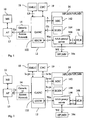
- Fig. 1 shows an example of the functional architecture for the GAN A/Gb mode (where the GANC appears to the core network as a GERAN Base Station Subsystem (BSS)).
- the mobile station (MS) 10 connects to the GANC 12 via an Access Point (AP) 13 and the Generic IP Access Network 14.
- An interface Up is defined between the MS 10 and the GANC 12.
- the GANC 12 then connects to the Host or Visitor Public Land Mobile Network (HPLMN/VPLMN) 16 via interfaces A (to a Mobile Switching Centre (MSC) 162) and Gb (to a Serving GPRS Support Node (SGSN) 164).
- HPLMN/VPLMN Host or Visitor Public Land Mobile Network
- MSC Mobile Switching Centre
- SGSN Serving GPRS Support Node
- the GANC 12 also connects to a Serving Mobile Location Centre (SMLC) 18 via an interface Lb and to a Cell Broadcast Centre (CBC) 19.
- the GANC also comprises a Security Gateway (SEGW) 122 which connects to an Accounting, Authorisation and Authentication (AAA) proxy/server 166 via an interface Wm.
- the AAA Proxy/server 166 connects to a Home Location Register (HLR) 168 via an interface D'/Gr'.
- the AAA Proxy/server 166 also connects to another HPLMN 16a via an interface Wd in the roaming case.
- Fig. 2 shows an example of the functional architecture for the GAN Iu mode (where the GANC appears to the core network as a UTRAN Radio Network Controller (RNC)).
- the mobile station (MS) 10 connects to the GANC 12 via an Access Point (AP) 13 and the Generic IP Access Network 14.
- An interface Up is defined between the MS 10 and the GANC 12.
- the GANC 12 then connects to the Host or Visitor Public Land Mobile Network (HPLMN/VPLMN) 16 via interfaces Iu-cs (to a Mobile Switching Centre (MSC) 162) and Iu-ps (to a Serving GPRS Support Node (SGSN) 164).
- HPLMN/VPLMN Host or Visitor Public Land Mobile Network
- Iu-cs to a Mobile Switching Centre (MSC) 162
- Iu-ps to a Serving GPRS Support Node (SGSN) 164.
- SGSN Serving GPRS Support Node
- the GANC 12 also connects to a Serving Mobile Location Centre (SMLC) 18 via an interface Iu-pc and to a Cell Broadcast Centre (CBC) 19 via an interface Iu-bc.
- the GANC also comprises a Security Gateway (SEGW) 122 which connects to an Accounting, Authorisation and Authentication (AAA) proxy/server 166 via an interface Wm.
- the AAA Proxy/server 166 connects to a Home Location Register (HLR) 168 via an interface D'/Gr'.
- the AAA Proxy/server 166 also connects to another HPLMN 16a via an interface Wd in the roaming case.
- the Access Point ID is the physical identity (e.g. MAC address) of the generic IP access network point 13 through which the MS is accessing the GAN service. This identifier is provided by the mobile device 10 (obtained via broadcast from the AP 13) to the GANC 12 via the Up interface, when the MS 10 requests GAN service.
- the AP-ID may be used by the GANC 12 to support location services.
- the AP-ID may also be used by the service provider to restrict GAN service access via only authorized APs 13.
- a GANC appears as an RNC / BSC and in GAN A/Gb mode the same identifiers (i.e. ARFCN and BSIC) can be used which are also used for GERAN cells.
- ARFCN and BSIC the same identifiers
- the implications of this are that legacy RNCs and BSCs do not have to be upgraded to support GAN cells deployed in the network; their neighbour cell lists can include GAN cells within the GERAN neighbour cell list, and similarly measurement reports can indicate that the mobile has a connection to a GANC using the legacy 2G measurement report approach.
- RSSI 63
- Event 3A is triggered in the MS when the estimated quality of the currently used UTRAN frequency is below a certain threshold and the estimated quality of an other system (e.g. one or more alternative cells of another RAT e.g. GERAN) is above a certain threshold. This may occur, for example, when a mobile is moving out of 3G coverage but remains in (or is entering) non-3G coverage.
- an other system e.g. one or more alternative cells of another RAT e.g. GERAN
- a MS which supports 3G, 2G and GAN radio access technologies can report 2G and GAN cells to a UTRAN in event 3A reports.
- the user preference is set to cellular preferred (GERAN/UTRAN preferred) then, according to 44.318 v8.5.0 Annex E.1, GAN cells must not be reported unless there are no 2G cells that satisfy the event 3A triggering condition.
- the handover to 2G fails (e.g. the MS cannot synchronise to the BSC, or the BSC is congested and cannot accept the call) the UTRAN does not know that a GAN cell is available as a possible target to accept the call. If the 3G coverage is lost, then the call gets dropped.
- a scenario where this could arise is, for example, entering a building in a rural environment, where there are very few macro (i.e. 2G & 3G) cells, but where GAN coverage is available in the building.
- a mobile may be able to register with the GAN cell in the building; at the same time, an Event 3A is triggered due to the falling 3G signal level in the building, while 2G coverage remains acceptable.
- the mobile reports only the 2G cell in its measurement report and the UTRAN attempts handover.
- a technique is proposed in which a mobile device reports a GAN cell in an Event 3A measurement report, even when the MS settings are set to cellular is preferred and there are GERAN Cells from the inter-RAT measurement object list that satisfy the triggering condition of the configured event. For instance, this may be either:
- a MS reports an Event 3A measurement report to UTRAN it may sometimes be desirable to also report the GAN cell(s). If 2G cells meet event 3A triggering criteria, then the MS also sends a measurement report in respect of a GAN cell as well as 2G cells. Previously in the prior art, the MS reports either only 2G or only GAN in the case of cellular-preferred. Reporting both 2G and GAN target cells where available should increase the Inter System Handover (ISHO) success thereby call success since, having unsuccessfully attempted to initiate a handover to 2G, an RNC may attempt preparation of a handover to GAN.
- ILO Inter System Handover
- the MS may include a measurement report about the GAN cell to trigger handover when one or more GERAN cells from the Inter-RAT measurement object list satisfy the triggering condition of the configured Event (as described in TS 25.331).
- the MS does include 2G and GAN cells in event 3A reports it could do so in one of the following ways.
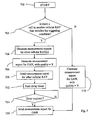
- Fig. 3 is a flow chart illustrating the technique.
- the MS enters a start state (302) when the following conditions are met.
- the MS is registered with a GANC that appears as a network component of the second cellular radio access technology, is camped on a first cellular RAT (e.g. UTRAN) and is in cellular preferred (e.g. UTRAN/GERAN preferred) mode (302).
- the MS 10 has detected that the connection with the first cellular network (UTRAN) is weak (i.e. a quality of a signal from the UTRAN is below a certain threshold (for example an estimated quality of the currently used UTRAN frequency is below a certain threshold)) and that the connection with the GAN is strong (i.e.
- a quality of a signal from the GAN for example signal strength, Block non-Error Rate, Signal to Noise Ratio
- UTRAN first cellular RAT
- this request is generated by the UTRAN when the estimated quality of the currently used UTRAN frequency is below a certain threshold and will cause an inter-RAT measurement report for event 3a, as set out in TS 25.331 section 14.3.1.1, when the estimated quality of the currently used UTRAN frequency is below a certain threshold and when the estimated quality of the other system (GERAN) is above a certain threshold.
- the MS checks (303) whether there is a cell in another cellular RAT (e.g. GERAN) that satisfies the triggering condition. If so, the MS then generates (304) a measurement report for the neighbouring cells of the other cellular RAT (e.g. GERAN).
- another cellular RAT e.g. GERAN
- the MS also generates (306) a measurement report for the GAN cell.
- the MS then sends (308) the generated measurement reports for the neighbouring cells and the GAN cell to the network. If there is no cell in another cellular RAT that satisfies the triggering condition, then the MS generates (306) a measurement report for the GAN cell only and the MS then sends (308) the generated measurement report for the GAN cell to the network.
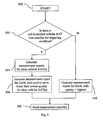
- Fig. 4 is a flow chart illustrating a first embodiment of a method carried out by the MS 10 to implement this technique.
- the same start conditions as discussed with reference to Fig. 3 are in place (402).
- the MS is in cellular preferred mode, the MS is registered with a GANC that operates as a network component of the second cellular radio access technology (e.g. a GERAN network component) and camped on first cellular RAT e.g. UMTS, the connection with the first cellular RAT is weak, the connection with the GAN is strong and a request has been received to send an inter-RAT measurement report.
- the MS checks whether there is a cell in another cellular RAT that satisfies the triggering condition (operation 403).
- the MS then sends an event 3A measurement report including both the 2G cell(s) and the GAN cell (operation 408).
- the GAN cell may be listed after the 2G cells that are reported. If there is no cell in another cellular RAT (e.g.
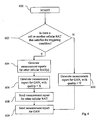
- Fig. 5 is a flow chart illustrating a further embodiment of a method carried out by the MS 10 to implement this technique.
- the same start conditions as discussed with reference to Fig. 3 are in place (502).
- the MS is in cellular preferred mode, the MS is registered with a GANC that operates as a network component of the second cellular radio access technology (e.g. a GERAN network component) and camped on first cellular RAT e.g. UMTS, the connection with the first cellular RAT is weak, the connection with the GAN is strong and a request has been received to send an inter-RAT measurement report.
- the MS checks whether there is a cell in another cellular RAT that satisfies the triggering condition (operation 503).
- the MS 10 configures measurement reports for the other cellular RAT (operation 504) and then generates a measurement report for the GAN, allocating an indicator of quality to the GAN cell that is lower than the lowest indicator of quality for the cells of the other RAT (e.g. RSSI for a GAN A/Gb mode) (operation 506). For example, the reported RSSI of the GAN Cell is set to just below the weakest 2G cell reported. The MS then sends an event 3A measurement report including both the 2G cell(s) and the GAN cell (operation 508).
- another cellular RAT e.g. GERAN
- another cellular RAT e.g. GERAN
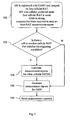
- Fig. 6 is a flow chart illustrating a further embodiment of a method carried out by the MS 10 to implement this technique.
- the same start conditions as discussed with reference to Fig. 3 are in place (602).
- the MS is in cellular preferred mode, the MS is registered with a GANC that operates as a network component of the second cellular radio access technology (e.g. a GERAN network component) and camped on first cellular RAT e.g. UMTS, the connection with the first cellular RAT is weak, the connection with the GAN is strong and a request has been received to send an inter-RAT measurement report.
- the MS checks whether there is a cell in another cellular RAT that satisfies the triggering condition (operation 603).
- the MS If there is no cell in another cellular RAT (e.g. GERAN) that satisfies the triggering condition, the MS generates a measurement report for the GAN (operation 610). This is then sent to the network (operation 609). If there is at least one cell in another cellular RAT (e.g. GERAN) that satisfies the triggering condition, the MS 10 configures measurement reports for the other cellular RAT (operation 604) and then generates a measurement report for the GAN (operation 606). The MS then sends an event 3A measurement report for the 2G cell(s) (operation 608). A second measurement report in respect of the GAN cell is then sent after sending the measurement report for the 2G cell(s) (operation 609).
- another cellular RAT e.g. GERAN
- the second report includes the registered GAN cell and may be sent immediately after sending the first Event 3A report (operation 608).
- the assumption here is that the UTRAN would process the Event 3A reports in the order in which they are sent and, if the result of processing the first Event 3A report was to perform a successful handover to 2G, the second report would be ignored.
- the second report is sent after a delay.
- the MS After sending the measurement report in respect of the other cellular RAT, the MS starts a timer. If the timer expires the second report is sent. However, if a handover to the other cellular RAT (e.g. 2G) is successful prior to expiry of the timer, or the MS left Cell_DCH for any other reason, then the timer is stopped and the second report is not sent. This is illustrated in Fig. 7 .
- the delay of the timer may be selected as appropriate. Suitable values for the delay are likely to be between 50 ms and 10s.
- the delay may be calculated based on the likely worst case time period between sending of the measurement report in respect of the other cellular RAT and a handover command being sent by the network. This may for instance be between 50 ms to 5000ms, for instance 800 to 4000ms, for instance 2000 to 3000ms, for instance 2500ms.
- the delay may be set dynamically. For instance, the UE may for example measure the time period between sending the measurement report and receiving a handover command message (HOFU). The delay may then be set, for instance, to an average of the measured time periods. For instance, if a MS measures that handover commands are received within x ms of sending the measurement report, the delay may be set to at least x ms.
- time period may be calculated as follows:
- Fig. 7 is a flow chart illustrating a further embodiment of a method carried out by the MS 10 to implement this technique.
- the same start conditions as discussed with reference to Fig. 3 are in place (702).
- the MS is in cellular preferred mode, the MS is registered with a GANC that operates as a network component of the second cellular radio access technology (e.g. a GERAN network component) and camped on first cellular RAT e.g. UMTS, the connection with the first cellular RAT is weak, the connection with the GAN is strong and a request has been received to send an inter-RAT measurement report.
- a GANC that operates as a network component of the second cellular radio access technology (e.g. a GERAN network component) and camped on first cellular RAT e.g. UMTS, the connection with the first cellular RAT is weak, the connection with the GAN is strong and a request has been received to send an inter-RAT measurement report.
- a GANC that operates as a network component
- the MS when the MS is triggered to generate inter-RAT measurement reports (operation 702), the MS checks whether there is a cell in another cellular RAT that satisfies the triggering condition (operation 703). If there is no cell in another cellular RAT (e.g. GERAN) that satisfies the triggering condition, the MS generates a measurement report for the GAN (operation 710). This is then sent to the network (operation 720). If there is at least one cell in another cellular RAT (e.g. GERAN) that satisfies the triggering condition, the MS 10 configures measurement reports for the other cellular RAT (operation 704) and then generates a measurement report for the GAN (operation 706).
- another cellular RAT e.g. GERAN
- the MS then sends an event 3A measurement report for the other cellular RAT (operation 708).
- the MS then starts a delay timer (operation 712).
- the timer expires (operation 714) the second measurement report in respect of the GAN cell is then sent (operation 720).
- the timer is stopped and the second report is not sent.
- a MS in cellular preferred mode enters a building during a voice call on a 3G cell.
- the MS is registered on a GAN cell which was previously weak, but on entry into the building it is now considered desirable, and 3G coverage is considered undesirable. It would be preferable for the MS to handover to GAN than to stay on 3G, even though MS is in cellular preferred mode.
- the UTRAN is informed about both the 2G and GAN cells.
- the MS 10 is triggered to generate inter-RAT measurement reports event 3A.
- this trigger might be when the estimated quality of the currently used UTRAN frequency is below a certain threshold and the estimated quality of the other system (GERAN is above a certain threshold, so triggering an inter-RAT measurement report for event 3a, as set out in TS 25.331 section 14.3.1.1.
- the MS checks whether there are any GERAN cells from the Inter-RAT measurement object list that satisfy the triggering condition of the configured event (as described in TS 25.331).
- the MS then generates a measurement report for the neighbouring cells.
- the MS also generates a measurement report for the GAN cell, with RSSI set appropriately.
- the MS then sends the generated measurement reports for the neighbouring cells and the GAN cell to the network (either as a combined report or as separate reports as discussed above). If there is no GERAN cell that satisfies the triggering condition, then the MS generates a measurement report for the GAN cell only and the MS then sends the generated measurement report for the GAN cell to the network.
- the UTRAN can thus attempt to handover to 2G and, if that fails, it can attempt to handover to GAN. If that handover is successful, the call is successfully handed over to GAN and will run to completion, instead of being dropped because handover to 2G was not successful.
- a similar approach may be applied when a MS in cellular preferred mode enters a building during a voice call on a 2G cell.
- the MS is registered on a Iu mode GAN cell which was previously weak, but on entry into the building it is now considered desirable, and 2G coverage is considered undesirable.
- the MS would prefer to handover to the Iu GAN than to stay on 2G, even though MS is in cellular preferred mode
- the GERAN is informed about both the 3G and GAN cells.
- the MS 10 receives a trigger to generate inter-RAT measurement reports.
- this trigger might be when the estimated quality or strength of the currently used GSM time slot is below a certain threshold and the estimated quality of the other system (UMTS) is above a certain threshold, so triggering an inter-RAT measurement configuring event.
- the MS checks whether there are any UTRAN cells from the Inter-RAT measurement object list that satisfy the triggering condition of the configured event. If so, the MS then generates a measurement report for the neighbouring UTRAN cells.
- the MS also generates a measurement report for the GAN cell, with the quality level set appropriately.
- the MS then sends the generated measurement reports for the neighbouring cells and the GAN cell to the network (either as a combined report or as separate reports as discussed above). If there is no UTRAN cell that satisfies the triggering condition, then the MS generates a measurement report for the GAN cell only and the MS then sends the generated measurement report for the GAN cell to the network.
- the GERAN can thus attempt to handover to 3G and, if that fails, it can attempt to handover to GAN. If that handover is successful, the call is successfully handed over to GAN and will run to completion, instead of being dropped because of unsuccessful handover to 3G.
- a similar approach may be applied when a MS in cellular preferred mode enters a building during a voice call on an E-UTRAN cell.
- the MS is registered on a A/Gb mode GAN cell which was previously weak, but on entry into the building it is now considered desirable, and 2G coverage is considered undesirable.
- the MS would prefer to handover to the GAN than to stay on E-UTRAN, even though MS is in cellular preferred mode
- the MS 10 receives a trigger to generate inter-RAT measurement reports.
- this trigger might be when the estimated quality of the currently used E-UTRAN frequency is below a certain threshold, so triggering an inter-RAT measurement configuring event.
- the MS checks whether there are any GERAN cells from the Inter-RAT measurement object list that satisfy the triggering condition of the configured event. If so, the MS then generates a measurement report for the neighbouring GERAN cells. The MS also generates a measurement report for the GAN cell, with the quality level set appropriately.
- the MS then sends the generated measurement reports for the neighbouring cells and the GAN cell to the network (either as a combined report or as separate reports as discussed above). If there is no GERAN cell that satisfies the triggering condition, then the MS generates a measurement report for the GAN cell only and the MS then sends the generated measurement report for the GAN cell to the network.
- the E-UTRAN can thus attempt to handover to 2G and, if that fails, it can attempt to handover to GAN. If that handover is successful, the call is successfully handed over to GAN and will run to completion, instead of being dropped because of unsuccessful handover to 2G.
- a device operable with a first cellular radio access technology e.g. a third generation RAT e.g. UMTS, E-UTRAN
- a second cellular radio access technology e.g. a second generation RAT e.g. GSM or a GSM based RAT e.g. GPRS or GSM EDGE etc.
- a non-cellular radio access technology e.g. Generic Access Network (e.g. via an access point conforming to one of the IEEE 802.xx standards)
- the mobile telecommunications device being capable of adopting a cellular preferred mode in which the device is set to operate with a cellular RAT (e.g.
- the mobile telecommunications device is in a cellular preferred mode and operating with the first cellular radio access technology and the mobile telecommunications device is registered with Generic Access Network Controller that operates like a network component of the second cellular radio access technology, and a quality of a signal from the first cellular radio access technology is below a certain threshold and a quality of a signal from the generic access network is above a certain threshold and a request has been received to send an inter-radio access technology measurement report, generating inter-radio access technology measurements and, when there is at least one cell of the second cellular radio access technology that satisfies a triggering condition, transmitting a measurement report in respect of the second cellular radio access technology cell(s) and a measurement report in respect of the generic access network.
- Handover to the GAN can therefore be attempted if attempts to handover to the second cellular RAT fail, without the need for further signalling between the MS and the network.
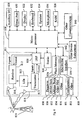
- FIG 8 is a block diagram illustrating a mobile device, which can act as a MS and co-operate with the apparatus and methods of Figures 1 to 7 , and which is an exemplary wireless communication device.
- Mobile station 800 is preferably a two-way wireless communication device having at least voice and data communication capabilities.
- Mobile station 800 preferably has the capability to communicate with other computer systems on the Internet.
- the wireless device may be referred to as a data messaging device, a two-way pager, a wireless e-mail device, a cellular telephone with data messaging capabilities, a wireless Internet appliance, or a data communication device, as examples.
- mobile station 800 is enabled for two-way communication, it will incorporate a communication subsystem 811, including both a receiver 812 and a transmitter 814, as well as associated components such as one or more, preferably embedded or internal, antenna elements 816 and 818, local oscillators (LOs) 813, and processing means such as a processing module such as a digital signal processor (DSP) 820.
- LOs local oscillators
- DSP digital signal processor
- the particular design of the communication subsystem 811 will be dependent upon the communication network in which the device is intended to operate.
- mobile station 800 may include a communication subsystem 811 designed to operate within the MobitexTM mobile communication system, the DataTACTM mobile communication system, GPRS network, UMTS network, or EDGE network.
- Network access requirements will also vary depending upon the type of network 802.
- mobile station 800 is registered on the network using a unique identification number associated with each mobile station.
- network access is associated with a subscriber or user of mobile station 800.
- SIM subscriber identity module
- a GPRS mobile station therefore requires a subscriber identity module (SIM) card in order to operate on a GPRS network. Without a valid SIM card, a GPRS mobile station will not be fully functional. Local or non-network communication functions, as well as legally required functions (if any) such as "911" emergency calling, may be available, but mobile station 800 will be unable to carry out any other functions involving communications over the network 802.
- SIM subscriber identity module
- the SIM interface 844 is normally similar to a card-slot into which a SIM card can be inserted and ejected like a diskette or PCMCIA card.
- the SIM card can have approximately 64K of memory and hold many key configuration 851, and other information 853 such as identification, and subscriber related information.
- mobile station 800 may send and receive communication signals over the network 802.
- Signals received by antenna 816 through communication network 802 are input to receiver 812, which may perform such common receiver functions as signal amplification, frequency down conversion, filtering, channel selection and the like, and in the example system shown in Figure 8 , analog to digital (A/D) conversion.
- A/D conversion of a received signal allows more complex communication functions such as demodulation and decoding to be performed in the DSP 820.
- signals to be transmitted are processed, including modulation and encoding for example, by DSP 820 and input to transmitter 814 for digital to analog conversion, frequency up conversion, filtering, amplification and transmission over the communication network 802 via antenna 818.
- DSP 820 not only processes communication signals, but also provides for receiver and transmitter control. For example, the gains applied to communication signals in receiver 812 and transmitter 814 may be adaptively controlled through automatic gain control algorithms implemented in DSP 820.
- Mobile station 800 preferably includes processing means such as a microprocessor 838 which controls the overall operation of the device. Communication functions, including at least data and voice communications, are performed through communication subsystem 811. Microprocessor 838 also interacts with further device subsystems such as the display 822, flash memory 824, random access memory (RAM) 826, auxiliary input/output (I/O) subsystems 828, serial port 830, keyboard 832, speaker 834, microphone 836, a short-range communications subsystem 840 and any other device subsystems generally designated as 842.
- processing means such as a microprocessor 838 which controls the overall operation of the device. Communication functions, including at least data and voice communications, are performed through communication subsystem 811. Microprocessor 838 also interacts with further device subsystems such as the display 822, flash memory 824, random access memory (RAM) 826, auxiliary input/output (I/O) subsystems 828, serial port 830, keyboard 832, speaker 834, microphone 836, a short-range communications sub
- Some of the subsystems shown in Figure 8 perform communication-related functions, whereas other subsystems may provide "resident" or on-device functions.
- some subsystems such as keyboard 832 and display 822, for example, may be used for both communication-related functions, such as entering a text message for transmission over a communication network, and device-resident functions such as a calculator or task list.
- Operating system software used by the microprocessor 838 is preferably stored in a persistent store such as flash memory 824, which may instead be a read-only memory (ROM) or similar storage element (not shown).
- ROM read-only memory
- Those skilled in the art will appreciate that the operating system, specific device applications, or parts thereof, may be temporarily loaded into a volatile memory such as RAM 826. Received communication signals may also be stored in RAM 826.
- flash memory 824 can be segregated into different areas for both computer programs 858 and program data storage 850, 852, 854 and 856. These different storage types indicate that each program can allocate a portion of flash memory 824 for their own data storage requirements.
- Microprocessor 838 in addition to its operating system functions, preferably enables execution of software applications on the mobile station. A predetermined set of applications that control basic operations, including at least data and voice communication applications for example, will normally be installed on mobile station 800 during manufacturing.
- a preferred software application may be a personal information manager (PIM) application having the ability to organize and manage data items relating to the user of the mobile station such as, but not limited to, e-mail, calendar events, voice mails, appointments, and task items.
- PIM personal information manager
- PIM application would preferably have the ability to send and receive data items, via the wireless network 802.
- the PIM data items are seamlessly integrated, synchronized and updated, via the wireless network 802, with the mobile station user's corresponding data items stored or associated with a host computer system.
- Further applications may also be loaded onto the mobile station 800 through the network 802, an auxiliary I/O subsystem 828, serial port 830, short-range communications subsystem 840 or any other suitable subsystem 842, and installed by a user in the RAM 826 or preferably a non-volatile store (not shown) for execution by the microprocessor 838.
- Such flexibility in application installation increases the functionality of the device and may provide enhanced on-device functions, communication-related functions, or both.
- secure communication applications may enable electronic commerce functions and other such financial transactions to be performed using the mobile station 800.
- a received signal such as a text message or web page download will be processed by the communication subsystem 811 and input to the microprocessor 838, which preferably further processes the received signal for output to the display 822, or alternatively to an auxiliary I/O device 828.
- a user of mobile station 800 may also compose data items such as email messages for example, using the keyboard 832, which is preferably a complete alphanumeric keyboard or telephone-type keypad, in conjunction with the display 822 and possibly an auxiliary I/O device 828. Such composed items may then be transmitted over a communication network through the communication subsystem 811.
- mobile station 800 For voice communications, overall operation of mobile station 800 is similar, except that received signals would preferably be output to a speaker 834 and signals for transmission would be generated by a microphone 836.
- Alternative voice or audio I/O subsystems such as a voice message recording subsystem, may also be implemented on mobile station 800.
- voice or audio signal output is preferably accomplished primarily through the speaker 834, display 822 may also be used to provide an indication of the identity of a calling party, the duration of a voice call, or other voice call related information for example.
- Serial port 830 in Figure 8 would normally be implemented in a personal digital assistant (PDA)-type mobile station for which synchronization with a user's desktop computer (not shown) may be desirable, but is an optional device component.
- PDA personal digital assistant
- Such a port 830 would enable a user to set preferences through an external device or software application and would extend the capabilities of mobile station 800 by providing for information or software downloads to mobile station 800 other than through a wireless communication network.
- the alternate download path may for example be used to load an encryption key onto the device through a direct and thus reliable and trusted connection to thereby enable secure device communication.
- Other communications subsystems 840 such as a short-range communications subsystem, is a further optional component which may provide for communication between mobile station 800 and different systems or devices, which need not necessarily be similar devices.
- the subsystem 840 may include an infrared device and associated circuits and components or a BluetoothTM communication module to provide for communication with similarly enabled systems and devices.
- protocol stacks 846 include apparatus and a method for handling inter-radio access technology measurement requests in a mobile telecommunications device.
- the apparatus described herein may comprise a single component such as a MS or UTRAN or other user equipment or access network components, a combination of multiple such components for example in communication with one another or a sub-network or full network of such components.
Landscapes
- Engineering & Computer Science (AREA)
- Computer Networks & Wireless Communication (AREA)
- Signal Processing (AREA)
- Mobile Radio Communication Systems (AREA)
Claims (14)
- Verfahren zur Handhabung von Interfunkzugriffstechnologie-Messberichten in einer Funktelekommunikationsvorrichtung, wobei die Vorrichtung betriebsfähig ist mit einer ersten zellularen Funkzugriffstechnologie, GERAN, und einem generischen Zugriffsnetzwerk, GAN (Generic Access Network), wobei die Funktelekommunikationsvorrichtung einen zellularen bevorzugten Modus annehmen kann, wobei das Verfahren die folgenden Schritte aufweist, die in der Funktelekommunikationsvorrichtung durchgeführt werden:wenn sich die Funktelekommunikationsvorrichtung in einem zellularen bevorzugten Modus befindet und mit der ersten zellularen Funkzugriffstechnologie arbeitet und die Funktelekommunikationsvorrichtung mit einer Steuervorrichtung eines generischen Zugriffsnetzwerks (Generic Access Network Controller) registriert ist, die als eine GERAN-Netzwerkkomponente (602) arbeitet, und eine Qualität eines Signals von der ersten zellularen Funkzugriffstechnologie unter einer bestimmten Schwelle ist und eine Qualität eines Signals von dem GAN über einer bestimmten Schwelle ist und eine Anforderung zum Senden eines Inter-RAT(radio access technology)-Messberichts empfangen wurde, Erzeugen (406) von Interfunkzugriffstechnologie-Messungen und, wenn es zumindest eine GERAN-Zelle gibt, die eine Auslösebedingung erfüllt, Übertragen (608) eines Messberichts hinsichtlich der GERAN-Zelle(n) und (609) eines Messberichts hinsichtlich des generischen Zugriffsnetzwerks, dadurch gekennzeichnet, dass der Messbericht hinsichtlich der GERAN-Zelle(n) und der Messbericht hinsichtlich des generischen Zugriffsnetzwerks als getrennte Berichte übertragen werden, wobei der Messbericht hinsichtlich der GERAN-Zelle(n) vor dem Messbericht hinsichtlich des generischen Zugriffsnetzwerks übertragen wird.
- Verfahren gemäß Anspruch 1, wobei der Messbericht hinsichtlich des generischen Zugriffsnetzwerks berichtet, dass das generische Zugriffsnetzwerk den bestmöglichen Empfangspegel hat.
- Verfahren gemäß Anspruch 1, wobei der Messbericht hinsichtlich der GERAN-Zelle(n) einen Empfangspegel für zumindest eine GERAN-Zelle umfasst und wobei dem Messbericht hinsichtlich des generischen Zugriffsnetzwerks ein Empfangspegel zugeteilt ist, der niedriger ist als der niedrigste Empfangspegel für die GERAN-Zelle(n).
- Verfahren gemäß Anspruch 1, wobei der Messbericht hinsichtlich des generischen Zugriffsnetzwerks nach einer Verzögerung relativ zu der Übertragung des Messberichts hinsichtlich der GERAN-Zelle(n) übertragen wird.
- Verfahren gemäß Anspruch 4, wobei die Verzögerung in einem der folgenden Bereiche liegt: zwischen 50 ms und 5000 ms; 800 und 4000 ms; 2000 und 3000 ms.
- Verfahren gemäß einem vorhergehenden Anspruch, wobei die erste zellulare Funkzugriffstechnologie eine aus UMTS und LTE ist.
- Funktelekommunikationsvorrichtung (800), die betriebsfähig ist mit einer ersten zellularen Funkzugriffstechnologie, GERAN, und einem generischen Zugriffsnetzwerk, GAN (Generic Access Network), wobei die Funktelekommunikationsvorrichtung (800) einen zellularen bevorzugten Modus annehmen kann, wobei die Vorrichtung (800) aufweist:einen Transceiver (811) zum Senden und Empfangen von Funksignalen;einen Prozessor (838); undeinen Speicher (824) mit einer oder mehreren darin gespeicherten Routinen, die durch den Prozessor ausgeführt werden können, wobei die eine oder mehreren Routinen ausgebildet ist/sind zum:wenn sich die Funktelekommunikationsvorrichtung (800) in einem zellularen bevorzugten Modus befindet und mit der ersten zellularen Funkzugriffstechnologie arbeitet und die Funktelekommunikationsvorrichtung mit einer Steuervorrichtung eines generischen Zugriffsnetzwerks (Generic Access Network Controller) registriert ist, die als eine GERAN-Netzwerkkomponente arbeitet, und eine Qualität eines Signals von der ersten zellularen Funkzugriffstechnologie unter einer bestimmten Schwelle ist und eine Qualität eines Signals von dem GAN über einer bestimmten Schwelle ist und eine Anforderung zum Senden eines Inter-RAT(radio access technology)-Messberichts empfangen wurde, Erzeugen von Interfunkzugriffstechnologie-Messungen und, wenn es zumindest eine GERAN-Zelle gibt, die eine Auslösebedingung erfüllt, Übertragen eines Messberichts hinsichtlich der GERAN-Zelle(n) und eines Messberichts hinsichtlich des generischen Zugriffsnetzwerks, dadurch gekennzeichnet, dass die eine oder mehrere Routinen weiter ausgebildet ist/sind zum Übertragen des Messberichts hinsichtlich der GERAN-Zelle(n) und des Messberichts hinsichtlich des generischen Zugriffsnetzwerks als getrennte Berichte, wobei der Messbericht hinsichtlich der GERAN-Zelle(n) vor dem Messbericht hinsichtlich des generischen Zugriffsnetzwerks übertragen wird.
- Vorrichtung (800) gemäß Anspruch 7, wobei der Messbericht hinsichtlich des generischen Zugriffsnetzwerks berichtet, dass das generische Zugriffsnetzwerk den bestmöglichen Empfangspegel hat.
- Vorrichtung (800) gemäß Anspruch 7, wobei der Messbericht hinsichtlich der GERAN-Zelle(n) einen Empfangspegel für zumindest eine GERAN-Zelle umfasst und wobei dem Messbericht hinsichtlich des generischen Zugriffsnetzwerks ein Empfangspegel zugeteilt ist, der niedriger ist als der niedrigste Empfangspegel für die GERAN-Zelle(n).
- Vorrichtung (800) gemäß Anspruch 7, wobei der Messbericht hinsichtlich des generischen Zugriffsnetzwerks nach einer Verzögerung relativ zu der Übertragung des Messberichts hinsichtlich der GERAN-Zelle(n) übertragen wird.
- Vorrichtung (800) gemäß Anspruch 10, wobei die Verzögerung in einem der folgenden Bereiche liegt: zwischen 50 ms und 5000 ms; 800 und 4000 ms; 2000 und 3000 ms.
- Vorrichtung (800) gemäß einem der Ansprüche 7 bis 11, wobei die erste zellulare Funkzugriffstechnologie eine aus UMTS und LTE ist.
- Computerlesbares Medium mit computerausführbaren Anweisungen, die ausgebildet sind, eine Vorrichtung zu veranlassen, das Verfahren gemäß einem der Ansprüche 1 bis 6 durchzuführen.
- Datenträger, der darauf oder darin Daten trägt, die Anweisungen anzeigen, die durch Verarbeitungsmittel ausführbar sind, um die Mittel zu veranlassen, ein Verfahren gemäß einem von Anspruch 1 bis Anspruch 6 auszuführen.
Priority Applications (4)
| Application Number | Priority Date | Filing Date | Title |
|---|---|---|---|
| AT09159256T ATE547913T1 (de) | 2009-04-30 | 2009-04-30 | Verfahren und vorrichtung zur behandlung von interfunkzugriffstechnologie-messanforderungen in einer mobilen telekommunikationsvorrichtung |
| EP09159256A EP2247142B1 (de) | 2009-04-30 | 2009-04-30 | Verfahren und Vorrichtung zur Behandlung von Interfunkzugriffstechnologie-Messanforderungen in einer mobilen Telekommunikationsvorrichtung |
| CA2702465A CA2702465C (en) | 2009-04-30 | 2010-04-30 | A method for handling inter-radio access technology measurement requests in a mobile telecommunications device |
| HK11104338.0A HK1150262B (en) | 2011-04-29 | A method and a device for handling inter-radio access technology measurement requests in a mobile telecommunications device |
Applications Claiming Priority (1)
| Application Number | Priority Date | Filing Date | Title |
|---|---|---|---|
| EP09159256A EP2247142B1 (de) | 2009-04-30 | 2009-04-30 | Verfahren und Vorrichtung zur Behandlung von Interfunkzugriffstechnologie-Messanforderungen in einer mobilen Telekommunikationsvorrichtung |
Publications (2)
| Publication Number | Publication Date |
|---|---|
| EP2247142A1 EP2247142A1 (de) | 2010-11-03 |
| EP2247142B1 true EP2247142B1 (de) | 2012-02-29 |
Family
ID=41059589
Family Applications (1)
| Application Number | Title | Priority Date | Filing Date |
|---|---|---|---|
| EP09159256A Active EP2247142B1 (de) | 2009-04-30 | 2009-04-30 | Verfahren und Vorrichtung zur Behandlung von Interfunkzugriffstechnologie-Messanforderungen in einer mobilen Telekommunikationsvorrichtung |
Country Status (3)
| Country | Link |
|---|---|
| EP (1) | EP2247142B1 (de) |
| AT (1) | ATE547913T1 (de) |
| CA (1) | CA2702465C (de) |
Cited By (1)
| Publication number | Priority date | Publication date | Assignee | Title |
|---|---|---|---|---|
| CN103731912A (zh) * | 2012-04-27 | 2014-04-16 | 英特尔公司 | 用于能量节省管理的rat间覆盖确定 |
Families Citing this family (3)
| Publication number | Priority date | Publication date | Assignee | Title |
|---|---|---|---|---|
| US9031563B2 (en) * | 2012-04-12 | 2015-05-12 | Qualcomm Incorporated | Enhanced inter-RAT mobility support using inter-RAT channel avoidance |
| US9078179B2 (en) | 2012-11-16 | 2015-07-07 | Qualcomm Incorporated | IRAT measurement reporting method in TD-SCDMA |
| EP4391655A1 (de) * | 2022-12-23 | 2024-06-26 | MediaTek Singapore Pte. Ltd. | Verbesserungen an benutzergeräten, die sich von einem generationsnetzwerk zu einem anderen generationsnetzwerk bewegen |
Family Cites Families (4)
| Publication number | Priority date | Publication date | Assignee | Title |
|---|---|---|---|---|
| US6950655B2 (en) * | 2002-10-01 | 2005-09-27 | Interdigital Technology Corporation | Method and system wherein handover information is broadcast in wireless local area networks |
| JP4896991B2 (ja) | 2006-01-10 | 2012-03-14 | フランス・テレコム | 異なるネットワークに属するセル間で接続の転送を向上させるための通信方法および端末 |
| FI20065467A0 (fi) * | 2006-06-30 | 2006-06-30 | Nokia Corp | Naapurisolumittaus ja -raportointi useita radioliityntäteknologioita (RAT) käsittävässä ympäristössä |
| KR101405950B1 (ko) * | 2007-10-02 | 2014-06-12 | 엘지전자 주식회사 | 단말의 이동성 지원 방법 및 이를 지원하는 이동 통신 단말 |
-
2009
- 2009-04-30 EP EP09159256A patent/EP2247142B1/de active Active
- 2009-04-30 AT AT09159256T patent/ATE547913T1/de active
-
2010
- 2010-04-30 CA CA2702465A patent/CA2702465C/en active Active
Cited By (2)
| Publication number | Priority date | Publication date | Assignee | Title |
|---|---|---|---|---|
| CN103731912A (zh) * | 2012-04-27 | 2014-04-16 | 英特尔公司 | 用于能量节省管理的rat间覆盖确定 |
| CN103731912B (zh) * | 2012-04-27 | 2018-02-06 | 英特尔公司 | 用于能量节省管理的rat间覆盖确定 |
Also Published As
| Publication number | Publication date |
|---|---|
| EP2247142A1 (de) | 2010-11-03 |
| ATE547913T1 (de) | 2012-03-15 |
| CA2702465C (en) | 2014-09-16 |
| HK1150262A1 (en) | 2011-11-11 |
| CA2702465A1 (en) | 2010-10-30 |
Similar Documents
| Publication | Publication Date | Title |
|---|---|---|
| US8976701B2 (en) | Method for handling inter-radio access technology measurement requests in a mobile telecommunications device | |
| US10194357B2 (en) | Method and apparatus for applying assistance information for traffic steering in wireless communication system | |
| US8682243B2 (en) | Network selection device and method for selecting a communication network | |
| US9913155B2 (en) | Method and apparatus for handling traffic steering failure in wireless communication system | |
| US9370039B2 (en) | Radio base station and method | |
| JP6564469B2 (ja) | ワイヤレスローカルエリアネットワーク間通信を無線アクセスネットワークによりサポートするためのシステム及び方法 | |
| JP6330030B2 (ja) | 公衆陸上移動ネットワークの無線セルにキャンプオンしようとするユーザ機器による、改善されたセル選択/セル再選択の方法 | |
| EP2849486A2 (de) | Verfahren und Vorrichtung zum Aufbringen von Signalisierung von WLAN-3GPP-Zusammenarbeit | |
| US20130029668A1 (en) | Radio base station and method for mobile communication systems | |
| CN115278796B (zh) | 一种小区切换方法、小区切换装置、终端设备和存储介质 | |
| US20160157156A1 (en) | Communication method in dual connection mode, apparatus and system | |
| US20110319028A1 (en) | Method and apparatus for sending measurement report messages from a wireless telecommunications device to a wireless telecommunications network | |
| EP2247142B1 (de) | Verfahren und Vorrichtung zur Behandlung von Interfunkzugriffstechnologie-Messanforderungen in einer mobilen Telekommunikationsvorrichtung | |
| EP2929721B1 (de) | Netzwerkabladung | |
| US10070365B2 (en) | Measurements on LTE for CSFB RAT prioritization | |
| KR102886065B1 (ko) | 이벤트 처리 방법, 사용자 디바이스 및 컴퓨터 판독 가능한 저장 매체 | |
| EP2449815A1 (de) | Verfahren zur handhabung der kommunikation zwischen einem benutzergerät und einem funknetzwerksteuergerät sowie programm zur steuerung eines funknetzwerksteuergeräts | |
| HK1150262B (en) | A method and a device for handling inter-radio access technology measurement requests in a mobile telecommunications device |
Legal Events
| Date | Code | Title | Description |
|---|---|---|---|
| PUAI | Public reference made under article 153(3) epc to a published international application that has entered the european phase |
Free format text: ORIGINAL CODE: 0009012 |
|
| 17P | Request for examination filed |
Effective date: 20090501 |
|
| AK | Designated contracting states |
Kind code of ref document: A1 Designated state(s): AT BE BG CH CY CZ DE DK EE ES FI FR GB GR HR HU IE IS IT LI LT LU LV MC MK MT NL NO PL PT RO SE SI SK TR |
|
| AX | Request for extension of the european patent |
Extension state: AL BA RS |
|
| 17Q | First examination report despatched |
Effective date: 20110509 |
|
| GRAP | Despatch of communication of intention to grant a patent |
Free format text: ORIGINAL CODE: EPIDOSNIGR1 |
|
| RIC1 | Information provided on ipc code assigned before grant |
Ipc: H04W 36/00 20090101ALN20110902BHEP Ipc: H04W 36/14 20090101AFI20110902BHEP |
|
| RTI1 | Title (correction) |
Free format text: A METHOD AND A DEVICE FOR HANDLING INTER-RADIO ACCESS TECHNOLOGY MEASUREMENT REQUESTS IN A MOBILE TELECOMMUNICATIONS DEVICE |
|
| REG | Reference to a national code |
Ref country code: HK Ref legal event code: DE Ref document number: 1150262 Country of ref document: HK |
|
| GRAS | Grant fee paid |
Free format text: ORIGINAL CODE: EPIDOSNIGR3 |
|
| GRAA | (expected) grant |
Free format text: ORIGINAL CODE: 0009210 |
|
| AK | Designated contracting states |
Kind code of ref document: B1 Designated state(s): AT BE BG CH CY CZ DE DK EE ES FI FR GB GR HR HU IE IS IT LI LT LU LV MC MK MT NL NO PL PT RO SE SI SK TR |
|
| REG | Reference to a national code |
Ref country code: GB Ref legal event code: FG4D Ref country code: CH Ref legal event code: EP |
|
| REG | Reference to a national code |
Ref country code: AT Ref legal event code: REF Ref document number: 547913 Country of ref document: AT Kind code of ref document: T Effective date: 20120315 |
|
| REG | Reference to a national code |
Ref country code: IE Ref legal event code: FG4D |
|
| REG | Reference to a national code |
Ref country code: DE Ref legal event code: R096 Ref document number: 602009005582 Country of ref document: DE Effective date: 20120426 |
|
| REG | Reference to a national code |
Ref country code: SE Ref legal event code: TRGR |
|
| REG | Reference to a national code |
Ref country code: NL Ref legal event code: VDEP Effective date: 20120229 |
|
| LTIE | Lt: invalidation of european patent or patent extension |
Effective date: 20120229 |
|
| PG25 | Lapsed in a contracting state [announced via postgrant information from national office to epo] |
Ref country code: NO Free format text: LAPSE BECAUSE OF FAILURE TO SUBMIT A TRANSLATION OF THE DESCRIPTION OR TO PAY THE FEE WITHIN THE PRESCRIBED TIME-LIMIT Effective date: 20120529 Ref country code: HR Free format text: LAPSE BECAUSE OF FAILURE TO SUBMIT A TRANSLATION OF THE DESCRIPTION OR TO PAY THE FEE WITHIN THE PRESCRIBED TIME-LIMIT Effective date: 20120229 Ref country code: LT Free format text: LAPSE BECAUSE OF FAILURE TO SUBMIT A TRANSLATION OF THE DESCRIPTION OR TO PAY THE FEE WITHIN THE PRESCRIBED TIME-LIMIT Effective date: 20120229 Ref country code: NL Free format text: LAPSE BECAUSE OF FAILURE TO SUBMIT A TRANSLATION OF THE DESCRIPTION OR TO PAY THE FEE WITHIN THE PRESCRIBED TIME-LIMIT Effective date: 20120229 Ref country code: IS Free format text: LAPSE BECAUSE OF FAILURE TO SUBMIT A TRANSLATION OF THE DESCRIPTION OR TO PAY THE FEE WITHIN THE PRESCRIBED TIME-LIMIT Effective date: 20120629 |
|
| PG25 | Lapsed in a contracting state [announced via postgrant information from national office to epo] |
Ref country code: LV Free format text: LAPSE BECAUSE OF FAILURE TO SUBMIT A TRANSLATION OF THE DESCRIPTION OR TO PAY THE FEE WITHIN THE PRESCRIBED TIME-LIMIT Effective date: 20120229 Ref country code: BE Free format text: LAPSE BECAUSE OF FAILURE TO SUBMIT A TRANSLATION OF THE DESCRIPTION OR TO PAY THE FEE WITHIN THE PRESCRIBED TIME-LIMIT Effective date: 20120229 Ref country code: PT Free format text: LAPSE BECAUSE OF FAILURE TO SUBMIT A TRANSLATION OF THE DESCRIPTION OR TO PAY THE FEE WITHIN THE PRESCRIBED TIME-LIMIT Effective date: 20120629 Ref country code: FI Free format text: LAPSE BECAUSE OF FAILURE TO SUBMIT A TRANSLATION OF THE DESCRIPTION OR TO PAY THE FEE WITHIN THE PRESCRIBED TIME-LIMIT Effective date: 20120229 Ref country code: GR Free format text: LAPSE BECAUSE OF FAILURE TO SUBMIT A TRANSLATION OF THE DESCRIPTION OR TO PAY THE FEE WITHIN THE PRESCRIBED TIME-LIMIT Effective date: 20120530 |
|
| REG | Reference to a national code |
Ref country code: AT Ref legal event code: MK05 Ref document number: 547913 Country of ref document: AT Kind code of ref document: T Effective date: 20120229 |
|
| PG25 | Lapsed in a contracting state [announced via postgrant information from national office to epo] |
Ref country code: CY Free format text: LAPSE BECAUSE OF FAILURE TO SUBMIT A TRANSLATION OF THE DESCRIPTION OR TO PAY THE FEE WITHIN THE PRESCRIBED TIME-LIMIT Effective date: 20120229 |
|
| REG | Reference to a national code |
Ref country code: HK Ref legal event code: GR Ref document number: 1150262 Country of ref document: HK |
|
| PG25 | Lapsed in a contracting state [announced via postgrant information from national office to epo] |
Ref country code: RO Free format text: LAPSE BECAUSE OF FAILURE TO SUBMIT A TRANSLATION OF THE DESCRIPTION OR TO PAY THE FEE WITHIN THE PRESCRIBED TIME-LIMIT Effective date: 20120229 Ref country code: EE Free format text: LAPSE BECAUSE OF FAILURE TO SUBMIT A TRANSLATION OF THE DESCRIPTION OR TO PAY THE FEE WITHIN THE PRESCRIBED TIME-LIMIT Effective date: 20120229 Ref country code: DK Free format text: LAPSE BECAUSE OF FAILURE TO SUBMIT A TRANSLATION OF THE DESCRIPTION OR TO PAY THE FEE WITHIN THE PRESCRIBED TIME-LIMIT Effective date: 20120229 Ref country code: SI Free format text: LAPSE BECAUSE OF FAILURE TO SUBMIT A TRANSLATION OF THE DESCRIPTION OR TO PAY THE FEE WITHIN THE PRESCRIBED TIME-LIMIT Effective date: 20120229 Ref country code: CZ Free format text: LAPSE BECAUSE OF FAILURE TO SUBMIT A TRANSLATION OF THE DESCRIPTION OR TO PAY THE FEE WITHIN THE PRESCRIBED TIME-LIMIT Effective date: 20120229 Ref country code: PL Free format text: LAPSE BECAUSE OF FAILURE TO SUBMIT A TRANSLATION OF THE DESCRIPTION OR TO PAY THE FEE WITHIN THE PRESCRIBED TIME-LIMIT Effective date: 20120229 |
|
| PG25 | Lapsed in a contracting state [announced via postgrant information from national office to epo] |
Ref country code: SK Free format text: LAPSE BECAUSE OF FAILURE TO SUBMIT A TRANSLATION OF THE DESCRIPTION OR TO PAY THE FEE WITHIN THE PRESCRIBED TIME-LIMIT Effective date: 20120229 Ref country code: MC Free format text: LAPSE BECAUSE OF NON-PAYMENT OF DUE FEES Effective date: 20120430 |
|
| PLBE | No opposition filed within time limit |
Free format text: ORIGINAL CODE: 0009261 |
|
| STAA | Information on the status of an ep patent application or granted ep patent |
Free format text: STATUS: NO OPPOSITION FILED WITHIN TIME LIMIT |
|
| PG25 | Lapsed in a contracting state [announced via postgrant information from national office to epo] |
Ref country code: AT Free format text: LAPSE BECAUSE OF FAILURE TO SUBMIT A TRANSLATION OF THE DESCRIPTION OR TO PAY THE FEE WITHIN THE PRESCRIBED TIME-LIMIT Effective date: 20120229 |
|
| 26N | No opposition filed |
Effective date: 20121130 |
|
| PG25 | Lapsed in a contracting state [announced via postgrant information from national office to epo] |
Ref country code: MK Free format text: LAPSE BECAUSE OF FAILURE TO SUBMIT A TRANSLATION OF THE DESCRIPTION OR TO PAY THE FEE WITHIN THE PRESCRIBED TIME-LIMIT Effective date: 20120229 |
|
| REG | Reference to a national code |
Ref country code: DE Ref legal event code: R097 Ref document number: 602009005582 Country of ref document: DE Effective date: 20121130 |
|
| PG25 | Lapsed in a contracting state [announced via postgrant information from national office to epo] |
Ref country code: ES Free format text: LAPSE BECAUSE OF FAILURE TO SUBMIT A TRANSLATION OF THE DESCRIPTION OR TO PAY THE FEE WITHIN THE PRESCRIBED TIME-LIMIT Effective date: 20120609 Ref country code: IE Free format text: LAPSE BECAUSE OF NON-PAYMENT OF DUE FEES Effective date: 20120430 |
|
| PG25 | Lapsed in a contracting state [announced via postgrant information from national office to epo] |
Ref country code: MT Free format text: LAPSE BECAUSE OF FAILURE TO SUBMIT A TRANSLATION OF THE DESCRIPTION OR TO PAY THE FEE WITHIN THE PRESCRIBED TIME-LIMIT Effective date: 20120229 Ref country code: BG Free format text: LAPSE BECAUSE OF FAILURE TO SUBMIT A TRANSLATION OF THE DESCRIPTION OR TO PAY THE FEE WITHIN THE PRESCRIBED TIME-LIMIT Effective date: 20120529 |
|
| REG | Reference to a national code |
Ref country code: CH Ref legal event code: PL |
|
| PG25 | Lapsed in a contracting state [announced via postgrant information from national office to epo] |
Ref country code: CH Free format text: LAPSE BECAUSE OF NON-PAYMENT OF DUE FEES Effective date: 20130430 Ref country code: LI Free format text: LAPSE BECAUSE OF NON-PAYMENT OF DUE FEES Effective date: 20130430 |
|
| PG25 | Lapsed in a contracting state [announced via postgrant information from national office to epo] |
Ref country code: TR Free format text: LAPSE BECAUSE OF FAILURE TO SUBMIT A TRANSLATION OF THE DESCRIPTION OR TO PAY THE FEE WITHIN THE PRESCRIBED TIME-LIMIT Effective date: 20120229 |
|
| PG25 | Lapsed in a contracting state [announced via postgrant information from national office to epo] |
Ref country code: LU Free format text: LAPSE BECAUSE OF NON-PAYMENT OF DUE FEES Effective date: 20120430 |
|
| PG25 | Lapsed in a contracting state [announced via postgrant information from national office to epo] |
Ref country code: HU Free format text: LAPSE BECAUSE OF FAILURE TO SUBMIT A TRANSLATION OF THE DESCRIPTION OR TO PAY THE FEE WITHIN THE PRESCRIBED TIME-LIMIT Effective date: 20090430 |
|
| REG | Reference to a national code |
Ref country code: DE Ref legal event code: R082 Ref document number: 602009005582 Country of ref document: DE Representative=s name: MERH-IP MATIAS ERNY REICHL HOFFMANN, DE |
|
| REG | Reference to a national code |
Ref country code: DE Ref legal event code: R082 Ref document number: 602009005582 Country of ref document: DE Representative=s name: MERH-IP MATIAS ERNY REICHL HOFFMANN, DE Effective date: 20140925 Ref country code: DE Ref legal event code: R081 Ref document number: 602009005582 Country of ref document: DE Owner name: BLACKBERRY LIMITED, WATERLOO, CA Free format text: FORMER OWNER: RESEARCH IN MOTION LIMITED, WATERLOO, ONTARIO, CA Effective date: 20140925 Ref country code: DE Ref legal event code: R082 Ref document number: 602009005582 Country of ref document: DE Representative=s name: MERH-IP MATIAS ERNY REICHL HOFFMANN PATENTANWA, DE Effective date: 20140925 |
|
| REG | Reference to a national code |
Ref country code: FR Ref legal event code: PLFP Year of fee payment: 8 |
|
| REG | Reference to a national code |
Ref country code: FR Ref legal event code: PLFP Year of fee payment: 9 |
|
| REG | Reference to a national code |
Ref country code: FR Ref legal event code: PLFP Year of fee payment: 10 |
|
| REG | Reference to a national code |
Ref country code: DE Ref legal event code: R082 Ref document number: 602009005582 Country of ref document: DE Ref country code: DE Ref legal event code: R081 Ref document number: 602009005582 Country of ref document: DE Owner name: MALIKIE INNOVATIONS LTD., IE Free format text: FORMER OWNER: BLACKBERRY LIMITED, WATERLOO, ONTARIO, CA |
|
| PGFP | Annual fee paid to national office [announced via postgrant information from national office to epo] |
Ref country code: DE Payment date: 20250428 Year of fee payment: 17 |
|
| PGFP | Annual fee paid to national office [announced via postgrant information from national office to epo] |
Ref country code: GB Payment date: 20250422 Year of fee payment: 17 |
|
| PGFP | Annual fee paid to national office [announced via postgrant information from national office to epo] |
Ref country code: IT Payment date: 20250422 Year of fee payment: 17 |
|
| PGFP | Annual fee paid to national office [announced via postgrant information from national office to epo] |
Ref country code: FR Payment date: 20250424 Year of fee payment: 17 |
|
| PGFP | Annual fee paid to national office [announced via postgrant information from national office to epo] |
Ref country code: SE Payment date: 20250424 Year of fee payment: 17 |