EP2245589B1 - Verarbeitung von graphiken mit mehreren kontexten - Google Patents
Verarbeitung von graphiken mit mehreren kontexten Download PDFInfo
- Publication number
- EP2245589B1 EP2245589B1 EP09717402A EP09717402A EP2245589B1 EP 2245589 B1 EP2245589 B1 EP 2245589B1 EP 09717402 A EP09717402 A EP 09717402A EP 09717402 A EP09717402 A EP 09717402A EP 2245589 B1 EP2245589 B1 EP 2245589B1
- Authority
- EP
- European Patent Office
- Prior art keywords
- graphics
- memory
- graphics processing
- context
- processing
- Prior art date
- Legal status (The legal status is an assumption and is not a legal conclusion. Google has not performed a legal analysis and makes no representation as to the accuracy of the status listed.)
- Active
Links
Images






Classifications
-
- G—PHYSICS
- G06—COMPUTING OR CALCULATING; COUNTING
- G06T—IMAGE DATA PROCESSING OR GENERATION, IN GENERAL
- G06T1/00—General purpose image data processing
- G06T1/60—Memory management
-
- G—PHYSICS
- G06—COMPUTING OR CALCULATING; COUNTING
- G06T—IMAGE DATA PROCESSING OR GENERATION, IN GENERAL
- G06T15/00—Three-dimensional [3D] image rendering
- G06T15/005—General purpose rendering architectures
Definitions
- media devices for presenting media content to a user.
- televisions, radios, computers, and a variety of portable or handheld devices are available for presenting various types of audio and/or visual information to a user.
- portable devices include music players (e.g., MP3 players), cell phones, smart phones, personal digital assistants (PDAs), portable televisions, laptops, and the like.
- media devices In presenting media to a user, media devices generally attempt to display graphics and/or video content generated from multiple applications running within the media device. Some media devices display multiple types of content at once by layering one type of content over another. For example, a user interface layer might include a status bar that is displayed at the same time as a video layer is displayed. The process of generating a combination of multiple layers for display can be referred to as compositing. However, multiple applications attempting to simultaneously access the limited graphics processing power and graphics memory of such media devices can cause them to slow down, or even fail.
- next-Gen Tile_base GPUs is a presentation on tile based rendering, as may be found in mobile telephones.
- EP1450257 describes systems and methods are provided for scheduling the processing of a coprocessor whereby applications can submit tasks to a scheduler, and the scheduler can determine how much processing each application is entitled to as well as an order for processing. In connection with this process, tasks that require processing can be stored in physical memory or in virtual memory that is managed by a memory manager. The invention also provides various techniques of determining whether a particular task is ready for processing.
- a "run list" may be employed to ensure that the coprocessor does not waste time between tasks or after an interruption.
- the invention also provides techniques for ensuring the security of a computer system, by not allowing applications to modify portions of memory that are integral to maintaining the proper functioning of system operations.
- FIGURE 1 is a block diagram illustrating an embodiment of a computing device configured for multi-context processing
- FIGURE 2 is a block diagram illustrating an embodiment of a graphics processors configured for dual pipeline processing, and compatible with at least the computing device of FIGURE 1 ;
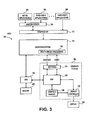
- FIGURE 3 is a block diagram illustrating another embodiment of a computing device configured for multi-context processing
- FIGURE 4 is a flowchart diagram illustrating an embodiment of a multi-context graphics processing management method, which can be implemented at least by the embodiments of FIGURES 1 and 3 ;
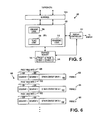
- FIGURE 5 is a block diagram illustrating an embodiment of a dual pipeline graphic processor configured to perform tiling and rendering operations
- FIGURE 6 is a block diagram illustrating an embodiment of frame data from different contexts, compatible with at least the dual pipeline graphics processors of FIGURES 2 and 5 ;
- FIGURE 7 is a block diagram illustrating frame pointers showing shared tiling portions and unique rendering portions, compatible with at least the frame data of FIGURE 6 and the dual pipeline graphics processors of FIGURES 2 and 5 ;
- FIGURE 8 is a block diagram illustrating a graphics memory, compatible at least with the embodiments of FIGURES 1-7 ;
- FIGURE 9 is a flowchart diagram illustrating a dual pipeline graphics processing method, which can be implemented at least by the embodiments of FIGURES 1-3 and 5 ;
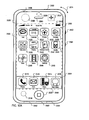
- FIGURE 10A illustrates an example mobile device that can be configured to implement any of the methods, or to include any of the devices or systems described with respect to FIGURES 1-9 ;
- FIGURE 10B illustrates another example of a configurable top-level graphical user interface of the device of FIGURE 10A ;
- FIGURE 11 is a block diagram of an example implementation of a mobile device, such as the mobile device of FIGURES 10A or 10B .
- Multi-context graphics processing can improve performance in some media devices by allowing multiple software programs to use the graphics hardware.
- an application may fail if another application has already begun to use the available graphics resources.
- multi-context graphics processing allows other tasks to access and use the graphics hardware, as well.
- a multi-context processing module can be implemented to manage graphics processing requests, and to control inflow of processing requests to a graphics system.
- the graphics system can be configured to process commands in multi-stage manner.
- the graphics system can be configured for two-stage pipeline processing, such that a first processing operation is performed during a first stage, and a second processing operation is performed on the output of the first processing operation during a second stage.
- the graphics processor can perform tiling operations during a first stage, and rendering operations during a second stage. Both stages may operate at the same time, on different sets of drawing commands.
- the graphics system's performance and reliability can suffer due to limited memory resources.
- the memory requirements of the first operation can be collapsed among multiple contexts to access the same, shared portion of memory. By sharing the same portion of memory, resources can be preserved, and overall performance enhanced.
- graphics hardware is configured to process graphics commands using such a multi-stage (e.g., two-stage) pipeline.
- the graphics hardware is configured to only access on single page table at a time.
- each page table for example, as stored in the graphics memory
- the efficiencies of a two-stage pipeline may be achieved, and overall system performance may be significantly enhanced.
- FIGURE 1 illustrates one embodiment of computing device 100 configured for multi-context processing.
- Computing device 100 can be implemented as any device that can be used to process graphics and/or video images, such as a media device.
- computing device 100 can be a portable computing device, a cellular telephone, and/or a music, video, and/or graphics/image/photograph player.
- computing device 100 can be configured such that graphical operations in computing system 100 can be performed more efficiently than in previous devices.
- computing device 100 can be configured such that computing device 100 can efficiently process multiple graphics processing requests and/or contexts from one or more applications executed within or received by computing device 100.
- computing device 100 can include a general purpose computing device (e.g., an iPhone from Apple Inc.) or a special purpose computing device (e.g., graphics work stations). Such computing device 100 may include one or more services, databases, and the like.
- computing device 100 can be a hand-held or portable device, such as a laptop, personal digital system (PDA), cell phone, smart phone, or the like. More generally, any processor-based system may be used as computing device 100.
- PDA personal digital system
- any processor-based system may be used as computing device 100.
- Computing device 100 can include one or more user-input devices 102.
- One user input device 102 is shown for illustrative purposes.
- User-input device 102 can be any device such as a mouse, keyboard, or the like.
- User-input device 102 receives input from one or more users and provides the input to controller 104.
- Controller 104 can include interface logic or the like that enables user-input device 102 to communicate with a microprocessor, or central processing unit (CPU) 106.
- CPU central processing unit
- Microprocessor 106 of the computing device 100 may include multi-context processing module 108 to allow microprocessor 106 to manage multiple graphics processing requests, as will be described in greater detail below. Microprocessor 106 may also be configured to process one or more software programs stored in memory 110.
- Microprocessor 106 can output images and video through graphics system 112 to display 114.
- graphics system 112 can be configured for multi-pipeline processing.
- graphics system 112 can be configured for two-stage pipeline processing, such as graphics system 200, described below with respect to FIGURE 2 .
- microprocessor 106 includes controller circuitry, processor circuitry, single or multi-core processors including stream processors, general purpose, single-chip or multi-chip microprocessors, digital signal processors, embedded microprocessors, microcontrollers, graphics processors, and the like.
- FIGURE 2 illustrates a graphics system compatible with computing device 100 of Figure 1 .
- computing device 100 of FIGURE 1 can include graphics system 200 of FIGURE 2 .
- Graphics system 200 can include one or more graphics processors (GPU) 202, which can include a single core or multiple cores, and may have multiple stream processors in certain implementations.
- GPU graphics processors
- graphics system 200 of certain embodiments includes one or more buffer stages 204, which facilitate increasing processing efficiency of graphics system 200.
- Buffer stages 204 can function as an interface between GPU 202 and a microprocessor of a computing device.
- Buffer stages 204 can increase the efficiency, for example, of compositing processing of graphical and/or video images.
- buffer stages 204 facilitate increased processing efficiency by reducing GPU 202 idle cycles, which can occur if GPU 202 waits for compositing processing commands. Additional embodiments and features of suitable buffer stages 204 are described in U.S. Application No. xx/xxx,xxx, filed xx/xx/xxxx, titled, "BUFFERS FOR DISPLAY ACCELERATION," (Attorney Docket 004860.P6269).
- Graphics system 200 may include graphics memory 206 and display controller 208, as well. Graphics memory 206 can often stores information and data to be processed by the graphic system's GPU 202. Once processed, GPU 202 writes its output information into graphics memory 206. Graphics memory 206 may exist as dedicated memory for sole use by the graphics hardware, or portions of the general purpose memory (e.g., system memory 110 of FIGURE 1 ) may be used as graphics memory 206.
- Graphics system 200 may also perform mapping from virtual addresses to physical addresses by using page table 210 within graphics memory 206.
- the multi-context processing module may create one or more additional page tables 212 in graphics memory 206, and at times command graphics system 200 to change which page table is used for address remapping.
- This can allow better use of limited virtual address range, for example, by creating a different page table for each task that is using graphics system 200. If one task uses a large amount of the available virtual address space within its associated page table 210, other tasks, which use a different page table, will not be prevented from allocating virtual address space.
- FIGURE 3 illustrates a block diagram of another embodiment of a computing device.
- Computing device 300 can include graphics processing system 302, which in some embodiments is graphics processing system 200 of FIGURE 2 .
- graphics processing system 302 which in some embodiments is graphics processing system 200 of FIGURE 2 .
- computing device 300 is one embodiment of computing device 100 of FIGURE 1 .
- one or more applications 304, 306, 308, or clients can run on computing device 300, for example, in or from a memory device (not shown).
- Applications 304, 306, 308 can include native applications 304 as well as third-party applications 306, 308.
- Native applications 304 can include applications that are provided by a vendor of the computing device 300. Common examples of native applications 304 include media players, calendaring applications, web browsers, system utilities, and the like.
- Third-party applications 306, 308, can include any application developed by a third party for computing device 300. Some examples include games, office software, and the like.
- Window server 310 can be a module for managing the compositing of layers in graphical images and/or video.
- Window server 310 can be, in one implementation, the Core Animation TM software provided by Apple Inc.
- window server 310 responds to graphics routine calls from applications 304, 306 by compositing graphics and/or video layers. These layers may include video layers, graphics layers, effects layers such as transparency (graphics) layers, and other layers. By compositing the various layers, window server 310 can enable layers of multiple applications, such as layers for user interfaces and layers for a video game, to cooperatively display on a screen.
- window server 310 in certain embodiments also provides animation services to applications 304, 306 and may generate and/or manage user interface windows.
- Window server 310 likewise can send routine calls to graphics API 312.
- window server 310 in certain embodiments abstracts graphics API 312 from certain native and third-party applications 304, 306.
- Window server 310 can abstract graphics API 312 by, for example, generating routine calls to graphics API 312 based on the routine calls received by window server 310 from applications 304, 306.
- Graphics API 312 can include routines for generating graphics commands for graphics system 302.
- Example graphics APIs include OpenGL TM , OpenGL ES TM , and DirectX TM , and the like.
- window server 310 or certain third party applications 308 can send routine calls to operating system 314.
- One advantage of enabling developers to provide third-party applications 308 that interface directly with graphics API 312 is that these applications 308 can have greater control over a display of computing device 300.
- One drawback to this approach is that many computing devices, including cellular telephones and mobile multimedia players, are not configured to manage graphics commands, from both applications sending such commands via a window server (such as native and third party applications 304, 306) and applications sending commands directly to a graphics layer, or graphics API 312 (such as third party applications 308).
- a window server such as native and third party applications 304, 306
- applications sending commands directly to a graphics layer, or graphics API 312 such as third party applications 308.
- Such multi-context processing can cause computational congestion, and can cause the computing device to potentially lock up.
- Computing device 300 also includes operating system 314 that can be configured to communicate with graphics API 312.
- Operating system 314 may include multi-context processing module 316 that helps manage processing of graphics routine calls requested from multiple applications 304, 306, 308 as will be described in greater detail below.
- Operating system 314 may interface with central processing unit 318, which can be in communication with memory 320.
- memory 320 is about 1 GB, 2 GB, 4 GB, or 8 GB in size.
- Operating system 314 can communicate graphics and video processing commands to graphics system 302.
- Graphics commands can include commands related to processing images using an RGB format.
- Video commands can include commands that are to be processed using a YUV format. Other formats may be used in certain embodiments.
- graphics commands can refer to both graphics and video commands in certain embodiments.
- Graphics system 302 may include graphics processing unit (GPU) 322, which communicates with CPU 318.
- GPU 322 receives graphics and video processing commands and information from operating system 314 via buffers, or buffer stages 324.
- buffer stages 324 include multiple stages of buffers. The multiple stages of buffers can be configured as queues or as other data structures. Buffer stages 324 may store graphics and video commands until they are ready for processing by GPU 322.
- buffer stages 324 store and transfer graphics and video information in a manner that improves the efficiency of graphics system 302 over currently available devices.
- GPU 322 receives such commands and information directly from operating system 314.
- Graphics system 302 may also include graphics memory 326 and display controller 328.
- graphics memory 326 is about 16 MB, 32 MB, or 64 MB in size.
- Memory 320 can be about 100 times the size of the graphics memory 326.
- Display controller 328 may control the transfer of frames stored in graphics memory 326 to display 330.
- Operating system 314 may include one or more drivers (not shown), such as graphics drivers that translate the generated graphics commands into commands for GPU 322 of graphics system 302.
- the drivers can include display drivers for converting outputs from GPU 322 into an image for display 330.
- Operating system 314 can interact with CPU 318 to implement applications 304, 306, 308 as well as certain graphics preprocessing functions. For example, certain compositing preprocessing functions generated by window server 310 can be implemented by CPU 318.
- the drivers can be implemented using CPU 318.
- computing device 300 includes multi-context processing module 316.
- Multi-context processing module 316 may be configured to manage the delivery of commands from multiple contexts to graphics system 302. For example, in one embodiment, multi-context processing module 316 may receive commands from multiple applications 304, 306, 308, either via window server 310 and graphics API 312, or only via graphics API 312. Multi-context processing module 316 can check to see if graphics system 302 is ready to process commands from a context other than the last used context. If so, multi-context processing module 316 sends the next commands to graphics system 302. However, if graphics system 302 is busy, or otherwise not ready to process commands from a different context, multi-context processing module 316 saves the context to a memory, such as memory 320 in communication with the device's CPU 318. When graphics system 302 becomes ready to process another context, multi-context processing module 316 can retrieve a context from memory, and send it to graphics system 302.
- FIGURE 4 illustrates a method of multi-context graphics processing management.
- method 400 can be performed by either of computing devices 100, 300 described above.
- an operating system may receive frame data, which can have a corresponding context.
- the context can have a corresponding page table, and possibly additional context data. Multiple contexts may or may not share the same page table.
- a GPU (such as GPU 322 of FIGURE 3 ) can be configured to use this page table so the GPU can execute these commands.
- the operating system stores the frame data in a memory buffer until the graphics system is available. In one embodiment, the operating system stores the frame data in a memory buffer outside of the graphics system until the graphics system is ready to process another context.
- method 400 determines if the graphics system is ready for the next frame. If not, method 400 returns to block 402. However, if the graphics system is ready for the next frame, method 400 continues to block 408.
- method 400 determines if a page table change is required. If so, method proceeds to block 410. However, if a page table change is not required, method 400 jumps to block 412. For example, a page table change can be needed if the last frame required the use of a different page table than the next frame.
- the operating system instructs the GPU to use the new page table, and flushes the translation lookaside buffers (TLBs).
- TLBs translation lookaside buffers
- the operating system loads the next frame data to the GPU.
- the GPU processes the frame data. Method 400 then returns to block 406, where method 400 once again determines if the graphics system is ready to process the next frame.
- FIGURE 5 illustrates one embodiment of a two pipeline stage graphics system (sometimes referred to as two-stage graphics system 500, two-stage system 500, graphics system 500, or system 500), which can be compatible with computing devices 100, 300 of FIGURES 1 and 3 .
- two pipeline stage graphics system 500 is graphics system 112, 200, 302 of FIGURES 1, 2 and 3 .
- Two-stage graphics system 500 of FIGURE 5 may be configured to perform two graphics computing operations via a pipeline.
- two-stage graphics system 500 can perform tiling operations and rendering operations in each stage, respectively.
- system 500 can perform more than two graphics computing operations via a pipeline.
- Two-stage graphics system 500 can include graphics processing unit 502.
- Graphics system 500 can include buffers 504 that enable the transfer of information between a CPU and GPU 502. However, in some embodiments, buffers 504 are not included.
- Two stage graphics system 500 can also include command logic 506, tiling logic 508, and rendering logic 510, to enable two stage operation.
- Graphics system 500 can also include graphics memory 512 and display controller 514.
- Graphics memory 512 may include page tables 516 and 518.
- Graphics system 500 can receive frame data corresponding to multiple contexts, or graphics/video processing requests.
- graphics system 500 can receive frame data 600 as illustrated in FIGURE 6 .
- Each frame 602, 604, 606 corresponds to a different context.
- Each context can include page table information 608, 610, 612 and other context data 614, 616, 618.
- page table information 608 corresponding to first frame 602 can include a page table that has been logically divided by the graphics driver into two segments 620, 622.
- Page table information 610, 612 corresponding to second and third frames 604, 606, can include first and second segments 624, 626 and 628, 630, respectively.
- first page table segments 620, 624, 628 may indicate the location in memory where information required to perform a first pipeline operation resides.
- information such as commands or data, useful to execute a tiling operation for each frame 602, 604, 606, may be stored in memory at locations indicated by first page table segments 620, 624, 628.
- second page table segments 622, 626, 630 can indicate the location in memory where information for a second pipeline operation reside.
- information such as commands or data, useful to execute a rendering operation for each frame 602, 604, 606, can be stored in memory at locations indicated by second page table segment 622, 626, 630.
- the first pipeline operation may be preserved, and system performance can be greatly improved, by collapsing the first pipeline operations such that they utilizes the same, relatively small portion of memory, compared to the second pipeline operation.
- the first pipeline operation is a tiling operation
- the second pipeline operation is a rendering operation
- system performance can be enhanced by having all page table segments corresponding to the tiling operation utilize the same memory space, such as illustrated in FIGURE 7 .
- Frame data 700 of FIGURE 7 includes page tables 702, 704, 706 that can correspond to different contexts.
- Each page table 702, 704, 706 can include tiling addresses 708 corresponding to a tiling operation and rendering addresses 710 corresponding to a rendering operation.
- the first page table 702 can include tiling page table 712 and rendering page table 714.
- second and third page tables 704, 706 can each include corresponding tiling and rendering page tables 716, 718, and 720, 722, as well.
- Frames 700 may include a shared memory portion (e.g., the same portion of memory) corresponding to tiling addresses 708 and tiling page tables 712, 716, 720, and a unique memory portion (e.g., different portions of memory) corresponding to rendering addresses 710 and rendering page tables 714, 718, and 722.
- tiling page tables 712, 716, 720 of page tables 702, 704, 706 may correspond to first segment portions 620, 624, 628 of page table information 608, 610, 612 of FIGURE 6 .
- the rendering page tables 714, 718, 722 of the page tables 702, 704, 706 may correspond to second segment portions 622, 626, 630 of page table information 608, 610, 612 of FIGURE 6 .
- Graphics memory 800 may include shared tiling portion 802 as well as unique rendering portions 804-810.
- shared tiling portion 802 can correspond to tiling addresses 712, 716, 720 of the three page tables 702, 704, 706 of FIGURE 7 .
- Rendering portions 804-810 may correspond to unique memory portions referenced by rendering page tables 714, 718, 722 of FIGURE 7 .
- R1 rendering portion 804 of memory 800 can correspond to rendering page table 714 associated with first page table 702 of FIGURE 7 .
- R2 rendering portions 806, 808 of memory 800 may correspond to rendering page table 718 associated with second page table 704 of FIGURE 7 .
- R3 rendering portion 810 of memory 800 may correspond to rendering page table 722 associated with third page table 706 of FIGURE 7 .
- method 900 of FIGURE 9 One embodiment of a method of two stage graphics processing is illustrated in method 900 of FIGURE 9 .
- method 900 can be executed or implemented on any of the devices or systems described above.
- method 900 can be implemented with two stage graphics system 500 of FIGURE 5 using frames 602, 604, 606 of Figure 6 , page tables 702, 704, 706 of FIGURE 7 , as well as graphics memory 800, as configured in FIGURE 8 .
- Method 900 may include tiling sequence 902 and rendering sequence 904, which can be executed as a pipeline.
- the output of tiling sequence 902 can be used as the input to rendering sequence 904.
- Tiling sequence 902 may repeat itself as long as the host device generates commands for tiling processing.
- command logic such as command logic within a GPU, can read addresses for the location of frame data in graphics memory for a first pipeline operation, such as a tiling operation.
- the GPU may retrieve data from graphics memory using the addresses acquired in block 908.
- tiling logic can perform a tiling operation on the retrieved data.
- the GPU may write the tiling operation's output data to a shared portion of the graphics memory.
- Method 900 may then continue to block 916.
- method 900 can determine if tiling operation 902 should be repeated. For example, method 900 may determine if there are any additional commands to be processed with tiling operation 902. If so, method 900 may return to block 908. If not, method 900 can continue to block 918.
- the command logic may read addresses for the location of frame data in graphics memory for a second pipeline operation, such as a rendering operation.
- a second pipeline operation such as a rendering operation.
- method 900 can read the data from the last tiling/shared memory segment, e.g., to read the data that was produced by the tiling stage.
- the GPU may retrieve data from graphics memory using the data produced in block 918.
- rendering logic may perform a rendering operation on the retrieved data.
- the GPU can write the rendering operation's output data to a unique portion of graphics memory.
- Method 900 may then continues to block 926, where it can determines if rendering operation 904 should be repeated. For example, method 900 may determine if there are any additional commands to be processed with rendering operation 904. If so, method 900 may return to block 918. If not, method 900 can continue to block 928, where method 900 ends.
- FIGURE 10A illustrates an example mobile device 2500.
- the mobile device 2500 can be, for example, a handheld computer, a personal digital assistant, a cellular telephone, a network appliance, a camera, a smart phone, an enhanced general packet radio service (EGPRS) mobile phone, a network base station, a media player, a navigation device, an email device, a game console, or a combination of any two or more of these data processing devices or other data processing devices.
- EGPS enhanced general packet radio service
- the mobile device 2500 includes a touch-sensitive display 2502.
- the touch-sensitive display 2502 can be implemented with liquid crystal display (LCD) technology, light emitting polymer display (LPD) technology, or some other display technology.
- LCD liquid crystal display
- LPD light emitting polymer display
- the touch-sensitive display 2502 can be sensitive to haptic and/or tactile contact with a user.
- the touch-sensitive display 2502 can include a multi-touch-sensitive display 2502.
- a multi-touch-sensitive display 2502 can, for example, process multiple simultaneous touch points, including processing data related to the pressure, degree, and/or position of each touch point. Such processing facilitates gestures and interactions with multiple fingers, chording, and other interactions.
- Other touch-sensitive display technologies can also be used, e.g., a display in which contact is made using a stylus or other pointing device.
- the mobile device 2500 can display one or more graphical user interfaces on the touch-sensitive display 2502 for providing the user access to various system objects and for conveying information to the user.
- the graphical user interface can include one or more display objects 2504, 2506.
- the display objects 2504, 2506, are graphic representations of system objects.
- system objects include device functions, applications, windows, files, alerts, events, or other identifiable system objects.
- the mobile device 2500 can implement multiple device functionalities, such as a telephony device, as indicated by a Phone object 2510; an e-mail device, as indicated by the Mail object 2512; a map devices, as indicated by the Maps object 2514; a Wi-Fi base station device (not shown); and a network video transmission and display device, as indicated by the Web Video object 2516.
- particular display objects 2504, e.g., the Phone object 2510, the Mail object 2512, the Maps object 2514, and the Web Video object 2516 can be displayed in a menu bar 2518.
- device functionalities can be accessed from a top-level graphical user interface, such as the graphical user interface illustrated in FIGURE 10A . Touching one of the objects 2510, 2512, 2514, or 2516 can, for example, invoke a corresponding functionality.
- the mobile device 2500 can implement a network distribution functionality.
- the functionality can enable the user to take the mobile device 2500 and provide access to its associated network while traveling.
- the mobile device 2500 can extend Internet access (e.g., Wi-Fi) to other wireless devices in the vicinity.
- mobile device 2500 can be configured as a base station for one or more devices. As such, mobile device 2500 can grant or deny network access to other wireless devices.
- the graphical user interface of the mobile device 2500 changes, or is augmented or replaced with another user interface or user interface elements, to facilitate user access to particular functions associated with the corresponding device functionality.
- the graphical user interface of the touch-sensitive display 2502 may present display objects related to various phone functions; likewise, touching of the Mail object 2512 may cause the graphical user interface to present display objects related to various e-mail functions; touching the Maps object 2514 may cause the graphical user interface to present display objects related to various maps functions; and touching the Web Video object 2516 may cause the graphical user interface to present display objects related to various web video functions.
- the top-level graphical user interface environment or state of FIGURE 10A can be restored by pressing a button 2520 located near the bottom of the mobile device 2500.
- each corresponding device functionality may have corresponding "home" display objects displayed on the touch-sensitive display 2502, and the graphical user interface environment of FIGURE 10A can be restored by pressing the "home" display object.
- the top-level graphical user interface can include additional display objects 2506, such as a short messaging service (SMS) object 2530, a Calendar object 2532, a Photos object 2534, a Camera object 2536, a Calculator object 2538, a Stocks object 2540, a Address Book object 2542, a Media object 2544, a Web object 2546, a Video object 2548, a Settings object 2550, and a Notes object (not shown).
- SMS short messaging service
- Touching the SMS display object 2530 can, for example, invoke an SMS messaging environment and supporting functionality; likewise, each selection of a display object 2532, 2534, 2536, 2538, 2540, 2542, 2544, 2546, 2548, and 2550 can invoke a corresponding object environment and functionality.
- Additional and/or different display objects can also be displayed in the graphical user interface of FIGURE 10A .
- the display objects 2506 can be configured by a user, e.g., a user may specify which display objects 2506 are displayed, and/or may download additional applications or other software that provides other functionalities and corresponding display objects.
- the mobile device 2500 can include one or more input/output (I/O) devices and/or sensor devices.
- I/O input/output
- a speaker 2560 and a microphone 2562 can be included to facilitate voice-enabled functionalities, such as phone and voice mail functions.
- an up/down button 2584 for volume control of the speaker 2560 and the microphone 2562 can be included.
- the mobile device 2500 can also include an on/off button 2582 for a ring indicator of incoming phone calls.
- a loud speaker 2564 can be included to facilitate hands-free voice functionalities, such as speaker phone functions.
- An audio jack 2566 can also be included for use of headphones and/or a microphone.
- a proximity sensor 2568 can be included to facilitate the detection of the user positioning the mobile device 2500 proximate to the user's ear and, in response, to disengage the touch-sensitive display 2502 to prevent accidental function invocations.
- the touch-sensitive display 2502 can be turned off to conserve additional power when the mobile device 2500 is proximate to the user's ear.
- an ambient light sensor 2570 can be utilized to facilitate adjusting the brightness of the touch-sensitive display 2502.
- an accelerometer 2572 can be utilized to detect movement of the mobile device 2500, as indicated by the directional arrow 2574. Accordingly, display objects and/or media can be presented according to a detected orientation, e.g., portrait or landscape.
- the mobile device 2500 may include circuitry and sensors for supporting a location determining capability, such as that provided by the global positioning system (GPS) or other positioning systems (e.g., systems using Wi-Fi access points, television signals, cellular grids, Uniform Resource Locators (URLs)).
- GPS global positioning system
- URLs Uniform Resource Locators
- a positioning system e.g., a GPS receiver
- a positioning system can be integrated into the mobile device 2500 or provided as a separate device that can be coupled to the mobile device 2500 through an interface (e.g., port device 2590) to provide access to location-based services.
- a port device 2590 e.g., a Universal Serial Bus (USB) port, or a docking port, or some other wired port connection
- the port device 2590 can, for example, be utilized to establish a wired connection to other computing devices, such as other communication devices 2500, network access devices, a personal computer, a printer, a display screen, or other processing devices capable of receiving and/or transmitting data.
- the port device 2590 allows the mobile device 2500 to synchronize with a host device using one or more protocols, such as, for example, the TCP/IP, HTTP, UDP and any other known protocol.
- the mobile device 2500 can also include a camera lens and sensor 2580.
- the camera lens and sensor 2580 can be located on the back surface of the mobile device 2500.
- the camera can capture still images and/or video.
- the mobile device 2500 can also include one or more wireless communication subsystems, such as an 802.11b/g communication device 2586, and/or a BluetoothTM communication device 2588.
- Other communication protocols can also be supported, including other 802.x communication protocols (e.g., WiMax, Wi-Fi, 3G), code division multiple access (CDMA), global system for mobile communications (GSM), Enhanced Data GSM Environment (EDGE), etc.
- 802.x communication protocols e.g., WiMax, Wi-Fi, 3G
- CDMA code division multiple access
- GSM global system for mobile communications
- EDGE Enhanced Data GSM Environment
- FIGURE 10B illustrates another example of configurable top-level graphical user interface of device 2500.
- the device 2500 can be configured to display a different set of display objects.
- each of one or more system objects of device 2500 has a set of system object attributes associated with it; and one of the attributes determines whether a display object for the system object will be rendered in the top-level graphical user interface.
- This attribute can be set by the system automatically, or by a user through certain programs or system functionalities as described below.
- FIGURE 10B shows an example of how the Notes object 2552 (not shown in FIGURE 10A ) is added to and the Web Video object 2516 is removed from the top graphical user interface of device 2500 (e.g. such as when the attributes of the Notes system object and the Web Video system object are modified).
- FIGURE 11 is a block diagram 3000 of an example implementation of a mobile device (e.g., mobile device 2500).
- the mobile device can include a memory interface 3002, one or more data processors, image processors and/or central processing units 3004, and a peripherals interface 3006.
- the memory interface 3002, the one or more processors 3004 and/or the peripherals interface 3006 can be separate components or can be integrated in one or more integrated circuits.
- the various components in the mobile device can be coupled by one or more communication buses or signal lines.
- Sensors, devices, and subsystems can be coupled to the peripherals interface 3006 to facilitate multiple functionalities.
- a motion sensor 3010, a light sensor 3012, and a proximity sensor 3014 can be coupled to the peripherals interface 3006 to facilitate the orientation, lighting, and proximity functions described with respect to FIGURE 10A .
- Other sensors 3016 can also be connected to the peripherals interface 3006, such as a positioning system (e.g., GPS receiver), a temperature sensor, a biometric sensor, or other sensing device, to facilitate related functionalities.
- a camera subsystem 3020 and an optical sensor 3022 can be utilized to facilitate camera functions, such as recording photographs and video clips.
- an optical sensor 3022 e.g., a charged coupled device (CCD) or a complementary metal-oxide semiconductor (CMOS) optical sensor, can be utilized to facilitate camera functions, such as recording photographs and video clips.
- CCD charged coupled device
- CMOS complementary metal-oxide semiconductor
- Communication functions can be facilitated through one or more wireless communication subsystems 3024, which can include radio frequency receivers and transmitters and/or optical (e.g., infrared) receivers and transmitters.
- the specific design and implementation of the communication subsystem 3024 can depend on the communication network(s) over which the mobile device is intended to operate.
- a mobile device can include communication subsystems 3024 designed to operate over a GSM network, a GPRS network, an EDGE network, a Wi-Fi or WiMax network, and a BluetoothTM network.
- the wireless communication subsystems 3024 may include hosting protocols such that the mobile device may be configured as a base station for other wireless devices.
- An audio subsystem 3026 can be coupled to a speaker 3028 and a microphone 3030 to facilitate voice-enabled functions, such as voice recognition, voice replication, digital recording, and telephony functions.
- the I/O subsystem 3040 can include a touch screen controller 3042 and/or other input controller(s) 3044.
- the touch-screen controller 3042 can be coupled to a touch screen 3046.
- the touch screen 3046 and touch screen controller 3042 can, for example, detect contact and movement or break thereof using any of a plurality of touch sensitivity technologies, including but not limited to capacitive, resistive, infrared, and surface acoustic wave technologies, as well as other proximity sensor arrays or other elements for determining one or more points of contact with the touch screen 3046.
- the other input controller(s) 3044 can be coupled to other input/control devices 3048, such as one or more buttons, rocker switches, thumb-wheel, infrared port, USB port, and/or a pointer device such as a stylus.
- the one or more buttons can include an up/down button for volume control of the speaker 3028 and/or the microphone 3030.
- a pressing of the button for a first duration may disengage a lock of the touch screen 3046; and a pressing of the button for a second duration that is longer than the first duration may turn power to the mobile device on or off.
- the user may be able to customize a functionality of one or more of the buttons.
- the touch screen 3046 can, for example, also be used to implement virtual or soft buttons and/or a keyboard.
- the mobile device can present recorded audio and/or video files, such as MP3, AAC, and MPEG files.
- the mobile device can include the functionality of an MP3 player, such as an iPodTM.
- the mobile device may, therefore, include a 32-pin connector that is compatible with the iPodTM.
- Other input/output and control devices can also be used.
- the memory interface 3002 can be coupled to memory 3050.
- the memory 3050 can include high-speed random access memory and/or non-volatile memory, such as one or more magnetic disk storage devices, one or more optical storage devices, and/or flash memory (e.g., NAND, NOR).
- the memory 3050 can store an operating system 3052, such as Darwin, RTXC, LINUX, UNIX, OS X, WINDOWS, or an embedded operating system such as VxWorks.
- the operating system 3052 may include instructions for handling basic system services and for performing hardware dependent tasks.
- the operating system 3052 can be a kernel (e.g., UNIX kernel).
- the memory 3050 may also store communication instructions 3054 to facilitate communicating with one or more additional devices, one or more computers and/or one or more servers.
- the memory 3050 may include graphical user interface instructions 3056 to facilitate graphic user interface processing; sensor processing instructions 3058 to facilitate sensor-related processing and functions; phone instructions 3060 to facilitate phone-related processes and functions; electronic messaging instructions 3062 to facilitate electronic-messaging related processes and functions; web browsing instructions 3064 to facilitate web browsing-related processes and functions; media processing instructions 3066 to facilitate media processing-related processes and functions; GPS/Navigation instructions 3068 to facilitate GPS and navigation-related processes and instructions; camera instructions 3070 to facilitate camera-related processes and functions; and/or other software instructions 3072 to facilitate other processes and functions, e.g., access control management functions.
- the memory 3050 may also store other software instructions (not shown), such as web video instructions to facilitate web video-related processes and functions; and/or web shopping instructions to facilitate web shopping-related processes and functions.
- the media processing instructions 3066 are divided into audio processing instructions and video processing instructions to facilitate audio processing-related processes and functions and video processing-related processes and functions, respectively.
- An activation record and International Mobile Equipment Identity (IMEI) 3074 or similar hardware identifier can also be stored in memory 3050.
- IMEI International Mobile Equipment Identity
- Each of the above identified instructions and applications can correspond to a set of instructions for performing one or more functions described above. These instructions need not be implemented as separate software programs, procedures, or modules.
- the memory 3050 can include additional instructions or fewer instructions.
- various functions of the mobile device may be implemented in hardware and/or in software, including in one or more signal processing and/or application specific integrated circuits.
- the disclosed and other embodiments and the functional operations described in this specification can be implemented in digital electronic circuitry, or in computer software, firmware, or hardware, including the structures disclosed in this specification and their structural equivalents, or in combinations of one or more of them.
- the disclosed and other embodiments can be implemented as one or more computer program products, i.e., one or more modules of computer program instructions encoded on a computer-readable medium for execution by, or to control the operation of, data processing apparatus.
- the computer-readable medium can be a machine-readable storage device, a machine-readable storage substrate, a memory device, a composition of matter effecting a machine-readable propagated signal, or a combination of one or more them.
- data processing apparatus encompasses all apparatus, devices, and machines for processing data, including by way of example a programmable processor, a computer, or multiple processors or computers.
- the apparatus can include, in addition to hardware, code that creates an execution environment for the computer program in question, e.g., code that constitutes processor firmware, a protocol stack, a database management system, an operating system, or a combination of one or more of them.
- a propagated signal is an artificially generated signal (e.g., a machine-generated electrical, optical, or electromagnetic signal), that is generated to encode information for transmission to suitable receiver apparatus.
- a computer program (also known as a program, software, software application, script, or code) can be written in any form of programming language, including compiled or interpreted languages, and it can be deployed in any form, including as a stand-alone program or as a module, component, subroutine, or other unit suitable for use in a computing environment.
- a computer program does not necessarily correspond to a file in a file system.
- a program can be stored in a portion of a file that holds other programs or data (e.g., one or more scripts stored in a markup language document), in a single file dedicated to the program in question, or in multiple coordinated files (e.g., files that store one or more modules, sub-programs, or portions of code).
- the processes and logic flows described in this specification can be performed by one or more programmable processors executing one or more computer programs to perform functions by operating on input data and generating output.
- the processes and logic flows can also be performed by, and apparatus can also be implemented as, special purpose logic circuitry, e.g., an FPGA (field programmable gate array) or an ASIC (application-specific integrated circuit).
- processors suitable for the execution of a computer program include, by way of example, both general and special purpose microprocessors, and any one or more processors of any kind of digital computer.
- a processor will receive instructions and data from a read-only memory or a random access memory or both.
- the essential elements of a computer are a processor for performing instructions and one or more memory devices for storing instructions and data.
- a computer will also include, or be operatively coupled to receive data from or transfer data to, or both, one or more mass storage devices for storing data, e.g., magnetic, magneto-optical disks, or optical disks.
- mass storage devices for storing data, e.g., magnetic, magneto-optical disks, or optical disks.
- a computer need not have such devices.
- Computer-readable media and computer readable storage media suitable for storing computer program instructions and data include all forms of non-volatile memory, media and memory devices, including by way of example semiconductor memory devices, e.g., EPROM, EEPROM, and flash memory devices; magnetic disks, e.g., internal hard disks or removable disks; magneto-optical disks; and CD-ROM and DVD-ROM disks.
- semiconductor memory devices e.g., EPROM, EEPROM, and flash memory devices
- magnetic disks e.g., internal hard disks or removable disks
- magneto-optical disks e.g., CD-ROM and DVD-ROM disks.
- the processor and the memory can be supplemented by, or incorporated in, special purpose logic circuitry.
- the disclosed embodiments can be implemented on a computer having a display device, e.g., a CRT (cathode ray tube), LCD (liquid crystal display) monitor, touch sensitive device or display, for displaying information to the user and a keyboard and a pointing device, e.g., a mouse or a trackball, by which the user can provide input to the computer.
- a display device e.g., a CRT (cathode ray tube), LCD (liquid crystal display) monitor, touch sensitive device or display, for displaying information to the user and a keyboard and a pointing device, e.g., a mouse or a trackball, by which the user can provide input to the computer.
- Other kinds of devices can be used to provide for interaction with a user as well; for example, feedback provided to the user can be any form of sensory feedback, e.g., visual feedback, auditory feedback, or tactile feedback; and input from the user can be received in any form, including acoustic, speech, or tactile input
- Each of the processes, components, and algorithms described above may be embodied in, and fully automated by, code modules executed by one or more computers or computer processors.
- the code modules may be stored on any type of computer-readable medium or computer storage device.
- the processes and algorithms may also be implemented partially or wholly in application-specific circuitry.
- the results of the disclosed processes and process steps may be stored, persistently or otherwise, in any type of computer storage.
- the code modules may advantageously be configured to execute on one or more processors.
- code modules may include, but are not limited to, any of the following: software or hardware components such as software object-oriented software components, class components and task components, processes methods, functions, attributes, procedures, subroutines, segments of program code, drivers, firmware, microcode, circuitry, data, databases, data structures, tables, arrays, variables, or the like.
- software or hardware components such as software object-oriented software components, class components and task components, processes methods, functions, attributes, procedures, subroutines, segments of program code, drivers, firmware, microcode, circuitry, data, databases, data structures, tables, arrays, variables, or the like.
Landscapes
- Engineering & Computer Science (AREA)
- Physics & Mathematics (AREA)
- General Physics & Mathematics (AREA)
- Theoretical Computer Science (AREA)
- Computer Graphics (AREA)
- Controls And Circuits For Display Device (AREA)
- Processing Or Creating Images (AREA)
- Image Generation (AREA)
Claims (15)
- . Computer-implementiertes Verfahren einer mehrstufigen Pipelinegrafikverarbeitung, aufweisend:Empfangen einer Mehrzahl von Grafikverarbeitungsaufgaben (312);Bestimmen jeweiliger Kontexte für jede Aufgabe (108), Ausführen, durch einen Computer (100), einer ersten Grafikverarbeitungsoperation für jede der Kontexte unter Verwendung eines gemeinsamen Abschnitts eines Grafikspeichers (802);Ausführen einer zweiten Grafikverarbeitungsoperation auf Ergebnissen des Ausführens einer ersten Grafikverarbeitungsoperation, wobei das Ausführen einer zweiten Grafikverarbeitungsoperation auftritt unter Verwendung eines unterschiedlichen Abschnitts (804) des Grafikspeichers für jeden Kontext.
- . Verfahren nach Anspruch 1, wobei die erste Grafikverarbeitungsoperation eine Tiling-Operation aufweist.
- . Verfahren nach Anspruch 1, wobei die zweite Grafikverarbeitungsoperation eine Rendering-Operation aufweist.
- . Verfahren nach Anspruch 1, wobei der gemeinsame Abschnitt unter Verwendung eines ersten Segments einer mit jedem Kontext assoziierten Seitentabelle bestimmt wird.
- . Verfahren nach Anspruch 1, wobei die unterschiedlichen Abschnitte unter Verwendung eines zweiten Segments einer mit jedem Kontext assoziierten Seitentabelle bestimmt werden.
- . Verfahren nach Anspruch 1, wobei jeder Kontext mit einer Seitentabelle assoziiert wird, die ein erstes Segment, das mit der ersten Grafikverarbeitungsoperation assoziiert ist, und ein zweites Segment, das mit der zweiten Grafikverarbeitungsoperation assoziiert ist, aufweist.
- . Verfahren nach Anspruch 1, wobei das Ausführen einer ersten Grafikoperation eingerichtet ist, um unter Verwendung von weniger Speicherressourcen als das Ausführen einer zweiten Grafikoperation ausgeführt zu werden.
- . Maschinenlesbares Speichermedium, das ausführbare Anweisungen speichert, welche, wenn durch einen Prozessor ausgeführt, den Prozessor zum Ausführen eines Verfahrens wie in irgend einem der Ansprüche 1 bis 7 veranlassen.
- . Datenverarbeitungssystem, aufweisend:Mittel zum Empfangen einer Mehrzahl von Grafikverarbeitungsaufgaben (314);Mittel zum Bestimmen jeweiliger Kontexte für jede Aufgabe (316),Mittel zum Ausführen einer ersten Grafikverarbeitungsoperation für jede der Kontexte unter Verwendung eines gemeinsamen Abschnitts eines Grafikspeichers (802);Mittel zum Ausführen einer zweiten Grafikverarbeitungsoperation auf Ergebnissen des Ausführens einer ersten Grafikverarbeitungsoperation, wobei das Ausführen einer zweiten Grafikverarbeitungsoperation auftritt unter Verwendung eines unterschiedlichen Abschnitts des Grafikspeichers (804) für jeden Kontext.
- . Datenverarbeitungssystem nach Anspruch 9, wobei die erste Grafikverarbeitungsoperation eine Tiling-Operation aufweist.
- . Datenverarbeitungssystem nach Anspruch 9, wobei die zweite Grafikverarbeitungsoperation eine Rendering-Operation aufweist.
- . Datenverarbeitungssystem nach Anspruch 9, wobei der gemeinsame Abschnitt unter Verwendung eines ersten Segments einer mit jedem Kontext assoziierten Seitentabelle bestimmt wird.
- . Datenverarbeitungssystem nach Anspruch 12, wobei die unterschiedlichen Abschnitte unter Verwendung eines zweiten Segments einer mit jedem Kontext assoziierten Seitentabelle bestimmt werden.
- . Datenverarbeitungssystem nach Anspruch 9, wobei jeder Kontext mit einer Seitentabelle assoziiert wird, die ein erstes Segment, das mit der ersten Grafikverarbeitungsoperation assoziiert ist, und ein zweites Segment, das mit der zweiten Grafikverarbeitungsoperation assoziiert ist, aufweist.
- . Datenverarbeitungssystem nach Anspruch 9, wobei das Ausführen einer ersten Grafikoperation eingerichtet ist, um unter Verwendung von weniger Speicherressourcen als das Ausführen einer zweiten Grafikoperation ausgeführt werden.
Applications Claiming Priority (3)
| Application Number | Priority Date | Filing Date | Title |
|---|---|---|---|
| US3375108P | 2008-03-04 | 2008-03-04 | |
| US12/397,330 US8289333B2 (en) | 2008-03-04 | 2009-03-03 | Multi-context graphics processing |
| PCT/US2009/001414 WO2009111044A1 (en) | 2008-03-04 | 2009-03-04 | Multi-context graphics processing |
Publications (2)
| Publication Number | Publication Date |
|---|---|
| EP2245589A1 EP2245589A1 (de) | 2010-11-03 |
| EP2245589B1 true EP2245589B1 (de) | 2012-09-12 |
Family
ID=41053128
Family Applications (1)
| Application Number | Title | Priority Date | Filing Date |
|---|---|---|---|
| EP09717402A Active EP2245589B1 (de) | 2008-03-04 | 2009-03-04 | Verarbeitung von graphiken mit mehreren kontexten |
Country Status (6)
| Country | Link |
|---|---|
| US (2) | US8289333B2 (de) |
| EP (1) | EP2245589B1 (de) |
| KR (1) | KR101215230B1 (de) |
| CN (1) | CN101960485B (de) |
| AU (1) | AU2009220151B2 (de) |
| WO (1) | WO2009111044A1 (de) |
Families Citing this family (20)
| Publication number | Priority date | Publication date | Assignee | Title |
|---|---|---|---|---|
| US9946583B2 (en) * | 2009-03-16 | 2018-04-17 | Apple Inc. | Media player framework |
| US20110238676A1 (en) * | 2010-03-25 | 2011-09-29 | Palm, Inc. | System and method for data capture, storage, and retrieval |
| US9077970B2 (en) * | 2011-02-25 | 2015-07-07 | Adobe Systems Incorporated | Independent layered content for hardware-accelerated media playback |
| GB2489584A (en) * | 2011-03-29 | 2012-10-03 | Schlumberger Holdings | An immersive GUI for geological data |
| US8884963B2 (en) * | 2011-05-04 | 2014-11-11 | Qualcomm Incorporated | Low resolution buffer based pixel culling |
| KR101869939B1 (ko) * | 2012-01-05 | 2018-06-21 | 삼성전자주식회사 | 멀티-쓰레딩을 사용하는 그래픽 처리를 위한 방법 및 장치 |
| US9092327B2 (en) | 2012-12-10 | 2015-07-28 | Qualcomm Incorporated | System and method for allocating memory to dissimilar memory devices using quality of service |
| US8959298B2 (en) | 2012-12-10 | 2015-02-17 | Qualcomm Incorporated | System and method for managing performance of a computing device having dissimilar memory types |
| US9110795B2 (en) | 2012-12-10 | 2015-08-18 | Qualcomm Incorporated | System and method for dynamically allocating memory in a memory subsystem having asymmetric memory components |
| KR102202574B1 (ko) | 2013-01-31 | 2021-01-14 | 삼성전자주식회사 | 디바이스가 사용자 인터페이스를 디스플레이하는 방법 및 그 디바이스 |
| WO2014119889A1 (en) | 2013-01-31 | 2014-08-07 | Samsung Electronics Co., Ltd. | Method of displaying user interface on device, and device |
| US9274743B2 (en) | 2013-08-01 | 2016-03-01 | Nvidia Corporation | Dedicated voice/audio processing through a graphics processing unit (GPU) of a data processing device |
| KR102211123B1 (ko) | 2014-07-23 | 2021-02-02 | 삼성전자주식회사 | 디스플레이 드라이버, 디스플레이 시스템 및 디스플레이 드라이버의 동작방법 |
| KR20160046620A (ko) * | 2014-10-21 | 2016-04-29 | 삼성전자주식회사 | 디스플레이 구동 회로 및 디스플레이 시스템 |
| KR102496347B1 (ko) * | 2016-04-20 | 2023-02-06 | 삼성전자주식회사 | 디스플레이 구동 회로 및 이를 포함하는 전자 장치 |
| US11150943B2 (en) * | 2017-04-10 | 2021-10-19 | Intel Corporation | Enabling a single context hardware system to operate as a multi-context system |
| US10473486B2 (en) * | 2017-07-20 | 2019-11-12 | Allegro Microsystems, Llc | Duty cycle of an output signal of a magnetic field sensor to detect speed and direction of angular rotation of a rotating magnetic structure or a fault |
| CN109300426A (zh) * | 2018-03-30 | 2019-02-01 | 温州长江汽车电子有限公司 | 一种基于mcu的双tft屏显示系统及其显示方法 |
| KR102231875B1 (ko) * | 2019-08-09 | 2021-03-26 | 주식회사 볼트홀 | 응용 프로그램의 스트리밍 영상 제공 장치 및 방법 |
| US10872458B1 (en) | 2019-09-06 | 2020-12-22 | Apple Inc. | Graphics surface addressing |
Family Cites Families (49)
| Publication number | Priority date | Publication date | Assignee | Title |
|---|---|---|---|---|
| CA2068016A1 (en) * | 1991-07-23 | 1993-01-24 | International Business Machines Corporation | Method and apparatus for processing concurrent pick events |
| US6697063B1 (en) * | 1997-01-03 | 2004-02-24 | Nvidia U.S. Investment Company | Rendering pipeline |
| US6259456B1 (en) * | 1997-04-30 | 2001-07-10 | Canon Kabushiki Kaisha | Data normalization techniques |
| WO1998050852A1 (en) * | 1997-05-08 | 1998-11-12 | Iready Corporation | Hardware accelerator for an object-oriented programming language |
| US6522336B1 (en) | 1997-10-31 | 2003-02-18 | Hewlett-Packard Company | Three-dimensional graphics rendering apparatus and method |
| JPH11195132A (ja) | 1997-10-31 | 1999-07-21 | Hewlett Packard Co <Hp> | テクスチャマッピング用バッファ、3次元グラフィクス処理装置、3次元グラフィクス処理システム、3次元グラフィクス処理方法および処理プログラムが記憶された記憶媒体 |
| EP1058924B1 (de) * | 1998-01-26 | 2012-06-13 | Apple Inc. | Verfahren und vorrichtung zur integration von manuellen eingaben |
| US6300947B1 (en) * | 1998-07-06 | 2001-10-09 | International Business Machines Corporation | Display screen and window size related web page adaptation system |
| JP2003521784A (ja) * | 2000-02-04 | 2003-07-15 | アメリカ オンライン インコーポレーティッド | スケーラブルなウェブページを配信およびレンダリングするためのシステムとプロセス |
| US6820133B1 (en) * | 2000-02-07 | 2004-11-16 | Netli, Inc. | System and method for high-performance delivery of web content using high-performance communications protocol between the first and second specialized intermediate nodes to optimize a measure of communications performance between the source and the destination |
| US7210099B2 (en) * | 2000-06-12 | 2007-04-24 | Softview Llc | Resolution independent vector display of internet content |
| JP2004530959A (ja) * | 2000-12-18 | 2004-10-07 | カルゴ、インコーポレイテッド | コンテンツのモバイル装置への配信システム及び配信方法 |
| US6677932B1 (en) * | 2001-01-28 | 2004-01-13 | Finger Works, Inc. | System and method for recognizing touch typing under limited tactile feedback conditions |
| KR20030094241A (ko) | 2001-01-31 | 2003-12-11 | 컴퓨터 어소시에이츠 싱크, 인코포레이티드 | 동적으로 웹 페이지를 생성하는 시스템 및 방법 |
| US8065620B2 (en) | 2001-01-31 | 2011-11-22 | Computer Associates Think, Inc. | System and method for defining and presenting a composite web page |
| US6570557B1 (en) * | 2001-02-10 | 2003-05-27 | Finger Works, Inc. | Multi-touch system and method for emulating modifier keys via fingertip chords |
| CN1272725C (zh) * | 2001-10-18 | 2006-08-30 | 微软公司 | 多层图形处理系统和方法 |
| EP1351477A1 (de) | 2002-04-03 | 2003-10-08 | BRITISH TELECOMMUNICATIONS public limited company | System und Methode zum Aufbau von Darstellungen strukturierter Informationen für Audioschnittstellen |
| US7441047B2 (en) * | 2002-06-17 | 2008-10-21 | Microsoft Corporation | Device specific pagination of dynamically rendered data |
| US7065707B2 (en) * | 2002-06-24 | 2006-06-20 | Microsoft Corporation | Segmenting and indexing web pages using function-based object models |
| US20040012627A1 (en) * | 2002-07-17 | 2004-01-22 | Sany Zakharia | Configurable browser for adapting content to diverse display types |
| US7673304B2 (en) | 2003-02-18 | 2010-03-02 | Microsoft Corporation | Multithreaded kernel for graphics processing unit |
| US7417645B2 (en) * | 2003-03-27 | 2008-08-26 | Microsoft Corporation | Markup language and object model for vector graphics |
| US7362311B2 (en) * | 2003-04-07 | 2008-04-22 | Microsoft Corporation | Single column layout for content pages |
| US8291009B2 (en) * | 2003-04-30 | 2012-10-16 | Silicon Graphics International Corp. | System, method, and computer program product for applying different transport mechanisms for user interface and image portions of a remotely rendered image |
| JP3982454B2 (ja) * | 2003-05-27 | 2007-09-26 | ソニー株式会社 | 携帯型電子機器、ウェブページ処理方法およびプログラム |
| US7197702B2 (en) * | 2003-06-13 | 2007-03-27 | Microsoft Corporation | Web page rendering mechanism using external programmatic themes |
| US20080211816A1 (en) | 2003-07-15 | 2008-09-04 | Alienware Labs. Corp. | Multiple parallel processor computer graphics system |
| US20050012751A1 (en) * | 2003-07-18 | 2005-01-20 | Karlov Donald David | Systems and methods for efficiently updating complex graphics in a computer system by by-passing the graphical processing unit and rendering graphics in main memory |
| US8063916B2 (en) * | 2003-10-22 | 2011-11-22 | Broadcom Corporation | Graphics layer reduction for video composition |
| WO2006117683A2 (en) * | 2005-01-25 | 2006-11-09 | Lucid Information Technology, Ltd. | Graphics processing and display system employing multiple graphics cores on a silicon chip of monolithic construction |
| US20050154982A1 (en) * | 2004-01-13 | 2005-07-14 | International Business Machines Corporation | Apparatus, system and method of importing cascading style sheets to macromedia flash |
| WO2006042300A2 (en) * | 2004-10-12 | 2006-04-20 | Mindego, Inc. | System and method for creating, distributing, and executing rich multimedia applications |
| WO2006046523A1 (ja) * | 2004-10-25 | 2006-05-04 | Nec Corporation | 文書解析システム、及び文書適応システム |
| US7383412B1 (en) * | 2005-02-28 | 2008-06-03 | Nvidia Corporation | On-demand memory synchronization for peripheral systems with multiple parallel processors |
| US7499051B1 (en) * | 2005-04-29 | 2009-03-03 | Adobe Systems Incorporated | GPU assisted 3D compositing |
| US7911467B2 (en) * | 2005-12-30 | 2011-03-22 | Hooked Wireless, Inc. | Method and system for displaying animation with an embedded system graphics API |
| US20070294646A1 (en) * | 2006-06-14 | 2007-12-20 | Sybase, Inc. | System and Method for Delivering Mobile RSS Content |
| US8130226B2 (en) | 2006-08-04 | 2012-03-06 | Apple Inc. | Framework for graphics animation and compositing operations |
| US9019300B2 (en) * | 2006-08-04 | 2015-04-28 | Apple Inc. | Framework for graphics animation and compositing operations |
| US7627723B1 (en) * | 2006-09-21 | 2009-12-01 | Nvidia Corporation | Atomic memory operators in a parallel processor |
| CN100583022C (zh) * | 2006-09-27 | 2010-01-20 | 联想(北京)有限公司 | 获取计算机屏幕图像的方法 |
| US8612847B2 (en) * | 2006-10-03 | 2013-12-17 | Adobe Systems Incorporated | Embedding rendering interface |
| US8234392B2 (en) * | 2006-11-17 | 2012-07-31 | Apple Inc. | Methods and apparatuses for providing a hardware accelerated web engine |
| US7940261B2 (en) * | 2007-01-10 | 2011-05-10 | Qualcomm Incorporated | Automatic load balancing of a 3D graphics pipeline |
| US8106914B2 (en) * | 2007-12-07 | 2012-01-31 | Nvidia Corporation | Fused multiply-add functional unit |
| US8151100B2 (en) * | 2008-02-06 | 2012-04-03 | Broadcom Corporation | Operating system for a computing device with handheld and extended computing units |
| JP4230528B1 (ja) | 2008-02-20 | 2009-02-25 | シャープ株式会社 | 表示処理装置、表示処理装置を備えた携帯電話機、表示処理方法、制御プログラム、および、記録媒体 |
| US8477143B2 (en) * | 2008-03-04 | 2013-07-02 | Apple Inc. | Buffers for display acceleration |
-
2009
- 2009-03-03 US US12/397,330 patent/US8289333B2/en active Active
- 2009-03-04 AU AU2009220151A patent/AU2009220151B2/en active Active
- 2009-03-04 CN CN200980107843.9A patent/CN101960485B/zh active Active
- 2009-03-04 WO PCT/US2009/001414 patent/WO2009111044A1/en not_active Ceased
- 2009-03-04 KR KR1020107022017A patent/KR101215230B1/ko active Active
- 2009-03-04 EP EP09717402A patent/EP2245589B1/de active Active
-
2012
- 2012-10-10 US US13/649,053 patent/US8593467B2/en active Active
Also Published As
| Publication number | Publication date |
|---|---|
| EP2245589A1 (de) | 2010-11-03 |
| US20130033506A1 (en) | 2013-02-07 |
| KR20100120232A (ko) | 2010-11-12 |
| CN101960485B (zh) | 2016-07-13 |
| KR101215230B1 (ko) | 2012-12-24 |
| US8289333B2 (en) | 2012-10-16 |
| US8593467B2 (en) | 2013-11-26 |
| AU2009220151A1 (en) | 2009-09-11 |
| CN101960485A (zh) | 2011-01-26 |
| WO2009111044A1 (en) | 2009-09-11 |
| US20090225089A1 (en) | 2009-09-10 |
| AU2009220151B2 (en) | 2012-06-28 |
Similar Documents
| Publication | Publication Date | Title |
|---|---|---|
| EP2245589B1 (de) | Verarbeitung von graphiken mit mehreren kontexten | |
| US8477143B2 (en) | Buffers for display acceleration | |
| US20090235189A1 (en) | Native support for manipulation of data content by an application | |
| US9921713B2 (en) | Transitional data sets | |
| CN108958685B (zh) | 连接移动终端和外部显示器的方法和实现该方法的装置 | |
| JP2023506936A (ja) | マルチ画面共働方法およびシステム、ならびに電子デバイス | |
| US20090276730A1 (en) | Techniques for navigation of hierarchically-presented data | |
| US10186244B2 (en) | Sound effect processing method and device, plug-in unit manager and sound effect plug-in unit | |
| KR102080146B1 (ko) | 휴대단말과 외부 표시장치 연결 운용 방법 및 이를 지원하는 장치 | |
| US9823819B1 (en) | Method for launching remote applications from a mobile device using cloud cache | |
| US20090228779A1 (en) | Use of remote services by a local wireless electronic device | |
| US20150020013A1 (en) | Remote operation of applications using received data | |
| US20220253207A1 (en) | Display method and electronic device | |
| US20090228831A1 (en) | Customization of user interface elements | |
| WO2021110133A1 (zh) | 一种控件的操作方法及电子设备 | |
| WO2022062949A1 (zh) | 一种动态元素控制方法、电子设备和计算机可读存储介质 | |
| CN112148499A (zh) | 数据上报方法、装置、计算机设备及介质 | |
| US20090228906A1 (en) | Native support for manipulation of multimedia content by an application | |
| US20250173035A1 (en) | Window display method, electronic device, and computer-readable storage medium | |
| WO2022188667A1 (zh) | 转屏处理方法、装置、介质及电子设备 | |
| US20250264976A1 (en) | Display method, display apparatus, and electronic device | |
| WO2025217822A9 (zh) | 一种动画显示方法及相关设备 | |
| WO2025260823A1 (zh) | 内存管理方法、电子设备及计算机可读存储介质 |
Legal Events
| Date | Code | Title | Description |
|---|---|---|---|
| PUAI | Public reference made under article 153(3) epc to a published international application that has entered the european phase |
Free format text: ORIGINAL CODE: 0009012 |
|
| 17P | Request for examination filed |
Effective date: 20100824 |
|
| AK | Designated contracting states |
Kind code of ref document: A1 Designated state(s): AT BE BG CH CY CZ DE DK EE ES FI FR GB GR HR HU IE IS IT LI LT LU LV MC MK MT NL NO PL PT RO SE SI SK TR |
|
| AX | Request for extension of the european patent |
Extension state: AL BA RS |
|
| 17Q | First examination report despatched |
Effective date: 20110105 |
|
| DAX | Request for extension of the european patent (deleted) | ||
| GRAP | Despatch of communication of intention to grant a patent |
Free format text: ORIGINAL CODE: EPIDOSNIGR1 |
|
| GRAS | Grant fee paid |
Free format text: ORIGINAL CODE: EPIDOSNIGR3 |
|
| GRAA | (expected) grant |
Free format text: ORIGINAL CODE: 0009210 |
|
| AK | Designated contracting states |
Kind code of ref document: B1 Designated state(s): AT BE BG CH CY CZ DE DK EE ES FI FR GB GR HR HU IE IS IT LI LT LU LV MC MK MT NL NO PL PT RO SE SI SK TR |
|
| REG | Reference to a national code |
Ref country code: GB Ref legal event code: FG4D |
|
| REG | Reference to a national code |
Ref country code: CH Ref legal event code: EP |
|
| REG | Reference to a national code |
Ref country code: AT Ref legal event code: REF Ref document number: 575364 Country of ref document: AT Kind code of ref document: T Effective date: 20120915 |
|
| REG | Reference to a national code |
Ref country code: IE Ref legal event code: FG4D |
|
| REG | Reference to a national code |
Ref country code: DE Ref legal event code: R096 Ref document number: 602009009709 Country of ref document: DE Effective date: 20121108 |
|
| REG | Reference to a national code |
Ref country code: NL Ref legal event code: T3 |
|
| PG25 | Lapsed in a contracting state [announced via postgrant information from national office to epo] |
Ref country code: NO Free format text: LAPSE BECAUSE OF FAILURE TO SUBMIT A TRANSLATION OF THE DESCRIPTION OR TO PAY THE FEE WITHIN THE PRESCRIBED TIME-LIMIT Effective date: 20121212 Ref country code: HR Free format text: LAPSE BECAUSE OF FAILURE TO SUBMIT A TRANSLATION OF THE DESCRIPTION OR TO PAY THE FEE WITHIN THE PRESCRIBED TIME-LIMIT Effective date: 20120912 Ref country code: LT Free format text: LAPSE BECAUSE OF FAILURE TO SUBMIT A TRANSLATION OF THE DESCRIPTION OR TO PAY THE FEE WITHIN THE PRESCRIBED TIME-LIMIT Effective date: 20120912 |
|
| REG | Reference to a national code |
Ref country code: AT Ref legal event code: MK05 Ref document number: 575364 Country of ref document: AT Kind code of ref document: T Effective date: 20120912 |
|
| REG | Reference to a national code |
Ref country code: LT Ref legal event code: MG4D Effective date: 20120912 |
|
| PG25 | Lapsed in a contracting state [announced via postgrant information from national office to epo] |
Ref country code: GR Free format text: LAPSE BECAUSE OF FAILURE TO SUBMIT A TRANSLATION OF THE DESCRIPTION OR TO PAY THE FEE WITHIN THE PRESCRIBED TIME-LIMIT Effective date: 20121213 Ref country code: LV Free format text: LAPSE BECAUSE OF FAILURE TO SUBMIT A TRANSLATION OF THE DESCRIPTION OR TO PAY THE FEE WITHIN THE PRESCRIBED TIME-LIMIT Effective date: 20120912 Ref country code: SI Free format text: LAPSE BECAUSE OF FAILURE TO SUBMIT A TRANSLATION OF THE DESCRIPTION OR TO PAY THE FEE WITHIN THE PRESCRIBED TIME-LIMIT Effective date: 20120912 Ref country code: SE Free format text: LAPSE BECAUSE OF FAILURE TO SUBMIT A TRANSLATION OF THE DESCRIPTION OR TO PAY THE FEE WITHIN THE PRESCRIBED TIME-LIMIT Effective date: 20120912 |
|
| PG25 | Lapsed in a contracting state [announced via postgrant information from national office to epo] |
Ref country code: CZ Free format text: LAPSE BECAUSE OF FAILURE TO SUBMIT A TRANSLATION OF THE DESCRIPTION OR TO PAY THE FEE WITHIN THE PRESCRIBED TIME-LIMIT Effective date: 20120912 Ref country code: RO Free format text: LAPSE BECAUSE OF FAILURE TO SUBMIT A TRANSLATION OF THE DESCRIPTION OR TO PAY THE FEE WITHIN THE PRESCRIBED TIME-LIMIT Effective date: 20120912 Ref country code: EE Free format text: LAPSE BECAUSE OF FAILURE TO SUBMIT A TRANSLATION OF THE DESCRIPTION OR TO PAY THE FEE WITHIN THE PRESCRIBED TIME-LIMIT Effective date: 20120912 Ref country code: ES Free format text: LAPSE BECAUSE OF FAILURE TO SUBMIT A TRANSLATION OF THE DESCRIPTION OR TO PAY THE FEE WITHIN THE PRESCRIBED TIME-LIMIT Effective date: 20121223 Ref country code: IS Free format text: LAPSE BECAUSE OF FAILURE TO SUBMIT A TRANSLATION OF THE DESCRIPTION OR TO PAY THE FEE WITHIN THE PRESCRIBED TIME-LIMIT Effective date: 20130112 Ref country code: BE Free format text: LAPSE BECAUSE OF FAILURE TO SUBMIT A TRANSLATION OF THE DESCRIPTION OR TO PAY THE FEE WITHIN THE PRESCRIBED TIME-LIMIT Effective date: 20120912 |
|
| PG25 | Lapsed in a contracting state [announced via postgrant information from national office to epo] |
Ref country code: PL Free format text: LAPSE BECAUSE OF FAILURE TO SUBMIT A TRANSLATION OF THE DESCRIPTION OR TO PAY THE FEE WITHIN THE PRESCRIBED TIME-LIMIT Effective date: 20120912 Ref country code: SK Free format text: LAPSE BECAUSE OF FAILURE TO SUBMIT A TRANSLATION OF THE DESCRIPTION OR TO PAY THE FEE WITHIN THE PRESCRIBED TIME-LIMIT Effective date: 20120912 Ref country code: PT Free format text: LAPSE BECAUSE OF FAILURE TO SUBMIT A TRANSLATION OF THE DESCRIPTION OR TO PAY THE FEE WITHIN THE PRESCRIBED TIME-LIMIT Effective date: 20130114 |
|
| PG25 | Lapsed in a contracting state [announced via postgrant information from national office to epo] |
Ref country code: AT Free format text: LAPSE BECAUSE OF FAILURE TO SUBMIT A TRANSLATION OF THE DESCRIPTION OR TO PAY THE FEE WITHIN THE PRESCRIBED TIME-LIMIT Effective date: 20120912 |
|
| PLBE | No opposition filed within time limit |
Free format text: ORIGINAL CODE: 0009261 |
|
| STAA | Information on the status of an ep patent application or granted ep patent |
Free format text: STATUS: NO OPPOSITION FILED WITHIN TIME LIMIT |
|
| PG25 | Lapsed in a contracting state [announced via postgrant information from national office to epo] |
Ref country code: DK Free format text: LAPSE BECAUSE OF FAILURE TO SUBMIT A TRANSLATION OF THE DESCRIPTION OR TO PAY THE FEE WITHIN THE PRESCRIBED TIME-LIMIT Effective date: 20120912 Ref country code: BG Free format text: LAPSE BECAUSE OF FAILURE TO SUBMIT A TRANSLATION OF THE DESCRIPTION OR TO PAY THE FEE WITHIN THE PRESCRIBED TIME-LIMIT Effective date: 20121212 |
|
| 26N | No opposition filed |
Effective date: 20130613 |
|
| PG25 | Lapsed in a contracting state [announced via postgrant information from national office to epo] |
Ref country code: IT Free format text: LAPSE BECAUSE OF FAILURE TO SUBMIT A TRANSLATION OF THE DESCRIPTION OR TO PAY THE FEE WITHIN THE PRESCRIBED TIME-LIMIT Effective date: 20120912 |
|
| REG | Reference to a national code |
Ref country code: DE Ref legal event code: R097 Ref document number: 602009009709 Country of ref document: DE Effective date: 20130613 |
|
| PG25 | Lapsed in a contracting state [announced via postgrant information from national office to epo] |
Ref country code: MC Free format text: LAPSE BECAUSE OF NON-PAYMENT OF DUE FEES Effective date: 20130331 |
|
| REG | Reference to a national code |
Ref country code: CH Ref legal event code: PL |
|
| PG25 | Lapsed in a contracting state [announced via postgrant information from national office to epo] |
Ref country code: CY Free format text: LAPSE BECAUSE OF FAILURE TO SUBMIT A TRANSLATION OF THE DESCRIPTION OR TO PAY THE FEE WITHIN THE PRESCRIBED TIME-LIMIT Effective date: 20120912 |
|
| REG | Reference to a national code |
Ref country code: IE Ref legal event code: MM4A |
|
| PG25 | Lapsed in a contracting state [announced via postgrant information from national office to epo] |
Ref country code: CH Free format text: LAPSE BECAUSE OF NON-PAYMENT OF DUE FEES Effective date: 20130331 Ref country code: IE Free format text: LAPSE BECAUSE OF NON-PAYMENT OF DUE FEES Effective date: 20130304 Ref country code: LI Free format text: LAPSE BECAUSE OF NON-PAYMENT OF DUE FEES Effective date: 20130331 |
|
| PG25 | Lapsed in a contracting state [announced via postgrant information from national office to epo] |
Ref country code: MT Free format text: LAPSE BECAUSE OF FAILURE TO SUBMIT A TRANSLATION OF THE DESCRIPTION OR TO PAY THE FEE WITHIN THE PRESCRIBED TIME-LIMIT Effective date: 20120912 |
|
| PG25 | Lapsed in a contracting state [announced via postgrant information from national office to epo] |
Ref country code: TR Free format text: LAPSE BECAUSE OF FAILURE TO SUBMIT A TRANSLATION OF THE DESCRIPTION OR TO PAY THE FEE WITHIN THE PRESCRIBED TIME-LIMIT Effective date: 20120912 |
|
| PG25 | Lapsed in a contracting state [announced via postgrant information from national office to epo] |
Ref country code: MK Free format text: LAPSE BECAUSE OF FAILURE TO SUBMIT A TRANSLATION OF THE DESCRIPTION OR TO PAY THE FEE WITHIN THE PRESCRIBED TIME-LIMIT Effective date: 20120912 Ref country code: HU Free format text: LAPSE BECAUSE OF FAILURE TO SUBMIT A TRANSLATION OF THE DESCRIPTION OR TO PAY THE FEE WITHIN THE PRESCRIBED TIME-LIMIT; INVALID AB INITIO Effective date: 20090304 Ref country code: LU Free format text: LAPSE BECAUSE OF NON-PAYMENT OF DUE FEES Effective date: 20130304 |
|
| REG | Reference to a national code |
Ref country code: FR Ref legal event code: PLFP Year of fee payment: 8 |
|
| REG | Reference to a national code |
Ref country code: FR Ref legal event code: PLFP Year of fee payment: 9 |
|
| REG | Reference to a national code |
Ref country code: FR Ref legal event code: PLFP Year of fee payment: 10 |
|
| P01 | Opt-out of the competence of the unified patent court (upc) registered |
Effective date: 20230526 |
|
| PGFP | Annual fee paid to national office [announced via postgrant information from national office to epo] |
Ref country code: FR Payment date: 20241231 Year of fee payment: 17 |
|
| PGFP | Annual fee paid to national office [announced via postgrant information from national office to epo] |
Ref country code: NL Payment date: 20250108 Year of fee payment: 17 |
|
| PGFP | Annual fee paid to national office [announced via postgrant information from national office to epo] |
Ref country code: DE Payment date: 20241231 Year of fee payment: 17 |
|
| PGFP | Annual fee paid to national office [announced via postgrant information from national office to epo] |
Ref country code: FI Payment date: 20250314 Year of fee payment: 17 |
|
| PGFP | Annual fee paid to national office [announced via postgrant information from national office to epo] |
Ref country code: GB Payment date: 20250102 Year of fee payment: 17 |