EP2243274B1 - Verfahren zur bereitstellung eines verbindungsherstellungsdienstes zu einem nichtregistrierten oder nichtverfügbaren benutzer in einem telekommunikationsnetz - Google Patents
Verfahren zur bereitstellung eines verbindungsherstellungsdienstes zu einem nichtregistrierten oder nichtverfügbaren benutzer in einem telekommunikationsnetz Download PDFInfo
- Publication number
- EP2243274B1 EP2243274B1 EP07870491.3A EP07870491A EP2243274B1 EP 2243274 B1 EP2243274 B1 EP 2243274B1 EP 07870491 A EP07870491 A EP 07870491A EP 2243274 B1 EP2243274 B1 EP 2243274B1
- Authority
- EP
- European Patent Office
- Prior art keywords
- user
- cscf
- terminating
- ccnreg
- call
- Prior art date
- Legal status (The legal status is an assumption and is not a legal conclusion. Google has not performed a legal analysis and makes no representation as to the accuracy of the status listed.)
- Not-in-force
Links
- 238000000034 method Methods 0.000 title claims description 40
- 230000004044 response Effects 0.000 claims description 37
- 230000006870 function Effects 0.000 claims description 33
- 238000004891 communication Methods 0.000 claims description 15
- 238000012544 monitoring process Methods 0.000 claims description 13
- 230000000977 initiatory effect Effects 0.000 claims description 9
- 238000013459 approach Methods 0.000 description 16
- 101000597193 Homo sapiens Telethonin Proteins 0.000 description 8
- 102100035155 Telethonin Human genes 0.000 description 8
- 230000005764 inhibitory process Effects 0.000 description 8
- 230000011664 signaling Effects 0.000 description 8
- 102100021659 ER membrane protein complex subunit 10 Human genes 0.000 description 7
- 101000896290 Homo sapiens ER membrane protein complex subunit 10 Proteins 0.000 description 7
- 238000012790 confirmation Methods 0.000 description 5
- 230000003993 interaction Effects 0.000 description 5
- 230000014759 maintenance of location Effects 0.000 description 4
- 230000007246 mechanism Effects 0.000 description 4
- 230000001960 triggered effect Effects 0.000 description 4
- 230000008901 benefit Effects 0.000 description 3
- 238000013507 mapping Methods 0.000 description 3
- 238000012986 modification Methods 0.000 description 3
- 230000004048 modification Effects 0.000 description 3
- 230000005540 biological transmission Effects 0.000 description 2
- 238000012545 processing Methods 0.000 description 2
- 230000000717 retained effect Effects 0.000 description 2
- 238000012546 transfer Methods 0.000 description 2
- 102100030834 AT-rich interactive domain-containing protein 5A Human genes 0.000 description 1
- 102100030835 AT-rich interactive domain-containing protein 5B Human genes 0.000 description 1
- 101000792947 Homo sapiens AT-rich interactive domain-containing protein 5B Proteins 0.000 description 1
- 101000795350 Homo sapiens Tripartite motif-containing protein 59 Proteins 0.000 description 1
- 241000532784 Thelia <leafhopper> Species 0.000 description 1
- 230000004913 activation Effects 0.000 description 1
- 238000007792 addition Methods 0.000 description 1
- 238000013475 authorization Methods 0.000 description 1
- 230000008859 change Effects 0.000 description 1
- 238000006243 chemical reaction Methods 0.000 description 1
- 230000003116 impacting effect Effects 0.000 description 1
- 230000007774 longterm Effects 0.000 description 1
Images






Classifications
-
- H—ELECTRICITY
- H04—ELECTRIC COMMUNICATION TECHNIQUE
- H04M—TELEPHONIC COMMUNICATION
- H04M3/00—Automatic or semi-automatic exchanges
- H04M3/42—Systems providing special services or facilities to subscribers
- H04M3/42195—Arrangements for calling back a calling subscriber
-
- H—ELECTRICITY
- H04—ELECTRIC COMMUNICATION TECHNIQUE
- H04L—TRANSMISSION OF DIGITAL INFORMATION, e.g. TELEGRAPHIC COMMUNICATION
- H04L65/00—Network arrangements, protocols or services for supporting real-time applications in data packet communication
- H04L65/10—Architectures or entities
- H04L65/1016—IP multimedia subsystem [IMS]
-
- H—ELECTRICITY
- H04—ELECTRIC COMMUNICATION TECHNIQUE
- H04L—TRANSMISSION OF DIGITAL INFORMATION, e.g. TELEGRAPHIC COMMUNICATION
- H04L65/00—Network arrangements, protocols or services for supporting real-time applications in data packet communication
- H04L65/10—Architectures or entities
- H04L65/102—Gateways
- H04L65/1033—Signalling gateways
- H04L65/104—Signalling gateways in the network
-
- H—ELECTRICITY
- H04—ELECTRIC COMMUNICATION TECHNIQUE
- H04L—TRANSMISSION OF DIGITAL INFORMATION, e.g. TELEGRAPHIC COMMUNICATION
- H04L65/00—Network arrangements, protocols or services for supporting real-time applications in data packet communication
- H04L65/10—Architectures or entities
- H04L65/1063—Application servers providing network services
-
- H—ELECTRICITY
- H04—ELECTRIC COMMUNICATION TECHNIQUE
- H04L—TRANSMISSION OF DIGITAL INFORMATION, e.g. TELEGRAPHIC COMMUNICATION
- H04L65/00—Network arrangements, protocols or services for supporting real-time applications in data packet communication
- H04L65/1066—Session management
- H04L65/1073—Registration or de-registration
-
- H—ELECTRICITY
- H04—ELECTRIC COMMUNICATION TECHNIQUE
- H04L—TRANSMISSION OF DIGITAL INFORMATION, e.g. TELEGRAPHIC COMMUNICATION
- H04L65/00—Network arrangements, protocols or services for supporting real-time applications in data packet communication
- H04L65/1066—Session management
- H04L65/1101—Session protocols
- H04L65/1104—Session initiation protocol [SIP]
-
- H—ELECTRICITY
- H04—ELECTRIC COMMUNICATION TECHNIQUE
- H04L—TRANSMISSION OF DIGITAL INFORMATION, e.g. TELEGRAPHIC COMMUNICATION
- H04L65/00—Network arrangements, protocols or services for supporting real-time applications in data packet communication
- H04L65/40—Support for services or applications
-
- H—ELECTRICITY
- H04—ELECTRIC COMMUNICATION TECHNIQUE
- H04M—TELEPHONIC COMMUNICATION
- H04M3/00—Automatic or semi-automatic exchanges
- H04M3/42—Systems providing special services or facilities to subscribers
- H04M3/48—Arrangements for recalling a calling subscriber when the wanted subscriber ceases to be busy
-
- H—ELECTRICITY
- H04—ELECTRIC COMMUNICATION TECHNIQUE
- H04M—TELEPHONIC COMMUNICATION
- H04M7/00—Arrangements for interconnection between switching centres
- H04M7/006—Networks other than PSTN/ISDN providing telephone service, e.g. Voice over Internet Protocol (VoIP), including next generation networks with a packet-switched transport layer
Definitions
- the present invention generally relates to call completion services which enable call attempts to be completed by a telecom network without the calling users having to initiate (repeated) new attempts themselves. It peculiarly concerns calls which are to set up through a SIP based telecom network, in particular the IP Multimedia Subsystem.
- Examples of call completion services today include Call Completion to a Busy Subscriber (CCBS), and Call Completion on No Reply (CCNR), such as the TISPAN draft standard document TS 183 042 V0.0.18 (2007-11 )
- the network elements monitor the state of the called user, and 'recalls' the calling user, when the called user becomes 'free for recall'.
- a called user queue is used to store the relevant info, and then complete the call attempts in sequence.
- terminating switch A calling user can invoke a 'call completion' service multiple times to different called users - this is also managed by using a queue for the calling user.
- CCBS and CCNR are today available in the Public Switched Telephone Network (PSTN) and in the Public Land Mobile Network (PLMN), for users that are busy or that are absent when their phone terminals are called. Call completion within a PLMN, is available for the not-reachable case.
- PSTN Public Switched Telephone Network
- PLMN Public Land Mobile Network
- Call completion within a PLMN is available for the not-reachable case.
- IP based telecom networks appeared new concepts: registration and presence. In an IP based network, a user cannot be called if the user is not "registered" in a registrar server. Similarly, a user cannot benefit from presence based services, if this user has not a status "available" in a presence server.
- CCBS and CCNR for the Next Generation Networks (NGN), and for the Internet Protocol Multimedia Subsystem (IMS) based on the Session Initiation Protocol (SIP), are being discussed in standardization bodies (ETSI TISPAN).
- CCBS and CCNR services for SIP-based (not necessarily IMS) networks are being discussed in IETF, and drafts have already been proposed.
- CCNReg Not Registered/Not available user
- Another aim of the invention is to provide the interworking of CCNReg service to PSTN/PLMN. Interworking will enables this service to be offered to:
- FIGS 1 to 4 illustrate various examples of interworking:
- a method for providing a call completion service to a not registered or not available user this service being referred to as CCNReg, the call originating from a first user and terminating at a second user that are both in an IMS telecommunication network comprising:
- the invention also provides an Interrogating Call Session Control Function, and a Home Subscriber Server, functionally adapted for implementing the claimed method.
- Calling user and called user belong to an IMS based network
- Figure 5 represents an example of an IMS network where the method according to the invention can be implemented by executing some adapted software in the nodes.
- This example of an IMS network comprises two parts, N1 and N2, which are connected together.
- An IMS terminal of a user A is connected to a first network part N1 which will be called originating network when the user A is calling.
- Network N1 comprises:
- Network N2 comprises nodes, similar to the nodes of the originating network N1:
- PSTN Public Switched Telephone Network
- PSTN Gateways For signaling, circuit switched networks use ISDN User Part (ISUP) or Bearer Independent Call Control (BICC) over Message Transfer Part (MTP), while IMS networks use Session Initiation Protocol (SIP) over IP.
- ISUP ISDN User Part
- BICC Bearer Independent Call Control
- SIP Session Initiation Protocol
- PCM Pulse-code modulation
- RTP Real-Time Transport Protocol
- Registrations in an IMS network are performed according to the procedures described in 3GPP TS 24.228 and 3GPP TS 24.229. According to such procedures:
- the UE shall send only the initial REGISTER requests to the port advertised to the UE during the P-CSCF discovery procedure. If the UE does not receive any specific port information during the P-CSCF discovery procedure, the UE shall send the initial REGISTER request to the SIP default port values as specified in RFC 3261.
- the contents of the REGISTER message, etc. shall be in accordance with 3GPP TS 24.229.
- Authentication is performed during initial registration.
- a UE can be re-authenticated during subsequent reregistrations, deregistrations or registrations of additional public user identities.
- the UE When the network requires authentication or re-authentication of the UE, the UE will receive a 401 (Unauthorized) response to the REGISTER request.
- the actions by a UE on receiving such a response shall be in accordance with 3GPP TS 24.229.
- Example message flows for registration are illustrated in 3GPP TS 24.228.
- the proposed CCNReg service enables a calling user A, encountering a called user B who has not registered yet, or who has unregistered, to the network N1-N2 to have the communication completed without having to make a new communication attempt.
- This service can be directly used in IMS networks, in non-IMS SIP-based networks, as well as in PSTN/PLMN networks when the called user is an IMS or SIP user, and the calling user is an IMS or SIP user, or a PSTN or PLMN user.
- the network monitors the registration state of the called user (User B), and will monitor when the user B is registered again. Similarly to the CCBS/CCNR services, the network will wait a short time, after the registration of user B, for allowing the resources to be reused for user B originating a communication. If the resources are not reused within this time by User B, then the network will automatically recall user A. When user A accepts the CCNReg recall, the network will automatically generate a CCNReg call to user B.
- the control of the CCNReg service is done by an application server, and it is possible for users to modify the CCNReg queue by use of appropriate procedures.
- the originating application server AS1 keeps track of the CCNReg requests of user A for a given period of time, up to a certain provisionable limit, and this is done by maintaining a queue for each served user.
- the terminating application server AS2 keeps track of the CCNReg requests directed to the user B for a given period of time, and this is done by maintaining a queue for outstanding communications towards a given user. After successful CCNReg call setup, the corresponding entry is deleted from both queues (maintained by originating and terminating application servers, AS1 and AS2 respectively).
- this feature will become active only when none of them are registered.
- the 'not registered' case could arise when none of the called user's endpoints (terminals) are registered, or if the calling user tries to communicate with a specific endpoint (terminal) that is not registered.
- the approach described in this proposal can be extended to cover the latter case.
- the method according to the invention for CCNReg, can be extended for call completion based on called user 'presence'.
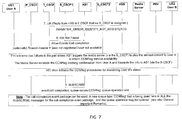
- Figures 6 to 16 represent the call flow in an example where the caller A and the callee B belong to an IMS or SIP based network. They respectively use user equipments UE1 and UE2, both connected to an example of IP based network, which comprises:
- IMPORTANT REMARK If there was already a S-CSCF assigned for this user B (this would happen when an S-CSCF has requested the HSS earlier to retain its identity), the user's registration state would be 'unregistered', and not 'not registered'. In this case, the HSS would return the assigned S-CSCF2 identity to the I-CSCF1, and the incoming request (INVITE in this scenario) would then be sent to the S-CSCF2.
- the first and the second approaches described below are relevant only when there is no S-CSCF assigned to the user B, and the registration state of the user is 'not registered'.
- the originating application server AS1 checks if CCNReg is possible for User A, by checking if:
- the originating application server, AS1 will start a CCNReg Retention Timer (T1) before the expiry of which the CCNReg booking by User A has to take place.
- the originating application server, AS1 will also trigger the Media Server (in a Media Resource Function (MRF) not represented), via the S-CSCF1, for an announcement to be played by the Media Server to User A, informing him/her that CCNReg booking is possible, and prompting the user A to perform the booking. Subsequently the digits are collected by the MRF (indication CCNReg booking confirmation), and sent to the originating application server AS1 (via the S-CSCF1).
- MRF Media Resource Function
- the originating application server AS1 initiates the status monitoring for User B: On reception of the CCNReg booking confirmation from User A, before the expiry of the CCNReg Retention Timer T1, AS1 stops timer T1, and adds User B to the CCNReg queue of User A.
- the Reason header in the 404/480 response is not mandatory for a pure IMS/SIP network call (i.e., calling and called users belong to IMS/SIP networks, without involvement of any PSTN/PLMN in between), but it may be essential when interworking with PSTN/PLMN - depending on the standardization/implementation aspects.
- the originating application server AS1 sends a SUBSCRIBE message to the terminating I-CSCF (which is the same as the originating I-CSCF in this example - just for illustration purposes) via the originating S-CSCF1.
- the originating application server AS1 starts a CCNReg Request operation timer T2, to supervise the subscription request of CCNReg event.
- This SUBSCRIBE message has the following contents:
- mapping to TCAP messages differs, so for example in case of a call from an IMS/SIP to a PLMN user, when CCNReg is invoked by the calling user, the mapping from the SIP SUBSCRIBE message to the appropriate TCAP message (and its contents) should be ensured for proper working of the call completion service.
- the queue nature (or, in general, the queue type) is optional, as it is possible to correlate the NOTIFY to the subscription that triggered this notification using the standard mechanisms as described in RFC 3265.
- the queue operation (add, delete, suspend, resume) is optional, in the sense that it could either be used to clearly (and directly) specify the actual operation to be performed by the receiving entity (as described in draft-poetzl-sipping-call-completion-02), or if this is NOT used, such info could be "derived" by the receiving entity using other means - depending on whether it is implemented or not, the implementation logic could slightly vary, however, the basic service as such will not have any impact.
- the Reason header in the 404/480 response is not mandatory for a pure IMS/SIP network call (i.e., calling and called users belong to IMS/SIP networks, without involvement of any PSTN/PLMN in between), but it may be essential when interworking with PSTN/PLMN - depending on the standardization/implementation aspects.
- queue-state (with value request-queued (or) userfree for recall) is being used instead of the call-completion-state as described in the following sections in the NOTIFY message.
- the new AVP will result in the HSS returning S-CSCF capabilities/name, even when User B is not registered, and does NOT have any services active in the de-registered state.
- the NOTIFY message should also contain the service-retention indication.
- the application server AS2 in addition also adds User A into the CCNReg queue of User B, and starts the CCNReg Service Duration timer T7 (for User B) - this timer specifies the duration for which the CCNReg will be valid (i.e. User A's entry will be retained in User B's CCNReg queue, and the SUBSCRIBE-NOTIFY will be handled).
- the originating application server AS1 stops timer T2, starts the CCNReg Duration timer for User A, T3.
- This timer T3 specifies the duration for which the CCNReg will be valid (i.e., User B's entry will be retained in User A's CCNReg queue, and the SUBSCRIBE-NOTIFY will be handled).
- a proper announcement should be played to User A (triggered by originating AS1) during the booking confirmation, if User B has CCNReg inhibition.
- the originating application server AS1 on reception of this (successful) subscription cancellation, stops timer T3 and sends 200 OK (not represented) to the terminating application server AS2.
- the SIP-specific messages/parameters should be mapped to the appropriate actions in TCAP. See below the section on interaction with PSTN/PLMN for more description.
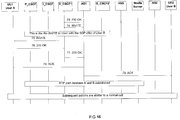
- the Registration message (REGISTER) is sent from the user to P_CSCF. This is forwarded to the I_CSCF. This latter sends UAR to HSS, which replies with a UAA.
- This UAA will contain the S_CSCF that was assigned by the HSS during the processing of the SUBSCRIBE in case of first approach, or the INVITE in case of second approach.
- I_CSCF forwards the REGISTER message to the S_CSCF. This, in turn, is then forwarded to the (terminating) AS (the actions specific to the "reg" event package for the "notifier” are performed by the terminating S-CSCF2).
- the terminating S-CSCF and the terminating AS will be active during reception of the INVITE for every call. If the initial INVITE is forwarded to the terminating AS, then it has to do the following: After checking User B's profile to ensure that User B does not have CCNReg inhibition, the 404 Not Found response should include:
- the terminating AS On reception of the SUBSCRIBE for monitoring the registration State of User B, the terminating AS should send a 200 OK with the subscription duration (Expires).
- a NOTIFY should be sent to originating AS (via the S-CSCFs) with the following contents:
- the terminating AS also starts the CCNReg Service Duration Timer T7 (for User B).
- User A should be added to the CCNReg queue of User B (The 200 OK to the NOTIFY should also be processed successfully).
- Application Server 2 In case of some temporary failure conditions due to which the SUBSCRIBE cannot be accepted, for example, if User B's call-completion queue is full, Application Server 2 (AS2) should send a 480 temporarily unavailable response to Application Server 1 (AS1). In case of some general error (for example, CCNReg inhibition as discussed above), the Application Server 2 (AS2) should send a 403 Forbidden response to Application Server 1 (AS1). Alternatively, after acknowledging the SUBSCRIBE request (with a 2xx response), a proper NOTIFY specifying that the subscription is "terminated", etc., optionally along with "denial reason" can be sent by Application Server 2 (AS2) to Application Server 1 (AS1).
- the terminating AS should monitor the Registration status of User B (updated via info received from S-CSCF), and should respond to any SUBSCRIBE refresh attempts before the expiry of the SUBSCRIBE duration.
- the (terminating) S-CSCF (S-CSCF2) informs the (terminating) AS of this event (i.e., after successful registration).
- the S-CSCF on receiving a REGISTER, would initiate a third party REGISTER towards the (terminating) AS.
- the terminating AS could SUBSCRIBE to the 'reg' event package, when it receives a third party REGISTER request: the basic mechanism is described in IETF RFC 3680 and 3GPP TS 24.229 (Section 'Common Application Server (AS) Procedures').
- the CCNReg Idle Guard timer (T8) is started (See Note 1 below). During this 'idle guard' period, User B (who has just registered) will be allowed to only make outgoing calls, and all incoming calls will encounter the 'busy' indication (See Note 2 below).
- the terminating AS sends a NOTIFY (See Note 3 below) to the originating AS with the following indication:
- the originating AS After completion of the announcement playing to User A (that the CCNReg call is being completed), the originating AS sends an INVITE (without SDP) to the terminating AS (via the S-CSCFs), with the P-Service Indication header containing the value "ccss" (See Note2).
- the terminating AS On reception of this INVITE, the terminating AS sends it towards the called user (User B) via the S-CSCF2 (the P-service indication header may be removed by the S-CSCF2).
- the terminating AS shall cancel timers T9 and T7, and release the resources associated with this CCNReg request, including the corresponding queue entry.
- the terminating AS On reception of the 180 Ringing from User B (via terminating S-CSCF (S-CSCF2)), the terminating AS sends the 180 Ringing to the originating AS (via the 2 S-CSCFs).
- the terminating AS will also terminate the subscription request for monitoring the registered status of User B. This is accomplished by sending a NOTIFY with the following contents towards originating AS (via the 2 S-CSCFs).
- the updates to MGCF are required only when this service is provided across PSTN/PLMN networks.
- the MGCF should provide the mapping functionality as described in the section on "Interworking with TCAP and SIP, and ISUP and SIP".
- CNReg/CCBS it has to be decided which queue will have priority. This can be made provisionable, so that the operator will have the possibility to decide the priority for his network.
- CCNReg/CCBS There are 2 ways of the network handling this -> these 2 service bookings (CCNReg/CCBS) are treated as:
- CCNReg/CCBS 2 service bookings
- CCNReg/CCBS 2 service bookings
- User B could be provided an announcement/indication of the pending queue entries, and he can then decide to accept the recall attempt only for 'selected' users.
- a single queue can be used for all call-completion services internally within the AS (without impacting the protocol message contents).
- CCNReg has been discussed as an originating Service, i.e., a service provided to a calling user. It is also possible to extend this concept to make this service available for User B, i.e., User B will be able to activate this service (for example, before becoming 'not available'), and then any call attempt to him during the period of unavailability will be stored in a queue, and such attempts will be completed by the network automatically once User B becomes 'available'/'registered'. As a further step, such a CCNReg terminating service can be offered as 'selective', i.e., similar to Selective Call Completion above.
- Event package The call-completion event package as defined in "IETF Draft draft-poetzl-bliss-call-completion-00: Extensions to the Session Initiation Protocol (SIP) for the support of the Call Completion Services for ETSI" can be used. (If not, the aspects that are required for this service can be standardized based on what is proposed in it). Only the following updates/additions are required on top of it:
- New reason code in 404 response to indicate that the user is not registered currently :
- This, in conjunction with the Allow-Events header would enable the Calling side to determine that it is the CCNReg case, and CCNReg booking can be done.
- This Reason header in 404 response as described above is optional for calls involving only IMS/SIP networks, but may be essential for interworking with PSTN/PLMN (depending on the actual outcome of standardization/implementation).
- this can be used to give priority to incoming requests by the UAS containing this header over other incoming requests not having this header.
- CCNReg a new token
- ccss the existing service-request
- CCNReg indicates that it is a request for a CCNReg queue).
- a new AVP may be defined in the LIR from I-CSCF towards HSS, for requesting the HSS to ALWAYS return S-CSCF capabilities/S-CSCF identity if this AVP is present.
- the following table is based on [10].
- AVP Flag rules Attribute Name AVP Code Section defined Value Type Must May Should not Must not May Encr. Call-completion-unavailable-user Xyz OctetS tring No
- a new AVP value may be defined in the supported features AVP, to indicate "CCNReg" feature, and the HSS can then return S-CSCF capabilities on receiving this AVP value in the LIR.
- a new AVP may be introduced to indicate the request type (e.g., INVITE), so that the HSS can always return the S-CSCF capabilities/identity only for LIR triggered for an INVITE.
Landscapes
- Engineering & Computer Science (AREA)
- Signal Processing (AREA)
- Multimedia (AREA)
- Computer Networks & Wireless Communication (AREA)
- Business, Economics & Management (AREA)
- General Business, Economics & Management (AREA)
- Telephonic Communication Services (AREA)
- Mobile Radio Communication Systems (AREA)
Claims (9)
- Verfahren zum Bereitstellen einer Anrufweiterleitungsdienstleistung an einen nicht angemeldeten oder nicht erreichbaren Benutzer, wobei diese Dienstleistung als CCNReg bezeichnet wird, der Anruf von einem ersten Benutzer kommt und bei einem zweiten Benutzer endet, die beide in einem IMS-Telekommunikationsnetzwerk sind,
welches umfasst:- eine P-CSCF,- eine absendende I-CSCF (I-CSCF) für einen ersten Benutzer (Benutzer A), der einen Anruf an einen zweiten Benutzer (Benutzer B) absendet,- eine abschließende I-CSCF (I-CSCF) für den zweiten Benutzer (Benutzer B),- eine absendende S-CSCF (S-CSCF1) für den ersten Benutzer (Benutzer A),- eine abschließende S-CSCF (S-CSCF2) für den zweiten Benutzer (Benutzer B),- einen absendenden Anwendungsserver (AS1) für den ersten Benutzer (Benutzer A),- einen abschließenden Anwendungsserver (AS2) für den zweiten Benutzer (Benutzer B),- einen Teilnehmer-Heimserver (HSS);Dieses Verfahren umfasst Schritte zur Bestimmung, dass der zweite Benutzer (Benutzer B) nicht angemeldet oder nicht erreichbar ist, und dann Überwachen des Status des zweiten Benutzers; wobei für das Bestimmen, dass der zweite Benutzer (Benutzer B) nicht angemeldet oder nicht erreichbar ist, besagtes Verfahren die folgenden Schritte umfasst:- Senden (1-5) einer INVITE vom Benutzerendgerät (UE1) des ersten Benutzers an die abschließende I-CSCF,- dann Senden (6) einer Durchmesserlage-Informationsanforderung (LIR-Cx) von der abschließenden I-CSCF (I-CSCF) an den HSS zum Erhalten von Informationen über die abschließende S-CSCF für den zweiten Benutzer,- dann Senden (7) einer Lageinformations-Antwort (LIA) vom HSS an die abschließende I-CSCF, wobei diese Antwort eine DIAMETER_ERROR_ IDENTITY_NOT_REGISTERED Angabe umfasst,- dann Senden (8) einer 404 Not Found Antwort von der abschließenden I-CSCF zurück zur absendenden S-CSCF (S-CSCF1), die diese wiederum an den absendenden Anwendungsserver (AS1) weiterleitet, wobei diese Antwort die folgenden Angaben umfasst:und dass zum Überwachen des Status des zweiten Benutzers besagtes Verfahren die folgenden Schritte umfasst:-- Allow-Events Header: Anrufweiterleitung,-- Reason Header: 'Benutzer nicht angemeldet/Benutzer nicht erreichbar';- Senden (9-10) einer ersten SUBSCRIBE Nachricht vom absendenden Anwendungsserver (AS1) an die abschließende I-CSCF, über die absendende S-CSCF (S-CSCF1), wobei die erste SUBSCRIBE Nachricht Angaben umfasst zum Informieren der abschließenden I-CSCF über die Einleitung der CCNReg Dienstleistung zum Beenden des Kommunikationsversuchs zwischen dem ersten Benutzer und dem zweiten Benutzer,- dann, bei Bestimmen, dass die erste SUBSCRIBE Nachricht für CCNReg ist, durch Finden der oben aufgeführten Angaben, Senden (11) einer Lageinformations-Anforderung (LIA), von der abschließenden I-CSCF zum HSS, zum Anfordern von Information über die abschließende S- CSCF (S-CSCF2), wobei besagte Lageinformations-Anforderung ein Attribute-Value-Pair umfasst, um dem HSS anzuzeigen, dass die S_CSCF Information immer in ihrer Antwort zurückgesendet werden muss, selbst wenn der Benutzer nicht angemeldet/erreichbar ist,- dann Senden (12) einer Lageinformations-Antwort (LIA), S-CSCF Fähigkeiten oder/und Name umfassend, vom HSS zur abschließenden I-CSCF,- dann, bei Empfangen der S-CSCF Fähigkeiten oder/und des Namens in der abschließenden CSCF, Zuweisen (13) einer S-CSCF, bezeichnet als die abschließende S-CSCF (S-CSCF2), und Weiterleiten der SUBSCRIBE Nachricht an besagte abschließende S-CSCF (S-CSCF2),- dann Senden (14) einer Serverzuweisungs-Anforderung (SAR) von der abschließenden (S-CSCF2) zum HSS,- dann Senden (15) einer Serverzuweisungs-Antwort (SAA), welche die Profilinformation des zweiten Benutzers umfasst, vom HSS zur abschließenden S-CSCF (S-CSCF2),- dann, Weiterleiten (16) der ersten SUBSCRIBE Nachricht, von der abschließenden S-CSCF (S-CSCF2) zum abschließenden Anwendungsserver (AS2), zum Anfordern der Abwicklung der CCNReg Dienstleistungsfunktionen für den zweiten Benutzer (Benutzer B),- und dann Senden (21-23) einer ersten NOTIFY Nachricht vom absendenden Anwendungsserver (AS2) zum absendenden Anwendungsserver (AS1) mit der Angabe, dass der CCNReg Zugriff auf die CCNReg Dienstleistung aktiv ist, und dass die CCNReg Anforderung für den ersten Benutzer (Benutzer A) zur Kommunikation mit dem zweiten Benutzer (Benutzer B) in der Warteschlange ist.- und wenn der zweite Benutzer (Benutzer B) angemeldet/erreichbar ist und bereit ist zur Beendigung des CCNReg Anrufs, und der erste Benutzer (Benutzer A) zum ersten Eintrag in Anrufweiterleitungs-Warteschlange wird, dann Senden (43-45) einer zweiten NOTIFY Nachricht vom abschließenden Anwendungsserver (AS2) zum absendenden Anwendungsserver (AS1) unter der Angabe, dass der CCNReg Zugriff auf die CCNReg Dienstleistung aktiv ist und dass der zweite Benutzer (Benutzer B) nun angemeldet/erreichbar und bereit ist für die Anrufweiterleitung an den ersten Benutzer (Benutzer A). - Verfahren nach Anspruch 1, wobei besagte SUBSCRIBE Nachricht die folgenden Angaben umfasst:-- Ereignis: Rufweiterleitung.
- Verfahren nach Anspruch 2, wobei besagte SUBSCRIBE Nachricht weiterhin die folgenden Angaben umfasst:-- Warteschlangenart: CCNReg,-- Warteschlangenoperation: Hinzufügen.
- Verfahren nach Anspruch 1, wobei besagte erste NOTIFY Nachricht umfasst:-- Ereignis: Anrufweiterleitung,-- Anrufweiterleitungs-Status: in der Warteschlange
- Verfahren nach Anspruch 1, wobei besagte erste NOTIFY Nachricht weiterhin umfasst:-- Warteschlangen-Status: "Anforderung-in Warteschlange",-- Warteschlangenart: CCNReg.
- Verfahren nach Anspruch 1, wobei besagte zweite NOTIFY Nachricht umfasst:-- Ereignis: Anrufweiterleitung,-- Anrufweiterleitungs-Status: Bereit für Anrufweiterleitung.
- Verfahren nach Anspruch 1, wobei besagte zweite NOTIFY Nachricht weiterhin umfasst:-- Warteschlangen-Status: "Benutzer bereit für Rückruf",-- Warteschlangenart: CCNReg.
- Abfragende Anrufsitzungssteuerungsfunktion I-CSCF, Bereitstellen einer Anrufweiterleitungsdienstleistung an einen nicht angemeldeten oder nicht erreichbaren Benutzer, wobei diese Dienstleistung bezeichnet wird als CCNReg und der Anruf von einem ersten Benutzer abgesendet wird und bei einem zweiten Benutzer endet, die beide in einem IMS-Telekommunikationsnetzwerk sind, umfassend:- eine P-CSCF,- besagte I-CSCF (I-CSCF), eine abschließende I-CSCF (I-CSCF) bildend, für besagten zweiten Benutzer (Benutzer B),- eine abschließende I-CSCF (I-CSCF) für den zweiten Benutzer (Benutzer B),- eine absendende S-CSCF (S-CSCF1) für den ersten Benutzer (Benutzer A),- eine abschließende S-CSCF (S-CSCF2) für den zweiten Benutzer (Benutzer B),- einen absendenden Anwendungsserver (AS1), für den ersten Benutzer (Benutzer A),- einen abschließenden Anwendungsserver (AS2), für den zweiten Benutzer (Benutzer B)- einen Teilnehmer-Heimserver (HSS);besagte I-CSCF, (I-CSCF), zum Bestimmen, dass der zweite Benutzer (Benutzer B) nicht angemeldet oder nicht erreichbar ist, Mittel umfassend für:- Empfangen (1-5) einer INVITE vom Benutzerendgerät (UE1),- dann Senden (6) einer Durchmesserlage-Informationsanforderung (LIR-Cx) vom HSS zum Erhalten von Information über die abschließende S-CSCF für den zweiten Benutzer,- dann Empfangen (7) einer Lageinformations-Antwort (LIA) vom HSS, wobei diese Antwort eine DIAMETER_ERROR_ IDENTITY _NOT_REGISTERED Angabe enthält,- dann Senden (8) einer 404 Not Found Antwort, über die absendende S-CSCF (S-CSCF1), an den absendenden Anwendungsserver (AS1), wobei diese Antwort die folgenden Angaben enthält:und dass zum Überwachen des Status des zweiten Benutzers die folgenden Mittel umfasst sind:-- Allow-Events Header: Anrufweiterleitung, und, optional,-- Reason Header: 'Benutzer nicht angemeldet/Benutzer nicht erreichbar'.- Empfangen (9-10) einer ersten SUBSCRIBE Nachricht, vom absendenden Anwendungsserver (AS1), über die absendende S-CSCF (S-CSCF1), wobei die erste SUBSCRIBE Nachricht Angaben enthält zum Informieren der abschließenden I-CSCF über
Einleitung der CCNReg Dienstleistung zum Beenden des Kommunikationsversuchs zwischen dem ersten Benutzer und dem zweiten Benutzer,- dann, bei Bestimmen, dass die erste SUBSCRIBE Nachricht für CCNReg ist, durch Finden der oben aufgeführten Angaben, Senden (11) einer Lageinformations-Anforderung (LIR), zum HSS, zum Anfordern von Information über die abschließende S-CSCF (S-CSCF2),
wobei besagte Lageinformations-Anforderung ein Attribute-Value-Pair enthält zum Angeben an den HSS, dass die S-CSCF Information immer in ihrer Antwort zurückgesendet werden sollte, auch wenn der Benutzer nicht angemeldet/erreichbar ist,- dann Empfangen (12) einer Lageinformations-Antwort (LIA), die die S-CSCF Fähigkeiten oder/und den Namen enthält, vom HSS,- dann, bei Empfangen der S-CSCF Fähigkeiten oder/und des Namens , Zuweisen (13) einer S-CSCF, bezeichnet als die abschließende S-CSCF (S-CSCF2), und Weiterleiten der SUBSCRIBE Nachricht an besagte abschließende S-CSCF (S-CSCF2),- dann Senden (14) einer Serverzuweisungs-Anforderung (SAR) von der abschließenden S-CSCF (S-CSCF2) zum HSS,- und dann Empfangen (21-22), der abschließenden S-CSCF (S-CSCF2), einer ersten NOTIFY Nachricht, abgesendet von dem abschließenden Anwendungsserver (AS2), und Weiterleiten (23) an den absendenden Anwendungsserver (AS1) mit der Angabe, dass der CCNReg Zugriff auf die CCNReg Dienstleistung aktiv ist und dass die CCNReg Anforderung für den ersten Benutzer (Benutzer A) zum Kommunizieren mit dem zweiten Benutzer (Benutzer B) in der Warteschlange ist. - Teilnehmer-Heimserver (HSS), zum Bereitstellen einer Anrufweiterleitungsdienstleistung an einen nicht angemeldeten oder nicht erreichbaren Benutzer, wobei diese Dienstleistung bezeichnet wird als CCNReg und der Anruf von einem ersten Benutzer abgesendet wird und bei einem zweiten Benutzer endet, die beide in einem IMS-Telekommunikationsnetzwerk sind, umfassend:- eine P-CSCF,- eine absendende I-CSCF (I-CSCF) für einen ersten Benutzer (Benutzer A), der einen Anruf an einen zweiten Benutzer (Benutzer B) absendet,- eine abschließende I-CSCF (I-CSCF) für den zweiten Benutzer (Benutzer B),- eine absendende S-CSCF (S-CSCF1) für den ersten Benutzer (Benutzer A),- eine abschließende S-CSCF (S-CSCF2) für den zweiten Benutzer (Benutzer B),- einen absendenden Anwendungsserver (AS1) für den ersten Benutzer (Benutzer A),- einen abschließenden Anwendungsserver (AS2), für den zweiten Benutzer (Benutzer B),- und besagten Teilnehmer-Heimserver (HSS);wobei für das Bestimmen, dass der zweite Benutzer (Benutzer B) nicht angemeldet oder nicht erreichbar ist, besagter Teilnehmer-Heimserver (HSS) Mittel umfasst für:- Empfangen (6) einer Durchmesserlage-Informationsanforderung (LIR-Cx) von der abschließenden I-CSCF (I-CSCF), zum Erhalten von Information über die abschließende S-CSCF für den zweiten Benutzer,- dann Senden (7) einer Lageinformations-Antwort (LIA) an die abschließende I-CSCF, wobei diese Antwort eine Angabe DIAMETER_ ERROR_IDENTITY_NOT_REGISTERED enthält,und dass zum Überwachen des Status des zweiten Benutzers besagter Teilnehmer-Heimserver (HSS) Mittel umfasst für:- Empfangen (11) einer Lageinformations-Anforderung (LIR), von der abschließenden I-CSCF, zum Anfordern von Information über die abschließende S- CSCF (S-CSCF2), wobei besagte Lageinformations-Anforderung ein Attribute-Value-Pair enthält zum Angeben an den HSS, dass die S-CSCF Information immer in ihrer Antwort zurückgesendet werden sollte, auch wenn der Benutzer nicht angemeldet / nicht erreichbar ist,- dann Senden (12) einer Lageinformations-Antwort (LIA), die die S-CSCF Fähigkeiten oder/und den Namen enthält, an die abschließende I-CSCF,- dann Empfangen (14) einer Serverzuweisungs-Anforderung (SAR) von der abschließenden (S-CSCF2),- dann Senden (15) einer Serverzuweisungs-Antwort (SAA), welche die Profilinformation des zweiten Benutzers umfasst, an die abschließende S-CSCF (S-CSCF2).
Applications Claiming Priority (1)
| Application Number | Priority Date | Filing Date | Title |
|---|---|---|---|
| PCT/IB2007/055407 WO2009083754A1 (en) | 2007-12-27 | 2007-12-27 | A method of providing a call completion service to a not registered or not available user in a telecommunication network |
Publications (2)
| Publication Number | Publication Date |
|---|---|
| EP2243274A1 EP2243274A1 (de) | 2010-10-27 |
| EP2243274B1 true EP2243274B1 (de) | 2016-11-23 |
Family
ID=39816784
Family Applications (1)
| Application Number | Title | Priority Date | Filing Date |
|---|---|---|---|
| EP07870491.3A Not-in-force EP2243274B1 (de) | 2007-12-27 | 2007-12-27 | Verfahren zur bereitstellung eines verbindungsherstellungsdienstes zu einem nichtregistrierten oder nichtverfügbaren benutzer in einem telekommunikationsnetz |
Country Status (4)
| Country | Link |
|---|---|
| US (1) | US8359015B2 (de) |
| EP (1) | EP2243274B1 (de) |
| CN (1) | CN101911635B (de) |
| WO (1) | WO2009083754A1 (de) |
Families Citing this family (52)
| Publication number | Priority date | Publication date | Assignee | Title |
|---|---|---|---|---|
| US7730155B1 (en) * | 2002-10-01 | 2010-06-01 | Apple Inc. | Method and apparatus for dynamically locating resources |
| KR100921554B1 (ko) * | 2005-08-30 | 2009-10-14 | 주식회사 케이티 | 음성통화중에 다양한 콘텐츠를 공유 및 제어할 수 있는콘텐츠공유서비스를 제공하는 시스템 및 그 방법 |
| US20080240385A1 (en) * | 2007-03-30 | 2008-10-02 | Veraz Networks, Inc. | Black phone presence services |
| CN102098652B (zh) * | 2008-01-18 | 2012-12-12 | 华为技术有限公司 | 一种为用户提供业务的方法、系统和装置 |
| CN101933311A (zh) * | 2008-01-30 | 2010-12-29 | 爱立信电话股份有限公司 | 促进ims中的预订服务 |
| US8305983B2 (en) | 2008-11-03 | 2012-11-06 | At&T Intellectual Property I, L.P. | Method and apparatus for enabling registration of endpoint devices through provisioning |
| KR101547815B1 (ko) * | 2008-11-27 | 2015-08-28 | 삼성전자주식회사 | 아이피 멀티미디어 부시스템에서 타 서비스를 제공하기 위한 장치 및 방법 |
| EP2380338B1 (de) * | 2008-12-23 | 2018-02-14 | Telefonaktiebolaget LM Ericsson (publ) | Aufbauen einer verbindung von einem nicht-ims- zu einem ims-netz, wobei das gateway eine schnittstelle zu dem hss aufweist |
| US8355678B2 (en) * | 2009-10-07 | 2013-01-15 | Oto Technologies, Llc | System and method for controlling communications during an E-reader session |
| US8958306B2 (en) * | 2009-10-16 | 2015-02-17 | Tekelec, Inc. | Methods, systems, and computer readable media for providing diameter signaling router with integrated monitoring functionality |
| US8406183B2 (en) | 2009-12-27 | 2013-03-26 | At&T Intellectual Property I, L.P. | Method and apparatus for enabling registration of aggregate end point devices through provisioning |
| CN102143460B (zh) * | 2010-02-02 | 2017-07-14 | 中兴通讯股份有限公司 | 基于身份识别的遇忙回叫业务接入方法及系统 |
| US8532110B2 (en) * | 2010-02-12 | 2013-09-10 | Tekelec, Inc. | Methods, systems, and computer readable media for diameter protocol harmonization |
| EP2550776B1 (de) * | 2010-03-23 | 2020-04-29 | Orange | Verfahren zur verwaltung von datensätzen in einem ims-netzwerk und dieses verfahren umsetzender s-cscf-server |
| CN102934415A (zh) * | 2010-06-18 | 2013-02-13 | 诺基亚西门子通信公司 | 传送认证信息 |
| CN102413454B (zh) * | 2010-09-21 | 2014-08-20 | 中兴通讯股份有限公司 | 一种数据传输的方法及aog系统 |
| US8547966B2 (en) * | 2010-12-06 | 2013-10-01 | At&T Intellectual Property I, L.P. | Method and apparatus for configuring IP multimedia subsystem network elements |
| US8406234B2 (en) * | 2010-12-08 | 2013-03-26 | Motorola Solutions, Inc. | Method and apparatus for processing multiple incoming calls in a single device |
| CN102130830B (zh) * | 2010-12-28 | 2013-04-17 | 华为技术有限公司 | 一种备用lsp的激活方法、装置和系统 |
| WO2012089247A1 (en) * | 2010-12-29 | 2012-07-05 | Nokia Siemens Networks Oy | A method and apparatus for transmitting an identity |
| CA2773352C (en) | 2011-04-05 | 2015-12-22 | Research In Motion Limited | System and method for sip user agent identification and efficient binding |
| JP5107451B2 (ja) * | 2011-05-13 | 2012-12-26 | 株式会社エヌ・ティ・ティ・ドコモ | 移動通信方法及びアプリケーションサーバ装置 |
| JP5699999B2 (ja) * | 2012-03-30 | 2015-04-15 | 日本電気株式会社 | 情報処理システム |
| US9247418B2 (en) * | 2012-07-13 | 2016-01-26 | Verizon Patent And Licensing Inc. | Communication-session termination when subscriber server is unavailable |
| ES2862908T3 (es) * | 2012-11-16 | 2021-10-08 | Vodafone Espana Sau | Método, sistema y dispositivos para gestión de aprovisionamiento de usuario de un servicio en una red de IMS |
| US20150334067A1 (en) * | 2012-12-21 | 2015-11-19 | Gnotech Llc | Messaging providing graphical and audible features |
| US9578367B2 (en) * | 2013-08-14 | 2017-02-21 | Arris Enterprises, Inc. | Internet protocol television tuning adapter |
| CN104427484B (zh) * | 2013-09-02 | 2019-03-29 | 阿尔卡特朗讯 | 一种用于向应用服务器传送应用数据的方法与设备 |
| US10148703B2 (en) | 2014-10-09 | 2018-12-04 | T-Mobile Usa, Inc. | Service capabilities in heterogeneous network |
| US9749981B2 (en) * | 2015-02-20 | 2017-08-29 | Telefonaktiebolaget Lm Ericsson (Publ) | IMS system and method for transmitting a reregister request to an S-CSCF |
| US10454802B2 (en) * | 2015-06-30 | 2019-10-22 | T-Mobile Usa, Inc. | Backend polling based on nonzero SIP subscribe expiration |
| EP3395099A4 (de) * | 2015-12-21 | 2019-07-24 | Nokia Solutions and Networks Oy | Bewusstsein auf internetprotokoll (ip)-multimedia-subsystem (ims)-ebene einer hochlatenten vorrichtung |
| US9900302B2 (en) * | 2016-06-22 | 2018-02-20 | FinancialForce.com, Inc. | Seamless authentication for an application development platform |
| US10984359B2 (en) | 2016-06-23 | 2021-04-20 | FinancialForce.com, Inc. | Combining batch and queueable technologies in a salesforce platform for large volume parallel processing |
| US10496741B2 (en) | 2016-09-21 | 2019-12-03 | FinancialForce.com, Inc. | Dynamic intermediate templates for richly formatted output |
| US11799922B2 (en) * | 2016-12-21 | 2023-10-24 | T-Mobile Usa, Inc. | Network core facilitating terminal interoperation |
| US10771509B2 (en) | 2017-03-31 | 2020-09-08 | T-Mobile Usa, Inc. | Terminal interoperation using called-terminal functional characteristics |
| CN109151221B (zh) * | 2017-06-15 | 2021-02-26 | 中国移动通信集团浙江有限公司 | 呼叫提醒方法、提醒服务器和计算机可读存储介质 |
| CN109995721B (zh) * | 2017-12-29 | 2021-10-22 | 华为技术有限公司 | 业务请求处理方法、装置及通信系统 |
| US11038689B2 (en) | 2018-03-01 | 2021-06-15 | FinancialForce.com, Inc. | Efficient block chain generation |
| US10846481B2 (en) | 2018-06-29 | 2020-11-24 | FinancialForce.com, Inc. | Method and system for bridging disparate platforms to automate a natural language interface |
| EP3878147B1 (de) * | 2018-11-09 | 2024-04-10 | Nokia Technologies Oy | Verfahren, vorrichtung und computerprogramm |
| US11200143B2 (en) | 2019-01-08 | 2021-12-14 | FinancialForce.com, Inc. | Software development framework for a cloud computing platform |
| EP3912307A4 (de) * | 2019-01-18 | 2022-10-12 | Telefonaktiebolaget LM Ericsson (publ) | Verfahren und vorrichtungen zur fortsetzung von beendigungsdiensten in ims-kommunikationsnetzen |
| US10922485B2 (en) | 2019-07-10 | 2021-02-16 | FinancialForce.com, Inc. | Platform interpretation of user input converted into standardized input |
| US11455286B2 (en) | 2019-08-06 | 2022-09-27 | FinancialForce.com, Inc. | History of slowly changing dimensions |
| US11166327B1 (en) | 2020-07-20 | 2021-11-02 | T-Mobile Usa, Inc. | Session initiated protocol (SIP) session establishment with a home subscriber server (HSS) outage |
| US11419167B2 (en) * | 2020-07-20 | 2022-08-16 | T-Mobile Usa, Inc. | Session initiated protocol (SIP) session establishment with a home subscriber server (HSS) outage |
| US11997748B1 (en) * | 2021-08-24 | 2024-05-28 | T-Mobile Usa, Inc. | Methods and systems for MT call recovery |
| US12074921B2 (en) * | 2021-11-08 | 2024-08-27 | Charter Communications Operating, Llc | Managing IP multimedia subsystem (IMS) registration |
| US11632403B1 (en) * | 2022-02-10 | 2023-04-18 | Verizon Patent And Licensing Inc. | Systems and methods for supporting internet protocol multimedia subsystem services in fifth-generation networks |
| US12407739B2 (en) | 2022-10-07 | 2025-09-02 | T-Mobile Usa, Inc. | Interconnection border control function and home subscriber server interface for managing voice calls |
Family Cites Families (6)
| Publication number | Priority date | Publication date | Assignee | Title |
|---|---|---|---|---|
| DE10107701A1 (de) * | 2001-02-19 | 2002-09-05 | Siemens Ag | Verfahren für einen automatischen Rückruf in einem paket-orientierten Netzwerk |
| US6810243B2 (en) * | 2001-04-30 | 2004-10-26 | Lucent Technologies Inc. | Surrogate service attendant |
| FR2834166A1 (fr) * | 2001-12-21 | 2003-06-27 | France Telecom | Procede et systeme de rappel automatique multi reseaux |
| CN100512495C (zh) * | 2006-02-20 | 2009-07-08 | 华为技术有限公司 | 一种实现被叫服务的方法和系统 |
| CN101083615A (zh) * | 2006-05-29 | 2007-12-05 | 华为技术有限公司 | 一种跨域接收业务的方法、装置及系统 |
| CN101087474B (zh) * | 2006-06-19 | 2012-01-11 | 中兴通讯股份有限公司 | 一种获取语音呼叫连续性业务的业务状态的方法 |
-
2007
- 2007-12-27 EP EP07870491.3A patent/EP2243274B1/de not_active Not-in-force
- 2007-12-27 WO PCT/IB2007/055407 patent/WO2009083754A1/en not_active Ceased
- 2007-12-27 CN CN200780102107.5A patent/CN101911635B/zh not_active Expired - Fee Related
- 2007-12-27 US US12/810,548 patent/US8359015B2/en active Active
Non-Patent Citations (1)
| Title |
|---|
| None * |
Also Published As
| Publication number | Publication date |
|---|---|
| US20110028130A1 (en) | 2011-02-03 |
| CN101911635B (zh) | 2014-05-28 |
| CN101911635A (zh) | 2010-12-08 |
| US8359015B2 (en) | 2013-01-22 |
| EP2243274A1 (de) | 2010-10-27 |
| WO2009083754A1 (en) | 2009-07-09 |
Similar Documents
| Publication | Publication Date | Title |
|---|---|---|
| US8359015B2 (en) | Method of providing a call completion service to a not registered or not available user in a telecommunication network | |
| US7028311B2 (en) | Communications node architecture and method for providing control functions in a telecommunications network | |
| EP2112798B1 (de) | Dienstkontrolle in einem Dienste bereitstellenden System | |
| US9906566B2 (en) | Voice session termination for messaging clients in IMS | |
| US9379914B2 (en) | Method and system for implementing aggregate endpoints on IMS networks | |
| EP2174461B1 (de) | Verfahren und vorrichtung zur verwendung in einem kommunikationsnetz | |
| EP2224664A1 (de) | Verfahren und System zum Steuern der Anrufannahme in IMS | |
| JP2008546225A (ja) | サービス制御方法及び要素 | |
| US20130080648A1 (en) | Session initiation from application servers in an ip multimedia subsystem | |
| JP2006517064A (ja) | 一時的に利用不可能なネットワークユーザーへのメッセージのルーティング方法、システム、およびネットワーク装置 | |
| US20110194554A1 (en) | Systems and methods for implementing call pick up using gruu an ims network | |
| US8588791B2 (en) | Method for providing IMS support for enterprise PBX users | |
| US20050243746A1 (en) | Session inspection scheme | |
| US20060153352A1 (en) | Communication system | |
| EP2446603A1 (de) | Verfahren zur bereitstellung eines verbindungsherstellungsdienstes für einen nicht registrierten oder nicht verfügbaren nutzer in einem telekommunikationsnetz | |
| EP2795865B1 (de) | Sitzungsaufbau in einem ip-multimediasubsystemnetz | |
| Amooee et al. | On total call setup waiting time probability Distribution in IMS Signaling Network | |
| Subsystem–Stage | All-IP Core Network Multimedia Domain |
Legal Events
| Date | Code | Title | Description |
|---|---|---|---|
| PUAI | Public reference made under article 153(3) epc to a published international application that has entered the european phase |
Free format text: ORIGINAL CODE: 0009012 |
|
| 17P | Request for examination filed |
Effective date: 20100727 |
|
| AK | Designated contracting states |
Kind code of ref document: A1 Designated state(s): AT BE BG CH CY CZ DE DK EE ES FI FR GB GR HU IE IS IT LI LT LU LV MC MT NL PL PT RO SE SI SK TR |
|
| AX | Request for extension of the european patent |
Extension state: AL BA HR MK RS |
|
| DAX | Request for extension of the european patent (deleted) | ||
| RAP1 | Party data changed (applicant data changed or rights of an application transferred) |
Owner name: ALCATEL LUCENT |
|
| 111Z | Information provided on other rights and legal means of execution |
Free format text: AT BE BG CH CY CZ DE DK EE ES FI FR GB GR HU IE IS IT LI LT LU LV MC MT NL PL PT RO SE SI SK TR Effective date: 20130410 |
|
| RAP1 | Party data changed (applicant data changed or rights of an application transferred) |
Owner name: ALCATEL LUCENT |
|
| D11X | Information provided on other rights and legal means of execution (deleted) | ||
| 17Q | First examination report despatched |
Effective date: 20150602 |
|
| GRAP | Despatch of communication of intention to grant a patent |
Free format text: ORIGINAL CODE: EPIDOSNIGR1 |
|
| RIC1 | Information provided on ipc code assigned before grant |
Ipc: H04M 3/42 20060101ALI20160728BHEP Ipc: H04L 29/06 20060101AFI20160728BHEP Ipc: H04M 3/48 20060101ALI20160728BHEP Ipc: H04M 7/00 20060101ALN20160728BHEP |
|
| INTG | Intention to grant announced |
Effective date: 20160825 |
|
| GRAS | Grant fee paid |
Free format text: ORIGINAL CODE: EPIDOSNIGR3 |
|
| GRAA | (expected) grant |
Free format text: ORIGINAL CODE: 0009210 |
|
| AK | Designated contracting states |
Kind code of ref document: B1 Designated state(s): AT BE BG CH CY CZ DE DK EE ES FI FR GB GR HU IE IS IT LI LT LU LV MC MT NL PL PT RO SE SI SK TR |
|
| REG | Reference to a national code |
Ref country code: GB Ref legal event code: FG4D |
|
| REG | Reference to a national code |
Ref country code: CH Ref legal event code: EP |
|
| REG | Reference to a national code |
Ref country code: IE Ref legal event code: FG4D |
|
| REG | Reference to a national code |
Ref country code: AT Ref legal event code: REF Ref document number: 848778 Country of ref document: AT Kind code of ref document: T Effective date: 20161215 |
|
| REG | Reference to a national code |
Ref country code: DE Ref legal event code: R096 Ref document number: 602007048922 Country of ref document: DE |
|
| REG | Reference to a national code |
Ref country code: FR Ref legal event code: PLFP Year of fee payment: 10 |
|
| PG25 | Lapsed in a contracting state [announced via postgrant information from national office to epo] |
Ref country code: LV Free format text: LAPSE BECAUSE OF FAILURE TO SUBMIT A TRANSLATION OF THE DESCRIPTION OR TO PAY THE FEE WITHIN THE PRESCRIBED TIME-LIMIT Effective date: 20161123 |
|
| REG | Reference to a national code |
Ref country code: LT Ref legal event code: MG4D |
|
| REG | Reference to a national code |
Ref country code: NL Ref legal event code: MP Effective date: 20161123 |
|
| REG | Reference to a national code |
Ref country code: AT Ref legal event code: MK05 Ref document number: 848778 Country of ref document: AT Kind code of ref document: T Effective date: 20161123 |
|
| PG25 | Lapsed in a contracting state [announced via postgrant information from national office to epo] |
Ref country code: NL Free format text: LAPSE BECAUSE OF FAILURE TO SUBMIT A TRANSLATION OF THE DESCRIPTION OR TO PAY THE FEE WITHIN THE PRESCRIBED TIME-LIMIT Effective date: 20161123 Ref country code: GR Free format text: LAPSE BECAUSE OF FAILURE TO SUBMIT A TRANSLATION OF THE DESCRIPTION OR TO PAY THE FEE WITHIN THE PRESCRIBED TIME-LIMIT Effective date: 20170224 Ref country code: SE Free format text: LAPSE BECAUSE OF FAILURE TO SUBMIT A TRANSLATION OF THE DESCRIPTION OR TO PAY THE FEE WITHIN THE PRESCRIBED TIME-LIMIT Effective date: 20161123 Ref country code: LT Free format text: LAPSE BECAUSE OF FAILURE TO SUBMIT A TRANSLATION OF THE DESCRIPTION OR TO PAY THE FEE WITHIN THE PRESCRIBED TIME-LIMIT Effective date: 20161123 |
|
| PG25 | Lapsed in a contracting state [announced via postgrant information from national office to epo] |
Ref country code: AT Free format text: LAPSE BECAUSE OF FAILURE TO SUBMIT A TRANSLATION OF THE DESCRIPTION OR TO PAY THE FEE WITHIN THE PRESCRIBED TIME-LIMIT Effective date: 20161123 Ref country code: ES Free format text: LAPSE BECAUSE OF FAILURE TO SUBMIT A TRANSLATION OF THE DESCRIPTION OR TO PAY THE FEE WITHIN THE PRESCRIBED TIME-LIMIT Effective date: 20161123 Ref country code: PL Free format text: LAPSE BECAUSE OF FAILURE TO SUBMIT A TRANSLATION OF THE DESCRIPTION OR TO PAY THE FEE WITHIN THE PRESCRIBED TIME-LIMIT Effective date: 20161123 Ref country code: FI Free format text: LAPSE BECAUSE OF FAILURE TO SUBMIT A TRANSLATION OF THE DESCRIPTION OR TO PAY THE FEE WITHIN THE PRESCRIBED TIME-LIMIT Effective date: 20161123 Ref country code: PT Free format text: LAPSE BECAUSE OF FAILURE TO SUBMIT A TRANSLATION OF THE DESCRIPTION OR TO PAY THE FEE WITHIN THE PRESCRIBED TIME-LIMIT Effective date: 20170323 Ref country code: BE Free format text: LAPSE BECAUSE OF NON-PAYMENT OF DUE FEES Effective date: 20161231 |
|
| PG25 | Lapsed in a contracting state [announced via postgrant information from national office to epo] |
Ref country code: RO Free format text: LAPSE BECAUSE OF FAILURE TO SUBMIT A TRANSLATION OF THE DESCRIPTION OR TO PAY THE FEE WITHIN THE PRESCRIBED TIME-LIMIT Effective date: 20161123 Ref country code: SK Free format text: LAPSE BECAUSE OF FAILURE TO SUBMIT A TRANSLATION OF THE DESCRIPTION OR TO PAY THE FEE WITHIN THE PRESCRIBED TIME-LIMIT Effective date: 20161123 Ref country code: CZ Free format text: LAPSE BECAUSE OF FAILURE TO SUBMIT A TRANSLATION OF THE DESCRIPTION OR TO PAY THE FEE WITHIN THE PRESCRIBED TIME-LIMIT Effective date: 20161123 Ref country code: DK Free format text: LAPSE BECAUSE OF FAILURE TO SUBMIT A TRANSLATION OF THE DESCRIPTION OR TO PAY THE FEE WITHIN THE PRESCRIBED TIME-LIMIT Effective date: 20161123 Ref country code: EE Free format text: LAPSE BECAUSE OF FAILURE TO SUBMIT A TRANSLATION OF THE DESCRIPTION OR TO PAY THE FEE WITHIN THE PRESCRIBED TIME-LIMIT Effective date: 20161123 |
|
| REG | Reference to a national code |
Ref country code: CH Ref legal event code: PL |
|
| REG | Reference to a national code |
Ref country code: DE Ref legal event code: R097 Ref document number: 602007048922 Country of ref document: DE |
|
| PG25 | Lapsed in a contracting state [announced via postgrant information from national office to epo] |
Ref country code: BE Free format text: LAPSE BECAUSE OF FAILURE TO SUBMIT A TRANSLATION OF THE DESCRIPTION OR TO PAY THE FEE WITHIN THE PRESCRIBED TIME-LIMIT Effective date: 20161123 Ref country code: IT Free format text: LAPSE BECAUSE OF FAILURE TO SUBMIT A TRANSLATION OF THE DESCRIPTION OR TO PAY THE FEE WITHIN THE PRESCRIBED TIME-LIMIT Effective date: 20161123 Ref country code: BG Free format text: LAPSE BECAUSE OF FAILURE TO SUBMIT A TRANSLATION OF THE DESCRIPTION OR TO PAY THE FEE WITHIN THE PRESCRIBED TIME-LIMIT Effective date: 20170223 |
|
| PG25 | Lapsed in a contracting state [announced via postgrant information from national office to epo] |
Ref country code: MC Free format text: LAPSE BECAUSE OF FAILURE TO SUBMIT A TRANSLATION OF THE DESCRIPTION OR TO PAY THE FEE WITHIN THE PRESCRIBED TIME-LIMIT Effective date: 20161123 |
|
| PLBE | No opposition filed within time limit |
Free format text: ORIGINAL CODE: 0009261 |
|
| STAA | Information on the status of an ep patent application or granted ep patent |
Free format text: STATUS: NO OPPOSITION FILED WITHIN TIME LIMIT |
|
| REG | Reference to a national code |
Ref country code: IE Ref legal event code: MM4A |
|
| PG25 | Lapsed in a contracting state [announced via postgrant information from national office to epo] |
Ref country code: CH Free format text: LAPSE BECAUSE OF NON-PAYMENT OF DUE FEES Effective date: 20161231 Ref country code: LU Free format text: LAPSE BECAUSE OF NON-PAYMENT OF DUE FEES Effective date: 20161227 Ref country code: LI Free format text: LAPSE BECAUSE OF NON-PAYMENT OF DUE FEES Effective date: 20161231 |
|
| 26N | No opposition filed |
Effective date: 20170824 |
|
| PG25 | Lapsed in a contracting state [announced via postgrant information from national office to epo] |
Ref country code: IE Free format text: LAPSE BECAUSE OF NON-PAYMENT OF DUE FEES Effective date: 20161227 Ref country code: SI Free format text: LAPSE BECAUSE OF FAILURE TO SUBMIT A TRANSLATION OF THE DESCRIPTION OR TO PAY THE FEE WITHIN THE PRESCRIBED TIME-LIMIT Effective date: 20161123 |
|
| REG | Reference to a national code |
Ref country code: FR Ref legal event code: PLFP Year of fee payment: 11 |
|
| PG25 | Lapsed in a contracting state [announced via postgrant information from national office to epo] |
Ref country code: CY Free format text: LAPSE BECAUSE OF FAILURE TO SUBMIT A TRANSLATION OF THE DESCRIPTION OR TO PAY THE FEE WITHIN THE PRESCRIBED TIME-LIMIT Effective date: 20161123 Ref country code: HU Free format text: LAPSE BECAUSE OF FAILURE TO SUBMIT A TRANSLATION OF THE DESCRIPTION OR TO PAY THE FEE WITHIN THE PRESCRIBED TIME-LIMIT; INVALID AB INITIO Effective date: 20071227 |
|
| PG25 | Lapsed in a contracting state [announced via postgrant information from national office to epo] |
Ref country code: TR Free format text: LAPSE BECAUSE OF FAILURE TO SUBMIT A TRANSLATION OF THE DESCRIPTION OR TO PAY THE FEE WITHIN THE PRESCRIBED TIME-LIMIT Effective date: 20161123 Ref country code: IS Free format text: LAPSE BECAUSE OF FAILURE TO SUBMIT A TRANSLATION OF THE DESCRIPTION OR TO PAY THE FEE WITHIN THE PRESCRIBED TIME-LIMIT Effective date: 20161123 |
|
| PG25 | Lapsed in a contracting state [announced via postgrant information from national office to epo] |
Ref country code: MT Free format text: LAPSE BECAUSE OF NON-PAYMENT OF DUE FEES Effective date: 20161227 |
|
| PGFP | Annual fee paid to national office [announced via postgrant information from national office to epo] |
Ref country code: DE Payment date: 20181211 Year of fee payment: 12 |
|
| PGFP | Annual fee paid to national office [announced via postgrant information from national office to epo] |
Ref country code: GB Payment date: 20181227 Year of fee payment: 12 Ref country code: FR Payment date: 20181121 Year of fee payment: 12 |
|
| REG | Reference to a national code |
Ref country code: DE Ref legal event code: R119 Ref document number: 602007048922 Country of ref document: DE |
|
| GBPC | Gb: european patent ceased through non-payment of renewal fee |
Effective date: 20191227 |
|
| PG25 | Lapsed in a contracting state [announced via postgrant information from national office to epo] |
Ref country code: DE Free format text: LAPSE BECAUSE OF NON-PAYMENT OF DUE FEES Effective date: 20200701 Ref country code: GB Free format text: LAPSE BECAUSE OF NON-PAYMENT OF DUE FEES Effective date: 20191227 Ref country code: FR Free format text: LAPSE BECAUSE OF NON-PAYMENT OF DUE FEES Effective date: 20191231 |