EP2243240B1 - Verfahren und vorrichtung zum decodieren empfangener datensignale - Google Patents
Verfahren und vorrichtung zum decodieren empfangener datensignale Download PDFInfo
- Publication number
- EP2243240B1 EP2243240B1 EP08751147.3A EP08751147A EP2243240B1 EP 2243240 B1 EP2243240 B1 EP 2243240B1 EP 08751147 A EP08751147 A EP 08751147A EP 2243240 B1 EP2243240 B1 EP 2243240B1
- Authority
- EP
- European Patent Office
- Prior art keywords
- decoding
- data signal
- header
- header bit
- logic
- Prior art date
- Legal status (The legal status is an assumption and is not a legal conclusion. Google has not performed a legal analysis and makes no representation as to the accuracy of the status listed.)
- Not-in-force
Links
- 238000000034 method Methods 0.000 title claims description 31
- 238000007619 statistical method Methods 0.000 claims description 13
- 238000012937 correction Methods 0.000 claims description 11
- 239000004065 semiconductor Substances 0.000 claims description 6
- 230000006978 adaptation Effects 0.000 claims description 2
- 238000004891 communication Methods 0.000 description 22
- 230000005540 biological transmission Effects 0.000 description 9
- 230000015654 memory Effects 0.000 description 6
- 238000004590 computer program Methods 0.000 description 4
- 230000007704 transition Effects 0.000 description 3
- 230000001419 dependent effect Effects 0.000 description 2
- 230000000694 effects Effects 0.000 description 2
- 230000006870 function Effects 0.000 description 2
- 230000003287 optical effect Effects 0.000 description 2
- 238000012546 transfer Methods 0.000 description 2
- 230000003466 anti-cipated effect Effects 0.000 description 1
- 239000000872 buffer Substances 0.000 description 1
- 230000015556 catabolic process Effects 0.000 description 1
- 125000004122 cyclic group Chemical group 0.000 description 1
- 238000006731 degradation reaction Methods 0.000 description 1
- 238000013461 design Methods 0.000 description 1
- 238000001514 detection method Methods 0.000 description 1
- 238000005538 encapsulation Methods 0.000 description 1
- 238000005516 engineering process Methods 0.000 description 1
- 230000005294 ferromagnetic effect Effects 0.000 description 1
- 230000010365 information processing Effects 0.000 description 1
- 230000005291 magnetic effect Effects 0.000 description 1
- 230000005055 memory storage Effects 0.000 description 1
- 230000008520 organization Effects 0.000 description 1
- 230000011664 signaling Effects 0.000 description 1
Images



Classifications
-
- H—ELECTRICITY
- H04—ELECTRIC COMMUNICATION TECHNIQUE
- H04L—TRANSMISSION OF DIGITAL INFORMATION, e.g. TELEGRAPHIC COMMUNICATION
- H04L1/00—Arrangements for detecting or preventing errors in the information received
- H04L1/004—Arrangements for detecting or preventing errors in the information received by using forward error control
- H04L1/0045—Arrangements at the receiver end
- H04L1/0054—Maximum-likelihood or sequential decoding, e.g. Viterbi, Fano, ZJ algorithms
-
- H—ELECTRICITY
- H03—ELECTRONIC CIRCUITRY
- H03M—CODING; DECODING; CODE CONVERSION IN GENERAL
- H03M13/00—Coding, decoding or code conversion, for error detection or error correction; Coding theory basic assumptions; Coding bounds; Error probability evaluation methods; Channel models; Simulation or testing of codes
- H03M13/29—Coding, decoding or code conversion, for error detection or error correction; Coding theory basic assumptions; Coding bounds; Error probability evaluation methods; Channel models; Simulation or testing of codes combining two or more codes or code structures, e.g. product codes, generalised product codes, concatenated codes, inner and outer codes
- H03M13/2933—Coding, decoding or code conversion, for error detection or error correction; Coding theory basic assumptions; Coding bounds; Error probability evaluation methods; Channel models; Simulation or testing of codes combining two or more codes or code structures, e.g. product codes, generalised product codes, concatenated codes, inner and outer codes using a block and a convolutional code
- H03M13/2936—Coding, decoding or code conversion, for error detection or error correction; Coding theory basic assumptions; Coding bounds; Error probability evaluation methods; Channel models; Simulation or testing of codes combining two or more codes or code structures, e.g. product codes, generalised product codes, concatenated codes, inner and outer codes using a block and a convolutional code comprising an outer Reed-Solomon code and an inner convolutional code
-
- H—ELECTRICITY
- H03—ELECTRONIC CIRCUITRY
- H03M—CODING; DECODING; CODE CONVERSION IN GENERAL
- H03M13/00—Coding, decoding or code conversion, for error detection or error correction; Coding theory basic assumptions; Coding bounds; Error probability evaluation methods; Channel models; Simulation or testing of codes
- H03M13/29—Coding, decoding or code conversion, for error detection or error correction; Coding theory basic assumptions; Coding bounds; Error probability evaluation methods; Channel models; Simulation or testing of codes combining two or more codes or code structures, e.g. product codes, generalised product codes, concatenated codes, inner and outer codes
- H03M13/2948—Iterative decoding
-
- H—ELECTRICITY
- H03—ELECTRONIC CIRCUITRY
- H03M—CODING; DECODING; CODE CONVERSION IN GENERAL
- H03M13/00—Coding, decoding or code conversion, for error detection or error correction; Coding theory basic assumptions; Coding bounds; Error probability evaluation methods; Channel models; Simulation or testing of codes
- H03M13/63—Joint error correction and other techniques
-
- H—ELECTRICITY
- H04—ELECTRIC COMMUNICATION TECHNIQUE
- H04L—TRANSMISSION OF DIGITAL INFORMATION, e.g. TELEGRAPHIC COMMUNICATION
- H04L1/00—Arrangements for detecting or preventing errors in the information received
- H04L1/0001—Systems modifying transmission characteristics according to link quality, e.g. power backoff
- H04L1/0036—Systems modifying transmission characteristics according to link quality, e.g. power backoff arrangements specific to the receiver
- H04L1/0038—Blind format detection
-
- H—ELECTRICITY
- H04—ELECTRIC COMMUNICATION TECHNIQUE
- H04L—TRANSMISSION OF DIGITAL INFORMATION, e.g. TELEGRAPHIC COMMUNICATION
- H04L1/00—Arrangements for detecting or preventing errors in the information received
- H04L1/004—Arrangements for detecting or preventing errors in the information received by using forward error control
- H04L1/0056—Systems characterized by the type of code used
- H04L1/0064—Concatenated codes
- H04L1/0065—Serial concatenated codes
-
- H—ELECTRICITY
- H04—ELECTRIC COMMUNICATION TECHNIQUE
- H04L—TRANSMISSION OF DIGITAL INFORMATION, e.g. TELEGRAPHIC COMMUNICATION
- H04L1/00—Arrangements for detecting or preventing errors in the information received
- H04L1/004—Arrangements for detecting or preventing errors in the information received by using forward error control
- H04L1/0072—Error control for data other than payload data, e.g. control data
-
- H—ELECTRICITY
- H03—ELECTRONIC CIRCUITRY
- H03M—CODING; DECODING; CODE CONVERSION IN GENERAL
- H03M13/00—Coding, decoding or code conversion, for error detection or error correction; Coding theory basic assumptions; Coding bounds; Error probability evaluation methods; Channel models; Simulation or testing of codes
- H03M13/29—Coding, decoding or code conversion, for error detection or error correction; Coding theory basic assumptions; Coding bounds; Error probability evaluation methods; Channel models; Simulation or testing of codes combining two or more codes or code structures, e.g. product codes, generalised product codes, concatenated codes, inner and outer codes
- H03M13/2957—Turbo codes and decoding
-
- H—ELECTRICITY
- H04—ELECTRIC COMMUNICATION TECHNIQUE
- H04L—TRANSMISSION OF DIGITAL INFORMATION, e.g. TELEGRAPHIC COMMUNICATION
- H04L1/00—Arrangements for detecting or preventing errors in the information received
- H04L1/004—Arrangements for detecting or preventing errors in the information received by using forward error control
- H04L1/0056—Systems characterized by the type of code used
- H04L1/007—Unequal error protection
-
- H—ELECTRICITY
- H04—ELECTRIC COMMUNICATION TECHNIQUE
- H04L—TRANSMISSION OF DIGITAL INFORMATION, e.g. TELEGRAPHIC COMMUNICATION
- H04L1/00—Arrangements for detecting or preventing errors in the information received
- H04L1/0078—Avoidance of errors by organising the transmitted data in a format specifically designed to deal with errors, e.g. location
- H04L1/0079—Formats for control data
- H04L1/0082—Formats for control data fields explicitly indicating existence of error in data being transmitted, e.g. so that downstream stations can avoid decoding erroneous packet; relays
Definitions
- the field of the invention relates to a method and apparatus for decoding received data signals, and in particular to a method and apparatus for decoding received MPEG-2 transport stream signals.
- Data in this context, includes many forms of communication, such as speech, multimedia, signalling, etc.
- speech multimedia
- signalling etc.
- data communication needs to be effectively and efficiently transported, in order to optimise use of limited communication resources.
- ETSI European Telecommunication Standards Institute
- DVD-T Terrestrial Digital Video Broadcasting
- a recent variation of the DVB-T standard that has been adopted to incorporate enhanced features to allow improved reception of digital video broadcasting services for mobile devices is the digital video broadcasting - handset DVB-H standard.
- a DVB-H unit is battery powered, and the nature of the broadcast transmission offers a possibility to the DVB-H unit to repeatedly power off components/circuits of the DVB-H unit's receiver chain to increase battery life. It is anticipated that DVB-H units may receive transmissions at a variety of locations, such as: indoor, outdoor, as a pedestrian, within a moving vehicle, etc.
- DVB-T was targeted for MPEG-2 video to be transmitted in MPEG-2 Transport Steams (TS), with the MPEG-2 TS protected with Reed Solomon (RS) Forward Error Correction (FEC) codes.
- RS Reed Solomon
- FEC Forward Error Correction
- MPE multi-protocol encapsulation
- CRC cyclic redundancy check
- the decoder 100 comprises an inner decoder 110 and an outer decoder 120 for decoding the received demodulated signal.
- the inner decoder is a convolutional decoder, in which the reception is typically implemented using a soft-decision Viterbi decoder. This reduces the effect of thermal noise and interference on the quality of the received signal, as Viterbi errors are generally bursty in nature.
- a Reed-Solomon decoder is used as the outer decoder, which feeds the decoded signal into a descrambler 130, which descrambles the received data packets, which are then output, for the illustrated example, in the form of MPEG-2 transport multiplex (MUX) packets.
- MUX MPEG-2 transport multiplex
- Transmitted data is scrambled in order to ensure adequate binary transitions for the purpose of energy dispersal.
- a pseudo random binary sequence PRBS
- a synchronisation (sync) byte is then added to the front of each scrambled packet.
- the sync byte of the first packet in each group of eight packets is bit wise inverted to provide an initialisation signal for the descrambler. In this manner, each time a packet comprising an inverted sync byte is received, typically every 8 th packet in a stream, the descrambler reinitialises the PRBS.
- the outer decoder 120 passes decoded sync bytes to synchronisation logic 140, which detects inverted sync bytes, and signals the descrambler when to reinitialise the PRBS, for example by way of a modulo 8 index signal.
- the MPEG-2 transport MUX packets are then passed to a de-multiplexer (not shown), which de-multiplexes each MPEG-2 transport MUX packet, to separate out the individual services encapsulated therein.
- a problem with MPEG-2 transport MUX packets is that information required to de-multiplex each packet is located within the header section of that packet. As a result, if errors occur within the header section during transportation of the MPEG-2 transport MUX packet from its source to its destination, it may not be possible to de-multiplex the packet. Consequently, the packet will be discarded, losing all the data carried therein, even if the data itself is intact and/or useful.
- decoder a semiconductor device comprising decoder and a method for decoding a received data signal as defined in the appended Claims.
- Embodiments of the invention will be described in terms of a system-on-chip (SoC) comprising decoding logic. Although embodiments of the invention will be described in terms of a system-on-chip (SoC) that is capable of decoding MPEG-2 TS signals, it will be appreciated that the embodiments herein described may be applied in any apparatus that performs convolutional decoding of received data signals.
- SoC system-on-chip
- MPEG-2 is a standard for the generic coding of moving pictures and associated audio information, developed by the Moving Pictures Expert Group (MPEG), and defined in International Standard ISO/IEC 13818.
- MPEG Moving Pictures Expert Group
- a method and apparatus for decoding a received data signal.
- one aspect of the invention comprises decoder arranged to receive an encoded data signal and to perform decoding on the encoded data signal to produce a decoded data signal.
- the decoder comprises a forward error correction decoder arranged to perform forward error correction decoding on the encoded data signal.
- the decoder further comprises header bit prediction logic arranged to predict a value for at least one header bit within the decoded data signal, and to provide the predicted value for the (or each of) at least one header bit(s) to the forward error correction decoder to apply the predicted value for the (or each of) at least one header bit(s) during the convolutional decoding.
- the forward error correction decoder is a convolutional decoder for performing a convolutional decoding.
- the forward error correction decoder may be of another type, such as a block decoder or a turbo decoder.
- a communication system 100 comprising a source communication device 210 arranged to transmit data signals to a destination communication device 220 via a transmission path 230.
- the source communication device 210 comprises encoding logic 215 for encoding data to be transmitted.
- data to be transmitted may be encapsulated within MPEG-2 transport packets, which are then in turn encoded in accordance with a Digital Video Broadcasting (DVB) standard, such as the terrestrial DVB standard (DVB-T) (ETSI EN 300 744) or the handset DVB standard (DVB-H) (ETSI EN 302 304).
- DVD Digital Video Broadcasting
- the transmission path 230 may comprise a variety of different mediums, for example wired communication links, optical communication links, wireless (RF) communication links, satellite links, etc.
- wired communication links for example wired communication links, optical communication links, wireless (RF) communication links, satellite links, etc.
- RF wireless
- the destination communication device 220 comprises decoder 225 for decoding data received.
- the decoder 225 is arranged to receive an encoded data signal and perform decoding on the encoded data signal to produce a decoded data signal.
- the decoder 225 is further arranged to predict a value for each of at least one header bit within the decoded data signal, and to apply the predicted value for each of the at least one header bit(s) during the convolutional decoding.
- decoder 300 for decoding received data signals according to some embodiments of the invention, such as the decoder 225 of the destination communication device 220 of FIG. 2 .
- the decoder 300 is provided within a semiconductor device, such as integrated circuit 305.
- the decoder 300 comprises an inner decoder in a form of a convolutional decoder, which, for the illustrated embodiment, is implemented using a soft-decision Viterbi decoder 310. This arrangement may reduce an effect of thermal noise and interference on the quality of the received signal, as Viterbi errors are generally bursty in nature.
- the Viterbi decoder 310 receives an encoded MPEG-2 data signal from a demodulator (not shown), and performs convolutional decoding thereon.
- the decoder 300 further comprises an outer decoder, in a form of a Reed Solomon decoder 320, which performs further decoding and error correction on the received data signal, and feeds the decoded signal into a descrambler 330.
- the descrambler 330 descrambles the received data packets, which are then output, for the illustrated embodiment, in a form of MPEG-2 transport multiplex (MUX) packets.
- MUX MPEG-2 transport multiplex
- transmitted data is randomised, or scrambled, in order to ensure adequate binary transitions for the purpose of energy dispersal.
- a pseudo random binary sequence PRBS
- PRBS pseudo random binary sequence
- a sync byte is then added to the front of each scrambled packet.
- the sync byte of the first packet in each group of eight packets is bit wise inverted to provide an initialisation signal for the descrambler. In this manner, each time a packet comprising an inverted sync byte is received, typically every 8 th packet in a stream, the descrambler reinitialises the PRBS.
- the Reed Solomon decoder 320 after decoding the received data, also passes decoded sync bytes to synchronisation logic 340.
- Synchronisation logic 340 is arranged to detect inverted sync bytes, and signals the descrambler 330 when to initialise the PRBS, for example by way of a modulo 8 index signal.
- the MPEG-2 transport MUX packets are then passed to a de-multiplexer (not shown), which de-multiplexes each MPEG-2 transport MUX packet, to separate out the individual services encapsulated therein.
- the decoder 300 further comprises header bit prediction logic 350.
- the header bit prediction logic 350 is arranged to predict a value for each of at least one header bit within the decoded data signal, and to provide the predicted value for each of the at least one header bit(s) to, for the illustrated embodiment, the Viterbi decoder 310 for application of the predicted value for each of the at least one header bit(s) during the convolutional decoding.
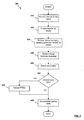
- FIG. 4 there is illustrated a flow chart 400 of a method for decoding a received data signal in accordance with some embodiments of the invention.
- the method starts and moves to step 410 with a receipt of an encoded data signal, such as an encoded MPEG-2 data signal.
- a value for each of at least one header bit within the decoded data signal is then predicted, in step 420.
- convolutional decoding which for the illustrated embodiment comprises Viterbi decoding, is performed on the received encoded data signal, with the predicted value for each of the at least one header bit(s) applied during the convolutional decoding.
- step 440 further decoding and error correction, which for the illustrated embodiment is in a form of Reed Solomon decoding, is then performed on the received signal, in step 440, and sync bytes are then detected in step 450.
- step 460 it is determined whether the detected sync byte is inverted. If an inverted sync byte is detected, in step 460, the method moves to step 470, where the PRBS is reloaded in order to reinitialise the descrambling of data. The method then moves to step 480, where packet data is descrambled.
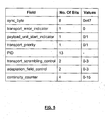
- FIG. 5 there are illustrated typical fields within the header section of an MPEG-2 transport stream data packet.
- the table comprises in the first column the field names, and in the second column the number of bits for each field.
- the third column comprises typical values for the various fields.
- the 'sync_byte' field is a fixed 8-bit field. Accordingly, each bit of this field is predictable.
- the 'transport_error_indicator' is a 1-bit flag, which when set to '1' indicates that at least one un-correctable bit error exists in the associated transport stream packet. In most cases, it is reasonable to assume that a source communication device, from where the transport stream packet originated, transmits valid information, and therefore sets the TEI bit flag to '0'. Accordingly, this flag may be assumed to be set to '0', and is therefore also predictable, according to embodiments of the invention.
- the 'payload_unit_start_indicator' is a 1-bit flag, which has normative meaning for transport stream packets that carry Packet Elementary Stream (PES) packets or Payload Start Indicator (PSI) data.
- the flag is set to '1' to indicate that the payload of the associated transport stream packet will commence with the first byte of the PES packet, and a '0' indicates that no PES packet shall start in this transport stream packet.
- the 'transport_priority' is a 1-bit indicator that, when set to '1', indicates that the associated transport packet is of greater priority than other packets having the same Packet IDentification (PID) that do not have their 'transport_priority' bit set to '1'. This flag is not commonly used, and is most frequently set to '0'. As such, the transport priority bit may be assumed to be set to '0', and is therefore also predictable.
- PID Packet IDentification
- the PID is a 13-bit field that indicates the type of data stored in the packet payload.
- the 'transport_scrambling_control' is a 2-bit field indicating the scrambling mode of the transport packet payload.
- the 'adaptation_field_control' is a 2-bit field indicating whether the associated transport packet header is followed by an adaptation field and/or payload.
- the 'continuity_counter' is a 4-bit field incrementing with each TS packet having the same PID.
- the bit values for each of the 'sync_byte', 'transport_error_indicator' and 'transport_priority' fields may be predicted. Accordingly, the predicted values for these header bits may be applied during the convolutional decoding. In this manner, erroneous values that may have occurred for these header bits may be corrected.
- the decoded header bits of a received data signal may be less likely to comprise errors, and therefore, in the case of MPEG-2 transport MUX packets for example, data packets may be less likely to be discarded due to errors within their header sections.
- transmitted data is randomised, or scrambled, in order to ensure adequate binary transitions for the purpose of energy dispersal.
- a pseudo random binary sequence PRBS
- PRBS pseudo random binary sequence
- the sync byte is then added to the front of each scrambled packet.
- the sync byte of the first packet in each group of eight packets is bit wise inverted to provide an initialisation signal for the descrambler. Accordingly, although the sync byte value is a set value (0x47), applying a selection of values for the sync byte bits to those of the set value will result in the inverted values for every eighth packet to be reset to the un-inverted values. Consequently, the descrambler will receive no initialisation signal, and as such the PRBS of the descrambler will lose synchronisation with that of the scrambler of the transmitter.
- the sync byte values are still predictable since, in the same way as the descrambler is informed when to reinitialise the PRBS based on a received inverted sync byte.
- the header bit prediction logic may be informed when an inverted sync byte has been received, and thereby predict when the next inverted sync byte will be received (i.e. eight packets later).
- the 'transport_scrambling_control' and 'adaptation_field_control' fields may also be predicted with statistical analysis, since their values within a particular transport stream tend to be consistent.
- An MPEG-2 TS header comprises 32 bits. Starting with a 32 bit comparison string, initialised such that each bit comprises a '1' value, by performing a bit wise AND comparison with each received header, updating the comparison string with the result, a statistical trend of those bits that can be predicted to comprise a '1' is obtained.
- a comparison string is initialised to comprise all '1' bit values: '11111 11111'.
- a header section is received comprising bit values of: '01010 11100'.
- the comparison string is then updated with the result. As can be seen, after the first comparison, the result is equal to the first header section.
- the second, sixth and seventh bits are set to '1', indicating that the corresponding bits in the received header sections have always been set to '1'.
- a similar comparison may be carried out to determine those bits that are always set to '0', by inverting the header bit values, and performing an AND comparison in a similar manner to that above.
- a comparison string (separate to that used for determining those bits always set to'1') is initialised to comprise all '1' bit values: '11111 11111'.
- a header section is received comprising bit values of: '0101011100'.
- the comparison string is then updated with the result. As can be seen, after the first comparison, the result is equal to the first inverted header section.
- a second header section is then received comprising bit values of: '11101 11001'.
- a third header section is then received comprising bit values of '11011 11101'.
- the ninth bit is set to '1', indicating that the ninth bit in the received header sections has always been set to '0'.
- header bits such as those relating to the 'transport_scrambling_control' and 'adaptation_field_control' fields, to be predicted based on previously received header bit information.
- step 610 with the prediction of fixed header bit values.
- fixed header bit values may relate to 'sync_byte', 'transport_error_indicator' and 'transport_priority' fields.
- the method comprises a step of determining whether the header bits being predicted comprise an inverted sync byte. This is achieved by determining whether the header bits being predicted relate to the first packet in a group of eight packets. For example, in a case of an MPEG-2 transport stream data packet, although the sync byte comprises a fixed value, the value is inverted bit wise for the first packet in each group of eight packets.
- step 630 the bit value predictions for the sync byte are inverted.
- step 640 the bit value predictions for the sync byte are inverted.
- step 640 statistical analysis of received header bit information is performed, and at least one header bit value is predicted based on the statistical analysis results.
- statistically predictable header bits may be identified. For example, in a case of an MPEG-2 transport stream data packet, statistically predictable header bits may relate to the 'transport_scrambling_control' and 'adaptation_field_control' fields.
- step 650 the header bit predictions (both fixed and statistically predictable header bit predictions) are applied during convolutional decoding. The method then ends.
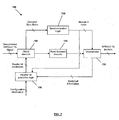
- the decoder 700 comprises an inner decoder in a form of a convolutional decoder, which, for the illustrated embodiment, is implemented using a soft-decision Viterbi decoder 710.
- the decoder 700 further comprises an outer decoder, in a form of a Reed-Solomon decoder 720, which performs further decoding on a received data signal, and feeds the decoded signal into a descrambler 730.
- the descrambler 730 descrambles the received data packets, which are then output, for the illustrated embodiment, in a form of MPEG-2 transport multiplex (MUX) packets.
- the MPEG-2 transport MUX packets are then passed to a de-multiplexer (not shown), which de-multiplexes each MPEG-2 transport MUX packet, to separate out the individual services encapsulated therein.
- the decoder 700 further comprises header bit prediction logic 750, which is arranged to predict a value for each of at least one header bit within the decoded data signal, and to provide the predicted value for each of the at least one header bit(s) to, for the illustrated embodiment, the Viterbi decoder 710.
- the viterbi decoder 710 applies the predicted value for each of the at least one header bit(s) during the convolutional decoding.
- the header bit prediction logic 750 may be arranged to predict generally fixed header bit values, such as 'sync bytes values', 'transport_error_indicator' field values, and 'transport_priority' field values.
- the header bit prediction logic 750 is further arranged to receive signals from the synchronisation logic 740 regarding detection of inverted sync bytes. In this manner, since the sync byte value is conditional on whether the header section is associated with the first packet in a block of eight packets, and thereby whether the sync value is inverted, the header bit prediction logic 750 is able to predict when sync byte values should be inverted.
- the header bit prediction logic 750 is further arranged to receive statistical information from, for the illustrated embodiment, the descrambler 730.
- the statistical information may comprise information relating to values for header bits within a received signal.
- the header bit prediction logic 750 may perform statistical analysis, such as described above. Such statistical analysis of received header sections enables header bits, such as those relating to the 'transport_scrambting_controi' and 'adaptation_field_control' fields, to be predicted based on previously received header section information.
- the statistical information provided by the descrambler 730 only relates to values for header bits within a received signal for which no errors were detected, for example during the Reed-Solomon decoding. In this manner, erroneous statistical data may substantially be prevented from corrupting the statistical analysis.
- the descrambler 730 may provide statistical information for all relevant header bits, and also provide information identifying whether errors were detected. In this manner, the header bit prediction logic 750 may determine, based on the information identifying whether errors were detected, whether statistical information relating to particular header bits should be used in the statistical analysis.
- a header bit value having remained constant at, say '1' over numerous received header sections, may at a later stage change value to, say, '0'. Accordingly, since the header bit value previously remained constant at '1', the statistical analysis may cause the header bit prediction logic to force the convolution decoder to erroneously set the header bit value to the previously constant value of '1'. In this manner, errors may be 'forced' into the header section.
- the Reed Solomon decoder is able to correct up to sixteen bytes, and therefore is likely to detect and correct this forced error within the header section.
- a received data signal may be initially decoded without any header bit prediction being performed. In this manner, if a header bit value changes, the change in value will not be affected by header bit prediction. Only if errors are detected within the (non-predicted) decoded header section of the received data signal will the received encoded data signal be (re)decoded with header bit prediction being performed.
- the prediction logic 750 is further arranged to receive configuration information.
- the window of statistics may be limited to a duration of a few hundreds packets. This may be implemented by resetting the statistics periodically based on a configurable window setting.
- the configuration of the statistical window may be influenced by the block error rate measured by the Read Solomon decoding.
- the Viterbi decoder 710 passes the predicted sync byte to synchronisation logic 740, which detects inverted sync bytes, and signals the descrambler 730 when to initialise the PRBS, for example by way of a modulo 8 index signal.
- the header bit prediction logic 750 may pass the predicted sync byte to synchronisation logic 740.
- the synchronisation logic 740 receives the sync bytes earlier, enabling the synchronisation logic 740 to be simplified. Furthermore, the synchronisation becomes more robust since it is not dependent on the further decoding carried out by the Reed Solomon decoder 720.
- the prediction logic has been illustrated and described as a discrete functional element for ease of understanding. However, as will be appreciated by a skilled artisan, the prediction logic may be integrated, either as a whole or in part, within the convolutional decoder.
- the method and apparatus for decoding received data signals aim to provide at least one or more of the following:
- the aforementioned embodiments be applied by a semiconductor manufacturer to any integrated circuit architecture supporting an improved method and apparatus for decoding received data signals. It is further envisaged that, for example, a semiconductor manufacturer may employ the embodiments in a design of a stand-alone device, or application-specific integrated circuit (ASIC) and/or any other sub-system element employing an integrated circuit to support an improved method and apparatus for decoding received data signals.
- ASIC application-specific integrated circuit
- the invention may also be implemented in a computer program for running on a computer system, at least including code portions for performing steps of a method according to the invention when run on a programmable apparatus, such as a computer system or enabling a programmable apparatus to perform functions of a device or system according to the invention.
- a program as used herein, is defined as a sequence of instructions designed for execution on a computer system.
- a program, or computer program may include a subroutine, a function, a procedure, an object method, an object implementation, an executable application, an applet, a servlet, a source code, an object code, a shared library/dynamic load library and/or other sequence of instructions designed for execution on a computer system.
- the computer program may be provided on a data carrier, such as a CD-rom or diskette, stored with data loadable in a memory of a computer system, the data representing the computer program.
- the data carrier may include, for example and without limitation, any number of the following: magnetic storage media including disk and tape storage media; optical storage media such as compact disk media (e.g., CD-ROM, CD-R, etc.) and digital video disk storage media; nonvolatile memory storage media including semiconductor-based memory units such as FLASH memory, EEPROM, EPROM, ROM; ferromagnetic digital memories; MRAM; volatile storage media including registers, buffers or caches, main memory, RAM, etc.; and data transmission media including computer networks, point-to-point telecommunication equipment, and carrier wave transmission media, just to name a few.
- Such computer readable media may be permanently, removably or remotely coupled to an information processing system such as system 10
- aspects of the invention may be implemented in any suitable form including hardware, software, firmware or any combination of these.
- the elements and components of an embodiment of the invention may be physically, functionally and logically implemented in any suitable way. Indeed, the functionality may be implemented in a single unit or IC, in a plurality of units or ICs or as part of other functional units.
Landscapes
- Engineering & Computer Science (AREA)
- Computer Networks & Wireless Communication (AREA)
- Signal Processing (AREA)
- Physics & Mathematics (AREA)
- Probability & Statistics with Applications (AREA)
- Theoretical Computer Science (AREA)
- Artificial Intelligence (AREA)
- Quality & Reliability (AREA)
- Error Detection And Correction (AREA)
- Detection And Prevention Of Errors In Transmission (AREA)
- Compression Or Coding Systems Of Tv Signals (AREA)
Claims (14)
- Dekodierlogik (300), die umfasst: einen konvolutionellen Dekodierer (310), der geeignet ist, ein kodiertes Datensignal zu empfangen und eine konvolutionelle Dekodierung des kodierten Datensignals durchzuführen, um ein dekodiertes Datensignal zu erzeugen, und einen Descrambler (330) zum Entwürfeln von dekodierten Datenpaketen gemäß einer Entwürfelungssequenz;
dadurch gekennzeichnet, dass die Dekodierlogik (300) umfasst: eine Kopfzeilenbitvorhersagelogik (350), die geeignet ist, zu bestimmen, ob das dekodierte Datensignal ein invertiertes Synchronisationsbyte umfasst, und in Reaktion darauf einen Wert für mindestens ein Kopfzeilenbit innerhalb des dekodierten Datensignals vorherzusagen, und dem konvolutionellen Dekodierer (310) den vorhergesagten Wert für das mindestens eine Kopfzeilenbit zur Anwendung während einer konvolutionellen Dekodierung zur Verfügung zu stellen. - Dekodierlogik (300) gemäß Anspruch 1, wobei die Kopfzeilenbitvorhersagelogik (350) geeignet ist, mindestens einen festen Kopfzeilenbitwert vorherzusagen.
- Dekodierlogik (300) gemäß Anspruch 2, wobei der vorhergesagte mindestens eine feste Kopfzeilenbitwert wenigstens eines der folgenden Felder umfasst: ein Synchronisationsbyte, eine Transportfehleranzeige, eine Transportpriorität.
- Dekodierlogik (300) gemäß einem der vorangehenden Ansprüche, wobei die Vorhersagelogik (350) in der Lage ist zu bestimmen, ob das mindestens eine Kopfzeilenbit ein invertiertes Synchronisationsbyte umfasst, durch eine Bestimmung, ob sich die vorhergesagten Kopfzeilenbits auf ein erstes Datenpaket in einer Gruppe von acht Datenpaketen beziehen.
- Dekodierlogik (300) gemäß einem der vorangehenden Ansprüche, wobei die Kopfzeilenbitvorhersagelogik (350) weiterhin geeignet ist, mindestens einen Kopfzeilenbitwert basierend auf einer statistischen Analyse von empfangenen Kopfzeilenbitinformationen vorherzusagen.
- Dekodierlogik (300) gemäß Anspruch 5, wobei die statistische Analyse von empfangenen Kopfzeilenbitinformationen umfasst: Durchführung eines bitweisen UND-Vergleichs der empfangenen Kopfzeilenbitinformationen mit einem Vergleichsstring.
- Dekodierlogik (300) gemäß Anspruch 5 oder Anspruch 6, wobei der mindestens eine Kopfzeilenbitwert, der basierend auf einer statistischen Analyse vorhergesagt wird, eine Transportverwürflungssteuerung und/oder Adaptationsfeldsteuerfelder umfasst.
- Dekodierlogik (300) gemäß Anspruch 7, wobei der Descrambler eine pseudozufällige binäre Sequenz verwendet, um die empfangenen Datenpakete zu entwürfeln.
- Dekodierlogik (300) gemäß Anspruch 8, wobei die Dekodierlogik (300) weiterhin umfasst: eine Synchronisationslogik (340), die geeignet ist, invertierte Synchronisationsbytes innerhalb des empfangenen Datensignals zu detektieren und dem Descrambler (330) zu signalisieren, wann die pseudozufällige binäre Sequenz zu reinitialisieren ist.
- Dekodierlogik (300) gemäß einem der vorangehenden Ansprüche, weiterhin dadurch gekennzeichnet, dass die Dekodierlogik (300) weiterhin einen äußeren Dekodierer (320) zur Durchführung einer weiteren Dekodierung und Fehlerkorrektur des empfangenen Datensignals umfasst.
- Dekodierlogik (300) gemäß Anspruch 10, weiterhin dadurch gekennzeichnet, dass der äußere Dekodierer (320) einen Reed-Solomon-Dekodierer umfasst.
- Dekodierlogik (300) gemäß einem der vorangehenden Ansprüche, wobei das empfangene kodierte Datensignal ein kodiertes MPEG-2-Datensignal umfasst.
- Halbleitervorrichtung (305), die die Dekodierlogik (300) gemäß einem der vorangehenden Ansprüche umfasst.
- Verfahren zur Dekodierung eines empfangenen Datensignals, das umfasst:Empfang eines kodierten Datensignals (410); undDurchführung mindestens einer konvolutionellen Dekodierung (430) des kodierten Datensignals, um ein dekodiertes Datensignal zu erzeugen,Entwürfelung dekodierter Datenpakete gemäß einer Entwürfelungssequenz, wobei das Verfahren gekennzeichnet ist durch:Bestimmung, ob das dekodierte Datensignal ein invertiertes Synchronisationsbyte umfasst, und in Reaktion darauf Vorhersage eines Wertes für mindestens ein Kopfzeilenbit innerhalb des dekodierten Datensignals (420); undAnwendung des vorhergesagten Wertes für das mindestens eine Kopfzeilenbit während einer konvolutionellen Dekodierung.
Applications Claiming Priority (1)
| Application Number | Priority Date | Filing Date | Title |
|---|---|---|---|
| PCT/IB2008/051777 WO2009101485A1 (en) | 2008-02-11 | 2008-02-11 | Method and apparatus for decoding received data signals |
Publications (2)
| Publication Number | Publication Date |
|---|---|
| EP2243240A1 EP2243240A1 (de) | 2010-10-27 |
| EP2243240B1 true EP2243240B1 (de) | 2015-08-26 |
Family
ID=39940680
Family Applications (1)
| Application Number | Title | Priority Date | Filing Date |
|---|---|---|---|
| EP08751147.3A Not-in-force EP2243240B1 (de) | 2008-02-11 | 2008-02-11 | Verfahren und vorrichtung zum decodieren empfangener datensignale |
Country Status (3)
| Country | Link |
|---|---|
| US (1) | US8649428B2 (de) |
| EP (1) | EP2243240B1 (de) |
| WO (1) | WO2009101485A1 (de) |
Families Citing this family (3)
| Publication number | Priority date | Publication date | Assignee | Title |
|---|---|---|---|---|
| US8855246B2 (en) | 2013-03-06 | 2014-10-07 | Qualcomm Incorporated | Demodulating a data packet based on a detected sync word |
| CN110995280B (zh) * | 2019-12-19 | 2023-08-01 | 北京遥测技术研究所 | 一种并行Viterbi译码器 |
| CN111614441B (zh) * | 2020-05-22 | 2023-04-11 | Oppo广东移动通信有限公司 | 一种解码方法、装置、设备及存储介质 |
Family Cites Families (4)
| Publication number | Priority date | Publication date | Assignee | Title |
|---|---|---|---|---|
| US6608828B1 (en) * | 1999-09-15 | 2003-08-19 | Ericsson Inc. | Methods and systems for decoding headers that are repeatedly transmitted and received along with data on a radio channel |
| GB2400002A (en) * | 2003-03-27 | 2004-09-29 | Tandberg Television Asa | Decoding a concatenated convolutional and block encoded signal by marking known correct bits |
| EP1533930A1 (de) | 2003-11-21 | 2005-05-25 | Matsushita Electric Industrial Co., Ltd. | Fehlerschutz für MPE Kopfteile und TS Paketköpfe |
| WO2007021224A1 (en) | 2005-08-16 | 2007-02-22 | Telefonaktiebolaget Lm Ericsson (Publ) | Method and arrangement for channel decoding utilizing a priori information and soft combining |
-
2008
- 2008-02-11 US US12/866,244 patent/US8649428B2/en not_active Expired - Fee Related
- 2008-02-11 EP EP08751147.3A patent/EP2243240B1/de not_active Not-in-force
- 2008-02-11 WO PCT/IB2008/051777 patent/WO2009101485A1/en not_active Ceased
Also Published As
| Publication number | Publication date |
|---|---|
| EP2243240A1 (de) | 2010-10-27 |
| WO2009101485A1 (en) | 2009-08-20 |
| US8649428B2 (en) | 2014-02-11 |
| US20100316117A1 (en) | 2010-12-16 |
Similar Documents
| Publication | Publication Date | Title |
|---|---|---|
| US8488667B2 (en) | DTV transmitter and method of coding data in DTV transmitter | |
| US7904785B2 (en) | DTV transmitting system and receiving system and method of processing broadcast data | |
| US7779337B2 (en) | DTV transmitting system and receiving system and method of processing broadcast data | |
| US9831986B2 (en) | Digital television transmitting system and receiving system and method of processing broadcasting data | |
| US9564989B2 (en) | Digital television transmitting system and receiving system and method of processing broadcast data | |
| US7995669B2 (en) | DTV receiver and method of processing broadcast signal in DTV receiver | |
| US8145979B2 (en) | DTV transmitting system and receiving system and method of processing television signal | |
| US8520743B2 (en) | DTV transmitting system and receiving system and method of processing broadcast data | |
| US8649428B2 (en) | Method and apparatus for decoding received data signals | |
| US8296621B2 (en) | Integrated circuit comprising error correction logic, and a method of error correction | |
| EP1533930A1 (de) | Fehlerschutz für MPE Kopfteile und TS Paketköpfe | |
| CA2667987C (en) | Digital broadcasting system and method of processing data |
Legal Events
| Date | Code | Title | Description |
|---|---|---|---|
| PUAI | Public reference made under article 153(3) epc to a published international application that has entered the european phase |
Free format text: ORIGINAL CODE: 0009012 |
|
| 17P | Request for examination filed |
Effective date: 20100913 |
|
| AK | Designated contracting states |
Kind code of ref document: A1 Designated state(s): AT BE BG CH CY CZ DE DK EE ES FI FR GB GR HR HU IE IS IT LI LT LU LV MC MT NL NO PL PT RO SE SI SK TR |
|
| AX | Request for extension of the european patent |
Extension state: AL BA MK RS |
|
| DAX | Request for extension of the european patent (deleted) | ||
| 17Q | First examination report despatched |
Effective date: 20110526 |
|
| REG | Reference to a national code |
Ref country code: DE Ref legal event code: R079 Ref document number: 602008039807 Country of ref document: DE Free format text: PREVIOUS MAIN CLASS: H04L0001000000 Ipc: H03M0013290000 |
|
| GRAP | Despatch of communication of intention to grant a patent |
Free format text: ORIGINAL CODE: EPIDOSNIGR1 |
|
| RIC1 | Information provided on ipc code assigned before grant |
Ipc: H03M 13/00 20060101ALI20150211BHEP Ipc: H03M 13/29 20060101AFI20150211BHEP Ipc: H04L 1/00 20060101ALI20150211BHEP |
|
| INTG | Intention to grant announced |
Effective date: 20150305 |
|
| GRAS | Grant fee paid |
Free format text: ORIGINAL CODE: EPIDOSNIGR3 |
|
| GRAA | (expected) grant |
Free format text: ORIGINAL CODE: 0009210 |
|
| AK | Designated contracting states |
Kind code of ref document: B1 Designated state(s): AT BE BG CH CY CZ DE DK EE ES FI FR GB GR HR HU IE IS IT LI LT LU LV MC MT NL NO PL PT RO SE SI SK TR |
|
| REG | Reference to a national code |
Ref country code: GB Ref legal event code: FG4D |
|
| REG | Reference to a national code |
Ref country code: CH Ref legal event code: EP |
|
| REG | Reference to a national code |
Ref country code: AT Ref legal event code: REF Ref document number: 745715 Country of ref document: AT Kind code of ref document: T Effective date: 20150915 |
|
| REG | Reference to a national code |
Ref country code: IE Ref legal event code: FG4D |
|
| REG | Reference to a national code |
Ref country code: DE Ref legal event code: R096 Ref document number: 602008039807 Country of ref document: DE |
|
| REG | Reference to a national code |
Ref country code: AT Ref legal event code: MK05 Ref document number: 745715 Country of ref document: AT Kind code of ref document: T Effective date: 20150826 |
|
| REG | Reference to a national code |
Ref country code: LT Ref legal event code: MG4D |
|
| PG25 | Lapsed in a contracting state [announced via postgrant information from national office to epo] |
Ref country code: LV Free format text: LAPSE BECAUSE OF FAILURE TO SUBMIT A TRANSLATION OF THE DESCRIPTION OR TO PAY THE FEE WITHIN THE PRESCRIBED TIME-LIMIT Effective date: 20150826 Ref country code: NO Free format text: LAPSE BECAUSE OF FAILURE TO SUBMIT A TRANSLATION OF THE DESCRIPTION OR TO PAY THE FEE WITHIN THE PRESCRIBED TIME-LIMIT Effective date: 20151126 Ref country code: LT Free format text: LAPSE BECAUSE OF FAILURE TO SUBMIT A TRANSLATION OF THE DESCRIPTION OR TO PAY THE FEE WITHIN THE PRESCRIBED TIME-LIMIT Effective date: 20150826 Ref country code: GR Free format text: LAPSE BECAUSE OF FAILURE TO SUBMIT A TRANSLATION OF THE DESCRIPTION OR TO PAY THE FEE WITHIN THE PRESCRIBED TIME-LIMIT Effective date: 20151127 Ref country code: FI Free format text: LAPSE BECAUSE OF FAILURE TO SUBMIT A TRANSLATION OF THE DESCRIPTION OR TO PAY THE FEE WITHIN THE PRESCRIBED TIME-LIMIT Effective date: 20150826 |
|
| REG | Reference to a national code |
Ref country code: NL Ref legal event code: MP Effective date: 20150826 |
|
| REG | Reference to a national code |
Ref country code: FR Ref legal event code: PLFP Year of fee payment: 9 |
|
| PG25 | Lapsed in a contracting state [announced via postgrant information from national office to epo] |
Ref country code: HR Free format text: LAPSE BECAUSE OF FAILURE TO SUBMIT A TRANSLATION OF THE DESCRIPTION OR TO PAY THE FEE WITHIN THE PRESCRIBED TIME-LIMIT Effective date: 20150826 Ref country code: IS Free format text: LAPSE BECAUSE OF FAILURE TO SUBMIT A TRANSLATION OF THE DESCRIPTION OR TO PAY THE FEE WITHIN THE PRESCRIBED TIME-LIMIT Effective date: 20151226 Ref country code: PL Free format text: LAPSE BECAUSE OF FAILURE TO SUBMIT A TRANSLATION OF THE DESCRIPTION OR TO PAY THE FEE WITHIN THE PRESCRIBED TIME-LIMIT Effective date: 20150826 Ref country code: AT Free format text: LAPSE BECAUSE OF FAILURE TO SUBMIT A TRANSLATION OF THE DESCRIPTION OR TO PAY THE FEE WITHIN THE PRESCRIBED TIME-LIMIT Effective date: 20150826 Ref country code: SE Free format text: LAPSE BECAUSE OF FAILURE TO SUBMIT A TRANSLATION OF THE DESCRIPTION OR TO PAY THE FEE WITHIN THE PRESCRIBED TIME-LIMIT Effective date: 20150826 Ref country code: PT Free format text: LAPSE BECAUSE OF FAILURE TO SUBMIT A TRANSLATION OF THE DESCRIPTION OR TO PAY THE FEE WITHIN THE PRESCRIBED TIME-LIMIT Effective date: 20151228 Ref country code: ES Free format text: LAPSE BECAUSE OF FAILURE TO SUBMIT A TRANSLATION OF THE DESCRIPTION OR TO PAY THE FEE WITHIN THE PRESCRIBED TIME-LIMIT Effective date: 20150826 |
|
| PG25 | Lapsed in a contracting state [announced via postgrant information from national office to epo] |
Ref country code: NL Free format text: LAPSE BECAUSE OF FAILURE TO SUBMIT A TRANSLATION OF THE DESCRIPTION OR TO PAY THE FEE WITHIN THE PRESCRIBED TIME-LIMIT Effective date: 20150826 |
|
| PG25 | Lapsed in a contracting state [announced via postgrant information from national office to epo] |
Ref country code: DK Free format text: LAPSE BECAUSE OF FAILURE TO SUBMIT A TRANSLATION OF THE DESCRIPTION OR TO PAY THE FEE WITHIN THE PRESCRIBED TIME-LIMIT Effective date: 20150826 Ref country code: EE Free format text: LAPSE BECAUSE OF FAILURE TO SUBMIT A TRANSLATION OF THE DESCRIPTION OR TO PAY THE FEE WITHIN THE PRESCRIBED TIME-LIMIT Effective date: 20150826 Ref country code: IT Free format text: LAPSE BECAUSE OF FAILURE TO SUBMIT A TRANSLATION OF THE DESCRIPTION OR TO PAY THE FEE WITHIN THE PRESCRIBED TIME-LIMIT Effective date: 20150826 Ref country code: CZ Free format text: LAPSE BECAUSE OF FAILURE TO SUBMIT A TRANSLATION OF THE DESCRIPTION OR TO PAY THE FEE WITHIN THE PRESCRIBED TIME-LIMIT Effective date: 20150826 Ref country code: SK Free format text: LAPSE BECAUSE OF FAILURE TO SUBMIT A TRANSLATION OF THE DESCRIPTION OR TO PAY THE FEE WITHIN THE PRESCRIBED TIME-LIMIT Effective date: 20150826 |
|
| REG | Reference to a national code |
Ref country code: DE Ref legal event code: R097 Ref document number: 602008039807 Country of ref document: DE |
|
| PG25 | Lapsed in a contracting state [announced via postgrant information from national office to epo] |
Ref country code: BE Free format text: LAPSE BECAUSE OF NON-PAYMENT OF DUE FEES Effective date: 20160229 Ref country code: RO Free format text: LAPSE BECAUSE OF FAILURE TO SUBMIT A TRANSLATION OF THE DESCRIPTION OR TO PAY THE FEE WITHIN THE PRESCRIBED TIME-LIMIT Effective date: 20150826 |
|
| PLBE | No opposition filed within time limit |
Free format text: ORIGINAL CODE: 0009261 |
|
| STAA | Information on the status of an ep patent application or granted ep patent |
Free format text: STATUS: NO OPPOSITION FILED WITHIN TIME LIMIT |
|
| 26N | No opposition filed |
Effective date: 20160530 |
|
| PG25 | Lapsed in a contracting state [announced via postgrant information from national office to epo] |
Ref country code: SI Free format text: LAPSE BECAUSE OF FAILURE TO SUBMIT A TRANSLATION OF THE DESCRIPTION OR TO PAY THE FEE WITHIN THE PRESCRIBED TIME-LIMIT Effective date: 20150826 |
|
| PG25 | Lapsed in a contracting state [announced via postgrant information from national office to epo] |
Ref country code: LU Free format text: LAPSE BECAUSE OF FAILURE TO SUBMIT A TRANSLATION OF THE DESCRIPTION OR TO PAY THE FEE WITHIN THE PRESCRIBED TIME-LIMIT Effective date: 20160211 Ref country code: MC Free format text: LAPSE BECAUSE OF FAILURE TO SUBMIT A TRANSLATION OF THE DESCRIPTION OR TO PAY THE FEE WITHIN THE PRESCRIBED TIME-LIMIT Effective date: 20150826 |
|
| REG | Reference to a national code |
Ref country code: CH Ref legal event code: PL |
|
| PG25 | Lapsed in a contracting state [announced via postgrant information from national office to epo] |
Ref country code: LI Free format text: LAPSE BECAUSE OF NON-PAYMENT OF DUE FEES Effective date: 20160229 Ref country code: CH Free format text: LAPSE BECAUSE OF NON-PAYMENT OF DUE FEES Effective date: 20160229 |
|
| REG | Reference to a national code |
Ref country code: IE Ref legal event code: MM4A |
|
| PG25 | Lapsed in a contracting state [announced via postgrant information from national office to epo] |
Ref country code: BE Free format text: LAPSE BECAUSE OF FAILURE TO SUBMIT A TRANSLATION OF THE DESCRIPTION OR TO PAY THE FEE WITHIN THE PRESCRIBED TIME-LIMIT Effective date: 20150826 |
|
| REG | Reference to a national code |
Ref country code: FR Ref legal event code: PLFP Year of fee payment: 10 |
|
| PG25 | Lapsed in a contracting state [announced via postgrant information from national office to epo] |
Ref country code: IE Free format text: LAPSE BECAUSE OF NON-PAYMENT OF DUE FEES Effective date: 20160211 |
|
| PG25 | Lapsed in a contracting state [announced via postgrant information from national office to epo] |
Ref country code: MT Free format text: LAPSE BECAUSE OF FAILURE TO SUBMIT A TRANSLATION OF THE DESCRIPTION OR TO PAY THE FEE WITHIN THE PRESCRIBED TIME-LIMIT Effective date: 20150826 |
|
| REG | Reference to a national code |
Ref country code: FR Ref legal event code: TP Owner name: NXP USA, INC., US Effective date: 20170921 |
|
| REG | Reference to a national code |
Ref country code: GB Ref legal event code: 732E Free format text: REGISTERED BETWEEN 20171109 AND 20171115 |
|
| REG | Reference to a national code |
Ref country code: FR Ref legal event code: PLFP Year of fee payment: 11 |
|
| REG | Reference to a national code |
Ref country code: DE Ref legal event code: R081 Ref document number: 602008039807 Country of ref document: DE Owner name: NXP USA, INC. (N.D.GES.D.STAATES DELAWARE), AU, US Free format text: FORMER OWNER: FREESCALE SEMICONDUCTOR, INC., AUSTIN, TEX., US |
|
| PG25 | Lapsed in a contracting state [announced via postgrant information from national office to epo] |
Ref country code: HU Free format text: LAPSE BECAUSE OF FAILURE TO SUBMIT A TRANSLATION OF THE DESCRIPTION OR TO PAY THE FEE WITHIN THE PRESCRIBED TIME-LIMIT; INVALID AB INITIO Effective date: 20080211 Ref country code: CY Free format text: LAPSE BECAUSE OF FAILURE TO SUBMIT A TRANSLATION OF THE DESCRIPTION OR TO PAY THE FEE WITHIN THE PRESCRIBED TIME-LIMIT Effective date: 20150826 |
|
| PG25 | Lapsed in a contracting state [announced via postgrant information from national office to epo] |
Ref country code: MT Free format text: LAPSE BECAUSE OF FAILURE TO SUBMIT A TRANSLATION OF THE DESCRIPTION OR TO PAY THE FEE WITHIN THE PRESCRIBED TIME-LIMIT Effective date: 20160229 Ref country code: TR Free format text: LAPSE BECAUSE OF FAILURE TO SUBMIT A TRANSLATION OF THE DESCRIPTION OR TO PAY THE FEE WITHIN THE PRESCRIBED TIME-LIMIT Effective date: 20150826 |
|
| PG25 | Lapsed in a contracting state [announced via postgrant information from national office to epo] |
Ref country code: BG Free format text: LAPSE BECAUSE OF FAILURE TO SUBMIT A TRANSLATION OF THE DESCRIPTION OR TO PAY THE FEE WITHIN THE PRESCRIBED TIME-LIMIT Effective date: 20150826 |
|
| PGFP | Annual fee paid to national office [announced via postgrant information from national office to epo] |
Ref country code: DE Payment date: 20200121 Year of fee payment: 13 Ref country code: GB Payment date: 20200123 Year of fee payment: 13 |
|
| PGFP | Annual fee paid to national office [announced via postgrant information from national office to epo] |
Ref country code: FR Payment date: 20200122 Year of fee payment: 13 |
|
| REG | Reference to a national code |
Ref country code: DE Ref legal event code: R119 Ref document number: 602008039807 Country of ref document: DE |
|
| GBPC | Gb: european patent ceased through non-payment of renewal fee |
Effective date: 20210211 |
|
| PG25 | Lapsed in a contracting state [announced via postgrant information from national office to epo] |
Ref country code: DE Free format text: LAPSE BECAUSE OF NON-PAYMENT OF DUE FEES Effective date: 20210901 Ref country code: FR Free format text: LAPSE BECAUSE OF NON-PAYMENT OF DUE FEES Effective date: 20210228 Ref country code: GB Free format text: LAPSE BECAUSE OF NON-PAYMENT OF DUE FEES Effective date: 20210211 |