EP2242245A1 - System und Verfahren zur Bestimmung der Verfügbarkeit einer Gruppe zur Kommunikation mit einem Benutzer - Google Patents
System und Verfahren zur Bestimmung der Verfügbarkeit einer Gruppe zur Kommunikation mit einem Benutzer Download PDFInfo
- Publication number
- EP2242245A1 EP2242245A1 EP10154409A EP10154409A EP2242245A1 EP 2242245 A1 EP2242245 A1 EP 2242245A1 EP 10154409 A EP10154409 A EP 10154409A EP 10154409 A EP10154409 A EP 10154409A EP 2242245 A1 EP2242245 A1 EP 2242245A1
- Authority
- EP
- European Patent Office
- Prior art keywords
- group
- availability
- agent
- user
- communicate
- Prior art date
- Legal status (The legal status is an assumption and is not a legal conclusion. Google has not performed a legal analysis and makes no representation as to the accuracy of the status listed.)
- Withdrawn
Links
Images


Classifications
-
- H—ELECTRICITY
- H04—ELECTRIC COMMUNICATION TECHNIQUE
- H04M—TELEPHONIC COMMUNICATION
- H04M3/00—Automatic or semi-automatic exchanges
- H04M3/42—Systems providing special services or facilities to subscribers
- H04M3/50—Centralised arrangements for answering calls; Centralised arrangements for recording messages for absent or busy subscribers ; Centralised arrangements for recording messages
- H04M3/51—Centralised call answering arrangements requiring operator intervention, e.g. call or contact centers for telemarketing
- H04M3/523—Centralised call answering arrangements requiring operator intervention, e.g. call or contact centers for telemarketing with call distribution or queueing
- H04M3/5232—Call distribution algorithms
- H04M3/5233—Operator skill based call distribution
-
- G—PHYSICS
- G06—COMPUTING OR CALCULATING; COUNTING
- G06Q—INFORMATION AND COMMUNICATION TECHNOLOGY [ICT] SPECIALLY ADAPTED FOR ADMINISTRATIVE, COMMERCIAL, FINANCIAL, MANAGERIAL OR SUPERVISORY PURPOSES; SYSTEMS OR METHODS SPECIALLY ADAPTED FOR ADMINISTRATIVE, COMMERCIAL, FINANCIAL, MANAGERIAL OR SUPERVISORY PURPOSES, NOT OTHERWISE PROVIDED FOR
- G06Q10/00—Administration; Management
- G06Q10/06—Resources, workflows, human or project management; Enterprise or organisation planning; Enterprise or organisation modelling
- G06Q10/063—Operations research, analysis or management
- G06Q10/0631—Resource planning, allocation, distributing or scheduling for enterprises or organisations
- G06Q10/06311—Scheduling, planning or task assignment for a person or group
-
- G—PHYSICS
- G06—COMPUTING OR CALCULATING; COUNTING
- G06Q—INFORMATION AND COMMUNICATION TECHNOLOGY [ICT] SPECIALLY ADAPTED FOR ADMINISTRATIVE, COMMERCIAL, FINANCIAL, MANAGERIAL OR SUPERVISORY PURPOSES; SYSTEMS OR METHODS SPECIALLY ADAPTED FOR ADMINISTRATIVE, COMMERCIAL, FINANCIAL, MANAGERIAL OR SUPERVISORY PURPOSES, NOT OTHERWISE PROVIDED FOR
- G06Q10/00—Administration; Management
- G06Q10/10—Office automation; Time management
-
- H—ELECTRICITY
- H04—ELECTRIC COMMUNICATION TECHNIQUE
- H04M—TELEPHONIC COMMUNICATION
- H04M2203/00—Aspects of automatic or semi-automatic exchanges
- H04M2203/20—Aspects of automatic or semi-automatic exchanges related to features of supplementary services
- H04M2203/2072—Schedules, e.g. personal calendars
-
- H—ELECTRICITY
- H04—ELECTRIC COMMUNICATION TECHNIQUE
- H04M—TELEPHONIC COMMUNICATION
- H04M2203/00—Aspects of automatic or semi-automatic exchanges
- H04M2203/40—Aspects of automatic or semi-automatic exchanges related to call centers
- H04M2203/404—Collaboration among agents
-
- H—ELECTRICITY
- H04—ELECTRIC COMMUNICATION TECHNIQUE
- H04M—TELEPHONIC COMMUNICATION
- H04M3/00—Automatic or semi-automatic exchanges
- H04M3/42—Systems providing special services or facilities to subscribers
- H04M3/50—Centralised arrangements for answering calls; Centralised arrangements for recording messages for absent or busy subscribers ; Centralised arrangements for recording messages
- H04M3/51—Centralised call answering arrangements requiring operator intervention, e.g. call or contact centers for telemarketing
- H04M3/5175—Call or contact centers supervision arrangements
-
- H—ELECTRICITY
- H04—ELECTRIC COMMUNICATION TECHNIQUE
- H04M—TELEPHONIC COMMUNICATION
- H04M3/00—Automatic or semi-automatic exchanges
- H04M3/42—Systems providing special services or facilities to subscribers
- H04M3/50—Centralised arrangements for answering calls; Centralised arrangements for recording messages for absent or busy subscribers ; Centralised arrangements for recording messages
- H04M3/51—Centralised call answering arrangements requiring operator intervention, e.g. call or contact centers for telemarketing
- H04M3/523—Centralised call answering arrangements requiring operator intervention, e.g. call or contact centers for telemarketing with call distribution or queueing
- H04M3/5238—Centralised call answering arrangements requiring operator intervention, e.g. call or contact centers for telemarketing with call distribution or queueing with waiting time or load prediction arrangements
Definitions
- ACD Automatic Call Distribution
- An accurate estimation of the time to answer a phone call is typically based on a steady and continuous flow of phone calls through the ACD system and continuous work by the dedicated employees in the ACD group. While groups of dedicated employees are helpful in answering basic business and technology questions, it can be difficult to obtain answers in specific areas of knowledge or expertise. It is typically not an efficient use of time and money to employ dedicated experts in call centers, and it is not feasible to employ an expert in substantially every field for which a consumer or client may call.
- employees within a company can be assigned to knowledge groups based on their knowledge and experience. Groups may also be formed that don't include a specific expertise. For example, a group of employees may be formed to help out a dedicated call center when it becomes overburdened.
- the employees used in such groups typically have numerous responsibilities. It is difficult to determine when members of the group are available, and when a member can respond to a query. This can make the use of groups containing employees with multiple work responsibilities inconvenient if a user is not able to determine whether someone in a group is available.
- modules may be implemented as a hardware circuit comprising custom VLSI circuits or gate arrays, off-the-shelf semiconductors such as logic chips, transistors, or other discrete components.
- a module may also be implemented in programmable hardware devices such as field programmable gate arrays, programmable array logic, programmable logic devices or the like.
- Modules may also be implemented in software for execution by various types of processors.
- An identified module of executable code may, for instance, comprise one or more physical or logical blocks of computer instructions, which may, for instance, be organized as an object, procedure, or function. Nevertheless, the executables of an identified module need not be physically located together, but may comprise disparate instructions stored in different locations which, when joined logically together, comprise the module and achieve the stated purpose for the module.
- a module of executable code may be a single instruction, or many instructions, and may even be distributed over several different code segments, among different programs, and across several memory devices.
- operational data may be identified and illustrated herein within modules, and may be embodied in any suitable form and organized within any suitable type of data structure. The operational data may be collected as a single data set, or may be distributed over different locations including over different storage devices, and may exist, at least partially, merely as electronic signals on a system or network.
- the modules may be passive or active, including agents operable to perform desired functions.
- the term “substantially” refers to the complete or nearly complete extent or degree of an action, characteristic, property, state, structure, item, or result.
- an object that is “substantially” enclosed would mean that the object is either completely enclosed or nearly completely enclosed.
- the exact allowable degree of deviation from absolute completeness may in some cases depend on the specific context. However, generally speaking the nearness of completion will be so as to have the same overall result as if absolute and total completion were obtained.
- the use of “substantially” is equally applicable when used in a negative connotation to refer to the complete or near complete lack of an action, characteristic, property, state, structure, item, or result.
- the term "about” is used to provide flexibility to a numerical range endpoint by providing that a given value may be “a little above” or “a little below” the endpoint.
- the term "communication group” is used in its generic sense to identify a group typically containing a plurality of members that have a knowledge about a specific subject, process, or product. At the very least the members of the group would have a common function, service, ability, role, responsibility, or designation which ties them together as a group and sets the group apart from other members of the same organization or affiliation. The members of the group may or may not be deemed experts in the field of the specific subject. Multiple knowledge groups can be formed, with sub-sets and super-sets of knowledge groups formed based on the selected subject associated with each group. Members of one group can also be members of other groups.
- the term "user” is used to identify a person seeking to obtain information or communicate with at least one member of a group through a digital communication system.
- group member or "member” of a group is a person that has been assigned to be a member of a selected group to communicate with a user about a selected subject over a digital communication network.
- the group member may or may not be an employee of a company that has formed the group.
- the term "digital communication network” is a network that enables a user to communicate with a member of a group.
- the digital communication network can optionally include an email program, a shared desktop program, a digital telephony device, an instant messaging program, a social media program, or another digital means through which a user can conduct two way communication with a member of the group about a selected subject.
- each person can be assigned a personal agent.
- the personal agent is used to determine when the person is available to communicate with a user, in view of the time spent by the person engaged in his or her other work responsibilities.
- Group agents can then be used to communicate with personal agents for members assigned to a group. The group agents can determine when one or more personal agents are available within the information contained within the personal agents.
- the personal agent 102 receives input from multiple sources, including an agent state assertions module 104, an agent policies module 106, and a request queue 108.
- agent state assertions module 104 The person to which a personal agent is assigned is referred to in FIG. 1 as an agent.
- the agent state assertions module contains a factual data file that includes information related to the person's schedule.
- the factual data file can include calendar information from the person's calendar, information related to whether or not the person is logged in to their computer, or another computer on the network, whether or not the person is on the phone, and so forth. This information is used to determine whether or not the person is available to communicate with a user. If the person is in a meeting (based on calendar information, location data etc.), not logged in to his or her computer, or is on the phone, it can be assumed that the person is not available to communicate with the user.
- positive calendar entries can also be made and stored in the factual data file. For example, an employee may agree to be a member of a group if the employee can designate the hours of 8:00 AM to 10:00 AM to be available to communicate with a user of the system.
- the agent state assertions module 104 can also include information regarding which groups the person is a member of. Each group to which a person has been assigned, as well as the subject matter or reason for the group, can be stored in the agent state assertions module 104.
- a member can also designate his or her own availability. For example, there may be a member selectable switch in communication with the member's personal agent to instruct the member's personal agent that the member is either available or not available. A member may use this switch if a higher priority assignment comes up and the member is no longer able to participate in one or more groups.
- the switch can be a soft button selectable in a graphical user interface on a member's telephone, computer, or other type of computing device.
- a similar switch may also be provided to a member's supervisor, or a manager of a selected group. The manager or supervisor can determine when members are available for their selected groups. For example, the supervisor or manager may assign a task to a member that has a higher priority than being a group member.
- the switch can be used to toggle the member's availability until a later time period. Other availability means, such as the calendar discussed above, can also be used.
- Groups may be formed based on a certain subject matter, such as the person having a knowledge of a product or process.
- a group can also be formed based on bandwidth needs of a company to respond to customer questions. For example, a business may employ a call center. However, at certain times of the year, such as after Christmas, the call center can be overwhelmed with calls.
- Employees can be assigned to a group that is designated to receive excess calls that cannot be handled by the call center.
- Groups can also be formed dynamically in response to business contingencies. For example, a group may be created pursuant to a user request by selecting possible members from a directory or other aggregation through the use of metadata. An available member in the dynamically created group can then be selected using the techniques described below.
- a group can also be formed based on expert knowledge. For instance, design engineers can be assigned to a group to answer questions from test and development engineers and the marketing group as a product is moved from the design phase to the manufacturing and marketing phase.
- Groups can be assigned to any number of groups based on criteria that is predetermined by their employers. Groups can be organized so that one group is a super group or sub-group of another group. For instance, FIG. 2 illustrates three groups, Group I, Group II, and Group III. In this example, Group I is a sub-group of Group II, while Group III is not related. Such an organization can occur when groups are organized by subject. For example, Group II may be organized to answer questions related to a selected software product produced by a company. Group I may be organized to answer questions related to the use of the software on a selected operating system. Members of Group I are automatically members of Group II. However, the reverse is not always true.
- Membership in hierarchal groups can be viewed and accessed by a user based on the relationship of the hierarchal groups. For example, when viewing the members of Group II, Group I can also be shown as a member. If no members of Group II are available to answer a question, members from Group I can be selected. Users can take advantage of the hierarchal nature of the groups to rapidly obtain help from a member of a group that is most closely associated with a desired topic, subject, or other organizational means. The organization and selection of a group will be discussed more fully below.
- the agent policies module 106 can include the policies that have been designated for each group.
- the policies are typically set by an employer.
- One policy that may be used involves the maximum amount of time that one or more members of the group can spend working on subject matter related to the group.
- each member of a group can be assigned to respond to queries for the group for up to a predetermined percentage of each members total work time over a selected period. For example, a call center backup group may be formed for the two week period after Christmas.
- One hundred employees may be assigned to the group. Each employee can be assigned to work with the group (i.e. receive calls from customers) for 10% of their work time.
- a fixed amount of time such as 4 hours per week, can be designated as an agent policy.
- the agent policy may also include a maximum time limit per day, such as no more than 1 hour per day. This enables employees to be members of groups that respond to user queries while also being able to attend to their other responsibilities.
- the agent policies module 106 can also include a group priority value. For instance, the call center backup group may be given a high priority after Christmas. However, as the number of calls decrease, the priority can be reduced. An employee may belong to the call center backup group, as well as an internal design engineer group. If a request is received for both groups, the latter design engineer group may be assigned a higher priority, thereby enabling the person to be tasked with responding to a query for the design engineer group. The request from a user for communication with someone in the call center backup group will be forwarded to another member of the group.
- the request queue 108 is used to park requests from users to communicate with a member of a group.
- a group agent can send a request to a personal agent 102, as will be discussed below.
- the order in the request queue can be based on the time that the request was received. Additional factors, such as the priority of the group relative to other groups in the request queue, can also be taken into account.
- a request may be sent to a single agent. Once the request is entered in the agent's queue, it will stay in the queue until the agent responds to the request, or the user leaves the queue (i.e. hangs up his or her phone or disconnects a link on a computing device). Alternatively, the request may be made by a group agent to the personal agents of multiple persons. The group agent can then remove the request from the queues of other persons once one of the persons responds to the request.
- FIG. 3A One example embodiment of a system 300 for determining availability of a group to communicate with a user about a selected subject over a digital communication network is illustrated in FIG. 3A .
- the system comprises a group 302 having at least one member 304 that has a knowledge of the selected subject.
- the selected subject may be specific, such as a subject regarding a specific product or process.
- the selected subject may be relatively broad, such as a person trained to answer emergency phone calls, like a 911 operator.
- the system 300 further comprises a personal agent 306 for each member of the group.
- the personal agent is configured to discover an availability of the corresponding member of the group through selected availability policies submitted to the personal agent. Examples of availability policies are discussed above with respect to the agent state assertions module, the agent polices module, and the request queue.
- Each personal agent can output an availability of a corresponding member of the group.
- the output may be a hard output, such as an output stating that the member is, or is not available.
- the output can be a fuzzy output, such as an output stating that it is estimated that the member will be available in an approximate amount of time, such as four minutes.
- the approximation can be based on information available from a personal agent's agent state assertion module, such as information that a meeting will end in three minutes. In addition, an approximation can be based on previous behavior, as can be appreciated.
- the system 300 further comprises a group agent 308 for each group 302.
- the group agent is configured to communicate with the personal agents of at least one member of the group. The group agent can then report on an availability of the corresponding member(s) of the group for which a response to a query is received. Depending on the configuration of the personal agents 306, the group agent may yield a hard output, such as a definitive answer that 3 members are available, or a soft output, such as an expectation that a member of the selected group will be available in an approximate amount of time.
- the group agent 306 for each group can also be configured to determine additional policies related to the availability of the corresponding group. Examples of these policies include whether a quorum or minimum number of members of a group are available. For example, in one example embodiment, at least two members of the group can be present for the group to be considered available. This can be used in the embodiments in which multiple members of a group are selected to communicate with a user. Another example policy is that certain specific members of a group are available. For example, a leading expert in a group must be available in addition to other members in order for the group to be available to communicate with a user. Combinations of these policies may be used as well.
- a human group manager may also be assigned who is given the capability of manually setting the availability of the group. This group manager can be provided with an interface such as a GUI which allows the group availability to be set as unavailable, available or set by polices, such as the examples described above.
- the system 300 further comprises a group agent status module 310.
- the group agent status module is configured to determine an availability of at least one member of the group to communicate with a user about the selected subject over the digital communication system.
- FIG. 2 shows three groups, Group I, Group II, and Group III.
- a separate group agent 308 shown in FIG. 3a is in communication with each of the groups.
- the group agent status module 310 is in communication with each of the group agents.
- Each group agent can report on the availability of member(s) of the group to communicate with the user.
- the group agent status module can query each group agent.
- each group agent can proactively report to the group agent status module.
- the group agent status module can report on the status of each group on a periodic basis, such as several times per minute.
- the group agent status module can query each group agent (or receive a status from each group agent) only when asked by a user.
- each group agent can query the personal agents, or receive a status report from each personal agent at a predefined period, such as once per minute, or when a query is received asking for a status report.
- the system 300 further comprises a notification module 312 configured to report the availability of at least one member of a selected group to enable the user to determine the availability of the group to communicate about the selected subject.
- the notification module may send a message that a member of the group can communicate in approximately two minutes.
- a display such as a graphical object, can be configured to show whether a selected group is available to communicate.
- an indicator in a graphical user interface on a phone, personal computer, or other type of computing device may be colored green if at least one member of a group is able to communicate and red if there are no members able to communicate.
- the system 300 can further comprise a digital communication device 320 that is configured to send a request from the user to communicate with a member of a group regarding a selected subject.
- the digital communication device may be an email program, a shared desktop, a digital telephony device such as a smart phone or voice over internet protocol (VOIP) phone, an instant messaging program, a social medial program, or another type of digital communication device that enables a user to communicate with a member of a group.
- the digital communication device can communicate with the system 300 via a network connection 322.
- the network connection may be a local area network, a wide area network, an internet connection through an internet protocol server, a voice communication network through a packet switched server or a circuit switched private branch exchange (PBX) server, and so forth.
- PBX circuit switched private branch exchange
- the system 300 can also include a group agent identification module 324.
- the group agent identification module may be an automated module configured to select a group agent 308 based on a topic or subject selected by a user through the digital communication device 320. For example, a user may pull up a graphical user interface in a web page for a selected company and seek customer support regarding a selected product. The group agent identification module can select the proper group agent or agents associated with the selected product. The notification module 312 can then send a message to the user regarding the availability of a member of the selected group(s), as previously discussed.
- the member can communicate with the user using a digital communication device 330.
- the member's digital communication device may or may not be the same as the user's digital communication device 320. However, the same type of communication device is typically used to provide the near-real-time communication between the member and the user.
- the member's digital communication device may be connected to the system via a network connection 322, or through an internal connection with a server, such as a voice communication server or IP packet server.
- the notification module 312 can also be used to communicate to the member. For example, when a member of a group is selected by the group agent associated with that group, the member can be notified.
- the notification may be the member's phone ringing, an email, an instant message, and the like.
- the digital communication device 320 may be a telephone, such as a smart phone.
- the user may communicate with an automated system, or a customer service representative to obtain assistance regarding a selected subject.
- the automated system can use the group agent identification module 324 to select a group agent based on the query of the user, as discussed above.
- the group agent can then select a member of the group based on the outputs received from the personal agent(s) for the member(s) in the selected group.
- additional criteria can be used to select a member to communicate with a user, such as how long it has been since the member last communicated with a user, how much time the member still has to communicate, and so forth.
- FIG. 3b shows one example implementation of the system 300 operating on an application server 360 that is in communication with the member's digital communication device 330.
- the user's digital communication device 320 is in communication with the application server through the network 322, as previously discussed.
- the system 300 can be implemented in a large business, or a group of businesses, across multiple locations by connecting the locations through the network 322.
- each location can have a server operating the system.
- a central location may have a server, and other locations can communicate with the server via the network.
- the server can communicate with the member device(s) 330 through an application programming interface operating at the member device(s).
- each member devices can be a VOIP phone.
- the server 360 can be a PBX server.
- the network 322 can be a public switched telephone network in communication with the user's device 320 through the PBX server, which is in communication with the system 300.
- the customer service representative can use a graphical user interface (GUI), such as the example GUI 400 shown in FIG. 4a to manually select a group that the person believes is best able to handle a query.
- GUI graphical user interface
- the customer service representative can act as a human group manager.
- the customer service representative can select one or more members in the group.
- the availability of the members of the group can be reported to the GUI by the group agent based on the report of each member's personal agent.
- a member may be at their desk and able to take a phone call or communicate online, they may be shown as unavailable if their personal agent reports that their time allotment has been fulfilled for the day or week, or if the time of day is outside of the time they are available to communicate. Additional information can also be displayed in the GUI, such as the approximate time in which the member will be available.
- the GUI in the example of FIG. 4a can display other groups that are contained within that group.
- Group I is a member of Group II. Therefore, Group I can be shown in the GUI of FIG. 4a .
- Information obtained from the group agent 308 associated with Group I is used to determine if the members of Group I are available or unavailable. Selecting the Group I button can open another GUI showing only the members of Group I. If Group I contains sub-groups, they will also be shown.
- the customer service representative can select a group agent for a group that will meet the needs of the user, and the group agent for that group can then select a member and show the member's availability in the GUI.
- FIG. 4b shows a Group Agent Identification GUI 450, which can be a top level GUI to the Group Member Identification GUI 400.
- the customer service representative can quickly determine, based on the availability shown in the GUI, whether a group can answer a question about a selected subject for a user.
- the GUI may also show an approximate time when a member of the group will be available, to enable the customer service representative to instruct the user when to contact the group again.
- the group agent 308 automatically connects the member with the user, as previously discussed.
- a graphical user interface can be configured to show which groups are available, as shown in FIG. 4b .
- the availability of the members of the group can also be shown.
- the customer service representative can click on the group, or mouse over the group to see the availability of individual members of the group, as reported by the group agent 308.
- a window can open to show which members of the group are available, such as the GUI shown in FIG. 4a .
- Group member availability can be determined based on the information obtained from the personal agents 306. This enables the customer service representative with the ability to select individual members.
- a group is reported as unavailable, such as the Product C Support Group, shown in FIG.
- the button can be clicked, or moused over, to see a GUI popup displaying the availability of the individual members of the group. Even though the members are all currently unavailable, an estimate of when each member will be available can be displayed. This enables the customer service representative to determine when a selected member of a group is available. A user may also directly use this functionality.
- an employee seeking support from an internal group can use the GUI to quickly determine which employees in a selected support group are available, and make a selection based on his or her preference.
- Additional types of graphical interfaces can also be created to show the availability of groups and members of groups, as can be appreciated.
- the group agent identification module 324 ( FIG. 3a ) can also be used to determine if a hierarchal group is available that may be able to communicate with the user.
- FIG. 4a shows a "select related group" button which may be selected if all of the members are busy.
- the groups can be related through a hierarchal relationship, such as Group I and Group II in FIG. 2 .
- other relationships between groups can be setup, as desired.
- the various relationships between the groups are contained within the group agent identification module. Information from the group agent identification module is used to select the related group. In some instances, such as Group III of FIG. 2 , a related group may not be available. Alternatively, a referral to the General Support Group of FIG. 4b may be used if no sub-group, super-group, or otherwise related group is available for a selected subject, product, process, or other purpose.
- the sub-groups can also be displayed, as shown in FIG. 4a .
- a user or customer service representative can mouse over the sub-groups, such as Group I, to show a display of members of that group, as reported by the group's group agent. If that group contains sub-groups, they will be shown as members of the group, which can then be explored by mousing over or selecting the button to display a popup window. This process can continue through any level of hierarchal display.
- Jim, Dave, and Tom are members of Acme Application group. Jim is speaking with Dave on the telephone.
- Ian a customer, calls Acme with a question about presence applications. The attendant who answers the call looks at an application running on a PC that shows a GUI, such as the GUI illustrated in FIG. 4b .
- the GUI shows the availability of the various groups formed at Acme. The attendant can see that the Application Group is available, so he presses the "connect to group" button in the GUI. The group agent determines that the call should go to Tom. Tom's handset rings and he receives the call to communicate with Ian regarding his question about presence applications.
- the Applications Group may show unavailable, with a prediction of how long it will likely take to become available. If this was the case, the attendant can give the customer the option on leaving a voicemail for the group or wait on hold (or in a queue) until a group member becomes available.
- Alex another employee at Acme, has an application question from a customer he can't answer and would like to bring an expert into the call. He looks at the presence indicator for the application group beside his speed dial button on his VOIP phone. It shows green, since the status module 310 ( FIG. 3a ) shows that both members of the group, Jim and Dave, are available. If Alex selected the button, he would be routed to one of the available members of the group, selected by the group agent 308, and could conference one or more of the members into the call. Alternatively Alex could push and hold the button and the display of his set would change to show a GUI displaying the availability of the various members of the group, such as shown in FIG. 4a . Alex could then choose a particular member of the group who is both available and the best fit to answer the question, based on Alex's judgment.
- Jim, Dave and Tom are members of a Mitel Application group. Jim is speaking with Dave and Tom on the telephone.
- Ian a customer, calls Mitel with a question about presence applications.
- the software agent who answers the call provides a prompt giving the option of waiting or leaving a message. If there were a related group which had a subset or significant skill overlap with the Applications Group, the group agent could give a soft or fuzzy match. For example, the software agent may report that "All the application experts are currently busy but one is likely to be free in 7 minutes.
- the group agent identification module 324 can then query the group agent associated with the related group to determine if a member of the group is available.
- the user can select a set number of individuals in the group(s) with which he or she would like to communicate, such as two members.
- a graphical user interface may be used to select desired members of a group, such as Tom and Jim in the design engineering group and Alex in the test engineering group.
- the availability of the members of each group is determined based on the output of each member's personal agent, as previously discussed.
- these multiple selected members may be connected via a conference (voice, multimedia, social media) and instructed to collaborate on a task.
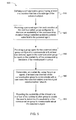
- a method 500 for determining availability of a group to communicate about a selected subject over a digital communication system is disclosed, as depicted in the flow chart of FIG. 5 .
- the method comprises defining 510 a group having at least one member that has a knowledge of the selected subject.
- a personal agent is provided 520 for each member of the group.
- the personal agent is configured to discover an availability of the corresponding member through selected availability policies submitted to the personal agent, as previously discussed.
- a group agent is provided 530 for the group configured to communicate with at least one personal agent in the group to report on the availability of the corresponding members of the group.
- the method 500 further comprises determining 540 an availability, using the group agent, of at least one member of the communication group to communicate with a user about the selected subject over the digital communication network.
- the availability of the at least one member of the communication group is reported 550 to enable the user to determine the availability of the communication group to communicate about the selected subject.
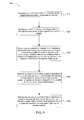
- a method 600 for determining availability of a communication group to communicate to a user about a selected subject through a digital telephone system is disclosed, as depicted in the flow chart of FIG. 6 .
- the method comprises receiving 610 a support request from the user through the digital telephone system for the selected subject.
- a communication group is identified 620 that has a plurality of members having a specialization regarding the selected subject.
- An availability of the plurality of members of the communication group is requested 630 by querying a personal agent for each of the plurality of members.
- Each personal agent includes selected availability policies to identify an availability for a corresponding member of the plurality of members of the communication group.
- a time frame is determined 640 in which at least one member of the communication group can communicate with the user in response to the support request based on the availability reported by the personal agents of the plurality of members of the communication group.
- the at least one member of the communication group is notified to communicate with the user through the digital telephone system within the time frame suggested by the at least one member's personal agent regarding the selected subject.
Landscapes
- Business, Economics & Management (AREA)
- Human Resources & Organizations (AREA)
- Engineering & Computer Science (AREA)
- Strategic Management (AREA)
- Entrepreneurship & Innovation (AREA)
- Economics (AREA)
- Marketing (AREA)
- General Physics & Mathematics (AREA)
- Operations Research (AREA)
- Quality & Reliability (AREA)
- Tourism & Hospitality (AREA)
- Physics & Mathematics (AREA)
- General Business, Economics & Management (AREA)
- Theoretical Computer Science (AREA)
- Game Theory and Decision Science (AREA)
- Educational Administration (AREA)
- Development Economics (AREA)
- Data Mining & Analysis (AREA)
- Signal Processing (AREA)
- Telephonic Communication Services (AREA)
Applications Claiming Priority (1)
| Application Number | Priority Date | Filing Date | Title |
|---|---|---|---|
| US21282709P | 2009-04-16 | 2009-04-16 |
Publications (1)
| Publication Number | Publication Date |
|---|---|
| EP2242245A1 true EP2242245A1 (de) | 2010-10-20 |
Family
ID=42333548
Family Applications (1)
| Application Number | Title | Priority Date | Filing Date |
|---|---|---|---|
| EP10154409A Withdrawn EP2242245A1 (de) | 2009-04-16 | 2010-02-23 | System und Verfahren zur Bestimmung der Verfügbarkeit einer Gruppe zur Kommunikation mit einem Benutzer |
Country Status (2)
| Country | Link |
|---|---|
| US (1) | US20100268571A1 (de) |
| EP (1) | EP2242245A1 (de) |
Cited By (2)
| Publication number | Priority date | Publication date | Assignee | Title |
|---|---|---|---|---|
| WO2023009494A1 (en) * | 2021-07-30 | 2023-02-02 | Zoom Video Communications, Inc. | Incoming query distribution using parallel processing |
| US11991313B2 (en) | 2021-07-30 | 2024-05-21 | Zoom Video Communications, Inc. | Limiting query distribution within an agent group based on skip criteria |
Families Citing this family (13)
| Publication number | Priority date | Publication date | Assignee | Title |
|---|---|---|---|---|
| US20110055402A1 (en) * | 2009-08-27 | 2011-03-03 | Cavin Stephane | Exposing automaton information based on aggregation of member information |
| US8428245B2 (en) * | 2009-11-04 | 2013-04-23 | Avaya, Inc. | Customer service agent assisted social networks |
| US20110317684A1 (en) * | 2010-06-24 | 2011-12-29 | Lazzaro Nicholas P | Systems and methods for terminating communication requests |
| US9262229B2 (en) * | 2011-01-28 | 2016-02-16 | Oracle International Corporation | System and method for supporting service level quorum in a data grid cluster |
| US10176184B2 (en) | 2012-01-17 | 2019-01-08 | Oracle International Corporation | System and method for supporting persistent store versioning and integrity in a distributed data grid |
| US10204387B2 (en) * | 2013-05-08 | 2019-02-12 | Nmetric, Llc | Sequentially configuring manufacturing equipment to reduce reconfiguration times |
| CN103347093B (zh) * | 2013-07-22 | 2016-04-13 | 腾讯科技(深圳)有限公司 | 用户数据更新方法和相关设备及通信系统 |
| KR102047500B1 (ko) | 2014-11-27 | 2019-11-21 | 삼성전자주식회사 | 사용자의 할일 목록을 제공하는 시스템 및 방법 |
| US10904345B2 (en) * | 2015-11-25 | 2021-01-26 | Facebook, Inc. | Systems and methods for providing page information |
| US11550820B2 (en) | 2017-04-28 | 2023-01-10 | Oracle International Corporation | System and method for partition-scoped snapshot creation in a distributed data computing environment |
| US10769019B2 (en) | 2017-07-19 | 2020-09-08 | Oracle International Corporation | System and method for data recovery in a distributed data computing environment implementing active persistence |
| US10692374B2 (en) | 2017-08-25 | 2020-06-23 | Denise Lisa Salvucci | Automotive vehicle parking systems, methods, and apparatus |
| US10862965B2 (en) | 2017-10-01 | 2020-12-08 | Oracle International Corporation | System and method for topics implementation in a distributed data computing environment |
Citations (3)
| Publication number | Priority date | Publication date | Assignee | Title |
|---|---|---|---|---|
| US6651085B1 (en) * | 2000-07-17 | 2003-11-18 | Interactive Intelligence, Inc. | Agent status viewing system and method |
| US6763104B1 (en) * | 2000-02-24 | 2004-07-13 | Teltronics, Inc. | Call center IVR and ACD scripting method and graphical user interface |
| EP1956538A1 (de) * | 2007-02-08 | 2008-08-13 | Alcatel Lucent | Kontaktzentrale mit verbesserter Verwaltung und Ressourcenzuweisung |
Family Cites Families (6)
| Publication number | Priority date | Publication date | Assignee | Title |
|---|---|---|---|---|
| US5815566A (en) * | 1991-10-10 | 1998-09-29 | Executone Information Systems, Inc. | Apparatus and method for dynamic inbound/outbound call management and for scheduling appointments |
| US5469504A (en) * | 1992-10-14 | 1995-11-21 | Blaha; David L. | Automatic call distribution with intersubnetwork customer information transfer system and method |
| US6128380A (en) * | 1998-08-24 | 2000-10-03 | Siemens Information And Communication, Networks, Inc. | Automatic call distribution and training system |
| GB2382946A (en) * | 2001-12-06 | 2003-06-11 | Mitel Knowledge Corp | Displaying user availability |
| US7644144B1 (en) * | 2001-12-21 | 2010-01-05 | Microsoft Corporation | Methods, tools, and interfaces for the dynamic assignment of people to groups to enable enhanced communication and collaboration |
| US7023979B1 (en) * | 2002-03-07 | 2006-04-04 | Wai Wu | Telephony control system with intelligent call routing |
-
2010
- 2010-01-30 US US12/657,951 patent/US20100268571A1/en not_active Abandoned
- 2010-02-23 EP EP10154409A patent/EP2242245A1/de not_active Withdrawn
Patent Citations (3)
| Publication number | Priority date | Publication date | Assignee | Title |
|---|---|---|---|---|
| US6763104B1 (en) * | 2000-02-24 | 2004-07-13 | Teltronics, Inc. | Call center IVR and ACD scripting method and graphical user interface |
| US6651085B1 (en) * | 2000-07-17 | 2003-11-18 | Interactive Intelligence, Inc. | Agent status viewing system and method |
| EP1956538A1 (de) * | 2007-02-08 | 2008-08-13 | Alcatel Lucent | Kontaktzentrale mit verbesserter Verwaltung und Ressourcenzuweisung |
Cited By (5)
| Publication number | Priority date | Publication date | Assignee | Title |
|---|---|---|---|---|
| WO2023009494A1 (en) * | 2021-07-30 | 2023-02-02 | Zoom Video Communications, Inc. | Incoming query distribution using parallel processing |
| US11637931B2 (en) | 2021-07-30 | 2023-04-25 | Zoom Video Communications, Inc. | Incoming query distribution using parallel processing |
| US11991313B2 (en) | 2021-07-30 | 2024-05-21 | Zoom Video Communications, Inc. | Limiting query distribution within an agent group based on skip criteria |
| US12022030B2 (en) | 2021-07-30 | 2024-06-25 | Zoom Video Communications, Inc. | Limiting query distribution within an agent group |
| US12407779B2 (en) | 2021-07-30 | 2025-09-02 | Zoom Communications, Inc. | Distributing queries to agent group devices |
Also Published As
| Publication number | Publication date |
|---|---|
| US20100268571A1 (en) | 2010-10-21 |
Similar Documents
| Publication | Publication Date | Title |
|---|---|---|
| EP2242245A1 (de) | System und Verfahren zur Bestimmung der Verfügbarkeit einer Gruppe zur Kommunikation mit einem Benutzer | |
| US10397403B2 (en) | System and method for managing events at contact center | |
| US8965779B1 (en) | Fulfilling staffing requirements via an interactive voice response system | |
| US11012565B2 (en) | Computer-implemented system and method for efficiently facilitating appointments within a call center via an automatic call distributor | |
| US11368588B1 (en) | Dynamic communication routing at contact centers | |
| US20120114112A1 (en) | Call center with federated communications | |
| US7382773B2 (en) | Contact center with normalized multiple protocol architecture | |
| US7076043B2 (en) | System and method of using presence information to delay dialing phone calls initiated by a caller to a callee | |
| US9894203B2 (en) | Prioritize contact numbers of customers in real time | |
| US8644473B1 (en) | Method and system for providing telephony services | |
| US20140254776A1 (en) | System and method for managing a contact center | |
| US9338296B2 (en) | System and method for driving a virtual view of agents in a contact center | |
| US7817796B1 (en) | Coordinating work assignments for contact center agents | |
| CN106657694A (zh) | 一种呼叫中心业务管理系统 | |
| EP3895005B1 (de) | System und verfahren zur erfassung, verfolgung, analyse und automatisierung von analogen und digitalen interaktionen | |
| CA2636687C (en) | Method and system for generating prospective ability data | |
| CN106357941B (zh) | 基于cti技术的托管型呼叫中心 | |
| US10462238B1 (en) | Reachability analytics for communications | |
| US8009821B1 (en) | Stores as call center resources | |
| US20250123730A1 (en) | Alert Group Management For Real-Time Communications Using Contextual Insights | |
| CA2700023C (en) | System and method for determining availability of a group to communicate with a user | |
| US10671600B1 (en) | Communications-enabled dynamic social network routing utilizing presence | |
| JP2010033105A (ja) | スケジュール管理システム、スケジュール管理方法、およびコンピュータプログラム | |
| JP7779625B2 (ja) | 情報処理装置、振分方法およびプログラム | |
| US20180331838A1 (en) | Synchronization method, representation therefor and associated subscriber directory |
Legal Events
| Date | Code | Title | Description |
|---|---|---|---|
| PUAI | Public reference made under article 153(3) epc to a published international application that has entered the european phase |
Free format text: ORIGINAL CODE: 0009012 |
|
| AK | Designated contracting states |
Kind code of ref document: A1 Designated state(s): AT BE BG CH CY CZ DE DK EE ES FI FR GB GR HR HU IE IS IT LI LT LU LV MC MK MT NL NO PL PT RO SE SI SK SM TR |
|
| AX | Request for extension of the european patent |
Extension state: AL BA RS |
|
| 17P | Request for examination filed |
Effective date: 20110419 |
|
| STAA | Information on the status of an ep patent application or granted ep patent |
Free format text: STATUS: EXAMINATION IS IN PROGRESS |
|
| 17Q | First examination report despatched |
Effective date: 20170321 |
|
| RAP1 | Party data changed (applicant data changed or rights of an application transferred) |
Owner name: MITEL CLOUD SERVICES, INC. |
|
| STAA | Information on the status of an ep patent application or granted ep patent |
Free format text: STATUS: THE APPLICATION IS DEEMED TO BE WITHDRAWN |
|
| 18D | Application deemed to be withdrawn |
Effective date: 20190903 |