EP2242235A1 - Verfahren und Vorrichtung zum Kennzeichnen eines sozialen Umfelds - Google Patents
Verfahren und Vorrichtung zum Kennzeichnen eines sozialen Umfelds Download PDFInfo
- Publication number
- EP2242235A1 EP2242235A1 EP09158127A EP09158127A EP2242235A1 EP 2242235 A1 EP2242235 A1 EP 2242235A1 EP 09158127 A EP09158127 A EP 09158127A EP 09158127 A EP09158127 A EP 09158127A EP 2242235 A1 EP2242235 A1 EP 2242235A1
- Authority
- EP
- European Patent Office
- Prior art keywords
- environment
- information elements
- distance
- environments
- user
- Prior art date
- Legal status (The legal status is an assumption and is not a legal conclusion. Google has not performed a legal analysis and makes no representation as to the accuracy of the status listed.)
- Granted
Links
Images



Classifications
-
- G—PHYSICS
- G06—COMPUTING OR CALCULATING; COUNTING
- G06Q—INFORMATION AND COMMUNICATION TECHNOLOGY [ICT] SPECIALLY ADAPTED FOR ADMINISTRATIVE, COMMERCIAL, FINANCIAL, MANAGERIAL OR SUPERVISORY PURPOSES; SYSTEMS OR METHODS SPECIALLY ADAPTED FOR ADMINISTRATIVE, COMMERCIAL, FINANCIAL, MANAGERIAL OR SUPERVISORY PURPOSES, NOT OTHERWISE PROVIDED FOR
- G06Q10/00—Administration; Management
-
- H—ELECTRICITY
- H04—ELECTRIC COMMUNICATION TECHNIQUE
- H04W—WIRELESS COMMUNICATION NETWORKS
- H04W4/00—Services specially adapted for wireless communication networks; Facilities therefor
- H04W4/20—Services signaling; Auxiliary data signalling, i.e. transmitting data via a non-traffic channel
- H04W4/21—Services signaling; Auxiliary data signalling, i.e. transmitting data via a non-traffic channel for social networking applications
-
- H—ELECTRICITY
- H04—ELECTRIC COMMUNICATION TECHNIQUE
- H04L—TRANSMISSION OF DIGITAL INFORMATION, e.g. TELEGRAPHIC COMMUNICATION
- H04L67/00—Network arrangements or protocols for supporting network services or applications
- H04L67/2866—Architectures; Arrangements
- H04L67/30—Profiles
-
- H—ELECTRICITY
- H04—ELECTRIC COMMUNICATION TECHNIQUE
- H04L—TRANSMISSION OF DIGITAL INFORMATION, e.g. TELEGRAPHIC COMMUNICATION
- H04L67/00—Network arrangements or protocols for supporting network services or applications
- H04L67/50—Network services
- H04L67/52—Network services specially adapted for the location of the user terminal
-
- H—ELECTRICITY
- H04—ELECTRIC COMMUNICATION TECHNIQUE
- H04L—TRANSMISSION OF DIGITAL INFORMATION, e.g. TELEGRAPHIC COMMUNICATION
- H04L67/00—Network arrangements or protocols for supporting network services or applications
- H04L67/50—Network services
- H04L67/54—Presence management, e.g. monitoring or registration for receipt of user log-on information, or the connection status of the users
-
- H—ELECTRICITY
- H04—ELECTRIC COMMUNICATION TECHNIQUE
- H04W—WIRELESS COMMUNICATION NETWORKS
- H04W4/00—Services specially adapted for wireless communication networks; Facilities therefor
- H04W4/02—Services making use of location information
-
- H—ELECTRICITY
- H04—ELECTRIC COMMUNICATION TECHNIQUE
- H04W—WIRELESS COMMUNICATION NETWORKS
- H04W4/00—Services specially adapted for wireless communication networks; Facilities therefor
- H04W4/02—Services making use of location information
- H04W4/023—Services making use of location information using mutual or relative location information between multiple location based services [LBS] targets or of distance thresholds
-
- H—ELECTRICITY
- H04—ELECTRIC COMMUNICATION TECHNIQUE
- H04W—WIRELESS COMMUNICATION NETWORKS
- H04W4/00—Services specially adapted for wireless communication networks; Facilities therefor
- H04W4/02—Services making use of location information
- H04W4/025—Services making use of location information using location based information parameters
- H04W4/027—Services making use of location information using location based information parameters using movement velocity, acceleration information
-
- H—ELECTRICITY
- H04—ELECTRIC COMMUNICATION TECHNIQUE
- H04W—WIRELESS COMMUNICATION NETWORKS
- H04W4/00—Services specially adapted for wireless communication networks; Facilities therefor
- H04W4/02—Services making use of location information
- H04W4/029—Location-based management or tracking services
-
- H—ELECTRICITY
- H04—ELECTRIC COMMUNICATION TECHNIQUE
- H04W—WIRELESS COMMUNICATION NETWORKS
- H04W4/00—Services specially adapted for wireless communication networks; Facilities therefor
- H04W4/06—Selective distribution of broadcast services, e.g. multimedia broadcast multicast service [MBMS]; Services to user groups; One-way selective calling services
- H04W4/08—User group management
-
- H—ELECTRICITY
- H04—ELECTRIC COMMUNICATION TECHNIQUE
- H04W—WIRELESS COMMUNICATION NETWORKS
- H04W4/00—Services specially adapted for wireless communication networks; Facilities therefor
- H04W4/18—Information format or content conversion, e.g. adaptation by the network of the transmitted or received information for the purpose of wireless delivery to users or terminals
- H04W4/185—Information format or content conversion, e.g. adaptation by the network of the transmitted or received information for the purpose of wireless delivery to users or terminals by embedding added-value information into content, e.g. geo-tagging
-
- H—ELECTRICITY
- H04—ELECTRIC COMMUNICATION TECHNIQUE
- H04W—WIRELESS COMMUNICATION NETWORKS
- H04W4/00—Services specially adapted for wireless communication networks; Facilities therefor
- H04W4/20—Services signaling; Auxiliary data signalling, i.e. transmitting data via a non-traffic channel
-
- H—ELECTRICITY
- H04—ELECTRIC COMMUNICATION TECHNIQUE
- H04W—WIRELESS COMMUNICATION NETWORKS
- H04W8/00—Network data management
- H04W8/005—Discovery of network devices, e.g. terminals
Definitions
- the invention relates to a method and an apparatus for tagging social environments with qualitative attributes.
- a method for tagging an environment with a certain qualitative attribute by a computing device of a user comprising:
- the tagging is not carried out traditionally as related to a certain person or location, instead there is generated a kind of a "cloud" of information to which the tag is attached and which represents the environment but is not specific for a certain person or location. Instead it remains to some extent “fuzzy”, but still carries some information about the environment as a whole which can later be used for evaluation, e.g. by calculating distance measures.
- said set of elements comprises more than two identifiers of computing devices present in said environment, and/or one or more of the following:
- said set of information elements is composed or created such that it becomes possible to calculate a distance measure or a similarity measure between two sets of information elements representing different environments.
- the creation of the set of elements such that a distance measure becomes possible can be e.g. achieved by using a vector style compilation of the set of elements such that the vectorial distance can then be calculated based on the individual components.
- the social information this can also be achieved by using a social graph for the personal information.
- the evaluation can be performed. This can be done by using the similarity or distance measure for identifying similar sets of elements/environments.
- the process can be speeded up by using a hash code calculated based on the set of element which preserves distances. Then the lookup can be done faster.
- search can be limited to specific desired qualitative attributes such as “danger” or “entertaining” or anything else which is available as an attribute and which has been used as tag.
- said set of elements comprises said identifiers of computing devices as personal information regarding the presence of individuals in said environment, and wherein
- the said distance measure representing said social distance is calculated based on a social graph.
- said social graph is composed of connections between the persons whose presence has been detected through their computing devices, where a connection between two persons in said social graph is based on a parameter or a metric representing their relationship, and wherein said parameter or metric preferably comprises one or more or a combination of the following:
- said set of information elements representing an environment comprises personal information about the presence of persons which is used to calculate a personal or social distance two environments, and said set of information elements further comprising other context parameters describing the context of said environment which can then be used to calculate other distance components, wherein the personal or social distance which has been calculated based on the presence of persons and the other distance components are then combined into a total combined distance representing the distance between two environments.
- Such automatic evaluation of a present environment may be carried out continuously or repeatedly.
- the computing device of the user and or the other computing devices of the embodiments of the invention may be mobile devices, such as e.g. mobile terminals, smartphones, PDAs, or anything alike.
- a computing device for tagging an environment with a certain qualitative attribute a user comprising:
- Such a computing device can implement a mechanism according to an embodiment of the invention.
- the detection of the at least two other mobile devices is carried out such that only mobile devices which are (relatively) close to or co-located with the mobile device are detected. This can be done e.g. by detecting only mobile devices within a certain range or a certain distance from the device performing the detection. For example only mobile devices lying within the detection range of the detecting module may be detected, where the detecting range may be either manually adjusted (e.g. defining a range by coordinates) or may just be given by the detecting range of the detecting module (which may e.g. a near field communication device like bloototh, RFID device, or anything comparable).
- the mobile device may further comprise:
- a computer program comprising computer program code which when being executed on a computer enables said computer to carry out a method according to one of the embodiments of the invention.
- the proposed solution in one embodiment comprises of mobile terminals (e.g. cell phones) that have both a global WAN connection and a short range wireless communication mechanism (called Near Field Communication (NFC), e.g. Bluetooth).
- NFC Near Field Communication
- the later one has the capability to dynamically discover IDs (e.g. MAC addresses) of other mobile phones within the range of the mobile terminal.
- IDs e.g. MAC addresses
- the tagging information is stored with a cloud that is built from a plurality of, in one embodiment all currently visible neighbours, time, location and possible other related contextual information.
- An "environment” in an embodiment consists of at least two identified mobile devices (which may be identified by some NFC means which recognizes e.g. their MAC address). The identification of the mobile devices in some sense also identifies the persons which carry them or own them.
- the environment at least comprises identifiers which identify two different persons, such as the IDs or MAC addresses of two mobile phones. If such a set of information (person A and person B) is tagged, this preserves some degree of anonymity. Of course, the more persons or their identifiers are involved and tagged as a whole with a certain label, the anonymity increases.
- a cloud of information elements which includes identifiers of at least two persons or their mobile devices, and such a cloud of information (or information set) is then "tagged” by assigning to it a certain qualitative attribute which describes the environment with respect to its characteristics.
- the attribute is selectable from a set of predetermined attributes available to the user for describing the certain environment.
- a certain social environment (or a "situation") is represented by a set of individual information elements, of which at least two are representative of persons which are present at the environment or at that situation.
- the information elements which are representing the individual persons are in one embodiment identifiers which identify the mobile devices of these persons, respectively. And these identifiers may be detected automatically by the user of a mobile phone through some near field communication means such as bluetooth or others.
- information elements may further be added to the "set" of information elements describing the situation or environment, and such other information elements may include e.g. further identifiers of other persons (or their mobile devices), and it may further include other descriptive information such as location (which may be derived from a GPS system), time, or any other qualitative information describing the situational context. Also the identifier which identifies the user himself who creates the tag may be included in the set of information elements.
- the resulting set of informational elements may then be stored together with the label or tag which has been assigned to it by the user who creates the tag.
- the set of information elements and the tag or label which qualitatively describes the situation are then stored together as a multidimensional vector describing the situation in two respects, objectively (by the information elements like personal Ids, location, etc.) and subjectively by the tag assigned to the situation by the user.
- Tags may e.g. be "dangerous", “entertaining”, “expensive”, or any qualitative terms, preferable selected by the user from a list of predetermined classificator terms for classifying the situation.
- a social environment may e.g. consist of any combination of the following contextual information: geographic location, visible neighbours, time, personal profile, non-visible neighbours.
- the combination of the set of information elements and their tag may be used for evaluating a certain "new" situation by referring to situational tags which have been stored before. This can be done by comparing the new situation or its respective set of information elements (like the persons which are present) with previously stored sets of information to check whether a similar situation has already been labelled or tagged already by somebody before. In this way it becomes possible to automatically detect if a user enters an environment or a situation which has been labelled before, and this may even be used to identify situations which meet a certain criterion like "dangerous". It can be done according to one embodiment also by interpolating a situation that has not been tagged before in exactly this combination.
- Users may e.g. in one embodiment set notification thresholds to be warned when entering an environment with a certain criterion (like "dangerous") or automatically avoid certain criteria in combination with navigation solutions.
- a present situation has to be compared with previously stored situations to look for similar situations as the present one. According to one embodiment this can be done by looking for such sets of elements (or "tag clouds") which are in terms of some multidimensional distance measure close to the present situation. This will be further explained later.
- An environment can be manually tagged by the user with a certain criterion or qualitative attribute. In one embodiment it may also be automatically by the network provider (e.g. by the number of emergency calls, e.g. in order to define and identify dangerous environments).
- To tag an environment instead of direct tags (which assigns a tag to an individual person) so called hyper-tags are used. Hypertags are not assigned to single individuals, but instead to a plurality of individuals which are present in a certain situation. A hypertag in this way is assigned to a set of information elements which described or represent the situational context. The set of information elements may - in addition to identifiers which identify a plurality of persons being present - identify further additional information representing the situational context such as location and time.
- the hypertag then is a multidimensional representation of the situation which involves at least information elements representing two persons being present in the situation, and further it comprises the tag itself which is a qualitative attribute assigned to the situation by the user.
- a tag is a descriptive label for an entity, e.g. a keyword attached to a website, person, place etc. For example, a certain subway station "XYZ” could have a tag “dangerous”.
- tags can be wrong or imprecise (e.g. "XYZ" subway station is perfectly safe during daytime).
- Direct tags are also usually incomplete and non transient (e.g. a friend of a person that is tagged "violent” can most likely also be violent but may not tagged.
- the tag publisher can be legally held responsible if the target of the description does not consent with its meaning.
- Tags can also be forged/manipulated for the same or similar reasons (e.g. cyber-mobbing).
- Last but not least direct tags can only be attached to "visible” entities, which means that switching/masking identity can remove/avoid negative tags.
- direct tagging might be suitable to describe the nature of user generated content on a website (e.g. uploaded videos).
- a website e.g. uploaded videos.
- Fig.1A shows the operation principle
- Fig. 1B the parties involved.
- Fig. 1A shows a situation where the user E is in an environment where there is present one "bad guy", however this "bad guy” may have no detectable mobile phone the ID of which could be detected. Nevertheless the mobile device of the user may be able to detect the presence of other mobile devices of users A, B, C, and D. These users (or the IDs of their phones in the specific combination A-B-C-D) are also representative of the situation or the environment. If these users may happen to show up again together, there is at least some probability that also the "bad guy” may be there.
- the set of information elements A-B-C-D (the respective Ids of their mobile phones) can be used as a set of elements representative of the situation, and this set of elements may then be assigned a tag "dangerous".
- hypertag which comprises A-B-C-D and the tag "dangerous”, and this is stored in a storage, preferably where also other previously generated hypertags have been stored.
- the thus stored hypertag can then be later used when evaluating a "new" situation, and this can be done by generating a "set of elements" which can be detected in the new situation and comparing this set of elements with previously stored sets of elements to look for similar ones.
- the system may then judge whether the new situation is similar to a previous situation. In such a case, e.g. if the similarity exceeds a certain threshold, a user may be alerted or notified.
- the set of element which is created or detected to represent a certain environment uses all available detectable information which are presently available, such as the identifiers of all persons (or their mobile phones) which are present, the location, time, and any other information which may be available and which can be used when calculating a distance measure or similarity measure.
- detectable information such as the identifiers of all persons (or their mobile phones) which are present, the location, time, and any other information which may be available and which can be used when calculating a distance measure or similarity measure.
- only context which describes the environment and is viable to calculate based thereupon a distance function is used in generating the representation of the environment by a set of information elements.
- the present environment Based on a calculated distance measure between previously stored environments and a present environment then the present environment can be evaluated.
- the tag is assigned to all context information that are visible in the situation when the tag was created. This may e.g. be location: XYZ, time: 22:00, weekday: Saturday, Persons: A and B). Such a set of information elements would then in fact have the dimensions location, time, weekday, and personal information or "persons".
- a previously stored tag such as "dangerous”
- a similar situation reoccurs.
- Fig 2 shows the basic loop
- Fig. 2 shows the context information which are used in this embodiment, namely location information (from a GPS system), personal information detected by some NFC means, and possibly also other context, such as e.g. a personal profile of the users, time, or anything alike.
- This context information is then used to compile the set of elements which can be tagged or can be evaluated whether they are similar to a previously tagged set of information elements with respect to some similarity or distance measure.
- the set of information elements after having been tagged is stored and then later compared with new sets of elements representing new environments. This in fact reduces to a nearest neighbour search in a multidimensional environment, and for that purpose hash values generated based on the multidimensional sets and representing them by a single value can be used.
- Fig. 3 schematically shows a more detailed activity diagram of the evaluation functionality.
- the detected context state the description of the environment by the set of information elements
- a hash function here preserves neighbour distance, which means similar situations result in similar hash values.
- nns nearest neighbour search
- two cases are distinguished. If the exact situation has been tagged before the tag value simply is returned. If there is no matching tag, the nearest neighbour search returns a set of similar situations. For these neighbours, an actual distance (e.g. with respect to the physical location, with respect to the hops in the social graph for the persons involved, etc.) can be calculated. Calculation of the distance of geographic locations is straight forward. An example how the distance function can be calculated for the social graph in the example world model will be explained in somewhat more detail later, where a skilled person will understand that this also is only one possible example.
- the general distance between the neighbour situations can be calculated by combining the individual distances to a combined one.
- the distance of the different context features the “dimensions” of the set of information elements, like position, time, personal relationship
- environment 0x001 had person P1 as the user tagging the environment and the other present persons were P2 and P3.
- the location information in this case was L1
- the tag assigned to the environment by the user P1 was a "minus" sign which could have the meaning of e.g. slightly negative.
- the environment which then should be newly evaluated involves location L3 and the persons P1, P2, P3, and P6.
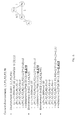
- Fig. 5 how the distance in a social graph may be calculated.
- the number of common occurrences of pairs of persons are counted.
- For each environment the number of occurrences of pairs of persons is counted.
- the total graph distance between two persons can then be calculated as 1/number of occurrences. This leads in the given example to values "1" for each pair except for P2-P3 which is a combination which occurs in environment 0x001 and 0x003, so that the total number of occurrences is "2".
- the distance for this pair is 1 ⁇ 2 as shown in Fig. 5 . This is reasonable because pair which occur more often may be regarded as being "closer", i.e. having less distance.
- Fig. 6 now explains how according to one embodiment the distance between the environment to be evaluated and the previously stored environments can be calculated.
- the distance is calculated for the individual components separately (e.g. for the location, and then for the individual persons which then are added up to a combined "person distance"), and then the "distance components" for location and "person distance” are added up with equal weight to a total distance.
- this is just one possible example of how the total distance may be calculated, and other examples, like the calculation of a vectorial distance, are also possible.
- the location distance is just calculated based on the geographical coordinates, possibly with some normalization to the range between 0 and 1. This leads to a value of 0,55.
- a tag value for the newly to be evaluated environment is interpolated. This can be done by calculating a weighed sum of the previously stored tag values where the weights are based on the distances between the newly to be evaluated environment and the previously stored environments.
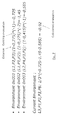
- Fig. 7 This is schematically illustrated in Fig. 7 .
- the tag value of this environment (-1 for 0x001, -2 for 0x002, and -1 for 0x003) is multiplied (weighed) with the respective distance from the new environment (or with 1 minus said distance), and these values are then summed up and divided by three (the number of previously stored and considered environments). This then gives an estimate for the tag value of the new (current) environment to be evaluated.
- Such a calculated estimate of a tag value can then be used to evaluate the present environment. E.g. if the tag value exceeds a certain threshold and the attribute represented by the tag is "danger", then the user may automatically be notified or alerted if he enters an area where such an evaluation of the environment results.
- the system may continuously detect context data, compile it into sets of information to represent the environment, and the environment may then be evaluated as described. This process may be carried out repeatedly and may in this way provide the user with an automatic monitoring of his current environment with respect to certain qualitative attributes which have been expressed and stored previously as "tags" or "tag values”.
- the user may select certain types of attributes he wishes to have monitored in this way, like e.g. "danger” or "entertaining".
- the mechanism then will only search the stored environments for such sets of data which have these kinds of tags.
- the evaluation process to calculate a tag value for a specific situation can be improved by applying feedback when at a later time, a user actually attaches a new tag to an environment.
- the environment may at first be automatically evaluated as described before, and then the user tags it manually to give a feed back to a learning mechanism. Then the parameters of the evaluation mechanism can be adapted to take into account this feedback.
- variable distance weights or a variable evaluation algorithm can be introduced.
- the encounter based distance in social graph described before (how often does a certain pair of persons occur) is replaced by a variable weight. Then the environment evaluation before and after setting a tag is compared. The difference in expectation and training stimulus (new tag) is then used to adapt weights in social distance graph. Alternatively it is possible to also modify other weights, e.g. geographic distance scaling slope, weight between geographic and social component etc.
- variable evaluation algorithm is to replace simple weighted average calculation by a dynamic algorithm (e.g. neuronal network) as illustrated in the bottom of Fig. 8 , where the upper part shows the (static) approach and the lower part the learning approach which uses a neural network.
- a dynamic algorithm e.g. neuronal network
- the environment which is tagged is a geographical environment, and the entities which are detected and then tagged preferably are within a certain geographic range.
- the mechanisms of the embodiments of the invention may also be employed to tag and then evaluate virtual environments as can be found e.g. in chatrooms or in case of games.
- the "other computing devices" may be detected as being the computing devices of other members present in a chatroom, for example.
- the other computing devices do not need to be geographically close but may just be "virtually close” by being in the same chatroom or participating in the same game.
- the ID detected by the mechanism may e.g. be the nickname of the user participating in the chatroom or in the game, and the detection may be performed then based on information obtained from the provider instead of based on information form a NFC device.
- the mechanisms described in the embodiments before may be applied in the same way for tagging and evaluating such social environments like chatrooms or game communities.
- an apparatus implementing an embodiment of the invention may e.g. comprise a mobile node or a mobile device in a network which is suitably programmed such that it is able to carry out a tagging mechanism as described before.
- a computer program either stored in a data carrier or in some other way embodied by some physical means such as a recording medium or a transmission link which when being executed on a computer enables the computer to operate in accordance with the embodiments of the invention described hereinbefore.
Landscapes
- Engineering & Computer Science (AREA)
- Computer Networks & Wireless Communication (AREA)
- Signal Processing (AREA)
- Business, Economics & Management (AREA)
- Quality & Reliability (AREA)
- Physics & Mathematics (AREA)
- Entrepreneurship & Innovation (AREA)
- Human Resources & Organizations (AREA)
- Marketing (AREA)
- Operations Research (AREA)
- Multimedia (AREA)
- Strategic Management (AREA)
- Tourism & Hospitality (AREA)
- Economics (AREA)
- General Business, Economics & Management (AREA)
- General Physics & Mathematics (AREA)
- Theoretical Computer Science (AREA)
- Databases & Information Systems (AREA)
- Computer And Data Communications (AREA)
- Management, Administration, Business Operations System, And Electronic Commerce (AREA)
- Information Retrieval, Db Structures And Fs Structures Therefor (AREA)
- Document Processing Apparatus (AREA)
Priority Applications (3)
| Application Number | Priority Date | Filing Date | Title |
|---|---|---|---|
| AT09158127T ATE553453T1 (de) | 2009-04-17 | 2009-04-17 | Verfahren und vorrichtung zum kennzeichnen eines sozialen umfelds |
| EP09158127A EP2242235B1 (de) | 2009-04-17 | 2009-04-17 | Verfahren und Vorrichtung zum Kennzeichnen eines sozialen Umfelds |
| JP2010096047A JP5204802B2 (ja) | 2009-04-17 | 2010-04-19 | 社会的環境にタグを付ける方法および装置 |
Applications Claiming Priority (1)
| Application Number | Priority Date | Filing Date | Title |
|---|---|---|---|
| EP09158127A EP2242235B1 (de) | 2009-04-17 | 2009-04-17 | Verfahren und Vorrichtung zum Kennzeichnen eines sozialen Umfelds |
Publications (2)
| Publication Number | Publication Date |
|---|---|
| EP2242235A1 true EP2242235A1 (de) | 2010-10-20 |
| EP2242235B1 EP2242235B1 (de) | 2012-04-11 |
Family
ID=41531754
Family Applications (1)
| Application Number | Title | Priority Date | Filing Date |
|---|---|---|---|
| EP09158127A Not-in-force EP2242235B1 (de) | 2009-04-17 | 2009-04-17 | Verfahren und Vorrichtung zum Kennzeichnen eines sozialen Umfelds |
Country Status (3)
| Country | Link |
|---|---|
| EP (1) | EP2242235B1 (de) |
| JP (1) | JP5204802B2 (de) |
| AT (1) | ATE553453T1 (de) |
Cited By (2)
| Publication number | Priority date | Publication date | Assignee | Title |
|---|---|---|---|---|
| EP2728914A1 (de) * | 2012-11-02 | 2014-05-07 | BlackBerry Limited | System und Verfahren zur Bildung von elektronischen Gruppen |
| US9807575B2 (en) | 2012-11-02 | 2017-10-31 | Blackberry Limited | System and method for forming electronic groups |
Families Citing this family (1)
| Publication number | Priority date | Publication date | Assignee | Title |
|---|---|---|---|---|
| JP5315371B2 (ja) * | 2011-03-16 | 2013-10-16 | 絵美 玉城 | 場所共有解析装置および方法ならびに場所共有解析のためのプログラム |
Citations (5)
| Publication number | Priority date | Publication date | Assignee | Title |
|---|---|---|---|---|
| WO2001044978A2 (en) * | 1999-12-15 | 2001-06-21 | Tangis Corporation | Storing and recalling information to augment human memories |
| US20020184418A1 (en) * | 2001-05-30 | 2002-12-05 | Palm, Inc. | Location mapping and determining using wireless devices |
| US20050289469A1 (en) * | 2004-06-28 | 2005-12-29 | Chandler Roger D | Context tagging apparatus, systems, and methods |
| US20080085706A1 (en) * | 2006-09-28 | 2008-04-10 | Hideki Nagata | Mobile device system and mobile device |
| WO2008079203A1 (en) * | 2006-12-22 | 2008-07-03 | Lucent Technologies Inc. | Detecting and reporting a picocell by a mobile station |
Family Cites Families (11)
| Publication number | Priority date | Publication date | Assignee | Title |
|---|---|---|---|---|
| US6737591B1 (en) * | 1999-05-25 | 2004-05-18 | Silverbrook Research Pty Ltd | Orientation sensing device |
| AU2002215120B2 (en) * | 2000-11-20 | 2007-11-22 | British Telecommunications Public Limited Company | Information provider |
| US6676014B2 (en) * | 2001-03-31 | 2004-01-13 | Koninklijke Philips Electronics N.V. | Machine readable label system with offline capture and processing |
| US7042391B2 (en) * | 2003-12-12 | 2006-05-09 | Xerox Corporation | Mobile device and method for determining location of mobile device |
| US9384619B2 (en) * | 2006-07-31 | 2016-07-05 | Ricoh Co., Ltd. | Searching media content for objects specified using identifiers |
| WO2007048063A2 (en) * | 2005-10-21 | 2007-04-26 | Feeva, Inc. | Systems and methods of network operation and information processing, including data acquisition, processing and provision and/or interoperability features |
| US8407220B2 (en) * | 2006-09-28 | 2013-03-26 | Augme Technologies, Inc. | Apparatuses, methods and systems for ambiguous code-triggered information querying and serving on mobile devices |
| JP2008097472A (ja) * | 2006-10-14 | 2008-04-24 | Uchida Yoko Co Ltd | 個人のふるまい検知システム及び方法、個人のふるまいを検知するための行動パターンの生成方法並びにプログラム |
| US20100168995A1 (en) * | 2007-06-04 | 2010-07-01 | Sander Van Der Meer | Location importation data delivery apparatus, location data importation system and method of importing location data |
| EP2165437A4 (de) * | 2007-06-25 | 2012-02-29 | Jump Tap Inc | Darstellung von inhalten einer mobilen kommunikationseinrichtung auf basis von kontext- und verhaltensdaten mit bezug auf einen teil eines mobilen inhalts |
| US8002181B2 (en) * | 2007-08-24 | 2011-08-23 | Wal-Mart Stores, Inc. | RFID promotional compliance |
-
2009
- 2009-04-17 EP EP09158127A patent/EP2242235B1/de not_active Not-in-force
- 2009-04-17 AT AT09158127T patent/ATE553453T1/de active
-
2010
- 2010-04-19 JP JP2010096047A patent/JP5204802B2/ja not_active Expired - Fee Related
Patent Citations (5)
| Publication number | Priority date | Publication date | Assignee | Title |
|---|---|---|---|---|
| WO2001044978A2 (en) * | 1999-12-15 | 2001-06-21 | Tangis Corporation | Storing and recalling information to augment human memories |
| US20020184418A1 (en) * | 2001-05-30 | 2002-12-05 | Palm, Inc. | Location mapping and determining using wireless devices |
| US20050289469A1 (en) * | 2004-06-28 | 2005-12-29 | Chandler Roger D | Context tagging apparatus, systems, and methods |
| US20080085706A1 (en) * | 2006-09-28 | 2008-04-10 | Hideki Nagata | Mobile device system and mobile device |
| WO2008079203A1 (en) * | 2006-12-22 | 2008-07-03 | Lucent Technologies Inc. | Detecting and reporting a picocell by a mobile station |
Non-Patent Citations (1)
| Title |
|---|
| KOOLWAAIJ J ET AL: "Context Watcher - sharing context information in everyday life", PROCEEDINGS OF THE SECOND IASTED INTERNATIONAL CONFERENCE ON WEB, TECHNOLOGIES, APPLICATIONS, AND SERVICES ACTA PRESS ANAHEIM, CA, USA, 2006, pages 12 - 21, XP002566303, ISBN: 0-88986-575-2 * |
Cited By (2)
| Publication number | Priority date | Publication date | Assignee | Title |
|---|---|---|---|---|
| EP2728914A1 (de) * | 2012-11-02 | 2014-05-07 | BlackBerry Limited | System und Verfahren zur Bildung von elektronischen Gruppen |
| US9807575B2 (en) | 2012-11-02 | 2017-10-31 | Blackberry Limited | System and method for forming electronic groups |
Also Published As
| Publication number | Publication date |
|---|---|
| JP2010250833A (ja) | 2010-11-04 |
| EP2242235B1 (de) | 2012-04-11 |
| ATE553453T1 (de) | 2012-04-15 |
| JP5204802B2 (ja) | 2013-06-05 |
Similar Documents
| Publication | Publication Date | Title |
|---|---|---|
| Naeini et al. | Privacy expectations and preferences in an {IoT} world | |
| Rana et al. | A study of the dynamic features of recommender systems | |
| US10936952B2 (en) | Detecting content items in violation of an online system policy using templates based on semantic vectors representing content items | |
| Krishna et al. | Learning automata based sentiment analysis for recommender system on cloud | |
| CN106845644B (zh) | 一种通过相互关系学习用户及移动应用的联系的异构网络 | |
| US11195099B2 (en) | Detecting content items in violation of an online system policy using semantic vectors | |
| CN111917792A (zh) | 一种流量安全分析挖掘的方法及系统 | |
| WO2007109726A2 (en) | Social network aware pattern detection | |
| CN109213857A (zh) | 一种欺诈行为识别方法和装置 | |
| EP2902956A1 (de) | System und Verfahren zur Bestimmung von Interessen aus Standortdaten | |
| Michelot et al. | Inference in MCMC step selection models | |
| Unger et al. | Inferring contextual preferences using deep auto-encoding | |
| Raghebi et al. | A new trust evaluation method based on reliability of customer feedback for cloud computing | |
| EP2242235B1 (de) | Verfahren und Vorrichtung zum Kennzeichnen eines sozialen Umfelds | |
| Palaghias et al. | Quantifying trust relationships based on real-world social interactions | |
| Liu et al. | Optimizing information credibility in social swarming applications | |
| WO2019080403A1 (zh) | 社交平台用户的现实关系匹配方法、装置及可读存储介质 | |
| Bok et al. | Recommending similar users using moving patterns in mobile social networks | |
| JP2010250833A5 (de) | ||
| KR101785288B1 (ko) | 온라인 콘텐츠의 허위 평가 정보 적발 장치, 방법 및 프로그램 | |
| CN109636083A (zh) | 黑名单分析方法、装置、设备及计算机可读存储介质 | |
| KR101928822B1 (ko) | 사물 인터넷 환경에서 낯선 기기에 대한 사용자 신뢰도 계산 시스템 및 방법 | |
| CN107659982A (zh) | 一种无线网络接入点的分类方法及装置 | |
| KR101323535B1 (ko) | 전자상거래 사이트의 신뢰도 계산 방법 | |
| Amintoosi et al. | Providing trustworthy contributions via a reputation framework in social participatory sensing systems |
Legal Events
| Date | Code | Title | Description |
|---|---|---|---|
| PUAI | Public reference made under article 153(3) epc to a published international application that has entered the european phase |
Free format text: ORIGINAL CODE: 0009012 |
|
| AK | Designated contracting states |
Kind code of ref document: A1 Designated state(s): AT BE BG CH CY CZ DE DK EE ES FI FR GB GR HR HU IE IS IT LI LT LU LV MC MK MT NL NO PL PT RO SE SI SK TR |
|
| 17P | Request for examination filed |
Effective date: 20110420 |
|
| REG | Reference to a national code |
Ref country code: DE Ref legal event code: R079 Ref document number: 602009006292 Country of ref document: DE Free format text: PREVIOUS MAIN CLASS: H04L0029080000 Ipc: G06Q0010000000 |
|
| RIC1 | Information provided on ipc code assigned before grant |
Ipc: H04W 4/02 20090101ALI20110810BHEP Ipc: H04W 8/00 20090101ALI20110810BHEP Ipc: H04L 29/08 20060101ALI20110810BHEP Ipc: G06Q 10/00 20060101AFI20110810BHEP |
|
| GRAP | Despatch of communication of intention to grant a patent |
Free format text: ORIGINAL CODE: EPIDOSNIGR1 |
|
| GRAS | Grant fee paid |
Free format text: ORIGINAL CODE: EPIDOSNIGR3 |
|
| GRAA | (expected) grant |
Free format text: ORIGINAL CODE: 0009210 |
|
| AK | Designated contracting states |
Kind code of ref document: B1 Designated state(s): AT BE BG CH CY CZ DE DK EE ES FI FR GB GR HR HU IE IS IT LI LT LU LV MC MK MT NL NO PL PT RO SE SI SK TR |
|
| REG | Reference to a national code |
Ref country code: GB Ref legal event code: FG4D |
|
| REG | Reference to a national code |
Ref country code: CH Ref legal event code: EP |
|
| REG | Reference to a national code |
Ref country code: AT Ref legal event code: REF Ref document number: 553453 Country of ref document: AT Kind code of ref document: T Effective date: 20120415 |
|
| REG | Reference to a national code |
Ref country code: IE Ref legal event code: FG4D |
|
| REG | Reference to a national code |
Ref country code: DE Ref legal event code: R096 Ref document number: 602009006292 Country of ref document: DE Effective date: 20120606 |
|
| REG | Reference to a national code |
Ref country code: NL Ref legal event code: VDEP Effective date: 20120411 |
|
| REG | Reference to a national code |
Ref country code: AT Ref legal event code: MK05 Ref document number: 553453 Country of ref document: AT Kind code of ref document: T Effective date: 20120411 |
|
| LTIE | Lt: invalidation of european patent or patent extension |
Effective date: 20120411 |
|
| PG25 | Lapsed in a contracting state [announced via postgrant information from national office to epo] |
Ref country code: SE Free format text: LAPSE BECAUSE OF FAILURE TO SUBMIT A TRANSLATION OF THE DESCRIPTION OR TO PAY THE FEE WITHIN THE PRESCRIBED TIME-LIMIT Effective date: 20120411 Ref country code: LT Free format text: LAPSE BECAUSE OF FAILURE TO SUBMIT A TRANSLATION OF THE DESCRIPTION OR TO PAY THE FEE WITHIN THE PRESCRIBED TIME-LIMIT Effective date: 20120411 Ref country code: CY Free format text: LAPSE BECAUSE OF FAILURE TO SUBMIT A TRANSLATION OF THE DESCRIPTION OR TO PAY THE FEE WITHIN THE PRESCRIBED TIME-LIMIT Effective date: 20120411 Ref country code: NO Free format text: LAPSE BECAUSE OF FAILURE TO SUBMIT A TRANSLATION OF THE DESCRIPTION OR TO PAY THE FEE WITHIN THE PRESCRIBED TIME-LIMIT Effective date: 20120711 Ref country code: IS Free format text: LAPSE BECAUSE OF FAILURE TO SUBMIT A TRANSLATION OF THE DESCRIPTION OR TO PAY THE FEE WITHIN THE PRESCRIBED TIME-LIMIT Effective date: 20120811 Ref country code: PL Free format text: LAPSE BECAUSE OF FAILURE TO SUBMIT A TRANSLATION OF THE DESCRIPTION OR TO PAY THE FEE WITHIN THE PRESCRIBED TIME-LIMIT Effective date: 20120411 Ref country code: FI Free format text: LAPSE BECAUSE OF FAILURE TO SUBMIT A TRANSLATION OF THE DESCRIPTION OR TO PAY THE FEE WITHIN THE PRESCRIBED TIME-LIMIT Effective date: 20120411 |
|
| PG25 | Lapsed in a contracting state [announced via postgrant information from national office to epo] |
Ref country code: HR Free format text: LAPSE BECAUSE OF FAILURE TO SUBMIT A TRANSLATION OF THE DESCRIPTION OR TO PAY THE FEE WITHIN THE PRESCRIBED TIME-LIMIT Effective date: 20120411 Ref country code: PT Free format text: LAPSE BECAUSE OF FAILURE TO SUBMIT A TRANSLATION OF THE DESCRIPTION OR TO PAY THE FEE WITHIN THE PRESCRIBED TIME-LIMIT Effective date: 20120813 Ref country code: SI Free format text: LAPSE BECAUSE OF FAILURE TO SUBMIT A TRANSLATION OF THE DESCRIPTION OR TO PAY THE FEE WITHIN THE PRESCRIBED TIME-LIMIT Effective date: 20120411 Ref country code: LV Free format text: LAPSE BECAUSE OF FAILURE TO SUBMIT A TRANSLATION OF THE DESCRIPTION OR TO PAY THE FEE WITHIN THE PRESCRIBED TIME-LIMIT Effective date: 20120411 Ref country code: MC Free format text: LAPSE BECAUSE OF NON-PAYMENT OF DUE FEES Effective date: 20120430 Ref country code: GR Free format text: LAPSE BECAUSE OF FAILURE TO SUBMIT A TRANSLATION OF THE DESCRIPTION OR TO PAY THE FEE WITHIN THE PRESCRIBED TIME-LIMIT Effective date: 20120712 |
|
| PG25 | Lapsed in a contracting state [announced via postgrant information from national office to epo] |
Ref country code: BE Free format text: LAPSE BECAUSE OF FAILURE TO SUBMIT A TRANSLATION OF THE DESCRIPTION OR TO PAY THE FEE WITHIN THE PRESCRIBED TIME-LIMIT Effective date: 20120411 |
|
| REG | Reference to a national code |
Ref country code: IE Ref legal event code: MM4A |
|
| PG25 | Lapsed in a contracting state [announced via postgrant information from national office to epo] |
Ref country code: DK Free format text: LAPSE BECAUSE OF FAILURE TO SUBMIT A TRANSLATION OF THE DESCRIPTION OR TO PAY THE FEE WITHIN THE PRESCRIBED TIME-LIMIT Effective date: 20120411 Ref country code: CZ Free format text: LAPSE BECAUSE OF FAILURE TO SUBMIT A TRANSLATION OF THE DESCRIPTION OR TO PAY THE FEE WITHIN THE PRESCRIBED TIME-LIMIT Effective date: 20120411 Ref country code: RO Free format text: LAPSE BECAUSE OF FAILURE TO SUBMIT A TRANSLATION OF THE DESCRIPTION OR TO PAY THE FEE WITHIN THE PRESCRIBED TIME-LIMIT Effective date: 20120411 Ref country code: NL Free format text: LAPSE BECAUSE OF FAILURE TO SUBMIT A TRANSLATION OF THE DESCRIPTION OR TO PAY THE FEE WITHIN THE PRESCRIBED TIME-LIMIT Effective date: 20120411 Ref country code: SK Free format text: LAPSE BECAUSE OF FAILURE TO SUBMIT A TRANSLATION OF THE DESCRIPTION OR TO PAY THE FEE WITHIN THE PRESCRIBED TIME-LIMIT Effective date: 20120411 Ref country code: EE Free format text: LAPSE BECAUSE OF FAILURE TO SUBMIT A TRANSLATION OF THE DESCRIPTION OR TO PAY THE FEE WITHIN THE PRESCRIBED TIME-LIMIT Effective date: 20120411 Ref country code: AT Free format text: LAPSE BECAUSE OF FAILURE TO SUBMIT A TRANSLATION OF THE DESCRIPTION OR TO PAY THE FEE WITHIN THE PRESCRIBED TIME-LIMIT Effective date: 20120411 Ref country code: IE Free format text: LAPSE BECAUSE OF NON-PAYMENT OF DUE FEES Effective date: 20120417 |
|
| PLBE | No opposition filed within time limit |
Free format text: ORIGINAL CODE: 0009261 |
|
| STAA | Information on the status of an ep patent application or granted ep patent |
Free format text: STATUS: NO OPPOSITION FILED WITHIN TIME LIMIT |
|
| PG25 | Lapsed in a contracting state [announced via postgrant information from national office to epo] |
Ref country code: MK Free format text: LAPSE BECAUSE OF FAILURE TO SUBMIT A TRANSLATION OF THE DESCRIPTION OR TO PAY THE FEE WITHIN THE PRESCRIBED TIME-LIMIT Effective date: 20120411 Ref country code: IT Free format text: LAPSE BECAUSE OF FAILURE TO SUBMIT A TRANSLATION OF THE DESCRIPTION OR TO PAY THE FEE WITHIN THE PRESCRIBED TIME-LIMIT Effective date: 20120411 |
|
| REG | Reference to a national code |
Ref country code: FR Ref legal event code: ST Effective date: 20130204 |
|
| 26N | No opposition filed |
Effective date: 20130114 |
|
| PG25 | Lapsed in a contracting state [announced via postgrant information from national office to epo] |
Ref country code: FR Free format text: LAPSE BECAUSE OF NON-PAYMENT OF DUE FEES Effective date: 20120611 Ref country code: ES Free format text: LAPSE BECAUSE OF FAILURE TO SUBMIT A TRANSLATION OF THE DESCRIPTION OR TO PAY THE FEE WITHIN THE PRESCRIBED TIME-LIMIT Effective date: 20120722 |
|
| REG | Reference to a national code |
Ref country code: DE Ref legal event code: R097 Ref document number: 602009006292 Country of ref document: DE Effective date: 20130114 |
|
| PG25 | Lapsed in a contracting state [announced via postgrant information from national office to epo] |
Ref country code: BG Free format text: LAPSE BECAUSE OF FAILURE TO SUBMIT A TRANSLATION OF THE DESCRIPTION OR TO PAY THE FEE WITHIN THE PRESCRIBED TIME-LIMIT Effective date: 20120711 Ref country code: MT Free format text: LAPSE BECAUSE OF FAILURE TO SUBMIT A TRANSLATION OF THE DESCRIPTION OR TO PAY THE FEE WITHIN THE PRESCRIBED TIME-LIMIT Effective date: 20120411 |
|
| REG | Reference to a national code |
Ref country code: CH Ref legal event code: PL |
|
| PG25 | Lapsed in a contracting state [announced via postgrant information from national office to epo] |
Ref country code: LI Free format text: LAPSE BECAUSE OF NON-PAYMENT OF DUE FEES Effective date: 20130430 Ref country code: CH Free format text: LAPSE BECAUSE OF NON-PAYMENT OF DUE FEES Effective date: 20130430 |
|
| PG25 | Lapsed in a contracting state [announced via postgrant information from national office to epo] |
Ref country code: TR Free format text: LAPSE BECAUSE OF FAILURE TO SUBMIT A TRANSLATION OF THE DESCRIPTION OR TO PAY THE FEE WITHIN THE PRESCRIBED TIME-LIMIT Effective date: 20120411 |
|
| PG25 | Lapsed in a contracting state [announced via postgrant information from national office to epo] |
Ref country code: LU Free format text: LAPSE BECAUSE OF NON-PAYMENT OF DUE FEES Effective date: 20120417 |
|
| PG25 | Lapsed in a contracting state [announced via postgrant information from national office to epo] |
Ref country code: HU Free format text: LAPSE BECAUSE OF FAILURE TO SUBMIT A TRANSLATION OF THE DESCRIPTION OR TO PAY THE FEE WITHIN THE PRESCRIBED TIME-LIMIT Effective date: 20090417 |
|
| PGFP | Annual fee paid to national office [announced via postgrant information from national office to epo] |
Ref country code: GB Payment date: 20180329 Year of fee payment: 10 |
|
| PGFP | Annual fee paid to national office [announced via postgrant information from national office to epo] |
Ref country code: DE Payment date: 20180404 Year of fee payment: 10 |
|
| REG | Reference to a national code |
Ref country code: DE Ref legal event code: R119 Ref document number: 602009006292 Country of ref document: DE |
|
| GBPC | Gb: european patent ceased through non-payment of renewal fee |
Effective date: 20190417 |
|
| PG25 | Lapsed in a contracting state [announced via postgrant information from national office to epo] |
Ref country code: DE Free format text: LAPSE BECAUSE OF NON-PAYMENT OF DUE FEES Effective date: 20191101 Ref country code: GB Free format text: LAPSE BECAUSE OF NON-PAYMENT OF DUE FEES Effective date: 20190417 |