EP2241975A2 - Scheduling and/or organizing task execution for a target computing platform - Google Patents
Scheduling and/or organizing task execution for a target computing platform Download PDFInfo
- Publication number
- EP2241975A2 EP2241975A2 EP10155668A EP10155668A EP2241975A2 EP 2241975 A2 EP2241975 A2 EP 2241975A2 EP 10155668 A EP10155668 A EP 10155668A EP 10155668 A EP10155668 A EP 10155668A EP 2241975 A2 EP2241975 A2 EP 2241975A2
- Authority
- EP
- European Patent Office
- Prior art keywords
- computing platform
- target computing
- time interval
- tasks
- critical time
- Prior art date
- Legal status (The legal status is an assumption and is not a legal conclusion. Google has not performed a legal analysis and makes no representation as to the accuracy of the status listed.)
- Withdrawn
Links
Images


Classifications
-
- G—PHYSICS
- G06—COMPUTING OR CALCULATING; COUNTING
- G06F—ELECTRIC DIGITAL DATA PROCESSING
- G06F9/00—Arrangements for program control, e.g. control units
- G06F9/06—Arrangements for program control, e.g. control units using stored programs, i.e. using an internal store of processing equipment to receive or retain programs
- G06F9/46—Multiprogramming arrangements
- G06F9/48—Program initiating; Program switching, e.g. by interrupt
- G06F9/4806—Task transfer initiation or dispatching
- G06F9/4843—Task transfer initiation or dispatching by program, e.g. task dispatcher, supervisor, operating system
- G06F9/4881—Scheduling strategies for dispatcher, e.g. round robin, multi-level priority queues
-
- G—PHYSICS
- G06—COMPUTING OR CALCULATING; COUNTING
- G06F—ELECTRIC DIGITAL DATA PROCESSING
- G06F9/00—Arrangements for program control, e.g. control units
- G06F9/06—Arrangements for program control, e.g. control units using stored programs, i.e. using an internal store of processing equipment to receive or retain programs
- G06F9/46—Multiprogramming arrangements
- G06F9/48—Program initiating; Program switching, e.g. by interrupt
- G06F9/4806—Task transfer initiation or dispatching
- G06F9/4843—Task transfer initiation or dispatching by program, e.g. task dispatcher, supervisor, operating system
- G06F9/4881—Scheduling strategies for dispatcher, e.g. round robin, multi-level priority queues
- G06F9/4887—Scheduling strategies for dispatcher, e.g. round robin, multi-level priority queues involving deadlines, e.g. rate based, periodic
-
- G—PHYSICS
- G06—COMPUTING OR CALCULATING; COUNTING
- G06F—ELECTRIC DIGITAL DATA PROCESSING
- G06F9/00—Arrangements for program control, e.g. control units
- G06F9/06—Arrangements for program control, e.g. control units using stored programs, i.e. using an internal store of processing equipment to receive or retain programs
- G06F9/46—Multiprogramming arrangements
- G06F9/48—Program initiating; Program switching, e.g. by interrupt
- G06F9/4806—Task transfer initiation or dispatching
- G06F9/4843—Task transfer initiation or dispatching by program, e.g. task dispatcher, supervisor, operating system
- G06F9/4881—Scheduling strategies for dispatcher, e.g. round robin, multi-level priority queues
- G06F9/4893—Scheduling strategies for dispatcher, e.g. round robin, multi-level priority queues taking into account power or heat criteria
-
- Y—GENERAL TAGGING OF NEW TECHNOLOGICAL DEVELOPMENTS; GENERAL TAGGING OF CROSS-SECTIONAL TECHNOLOGIES SPANNING OVER SEVERAL SECTIONS OF THE IPC; TECHNICAL SUBJECTS COVERED BY FORMER USPC CROSS-REFERENCE ART COLLECTIONS [XRACs] AND DIGESTS
- Y02—TECHNOLOGIES OR APPLICATIONS FOR MITIGATION OR ADAPTATION AGAINST CLIMATE CHANGE
- Y02D—CLIMATE CHANGE MITIGATION TECHNOLOGIES IN INFORMATION AND COMMUNICATION TECHNOLOGIES [ICT], I.E. INFORMATION AND COMMUNICATION TECHNOLOGIES AIMING AT THE REDUCTION OF THEIR OWN ENERGY USE
- Y02D10/00—Energy efficient computing, e.g. low power processors, power management or thermal management
Definitions
- DVS dynamic voltage scheduling
- An algorithm is generally considered to be a self-consistent sequence of operations and/or similar processing leading to a desired result where the operations may involve physical manipulations of physical quantities that may take the form of electrical, magnetic and/or electromagnetic signals capable of being stored, transferred, combined, compared and/or otherwise manipulated.
- signals may be referred to as bits, data, values, elements, symbols, characters, terms, numbers, numerals, etc. Those skilled in the art will recognize, however, that such terms may be used to connote physical quantities.
- the problem of optimally scheduling the set of tasks for execution on the target computing platform, reducing or minimizing the amount of energy consumed in executing the set of tasks may be considered as the problem of minimize ⁇ O T ⁇ P ⁇ t d t
- P( ) is a power consumption function
- ⁇ ( t ) is a mapping function defining the processor mode and the scheduled task at time t .
- mapping function ⁇ ( t ) that defines the scheduled task at time t , such that the total energy consumption during the [0, T ] period is minimized or reduced to a desired level.
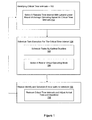
- method 100 may include one or more functions or processing operations illustrated by blocks 102, 104 and/or 106. As illustrated, processing may start at block 102, identifying critical time interval, where a first critical time interval [a, b] of the [0, T ] period is identified. From block 102, method 100 may proceed to block 104, schedule task execution for the critical time interval, where the tasks to be executed during the critical time interval are scheduled and/or organized (hereinafter, simply "schedule"). From block 104, method 100 may proceed to block 106, repeat identify and schedule if more tasks to schedule.
- identifying critical time intervals at block 102 may include selecting a feasible time interval with the largest lower bound average operating speed as the critical time interval, block 112.
- the [0, T ] period may be considered as having a number of feasible time intervals, and identifying critical time interval 102 comprises selecting one of these feasible time intervals.
- each of the feasible time intervals has an average operating speed, which is the average operating speed needed to execute the tasks to be executed during the feasible time interval.
- each of the feasible time intervals has a lower bound average operating speed, to be described in more detail below.
- the selecting may be based at least in part on these lower bounds, more specifically, the feasible time interval with the largest lower bound average operating speed may be selected as the critical time interval.
- s 1 and s 2 are two respective operating speeds of two operating modes;
- s * is the virtual operating speed achieved by operating at s 1 and s 2 for time t 1 and t 2 respectively
- ⁇ ij is a delay incurred by the scheduled task as it becomes idle, when the computing platform switches from operating mode i to operating mode j , and s *
- g ( I ) is the lower bound on the average speed in the interval I .
- g ( I ) may be modified accordingly to reflect the non-uniformity. For ease of understanding, the description will assume uniform switching capacity.
- a processor may operate in any virtual operating speed as illustrated by graph 202 in Figure 2a , and t 1 and t 2 may be determined using the above formulas and as illustrated by graph 204 in Figure 2b .
- Equation 4 shows the case where due to switching delay overhead, the virtual speed is larger than s 2 and therefore the processor only runs at s 2 for the portion of time.
- FIG. 3 illustrates a lower convex curve for an energy-speed domain, in accordance with various embodiments of the present disclosure.
- a lower convex curve (also may be referred to as convexity energy-speed envelope) can be created, by assuming the energy consumption for the lowest operating speeds to be the same as the known energy consumption for the lowest known operating speed, that is, by extending the curve on the lower-left side to cover the entire speed axis, as illustrated by curve 302.
- Interval I * is said to be critical if g ( I* ) is maximum for all feasible intervals in [0, T ].
- Equation 14 The interpretation of Equation 14 may be that energy consumption at speed ⁇ s 1 + (1 - ⁇ ) s 2 may be less the weighted energy consumption when the processor is running at ⁇ s 1 and (1 - ⁇ ) s 2 . Therefore the overhead energy ⁇ 12 must be taken into account.
- a computing platform may include one or more processing units or processors, one or more input/output devices, such as a display, a keyboard and/or a mouse, and one or more memories, such as static random access memory, dynamic random access memory, flash memory, and/or a hard drive.
Landscapes
- Engineering & Computer Science (AREA)
- Software Systems (AREA)
- Theoretical Computer Science (AREA)
- Physics & Mathematics (AREA)
- General Engineering & Computer Science (AREA)
- General Physics & Mathematics (AREA)
- Power Sources (AREA)
- General Factory Administration (AREA)
Abstract
Description
- Energy consumption is often recognized as one of the most important parameters in designing modern portable electronic and wireless systems in today's very large scale integration (VLSI) circuit design. Among the various low power techniques at different levels of abstraction, dynamic voltage scheduling (DVS) is an often used technique for reducing power and energy consumption during system operation. DVS aims at reducing the dynamic/static power consumption by scaling down operational frequency and circuit supply voltage. In has been demonstrated that dynamic energy savings can be accomplished by simultaneously varying the supply voltage (V dd ) and the threshold voltage (V t ) through adaptive body biasing. Several researches have been performed to solve task-scheduling on DVS-enabled systems to achieve dynamic energy reduction. For example, heuristics have been proposed for periodic tasks in a multiprocessor.
- Research to-date on energy consumption has also increasingly focus on leakage energy. As device sizes continue to decrease due to advances in technological manufacturablity, leakage energy dissipation is becoming more and more important. For the 70-nm process, leakage power is smaller than dynamic power, for the 50-nm process, they become comparable, while for the 35-nm process, leakage power is larger than dynamic power. Hence, it is often predicted that in less than a decade, leakage power will dominate in any energy consumption consideration.
- However, low power research has traditionally focused on a power model where the relationship between power consumption and processor speed is convex. Convexity has a number of ramifications when energy is minimized using variable voltage strategies. Chief among them may be the assumption that with respect to energy consumption, it is optimal to execute a task with the executing processor operating at a constant speed. However, the union of several technological, integrated circuits, architectural, operating systems, and application factors is increasingly creating systems where the mapping from the speed of execution (that is the inverse of the time required to complete one cycle and execute an operation) and energy consumption per operation (ES) is non-convex. Non-convex energy-speed models will dominate the wide spectrum of pending and future energy-sensitive systems. For example, in heterogeneous multiprocessor multicore system-on-chips, different cores have different ES functions and the overall relationship between processor speed and energy per operation is not convex. Likewise, total leakage and dynamic energy does not have a convex relationship with processor speed, as leakage current increases when threshold voltage is lowered to increase the processor speed. Incorporation of new high bandwidth on-chip interconnect technologies, such as nanowires, RF, photonic crystals-based optical interconnect, and plasmonics communication networks compounded with a need for thermal management will have further ramifications on the non-convex ES relationship. Instruction level parallelism and effective speed also has a highly non-convex and non-continuous function. Hence, simplified convex energy models assumed in traditional approaches for tackling DVS problem may no longer be effective.
- Attempts have been made to develop non-convex methods to achieve energy consumption reduction. DVS techniques in the presence of discrete voltage levels for quadratics power models have been proposed. However, the present disclosure identified that a number of these approaches do not appear optimal and are complex, requiring substantial computing. Further, the present disclosure appreciates that scaling the supply voltage in order to reduce the power consumption has a side-effect on the circuit delay and hence the operational frequency. Each time a processor's supply voltage is switched, the change requires a certain amount of extra energy and time. Thus, the present disclosure identifies that transition overhead is another important issue that should be considered, but has been ignored in conventional voltage scaling techniques.
- Subject matter is particularly pointed out and distinctly claimed in the concluding portion of the specification. The foregoing and other features of this disclosure will become more fully apparent from the following description and appended claims, taken in conjunction with the accompanying drawings. Understanding that these drawings depict only several embodiments in accordance with the disclosure and are, therefore, not to be considered limiting of its scope, the disclosure will be described with additional specificity and detail through use of the accompanying drawings. Various embodiments will be described referencing the accompanying drawings in which like references denote similar elements, and in which:
-
Figure 1 illustrates a method for scheduling and/or organizing task executions on a target computing platform, in accordance with various embodiments; -
Figures 2a-2b illustrate how a processor may operate at any virtual operating speed, in accordance with various embodiments; -
Figure 3 illustrates a lower convex curve for an energy-speed domain, in accordance with various embodiments; -
Figure 4 illustrates a modified lower convex curve for an energy-speed domain, taking into consideration of intra-task energy overhead caused by mode switching, in accordance with various embodiments; -
Figure 5 is an example computer system suitable for practicing various embodiments; and -
Figure 6 is an example article of manufacture having a computer program product with instructions, all arranged in accordance with the present disclosure. - The following description sets forth various examples along with specific details to provide a thorough understanding of claimed subject matter. It will be understood by those skilled in the art, however, the claimed subject matter may be practiced without some or more of the specific details disclosed herein. Further, in some circumstances, well-known methods, procedures, systems, components and/or circuits have not been described in detail in order to avoid unnecessarily obscuring claimed subject matter. In the following detailed description, reference is made to the accompanying drawings, which form a part hereof. In the drawings, similar symbols typically identify similar components, unless context dictates otherwise. The illustrative embodiments described in the detailed description, drawings, and claims are not meant to be limiting. Other embodiments may be utilized, and other changes may be made, without departing from the spirit or scope of the subject matter presented here. It will be readily understood that the aspects of the present disclosure, as generally described herein, and illustrated in the Figures, may be arranged, substituted, combined, and designed in a wide variety of different configurations, all of which are explicitly contemplated and make part of this disclosure.
- In the following description, algorithms and/or symbolic representations of operations on data bits and/or binary digital signals stored within a computing system, such as within a computer and/or computing system memory may be presented. An algorithm is generally considered to be a self-consistent sequence of operations and/or similar processing leading to a desired result where the operations may involve physical manipulations of physical quantities that may take the form of electrical, magnetic and/or electromagnetic signals capable of being stored, transferred, combined, compared and/or otherwise manipulated. In various contexts such signals may be referred to as bits, data, values, elements, symbols, characters, terms, numbers, numerals, etc. Those skilled in the art will recognize, however, that such terms may be used to connote physical quantities. Hence, when terms such as "storing", "processing", "retrieving", "calculating", "determining" etc. are used in this description they may refer to the actions of a computing platform, such as a computer or a similar electronic computing device such as a cellular telephone, that manipulates and/or transforms data represented as physical quantities including electronic and/or magnetic quantities within the computing platform's processors, memories, registers, etc.
- This disclosure is drawn, inter alia, to methods, apparatus, systems and computer program products related to scheduling task execution on a target computing platform.
-
Figure 1 illustrates a method 100 for scheduling and/or organizing task executions on a target computing platform, in accordance with various embodiments of the present disclosure. As will be described in more details below, method 100 may optimally schedule execution of tasks on a target computing platform, reducing or minimizing an amount of energy consumed in executing the task. For the purpose of the present disclosure, the set of tasks to be scheduled for execution may be represented by J = {τ 1, ..., τ n }. Each task may be characterized by τ i = (ai , bi , Ri , Ci ), where - ai is the arrival time of task i
- bi is the execution completion deadline (or simply, deadline) of task i
- Ri is the required clock cycles of the target computing platform to process or execute task i
- Ci is the average switching capacity of the target computing platform of task i.
- The target computing platform may be characterized by their operation modes1, Ξ = {m1 , ..., mk }, where each mode is a pair mj = (ej, sj ), where
- ei is the energy consumption per clock cycle in the jth mode
- si is the processor speed when running in the jth mode
- Thus, the problem of optimally scheduling the set of tasks for execution on the target computing platform, reducing or minimizing the amount of energy consumed in executing the set of tasks, may be considered as the problem of

where P() is a power consumption function, and
ξ(t) is a mapping function defining the processor mode and the scheduled task at time t. - Equation (1) may be restated from the perspective of the amount of clock cycles required to execute the tasks, i.e.,

- Accordingly, solving the problem may be considered as finding the mapping function χ(t) that defines the scheduled task at time t, such that the total energy consumption during the [0,T] period is minimized or reduced to a desired level.
- According to embodiment of the present disclosure, method 100 may include one or more functions or processing operations illustrated by
blocks block 102, identifying critical time interval, where a first critical time interval [a, b] of the [0,T] period is identified. Fromblock 102, method 100 may proceed to block 104, schedule task execution for the critical time interval, where the tasks to be executed during the critical time interval are scheduled and/or organized (hereinafter, simply "schedule"). Fromblock 104, method 100 may proceed to block 106, repeat identify and schedule if more tasks to schedule. Atblock 106, method 100 may determine whether there are
1 In the present disclosure the term 'operation mode' is used rather than 'supply voltage' or 'speed'. The reason is because current technologies can reduce energy dissipation not only by changing supply voltage, but also by reducing bias-voltage. further tasks remain to be scheduled, and if so, method 100 repeat blocks 102 and 104. The process may continue until all tasks are scheduled. - In various embodiments, as illustrated, identifying critical time intervals at
block 102 may include selecting a feasible time interval with the largest lower bound average operating speed as the critical time interval, block 112. In various embodiments, the [0,T] period may be considered as having a number of feasible time intervals, and identifyingcritical time interval 102 comprises selecting one of these feasible time intervals. In various embodiments, each of the feasible time intervals has an average operating speed, which is the average operating speed needed to execute the tasks to be executed during the feasible time interval. Further, each of the feasible time intervals has a lower bound average operating speed, to be described in more detail below. And the selecting may be based at least in part on these lower bounds, more specifically, the feasible time interval with the largest lower bound average operating speed may be selected as the critical time interval. - Continuing to refer to
Figure 1 , block 104, schedule task execution for the critical time period, may include schedule task by earliest deadline, block 122, and select a real or virtual operating mode, block 124. Atblock 122, method 100 may schedule the tasks to be executed during the critical time interval by the order of the tasks' execution completion deadlines, that is, a task with an earlier execution completion deadline is scheduled for execution before another task with a later execution completion deadline. Atblock 124, method 100 may conditionally select either a real or a virtual operating mode for the critical time interval. In various embodiments, the real or virtual operating mode may be selected as follows:
if


else if


where
s1 and s2 are two respective operating speeds of two operating modes;
s * is the virtual operating speed achieved by operating at s1 and s2 for time t1 and t2 respectively,
δ ij is a delay incurred by the scheduled task as it becomes idle, when the computing platform switches from operating mode i to operating mode j, and
s * δ is the virtual operating speed having taken into consideration δ ij .
As will be described in more details below, in various embodiments, s1 and s2 may be two respective operating speeds of two operating modes on a convexity envelope of the energy and speed relationship of the target computing platform (also may be referred to as convexity energy-speed envelope). - Still referring to
Figure 1 , block 106, repeat identify and schedule if more tasks to schedule, may include remove critical time interval and adjust arrival times and execution completion deadlines, block 132. At block 132, method 100 may remove the immediately identified critical time interval (with tasks to be executed during the interval now scheduled) from [0,T] period, and adjust the arrival times and execution completion deadlines to reflect the removal of the immediately identified critical time interval, to effectively reformulate the problem for another iteration. As an example, if [0,T] spans a 60 min period, and the immediate identified critical time period was identified to be the 41st to 45th minute, after having their tasks scheduled, the 41st to 45th minute interval is removed from the [0,1] period, with the task arrival times and/or execution completion deadlines after the 45th minute, updated to be 15 minutes earlier, effectively reformulating the problem as a problem with a [0,T] period spanning 45 min. - Accordingly, method 100 may be not only optimally, but may efficiently, solve χ(t), which defines the scheduled task at time t such that the total energy consumption during the [0,T] period is minimized or reduced to a desired level. Further, method 100 may be independent of the energy and speed functional relationship of the target computing platform. In other words, method 100 may optimally and efficiently solve χ(t) regardless of whether the energy and speed functional relationship of the target computing platform is non-convex or convex. The reason method 100 may be optimal, and independent of the energy and speed functional relationship will be explained in the description to follow. For ease of understanding, without loss of generality (and applicability to a target computing platform), the description will be presented in terms of a processor.
- Further, before presenting the description, it should be noted that while method 100 has been described thus far for scheduling a plurality of tasks, the description should not be construed as limiting method 100 to scheduling a multitude (two or more) tasks. Method 100 may be practiced in scheduling a single task. For the single task situation, there is one time interval (defined by the arrival and deadline of the single task), and by definition, the time interval is the one and only critical time interval.
- First, recall a couple of relatively important overhead caused by dynamic scheduling techniques may be the delay and energy overheads. Specially, when the operation mode of a processor is changing while a task is under execution, this overhead becomes more significant because of the delay and energy dissipations resulting from memory access and recovery. Therefore, for each pair of operation modes, there are two overhead measures: ∈ ij and δ ij where ∈ ij is the energy overhead when switching from mode i to j. As described earlier, δ ij is the delay caused by switching operation mode, during which time, the scheduled task becomes idle.
- When the mode switching is a result of supply (V dd ) and body-bias voltage (V bs ) change, the delay and energy overheads can be stated as


- where Cr represents power rail capacitance, and Cs is the total substrate and well capacitance. Since transition times for Vdd and Vbs are different, the two constants pvdd and pvbs are used to calculate both time overheads independently. If there exists any other overhead in state switching, additional terms may be added to equations 5 and 6.
- Therefore, the intensity of the interval [a, b], i.e., the number of clock cycles required to execute the tasks during the interval, may defined to be:

- which is the average speed required to execute all the tasks that are within the interval I. Accordingly, for uniform switching capacity, g(I) is the lower bound on the average speed in the interval I. For non-uniform switching capacity, g(I) may be modified accordingly to reflect the non-uniformity. For ease of understanding, the description will assume uniform switching capacity.
- Thus, to find an optimal scheduling, the processor may be arranged such that the processor operates at the average speed no less that g(I) with an energy consumption which would yield to an optimal solution.. Therefore, to solve this scheduling problem is to make a virtual subjective mapping of speed to energy in the [0, smax ] without compromising (smax is the maximum possible speed that the processor can run at). Using such a curve a processor can be considered as being virtually run at any speed.
-
Figures 2a-2b illustrate how a processor may operate at any virtual operating speed, in accordance with various embodiments of the present disclosure. Assume a processor, as illustrated inFigure 2a , has two operation modes s 1 and s 2. In order to run the processor at speed s* (s 1 # s* # s2 ) for a given interval [a, b], the processor may be run at s 1 for t 1 seconds and s 2 for t 2 seconds where for t 1 and t 2 meaning:

- where
s 1 and s 2 are two respective operating speeds of two operating modes;
s * is the virtual operating speed achieved by operating at s1 and s2 for time t1 and t2 respectively, and
s * is the virtual operating speed. - Accordingly, a processor may operate in any virtual operating speed as illustrated by
graph 202 inFigure 2a , and t 1 and t 2 may be determined using the above formulas and as illustrated bygraph 204 inFigure 2b . - Thus, when δ ij , a delay is incurred by the scheduled task as it becomes idle when the processor switches from operating mode i to operating mode j, the relationships between s *, s1, s2, t1 , and t2 are given by equations (3) and (4) as earlier described. Equation 4 shows the case where due to switching delay overhead, the virtual speed is larger than s 2 and therefore the processor only runs at s 2 for the portion of time.
-
Figure 3 illustrates a lower convex curve for an energy-speed domain, in accordance with various embodiments of the present disclosure. As illustrated, for a computing platform with a set of energy/speed operating modes, regardless whether the energy-speed functional relationship is non-convex or convex, a lower convex curve (also may be referred to as convexity energy-speed envelope) can be created, by assuming the energy consumption for the lowest operating speeds to be the same as the known energy consumption for the lowest known operating speed, that is, by extending the curve on the lower-left side to cover the entire speed axis, as illustrated bycurve 302. - The points in
curve 302 can be represented by M = {(e' 1 , s' 1 ),..., (e' q, s' q )} sorted in non-decreasing order with respect to s' 1 s. The resulting energy-speed curve 302 can be stated as:
-
Figure 4 illustrates a modified lower convex curve for an energy-speed domain, taking into consideration of intra-task energy overhead caused by mode switching, in accordance with various embodiments of the present disclosure. As illustrated, to consider the intra-task energy overhead caused by mode switching, each line segment [(ei, si ), (ej, sj ) in the ε j(s) is replaced by [(ei, si ), (ej, sj ) + ∈ ij ] where ∈ ij is the normalized switching overhead, this function is called ε' j(s). Applying a monotone curve fit, ε' j(s) as illustrated by curve 402 may be created as follows:
- ε v (s) can potentially introduce new points in the energy-speed domain which where disregarded as a result of the construction of the lower convex curve. For example, m' is a point where as a result of energy overhead consideration, it may be used to achieve better performance. The energy-speed curve is thus modified as M = M∪ {m*} (considering new points such as m*). Hereinafter, this virtual energy-speed curve will be referred to as ε v (s).
- Interval I* is said to be critical if g(I*) is maximum for all feasible intervals in [0,T]. R* is the number of clock cycles required to execute all tasks that lie inside I*. Therefore, I* = [ai , bj ] for some tasks i and j .
- Let

- Let the duration of |I*| = T and assume sq ∈ S where s * i < sq < s * j and (j - i) is minimum. In other words sq lies between two operation speeds in S and all the intermediate speeds are not in S. Adding sq to S can decrease the total energy consumption during I. Since s * i < sq < s * j , there exist β and γ such that

- Without the loss of generality, assume α i ≤ α j . Therefore, the normalized energy consumption (i.e. per clock cycle) during s * i , and s * j can be stated as:

- Which means that when the processor is run at sq it may reduce the energy consumption during virtual speed of sq when the processor is run at s * i and s * j . Therefore S may contain consecutive operation modes in ε v (s)
- Let s* = g(I*). If the minimum energy consumption during I*, requires running the task in I* at consecutive speeds: S = {s * 1, ..., s * p } for the time percentages (α 1, ..., α p) respectively then p ≤ 2.
- Assume s * i < sq < s * i +1. For all s * j < s * i the approach in the above argument can be applied here and eliminate operation at s * j by increasing α i and α i+1 accordingly and reduce total power consumption during I.
- Finally, in the optimal scheduling, the critical interval I* is run at virtual mode of e(g(I*)),g(I*). If ε v (s) was a convex curve the optimality would be followed. Although ε v (s) is not convex in principle, it is proven that it has the convexity property. The reason why ε v (s) is not visually convex is the fact that ε v (s) is a conditional graph. In other words ε v (s) is minimum energy consumption at different speeds when each speed is virtually achieved through one or two operation modes.

- The interpretation of Equation 14 may be that energy consumption at speed α s1 + (1 - α )s2 may be less the weighted energy consumption when the processor is running at α s 1 and (1 - α )s2 . Therefore the overhead energy ε 12 must be taken into account. According to Equation 11

- Equation 15 proves the correctness of the claim and the convexity of ε v in use. Therefore, method 100 of
Figure 1 may yield an optimal solution, in particular, when the virtual operating mode is construed using operating modes on the convexity energy-speed envelope of a target computing platform.. -
Figure 5 illustrates an example computing device, in accordance with various embodiments of the present disclosure. In a very basic configuration 501,computing device 500 typically includes one ormore processors 510 andsystem memory 520. A memory bus 530 may be used for communicating between theprocessor 510 and thesystem memory 520. - Depending on the desired configuration,
processor 510 may be of any type including but not limited to a microprocessor (µP), a microcontroller (µC), a digital signal processor (DSP), or any combination thereof.Processor 510 may include one more levels of caching, such as a level onecache 511 and a level two cache 12, aprocessor core 513, and registers 514. Anexample processor core 513 may include an arithmetic logic unit (ALU), a floating point unit (FPU), a digital signal processing core (DSP Core), or any combination thereof. Anexample memory controller 515 may also be used with theprocessor 510, or in some implementations thememory controller 515 may be an internal part of theprocessor 510. - Depending on the desired configuration, the
system memory 520 may be of any type including but not limited to volatile memory (such as RAM), non-volatile memory (such as ROM, flash memory, etc.) or any combination thereof.System memory 520 may include anoperating system 521, one ormore applications 522, andprogram data 524.Application 522 may includeprogramming instructions 523 providing logic to implement the above described scheduling of task execution for one or more tasks for a target computing platform, including in particular, the selection of a virtual operating mode using operating modes lying on the convexity energy-speed envelope fo the target computing platform.Program Data 524 may include the applicable data 525 associated with the scheduling operations or instruction execution. -
Computing device 500 may have additional features or functionality, and additional interfaces to facilitate communications between the basic configuration 501 and any required devices and interfaces. For example, a bus/interface controller 540 may be used to facilitate communications between the basic configuration 501 and one or moredata storage devices 550 via a storage interface bus 541. Thedata storage devices 550 may beremovable storage devices 551,non-removable storage devices 552, or a combination thereof Examples of removable storage and non-removable storage devices include magnetic disk devices such as flexible disk drives and hard-disk drives (HDD), optical disk drives such as compact disk (CD) drives or digital versatile disk (DVD) drives, solid state drives (SSD), and tape drives to name a few. Example computer storage media may include volatile and nonvolatile, removable and non-removable media implemented in any method or technology for storage of information, such as computer readable instructions, data structures, program modules, or other data. -
System memory 520,removable storage 551 andnon-removable storage 552 are all examples of computer storage media. Computer storage media includes, but is not limited to, RAM, ROM, EEPROM, flash memory or other memory technology, CD-ROM, digital versatile disks (DVD) or other optical storage, magnetic cassettes, magnetic tape, magnetic disk storage or other magnetic storage devices, or any other medium which may be used to store the desired information and which may be accessed by computingdevice 500. Any such computer storage media may be part ofdevice 500. -
Computing device 500 may also include an interface bus 542 for facilitating communication from various interface devices (e.g., output interfaces, peripheral interfaces, and communication interfaces) to the basic configuration 501 via the bus/interface controller 540.Example output devices 560 include agraphics processing unit 561 and anaudio processing unit 562, which may be configured to communicate to various external devices such as a display or speakers via one or more A/V ports 563. Exampleperipheral interfaces 570 include a serial interface controller 571 or a parallel interface controller 572, which may be configured to communicate with external devices such as input devices (e.g., keyboard, mouse, pen, voice input device, touch input device, etc.) or other peripheral devices (e.g., printer, scanner, etc.) via one or more I/O ports 573. Anexample communication device 580 includes anetwork controller 581, which may be arranged to facilitate communications with one or moreother computing devices 590 over a network communication link via one ormore communication ports 582. - The network communication link may be one example of a communication media. Communication media may typically be embodied by computer readable instructions, data structures, program modules, or other data in a modulated data signal, such as a carrier wave or other transport mechanism, and may include any information delivery media. A "modulated data signal" may be a signal that has one or more of its characteristics set or changed in such a manner as to encode information in the signal. By way of example, and not limitation, communication media may include wired media such as a wired network or direct-wired connection, and wireless media such as acoustic, radio frequency (RF), microwave, infrared (IR) and other wireless media. The term computer readable media as used herein may include both storage media and communication media.
-
Computing device 500 may be implemented as a portion of a small-form factor portable (or mobile) electronic device such as a cell phone, a personal data assistant (PDA), a personal media player device, a wireless web-watch device, a personal headset device, an application specific device, or a hybrid device that include any of the above functions.Computing device 500 may also be implemented as a personal computer including both laptop computer and non-laptop computer configurations. -
Figure 6 illustrates an example article of manufacture having a computer program product, in accordance with various embodiments of the present disclosure. The examplecomputer program product 600 may comprise a computerreadable storage medium 632 and a plurality ofprogramming instructions 634 stored in the computerreadable medium 632. In various ones of these embodiments, theprogramming instructions 634 may include instructions for identifying a critical time interval. In various embodiments, programminginstructions 634 may also include instructions for scheduling execution of one or more tasks to be executed during the identified critical time interval. The execution to be performed on a target computing platform. In various embodiments, the scheduling may include selection of a virtual operating mode constructed from operating modes lying on the convexity energy-speed envelope of as described earlier. In still other embodiments, programminginstructions 634 may further include instructions for repeating the identifying and the scheduling for the tasks remaining to be scheduled. - Embodiments may have some or all of the instructions depicted in
Figure 6 . Embodiments ofcomputer program product 600 may have other instructions in accordance with embodiments described herein. The computerreadable medium 632 may take a variety of forms including, but not limited to, volatile and persistent memory, such as, but not limited to, a compact disk (CD), a digital versatile disk (DVD), a solid-state drive, a hard drive, and so forth. Embodiments are not limited to any type or types of computer program products. - Claimed subject matter is not limited in scope to the particular implementations described herein. For example, some implementations may be in hardware, such as employed to operate on a device or combination of devices, for example, whereas other implementations may be in software and/or firmware. Likewise, although claimed subject matter is not limited in scope in this respect, some implementations may include one or more articles, such as a storage medium or storage media. This storage media, such as CD-ROMs, computer disks, flash memory, or the like, for example, may have instructions stored thereon, that, when executed by a system, such as a computer system, computing platform, or other system, for example, may result in execution of a processor in accordance with claimed subject matter, such as one of the implementations previously described, for example. As one possibility, a computing platform may include one or more processing units or processors, one or more input/output devices, such as a display, a keyboard and/or a mouse, and one or more memories, such as static random access memory, dynamic random access memory, flash memory, and/or a hard drive.
- There is little distinction left between hardware and software implementations of aspects of systems; the use of hardware or software is generally (but not always, in that in certain contexts the choice between hardware and software can become significant) a design choice representing cost vs. efficiency tradeoffs. There are various vehicles by which processes and/or systems and/or other technologies described herein can be effected (e.g., hardware, software, and/or firmware), and that the preferred vehicle will vary with the context in which the processes and/or systems and/or other technologies are deployed. For example, if an implementer determines that speed and accuracy are paramount, the implementer may opt for a mainly hardware and/or firmware vehicle; if flexibility is paramount, the implementer may opt for a mainly software implementation; or, yet again alternatively, the implementer may opt for some combination of hardware, software, and/or firmware.
- In some embodiments, several portions of the subject matter described herein may be implemented via Application Specific Integrated Circuits (ASICs), Field Programmable Gate Arrays (FPGAs), digital signal processors (DSPs), or other integrated formats. However, those skilled in the art will recognize that some aspects of the embodiments disclosed herein, in whole or in part, can be equivalently implemented in integrated circuits, as one or more computer programs running on one or more computers (e.g., as one or more programs running on one or more computer systems), as one or more programs running on one or more processors (e.g., as one or more programs running on one or more microprocessors), as firmware, or as virtually any combination thereof, and that designing the circuitry and/or writing the code for the software and or firmware would be well within the skill of one of skill in the art in light of this disclosure. In addition, those skilled in the art will appreciate that the mechanisms of the subject matter described herein are capable of being distributed as a program product in a variety of forms, and that an illustrative embodiment of the subject matter described herein applies regardless of the particular type of signal bearing medium used to actually carry out the distribution. Examples of a signal bearing medium include, but are not limited to, the following: a recordable type medium such as a floppy disk, a hard disk drive, a Compact Disc (CD), a Digital Video Disk (DVD), a digital tape, a computer memory, etc.; and a transmission type medium such as a digital and/or an analog communication medium (e.g., a fiber optic cable, a waveguide, a wired communications link, a wireless communication link, etc.).
- With respect to the use of substantially any plural and/or singular terms herein, those having skill in the art can translate from the plural to the singular and/or from the singular to the plural as is appropriate to the context and/or application. The various singular/plural permutations may be expressly set forth herein for sake of clarity.
- Although the present disclosure has been described in terms of the above-illustrated embodiments, it will be appreciated by those of ordinary skill in the art that a wide variety of alternate and/or equivalent implementations calculated to achieve the same purposes may be substituted for the embodiments shown and described without departing from the scope of the present disclosure. Those with skill in the art will readily appreciate that embodiments in accordance with the present disclosure may be implemented in a very wide variety of embodiments. This description is intended to be regarded as illustrative instead of restrictive.
- The following is a list of further preferred embodiments of the invention:
- Embodiment 1: A method for a computing device to schedule and/or organize execution of one or more tasks on a target computing platform, wherein each task has an arrival time and an execution completion deadline, and the target computing platform has a plurality of operating modes with each operating mode having an operating speed and an amount of energy consumption, the method comprising:
- determining a critical time interval defined by a task arrival time and a task execution completion deadline, wherein the determining is based at least in part on one or more respective lower bounds of average operating speeds of the target computing platform for one or more feasible time intervals, wherein an average operating speed of the target computing platform for a particular feasible time interval corresponds to the average operating speed of the target computing platform needed during the particular feasible time interval to complete execution of one or more tasks to be executed during the particular feasible time interval, and wherein the critical time interval has the largest of the one or more respective lower bounds; and
- scheduling and/or organizing one or more tasks to be executed during the critical time interval in accordance with the execution completion deadlines of the one or more tasks, wherein when there are more than two tasks to be scheduled for execution during the critical time interval, a task having an earlier execution completion deadline is scheduled for execution before a task having a later execution completion deadline.
- Embodiment 2: The method of
embodiment 1, further comprising determining whether there are one or more remaining tasks to be scheduled and/or organized, and when there are one or more remaining tasks to be scheduled and/or organized:- logically removing the critical time interval from the one or more feasible time intervals;
- updating the arrival times and the execution completion deadlines of the one or more remaining tasks to be scheduled and/or organized to reflect the logical removal of the determined critical time interval from the one or more feasible time intervals; and
- repeating the determining and the scheduling and/or organizing to determine one of the unremoved feasible time intervals as a new critical time interval, and scheduling and/or
- organizing execution of one or more tasks to be executed during the new critical time interval.
- Embodiment 3: The method of
embodiment 2, further comprising determining whether there are one or more remaining tasks to be scheduled and/or organized, and when there are one or more remaining tasks to be scheduled and/or organized:- repeating one or more times, the logically removing, the updating, and the repeating of the determining and the scheduling and/or organizing to schedule and/or organize the one or more remaining tasks to be scheduled and/or organized until all tasks have been scheduled and/or organized.
- Embodiment 4: The method of
embodiment 1, further comprising determining each of the one or more respective lower bounds of the average operating speeds of the one or more feasible intervals. - Embodiment 5: The method of
embodiment 1, wherein scheduling and/or organizing comprises selecting an operating mode of the target computing platform for the critical time interval based at least in part on intra-task delay caused by switching operating mode. - Embodiment 6: The method of
embodiment 1, wherein scheduling and/or organizing comprises selecting a virtual operating mode of the target computing platform for the critical time interval based at least in part on intra-task delay caused by switching operating mode, wherein the virtual operating mode is effectively formed by operating at least two portions of the critical time interval in at least two respective operating modes of the target computing platform. - Embodiment 7: The method of embodiment 6, wherein selecting the virtual operating mode comprises selecting the at least two operating modes of the target computing platform for the at least two respective portions of the critical time interval, wherein the two respective operating modes lie on a convexity energy-speed envelope of the target computing platform.
- Embodiment 8: The method of
embodiment 1, wherein the computing device comprises the target computing platform. - Embodiment 9: An apparatus for scheduling and/or organizing execution of one or more tasks on a target computing platform, wherein each task has an arrival time and an execution completion deadline, and the target computing platform has a plurality of operating modes with each operating mode having an operating speed and an amount of energy consumption, the apparatus comprising:
- a processor; and
- a storage medium coupled to the processor, and having stored therein a plurality of programming instructions configured to be executed by the processor, wherein when executed by the processor, the programming instructions cause the apparatus to:
- determine a critical time interval defined by a task arrival time and a task execution completion deadline, wherein the determination is based at least in part on one or more respective lower bounds of average operating speeds of the target computing platform for one or more feasible time intervals, wherein an average operating speed of the target computing platform for a particular feasible time interval corresponds to the average operating speed of the target computing platform needed during the particular feasible time interval to complete execution of the tasks to be executed during the particular feasible time interval, and wherein the critical time interval has the largest of the one or more respective lower bounds; and
- schedule and/or organize the tasks to be executed during the critical time interval in accordance with the execution completion deadlines of the tasks, wherein when there are more than one task to be scheduled, a task having an earlier execution completion deadline is scheduled for execution before a task having a later execution completion deadline.
- Embodiment 10: The apparatus of embodiment 9, wherein when executed, the programming instructions further cause the apparatus to determine whether there are one or more remaining tasks to be scheduled and/or organized, and when there are one or more remaining tasks still to be scheduled and/or organized:
- logically remove the critical time interval from the one or more feasible time intervals;
- update the arrival times and the execution completion deadlines of the one or more remaining tasks to be scheduled and/or organized to reflect the logical removal of the determined critical time interval from the one or more feasible time intervals; and
- repeat the determining and scheduling and/or organizing to determine one of the unremoved feasible time intervals as a new critical time interval, and schedule and/or organize execution of the tasks to be executed during the new critical time interval.
- Embodiment 11: The apparatus of embodiment 10, wherein when executed, the programming instructions further cause the apparatus to determine whether there are one or more remaining tasks still to be scheduled and/or organized, and if there are one or more remaining tasks still to be scheduled and/or organized,
- repeat one or more times the logically removing, the updating, and the repeating of the determine and schedule and/or organize to schedule and/or organize the one or more remaining tasks to be scheduled and/or organized until all tasks have been scheduled and/or organized.
- Embodiment 12: The apparatus of embodiment 9, wherein when executed, the programming instructions further cause the apparatus to determine each of the one or more respective lower bounds of the average operating speeds of the feasible intervals.
- Embodiment 13: The apparatus of embodiment 9, wherein when executed, the programming instructions further cause the apparatus to select, as part of the schedule and/or organize, an operating mode of the target computing platform for the critical time interval based at least in part on intra-task delay caused by switching operating mode.
- Embodiment 14: The apparatus of embodiment 9, wherein when executed, the programming instructions further cause the apparatus to select, as part of the schedule and/or organize, a virtual operating mode of the target computing platform for the critical time interval based at least in part on intra-task delay caused by switching operating mode, wherein the virtual operating mode is effectively formed by operating at least two portions of the critical time interval in at least two respective operating modes of the target computing platform.
- Embodiment 15: The apparatus of embodiment 14, wherein when executed, the programming instructions cause the apparatus to select, as part of said select of the virtual operating mode, the at least two operating modes of the target computing platform for the at least two respective portions of the critical time interval, wherein the two operating modes lie on a convex energy-speed envelope of the target computing platform.
- Embodiment 16: The apparatus of embodiment 9, wherein the apparatus comprises the target computing platform.
- Embodiment 17: An article of manufacture for providing an apparatus with a plurality of programming instructions to cause the apparatus to schedule and/or organize execution of one or more tasks on a target computing platform, when the programming instructions are executed by a processor of the apparatus, the article comprising:
- a tangible computer readable medium; and
- a plurality of programming instructions stored in the tangible computer readable medium, wherein when provided to and executed by an apparatus, the programming instructions cause the apparatus to schedule and/or organize execution of the one or more tasks on the target computing platform, wherein each task has an arrival time and an execution completion deadline, and the target computing platform has a plurality of operating modes with each operating mode having an operating speed and an amount of energy consumption, and wherein the apparatus schedule and/or organize the execution by
determining a critical time interval defined by a task arrival time and a task execution completion deadline, wherein the determining is based at least in part on one or more respective lower bounds of average operating speeds of the target computing platform for one or more feasible time intervals, wherein an average operating speed of the target computing platform for a particular one of the plurality of feasible time intervals is the average operating speed of the target computing platform needed during the particular one of the plurality of feasible time intervals to complete execution of the tasks to be executed during the particular one of the plurality of feasible time intervals, and wherein the critical time interval has the largest of the one or more respective lower bounds, and - scheduling and/or organizing one or more tasks to be executed during the critical time interval in accordance with the execution completion deadlines of the one or more tasks, wherein when there are more than one task to be scheduled and/or organized, a task having an earlier execution completion deadline is scheduled and/or organized for execution before a task having a later execution completion deadline.
- Embodiment 18: The article of embodiment 17, wherein the programming instructions, when executed, further cause the apparatus to determine whether there are one or more remaining tasks to be scheduled and/or organized, and when there are one or more remaining tasks to be scheduled and/or organized,
- logically remove the critical time interval from the one or more feasible time intervals;
- update the arrival times and the execution completion deadlines of the one or more remaining tasks to be scheduled and/or organized to reflect the logical removal of the determined critical time interval from the one or more feasible time intervals; and
- repeat the determine and schedule and/or organize to determine one of the unremoved feasible time intervals as a new critical time interval, and schedule and/or organize execution of one or more tasks to be executed during the new critical time interval.
- Embodiment 19: The article of manufacture of embodiment 18, wherein the programming instructions, when executed, further cause the apparatus to determine whether there are one or more remaining tasks to be scheduled and/or organized, and when there are one or more remaining tasks to be scheduled and/or organized,
- repeat one or more times the logically removing, the updating, and the repeating of the determine and schedule and/or organize to schedule and/or organize the one or more remaining tasks to be scheduled until all tasks have been scheduled and/or organized.
- Embodiment 20: The article of embodiment 17, wherein the apparatus comprises the target computing platform.
- Embodiment 21: A method for a computing device to schedule and/or organize execution of one or more tasks on a target computing platform, wherein the target computing platform has a plurality of operating modes with each operating mode having an operating speed, the method comprising:
- identifying successively one or more critical time intervals, wherein each critical time interval has a lower bound of an average operating speed of the target computing platform, wherein the average operating speed of the target computing platform of a critical time interval is the average operating speed of the target computing platform needed to execute the tasks to be executed during the critical time interval, and wherein each identifying of a critical time interval is based at least in part on the lower bound of the average operating speed of the target computing platform of the critical time interval; and
as each critical time interval is identified, scheduling and/or organizing execution of one or more tasks to be executed during the critical time interval.
- identifying successively one or more critical time intervals, wherein each critical time interval has a lower bound of an average operating speed of the target computing platform, wherein the average operating speed of the target computing platform of a critical time interval is the average operating speed of the target computing platform needed to execute the tasks to be executed during the critical time interval, and wherein each identifying of a critical time interval is based at least in part on the lower bound of the average operating speed of the target computing platform of the critical time interval; and
- Embodiment 22: The method of embodiment 21, wherein each identified critical time interval is based at least in part on the lower bound of the average operating speed of the target computing platform of the critical time interval being larger than all other lower bounds of the average operating speed of the target computing platform of feasible intervals being considered.
- Embodiment 23: An apparatus for scheduling and/or organizing execution of one or more tasks on a target computing platform, wherein the target computing platform has a plurality of operating modes with each operating mode having an operating speed, the apparatus comprising:
- a processor; and
- a storage medium coupled with the processor, and having stored therein a plurality of programming instructions configured to be executed by the processor, wherein when executed, the programming instructions cause the apparatus to
- identify successively one or more critical time intervals, wherein each critical time interval has a lower bound of an average operating speed of the target computing platform, wherein the average operating speed of the target computing platform of the critical time interval is the average operating speed of the target computing platform needed to execute one or more tasks to be executed during the critical time interval, and wherein each identify of a critical time interval is based at least in part on the lower bound of the average operating speed of the target computing platform of the critical time interval; and
- as each critical time interval is identified, schedule and/or organize execution of one or more tasks to be executed during the critical time interval.
- Embodiment 24: The apparatus of embodiment 23, wherein the programming instructions, when executed, cause the apparatus to identify critical time intervals based at least in part on the lower bound of the average operating speed of the target computing platform of the critical time interval being larger than all other lower bounds of the average operating speed of the target computing platform of feasible intervals being considered.
- Embodiment 25: A method for a computing device to schedule and/or organize execution of one or more tasks on a target computing platform during a critical time interval, wherein each task has an arrival time and an execution completion deadline, and the target computing platform has a plurality of operating modes of different operating speeds, and wherein the critical time interval is defined by a task arrival time and a task execution completion deadline, the method comprising:
- scheduling and/or organizing execution of one or more tasks to be executed during the critical time interval in accordance with the execution completion deadlines of the tasks, wherein when there are more than one task to be scheduled and/or organized, a task having an earlier execution completion deadline is scheduled and/or organized for execution before a task having a later execution completion deadline; and
- selecting an operating mode or a virtual operation mode of the target computing platform for the critical time interval based at least in part on intra-task delay caused by switching operating mode, wherein a virtual operating mode is effectively defined by a plurality of operating modes.
- Embodiment 26: The method of embodiment 25, wherein selecting the virtual operating mode of the target computing platform for the critical time interval comprises selecting at least two operating modes of the target computing platform for at least two respective portions of the critical time interval, wherein the two operating modes lies on a convexity energy-speed envelope of the target computing platform.
- Embodiment 27: The method of embodiment 26 further comprising generating the convexity energy-speed envelope of the target computing platform.
- Embodiment 28: An apparatus for scheduling and/or organizing execution of one or more tasks on a target computing platform during a critical time interval, wherein each task has an arrival time and an execution completion deadline, and the target computing platform has a plurality of operating modes with different operating speeds, and wherein the critical time interval is defined by a task arrival time and a task execution completion deadline, the apparatus comprising:
- a processor; and
- a storage medium coupled to the processor, and having stored therein a plurality of programming instructions configured to be executed by the processor, wherein when executed, the programming instruction cause the apparatus to:
- schedule and/or organize execution of one or more tasks to be executed during the critical time interval in accordance with the execution completion deadlines of the one or more tasks, wherein when there are more than one task to be scheduled, a task having an earlier execution completion deadline is schedule for execution before a task having a later execution completion deadline; and
- select an operating mode or a virtual operation mode of the target computing platform for the critical time interval based at least in part on intra-task delay caused by switching operating mode, wherein a virtual operating mode is effectively defined by a plurality of operating modes.
- Embodiment 29: The apparatus of embodiment 28, wherein the programming instructions, when executed, cause the apparatus to select the virtual operating mode by selecting at least two operating modes of the target computing platform for at least two respective portions of the critical time interval, wherein the two operating modes lie on a convexity energy-speed envelope of the target computing platform.
- Embodiment 30: The apparatus of embodiment 29, wherein the programming instructions, when executed, further cause the apparatus to generate the convexity energy-speed envelope of the target computing platform.
- Embodiment 31: A method for a computing device to organize execution of a task on a target computing platform, wherein the target computing platform has a plurality of operating modes of different operating speeds, the method comprising:
- generating a convexity energy-speed envelope of the target computing platform wherein the convexity energy-speed envelope includes selected ones of the different operating modes; and
- organizing execution of a task, including selecting a virtual operation mode of the target computing platform, wherein a virtual operating mode is effectively defined by a plurality of operating modes, wherein selecting includes selecting at least two operating modes of the target computing platform, and wherein the two operating modes lies on a convexity energy-speed envelope of the target computing platform.
- Embodiment 32: The method of embodiment 31, wherein generating the convexity energy-speed envelope comprises generating a lower bound convexity curve relating energy and speed of the target computing platform.
- Embodiment 33: An apparatus for organizing execution of a task on a target computing platform, wherein the target computing platform has a plurality of operating modes with different operating speeds, the apparatus comprising:
- a processor; and
- a storage medium coupled to the processor, and having stored therein a plurality of programming instructions configured to be executed by the processor, wherein when executed, the programming instruction cause the apparatus to:
- generate a convexity energy-speed envelope of the target computing platform, wherein the convexity energy-speed envelope includes selected ones of the operating modes; and
- organize execution of the task, including selection of a virtual operation mode of the target computing platform effectively defined by at least two operating modes, and wherein the two operating modes lie on the convexity energy-speed envelope.
- Embodiment 34: The apparatus of embodiment 33, wherein the programming instructions, when executed, further cause the apparatus to generate the convexity energy-speed envelope by generating a lower bound convexity curve relating energy and speed of the target computing platform.
Claims (15)
- A method for a computing device to schedule and/or organize execution of one or more tasks on a target computing platform, wherein each task has an arrival time and an execution completion deadline, and the target computing platform has a plurality of operating modes with each operating mode having an operating speed and an amount of energy consumption, the method comprising:determining a critical time interval defined by a task arrival time and a task execution completion deadline, wherein the determining is based at least in part on one or more respective lower bounds of average operating speeds of the target computing platform for one or more feasible time intervals, wherein an average operating speed of the target computing platform for a particular feasible time interval corresponds to the average operating speed of the target computing platform needed during the particular feasible time interval to complete execution of one or more tasks to be executed during the particular feasible time interval, and wherein the critical time interval has the largest of the one or more respective lower bounds; andscheduling and/or organizing one or more tasks to be executed during the critical time interval in accordance with the execution completion deadlines of the one ormore tasks, wherein when there are more than two tasks to be scheduled for execution during the critical time interval, a task having an earlier execution completion deadline is scheduled for execution before a task having a later execution completion deadline.
- The method of claim 1, further comprising:determining whether there are one or more remaining tasks to be scheduled and/or organized, and when there are one or more remaining tasks to be scheduled and/or organized:logically removing the critical time interval from the one or more feasible time intervals;updating the arrival times and the execution completion deadlines of the one or more remaining tasks to be scheduled and/or organized to reflect the logical removal of the determined critical time interval from the one or more feasible time intervals;repeating the determining and the scheduling and/or organizing to determine one of the unremoved feasible time intervals as a new critical time interval, and scheduling and/or organizing execution of one or more tasks to be executed during the new critical time interval; andrepeating one or more times, the logically removing, the updating, and the repeating of the determining and the scheduling and/or organizing to schedule and/or organize the one or more remaining tasks to be scheduled and/or organized until all tasks have been scheduled and/or organized.
- The method of claim 1, further comprising determining each of the one or more respective lower bounds of the average operating speeds of the one or more feasible intervals.
- The method of claim 1, wherein:scheduling and/or organizing comprises selecting an operating mode of the target computing platform for the critical time interval based at least in part on intra-task delay caused by switching operating mode; orthe computing device comprises the target computing platform.
- The method of claim 1, wherein:scheduling and/or organizing comprises selecting a virtual operating mode of the target computing platform for the critical time interval based at least in part on intra-task delay caused by switching operating mode, wherein the virtual operating mode is effectively formed by operating at least two portions of the critical time interval in at least two respective operating modes of the target computing platform; andselecting the virtual operating mode comprises selecting the at least two operating modes of the target computing platform for the at least two respective portions of the critical time interval, wherein the two respective operating modes lie on a convexity energy-speed envelope of the target computing platform.
- A method for a computing device to schedule and/or organize execution of one or more tasks on a target computing platform, wherein the target computing platform has a plurality of operating modes with each operating mode having an operating speed, the method comprising:identifying successively one or more critical time intervals, wherein each critical time interval has a lower bound of an average operating speed of the target computing platform, wherein the average operating speed of the target computing platform of a critical time interval is the average operating speed of the target computing platform needed to execute the tasks to be executed during the critical time interval, and wherein each identifying of a critical time interval is based at least in part on the lower bound of the average operating speed of the target computing platform of the critical time interval; andas each critical time interval is identified, scheduling and/or organizing execution of one or more tasks to be executed during the critical time interval.
- The method of claim 6, wherein each identified critical time interval is based at least in part on the lower bound of the average operating speed of the target computing platform of the critical time interval being larger than all other lower bounds of the average operating speed of the target computing platform of feasible intervals being considered.
- A method for a computing device to schedule and/or organize execution of one or more tasks on a target computing platform during a critical time interval, wherein each task has an arrival time and an execution completion deadline, and the target computing platform has a plurality of operating modes of different operating speeds, and wherein the critical time interval is defined by a task arrival time and a task execution completion deadline, the method comprising:scheduling and/or organizing execution of one or more tasks to be executed during the critical time interval in accordance with the execution completion deadlines of the tasks, wherein when there are more than one task to be scheduled and/or organized, a task having an earlier execution completion deadline is scheduled and/or organized for execution before a task having a later execution completion deadline; andselecting an operating mode or a virtual operation mode of the target computing platform for the critical time interval based at least in part on intra-task delay caused by switching operating mode, wherein a virtual operating mode is effectively defined by a plurality of operating modes.
- The method of claim 8, wherein selecting the virtual operating mode of the target computing platform for the critical time interval comprises selecting at least two operating modes of the target computing platform for at least two respective portions of the critical time interval, wherein the two operating modes lies on a convexity energy-speed envelope of the target computing platform, the method further comprising generating the convexity energy-speed envelope of the target computing platform.
- A method for a computing device to organize execution of a task on a target computing platform, wherein the target computing platform has a plurality of operating modes of different operating speeds, the method comprising:generating a convexity energy-speed envelope of the target computing platform wherein the convexity energy-speed envelope includes selected ones of the different operating modes; andorganizing execution of a task, including selecting a virtual operation mode of the target computing platform, wherein a virtual operating mode is effectively defined by a plurality of operating modes, wherein selecting includes selecting at least two operating modes of the target computing platform, and wherein the two operating modes lies on a convexity energy-speed envelope of the target computing platform.
- The method of claim 10, wherein generating the convexity energy-speed envelope comprises generating a lower bound convexity curve relating energy and speed of the target computing platform.
- An apparatus comprising:a processor; anda storage medium coupled to the processor, and having stored therein a plurality of programming instructions configured to be executed by the processor, wherein when executed by the processor, the programming instructions cause the apparatus to perform the method of one of claims 1 to 11.
- An article of manufacture for providing an apparatus with a plurality of programming instructions to cause the apparatus to schedule and/or organize execution of one or more tasks on a target computing platform, when the programming instructions are executed by a processor of the apparatus, the article comprising:a tangible computer readable medium; anda plurality of programming instructions stored in the tangible computer readable medium, wherein when provided to and executed by an apparatus, the programming instructions cause the apparatus to schedule and/or organize execution of the one ormore tasks on the target computing platform, wherein each task has an arrival time and an execution completion deadline, and the target computing platform has a plurality of operating modes with each operating mode having an operating speed and an amount of energy consumption, and wherein the apparatus schedule and/or organize the execution by
determining a critical time interval defined by a task arrival time and a task execution completion deadline, wherein the determining is based at least in part on one or more respective lower bounds of average operating speeds of the target computing platform for one or more feasible time intervals, wherein an average operating speed of the target computing platform for a particular one of the plurality of feasible time intervals is the average operating speed of the target computing platform needed during the particular one of the plurality of feasible time intervals to complete execution of the tasks to be executed during the particular one of the plurality of feasible time intervals, and wherein the critical time interval has the largest of the one or more respective lower bounds,and
scheduling and/or organizing one or more tasks to be executed during the critical time interval in accordance with the execution completion deadlines of the one or more tasks, wherein when there are more than one task to be scheduled and/or organized, a task having an earlier execution completion deadline is scheduled and/or organized for execution before a task having a later execution completion deadline. - The article of claim 13, wherein the programming instructions, when executed, further cause the apparatus to:determine whether there are one or more remaining tasks to be scheduled and/or organized, and when there are one or more remaining tasks to be scheduled and/or organized,logically remove the critical time interval from the one or more feasible time intervals;update the arrival times and the execution completion deadlines of the one or more remaining tasks to be scheduled and/or organized to reflect the logical removal of the determined critical time interval from the one or more feasible time intervals;repeat the determine and schedule and/or organize to determine one of the unremoved feasible time intervals as a new critical time interval, and schedule and/ororganize execution of one or more tasks to be executed during the new critical time interval; andrepeat one or more times the logically removing, the updating, and the repeating of the determine and schedule and/or organize to schedule and/or organize the one or more remaining tasks to be scheduled until all tasks have been scheduled and/or organized.
- The article of claim 13, wherein the apparatus comprises the target computing platform.
Applications Claiming Priority (1)
| Application Number | Priority Date | Filing Date | Title |
|---|---|---|---|
| US12/426,139 US8661443B2 (en) | 2009-04-17 | 2009-04-17 | Scheduling and/or organizing task execution for a target computing platform |
Publications (2)
| Publication Number | Publication Date |
|---|---|
| EP2241975A2 true EP2241975A2 (en) | 2010-10-20 |
| EP2241975A3 EP2241975A3 (en) | 2017-05-17 |
Family
ID=42668325
Family Applications (1)
| Application Number | Title | Priority Date | Filing Date |
|---|---|---|---|
| EP10155668.6A Withdrawn EP2241975A3 (en) | 2009-04-17 | 2010-03-05 | Scheduling and/or organizing task execution for a target computing platform |
Country Status (3)
| Country | Link |
|---|---|
| US (2) | US8661443B2 (en) |
| EP (1) | EP2241975A3 (en) |
| JP (1) | JP2010250802A (en) |
Cited By (2)
| Publication number | Priority date | Publication date | Assignee | Title |
|---|---|---|---|---|
| FR3010545A1 (en) * | 2013-09-06 | 2015-03-13 | Commissariat Energie Atomique | METHOD FOR CONTROLLING AN ELECTRONIC CIRCUIT |
| CN117421107A (en) * | 2023-12-14 | 2024-01-19 | 江西飞尚科技有限公司 | Monitoring platform scheduling method, monitoring platform scheduling system, readable storage medium and computer |
Families Citing this family (9)
| Publication number | Priority date | Publication date | Assignee | Title |
|---|---|---|---|---|
| US8397088B1 (en) | 2009-07-21 | 2013-03-12 | The Research Foundation Of State University Of New York | Apparatus and method for efficient estimation of the energy dissipation of processor based systems |
| US8776066B2 (en) * | 2009-11-30 | 2014-07-08 | International Business Machines Corporation | Managing task execution on accelerators |
| US20120245754A1 (en) * | 2009-12-05 | 2012-09-27 | Jens Mehnert | Method and apparatus for analysis of energy input during operation of a production system |
| US20120005682A1 (en) * | 2010-06-30 | 2012-01-05 | International Business Machines Corporation | Holistic task scheduling for distributed computing |
| US20150169373A1 (en) * | 2012-12-17 | 2015-06-18 | Unisys Corporation | System and method for managing computing resources |
| US9323574B2 (en) * | 2014-02-21 | 2016-04-26 | Lenovo Enterprise Solutions (Singapore) Pte. Ltd. | Processor power optimization with response time assurance |
| US9552228B2 (en) * | 2014-09-08 | 2017-01-24 | Empire Technology Development Llc | Instruction set extension concealment in data centers |
| US10007440B2 (en) * | 2015-11-22 | 2018-06-26 | Cisco Technology, Inc. | Method of reordering a queue of write requests |
| GB2545435B (en) * | 2015-12-15 | 2019-10-30 | Advanced Risc Mach Ltd | Data processing systems |
Family Cites Families (8)
| Publication number | Priority date | Publication date | Assignee | Title |
|---|---|---|---|---|
| US5814845A (en) * | 1995-01-10 | 1998-09-29 | Carnegie Mellon University | Four rail circuit architecture for ultra-low power and voltage CMOS circuit design |
| JP3830133B2 (en) | 2001-11-06 | 2006-10-04 | 株式会社日立製作所 | Power control apparatus and method, and power control program |
| JP4433782B2 (en) | 2003-12-17 | 2010-03-17 | 株式会社日立製作所 | Information processing apparatus and operating system |
| GB2410344B (en) | 2004-01-26 | 2006-03-15 | Toshiba Res Europ Ltd | Dynamic voltage controller |
| US7971073B2 (en) * | 2005-11-03 | 2011-06-28 | Los Alamos National Security, Llc | Adaptive real-time methodology for optimizing energy-efficient computing |
| US8112649B2 (en) | 2009-03-17 | 2012-02-07 | Empire Technology Development Llc | Energy optimization through intentional errors |
| US8041992B2 (en) | 2009-05-11 | 2011-10-18 | Technology Currents Llc | Input compensated and/or overcompensated computing |
| US8145943B2 (en) | 2009-05-11 | 2012-03-27 | Empire Technology Development Llc | State variable-based detection and correction of errors |
-
2009
- 2009-04-17 US US12/426,139 patent/US8661443B2/en not_active Expired - Fee Related
- 2009-12-18 JP JP2009287077A patent/JP2010250802A/en active Pending
-
2010
- 2010-03-05 EP EP10155668.6A patent/EP2241975A3/en not_active Withdrawn
-
2014
- 2014-02-03 US US14/171,323 patent/US9471376B2/en not_active Expired - Fee Related
Non-Patent Citations (1)
| Title |
|---|
| None |
Cited By (5)
| Publication number | Priority date | Publication date | Assignee | Title |
|---|---|---|---|---|
| FR3010545A1 (en) * | 2013-09-06 | 2015-03-13 | Commissariat Energie Atomique | METHOD FOR CONTROLLING AN ELECTRONIC CIRCUIT |
| WO2015033078A3 (en) * | 2013-09-06 | 2015-06-25 | Commissariat A L'energie Atomique Et Aux Energies Alternatives | Method for controlling an electronic circuit |
| US9698673B2 (en) | 2013-09-06 | 2017-07-04 | Commissariat à l'Energie Atomique et aux Energies Alternatives | Method for controlling an electronic circuit |
| CN117421107A (en) * | 2023-12-14 | 2024-01-19 | 江西飞尚科技有限公司 | Monitoring platform scheduling method, monitoring platform scheduling system, readable storage medium and computer |
| CN117421107B (en) * | 2023-12-14 | 2024-03-08 | 江西飞尚科技有限公司 | Monitoring platform scheduling method, monitoring platform scheduling system, readable storage medium and computer |
Also Published As
| Publication number | Publication date |
|---|---|
| US8661443B2 (en) | 2014-02-25 |
| US9471376B2 (en) | 2016-10-18 |
| JP2010250802A (en) | 2010-11-04 |
| EP2241975A3 (en) | 2017-05-17 |
| US20100269116A1 (en) | 2010-10-21 |
| US20140196046A1 (en) | 2014-07-10 |
Similar Documents
| Publication | Publication Date | Title |
|---|---|---|
| EP2241975A2 (en) | Scheduling and/or organizing task execution for a target computing platform | |
| US10775873B2 (en) | Performing power management in a multicore processor | |
| Schmitz et al. | Considering power variations of DVS processing elements for energy minimisation in distributed systems | |
| US8751854B2 (en) | Processor core clock rate selection | |
| CN104081315B (en) | Including thread merging for efficiency and the methods, devices and systems of energy-conservation | |
| US9323306B2 (en) | Energy based time scheduler for parallel computing system | |
| US20120166731A1 (en) | Computing platform power management with adaptive cache flush | |
| US20130332753A1 (en) | Dynamic power limit sharing in a platform | |
| CN105677000B (en) | The system and method for dynamic voltage frequency adjustment | |
| Tosun | Energy-and reliability-aware task scheduling onto heterogeneous MPSoC architectures | |
| KR20100026989A (en) | Energy-saving multicore processor | |
| ul Islam et al. | Task aware hybrid DVFS for multi-core real-time systems using machine learning | |
| CN103329100A (en) | Load balancing in heterogeneous computing environments | |
| CN102171627A (en) | Scheduling an application for performance on a heterogeneous computing system | |
| Huang et al. | Energy-efficient task allocation and scheduling for multi-mode MPSoCs under lifetime reliability constraint | |
| US9146602B2 (en) | Method for managing energy consumption for multiprocessor systems using an offline phase for characterization of a variation of a potential rate of parallelism for task scheduling and an online phase for detection and exploitation of potential inactivity intervals | |
| Chen et al. | GAS-MARL: Green-aware job scheduling algorithm for HPC clusters based on multi-action deep reinforcement learning | |
| Chrobak et al. | Algorithms for temperature-aware task scheduling in microprocessor systems | |
| Niu | Energy efficient scheduling for real-time embedded systems with QoS guarantee | |
| He et al. | A heuristic energy-aware approach for hard real-time systems on multi-core platforms | |
| Carvalho et al. | Evaluation of static and dynamic task mapping algorithms in NoC-based MPSoCs | |
| US20140007135A1 (en) | Multi-core system, scheduling method, and computer product | |
| US10108454B2 (en) | Managing dynamic capacitance using code scheduling | |
| Niu et al. | Improving schedulability and energy performance for weakly hard real-time systems | |
| Wang et al. | Min-cut based leakage power aware scheduling in high-level synthesis |
Legal Events
| Date | Code | Title | Description |
|---|---|---|---|
| PUAI | Public reference made under article 153(3) epc to a published international application that has entered the european phase |
Free format text: ORIGINAL CODE: 0009012 |
|
| AK | Designated contracting states |
Kind code of ref document: A2 Designated state(s): AT BE BG CH CY CZ DE DK EE ES FI FR GB GR HR HU IE IS IT LI LT LU LV MC MK MT NL NO PL PT RO SE SI SK SM TR |
|
| AX | Request for extension of the european patent |
Extension state: AL BA ME RS |
|
| RAP1 | Party data changed (applicant data changed or rights of an application transferred) |
Owner name: EMPIRE TECHNOLOGY DEVELOPMENT LLC |
|
| PUAL | Search report despatched |
Free format text: ORIGINAL CODE: 0009013 |
|
| AK | Designated contracting states |
Kind code of ref document: A3 Designated state(s): AT BE BG CH CY CZ DE DK EE ES FI FR GB GR HR HU IE IS IT LI LT LU LV MC MK MT NL NO PL PT RO SE SI SK SM TR |
|
| AX | Request for extension of the european patent |
Extension state: AL BA ME RS |
|
| RIC1 | Information provided on ipc code assigned before grant |
Ipc: G06F 9/48 20060101AFI20170413BHEP |
|
| 17P | Request for examination filed |
Effective date: 20171027 |
|
| RBV | Designated contracting states (corrected) |
Designated state(s): AT BE BG CH CY CZ DE DK EE ES FI FR GB GR HR HU IE IS IT LI LT LU LV MC MK MT NL NO PL PT RO SE SI SK SM TR |
|
| 17Q | First examination report despatched |
Effective date: 20180629 |
|
| STAA | Information on the status of an ep patent application or granted ep patent |
Free format text: STATUS: THE APPLICATION IS DEEMED TO BE WITHDRAWN |
|
| 18D | Application deemed to be withdrawn |
Effective date: 20190110 |