EP2238795B1 - Verfahren zur priorisierung von benutzerdurchsatz und benutzerdurchsatzgrenzen für bestmögliche anwendung in einem drahtlosen cdma2000-1xev-do-kommunikationssystem - Google Patents
Verfahren zur priorisierung von benutzerdurchsatz und benutzerdurchsatzgrenzen für bestmögliche anwendung in einem drahtlosen cdma2000-1xev-do-kommunikationssystem Download PDFInfo
- Publication number
- EP2238795B1 EP2238795B1 EP09704563.7A EP09704563A EP2238795B1 EP 2238795 B1 EP2238795 B1 EP 2238795B1 EP 09704563 A EP09704563 A EP 09704563A EP 2238795 B1 EP2238795 B1 EP 2238795B1
- Authority
- EP
- European Patent Office
- Prior art keywords
- attribute
- uplink
- base station
- mobile units
- best effort
- Prior art date
- Legal status (The legal status is an assumption and is not a legal conclusion. Google has not performed a legal analysis and makes no representation as to the accuracy of the status listed.)
- Not-in-force
Links
- 238000004891 communication Methods 0.000 title claims description 38
- 238000000034 method Methods 0.000 title claims description 30
- 230000005540 biological transmission Effects 0.000 claims description 38
- 230000007774 longterm Effects 0.000 claims description 5
- 230000003247 decreasing effect Effects 0.000 claims 1
- 238000007726 management method Methods 0.000 description 40
- 230000006870 function Effects 0.000 description 19
- 230000002441 reversible effect Effects 0.000 description 16
- 230000008901 benefit Effects 0.000 description 8
- 238000013468 resource allocation Methods 0.000 description 5
- 230000011664 signaling Effects 0.000 description 5
- 239000000969 carrier Substances 0.000 description 3
- 230000015654 memory Effects 0.000 description 3
- 230000001934 delay Effects 0.000 description 2
- 238000013461 design Methods 0.000 description 2
- 238000011161 development Methods 0.000 description 2
- 230000000694 effects Effects 0.000 description 2
- 238000012986 modification Methods 0.000 description 2
- 230000004048 modification Effects 0.000 description 2
- 230000003287 optical effect Effects 0.000 description 2
- 230000008569 process Effects 0.000 description 2
- 238000012546 transfer Methods 0.000 description 2
- 230000009471 action Effects 0.000 description 1
- 230000002860 competitive effect Effects 0.000 description 1
- 238000010276 construction Methods 0.000 description 1
- 239000013307 optical fiber Substances 0.000 description 1
- 238000012545 processing Methods 0.000 description 1
- 239000000126 substance Substances 0.000 description 1
Images



Classifications
-
- H—ELECTRICITY
- H04—ELECTRIC COMMUNICATION TECHNIQUE
- H04W—WIRELESS COMMUNICATION NETWORKS
- H04W52/00—Power management, e.g. Transmission Power Control [TPC] or power classes
- H04W52/04—Transmission power control [TPC]
- H04W52/06—TPC algorithms
- H04W52/14—Separate analysis of uplink or downlink
- H04W52/146—Uplink power control
-
- H—ELECTRICITY
- H04—ELECTRIC COMMUNICATION TECHNIQUE
- H04W—WIRELESS COMMUNICATION NETWORKS
- H04W52/00—Power management, e.g. Transmission Power Control [TPC] or power classes
- H04W52/04—Transmission power control [TPC]
- H04W52/18—TPC being performed according to specific parameters
- H04W52/28—TPC being performed according to specific parameters using user profile, e.g. mobile speed, priority or network state, e.g. standby, idle or non-transmission
- H04W52/281—TPC being performed according to specific parameters using user profile, e.g. mobile speed, priority or network state, e.g. standby, idle or non-transmission taking into account user or data type priority
-
- H—ELECTRICITY
- H04—ELECTRIC COMMUNICATION TECHNIQUE
- H04W—WIRELESS COMMUNICATION NETWORKS
- H04W52/00—Power management, e.g. Transmission Power Control [TPC] or power classes
- H04W52/04—Transmission power control [TPC]
- H04W52/30—Transmission power control [TPC] using constraints in the total amount of available transmission power
- H04W52/32—TPC of broadcast or control channels
- H04W52/325—Power control of control or pilot channels
-
- H—ELECTRICITY
- H04—ELECTRIC COMMUNICATION TECHNIQUE
- H04W—WIRELESS COMMUNICATION NETWORKS
- H04W52/00—Power management, e.g. Transmission Power Control [TPC] or power classes
- H04W52/04—Transmission power control [TPC]
- H04W52/30—Transmission power control [TPC] using constraints in the total amount of available transmission power
- H04W52/34—TPC management, i.e. sharing limited amount of power among users or channels or data types, e.g. cell loading
- H04W52/343—TPC management, i.e. sharing limited amount of power among users or channels or data types, e.g. cell loading taking into account loading or congestion level
-
- H—ELECTRICITY
- H04—ELECTRIC COMMUNICATION TECHNIQUE
- H04W—WIRELESS COMMUNICATION NETWORKS
- H04W28/00—Network traffic management; Network resource management
- H04W28/16—Central resource management; Negotiation of resources or communication parameters, e.g. negotiating bandwidth or QoS [Quality of Service]
- H04W28/18—Negotiating wireless communication parameters
Definitions
- This invention relates generally to communication systems, and, more particularly, to wireless communication systems.
- Conventional wireless communication systems include a network of base stations, base station routers, and/or other wireless access points that are used to provide wireless connectivity to mobile units in geographic areas (or cells) associated with the network.
- Information may be communicated between the network and the mobile units over an air interface using wireless communication links that typically include multiple channels.
- the channels include forward link (or downlink) channels that carry signals from the base stations to the mobile units and reverse link (or uplink) channels that carry signals from the mobile units to the base station.
- the channels may be defined using time slots, frequencies, scrambling codes or sequences, or any combination thereof.
- CDMA Code Division Multiple Access
- the channels are defined by modulating signals transmitted on the channels using orthogonal codes or sequences.
- Base stations and mobile units share the resources that are available to transmit and receive information over the air interfaces in the wireless communication system.
- the resources include the transmission power available at the base station and/or the mobile unit, codes and or sequences that are used to define the uplink and downlink channels, and the like.
- Wireless communication systems implement different types of resource management to allocate resources to the base stations and/or mobile units for transmission over the downlink and/or uplink.
- the resource management techniques can be broadly grouped into two categories: quality of service (QoS) and best effort.
- QoS resource management a user is guaranteed a certain level of service over the air interface. The guaranteed service level may include guarantees on overall data throughput, transmission delay and/or latency, packet error rates, and the like.
- QoS resource management is typically used for applications such as voice transmission, video transmission, and gaming. These applications are typically delay intolerant so that the user experience may be noticeably affected by variations in overall data throughput, transmission delay and/or latency, packet error rates, and the like.
- the different levels of QoS are usually tied to different prices so that users can pay additional fees in order to receive higher QoS levels.
- best effort resource management typically applied to delay tolerant applications such as web browsing, e-mail, file transfer, and the like, attempts to fairly distribute the available resources among the active users in the wireless communication system. Best effort resource management does not guarantee any particular level of service because the available resources are not guaranteed. For example, the available resources for any given transmission may vary with the number of users, the resources available to a base station or mobile unit, channel conditions, and other factors that may affect the wireless communication system. For example, best effort resource management may not be able to guarantee particular data throughputs, transmission delays and/or latencies, packet error rates, and the like. Furthermore, all of the applications that are allocated resources using best effort resource management will be treated approximately the same and receive approximately the same amount of resources given the same RF environment. As a result, users with similar RF conditions running similar types of best effort application In the same network will have pretty much the same user experience in terms of data throughputs, transmission delay and/or latencies, packet error rates, and the like.
- best effort resources management can be an effective way of fairly distributing resources to users, applying a single resource allocation criterion to all best effort applications limits the ability of service providers to offer attractive pricing strategies in the competitive wireless markets and for jurisdictional requirement in some areas.
- conventional best effort resource management schemes do not allow users running best effort applications to be divided into different priority weights that allow variations in the relative user experiences in the same network.
- US 2007/070908 discloses carrier allocation and management in multi-carrier communication systems.
- the number of carriers assigned to an access terminal on a forward link may be determined by an access network, and the number of carriers assigned to the access terminal on a reverse link may be based on a cooperative process between the access terminal and the access network.
- the number of carriers assigned to the access terminal on the reverse link may also be determined by the access network, e.g., in relation to the scheduling information received from the access terminal.
- the present invention is directed to addressing the effects of one or more of the problems set forth above.
- the following presents a simplified summary of the invention in order to provide a basic understanding of some aspects of the invention. It is not intended to identify key or critical elements of the invention or to delineate the scope of the invention. Its sole purpose is to present some concepts in a simplified form as a prelude to the more detailed description that is discussed later.
- a method for implementation in a mobile unit configured to communicate with at least one base station over an uplink.
- the method includes receiving, at the mobile unit and from the base station, a first attribute indicative of a traffic-to-pilot power ratio.
- the first attribute is formed based on a priority weight associated with best effort communication with the mobile unit.
- the method also includes modifying an uplink transmission power based upon the first attribute and information indicative of congestion at the base station.
- a method for implementation in a base station configured to communicate with a plurality of mobile units.
- the method includes providing, to each of the mobile units and from the base station, a first attribute indicative of a traffic-to-pilot power ratio.
- the first attribute is formed based on at least one priority weight associated with best effort communication between the base station and the mobile units.
- the method also includes receiving transmission from the mobile units at an uplink transmission power determined by each mobile unit based upon the first attribute and information indicative of congestion at the base station.
- FIG. 1 conceptually illustrates one exemplary embodiment of a wireless communication system 100.
- the wireless communication system 100 includes one or more base stations 105 (or access networks) that are used to provide wireless connectivity to one or more mobile units 110 over corresponding air interfaces 115.
- Wireless connectivity may be provided according to the standards and/or protocols defined for 3rd generation Code Division Multiple Access (CDMA) 1xEV-DO systems.
- CDMA Code Division Multiple Access
- Techniques for implementing and/or operating systems that provide wireless connectivity according to 3rd generation wireless standards and/or protocols are known in the art and in the interest of clarity only those aspects of implementing and/or operating the systems that are relevant to the present invention will be discussed herein.
- the wireless communication system 100 may be any generation system that operates according to other standards and/or protocols.
- Examples of other systems that may implement aspects of the present invention include, but are not limited to, next (4th) generation wireless systems such as 802.16e WiMAX, UMTS Long Term Evolution (LTE) and cdma2000 EV-DO Revision C Ultra Mobile Broadband (UMB), which are based on Orthogonal Frequency Division Multiple Access (OFDMA) techniques that may implement Hybrid Automatic Repeat reQuest (HARQ) to increase the capacity of the OFDMA system.
- OFDMA Orthogonal Frequency Division Multiple Access
- the wireless communication system 100 implements resource management algorithms 120 that may be used to define attributes for managing and/or scheduling the resources used for communication over the air interfaces 115.
- the resource management algorithms 120 may be implemented within the base station 105.
- the resource management algorithms 120 may be implemented in any location or combination of locations.
- one or more of the resource management algorithms 120 may be implemented in a radio access network (not shown in Figure 1 ) that is communicatively coupled to the base station 105.
- the resource management algorithms 120 may be configured to allocate resources among the mobile units I10 according to either quality of service (QoS) or best effort resource management techniques.
- QoS quality of service
- the QoS guarantee may be embodied as a guarantee on the overall data throughput, the transmission delay or latency, the packet error rates, and the like.
- best effort resource management will be understood to refer to resource management techniques or algorithms that do not guarantee any particular level of service to the mobile units 110.
- best effort resource management techniques attempt to fairly distribute the available resources among the active users in the wireless communication system. Since the available resources vary according to the number of users, the total resources available at the base stations 105 and/or the mobile units 110, channel conditions, and other factors that may affect the wireless communication system, best effort resource management does not guarantee any particular level of service. For example, best effort resource management may not be able to guarantee particular data throughputs, transmission delays or latencies, packet error rates, and the like. Best effort resource management is typically applied to delay tolerant applications such as web browsing, e-mail, file transfer, and the like.
- the resource management algorithms 120 may not be able to guarantee a particular level of service when operating in the best effort mode, the resource management algorithms 120 may be configured to offer different levels of best effort service to different mobile units 110.
- the base station or access network 105 can define one or more priority weights for providing each best effort service level. The access network 105 may then select one of the priority weights for each of the mobile units I 10 and transmit information indicating the selected priority weight to the corresponding mobile unit 110. For example, users of the mobile units 110 may pay for or subscribe to different levels of best effort service and the payment or subscription information may be conveyed to the access network 105, which may determine the appropriate priority weight based on the subscription and/or payment information.
- the access network 105 determines the priority weights for the mobile units 110
- the wireless communication system 100 may implement a distributed control system in which the mobile units 110 locally run the resource management algorithms using input parameters pre-configured by the access network 105.
- the distributed inter-user priority resource management algorithms may be used to provide different levels of user experience for best effort applications.
- the access network 105 and/or the resource management algorithms 120 implement a priority average throughput algorithm that determines configuration information to achieve different levels of relative user throughput experience based upon the user's priority weight.
- the priority weight may be quantified as a number that is used to determine the relative level of throughput allocated to each mobile unit 110. Higher priority weights correspond to higher levels of service. For example, a mobile unit 110 that has an assigned priority weight of 2 should enjoy about twice of the throughput of a mobile unit 110 that has an assigned priority weight of 1 when running best effort applications in the wireless communication system 100.
- the relative values of the assigned priority weights correspond to the relative throughputs of the associated mobile units when the wireless communication system 100 has converged to an approximately stable configuration that supports concurrent communication with one or more mobile units 110.
- the actual number of priority weights is a matter of design choice. For example, in one embodiment only two priority weights may be available to the mobile units 110. However, in another embodiment, 10 or more priority weights may be available to the mobile units 110.
- the resource management algorithms 120 may also impose a maximum throughput level that is determined based on the priority weight assigned to each mobile unit 110.
- the resource management algorithms 120 can determine the maximum throughput level using the priority weight assigned to each mobile unit 110 and the reverse link best effort bandwidth that is available for best effort communication over the air interface 115.
- the reverse link best effort bandwidth can be communicated to the entity that supports the resource management algorithms 120.
- Figure 2 conceptually illustrates one exemplary embodiment of a method 200 of determining attributes for providing multiple levels of best effort service to a mobile unit.
- a service provider provides information 205 indicates one or more priority weights for best effort service over an uplink from one or more mobile units to the access network 210.
- the service provider also provides information 205 that indicate the available reverse link best effort bandwidth (RL_BE_Bandwidth) that is available for reverse link transmissions from the mobile units to the access network 210.
- the priority weights may be determined according to any technique including allowing users to purchase or subscribe to relatively higher or relatively lower levels of best effort service.
- the access network 210 may then determine attributes that can be used to determine an uplink resource allocation based upon the priority weight and, if available, the maximum throughput information.
- the mobile unit operates according to cdma2000 1xEV-DO Revision A, although persons of ordinary skill in the art having benefit of the present disclosure should appreciate that the present invention is not limited to systems that operate according to this particular standard.
- 1xEV-DO Rev A systems reverse link resource management uses Traffic-to-Pilot power ratio (T2P) control.
- T2P power ratio control algorithm attempts to control the pilot power from each access terminal so that the pilot power remains at a stable level.
- the access network 210 defines resource allocation attributes including T2P ratio functions.
- the access network 210 may define a T2PTransitionFunction, which is a complex attribute that is formed based on two sub-functions: T2PUpFunction and T2PDnFunction.
- T2PTransitionFunction is a complex attribute that is formed based on two sub-functions: T2PUpFunction and T2PDnFunction.
- the functional representation of the T2PUpFunction and T2PDnFunction may be modified from their conventional values to allow resources to be allocated based in part on the priority weight(s) associated with best effort resource management.
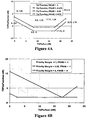
- FIG 4A shows a conventional T2PUpFunction (measured in decibels) that is determined as a function of the T2PInflow (measured in decibels) and values of the Filtered Reverse Activity Bits (FRAB), which may be provided by the access network.
- the T2PInflow is a measure of resource provision granted periodically in a mobile unit's media access control algorithm.
- the T2PUpFunction is a three dimension function of T2PInflow values and FRAB value.
- Figure 4B shows one exemplary embodiment of a T2PUpFunction (measured in decibels) that is determined based upon the T2PInflow (measured in decibels), values of the Filtered Reverse Activity Bits, and the priority weight that is assigned to the mobile unit.
- the T2PUpFunction for each priority weight is a three dimension function of T2PInflow values and FRAB value.
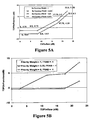
- FIG. 5A shows a conventional T2PDnFunction (measured in decibels) that is determined as a function of the T2PInflow (measured in decibels) and values of the Filtered Reverse Activity Bits (FRAB), which may be provided by the access network.
- the T2PDnFunction is a three dimension function of T2PInflow values and FRAB value.
- Figure 5B shows one exemplary embodiment of a T2PDnFunction (measured in decibels) that is determined based upon the T2PInflow (measured in decibels), values of the Filtered Reverse Activity Bits, and the priority weight that is assigned to the mobile unit.
- the T2PDnFunction for each priority weight is a three dimension function of T2PInflow values and FRAB value.
- FIG. 6A shows a conventional priority function T2PPriorityFunction (measured in decibels) that is determined as a function of the T2PInflow (measured in decibels) and values of the Filtered Reverse Activity Bits (FRAB), which may be provided by the access network.
- the T2PPriorityFunciion is a three dimension function of T2PInflow values and FRAB value.
- Figure 6B shows one exemplary embodiment of a T2PPriorityFunction (measured in decibels) that is determined based upon the T2PInflow (measured in decibels), values of the Filtered Reverse Activity Bits, and the priority weight that is assigned to the mobile unit.
- the T2PPriorityFunction for each priority weight is a three dimension function of T2PInflow values and FRAB value.
- the access network 210 implements a Priority Average Throughput Algorithm 215 to calculate the value of the T2PTransitionFunction for each mobile unit as a function of the priority weight assigned to each mobile unit.
- the algorithm produces a new T2PTransitionFunction (e.g., the T2PUpFunction and T2PDnFunction shown in Figure 4A/4B and 5A/5B ) by shifting the reference T2PPrioriryFunction (e.g., the T2PPriorityFunction shown in Figure 6A ) by a factor of 10*log (priority_weight/priority_weight_ref) along the x-axis.
- the value of the parameter priority_weight is the priority weight of the user in consideration and the value of the parameter priority_weight ref is the priority weight of the reference.
- a set of boundary conditions may be checked in order to make sure that the new function falls into the correct operation range. Other boundary conditions may also be checked.
- T2PTransitionFunction may be expressed in the following notation:
- n NumFRABAxisvalues (the total number of FRAB axis values then is n+1)
- m NumT2PAxisValues (the total number of T2P axis values then is m+1)
- the inputs to the algorithm are: m , n, w, w ref , ⁇ x i ⁇ , ⁇ a i,j ⁇ , ⁇ b i,j ⁇ , and the outputs from the algorithm are: m ⁇ , ⁇ x i ⁇ , ⁇ â i,j ⁇ , ⁇ b ⁇ i,j ⁇ .
- the algorithm contains the following steps in sequence. The double slash "//" is used to mark the code comments.
- a Maximum Throughput Limit Algorithm may be used to set parameters indicating the maximum throughput for each mobile unit as a function of the available reverse link bandwidth (RL_BE_Bandwidth). For example, parameters indicative of the maximum throughput may be determined in a 1xEVDO Rev A system that allocates the resource domain of T2P.
- the maximum throughput may be set by projecting the throughput limit onto the resource domain of the system. This resource limit may then be imposed upon the resource utilization of individual users.
- the access network may calculate the corresponding T2PInflow limit, which can be represented as the attribute T2PInflowRange and/or T2PInflowMax, by multiplying the throughput limit (in kbps) with the T2P consumed per kbps transmission, where the T2P consumed per kbps can be obtained from link level performance results.
- a set of boundary condition may also be checked to make sure the T2PInflowRange and/or T2PInflowMax falls into the selected range.
- a maximum user throughput limit algorithm uses a conversion factor to determine the value of the attribute T2PInflowMax.
- the maximum throughput limit algorithm uses the value of the RL_BE_Bandwidth (in unit of kbps), which represents the maximum user throughput limit defined by service providers.
- this exemplary maximum throughput limit algorithm is intended to be illustrative and not to limit the present invention.
- Different throughput limits may be assigned to different priority weights and the maximum throughput algorithm may then be invoked to calculate the value of T2PInflowMax corresponding to each of the throughput limits.
- the access network may then transmit information indicating the maximum throughput (e.g ., information indicating the value of T2PInflowRange and/or T2PInflowMax corresponding to the mobile unit's priority weight) as part of the configuration information transmitted to the mobile unit.
- the mobile unit can automatically limit the value of T2PInflow value to be less than or equal to T2PInflowMax and/or within the range indicated by T2PInflowRange.
- FIG. 3 conceptually illustrates one exemplary embodiment of a signaling flow 300 used in the resource allocation for uplink transmission.
- an access network 305 implements algorithms that are used to calculate the attributes T2PTransitionFunction and/or T2PInflowRange based on a priority weights and/or throughput limits associated with one or more access terminals 310, as discussed herein. These attributes may then be transmitted to the access terminals 310 as part of the configuration signaling that is communicated between the access network 305 and the access terminal 310. For example, the configuration signaling may be transmitted over a signaling channel of the downlink.
- the access network 305 may broadcast congestion information to the access terminals 310.
- the access network 305 may broadcast a binary "0" when the access network 305 is not congested and the access network 305 may broadcast a binary "1" when the access network 305 is congested, e.g., as a result of a large amount of traffic and/or a large number of access terminals 310 accessing the wireless communication system via the access network 305.
- Congestion information may be broadcast on relatively short time scales. For example, conventional access networks 305 may broadcast congestion information approximately every millisecond. The relatively short time period between successive transmissions of congestion information implies that the wireless communication system converges to a stable configuration on a relatively short time scale, e.g., much less than approximately I second.
- the access terminal 310 can allocate resources based on these functions and the received congestion information.
- the access terminals 310 receive congestion information transmitted by the access network 305.
- the access terminals 310 calculate the current allowable T2P resource based on the network's congestion feedback.
- the allowable T2P resource may be a function of the current T2PInflow value and the residual T2PInflow accumulated.
- access terminals 310 can increment the T2PInflow value by an amount that may be calculated based on the T2PUpFunction corresponding to the assigned priority weight, inputs from the long term average of the network loading ( e.g., as indicated by the FRAB values) and the current T2PInflow value. Conversely, when the network is congested, the access terminals 310 may decrement the T2PInflow value by an amount that is calculated based on the T2PDownFunction corresponding to the assigned priority weight, and using inputs from the long term average of the network loading ( e.g., as indicated by the FRAB values) and its current T2PInflow value.
- the access terminals 310 may then transmit information over the uplink in the reverse link traffic channel media flow using a traffic power level that is selected based upon the determined traffic-to-pilot ratio. For example, the access terminals 310 may execute a media access control algorithm to determine the packet format and/or power level that may be used to transmit the data over the uplink. The media access control algorithm may use one or more of the attributes transmitted by the access network 305 and/or the congestion information.
- the software implemented aspects of the invention are typically encoded on some form of program storage medium or implemented over some type of transmission medium.
- the program storage medium may be magnetic (e.g., a floppy disk or a hard drive) or optical (e.g., a compact disk read only memory, or "CD ROM"), and may be read only or random access.
- the transmission medium may be twisted wire pairs, coaxial cable, optical fiber, or some other suitable transmission medium known to the art. The invention is not limited by these aspects of any given implementation.
Landscapes
- Engineering & Computer Science (AREA)
- Computer Networks & Wireless Communication (AREA)
- Signal Processing (AREA)
- Mobile Radio Communication Systems (AREA)
Claims (10)
- Verfahren zur Abwendung in einem Mobilgerät (110; 310), welches für die Kommunikation mit mindestens einer Basisstation (105; 305) über eine Uplink-Verbindung (115) konfiguriert ist, umfassend:Empfangen, an dem Mobilgerät und von der Basisstation, eines ersten Attributs, weiches für ein Verkehr-zu-Pilotleistungsverhältnis indikativ ist, und von Überlastungsinformationen, wobei das erste Attribut auf der Basis eines mit einer bestmöglichen Kommunikation mit dem Mobilgerät assoziierten Prioritätsgewichtes gebildet wird; undÄndern einer Uplink-Übertragungsleistung auf der Basis des ersten Attributs und der Informationen, die für eine Überlastung an der Basisstation indikativ sind.
- Verfahren nach Anspruch 1, wobei das Empfangen des ersten Attributs das Empfangen eines ersten Attributs, welches auf der Basis eines einer Vielzahl von mit der bestmöglichen Kommunikation zwischen dem Mobilgerät und der Basisstation assoziierten Prioritätsgewichten gebildet wird, umfasst, wobei höhere Werte des Prioritätsgewichts höhere zulässige Durchsätze für Übertragungen über die Uplink-Verbindung während der bestmöglichen Kommunikation anzeigern.
- Verfahren nach Anspruch 1, wobei das Ändern der Uplink-Übertragungsleistung das Ändern eines Verhältnisses einer Uplink-Verkehrskanalleistung zu einer Pilotkanalleistung auf der Basis des ersten Attributs umfasst, und wobei das Ändern des Verhältnisses der Uplink-Verkehrskanalleistung zu der Pilotkanalleistung das Vergrößern des Verhältnisses um eine auf der Basis des aktuellen Wertes des Verhältnisses und der Informationen, die einen Langzeitmittelwert der Netzwerkauslastung angeben, bestimmte Größe umfasst.
- Verfahren nach Anspruch 1, wobei das Ändern der Uptink-Übertragungsleistung das Ändern eines Verhältnisses einer Uplink-Verkehrskanalleistung zu einer Pilotkanalleistung auf der Basis des ersten Attributs umfasst, und wobei das Ändern des Verhältnisses der Uplink-Verkehrskanalleistung zu der Pilotkanalleistung das Verringern des Verhältnisses um eine auf der Basis des aktuellen Wertes des Verhältnisses und der Informationen, die einen Langzeitmittelwert der Netzwerkauslastung angaben, bestimmte Größe umfasst.
- Verfahren nach Anspruch 1, umfassend das Empfangen, an dem Mobilgerät und von der Basisstation, eines zweiten Attributs, welches für einen mit der bestmöglichen Kommunikation assoziierten maximalen Durchsatzes indikativ ist, wobei das Ändern der Uplink-Übertragungsleistung das Ändern der Uplink-Übertragungsleistung derart, dass der Uplink-Durchsatz niedriger als der maximale Durchsatz ist oder diesem entspricht, umfasst.
- Verfahren nach Aspruch 1, umfassend das Übertragen von Informationen über die Uplink-Verbindung unter Verwendung der geänderten Uplink-Übertragungsleistung.
- Verfahren zur Abwendung in einer Basisstation (105; 305), welche für die Kommunikation mit einer Vielzahl von Mobilgeräten (110; 310) konfiguriert ist, umfassend:Bereitstellen, an ein jedes der Mobilgeräte und von der Basisstation, eines ersten Attributs, welches für ein Verkehr-zu-Pilotleistungsverhältnis indikativ ist, und von Überlastungsinformationen, wobei das erste Attribut auf der Basis mindestens eines mit der bestmöglichen Kommunikation zwischen der Basisstation und dem Mobilgerät assoziierten Prioritätsgewichts gebildet wird, undEmpfangen der Übertragung von den Mobilgeräten mit einer auf der Basis des ersten Attributs und der Informationen, die für eine Überlastung an der Basisstation indikativ sind, bestimmten Uplink-Übertragungsleistung.
- Verfahren nach Anspruch 7, wobei das Bereitstellen des ersten Attributs das Bereitstellen einer Vielzahl von ersten Attributen umfasst, wobei jedes erste Attribut auf der Basis eines einer Vielzahl von mit der bestmöglichen Kommunikation zwischen den Mobilgeräten und der Basisstation assoziierten Prioritätsgewichten gebildet wird, wobei höhere Werte des Prioritätsgewichts höhere zulässige Durchsätze für Übertragungen über die Uplink-Verbindung während der bestmöglichen Kommunikation anzeigen.
- Verfahren nach Anspruch 7, umfassend das Empfangen von Informationen, welche die Prioritätsgewichte für die Mobilgeräte angeben, wobei das Empfangen von Informationen, welche die Prioritätsgewichte für die Mobilgeräte angeben, das Empfanden von Informationen, welche Prioritätsgewichte, die derart bestimmt sind, dass die Uplink-Übertragungsleistungen für die Mobilgeräte zu ausgewählten Werten der Uplink-Übertragungsleistungen im Gleichgewicht konvergieren, anzeigen, umfasst.
- Verfahren nach Anspruch 7, umfassend das Bestimmen von zweiten Attributen, die für einen mit der bestmöglichen Kommunikation assoziierten maximalen Durchsatz indikativ sind, durch ein jedes der Vielzahl von Meßgeräten, wobei das Bestimmen der zweiten Attribute das Bestimmen eines Verhältnisses einer Verkehrskanalleistung zu einer Pilotkanalleistung, welches dem maximalen Durchsatz entspricht, umfasst, und umfassend:Bereitstellen von Informationen, die für den maximalen Durchsatz indikativ sind, an die Vielzahl von Mobilgeräten; undEmpfangen von Uplink-Übertragungen von der Vielzahl von Mobilgeräten, wobei die Uplink-Übertragungsleistung auf einen Wert, welcher niedriger als eine dem maximalen Durchsatz entsprechende Uplink-Übertragungsleistung ist oder dieser entspricht, festgelegt wird.
Applications Claiming Priority (2)
| Application Number | Priority Date | Filing Date | Title |
|---|---|---|---|
| US12/019,691 US7974197B2 (en) | 2008-01-25 | 2008-01-25 | Method of prioritizing user throughput and user throughput limits for best-effort application in cdma2000 1xEV-DO wireless communication system |
| PCT/US2009/000381 WO2009094150A2 (en) | 2008-01-25 | 2009-01-22 | Method of prioritizing user throughput and user throughput limits for best-effort application in cdma2000 1xev-do wireless communication system |
Publications (2)
| Publication Number | Publication Date |
|---|---|
| EP2238795A2 EP2238795A2 (de) | 2010-10-13 |
| EP2238795B1 true EP2238795B1 (de) | 2013-04-24 |
Family
ID=40886697
Family Applications (1)
| Application Number | Title | Priority Date | Filing Date |
|---|---|---|---|
| EP09704563.7A Not-in-force EP2238795B1 (de) | 2008-01-25 | 2009-01-22 | Verfahren zur priorisierung von benutzerdurchsatz und benutzerdurchsatzgrenzen für bestmögliche anwendung in einem drahtlosen cdma2000-1xev-do-kommunikationssystem |
Country Status (6)
| Country | Link |
|---|---|
| US (1) | US7974197B2 (de) |
| EP (1) | EP2238795B1 (de) |
| JP (1) | JP5506696B2 (de) |
| KR (1) | KR101127872B1 (de) |
| CN (1) | CN101990781A (de) |
| WO (1) | WO2009094150A2 (de) |
Families Citing this family (4)
| Publication number | Priority date | Publication date | Assignee | Title |
|---|---|---|---|---|
| US8526468B1 (en) * | 2009-03-16 | 2013-09-03 | Sprint Spectrum L.P. | Method and system for quality-of-service-differentiated reverse activity bit |
| US8611239B2 (en) * | 2009-05-22 | 2013-12-17 | Qualcomm Incorporated | Distributed computation of common normalization constant for quantized best effort traffic priority |
| US9042311B2 (en) * | 2010-03-05 | 2015-05-26 | Intel Corporation | Techniques for evaluation and improvement of user experience for applications in mobile wireless networks |
| EP3794802A4 (de) * | 2018-06-06 | 2021-05-19 | Huawei Technologies Co., Ltd. | System und verfahren zur steuerung von verwaltungsoperationen und gemeinsam genutztem speicherplatz für einen mandantenfähigen cachedienst in cloud-computing |
Family Cites Families (9)
| Publication number | Priority date | Publication date | Assignee | Title |
|---|---|---|---|---|
| US7283482B2 (en) * | 2001-08-14 | 2007-10-16 | Samsung Electronics Co., Ltd. | Reverse data transmission apparatus and method in a mobile communication system |
| US9629030B2 (en) * | 2003-10-14 | 2017-04-18 | Qualcomm Incorporated | Data rate control in soft handoff and during cell-switching |
| US9277455B2 (en) | 2005-05-04 | 2016-03-01 | Alcatel Lucent | Flow-based call admission control for wireless communication systems |
| US20090103507A1 (en) * | 2005-05-11 | 2009-04-23 | Jian Gu | Method, Apparatus and Computer Program Product to Provide Enhanced Reverse Link Medium Access Control in a Multi-Carrier Wireless Communications System |
| US20070070894A1 (en) * | 2005-09-26 | 2007-03-29 | Fan Wang | Method to determine a scheduling priority value for a user data connection based on a quality of service requirement |
| US9955438B2 (en) | 2005-09-27 | 2018-04-24 | Qualcomm Incorporated | Method and apparatus for carrier allocation and management in multi-carrier communication systems |
| KR100800863B1 (ko) * | 2005-10-27 | 2008-02-04 | 삼성전자주식회사 | 무선 이동 통신 시스템에서 상향링크 우선 순위 결정 장치및 방법 |
| US8712460B2 (en) * | 2006-02-17 | 2014-04-29 | Alcatel Lucent | Methods of reverse link power control |
| US8005041B2 (en) * | 2006-05-08 | 2011-08-23 | Ipwireless, Inc. | Wireless communication system, apparatus for supporting data flow and method therefor |
-
2008
- 2008-01-25 US US12/019,691 patent/US7974197B2/en active Active
-
2009
- 2009-01-22 KR KR1020107018684A patent/KR101127872B1/ko not_active Expired - Fee Related
- 2009-01-22 CN CN2009801031358A patent/CN101990781A/zh active Pending
- 2009-01-22 JP JP2010544323A patent/JP5506696B2/ja not_active Expired - Fee Related
- 2009-01-22 EP EP09704563.7A patent/EP2238795B1/de not_active Not-in-force
- 2009-01-22 WO PCT/US2009/000381 patent/WO2009094150A2/en not_active Ceased
Also Published As
| Publication number | Publication date |
|---|---|
| US20090190475A1 (en) | 2009-07-30 |
| CN101990781A (zh) | 2011-03-23 |
| KR101127872B1 (ko) | 2012-03-22 |
| JP2011514034A (ja) | 2011-04-28 |
| WO2009094150A2 (en) | 2009-07-30 |
| JP5506696B2 (ja) | 2014-05-28 |
| WO2009094150A3 (en) | 2009-09-24 |
| EP2238795A2 (de) | 2010-10-13 |
| US7974197B2 (en) | 2011-07-05 |
| KR20100114096A (ko) | 2010-10-22 |
Similar Documents
| Publication | Publication Date | Title |
|---|---|---|
| EP2612534B1 (de) | Terminplanung für mehrere benutzer auf einem gemeinsam genutzten kommunikationskanal in einem drahtlosen kommunikationssystem | |
| KR100896156B1 (ko) | 통신 시스템의 송신 제어 방법 및 장치 | |
| US8036675B2 (en) | Load balancing in wireless networks | |
| US9826409B2 (en) | Adaptive semi-static interference avoidance in cellular networks | |
| Seo et al. | A proportional-fair power allocation scheme for fair and efficient multiuser OFDM systems | |
| US7835298B2 (en) | Method and system for optimal allocation of bandwidth and power resources to OFDMA VoIP channels | |
| KR101990827B1 (ko) | 무선통신 시스템에서 동적 상향링크 자원 할당 방법 및 장치 | |
| JP2011512728A (ja) | セル間干渉を軽減するための方法およびシステム | |
| CN101421938A (zh) | 在多用户无线通信网络中使用时域和频域中的均衡公平调度的业务量负荷相关的功率分配 | |
| US8046019B2 (en) | Method and system for optimal allocation of uplink transmission power in communication networks | |
| Karl | Comparison of heuristic and optimal subcarrier assignment algorithms | |
| US8107425B2 (en) | Radio quality based channel resource management | |
| Panno et al. | An enhanced joint scheduling scheme for GBR and non-GBR services in 5G RAN | |
| WO2008035840A2 (en) | Apparatus and method for fairly allocating resources in band amc mode of wideband wireless access system | |
| EP2238795B1 (de) | Verfahren zur priorisierung von benutzerdurchsatz und benutzerdurchsatzgrenzen für bestmögliche anwendung in einem drahtlosen cdma2000-1xev-do-kommunikationssystem | |
| EP2533558A1 (de) | Bandbreiteneinstellungsverfahren, kommunikationsvorrichtung und bandbreiteneinstellungsvorrichtung | |
| Capozzi et al. | UTRAN LTE downlink system performance under realistic control channel constraints | |
| La et al. | A game theoretic distributed dynamic channel allocation scheme with transmission option | |
| Hosein | On the optimal allocation of downlink resources in OFDM-based wireless networks | |
| US20260122666A1 (en) | Scheduling of prioritized signals when using radio power overbooking | |
| AU2001249379A1 (en) | Method and apparatus for controlling transmissions of a communications system |
Legal Events
| Date | Code | Title | Description |
|---|---|---|---|
| PUAI | Public reference made under article 153(3) epc to a published international application that has entered the european phase |
Free format text: ORIGINAL CODE: 0009012 |
|
| 17P | Request for examination filed |
Effective date: 20100825 |
|
| AK | Designated contracting states |
Kind code of ref document: A2 Designated state(s): AT BE BG CH CY CZ DE DK EE ES FI FR GB GR HR HU IE IS IT LI LT LU LV MC MK MT NL NO PL PT RO SE SI SK TR |
|
| AX | Request for extension of the european patent |
Extension state: AL BA RS |
|
| 17Q | First examination report despatched |
Effective date: 20110111 |
|
| DAX | Request for extension of the european patent (deleted) | ||
| GRAP | Despatch of communication of intention to grant a patent |
Free format text: ORIGINAL CODE: EPIDOSNIGR1 |
|
| GRAS | Grant fee paid |
Free format text: ORIGINAL CODE: EPIDOSNIGR3 |
|
| RAP1 | Party data changed (applicant data changed or rights of an application transferred) |
Owner name: ALCATEL LUCENT |
|
| GRAP | Despatch of communication of intention to grant a patent |
Free format text: ORIGINAL CODE: EPIDOSNIGR1 |
|
| GRAA | (expected) grant |
Free format text: ORIGINAL CODE: 0009210 |
|
| AK | Designated contracting states |
Kind code of ref document: B1 Designated state(s): AT BE BG CH CY CZ DE DK EE ES FI FR GB GR HR HU IE IS IT LI LT LU LV MC MK MT NL NO PL PT RO SE SI SK TR |
|
| REG | Reference to a national code |
Ref country code: GB Ref legal event code: FG4D |
|
| REG | Reference to a national code |
Ref country code: CH Ref legal event code: EP |
|
| REG | Reference to a national code |
Ref country code: AT Ref legal event code: REF Ref document number: 609239 Country of ref document: AT Kind code of ref document: T Effective date: 20130515 |
|
| REG | Reference to a national code |
Ref country code: IE Ref legal event code: FG4D |
|
| REG | Reference to a national code |
Ref country code: DE Ref legal event code: R096 Ref document number: 602009015197 Country of ref document: DE Effective date: 20130620 |
|
| REG | Reference to a national code |
Ref country code: FR Ref legal event code: GC Effective date: 20130802 |
|
| REG | Reference to a national code |
Ref country code: AT Ref legal event code: MK05 Ref document number: 609239 Country of ref document: AT Kind code of ref document: T Effective date: 20130424 |
|
| REG | Reference to a national code |
Ref country code: LT Ref legal event code: MG4D |
|
| 111Z | Information provided on other rights and legal means of execution |
Free format text: AT BE BG CH CY CZ DE DK EE ES FI FR GB GR HR HU IE IS IT LI LT LU LV MC MK MT NL NO PL PT RO SE SI SK TR Effective date: 20130410 |
|
| REG | Reference to a national code |
Ref country code: NL Ref legal event code: VDEP Effective date: 20130424 |
|
| REG | Reference to a national code |
Ref country code: GB Ref legal event code: 732E Free format text: REGISTERED BETWEEN 20130919 AND 20130925 |
|
| PG25 | Lapsed in a contracting state [announced via postgrant information from national office to epo] |
Ref country code: PT Free format text: LAPSE BECAUSE OF FAILURE TO SUBMIT A TRANSLATION OF THE DESCRIPTION OR TO PAY THE FEE WITHIN THE PRESCRIBED TIME-LIMIT Effective date: 20130826 Ref country code: IS Free format text: LAPSE BECAUSE OF FAILURE TO SUBMIT A TRANSLATION OF THE DESCRIPTION OR TO PAY THE FEE WITHIN THE PRESCRIBED TIME-LIMIT Effective date: 20130824 Ref country code: FI Free format text: LAPSE BECAUSE OF FAILURE TO SUBMIT A TRANSLATION OF THE DESCRIPTION OR TO PAY THE FEE WITHIN THE PRESCRIBED TIME-LIMIT Effective date: 20130424 Ref country code: SI Free format text: LAPSE BECAUSE OF FAILURE TO SUBMIT A TRANSLATION OF THE DESCRIPTION OR TO PAY THE FEE WITHIN THE PRESCRIBED TIME-LIMIT Effective date: 20130424 Ref country code: BE Free format text: LAPSE BECAUSE OF FAILURE TO SUBMIT A TRANSLATION OF THE DESCRIPTION OR TO PAY THE FEE WITHIN THE PRESCRIBED TIME-LIMIT Effective date: 20130424 Ref country code: SE Free format text: LAPSE BECAUSE OF FAILURE TO SUBMIT A TRANSLATION OF THE DESCRIPTION OR TO PAY THE FEE WITHIN THE PRESCRIBED TIME-LIMIT Effective date: 20130424 Ref country code: LT Free format text: LAPSE BECAUSE OF FAILURE TO SUBMIT A TRANSLATION OF THE DESCRIPTION OR TO PAY THE FEE WITHIN THE PRESCRIBED TIME-LIMIT Effective date: 20130424 Ref country code: ES Free format text: LAPSE BECAUSE OF FAILURE TO SUBMIT A TRANSLATION OF THE DESCRIPTION OR TO PAY THE FEE WITHIN THE PRESCRIBED TIME-LIMIT Effective date: 20130804 Ref country code: GR Free format text: LAPSE BECAUSE OF FAILURE TO SUBMIT A TRANSLATION OF THE DESCRIPTION OR TO PAY THE FEE WITHIN THE PRESCRIBED TIME-LIMIT Effective date: 20130725 Ref country code: AT Free format text: LAPSE BECAUSE OF FAILURE TO SUBMIT A TRANSLATION OF THE DESCRIPTION OR TO PAY THE FEE WITHIN THE PRESCRIBED TIME-LIMIT Effective date: 20130424 Ref country code: NO Free format text: LAPSE BECAUSE OF FAILURE TO SUBMIT A TRANSLATION OF THE DESCRIPTION OR TO PAY THE FEE WITHIN THE PRESCRIBED TIME-LIMIT Effective date: 20130724 |
|
| PG25 | Lapsed in a contracting state [announced via postgrant information from national office to epo] |
Ref country code: LV Free format text: LAPSE BECAUSE OF FAILURE TO SUBMIT A TRANSLATION OF THE DESCRIPTION OR TO PAY THE FEE WITHIN THE PRESCRIBED TIME-LIMIT Effective date: 20130424 Ref country code: CY Free format text: LAPSE BECAUSE OF FAILURE TO SUBMIT A TRANSLATION OF THE DESCRIPTION OR TO PAY THE FEE WITHIN THE PRESCRIBED TIME-LIMIT Effective date: 20130424 Ref country code: HR Free format text: LAPSE BECAUSE OF FAILURE TO SUBMIT A TRANSLATION OF THE DESCRIPTION OR TO PAY THE FEE WITHIN THE PRESCRIBED TIME-LIMIT Effective date: 20130424 Ref country code: PL Free format text: LAPSE BECAUSE OF FAILURE TO SUBMIT A TRANSLATION OF THE DESCRIPTION OR TO PAY THE FEE WITHIN THE PRESCRIBED TIME-LIMIT Effective date: 20130424 Ref country code: BG Free format text: LAPSE BECAUSE OF FAILURE TO SUBMIT A TRANSLATION OF THE DESCRIPTION OR TO PAY THE FEE WITHIN THE PRESCRIBED TIME-LIMIT Effective date: 20130724 |
|
| PG25 | Lapsed in a contracting state [announced via postgrant information from national office to epo] |
Ref country code: CZ Free format text: LAPSE BECAUSE OF FAILURE TO SUBMIT A TRANSLATION OF THE DESCRIPTION OR TO PAY THE FEE WITHIN THE PRESCRIBED TIME-LIMIT Effective date: 20130424 Ref country code: EE Free format text: LAPSE BECAUSE OF FAILURE TO SUBMIT A TRANSLATION OF THE DESCRIPTION OR TO PAY THE FEE WITHIN THE PRESCRIBED TIME-LIMIT Effective date: 20130424 Ref country code: DK Free format text: LAPSE BECAUSE OF FAILURE TO SUBMIT A TRANSLATION OF THE DESCRIPTION OR TO PAY THE FEE WITHIN THE PRESCRIBED TIME-LIMIT Effective date: 20130424 Ref country code: SK Free format text: LAPSE BECAUSE OF FAILURE TO SUBMIT A TRANSLATION OF THE DESCRIPTION OR TO PAY THE FEE WITHIN THE PRESCRIBED TIME-LIMIT Effective date: 20130424 |
|
| PG25 | Lapsed in a contracting state [announced via postgrant information from national office to epo] |
Ref country code: IT Free format text: LAPSE BECAUSE OF FAILURE TO SUBMIT A TRANSLATION OF THE DESCRIPTION OR TO PAY THE FEE WITHIN THE PRESCRIBED TIME-LIMIT Effective date: 20130424 Ref country code: RO Free format text: LAPSE BECAUSE OF FAILURE TO SUBMIT A TRANSLATION OF THE DESCRIPTION OR TO PAY THE FEE WITHIN THE PRESCRIBED TIME-LIMIT Effective date: 20130424 Ref country code: NL Free format text: LAPSE BECAUSE OF FAILURE TO SUBMIT A TRANSLATION OF THE DESCRIPTION OR TO PAY THE FEE WITHIN THE PRESCRIBED TIME-LIMIT Effective date: 20130424 |
|
| PLBE | No opposition filed within time limit |
Free format text: ORIGINAL CODE: 0009261 |
|
| STAA | Information on the status of an ep patent application or granted ep patent |
Free format text: STATUS: NO OPPOSITION FILED WITHIN TIME LIMIT |
|
| 26N | No opposition filed |
Effective date: 20140127 |
|
| REG | Reference to a national code |
Ref country code: DE Ref legal event code: R097 Ref document number: 602009015197 Country of ref document: DE Effective date: 20140127 |
|
| REG | Reference to a national code |
Ref country code: CH Ref legal event code: PCOW Free format text: NEW ADDRESS: 148/152 ROUTE DE LA REINE, 92100 BOULOGNE-BILLANCOURT (FR) |
|
| PG25 | Lapsed in a contracting state [announced via postgrant information from national office to epo] |
Ref country code: LU Free format text: LAPSE BECAUSE OF FAILURE TO SUBMIT A TRANSLATION OF THE DESCRIPTION OR TO PAY THE FEE WITHIN THE PRESCRIBED TIME-LIMIT Effective date: 20140122 Ref country code: MC Free format text: LAPSE BECAUSE OF FAILURE TO SUBMIT A TRANSLATION OF THE DESCRIPTION OR TO PAY THE FEE WITHIN THE PRESCRIBED TIME-LIMIT Effective date: 20130424 |
|
| REG | Reference to a national code |
Ref country code: CH Ref legal event code: PL |
|
| PG25 | Lapsed in a contracting state [announced via postgrant information from national office to epo] |
Ref country code: LI Free format text: LAPSE BECAUSE OF NON-PAYMENT OF DUE FEES Effective date: 20140131 Ref country code: CH Free format text: LAPSE BECAUSE OF NON-PAYMENT OF DUE FEES Effective date: 20140131 |
|
| REG | Reference to a national code |
Ref country code: IE Ref legal event code: MM4A |
|
| REG | Reference to a national code |
Ref country code: FR Ref legal event code: PLFP Year of fee payment: 7 |
|
| PG25 | Lapsed in a contracting state [announced via postgrant information from national office to epo] |
Ref country code: IE Free format text: LAPSE BECAUSE OF NON-PAYMENT OF DUE FEES Effective date: 20140122 |
|
| REG | Reference to a national code |
Ref country code: FR Ref legal event code: PLFP Year of fee payment: 8 |
|
| PG25 | Lapsed in a contracting state [announced via postgrant information from national office to epo] |
Ref country code: MT Free format text: LAPSE BECAUSE OF FAILURE TO SUBMIT A TRANSLATION OF THE DESCRIPTION OR TO PAY THE FEE WITHIN THE PRESCRIBED TIME-LIMIT Effective date: 20130424 |
|
| PG25 | Lapsed in a contracting state [announced via postgrant information from national office to epo] |
Ref country code: HU Free format text: LAPSE BECAUSE OF FAILURE TO SUBMIT A TRANSLATION OF THE DESCRIPTION OR TO PAY THE FEE WITHIN THE PRESCRIBED TIME-LIMIT; INVALID AB INITIO Effective date: 20090122 Ref country code: TR Free format text: LAPSE BECAUSE OF FAILURE TO SUBMIT A TRANSLATION OF THE DESCRIPTION OR TO PAY THE FEE WITHIN THE PRESCRIBED TIME-LIMIT Effective date: 20130424 |
|
| REG | Reference to a national code |
Ref country code: FR Ref legal event code: PLFP Year of fee payment: 9 |
|
| PGFP | Annual fee paid to national office [announced via postgrant information from national office to epo] |
Ref country code: DE Payment date: 20170120 Year of fee payment: 9 Ref country code: FR Payment date: 20170120 Year of fee payment: 9 |
|
| PGFP | Annual fee paid to national office [announced via postgrant information from national office to epo] |
Ref country code: GB Payment date: 20170119 Year of fee payment: 9 |
|
| PG25 | Lapsed in a contracting state [announced via postgrant information from national office to epo] |
Ref country code: MK Free format text: LAPSE BECAUSE OF FAILURE TO SUBMIT A TRANSLATION OF THE DESCRIPTION OR TO PAY THE FEE WITHIN THE PRESCRIBED TIME-LIMIT Effective date: 20130424 |
|
| REG | Reference to a national code |
Ref country code: DE Ref legal event code: R119 Ref document number: 602009015197 Country of ref document: DE |
|
| GBPC | Gb: european patent ceased through non-payment of renewal fee |
Effective date: 20180122 |
|
| PG25 | Lapsed in a contracting state [announced via postgrant information from national office to epo] |
Ref country code: DE Free format text: LAPSE BECAUSE OF NON-PAYMENT OF DUE FEES Effective date: 20180801 Ref country code: FR Free format text: LAPSE BECAUSE OF NON-PAYMENT OF DUE FEES Effective date: 20180131 |
|
| REG | Reference to a national code |
Ref country code: FR Ref legal event code: ST Effective date: 20180928 |
|
| PG25 | Lapsed in a contracting state [announced via postgrant information from national office to epo] |
Ref country code: GB Free format text: LAPSE BECAUSE OF NON-PAYMENT OF DUE FEES Effective date: 20180122 |