EP2238254B1 - Method for protecting plants from stress and senescence - Google Patents
Method for protecting plants from stress and senescence Download PDFInfo
- Publication number
- EP2238254B1 EP2238254B1 EP09705862.2A EP09705862A EP2238254B1 EP 2238254 B1 EP2238254 B1 EP 2238254B1 EP 09705862 A EP09705862 A EP 09705862A EP 2238254 B1 EP2238254 B1 EP 2238254B1
- Authority
- EP
- European Patent Office
- Prior art keywords
- plant
- dark
- plants
- senescence
- stress
- Prior art date
- Legal status (The legal status is an assumption and is not a legal conclusion. Google has not performed a legal analysis and makes no representation as to the accuracy of the status listed.)
- Not-in-force
Links
- 230000035882 stress Effects 0.000 title claims description 74
- 230000009758 senescence Effects 0.000 title claims description 73
- 238000000034 method Methods 0.000 title claims description 63
- 241000196324 Embryophyta Species 0.000 claims description 206
- POJWUDADGALRAB-UHFFFAOYSA-N allantoin Chemical compound NC(=O)NC1NC(=O)NC1=O POJWUDADGALRAB-UHFFFAOYSA-N 0.000 claims description 138
- 150000007945 N-acyl ureas Chemical class 0.000 claims description 100
- 108010093894 Xanthine oxidase Proteins 0.000 claims description 84
- 108010091383 Xanthine dehydrogenase Proteins 0.000 claims description 77
- 102000005773 Xanthine dehydrogenase Human genes 0.000 claims description 77
- POJWUDADGALRAB-PVQJCKRUSA-N Allantoin Natural products NC(=O)N[C@@H]1NC(=O)NC1=O POJWUDADGALRAB-PVQJCKRUSA-N 0.000 claims description 69
- 229960000458 allantoin Drugs 0.000 claims description 69
- 229930002875 chlorophyll Natural products 0.000 claims description 50
- 235000019804 chlorophyll Nutrition 0.000 claims description 50
- ATNHDLDRLWWWCB-AENOIHSZSA-M chlorophyll a Chemical compound C1([C@@H](C(=O)OC)C(=O)C2=C3C)=C2N2C3=CC(C(CC)=C3C)=[N+]4C3=CC3=C(C=C)C(C)=C5N3[Mg-2]42[N+]2=C1[C@@H](CCC(=O)OC\C=C(/C)CCC[C@H](C)CCC[C@H](C)CCCC(C)C)[C@H](C)C2=C5 ATNHDLDRLWWWCB-AENOIHSZSA-M 0.000 claims description 50
- 230000015556 catabolic process Effects 0.000 claims description 46
- 230000014509 gene expression Effects 0.000 claims description 35
- 230000008569 process Effects 0.000 claims description 34
- 238000006731 degradation reaction Methods 0.000 claims description 32
- 230000009261 transgenic effect Effects 0.000 claims description 22
- 239000000203 mixture Substances 0.000 claims description 21
- 102000004190 Enzymes Human genes 0.000 claims description 19
- 108090000790 Enzymes Proteins 0.000 claims description 19
- 229940088598 enzyme Drugs 0.000 claims description 19
- 101710163573 5-hydroxyisourate hydrolase Proteins 0.000 claims description 17
- 108010092464 Urate Oxidase Proteins 0.000 claims description 17
- 230000002028 premature Effects 0.000 claims description 17
- 229940005267 urate oxidase Drugs 0.000 claims description 16
- 102000006267 AMP Deaminase Human genes 0.000 claims description 15
- 108700016228 AMP deaminases Proteins 0.000 claims description 15
- 230000001965 increasing effect Effects 0.000 claims description 15
- 108010049381 Allantoicase Proteins 0.000 claims description 13
- 102000006673 Allantoicase Human genes 0.000 claims description 13
- 108010007828 Allantoinase Proteins 0.000 claims description 13
- 230000036542 oxidative stress Effects 0.000 claims description 11
- 230000037361 pathway Effects 0.000 claims description 9
- 108091033319 polynucleotide Proteins 0.000 claims description 9
- 102000040430 polynucleotide Human genes 0.000 claims description 9
- 239000002157 polynucleotide Substances 0.000 claims description 9
- 230000007423 decrease Effects 0.000 claims description 6
- 235000013399 edible fruits Nutrition 0.000 claims description 4
- 235000013311 vegetables Nutrition 0.000 claims description 4
- 238000005507 spraying Methods 0.000 claims description 3
- LRFVTYWOQMYALW-UHFFFAOYSA-N 9H-xanthine Chemical compound O=C1NC(=O)NC2=C1NC=N2 LRFVTYWOQMYALW-UHFFFAOYSA-N 0.000 description 94
- 230000000694 effects Effects 0.000 description 50
- KDCGOANMDULRCW-UHFFFAOYSA-N 7H-purine Chemical compound N1=CNC2=NC=NC2=C1 KDCGOANMDULRCW-UHFFFAOYSA-N 0.000 description 48
- 229940075420 xanthine Drugs 0.000 description 47
- 238000011282 treatment Methods 0.000 description 39
- 108020004414 DNA Proteins 0.000 description 36
- FDGQSTZJBFJUBT-UHFFFAOYSA-N hypoxanthine Chemical compound O=C1NC=NC2=C1NC=N2 FDGQSTZJBFJUBT-UHFFFAOYSA-N 0.000 description 36
- 238000009825 accumulation Methods 0.000 description 30
- 101710191769 Xanthine dehydrogenase 1 Proteins 0.000 description 28
- 238000011084 recovery Methods 0.000 description 28
- 108090000623 proteins and genes Proteins 0.000 description 26
- 230000001010 compromised effect Effects 0.000 description 25
- 238000004519 manufacturing process Methods 0.000 description 24
- 241000219194 Arabidopsis Species 0.000 description 23
- 239000003642 reactive oxygen metabolite Substances 0.000 description 21
- UGQMRVRMYYASKQ-UHFFFAOYSA-N Hypoxanthine nucleoside Natural products OC1C(O)C(CO)OC1N1C(NC=NC2=O)=C2N=C1 UGQMRVRMYYASKQ-UHFFFAOYSA-N 0.000 description 18
- 230000009368 gene silencing by RNA Effects 0.000 description 18
- 230000002441 reversible effect Effects 0.000 description 18
- 238000012228 RNA interference-mediated gene silencing Methods 0.000 description 17
- 230000001419 dependent effect Effects 0.000 description 17
- 230000004044 response Effects 0.000 description 16
- OUUQCZGPVNCOIJ-UHFFFAOYSA-M Superoxide Chemical compound [O-][O] OUUQCZGPVNCOIJ-UHFFFAOYSA-M 0.000 description 15
- 238000010186 staining Methods 0.000 description 15
- 210000004027 cell Anatomy 0.000 description 14
- LFQSCWFLJHTTHZ-UHFFFAOYSA-N Ethanol Chemical compound CCO LFQSCWFLJHTTHZ-UHFFFAOYSA-N 0.000 description 12
- 230000006378 damage Effects 0.000 description 12
- JPXMTWWFLBLUCD-UHFFFAOYSA-N nitro blue tetrazolium(2+) Chemical compound COC1=CC(C=2C=C(OC)C(=CC=2)[N+]=2N(N=C(N=2)C=2C=CC=CC=2)C=2C=CC(=CC=2)[N+]([O-])=O)=CC=C1[N+]1=NC(C=2C=CC=CC=2)=NN1C1=CC=C([N+]([O-])=O)C=C1 JPXMTWWFLBLUCD-UHFFFAOYSA-N 0.000 description 12
- OFCNXPDARWKPPY-UHFFFAOYSA-N allopurinol Chemical compound OC1=NC=NC2=C1C=NN2 OFCNXPDARWKPPY-UHFFFAOYSA-N 0.000 description 11
- 229960003459 allopurinol Drugs 0.000 description 11
- 239000002207 metabolite Substances 0.000 description 11
- 101000804779 Arabidopsis thaliana Xanthine dehydrogenase 1 Proteins 0.000 description 10
- MHAJPDPJQMAIIY-UHFFFAOYSA-N Hydrogen peroxide Chemical compound OO MHAJPDPJQMAIIY-UHFFFAOYSA-N 0.000 description 10
- 101100264131 Arabidopsis thaliana XDH2 gene Proteins 0.000 description 9
- 230000001413 cellular effect Effects 0.000 description 9
- HDAJUGGARUFROU-JSUDGWJLSA-L MoO2-molybdopterin cofactor Chemical compound O([C@H]1NC=2N=C(NC(=O)C=2N[C@H]11)N)[C@H](COP(O)(O)=O)C2=C1S[Mo](=O)(=O)S2 HDAJUGGARUFROU-JSUDGWJLSA-L 0.000 description 8
- 240000003768 Solanum lycopersicum Species 0.000 description 8
- 230000032683 aging Effects 0.000 description 8
- QFXKXRXFBRLLPQ-UHFFFAOYSA-N diphenyleneiodonium Chemical compound C1=CC=C2[I+]C3=CC=CC=C3C2=C1 QFXKXRXFBRLLPQ-UHFFFAOYSA-N 0.000 description 8
- 108010046778 molybdenum cofactor Proteins 0.000 description 8
- 235000011197 perejil Nutrition 0.000 description 8
- 238000004445 quantitative analysis Methods 0.000 description 8
- 230000004083 survival effect Effects 0.000 description 8
- 101100500643 Arabidopsis thaliana A4 gene Proteins 0.000 description 7
- 108010077524 Peptide Elongation Factor 1 Proteins 0.000 description 7
- 230000001925 catabolic effect Effects 0.000 description 7
- 238000006243 chemical reaction Methods 0.000 description 7
- 238000002474 experimental method Methods 0.000 description 7
- 229930027945 nicotinamide-adenine dinucleotide Natural products 0.000 description 7
- 230000009467 reduction Effects 0.000 description 7
- 101100317406 Arabidopsis thaliana WRKY53 gene Proteins 0.000 description 6
- 238000011529 RT qPCR Methods 0.000 description 6
- HEMHJVSKTPXQMS-UHFFFAOYSA-M Sodium hydroxide Chemical compound [OH-].[Na+] HEMHJVSKTPXQMS-UHFFFAOYSA-M 0.000 description 6
- 238000004458 analytical method Methods 0.000 description 6
- 230000030833 cell death Effects 0.000 description 6
- 239000000284 extract Substances 0.000 description 6
- 230000012010 growth Effects 0.000 description 6
- 238000003780 insertion Methods 0.000 description 6
- 230000037431 insertion Effects 0.000 description 6
- BOPGDPNILDQYTO-NNYOXOHSSA-N nicotinamide-adenine dinucleotide Chemical compound C1=CCC(C(=O)N)=CN1[C@H]1[C@H](O)[C@H](O)[C@@H](COP(O)(=O)OP(O)(=O)OC[C@@H]2[C@H]([C@@H](O)[C@@H](O2)N2C3=NC=NC(N)=C3N=C2)O)O1 BOPGDPNILDQYTO-NNYOXOHSSA-N 0.000 description 6
- 102000004169 proteins and genes Human genes 0.000 description 6
- 150000003212 purines Chemical class 0.000 description 6
- 101100540948 Arabidopsis thaliana XERO1 gene Proteins 0.000 description 5
- 235000007688 Lycopersicon esculentum Nutrition 0.000 description 5
- 241000208317 Petroselinum Species 0.000 description 5
- LEHOTFFKMJEONL-UHFFFAOYSA-N Uric Acid Chemical compound N1C(=O)NC(=O)C2=C1NC(=O)N2 LEHOTFFKMJEONL-UHFFFAOYSA-N 0.000 description 5
- 230000006978 adaptation Effects 0.000 description 5
- 230000006698 induction Effects 0.000 description 5
- 230000002829 reductive effect Effects 0.000 description 5
- 230000001105 regulatory effect Effects 0.000 description 5
- 239000000758 substrate Substances 0.000 description 5
- 238000004383 yellowing Methods 0.000 description 5
- UCTWMZQNUQWSLP-VIFPVBQESA-N (R)-adrenaline Chemical compound CNC[C@H](O)C1=CC=C(O)C(O)=C1 UCTWMZQNUQWSLP-VIFPVBQESA-N 0.000 description 4
- 229930182837 (R)-adrenaline Natural products 0.000 description 4
- QKNYBSVHEMOAJP-UHFFFAOYSA-N 2-amino-2-(hydroxymethyl)propane-1,3-diol;hydron;chloride Chemical compound Cl.OCC(N)(CO)CO QKNYBSVHEMOAJP-UHFFFAOYSA-N 0.000 description 4
- HSTOKWSFWGCZMH-UHFFFAOYSA-N 3,3'-diaminobenzidine Chemical compound C1=C(N)C(N)=CC=C1C1=CC=C(N)C(N)=C1 HSTOKWSFWGCZMH-UHFFFAOYSA-N 0.000 description 4
- 101100178213 Arabidopsis thaliana HMGB6 gene Proteins 0.000 description 4
- IJGRMHOSHXDMSA-UHFFFAOYSA-N Atomic nitrogen Chemical compound N#N IJGRMHOSHXDMSA-UHFFFAOYSA-N 0.000 description 4
- 229910015234 MoCo Inorganic materials 0.000 description 4
- 102100033220 Xanthine oxidase Human genes 0.000 description 4
- 238000003556 assay Methods 0.000 description 4
- 230000015572 biosynthetic process Effects 0.000 description 4
- 230000000875 corresponding effect Effects 0.000 description 4
- 230000007613 environmental effect Effects 0.000 description 4
- 229960005139 epinephrine Drugs 0.000 description 4
- 239000003112 inhibitor Substances 0.000 description 4
- 230000014634 leaf senescence Effects 0.000 description 4
- 230000010534 mechanism of action Effects 0.000 description 4
- 238000010606 normalization Methods 0.000 description 4
- 235000015097 nutrients Nutrition 0.000 description 4
- 230000001681 protective effect Effects 0.000 description 4
- 238000003753 real-time PCR Methods 0.000 description 4
- 230000007306 turnover Effects 0.000 description 4
- 230000003827 upregulation Effects 0.000 description 4
- NWZYYCVIOKVTII-SFOWXEAESA-N (-)-ureidoglycolic acid Chemical compound NC(=O)N[C@@H](O)C(O)=O NWZYYCVIOKVTII-SFOWXEAESA-N 0.000 description 3
- 101001098486 Arabidopsis thaliana Pheophorbide a oxygenase, chloroplastic Proteins 0.000 description 3
- 101100371686 Arabidopsis thaliana UBQ10 gene Proteins 0.000 description 3
- GRSZFWQUAKGDAV-KQYNXXCUSA-N IMP Chemical compound O[C@@H]1[C@H](O)[C@@H](COP(O)(O)=O)O[C@H]1N1C(NC=NC2=O)=C2N=C1 GRSZFWQUAKGDAV-KQYNXXCUSA-N 0.000 description 3
- 108091005804 Peptidases Proteins 0.000 description 3
- 102000010292 Peptide Elongation Factor 1 Human genes 0.000 description 3
- 240000009164 Petroselinum crispum Species 0.000 description 3
- 239000004365 Protease Substances 0.000 description 3
- 102100037486 Reverse transcriptase/ribonuclease H Human genes 0.000 description 3
- 101100098796 Solanum lycopersicum TAS14 gene Proteins 0.000 description 3
- 101150045754 aba3 gene Proteins 0.000 description 3
- 238000001514 detection method Methods 0.000 description 3
- 230000006353 environmental stress Effects 0.000 description 3
- 235000013902 inosinic acid Nutrition 0.000 description 3
- 239000003550 marker Substances 0.000 description 3
- 238000005259 measurement Methods 0.000 description 3
- 230000035772 mutation Effects 0.000 description 3
- 230000002000 scavenging effect Effects 0.000 description 3
- 238000005987 sulfurization reaction Methods 0.000 description 3
- 230000007704 transition Effects 0.000 description 3
- 108091032973 (ribonucleotides)n+m Proteins 0.000 description 2
- RLFWWDJHLFCNIJ-UHFFFAOYSA-N 4-aminoantipyrine Chemical compound CN1C(C)=C(N)C(=O)N1C1=CC=CC=C1 RLFWWDJHLFCNIJ-UHFFFAOYSA-N 0.000 description 2
- QGZKDVFQNNGYKY-UHFFFAOYSA-N Ammonia Chemical compound N QGZKDVFQNNGYKY-UHFFFAOYSA-N 0.000 description 2
- 241000219195 Arabidopsis thaliana Species 0.000 description 2
- 101100155759 Arabidopsis thaliana At2g26230 gene Proteins 0.000 description 2
- 101100439969 Arabidopsis thaliana CLPD gene Proteins 0.000 description 2
- 101001045787 Arabidopsis thaliana High mobility group B protein 6 Proteins 0.000 description 2
- 101000666249 Arabidopsis thaliana Probable WRKY transcription factor 53 Proteins 0.000 description 2
- 101100421436 Arabidopsis thaliana SGR1 gene Proteins 0.000 description 2
- 101100264129 Arabidopsis thaliana XDH1 gene Proteins 0.000 description 2
- 108700039887 Essential Genes Proteins 0.000 description 2
- 240000008415 Lactuca sativa Species 0.000 description 2
- 235000003228 Lactuca sativa Nutrition 0.000 description 2
- 101710132461 Molybdenum cofactor sulfurase Proteins 0.000 description 2
- 108010007843 NADH oxidase Proteins 0.000 description 2
- 108010002998 NADPH Oxidases Proteins 0.000 description 2
- 102000004722 NADPH Oxidases Human genes 0.000 description 2
- 240000007594 Oryza sativa Species 0.000 description 2
- AUNGANRZJHBGPY-SCRDCRAPSA-N Riboflavin Chemical compound OC[C@@H](O)[C@@H](O)[C@@H](O)CN1C=2C=C(C)C(C)=CC=2N=C2C1=NC(=O)NC2=O AUNGANRZJHBGPY-SCRDCRAPSA-N 0.000 description 2
- 244000300264 Spinacia oleracea Species 0.000 description 2
- 235000009337 Spinacia oleracea Nutrition 0.000 description 2
- GLNADSQYFUSGOU-GPTZEZBUSA-J Trypan blue Chemical compound [Na+].[Na+].[Na+].[Na+].C1=C(S([O-])(=O)=O)C=C2C=C(S([O-])(=O)=O)C(/N=N/C3=CC=C(C=C3C)C=3C=C(C(=CC=3)\N=N\C=3C(=CC4=CC(=CC(N)=C4C=3O)S([O-])(=O)=O)S([O-])(=O)=O)C)=C(O)C2=C1N GLNADSQYFUSGOU-GPTZEZBUSA-J 0.000 description 2
- XSQUKJJJFZCRTK-UHFFFAOYSA-N Urea Chemical compound NC(N)=O XSQUKJJJFZCRTK-UHFFFAOYSA-N 0.000 description 2
- 101710191768 Xanthine dehydrogenase 2 Proteins 0.000 description 2
- UDMBCSSLTHHNCD-KQYNXXCUSA-N adenosine 5'-monophosphate Chemical compound C1=NC=2C(N)=NC=NC=2N1[C@@H]1O[C@H](COP(O)(O)=O)[C@@H](O)[C@H]1O UDMBCSSLTHHNCD-KQYNXXCUSA-N 0.000 description 2
- NUCLJNSWZCHRKL-UHFFFAOYSA-N allantoic acid Chemical compound NC(=O)NC(C(O)=O)NC(N)=O NUCLJNSWZCHRKL-UHFFFAOYSA-N 0.000 description 2
- 230000027455 binding Effects 0.000 description 2
- 150000001875 compounds Chemical class 0.000 description 2
- 230000003247 decreasing effect Effects 0.000 description 2
- 230000002939 deleterious effect Effects 0.000 description 2
- 230000009977 dual effect Effects 0.000 description 2
- 101150021535 erd1 gene Proteins 0.000 description 2
- 238000003306 harvesting Methods 0.000 description 2
- 235000008216 herbs Nutrition 0.000 description 2
- 230000001771 impaired effect Effects 0.000 description 2
- 238000001727 in vivo Methods 0.000 description 2
- 235000021374 legumes Nutrition 0.000 description 2
- 239000000463 material Substances 0.000 description 2
- 230000002503 metabolic effect Effects 0.000 description 2
- 229910052757 nitrogen Inorganic materials 0.000 description 2
- 230000035790 physiological processes and functions Effects 0.000 description 2
- 239000002516 radical scavenger Substances 0.000 description 2
- 239000012429 reaction media Substances 0.000 description 2
- 208000024891 symptom Diseases 0.000 description 2
- 238000012546 transfer Methods 0.000 description 2
- 230000001052 transient effect Effects 0.000 description 2
- 108050001496 ATP-dependent Clp protease proteolytic subunit Proteins 0.000 description 1
- RPHLQSHHTJORHI-UHFFFAOYSA-N Adrenochrome Chemical compound O=C1C(=O)C=C2N(C)CC(O)C2=C1 RPHLQSHHTJORHI-UHFFFAOYSA-N 0.000 description 1
- 101100366617 Arabidopsis thaliana SRG1 gene Proteins 0.000 description 1
- 101000804837 Arabidopsis thaliana Xanthine dehydrogenase 2 Proteins 0.000 description 1
- 108010024957 Ascorbate Oxidase Proteins 0.000 description 1
- OKTJSMMVPCPJKN-UHFFFAOYSA-N Carbon Chemical compound [C] OKTJSMMVPCPJKN-UHFFFAOYSA-N 0.000 description 1
- 108010049994 Chloroplast Proteins Proteins 0.000 description 1
- UDMBCSSLTHHNCD-UHFFFAOYSA-N Coenzym Q(11) Natural products C1=NC=2C(N)=NC=NC=2N1C1OC(COP(O)(O)=O)C(O)C1O UDMBCSSLTHHNCD-UHFFFAOYSA-N 0.000 description 1
- 206010010144 Completed suicide Diseases 0.000 description 1
- MYMOFIZGZYHOMD-UHFFFAOYSA-N Dioxygen Chemical compound O=O MYMOFIZGZYHOMD-UHFFFAOYSA-N 0.000 description 1
- VGGSQFUCUMXWEO-UHFFFAOYSA-N Ethene Chemical compound C=C VGGSQFUCUMXWEO-UHFFFAOYSA-N 0.000 description 1
- 239000005977 Ethylene Substances 0.000 description 1
- CWYNVVGOOAEACU-UHFFFAOYSA-N Fe2+ Chemical compound [Fe+2] CWYNVVGOOAEACU-UHFFFAOYSA-N 0.000 description 1
- 206010021033 Hypomenorrhoea Diseases 0.000 description 1
- 102100027983 Molybdenum cofactor sulfurase Human genes 0.000 description 1
- BAWFJGJZGIEFAR-NNYOXOHSSA-O NAD(+) Chemical compound NC(=O)C1=CC=C[N+]([C@H]2[C@@H]([C@H](O)[C@@H](COP(O)(=O)OP(O)(=O)OC[C@@H]3[C@H]([C@@H](O)[C@@H](O3)N3C4=NC=NC(N)=C4N=C3)O)O2)O)=C1 BAWFJGJZGIEFAR-NNYOXOHSSA-O 0.000 description 1
- ACFIXJIJDZMPPO-NNYOXOHSSA-N NADPH Chemical compound C1=CCC(C(=O)N)=CN1[C@H]1[C@H](O)[C@H](O)[C@@H](COP(O)(=O)OP(O)(=O)OC[C@@H]2[C@H]([C@@H](OP(O)(O)=O)[C@@H](O2)N2C3=NC=NC(N)=C3N=C2)O)O1 ACFIXJIJDZMPPO-NNYOXOHSSA-N 0.000 description 1
- 235000007164 Oryza sativa Nutrition 0.000 description 1
- 241000589615 Pseudomonas syringae Species 0.000 description 1
- 101710112267 Putative ureidoglycolate lyase Proteins 0.000 description 1
- 108091030071 RNAI Proteins 0.000 description 1
- 108700005075 Regulator Genes Proteins 0.000 description 1
- 101100131035 Solanum lycopersicum FLACCA gene Proteins 0.000 description 1
- 101710151717 Stress-related protein Proteins 0.000 description 1
- NINIDFKCEFEMDL-UHFFFAOYSA-N Sulfur Chemical compound [S] NINIDFKCEFEMDL-UHFFFAOYSA-N 0.000 description 1
- 108010037119 Thiobacillus ferrooxidans iron oxidase Proteins 0.000 description 1
- 108091023040 Transcription factor Proteins 0.000 description 1
- 102000040945 Transcription factor Human genes 0.000 description 1
- TVWHNULVHGKJHS-UHFFFAOYSA-N Uric acid Natural products N1C(=O)NC(=O)C2NC(=O)NC21 TVWHNULVHGKJHS-UHFFFAOYSA-N 0.000 description 1
- CKUAXEQHGKSLHN-UHFFFAOYSA-N [C].[N] Chemical compound [C].[N] CKUAXEQHGKSLHN-UHFFFAOYSA-N 0.000 description 1
- 238000002835 absorbance Methods 0.000 description 1
- 238000000862 absorption spectrum Methods 0.000 description 1
- 230000001133 acceleration Effects 0.000 description 1
- 230000001154 acute effect Effects 0.000 description 1
- LNQVTSROQXJCDD-UHFFFAOYSA-N adenosine monophosphate Natural products C1=NC=2C(N)=NC=NC=2N1C1OC(CO)C(OP(O)(O)=O)C1O LNQVTSROQXJCDD-UHFFFAOYSA-N 0.000 description 1
- 229910021529 ammonia Inorganic materials 0.000 description 1
- QVGXLLKOCUKJST-UHFFFAOYSA-N atomic oxygen Chemical compound [O] QVGXLLKOCUKJST-UHFFFAOYSA-N 0.000 description 1
- 230000002238 attenuated effect Effects 0.000 description 1
- JXLHNMVSKXFWAO-UHFFFAOYSA-N azane;7-fluoro-2,1,3-benzoxadiazole-4-sulfonic acid Chemical compound N.OS(=O)(=O)C1=CC=C(F)C2=NON=C12 JXLHNMVSKXFWAO-UHFFFAOYSA-N 0.000 description 1
- 230000033228 biological regulation Effects 0.000 description 1
- 230000006696 biosynthetic metabolic pathway Effects 0.000 description 1
- 238000009835 boiling Methods 0.000 description 1
- 235000015155 buttermilk Nutrition 0.000 description 1
- 239000004202 carbamide Substances 0.000 description 1
- 229910052799 carbon Inorganic materials 0.000 description 1
- 230000006652 catabolic pathway Effects 0.000 description 1
- 230000008859 change Effects 0.000 description 1
- RNFNDJAIBTYOQL-UHFFFAOYSA-N chloral hydrate Chemical class OC(O)C(Cl)(Cl)Cl RNFNDJAIBTYOQL-UHFFFAOYSA-N 0.000 description 1
- 229940106705 chlorophyll Drugs 0.000 description 1
- 210000003763 chloroplast Anatomy 0.000 description 1
- 230000002596 correlated effect Effects 0.000 description 1
- 238000005520 cutting process Methods 0.000 description 1
- 230000001351 cycling effect Effects 0.000 description 1
- 230000001934 delay Effects 0.000 description 1
- 230000003111 delayed effect Effects 0.000 description 1
- 238000011161 development Methods 0.000 description 1
- 230000018109 developmental process Effects 0.000 description 1
- 229910001882 dioxygen Inorganic materials 0.000 description 1
- 238000011143 downstream manufacturing Methods 0.000 description 1
- 230000002708 enhancing effect Effects 0.000 description 1
- 230000002255 enzymatic effect Effects 0.000 description 1
- 230000003203 everyday effect Effects 0.000 description 1
- 230000002349 favourable effect Effects 0.000 description 1
- 230000004907 flux Effects 0.000 description 1
- 230000002431 foraging effect Effects 0.000 description 1
- 238000005194 fractionation Methods 0.000 description 1
- 238000001502 gel electrophoresis Methods 0.000 description 1
- 238000010353 genetic engineering Methods 0.000 description 1
- 238000010448 genetic screening Methods 0.000 description 1
- HHLFWLYXYJOTON-UHFFFAOYSA-N glyoxylic acid Chemical compound OC(=O)C=O HHLFWLYXYJOTON-UHFFFAOYSA-N 0.000 description 1
- 230000007773 growth pattern Effects 0.000 description 1
- 238000004128 high performance liquid chromatography Methods 0.000 description 1
- 230000001744 histochemical effect Effects 0.000 description 1
- 230000001900 immune effect Effects 0.000 description 1
- 230000008595 infiltration Effects 0.000 description 1
- 238000001764 infiltration Methods 0.000 description 1
- 230000005764 inhibitory process Effects 0.000 description 1
- 238000003367 kinetic assay Methods 0.000 description 1
- 239000003446 ligand Substances 0.000 description 1
- 230000000670 limiting effect Effects 0.000 description 1
- 238000012423 maintenance Methods 0.000 description 1
- 230000014759 maintenance of location Effects 0.000 description 1
- 230000001404 mediated effect Effects 0.000 description 1
- 230000004066 metabolic change Effects 0.000 description 1
- 230000037353 metabolic pathway Effects 0.000 description 1
- 230000003278 mimic effect Effects 0.000 description 1
- 230000004048 modification Effects 0.000 description 1
- 238000012986 modification Methods 0.000 description 1
- 239000002773 nucleotide Substances 0.000 description 1
- 125000003729 nucleotide group Chemical group 0.000 description 1
- 235000016709 nutrition Nutrition 0.000 description 1
- 230000003647 oxidation Effects 0.000 description 1
- 238000007254 oxidation reaction Methods 0.000 description 1
- 229910052760 oxygen Inorganic materials 0.000 description 1
- 239000001301 oxygen Substances 0.000 description 1
- HXNFUBHNUDHIGC-UHFFFAOYSA-N oxypurinol Chemical compound O=C1NC(=O)N=C2NNC=C21 HXNFUBHNUDHIGC-UHFFFAOYSA-N 0.000 description 1
- 230000036961 partial effect Effects 0.000 description 1
- 244000052769 pathogen Species 0.000 description 1
- 230000001717 pathogenic effect Effects 0.000 description 1
- 239000003415 peat Substances 0.000 description 1
- 230000000858 peroxisomal effect Effects 0.000 description 1
- 230000029553 photosynthesis Effects 0.000 description 1
- 238000010672 photosynthesis Methods 0.000 description 1
- 230000035479 physiological effects, processes and functions Effects 0.000 description 1
- 230000006461 physiological response Effects 0.000 description 1
- 230000004481 post-translational protein modification Effects 0.000 description 1
- 238000002360 preparation method Methods 0.000 description 1
- 238000004321 preservation Methods 0.000 description 1
- 238000000751 protein extraction Methods 0.000 description 1
- 230000004844 protein turnover Effects 0.000 description 1
- 230000017854 proteolysis Effects 0.000 description 1
- 230000004144 purine metabolism Effects 0.000 description 1
- 239000011541 reaction mixture Substances 0.000 description 1
- 238000004064 recycling Methods 0.000 description 1
- 230000020129 regulation of cell death Effects 0.000 description 1
- 230000022532 regulation of transcription, DNA-dependent Effects 0.000 description 1
- 238000012827 research and development Methods 0.000 description 1
- 230000011506 response to oxidative stress Effects 0.000 description 1
- 238000003757 reverse transcription PCR Methods 0.000 description 1
- 235000009566 rice Nutrition 0.000 description 1
- 239000000523 sample Substances 0.000 description 1
- 238000005070 sampling Methods 0.000 description 1
- 230000035945 sensitivity Effects 0.000 description 1
- 238000003860 storage Methods 0.000 description 1
- 229910052717 sulfur Inorganic materials 0.000 description 1
- 239000011593 sulfur Substances 0.000 description 1
- 239000000725 suspension Substances 0.000 description 1
- 230000001360 synchronised effect Effects 0.000 description 1
- 238000003786 synthesis reaction Methods 0.000 description 1
- 210000001519 tissue Anatomy 0.000 description 1
- 230000000451 tissue damage Effects 0.000 description 1
- 231100000827 tissue damage Toxicity 0.000 description 1
- 230000002103 transcriptional effect Effects 0.000 description 1
- 229960001814 trypan blue Drugs 0.000 description 1
- 238000011144 upstream manufacturing Methods 0.000 description 1
- 229940116269 uric acid Drugs 0.000 description 1
Images








Classifications
-
- A—HUMAN NECESSITIES
- A01—AGRICULTURE; FORESTRY; ANIMAL HUSBANDRY; HUNTING; TRAPPING; FISHING
- A01N—PRESERVATION OF BODIES OF HUMANS OR ANIMALS OR PLANTS OR PARTS THEREOF; BIOCIDES, e.g. AS DISINFECTANTS, AS PESTICIDES OR AS HERBICIDES; PEST REPELLANTS OR ATTRACTANTS; PLANT GROWTH REGULATORS
- A01N3/00—Preservation of plants or parts thereof, e.g. inhibiting evaporation, improvement of the appearance of leaves or protection against physical influences such as UV radiation using chemical compositions; Grafting wax
-
- A—HUMAN NECESSITIES
- A01—AGRICULTURE; FORESTRY; ANIMAL HUSBANDRY; HUNTING; TRAPPING; FISHING
- A01N—PRESERVATION OF BODIES OF HUMANS OR ANIMALS OR PLANTS OR PARTS THEREOF; BIOCIDES, e.g. AS DISINFECTANTS, AS PESTICIDES OR AS HERBICIDES; PEST REPELLANTS OR ATTRACTANTS; PLANT GROWTH REGULATORS
- A01N47/00—Biocides, pest repellants or attractants, or plant growth regulators containing organic compounds containing a carbon atom not being member of a ring and having no bond to a carbon or hydrogen atom, e.g. derivatives of carbonic acid
- A01N47/08—Biocides, pest repellants or attractants, or plant growth regulators containing organic compounds containing a carbon atom not being member of a ring and having no bond to a carbon or hydrogen atom, e.g. derivatives of carbonic acid the carbon atom having one or more single bonds to nitrogen atoms
- A01N47/28—Ureas or thioureas containing the groups >N—CO—N< or >N—CS—N<
-
- A—HUMAN NECESSITIES
- A01—AGRICULTURE; FORESTRY; ANIMAL HUSBANDRY; HUNTING; TRAPPING; FISHING
- A01N—PRESERVATION OF BODIES OF HUMANS OR ANIMALS OR PLANTS OR PARTS THEREOF; BIOCIDES, e.g. AS DISINFECTANTS, AS PESTICIDES OR AS HERBICIDES; PEST REPELLANTS OR ATTRACTANTS; PLANT GROWTH REGULATORS
- A01N43/00—Biocides, pest repellants or attractants, or plant growth regulators containing heterocyclic compounds
- A01N43/48—Biocides, pest repellants or attractants, or plant growth regulators containing heterocyclic compounds having rings with two nitrogen atoms as the only ring hetero atoms
- A01N43/50—1,3-Diazoles; Hydrogenated 1,3-diazoles
-
- A—HUMAN NECESSITIES
- A01—AGRICULTURE; FORESTRY; ANIMAL HUSBANDRY; HUNTING; TRAPPING; FISHING
- A01N—PRESERVATION OF BODIES OF HUMANS OR ANIMALS OR PLANTS OR PARTS THEREOF; BIOCIDES, e.g. AS DISINFECTANTS, AS PESTICIDES OR AS HERBICIDES; PEST REPELLANTS OR ATTRACTANTS; PLANT GROWTH REGULATORS
- A01N43/00—Biocides, pest repellants or attractants, or plant growth regulators containing heterocyclic compounds
- A01N43/90—Biocides, pest repellants or attractants, or plant growth regulators containing heterocyclic compounds having two or more relevant hetero rings, condensed among themselves or with a common carbocyclic ring system
-
- C—CHEMISTRY; METALLURGY
- C12—BIOCHEMISTRY; BEER; SPIRITS; WINE; VINEGAR; MICROBIOLOGY; ENZYMOLOGY; MUTATION OR GENETIC ENGINEERING
- C12N—MICROORGANISMS OR ENZYMES; COMPOSITIONS THEREOF; PROPAGATING, PRESERVING, OR MAINTAINING MICROORGANISMS; MUTATION OR GENETIC ENGINEERING; CULTURE MEDIA
- C12N15/00—Mutation or genetic engineering; DNA or RNA concerning genetic engineering, vectors, e.g. plasmids, or their isolation, preparation or purification; Use of hosts therefor
- C12N15/09—Recombinant DNA-technology
- C12N15/63—Introduction of foreign genetic material using vectors; Vectors; Use of hosts therefor; Regulation of expression
- C12N15/79—Vectors or expression systems specially adapted for eukaryotic hosts
- C12N15/82—Vectors or expression systems specially adapted for eukaryotic hosts for plant cells, e.g. plant artificial chromosomes (PACs)
- C12N15/8241—Phenotypically and genetically modified plants via recombinant DNA technology
- C12N15/8242—Phenotypically and genetically modified plants via recombinant DNA technology with non-agronomic quality (output) traits, e.g. for industrial processing; Value added, non-agronomic traits
- C12N15/8243—Phenotypically and genetically modified plants via recombinant DNA technology with non-agronomic quality (output) traits, e.g. for industrial processing; Value added, non-agronomic traits involving biosynthetic or metabolic pathways, i.e. metabolic engineering, e.g. nicotine, caffeine
-
- C—CHEMISTRY; METALLURGY
- C12—BIOCHEMISTRY; BEER; SPIRITS; WINE; VINEGAR; MICROBIOLOGY; ENZYMOLOGY; MUTATION OR GENETIC ENGINEERING
- C12N—MICROORGANISMS OR ENZYMES; COMPOSITIONS THEREOF; PROPAGATING, PRESERVING, OR MAINTAINING MICROORGANISMS; MUTATION OR GENETIC ENGINEERING; CULTURE MEDIA
- C12N15/00—Mutation or genetic engineering; DNA or RNA concerning genetic engineering, vectors, e.g. plasmids, or their isolation, preparation or purification; Use of hosts therefor
- C12N15/09—Recombinant DNA-technology
- C12N15/63—Introduction of foreign genetic material using vectors; Vectors; Use of hosts therefor; Regulation of expression
- C12N15/79—Vectors or expression systems specially adapted for eukaryotic hosts
- C12N15/82—Vectors or expression systems specially adapted for eukaryotic hosts for plant cells, e.g. plant artificial chromosomes (PACs)
- C12N15/8241—Phenotypically and genetically modified plants via recombinant DNA technology
- C12N15/8261—Phenotypically and genetically modified plants via recombinant DNA technology with agronomic (input) traits, e.g. crop yield
- C12N15/8262—Phenotypically and genetically modified plants via recombinant DNA technology with agronomic (input) traits, e.g. crop yield involving plant development
- C12N15/8269—Photosynthesis
-
- C—CHEMISTRY; METALLURGY
- C12—BIOCHEMISTRY; BEER; SPIRITS; WINE; VINEGAR; MICROBIOLOGY; ENZYMOLOGY; MUTATION OR GENETIC ENGINEERING
- C12N—MICROORGANISMS OR ENZYMES; COMPOSITIONS THEREOF; PROPAGATING, PRESERVING, OR MAINTAINING MICROORGANISMS; MUTATION OR GENETIC ENGINEERING; CULTURE MEDIA
- C12N15/00—Mutation or genetic engineering; DNA or RNA concerning genetic engineering, vectors, e.g. plasmids, or their isolation, preparation or purification; Use of hosts therefor
- C12N15/09—Recombinant DNA-technology
- C12N15/63—Introduction of foreign genetic material using vectors; Vectors; Use of hosts therefor; Regulation of expression
- C12N15/79—Vectors or expression systems specially adapted for eukaryotic hosts
- C12N15/82—Vectors or expression systems specially adapted for eukaryotic hosts for plant cells, e.g. plant artificial chromosomes (PACs)
- C12N15/8241—Phenotypically and genetically modified plants via recombinant DNA technology
- C12N15/8261—Phenotypically and genetically modified plants via recombinant DNA technology with agronomic (input) traits, e.g. crop yield
- C12N15/8271—Phenotypically and genetically modified plants via recombinant DNA technology with agronomic (input) traits, e.g. crop yield for stress resistance, e.g. heavy metal resistance
Definitions
- the present invention relates to the field of plant survival and adaptation to environmental stress as well as to the preservation of fresh plant produce. Particularly, the present invention relates to the role of the ureides allantoin and allantoate in protecting plants and/or plant parts from stress related damages.
- the remobilization of plant resources during stress facilitates environmental adaptation.
- the definitive example of such metabolite reallocation in a leaf is delineated by leaf senescence.
- many environmental factors such as temperature, drought, nutrient supply, pathogen attack and light conditions can hasten senescence.
- dark-induced stress is characterized by leaf yellowing, due to the breakdown of chlorophyll and general chloroplast degradation.
- Metabolic changes during senescence are associated with the transition from nutrient assimilation to metabolite turnover that is accelerated by catabolic activities.
- the catabolic products of purine, the ureides can provide the plant with readily transportable metabolites that excel in a high nitrogen to carbon ratio. It has been suggested that the carbon nitrogen ratio generated in energy-conserving purine catabolism may be critical for the plants survival under stress conditions.
- allantoinase (ALN, E.C. 3.5.2.5.) converts allantoin to allantoate, followed by allantoate amidinohydrolase (AAH, E.C. 3.5.3.9.), that converts allantoate to ureidoglycolate and ammonia.
- a putative ureidoglycolate lyase converts ureidoglycolate to the basic metabolic building blocks, glyoxylate and urea.
- XDH contains molybdenum cofactor (MoCo), FAD and NADPH binding domains.
- MoCo molybdenum cofactor
- the second oxygen in the mono-oxo-MoCo is replaced by a sulfur ligand.
- the sulfo-MoCo form of XDH can generate superoxide radicals.
- the desulfo-MoCo form of XDH shows only FAD dependent activity and generats superoxide radical only in the presence of NADH.
- AtXDH1 XDH encoding genes detected in the Arabidopsis genome
- AtXDH2 AtXDH1 responds to environmental stimuli.
- a specific function of XDH in ageing is not clear, although in both mammalian heart and in plants the activity of XDH is enhanced with age.
- WO 02/16655 discloses stress-regulated genes and proteins in plants and transgenic plamts comprising such geens.
- One of the genes encodes a xanthine dehydrogenase (SEQ ID NO: 2642) and another a xanthine dehydrogenase-like protein (SEQ ID NO: 2643).
- WO 2004/061018 also relates to genes implicated in stress in rice plants and to transgenic plants comprising these genes.
- the rice stress-related protein #32 presents over 68% identity in 1377 nucleotides overlap with AtXDH1.
- the present invention provides methods for protecting plants or plant parts from a stress related process.
- the present invention further provides transgenic plants having an increased tolerance to a stress related process.
- ureides protect plants from the deleterious effects of senescence and stress. Without wishing to be bound by any theory or mechanism of action, the protection is likely to result from alleviating oxidative stress by scavenging reactive oxygen species.
- the present invention also identifies the enzymes and enzyme variants that regulate the production of ureides in plants.
- the present invention is based in part on the use of experimental models of plant senescence and stress such as extended dark treatment in order to induce metabolite remobilization processes. It is now disclosed for the first time that both dark-induced stress and increased age induced accumulation of the ureides, including allantoin and allantoate, in wild-type leaves. In contrast, under these conditions, in xanthine dehydrogenase-1 (XDH1) compromised plants, xanthine but no ureides accumulated, and accelerated senescence and mortality rates were observed. Thus, a protective role for xanthine dehydrogenase and ureides in senescence was demonstrated.
- XDH1 xanthine dehydrogenase-1
- this protection can also be achieved by the exogenous application of ureides to plants or to parts thereof.
- the present invention provides compositions and methods comprising exogenous ureides for post-harvest protection of plant fresh produce from senescence and premature senescence.
- the present invention provides a method for protecting plants or plant parts from a stress related process, comprising applying to the plant or plant part a composition comprising an amount of at least one ureide selected from the group consisting of allantoin and allantoate in an amount effective to decrease or delay the stress related process, wherein said stress related process is selected from the group consisting of chlorophyll degradation, oxidative stress, senescence, premature senescence or any combination thereof.
- the composition comprises 0.001-10mM ureide, typically 0.01-10 mM ureide, more typically 0.1mM-0.5mM ureide.
- the composition may comprise 0.1mM ureide or 0.5mM ureide or any amount in the above specified ranges.
- the plant parts are selected from fruit, vegetables, cut branches and flowers. Other harvested plant parts may be also be treated. Plants may include, among others, legumes, herbs and root vegetables or leafy produce (for example, parsley). As used herein, the term “harvest” refers to the gathering of agricultural plant products, including picking (e.g. fruit), detaching from the ground (e.g. leafy crops such as lettuce, spinach and parsley), cutting (e.g. branches, including ornamental branches) and the like.
- picking e.g. fruit
- detaching from the ground e.g. leafy crops such as lettuce, spinach and parsley
- cutting e.g. branches, including ornamental branches
- applying the composition to plants includes spraying the plants or plant parts with the composition.
- applying includes adding the composition to the plant's root or plant's branch medium.
- the composition is applied by at least partially immersing the plant or plant part in the composition.
- a combination of applying methods may also be used according to embodiments of the invention.
- Elevated ureide amounts within a plant cell may be achieved by selecting a variant plant or genetically engineering the plant to produce or accumulate higher ureide concentration as compared to a wild type plant.
- the selected or engineered plants can overexpress enzymes involved in the production pathway of ureides, or have decreased expression levels of ureide utilization enzymes such that ureide is accumulated.
- the selection for the plant may include using a probe specific for at least one enzyme related to the production or accumulation of ureides and/or selecting a mutant having enhanced purine turnover.
- the present invention provides a transgenic plant comprising at least one cell transformed with a polynucleotide encoding xanthine dehydrogenase (XDH) and at least one additional polynucleotide encoding an enzyme selected from the group consisting of AMP deaminase (AMPD), urate oxidase (UO) and transthyretin-like protein (TLP), wherein the transgenic plant comprises elevated amount of a ureide selected from the group consisting of allantoin and allantoate and has an increased tolerance to a stress related process selected from the group consisting of chlorophyll degradation, oxidative stress, senescence, premature senescence or any combination thereof compared to a corresponding non-transgenic plant.
- AMPD AMP deaminase
- UO urate oxidase
- TLP transthyretin-like protein
- the present invention provides a transgenic plant comprising at least one cell transformed with a polynucleotide reducing the expression of a the plant endogenous enzyme in the pathway of ureide utilization selected from the group consisting of allantoinase (ALN) and allantoate amidinohydrolase (AAH) wherein the transgenic plant comprises elevated amount of a ureide selected from the group consisting of allantoin and allantoate and has an increased tolerance to a stress related process selected from the group consisting of chlorophyll degradation, oxidative stress, senescence, premature senescence or any combination thereof compared to a corresponding non-transgenic plant.
- APN allantoinase
- AAH allantoate amidinohydrolase
- the present invention provides methods for protecting plants and parts thereof from stress related processes.
- the present invention further provides transgenic plants having increased tolerance to stress related processes.
- shelf life extension of the fresh produce according to the teachings of the present invention may be attributed to protection of the harvested material from processes such as senescence, premature senescence and stress related processes.
- the present invention is based in part on the use of experimental models of plant senescence and stress such as extended dark treatment in order to induce metabolite remobilization processes. It is now disclosed for the first time that both dark-induced stress and increased age induce accumulation of ureides, including allantoin and allantoate, in wild-type leaves. In contrast under these conditions, in XDH1-compromised plants, xanthine but no ureides accumulate, and accelerated senescence and mortality rates are observed. Thus, a protective role for AtXDH1 and ureides in senescence is demonstrated.
- this protection can also be achieved by the exogenous application of ureides.
- the present invention provides methods comprising exogenous ureides for protection of picked or harvested agricultural produce from processes, such as senescence and premature senescence.
- the present invention provides a method for protecting plants or plant parts from a stress related process comprising: applying to the plant or plant part a composition comprising at least one ureide selected from the group consisting of allantoin and allantoate in an amount effective to decrease or delay the stress related process, wherein said stress related process is selected from the group consisting of chlorophyll degradation, oxidative stress, senescence, premature senescence or any combination thereof.
- plants or plant parts may be selected from harvested herbs, fruits, vegetables and flowers.
- the present invention provides methods for protecting harvested agricultural produce from typically stress related processes such as senescence and premature senescence.
- Picked flowers and leafy crops such as lettuce, spinach, parsley and many others typically begin to undergo senescence immediately after they are picked. This process is typically accelerated during storage of the plant produce. Typically, this means that the green leafy tissue yellows and its nutritional and marketing value may decrease.
- Embodiments of the present invention thus disclose that the exogenous application of ureides slows this progress and extends plant produce shelf life.
- Methods may comprise applying, such as by applying to the root or cut branches medium or spraying, a composition which includes an appropriate amount of the ureides allantoin or allantoate onto the produce or immersing or partially immersing the produce in a suspension or other appropriate form of composition containing said ureide.
- Any suitable application method such as, but not limited to, the methods listed here, may be used alone or in combination.
- any solution comprising the ureide in the range of 1 ⁇ M - 10mM may be used. Typically a solution in a range of 0.01-10 mM, or 0.1-10mM is used. Any concentration of ureides in the specified ranges may be used.
- 0.1mM ureide, 0.5mM ureide or any concentration of ureides in this range may be used. Compositions having other concentrations may also be used with embodiments of the invention.
- exogenous ureides protects plants and plant parts from senescence and stress related processes.
- ureide accumulation may be enhanced in genetically engineered plants.
- plants may be genetically engineered to achieve enhanced and optimal ureide production.
- Expression of enzymes specifically required in the pathway of ureide production may be optimized, in order to achieve ureide accumulation.
- the present invention provides a transgenic plant comprising at least one cell transformed with a polynucleotide encoding xanthine dehydrogenase (XDH) and at least one additional polynucleotide encoding an enzyme selected from the group consisting of AMP deaminase (AMPD), urate oxidase (UO) and transthyretin-like protein (TLP), wherein the transgenic plant comprises elevated amount of a ureide selected from the group consisting of allantoin and allantoate and has an increased tolerance to a stress related process selected from the group consisting of chlorophyll degradation, oxidative stress, senescence, premature senescence or any combination thereof compared to a corresponding non-transgenic plant.
- AMPD AMP deaminase
- UO urate oxidase
- TLP transthyretin-like protein
- the present invention provides a transgenic plant comprising at least one cell transformed with a polynucleotide reducing the expression of a the plant endogenous enzyme in the pathway of ureide utilization selected from the group consisting of allantoinase (ALN) and allantoate amidinohydrolase (AAH) wherein the transgenic plant comprises elevated amount of a ureide selected from the group consisting of allantoin and allantoate and has an increased tolerance to a stress related process selected from the group consisting of chlorophyll degradation, oxidative stress, senescence, premature senescence or any combination thereof compared to a corresponding non-transgenic plant.
- APN allantoinase
- AAH allantoate amidinohydrolase
- the remobilization of metabolites during stress and senescence plays an important role in optimal plant adaptation to the environment.
- the plant molybdenum-cofactor (MoCo) and flavin containing enzyme, xanthine dehydrogenase (XDH; EC 1.2.1.37) are pivotal for purine remobilization and catalyze the conversion of the purine catabolic products, hypoxanthine and xanthine to uric acid that is subsequently degraded to the ureides, allantoin and allantoate.
- the present invention now shows that in wild-type plants, conditions of extended darkness or increasing leaf age cause induction of transcripts related to purine catabolism, that in turn result in marked accumulation of the purine catabolic products, allantoin and allantoate.
- Arabidopsis mutants of XDH, Atxdh1 accumulated xanthine and showed premature senescence symptoms as exemplified by enhanced chlorophyll degradation, extensive cell death and up-regulation of senescence-related transcripts.
- ROS reactive oxygen species
- the present invention highlights a yet unrecognized need for the controlled maintenance of ureide levels, for example, as mediated by AtXDH1 activity during dark stress and ageing and point to the dual functionality of ureides as efficient stores of nitrogen and as cellular protectants.
- regulation of ureide levels by regulating Atxdh1 expression has general implications for optimal plant survival during nutrient remobilization such as occurs during normal growth, dark stress and senescence.
- XDH1 activity moderates pre-mature senescence induced by dark stress
- Extended dark treatment implies complete lack of new photosynthesis that imposes a stress which requires remobilization of leaf resources. In this sense, extended dark initiates molecular events that are reminiscent of leaf senescence. The progression of senescence must be orderly so that the accumulation of deleterious compounds or physiological states of enhanced labile cellular state is avoided. It is shown here that XDH1 activity is required for normal remobilization to succeed, as in its absence, not only will direct purine catabolism be compromised, but the rate of chlorophyll, soluble protein degradation ( Figure 2e and 2f ) and cell death are all accelerated.
- the value of extended dark treatments as a signal that stimulates synchronized metabolic remobilization in the plant was discerned by examining transcript induction profiles of genes that are known to be induced during senescence.
- the WRKY53 transcription factor (which was shown to control early events of senescence and oxidative stress response ( Miao Y. et al., 2004 Plant Mol Biol 55, 853-867 ).
- the protease regulator, ERD1 encodes caseinolytic protease regulatory subunit, and may be related to posttranslational modification processes, as it was shown to be involved in the degradation of chloroplast proteins subjected to artificial senescence related to ABA, ethylene and SO 2 ( Brychkova G.
- XDH possesses a MoCo sulfurated-dependent hypoxanthine/xanthine-O2-generating activity and a FAD dependent NADH-O2 - -generated activity ( Sagi M. et al., 1999 Plant Physiol 120, 571-578 ; Sagi M. et al., 2002 Plant J 31, 305-317 ; Yesbergenova Z. et al., 2005 Plant J 42, 862-876 ).
- the xanthine-dependent superoxide generating activity was more enhanced in extended dark than the NADH-dependent activity ( Figures 1b-1d and Figure 4b middle panel). This indicates that modification processes involving the MoCo-domain are likely taking place during the dark-derived remobilization.
- Difference between MoCo and FAD dependent activities of XDH may result from interconversion of the sulfo- and desulfo-MoCo forms of XDH.
- the terminal sulfuration step carried out by the MoCo-sulfurase enzymes FLACCA in tomato and ABA3 in Arabidopsis were hypothesized to provide an efficient way to regulate XDH activities by sulfuration (Sagi et al., 1999, ibid; Sagi et al., 2002 ibid).
- XDH commonly contains significant portions of desulfo-forms, which while inactive in hypoxanthine/xanthine oxidases ( Harrison R.
- ureides accumulation may contribute to the cell normal growth pattern through a critical physiological state brought upon by metabolite remobilization.
- ureides represent both favorable N-C ratio as well as molecules with an intrinsic ability to scavenge ROS excess. Such excess may be encountered during re-exposure of leaves to light in which photosystem imbalance may be the end result of enhanced protein turnover that results in transient light-dependent ROS production.
- dark stress ureides accumulation is at least in part under transcriptional control and is likely to result from the difference in activities involved in ureides formation versus the activities that process them.
- Senescence and dark-induced senescence are associated with modulation of ROS production ( Guo F.Q. and Crawford N.M. 2005 Plant Cell 17, 3436-3450 ; Pastori G.M. and Del Rio L.A. 1997 Plant Physiol 113, 411-418 ).
- ureides may serve a dual function in senescence as transportable metabolites for further biosynthetic pathways and at the same time as cellular protectants from ROS.
- the results herein show that purine catabolism, ageing and extended dark induce similar senescence programs. In both cases, the transition from nutrient assimilation to metabolite turnover occurs due to the acceleration of purine catabolic recycling activities in which AtXDH1 plays a pivotal role.
- Atxdh1 compromised plants were grown in a growth room under 16 h light/8 h dark, 22°C, 75-85% relative humidity, light intensity of 100 ⁇ mol m -2 s -1 as described before (Brychkova G. et al., 2007, ibid ).
- Atxdh1 compromised plants included homozygous T-DNA inserted line [SALK_148364 (obtained from the Arabidopsis Biological Research Center, Colombus, OH, USA)] and 3 independent homozygous xdh RNA interference lines described before (Yesbergenova et al., 2005, ibid ).
- RNA, RT reaction and quantitative RT-PCR reactions with specific primers were performed as describes in Brychkova et al. (2007, ibid ). Reactions normalized with UBQ10 ( At4g05320 ) and Elongation factor 1- ⁇ ( At5g60390 ) as housekeeping genes revealed similar results and thus only results based on the later housekeeping gene are presented.
- Table 1 List of primers used for quantitative real-time PCR with Arabidopsis thaliana PCR product Primer Length of PCR Transcript SGN1 (StayGreen1; At4g22920) Forward 189 GATTGTTCCCGTTGCAAGGTTGTTT (SEQ ID NO:1) Reverse TGCAACTGAGAGTTGTTTATGGATTGAG (SEQ ID NO:2) SRG1 (senescence-related gene 1; At1g17020) forward 191 AAGAGTGGGGATTTTTCCAGCTTGT (SEQ ID NO:3) reverse TGCCCAATCTAGTTTCTGATCTTCTGA (SEQ ID NO:4) UBQ10 (Ubiquitine10; At4g05320) forward 192 TTTGTTAAGACTCTCACCGGAAAGACA (SEQ ID NO:5) reverse GAGGGTGGATTCCTTCTGGATATTGTA (SEQ ID NO:6) UO (Urate oxidase; At2g26230) forward 187 CACTGTTTATGTGAAA
- Nitroblue tetrazolium (NBT) O 2 - staining of leaves was performed essentially according to Jabs T. et al. (1996 Science 273, 1853-1856 ) and Fryer M.J. et al. (2002 J Exp Bot 53, 1249-1254 ). Leaves were incubated for 10 h in the dark overnight and then placed in 96% ethanol, boiled for 10 min and photographed. Application of allantoin and allantoate and O 2 - and H 2 O 2 measurement was carried out on 7 mm leaf discs removed from 4-week-old Col wild-type and Atxdh1 mutant plants. Discs were placed in the dark for 24 h on moistened filter papers.
- Extracts of XDH for assay by native gel electrophoresis were prepared as described by Sagi M. et al. (1998 Plant Science 135, 125-135 ) and Yesbergenova et al. (2005 , ibid ).
- Kinetic O 2 - generating activities of XDH were assayed spectrophotometrically by measuring the oxidation of epinephrine to adrenochrome at 480 nm as described previously in Sagi M. and Fluhr R. (2001 Plant Physiol 126, 1281-1290 ).
- the reaction medium contained 6.2 ⁇ g of protein extract, 1 mM epinephrine in 50 mM Tris-HCl buffer (pH 8.5) and 1 mM hypoxanthine/xanthine. Reaction medium without hypoxanthine/xanthine was used as control. Six samples were analyzed and averaged for each data points. Means ⁇ SEM for each treatment are presented.
- the mobile phase was a 10 mM NaOH/0.1 mM Tris-HCl, pH 5.0, similar to that used by Corpas F.J. et al., (1997 J Plant Physiol 151, 246-250 ).
- the hypoxanthine and xanthine were detected using standards retention time and UV absorption spectra ratio at 249 nm and 267 nm.
- a modified protocol to detect xanthine via the xanthine oxidase assay was used ( Mohanty J.G. et al., 1997 Journal of Immunological Methods 202, 133-141 ).
- Example 1 XDH expression during dark-induced stress and its subsequent recovery
- XDH1 expression was examined under extended dark treatment that imposes major remobilization of cellular components.
- wild type Col plants and Atxdh1 -compromised plants RNA interference lines Ri5, Ri7 and Ri10; T-DNA insertion line, KO
- impaired in XDH1 activity were exposed to 6 days continuous dark followed by a 'recovery' period of 9 days under normal diurnal light regime (16 h light/8 h dark).
- the level of XDH1 transcript was found to increase continuously in the dark reaching a peak (> 20 fold induction) in 24 h ( Figure 1a , left panel).
- NADH-dependent activity exhibited at most a 1.5-fold enhancement in O 2 - production during the dark period ( Figure 1b , left panel), whereas the hypoxanthine/xanthine-dependent activity increased immediately in the dark to nearly 3-fold levels at its maximum ( Figure 1c , left panel).
- Example 3 Mutation in XDH1 accelerates premature senescence in dark-induced stressed plants
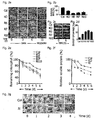
- FIG. 2 shows responses of wild-type and XDH compromised Arabidopsis plants to dark stress.
- Figure 2a wild-type (Col) and XDH compromised plants (KO, SALK_148364; Ri, xdh1 RNA interference) were tested during 6 day dark treatment and subsequent 9 days recovery.
- Figure 2b shows survival rates of wild-type and XDH compromised plants 15 days after being exposed to the conditions described above. Leaves from control untreated and dark-treated Col and Atxdh1 compromised plants were excised before (0) and 6 d after (6) exposure to dark.
- Figure 2d shows damage level of leaves.
- Figure 2e shows chlorophyll content in leaves over a 6 d dark treatment
- Figure 2f shows total soluble protein content in leaves over a 6 d dark treatment.
- transcripts were monitored by quantitative real-time RT-PCR analysis using wild-type (Col), XDH compromised plants (KO, SALK_148364, Atxdh1 T-DNA insertion line) and Ri (mean of 3 independent XDH1 RNA interference lines).
- Enhanced dark-induced leaf yellowing in the mutant lines may be indicative of hastened senescence.
- the expression of early and late senescence-associated gene classes was monitored. Dark stress led to more rapid and enhanced accumulation of the early senescence transcripts, WRKY53 (senescence-related regulatory gene) and ERD1 / SAG15 (senescence-associated gene) (Brychkova et al., 2007, ibid; Buchanan-Wollaston V. et al., 2005 Plant J 42, 567-585 ; Miao Y.
- Atxdh1 mutant leaves compared to wild type leaves ( Figure 3 , upper panels).
- Marker genes that emphasize late processes in senescence are SRG1 (senescence related gene1, a member of Fe(II)/ascorbate oxidase gene family) and XERO1 / TAS14 (dehydrin; Alsheikh M.K. et al., 2005 Plant Cell Environ 28, 1114-1122 ; Brychkova et al., 2007 , ibid ; Callard D. et al., 1996 Plant Physiol 112, 705-715 ; Weaver L.M. et al., 1998 , ibid ).
- the chlorophyll-degradation gene ACD1 (accelerated cell death 1) is involved in senescence-associated chlorophyll breakdown (Tanaka et al., 2003, ibid) while SGN1 (stay-green protein1) is involved in chlorophyll catabolism during development (Park et al., 2007, ibid ).
- the transcript levels of these genes were rapidly induced already after 1 day in darkness and were maintained at higher levels in Atxdh1 mutants in comparison to those of Col plants ( Figure 3 , lower panels). These results indicate that the presence of AtXDH1 plays an important role in impeding symptoms and molecular events indicative of pre-mature senescence in response to dark-induced stress.
- Example 5 XDH and non-XDH superoxide generating activities
- FIG. 4 shows quantitative analysis of NBT-O 2 - production in leaves in response to dark treatment.
- Plant XDH reactions can use as electron receptors molecular oxygen yielding O 2 - , or if available, non-reduced NAD + ( Hesberg C. et al., 2004 J Biol Chem 279, 13547-13554 ; Nguyen J. 1986 Physiologie Végétale 24, 263-281 ; Yesbergenova et al., 2005 , ibid ).
- the resultant superoxide may further impinge on the physiology of dark-induced stress.
- ROS reactive oxygen species
- NADPH oxidase activities Sagi and Fluhr, 2001, ibid; Yesbergenova et al., 2005, ibid ).
- rosette leaves of dark-treated plants were examined by NBT infiltration for the detection of superoxides (Fryer et al., 2002, ibid ).
- wild-type leaves had a basal level of total superoxide that remained within ⁇ 15% of the light control (not shown).
- mutant leaves showed ⁇ 30% lower total levels of NBT reduction, indicating that XDH activity has a measurable contribution to the redox milieu of the plant as has been observed previously (Yesbergenova et al., 2005 ibid ).
- Example 6 Dark treatment modifies accumulation of purine metabolites
- XDH activity produces urate which is rapidly converted to the ureides, allantoin and allantoate (Nguyen, 1986, ibid ; Sagi et al., 1998 ibid ). Unexpectedly, their levels were found to be significantly enhanced in wild type Col leaves upon exposing plants to dark treatment (5-fold; Figures 5b, 5c , dark). The accumulation may suggest that in wild type plants the downstream processing of ureides is transiently blocked. Interestingly, transfer of dark-treated wild type plants to the light after 6 days in the dark resulted in the gradual reduction of ureides that started after the first day and reached a basal level on the 9th day in the light (day 15, Figures 5b and 5c , recovery).
- Atxdh1 mutant leaves basal levels of allantoin and allantoate were detected and were similar to wild type levels. Their presence may represent XDH2 activity, residual XDH1 activity or represent an alternative pathway to ureide biosynthesis. Importantly, the level of allantoin and allantoate in Atxdh1 mutant leaves remained low during dark stress, or upon recovery ( Figures 5b, 5c ). The results indicate that AtXDH1 activity plays a pivotal role in dark-induced purine catabolism by facilitating the production of ureides.
- Example 7 Dark-induced stress modifies transcript levels of genes involved in purine catabolism up-stream and down-stream to XDH
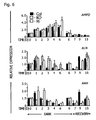
- FIG. 6 shows quantitative analysis of transcripts by real-time RT-PCR performed using wild-type (Col) and XDH compromised plants (KO, SALK_148364 Atxdh1 T-DNA insertion line; Ri, means of three XDH RNA interference lines) after being kept in the dark for 6 days and transferred to a 16 h light/8 h dark regime for recovery during additional 9 days.
- the rise in ureide levels implies a bottleneck in their remobilization during the extended dark period, which should be reflected in an increase or decrease of transcripts in the catabolic pathway.
- AMPD catalyzing the conversion of AMP to IMP, is the first committed step in purine catabolism ( Zrenner R.
- AMPD transcript expression level rapidly rises in both Col and Atxdh1 mutants and falls upon exposure to light ( Figure 6 , upper panel).
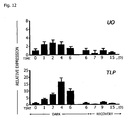
- transcript expression of the peroxisomal enzymes UO and TLP thought to be involved in ureides production ( Reumann S. et al., 2007 Plant Cell , tpc.107.050989), followed similar pattern of transcript induction during dark stress and subsequent recovery period, as exhibited by AMPD and XDH1 ( Figure 12 ).
- Example 8 Purine remobilization is also reflected in leaf age
- Figure 7 shows the influence of ageing on leaf phenotype, purine metabolite level and transcript expression in wild type and Atxdh1 compromised plants.
- transcripts related to ureides synthesis were examined in wild type and XDH1 mutant plants over the entire plant life. With increasing age, rosette leaves of XDH mutant plants yellowed earlier than wild-type Col plants and exhibited a significantly higher fold level of the SAG12 transcript ( Figure 7a ).
- the transcripts level of enzymes leading to allantoin and allantoate production in wild type plants, AMPD, XDH1, UO and TLP were elevated with age.
- a concomitant reduction was observed in the transcript level of allantoin and allantoate utilization enzymes, ALN and AAH ( Figure 7c ).
- the XDH mutant showed age-dependent accumulation of xanthine and wild type plants showed gradual accumulation of the ureides allantoin and allantoate ( Figure 7b ).
- the levels of xanthine and ureides that accumulate with plant age were similar to the accumulation detected during acute dark stress ( Figure 5 ) and may indicate the catabolic capacity of purine metabolism.
- Example 9 Role of xanthine and ureides in cellular protection during dark-induced stress
- Figure 8 shows responses of Arabidopsis wild-type (Col) and xdh RNA interference (Ri) plants to application of the purine catabolites: xanthine, allantoin and allantoate.
- the dark-induced loss of chlorophyll and the accelerated cell death during recovery may be due to the accumulation of excess oxypurines ( Figure 5a ) or to the lack of a protective environment provided by ureides ( Figures 5b and 5c ) or both.
- leaf discs cut from Col and Atxdh mutants rosette leaves were treated with xanthine for 48 h in the dark and were sampled after 24 h in the light.
- Figure 15 shows the response of tomato to extended dark stress and recovery in light thereafter and the effect of application of exogenous allantoin on leaf chlorophyll content. Allantoin level in the 1 st , 3 rd and 5 th leave of wild type tomato plants was measured during 12 days in the dark and during 10 days of recovery in the light thereafter.
- Figure 15a show that exposing tomato plants to dark stress increases the allantoin level in the leaves.
- Figure 15b shows that application of allantoin to tomato leaf discs kept in the dark for 2 days and then transferred to the light for additional two days delayed the chlorophyll degradation.
- Example 10 A role for ureides as cellular scavengers
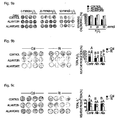
- FIG. 9 shows ROS accumulation in the presence of allantoin and allantoate in Arabidopsis wild-type (Col) and xdh1 RNA interference (Ri) lines.
- ROS accumulation has been shown to initiate chlorophyll degradation ( Rentel M.C. et al., 2004 Nature 427, 858-861 ) and the enhanced chlorophyll degradation in leaves in the absence of XDH may result from ROS production during dark stress ( Figure 4 ; Guo and Crawford 2005 ibid ).
- leaf discs were treated with allantoin and allantoate and examined for chlorophyll, H 2 O 2 and superoxide levels. Remaining chlorophyll was examined after the addition of 0.1 mM allantoin or allantoate for 24 h and subsequent application of 20 or 50 mM H 2 O 2 for 6 h. The treated discs showed a significant increase in remaining chlorophyll (26 to 31% for 20 mM H2O2 and 32 to 36% for 50 H 2 O 2 mM, respectively; Figure 9a ) indicating that ureides can protect leaves from ROS.
Landscapes
- Life Sciences & Earth Sciences (AREA)
- Health & Medical Sciences (AREA)
- Genetics & Genomics (AREA)
- Engineering & Computer Science (AREA)
- Zoology (AREA)
- Wood Science & Technology (AREA)
- Biotechnology (AREA)
- General Health & Medical Sciences (AREA)
- Chemical & Material Sciences (AREA)
- Biomedical Technology (AREA)
- Bioinformatics & Cheminformatics (AREA)
- General Engineering & Computer Science (AREA)
- Organic Chemistry (AREA)
- Molecular Biology (AREA)
- Plant Pathology (AREA)
- Microbiology (AREA)
- Cell Biology (AREA)
- Biophysics (AREA)
- Physics & Mathematics (AREA)
- Biochemistry (AREA)
- Agronomy & Crop Science (AREA)
- Environmental Sciences (AREA)
- Dentistry (AREA)
- Pest Control & Pesticides (AREA)
- Nutrition Science (AREA)
- Toxicology (AREA)
- Physiology (AREA)
- Breeding Of Plants And Reproduction By Means Of Culturing (AREA)
- Micro-Organisms Or Cultivation Processes Thereof (AREA)
- Measuring Or Testing Involving Enzymes Or Micro-Organisms (AREA)
Description
- The present invention relates to the field of plant survival and adaptation to environmental stress as well as to the preservation of fresh plant produce. Particularly, the present invention relates to the role of the ureides allantoin and allantoate in protecting plants and/or plant parts from stress related damages.
- The remobilization of plant resources during stress facilitates environmental adaptation. The definitive example of such metabolite reallocation in a leaf is delineated by leaf senescence. In addition to natural ageing, many environmental factors such as temperature, drought, nutrient supply, pathogen attack and light conditions can hasten senescence. For example, dark-induced stress is characterized by leaf yellowing, due to the breakdown of chlorophyll and general chloroplast degradation. Metabolic changes during senescence are associated with the transition from nutrient assimilation to metabolite turnover that is accelerated by catabolic activities. For example, in legumes, the catabolic products of purine, the ureides, can provide the plant with readily transportable metabolites that excel in a high nitrogen to carbon ratio. It has been suggested that the carbon nitrogen ratio generated in energy-conserving purine catabolism may be critical for the plants survival under stress conditions.
- Little is known about the control of purine catabolism in leaves. Purine catabolism starts with the conversion of adenosine monophosphate (AMP) to inosine monophosphate (IMP) by AMP deaminase (AMPD, E.C.3.5.4.6) that leads by multiple pathways to the production of oxypurines such as xanthine and hypoxanthine. However, further degradation of xanthine to urate requires the activity of the pivotal enzyme, xanthine dehydrogenase (XDH, EC 1.1.1.204). Urate is further metabolized to the ureide, allantoin, through urate oxidase (UO) and transthyretin-like protein (TLP). In Arabidopsis, allantoinase (ALN, E.C. 3.5.2.5.) converts allantoin to allantoate, followed by allantoate amidinohydrolase (AAH, E.C. 3.5.3.9.), that converts allantoate to ureidoglycolate and ammonia. A putative ureidoglycolate lyase converts ureidoglycolate to the basic metabolic building blocks, glyoxylate and urea.
- XDH contains molybdenum cofactor (MoCo), FAD and NADPH binding domains. The second oxygen in the mono-oxo-MoCo is replaced by a sulfur ligand. When using xanthine/hypoxanthine or NADH as substrates the sulfo-MoCo form of XDH can generate superoxide radicals. In contrast, the desulfo-MoCo form of XDH shows only FAD dependent activity and generats superoxide radical only in the presence of NADH.
- Among the two XDH encoding genes detected in the Arabidopsis genome (AtXDH1 and AtXDH2), only AtXDH1 responds to environmental stimuli. A specific function of XDH in ageing is not clear, although in both mammalian heart and in plants the activity of XDH is enhanced with age.
- Alamillo JM et al. ("Effects of urate, a natural inhibitor of peroxynitrite-mediated toxicity, in the response of Arabidopsis thaliana to the bacterial pathogen Pseudomonas syringae", Plant Journal, March 2001, Blackwell Publish. Ltd. GB, Vol. 25, No. 5, pages 529-540) disclose the effects of urate treatment on peroxynitrite-mediated toxicity by Arabidopsis thaliana. Urate has been shown to act as an effective scavenger in plants, and to significantly attenuate cell death of Arabidopsis plants in response to an avirulent Pseudomonas syringae strain.
-
WO 02/16655 -
WO 2004/061018 also relates to genes implicated in stress in rice plants and to transgenic plants comprising these genes. The rice stress-related protein #32 presents over 68% identity in 1377 nucleotides overlap with AtXDH1. - Nakagawa Ayami et al. ("The RNAi-mediated silencing of xanthine dehydrogenase impairs growth and fertility and accelerated leaf senescence in transgenic Arabidopsis plants", Pland and Cell Physiology, Vol. 48, No. 10, 2007, pages 1484-1495) discloses that xanthine oxidase activity is enhanced during leave senescence. The authors conclude that the function of xanthine dehydrogenase that plays a role in the growth and development of Arabidopsis plants is its purine catabolic activity with the production of uric acid, and an efficient antioxidant scavenger.
- Exogenous application of ureides or enhanced endogenous accumulation of ureides for plant protection and, for example, extension of shelf life of produce has not been previously known or suggested in the art.
- The present invention provides methods for protecting plants or plant parts from a stress related process. The present invention further provides transgenic plants having an increased tolerance to a stress related process.
- It is now disclosed that elevated levels of ureides protect plants from the deleterious effects of senescence and stress. Without wishing to be bound by any theory or mechanism of action, the protection is likely to result from alleviating oxidative stress by scavenging reactive oxygen species. The present invention also identifies the enzymes and enzyme variants that regulate the production of ureides in plants.
- The present invention is based in part on the use of experimental models of plant senescence and stress such as extended dark treatment in order to induce metabolite remobilization processes. It is now disclosed for the first time that both dark-induced stress and increased age induced accumulation of the ureides, including allantoin and allantoate, in wild-type leaves. In contrast, under these conditions, in xanthine dehydrogenase-1 (XDH1) compromised plants, xanthine but no ureides accumulated, and accelerated senescence and mortality rates were observed. Thus, a protective role for xanthine dehydrogenase and ureides in senescence was demonstrated.
- Unexpectedly, this protection can also be achieved by the exogenous application of ureides to plants or to parts thereof. In particular, the present invention provides compositions and methods comprising exogenous ureides for post-harvest protection of plant fresh produce from senescence and premature senescence.
- According to the principles of the invention it is possible to utilize any method that increases cellular ureides at critical times and levels to produce more hardy plants. Plants suffer damage from oxidative stress during drought, cold and other environmental abuse. Without wishing to be bound by any theory or mechanism of action it is envisaged that enhancing the scavenger pathways, specifically through the presence of higher levels of uriedes, yields plants that are protected from damage such as damage caused by environmental stress.
- According to a first aspect, the present invention provides a method for protecting plants or plant parts from a stress related process, comprising applying to the plant or plant part a composition comprising an amount of at least one ureide selected from the group consisting of allantoin and allantoate in an amount effective to decrease or delay the stress related process, wherein said stress related process is selected from the group consisting of chlorophyll degradation, oxidative stress, senescence, premature senescence or any combination thereof.
- According to certain embodiments the composition comprises 0.001-10mM ureide, typically 0.01-10 mM ureide, more typically 0.1mM-0.5mM ureide. The composition may comprise 0.1mM ureide or 0.5mM ureide or any amount in the above specified ranges.
- According to some embodiments the plant parts are selected from fruit, vegetables, cut branches and flowers. Other harvested plant parts may be also be treated. Plants may include, among others, legumes, herbs and root vegetables or leafy produce (for example, parsley). As used herein, the term "harvest" refers to the gathering of agricultural plant products, including picking (e.g. fruit), detaching from the ground (e.g. leafy crops such as lettuce, spinach and parsley), cutting (e.g. branches, including ornamental branches) and the like.
- According to some embodiments applying the composition to plants includes spraying the plants or plant parts with the composition. According to other embodiments applying includes adding the composition to the plant's root or plant's branch medium. According to further embodiments, the composition is applied by at least partially immersing the plant or plant part in the composition. A combination of applying methods may also be used according to embodiments of the invention.
- Elevated ureide amounts within a plant cell may be achieved by selecting a variant plant or genetically engineering the plant to produce or accumulate higher ureide concentration as compared to a wild type plant. The selected or engineered plants can overexpress enzymes involved in the production pathway of ureides, or have decreased expression levels of ureide utilization enzymes such that ureide is accumulated. The selection for the plant may include using a probe specific for at least one enzyme related to the production or accumulation of ureides and/or selecting a mutant having enhanced purine turnover.
- Thus, according to another aspect the present invention provides a transgenic plant comprising at least one cell transformed with a polynucleotide encoding xanthine dehydrogenase (XDH) and at least one additional polynucleotide encoding an enzyme selected from the group consisting of AMP deaminase (AMPD), urate oxidase (UO) and transthyretin-like protein (TLP), wherein the transgenic plant comprises elevated amount of a ureide selected from the group consisting of allantoin and allantoate and has an increased tolerance to a stress related process selected from the group consisting of chlorophyll degradation, oxidative stress, senescence, premature senescence or any combination thereof compared to a corresponding non-transgenic plant.
- According to another aspect, the present invention provides a transgenic plant comprising at least one cell transformed with a polynucleotide reducing the expression of a the plant endogenous enzyme in the pathway of ureide utilization selected from the group consisting of allantoinase (ALN) and allantoate amidinohydrolase (AAH) wherein the transgenic plant comprises elevated amount of a ureide selected from the group consisting of allantoin and allantoate and has an increased tolerance to a stress related process selected from the group consisting of chlorophyll degradation, oxidative stress, senescence, premature senescence or any combination thereof compared to a corresponding non-transgenic plant.
- These and other embodiments of the present invention will become apparent in conjunction with the figures, description and claims that follow.
-
-
FIG. 1 demonstrates XDH expression in Arabidopsis wild type and Atxdh1 modified plants.Fig. 1a shows Atxdh1 and Atxdh2 relative expression monitored by quantitative real-time RT-PCR analysis using wild-type (Col, left panel) and XDH compromised plants (KO, SALK_148364 Atxdh1 T-DNA insertion line; and Ri, three xdh RNA interference lines, right panel).Fig. 1b shows XDH-dependent NADH oxidase andFig.1c shows XDH-dependent hypoxanthine/xanthine dehydrogenase activities in wild type (Col, left panel) and KO (XDH compromised plants, right panel) leaf extracts. The O2 - generated in-gel was measured using NBT as electron acceptor and presented relative today 0 or, during the recovery period, relative today 6 in the dark. Each lane contained 200µg of soluble proteins.Fig. 1d demonstrates O2 - generating activity of XDH in leaf extracts of wild-type and XDH compromised plants. Plants were treated and sampled as described above. Kinetics was assayed using epinephrine as electron acceptor and hypoxanthine/xanthine as substrate following by adenochrome absorbance. Values are means ± SE (n = 6). -
FIG. 2 demonstrates the responses of wild-type and XDH compromised Arabidopsis plants to dark stress.Fig. 2a shows wild-type (Col) and XDH compromised plants (KO, SALK_148364; Ri, xdh1 RNA interference) during 6 day dark treatment and subsequent 9 days recovery.Fig.2b shows survival rates of wild-type and XDH compromisedplants 15 days after exposure to the conditions described inFig.2a . Error bars indicate SE (n = 12).Fig. 2c shows leaves of control untreated and dark-treated plants and XDH compromised plants excised before (0) and 6 days after (6) exposure to dark.Fig.2d demonstrates the damage level of leaves shown inFig.2c calculated as described in the experimental procedures. Bars show means ± SEM (n=6).Fig. 2e shows chlorophyll content in leaves sampled over a 6 day dark treatment. Error bars indicate SE (n=6).Fig.2f shows total soluble protein content in leaves sampled over a 6 day dark treatment. Error bars indicate SE (n = 6).Fig.2g demonstrates the progress in cell death over a 4 day dark treatment as indicated by staining with trypan-blue. At least 8 leaves were examined for each condition, and representative fields having the same magnification are shown. -
FIG. 3 demonstrates relative transcript expression of selected senescence and chlorophyll degradation-related genes. Transcripts were monitored by quantitative real-time RT-PCR analysis using wild-type (Col) and XDH compromised plants (KO, SALK_148364, Atxdh1 T-DNA insertion line and Ri, mean of 3 independent xdh1 RNA interference lines). Plants were sampled before being placed in the dark (0) and over a dark period of six days. The transcript expressions of each treated line was compared to the untreated line after normalization to the Arabidopsis EF-1α gene product (At5g60390) and presented as relative expression. Values are means ± SEM (n=6). -
FIG. 4 shows Nitroblue tetrazolium (NBT)-O2 - generation in wild type (Col) and xdh1 RNA interference (Ri) plants in response to dark treatment.Fig.4a demonstrates superoxide level as visualized by NBT staining of rosette leaves in the absence or presence of allopurinol (+Allo) or diphenylene iodonium (+DPI).Fig. 4b shows quantitative analysis of NBT-O2 - production in leaves in response to dark treatment. - NBT-O2 - generation was quantified in stained leaves by scanning. Upper insert: total relative NBT-O2 - generation; middle insert: relative NBT-O2 - generation by XDH obtained by subtraction of +Allo from -Allo leaf scan values; lower insert: relative NBT-O2 - generation by non-XDH source, obtained by subtraction of +DPI from +Allo leaf scan values. Data are means ± SE (n = 8).
-
FIG. 5 shows analysis of the purine metabolites, xanthine, allantoin and allantoate, in response to dark stress. Xanthine (Fig.5a ), Allantoin (Fig.5b ) and Allantoate (Fig.5c ) were determined in rosette leaves of wild-type (Col) and XDH1 compromised plants (KO, SALK_148364; Ri, xdh1 RNA interference) after being kept in dark for 6 days and transferred to 16 h light/8 h dark regime for recovery during additional 9 days. Values are means ± SEM (n=6). -
FIG. 6 demonstrates transcript expression levels of Arabidopsis purine catabolism genes, AMP deaminase (AMPD), allantoinase (ALN) and allantoate amidinohydrolase (AAH) during dark stress and subsequent recovery period. Quantitative analysis of transcripts by real-time RT-PCR was performed using wild-type (Col) and XDH compromised plants (KO, SALK_148364 Atxdh1 T-DNA insertion line; Ri, means of three xdh RNA interference lines) kept in the dark for 6 days and transferred to a 16 h light/8 h dark regime for recovery during additional 9 days. The expressions of each dark treated line was compared to the untreated line after normalization to the Arabidopsis EF-1α gene product (At5g60390) and is presented as the relative expression onday 0 or, for the recovery period, compared to the value of the dark treated line after 6 days in dark. Values are means ± SEM (n=3). -
FIG. 7 demonstrates the influence of ageing on leaf phenotype, purine metabolite level and transcript expression in wild type and XDH1 compromised plants.Fig. 7a shows 75 days old wild type (Col) and xdh1 RNA interference (Ri) plants and their representative leaves (left and middle panels). The transcript expression of SAG12 measured by quantitative real-time RT-PCR and normalized to the EF-1α transcript (At5g60390) is shown at the right panel. Values are means ± SEM (n=6). Data for Ri lines are means of 3 independent lines.Fig. 7b shows concentration of the purine metabolites xanthine (left panel), allantoin (middle panel) and allantoate (right panel), measured in rosette leaves, in response to plant age. Values are means ± SEM (n=6).Fig.7c demonstrates transcript expression of Arabidopsis purine catabolism genes using wild-type (Col) and three independent Ri plants. The transcript expressions are relative to the level at 30 days and normalized to the EF-1 a transcript (At5g60390). Values are means ± SEM (n=3). -
FIG. 8 demonstrates the responses of Arabidopsis wild-type (Col) and xdh RNA interference (Ri) plants to application of the purine catabolites: xanthine, allantoin and allantoate.Fig. 8a : xanthine (1 mM) in the presence or absence of allopurinol (1 mM, +/-Allo), was applied for 48 h to leaf discs placed in the dark and photographed 24 h after being transferred to 16 h light/8 h dark regime (left upper panel). Remaining chlorophyll, xanthine, allantoin and allantoate were determined in leaf discs sampled at the beginning of the experiment (light) or after 72 h (as described above) without xanthine (dark).Fig. 8b : allantoin or allantoate (0.1 mM) in the presence or absence of allopurinol (1 mM, +/-Allo) was applied to leaf discs for 2 h in the dark after keeping the discs in the dark for 48 h. Discs were photographed 24 h after being transferred to 16 h light/8 h dark regime (left upper panel). Leaf discs were washed twice before sampling for xanthine, allantoin and allantoate determination (right and bottom panels). Bars show mean ± SEM (n=16). -
FIG. 9 shows reactive oxygen species (ROS) accumulation in the presence of allantoin and allantoate in Arabidopsis wild-type (Col) and xdh1 RNA interference (Ri) lines.Fig. 9a left panel:: leaf discs removed from Col plants placed for 24 h in the dark in the presence or absence of allantoin or allantoate (0.1 mM) and then washed and treated with H2O2 (0, 20, 50 mM) for an additional 6 h in the dark. Right panel: remaining chlorophyll determined 24 h after the disc were transferred to a 16 h light/8 h dark regime. Bars show mean ± SEM (n=16).Fig. 9b shows H2O2 production in leaf discs of Col and Ri plants treated with allantoin or allantoate (0.1 mM) visualized by staining with 3,3'-diaminobenzidine (DAB) (left panel). Total H2O2 relative production (right insert) was quantified in leave discs kept in the dark for 24 h and then treated with allantoin or allantoate for additional 2 h in the dark, using DAB staining Results are from two independent experiments. Error bars indicate SE (n =16). The lower case letters (a, b) indicate P<0.001 for the differences within treatment between ecotypes. Capital letters (A, B) indicate P<0.001 for the differences within ecotypes between treatments.Fig. 9c demonstrates the influence of allantoin or allantoate (0.1 mM) on O2 - production in leaf discs of Col and Ri plants. Leaf discs were treated and analyzed as inFig. 9b above. Total relative superoxide production was quantified in leaf discs from 2 independent experiments. Error bars indicate SE (n =16). -
FIG. 10 shows transcript expression of the Arabidopsis Cys protease senescence-associated gene 12 (SAG12), during 6 days of dark stress. Quantitative analysis of transcript by real-time RT-PCR was performed using wild-type (Col) and three independent RNA interference (Ri) lines. Plants were sampled before dark application (0) and over the six days dark period. The expressions of each treated line were compared to those of the untreated line after normalization to the Arabidopsis EF-1α gene product (At5g60390) and data are presented as relative expression. Values are means ± SEM (n=6). Data for Ri lines are means of 3 independent lines. -
FIG. 11 shows transcript expression of the Arabidopsis molybdenum cofactor sulfurase gene, ABA3, in wild type (Col) plants after exposure to dark stress for six days. Transcript Analysis was performed as described inFig. 10 above. -
FIG. 12 shows transcript expression of Arabidopsis purine catabolism genes, encoding urate oxidase (UO) and transthyretin-like protein (TLP), is wild type (Col) plants exposed to dark stress of 6 days and subsequent recovery period of 16 h light/8 h dark regime for 9 days. Quantitative analysis of transcripts was performed by real-time RT-PCR compared to the untreated plant after normalization to the Arabidopsis EF-1α gene product (At5g60390). Data are presented as relative expression compared today 0 or, for the recovery period, compared to the value of the dark treated plant after 6 days in the dark. Values are means ± SEM (n=3). -
FIG. 13 shows diurnal fluctuation of allantoin in rosette leaves of wild-type (Col) Arabidopsis plants. Values are means± SEM (n=6). -
FIG. 14 relates to the influence of allantoin application on senescence in parsley leaf discs exposed to dark stress. Parsley leaf discs were kept for 2 days in the light and then transferred to the dark for additional 2 days with or without the addition of 0 to10 mM allantoin. CL - control undetached leaves in the light. -
FIG. 15 demonstrates the response of tomato to extended dark stress and recovery in light thereafter.Fig. 15a shows the allantoin level in the 1st, 3rd and 5th leaf of wild type tomato plants over a period of 12 days in the dark and 10 days of recovery in the light.Fig. 15b shows that application of 0.1mM and 0.5mM allantoin delays chlorophyll degradation in tomato leave discs (treated as inFig. 14 ). - The present invention provides methods for protecting plants and parts thereof from stress related processes. The present invention further provides transgenic plants having increased tolerance to stress related processes. Without wishing to be bound by any theory or mechanism of action, shelf life extension of the fresh produce according to the teachings of the present invention may be attributed to protection of the harvested material from processes such as senescence, premature senescence and stress related processes.
- The present invention is based in part on the use of experimental models of plant senescence and stress such as extended dark treatment in order to induce metabolite remobilization processes. It is now disclosed for the first time that both dark-induced stress and increased age induce accumulation of ureides, including allantoin and allantoate, in wild-type leaves. In contrast under these conditions, in XDH1-compromised plants, xanthine but no ureides accumulate, and accelerated senescence and mortality rates are observed. Thus, a protective role for AtXDH1 and ureides in senescence is demonstrated.
- Unexpectedly, this protection can also be achieved by the exogenous application of ureides. In particular, the present invention provides methods comprising exogenous ureides for protection of picked or harvested agricultural produce from processes, such as senescence and premature senescence.
- According to a first aspect, the present invention provides a method for protecting plants or plant parts from a stress related process comprising: applying to the plant or plant part a composition comprising at least one ureide selected from the group consisting of allantoin and allantoate in an amount effective to decrease or delay the stress related process, wherein said stress related process is selected from the group consisting of chlorophyll degradation, oxidative stress, senescence, premature senescence or any combination thereof.
- According to one embodiment plants or plant parts may be selected from harvested herbs, fruits, vegetables and flowers.
- In particular, the present invention provides methods for protecting harvested agricultural produce from typically stress related processes such as senescence and premature senescence. Picked flowers and leafy crops such as lettuce, spinach, parsley and many others typically begin to undergo senescence immediately after they are picked. This process is typically accelerated during storage of the plant produce. Typically, this means that the green leafy tissue yellows and its nutritional and marketing value may decrease. Embodiments of the present invention thus disclose that the exogenous application of ureides slows this progress and extends plant produce shelf life.
- Methods, according to some embodiments of the invention, may comprise applying, such as by applying to the root or cut branches medium or spraying, a composition which includes an appropriate amount of the ureides allantoin or allantoate onto the produce or immersing or partially immersing the produce in a suspension or other appropriate form of composition containing said ureide. Any suitable application method, such as, but not limited to, the methods listed here, may be used alone or in combination. According to some embodiments any solution comprising the ureide in the range of 1 µM - 10mM may be used. Typically a solution in a range of 0.01-10 mM, or 0.1-10mM is used. Any concentration of ureides in the specified ranges may be used. According to one embodiment 0.1mM ureide, 0.5mM ureide or any concentration of ureides in this range may be used. Compositions having other concentrations may also be used with embodiments of the invention.
- As exemplified hereinbelow application of exogenous ureides protects plants and plant parts from senescence and stress related processes.
- According to another aspect of the invention ureide accumulation may be enhanced in genetically engineered plants. In the alternative, plants may be genetically engineered to achieve enhanced and optimal ureide production. Expression of enzymes specifically required in the pathway of ureide production may be optimized, in order to achieve ureide accumulation. According to further aspects the present invention provides a transgenic plant comprising at least one cell transformed with a polynucleotide encoding xanthine dehydrogenase (XDH) and at least one additional polynucleotide encoding an enzyme selected from the group consisting of AMP deaminase (AMPD), urate oxidase (UO) and transthyretin-like protein (TLP), wherein the transgenic plant comprises elevated amount of a ureide selected from the group consisting of allantoin and allantoate and has an increased tolerance to a stress related process selected from the group consisting of chlorophyll degradation, oxidative stress, senescence, premature senescence or any combination thereof compared to a corresponding non-transgenic plant.
- According to another aspect the present invention provides a transgenic plant comprising at least one cell transformed with a polynucleotide reducing the expression of a the plant endogenous enzyme in the pathway of ureide utilization selected from the group consisting of allantoinase (ALN) and allantoate amidinohydrolase (AAH) wherein the transgenic plant comprises elevated amount of a ureide selected from the group consisting of allantoin and allantoate and has an increased tolerance to a stress related process selected from the group consisting of chlorophyll degradation, oxidative stress, senescence, premature senescence or any combination thereof compared to a corresponding non-transgenic plant.
- It should be understood that methods according to embodiments of the invention may be used alone or in combination to achieve results according to the invention. For example, several different concentrations and/or different ureides may be applied to plant, plant parts or crops, according to embodiments of the invention. Genetic engineering and/or screening methods may be used in combination with methods of applying ureides to plants. Any combination of the methods and/or compounds disclosed herein, which achieves protection of plants through the ureide metabolic pathway, is disclosed herein.
- The remobilization of metabolites during stress and senescence plays an important role in optimal plant adaptation to the environment. The plant molybdenum-cofactor (MoCo) and flavin containing enzyme, xanthine dehydrogenase (XDH; EC 1.2.1.37) are pivotal for purine remobilization and catalyze the conversion of the purine catabolic products, hypoxanthine and xanthine to uric acid that is subsequently degraded to the ureides, allantoin and allantoate. The present invention now shows that in wild-type plants, conditions of extended darkness or increasing leaf age cause induction of transcripts related to purine catabolism, that in turn result in marked accumulation of the purine catabolic products, allantoin and allantoate. In contrast, Arabidopsis mutants of XDH, Atxdh1, accumulated xanthine and showed premature senescence symptoms as exemplified by enhanced chlorophyll degradation, extensive cell death and up-regulation of senescence-related transcripts. When dark-treated mutant lines were re-exposed to light, they showed elevated levels of reactive oxygen species (ROS) and higher mortality rate compared to wild-type plants. Unexpectedly, the level of ROS and mortality could be attenuated by the addition of allantoin and allantoate suggesting that these metabolites can act as scavengers of reactive oxygen species. The present invention highlights a yet unrecognized need for the controlled maintenance of ureide levels, for example, as mediated by AtXDH1 activity during dark stress and ageing and point to the dual functionality of ureides as efficient stores of nitrogen and as cellular protectants. Thus, regulation of ureide levels by regulating Atxdh1 expression has general implications for optimal plant survival during nutrient remobilization such as occurs during normal growth, dark stress and senescence.
- Extended dark treatment implies complete lack of new photosynthesis that imposes a stress which requires remobilization of leaf resources. In this sense, extended dark initiates molecular events that are reminiscent of leaf senescence. The progression of senescence must be orderly so that the accumulation of deleterious compounds or physiological states of enhanced labile cellular state is avoided. It is shown here that XDH1 activity is required for normal remobilization to succeed, as in its absence, not only will direct purine catabolism be compromised, but the rate of chlorophyll, soluble protein degradation (
Figure 2e and 2f ) and cell death are all accelerated. - The value of extended dark treatments as a signal that stimulates synchronized metabolic remobilization in the plant was discerned by examining transcript induction profiles of genes that are known to be induced during senescence. For example, the WRKY53 transcription factor (which was shown to control early events of senescence and oxidative stress response (Miao Y. et al., 2004 Plant Mol Biol 55, 853-867). The protease regulator, ERD1 encodes caseinolytic protease regulatory subunit, and may be related to posttranslational modification processes, as it was shown to be involved in the degradation of chloroplast proteins subjected to artificial senescence related to ABA, ethylene and SO2 (Brychkova G. et al., 2007 ; Weaver L.M. et al., 1998 Plant Mol Biol 37, 455-469). Similarly, chlorophyll degradation (Gepstein S. 2004 ; Pruzinska A. et al., 2005 Plant Physiol 139, 52-63) and up-regulation of related transcripts such as ACD1 and SGN1 (Park S.Y. et al., 2007 ; Tanaka R. et al., 2003 Plant Cell Physiol 44, 1266-1274), during the extended dark period are indicative of leaf senescence. The up-regulation of the chlorophyll-degradation related transcripts and chlorophyll degradation itself is a hallmark of compromised XDH1 activity (
Figure 2e andFigure 3 , lower panels). Thus, as indicated by these marker genes, the presence of XDH1 activity affords wild-type plants protection from the onset of program cell death-like process during the dark stress. - XDH possesses a MoCo sulfurated-dependent hypoxanthine/xanthine-O2-generating activity and a FAD dependent NADH-O2--generated activity (Sagi M. et al., 1999 ; Sagi M. et al., 2002 Plant J 31, 305-317; Yesbergenova Z. et al., 2005 Plant J 42, 862-876). The xanthine-dependent superoxide generating activity was more enhanced in extended dark than the NADH-dependent activity (
Figures 1b-1d andFigure 4b middle panel). This indicates that modification processes involving the MoCo-domain are likely taking place during the dark-derived remobilization. Difference between MoCo and FAD dependent activities of XDH may result from interconversion of the sulfo- and desulfo-MoCo forms of XDH. The terminal sulfuration step carried out by the MoCo-sulfurase enzymes FLACCA in tomato and ABA3 in Arabidopsis were hypothesized to provide an efficient way to regulate XDH activities by sulfuration (Sagi et al., 1999, ibid; Sagi et al., 2002 ibid). XDH commonly contains significant portions of desulfo-forms, which while inactive in hypoxanthine/xanthine oxidases (Harrison R. 2002 Free Radic Biol Med 33, 774-797), are active as NADH oxidases (Yesbergenova et al., 2005, ibid). Thus, the enhancement in hypoxanthine/xanthine oxidase activity observed in dark-induced stress may result from enhanced sulfuration status of the XDH MoCo domain. Consistent with this scenario, it is noted that the ABA3 transcript was significantly enhanced during dark stress (about 3-fold;Figure 11 ). - Mutation in AtXDH1 or application of allopurinol to wild type plants led to xanthine accumulation during dark stress (
Figures 5a and8a, 8b ). The degree of tissue damage that appears in plants during the dark and especially during the subsequent light treatment may be due to direct or indirect sensitivity to excess xanthine, leading to chlorophyll degradation, especially in the absence of active AtXDH1 in the treated leaves (Figure 8a ). However, the higher chlorophyll degradation that appeared in mutant leaves containing high level of xanthine was significantly alleviated by the addition of allantoin and allantoate implying that ureides protected leaves from dark induced chlorophyll degradation in spite of xanthine accumulation (Figure 8b ). Thus, ureides accumulation may contribute to the cell normal growth pattern through a critical physiological state brought upon by metabolite remobilization. Hence, ureides represent both favorable N-C ratio as well as molecules with an intrinsic ability to scavenge ROS excess. Such excess may be encountered during re-exposure of leaves to light in which photosystem imbalance may be the end result of enhanced protein turnover that results in transient light-dependent ROS production. - A coordinated rise in transcripts level involved in ureide production (AMPD, XDH1, UO and TLP) and a concomitant decrease in transcripts level of enzymes that utilize ureides (ALN and AAH) was detected. Thus, dark stress ureides accumulation is at least in part under transcriptional control and is likely to result from the difference in activities involved in ureides formation versus the activities that process them.
- The data presented in the present invention have highlighted a complete and functional purine remobilization pathway that occurs in the extended absence of light but the implications are not restricted to conditions of environmental stress. Rapid XDH1 up-regulation (
Figures 1a and 1c ) and a mild increase in ureide levels in normal diurnal light dark transitions (22%;Figure 13 ) are noted. The diurnal cycling of ureide levels indicates that extended dark treatment accentuates a normal response. In this respect, the physiological and molecular components of dark-induced stress are shown here to be reminiscent of normal leaf ageing and senescence. Indeed in dark stress and senescence similar levels of ureides accumulation was shown (Figures 5 and7 ). - Senescence and dark-induced senescence are associated with modulation of ROS production (Guo F.Q. and Crawford N.M. 2005 Plant Cell 17, 3436-3450; Pastori G.M. and Del Rio L.A. 1997 Plant Physiol 113, 411-418). Thus, without wishing to be bound by any particular theory opr mechanism of action, ureides may serve a dual function in senescence as transportable metabolites for further biosynthetic pathways and at the same time as cellular protectants from ROS. The results herein show that purine catabolism, ageing and extended dark induce similar senescence programs. In both cases, the transition from nutrient assimilation to metabolite turnover occurs due to the acceleration of purine catabolic recycling activities in which AtXDH1 plays a pivotal role.
- Examples of specific experiments carried out on specific plants are presented herein in order to more fully illustrate certain embodiments of the invention. They should in no way, however, be construed as limiting the broad scope of the invention.
- Arabidopsis thaliana (ecotype Columbia) and its isogenic Atxdh1 compromised plants were grown in a growth room under 16 h light/8 h dark, 22°C, 75-85% relative humidity, light intensity of 100 µmol m-2 s-1 as described before (Brychkova G. et al., 2007, ibid). Atxdh1 compromised plants included homozygous T-DNA inserted line [SALK_148364 (obtained from the Arabidopsis Biological Research Center, Colombus, OH, USA)] and 3 independent homozygous xdh RNA interference lines described before (Yesbergenova et al., 2005, ibid). For dark treatment, four-week-old plants grown in peat were transferred from the growth room to a dark room. Samples were collected every day during 15 min, under dim light (40 µ mol m-2 s-1), as a mix of fully expanded rosette leaves taken from 5 plants. After 6 days in the dark, plants were transferred to the growth room and survival rate of plants were determined 9 days later. Average and S.E. of survival rate was calculated from 12 independent experiments with at least 30 plants for each treatment. For aging measurements plants were grown in a growth room as described above and samples were collected from 30, 45, 60 and 75 day old plants as a mix of fully expanded rosette leaves taken from 5 plants.
- Cell death was visualized in leaves sampled from dark stressed and control unstressed plants, by lactophenol-trypan blue staining followed by destaining in saturated chloral hydrate (Koch E. and Slusarenko A. 1990 ). Total chlorophyll content was measured in extracts of the fully expanded leaves as described before (Brychkova et al., 2007, ibid). The values for remaining chlorophyll content in leaf discs were determined as the amount of chlorophyll per disc divided by the amount of chlorophyll per untreated control and expressed as a percentage. The severity of leaf damage after dark stress was as follows: 1, no damage; 2, <30%; 3, 30-50%; 4, >50% of the leaf area damaged. The average leaf damage was then multiplied by the total number of damaged leaves to determine the damage level. Means ± SEM for each treatment are presented.
- For quantitative analysis of transcripts expression, total RNA, RT reaction and quantitative RT-PCR reactions with specific primers (see Table 1 hereinbelow) were performed as describes in Brychkova et al. (2007, ibid). Reactions normalized with UBQ10 (At4g05320) and Elongation factor 1-α (At5g60390) as housekeeping genes revealed similar results and thus only results based on the later housekeeping gene are presented.
Table 1: List of primers used for quantitative real-time PCR with Arabidopsis thaliana PCR product Primer Length of PCR Transcript SGN1 (StayGreen1; At4g22920) Forward 189 GATTGTTCCCGTTGCAAGGTTGTTT (SEQ ID NO:1) Reverse TGCAACTGAGAGTTGTTTATGGATTGAG (SEQ ID NO:2) SRG1 (senescence-related gene 1; At1g17020) forward 191 AAGAGTGGGGATTTTTCCAGCTTGT (SEQ ID NO:3) reverse TGCCCAATCTAGTTTCTGATCTTCTGA (SEQ ID NO:4) UBQ10 (Ubiquitine10; At4g05320) forward 192 TTTGTTAAGACTCTCACCGGAAAGACA (SEQ ID NO:5) reverse GAGGGTGGATTCCTTCTGGATATTGTA (SEQ ID NO:6) UO (Urate oxidase; At2g26230) forward 187 CACTGTTTATGTGAAAGCCAAGGAATG (SEQ ID NO:7) reverse CCCAAGCTTAAAACCATGTAAATGTGG (SEQ ID NO:8) TLP (transthyretin-like protein; AT5g58220) forward 185 CCATGCGTTAAAGGAAAGGTATGAAAA (SEQ ID NO:9) reverse TGATTCTCAGACGATCTTGAGGTTTTG (SEQ ID NO:10) WRKY53 (WRKY DNA-binding protein 53; At4g23810), forward 158 TCAAAGAAAAGAAAGATGTTACCAAAGTGG (SEQ ID NO:11) reverse GTGCATCTGTAATAACTCCTTGGGAAT (SEQ ID NO:12) XDH1 (xanthine dehydrogenase 1; At4g34890) forward 200 TGATGTTGGACAAATAGAAGGAGCGTTT (SEQ ID NO:13) reverse TATTCGGATTCCCCTTGAGAAGCGAAACA(SEQID NO:14) XDH2 (xanthine dehydrogenase 2; At4g34900) Forward 202 TGATATTGGACAAATAGAAGGAGCGTTT (SEQ ID NO:15) reverse TGCATTTGGATTACCCTTGAGAAGAGAAA (SEQ ID NO:16) XERO1/TAS14 (dehydrin; At3g50980) forward 165 AGACTCACCAACAGCTTGACCAATTT (SEQ ID NO:17) reverse CACCTAGTCCATCATCCGAGCTAGAG (SEQ ID NO:18) SGN1 (StayGreen1; At4g22920) Forward 189 GATTGTTCCCGTTGCAAGGTTGTTT (SEQ ID NO:19) Reverse TGCAACTGAGAGTTGTTTATGGATTGAG (SEQ ID NO:20) SRG1 (senescence-related gene 1; Atlg17020) forward 191 AAGAGTGGGGATTTTTCCAGCTTGT (SEQ ID NO:21) reverse TGCCCAATCTAGTTTCTGATCTTCTGA (SEQ ID NO:22) UBQ10 (Ubiquitine10; At4g05320) forward 192 TTTGTTAAGACTCTCACCGGAAAGACA (SEQ ID NO:23) reverse GAGGGTGGATTCCTTCTGGATATTGTA (SEQ ID NO:24) UO (Urate oxidase; At2g26230) forward 187 CACTGTTTATGTGAAAGCCAAGGAATG (SEQ ID NO:25) reverse CCCAAGCTTAAAACCATGTAAATGTGG (SEQ ID NO:26) TLP (transthyretin-like protein; AT5g58220) forward 185 CCATGCGTTAAAGGAAAGGTATGAAAA (SEQ ID NO:27) reverse TGATTCTCAGACGATCTTGAGGTTTTG (SEQ ID NO:28) WRKY53 (WRKY DNA-binding protein 53; At4g23810), forward 158 TCAAAGAAAAGAAAGATGTTACCAAAGTGG (SEQ ID NO:29) reverse GTGCATCTGTAATAACTCCTTGGGAAT (SEQ ID NO:30) XDH1 (xanthine dehydrogenase 1; At4g34890) forward 200 TGATGTTGGACAAATAGAAGGAGCGTTT (SEQ ID NO:31) reverse TATTCGGATTCCCCTTGAGAAGCGAAACA (SEQ ID NO:32) XDH2 (xanthine dehydrogenase 2; At4g34900) Forward 202 TGATATTGGACAAATAGAAGGAGCGTTT (SEQ ID NO:33) reverse TGCATTTGGATTACCCTTGAGAAGAGAAA (SEQ ID NO:34) XERO1/TAS14 (dehydrin; At3g50980) forward 165 AGACTCACCAACAGCTTGACCAATTT (SEQ ID NO:35) reverse CACCTAGTCCATCATCCGAGCTAGAG (SEQ ID NO:36) - Nitroblue tetrazolium (NBT) O2- staining of leaves was performed essentially according to Jabs T. et al. (1996 Science 273, 1853-1856) and Fryer M.J. et al. (2002 J Exp Bot 53, 1249-1254). Leaves were incubated for 10 h in the dark overnight and then placed in 96% ethanol, boiled for 10 min and photographed. Application of allantoin and allantoate and O2- and H2O2 measurement was carried out on 7 mm leaf discs removed from 4-week-old Col wild-type and Atxdh1 mutant plants. Discs were placed in the dark for 24 h on moistened filter papers. Thereafter, 0.1 mM allantoin or allantoate in pH 7.5 solution was added to the filter papers for additional 2 h. For NBT-O2- staining, leaf discs were washed twice and immersed in 0.8 mM NBT solution added to the filter papers for 2 h in the light and then boiled in 96% ethanol for 10 min and photographed. For DAB-H2O2 staining leaf discs subjected to the procedure described above for NBT were immersed in solution containing
1mg ml -1 3,3'-diaminobenzidine (DAB) in pH 5.0, for 2 h in the light as described before (Sagi M. et al., 2004 Plant Cell 16, 616-628). Leaf discs were photographed after boiling in 96% ethanol for 10 min. NBT and DAB stained leaves and leaf discs were quantified using NIH Image Software (Version 1.6). - Extracts of XDH for assay by native gel electrophoresis (PAGE) were prepared as described by Sagi M. et al. (1998 Plant Science 135, 125-135) and Yesbergenova et al. (2005, ibid). Kinetic O2 - generating activities of XDH were assayed spectrophotometrically by measuring the oxidation of epinephrine to adrenochrome at 480 nm as described previously in Sagi M. and Fluhr R. (2001 Plant Physiol 126, 1281-1290). The reaction medium contained 6.2 µg of protein extract, 1 mM epinephrine in 50 mM Tris-HCl buffer (pH 8.5) and 1 mM hypoxanthine/xanthine. Reaction medium without hypoxanthine/xanthine was used as control. Six samples were analyzed and averaged for each data points. Means ± SEM for each treatment are presented.
- Ureides were extracted from leaves with 80% ethanol and determined according to Vogels G.D. and Van Der Drift C. (1970 Anal Biochem 33, 143-157) using allantoic acid and allantoin as references. Six samples were analyzed and averaged for each data points. For hypoxanthine and xanthine determination, leaves were extracted with 40 mM NaOH and diluted four times by Tris-HCl 0.1 M, pH 7.5. Hypoxanthine/xanthine were determined by high performance liquid chromatography (HPLC) using a 100x2.1 mm ID, ODS-Hypersil (5 µm) column. The mobile phase was a 10 mM NaOH/0.1 mM Tris-HCl, pH 5.0, similar to that used by Corpas F.J. et al., (1997 J Plant Physiol 151, 246-250). The hypoxanthine and xanthine were detected using standards retention time and UV absorption spectra ratio at 249 nm and 267 nm. A modified protocol to detect xanthine via the xanthine oxidase assay was used (Mohanty J.G. et al., 1997 Journal of Immunological Methods 202, 133-141). The reaction mixture modified from Yesbergenova et al., (2005 ibid), contained 0.4 U ml-1 HRP, 40 mU ml-1 buttermilk xanthine oxidase (Fluka), 3.4
mM 3,5-dichloro-2-hydroxobenzene sulphonate and 0.85 mM 4-aminoantipyrine in Tris-HCl 0.1 M, pH 7.5. - XDH1 expression was examined under extended dark treatment that imposes major remobilization of cellular components. To this end, wild type Col plants and Atxdh1-compromised plants (RNA interference lines Ri5, Ri7 and Ri10; T-DNA insertion line, KO) impaired in XDH1 activity (Yesbergenova et al., 2005, ibid), were exposed to 6 days continuous dark followed by a 'recovery' period of 9 days under normal diurnal light regime (16 h light/8 h dark). The level of XDH1 transcript was found to increase continuously in the dark reaching a peak (> 20 fold induction) in 24 h (
Figure 1a , left panel). The results imply that dark induction of XDH occurs as part of a normal diurnal physiological response although it rises to higher levels during the extended dark period. Upon return to light on the 7th d the transcript level rapidly decreased (Figure 1a , left panel). In contrast, XDH2 transcript was unchanged during the dark treatment although it was slightly enhanced during the recovery period in both Col and the modified plants (Figure 1a , right panel). - To ascertain whether potential enzymatic performance parallels the measured transcript changes, the in-gel activities of superoxide generation by XDH were tested using NADH and hypoxanthine/xanthine substrates (Yesbergenova et al., 2005, ibid). NADH-dependent activity exhibited at most a 1.5-fold enhancement in O2 - production during the dark period (
Figure 1b , left panel), whereas the hypoxanthine/xanthine-dependent activity increased immediately in the dark to nearly 3-fold levels at its maximum (Figure 1c , left panel). No NADH-dependent or hypoxanthine/xanthine-dependent XDH activities were detected in Atxdh1 mutants (Figures 1b and c , right panels; data not shown for RNAi plants) even during the recovery period where XDH2 transcript was observed to increase (Figure 1a ). This could indicate that XDH2 activity or abundance is very low and demonstrates that typically XDH1 plays a role in dark stress adaptation. The results of the in-gel assay could be confirmed in a direct crude leaf extract assay using epinephrine as electron acceptor (Yesbergenova et al., 2005, ibid;Figure 1d ). In this case, at least a 2-fold increase in XDH activity could be detected in wild type leaves while mutant lines showed no or negligible activity. In all, while the exact fold level changes in activity differ according to the procedure used, the measured activities followed the general rise and fall in transcript levels. - Reference is now made to
Figure 2 , in which responses of wild-type and XDH compromised Arabidopsis plants to dark stress is shown. InFigure 2a , wild-type (Col) and XDH compromised plants (KO, SALK_148364; Ri, xdh1 RNA interference) were tested during 6 day dark treatment and subsequent 9 days recovery.Figure 2b shows survival rates of wild-type and XDH compromisedplants 15 days after being exposed to the conditions described above. Leaves from control untreated and dark-treated Col and Atxdh1 compromised plants were excised before (0) and 6 d after (6) exposure to dark.Figure 2d shows damage level of leaves.Figure 2e shows chlorophyll content in leaves over a 6 d dark treatmentFigure 2f shows total soluble protein content in leaves over a 6 d dark treatment. - Wild type Col and XDH1-compromised lines were examined more closely during the dark treatment. Rosette leaves of the mutant plants impaired in XDH1 expression were distinctly more yellow than wild type leaves (
Figure 2a, c ). Quantitative analysis showed a rapid fall in residual chlorophyll levels of 30% and 50% in wild type and mutant leaves, respectively (Figure 2e ). The yellowing was accompanied by a reduction in soluble proteins, another hallmark of senescence (Figure 2f ). Atxdh1-compromised leaves compared to wild type leaves showed a higher damage rate (Figure 2d ) and accumulation of many more dead cells as ascertained by trypan blue staining (Figure 2g ). The plants were then returned to a normal diurnal cycle and their subsequent recovery was followed for an additional 9 days period. Wild-type plants showed an 80% survival rate as compared to 20 to 45% for the mutant lines (Figure 2b ). The results imply that XDH1-dependent processes are important for plant adaptation to extended dark treatment and subsequent recovery in normal light. - Reference is now made to
Figure 3 in which transcripts were monitored by quantitative real-time RT-PCR analysis using wild-type (Col), XDH compromised plants (KO, SALK_148364, Atxdh1 T-DNA insertion line) and Ri (mean of 3 independent XDH1 RNA interference lines). - Enhanced dark-induced leaf yellowing in the mutant lines (such as that described in
Figure 2 ) may be indicative of hastened senescence. To examine this at the molecular level, the expression of early and late senescence-associated gene classes was monitored. Dark stress led to more rapid and enhanced accumulation of the early senescence transcripts, WRKY53 (senescence-related regulatory gene) and ERD1/SAG15 (senescence-associated gene) (Brychkova et al., 2007, ibid; Buchanan-Wollaston V. et al., 2005 Plant J 42, 567-585; Miao Y. et al., 2004, ibid) in Atxdh1 mutant leaves compared to wild type leaves (Figure 3 , upper panels). Marker genes that emphasize late processes in senescence are SRG1 (senescence related gene1, a member of Fe(II)/ascorbate oxidase gene family) and XERO1/TAS14 (dehydrin; Alsheikh M.K. et al., 2005 ; Brychkova et al., 2007, ibid; Callard D. et al., 1996 Plant Physiol 112, 705-715; Weaver L.M. et al., 1998, ibid). After 6 days they were induced 390-fold in Col wild type plants and were yet 2-6-fold higher in the mutant lines (Figure 3 , middle panels). Similarly, the transcript level of the Cys protease senescence-associated gene 12 (SAG12), a common marker of leaf senescence (Gepstein et al., 2003 Plant J 36, 629-642), exhibited earlier and higher expression in Atxdh1 compromised plants (seeFigure 10 ). - The chlorophyll-degradation gene ACD1 (accelerated cell death 1) is involved in senescence-associated chlorophyll breakdown (Tanaka et al., 2003, ibid) while SGN1 (stay-green protein1) is involved in chlorophyll catabolism during development (Park et al., 2007, ibid). The transcript levels of these genes were rapidly induced already after 1 day in darkness and were maintained at higher levels in Atxdh1 mutants in comparison to those of Col plants (
Figure 3 , lower panels). These results indicate that the presence of AtXDH1 plays an important role in impeding symptoms and molecular events indicative of pre-mature senescence in response to dark-induced stress. - Reference is now made to
Figure 4 which shows quantitative analysis of NBT-O2 - production in leaves in response to dark treatment. Plant XDH reactions can use as electron receptors molecular oxygen yielding O2 -, or if available, non-reduced NAD+ (Hesberg C. et al., 2004 J Biol Chem 279, 13547-13554; Nguyen J. ; Yesbergenova et al., 2005, ibid). The resultant superoxide may further impinge on the physiology of dark-induced stress. In an attempt to illuminate the situation in vivo, reactive oxygen species (ROS) sources were estimated during dark treatment by the differential use of 2 inhibitors, allopurinol and diphenylene iodonium (DPI). The XDH inhibitor allopurinol is converted to alloxanthine, which remains tightly attached to the substrate-binding pocket in the MoCo domain, thereby preventing further substrate turnover (Harrison 2002, ibid; Hesberg et al., 2004, ibid). In contrast, DPI is a suicide inhibitor of flavin-containing enzymes and can be used to estimate both XDH and e.g. NADPH oxidase activities (Sagi and Fluhr, 2001, ibid; Yesbergenova et al., 2005, ibid). To this end, rosette leaves of dark-treated plants were examined by NBT infiltration for the detection of superoxides (Fryer et al., 2002, ibid). During dark treatment wild-type leaves had a basal level of total superoxide that remained within ± 15% of the light control (not shown). In contrast, mutant leaves showed ∼30% lower total levels of NBT reduction, indicating that XDH activity has a measurable contribution to the redox milieu of the plant as has been observed previously (Yesbergenova et al., 2005 ibid). The addition of the XDH inhibitor, allopurinol, gives an independent measure of XDH-dependent superoxide activity. As shown inFigure 4b (middle panel) a nearly 3-fold increase in XDH-dependent superoxide production was obtained in the dark onday 3. In contrast, no such rise was detected in XDH mutant plants. An estimate of the residual XDH activity, due to either partial allopurinol inhibition or of O2 - production by a non-XDH source such as NADPH oxidase activity was obtained by simultaneous subtraction of +DPI from +allopurinol leaf scan values (Figure 4b , lower panel). In this case O2 - production rose in the mutant plants during the dark (i.e. the DPI inhibited activities) more than in the wild type plants. Thus, in XDH compromised plants other sources of ROS can, in part, compensate in the dark for the loss of ROS supplied by XDH. Taken together, the XDH activity measured by superoxide production increased in vivo in the dark and makes a significant contribution to the leaf redox milieu. - Reference is now made to
Figure 5 in which analysis of the purine metabolites, xanthine, allantoin and allantoate, in response to dark stress, is shown. It was examined whether the detected changes in XDH1 activity impinge on the accumulation of xanthine and/or ureides during the dark treatment and the subsequent recovery in the light. In wild type (Col) plants the xanthine level did not change during dark treatment over the low basal level (Figure 5a ). However, the basal level of xanthine content in Atxdh1 mutants was more than 10-fold higher than in Col plants although hypoxanthine levels remained below the detection limits. The xanthine level significantly increased in Atxdh1 mutant leaves upon dark treatment reaching over 10-fold the basal level in mutant plants and 100-fold the level detected in wild type plants. This level was only slightly reduced during the recovery period (Figure 5a ), indicating that potential XDH2 activity can play a typically minor role in the control of this xanthine pool. Thus, the presence of the XDH1 mutation unmasks a transient but significant increase in purine catabolic flux that occurs during the dark. - XDH activity produces urate which is rapidly converted to the ureides, allantoin and allantoate (Nguyen, 1986, ibid; Sagi et al., 1998 ibid). Unexpectedly, their levels were found to be significantly enhanced in wild type Col leaves upon exposing plants to dark treatment (5-fold;
Figures 5b, 5c , dark). The accumulation may suggest that in wild type plants the downstream processing of ureides is transiently blocked. Interestingly, transfer of dark-treated wild type plants to the light after 6 days in the dark resulted in the gradual reduction of ureides that started after the first day and reached a basal level on the 9th day in the light (day 15,Figures 5b and 5c , recovery). In Atxdh1 mutant leaves, basal levels of allantoin and allantoate were detected and were similar to wild type levels. Their presence may represent XDH2 activity, residual XDH1 activity or represent an alternative pathway to ureide biosynthesis. Importantly, the level of allantoin and allantoate in Atxdh1 mutant leaves remained low during dark stress, or upon recovery (Figures 5b, 5c ). The results indicate that AtXDH1 activity plays a pivotal role in dark-induced purine catabolism by facilitating the production of ureides. - Reference is now made to
Figure 6 which shows quantitative analysis of transcripts by real-time RT-PCR performed using wild-type (Col) and XDH compromised plants (KO, SALK_148364 Atxdh1 T-DNA insertion line; Ri, means of three XDH RNA interference lines) after being kept in the dark for 6 days and transferred to a 16 h light/8 h dark regime for recovery during additional 9 days. The rise in ureide levels implies a bottleneck in their remobilization during the extended dark period, which should be reflected in an increase or decrease of transcripts in the catabolic pathway. AMPD, catalyzing the conversion of AMP to IMP, is the first committed step in purine catabolism (Zrenner R. et al., 2006 Annu ). Upon transfer to dark, AMPD transcript expression level rapidly rises in both Col and Atxdh1 mutants and falls upon exposure to light (Figure 6 , upper panel). In addition, transcript expression of the peroxisomal enzymes UO and TLP, thought to be involved in ureides production (Reumann S. et al., 2007 Plant Cell, tpc.107.050989), followed similar pattern of transcript induction during dark stress and subsequent recovery period, as exhibited by AMPD and XDH1 (Figure 12 ). In contrast, ALN that converts allantoin to allantoate and AAH that converts allantoate to ureidoglycolate were enhanced on day one of the dark treatment but then declined significantly to below the basal level on the 4th and 6th day. The latter reduction coincides with the timing of the increase in ureides accumulation. Upon re-exposure to light the transcripts again returned to near basal levels (Figure 6 , middle and lower panels). Thus, transcripts upstream and downstream from ureide biosynthesis were regulated reciprocally. The result is consistent with the observed rise in ureide levels and indicates that a transcriptional component exists in the control of allantoin and allantoate accumulation during dark treatment (Figure 5 ). - Reference is made to
Figure 7 , which shows the influence of ageing on leaf phenotype, purine metabolite level and transcript expression in wild type and Atxdh1 compromised plants. - Dark treatment stimulates remobilization of metabolites which should in part mimic processes that occur during ageing. To examine this, transcripts related to ureides synthesis were examined in wild type and XDH1 mutant plants over the entire plant life. With increasing age, rosette leaves of XDH mutant plants yellowed earlier than wild-type Col plants and exhibited a significantly higher fold level of the SAG12 transcript (
Figure 7a ). The transcripts level of enzymes leading to allantoin and allantoate production in wild type plants, AMPD, XDH1, UO and TLP were elevated with age. In contrast, a concomitant reduction was observed in the transcript level of allantoin and allantoate utilization enzymes, ALN and AAH (Figure 7c ). Consistent with these observations, the XDH mutant showed age-dependent accumulation of xanthine and wild type plants showed gradual accumulation of the ureides allantoin and allantoate (Figure 7b ). Interestingly, the levels of xanthine and ureides that accumulate with plant age were similar to the accumulation detected during acute dark stress (Figure 5 ) and may indicate the catabolic capacity of purine metabolism. - Reference is made to
Figure 8 which shows responses of Arabidopsis wild-type (Col) and xdh RNA interference (Ri) plants to application of the purine catabolites: xanthine, allantoin and allantoate. The dark-induced loss of chlorophyll and the accelerated cell death during recovery may be due to the accumulation of excess oxypurines (Figure 5a ) or to the lack of a protective environment provided by ureides (Figures 5b and 5c ) or both. To examine this directly, leaf discs cut from Col and Atxdh mutants rosette leaves were treated with xanthine for 48 h in the dark and were sampled after 24 h in the light. Application of 1 mM xanthine (in the range of the calculated xanthine level that accumulates in dark-treated mutant plants) caused a reduction in chlorophyll which was exacerbated in the presence of allopurinol in both wild type and mutant Ri lines (Figure 8a ). Interestingly, Col leaf discs that exhibited the lowest chlorophyll degradation contained enhanced allantoin and allantoate levels (Figure 8a ). The observations indicate that ureides may protect chlorophyll from degradation during dark treatment and the recovery period. To elucidate the role of allantoin and allantoate directly, leaf discs were treated with 0.1 mM allantoin or allantoate. In this case, both types of ureides protected the treated leaf discs from chlorophyll degradation after 48 h dark treatment (Figure 8b ). Importantly, the protection by the ureides was afforded in spite of the significant accumulation of xanthine in allopurinol-treated Col plants and Atxdh mutants (Figure 8b ). These results suggest that chlorophyll degradation resulting from dark-induced stress and subsequent light period is due to the lack of accumulation of ureides that likely overcome a negative role of xanthine or other dark-induced components. - Reference is also made to
Figure 14 showing that allantoin application prevents leaf spoilage in Parsley. Parsley leaf discs were kept for 2 days in the light and then for 2 days in the dark with or without the addition of 0 to 10 mM allantoin. Undetached leaves kept in the light served as control (CL). The influence of allantoin application on senescence in parsley was examined by measuring the chlorophyll content relative to the content in the control undeteched leaves. In this particular case application of 0.1-0.5 mM allantoin was particularly effective in preventing the chlorophyll loss. - Reference is further made to
Figure 15 , which shows the response of tomato to extended dark stress and recovery in light thereafter and the effect of application of exogenous allantoin on leaf chlorophyll content. Allantoin level in the 1st, 3rd and 5th leave of wild type tomato plants was measured during 12 days in the dark and during 10 days of recovery in the light thereafter.Figure 15a show that exposing tomato plants to dark stress increases the allantoin level in the leaves.Figure 15b shows that application of allantoin to tomato leaf discs kept in the dark for 2 days and then transferred to the light for additional two days delayed the chlorophyll degradation. - These results show that application of 0.1-10 mM allantoin protects leaves from chlorophyll degradation and yellowing. According to one embodiment 0.1 mM of allantoin, 0.5mM of allantoin or any concentration of allantoin in this range are sufficient to prevent yellowing.
- Reference is made to
Figure 9 , which shows ROS accumulation in the presence of allantoin and allantoate in Arabidopsis wild-type (Col) and xdh1 RNA interference (Ri) lines. ROS accumulation has been shown to initiate chlorophyll degradation (Rentel M.C. et al., 2004 Nature 427, 858-861) and the enhanced chlorophyll degradation in leaves in the absence of XDH may result from ROS production during dark stress (Figure 4 ; Guo and Crawford 2005 ibid). In light of the protective effect afforded by the ureides application, it is possible that they act as cellular protectants through ROS scavenging. To investigate the effect of ureides on chlorophyll integrity and cellular scavenging capability, leaf discs were treated with allantoin and allantoate and examined for chlorophyll, H2O2 and superoxide levels. Remaining chlorophyll was examined after the addition of 0.1 mM allantoin or allantoate for 24 h and subsequent application of 20 or 50 mM H2O2 for 6 h. The treated discs showed a significant increase in remaining chlorophyll (26 to 31% for 20 mM H2O2 and 32 to 36% for 50 H2O2 mM, respectively;Figure 9a ) indicating that ureides can protect leaves from ROS. - The concomitant accumulation of internal ROS as H2O2 was examined by application of 3,3'-diaminobenzidine (DAB). Mutant Ri lines showed 50% more DAB staining after 24 h dark treatment (
Figure 9b ). When the discs were treated with allantoin or allantoate a significant 2-fold reduction in DAB staining intensity was observed. NBT staining for the presence of superoxide revealed reduced staining in Ri lines (Figure 9c ) that had been described previously for whole leaves (Figure 4 ). The addition of allantoin/allantoate significantly reduced staining in the Col lines but not the Ri lines. The results indicate that the presence of ureides diminishes H2O2 accumulation and are correlated with the observation of reduced chlorophyll degradation. -
- <110> YEDA RESEARCH AND DEVELOPMENT CO. LTD. and BEN-GURION UNIVERSITY OF THE NEGEV RESEARCH AND DEVELOPMENT AUTHORITY
- <120> METHOD FOR PROTECTING PLANTS FROM STRESS AND SENESCENCE
- <130> YEDA/075 PCT
- <150>
US 61/024930
<151> 2008-01-31 - <160> 36
- <170> PatentIn version 3.5
- <210> 1
<211> 25
<212> DNA
<213> Artificial Sequence - <220>
<223> Synthetic primer - <400> 1
gattgttccc gttgcaaggt tgttt 25 - <210> 2
<211> 28
<212> DNA
<213> Artificial sequence - <220>
<223> Synthetics primer - <400> 2
tgcaactgag agttgtttat ggattgag 28 - <210> 3
<211> 25
<212> DNA
<213> Artificial Sequence - <220>
<223> Synthetics primer - <400> 3
aagagtgggg atttttccag cttgt 25 - <210> 4
<211> 27
<212> DNA
<213> Artificial Sequence - <220>
<223> Synthetics primer - <400> 4
tgcccaatct agtttctgat cttctga 27 - <210> 5
<211> 27
<212> DNA
<213> Artificial Sequence - <220>
<223> Synthetics primer - <400> 5
tttgttaaga ctctcaccgg aaagaca 27 - <210> 6
<211> 27
<212> DNA
<213> Artificial Sequence - <220>
<223> Synthetics primer - <400> 6
gagggtggat tccttctgga tattgta 27 - <210> 7
<211> 27
<212> DNA
<213> Artificial Sequence - <220>
<223> synthetics primer - <400> 7
cactgtttat gtgaaagcca aggaatg 27 - <210> 8
<211> 27
<212> DNA
<213> Artificial sequence - <220>
<223> Synthetics primer - <400> 8
cccaagctta aaaccatgta aatgtgg 27 - <210> 9
<211> 27
<212> DNA
<213> Artificial Sequence - <220>
<223> Synthetics primer - <400> 9
ccatgcgtta aaggaaaggt atgaaaa 27 - <210> 10
<211> 27
<212> DNA
<213> Artificial Sequence - <220>
<223> Synthetics primer - <400> 10
tgattctcag acgatcttga ggttttg 27 - <210> 11
<211> 30
<212> DNA
<213> Artificial Sequence - <220>
<223> Synthetics primer - <400> 11
tcaaagaaaa gaaagatgtt accaaagtgg 30 - <210> 12
<211> 27
<212> DNA
<213> Artificial Sequence - <220>
<223> Synthetics primer - <400> 12
gtgcatctgt aataactcct tgggaat 27 - <210> 13
<211> 28
<212> DNA
<213> Artificial Sequence - <220>
<223> Synthetics primer - <400> 13
tgatgttgga caaatagaag gagcgttt 28 - <210> 14
<211> 29
<212> DNA
<213> Artificial Sequence - <220>
<223> Synthetics primer - <400> 14
tattcggatt ccccttgaga agcgaaaca 29 - <210> 15
<211> 28
<212> DNA
<213> Artificial Sequence - <220>
<223> Synthetics primer - <400> 15
tgatattgga caaatagaag gagcgttt 28 - <210> 16
<211> 29
<212> DNA
<213> Artificial Sequence - <220>
<223> Synthetics primer - <400> 16
tgcatttgga ttacccttga gaagagaaa 29 - <210> 17
<211> 26
<212> DNA
<213> Artificial Sequence - <220>
<223> Synthetics primer - <400> 17
agactcacca acagcttgac caattt 26 - <210> 18
<211> 26
<212> DNA
<213> Artificial Sequence - <220>
<223> synthetics primer - <400> 18
cacctagtcc atcatccgag ctagag 26 - <210> 19
<211> 25
<212> DNA
<213> Artificial Sequence - <220>
<223> Synthetics primer - <400> 19
gattgttccc gttgcaaggt tgttt 25 - <210> 20
<211> 28
<212> DNA
<213> Artificial Sequence - <220>
<223> Synthetics primer - <400> 20
tgcaactgag agttgtttat ggattgag 28 - <210> 21
<211> 25
<212> DNA
<213> Artificial Sequence - <220>
<223> Synthetics primer - <400> 21
aagagtgggg atttttccag cttgt 25 - <210> 22
<211> 27
<212> DNA
<213> Artificial sequence - <220>
<223> Synthetics primer - <400> 22
tgcccaatct agtttctgat cttctga 27 - <210> 23
<211> 27
<212> DNA
<213> Artificial sequence - <220>
<223> Synthetics primer - <400> 23
tttgttaaga ctctcaccgg aaagaca 27 - <210> 24
<211> 27
<212> DNA
<213> Artificial Sequence - <220>
<223> Synthetics primer - <400> 24
gagggtggat tccttctgga tattgta 27 - <210> 25
<211> 27
<212> DNA
<213> Artificial sequence - <220>
<223> Synthetics primer - <400> 25
cactgtttat gtgaaagcca aggaatg 27 - <210> 26
<211> 27
<212> DNA
<213> Artificial sequence - <220>
<223> Synthetics primer - <400> 26
cccaagctta aaaccatgta aatgtgg 27 - <210> 27
<211> 27
<212> DNA
<213> Artificial Sequence - <220>
<223> Synthetics primer - <400> 27
ccatgcgtta aaggaaaggt atgaaaa 27 - <210> 28
<211> 27
<212> DNA
<213> Artificial Sequence - <220>
<223> Synthetics primer - <400> 28
tgattctcag acgatcttga ggttttg 27 - <210> 29
<211> 30
<212> DNA
<213> Artificial Sequence - <220>
<223> Synthetics primer - <400> 29
tcaaagaaaa gaaagatgtt accaaagtgg 30 - <210> 30
<211> 27
<212> DNA
<213> Artificial Sequence - <220>
<223> Synthetics primer - <400> 30
gtgcatctgt aataactcct tgggaat 27 - <210> 31
<211> 28
<212> DNA
<213> Artificial Sequence - <220>
<223> Synthetics primer - <400> 31
tgatgttgga caaatagaag gagcgttt 28 - <210> 32
<211> 29
<212> DNA
<213> Artificial Sequence - <220>
<223> Synthetics primer - <400> 32
tattcggatt ccccttgaga agcgaaaca 29 - <210> 33
<211> 28
<212> DNA
<213> Artificial Sequence - <220>
<223> Synthetics primer - <400> 33
tgatattgga caaatagaag gagcgttt 28 - <210> 34
<211> 29
<212> DNA
<213> Artificial Sequence - <220>
<223> Synthetics primer - <400> 34
tgcatttgga ttacccttga gaagagaaa 29 - <210> 35
<211> 26
<212> DNA
<213> Artificial Sequence - <220>
<223> Synthetics primer - <400> 35
agactcacca acagcttgac caattt 26 - <210> 36
<211> 26
<212> DNA
<213> Artificial Sequence - <220>
<223> Synthetics primer - <400> 36
cacctagtcc atcatccgag ctagag 26
Claims (10)
- A method for protecting plants or plant parts from a stress related process comprising:applying to the plant or plant part a composition comprising at least one ureide selected from the group consisting of allantoin and allantoate in an amount effective to decrease or delay the stress related process, wherein said stress related process is selected from the group consisting of chlorophyll degradation, oxidative stress, senescence, premature senescence or any combination thereof.
- The method according to claim 1 wherein the composition comprises 0.001-10 mM ureide.
- The method according to claim 2,
wherein the composition comprises 0.01-10mM ureide; or
wherein the composition comprises 0.1-0.5mM ureide. - The method according to claim 1,
wherein the plant parts are selected from fruit, vegetables cut branches and flowers; or wherein the plants are leafy produce. - The method according to claim 1, wherein the plants or plant parts are detached from the ground.
- The method according to claim 1, wherein applying comprises spraying.
- The method according to claim 1, wherein applying comprises at least partially immersing the plant or plant part in the composition.
- The method according to claim 1, wherein applying comprises adding the composition to the plant root or plant part medium.
- A transgenic plant comprising at least one cell transformed with a polynucleotide encoding xanthine dehydrogenase (XDH) and at least one additional polynucleotide encoding an enzyme selected from the group consisting of AMP deaminase (AMPD), urate oxidase (UO) and transthyretin-like protein (TLP), wherein the transgenic plant comprises elevated amount of a ureide selected from the group consisting of allantoin and allantoate and has an increased tolerance to a stress related process selected from the group consisting of chlorophyll degradation, oxidative stress, senescence, premature senescence or any combination thereof compared to a corresponding non-transgenic plant.
- A transgenic plant comprising at least one cell transformed with a polynucleotide reducing the expression of a the plant endogenous enzyme in the pathway of ureide utilization selected from the group consisting of allantoinase (ALN) and allantoate amidinohydrolase (AAH) wherein the transgenic plant comprises elevated amount of a ureide selected from the group consisting of allantoin and allantoate and has an increased tolerance to a stress related process selected from the group consisting of chlorophyll degradation, oxidative stress, senescence, premature senescence or any combination thereof compared to a corresponding non-transgenic plant.
Applications Claiming Priority (2)
| Application Number | Priority Date | Filing Date | Title |
|---|---|---|---|
| US2493008P | 2008-01-31 | 2008-01-31 | |
| PCT/IL2009/000120 WO2009095922A1 (en) | 2008-01-31 | 2009-02-01 | Method for protecting plants from stress and senescence |
Publications (2)
| Publication Number | Publication Date |
|---|---|
| EP2238254A1 EP2238254A1 (en) | 2010-10-13 |
| EP2238254B1 true EP2238254B1 (en) | 2016-04-20 |
Family
ID=40548603
Family Applications (1)
| Application Number | Title | Priority Date | Filing Date |
|---|---|---|---|
| EP09705862.2A Not-in-force EP2238254B1 (en) | 2008-01-31 | 2009-02-01 | Method for protecting plants from stress and senescence |
Country Status (4)
| Country | Link |
|---|---|
| US (2) | US20100333237A1 (en) |
| EP (1) | EP2238254B1 (en) |
| ES (1) | ES2582666T3 (en) |
| WO (1) | WO2009095922A1 (en) |
Families Citing this family (7)
| Publication number | Priority date | Publication date | Assignee | Title |
|---|---|---|---|---|
| WO2015058322A1 (en) * | 2013-10-25 | 2015-04-30 | 创世纪种业有限公司 | Bruguiera gymnorrhiza molybdenum coenzyme factor sulfurylase mcsu and coding gene and use thereof |
| US20180310565A1 (en) * | 2016-01-29 | 2018-11-01 | Kaneka Corporation | Composition comprising allantoin and method of applying allantoin to a plant |
| US10182569B2 (en) * | 2016-01-29 | 2019-01-22 | Kaneka Corporation | Composition comprising allantoin and method of applying allantoin to a plant |
| WO2017130630A1 (en) | 2016-01-29 | 2017-08-03 | 株式会社カネカ | Agent for enhancing high-temperature resistance in plant, method for enhancing high-temperature resistance, agent for suppressing whitening, and dreb2a gene expression promoter |
| JP7454178B2 (en) * | 2020-03-19 | 2024-03-22 | 国立大学法人神戸大学 | Method and agent for promoting head-heading of head-forming leafy vegetables |
| AU2021292296A1 (en) * | 2020-06-18 | 2023-01-19 | Alnylam Pharmaceuticals, Inc. | Xanthine dehydrogenase (XDH) iRNA compositions and methods of use thereof |
| WO2022159439A2 (en) | 2021-01-21 | 2022-07-28 | Jp Laboratories, Inc. | Materials and methods for extending shelf-life of foods |
Family Cites Families (4)
| Publication number | Priority date | Publication date | Assignee | Title |
|---|---|---|---|---|
| US2382326A (en) * | 1941-01-16 | 1945-08-14 | Schuylkill Chemical Co | Plant growth stimulant |
| CA2420555C (en) * | 2000-08-24 | 2012-10-23 | The Scripps Research Institute | Stress-regulated genes of plants, transgenic plants containing same, and methods of use |
| US20060235215A1 (en) * | 2002-12-26 | 2006-10-19 | Bret Cooper | Stress-related polypeptides and uses therefor |
| EP1856291A4 (en) * | 2005-03-04 | 2009-04-01 | Verenium Corp | Nucleic acids and proteins and methods for making and using them |
-
2009
- 2009-02-01 US US12/863,986 patent/US20100333237A1/en not_active Abandoned
- 2009-02-01 WO PCT/IL2009/000120 patent/WO2009095922A1/en not_active Ceased
- 2009-02-01 ES ES09705862.2T patent/ES2582666T3/en active Active
- 2009-02-01 EP EP09705862.2A patent/EP2238254B1/en not_active Not-in-force
-
2015
- 2015-03-12 US US14/656,693 patent/US10238113B2/en not_active Expired - Fee Related
Also Published As
| Publication number | Publication date |
|---|---|
| ES2582666T3 (en) | 2016-09-14 |
| US20150181884A1 (en) | 2015-07-02 |
| WO2009095922A1 (en) | 2009-08-06 |
| US10238113B2 (en) | 2019-03-26 |
| WO2009095922A9 (en) | 2010-09-16 |
| EP2238254A1 (en) | 2010-10-13 |
| US20100333237A1 (en) | 2010-12-30 |
Similar Documents
| Publication | Publication Date | Title |
|---|---|---|
| US10238113B2 (en) | Method for protecting plants from stress and senescence | |
| Brychkova et al. | A critical role for ureides in dark and senescence‐induced purine remobilization is unmasked in the Atxdh1 Arabidopsis mutant | |
| Wang et al. | Multiple heat priming enhances thermo-tolerance to a later high temperature stress via improving subcellular antioxidant activities in wheat seedlings | |
| Zhai et al. | Melatonin limited ethylene production, softening and reduced physiology disorder in pear (Pyrus communis L.) fruit during senescence | |
| Gao et al. | Effects of copper on growth, antioxidant enzymes and phenylalanine ammonia-lyase activities in Jatropha curcas L. seedling | |
| Guo et al. | Effect of intermediates on ascorbic acid and oxalate biosynthesis of rice and in relation to its stress resistance | |
| Rai et al. | Effect of water withdrawal on formation of free radical, proline accumulation and activities of antioxidant enzymes in ZAT12-transformed transgenic tomato plants | |
| Halušková et al. | Effect of abiotic stresses on glutathione peroxidase and glutathione S-transferase activity in barley root tips | |
| Su et al. | Light promotes the synthesis of lignin through the production of H2O2 mediated by diamine oxidases in soybean hypocotyls | |
| Tamás et al. | Aluminium stimulated hydrogen peroxide production of germinating barley seeds | |
| Zheng et al. | Physiological and biochemical responses in peach fruit to oxalic acid treatment during storage at room temperature | |
| Alamillo et al. | Molecular analysis of ureide accumulation under drought stress in Phaseolus vulgaris L. | |
| De Gara et al. | Ascorbate‐dependent hydrogen peroxide detoxification and ascorbate regeneration during germination of a highly productive maize hybrid: Evidence of an improved detoxification mechanism against reactive oxygen species | |
| Watanabe et al. | RNA interference-mediated suppression of xanthine dehydrogenase reveals the role of purine metabolism in drought tolerance in Arabidopsis | |
| Guan et al. | Catalase gene expression in response to auxin‐mediated developmental signals | |
| Cabello et al. | Metabolic changes during natural ageing in sunflower (Helianthus annuus) leaves: expression and activity of glutamine synthetase isoforms are regulated differently during senescence | |
| Priault et al. | Leaf age‐related changes in respiratory pathways are dependent on complex I activity in Nicotiana sylvestris | |
| Steelheart et al. | High light stress induces H2O2 production and accelerates fruit ripening in tomato | |
| Kim et al. | Diverse antioxidant enzyme levels in different sweetpotato root types during storage root formation | |
| Han et al. | The regulatory mechanisms of delayed senescence of nitric oxide treatment of hyacinth beans | |
| Zhang et al. | Involvement of arginase in methyl jasmonate–induced tomato fruit chilling tolerance | |
| Kumar | Role of chlorophyllase in chlorophyll homeostasis and post-harvest breakdown in Piper betle L. leaf | |
| Singh et al. | Overexpression of mango alcohol dehydrogenase (MiADH1) mimics hypoxia in transgenic tomato and alters fruit flavor components | |
| Sala et al. | A comparative study of the postharvest performance of an ABA-deficient mutant of oranges: II. Antioxidant enzymatic system and phenylalanine ammonia-lyase in non-chilling and chilling peel disorders of citrus fruit | |
| Zhu et al. | High level of endogenous L-serine initiates senescence in Spirodela polyrrhiza |
Legal Events
| Date | Code | Title | Description |
|---|---|---|---|
| PUAI | Public reference made under article 153(3) epc to a published international application that has entered the european phase |
Free format text: ORIGINAL CODE: 0009012 |
|
| 17P | Request for examination filed |
Effective date: 20100708 |
|
| AK | Designated contracting states |
Kind code of ref document: A1 Designated state(s): AT BE BG CH CY CZ DE DK EE ES FI FR GB GR HR HU IE IS IT LI LT LU LV MC MK MT NL NO PL PT RO SE SI SK TR |
|
| AX | Request for extension of the european patent |
Extension state: AL BA RS |
|
| DAX | Request for extension of the european patent (deleted) | ||
| 17Q | First examination report despatched |
Effective date: 20120507 |
|
| GRAP | Despatch of communication of intention to grant a patent |
Free format text: ORIGINAL CODE: EPIDOSNIGR1 |
|
| INTG | Intention to grant announced |
Effective date: 20151120 |
|
| GRAS | Grant fee paid |
Free format text: ORIGINAL CODE: EPIDOSNIGR3 |
|
| GRAA | (expected) grant |
Free format text: ORIGINAL CODE: 0009210 |
|
| AK | Designated contracting states |
Kind code of ref document: B1 Designated state(s): AT BE BG CH CY CZ DE DK EE ES FI FR GB GR HR HU IE IS IT LI LT LU LV MC MK MT NL NO PL PT RO SE SI SK TR |
|
| REG | Reference to a national code |
Ref country code: GB Ref legal event code: FG4D |
|
| REG | Reference to a national code |
Ref country code: CH Ref legal event code: EP |
|
| REG | Reference to a national code |
Ref country code: AT Ref legal event code: REF Ref document number: 792512 Country of ref document: AT Kind code of ref document: T Effective date: 20160515 |
|
| REG | Reference to a national code |
Ref country code: IE Ref legal event code: FG4D |
|
| REG | Reference to a national code |
Ref country code: DE Ref legal event code: R096 Ref document number: 602009037926 Country of ref document: DE |
|
| REG | Reference to a national code |
Ref country code: LT Ref legal event code: MG4D |
|
| REG | Reference to a national code |
Ref country code: ES Ref legal event code: FG2A Ref document number: 2582666 Country of ref document: ES Kind code of ref document: T3 Effective date: 20160914 |
|
| REG | Reference to a national code |
Ref country code: AT Ref legal event code: MK05 Ref document number: 792512 Country of ref document: AT Kind code of ref document: T Effective date: 20160420 |
|
| REG | Reference to a national code |
Ref country code: NL Ref legal event code: MP Effective date: 20160420 |
|
| PG25 | Lapsed in a contracting state [announced via postgrant information from national office to epo] |
Ref country code: PL Free format text: LAPSE BECAUSE OF FAILURE TO SUBMIT A TRANSLATION OF THE DESCRIPTION OR TO PAY THE FEE WITHIN THE PRESCRIBED TIME-LIMIT Effective date: 20160420 Ref country code: FI Free format text: LAPSE BECAUSE OF FAILURE TO SUBMIT A TRANSLATION OF THE DESCRIPTION OR TO PAY THE FEE WITHIN THE PRESCRIBED TIME-LIMIT Effective date: 20160420 Ref country code: NO Free format text: LAPSE BECAUSE OF FAILURE TO SUBMIT A TRANSLATION OF THE DESCRIPTION OR TO PAY THE FEE WITHIN THE PRESCRIBED TIME-LIMIT Effective date: 20160720 Ref country code: NL Free format text: LAPSE BECAUSE OF FAILURE TO SUBMIT A TRANSLATION OF THE DESCRIPTION OR TO PAY THE FEE WITHIN THE PRESCRIBED TIME-LIMIT Effective date: 20160420 Ref country code: LT Free format text: LAPSE BECAUSE OF FAILURE TO SUBMIT A TRANSLATION OF THE DESCRIPTION OR TO PAY THE FEE WITHIN THE PRESCRIBED TIME-LIMIT Effective date: 20160420 |
|
| PG25 | Lapsed in a contracting state [announced via postgrant information from national office to epo] |
Ref country code: AT Free format text: LAPSE BECAUSE OF FAILURE TO SUBMIT A TRANSLATION OF THE DESCRIPTION OR TO PAY THE FEE WITHIN THE PRESCRIBED TIME-LIMIT Effective date: 20160420 Ref country code: LV Free format text: LAPSE BECAUSE OF FAILURE TO SUBMIT A TRANSLATION OF THE DESCRIPTION OR TO PAY THE FEE WITHIN THE PRESCRIBED TIME-LIMIT Effective date: 20160420 Ref country code: PT Free format text: LAPSE BECAUSE OF FAILURE TO SUBMIT A TRANSLATION OF THE DESCRIPTION OR TO PAY THE FEE WITHIN THE PRESCRIBED TIME-LIMIT Effective date: 20160822 Ref country code: SE Free format text: LAPSE BECAUSE OF FAILURE TO SUBMIT A TRANSLATION OF THE DESCRIPTION OR TO PAY THE FEE WITHIN THE PRESCRIBED TIME-LIMIT Effective date: 20160420 Ref country code: HR Free format text: LAPSE BECAUSE OF FAILURE TO SUBMIT A TRANSLATION OF THE DESCRIPTION OR TO PAY THE FEE WITHIN THE PRESCRIBED TIME-LIMIT Effective date: 20160420 Ref country code: GR Free format text: LAPSE BECAUSE OF FAILURE TO SUBMIT A TRANSLATION OF THE DESCRIPTION OR TO PAY THE FEE WITHIN THE PRESCRIBED TIME-LIMIT Effective date: 20160721 |
|
| PG25 | Lapsed in a contracting state [announced via postgrant information from national office to epo] |
Ref country code: BE Free format text: LAPSE BECAUSE OF FAILURE TO SUBMIT A TRANSLATION OF THE DESCRIPTION OR TO PAY THE FEE WITHIN THE PRESCRIBED TIME-LIMIT Effective date: 20160420 |
|
| REG | Reference to a national code |
Ref country code: FR Ref legal event code: PLFP Year of fee payment: 9 |
|
| REG | Reference to a national code |
Ref country code: DE Ref legal event code: R097 Ref document number: 602009037926 Country of ref document: DE |
|
| PG25 | Lapsed in a contracting state [announced via postgrant information from national office to epo] |
Ref country code: DK Free format text: LAPSE BECAUSE OF FAILURE TO SUBMIT A TRANSLATION OF THE DESCRIPTION OR TO PAY THE FEE WITHIN THE PRESCRIBED TIME-LIMIT Effective date: 20160420 Ref country code: RO Free format text: LAPSE BECAUSE OF FAILURE TO SUBMIT A TRANSLATION OF THE DESCRIPTION OR TO PAY THE FEE WITHIN THE PRESCRIBED TIME-LIMIT Effective date: 20160420 Ref country code: SK Free format text: LAPSE BECAUSE OF FAILURE TO SUBMIT A TRANSLATION OF THE DESCRIPTION OR TO PAY THE FEE WITHIN THE PRESCRIBED TIME-LIMIT Effective date: 20160420 Ref country code: CZ Free format text: LAPSE BECAUSE OF FAILURE TO SUBMIT A TRANSLATION OF THE DESCRIPTION OR TO PAY THE FEE WITHIN THE PRESCRIBED TIME-LIMIT Effective date: 20160420 Ref country code: EE Free format text: LAPSE BECAUSE OF FAILURE TO SUBMIT A TRANSLATION OF THE DESCRIPTION OR TO PAY THE FEE WITHIN THE PRESCRIBED TIME-LIMIT Effective date: 20160420 |
|
| PLBE | No opposition filed within time limit |
Free format text: ORIGINAL CODE: 0009261 |
|
| STAA | Information on the status of an ep patent application or granted ep patent |
Free format text: STATUS: NO OPPOSITION FILED WITHIN TIME LIMIT |
|
| 26N | No opposition filed |
Effective date: 20170123 |
|
| PG25 | Lapsed in a contracting state [announced via postgrant information from national office to epo] |
Ref country code: SI Free format text: LAPSE BECAUSE OF FAILURE TO SUBMIT A TRANSLATION OF THE DESCRIPTION OR TO PAY THE FEE WITHIN THE PRESCRIBED TIME-LIMIT Effective date: 20160420 |
|
| PG25 | Lapsed in a contracting state [announced via postgrant information from national office to epo] |
Ref country code: MC Free format text: LAPSE BECAUSE OF FAILURE TO SUBMIT A TRANSLATION OF THE DESCRIPTION OR TO PAY THE FEE WITHIN THE PRESCRIBED TIME-LIMIT Effective date: 20160420 |
|
| REG | Reference to a national code |
Ref country code: CH Ref legal event code: PL |
|
| PG25 | Lapsed in a contracting state [announced via postgrant information from national office to epo] |
Ref country code: LI Free format text: LAPSE BECAUSE OF NON-PAYMENT OF DUE FEES Effective date: 20170228 Ref country code: CH Free format text: LAPSE BECAUSE OF NON-PAYMENT OF DUE FEES Effective date: 20170228 |
|
| REG | Reference to a national code |
Ref country code: IE Ref legal event code: MM4A |
|
| PG25 | Lapsed in a contracting state [announced via postgrant information from national office to epo] |
Ref country code: LU Free format text: LAPSE BECAUSE OF NON-PAYMENT OF DUE FEES Effective date: 20170201 |
|
| REG | Reference to a national code |
Ref country code: FR Ref legal event code: PLFP Year of fee payment: 10 |
|
| PG25 | Lapsed in a contracting state [announced via postgrant information from national office to epo] |
Ref country code: IE Free format text: LAPSE BECAUSE OF NON-PAYMENT OF DUE FEES Effective date: 20170201 |
|
| PG25 | Lapsed in a contracting state [announced via postgrant information from national office to epo] |
Ref country code: MT Free format text: LAPSE BECAUSE OF NON-PAYMENT OF DUE FEES Effective date: 20170201 |
|
| PGFP | Annual fee paid to national office [announced via postgrant information from national office to epo] |
Ref country code: GB Payment date: 20190130 Year of fee payment: 11 Ref country code: ES Payment date: 20190301 Year of fee payment: 11 Ref country code: FR Payment date: 20190111 Year of fee payment: 11 Ref country code: DE Payment date: 20190122 Year of fee payment: 11 Ref country code: IT Payment date: 20190221 Year of fee payment: 11 |
|
| PG25 | Lapsed in a contracting state [announced via postgrant information from national office to epo] |
Ref country code: HU Free format text: LAPSE BECAUSE OF FAILURE TO SUBMIT A TRANSLATION OF THE DESCRIPTION OR TO PAY THE FEE WITHIN THE PRESCRIBED TIME-LIMIT; INVALID AB INITIO Effective date: 20090201 |
|
| PG25 | Lapsed in a contracting state [announced via postgrant information from national office to epo] |
Ref country code: BG Free format text: LAPSE BECAUSE OF FAILURE TO SUBMIT A TRANSLATION OF THE DESCRIPTION OR TO PAY THE FEE WITHIN THE PRESCRIBED TIME-LIMIT Effective date: 20160420 |
|
| PG25 | Lapsed in a contracting state [announced via postgrant information from national office to epo] |
Ref country code: CY Free format text: LAPSE BECAUSE OF NON-PAYMENT OF DUE FEES Effective date: 20160420 |
|
| PG25 | Lapsed in a contracting state [announced via postgrant information from national office to epo] |
Ref country code: MK Free format text: LAPSE BECAUSE OF FAILURE TO SUBMIT A TRANSLATION OF THE DESCRIPTION OR TO PAY THE FEE WITHIN THE PRESCRIBED TIME-LIMIT Effective date: 20160420 |
|
| REG | Reference to a national code |
Ref country code: DE Ref legal event code: R082 Ref document number: 602009037926 Country of ref document: DE Representative=s name: 2K PATENT- UND RECHTSANWAELTE PARTNERSCHAFT MB, DE |
|
| PG25 | Lapsed in a contracting state [announced via postgrant information from national office to epo] |
Ref country code: TR Free format text: LAPSE BECAUSE OF FAILURE TO SUBMIT A TRANSLATION OF THE DESCRIPTION OR TO PAY THE FEE WITHIN THE PRESCRIBED TIME-LIMIT Effective date: 20160420 |
|
| PG25 | Lapsed in a contracting state [announced via postgrant information from national office to epo] |
Ref country code: IS Free format text: LAPSE BECAUSE OF FAILURE TO SUBMIT A TRANSLATION OF THE DESCRIPTION OR TO PAY THE FEE WITHIN THE PRESCRIBED TIME-LIMIT Effective date: 20160820 |
|
| REG | Reference to a national code |
Ref country code: DE Ref legal event code: R119 Ref document number: 602009037926 Country of ref document: DE |
|
| GBPC | Gb: european patent ceased through non-payment of renewal fee |
Effective date: 20200201 |
|
| PG25 | Lapsed in a contracting state [announced via postgrant information from national office to epo] |
Ref country code: GB Free format text: LAPSE BECAUSE OF NON-PAYMENT OF DUE FEES Effective date: 20200201 Ref country code: DE Free format text: LAPSE BECAUSE OF NON-PAYMENT OF DUE FEES Effective date: 20200901 Ref country code: FR Free format text: LAPSE BECAUSE OF NON-PAYMENT OF DUE FEES Effective date: 20200229 |
|
| PG25 | Lapsed in a contracting state [announced via postgrant information from national office to epo] |
Ref country code: ES Free format text: LAPSE BECAUSE OF NON-PAYMENT OF DUE FEES Effective date: 20200202 |
|
| PG25 | Lapsed in a contracting state [announced via postgrant information from national office to epo] |
Ref country code: IT Free format text: LAPSE BECAUSE OF NON-PAYMENT OF DUE FEES Effective date: 20200201 |