EP2238152B1 - Processes for preparation of dutasteride - Google Patents
Processes for preparation of dutasteride Download PDFInfo
- Publication number
- EP2238152B1 EP2238152B1 EP08868866.8A EP08868866A EP2238152B1 EP 2238152 B1 EP2238152 B1 EP 2238152B1 EP 08868866 A EP08868866 A EP 08868866A EP 2238152 B1 EP2238152 B1 EP 2238152B1
- Authority
- EP
- European Patent Office
- Prior art keywords
- procedure according
- ene
- aza
- androst
- carboxylic acid
- Prior art date
- Legal status (The legal status is an assumption and is not a legal conclusion. Google has not performed a legal analysis and makes no representation as to the accuracy of the status listed.)
- Not-in-force
Links
- 0 *c1ccc(C(F)(F)F)cc1N* Chemical compound *c1ccc(C(F)(F)F)cc1N* 0.000 description 1
- OBJHPRVURAFIOV-ZITUBSHWSA-N C[C@H](C(CC1)C(C)C(CC2)C[C@@H]1C2C(Nc1c(C(F)(F)F)ccc(C(F)(F)F)c1)=O)/C=C\C(N)=O Chemical compound C[C@H](C(CC1)C(C)C(CC2)C[C@@H]1C2C(Nc1c(C(F)(F)F)ccc(C(F)(F)F)c1)=O)/C=C\C(N)=O OBJHPRVURAFIOV-ZITUBSHWSA-N 0.000 description 1
- SDGFVDFSYOJDOE-SPJATWAKSA-N C[C@](CC1)(C(CC2)C(CC3)C1[C@H](CCC=C1)C3NC1=O)C2C(C)=O Chemical compound C[C@](CC1)(C(CC2)C(CC3)C1[C@H](CCC=C1)C3NC1=O)C2C(C)=O SDGFVDFSYOJDOE-SPJATWAKSA-N 0.000 description 1
- FDESQZBVTKLIQN-JSLAITPQSA-N C[C@](CC1)(C(CC2)C(CCC3N4)C1[C@@]3(C)C=CC4=O)C2C(O)=O Chemical compound C[C@](CC1)(C(CC2)C(CCC3N4)C1[C@@]3(C)C=CC4=O)C2C(O)=O FDESQZBVTKLIQN-JSLAITPQSA-N 0.000 description 1
Images




Classifications
-
- C—CHEMISTRY; METALLURGY
- C07—ORGANIC CHEMISTRY
- C07J—STEROIDS
- C07J73/00—Steroids in which the cyclopenta[a]hydrophenanthrene skeleton has been modified by substitution of one or two carbon atoms by hetero atoms
- C07J73/001—Steroids in which the cyclopenta[a]hydrophenanthrene skeleton has been modified by substitution of one or two carbon atoms by hetero atoms by one hetero atom
- C07J73/005—Steroids in which the cyclopenta[a]hydrophenanthrene skeleton has been modified by substitution of one or two carbon atoms by hetero atoms by one hetero atom by nitrogen as hetero atom
-
- A—HUMAN NECESSITIES
- A61—MEDICAL OR VETERINARY SCIENCE; HYGIENE
- A61P—SPECIFIC THERAPEUTIC ACTIVITY OF CHEMICAL COMPOUNDS OR MEDICINAL PREPARATIONS
- A61P5/00—Drugs for disorders of the endocrine system
Definitions
- the present invention relates to the solid state chemistry of 17 ⁇ -N-[2,5-bis(trifluoromethyl)phenyl]carbamoyl-4-aza-5- ⁇ -androst-1-en-3-one which international nonproprietary name is Dutasteride (the active ingredient in products marketed as Avodart, Avidart, Avolve, Duagen, Dutas, Dutagen, Duprost) and its process for preparing.
- the synthetic process comprises the mixed anhydride formation, its subsequent reaction with 2,5-bis(trifluoromethyl)phenylamine in the presence of an appropriate Lewis catalyst and its isolation, purification and crystallization from acetonitrile/water.
- the present invention relates to methods for preparing Dutasteride in its polymorphic form III.
- Dutasteride is the following:
- Dutasteride is a selective inhibitor of the type 1 and type 2 isoforms of steroid 5 ⁇ -reductase (5 AR), an intracellular enzyme that converts testosterone to 5 ⁇ -dihydrotestoterone (DHT).
- Dutasteride is currently available in the market as Avodart, Avidart, Avolve, Duagen, Dutas, Dutagen, Duprost, etc. as a drug for benign prostatic hyperplasia, and is used for the treatment of prostate diseases such as prostate cancer, acne, male pattern baldness, hirsutism, and prostate gland enlargement.
- Patent US 5565467 shows two different ways to get Dutasteride, one of them includes dehydrogenation of 17 ⁇ -N-[2,5-bis(trifluoromethyl)phenyl]carbamoyl-4-aza-5- ⁇ -androstane-3-one in the presence of catalysts 2,3-dichloro-5,6-dicyano-1,4-benzoquinone (DDQ) and bis(trimethylsilyl) trifluoroacetamide in dioxane as solvent. This process involves several steps.
- the second option is more simple and starts from 4-aza-5 ⁇ -androst-1-ene-3-one-17 ⁇ -carboxylic acid.
- This second way to produce Dutasteride is similar to that disclosed in WO 95/07927 .
- Dutasteride The polymorphic forms of Dutasteride are disclosed in US 2004/077673A1 , where two crystalline and one amorphous forms are described.
- the crystalline forms are named I and II and they are characterized by their X-ray powder diffraction pattern and infrared spectra.
- anhydrides can be formed from two molecules of an ordinary acid only if a dehydrating agent is present.
- Other synthesis of mixed anhydrides involves the reactions of sulfonyl chlorides or acyl halide with carboxylic acid salts. If a metallic salt is used, then Na + , K + or Ag + are the most common cations, but more often, pyridine or another tertiary amine is added to the free acid and the salt thus formed is treated with the acyl halide. This last procedure appeared to be restricted to aryl-acyl chlorides ( Justus Liebigs Ann. Chem. 688, 78 (1965 )).
- acyl aliphatic chloride or sulfonyl chloride are made react with an aliphatic carboxylic acid in an aprotic solvent like acetonitrile or tetrahydrofuran at low temperature (-30 to 0°C) and in the presence of 1,8-diazabicyclo[5.4.0]undec-7-ene (DBU) (Scheme 3).
- DBU 1,8-diazabicyclo[5.4.0]undec-7-ene
- the mixed anhydride Once obtained the mixed anhydride, it can be isolated or not. Although purification by crystallization from different solvents could be performed, we have found recrystallization to be unreliable as a means of purification, effecting partial hydrolysis. In general, mixed anhydrides could be used without further purification because the quality of the obtained anhydride is acceptable to continue with the process.
- Another important aspect of this invention is related to the second step.
- the anhydride group is transformed to amide group by reaction between mixed anhydride and 2,5-bis(trifluoromethyl)phenylamine. This reaction consists in a substitution.
- the amide group generation is performed in the presence of a Lewis acid like boron trifluoride etherate, aluminium trichloride, titanium tetra chloride, boron trichloride, etc.
- a Lewis acid like boron trifluoride etherate, aluminium trichloride, titanium tetra chloride, boron trichloride, etc.
- reaction (Scheme 6) Due to the reactivity of the anhydride intermediates and the developed conditions (presence of Lewis acid), the reaction (Scheme 6) is finished in around 2 to 4 hours. This is a very important improvement compared with the previous reported synthetic processes.
- Dutasteride is characterized by a Philips equipment X' Pert model with the unit PW3710. Scans were performed over the range of 5°-40° 2 ⁇ , at a 0.02° step size for 2 s per step.
- the melting points result from the curves obtained through DSC (Differential Scanning Calorimetry) in a TA Instruments DSC- equipment at 10 °C/min with a 30 ml/min nitrogen flow.
- the infrared spectra were carried out in a Shimadzu FTIR-8 100 equipment, using a solid substance in the form of pellets with KBr.
- Dutasteride is prepared by a novel and advantageous method because of the global process yield and the quality of the obtained product.
- the first step consists in the reaction of 4-aza-5 ⁇ -androst-1-ene-3-one-17 ⁇ -carboxylic acid (II) with methansulfonyl chloride, p-toluensulfonyl chloride or pivaloyl chloride in the presence of DBU with the selected solvent to produce a mixed anhydride.
- the organic solvent(s) which may be used in the present invention includes at least one solvent selected from the group consisting of tetrahydrofuran, dioxane, acetonitrile, toluene, dimethylacetamide and dimethylformamide, tetrahydrofuran and acetonitrile is most preferred.
- the reaction of the present invention may be carried out at a temperature in the range of -40° to 10°C during 15 - 90 min, preferably -20 to 0°C during 15-30 min.
- the mixed anhydride obtained could be isolated or not.
- the mixed anhydrides obtained can be used without previous purification in the next step.
- the solution of the mixed anhydride obtained reacts with 2,5-bis(trifluoromethyl)aniline in the presence of a Lewis acid.
- the Lewis acid which may be employed in the present invention includes a catalyst from the group consisting of boron trifluoride etherate, boron trichloride, aluminium trichloride, titanium tetrachloride, most preferably boron trifluoride etherate.
- the Lewis catalyst is added previous to the addition of the amine compound.
- the reaction of this step may be carried out at a temperature in the range of 20 to 90 °C, preferably 60-80°C.
- the reaction mix concentrates; the residue is taken from an organic solvent, such as methylene dichloride, toluene, ethyl acetate, most preferably ethyl acetate.
- organic solvent such as methylene dichloride, toluene, ethyl acetate, most preferably ethyl acetate.
- the organic layer is treated successively with aqueous solution of sodium bicarbonate and hydrochloric acid.
- the organic solution containing the desired Dutasteride is concentrated in vacuum to rend a solid.
- Example 1 Mixed Sulfonic-Carboxylic Anhydrides.
- Example 1a Mixed Sulfonic-Carboxylic Anhydrides.
- Example 2 Mixed Carboxylic Anhydrides.
Landscapes
- Chemical & Material Sciences (AREA)
- Organic Chemistry (AREA)
- Health & Medical Sciences (AREA)
- General Health & Medical Sciences (AREA)
- Chemical Kinetics & Catalysis (AREA)
- Nuclear Medicine, Radiotherapy & Molecular Imaging (AREA)
- Diabetes (AREA)
- Endocrinology (AREA)
- Engineering & Computer Science (AREA)
- General Chemical & Material Sciences (AREA)
- Medicinal Chemistry (AREA)
- Bioinformatics & Cheminformatics (AREA)
- Pharmacology & Pharmacy (AREA)
- Life Sciences & Earth Sciences (AREA)
- Animal Behavior & Ethology (AREA)
- Public Health (AREA)
- Veterinary Medicine (AREA)
- Steroid Compounds (AREA)
- Pharmaceuticals Containing Other Organic And Inorganic Compounds (AREA)
Description
- The present invention relates to the solid state chemistry of 17β-N-[2,5-bis(trifluoromethyl)phenyl]carbamoyl-4-aza-5-α-androst-1-en-3-one which international nonproprietary name is Dutasteride (the active ingredient in products marketed as Avodart, Avidart, Avolve, Duagen, Dutas, Dutagen, Duprost) and its process for preparing. The synthetic process comprises the mixed anhydride formation, its subsequent reaction with 2,5-bis(trifluoromethyl)phenylamine in the presence of an appropriate Lewis catalyst and its isolation, purification and crystallization from acetonitrile/water.
- Thus, the present invention relates to methods for preparing Dutasteride in its polymorphic form III.
- The chemical structure of Dutasteride is the following:

- Dutasteride is a selective inhibitor of the
type 1 andtype 2 isoforms of steroid 5α-reductase (5 AR), an intracellular enzyme that converts testosterone to 5α-dihydrotestoterone (DHT). Dutasteride is currently available in the market as Avodart, Avidart, Avolve, Duagen, Dutas, Dutagen, Duprost, etc. as a drug for benign prostatic hyperplasia, and is used for the treatment of prostate diseases such as prostate cancer, acne, male pattern baldness, hirsutism, and prostate gland enlargement. - The first reported synthetic methods for Dutasteride were described in
WO 95/07927 US 5565467 . - Patent
US 5565467 shows two different ways to get Dutasteride, one of them includes dehydrogenation of 17β-N-[2,5-bis(trifluoromethyl)phenyl]carbamoyl-4-aza-5-α-androstane-3-one in the presence ofcatalysts 2,3-dichloro-5,6-dicyano-1,4-benzoquinone (DDQ) and bis(trimethylsilyl) trifluoroacetamide in dioxane as solvent. This process involves several steps. - The second option is more simple and starts from 4-aza-5α-androst-1-ene-3-one-17β-carboxylic acid. This second way to produce Dutasteride is similar to that disclosed in
WO 95/07927 - It is important to note that, in both patents, the carboxylic group in 4-aza-5α-androst-1-ene-3-one-17β-carboxylic acid (II) (See Scheme 1) is transformed first into the corresponding acyl halide by thionyl chloride and after that it is transformed into the corresponding amide group. Both patents employ the same basic reagents but different conditions (See Table I). Only the patent
WO 9507927 (1995 

Table I Reagents to produce: Document WO 9507927 Document US 5565467 - Example 2Acyl halide Thionyl chloride Thionyl chloride Toluene DMF Pyridine Pyridine Time reaction 2 hs 2.5-3 hs Amide group 2,5-bis(trifluoromethyl)phenylamine 4- dimethylamino pyridine 2,5-bis(trifluoromethyl)phenylamine Time reaction 15-16 hs 4-6 hs Global yield two steps 48% Not disclosed - Afterwards, a modification of the same process (
WO 9507927 WO 02/46207 - Other different process was disclosed in
WO 2004/007523 . This process has more steps and seems to be too complicated to be performed in industrial scale. - On the other hand, no information related to polymorphic forms is given in the mentioned patents. Only the
US 5565467 patent makes reference that many organic compounds can exist in more than one crystalline form, but no specific information related to Dutasteride is presented. - The polymorphic forms of Dutasteride are disclosed in
US 2004/077673A1 , where two crystalline and one amorphous forms are described. The crystalline forms are named I and II and they are characterized by their X-ray powder diffraction pattern and infrared spectra. - In accordance with the invention, a convenient one-pot procedure is reported for the preparation of Dutasteride from 4-aza-5α-androst-1-ene-3-one-17β-carboxylic acid (II) is defined in
claim 1. In this procedure the carboxylic compound is transformed into a mixed anhydride (sulfonic-carboxylic (IV) or carboxylic (V)) which can be isolated or not, and after that it reacts with 2,5-bis(trifluoromethyl)phenylamine in the presence of a Lewis acid like BF3, BCl3, AlCl3 to produce the desired Dutasteride. - It is important to mention that:
- a) The reaction condition developed in the present invention makes it possible to recover the un-reacted starting material (4-aza-5α-androst-1-ene-3-one-17β-carboxylic acid (II)) with a good quality.
- b) The 2,5-bis(trifluoromethyl)phenylamine molar ratio employed during the amide group formation is lower than the molar ratio employed in the aforementioned documents
- Mixed sulfonic-carboxylic anhydrides and mixed carboxylic anhydrides formally derived by elimination of one molecule of water from a carboxylic and sulfonic acid or two carboxylic acids (Scheme 2).

- Thus, anhydrides can be formed from two molecules of an ordinary acid only if a dehydrating agent is present. Other synthesis of mixed anhydrides involves the reactions of sulfonyl chlorides or acyl halide with carboxylic acid salts. If a metallic salt is used, then Na+, K+ or Ag+ are the most common cations, but more often, pyridine or another tertiary amine is added to the free acid and the salt thus formed is treated with the acyl halide. This last procedure appeared to be restricted to aryl-acyl chlorides (Justus Liebigs Ann. Chem. 688, 78 (1965)).
- In the present invention we developed a simple alternative mode of syntheses of mixed anhydrides (sulfonic-carboxylic or carboxylic) which possess advantages of yield and simplicity of operation and more economically.
- In this process acyl aliphatic chloride or sulfonyl chloride are made react with an aliphatic carboxylic acid in an aprotic solvent like acetonitrile or tetrahydrofuran at low temperature (-30 to 0°C) and in the presence of 1,8-diazabicyclo[5.4.0]undec-7-ene (DBU) (Scheme 3). The complex formed by the nucleophilic attack of the carboxylic acid on the acid chloride loses hydrogen chloride readily to give the mixed acid anhydride (Buehler and Pearson, Survey of Organic Synthesis, Wiley-Interscience, Page 877 (Ed. 1970)). The HCl is trapped by DBU.

- It is well known that the mixed anhydrides are susceptible to thermal decomposition (disproportionation) and/or hydrolysis. The thermal disproportionation has been reported in the literature (J. Chem. Soc., 5474 (1964)). During this process (Scheme 4), two molecules of the mixed anhydride obtained react to produce one molecule of the anhydride carboxylic acid arising from the 4-aza-5α-androst-1-ene-3-one-17β-carboxylic acid (II) which appears to be less reactive.

- We found that the thermal disproportionation (Scheme 4) of the mixed anhydrides is minimized or avoided when the reaction is performed at -30 to 0°C, preferably from -20 to 0°C.
- Another important factor to have in consideration is the solvent employed. To produce mixed sulfonic-carboxylic anhydrides (Compound IV) in high yield, solvents like acetonitrile have to be used and oxygenated solvents have to be avoided. In the case of the mixed carboxylic anhydrides (Compound V), solvents oxygenated like tetrahydrofuran are preferred.
- It is known that different percent of disproportionation can be found (J. Org. Chem., 36, 528 (1971)) depending on the solvent characteristics (oxygenated or not).

- Once obtained the mixed anhydride, it can be isolated or not. Although purification by crystallization from different solvents could be performed, we have found recrystallization to be unreliable as a means of purification, effecting partial hydrolysis. In general, mixed anhydrides could be used without further purification because the quality of the obtained anhydride is acceptable to continue with the process.
- Another important aspect of this invention is related to the second step. In the second step the anhydride group is transformed to amide group by reaction between mixed anhydride and 2,5-bis(trifluoromethyl)phenylamine. This reaction consists in a substitution.
- The amide group generation is performed in the presence of a Lewis acid like boron trifluoride etherate, aluminium trichloride, titanium tetra chloride, boron trichloride, etc.
- Probably, the Lewis acid lets the formation of a complex with the mixed anhydride (See Scheme 6). This complex suffers the nucleophilic attack from the amine group arising from the 2,5-bis(trifluoromethyl)phenylamine to rend the desired Dutasteride.

- Due to the reactivity of the anhydride intermediates and the developed conditions (presence of Lewis acid), the reaction (Scheme 6) is finished in around 2 to 4 hours. This is a very important improvement compared with the previous reported synthetic processes.
- The previous yields reported for these two steps were around 37-57%. In our developed process the global yield is 70-72%.
- Dutasteride is characterized by a Philips equipment X' Pert model with the unit PW3710. Scans were performed over the range of 5°-40° 2θ, at a 0.02° step size for 2 s per step.
- Thermal analysis was determined through the TGA (Thermogravimetric Analysis) with a TGA Q-500 V6.4 (TA Instruments®)
- The melting points result from the curves obtained through DSC (Differential Scanning Calorimetry) in a TA Instruments DSC- equipment at 10 °C/min with a 30 ml/min nitrogen flow.
- The infrared spectra were carried out in a Shimadzu FTIR-8 100 equipment, using a solid substance in the form of pellets with KBr.
-
-
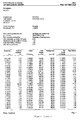
FIG. 1 shows an X-Ray powder diffractogram of Dutasteride. -
FIG. 2 shows an infrared spectrum of Dutasteride. -
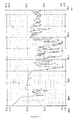
FIG. 3 shows a thermal profile (DSC and TG) of Dutasteride. - Dutasteride is prepared by a novel and advantageous method because of the global process yield and the quality of the obtained product.
- In accordance with the simple method of the present invention, the first step consists in the reaction of 4-aza-5α-androst-1-ene-3-one-17β-carboxylic acid (II) with methansulfonyl chloride, p-toluensulfonyl chloride or pivaloyl chloride in the presence of DBU with the selected solvent to produce a mixed anhydride.
- The organic solvent(s) which may be used in the present invention includes at least one solvent selected from the group consisting of tetrahydrofuran, dioxane, acetonitrile, toluene, dimethylacetamide and dimethylformamide, tetrahydrofuran and acetonitrile is most preferred.
- The reaction of the present invention may be carried out at a temperature in the range of -40° to 10°C during 15 - 90 min, preferably -20 to 0°C during 15-30 min.
- Throughout the reaction, there is significant release of hydrogen chloride which is trapped by the DBU present in the reaction. Others similar bases could be employed in this step like pyridine, triethylamine, etc.
- In the present invention, the mixed anhydride obtained could be isolated or not.
- In accordance with the simple method of the present invention, the mixed anhydrides obtained can be used without previous purification in the next step.
- Thus, in accordance with the present invention, the solution of the mixed anhydride obtained reacts with 2,5-bis(trifluoromethyl)aniline in the presence of a Lewis acid.
- The Lewis acid which may be employed in the present invention includes a catalyst from the group consisting of boron trifluoride etherate, boron trichloride, aluminium trichloride, titanium tetrachloride, most preferably boron trifluoride etherate.
- In a preferred embodiment of the present invention, the Lewis catalyst is added previous to the addition of the amine compound.
- The reaction of this step may be carried out at a temperature in the range of 20 to 90 °C, preferably 60-80°C.
- The completion of the reaction is monitored by HPLC.
- Once the reaction has been completed, the volume is reduced by distillation. Water at 25°C is added and cooled down to 0-5°C. The filtered solid is dissolved at reflux in acetronitrile. It precipitates with water and cools. This procedure is repeated until the material that has not reacted is eliminate, which is then recuperated.
- Alternatively, once the reaction has concluded, the reaction mix concentrates; the residue is taken from an organic solvent, such as methylene dichloride, toluene, ethyl acetate, most preferably ethyl acetate.
- The organic layer is treated successively with aqueous solution of sodium bicarbonate and hydrochloric acid.
- In the present invention, the organic solution containing the desired Dutasteride is concentrated in vacuum to rend a solid.
- THE FOLLOWING TERMS ARE DEFINED AS USED HEREIN.
- DBU: 1,8-diazabicyclo[5.4.0]undec-7-ene
- THF: tetrahydrofuran
- BF3: boron trifluoride
- Et2O: diethyl ether
- The present invention will be described in further detail with reference to Examples. However, it should be understood that the present invention is not restricted by the specific Examples.
- A suspension of 5 g (15.75 mmol) of 3-oxo-4-aza-5α-androst-1-ene-17-β-carboxylic acid in dry acetonitrile (85 mL) was cooled to -20°C. Then 2.35 mL (15,75 mmol) of 1,8-diazabicyclo[5.4.0]undec-7-ene (DBU) and 1.35 mL (17.33 mmol) of methanesulfonyl chloride were added. The reaction was completed in 15 min. After that, 2.02 ml (12. 60 mmol) of boron trifluoride etherate and 2.46 mL (15.75 mmol) of 2,5-bis(trifluoromethyl)aniline were added. The reaction mixture was heated under reflux (76-78°C) for 4 h. The reaction completion may be monitored by in-process control (HPLC). After cooling, the solution was concentrated in vacuo. The organic residue was dissolved in ethyl acetate (100 mL) and was washed with 5% NaHCO3 solution (3 x 35 mL) until pH 8.5. The organic solution was washed with 0.1N hydrochloric acid (2 x 20 mL) and then with water (4 x 35 mL). The resulting solution was concentrated in vacuum. The solid was dissolved in acetonitrile (92 mL) at reflux. The solution was cooled to 0°C for 1h., filtered and washed with acetonitrile (5 mL). The wet solid was dried to 60°C until to constant weight to offer 5.49 g of Dutasteride (yield: 70 %)
- A suspension of 70 g (220.54 mmol) of 3-oxo-4-aza-5α-androst-1-ene-17-β-carboxylic acid in dry acetonitrile (700 mL) was cooled to -20°C. Then 39.5 mL (264.65 mmol) of 1,8-diazabicyclo[5.4.0]undec-7-ene (DBU) and 18.9 mL (242.6 mmol) of methanesulfonyl chloride were added. The reaction was completed in 30 min. After that, 110.09 ml (882.17 mmol) of boron trifluoride etherate and 34.4 mL (220.54 mmol) of 2,5-bis(trifluoromethyl)aniline were added. The reaction mixture was heated under reflux (76-78°C) for 4 h. The reaction completion may be monitored by in-process control (HPLC). After cooling, the solution was concentrated in vacuo. The organic residue was dissolved in ethyl acetate (665 mL) and was cooled to 0-5°C for 30 minutes. The wet solid was filtered and washed and this procedure was repeated four times. The wet solid was dried to 60°C until to constant weight to offer 118.6 g of Dutasteride (yield: 70 %).
- A suspension of 1 g of 3-oxo-4-aza-5α-androst-1-ene-17-β-carboxylic acid (3.15 mmol) in dry tetrahydrofurane (19 mL) was cooled to 0°C and were added 0.47 mL (3.15 mmol) of DBU and 0.47 mL (3.78 mmol) of pivaloyl chloride. The reaction mixture was stirred for 30 min. After that 0.40 ml (2.52 mmol) of boron trifluoride etherate and 0.6 mL (3.78 mmol) of 2,5-bis(trifluoromethyl)aniline were added. The reaction mixture was heated to reflux (65°C) for 13 h. The solid was isolated following the work-up described in Example 1. Dutasteride 1.13 g were obtained (yield: 70 %)

Claims (12)
- A procedure to prepare a crystalline form of Dutasteride comprising the following steps:a. reacting 4-aza-5α-androst-1-ene-3-one-17β-carboxylic acid with at least one of methanesulfonyl chloride, p-toluenesulfonyl chloride and pivaloyl chloride in an aprotic solvent and in the presence of a scavenger of HCl at a temperature below 10°C;b. reacting the intermediate substances generated in step a. with 2,5-bis(trifluoromethyl)aniline in the presence of a Lewis acid;c. heating to reflux until the reaction is complete; andd. distilling the solvent to obtain a residue.
- The procedure according to claim 1, wherein the molar ratio in step a. of methanesulfonyl chloride : 3-oxo-4-aza-5α-androst-1-ene-17-β-carboxylic acid is from 1 to 2 : 1.
- The procedure according to claim 1, wherein the molar ratio in step a. of pivaloyl chloride : 3-oxo-4-aza-5α-androst-1-ene-17-β-carboxylic acid is from 1 to 2 : 1.
- The procedure according to claim 1, wherein the molar ratio in step a. of p-toluenesulfonyl chloride : 3-oxo-4-aza-5α-androst-1-ene-17-β-carboxylic acid is from 1 to 2:1.
- The procedure according to claim 1, wherein the aprotic solvent is selected from dimethylformamide, dimethylacetamide, acetonitrile or tetrahydrofuran.
- The procedure according to claim 1, wherein the scavenger of HCl is selected from DBU, pyridine or triethylamine.
- The procedure according to claim 1, wherein the reaction in step a. is conducted at a temperature between -40 and 10 °C, preferably -30 to 0°C, most preferably -20 to 0°C.
- The procedure according to claim 1, wherein the molar ratio in step b. of Lewis acid : 3-oxo-4-aza-5α-androst-1-ene-17-β-carboxylic acid is from 0.5 to 5: 1
- The procedure according to claim 8, wherein the Lewis acid is selected from BF3, BCl3, AlCl3 or TiCl4.
- The procedure according to claim 9, wherein the Lewis acid is boron trifluoride etherate.
- The procedure according to claim 1, wherein the molar ratio in step b. of 2,5-bis(trifluoromethyl)aniline : 3-oxo-4-aza-5α-androst-1-ene-17-β-carboxylic acid is from 1 to 2 : 1.
- The procedure according to claim 1, wherein the reaction in step c. is conducted at a temperature between 20 and 90°C.
Applications Claiming Priority (2)
| Application Number | Priority Date | Filing Date | Title |
|---|---|---|---|
| US1880808P | 2008-01-03 | 2008-01-03 | |
| PCT/EP2008/011137 WO2009083258A2 (en) | 2008-01-03 | 2008-12-30 | Solid and crystalline dutasteride and processes for preparation thereof |
Publications (2)
| Publication Number | Publication Date |
|---|---|
| EP2238152A2 EP2238152A2 (en) | 2010-10-13 |
| EP2238152B1 true EP2238152B1 (en) | 2015-02-18 |
Family
ID=40688488
Family Applications (1)
| Application Number | Title | Priority Date | Filing Date |
|---|---|---|---|
| EP08868866.8A Not-in-force EP2238152B1 (en) | 2008-01-03 | 2008-12-30 | Processes for preparation of dutasteride |
Country Status (8)
| Country | Link |
|---|---|
| US (1) | US8153648B2 (en) |
| EP (1) | EP2238152B1 (en) |
| KR (1) | KR20110041431A (en) |
| AR (1) | AR070313A1 (en) |
| BR (1) | BRPI0821711A2 (en) |
| CA (2) | CA2891751A1 (en) |
| MX (1) | MX2010007294A (en) |
| WO (1) | WO2009083258A2 (en) |
Families Citing this family (10)
| Publication number | Priority date | Publication date | Assignee | Title |
|---|---|---|---|---|
| US8563728B2 (en) * | 2009-07-09 | 2013-10-22 | Aurobindo Pharma Ltd. | Process for the preparation of Dutasteride |
| EP2468262A1 (en) | 2010-12-06 | 2012-06-27 | Krka Tovarna Zdravil, D.D., Novo Mesto | Pharmaceutical composition comprising dutasteride |
| HU230730B1 (en) | 2011-06-30 | 2017-12-28 | Richter Gedeon Nyrt | Process for the preparation of (5alpha,17beta)-n-[2,5-bis-(trifluoromethyl)-phenyl]-3-oxo-4-aza-5-androst-1-en-17-carboxylic amide |
| CN102417534B (en) * | 2011-08-31 | 2013-04-10 | 重庆万利康制药有限公司 | Synthesis technology of dutasteride |
| CN103570796A (en) * | 2012-07-24 | 2014-02-12 | 重庆医药工业研究院有限责任公司 | Preparation method of dutasteride type-I crystal |
| HK1211868A1 (en) * | 2012-09-26 | 2016-06-03 | Tangent Reprofiling Limited | Modulators of androgen synthesis |
| US9375433B2 (en) | 2012-09-26 | 2016-06-28 | Tangent Reprofiling Limited | Modulators of androgen synthesis |
| KR101251625B1 (en) * | 2012-09-28 | 2013-04-08 | (주)비씨월드제약 | Novel manufacturing method of dutasteride using novel intermediates |
| CN104292293B (en) * | 2014-09-17 | 2016-04-06 | 广东众生药业股份有限公司 | The preparation method of a kind of dutasteride's impurity I |
| CN106810594A (en) * | 2016-12-30 | 2017-06-09 | 南京生命能科技开发有限公司 | A kind of preparation method of high-purity dutasteride |
Family Cites Families (6)
| Publication number | Priority date | Publication date | Assignee | Title |
|---|---|---|---|---|
| TW369521B (en) | 1993-09-17 | 1999-09-11 | Smithkline Beecham Corp | Androstenone derivative |
| GB0026876D0 (en) * | 2000-11-03 | 2000-12-20 | Glaxo Group Ltd | Process |
| AU2003240373B2 (en) * | 2002-07-16 | 2007-09-20 | Siegfried Generics International Ag | Method for introducing a 1,2 double bond into 3-oxo-4-azasteroid compounds |
| US7022854B2 (en) | 2003-07-17 | 2006-04-04 | Dr. Reddy's Laboratories, Limited | Forms of dutasteride and methods for preparation thereof |
| US20050059692A1 (en) * | 2003-09-09 | 2005-03-17 | Dr. Reddy's Laboratories Limited | Process for the preparation of 17beta-N-[2,5-bis(trifluoromethyl)phenyl] carbamoyl-4-aza-5-alpha-androst-1-en-3-one |
| WO2007120263A2 (en) * | 2005-11-10 | 2007-10-25 | Dr. Reddy's Laboratories Ltd. | Preparation of dutasteride |
-
2008
- 2008-12-22 AR ARP080105653A patent/AR070313A1/en unknown
- 2008-12-30 EP EP08868866.8A patent/EP2238152B1/en not_active Not-in-force
- 2008-12-30 WO PCT/EP2008/011137 patent/WO2009083258A2/en not_active Ceased
- 2008-12-30 CA CA2891751A patent/CA2891751A1/en not_active Abandoned
- 2008-12-30 CA CA2709971A patent/CA2709971A1/en not_active Abandoned
- 2008-12-30 KR KR1020107014817A patent/KR20110041431A/en not_active Ceased
- 2008-12-30 BR BRPI0821711-4A patent/BRPI0821711A2/en not_active IP Right Cessation
- 2008-12-30 MX MX2010007294A patent/MX2010007294A/en active IP Right Grant
-
2009
- 2009-01-03 US US12/348,278 patent/US8153648B2/en not_active Expired - Fee Related
Also Published As
| Publication number | Publication date |
|---|---|
| US8153648B2 (en) | 2012-04-10 |
| BRPI0821711A2 (en) | 2015-06-16 |
| WO2009083258A2 (en) | 2009-07-09 |
| MX2010007294A (en) | 2010-10-25 |
| CA2891751A1 (en) | 2009-07-09 |
| CA2709971A1 (en) | 2009-07-09 |
| US20090203724A1 (en) | 2009-08-13 |
| AR070313A1 (en) | 2010-03-31 |
| WO2009083258A3 (en) | 2009-12-03 |
| EP2238152A2 (en) | 2010-10-13 |
| KR20110041431A (en) | 2011-04-21 |
Similar Documents
| Publication | Publication Date | Title |
|---|---|---|
| US8153648B2 (en) | Solid and crystalline dutasteride and processes for preparation thereof | |
| JP2014516072A (en) | Apixaban production method | |
| JPH0395144A (en) | Production of aminophenol derivative | |
| KR20170098870A (en) | Processes for the preparation of a diarylthiohydantoin compound | |
| CN107922352A (en) | The method for preparing protein deacetylase inhibitors | |
| JPH02262558A (en) | New method for producing phenyl-1-diethylaminocarbonyl- 1-phthalimidomethyl-2-cyclopropane z | |
| JP6781030B2 (en) | L-carnosine derivative or salt thereof, and method for producing L-carnosine or salt thereof | |
| EP0478065B1 (en) | New intermediate for making 3-oxo-4-aza-androst-1-ene 17beta-ketones | |
| JP2018203639A (en) | Method for producing N-carbamate protected carboxyanhydride | |
| CN118812438B (en) | Preparation method of L-carnosine | |
| US6538134B2 (en) | 4-Benzyl-2-hydroxy-1,4-oxazine-3-one and polymorphic forms thereof | |
| JPH04288096A (en) | Novel process for producing 3-oxo- 4-aza-androst-1-ene 17beta-ketone | |
| JP2012509267A (en) | (R) -3- (2,3-dihydroxypropyl) -6-fluoro-5- (2-fluoro-4-iodophenylamino) -8-methylpyrido [2,3-d] pyrimidine-4,7 (3H , 8H) -Dione and processes for its production | |
| US6509466B2 (en) | Process for obtaining 17 β-(N-tert-butylcarbamoyl)-3-one-4-aza-steroids | |
| KR19990008411A (en) | Improvement method of 4-hydroxy-2-pyrrolidone | |
| KR101251625B1 (en) | Novel manufacturing method of dutasteride using novel intermediates | |
| US20050143596A1 (en) | Process for producing triterpene derivative | |
| CN117820173B (en) | Synthesis method of o-aminophenol compound | |
| JP3013760B2 (en) | Method for producing 4-hydroxy-2-pyrrolidone | |
| KR100739448B1 (en) | Method for preparing L-carnosine and its derivatives | |
| CN115872932A (en) | Daluolumide intermediate compound | |
| JP4081588B2 (en) | Process for producing N-trialkylmethylcarbonyl-2-alkyl-3,4-difluoroaniline | |
| JP2023503647A (en) | Process for the preparation of novel crystalline forms of 1-(4-benzyloxy-benzyl)-3-methyl-thiourea | |
| KR20130074801A (en) | One-pot synthesis method of quinazoline-2,4-dione derivatives | |
| WO1999036401A1 (en) | Process for the preparation of 3-methyl-2-oxoindoline |
Legal Events
| Date | Code | Title | Description |
|---|---|---|---|
| PUAI | Public reference made under article 153(3) epc to a published international application that has entered the european phase |
Free format text: ORIGINAL CODE: 0009012 |
|
| 17P | Request for examination filed |
Effective date: 20100727 |
|
| AK | Designated contracting states |
Kind code of ref document: A2 Designated state(s): AT BE BG CH CY CZ DE DK EE ES FI FR GB GR HR HU IE IS IT LI LT LU LV MC MT NL NO PL PT RO SE SI SK TR |
|
| AX | Request for extension of the european patent |
Extension state: AL BA MK RS |
|
| DAX | Request for extension of the european patent (deleted) | ||
| 17Q | First examination report despatched |
Effective date: 20120327 |
|
| GRAP | Despatch of communication of intention to grant a patent |
Free format text: ORIGINAL CODE: EPIDOSNIGR1 |
|
| INTG | Intention to grant announced |
Effective date: 20140825 |
|
| RAP1 | Party data changed (applicant data changed or rights of an application transferred) |
Owner name: GADOR SOCIEDAD ANONIMA |
|
| RIN1 | Information on inventor provided before grant (corrected) |
Inventor name: MANGONE, CONSTANZA, PIA Inventor name: LABRIOLA, RAFAEL, ALBERTO Inventor name: TOMBARI, DORA, GRACIELA Inventor name: GARCIA, MARIA, BEATRIZ Inventor name: VECCHIOLI, ADRIANA |
|
| GRAS | Grant fee paid |
Free format text: ORIGINAL CODE: EPIDOSNIGR3 |
|
| GRAA | (expected) grant |
Free format text: ORIGINAL CODE: 0009210 |
|
| AK | Designated contracting states |
Kind code of ref document: B1 Designated state(s): AT BE BG CH CY CZ DE DK EE ES FI FR GB GR HR HU IE IS IT LI LT LU LV MC MT NL NO PL PT RO SE SI SK TR |
|
| REG | Reference to a national code |
Ref country code: GB Ref legal event code: FG4D |
|
| REG | Reference to a national code |
Ref country code: CH Ref legal event code: EP |
|
| REG | Reference to a national code |
Ref country code: AT Ref legal event code: REF Ref document number: 710631 Country of ref document: AT Kind code of ref document: T Effective date: 20150315 |
|
| REG | Reference to a national code |
Ref country code: IE Ref legal event code: FG4D |
|
| REG | Reference to a national code |
Ref country code: DE Ref legal event code: R096 Ref document number: 602008036719 Country of ref document: DE Effective date: 20150402 |
|
| REG | Reference to a national code |
Ref country code: NL Ref legal event code: VDEP Effective date: 20150218 |
|
| REG | Reference to a national code |
Ref country code: AT Ref legal event code: MK05 Ref document number: 710631 Country of ref document: AT Kind code of ref document: T Effective date: 20150218 |
|
| REG | Reference to a national code |
Ref country code: LT Ref legal event code: MG4D |
|
| PG25 | Lapsed in a contracting state [announced via postgrant information from national office to epo] |
Ref country code: SE Free format text: LAPSE BECAUSE OF FAILURE TO SUBMIT A TRANSLATION OF THE DESCRIPTION OR TO PAY THE FEE WITHIN THE PRESCRIBED TIME-LIMIT Effective date: 20150218 Ref country code: HR Free format text: LAPSE BECAUSE OF FAILURE TO SUBMIT A TRANSLATION OF THE DESCRIPTION OR TO PAY THE FEE WITHIN THE PRESCRIBED TIME-LIMIT Effective date: 20150218 Ref country code: ES Free format text: LAPSE BECAUSE OF FAILURE TO SUBMIT A TRANSLATION OF THE DESCRIPTION OR TO PAY THE FEE WITHIN THE PRESCRIBED TIME-LIMIT Effective date: 20150218 Ref country code: NO Free format text: LAPSE BECAUSE OF FAILURE TO SUBMIT A TRANSLATION OF THE DESCRIPTION OR TO PAY THE FEE WITHIN THE PRESCRIBED TIME-LIMIT Effective date: 20150518 Ref country code: LT Free format text: LAPSE BECAUSE OF FAILURE TO SUBMIT A TRANSLATION OF THE DESCRIPTION OR TO PAY THE FEE WITHIN THE PRESCRIBED TIME-LIMIT Effective date: 20150218 Ref country code: FI Free format text: LAPSE BECAUSE OF FAILURE TO SUBMIT A TRANSLATION OF THE DESCRIPTION OR TO PAY THE FEE WITHIN THE PRESCRIBED TIME-LIMIT Effective date: 20150218 |
|
| PG25 | Lapsed in a contracting state [announced via postgrant information from national office to epo] |
Ref country code: GR Free format text: LAPSE BECAUSE OF FAILURE TO SUBMIT A TRANSLATION OF THE DESCRIPTION OR TO PAY THE FEE WITHIN THE PRESCRIBED TIME-LIMIT Effective date: 20150519 Ref country code: LV Free format text: LAPSE BECAUSE OF FAILURE TO SUBMIT A TRANSLATION OF THE DESCRIPTION OR TO PAY THE FEE WITHIN THE PRESCRIBED TIME-LIMIT Effective date: 20150218 Ref country code: IS Free format text: LAPSE BECAUSE OF FAILURE TO SUBMIT A TRANSLATION OF THE DESCRIPTION OR TO PAY THE FEE WITHIN THE PRESCRIBED TIME-LIMIT Effective date: 20150618 Ref country code: NL Free format text: LAPSE BECAUSE OF FAILURE TO SUBMIT A TRANSLATION OF THE DESCRIPTION OR TO PAY THE FEE WITHIN THE PRESCRIBED TIME-LIMIT Effective date: 20150218 Ref country code: AT Free format text: LAPSE BECAUSE OF FAILURE TO SUBMIT A TRANSLATION OF THE DESCRIPTION OR TO PAY THE FEE WITHIN THE PRESCRIBED TIME-LIMIT Effective date: 20150218 |
|
| PG25 | Lapsed in a contracting state [announced via postgrant information from national office to epo] |
Ref country code: SK Free format text: LAPSE BECAUSE OF FAILURE TO SUBMIT A TRANSLATION OF THE DESCRIPTION OR TO PAY THE FEE WITHIN THE PRESCRIBED TIME-LIMIT Effective date: 20150218 Ref country code: EE Free format text: LAPSE BECAUSE OF FAILURE TO SUBMIT A TRANSLATION OF THE DESCRIPTION OR TO PAY THE FEE WITHIN THE PRESCRIBED TIME-LIMIT Effective date: 20150218 Ref country code: RO Free format text: LAPSE BECAUSE OF FAILURE TO SUBMIT A TRANSLATION OF THE DESCRIPTION OR TO PAY THE FEE WITHIN THE PRESCRIBED TIME-LIMIT Effective date: 20150218 Ref country code: DK Free format text: LAPSE BECAUSE OF FAILURE TO SUBMIT A TRANSLATION OF THE DESCRIPTION OR TO PAY THE FEE WITHIN THE PRESCRIBED TIME-LIMIT Effective date: 20150218 Ref country code: CZ Free format text: LAPSE BECAUSE OF FAILURE TO SUBMIT A TRANSLATION OF THE DESCRIPTION OR TO PAY THE FEE WITHIN THE PRESCRIBED TIME-LIMIT Effective date: 20150218 |
|
| REG | Reference to a national code |
Ref country code: DE Ref legal event code: R097 Ref document number: 602008036719 Country of ref document: DE |
|
| PG25 | Lapsed in a contracting state [announced via postgrant information from national office to epo] |
Ref country code: PL Free format text: LAPSE BECAUSE OF FAILURE TO SUBMIT A TRANSLATION OF THE DESCRIPTION OR TO PAY THE FEE WITHIN THE PRESCRIBED TIME-LIMIT Effective date: 20150218 |
|
| PLBE | No opposition filed within time limit |
Free format text: ORIGINAL CODE: 0009261 |
|
| STAA | Information on the status of an ep patent application or granted ep patent |
Free format text: STATUS: NO OPPOSITION FILED WITHIN TIME LIMIT |
|
| PG25 | Lapsed in a contracting state [announced via postgrant information from national office to epo] |
Ref country code: IT Free format text: LAPSE BECAUSE OF FAILURE TO SUBMIT A TRANSLATION OF THE DESCRIPTION OR TO PAY THE FEE WITHIN THE PRESCRIBED TIME-LIMIT Effective date: 20150218 |
|
| 26N | No opposition filed |
Effective date: 20151119 |
|
| PG25 | Lapsed in a contracting state [announced via postgrant information from national office to epo] |
Ref country code: SI Free format text: LAPSE BECAUSE OF FAILURE TO SUBMIT A TRANSLATION OF THE DESCRIPTION OR TO PAY THE FEE WITHIN THE PRESCRIBED TIME-LIMIT Effective date: 20150218 |
|
| PG25 | Lapsed in a contracting state [announced via postgrant information from national office to epo] |
Ref country code: BE Free format text: LAPSE BECAUSE OF FAILURE TO SUBMIT A TRANSLATION OF THE DESCRIPTION OR TO PAY THE FEE WITHIN THE PRESCRIBED TIME-LIMIT Effective date: 20150218 |
|
| REG | Reference to a national code |
Ref country code: DE Ref legal event code: R119 Ref document number: 602008036719 Country of ref document: DE |
|
| PG25 | Lapsed in a contracting state [announced via postgrant information from national office to epo] |
Ref country code: MC Free format text: LAPSE BECAUSE OF FAILURE TO SUBMIT A TRANSLATION OF THE DESCRIPTION OR TO PAY THE FEE WITHIN THE PRESCRIBED TIME-LIMIT Effective date: 20150218 Ref country code: LU Free format text: LAPSE BECAUSE OF FAILURE TO SUBMIT A TRANSLATION OF THE DESCRIPTION OR TO PAY THE FEE WITHIN THE PRESCRIBED TIME-LIMIT Effective date: 20151230 |
|
| REG | Reference to a national code |
Ref country code: CH Ref legal event code: PL |
|
| GBPC | Gb: european patent ceased through non-payment of renewal fee |
Effective date: 20151230 |
|
| REG | Reference to a national code |
Ref country code: IE Ref legal event code: MM4A |
|
| REG | Reference to a national code |
Ref country code: FR Ref legal event code: ST Effective date: 20160831 |
|
| PG25 | Lapsed in a contracting state [announced via postgrant information from national office to epo] |
Ref country code: GB Free format text: LAPSE BECAUSE OF NON-PAYMENT OF DUE FEES Effective date: 20151230 Ref country code: CH Free format text: LAPSE BECAUSE OF NON-PAYMENT OF DUE FEES Effective date: 20151231 Ref country code: DE Free format text: LAPSE BECAUSE OF NON-PAYMENT OF DUE FEES Effective date: 20160701 Ref country code: IE Free format text: LAPSE BECAUSE OF NON-PAYMENT OF DUE FEES Effective date: 20151230 Ref country code: LI Free format text: LAPSE BECAUSE OF NON-PAYMENT OF DUE FEES Effective date: 20151231 |
|
| PG25 | Lapsed in a contracting state [announced via postgrant information from national office to epo] |
Ref country code: FR Free format text: LAPSE BECAUSE OF NON-PAYMENT OF DUE FEES Effective date: 20151231 |
|
| PG25 | Lapsed in a contracting state [announced via postgrant information from national office to epo] |
Ref country code: HU Free format text: LAPSE BECAUSE OF FAILURE TO SUBMIT A TRANSLATION OF THE DESCRIPTION OR TO PAY THE FEE WITHIN THE PRESCRIBED TIME-LIMIT; INVALID AB INITIO Effective date: 20081230 Ref country code: BG Free format text: LAPSE BECAUSE OF FAILURE TO SUBMIT A TRANSLATION OF THE DESCRIPTION OR TO PAY THE FEE WITHIN THE PRESCRIBED TIME-LIMIT Effective date: 20150218 |
|
| PG25 | Lapsed in a contracting state [announced via postgrant information from national office to epo] |
Ref country code: CY Free format text: LAPSE BECAUSE OF FAILURE TO SUBMIT A TRANSLATION OF THE DESCRIPTION OR TO PAY THE FEE WITHIN THE PRESCRIBED TIME-LIMIT Effective date: 20150218 |
|
| PG25 | Lapsed in a contracting state [announced via postgrant information from national office to epo] |
Ref country code: TR Free format text: LAPSE BECAUSE OF FAILURE TO SUBMIT A TRANSLATION OF THE DESCRIPTION OR TO PAY THE FEE WITHIN THE PRESCRIBED TIME-LIMIT Effective date: 20150218 Ref country code: MT Free format text: LAPSE BECAUSE OF FAILURE TO SUBMIT A TRANSLATION OF THE DESCRIPTION OR TO PAY THE FEE WITHIN THE PRESCRIBED TIME-LIMIT Effective date: 20150218 |
|
| PG25 | Lapsed in a contracting state [announced via postgrant information from national office to epo] |
Ref country code: PT Free format text: LAPSE BECAUSE OF FAILURE TO SUBMIT A TRANSLATION OF THE DESCRIPTION OR TO PAY THE FEE WITHIN THE PRESCRIBED TIME-LIMIT Effective date: 20150218 |