EP2231639B1 - Crystalline forms of n-(tert-butoxycarbonyl)-3-methyl-l-valyl-(4r)-4-((7-chloro-4-methoxy-1-isoquinolinyl)oxy)-n-((1r,2s)-1-((cyclopropylsulfonyl)carbamoyl)-2-vinylcyclopropyl)-l-prolinamide - Google Patents
Crystalline forms of n-(tert-butoxycarbonyl)-3-methyl-l-valyl-(4r)-4-((7-chloro-4-methoxy-1-isoquinolinyl)oxy)-n-((1r,2s)-1-((cyclopropylsulfonyl)carbamoyl)-2-vinylcyclopropyl)-l-prolinamide Download PDFInfo
- Publication number
- EP2231639B1 EP2231639B1 EP08866514.6A EP08866514A EP2231639B1 EP 2231639 B1 EP2231639 B1 EP 2231639B1 EP 08866514 A EP08866514 A EP 08866514A EP 2231639 B1 EP2231639 B1 EP 2231639B1
- Authority
- EP
- European Patent Office
- Prior art keywords
- compound
- interferon
- mixture
- weight percent
- crystalline
- Prior art date
- Legal status (The legal status is an assumption and is not a legal conclusion. Google has not performed a legal analysis and makes no representation as to the accuracy of the status listed.)
- Not-in-force
Links
Images




Classifications
-
- C—CHEMISTRY; METALLURGY
- C07—ORGANIC CHEMISTRY
- C07D—HETEROCYCLIC COMPOUNDS
- C07D401/00—Heterocyclic compounds containing two or more hetero rings, having nitrogen atoms as the only ring hetero atoms, at least one ring being a six-membered ring with only one nitrogen atom
- C07D401/02—Heterocyclic compounds containing two or more hetero rings, having nitrogen atoms as the only ring hetero atoms, at least one ring being a six-membered ring with only one nitrogen atom containing two hetero rings
- C07D401/12—Heterocyclic compounds containing two or more hetero rings, having nitrogen atoms as the only ring hetero atoms, at least one ring being a six-membered ring with only one nitrogen atom containing two hetero rings linked by a chain containing hetero atoms as chain links
-
- C—CHEMISTRY; METALLURGY
- C07—ORGANIC CHEMISTRY
- C07K—PEPTIDES
- C07K5/00—Peptides containing up to four amino acids in a fully defined sequence; Derivatives thereof
- C07K5/04—Peptides containing up to four amino acids in a fully defined sequence; Derivatives thereof containing only normal peptide links
- C07K5/08—Tripeptides
- C07K5/0802—Tripeptides with the first amino acid being neutral
- C07K5/0804—Tripeptides with the first amino acid being neutral and aliphatic
- C07K5/0808—Tripeptides with the first amino acid being neutral and aliphatic the side chain containing 2 to 4 carbon atoms, e.g. Val, Ile, Leu
-
- A—HUMAN NECESSITIES
- A61—MEDICAL OR VETERINARY SCIENCE; HYGIENE
- A61P—SPECIFIC THERAPEUTIC ACTIVITY OF CHEMICAL COMPOUNDS OR MEDICINAL PREPARATIONS
- A61P31/00—Antiinfectives, i.e. antibiotics, antiseptics, chemotherapeutics
-
- A—HUMAN NECESSITIES
- A61—MEDICAL OR VETERINARY SCIENCE; HYGIENE
- A61P—SPECIFIC THERAPEUTIC ACTIVITY OF CHEMICAL COMPOUNDS OR MEDICINAL PREPARATIONS
- A61P31/00—Antiinfectives, i.e. antibiotics, antiseptics, chemotherapeutics
- A61P31/12—Antivirals
-
- A—HUMAN NECESSITIES
- A61—MEDICAL OR VETERINARY SCIENCE; HYGIENE
- A61P—SPECIFIC THERAPEUTIC ACTIVITY OF CHEMICAL COMPOUNDS OR MEDICINAL PREPARATIONS
- A61P31/00—Antiinfectives, i.e. antibiotics, antiseptics, chemotherapeutics
- A61P31/12—Antivirals
- A61P31/14—Antivirals for RNA viruses
-
- A—HUMAN NECESSITIES
- A61—MEDICAL OR VETERINARY SCIENCE; HYGIENE
- A61K—PREPARATIONS FOR MEDICAL, DENTAL OR TOILETRY PURPOSES
- A61K38/00—Medicinal preparations containing peptides
Definitions
- the present disclosure generally relates to crystalline forms of N -( tert- butoxycarbonyl)-3-methyl-L-valyl-(4 R )-4-((7-chloro-4-methoxy-1-isoquinolinyl)oxy)- N -((1 R ,2 S )-1-((cyclopropylsulfonyl)carbamoyl)-2-vinylcyclopropyl)-L-prolinamide.
- the present disclosure also generally relates to a pharmaceutical composition comprising one or more of the crystalline forms, as well of methods of using the crystalline forms in the treatment of Hepatitis C virus (HCV) and methods for obtaining such crystalline forms.
- HCV Hepatitis C virus
- HCV Hepatitis C virus
- Compound (I) can exist as T1F-1/2 ( ⁇ 15% relative humidity), H-1 (>45% relative humidity), or a mixture of the two at ⁇ 15-45% relative humidity.
- FIG. 1 shows the interconversion of Forms H-1 and T1F-1/2 as a function of relative humidity.
- Compound (I) exists as H-1, and Form T1F-1/2 rapidly converts to H-1 when suspended in water.
- Form H-1 of characterized by the following unit cell parameters:
- the present disclosure provides Form H-1 of characterized by fractional atomic coordinates within the unit cell as listed in Table 3.
- Form H-1 of characterized by one or more of the following: a) a unit cell with parameters substantially equal to the following:
- first aspect Form H-1 has a purity of at least 95 weight percent. In a second embodiment of the first aspect Form H-1 has a purity of at least 99 weight percent.
- Form T1F-1/2 of characterized by one or more of the following:
- T1F-1/2 has a purity of at least 95 weight percent. In a second embodiment of the second aspect Form T1F-1/2 has a purity of at least 99 weight percent.
- the present disclosure provides a mixture of Form H-1 according to the first aspect and its embodiments and Form T1F-1/2 according to the second aspect and its embodiments.
- the present disclosure provides a pharmaceutical composition
- a pharmaceutical composition comprising Form H-1, Form T1F-1/2, or a mixture thereof according to any one of the previous aspects and embodiments and a pharmaceutically acceptable carrier or diluent.
- the present disclosure provides a pharmaceutical composition of the fourth aspect comprising Form H-1, Form T1F-1/2, or a mixture thereof in combination with at least one additional compound having anti-HCV activity.
- at least one of the additional compounds having anti-HCV activity is an interferon or ribavirin.
- the interferon is selected from interferon alpha 2B, pegylated interferon alpha, consensus interferon, interferon alpha 2A, and lymphoblastoid interferon tau.
- the present disclosure provides a pharmaceutical composition
- a pharmaceutical composition comprising Form H-1, Form T1F-1/2, or a mixture thereof in combination with at least one additional compound having anti-HCV activity wherein at least one of the additional compounds is selected from interleukin 2, interleukin 6, interleukin 12, a compound that enhances the development of a type 1 helper T cell response, interfering RNA, anti-sense RNA, Imiquimod, ribavirin, an inosine 5'-monophospate dehydrogenase inhibitor, amantadine, and rimantadine.
- the present disclosure provides a method of treating HCV infection in a mammal comprising administering to the mammal a therapeutically-effective amount of Form H-1, Form T1F-1/2, or a mixuture thereof according to any of the previous aspects and embodiments.
- the mammal is a human.
- the compounds of the present disclosure may also exist as tautomers and rotamers; therefore the present disclosure also encompasses all tautomeric forms and rotamers.
- the disclosure relates to crystalline forms of Compound (I).
- polymorph refers to crystalline forms having the same chemical composition but different spatial arrangements of the molecules, atoms, and/or ions forming the crystal.
- pharmaceutically acceptable refers to those compounds, materials, compositions, and/or dosage forms which are, within the scope of sound medical judgment, suitable for contact with the tissues of human beings and animals without excessive toxicity, irritation, allergic response, or other problem complications commensurate with a reasonable benefit/risk ratio.
- substantially pure refers to either Form H-1 or Form T1F-1/2 of Compound (I) which is great than about 90% pure. This means that the polymorph of Compound (I) does not contain more than about 10% of any other compound, and, in particular, does not contain more than about 10% of any other form of Compound (I).
- terapéuticaally effective amount is intended to include an amount of the crystalline forms of Compound (I) that is effective when administered alone or in combination to treat Hepatitis C.
- the crystalline forms of Compound (I) and pharmaceutical compositions thereof may be useful in treating Hepatitis C. If Compound (I) is used in combination with another medication, the combination of compounds described herein may result in a synergistic combination. Synergy, as described for example by Chou and Talalay, Adv. Enzyme Regul. 1984, 22, 27-55 , occurs when the effect of the compounds when administered in combination is greater than the effect of the compounds when administered alone as single agents.
- treating refers to: (i) preventing a disease, disorder or condition from occurring in a patient which may be predisposed to the disease, disorder and/or condition but has not yet been diagnosed as having it; (ii) inhibiting the disease, disorder or condition, i.e., arresting its development; and/or (iii) relieving the disease, disorder or condition, i.e., causing regression of the disease, disorder and/or condition.
- the disclosure provides crystalline forms of Compound (I).
- These crystalline forms of Compound (I) may be employed in pharmaceutical compositions which may optionally include one or more other components selected, for example, from the group consisting of excipients, carriers, and one of other active pharmaceutical ingredients active chemical entities of different molecular structure.
- the crystalline forms have phase homogeneity indicated by less than 10 percent, in another embodiment the crystalline forms have phase homogeneity indicated by less than 5 percent, and in another embodiment the crystalline forms have phase homogeneity indicated by less than 2 percent of the total peak area in the experimentally measured PXRD pattern arising from the extra peaks that are absent from the simulated PXRD pattern. In another embodiment the crystalline forms have phase homogeneity with less than 1 percent of the total peak area in the experimentally measured PXRD pattern arising from the extra peaks that are absent from the simulated PXRD pattern.
- a composition consisting essentially of the crystalline form H-1 of Compound (I).
- the composition of this embodiment may comprise at least 90 weight percent of the crystalline form H-1 of Compound (I), based on the weight of Compound (I) in the composition.
- the remaining material comprises other form(s) of the compound and/or reaction impurities and/or processing impurities arising from its preparation.
- a composition consisting essentially of the crystalline form T1F-1/2 of Compound (I).
- the composition of this embodiment may comprise at least 90 weight percent of the crystalline form T1F-1/2 of Compound (I), based on the weight of Compound (I) in the composition.
- the remaining material comprises other form(s) of the compound and/or reaction impuritis and/or processing impurities arising from its preparation.
- reaction impurities and/or processing impurities may be determined by analytical techniques known in the art, such as, for example, chromatography, nuclear magnetic resonance spectroscopy, mass spectrometry, or infrared spectroscopy.
- Crystalline forms may be prepared by a variety of methods, including for example, crystallization or recrystallization from a suitable solvent, sublimation, growth from a melt, solid state transformation from another phase, crystallization from a supercritical fluid, and jet spraying.
- Techniques for crystallization or recrystallization of crystalline forms from a solvent mixture include, for example, evaporation of the solvent, decreasing the temperature of the solvent mixture, crystal seeding a supersaturated solvent mixture of the molecule and/or salt, freeze drying the solvent mixture, and addition of antisolvents (countersolvents) to the solvent mixture.
- High throughput crystallization techniques may be employed to prepare crystalline forms including polymorphs.
- Crystals of drugs including polymorphs, methods of preparation, and characterization of drug crystals are discussed in Solid-State Chemistry of Drugs, S.R. Byrn, R.R. Pfeiffer, and J.G. Stowell, 2nd Edition, SSCI, West Lafayette, Indiana (1999 ).
- solvent for crystallization techniques that employ solvent, the choice of solvent or solvents is typically dependent upon one or more factors, such as solubility of the compound, crystallization technique, and vapor pressure of the solvent. Combinations of solvents may be employed, for example, the compound may be solubilized into a first solvent to afford a solution, followed by the addition of an anti solvent to decrease the solubility of the compound in the solution and to afford the formation of crystals.
- An antisolvent is a solvent in which the compound has low solubility.
- a compound is suspended and/or stirred in a suitable solvent to afford a slurry, which may be heated to promote dissolution.
- a suitable solvent to afford a slurry, which may be heated to promote dissolution.
- slurry means a saturated solution of the compound, which may also contain an additional amount of the compound to afford a heterogeneous mixture of the compound and a solvent at a given temperature.
- Seed crystals may be added to any crystallization mixture to promote crystallization. Seeding may be employed to control growth of a particular polymorph or to control the particle size distribution of the crystalline product. Accordingly, calculation of the amount of seeds needed depends on the size of the seed available and the desired size of an average product particle as described, for example, in " Programmed Cooling of Batch Crystallizers," J.W. Mullin and J. Nyvlt, Chemical Engineering Science, 1971, 26, 369-377 . In general, seeds of small size are needed to control effectively the growth of crystals in the batch. Seed of small size may be generated by sieving, milling, or micronizing of large crystals, or by micro-crystallization of solutions. Care should be taken that milling or micronizing of crystals does not result in any change in crystallinity of the desired crystal form (i.e., change to amorphous or to another polymorph).
- a cooled crystallization mixture may be filtered under vacuum, and the isolated solids may be washed with a suitable solvent, such as cold recrystallization solvent, and dried under a nitrogen purge to afford the desired crystalline form.
- the isolated solids may be analyzed by a suitable spectroscopic or analytical technique, such as solid state nuclear magnetic resonance, differential scanning calorimetry, X-Ray powder diffraction, or the like, to assure formation of the preferred crystalline form of the product.
- the resulting crystalline form is typically produced in an amount of greater than about 70 weight percent isolated yield, preferably greater than 90 weight percent isolated yield, based on the weight of the compound originally employed in the crystallization procedure.
- the product may be co-milled or passed through a mesh screen to delump the product, if necessary.
- Crystalline forms may be prepared directly from the reaction medium of the final process for preparing Compound (I). This may be achieved, for example, by employing in the final process step a solvent or a mixture of solvents from which Compound (I) may be crystallized. Alternatively, crystalline forms may be obtained by distillation or solvent addition techniques.
- Suitable solvents for this purpose include, for example, the aforementioned non-polar solvents and polar solvents, including protic polar solvents such as alcohols, and aprotic polar solvents such as ketones.
- the presence of more than one polymorph in a sample may be determined by techniques such as powder X-Ray diffraction (PXRD) or solid state nuclear magnetic resonance spectroscopy (SSNMR). For example, the presence of extra peaks in an experimentally measured PXRD pattern when compared with a simulated PXRD pattern may indicate more than one polymorph in the sample.
- the simulated PXRD may be calculated from single crystal X-Ray data. See Smith, D.K., "A FORTRAN Program for Calculating X-Ray Powder Diffraction Patterns," Lawrence Radiation Laboratory, Livermore, California, UCRL-7196 (April 1963 ).
- Form H-1 and Form T1F-1/2 of Compound (I) can be characterized using various techniques, the operation of which are well known to those of ordinary skill in the art.
- characterization methods include, but are not limited to, single crystal X-Ray diffraction, powder X-Ray diffraction (PXRD), simulated powder X-Ray patterns ( Yin, S.; Scaringe, R. P.; DiMarco, J.; Galella, M. and Gougoutas, J. Z., American Pharmaceutical Review, 2003, 6, 2, 80 ), differential scanning calorimetry (DSC), solid-state 13 C NMR ( Earl, W.L. and Van der Hart, D. L., J. Magn. Reson., 1982, 48, 35-54 ), Raman spectroscopy, infrared spectroscopy, moisture sorption isotherms, thermal gravimetric analysis (TGA), and hot stage techniques.
- the H-1 form may be characterized and distinguished using single crystal X-Ray diffraction, which is based on unit cell measurements of a single crystal of Form H-1.
- a detailed description of unit cells is provided in Stout & Jensen, X-Ray Structure Determination: A Practical Guide, Macmillan Co., New York (1968 ), Chapter 3.
- the unique arrangement of atoms in spatial relation within the crystalline lattice may be characterized according to the observed fractional atomic coordinates.
- Another means of characterizing the crystalline structure is by powder X-Ray diffraction analysis in which the diffraction profile is compared to a simulated profile representing pure powder material, both run at the same analytical temperature, and measurements for the subject form characterized as a series of 2 ⁇ values.
- an X-Ray diffraction pattern may be obtained with a measurement of error that is dependent upon the measurement conditions employed.
- intensities in an X-Ray diffraction pattern may fluctuate depending upon measurement conditions employed.
- relative intensities may also vary depending upon experimental conditions, and, accordingly, the exact order of intensity should not be taken into account.
- a measurement error of diffraction angle for a conventional X-Ray diffraction pattern is typically about 5 percent or less, and such degree of measurement error should be taken into account as pertaining to the aforementioned diffraction angles.
- crystal forms of the present disclosure are not limited to the crystal forms that provide X-Ray diffraction patterns completely identical to the X-Ray diffraction patterns depicted in the accompanying Figures disclosed herein. Any crystal form that provides an X-Ray diffraction pattern, DSC thermogram, or SSNMR spectrum substantially identical to those disclosed in the accompanying Figures falls within the scope of the present disclosure.
- the ability to ascertain substantial identities of X-Ray diffraction patters is within the purview of one of ordinary skill in the art.
- H-1 and T1F-1/2 forms of Compound (I), alone or in combination with each other and/or other compounds, can be used to treat HCV infection.
- compositions comprising a therapeutically effective amount of Form H-1 and/or Form T1F-1/2 of Compound (I) and at least one pharmaceutically acceptable carrier.
- the active ingredient, i.e., Form H-1 and/or Form T1F-1/2 of Compound (I), in such compositions typically comprises from 0.1 weight percent to 99.9 percent by weight of the composition, and often comprises from about 5 to 95 weight percent.
- the pH of the formulation may be adjusted with pharmaceutically acceptable modifiers (such as calcium carbonate and magnesium oxide) to enhance the stability of the formulated compound or its delivery form.
- Formulations of the polymorph of the present disclosure may also contain additives for enhancement of absorption and bioavailability.
- compositions of this disclosure may be administered orally, parenterally or via an implanted reservoir.
- parenteral as used herein includes subcutaneous, intracutaneous, intravenous, intramuscular, intra-articular, intrasynovial, intrasternal, intrathecal, and intralesional injection or infusion techniques.
- compositions maybe in the form of a sterile injectable preparation, for example, as a sterile injectable aqueous or oleaginous suspension.
- This suspension may be formulated according to techniques known in the art using suitable dispersing or wetting agents and suspending agents. The details concerning the preparation of such compounds are known to those skilled in the art.
- the pharmaceutical compositions of this disclosure may be administered in any orally acceptable dosage form including, but not limited to, capsules, tablets, and aqueous suspensions and solutions.
- carriers which are commonly used include lactose and corn starch.
- Lubricating agents, such as magnesium stearate, can also be added.
- useful carriers/diluents include lactose, high and low molecular weight polyethylene glycol, and dried corn starch.
- aqueous suspensions are administered orally, the active ingredient is combined with emulsifying and suspending agents. If desired, certain sweetening and/or flavoring and/or coloring agents may be added.
- Dosage levels of between about 0.05 and about 100 milligram per kilogram (“mg/kg”) body weight per day, more specifically between about 0.1 and about 50 mg/kg body weight per day of the compounds of the disclosure are typical in a monotherapy for the prevention and/or treatment of HCV mediated disease.
- the pharmaceutical compositions of this disclosure will be administered from about 1 to about 3 times per day or alternatively, as a continuous infusion. Such administration can be used as a chronic or acute therapy.
- the amount of active ingredient that may be combined with the carrier materials to produce a single dosage form will vary depending upon the host treated and the particular mode of administration.
- unit dosage formulations are those containing a daily dose or sub-dose, as herein above recited, or an appropriate fraction thereof, of an active ingredient.
- treatment is initiated with small dosages substantially less than the optimum dose of the peptide. Thereafter, the dosage is increased by small increments until the optimum effect under the circumstances is reached.
- the compound is most desirably administered at a concentration level that will generally afford antivirally effective results without causing any harmful or deleterious side effects.
- compositions of this disclosure comprise a combination of the polymorph of the disclosure and one or more additional therapeutic or prophylactic agents
- both the compound and the additional agent are usually present at dosage levels of between about 10 and 100 percent, and more preferably between about 10 and 80 percent of the dosage normally administered in a monotherapy regimen.
- Administration of the one or more additional agents may occur prior to, after, or simultaneously with the polymorph of the present disclosure.
- the resulting composition may be administered in vivo to mammals, such as man, to inhibit NS3/4A or to treat or prevent HCV virus infection.
- Such treatment may also be achieved using the polymorph of this disclosure in combination with agents which include, but are not limited to: Immunomodulatory agents, such as interferons; other antiviral agents such as ribavirin, amantadine; other inhibitors of NS3/4A; inhibitors of other targets in the HCV life cycle such as helicase, polymerase, metalloprotease, or internal ribosome entry site; or combinations thereof.
- the additional agents may be combined with the polymorph of this disclosure to create a single dosage form. Alternatively these additional agents may be separately administered to a mammal as part of a multiple dosage form.
- Table 1 below lists some illustrative examples of compounds that can be administered with the compounds of this disclosure.
- the compounds of the disclosure can be administered with other anti-HCV activity compounds in combination therapy, either jointly or separately, or by combining the compounds into a composition.
- Table 1 Brand Name Physiological Class Type of Inhibitor or Target Source Company NIM811 Cyclophilin Inhibitor Novartis Zadaxin Immunomodulator Sciclone Suvus Methylene blue Bioenvision Actilon (CPG10101) TLR9 agonist Coley Batabulin (T67) Anticancer ⁇ -tubulin inhibitor Tularik Inc., South San Francisco, CA ISIS 14803 Antiviral antisense ISIS Pharmaceuticals Inc, Carlsbad, CA/Elan Phamaceuticals Inc., New York, NY Summetrel Antiviral antiviral Endo Pharmaceuticals Holdings Inc., Chadds Ford, PA GS-9132 (ACH-806) Antiviral HCV Inhibitor Achillion / Gilead Pyraz
- Another aspect of this disclosure provides methods of inhibiting HCV NS3 activity in patients by administering the polymorph of the present disclosure.
- these methods are useful in decreasing HCV NS3 activity in the patient.
- such methods may additionally comprise the step of administering to said patient an agent selected from an immunomodulatory agent, an antiviral agent, an HCV NS3 inhibitor, or an inhibitor of other targets in the HCV life cycle such as, for example, helicase, polymerase, protease, or metalloprotease.
- an agent selected from an immunomodulatory agent, an antiviral agent, an HCV NS3 inhibitor, or an inhibitor of other targets in the HCV life cycle such as, for example, helicase, polymerase, protease, or metalloprotease.
- Such additional agent may be administered to the patient prior to, concurrently with, or following the administration of the compounds of this disclosure.
- these methods are useful for inhibiting viral replication in a patient. Such methods can be useful in treating or preventing HCV disease.
- the polymorphs of the disclosure may also be used as a laboratory reagent.
- the polymorphs may be instrumental in providing research tools for designing of viral replication assays, validation of animal assay systems and structural biology studies to further enhance knowledge of the HCV disease mechanisms.
- the polymorphs of this disclosure may also be used to treat or prevent viral contamination of materials and therefore reduce the risk of viral infection of laboratory or medical personnel or patients who come in contact with such materials, e.g., blood, tissue, surgical instruments and garments, laboratory instruments and garments, and blood collection or transfusion apparatuses and materials.
- materials e.g., blood, tissue, surgical instruments and garments, laboratory instruments and garments, and blood collection or transfusion apparatuses and materials.
- Amorphous N -( tert -butoxycarbonyl)-3-methyl-L-valyl-(4 R )-4-((7-chloro-4-methoxy-1-isoquinolinyl)oxy)- N -((1 R ,2 S )-1-((cyclopropylsulfonyl)carbamoyl)-2-vinylcyclopropyl)-L-prolinamide (prepared according to the procedure described in U.S. 6,995,174 ) is stirred or sonicated in ethanol at room temperature with a concentration of 8-10 ml solvent/g compound. The solid first dissolves instantly in the solution and then forms a slurry within several minutes of agitation.
- the crystal form obtained from the slurry is a solvate (Form E2-2).
- the slurry is isolated and dried at 50 °C under vacuum, resulting in the formation of T1F-1/2.
- the T1F-1/2 form can transform to H-1, resulting in either a mixture of both forms or conversion to Form H-1, depending on the ambient humidity and temperature conditions.
- Crystalline N -( tert -butoxycarbonyl)-3-methyl-L-valyl-(4 R )-4-((7-chloro-4-methoxy-1-isoquinolinyl)oxy)- N -((1 R ,2 S )-1-((cyclopropylsulfonyl)carbamoyl)-2-vinylcyclopropyl)-L-prolinamide is dissolved in ethanol at 50°C with a concentration of 10-12 ml solvent/g compound. (Heptane can be added to the solution at 50 °C at this stage.) The agitated batch is gradually cooled down to 20 °C and aged to develop crystallization.
- Seeding is optional; it is seeded between 45°C and 20°C to form slurry.
- the crystal form obtained from the slurry is a solvate.
- the slurry is then filtered and the solid obtained is dried at 50°C under vacuum, resulting in the formation of T1F-1/2.
- the T1F-1/2 form can transform to H-1, resulting in either a mixture of both forms or conversion to Form H-1, depending on the ambient humidity and temperature conditions.
- the hydrate H-1 can be prepared by converting the free acid T1F-1/2 via hydration with humid air or nitrogen under controlled conditions.
- the T1F-1/2 form in contact with a humidified air or nitrogen flow transforms into the hydrate over a period of time (flow rate 300-1000 ml/min, RH >90 %, within 24 hrs at room temp). It is also observed that by drying the E2-2 wet cake isolated from crystallization under flowing air or nitrogen at ambient conditions (RH 40-80%, room temp) will eventually convert the solvate to the hydrate.
- Crystallization was prepared in varying compositions of EtOH and water to examine the crystal form(s) obtained and evaluated the feasibility for achieving hydrate directly in the slurry.
- a high water activity is needed to form hydrate in the slurry conversion: E2-2 wet cake reslurried in water over a period of time at 20-50°C converts to the hydrate with residual E2-2 present in the slurry.
- This procedure may also apply to other alcohol solvates (e.g., M-1, methanolate) in transforming into the hydrate in a water containing slurry.
- Amorphous N -( tert -butoxycarbonyl)-3-methyl-L-valyl-(4 R )-4-((7-chloro-4-methoxy-1-isoquinolinyl)oxy)- N -((1 R ,2 S )-1-((cyclopropylsulfonyl)carbamoyl)-2-vinylcyclopropyl)-L-prolinamide (prepared according to the procedure described in U.S. 6,995,174 ) is stirred or sonicated in isopropyl alcohol at room temperature with a concentration of 5-14 ml solvent/g compound. The solid first dissolves with or without agitation in the solution and then forms a slurry within several minutes.
- the crystal form obtained from the slurry is a solvate.
- the slurry is isolated and dried at 50°C under vacuum, resulting in the formation of T1F-1/2.
- the T1F-1/2 form can transform to H-1, subject to the ambient humidity and temperature conditions.
- the T1F-1/2 form can transform to H-1, resulting in either a mixture of both forms or conversion to Form H-1, depending on the ambient humidity and temperature conditions.
- Crystalline N -( tert -butoxycarbonyl)-3-methyl-L-valyl-(4 R )-4-((7-chloro-4-methoxy-1-isoquinolinyl)oxy)- N -((1 R ,2 S )-1-((cyclopropylsulfonyl)carbamoyl)-2-vinylcyclopropyl)-L-prolinamide is dissolved in isopropyl alcohol at 50-60°C with a concentration of 15-17 ml solvent/g compound. (Water can be added to the solution at 60°C at this stage). Seeding is optional. The agitated batch is gradually cooled down to 20°C and aged to develop crystallization.
- the crystal form obtained from the slurry is a solvate.
- the slurry is then filtered and the solid obtained is dried at 50°C under vacuum, resulting in the formation of T1F-1/2.
- the T1F-1/2 form can transform to H-1, subject to the ambient humidity and temperature conditions.
- the T1F-1/2 form can transform to H-1, resulting in either a mixture of both forms or conversion to Form H-1, depending on the ambient humidity and temperature conditions.
- Crystals of H-1 were also prepared as follows: The compound (amorphous or crystalline) was dissolved in methanol. Water was added as an anti-solvent. Prism or plate-shaped crystals were obtained which were a 1:1 methanol solvate. These crystals were left under ambient conditions and converted to Form H-1 via slow solvent exchange between methanol in the crystals and moisture in the air.
- the aqueous phase was extracted once with EtOAc (132 ml). The organic phases were combined and washed with 25% brine (2x 132 ml). Rich organic phase (228 ml) was distilled at 30-40 °C/50 mbar to 37.2 ml. A fresh EtOAc (37.2 ml) was added and distilled out to 37.2 ml at 30-35 °C/50 mbar. After heating the final EtOAc solution (37.2 ml) to 50 °C, heptane ((37.2 ml) was added at 46-51 °C and cooled to 22.5 °C over 2 h. It was seeded with 49 mg of Compound C and held at 23 °C for 15 min to develop a thin slurry.
- the biphasic mixture was polish filtered through diatomaceous earth (Celite ® ) (10 g) to remove insoluble solids of HOAT and HATU.
- the filter cake was washed with 20 ml of CH 2 Cl 2 . After separating the organic phase from the filtrates, it was washed with 2N HCl (5x 50 ml) and water (2x 50 ml).
- the organic phase (115 ml) was concentrated to ⁇ 50 ml, which was diluted with absolute EtOH (200 proof, 100 ml) and concentrated again to ⁇ 50 ml. Absolute EtOH (50 ml) was added to bring the final volume to 100 ml.
- Forms H-1 and T1F-1/2 were analyzed using one or more of the testing methods described below.
- a full data set was collected using the ⁇ scan mode over the 2 ⁇ range and processed using the routine associated with the diffractometer system ( Kappa CCD Software, Nonius BV, Delft, The Netherlands, 1999 ).
- the final unit cell parameters were determined using the entire data set. All structures were solved by direct methods and refined by the full-matrix least-squares techniques, using the SHELXTL software package ( Sheldrick, GM. 1997, SHELTL. Structure Determination Programs. ersion 5.10, Bruker AXS, Madison, Wisconsin, USA ).
- X-Ray powder diffraction (PXRD) data were obtained using a Bruker C2 GADDS.
- the radiation was Cu K ⁇ (40 KV, 50mA).
- the sample-detector distance was 15 cm.
- Powder samples were placed in sealed glass capillaries of 1mm or less in diameter; the capillary was rotated during data collection. Data were collected for 3 ⁇ 2 ⁇ ⁇ 35° with a sample exposure time of at least 2000 seconds.
- the resulting two-dimensional diffraction arcs were integrated to create a traditional 1-dimensional PXRD pattern with a step size of 0.02 degrees 2 ⁇ in the range of 3 to 35 degrees 2 ⁇ .
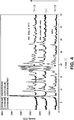
- FIG. 4 shows the PXRD analysis of Form T1F-1/2 and Form H-1 interconversion.
- Table 4 lists the characteristic PXRD peaks that describe Forms H-1 and T1F-1/2 of Compound (I). Table 4. Characteristic diffraction peak positions (degrees 2 ⁇ ⁇ 0.1) at room temperature, based on a high quality pattern collected with a diffractometer (cuK ⁇ ) with a spinning capillary with 2 ⁇ calibrated with a NIST traceable standard. Form H-1 Form T1F-1/2 6.3 7.3 7.1 9.1 9.4 10.0 10.3 10.6 12.7 11.1 13.8 12.3 17.5 15.6 18.7 20.1 20.6 20.9 22.5 27.8
- DSC Differential scanning calorimetry
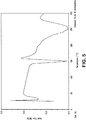
- the DSC pattern of Form H-1 is shown in FIG. 5 .
- the DSC pattern of Form T1F-1/2 is shown in FIG. 6 .
- the SSNMR spectra for Form T1F-1/2 is shown in FIG. 7 .
- TGA Thermal gravimetric analysis
- TGA patterns of Form H-1 and Form T1F-1/2 are shown in FIG. 9 and FIG. 10, respectively.
Landscapes
- Chemical & Material Sciences (AREA)
- Organic Chemistry (AREA)
- Health & Medical Sciences (AREA)
- Life Sciences & Earth Sciences (AREA)
- General Health & Medical Sciences (AREA)
- Medicinal Chemistry (AREA)
- Public Health (AREA)
- Virology (AREA)
- Chemical Kinetics & Catalysis (AREA)
- Pharmacology & Pharmacy (AREA)
- Oncology (AREA)
- Animal Behavior & Ethology (AREA)
- Communicable Diseases (AREA)
- General Chemical & Material Sciences (AREA)
- Nuclear Medicine, Radiotherapy & Molecular Imaging (AREA)
- Veterinary Medicine (AREA)
- Molecular Biology (AREA)
- Biochemistry (AREA)
- Biophysics (AREA)
- Genetics & Genomics (AREA)
- Proteomics, Peptides & Aminoacids (AREA)
- Pharmaceuticals Containing Other Organic And Inorganic Compounds (AREA)
- Peptides Or Proteins (AREA)
- Medicines That Contain Protein Lipid Enzymes And Other Medicines (AREA)
Description
- The present disclosure generally relates to crystalline forms of N-(tert-butoxycarbonyl)-3-methyl-L-valyl-(4R)-4-((7-chloro-4-methoxy-1-isoquinolinyl)oxy)-N-((1R,2S)-1-((cyclopropylsulfonyl)carbamoyl)-2-vinylcyclopropyl)-L-prolinamide. The present disclosure also generally relates to a pharmaceutical composition comprising one or more of the crystalline forms, as well of methods of using the crystalline forms in the treatment of Hepatitis C virus (HCV) and methods for obtaining such crystalline forms.
- Hepatitis C virus (HCV) is a major human pathogen, infecting an estimated 170 million persons worldwide - roughly five times the number infected by human
immunodeficiency virus type 1. A substantial fraction of these HCV infected individuals develop serious progressive liver disease, including cirrhosis and hepatocellular carcinoma. - Presently, the most effective HCV therapy employs a combination of alpha-interferon and ribavirin, leading to sustained efficacy in 40 percent of patients. Recent clinical results demonstrate that pegylated alpha-interferon is superior to unmodified alpha-interferon as monotherapy. However, even with experimental therapeutic regimens involving combinations of pegylated alpha-interferon and ribavirin, a substantial fraction of patients do not have a sustained reduction in viral load. Thus, there is a clear and unmet need to develop effective therapeutics for treatment of HCV infection.
- The compound N-(tert-butoxycarbonyl)-3-methyl-L-valyl-(4R)-4-((7-chloro-4-methoxy-1-isoquinolinyl)oxy)-N-((1R,2S)-1-((cyclopropylsulfonyl)carbamoyl)-2-vinylcyclopropyl)-L-prolinamide is useful for the treatment of HCV infection. Its synthesis is disclosed in
WO 03/099274 A1 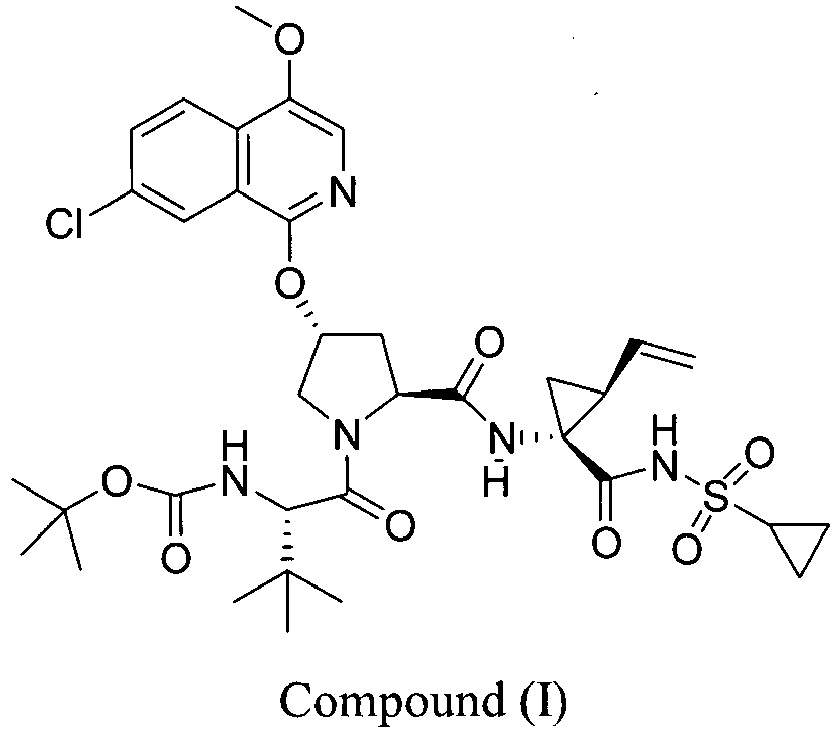
- Depending on the humidity, Compound (I) can exist as T1F-1/2 (<15% relative humidity), H-1 (>45% relative humidity), or a mixture of the two at ∼15-45% relative humidity.
FIG. 1 shows the interconversion of Forms H-1 and T1F-1/2 as a function of relative humidity. In aqueous solutions, Compound (I) exists as H-1, and Form T1F-1/2 rapidly converts to H-1 when suspended in water. - In a first aspect the present disclosure provides Form H-1 of

- Cell dimensions: a = 10.0802 Å
- b= 16.6055 Å
- c = 24.9294 Å
- α = 90.00 degrees
- β = 90.00 degrees
- γ = 90.00 degrees
-
Space group P2 12121 - Molecules/unit cell 4
- In a third aspect the present disclosure provides Form H-1 of

- In a fourth aspect the present disclosure provides Form H-1 of

a) a unit cell with parameters substantially equal to the following: - Cell dimensions: a = 10.0802 Å
- b= 16.6055 Å
- c = 24.9294 Å
- α = 90.00 degrees
- β = 90.00 degrees
- γ = 90.00 degrees
-
Space group P2 12121 - Molecules/unit cell 4
- In a first embodiment of the first aspect Form H-1 has a purity of at least 95 weight percent. In a second embodiment of the first aspect Form H-1 has a purity of at least 99 weight percent.
- In a second aspect the present disclosure provides Form T1F-1/2 of

- a) characteristic peaks in the powder X-Ray diffraction pattern at values of two theta of 7.3 ± 0.1, 9.1 ± 0.1, 10.0 ± 0.1, 10.6 ± 0.1, 11.1 ± 0.1, 12.3 ± 0.1, 15.6 ± 0.1, 20.1 ± 0.1, 20.9 ± 0.1, and 27.8 ± 0.1 at a temperature between about 20°C and about 25 °C; and/or
- b) a first endotherm related to the melt with onset typically in the range of 140-145 °C, followed by decomposition.
- In a first embodiment of the second aspect T1F-1/2 has a purity of at least 95 weight percent. In a second embodiment of the second aspect Form T1F-1/2 has a purity of at least 99 weight percent.
- In a third aspect the present disclosure provides a mixture of Form H-1 according to the first aspect and its embodiments and Form T1F-1/2 according to the second aspect and its embodiments.
- In a fourth aspect the present disclosure provides a pharmaceutical composition comprising Form H-1, Form T1F-1/2, or a mixture thereof according to any one of the previous aspects and embodiments and a pharmaceutically acceptable carrier or diluent.
- In a fifth aspect the present disclosure provides a pharmaceutical composition of the fourth aspect comprising Form H-1, Form T1F-1/2, or a mixture thereof in combination with at least one additional compound having anti-HCV activity. In a first embodiment of the fifth aspect at least one of the additional compounds having anti-HCV activity is an interferon or ribavirin. In a second embodiment of the fifth aspect the interferon is selected from interferon alpha 2B, pegylated interferon alpha, consensus interferon, interferon alpha 2A, and lymphoblastoid interferon tau.
- In a third embodiment of the fifth aspect the present disclosure provides a pharmaceutical composition comprising Form H-1, Form T1F-1/2, or a mixture thereof in combination with at least one additional compound having anti-HCV activity wherein at least one of the additional compounds is selected from
interleukin 2,interleukin 6,interleukin 12, a compound that enhances the development of atype 1 helper T cell response, interfering RNA, anti-sense RNA, Imiquimod, ribavirin, an inosine 5'-monophospate dehydrogenase inhibitor, amantadine, and rimantadine. - In a sixth aspect the present disclosure provides a method of treating HCV infection in a mammal comprising administering to the mammal a therapeutically-effective amount of Form H-1, Form T1F-1/2, or a mixuture thereof according to any of the previous aspects and embodiments.
- In a first embodiment of the sixth aspect the mammal is a human.
- Other embodiments of the present disclosure may comprise suitable combinations of two or more of embodiments and/or aspects disclosed herein.
- Yet other embodiments and aspects of the disclosure will be apparent according to the description provided below.
- The compounds of the present disclosure may also exist as tautomers and rotamers; therefore the present disclosure also encompasses all tautomeric forms and rotamers.
-
FIG. 1 illustrates the interconversion of Form H-1 and T1F-1/2 as a function of relative humidity. -
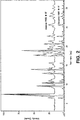
FIG. 2 illustrates experimental and simulated powdered X-Ray diffraction patterns (CuKα λ=1.54178 Å at T = room temperature) of the H-1 crystalline form of Compound (I). -
FIG. 3 illustrates experimental and indexed powdered X-Ray diffraction patterns (CuKα λ=1.54178 Å at T = room temperature) of the T1F-1/2 crystalline form of Compound (I). -
FIG. 4 illustrates the powdered X-Ray diffraction analysis of T1F-1/2 and H-1 form interconversion. -
FIG. 5 illustrates the differential scanning calorimetry pattern of the H-1 crystalline form of Compound (I). -
FIG. 6 illustrates the differential scanning calorimetry pattern of the T1F-1/2 crystalline form of Compound (I). -
FIG. 7 illustrates the solid state NMR spectrum of the T1F-1/2 crystalline form of Compound (I). -
FIG. 8 illustrates the thermal gravimetricy analysis patteron of the H-1 crystalline form of Compound (I). -
FIG. 9 illustrates the thermal gravimetricy analysis patteron of the T1F-1/2 crystalline form of Compound (I). - The disclosure relates to crystalline forms of Compound (I).

- As used herein "polymorph" refers to crystalline forms having the same chemical composition but different spatial arrangements of the molecules, atoms, and/or ions forming the crystal.
- The term "pharmaceutically acceptable," as used herein, refers to those compounds, materials, compositions, and/or dosage forms which are, within the scope of sound medical judgment, suitable for contact with the tissues of human beings and animals without excessive toxicity, irritation, allergic response, or other problem complications commensurate with a reasonable benefit/risk ratio.
- The term "substantially pure," as used herein refers to either Form H-1 or Form T1F-1/2 of Compound (I) which is great than about 90% pure. This means that the polymorph of Compound (I) does not contain more than about 10% of any other compound, and, in particular, does not contain more than about 10% of any other form of Compound (I).
- The term "therapeutically effective amount," as used herein, is intended to include an amount of the crystalline forms of Compound (I) that is effective when administered alone or in combination to treat Hepatitis C. The crystalline forms of Compound (I) and pharmaceutical compositions thereof may be useful in treating Hepatitis C. If Compound (I) is used in combination with another medication, the combination of compounds described herein may result in a synergistic combination. Synergy, as described for example by Chou and Talalay, Adv. Enzyme Regul. 1984, 22, 27-55, occurs when the effect of the compounds when administered in combination is greater than the effect of the compounds when administered alone as single agents.
- The term "treating" refers to: (i) preventing a disease, disorder or condition from occurring in a patient which may be predisposed to the disease, disorder and/or condition but has not yet been diagnosed as having it; (ii) inhibiting the disease, disorder or condition, i.e., arresting its development; and/or (iii) relieving the disease, disorder or condition, i.e., causing regression of the disease, disorder and/or condition.
- In one embodiment the disclosure provides crystalline forms of Compound (I). These crystalline forms of Compound (I) may be employed in pharmaceutical compositions which may optionally include one or more other components selected, for example, from the group consisting of excipients, carriers, and one of other active pharmaceutical ingredients active chemical entities of different molecular structure.
- In one embodiment the crystalline forms have phase homogeneity indicated by less than 10 percent, in another embodiment the crystalline forms have phase homogeneity indicated by less than 5 percent, and in another embodiment the crystalline forms have phase homogeneity indicated by less than 2 percent of the total peak area in the experimentally measured PXRD pattern arising from the extra peaks that are absent from the simulated PXRD pattern. In another embodiment the crystalline forms have phase homogeneity with less than 1 percent of the total peak area in the experimentally measured PXRD pattern arising from the extra peaks that are absent from the simulated PXRD pattern.
- In one embodiment, a composition is provided consisting essentially of the crystalline form H-1 of Compound (I). The composition of this embodiment may comprise at least 90 weight percent of the crystalline form H-1 of Compound (I), based on the weight of Compound (I) in the composition. The remaining material comprises other form(s) of the compound and/or reaction impurities and/or processing impurities arising from its preparation.
- In another embodiment, a composition is provided consisting essentially of the crystalline form T1F-1/2 of Compound (I). The composition of this embodiment may comprise at least 90 weight percent of the crystalline form T1F-1/2 of Compound (I), based on the weight of Compound (I) in the composition. The remaining material comprises other form(s) of the compound and/or reaction impuritis and/or processing impurities arising from its preparation.
- The presence of reaction impurities and/or processing impurities may be determined by analytical techniques known in the art, such as, for example, chromatography, nuclear magnetic resonance spectroscopy, mass spectrometry, or infrared spectroscopy.
- Crystalline forms may be prepared by a variety of methods, including for example, crystallization or recrystallization from a suitable solvent, sublimation, growth from a melt, solid state transformation from another phase, crystallization from a supercritical fluid, and jet spraying. Techniques for crystallization or recrystallization of crystalline forms from a solvent mixture include, for example, evaporation of the solvent, decreasing the temperature of the solvent mixture, crystal seeding a supersaturated solvent mixture of the molecule and/or salt, freeze drying the solvent mixture, and addition of antisolvents (countersolvents) to the solvent mixture. High throughput crystallization techniques may be employed to prepare crystalline forms including polymorphs. Crystals of drugs, including polymorphs, methods of preparation, and characterization of drug crystals are discussed in Solid-State Chemistry of Drugs, S.R. Byrn, R.R. Pfeiffer, and J.G. Stowell, 2nd Edition, SSCI, West Lafayette, Indiana (1999).
- For crystallization techniques that employ solvent, the choice of solvent or solvents is typically dependent upon one or more factors, such as solubility of the compound, crystallization technique, and vapor pressure of the solvent. Combinations of solvents may be employed, for example, the compound may be solubilized into a first solvent to afford a solution, followed by the addition of an anti solvent to decrease the solubility of the compound in the solution and to afford the formation of crystals. An antisolvent is a solvent in which the compound has low solubility.
- In one method to prepare crystals, a compound is suspended and/or stirred in a suitable solvent to afford a slurry, which may be heated to promote dissolution. The term "slurry", as used herein, means a saturated solution of the compound, which may also contain an additional amount of the compound to afford a heterogeneous mixture of the compound and a solvent at a given temperature.
- Seed crystals may be added to any crystallization mixture to promote crystallization. Seeding may be employed to control growth of a particular polymorph or to control the particle size distribution of the crystalline product. Accordingly, calculation of the amount of seeds needed depends on the size of the seed available and the desired size of an average product particle as described, for example, in "Programmed Cooling of Batch Crystallizers," J.W. Mullin and J. Nyvlt, Chemical Engineering Science, 1971, 26, 369-377. In general, seeds of small size are needed to control effectively the growth of crystals in the batch. Seed of small size may be generated by sieving, milling, or micronizing of large crystals, or by micro-crystallization of solutions. Care should be taken that milling or micronizing of crystals does not result in any change in crystallinity of the desired crystal form (i.e., change to amorphous or to another polymorph).
- A cooled crystallization mixture may be filtered under vacuum, and the isolated solids may be washed with a suitable solvent, such as cold recrystallization solvent, and dried under a nitrogen purge to afford the desired crystalline form. The isolated solids may be analyzed by a suitable spectroscopic or analytical technique, such as solid state nuclear magnetic resonance, differential scanning calorimetry, X-Ray powder diffraction, or the like, to assure formation of the preferred crystalline form of the product. The resulting crystalline form is typically produced in an amount of greater than about 70 weight percent isolated yield, preferably greater than 90 weight percent isolated yield, based on the weight of the compound originally employed in the crystallization procedure. The product may be co-milled or passed through a mesh screen to delump the product, if necessary.
- Crystalline forms may be prepared directly from the reaction medium of the final process for preparing Compound (I). This may be achieved, for example, by employing in the final process step a solvent or a mixture of solvents from which Compound (I) may be crystallized. Alternatively, crystalline forms may be obtained by distillation or solvent addition techniques. Suitable solvents for this purpose include, for example, the aforementioned non-polar solvents and polar solvents, including protic polar solvents such as alcohols, and aprotic polar solvents such as ketones.
- The presence of more than one polymorph in a sample may be determined by techniques such as powder X-Ray diffraction (PXRD) or solid state nuclear magnetic resonance spectroscopy (SSNMR). For example, the presence of extra peaks in an experimentally measured PXRD pattern when compared with a simulated PXRD pattern may indicate more than one polymorph in the sample. The simulated PXRD may be calculated from single crystal X-Ray data. see Smith, D.K., "A FORTRAN Program for Calculating X-Ray Powder Diffraction Patterns," Lawrence Radiation Laboratory, Livermore, California, UCRL-7196 (April 1963).
- Form H-1 and Form T1F-1/2 of Compound (I) can be characterized using various techniques, the operation of which are well known to those of ordinary skill in the art. Examples of characterization methods include, but are not limited to, single crystal X-Ray diffraction, powder X-Ray diffraction (PXRD), simulated powder X-Ray patterns (Yin, S.; Scaringe, R. P.; DiMarco, J.; Galella, M. and Gougoutas, J. Z., American Pharmaceutical Review, 2003, 6, 2, 80), differential scanning calorimetry (DSC), solid-state 13C NMR (Earl, W.L. and Van der Hart, D. L., J. Magn. Reson., 1982, 48, 35-54), Raman spectroscopy, infrared spectroscopy, moisture sorption isotherms, thermal gravimetric analysis (TGA), and hot stage techniques.
- The H-1 form may be characterized and distinguished using single crystal X-Ray diffraction, which is based on unit cell measurements of a single crystal of Form H-1. A detailed description of unit cells is provided in Stout & Jensen, X-Ray Structure Determination: A Practical Guide, Macmillan Co., New York (1968),
Chapter 3. Alternatively, the unique arrangement of atoms in spatial relation within the crystalline lattice may be characterized according to the observed fractional atomic coordinates. Another means of characterizing the crystalline structure is by powder X-Ray diffraction analysis in which the diffraction profile is compared to a simulated profile representing pure powder material, both run at the same analytical temperature, and measurements for the subject form characterized as a series of 2θ values. - One of ordinary skill in the art will appreciate that an X-Ray diffraction pattern may be obtained with a measurement of error that is dependent upon the measurement conditions employed. In particular, it is generally known that intensities in an X-Ray diffraction pattern may fluctuate depending upon measurement conditions employed. It should be further understood that relative intensities may also vary depending upon experimental conditions, and, accordingly, the exact order of intensity should not be taken into account. Additionally, a measurement error of diffraction angle for a conventional X-Ray diffraction pattern is typically about 5 percent or less, and such degree of measurement error should be taken into account as pertaining to the aforementioned diffraction angles. Consequently, it is to be understood that the crystal forms of the present disclosure are not limited to the crystal forms that provide X-Ray diffraction patterns completely identical to the X-Ray diffraction patterns depicted in the accompanying Figures disclosed herein. Any crystal form that provides an X-Ray diffraction pattern, DSC thermogram, or SSNMR spectrum substantially identical to those disclosed in the accompanying Figures falls within the scope of the present disclosure. The ability to ascertain substantial identities of X-Ray diffraction patters is within the purview of one of ordinary skill in the art.
- The H-1 and T1F-1/2 forms of Compound (I), alone or in combination with each other and/or other compounds, can be used to treat HCV infection.
- The present disclosure also provides compositions comprising a therapeutically effective amount of Form H-1 and/or Form T1F-1/2 of Compound (I) and at least one pharmaceutically acceptable carrier.
- The active ingredient, i.e., Form H-1 and/or Form T1F-1/2 of Compound (I), in such compositions typically comprises from 0.1 weight percent to 99.9 percent by weight of the composition, and often comprises from about 5 to 95 weight percent. In some cases, the pH of the formulation may be adjusted with pharmaceutically acceptable modifiers (such as calcium carbonate and magnesium oxide) to enhance the stability of the formulated compound or its delivery form. Formulations of the polymorph of the present disclosure may also contain additives for enhancement of absorption and bioavailability.
- The pharmaceutical compositions of this disclosure may be administered orally, parenterally or via an implanted reservoir. The term parenteral as used herein includes subcutaneous, intracutaneous, intravenous, intramuscular, intra-articular, intrasynovial, intrasternal, intrathecal, and intralesional injection or infusion techniques.
- The pharmaceutical compositions maybe in the form of a sterile injectable preparation, for example, as a sterile injectable aqueous or oleaginous suspension. This suspension may be formulated according to techniques known in the art using suitable dispersing or wetting agents and suspending agents. The details concerning the preparation of such compounds are known to those skilled in the art.
- When orally administered, the pharmaceutical compositions of this disclosure may be administered in any orally acceptable dosage form including, but not limited to, capsules, tablets, and aqueous suspensions and solutions. In the case of tablets for oral use, carriers which are commonly used include lactose and corn starch. Lubricating agents, such as magnesium stearate, can also be added. For oral administration in a capsule form, useful carriers/diluents include lactose, high and low molecular weight polyethylene glycol, and dried corn starch. When aqueous suspensions are administered orally, the active ingredient is combined with emulsifying and suspending agents. If desired, certain sweetening and/or flavoring and/or coloring agents may be added.
- Other suitable carriers for the above noted compositions can be found in standard pharmaceutical texts, e.g. in "Remington's Pharmaceutical Sciences", 19th ed., Mack Publishing Company, Easton, Penn., 1995. Further details concerning the design and preparation of suitable delivery forms of the pharmaceutical compositions of the disclosure are known to those skilled in the art.
- Dosage levels of between about 0.05 and about 100 milligram per kilogram ("mg/kg") body weight per day, more specifically between about 0.1 and about 50 mg/kg body weight per day of the compounds of the disclosure are typical in a monotherapy for the prevention and/or treatment of HCV mediated disease. Typically, the pharmaceutical compositions of this disclosure will be administered from about 1 to about 3 times per day or alternatively, as a continuous infusion. Such administration can be used as a chronic or acute therapy. The amount of active ingredient that may be combined with the carrier materials to produce a single dosage form will vary depending upon the host treated and the particular mode of administration.
- As the skilled artisan will appreciate, lower or higher doses than those recited above may be required. Specific dosage and treatment regimens for any particular patient will depend upon a variety of factors, including the activity of the specific compound employed, the age, body weight, general health status, gender, diet, time of administration, the duration of treatment, rate of excretion, drug combination, the severity and course of the infection, the patient's disposition to the infection and the judgment of the treating physician. In one embodiment, unit dosage formulations are those containing a daily dose or sub-dose, as herein above recited, or an appropriate fraction thereof, of an active ingredient. Generally, treatment is initiated with small dosages substantially less than the optimum dose of the peptide. Thereafter, the dosage is increased by small increments until the optimum effect under the circumstances is reached. In general, the compound is most desirably administered at a concentration level that will generally afford antivirally effective results without causing any harmful or deleterious side effects.
- When the compositions of this disclosure comprise a combination of the polymorph of the disclosure and one or more additional therapeutic or prophylactic agents, both the compound and the additional agent are usually present at dosage levels of between about 10 and 100 percent, and more preferably between about 10 and 80 percent of the dosage normally administered in a monotherapy regimen. Administration of the one or more additional agents may occur prior to, after, or simultaneously with the polymorph of the present disclosure.
- When the polymorph is formulated together with a pharmaceutically acceptable carrier, the resulting composition may be administered in vivo to mammals, such as man, to inhibit NS3/4A or to treat or prevent HCV virus infection. Such treatment may also be achieved using the polymorph of this disclosure in combination with agents which include, but are not limited to: Immunomodulatory agents, such as interferons; other antiviral agents such as ribavirin, amantadine; other inhibitors of NS3/4A; inhibitors of other targets in the HCV life cycle such as helicase, polymerase, metalloprotease, or internal ribosome entry site; or combinations thereof. The additional agents may be combined with the polymorph of this disclosure to create a single dosage form. Alternatively these additional agents may be separately administered to a mammal as part of a multiple dosage form.
- Table 1 below lists some illustrative examples of compounds that can be administered with the compounds of this disclosure. The compounds of the disclosure can be administered with other anti-HCV activity compounds in combination therapy, either jointly or separately, or by combining the compounds into a composition.
Table 1 Brand Name Physiological Class Type of Inhibitor or Target Source Company NIM811 Cyclophilin Inhibitor Novartis Zadaxin Immunomodulator Sciclone Suvus Methylene blue Bioenvision Actilon (CPG10101) TLR9 agonist Coley Batabulin (T67) Anticancer β-tubulin inhibitor Tularik Inc., South San Francisco, CA ISIS 14803 Antiviral antisense ISIS Pharmaceuticals Inc, Carlsbad, CA/Elan Phamaceuticals Inc., New York, NY Summetrel Antiviral antiviral Endo Pharmaceuticals Holdings Inc., Chadds Ford, PA GS-9132 (ACH-806) Antiviral HCV Inhibitor Achillion / Gilead Pyrazolopyrimidine compounds and salts From WO-2005047288 26 May 2005 Antiviral HCV Inhibitors Arrow Therapeutics Ltd. Levovirin Antiviral IMPDH inhibitor Ribapharm Inc., Costa Mesa, CA Merimepodib (VX-497) Antiviral IMPDH inhibitor Vertex Pharmaceuticals Inc., Cambridge, MA XTL-6865 (XTL-002) Antiviral monoclonal antibody XTL Biopharmaceuti cals Ltd., Rehovot, Isreal Telaprevir (VX-950, LY-570310) Antiviral NS3 serine protease inhibitor Vertex Pharmaceuticals Inc., Cambridge, MA/ Eli Lilly and Co. Inc., Indianapolis, IN HCV-796 Antiviral NS5B Replicase Inhibitor Wyeth / Viropharma NM-283 Antiviral NS5B Replicase Inhibitor Idenix / Novartis GL-59728 Antiviral NS5B Replicase Inhibitor Gene Labs / Novartis GL-60667 Antiviral NS5B Replicase Inhibitor Gene Labs / Novartis 2'C MeA Antiviral NS5B Replicase Inhibitor Gilead PSI 6130 Antiviral NS5B Replicase Inhibitor Roche R1626 Antiviral NS5B Replicase Inhibitor Roche 2'C Methyl adenosine Antiviral NS5B Replicase Inhibitor Merck JTK-003 Antiviral RdRp inhibitor Japan Tobacco Inc., Tokyo, Japan Levovirin Antiviral ribavirin ICN Pharmaceuticals, Costa Mesa, CA Ribavirin Antiviral ribavirin Schering-Plough Corporation, Kenilworth, NJ Viramidine Antiviral Ribavirin Prodrug Ribapharm Inc., Costa Mesa, CA Heptazyme Antiviral ribozyme Ribozyme Pharmaceuticals Inc., Boulder, CO BILN-2061 Antiviral serine protease inhibitor Boehringer Ingelheim Pharma KG, Ingelheim, Germany SCH 503034 Antiviral serine protease inhibitor Schering Plough Zadazim Immune modulator Immune modulator SciClone Pharmaceuticals Inc., San Mateo, CA Ceplene Immunomodulator immune modulator Maxim Pharmaceuticals Inc., San Diego, CA CellCept Immunosuppressant HCV IgG immunosuppressant F. Hoffmann-La Roche LTD, Basel, Switzerland Civacir Immunosuppressant HCV IgG immunosuppressant Nabi Biopharmaceuti cals Inc., Boca Ration, FL Albuferon - a Interferon albumin IFN-α2b Human Genome Sciences Inc., Rockville, MD Infergen A Interferon IFN alfacon-1 InterMune Pharmaceuticals Inc., Brisbane, CA Omega IFN Interferon IFN-ω Intarcia Therapeutics IFN-β and EMZ701 Interferon IFN-β and EMZ701 Transition Therapeutics Inc., Ontario, Canada Rebif Interferon IFN-β1a Serono, Geneva, Switzerland Roferon A Interferon IFN-α2a F. Hoffmann-La Roche LTD, Basel, Switzerland Intron A Interferon IFN-α2b Schering-Plough Corporation, Kenilworth, NJ Intron A and Zadaxin Interferon IFN-α2b/α1-thymosin RegeneRx Biopharmiceutic als Inc., Bethesda, MD/ SciClone Pharmaceuticals Inc, San Mateo, CA Rebetron Interferon IFN-α2b/ribavirin Schering-Plough Corporation, Kenilworth, NJ Actimmune Interferon INF-γ InterMune Inc., Brisbane, CA Interferon-β Interferon Interferon-β-1a Serono Multiferon Interferon Long lasting IFN Viragen/Valenti s Wellferon Interferon lymphoblastoid IFN-αnl GlaxoSmithKlin e plc, Uxbridge, UK Omniferon Interferon natural IFN-α Viragen Inc., Plantation, FL Pegasys Interferon PEGylated IFN-α2a F. Hoffmann-La Roche LTD, Basel, Switzerland Pegasys and Ceplene Interferon PEGylated IFN-α2a/ immune modulator Maxim Pharmaceuticals Inc., San Diego, CA Pegasys and Ribavirin Interferon PEGylated IFN-α2a/ribavirin F. Hoffmann-La Roche LTD, Basel, Switzerland PEG-Intron Interferon PEGylated IFN-α2b Schering-Plough Corporation, Kenilworth, NJ PEG-Intron / Ribavirin Interferon PEGylated IFN-α2b/ribavirin Schering-Plough Corporation, Kenilworth, NJ IP-501 Liver protection antifibrotic Indevus Pharmaceuticals Inc., Lexington, MA IDN-6556 Liver protection caspase inhibitor Idun Pharmaceuticals Inc., San Diego, CA ITMN-191 (R-7227) Antiviral serine protease inhibitor InterMune Pharmaceuticals Inc., Brisbane, CA GL-59728 Antiviral NS5B Replicase Inhibitor Genelabs ANA-971 Antiviral TLR-7 agonist Anadys TMC-465350 Antiviral serine protease inhibitor Medivir/ Tibotec - Another aspect of this disclosure provides methods of inhibiting HCV NS3 activity in patients by administering the polymorph of the present disclosure.
- In one embodiment, these methods are useful in decreasing HCV NS3 activity in the patient. If the pharmaceutical composition comprises only the polymorph of this disclosure as the active component, such methods may additionally comprise the step of administering to said patient an agent selected from an immunomodulatory agent, an antiviral agent, an HCV NS3 inhibitor, or an inhibitor of other targets in the HCV life cycle such as, for example, helicase, polymerase, protease, or metalloprotease. Such additional agent may be administered to the patient prior to, concurrently with, or following the administration of the compounds of this disclosure.
- In another embodiment, these methods are useful for inhibiting viral replication in a patient. Such methods can be useful in treating or preventing HCV disease.
- The polymorphs of the disclosure may also be used as a laboratory reagent. The polymorphs may be instrumental in providing research tools for designing of viral replication assays, validation of animal assay systems and structural biology studies to further enhance knowledge of the HCV disease mechanisms.
- The polymorphs of this disclosure may also be used to treat or prevent viral contamination of materials and therefore reduce the risk of viral infection of laboratory or medical personnel or patients who come in contact with such materials, e.g., blood, tissue, surgical instruments and garments, laboratory instruments and garments, and blood collection or transfusion apparatuses and materials.
- The following non-limiting examples are illustrative of the disclosure.
- Amorphous N-(tert-butoxycarbonyl)-3-methyl-L-valyl-(4R)-4-((7-chloro-4-methoxy-1-isoquinolinyl)oxy)-N-((1R,2S)-1-((cyclopropylsulfonyl)carbamoyl)-2-vinylcyclopropyl)-L-prolinamide (prepared according to the procedure described in
U.S. 6,995,174 ) is stirred or sonicated in ethanol at room temperature with a concentration of 8-10 ml solvent/g compound. The solid first dissolves instantly in the solution and then forms a slurry within several minutes of agitation. The crystal form obtained from the slurry is a solvate (Form E2-2). The slurry is isolated and dried at 50 °C under vacuum, resulting in the formation of T1F-1/2. The T1F-1/2 form can transform to H-1, resulting in either a mixture of both forms or conversion to Form H-1, depending on the ambient humidity and temperature conditions. - Crystalline N-(tert-butoxycarbonyl)-3-methyl-L-valyl-(4R)-4-((7-chloro-4-methoxy-1-isoquinolinyl)oxy)-N-((1R,2S)-1-((cyclopropylsulfonyl)carbamoyl)-2-vinylcyclopropyl)-L-prolinamide is dissolved in ethanol at 50°C with a concentration of 10-12 ml solvent/g compound. (Heptane can be added to the solution at 50 °C at this stage.) The agitated batch is gradually cooled down to 20 °C and aged to develop crystallization. Seeding is optional; it is seeded between 45°C and 20°C to form slurry. The crystal form obtained from the slurry is a solvate. The slurry is then filtered and the solid obtained is dried at 50°C under vacuum, resulting in the formation of T1F-1/2. The T1F-1/2 form can transform to H-1, resulting in either a mixture of both forms or conversion to Form H-1, depending on the ambient humidity and temperature conditions.
- The hydrate H-1 can be prepared by converting the free acid T1F-1/2 via hydration with humid air or nitrogen under controlled conditions. The T1F-1/2 form in contact with a humidified air or nitrogen flow transforms into the hydrate over a period of time (flow rate 300-1000 ml/min, RH >90 %, within 24 hrs at room temp). It is also observed that by drying the E2-2 wet cake isolated from crystallization under flowing air or nitrogen at ambient conditions (RH 40-80%, room temp) will eventually convert the solvate to the hydrate.
- Crystallization was prepared in varying compositions of EtOH and water to examine the crystal form(s) obtained and evaluated the feasibility for achieving hydrate directly in the slurry. A high water activity is needed to form hydrate in the slurry conversion: E2-2 wet cake reslurried in water over a period of time at 20-50°C converts to the hydrate with residual E2-2 present in the slurry. This procedure may also apply to other alcohol solvates (e.g., M-1, methanolate) in transforming into the hydrate in a water containing slurry.
- Amorphous N-(tert-butoxycarbonyl)-3-methyl-L-valyl-(4R)-4-((7-chloro-4-methoxy-1-isoquinolinyl)oxy)-N-((1R,2S)-1-((cyclopropylsulfonyl)carbamoyl)-2-vinylcyclopropyl)-L-prolinamide (prepared according to the procedure described in
U.S. 6,995,174 ) is stirred or sonicated in isopropyl alcohol at room temperature with a concentration of 5-14 ml solvent/g compound. The solid first dissolves with or without agitation in the solution and then forms a slurry within several minutes. The crystal form obtained from the slurry is a solvate. The slurry is isolated and dried at 50°C under vacuum, resulting in the formation of T1F-1/2. The T1F-1/2 form can transform to H-1, subject to the ambient humidity and temperature conditions. The T1F-1/2 form can transform to H-1, resulting in either a mixture of both forms or conversion to Form H-1, depending on the ambient humidity and temperature conditions. - Crystalline N-(tert-butoxycarbonyl)-3-methyl-L-valyl-(4R)-4-((7-chloro-4-methoxy-1-isoquinolinyl)oxy)-N-((1R,2S)-1-((cyclopropylsulfonyl)carbamoyl)-2-vinylcyclopropyl)-L-prolinamide is dissolved in isopropyl alcohol at 50-60°C with a concentration of 15-17 ml solvent/g compound. (Water can be added to the solution at 60°C at this stage). Seeding is optional. The agitated batch is gradually cooled down to 20°C and aged to develop crystallization. The crystal form obtained from the slurry is a solvate. The slurry is then filtered and the solid obtained is dried at 50°C under vacuum, resulting in the formation of T1F-1/2. The T1F-1/2 form can transform to H-1, subject to the ambient humidity and temperature conditions. The T1F-1/2 form can transform to H-1, resulting in either a mixture of both forms or conversion to Form H-1, depending on the ambient humidity and temperature conditions.
- Crystals of H-1 were also prepared as follows: The compound (amorphous or crystalline) was dissolved in methanol. Water was added as an anti-solvent. Prism or plate-shaped crystals were obtained which were a 1:1 methanol solvate. These crystals were left under ambient conditions and converted to Form H-1 via slow solvent exchange between methanol in the crystals and moisture in the air.
-

- DMSO (264 ml) was added to a mixture of Compound A (6 g, 26.31 mmol, 1.0 eq, 96.5% potency), Compound B (6.696 g, 28.96 mmol, 1.1 eq) and KOtBu (8.856 g, 78.92 mmol, 3 eq) under nitrogen and stirred at 36 °C for 1 h. After cooling the dark solution to 16 °C, it was treated with water (66 ml) and EtOAc (132 ml). The resulting biphasic mixture was acidified to pH 4.82 with 1N HCl (54 ml) at 11.2-14.6 °C. The phases were separated. The aqueous phase was extracted once with EtOAc (132 ml). The organic phases were combined and washed with 25% brine (2x 132 ml). Rich organic phase (228 ml) was distilled at 30-40 °C/50 mbar to 37.2 ml. A fresh EtOAc (37.2 ml) was added and distilled out to 37.2 ml at 30-35 °C/50 mbar. After heating the final EtOAc solution (37.2 ml) to 50 °C, heptane ((37.2 ml) was added at 46-51 °C and cooled to 22.5 °C over 2 h. It was seeded with 49 mg of Compound C and held at 23 °C for 15 min to develop a thin slurry. It was cooled to 0.5 °C in 30 min and kept at 0.2-0.5 °C for 3 h. After the filtration, the cake was washed with heptane (16.7 ml) and dried at 47 °C/80 mm/15.5 h to give Compound C as beige colored solids (6.3717 g, 58.9% corrected yield, 99.2% potency, 97.4 AP).
- DIPEA (2.15 ml, 12.3 mmol, 1.3 eq) followed by EDAC (2 g, 10.4 mmol, 1.1 eq) were added to a mixture of Compound C (4 g, 9.46 mmol, 97.4% potency, 98.5 AP), Compound D (4.568 g, 11.35 mmol, 1.20 eq), HOBT-H2O (0.86 g, 4.18 mmol, 0.44 eq) in CH2Cl2 (40 ml) at 23-25 °C under nitrogen. The reaction was complete after 3 h at 23-25 °C. It was then washed with 1N HCl (12 ml), water (12 ml) and 25% brine (12 ml). MeOH (80 ml) was added to the rich organic solution at 25 °C, which was distilled at atmospheric pressure to ∼60 ml to initiate the crystallization of the product. The crystal slurry was then cooled from 64 °C to 60 °C in 5 min and stirred at 60 °C for 1 h. It was further cooled to 24 °C over 1.5 h and held at 24 °C for 2 h. After the filtration, the cake was washed with MeOH (12 ml) and dried at 51 °C/20-40 mm/18 h to give Compound E (5.33 g, 89% yield, 97.7% potency, 99.1 AP).
- 5-6N HCl in IPA (10.08 ml, 50.5 mmol, Normality: 5N) was added in four portions in 1 h to a solution of Compound E (8 g, 12.6 mmol, 97.7% potency, 99.1 AP) in IPA (120 ml) at 75°C. After stirring for 1 h at 75°C, the resulting slurry was cooled to 21 °C in 2 h and stirred at 21 °C for 2 h. It was filtered and the cake was washed with IPA (
2x 24 ml). The wet cake was dried at 45 °C/House vacuum/16 h to give Compound F as an off-white solid (6.03 g, 84.5% yield, 98.5% potency, 100 AP). - DIPEA (9.824 ml) followed by HATU (7.99 g) were added to a stirred mixture of Compound F (10 g, 99.2% potency, 99.6 AP) and Compound G (4.41 g) in CH2Cl2 (100 ml) at 2.7-5 °C under nitrogen. The resulting light brown solution was stirred at 0.2-3 °C for 1.5 h, at 3-20 °C in 0.5 h and at 20-23 °C for 15.5 h for a reaction completion. It was quenched with 2N HCl (50 ml) at 23 °C and stirred for 20 min at 23-24 °C. The biphasic mixture was polish filtered through diatomaceous earth (Celite®) (10 g) to remove insoluble solids of HOAT and HATU. The filter cake was washed with 20 ml of CH2Cl2. After separating the organic phase from the filtrates, it was washed with 2N HCl (
5x 50 ml) and water (2x 50 ml). The organic phase (115 ml) was concentrated to ∼50 ml, which was diluted with absolute EtOH (200 proof, 100 ml) and concentrated again to ∼50 ml. Absolute EtOH (50 ml) was added to bring the final volume to 100 ml. It was then warmed to 50 °C to form a clear solution and held at 50 °C for 35 min. The ethanolic solution was cooled from 50 to 23 °C over 15 min to form the crystal slurry. The slurry was stirred at 23 °C for 18 h, cooled to 0.3 °C over 30 min and kept at 0.2-0.3 °C for 2 h. After the filtration, the cake was washed with cold EtOH (2.7 °C,2x 6 ml) and dried at 53 °C/72 mm/67 h to give Compound (I) in Form T1F-1/2 as an off white solid (10.49 g, 80.7% yield, 99.6 AP). - Forms H-1 and T1F-1/2 were analyzed using one or more of the testing methods described below.
- A Nonius Kappa CCD diffractometer equipped with graphite-monochromated Mo Kα radiation (λ = 0.7107 Å) was used to collect diffraction data at room temperature. A full data set was collected using the ω scan mode over the 2θ range and processed using the routine associated with the diffractometer system (Kappa CCD Software, Nonius BV, Delft, The Netherlands, 1999). The final unit cell parameters were determined using the entire data set. All structures were solved by direct methods and refined by the full-matrix least-squares techniques, using the SHELXTL software package (Sheldrick, GM. 1997, SHELTL. Structure Determination Programs. ersion 5.10, Bruker AXS, Madison, Wisconsin, USA). 2 The function minimized in the refinements was ∑W(|FO| - |FC|)2. R is defined as ∑ ||FO| - |FC||/∑ |FO| while RW = [∑W(|FO| - |FC|)2/∑W |FO|2]1/2, where w is an appropriate weighting function based on errors in the observed intensities. Difference Fourier maps were examined at all stages of refinement. All non-hydrogen atoms were refined with anisotropic thermal displacement parameters. The hydrogen atoms associated with hydrogen bonding were located in the final difference Fourier maps while the positions of the other hydrogen atoms were calculated from an idealized geometry with standard bond lengths and angles. They were assigned isotropic temperature factors and included in structure factor calculations with fixed parameters.
- The crystal data of the H-1 form is shown in Table 2. The fractional atomic coordinates are listed in Table 3. It should be understood by one of ordinary skill in the art that slight variations in the coordinates are possible and are considered to be within the scope the present disclosure.
Table 2. Crystal Data of Form H-1 Temperature room temperature Wavelength 0.7107 Ǻ Crystal system, space group Orthorhombic Unit cell dimensions a = 10.0802(1) Ǻ alpha = 90.00 ° b = 16.6055(2) Ǻ beta - 90.00 ° c = 24.9294(3) Ǻ gamma = 90.00 ° Volume 4172.85(8) Ǻ3 Z, Calculated density 4, 1.220 Mg/m3 Table 3. Atomic coordinates Atom X Y Z Atom X Y Z S(1) 4633(2) 1649(1) 6093(1) 0(8) 2101(3) 6221(2) 4962(2) N(1) 4351(5) 2223(2) 5569(2) C(1) 2870(11 464(5) 5759(4) N(2) 3770(4) 3280(2) 4728(1) C(2) 4303(8) 668(3) 5873(3) N(3) 3590(4) 4937(2) 5607(2) C(3) 3535(11 137(4) 6251(3) N(4) 2677(6) 4277(4) 6916(2) C(4) 5005(5) 2093(3) 5089(2) O(1) 3677(8) 1898(3) 6465(2) C(5) 4463(4) 2547(3) 4620(2) 0(2) 5997(7) 1682(4) 6230(3) C(6) 5213(6) 2451(3) 4100(2) 0(3) 5891(4) 1613(2) 5053(2) C(7) 3892(6) 2041(3) 4159(2) 0(4) 5570(3) 3910(2) 5093(2) C(8) 3733(7) 1146(4) 4208(2) 0(5) 3215(3) 3701(2) 5941(1) C(9) 4597(9) 621(4) 4048(5) O(6) 1838(7) 5342(6) 7297(3) C(10) 4385(4) 3907(2) 4968(2) O(7) 965(8) 4111(6) 7476(3) C(11) 3500(4) 4639(2) 5061(2) C(12) 3970(6) 5355(3) 4730(2) C(30) 304(8) 6707(3) 4469(3) C(13) 3495(5) 6077(3) 5045(2) C(31) -584(7) 6494(3) 4875(3) C(14) 3637(6) 5819(3) 5640(2) C(32) -1848(7) 6620(4) 4807(5) C(15) 3451(5) 4424(3) 6021(2) C(33) -2325(15) 6965(6) 4310(7) C(16) 3606(6) 4702(3) 6603(2) C(34) -1576(17) 7197(5) 3918(5) C(17) 5104(7) 4618(4) 6797(3) C1(1) -2988(2) 6335(2) 5319(2) C(18) 5991(7) 5136(5) 6512(3) C(4') -530(14) 5479(13) 7544(9) C(19) 5075(13 4835(6) 7407(3) C(3') 1250(30) 6541(9) 7751(10) C(20) 5573(8) 3749(5) 6748(4) C(2') 1088(19) 5236(10) 8267(5) C(21) 1764(11 4565(8) 7247(3) C(1') 921(17) 5659(9) 7735(6) C(26) 1723(7) 6568(3) 4504(2) 0(28) 253(10) 7631(5) 3159(3) N(5) 2626(8) 6756(3) 4152(2) C(281 1165(18) 7762(10) 2753(6) C(27) 2129(14) 7105(5) 3682(3) OW 1760(70) 6690(30) 6150(30) C(28) 820(19) 7272(4) 3590(3) C(29) -131(13) 7075(3) 3984(3) - X-Ray powder diffraction (PXRD) data were obtained using a Bruker C2 GADDS. The radiation was Cu Kα (40 KV, 50mA). The sample-detector distance was 15 cm. Powder samples were placed in sealed glass capillaries of 1mm or less in diameter; the capillary was rotated during data collection. Data were collected for 3 ≤2θ ≤35° with a sample exposure time of at least 2000 seconds. The resulting two-dimensional diffraction arcs were integrated to create a traditional 1-dimensional PXRD pattern with a step size of 0.02 degrees 2θ in the range of 3 to 35 degrees 2θ.
- The results of the PXRD pattern and a simulated pattern calculated from the single crystal data for Form H-1 are shown in
FIG. 2 . - The results of the PXRD pattern for Form T1F-1/2 is shown in
FIG. 3 . -
FIG. 4 shows the PXRD analysis of Form T1F-1/2 and Form H-1 interconversion. - Table 4 lists the characteristic PXRD peaks that describe Forms H-1 and T1F-1/2 of Compound (I).
Table 4. Characteristic diffraction peak positions (degrees 2θ ± 0.1) at room temperature, based on a high quality pattern collected with a diffractometer (cuKα) with a spinning capillary with 2θ calibrated with a NIST traceable standard. Form H-1 Form T1F-1/2 6.3 7.3 7.1 9.1 9.4 10.0 10.3 10.6 12.7 11.1 13.8 12.3 17.5 15.6 18.7 20.1 20.6 20.9 22.5 27.8 - Differential scanning calorimetry (DSC) experiments were performed in a TA Instruments™ model Q2000, Q1000 or 2920. The sample (about 2-6mg) was weighed in an aluminum pan and recorded accurately to a hundredth of a milligram, and transferred to the DSC. The instrument was purged with
nitrogen gas adt 50 mL/min. Data were collected between room temperature and 300 °C at 10 °C/min heating rate. The plot was made with the endothermic peaks pointing down. - The DSC pattern of Form H-1 is shown in
FIG. 5 . The DSC pattern of Form T1F-1/2 is shown inFIG. 6 . - All solid-state C-13 NMR measurements were made with a Bruker DSX-400, 400 MHz NMR spectromter. High resolution spectra were obtained using high-power proton decoupling and the TPPM pulse sequence and ramp amplitude cross-polarization (RAMP-CP) with magic-angle spinning (MAS) at approximately 12 kHz (A.E. Bennett et al. J. Chem. Phys. 1995, 103, 6951). (G. Metz, X. Wu, and S.O. Smith, J. Magn. Reson. A., 1994, 110, 219-227). Approximately 70 mg of sample, packed into a canister-design zirconia rotor was used for each experiment. Chemical shifts (δ) were referenced to external adamantane with the high frequency resonance being set to 38.56 ppm (W.L. Earl and D.L. VanderHart, J. Magn. Reson., 1982, 48, 35-54).
- The SSNMR spectra for Form T1F-1/2 is shown in
FIG. 7 . - Thermal gravimetric analysis (TGA) experiments were performed in a TA Instruments™ model Q500 or 2950. The sample (about 10-30 mg) was placed in a platinum pan previously tared. The weight of the sample was measured accurately and recorded to a thousand of a milligram by the instrument. The furnace was purged with nitrogen gas at 100mL/min. Data were collected between room temperature and 300°C at 10°C/min heating rate.
- The TGA patterns of Form H-1 and Form T1F-1/2 are shown in
FIG. 9 and FIG. 10, respectively.
b) characteristic peaks in the powder X-Ray diffraction pattern at values of two theta of 6.3 ± 0.1, 7.1 ± 0.1, 9.4 ± 0.1, 10.3 ± 0.1, 12.7 ± 0.1, 13.8 ± 0.1, 17.5 ± 0.1, 18.7 ± 0.1, 20.6 ± 0.1, and 22.5 ± 0.1 at a temperature between about 20°C and about 25 °C; and/or
c) characterized by the following fractional atomic coordinates within the unit cell:
| Atom | X | Y | Z | Atom | X | Y | Z |
| S(1) | 4633(2) | 1649(1) | 6093(1) | 0(8) | 2101(3) | 6221(2) | 4962(2) |
| N(1) | 4351(5) | 2223(2) | 5569(2) | C(1) | 2870(11 | 464(5) | 5759(4) |
| N(2) | 3770(4) | 3280(2) | 4728(1) | C(2) | 4303(8) | 668(3) | 5873(3) |
| N(3) | 3590(4) | 4937(2) | 5607(2) | C(3) | 3535(11 | 137(4) | 6251(3) |
| N(4) | 2677(6) | 4277(4) | 6916(2) | C(4) | 5005(5) | 2093(3) | 5089(2) |
| O(1) | 3677(8) | 1898(3) | 6465(2) | C(5) | 4463(4) | 2547(3) | 4620(2) |
| O(2) | 5997(7) | 1682(4) | 6230(3) | C(6) | 5213(6) | 2451(3) | 4100(2) |
| O(3) | 5891(4) | 1613(2) | 5053(2) | C(7) | 3892(6) | 2041(3) | 4159(2) |
| O(4) | 5570(3) | 3910(2) | 5093(2) | C(8) | 3733(7) | 1146(4) | 4208(2) |
| O(5) | 3215(3) | 3701(2) | 5941(1) | C(9) | 4597(9) | 621(4) | 4048(5) |
| O(6) | 1838(7) | 5342(6) | 7297(3) | C(10) | 4385(4) | 3907(2) | 4968(2) |
| O(7) | 965(8) | 4111(6) | 7476(3) | C(11) | 3500(4) | 4639(2) | 5061(2) |
| C(12) | 3970(6) | 5355(3) | 4730(2) | C(30) | 304(8) | 6707(3) | 4469(3) |
| C(13) | 3495(5) | 6077(3) | 5045(2) | C(31) | -584(7) | 6494(3) | 4875(3) |
| C(14) | 3637(6) | 5819(3) | 5640(2) | C(32) | -1848(7) | 6620(4) | 4807(5) |
| C(15) | 3451(5) | 4424(3) | 6021(2) | C(33) | -2325(15) | 6965(6) | 4310(7) |
| C(16) | 3606(6) | 4702(3) | 6603(2) | C(34) | -1576(17) | 7197(5) | 3918(5) |
| C(17) | 5104(7) | 4618(4) | 6797(3) | Cl(1) | -2988(2) | 6335(2) | 5319(2) |
| C(18) | 5991(7) | 5136(5) | 6512(3) | C(4') | -530(14) | 5479(13) | 7544(9) |
| C(19) | 5075(13 | 4835(6) | 7407(3) | C(3') | 1250(30) | 6541(9) | 7751(10) |
| C(20) | 5573(8) | 3749(5) | 6748(4) | C(2') | 1088(19) | 5236(10) | 8267(5) |
| C(21) | 1764(11 | 4565(8) | 7247(3) | C(1') | 921(17) | 5659(9) | 7735(6) |
| C(26) | 1723(7) | 6568(3) | 4504(2) | O(28) | 253(10) | 7631(5) | 3159(3) |
| N(5) | 2626(8) | 6756(3) | 4152(2) | C(281 | 1165(18) | 7762(10) | 2753(6) |
| C(27) | 2129(14) | 7105(5) | 3682(3) | OW | 1760(70) | 6690(30) | 6150(30) |
| C(28) | 820(19) | 7272(4) | 3590(3) | ||||
| C(29) | -131(13) | 7075(3) | 3984(3) |
Claims (14)
- Form H-1 of
 a) a unit cell with parameters substantially equal to the following:Cell dimensions: a = 10.0802 Åb= 16.6055 Åc = 24.9294 Åα = 90.00 degreesβ = 90.00 degreesγ = 90.00 degreesSpace group P212121Molecules/unit cell 4wherein measurement of said crystalline form is at a temperature between about 20 °C to about 25 °C;b) characteristic peaks in the powder X-Ray diffraction pattern at values of two theta of 6.3 ± 0.1, 7.1 ± 0.1, 9.4 ± 0.1, 10.3 ± 0.1, 12.7 ± 0.1, 13.8 ± 0.1, 17.5 ± 0.1, 18.7 ±0.1, 20.6 ± 0.1, and 22.5 ± 0.1 at a temperature between about 20°C and about 25 °C; and/orc) characterized by the following fractional atomic coordinates within the unit cell:
Atom X Y Z Atom X Y Z S(1) 4633(2) 1649(1) 6093(1) O(8) 2101(3) 6221(2) 4962(2) N(1) 4351(5) 2223(2) 5569(2) C(1) 2870(11 464(5) 5759(4) N(2) 3770(4) 3280(2) 4728(1) C(2) 4303(8) 668(3) 5873(3) N(3) 3590(4) 4937(2) 5607(2) C(3) 3535(11 137(4) 6251(3) N(4) 2677(6) 4277(4) 6916(2) C(4) 5005(5) 2093(3) 5089(2) O(1) 3677(8) 1898(3) 6465(2) C(5) 4463(4) 2547(3) 4620(2) O(2) 5997(7) 1682(4) 6230(3) C(6) 5213(6) 2451(3) 4100(2) O(3) 5891(4) 1613(2) 5053(2) C(7) 3892(6) 2041 (3) 4159(2) 0(4) 5570(3) 3910(2) 5093(2) C(8) 3733(7) 1146(4) 4208(2) 0(5) 3215(3) 3701(2) 5941(1) C(9) 4597(9) 621(4) 4048(5) O(6) 1838(7) 5342(6) 7297(3) C(10) 4385(4) 3907(2) 4968(2) 0(7) 965(8) 4111(6) 7476(3) C(11) 3500(4) 4639(2) 5061(2) C(12) 3970(6) 5355(3) 4730(2) C(30) 304(8) 6707(3) 4469(3) C(13) 3495(5) 6077(3) 5045(2) C(31) -584(7) 6494(3) 4875(3) C(14) 3637(6) 5819(3) 5640(2) C(32) -1848(7) 6620(4) 4807(5) C(15) 3451(5) 4424(3) 6021 (2) C(33) -2325(15) 6965(6) 4310(7) C(16) 3606(6) 4702(3) 6603(2) C(34) -1576(17) 7197(5) 3918(5) C(17) 5104(7) 4618(4) 6797(3) C(1) -2988(2) 6335(2) 5319(2) C(18) 5991(7) 5136(5) 6512(3) C(4') -530(14) 5479(13) 7544(9) C(19) 5075(13 4835(6) 7407(3) C(3') 1250(30) 6541(9) 7751(10) C(20) 5573(8) 3749(5) 6748(4) C(2') 1088(19) 5236(10) 8267(5) C(21) 1764(11 4565(8) 7247(3) C(1') 921(17) 5659(9) 7735(6) C(26) 1723(7) 6568(3) 4504(2) O(28) 253(10) 7631(5) 3159(3) N(5) 2626(8) 6756(3) 4152(2) C(281 1165(18) 7762(10) 2753(6) C(27) 2129(14) 7105(5) 3682(3) OW 1760(70) 6690(30) 6150(30) C(28) 820(19) 7272(4) 3590(3) C(29) -131(13) 7075(3) 3984(3) - Form H-1 according to claim 1 having a purity of at least 95 weight percent.
- Form H-1 according to claim 1 having a purity of at least 99 weight percent.
- Form T1F-1/2 of
 a) characteristic peaks in the powder X-Ray diffraction pattern at values of two theta of 7.3 ± 0.1, 9.1 ± 0.1, 10.0 ± 0.1, 10.6 ± 0.1, 11.1 ± 0.1, 12.3 ± 0.1, 15.6 ± 0.1, 20.1 ± 0.1, 20.9 ± 0.1, and 27.8 ± 0.1 at a temperature between about 20°C and about 25 °C; and/orb) a first endotherm related to the melt with onset typically in the range of 140-145 °C, followed by decomposition.
 - Form T1F-1/2 according to claim 4 having a purity of at least 95 weight percent.
- Form T1F-1/2 according to claim 4 having a purity of at least 99 weight percent.
- A mixture of Form H-1 according to any one of claims 1 to 3 and Form T1F-1/2 according to any one of claims 4 to 6.
- A pharmaceutical composition comprising Form H-1, Form T1F-1/2, or a mixture thereof according to any one of claims 1 to 7 and a pharmaceutically acceptable carrier or diluent.
- The pharmaceutical composition of claim 8 comprising Form H-1, Form T1F-1/2, or a mixture thereof in combination with at least one additional compound having anti-HCV activity.
- The composition of Claim 9 wherein at least one of the additional compounds having anti-HCV activity is an interferon or ribavirin.
- The composition of Claim 10 wherein the interferon is selected from interferon alpha 2B, pegylated interferon alpha, consensus interferon, interferon alpha 2A, and lymphoblastiod interferon tau.
- The composition of Claim 9 wherein at least one of the additional compounds is selected from interleukin 2, interleukin 6, interleukin 12, a compound that enhances the development of a type 1 helper T cell response, interfering RNA, anti-sense RNA, Imiqimod, ribavirin, an inosine 5'-monophospate dehydrogenase inhibitor, amantadine, and rimantadine.
- Form H-1, Form T1F-1/2, or a mixture thereof according to any one of claims 1 to 7 for use in treating HCV infection in a mammal.
- The form of Claim 13 wherein the mammal is a human.
Priority Applications (4)
| Application Number | Priority Date | Filing Date | Title |
|---|---|---|---|
| SI200831432T SI2231639T1 (en) | 2007-12-21 | 2008-12-12 | Crystalline forms of n-(tert-butoxycarbonyl)-3-methyl-l-valyl-(4r)-4-((7-chloro-4-methoxy-1-isoquinolinyl)oxy)-n-((1r,2s)-1-((cyclopropylsulfonyl)carbamoyl)-2-vinylcyclopropyl)-l-prolinamide |
| HRP20150458TT HRP20150458T1 (en) | 2007-12-21 | 2008-12-12 | Crystalline forms of n-(tert-butoxycarbonyl)-3-methyl-l-valyl-(4r)-4-((7-chloro-4-methoxy-1-isoquinolinyl)oxy)-n-((1r,2s)-1-((cyclopropylsulfonyl)carbamoyl)-2-vinylcyclopropyl)-l-prolinamide |
| PL08866514T PL2231639T3 (en) | 2007-12-21 | 2008-12-12 | Crystalline forms of n-(tert-butoxycarbonyl)-3-methyl-l-valyl-(4r)-4-((7-chloro-4-methoxy-1-isoquinolinyl)oxy)-n-((1r,2s)-1-((cyclopropylsulfonyl)carbamoyl)-2-vinylcyclopropyl)-l-prolinamide |
| CY20151100561T CY1116453T1 (en) | 2007-12-21 | 2015-06-30 | Crystalline Forms of N- (Tert-Butoxycarbonyl) -3-Methyl-L-Valyl- (7-Chloro-4-Methoxy-1-Isoquinolinyl) -1H (1H) -N-CYL) ) -2-Vinylcyclopropyl) -l-prolinamide |
Applications Claiming Priority (2)
| Application Number | Priority Date | Filing Date | Title |
|---|---|---|---|
| US1579507P | 2007-12-21 | 2007-12-21 | |
| PCT/US2008/086587 WO2009085659A1 (en) | 2007-12-21 | 2008-12-12 | Crystalline forms of n-(tert-butoxycarbonyl)-3-methyl-l-valyl-(4r)-4-((7-chloro-4-methoxy-1-isoquinolinyl)oxy)-n-((1r,2s)-1-((cyclopropylsulfonyl)carbamoyl)-2-vinylcyclopropyl)-l-prolinamide |
Publications (2)
| Publication Number | Publication Date |
|---|---|
| EP2231639A1 EP2231639A1 (en) | 2010-09-29 |
| EP2231639B1 true EP2231639B1 (en) | 2015-04-01 |
Family
ID=40467309
Family Applications (1)
| Application Number | Title | Priority Date | Filing Date |
|---|---|---|---|
| EP08866514.6A Not-in-force EP2231639B1 (en) | 2007-12-21 | 2008-12-12 | Crystalline forms of n-(tert-butoxycarbonyl)-3-methyl-l-valyl-(4r)-4-((7-chloro-4-methoxy-1-isoquinolinyl)oxy)-n-((1r,2s)-1-((cyclopropylsulfonyl)carbamoyl)-2-vinylcyclopropyl)-l-prolinamide |
Country Status (18)
| Country | Link |
|---|---|
| US (2) | US8202996B2 (en) |
| EP (1) | EP2231639B1 (en) |
| JP (1) | JP5566907B2 (en) |
| KR (1) | KR101560428B1 (en) |
| CN (3) | CN101903371B (en) |
| AR (2) | AR069886A1 (en) |
| AU (1) | AU2008343423B2 (en) |
| CL (1) | CL2008003849A1 (en) |
| DK (1) | DK2231639T3 (en) |
| ES (1) | ES2536409T3 (en) |
| HR (1) | HRP20150458T1 (en) |
| MX (1) | MX336329B (en) |
| PE (3) | PE20170534A1 (en) |
| PL (1) | PL2231639T3 (en) |
| PT (1) | PT2231639E (en) |
| SI (1) | SI2231639T1 (en) |
| TW (1) | TWI496573B (en) |
| WO (1) | WO2009085659A1 (en) |
Families Citing this family (40)
| Publication number | Priority date | Publication date | Assignee | Title |
|---|---|---|---|---|
| MY140680A (en) * | 2002-05-20 | 2010-01-15 | Bristol Myers Squibb Co | Hepatitis c virus inhibitors |
| DE102007026341A1 (en) | 2007-06-06 | 2008-12-11 | Merck Patent Gmbh | Benzoxazolonderivate |
| DE102007032507A1 (en) | 2007-07-12 | 2009-04-02 | Merck Patent Gmbh | pyridazinone derivatives |
| US8202996B2 (en) * | 2007-12-21 | 2012-06-19 | Bristol-Myers Squibb Company | Crystalline forms of N-(tert-butoxycarbonyl)-3-methyl-L-valyl-(4R)-4-((7-chloro-4-methoxy-1-isoquinolinyl)oxy)-N- ((1R,2S)-1-((cyclopropylsulfonyl)carbamoyl)-2-vinylcyclopropyl)-L-prolinamide |
| DE102007061963A1 (en) | 2007-12-21 | 2009-06-25 | Merck Patent Gmbh | pyridazinone derivatives |
| DE102008019907A1 (en) | 2008-04-21 | 2009-10-22 | Merck Patent Gmbh | pyridazinone derivatives |
| US20090285774A1 (en) * | 2008-05-15 | 2009-11-19 | Bristol-Myers Squibb Company | Hepatitis C Virus Inhibitors |
| US20090285773A1 (en) * | 2008-05-15 | 2009-11-19 | Bristol-Myers Squibb Company | Hepatitis C Virus Inhibitors |
| US7964560B2 (en) * | 2008-05-29 | 2011-06-21 | Bristol-Myers Squibb Company | Hepatitis C virus inhibitors |
| CN102046648A (en) * | 2008-05-29 | 2011-05-04 | 百时美施贵宝公司 | Hepatitis c virus inhibitors |
| DE102008028905A1 (en) | 2008-06-18 | 2009-12-24 | Merck Patent Gmbh | 3- (3-pyrimidin-2-yl-benzyl) - [1,2,4] triazolo [4,3-b] pyridazine derivatives |
| US8207341B2 (en) | 2008-09-04 | 2012-06-26 | Bristol-Myers Squibb Company | Process or synthesizing substituted isoquinolines |
| UY32099A (en) | 2008-09-11 | 2010-04-30 | Enanta Pharm Inc | HEPATITIS C SERINA PROTEASAS MACROCYCLIC INHIBITORS |
| EA019320B1 (en) | 2008-12-22 | 2014-02-28 | Мерк Патент Гмбх | Novel polymorphic forms of 6-(1-methyl-1h-pyrazol-4-yl)-2-{3-[5-(2-morpholin-4-yl-ethoxy)pyrimidin-2-yl]benzyl}-2h-pyridazin-3-one dihydrogenphosphate and processes of manufacturing them |
| US8415374B2 (en) * | 2009-10-12 | 2013-04-09 | Bristol-Myers Squibb Company | Combinations of hepatitis C virus inhibitors |
| KR20140003521A (en) | 2010-12-30 | 2014-01-09 | 이난타 파마슈티칼스, 인코포레이티드 | Phenanthridine macrocyclic hepatitis c serine protease inhibitors |
| CN103534256B (en) | 2010-12-30 | 2016-08-10 | 益安药业 | Macrocyclic hepatitis c serine protease inhibitors |
| US10920242B2 (en) | 2011-02-25 | 2021-02-16 | Recombinetics, Inc. | Non-meiotic allele introgression |
| US8957203B2 (en) | 2011-05-05 | 2015-02-17 | Bristol-Myers Squibb Company | Hepatitis C virus inhibitors |
| US10201584B1 (en) | 2011-05-17 | 2019-02-12 | Abbvie Inc. | Compositions and methods for treating HCV |
| WO2012166459A1 (en) * | 2011-05-27 | 2012-12-06 | Bristol-Myers Squibb Company | Tripeptides incorporating deuterium as inhibitors of hepatitis c virus |
| US8691757B2 (en) | 2011-06-15 | 2014-04-08 | Bristol-Myers Squibb Company | Hepatitis C virus inhibitors |
| US8492386B2 (en) | 2011-10-21 | 2013-07-23 | Abbvie Inc. | Methods for treating HCV |
| CN104023726A (en) | 2011-10-21 | 2014-09-03 | 艾伯维公司 | Combination therapy with one or more DAAs used to treat HCV (eg, with ABT-072 or ABT-333) |
| US8466159B2 (en) | 2011-10-21 | 2013-06-18 | Abbvie Inc. | Methods for treating HCV |
| DE112012003510T5 (en) | 2011-10-21 | 2015-03-19 | Abbvie Inc. | Method for the treatment of HCV comprising at least two direct-acting antiviral agents, ribavirin but not interferon |
| CN102595458B (en) * | 2012-03-16 | 2014-04-09 | 电子科技大学 | Distributed multi-path route-healing method |
| UA119315C2 (en) | 2012-07-03 | 2019-06-10 | Гіліад Фармассет Елелсі | HEPATITIS VIRUS INHIBITORS C |
| JP6154474B2 (en) | 2012-10-19 | 2017-06-28 | ブリストル−マイヤーズ スクイブ カンパニーBristol−Myers Squibb Company | Hepatitis C virus inhibitor |
| EP2914613B1 (en) | 2012-11-02 | 2017-11-22 | Bristol-Myers Squibb Company | Hepatitis c virus inhibitors |
| WO2014071007A1 (en) | 2012-11-02 | 2014-05-08 | Bristol-Myers Squibb Company | Hepatitis c virus inhibitors |
| US9643999B2 (en) | 2012-11-02 | 2017-05-09 | Bristol-Myers Squibb Company | Hepatitis C virus inhibitors |
| EP2914614B1 (en) | 2012-11-05 | 2017-08-16 | Bristol-Myers Squibb Company | Hepatitis c virus inhibitors |
| EP2964664B1 (en) | 2013-03-07 | 2017-01-11 | Bristol-Myers Squibb Company | Hepatitis c virus inhibitors |
| JP6511432B2 (en) | 2013-03-15 | 2019-05-15 | ギリアード サイエンシーズ, インコーポレイテッド | Macrocyclic bicyclic inhibitors of hepatitis C virus |
| WO2015103490A1 (en) | 2014-01-03 | 2015-07-09 | Abbvie, Inc. | Solid antiviral dosage forms |
| CN106459145A (en) * | 2014-06-25 | 2017-02-22 | 百时美施贵宝公司 | Hepatitis c virus inhibitors |
| JP7129703B2 (en) | 2016-04-28 | 2022-09-02 | エモリー ユニバーシティー | Alkyne-Containing Nucleotide and Nucleoside Therapeutic Compositions and Uses Associated Therewith |
| MY204234A (en) | 2018-08-27 | 2024-08-16 | Regeneron Pharma | Use of raman spectroscopy in downstream purification |
| MX2023002834A (en) * | 2020-09-09 | 2023-03-17 | Merck Sharp & Dohme Llc | Process for preparing sugammadex. |
Citations (1)
| Publication number | Priority date | Publication date | Assignee | Title |
|---|---|---|---|---|
| WO2003099274A1 (en) | 2002-05-20 | 2003-12-04 | Bristol-Myers Squibb Company | Hepatitis c virus inhibitors |
Family Cites Families (103)
| Publication number | Priority date | Publication date | Assignee | Title |
|---|---|---|---|---|
| EP0475255A3 (en) * | 1990-09-12 | 1993-04-14 | F. Hoffmann-La Roche Ag | Process for the preparation of optically pure (s)-alpha-((tert-butylsulfonyl)methyl)hydro cinnamic acid |
| NZ335276A (en) | 1996-10-18 | 2000-09-29 | Vertex Pharma | Inhibitors of serine proteases, particularly hepatitis C virus (HCV) NS3 (Non Structural Protein 3) protease |
| IL134232A0 (en) | 1997-08-11 | 2001-04-30 | Boehringer Ingelheim Ca Ltd | Hepatitis c inhibitor peptides |
| PT1012180E (en) | 1997-08-11 | 2005-04-29 | Boehringer Ingelheim Ca Ltd | ANALYSIS OF HEPATITIS C INHIBITING PEPTIDES |
| AR022061A1 (en) | 1998-08-10 | 2002-09-04 | Boehringer Ingelheim Ca Ltd | INHIBITING PEPTIDES OF HEPATITIS C, A PHARMACEUTICAL COMPOSITION CONTAINING THEM, THE USE OF THE SAME TO PREPARE A PHARMACEUTICAL COMPOSITION, THE USE OF AN INTERMEDIATE PRODUCT FOR THE PREPARATION OF THESE PEPTIDES AND A PROCEDURE FOR THE PREPARATION OF ANOGRAPH . |
| US6323180B1 (en) | 1998-08-10 | 2001-11-27 | Boehringer Ingelheim (Canada) Ltd | Hepatitis C inhibitor tri-peptides |
| UA74546C2 (en) | 1999-04-06 | 2006-01-16 | Boehringer Ingelheim Ca Ltd | Macrocyclic peptides having activity relative to hepatitis c virus, a pharmaceutical composition and use of the pharmaceutical composition |
| US7244721B2 (en) | 2000-07-21 | 2007-07-17 | Schering Corporation | Peptides as NS3-serine protease inhibitors of hepatitis C virus |
| US7012066B2 (en) | 2000-07-21 | 2006-03-14 | Schering Corporation | Peptides as NS3-serine protease inhibitors of hepatitis C virus |
| MXPA03004299A (en) | 2000-11-20 | 2004-02-12 | Bristol Myers Squibb Co | Hepatitis c tripeptide inhibitors. |
| PL368550A1 (en) * | 2001-11-02 | 2005-04-04 | Sandoz Ag | Process for preparing quick dissolving, high loading ribavirin compositions |
| US6867185B2 (en) | 2001-12-20 | 2005-03-15 | Bristol-Myers Squibb Company | Inhibitors of hepatitis C virus |
| CA2369711A1 (en) | 2002-01-30 | 2003-07-30 | Boehringer Ingelheim (Canada) Ltd. | Macrocyclic peptides active against the hepatitis c virus |
| CA2369970A1 (en) | 2002-02-01 | 2003-08-01 | Boehringer Ingelheim (Canada) Ltd. | Hepatitis c inhibitor tri-peptides |
| CA2370396A1 (en) | 2002-02-01 | 2003-08-01 | Boehringer Ingelheim (Canada) Ltd. | Hepatitis c inhibitor tri-peptides |
| US6828301B2 (en) | 2002-02-07 | 2004-12-07 | Boehringer Ingelheim International Gmbh | Pharmaceutical compositions for hepatitis C viral protease inhibitors |
| PL215228B1 (en) | 2002-05-20 | 2013-11-29 | Bristol Myers Squibb Co | Hepatitis c virus inhibitors |
| US20060199773A1 (en) * | 2002-05-20 | 2006-09-07 | Sausker Justin B | Crystalline forms of (1R,2S)-N-[(1,1-dimethylethoxy)carbonyl]-3-methyl-L-valyl-(4R)-4-[(6-methoxy-1-isoquinolinyl)oxy]-L-prolyl-1-amino-N-(cyclopropylsulfonyl)-2-ethenyl-cyclopropanecarboxamide, monopotassium salt |
| AU2003248535A1 (en) | 2002-05-20 | 2003-12-12 | Bristol-Myers Squibb Company | Heterocyclicsulfonamide hepatitis c virus inhibitors |
| ES2315568T3 (en) | 2002-05-20 | 2009-04-01 | Bristol-Myers Squibb Company | HEPATITIS C VIRUS INHIBITORS BASED ON P1 'CYCLALKYL SUBSTITUTED. |
| US20040033959A1 (en) | 2002-07-19 | 2004-02-19 | Boehringer Ingelheim Pharmaceuticals, Inc. | Pharmaceutical compositions for hepatitis C viral protease inhibitors |
| US20050075279A1 (en) | 2002-10-25 | 2005-04-07 | Boehringer Ingelheim International Gmbh | Macrocyclic peptides active against the hepatitis C virus |
| US7601709B2 (en) * | 2003-02-07 | 2009-10-13 | Enanta Pharmaceuticals, Inc. | Macrocyclic hepatitis C serine protease inhibitors |
| CN1771050A (en) | 2003-02-07 | 2006-05-10 | 益安药业 | Macrocyclic inhibitors of hepatitis C serine protease |
| DE602004029866D1 (en) | 2003-03-05 | 2010-12-16 | Boehringer Ingelheim Pharma | PEPTIDE ANALOGUE WITH INHIBITORAL EFFECT ON HEPATITIS C |
| JP4550824B2 (en) | 2003-03-05 | 2010-09-22 | ベーリンガー インゲルハイム インターナショナル ゲゼルシャフト ミット ベシュレンクテル ハフツング | Hepatitis C inhibitory compound |
| RS20050741A (en) | 2003-04-02 | 2007-06-04 | Boehringer Ingelheim International Gmbh., | Pharmaceutical compositions for hepatitis c viral protease inhibitors |
| ATE422895T1 (en) | 2003-04-16 | 2009-03-15 | Bristol Myers Squibb Co | MACROCYCLIC ISOQUINOLINE PEPTIDE INHIBITORS OF HEPATITIS C VIRUS |
| WO2004093798A2 (en) | 2003-04-18 | 2004-11-04 | Enanta Pharmaceuticals, Inc. | Quinoxalinyl macrocyclic hepatitis c serine protease inhibitors |
| CL2004001161A1 (en) | 2003-05-21 | 2005-04-08 | Boehringer Ingelheim Int | COMPOUNDS DESCRIBES COMPOUNDS DERIVED FROM QUINOLINA; PHARMACEUTICAL COMPOSITION; AND ITS USE TO TREAT AN ILLNESS CAUSED BY THE HEPATITIS C VIRUS. |
| WO2004113365A2 (en) | 2003-06-05 | 2004-12-29 | Enanta Pharmaceuticals, Inc. | Hepatitis c serine protease tri-peptide inhibitors |
| US7125845B2 (en) | 2003-07-03 | 2006-10-24 | Enanta Pharmaceuticals, Inc. | Aza-peptide macrocyclic hepatitis C serine protease inhibitors |
| CA2537878A1 (en) * | 2003-09-11 | 2005-03-17 | F. Hoffmann-La Roche Ag | Polymorphic nucleoside compounds |
| EP1673385B1 (en) | 2003-09-22 | 2011-03-02 | Boehringer Ingelheim International GmbH | Macrocyclic peptides active against the hepatitis c virus |
| NZ546663A (en) | 2003-10-10 | 2010-01-29 | Vertex Pharma | Inhibitors of serine proteases, particularly HCV NS3-NS4A protease |
| WO2005037214A2 (en) | 2003-10-14 | 2005-04-28 | Intermune, Inc. | Macrocyclic carboxylic acids and acylsulfonamides as inhibitors of hcv replication |
| US7132504B2 (en) | 2003-11-12 | 2006-11-07 | Bristol-Myers Squibb Company | Hepatitis C virus inhibitors |
| MXPA06005683A (en) | 2003-11-20 | 2006-12-14 | Schering Corp | Depeptidized inhibitors of hepatitis c virus ns3 protease. |
| US7309708B2 (en) | 2003-11-20 | 2007-12-18 | Birstol-Myers Squibb Company | Hepatitis C virus inhibitors |
| US7135462B2 (en) | 2003-11-20 | 2006-11-14 | Bristol-Myers Squibb Company | Hepatitis C virus inhibitors |
| WO2005070955A1 (en) | 2004-01-21 | 2005-08-04 | Boehringer Ingelheim International Gmbh | Macrocyclic peptides active against the hepatitis c virus |
| ES2336009T3 (en) | 2004-01-30 | 2010-04-07 | Medivir Ab | INHIBITORS OF THE NS-3 SERINA PROTEASA HCV. |
| ES2338666T3 (en) * | 2004-03-15 | 2010-05-11 | Boehringer Ingelheim International Gmbh | PROCEDURE FOR THE PREPARATION OF APPROPRIATE MACROCICLIC DIPEPTIDES FOR THE TREATMENT OF VIRIC INFECTION OF HEPATITIS C. |
| EP1749007A2 (en) | 2004-03-30 | 2007-02-07 | Intermune, Inc. | Macrocyclic compounds as inhibitors of viral replication |
| WO2006016930A2 (en) | 2004-05-14 | 2006-02-16 | Intermune, Inc. | Methods for treating hcv infection |
| EP1753775B1 (en) | 2004-05-25 | 2012-12-26 | Boehringer Ingelheim International GmbH | Process for preparing acyclic hcv protease inhibitors |
| JP4914348B2 (en) | 2004-06-28 | 2012-04-11 | ベーリンガー インゲルハイム インターナショナル ゲゼルシャフト ミット ベシュレンクテル ハフツング | Hepatitis C inhibitor peptide analog |
| KR20070034119A (en) | 2004-07-16 | 2007-03-27 | 길리애드 사이언시즈, 인코포레이티드 | Antiviral compounds |
| JP4914355B2 (en) | 2004-07-20 | 2012-04-11 | ベーリンガー インゲルハイム インターナショナル ゲゼルシャフト ミット ベシュレンクテル ハフツング | Hepatitis C inhibitor peptide analog |
| UY29016A1 (en) | 2004-07-20 | 2006-02-24 | Boehringer Ingelheim Int | ANALOGS OF INHIBITING DIPEPTIDES OF HEPATITIS C |
| MX2007002371A (en) | 2004-08-27 | 2007-04-23 | Schering Corp | Acylsulfonamide compounds as inhibitors of hepatitis c virus ns3 serine protease. |
| US7375218B2 (en) | 2004-09-17 | 2008-05-20 | Boehringer Ingelheim International Gmbh | Process for preparing macrocyclic HCV protease inhibitors |
| WO2007001406A2 (en) | 2004-10-05 | 2007-01-04 | Chiron Corporation | Aryl-containing macrocyclic compounds |
| MX2007004783A (en) | 2004-10-21 | 2007-05-11 | Pfizer | Inhibitors of hepatitis c virus protease, and compositions and treatments using the same. |
| US7323447B2 (en) | 2005-02-08 | 2008-01-29 | Bristol-Myers Squibb Company | Hepatitis C virus inhibitors |
| CN103172697A (en) | 2005-03-08 | 2013-06-26 | 贝林格尔.英格海姆国际有限公司 | Process for preparing macrocyclic compounds |
| AU2006242475B2 (en) | 2005-05-02 | 2011-07-07 | Merck Sharp & Dohme Corp. | HCV NS3 protease inhibitors |
| US7592336B2 (en) | 2005-05-10 | 2009-09-22 | Bristol-Myers Squibb Company | Hepatitis C virus inhibitors |
| US20060287248A1 (en) | 2005-06-02 | 2006-12-21 | Schering Corporation | Asymmetric dosing methods |
| US20060276407A1 (en) | 2005-06-02 | 2006-12-07 | Schering Corporation | Methods of treating hepatitis C virus |
| US20060276405A1 (en) | 2005-06-02 | 2006-12-07 | Schering Corporation | Methods for treating hepatitis C |
| US8119602B2 (en) | 2005-06-02 | 2012-02-21 | Schering Corporation | Administration of HCV protease inhibitors in combination with food to improve bioavailability |
| US20070021351A1 (en) | 2005-06-02 | 2007-01-25 | Schering Corporation | Liver/plasma concentration ratio for dosing hepatitis C virus protease inhibitor |
| WO2006130666A2 (en) | 2005-06-02 | 2006-12-07 | Schering Corporation | Medicaments and methods combining a hcv protease inhibitor and an akr competitor |
| US20060281689A1 (en) | 2005-06-02 | 2006-12-14 | Schering Corporation | Method for modulating activity of HCV protease through use of a novel HCV protease inhibitor to reduce duration of treatment period |
| WO2006130552A2 (en) | 2005-06-02 | 2006-12-07 | Schering Corporation | Methods of treating hepatitis c virus |
| US7772178B2 (en) | 2005-06-02 | 2010-08-10 | Schering Corporation | Pharmaceutical formulations and methods of treatment using the same |
| JP2008545748A (en) | 2005-06-02 | 2008-12-18 | シェーリング コーポレイション | Sustained release formulations useful for treating disorders associated with hepatitis C virus |
| US20070004635A1 (en) | 2005-06-02 | 2007-01-04 | Schering Corporation | Method of treating interferon non-responders using HCV protease inhibitor |
| US7601686B2 (en) | 2005-07-11 | 2009-10-13 | Bristol-Myers Squibb Company | Hepatitis C virus inhibitors |
| TWI389908B (en) | 2005-07-14 | 2013-03-21 | Gilead Sciences Inc | Antiviral compounds |
| TW200738742A (en) * | 2005-07-14 | 2007-10-16 | Gilead Sciences Inc | Antiviral compounds |
| AR057456A1 (en) | 2005-07-20 | 2007-12-05 | Merck & Co Inc | HCV PROTEASA NS3 INHIBITORS |
| US20080200497A1 (en) | 2005-07-20 | 2008-08-21 | Bailey Murray D | Hepatitis C Inhibitor Peptide Analogs |
| EP2305696A3 (en) | 2005-07-25 | 2011-10-12 | Intermune, Inc. | Macrocyclic inhibitors of Hepatitis C virus replication |
| RU2436787C2 (en) | 2005-07-29 | 2011-12-20 | Тиботек Фармасьютикалз Лтд. | Macrocyclic hepatitis c inhibitors |
| PE20070211A1 (en) | 2005-07-29 | 2007-05-12 | Medivir Ab | MACROCYCLIC COMPOUNDS AS INHIBITORS OF HEPATITIS C VIRUS |
| PE20070210A1 (en) | 2005-07-29 | 2007-04-16 | Tibotec Pharm Ltd | MACROCYCLIC COMPOUNDS AS INHIBITORS OF HEPATITIS C VIRUS |
| EP1910347A2 (en) | 2005-07-29 | 2008-04-16 | Medivir Ab | Macrocylic inhibitors of hepatitis c virus |
| BRPI0614637A2 (en) | 2005-07-29 | 2011-04-12 | Tibotec Pharm Ltd | macrocyclic hepatitis c virus inhibitors |
| WO2007014922A1 (en) | 2005-07-29 | 2007-02-08 | Tibotec Pharmaceuticals Ltd. | Macrocyclic inhibitors of hepatitis c virus |
| ATE496042T1 (en) | 2005-07-29 | 2011-02-15 | Tibotec Pharm Ltd | MACROCYCLIC INHIBITORS OF HEPATITIS C VIRUS |
| AR055105A1 (en) | 2005-07-29 | 2007-08-08 | Tibotec Pharm Ltd | MACROCICLIC INHIBITORS OF HEPATITIS C VIRUS |
| PE20070343A1 (en) | 2005-07-29 | 2007-05-12 | Medivir Ab | MACRO CYCLIC INHIBITORS OF HEPATITIS C VIRUS |
| EP1919904B1 (en) | 2005-07-29 | 2014-01-08 | Janssen R&D Ireland | Macrocyclic inhibitors of hepatitis c virus |
| JO2768B1 (en) | 2005-07-29 | 2014-03-15 | تيبوتيك فارماسيوتيكالز ليمتد | Macrocylic Inhibitors Hepatitis C Virus |
| US8278322B2 (en) | 2005-08-01 | 2012-10-02 | Merck Sharp & Dohme Corp. | HCV NS3 protease inhibitors |
| WO2007016476A2 (en) | 2005-08-01 | 2007-02-08 | Phenomix Corporation | Hepatitis c serine protease inhibitors and uses therefor |
| AR055395A1 (en) | 2005-08-26 | 2007-08-22 | Vertex Pharma | INHIBITING COMPOUNDS OF THE ACTIVITY OF SERINA PROTEASA NS3-NS4A OF HEPATITIS C VIRUS |
| EA200801050A1 (en) | 2005-10-11 | 2008-12-30 | Интермьюн, Инк. | COMPOUNDS AND METHODS OF INHIBITING THE REPLICATION OF VIRAL HEPATITIS C |
| US7772183B2 (en) | 2005-10-12 | 2010-08-10 | Bristol-Myers Squibb Company | Hepatitis C virus inhibitors |
| US7741281B2 (en) | 2005-11-03 | 2010-06-22 | Bristol-Myers Squibb Company | Hepatitis C virus inhibitors |
| US8268776B2 (en) * | 2006-06-06 | 2012-09-18 | Enanta Pharmaceuticals, Inc. | Macrocylic oximyl hepatitis C protease inhibitors |
| US7635683B2 (en) * | 2006-08-04 | 2009-12-22 | Enanta Pharmaceuticals, Inc. | Quinoxalinyl tripeptide hepatitis C virus inhibitors |
| US7582605B2 (en) * | 2006-08-11 | 2009-09-01 | Enanta Pharmaceuticals, Inc. | Phosphorus-containing hepatitis C serine protease inhibitors |
| US7605126B2 (en) * | 2006-08-11 | 2009-10-20 | Enanta Pharmaceuticals, Inc. | Acylaminoheteroaryl hepatitis C virus protease inhibitors |
| US20080279821A1 (en) * | 2007-04-26 | 2008-11-13 | Deqiang Niu | Arylpiperidinyl and arylpyrrolidinyl macrocyclic hepatitis c serine protease inhibitors |
| US8202996B2 (en) * | 2007-12-21 | 2012-06-19 | Bristol-Myers Squibb Company | Crystalline forms of N-(tert-butoxycarbonyl)-3-methyl-L-valyl-(4R)-4-((7-chloro-4-methoxy-1-isoquinolinyl)oxy)-N- ((1R,2S)-1-((cyclopropylsulfonyl)carbamoyl)-2-vinylcyclopropyl)-L-prolinamide |
| US8163921B2 (en) | 2008-04-16 | 2012-04-24 | Bristol-Myers Squibb Company | Hepatitis C virus inhibitors |
| US20090285774A1 (en) | 2008-05-15 | 2009-11-19 | Bristol-Myers Squibb Company | Hepatitis C Virus Inhibitors |
| US20090285773A1 (en) | 2008-05-15 | 2009-11-19 | Bristol-Myers Squibb Company | Hepatitis C Virus Inhibitors |
| US7964560B2 (en) | 2008-05-29 | 2011-06-21 | Bristol-Myers Squibb Company | Hepatitis C virus inhibitors |
| CN102046648A (en) | 2008-05-29 | 2011-05-04 | 百时美施贵宝公司 | Hepatitis c virus inhibitors |
-
2008
- 2008-12-08 US US12/329,969 patent/US8202996B2/en not_active Expired - Fee Related
- 2008-12-12 CN CN200880121915.0A patent/CN101903371B/en not_active Expired - Fee Related
- 2008-12-12 HR HRP20150458TT patent/HRP20150458T1/en unknown
- 2008-12-12 CN CN201610420780.4A patent/CN106146613A/en active Pending
- 2008-12-12 CN CN201410043331.3A patent/CN103755784B/en not_active Expired - Fee Related
- 2008-12-12 AU AU2008343423A patent/AU2008343423B2/en not_active Ceased
- 2008-12-12 DK DK08866514.6T patent/DK2231639T3/en active
- 2008-12-12 PT PT88665146T patent/PT2231639E/en unknown
- 2008-12-12 WO PCT/US2008/086587 patent/WO2009085659A1/en not_active Ceased
- 2008-12-12 JP JP2010539659A patent/JP5566907B2/en not_active Expired - Fee Related
- 2008-12-12 EP EP08866514.6A patent/EP2231639B1/en not_active Not-in-force
- 2008-12-12 ES ES08866514.6T patent/ES2536409T3/en active Active
- 2008-12-12 KR KR1020107013461A patent/KR101560428B1/en not_active Expired - Fee Related
- 2008-12-12 MX MX2010006489A patent/MX336329B/en unknown
- 2008-12-12 SI SI200831432T patent/SI2231639T1/en unknown
- 2008-12-12 PL PL08866514T patent/PL2231639T3/en unknown
- 2008-12-19 PE PE2017000076A patent/PE20170534A1/en unknown
- 2008-12-19 PE PE2008002161A patent/PE20091217A1/en not_active Application Discontinuation
- 2008-12-19 AR ARP080105639A patent/AR069886A1/en not_active Application Discontinuation
- 2008-12-19 PE PE2013000341A patent/PE20131130A1/en not_active Application Discontinuation
- 2008-12-19 TW TW097149847A patent/TWI496573B/en not_active IP Right Cessation
- 2008-12-19 CL CL2008003849A patent/CL2008003849A1/en unknown
-
2012
- 2012-05-16 US US13/472,720 patent/US8338606B2/en not_active Expired - Fee Related
-
2016
- 2016-10-13 AR ARP160103128A patent/AR106338A2/en unknown
Patent Citations (1)
| Publication number | Priority date | Publication date | Assignee | Title |
|---|---|---|---|---|
| WO2003099274A1 (en) | 2002-05-20 | 2003-12-04 | Bristol-Myers Squibb Company | Hepatitis c virus inhibitors |
Non-Patent Citations (2)
| Title |
|---|
| "Specifications: Test procedures and Acceptance Criteria for New Drug Substances and New Drug Products: Chemical Substances", EUROPEAN MEDICINES AGENCY: ICH TOPIC Q 6 A, May 2000 (2000-05-01), XP055211303 |
| JOEL BERNSTEIN: "Polymorphism in Molecular Crystals", 2002, OXFORD UNIVERSITY PRESS, ISBN: 978-0-19-850605-8, pages: 128,256, XP055253661 |
Also Published As
| Publication number | Publication date |
|---|---|
| KR101560428B1 (en) | 2015-10-15 |
| PE20170534A1 (en) | 2017-05-11 |
| AR069886A1 (en) | 2010-02-24 |
| AU2008343423B2 (en) | 2013-10-10 |
| US8202996B2 (en) | 2012-06-19 |
| AR106338A2 (en) | 2018-01-03 |
| PE20131130A1 (en) | 2013-10-05 |
| CL2008003849A1 (en) | 2009-05-29 |
| US8338606B2 (en) | 2012-12-25 |
| CN101903371B (en) | 2014-03-19 |
| MX336329B (en) | 2016-01-15 |
| DK2231639T3 (en) | 2015-07-06 |
| WO2009085659A1 (en) | 2009-07-09 |
| CN103755784B (en) | 2017-04-12 |
| SI2231639T1 (en) | 2015-11-30 |
| HRP20150458T1 (en) | 2015-06-05 |
| US20120230949A1 (en) | 2012-09-13 |
| EP2231639A1 (en) | 2010-09-29 |
| PE20091217A1 (en) | 2009-08-14 |
| CN101903371A (en) | 2010-12-01 |
| CN106146613A (en) | 2016-11-23 |
| PT2231639E (en) | 2015-06-03 |
| MX2010006489A (en) | 2010-07-05 |
| TWI496573B (en) | 2015-08-21 |
| JP5566907B2 (en) | 2014-08-06 |
| AU2008343423A1 (en) | 2009-07-09 |
| CN103755784A (en) | 2014-04-30 |
| TW200932214A (en) | 2009-08-01 |
| JP2011507869A (en) | 2011-03-10 |
| PL2231639T3 (en) | 2015-09-30 |
| US20090202476A1 (en) | 2009-08-13 |
| KR20100099703A (en) | 2010-09-13 |
| ES2536409T3 (en) | 2015-05-25 |
Similar Documents
| Publication | Publication Date | Title |
|---|---|---|
| US8202996B2 (en) | Crystalline forms of N-(tert-butoxycarbonyl)-3-methyl-L-valyl-(4R)-4-((7-chloro-4-methoxy-1-isoquinolinyl)oxy)-N- ((1R,2S)-1-((cyclopropylsulfonyl)carbamoyl)-2-vinylcyclopropyl)-L-prolinamide | |
| EP2183244B1 (en) | Crystalline form of methyl ((1s)-1-(((2s)-2-(5-(4'-(2-((2s)-1-((2s)-2-((methoxycarbonyl)amino)-3-methylbutanoyl)-2-pyrrolidinyl)-1h-imidazol-5-yl)-4-biphenylyl)-1h-imidazol-2-yl)-1-pyrrolidinyl)carbonyl)-2-methylpropyl)carbamate dihydrochloride salt | |
| US20060199773A1 (en) | Crystalline forms of (1R,2S)-N-[(1,1-dimethylethoxy)carbonyl]-3-methyl-L-valyl-(4R)-4-[(6-methoxy-1-isoquinolinyl)oxy]-L-prolyl-1-amino-N-(cyclopropylsulfonyl)-2-ethenyl-cyclopropanecarboxamide, monopotassium salt | |
| EP3042901B1 (en) | Hepatitis c virus inhibitors | |
| US9340520B2 (en) | Hepatitis C virus inhibitors | |
| AU2013231052B2 (en) | Crystalline forms of n-(tert-butoxycarbonyl)-3-methyl-l-valyl-(4r)-4-((7-chloro-4-methoxy-1-isoquinolinyl)oxy)-n-((1r,2s)-1-((cyclopropylsulfonyl)carbamoyl)-2-vinylcyclopropyl)-l-prolinamide | |
| HK1144089B (en) | Crystalline form of methyl ((1s)-1-(((2s)-2-(5-(4'-(2-((2s)-1-((2s)-2-((methoxycarbonyl)amino)-3-methylbutanoyl)-2-pyrrolidinyl)-1h-imidazol-5-yl)-4-biphenylyl)-1h-imidazol-2-yl)-1-pyrrolidinyl)carbonyl)-2-methylpropyl)carbamate dihydrochloride salt | |
| HK1226737A1 (en) | Hepatitis c virus inhibitors | |
| HK1226737B (en) | Hepatitis c virus inhibitors | |
| HUE025090T2 (en) | Crystalline forms of n-(tert-butoxycarbonyl)-3-methyl-l-valyl-(4r)-4-((7-chloro-4-methoxy-1-isoquinolinyl)oxy)-n-((1r,2s)-1-((cyclopropylsulfonyl)carbamoyl)-2-vinylcyclopropyl)-l-prolinamide |
Legal Events
| Date | Code | Title | Description |
|---|---|---|---|
| PUAI | Public reference made under article 153(3) epc to a published international application that has entered the european phase |
Free format text: ORIGINAL CODE: 0009012 |
|
| 17P | Request for examination filed |
Effective date: 20100706 |
|
| AK | Designated contracting states |
Kind code of ref document: A1 Designated state(s): AT BE BG CH CY CZ DE DK EE ES FI FR GB GR HR HU IE IS IT LI LT LU LV MC MT NL NO PL PT RO SE SI SK TR |
|
| AX | Request for extension of the european patent |
Extension state: AL BA MK RS |
|
| DAX | Request for extension of the european patent (deleted) | ||
| 17Q | First examination report despatched |
Effective date: 20130306 |
|
| GRAP | Despatch of communication of intention to grant a patent |
Free format text: ORIGINAL CODE: EPIDOSNIGR1 |
|
| INTG | Intention to grant announced |
Effective date: 20140908 |
|
| GRAP | Despatch of communication of intention to grant a patent |
Free format text: ORIGINAL CODE: EPIDOSNIGR1 |
|
| RAP1 | Party data changed (applicant data changed or rights of an application transferred) |
Owner name: BRISTOL-MYERS SQUIBB HOLDINGS IRELAND |
|
| GRAS | Grant fee paid |
Free format text: ORIGINAL CODE: EPIDOSNIGR3 |
|
| INTG | Intention to grant announced |
Effective date: 20150205 |
|
| GRAA | (expected) grant |
Free format text: ORIGINAL CODE: 0009210 |
|
| AK | Designated contracting states |
Kind code of ref document: B1 Designated state(s): AT BE BG CH CY CZ DE DK EE ES FI FR GB GR HR HU IE IS IT LI LT LU LV MC MT NL NO PL PT RO SE SI SK TR |
|
| REG | Reference to a national code |
Ref country code: GB Ref legal event code: FG4D |
|
| REG | Reference to a national code |
Ref country code: CH Ref legal event code: EP |
|
| REG | Reference to a national code |
Ref country code: IE Ref legal event code: FG4D |
|
| REG | Reference to a national code |
Ref country code: HR Ref legal event code: TUEP Ref document number: P20150458 Country of ref document: HR |
|
| REG | Reference to a national code |
Ref country code: DE Ref legal event code: R096 Ref document number: 602008037477 Country of ref document: DE Effective date: 20150513 |
|
| REG | Reference to a national code |
Ref country code: AT Ref legal event code: REF Ref document number: 719004 Country of ref document: AT Kind code of ref document: T Effective date: 20150515 Ref country code: CH Ref legal event code: NV Representative=s name: MARKS AND CLERK (LUXEMBOURG) LLP, CH |
|
| REG | Reference to a national code |
Ref country code: ES Ref legal event code: FG2A Ref document number: 2536409 Country of ref document: ES Kind code of ref document: T3 Effective date: 20150525 |
|
| REG | Reference to a national code |
Ref country code: PT Ref legal event code: SC4A Free format text: AVAILABILITY OF NATIONAL TRANSLATION Effective date: 20150507 |
|
| REG | Reference to a national code |
Ref country code: HR Ref legal event code: T1PR Ref document number: P20150458 Country of ref document: HR |
|
| REG | Reference to a national code |
Ref country code: RO Ref legal event code: EPE |
|
| REG | Reference to a national code |
Ref country code: DK Ref legal event code: T3 Effective date: 20150630 |
|
| REG | Reference to a national code |
Ref country code: NL Ref legal event code: T3 |
|
| REG | Reference to a national code |
Ref country code: SE Ref legal event code: TRGR |
|
| REG | Reference to a national code |
Ref country code: NO Ref legal event code: T2 Effective date: 20150401 |
|
| REG | Reference to a national code |
Ref country code: EE Ref legal event code: FG4A Ref document number: E010674 Country of ref document: EE Effective date: 20150622 |
|
| REG | Reference to a national code |
Ref country code: PL Ref legal event code: T3 |
|
| REG | Reference to a national code |
Ref country code: SK Ref legal event code: T3 Ref document number: E 18919 Country of ref document: SK |
|
| REG | Reference to a national code |
Ref country code: GR Ref legal event code: EP Ref document number: 20150401303 Country of ref document: GR Effective date: 20150901 |
|
| REG | Reference to a national code |
Ref country code: FR Ref legal event code: PLFP Year of fee payment: 8 |
|
| REG | Reference to a national code |
Ref country code: DE Ref legal event code: R026 Ref document number: 602008037477 Country of ref document: DE |
|
| PLBI | Opposition filed |
Free format text: ORIGINAL CODE: 0009260 |
|
| REG | Reference to a national code |
Ref country code: HU Ref legal event code: AG4A Ref document number: E025090 Country of ref document: HU |
|
| PLAX | Notice of opposition and request to file observation + time limit sent |
Free format text: ORIGINAL CODE: EPIDOSNOBS2 |
|
| 26 | Opposition filed |
Opponent name: GENERICS (UK) LIMITED Effective date: 20151230 |
|
| PLAF | Information modified related to communication of a notice of opposition and request to file observations + time limit |
Free format text: ORIGINAL CODE: EPIDOSCOBS2 |
|
| PLBB | Reply of patent proprietor to notice(s) of opposition received |
Free format text: ORIGINAL CODE: EPIDOSNOBS3 |
|
| REG | Reference to a national code |
Ref country code: FR Ref legal event code: PLFP Year of fee payment: 9 |
|
| REG | Reference to a national code |
Ref country code: AT Ref legal event code: UEP Ref document number: 719004 Country of ref document: AT Kind code of ref document: T Effective date: 20150401 |
|
| PLCK | Communication despatched that opposition was rejected |
Free format text: ORIGINAL CODE: EPIDOSNREJ1 |
|
| STAA | Information on the status of an ep patent application or granted ep patent |
Free format text: STATUS: THE PATENT HAS BEEN GRANTED |
|
| REG | Reference to a national code |
Ref country code: DE Ref legal event code: R100 Ref document number: 602008037477 Country of ref document: DE |
|
| PLBN | Opposition rejected |
Free format text: ORIGINAL CODE: 0009273 |
|
| STAA | Information on the status of an ep patent application or granted ep patent |
Free format text: STATUS: OPPOSITION REJECTED |
|
| REG | Reference to a national code |
Ref country code: FR Ref legal event code: PLFP Year of fee payment: 10 |
|
| 27O | Opposition rejected |
Effective date: 20170729 |
|
| PGFP | Annual fee paid to national office [announced via postgrant information from national office to epo] |
Ref country code: TR Payment date: 20171212 Year of fee payment: 10 |
|
| REG | Reference to a national code |
Ref country code: BE Ref legal event code: FP Effective date: 20150630 |
|
| PGFP | Annual fee paid to national office [announced via postgrant information from national office to epo] |
Ref country code: MT Payment date: 20171218 Year of fee payment: 10 |
|
| REG | Reference to a national code |
Ref country code: HR Ref legal event code: ODRP Ref document number: P20150458 Country of ref document: HR Payment date: 20181112 Year of fee payment: 11 |
|
| PGFP | Annual fee paid to national office [announced via postgrant information from national office to epo] |
Ref country code: LU Payment date: 20181126 Year of fee payment: 11 |
|
| REG | Reference to a national code |
Ref country code: EE Ref legal event code: HC1A Ref document number: E010674 Country of ref document: EE |
|
| REG | Reference to a national code |
Ref country code: HU Ref legal event code: HC9C Owner name: BRISTOL-MYERS SQUIBB HOLDINGS IRELAND UNLIMITE, CH Free format text: FORMER OWNER(S): BRISTOL-MYERS SQUIBB HOLDINGS IRELAND, CH |
|
| PGFP | Annual fee paid to national office [announced via postgrant information from national office to epo] |
Ref country code: MC Payment date: 20181128 Year of fee payment: 11 Ref country code: EE Payment date: 20181126 Year of fee payment: 11 Ref country code: RO Payment date: 20181116 Year of fee payment: 11 Ref country code: PL Payment date: 20181108 Year of fee payment: 11 Ref country code: SE Payment date: 20181211 Year of fee payment: 11 Ref country code: FI Payment date: 20181210 Year of fee payment: 11 Ref country code: DE Payment date: 20181127 Year of fee payment: 11 Ref country code: HU Payment date: 20181123 Year of fee payment: 11 Ref country code: DK Payment date: 20181211 Year of fee payment: 11 Ref country code: IS Payment date: 20181106 Year of fee payment: 11 Ref country code: NL Payment date: 20181213 Year of fee payment: 11 Ref country code: IE Payment date: 20181210 Year of fee payment: 11 Ref country code: AT Payment date: 20181126 Year of fee payment: 11 Ref country code: SK Payment date: 20181112 Year of fee payment: 11 Ref country code: LT Payment date: 20181126 Year of fee payment: 11 Ref country code: NO Payment date: 20181211 Year of fee payment: 11 Ref country code: PT Payment date: 20181212 Year of fee payment: 11 Ref country code: CZ Payment date: 20181120 Year of fee payment: 11 Ref country code: GR Payment date: 20181112 Year of fee payment: 11 |
|
| REG | Reference to a national code |
Ref country code: DE Ref legal event code: R082 Ref document number: 602008037477 Country of ref document: DE Representative=s name: MARKS & CLERK (LUXEMBOURG) LLP, LU Ref country code: DE Ref legal event code: R081 Ref document number: 602008037477 Country of ref document: DE Owner name: BRISTOL-MYERS SQUIBB HOLDINGS IRELAND UNLIMITE, CH Free format text: FORMER OWNER: BRISTOL-MYERS SQUIBB HOLDINGS IRELAND, STEINHAUSEN, CH |
|
| REG | Reference to a national code |
Ref country code: LU Ref legal event code: HC Owner name: BRISTOL-MYERS SQUIBB HOLDINGS IRELAND UNLIMITED CO Free format text: FORMER OWNER: BRISTOL-MYERS SQUIBB HOLDINGS IRELAND Effective date: 20190123 |
|
| PGFP | Annual fee paid to national office [announced via postgrant information from national office to epo] |
Ref country code: SI Payment date: 20181121 Year of fee payment: 11 Ref country code: GB Payment date: 20181212 Year of fee payment: 11 Ref country code: LV Payment date: 20181128 Year of fee payment: 11 Ref country code: BE Payment date: 20181119 Year of fee payment: 11 Ref country code: BG Payment date: 20181128 Year of fee payment: 11 Ref country code: CH Payment date: 20181217 Year of fee payment: 11 Ref country code: HR Payment date: 20181112 Year of fee payment: 11 Ref country code: FR Payment date: 20181120 Year of fee payment: 11 |
|
| REG | Reference to a national code |
Ref country code: NL Ref legal event code: HC Owner name: BRISTOL-MYERS SQUIBB HOLDINGS IRELAND UNLIMITED CO Free format text: DETAILS ASSIGNMENT: CHANGE OF OWNER(S), CHANGE OF OWNER(S) NAME; FORMER OWNER NAME: BRISTOL-MYERS SQUIBB HOLDINGS IRELAND Effective date: 20190110 |
|
| REG | Reference to a national code |
Ref country code: HR Ref legal event code: PNAN Ref document number: P20150458 Country of ref document: HR Owner name: BRISTOL-MYERS SQUIBB HOLDINGS IRELAND UNLIMITED CO |
|
| REG | Reference to a national code |
Ref country code: SI Ref legal event code: SP73 Owner name: BRISTOL-MYERS SQUIBB HOLDINGS IRELAND UNLIMITE; CH Effective date: 20190222 |
|
| PGFP | Annual fee paid to national office [announced via postgrant information from national office to epo] |
Ref country code: IT Payment date: 20181220 Year of fee payment: 11 Ref country code: CY Payment date: 20181102 Year of fee payment: 11 Ref country code: ES Payment date: 20190102 Year of fee payment: 11 |
|
| REG | Reference to a national code |
Ref country code: SK Ref legal event code: TC4A Ref document number: E 18919 Country of ref document: SK Owner name: BRISTOL-MYERS SQUIBB HOLDINGS IRELAND UNLIMITE, CH Effective date: 20190409 |
|
| REG | Reference to a national code |
Ref country code: BE Ref legal event code: HC Owner name: BRISTOL-MYERS SQUIBB HOLDINGS IRELAND UNLIMITED CO Free format text: DETAILS ASSIGNMENT: CHANGE OF OWNER(S), CHANGEMENT DE NOM DU PROPRIETAIRE; FORMER OWNER NAME: BRISTOL-MYERS SQUIBB HOLDINGS IRELAND Effective date: 20190219 |
|
| REG | Reference to a national code |
Ref country code: ES Ref legal event code: PC2A Owner name: BRISTOL-MYERS SQUIBB HOLDINGS IRELAND UNLIMITED CO Effective date: 20190523 |
|
| REG | Reference to a national code |
Ref country code: NO Ref legal event code: CHAD Owner name: BRISTOL-MYERS SQUIBB HOLDINGS IRELAND UNLIMI, CH |
|
| REG | Reference to a national code |
Ref country code: HR Ref legal event code: PBON Ref document number: P20150458 Country of ref document: HR Effective date: 20191212 |
|
| REG | Reference to a national code |
Ref country code: DE Ref legal event code: R119 Ref document number: 602008037477 Country of ref document: DE |
|
| REG | Reference to a national code |
Ref country code: EE Ref legal event code: MM4A Ref document number: E010674 Country of ref document: EE Effective date: 20191231 Ref country code: FI Ref legal event code: MAE |
|
| REG | Reference to a national code |
Ref country code: DK Ref legal event code: EBP Effective date: 20191231 Ref country code: NO Ref legal event code: MMEP |
|
| REG | Reference to a national code |
Ref country code: SE Ref legal event code: EUG |
|
| PG25 | Lapsed in a contracting state [announced via postgrant information from national office to epo] |
Ref country code: FI Free format text: LAPSE BECAUSE OF NON-PAYMENT OF DUE FEES Effective date: 20191212 Ref country code: RO Free format text: LAPSE BECAUSE OF NON-PAYMENT OF DUE FEES Effective date: 20191212 Ref country code: CZ Free format text: LAPSE BECAUSE OF NON-PAYMENT OF DUE FEES Effective date: 20191212 Ref country code: CY Free format text: LAPSE BECAUSE OF NON-PAYMENT OF DUE FEES Effective date: 20191212 |
|
| REG | Reference to a national code |
Ref country code: CH Ref legal event code: PL |
|
| REG | Reference to a national code |
Ref country code: NL Ref legal event code: MM Effective date: 20200101 |
|
| REG | Reference to a national code |
Ref country code: AT Ref legal event code: MM01 Ref document number: 719004 Country of ref document: AT Kind code of ref document: T Effective date: 20191212 |
|
| REG | Reference to a national code |
Ref country code: BE Ref legal event code: MM Effective date: 20191231 |
|
| PG25 | Lapsed in a contracting state [announced via postgrant information from national office to epo] |
Ref country code: MT Free format text: LAPSE BECAUSE OF NON-PAYMENT OF DUE FEES Effective date: 20181212 Ref country code: MC Free format text: LAPSE BECAUSE OF NON-PAYMENT OF DUE FEES Effective date: 20200102 Ref country code: LV Free format text: LAPSE BECAUSE OF NON-PAYMENT OF DUE FEES Effective date: 20191212 |
|
| GBPC | Gb: european patent ceased through non-payment of renewal fee |
Effective date: 20191212 |
|
| REG | Reference to a national code |
Ref country code: SK Ref legal event code: MM4A Ref document number: E 18919 Country of ref document: SK Effective date: 20191212 |
|
| REG | Reference to a national code |
Ref country code: LT Ref legal event code: MM4D Effective date: 20191212 |
|
| PG25 | Lapsed in a contracting state [announced via postgrant information from national office to epo] |
Ref country code: NL Free format text: LAPSE BECAUSE OF NON-PAYMENT OF DUE FEES Effective date: 20200101 |
|
| PG25 | Lapsed in a contracting state [announced via postgrant information from national office to epo] |
Ref country code: LU Free format text: LAPSE BECAUSE OF NON-PAYMENT OF DUE FEES Effective date: 20191212 Ref country code: FR Free format text: LAPSE BECAUSE OF NON-PAYMENT OF DUE FEES Effective date: 20191231 Ref country code: IT Free format text: LAPSE BECAUSE OF NON-PAYMENT OF DUE FEES Effective date: 20191212 Ref country code: IE Free format text: LAPSE BECAUSE OF NON-PAYMENT OF DUE FEES Effective date: 20191212 Ref country code: SK Free format text: LAPSE BECAUSE OF NON-PAYMENT OF DUE FEES Effective date: 20191212 Ref country code: SE Free format text: LAPSE BECAUSE OF NON-PAYMENT OF DUE FEES Effective date: 20191213 Ref country code: GB Free format text: LAPSE BECAUSE OF NON-PAYMENT OF DUE FEES Effective date: 20191212 Ref country code: LT Free format text: LAPSE BECAUSE OF NON-PAYMENT OF DUE FEES Effective date: 20191212 Ref country code: PT Free format text: LAPSE BECAUSE OF NON-PAYMENT OF DUE FEES Effective date: 20200715 Ref country code: EE Free format text: LAPSE BECAUSE OF NON-PAYMENT OF DUE FEES Effective date: 20191231 Ref country code: NO Free format text: LAPSE BECAUSE OF NON-PAYMENT OF DUE FEES Effective date: 20191231 Ref country code: GR Free format text: LAPSE BECAUSE OF NON-PAYMENT OF DUE FEES Effective date: 20200707 Ref country code: DE Free format text: LAPSE BECAUSE OF NON-PAYMENT OF DUE FEES Effective date: 20200701 |
|
| PG25 | Lapsed in a contracting state [announced via postgrant information from national office to epo] |
Ref country code: LI Free format text: LAPSE BECAUSE OF NON-PAYMENT OF DUE FEES Effective date: 20191231 Ref country code: HU Free format text: LAPSE BECAUSE OF NON-PAYMENT OF DUE FEES Effective date: 20191213 Ref country code: BE Free format text: LAPSE BECAUSE OF NON-PAYMENT OF DUE FEES Effective date: 20191231 Ref country code: SI Free format text: LAPSE BECAUSE OF NON-PAYMENT OF DUE FEES Effective date: 20191213 Ref country code: BG Free format text: LAPSE BECAUSE OF NON-PAYMENT OF DUE FEES Effective date: 20200630 Ref country code: HR Free format text: LAPSE BECAUSE OF NON-PAYMENT OF DUE FEES Effective date: 20191212 Ref country code: AT Free format text: LAPSE BECAUSE OF NON-PAYMENT OF DUE FEES Effective date: 20191212 Ref country code: CH Free format text: LAPSE BECAUSE OF NON-PAYMENT OF DUE FEES Effective date: 20191231 |
|
| REG | Reference to a national code |
Ref country code: SI Ref legal event code: KO00 Effective date: 20201016 |
|
| PG25 | Lapsed in a contracting state [announced via postgrant information from national office to epo] |
Ref country code: DK Free format text: LAPSE BECAUSE OF NON-PAYMENT OF DUE FEES Effective date: 20191231 |
|
| PG25 | Lapsed in a contracting state [announced via postgrant information from national office to epo] |
Ref country code: IS Free format text: LAPSE BECAUSE OF NON-PAYMENT OF DUE FEES Effective date: 20200101 |
|
| PG25 | Lapsed in a contracting state [announced via postgrant information from national office to epo] |
Ref country code: ES Free format text: LAPSE BECAUSE OF NON-PAYMENT OF DUE FEES Effective date: 20191213 |
|
| PG25 | Lapsed in a contracting state [announced via postgrant information from national office to epo] |
Ref country code: PL Free format text: LAPSE BECAUSE OF NON-PAYMENT OF DUE FEES Effective date: 20191212 |
|
| PG25 | Lapsed in a contracting state [announced via postgrant information from national office to epo] |
Ref country code: TR Free format text: LAPSE BECAUSE OF NON-PAYMENT OF DUE FEES Effective date: 20191212 |