EP2228386B1 - Plants having enhanced yield-related traits and a method for making the same - Google Patents
Plants having enhanced yield-related traits and a method for making the same Download PDFInfo
- Publication number
- EP2228386B1 EP2228386B1 EP09178941.2A EP09178941A EP2228386B1 EP 2228386 B1 EP2228386 B1 EP 2228386B1 EP 09178941 A EP09178941 A EP 09178941A EP 2228386 B1 EP2228386 B1 EP 2228386B1
- Authority
- EP
- European Patent Office
- Prior art keywords
- plant
- nucleic acid
- dna
- plants
- prt
- Prior art date
- Legal status (The legal status is an assumption and is not a legal conclusion. Google has not performed a legal analysis and makes no representation as to the accuracy of the status listed.)
- Not-in-force
Links
Images














Classifications
-
- C—CHEMISTRY; METALLURGY
- C12—BIOCHEMISTRY; BEER; SPIRITS; WINE; VINEGAR; MICROBIOLOGY; ENZYMOLOGY; MUTATION OR GENETIC ENGINEERING
- C12N—MICROORGANISMS OR ENZYMES; COMPOSITIONS THEREOF; PROPAGATING, PRESERVING, OR MAINTAINING MICROORGANISMS; MUTATION OR GENETIC ENGINEERING; CULTURE MEDIA
- C12N15/00—Mutation or genetic engineering; DNA or RNA concerning genetic engineering, vectors, e.g. plasmids, or their isolation, preparation or purification; Use of hosts therefor
- C12N15/09—Recombinant DNA-technology
- C12N15/63—Introduction of foreign genetic material using vectors; Vectors; Use of hosts therefor; Regulation of expression
- C12N15/79—Vectors or expression systems specially adapted for eukaryotic hosts
- C12N15/82—Vectors or expression systems specially adapted for eukaryotic hosts for plant cells, e.g. plant artificial chromosomes (PACs)
- C12N15/8241—Phenotypically and genetically modified plants via recombinant DNA technology
- C12N15/8261—Phenotypically and genetically modified plants via recombinant DNA technology with agronomic (input) traits, e.g. crop yield
-
- C—CHEMISTRY; METALLURGY
- C07—ORGANIC CHEMISTRY
- C07K—PEPTIDES
- C07K14/00—Peptides having more than 20 amino acids; Gastrins; Somatostatins; Melanotropins; Derivatives thereof
- C07K14/415—Peptides having more than 20 amino acids; Gastrins; Somatostatins; Melanotropins; Derivatives thereof from plants
-
- C—CHEMISTRY; METALLURGY
- C12—BIOCHEMISTRY; BEER; SPIRITS; WINE; VINEGAR; MICROBIOLOGY; ENZYMOLOGY; MUTATION OR GENETIC ENGINEERING
- C12N—MICROORGANISMS OR ENZYMES; COMPOSITIONS THEREOF; PROPAGATING, PRESERVING, OR MAINTAINING MICROORGANISMS; MUTATION OR GENETIC ENGINEERING; CULTURE MEDIA
- C12N15/00—Mutation or genetic engineering; DNA or RNA concerning genetic engineering, vectors, e.g. plasmids, or their isolation, preparation or purification; Use of hosts therefor
- C12N15/09—Recombinant DNA-technology
- C12N15/63—Introduction of foreign genetic material using vectors; Vectors; Use of hosts therefor; Regulation of expression
- C12N15/79—Vectors or expression systems specially adapted for eukaryotic hosts
- C12N15/82—Vectors or expression systems specially adapted for eukaryotic hosts for plant cells, e.g. plant artificial chromosomes (PACs)
- C12N15/8216—Methods for controlling, regulating or enhancing expression of transgenes in plant cells
-
- C—CHEMISTRY; METALLURGY
- C12—BIOCHEMISTRY; BEER; SPIRITS; WINE; VINEGAR; MICROBIOLOGY; ENZYMOLOGY; MUTATION OR GENETIC ENGINEERING
- C12N—MICROORGANISMS OR ENZYMES; COMPOSITIONS THEREOF; PROPAGATING, PRESERVING, OR MAINTAINING MICROORGANISMS; MUTATION OR GENETIC ENGINEERING; CULTURE MEDIA
- C12N15/00—Mutation or genetic engineering; DNA or RNA concerning genetic engineering, vectors, e.g. plasmids, or their isolation, preparation or purification; Use of hosts therefor
- C12N15/09—Recombinant DNA-technology
- C12N15/63—Introduction of foreign genetic material using vectors; Vectors; Use of hosts therefor; Regulation of expression
- C12N15/79—Vectors or expression systems specially adapted for eukaryotic hosts
- C12N15/82—Vectors or expression systems specially adapted for eukaryotic hosts for plant cells, e.g. plant artificial chromosomes (PACs)
- C12N15/8241—Phenotypically and genetically modified plants via recombinant DNA technology
- C12N15/8261—Phenotypically and genetically modified plants via recombinant DNA technology with agronomic (input) traits, e.g. crop yield
- C12N15/8262—Phenotypically and genetically modified plants via recombinant DNA technology with agronomic (input) traits, e.g. crop yield involving plant development
- C12N15/827—Flower development or morphology, e.g. flowering promoting factor [FPF]
-
- C—CHEMISTRY; METALLURGY
- C12—BIOCHEMISTRY; BEER; SPIRITS; WINE; VINEGAR; MICROBIOLOGY; ENZYMOLOGY; MUTATION OR GENETIC ENGINEERING
- C12N—MICROORGANISMS OR ENZYMES; COMPOSITIONS THEREOF; PROPAGATING, PRESERVING, OR MAINTAINING MICROORGANISMS; MUTATION OR GENETIC ENGINEERING; CULTURE MEDIA
- C12N15/00—Mutation or genetic engineering; DNA or RNA concerning genetic engineering, vectors, e.g. plasmids, or their isolation, preparation or purification; Use of hosts therefor
- C12N15/09—Recombinant DNA-technology
- C12N15/63—Introduction of foreign genetic material using vectors; Vectors; Use of hosts therefor; Regulation of expression
- C12N15/79—Vectors or expression systems specially adapted for eukaryotic hosts
- C12N15/82—Vectors or expression systems specially adapted for eukaryotic hosts for plant cells, e.g. plant artificial chromosomes (PACs)
- C12N15/8241—Phenotypically and genetically modified plants via recombinant DNA technology
- C12N15/8261—Phenotypically and genetically modified plants via recombinant DNA technology with agronomic (input) traits, e.g. crop yield
- C12N15/8271—Phenotypically and genetically modified plants via recombinant DNA technology with agronomic (input) traits, e.g. crop yield for stress resistance, e.g. heavy metal resistance
- C12N15/8273—Phenotypically and genetically modified plants via recombinant DNA technology with agronomic (input) traits, e.g. crop yield for stress resistance, e.g. heavy metal resistance for drought, cold, salt resistance
-
- C—CHEMISTRY; METALLURGY
- C12—BIOCHEMISTRY; BEER; SPIRITS; WINE; VINEGAR; MICROBIOLOGY; ENZYMOLOGY; MUTATION OR GENETIC ENGINEERING
- C12N—MICROORGANISMS OR ENZYMES; COMPOSITIONS THEREOF; PROPAGATING, PRESERVING, OR MAINTAINING MICROORGANISMS; MUTATION OR GENETIC ENGINEERING; CULTURE MEDIA
- C12N9/00—Enzymes; Proenzymes; Compositions thereof; Processes for preparing, activating, inhibiting, separating or purifying enzymes
- C12N9/0004—Oxidoreductases (1.)
- C12N9/0071—Oxidoreductases (1.) acting on paired donors with incorporation of molecular oxygen (1.14)
-
- C—CHEMISTRY; METALLURGY
- C12—BIOCHEMISTRY; BEER; SPIRITS; WINE; VINEGAR; MICROBIOLOGY; ENZYMOLOGY; MUTATION OR GENETIC ENGINEERING
- C12N—MICROORGANISMS OR ENZYMES; COMPOSITIONS THEREOF; PROPAGATING, PRESERVING, OR MAINTAINING MICROORGANISMS; MUTATION OR GENETIC ENGINEERING; CULTURE MEDIA
- C12N9/00—Enzymes; Proenzymes; Compositions thereof; Processes for preparing, activating, inhibiting, separating or purifying enzymes
- C12N9/10—Transferases (2.)
- C12N9/12—Transferases (2.) transferring phosphorus containing groups, e.g. kinases (2.7)
-
- C—CHEMISTRY; METALLURGY
- C12—BIOCHEMISTRY; BEER; SPIRITS; WINE; VINEGAR; MICROBIOLOGY; ENZYMOLOGY; MUTATION OR GENETIC ENGINEERING
- C12Y—ENZYMES
- C12Y114/00—Oxidoreductases acting on paired donors, with incorporation or reduction of molecular oxygen (1.14)
- C12Y114/11—Oxidoreductases acting on paired donors, with incorporation or reduction of molecular oxygen (1.14) with 2-oxoglutarate as one donor, and incorporation of one atom each of oxygen into both donors (1.14.11)
-
- C—CHEMISTRY; METALLURGY
- C12—BIOCHEMISTRY; BEER; SPIRITS; WINE; VINEGAR; MICROBIOLOGY; ENZYMOLOGY; MUTATION OR GENETIC ENGINEERING
- C12Y—ENZYMES
- C12Y207/00—Transferases transferring phosphorus-containing groups (2.7)
- C12Y207/11—Protein-serine/threonine kinases (2.7.11)
- C12Y207/11001—Non-specific serine/threonine protein kinase (2.7.11.1), i.e. casein kinase or checkpoint kinase
-
- Y—GENERAL TAGGING OF NEW TECHNOLOGICAL DEVELOPMENTS; GENERAL TAGGING OF CROSS-SECTIONAL TECHNOLOGIES SPANNING OVER SEVERAL SECTIONS OF THE IPC; TECHNICAL SUBJECTS COVERED BY FORMER USPC CROSS-REFERENCE ART COLLECTIONS [XRACs] AND DIGESTS
- Y02—TECHNOLOGIES OR APPLICATIONS FOR MITIGATION OR ADAPTATION AGAINST CLIMATE CHANGE
- Y02A—TECHNOLOGIES FOR ADAPTATION TO CLIMATE CHANGE
- Y02A40/00—Adaptation technologies in agriculture, forestry, livestock or agroalimentary production
- Y02A40/10—Adaptation technologies in agriculture, forestry, livestock or agroalimentary production in agriculture
- Y02A40/146—Genetically Modified [GMO] plants, e.g. transgenic plants
Definitions
- the present application relates generally to the field of molecular biology and concerns a method for enhancing yield-related traits and/or improving various plant growth characteristics by modulating expression in a plant of a nucleic acid encoding a GRP (Growth Regulating Protein).
- the GRP is a Squamosa promoter binding protein-like 11 (SPL11) transcription factor polypeptide.
- the present invention also concerns plants having modulated expression of a nucleic acid encoding a GRP, which plants have improved growth characteristics relative to corresponding wild type plants or other control plants.
- the invention also provides novel GRP nucleic acids and GRP polypeptides as well as constructs useful in the methods of the invention.
- Yield is normally defined as the measurable produce of economic value from a crop. This may be defined in terms of quantity and/or quality. Yield is directly dependent on several factors, for example, the number and size of the organs, plant architecture (for example, the number of branches), seed production, leaf senescence and more. Root development, nutrient uptake, stress tolerance and early vigour may also be important factors in determining yield. Optimizing the abovementioned factors may therefore contribute to increasing crop yield.
- Seed yield is a particularly important trait, since the seeds of many plants are important for human and animal nutrition.
- Crops such as corn, rice, wheat, canola and soybean account for over half the total human caloric intake, whether through direct consumption of the seeds themselves or through consumption of meat products raised on processed seeds. They are also a source of sugars, oils and many kinds of metabolites used in industrial processes. Seeds contain an embryo (the source of new shoots and roots) and an endosperm (the source of nutrients for embryo growth during germination and during early growth of seedlings).
- the development of a seed involves many genes, and requires the transfer of metabolites from the roots, leaves and stems into the growing seed.
- the endosperm in particular, assimilates the metabolic precursors of carbohydrates, oils and proteins and synthesizes them into storage macromolecules to fill out the grain.
- a further important trait is that of improved abiotic stress tolerance.
- Abiotic stress is a primary cause of crop loss worldwide, reducing average yields for most major crop plants by more than 50% ( Wang et al., Planta (2003) 218: 1-14 ).
- Abiotic stresses may be caused by drought, salinity, extremes of temperature, chemical toxicity and oxidative stress.
- the ability to improve plant tolerance to abiotic stress would be of great economic advantage to farmers worldwide and would allow for the cultivation of crops during adverse conditions and in territories where cultivation of crops may not otherwise be possible.
- Crop yield may therefore be increased by optimising one of the above-mentioned factors.
- the modification of certain yield traits may be favoured over others.
- an increase in the vegetative parts of a plant may be desirable, and for applications such as flour, starch or oil production, an increase in seed parameters may be particularly desirable. Even amongst the seed parameters, some may be favoured over others, depending on the application.
- Various mechanisms may contribute to increasing seed yield, whether that is in the form of increased seed size or increased seed number.
- One approach to increasing yield (seed yield and/or biomass) in plants may be through modification of the inherent growth mechanisms of a plant, such as the cell cycle or various signalling pathways involved in plant growth or in defense mechanisms.
- SPL11 Squamosa promoter binding protein-like 11
- a method for improving or enhancing yield related traits and/or improving various plant growth characteristics of a plant relative to control plants comprising modulating expression of a nucleic acid encoding a Squamosa promoter binding protein-like 11 (SPL11) transcription factor polypeptide in a plant.
- SPL11 Squamosa promoter binding protein-like 11
- SPL11 Squamosa promoter binding protein-like 11
- Transcription factor polypeptides are usually defined as proteins that show sequence-specific DNA binding affinity and that are capable of activating and/or repressing transcription.
- SPL S quamosa p romoter binding protein- l ike
- DBD D NA b inding d omain
- the SPL transcription factor DNA consensus sequence binding site in the promoter of target genes is 5'-TNCGTACAA-3' where N represents any base.
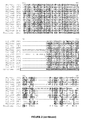
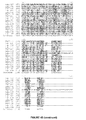
- SPL DBD SPL DBD ten conserved cysteine (Cys) or histidine (His) residues (see Figure 28) of which eight are zinc coordinating residues binding two zinc ions necessary for the formation of SPL specific zinc finger tertiary structure ( Yamasaki et al. (2004) J Mol Biol 337: 49-63 ).
- a second conserved feature within the SPL DBD is a bipartite nuclear localisation signal.
- a micro RNA (miRNA) target motif specifically targeted by miR156 family of miRNAs is found in most of the nucleic acid sequences encoding SPL transcription factor polypeptides (either in the coding region, or the 3' UTR) across the plant kingdom ( Rhoades et al. (2002) Cell 110: 513-520 ). miRNAs control SPL gene expression post-transcriptionally by targeting SPL encoding mRNAs for degradation or by translational repression.
- the Arabidopsis genome codes for at least 1533 transcriptional regulators, accounting for ⁇ 5.9% of its estimated total number of genes ( Riechmann et al. (2000) Science 290: 2105-2109 ).
- the authors report 16 SPL transcription factor polypeptides in Arabidopsis thaliana, with little sequence similarity among themselves (apart from the abovementioned features), the size of the deduced SPL polypeptide ranging from 131 to 927 amino acids. Nevertheless, pairs of SPL transcription factor polypeptides sharing higher sequence homology were detected within the SPL family of this plant (Cardon et al. (1999)).
- SPL transcription factor polypeptides (only found in plants) characterized to date have been shown to function in plant development, in particular in flower development. Transgenic plants overexpressing an SPL3 transcription factor polypeptide were reported to flower earlier ( Cardon et al. (1997) Plant J 12: 367-377 ).
- European patent application EP1033405 the nucleic acid and deduced polypeptide sequences of the SPL11 transcription factor polypeptide are disclosed.
- a method for increasing seed yield in plants relative to control plants comprising increasing expression in a plant of a nucleic acid encoding a SPL11 polypeptide, wherein said SPL11 comprises a SBP domain having in increasing order of preference at least 70%, 75%, 80%, 90%, 95%, 97% or more sequence identity to any one of SEQ ID NO: 456 to SEQ ID NO: 468 and SEQ ID NO: 478, wherein said increased seed yield preferably comprises increased total seed weight, number of filled seeds, number of seeds or florets per panicle, thousand-kernel weight, seed filling rate and/or harvest index relative to control,
- novel SPL11 nucleic acids and SPL11 polypeptides as well as constructs comprising SPL11-encoding nucleic acids, useful in performing the methods of the invention
- polypeptide and “protein” are used interchangeably herein and refer to amino acids in a polymeric form of any length, linked together by peptide bonds.
- nucleic acid sequence(s) refers to nucleotides, either ribonucleotides or deoxyribonucleotides or a combination of both, in a polymeric unbranched form of any length.
- control plants are routine part of an experimental setup and may include corresponding wild type plants or corresponding plants without the gene of interest.
- the control plant is typically of the same plant species or even of the same variety as the plant to be assessed.
- the control plant may also be a nullizygote of the plant to be assessed. Nullizygotes are individuals missing the transgene by segregation.
- a "control plant” as used herein refers not only to whole plants, but also to plant parts, including seeds and seed parts.
- Homologues of a protein encompass peptides, oligopeptides, polypeptides, proteins and enzymes having amino acid substitutions, deletions and/or insertions relative to the unmodified protein in question and having similar biological and functional activity as the unmodified protein from which they are derived.
- a deletion refers to removal of one or more amino acids from a protein.
- Insertions refers to one or more amino acid residues being introduced into a predetermined site in a protein. Insertions may comprise N-terminal and/or C-terminal fusions as well as intra-sequence insertions of single or multiple amino acids. Generally, insertions within the amino acid sequence will be smaller than N- or C-terminal fusions, of the order of about 1 to 10 residues.
- N- or C-terminal fusion proteins or peptides include the binding domain or activation domain of a transcriptional activator as used in the yeast two-hybrid system, phage coat proteins, (histidine)-6-tag, glutathione S-transferase-tag, protein A, maltose-binding protein, dihydrofolate reductase, Tag•100 epitope, c-myc epitope, FLAG ® -epitope, lacZ, CMP (calmodulin-binding peptide), HA epitope, protein C epitope and VSV epitope.
- a transcriptional activator as used in the yeast two-hybrid system
- phage coat proteins phage coat proteins
- glutathione S-transferase-tag glutathione S-transferase-tag
- protein A maltose-binding protein
- dihydrofolate reductase Tag•100 epitope
- a substitution refers to replacement of amino acids of the protein with other amino acids having similar properties (such as similar hydrophobicity, hydrophilicity, antigenicity, propensity to form or break ⁇ -helical structures or ⁇ -sheet structures).
- Amino acid substitutions are typically of single residues, but may be clustered depending upon functional constraints placed upon the polypeptide; insertions will usually be of the order of about 1 to 10 amino acid residues.
- the amino acid substitutions are preferably conservative amino acid substitutions. Conservative substitution tables are well known in the art (see for example Creighton (1984) Proteins. W.H. Freeman and Company (Eds ) and Table 1 below).
- Amino acid substitutions, deletions and/or insertions may readily be made using peptide synthetic techniques well known in the art, such as solid phase peptide synthesis and the like, or by recombinant DNA manipulation. Methods for the manipulation of DNA sequences to produce substitution, insertion or deletion variants of a protein are well known in the art. For example, techniques for making substitution mutations at predetermined sites in DNA are well known to those skilled in the art and include M13 mutagenesis, T7-Gen in vitro mutagenesis (USB, Cleveland, OH), QuickChange Site Directed mutagenesis (Stratagene, San Diego, CA), PCR-mediated site-directed mutagenesis or other site-directed mutagenesis protocols.
- “Derivatives” include peptides, oligopeptides, polypeptides which may, compared to the amino acid sequence of the naturally-occurring form of the protein, such as the protein of interest, comprise substitutions of amino acids with non-naturally occurring amino acid residues, or additions of non-naturally occurring amino acid residues.
- “Derivatives” of a protein also encompass peptides, oligopeptides, polypeptides which comprise naturally occurring altered (glycosylated, acylated, prenylated, phosphorylated, myristoylated, sulphated etc.) or non-naturally altered amino acid residues compared to the amino acid sequence of a naturally-occurring form of the polypeptide.
- a derivative may also comprise one or more non-amino acid substituents or additions compared to the amino acid sequence from which it is derived, for example a reporter molecule or other ligand, covalently or non-covalently bound to the amino acid sequence, such as a reporter molecule which is bound to facilitate its detection, and non-naturally occurring amino acid residues relative to the amino acid sequence of a naturally-occurring protein.
- reporter molecule or other ligand covalently or non-covalently bound to the amino acid sequence, such as a reporter molecule which is bound to facilitate its detection, and non-naturally occurring amino acid residues relative to the amino acid sequence of a naturally-occurring protein.
- derivatives also include fusions of the naturally-occurring form of the protein with tagging peptides such as FLAG, HIS6 or thioredoxin (for a review of tagging peptides, see Terpe, Appl. Microbiol. Biotechnol. 60, 523-533, 2003 ).
- Orthologues and paralogues encompass evolutionary concepts used to describe the ancestral relationships of genes. Paralogues are genes within the same species that have originated through duplication of an ancestral gene; orthologues are genes from different organisms that have originated through speciation, and are also derived from a common ancestral gene.
- domain refers to a set of amino acids conserved at specific positions along an alignment of sequences of evolutionarily related proteins. While amino acids at other positions can vary between homologues, amino acids that are highly conserved at specific positions indicate amino acids that are likely essential in the structure, stability or function of a protein. Identified by their high degree of conservation in aligned sequences of a family of protein homologues, they can be used as identifiers to determine if any polypeptide in question belongs to a previously identified polypeptide family.
- motif or "consensus sequence” or “signature” refers to a short conserved region in the sequence of evolutionarily related proteins. Motifs are frequently highly conserved parts of domains, but may also include only part of the domain, or be located outside of conserved domain (if all of the amino acids of the motif fall outside of a defined domain).
- hybridisation is a process wherein substantially homologous complementary nucleotide sequences anneal to each other.
- the hybridisation process can occur entirely in solution, i.e. both complementary nucleic acids are in solution.
- the hybridisation process can also occur with one of the complementary nucleic acids immobilised to a matrix such as magnetic beads, Sepharose beads or any other resin.
- the hybridisation process can furthermore occur with one of the complementary nucleic acids immobilised to a solid support such as a nitro-cellulose or nylon membrane or immobilised by e.g. photolithography to, for example, a siliceous glass support (the latter known as nucleic acid arrays or microarrays or as nucleic acid chips).
- the nucleic acid molecules are generally thermally or chemically denatured to melt a double strand into two single strands and/or to remove hairpins or other secondary structures from single stranded nucleic acids.
- stringency refers to the conditions under which a hybridisation takes place.
- the stringency of hybridisation is influenced by conditions such as temperature, salt concentration, ionic strength and hybridisation buffer composition. Generally, low stringency conditions are selected to be about 30°C lower than the thermal melting point (T m ) for the specific sequence at a defined ionic strength and pH. Medium stringency conditions are when the temperature is 20°C below T m , and high stringency conditions are when the temperature is 10°C below T m . High stringency hybridisation conditions are typically used for isolating hybridising sequences that have high sequence similarity to the target nucleic acid sequence. However, nucleic acids may deviate in sequence and still encode a substantially identical polypeptide, due to the degeneracy of the genetic code. Therefore medium stringency hybridisation conditions may sometimes be needed to identify such nucleic acid molecules.
- the Tm is the temperature under defined ionic strength and pH, at which 50% of the target sequence hybridises to a perfectly matched probe.
- the T m is dependent upon the solution conditions and the base composition and length of the probe. For example, longer sequences hybridise specifically at higher temperatures.
- the maximum rate of hybridisation is obtained from about 16°C up to 32°C below T m .
- the presence of monovalent cations in the hybridisation solution reduce the electrostatic repulsion between the two nucleic acid strands thereby promoting hybrid formation; this effect is visible for sodium concentrations of up to 0.4M (for higher concentrations, this effect may be ignored).
- Formamide reduces the melting temperature of DNA-DNA and DNA-RNA duplexes with 0.6 to 0.7°C for each percent formamide, and addition of 50% formamide allows hybridisation to be performed at 30 to 45°C, though the rate of hybridisation will be lowered.
- Base pair mismatches reduce the hybridisation rate and the thermal stability of the duplexes.
- the Tm decreases about 1 °C per % base mismatch. The Tm may be calculated using the following equations, depending on the types of hybrids:
- Non-specific binding may be controlled using any one of a number of known techniques such as, for example, blocking the membrane with protein containing solutions, additions of heterologous RNA, DNA, and SDS to the hybridisation buffer, and treatment with Rnase.
- a series of hybridizations may be performed by varying one of (i) progressively lowering the annealing temperature (for example from 68°C to 42°C) or (ii) progressively lowering the formamide concentration (for example from 50% to 0%).
- annealing temperature for example from 68°C to 42°C
- formamide concentration for example from 50% to 0%
- hybridisation typically also depends on the function of post-hybridisation washes.
- samples are washed with dilute salt solutions.
- Critical factors of such washes include the ionic strength and temperature of the final wash solution: the lower the salt concentration and the higher the wash temperature, the higher the stringency of the wash.
- Wash conditions are typically performed at or below hybridisation stringency. A positive hybridisation gives a signal that is at least twice of that of the background.
- suitable stringent conditions for nucleic acid hybridisation assays or gene amplification detection procedures are as set forth above. More or less stringent conditions may also be selected. The skilled artisan is aware of various parameters which may be altered during washing and which will either maintain or change the stringency conditions.
- typical high stringency hybridisation conditions for DNA hybrids longer than 50 nucleotides encompass hybridisation at 65°C in 1x SSC or at 42°C in 1x SSC and 50% formamide, followed by washing at 65°C in 0.3x SSC.
- Examples of medium stringency hybridisation conditions for DNA hybrids longer than 50 nucleotides encompass hybridisation at 50°C in 4x SSC or at 40°C in 6x SSC and 50% formamide, followed by washing at 50°C in 2x SSC.
- the length of the hybrid is the anticipated length for the hybridising nucleic acid. When nucleic acids of known sequence are hybridised, the hybrid length may be determined by aligning the sequences and identifying the conserved regions described herein.
- 1 ⁇ SSC is 0.15M NaCl and 15mM sodium citrate; the hybridisation solution and wash solutions may additionally include 5x Denhardt's reagent, 0.5-1.0% SDS, 100 ⁇ g/ml denatured, fragmented salmon sperm DNA, 0.5% sodium pyrophosphate.
- splice variant encompasses variants of a nucleic acid sequence in which selected introns and/or exons have been excised, replaced, displaced or added, or in which introns have been shortened or lengthened. Such variants will be ones in which the biological activity of the protein is substantially retained; this may be achieved by selectively retaining functional segments of the protein. Such splice variants may be found in nature or may be manmade. Methods for predicting and isolating such splice variants are well known in the art (see for example Foissac and Schiex (2005) BMC Bioinformatics 6: 25 ).
- Alleles or allelic variants are alternative forms of a given gene, located at the same chromosomal position. Allelic variants encompass Single Nucleotide Polymorphisms (SNPs), as well as Small Insertion/Deletion Polymorphisms (INDELs). The size of INDELs is usually less than 100 bp. SNPs and INDELs form the largest set of sequence variants in naturally occurring polymorphic strains of most organisms.
- Gene shuffling or directed evolution consists of iterations of DNA shuffling followed by appropriate screening and/or selection to generate variants of nucleic acids or portions thereof encoding proteins having a modified biological activity ( Castle et al., (2004) Science 304(5674): 1151-4 ; US patents 5,811,238 and 6,395,547 ).
- regulatory element control sequence
- promoter typically refers to a nucleic acid control sequence located upstream from the transcriptional start of a gene and which is involved in recognising and binding of RNA polymerase and other proteins, thereby directing transcription of an operably linked nucleic acid.
- transcriptional regulatory sequences derived from a classical eukaryotic genomic gene (including the TATA box which is required for accurate transcription initiation, with or without a CCAAT box sequence) and additional regulatory elements (i.e. upstream activating sequences, enhancers and silencers) which alter gene expression in response to developmental and/or external stimuli, or in a tissue-specific manner.
- additional regulatory elements i.e. upstream activating sequences, enhancers and silencers
- transcriptional regulatory sequence of a classical prokaryotic gene in which case it may include a -35 box sequence and/or -10 box transcriptional regulatory sequences.
- regulatory element also encompasses a synthetic fusion molecule or derivative that confers, activates or enhances expression of a nucleic acid molecule in a cell, tissue or organ.
- a “plant promoter” comprises regulatory elements, which mediate the expression of a coding sequence segment in plant cells. Accordingly, a plant promoter need not be of plant origin, but may originate from viruses or micro-organisms, for example from viruses which attack plant cells. The "plant promoter” can also originate from a plant cell, e.g. from the plant which is transformed with the nucleic acid sequence to be expressed in the inventive process and described herein. This also applies to other “plant” regulatory signals, such as "plant” terminators.
- the promoters upstream of the nucleotide sequences useful in the methods of the present invention can be modified by one or more nucleotide substitution(s), insertion(s) and/or deletion(s) without interfering with the functionality or activity of either the promoters, the open reading frame (ORF) or the 3'-regulatory region such as terminators or other 3' regulatory regions which are located away from the ORF. It is furthermore possible that the activity of the promoters is increased by modification of their sequence, or that they are replaced completely by more active promoters, even promoters from heterologous organisms.
- the nucleic acid molecule must, as described above, be linked operably to or comprise a suitable promoter which expresses the gene at the right point in time and with the required spatial expression pattern.
- the promoter strength and/or expression pattern of a candidate promoter may be analysed for example by operably linking the promoter to a reporter gene and assaying the expression level and pattern of the reporter gene in various tissues of the plant.
- Suitable well-known reporter genes include for example beta-glucuronidase or beta-galactosidase.
- the promoter activity is assayed by measuring the enzymatic activity of the beta-glucuronidase or beta-galactosidase.
- the promoter strength and/or expression pattern may then be compared to that of a reference promoter (such as the one used in the methods of the present invention).
- promoter strength may be assayed by quantifying mRNA levels or by comparing mRNA levels of the nucleic acid used in the methods of the present invention, with mRNA levels of housekeeping genes such as 18S rRNA, using methods known in the art, such as Northern blotting with densitometric analysis of autoradiograms, quantitative real-time PCR or RT-PCR ( Heid et al., 1996 Genome Methods 6: 986-994 ).
- weak promoter is intended a promoter that drives expression of a coding sequence at a low level.
- low level is intended at levels of about 1/10,000 transcripts to about 1/100,000 transcripts, to about 1/500,0000 transcripts per cell.
- a “strong promoter” drives expression of a coding sequence at high level, or at about 1/10 transcripts to about 1/100 transcripts to about 1/1000 transcripts per cell.
- “medium strength promoter” is intended a promoter that drives expression of a coding sequence at a lower level than a strong promoter, in particular at a level that is in all instances below that obtained when under the control of a 35S CaMV promoter.
- operably linked refers to a functional linkage between the promoter sequence and the gene of interest, such that the promoter sequence is able to initiate transcription of the gene of interest.
- a "constitutive promoter” refers to a promoter that is transcriptionally active during most, but not necessarily all, phases of growth and development and under most environmental conditions, in at least one cell, tissue or organ.
- Table 2a gives examples of constitutive promoters. Table 2a: Examples of constitutive promoters Gene Source Reference Actin McElroy et al, Plant Cell, 2: 163-171, 1990 HMGP WO 2004/070039 CAMV 35S Odell et al, Nature, 313: 810-812, 1985 CaMV 19S Nilsson et al., Physiol. Plant.
- a ubiquitous promoter is active in substantially all tissues or cells of an organism.
- a developmentally-regulated promoter is active during certain developmental stages or in parts of the plant that undergo developmental changes.
- An inducible promoter has induced or increased transcription initiation in response to a chemical (for a review see Gatz 1997, Annu. Rev. Plant Physiol. Plant Mol. Biol., 48:89-108 ), environmental or physical stimulus, or may be "stress-inducible", i.e. activated when a plant is exposed to various stress conditions, or a "pathogen-inducible” i.e. activated when a plant is exposed to exposure to various pathogens.
- organ-specific or tissue-specific promoter is one that is capable of preferentially initiating transcription in certain organs or tissues, such as the leaves, roots, seed tissue etc.
- a "root-specific promoter” is a promoter that is transcriptionally active predominantly in plant roots, substantially to the exclusion of any other parts of a plant, whilst still allowing for any leaky expression in these other plant parts. Promoters able to initiate transcription in certain cells only are referred to herein as "cell-specific”.
- Root-specific promoters are listed in Table 2b below: Table 2b: Examples of root-specific promoters Gene Source Reference RCc3 Plant Mol Biol. 1995 Jan;27(2):237-48 Arabidopsis PHT1 Kovama et al., 2005; Mudge et al. (2002, Plant J. 31:341 ) Medicago phosphate transporter Xiao et al., 2006 Arabidopsis Pyk10 Nitz et al. (2001) Plant Sci 161(2): 337-346 root-expressible genes Tingey et al., EMBO J. 6: 1, 1987 . tobacco auxin-inducible gene Van der Zaal et al., Plant Mol. Biol.
- a seed-specific promoter is transcriptionally active predominantly in seed tissue, but not necessarily exclusively in seed tissue (in cases of leaky expression).
- the seed-specific promoter may be active during seed development and/or during germination.
- the seed specific promoter may be endosperm/aleurone/embryo specific. Examples of seed-specific promoters (endosperm/aleurone/embryo specific) are shown in Table 2d, 2e, 2f. Further examples of seed-specific promoters are given in Qing Qu and Takaiwa (Plant Biotechnol. J. 2, 113-125, 2004 ), which disclosure is incorporated by reference herein as if fully set forth.
- Table 2c Examples of seed-specific promoters Gene source Reference seed-specific genes Simon et al., Plant Mol. Biol. 5: 191, 1985 ; Scofield et al., J. Biol. Chem. 262: 12202, 1987 .; Baszczynski et al., Plant Mol. Biol. 14: 633, 1990 . Brazil Nut albumin Pearson et al., Plant Mol. Biol. 18: 235-245, 1992 . legumin Ellis et al., Plant Mol. Biol. 10: 203-214, 1988 . glutelin (rice) Takaiwa et al., Mol. Gen. Genet.
- a green tissue-specific promoter as defined herein is a promoter that is transcriptionally active predominantly in green tissue, substantially to the exclusion of any other parts of a plant, whilst still allowing for any leaky expression in these other plant parts.
- green tissue-specific promoters which may be used to perform the methods of the invention are shown in Table 2g.
- Table 2g Examples of green tissue-specific promoters Gene Expression Reference Maize Orthophosphate dikinase Leaf specific Fukavama et al., 2001 Maize Phosphoenolpyruvate carboxylase Leaf specific Kausch et al., 2001 Rice Phosphoenolpyruvate carboxylase Leaf specific Liu et al., 2003 Rice small subunit Rubisco Leaf specific Nomura et al., 2000 rice beta expansin EXBP9 Shoot specific WO 2004/070039 Pigeonpea small subunit Rubisco Leaf specific Panguluri et al., 2005 Pea RBCS3A Leaf specific
- tissue-specific promoter is a meristem-specific promoter, which is transcriptionally active predominantly in meristematic tissue, substantially to the exclusion of any other parts of a plant, whilst still allowing for any leaky expression in these other plant parts.
- green meristem-specific promoters which may be used to perform the methods of the invention are shown in Table 2h below. Table 2h: Examples of meristem-specific promoters Gene source Expression pattern Reference rice OSH1 Shoot apical meristem, from embryo globular stage to seedling stage Sato et al. (1996) Proc. Natl. Acad. Sci.
- terminal encompasses a control sequence which is a DNA sequence at the end of a transcriptional unit which signals 3' processing and polyadenylation of a primary transcript and termination of transcription.
- the terminator can be derived from the natural gene, from a variety of other plant genes, or from T-DNA.
- the terminator to be added may be derived from, for example, the nopaline synthase or octopine synthase genes, or alternatively from another plant gene, or less preferably from any other eukaryotic gene.
- modulation means in relation to expression or gene expression, a process in which the expression level is changed by said gene expression in comparison to the control plant, the expression level may be increased or decreased.
- the original, unmodulated expression may be of any kind of expression of a structural RNA (rRNA, tRNA) or mRNA with subsequent translation.
- modulating the activity shall mean any change of the expression of the inventive nucleic acid sequences or encoded proteins, which leads to increased yield and/or increased growth of the plants.
- expression means the transcription of a specific gene or specific genes or specific genetic construct.
- expression in particular means the transcription of a gene or genes or genetic construct into structural RNA (rRNA, tRNA) or mRNA with or without subsequent translation of the latter into a protein. The process includes transcription of DNA and processing of the resulting mRNA product.
- Isolated nucleic acids which serve as promoter or enhancer elements may be introduced in an appropriate position (typically upstream) of a non-heterologous form of a polynucleotide so as to upregulate expression of a nucleic acid encoding the polypeptide of interest.
- endogenous promoters may be altered in vivo by mutation, deletion, and/or substitution (see, Kmiec, US 5,565,350 ; Zarling et al., WO9322443 ), or isolated promoters may be introduced into a plant cell in the proper orientation and distance from a gene of the present invention so as to control the expression of the gene.
- polypeptide expression it is generally desirable to include a polyadenylation region at the 3'-end of a polynucleotide coding region.
- the polyadenylation region can be derived from the natural gene, from a variety of other plant genes, or from T-DNA.
- the 3' end sequence to be added may be derived from, for example, the nopaline synthase or octopine synthase genes, or alternatively from another plant gene, or less preferably from any other eukaryotic gene.
- An intron sequence may also be added to the 5' untranslated region (UTR) or the coding sequence of the partial coding sequence to increase the amount of the mature message that accumulates in the cytosol.
- UTR 5' untranslated region
- coding sequence of the partial coding sequence to increase the amount of the mature message that accumulates in the cytosol.
- Inclusion of a spliceable intron in the transcription unit in both plant and animal expression constructs has been shown to increase gene expression at both the mRNA and protein levels up to 1000-fold ( Buchman and Berg (1988) Mol. Cell biol. 8: 4395-4405 ; Callis et al. (1987) Genes Dev 1:1183-1200 ).
- Such intron enhancement of gene expression is typically greatest when placed near the 5' end of the transcription unit.
- Use of the maize introns Adh1-S intron 1, 2, and 6, the Bronze-1 intron are known in the art. For general information see: The Maize Handbook, Chapter 116, Freeling and Walbot, Eds
- an "endogenous" gene not only refers to the gene in question as found in a plant in its natural form (i.e., without there being any human intervention), but also refers to that same gene (or a substantially homologous nucleic acid/gene) in an isolated form subsequently (re)introduced into a plant (a transgene).
- a transgenic plant containing such a transgene may encounter a substantial reduction of the transgene expression and/or substantial reduction of expression of the endogenous gene.
- the isolated gene may be isolated from an organism or may be manmade, for example by chemical synthesis.
- Reference herein to "decreased expression” or “reduction or substantial elimination” of expression is taken to mean a decrease in endogenous gene expression and/or polypeptide levels and/or polypeptide activity relative to control plants.
- the reduction or substantial elimination is in increasing order of preference at least 10%, 20%, 30%, 40% or 50%, 60%, 70%, 80%, 85%, 90%, or 95%, 96%, 97%, 98%, 99% or more reduced compared to that of control plants.
- substantially contiguous nucleotides of a nucleic acid sequence is required. In order to perform gene silencing, this may be as little as 20, 19, 18, 17, 16, 15, 14, 13, 12, 11, 10 or fewer nucleotides, alternatively this may be as much as the entire gene (including the 5' and/or 3' UTR, either in part or in whole).
- the stretch of substantially contiguous nucleotides may be derived from the nucleic acid encoding the protein of interest (target gene), or from any nucleic acid capable of encoding an orthologue, paralogue or homologue of the protein of interest.
- the stretch of substantially contiguous nucleotides is capable of forming hydrogen bonds with the target gene (either sense or antisense strand), more preferably, the stretch of substantially contiguous nucleotides has, in increasing order of preference, 50%, 60%, 70%, 80%, 85%, 90%, 95%, 96%, 97%, 98%, 99%, 100% sequence identity to the target gene (either sense or antisense strand).
- a nucleic acid sequence encoding a (functional) polypeptide is not a requirement for the various methods discussed herein for the reduction or substantial elimination of expression of an endogenous gene.
- a preferred method for the reduction or substantial elimination of endogenous gene expression is by introducing and expressing in a plant a genetic construct into which the nucleic acid (in this case a stretch of substantially contiguous nucleotides derived from the gene of interest, or from any nucleic acid capable of encoding an orthologue, paralogue or homologue of any one of the protein of interest) is cloned as an inverted repeat (in part or completely), separated by a spacer (non-coding DNA).
- the nucleic acid in this case a stretch of substantially contiguous nucleotides derived from the gene of interest, or from any nucleic acid capable of encoding an orthologue, paralogue or homologue of any one of the protein of interest
- expression of the endogenous gene is reduced or substantially eliminated through RNA-mediated silencing using an inverted repeat of a nucleic acid or a part thereof (in this case a stretch of substantially contiguous nucleotides derived from the gene of interest, or from any nucleic acid capable of encoding an orthologue, paralogue or homologue of the protein of interest), preferably capable of forming a hairpin structure.
- the inverted repeat is cloned in an expression vector comprising control sequences.
- a non-coding DNA nucleic acid sequence (a spacer, for example a matrix attachment region fragment (MAR), an intron, a polylinker, etc.) is located between the two inverted nucleic acids forming the inverted repeat.
- MAR matrix attachment region fragment
- a chimeric RNA with a self-complementary structure is formed (partial or complete).
- This double-stranded RNA structure is referred to as the hairpin RNA (hpRNA).
- the hpRNA is processed by the plant into siRNAs that are incorporated into an RNA-induced silencing complex (RISC).
- RISC RNA-induced silencing complex
- the RISC further cleaves the mRNA transcripts, thereby substantially reducing the number of mRNA transcripts to be translated into polypeptides.
- RISC RNA-induced silencing complex
- Performance of the methods of the invention does not rely on introducing and expressing in a plant a genetic construct into which the nucleic acid is cloned as an inverted repeat, but any one or more of several well-known "gene silencing" methods may be used to achieve the same effects.
- RNA-mediated silencing of gene expression is triggered in a plant by a double stranded RNA sequence (dsRNA) that is substantially similar to the target endogenous gene.
- dsRNA double stranded RNA sequence
- This dsRNA is further processed by the plant into about 20 to about 26 nucleotides called short interfering RNAs (siRNAs).
- the siRNAs are incorporated into an RNA-induced silencing complex (RISC) that cleaves the mRNA transcript of the endogenous target gene, thereby substantially reducing the number of mRNA transcripts to be translated into a polypeptide.
- RISC RNA-induced silencing complex
- the double stranded RNA sequence corresponds to a target gene.
- RNA silencing method involves the introduction of nucleic acid sequences or parts thereof (in this case a stretch of substantially contiguous nucleotides derived from the gene of interest, or from any nucleic acid capable of encoding an orthologue, paralogue or homologue of the protein of interest) in a sense orientation into a plant.
- Sense orientation refers to a DNA sequence that is homologous to an mRNA transcript thereof. Introduced into a plant would therefore be at least one copy of the nucleic acid sequence.
- the additional nucleic acid sequence will reduce expression of the endogenous gene, giving rise to a phenomenon known as co-suppression. The reduction of gene expression will be more pronounced if several additional copies of a nucleic acid sequence are introduced into the plant, as there is a positive correlation between high transcript levels and the triggering of co-suppression.
- RNA silencing method involves the use of antisense nucleic acid sequences.
- An "antisense" nucleic acid sequence comprises a nucleotide sequence that is complementary to a "sense" nucleic acid sequence encoding a protein, i.e. complementary to the coding strand of a double-stranded cDNA molecule or complementary to an mRNA transcript sequence.
- the antisense nucleic acid sequence is preferably complementary to the endogenous gene to be silenced.
- the complementarity may be located in the "coding region” and/or in the "non-coding region" of a gene.
- the term “coding region” refers to a region of the nucleotide sequence comprising codons that are translated into amino acid residues.
- non-coding region refers to 5' and 3' sequences that flank the coding region that are transcribed but not translated into amino acids (also referred to as 5' and 3' untranslated regions).
- Antisense nucleic acid sequences can be designed according to the rules of Watson and Crick base pairing.
- the antisense nucleic acid sequence may be complementary to the entire nucleic acid sequence (in this case a stretch of substantially contiguous nucleotides derived from the gene of interest, or from any nucleic acid capable of encoding an orthologue, paralogue or homologue of the protein of interest), but may also be an oligonucleotide that is antisense to only a part of the nucleic acid sequence (including the mRNA 5' and 3' UTR).
- the antisense oligonucleotide sequence may be complementary to the region surrounding the translation start site of an mRNA transcript encoding a polypeptide.
- a suitable antisense oligonucleotide sequence is known in the art and may start from about 50, 45, 40, 35, 30, 25, 20, 15 or 10 nucleotides in length or less.
- An antisense nucleic acid sequence according to the invention may be constructed using chemical synthesis and enzymatic ligation reactions using methods known in the art.
- an antisense nucleic acid sequence may be chemically synthesized using naturally occurring nucleotides or variously modified nucleotides designed to increase the biological stability of the molecules or to increase the physical stability of the duplex formed between the antisense and sense nucleic acid sequences, e.g., phosphorothioate derivatives and acridine substituted nucleotides may be used.
- modified nucleotides that may be used to generate the antisense nucleic acid sequences are well known in the art.
- nucleotide modifications include methylation, cyclization and 'caps' and substitution of one or more of the naturally occurring nucleotides with an analogue such as inosine.
- analogue such as inosine.
- Other modifications of nucleotides are well known in the art.
- the antisense nucleic acid sequence can be produced biologically using an expression vector into which a nucleic acid sequence has been subcloned in an antisense orientation (i.e., RNA transcribed from the inserted nucleic acid will be of an antisense orientation to a target nucleic acid of interest).
- an expression vector into which a nucleic acid sequence has been subcloned in an antisense orientation i.e., RNA transcribed from the inserted nucleic acid will be of an antisense orientation to a target nucleic acid of interest.
- production of antisense nucleic acid sequences in plants occurs by means of a stably integrated nucleic acid construct comprising a promoter, an operably linked antisense oligonucleotide, and a terminator.
- the nucleic acid molecules used for silencing in the methods of the application hybridize with or bind to mRNA transcripts and/or genomic DNA encoding a polypeptide to thereby inhibit expression of the protein, e.g., by inhibiting transcription and/or translation.
- the hybridization can be by conventional nucleotide complementarity to form a stable duplex, or, for example, in the case of an antisense nucleic acid sequence which binds to DNA duplexes, through specific interactions in the major groove of the double helix.
- Antisense nucleic acid sequences may be introduced into a plant by transformation or direct injection at a specific tissue site.
- antisense nucleic acid sequences can be modified to target selected cells and then administered systemically.
- antisense nucleic acid sequences can be modified such that they specifically bind to receptors or antigens expressed on a selected cell surface, e.g., by linking the antisense nucleic acid sequence to peptides or antibodies which bind to cell surface receptors or antigens.
- the antisense nucleic acid sequences can also be delivered to cells using the vectors described herein.
- the antisense nucleic acid sequence is an a-anomeric nucleic acid sequence.
- An a-anomeric nucleic acid sequence forms specific double-stranded hybrids with complementary RNA in which, contrary to the usual b-units, the strands run parallel to each other ( Gaultier et al. (1987) Nucl Ac Res 15: 6625-6641 ).
- the antisense nucleic acid sequence may also comprise a 2'-o-methylribonucleotide ( Inoue et al. (1987) Nucl Ac Res 15, 6131-6148 ) or a chimeric RNA-DNA analogue ( Inoue et al. (1987) FEBS Lett.
- Ribozymes are catalytic RNA molecules with ribonuclease activity that are capable of cleaving a single-stranded nucleic acid sequence, such as an mRNA, to which they have a complementary region.
- ribozymes e.g., hammerhead ribozymes (described in Haselhoff and Gerlach (1988) Nature 334, 585-591 ) can be used to catalytically cleave mRNA transcripts encoding a polypeptide, thereby substantially reducing the number of mRNA transcripts to be translated into a polypeptide.
- a ribozyme having specificity for a nucleic acid sequence can be designed (see for example: Cech et al. U.S. Patent No. 4,987,071 ; and Cech et al. U.S. Patent No. 5,116,742 ).
- mRNA transcripts corresponding to a nucleic acid sequence can be used to select a catalytic RNA having a specific ribonuclease activity from a pool of RNA molecules ( Bartel and Szostak (1993) Science 261, 1411-1418 ).
- the use of ribozymes for gene silencing in plants is known in the art (e.g., Atkins et al. (1994) WO 94/00012 ; Lenne et al.
- Gene silencing may also be achieved by insertion mutagenesis (for example, T-DNA insertion or transposon insertion) or by strategies as described by, among others, Angell and Baulcombe ((1999) Plant J 20(3): 357-62 ), (Amplicon VIGS WO 98/36083 ), or Baulcombe ( WO 99/15682 ).
- Gene silencing may also occur if there is a mutation on an endogenous gene and/or a mutation on an isolated gene/nucleic acid subsequently introduced into a plant.
- the reduction or substantial elimination may be caused by a non-functional polypeptide.
- the polypeptide may bind to various interacting proteins; one or more mutation(s) and/or truncation(s) may therefore provide for a polypeptide that is still able to bind interacting proteins (such as receptor proteins) but that cannot exhibit its normal function (such as signalling ligand).
- a further approach to gene silencing is by targeting nucleic acid sequences complementary to the regulatory region of the gene (e.g., the promoter and/or enhancers) to form triple helical structures that prevent transcription of the gene in target cells.
- nucleic acid sequences complementary to the regulatory region of the gene e.g., the promoter and/or enhancers
- the regulatory region of the gene e.g., the promoter and/or enhancers
- a screening program may be set up to identify in a plant population natural variants of a gene, which variants encode polypeptides with reduced activity.
- natural variants may also be used for example, to perform homologous recombination.
- miRNAs Artificial and/or natural microRNAs
- Endogenous miRNAs are single stranded small RNAs of typically 19-24 nucleotides long. They function primarily to regulate gene expression and/ or mRNA translation.
- Most plant microRNAs miRNAs
- Most plant microRNAs have perfect or near-perfect complementarity with their target sequences. However, there are natural targets with up to five mismatches. They are processed from longer non-coding RNAs with characteristic fold-back structures by double-strand specific RNases of the Dicer family. Upon processing, they are incorporated in the RNA-induced silencing complex (RISC) by binding to its main component, an Argonaute protein.
- RISC RNA-induced silencing complex
- MiRNAs serve as the specificity components of RISC, since they base-pair to target nucleic acids, mostly mRNAs, in the cytoplasm. Subsequent regulatory events include target mRNA cleavage and destruction and/or translational inhibition. Effects of miRNA overexpression are thus often reflected in decreased mRNA levels of target genes.
- amiRNAs Artificial microRNAs
- amiRNAs which are typically 21 nucleotides in length, can be genetically engineered specifically to negatively regulate gene expression of single or multiple genes of interest. Determinants of plant microRNA target selection are well known in the art. Empirical parameters for target recognition have been defined and can be used to aid in the design of specific amiRNAs, ( Schwab et al., Dev. Cell 8, 517-527, 2005 ). Convenient tools for design and generation of amiRNAs and their precursors are also available to the public ( Schwab et al., Plant Cell 18, 1121-1133, 2006 ).
- the gene silencing techniques used for reducing expression in a plant of an endogenous gene requires the use of nucleic acid sequences from monocotyledonous plants for transformation of monocotyledonous plants, and from dicotyledonous plants for transformation of dicotyledonous plants.
- a nucleic acid sequence from any given plant species is introduced into that same species.
- a nucleic acid sequence from rice is transformed into a rice plant.
- Described above are examples of various methods for the reduction or substantial elimination of expression in a plant of an endogenous gene.
- a person skilled in the art would readily be able to adapt the aforementioned methods for silencing so as to achieve reduction of expression of an endogenous gene in a whole plant or in parts thereof through the use of an appropriate promoter, for example.
- “Selectable marker”, “selectable marker gene” or “reporter gene” includes any gene that confers a phenotype on a cell in which it is expressed to facilitate the identification and/or selection of cells that are transfected or transformed with a nucleic acid construct of the invention. These marker genes enable the identification of a successful transfer of the nucleic acid molecules via a series of different principles. Suitable markers may be selected from markers that confer antibiotic or herbicide resistance, that introduce a new metabolic trait or that allow visual selection.
- selectable marker genes include genes conferring resistance to antibiotics (such as nptll that phosphorylates neomycin and kanamycin, or hpt, phosphorylating hygromycin, or genes conferring resistance to, for example, bleomycin, streptomycin, tetracyclin, chloramphenicol, ampicillin, gentamycin, geneticin (G418), spectinomycin or blasticidin), to herbicides (for example bar which provides resistance to Basta ® ; aroA or gox providing resistance against glyphosate, or the genes conferring resistance to, for example, imidazolinone, phosphinothricin or sulfonylurea), or genes that provide a metabolic trait (such as manA that allows plants to use mannose as sole carbon source or xylose isomerase for the utilisation of xylose, or antinutritive markers such as the resistance to 2-deoxyglucose).
- antibiotics such as nptll that phospho
- Visual marker genes results in the formation of colour (for example ⁇ -glucuronidase, GUS or ⁇ -galactosidase with its coloured substrates, for example X-Gal), luminescence (such as the luciferin/luceferase system) or fluorescence (Green Fluorescent Protein, GFP, and derivatives thereof).
- colour for example ⁇ -glucuronidase, GUS or ⁇ -galactosidase with its coloured substrates, for example X-Gal
- luminescence such as the luciferin/luceferase system
- fluorescence Green Fluorescent Protein
- nucleic acid molecules encoding a selectable marker can be introduced into a host cell on the same vector that comprises the sequence encoding the polypeptides of the invention or used in the methods of the invention, or else in a separate vector. Cells which have been stably transfected with the introduced nucleic acid can be identified for example by selection (for example, cells which have integrated the selectable marker survive whereas the other cells die).
- the process according to the invention for introducing the nucleic acids advantageously employs techniques which enable the removal or excision of these marker genes.
- One such a method is what is known as co-transformation.
- the co-transformation method employs two vectors simultaneously for the transformation, one vector bearing the nucleic acid according to the invention and a second bearing the marker gene(s).
- a large proportion of transformants receives or, in the case of plants, comprises (up to 40% or more of the transformants), both vectors.
- the transformants usually receive only a part of the vector, i.e.
- the marker genes can subsequently be removed from the transformed plant by performing crosses.
- marker genes integrated into a transposon are used for the transformation together with desired nucleic acid (known as the Ac/Ds technology).
- the transformants can be crossed with a transposase source or the transformants are transformed with a nucleic acid construct conferring expression of a transposase, transiently or stable.
- the transposon jumps out of the genome of the host cell once transformation has taken place successfully and is lost.
- the transposon jumps to a different location. In these cases the marker gene must be eliminated by performing crosses.
- Cre1 is a recombinase that removes the sequences located between the IoxP sequences. If the marker gene is integrated between the IoxP sequences, it is removed once transformation has taken place successfully, by expression of the recombinase.
- Further recombination systems are the HIN/HIX, FLP/FRT and REP/STB system ( Tribble et al., J. Biol.
- transgenic means with regard to, for example, a nucleic acid sequence, an expression cassette, gene construct or a vector comprising the nucleic acid sequence or an organism transformed with the nucleic acid sequences, expression cassettes or vectors according to the invention, all those constructions brought about by recombinant methods in which either
- transgenic plant for the purposes of the invention is thus understood as meaning, as above, that the nucleic acids used in the method of the invention are not at their natural locus in the genome of said plant, it being possible for the nucleic acids to be expressed homologously or heterologously.
- transgenic also means that, while the nucleic acids according to the invention or used in the inventive method are at their natural position in the genome of a plant, the sequence has been modified with regard to the natural sequence, and/or that the regulatory sequences of the natural sequences have been modified.
- Transgenic is preferably understood as meaning the expression of the nucleic acids according to the invention at an unnatural locus in the genome, i.e. homologous or, preferably, heterologous expression of the nucleic acids takes place.
- Preferred transgenic plants are mentioned herein.
- introduction or “transformation” as referred to herein encompasses the transfer of an exogenous polynucleotide into a host cell, irrespective of the method used for transfer.
- Plant tissue capable of subsequent clonal propagation may be transformed with a genetic construct of the present invention and a whole plant regenerated there from.
- the particular tissue chosen will vary depending on the clonal propagation systems available for, and best suited to, the particular species being transformed.
- tissue targets include leaf disks, pollen, embryos, cotyledons, hypocotyls, megagametophytes, callus tissue, existing meristematic tissue (e.g., apical meristem, axillary buds, and root meristems), and induced meristem tissue (e.g., cotyledon meristem and hypocotyl meristem).
- the polynucleotide may be transiently or stably introduced into a host cell and may be maintained non-integrated, for example, as a plasmid.
- the resulting transformed plant cell may then be used to regenerate a transformed plant in a manner known to persons skilled in the art.
- Transformation of plant species is now a fairly routine technique.
- any of several transformation methods may be used to introduce the gene of interest into a suitable ancestor cell.
- the methods described for the transformation and regeneration of plants from plant tissues or plant cells may be utilized for transient or for stable transformation. Transformation methods include the use of liposomes, electroporation, chemicals that increase free DNA uptake, injection of the DNA directly into the plant, particle gun bombardment, transformation using viruses or pollen and microprojection. Methods may be selected from the calcium/polyethylene glycol method for protoplasts ( Krens, F.A. et al., (1982) Nature 296, 72-74 ; Negrutiu I et al.
- Transgenic plants including transgenic crop plants, are preferably produced via Agrobacterium-mediated transformation.
- An advantageous transformation method is the transformation in planta.
- agrobacteria it is possible, for example, to allow the agrobacteria to act on plant seeds or to inoculate the plant meristem with agrobacteria. It has proved particularly expedient in accordance with the invention to allow a suspension of transformed agrobacteria to act on the intact plant or at least on the flower primordia. The plant is subsequently grown on until the seeds of the treated plant are obtained ( Clough and Bent, Plant J. (1998) 16, 735-743 ).
- Methods for Agrobacterium -mediated transformation of rice include well known methods for rice transformation, such as those described in any of the following: European patent application EP 1198985 A1 , Aldemita and Hodges (Planta 199: 612-617, 1996 ); Chan et al. (Plant Mol Biol 22 (3): 491-506, 1993 ), Hiei et al. (Plant J 6 (2): 271-282, 1994 ), which disclosures are incorporated by reference herein as if fully set forth.
- the preferred method is as described in either Ishida et al. (Nat. Biotechnol 14(6): 745-50, 1996 ) or Frame et al.
- the nucleic acids or the construct to be expressed is preferably cloned into a vector, which is suitable for transforming Agrobacterium tumefaciens, for example pBin19 ( Bevan et al., Nucl. Acids Res. 12 (1984) 8711 ).
- Agrobacteria transformed by such a vector can then be used in known manner for the transformation of plants, such as plants used as a model, like Arabidopsis ( Arabidopsis thaliana is within the scope of the present invention not considered as a crop plant), or crop plants such as, by way of example, tobacco plants, for example by immersing bruised leaves or chopped leaves in an agrobacterial solution and then culturing them in suitable media.
- the transformation of the chloroplast genome is generally achieved by a process which has been schematically displayed in Klaus et al., 2004 [Nature Biotechnology 22 (2), 225-229 ]. Briefly the sequences to be transformed are cloned together with a selectable marker gene between flanking sequences homologous to the chloroplast genome. These homologous flanking sequences direct site specific integration into the plastome.
- T-DNA activation tagging involves insertion of T-DNA, usually containing a promoter (may also be a translation enhancer or an intron), in the genomic region of the gene of interest or 10 kb up- or downstream of the coding region of a gene in a configuration such that the promoter directs expression of the targeted gene.
- a promoter may also be a translation enhancer or an intron
- regulation of expression of the targeted gene by its natural promoter is disrupted and the gene falls under the control of the newly introduced promoter.
- the promoter is typically embedded in a T-DNA. This T-DNA is randomly inserted into the plant genome, for example, through Agrobacterium infection and leads to modified expression of genes near the inserted T-DNA.
- the resulting transgenic plants show dominant phenotypes due to modified expression of genes close to the introduced promoter.
- TILLING is an abbreviation of "Targeted Induced Local Lesions In Genomes” and refers to a mutagenesis technology useful to generate and/or identify nucleic acids encoding proteins with modified expression and/or activity. TILLING also allows selection of plants carrying such mutant variants. These mutant variants may exhibit modified expression, either in strength or in location or in timing (if the mutations affect the promoter for example). These mutant variants may exhibit higher activity than that exhibited by the gene in its natural form. TILLING combines high-density mutagenesis with high-throughput screening methods.
- Homologous recombination allows introduction in a genome of a selected nucleic acid at a defined selected position.
- Homologous recombination is a standard technology used routinely in biological sciences for lower organisms such as yeast or the moss Physcomitrella. Methods for performing homologous recombination in plants have been described not only for model plants ( Offringa et al. (1990) EMBO J 9(10): 3077-84 ) but also for crop plants, for example rice ( Terada et al.
- yield in general means a measurable produce of economic value, typically related to a specified crop, to an area, and to a period of time. Individual plant parts directly contribute to yield based on their number, size and/or weight, or the actual yield is the yield per square meter for a crop and year, which is determined by dividing total production (includes both harvested and appraised production) by planted square meters.
- yield of a plant may relate to vegetative biomass (root and/or shoot biomass), to reproductive organs, and/or to propagules (such as seeds) of that plant.
- Early vigour refers to active healthy well-balanced growth especially during early stages of plant growth, and may result from increased plant fitness due to, for example, the plants being better adapted to their environment (i.e. optimizing the use of energy resources and partitioning between shoot and root). Plants having early vigour also show increased seedling survival and a better establishment of the crop, which often results in highly uniform fields (with the crop growing in uniform manner, i.e. with the majority of plants reaching the various stages of development at substantially the same time), and often better and higher yield. Therefore, early vigour may be determined by measuring various factors, such as thousand kernel weight, percentage germination, percentage emergence, seedling growth, seedling height, root length, root and shoot biomass and many more.
- Increased seed yield may manifest itself as one or more of the following: a) an increase in seed biomass (total seed weight) which may be on an individual seed basis and/or per plant and/or per square meter; b) increased number of flowers per plant; c) increased number of (filled) seeds; d) increased seed filling rate (which is expressed as the ratio between the number of filled seeds divided by the total number of seeds); e) increased harvest index, which is expressed as a ratio of the yield of harvestable parts, such as seeds, divided by the total biomass; and f) increased thousand kernel weight (TKW), which is extrapolated from the number of filled seeds counted and their total weight.
- An increased TKW may result from an increased seed size and/or seed weight, and may also result from an increase in embryo and/or endosperm size.
- An increase in seed yield may also be manifested as an increase in seed size and/or seed volume. Furthermore, an increase in seed yield may also manifest itself as an increase in seed area and/or seed length and/or seed width and/or seed perimeter. Increased yield may also result in modified architecture, or may occur because of modified architecture.
- the "greenness index” as used herein is calculated from digital images of plants. For each pixel belonging to the plant object on the image, the ratio of the green value versus the red value (in the RGB model for encoding color) is calculated. The greenness index is expressed as the percentage of pixels for which the green-to-red ratio exceeds a given threshold. Under normal growth conditions, under salt stress growth conditions, and under reduced nutrient availability growth conditions, the greenness index of plants is measured in the last imaging before flowering. In contrast, under drought stress growth conditions, the greenness index of plants is measured in the first imaging after drought.
- plant as used herein encompasses whole plants, ancestors and progeny of the plants and plant parts, including seeds, shoots, stems, leaves, roots (including tubers), flowers, and tissues and organs, wherein each of the aforementioned comprise the gene/nucleic acid of interest.
- plant also encompasses plant cells, suspension cultures, callus tissue, embryos, meristematic regions, gametophytes, sporophytes, pollen and microspores, again wherein each of the aforementioned comprises the gene/nucleic acid of interest.
- Plants that are particularly useful in the methods of the invention include all plants which belong to the superfamily Viridiplantae, in particular monocotyledonous and dicotyledonous plants including fodder or forage legumes, ornamental plants, food crops, trees or shrubs selected from the list comprising Acer spp., Actinidia spp., Abelmoschus spp., Agave sisalana, Agropyron spp., Agrostis stolonifera, Allium spp., Amaranthus spp., Ammophila arenaria, Ananas comosus, Annona spp., Apium graveolens, Arachis spp, Artocarpus spp., Asparagus officinalis, Avena spp.
- Avena sativa e.g. Avena sativa, Avena fatua, Avena byzantina, Avena fatua var. sativa, Avena hybrida
- Averrhoa carambola e.g. Bambusa sp.
- Benincasa hispida Bertholletia excelsea
- Beta vulgaris Brassica spp.
- Brassica napus e.g. Brassica napus, Brassica rapa ssp.
- SPL11 Squamosa promoter binding protein-like 11 transcription factor polypeptide
- the present invention provides a method for enhancing seed yield in plants relative to control plants, comprising increasing expression in a plant of a nucleic acid encoding a SPL11 polypeptide.
- the present invention also provides hitherto unknown SPL11-encoding nucleic acids and SPL11 polypeptides. These sequences also being useful in performing the methods of the invention.
- a preferred method for increasing expression of a nucleic acid encoding a SPL11 polypeptide is by introducing and expressing in a plant a nucleic acid encoding a SPL11 polypeptide.
- nucleic acid useful in the methods of the invention is taken to mean a nucleic acid capable of encoding such a SPL11 polypeptide.
- the nucleic acid to be introduced into a plant is any nucleic acid encoding the type of protein which will now be described, herein also named "SPL11 nucleic acid” or "SPL11 gene”.
- a SPL11 polypeptide as defined herein refers to a polypeptide comprising a Squamosa Binding Protein (SBP) domain, such domain having in increasing order of preference at least 70%, 75%, 80%, 85%, 90%, 95%, 97% or more sequence identity to any one of the SBP domains as represented by SEQ ID NO: 456 to SEQ ID NO: 468 or SEQ ID NO: 478.
- SBP Squamosa Binding Protein
- SPL11 polypeptide as defined herein comprises the protein represented by SEQ ID NO: 448 which identical to SEQ ID NO: 172 and to homologues (orthologues and paralogues) thereof.
- the homologues of SEQ ID NO: 172 have a DNA binding domain.
- SPL11 polypeptides can be found in specialized databases such as Pfam, ( Finn et al. Nucleic Acids Research (2006) Database Issue 34:D247-D251 ). Pfam compiles a large collection of multiple sequence alignments and hidden Markov models (HMM) covering many common protein domains and families and is available through the Sanger Institute in the United Kingdom.
- HMM hidden Markov models
- the gathering cutoff threshold of the SBP domain in the Pfam HMM_fs and Pfam HUM_ls models is 25.0. Trusted matches as considered in the Pfam database are those sequences scoring higher than the gathering cut-off threshold. However potential matches, comprising true SBP domains, may still fall under the gathering cut-off.
- a SPL11 polypeptide is a protein having one or more domains in their sequence that exceed the gathering cutoff of the Pfam protein domain family PF03110, known as SBP domain.
- a SBP domain in a polypeptide may be identified by performing a sequence comparison with known polypeptides comprising a SBP domain and establishing the similarity in the region of the SBP domain.
- the sequences may be aligned using any of the methods well known in the art such as Blast algorithms.
- the probability for the alignment to occur with a given sequence is taken as basis for identifying similar polypeptides.
- a parameter that is typically used to represent such probability is called e-value.
- the E-value is a measure of the reliability of the S score.
- the S score is a measure of the similarity of the query to the sequence shown.
- the e-value describes how often a given S score is expected to occur at random.
- the e-value cut-off may be as high as 1.0.
- SPL11 polypeptides useful in the methods of the invention are given in Table G1.
- the amino acid coordinates of the SBP domain in the representative SPL11 protein of Table G1 are given in Table G4 and the domain sequence is represented by SEQ ID NO: 456 to SEQ ID NO: 468.
- a consensus sequence of the SBP domains present in SPL11 polypeptides is given in SEQID NO: 478.
- Preferred SPL11 polypeptides of the invention are those having in increasing order of preference at least 70%, 75%, 80%, 85%, 90%, 95%, or more sequence identity to any of the polypeptides given in Table G2.
- SPL11 polypeptides may comprise in addition to the SBP domain one or more of the following conserved motifs at conserved positions in the sequence relative to the SBP domain: (i) Motif 1 as represented by SEQ ID NO: 469, (ii) Motif 2 is a serine rich region typically found at the N-terminal end of the SBP domain and can be represented by SEQ ID NO: 470; (iii) Motif 3 as presented by SEQ ID: 471 which is typically encoded by nucleotides comprised within the SPL11 polynucleotide region targeted by members of the miR156 microRNA family; (iv) Motif 4 as represented by SEQ ID NO: 472.
- Figure 27 shows the conserved motifs and their relative position in the SPL11 polypeptide sequence represented by SEQ ID NO: 428.
- preferred SPL11 polypeptides useful in the method of the invention comprise in addition to the SBP domain any one or more of the following conserved motifs:
- amino acids comprised in polypeptides are alpha amino acids having an amine and a carboxyl group attached to the same carbon, the alpha carbon, which amino acid molecules often comprise a side chain attached to the alpha carbon.
- Table 3 shows the classification of amino acids based on the physical and biochemical properties of the side chain. Table 3. Classification of amino acids according to the side chain properties.
- SPL11 polypeptides comprising one or more of the conserved motifs Motif 1 to Motif 4 are given in Example 62.
- Figure 28 shows the position of the conserved motifs in those SPL11 polypeptides.
- the SPL11 polypeptide of the invention when used in the construction of a phylogenetic tree, such as the one depicted in Figure 29, clusters within the S3 group comprising the amino acid sequence represented by SEQ ID NO: 428 (named AtSPL11 in Figure 29) rather than with any other group.
- domain and "motif” is defined in the "definitions” section herein.
- GAP uses the algorithm of Needleman and Wunsch ((1970) J Mol Biol 48: 443-453 ) to find the global (i.e. spanning the complete sequences) alignment of two sequences that maximizes the number of matches and minimizes the number of gaps.
- the BLAST algorithm Altschul et al. (1990) J Mol Biol 215: 403-10 ) calculates percent sequence identity and performs a statistical analysis of the similarity between the two sequences.
- the software for performing BLAST analysis is publicly available through the National Centre for Biotechnology Information (NCBI).
- Homologues may readily be identified using, for example, the ClustalW multiple sequence alignment algorithm (version 1.83), with the default pairwise alignment parameters, and a scoring method in percentage. Global percentages of similarity and identity may also be determined using one of the methods available in the MatGAT software package ( Campanella et al., BMC Bioinformatics. 2003 Jul 10;4:29. MatGAT: an application that generates similarity/identity matrices using protein or DNA sequences .). Minor manual editing may be performed to optimise alignment between conserved motifs, as would be apparent to a person skilled in the art. Furthermore, instead of using full-length sequences for the identification of homologues, specific domains may also be used. The sequence identity values may be determined over the entire nucleic acid or amino acid sequence or over selected domains or conserved motif(s), using the programs mentioned above using the default parameters.
- SPL11 polypeptides may typically have DNA binding activity, in particular they may bind DNA fragments comprising the SBP domain DNA binding box as represented by SEQ ID NO: 49.
- the SBP domain DNA binding box is found in gene promoters of plant origin such as the SQUAMOSA gene. Fragments comprising the SBP domain DNA binding box are preferably more than 10, 15, 20, 25, 100, 200, 500, 1000, 2000 base pairs long. Methods to determine DNA binding of SBP domain containing proteins are applicable to SPL11 polypeptides and are known in the art ( Klein at al. Mol Gen Genet. 1996, 15;250(1):7-16 ; Yamasaki et al. 2004 J Mol Biol. 2004, 12;337(1):49-63 ).
- Preferred SPL11 polypetides of the invention are those having DNA binding activity, more preferably those binding a DNA fragment comprising SEQ ID NO: 475.
- the present invention is illustrated by transforming plants with the nucleic acid sequence represented by SEQ ID NO: 427, encoding the polypeptide sequence of SEQ ID NO: 428.
- performance of the invention is not restricted to these sequences; the methods of the invention may advantageously be performed using any SPL11 encoding nucleic acid or SPL11 polypeptide as defined herein.
- nucleic acids encoding SPL11 polypeptides are given in Table G1 of Example 62 herein. Such nucleic acids are useful in performing the methods of the invention.
- the amino acid sequences given in Table G1 of Example 62 are example sequences of orthologues and paralogues of the SPL11 polypeptide represented by SEQ ID NO: 428, the terms "orthologues" and “paralogues” being as defined herein. Further orthologues and paralogues may readily be identified by performing a so-called reciprocal blast search. Typically, this involves a first BLAST involving BLASTing a query sequence (for example using any of the sequences listed in Table G1 of Example 62) against any sequence database, such as the publicly available NCBI database.
- BLASTN or TBLASTX are generally used when starting from a nucleotide sequence, and BLASTP or TBLASTN (using standard default values) when starting from a protein sequence.
- the BLAST results may optionally be filtered.
- the full-length sequences of either the filtered results or non-filtered results are then BLASTed back (second BLAST) against sequences from the organism from which the query sequence is derived (where the query sequence is SEQ ID NO: 427 or SEQ ID NO: 428, the second BLAST would therefore be against Arabidopsis sequences).
- the results of the first and second BLASTs are then compared.
- a paralogue is identified if a high-ranking hit from the first blast is from the same species as from which the query sequence is derived, a BLAST back then ideally results in the query sequence amongst the highest hits; an orthologue is identified if a high-ranking hit in the first BLAST is not from the same species as from which the query sequence is derived, and preferably results upon BLAST back in the query sequence being among the highest hits.
- High-ranking hits are those having a low E-value.
- Computation of the E-value is well known in the art.
- comparisons are also scored by percentage identity. Percentage identity refers to the number of identical nucleotides (or amino acids) between the two compared nucleic acid (or polypeptide) sequences over a particular length. In the case of large families, ClustalW may be used, followed by a neighbour joining tree, to help visualize clustering of related genes and to identify orthologues and paralogues.
- Nucleic acid variants may also be useful in practising the methods of the invention.
- Examples of such variants include nucleic acids encoding homologues and derivatives of any one of the amino acid sequences given in Table G1 of Example 62, the terms "homologue” and “derivative” being as defined herein.
- Also useful in the methods of the invention are nucleic acids encoding homologues and derivatives of orthologues or paralogues of any one of the amino acid sequences given in Table G1 of Example 62.
- Homologues and derivatives useful in the methods of the present invention have substantially the same biological and functional activity as the unmodified protein from which they are derived.
- nucleic acid variants useful in practising the methods of the application include portions of nucleic acids encoding SPL11 polypeptides, nucleic acids hybridising to nucleic acids encoding SPL11 polypeptides, splice variants of nucleic acids encoding SPL11 polypeptides, allelic variants of nucleic acids encoding SPL11 polypeptides and variants of nucleic acids encoding SPL11 polypeptides obtained by gene shuffling.
- the terms hybridising sequence, splice variant, allelic variant and gene shuffling are as described herein.
- a preferred nucleic acid variant useful in practising the methods of the application is a nucleic acid encoding a SPL11 polypeptide, which is microRNA insensitive, further preferably the nucleic acid is insensitive to microRNAs belonging to the miR156 family.
- MicroRNAs target nucleic acids (RNA in particular) for destruction typically causing a reduction or inhibition of the accumulation of the targeted RNA.
- Targeting requires hybridisation between the microRNA and the targeted nucleic acid (RNA) in a very specific region, called the miR ( m icro R NA) target site, which comprises a sequence complementary to a portion of the mature microRNA gene.
- microRNA insensitive nucleic acids comprise a sequence having in increasing order of preference 1, 2, 3, 4, 5 or more mistmatches in an alignment to the relevant microRNA molecule in the miR target site.
- MicroRNA insensitive nucleic acids may accumulated in a cell to levels in increasing order of preference 5, 10, 20, 30, 40, 50 times or higher than the corresponding nucleic acid targeted by the relevant MicroRNA, which typically comprises 100 % sequence complementary in the miR target site.
- the miR156 family has been described earlier and a compilation of the microRNAs including the miR156 family members can be found at miRBase database ( Griffiths-Jones et al. 2006 Nucleic Acids Research, 2006, Vol. 34, Database issue D140-D144 ).
- the miRBase database is maintained by the The Wellcome Trust Sanger Institute, in Cambridge, UK.
- the miR156 target site in a SPL11 nucleic acid is complementary to the mature sequence of miR156 microRNAs.
- An example of mature sequences of the miR156 family members from rice and their corresponding target sites on rice SPL nucleic acids is given in Figure 30A.
- Figure 31B shows an alignment of representative SPL11 nucleic acids (in DNA form), in which the target site of miR156 in the corresponding ribonucleic acids is indicated.
- An example of a miR156 insensitive SPL11 nucleic acid encoding SEQ ID NO: 428 is represented by SEQ ID NO: 431.
- Further examples of miR156 insensitive SPL11 nucleic acids are represented by SEQ ID 440 and SEQ ID NO: 454, the latter lacking the miR156 target site.
- a SPL11 nucleic acid useful in the methods of the application has 1, 2, 3, 4 or more mismatches in the miR156 target site or lack the target site of the miR156 gene. Examples of such SPL11 nucleic acids are given in Figure 31B. Further preferably is a nucleic acid as represented by SEQ ID NO: 431, SEQ ID 440 and SEQ ID NO: 454.
- Nucleic acids encoding SPL11 polypeptides need not be full-length nucleic acids, since performance of the methods of the invention does not rely on the use of full-length nucleic acid sequences. According to the present application there is provided a method for enhancing yield-related traits in plants, comprising introducing and expressing in a plant a portion of any one of the nucleic acid sequences given in Table G1 of Example 62, or a portion of a nucleic acid encoding an orthologue, paralogue or homologue of any of the amino acid sequences given in Table G1 of Example 62.
- a portion of a nucleic acid may be prepared, for example, by making one or more deletions to the nucleic acid.
- the portions may be used in isolated form or they may be fused to other coding (or non-coding) sequences in order to, for example, produce a protein that combines several activities. When fused to other coding sequences, the resultant polypeptide produced upon translation may be bigger than that predicted for the protein portion.
- Portions useful in the methods of the application encode a SPL11 polypeptide as defined herein, and have substantially the same biological activity as the amino acid sequences given in Table G1 of Example 62.
- the portion is a portion of any one of the nucleic acids given in Table G1 of Example 62, or is a portion of a nucleic acid encoding an orthologue or paralogue of any one of the amino acid sequences given in Table G1 of Example 62.
- the portion is at least 70, 100, 200, 500, 550, 600, 650, 700, 750, 800, 850, 900, 950, 1000, 1500, 2000, 2500, 3000, 3500, 4000, 4500, 5000 consecutive nucleotides in length, the consecutive nucleotides being of any one of the nucleic acid sequences given in Table G1 of Example 62, or of a nucleic acid encoding an orthologue or paralogue of any one of the amino acid sequences given in Table G1 of Example 62.
- the portion encodes at least an SBP domain. Most preferably the portion is a portion of the nucleic acid of SEQ ID NO: 427.
- the portion encodes an amino acid sequence which when used in the construction of a phylogenetic tree, such as the one depicted in Figure 29, clusters with the group of SPL11 polypeptides comprising the amino acid sequence represented by SEQ ID NO: 428 (AtSPL11) rather than with any other group.
- nucleic acid variant useful in the methods of the application is a nucleic acid capable of hybridising, under reduced stringency conditions, preferably under stringent conditions, with a nucleic acid encoding a SPL11 polypeptide as defined herein, or with a portion as defined herein.
- a method for enhancing yield-related traits in plants comprising introducing and expressing in a plant a nucleic acid capable of hybridizing to any one of the nucleic acids given in Table G1 of Example 62, or comprising introducing and expressing in a plant a nucleic acid capable of hybridising to a nucleic acid encoding an orthologue, paralogue or homologue of any of the nucleic acid sequences given in Table G1 of Example 62.
- Hybridising sequences useful in the methods of the application encode a SPL11 polypeptide as defined herein, and have substantially the same biological activity as the amino acid sequences given in Table G1 of Example 62.
- the hybridising sequence is capable of hybridising to any one of the nucleic acids given in Table G1 of Example 62, or to a portion of any of these sequences, a portion being as defined above, or wherein the hybridising sequence is capable of hybridising to a nucleic acid encoding an orthologue or paralogue of any one of the amino acid sequences given in Table G1 of Example 62.
- the hybridising sequence is capable of hybridising to a nucleic acid as represented by SEQ ID NO: 427 or to a portion thereof.
- the hybridising sequence encodes an amino acid sequence which when used in the construction of a phylogenetic tree, such as the one depicted in Figure 29, clusters with the group of SPL11 polypeptides comprising the amino acid sequence represented by SEQ ID NO: 428 (AtSPL11) rather than with any other group.
- nucleic acid variant useful in the methods of the application is a splice variant encoding a SPL11 polypeptide as defined hereinabove, a splice variant being as defined herein.
- a method for enhancing yield-related traits in plants comprising introducing and expressing in a plant a splice variant of any one of the nucleic acid sequences given in Table G1 of Example 62, or a splice variant of a nucleic acid encoding an orthologue, paralogue or homologue of any of the amino acid sequences given in Table G1 of Example 62.
- Examples of spliced variants of the gene encoding SEQ ID NO: 428 are represented by SEQ ID NO: 427; SEQ ID NO: 429 and SEQ ID NO: 430.
- Preferred splice variants are splice variants of a nucleic acid represented by SEQ ID NO: 427, or a splice variant of a nucleic acid encoding an orthologue or paralogue of SEQ ID NO: 428.
- the amino acid sequence encoded by the splice variant when used in the construction of a phylogenetic tree, such as the one depicted in Figure 29, clusters with the group of SPL11 polypeptides comprising the amino acid sequence represented by SEQ ID NO: 428 (AtSPL11) rather than with any other group.
- nucleic acid variant useful in performing the methods of the application is an allelic variant of a nucleic acid encoding a SPL11 polypeptide as defined hereinabove, an allelic variant being as defined herein.
- a method for enhancing yield-related traits in plants comprising introducing and expressing in a plant an allelic variant of any one of the nucleic acids given in Table G1 of Example 62, or comprising introducing and expressing in a plant an allelic variant of a nucleic acid encoding an orthologue, paralogue or homologue of any of the amino acid sequences given in Table G1 of Example 62.
- allelic variants useful in the methods of the present application have substantially the same biological activity as the SPL11 polypeptide of SEQ ID NO: 428 and any of the amino acids depicted in Table G1 of Example 62. Allelic variants exist in nature, and encompassed within the methods of the present invention is the use of these natural alleles.
- the allelic variant is an allelic variant of SEQ ID NO: 427 or an allelic variant of a nucleic acid encoding an orthologue or paralogue of SEQ ID NO: 428.
- the amino acid sequence encoded by the allelic variant when used in the construction of a phylogenetic tree, such as the one depicted in Figure 29, clusters with the SPL11 polypeptides comprising the amino acid sequence represented by SEQ ID NO: 428 (AtSPL11) rather than with any other group.
- Gene shuffling or directed evolution may also be used to generate variants of nucleic acids encoding SPL11 polypeptides as defined above; the term “gene shuffling” being as defined herein.
- a method for enhancing yield-related traits in plants comprising introducing and expressing in a plant a variant of any one of the nucleic acid sequences given in Table G1 of Example 62, or comprising introducing and expressing in a plant a variant of a nucleic acid encoding an orthologue, paralogue or homologue of any of the amino acid sequences given in Table G1 of Example 62, which variant nucleic acid is obtained by gene shuffling.
- the amino acid sequence encoded by the variant nucleic acid obtained by gene shuffling when used in the construction of a phylogenetic tree such as the one depicted in Figure 29, clusters with the group of SPL11 polypeptides comprising the amino acid sequence represented by SEQ ID NO: 428 (AtSPL11) rather than with any other group.
- nucleic acid variants may also be obtained by site-directed mutagenesis.
- site-directed mutagenesis Several methods are available to achieve site-directed mutagenesis, the most common being PCR based methods ( Current Protocols in Molecular Biology. Wiley Eds .).
- Nucleic acids encoding SPL11 polypeptides may be derived from any natural or artificial source.
- the nucleic acid may be modified from its native form in composition and/or genomic environment through deliberate human manipulation.
- the SPL11 polypeptide-encoding nucleic acid is from a plant, further preferably from a dicotyledonous plant, more preferably from the family Brassicaceae, most preferably the nucleic acid is from Arabidopsis thaliana.
- Reference herein to enhanced yield-related traits is taken to mean an increase in biomass (weight) of one or more parts of a plant, which may include aboveground (harvestable) parts and/or (harvestable) parts below ground.
- harvestable parts are seeds, and performance of the methods of the invention results in plants having increased yield relative to the yield of control plants.
- a yield increase may be manifested as one or more of the following: increase in the number of plants established per hectare or acre, an increase in the number of ears per plant, an increase in the number of rows, number of kernels per row, kernel weight, thousand kernel weight, ear length/diameter, increase in the seed filling rate (which is the number of filled seeds divided by the total number of seeds and multiplied by 100), among others.
- a yield increase may manifest itself as an increase in one or more of the following: number of plants per hectare or acre, number of panicles per plant, number of spikelets per panicle, number of flowers (florets) per panicle (which is expressed as a ratio of the number of filled seeds over the number of primary panicles), increase in the seed filling rate (which is the number of filled seeds divided by the total number of seeds and multiplied by 100), increase in thousand kernel weight, among others.
- the present invention provides a method for increasing seed yield of plants, relative to control plants, which method comprises increasing expression, in a plant of a nucleic acid encoding a SPL11 polypeptide as defined herein.
- transgenic plants according to the present invention have increased yield, it is likely that these plants exhibit an increased growth rate (during at least part of their life cycle), relative to the growth rate of control plants at a corresponding stage in their life cycle.
- the increased growth rate may be specific to one or more parts of a plant (including seeds), or may be throughout substantially the whole plant. Plants having an increased growth rate may have a shorter life cycle.
- the life cycle of a plant may be taken to mean the time needed to grow from a dry mature seed up to the stage where the plant has produced dry mature seeds, similar to the starting material. This life cycle may be influenced by factors such as early vigour, growth rate, greenness index, flowering time and speed of seed maturation.
- the increase in growth rate may take place at one or more stages in the life cycle of a plant or during substantially the whole plant life cycle. Increased growth rate during the early stages in the life cycle of a plant may reflect enhanced vigour.
- the increase in growth rate may alter the harvest cycle of a plant allowing plants to be sown later and/or harvested sooner than would otherwise be possible (a similar effect may be obtained with earlier flowering time). If the growth rate is sufficiently increased, it may allow for the further sowing of seeds of the same plant species (for example sowing and harvesting of rice plants followed by sowing and harvesting of further rice plants all within one conventional growing period). Similarly, if the growth rate is sufficiently increased, it may allow for the further sowing of seeds of different plants species (for example the sowing and harvesting of corn plants followed by, for example, the sowing and optional harvesting of soybean, potato or any other suitable plant). Harvesting additional times from the same rootstock in the case of some crop plants may also be possible.
- Altering the harvest cycle of a plant may lead to an increase in annual biomass production per acre (due to an increase in the number of times (say in a year) that any particular plant may be grown and harvested).
- An increase in growth rate may also allow for the cultivation of transgenic plants in a wider geographical area than their wild-type counterparts, since the territorial limitations for growing a crop are often determined by adverse environmental conditions either at the time of planting (early season) or at the time of harvesting (late season). Such adverse conditions may be avoided if the harvest cycle is shortened.
- the growth rate may be determined by deriving various parameters from growth curves, such parameters may be: T-Mid (the time taken for plants to reach 50% of their maximal size) and T-90 (time taken for plants to reach 90% of their maximal size), amongst others.
- performance of the methods of the invention gives plants having an increased growth rate relative to control plants. Therefore, according to the present invention, there is provided a method for increasing the growth rate of plants, which method comprises modulating expression, preferably increasing expression, in a plant of a nucleic acid encoding a SPL11 polypeptide as defined herein.
- Mild stress in the sense of the invention leads to a reduction in the growth of the stressed plants of less than 40%, 35% or 30%, preferably less than 25%, 20% or 15%, more preferably less than 14%, 13%, 12%, 11 % or 10% or less in comparison to the control plant under non-stress conditions.
- Mild stresses are the everyday biotic and/or abiotic (environmental) stresses to which a plant is exposed.
- Abiotic stresses may be due to drought or excess water, anaerobic stress, salt stress, chemical toxicity, oxidative stress and hot, cold or freezing temperatures.
- the abiotic stress may be an osmotic stress caused by a water stress (particularly due to drought), salt stress, oxidative stress or an ionic stress.
- Biotic stresses are typically those stresses caused by pathogens, such as bacteria, viruses, fungi and insects.
- the methods of the present invention may be performed under non-stress conditions or under conditions of mild drought to give plants having increased yield relative to control plants.
- abiotic stress leads to a series of morphological, physiological, biochemical and molecular changes that adversely affect plant growth and productivity. Drought, salinity, extreme temperatures and oxidative stress are known to be interconnected and may induce growth and cellular damage through similar mechanisms. Rabbani et al. (Plant Physiol (2003) 133: 1755-1767 ) describes a particularly high degree of "cross talk" between drought stress and high-salinity stress.
- non-stress conditions are those environmental conditions that allow optimal growth of plants. Persons skilled in the art are aware of normal soil conditions and climatic conditions for a given location.
- Plants with optimal growth conditions typically yield in increasing order of preference at least 90%, 87%, 85%, 83%, 80%, 77% or 75% of the average production of such plant in a given environment.
- Average production may be calculated on harvest and/or season basis. Persons skilled in the art are aware of average yield productions of a crop.
- Performance of the methods of the invention gives plants grown under non-stress conditions or under mild drought conditions increased yield relative to control plants grown under comparable conditions. Therefore, according to the present invention, there is provided a method for increasing seed yield in plants grown under non-stress conditions or under mild drought conditions, which method comprises increasing expression in a plant of a nucleic acid encoding a SPL11 polypeptide.
- Performance of the methods of the invention gives plants grown under conditions of nutrient deficiency, particularly under conditions of nitrogen deficiency, increased yield relative to control plants grown under comparable conditions. Therefore, according to the present invention, there is provided a method for increasing seed yield in plants grown under conditions of nutrient deficiency, which method comprises increasing expression in a plant of a nucleic acid encoding a SPL11 polypeptide. Nutrient deficiency may result from a lack or excess of nutrients such as nitrogen, phosphates and other phosphorous-containing compounds, potassium, calcium, cadmium, magnesium, manganese, iron and boron, amongst others.
- the present invention encompasses plants or parts thereof (including seeds) obtainable by the methods according to the present invention.
- the plants or parts thereof comprise a nucleic acid transgene encoding a SPL11 polypeptide as defined above.
- the invention also provides genetic constructs and vectors to facilitate introduction and/or expression in plants of nucleic acids encoding SPL11 polypeptides.
- the gene constructs may be inserted into vectors, which may be commercially available, suitable for transforming into plants and suitable for expression of the gene of interest in the transformed cells.
- the invention also provides use of a gene construct as defined herein in the methods of the invention.
- the present invention provides a construct comprising:
- the nucleic acid encoding a SPL11 polypeptide is as defined above.
- control sequence and “termination sequence” are as defined herein.
- Plants are transformed with a vector comprising any of the nucleic acids described above.
- the skilled artisan is well aware of the genetic elements that must be present on the vector in order to successfully transform, select and propagate host cells containing the sequence of interest.
- the sequence of interest is operably linked to one or more control sequences (at least to a promoter).
- any type of promoter may be used to drive expression of the nucleic acid sequence.
- a constitutive promoter is particularly useful in the methods. See the "Definitions" section herein for definitions of the various promoter types.
- the constitutive promoter is preferably a GOS2 promoter, preferably a GOS2 promoter from rice. Further preferably the constitutive promoter is represented by a nucleic acid sequence substantially similar to SEQ ID NO: 476, most preferably the constitutive promoter is as represented by SEQ ID NO: 476. See the "Definitions" section herein for further examples of constitutive promoters.
- a seed specific promoter is used.
- the seed specific promoter is preferably ABA (abcisic acid) inducible, it is preferably the WSI18 promoter, preferably the WSI18 from rice.
- the constitutive promoter is represented by a nucleic acid sequence substantially similar to SEQ ID NO: 477. See the "Definitions" section herein for further examples of seed specific promoters.
- one or more terminator sequences may be used in the construct introduced into a plant.
- Additional regulatory elements may include transcriptional as well as translational enhancers.
- terminator and enhancer sequences may be suitable for use in performing the invention.
- An intron sequence may also be added to the 5' untranslated region (UTR) or in the coding sequence to increase the amount of the mature message that accumulates in the cytosol, as described in the definitions section.
- Other control sequences (besides promoter, enhancer, silencer, intron sequences, 3'UTR and/or 5'UTR regions) may be protein and/or RNA stabilizing elements. Such sequences would be known or may readily be obtained by a person skilled in the art.
- the genetic constructs of the invention may further include an origin of replication sequence that is required for maintenance and/or replication in a specific cell type.
- an origin of replication sequence that is required for maintenance and/or replication in a specific cell type.
- Preferred origins of replication include, but are not limited to, the f1-ori and colE1.
- the genetic construct may optionally comprise a selectable marker gene. Selectable markers are described in more detail in the "definitions" section herein.
- nucleic acid molecules encoding a selectable marker can be introduced into a host cell on the same vector that comprises the sequence encoding the polypeptides of the invention or used in the methods of the invention, or else in a separate vector.
- Cells which have been stably transfected with the introduced nucleic acid can be identified for example by selection (for example, cells which have integrated the selectable marker survive whereas the other cells die).
- the marker genes may be removed or excised from the transgenic cell once they are no longer needed. Techniques for marker gene removal are known in the art, useful techniques are described above in the definitions section.
- the invention also provides a method for the production of transgenic plants having enhanced seed yield relative to control plants, comprising introduction and expression in a plant of any nucleic acid encoding a SPL11 polypeptide as defined hereinabove.
- the present invention provides a method for the production of transgenic plants having increased seed yield, which method comprises:
- the nucleic acid of (i) may be any of the nucleic acids capable of encoding a SPL11 polypeptide as defined herein.
- the nucleic acid may be introduced directly into a plant cell or into the plant itself (including introduction into a tissue, organ or any other part of a plant). According to a preferred feature of the present invention, the nucleic acid is preferably introduced into a plant by transformation.
- transformation is described in more detail in the "definitions” section herein.
- the genetically modified plant cells can be regenerated via all methods with which the skilled worker is familiar. Suitable methods can be found in the abovementioned publications by S.D. Kung and R. Wu, Potrykus or Höfgen and Willmitzer.
- plant cells or cell groupings are selected for the presence of one or more markers which are encoded by plant-expressible genes co-transferred with the gene of interest, following which the transformed material is regenerated into a whole plant.
- the plant material obtained in the transformation is, as a rule, subjected to selective conditions so that transformed plants can be distinguished from untransformed plants.
- the seeds obtained in the above-described manner can be planted and, after an initial growing period, subjected to a suitable selection by spraying.
- a further possibility consists in growing the seeds, if appropriate after sterilization, on agar plates using a suitable selection agent so that only the transformed seeds can grow into plants.
- the transformed plants are screened for the presence of a selectable marker such as the ones described above.
- putatively transformed plants may also be evaluated, for instance using Southern analysis, for the presence of the gene of interest, copy number and/or genomic organisation.
- expression levels of the newly introduced DNA may be monitored using Northern and/or Western analysis, both techniques being well known to persons having ordinary skill in the art.
- the generated transformed plants may be propagated by a variety of means, such as by clonal propagation or classical breeding techniques.
- a first generation (or T1) transformed plant may be selfed and homozygous second-generation (or T2) transformants selected, and the T2 plants may then further be propagated through classical breeding techniques.
- the generated transformed organisms may take a variety of forms. For example, they may be chimeras of transformed cells and non-transformed cells; clonal transformants (e.g., all cells transformed to contain the expression cassette); grafts of transformed and untransformed tissues (e.g., in plants, a transformed rootstock grafted to an untransformed scion).
- the present invention clearly extends to any plant cell or plant produced by any of the methods described herein, and to all plant parts and propagules thereof.
- the present invention extends further to encompass the progeny of a primary transformed or transfected cell, tissue, organ or whole plant that has been produced by any of the aforementioned methods, the only requirement being that progeny exhibit the same genotypic and/or phenotypic characteristic(s) as those produced by the parent in the methods according to the invention.
- the application also includes host cells containing an isolated nucleic acid encoding a SPL11 polypeptide as defined hereinabove.
- Preferred host cells according to the invention are plant cells.
- Host plants for the nucleic acids or the vector used in the method according to the invention, the expression cassette or construct or vector are, in principle, advantageously all plants, which are capable of synthesizing the polypeptides used in the inventive method.
- Plants that are particularly useful in the methods of the invention include all plants which belong to the superfamily Viridiplantae, in particular monocotyledonous and dicotyledonous plants including fodder or forage legumes, ornamental plants, food crops, trees or shrubs.
- the plant is a crop plant.
- crop plants include soybean, sunflower, canola, alfalfa, rapeseed, cotton, tomato, potato and tobacco.
- the plant is a monocotyledonous plant.
- monocotyledonous plants include sugarcane.
- the plant is a cereal. Examples of cereals include rice, maize, wheat, barley, millet, rye, triticale, sorghum and oats.
- the invention also extends to harvestable parts of a plant such as, but not limited to seeds, leaves, fruits, flowers, stems, roots, rhizomes, tubers and bulbs.
- the invention furthermore relates to products derived, preferably directly derived, from a harvestable part of such a plant, such as dry pellets or powders, oil, fat and fatty acids, starch or proteins.
- the modulated expression is increased expression.
- Methods for increasing expression of nucleic acids or genes, or gene products are well documented in the art and examples are provided in the definitions section.
- a preferred method for increasing expression of a nucleic acid encoding a SPL11 polypeptide is by introducing and expressing in a plant a nucleic acid encoding a SPL11 polypeptide; however the effects of performing the method, i.e. enhancing yield-related traits may also be achieved using other well-known techniques, including but not limited to T-DNA activation tagging, TILLING, homologous recombination. A description of these techniques is provided in the definitions section.
- the present invention also encompasses use of nucleic acids encoding SPL11 polypeptides as described herein and use of these SPL11 polypeptides in enhancing any of the aforementioned seed yield-related traits in plants.
- Nucleic acids encoding SPL11 polypeptides described herein, or the SPL11 polypeptides themselves may find use in breeding programmes in which a DNA marker is identified, which may be genetically linked to a SPL11 polypeptide-encoding gene.
- the nucleic acids/genes, or the SPL11 polypeptides themselves may be used to define a molecular marker. This DNA or protein marker may then be used in breeding programmes to select plants having enhanced yield-related traits as defined hereinabove in the methods of the invention.
- Allelic variants of a SPL11 polypeptide-encoding nucleic acid/gene may also find use in marker-assisted breeding programmes. Such breeding programmes sometimes require introduction of allelic variation by mutagenic treatment of the plants, using for example EMS mutagenesis; alternatively, the programme may start with a collection of allelic variants of so called "natural" origin caused unintentionally. Identification of allelic variants then takes place, for example, by PCR. This is followed by a step for selection of superior allelic variants of the sequence in question and which give increased yield. Selection is typically carried out by monitoring growth performance of plants containing different allelic variants of the sequence in question. Growth performance may be monitored in a greenhouse or in the field. Further optional steps include crossing plants in which the superior allelic variant was identified with another plant. This could be used, for example, to make a combination of interesting phenotypic features.
- Nucleic acids encoding SPL11 polypeptides may also be used as probes for genetically and physically mapping the genes that they are a part of, and as markers for traits linked to those genes. Such information may be useful in plant breeding in order to develop lines with desired phenotypes. Such use of SPL11 polypeptide-encoding nucleic acids requires only a nucleic acid sequence of at least 15 nucleotides in length. The SPL11 polypeptide-encoding nucleic acids may be used as restriction fragment length polymorphism (RFLP) markers.
- RFLP restriction fragment length polymorphism
- Southern blots ( Sambrook J, Fritsch EF and Maniatis T (1989) Molecular Cloning, A Laboratory Manual ) of restriction-digested plant genomic DNA may be probed with the SPL11-encoding nucleic acids. The resulting banding patterns may then be subjected to genetic analyses using computer programs such as MapMaker ( Lander et al. (1987) Genomics 1: 174-181 ) in order to construct a genetic map. In addition, the nucleic acids may be used to probe Southern blots containing restriction endonuclease-treated genomic DNAs of a set of individuals representing parent and progeny of a defined genetic cross.
- MapMaker Lander et al. (1987) Genomics 1: 174-181
- Segregation of the DNA polymorphisms is noted and used to calculate the position of the SPL11 polypeptide-encoding nucleic acid in the genetic map previously obtained using this population ( Botstein et al. (1980) Am. J. Hum. Genet. 32:314-331 ).
- the nucleic acid probes may also be used for physical mapping (i.e., placement of sequences on physical maps; see Hoheisel et al. In: Non-mammalian Genomic Analysis: A Practical Guide, Academic press 1996, pp. 319-346 , and references cited therein).
- nucleic acid probes may be used in direct fluorescence in situ hybridisation (FISH) mapping ( Trask (1991) Trends Genet. 7:149-154 ).
- FISH direct fluorescence in situ hybridisation
- nucleic acid amplification-based methods for genetic and physical mapping may be carried out using the nucleic acids.
- examples include allele-specific amplification ( Kazazian (1989) J. Lab. Clin. Med 11:95-96 ), polymorphism of PCR-amplified fragments (CAPS; Sheffield et al. (1993) Genomics 16:325-332 ), allele-specific ligation ( Landegren et al. (1988) Science 241:1077-1080 ), nucleotide extension reactions ( Sokolov (1990) Nucleic Acid Res. 18:3671 ), Radiation Hybrid Mapping ( Walter et al. (1997) Nat. Genet.
- the methods according to the present invention result in plants having enhanced seed yield as described hereinbefore. These traits may also be combined with other economically advantageous traits, such as further yield-enhancing traits, tolerance to other abiotic and biotic stresses, traits modifying various architectural features and/or biochemical and/or physiological features.
- SPL11 Squamosa promoter binding protein-like 11
- SPL11 Squamosa promoter binding protein-like 11
- Example 1 Identification of sequences related to the SPL 11 nucleic acid sequence used in the methods of the invention
- Sequences (full length cDNA, ESTs or genomic) related to the nucleic acid sequence used in the methods of the present invention were identified amongst those maintained in the Entrez Nucleotides database at the National Center for Biotechnology Information (NCBI). The sequences search was also carried out in other public and proprietary databases. Sequence search tools were used, such as the Basic Local Alignment Tool (BLAST) ( Altschul et al. (1990) J. Mol. Biol. 215:403-410 ; and Altschul et al. (1997) Nucleic Acids Res. 25:3389-3402 ). The program is used to find regions of local similarity between sequences by comparing nucleic acid or polypeptide sequences to sequence databases and by calculating the statistical significance of matches.
- BLAST Basic Local Alignment Tool
- the program is used to find regions of local similarity between sequences by comparing nucleic acid or polypeptide sequences to sequence databases and by calculating the statistical significance of matches.
- the polypeptide encoded by the nucleic acid used in the present invention was used for the TBLASTN algorithm, with default settings and the filter to ignore low complexity sequences set off.
- the output of the analysis was viewed by pairwise comparison, and ranked according to the probability score (E-value), where the score reflect the probability that a particular alignment occurs by chance (the lower the E-value, the more significant the hit).
- E-value probability score
- comparisons were also scored by percentage identity. Percentage identity refers to the number of identical nucleotides (or amino acids) between the two compared nucleic acid (or polypeptide) sequences over a particular length.
- the default parameters may be adjusted to modify the stringency of the search. For example the E-value may be increased to show less stringent matches. This way, short nearly exact matches may be identified.
- Table G1 provides a list of nucleic acid sequences related to the nucleic acid sequence used in the methods of the present invention. Polypeptides with an accession extended by a dot and one digit represent splice variants. Table G1: Examples of SPL11 nucleic acids and polypeptides Name Alias Plant origin Nucleic acid SEQ ID NO: Protein SEQ ID NO: Arath_SPL11a At1g27360 Arabidopsis thaliana 427 428 Arath_SPL11aa NM_202191 (splicing variant) Arabidopsis thaliana 429 428 Arath_SPL11aaa NM_001084135 Arabidopsis thaliana 430 428 Arath_SPL11aaa SEQID NO:1 Variant MiR156 insensitive Synthetic 431 428 Arath_SPL11b At1g27370 Arabidopsis thaliana 432 433 Arath_SPL11c At5g43270 Arabidops
- Alignment of polypeptide sequences was performed using the AlignX programme from the Vector NTI (Invitrogen) which is based on the popular Clustal W algorithm of progressive alignment ( Thompson et al. (1997) Nucleic Acids Res 25:4876-4882 ; Chenna et al. (2003). Nucleic Acids Res 31:3497-3500 ). Default values are for the gap open penalty of 10, for the gap extension penalty of 0,1 and the selected weight matrix is Blosum 62 (if polypeptides are aligned). Minor manual editing was done to further optimise the alignment. A consensus sequence comprising highly conserved representative amino acids at each position is given; blanks in between given amino acids in the consensus sequence represent any amino acid.
- Figure 2 provides an alignment of representative SPL11 polypeptides.
- MatGAT Microx Global Alignment Tool
- MatGAT an application that generates similarity/identity matrices using protein or DNA sequences. Campanella JJ, Bitincka L, Smalley J; software hosted by Ledion Bitincka ).
- MatGAT software generates similarity/identity matrices for DNA or protein sequences without needing pre-alignment of the data.
- the program performs a series of pair-wise alignments using the Myers and Miller global alignment algorithm (with a gap opening penalty of 12, and a gap extension penalty of 2), calculates similarity and identity using for example Blosum 62 (for polypeptides), and then places the results in a distance matrix. Sequence similarity is shown in the bottom half of the dividing line and sequence identity is shown in the top half of the diagonal dividing line.
- Scoring matrix Blosum62 First Gap: 12 Extending gap: 2
- the percentage identity between the SPL11 polypeptide sequences useful in performing the methods of the invention can be as low as 20 % amino acid identity compared to SEQ ID NO: 428.
- SPL11 polypeptides have a global (along the sequence of the entire polypeptide) sequence identity in the range of 40%.
- the percentage identity between SBP domains comprised in SPL11 polypeptide sequences useful in performing the methods of the invention can be as low as 30 % amino acid identity compared to SEQ ID NO: 456 (SBP domain comprised in Arath_SPL11a or SEQ ID NO: 428).
- SBP domains comprised in the SPL11 polypeptides given in Table G1 have a sequence identity in the range of 31 to 93.6%.
- Table G2 MatGAT results for global similarity and identity over the full length of the polypeptide sequences. Name sequence 1 2 3 4 5 6 7 8 9 10 11 12 13 1.
- Example 4 Identification of domains comprised in polypeptide sequences useful in performing the methods of the invention
- the Integrated Resource of Protein Families, Domains and Sites (InterPro) database is an integrated interface for the commonly used signature databases for text- and sequence-based searches.
- the InterPro database combines these databases, which use different methodologies and varying degrees of biological information about well-characterized proteins to derive protein signatures.
- Collaborating databases include SWISS-PROT, PROSITE, TrEMBL, PRINTS, ProDom and Pfam, Smart and TIGRFAMs.
- Pfam is a large collection of multiple sequence alignments and hidden Markov models covering many common protein domains and families. Pfam is hosted at the Sanger Institute server in the United Kingdom.
- Interpro is hosted at the European Bioinformatics Institute in the United Kingdom.
- Table G4 shows the settings (Gathering cut off, trusted cut off and noise cut off) as described in the Pfam database that were used to build the HMMs_fs for SBP different domains.
- the nucleic acid sequence used in the methods of the invention was amplified by PCR using as template a custom-made Arabidopsis thaliana seedlings cDNA library (in pCMV Sport 6.0; Invitrogen, Paisley, UK). PCR was performed using Hifi Taq DNA polymerase in standard conditions, using 200 ng of template in a 50 pl PCR mix. An uspstream and downstream primer as represented by SEQ ID NO: 473 and SEQ ID NO: 474 respectively were used to amplify by PCR (Polymerase Chain Reaction) the coding region of a SPL11 nucleic acid as represented by SEQ ID NO: 427.
- the primers include the AttB sites for Gateway recombination to facilitate the cloning of the amplified PCR DNA fragment into a Gateway cloning vector.
- the amplified PCR fragment was purified also using standard methods.
- the first step of the Gateway procedure the BP reaction, was then performed, during which the PCR fragment recombines in vivo with the pDONR201 plasmid to produce, according to the Gateway terminology, an "entry clone", pSPL11.
- Plasmid pDONR201 was purchased from Invitrogen, as part of the Gateway ® technology.
- the entry clone comprising SEQ ID NO: 427 was then used in an LR reaction with a destination vector used for Oryza sativa transformation.
- This vector contained as functional elements within the T-DNA borders: a plant selectable marker; a screenable marker expression cassette; and a Gateway cassette intended for LR in vivo recombination with the nucleic acid sequence of interest already cloned in the entry clone.
- a rice GOS2 promoter (SEQ ID NO: 476) for constitutive expression was located upstream of this Gateway cassette in the vector pGOS2::SPL11.
- the SPL11 coding sequence was also cloned in an expression vector comprising a rice WSI18 promoter (SEQ ID NO: 477) for seed specific (ABA inducible) expression (pWSI18::SPL11).
- the Agrobacterium containing the expression vector was used to transform Oryza sativa plants. Mature dry seeds of the rice japonica cultivar Nipponbare were dehusked. Sterilization was carried out by incubating for one minute in 70% ethanol, followed by 30 minutes in 0.2% HgCl 2 , followed by a 6 times 15 minutes wash with sterile distilled water. The sterile seeds were then germinated on a medium containing 2,4-D (callus induction medium). After incubation in the dark for four weeks, embryogenic, scutellum-derived calli were excised and propagated on the same medium. After two weeks, the calli were multiplied or propagated by subculture on the same medium for another 2 weeks. Embryogenic callus pieces were subcultured on fresh medium 3 days before co-cultivation (to boost cell division activity).
- Agrobacterium strain LBA4404 containing the expression vector was used for co-cultivation.
- Agrobacterium was inoculated on AB medium with the appropriate antibiotics and cultured for 3 days at 28°C.
- the bacteria were then collected and suspended in liquid co-cultivation medium to a density (OD 600 ) of about 1.
- the suspension was then transferred to a Petri dish and the calli immersed in the suspension for 15 minutes.
- the callus tissues were then blotted dry on a filter paper and transferred to solidified, co-cultivation medium and incubated for 3 days in the dark at 25°C.
- Co-cultivated calli were grown on 2,4-D-containing medium for 4 weeks in the dark at 28°C in the presence of a selection agent.
- T0 rice transformants Approximately 35 independent T0 rice transformants were generated for one construct. The primary transformants were transferred from a tissue culture chamber to a greenhouse. After a quantitative PCR analysis to verify copy number of the T-DNA insert, only single copy transgenic plants that exhibit tolerance to the selection agent were kept for harvest of T1 seed. Seeds were then harvested three to five months after transplanting. The method yielded single locus transformants at a rate of over 50 % (Aldemita and Hodges1996, Chan et al. 1993, Hiei et al. 1994).
- Transformation of maize ( Zea mays ) is performed with a modification of the method described by Ishida et al. (1996) Nature Biotech 14(6): 745-50 . Transformation is genotype-dependent in corn and only specific genotypes are amenable to transformation and regeneration.
- the inbred line A188 (University of Minnesota) or hybrids with A188 as a parent are good sources of donor material for transformation, but other genotypes can be used successfully as well.
- Ears are harvested from corn plant approximately 11 days after pollination (DAP) when the length of the immature embryo is about 1 to 1.2 mm. Immature embryos are cocultivated with Agrobacterium tumefaciens containing the expression vector, and transgenic plants are recovered through organogenesis.
- Excised embryos are grown on callus induction medium, then maize regeneration medium, containing the selection agent (for example imidazolinone but various selection markers can be used).
- the Petri plates are incubated in the light at 25 °C for 2-3 weeks, or until shoots develop.
- the green shoots are transferred from each embryo to maize rooting medium and incubated at 25 °C for 2-3 weeks, until roots develop.
- the rooted shoots are transplanted to soil in the greenhouse.
- T1 seeds are produced from plants that exhibit tolerance to the selection agent and that contain a single copy of the T-DNA insert.
- Transformation of wheat is performed with the method described by Ishida et al. (1996) Nature Biotech 14(6): 745-50 .
- the cultivar Bobwhite (available from CIMMYT, Mexico) is commonly used in transformation.
- Immature embryos are co-cultivated with Agrobacterium tumefaciens containing the expression vector, and transgenic plants are recovered through organogenesis. After incubation with Agrobacterium, the embryos are grown in vitro on callus induction medium, then regeneration medium, containing the selection agent (for example imidazolinone but various selection markers can be used).
- the Petri plates are incubated in the light at 25 °C for 2-3 weeks, or until shoots develop.
- the green shoots are transferred from each embryo to rooting medium and incubated at 25 °C for 2-3 weeks, until roots develop.
- the rooted shoots are transplanted to soil in the greenhouse.
- T1 seeds are produced from plants that exhibit tolerance to the selection agent and that contain a single copy of the T-DNA insert.
- Soybean is transformed according to a modification of the method described in the Texas A&M patent US 5,164,310 .
- Several commercial soybean varieties are amenable to transformation by this method.
- the cultivar Jack (available from the Illinois Seed foundation) is commonly used for transformation. Soybean seeds are sterilised for in vitro sowing. The hypocotyl, the radicle and one cotyledon are excised from seven-day old young seedlings. The epicotyl and the remaining cotyledon are further grown to develop axillary nodes. These axillary nodes are excised and incubated with Agrobacterium tumefaciens containing the expression vector. After the cocultivation treatment, the explants are washed and transferred to selection media.
- Regenerated shoots are excised and placed on a shoot elongation medium. Plants no longer than 1 cm are placed on rooting medium until roots develop. The rooted shoots are transplanted to soil in the greenhouse. T1 seeds are produced from plants that exhibit tolerance to the selection agent and that contain a single copy of the T-DNA insert.
- Cotyledonary petioles and hypocotyls of 5-6 day old young seedling are used as explants for tissue culture and transformed according to Babic et al. (1998, Plant Cell Rep 17: 183-188 ).
- the commercial cultivar Westar (Agriculture Canada) is the standard variety used for transformation, but other varieties can also be used.
- Canola seeds are surface-sterilized for in vitro sowing.
- the cotyledon petiole explants with the cotyledon attached are excised from the in vitro seedlings, and inoculated with Agrobacterium (containing the expression vector) by dipping the cut end of the petiole explant into the bacterial suspension.
- the explants are then cultured for 2 days on MSBAP-3 medium containing 3 mg/l BAP, 3 % sucrose, 0.7 % Phytagar at 23 °C, 16 hr light. After two days of co-cultivation with Agrobacterium, the petiole explants are transferred to MSBAP-3 medium containing 3 mg/l BAP, cefotaxime, carbenicillin, or timentin (300 mg/l) for 7 days, and then cultured on MSBAP-3 medium with cefotaxime, carbenicillin, or timentin and selection agent until shoot regeneration.
- the shoots When the shoots are 5 - 10 mm in length, they are cut and transferred to shoot elongation medium (MSBAP-0.5, containing 0.5 mg/l BAP). Shoots of about 2 cm in length are transferred to the rooting medium (MS0) for root induction. The rooted shoots are transplanted to soil in the greenhouse. T1 seeds are produced from plants that exhibit tolerance to the selection agent and that contain a single copy of the T-DNA insert.
- MSBAP-0.5 shoot elongation medium
- MS0 rooting medium
- T1 seeds are produced from plants that exhibit tolerance to the selection agent and that contain a single copy of the T-DNA insert.
- a regenerating clone of alfalfa ( Medicago sativa ) is transformed using the method of ( McKersie et al., 1999 Plant Physiol 119: 839-847 ). Regeneration and transformation of alfalfa is genotype dependent and therefore a regenerating plant is required. Methods to obtain regenerating plants have been described. For example, these can be selected from the cultivar Rangelander (Agriculture Canada) or any other commercial alfalfa variety as described by Brown DCW and A Atanassov (1985. Plant Cell Tissue Organ Culture 4: 111-112 ).
- the RA3 variety (University of Wisconsin) has been selected for use in tissue culture ( Walker et al., 1978 Am J Bot 65:654-659 ). Petiole explants are cocultivated with an overnight culture of Agrobacterium tumefaciens C58C1 pMP90 ( McKersie et al., 1999 Plant Physiol 119: 839-847 ) or LBA4404 containing the expression vector. The explants are cocultivated for 3 d in the dark on SH induction medium containing 288 mg/ L Pro, 53 mg/ L thioproline, 4.35 g/ L K2SO4, and 100 ⁇ m acetosyringinone.
- the explants are washed in half-strength Murashige-Skoog medium (Murashige and Skoog, 1962) and plated on the same SH induction medium without acetosyringinone but with a suitable selection agent and suitable antibiotic to inhibit Agrobacterium growth. After several weeks, somatic embryos are transferred to BOi2Y development medium containing no growth regulators, no antibiotics, and 50 g/ L sucrose. Somatic embryos are subsequently germinated on half-strength Murashige-Skoog medium. Rooted seedlings were transplanted into pots and grown in a greenhouse. T1 seeds are produced from plants that exhibit tolerance to the selection agent and that contain a single copy of the T-DNA insert.
- Cotton ( Gossypium hirsutum L.) transformation is performed using Agrobacterium tumefaciens, on hypocotyls explants.
- the commercial cultivars such as Coker 130 or Coker 312 (SeedCo, Lubbock, TX) are standard varieties used for transformation, but other varieties can also be used.
- the seeds are surface sterilized and germinated in the dark. Hypocotyl explants are cut from the germinated seedlings to lengths of about 1-1.5 centimeter.
- the hypotocyl explant is submersed in the Agrobacterium tumefaciens inoculum containing the expression vector, for 5 minutes then co-cultivated for about 48 hours on MS +1.8 mg/l KNO3 + 2% glucose at 24° C, in the dark.
- the explants are transferred the same medium containing appropriate bacterial and plant selectable markers (renewed several times), until embryogenic calli is seen.
- the calli are separated and subcultured until somatic embryos appear.
- Plantlets derived from the somatic embryos are matured on rooting medium until roots develop.
- the rooted shoots are transplanted to potting soil in the greenhouse.
- T1 seeds are produced from plants that exhibit tolerance to the selection agent and that contain a single copy of the T-DNA insert.
- T0 rice transformants Approximately 35 independent T0 rice transformants were generated. The primary transformants were transferred from a tissue culture chamber to a greenhouse for growing and harvest of T1 seed. Six events, of which the T1 progeny segregated 3:1 for presence/absence of the transgene, were retained. For each of these events, approximately 10 T1 seedlings containing the transgene (hetero- and homo-zygotes) and approximately 10 T1 seedlings lacking the transgene (nullizygotes) were selected by monitoring visual marker expression. The transgenic plants and the corresponding nullizygotes were grown side-by-side at random positions. Greenhouse conditions were of shorts days (12 hours light), 28°C in the light and 22°C in the dark, and a relative humidity of 70%. Plants grown under non-stress conditions are supplied with water at regular intervals to ensure that water and nutrients are not limiting to satisfy plant needs to complete growth and development.
- T1 events were further evaluated in the T2 generation following the same evaluation procedure as for the T1 generation but with more individuals per event. From the stage of sowing until the stage of maturity the plants were passed several times through a digital imaging cabinet. At each time digital images (2048x1536 pixels, 16 million colours) were taken of each plant from at least 6 different angles.
- Plants from T2 seeds were grown in potting soil under normal conditions until they approached the heading stage. They were then transferred to a "dry" section where irrigation was withheld. Humidity probes were inserted in randomly chosen pots to monitor the soil water content (SWC). When SWC went below certain thresholds, the plants were automatically re-watered continuously until a normal level was reached again. The plants were then re-transferred again to normal conditions. The rest of the cultivation (plant maturation, seed harvest) was the same as for plants not grown under abiotic stress conditions. Growth and yield parameters are recorded as detailed for growth under normal conditions.
- SWC soil water content
- Rice plants from T2 seeds are grown in potting soil under normal conditions except for the nutrient solution.
- the pots are watered from transplantation to maturation with a specific nutrient solution containing reduced N nitrogen (N) content, usually between 7 to 8 times less.
- N reduced N nitrogen
- the rest of the cultivation is the same as for plants not grown under abiotic stress. Growth and yield parameters are recorded as detailed for growth under normal conditions.
- a two factor ANOVA analysis of variants was used as a statistical model for the overall evaluation of plant phenotypic characteristics.
- An F test was carried out on all the parameters measured of all the plants of all the events transformed with the gene of the present invention. The F test was carried out to check for an effect of the gene over all the transformation events and to verify for an overall effect of the gene, also known as a global gene effect. The threshold for significance for a true global gene effect was set at a 5% probability level for the F test. A significant F test value to a gene effect, meaning that it is not only the mere presence or position of the gene that is causing the differences in phenotype.
- the plant aboveground area (or leafy biomass) was determined by counting the total number of pixels on the digital images from aboveground plant parts discriminated from the background. This value was averaged for the pictures taken on the same time from the different angles and was converted to a physical surface value expressed in square mm by calibration. Experiments show that the aboveground plant area measured this way correlates with the biomass of plant parts above ground.
- the above ground area is the area measured at the time at which the plant had reached its maximal leafy biomass.
- the early vigour is the plant (seedling) aboveground area three weeks post-germination.
- Increase in root biomass is expressed as an increase in total root biomass (measured as maximum biomass of roots observed during the lifespan of a plant); or as an increase in the root/shoot index (measured as the ratio between root mass and shoot mass in the period of active growth of root and shoot).
- Emergence vigour was determined by counting the total number of pixels from aboveground plant parts discriminated from the background. This value was averaged for the pictures taken on the same time from different angles and was converted to a physical surface value expressed in square mm by calibration. The results described below are for plants three weeks post-germination.
- the mature primary panicles were harvested, counted, bagged, barcode-labelled and then dried for three days in an oven at 37°C. The panicles were then threshed and all the seeds were collected and counted.
- the filled husks were separated from the empty ones using an air-blowing device. The empty husks were discarded and the remaining fraction was counted again.
- the filled husks were weighed on an analytical balance. The number of filled seeds was determined by counting the number of filled husks that remained after the separation step. The total seed yield was measured by weighing all filled husks harvested from a plant. Total seed number per plant was measured by counting the number of husks harvested from a plant.
- Thousand Kernel Weight is extrapolated from the number of filled seeds counted and their total weight.
- the Harvest Index (HI) in the present invention is defined as the ratio between the total seed yield and the above ground area (mm 2 ), multiplied by a factor 10 6 .
- the total number of flowers per panicle as defined in the present invention is the ratio between the total number of seeds and the number of mature primary panicles.
- the seed fill rate as defined in the present invention is the proportion (expressed as a %) of the number of filled seeds over the total number of seeds (or florets).
- Example 8 Results of the phenotypic evaluation of the transgenic plants
- transgenic rice plants expressing a SPL11 nucleic acid corresponding to the construct pGOS2::SPL11 and pWS118::SPL11 whether under drought stress or non-stress conditions are given herein.
- An increase of at least 5 % was observed for one or more of the following parameters, emergence vigour (seedling early vigour), total seed yield (seed weight), the seed fill rate (seed filling rate), the number of filled seeds, the number of flowers (seeds) per panicle and the harvest index, and of at least 3 % for thousand-kernel (1000-seed) weight in the transgenic plants of when compared to the control nullizygote plants in at least one of the growth conditions.
Landscapes
- Health & Medical Sciences (AREA)
- Life Sciences & Earth Sciences (AREA)
- Genetics & Genomics (AREA)
- Chemical & Material Sciences (AREA)
- Engineering & Computer Science (AREA)
- Organic Chemistry (AREA)
- Bioinformatics & Cheminformatics (AREA)
- Zoology (AREA)
- Wood Science & Technology (AREA)
- Molecular Biology (AREA)
- Biomedical Technology (AREA)
- General Engineering & Computer Science (AREA)
- Biotechnology (AREA)
- General Health & Medical Sciences (AREA)
- Biochemistry (AREA)
- Microbiology (AREA)
- Biophysics (AREA)
- Medicinal Chemistry (AREA)
- Cell Biology (AREA)
- Plant Pathology (AREA)
- Physics & Mathematics (AREA)
- Botany (AREA)
- Gastroenterology & Hepatology (AREA)
- Proteomics, Peptides & Aminoacids (AREA)
- Physiology (AREA)
- Breeding Of Plants And Reproduction By Means Of Culturing (AREA)
- Peptides Or Proteins (AREA)
- Micro-Organisms Or Cultivation Processes Thereof (AREA)
- Measuring Or Testing Involving Enzymes Or Micro-Organisms (AREA)
Description
- The present application relates generally to the field of molecular biology and concerns a method for enhancing yield-related traits and/or improving various plant growth characteristics by modulating expression in a plant of a nucleic acid encoding a GRP (Growth Regulating Protein). The GRP is a Squamosa promoter binding protein-like 11 (SPL11) transcription factor polypeptide. The present invention also concerns plants having modulated expression of a nucleic acid encoding a GRP, which plants have improved growth characteristics relative to corresponding wild type plants or other control plants. The invention also provides novel GRP nucleic acids and GRP polypeptides as well as constructs useful in the methods of the invention.
- The ever-increasing world population and the dwindling supply of arable land available for agriculture fuels research towards increasing the efficiency of agriculture. Conventional means for crop and horticultural improvements utilise selective breeding techniques to identify plants having desirable characteristics. However, such selective breeding techniques have several drawbacks, namely that these techniques are typically labour intensive and result in plants that often contain heterogeneous genetic components that may not always result in the desirable trait being passed on from parent plants. Advances in molecular biology have allowed mankind to modify the germplasm of animals and plants. Genetic engineering of plants entails the isolation and manipulation of genetic material (typically in the form of DNA or RNA) and the subsequent introduction of that genetic material into a plant. Such technology has the capacity to deliver crops or plants having various improved economic, agronomic or horticultural traits.
- A trait of particular economic interest is increased yield. Yield is normally defined as the measurable produce of economic value from a crop. This may be defined in terms of quantity and/or quality. Yield is directly dependent on several factors, for example, the number and size of the organs, plant architecture (for example, the number of branches), seed production, leaf senescence and more. Root development, nutrient uptake, stress tolerance and early vigour may also be important factors in determining yield. Optimizing the abovementioned factors may therefore contribute to increasing crop yield.
- Seed yield is a particularly important trait, since the seeds of many plants are important for human and animal nutrition. Crops such as corn, rice, wheat, canola and soybean account for over half the total human caloric intake, whether through direct consumption of the seeds themselves or through consumption of meat products raised on processed seeds. They are also a source of sugars, oils and many kinds of metabolites used in industrial processes. Seeds contain an embryo (the source of new shoots and roots) and an endosperm (the source of nutrients for embryo growth during germination and during early growth of seedlings). The development of a seed involves many genes, and requires the transfer of metabolites from the roots, leaves and stems into the growing seed. The endosperm, in particular, assimilates the metabolic precursors of carbohydrates, oils and proteins and synthesizes them into storage macromolecules to fill out the grain.
- Another important trait for many crops is early vigour. Improving early vigour is an important objective of modern rice breeding programs in both temperate and tropical rice cultivars. Long roots are important for proper soil anchorage in water-seeded rice. Where rice is sown directly into flooded fields, and where plants must emerge rapidly through water, longer shoots are associated with vigour. Where drill-seeding is practiced, longer mesocotyls and coleoptiles are important for good seedling emergence. The ability to engineer early vigour into plants would be of great importance in agriculture. For example, poor early vigor has been a limitation to the introduction of maize (Zea mays L.) hybrids based on Corn Belt germplasm in the European Atlantic.
- A further important trait is that of improved abiotic stress tolerance. Abiotic stress is a primary cause of crop loss worldwide, reducing average yields for most major crop plants by more than 50% (Wang et al., Planta (2003) 218: 1-14). Abiotic stresses may be caused by drought, salinity, extremes of temperature, chemical toxicity and oxidative stress. The ability to improve plant tolerance to abiotic stress would be of great economic advantage to farmers worldwide and would allow for the cultivation of crops during adverse conditions and in territories where cultivation of crops may not otherwise be possible.
- Crop yield may therefore be increased by optimising one of the above-mentioned factors.
- Depending on the end use, the modification of certain yield traits may be favoured over others. For example for applications such as forage or wood production, or bio-fuel resource, an increase in the vegetative parts of a plant may be desirable, and for applications such as flour, starch or oil production, an increase in seed parameters may be particularly desirable. Even amongst the seed parameters, some may be favoured over others, depending on the application. Various mechanisms may contribute to increasing seed yield, whether that is in the form of increased seed size or increased seed number.
- One approach to increasing yield (seed yield and/or biomass) in plants may be through modification of the inherent growth mechanisms of a plant, such as the cell cycle or various signalling pathways involved in plant growth or in defense mechanisms.
- Surprisingly, it has now been found that modulating expression of a nucleic acid encoding a a Squamosa promoter binding protein-like 11 (SPL11) transcription factor polypeptide gives plants having enhanced yield-related traits and/or improved various plant growth characteristics relative to control plants.
- According to one aspect of the application there is provided a method for improving or enhancing yield related traits and/or improving various plant growth characteristics of a plant relative to control plants, comprising modulating expression of a nucleic acid encoding a Squamosa promoter binding protein-like 11 (SPL11) transcription factor polypeptide in a plant.
- Transcription factor polypeptides are usually defined as proteins that show sequence-specific DNA binding affinity and that are capable of activating and/or repressing transcription. The Squamosa promoter binding protein-like (SPL) transcription factor polypeptides are structurally diverse proteins that share a highly conserved DNA binding domain (DBD) of about 80 amino acid residues in length (Klein et al. (1996) Mol Gen Genet 259: 7-16; Cardon et al. (1999) Gene 237: 91-104). The SPL transcription factor DNA consensus sequence binding site in the promoter of target genes is 5'-TNCGTACAA-3' where N represents any base. Within the SPL DBD are ten conserved cysteine (Cys) or histidine (His) residues (see Figure 28) of which eight are zinc coordinating residues binding two zinc ions necessary for the formation of SPL specific zinc finger tertiary structure (Yamasaki et al. (2004) J Mol Biol 337: 49-63). A second conserved feature within the SPL DBD is a bipartite nuclear localisation signal. Outside of the DBD, a micro RNA (miRNA) target motif, specifically targeted by miR156 family of miRNAs is found in most of the nucleic acid sequences encoding SPL transcription factor polypeptides (either in the coding region, or the 3' UTR) across the plant kingdom (Rhoades et al. (2002) Cell 110: 513-520). miRNAs control SPL gene expression post-transcriptionally by targeting SPL encoding mRNAs for degradation or by translational repression.
- The Arabidopsis genome codes for at least 1533 transcriptional regulators, accounting for ~5.9% of its estimated total number of genes (Riechmann et al. (2000) Science 290: 2105-2109). The authors report 16 SPL transcription factor polypeptides in Arabidopsis thaliana, with little sequence similarity among themselves (apart from the abovementioned features), the size of the deduced SPL polypeptide ranging from 131 to 927 amino acids. Nevertheless, pairs of SPL transcription factor polypeptides sharing higher sequence homology were detected within the SPL family of this plant (Cardon et al. (1999)).
- The SPL transcription factor polypeptides (only found in plants) characterized to date have been shown to function in plant development, in particular in flower development. Transgenic plants overexpressing an SPL3 transcription factor polypeptide were reported to flower earlier (Cardon et al. (1997) Plant J 12: 367-377). In European patent application
EP1033405 , the nucleic acid and deduced polypeptide sequences of the SPL11 transcription factor polypeptide are disclosed. - Surprisingly, it has now been found that modulating expression I a plant of a nucleic acid encoding a SPL11 polypeptide gives plants having enhanced yield-related traits, in particular increased yield relative to control plants.
- According to one embodiment, there is provided a method for increasing seed yield in plants relative to control plants, comprising increasing expression in a plant of a nucleic acid encoding a SPL11 polypeptide, wherein said SPL11 comprises a SBP domain having in increasing order of preference at least 70%, 75%, 80%, 90%, 95%, 97% or more sequence identity to any one of SEQ ID NO: 456 to SEQ ID NO: 468 and SEQ ID NO: 478, wherein said increased seed yield preferably comprises increased total seed weight, number of filled seeds, number of seeds or florets per panicle, thousand-kernel weight, seed filling rate and/or harvest index relative to control,
- According to one embodiment, there is provided novel SPL11 nucleic acids and SPL11 polypeptides as well as constructs comprising SPL11-encoding nucleic acids, useful in performing the methods of the invention
- The terms "polypeptide" and "protein" are used interchangeably herein and refer to amino acids in a polymeric form of any length, linked together by peptide bonds.
- The terms "polynucleotide(s)", "nucleic acid sequence(s)", "nucleotide sequence(s)", "nucleic acid(s)", "nucleic acid molecule" are used interchangeably herein and refer to nucleotides, either ribonucleotides or deoxyribonucleotides or a combination of both, in a polymeric unbranched form of any length.
- The choice of suitable control plants is a routine part of an experimental setup and may include corresponding wild type plants or corresponding plants without the gene of interest. The control plant is typically of the same plant species or even of the same variety as the plant to be assessed. The control plant may also be a nullizygote of the plant to be assessed. Nullizygotes are individuals missing the transgene by segregation. A "control plant" as used herein refers not only to whole plants, but also to plant parts, including seeds and seed parts.
- "Homologues" of a protein encompass peptides, oligopeptides, polypeptides, proteins and enzymes having amino acid substitutions, deletions and/or insertions relative to the unmodified protein in question and having similar biological and functional activity as the unmodified protein from which they are derived.
- A deletion refers to removal of one or more amino acids from a protein.
- An insertion refers to one or more amino acid residues being introduced into a predetermined site in a protein. Insertions may comprise N-terminal and/or C-terminal fusions as well as intra-sequence insertions of single or multiple amino acids. Generally, insertions within the amino acid sequence will be smaller than N- or C-terminal fusions, of the order of about 1 to 10 residues. Examples of N- or C-terminal fusion proteins or peptides include the binding domain or activation domain of a transcriptional activator as used in the yeast two-hybrid system, phage coat proteins, (histidine)-6-tag, glutathione S-transferase-tag, protein A, maltose-binding protein, dihydrofolate reductase, Tag•100 epitope, c-myc epitope, FLAG®-epitope, lacZ, CMP (calmodulin-binding peptide), HA epitope, protein C epitope and VSV epitope.
- A substitution refers to replacement of amino acids of the protein with other amino acids having similar properties (such as similar hydrophobicity, hydrophilicity, antigenicity, propensity to form or break α-helical structures or β-sheet structures). Amino acid substitutions are typically of single residues, but may be clustered depending upon functional constraints placed upon the polypeptide; insertions will usually be of the order of about 1 to 10 amino acid residues. The amino acid substitutions are preferably conservative amino acid substitutions. Conservative substitution tables are well known in the art (see for example Creighton (1984) Proteins. W.H. Freeman and Company (Eds) and Table 1 below).
Table 1: Examples of conserved amino acid substitutions Residue Conservative Substitutions Residue Conservative Substitutions Ala Ser Leu Ile; Val Arg Lys Lys Arg; Gln Asn Gln; His Met Leu; Ile Asp Glu Phe Met; Leu; Tyr Gln Asn Ser Thr; Gly Cys Ser Thr Ser; Val Glu Asp Trp Tyr Gly Pro Tyr Trp; Phe His Asn; Gln Val Ile; Leu Ile Leu, Val - Amino acid substitutions, deletions and/or insertions may readily be made using peptide synthetic techniques well known in the art, such as solid phase peptide synthesis and the like, or by recombinant DNA manipulation. Methods for the manipulation of DNA sequences to produce substitution, insertion or deletion variants of a protein are well known in the art. For example, techniques for making substitution mutations at predetermined sites in DNA are well known to those skilled in the art and include M13 mutagenesis, T7-Gen in vitro mutagenesis (USB, Cleveland, OH), QuickChange Site Directed mutagenesis (Stratagene, San Diego, CA), PCR-mediated site-directed mutagenesis or other site-directed mutagenesis protocols.
- "Derivatives" include peptides, oligopeptides, polypeptides which may, compared to the amino acid sequence of the naturally-occurring form of the protein, such as the protein of interest, comprise substitutions of amino acids with non-naturally occurring amino acid residues, or additions of non-naturally occurring amino acid residues. "Derivatives" of a protein also encompass peptides, oligopeptides, polypeptides which comprise naturally occurring altered (glycosylated, acylated, prenylated, phosphorylated, myristoylated, sulphated etc.) or non-naturally altered amino acid residues compared to the amino acid sequence of a naturally-occurring form of the polypeptide. A derivative may also comprise one or more non-amino acid substituents or additions compared to the amino acid sequence from which it is derived, for example a reporter molecule or other ligand, covalently or non-covalently bound to the amino acid sequence, such as a reporter molecule which is bound to facilitate its detection, and non-naturally occurring amino acid residues relative to the amino acid sequence of a naturally-occurring protein. Furthermore, "derivatives" also include fusions of the naturally-occurring form of the protein with tagging peptides such as FLAG, HIS6 or thioredoxin (for a review of tagging peptides, see Terpe, Appl. Microbiol. Biotechnol. 60, 523-533, 2003).
- Orthologues and paralogues encompass evolutionary concepts used to describe the ancestral relationships of genes. Paralogues are genes within the same species that have originated through duplication of an ancestral gene; orthologues are genes from different organisms that have originated through speciation, and are also derived from a common ancestral gene.
- The term "domain" refers to a set of amino acids conserved at specific positions along an alignment of sequences of evolutionarily related proteins. While amino acids at other positions can vary between homologues, amino acids that are highly conserved at specific positions indicate amino acids that are likely essential in the structure, stability or function of a protein. Identified by their high degree of conservation in aligned sequences of a family of protein homologues, they can be used as identifiers to determine if any polypeptide in question belongs to a previously identified polypeptide family.
- The term "motif" or "consensus sequence" or "signature" refers to a short conserved region in the sequence of evolutionarily related proteins. Motifs are frequently highly conserved parts of domains, but may also include only part of the domain, or be located outside of conserved domain (if all of the amino acids of the motif fall outside of a defined domain).
- The term "hybridisation" as defined herein is a process wherein substantially homologous complementary nucleotide sequences anneal to each other. The hybridisation process can occur entirely in solution, i.e. both complementary nucleic acids are in solution. The hybridisation process can also occur with one of the complementary nucleic acids immobilised to a matrix such as magnetic beads, Sepharose beads or any other resin. The hybridisation process can furthermore occur with one of the complementary nucleic acids immobilised to a solid support such as a nitro-cellulose or nylon membrane or immobilised by e.g. photolithography to, for example, a siliceous glass support (the latter known as nucleic acid arrays or microarrays or as nucleic acid chips). In order to allow hybridisation to occur, the nucleic acid molecules are generally thermally or chemically denatured to melt a double strand into two single strands and/or to remove hairpins or other secondary structures from single stranded nucleic acids.
- The term "stringency" refers to the conditions under which a hybridisation takes place. The stringency of hybridisation is influenced by conditions such as temperature, salt concentration, ionic strength and hybridisation buffer composition. Generally, low stringency conditions are selected to be about 30°C lower than the thermal melting point (Tm) for the specific sequence at a defined ionic strength and pH. Medium stringency conditions are when the temperature is 20°C below Tm, and high stringency conditions are when the temperature is 10°C below Tm. High stringency hybridisation conditions are typically used for isolating hybridising sequences that have high sequence similarity to the target nucleic acid sequence. However, nucleic acids may deviate in sequence and still encode a substantially identical polypeptide, due to the degeneracy of the genetic code. Therefore medium stringency hybridisation conditions may sometimes be needed to identify such nucleic acid molecules.
- The Tm is the temperature under defined ionic strength and pH, at which 50% of the target sequence hybridises to a perfectly matched probe. The Tm is dependent upon the solution conditions and the base composition and length of the probe. For example, longer sequences hybridise specifically at higher temperatures. The maximum rate of hybridisation is obtained from about 16°C up to 32°C below Tm. The presence of monovalent cations in the hybridisation solution reduce the electrostatic repulsion between the two nucleic acid strands thereby promoting hybrid formation; this effect is visible for sodium concentrations of up to 0.4M (for higher concentrations, this effect may be ignored). Formamide reduces the melting temperature of DNA-DNA and DNA-RNA duplexes with 0.6 to 0.7°C for each percent formamide, and addition of 50% formamide allows hybridisation to be performed at 30 to 45°C, though the rate of hybridisation will be lowered. Base pair mismatches reduce the hybridisation rate and the thermal stability of the duplexes. On average and for large probes, the Tm decreases about 1 °C per % base mismatch. The Tm may be calculated using the following equations, depending on the types of hybrids:
- 1) DNA-DNA hybrids (Meinkoth and Wahl, Anal. Biochem., 138: 267-284, 1984):

- 2) DNA-RNA or RNA-RNA hybrids:

- 3) oligo-DNA or oligo-RNAd hybrids:
- For <20 nucleotides: Tm= 2 (In)
- For 20-35 nucleotides: Tm= 22 + 1.46 (In)
- Non-specific binding may be controlled using any one of a number of known techniques such as, for example, blocking the membrane with protein containing solutions, additions of heterologous RNA, DNA, and SDS to the hybridisation buffer, and treatment with Rnase. For non-homologous probes, a series of hybridizations may be performed by varying one of (i) progressively lowering the annealing temperature (for example from 68°C to 42°C) or (ii) progressively lowering the formamide concentration (for example from 50% to 0%). The skilled artisan is aware of various parameters which may be altered during hybridisation and which will either maintain or change the stringency conditions.
- Besides the hybridisation conditions, specificity of hybridisation typically also depends on the function of post-hybridisation washes. To remove background resulting from non-specific hybridisation, samples are washed with dilute salt solutions. Critical factors of such washes include the ionic strength and temperature of the final wash solution: the lower the salt concentration and the higher the wash temperature, the higher the stringency of the wash. Wash conditions are typically performed at or below hybridisation stringency. A positive hybridisation gives a signal that is at least twice of that of the background. Generally, suitable stringent conditions for nucleic acid hybridisation assays or gene amplification detection procedures are as set forth above. More or less stringent conditions may also be selected. The skilled artisan is aware of various parameters which may be altered during washing and which will either maintain or change the stringency conditions.
- For example, typical high stringency hybridisation conditions for DNA hybrids longer than 50 nucleotides encompass hybridisation at 65°C in 1x SSC or at 42°C in 1x SSC and 50% formamide, followed by washing at 65°C in 0.3x SSC. Examples of medium stringency hybridisation conditions for DNA hybrids longer than 50 nucleotides encompass hybridisation at 50°C in 4x SSC or at 40°C in 6x SSC and 50% formamide, followed by washing at 50°C in 2x SSC. The length of the hybrid is the anticipated length for the hybridising nucleic acid. When nucleic acids of known sequence are hybridised, the hybrid length may be determined by aligning the sequences and identifying the conserved regions described herein. 1×SSC is 0.15M NaCl and 15mM sodium citrate; the hybridisation solution and wash solutions may additionally include 5x Denhardt's reagent, 0.5-1.0% SDS, 100 µg/ml denatured, fragmented salmon sperm DNA, 0.5% sodium pyrophosphate.
- For the purposes of defining the level of stringency, reference can be made to Sambrook et al. (2001) Molecular Cloning: a laboratory manual, 3rd Edition, Cold Spring Harbor Laboratory Press, CSH, New York or to Current Protocols in Molecular Biology, John Wiley & Sons, N.Y. (1989 and yearly updates).
- The term "splice variant" as used herein encompasses variants of a nucleic acid sequence in which selected introns and/or exons have been excised, replaced, displaced or added, or in which introns have been shortened or lengthened. Such variants will be ones in which the biological activity of the protein is substantially retained; this may be achieved by selectively retaining functional segments of the protein. Such splice variants may be found in nature or may be manmade. Methods for predicting and isolating such splice variants are well known in the art (see for example Foissac and Schiex (2005) BMC Bioinformatics 6: 25).
- Alleles or allelic variants are alternative forms of a given gene, located at the same chromosomal position. Allelic variants encompass Single Nucleotide Polymorphisms (SNPs), as well as Small Insertion/Deletion Polymorphisms (INDELs). The size of INDELs is usually less than 100 bp. SNPs and INDELs form the largest set of sequence variants in naturally occurring polymorphic strains of most organisms.
- Gene shuffling or directed evolution consists of iterations of DNA shuffling followed by appropriate screening and/or selection to generate variants of nucleic acids or portions thereof encoding proteins having a modified biological activity (Castle et al., (2004) Science 304(5674): 1151-4;
US patents 5,811,238 and6,395,547 ). - The terms "regulatory element", "control sequence" and "promoter" are all used interchangeably herein and are to be taken in a broad context to refer to regulatory nucleic acid sequences capable of effecting expression of the sequences to which they are ligated. The term "promoter" typically refers to a nucleic acid control sequence located upstream from the transcriptional start of a gene and which is involved in recognising and binding of RNA polymerase and other proteins, thereby directing transcription of an operably linked nucleic acid. Encompassed by the aforementioned terms are transcriptional regulatory sequences derived from a classical eukaryotic genomic gene (including the TATA box which is required for accurate transcription initiation, with or without a CCAAT box sequence) and additional regulatory elements (i.e. upstream activating sequences, enhancers and silencers) which alter gene expression in response to developmental and/or external stimuli, or in a tissue-specific manner. Also included within the term is a transcriptional regulatory sequence of a classical prokaryotic gene, in which case it may include a -35 box sequence and/or -10 box transcriptional regulatory sequences. The term "regulatory element" also encompasses a synthetic fusion molecule or derivative that confers, activates or enhances expression of a nucleic acid molecule in a cell, tissue or organ.
- A "plant promoter" comprises regulatory elements, which mediate the expression of a coding sequence segment in plant cells. Accordingly, a plant promoter need not be of plant origin, but may originate from viruses or micro-organisms, for example from viruses which attack plant cells. The "plant promoter" can also originate from a plant cell, e.g. from the plant which is transformed with the nucleic acid sequence to be expressed in the inventive process and described herein. This also applies to other "plant" regulatory signals, such as "plant" terminators. The promoters upstream of the nucleotide sequences useful in the methods of the present invention can be modified by one or more nucleotide substitution(s), insertion(s) and/or deletion(s) without interfering with the functionality or activity of either the promoters, the open reading frame (ORF) or the 3'-regulatory region such as terminators or other 3' regulatory regions which are located away from the ORF. It is furthermore possible that the activity of the promoters is increased by modification of their sequence, or that they are replaced completely by more active promoters, even promoters from heterologous organisms. For expression in plants, the nucleic acid molecule must, as described above, be linked operably to or comprise a suitable promoter which expresses the gene at the right point in time and with the required spatial expression pattern.
- For the identification of functionally equivalent promoters, the promoter strength and/or expression pattern of a candidate promoter may be analysed for example by operably linking the promoter to a reporter gene and assaying the expression level and pattern of the reporter gene in various tissues of the plant. Suitable well-known reporter genes include for example beta-glucuronidase or beta-galactosidase. The promoter activity is assayed by measuring the enzymatic activity of the beta-glucuronidase or beta-galactosidase. The promoter strength and/or expression pattern may then be compared to that of a reference promoter (such as the one used in the methods of the present invention). Alternatively, promoter strength may be assayed by quantifying mRNA levels or by comparing mRNA levels of the nucleic acid used in the methods of the present invention, with mRNA levels of housekeeping genes such as 18S rRNA, using methods known in the art, such as Northern blotting with densitometric analysis of autoradiograms, quantitative real-time PCR or RT-PCR (Heid et al., 1996 Genome Methods 6: 986-994). Generally by "weak promoter" is intended a promoter that drives expression of a coding sequence at a low level. By "low level" is intended at levels of about 1/10,000 transcripts to about 1/100,000 transcripts, to about 1/500,0000 transcripts per cell. Conversely, a "strong promoter" drives expression of a coding sequence at high level, or at about 1/10 transcripts to about 1/100 transcripts to about 1/1000 transcripts per cell. Generally, by "medium strength promoter" is intended a promoter that drives expression of a coding sequence at a lower level than a strong promoter, in particular at a level that is in all instances below that obtained when under the control of a 35S CaMV promoter.
- The term "operably linked" as used herein refers to a functional linkage between the promoter sequence and the gene of interest, such that the promoter sequence is able to initiate transcription of the gene of interest.
- A "constitutive promoter" refers to a promoter that is transcriptionally active during most, but not necessarily all, phases of growth and development and under most environmental conditions, in at least one cell, tissue or organ. Table 2a below gives examples of constitutive promoters.
Table 2a: Examples of constitutive promoters Gene Source Reference Actin McElroy et al, Plant Cell, 2: 163-171, 1990 HMGP WO 2004/070039 CAMV 35S Odell et al, Nature, 313: 810-812, 1985 CaMV 19S Nilsson et al., Physiol. Plant. 100:456-462, 1997 GOS2 de Pater et al, Plant J Nov;2(6):837-44, 1992, WO 2004/065596 Ubiquitin Christensen et al, Plant Mol. Biol. 18: 675-689, 1992 Rice cyclophilin Buchholz et al, Plant Mol Biol. 25(5): 837-43, 1994 Maize H3 histone Lepetit et al, Mol. Gen. Genet. 231:276-285, 1992 Alfalfa H3 histone Wu et al. Plant Mol. Biol. 11:641-649, 1988 Actin n 2An et al, Plant J. 10(1); 107-121, 1996 34S FMV Sanger et al., Plant. Mol. Biol., 14, 1990: 433-443 Rubisco small subunit US 4,962,028 OCS Leisner (1988) Proc Natl Acad Sci USA 85(5): 2553 SAD1 Jain et al., Crop Science, 39 (6), 1999: 1696 SAD2 Jain et al., Crop Science, 39 (6), 1999: 1696 nos Shaw et al. (1984) Nucleic Acids Res. 12(20):7831-7846 V-ATPase WO 01/14572 Super promoter WO 95/14098 G-box proteins WO 94/12015 - A ubiquitous promoter is active in substantially all tissues or cells of an organism.
- A developmentally-regulated promoter is active during certain developmental stages or in parts of the plant that undergo developmental changes.
- An inducible promoter has induced or increased transcription initiation in response to a chemical (for a review see Gatz 1997, Annu. Rev. Plant Physiol. Plant Mol. Biol., 48:89-108), environmental or physical stimulus, or may be "stress-inducible", i.e. activated when a plant is exposed to various stress conditions, or a "pathogen-inducible" i.e. activated when a plant is exposed to exposure to various pathogens.
- An organ-specific or tissue-specific promoter is one that is capable of preferentially initiating transcription in certain organs or tissues, such as the leaves, roots, seed tissue etc. For example, a "root-specific promoter" is a promoter that is transcriptionally active predominantly in plant roots, substantially to the exclusion of any other parts of a plant, whilst still allowing for any leaky expression in these other plant parts. Promoters able to initiate transcription in certain cells only are referred to herein as "cell-specific".
- Examples of root-specific promoters are listed in Table 2b below:
Table 2b: Examples of root-specific promoters Gene Source Reference RCc3 Plant Mol Biol. 1995 Jan;27(2):237-48 Arabidopsis PHT1 Kovama et al., 2005; Mudge et al. (2002, Plant J. 31:341) Medicago phosphate transporter Xiao et al., 2006 Arabidopsis Pyk10 Nitz et al. (2001) Plant Sci 161(2): 337-346 root-expressible genes Tingey et al., EMBO J. 6: 1, 1987. tobacco auxin-inducible gene Van der Zaal et al., Plant Mol. Biol. 16, 983, 1991. β-tubulin Oppenheimer, et al., Gene 63: 87, 1988. tobacco root-specific genes Conkling, et al., Plant Physiol. 93: 1203, 1990. B. napus G1-3b gene United States Patent No. 5, 401, 836 SbPRP1 Suzuki et al., Plant Mol. Biol. 21: 109-119, 1993. LRX1 Baumberger et al. 2001, Genes & Dev. 15:1128 BTG-26 Brassica napus US 20050044585 LeAMT1 (tomato) Lauter et al. (1996, PNAS 3:8139) The LeNRT1-1 (tomato) Lauter et al. (1996, PNAS 3:8139) class I patatin gene (potato) Liu et al., Plant Mol. Biol. 153:386-395, 1991. KDC1 (Daucus carota) Downey et al. (2000, J. Biol. Chem. 275:39420) TobRB7 gene W Song (1997) PhD Thesis, North Carolina State University, Raleigh, NC USA OsRAB5a (rice) Wang et al. 2002, Plant Sci. 163:273 ALF5 (Arabidopsis) Diener et al. (2001, Plant Cell 13:1625) NRT2;1Np (N. plumbaginifolia) Quesada et al. (1997, Plant Mol. Biol. 34:265) - A seed-specific promoter is transcriptionally active predominantly in seed tissue, but not necessarily exclusively in seed tissue (in cases of leaky expression). The seed-specific promoter may be active during seed development and/or during germination. The seed specific promoter may be endosperm/aleurone/embryo specific. Examples of seed-specific promoters (endosperm/aleurone/embryo specific) are shown in Table 2d, 2e, 2f. Further examples of seed-specific promoters are given in Qing Qu and Takaiwa (Plant Biotechnol. J. 2, 113-125, 2004), which disclosure is incorporated by reference herein as if fully set forth.
Table 2c: Examples of seed-specific promoters Gene source Reference seed-specific genes Simon et al., Plant Mol. Biol. 5: 191, 1985; Scofield et al., J. Biol. Chem. 262: 12202, 1987.; Baszczynski et al., Plant Mol. Biol. 14: 633, 1990. Brazil Nut albumin Pearson et al., Plant Mol. Biol. 18: 235-245, 1992. legumin Ellis et al., Plant Mol. Biol. 10: 203-214, 1988. glutelin (rice) Takaiwa et al., Mol. Gen. Genet. 208: 15-22, 1986; Takaiwa et al., FEBS Letts. 221: 43-47, 1987. zein Matzke et al Plant Mol Biol, 14(3):323-32 1990 napA Stalberg et al, Planta 199: 515-519, 1996. wheat LMW and HMW glutenin-1 Mol Gen Genet 216:81-90, 1989; NAR 17:461-2, 1989 wheat SPA Albani et al, Plant Cell, 9: 171-184, 1997 wheat α, β, γ-gliadins EMBO J. 3:1409-15, 1984 barley Itr1 promoter Diaz et al. (1995) Mol Gen Genet 248(5):592-8 barley B1, C, D, hordein Theor Appl Gen 98:1253-62, 1999; Plant J 4:343-55, 1993; Mol Gen Genet 250:750-60, 1996 barley DOF Mena et al, The Plant Journal, 116(1): 53-62, 1998 blz2 EP99106056.7 synthetic promoter Vicente-Carbajosa et al., Plant J. 13: 629-640, 1998. rice prolamin NRP33 Wu et al, Plant Cell Physiology 39(8) 885-889, 1998 rice α-globulin Glb-1 Wu et al, Plant Cell Physiology 39(8) 885-889, 1998 rice OSH1 Sato et al, Proc. Natl. Acad. Sci. USA, 93: 8117-8122, 1996 rice α-globulin REB/OHP-1 Nakase et al. Plant Mol. Biol. 33: 513-522, 1997 rice ADP-glucose pyrophosphorylase Trans Res 6:157-68, 1997 maize ESR gene family Plant J 12:235-46, 1997 sorghum α-kafirin DeRose et al., Plant Mol. Biol 32:1029-35, 1996 KNOX Postma-Haarsma et al, Plant Mol. Biol. 39:257-71, 1999 rice oleosin Wu et al, J. Biochem. 123:386, 1998 sunflower oleosin Cummins et al., Plant Mol. Biol. 19: 873-876, 1992 PRO0117, putative rice 40S ribosomal protein WO 2004/070039 PRO0136, rice alanine aminotransferase Unpublished PRO0147, trypsin inhibitor ITR1 (barley) unpublished PRO0151, rice WSI18 WO 2004/070039 PRO0175, rice RAB21 WO 2004/070039 PRO005 WO 2004/070039 PRO0095 WO 2004/070039 α-amylase (Amy32b) Lanahan et al, Plant Cell 4:203-211, 1992; Skriver et al, Proc Natl Acad Sci USA 88:7266-7270, 1991 cathepsin β-like gene Cejudo et al, Plant Mol Biol 20:849-856, 1992 Barley Ltp2 Kalla et al., Plant J. 6:849-60, 1994 Chi26 Leah et al., Plant J. 4:579-89, 1994 Maize B-Peru Selinger et al., Genetics 149;1125-38,1998 Table 2d: examples of endosperm-specific promoters Gene source Reference glutelin (rice) Takaiwa et al. (1986) Mol Gen Genet 208:15-22; Takaiwa et al. (1987) FEBS Letts. 221:43-47 zein Matzke et al., (1990) Plant Mol Biol 14(3): 323-32 wheat LMW and HMW glutenin-1 Colot et al. (1989) Mol Gen Genet 216:81-90, Anderson et al. (1989) NAR 17:461-2 wheat SPA Albani et al. (1997) Plant Cell 9:171-184 wheat gliadins Rafalski et al. (1984) EMBO 3:1409-15 barley Itr1 promoter Diaz et al. (1995) Mol Gen Genet 248(5):592-8 barley B1, C, D, hordein Cho et al. (1999) Theor Appl Genet 98:1253-62; Muller et al. (1993) Plant J 4:343-55; Sorenson et al. (1996) Mol Gen Genet 250:750-60 barley DOF Mena et al, (1998) Plant J 116(1): 53-62 blz2 Onate et al. (1999) J Biol Chem 274(14):9175-82 synthetic promoter Vicente-Carbajosa et al. (1998) Plant J 13:629-640 rice prolamin NRP33 Wu et al, (1998) Plant Cell Physiol 39(8) 885-889 rice globulin Glb-1 Wu et al. (1998) Plant Cell Physiol 39(8) 885-889 rice globulin REB/OHP-1 Nakase et al. (1997) Plant Molec Biol 33: 513-522 rice ADP-glucose pyrophosphorylase Russell et al. (1997) Trans Res 6:157-68 maize ESR gene family Opsahl-Ferstad et al. (1997) Plant J 12:235-46 sorghum kafirin DeRose et al. (1996) Plant Mol Biol 32:1029-35 Table 2e: Examples of embryo specific promoters: Gene source Reference rice OSH1 Sato et al, Proc. Natl. Acad. Sci. USA, 93: 8117-8122, 1996 KNOX Postma-Haarsma et al, Plant Mol. Biol. 39:257-71, 1999 PRO0151 WO 2004/070039 PRO0175 WO 2004/070039 PRO005 WO 2004/070039 PRO0095 WO 2004/070039 Table 2f: Examples of aleurone-specific promoters: Gene source Reference α-amylase (Amy32b) Lanahan et al, Plant Cell 4:203-211, 1992; Skriver et al, Proc Natl Acad Sci USA 88:7266-7270, 1991 cathepsin β-like gene Cejudo et al, Plant Mol Biol 20:849-856, 1992 Barley Ltp2 Kalla et al., Plant J. 6:849-60, 1994 Chi26 Leah et al., Plant J. 4:579-89, 1994 Maize B-Peru Selinger et al., Genetics 149;1125-38,1998 - A green tissue-specific promoter as defined herein is a promoter that is transcriptionally active predominantly in green tissue, substantially to the exclusion of any other parts of a plant, whilst still allowing for any leaky expression in these other plant parts.
- Examples of green tissue-specific promoters which may be used to perform the methods of the invention are shown in Table 2g.
Table 2g: Examples of green tissue-specific promoters Gene Expression Reference Maize Orthophosphate dikinase Leaf specific Fukavama et al., 2001 Maize Phosphoenolpyruvate carboxylase Leaf specific Kausch et al., 2001 Rice Phosphoenolpyruvate carboxylase Leaf specific Liu et al., 2003 Rice small subunit Rubisco Leaf specific Nomura et al., 2000 rice beta expansin EXBP9 Shoot specific WO 2004/070039 Pigeonpea small subunit Rubisco Leaf specific Panguluri et al., 2005 Pea RBCS3A Leaf specific - Another example of a tissue-specific promoter is a meristem-specific promoter, which is transcriptionally active predominantly in meristematic tissue, substantially to the exclusion of any other parts of a plant, whilst still allowing for any leaky expression in these other plant parts. Examples of green meristem-specific promoters which may be used to perform the methods of the invention are shown in Table 2h below.
Table 2h: Examples of meristem-specific promoters Gene source Expression pattern Reference rice OSH1 Shoot apical meristem, from embryo globular stage to seedling stage Sato et al. (1996) Proc. Natl. Acad. Sci. USA, 93: 8117-8122 Rice metallothionein Meristem specific BAD87835.1 WAK1 & WAK 2Shoot and root apical meristems, and in expanding leaves and sepals Wagner & Kohorn (2001) Plant Cell 13(2): 303-318 - The term "terminator" encompasses a control sequence which is a DNA sequence at the end of a transcriptional unit which signals 3' processing and polyadenylation of a primary transcript and termination of transcription. The terminator can be derived from the natural gene, from a variety of other plant genes, or from T-DNA. The terminator to be added may be derived from, for example, the nopaline synthase or octopine synthase genes, or alternatively from another plant gene, or less preferably from any other eukaryotic gene.
- The term "modulation" means in relation to expression or gene expression, a process in which the expression level is changed by said gene expression in comparison to the control plant, the expression level may be increased or decreased. The original, unmodulated expression may be of any kind of expression of a structural RNA (rRNA, tRNA) or mRNA with subsequent translation. The term "modulating the activity" shall mean any change of the expression of the inventive nucleic acid sequences or encoded proteins, which leads to increased yield and/or increased growth of the plants.
- The term "expression" or "gene expression" means the transcription of a specific gene or specific genes or specific genetic construct. The term "expression" or "gene expression" in particular means the transcription of a gene or genes or genetic construct into structural RNA (rRNA, tRNA) or mRNA with or without subsequent translation of the latter into a protein. The process includes transcription of DNA and processing of the resulting mRNA product.
- The term "increased expression" or "overexpression" as used herein means any form of expression that is additional to the original wild-type expression level.
- Methods for increasing expression of genes or gene products are well documented in the art and include, for example, overexpression driven by appropriate promoters, the use of transcription enhancers or translation enhancers. Isolated nucleic acids which serve as promoter or enhancer elements may be introduced in an appropriate position (typically upstream) of a non-heterologous form of a polynucleotide so as to upregulate expression of a nucleic acid encoding the polypeptide of interest. For example, endogenous promoters may be altered in vivo by mutation, deletion, and/or substitution (see,
Kmiec, US 5,565,350 ;Zarling et al., WO9322443 - If polypeptide expression is desired, it is generally desirable to include a polyadenylation region at the 3'-end of a polynucleotide coding region. The polyadenylation region can be derived from the natural gene, from a variety of other plant genes, or from T-DNA. The 3' end sequence to be added may be derived from, for example, the nopaline synthase or octopine synthase genes, or alternatively from another plant gene, or less preferably from any other eukaryotic gene.
- An intron sequence may also be added to the 5' untranslated region (UTR) or the coding sequence of the partial coding sequence to increase the amount of the mature message that accumulates in the cytosol. Inclusion of a spliceable intron in the transcription unit in both plant and animal expression constructs has been shown to increase gene expression at both the mRNA and protein levels up to 1000-fold (Buchman and Berg (1988) Mol. Cell biol. 8: 4395-4405; Callis et al. (1987) Genes Dev 1:1183-1200). Such intron enhancement of gene expression is typically greatest when placed near the 5' end of the transcription unit. Use of the maize introns Adh1-
S intron - Reference herein to an "endogenous" gene not only refers to the gene in question as found in a plant in its natural form (i.e., without there being any human intervention), but also refers to that same gene (or a substantially homologous nucleic acid/gene) in an isolated form subsequently (re)introduced into a plant (a transgene). For example, a transgenic plant containing such a transgene may encounter a substantial reduction of the transgene expression and/or substantial reduction of expression of the endogenous gene. The isolated gene may be isolated from an organism or may be manmade, for example by chemical synthesis.
- Reference herein to "decreased expression" or "reduction or substantial elimination" of expression is taken to mean a decrease in endogenous gene expression and/or polypeptide levels and/or polypeptide activity relative to control plants. The reduction or substantial elimination is in increasing order of preference at least 10%, 20%, 30%, 40% or 50%, 60%, 70%, 80%, 85%, 90%, or 95%, 96%, 97%, 98%, 99% or more reduced compared to that of control plants.
- For the reduction or substantial elimination of expression an endogenous gene in a plant, a sufficient length of substantially contiguous nucleotides of a nucleic acid sequence is required. In order to perform gene silencing, this may be as little as 20, 19, 18, 17, 16, 15, 14, 13, 12, 11, 10 or fewer nucleotides, alternatively this may be as much as the entire gene (including the 5' and/or 3' UTR, either in part or in whole). The stretch of substantially contiguous nucleotides may be derived from the nucleic acid encoding the protein of interest (target gene), or from any nucleic acid capable of encoding an orthologue, paralogue or homologue of the protein of interest. Preferably, the stretch of substantially contiguous nucleotides is capable of forming hydrogen bonds with the target gene (either sense or antisense strand), more preferably, the stretch of substantially contiguous nucleotides has, in increasing order of preference, 50%, 60%, 70%, 80%, 85%, 90%, 95%, 96%, 97%, 98%, 99%, 100% sequence identity to the target gene (either sense or antisense strand). A nucleic acid sequence encoding a (functional) polypeptide is not a requirement for the various methods discussed herein for the reduction or substantial elimination of expression of an endogenous gene.
- This reduction or substantial elimination of expression may be achieved using routine tools and techniques. A preferred method for the reduction or substantial elimination of endogenous gene expression is by introducing and expressing in a plant a genetic construct into which the nucleic acid (in this case a stretch of substantially contiguous nucleotides derived from the gene of interest, or from any nucleic acid capable of encoding an orthologue, paralogue or homologue of any one of the protein of interest) is cloned as an inverted repeat (in part or completely), separated by a spacer (non-coding DNA).
- In such a preferred method, expression of the endogenous gene is reduced or substantially eliminated through RNA-mediated silencing using an inverted repeat of a nucleic acid or a part thereof (in this case a stretch of substantially contiguous nucleotides derived from the gene of interest, or from any nucleic acid capable of encoding an orthologue, paralogue or homologue of the protein of interest), preferably capable of forming a hairpin structure. The inverted repeat is cloned in an expression vector comprising control sequences. A non-coding DNA nucleic acid sequence (a spacer, for example a matrix attachment region fragment (MAR), an intron, a polylinker, etc.) is located between the two inverted nucleic acids forming the inverted repeat. After transcription of the inverted repeat, a chimeric RNA with a self-complementary structure is formed (partial or complete). This double-stranded RNA structure is referred to as the hairpin RNA (hpRNA). The hpRNA is processed by the plant into siRNAs that are incorporated into an RNA-induced silencing complex (RISC). The RISC further cleaves the mRNA transcripts, thereby substantially reducing the number of mRNA transcripts to be translated into polypeptides. For further general details see for example,
Grierson et al. (1998) WO 98/53083 Waterhouse et al. (1999) WO 99/53050 - Performance of the methods of the invention does not rely on introducing and expressing in a plant a genetic construct into which the nucleic acid is cloned as an inverted repeat, but any one or more of several well-known "gene silencing" methods may be used to achieve the same effects.
- One such method for the reduction of endogenous gene expression is RNA-mediated silencing of gene expression (downregulation). Silencing in this case is triggered in a plant by a double stranded RNA sequence (dsRNA) that is substantially similar to the target endogenous gene. This dsRNA is further processed by the plant into about 20 to about 26 nucleotides called short interfering RNAs (siRNAs). The siRNAs are incorporated into an RNA-induced silencing complex (RISC) that cleaves the mRNA transcript of the endogenous target gene, thereby substantially reducing the number of mRNA transcripts to be translated into a polypeptide. Preferably, the double stranded RNA sequence corresponds to a target gene.
- Another example of an RNA silencing method involves the introduction of nucleic acid sequences or parts thereof (in this case a stretch of substantially contiguous nucleotides derived from the gene of interest, or from any nucleic acid capable of encoding an orthologue, paralogue or homologue of the protein of interest) in a sense orientation into a plant. "Sense orientation" refers to a DNA sequence that is homologous to an mRNA transcript thereof. Introduced into a plant would therefore be at least one copy of the nucleic acid sequence. The additional nucleic acid sequence will reduce expression of the endogenous gene, giving rise to a phenomenon known as co-suppression. The reduction of gene expression will be more pronounced if several additional copies of a nucleic acid sequence are introduced into the plant, as there is a positive correlation between high transcript levels and the triggering of co-suppression.
- Another example of an RNA silencing method involves the use of antisense nucleic acid sequences. An "antisense" nucleic acid sequence comprises a nucleotide sequence that is complementary to a "sense" nucleic acid sequence encoding a protein, i.e. complementary to the coding strand of a double-stranded cDNA molecule or complementary to an mRNA transcript sequence. The antisense nucleic acid sequence is preferably complementary to the endogenous gene to be silenced. The complementarity may be located in the "coding region" and/or in the "non-coding region" of a gene. The term "coding region" refers to a region of the nucleotide sequence comprising codons that are translated into amino acid residues. The term "non-coding region" refers to 5' and 3' sequences that flank the coding region that are transcribed but not translated into amino acids (also referred to as 5' and 3' untranslated regions).
- Antisense nucleic acid sequences can be designed according to the rules of Watson and Crick base pairing. The antisense nucleic acid sequence may be complementary to the entire nucleic acid sequence (in this case a stretch of substantially contiguous nucleotides derived from the gene of interest, or from any nucleic acid capable of encoding an orthologue, paralogue or homologue of the protein of interest), but may also be an oligonucleotide that is antisense to only a part of the nucleic acid sequence (including the mRNA 5' and 3' UTR). For example, the antisense oligonucleotide sequence may be complementary to the region surrounding the translation start site of an mRNA transcript encoding a polypeptide. The length of a suitable antisense oligonucleotide sequence is known in the art and may start from about 50, 45, 40, 35, 30, 25, 20, 15 or 10 nucleotides in length or less. An antisense nucleic acid sequence according to the invention may be constructed using chemical synthesis and enzymatic ligation reactions using methods known in the art. For example, an antisense nucleic acid sequence (e.g., an antisense oligonucleotide sequence) may be chemically synthesized using naturally occurring nucleotides or variously modified nucleotides designed to increase the biological stability of the molecules or to increase the physical stability of the duplex formed between the antisense and sense nucleic acid sequences, e.g., phosphorothioate derivatives and acridine substituted nucleotides may be used. Examples of modified nucleotides that may be used to generate the antisense nucleic acid sequences are well known in the art. Known nucleotide modifications include methylation, cyclization and 'caps' and substitution of one or more of the naturally occurring nucleotides with an analogue such as inosine. Other modifications of nucleotides are well known in the art.
- The antisense nucleic acid sequence can be produced biologically using an expression vector into which a nucleic acid sequence has been subcloned in an antisense orientation (i.e., RNA transcribed from the inserted nucleic acid will be of an antisense orientation to a target nucleic acid of interest). Preferably, production of antisense nucleic acid sequences in plants occurs by means of a stably integrated nucleic acid construct comprising a promoter, an operably linked antisense oligonucleotide, and a terminator.
- The nucleic acid molecules used for silencing in the methods of the application (whether introduced into a plant or generated in situ) hybridize with or bind to mRNA transcripts and/or genomic DNA encoding a polypeptide to thereby inhibit expression of the protein, e.g., by inhibiting transcription and/or translation. The hybridization can be by conventional nucleotide complementarity to form a stable duplex, or, for example, in the case of an antisense nucleic acid sequence which binds to DNA duplexes, through specific interactions in the major groove of the double helix. Antisense nucleic acid sequences may be introduced into a plant by transformation or direct injection at a specific tissue site. Alternatively, antisense nucleic acid sequences can be modified to target selected cells and then administered systemically. For example, for systemic administration, antisense nucleic acid sequences can be modified such that they specifically bind to receptors or antigens expressed on a selected cell surface, e.g., by linking the antisense nucleic acid sequence to peptides or antibodies which bind to cell surface receptors or antigens. The antisense nucleic acid sequences can also be delivered to cells using the vectors described herein.
- According to a further aspect, the antisense nucleic acid sequence is an a-anomeric nucleic acid sequence. An a-anomeric nucleic acid sequence forms specific double-stranded hybrids with complementary RNA in which, contrary to the usual b-units, the strands run parallel to each other (Gaultier et al. (1987) Nucl Ac Res 15: 6625-6641). The antisense nucleic acid sequence may also comprise a 2'-o-methylribonucleotide (Inoue et al. (1987) Nucl Ac Res 15, 6131-6148) or a chimeric RNA-DNA analogue (Inoue et al. (1987) FEBS Lett. 215, 327-330). The reduction or substantial elimination of endogenous gene expression may also be performed using ribozymes. Ribozymes are catalytic RNA molecules with ribonuclease activity that are capable of cleaving a single-stranded nucleic acid sequence, such as an mRNA, to which they have a complementary region. Thus, ribozymes (e.g., hammerhead ribozymes (described in Haselhoff and Gerlach (1988) Nature 334, 585-591) can be used to catalytically cleave mRNA transcripts encoding a polypeptide, thereby substantially reducing the number of mRNA transcripts to be translated into a polypeptide. A ribozyme having specificity for a nucleic acid sequence can be designed (see for example:
Cech et al. U.S. Patent No. 4,987,071 ; andCech et al. U.S. Patent No. 5,116,742 ). Alternatively, mRNA transcripts corresponding to a nucleic acid sequence can be used to select a catalytic RNA having a specific ribonuclease activity from a pool of RNA molecules (Bartel and Szostak (1993) ). The use of ribozymes for gene silencing in plants is known in the art (e.g.,Atkins et al. (1994) WO 94/00012 Lenne et al. (1995) WO 95/03404 Lutziger et al. (2000) WO 00/00619 Prinsen et al. (1997) WO 97/13865 Scott et al. (1997) WO 97/38116 - Gene silencing may also be achieved by insertion mutagenesis (for example, T-DNA insertion or transposon insertion) or by strategies as described by, among others, Angell and Baulcombe ((1999) Plant J 20(3): 357-62), (Amplicon VIGS
WO 98/36083 WO 99/15682 - Gene silencing may also occur if there is a mutation on an endogenous gene and/or a mutation on an isolated gene/nucleic acid subsequently introduced into a plant. The reduction or substantial elimination may be caused by a non-functional polypeptide. For example, the polypeptide may bind to various interacting proteins; one or more mutation(s) and/or truncation(s) may therefore provide for a polypeptide that is still able to bind interacting proteins (such as receptor proteins) but that cannot exhibit its normal function (such as signalling ligand).
- A further approach to gene silencing is by targeting nucleic acid sequences complementary to the regulatory region of the gene (e.g., the promoter and/or enhancers) to form triple helical structures that prevent transcription of the gene in target cells. See Helene, C., Anticancer Drug Res. 6, 569-84, 1991; Helene et al., Ann. N.Y. Acad. Sci. 660, 27-36 1992; and Maher, L.J. Bioassays 14, 807-15, 1992.
- Other methods, such as the use of antibodies directed to an endogenous polypeptide for inhibiting its function in planta, or interference in the signalling pathway in which a polypeptide is involved, will be well known to the skilled man. In particular, it can be envisaged that manmade molecules may be useful for inhibiting the biological function of a target polypeptide, or for interfering with the signalling pathway in which the target polypeptide is involved.
- Alternatively, a screening program may be set up to identify in a plant population natural variants of a gene, which variants encode polypeptides with reduced activity. Such natural variants may also be used for example, to perform homologous recombination.
- Artificial and/or natural microRNAs (miRNAs) may be used to knock out gene expression and/or mRNA translation. Endogenous miRNAs are single stranded small RNAs of typically 19-24 nucleotides long. They function primarily to regulate gene expression and/ or mRNA translation. Most plant microRNAs (miRNAs) have perfect or near-perfect complementarity with their target sequences. However, there are natural targets with up to five mismatches. They are processed from longer non-coding RNAs with characteristic fold-back structures by double-strand specific RNases of the Dicer family. Upon processing, they are incorporated in the RNA-induced silencing complex (RISC) by binding to its main component, an Argonaute protein. MiRNAs serve as the specificity components of RISC, since they base-pair to target nucleic acids, mostly mRNAs, in the cytoplasm. Subsequent regulatory events include target mRNA cleavage and destruction and/or translational inhibition. Effects of miRNA overexpression are thus often reflected in decreased mRNA levels of target genes.
- Artificial microRNAs (amiRNAs), which are typically 21 nucleotides in length, can be genetically engineered specifically to negatively regulate gene expression of single or multiple genes of interest. Determinants of plant microRNA target selection are well known in the art. Empirical parameters for target recognition have been defined and can be used to aid in the design of specific amiRNAs, (Schwab et al., Dev. Cell 8, 517-527, 2005). Convenient tools for design and generation of amiRNAs and their precursors are also available to the public (Schwab et al., Plant Cell 18, 1121-1133, 2006).
- For optimal performance, the gene silencing techniques used for reducing expression in a plant of an endogenous gene requires the use of nucleic acid sequences from monocotyledonous plants for transformation of monocotyledonous plants, and from dicotyledonous plants for transformation of dicotyledonous plants. Preferably, a nucleic acid sequence from any given plant species is introduced into that same species. For example, a nucleic acid sequence from rice is transformed into a rice plant. However, it is not an absolute requirement that the nucleic acid sequence to be introduced originates from the same plant species as the plant in which it will be introduced. It is sufficient that there is substantial homology between the endogenous target gene and the nucleic acid to be introduced.
- Described above are examples of various methods for the reduction or substantial elimination of expression in a plant of an endogenous gene. A person skilled in the art would readily be able to adapt the aforementioned methods for silencing so as to achieve reduction of expression of an endogenous gene in a whole plant or in parts thereof through the use of an appropriate promoter, for example.
- "Selectable marker", "selectable marker gene" or "reporter gene" includes any gene that confers a phenotype on a cell in which it is expressed to facilitate the identification and/or selection of cells that are transfected or transformed with a nucleic acid construct of the invention. These marker genes enable the identification of a successful transfer of the nucleic acid molecules via a series of different principles. Suitable markers may be selected from markers that confer antibiotic or herbicide resistance, that introduce a new metabolic trait or that allow visual selection. Examples of selectable marker genes include genes conferring resistance to antibiotics (such as nptll that phosphorylates neomycin and kanamycin, or hpt, phosphorylating hygromycin, or genes conferring resistance to, for example, bleomycin, streptomycin, tetracyclin, chloramphenicol, ampicillin, gentamycin, geneticin (G418), spectinomycin or blasticidin), to herbicides (for example bar which provides resistance to Basta®; aroA or gox providing resistance against glyphosate, or the genes conferring resistance to, for example, imidazolinone, phosphinothricin or sulfonylurea), or genes that provide a metabolic trait (such as manA that allows plants to use mannose as sole carbon source or xylose isomerase for the utilisation of xylose, or antinutritive markers such as the resistance to 2-deoxyglucose). Expression of visual marker genes results in the formation of colour (for example β-glucuronidase, GUS or β-galactosidase with its coloured substrates, for example X-Gal), luminescence (such as the luciferin/luceferase system) or fluorescence (Green Fluorescent Protein, GFP, and derivatives thereof). This list represents only a small number of possible markers. The skilled worker is familiar with such markers. Different markers are preferred, depending on the organism and the selection method.
- It is known that upon stable or transient integration of nucleic acids into plant cells, only a minority of the cells takes up the foreign DNA and, if desired, integrates it into its genome, depending on the expression vector used and the transfection technique used. To identify and select these integrants, a gene coding for a selectable marker (such as the ones described above) is usually introduced into the host cells together with the gene of interest. These markers can for example be used in mutants in which these genes are not functional by, for example, deletion by conventional methods. Furthermore, nucleic acid molecules encoding a selectable marker can be introduced into a host cell on the same vector that comprises the sequence encoding the polypeptides of the invention or used in the methods of the invention, or else in a separate vector. Cells which have been stably transfected with the introduced nucleic acid can be identified for example by selection (for example, cells which have integrated the selectable marker survive whereas the other cells die).
- Since the marker genes, particularly genes for resistance to antibiotics and herbicides, are no longer required or are undesired in the transgenic host cell once the nucleic acids have been introduced successfully, the process according to the invention for introducing the nucleic acids advantageously employs techniques which enable the removal or excision of these marker genes. One such a method is what is known as co-transformation. The co-transformation method employs two vectors simultaneously for the transformation, one vector bearing the nucleic acid according to the invention and a second bearing the marker gene(s). A large proportion of transformants receives or, in the case of plants, comprises (up to 40% or more of the transformants), both vectors. In case of transformation with Agrobacteria, the transformants usually receive only a part of the vector, i.e. the sequence flanked by the T-DNA, which usually represents the expression cassette. The marker genes can subsequently be removed from the transformed plant by performing crosses. In another method, marker genes integrated into a transposon are used for the transformation together with desired nucleic acid (known as the Ac/Ds technology). The transformants can be crossed with a transposase source or the transformants are transformed with a nucleic acid construct conferring expression of a transposase, transiently or stable. In some cases (approx. 10%), the transposon jumps out of the genome of the host cell once transformation has taken place successfully and is lost. In a further number of cases, the transposon jumps to a different location. In these cases the marker gene must be eliminated by performing crosses. In microbiology, techniques were developed which make possible, or facilitate, the detection of such events. A further advantageous method relies on what is known as recombination systems; whose advantage is that elimination by crossing can be dispensed with. The best-known system of this type is what is known as the Cre/lox system. Cre1 is a recombinase that removes the sequences located between the IoxP sequences. If the marker gene is integrated between the IoxP sequences, it is removed once transformation has taken place successfully, by expression of the recombinase. Further recombination systems are the HIN/HIX, FLP/FRT and REP/STB system (Tribble et al., J. Biol. Chem., 275, 2000: 22255-22267; Velmurugan et al., J. Cell Biol., 149, 2000: 553-566). A site-specific integration into the plant genome of the nucleic acid sequences according to the invention is possible. Naturally, these methods can also be applied to microorganisms such as yeast, fungi or bacteria.
- For the purposes of the invention, "transgenic", "transgene" or "recombinant" means with regard to, for example, a nucleic acid sequence, an expression cassette, gene construct or a vector comprising the nucleic acid sequence or an organism transformed with the nucleic acid sequences, expression cassettes or vectors according to the invention, all those constructions brought about by recombinant methods in which either
- (a) the nucleic acid sequences encoding proteins useful in the methods of the invention, or
- (b) genetic control sequence(s) which is operably linked with the nucleic acid sequence according to the invention, for example a promoter, or
- (c) a) and b)
- A transgenic plant for the purposes of the invention is thus understood as meaning, as above, that the nucleic acids used in the method of the invention are not at their natural locus in the genome of said plant, it being possible for the nucleic acids to be expressed homologously or heterologously. However, as mentioned, transgenic also means that, while the nucleic acids according to the invention or used in the inventive method are at their natural position in the genome of a plant, the sequence has been modified with regard to the natural sequence, and/or that the regulatory sequences of the natural sequences have been modified. Transgenic is preferably understood as meaning the expression of the nucleic acids according to the invention at an unnatural locus in the genome, i.e. homologous or, preferably, heterologous expression of the nucleic acids takes place. Preferred transgenic plants are mentioned herein.
- The term "introduction" or "transformation" as referred to herein encompasses the transfer of an exogenous polynucleotide into a host cell, irrespective of the method used for transfer. Plant tissue capable of subsequent clonal propagation, whether by organogenesis or embryogenesis, may be transformed with a genetic construct of the present invention and a whole plant regenerated there from. The particular tissue chosen will vary depending on the clonal propagation systems available for, and best suited to, the particular species being transformed. Exemplary tissue targets include leaf disks, pollen, embryos, cotyledons, hypocotyls, megagametophytes, callus tissue, existing meristematic tissue (e.g., apical meristem, axillary buds, and root meristems), and induced meristem tissue (e.g., cotyledon meristem and hypocotyl meristem). The polynucleotide may be transiently or stably introduced into a host cell and may be maintained non-integrated, for example, as a plasmid.
- Alternatively, it may be integrated into the host genome. The resulting transformed plant cell may then be used to regenerate a transformed plant in a manner known to persons skilled in the art.
- The transfer of foreign genes into the genome of a plant is called transformation. Transformation of plant species is now a fairly routine technique. Advantageously, any of several transformation methods may be used to introduce the gene of interest into a suitable ancestor cell. The methods described for the transformation and regeneration of plants from plant tissues or plant cells may be utilized for transient or for stable transformation. Transformation methods include the use of liposomes, electroporation, chemicals that increase free DNA uptake, injection of the DNA directly into the plant, particle gun bombardment, transformation using viruses or pollen and microprojection. Methods may be selected from the calcium/polyethylene glycol method for protoplasts (Krens, F.A. et al., (1982) ; Negrutiu I et al. (1987) Plant Mol Biol 8: 363-373); electroporation of protoplasts (Shillito R.D. et al. (1985) Bio/); microinjection into plant material (Crossway A et al., (1986) Mol. Gen Genet 202: 179-185); DNA or RNA-coated particle bombardment (Klein TM et al., (1987) Nature 327: 70) infection with (non-integrative) viruses and the like. Transgenic plants, including transgenic crop plants, are preferably produced via Agrobacterium-mediated transformation. An advantageous transformation method is the transformation in planta. To this end, it is possible, for example, to allow the agrobacteria to act on plant seeds or to inoculate the plant meristem with agrobacteria. It has proved particularly expedient in accordance with the invention to allow a suspension of transformed agrobacteria to act on the intact plant or at least on the flower primordia. The plant is subsequently grown on until the seeds of the treated plant are obtained (Clough and Bent, Plant J. (1998) 16, 735-743). Methods for Agrobacterium-mediated transformation of rice include well known methods for rice transformation, such as those described in any of the following: European patent application
EP 1198985 A1 , Aldemita and Hodges (Planta 199: 612-617, 1996); Chan et al. (Plant Mol Biol 22 (3): 491-506, 1993), Hiei et al. (Plant J 6 (2): 271-282, 1994), which disclosures are incorporated by reference herein as if fully set forth. In the case of corn transformation, the preferred method is as described in either Ishida et al. (Nat. Biotechnol 14(6): 745-50, 1996) or Frame et al. (Plant Physiol 129(1): 13-22, 2002), which disclosures are incorporated by reference herein as if fully set forth. Said methods are further described by way of example in B. Jenes et al., Techniques for Gene Transfer, in: Transgenic Plants, Vol. 1, Engineering and Utilization, eds. S.D. Kung and R. Wu, Academic Press (1993) 128-143 and in Potrykus Annu. Rev. Plant Physiol. Plant Molec. Biol. 42 (1991) 205-225). The nucleic acids or the construct to be expressed is preferably cloned into a vector, which is suitable for transforming Agrobacterium tumefaciens, for example pBin19 (Bevan et al., Nucl. Acids Res. 12 (1984) 8711). Agrobacteria transformed by such a vector can then be used in known manner for the transformation of plants, such as plants used as a model, like Arabidopsis (Arabidopsis thaliana is within the scope of the present invention not considered as a crop plant), or crop plants such as, by way of example, tobacco plants, for example by immersing bruised leaves or chopped leaves in an agrobacterial solution and then culturing them in suitable media. The transformation of plants by means of Agrobacterium tumefaciens is described, for example, by Höfgen and Willmitzer in Nucl. Acid Res. (1988) 16, 9877 or is known inter alia from F.F. White, Vectors for Gene Transfer in Higher Plants; in Transgenic Plants, Vol. 1, Engineering and Utilization, eds. S.D. Kung and R. Wu, Academic Press, 1993, pp. 15-38. - In addition to the transformation of somatic cells, which then have to be regenerated into intact plants, it is also possible to transform the cells of plant meristems and in particular those cells which develop into gametes. In this case, the transformed gametes follow the natural plant development, giving rise to transgenic plants. Thus, for example, seeds of Arabidopsis are treated with agrobacteria and seeds are obtained from the developing plants of which a certain proportion is transformed and thus transgenic [Feldman, KA and Marks MD (1987). Mol Gen Genet 208:274-289; Feldmann K (1992). In: C Koncz, N-H Chua and J Shell, eds, Methods in Arabidopsis Research. Word Scientific, Singapore, pp. 274-289]. Alternative methods are based on the repeated removal of the inflorescences and incubation of the excision site in the center of the rosette with transformed agrobacteria, whereby transformed seeds can likewise be obtained at a later point in time (Chang (1994). Plant J. 5: 551-558; Katavic (1994). Mol Gen Genet, 245: 363-370). However, an especially effective method is the vacuum infiltration method with its modifications such as the "floral dip" method. In the case of vacuum infiltration of Arabidopsis, intact plants under reduced pressure are treated with an agrobacterial suspension [Bechthold, N (1993). C R Acad Sci Paris Life Sci, 316: 1194-1199], while in the case of the "floral dip" method the developing floral tissue is incubated briefly with a surfactant-treated agrobacterial suspension [Clough, SJ and Bent AF (1998) The Plant J. 16, 735-743]. A certain proportion of transgenic seeds are harvested in both cases, and these seeds can be distinguished from non-transgenic seeds by growing under the above-described selective conditions. In addition the stable transformation of plastids is of advantages because plastids are inherited maternally is most crops reducing or eliminating the risk of transgene flow through pollen. The transformation of the chloroplast genome is generally achieved by a process which has been schematically displayed in Klaus et al., 2004 [Nature Biotechnology 22 (2), 225-229]. Briefly the sequences to be transformed are cloned together with a selectable marker gene between flanking sequences homologous to the chloroplast genome. These homologous flanking sequences direct site specific integration into the plastome.
- Plastidal transformation has been described for many different plant species and an overview is given in Bock (2001) Transgenic plastids in basic research and plant biotechnology. J Mol Biol. 2001 Sep 21; 312 (3):425-38 or Maliga, P (2003) Progress towards commercialization of plastid transformation technology. Trends Biotechnol. 21, 20-28. Further biotechnological progress has recently been reported in form of marker free plastid transformants, which can be produced by a transient co-integrated maker gene (Klaus et al., 2004, Nature Biotechnology 22(2), 225-229).
- T-DNA activation tagging (Hayashi et al. Science (1992) 1350-1353), involves insertion of T-DNA, usually containing a promoter (may also be a translation enhancer or an intron), in the genomic region of the gene of interest or 10 kb up- or downstream of the coding region of a gene in a configuration such that the promoter directs expression of the targeted gene. Typically, regulation of expression of the targeted gene by its natural promoter is disrupted and the gene falls under the control of the newly introduced promoter. The promoter is typically embedded in a T-DNA. This T-DNA is randomly inserted into the plant genome, for example, through Agrobacterium infection and leads to modified expression of genes near the inserted T-DNA. The resulting transgenic plants show dominant phenotypes due to modified expression of genes close to the introduced promoter.
- The term "TILLING" is an abbreviation of "Targeted Induced Local Lesions In Genomes" and refers to a mutagenesis technology useful to generate and/or identify nucleic acids encoding proteins with modified expression and/or activity. TILLING also allows selection of plants carrying such mutant variants. These mutant variants may exhibit modified expression, either in strength or in location or in timing (if the mutations affect the promoter for example). These mutant variants may exhibit higher activity than that exhibited by the gene in its natural form. TILLING combines high-density mutagenesis with high-throughput screening methods. The steps typically followed in TILLING are: (a) EMS mutagenesis (Redei GP and Koncz C (1992) In Methods in Arabidopsis Research, Koncz C, Chua NH, Schell J, eds. Singapore, World Scientific Publishing Co, pp. 16-82; Feldmann et al., (1994) In Meyerowitz EM, Somerville CR, eds, Arabidopsis. Cold Spring Harbor Laboratory Press, Cold Spring Harbor, NY, pp 137-172; Lightner J and Caspar T (1998) In J Martinez-Zapater, J Salinas, eds, Methods on Molecular Biology, Vol. 82. Humana Press, Totowa, NJ, pp 91-104); (b) DNA preparation and pooling of individuals; (c) PCR amplification of a region of interest; (d) denaturation and annealing to allow formation of heteroduplexes; (e) DHPLC, where the presence of a heteroduplex in a pool is detected as an extra peak in the chromatogram; (f) identification of the mutant individual; and (g) sequencing of the mutant PCR product. Methods for TILLING are well known in the art (McCallum et al., (2000) Nat Biotechnol 18: 455-457; reviewed by Stemple (2004) Nat Rev Genet 5(2): 145-50).
- Homologous recombination allows introduction in a genome of a selected nucleic acid at a defined selected position. Homologous recombination is a standard technology used routinely in biological sciences for lower organisms such as yeast or the moss Physcomitrella. Methods for performing homologous recombination in plants have been described not only for model plants (Offringa et al. (1990) EMBO J 9(10): 3077-84) but also for crop plants, for example rice (Terada et al. (2002) Nat Biotech 20(10): 1030-4; lida and Terada (2004) Curr Opin Biotech 15(2): 132-8), and approaches exist that are generally applicable regardless of the target organism (Miller et al, Nature Biotechnol. 25, 778-785, 2007).
- The term "yield" in general means a measurable produce of economic value, typically related to a specified crop, to an area, and to a period of time. Individual plant parts directly contribute to yield based on their number, size and/or weight, or the actual yield is the yield per square meter for a crop and year, which is determined by dividing total production (includes both harvested and appraised production) by planted square meters. The term "yield" of a plant may relate to vegetative biomass (root and/or shoot biomass), to reproductive organs, and/or to propagules (such as seeds) of that plant.
- "Early vigour" refers to active healthy well-balanced growth especially during early stages of plant growth, and may result from increased plant fitness due to, for example, the plants being better adapted to their environment (i.e. optimizing the use of energy resources and partitioning between shoot and root). Plants having early vigour also show increased seedling survival and a better establishment of the crop, which often results in highly uniform fields (with the crop growing in uniform manner, i.e. with the majority of plants reaching the various stages of development at substantially the same time), and often better and higher yield. Therefore, early vigour may be determined by measuring various factors, such as thousand kernel weight, percentage germination, percentage emergence, seedling growth, seedling height, root length, root and shoot biomass and many more.
- The terms "increase", "improve" or "enhance" are interchangeable and shall mean in the sense of the application at least a 3%, 4%, 5%, 6%, 7%, 8%, 9% or 10%, preferably at least 15% or 20%, more preferably 25%, 30%, 35% or 40% more yield and/or growth in comparison to control plants as defined herein.
- Increased seed yield may manifest itself as one or more of the following: a) an increase in seed biomass (total seed weight) which may be on an individual seed basis and/or per plant and/or per square meter; b) increased number of flowers per plant; c) increased number of (filled) seeds; d) increased seed filling rate (which is expressed as the ratio between the number of filled seeds divided by the total number of seeds); e) increased harvest index, which is expressed as a ratio of the yield of harvestable parts, such as seeds, divided by the total biomass; and f) increased thousand kernel weight (TKW), which is extrapolated from the number of filled seeds counted and their total weight. An increased TKW may result from an increased seed size and/or seed weight, and may also result from an increase in embryo and/or endosperm size.
- An increase in seed yield may also be manifested as an increase in seed size and/or seed volume. Furthermore, an increase in seed yield may also manifest itself as an increase in seed area and/or seed length and/or seed width and/or seed perimeter. Increased yield may also result in modified architecture, or may occur because of modified architecture.
- The "greenness index" as used herein is calculated from digital images of plants. For each pixel belonging to the plant object on the image, the ratio of the green value versus the red value (in the RGB model for encoding color) is calculated. The greenness index is expressed as the percentage of pixels for which the green-to-red ratio exceeds a given threshold. Under normal growth conditions, under salt stress growth conditions, and under reduced nutrient availability growth conditions, the greenness index of plants is measured in the last imaging before flowering. In contrast, under drought stress growth conditions, the greenness index of plants is measured in the first imaging after drought.
- The term "plant" as used herein encompasses whole plants, ancestors and progeny of the plants and plant parts, including seeds, shoots, stems, leaves, roots (including tubers), flowers, and tissues and organs, wherein each of the aforementioned comprise the gene/nucleic acid of interest. The term "plant" also encompasses plant cells, suspension cultures, callus tissue, embryos, meristematic regions, gametophytes, sporophytes, pollen and microspores, again wherein each of the aforementioned comprises the gene/nucleic acid of interest.
- Plants that are particularly useful in the methods of the invention include all plants which belong to the superfamily Viridiplantae, in particular monocotyledonous and dicotyledonous plants including fodder or forage legumes, ornamental plants, food crops, trees or shrubs selected from the list comprising Acer spp., Actinidia spp., Abelmoschus spp., Agave sisalana, Agropyron spp., Agrostis stolonifera, Allium spp., Amaranthus spp., Ammophila arenaria, Ananas comosus, Annona spp., Apium graveolens, Arachis spp, Artocarpus spp., Asparagus officinalis, Avena spp. (e.g. Avena sativa, Avena fatua, Avena byzantina, Avena fatua var. sativa, Avena hybrida), Averrhoa carambola, Bambusa sp., Benincasa hispida, Bertholletia excelsea, Beta vulgaris, Brassica spp. (e.g. Brassica napus, Brassica rapa ssp. [canola, oilseed rape, turnip rape]), Cadaba farinosa, Camellia sinensis, Canna indica, Cannabis sativa, Capsicum spp., Carex elata, Carica papaya, Carissa macrocarpa, Carya spp., Carthamus tinctorius, Castanea spp., Ceiba pentandra, Cichorium endivia, Cinnamomum spp., Citrullus lanatus, Citrus spp., Cocos spp., Coffea spp., Colocasia esculenta, Cola spp., Corchorus sp., Coriandrum sativum, Corylus spp., Crataegus spp., Crocus sativus, Cucurbita spp., Cucumis spp., Cynara spp., Daucus carota, Desmodium spp., Dimocarpus longan, Dioscorea spp., Diospyros spp., Echinochloa spp., Elaeis (e.g. Elaeis guineensis, Elaeis oleifera), Eleusine coracana, Eragrostis tef, Erianthus sp., Eriobotrya japonica, Eucalyptus sp., Eugenia uniflora, Fagopyrum spp., Fagus spp., Festuca arundinacea, Ficus carica, Fortunella spp., Fragaria spp., Ginkgo biloba, Glycine spp. (e.g. Glycine max, Soja hispida or Soja max), Gossypium hirsutum, Helianthus spp. (e.g. Helianthus annuus), Hemerocallis fulva, Hibiscus spp., Hordeum spp. (e.g. Hordeum vulgare), Ipomoea batatas, Juglans spp., Lactuca sativa, Lathyrus spp., Lens culinaris, Linum usitatissimum, Litchi chinensis, Lotus spp., Luffa acutangula, Lupinus spp., Luzula sylvatica, Lycopersicon spp. (e.g. Lycopersicon esculentum, Lycopersicon lycopersicum, Lycopersicon pyriforme), Macrotyloma spp., Malus spp., Malpighia emarginata, Mammea americana, Mangifera indica, Manihot spp., Manilkara zapota, Medicago sativa, Melilotus spp., Mentha spp., Miscanthus sinensis, Momordica spp., Morus nigra, Musa spp., Nicotiana spp., Olea spp., Opuntia spp., Ornithopus spp., Oryza spp. (e.g. Oryza sativa, Oryza latifolia), Panicum miliaceum, Panicum virgatum, Passiflora edulis, Pastinaca sativa, Pennisetum sp., Persea spp., Petroselinum crispum, Phalaris arundinacea, Phaseolus spp., Phleum pratense, Phoenix spp., Phragmites australis, Physalis spp., Pinus spp., Pistacia vera, Pisum spp., Poa spp., Populus spp., Prosopis spp., Prunus spp., Psidium spp., Punica granatum, Pyrus communis, Quercus spp., Raphanus sativus, Rheum rhabarbarum, Ribes spp., Ricinus communis, Rubus spp., Saccharum spp., Salix sp., Sambucus spp., Secale cereale, Sesamum spp., Sinapis sp., Solanum spp. (e.g. Solanum tuberosum, Solanum integrifolium or Solanum lycopersicum), Sorghum bicolor, Spinacia spp., Syzygium spp., Tagetes spp., Tamarindus indica, Theobroma cacao, Trifolium spp., Tripsacum dactyloides, Triticosecale rimpaui, Triticum spp. (e.g. Triticum aestivum, Triticum durum, Triticum turgidum, Triticum hybernum, Triticum macha, Triticum sativum, Triticum monococcum or Triticum vulgare), Tropaeolum minus, Tropaeolum majus, Vaccinium spp., Vicia spp., Vigna spp., Viola odorata, Vitis spp., Zea mays, Zizania palustris, Ziziphus spp., amongst others.
- Surprisingly, it has now been found that increasing expression in a plant of a nucleic acid encoding a SPL11 polypeptide gives plants having enhanced seed yield relative to control plants. According to a first embodiment, the present invention provides a method for enhancing seed yield in plants relative to control plants, comprising increasing expression in a plant of a nucleic acid encoding a SPL11 polypeptide.
- The present invention also provides hitherto unknown SPL11-encoding nucleic acids and SPL11 polypeptides. These sequences also being useful in performing the methods of the invention.
- Therefore according to a further embodiment of the present invention there is provided an isolated nucleic acid molecule comprising:
- (i) a nucleic acid represented by SEQ ID NO: 448;
- (ii) the complement of a nucleic acid represented by SEQ ID NO: 448;
- (iii) a nucleic acid encoding a SPL11 polypeptide having, in increasing order of preference, at least 70%, 75%, 80%, 85%, 90%, 95%, 96%, 97%, 98%, 99% or more sequence identity to the amino acid sequence represented by SEQ ID NO: 449, and having in increasing order of preference at least 70%, 75%, 80%, 85%, 90%, 95%, 96%, 97%, 98%, 99% or more sequence identity to SEQ ID NO: 465: SYCQVEGCRTDLSSAKDYHRKHRVCEPHSKAPKVVVAGLERRFC QQCSRFHGLAEFDQKKKSCRRRLNDHNARRRKPQPEAL (which represents the SBP domain in SEQ ID NO: 449);
- Furthermore, there is also provided an isolated polypeptide comprising:
- (i) an amino acid sequence represented by SEQ ID NO: 449;
- (ii) an amino acid sequence having, in increasing order of preference, at least 70%, 75%, 80%, 85%, 90%, 95%, 96%, 97%, 98%, 99% or more sequence identity to the amino acid sequence represented by SEQ ID NO: 449, and having in increasing order of preference at least 70%, 75%, 80%, 85%, 90%, 95%, 96%, 97%, 98%, 99% or more sequence identity to SEQ ID NO: 465: SYCQVEGCRTDLSSAKDYHRKHRVCEPHSKAPKVVVAGLERRFCQQCSRFHG LAEFDQKKKSCRRRLNDHNARRRKPQPEAL (which represents the SBP domain in SEQ ID NO: 449).
- A preferred method for increasing expression of a nucleic acid encoding a SPL11 polypeptide is by introducing and expressing in a plant a nucleic acid encoding a SPL11 polypeptide.
- Any reference hereinafter to a "protein useful in the methods of the invention" is taken to mean a SPL11 polypeptide as defined herein. Any reference hereinafter to a "nucleic acid useful in the methods of the invention" is taken to mean a nucleic acid capable of encoding such a SPL11 polypeptide. The nucleic acid to be introduced into a plant (and therefore useful in performing the methods of the invention) is any nucleic acid encoding the type of protein which will now be described, herein also named "SPL11 nucleic acid" or "SPL11 gene".
- A SPL11 polypeptide as defined herein refers to a polypeptide comprising a Squamosa Binding Protein (SBP) domain, such domain having in increasing order of preference at least 70%, 75%, 80%, 85%, 90%, 95%, 97% or more sequence identity to any one of the SBP domains as represented by SEQ ID NO: 456 to SEQ ID NO: 468 or SEQ ID NO: 478.
- An "SPL11 polypeptide" as defined herein comprises the protein represented by SEQ ID NO: 448 which identical to SEQ ID NO: 172 and to homologues (orthologues and paralogues) thereof. Preferably, the homologues of SEQ ID NO: 172 have a DNA binding domain.
- SPL11 polypeptides can be found in specialized databases such as Pfam, (Finn et al. Nucleic Acids Research (2006) Database Issue 34:D247-D251). Pfam compiles a large collection of multiple sequence alignments and hidden Markov models (HMM) covering many common protein domains and families and is available through the Sanger Institute in the United Kingdom.
- The gathering cutoff threshold of the SBP domain in the Pfam HMM_fs and Pfam HUM_ls models is 25.0. Trusted matches as considered in the Pfam database are those sequences scoring higher than the gathering cut-off threshold. However potential matches, comprising true SBP domains, may still fall under the gathering cut-off. Preferably a SPL11 polypeptide is a protein having one or more domains in their sequence that exceed the gathering cutoff of the Pfam protein domain family PF03110, known as SBP domain.
- Alternatively, a SBP domain in a polypeptide may be identified by performing a sequence comparison with known polypeptides comprising a SBP domain and establishing the similarity in the region of the SBP domain. The sequences may be aligned using any of the methods well known in the art such as Blast algorithms. The probability for the alignment to occur with a given sequence is taken as basis for identifying similar polypeptides. A parameter that is typically used to represent such probability is called e-value. The E-value is a measure of the reliability of the S score. The S score is a measure of the similarity of the query to the sequence shown. The e-value describes how often a given S score is expected to occur at random. The e-value cut-off may be as high as 1.0. The typical threshold for a good e-value from a BLAST search output using an SPL11 polypeptide as query sequence can is lower than e5(=10-5), 1.e-10, 1.e-15, 1.e-20, 1.e-25, 1.e-50, 1.e-75, 1.e-100, 1.e-200, 1.e-300, 1.e-400, 1.e-500, 1.e-600, 1.e-700 and 1.e-800. Preferably SPL11 polypeptides of the invention comprise a sequence having in increasing order of preference an e-value lower than e-5(=10-5), 1.e-10, 1.e-15, 1.e-20, 1.e-25, 1.e-50, 1.e-75, 1.e-100, 1.e-200, 1.e-300, 1.e-400, 1.e-500, 1.e-600, 1.e-700 and 1.e-800 in an alignment with a SBP domain found in a known SPL11 polypeptide.
- Examples of SPL11 polypeptides useful in the methods of the invention are given in Table G1. The amino acid coordinates of the SBP domain in the representative SPL11 protein of Table G1 are given in Table G4 and the domain sequence is represented by SEQ ID NO: 456 to SEQ ID NO: 468. A consensus sequence of the SBP domains present in SPL11 polypeptides is given in SEQID NO: 478.
- Preferred SPL11 polypeptides of the invention are those having in increasing order of preference at least 70%, 75%, 80%, 85%, 90%, 95%, or more sequence identity to any of the polypeptides given in Table G2.
- Typically SPL11 polypeptides may comprise in addition to the SBP domain one or more of the following conserved motifs at conserved positions in the sequence relative to the SBP domain: (i)
Motif 1 as represented by SEQ ID NO: 469, (ii)Motif 2 is a serine rich region typically found at the N-terminal end of the SBP domain and can be represented by SEQ ID NO: 470; (iii)Motif 3 as presented by SEQ ID: 471 which is typically encoded by nucleotides comprised within the SPL11 polynucleotide region targeted by members of the miR156 microRNA family; (iv)Motif 4 as represented by SEQ ID NO: 472. Figure 27 shows the conserved motifs and their relative position in the SPL11 polypeptide sequence represented by SEQ ID NO: 428. - Therefore, preferred SPL11 polypeptides useful in the method of the invention, comprise in addition to the SBP domain any one or more of the following conserved motifs:
- (i)
Motif 1 as represented by SEQ ID NO: 469 wherein any conservative amino acid substitution and/or 1 or 2 non conservative substitutions are allowed, - (ii)
Motif 2 as represented by SEQ ID NO: 470 wherein any amino acid substitution is allowed, provided that at least 4 amino acids have a polar side chain, preferably serine or threonine, and provided that this motif is located at the N-terminal end of the SBP domain; - (iii)
Motif 3 as represented by SEQ ID: 471, wherein 1 or 2 mismatches are allowed; - (iv)
Motif 4 as represented by SEQ ID: 472, wherein 1, 2 or 3 mismatches are allowed. - Examples of conservative amino acid substitutions are given in the background section. Typically amino acids comprised in polypeptides are alpha amino acids having an amine and a carboxyl group attached to the same carbon, the alpha carbon, which amino acid molecules often comprise a side chain attached to the alpha carbon. Table 3 shows the classification of amino acids based on the physical and biochemical properties of the side chain.
Table 3. Classification of amino acids according to the side chain properties. Amino Acid 3-Letter 1-Letter Side chain polarity Side chain acidity or basicity Hydropathy index Arginine Arg R polar basic -4.5 Asparagine Asn N polar neutral -3.5 Aspartic acid Asp D polar acidic -3.5 Cysteine Cys C polar neutral 2.5 Glutamic acid Glu E polar acidic -3.5 Glutamine Gln Q polar neutral -3.5 Histidine His H polar basic -3.2 Lysine Lys K polar basic -3.9 Serine Ser S polar neutral -0.8 Threonine Thr T polar neutral -0.7 Tyrosine Tyr Y polar neutral -1.3 Alanine Ala A nonpolar neutral 1.8 Glycine Gly G nonpolar neutral -0.4 Isoleucine Ile I nonpolar neutral 4.5 Leucine Leu L nonpolar neutral 3.8 Methionine Met M nonpolar neutral 1.9 Phenylalanine Phe F nonpolar neutral 2.8 Proline Pro P nonpolar neutral -1.6 Tryptophan Trp W nonpolar neutral -0.9 Valine Val V nonpolar neutral 4.2 - Examples of SPL11 polypeptides comprising one or more of the conserved
motifs Motif 1 toMotif 4 are given in Example 62. Figure 28 shows the position of the conserved motifs in those SPL11 polypeptides. - Preferably, the SPL11 polypeptide of the invention when used in the construction of a phylogenetic tree, such as the one depicted in Figure 29, clusters within the S3 group comprising the amino acid sequence represented by SEQ ID NO: 428 (named AtSPL11 in Figure 29) rather than with any other group.
- The term "domain" and "motif" is defined in the "definitions" section herein. Specialist databases exist for the identification of domains, for example, SMART (Schultz et al. (1998) Proc. Natl. Acad. Sci. USA 95, 5857-5864; Letunic et al. (2002) Nucleic Acids Res 30, 242-244, InterPro (Mulder et al., (2003) Nucl. Acids. Res. 31, 315-318, Prosite (Bucher and Bairoch (1994), A generalized profile syntax for biomolecular sequences motifs and its function in automatic sequence interpretation. (In) ISMB-94; Proceedings 2nd International Conference on Intelligent Systems for Molecular Biology. Altman R., Brutlag D., Karp P., Lathrop R., Searls D., Eds., pp53-61, AAAl Press, Menlo Park; Hulo et al., Nucl. Acids. Res. 32:D134-D137, (2004), or Pfam (Bateman et al., Nucleic Acids Research 30(1): 276-280 (2002). A set of tools for in silico analysis of protein sequences is available on the ExPASy proteomics server (Swiss Institute of Bioinformatics (Gasteiger et al., ExPASy: the proteomics server for in-depth protein knowledge and analysis, Nucleic Acids Res. 31:3784-3788(2003)). Domains may also be identified using routine techniques, such as by sequence alignment.
- Methods for the alignment of sequences for comparison are well known in the art, such methods include GAP, BESTFIT, BLAST, FASTA and TFASTA. GAP uses the algorithm of Needleman and Wunsch ((1970) J Mol Biol 48: 443-453) to find the global (i.e. spanning the complete sequences) alignment of two sequences that maximizes the number of matches and minimizes the number of gaps. The BLAST algorithm (Altschul et al. (1990) J Mol Biol 215: 403-10) calculates percent sequence identity and performs a statistical analysis of the similarity between the two sequences. The software for performing BLAST analysis is publicly available through the National Centre for Biotechnology Information (NCBI). Homologues may readily be identified using, for example, the ClustalW multiple sequence alignment algorithm (version 1.83), with the default pairwise alignment parameters, and a scoring method in percentage. Global percentages of similarity and identity may also be determined using one of the methods available in the MatGAT software package (Campanella et al., BMC Bioinformatics. 2003 .). Minor manual editing may be performed to optimise alignment between conserved motifs, as would be apparent to a person skilled in the art. Furthermore, instead of using full-length sequences for the identification of homologues, specific domains may also be used. The sequence identity values may be determined over the entire nucleic acid or amino acid sequence or over selected domains or conserved motif(s), using the programs mentioned above using the default parameters.
- Furthermore, SPL11 polypeptides (at least in their native form) may typically have DNA binding activity, in particular they may bind DNA fragments comprising the SBP domain DNA binding box as represented by SEQ ID NO: 49. Typically the SBP domain DNA binding box is found in gene promoters of plant origin such as the SQUAMOSA gene. Fragments comprising the SBP domain DNA binding box are preferably more than 10, 15, 20, 25, 100, 200, 500, 1000, 2000 base pairs long. Methods to determine DNA binding of SBP domain containing proteins are applicable to SPL11 polypeptides and are known in the art (Klein at al. Mol Gen Genet. 1996, 15;250(1):7-16; Yamasaki et al. 2004 J Mol Biol. 2004, 12;337(1):49-63).
- Preferred SPL11 polypetides of the invention are those having DNA binding activity, more preferably those binding a DNA fragment comprising SEQ ID NO: 475.
- The present invention is illustrated by transforming plants with the nucleic acid sequence represented by SEQ ID NO: 427, encoding the polypeptide sequence of SEQ ID NO: 428. However, performance of the invention is not restricted to these sequences; the methods of the invention may advantageously be performed using any SPL11 encoding nucleic acid or SPL11 polypeptide as defined herein.
- Examples of nucleic acids encoding SPL11 polypeptides are given in Table G1 of Example 62 herein. Such nucleic acids are useful in performing the methods of the invention. The amino acid sequences given in Table G1 of Example 62 are example sequences of orthologues and paralogues of the SPL11 polypeptide represented by SEQ ID NO: 428, the terms "orthologues" and "paralogues" being as defined herein. Further orthologues and paralogues may readily be identified by performing a so-called reciprocal blast search. Typically, this involves a first BLAST involving BLASTing a query sequence (for example using any of the sequences listed in Table G1 of Example 62) against any sequence database, such as the publicly available NCBI database. BLASTN or TBLASTX (using standard default values) are generally used when starting from a nucleotide sequence, and BLASTP or TBLASTN (using standard default values) when starting from a protein sequence. The BLAST results may optionally be filtered. The full-length sequences of either the filtered results or non-filtered results are then BLASTed back (second BLAST) against sequences from the organism from which the query sequence is derived (where the query sequence is SEQ ID NO: 427 or SEQ ID NO: 428, the second BLAST would therefore be against Arabidopsis sequences). The results of the first and second BLASTs are then compared. A paralogue is identified if a high-ranking hit from the first blast is from the same species as from which the query sequence is derived, a BLAST back then ideally results in the query sequence amongst the highest hits; an orthologue is identified if a high-ranking hit in the first BLAST is not from the same species as from which the query sequence is derived, and preferably results upon BLAST back in the query sequence being among the highest hits.
- High-ranking hits are those having a low E-value. The lower the E-value, the more significant the score (or in other words the lower the chance that the hit was found by chance). Computation of the E-value is well known in the art. In addition to E-values, comparisons are also scored by percentage identity. Percentage identity refers to the number of identical nucleotides (or amino acids) between the two compared nucleic acid (or polypeptide) sequences over a particular length. In the case of large families, ClustalW may be used, followed by a neighbour joining tree, to help visualize clustering of related genes and to identify orthologues and paralogues.
- Nucleic acid variants may also be useful in practising the methods of the invention. Examples of such variants include nucleic acids encoding homologues and derivatives of any one of the amino acid sequences given in Table G1 of Example 62, the terms "homologue" and "derivative" being as defined herein. Also useful in the methods of the invention are nucleic acids encoding homologues and derivatives of orthologues or paralogues of any one of the amino acid sequences given in Table G1 of Example 62. Homologues and derivatives useful in the methods of the present invention have substantially the same biological and functional activity as the unmodified protein from which they are derived.
- Further nucleic acid variants useful in practising the methods of the application include portions of nucleic acids encoding SPL11 polypeptides, nucleic acids hybridising to nucleic acids encoding SPL11 polypeptides, splice variants of nucleic acids encoding SPL11 polypeptides, allelic variants of nucleic acids encoding SPL11 polypeptides and variants of nucleic acids encoding SPL11 polypeptides obtained by gene shuffling. The terms hybridising sequence, splice variant, allelic variant and gene shuffling are as described herein.
- A preferred nucleic acid variant useful in practising the methods of the application is a nucleic acid encoding a SPL11 polypeptide, which is microRNA insensitive, further preferably the nucleic acid is insensitive to microRNAs belonging to the miR156 family. MicroRNAs target nucleic acids (RNA in particular) for destruction typically causing a reduction or inhibition of the accumulation of the targeted RNA. Targeting requires hybridisation between the microRNA and the targeted nucleic acid (RNA) in a very specific region, called the miR (microRNA) target site, which comprises a sequence complementary to a portion of the mature microRNA gene. Typically microRNA insensitive nucleic acids comprise a sequence having in increasing order of
preference preference - The miR156 family has been described earlier and a compilation of the microRNAs including the miR156 family members can be found at miRBase database (Griffiths-Jones et al. 2006 Nucleic Acids Research, 2006, Vol. 34, Database issue D140-D144). The miRBase database is maintained by the The Wellcome Trust Sanger Institute, in Cambridge, UK. The miR156 target site in a SPL11 nucleic acid is complementary to the mature sequence of miR156 microRNAs. An example of mature sequences of the miR156 family members from rice and their corresponding target sites on rice SPL nucleic acids is given in Figure 30A. Figure 31B shows an alignment of representative SPL11 nucleic acids (in DNA form), in which the target site of miR156 in the corresponding ribonucleic acids is indicated. An example of a miR156 insensitive SPL11 nucleic acid encoding SEQ ID NO: 428 is represented by SEQ ID NO: 431. Further examples of miR156 insensitive SPL11 nucleic acids are represented by
SEQ ID 440 and SEQ ID NO: 454, the latter lacking the miR156 target site. - Preferably a SPL11 nucleic acid useful in the methods of the application has 1, 2, 3, 4 or more mismatches in the miR156 target site or lack the target site of the miR156 gene. Examples of such SPL11 nucleic acids are given in Figure 31B. Further preferably is a nucleic acid as represented by SEQ ID NO: 431,
SEQ ID 440 and SEQ ID NO: 454. - Nucleic acids encoding SPL11 polypeptides need not be full-length nucleic acids, since performance of the methods of the invention does not rely on the use of full-length nucleic acid sequences. According to the present application there is provided a method for enhancing yield-related traits in plants, comprising introducing and expressing in a plant a portion of any one of the nucleic acid sequences given in Table G1 of Example 62, or a portion of a nucleic acid encoding an orthologue, paralogue or homologue of any of the amino acid sequences given in Table G1 of Example 62.
- A portion of a nucleic acid may be prepared, for example, by making one or more deletions to the nucleic acid. The portions may be used in isolated form or they may be fused to other coding (or non-coding) sequences in order to, for example, produce a protein that combines several activities. When fused to other coding sequences, the resultant polypeptide produced upon translation may be bigger than that predicted for the protein portion.
- Portions useful in the methods of the application encode a SPL11 polypeptide as defined herein, and have substantially the same biological activity as the amino acid sequences given in Table G1 of Example 62. Preferably, the portion is a portion of any one of the nucleic acids given in Table G1 of Example 62, or is a portion of a nucleic acid encoding an orthologue or paralogue of any one of the amino acid sequences given in Table G1 of Example 62. Preferably the portion is at least 70, 100, 200, 500, 550, 600, 650, 700, 750, 800, 850, 900, 950, 1000, 1500, 2000, 2500, 3000, 3500, 4000, 4500, 5000 consecutive nucleotides in length, the consecutive nucleotides being of any one of the nucleic acid sequences given in Table G1 of Example 62, or of a nucleic acid encoding an orthologue or paralogue of any one of the amino acid sequences given in Table G1 of Example 62. Preferably the portion encodes at least an SBP domain. Most preferably the portion is a portion of the nucleic acid of SEQ ID NO: 427. Preferably, the portion encodes an amino acid sequence which when used in the construction of a phylogenetic tree, such as the one depicted in Figure 29, clusters with the group of SPL11 polypeptides comprising the amino acid sequence represented by SEQ ID NO: 428 (AtSPL11) rather than with any other group.
- Another nucleic acid variant useful in the methods of the application is a nucleic acid capable of hybridising, under reduced stringency conditions, preferably under stringent conditions, with a nucleic acid encoding a SPL11 polypeptide as defined herein, or with a portion as defined herein.
- According to the present application there is provided a method for enhancing yield-related traits in plants, comprising introducing and expressing in a plant a nucleic acid capable of hybridizing to any one of the nucleic acids given in Table G1 of Example 62, or comprising introducing and expressing in a plant a nucleic acid capable of hybridising to a nucleic acid encoding an orthologue, paralogue or homologue of any of the nucleic acid sequences given in Table G1 of Example 62.
- Hybridising sequences useful in the methods of the application encode a SPL11 polypeptide as defined herein, and have substantially the same biological activity as the amino acid sequences given in Table G1 of Example 62. Preferably, the hybridising sequence is capable of hybridising to any one of the nucleic acids given in Table G1 of Example 62, or to a portion of any of these sequences, a portion being as defined above, or wherein the hybridising sequence is capable of hybridising to a nucleic acid encoding an orthologue or paralogue of any one of the amino acid sequences given in Table G1 of Example 62. Most preferably, the hybridising sequence is capable of hybridising to a nucleic acid as represented by SEQ ID NO: 427 or to a portion thereof.
- Preferably, the hybridising sequence encodes an amino acid sequence which when used in the construction of a phylogenetic tree, such as the one depicted in Figure 29, clusters with the group of SPL11 polypeptides comprising the amino acid sequence represented by SEQ ID NO: 428 (AtSPL11) rather than with any other group.
- Another nucleic acid variant useful in the methods of the application is a splice variant encoding a SPL11 polypeptide as defined hereinabove, a splice variant being as defined herein.
- According to the present application there is provided a method for enhancing yield-related traits in plants, comprising introducing and expressing in a plant a splice variant of any one of the nucleic acid sequences given in Table G1 of Example 62, or a splice variant of a nucleic acid encoding an orthologue, paralogue or homologue of any of the amino acid sequences given in Table G1 of Example 62. Examples of spliced variants of the gene encoding SEQ ID NO: 428 are represented by SEQ ID NO: 427; SEQ ID NO: 429 and SEQ ID NO: 430.
- Preferred splice variants are splice variants of a nucleic acid represented by SEQ ID NO: 427, or a splice variant of a nucleic acid encoding an orthologue or paralogue of SEQ ID NO: 428. Preferably, the amino acid sequence encoded by the splice variant, when used in the construction of a phylogenetic tree, such as the one depicted in Figure 29, clusters with the group of SPL11 polypeptides comprising the amino acid sequence represented by SEQ ID NO: 428 (AtSPL11) rather than with any other group.
- Another nucleic acid variant useful in performing the methods of the application is an allelic variant of a nucleic acid encoding a SPL11 polypeptide as defined hereinabove, an allelic variant being as defined herein.
- According to the present application there is provided a method for enhancing yield-related traits in plants, comprising introducing and expressing in a plant an allelic variant of any one of the nucleic acids given in Table G1 of Example 62, or comprising introducing and expressing in a plant an allelic variant of a nucleic acid encoding an orthologue, paralogue or homologue of any of the amino acid sequences given in Table G1 of Example 62.
- The allelic variants useful in the methods of the present application have substantially the same biological activity as the SPL11 polypeptide of SEQ ID NO: 428 and any of the amino acids depicted in Table G1 of Example 62. Allelic variants exist in nature, and encompassed within the methods of the present invention is the use of these natural alleles. Preferably, the allelic variant is an allelic variant of SEQ ID NO: 427 or an allelic variant of a nucleic acid encoding an orthologue or paralogue of SEQ ID NO: 428. Preferably, the amino acid sequence encoded by the allelic variant, when used in the construction of a phylogenetic tree, such as the one depicted in Figure 29, clusters with the SPL11 polypeptides comprising the amino acid sequence represented by SEQ ID NO: 428 (AtSPL11) rather than with any other group.
- Gene shuffling or directed evolution may also be used to generate variants of nucleic acids encoding SPL11 polypeptides as defined above; the term "gene shuffling" being as defined herein.
- According to the present application there is provided a method for enhancing yield-related traits in plants, comprising introducing and expressing in a plant a variant of any one of the nucleic acid sequences given in Table G1 of Example 62, or comprising introducing and expressing in a plant a variant of a nucleic acid encoding an orthologue, paralogue or homologue of any of the amino acid sequences given in Table G1 of Example 62, which variant nucleic acid is obtained by gene shuffling.
- Preferably, the amino acid sequence encoded by the variant nucleic acid obtained by gene shuffling, when used in the construction of a phylogenetic tree such as the one depicted in Figure 29, clusters with the group of SPL11 polypeptides comprising the amino acid sequence represented by SEQ ID NO: 428 (AtSPL11) rather than with any other group.
- Furthermore, nucleic acid variants may also be obtained by site-directed mutagenesis. Several methods are available to achieve site-directed mutagenesis, the most common being PCR based methods (Current Protocols in Molecular Biology. Wiley Eds.).
- Nucleic acids encoding SPL11 polypeptides may be derived from any natural or artificial source. The nucleic acid may be modified from its native form in composition and/or genomic environment through deliberate human manipulation. Preferably the SPL11 polypeptide-encoding nucleic acid is from a plant, further preferably from a dicotyledonous plant, more preferably from the family Brassicaceae, most preferably the nucleic acid is from Arabidopsis thaliana.
- Performance of the methods of the application gives plants having enhanced yield-related traits.
- In particular performance of the methods of the invention gives plants having increased seed yield relative to control plants. The terms "yield" and "seed yield" are described in more detail in the "definitions" section herein.
- Reference herein to enhanced yield-related traits is taken to mean an increase in biomass (weight) of one or more parts of a plant, which may include aboveground (harvestable) parts and/or (harvestable) parts below ground. In particular, such harvestable parts are seeds, and performance of the methods of the invention results in plants having increased yield relative to the yield of control plants.
- Taking corn as an example, a yield increase may be manifested as one or more of the following: increase in the number of plants established per hectare or acre, an increase in the number of ears per plant, an increase in the number of rows, number of kernels per row, kernel weight, thousand kernel weight, ear length/diameter, increase in the seed filling rate (which is the number of filled seeds divided by the total number of seeds and multiplied by 100), among others. Taking rice as an example, a yield increase may manifest itself as an increase in one or more of the following: number of plants per hectare or acre, number of panicles per plant, number of spikelets per panicle, number of flowers (florets) per panicle (which is expressed as a ratio of the number of filled seeds over the number of primary panicles), increase in the seed filling rate (which is the number of filled seeds divided by the total number of seeds and multiplied by 100), increase in thousand kernel weight, among others.
- The present invention provides a method for increasing seed yield of plants, relative to control plants, which method comprises increasing expression, in a plant of a nucleic acid encoding a SPL11 polypeptide as defined herein.
- Since the transgenic plants according to the present invention have increased yield, it is likely that these plants exhibit an increased growth rate (during at least part of their life cycle), relative to the growth rate of control plants at a corresponding stage in their life cycle.
- The increased growth rate may be specific to one or more parts of a plant (including seeds), or may be throughout substantially the whole plant. Plants having an increased growth rate may have a shorter life cycle. The life cycle of a plant may be taken to mean the time needed to grow from a dry mature seed up to the stage where the plant has produced dry mature seeds, similar to the starting material. This life cycle may be influenced by factors such as early vigour, growth rate, greenness index, flowering time and speed of seed maturation. The increase in growth rate may take place at one or more stages in the life cycle of a plant or during substantially the whole plant life cycle. Increased growth rate during the early stages in the life cycle of a plant may reflect enhanced vigour. The increase in growth rate may alter the harvest cycle of a plant allowing plants to be sown later and/or harvested sooner than would otherwise be possible (a similar effect may be obtained with earlier flowering time). If the growth rate is sufficiently increased, it may allow for the further sowing of seeds of the same plant species (for example sowing and harvesting of rice plants followed by sowing and harvesting of further rice plants all within one conventional growing period). Similarly, if the growth rate is sufficiently increased, it may allow for the further sowing of seeds of different plants species (for example the sowing and harvesting of corn plants followed by, for example, the sowing and optional harvesting of soybean, potato or any other suitable plant). Harvesting additional times from the same rootstock in the case of some crop plants may also be possible. Altering the harvest cycle of a plant may lead to an increase in annual biomass production per acre (due to an increase in the number of times (say in a year) that any particular plant may be grown and harvested). An increase in growth rate may also allow for the cultivation of transgenic plants in a wider geographical area than their wild-type counterparts, since the territorial limitations for growing a crop are often determined by adverse environmental conditions either at the time of planting (early season) or at the time of harvesting (late season). Such adverse conditions may be avoided if the harvest cycle is shortened. The growth rate may be determined by deriving various parameters from growth curves, such parameters may be: T-Mid (the time taken for plants to reach 50% of their maximal size) and T-90 (time taken for plants to reach 90% of their maximal size), amongst others.
- According to a preferred feature of the present invention, performance of the methods of the invention gives plants having an increased growth rate relative to control plants. Therefore, according to the present invention, there is provided a method for increasing the growth rate of plants, which method comprises modulating expression, preferably increasing expression, in a plant of a nucleic acid encoding a SPL11 polypeptide as defined herein.
- An increase in seed yield and/or growth rate occurs whether the plant is under non-stress conditions or whether the plant is exposed to various stresses compared to control plants. Plants typically respond to exposure to stress by growing more slowly. In conditions of severe stress, the plant may even stop growing altogether. Mild stress on the other hand is defined herein as being any stress to which a plant is exposed which does not result in the plant ceasing to grow altogether without the capacity to resume growth. Mild stress in the sense of the invention leads to a reduction in the growth of the stressed plants of less than 40%, 35% or 30%, preferably less than 25%, 20% or 15%, more preferably less than 14%, 13%, 12%, 11 % or 10% or less in comparison to the control plant under non-stress conditions. Due to advances in agricultural practices (irrigation, fertilization, pesticide treatments) severe stresses are not often encountered in cultivated crop plants. As a consequence, the compromised growth induced by mild stress is often an undesirable feature for agriculture. Mild stresses are the everyday biotic and/or abiotic (environmental) stresses to which a plant is exposed. Abiotic stresses may be due to drought or excess water, anaerobic stress, salt stress, chemical toxicity, oxidative stress and hot, cold or freezing temperatures. The abiotic stress may be an osmotic stress caused by a water stress (particularly due to drought), salt stress, oxidative stress or an ionic stress. Biotic stresses are typically those stresses caused by pathogens, such as bacteria, viruses, fungi and insects.
- In particular, the methods of the present invention may be performed under non-stress conditions or under conditions of mild drought to give plants having increased yield relative to control plants. As reported in Wang et al. (Planta (2003) 218: 1-14), abiotic stress leads to a series of morphological, physiological, biochemical and molecular changes that adversely affect plant growth and productivity. Drought, salinity, extreme temperatures and oxidative stress are known to be interconnected and may induce growth and cellular damage through similar mechanisms. Rabbani et al. (Plant Physiol (2003) 133: 1755-1767) describes a particularly high degree of "cross talk" between drought stress and high-salinity stress. For example, drought and/or salinisation are manifested primarily as osmotic stress, resulting in the disruption of homeostasis and ion distribution in the cell. Oxidative stress, which frequently accompanies high or low temperature, salinity or drought stress, may cause denaturing of functional and structural proteins. As a consequence, these diverse environmental stresses often activate similar cell signalling pathways and cellular responses, such as the production of stress proteins, up-regulation of anti-oxidants, accumulation of compatible solutes and growth arrest. The term "non-stress" conditions as used herein are those environmental conditions that allow optimal growth of plants. Persons skilled in the art are aware of normal soil conditions and climatic conditions for a given location. Plants with optimal growth conditions, (grown under non-stress conditions) typically yield in increasing order of preference at least 90%, 87%, 85%, 83%, 80%, 77% or 75% of the average production of such plant in a given environment. Average production may be calculated on harvest and/or season basis. Persons skilled in the art are aware of average yield productions of a crop.
- Performance of the methods of the invention gives plants grown under non-stress conditions or under mild drought conditions increased yield relative to control plants grown under comparable conditions. Therefore, according to the present invention, there is provided a method for increasing seed yield in plants grown under non-stress conditions or under mild drought conditions, which method comprises increasing expression in a plant of a nucleic acid encoding a SPL11 polypeptide.
- Performance of the methods of the invention gives plants grown under conditions of nutrient deficiency, particularly under conditions of nitrogen deficiency, increased yield relative to control plants grown under comparable conditions. Therefore, according to the present invention, there is provided a method for increasing seed yield in plants grown under conditions of nutrient deficiency, which method comprises increasing expression in a plant of a nucleic acid encoding a SPL11 polypeptide. Nutrient deficiency may result from a lack or excess of nutrients such as nitrogen, phosphates and other phosphorous-containing compounds, potassium, calcium, cadmium, magnesium, manganese, iron and boron, amongst others.
- The present invention encompasses plants or parts thereof (including seeds) obtainable by the methods according to the present invention. The plants or parts thereof comprise a nucleic acid transgene encoding a SPL11 polypeptide as defined above.
- The invention also provides genetic constructs and vectors to facilitate introduction and/or expression in plants of nucleic acids encoding SPL11 polypeptides. The gene constructs may be inserted into vectors, which may be commercially available, suitable for transforming into plants and suitable for expression of the gene of interest in the transformed cells. The invention also provides use of a gene construct as defined herein in the methods of the invention.
- More specifically, the present invention provides a construct comprising:
- (a) a nucleic acid encoding a SPL11 polypeptide as defined above;
- (b) one or more control sequences capable of driving expression of the nucleic acid sequence of (a); and optionally
- (c) a transcription termination sequence.
- Preferably, the nucleic acid encoding a SPL11 polypeptide is as defined above. The term "control sequence" and "termination sequence" are as defined herein.
- Plants are transformed with a vector comprising any of the nucleic acids described above. The skilled artisan is well aware of the genetic elements that must be present on the vector in order to successfully transform, select and propagate host cells containing the sequence of interest. The sequence of interest is operably linked to one or more control sequences (at least to a promoter).
- Advantageously, any type of promoter, whether natural or synthetic, may be used to drive expression of the nucleic acid sequence. A constitutive promoter is particularly useful in the methods. See the "Definitions" section herein for definitions of the various promoter types.
- It should be clear that the applicability of the present invention is not restricted to the SPL11 polypeptide-encoding nucleic acid represented by SEQ ID NO: 427, nor is the applicability of the invention restricted to expression of a SPL11 polypeptide-encoding nucleic acid when driven by a constitutive promoter.
- The constitutive promoter is preferably a GOS2 promoter, preferably a GOS2 promoter from rice. Further preferably the constitutive promoter is represented by a nucleic acid sequence substantially similar to SEQ ID NO: 476, most preferably the constitutive promoter is as represented by SEQ ID NO: 476. See the "Definitions" section herein for further examples of constitutive promoters.
- In an alternative embodiment, a seed specific promoter is used. The seed specific promoter is preferably ABA (abcisic acid) inducible, it is preferably the WSI18 promoter, preferably the WSI18 from rice. Further preferably the constitutive promoter is represented by a nucleic acid sequence substantially similar to SEQ ID NO: 477. See the "Definitions" section herein for further examples of seed specific promoters.
- It should be clear that the promoters useful in the methods of the invention are not limited to those specified in the abovementioned embodiments.
- Optionally, one or more terminator sequences may be used in the construct introduced into a plant. Additional regulatory elements may include transcriptional as well as translational enhancers. Those skilled in the art will be aware of terminator and enhancer sequences that may be suitable for use in performing the invention. An intron sequence may also be added to the 5' untranslated region (UTR) or in the coding sequence to increase the amount of the mature message that accumulates in the cytosol, as described in the definitions section. Other control sequences (besides promoter, enhancer, silencer, intron sequences, 3'UTR and/or 5'UTR regions) may be protein and/or RNA stabilizing elements. Such sequences would be known or may readily be obtained by a person skilled in the art.
- The genetic constructs of the invention may further include an origin of replication sequence that is required for maintenance and/or replication in a specific cell type. One example is when a genetic construct is required to be maintained in a bacterial cell as an episomal genetic element (e.g. plasmid or cosmid molecule). Preferred origins of replication include, but are not limited to, the f1-ori and colE1.
- For the detection of the successful transfer of the nucleic acid sequences as used in the methods of the invention and/or selection of transgenic plants comprising these nucleic acids, it is advantageous to use marker genes (or reporter genes). Therefore, the genetic construct may optionally comprise a selectable marker gene. Selectable markers are described in more detail in the "definitions" section herein.
- It is known that upon stable or transient integration of nucleic acids into plant cells, only a minority of the cells takes up the foreign DNA and, if desired, integrates it into its genome, depending on the expression vector used and the transfection technique used. To identify and select these integrants, a gene coding for a selectable marker (such as the ones described above) is usually introduced into the host cells together with the gene of interest. These markers can for example be used in mutants in which these genes are not functional by, for example, deletion by conventional methods. Furthermore, nucleic acid molecules encoding a selectable marker can be introduced into a host cell on the same vector that comprises the sequence encoding the polypeptides of the invention or used in the methods of the invention, or else in a separate vector. Cells which have been stably transfected with the introduced nucleic acid can be identified for example by selection (for example, cells which have integrated the selectable marker survive whereas the other cells die). The marker genes may be removed or excised from the transgenic cell once they are no longer needed. Techniques for marker gene removal are known in the art, useful techniques are described above in the definitions section.
- The invention also provides a method for the production of transgenic plants having enhanced seed yield relative to control plants, comprising introduction and expression in a plant of any nucleic acid encoding a SPL11 polypeptide as defined hereinabove.
- More specifically, the present invention provides a method for the production of transgenic plants having increased seed yield, which method comprises:
- (i) introducing and expressing in a plant or plant cell a SPL11 polypeptide-encoding nucleic acid; and
- (ii) cultivating the plant cell under conditions promoting plant growth and development.
- The nucleic acid of (i) may be any of the nucleic acids capable of encoding a SPL11 polypeptide as defined herein.
- The nucleic acid may be introduced directly into a plant cell or into the plant itself (including introduction into a tissue, organ or any other part of a plant). According to a preferred feature of the present invention, the nucleic acid is preferably introduced into a plant by transformation. The term "transformation" is described in more detail in the "definitions" section herein.
- The genetically modified plant cells can be regenerated via all methods with which the skilled worker is familiar. Suitable methods can be found in the abovementioned publications by S.D. Kung and R. Wu, Potrykus or Höfgen and Willmitzer.
- Generally after transformation, plant cells or cell groupings are selected for the presence of one or more markers which are encoded by plant-expressible genes co-transferred with the gene of interest, following which the transformed material is regenerated into a whole plant. To select transformed plants, the plant material obtained in the transformation is, as a rule, subjected to selective conditions so that transformed plants can be distinguished from untransformed plants. For example, the seeds obtained in the above-described manner can be planted and, after an initial growing period, subjected to a suitable selection by spraying. A further possibility consists in growing the seeds, if appropriate after sterilization, on agar plates using a suitable selection agent so that only the transformed seeds can grow into plants. Alternatively, the transformed plants are screened for the presence of a selectable marker such as the ones described above.
- Following DNA transfer and regeneration, putatively transformed plants may also be evaluated, for instance using Southern analysis, for the presence of the gene of interest, copy number and/or genomic organisation. Alternatively or additionally, expression levels of the newly introduced DNA may be monitored using Northern and/or Western analysis, both techniques being well known to persons having ordinary skill in the art.
- The generated transformed plants may be propagated by a variety of means, such as by clonal propagation or classical breeding techniques. For example, a first generation (or T1) transformed plant may be selfed and homozygous second-generation (or T2) transformants selected, and the T2 plants may then further be propagated through classical breeding techniques. The generated transformed organisms may take a variety of forms. For example, they may be chimeras of transformed cells and non-transformed cells; clonal transformants (e.g., all cells transformed to contain the expression cassette); grafts of transformed and untransformed tissues (e.g., in plants, a transformed rootstock grafted to an untransformed scion).
- The present invention clearly extends to any plant cell or plant produced by any of the methods described herein, and to all plant parts and propagules thereof. The present invention extends further to encompass the progeny of a primary transformed or transfected cell, tissue, organ or whole plant that has been produced by any of the aforementioned methods, the only requirement being that progeny exhibit the same genotypic and/or phenotypic characteristic(s) as those produced by the parent in the methods according to the invention.
- The application also includes host cells containing an isolated nucleic acid encoding a SPL11 polypeptide as defined hereinabove. Preferred host cells according to the invention are plant cells. Host plants for the nucleic acids or the vector used in the method according to the invention, the expression cassette or construct or vector are, in principle, advantageously all plants, which are capable of synthesizing the polypeptides used in the inventive method.
- The methods of the invention are advantageously applicable to any plant. Plants that are particularly useful in the methods of the invention include all plants which belong to the superfamily Viridiplantae, in particular monocotyledonous and dicotyledonous plants including fodder or forage legumes, ornamental plants, food crops, trees or shrubs. According to a preferred embodiment of the present invention, the plant is a crop plant. Examples of crop plants include soybean, sunflower, canola, alfalfa, rapeseed, cotton, tomato, potato and tobacco. Further preferably, the plant is a monocotyledonous plant. Examples of monocotyledonous plants include sugarcane. More preferably the plant is a cereal. Examples of cereals include rice, maize, wheat, barley, millet, rye, triticale, sorghum and oats.
- The invention also extends to harvestable parts of a plant such as, but not limited to seeds, leaves, fruits, flowers, stems, roots, rhizomes, tubers and bulbs. The invention furthermore relates to products derived, preferably directly derived, from a harvestable part of such a plant, such as dry pellets or powders, oil, fat and fatty acids, starch or proteins.
- According to a preferred feature of the invention, the modulated expression is increased expression. Methods for increasing expression of nucleic acids or genes, or gene products, are well documented in the art and examples are provided in the definitions section.
- As mentioned above, a preferred method for increasing expression of a nucleic acid encoding a SPL11 polypeptide is by introducing and expressing in a plant a nucleic acid encoding a SPL11 polypeptide; however the effects of performing the method, i.e. enhancing yield-related traits may also be achieved using other well-known techniques, including but not limited to T-DNA activation tagging, TILLING, homologous recombination. A description of these techniques is provided in the definitions section.
- The present invention also encompasses use of nucleic acids encoding SPL11 polypeptides as described herein and use of these SPL11 polypeptides in enhancing any of the aforementioned seed yield-related traits in plants.
- Nucleic acids encoding SPL11 polypeptides described herein, or the SPL11 polypeptides themselves, may find use in breeding programmes in which a DNA marker is identified, which may be genetically linked to a SPL11 polypeptide-encoding gene. The nucleic acids/genes, or the SPL11 polypeptides themselves may be used to define a molecular marker. This DNA or protein marker may then be used in breeding programmes to select plants having enhanced yield-related traits as defined hereinabove in the methods of the invention.
- Allelic variants of a SPL11 polypeptide-encoding nucleic acid/gene may also find use in marker-assisted breeding programmes. Such breeding programmes sometimes require introduction of allelic variation by mutagenic treatment of the plants, using for example EMS mutagenesis; alternatively, the programme may start with a collection of allelic variants of so called "natural" origin caused unintentionally. Identification of allelic variants then takes place, for example, by PCR. This is followed by a step for selection of superior allelic variants of the sequence in question and which give increased yield. Selection is typically carried out by monitoring growth performance of plants containing different allelic variants of the sequence in question. Growth performance may be monitored in a greenhouse or in the field. Further optional steps include crossing plants in which the superior allelic variant was identified with another plant. This could be used, for example, to make a combination of interesting phenotypic features.
- Nucleic acids encoding SPL11 polypeptides may also be used as probes for genetically and physically mapping the genes that they are a part of, and as markers for traits linked to those genes. Such information may be useful in plant breeding in order to develop lines with desired phenotypes. Such use of SPL11 polypeptide-encoding nucleic acids requires only a nucleic acid sequence of at least 15 nucleotides in length. The SPL11 polypeptide-encoding nucleic acids may be used as restriction fragment length polymorphism (RFLP) markers. Southern blots (Sambrook J, Fritsch EF and Maniatis T (1989) Molecular Cloning, A Laboratory Manual) of restriction-digested plant genomic DNA may be probed with the SPL11-encoding nucleic acids. The resulting banding patterns may then be subjected to genetic analyses using computer programs such as MapMaker (Lander et al. (1987) Genomics 1: 174-181) in order to construct a genetic map. In addition, the nucleic acids may be used to probe Southern blots containing restriction endonuclease-treated genomic DNAs of a set of individuals representing parent and progeny of a defined genetic cross. Segregation of the DNA polymorphisms is noted and used to calculate the position of the SPL11 polypeptide-encoding nucleic acid in the genetic map previously obtained using this population (Botstein et al. (1980) Am. J. Hum. Genet. 32:314-331).
- The production and use of plant gene-derived probes for use in genetic mapping is described in Bernatzky and Tanksley (1986) Plant Mol. Biol. Reporter 4: 37-41. Numerous publications describe genetic mapping of specific cDNA clones using the methodology outlined above or variations thereof. For example, F2 intercross populations, backcross populations, randomly mated populations, near isogenic lines, and other sets of individuals may be used for mapping. Such methodologies are well known to those skilled in the art.
- The nucleic acid probes may also be used for physical mapping (i.e., placement of sequences on physical maps; see Hoheisel et al. In: Non-mammalian Genomic Analysis: A Practical Guide, Academic press 1996, pp. 319-346, and references cited therein).
- Moreover the nucleic acid probes may be used in direct fluorescence in situ hybridisation (FISH) mapping (Trask (1991) Trends Genet. 7:149-154). Although current methods of FISH mapping favour use of large clones (several kb to several hundred kb; see Laan et al. (1995) Genome Res. 5:13-20), improvements in sensitivity may allow performance of FISH mapping using shorter probes.
- A variety of nucleic acid amplification-based methods for genetic and physical mapping may be carried out using the nucleic acids. Examples include allele-specific amplification (Kazazian (1989) J. Lab. Clin. Med 11:95-96), polymorphism of PCR-amplified fragments (CAPS; Sheffield et al. (1993) Genomics 16:325-332), allele-specific ligation (Landegren et al. (1988) Science 241:1077-1080), nucleotide extension reactions (Sokolov (1990) Nucleic Acid Res. 18:3671), Radiation Hybrid Mapping (Walter et al. (1997) Nat. Genet. 7:22-28) and Happy Mapping (Dear and Cook (1989) Nucleic Acid Res. 17:6795-6807). For these methods, the sequence of a nucleic acid is used to design and produce primer pairs for use in the amplification reaction or in primer extension reactions. The design of such primers is well known to those skilled in the art. In methods employing PCR-based genetic mapping, it may be necessary to identify DNA sequence differences between the parents of the mapping cross in the region corresponding to the instant nucleic acid sequence. This, however, is generally not necessary for mapping methods.
- The methods according to the present invention result in plants having enhanced seed yield as described hereinbefore. These traits may also be combined with other economically advantageous traits, such as further yield-enhancing traits, tolerance to other abiotic and biotic stresses, traits modifying various architectural features and/or biochemical and/or physiological features.
- The present application will now be described in reference to the following items:
- 1. A method for enhancing yield-related traits in plants relative to control plants, comprising increasing expression in a plant of a nucleic acid encoding a SPL11 polypeptide, wherein said SPL11 comprises a SBP domain having in increasing order of preference at least 70%, 75%, 80%, 90%, 95%, 97% or more sequence identity to any one of SEQ ID NO: 456 to SEQ ID NO: 468 and SEQ ID NO: 478, wherein said increased seed yield preferably comprises increased total seed weight, number of filled seeds, number of seeds or florets per panicle, thousand-kernel weight, seed filling rate and/or harvest index relative to control plants
- 2. Method according to
item 1 wherein said SPL11 polypeptide in addition to the SBP domain comprises any one or more of the following conserved motifs:- (i)
Motif 1 as represented by SEQ ID NO: 469 wherein any conservative amino acid substitution and/or 1 or 2 non conservative substitution are allowed; - (ii)
Motif 2 as represented by SEQ ID NO: 470 wherein any change is allowed, provided that at least 4 amino acids have a polar side chain, preferably serine or threonine, and provided that the domain is located at the N-terminal end of the SBP domain; - (iii)
Motif 3 as represented by SEQ ID: 471 wherein 1 or 2 mismatches are allowed; - (iv)
Motif 4 as represented by SEQ ID: 472 wherein 1, 2 or 3 mismatches are allowed.
- (i)
- 3. Method according to
item item - 4. Method according to any of
items 1 to 3, wherein said modulated expression is increased expression. - 5. Method according to any of
items 1 to 4, wherein said nucleic acid encoding a SPL11 polypeptide encodes any one of the proteins listed in Table G1 or is a portion of such a nucleic acid, or a nucleic acid capable of hybridising with such a nucleic acid. - 6. Method according to any of
items 1 to 5, wherein said nucleic acid sequence encodes an orthologue or paralogue of any of the proteins given in Table G1. - 7. Method according to
item 6, wherein said nucleic acid encodes SEQ ID NO: 428. - 8. Method according to any of
items 1 to 7, wherein said enhanced yield-related traits comprise increased yield, preferably increased total seed weight, number of filled seeds, number of seeds or florets per panicle, thousand-kernel weight, seed filling rate, and/or harvest index relative to control plants. - 9. Method according to any of
items 1 to 8, wherein said enhanced yield-related traits comprise plant (seedling) early vigour relative to control plants. - 10. Method according to any one of
items 1 to 8, wherein said enhanced yield-related traits are obtained under non-stress conditions. - 11. Method according to any one of
items 1 to 8, wherein said enhanced yield-related traits are obtained under mild drought stress growth conditions. - 12. Method according to any one of
items 1 to 8, wherein said enhanced yield-related traits are obtained under growth conditions of nitrogen deficiency. - 13. Method according to any one of
items 1 to 12, wherein said nucleic acid is operably linked to a constitutive promoter, preferably to a GOS2 promoter, most preferably to a GOS2 promoter from rice. - 14. Method according to any one of
items 1 to 12, wherein said nucleic acid is operably linked to a seed specific promoter, preferably to a WSI18 promoter, most preferably to a WSI18 promoter from rice. - 15. Method according to any of
items 1 to 14, wherein said nucleic acid encoding a SPL11 polypeptide is of plant origin, preferably from a dicotyledonous plant, further preferably from the family Brassicaceae, more preferably from the genus Arabidopsis, most preferably from Arabidopsis thaliana. - 16. Plant or part thereof, including seeds, obtainable by a method according to any one of
items 1 to 15, wherein said plant or part thereof comprises a recombinant nucleic acid encoding a SPL11 polypeptide. - 17. An isolated nucleic acid molecule comprising:
- (i) a nucleic acid represented by SEQ ID NO: 448;
- (ii) the complement of a nucleic acid represented by SEQ ID NO: 448;
- (iii) a nucleic acid encoding a SPL11 polypeptide having, in increasing order of preference, at least 70%, 75%, 80%, 85%, 90%, 95%, 96%, 97%, 98%, 99% or more sequence identity to the amino acid sequence represented by SEQ ID NO: 449, and having in increasing order of preference at least 70%, 75%, 80%, 85%, 90%, 95%, 96%, 97%, 98%, 99% or more sequence identity to SEQ ID NO: 465: SYCQVEGCRTDLSSAKDYHRKHRVCEPHSKAPKVVVAGLERRFCQQCSRFHG LAEFDQKKKSCRRRLNDHNARRRKPQPEAL;
- (iv) a nucleic acid hybridising under stringent conditions to SEQ ID NO: 448.
- 18. An isolated polypeptide comprising:
- (i) an amino acid sequence represented by SEQ ID NO: 449;
- (ii) an amino acid sequence having, in increasing order of preference, at least 70%, 75%, 80%, 85%, 90%, 95%, 96%, 97%, 98%, 99% or more sequence identity to the amino acid sequence represented by SEQ ID NO: 449, and having in increasing order of preference at least 70%, 75%, 80%, 85%, 90%, 95%, 96%, 97%, 98%, 99% or more sequence identity to SEQ ID NO: 465: SYCQVEGCRTDLSSAKDYHRKHRVCEPHSKAPKVVVAGLERRFCQQCSRFHG LAEFDQKKKSCRRRLNDHNARRRKPQPEAL.
- (iii) derivatives of any of the amino acid sequences given in (i) or (ii) above.
- 19. Construct comprising:
- (i) nucleic acid encoding a SPL11 polypeptide;
- (ii) one or more control sequences capable of driving expression of the nucleic acid sequence of (i); and optionally
- (iii) a transcription termination sequence
- 20. Construct according to item 17 wherein said nucleic acid encoding a SPL11 polypeptide is a nucleic acid according to
item 156. - 21. Construct according to
item 19 or 20 wherein one of said control sequences is a constitutive promoter, preferably a GOS2 promoter, most preferably a GOS2 promoter from rice. - 22. Construct according to
item 19 or 20 wherein one of said control sequences is a seed specific promoter, preferably a WSI18 promoter, most preferably a WSI18 promoter from rice. - 23. Use of a construct according to items 19 to 22 in a method for making plants having increased yield related traits; particularly increased seed yield relative to control plants and/or plant or seedling early vigour.
- 24. Plant, plant part or plant cell transformed with a construct according to
items 158 to 161. - 25. Method for the production of a transgenic plant having increased yield related traits, particularly increased seed yield and/or plant or seedling early vigour relative to control plants, comprising:
- (i) introducing and expressing in a plant a nucleic acid encoding a SPL11 polypeptide; and
- (ii) cultivating the plant cell under conditions promoting plant growth and development.
- 26. Transgenic plant having increased yield, particularly increased plant seedling vigour and/or increased seed yield, relative to control plants, resulting from increased expression of a nucleic acid encoding a SPL11 polypeptide, or a transgenic plant cell derived from said transgenic plant.
- 27. Transgenic plant according to item 16, 24 or 26, or a transgenic plant cell derived thereof, wherein said plant is a dicot crop plant such as soybean, cotton or canola or a monocot crop plant or a cereal, such as rice, maize, wheat, barley, millet, rye, triticale, sorghum and oats.
- 28. Harvestable parts of a plant according to
item 2, wherein said harvestable parts are preferably shoot biomass, flowers and/or seeds. - 29. Products derived from a plant according to item 27 and/or from harvestable parts of a plant according to
item 28. - 30. Use of a nucleic acid encoding a SPL11 polypeptide in increasing yield, particularly in increasing seed yield and/or shoot biomass in plants, relative to control plants.
-
-
Figure 1 represents the amino acid sequence and domain structure of SEQ ID NO: 428. Conserved motifs and domains are indicated. SBP domain is underlined by an interrupted line;Motif 1 is indicated in bold;Motif 2 is indicated in bold and underlined;Motif 3 is bold capital letters and underlined andMotif 4 is in bold and underlined with a double line. -
Figure 2 represents a multiple sequence alignment of SPL11 polypeptides. Position of the conserved amino acid residues and domains corresponding to those described in Figure 27 is indicated. A consensus sequence representative of SPL11 polypeptides is given. In the consensus sequence the highly conserved amino acids are provided and empty blank spaces in between represent any amino acid. -
Figure 3 shows a phylogenetic tree of SPL11 polypeptides. The phylogenetic tree is as present in Xie et al. Plant Physiology, 2006, Vol. 142, pp. 280-293, which is incorporated by reference herein as if fully set forth. SPL11 polypeptides cluster in the same group as AtSPL11 (identical to SEQ ID NO: 2) within the class named Class S3. -
Figure 4 provides a sequence analysis of rice miR156 genes (OsmiR156) and their targeted sequences in rice SPL polypeptides (Figure 30A) as well as a multiple alignment of SPL11 nucleic acids (Figure 30B). Fig. 30 A shows a sequence alignment of OsmiR156 mature sequences with complementary sequences of OsSPL genes. The conserved amino acid sequence encoded by the target sequences is shown at the bottom. The dots between miR156 and targeted OsSPL sequences indicate mismatches.Figure 4B shows a multiple alignment of SPL11 nucleic acids where in highly conserved nucleic acid residues are indicated in the consensus sequence. The position of the highly conserved miR156 target site is indicated in bold over the consensus sequence. SEQ ID NO: 431, SEQ ID NO: 440 and SEQ ID NO: 454 representatives of SPL11 nucleic acids which are miR156 insensitive do not have the conserved miR156 target site or show a great divergence in their sequence at that position. -
Figure 5 represents the binary vector for increased expression in Oryza sativa of SEQ ID NO: 427 under the control of a rice GOS2 promoter (pGOS2) (Figure 31 A) or under a rice WSI 18 promoter (Figure 31B). -
Figure 6 details examples of SPL11 sequences useful in performing the methods according to the present invention. - The present invention will now be described with reference to the following examples, which are by way of illustration alone. The following examples are not intended to completely define or otherwise limit the scope of the invention.
- DNA manipulation: unless otherwise stated, recombinant DNA techniques are performed according to standard protocols described in Sambrook (2001) Molecular Cloning: a laboratory manual, 3rd Edition Cold Spring Harbor Laboratory Press, CSH, New York, or in and 2 of Ausubel et al. (1994), Current Protocols in Molecular Biology, Current Protocols. Standard materials and methods for plant molecular work are described in Plant Molecular Biology Labfax (1993) by R.D.D. Croy, published by BIOS Scientific Publications Ltd (UK) and Blackwell Scientific Publications (UK).
- Sequences (full length cDNA, ESTs or genomic) related to the nucleic acid sequence used in the methods of the present invention were identified amongst those maintained in the Entrez Nucleotides database at the National Center for Biotechnology Information (NCBI). The sequences search was also carried out in other public and proprietary databases. Sequence search tools were used, such as the Basic Local Alignment Tool (BLAST) (Altschul et al. (1990) J. Mol. Biol. 215:403-410; and Altschul et al. (1997) Nucleic Acids Res. 25:3389-3402). The program is used to find regions of local similarity between sequences by comparing nucleic acid or polypeptide sequences to sequence databases and by calculating the statistical significance of matches. For example, the polypeptide encoded by the nucleic acid used in the present invention was used for the TBLASTN algorithm, with default settings and the filter to ignore low complexity sequences set off. The output of the analysis was viewed by pairwise comparison, and ranked according to the probability score (E-value), where the score reflect the probability that a particular alignment occurs by chance (the lower the E-value, the more significant the hit). In addition to E-values, comparisons were also scored by percentage identity. Percentage identity refers to the number of identical nucleotides (or amino acids) between the two compared nucleic acid (or polypeptide) sequences over a particular length. In some instances, the default parameters may be adjusted to modify the stringency of the search. For example the E-value may be increased to show less stringent matches. This way, short nearly exact matches may be identified.
- Table G1 provides a list of nucleic acid sequences related to the nucleic acid sequence used in the methods of the present invention. Polypeptides with an accession extended by a dot and one digit represent splice variants.
Table G1: Examples of SPL11 nucleic acids and polypeptides Name Alias Plant origin Nucleic acid SEQ ID NO: Protein SEQ ID NO: Arath_SPL11a At1g27360 Arabidopsis thaliana 427 428 Arath_SPL11aa NM_202191 (splicing variant) Arabidopsis thaliana 429 428 Arath_SPL11aaa NM_001084135 Arabidopsis thaliana 430 428 Arath_SPL11aaaa SEQID NO:1 Variant MiR156 insensitive Synthetic 431 428 Arath_SPL11b At1g27370 Arabidopsis thaliana 432 433 Arath_SPL11c At5g43270 Arabidopsis thaliana 434 435 Orysa_SPL11a LOC_Os02g04680 Oryza sativa 436 437 Orysa_SPL11b LOC_Os06g49010 Oryza sativa 438 439 Popth_SPL11a Populus SPL11a Populus Species 440 441 Popth SPL11_b Populus SPL11b Populus Species 442 443 Popth_SPL11c Populus SPL11c Populus Species 444 445 Brara_SPL11a Br_AC189413 Brassica rapa 446 447 Zeama_SPL11a ZM_60752693 Zea mays 448 449 Zeama_SPL11b ZM_SPL11b Zea mays 450 451 Triae_SPL11a Ta_SPL11a Triticum aestivum 452 453 Vitvi_SPL11a Vv_SPL11a Vitis vinifera 454 455 - Alignment of polypeptide sequences was performed using the AlignX programme from the Vector NTI (Invitrogen) which is based on the popular Clustal W algorithm of progressive alignment (Thompson et al. (1997) Nucleic Acids Res 25:4876-4882; Chenna et al. (2003). Nucleic Acids Res 31:3497-3500). Default values are for the gap open penalty of 10, for the gap extension penalty of 0,1 and the selected weight matrix is Blosum 62 (if polypeptides are aligned). Minor manual editing was done to further optimise the alignment. A consensus sequence comprising highly conserved representative amino acids at each position is given; blanks in between given amino acids in the consensus sequence represent any amino acid. High sequence conservation among SPL11 polypeptides is observed mostly along the SBP domain of the polypeptides. The position of other conserved sequence motifs outside of the SBP domain herein represented by
Motif 1 to Motif 4 (SEQ ID NO: 466 to SEQ ID NO: 472) is indicated over the consensus sequence. -
Figure 2 provides an alignment of representative SPL11 polypeptides. - Global percentages of similarity and identity between full length polypeptide sequences useful in performing the methods of the invention were determined using one of the methods available in the art, the MatGAT (Matrix Global Alignment Tool) software (BMC Bioinformatics. 2003 4:29. MatGAT: an application that generates similarity/identity matrices using protein or DNA sequences. Campanella JJ, Bitincka L, Smalley J; software hosted by Ledion Bitincka). MatGAT software generates similarity/identity matrices for DNA or protein sequences without needing pre-alignment of the data. The program performs a series of pair-wise alignments using the Myers and Miller global alignment algorithm (with a gap opening penalty of 12, and a gap extension penalty of 2), calculates similarity and identity using for example Blosum 62 (for polypeptides), and then places the results in a distance matrix. Sequence similarity is shown in the bottom half of the dividing line and sequence identity is shown in the top half of the diagonal dividing line.
- Parameters used in the comparison were:
Scoring matrix: Blosum62 First Gap: 12 Extending gap: 2 - Results of the software analysis are shown in Table G2 for the global similarity and identity over the full length of the polypeptide sequences and Table G3 for the similarity on the SBP domain. Percentage identity is given above the diagonal in bold and percentage similarity is given below the diagonal (normal face).
- The percentage identity between the SPL11 polypeptide sequences useful in performing the methods of the invention can be as low as 20 % amino acid identity compared to SEQ ID NO: 428. Typically, SPL11 polypeptides have a global (along the sequence of the entire polypeptide) sequence identity in the range of 40%.
- The percentage identity between SBP domains comprised in SPL11 polypeptide sequences useful in performing the methods of the invention can be as low as 30 % amino acid identity compared to SEQ ID NO: 456 (SBP domain comprised in Arath_SPL11a or SEQ ID NO: 428). The SBP domains comprised in the SPL11 polypeptides given in Table G1 have a sequence identity in the range of 31 to 93.6%.
Table G2: MatGAT results for global similarity and identity over the full length of the polypeptide sequences. Name sequence 1 2 3 4 5 6 7 8 9 10 11 12 13 1. Arath_SPL11a 75.3 37.2 31.2 30.9 38.4 34.3 29.9 31 27.5 30.7 31.4 31.5 2. Arath_SPL11b 82.3 36.6 33.2 32.1 37.9 36.4 29.7 31.3 29.5 30.7 31.2 33.2 3. Arath_SPL11c 52.5 52 33.6 349 40.4 38.6 33.7 48.5 32.9 31.8 32.4 34.4 4. Orysa_SPL11a 46.5 44.6 46.7 54.3 36.6 38.9 38.1 25.6 46.9 49.2 66.2 34.5 5. Orysa_SPL11 43.8 43.4 47.8 68.2 35.4 36.7 38.4 25.2 44.3 55.1 55.2 32.6 6. Popth_SPL11a 54.5 52 54.7 49 49.1 66.5 35.4 36.4 30 32.3 35.4 44.1 7. Popth_SPL11b 46.7 48.6 52.3 55.9 53.9 71.2 37.7 32.7 30.7 34.7 37 42.5 8. Popth_SPL11c 44.7 44.7 50.4 55.9 55.6 48.9 55.7 25.8 33.3 34.2 35.7 37.6 9. Brara_SPL11a 41.7 42.4 55.6 34.1 34.3 46.6 40 35.2 22.2 24.1 24.8 29.4 10. Zeama-SPL11a 42.1 42.5 44.6 61.4 58.3 42.7 45.9 51 31.5 41.6 49.4 28.6 11. Zeama_SPL11b 44.2 44.4 46.7 60.6 66.7 47.6 50.5 50.4 35.1 53.1 49.5 32.1 12. Triae_SPL11a 44 44 46.3 77 69.5 48 52 53.9 33.2 62.2 61.1 32.8 13. Vitvi_SPL11a 44.6 43.5 47.2 50.2 50.4 53.8 55.8 55.8 36.7 46.4 46.4 50.2 Table G3: MatGAT results for similarity and identity over the SBP domain of polypeptide sequences. Name sequence 1 2 3 4 5 6 7 8 9 10 11 12 1. Arath_SPL11a 93.7 77.2 73.4 75.9 58.3 62.2 49.5 46.6 73.4 73.4 68.2 2. Arath_SPL11b 96.2 79.7 73.4 73.4 59.3 63.3 49.5 48.9 75.9 77.2 71.8 3. Arath_SPL11c 86.1 88.6 81 77.2 63 66.3 54.2 59.1 81 78.5 74.1 4. Orysa_SPL11a 84.8 86.1 89.9 84.8 61.5 66.3 53.3 50 88.6 83.5 80 5. Orysa_SPL11b 88.6 91.1 91.1 91.1 59.3 64.3 50.5 47.7 87.3 83.5 78.8 6. Popth_SPL11a 64.8 67.6 68.5 65.7 66.7 60.6 52 45.4 62.4 57.4 60.2 7. Popth_SPL11b 69.4 72.4 72.4 70.4 72.4 71.3 45.2 41.3 66.3 62.2 61.5 8. Popth_SPL11c 63.3 64.3 65.3 64.3 66.3 66.7 65.3 31 53.3 50.5 56.1 9. Brara_SPL11a 62 64.6 68.4 63.3 64.6 56.5 55.1 43.9 51.1 51.2 46.8 10. Zeama_SPL11a 86.1 88.6 91.1 93.7 96.2 66.7 70.4 67.3 63.3 88.6 84.7 11. Zeama_SPL11b 88.6 91.1 89.9 88.6 93.7 63.9 69.4 64.3 64.6 92.4 90.6 12. Triae_SPL11a 82.4 84.7 84.7 84.7 88.2 67.6 72.4 71.4 60 88.2 90.6 13. Vitvi_SPL11a 90.1 93.8 90.1 87.7 90.1 70.4 75.5 67.3 64.2 88.9 87.7 87.1 - The Integrated Resource of Protein Families, Domains and Sites (InterPro) database is an integrated interface for the commonly used signature databases for text- and sequence-based searches. The InterPro database combines these databases, which use different methodologies and varying degrees of biological information about well-characterized proteins to derive protein signatures. Collaborating databases include SWISS-PROT, PROSITE, TrEMBL, PRINTS, ProDom and Pfam, Smart and TIGRFAMs. Pfam is a large collection of multiple sequence alignments and hidden Markov models covering many common protein domains and families. Pfam is hosted at the Sanger Institute server in the United Kingdom. Interpro is hosted at the European Bioinformatics Institute in the United Kingdom.
- Table G4 shows the settings (Gathering cut off, trusted cut off and noise cut off) as described in the Pfam database that were used to build the HMMs_fs for SBP different domains.
Table G4: HMMs_build information in domain database Pfam Version 21.0 HMMER build information Pfam_Is [Download HMM] Pfam_fs [Download HMM] Gathering cutoff 25.0 25.0; 25.0 25.0 Trusted cutoff 41.4 41.4; 26.2 54.1 Noise cutoff 20.8 20.8; 18.0 11.2 Build method of HMM hmmbuild -F HMM_ls SEED hmmbuild -f -F HMM_fs SEED hmmcalibrate -- seed 0 HMM_lshmmcalibrate -- seed 0 HMM_fs - The results of the Pfam scan for representative SPL11 polypeptides of plant origin are presented in Table G5. The amino acid coordinates for SBP domain in the sequence of reference is indicated in the corresponding column. The E-value of the alignment is also given.
Table G5: Pfam scan results for the SBP domain (Pfam Reference PF03110) of representative SPL11 polypeptides as perform on Pfam Version 21.0. Name sequence Amino acid coordinates of the SBP domain e-value of the alignment Arath_SPL11a 174-252 1.10E-50 Arath_SPL11b 175-253 1.61 E-47 Arath_SPL11c 168-246 1.90E-52 Orysa_SPL11a 181-259 5.10E-50 Orysa_SPL11b 179-257 3.90E-47 Popth_SPL11a 170-277 170-277 Popth_SPL11b 180-277 1.50E-41 Popth_SPL11c 171-249 7.80E-52 Brara_SPL11a 180-279 5.20E-44 Zeama_SPL11a 161-239 2.20E-51 Zeama_SPL11b 159-237 1.10E-48 Triae_SPL11a 184-262 2.90E-52 Vitvi_SPL11a 171-249 7.80E-52 - The nucleic acid sequence used in the methods of the invention was amplified by PCR using as template a custom-made Arabidopsis thaliana seedlings cDNA library (in pCMV Sport 6.0; Invitrogen, Paisley, UK). PCR was performed using Hifi Taq DNA polymerase in standard conditions, using 200 ng of template in a 50 pl PCR mix. An uspstream and downstream primer as represented by SEQ ID NO: 473 and SEQ ID NO: 474 respectively were used to amplify by PCR (Polymerase Chain Reaction) the coding region of a SPL11 nucleic acid as represented by SEQ ID NO: 427. The primers include the AttB sites for Gateway recombination to facilitate the cloning of the amplified PCR DNA fragment into a Gateway cloning vector.
- The amplified PCR fragment was purified also using standard methods. The first step of the Gateway procedure, the BP reaction, was then performed, during which the PCR fragment recombines in vivo with the pDONR201 plasmid to produce, according to the Gateway terminology, an "entry clone", pSPL11. Plasmid pDONR201 was purchased from Invitrogen, as part of the Gateway® technology.
- The entry clone comprising SEQ ID NO: 427 was then used in an LR reaction with a destination vector used for Oryza sativa transformation. This vector contained as functional elements within the T-DNA borders: a plant selectable marker; a screenable marker expression cassette; and a Gateway cassette intended for LR in vivo recombination with the nucleic acid sequence of interest already cloned in the entry clone. A rice GOS2 promoter (SEQ ID NO: 476) for constitutive expression was located upstream of this Gateway cassette in the vector pGOS2::SPL11. The SPL11 coding sequence was also cloned in an expression vector comprising a rice WSI18 promoter (SEQ ID NO: 477) for seed specific (ABA inducible) expression (pWSI18::SPL11).
- After the LR recombination step, the resulting expression vectors pGOS2::SPL11 and pWSI18::SPL11 (
Figure 5 ) were transformed into Agrobacterium strain LBA4044 according to methods well known in the art. - The Agrobacterium containing the expression vector was used to transform Oryza sativa plants. Mature dry seeds of the rice japonica cultivar Nipponbare were dehusked. Sterilization was carried out by incubating for one minute in 70% ethanol, followed by 30 minutes in 0.2% HgCl2, followed by a 6 times 15 minutes wash with sterile distilled water. The sterile seeds were then germinated on a medium containing 2,4-D (callus induction medium). After incubation in the dark for four weeks, embryogenic, scutellum-derived calli were excised and propagated on the same medium. After two weeks, the calli were multiplied or propagated by subculture on the same medium for another 2 weeks. Embryogenic callus pieces were subcultured on
fresh medium 3 days before co-cultivation (to boost cell division activity). - Agrobacterium strain LBA4404 containing the expression vector was used for co-cultivation. Agrobacterium was inoculated on AB medium with the appropriate antibiotics and cultured for 3 days at 28°C. The bacteria were then collected and suspended in liquid co-cultivation medium to a density (OD600) of about 1. The suspension was then transferred to a Petri dish and the calli immersed in the suspension for 15 minutes. The callus tissues were then blotted dry on a filter paper and transferred to solidified, co-cultivation medium and incubated for 3 days in the dark at 25°C. Co-cultivated calli were grown on 2,4-D-containing medium for 4 weeks in the dark at 28°C in the presence of a selection agent. During this period, rapidly growing resistant callus islands developed. After transfer of this material to a regeneration medium and incubation in the light, the embryogenic potential was released and shoots developed in the next four to five weeks. Shoots were excised from the calli and incubated for 2 to 3 weeks on an auxin-containing medium from which they were transferred to soil. Hardened shoots were grown under high humidity and short days in a greenhouse.
- Approximately 35 independent T0 rice transformants were generated for one construct. The primary transformants were transferred from a tissue culture chamber to a greenhouse. After a quantitative PCR analysis to verify copy number of the T-DNA insert, only single copy transgenic plants that exhibit tolerance to the selection agent were kept for harvest of T1 seed. Seeds were then harvested three to five months after transplanting. The method yielded single locus transformants at a rate of over 50 % (Aldemita and Hodges1996, Chan et al. 1993, Hiei et al. 1994).
- Transformation of maize (Zea mays) is performed with a modification of the method described by Ishida et al. (1996) Nature Biotech 14(6): 745-50. Transformation is genotype-dependent in corn and only specific genotypes are amenable to transformation and regeneration. The inbred line A188 (University of Minnesota) or hybrids with A188 as a parent are good sources of donor material for transformation, but other genotypes can be used successfully as well. Ears are harvested from corn plant approximately 11 days after pollination (DAP) when the length of the immature embryo is about 1 to 1.2 mm. Immature embryos are cocultivated with Agrobacterium tumefaciens containing the expression vector, and transgenic plants are recovered through organogenesis. Excised embryos are grown on callus induction medium, then maize regeneration medium, containing the selection agent (for example imidazolinone but various selection markers can be used). The Petri plates are incubated in the light at 25 °C for 2-3 weeks, or until shoots develop. The green shoots are transferred from each embryo to maize rooting medium and incubated at 25 °C for 2-3 weeks, until roots develop. The rooted shoots are transplanted to soil in the greenhouse. T1 seeds are produced from plants that exhibit tolerance to the selection agent and that contain a single copy of the T-DNA insert.
- Transformation of wheat is performed with the method described by Ishida et al. (1996) Nature Biotech 14(6): 745-50. The cultivar Bobwhite (available from CIMMYT, Mexico) is commonly used in transformation. Immature embryos are co-cultivated with Agrobacterium tumefaciens containing the expression vector, and transgenic plants are recovered through organogenesis. After incubation with Agrobacterium, the embryos are grown in vitro on callus induction medium, then regeneration medium, containing the selection agent (for example imidazolinone but various selection markers can be used). The Petri plates are incubated in the light at 25 °C for 2-3 weeks, or until shoots develop. The green shoots are transferred from each embryo to rooting medium and incubated at 25 °C for 2-3 weeks, until roots develop. The rooted shoots are transplanted to soil in the greenhouse. T1 seeds are produced from plants that exhibit tolerance to the selection agent and that contain a single copy of the T-DNA insert.
- Soybean is transformed according to a modification of the method described in the Texas A&M patent
US 5,164,310 . Several commercial soybean varieties are amenable to transformation by this method. The cultivar Jack (available from the Illinois Seed foundation) is commonly used for transformation. Soybean seeds are sterilised for in vitro sowing. The hypocotyl, the radicle and one cotyledon are excised from seven-day old young seedlings. The epicotyl and the remaining cotyledon are further grown to develop axillary nodes. These axillary nodes are excised and incubated with Agrobacterium tumefaciens containing the expression vector. After the cocultivation treatment, the explants are washed and transferred to selection media. Regenerated shoots are excised and placed on a shoot elongation medium. Shoots no longer than 1 cm are placed on rooting medium until roots develop. The rooted shoots are transplanted to soil in the greenhouse. T1 seeds are produced from plants that exhibit tolerance to the selection agent and that contain a single copy of the T-DNA insert. - Cotyledonary petioles and hypocotyls of 5-6 day old young seedling are used as explants for tissue culture and transformed according to Babic et al. (1998, Plant Cell Rep 17: 183-188). The commercial cultivar Westar (Agriculture Canada) is the standard variety used for transformation, but other varieties can also be used. Canola seeds are surface-sterilized for in vitro sowing. The cotyledon petiole explants with the cotyledon attached are excised from the in vitro seedlings, and inoculated with Agrobacterium (containing the expression vector) by dipping the cut end of the petiole explant into the bacterial suspension. The explants are then cultured for 2 days on MSBAP-3 medium containing 3 mg/l BAP, 3 % sucrose, 0.7 % Phytagar at 23 °C, 16 hr light. After two days of co-cultivation with Agrobacterium, the petiole explants are transferred to MSBAP-3 medium containing 3 mg/l BAP, cefotaxime, carbenicillin, or timentin (300 mg/l) for 7 days, and then cultured on MSBAP-3 medium with cefotaxime, carbenicillin, or timentin and selection agent until shoot regeneration. When the shoots are 5 - 10 mm in length, they are cut and transferred to shoot elongation medium (MSBAP-0.5, containing 0.5 mg/l BAP). Shoots of about 2 cm in length are transferred to the rooting medium (MS0) for root induction. The rooted shoots are transplanted to soil in the greenhouse. T1 seeds are produced from plants that exhibit tolerance to the selection agent and that contain a single copy of the T-DNA insert.
- A regenerating clone of alfalfa (Medicago sativa) is transformed using the method of (McKersie et al., 1999 Plant Physiol 119: 839-847). Regeneration and transformation of alfalfa is genotype dependent and therefore a regenerating plant is required. Methods to obtain regenerating plants have been described. For example, these can be selected from the cultivar Rangelander (Agriculture Canada) or any other commercial alfalfa variety as described by Brown DCW and A Atanassov (1985. Plant Cell Tissue Organ Culture 4: 111-112). Alternatively, the RA3 variety (University of Wisconsin) has been selected for use in tissue culture (Walker et al., 1978 Am J Bot 65:654-659). Petiole explants are cocultivated with an overnight culture of Agrobacterium tumefaciens C58C1 pMP90 (McKersie et al., 1999 Plant Physiol 119: 839-847) or LBA4404 containing the expression vector. The explants are cocultivated for 3 d in the dark on SH induction medium containing 288 mg/ L Pro, 53 mg/ L thioproline, 4.35 g/ L K2SO4, and 100 µm acetosyringinone. The explants are washed in half-strength Murashige-Skoog medium (Murashige and Skoog, 1962) and plated on the same SH induction medium without acetosyringinone but with a suitable selection agent and suitable antibiotic to inhibit Agrobacterium growth. After several weeks, somatic embryos are transferred to BOi2Y development medium containing no growth regulators, no antibiotics, and 50 g/ L sucrose. Somatic embryos are subsequently germinated on half-strength Murashige-Skoog medium. Rooted seedlings were transplanted into pots and grown in a greenhouse. T1 seeds are produced from plants that exhibit tolerance to the selection agent and that contain a single copy of the T-DNA insert.
- Cotton (Gossypium hirsutum L.) transformation is performed using Agrobacterium tumefaciens, on hypocotyls explants. The commercial cultivars such as
Coker 130 or Coker 312 (SeedCo, Lubbock, TX) are standard varieties used for transformation, but other varieties can also be used. The seeds are surface sterilized and germinated in the dark. Hypocotyl explants are cut from the germinated seedlings to lengths of about 1-1.5 centimeter. The hypotocyl explant is submersed in the Agrobacterium tumefaciens inoculum containing the expression vector, for 5 minutes then co-cultivated for about 48 hours on MS +1.8 mg/l KNO3 + 2% glucose at 24° C, in the dark. The explants are transferred the same medium containing appropriate bacterial and plant selectable markers (renewed several times), until embryogenic calli is seen. The calli are separated and subcultured until somatic embryos appear. Plantlets derived from the somatic embryos are matured on rooting medium until roots develop. The rooted shoots are transplanted to potting soil in the greenhouse. T1 seeds are produced from plants that exhibit tolerance to the selection agent and that contain a single copy of the T-DNA insert. - Approximately 35 independent T0 rice transformants were generated. The primary transformants were transferred from a tissue culture chamber to a greenhouse for growing and harvest of T1 seed. Six events, of which the T1 progeny segregated 3:1 for presence/absence of the transgene, were retained. For each of these events, approximately 10 T1 seedlings containing the transgene (hetero- and homo-zygotes) and approximately 10 T1 seedlings lacking the transgene (nullizygotes) were selected by monitoring visual marker expression. The transgenic plants and the corresponding nullizygotes were grown side-by-side at random positions. Greenhouse conditions were of shorts days (12 hours light), 28°C in the light and 22°C in the dark, and a relative humidity of 70%. Plants grown under non-stress conditions are supplied with water at regular intervals to ensure that water and nutrients are not limiting to satisfy plant needs to complete growth and development.
- Four T1 events were further evaluated in the T2 generation following the same evaluation procedure as for the T1 generation but with more individuals per event. From the stage of sowing until the stage of maturity the plants were passed several times through a digital imaging cabinet. At each time digital images (2048x1536 pixels, 16 million colours) were taken of each plant from at least 6 different angles.
- Plants from T2 seeds were grown in potting soil under normal conditions until they approached the heading stage. They were then transferred to a "dry" section where irrigation was withheld. Humidity probes were inserted in randomly chosen pots to monitor the soil water content (SWC). When SWC went below certain thresholds, the plants were automatically re-watered continuously until a normal level was reached again. The plants were then re-transferred again to normal conditions. The rest of the cultivation (plant maturation, seed harvest) was the same as for plants not grown under abiotic stress conditions. Growth and yield parameters are recorded as detailed for growth under normal conditions.
- Rice plants from T2 seeds are grown in potting soil under normal conditions except for the nutrient solution. The pots are watered from transplantation to maturation with a specific nutrient solution containing reduced N nitrogen (N) content, usually between 7 to 8 times less. The rest of the cultivation (plant maturation, seed harvest) is the same as for plants not grown under abiotic stress. Growth and yield parameters are recorded as detailed for growth under normal conditions.
- A two factor ANOVA (analysis of variants) was used as a statistical model for the overall evaluation of plant phenotypic characteristics. An F test was carried out on all the parameters measured of all the plants of all the events transformed with the gene of the present invention. The F test was carried out to check for an effect of the gene over all the transformation events and to verify for an overall effect of the gene, also known as a global gene effect. The threshold for significance for a true global gene effect was set at a 5% probability level for the F test. A significant F test value to a gene effect, meaning that it is not only the mere presence or position of the gene that is causing the differences in phenotype.
- When two experiments with overlapping events were carried out, a combined analysis was performed. This is useful to check consistency of the effects over the two experiments, and if this is the case, to accumulate evidence from both experiments in order to increase confidence in the conclusion. The method used was a mixed-model approach that takes into account the multilevel structure of the data (i.e. experiment - event - segregants). P values were obtained by comparing likelihood ratio test to chi square distributions.
- From the stage of sowing until the stage of maturity the plants were passed several times through a digital imaging cabinet. At each time digital images (2048x1536 pixels, 16 million colours) were taken of each plant from at least 6 different angles.
- The plant aboveground area (or leafy biomass) was determined by counting the total number of pixels on the digital images from aboveground plant parts discriminated from the background. This value was averaged for the pictures taken on the same time from the different angles and was converted to a physical surface value expressed in square mm by calibration. Experiments show that the aboveground plant area measured this way correlates with the biomass of plant parts above ground. The above ground area is the area measured at the time at which the plant had reached its maximal leafy biomass. The early vigour is the plant (seedling) aboveground area three weeks post-germination. Increase in root biomass is expressed as an increase in total root biomass (measured as maximum biomass of roots observed during the lifespan of a plant); or as an increase in the root/shoot index (measured as the ratio between root mass and shoot mass in the period of active growth of root and shoot).
- Emergence vigour was determined by counting the total number of pixels from aboveground plant parts discriminated from the background. This value was averaged for the pictures taken on the same time from different angles and was converted to a physical surface value expressed in square mm by calibration. The results described below are for plants three weeks post-germination.
- The mature primary panicles were harvested, counted, bagged, barcode-labelled and then dried for three days in an oven at 37°C. The panicles were then threshed and all the seeds were collected and counted. The filled husks were separated from the empty ones using an air-blowing device. The empty husks were discarded and the remaining fraction was counted again. The filled husks were weighed on an analytical balance. The number of filled seeds was determined by counting the number of filled husks that remained after the separation step. The total seed yield was measured by weighing all filled husks harvested from a plant. Total seed number per plant was measured by counting the number of husks harvested from a plant. Thousand Kernel Weight (TKW) is extrapolated from the number of filled seeds counted and their total weight. The Harvest Index (HI) in the present invention is defined as the ratio between the total seed yield and the above ground area (mm2), multiplied by a
factor 106. The total number of flowers per panicle as defined in the present invention is the ratio between the total number of seeds and the number of mature primary panicles. The seed fill rate as defined in the present invention is the proportion (expressed as a %) of the number of filled seeds over the total number of seeds (or florets). - The results of the evaluation of transgenic rice plants expressing a SPL11 nucleic acid corresponding to the construct pGOS2::SPL11 and pWS118::SPL11 whether under drought stress or non-stress conditions are given herein. An increase of at least 5 % was observed for one or more of the following parameters, emergence vigour (seedling early vigour), total seed yield (seed weight), the seed fill rate (seed filling rate), the number of filled seeds, the number of flowers (seeds) per panicle and the harvest index, and of at least 3 % for thousand-kernel (1000-seed) weight in the transgenic plants of when compared to the control nullizygote plants in at least one of the growth conditions.
-
- <110> BASF Plant Science GmbH
- <120> Plants having enhanced yield-related traits and a method for making the same
- <130> PF59065
- <150>
EP 07107448.8
<151> 2007-05-03 - <150>
US 60/916575
<151> 2007-05-08 - <150>
EP 07109052.6
<151> 2007-05-29 - <150>
EP 07109068.2
<151> 2007-05-29 - <150>
US 60/942214
<151> 2007-06-06 - <150>
EP 07109961.8
<151> 2007-06-11 - <150>
US 60/937989
<151> 2007-06-29 - <150>
EP 07110548.0
<151> 2007-06-19 - <150>
EP 07110557.1
<151> 2007-06-19 - <150>
US 60/948036
<151> 2007-07-05 - <160> 478
- <170> PatentIn version 3.3
- <210> 1
<211> 753
<212> DNA
<213> Arabidopsis thaliana - <400> 1


- <210> 2
<211> 250
<212> PRT
<213> Arabidopsis thaliana - <400> 2

- <210> 3
<211> 53
<212> DNA
<213> Artificial sequence - <220>
<223> primer: prm009067 - <400> 3
ggggacaagt ttgtacaaaa aagcaggctt aaacaatgag ctgcaatggt tgc 53 - <210> 4
<211> 50
<212> DNA
<213> Artificial sequence - <220>
<223> primer: prm009068 - <400> 4
ggggaccact ttgtacaaga aagctgggta ctaactctga gaaaaccgcc 50 - <210> 5
<211> 14
<212> PRT
<213> Artificial sequence - <220>
<223> conservedmotif 1 - <220>
<221> UNSURE
<222> (8)..(8)
<223> Xaa can be any naturally occurring amino acid - <220>
<221> UNSURE
<222> (14)..(14)
<223> Xaa can be any naturally occurring amino acid - <400> 5

- <210> 6
<211> 14
<212> PRT
<213> Artificial sequence - <220>
<223> conservedmotif 2 - <220>
<221> UNSURE
<222> (2)..(3)
<223> Xaa can be any naturally occurring amino acid - <220>
<221> UNSURE
<222> (6) .. (6)
<223> Xaa can be any naturally occurring amino acid - <220>
<221> UNSURE
<222> (8)..(8)
<223> Xaa can be any naturally occurring amino acid - <220>
<221> UNSURE
<222> (12)..(12)
<223> Xaa can be any naturally occurring amino acid - <400> 6

- <210> 7
<211> 10
<212> PRT
<213> Artificial sequence - <220>
<223> conservedmotif 3 - <220>
<221> UNSURE
<222> (2)..(2)
<223> Xaa can be any naturally occurring amino acid - <220>
<221> UNSURE
<222> (6)..(6)
<223> Xaa can be any naturally occurring amino acid - <220>
<221> UNSURE
<222> (9)..(9)
<223> Xaa can be any naturally occurring amino acid - <400> 7

- <210> 8
<211> 5
<212> PRT
<213> Artificial sequence - <220>
<223> DP(V/I)YG signature - <220>
<221> VARIANT
<222> (3)..(3)
<223> /replace = "Ile" - <400> 8

- <210> 9
<211> 15
<212> PRT
<213> Artificial sequence - <220>
<223> conserved Cys motif - <220>
<221> UNSURE
<222> (2)..(3)
<223> Xaa can any naturally occurring amino acid - <220>
<221> UNSURE
<222> (5)..(10)
<223> Xaa can any naturally occurring amino acid - <220>
<221> UNSURE
<222> (12)..(14)
<223> Xaa can any naturally occurring amino acid - <400> 9

- <210> 10
<211> 2194
<212> DNA
<213> Oryza sativa - <400> 10

- <210> 11
<211> 307
<212> PRT
<213> Oryza sativa - <400> 11


- <210> 12
<211> 330
<212> PRT
<213> Oryza sativa - <400> 12


- <210> 13
<211> 204
<212> PRT
<213> Oryza sativa - <400> 13

- <210> 14
<211> 232
<212> PRT
<213> Oryza sativa - <400> 14

- <210> 15
<211> 226
<212> PRT
<213> Oryza sativa - <400> 15


- <210> 16
<211> 224
<212> PRT
<213> Nicotiana benthamiana - <400> 16

- <210> 17
<211> 230
<212> PRT
<213> Glycine max - <400> 17


- <210> 18
<211> 240
<212> PRT
<213> Glycine max - <400> 18

- <210> 19
<211> 222
<212> PRT
<213> Hordeum vulgare - <400> 19

- <210> 20
<211> 235
<212> PRT
<213> Sorghum bicolor - <400> 20


- <210> 21
<211> 231
<212> PRT
<213> Aquilegia sp. - <400> 21

- <210> 22
<211> 228
<212> PRT
<213> Vitis vinifera - <400> 22


- <210> 23
<211> 237
<212> PRT
<213> Lotus japonicus - <400> 23

- <211> 232
<212> PRT
<213> Gossypium hirsutum - <400> 24

- <210> 25
<211> 287
<212> PRT
<213> Triticum aestivum - <400> 25


- <210> 26
<211> 274
<212> PRT
<213> Solanum tuberosum - <400> 26

- <210> 27
<211> 301
<212> PRT
<213> Medicago truncatula - <400> 27
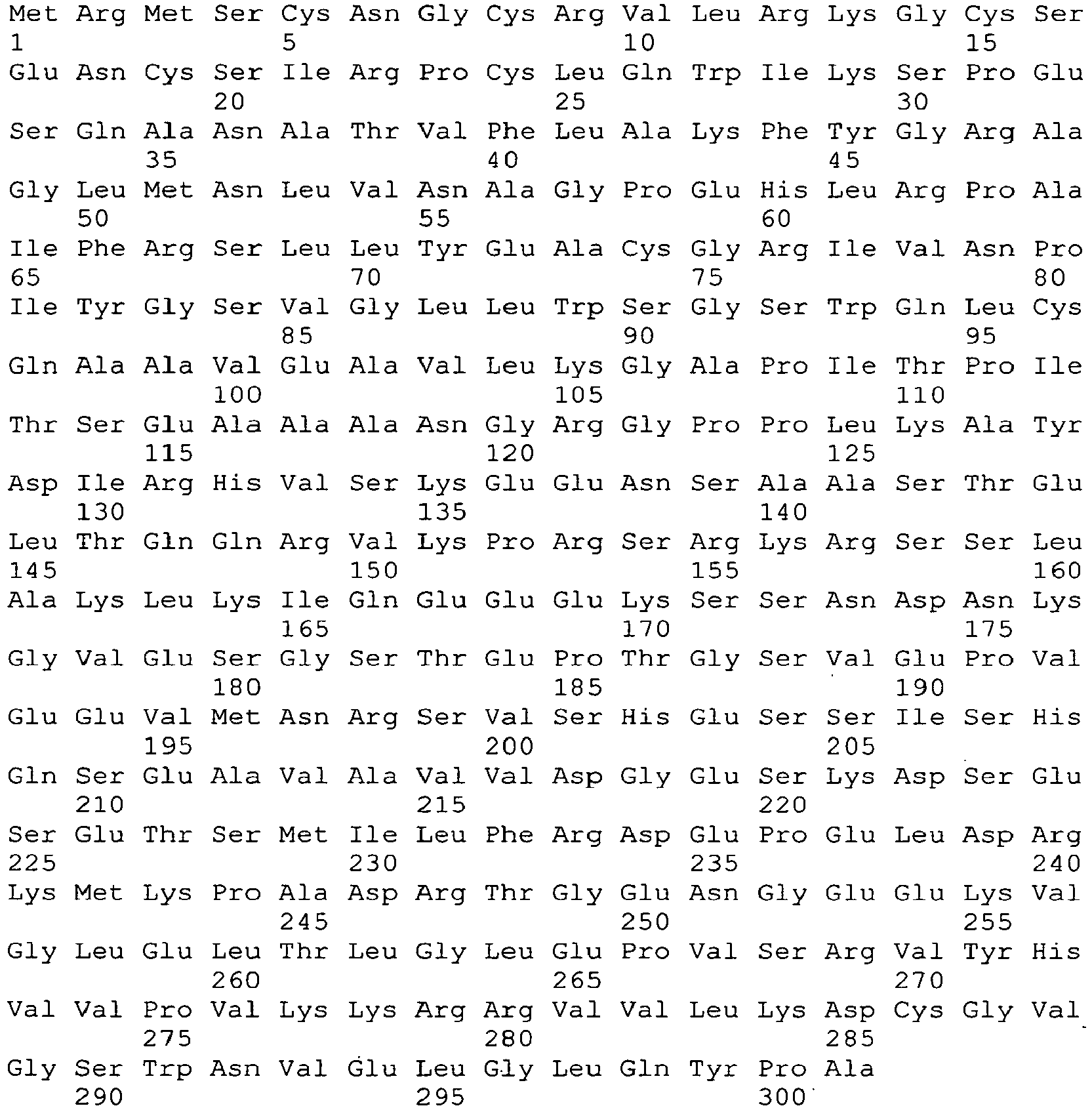
- <210> 28
<211> 302
<212> PRT
<213> Hordeum vulgare - <400> 28


- <210> 29
<211> 253
<212> PRT
<213> Vitis vinifera - <400> 29


- <210> 30
<211> 234
<212> PRT
<213> Solanum tuberosum - <400> 30

- <210> 31
<211> 334
<212> PRT
<213> Pinus taeda - <400> 31


- <210> 32
<211> 336
<212> PRT
<213> Pinus taeda - <400> 32


- <210> 33
<211> 184
<212> PRT
<213> Glycine max - <400> 33

- <210> 34
<211> 230
<212> PRT
<213> Triticum aestivum - <400> 34


- <210> 35
<211> 290
<212> PRT
<213> Aquilegia sp. - <400> 35


- <210> 36
<211> 217
<212> PRT
<213> Solanum tuberosum - <400> 36

- <210> 37
<211> 212
<212> PRT
<213> Solanum tuberosum - <400> 37

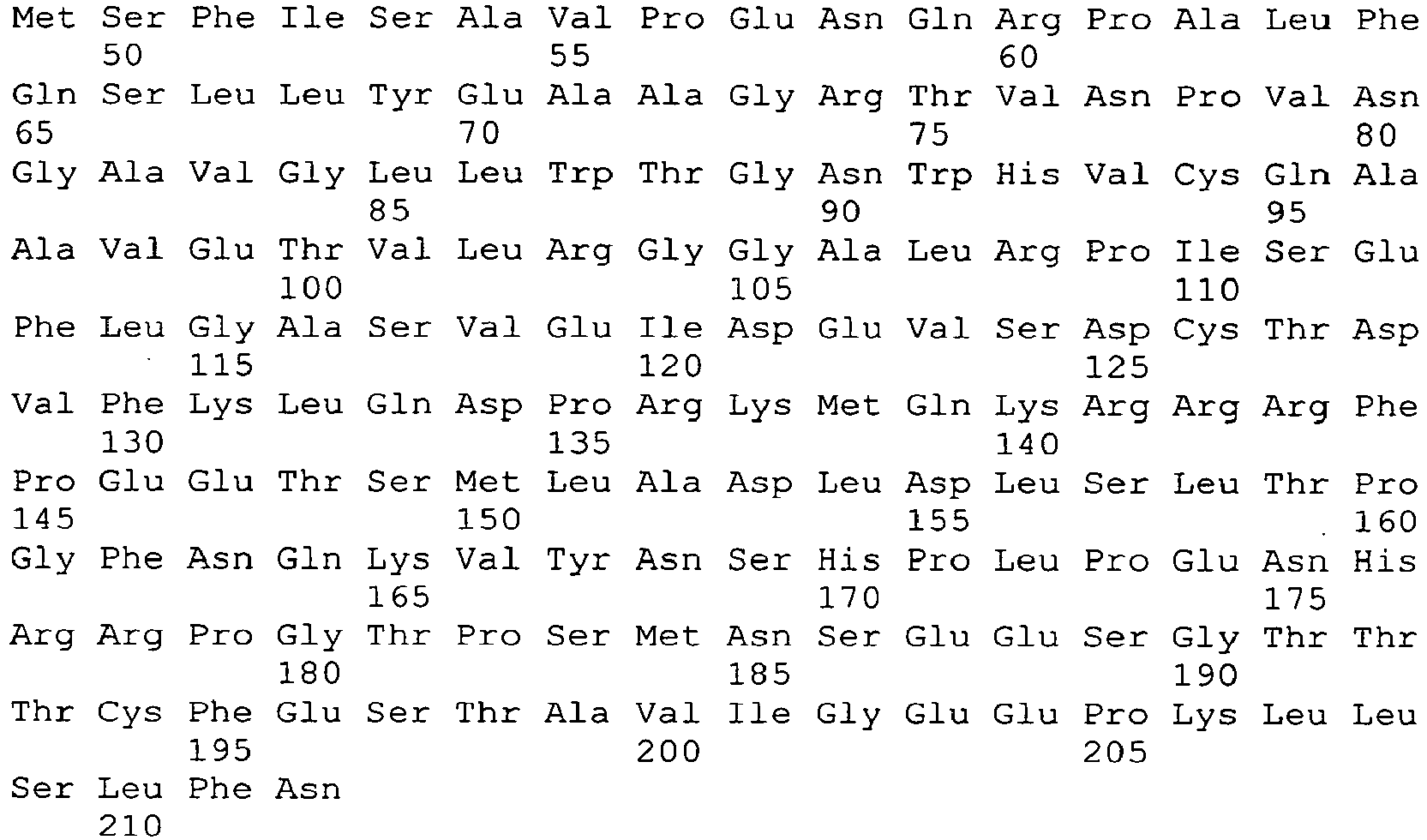
- <210> 38
<211> 217
<212> PRT
<213> Solanum tuberosum - <400> 38

- <210> 39
<211> 277
<212> PRT
<213> Picea alba - <400> 39

- <210> 40
<211> 363
<212> PRT
<213> Pinus taeda - <400> 40


- <210> 41
<211> 276
<212> PRT
<213> Pinus taeda - <400> 41


- <210> 42
<211> 218
<212> PRT
<213> Lycopersicon esculentum - <400> 42

- <210> 43
<211> 238
<212> PRT
<213> Populus tremuloides - <400> 43


- <210> 44
<211> 242
<212> PRT
<213> Populus tremuloides - <400> 44


- <210> 45
<211> 208
<212> PRT
<213> Populus tremuloides - <400> 45

- <210> 46
<211> 208
<212> PRT
<213> Populus tremuloides - <400> 46


- <210> 47
<211> 296
<212> PRT
<213> Populus tremuloides - <400> 47

- <210> 48
<211> 241
<212> PRT
<213> Populus tremuloides - <400> 48

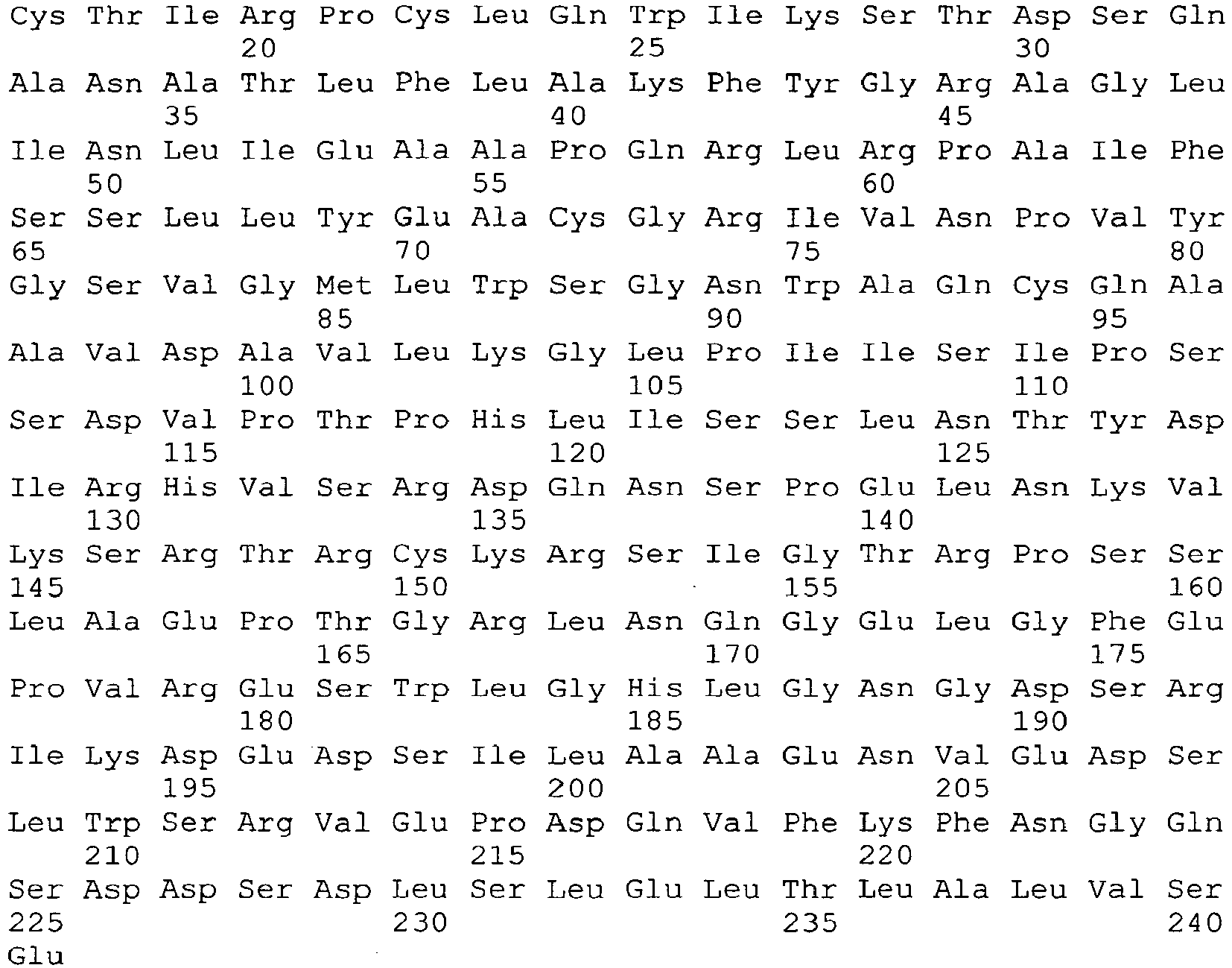
- <210> 49
<211> 273
<212> PRT
<213> Populus tremuloides - <400> 49


- <210> 50
<211> 231
<212> PRT
<213> Caragana korshinskii - <400> 50

- <210> 51
<211> 264
<212> PRT
<213> Brassica napus - <400> 51


- <210> 52
<211> 233
<212> PRT
<213> Medicago truncatula - <400> 52


- <210> 53
<211> 278
<212> PRT
<213> Medicago truncatula - <400> 53

- <210> 54
<211> 247
<212> PRT
<213> Arabidopsis thaliana - <400> 54


- <210> 55
<211> 240
<212> PRT
<213> Arabidopsis thaliana - <400> 55


- <210> 56
<211> 233
<212> PRT
<213> Arabidopsis thaliana - <400> 56

- <210> 57
<211> 263
<212> PRT
<213> Arabidopsis thaliana - <400> 57


- <210> 58
<211> 233
<212> PRT
<213> Arabidopsis thaliana - <400> 58

- <210> 59
<211> 924
<212> DNA
<213> Oryza sativa - <400> 59

- <210> 60
<211> 993
<212> DNA
<213> Oryza sativa - <400> 60

- <210> 61
<211> 615
<212> DNA
<213> Oryza sativa - <400> 61


- <210> 62
<211> 699
<212> DNA
<213> Oryza sativa - <400> 62

- <210> 63
<211> 681
<212> DNA
<213> Oryza sativa - <400> 63

- <210> 64
<211> 1036
<212> DNA
<213> Oryza sativa - <400> 64


- <210> 65
<211> 996
<212> DNA
<213> Oryza sativa - <400> 65
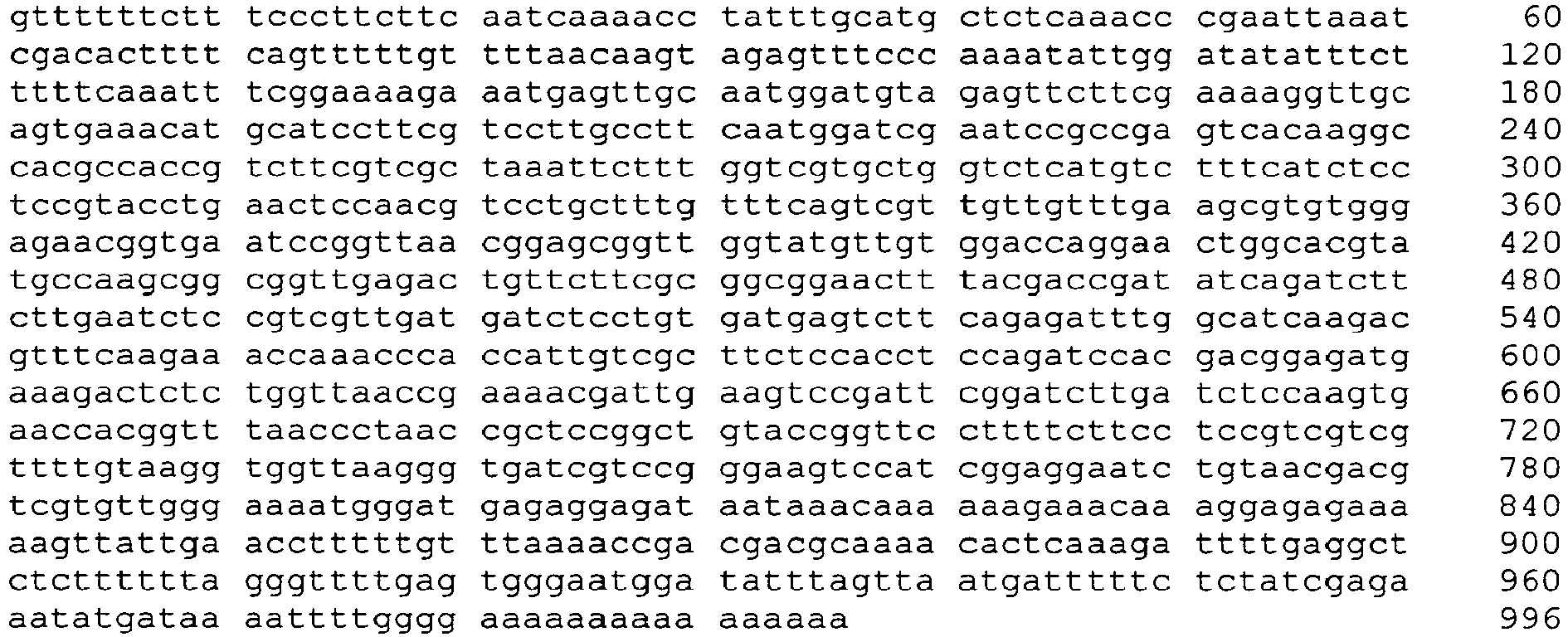
- <210> 66
<211> 804
<212> DNA
<213> Oryza sativa - <400> 66

- <210> 67
<211> 1217
<212> DNA
<213> Oryza sativa - <400> 67


- <210> 68
<211> 983
<212> DNA
<213> Oryza sativa - <400> 68

- <210> 69
<211> 925
<212> DNA
<213> Linum usitatissimum - <400> 69


- <210> 70
<211> 201
<212> PRT
<213> Linum usitatissimum - <400> 70

- <210> 71
<211> 894
<212> DNA
<213> Triticum aestivum - <400> 71

- <210> 72
<211> 1068
<212> DNA
<213> Medicago truncatula - <400> 72

- <210> 73
<211> 1257
<212> DNA
<213> Arabidopsis thaliana - <400> 73

- <210> 74
<211> 418
<212> PRT
<213> Arabidopsis thaliana - <400> 74


- <210> 75
<211> 2194
<212> DNA
<213> Oryza sativa - <400> 75


- <210> 76
<211> 54
<212> DNA
<213> Artificial sequence - <220>
<223>primer 1 - <400> 76
ggggacaagt ttgtacaaaa aagcaggctt aaacaatgtc aggagctacc accg 54 - <210> 77
<211> 50
<212> DNA
<213> Artificial sequence - <220>
<223>primer 2 - <400> 77
ggggaccact ttgtacaaga aagctgggta aaataaatcc attcgctacg 50 - <210> 78
<211> 152
<212> PRT
<213> Artificial sequence - <220>
<223> JMJ-C domain of SEQ ID NO: 02 - <400> 78

- <210> 79
<211> 32
<212> PRT
<213> Artificial sequence - <220>
<223> conserved box in JMJ-C domain of SEQ ID NO: 02 - <400> 79

- <210> 80
<211> 23
<212> PRT
<213> Artificial sequence - <220>
<223> DUF335 domain - <400> 80

- <210> 81
<211> 17
<212> PRT
<213> Artificial sequence - <220>
<223> conserved motif - <220>
<221> UNSURE
<222> (11)..(11)
<223> Xaa can be any naturally occurring amino acid - <400> 81

- <210> 82
<211> 3
<212> PRT
<213> Artificial sequence - <220>
<223> FE(II) binding consensus seq - <220>
<221> UNSURE
<222> (2)..(2)
<223> Xaa can be any naturally occurring amino acid - <220>
<221> VARIANT
<222> (3)..(3)
<223> /replace = "Val" - <400> 82

- <210> 83
<211> 1290
<212> DNA
<213> Arabidopsis thaliana - <400> 83


- <210> 84
<211> 429
<212> PRT
<213> Arabidopsis thaliana - <400> 84


- <210> 85
<211> 1518
<212> DNA
<213> Arabidopsis thaliana - <400> 85

- <210> 86
<211> 505
<212> PRT
<213> Arabidopsis thaliana - <400> 86


- <210> 87
<211> 1038
<212> DNA
<213> Arabidopsis thaliana - <400> 87


- <210> 88
<211> 431
<212> PRT
<213> Arabidopsis thaliana - <400> 88


- <210> 89
<211> 1142
<212> DNA
<213> Medicago truncatula - <400> 89

- <210> 90
<211> 361
<212> PRT
<213> Medicago truncatula - <400> 90


- <210> 91
<211> 1071
<212> DNA
<213> Brachypodium sylvaticum - <400> 91

- <210> 92
<211> 356
<212> PRT
<213> Brachypodium sylvaticum
- <210> 93
<211> 1080
<212> DNA
<213> Oryza sativa - <400> 93


- <210> 94
<211> 354
<212> PRT
<213> Oryza sativa - <400> 94


- <210> 95
<211> 3552
<212> DNA
<213> Arabidopsis thaliana - <400> 95


- <210> 96
<211> 1183
<212> PRT
<213> Arabidopsis thaliana - <400> 96


- <210> 97
<211> 2793
<212> DNA
<213> Arabidopsis thaliana - <400> 97

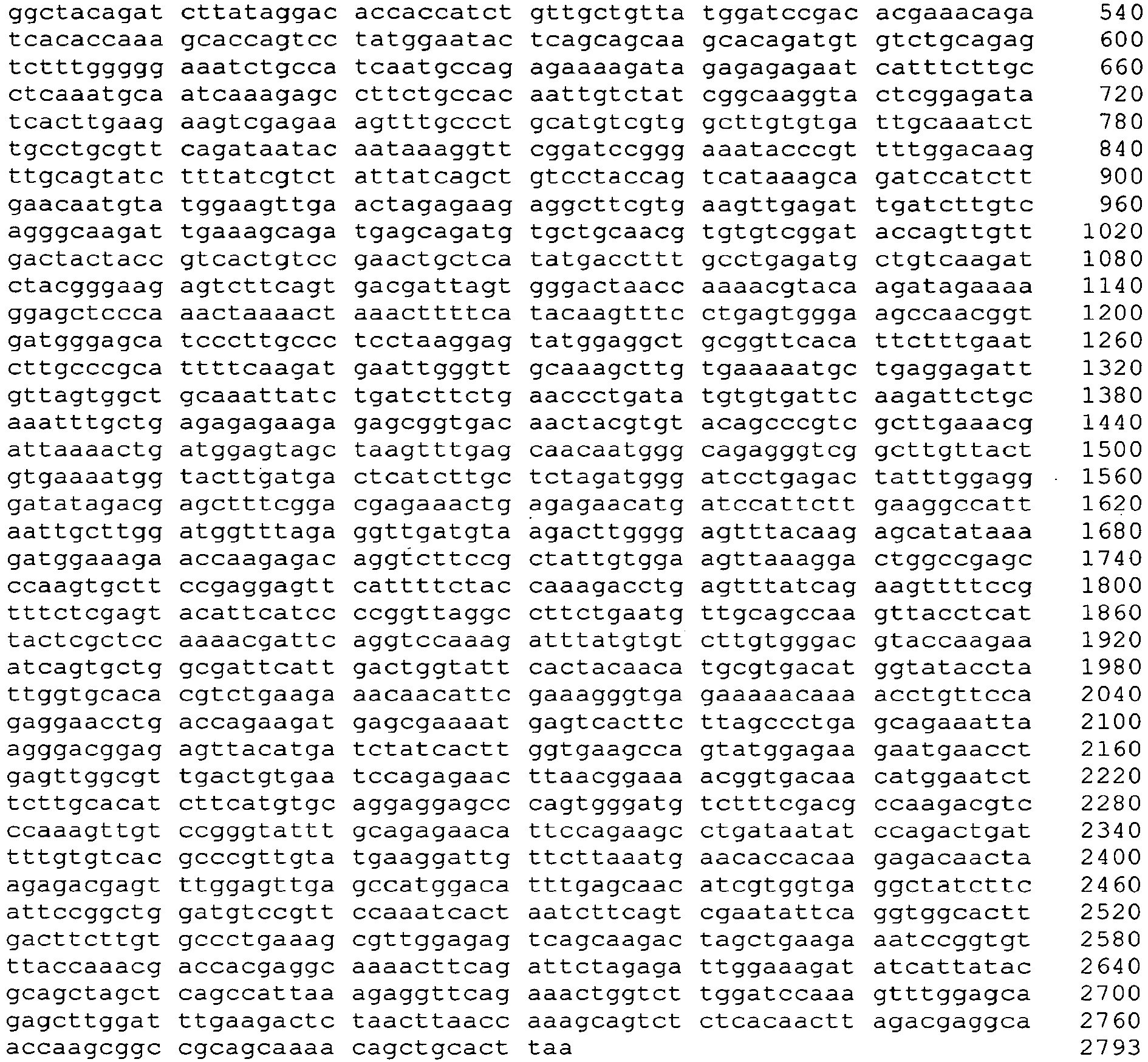
- <210> 98
<211> 930
<212> PRT
<213> Arabidopsis thaliana - <400> 98


- <210> 99
<211> 2793
<212> DNA
<213> Arabidopsis thaliana - <400> 99


- <210> 100
<211> 930
<212> PRT
<213> Arabidopsis thaliana - <400> 100
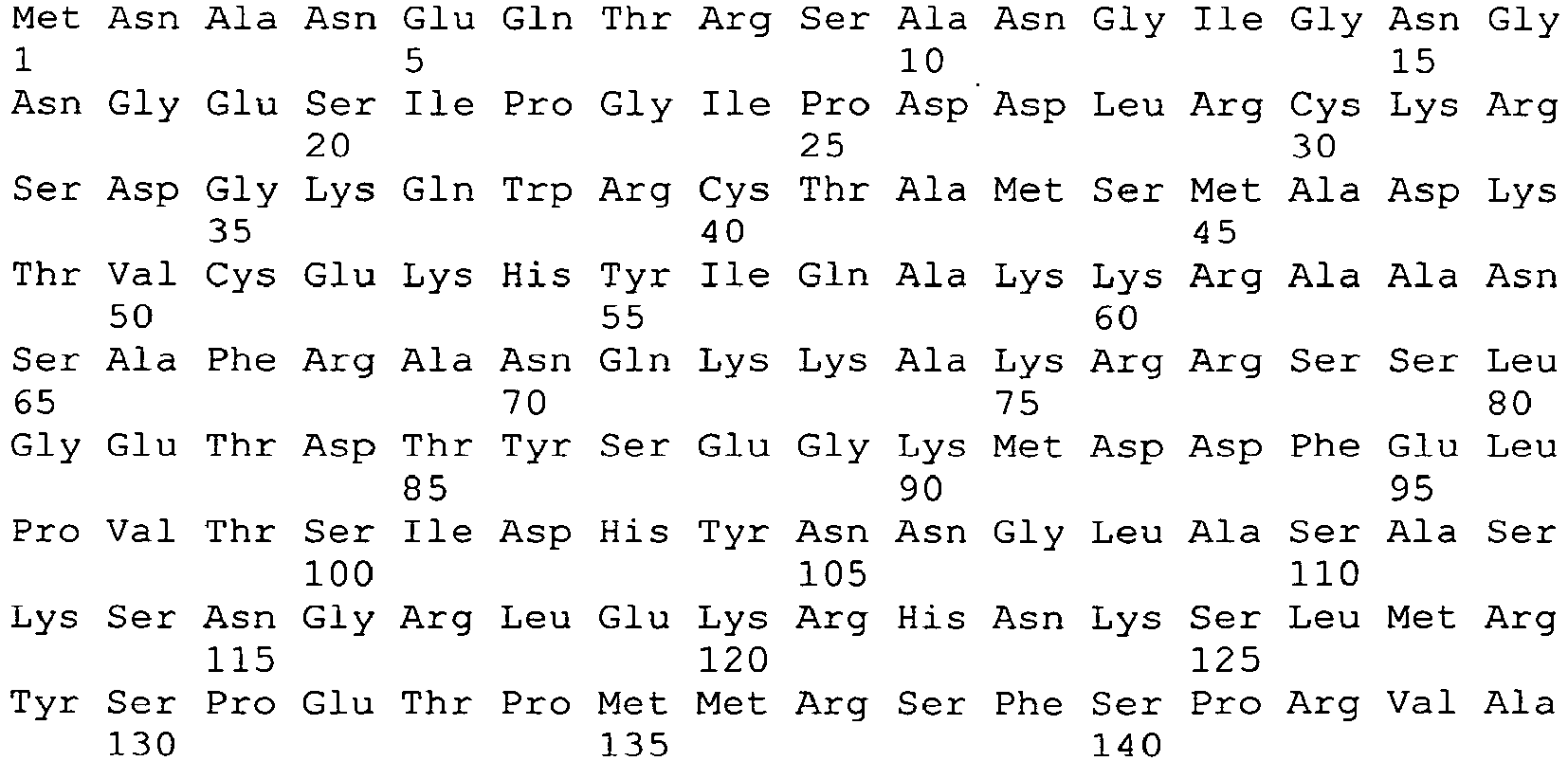

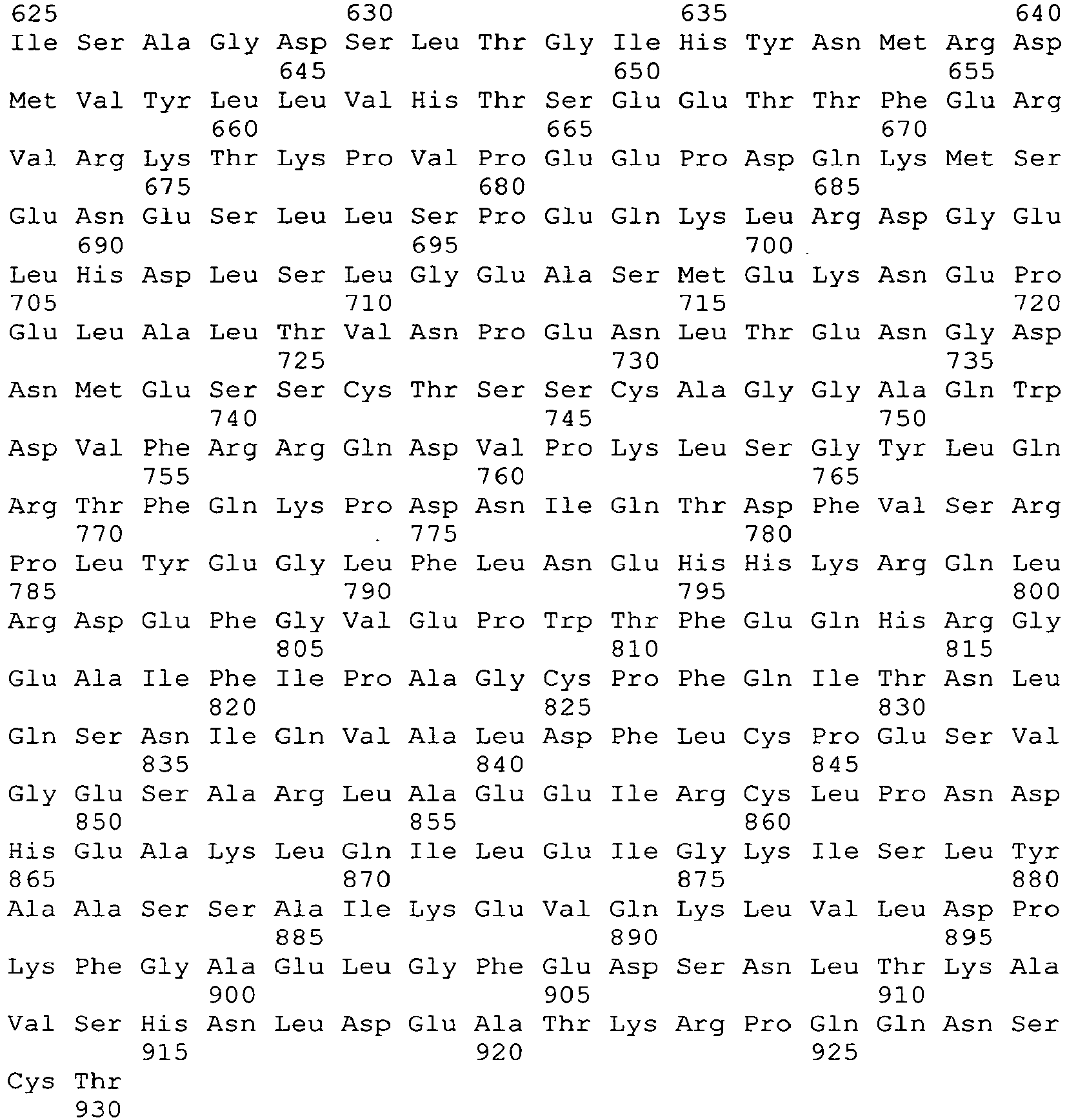
- <210> 101
<211> 2835
<212> DNA
<213> Arabidopsis thaliana - <400> 101


- <210> 102
<211> 944
<212> PRT
<213> Arabidopsis thaliana - <400> 102

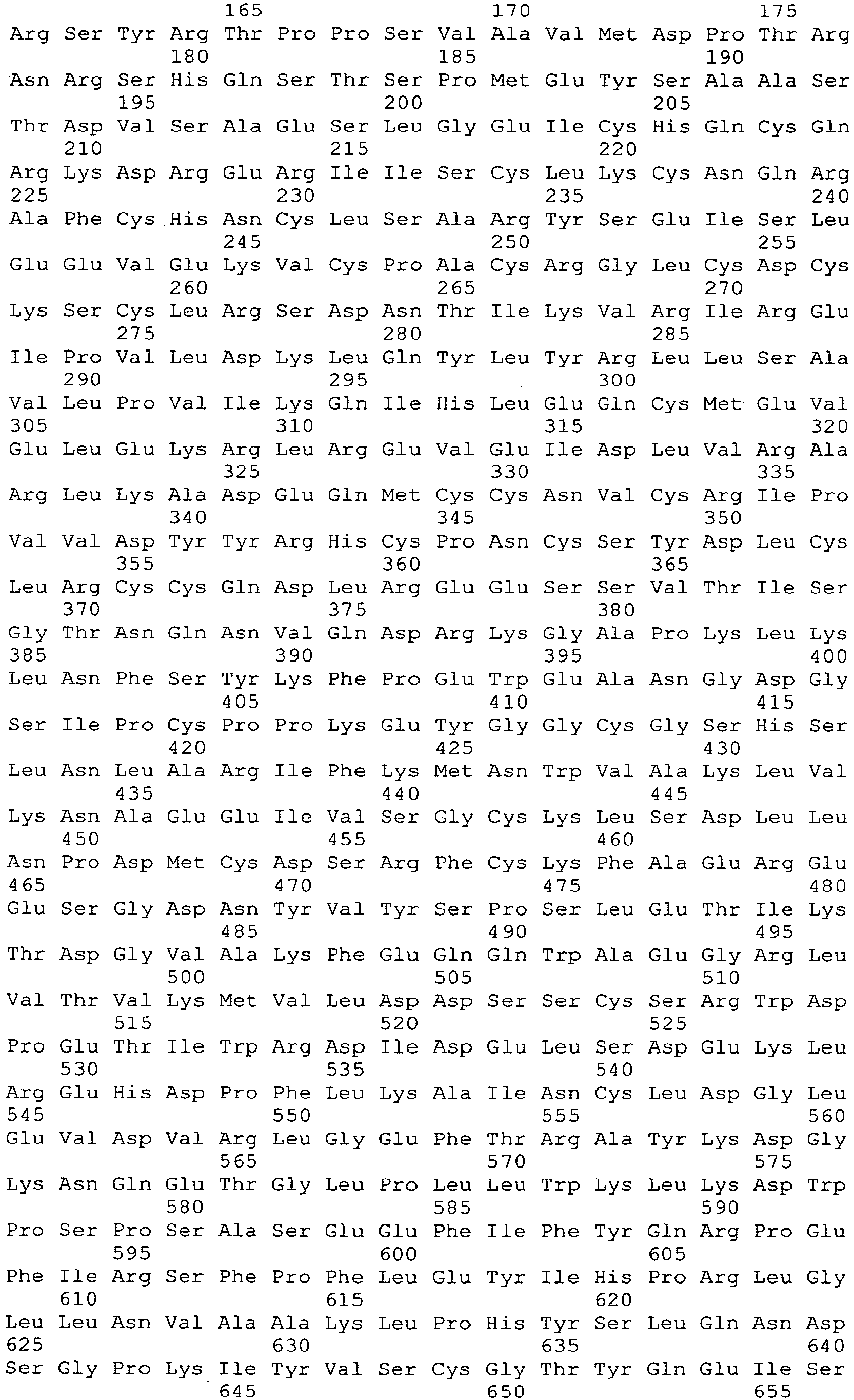

- <210> 103
<211> 2643
<212> DNA
<213> Arabidopsis thaliana - <400> 103


- <210> 104
<211> 880
<212> PRT
<213> Arabidopsis thaliana - <400> 104


- <210> 105
<211> 2364
<212> DNA
<213> Arabidopsis thaliana - <400> 105


- <210> 106
<211> 787
<212> PRT
<213> Arabidopsis thaliana - <400> 106


- <210> 107
<211> 2652
<212> DNA
<213> Arabidopsis thaliana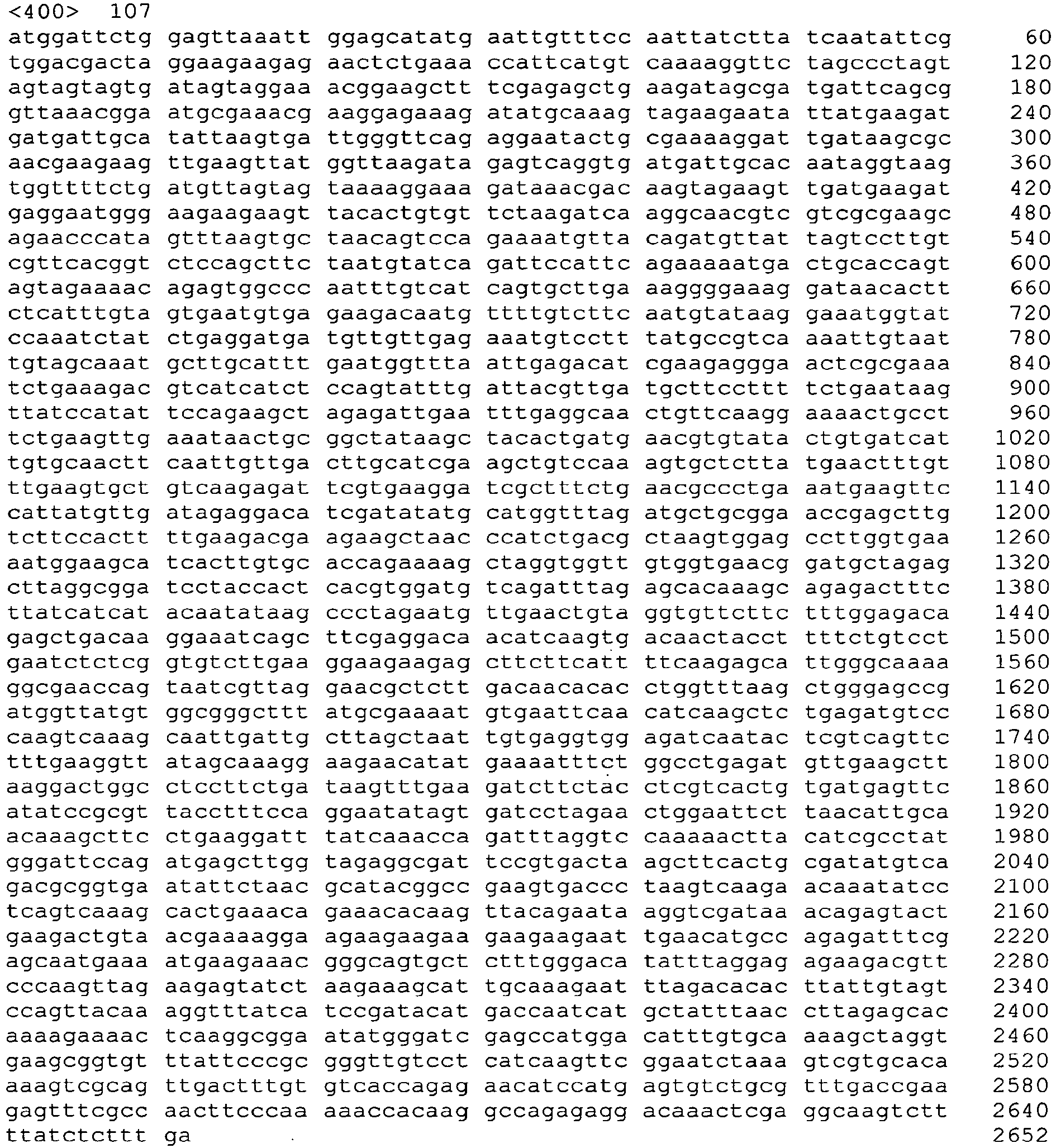
- <210> 108
<211> 883
<212> PRT
<213> Arabidopsis thaliana - <400> 108


- <210> 109
<211> 3351
<212> DNA
<213> Arabidopsis thaliana - <400> 109


- <210> 110
<211> 1116
<212> PRT
<213> Arabidopsis thaliana - <400> 110


- <210> 111
<211> 2751
<212> DNA
<213> Arabidopsis thaliana - <400> 111


- <210> 112
<211> 916
<212> PRT
<213> Arabidopsis thaliana - <400> 112


- <210> 113
<211> 2421
<212> DNA
<213> Arabidopsis thaliana - <400> 113

- <210> 114
<211> 806
<212> PRT
<213> Arabidopsis thaliana

- <210> 115
<211> 2127
<212> DNA
<213> Arabidopsis thaliana - <400> 115


- <210> 116
<211> 708
<212> PRT
<213> Arabidopsis thaliana - <400> 116


- <210> 117
<211> 3084
<212> DNA
<213> Arabidopsis thaliana - <400> 117

- <210> 118
<211> 1027
<212> PRT
<213> Arabidopsis thaliana - <400> 118


- <210> 119
<211> 4083
<212> DNA
<213> Arabidopsis thaliana - <400> 119


- <210> 120
<211> 1360
<212> PRT
<213> Arabidopsis thaliana - <400> 120


- <210> 121
<211> 2523
<212> DNA
<213> Arabidopsis thaliana - <400> 121


- <210> 122
<211> 840
<212> PRT
<213> Arabidopsis thaliana - <400> 122


- <210> 123
<211> 2865
<212> DNA
<213> Arabidopsis thaliana - <400> 123


- <210> 124
<211> 954
<212> PRT
<213> Arabidopsis thaliana - <400> 124


- <210> 125
<211> 2694
<212> DNA
<213> Arabidopsis thaliana - <400> 125

- <210> 126
<211> 897
<212> PRT
<213> Arabidopsis thaliana - <400> 126


- <210> 127
<211> 4023
<212> DNA
<213> Arabidopsis thaliana - <400> 127

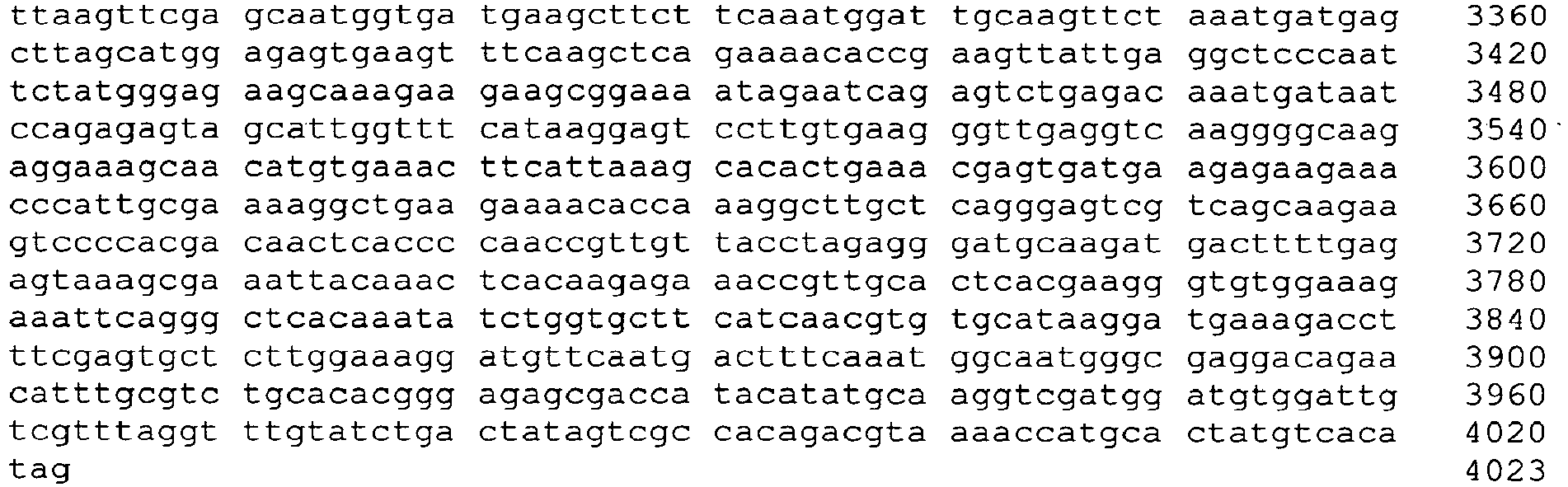
- <210> 128
<211> 1340
<212> PRT
<213> Arabidopsis thaliana - <400> 128


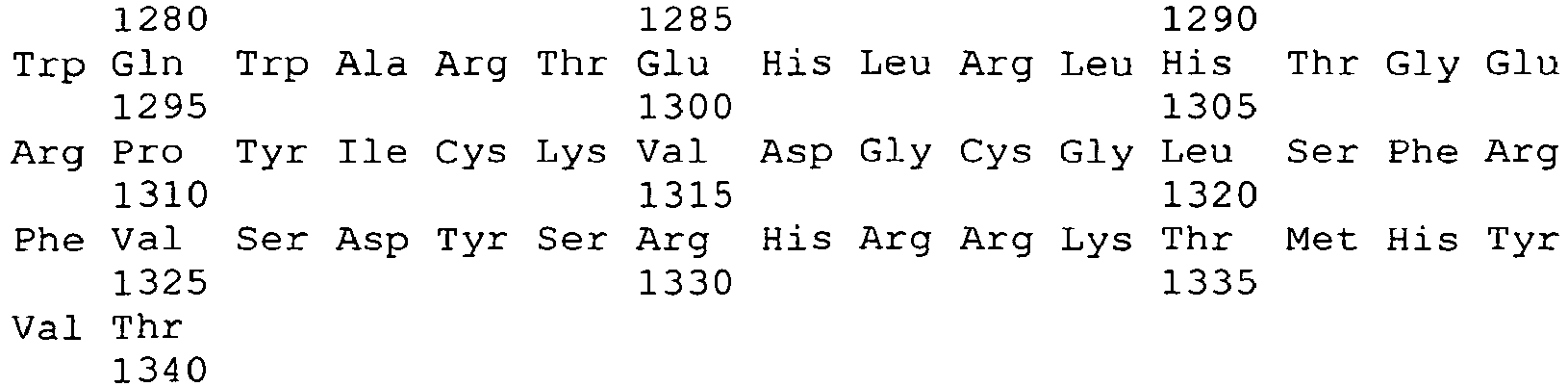
- <210> 129
<211> 1509
<212> DNA
<213> Arabidopsis thaliana - <400> 129

- <210> 130
<211> 502
<212> PRT
<213> Arabidopsis thaliana - <400> 130


- <210> 131
<211> 2124
<212> DNA
<213> Arabidopsis thaliana - <400> 131


- <210> 132
<211> 707
<212> PRT
<213> Arabidopsis thaliana - <400> 132


- <210> 133
<211> 1389
<212> DNA
<213> Arabidopsis thaliana - <400> 133

- <210> 134
<211> 462
<212> PRT
<213> Arabidopsis thaliana - <400> 134


- <210> 135
<211> 1188
<212> DNA
<213> Oryza sativa - <400> 135


- <210> 136
<211> 395
<212> PRT
<213> Oryza sativa - <400> 136


- <210> 137
<211> 3861
<212> DNA
<213> Oryza sativa - <400> 137


- <210> 138
<211> 1286
<212> PRT
<213> Oryza sativa - <400> 138


- <210> 139
<211> 2994
<212> DNA
<213> Oryza sativa - <400> 139


- <210> 140
<211> 997
<212> PRT
<213> Oryza sativa - <400> 140


- <210> 141
<211> 2988
<212> DNA
<213> Oryza sativa - <400> 141


- <210> 142
<211> 995
<212> PRT
<213> Oryza sativa - <400> 142


- <210> 143
<211> 2607
<212> DNA
<213> Oryza sativa - <400> 143


- <210> 144
<211> 868
<212> PRT
<213> Oryza sativa - <400> 144


- <210> 145
<211> 1062
<212> DNA
<213> Oryza sativa - <400> 145

- <210> 146
<211> 353
<212> PRT
<213> Oryza sativa - <400> 146


- <210> 147
<211> 2784
<212> DNA
<213> Oryza sativa - <400> 147


- <210> 148
<211> 927
<212> PRT
<213> Oryza sativa - <400> 148


- <210> 149
<211> 2862
<212> DNA
<213> Oryza sativa - <400> 149


- <210> 150
<211> 953
<212> PRT
<213> Oryza sativa - <400> 150
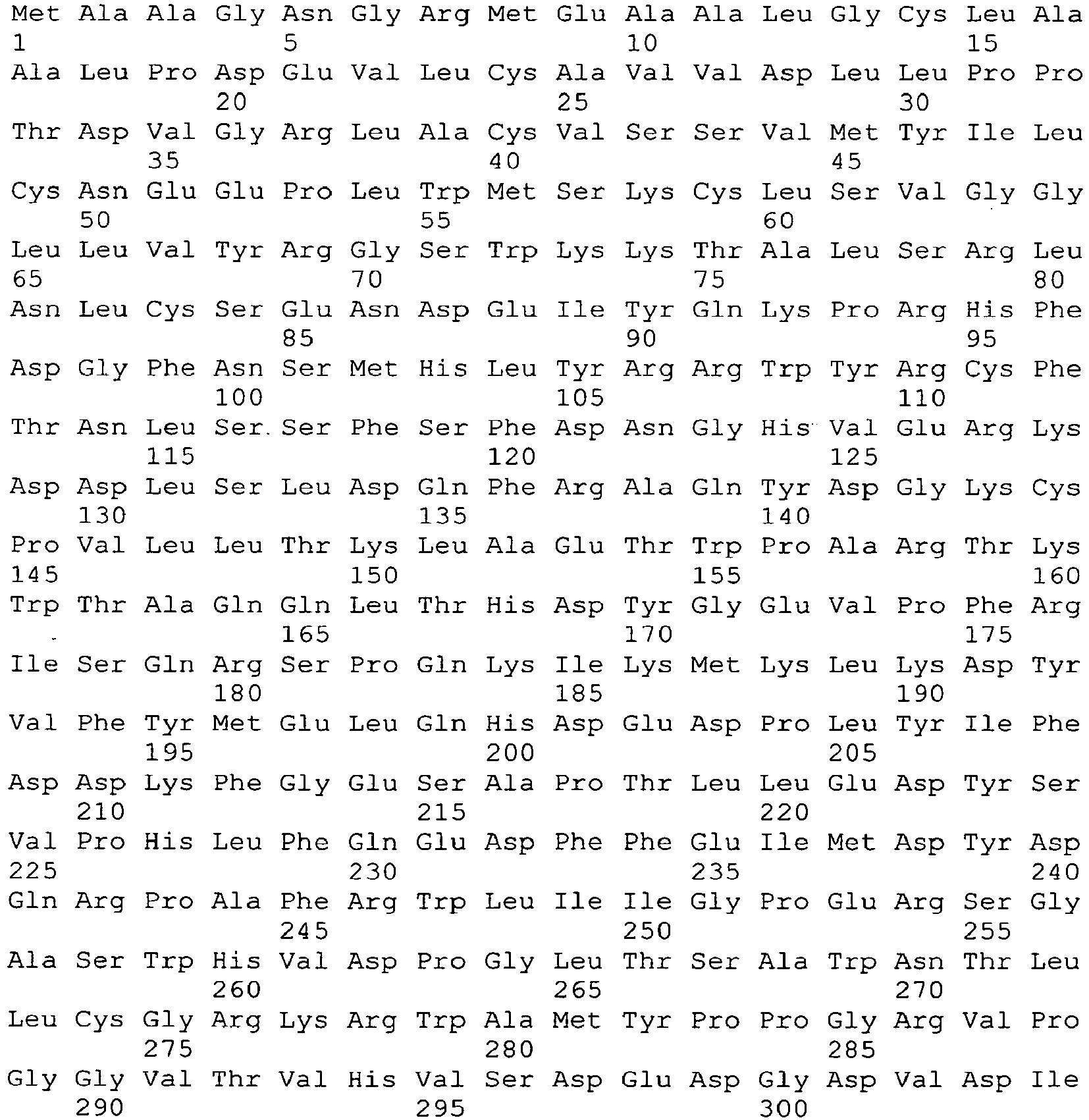


- <210> 151
<211> 3171
<212> DNA
<213> Oryza sativa - <400> 151


- <210> 152
<211> 1056
<212> PRT
<213> Oryza sativa - <400> 152


- <210> 153
<211> 3159
<212> DNA
<213> Oryza sativa - <400> 153


- <210> 154
<211> 1052
<212> PRT
<213> Oryza sativa - <400> 154


- <210> 155
<211> 3717
<212> DNA
<213> Oryza sativa - <400> 155


- <210> 156
<211> 1238
<212> PRT
<213> Oryza sativa - <400> 156


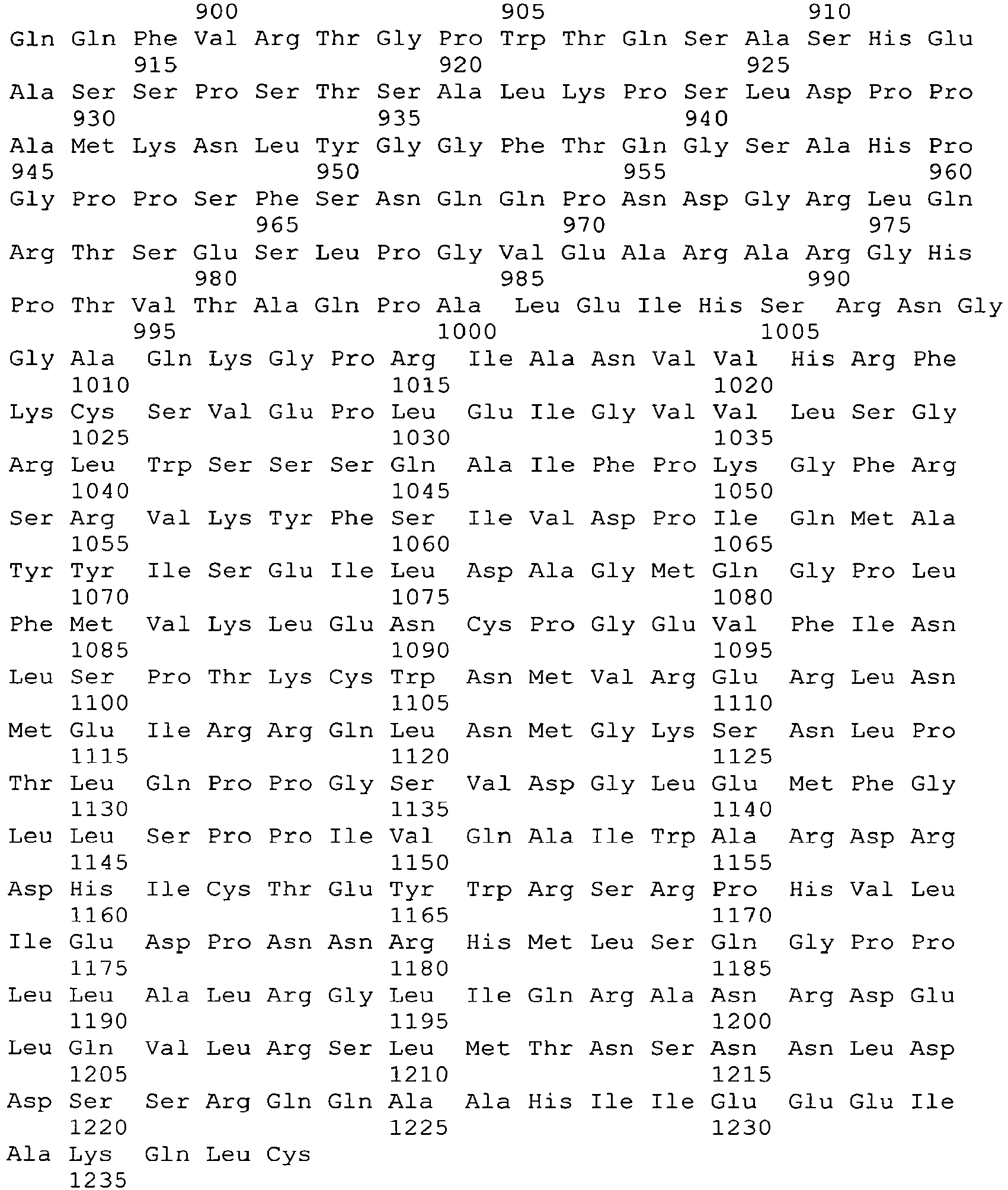
- <210> 157
<211> 2916
<212> DNA
<213> Oryza sativa - <400> 157


- <210> 158
<211> 971
<212> PRT
<213> Oryza sativa - <400> 158


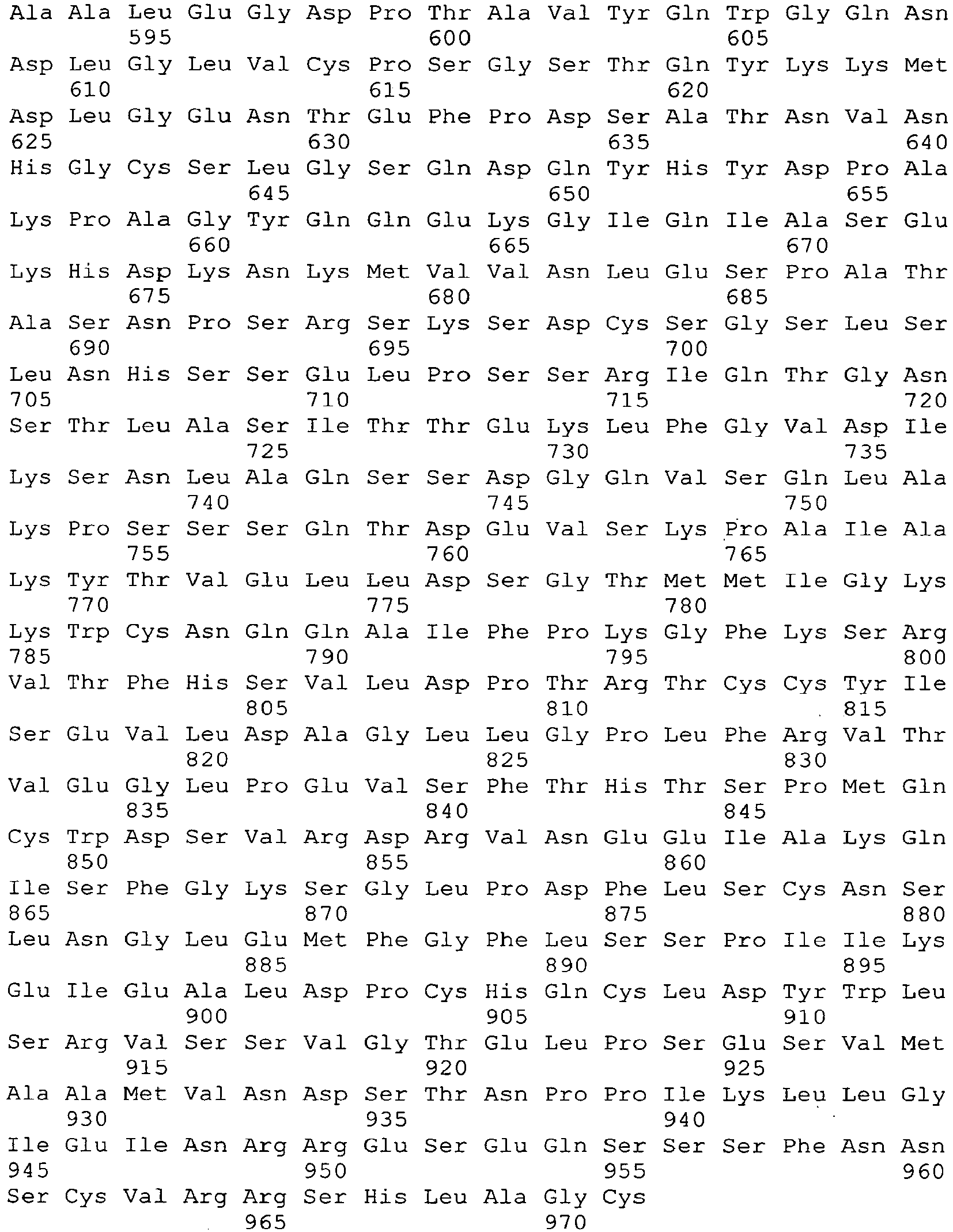
- <210> 159
<211> 1140
<212> DNA
<213> Oryza sativa - <400> 159


- <210> 160
<211> 379
<212> PRT
<213> Oryza sativa - <400> 160


- <210> 161
<211> 2577
<212> DNA
<213> Oryza sativa - <400> 161

- <210> 162
<211> 858
<212> PRT
<213> Oryza sativa - <400> 162


- <210> 163
<211> 1566
<212> DNA
<213> Oryza sativa - <400> 163


- <210> 164
<211> 521
<212> PRT
<213> Oryza sativa - <400> 164


- <210> 165
<211> 432
<212> DNA
<213> Oryza sativa - <400> 165

- <210> 166
<211> 143
<212> PRT
<213> Oryza sativa - <400> 166


- <210> 167
<211> 4101
<212> DNA
<213> Oryza sativa - <400> 167


- <210> 168
<211> 1366
<212> PRT
<213> Oryza sativa - <400> 168


- <210> 169
<211> 1242
<212> DNA
<213> Glycine max - <400> 169

- <210> 170
<211> 413
<212> PRT
<213> Glycine max
- <210> 171
<211> 1464
<212> DNA
<213> Arabidopsis thaliana - <400> 171

- <210> 172
<211> 393
<212> PRT
<213> Arabidopsis thaliana - <400> 172


- <210> 173
<211> 2124
<212> DNA
<213> Nicotiana tabacum - <400> 173


- <210> 174
<211> 466
<212> PRT
<213> Nicotiana tabacum - <400> 174
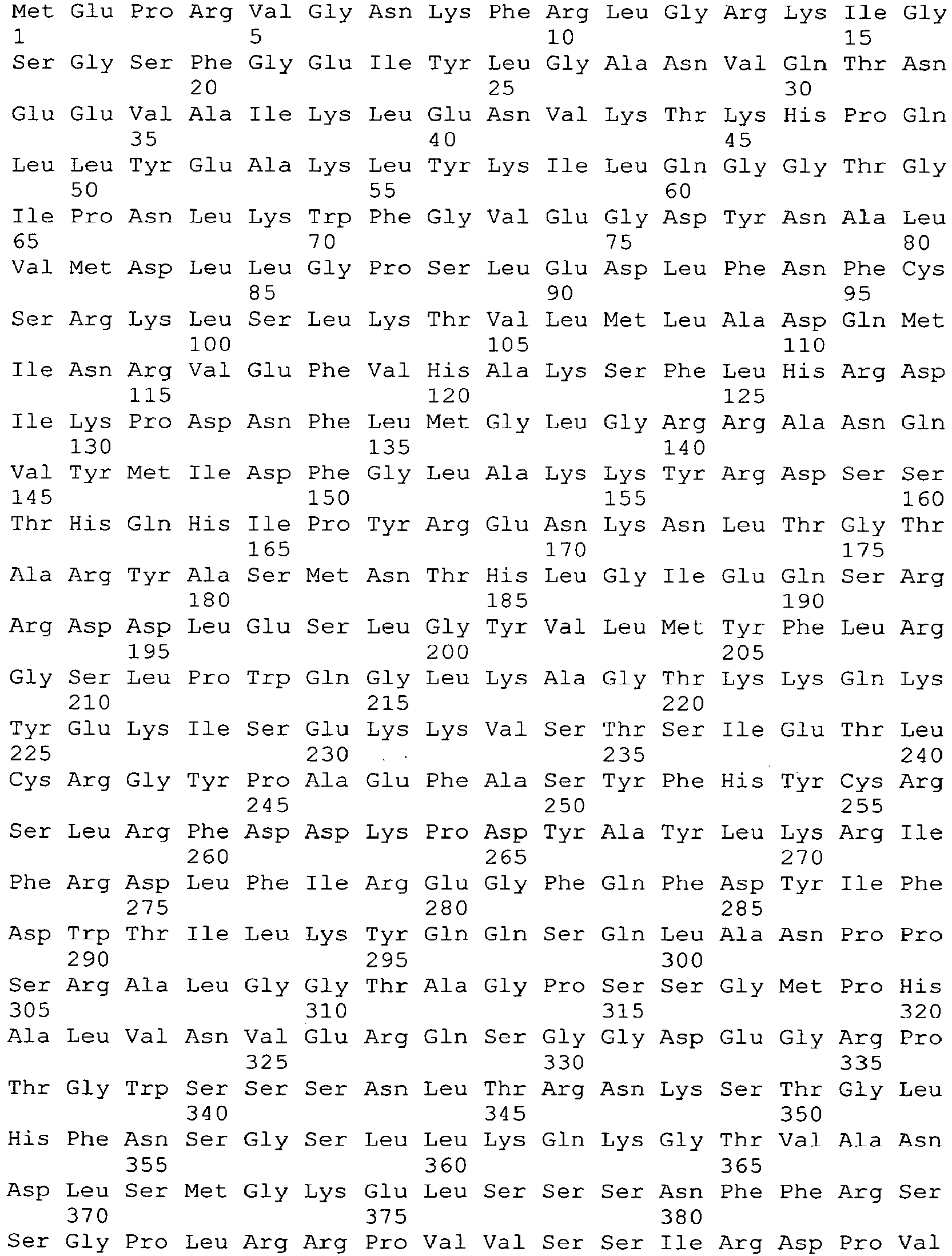
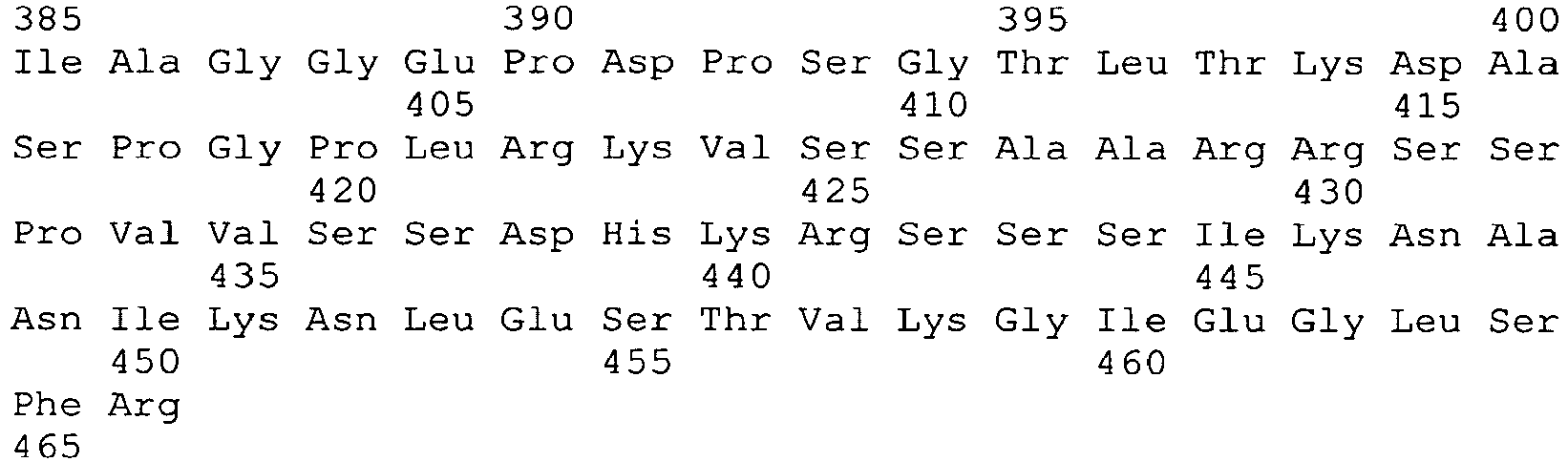
- <210> 175
<211> 1828
<212> DNA
<213> Oryza sativa - <400> 175

- <210> 176
<211> 2194
<212> DNA
<213> Oryza sativa - <400> 176


- <210> 177
<211> 56
<212> DNA
<213> Artificial sequence - <220>
<223> primer: prm8667 - <400> 177
ggggacaagt ttgtacaaaa aagcaggctt aaacaatgga ctgcaacatg gtatct 56 - <210> 178
<211> 54
<212> DNA
<213> Artificial sequence - <220>
<223> primer: prm8668 - <400> 178
ggggaccact ttgtacaaga aagctgggtc acattactta ctcatctatt ttgg 54 - <210> 179
<211> 2046
<212> DNA
<213> Oryza sativa - <400> 179
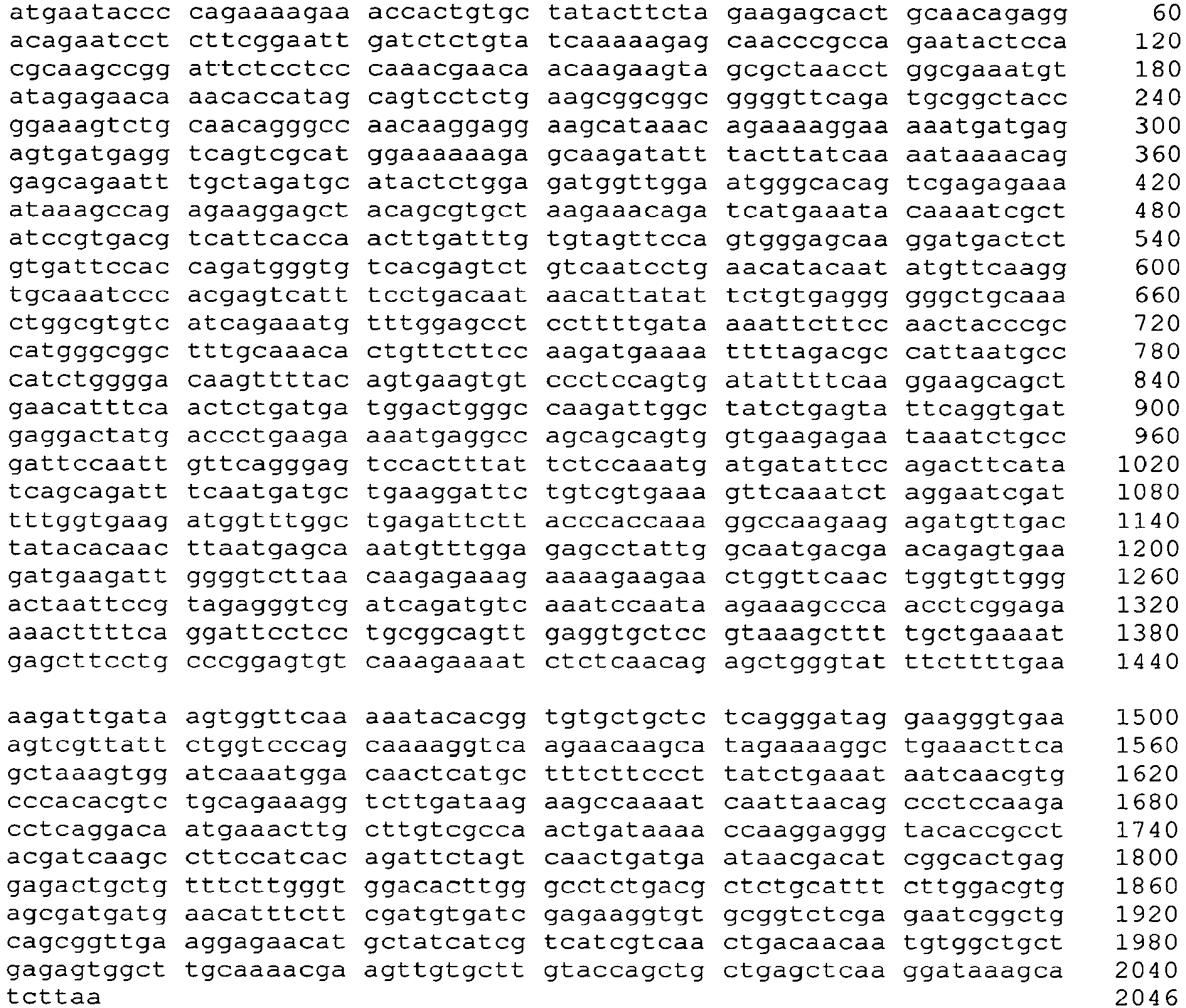
- <210> 180
<211> 681
<212> PRT
<213> Oryza sativa - <400> 180


- <210> 181
<211> 2391
<212> DNA
<213> Arabidopsis thaliana - <400> 181

- <210> 182
<211> 796
<212> PRT
<213> Arabidopsis thaliana

- <210> 183
<211> 2151
<212> DNA
<213> Eucalyptus grandis - <400> 183


- <210> 184
<211> 716
<212> PRT
<213> Eucalyptus grandis - <400> 184


- <210> 185
<211> 2124
<212> DNA
<213> Medicago truncatula - <400> 185

- <210> 186
<211> 707
<212> PRT
<213> Medicago truncatula - <400> 186


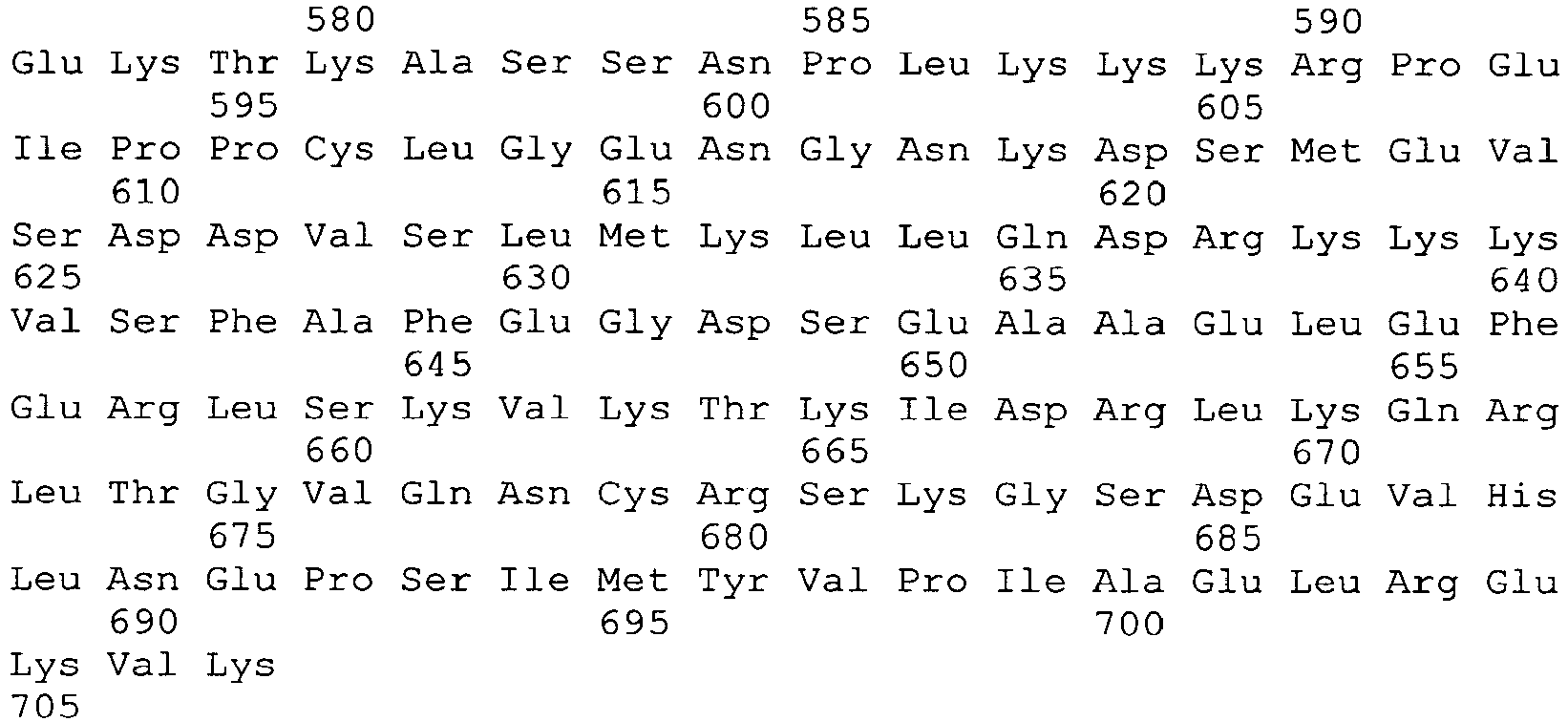
- <210> 187
<211> 2556
<212> DNA
<213> Pinus radiata - <400> 187


- <210> 188
<211> 851
<212> PRT
<213> Pinus radiata - <400> 188


- <210> 189
<211> 2178
<212> DNA
<213> Populus tremuloides - <400> 189

- <210> 190
<211> 725
<212> PRT
<213> Populus tremuloides - <400> 190
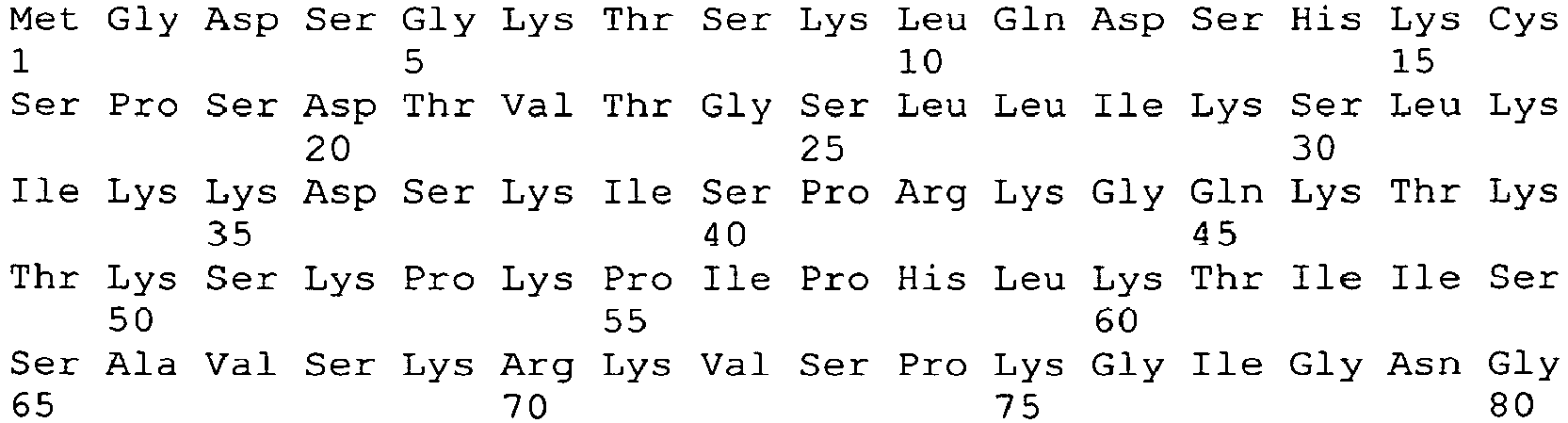


- <210> 191
<211> 2256
<212> DNA
<213> Saccharum officinarum - <400> 191


- <210> 192
<211> 751
<212> PRT
<213> Saccharum officinarum - <400> 192


- <210> 193
<211> 2181
<212> DNA
<213> Vitis vinifera - <400> 193


- <210> 194
<211> 727
<212> PRT
<213> Vitis vinifera - <400> 194


- <210> 195
<211> 2166
<212> DNA
<213> Zea mays - <400> 195

- <210> 196
<211> 721
<212> PRT
<213> Zea mays - <400> 196



- <210> 197
<211> 2172
<212> DNA
<213> Arabidopsis thaliana - <400> 197


- <210> 198
<211> 723
<212> PRT
<213> Arabidopsis thaliana - <400> 198


- <210> 199
<211> 2901
<212> DNA
<213> Lotus japonicus - <400> 199


- <210> 200
<211> 966
<212> PRT
<213> Lotus japonicus - <400> 200


- <210> 201
<211> 2379
<212> DNA
<213> Oryza sativa - <400> 201


- <210> 202
<211> 792
<212> PRT
<213> Oryza sativa - <400> 202


- <210> 203
<211> 3267
<212> DNA
<213> Petroselinum crispum - <400> 203


- <210> 204
<211> 1088
<212> PRT
<213> Petroselinum crispum - <400> 204


- <210> 205
<211> 2160
<212> DNA
<213> Zea mays - <400> 205


- <210> 206
<211> 719
<212> PRT
<213> Zea mays - <400> 206


- <210> 207
<211> 2079
<212> DNA
<213> Zea mays - <400> 207

- <210> 208
<211> 692
<212> PRT
<213> Zea mays - <400> 208


- <210> 209
<211> 4731
<212> DNA
<213> Zea mays - <400> 209


- <210> 210
<211> 1576
<212> PRT
<213> Zea mays - <400> 210


- <210> 211
<211> 4620
<212> DNA
<213> Zea mays - <400> 211


- <210> 212
<211> 1539
<212> PRT
<213> Zea mays - <400> 212


- <210> 213
<211> 2907
<212> DNA
<213> Vitis vinifera - <400> 213

- <210> 214
<211> 968
<212> PRT
<213> Vitis vinifera - <220>
<221> UNSURE
<222> (276)..(276)
<223> Xaa can be any naturally occurring amino acid - <400> 214


- <210> 215
<211> 2805
<212> DNA
<213> Populus tremuloides - <400> 215


- <210> 216
<211> 934
<212> PRT
<213> Populus tremuloides - <400> 216


- <210> 217
<211> 2793
<212> DNA
<213> Populus tremuloides - <400> 217

- <210> 218
<211> 930
<212> PRT
<213> Populus tremuloides - <400> 218


- <210> 219
<211> 2184
<212> DNA
<213> Populus tremuloides - <400> 219

- <210> 220
<211> 727
<212> PRT
<213> Populus tremuloides - <400> 220


- <210> 221
<211> 2460
<212> DNA
<213> Ostreococcus tauri - <220>
<221> misc feature
<222> (178)..(178)
<223> n is a, c, g, or t - <220>
<221> misc_feature
<222> (214)..(214)
<223> n is a, c, g, or t - <220>
<221> misc_feature
<222> (1375)..(1375)
<223> n is a, c, g, or t - <220>
<221> misc_feature
<222> (1381)..(1381)
<223> n is a, c, g, or t - <220>
<221> misc feature
<222> (1648)..(1648)
<223> n is a, c, g, or t - <220>
<221> misc feature
<222> (1684)..(1684)
<223> n is a, c, g, or t - <400> 221

- <210> 222
<211> 819
<212> PRT
<213> Ostreococcus tauri - <220>
<221> UNSURE
<222> (60)..(60)
<223> Xaa can be any naturally occurring amino acid - <220>
<221> UNSURE
<222> (72)..(72)
<223> Xaa can be any naturally occurring amino acid - <220>
<221> UNSURE
<222> (459)..(459)
<223> Xaa can be any naturally occurring amino acid - <220>
<221> UNSURE
<222> (461)..(461)
<223> Xaa can be any naturally occurring amino acid - <220>
<221> UNSURE
<222> (550)..(550)
<223> Xaa can be any naturally occurring amino acid - <220>
<221> UNSURE
<222> (562)..(562)
<223> Xaa can be any naturally occurring amino acid - <400> 222


- <210> 223
<211> 2076
<212> DNA
<213> Aquilegia formosa x Aquilegia pubescens - <220>
<221> misc_feature
<222> (692)..(713)
<223> n is a, c, g, or t - <220>
<221> misc_feature
<222> (1459)..(1462)
<223> n is a, c, g, or t - <400> 223

- <210> 224
<211> 691
<212> PRT
<213> Aquilegia formosa x Aquilegia pubescens - <220>
<221> UNSURE
<222> (231)..(238)
<223> Xaa can be any naturally occurring amino acid - <220>
<221> UNSURE
<222> (487)..(488)
<223> Xaa can be any naturally occurring amino acid - <400> 224


- <210> 225
<211> 1743
<212> DNA
<213> Glycine max - <220>
<221> misc_feature
<222> (261)..(261)
<223> n is a, c, g, or t - <400> 225


- <210> 226
<211> 580
<212> PRT
<213> Glycine max - <220>
<221> UNSURE
<222> (87)..(87)
<223> Xaa can be any naturally occurring amino acid - <400> 226


- <210> 227
<211> 1614
<212> DNA
<213> Lotus corniculatus - <400> 227


- <210> 228
<211> 538
<212> PRT
<213> Lotus corniculatus - <400> 228


- <210> 229
<211> 573
<212> DNA
<213> Sorghum propinquum - <400> 229

- <210> 230
<211> 190
<212> PRT
<213> Sorghum propinquum - <400> 230


- <210> 231
<211> 532
<212> DNA
<213> Sorghum propinquum - <400> 231
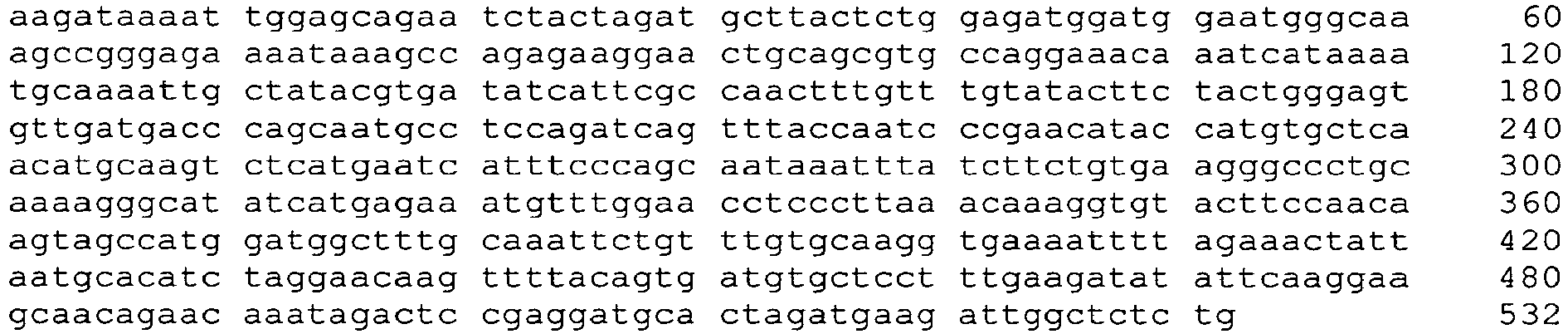
- <210> 232
<211> 177
<212> PRT
<213> Sorghum propinquum - <400> 232


- <210> 233
<211> 180
<212> PRT
<213> Oryza sativa - <400> 233

- <210> 234
<211> 50
<212> PRT
<213> Oryza sativa - <400> 234

- <210> 235
<211> 2194
<212> DNA
<213> Oryza sativa - <400> 235


- <210> 236
<211> 56
<212> DNA
<213> Artificial sequence - <220>
<223> primer: prm09687 - <400> 236
ggggacaagt ttgtacaaaa aagcaggctt aaacaatgaa taccccagaa aagaaa 56 - <210> 237
<211> 50
<212> DNA
<213> Artificial sequence - <220>
<223> primer: prm09688 - <400> 237
ggggaccact ttgtacaaga aagctgggtg atgcaaggtt aagatgcttt 50 - <210> 238
<211> 2649
<212> DNA
<213> Physcomitrella patens - <400> 238

- <210> 239
<211> 882
<212> PRT
<213> Physcomitrella patens - <400> 239


- <210> 240
<211> 2379
<212> DNA
<213> Physcomitrella patens - <400> 240


- <210> 241
<211> 792
<212> PRT
<213> Physcomitrella patens - <400> 241

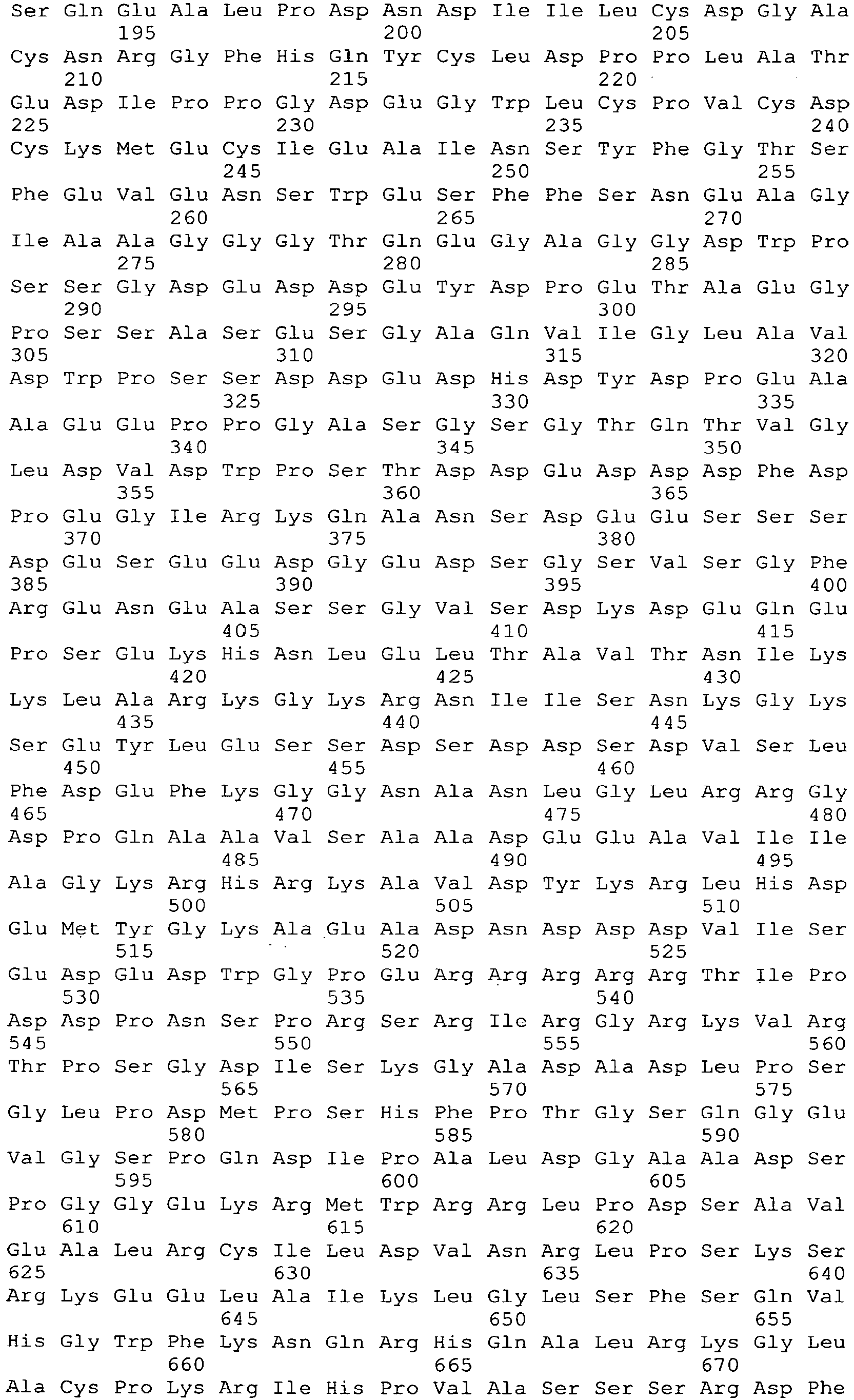

- <210> 242
<211> 2166
<212> DNA
<213> Zea mays - <400> 242

- <210> 243
<211> 721
<212> PRT
<213> Zea mays - <400> 243


- <210> 244
<211> 846
<212> DNA
<213> Triticum aestivum - <400> 244
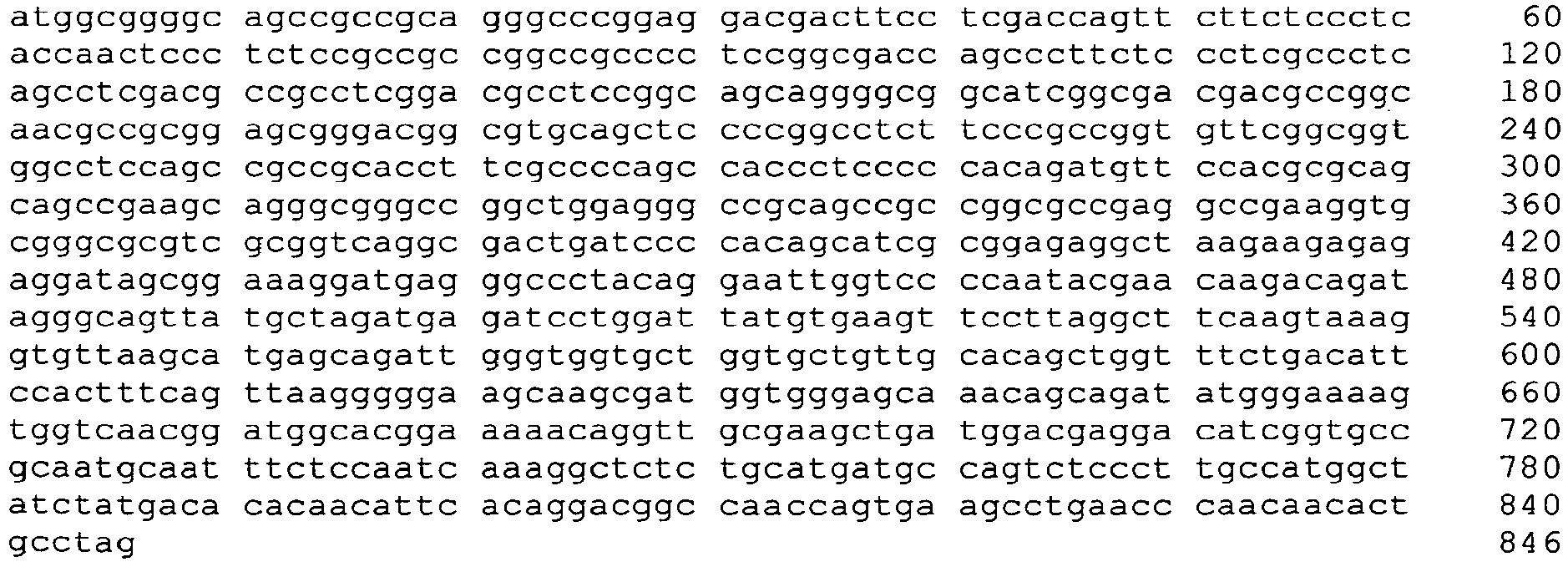
- <210> 245
<211> 281
<212> PRT
<213> Triticum aestivum - <400> 245

- <210> 246
<211> 6
<212> PRT
<213> Artificial sequence - <220>
<223>motif 1 - <220>
<221> VARIANT
<222> (1)..(1)
<223> /replace = "Asp" - <220>
<221> VARIANT
<222> (2)..(2)
<223> /replace = "Ser" /replace = "Glu" - <220>
<221> VARIANT
<222> (3)..(3)
<223> /replace = "Met" - <220>
<221> VARIANT
<222> (4)..(4)
<223> /replace = "Phe" - <220>
<221> VARIANT
<222> (5)..(5)
<223> /replace = "Glu" /replace = "Gln" /replace = "Leu" - <220>
<221> VARIANT
<222> (6)..(6)
<223> /replace = "His" /replace = "Glu" - <400> 246

- <210> 247
<211> 16
<212> PRT
<213> Artificial sequence - <220>
<223>motif 2 - <220>
<221> VARIANT
<222> (3)..(3)
<223> /replace = "Ile" /replace = "Gln" - <220>
<221> VARIANT
<222> (6)..(6)
<223> /replace = "His" - <400> 247

- <210> 248
<211> 9
<212> PRT
<213> Artificial sequence - <220>
<223>motif 3 - <220>
<221> VARIANT
<222> (1)..(1)
<223> /replace = "Ile" /replace = "Val" /replace = "Leu" - <220>
<221> VARIANT
<222> (2)..(2)
<223> /replace = "Arg" - <220>
<221> VARIANT
<222> (3)..(3)
<223> /replace = "Ser" /replace = "Gln" /replace = "Asp" /replace = "Asn" - <220>
<221> VARIANT
<222> (6)..(6)
<223> /replace = "Asp" /replace = "Val" - <400> 248

- <210> 249
<211> 17
<212> PRT
<213> Artificial sequence - <220>
<223>motif 4 - <220>
<221> VARIANT
<222> (1)..(1)
<223> /replace = "Ile" - <220>
<221> VARIANT
<222> (2)..(2)
<223> /replace = "Ile" - <220>
<221> VARIANT
<222> (6)..(6)
<223> /replace = "Val" /replace = "Leu" - <220>
<221> VARIANT
<222> (7)..(7)
<223> /replace = "Glu" /replace = "Gly" - <220>
<221> VARIANT
<222> (9)..(9)
<223> /replace = "Leu" /replace = "Ile" - <220>
<221> VARIANT
<222> (10)..(10)
<223> /replace = "Arg" - <220>
<221> VARIANT
<222> (13)..(13)
<223> /replace = "Arg" - <220>
<221> VARIANT
<222> (16)..(16)
<223> /replace = "Ile" - <400> 249

- <210> 250
<211> 8
<212> PRT
<213> Artificial sequence - <220>
<223>motif 5 - <220>
<221> VARIANT
<222> (1)..(1)
<223> /replace = "Ile" - <220>
<221> VARIANT
<222> (7)..(7)
<223> /replace = "Val" - <400> 250

- <210> 251
<211> 16
<212> PRT
<213> Artificial sequence - <220>
<223>motif 6 - <220>
<221> VARIANT
<222> (2)..(2)
<223> /replace = "Val" /replace = "Leu" /replace = "Ile" - <220>
<221> VARIANT
<222> (3)..(3)
<223> /replace = "Arg" - <220>
<221> VARIANT
<222> (4)..(4)
<223> /replace = "Met" - <220>
<221> VARIANT
<222> (5)..(5)
<223> /replace = "Leu" - <220>
<221> VARIANT
<222> (6)..(6)
<223> /replace = "Asp" - <220>
<221> VARIANT
<222> (7)..(7)
<223> /replace = "Asp" /replace = "Ser" /replace = "Lys" /replace = "Thr" - <220>
<221> VARIANT
<222> (8)..(8)
<223> /replace = "Asn" /replace = "Ser" - <220>
<221> VARIANT
<222> (9)..(9)
<223> /replace = "Val" /replace = "Ile" - <220>
<221> VARIANT
<222> (10)..(10)
<223> /replace = "Val" /replace = "Ile" - <220>
<221> UNSURE
<222> (11)..(11)
<223> Xaa is an unknown amino acid - <220>
<221> VARIANT
<222> (15)..(15)
<223> /replace = "Leu" /replace = "Phe" - <400> 251

- <210> 252
<211> 6
<212> PRT
<213> Artificial sequence - <220>
<223> motif 7 - <220>
<221> VARIANT
<222> (1)..(1)
<223> /replace = "Val" - <220>
<221> VARIANT
<222> (2)..(2)
<223> /replace = "Ser" - <220>
<221> VARIANT
<222> (3)..(3)
<223> /replace = "Val" - <220>
<221> VARIANT
<222> (4)..(4)
<223> /replace = "Thr" /replace = "Ala" - <400> 252
Met Pro Ile Ser Leu Ala - 1 5
- <210> 253
<211> 51
<212> PRT
<213> Artificial sequence - <220>
<223> motif 8 - <400> 253
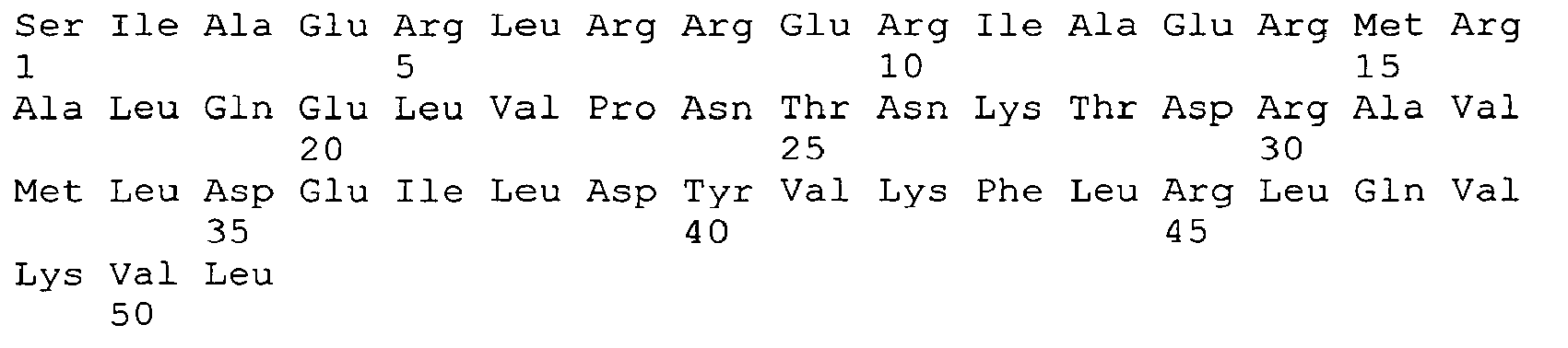
- <210> 254
<211> 50
<212> DNA
<213> Artificial sequence - <220>
<223> primer: prm009718 - <220>
<221> misc feature
<222> (47)..(47)
<223> n is a, c, g, or t - <400> 254
ggggacaagt ttgtacaaaa aagcaggctt aaacaatggc ggggcanccg 50 - <210> 255
<211> 50
<212> DNA
<213> Artificial sequence - <220>
<223> primer: prm009719 - <400> 255
ggggaccact ttgtacaaga aagctgggta tgggtgttgc agctgctgtt 50 - <210> 256
<211> 2194
<212> DNA
<213> Oryza sativa - <400> 256

- <210> 257
<211> 3093
<212> DNA
<213> Artificial sequence - <220>
<223> expression cassette - <400> 257


- <210> 258
<211> 285
<212> PRT
<213> Allium cepa - <400> 258


- <210> 259
<211> 302
<212> PRT
<213> Arabidopsis thaliana - <400> 259


- <210> 260
<211> 310
<212> PRT
<213> Arabidopsis thaliana - <400> 260

- <210> 261
<211> 831
<212> PRT
<213> Arabidopsis thaliana
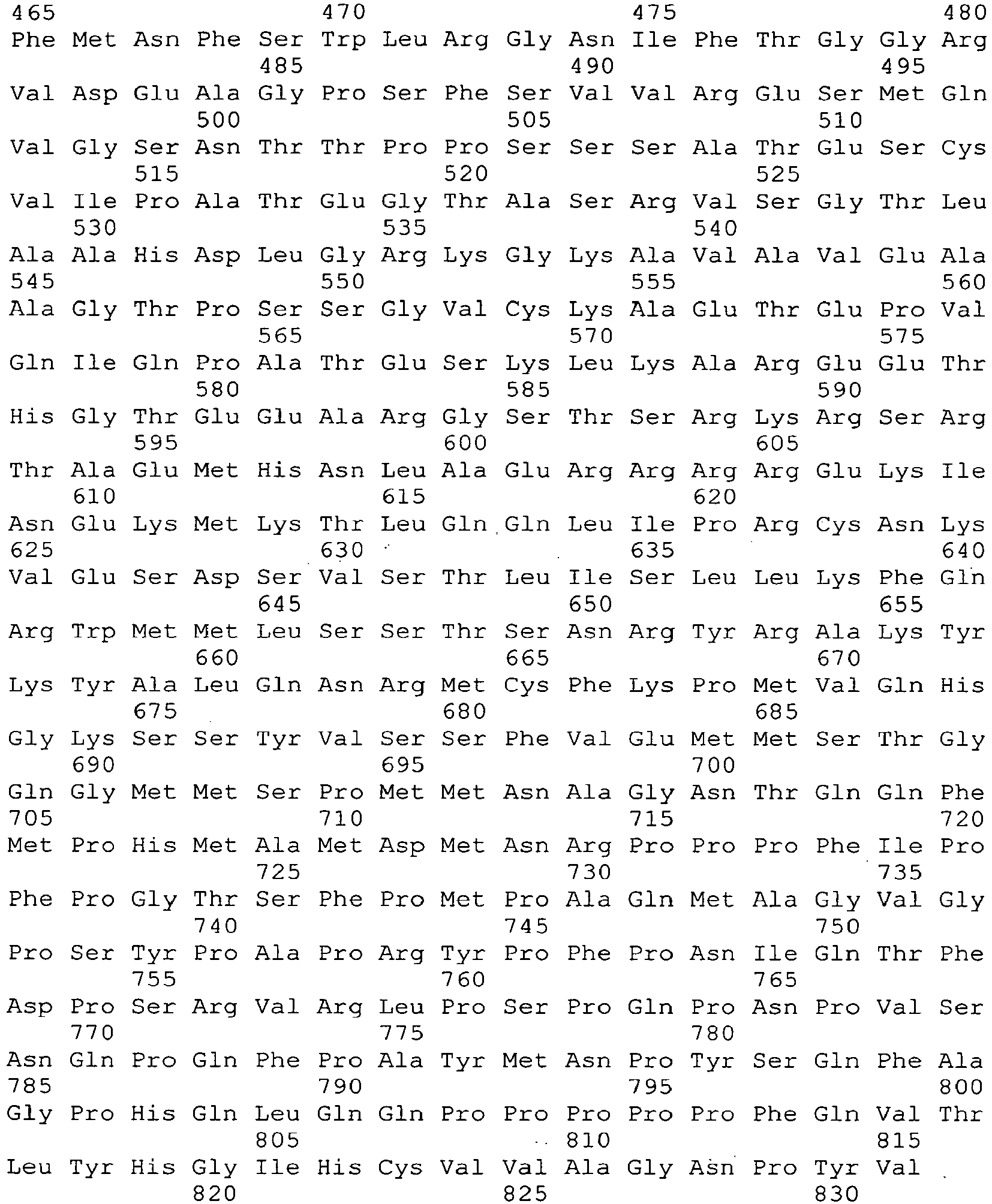
- <210> 262
<211> 310
<212> PRT
<213> Arabidopsis thaliana - <400> 262

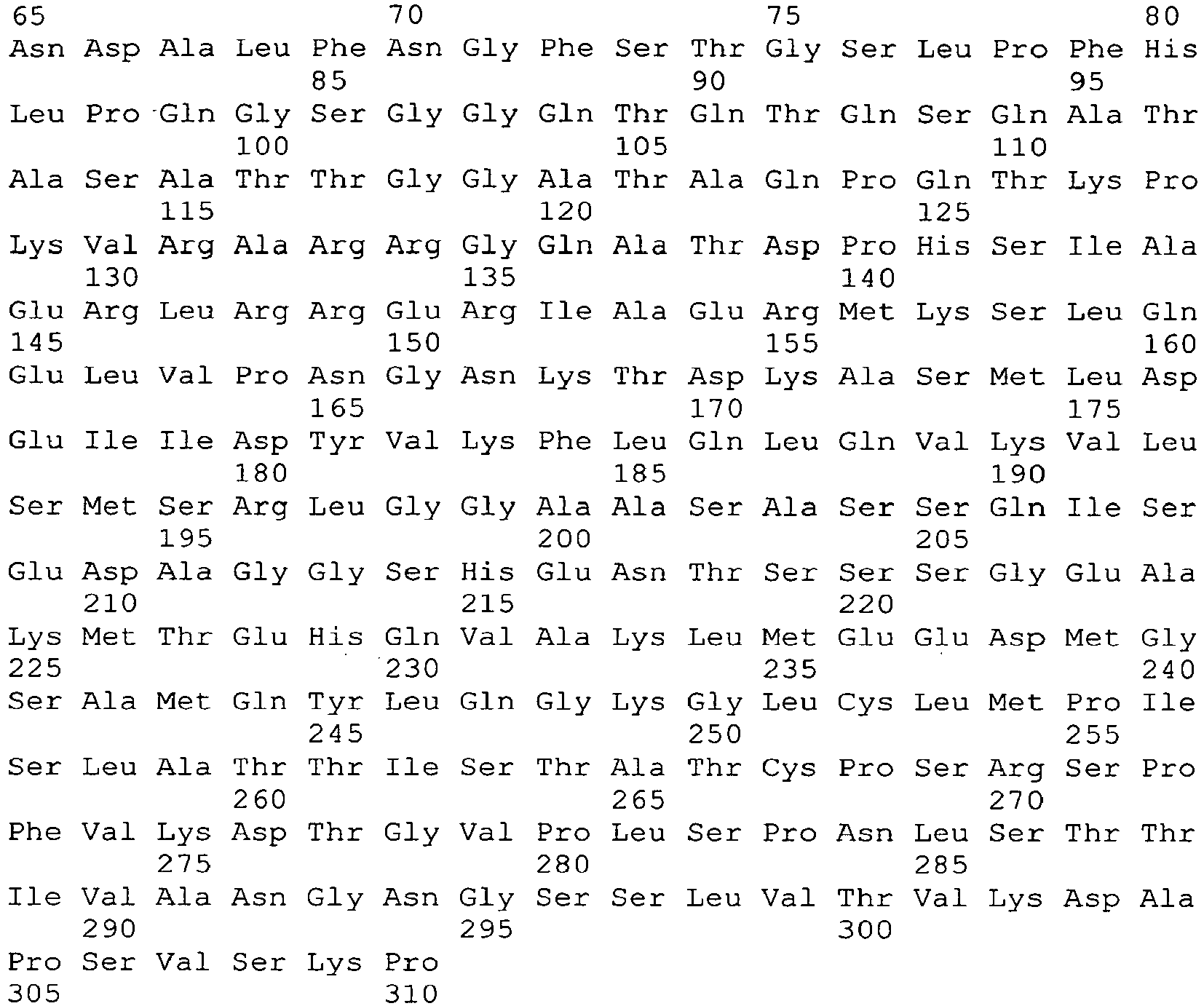
- <210> 263
<211> 297
<212> PRT
<213> Arabidopsis thaliana - <400> 263


- <210> 264
<211> 351
<212> PRT
<213> Aquilegia vulgaris - <400> 264


- <210> 265
<211> 205
<212> PRT
<213> Aquilegia vulgaris - <400> 265

- <210> 266
<211> 278
<212> PRT
<213> Brassica napus - <400> 266

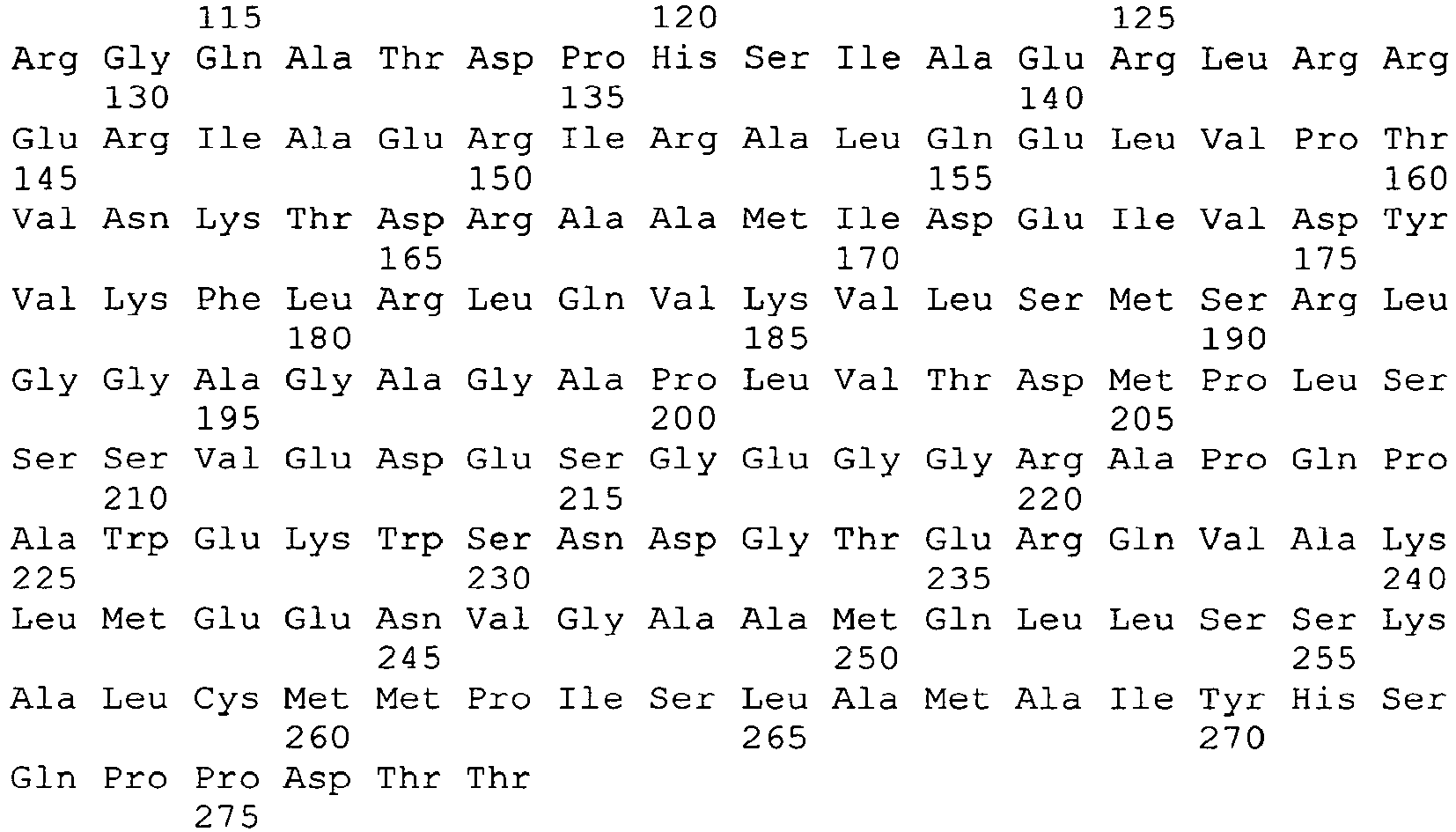
- <210> 267
<211> 345
<212> PRT
<213> Citrus clementina - <400> 267


- <210> 268
<211> 410
<212> PRT
<213> Curcuma longa - <400> 268


- <210> 269
<211> 281
<212> PRT
<213> Citrus paradisi hybrid - <400> 269

- <210> 270
<211> 469
<212> PRT
<213> Citrus sinesis - <400> 270


- <210> 271
<211> 320
<212> PRT
<213> Eucalyptus grandis - <400> 271

- <210> 272
<211> 346
<212> PRT
<213> Eucalyptus grandis - <400> 272

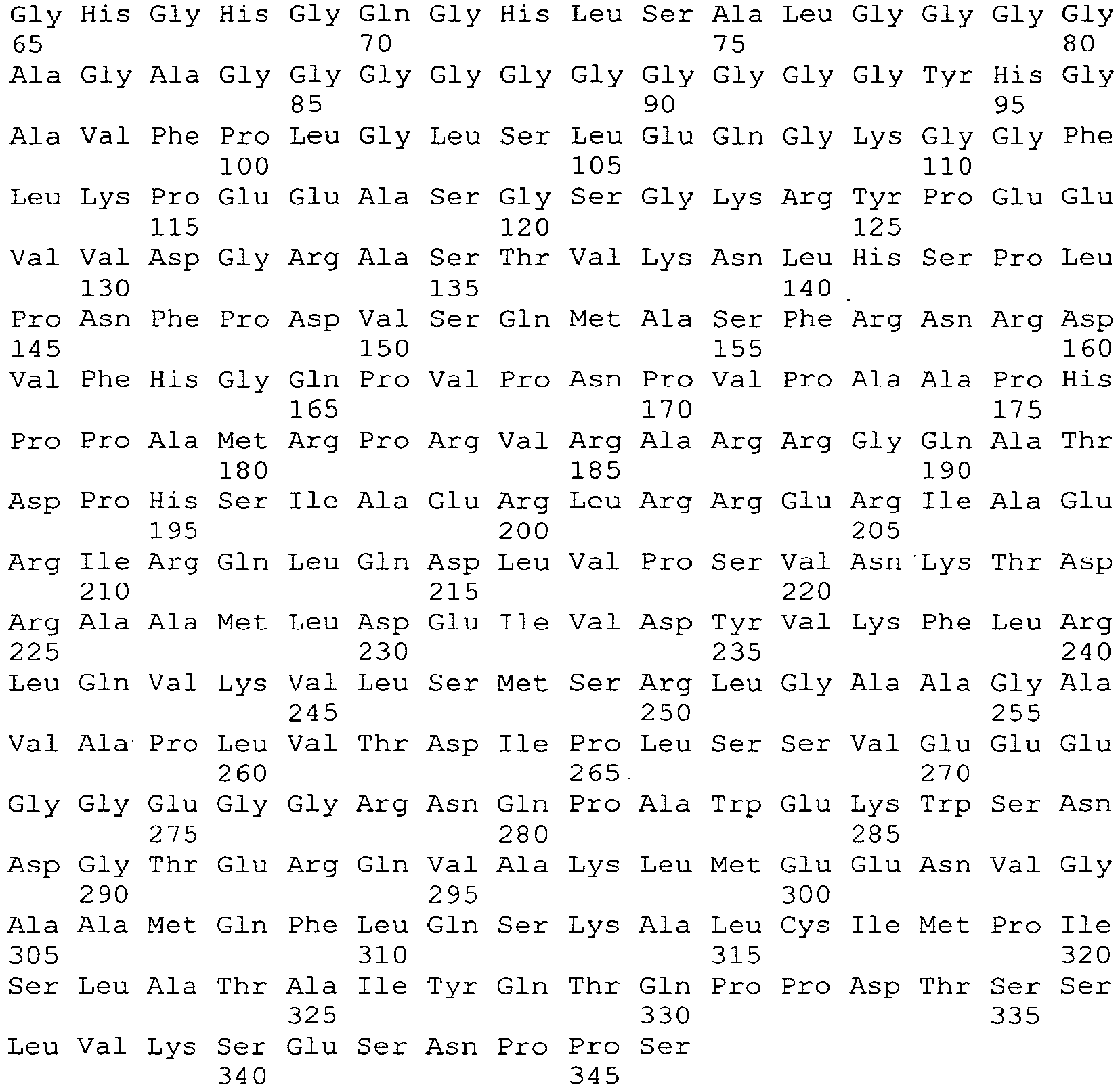
- <210> 273
<211> 265
<212> PRT
<213> Gossypium hirsutum - <400> 273


- <210> 274
<211> 306
<212> PRT
<213> Gossypium hirsutum - <400> 274
Gln Gln

- 305
- <210> 275
<211> 303
<212> PRT
<213> Gossypium hirsutum - <400> 275
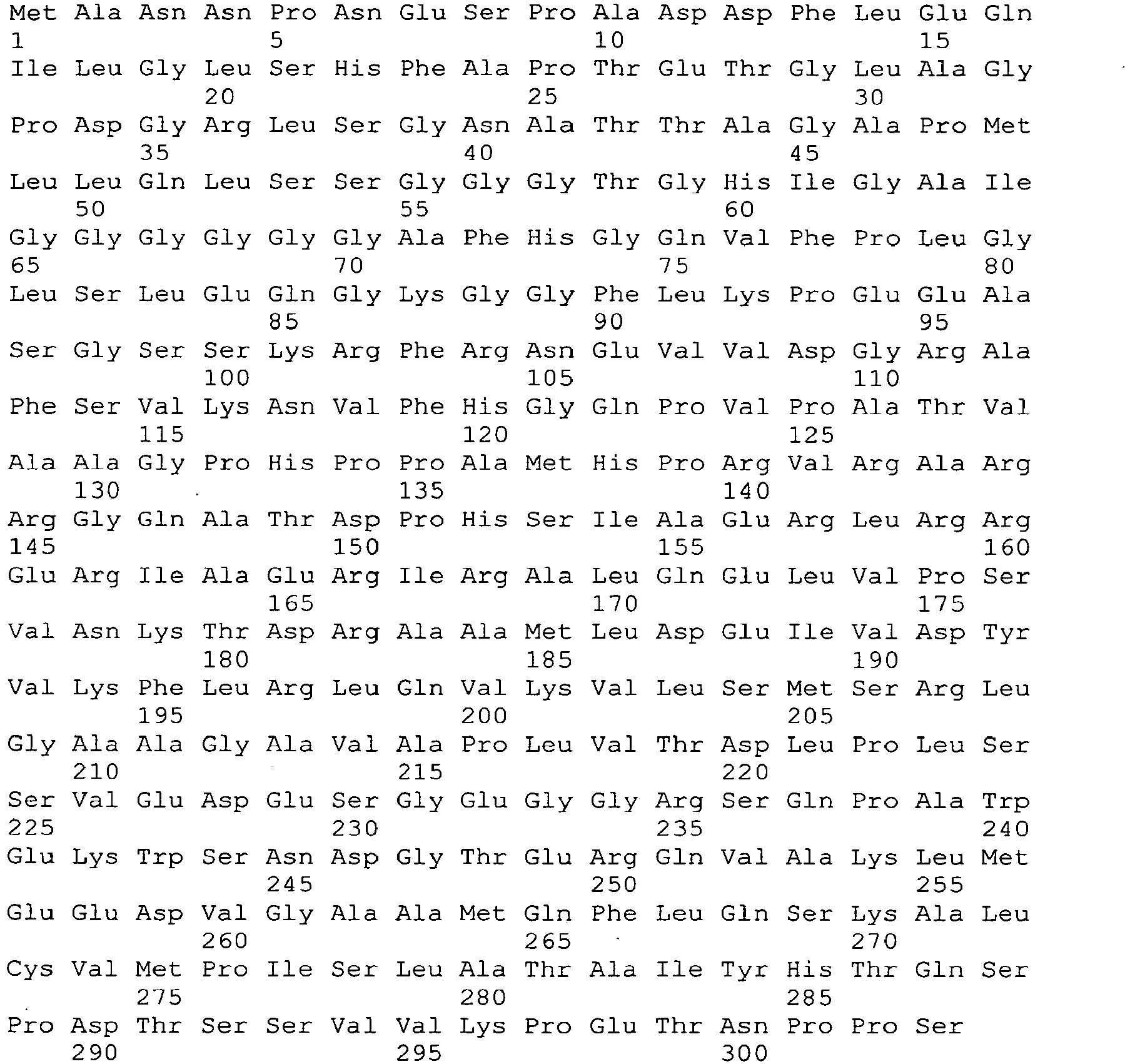
- <210> 276
<211> 304
<212> PRT
<213> Gossypium hirsutum - <400> 276


- <210> 277
<211> 305
<212> PRT
<213> Gossypium hirsutum - <400> 277


- <210> 278
<211> 427
<212> PRT
<213> Gossypium hirsutum - <400> 278


- <210> 279
<211> 210
<212> PRT
<213> Glycine max - <400> 279

- <210> 280
<211> 335
<212> PRT
<213> Glycine max - <400> 280


- <210> 281
<211> 331
<212> PRT
<213> Glycine max - <400> 281


- <210> 282
<211> 244
<212> PRT
<213> Glycine max - <400> 282


- <210> 283
<211> 303
<212> PRT
<213> Gossypium raimondii - <400> 283

- <210> 284
<211> 306
<212> PRT
<213> Helianthus petiolaris - <400> 284


- <210> 285
<211> 481
<212> PRT
<213> Horedeum vulgare - <400> 285


- <210> 286
<211> 290
<212> PRT
<213> lactuca perennis - <400> 286


- <210> 287
<211> 296
<212> PRT
<213> Nicotiana benthamiana - <400> 287


- <210> 288
<211> 443
<212> PRT
<213> Nicotiana benthamiana - <400> 288


- <210> 289
<211> 387
<212> PRT
<213> Nicotiana benthamiana - <400> 289


- <210> 290
<211> 302
<212> PRT
<213> Nicotiana benthamiana - <400> 290

- <210> 291
<211> 298
<212> PRT
<213> Nicotiana tabacum - <400> 291

- <210> 292
<211> 524
<212> PRT
<213> Oryza sativa - <400> 292

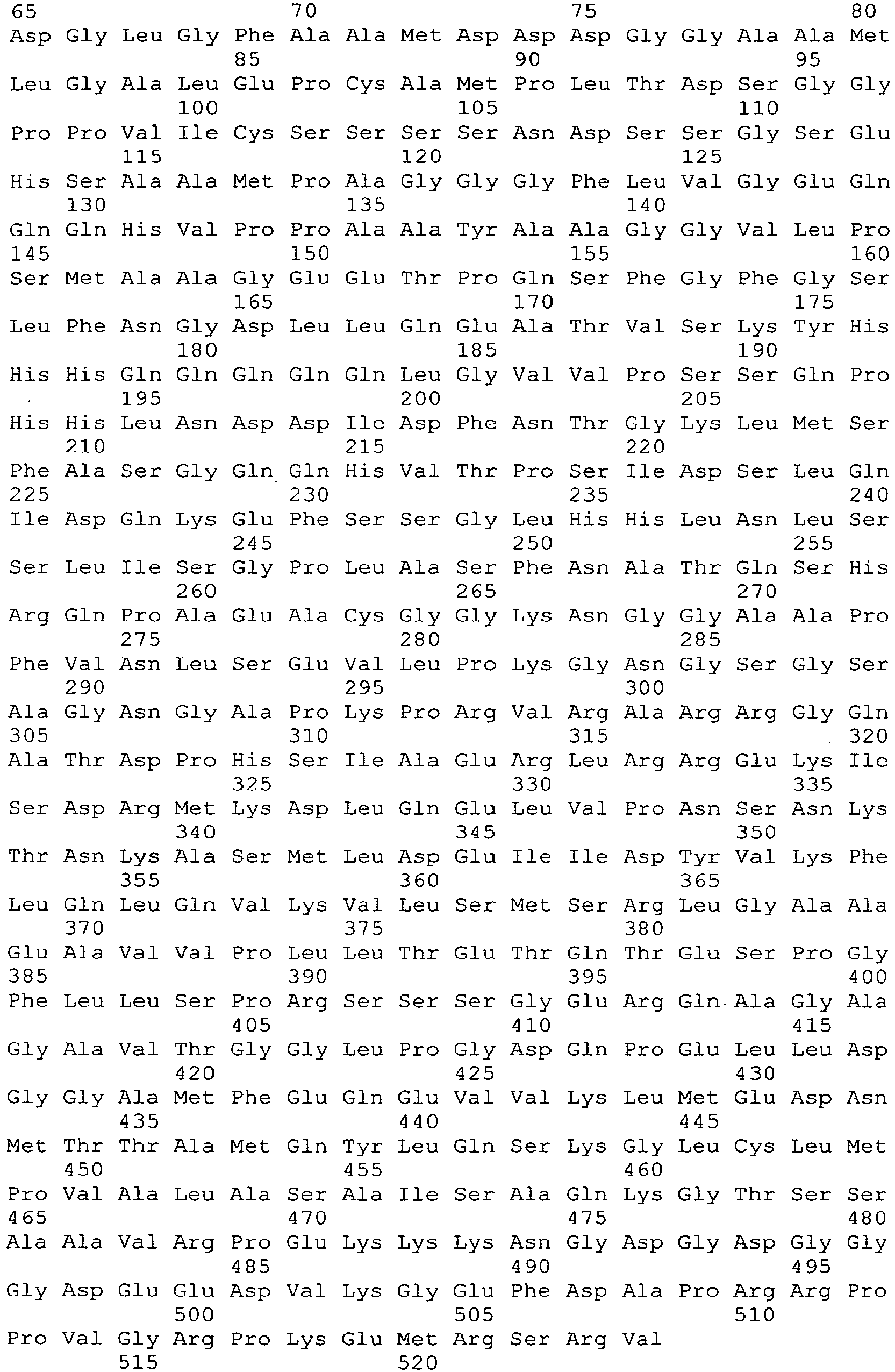
- <210> 293
<211> 441
<212> PRT
<213> Oryza sativa - <400> 293
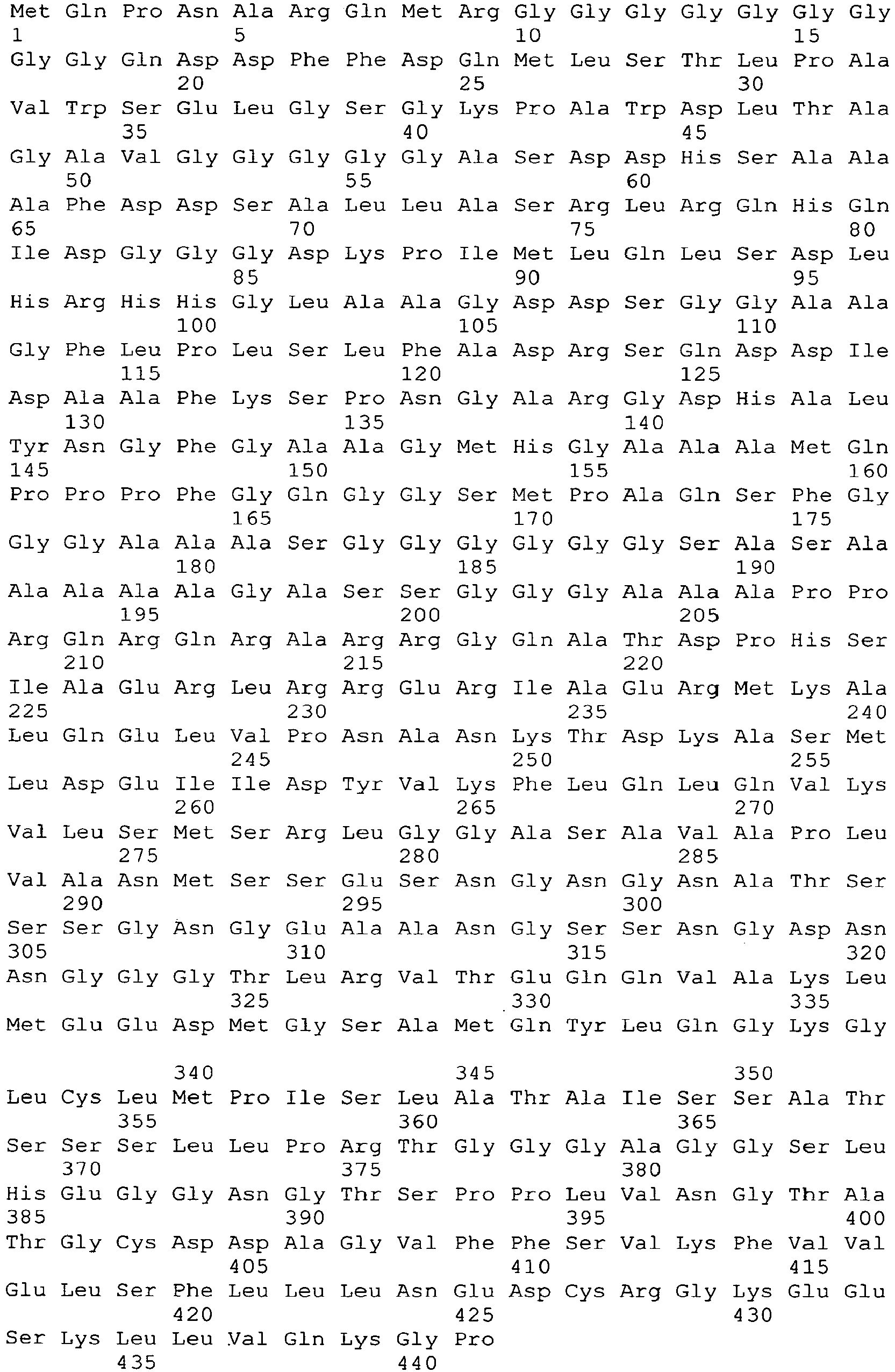
- <210> 294
<211> 294
<212> PRT
<213> Oryza sativa - <400> 294

- <210> 295
<211> 367
<212> PRT
<213> Oryza sativa - <400> 295


- <210> 296
<211> 478
<212> PRT
<213> Oryza sativa - <400> 296


- <210> 297
<211> 499
<212> PRT
<213> Oryza sativa - <400> 297


- <210> 298
<211> 293
<212> PRT
<213> Oryza sativa - <400> 298


- <210> 299
<211> 274
<212> PRT
<213> Picea abies - <220>
<221> misc_feature
<222> (257)..(259)
<223> Xaa can be any naturally occurring amino acid - <400> 299


- <210> 300
<211> 300
<212> PRT
<213> Populus deltoides - <400> 300
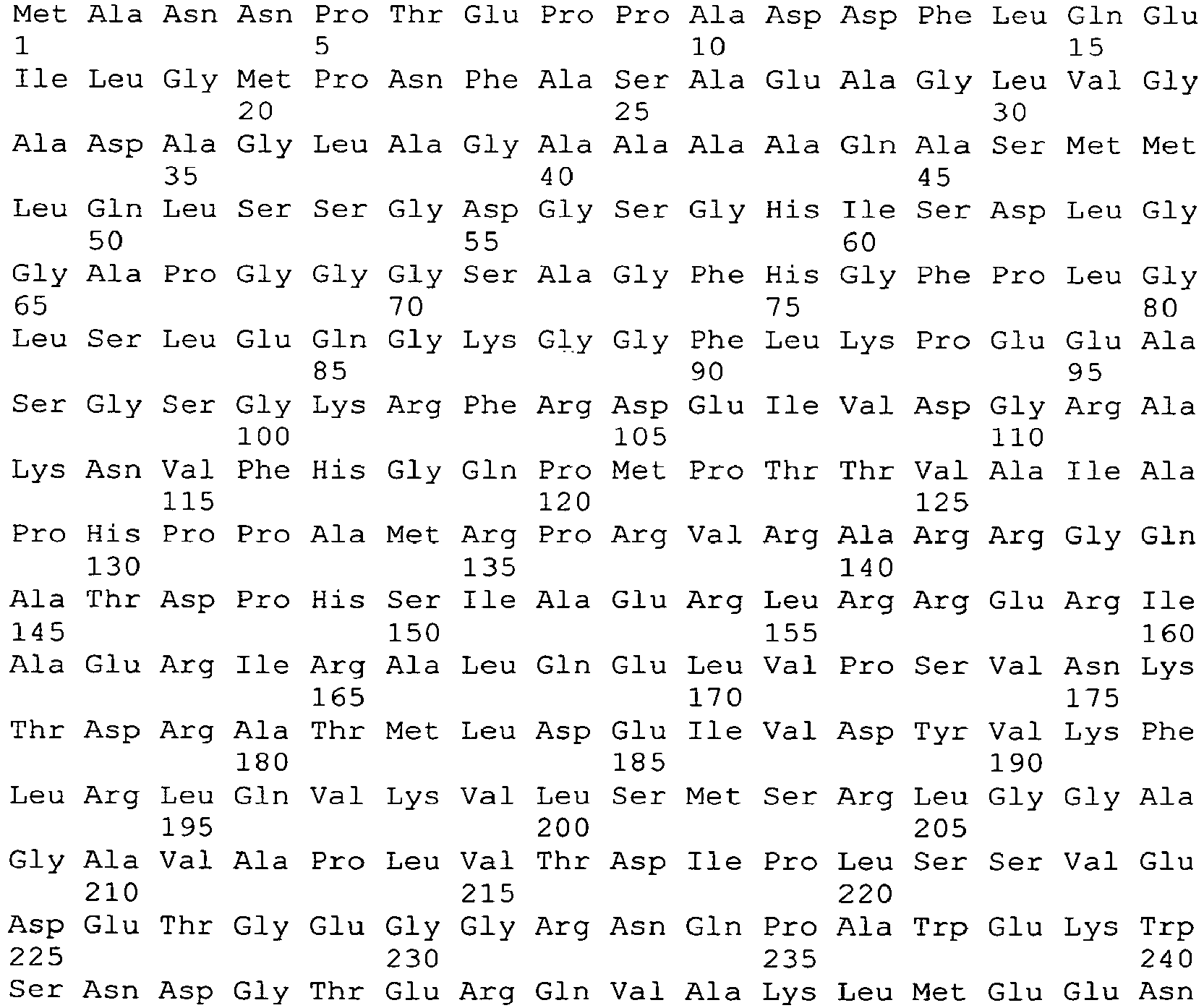

- <210> 301
<211> 463
<212> PRT
<213> Pinus radiata - <400> 301


- <210> 302
<211> 325
<212> PRT
<213> Picea sitchensis - <400> 302
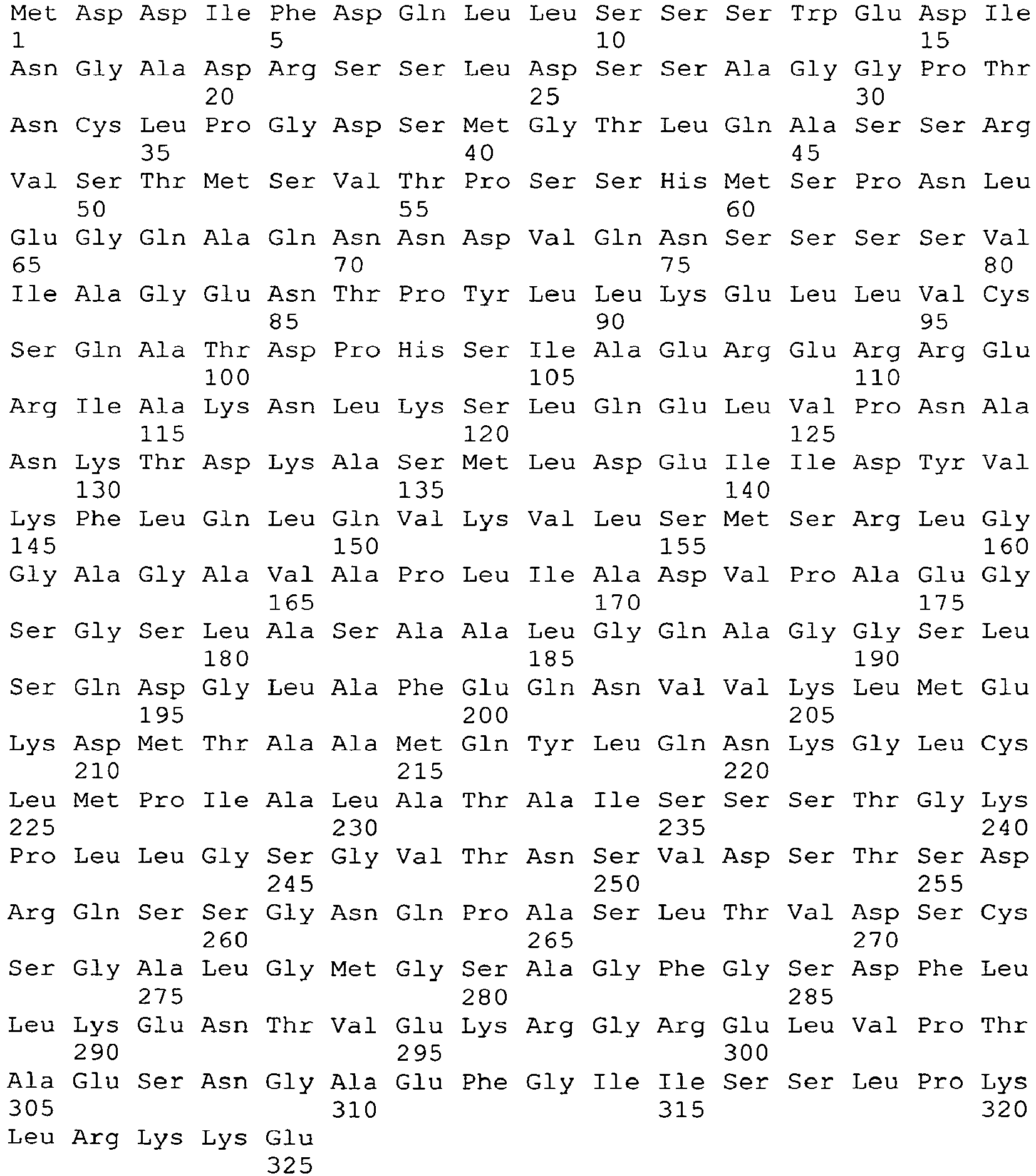
- <210> 303
<211> 333
<212> PRT
<213> Populus taeda - <400> 303

- <210> 304
<211> 300
<212> PRT
<213> Populus trichocarpa - <400> 304


- <210> 305
<211> 331
<212> PRT
<213> Populus trichocarpa - <400> 305


- <210> 306
<211> 334
<212> PRT
<213> Populus trichocarpa - <400> 306


- <210> 307
<211> 456
<212> PRT
<213> Populus trichocarpa - <400> 307


- <210> 308
<211> 300
<212> PRT
<213> Populus trichocarpa - <400> 308

- <210> 309
<211> 468
<212> PRT
<213> Poncirus trifoliata - <400> 309


- <210> 310
<211> 326
<212> PRT
<213> Ricinus communis - <400> 310

- <210> 311
<211> 299
<212> PRT
<213> Ricinus communis - <400> 311


- <210> 312
<211> 277
<212> PRT
<213> Sorghum bicolor - <400> 312


- <210> 313
<211> 302
<212> PRT
<213> Solanum lycopersicum - <400> 313


- <210> 314
<211> 296
<212> PRT
<213> Solanum lycopersicum - <400> 314

- <210> 315
<211> 304
<212> PRT
<213> Solanum lycopersicum - <400> 315


- <210> 316
<211> 302
<212> PRT
<213> Solanum tuberosum - <400> 316


- <210> 317
<211> 304
<212> PRT
<213> Solanum tuberosum - <400> 317


- <210> 318
<211> 447
<212> PRT
<213> Solanum tuberosum - <400> 318


- <210> 319
<211> 382
<212> PRT
<213> Solanum tuberosum - <400> 319
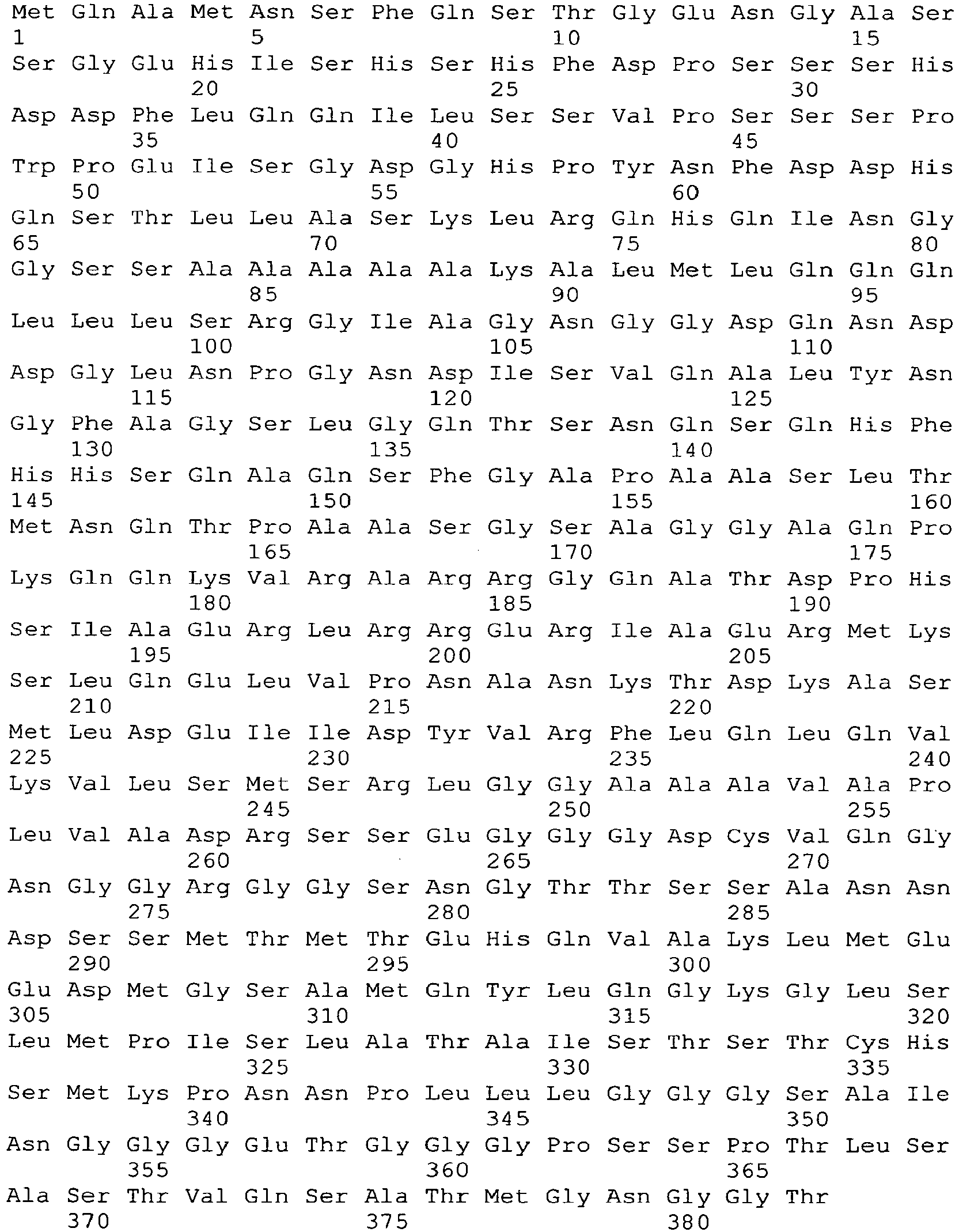
- <210> 320
<211> 290
<212> PRT
<213> Triticum aestivum - <400> 320

- <210> 321
<211> 485
<212> PRT
<213> Vitis vinifera - <400> 321


- <210> 322
<211> 418
<212> PRT
<213> Vitis vinifera - <400> 322


- <210> 323
<211> 289
<212> PRT
<213> Vitis vinifera - <400> 323


- <210> 324
<211> 313
<212> PRT
<213> Vitis vinifera - <400> 324


- <210> 325
<211> 285
<212> PRT
<213> Zea mays - <400> 325


- <210> 326
<211> 285
<212> PRT
<213> Zea mays - <400> 326

- <210> 327
<211> 922
<212> DNA
<213> Allium cepa - <400> 327


- <210> 328
<211> 1456
<212> DNA
<213> Arabidopsis thaliana - <400> 328

- <210> 329
<211> 1588
<212> DNA
<213> Arabidopsis thaliana - <400> 329


- <210> 330
<211> 1407
<212> DNA
<213> Arabidopsis thaliana - <400> 330

- <210> 331
<211> 1230
<212> DNA
<213> Arabidopsis thaliana - <400> 331


- <210> 332
<211> 1019
<212> DNA
<213> Arabidopsis thaliana - <400> 332
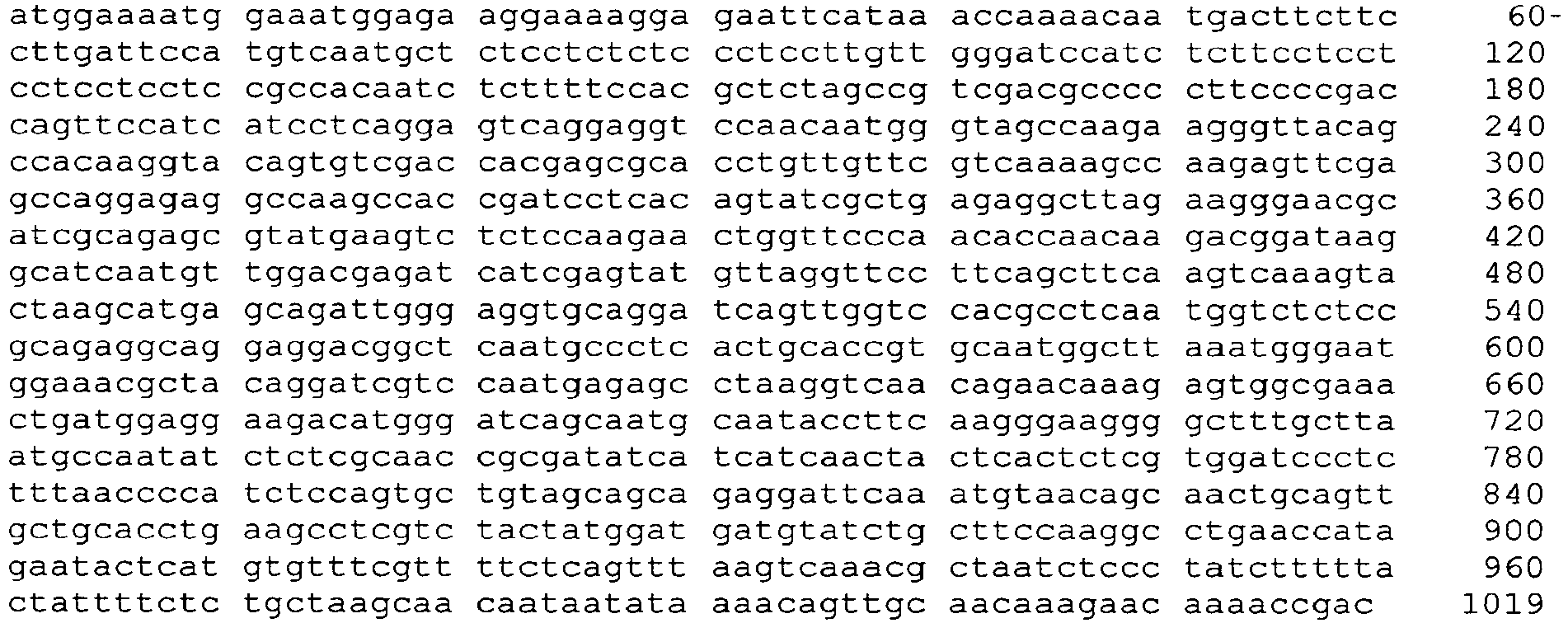
- <210> 333
<211> 1763
<212> DNA
<213> Aquilegia vulgaris - <400> 333


- <210> 334
<211> 931
<212> DNA
<213> Aquilegia vulgaris - <400> 334

- <210> 335
<211> 838
<212> DNA
<213> Brasssica napus - <400> 335
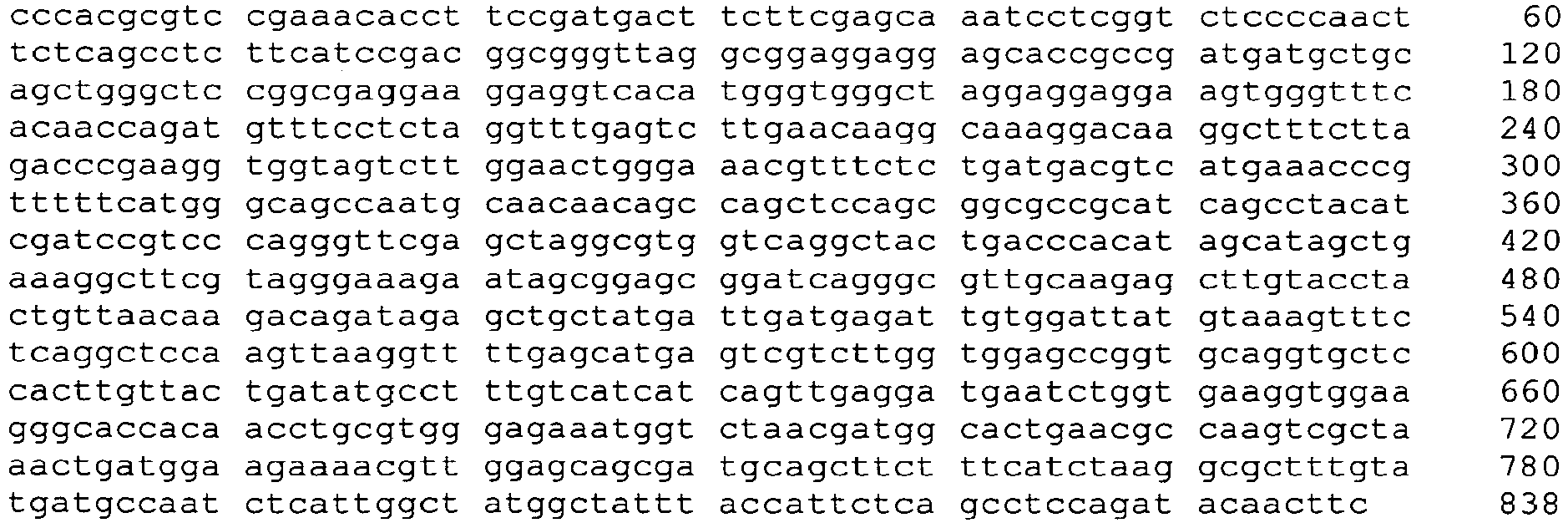
- <210> 336
<211> 1291
<212> DNA
<213> Citrus clementina - <400> 336

- <210> 337
<211> 1344
<212> DNA
<213> Curcuma longa - <400> 337

- <210> 338
<211> 1235
<212> DNA
<213> Citrus paradisi hybrid - <400> 338

- <210> 339
<211> 1916
<212> DNA
<213> Citrus sinesis - <400> 339
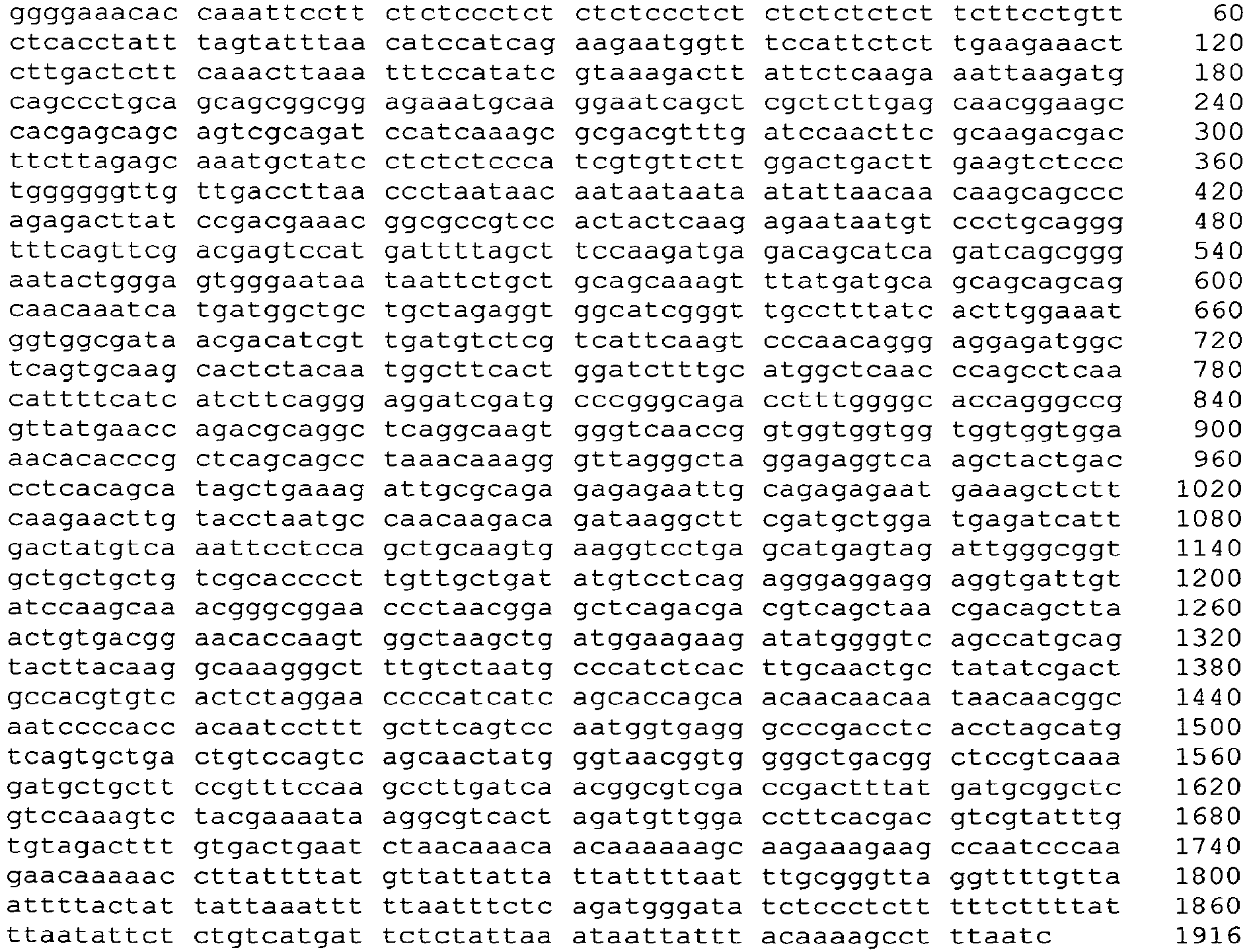
- <210> 340
<211> 1835
<212> DNA
<213> Eucalyptus grandis - <400> 340

- <210> 341
<211> 1765
<212> DNA
<213> Eucalyptus grandis - <400> 341


- <210> 342
<211> 796
<212> DNA
<213> Gossypium hirsutum - <400> 342

- <210> 343
<211> 918
<212> DNA
<213> Gossypium hirsutum - <400> 343

- <210> 344
<211> 1530
<212> DNA
<213> Gossypium hirsutum - <400> 344

- <210> 345
<211> 1561
<212> DNA
<213> Gossypium hirsutum - <400> 345


- <210> 346
<211> 1411
<212> DNA
<213> Gossypium hirsutum - <400> 346

- <210> 347
<211> 1526
<212> DNA
<213> Gossypium hirsutum - <400> 347


- <210> 348
<211> 1052
<212> DNA
<213> Glycine max - <400> 348

- <210> 349
<211> 1490
<212> DNA
<213> Glycine max - <400> 349


- <210> 350
<211> 1850
<212> DNA
<213> Glycine max - <400> 350

- <210> 351
<211> 1392
<212> DNA
<213> Glycine max - <400> 351


- <210> 352
<211> 1497
<212> DNA
<213> Gossypium raimondii - <400> 352

- <210> 353
<211> 1301
<212> DNA
<213> Helianthus petiolaris - <400> 353


- <210> 354
<211> 713
<212> DNA
<213> Hordeum vulgare - <400> 354

- <210> 355
<211> 934
<212> DNA
<213> Lactuca perennis - <400> 355

- <210> 356
<211> 948
<212> DNA
<213> Nicotinana benthamiana - <400> 356


- <210> 357
<211> 1792
<212> DNA
<213> Nicotinana benthamiana - <400> 357

- <210> 358
<211> 1484
<212> DNA
<213> Nicotinana benthamiana - <400> 358

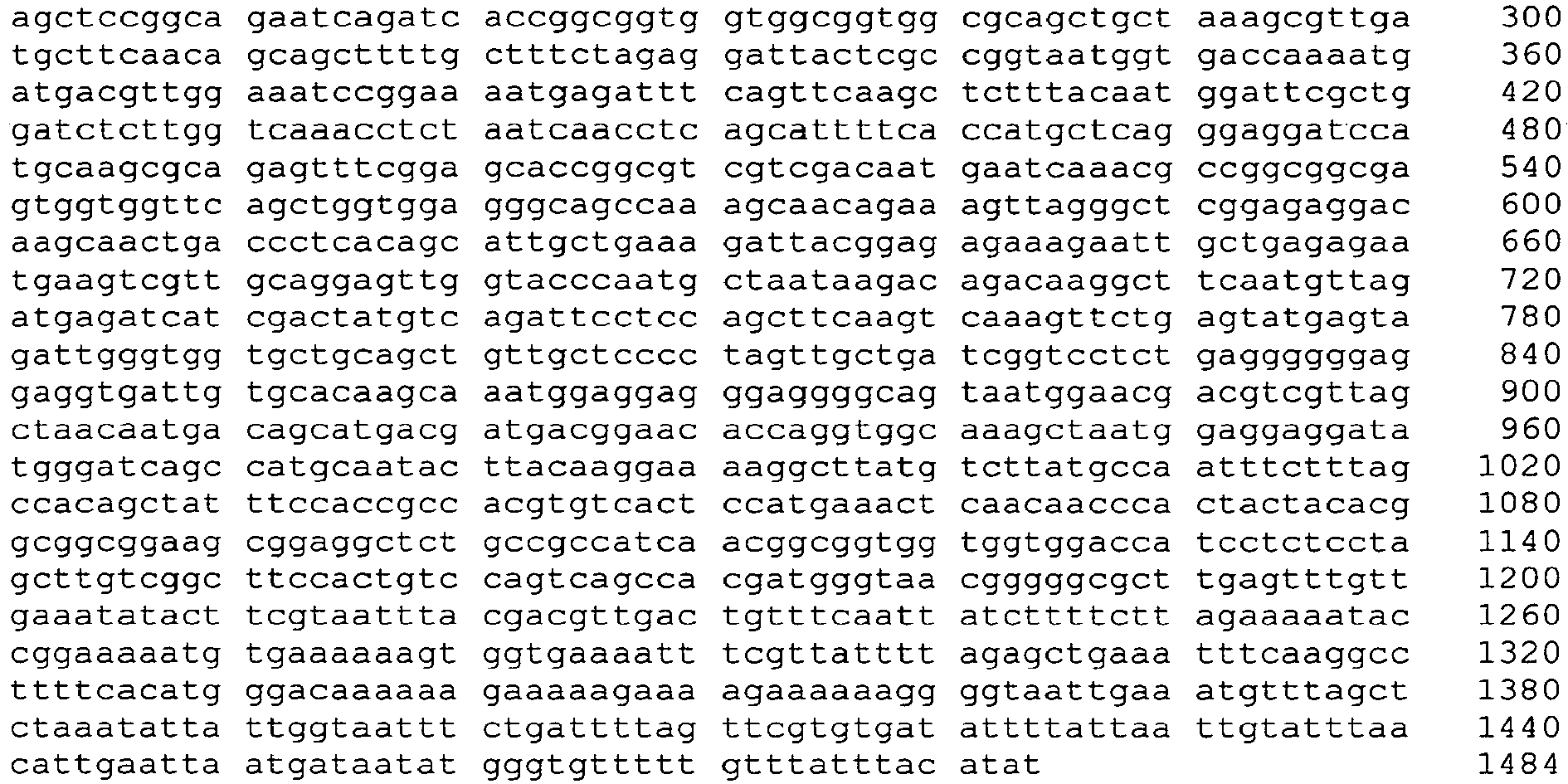
- <210> 359
<211> 1500
<212> DNA
<213> Nicotinana benthamiana - <400> 359

- <210> 360
<211> 1451
<212> DNA
<213> Nicotiana tabacum - <400> 360


- <210> 361
<211> 2056
<212> DNA
<213> Oryza sativa - <400> 361
gacgcgagtc gagagacggg agagcagtgc agtgcagtgc agtgccgcct cgtcttcctt 60

- <210> 362
<211> 1326
<212> DNA
<213> Oryza sativa - <400> 362

- <210> 363
<211> 1831
<212> DNA
<213> Oryza sativa - <400> 363


- <210> 364
<211> 1104
<212> DNA
<213> Oryza sativa - <400> 364

- <210> 365
<211> 2221
<212> DNA
<213> Oryza sativa - <400> 365


- <210> 366
<211> 1500
<212> DNA
<213> Oryza sativa - <400> 366
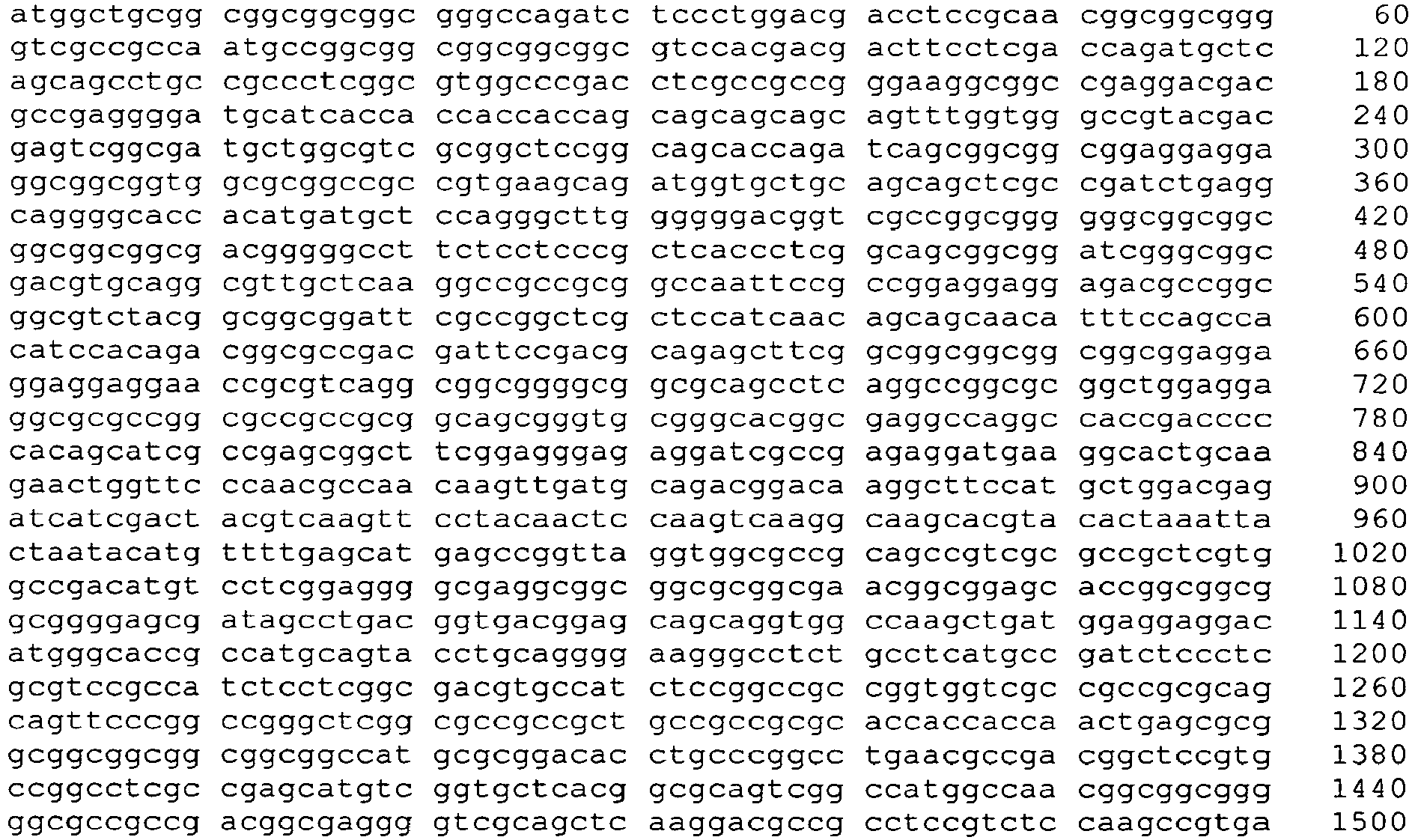
- <210> 367
<211> 411
<212> DNA
<213> Oryza sativa - <400> 367

- <210> 368
<211> 913
<212> DNA
<213> Picea abies - <220>
<221> misc_feature
<222> (804)..(809)
<223> n is a, c, g, or t - <220>
<221> misc_feature
<222> (858)..(862)
<223> n is a, c, g, or t - <220>
<221> misc_feature
<222> (875)..(882)
<223> n is a, c, g, or t - <220>
<221> misc feature
<222> (886)..(893)
<223> n is a, c, g, or t - <400> 368

- <210> 369
<211> 1266
<212> DNA
<213> Populus deltoides - <400> 369


- <210> 370
<211> 1853
<212> DNA
<213> Pinus radiata - <400> 370

- <210> 371
<211> 1877
<212> DNA
<213> Picea sitchensis - <400> 371

- <210> 372
<211> 1548
<212> DNA
<213> Pinus taeda - <400> 372


- <210> 373
<211> 1013
<212> DNA
<213> Populus trichocarpa - <400> 373

- <210> 374
<211> 1106
<212> DNA
<213> Populus trichocarpa - <400> 374

- <210> 375
<211> 1115
<212> DNA
<213> Populus trichocarpa - <400> 375

- <210> 376
<211> 1481
<212> DNA
<213> Populus trichocarpa - <400> 376

- <210> 377
<211> 1711
<212> DNA
<213> Populus trichocarpa - <400> 377

- <210> 378
<211> 1890
<212> DNA
<213> Poncirus trifoliata - <400> 378


- <210> 379
<211> 1870
<212> DNA
<213> Ricinus communis - <400> 379

- <210> 380
<211> 1008
<212> DNA
<213> Ricinus communis - <400> 380


- <210> 381
<211> 1141
<212> DNA
<213> Sorghum bicolor - <400> 381

- <210> 382
<211> 1409
<212> DNA
<213> Solanum lycopersicum - <400> 382


- <210> 383
<211> 1632
<212> DNA
<213> Solanum lycopersicum - <400> 383

- <210> 384
<211> 1135
<212> DNA
<213> Solanum lycopersicum - <400> 384


- <210> 385
<211> 1348
<212> DNA
<213> Solanum tuberosum - <400> 385

- <210> 386
<211> 1469
<212> DNA
<213> Solanum tuberosum - <400> 386


- <210> 387
<211> 772
<212> DNA
<213> Solanum tuberosum - <400> 387

- <210> 388
<211> 1290
<212> DNA
<213> Solanum tuberosum - <400> 388
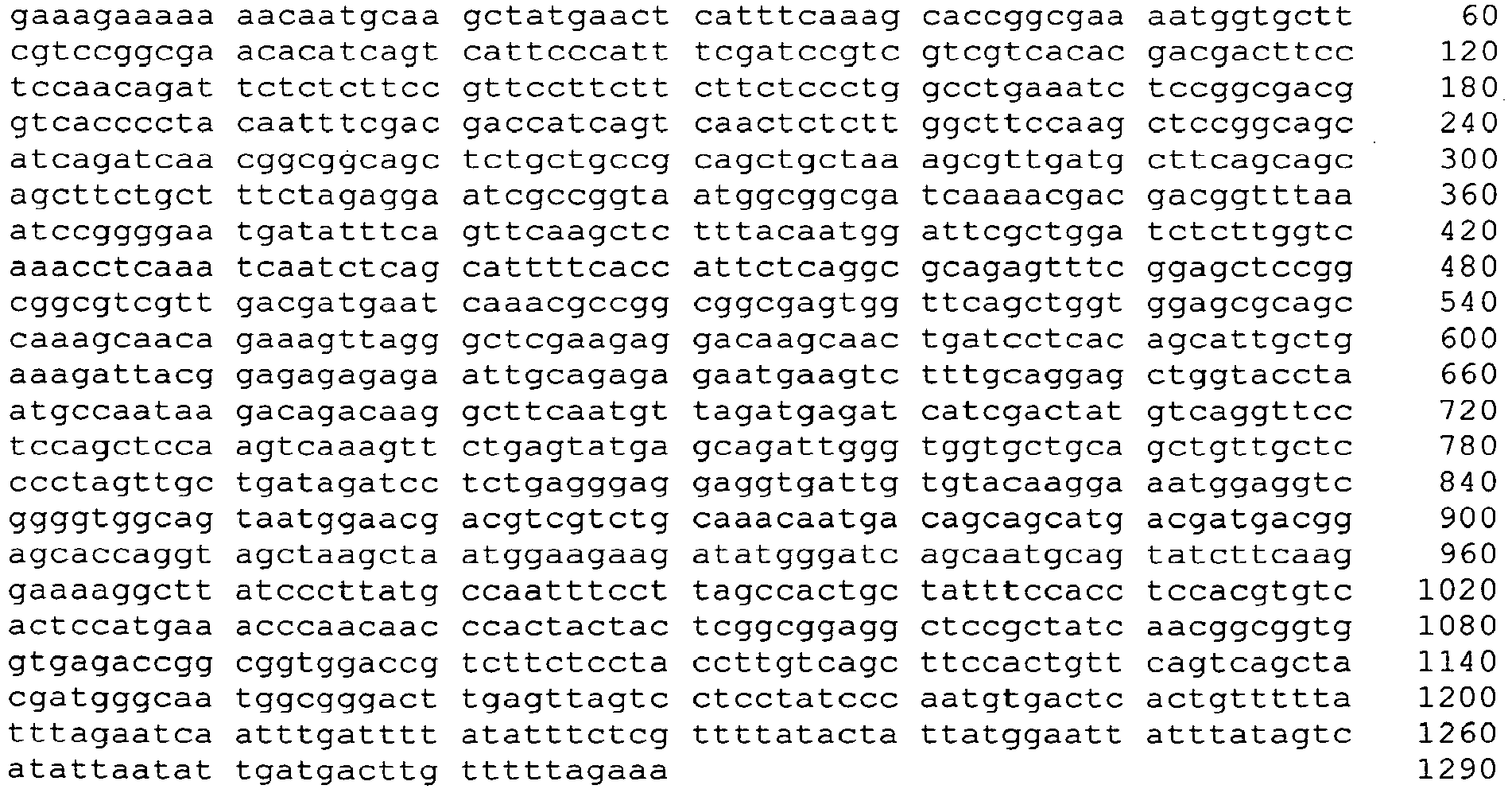
- <210> 389
<211> 2210
<212> DNA
<213> Triticum aestivum - <400> 389

- <210> 390
<211> 1458
<212> DNA
<213> Vitis vinifera - <400> 390


- <210> 391
<211> 1257
<212> DNA
<213> Vitis vinifera - <400> 391

- <210> 392
<211> 1010
<212> DNA
<213> Vitis vinifera - <400> 392
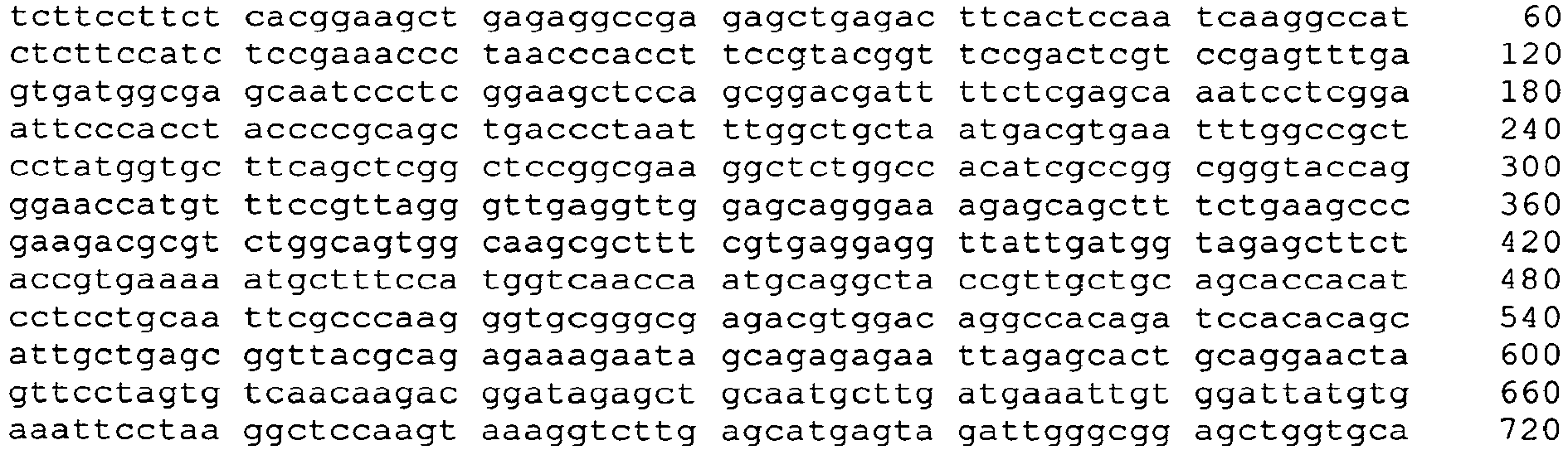

- <210> 393
<211> 1599
<212> DNA
<213> Vitis vinifera
400 393
- <210> 394
<211> 1604
<212> DNA
<213> Zea mays - <400> 394


- <210> 395
<211> 1260
<212> DNA
<213> Zea mays - <400> 395
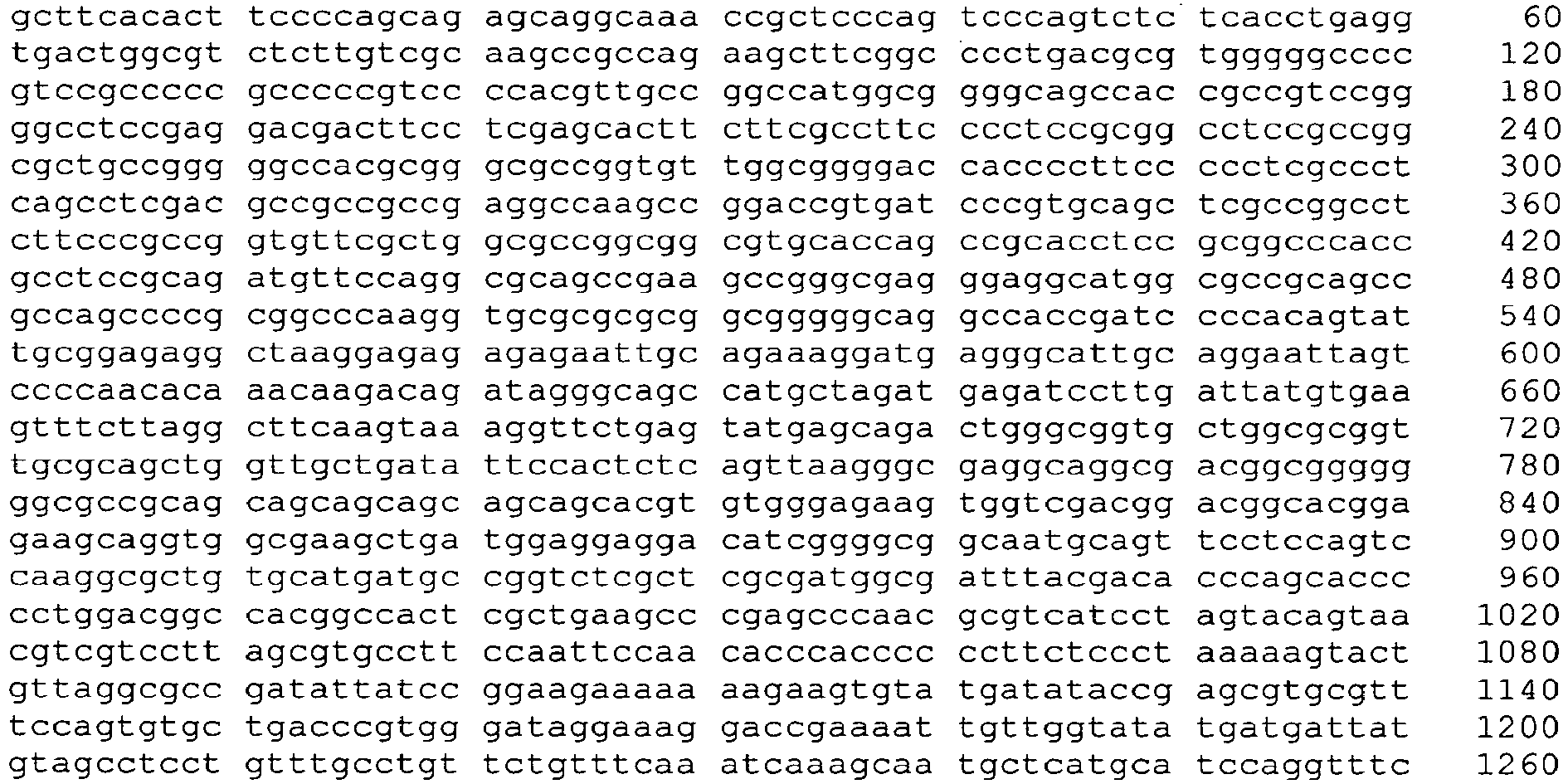
- <210> 396
<211> 417
<212> DNA
<213> Oryza sativa - <400> 396

- <210> 397
<211> 138
<212> PRT
<213> Oryza sativa - <400> 397

- <210> 398
<211> 3246
<212> DNA
<213> Oryza sativa - <400> 398


- <210> 399
<211> 52
<212> DNA
<213> Artificial sequence - <220>
<223> primer: prm06442 - <400> 399
ggggacaagt ttgtacaaaa aagcaggctt aaacaatggc ggaggagaag ca 52 - <210> 400
<211> 46
<212> DNA
<213> Artificial sequence - <220>
<223> primer: prm06443 - <400> 400
ggggaccact ttgtacaaga aagctgggtc ggcgacgttg tgatga 46 - <210> 401
<211> 546
<212> DNA
<213> Zea mays - <400> 401

- <210> 402
<211> 181
<212> PRT
<213> Zea mays - <400> 402

- <210> 403
<211> 468
<212> DNA
<213> Zea mays - <400> 403

- <210> 404
<211> 102
<212> PRT
<213> Zea mays - <400> 404


- <210> 405
<211> 434
<212> DNA
<213> Zea mays - <400> 405

- <210> 406
<211> 144
<212> PRT
<213> Zea mays - <400> 406

- <210> 407
<211> 417
<212> DNA
<213> Zea mays - <400> 407

- <210> 408
<211> 138
<212> PRT
<213> Zea mays - <400> 408

- <210> 409
<211> 396
<212> DNA
<213> Zea mays - <400> 409

- <210> 410
<211> 130
<212> PRT
<213> Zea mays - <400> 410

- <210> 411
<211> 204
<212> DNA
<213> Zea mays - <400> 411

- <210> 412
<211> 67
<212> PRT
<213> Zea mays - <400> 412

- <210> 413
<211> 1008
<212> DNA
<213> Zea mays - <400> 413

- <210> 414
<211> 88
<212> PRT
<213> Zea mays - <400> 414


- <210> 415
<211> 588
<212> DNA
<213> Zea mays - <400> 415

- <210> 416
<211> 110
<212> PRT
<213> Zea mays - <400> 416

- <210> 417
<211> 939
<212> DNA
<213> Zea mays - <220>
<221> misc_feature
<222> (914)..(914)
<223> n is a, c, g, or t - <400> 417

- <210> 418
<211> 181
<212> PRT
<213> Zea mays - <400> 418

- <210> 419
<211> 348
<212> DNA
<213> Lycopersicon esculentum - <400> 419

- <210> 420
<211> 115
<212> PRT
<213> Lycopersicon esculentum - <400> 420

- <210> 421
<211> 429
<212> DNA
<213> Lilium longiflorum - <400> 421

- <210> 422
<211> 142
<212> PRT
<213> Lilium longiflorum - <400> 422


- <210> 423
<211> 429
<212> DNA
<213> Saccharum officinarum - <400> 423

- <210> 424
<211> 142
<212> PRT
<213> Saccharum officinarum - <400> 424

- <210> 425
<211> 777
<212> DNA
<213> Zea mays - <400> 425

- <210> 426
<211> 140
<212> PRT
<213> Zea mays - <400> 426

- <210> 427
<211> 1182
<212> DNA
<213> Arabidopsis thaliana - <400> 427

- <210> 428
<211> 393
<212> PRT
<213> Arabidopsis thaliana - <400> 428

- <210> 429
<211> 1464
<212> DNA
<213> Arabidopsis thaliana - <400> 429


- <210> 430
<211> 1551
<212> DNA
<213> Arabidopsis thaliana - <400> 430

- <210> 431
<211> 1182
<212> DNA
<213> Arabidopsis thaliana - <400> 431

- <210> 432
<211> 1586
<212> DNA
<213> Arabidopsis thaliana - <400> 432

- <210> 433
<211> 396
<212> PRT
<213> Arabidopsis thaliana - <400> 433

- <210> 434
<211> 1260
<212> DNA
<213> Arabidopsis thaliana - <400> 434

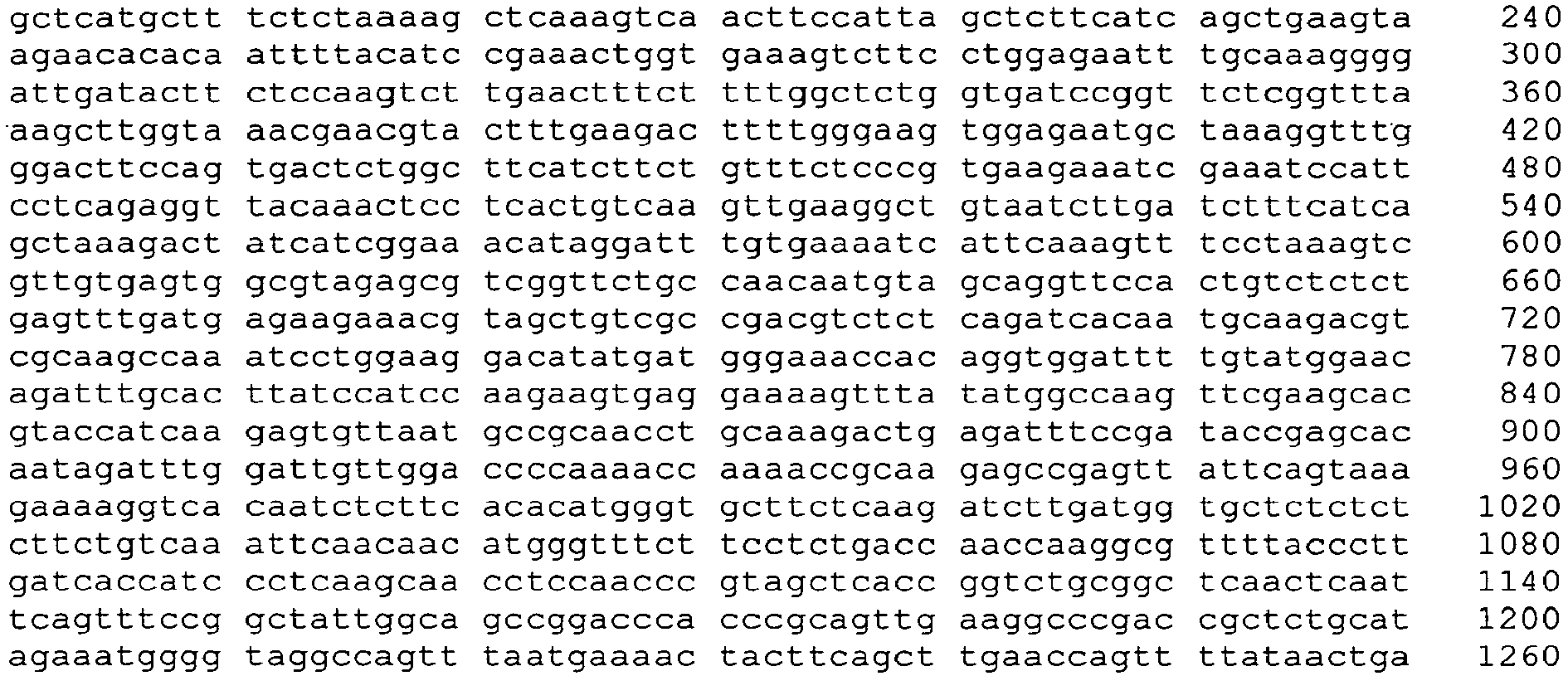
- <210> 435
<211> 419
<212> PRT
<213> Arabidopsis thaliana - <400> 435


- <210> 436
<211> 1410
<212> DNA
<213> Oryza sativa - <400> 436

- <210> 437
<211> 469
<212> PRT
<213> Oryza sativa - <400> 437


- <210> 438
<211> 1428
<212> DNA
<213> Oryza sativa - <400> 438

- <210> 439
<211> 475
<212> PRT
<213> Oryza sativa - <400> 439


- <210> 440
<211> 1155
<212> DNA
<213> Populus spp. - <400> 440

- <210> 441
<211> 384
<212> PRT
<213> Populus spp. - <400> 441

- <210> 442
<211> 1398
<212> DNA
<213> Populus spp. - <400> 442


- <210> 443
<211> 465
<212> PRT
<213> Populus spp. - <400> 443


- <210> 444
<211> 1419
<212> DNA
<213> Populus spp. - <400> 444

- <210> 445
<211> 472
<212> PRT
<213> Populus spp. - <400> 445


- <210> 446
<211> 2042
<212> DNA
<213> Brassica rapa - <400> 446
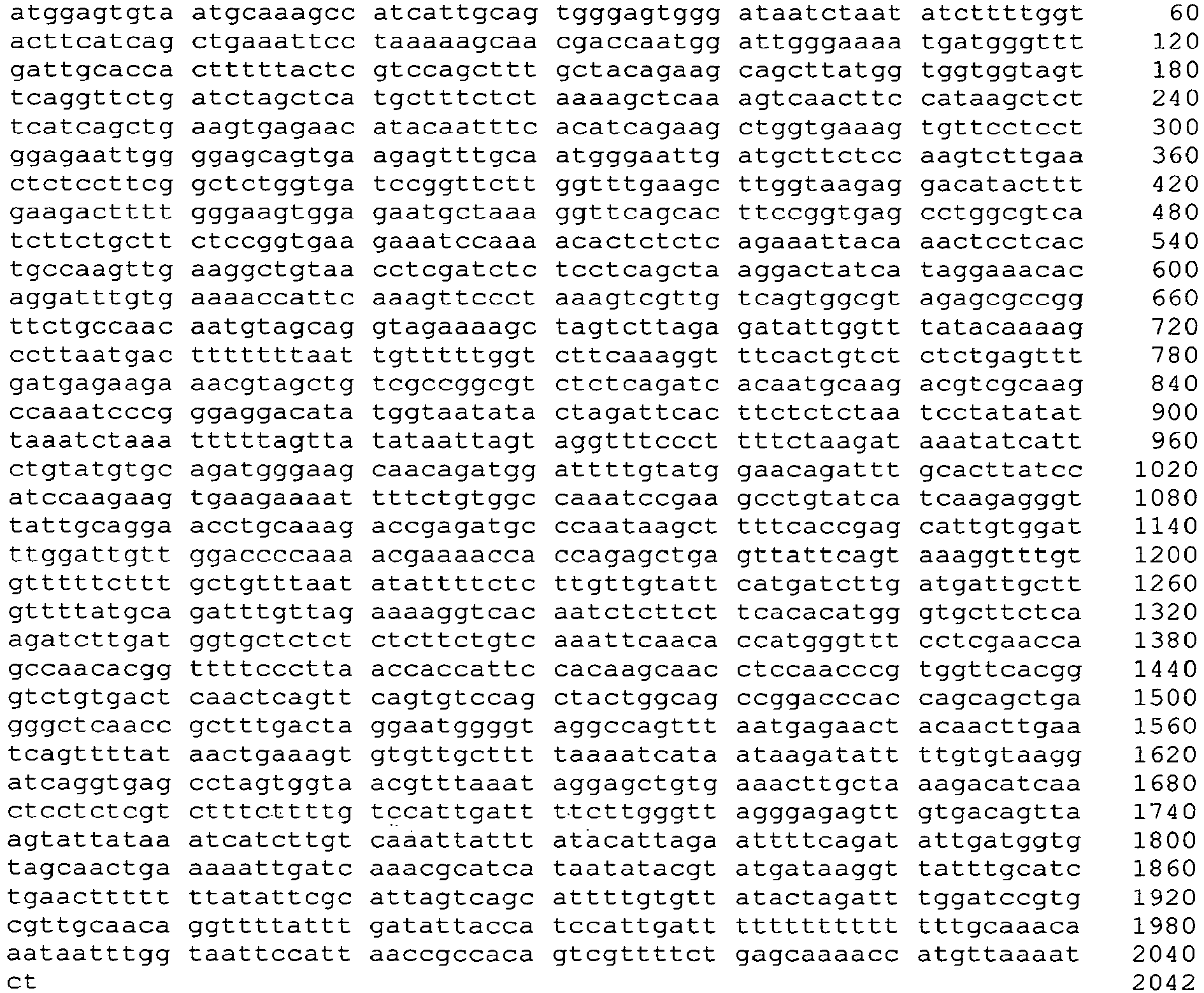
- <210> 447
<211> 282
<212> PRT
<213> Brassica rapa - <400> 447


- <210> 448
<211> 1684
<212> DNA
<213> Zea mays - <400> 448


- <210> 449
<211> 482
<212> PRT
<213> Zea mays - <400> 449

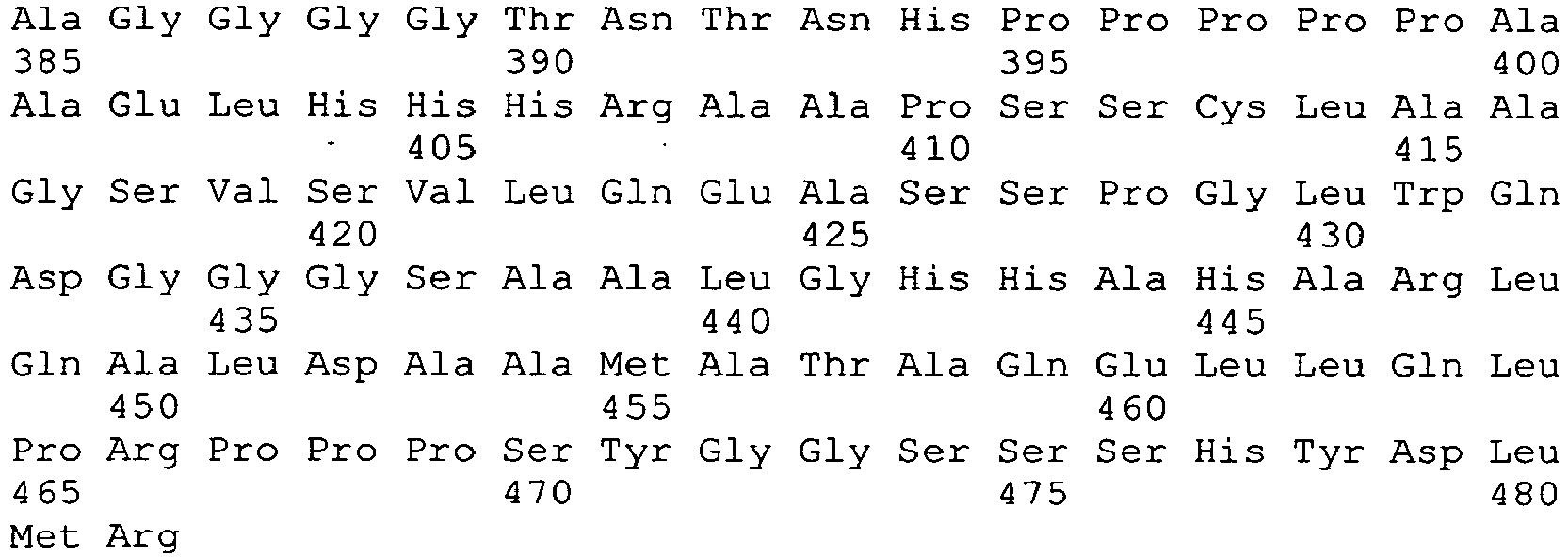
- <210> 450
<211> 1320
<212> DNA
<213> Zea mays - <400> 450

- <210> 451
<211> 439
<212> PRT
<213> Zea mays - <400> 451


- <210> 452
<211> 1422
<212> DNA
<213> Triticum aestivum - <400> 452


- <210> 453
<211> 473
<212> PRT
<213> Triticum aestivum - <400> 453
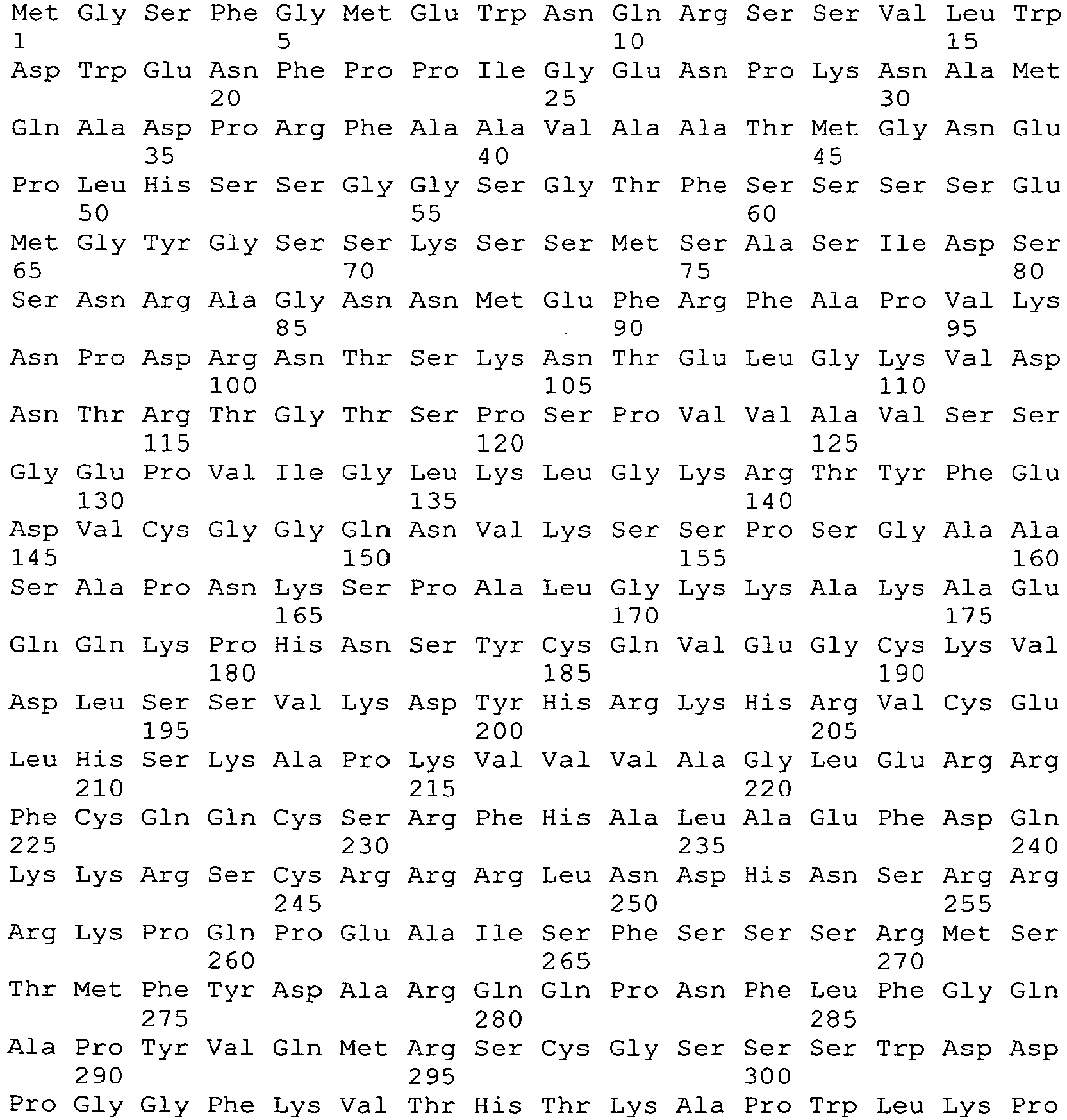

- <210> 454
<211> 1491
<212> DNA
<213> Vitis vinifera - <400> 454

- <210> 455
<211> 496
<212> PRT
<213> Vitis vinifera - <400> 455

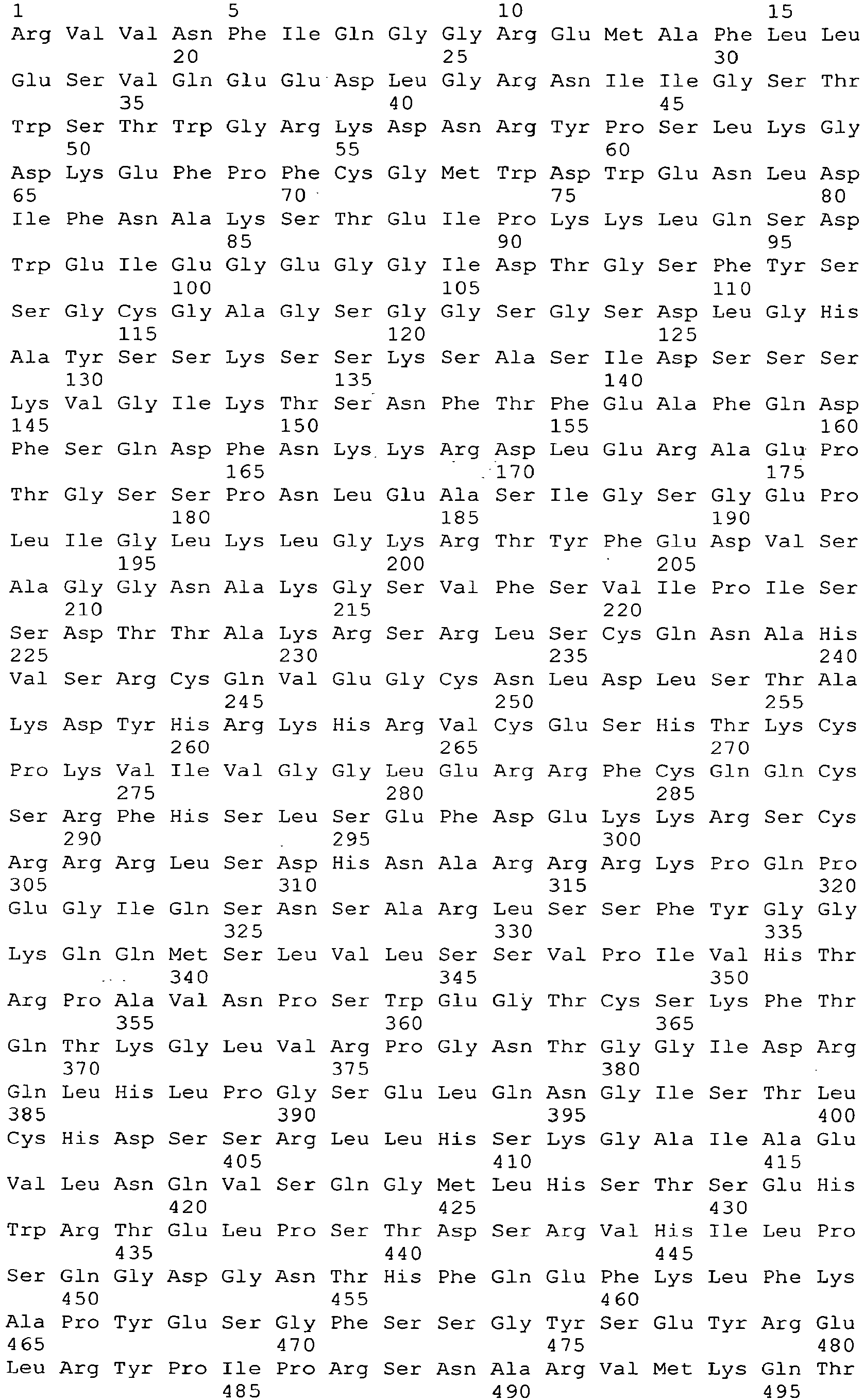
- <210> 456
<211> 79
<212> PRT
<213> Artificial sequence - <220>
<223> sbp domain of SEQ ID NO: 2 - <400> 456

- <210> 457
<211> 79
<212> PRT
<213> Artificial sequence - <220>
<223> sbp domain of SEQ ID NO: 7 - <400> 457

- <210> 458
<211> 79
<212> PRT
<213> Artificial sequence - <220>
<223> sbp domain of SEQ ID NO: 9 - <400> 458

- <210> 459
<211> 79
<212> PRT
<213> Artificial sequence - <220>
<223> sbp domain of SEQ ID NO: 11 - <400> 459

- <210> 460
<211> 79
<212> PRT
<213> Artificial sequence - <220>
<223> sbp domain of SEQ ID NO: 13 - <400> 460

- <210> 461
<211> 108
<212> PRT
<213> Artificial sequence - <220>
<223> sbp domain of SEQ ID NO: 15 - <400> 461


- <210> 462
<211> 98
<212> PRT
<213> Artificial sequence - <220>
<223> sbp domain of SEQ ID NO: 17 - <400> 462
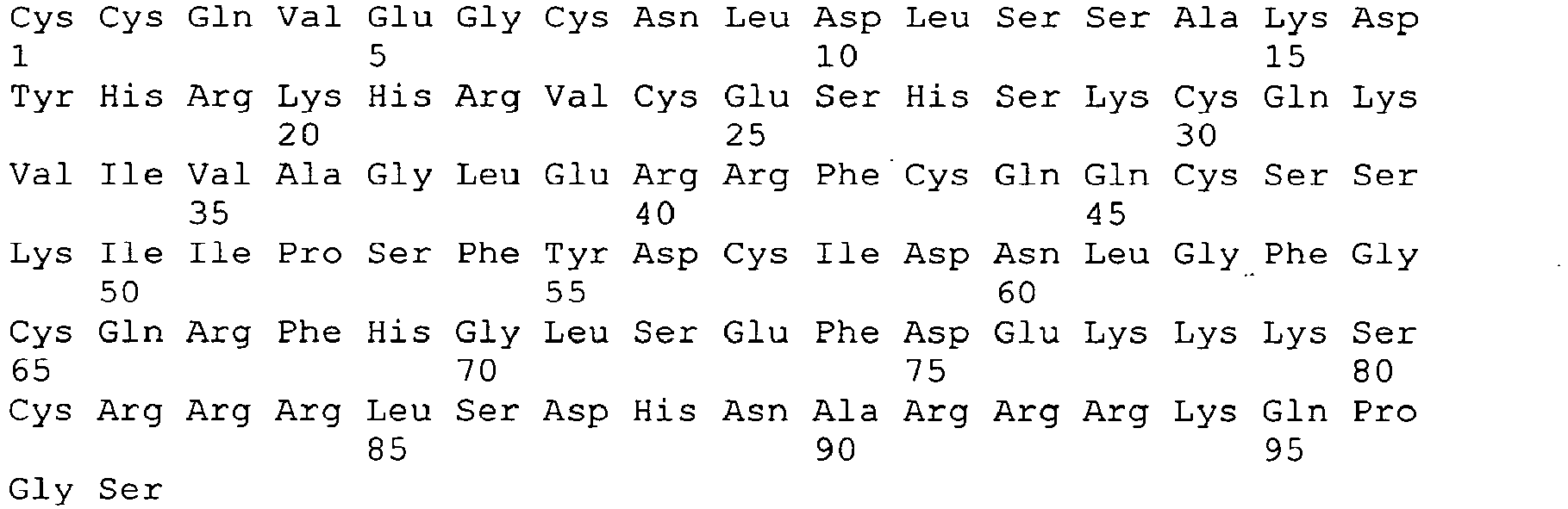
- <210> 463
<211> 98
<212> PRT
<213> Artificial sequence - <220>
<223> sbp domain of SEQ ID NO: 19 - <400> 463
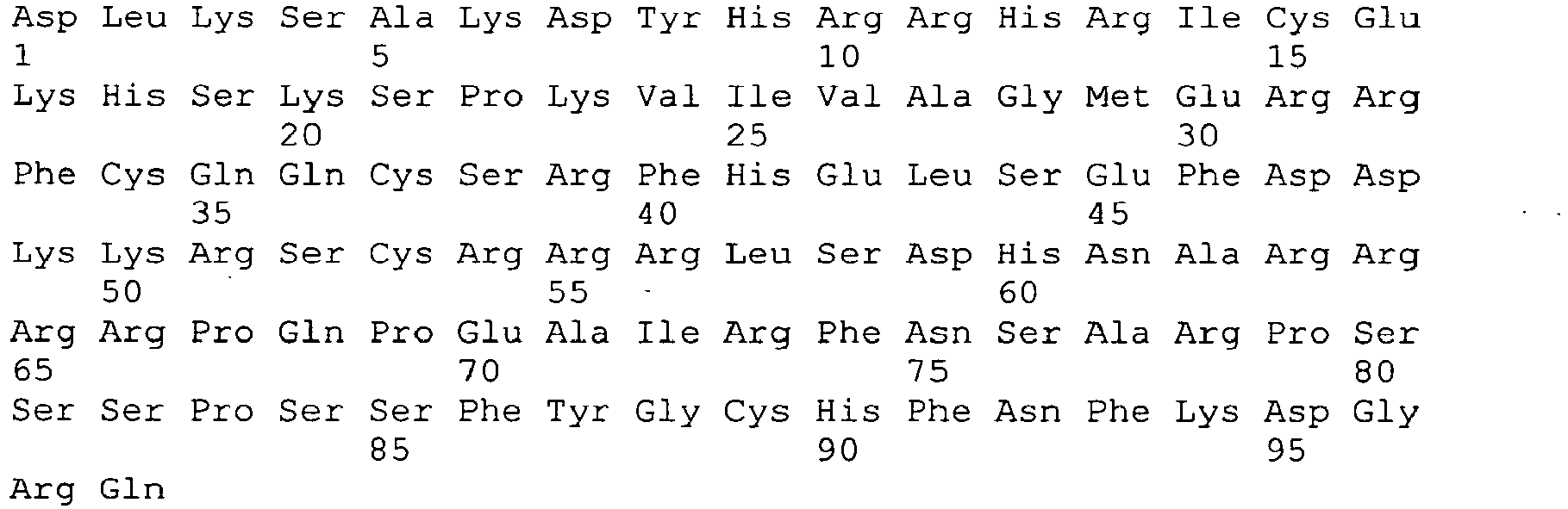
- <210> 464
<211> 79
<212> PRT
<213> Artificial sequence - <220>
<223> sbp domain of SEQ ID NO: 21 - <400> 464
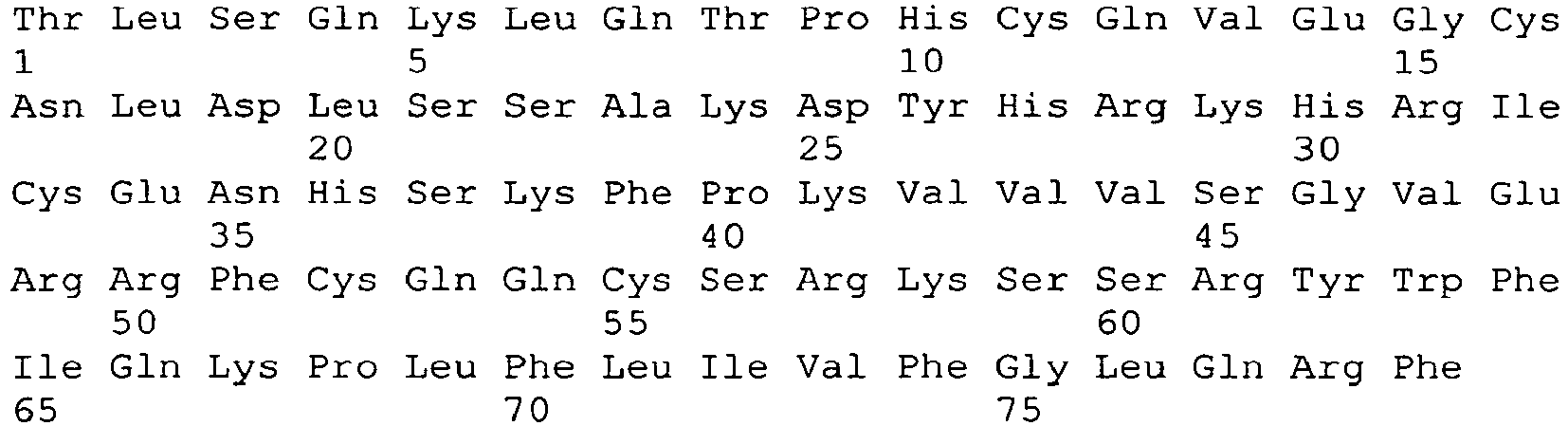
- <210> 465
<211> 82
<212> PRT
<213> Artificial sequence - <220>
<223> sbp domain of SEQ ID NO: 23 - <400> 465

- <210> 466
<211> 75
<212> PRT
<213> Artificial sequence - <220>
<223> sbp domain of SEQ ID NO: 25 - <400> 466

- <210> 467
<211> 85
<212> PRT
<213> Artificial sequence - <220>
<223> sbp domain of SEQ ID NO: 27
- <210> 468
<211> 81
<212> PRT
<213> Artificial sequence - <220>
<223> sbp domain of SEQ ID NO: 29 - <400> 468

- <210> 469
<211> 6
<212> PRT
<213> Artificial sequence - <220>
<223>motif 1 - <400> 469

- <210> 470
<211> 12
<212> PRT
<213> Artificial sequence - <220>
<223>motif 2 - <400> 470

- <210> 471
<211> 7
<212> PRT
<213> Artificial sequence - <220>
<223>motif 3 - <400> 471
Ala Leu Ser Leu Leu Ser Thr - 1 5
- <210> 472
<211> 6
<212> PRT
<213> Artificial sequence - <220>
<223>motif 4 - <400> 472

- <210> 473
<211> 56
<212> DNA
<213> Artificial sequence - <220>
<223>primer 1 - <400> 473
ggggacaagt ttgtacaaaa aagcaggctt aaacaatgga ctgcaacatg gtatct 56 - <210> 474
<211> 54
<212> DNA
<213> Artificial sequence - <220>
<223>primer 2 - <400> 474
ggggaccact ttgtacaaga aagctgggtc acattactta ctcatctatt ttgg 54 - <210> 475
<211> 9
<212> DNA
<213> Artificial sequence - <220>
<223> promoter box - <220>
<221> misc_feature
<222> (2)..(2)
<223> n is a, c, g, or t - <400> 475
tncgtacaa 9 - <210> 476
<211> 2194
<212> DNA
<213> Oryza sativa - <400> 476

- <210> 477
<211> 1827
<212> DNA
<213> Oryza sativa - <400> 477


- <210> 478
<211> 100
<212> PRT
<213> Artificial sequence - <220>
<223> consensu sbp domain on SPL11 polypeptides - <220>
<221> UNSURE
<222> (26)..(26)
<223> Xaa can be any naturally occurring amino acid - <220>
<221> UNSURE
<222> (30)..(30)
<223> Xaa can be any naturally occurring amino acid - <220>
<221> UNSURE
<222> (49)..(69)
<223> Xaa can be any naturally occurring amino acid or a gap - <400> 478

b only accurate for %GC in the 30% to 75% range.
c L = length of duplex in base pairs.
d oligo, oligonucleotide; In, = effective length of primer = 2×(no. of G/C)+(no. of A/T).
Claims (17)
- A method for increasing seed yield in plants relative to control plants, comprising increasing expression in a plant of a nucleic acid encoding a SPL11 polypeptide, wherein said SPL11 polypeptide comprises a SBP domain having in increasing order of preference at least 70%, 75%, 80%, 85%, 90%, 95%, 97% or more sequence identity to any one of SEQ ID NO: 456 to SEQ ID NO: 468 and SEQ ID NO: 478, wherein said increased seed yield preferably comprises increased total seed weight, number of filled seeds, number of seeds or florets per panicle, thousand-kernel weight, seed filling rate, and/or harvest index relative to control plants.
- Method according to claim 1 wherein said SPL11 polypeptide in addition to the SBP domain comprises any one or more of the following conserved motifs:(i) Motif 1 as represented by SEQ ID NO: 469 wherein any conservative amino acid substitution and/or 1 or 2 non conservative substitution are allowed;(ii) Motif 2 as represented by SEQ ID NO: 470 wherein any change is allowed, provided that at least 4 amino acids have a polar side chain, preferably serine or threonine, and provided that the domain is located at the N-terminal end of the SBP domain;(iii) Motif 3 as represented by SEQ ID NO: 471 wherein 1 or 2 mismatches are allowed;(iv) Motif 4 as represented by SEQ ID NO: 472 wherein 1, 2 or 3 mismatches are allowed.
- Method according to claim 1 or 2, wherein said increased expression is effected by introducing and expressing in a plant a nucleic acid encoding an SPL11 polypeptide as defined in claim 1 or 2.
- Method according to any of claims 1 to 3, wherein said nucleic acid encoding a SPL11 polypeptide encodes any one of the proteins listed in Table G1 or is a portion of such a nucleic acid, or a nucleic acid capable of hybridising with such a nucleic acid and/or wherein said nucleic acid sequence encodes an orthologue or paralogue of any of the proteins given in Table G1 and/or wherein said nucleic acid encodes SEQ ID NO: 428.
- Method according to any of claims 1 to 4, wherein said increased seed yield is obtained under non-stress conditions and/or wherein said increased seed yield is obtained under mild drought stress growth conditions.
- Method according to any one of claims 1 to 5, wherein said nucleic acid is operably linked to a constitutive promoter, preferably to a GOS2 promoter, most preferably to a GOS2 promoter from rice and/or wherein said nucleic acid is operably linked to a seed specific promoter, preferably to a WSI18 promoter, most preferably to a WSI18 promoter from rice.
- An isolated nucleic acid molecule comprising:(i) A nucleic acid represented by SEQ ID NO: 448;(ii) The complement of a nucleic acid represented by SEQ ID NO: 448;(iii) A nucleic acid encoding an SPL11 polypeptide having, in increasing order of preference, at least 70%, 75%, 80%, 85%, 90%, 95%, 96%, 97%, 98%, 99% or more sequence identity to the amino acid sequence represented by SEQ ID NO: 449, and having in increasing order of preference at least 70%, 75%, 80%, 85%, 90%, 95%, 96%, 97%, 98%, 99% or more sequence identity to SEQ ID NO: 465:

- An isolated squamosa promoter binding protein-like 11 (SPL11) polypeptide comprising:(i) an amino acid sequence represented by SEQ ID NO: 449;(ii) an amino acid sequence having, in increasing order of preference, at least 70%, 75%, 80%, 85%, 90%, 95%, 96%, 97%, 98%, 99% or more sequence identity to the amino acid sequence represented by SEQ ID NO: 449, and having in increasing order of preference at least 70%, 75%, 80%, 85%, 90%, 95%, 96%, 97%, 98%, 99% or more sequence identity to SEQ ID NO: 465:

- Construct comprising:(i) nucleic acid encoding an SPL11 polypeptide as defined in claim 1, 2 or 7;(ii) one or more control sequences capable of driving expression of the nucleic acid sequence of (i); and optionally(iii) a transcription termination sequence.
- Construct according to claim 9 wherein one of said control sequences is a constitutive promoter, preferably a GOS2 promoter, most preferably a GOS2 promoter from rice and/or wherein one of said control sequences is a seed specific promoter, preferably a WSI18 promoter, most preferably a WSI18 promoter from rice.
- Use of a construct according to claim 9 or 10 in a method for making plants having increased seed yield relative to control plants
- Plant, plant part or plant cell transformed with a construct according to claim 9 or 10.
- Method for the production of a transgenic plant having increased seed yield relative to control plants, comprising:(i) Introducing and expressing in a plant a nucleic acid encoding an SPL11 polypeptide as defined in claim 1, 2 or 7; and(ii) Cultivating the plant cell under conditions promoting plant growth and development.
- Transgenic plant having increased seed yield relative to control plants, resulting from increased expression of a nucleic acid transgene encoding an SPL11 polypeptide as defined in claim 1, 2 or 7, or a transgenic plant cell derived from said transgenic plant.
- Transgenic plant according to claim12 or 14, or a transgenic plant cell derived thereof, wherein said plant is a dicot crop plant such as soybean, cotton or canola or a monocot crop plant or cereal, such as rice, maize, wheat, barley, millet, rye, triticale, sorghum and oats, and wherein said transgenic plant or plant cell comprises a recombinant nucleic acid encoding a SPL11 polypeptide as defined in claim 1, 2 or 7.
- Harvestable parts of a plant according to claim 15, wherein said harvestable parts are preferably shoot biomass, flowers and/or seeds, and wherein cells of said harvestable parts comprise a recombinant nucleic acid encoding a SPL11 polypeptide as defined in claim 1, 2 or 7.
- Use of a nucleic acid encoding an SPL11 polypeptide as defined in claim 1, 2 or 7 in increasing seed yield and/or shoot biomass in plants relative to control plants.
Priority Applications (1)
| Application Number | Priority Date | Filing Date | Title |
|---|---|---|---|
| EP09178941.2A EP2228386B1 (en) | 2007-05-03 | 2008-05-02 | Plants having enhanced yield-related traits and a method for making the same |
Applications Claiming Priority (12)
| Application Number | Priority Date | Filing Date | Title |
|---|---|---|---|
| EP07107448 | 2007-05-03 | ||
| US91657507P | 2007-05-08 | 2007-05-08 | |
| EP07109052 | 2007-05-29 | ||
| EP07109068 | 2007-05-29 | ||
| US94221407P | 2007-06-06 | 2007-06-06 | |
| EP07109961 | 2007-06-11 | ||
| EP07110557 | 2007-06-19 | ||
| EP07110548 | 2007-06-19 | ||
| US93798907P | 2007-06-29 | 2007-06-29 | |
| US94803607P | 2007-07-05 | 2007-07-05 | |
| EP08767542.7A EP2069509B1 (en) | 2007-05-03 | 2008-05-02 | Plants having enhanced yield-related traits and a method for making the same |
| EP09178941.2A EP2228386B1 (en) | 2007-05-03 | 2008-05-02 | Plants having enhanced yield-related traits and a method for making the same |
Related Parent Applications (4)
| Application Number | Title | Priority Date | Filing Date |
|---|---|---|---|
| PCT/US2008/005732 Previously-Filed-Application WO2008137108A2 (en) | 2007-05-03 | 2008-05-02 | Plants having enhanced yield-related traits and a method for making the same |
| EP08767542.7 Division | 2008-05-02 | ||
| WOPCT/US2008/005732 Previously-Filed-Application | 2008-05-02 | ||
| EP08767542.7A Division EP2069509B1 (en) | 2007-05-03 | 2008-05-02 | Plants having enhanced yield-related traits and a method for making the same |
Publications (2)
| Publication Number | Publication Date |
|---|---|
| EP2228386A1 EP2228386A1 (en) | 2010-09-15 |
| EP2228386B1 true EP2228386B1 (en) | 2015-03-18 |
Family
ID=39758827
Family Applications (5)
| Application Number | Title | Priority Date | Filing Date |
|---|---|---|---|
| EP09178941.2A Not-in-force EP2228386B1 (en) | 2007-05-03 | 2008-05-02 | Plants having enhanced yield-related traits and a method for making the same |
| EP08767542.7A Not-in-force EP2069509B1 (en) | 2007-05-03 | 2008-05-02 | Plants having enhanced yield-related traits and a method for making the same |
| EP20100181988 Not-in-force EP2316956B1 (en) | 2007-05-03 | 2008-05-02 | Plants having enhanced yield-related traits and a method for making the same |
| EP11192693.7A Not-in-force EP2505652B1 (en) | 2007-05-03 | 2008-05-02 | Plants having enhanced yield-related traits and a method for making the same |
| EP09178578A Not-in-force EP2230310B1 (en) | 2007-05-03 | 2008-05-02 | Plants having enhanced yield-related traits and a method for making the same |
Family Applications After (4)
| Application Number | Title | Priority Date | Filing Date |
|---|---|---|---|
| EP08767542.7A Not-in-force EP2069509B1 (en) | 2007-05-03 | 2008-05-02 | Plants having enhanced yield-related traits and a method for making the same |
| EP20100181988 Not-in-force EP2316956B1 (en) | 2007-05-03 | 2008-05-02 | Plants having enhanced yield-related traits and a method for making the same |
| EP11192693.7A Not-in-force EP2505652B1 (en) | 2007-05-03 | 2008-05-02 | Plants having enhanced yield-related traits and a method for making the same |
| EP09178578A Not-in-force EP2230310B1 (en) | 2007-05-03 | 2008-05-02 | Plants having enhanced yield-related traits and a method for making the same |
Country Status (11)
| Country | Link |
|---|---|
| US (2) | US20100132071A1 (en) |
| EP (5) | EP2228386B1 (en) |
| CN (2) | CN104862333A (en) |
| AR (1) | AR067314A1 (en) |
| AU (1) | AU2008248189A1 (en) |
| BR (2) | BRPI0810703A2 (en) |
| CA (2) | CA2900183A1 (en) |
| DE (1) | DE112008001044T5 (en) |
| ES (5) | ES2542311T3 (en) |
| MX (1) | MX2009011716A (en) |
| WO (1) | WO2008137108A2 (en) |
Cited By (1)
| Publication number | Priority date | Publication date | Assignee | Title |
|---|---|---|---|---|
| CN107012167A (en) * | 2009-06-30 | 2017-08-04 | 波夫曼斯种植公司 | The expression of the transcription regulaton factor of heat tolerance can be provided |
Families Citing this family (56)
| Publication number | Priority date | Publication date | Assignee | Title |
|---|---|---|---|---|
| EP2240009A2 (en) * | 2007-12-20 | 2010-10-20 | BASF Plant Science GmbH | Plants having enhanced yield-related traits and a method for making the same |
| WO2010003231A1 (en) * | 2008-07-11 | 2010-01-14 | Socpra-Sciences Et Génie S.E.C. | Multi-leu peptides and analogues thereof as selective pace4 inhibitors and effective antiproliferative agents |
| DE112010004383T5 (en) * | 2009-11-13 | 2012-08-23 | Basf Plant Science Company Gmbh | Plants with enhanced yield-related traits and methods for their production |
| NZ601341A (en) | 2010-01-22 | 2014-02-28 | Bayer Ip Gmbh | Acaricide and/or insecticide active substance combinations |
| BR112012022880A2 (en) * | 2010-03-18 | 2015-09-15 | Basf Plant Science Co Gmbh | methods for increasing yield and / or plant yield traits relative to control plants, for the production of a transgenic plant and for the production of a product, plant, construction, use of a construction, transgenic plant, harvestable parts of a plant, products derived from a plant and use of a nucleic acid |
| US20130158098A1 (en) * | 2010-06-21 | 2013-06-20 | The Board Of Trustees Of The Leland Standford Junior University | Alkenyl Substituted Cycloaliphatic Compounds as Chemical Inducers of Proximity |
| BR112013027860A2 (en) * | 2011-04-29 | 2016-11-29 | Pioneer Hi Bred Int | isolated nucleic acid, plant or plant cell, method for increasing drain capacity, accelerating remobilization and / or grain senescence and drying in a plant, method for increasing drought tolerance in the absence of a productivity penalty under conditions without drought, expression cassette and method for reducing zmme293 expression or zmme293 activity in a plant |
| CN103717076B (en) | 2011-08-10 | 2016-04-13 | 拜耳知识产权股份有限公司 | Active compound combinations containing specific tetramic acid derivatives |
| CN102925466A (en) * | 2011-08-12 | 2013-02-13 | 华中农业大学 | Cotton casein kinase gene and its application |
| CA2852617A1 (en) * | 2011-11-14 | 2013-05-23 | Basf Plant Science Company Gmbh | Plants having enhanced yield-related traits and a method for making the same |
| CN103102402A (en) * | 2011-11-14 | 2013-05-15 | 中国科学院遗传与发育生物学研究所 | Soybean transcription active protein GmPHD5, and coding gene and application thereof |
| AU2012342032A1 (en) * | 2011-11-25 | 2014-05-22 | Basf Plant Science Company Gmbh | Plants having enhanced yield-related traits and method for making the same |
| US10634668B2 (en) | 2012-09-13 | 2020-04-28 | Takara Bio Usa, Inc. | Modifiable chemical inducers of proximity and methods of using the same |
| CN103232533A (en) * | 2012-11-13 | 2013-08-07 | 华中科技大学 | Wheat drought-resistant gene TaASR1 and application thereof |
| CN103215280B (en) * | 2013-05-08 | 2014-08-20 | 山东省农业科学院高新技术研究中心 | Peanut SPL (squamosa promoter-binding protein-like) transcription factor gene, as well as encoded protein and application thereof |
| CN105283553B (en) | 2013-06-11 | 2021-06-25 | 克隆技术实验室有限公司 | Protein-enriched microvesicles and methods of making and using the same |
| CN104341523B (en) * | 2013-08-02 | 2017-05-17 | 中国农业科学院作物科学研究所 | Application of oryza sativa transcription factor Os03g33090 gene CDS sequence |
| CN104371023B (en) * | 2013-08-13 | 2017-09-05 | 中国农业科学院作物科学研究所 | Application of CDS Sequence of Rice Transcription Factor Os01g36630 Gene |
| CN105452274A (en) * | 2013-09-26 | 2016-03-30 | 创世纪种业有限公司 | A kind of mustard leucine zipper protein bZIP-6 and its coding gene and application |
| WO2015077904A1 (en) * | 2013-11-29 | 2015-06-04 | China Agricultural University | Corn genes zmspl1 and zmspl2 and uses thereof |
| WO2015175405A1 (en) * | 2014-05-12 | 2015-11-19 | Donald Danforth Plant Science Center | Compositions and methods for increasing plant growth and yield |
| CN105087640B (en) * | 2014-05-23 | 2018-03-30 | 中国科学院上海生命科学研究院 | Adjust gene and its application of vegetable seeds development |
| GB201501941D0 (en) * | 2015-02-05 | 2015-03-25 | British American Tobacco Co | Method |
| WO2016130087A1 (en) * | 2015-02-11 | 2016-08-18 | Temasek Life Sciences Laboratory Limited | Controlling timing of plant flowering |
| MA45638A (en) * | 2015-08-07 | 2019-05-22 | BASF Agricultural Solutions Seed US LLC | USING THE ANNEXINE PROMOTER TO IMPROVE THE YIELD OF PLANTS UNDER STRESS CONDITIONS |
| CN105524933B (en) * | 2016-01-20 | 2018-12-07 | 中国农业科学院生物技术研究所 | OsJMJ714 influences the function and its application of rice grain size and salt stress patience |
| CN105734140B (en) * | 2016-03-30 | 2017-06-30 | 广东省农业科学院蔬菜研究所 | Eggplant high temperature stress reference gene and its application |
| CN106399513B (en) * | 2016-09-28 | 2019-08-09 | 中国农业科学院作物科学研究所 | Wheat Gene TaSPL20-7D Molecular Marker and Its Application in Identification of Wheat Yield-related Traits |
| CN107058321B (en) * | 2017-04-13 | 2020-09-01 | 中国农业科学院作物科学研究所 | Application of miR156 and precursor thereof in regulation and control of wheat tillering number |
| CN109161550B (en) * | 2018-09-26 | 2020-06-30 | 华中农业大学 | SlbHLH59 gene for regulating and controlling ascorbic acid content of tomato fruits and application method |
| CN111041034B (en) * | 2018-10-11 | 2022-09-13 | 内蒙古农业大学 | Middle caragana Senescence _ reg-1 type protein coding gene CiDUF584-1 and application thereof |
| CN109868278B (en) * | 2019-03-20 | 2021-02-09 | 浙江大学 | Application of OsSPL3 in controlling adventitious root development of rice |
| EP3969466A4 (en) * | 2019-05-14 | 2023-01-18 | Yield10 Bioscience, Inc. | MODIFIED PLANTS COMPRISING AN UNRELATED PROMOTER POLYNUCLEOTIDE OPERATIONALLY LINKED TO A CODING SEQUENCE CODING FOR A TRANSCRIPTION FACTOR |
| CN110183524B (en) * | 2019-06-11 | 2022-06-14 | 扬州大学 | Gene GmKRP2a for promoting soybean main root elongation, protein and application thereof |
| CN112680472B (en) * | 2019-10-17 | 2023-08-01 | 华南农业大学 | Application of ZmSPL gene in regulation and control of maize crown root or aerial root development |
| CN110734481B (en) * | 2019-11-12 | 2021-02-19 | 中国农业大学 | Application of tomato SlMIP protein and its encoding gene in regulating botrytis resistance of plants |
| CN110734916B (en) * | 2019-11-26 | 2020-11-03 | 浙江大学 | Application of OsbHLH98 in regulating rice leaf angle |
| CN112940092B (en) * | 2019-12-11 | 2022-06-28 | 中国科学院遗传与发育生物学研究所 | Application of maize ZmbHLH124 protein and its encoding gene in regulating plant drought tolerance |
| CN111072761B (en) * | 2020-01-09 | 2021-06-01 | 西南大学 | EjSPL5 gene, its encoded protein and its application in promoting the transformation of loquat into flower |
| BR112022012618A2 (en) | 2020-01-14 | 2022-09-06 | Centure Application Ltd | SYSTEM AND METHOD FOR REAL-TIME CULTURE MANAGEMENT |
| CN112375777B (en) * | 2020-08-05 | 2022-05-27 | 浙江大学 | Application of OsbHLH6 in improving phosphorus absorption capacity of crops and breeding for low-phosphorus tolerance of crops |
| CN114250230B (en) * | 2020-09-24 | 2024-02-09 | 中国科学院遗传与发育生物学研究所 | Application of soybean histone demethylase GmJMJ30-2 in regulation and control of plant stress tolerance |
| CN112575106A (en) * | 2020-12-17 | 2021-03-30 | 东北农业大学 | Molecular marker related to saline-alkali tolerance of corn and developed based on transcription factor gene ZmNAC89 and application thereof |
| CN115354042A (en) * | 2021-05-19 | 2022-11-18 | 湖南农业大学 | Promoter and preparation method and application thereof |
| US20230116819A1 (en) * | 2021-10-07 | 2023-04-13 | Pairwise Plants Services, Inc. | Methods for improving floret fertility and seed yield |
| CN114231542B (en) * | 2022-01-21 | 2023-02-24 | 沈阳农业大学 | bHLH gene influencing salt tolerance of populus deltoides and application thereof |
| CN115287290B (en) * | 2022-05-25 | 2023-11-03 | 广东省农业科学院农业生物基因研究中心 | Application of histone demethylase gene OsJMJ718 and encoding protein thereof in regulation and control of rice seed vigor |
| CN115960949A (en) * | 2022-09-23 | 2023-04-14 | 山东省农业科学院 | Application of switchgrass lateral organ boundary domain transcription factor PvLBD12 in regulation and control of plant growth |
| CN116286944B (en) * | 2022-12-09 | 2023-08-29 | 中国科学院华南植物园 | Application of histone demethylase SlJMJ10 and encoding gene thereof in regulation and control of tomato fruit maturation |
| CN116334107B (en) * | 2023-03-21 | 2024-12-17 | 中国农业大学 | China rose gene RhJMJ and application thereof |
| CN116751787B (en) * | 2023-04-29 | 2024-11-22 | 中国烟草总公司郑州烟草研究院 | Tobacco nicotine metabolism-related transcription factor NtbHLH66 and its encoding gene, RNAi interference vector and application |
| CN116536286B (en) * | 2023-05-12 | 2023-11-10 | 南京农业大学 | Application of rice OsCTK1 protein and its encoding gene |
| CN118620916B (en) * | 2024-08-12 | 2024-11-08 | 海南大学三亚南繁研究院 | Passiflora edulis monosaccharide transporter gene PeMST1 and application thereof |
| CN119286910A (en) * | 2024-10-29 | 2025-01-10 | 西南大学 | Application of lily pathogenesis-related protein LhSorPR10-1 in improving plant disease resistance |
| CN119530280B (en) * | 2024-11-14 | 2026-01-06 | 浙江大学 | Application of OsSPL3 in regulating root thickness traits in rice |
| CN121108251B (en) * | 2025-02-12 | 2026-08-07 | 江南大学 | An active polypeptide, its preparation method and application |
Family Cites Families (45)
| Publication number | Priority date | Publication date | Assignee | Title |
|---|---|---|---|---|
| US4962028A (en) | 1986-07-09 | 1990-10-09 | Dna Plant Technology Corporation | Plant promotors |
| US4987071A (en) | 1986-12-03 | 1991-01-22 | University Patents, Inc. | RNA ribozyme polymerases, dephosphorylases, restriction endoribonucleases and methods |
| US5116742A (en) | 1986-12-03 | 1992-05-26 | University Patents, Inc. | RNA ribozyme restriction endoribonucleases and methods |
| WO1989012102A1 (en) | 1988-06-01 | 1989-12-14 | The Texas A&M University System | Method for transforming plants via the shoot apex |
| AU4115693A (en) | 1992-04-24 | 1993-11-29 | Sri International | In vivo homologous sequence targeting in eukaryotic cells |
| HUT71929A (en) | 1992-06-29 | 1996-02-28 | Gene Shears Pty Ltd | Nucleic acids and methods of use thereof for controlling viral pathogens |
| US5401836A (en) | 1992-07-16 | 1995-03-28 | Pioneer Hi-Bre International, Inc. | Brassica regulatory sequence for root-specific or root-abundant gene expression |
| WO1994012015A1 (en) | 1992-11-30 | 1994-06-09 | Chua Nam Hai | Expression motifs that confer tissue- and developmental-specific expression in plants |
| EP0728199A1 (en) | 1993-07-22 | 1996-08-28 | Gene Shears Pty Limited | Dna virus ribozymes |
| WO1995014098A1 (en) | 1993-11-19 | 1995-05-26 | Biotechnology Research And Development Corporation | Chimeric regulatory regions and gene cassettes for expression of genes in plants |
| DK0733059T3 (en) | 1993-12-09 | 2000-10-16 | Univ Jefferson | Compounds and Methods for Site-directed Mutations in Eukaryotic Cells |
| US6395547B1 (en) | 1994-02-17 | 2002-05-28 | Maxygen, Inc. | Methods for generating polynucleotides having desired characteristics by iterative selection and recombination |
| US5605793A (en) | 1994-02-17 | 1997-02-25 | Affymax Technologies N.V. | Methods for in vitro recombination |
| DE69636288T2 (en) | 1995-10-06 | 2007-07-26 | Bayer Bioscience N.V. | SEEDING RESISTANCE |
| US7390937B2 (en) | 1996-02-14 | 2008-06-24 | The Governors Of The University Of Alberta | Plants with enhanced levels of nitrogen utilization proteins in their root epidermis and uses thereof |
| GB9607517D0 (en) | 1996-04-11 | 1996-06-12 | Gene Shears Pty Ltd | The use of DNA Sequences |
| AU5816098A (en) * | 1997-01-08 | 1998-08-03 | University Of Florida | Polynucleotides encoding choline monooxygenase and plants transformed therewith |
| GB9703146D0 (en) | 1997-02-14 | 1997-04-02 | Innes John Centre Innov Ltd | Methods and means for gene silencing in transgenic plants |
| GB9710475D0 (en) | 1997-05-21 | 1997-07-16 | Zeneca Ltd | Gene silencing |
| NL1006681C2 (en) | 1997-07-29 | 1999-02-08 | Gho St Holding Bv | Application of physiologically acceptable vanadium compounds, salts and complexes. |
| GB9720148D0 (en) | 1997-09-22 | 1997-11-26 | Innes John Centre Innov Ltd | Gene silencing materials and methods |
| DK1068311T3 (en) | 1998-04-08 | 2011-08-08 | Commw Scient Ind Res Org | Methods and means for obtaining modified phenotypes |
| AU756960B2 (en) | 1998-06-26 | 2003-01-30 | Iowa State University Research Foundation Inc. | Materials and methods for the alteration of enzyme and acetyl CoA levels in plants |
| US6555732B1 (en) | 1998-09-14 | 2003-04-29 | Pioneer Hi-Bred International, Inc. | Rac-like genes and methods of use |
| EP1033405A3 (en) | 1999-02-25 | 2001-08-01 | Ceres Incorporated | Sequence-determined DNA fragments and corresponding polypeptides encoded thereby |
| US20100293669A2 (en) * | 1999-05-06 | 2010-11-18 | Jingdong Liu | Nucleic Acid Molecules and Other Molecules Associated with Plants and Uses Thereof for Plant Improvement |
| WO2001006844A1 (en) | 1999-07-22 | 2001-02-01 | Japan As Represented By Director General Of National Institute Of Agrobiological Resources Ministry Of Agriculture, Forestry And Fisheries | Method for superrapid transformation of monocotyledon |
| WO2001014572A2 (en) | 1999-08-26 | 2001-03-01 | Basf Plant Science Gmbh | Plant gene expression, controlled by constitutive plant v-atpase promoters |
| US20110131679A2 (en) * | 2000-04-19 | 2011-06-02 | Thomas La Rosa | Rice Nucleic Acid Molecules and Other Molecules Associated with Plants and Uses Thereof for Plant Improvement |
| FR2808285B1 (en) | 2000-04-28 | 2004-10-15 | Biogemma Fr | PROCESS FOR OBTAINING PLANTS WITH INCREASED RESISTANCE TO WATER STRESS |
| AU2002341542A1 (en) * | 2001-06-22 | 2003-03-03 | Syngenta Participations Ag | Transcription factors of cereals |
| CN1342772A (en) * | 2001-10-24 | 2002-04-03 | 中国科学院成都生物研究所 | Agrobacterium medicated plant transgene techhnique |
| AU2003285856A1 (en) | 2002-09-18 | 2004-04-23 | Mendel Biotechnology, Inc. | Polynucleotides and polypeptides in plants |
| US7235710B2 (en) * | 2003-01-21 | 2007-06-26 | Cropdesign N.V. | Regulatory sequence |
| US7427676B2 (en) | 2003-02-04 | 2008-09-23 | Crop Design N.V. | Rice promoters |
| US6953880B2 (en) * | 2003-02-28 | 2005-10-11 | University Of Arkansas, N.A. | Rice cultivar ‘Francis’ |
| WO2004093530A2 (en) * | 2003-04-22 | 2004-11-04 | Agrinomics Llc | Generation of plants with altered oil content |
| US20040216190A1 (en) * | 2003-04-28 | 2004-10-28 | Kovalic David K. | Nucleic acid molecules and other molecules associated with plants and uses thereof for plant improvement |
| US7968768B2 (en) * | 2003-06-24 | 2011-06-28 | Dow Agrosciences Llc | Generation of plants with improved drought tolerance |
| US7071380B1 (en) * | 2003-08-29 | 2006-07-04 | Agrigenesis Biosciences Limited | Control of floral induction |
| US20060107345A1 (en) * | 2003-09-30 | 2006-05-18 | Nickolai Alexandrov | Sequence-determined DNA fragments and corresponding polypeptides encoded thereby |
| MXPA05000401A (en) * | 2004-01-09 | 2005-07-12 | Carnegie Inst Of Washington | Indeterminate gametophyte 1 (ig1), mutations of ig1, orthologs of ig1, and uses thereof. |
| ATE438713T1 (en) * | 2004-02-02 | 2009-08-15 | Du Pont | CHANGE IN ROOT STRUCTURE DURING PLANT DEVELOPMENT |
| US20070270578A1 (en) * | 2004-11-25 | 2007-11-22 | Cropdesign N.V. | Plants Having Increased Yield and a Method for Making the Same |
| US7582817B2 (en) * | 2005-03-23 | 2009-09-01 | E.I. Du Pont De Nemours And Company | Alteration of plant embryo/endosperm size during development |
-
2008
- 2008-05-02 EP EP09178941.2A patent/EP2228386B1/en not_active Not-in-force
- 2008-05-02 ES ES10181988.6T patent/ES2542311T3/en active Active
- 2008-05-02 CN CN201410643355.2A patent/CN104862333A/en active Pending
- 2008-05-02 AU AU2008248189A patent/AU2008248189A1/en not_active Abandoned
- 2008-05-02 CA CA2900183A patent/CA2900183A1/en not_active Abandoned
- 2008-05-02 EP EP08767542.7A patent/EP2069509B1/en not_active Not-in-force
- 2008-05-02 CN CN200880022592.XA patent/CN101802202B/en not_active Expired - Fee Related
- 2008-05-02 ES ES08767542.7T patent/ES2437621T3/en active Active
- 2008-05-02 WO PCT/US2008/005732 patent/WO2008137108A2/en not_active Ceased
- 2008-05-02 US US12/598,055 patent/US20100132071A1/en not_active Abandoned
- 2008-05-02 ES ES09178578T patent/ES2403281T3/en active Active
- 2008-05-02 EP EP20100181988 patent/EP2316956B1/en not_active Not-in-force
- 2008-05-02 BR BRPI0810703-3A patent/BRPI0810703A2/en not_active Application Discontinuation
- 2008-05-02 EP EP11192693.7A patent/EP2505652B1/en not_active Not-in-force
- 2008-05-02 EP EP09178578A patent/EP2230310B1/en not_active Not-in-force
- 2008-05-02 DE DE112008001044T patent/DE112008001044T5/en not_active Withdrawn
- 2008-05-02 BR BRPI0823525-2A patent/BRPI0823525A2/en not_active Application Discontinuation
- 2008-05-02 ES ES11192693.7T patent/ES2558745T3/en active Active
- 2008-05-02 MX MX2009011716A patent/MX2009011716A/en active IP Right Grant
- 2008-05-02 CA CA002685223A patent/CA2685223A1/en not_active Abandoned
- 2008-05-02 ES ES09178941.2T patent/ES2539530T3/en active Active
- 2008-05-05 AR ARP080101904A patent/AR067314A1/en unknown
-
2015
- 2015-06-02 US US14/728,374 patent/US20150259698A1/en not_active Abandoned
Cited By (1)
| Publication number | Priority date | Publication date | Assignee | Title |
|---|---|---|---|---|
| CN107012167A (en) * | 2009-06-30 | 2017-08-04 | 波夫曼斯种植公司 | The expression of the transcription regulaton factor of heat tolerance can be provided |
Also Published As
| Publication number | Publication date |
|---|---|
| BRPI0823525A2 (en) | 2014-06-03 |
| AU2008248189A1 (en) | 2008-11-13 |
| ES2542311T3 (en) | 2015-08-04 |
| EP2069509A2 (en) | 2009-06-17 |
| ES2539530T3 (en) | 2015-07-01 |
| EP2228386A1 (en) | 2010-09-15 |
| EP2069509B1 (en) | 2013-09-18 |
| WO2008137108A3 (en) | 2009-03-12 |
| EP2505652A1 (en) | 2012-10-03 |
| ES2558745T3 (en) | 2016-02-08 |
| EP2316956A3 (en) | 2011-08-24 |
| AR067314A1 (en) | 2009-10-07 |
| MX2009011716A (en) | 2009-12-11 |
| CN104862333A (en) | 2015-08-26 |
| DE112008001044T5 (en) | 2010-09-02 |
| EP2230310B1 (en) | 2013-01-16 |
| EP2316956A2 (en) | 2011-05-04 |
| ES2403281T3 (en) | 2013-05-17 |
| EP2230310A1 (en) | 2010-09-22 |
| CN101802202B (en) | 2014-12-10 |
| US20100132071A1 (en) | 2010-05-27 |
| BRPI0810703A2 (en) | 2012-12-25 |
| US20150259698A1 (en) | 2015-09-17 |
| CN101802202A (en) | 2010-08-11 |
| CA2900183A1 (en) | 2008-11-13 |
| CA2685223A1 (en) | 2008-11-13 |
| WO2008137108A2 (en) | 2008-11-13 |
| EP2505652B1 (en) | 2015-10-14 |
| ES2437621T3 (en) | 2014-01-13 |
| EP2316956B1 (en) | 2015-04-22 |
Similar Documents
| Publication | Publication Date | Title |
|---|---|---|
| EP2069509B1 (en) | Plants having enhanced yield-related traits and a method for making the same | |
| EP2424994B1 (en) | Plants having enhanced yield-related traits and a method for making the same | |
| EP2173884B1 (en) | Plants having increased yield-related traits and a method for making the same | |
| US20140366222A1 (en) | Plants having enhanced yield-related traits and a method for making the same | |
| EP2599872A2 (en) | Plants having enhanced yield-related traits and a method for making the same | |
| EP2910639A1 (en) | Plants having enhanced yield-related traits and a method for making the same | |
| EP2313508B1 (en) | Plants having enhanced yield-related traits and a method for making the same | |
| EP2441773A1 (en) | Plants having enhanced yield-related traits and a method for making the same | |
| US20130305414A1 (en) | Plants Having Enhanced Yield-Related Traits and a Method for Making the Same | |
| AU2014200810A1 (en) | Plants having increased yield-related traits and a method for making the same | |
| EP2361985A1 (en) | Plants having enhanced yield-related traits and a method for making the same | |
| US9388423B2 (en) | Plants having enhanced yield-related traits and a method for making the same | |
| US8569576B2 (en) | Plants having enhanced yield-related traits and a method for making the same | |
| EP2361927A1 (en) | Plants having enhanced yield-related traits and a method for making the same | |
| US20120331585A1 (en) | Plants having enhanced yield-related traits and a method for making the same | |
| EP2371845A1 (en) | Plants having enhanced yield-related traits and a method for making the same | |
| AU2012275028A1 (en) | Plants having enhanced yield-related traits and a method for making the same |
Legal Events
| Date | Code | Title | Description |
|---|---|---|---|
| PUAI | Public reference made under article 153(3) epc to a published international application that has entered the european phase |
Free format text: ORIGINAL CODE: 0009012 |
|
| 17P | Request for examination filed |
Effective date: 20091211 |
|
| AC | Divisional application: reference to earlier application |
Ref document number: 2069509 Country of ref document: EP Kind code of ref document: P |
|
| AK | Designated contracting states |
Kind code of ref document: A1 Designated state(s): AT BE BG CH CY CZ DE DK EE ES FI FR GB GR HR HU IE IS IT LI LT LU LV MC MT NL NO PL PT RO SE SI SK TR |
|
| 17Q | First examination report despatched |
Effective date: 20110826 |
|
| GRAP | Despatch of communication of intention to grant a patent |
Free format text: ORIGINAL CODE: EPIDOSNIGR1 |
|
| RIC1 | Information provided on ipc code assigned before grant |
Ipc: A01H 5/00 20060101ALN20140915BHEP Ipc: C07K 14/415 20060101AFI20140915BHEP Ipc: C12N 15/82 20060101ALI20140915BHEP |
|
| RIC1 | Information provided on ipc code assigned before grant |
Ipc: C07K 14/415 20060101AFI20140919BHEP Ipc: A01H 5/00 20060101ALN20140919BHEP Ipc: C12N 15/82 20060101ALI20140919BHEP |
|
| INTG | Intention to grant announced |
Effective date: 20141021 |
|
| GRAS | Grant fee paid |
Free format text: ORIGINAL CODE: EPIDOSNIGR3 |
|
| GRAA | (expected) grant |
Free format text: ORIGINAL CODE: 0009210 |
|
| AC | Divisional application: reference to earlier application |
Ref document number: 2069509 Country of ref document: EP Kind code of ref document: P |
|
| AK | Designated contracting states |
Kind code of ref document: B1 Designated state(s): AT BE BG CH CY CZ DE DK EE ES FI FR GB GR HR HU IE IS IT LI LT LU LV MC MT NL NO PL PT RO SE SI SK TR |
|
| REG | Reference to a national code |
Ref country code: GB Ref legal event code: FG4D |
|
| REG | Reference to a national code |
Ref country code: CH Ref legal event code: EP |
|
| REG | Reference to a national code |
Ref country code: IE Ref legal event code: FG4D |
|
| REG | Reference to a national code |
Ref country code: AT Ref legal event code: REF Ref document number: 716511 Country of ref document: AT Kind code of ref document: T Effective date: 20150415 |
|
| REG | Reference to a national code |
Ref country code: DE Ref legal event code: R096 Ref document number: 602008037263 Country of ref document: DE Effective date: 20150430 |
|
| REG | Reference to a national code |
Ref country code: NL Ref legal event code: T3 |
|
| REG | Reference to a national code |
Ref country code: ES Ref legal event code: FG2A Ref document number: 2539530 Country of ref document: ES Kind code of ref document: T3 Effective date: 20150701 |
|
| REG | Reference to a national code |
Ref country code: SE Ref legal event code: TRGR |
|
| PG25 | Lapsed in a contracting state [announced via postgrant information from national office to epo] |
Ref country code: HR Free format text: LAPSE BECAUSE OF FAILURE TO SUBMIT A TRANSLATION OF THE DESCRIPTION OR TO PAY THE FEE WITHIN THE PRESCRIBED TIME-LIMIT Effective date: 20150318 Ref country code: LT Free format text: LAPSE BECAUSE OF FAILURE TO SUBMIT A TRANSLATION OF THE DESCRIPTION OR TO PAY THE FEE WITHIN THE PRESCRIBED TIME-LIMIT Effective date: 20150318 Ref country code: FI Free format text: LAPSE BECAUSE OF FAILURE TO SUBMIT A TRANSLATION OF THE DESCRIPTION OR TO PAY THE FEE WITHIN THE PRESCRIBED TIME-LIMIT Effective date: 20150318 Ref country code: NO Free format text: LAPSE BECAUSE OF FAILURE TO SUBMIT A TRANSLATION OF THE DESCRIPTION OR TO PAY THE FEE WITHIN THE PRESCRIBED TIME-LIMIT Effective date: 20150618 |
|
| PGFP | Annual fee paid to national office [announced via postgrant information from national office to epo] |
Ref country code: GB Payment date: 20150529 Year of fee payment: 8 |
|
| REG | Reference to a national code |
Ref country code: AT Ref legal event code: MK05 Ref document number: 716511 Country of ref document: AT Kind code of ref document: T Effective date: 20150318 |
|
| REG | Reference to a national code |
Ref country code: LT Ref legal event code: MG4D |
|
| PG25 | Lapsed in a contracting state [announced via postgrant information from national office to epo] |
Ref country code: GR Free format text: LAPSE BECAUSE OF FAILURE TO SUBMIT A TRANSLATION OF THE DESCRIPTION OR TO PAY THE FEE WITHIN THE PRESCRIBED TIME-LIMIT Effective date: 20150619 Ref country code: LV Free format text: LAPSE BECAUSE OF FAILURE TO SUBMIT A TRANSLATION OF THE DESCRIPTION OR TO PAY THE FEE WITHIN THE PRESCRIBED TIME-LIMIT Effective date: 20150318 |
|
| PG25 | Lapsed in a contracting state [announced via postgrant information from national office to epo] |
Ref country code: CZ Free format text: LAPSE BECAUSE OF FAILURE TO SUBMIT A TRANSLATION OF THE DESCRIPTION OR TO PAY THE FEE WITHIN THE PRESCRIBED TIME-LIMIT Effective date: 20150318 Ref country code: SK Free format text: LAPSE BECAUSE OF FAILURE TO SUBMIT A TRANSLATION OF THE DESCRIPTION OR TO PAY THE FEE WITHIN THE PRESCRIBED TIME-LIMIT Effective date: 20150318 Ref country code: RO Free format text: LAPSE BECAUSE OF FAILURE TO SUBMIT A TRANSLATION OF THE DESCRIPTION OR TO PAY THE FEE WITHIN THE PRESCRIBED TIME-LIMIT Effective date: 20150318 Ref country code: EE Free format text: LAPSE BECAUSE OF FAILURE TO SUBMIT A TRANSLATION OF THE DESCRIPTION OR TO PAY THE FEE WITHIN THE PRESCRIBED TIME-LIMIT Effective date: 20150318 Ref country code: PT Free format text: LAPSE BECAUSE OF FAILURE TO SUBMIT A TRANSLATION OF THE DESCRIPTION OR TO PAY THE FEE WITHIN THE PRESCRIBED TIME-LIMIT Effective date: 20150720 |
|
| PGFP | Annual fee paid to national office [announced via postgrant information from national office to epo] |
Ref country code: DE Payment date: 20150730 Year of fee payment: 8 |
|
| PG25 | Lapsed in a contracting state [announced via postgrant information from national office to epo] |
Ref country code: PL Free format text: LAPSE BECAUSE OF FAILURE TO SUBMIT A TRANSLATION OF THE DESCRIPTION OR TO PAY THE FEE WITHIN THE PRESCRIBED TIME-LIMIT Effective date: 20150318 Ref country code: IS Free format text: LAPSE BECAUSE OF FAILURE TO SUBMIT A TRANSLATION OF THE DESCRIPTION OR TO PAY THE FEE WITHIN THE PRESCRIBED TIME-LIMIT Effective date: 20150718 Ref country code: AT Free format text: LAPSE BECAUSE OF FAILURE TO SUBMIT A TRANSLATION OF THE DESCRIPTION OR TO PAY THE FEE WITHIN THE PRESCRIBED TIME-LIMIT Effective date: 20150318 |
|
| REG | Reference to a national code |
Ref country code: DE Ref legal event code: R097 Ref document number: 602008037263 Country of ref document: DE |
|
| PG25 | Lapsed in a contracting state [announced via postgrant information from national office to epo] |
Ref country code: IT Free format text: LAPSE BECAUSE OF FAILURE TO SUBMIT A TRANSLATION OF THE DESCRIPTION OR TO PAY THE FEE WITHIN THE PRESCRIBED TIME-LIMIT Effective date: 20150318 |
|
| PLBE | No opposition filed within time limit |
Free format text: ORIGINAL CODE: 0009261 |
|
| STAA | Information on the status of an ep patent application or granted ep patent |
Free format text: STATUS: NO OPPOSITION FILED WITHIN TIME LIMIT |
|
| PG25 | Lapsed in a contracting state [announced via postgrant information from national office to epo] |
Ref country code: LU Free format text: LAPSE BECAUSE OF FAILURE TO SUBMIT A TRANSLATION OF THE DESCRIPTION OR TO PAY THE FEE WITHIN THE PRESCRIBED TIME-LIMIT Effective date: 20150502 Ref country code: MC Free format text: LAPSE BECAUSE OF FAILURE TO SUBMIT A TRANSLATION OF THE DESCRIPTION OR TO PAY THE FEE WITHIN THE PRESCRIBED TIME-LIMIT Effective date: 20150318 Ref country code: DK Free format text: LAPSE BECAUSE OF FAILURE TO SUBMIT A TRANSLATION OF THE DESCRIPTION OR TO PAY THE FEE WITHIN THE PRESCRIBED TIME-LIMIT Effective date: 20150318 |
|
| 26N | No opposition filed |
Effective date: 20151221 |
|
| REG | Reference to a national code |
Ref country code: IE Ref legal event code: MM4A |
|
| PG25 | Lapsed in a contracting state [announced via postgrant information from national office to epo] |
Ref country code: SI Free format text: LAPSE BECAUSE OF FAILURE TO SUBMIT A TRANSLATION OF THE DESCRIPTION OR TO PAY THE FEE WITHIN THE PRESCRIBED TIME-LIMIT Effective date: 20150318 |
|
| PG25 | Lapsed in a contracting state [announced via postgrant information from national office to epo] |
Ref country code: IE Free format text: LAPSE BECAUSE OF NON-PAYMENT OF DUE FEES Effective date: 20150502 |
|
| REG | Reference to a national code |
Ref country code: FR Ref legal event code: PLFP Year of fee payment: 9 |
|
| PGFP | Annual fee paid to national office [announced via postgrant information from national office to epo] |
Ref country code: NL Payment date: 20160525 Year of fee payment: 9 |
|
| PGFP | Annual fee paid to national office [announced via postgrant information from national office to epo] |
Ref country code: ES Payment date: 20160627 Year of fee payment: 9 Ref country code: CH Payment date: 20160525 Year of fee payment: 9 |
|
| PGFP | Annual fee paid to national office [announced via postgrant information from national office to epo] |
Ref country code: FR Payment date: 20160526 Year of fee payment: 9 Ref country code: BE Payment date: 20160525 Year of fee payment: 9 Ref country code: SE Payment date: 20160531 Year of fee payment: 9 |
|
| REG | Reference to a national code |
Ref country code: DE Ref legal event code: R119 Ref document number: 602008037263 Country of ref document: DE |
|
| PG25 | Lapsed in a contracting state [announced via postgrant information from national office to epo] |
Ref country code: MT Free format text: LAPSE BECAUSE OF FAILURE TO SUBMIT A TRANSLATION OF THE DESCRIPTION OR TO PAY THE FEE WITHIN THE PRESCRIBED TIME-LIMIT Effective date: 20150318 |
|
| GBPC | Gb: european patent ceased through non-payment of renewal fee |
Effective date: 20160502 |
|
| PG25 | Lapsed in a contracting state [announced via postgrant information from national office to epo] |
Ref country code: DE Free format text: LAPSE BECAUSE OF NON-PAYMENT OF DUE FEES Effective date: 20161201 |
|
| PG25 | Lapsed in a contracting state [announced via postgrant information from national office to epo] |
Ref country code: GB Free format text: LAPSE BECAUSE OF NON-PAYMENT OF DUE FEES Effective date: 20160502 Ref country code: BG Free format text: LAPSE BECAUSE OF FAILURE TO SUBMIT A TRANSLATION OF THE DESCRIPTION OR TO PAY THE FEE WITHIN THE PRESCRIBED TIME-LIMIT Effective date: 20150318 Ref country code: HU Free format text: LAPSE BECAUSE OF FAILURE TO SUBMIT A TRANSLATION OF THE DESCRIPTION OR TO PAY THE FEE WITHIN THE PRESCRIBED TIME-LIMIT; INVALID AB INITIO Effective date: 20080502 |
|
| PG25 | Lapsed in a contracting state [announced via postgrant information from national office to epo] |
Ref country code: CY Free format text: LAPSE BECAUSE OF FAILURE TO SUBMIT A TRANSLATION OF THE DESCRIPTION OR TO PAY THE FEE WITHIN THE PRESCRIBED TIME-LIMIT Effective date: 20150318 |
|
| PG25 | Lapsed in a contracting state [announced via postgrant information from national office to epo] |
Ref country code: TR Free format text: LAPSE BECAUSE OF FAILURE TO SUBMIT A TRANSLATION OF THE DESCRIPTION OR TO PAY THE FEE WITHIN THE PRESCRIBED TIME-LIMIT Effective date: 20150318 |
|
| REG | Reference to a national code |
Ref country code: CH Ref legal event code: PL |
|
| REG | Reference to a national code |
Ref country code: SE Ref legal event code: EUG |
|
| REG | Reference to a national code |
Ref country code: NL Ref legal event code: MM Effective date: 20170601 |
|
| PG25 | Lapsed in a contracting state [announced via postgrant information from national office to epo] |
Ref country code: CH Free format text: LAPSE BECAUSE OF NON-PAYMENT OF DUE FEES Effective date: 20170531 Ref country code: SE Free format text: LAPSE BECAUSE OF NON-PAYMENT OF DUE FEES Effective date: 20170503 Ref country code: LI Free format text: LAPSE BECAUSE OF NON-PAYMENT OF DUE FEES Effective date: 20170531 |
|
| REG | Reference to a national code |
Ref country code: FR Ref legal event code: ST Effective date: 20180131 |
|
| PG25 | Lapsed in a contracting state [announced via postgrant information from national office to epo] |
Ref country code: NL Free format text: LAPSE BECAUSE OF NON-PAYMENT OF DUE FEES Effective date: 20170601 |
|
| REG | Reference to a national code |
Ref country code: BE Ref legal event code: FP Effective date: 20150608 Ref country code: BE Ref legal event code: MM Effective date: 20170531 |
|
| PG25 | Lapsed in a contracting state [announced via postgrant information from national office to epo] |
Ref country code: FR Free format text: LAPSE BECAUSE OF NON-PAYMENT OF DUE FEES Effective date: 20170531 |
|
| REG | Reference to a national code |
Ref country code: ES Ref legal event code: FD2A Effective date: 20180710 |
|
| PG25 | Lapsed in a contracting state [announced via postgrant information from national office to epo] |
Ref country code: BE Free format text: LAPSE BECAUSE OF NON-PAYMENT OF DUE FEES Effective date: 20170531 |
|
| PG25 | Lapsed in a contracting state [announced via postgrant information from national office to epo] |
Ref country code: ES Free format text: LAPSE BECAUSE OF NON-PAYMENT OF DUE FEES Effective date: 20170503 |