EP2223902A2 - Fire-resistant concrete with high impact resistance - Google Patents
Fire-resistant concrete with high impact resistance Download PDFInfo
- Publication number
- EP2223902A2 EP2223902A2 EP20100153214 EP10153214A EP2223902A2 EP 2223902 A2 EP2223902 A2 EP 2223902A2 EP 20100153214 EP20100153214 EP 20100153214 EP 10153214 A EP10153214 A EP 10153214A EP 2223902 A2 EP2223902 A2 EP 2223902A2
- Authority
- EP
- European Patent Office
- Prior art keywords
- concrete
- melting point
- fiber
- fire
- point fiber
- Prior art date
- Legal status (The legal status is an assumption and is not a legal conclusion. Google has not performed a legal analysis and makes no representation as to the accuracy of the status listed.)
- Withdrawn
Links
Images


Classifications
-
- C—CHEMISTRY; METALLURGY
- C04—CEMENTS; CONCRETE; ARTIFICIAL STONE; CERAMICS; REFRACTORIES
- C04B—LIME, MAGNESIA; SLAG; CEMENTS; COMPOSITIONS THEREOF, e.g. MORTARS, CONCRETE OR LIKE BUILDING MATERIALS; ARTIFICIAL STONE; CERAMICS; REFRACTORIES; TREATMENT OF NATURAL STONE
- C04B28/00—Compositions of mortars, concrete or artificial stone, containing inorganic binders or the reaction product of an inorganic and an organic binder, e.g. polycarboxylate cements
- C04B28/02—Compositions of mortars, concrete or artificial stone, containing inorganic binders or the reaction product of an inorganic and an organic binder, e.g. polycarboxylate cements containing hydraulic cements other than calcium sulfates
-
- C—CHEMISTRY; METALLURGY
- C04—CEMENTS; CONCRETE; ARTIFICIAL STONE; CERAMICS; REFRACTORIES
- C04B—LIME, MAGNESIA; SLAG; CEMENTS; COMPOSITIONS THEREOF, e.g. MORTARS, CONCRETE OR LIKE BUILDING MATERIALS; ARTIFICIAL STONE; CERAMICS; REFRACTORIES; TREATMENT OF NATURAL STONE
- C04B16/00—Use of organic materials as fillers, e.g. pigments, for mortars, concrete or artificial stone; Treatment of organic materials specially adapted to enhance their filling properties in mortars, concrete or artificial stone
- C04B16/04—Macromolecular compounds
- C04B16/06—Macromolecular compounds fibrous
-
- C—CHEMISTRY; METALLURGY
- C04—CEMENTS; CONCRETE; ARTIFICIAL STONE; CERAMICS; REFRACTORIES
- C04B—LIME, MAGNESIA; SLAG; CEMENTS; COMPOSITIONS THEREOF, e.g. MORTARS, CONCRETE OR LIKE BUILDING MATERIALS; ARTIFICIAL STONE; CERAMICS; REFRACTORIES; TREATMENT OF NATURAL STONE
- C04B24/00—Use of organic materials as active ingredients for mortars, concrete or artificial stone, e.g. plasticisers
- C04B24/24—Macromolecular compounds
- C04B24/28—Macromolecular compounds obtained otherwise than by reactions only involving carbon-to-carbon unsaturated bonds
-
- C—CHEMISTRY; METALLURGY
- C04—CEMENTS; CONCRETE; ARTIFICIAL STONE; CERAMICS; REFRACTORIES
- C04B—LIME, MAGNESIA; SLAG; CEMENTS; COMPOSITIONS THEREOF, e.g. MORTARS, CONCRETE OR LIKE BUILDING MATERIALS; ARTIFICIAL STONE; CERAMICS; REFRACTORIES; TREATMENT OF NATURAL STONE
- C04B2103/00—Function or property of ingredients for mortars, concrete or artificial stone
- C04B2103/60—Agents for protection against chemical, physical or biological attack
- C04B2103/63—Flame-proofing agents
-
- C—CHEMISTRY; METALLURGY
- C04—CEMENTS; CONCRETE; ARTIFICIAL STONE; CERAMICS; REFRACTORIES
- C04B—LIME, MAGNESIA; SLAG; CEMENTS; COMPOSITIONS THEREOF, e.g. MORTARS, CONCRETE OR LIKE BUILDING MATERIALS; ARTIFICIAL STONE; CERAMICS; REFRACTORIES; TREATMENT OF NATURAL STONE
- C04B2111/00—Mortars, concrete or artificial stone or mixtures to prepare them, characterised by specific function, property or use
- C04B2111/20—Resistance against chemical, physical or biological attack
- C04B2111/28—Fire resistance, i.e. materials resistant to accidental fires or high temperatures
-
- Y—GENERAL TAGGING OF NEW TECHNOLOGICAL DEVELOPMENTS; GENERAL TAGGING OF CROSS-SECTIONAL TECHNOLOGIES SPANNING OVER SEVERAL SECTIONS OF THE IPC; TECHNICAL SUBJECTS COVERED BY FORMER USPC CROSS-REFERENCE ART COLLECTIONS [XRACs] AND DIGESTS
- Y02—TECHNOLOGIES OR APPLICATIONS FOR MITIGATION OR ADAPTATION AGAINST CLIMATE CHANGE
- Y02W—CLIMATE CHANGE MITIGATION TECHNOLOGIES RELATED TO WASTEWATER TREATMENT OR WASTE MANAGEMENT
- Y02W30/00—Technologies for solid waste management
- Y02W30/50—Reuse, recycling or recovery technologies
- Y02W30/91—Use of waste materials as fillers for mortars or concrete
Definitions
- the present invention relates to a fire-resistant concrete with high impact resistance and, more particularly, to a fire-resistant concrete with high impact resistance prepared by adding organic fibers to a concrete material, so as to reduce inconvenience in admixing concrete, solve a cost increase problem, and effectively preventing explosive spalling thereof.
- cement materials such as concrete used in constructing a tunnel, an underground structure, etc. require high strength and/or toughness and steel fiber-reinforced concrete having high toughness is currently used in various applications.
- steel fiber-reinforced concrete does not sufficiently inhibit fine cracks as a significant cause in deterioration of durability of the concrete.
- fine cracks do not initially affect structural performance of a concrete, they may cause increase in water permeability which in turn induces corrosion of steel fibers and promotes structural deterioration when subjected to repeated freezing and thawing.
- Korean Unexamined Patent Publication No. 2006-0086110 discloses a concrete material including steel fiber as well as organic fiber having desired length and diameter, at least one of which is different from that of the steel fiber, wherein the concrete material has a compressive strength of up to 100MPa and a flexural strength of up to 10MPa.
- the concrete material has a compressive strength of up to 100MPa and a flexural strength of up to 10MPa.
- such a cement material encounters a problem of high cost in spite of favorable flexural strength and/or flexural toughness.
- the present invention is directed to solving the above problems and it is an object of the present invention to provide a fire-resistant concrete with high impact resistance (often referred to as "fire-resistant high performance concrete") capable of preventing spalling of a building in the event of a fire while being economically feasible to manufacture the same, wherein fibers with relatively low melting point are initially fused in the concrete to form an exhaust path for water vapor, other fibers with relatively high melting point are fused by increase in temperature during progress of the fire which in turn form another exhaust path for the residual water vapor, thereby exhibiting excellent spalling prevention effects even when a small amount of fibers is added to the concrete.
- fire-resistant high performance concrete a fire-resistant concrete with high impact resistance
- the present invention provides a fire-resistant high performance concrete including organic fibers as well as cement, sand, pebbles, water and admixture materials, wherein the organic fibers include a high melting point fiber and a low melting point fiber, and the low melting point fiber has 1 to 144 times the cross-sectional area and 0.5 to 576 times the volume fraction of the high melting point fiber.
- the low melting point fiber may be a polypropylene fiber and the high melting point fiber may be a nylon fiber.
- the polypropylene fiber may have a diameter of 20 to 60 ⁇ m and a length of 10 to 20mm and the nylon fiber may have a diameter of 5 to 20 ⁇ m and a length of 5 to 20mm.
- an amount of the used organic fibers may range from 0.03 to 0.2 vol.% to a total volume of the fire-resistant concrete.
- a relative volume ratio of the polypropylene fiber to the nylon fiber may range from 1:9 to 9:1.
- a fire-resistant high performance concrete is characterized in that a relatively low melting point fiber is first fused in the concrete to form an exhaust path for water vapor in the event of fire, and then, a relatively high melting point fiber is fused in the concrete during progress of the fire which in turn forms another exhaust path for the residual water vapor. Therefore, the inventive concrete exhibits excellent spalling prevention effects even when a small amount of fibers is added to the concrete, thereby attaining economical advantages with reduction of material costs. Moreover, fluidity of a final concrete product may be ensured to improve workability thereof.
- a fire-resistant high performance concrete according to the present invention comprises organic fibers as well as cement, sand, pebbles, water and admixture materials wherein the organic fibers consist of a relatively high melting point fiber and a relatively low melting point fiber, and the low melting point fiber has 1 to 144 times the cross-sectional area and 0.5 to 576 times the volume fraction of the high melting point fiber.
- the admixture materials mean eco-friendly materials used in constructing high-rise buildings, which include, for example, fly-ash, blast furnace slag powder, silica-fume, etc.
- the organic fibers comprise both fibers with relatively high melting point and low melting point.
- an internal temperature of concrete of the building is elevated to initially melt the low melting point fiber and generate voids, through which water vapor is discharged.
- the internal temperature of the concrete continuously increases to further melt the high melting point fiber which in turns forms a path through which the residual water vapor entrapped in a fine texture of the concrete is exhausted.
- Such a low melting point fiber may be a polypropylene fiber which has a density of 0.91 g/cm2, a melting point of 160°C and a tensile strength of 560 MPa.
- the high melting point fiber may be a nylon fiber which has a density of 1.15g/cm2, a melting point of 220°C and a tensile strength of 918 MPa.
- the polypropylene fiber has 1 to 144 times the cross-sectional area of the nylon fiber and, in addition, 0.5 to 576 times the volume fraction of the same. If the cross-sectional area or the volume fraction is below a lower limit, the low melting point fiber contained in the concrete may not be fused and may cause difficulties in formation of a path for smoothly passing water vapor when a fire occurs in a high-rise building constructed using high performance concrete and raises an internal temperature of the concrete.
- the polypropylene fiber may have a diameter of 20 to 60 ⁇ m and a length of 10 to 20mm.
- the nylon fiber may have a diameter of 5 to 20 ⁇ m and a length of 5 to 20mm. If a diameter or length of each of the polypropylene fiber and the nylon fiber is below a lower limit, the low melting point fiber contained in concrete may not be fused and may cause difficulties in formation of a path for smoothly passing water vapor when a fire occurs in a high-rise building constructed using high performance concrete and raises an internal temperature of the concrete.
- an amount of the organic fibers may range from 0.03 to 0.2 vol.% to a total volume of the fire-resistant high performance concrete according to the present invention. If the amount of the organic fibers is below 0.03 vol.%, spalling prevention effects may be minimal. On the other hand, when the amount of the organic fiber exceeds 0.2 vol.%, difficulties in construction as described above may be caused.
- a relative volume ratio of the polypropylene fiber to the nylon fiber used in the concrete may range from 1:9 to 9:1. If the relative volume ratio is less than 1:9, raw material costs may be increased. On the other hand, if the relative volume ratio is more than 9:1, effects of adding the nylon fiber to the concrete may be minimal, which in turn requires increase in content of composite fibers required for ensuring desired fire resistance of the concrete.
- Another fire-resistant high performance concrete according to the present invention was obtained by the same procedure as described in Example 1, except that an overall amount of the polypropylene fiber and the nylon fiber was 0.075 vol.% relative to the total volume of the fire-resistant high performance concrete.
- FIG. 3 illustrates a temperature history curve of a fire-resistant high performance concrete according to the present invention. This curve was plotted below a curve at 538°C which is a mean temperature according to standards certified for fire resistance. From this result, it is expected that spalling of the concrete upon occurrence of a fire may be effectively prevented.
- FIG. 4 illustrates another temperature history curve of the fire-resistant high performance concrete prepared in Example 2. As described above in Example 1, it can be seen from the result that using the concrete in Example 2 may prevent spalling of the concrete upon occurrence of a fire.
- FIGS. 5 and 6 illustrates photographs of front, rear, left and right sides of each of the fire-resistant high performance concrete structures fabricated in Examples 1 and 2, respectively, which were taken after fire resistance experimentation. From the results, it can be seen that both the concrete structures show favorable appearances. Accordingly, it is easily expected that these concrete structures exhibit excellent spalling prevention effects.
- FIG. 7 is a test report of the fire-resistant high performance concretes prepared in Examples 1 and 2 according to the present invention. According to the test report, it is understood that a fire-resistant high performance concrete of the present invention has excellent heat resistance.
Landscapes
- Chemical & Material Sciences (AREA)
- Engineering & Computer Science (AREA)
- Ceramic Engineering (AREA)
- Materials Engineering (AREA)
- Structural Engineering (AREA)
- Organic Chemistry (AREA)
- Chemical Kinetics & Catalysis (AREA)
- Inorganic Chemistry (AREA)
- Curing Cements, Concrete, And Artificial Stone (AREA)
- Building Environments (AREA)
Abstract
Description
- The present invention relates to a fire-resistant concrete with high impact resistance and, more particularly, to a fire-resistant concrete with high impact resistance prepared by adding organic fibers to a concrete material, so as to reduce inconvenience in admixing concrete, solve a cost increase problem, and effectively preventing explosive spalling thereof.
- In general, cement materials such as concrete used in constructing a tunnel, an underground structure, etc. require high strength and/or toughness and steel fiber-reinforced concrete having high toughness is currently used in various applications. However, such steel fiber-reinforced concrete does not sufficiently inhibit fine cracks as a significant cause in deterioration of durability of the concrete.
- Although fine cracks do not initially affect structural performance of a concrete, they may cause increase in water permeability which in turn induces corrosion of steel fibers and promotes structural deterioration when subjected to repeated freezing and thawing.
- Additionally, in order to dramatically reduce fire damage of concrete, a concrete material with desired fire-resistant performance is required. Therefore, research and applications have tried to meet the above requirements.
- For instance, International Unexamined Patent Publication No.
WO/99/28267 - In addition, Korean Unexamined Patent Publication No.
2006-0086110 - Therefore, the present invention is directed to solving the above problems and it is an object of the present invention to provide a fire-resistant concrete with high impact resistance (often referred to as "fire-resistant high performance concrete") capable of preventing spalling of a building in the event of a fire while being economically feasible to manufacture the same, wherein fibers with relatively low melting point are initially fused in the concrete to form an exhaust path for water vapor, other fibers with relatively high melting point are fused by increase in temperature during progress of the fire which in turn form another exhaust path for the residual water vapor, thereby exhibiting excellent spalling prevention effects even when a small amount of fibers is added to the concrete.
- In order to accomplish the above purpose, the present invention provides a fire-resistant high performance concrete including organic fibers as well as cement, sand, pebbles, water and admixture materials, wherein the organic fibers include a high melting point fiber and a low melting point fiber, and the low melting point fiber has 1 to 144 times the cross-sectional area and 0.5 to 576 times the volume fraction of the high melting point fiber.
- According to an exemplary embodiment of the present invention, the low melting point fiber may be a polypropylene fiber and the high melting point fiber may be a nylon fiber.
- According to another exemplary embodiment of the present invention, the polypropylene fiber may have a diameter of 20 to 60µm and a length of 10 to 20mm and the nylon fiber may have a diameter of 5 to 20µm and a length of 5 to 20mm.
- According to another exemplary embodiment of the present invention, an amount of the used organic fibers may range from 0.03 to 0.2 vol.% to a total volume of the fire-resistant concrete.
- According to a still further embodiment of the present invention, a relative volume ratio of the polypropylene fiber to the nylon fiber may range from 1:9 to 9:1.
- As described above, a fire-resistant high performance concrete according to the present invention is characterized in that a relatively low melting point fiber is first fused in the concrete to form an exhaust path for water vapor in the event of fire, and then, a relatively high melting point fiber is fused in the concrete during progress of the fire which in turn forms another exhaust path for the residual water vapor. Therefore, the inventive concrete exhibits excellent spalling prevention effects even when a small amount of fibers is added to the concrete, thereby attaining economical advantages with reduction of material costs. Moreover, fluidity of a final concrete product may be ensured to improve workability thereof.
- The above and other objects, features and other advantages of the present invention will be more clearly understood from the following detailed description taken in conjunction with the accompanying drawings, in which:
-
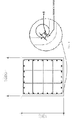
FIG. 1 is a cross-sectional view illustrating a column fabricated using a fire-resistant high performance concrete according to the present invention; -
FIG. 2 shows a standard heating curve according to KS F 2257-1; -
FIG. 3 shows a temperature history curve of a fire-resistant high performance concrete prepared in Example 1 according to the present invention; -
FIG. 4 shows a temperature history curve of another fire-resistant high performance concrete prepared in Example 2 according to the present invention; -
FIG. 5 is photographs of front, rear, left and right sides of a fire-resistant high performance concrete structure fabricated in Example 1, which were taken after fire resistance experimentation; -
FIG. 6 is photographs of front, rear, left and right sides of another fire-resistant high performance concrete structure fabricated in Example 2, which were taken after fire resistance experimentation; and - FIG. 7 is a test report of the fire-resistant high performance concretes prepared in Examples 1 and 2 according to the present invention, which was issued by Korea Institute of Construction Technology (KICT).
- Hereinafter, the present invention will be described in detail.
- When a fire occurs in a high-rise building, it is difficult to discharge water vapor generated inside the building since concrete mainly used for the building has a compact internal texture. In this case, when a pressure of the water vapor entrapped in the internal texture of the concrete exceeds a constant upper limit, the concrete is explosively broken and scattered.
- In order to solve the above problem, there is an approach wherein water vapor present in concrete is rapidly output via a large path formed by fusing a specific organic fiber and the residual water vapor entrapped in a fine texture of the concrete is further completely exhausted via a relatively small path formed by fusing another specific organic fiber, thereby effectively preventing spalling of the concrete in the event of a fire.
- A fire-resistant high performance concrete according to the present invention comprises organic fibers as well as cement, sand, pebbles, water and admixture materials wherein the organic fibers consist of a relatively high melting point fiber and a relatively low melting point fiber, and the low melting point fiber has 1 to 144 times the cross-sectional area and 0.5 to 576 times the volume fraction of the high melting point fiber.
- Here, the admixture materials mean eco-friendly materials used in constructing high-rise buildings, which include, for example, fly-ash, blast furnace slag powder, silica-fume, etc.
- The organic fibers comprise both fibers with relatively high melting point and low melting point. When a fire occurs in a building, an internal temperature of concrete of the building is elevated to initially melt the low melting point fiber and generate voids, through which water vapor is discharged.
- During progress of the fire, the internal temperature of the concrete continuously increases to further melt the high melting point fiber which in turns forms a path through which the residual water vapor entrapped in a fine texture of the concrete is exhausted.
- Such a low melting point fiber may be a polypropylene fiber which has a density of 0.91 g/cm2, a melting point of 160°C and a tensile strength of 560 MPa.
- Also, the high melting point fiber may be a nylon fiber which has a density of 1.15g/cm2, a melting point of 220°C and a tensile strength of 918 MPa.
- In this regard, the polypropylene fiber has 1 to 144 times the cross-sectional area of the nylon fiber and, in addition, 0.5 to 576 times the volume fraction of the same. If the cross-sectional area or the volume fraction is below a lower limit, the low melting point fiber contained in the concrete may not be fused and may cause difficulties in formation of a path for smoothly passing water vapor when a fire occurs in a high-rise building constructed using high performance concrete and raises an internal temperature of the concrete. On the other hand, if the cross-sectional area or the volume fraction exceeds an upper limit, some problems such as quality deterioration caused by decrease in fluidity, construction delay caused by blockage of a forced pump, and the like are encountered, although water vapor successfully passes through the path when an internal temperature of concrete increases to melt the low melting point fiber upon occurrence of a fire. As a result, difficulties in construction of high-rise buildings may be caused.
- The polypropylene fiber may have a diameter of 20 to 60µm and a length of 10 to 20mm. Likewise, the nylon fiber may have a diameter of 5 to 20µm and a length of 5 to 20mm. If a diameter or length of each of the polypropylene fiber and the nylon fiber is below a lower limit, the low melting point fiber contained in concrete may not be fused and may cause difficulties in formation of a path for smoothly passing water vapor when a fire occurs in a high-rise building constructed using high performance concrete and raises an internal temperature of the concrete. On the other hand, if the cross-sectional area or the volume fraction exceeds an upper limit, some problems such as quality deterioration caused by decrease in fluidity, construction delay caused by blockage of a forced pump, and the like are encountered, although water vapor successfully passes through the path when an internal temperature of concrete increases to melt the low melting point fiber upon occurrence of a fire. As a result, difficulties in construction of high-rise buildings may be caused.
- Moreover, an amount of the organic fibers may range from 0.03 to 0.2 vol.% to a total volume of the fire-resistant high performance concrete according to the present invention. If the amount of the organic fibers is below 0.03 vol.%, spalling prevention effects may be minimal. On the other hand, when the amount of the organic fiber exceeds 0.2 vol.%, difficulties in construction as described above may be caused.
- In addition, a relative volume ratio of the polypropylene fiber to the nylon fiber used in the concrete may range from 1:9 to 9:1. If the relative volume ratio is less than 1:9, raw material costs may be increased. On the other hand, if the relative volume ratio is more than 9:1, effects of adding the nylon fiber to the concrete may be minimal, which in turn requires increase in content of composite fibers required for ensuring desired fire resistance of the concrete.
- Hereinafter, a detailed description will be given of constructional functions and advantages of the present invention with reference to the following examples and experimental example.
- 448kg/m3 of cement, 128kg/m3 of fly-ash, 64kg/m3 of silica fume, 128kg/m3 of blast furnace slag powder, 660kg/m3 of sand and 810kg/m3 of pebbles were prepared as a concrete mixture. A polypropylene fiber having a density of 0.91 g/cm2, a melting point of 160°C and a tensile strength of 560MPa as a low melting point fiber and a nylon fiber having a density of 1.15g/cm2, a melting point of 220°C and a tensile strength of 918MPa as a high melting point fiber, wherein the polypropylene fiber has 11 times the cross-sectional area and 21 times the volume fraction of the nylon fiber, were added to the foregoing prepared concrete mixture in an amount of 0.05 vol.% relative to a total volume of a final product, that is, a fire-resistant high performance concrete. As a result, the fire-resistant high performance concrete according to the present invention was obtained.
- Another fire-resistant high performance concrete according to the present invention was obtained by the same procedure as described in Example 1, except that an overall amount of the polypropylene fiber and the nylon fiber was 0.075 vol.% relative to the total volume of the fire-resistant high performance concrete.
- According to "Standards for management of fire resistance of high strength concrete column and beam" published by MLTM (The Ministry of Land, Transport and Maritime Affairs), a fire-resistant high performance concrete structure having a thermocouple therein was prepared as shown in
FIG. 1 . The concrete structure was heated on the basis of a standard heating curve according to KS F 2257-1 (seeFIG. 2 ). - A temperature history curve of the fire-resistant high concrete prepared in Example 1 is shown in
FIG. 3 . That is,FIG. 3 illustrates a temperature history curve of a fire-resistant high performance concrete according to the present invention. This curve was plotted below a curve at 538°C which is a mean temperature according to standards certified for fire resistance. From this result, it is expected that spalling of the concrete upon occurrence of a fire may be effectively prevented. - Additionally,
FIG. 4 illustrates another temperature history curve of the fire-resistant high performance concrete prepared in Example 2. As described above in Example 1, it can be seen from the result that using the concrete in Example 2 may prevent spalling of the concrete upon occurrence of a fire. - Furthermore, each of
FIGS. 5 and6 illustrates photographs of front, rear, left and right sides of each of the fire-resistant high performance concrete structures fabricated in Examples 1 and 2, respectively, which were taken after fire resistance experimentation. From the results, it can be seen that both the concrete structures show favorable appearances. Accordingly, it is easily expected that these concrete structures exhibit excellent spalling prevention effects. - Lastly, FIG. 7 is a test report of the fire-resistant high performance concretes prepared in Examples 1 and 2 according to the present invention. According to the test report, it is understood that a fire-resistant high performance concrete of the present invention has excellent heat resistance.
- Although exemplary embodiments of the present invention has been disclosed for illustrative purposes, those skilled in the art will appreciate that various modifications, additions and substitutions are possible, without departing from the scope and spirit of the invention as disclosed in the appended claims.
Claims (3)
- A fire-resistant concrete with high impact resistance, comprising:organic fibers as well as cement, sand, pebbles, water and admixture materials, wherein the organic fibers include a high melting point fiber and a low melting point fiber, and the low melting point fiber has 1 to 144 times a cross-sectional area and 0.5 to 576 times a volume fraction of the high melting point fiber, andwherein the low melting point fiber is a polypropylene fiber while the high melting point fiber is a nylon fiber, and a relative volume ratio of the polypropylene fiber to the nylon fiber ranges from 1:9 to 9:1.
- The concrete according to claim 1, wherein the polypropylene fiber has a diameter of 20 to 60µm and a length of 10 to 20mm, while the nylon fiber has a diameter of 5 to 20µm and a length of 5 to 20mm.
- The concrete according to claim 1 or 2, wherein an amount of the organic fibers ranges from 0.03 to 0.2 vol.% to a total volume of the concrete.
Applications Claiming Priority (1)
| Application Number | Priority Date | Filing Date | Title |
|---|---|---|---|
| KR20090017275A KR100921406B1 (en) | 2009-02-27 | 2009-02-27 | Fire resistant high strength concrete |
Publications (2)
| Publication Number | Publication Date |
|---|---|
| EP2223902A2 true EP2223902A2 (en) | 2010-09-01 |
| EP2223902A3 EP2223902A3 (en) | 2012-06-06 |
Family
ID=41561832
Family Applications (1)
| Application Number | Title | Priority Date | Filing Date |
|---|---|---|---|
| EP20100153214 Withdrawn EP2223902A3 (en) | 2009-02-27 | 2010-02-10 | Fire-resistant concrete with high impact resistance |
Country Status (3)
| Country | Link |
|---|---|
| EP (1) | EP2223902A3 (en) |
| KR (1) | KR100921406B1 (en) |
| CN (1) | CN101817661A (en) |
Cited By (2)
| Publication number | Priority date | Publication date | Assignee | Title |
|---|---|---|---|---|
| WO2014094183A1 (en) | 2012-12-21 | 2014-06-26 | Empa Eidgenössische Materialprüfungs- Und Forschungsanstalt | Fire resistant concrete |
| CN115925352A (en) * | 2022-11-10 | 2023-04-07 | 湖南大学 | Explosion-suppression fire-resistant ultrahigh-performance concrete and preparation method thereof |
Families Citing this family (1)
| Publication number | Priority date | Publication date | Assignee | Title |
|---|---|---|---|---|
| CN102173681B (en) * | 2011-01-26 | 2013-01-02 | 冯乃谦 | Method for preparing concrete with high fire resistance |
Citations (2)
| Publication number | Priority date | Publication date | Assignee | Title |
|---|---|---|---|---|
| WO1999028267A1 (en) | 1997-11-27 | 1999-06-10 | Bouygues Travaux Publics | Metal fibre concrete, cementitious matrix and pre-mixes for preparing matrix and concrete |
| KR20060086110A (en) | 2005-01-26 | 2006-07-31 | 원종필 | Cement material and composition thereof comprising heterogeneous reinforcing fibers |
Family Cites Families (14)
| Publication number | Priority date | Publication date | Assignee | Title |
|---|---|---|---|---|
| DE4220274C2 (en) * | 1992-06-20 | 1997-08-21 | Hans Jaklin | Shatter resistant to flaking under fire conditions |
| DE19510338B4 (en) * | 1995-03-22 | 2008-12-11 | Hochtief Ag Vorm. Gebr. Helfmann | Use of a concrete mixture for the construction of fireproof structures fire protected according to DIN 4102 |
| WO2001085641A1 (en) * | 2000-05-10 | 2001-11-15 | Takenaka Corporation | Concrete being resistant to rupture |
| CH693484A5 (en) * | 2000-05-17 | 2003-08-29 | Memarco Ag | Concrete mix with increased fire resistance. |
| ES2245333T3 (en) * | 2001-08-31 | 2006-01-01 | Hochtief Aktiengesellschaft | CONSTRUCTION ELEMENT OF CONCRETE CONCRETE AGAINST FIRE ACTION. |
| AT413281B (en) * | 2003-07-11 | 2006-01-15 | Schotter Und Betonwerk Karl Sc | FESTIVAL AND FRESHBETON FOR THE PRODUCTION OF A FESTIVAL |
| AT500244B1 (en) * | 2004-01-07 | 2007-07-15 | Schotter Und Betonwerk Karl Sc | FRESH-CONCRETE, FIXED CONDITION AND METHOD FOR THE PRODUCTION THEREOF AND THE USE OF THE FIXED CONCRETE |
| JP2006016218A (en) | 2004-06-30 | 2006-01-19 | Taiheiyo Material Kk | Refractory shotcrete and high strength lining concrete |
| KR100651181B1 (en) * | 2005-01-26 | 2006-11-30 | 원종필 | Cement material comprising reinforcing fibers and compositions thereof |
| KR100821973B1 (en) * | 2006-04-14 | 2008-04-15 | 한국건설기술연구원 | Concrete anti-expandable admixture and concrete composition containing the admixture |
| CN101081742A (en) * | 2006-05-29 | 2007-12-05 | 山东鲁阳股份有限公司 | Ceramic fiber building fireproof plate |
| KR100840731B1 (en) * | 2007-02-23 | 2008-06-23 | 스틸화이버코리아 주식회사 | Cement material composition |
| WO2009011480A1 (en) * | 2007-07-18 | 2009-01-22 | Daewoo Engineering & Construction Co., Ltd | Fire- resistant concrete containing nylon and polypropylene fibers |
| KR100883644B1 (en) * | 2008-01-10 | 2009-02-18 | 현대산업개발 주식회사 | Fire-resistant foaming material composition for preventing heat spreading and spraying method using the same |
-
2009
- 2009-02-27 KR KR20090017275A patent/KR100921406B1/en active Active
- 2009-12-31 CN CN200910265987A patent/CN101817661A/en active Pending
-
2010
- 2010-02-10 EP EP20100153214 patent/EP2223902A3/en not_active Withdrawn
Patent Citations (2)
| Publication number | Priority date | Publication date | Assignee | Title |
|---|---|---|---|---|
| WO1999028267A1 (en) | 1997-11-27 | 1999-06-10 | Bouygues Travaux Publics | Metal fibre concrete, cementitious matrix and pre-mixes for preparing matrix and concrete |
| KR20060086110A (en) | 2005-01-26 | 2006-07-31 | 원종필 | Cement material and composition thereof comprising heterogeneous reinforcing fibers |
Cited By (3)
| Publication number | Priority date | Publication date | Assignee | Title |
|---|---|---|---|---|
| WO2014094183A1 (en) | 2012-12-21 | 2014-06-26 | Empa Eidgenössische Materialprüfungs- Und Forschungsanstalt | Fire resistant concrete |
| US9353006B2 (en) | 2012-12-21 | 2016-05-31 | Empa Eidgenossische Materialprufungs- Und Forschungsanstalt | Fire resistant concrete |
| CN115925352A (en) * | 2022-11-10 | 2023-04-07 | 湖南大学 | Explosion-suppression fire-resistant ultrahigh-performance concrete and preparation method thereof |
Also Published As
| Publication number | Publication date |
|---|---|
| KR100921406B1 (en) | 2009-10-14 |
| EP2223902A3 (en) | 2012-06-06 |
| CN101817661A (en) | 2010-09-01 |
Similar Documents
| Publication | Publication Date | Title |
|---|---|---|
| Lee et al. | Fire resistance of hybrid fibre-reinforced, ultra-high-strength concrete columns with compressive strength from 120 to 200 MPa | |
| Murali et al. | Repeated projectile impact tests on multi-layered fibrous cementitious composites | |
| Lee et al. | Impact resistance, flexural and tensile properties of amorphous metallic fiber-reinforced cementitious composites according to fiber length | |
| CN104129951A (en) | Self-cleaned cement based composite material with high toughness and preparation method of self-cleaned cement based composite material | |
| Celik et al. | RETRACTED: Effects of glass fiber on recycled fly ash and basalt powder based geopolymer concrete | |
| EP2929281A1 (en) | Smart blast sensing | |
| Hwang et al. | Characteristics of polyester polymer concrete using spherical aggregates from industrial by‐products | |
| CN107500646A (en) | A kind of Ultralight superelevation ductility concrete and preparation method thereof | |
| WO2007126058A1 (en) | Concrete having excellent exploding resistance | |
| CN102408204A (en) | A High Performance Concrete Resistant to High Temperature Explosion | |
| Altera et al. | Investigation of the usage areas of different fiber reinforced concrete | |
| Karthik et al. | Research on Pure Modes I and II and Mixed‐Mode (I/II) Fracture Toughness of Geopolymer Fiber‐Reinforced Concrete | |
| KR101322806B1 (en) | Binder of ultra-high-strength grout material and ultra-high-strength grout material for safe using the same, manufacturing method thereof | |
| CN101445343A (en) | Sintered coal gangue slag concrete porous brick | |
| Du et al. | Dynamic damage behavior and anisotropic mechanism of 3D printed reinforced concrete subjected to penetration | |
| Jung et al. | Performance of SIFCON based HPFRCC under field blast load | |
| KR100921406B1 (en) | Fire resistant high strength concrete | |
| KR100840731B1 (en) | Cement material composition | |
| Sivagnanaprakash et al. | A study on structural applicability of flyash bricks with quarry dust–An ecofriendly alternative for clay bricks | |
| Bell et al. | High velocity impact behaviour of hybrid-fiber engineered cementitious composite panels | |
| KR101626860B1 (en) | High Strength concreat with hybrid fiber | |
| JP2017178755A (en) | Fiber-reinforced concrete | |
| KR20060086110A (en) | Cement material and composition thereof comprising heterogeneous reinforcing fibers | |
| Sanytsky et al. | High strength steel fiber reinforced concrete for fortification protected structures | |
| Johari et al. | Fracture and tensile characteristics of engineered cementitious composites containing POFA |
Legal Events
| Date | Code | Title | Description |
|---|---|---|---|
| PUAI | Public reference made under article 153(3) epc to a published international application that has entered the european phase |
Free format text: ORIGINAL CODE: 0009012 |
|
| AK | Designated contracting states |
Kind code of ref document: A2 Designated state(s): AT BE BG CH CY CZ DE DK EE ES FI FR GB GR HR HU IE IS IT LI LT LU LV MC MK MT NL NO PL PT RO SE SI SK SM TR |
|
| AX | Request for extension of the european patent |
Extension state: AL BA RS |
|
| PUAL | Search report despatched |
Free format text: ORIGINAL CODE: 0009013 |
|
| RIC1 | Information provided on ipc code assigned before grant |
Ipc: C04B 16/06 20060101AFI20120426BHEP Ipc: C04B 28/02 20060101ALI20120426BHEP Ipc: C04B 111/28 20060101ALN20120426BHEP |
|
| AK | Designated contracting states |
Kind code of ref document: A3 Designated state(s): AT BE BG CH CY CZ DE DK EE ES FI FR GB GR HR HU IE IS IT LI LT LU LV MC MK MT NL NO PL PT RO SE SI SK SM TR |
|
| AX | Request for extension of the european patent |
Extension state: AL BA RS |
|
| STAA | Information on the status of an ep patent application or granted ep patent |
Free format text: STATUS: THE APPLICATION IS DEEMED TO BE WITHDRAWN |
|
| 18D | Application deemed to be withdrawn |
Effective date: 20121207 |