EP2223213B1 - Mehrsprachensoftware-codeanalyse - Google Patents
Mehrsprachensoftware-codeanalyse Download PDFInfo
- Publication number
- EP2223213B1 EP2223213B1 EP08851908.7A EP08851908A EP2223213B1 EP 2223213 B1 EP2223213 B1 EP 2223213B1 EP 08851908 A EP08851908 A EP 08851908A EP 2223213 B1 EP2223213 B1 EP 2223213B1
- Authority
- EP
- European Patent Office
- Prior art keywords
- source code
- high level
- instructions
- level representation
- representation
- Prior art date
- Legal status (The legal status is an assumption and is not a legal conclusion. Google has not performed a legal analysis and makes no representation as to the accuracy of the status listed.)
- Active
Links
Images




Classifications
-
- G—PHYSICS
- G06—COMPUTING OR CALCULATING; COUNTING
- G06F—ELECTRIC DIGITAL DATA PROCESSING
- G06F8/00—Arrangements for software engineering
- G06F8/40—Transformation of program code
- G06F8/53—Decompilation; Disassembly
-
- G—PHYSICS
- G06—COMPUTING OR CALCULATING; COUNTING
- G06F—ELECTRIC DIGITAL DATA PROCESSING
- G06F8/00—Arrangements for software engineering
- G06F8/40—Transformation of program code
- G06F8/41—Compilation
- G06F8/43—Checking; Contextual analysis
-
- G—PHYSICS
- G06—COMPUTING OR CALCULATING; COUNTING
- G06F—ELECTRIC DIGITAL DATA PROCESSING
- G06F8/00—Arrangements for software engineering
- G06F8/40—Transformation of program code
- G06F8/41—Compilation
- G06F8/43—Checking; Contextual analysis
- G06F8/436—Semantic checking
-
- G—PHYSICS
- G06—COMPUTING OR CALCULATING; COUNTING
- G06F—ELECTRIC DIGITAL DATA PROCESSING
- G06F8/00—Arrangements for software engineering
- G06F8/40—Transformation of program code
- G06F8/41—Compilation
- G06F8/44—Encoding
- G06F8/447—Target code generation
-
- G—PHYSICS
- G06—COMPUTING OR CALCULATING; COUNTING
- G06F—ELECTRIC DIGITAL DATA PROCESSING
- G06F8/00—Arrangements for software engineering
- G06F8/40—Transformation of program code
- G06F8/51—Source to source
-
- G—PHYSICS
- G06—COMPUTING OR CALCULATING; COUNTING
- G06F—ELECTRIC DIGITAL DATA PROCESSING
- G06F9/00—Arrangements for program control, e.g. control units
- G06F9/06—Arrangements for program control, e.g. control units using stored programs, i.e. using an internal store of processing equipment to receive or retain programs
- G06F9/44—Arrangements for executing specific programs
- G06F9/451—Execution arrangements for user interfaces
- G06F9/454—Multi-language systems; Localisation; Internationalisation
Definitions
- the invention concerns the analysis of software code that includes code that is written in multiple languages.
- the invention concerns, but is not limited to, a method of performing static analysis on source code that has source code that is written in a different language embedded within it.
- aspects of the invention include a method, a computer system and software.
- An embedded system is a special-purpose system in which the computer is completely encapsulated by the device it controls. Unlike a general-purpose computer, such as a personal computer, an embedded system performs one or a few pre-defined tasks, usually with very specific requirements. Examples are mobile phones, ATMs, medical devices, and engine controllers. The importance of bug-free software on such devices is given by their often safety or mission-critical application and the enormous costs which a potential recall for a bug fix would entail.
- a high level language such as C or C++ is used to program the overall control behaviour of the device, while embedded in the C/C++ code there are often fragments of low level languages, notably assembly, to enable direct access to the device's hardware.
- US 6,247,174 describes a software mechanism for enabling a programmer to embed selected machine instructions into program source code.
- this document provides a general syntax for embedding or "inlining" machine (assembly) instructions into source code. For each machine instruction, an "intrinsic" (built-in subroutine) is defined and a function prototype is specified for each intrinsic. The document further describes facilitating both syntax and semantic checking of the inline assembly intrinsics.
- the invention provides a method of performing static analysis on source code having a low level language source code (P low ) embedded in a high level language source code (P high ), wherein the high level language source code (P high ) is represented in a combined high level representation (74) that the static analysis can be performed on, the method comprising the steps of:
- any improvements of the underlying static analysis technology can be applied to all languages with reduced effort. Since there is likely to be more changes in analysis technology rather than in programming languages themselves, this is an also important cost saver.
- the step of transforming the embedded low level language source code to the high level representation may comprise transforming in a way that does not retain the full semantics of the low level language source code.
- transforming instructions in the low level language source code that have no equivalent in the high level representation in a way that does not retain all the semantics of those instructions.
- This embodiment of the invention represents a realisation that to perform static analysis on source code it is not necessary to maintain the entire semantics of the low level source code. This is at complete odds with the understanding of checking code. Verification analysis requires all meaning be maintained for all languages present in the source code. The only way to achieve this is by converting the code to the lowest common denominator of the languages. This means the analysis is performed on the low level language and the range of types of analysis that can now be performed on the code is significantly reduced. By realising the it is not necessary to retain the entire semantics of the low level source code, the inventors have inventive a new way of approaching the problem. It is this realisation that allowed the inventors to also discover that this enables them to covert the code to a high level representation to achieve a greater range of analysis, but at the same time taking account of the features of the embedded low level language in the statistic analysis where necessary.
- the step of transforming the embedded low level language source code to the high level representation may comprise the steps of:
- the step of transforming the embedded low level language source code to the high level representation may comprise the steps of:
- Instructions that have no equivalent in the high level representation may be instructions that provide direct access to the hardware that include one or more of:
- the step of transforming the embedded low level language source code to the high level representation may comprise the steps of:
- the step of transforming the embedded low level language source code to the high level representation may comprise the steps of:
- the method further may comprise the step of transforming the high level language source code to the high level representation that the static analysis can be performed on.
- the high level representation may be an abstract syntax tree.
- the high level source code may be, substantially the same as the high level representation.
- the method may further comprise the step of using the static analysis of the high level representation to do one or more of the following:
- the source code may be for use in an embedded system.
- the embedded low level language source code may be architecture and hardware specific.
- the invention provides software, that is, computer executable instructions stored on a computer readable medium that when installed on a computer, causes the computer to operate in accordance with the method described above.
- the invention provides a computer system having software installed, to cause the processor of the computer to perform the method described above.
- higher level languages are typically better suited as they contain more structure and more information.
- high level C/C++ programs have a lot of structural and type information such as conditional loops, objects, and ranges of arrays, while low level assembly programs do not have this information at all or is not readily available.
- low level program fragments e.g. assembly
- high level programs e.g. C/C++
- the part of the source code that comprises the program that is written in the low level language is Plow and the part that is written in the high level language as P high .
- Programs are typically defined by their source code representation.
- this source code is stored in some internal format, often in the form of an abstract syntax tree (AST).
- AST abstract syntax tree
- P low is represented in the AST AST low
- P high in the AST AST high .
- the internal formal representation of the source code need not be in the form of an AST.
- Other suitable formats used in analysis and compilation can also be used, such as the source code or a similar form where the code is in a machine readable form upon which the analysis can be performed.
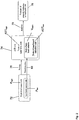
- the method comprises transforming 50 the high level program's statements P high into a high level representation upon which the static analysis can be performed on.
- the high level representation and the high level programming language P high may be quite similar which simplifies this transformation step.
- the high level representation and the high level programming language may in fact be the same removing the need to perform this step.
- the method comprises transforming 60 the embedded low level program's statements P low into the same high level representation used in step 50.
- one or more low level instructions is transformed 60c to one or more statements in the common high level representation, where each low level variable v low;i is substituted by the corresponding new variable v high;i .
- common sequences of low level instructions are combined into a single high level statement.
- static analysis is performed 70 on the combined high level representation of P low and the P high .
- the static analysis can be used:
- the original source code 72 which is a combination of high level source code P high and embedded low level source code Plow must be transform 50 and 60 into a form on which static analysis can be done.
- the common high level representation is an AST 74.
- the high level part P high of the source code is parsed 76 into nodes of an AST AST high .
- the embedded low level part Plow is also parsed, then transformed 80, and corresponding nodes AST low are finally added to the AST 74.
- Part of the translation 80 is also to generate new nodes v high;i in the AST low for the local variables that are introduced due to the embedded code's low level variables or registers v low;i .
- the final AST 74 thus comprises nodes reflecting the original high level code P high , nodes for the newly introduced local variables, as well as nodes for the transformed low level instructions. This AST 74 is then used to run 70 the program analysis, which in this example will create warnings of property violations in the original source code 78.
- a function like this could be used if the function is performance critical because it is called many times and the specific processor does not offer fast multiplication instructions.
- the embedded assembly block (introduced by the keyword asm), there are five assembler instructions that implement the specific arithmetic, as well as an interface description.
- the interface description tells the compiler which C variables (in this case c) and parameters (in this case a and b) map to which assembler registers, as well as which registers (in this case r3) are used ("clobbered") inside the assembler block.
- step 60 is performed.
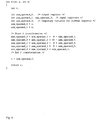
- a local C variable assembly operand is redeclared 60b. More specifically, the method introduces asm _operand _0 for the output register from the assembly block that will be copied into variable c.
- asm_operand_1 and asm_operand_2 are declared for the two input registers to the assembly block that will contain copies of the parameters a and b.
- a local C variable asm_operand_3 is introduced that will be used for the clobbered register r3.
- the method then transforms the assembly instructions to corresponding C statements 60c.
- This transformation to a high level representation allows us to check that the parameters a and b are actually used, that the variable c is correctly initialised within the assembly block and that the compiler knows about all registers that are actually used within the assembly block. This helps identify any errors that are based on the relationship between the embedded code and the higher level program.
- This first example represents a simple implementation of the method. Processing for step 50 was not required. Further, every low level language construct is directly translated into a corresponding high level language construct. That is, one assembly instruction is transformed into one corresponding C statement.
- a more advanced implementation of the invention recognises that certain combinations of low level language constructs actually implement a more complex high level language construct. For example, it is often impossible to implement a high level language's more complex control-flow statements like if-then-else or loop statements in a single low level language instruction and hence, multiple low level language instructions are required to implement such high level constructs. Such a combination of multiple low level language constructs can thus be collated into a single high level language construct when transforming the low level language into the high level language in step 60.
- a simple if-then control-flow statement cannot be implemented in a single instruction in most modern assembly languages, because it is composed of a separate comparison and a branch part respectively.
- the control-flow structure must be implemented in multiple assembly instructions.
- these assembly instructions will look quite similar most of the time. It will include some form of a comparison instruction followed by some form of a branch instruction. These combinations of instructions can be detected and transformed accordingly.
- the following ARM instruction sequence implements an if-then statement (without the actual expression evaluated within the if ()):
- FIG. 5 This advanced implementation will be described with reference to a third example program as shown in Fig. 5 .
- the embedded ARM assembly part of the program implements a for loop construct.
- a simple transformation of the assembly code to C as described with the first example leads to a C program depicted in Fig. 6 .
- the C program of Fig. 6 is a correct transformation, it does not reflect the true structure of the original embedded assembly program.
- the more advanced technique detects that the assembly code actually implements a for-loop construct and transforms the code accordingly, as shown in Fig. 7 .
- the detection may be based on looking for a pre-defined pattern, such as a specification combination of CMP (compare) and BLT (jump) instructions which can be transformed to a if-then-else statement in this high language representation.
- the subsequent static analysis of the high level code can include loop-related checks at step 70. This includes detecting that the loop variable i of the loop is modified inside the loop's body.
- the special statement is a statement that may not exist in a real high level language, but inserting it into the high level representation allows us to nevertheless check for properties that relate to the original effect, for example checking that interrupts are always turned back on after they have been turned off. This is only possible through the interlanguage analysis method outlined here.
- the invention may be provided as software.
- the processor causes executes the instructions of the software to cause the computer system to perform the method described above.
- the computer system can be distributed.
- the computer includes an input device to receive and store the source code.
- the computer also include storage means to store the received source code and the software.
- An output device of the computer such as a monitor, is provided to present a user interface to the user. Using the interface the user can cause the static analysis to be performed on the source code and the result of the static analysis is presented to the user on the interface. Parts of the method can be performed as the user is writing the source code. Alternatively, the method may be performed during compile time.
- the computer system can be distributed.
Landscapes
- Engineering & Computer Science (AREA)
- Theoretical Computer Science (AREA)
- General Engineering & Computer Science (AREA)
- Software Systems (AREA)
- Physics & Mathematics (AREA)
- General Physics & Mathematics (AREA)
- Computational Linguistics (AREA)
- Human Computer Interaction (AREA)
- Stored Programmes (AREA)
Claims (17)
- Verfahren zum Durchführen einer statischen Analyse eines Quellcodes mit einem Quellcode einer niedrigen Programmiersprache (Plow), der in einen Quellcode einer hohen Programmiersprache (Phigh) eingebettet ist, wobei der Quellcode der hohen Programmiersprache (Phigh) in einer Darstellung (74) auf hoher Ebene dargestellt wird, auf der die statische Analyse durchgeführt werden kann, wobei das Verfahren die Schritte umfasst von:Umwandeln (80) des eingebetteten Quellcodes der niedrigen Programmiersprache (Plow) in die Darstellung (74) auf hoher Ebene, auf der die statische Analyse durchgeführt werden kann, durch Identifizieren eines Befehlssatzes in dem Quellcode der niedrigen Programmiersprache, der eine einzelne Angabe auf hoher Ebene in der Darstellung auf hoher Ebene darstellt, und Umwandeln des Befehlssatzes, um die einzelne Angabe auf hoher Ebene in der Darstellung auf hoher Ebene darzustellen; undDurchführen (70) einer statischen Analyse auf der kombinierten Darstellung (74) auf hoher Ebene sowohl des Quellcodes der hohen Programmiersprache (Phigh) als auch des Quellcodes der niedrigen Programmiersprache (Plow).
- Verfahren nach Anspruch 1, wobei der Schritt des Umwandelns des eingebetteten Quellcodes der niedrigen Programmiersprache in die Darstellung auf hoher Ebene das Umwandeln von Befehlen umfasst, die in der Darstellung auf hoher Ebene kein Äquivalent aufweisen, so dass die Darstellung auf hoher Ebene dieser Befehle nicht die gesamte Semantik des Quellcodes der niedrigen Programmiersprache beibehält.
- Verfahren nach Anspruch 2, wobei die Darstellung auf hoher Ebene der niedrigen Programmiersprache nicht die gesamte Semantik des Quellcodes der niedrigen Programmiersprache beibehält.
- Verfahren nach Anspruch 3, wobei die Darstellung auf hoher Ebene eines oder mehrerer Befehle in dem Quellcode der niedrigen Programmiersprache, die kein Äquivalent in der Darstellung auf hoher Ebene aufweisen, nicht die gesamte Semantik dieses einen oder dieser mehreren Befehle beibehält.
- Verfahren nach einem der vorhergehenden Ansprüche, wobei der Schritt des Umwandelns des eingebetteten Quellcodes der niedrigen Programmiersprache in die Darstellung auf hoher Ebene ferner die Schritte umfasst von:Identifizieren eines oder mehrerer Befehle in dem Quellcode der niedrigen Programmiersprache, die in der Darstellung auf hoher Ebene kein Äquivalent aufweisen; undUmwandeln des einen oder der mehreren Befehle in die Darstellung auf hoher Ebene, so dass die Darstellung auf hoher Ebene dieses einen oder dieser mehreren Befehle nur Auswirkungen dieser Befehle auf den Quellcode darstellt.
- Verfahren nach einem der vorhergehenden Ansprüche, wobei der Schritt des Umwandelns des eingebetteten Quellcodes der niedrigen Programmiersprache in die Darstellung auf hoher Ebene ferner die Schritte umfasst von:Identifizieren jeglicher Variablen und Register, die in dem Quellcode der niedrigen Programmiersprache verwendet werden; undAngeben der identifizierten Variablen und/oder Register in der Darstellung auf hoher Ebene.
- Verfahren nach einem der vorhergehenden Ansprüche, wobei das Verfahren ferner den Schritt umfasst von:
Umwandeln des Quellcodes der hohen Programmiersprache in die Darstellung auf hoher Ebene, auf der die statische Analyse durchgeführt werden kann. - Verfahren nach einem der vorhergehenden Ansprüche, wobei die Darstellung auf hoher Ebene ein abstrakter Syntaxbaum ist.
- Verfahren nach einem der vorhergehenden Ansprüche, wobei der Typ des Quellcodes der hohen Programmiersprache der gleiche ist wie der Typ der Darstellung auf hoher Ebene.
- Verfahren nach einem der vorhergehenden Ansprüche, wobei die Durchführung der statischen Analyse der Darstellung auf hoher Ebene eines oder mehrere umfasst von:Identifizieren von Fehlern im Quellcode;Bestimmen der Worst-Case-Ausführungszeit des Quellcodes;Bestimmen von Sicherheitsrisiken des Quellcodes;Bestimmen der korrekten Implementierung von Zugriffsrichtlinien in dem Quellcode;Bestimmen des Speicherverbrauchs einer Vorrichtung, die die Befehle des Quellcodes ausführt;Bestimmen des Batterieverbrauchs einer Vorrichtung, die die Befehle des Quellcodes ausführt; undBestimmen von Information, die den Typ des Quellcodes beschreibt, wie z.B. Statistiken und Struktur.
- Verfahren nach einem der vorhergehenden Ansprüche, wobei der Quellcode der Verwendung in einem eingebetteten System dient.
- Verfahren nach einem der vorhergehenden Ansprüche, wobei der eingebettete Quellcode der niedrigen Programmiersprache Architektur- und Hardware-spezifisch ist.
- Verfahren nach einem der vorhergehenden Ansprüche, ferner umfassend den Schritt des Installierens des Quellcodes in einem eingebetteten System.
- Verfahren nach Anspruch 3 oder 4, wobei die Befehle, die in der Darstellung auf hoher Ebene kein Äquivalent aufweisen, Befehle sind, die einen direkten Zugriff auf die Hardware bereitstellen, was eines oder mehrere umfasst von:Lesen oder Modifizieren des Stapelzeigers (sp);Modifizieren des Programmzählers (PC);Lesen oder Modifizieren von speziellen (co-)Prozessorregistern;Einstellen einer neuen Seitentabelle;Leeren des Caches;Aktivieren oder Deaktivieren des Caches; oderAktivieren oder Deaktivieren von Unterbrechungen.
- Verfahren nach einem der vorhergehenden Ansprüche, wobei die statische Analyse die Ausgabe einer Warnung umfasst, die auf eine Eigenschaftsverletzung in der kombinierten Darstellung auf hoher Ebene hinweist.
- Software, die computerausführbare Befehle darstellt, die auf einem computerlesbaren Medium gespeichert sind, das bei der Installation auf einem Computer bewirkt, dass der Computer gemäß dem Verfahren nach einem der vorhergehenden Ansprüche arbeitet.
- Computersystem mit installierter Software, die bewirkt, dass ein Prozessor des Computers das Verfahren nach einem der Ansprüche 1 bis 15 ausführt.
Applications Claiming Priority (2)
| Application Number | Priority Date | Filing Date | Title |
|---|---|---|---|
| AU2007906350A AU2007906350A0 (en) | 2007-11-20 | Multi Language Software Code Analysis | |
| PCT/AU2008/001709 WO2009065168A1 (en) | 2007-11-20 | 2008-11-17 | Multi language software code analysis |
Publications (3)
| Publication Number | Publication Date |
|---|---|
| EP2223213A1 EP2223213A1 (de) | 2010-09-01 |
| EP2223213A4 EP2223213A4 (de) | 2011-11-30 |
| EP2223213B1 true EP2223213B1 (de) | 2019-09-11 |
Family
ID=40667046
Family Applications (1)
| Application Number | Title | Priority Date | Filing Date |
|---|---|---|---|
| EP08851908.7A Active EP2223213B1 (de) | 2007-11-20 | 2008-11-17 | Mehrsprachensoftware-codeanalyse |
Country Status (5)
| Country | Link |
|---|---|
| US (1) | US8869120B2 (de) |
| EP (1) | EP2223213B1 (de) |
| KR (1) | KR20100106409A (de) |
| AU (1) | AU2008328515B2 (de) |
| WO (1) | WO2009065168A1 (de) |
Cited By (1)
| Publication number | Priority date | Publication date | Assignee | Title |
|---|---|---|---|---|
| WO2026012635A1 (de) | 2024-07-08 | 2026-01-15 | Bayerische Motoren Werke Aktiengesellschaft | Verfahren und system zur verarbeitung von zustands-daten eines fahrzeugs |
Families Citing this family (12)
| Publication number | Priority date | Publication date | Assignee | Title |
|---|---|---|---|---|
| US9047164B2 (en) * | 2006-09-12 | 2015-06-02 | Opshub, Inc. | Calculating defect density by file and source module |
| CN101881995B (zh) * | 2010-06-04 | 2011-11-09 | 四川大学 | 一种针对arm指令集的层次分类功耗测量方法 |
| US9875090B2 (en) * | 2012-12-20 | 2018-01-23 | Microsoft Technology Licensing, Llc | Program analysis based on program descriptors |
| KR101705254B1 (ko) * | 2013-08-01 | 2017-02-09 | 신이치 이시다 | 장치 및 프로그램 |
| CA2831711A1 (en) * | 2013-10-31 | 2015-04-30 | Ibm Canada Limited - Ibm Canada Limitee | Performing safe conditional-load and conditional-store operations |
| KR20150126484A (ko) * | 2014-05-02 | 2015-11-12 | 삼성전자주식회사 | 소스 코드를 머신 코드로 변환하는 전자 장치 및 방법 |
| US10539609B2 (en) * | 2014-12-08 | 2020-01-21 | Nxp Usa, Inc. | Method of converting high-level test specification language to low-level test implementation language |
| US9645800B2 (en) | 2014-12-19 | 2017-05-09 | Veracode, Inc. | System and method for facilitating static analysis of software applications |
| KR102414250B1 (ko) * | 2015-07-30 | 2022-06-29 | 삼성전자주식회사 | 전자 장치, 컴파일링 방법 및 컴퓨터 판독가능 기록매체 |
| CN112000339B (zh) * | 2020-07-09 | 2021-09-21 | 北京大学 | 安卓apk文件依赖组件识别方法及装置 |
| CN115562649B (zh) * | 2022-10-27 | 2023-06-16 | 新疆品宣生物科技有限责任公司 | 一种计算机混合程序语言源代码辅助编写方法及系统 |
| CN117555811B (zh) * | 2024-01-11 | 2024-03-19 | 北京邮电大学 | 基于静态符号执行的嵌入式软件分析方法、装置及存储介质 |
Family Cites Families (20)
| Publication number | Priority date | Publication date | Assignee | Title |
|---|---|---|---|---|
| CA2143145C (en) * | 1994-04-18 | 1999-12-28 | Premkumar Thomas Devanbu | Determining dynamic properties of programs |
| US5815719A (en) * | 1996-05-07 | 1998-09-29 | Sun Microsystems, Inc. | Method and apparatus for easy insertion of assembler code for optimization |
| US6134707A (en) * | 1996-11-14 | 2000-10-17 | Altera Corporation | Apparatus and method for in-system programming of integrated circuits containing programmable elements |
| US6314562B1 (en) * | 1997-09-12 | 2001-11-06 | Microsoft Corporation | Method and system for anticipatory optimization of computer programs |
| US6748587B1 (en) * | 1998-01-02 | 2004-06-08 | Hewlett-Packard Development Company, L.P. | Programmatic access to the widest mode floating-point arithmetic supported by a processor |
| US6247174B1 (en) | 1998-01-02 | 2001-06-12 | Hewlett-Packard Company | Optimization of source code with embedded machine instructions |
| US6314557B1 (en) * | 1998-12-14 | 2001-11-06 | Infineon Technologies Development Center Tel Aviv Ltd | Hybrid computer programming environment |
| US7237233B2 (en) * | 2002-12-19 | 2007-06-26 | Texas Instruments Incorporated | Assembly directives for the support of multi-language programming |
| US7571431B2 (en) | 2003-04-29 | 2009-08-04 | Microsoft Corporation | Processing macro information and displaying via GUI in different tools |
| US7392514B2 (en) | 2003-06-26 | 2008-06-24 | Microsoft Corporation | Data flow chasing |
| US20050015752A1 (en) | 2003-07-15 | 2005-01-20 | International Business Machines Corporation | Static analysis based error reduction for software applications |
| US20050273860A1 (en) * | 2004-06-04 | 2005-12-08 | Brian Chess | Apparatus and method for developing, testing and monitoring secure software |
| US7788640B2 (en) | 2004-12-28 | 2010-08-31 | Microsoft Corporation | Using code analysis to generate documentation |
| US7500230B2 (en) * | 2005-03-25 | 2009-03-03 | Microsoft Corporation | Raising native software code |
| US8813047B2 (en) * | 2005-09-08 | 2014-08-19 | Alcatel Lucent | Yet another transformation language (YATL) |
| EP2074507A4 (de) * | 2006-09-20 | 2011-01-26 | Nat Ict Australia Ltd | Erzeugung eines übergangssystems zur verwendung bei modelprüfung |
| US8091070B2 (en) * | 2007-01-08 | 2012-01-03 | Microsoft Corporation | Deep embedding of program languages |
| JP2009076002A (ja) * | 2007-09-25 | 2009-04-09 | Nec Electronics Corp | 制御タイミング調整方法、コンパイルプログラム、コンパイル装置、及び情報処理装置 |
| US8689183B2 (en) * | 2008-01-28 | 2014-04-01 | Rufeng Liang | System and method for effectively processing software changes |
| US8713514B2 (en) * | 2011-05-06 | 2014-04-29 | Microsoft Corporation | Heterogeneous language data typing without executable regeneration |
-
2008
- 2008-11-17 WO PCT/AU2008/001709 patent/WO2009065168A1/en not_active Ceased
- 2008-11-17 US US12/743,695 patent/US8869120B2/en active Active
- 2008-11-17 AU AU2008328515A patent/AU2008328515B2/en active Active
- 2008-11-17 EP EP08851908.7A patent/EP2223213B1/de active Active
- 2008-11-17 KR KR1020107013614A patent/KR20100106409A/ko not_active Abandoned
Non-Patent Citations (1)
| Title |
|---|
| VICTOR EIJKHOUT: "A yacc tutorial", 1 August 2004 (2004-08-01), pages 1 - 15, XP055263544, Retrieved from the Internet <URL:http://camlunity.ru/swap/ocaml/yacc-tutorial.pdf> [retrieved on 20160407] * |
Cited By (1)
| Publication number | Priority date | Publication date | Assignee | Title |
|---|---|---|---|---|
| WO2026012635A1 (de) | 2024-07-08 | 2026-01-15 | Bayerische Motoren Werke Aktiengesellschaft | Verfahren und system zur verarbeitung von zustands-daten eines fahrzeugs |
Also Published As
| Publication number | Publication date |
|---|---|
| AU2008328515A1 (en) | 2009-05-28 |
| AU2008328515B2 (en) | 2014-07-24 |
| KR20100106409A (ko) | 2010-10-01 |
| US20110167410A1 (en) | 2011-07-07 |
| US8869120B2 (en) | 2014-10-21 |
| EP2223213A4 (de) | 2011-11-30 |
| WO2009065168A1 (en) | 2009-05-28 |
| EP2223213A1 (de) | 2010-09-01 |
Similar Documents
| Publication | Publication Date | Title |
|---|---|---|
| EP2223213B1 (de) | Mehrsprachensoftware-codeanalyse | |
| Sasnauskas et al. | Souper: A synthesizing superoptimizer | |
| Martignoni et al. | Path-exploration lifting: Hi-fi tests for lo-fi emulators | |
| Hu et al. | Binary code clone detection across architectures and compiling configurations | |
| Regehr et al. | Eliminating stack overflow by abstract interpretation | |
| JP5893038B2 (ja) | ユーザ定義型のコンパイル時境界検査 | |
| Armstrong et al. | Isla: Integrating full-scale ISA semantics and axiomatic concurrency models | |
| US10423397B2 (en) | Systems and/or methods for type inference from machine code | |
| Hóu et al. | An Isabelle/HOL formalisation of the SPARC instruction set architecture and the TSO memory model | |
| Bodden et al. | Partially evaluating finite-state runtime monitors ahead of time | |
| Kwon et al. | Translation validation for JIT compiler in the V8 JavaScript engine | |
| Freitag et al. | The Vienna Architecture Description Language | |
| Six | Optimized and formally-verified compilation for a VLIW processor | |
| Adl-Tabatabai | Source-level debugging of globally optimized code | |
| Sharma et al. | Finding substitutable binary code for reverse engineering by synthesizing adapters | |
| Marlet | Program Specialization | |
| Brandner et al. | Automatic generation of compiler backends | |
| Mihaylov | Optimised processor simulation with VADL | |
| Horvath et al. | Implementing and Executing Static Analysis Using LLVM and CodeChecker | |
| Yang | Formalizing shared memory consistency models for program analysis | |
| Cartaxo et al. | Improving performance and maintainability of object cloning with lazy clones: An empirical evaluation | |
| MONNIAUX | Cyril SIX | |
| Hasabnis | Automatic Synthesis of Instruction Set Semantics and its Applications | |
| Wodiany | On Novel Binary Lifting and its Applications | |
| CN120909930A (zh) | 一种基于大语言模型的单元测试生成方法 |
Legal Events
| Date | Code | Title | Description |
|---|---|---|---|
| PUAI | Public reference made under article 153(3) epc to a published international application that has entered the european phase |
Free format text: ORIGINAL CODE: 0009012 |
|
| 17P | Request for examination filed |
Effective date: 20100615 |
|
| AK | Designated contracting states |
Kind code of ref document: A1 Designated state(s): AT BE BG CH CY CZ DE DK EE ES FI FR GB GR HR HU IE IS IT LI LT LU LV MC MT NL NO PL PT RO SE SI SK TR |
|
| AX | Request for extension of the european patent |
Extension state: AL BA MK RS |
|
| DAX | Request for extension of the european patent (deleted) | ||
| A4 | Supplementary search report drawn up and despatched |
Effective date: 20111031 |
|
| RIC1 | Information provided on ipc code assigned before grant |
Ipc: G06F 9/45 20060101AFI20111025BHEP Ipc: G06F 9/44 20060101ALI20111025BHEP |
|
| 17Q | First examination report despatched |
Effective date: 20160506 |
|
| STAA | Information on the status of an ep patent application or granted ep patent |
Free format text: STATUS: EXAMINATION IS IN PROGRESS |
|
| RAP1 | Party data changed (applicant data changed or rights of an application transferred) |
Owner name: SYNOPSYS, INC. |
|
| REG | Reference to a national code |
Ref country code: DE Ref legal event code: R079 Ref document number: 602008061181 Country of ref document: DE Free format text: PREVIOUS MAIN CLASS: G06F0009450000 Ipc: G06F0009440000 |
|
| RIC1 | Information provided on ipc code assigned before grant |
Ipc: G06F 8/51 20180101ALI20190201BHEP Ipc: G06F 8/41 20180101ALI20190201BHEP Ipc: G06F 9/44 20180101AFI20190201BHEP Ipc: G06F 8/53 20180101ALI20190201BHEP |
|
| GRAP | Despatch of communication of intention to grant a patent |
Free format text: ORIGINAL CODE: EPIDOSNIGR1 |
|
| STAA | Information on the status of an ep patent application or granted ep patent |
Free format text: STATUS: GRANT OF PATENT IS INTENDED |
|
| INTG | Intention to grant announced |
Effective date: 20190404 |
|
| GRAS | Grant fee paid |
Free format text: ORIGINAL CODE: EPIDOSNIGR3 |
|
| GRAA | (expected) grant |
Free format text: ORIGINAL CODE: 0009210 |
|
| STAA | Information on the status of an ep patent application or granted ep patent |
Free format text: STATUS: THE PATENT HAS BEEN GRANTED |
|
| AK | Designated contracting states |
Kind code of ref document: B1 Designated state(s): AT BE BG CH CY CZ DE DK EE ES FI FR GB GR HR HU IE IS IT LI LT LU LV MC MT NL NO PL PT RO SE SI SK TR |
|
| REG | Reference to a national code |
Ref country code: GB Ref legal event code: FG4D |
|
| REG | Reference to a national code |
Ref country code: CH Ref legal event code: EP |
|
| REG | Reference to a national code |
Ref country code: AT Ref legal event code: REF Ref document number: 1179338 Country of ref document: AT Kind code of ref document: T Effective date: 20190915 |
|
| REG | Reference to a national code |
Ref country code: DE Ref legal event code: R096 Ref document number: 602008061181 Country of ref document: DE |
|
| REG | Reference to a national code |
Ref country code: IE Ref legal event code: FG4D |
|
| REG | Reference to a national code |
Ref country code: NL Ref legal event code: MP Effective date: 20190911 |
|
| REG | Reference to a national code |
Ref country code: LT Ref legal event code: MG4D |
|
| PG25 | Lapsed in a contracting state [announced via postgrant information from national office to epo] |
Ref country code: BG Free format text: LAPSE BECAUSE OF FAILURE TO SUBMIT A TRANSLATION OF THE DESCRIPTION OR TO PAY THE FEE WITHIN THE PRESCRIBED TIME-LIMIT Effective date: 20191211 Ref country code: LT Free format text: LAPSE BECAUSE OF FAILURE TO SUBMIT A TRANSLATION OF THE DESCRIPTION OR TO PAY THE FEE WITHIN THE PRESCRIBED TIME-LIMIT Effective date: 20190911 Ref country code: HR Free format text: LAPSE BECAUSE OF FAILURE TO SUBMIT A TRANSLATION OF THE DESCRIPTION OR TO PAY THE FEE WITHIN THE PRESCRIBED TIME-LIMIT Effective date: 20190911 Ref country code: SE Free format text: LAPSE BECAUSE OF FAILURE TO SUBMIT A TRANSLATION OF THE DESCRIPTION OR TO PAY THE FEE WITHIN THE PRESCRIBED TIME-LIMIT Effective date: 20190911 Ref country code: NO Free format text: LAPSE BECAUSE OF FAILURE TO SUBMIT A TRANSLATION OF THE DESCRIPTION OR TO PAY THE FEE WITHIN THE PRESCRIBED TIME-LIMIT Effective date: 20191211 Ref country code: FI Free format text: LAPSE BECAUSE OF FAILURE TO SUBMIT A TRANSLATION OF THE DESCRIPTION OR TO PAY THE FEE WITHIN THE PRESCRIBED TIME-LIMIT Effective date: 20190911 |
|
| PG25 | Lapsed in a contracting state [announced via postgrant information from national office to epo] |
Ref country code: ES Free format text: LAPSE BECAUSE OF FAILURE TO SUBMIT A TRANSLATION OF THE DESCRIPTION OR TO PAY THE FEE WITHIN THE PRESCRIBED TIME-LIMIT Effective date: 20190911 Ref country code: GR Free format text: LAPSE BECAUSE OF FAILURE TO SUBMIT A TRANSLATION OF THE DESCRIPTION OR TO PAY THE FEE WITHIN THE PRESCRIBED TIME-LIMIT Effective date: 20191212 Ref country code: LV Free format text: LAPSE BECAUSE OF FAILURE TO SUBMIT A TRANSLATION OF THE DESCRIPTION OR TO PAY THE FEE WITHIN THE PRESCRIBED TIME-LIMIT Effective date: 20190911 |
|
| REG | Reference to a national code |
Ref country code: AT Ref legal event code: MK05 Ref document number: 1179338 Country of ref document: AT Kind code of ref document: T Effective date: 20190911 |
|
| PG25 | Lapsed in a contracting state [announced via postgrant information from national office to epo] |
Ref country code: IT Free format text: LAPSE BECAUSE OF FAILURE TO SUBMIT A TRANSLATION OF THE DESCRIPTION OR TO PAY THE FEE WITHIN THE PRESCRIBED TIME-LIMIT Effective date: 20190911 Ref country code: RO Free format text: LAPSE BECAUSE OF FAILURE TO SUBMIT A TRANSLATION OF THE DESCRIPTION OR TO PAY THE FEE WITHIN THE PRESCRIBED TIME-LIMIT Effective date: 20190911 Ref country code: EE Free format text: LAPSE BECAUSE OF FAILURE TO SUBMIT A TRANSLATION OF THE DESCRIPTION OR TO PAY THE FEE WITHIN THE PRESCRIBED TIME-LIMIT Effective date: 20190911 Ref country code: AT Free format text: LAPSE BECAUSE OF FAILURE TO SUBMIT A TRANSLATION OF THE DESCRIPTION OR TO PAY THE FEE WITHIN THE PRESCRIBED TIME-LIMIT Effective date: 20190911 Ref country code: NL Free format text: LAPSE BECAUSE OF FAILURE TO SUBMIT A TRANSLATION OF THE DESCRIPTION OR TO PAY THE FEE WITHIN THE PRESCRIBED TIME-LIMIT Effective date: 20190911 Ref country code: PT Free format text: LAPSE BECAUSE OF FAILURE TO SUBMIT A TRANSLATION OF THE DESCRIPTION OR TO PAY THE FEE WITHIN THE PRESCRIBED TIME-LIMIT Effective date: 20200113 Ref country code: PL Free format text: LAPSE BECAUSE OF FAILURE TO SUBMIT A TRANSLATION OF THE DESCRIPTION OR TO PAY THE FEE WITHIN THE PRESCRIBED TIME-LIMIT Effective date: 20190911 |
|
| PG25 | Lapsed in a contracting state [announced via postgrant information from national office to epo] |
Ref country code: IS Free format text: LAPSE BECAUSE OF FAILURE TO SUBMIT A TRANSLATION OF THE DESCRIPTION OR TO PAY THE FEE WITHIN THE PRESCRIBED TIME-LIMIT Effective date: 20200224 Ref country code: SK Free format text: LAPSE BECAUSE OF FAILURE TO SUBMIT A TRANSLATION OF THE DESCRIPTION OR TO PAY THE FEE WITHIN THE PRESCRIBED TIME-LIMIT Effective date: 20190911 Ref country code: CZ Free format text: LAPSE BECAUSE OF FAILURE TO SUBMIT A TRANSLATION OF THE DESCRIPTION OR TO PAY THE FEE WITHIN THE PRESCRIBED TIME-LIMIT Effective date: 20190911 |
|
| REG | Reference to a national code |
Ref country code: DE Ref legal event code: R097 Ref document number: 602008061181 Country of ref document: DE |
|
| REG | Reference to a national code |
Ref country code: CH Ref legal event code: PL |
|
| PLBE | No opposition filed within time limit |
Free format text: ORIGINAL CODE: 0009261 |
|
| STAA | Information on the status of an ep patent application or granted ep patent |
Free format text: STATUS: NO OPPOSITION FILED WITHIN TIME LIMIT |
|
| PG2D | Information on lapse in contracting state deleted |
Ref country code: IS |
|
| PG25 | Lapsed in a contracting state [announced via postgrant information from national office to epo] |
Ref country code: DK Free format text: LAPSE BECAUSE OF FAILURE TO SUBMIT A TRANSLATION OF THE DESCRIPTION OR TO PAY THE FEE WITHIN THE PRESCRIBED TIME-LIMIT Effective date: 20190911 Ref country code: LI Free format text: LAPSE BECAUSE OF NON-PAYMENT OF DUE FEES Effective date: 20191130 Ref country code: MC Free format text: LAPSE BECAUSE OF FAILURE TO SUBMIT A TRANSLATION OF THE DESCRIPTION OR TO PAY THE FEE WITHIN THE PRESCRIBED TIME-LIMIT Effective date: 20190911 Ref country code: CH Free format text: LAPSE BECAUSE OF NON-PAYMENT OF DUE FEES Effective date: 20191130 Ref country code: LU Free format text: LAPSE BECAUSE OF NON-PAYMENT OF DUE FEES Effective date: 20191117 Ref country code: IS Free format text: LAPSE BECAUSE OF FAILURE TO SUBMIT A TRANSLATION OF THE DESCRIPTION OR TO PAY THE FEE WITHIN THE PRESCRIBED TIME-LIMIT Effective date: 20200112 |
|
| 26N | No opposition filed |
Effective date: 20200615 |
|
| REG | Reference to a national code |
Ref country code: BE Ref legal event code: MM Effective date: 20191130 |
|
| PG25 | Lapsed in a contracting state [announced via postgrant information from national office to epo] |
Ref country code: SI Free format text: LAPSE BECAUSE OF FAILURE TO SUBMIT A TRANSLATION OF THE DESCRIPTION OR TO PAY THE FEE WITHIN THE PRESCRIBED TIME-LIMIT Effective date: 20190911 |
|
| PG25 | Lapsed in a contracting state [announced via postgrant information from national office to epo] |
Ref country code: IE Free format text: LAPSE BECAUSE OF NON-PAYMENT OF DUE FEES Effective date: 20191117 |
|
| PG25 | Lapsed in a contracting state [announced via postgrant information from national office to epo] |
Ref country code: BE Free format text: LAPSE BECAUSE OF NON-PAYMENT OF DUE FEES Effective date: 20191130 |
|
| PG25 | Lapsed in a contracting state [announced via postgrant information from national office to epo] |
Ref country code: CY Free format text: LAPSE BECAUSE OF FAILURE TO SUBMIT A TRANSLATION OF THE DESCRIPTION OR TO PAY THE FEE WITHIN THE PRESCRIBED TIME-LIMIT Effective date: 20190911 |
|
| PG25 | Lapsed in a contracting state [announced via postgrant information from national office to epo] |
Ref country code: MT Free format text: LAPSE BECAUSE OF FAILURE TO SUBMIT A TRANSLATION OF THE DESCRIPTION OR TO PAY THE FEE WITHIN THE PRESCRIBED TIME-LIMIT Effective date: 20190911 Ref country code: HU Free format text: LAPSE BECAUSE OF FAILURE TO SUBMIT A TRANSLATION OF THE DESCRIPTION OR TO PAY THE FEE WITHIN THE PRESCRIBED TIME-LIMIT; INVALID AB INITIO Effective date: 20081117 |
|
| PG25 | Lapsed in a contracting state [announced via postgrant information from national office to epo] |
Ref country code: TR Free format text: LAPSE BECAUSE OF FAILURE TO SUBMIT A TRANSLATION OF THE DESCRIPTION OR TO PAY THE FEE WITHIN THE PRESCRIBED TIME-LIMIT Effective date: 20190911 |
|
| P01 | Opt-out of the competence of the unified patent court (upc) registered |
Effective date: 20230528 |
|
| REG | Reference to a national code |
Ref country code: DE Ref legal event code: R081 Ref document number: 602008061181 Country of ref document: DE Owner name: BLACK DUCK SOFTWARE, INC., BURLINGTON, US Free format text: FORMER OWNER: SYNOPSYS, INC., MOUNTAIN VIEW, CALIF., US Ref country code: DE Ref legal event code: R081 Ref document number: 602008061181 Country of ref document: DE Owner name: BLACK DUCK SOFTWARE, INC. (N.D.GES. DES STAATE, US Free format text: FORMER OWNER: SYNOPSYS, INC., MOUNTAIN VIEW, CALIF., US Ref country code: DE Ref legal event code: R081 Ref document number: 602008061181 Country of ref document: DE Owner name: SOFTWARE INTEGRITY GROUP, INC., SUNNYVALE, US Free format text: FORMER OWNER: SYNOPSYS, INC., MOUNTAIN VIEW, CALIF., US |
|
| REG | Reference to a national code |
Ref country code: DE Ref legal event code: R081 Ref document number: 602008061181 Country of ref document: DE Owner name: BLACK DUCK SOFTWARE, INC., BURLINGTON, US Free format text: FORMER OWNER: SOFTWARE INTEGRITY GROUP, INC., SUNNYVALE, CA, US Ref country code: DE Ref legal event code: R081 Ref document number: 602008061181 Country of ref document: DE Owner name: BLACK DUCK SOFTWARE, INC. (N.D.GES. DES STAATE, US Free format text: FORMER OWNER: SOFTWARE INTEGRITY GROUP, INC., SUNNYVALE, CA, US |
|
| REG | Reference to a national code |
Ref country code: DE Ref legal event code: R081 Ref document number: 602008061181 Country of ref document: DE Owner name: BLACK DUCK SOFTWARE, INC., BURLINGTON, US Free format text: FORMER OWNER: BLACK DUCK SOFTWARE, INC. (N.D.GES. DES STAATES DELAWARE), SUNNYVALE, CA, US |
|
| PGFP | Annual fee paid to national office [announced via postgrant information from national office to epo] |
Ref country code: GB Payment date: 20250925 Year of fee payment: 18 |
|
| PGFP | Annual fee paid to national office [announced via postgrant information from national office to epo] |
Ref country code: FR Payment date: 20250908 Year of fee payment: 18 |
|
| PGFP | Annual fee paid to national office [announced via postgrant information from national office to epo] |
Ref country code: DE Payment date: 20250923 Year of fee payment: 18 |