EP2220018B1 - Method for purifying an alcohol from a fermentation broth - Google Patents
Method for purifying an alcohol from a fermentation broth Download PDFInfo
- Publication number
- EP2220018B1 EP2220018B1 EP07847584A EP07847584A EP2220018B1 EP 2220018 B1 EP2220018 B1 EP 2220018B1 EP 07847584 A EP07847584 A EP 07847584A EP 07847584 A EP07847584 A EP 07847584A EP 2220018 B1 EP2220018 B1 EP 2220018B1
- Authority
- EP
- European Patent Office
- Prior art keywords
- propanediol
- glycerol
- aqueous solution
- eliminating
- fermentation broth
- Prior art date
- Legal status (The legal status is an assumption and is not a legal conclusion. Google has not performed a legal analysis and makes no representation as to the accuracy of the status listed.)
- Not-in-force
Links
Images



Classifications
-
- C—CHEMISTRY; METALLURGY
- C07—ORGANIC CHEMISTRY
- C07C—ACYCLIC OR CARBOCYCLIC COMPOUNDS
- C07C29/00—Preparation of compounds having hydroxy or O-metal groups bound to a carbon atom not belonging to a six-membered aromatic ring
- C07C29/74—Separation; Purification; Use of additives, e.g. for stabilisation
- C07C29/76—Separation; Purification; Use of additives, e.g. for stabilisation by physical treatment
- C07C29/80—Separation; Purification; Use of additives, e.g. for stabilisation by physical treatment by distillation
- C07C29/84—Separation; Purification; Use of additives, e.g. for stabilisation by physical treatment by distillation by extractive distillation
Definitions
- the present invention relates to the purification of 1,3-propanediol or 1,2-propanediol from a fermentation broth.
- the production of alcohol by microbial fermentation has many advantages.
- the production of butanol, 1,3-propanediol and 1,2-propanediol by fermentation are well known.
- the raw material in the fermentation medium can be glycerol.
- the synthesis of 1,3-propanediol by fermentation of glycerol by clostridium has been described in particular.
- the synthesis of 1,3-propanediol by fermentation of glycerol provides a significant reduction in production costs compared to chemical synthesis using petroleum products.
- the production of alcohols by fermentation is often accompanied by the production of organic acids and/or ketones.
- the production of 1,3-propanediol by microbial fermentation can be accompanied by the co-production of other products including acetone or acids in the form acetic and/or butyric acids or acetate and/or butyrate salt.
- the alcohol produced by fermentation must then be purified from the fermentation broth.
- the fermentation broth can contain by-products that are also advantageous to purify (acetone, butyrate or acetate, for example) in addition to, typically, water, organic impurities, mineral salts and organic salts.
- 1,3-propanediol organic impurities responsible for 1,3-propanediol's color and odor are often observed. These impurities have not been identified but it is possible that they occur due to 1,3-propanediol degradation. Such degradation must thus be avoided during 1,3-propanediol production and purification.
- salts are typically sodium chlorides and calcium chlorides but also ammonium and phosphate salts. The concentration of these salts in the fermentation broth controls their precipitation during alcohol purification.
- salts most notably it has been proposed to eliminate salts upstream from the purification method by various techniques such as the use of ion-exchange resins ( WO2004101479 ), electrodialysis (Gong et al., 2006; Gong et al., 2004) and precipitation-filtration ( US 6,361,983 ).
- the present invention proposes a novel method for purifying 1,3-propanediol or 1,2-propanediol from a fermentation broth.
- the methods according to the present invention avoid the precipitation of salts during the purification of alcohol from the fermentation broth.
- the addition of glycerol solubilizes salts in order to retain them in the liquid phase until the end of the purification process.
- the methods according to the present invention prevent the appearance of the impurities responsible for 1,3-propanediol color and odor.
- the methods of the present invention provide improved yield.
- the invention relates to methods for purifying 1,3-propanediol or 1,2-propanediol from a fermentation broth comprising at least the following steps:
- the purification method comprises at least the following steps:
- the purification method comprises at least the following steps:
- the purification method also comprises a step of adjusting the pH of the aqueous solution to pH ⁇ 7.
- the purification method also comprises a step of extracting with a hydrophobic solvent to eliminate organic acids.
- the purification method also comprises a step of eliminating anions in the aqueous solution.
- water is eliminated by evaporation in the inventive methods.
- glycerol is added in proportions ranging from 5% to 100% by weight of the aqueous solution.
- the invention thus relates to the use of glycerol to purify 1,3-propanediol or 1,2-propanediol from a fermentation broth.
- glycerol is recovered.
- Glycerol may be recovered by standard methods well known to the skilled person. Glycerol may for example be recovered by distillation.
- the method for purifying 1,3-propanediol or 1,2-propanediol from a culture broth comprises at least the following steps:
- the purification method comprises at least the following steps:
- the purification method comprises at least the following steps:
- the purification method comprises at least the following steps:
- the purification method comprises at least the following steps:
- the purification method comprises at least the following steps:
- the invention thus relates to the purification of 1,3-propanediol or 1,2-propanediol from a fermentation broth.
- the alcohol is selected from among butanol, 1,3-propanediol and 1,2-propanediol. More preferentially, the invention relates to the purification of 1,3-propanediol from a fermentation broth.
- the raw material used in the production of alcohol by fermentation is glycerol.
- the invention relates to the purification of 1,3-propanediol from a fermentation broth.
- 1,3-propanediol can, for example, be produced by the fermentation of glycerol. Such fermentation leads to the co-production of sodium and ammonium butyrate or acetate and/or acetone.
- the fermentation broth obtained after fermentation contains, for example, water, 1,3-propanediol, glycerol, butyrate and acetate mineral salts and organic salts.
- the noble products to recover are 1,3-propanediol and acetone (or acids in the form of acetic and/or butyric acid or acetate and/or butyrate salts). Acetone can be recovered according to known techniques such as, for example, by stripping the solution with carbon dioxide.
- the fermentation reaction can optionally be quenched by adding a base to the fermentation broth.
- a base is added, for example, in the form of soda, potash or ammonia with the purpose of arresting bacterial activity.
- the pH achieved is between 7.5 and 14.
- the first step of the alcohol purification method consists of filtering the fermentation broth to eliminate insoluble elements, most notably large molecules, biomass, proteins and all suspended particles. Preferably, all molecules heavier than 200 Da are eliminated.
- "Filtering" preferentially means a membrane separation method.
- filtration consists successively of microfiltration, ultrafiltration and nanofiltration.
- the purification method also comprises a step of adding glycerol to the aqueous solution.
- the added glycerol helps solubilize the salts present in the solution.
- glycerol is added in proportions ranging from 5%, 10%, 20%, 30%, 40%, 50%, 60%, 70%, 80%, 90% to 100% by weight of the aqueous solution.
- Glycerol in particular biodiesel-based glycerol, can contain sodium chloride as well as other anions. Thus it may be advantageous to pre-treat the glycerol beforehand, with a strong anion-exchange resin, for example, in order to eliminate anions.
- the alcohol After adding glycerol to the aqueous solution, the alcohol is then purified and recovered.
- the alcohol can be purified according to any known alcohol-purification technique, in particular by distillation.
- topping and stripping are performed.
- the method according to the present invention also comprises a step of eliminating water and thus of concentrating the aqueous solution.
- Water can be eliminated by various techniques known to persons skilled in the art.
- water is eliminated by evaporation.
- evaporation is carried out under reduced pressure (40-150 mbar).
- Organic acids (acid acetic, butyric acid, lactic acid) can also be partially eliminated during this evaporation process.
- the purification method comprises a step of bleaching after adding glycerol.
- “Bleaching” means evaporating a 50%, 60%, 70%, 80%, 90% to 99% fraction of the mixture. The objective is to maintain the heavy products and salts at the bottom and to work on the pre-purified mixture recovered at the top.
- the purification of alcohol from the aqueous solution can be carried out by distillation. Elimination by the distillation of products with a vapor pressure greater than that of the alcohol to be purified and products with a vapor pressure less than that of the alcohol to be purified is carried out according to conventional techniques known to persons skilled in the art. Preferably, the distillation steps take place at a pressure below 60 mbar.
- products with a vapor pressure greater than that of the alcohol to be purified are most notably water and organic acids.
- products with a vapor pressure less than that of the alcohol to be purified are most notably glycerol and salts.
- An optional step of the inventive purification method is adjusting pH to pH ⁇ 7.
- the pH of the aqueous solution is adjusted to pH ⁇ 4, more preferentially to pH ⁇ 3. This adjustment is achieved, for example, by adding H 2 SO 4 or HNO 3 .
- sulfuric acid is used.
- purification of the alcohol comprises an extraction step using a hydrophobic solvent.
- a hydrophobic solvent can be used to purify the alcohol.
- the hydrophobic solvent is selected among the following solvents: ethyl acetate, butyl acetate, methyl isobutyl ketone, n-butanol, toluene, benzene, n-hexane, isopentyl acetate, diisobutyl ketone, 5-nonanone, 2-ethyl-hexanal, 1-octanal, 2-methyl-hexanal, 1-heptanal, 3-heptanone, 2-nonanone, 2-octanone, 2-heptanone and n-heptyl acetate.
- Liquid-liquid extraction with a hydrophobic solvent makes it possible to extract the organic acids contained in the aqueous solution obtained after filtration or in the culture broth. In this case, subsequent elimination by distilling products with a vapor pressure greater than that of the alcohol leads primarily to eliminating water.
- the step of extracting organic acids with a hydrophobic solvent can be carried out at various points of the inventive alcohol purification method.
- extracting with a hydrophobic solvent takes place after the step of adjusting the aqueous solution's pH.
- acidification of the solution converts acetates into acids before extraction with the hydrophobic solvent.
- the method comprises a step of eliminating anions.
- Any suitable technique for eliminating anions can be used in the inventive methods. Eliminating anions using a strong anion-exchange resin can be cited in particular. Preferentially, this step is carried out before or after the water elimination step.
- glycerol is recovered.
- the glycerol can be regenerated and then recycled in the purification process or the fermentation process.
- the glycerol can be recovered according to any suitable method and then recycled in the purification method.
- the glycerol is recovered by distillation.
- the glycerol can for example be regenerated by short path distillation.
- Example 1 relates to the basic invention:
Landscapes
- Chemical & Material Sciences (AREA)
- Organic Chemistry (AREA)
- Organic Low-Molecular-Weight Compounds And Preparation Thereof (AREA)
- Preparation Of Compounds By Using Micro-Organisms (AREA)
Abstract
Description
- The present invention relates to the purification of 1,3-propanediol or 1,2-propanediol from a fermentation broth.
- The production of alcohol by microbial fermentation has many advantages. For example, the production of butanol, 1,3-propanediol and 1,2-propanediol by fermentation are well known. The raw material in the fermentation medium can be glycerol. The synthesis of 1,3-propanediol by fermentation of glycerol by clostridium has been described in particular. The synthesis of 1,3-propanediol by fermentation of glycerol provides a significant reduction in production costs compared to chemical synthesis using petroleum products.
- The production of alcohols by fermentation is often accompanied by the production of organic acids and/or ketones. Thus, the production of 1,3-propanediol by microbial fermentation can be accompanied by the co-production of other products including acetone or acids in the form acetic and/or butyric acids or acetate and/or butyrate salt.
- The alcohol produced by fermentation must then be purified from the fermentation broth. The fermentation broth can contain by-products that are also advantageous to purify (acetone, butyrate or acetate, for example) in addition to, typically, water, organic impurities, mineral salts and organic salts.
- In the specific case of 1,3-propanediol, organic impurities responsible for 1,3-propanediol's color and odor are often observed. These impurities have not been identified but it is possible that they occur due to 1,3-propanediol degradation. Such degradation must thus be avoided during 1,3-propanediol production and purification.
- A problem encountered during the purification of 1,3-propanediol or 1,2-propanediol from fermentation broth is the elimination of salts. These salts are typically sodium chlorides and calcium chlorides but also ammonium and phosphate salts. The concentration of these salts in the fermentation broth controls their precipitation during alcohol purification.
- Many methods for purifying 1,3-propanediol from fermentation broth have been described, notably
EP 1,218,327 ,US 7,056,439 ,EP 1,103,618 andWO2004/101479 . - With regard to salts, most notably it has been proposed to eliminate salts upstream from the purification method by various techniques such as the use of ion-exchange resins (
WO2004101479 ), electrodialysis (Gong et al., 2006; Gong et al., 2004) and precipitation-filtration (US 6,361,983 ). - However, these techniques do not always provide satisfactory results
- The present invention proposes a novel method for purifying 1,3-propanediol or 1,2-propanediol from a fermentation broth.
- Advantageously, the methods according to the present invention avoid the precipitation of salts during the purification of alcohol from the fermentation broth. In the inventive methods, the addition of glycerol solubilizes salts in order to retain them in the liquid phase until the end of the purification process.
- Advantageously, the methods according to the present invention prevent the appearance of the impurities responsible for 1,3-propanediol color and odor.
- According to another advantage of the present invention, the methods of the present invention provide improved yield.
- The invention relates to methods for purifying 1,3-propanediol or 1,2-propanediol from a fermentation broth comprising at least the following steps:
- filtering the fermentation broth in order to obtain an aqueous solution containing the alcohol,
- adding glycerol to the aqueous solution,
- recovering the alcohol.
- In one embodiment of the invention, the purification method comprises at least the following steps:
- filtering the fermentation broth in order to obtain an aqueous solution containing the alcohol,
- eliminating water from the aqueous solution,
- adding glycerol to the aqueous solution,
- recovering the alcohol.
- In one embodiment of the invention, the purification method comprises at least the following steps:
- filtering the fermentation broth in order to obtain an aqueous solution containing the alcohol,
- eliminating water from the aqueous solution,
- adding glycerol to the aqueous solution,
- eliminating by distillation products with a vapor pressure greater than that of 1,3-propanediol or 1,2-propanediol to be purified,
- eliminating by distillation products with a vapor pressure less than that of 1,3-propanediol or 1,2-propanediol to be purified,
- recovering 1,3-propanediol or 1,2-propanediol.
- In a specific embodiment of the invention, the purification method also comprises a step of adjusting the pH of the aqueous solution to pH<7.
- In another specific embodiment of the invention, the purification method also comprises a step of extracting with a hydrophobic solvent to eliminate organic acids.
- In another embodiment of the invention, the purification method also comprises a step of eliminating anions in the aqueous solution.
- Preferably, water is eliminated by evaporation in the inventive methods.
- Preferentially, glycerol is added in proportions ranging from 5% to 100% by weight of the aqueous solution.
- The invention thus relates to the use of glycerol to purify 1,3-propanediol or 1,2-propanediol from a fermentation broth.
- Advantageously, after recovering 1,3-propanediol or 1,2-propanediol, glycerol is recovered.
- Glycerol may be recovered by standard methods well known to the skilled person. Glycerol may for example be recovered by distillation.
- According to a first embodiment, the method for purifying 1,3-propanediol or 1,2-propanediol from a culture broth comprises at least the following steps:
- filtering the fermentation broth in order to obtain an aqueous solution containing 1,3-propanediol or 1,2-propanediol
- evaporating water in the aqueous solution,
- adding glycerol to the aqueous solution,
- eliminating by distillation products with a vapor pressure greater than that of 1,3-propanediol or 1,2-propanediol to be purified,
- eliminating by distillation products with a vapor pressure less than that of 1,3-propanediol or 1,2-propanediol to be purified,
- recovering the 1,3-propanediol or 1,2-propanediol.
- In another embodiment of the invention, the purification method comprises at least the following steps:
- filtering the fermentation broth in order to obtain an aqueous solution containing 1,3-propanediol or 1,2-propanediol,
- evaporating water in the aqueous solution,
- adjusting the pH of the aqueous solution to pH<7, preferably <3,
- adding glycerol to the aqueous solution,
- eliminating by distillation products with a vapor pressure greater than that of 1,3-propanediol or 1,2-propanediol to be purified,
- eliminating by distillation products with a vapor pressure less than that of 1,3-propanediol or 1,2-propanediol to be purified,
- recovering 1,3-propanediol or 1,2-propanediol.
- In another embodiment of the invention, the purification method comprises at least the following steps:
- filtering the fermentation broth in order to obtain an aqueous solution containing 1,3-propanediol or 1,2-propanediol,
- evaporating water in the aqueous solution,
- adjusting the pH of the aqueous solution to pH<7, preferably <3,
- extracting with a hydrophobic solvent to eliminate organic acids,
- adding glycerol to the aqueous solution,
- eliminating by distillation products with a vapor pressure greater than that of 1,3-propanediol or 1,2-propanediol to be purified,
- eliminating by distillation products with a vapor pressure less than that of 1,3-propanediol or 1,2-propanediol to be purified,
- recovering the 1,3-propanediol or 1,2-propanediol.
- In another embodiment of the invention, the purification method comprises at least the following steps:
- filtering the fermentation broth in order to obtain an aqueous solution containing 1,3-propanediol or 1,2-propanediol,
- eliminating anions in the aqueous solution, preferably by a strong ion-exchange resin,
- evaporating water in the aqueous solution,
- adding glycerol to the aqueous solution,
- eliminating by distillation products with a vapor pressure greater than that of 1,3-propanediol or 1,2-propanediol to be purified,
- eliminating by distillation products with a vapor pressure less than that of 1,3-propanediol or 1,2-propanediol to be purified,
- recovering the 1,3-propanediol or 1,2-propanediol.
- In another embodiment of the invention, the purification method comprises at least the following steps:
- quenching fermentation by adding a base
- filtering the fermentation broth in order to obtain an aqueous solution containing the 1,3-propanediol or 1,2-propanediol,
- evaporating water in the aqueous solution,
- adding glycerol to the aqueous solution,
- eliminating by distillation products with a vapor pressure greater than that of 1,3-propanediol or 1,2-propanediol to be purified,
- eliminating by distillation products with a vapor pressure less than that of 1,3-propanediol or 1,2-propanediol to be purified,
- recovering the 1,3-propanediol or 1,2-propanediol.
- In another embodiment of the invention, the purification method comprises at least the following steps:
- filtering the fermentation broth in order to obtain an aqueous solution containing 1,3-propanediol or 1,2-propanediol,
- evaporating water in the aqueous solution,
- adding glycerol to the aqueous solution,
- bleaching,
- eliminating by distillation products with a vapor pressure greater than that of 1,3-propanediol or 1,2-propanediol to be purified,
- eliminating by distillation products with a vapor pressure less than that of 1,3-propanediol or 1,2-propanediol to be purified,
- recovering 1,3-propanediol or 1,2-propanediol.
- The invention thus relates to the purification of 1,3-propanediol or 1,2-propanediol from a fermentation broth. The alcohol is selected from among butanol, 1,3-propanediol and 1,2-propanediol. More preferentially, the invention relates to the purification of 1,3-propanediol from a fermentation broth.
- Advantageously, the raw material used in the production of alcohol by fermentation is glycerol.
- Thus, the invention relates to the purification of 1,3-propanediol from a fermentation broth. 1,3-propanediol can, for example, be produced by the fermentation of glycerol. Such fermentation leads to the co-production of sodium and ammonium butyrate or acetate and/or acetone. The fermentation broth obtained after fermentation contains, for example, water, 1,3-propanediol, glycerol, butyrate and acetate mineral salts and organic salts. The noble products to recover are 1,3-propanediol and acetone (or acids in the form of acetic and/or butyric acid or acetate and/or butyrate salts). Acetone can be recovered according to known techniques such as, for example, by stripping the solution with carbon dioxide.
- In the methods according to the present invention, the fermentation reaction can optionally be quenched by adding a base to the fermentation broth. A base is added, for example, in the form of soda, potash or ammonia with the purpose of arresting bacterial activity. The pH achieved is between 7.5 and 14.
- Next, the first step of the alcohol purification method consists of filtering the fermentation broth to eliminate insoluble elements, most notably large molecules, biomass, proteins and all suspended particles. Preferably, all molecules heavier than 200 Da are eliminated. "Filtering" preferentially means a membrane separation method. Advantageously, filtration consists successively of microfiltration, ultrafiltration and nanofiltration.
- The purification method also comprises a step of adding glycerol to the aqueous solution. The added glycerol helps solubilize the salts present in the solution. Preferably, glycerol is added in proportions ranging from 5%, 10%, 20%, 30%, 40%, 50%, 60%, 70%, 80%, 90% to 100% by weight of the aqueous solution. Glycerol, in particular biodiesel-based glycerol, can contain sodium chloride as well as other anions. Thus it may be advantageous to pre-treat the glycerol beforehand, with a strong anion-exchange resin, for example, in order to eliminate anions.
- After adding glycerol to the aqueous solution, the alcohol is then purified and recovered. The alcohol can be purified according to any known alcohol-purification technique, in particular by distillation. Advantageously, topping and stripping are performed.
- Optionally, the method according to the present invention also comprises a step of eliminating water and thus of concentrating the aqueous solution. Water can be eliminated by various techniques known to persons skilled in the art. In a preferred embodiment of the purification method according to the invention, water is eliminated by evaporation. Preferably, evaporation is carried out under reduced pressure (40-150 mbar). Organic acids (acid acetic, butyric acid, lactic acid) can also be partially eliminated during this evaporation process.
- In a specific embodiment of the invention, the purification method comprises a step of bleaching after adding glycerol. "Bleaching" means evaporating a 50%, 60%, 70%, 80%, 90% to 99% fraction of the mixture. The objective is to maintain the heavy products and salts at the bottom and to work on the pre-purified mixture recovered at the top.
- The purification of alcohol from the aqueous solution can be carried out by distillation. Elimination by the distillation of products with a vapor pressure greater than that of the alcohol to be purified and products with a vapor pressure less than that of the alcohol to be purified is carried out according to conventional techniques known to persons skilled in the art. Preferably, the distillation steps take place at a pressure below 60 mbar. During topping, products with a vapor pressure greater than that of the alcohol to be purified are most notably water and organic acids. During stripping, products with a vapor pressure less than that of the alcohol to be purified are most notably glycerol and salts.
- An optional step of the inventive purification method is adjusting pH to pH<7. Preferably, the pH of the aqueous solution is adjusted to pH<4, more preferentially to pH<3. This adjustment is achieved, for example, by adding H2SO4 or HNO3. Preferably, sulfuric acid is used.
- In one embodiment of the inventive method, purification of the alcohol comprises an extraction step using a hydrophobic solvent. Any suitable hydrophobic solvent can be used to purify the alcohol. Preferably, the hydrophobic solvent is selected among the following solvents: ethyl acetate, butyl acetate, methyl isobutyl ketone, n-butanol, toluene, benzene, n-hexane, isopentyl acetate, diisobutyl ketone, 5-nonanone, 2-ethyl-hexanal, 1-octanal, 2-methyl-hexanal, 1-heptanal, 3-heptanone, 2-nonanone, 2-octanone, 2-heptanone and n-heptyl acetate. Liquid-liquid extraction with a hydrophobic solvent makes it possible to extract the organic acids contained in the aqueous solution obtained after filtration or in the culture broth. In this case, subsequent elimination by distilling products with a vapor pressure greater than that of the alcohol leads primarily to eliminating water.
- The step of extracting organic acids with a hydrophobic solvent can be carried out at various points of the inventive alcohol purification method.
- Preferably, extracting with a hydrophobic solvent takes place after the step of adjusting the aqueous solution's pH. Indeed, acidification of the solution converts acetates into acids before extraction with the hydrophobic solvent.
- In addition, persons skilled in the art will understand that the order of the steps of the inventive purification method can be modified. In particular, the order of the steps of eliminating water, adding glycerol, bleaching and adjusting pH can be modified. Thus, these operations can be performed in the following orders:
- adjust pH, eliminate water, add glycerol;
- adjust pH, add glycerol, eliminate water;
- add glycerol, adjust pH, eliminate water.
- In one embodiment of the invention, the method comprises a step of eliminating anions. Any suitable technique for eliminating anions can be used in the inventive methods. Eliminating anions using a strong anion-exchange resin can be cited in particular. Preferentially, this step is carried out before or after the water elimination step.
- In an advantageous embodiment of the inventive method, after recovering the alcohol, glycerol is recovered. The glycerol can be regenerated and then recycled in the purification process or the fermentation process. The glycerol can be recovered according to any suitable method and then recycled in the purification method. Preferably, the glycerol is recovered by distillation. The glycerol can for example be regenerated by short path distillation.
-
-
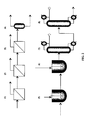
Figure 1 : Method forpurifying 1,3-propanediol by adding glycerol.- (1) Microfiltration, (2) Ultrafiltration, (3) Nanofiltration, (4) Water evaporation, (5) Glycerol addition, (6) Topping, (7) Stripping.
-
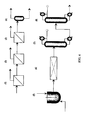
Figure 2 : Method for purifying organic acids and 1,3-propanediol by distillation, after acidification of the medium, and adding glycerol.- (1) Microfiltration, (2) Ultrafiltration, (3) Nanofiltration, (4) Water evaporation, (5) Acid addition, (6) Glycerol addition, (7) Topping, (8) Stripping.
-
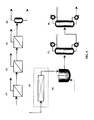
Figure 3 : Method for purifying organic acids by liquid-liquid extraction and 1,3-propanediol by distillation, after acidification of the medium and adding glycerol.- (1) Microfiltration, (2) Ultrafiltration, (3) Nanofiltration, (4) Water evaporation, (5) Acid addition, (6) Liquid-liquid extraction, (7) Glycerol addition, (8) Topping, (9) Stripping.
-
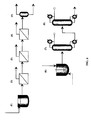
Figure 4 : Method forpurifying 1,3-propanediol by distillation and elimination of anions by a strong anion-exchange resin, then adding glycerol optionally treated on an ion-exchange resin.- (1) Microfiltration, (2) Ultrafiltration, (3) Nanofiltration, (4) Water evaporation, (5) Glycerol addition, (6) Strong ion-exchange resin, (7) Topping, (8) Stripping.
-
Figure 5 : Method forpurifying 1,3-propanediol by distillation after adding glycerol optionally treated on an ion-exchange resin.- (1) Microfiltration, (2) Ultrafiltration, (3) Nanofiltration, (4) Water evaporation, (5) Treatment of glycerol on an ion-exchange resin, (6) Glycerol addition, (7) Topping, (8) Stripping.
-
Figure 6 : Method for quenching fermentation by adding a base andpurifying 1,3-propanediol by distillation after adding glycerol optionally treated on an ion-exchange resin.- (1) Quenching fermentation by adding a base, (2) Microfiltration, (3) Ultrafiltration, (4) Nanofiltration, (5) Water evaporation, (6) Glycerol addition, (7) Topping, (8) Stripping.
-
Figure 7 : Method forpurifying 1,3-propanediol by adding glycerol and bleaching of the fermentation must.- (1) Microfiltration, (2) Ultrafiltration, (3) Nanofiltration, (4) Water evaporation, (5) Glycerol addition, (6) Bleaching (evaporation), (7) Topping, (8) Stripping.
- Example 1 relates to the basic invention:
- 100 ml of fermentation broth containing water, 1,3-propanediol, acid acetic, butyric acid, mineral salts and organic salts (ammonium, sodium acetate) are filtered by microfiltration, ultrafiltration and nanofiltration.
- The resulting mixture is heated under 30 mbar to evaporate water.
- Glycerol is added to the medium.
- The resulting mixture is distilled on a 20-theoretical-stage column under 5 mbar of pressure. Volatile products are eliminated (primarily water and acid acetic).
- The resulting mixture is distilled on a 20-theoretical-stage column under 1 mbar of pressure.
- The 1,3-propanediol obtained is greater than 99% pure. Chlorides are undetectable.
-
- 100 ml of fermentation broth containing water, 1,3-propanediol, acid acetic, butyric acid, mineral salts and organic salts (ammonium, sodium acetate) are filtered by microfiltration, ultrafiltration and nanofiltration.
- The resulting mixture is heated under 30 mbar to evaporate the water.
- 50 g of glycerol are passed through a strong anion-exchange resin to eliminate anions, primarily chlorides. Glycerol is added to the fermentation mixture.
- The resulting mixture is distilled on a 20-theoretical-stage column under 5 mbar of pressure. Volatile products are eliminated (primarily water and acid acetic).
- The resulting mixture is distilled on a 20-theoretical-stage column under 1 mbar of pressure.
- The 1,3-propanediol obtained is greater than 99% pure. Chlorides are undetectable.
Claims (8)
- A method for purifying 1,3-propanediol or 1,2-propanediol from a fermentation broth, comprising at least the following steps:- filtering the fermentation broth in order to obtain an aqueous solution containing the 1,3-propanediol or 1,2-propanediol,- eliminating water from the aqueous solution,- adding glycerol to the aqueous solution,- eliminating by distillation products with a vapor pressure greater than that of the 1,3-propanediol or 1,2-propanediol to be purified,- eliminating by distillation products with a vapor pressure less than that of the 1,3-propanediol or 1,2-propanediol to be purified,- recovering the 1,3-propanediol or 1,2-propanediol.
- A purification method according to claim 1, also comprising a step of adjusting the pH of the aqueous solution to pH<3.
- A purification method according to one of the preceding claims, also comprising a step of extracting with a hydrophobic solvent to eliminate organic acids.
- A purification method according to one of the preceding claims, also comprising a step of eliminating anions in the aqueous solution.
- A method according to one of the preceding claims, wherein water is eliminated by evaporation.
- A method according to one of the preceding claims, wherein glycerol is added in proportions ranging from 5% to 100% by weight of the aqueous solution.
- A method according to one of the preceding claims, wherein after 1,3-propanediol or 1,2-propanediol is recovered, glycerol is recovered.
- A method according to one of the preceding claims, wherein the added glycerol is pro-treated with a strong anion-exchange resin to eliminate anions from the crude glycerol.
Applications Claiming Priority (1)
| Application Number | Priority Date | Filing Date | Title |
|---|---|---|---|
| PCT/EP2007/063068 WO2009068110A1 (en) | 2007-11-30 | 2007-11-30 | Method for purifying an alcohol from a fermentation broth |
Publications (2)
| Publication Number | Publication Date |
|---|---|
| EP2220018A1 EP2220018A1 (en) | 2010-08-25 |
| EP2220018B1 true EP2220018B1 (en) | 2012-07-04 |
Family
ID=39720137
Family Applications (1)
| Application Number | Title | Priority Date | Filing Date |
|---|---|---|---|
| EP07847584A Not-in-force EP2220018B1 (en) | 2007-11-30 | 2007-11-30 | Method for purifying an alcohol from a fermentation broth |
Country Status (7)
| Country | Link |
|---|---|
| US (1) | US8399716B2 (en) |
| EP (1) | EP2220018B1 (en) |
| KR (1) | KR101543485B1 (en) |
| CN (1) | CN101925567B (en) |
| DK (1) | DK2220018T3 (en) |
| ES (1) | ES2388754T3 (en) |
| WO (1) | WO2009068110A1 (en) |
Families Citing this family (21)
| Publication number | Priority date | Publication date | Assignee | Title |
|---|---|---|---|---|
| KR101613754B1 (en) * | 2008-10-03 | 2016-04-19 | 메타볼릭 익스플로러 | Method for purifying an alcohol from a fermentation broth using a falling film, a wiped film, a thin film or a short path evaporator |
| WO2011076690A1 (en) | 2009-12-22 | 2011-06-30 | Metabolic Explorer | Method for purifying 1,2-propanediol from a fermentation broth |
| TWI500768B (en) | 2010-07-05 | 2015-09-21 | Metabolic Explorer Sa | Method for the preparation of 1,3-propanediol from sucrose |
| AR083799A1 (en) | 2010-11-10 | 2013-03-20 | Metabolic Explorer Sa | MICROORGANISMS FOR THE PRODUCTION OF 1,3-PROPANODIOL USING CONCENTRATION OF HIGH GLYCERINE |
| EP2686379B1 (en) | 2011-03-18 | 2017-08-16 | Metabolic Explorer | Method for producing plasticized starch by using 1,3-propanediol and resulting composition |
| WO2012130316A1 (en) | 2011-03-31 | 2012-10-04 | Metabolic Explorer | Method for purifying mpg (monopropylene glycol) from a fermentation broth |
| FR2974311A1 (en) * | 2011-04-21 | 2012-10-26 | Metabolic Explorer Sa | Recycling water in process of producing product by fermentation, comprises producing product by fermentation of a producing microorganism, purifying product from aqueous fermentation broth and treating aqueous effluent by reverse osmosis |
| EP2540834A1 (en) | 2011-06-29 | 2013-01-02 | Metabolic Explorer | Method for the preparation of 1,3-propanediol |
| WO2017202731A1 (en) * | 2016-05-23 | 2017-11-30 | Shell Internationale Research Maatschappij B.V. | Process for the separation of diols |
| US10982237B2 (en) | 2017-02-20 | 2021-04-20 | Metabolic Explorer | Microbial consortium for 1,3-propanediol production using high glycerol concentration |
| EP3438270A1 (en) | 2017-08-04 | 2019-02-06 | Metabolic Explorer | Microorganism and method for improved 1,3-propanediol production by fermentation on a culture medium with high glycerine content |
| EP3470512A1 (en) | 2017-10-10 | 2019-04-17 | Metabolic Explorer | Mutant phosphoserine aminotransferase for the conversion of homoserine into 4-hydroxy-2-ketobutyrate |
| JP7124075B2 (en) | 2017-11-09 | 2022-08-23 | ブラスケム・エス・エー | Method for recovering ketones and glycols from fermentation |
| EP3820585B1 (en) * | 2018-07-10 | 2022-11-02 | Givaudan SA | Improvements in or relating to organic compounds |
| IL280749B2 (en) | 2018-08-10 | 2025-08-01 | Metabolic Explorer Sa | Microorganisms with enhanced production of 3,1-propanediol and butyric acid |
| KR102542396B1 (en) | 2018-11-19 | 2023-06-09 | 주식회사 엘지화학 | Method for culturing microorganism by reusing fermented liquid of microorganism |
| KR102116878B1 (en) | 2020-01-30 | 2020-05-29 | (주)세프라텍 | equipment and method of production high concentration bio alcohol using a pervaporation and distillation |
| CN112851473A (en) * | 2021-02-22 | 2021-05-28 | 花安堂生物科技集团有限公司 | Method for extracting 1, 3-propylene glycol from microbial fermentation broth |
| FI131377B1 (en) * | 2021-09-20 | 2025-03-17 | Upm Kymmene Corp | Recovering mono-propylene glycol by using a distillation solvent |
| EP4491730A1 (en) | 2023-07-10 | 2025-01-15 | Metabolic Explorer | Microorganisms with improved glycerol and acetate production and the use thereof for 1,3-propanediol production |
| CN117720399B (en) * | 2023-11-09 | 2025-09-16 | 中国天辰工程有限公司 | Separation and purification method of 1, 3-propylene glycol |
Family Cites Families (7)
| Publication number | Priority date | Publication date | Assignee | Title |
|---|---|---|---|---|
| US4584063A (en) | 1982-06-28 | 1986-04-22 | Lloyd Berg | Separation of acetone from methanol by extractive distillation |
| US6361983B1 (en) * | 1999-09-30 | 2002-03-26 | E. I. Du Pont De Nemours And Company | Process for the isolation of 1,3-propanediol from fermentation broth |
| US6603048B1 (en) | 1999-10-05 | 2003-08-05 | E. I. Du Pont De Nemours And Company | Process to separate 1,3-propanediol or glycerol, or a mixture thereof from a biological mixture |
| DE602004028359D1 (en) * | 2003-05-06 | 2010-09-09 | Du Pont | PURIFICATION OF BIOLOGICALLY PRODUCED 1,3-PROPANEL |
| US7056439B2 (en) | 2003-05-06 | 2006-06-06 | Tate & Lyle Ingredidents Americas, Inc. | Process for producing 1, 3-propanediol |
| KR100629772B1 (en) | 2004-09-01 | 2006-09-28 | 씨제이 주식회사 | Method for separating 1,3-propanediol, or 1,3-propanediol and 1,2-propanediol from a mixture comprising 1,3-propanediol, 1,2-propanediol, glycerol and glucose |
| CN100486945C (en) * | 2005-06-15 | 2009-05-13 | 中国石油天然气股份有限公司 | Method for separating and refining 1, 3-propylene glycol in fermentation liquor |
-
2007
- 2007-11-30 CN CN200780102241.5A patent/CN101925567B/en not_active Expired - Fee Related
- 2007-11-30 EP EP07847584A patent/EP2220018B1/en not_active Not-in-force
- 2007-11-30 ES ES07847584T patent/ES2388754T3/en active Active
- 2007-11-30 DK DK07847584.5T patent/DK2220018T3/en active
- 2007-11-30 WO PCT/EP2007/063068 patent/WO2009068110A1/en not_active Ceased
- 2007-11-30 US US12/743,988 patent/US8399716B2/en active Active
- 2007-11-30 KR KR1020107014370A patent/KR101543485B1/en not_active Expired - Fee Related
Also Published As
| Publication number | Publication date |
|---|---|
| EP2220018A1 (en) | 2010-08-25 |
| ES2388754T3 (en) | 2012-10-18 |
| US8399716B2 (en) | 2013-03-19 |
| WO2009068110A1 (en) | 2009-06-04 |
| CN101925567B (en) | 2014-04-23 |
| KR101543485B1 (en) | 2015-08-10 |
| CN101925567A (en) | 2010-12-22 |
| KR20100100916A (en) | 2010-09-15 |
| DK2220018T3 (en) | 2012-09-17 |
| US20100261240A1 (en) | 2010-10-14 |
Similar Documents
| Publication | Publication Date | Title |
|---|---|---|
| US8399716B2 (en) | Method of purifying alcohol from a fermentation broth | |
| EP0804607B1 (en) | Lactic acid production, separation and/or recovery process | |
| US8399717B2 (en) | Method for purifying an alcohol from a fermentation broth using a falling film, a wiped film, a thin film or a short path evaporator | |
| EP2327464B1 (en) | Process for producing 1,3-propanediol | |
| JP6223681B2 (en) | Method for producing lactic acid | |
| US7026145B2 (en) | Process for producing a purified lactic acid solution | |
| US9422220B2 (en) | Method for purifying carboxylic acids from fermentation broths | |
| WO2012130316A1 (en) | Method for purifying mpg (monopropylene glycol) from a fermentation broth | |
| JP2011177159A (en) | Method for isolation and purification of lactic acid from lactic fermentation liquid | |
| EP2551254B1 (en) | Butanol manufacturing method | |
| KR101294336B1 (en) | Methods for Purifying Lactic Acid | |
| DE102016119938A1 (en) | Purification and concentration of carboxylic acids from fermentation processes | |
| WO2014045299A4 (en) | Continuous biotransformation of substituted aromatic carboxylic acids to their selective aldehydes and alcohols | |
| EP2508501A2 (en) | Methods and systems of producing dicarboxylic acids | |
| FR3018811A1 (en) | PROCESS FOR EXTRACTING ACONIC ACID FROM PRODUCTS FROM THE SUGAR CANE INDUSTRY | |
| EP2355911B1 (en) | Method for purifying an alcohol from a fermentation broth using a falling film, a wiped film, a thin film or a short path evaporator | |
| JP4929639B2 (en) | Method for producing lactate ester | |
| CN104513151A (en) | Method for extracting high purity succinic acid from succinate fermentation liquid | |
| JP3965223B2 (en) | Purification method of erythritol | |
| JPS62286501A (en) | Isolation of dihydroxyacetone | |
| CN112851473A (en) | Method for extracting 1, 3-propylene glycol from microbial fermentation broth | |
| JPH04141204A (en) | Recovery of high purity organic acid | |
| JP2946944B2 (en) | Method for producing alkylaminophenols | |
| EP3315485B1 (en) | Crude glycerol purification process | |
| EP3328790A1 (en) | Method for providing a succinic acid solution |
Legal Events
| Date | Code | Title | Description |
|---|---|---|---|
| PUAI | Public reference made under article 153(3) epc to a published international application that has entered the european phase |
Free format text: ORIGINAL CODE: 0009012 |
|
| 17P | Request for examination filed |
Effective date: 20100616 |
|
| AK | Designated contracting states |
Kind code of ref document: A1 Designated state(s): AT BE BG CH CY CZ DE DK EE ES FI FR GB GR HU IE IS IT LI LT LU LV MC MT NL PL PT RO SE SI SK TR |
|
| AX | Request for extension of the european patent |
Extension state: AL BA HR MK RS |
|
| 17Q | First examination report despatched |
Effective date: 20101217 |
|
| DAX | Request for extension of the european patent (deleted) | ||
| GRAP | Despatch of communication of intention to grant a patent |
Free format text: ORIGINAL CODE: EPIDOSNIGR1 |
|
| GRAS | Grant fee paid |
Free format text: ORIGINAL CODE: EPIDOSNIGR3 |
|
| GRAA | (expected) grant |
Free format text: ORIGINAL CODE: 0009210 |
|
| AK | Designated contracting states |
Kind code of ref document: B1 Designated state(s): AT BE BG CH CY CZ DE DK EE ES FI FR GB GR HU IE IS IT LI LT LU LV MC MT NL PL PT RO SE SI SK TR |
|
| REG | Reference to a national code |
Ref country code: GB Ref legal event code: FG4D |
|
| REG | Reference to a national code |
Ref country code: CH Ref legal event code: EP |
|
| REG | Reference to a national code |
Ref country code: AT Ref legal event code: REF Ref document number: 565104 Country of ref document: AT Kind code of ref document: T Effective date: 20120715 |
|
| REG | Reference to a national code |
Ref country code: IE Ref legal event code: FG4D |
|
| REG | Reference to a national code |
Ref country code: DE Ref legal event code: R096 Ref document number: 602007023837 Country of ref document: DE Effective date: 20120830 |
|
| REG | Reference to a national code |
Ref country code: NL Ref legal event code: T3 |
|
| REG | Reference to a national code |
Ref country code: DK Ref legal event code: T3 |
|
| REG | Reference to a national code |
Ref country code: ES Ref legal event code: FG2A Ref document number: 2388754 Country of ref document: ES Kind code of ref document: T3 Effective date: 20121018 |
|
| REG | Reference to a national code |
Ref country code: AT Ref legal event code: MK05 Ref document number: 565104 Country of ref document: AT Kind code of ref document: T Effective date: 20120704 |
|
| PG25 | Lapsed in a contracting state [announced via postgrant information from national office to epo] |
Ref country code: SI Free format text: LAPSE BECAUSE OF FAILURE TO SUBMIT A TRANSLATION OF THE DESCRIPTION OR TO PAY THE FEE WITHIN THE PRESCRIBED TIME-LIMIT Effective date: 20120704 |
|
| REG | Reference to a national code |
Ref country code: LT Ref legal event code: MG4D Effective date: 20120704 |
|
| PG25 | Lapsed in a contracting state [announced via postgrant information from national office to epo] |
Ref country code: CY Free format text: LAPSE BECAUSE OF FAILURE TO SUBMIT A TRANSLATION OF THE DESCRIPTION OR TO PAY THE FEE WITHIN THE PRESCRIBED TIME-LIMIT Effective date: 20120704 Ref country code: BE Free format text: LAPSE BECAUSE OF FAILURE TO SUBMIT A TRANSLATION OF THE DESCRIPTION OR TO PAY THE FEE WITHIN THE PRESCRIBED TIME-LIMIT Effective date: 20120704 Ref country code: IS Free format text: LAPSE BECAUSE OF FAILURE TO SUBMIT A TRANSLATION OF THE DESCRIPTION OR TO PAY THE FEE WITHIN THE PRESCRIBED TIME-LIMIT Effective date: 20121104 Ref country code: LT Free format text: LAPSE BECAUSE OF FAILURE TO SUBMIT A TRANSLATION OF THE DESCRIPTION OR TO PAY THE FEE WITHIN THE PRESCRIBED TIME-LIMIT Effective date: 20120704 Ref country code: AT Free format text: LAPSE BECAUSE OF FAILURE TO SUBMIT A TRANSLATION OF THE DESCRIPTION OR TO PAY THE FEE WITHIN THE PRESCRIBED TIME-LIMIT Effective date: 20120704 |
|
| PG25 | Lapsed in a contracting state [announced via postgrant information from national office to epo] |
Ref country code: SE Free format text: LAPSE BECAUSE OF FAILURE TO SUBMIT A TRANSLATION OF THE DESCRIPTION OR TO PAY THE FEE WITHIN THE PRESCRIBED TIME-LIMIT Effective date: 20120704 Ref country code: PT Free format text: LAPSE BECAUSE OF FAILURE TO SUBMIT A TRANSLATION OF THE DESCRIPTION OR TO PAY THE FEE WITHIN THE PRESCRIBED TIME-LIMIT Effective date: 20121105 Ref country code: PL Free format text: LAPSE BECAUSE OF FAILURE TO SUBMIT A TRANSLATION OF THE DESCRIPTION OR TO PAY THE FEE WITHIN THE PRESCRIBED TIME-LIMIT Effective date: 20120704 Ref country code: GR Free format text: LAPSE BECAUSE OF FAILURE TO SUBMIT A TRANSLATION OF THE DESCRIPTION OR TO PAY THE FEE WITHIN THE PRESCRIBED TIME-LIMIT Effective date: 20121005 Ref country code: LV Free format text: LAPSE BECAUSE OF FAILURE TO SUBMIT A TRANSLATION OF THE DESCRIPTION OR TO PAY THE FEE WITHIN THE PRESCRIBED TIME-LIMIT Effective date: 20120704 |
|
| PG25 | Lapsed in a contracting state [announced via postgrant information from national office to epo] |
Ref country code: CZ Free format text: LAPSE BECAUSE OF FAILURE TO SUBMIT A TRANSLATION OF THE DESCRIPTION OR TO PAY THE FEE WITHIN THE PRESCRIBED TIME-LIMIT Effective date: 20120704 Ref country code: RO Free format text: LAPSE BECAUSE OF FAILURE TO SUBMIT A TRANSLATION OF THE DESCRIPTION OR TO PAY THE FEE WITHIN THE PRESCRIBED TIME-LIMIT Effective date: 20120704 Ref country code: EE Free format text: LAPSE BECAUSE OF FAILURE TO SUBMIT A TRANSLATION OF THE DESCRIPTION OR TO PAY THE FEE WITHIN THE PRESCRIBED TIME-LIMIT Effective date: 20120704 |
|
| PLBE | No opposition filed within time limit |
Free format text: ORIGINAL CODE: 0009261 |
|
| STAA | Information on the status of an ep patent application or granted ep patent |
Free format text: STATUS: NO OPPOSITION FILED WITHIN TIME LIMIT |
|
| PG25 | Lapsed in a contracting state [announced via postgrant information from national office to epo] |
Ref country code: SK Free format text: LAPSE BECAUSE OF FAILURE TO SUBMIT A TRANSLATION OF THE DESCRIPTION OR TO PAY THE FEE WITHIN THE PRESCRIBED TIME-LIMIT Effective date: 20120704 |
|
| 26N | No opposition filed |
Effective date: 20130405 |
|
| REG | Reference to a national code |
Ref country code: CH Ref legal event code: PL |
|
| PG25 | Lapsed in a contracting state [announced via postgrant information from national office to epo] |
Ref country code: CH Free format text: LAPSE BECAUSE OF NON-PAYMENT OF DUE FEES Effective date: 20121130 Ref country code: BG Free format text: LAPSE BECAUSE OF FAILURE TO SUBMIT A TRANSLATION OF THE DESCRIPTION OR TO PAY THE FEE WITHIN THE PRESCRIBED TIME-LIMIT Effective date: 20121004 Ref country code: LI Free format text: LAPSE BECAUSE OF NON-PAYMENT OF DUE FEES Effective date: 20121130 |
|
| REG | Reference to a national code |
Ref country code: DE Ref legal event code: R097 Ref document number: 602007023837 Country of ref document: DE Effective date: 20130405 |
|
| REG | Reference to a national code |
Ref country code: IE Ref legal event code: MM4A |
|
| PG25 | Lapsed in a contracting state [announced via postgrant information from national office to epo] |
Ref country code: IE Free format text: LAPSE BECAUSE OF NON-PAYMENT OF DUE FEES Effective date: 20121130 |
|
| PG25 | Lapsed in a contracting state [announced via postgrant information from national office to epo] |
Ref country code: MT Free format text: LAPSE BECAUSE OF FAILURE TO SUBMIT A TRANSLATION OF THE DESCRIPTION OR TO PAY THE FEE WITHIN THE PRESCRIBED TIME-LIMIT Effective date: 20120704 |
|
| PG25 | Lapsed in a contracting state [announced via postgrant information from national office to epo] |
Ref country code: TR Free format text: LAPSE BECAUSE OF FAILURE TO SUBMIT A TRANSLATION OF THE DESCRIPTION OR TO PAY THE FEE WITHIN THE PRESCRIBED TIME-LIMIT Effective date: 20120704 Ref country code: MC Free format text: LAPSE BECAUSE OF NON-PAYMENT OF DUE FEES Effective date: 20121130 |
|
| PG25 | Lapsed in a contracting state [announced via postgrant information from national office to epo] |
Ref country code: HU Free format text: LAPSE BECAUSE OF FAILURE TO SUBMIT A TRANSLATION OF THE DESCRIPTION OR TO PAY THE FEE WITHIN THE PRESCRIBED TIME-LIMIT Effective date: 20071130 |
|
| REG | Reference to a national code |
Ref country code: FR Ref legal event code: PLFP Year of fee payment: 9 |
|
| REG | Reference to a national code |
Ref country code: FR Ref legal event code: PLFP Year of fee payment: 10 |
|
| REG | Reference to a national code |
Ref country code: FR Ref legal event code: PLFP Year of fee payment: 11 |
|
| P01 | Opt-out of the competence of the unified patent court (upc) registered |
Effective date: 20230527 |
|
| PGFP | Annual fee paid to national office [announced via postgrant information from national office to epo] |
Ref country code: NL Payment date: 20231023 Year of fee payment: 17 |
|
| PGFP | Annual fee paid to national office [announced via postgrant information from national office to epo] |
Ref country code: LU Payment date: 20231023 Year of fee payment: 17 |
|
| PGFP | Annual fee paid to national office [announced via postgrant information from national office to epo] |
Ref country code: GB Payment date: 20231120 Year of fee payment: 17 |
|
| PGFP | Annual fee paid to national office [announced via postgrant information from national office to epo] |
Ref country code: ES Payment date: 20231218 Year of fee payment: 17 |
|
| PGFP | Annual fee paid to national office [announced via postgrant information from national office to epo] |
Ref country code: IT Payment date: 20231109 Year of fee payment: 17 Ref country code: FR Payment date: 20231027 Year of fee payment: 17 Ref country code: FI Payment date: 20231020 Year of fee payment: 17 Ref country code: DK Payment date: 20231025 Year of fee payment: 17 Ref country code: DE Payment date: 20231107 Year of fee payment: 17 |
|
| REG | Reference to a national code |
Ref country code: DE Ref legal event code: R119 Ref document number: 602007023837 Country of ref document: DE |
|
| REG | Reference to a national code |
Ref country code: DK Ref legal event code: EBP Effective date: 20241130 |
|
| PG25 | Lapsed in a contracting state [announced via postgrant information from national office to epo] |
Ref country code: FI Free format text: LAPSE BECAUSE OF NON-PAYMENT OF DUE FEES Effective date: 20241130 |
|
| REG | Reference to a national code |
Ref country code: NL Ref legal event code: MM Effective date: 20241201 |
|
| PG25 | Lapsed in a contracting state [announced via postgrant information from national office to epo] |
Ref country code: LU Free format text: LAPSE BECAUSE OF NON-PAYMENT OF DUE FEES Effective date: 20241130 |
|
| GBPC | Gb: european patent ceased through non-payment of renewal fee |
Effective date: 20241130 |
|
| PG25 | Lapsed in a contracting state [announced via postgrant information from national office to epo] |
Ref country code: NL Free format text: LAPSE BECAUSE OF NON-PAYMENT OF DUE FEES Effective date: 20241201 |
|
| PG25 | Lapsed in a contracting state [announced via postgrant information from national office to epo] |
Ref country code: DE Free format text: LAPSE BECAUSE OF NON-PAYMENT OF DUE FEES Effective date: 20250603 Ref country code: DK Free format text: LAPSE BECAUSE OF NON-PAYMENT OF DUE FEES Effective date: 20241130 |
|
| PG25 | Lapsed in a contracting state [announced via postgrant information from national office to epo] |
Ref country code: IT Free format text: LAPSE BECAUSE OF NON-PAYMENT OF DUE FEES Effective date: 20241130 |
|
| PG25 | Lapsed in a contracting state [announced via postgrant information from national office to epo] |
Ref country code: GB Free format text: LAPSE BECAUSE OF NON-PAYMENT OF DUE FEES Effective date: 20241130 |
|
| PG25 | Lapsed in a contracting state [announced via postgrant information from national office to epo] |
Ref country code: FR Free format text: LAPSE BECAUSE OF NON-PAYMENT OF DUE FEES Effective date: 20241130 |
|
| REG | Reference to a national code |
Ref country code: ES Ref legal event code: FD2A Effective date: 20260105 |
|
| PG25 | Lapsed in a contracting state [announced via postgrant information from national office to epo] |
Ref country code: ES Free format text: LAPSE BECAUSE OF NON-PAYMENT OF DUE FEES Effective date: 20241201 |