EP2217596B1 - Bicyclic heterocycle derivatives and their use as modulators of the activity of gpr119 - Google Patents
Bicyclic heterocycle derivatives and their use as modulators of the activity of gpr119 Download PDFInfo
- Publication number
- EP2217596B1 EP2217596B1 EP08832779A EP08832779A EP2217596B1 EP 2217596 B1 EP2217596 B1 EP 2217596B1 EP 08832779 A EP08832779 A EP 08832779A EP 08832779 A EP08832779 A EP 08832779A EP 2217596 B1 EP2217596 B1 EP 2217596B1
- Authority
- EP
- European Patent Office
- Prior art keywords
- compound
- mmol
- preparation
- method described
- substituting
- Prior art date
- Legal status (The legal status is an assumption and is not a legal conclusion. Google has not performed a legal analysis and makes no representation as to the accuracy of the status listed.)
- Active
Links
- 0 C*C(CC(C)NCC(C(C)CCC**1*)C(C)(C)C*(C)*(*)C=C)C(C)*1=C Chemical compound C*C(CC(C)NCC(C(C)CCC**1*)C(C)(C)C*(C)*(*)C=C)C(C)*1=C 0.000 description 23
- XPCBJAWNGXTIHV-UHFFFAOYSA-N Cc(c(Nc(c(F)c1)ccc1S(C)(=O)=O)ncn1)c1OC(C1)C2NC1COC2 Chemical compound Cc(c(Nc(c(F)c1)ccc1S(C)(=O)=O)ncn1)c1OC(C1)C2NC1COC2 XPCBJAWNGXTIHV-UHFFFAOYSA-N 0.000 description 2
- GLWMCADVOPLIRP-UHFFFAOYSA-N Cc(cc(c(Cl)c1)N)c1C#N Chemical compound Cc(cc(c(Cl)c1)N)c1C#N GLWMCADVOPLIRP-UHFFFAOYSA-N 0.000 description 2
- LWPBZZRISIWKIO-UHFFFAOYSA-N OC(C1)C2NC1COC2 Chemical compound OC(C1)C2NC1COC2 LWPBZZRISIWKIO-UHFFFAOYSA-N 0.000 description 2
- DZPCTVLGYUKADV-AVOGVNOJSA-N C/C(/C(OC(C1)C2NC1COC2)=N)=C(/NN)\Cl Chemical compound C/C(/C(OC(C1)C2NC1COC2)=N)=C(/NN)\Cl DZPCTVLGYUKADV-AVOGVNOJSA-N 0.000 description 1
- CLKYWIPXDYUZTH-CQYUPSRRSA-N C/C(/C(OC(C1)C2NC1OC2)=N)=C(\Nc(c(F)c1)ccc1SCC=C)/NN Chemical compound C/C(/C(OC(C1)C2NC1OC2)=N)=C(\Nc(c(F)c1)ccc1SCC=C)/NN CLKYWIPXDYUZTH-CQYUPSRRSA-N 0.000 description 1
- DTRXBBMBQRHHRO-UHFFFAOYSA-N CC(C(Cl)=NCN1C)=C1OC1CC(CC2)NC2C1 Chemical compound CC(C(Cl)=NCN1C)=C1OC1CC(CC2)NC2C1 DTRXBBMBQRHHRO-UHFFFAOYSA-N 0.000 description 1
- GKNDIJXMOVXZCE-UHFFFAOYSA-N CC(C)(C)COC(N(C(C1)COC2)C2C1OC12[IH]C1C=NC(Oc(cc1)cc(CC3)c1C3=O)=C2C)=O Chemical compound CC(C)(C)COC(N(C(C1)COC2)C2C1OC12[IH]C1C=NC(Oc(cc1)cc(CC3)c1C3=O)=C2C)=O GKNDIJXMOVXZCE-UHFFFAOYSA-N 0.000 description 1
- PUUKIYGGCGZUHX-CNUSCWMZSA-N CC(C)(C)OC(N(C(CC1)C2)[C@@H]1C1[C@H]2[C@@H]1COc1c(C)c(Oc(ccc(S(C2CC2)(=O)=O)c2)c2OC)ncn1)=O Chemical compound CC(C)(C)OC(N(C(CC1)C2)[C@@H]1C1[C@H]2[C@@H]1COc1c(C)c(Oc(ccc(S(C2CC2)(=O)=O)c2)c2OC)ncn1)=O PUUKIYGGCGZUHX-CNUSCWMZSA-N 0.000 description 1
- YKEGUYTXACKXKS-IRXDYDNUSA-N CC(C)(C)OC(N([C@@H](CC1)C2)[C@@H]1CC2Oc1ncnc(Oc2cccnc2C)c1C)=O Chemical compound CC(C)(C)OC(N([C@@H](CC1)C2)[C@@H]1CC2Oc1ncnc(Oc2cccnc2C)c1C)=O YKEGUYTXACKXKS-IRXDYDNUSA-N 0.000 description 1
- LSZORTHCABSFEL-UHFFFAOYSA-N CC(C)(C)OC(N1CC(CC2)C(COc3ncnc(Nc(c(Cl)c4)ccc4C#N)c3C)C2C1)=O Chemical compound CC(C)(C)OC(N1CC(CC2)C(COc3ncnc(Nc(c(Cl)c4)ccc4C#N)c3C)C2C1)=O LSZORTHCABSFEL-UHFFFAOYSA-N 0.000 description 1
- SPTSQXUTXCYWKS-IDWQHHEASA-N CC(C)(C)OC(N1[C@@](C2)(C34)C23C1C[C@@H]4Oc(ncnc1Nc(ccc(CCC2CC2)c2)c2Cl)c1OC)=O Chemical compound CC(C)(C)OC(N1[C@@](C2)(C34)C23C1C[C@@H]4Oc(ncnc1Nc(ccc(CCC2CC2)c2)c2Cl)c1OC)=O SPTSQXUTXCYWKS-IDWQHHEASA-N 0.000 description 1
- WGYJPZOIJAVGRH-UHFFFAOYSA-P CC(C)OC(N(C(C1)COC2)C2C1Oc1ncnc(Nc(c(F)c2)ccc2[NH2+]C=NC=[NH2+])c1OC)=O Chemical compound CC(C)OC(N(C(C1)COC2)C2C1Oc1ncnc(Nc(c(F)c2)ccc2[NH2+]C=NC=[NH2+])c1OC)=O WGYJPZOIJAVGRH-UHFFFAOYSA-P 0.000 description 1
- QCHYKEKAAQTHIA-UHFFFAOYSA-N CC(C)OC(N(C1)CC2OCC1C2Oc1ncnc(Nc(ccc(S(C)(=O)=O)c2)c2F)c1C)=O Chemical compound CC(C)OC(N(C1)CC2OCC1C2Oc1ncnc(Nc(ccc(S(C)(=O)=O)c2)c2F)c1C)=O QCHYKEKAAQTHIA-UHFFFAOYSA-N 0.000 description 1
- SUKGRWXESFNOFI-UHFFFAOYSA-N CC(C)OC(N(CCC1)C(C2)C1=C/C2=[O]\c1c(C)c(Oc(ccc(S(C2CC2)(=O)=O)c2)c2OC)ncn1)=O Chemical compound CC(C)OC(N(CCC1)C(C2)C1=C/C2=[O]\c1c(C)c(Oc(ccc(S(C2CC2)(=O)=O)c2)c2OC)ncn1)=O SUKGRWXESFNOFI-UHFFFAOYSA-N 0.000 description 1
- APBVEYDUZQSASB-UHFFFAOYSA-N CC(C)OC(N1C(C2)OCC1C2Oc1ncnc(Oc(ccc(S(C)(=O)=O)c2)c2F)c1C)=O Chemical compound CC(C)OC(N1C(C2)OCC1C2Oc1ncnc(Oc(ccc(S(C)(=O)=O)c2)c2F)c1C)=O APBVEYDUZQSASB-UHFFFAOYSA-N 0.000 description 1
- URSWZOXXQWOYEE-UHFFFAOYSA-N CC(C)OC(N1CC(CC2)C(COc3ncnc(Nc(ccc(C#N)c4)c4Cl)c3C)C2C1)=O Chemical compound CC(C)OC(N1CC(CC2)C(COc3ncnc(Nc(ccc(C#N)c4)c4Cl)c3C)C2C1)=O URSWZOXXQWOYEE-UHFFFAOYSA-N 0.000 description 1
- FTFIFFRDJFPGRK-UHFFFAOYSA-N CC1(CC1)OC(N1C2C=CC1CC2Oc1ncnc(NC(C(C)(C2)F)=CC=C2S(C)(=O)=O)c1C)=O Chemical compound CC1(CC1)OC(N1C2C=CC1CC2Oc1ncnc(NC(C(C)(C2)F)=CC=C2S(C)(=O)=O)c1C)=O FTFIFFRDJFPGRK-UHFFFAOYSA-N 0.000 description 1
- FWWFDNQEVQRDDQ-UHFFFAOYSA-N CC1(CCC1)OC(N(C(C1)C2)C1C2Oc1c(C)c(Nc(c(F)c2)ccc2S(C)(=O)=O)ncn1)=O Chemical compound CC1(CCC1)OC(N(C(C1)C2)C1C2Oc1c(C)c(Nc(c(F)c2)ccc2S(C)(=O)=O)ncn1)=O FWWFDNQEVQRDDQ-UHFFFAOYSA-N 0.000 description 1
- BHSFTVYZMOFUHJ-KEKNWZKVSA-N CCC(CC[C@H]1CCOc2ncnc(Oc3c(C)nccc3)c2C)N1C(OC(C1CC1)C1CC1)=O Chemical compound CCC(CC[C@H]1CCOc2ncnc(Oc3c(C)nccc3)c2C)N1C(OC(C1CC1)C1CC1)=O BHSFTVYZMOFUHJ-KEKNWZKVSA-N 0.000 description 1
- YMPNVUOOJNHRGE-LVLJQFTKSA-N C[C@@H](C[C@H](CC1C)Oc2c(C)c(Nc(c(F)c3)ccc3S(C3CC3)(=O)=O)ncn2)N1C(OC1(C)CCC1)=O Chemical compound C[C@@H](C[C@H](CC1C)Oc2c(C)c(Nc(c(F)c3)ccc3S(C3CC3)(=O)=O)ncn2)N1C(OC1(C)CCC1)=O YMPNVUOOJNHRGE-LVLJQFTKSA-N 0.000 description 1
- QKQSFGJCUAHOMX-MPQYYLJYSA-N C[C@H](c1ccccc1)OC(N([C@@H](CC1)C2)[C@@H]1CC2Oc1c(C)c(OC2=CCC(C)N=C2C)ncn1)=O Chemical compound C[C@H](c1ccccc1)OC(N([C@@H](CC1)C2)[C@@H]1CC2Oc1c(C)c(OC2=CCC(C)N=C2C)ncn1)=O QKQSFGJCUAHOMX-MPQYYLJYSA-N 0.000 description 1
- FGLGGTOMDLHHMB-UHFFFAOYSA-N Cc(c(Cl)ncn1)c1OC1C(CC2)NC2C1 Chemical compound Cc(c(Cl)ncn1)c1OC1C(CC2)NC2C1 FGLGGTOMDLHHMB-UHFFFAOYSA-N 0.000 description 1
- VWHSJWHOOPWZGL-UHFFFAOYSA-O Cc(c(Nc(c(F)c1)ccc1S(C)(=O)=O)ncc1I)c1OC1C(C2)[NH2+]C2C1 Chemical compound Cc(c(Nc(c(F)c1)ccc1S(C)(=O)=O)ncc1I)c1OC1C(C2)[NH2+]C2C1 VWHSJWHOOPWZGL-UHFFFAOYSA-O 0.000 description 1
- WIYPVKVRYGORCI-UHFFFAOYSA-N Cc(c(Nc(ccc(C#N)c1)c1Cl)ncn1)c1OC(C(CC1)C2)C1CN2S(C1CC1)(=O)=O Chemical compound Cc(c(Nc(ccc(C#N)c1)c1Cl)ncn1)c1OC(C(CC1)C2)C1CN2S(C1CC1)(=O)=O WIYPVKVRYGORCI-UHFFFAOYSA-N 0.000 description 1
- XZGMPBVLAMGFQY-UHFFFAOYSA-N Cc(c(Nc(ccc(NC=N)c1)c1Cl)ncn1)c1OC1C(CC2)NC2C1 Chemical compound Cc(c(Nc(ccc(NC=N)c1)c1Cl)ncn1)c1OC1C(CC2)NC2C1 XZGMPBVLAMGFQY-UHFFFAOYSA-N 0.000 description 1
- CPKOQNWVZQXZIW-UHFFFAOYSA-N Cc(c(Nc(ccc(S(C)(=O)=O)c1)c1F)ncn1)c1OC(CC1COC2)C2N1C(OC1CC1)=O Chemical compound Cc(c(Nc(ccc(S(C)(=O)=O)c1)c1F)ncn1)c1OC(CC1COC2)C2N1C(OC1CC1)=O CPKOQNWVZQXZIW-UHFFFAOYSA-N 0.000 description 1
- KBBRFEBOVXPXLJ-UHFFFAOYSA-N Cc(c(OC1C(C2)COCC1CN2S(C1CC1)(=O)=O)ncn1)c1Oc1cccnc1C Chemical compound Cc(c(OC1C(C2)COCC1CN2S(C1CC1)(=O)=O)ncn1)c1Oc1cccnc1C KBBRFEBOVXPXLJ-UHFFFAOYSA-N 0.000 description 1
- GDGIAAJKVKLCCK-CCYWVKEMSA-N Cc(c(OC[C@@H](CC1)CC(CCI)(C2)C12S(C1=CC1)(=O)=O)ncn1)c1Oc1c(C)nc(C)nc1C Chemical compound Cc(c(OC[C@@H](CC1)CC(CCI)(C2)C12S(C1=CC1)(=O)=O)ncn1)c1Oc1c(C)nc(C)nc1C GDGIAAJKVKLCCK-CCYWVKEMSA-N 0.000 description 1
- SHXXCYZSGSNNNC-UHFFFAOYSA-N Cc(c(Oc(cc1CC2)ccc1C2=O)ncc1I)c1OC(C1)C2NC1OC2 Chemical compound Cc(c(Oc(cc1CC2)ccc1C2=O)ncc1I)c1OC(C1)C2NC1OC2 SHXXCYZSGSNNNC-UHFFFAOYSA-N 0.000 description 1
- GAKQFTIHCVDBEY-GJZGRUSLSA-N Cc(c(Oc1c(C)nccc1)ncn1)c1OC(C[C@@H]1C=C2)C[C@H]2N1C(OC)=O Chemical compound Cc(c(Oc1c(C)nccc1)ncn1)c1OC(C[C@@H]1C=C2)C[C@H]2N1C(OC)=O GAKQFTIHCVDBEY-GJZGRUSLSA-N 0.000 description 1
- DEGLXHGZWIXTEH-HOTGVXAUSA-N Cc(c(Oc1c(C)nccc1)ncn1)c1OC(C[C@@H]1CC2)C[C@H]2N1S(C1CC1)(=O)=O Chemical compound Cc(c(Oc1c(C)nccc1)ncn1)c1OC(C[C@@H]1CC2)C[C@H]2N1S(C1CC1)(=O)=O DEGLXHGZWIXTEH-HOTGVXAUSA-N 0.000 description 1
- ICPPDFBNUAGZKN-UHFFFAOYSA-N Cc(cc(c(Cl)c1)[N+]([O-])=O)c1C#N Chemical compound Cc(cc(c(Cl)c1)[N+]([O-])=O)c1C#N ICPPDFBNUAGZKN-UHFFFAOYSA-N 0.000 description 1
- SQAOFWPVTLZDNS-UHFFFAOYSA-N Cc1c(Nc(ccc(F)c2)c2C#N)ncnc1OC(CC1CC2)CC2N1S(C1CC1)(=O)=O Chemical compound Cc1c(Nc(ccc(F)c2)c2C#N)ncnc1OC(CC1CC2)CC2N1S(C1CC1)(=O)=O SQAOFWPVTLZDNS-UHFFFAOYSA-N 0.000 description 1
- APUAABZVJKJGOC-UHFFFAOYSA-N Cc1c(Nc(cccc2)c2F)ncnc1OC(C1)C2NC1OC2 Chemical compound Cc1c(Nc(cccc2)c2F)ncnc1OC(C1)C2NC1OC2 APUAABZVJKJGOC-UHFFFAOYSA-N 0.000 description 1
- GQUWMSRKLJYDFA-UHFFFAOYSA-N Cc1c(Nc2ccccc2C#N)ncnc1OC(C1)C2NC1COC2 Chemical compound Cc1c(Nc2ccccc2C#N)ncnc1OC(C1)C2NC1COC2 GQUWMSRKLJYDFA-UHFFFAOYSA-N 0.000 description 1
- XQTFBAZLSICKGR-UHFFFAOYSA-N Nc(c(F)c1)ccc1SC1CC1 Chemical compound Nc(c(F)c1)ccc1SC1CC1 XQTFBAZLSICKGR-UHFFFAOYSA-N 0.000 description 1
- UZZPOTBBPKDZNQ-UHFFFAOYSA-N [O-][N+](c(cc1)ccc1C(OC(C1)C2NC1COC2)=O)=O Chemical compound [O-][N+](c(cc1)ccc1C(OC(C1)C2NC1COC2)=O)=O UZZPOTBBPKDZNQ-UHFFFAOYSA-N 0.000 description 1
Classifications
-
- C—CHEMISTRY; METALLURGY
- C07—ORGANIC CHEMISTRY
- C07D—HETEROCYCLIC COMPOUNDS
- C07D451/00—Heterocyclic compounds containing 8-azabicyclo [3.2.1] octane, 9-azabicyclo [3.3.1] nonane, or 3-oxa-9-azatricyclo [3.3.1.0<2,4>] nonane ring systems, e.g. tropane or granatane alkaloids, scopolamine; Cyclic acetals thereof
- C07D451/02—Heterocyclic compounds containing 8-azabicyclo [3.2.1] octane, 9-azabicyclo [3.3.1] nonane, or 3-oxa-9-azatricyclo [3.3.1.0<2,4>] nonane ring systems, e.g. tropane or granatane alkaloids, scopolamine; Cyclic acetals thereof containing not further condensed 8-azabicyclo [3.2.1] octane or 3-oxa-9-azatricyclo [3.3.1.0<2,4>] nonane ring systems, e.g. tropane; Cyclic acetals thereof
- C07D451/04—Heterocyclic compounds containing 8-azabicyclo [3.2.1] octane, 9-azabicyclo [3.3.1] nonane, or 3-oxa-9-azatricyclo [3.3.1.0<2,4>] nonane ring systems, e.g. tropane or granatane alkaloids, scopolamine; Cyclic acetals thereof containing not further condensed 8-azabicyclo [3.2.1] octane or 3-oxa-9-azatricyclo [3.3.1.0<2,4>] nonane ring systems, e.g. tropane; Cyclic acetals thereof with hetero atoms directly attached in position 3 of the 8-azabicyclo [3.2.1] octane or in position 7 of the 3-oxa-9-azatricyclo [3.3.1.0<2,4>] nonane ring system
- C07D451/06—Oxygen atoms
-
- A—HUMAN NECESSITIES
- A61—MEDICAL OR VETERINARY SCIENCE; HYGIENE
- A61P—SPECIFIC THERAPEUTIC ACTIVITY OF CHEMICAL COMPOUNDS OR MEDICINAL PREPARATIONS
- A61P3/00—Drugs for disorders of the metabolism
-
- A—HUMAN NECESSITIES
- A61—MEDICAL OR VETERINARY SCIENCE; HYGIENE
- A61P—SPECIFIC THERAPEUTIC ACTIVITY OF CHEMICAL COMPOUNDS OR MEDICINAL PREPARATIONS
- A61P3/00—Drugs for disorders of the metabolism
- A61P3/04—Anorexiants; Antiobesity agents
-
- A—HUMAN NECESSITIES
- A61—MEDICAL OR VETERINARY SCIENCE; HYGIENE
- A61P—SPECIFIC THERAPEUTIC ACTIVITY OF CHEMICAL COMPOUNDS OR MEDICINAL PREPARATIONS
- A61P3/00—Drugs for disorders of the metabolism
- A61P3/06—Antihyperlipidemics
-
- A—HUMAN NECESSITIES
- A61—MEDICAL OR VETERINARY SCIENCE; HYGIENE
- A61P—SPECIFIC THERAPEUTIC ACTIVITY OF CHEMICAL COMPOUNDS OR MEDICINAL PREPARATIONS
- A61P3/00—Drugs for disorders of the metabolism
- A61P3/08—Drugs for disorders of the metabolism for glucose homeostasis
- A61P3/10—Drugs for disorders of the metabolism for glucose homeostasis for hyperglycaemia, e.g. antidiabetics
-
- A—HUMAN NECESSITIES
- A61—MEDICAL OR VETERINARY SCIENCE; HYGIENE
- A61P—SPECIFIC THERAPEUTIC ACTIVITY OF CHEMICAL COMPOUNDS OR MEDICINAL PREPARATIONS
- A61P9/00—Drugs for disorders of the cardiovascular system
-
- C—CHEMISTRY; METALLURGY
- C07—ORGANIC CHEMISTRY
- C07D—HETEROCYCLIC COMPOUNDS
- C07D401/00—Heterocyclic compounds containing two or more hetero rings, having nitrogen atoms as the only ring hetero atoms, at least one ring being a six-membered ring with only one nitrogen atom
- C07D401/14—Heterocyclic compounds containing two or more hetero rings, having nitrogen atoms as the only ring hetero atoms, at least one ring being a six-membered ring with only one nitrogen atom containing three or more hetero rings
-
- C—CHEMISTRY; METALLURGY
- C07—ORGANIC CHEMISTRY
- C07D—HETEROCYCLIC COMPOUNDS
- C07D451/00—Heterocyclic compounds containing 8-azabicyclo [3.2.1] octane, 9-azabicyclo [3.3.1] nonane, or 3-oxa-9-azatricyclo [3.3.1.0<2,4>] nonane ring systems, e.g. tropane or granatane alkaloids, scopolamine; Cyclic acetals thereof
- C07D451/14—Heterocyclic compounds containing 8-azabicyclo [3.2.1] octane, 9-azabicyclo [3.3.1] nonane, or 3-oxa-9-azatricyclo [3.3.1.0<2,4>] nonane ring systems, e.g. tropane or granatane alkaloids, scopolamine; Cyclic acetals thereof containing 9-azabicyclo [3.3.1] nonane ring systems, e.g. granatane, 2-aza-adamantane; Cyclic acetals thereof
-
- C—CHEMISTRY; METALLURGY
- C07—ORGANIC CHEMISTRY
- C07D—HETEROCYCLIC COMPOUNDS
- C07D471/00—Heterocyclic compounds containing nitrogen atoms as the only ring hetero atoms in the condensed system, at least one ring being a six-membered ring with one nitrogen atom, not provided for by groups C07D451/00 - C07D463/00
- C07D471/02—Heterocyclic compounds containing nitrogen atoms as the only ring hetero atoms in the condensed system, at least one ring being a six-membered ring with one nitrogen atom, not provided for by groups C07D451/00 - C07D463/00 in which the condensed system contains two hetero rings
- C07D471/08—Bridged systems
-
- C—CHEMISTRY; METALLURGY
- C07—ORGANIC CHEMISTRY
- C07D—HETEROCYCLIC COMPOUNDS
- C07D487/00—Heterocyclic compounds containing nitrogen atoms as the only ring hetero atoms in the condensed system, not provided for by groups C07D451/00 - C07D477/00
- C07D487/02—Heterocyclic compounds containing nitrogen atoms as the only ring hetero atoms in the condensed system, not provided for by groups C07D451/00 - C07D477/00 in which the condensed system contains two hetero rings
- C07D487/08—Bridged systems
-
- C—CHEMISTRY; METALLURGY
- C07—ORGANIC CHEMISTRY
- C07D—HETEROCYCLIC COMPOUNDS
- C07D491/00—Heterocyclic compounds containing in the condensed ring system both one or more rings having oxygen atoms as the only ring hetero atoms and one or more rings having nitrogen atoms as the only ring hetero atoms, not provided for by groups C07D451/00 - C07D459/00, C07D463/00, C07D477/00 or C07D489/00
- C07D491/02—Heterocyclic compounds containing in the condensed ring system both one or more rings having oxygen atoms as the only ring hetero atoms and one or more rings having nitrogen atoms as the only ring hetero atoms, not provided for by groups C07D451/00 - C07D459/00, C07D463/00, C07D477/00 or C07D489/00 in which the condensed system contains two hetero rings
- C07D491/08—Bridged systems
-
- C—CHEMISTRY; METALLURGY
- C07—ORGANIC CHEMISTRY
- C07D—HETEROCYCLIC COMPOUNDS
- C07D495/00—Heterocyclic compounds containing in the condensed system at least one hetero ring having sulfur atoms as the only ring hetero atoms
- C07D495/02—Heterocyclic compounds containing in the condensed system at least one hetero ring having sulfur atoms as the only ring hetero atoms in which the condensed system contains two hetero rings
- C07D495/08—Bridged systems
-
- C—CHEMISTRY; METALLURGY
- C07—ORGANIC CHEMISTRY
- C07D—HETEROCYCLIC COMPOUNDS
- C07D498/00—Heterocyclic compounds containing in the condensed system at least one hetero ring having nitrogen and oxygen atoms as the only ring hetero atoms
- C07D498/02—Heterocyclic compounds containing in the condensed system at least one hetero ring having nitrogen and oxygen atoms as the only ring hetero atoms in which the condensed system contains two hetero rings
- C07D498/08—Bridged systems
-
- A—HUMAN NECESSITIES
- A61—MEDICAL OR VETERINARY SCIENCE; HYGIENE
- A61K—PREPARATIONS FOR MEDICAL, DENTAL OR TOILETRY PURPOSES
- A61K31/00—Medicinal preparations containing organic active ingredients
- A61K31/33—Heterocyclic compounds
- A61K31/395—Heterocyclic compounds having nitrogen as a ring hetero atom, e.g. guanethidine or rifamycins
- A61K31/435—Heterocyclic compounds having nitrogen as a ring hetero atom, e.g. guanethidine or rifamycins having six-membered rings with one nitrogen as the only ring hetero atom
- A61K31/439—Heterocyclic compounds having nitrogen as a ring hetero atom, e.g. guanethidine or rifamycins having six-membered rings with one nitrogen as the only ring hetero atom the ring forming part of a bridged ring system, e.g. quinuclidine
Definitions
- the present invention relates to Bicyclic Heterocycle Derivatives, compositions comprising a Bicyclic Heterocycle Derivative, and use of the Bicyclic Heterocycle Derivatives for treating or preventing obesity, diabetes, a diabetic complication, a metabolic disorder, a cardiovascular disease or a disorder related to the activity of GPR119 in a patient.
- GPCR G protein-coupled receptor
- Receptors including GPCRs, for which the endogenous ligand has been identified are referred to as "known" receptors, while receptors for which the endogenous ligand has not been identified are referred to as "orphan" receptors.
- GPCRs represent an important area for the development of pharmaceutical products, as evidenced by the fact that pharmaceutical products have been developed from approximately 20 of the 100 known GPCRs. This distinction is not merely semantic, particularly in the case of GPCRs.
- GPCRs share a common structural motif. All these receptors have seven sequences of between 22 to 24 hydrophobic amino acids that form seven alpha helices, each of which spans the membrane (each span is identified by number, i.e., transmembrane-1 (TM-1), transmembrane-2 (TM-2), etc.).
- the transmembrane helices are joined by strands of amino acids between transmembrane-2 and transmembrane-3, transmembrane-4 and transmembrane-5, and transmembrane-6 and transmembrane-7 on the exterior, or "extracellular" side, of the cell membrane (these are referred to as "extracellular" regions 1, 2 and 3 (EC-1, EC-2 and EC-3), respectively).
- transmembrane helices are also joined by strands of amino acids between transmembrane-1 and transmembrane-2, transmembrane-3 and transmembrane-4, and transmembrane-5 and transmembrane-6 on the interior, or "intracellular” side, of the cell membrane (these are referred to as "intracellular” regions 1, 2 and 3 (IC-1, IC-2 and IC-3), respectively).
- the "carboxy" (“C”) terminus of the receptor lies in the intracellular space within the cell, and the "amino" (“N”) terminus of the receptor lies in the extracellular space outside of the cell.
- GPCRs are "promiscuous" with respect to G proteins, i.e ., that a GPCR can interact with more than one G protein. See, Kenakin, T., Life Sciences 43, 1095 (1988 ). Although other G proteins exist, currently, Gq, Gs, Gi, and Go are G proteins that have been identified. Endogenous ligand-activated GPCR coupling with the G-protein begins a signaling cascade process (referred to as "signal transduction"). Under normal conditions, signal transduction ultimately results in cellular activation or cellular inhibition. It is thought that the IC-3 loop as well as the carboxy terminus of the receptor interact with the G protein.
- GPCRs exist in the cell membrane in equilibrium between two different conformations: an "inactive" state and an “active” state.
- a receptor in an inactive state is unable to link to the intracellular signaling transduction pathway to produce a biological response.
- Changing the receptor conformation to the active state allows linkage to the transduction pathway (via the G-protein) and produces a biological response.
- a receptor can be stabilized in an active state by an endogenous ligand or a compound such as a drug.
- G-protein coupled receptors Modulation of G-protein coupled receptors has been well-studied for controlling various metabolic disorders.
- Small molecule modulators of the receptor GPR119 a G-protein coupled-receptor described in, for example, GenBank (see, e.g ., accession numbers XM.sub.-066873 and AY288416), have been shown to be useful for treating or preventing certain metabolic disorders.
- GPR119 is a G protein-coupled receptor that is selectively expressed on pancreatic beta cells. GPR119 activation leads to elevation of a level of intracellular cAMP, consistent with GPR119 being coupled to Gs. Agonists to GPR119 stimulate glucose-dependent insulin secretion in vitro and lower an elevated blood glucose level in vivo. See, e.g., International Applications WO 04/065380 , WO 04/076413 , and EP 1338651 , the disclosure of each of which is herein incorporated by reference in its entirety.
- U.S. Ser. No. 10/890,549 discloses pyrazolo[3,4-d]pyrimidine ethers and related compounds as modulators of the GPR119 receptor that are useful for the treatment of various metabolic-related disorders such as type I diabetes, type II diabetes, inadequate glucose tolerance, insulin resistance, hyperglycemia, hyperlipidemia, hypertriglyceridemia, hypercholesterolemia, dyslipidemia or syndrome X.
- the compounds are also reported as being useful for controlling weight gain, controlling food intake, and inducing satiety in mammals.
- the promising nature of these GPR119 modulators indicates a need in the art for additional small molecule GRP119 modulators with improved efficacy and safety profiles. This invention addresses that need.
- the present invention provides compounds of Formula (I'): or a pharmaceutically acceptable salt, solvate or stereoisomer thereof, wherein:
- the compounds of formula (I') and pharmaceutically acceptable salts, solvates or stereoisomers thereof can be useful for treating or preventing obesity, diabetes, a diabetic complication, metabolic syndrome, a cardiovascular disease or a disorder related to the activity of GPR119 (each being a "Condition") in a patient.
- the present invention further provides compositions comprising an effective amount of one or more Bicyclic Heterocycle Derivatives or a pharmaceutically acceptable salt, solvate, ester, prodrug or stereoisomer thereof, and a pharmaceutically acceptable carrier.
- the compositions can be useful for treating or preventing a Condition in a patient.
- a "patient” is a human or non-human mammal.
- a patient is a human.
- a patient is a non-human mammal, including, but not limited to, a monkey, dog, baboon, rhesus, mouse, rat, horse, cat or rabbit.
- a patient is a companion animal, including but not limited to a dog, cat, rabbit, horse or ferret.
- a patient is a dog.
- a patient is a cat.
- an obese patient refers to a patient being overweight and having a body mass index (BMI) of 25 or greater.
- BMI body mass index
- an obese patient has a BMI of 25 or greater.
- an obese patient has a BMI from 25 to 30.
- an obese patient has a BMI greater than 30.
- an obese patient has a BMI greater than 40.
- obesity-related disorder refers to: (i) disorders which result from a patient having a BMI of 25 or greater; and (ii) eating disorders and other disorders associated with excessive food intake.
- Non-limiting examples of an obesity-related disorder include edema, shortness of breath, sleep apnea, skin disorders and high blood pressure.
- metabolic syndrome refers to a set of risk factors that make a patient more succeptible to cardiovascular disease and/or type 2 diabetes. A patient is said to have metabolic syndrome if the patient simultaneously has three or more of the following five risk factors:
- an effective amount refers to an amount of Bicyclic Heterocycle Derivative and/or an additional therapeutic agent, or a composition thereof that is effective in producing the desired therapeutic, ameliorative, inhibitory or preventative effect when administered to a patient suffering from a Condition.
- an effective amount can refer to each individual agent or to the combination as a whole, wherein the amounts of all agents administered are together effective, but wherein the component agent of the combination may not be present individually in an effective amount.
- alkyl refers to an aliphatic hydrocarbon group which may be straight or branched and which contains from 1 to 6 carbon atoms.
- alkyl groups include methyl, ethyl, n-propyl, isopropyl, n-butyl, sec-butyl, isobutyl, tert-butyl, n-pentyl, neopentyl, isopentyl, n-hexyl, isohexyl and neohexyl.
- an alkyl group is linear. In another embodiment, an alkyl group is branched.
- alkylene refers to an alkyl group, as defmed above, wherein one of the alkyl group's hydrogen atoms has been replaced with a bond.
- alkylene groups include -CH 2 -, -CH 2 CH 2 -, -CH 2 CH 2 CH 2 -, -CH 2 CH 2 CH 2 CH 2 -, - CH(CH 3 )CH 2 CH 2 -, -CH(CH 3 )- and -CH 2 CH(CH 3 )CH 2 -.
- an alkylene group is branched.
- an alkylene group is linear.
- aryl refers to an aromatic ring system comprising from 6 to 10 carbon atoms. In one embodiment, an aryl group is phenyl.
- cycloalkyl refers to a non-aromatic monocyclic ring system comprising from 3 to 7 ring atoms.
- monocyclic cycloalkyls include cyclopentyl, cyclohexyl and cycloheptyl.
- a cycloalkyl group can be optionally substituted with an alkyl group. In one embodiment, a cycloalkyl group is unsubstituted.
- heteroaryl refers to an aromatic monocyclic ring system comprising 5 or 6 ring atoms, wherein from 1 to 4 of the ring atoms is independently O, N or S and the remaining ring atoms are carbon atoms.
- a heteroaryl group is joined via a ring carbon atom, and any nitrogen atom of a heteroaryl can be optionally oxidized to the corresponding N-oxide.
- heteroaryls include pyridyl, pyrazinyl, furanyl, thienyl, pyrimidinyl, isoxazolyl, isothiazolyl, oxazolyl, thiazolyl, pyrazolyl, furazanyl, pyrrolyl, triazolyl, 1,2,4-thiadiazolyl, pyrazinyl and pyridazinyl.
- a heteroaryl group is a 5-membered heteroaryl.
- a heteroaryl group is a 6-membered heteroaryl.
- Halo means -F, -Cl, -Br or -I. In one embodiment, halo refers to -F, -Cl or -Br.
- haloalkyl refers to an alkyl group as defined above, wherein one or more of the alkyl group's hydrogen atoms has been replaced with a halogen.
- a haloalkyl group has from 1 to 6 carbon atoms.
- a haloalkyl group is substituted with from 1 to 3 F atoms.
- Non-limiting examples of haloalkyl groups include -CH 2 F, -CHF 2 , -CF 3 , -CH 2 Cl and -CCl 3 .
- alkoxy refers to an -O-alkyl group, wherein an alkyl group is as defined above.
- alkoxy groups include methoxy, ethoxy, n-propoxy, isopropoxy, n-butoxy and t-butoxy.
- An alkoxy group is bonded via its oxygen atom.
- substituted means that one or more hydrogens on the designated atom is replaced with a selection from the indicated group, provided that the designated atom's normal valency under the existing circumstances is not exceeded, and that the substitution results in a stable compound. Combinations of substituents and/or variables are permissible only if such combinations result in stable compounds.
- stable compound' or “stable structure” is meant a compound that is sufficiently robust to survive isolation to a useful degree of purity from a reaction mixture, and formulation into an efficacious therapeutic agent.
- purified refers to the physical state of the compound after being isolated from a synthetic process (e.g. from a reaction mixture), or natural source or combination thereof.
- purified refers to the physical state of the compound after being obtained from a purification process or processes described herein or well known to the skilled artisan (e.g., chromatography, recrystallization and the like), in sufficient purity to be characterizable by standard analytical techniques described herein or well known to the skilled artisan.
- protecting groups When a functional group in a compound is termed "protected", this means that the group is in modified form to preclude undesired side reactions at the protected site when the compound is subjected to a reaction. Suitable protecting groups will be recognized by those with ordinary skill in the art as well as by reference to standard textbooks such as, for example, T. W. Greene et al, Protective Groups in Organic Synthesis (1991), Wiley, New York .
- any variable e.g., aryl, heterocycle, R 2 , etc.
- its defmition on each occurrence is independent of its definition at every other occurrence.
- composition is intended to encompass a product comprising the specified ingredients in the specified amounts, as well as any product which results, directly or indirectly, from combination of the specified ingredients in the specified amounts.
- One or more compounds of the invention may exist in unsolvated as well as solvated forms with pharmaceutically acceptable solvents such as water, ethanol, and the like, and it is intended that the invention embrace both solvated and unsolvated forms.
- “Solvate” means a physical association of a compound of this invention with one or more solvent molecules. This physical association involves varying degrees of ionic and covalent bonding, including hydrogen bonding. In certain instances the solvate will be capable of isolation, for example when one or more solvent molecules are incorporated in the crystal lattice of the crystalline solid. "Solvate” encompasses both solution-phase and isolatable solvates. Non-limiting examples of solvates include ethanolates, methanolates, and the like.
- “Hydrate” is a solvate wherein the solvent molecule is H 2 O.
- One or more compounds of the invention may optionally be converted to a solvate.
- Preparation of solvates is generally known.
- M. Caira et al, J. Pharmaceutical Sci., 93(3), 601-611 (2004 ) describe the preparation of the solvates of the antifungal fluconazole in ethyl acetate as well as from water.
- Similar preparations of solvates, hemisolvate, hydrates and the like are described by E. C. van Tonder et al, AAPS PharmSciTechours., 5(1), article 12 (2004 ); and A. L. Bingham et al, Chem. Commun., 603-604 (2001 ).
- a typical, non-limiting, process involves dissolving the inventive compound in desired amounts of the desired solvent (organic or water or mixtures thereof) at a higher than ambient temperature, and cooling the solution at a rate sufficient to form crystals which are then isolated by standard methods.
- Analytical techniques such as, for example I. R. spectroscopy, show the presence of the solvent (or water) in the crystals as a solvate (or hydrate).
- the Bicyclic Heterocycle Derivatives can form salts which are also within the scope of this invention.
- Reference to a Bicyclic Heterocycle Derivative herein is understood to include reference to salts thereof, unless otherwise indicated.
- the term "salt(s)", as employed herein, denotes acidic salts formed with inorganic and/or organic acids, as well as basic salts formed with inorganic and/or organic bases.
- a Bicyclic Heterocycle Derivative contains both a basic moiety, such as, but not limited to a pyridine or imidazole, and an acidic moiety, such as, but not limited to a carboxylic acid
- zwitterions inner salts
- the salt is a pharmaceutically acceptable (i.e., non-toxic, physiologically acceptable) salt.
- the salt is other than a pharmaceutically acceptable salt.
- Salts of the compounds of the Formula (I) may be formed, for example, by reacting a Bicyclic Heterocycle Derivative with an amount of acid or base, such as an equivalent amount, in a medium such as one in which the salt precipitates or in an aqueous medium followed by lyophilization.
- Exemplary acid addition salts include acetates, ascorbates, benzoates, benzenesulfonates, bisulfates, borates, butyrates, citrates, camphorates, camphorsulfonates, fumarates, hydrochlorides, hydrobromides, hydroiodides, lactates, maleates, methanesulfonates, naphthalenesulfonates, nitrates, oxalates, phosphates, propionates, salicylates, succinates, sulfates, tartarates, thiocyanates, toluenesulfonates (also known as tosylates) and the like.
- Exemplary basic salts include ammonium salts, alkali metal salts such as sodium, lithium, and potassium salts, alkaline earth metal salts such as calcium and magnesium salts, salts with organic bases (for example, organic amines) such as dicyclohexylamine, t-butyl amine, choline, and salts with amino acids such as arginine, lysine and the like.
- Basic nitrogen-containing groups may be quartemized with agents such as lower alkyl halides (e.g. methyl, ethyl, and butyl chlorides, bromides and iodides), dialkyl sulfates (e.g.
- dimethyl, diethyl, and dibutyl sulfates dimethyl, diethyl, and dibutyl sulfates
- long chain halides e.g. decyl, lauryl, and stearyl chlorides, bromides and iodides
- aralkyl halides e.g. benzyl and phenethyl bromides
- Diastereomeric mixtures can be separated into their individual diastereomers on the basis of their physical chemical differences by methods well known to those skilled in the art, such as, for example, by chromatography and/or fractional crystallization.
- Enantiomers can be separated by converting the enantiomeric mixture into a diastereomeric mixture by reaction with an appropriate optically active compound (e.g., chiral auxiliary such as a chiral alcohol or Mosher's acid chloride), separating the diastereomers and converting (e.g., hydrolyzing) the individual diastereomers to the corresponding pure enantiomers.
- Sterochemically pure compounds may also be prepared by using chiral starting materials or by employing salt resolution techniques.
- some of the Bicyclic Heterocycle Derivatives may be atropisomers (e.g., substituted biaryls) and are considered as part of this invention.
- Enantiomers can also be separated by use of chiral HPLC column.
- Bicyclic Heterocycle Derivatives may exist in different tautomeric forms, and all such forms are embraced within the scope of the invention. Also, for example, all keto-enol and imine-enamine forms of the compounds are included in the invention.
- All stereoisomers (for example, geometric isomers, optical isomers and the like) of the present compounds including those of the salts, solvates, hydrates, esters and prodrugs of the compounds as well as the salts, solvates and esters of the prodrugs), such as those which may exist due to asymmetric carbons on various substituents, including enantiomeric forms (which may exist even in the absence of asymmetric carbons), rotameric forms, atropisomers, and diastereomeric forms, are contemplated within the scope of this invention, as are positional isomers (such as, for example, 4-pyridyl and 3-pyridyl).
- Individual stereoisomers of the compounds of the invention may, for example, be substantially free of other isomers, or may be admixed, for example, as racemates or with all other, or other selected, stereoisomers.
- the chiral centers of the present invention can have the S or R configuration as defined by the IUPAC 1974 Recommendations.
- the use of the terms "salt”, “solvate”, “ester”, “prodrug” and the like, is intended to apply equally to the salt, solvate, ester and prodrug of enantiomers, stereoisomers, rotamers, tautomers, positional isomers, racemates or prodrugs of the inventive compounds.
- the present invention also embraces isotopically-labelled compounds of the present invention which are identical to those recited herein, but for the fact that one or more atoms are replaced by an atom having an atomic mass or mass number different from the atomic mass or mass number usually found in nature.
- isotopes that can be incorporated into compounds of the invention include isotopes of hydrogen, carbon, nitrogen, oxygen, phosphorus, fluorine and chlorine, such as 2 H, 3 H 13 C 14 C, 15 N 18 O, 17 O, 31 P, 32 P, 35 S 18 F and 36 Cl, respectively.
- Bicyclic Heterocycle Derivatives are useful in compound and/or substrate tissue distribution assays.
- ritiated (i.e., 3 H) and carbon-14 (i.e., 14 C) isotopes are employed for their ease of preparation and detectability.
- substitution with heavier isotopes such as deuterium (i.e., 2 H) may afford certain therapeutic advantages resulting from greater metabolic stability (e.g., increased in vivo half-life or reduced dosage requirements).
- W is a bond
- W is -C(O)O-.
- W is -S(O) 2 -.
- W is a bond and R 3 is-alkylene-aryl or alkyl.
- W is a bond and R 3 is benzyl.
- R 3 is cycloalkyl or alkyl, wherein a cycloalkyl group is unsubstituted or optionally substituted with an alkyl group.
- R 3 is cyclopropyl, 1-methylcyclopropyl, isopropyl, 1-methylcyclobutyl, benzyl, -CH 2 CH 2 -O-CH 3 or -CF 3 .
- the group -W-R 3 is -S(O) 2 -cyclopropyl, -S(O) 2 -cyclobutyl, -S(O) 2 CF 3 , -S(O) 2 CH 2 CH 2 OCH 3 , -C(O)O-cyclopropyl, - C(O)O-cyclobutyl, -C(O)O-(1-methylcyclopropyl), -C(O)O-(1-methylcyclobutyl), -C(O)O-(1-methylcyclopropyl), -C(O)O-isopropyl or benzyl.
- X is -NH- or -O- and Y is -O-.
- X is -NH- and Y is -O-.
- X and Y are each -O-.
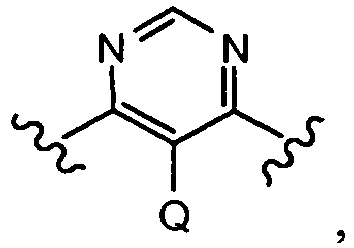
- A is: wherein Q is H, methyl, F or methoxy.
- A is:
- B is pyridyl, which is unsubstituted or optionally substituted with up to 3 alkyl groups.
- B is phenyl, which is unsubstituted or optionally substituted with up to 3 groups, each independently selected from alkyl, -CN, -S(O) 2 -alkyl, -S(O) 2 -cycloalkyl, heteroaryl and halo.
- B is phenyl, which is unsubstituted or optionally substituted with up to 3 groups, each independently selected from methyl, triazolyl, -CN, -Cl, -F, -S(O) 2 CH 3 and -S(O) 2 -cyclopropyl.
- X is -NH- or -O-; Y is -O-; A is: wherein Q is H, alkyl, halo or -O-alkyl; and B is phenyl.
- X is -NH- or -O-; Y is -O-; A is: wherein Q is H, alkyl, halo or -O-alkyl; and B is phenyl, which is unsubstituted or optionally substituted with up to 3 groups, each independently selected from alkyl, -CN, -S(O) 2 -alkyl, -S(O) 2 -cycloalkyl, heteroaryl and halo.
- X is -NH- or -O-; Y is -O-; A is: wherein Q is H, alkyl, halo or -O-alkyl; and B is pyridyl, which is unsubstituted or optionally substituted with up to 3 alkyl groups.
- X and Y are each -O-; Y is -O-; Ais: wherein Q is H, alkyl, halo or -O-alkyl; and B is phenyl.
- X and Y are each -O-; Y is -O-; A is: wherein Q is H, alkyl, halo or -O-alkyl; and B is phenyl, which is unsubstituted or optionally substituted with up to 3 groups, each independently selected from alkyl, -CN, -S(O) 2 -alkyl, -S(O) 2 -cycloalk heteroaryl and halo.
- X and Y are each -O-; Y is -O-; A is: wherein Q is H, alkyl, halo or -O-alkyl; and B is pyridyl, which is unsubstituted or optionally substituted with up to 3 alkyl groups.
- the group B-X-A-Y- is: wherein Q is H, alkyl, halo or -O-alkyl.
- the group B-X-A-Y- is:
- the group B-X-A-Y- is:
- the group B-X-A-Y- is:
- the group B-X-A-Y- is:
- the group B-X-A-Y- is:
- the group B-X-A-Y- is:
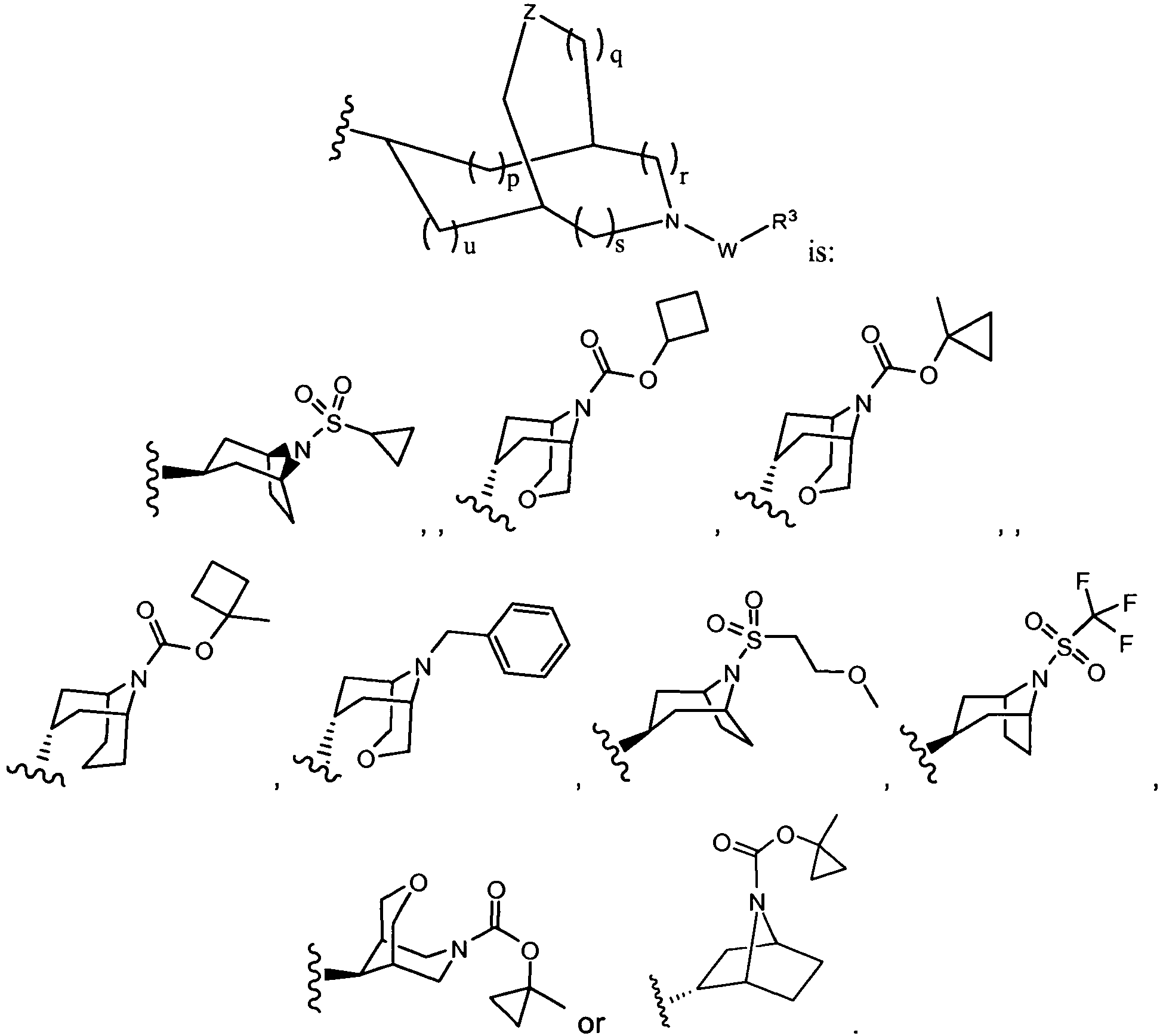
- the group is: or a mixture thereof.
- the group B-X-A- Y - is: wherein Q is H, alkyl, halo or -O-alkyl, and the group: is:
- the group B-X-A-Y- is: and the group:
- the group B-X-A-Y- is: and the group:
- the group B-X-A-Y- is: and the group:
- the group B-X-A-Y- is: and the group:
- the group B-X-A-Y- is: and the group:
- the present invention provides compounds of Formula (I'), wherein A, B, W, X, Y, Z, R 3 , p, q, r, s and u are selected independently of each other.
- a compound of formula (I') is in purified form.
- Non-limiting examples of the Bicyclic Heterocycle Derivatives include, but are not limited to compounds 1-86, depicted below: (An asterisk (*) indicate compounds that are not part of the invention) Compound No. STRUCTURE 3* 8* 9* 10* 14* 24 25 27 28 29 30 31 32 36 37 40 41 42 44 45 46 47 48 49 50 51 52 53 54* 55 56* 58 61 63 64 66 67 68* 69* 70 71 72 73* 75* 76* 77* 78* 85 86 and pharmaceutically acceptable salts, solvates and stereoisomers thereof.
- Additional illustrative compounds of the present invention include compounds 499-501, 511-515, and 565-610 as depicted in the tables immediately below, and pharmaceutically acceptable salts, solvates and stereoisomers thereof.
- Further illustrative compounds of the present invention include compounds 87-498, 502-510, 524-563 and 611 as depicted in the Examples section below herein, and pharmaceutically acceptable salts, solvates and stereoisomers thereof.
- Scheme 1 illustrates a method useful for making the compounds of formula iii, which are useful intermediates for making the Bicyclic Heterocycle Derivatives.
- a and B are defined above for the compounds of formulas (I), (II), (III) and (IV); G is -OH, -SH, -NHR 10 or a carbon nucleophile; and X is -S-, -O-, -C(R 1 ) 2 - or -NR 10 .
- a dichloro aryl or heteroaryl compound of formula i can reacted with a compound of formula ii in the presence of a non-nucleophilic base, such as potassium carbonate to provide the intermediate compounds of formula iii .
- Bicyclic Heterocycle Derivatives may require the need for the protection of certain functional groups (i.e. , derivatization for the purpose of chemical compatibility with a particular reaction condition).
- Suitable protecting groups for the various functional groups of the Bicyclic Heterocycle Derivatives and methods for their installation and removal may be found in Greene et al., Protective Groups in Organic Synthesis, Wiley-Interscience, New York, (1999 ).
- Trifluoroacetic acid (1 mL) was added to a solution of compound 48 (75 mg, 0.18 mmol, prepared as described in Example 1) in dichloromethane (2 mL) at room temperature and stirred for 3.5 hours. The solution was concentrated in vacuo. The residue was chromatographed on a silica gel cartridge with (2 N ammonia in MeOH) in dichloromethane (3 ⁇ 10%) to provide the intermediate amine (57 mg, 100%).
- Compounds 210 and 211 were prepared from Compound 54A using the method described in Example 50, Step B. Compound 210, LCMS: 432.5. Compound 211, LCMS: 432.5.
- Methyl propiolate (10.0g, 118mmol), N-bromosuccinimide (21.2g, 119mmol) and AgNO 3 (0.20g, 1.2mmol) were combined in acetone (60 mL). The mixture was stirred 22 hours, filtered, concentrated, taken up in hexane, and filtered. The filtrate was concentrated in vacuo and the residue obtained was purified using Kugelrohr distillation to provide compound 70B as a yellow oil.
- Step A The product of Step A (11.3g, 69mmol) and t -butyl pyrrole-1-carboxylate (30 mL, 180mmol) was combined and heated at 95° and allowed to stir at this temperature for 24 hours. The product was purified using chromatography on silica to provide compound 70C as a yellow oil.
- Step B The product of Step B (4.00g, 12.1mmol) and Et 3 N (8.44mL, 61mmol) were combined in MeCN (25mL).
- Step C The product of Step C (2.18g, 8.16mmol) was combined with 10% Pd/C (0.30g) in MeOH (30 mL) and hydrogenated at atmospheric pressure for 20 hours. The reaction mixture was filtered and concentrated in vacuo to provide compound 70E as a yellow oil, which was used without further purification.
- Step D The product of Step D (2.08g, 7.73mmol) was combined with 10%HCl (70 mL) and the resulting solution was heated at 110°C and allowed to stir at this temperature for 3.5 hours, then concentrated to provide a yellow solid residue.
- the residue was taken up in CH 2 Cl 2 (15 mL) and Et 3 N (4.84 mL, 35 mmol) was added, followed by Boc 2 O (3.4g, 15 mmol). After stirring for 18 hours, the mixture was washed with saturated NaHCO 3 , then brine. The organic layer was dried over MgSO 4 , filtered and concentrated in vacuo. The residue obtained was purified using flash chromatography on silica to provide compound 70F as a yellow oil.
- Step E To the product of Step E (1.34g, 6.35mmol) in THF (10 mL) was added NaBH 4 (0.480g, 12.6 mmol). The reaction mixture was heated to 60°C and allowed to stir at this temperature for 20 hours, then concentrated in vacuo. The residue obtained was partitioned with CH 2 Cl 2 and water. The CH 2 Cl 2 layer was washed with brine, dried over MgSO 4 and concentrated in vacuo to provide compound 70G as a mixture of exo- and endo -isomers, as a colorless oil.
- Compound 215 was treated using the method described in Example 75 and substituting neopentyl chloroformate for isopropyl chloroformate, to provide compound 284 as a yellow solid.
- (CH 2 F) 2 CHOH was prepared by reducing 1,3-difluoroacetone with NaBH 4 in THF. Then, using the method described in Example 88, and substituting (CH 2 F) 2 CHOH for (CF 3 ) 2 CHOH, compound 215 was converted to compound 328, a white solid.
- the dichloroketone intermediate was combined with zinc powder (1.84 g, 28 mmol) and acetic acid (10 mL) and the resulting reaction was heated to 70 °C and allowed to stir at this temperature for 2 hours, then it was cooled, treated with ether (20 mL), and filtered. The filtrate was washed with water, then saturated NaHCO 3 , dried over MgSO 4 and filtered. The filtered solution was diluted with MeOH (1.0 mL) and treated with NaBH 4 (1.00g, 26mmol).
- reaction mixture was heated to reflux and allowed to stir at this temperature for 1 hour, then was cooled to room temperature, washed with water, dried over MgSO 4 , and concentrated in vacuo to provide 3,3-dimethylcyclobutanol as a yellow oil.
- Example 76 Using the method described in Example 76, compound 108A was coupled with compound 71A to provide compound 361 as a yellow oil.
- Trifluoroacetic acid (0.1 mL) was added dropwise to a solution of 116A (98 mg, 0.22 mmol) in dichloromethane (3 mL) at 0 °C under nitrogen. After 18 hours, the reaction was diluted with dichloromethane and washed with saturated aqueous NaHCO 3 . The organic layer was dried over MgSO 4 , filtered and concentrated in vacuo to provide the free amine 116B (75 mg, 100 %) which was used in next reaction without further purification.
- Compound 383 was prepared using the method described in Example 249, and by substituting cyclopropylsulfonyl chloride with 2-methoxyethanesulfonyl chloride (made as described in European Patent Publication No. EP 176327 ).
- ketone 137B (100 mg, 0.40 mmol) in EtOH (28 mL) was added sodium borohydride (1.4 equivalent) under nitrogen at 0 °C. The reaction was warmed to room temperature and stirred for 18 hours. The reaction was quenched with water and extracted with dichloromethane. The organic layer was dried over Na 2 SO 4 , filtered and concentrated in vacuo to provide the crude product 137C (100 mg, 99 %) which was used in next reaction without further purification.
- Trifluoroacetic acid 150 ⁇ L was added to a solution of compound 393 (105 mg, 0.20 mmol) in DCM (500 ⁇ L) at room temperature and stirred for 3h.
- the solution was concentrated in vacuo and to the resulting crude residue of compound 157A was added DMF (650 ⁇ L), TEA (110 ⁇ L, 0.8 mmol), and isopropyl chloroformate (55 ⁇ L, 1.0 M in toluene, 0.4 mmol) at room temperature and stirred overnight.
- the solution was concentrated in vacuo and purified by preparative thin layer chromatography using (25%Acetone-Hexanes) to provide compound 394 (36 mg, 35%).
- LCMS (M+H) + 519.2
Landscapes
- Chemical & Material Sciences (AREA)
- Organic Chemistry (AREA)
- Health & Medical Sciences (AREA)
- Diabetes (AREA)
- Animal Behavior & Ethology (AREA)
- Veterinary Medicine (AREA)
- Public Health (AREA)
- Chemical Kinetics & Catalysis (AREA)
- General Chemical & Material Sciences (AREA)
- Medicinal Chemistry (AREA)
- Nuclear Medicine, Radiotherapy & Molecular Imaging (AREA)
- Bioinformatics & Cheminformatics (AREA)
- Pharmacology & Pharmacy (AREA)
- Life Sciences & Earth Sciences (AREA)
- Engineering & Computer Science (AREA)
- General Health & Medical Sciences (AREA)
- Hematology (AREA)
- Obesity (AREA)
- Child & Adolescent Psychology (AREA)
- Heart & Thoracic Surgery (AREA)
- Emergency Medicine (AREA)
- Endocrinology (AREA)
- Cardiology (AREA)
- Pharmaceuticals Containing Other Organic And Inorganic Compounds (AREA)
- Nitrogen Condensed Heterocyclic Rings (AREA)
- Plural Heterocyclic Compounds (AREA)
- Heterocyclic Carbon Compounds Containing A Hetero Ring Having Oxygen Or Sulfur (AREA)
- Medicines That Contain Protein Lipid Enzymes And Other Medicines (AREA)
- Nitrogen And Oxygen Or Sulfur-Condensed Heterocyclic Ring Systems (AREA)
- Acyclic And Carbocyclic Compounds In Medicinal Compositions (AREA)
Description
- The present invention relates to Bicyclic Heterocycle Derivatives, compositions comprising a Bicyclic Heterocycle Derivative, and use of the Bicyclic Heterocycle Derivatives for treating or preventing obesity, diabetes, a diabetic complication, a metabolic disorder, a cardiovascular disease or a disorder related to the activity of GPR119 in a patient.
- Although a number of receptor classes exist in humans, by far the most abundant and therapeutically relevant is represented by the G protein-coupled receptor (GPCR or GPCRs) class. It is estimated that there are some 100,000 genes within the human genome, and of these, approximately 2% or 2,000 genes, are estimated to code for GPCRs. Receptors, including GPCRs, for which the endogenous ligand has been identified are referred to as "known" receptors, while receptors for which the endogenous ligand has not been identified are referred to as "orphan" receptors. GPCRs represent an important area for the development of pharmaceutical products, as evidenced by the fact that pharmaceutical products have been developed from approximately 20 of the 100 known GPCRs. This distinction is not merely semantic, particularly in the case of GPCRs.
- GPCRs share a common structural motif. All these receptors have seven sequences of between 22 to 24 hydrophobic amino acids that form seven alpha helices, each of which spans the membrane (each span is identified by number, i.e., transmembrane-1 (TM-1), transmembrane-2 (TM-2), etc.). The transmembrane helices are joined by strands of amino acids between transmembrane-2 and transmembrane-3, transmembrane-4 and transmembrane-5, and transmembrane-6 and transmembrane-7 on the exterior, or "extracellular" side, of the cell membrane (these are referred to as "extracellular" regions 1, 2 and 3 (EC-1, EC-2 and EC-3), respectively). The transmembrane helices are also joined by strands of amino acids between transmembrane-1 and transmembrane-2, transmembrane-3 and transmembrane-4, and transmembrane-5 and transmembrane-6 on the interior, or "intracellular" side, of the cell membrane (these are referred to as "intracellular" regions 1, 2 and 3 (IC-1, IC-2 and IC-3), respectively). The "carboxy" ("C") terminus of the receptor lies in the intracellular space within the cell, and the "amino" ("N") terminus of the receptor lies in the extracellular space outside of the cell.
- Generally, when an endogenous ligand binds with the receptor (often referred to as "activation" of the receptor), there is a change in the conformation of the intracellular region that allows for coupling between the intracellular region and an intracellular "G-protein." It has been reported that GPCRs are "promiscuous" with respect to G proteins, i.e., that a GPCR can interact with more than one G protein. See, Kenakin, T., Life Sciences 43, 1095 (1988). Although other G proteins exist, currently, Gq, Gs, Gi, and Go are G proteins that have been identified. Endogenous ligand-activated GPCR coupling with the G-protein begins a signaling cascade process (referred to as "signal transduction"). Under normal conditions, signal transduction ultimately results in cellular activation or cellular inhibition. It is thought that the IC-3 loop as well as the carboxy terminus of the receptor interact with the G protein.
- Under physiological conditions, GPCRs exist in the cell membrane in equilibrium between two different conformations: an "inactive" state and an "active" state. A receptor in an inactive state is unable to link to the intracellular signaling transduction pathway to produce a biological response. Changing the receptor conformation to the active state allows linkage to the transduction pathway (via the G-protein) and produces a biological response. A receptor can be stabilized in an active state by an endogenous ligand or a compound such as a drug.
- Modulation of G-protein coupled receptors has been well-studied for controlling various metabolic disorders. Small molecule modulators of the receptor GPR119, a G-protein coupled-receptor described in, for example, GenBank (see, e.g., accession numbers XM.sub.-066873 and AY288416), have been shown to be useful for treating or preventing certain metabolic disorders. GPR119 is a G protein-coupled receptor that is selectively expressed on pancreatic beta cells. GPR119 activation leads to elevation of a level of intracellular cAMP, consistent with GPR119 being coupled to Gs. Agonists to GPR119 stimulate glucose-dependent insulin secretion in vitro and lower an elevated blood glucose level in vivo. See, e.g., International Applications
WO 04/065380 WO 04/076413 EP 1338651 , the disclosure of each of which is herein incorporated by reference in its entirety. -
U.S. Ser. No. 10/890,549 - In one aspect, the present invention provides compounds of Formula (I'):

- W is a bond,-C(O)-O- or -S(O)2-;
- X is -O- or -NH-;
- Y is -O-, such that the group -Y-A-X-B can be in an exo- or endo- configuration with respect to the bicyclic ring to which variable Y is attached;
- Z is a bond, -CH2- or -O-;
- A is:

- R3 is alkyl, -alkylene-aryl, -cycloalkyl, -alkylene-O-alkyl or haloalkyl, wherein a cycloalkyl group can be unsubstituted or substituted with an alkyl group;
- p is 0, 1 or 2;
- q is 0, 1 or 2;
- r is 0, 1 or 2;
- s is 0, 1 or 2; and
- u is 0, 1 or 2,
- wherein an alkyl group contains 1 to 6 carbon atoms; an aryl group contains 6 to 10 carbon atoms; a cycloalkyl group contains 5 to 7 ring atoms; a heteroaryl group is monocyclic and contains 5 to 6 ring atoms and an alkylene group has 1 to 6 carbon atoms.
- The compounds of formula (I') and pharmaceutically acceptable salts, solvates or stereoisomers thereof (referred to collectively herein as the "Bicyclic Heterocycle Derivatives") can be useful for treating or preventing obesity, diabetes, a diabetic complication, metabolic syndrome, a cardiovascular disease or a disorder related to the activity of GPR119 (each being a "Condition") in a patient.
- The present invention further provides compositions comprising an effective amount of one or more Bicyclic Heterocycle Derivatives or a pharmaceutically acceptable salt, solvate, ester, prodrug or stereoisomer thereof, and a pharmaceutically acceptable carrier. The compositions can be useful for treating or preventing a Condition in a patient.
- The details of the invention are set forth in the accompanying detailed description below.
- Although any methods and materials similar to those described herein can be used in the practice or testing of the present invention, illustrative methods and materials are now described. Other features, objects, and advantages of the invention will be apparent from the description and the claims. All patents and publications cited in this specification are incorporated herein by reference.
- As used above, and throughout this disclosure, the following terms, unless otherwise indicated, shall be understood to have the following meanings:
- A "patient" is a human or non-human mammal. In one embodiment, a patient is a human. In another embodiment, a patient is a non-human mammal, including, but not limited to, a monkey, dog, baboon, rhesus, mouse, rat, horse, cat or rabbit. In another embodiment, a patient is a companion animal, including but not limited to a dog, cat, rabbit, horse or ferret. In one embodiment, a patient is a dog. In another embodiment, a patient is a cat.
- The term "obesity" as used herein, refers to a patient being overweight and having a body mass index (BMI) of 25 or greater. In one embodiment, an obese patient has a BMI of 25 or greater. In another embodiment, an obese patient has a BMI from 25 to 30. In another embodiment, an obese patient has a BMI greater than 30. In still another embodiment, an obese patient has a BMI greater than 40.
- The term "obesity-related disorder" as used herein refers to: (i) disorders which result from a patient having a BMI of 25 or greater; and (ii) eating disorders and other disorders associated with excessive food intake. Non-limiting examples of an obesity-related disorder include edema, shortness of breath, sleep apnea, skin disorders and high blood pressure.
- The term "metabolic syndrome" as used herein, refers to a set of risk factors that make a patient more succeptible to cardiovascular disease and/or type 2 diabetes. A patient is said to have metabolic syndrome if the patient simultaneously has three or more of the following five risk factors:
- 1) central/abdominal obesity as measured by a waist circumference of greater than 40 inches in a male and greater than 35 inches in a female;
- 2) a fasting triglyceride level of greater than or equal to 150 mg/dL;
- 3) an HDL cholesterol level in a male of less than 40 mg/dL or in a female of less than 50 mg/dL;
- 4) blood pressure greater than or equal to 130/85 mm Hg; and
- 5) a fasting glucose level of greater than or equal to 110 mg/dL.
- The term "effective amount" as used herein, refers to an amount of Bicyclic Heterocycle Derivative and/or an additional therapeutic agent, or a composition thereof that is effective in producing the desired therapeutic, ameliorative, inhibitory or preventative effect when administered to a patient suffering from a Condition. In the combination therapies of the present invention, an effective amount can refer to each individual agent or to the combination as a whole, wherein the amounts of all agents administered are together effective, but wherein the component agent of the combination may not be present individually in an effective amount.
- The term "alkyl," as used herein, refers to an aliphatic hydrocarbon group which may be straight or branched and which contains from 1 to 6 carbon atoms. Non-limiting examples of alkyl groups include methyl, ethyl, n-propyl, isopropyl, n-butyl, sec-butyl, isobutyl, tert-butyl, n-pentyl, neopentyl, isopentyl, n-hexyl, isohexyl and neohexyl.
- In one embodiment, an alkyl group is linear. In another embodiment, an alkyl group is branched.
- The term "alkylene," as used herein, refers to an alkyl group, as defmed above, wherein one of the alkyl group's hydrogen atoms has been replaced with a bond. Non-limiting examples of alkylene groups include -CH2-, -CH2CH2-, -CH2CH2CH2-, -CH2CH2CH2CH2-, - CH(CH3)CH2CH2-, -CH(CH3)- and -CH2CH(CH3)CH2-. In one embodiment, an alkylene group is branched. In another embodiment, an alkylene group is linear.
- The term "aryl," as used herein, refers to an aromatic ring system comprising from 6 to 10 carbon atoms. In one embodiment, an aryl group is phenyl.
- The term "cycloalkyl," as used herein, refers to a non-aromatic monocyclic ring system comprising from 3 to 7 ring atoms. Non-limiting examples of monocyclic cycloalkyls include cyclopentyl, cyclohexyl and cycloheptyl. A cycloalkyl group can be optionally substituted with an alkyl group. In one embodiment, a cycloalkyl group is unsubstituted.
- The term "heteroaryl," as used herein, refers to an aromatic monocyclic ring system comprising 5 or 6 ring atoms, wherein from 1 to 4 of the ring atoms is independently O, N or S and the remaining ring atoms are carbon atoms. A heteroaryl group is joined via a ring carbon atom, and any nitrogen atom of a heteroaryl can be optionally oxidized to the corresponding N-oxide. Non-limiting examples of heteroaryls include pyridyl, pyrazinyl, furanyl, thienyl, pyrimidinyl, isoxazolyl, isothiazolyl, oxazolyl, thiazolyl, pyrazolyl, furazanyl, pyrrolyl, triazolyl, 1,2,4-thiadiazolyl, pyrazinyl and pyridazinyl. In one embodiment, a heteroaryl group is a 5-membered heteroaryl. In another embodiment, a heteroaryl group is a 6-membered heteroaryl.
- "Halo" means -F, -Cl, -Br or -I. In one embodiment, halo refers to -F, -Cl or -Br.
- The term "haloalkyl," as used herein, refers to an alkyl group as defined above, wherein one or more of the alkyl group's hydrogen atoms has been replaced with a halogen. In one embodiment, a haloalkyl group has from 1 to 6 carbon atoms. In another embodiment, a haloalkyl group is substituted with from 1 to 3 F atoms. Non-limiting examples of haloalkyl groups include -CH2F, -CHF2, -CF3, -CH2Cl and -CCl3.
- The term "alkoxy" as used herein, refers to an -O-alkyl group, wherein an alkyl group is as defined above. Non-limiting examples of alkoxy groups include methoxy, ethoxy, n-propoxy, isopropoxy, n-butoxy and t-butoxy. An alkoxy group is bonded via its oxygen atom.
- The term "substituted" means that one or more hydrogens on the designated atom is replaced with a selection from the indicated group, provided that the designated atom's normal valency under the existing circumstances is not exceeded, and that the substitution results in a stable compound. Combinations of substituents and/or variables are permissible only if such combinations result in stable compounds. By "stable compound' or "stable structure" is meant a compound that is sufficiently robust to survive isolation to a useful degree of purity from a reaction mixture, and formulation into an efficacious therapeutic agent.
- The term "purified", "in purified form" or "in isolated and purified form" for a compound refers to the physical state of the compound after being isolated from a synthetic process (e.g. from a reaction mixture), or natural source or combination thereof. Thus, the term "purified", "in purified form" or "in isolated and purified form" for a compound refers to the physical state of the compound after being obtained from a purification process or processes described herein or well known to the skilled artisan (e.g., chromatography, recrystallization and the like), in sufficient purity to be characterizable by standard analytical techniques described herein or well known to the skilled artisan.
- It should also be noted that any carbon as well as heteroatom with unsatisfied valences in the text, schemes, examples and Tables herein is assumed to have the sufficient number of hydrogen atom(s) to satisfy the valences.
- When a functional group in a compound is termed "protected", this means that the group is in modified form to preclude undesired side reactions at the protected site when the compound is subjected to a reaction. Suitable protecting groups will be recognized by those with ordinary skill in the art as well as by reference to standard textbooks such as, for example, T. W. Greene et al, Protective Groups in Organic Synthesis (1991), Wiley, New York.
- When any variable (e.g., aryl, heterocycle, R2, etc.) occurs more than one time in any constituent or in Formula (I), its defmition on each occurrence is independent of its definition at every other occurrence.
- As used herein, the term "composition" is intended to encompass a product comprising the specified ingredients in the specified amounts, as well as any product which results, directly or indirectly, from combination of the specified ingredients in the specified amounts.
- One or more compounds of the invention may exist in unsolvated as well as solvated forms with pharmaceutically acceptable solvents such as water, ethanol, and the like, and it is intended that the invention embrace both solvated and unsolvated forms. "Solvate" means a physical association of a compound of this invention with one or more solvent molecules. This physical association involves varying degrees of ionic and covalent bonding, including hydrogen bonding. In certain instances the solvate will be capable of isolation, for example when one or more solvent molecules are incorporated in the crystal lattice of the crystalline solid. "Solvate" encompasses both solution-phase and isolatable solvates. Non-limiting examples of solvates include ethanolates, methanolates, and the like. "Hydrate" is a solvate wherein the solvent molecule is H2O.
- One or more compounds of the invention may optionally be converted to a solvate. Preparation of solvates is generally known. Thus, for example, M. Caira et al, J. Pharmaceutical Sci., 93(3), 601-611 (2004) describe the preparation of the solvates of the antifungal fluconazole in ethyl acetate as well as from water. Similar preparations of solvates, hemisolvate, hydrates and the like are described by E. C. van Tonder et al, AAPS PharmSciTechours., 5(1), article 12 (2004); and A. L. Bingham et al, Chem. Commun., 603-604 (2001). A typical, non-limiting, process involves dissolving the inventive compound in desired amounts of the desired solvent (organic or water or mixtures thereof) at a higher than ambient temperature, and cooling the solution at a rate sufficient to form crystals which are then isolated by standard methods. Analytical techniques such as, for example I. R. spectroscopy, show the presence of the solvent (or water) in the crystals as a solvate (or hydrate).
- The Bicyclic Heterocycle Derivatives can form salts which are also within the scope of this invention. Reference to a Bicyclic Heterocycle Derivative herein is understood to include reference to salts thereof, unless otherwise indicated. The term "salt(s)", as employed herein, denotes acidic salts formed with inorganic and/or organic acids, as well as basic salts formed with inorganic and/or organic bases. In addition, when a Bicyclic Heterocycle Derivative contains both a basic moiety, such as, but not limited to a pyridine or imidazole, and an acidic moiety, such as, but not limited to a carboxylic acid, zwitterions ("inner salts") may be formed and are included within the term "salt(s)" as used herein. In one embodiment, the salt is a pharmaceutically acceptable (i.e., non-toxic, physiologically acceptable) salt. In another embodiment, the salt is other than a pharmaceutically acceptable salt. Salts of the compounds of the Formula (I) may be formed, for example, by reacting a Bicyclic Heterocycle Derivative with an amount of acid or base, such as an equivalent amount, in a medium such as one in which the salt precipitates or in an aqueous medium followed by lyophilization.
- Exemplary acid addition salts include acetates, ascorbates, benzoates, benzenesulfonates, bisulfates, borates, butyrates, citrates, camphorates, camphorsulfonates, fumarates, hydrochlorides, hydrobromides, hydroiodides, lactates, maleates, methanesulfonates, naphthalenesulfonates, nitrates, oxalates, phosphates, propionates, salicylates, succinates, sulfates, tartarates, thiocyanates, toluenesulfonates (also known as tosylates) and the like. Additionally, acids which are generally considered suitable for the formation of pharmaceutically useful salts from basic pharmaceutical compounds are discussed, for example, by P. Stahl et al, Camille G. (eds.) Handbook of Pharmaceutical Salts. Properties, Selection and Use. (2002) Zurich: Wiley-VCH; S. Berge et al, Journal of Pharmaceutical Sciences (1977) 66(1) 1-19; P. Gould, International J. of Pharmaceutics (1986) 33 201-217; Anderson et al, The Practice of Medicinal Chemistry (1996), Academic Press, New York; and in The Orange Book (Food & Drug Administration, Washington, D.C. on their website). These disclosures are incorporated herein by reference thereto.
- Exemplary basic salts include ammonium salts, alkali metal salts such as sodium, lithium, and potassium salts, alkaline earth metal salts such as calcium and magnesium salts, salts with organic bases (for example, organic amines) such as dicyclohexylamine, t-butyl amine, choline, and salts with amino acids such as arginine, lysine and the like. Basic nitrogen-containing groups may be quartemized with agents such as lower alkyl halides (e.g. methyl, ethyl, and butyl chlorides, bromides and iodides), dialkyl sulfates (e.g. dimethyl, diethyl, and dibutyl sulfates), long chain halides (e.g. decyl, lauryl, and stearyl chlorides, bromides and iodides), aralkyl halides (e.g. benzyl and phenethyl bromides), and others.
- All such acid salts and base salts are intended to be pharmaceutically acceptable salts within the scope of the invention and all acid and base salts are considered equivalent to the free forms of the corresponding compounds for purposes of the invention.
- Diastereomeric mixtures can be separated into their individual diastereomers on the basis of their physical chemical differences by methods well known to those skilled in the art, such as, for example, by chromatography and/or fractional crystallization. Enantiomers can be separated by converting the enantiomeric mixture into a diastereomeric mixture by reaction with an appropriate optically active compound (e.g., chiral auxiliary such as a chiral alcohol or Mosher's acid chloride), separating the diastereomers and converting (e.g., hydrolyzing) the individual diastereomers to the corresponding pure enantiomers. Sterochemically pure compounds may also be prepared by using chiral starting materials or by employing salt resolution techniques. Also, some of the Bicyclic Heterocycle Derivatives may be atropisomers (e.g., substituted biaryls) and are considered as part of this invention. Enantiomers can also be separated by use of chiral HPLC column.
- It is also possible that the Bicyclic Heterocycle Derivatives may exist in different tautomeric forms, and all such forms are embraced within the scope of the invention. Also, for example, all keto-enol and imine-enamine forms of the compounds are included in the invention.
- All stereoisomers (for example, geometric isomers, optical isomers and the like) of the present compounds (including those of the salts, solvates, hydrates, esters and prodrugs of the compounds as well as the salts, solvates and esters of the prodrugs), such as those which may exist due to asymmetric carbons on various substituents, including enantiomeric forms (which may exist even in the absence of asymmetric carbons), rotameric forms, atropisomers, and diastereomeric forms, are contemplated within the scope of this invention, as are positional isomers (such as, for example, 4-pyridyl and 3-pyridyl). (For example, if a Bicyclic Heterocycle Derivative incorporates a double bond or a fused ring, both the cis- and transforms, as well as mixtures, are embraced within the scope of the invention. Also, for example, all keto-enol and imine-enamine forms of the compounds are included in the invention).
- Individual stereoisomers of the compounds of the invention may, for example, be substantially free of other isomers, or may be admixed, for example, as racemates or with all other, or other selected, stereoisomers. The chiral centers of the present invention can have the S or R configuration as defined by the IUPAC 1974 Recommendations. The use of the terms "salt", "solvate", "ester", "prodrug" and the like, is intended to apply equally to the salt, solvate, ester and prodrug of enantiomers, stereoisomers, rotamers, tautomers, positional isomers, racemates or prodrugs of the inventive compounds.
- The present invention also embraces isotopically-labelled compounds of the present invention which are identical to those recited herein, but for the fact that one or more atoms are replaced by an atom having an atomic mass or mass number different from the atomic mass or mass number usually found in nature. Examples of isotopes that can be incorporated into compounds of the invention include isotopes of hydrogen, carbon, nitrogen, oxygen, phosphorus, fluorine and chlorine, such as 2H, 3H 13C 14C, 15N 18O, 17O, 31P, 32P, 35S 18F and 36Cl, respectively.
- Certain isotopically-labelled Bicyclic Heterocycle Derivatives (e.g., those labeled with 3H and 14C) are useful in compound and/or substrate tissue distribution assays. In one embodiment, ritiated (i.e., 3H) and carbon-14 (i.e., 14C) isotopes are employed for their ease of preparation and detectability. In another embodiment, substitution with heavier isotopes such as deuterium (i.e., 2H) may afford certain therapeutic advantages resulting from greater metabolic stability (e.g., increased in vivo half-life or reduced dosage requirements). Isotopically labelled Bicyclic Heterocycle Derivatives
- Synthetic chemical procedures analogous to those disclosed herein for making the Bicyclic Heterocycle Derivatives, by substituting an appropriate isotopically labelled starting material or reagent for a non-isotopically labelled starting material or reagent.
- Polymorphic forms of the Bicyclic Heterocycle Derivatives, and of the salts, solvates, hydrates, esters and prodrugs of the Bicyclic Heterocycle Derivatives, are intended to be included in the present invention.
- The following abbreviations are used below and have the following meanings: AcOH is acetic acid, Boc or BOC is -C(O)O-(t-butyl), n-BuLi is n-butyllithium, t-butyl is tertiary butyl, DAST is diethylaminosulfur trichloride, dba is dibenzylidene acetone, DCE is dichloroethane, DCM is dichloromethane, DIAD is diisopropylazodicarboxylate, DIEA is diisopropylethylamine, DMEM is Dulbecco's modified eagle medium, DMF is N,N-dimethylformamide, DMSO is dimethylsulfoxide, dppf is 1,1'-bis(diphenylphosphino)ferrocene, EDC is 1-(dimethylaminopropyl)-3-ethylcarbodiimide, EtOAc is ethyl acetate, EtOH is ethanol, Et3N is triethylamine, EtNH2 is ethylamine, HOBt is 1-hydroxy-benzotriazole, LCMS is liquid chromatography mass spectrometry, LDA is lithium diisopropylamide, mCPBA is meta-chloroperoxybenzoic acid, MeOH is methanol, NaOEt is sodium ethoxide, NaOtBu is sodium t-butoxide, NMM is n-methylmorpholine, NMR is nuclear magnetic resonance, Ph is phenyl, PhMe is toluene, PLC is preparative thin-layer chromatography, PS-EDC is polystyrene functionalized with EDC - available from Polymer Laboratories, PS-DIEA is polystyrene functionalized with disopropylethylamine, TBAF is tetra-n-butyl-ammonium fluoride, THF is tetrahydrofuran, and TLC is thin-layer chromatography.
- In one embodiment, for the compounds of formula (I'), W is a bond.
- In another embodiment, for the compounds of formula (I'), W is -C(O)O-.
- In another embodiment, for the compounds of formula (I'), W is -S(O)2-.
- In another embodiment, W is a bond and R3 is-alkylene-aryl or alkyl.
- In another embodiment, W is a bond and R3 is benzyl.
- In one embodiment, for the compounds of formula (I'), R3 is cycloalkyl or alkyl, wherein a cycloalkyl group is unsubstituted or optionally substituted with an alkyl group.
- In another embodiment, for the compounds of formula (I'), R3 is cyclopropyl, 1-methylcyclopropyl, isopropyl, 1-methylcyclobutyl, benzyl, -CH2CH2-O-CH3 or -CF3.
- In one embodiment, for the compounds of formula (I'), the group -W-R3 is -S(O)2-cyclopropyl, -S(O)2-cyclobutyl, -S(O)2CF3, -S(O)2CH2CH2OCH3, -C(O)O-cyclopropyl, - C(O)O-cyclobutyl, -C(O)O-(1-methylcyclopropyl), -C(O)O-(1-methylcyclobutyl), -C(O)O-(1-methylcyclopropyl), -C(O)O-isopropyl or benzyl.
- In one embodiment, for the compounds of formula (I'), X is -NH- or -O- and Y is -O-.
- In another embodiment, for the compounds of formula (I'), X is -NH- and Y is -O-.
- In another embodiment, for the compounds of formula (I'), X and Y are each -O-.
- In still another embodiment, for the compounds of formula (I'), A is:

- In still another embodiment, for the compounds of formula (I'), A is:

- In another embodiment, for the compounds of formula (I'), B is pyridyl, which is unsubstituted or optionally substituted with up to 3 alkyl groups.
- In another embodiment, for the compounds of formula (I'), B is phenyl, which is unsubstituted or optionally substituted with up to 3 groups, each independently selected from alkyl, -CN, -S(O)2-alkyl, -S(O)2-cycloalkyl, heteroaryl and halo.
- In still another embodiment, for the compounds of formula (I'), B is phenyl, which is unsubstituted or optionally substituted with up to 3 groups, each independently selected from methyl, triazolyl, -CN, -Cl, -F, -S(O)2CH3 and -S(O)2-cyclopropyl.
- In one embodiment, for the compounds of formula (I'), X is -NH- or -O-; Y is -O-; A is:

- In another embodiment, for the compounds of formula (I'), X is -NH- or -O-; Y is -O-; A is:

- In another embodiment, for the compounds of formula (I'), X is -NH- or -O-; Y is -O-; A is:

- In one embodiment, for the compounds of formula (I'), X and Y are each -O-; Y is -O-; Ais:


- In another embodiment, for the compounds of formula (I'), X and Y are each -O-; Y is -O-; A is:
- In one embodiment, the group B-X-A-Y- is:

- In another embodiment, the group B-X-A-Y- is:
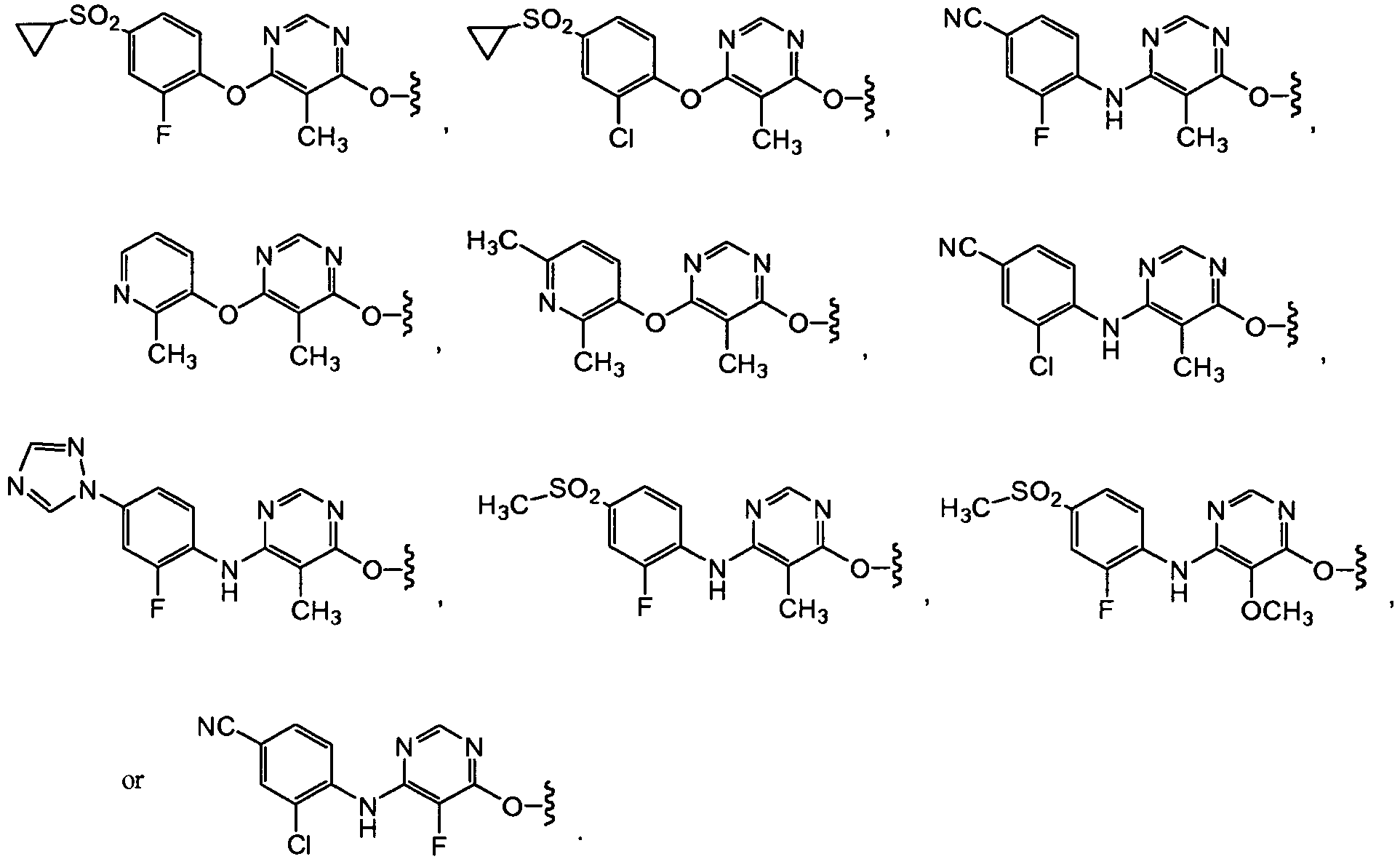
- In another embodiment, the group B-X-A-Y- is:

- In another embodiment, the group B-X-A-Y- is:

- In another embodiment, the group B-X-A-Y- is:

- In another embodiment, the group B-X-A-Y- is:

- In another embodiment, the group B-X-A-Y- is:

- In another embodiment, the group:


- In still another embodiment, the group:


- In one embodiment, the group B-X-A- Y - is:

and the group:

- In one embodiment, the group B-X-A-Y- is:


- In another embodiment, the group B-X-A-Y- is:


- In another embodiment, the group B-X-A-Y- is:

- In another embodiment, the group B-X-A-Y- is:


- In another embodiment, the group B-X-A-Y- is:


- In one embodiment, the present invention provides compounds of Formula (I'), wherein A, B, W, X, Y, Z, R3, p, q, r, s and u are selected independently of each other.
- In another embodiment, a compound of formula (I') is in purified form.
- Non-limiting examples of the Bicyclic Heterocycle Derivatives include, but are not limited to compounds 1-86, depicted below:
(An asterisk (*) indicate compounds that are not part of the invention)Compound No. STRUCTURE 3* 
8* 
9* 
10* 
14* 
24 
25 
27 
28 
29 
30 
31 
32 
36 
37 
40 
41 
42 
44 
45 
46 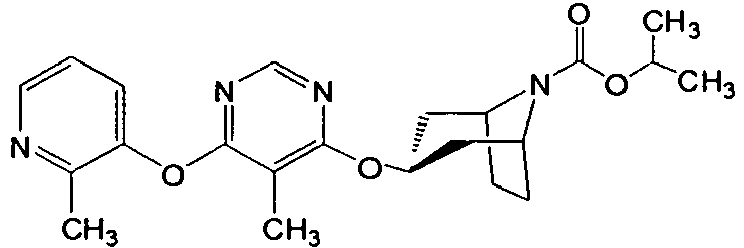
47 
48 
49 
50 
51 
52 
53 
54* 
55 
56* 
58 
61 
63 
64 
66 
67 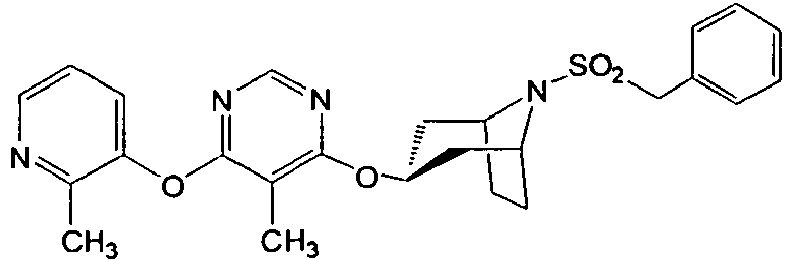
68* 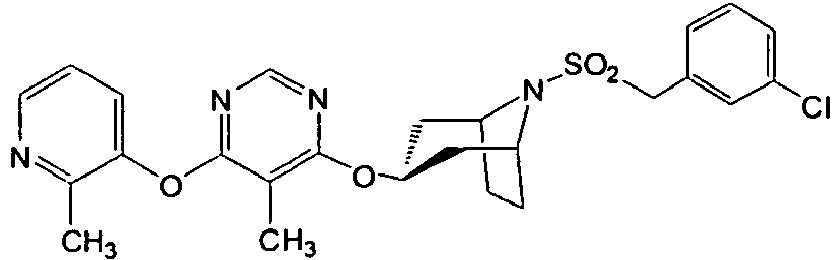
69* 
70 
71 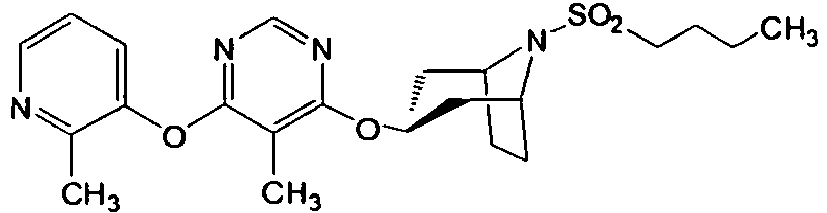
72 
73* 
75* 
76* 
77* 
78* 
85 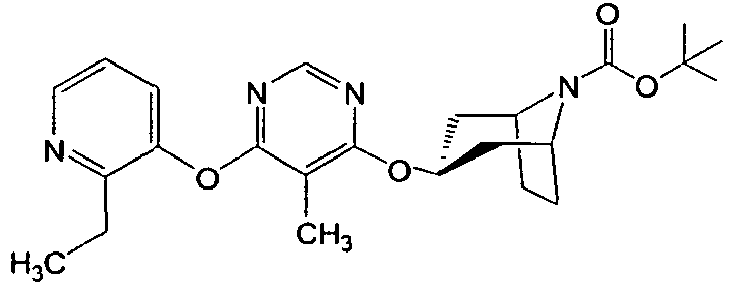
86 
- Additional illustrative compounds of the present invention include compounds 499-501, 511-515, and 565-610 as depicted in the tables immediately below, and pharmaceutically acceptable salts, solvates and stereoisomers thereof.

Cpd. No. R LCMS (MH+) 499 
456.3 500 
468.3 501 
499.3 511 
490.3 513 
488.3 514* 
480.3 
Cpd. No. R LCMS (MH+) 515 
469.3 Cpd. No. Structure LCMS (MH+) 565 
491.3 566 
490.3 568* 
537 569* 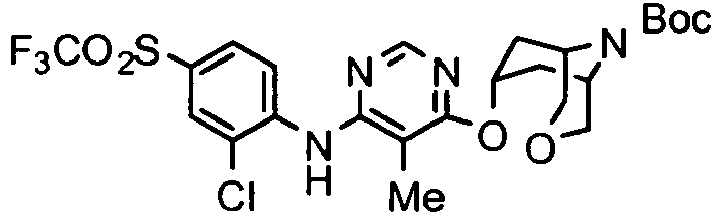
594 571 
530,532 572* 
553 573* 
579, 581 574 
518,520 575* 
591, 593 576* 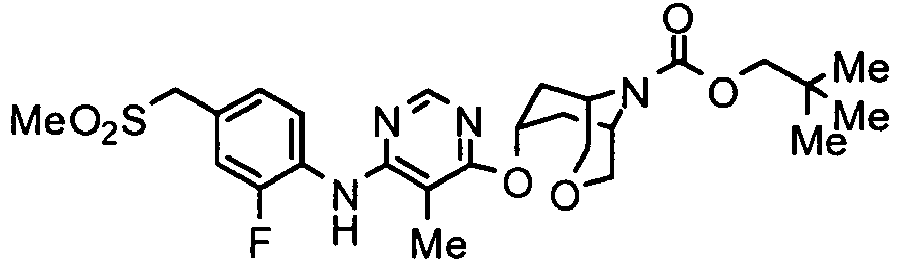
505,507 577* 
605,607 578* 
493 579* 
591, 593 582* 
481,483 583 
490 584* 
577, 579 585* 
496,498 586 
493 587 
493 588 
533 589 
479 590 
479 591 
491 592 
507 593 
505 594 
491 595 
491 596 
491 597 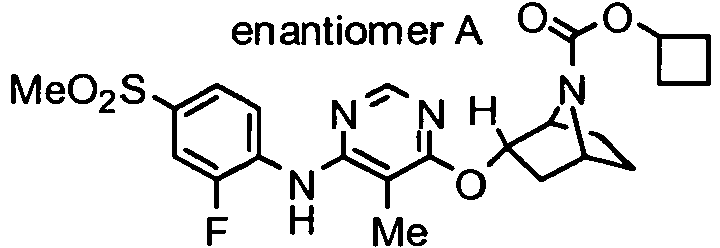
491 598 
491 599 
479 600 
479 601 
505 602 
505 603 
477 604 
480 605 
492 606 
492 607 
531 608 
477 609 
494 610 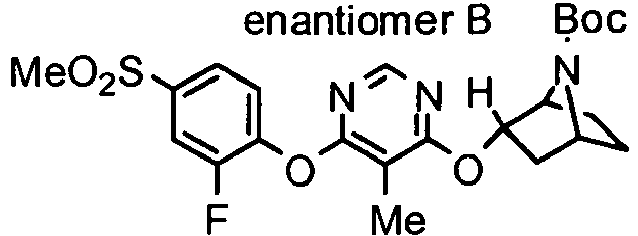
494 NA = not available - Further illustrative compounds of the present invention include compounds 87-498, 502-510, 524-563 and 611 as depicted in the Examples section below herein, and pharmaceutically acceptable salts, solvates and stereoisomers thereof.
- Methods useful for making the Bicyclic Heterocycle Derivatives are set forth in the Examples below and generalized in Scheme 1. Alternative synthetic pathways and analogous structures will be apparent to those skilled in the art of organic synthesis.
- Scheme 1 illustrates a method useful for making the compounds of formula iii, which are useful intermediates for making the Bicyclic Heterocycle Derivatives.

- A dichloro aryl or heteroaryl compound of formula i can reacted with a compound of formula ii in the presence of a non-nucleophilic base, such as potassium carbonate to provide the intermediate compounds of formula iii.
- The starting materials and reagents depicted in Scheme 1 is either available from commercial suppliers such as Sigma-Aldrich (St. Louis, MO) and Acros Organics Co. (Fair Lawn, NJ), or can be prepared using methods well-known to those of skill in the art of organic synthesis.
- One skilled in the art will recognize that the synthesis of Bicyclic Heterocycle Derivatives may require the need for the protection of certain functional groups (i.e., derivatization for the purpose of chemical compatibility with a particular reaction condition). Suitable protecting groups for the various functional groups of the Bicyclic Heterocycle Derivatives and methods for their installation and removal may be found in Greene et al., Protective Groups in Organic Synthesis, Wiley-Interscience, New York, (1999).
- The following examples exemplify illustrative examples of compounds of the present invention and are not to be construed as limiting the scope of the disclosure. Alternative mechanistic pathways and analogous structures within the scope of the invention may be apparent to those skilled in the art.
- Solvents, reagents, and intermediates that are commercially available were used as received. Reagents and intermediates that are not commercially available were prepared in the manner described below. 1H NMR spectra were obtained on a Gemini AS-400 (400 MHz) and are reported as ppm down field from Me4Si with number of protons, multiplicities, and coupling constants in Hertz indicated parenthetically. Where LC/MS data are presented, analyses was performed using an Applied Biosystems API-100 mass spectrometer and Shimadzu SCL-10A LC column: Altech platinum C18, 3 micron, 33 mm x 7mm ID; gradient flow: 0 min - 10% CH3CN, 5 min - 95% CH3CN, 7 min - 95% CH3CN, 7.5 min - 10% CH3CN, 9 min - stop. The observed parent ions are given.
-

- A solution of KOBut (5.8 mL, 1.0 M in THF, 5.8 mmol) was added to a solution of compound 1A (1.1 g, 4.8 mmol, made according to the method described in International Publication No.
WO 98/18788 to Blythin, et al WO 07/035355 to Jones, et al -

- Using the method described in Example 1 and substituting compound 2A (prepared as described in
WO98/18788, to Blythin et al -

- Using the method described in Example 1 and substituting compound 3A (prepared as described in
U.S. Patent No. 5,968,929 to Blythin et al .) for compound 1A, compound 50 was prepared. LCMS: 413.2 (MH+). -

- Using the method described in Example 1 and substituting compound 4A (prepared as described in
U.S. Patent No. 5,968,929 to Blythin et al .) for compound 1A, compound 51 was prepared. LCMS: 413.2 (MH+). -

- Using the method described in Example 1 and substituting compound 5A (prepared as described in
WO 97/40016 to Mitch et al -

- Trifluoroacetic acid (1 mL) was added to a solution of compound 48 (75 mg, 0.18 mmol, prepared as described in Example 1) in dichloromethane (2 mL) at room temperature and stirred for 3.5 hours. The solution was concentrated in vacuo. The residue was chromatographed on a silica gel cartridge with (2 N ammonia in MeOH) in dichloromethane (3→10%) to provide the intermediate amine (57 mg, 100%).
- A solution of isopropyl chloroformate (0.20 mL, 1.0 M in toluene, 0.20 mmol) was added to a solution of the intermediate amine from above (33 mg, 0.10 mmol) and Et3N (42 µL, 0.30 mmol) in dichloromethane (2 mL) at room temperature and stirred at room temperature for 2 hours. The reaction was quenched with saturated ammonium chloride solution and extracted with dichloromethane. The organic layer was dried (MgSO4) and concentrated in vacuo. The residue was chromatographed on a silica gel cartridge with (2 N ammonia in MeOH) in dichloromethane (1→5%) to provide compound 46 (35 mg, 84%). LCMS: 413.2 (MH+).
-

- A solution of alcohol 1A (2.0 g, 8.8 mmol, made according to the method described in International Publication No.
WO 98/18788 to Blythin, et al - The crude intermediate (70 mg, 0.20 mmol) was added to a mixture of potassium carbonate (55 mg, 0.40 mmol) and 2-chloro-3-hydroxypyridine (40 mg, 0.30 mmol) in DMF (2 mL) in a microwave vial. The vial was sealed and heated on high absorbance in a microwave reactor for eight minutes at a temperature of 190 °C. The reaction was concentrated in vacuo. The residue was dissolved in ethyl acetate and washed with water. The organic layer was dried (NaSO4) and concentrated in vacuo. The residue was chromatographed on preparative TLC plates with dichloromethane/MeOH (97/3) to provide compound 42 (40 mg, 45%). LCMS: 447.2. (MH+).
- The following compound was similarly prepared by substituting 2-cyanophenol for 2-chloro-3-hydroxypyrine:

-

- To a solution of cyclopropylmethanol (40 µL, 0.50 mmol) and triethylamine (70 µL, 0.50 mmol) in acetonitrile (1 mL) was added N,N'-disuccinimidyl carbonate (0.102 g, 0.40 mmol) and the resulting reaction was allowed to stir at room temperature for 16 hours. Compound 10B (33 mg, 0.10 mmol) was then added to the reaction followed by triethyl amine (35 L, 0.25 mmol) and the reaction was allowed to stir at room temperature for 4 hours. The crude reaction mixture was diluted with EtOAc, washed with saturated aqueous NH4Cl solution, then the organic phase was dried (MgSO4), and concentrated in vacuo. The residue obtained was purified using a silica gel cartridge (eluting with EtOAc in hexanes (40→ 100%)) to provide compound 53 as a clear oil (36 mg, 85%). LCMS: 425.2 (MH+).
- The following compounds of the invention were similarly prepared by substituting the appropriate alcohols for cyclopropylmethanol:
Cpd. No. Structure LCMS (MH+) 54* 
439.2 55 
453.2 56* 
465.3 57 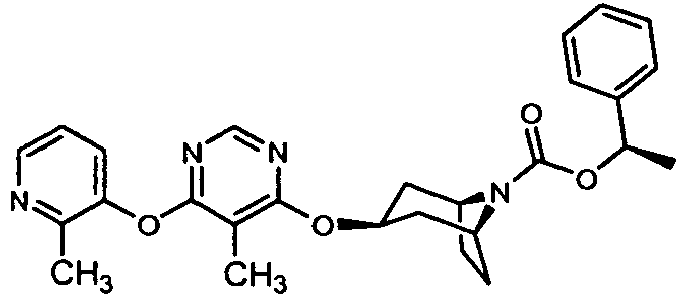
475.3 -

- To a solution of compound 16A (83 mg, 0.39 mmol, prepared as described in
WO 05/14577 to Zhu et al -
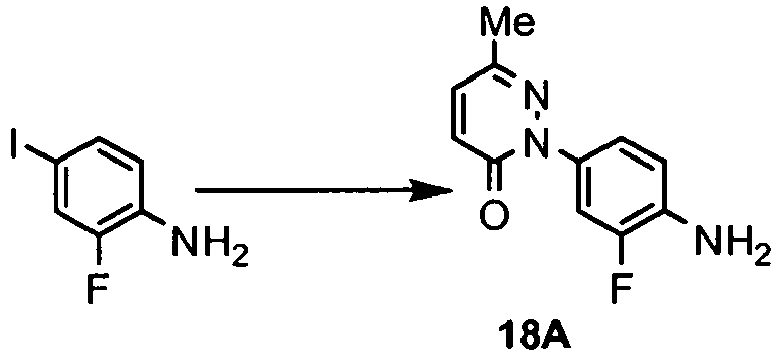
- 2-Fluoro-4-iodoaniline (3.00 g, 12.7 mmol), 6-methylpyridazine-2-one (1.74 g, 15.8 mmol), 8-hydroxyquinoline (0.276 g, 1.9 mmol), CuI (0.362 g, 1.9 mmol) and K2CO3 (1.92 g, 13.9 mmol) were combined in DMSO (12 mL) and the resulting reaction was heated to 130 °C and allowed to stir at this temperature for 20 hours. The reaction mixture was cooled to room temperature, then diluted with EtOAc and water. Charcoal was added to the resulting solution and the mixture was filtered. The filtrate was transferred to a separatory funnel and the organic phase was collected and washed with brine, dried (MgSO4), filtered and concentrated in vacuo. The resulting residue was purified using flash column chromatography on silica to provide compound 18A as a yellow solid.
- The following compounds of the invention were similarly prepared by substituting the appropriate sulfonyl chlorides for 4-fluorobenzenesulfonyl chloride:
Cpd. No. Structure LCMS (MH+) 61 
433.2 63 
405.2 64 
431.2 66 
419.2 67 
481.3 70 
447.2 71 
447.2 -

- To a solution of compound 10B (8 mg, 0.025 mmol) and dichloroethane (1 mL) was added phenyl isocyanate (6 mg, 0.05 mmol) and the resulting reaction was shaken for 16 hours. PS-trisamine (33 mg, 0.05 mmol, from Biotage), PS-NCO (50 mg, 0.075 mmol, from Biotage), and dichloroethane (0.5 mL) was then added to the reaction mixture and the resulting reaction was shaken for an additional 16 hours. The crude reaction mixture was filtered, rinsed with dichloroethane and concentrated in vacuo to provide compound 74, which was used without further purification. LCMS: 446.2 (MH+).
- The following compound was similarly prepared using isopropyl isocyanate in place of phenyl isocyanate:

-

- Compound 42 was converted to compound 77 via the intermediate compound 22A using the methods described in Example 8. LCMS: 433.2 (MH+).
- Compound 78 was also made using this method:

-

- To a solution of compound 42 (0.03g, 0.067 mmol) in THF (2 mL) in a sealed tube, was added a solution comprising tetrakis(triphenylphosphine)palladium (0.016 g, 0.013 mmol) and diethyl zinc in hexanes (0.67 mL, 1 M solution in THF, 0.67 mmol). The reaction was heated to 80 °C and allowed to stir at this temperature for about 72 hours. The reaction mixture was cooled to room temperature and quenched with a saturated aqueous ammonia chloride solution. The resulting solution was then extracted with dichloromethane and the organic extract was dried (NaSO4) and concentrated in vacuo. The residue obtained was purified using preparative TLC (eluting with hexanes/ethyl acetate (60/40)) to provide compounds 85 (1.5 mg, 5%, LCMS: 441.2) and 86 (6 mg, 22%) LCMS: 413.2 (MH+).
- The following compounds of the invention were similarly prepared as shown in Example 19 using appropriate sulfonyl chlorides:
Cpd. No. Structure LCMS (MH+) 88 
473.3 89* 
482.3 90 
495.3 91 
500.3 -

- To a solution of compound 64 (76 mg, 0.18 mmol) in dichloromethane (1.5 mL) was added m-chloroperbenzoic acid (79 mg, 0.35 mmol) and the resulting solution was stirred for 20 h at room temperature. The reaction was then quenched with saturated aqueous NaHCO3 solution and extracted with dichloromethane. The organic extract was dried (MgSO4) and concentrated in vacuo to provide a crude residue which was chromatographed on a silica gel cartridge (10% [2N NH3 in MeOH]/dichloromethane) in dichloromethane (10→60%) to provide compound 92 as a white solid (80 mg, ca 100%). LCMS: 447.2 (MH+).
-
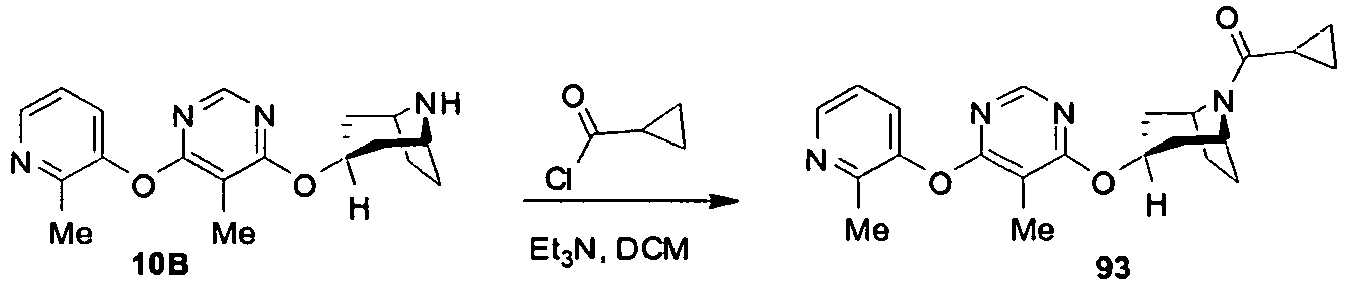
- To a solution of compound 10B (51 mg, 0.16 mmol) and dichloromethane (1.5 mL) was added triethylamine (65 µL, 0.47 mmol) and cyclopropanecarbonyl chloride (28 µL, 0.31 mmol) and the resulting reaction was stirred for 0.5 h at room temperature. The reaction was then quenched with saturated aqueous NaHCO3 solution and extracted with dichloromethane. The organic extract was dried (MgSO4) and concentrated in vacuo to provide a crude residue which was chromatographed on a silica gel cartridge (EtOAc in dichloromethane, 5→20%) to provide compound 93 as a white semi-solid (50 mg, 81%). LCMS: 395.2 (MH+).
- The following compounds of the invention were prepared using the method described above and substituting the appropriate acyl chloride or sulfonyl chloride for cyclopropanecarbonyl chloride:
Cpd. No. Structure LCMS (MH+) 94* 
397.2 95* 
445.2 97* 
434.2 -

- To a solution of 1A (8.5 grams, 37.4 mmol) in THF (200 mL) chilled to 0 °C was added sodium hydride in 60% oil (6 grams, 150 mmol) and allowed to stir for 30 minutes. The reaction mixture was warmed to room temperature and 4,6-dichloro-5-methylpyrimidine (6.8 grams, 41.1 mmol) was added. This was permitted to stir for seven hours. The crude reaction mixture was quenched with water and extracted with DCM. The organic phase was dried (Na2SO4) and concentrated in vacuo. The crude product was purified using a silica gel cartridge with hexanes/ethyl acetate (50/50) to provide compound 34A as a light brown solid (12.3 grams, 93%). LCMS: 354.2 (MH+).
-

- Compound 34A (12.3 grams, 34.8 mmol) was dissolved in THF (200 mL) and chilled to 0 °C. Triflouroacetic acid (100 mL) was added to the reaction. It was allowed to warm to room temperature and stirred for six hours. The solution was concentrated in vacuo, redissolved in DCM, and neutralized with a saturated sodium bicarbonate solution. The organic phase was dried (Na2SO4) and concentrated in vacuo to provide compound 34B (10 g), which was used without further purification. LCMS: 254.1 (MH+).
-

- Compound 34B (10 grams, 39.5 mmol) was dissolved in DCM (200 mL) and chilled to 0 °C. Triethylamine (16 grams, 158 mmol) was added to the solution and stirred for 20 minutes. Cyclopropanesulfonyl chloride (16.6 grams, 118.5 mmol) was added to the reaction and allowed to stir at room temperature for six hours. The reaction mixture was washed with a saturated sodium bicarbonate solution and extracted with DCM. The organic phase was dried (Na2SO4) and concentrated in vacuo. The crude reaction mixture was purified using a silica gel cartridge with hexanes/ethyl acetate (60/40) to provide compound 34C as an off-white solid (8 grams, 57%). LCMS: 358.2 (MH+).
-
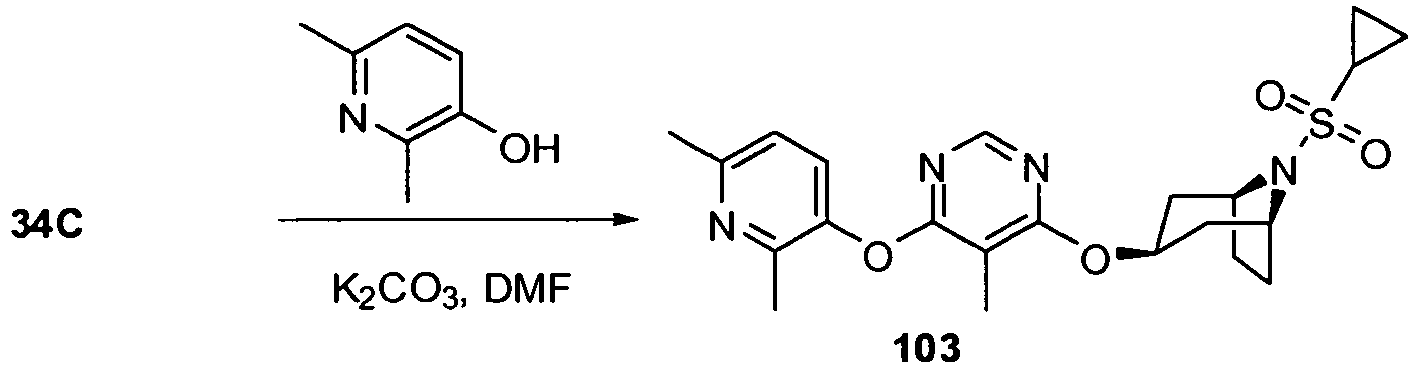
- Compound 34C (50 mg, 0.14 mmol), potassium carbonate (39 mg, 0.28 mmol), and 2,6-dimethylpyridin-3-ol (51 mg, 0.42 mmol) were stirred in DMF (2.5 mL). The reaction was purged with nitrogen, sealed in a vial, and then heated in a microwave reactor at 190°C for eight minutes on high absorbance. The crude reaction mixture was concentrated in vacuo, redissolved in DCM, and washed with water. The organic phase was dried (Na2SO4) and concentrated in vacuo. The crude reaction mixture was purified using a silica gel cartridge with DCM/methanol (95/5) to provide compound 103 as an off white solid (60 mg, 96%). LCMS: 445.2 (MH+).
- The following compounds of the invention were prepared using the method described above and substituting the appropriate substituted phenols or pyridinols for 2,6-dimethylpyridin-3-ol:
Cpd. No. Structure LCMS (MH+) 104 
450.2 105 
434.2 106 
441.2 107 
430.2 108 
475.3 109* 
525.3 110 
475.3 111 
459.3 112* 
485.3 113 
451.2 114* 
460.3 *: The pyridinol was prepared from the corresponding pyridinylboronic acid by the conventional hydrogen peroxide oxidation protocol. -

- Sodium hydride in 60% oil (450 mg, 11.2 mmol) was stirred in THF (100 mL) and chilled to 0 °C. The 4-amino-3-chloro-benzonitrile (850 mg, 5.6 mmol) was added and stirred for 30 minutes at 0 °C. The compound 34C (1.0 gram, 2.8 mmol) was added to the reaction mixture and heated to 85 °C for four hours. The reaction mixture was quenched with water and extracted with DCM. The organic phase was dried (Na2SO4) and concentrated in vacuo. The crude reaction mixture was purified using a silica gel cartridge with DCM/ethyl acetate (90/10) to provide the product as an off-white solid. The solid was dissolved in 10 ml of DCM and poured into 1000 ml of hexanes. The solid precipitates were filtered, washed with hexanes, and dried to provide compound 117 as an off-white solid (800 mg, 60%). LCMS: 474.3 (MH+).
-

- Compound 34C (100 mg, 0.28 mmol), 4-aminobenzonitrile (66 mg, 0.56 mmol), sodium tert-butoxide (35 mg, 0.37 mmol), Pd(dba)2 (10 mg), and BINAP (20 mg) were combined in toluene (4 mL). The reaction mixture was purged with nitrogen and heated to 120 °C for 16 hours. The reaction was cooled to room temperature, washed with water and extracted with DCM. The organic phase was dried (Na2SO4) and concentrated in vacuo. The crude reaction mixture was purified using a silica gel cartridge with DCM/ethyl acetate (90/10) to provide compound 119 as an off-white solid (31 mg, 25%). LCMS: 440.2 (MH+).
- The following compounds of the invention were similarly prepared using the appropriately substituted aniline or pyridinylamine reactants:
Cpd. No. Structure LCMS (MH+) 120 
440.2 121 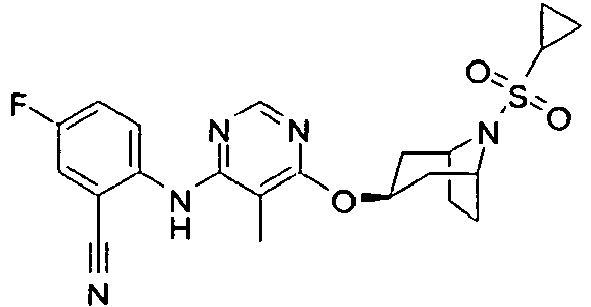
458.3 122* 
526.3 123* 
559.3 *: The substituted aniline was prepared from (2-aminophenyl)methanol by the conventional method using triethylamine and TBDMSC1 as reagents and DCM as solvent. -

- Compound 2A was converted to compound 39A using the method described in Example 34, Step A.
-

- Compound 39A was converted to compound 124 using the method described in Example 38. Yield: 66%. LCMS: 507.3 (MH+).
-

- Compound 124 was converted to compound 40A using the method described in Example 34, Step B.
-

- Compound 40A was converted to compound 129 using the method described in Example 11.
-

- Compound 40A was converted to compound 130 similarly as in Example 16, Preparation of Compound 58.
-

- Compound 34C (65 mg, 0.18 mmol), 2-methyl-6-(methylsulfonyl)pyridine-3-amine (51 mg, 0.27 mmol), sodium-tert-butoxide (23 mg, 0.24 mmol), Pd(OAc)2 (6.5 mg), and X-Phos (13 mg) were combined in dioxane (2 mL). The reaction mixture was purged with nitrogen and heated to 100 °C for 16 hours. The reaction was cooled to room temperature, washed with water and extracted with DCM. The organic phase was dried (Na2SO4) and concentrated in vacuo. The crude reaction mixture was purified using a silica gel cartridge with DCM/methanol (95/5) to provide compound 131 as an off-white solid (22 mg, 24%). LCMS: 508.3 (MH+).
- The following compounds of the invention were prepared using the method described above and substituting the appropriate substituted anilines or pyridinylamines for 2-methyl-6-(methylsulfonyl)pyridine-3-amine:
Cpd. No. Structure LCMS (MH+) 132 
511.3 133 
454.2 134 
458.3 135 
488.3 136 
430.2 137 
444.2 138 
476.3 139* 
512.3 -

- Compound 113 (50 mg, 0.11 mmol), Ni(dppp)Cl2 (5.7 mg, 0.011 mmol), and THF (5 mL) were combined and stirred at 0 °C for 20 minutes. The EtMgBr in THF solution (0.44 mL, 1.0 M, 0.44 mmol) was added to the reaction mixture and stirred at 0 °C for one hour. The reaction mixture was then stirred at room temperature for two hours. The reaction solution was washed with a saturated ammonia chloride solution and extracted with DCM. The organic phase was dried (Na2SO4) and concentrated in vacuo. The crude reaction mixture was purified by preparatory thin-layer chromatography plates with DCM/methanol (95/5) to provide compound 140 as an off-white solid (25 mg, 51%). LCMS: 445.2 (MH+).
-

- A solution of compound 123 (150 mg, 0.27 mmol) and TBAF (1.3 mL, 1 M, 1.34 mmol) in THF (8.5 mL) was allowed to stir at room temperature for four hours. The reaction was diluted with water and extracted with DCM. The organic phase was dried (Na2SO4) and concentrated in vacuo. The crude reaction mixture was purified using a silica gel cartridge with DCM/ethyl acetate (70/30) to provide compound 143 as a brown solid (95 mg, 80%). LCMS: 445.2.
-

- Compound 34C was converted to compound 145 using the method described in Example 38.
-

- Compound 145 (39 mg, 0.077 mmol), NaOH (1.5 mL, 10% by weight in water), MeOH (1.5 mL) and THF (1.5 mL) were combined and stirred at room temperature for 1 hour. The reaction was diluted with water and extracted with DCM. The aqueous layer was acidified with HCl (10% by weight in water) and extracted with DCM. The organic phase was dried (Na2SO4) and concentrated in vacuo to provide compound 146 as a resin (17 mg, 45%).
-

- To a solution of compound 146 (17 mg, 0.034 mmol) in DMF (0.5 mL) was added EDCI (20 mg, 0.10 mmol), HOBt (14 mg, 0.10 mmol), and ethanolamine (6 µl, 0.10 mmol). The mixture was stirred at room temperature for 16 hours. The DMF solvent was evaporated off on a rotavap. The residue was dissolved in DCM and washed with NaHCO3 (saturated solution). The organic phase was dried (Na2SO4) and concentrated in vacuo. The crude reaction mixture was purified by preparatory thin-layer chromatography plates using DCM/(2 N NH3 in MeOH) (95/5) to provide compound 147 as white solid (15 mg, 81%). LCMS: 536.3 (MH+).
- The following compounds of the invention were prepared using the method described above and substituting the appropriate amines for ethanolamine:
Cpd. No. Structure LCMS (MH+) 148* 
562.3 149* 
562.3 -

- Under N2 atmosphere, to a solution of compound 211 (1.05 g, 2.32 mmol) in anhydrous dichloromethane (50 mL) was added slowly 1-chloroethyl chloroformate (0.40 mL, 3.66 mmol) at 0 °C (the colorless solution changed to orange), then warmed up to room temperature gradually and stirred under reflux for 2 hours. The reaction mixture was cooled to room temperature and solvent was removed by rotary evaporator at room temperature. The residue was dissolved in methanol (50 mL) at room temperature under N2 atmosphere and stirred under reflux for 1 hour. The reaction mixture was cooled to room temperature and concentrated in vacuo. The residue was dissolved in dichloromethane (100 mL) and water (100 mL), neutralized with saturated NaHCO3 and then the organic layer was separated. Organic compounds were extracted with dichloromethane (2 × 100 mL). The combined organic layer was dried over Na2SO4 and concentrated in vacuo. The residue was purified on a silica gel column (ISCO) with MeOH (NH3) in dichloromethane (0→ 10%) to provide compound 150 (0.34 g, 43% yield). LCMS: 342.4
- To a solution of compound 150 (50 mg), isopropyl chloroformate (0.3 mL, 1.0 M in toluene) in dichloromethane (3 mL) at 0 °C, was added Et3N (0.1 mL). The ice water bath was removed and the reaction was stirred at room temperature for 6 hours. The reaction was quenched with NaHCO3, extracted with dichloromethane (3×10 mL). The combined organic layer was dried over Na2SO4 and concentrated in vacuo. The residue was purified on a silica gel column (ISCO) with MeOH (NH3) in dichloromethane (0→5%) to provide compound 151 (60 mg, 95% yield). LCMS: 428.5
- The compounds of the present invention in the following table were prepared using the methods described above and substituting the appropriate reactants:
Cpd. No. Structure LCMS 152* 
342.4 153 
428.5 154 
456.5 155 
456.5 156 
446.5 157 
446.5 -

- To a solution of ketone 50A (0.50 g, 2.32 mmol, commercially available) in methanol (8 mL) at 0 °C, was added NaBH4 (0.12 g, 3.18 mmol) and stirred at 0 °C for 2 hours. The reaction was carefully quenched with water and extracted with dichloromethane (30 mL × 3). The combined organic layer was dried over Na2SO4 and concentrated in vacuo. The residue was purified on a silica gel column (ISCO) with MeOH (NH3) in dichloromethane (0→5%) to provide alcohol 50B (0.42 g, 85% yield).
- A solution of KOBut (2.4 mL, 1.0 M in THF, 2.34 mmol) was added to a solution of alcohol 50B (0.42 g, 1.95 mmol) and the chloride 1B (0.56 g, 2.39 mmol) in anhydrous THF (10 mL) under nitrogen at 0 °C and stirred at 0 °C to room temperature for 16 hours. The reaction was quenched with saturated NH4Cl solution (15 mL) and extracted with EtOAc (30 mL × 3). The combined organic layer was dried over Na2SO4 and concentrated in vacuo. The residue was purified on a silica gel column (ISCO) with MeOH (NH3) in dichloromethane (0→5%) to provide compound 158 (0.81 g, 99% yield). LCMS: 416.5
-

- Compounds 159 and 160 were prepared from compound 158 using the method described in Example 49. Compound 159, LCMS: 326.4. Compound 160, LCMS: 412.5
- The compounds of the present invention in the following table were prepared using the methods described above and substituting the appropriate reactants:
Cpd No. Structure LCMS 161 
440.5 162 
430.5 163 
384.4 -

- A solution of compound 54A (0.97 g, 4.16 mmol, prepared from the corresponding ketone [Huttenloch, O.; Laxman, E.; Waldmann, H. Chem. Eur. J. 2002, 8, 4767-4780.] by a NaBH4 reduction), 20% Pd(OH)2/C (873 mg, 1.25 mmol) in methanol (30 mL) was reacted under 1 atm H2 for 24 hours. Then filtered through Celite and concentrated. The residue was dissolved in 20 mL DCM and cooled to 0 °C. Followed by adding Boc2O (0.95 mL, 4.11 mmol) and Et3N (0.82 mL, 5.86 mmol). The reaction was warmed to room temperature overnight. The reaction was quenched with NaHCO3, extracted with dichloromethane (3×30 mL). The combined organic layer was dried over Na2SO4 and concentrated in vacuo. The residue was purified on a silica gel column (ISCO) with MeOH (NH3) in dichloromethane (0→5%) to provide compound 54B (715 mg).
- A solution of KOBut (3.7 mL, 1.0 M in THF, 3.70 mmol) was added to a solution of the alcohol 54B (715 mg, 3.06 mmol) and the dichloropyrimidine (619 mg, 3.74 mmol) in anhydrous THF (20 mL) under nitrogen at 0 °C and stirred at 0 °C to room temperature for 16 hours. The reaction was quenched with saturated NH4Cl solution (15 mL) and extracted with EtOAc (30 mL × 3). The combined organic layer was dried over Na2SO4 and concentrated in vacuo. The residue was purified on a silica gel column (ISCO) with EtOAc in hexanes (0→30%) to provide 54C (986 mg).
- To a sealable tube, a solution of 54C (460 mg, 1.25 mmol), aniline 54D (200 mg, 1.31 mmol) and NaH (250 mg, 60% on oil) in THF (20 mL) were added and sealed. The reaction was heated at 70 °C overnight. Then the reaction was cooled to room temperature and carefully quenched with saturated NH4Cl solution. The mixture was extracted with EtOAc (3×50 mL). The combined organic layer was dried over Na2SO4 and concentrated in vacuo. The residue was purified on a silica gel column (ISCO) with MeOH (NH3) in dichloromethane (0→5%) to provide compounds 167 (134 mg, 22% yield, LCMS: 486) and 168 (163 mg, 27% yield, LCMS: 486.0).
-

- Compound 169 was prepared from Compound 167 using the method described in Example 53. LCMS: 471.9
- The following compounds of the present invention were prepared using the method described above and substituting the appropriate reactants:
Cpd. No. Structure LCMS 170 
490.0 171 
500.0 172 
500.0 173 
490.0 174 
471.9 175 
498.0 176 
483.9 177 
498.0 178 
470.0 179 
455.9 180 
484.0 181 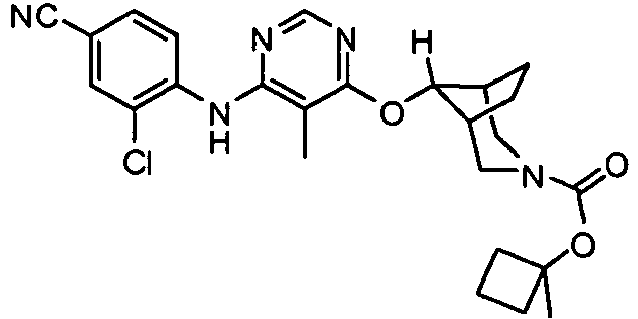
482.0 182 
474.0 -

- A mixture of compound 54C (510 mg, 1.38 mmol), compound 56A (314 mg, 1.66 mmol), Pd(OAc)2 (62 mg, 0.28 mmol), XPhos (290 mg, 0.61 mmol) and NaOBut (199 mg, 2.07 mmol) in dioxane (20 mL) was heated to reflux for 16 hours. Then cooled down to room temperature and diluted with ether (50 mL). The combined organic layer was filtered through Celite and concentrated in vacuo. The residue was purified on a silica gel column (ISCO) with EtOAc in hexanes (20→50%) to provide compound 183 (140 mg, LCMS: 522.6), compound 184 (100 mg, LCMS: 522.6) and a mixture of these two compounds (223 mg).
-

- Compound 185 was prepared from Compound 184 using the method described in Example 53. LCMS: 508.6
- The following compounds of the present invention were prepared using the method described above and substituting the appropriate reactants:
Cpd. No. Structure LCMS 186 
536.6 187 
526.6 188 
536.6 189 
526.6 190 
508.6 191 
506.6 192 
520.6 193 
510.6 194 
492.6 195 
518.6 -

- Compounds 210 and 211 were prepared from Compound 54A using the method described in Example 50, Step B. Compound 210, LCMS: 432.5. Compound 211, LCMS: 432.5.
-

- To 1,4-anhydroerythritol (60A, 5.00g, 48 mmol) in water (70 mL) was added NaIO4 (5.10g, 24mmol). The solution was stirred 18 hours and MeCN (70 mL) added. After 30 minutes of additional stirring, the mixture was filtered and concentrated in vacuo to provide compound 60B.
- To compound 60B (from Step A) was added acetone-1,3-dicarboxylic acid (7.0g, 48mmole) and conc. HCl (2.5mL), followed by dropwise addition of benzylamine (6.14mL, 66mol). The mixture was stirred 1.5 hours, heated to 50°C and stirred at this temperature for 5 hours, then cooled to 0°C. The cooled mixture was basified to pH 10 using NaOH, and the basic solution was extracted with ether. The organic phase was dried (K2CO3) and concentrated in vacuo, and the resulting residue was chromatographed on silica to provide compound 60C as an oil.
- Compound 60C (8.75g, 38mmol) was taken up in 1N HCl (40 mL) and EtOH (40 mL), then 10% Pd/C (1.00g) was added. The reaction was hydrogenated at 50 psi for 18 hours, then filtered, and concentrated in vacuo to provide compound 60D as a brown solid.
- Compound 60E (3.90g, 22mmol) in EtOH (40 mL) was treated with Boc2O (5.30g, 24mmol) and Et3N (4.60 mL, 33mmol) and the reaction was stirred for 3 hours. Water (100 mL) was added and the product extracted with EtOAc. The organic phase was dried over MgSO4, filtered and concentrated in vacuo to provide compound 60E as a yellow solid.
- A solution of compound 60E in THF (50 mL) was treated with NaBH4 (1.50g, 39mmol) and the reaction was stirred for 2 hours. MeOH (10 mL) was then added and after 1 hour of additional stirring, water (100 mL) was added. The resulting solution was extracted with ether, and the organic phase was dried over MgSO4, filtered and concentrated in vacuo to provide compound 60F as a yellow solid.
-

- Compound 60F (0.148 g, 0.61 mmol) was dissolved in THF (2.0 mL) and to the resulting solution was added the dichloropyrimidine 61A (0.100 g, 0.61 mmol) and NaH (60% in oil, 0.030 g, 0.75 mmol). The mixture was stirred 18 hours, then heated for 5 hours at 50 °C. Concentration and purification by PLC yielded compound 61B as a yellow solid.
-

- 3,4-Difluorobenzenesulfonyl chloride (62A, 2.50g, 11.8mmol) was added dropwise to Na2SO3 (11.2g, 88mmol) in water (50 mL). A solution of NaOH (1.20g, 30mmol) in water (10 mL) was added dropwise. After 1h, MeOH (15mL)) was added. After another 1h, the mixture was cooled to 0°C and acidified to pH2 with conc. HCl. Extraction with ether, drying (MgSO4) and concentration gave compound 62B as a white solid.
- Compound 62B (1.30g, 7.3 mmol) was combined with cyclobutyl bromide (1.60g, 12mmol) and DIPEA (1.94mL, 11mmol) in DMF (4.0 mL). The mixture was heated in a sealed tube at 100°C 72h, then concentrated and purified using PLC to provide compound 62C as a yellow oil.
- Compound 62C (0.100g, 0.53 mmol) was combined with 2.0M NH3/isopropanol (10 mL) and heated in a sealed tube at 110°C for 48h. Concentration and purification by PLC provided compound 62D as a yellow solid.
-

- Compound 60F (0.100g, 0.41mmol) was combined with Ph3P (0.129g, 0.49mmol) and 4-nitrobenzoic acid (0.076g, 0.46mmol) in THF (2mL). Diethyl azodicarboxylate (0.078mL, 0.49mmol) was then added and the reaction was allowed to stir for 24 hours, then concentrated in vacuo. The residue obtained was purified using PLC to provide compound 63A as a yellow oil.
- Compound 63A (0.098 g, 0.19 mmol) in THF (2mL) was treated with a solution of KOH (0.200g) in water (1mL) and the resultant reaction was stirred 48 hours, then partitioned with ether and water. The ether phase was dried over MgSO4, filtered and concentrated in vacuo to provide compound 63B as a yellow oil.
-

- Similarly to Example 61, compound 63B was converted to the title compound, a yellow oil.
-

- 4-Bromo-2,6-difluoroaniline (65A, 0.500g, 2.4mmol) was combined with sodium methanesulfinate (0.98g, 9.6mmol), cuprous triflate benzene complex (0.121g, 0.24mmol), and N,N'-dimethylethylenediamine (0.027mL, 0.23mmol) in DMF (5mL). The mixture was heated to 150 °C and allowed to stir at this temperature for 24 hours, then was concentrated in vacuo and purified using PLC to provide compound 65B as a yellow solid.
- Using this method, 4-bromo-2,5-difluoroaniline was converted to compound 65C:

-

- Similarly to Example 61, 4,6-dichloro-5-methoxypyrimidine was converted to the title compound, a yellow solid.
-

- Using the method described in Example 61, 4,6-dichloropyrimidine was converted to compound 67B, a yellow oil.
-

- 2-Amino-5-bromobenzonitrile (0.500g, 2.5mmol), 1,2,4-triazole (0.350g, 5.1mmol), N,N'-dimethylethylenediamine (0.055mL, 0.5mmol), CuI (0.028g, 0.16mmol), and Cs2CO3 (1.48g, 4.6mmol) were taken up in DMF (3 mL). The mixture was heated at 140°C and allowed to stir at this temperature for 96 hours, then cooled to room temperature and concentrated in vacuo. The residue obtained was purified using PLC to provide compound 68B as a yellow so lid.
- Using the above method, 2-chloro-4-iodoaniline was converted to compound 68C, and 2-fluoro-4-iodoaniline was converted to compounds 68D and 68E.

-

- Using the method described in Example 68 and employing K3PO4 as the base, 4-bromo-2-fluorophenol was converted to compound 69B, a yellow solid.
-

- Methyl propiolate (10.0g, 118mmol), N-bromosuccinimide (21.2g, 119mmol) and AgNO3 (0.20g, 1.2mmol) were combined in acetone (60 mL). The mixture was stirred 22 hours, filtered, concentrated, taken up in hexane, and filtered. The filtrate was concentrated in vacuo and the residue obtained was purified using Kugelrohr distillation to provide compound 70B as a yellow oil.
- The product of Step A (11.3g, 69mmol) and t-butyl pyrrole-1-carboxylate (30 mL, 180mmol) was combined and heated at 95° and allowed to stir at this temperature for 24 hours. The product was purified using chromatography on silica to provide compound 70C as a yellow oil.
- The product of Step B (4.00g, 12.1mmol) and Et3N (8.44mL, 61mmol) were combined in MeCN (25mL). Et2NH (1.38mL, 13.4mmol) in MeCN (15mL) was added dropwise. After 1.5 hours, 10% HCl (20 mL) was added dropwise. After 4 hours, the mixture was partitioned with CH2Cl2 and water. The CH2Cl2 layer was washed with brine, dried over MgSO4 and concentrated in vacuo. The resulting residue was purified using flash chromatography on silica to provide compound 70D as a yellow oil.
- The product of Step C (2.18g, 8.16mmol) was combined with 10% Pd/C (0.30g) in MeOH (30 mL) and hydrogenated at atmospheric pressure for 20 hours. The reaction mixture was filtered and concentrated in vacuo to provide compound 70E as a yellow oil, which was used without further purification.
- The product of Step D (2.08g, 7.73mmol) was combined with 10%HCl (70 mL) and the resulting solution was heated at 110°C and allowed to stir at this temperature for 3.5 hours, then concentrated to provide a yellow solid residue. The residue was taken up in CH2Cl2 (15 mL) and Et3N (4.84 mL, 35 mmol) was added, followed by Boc2O (3.4g, 15 mmol). After stirring for 18 hours, the mixture was washed with saturated NaHCO3, then brine. The organic layer was dried over MgSO4, filtered and concentrated in vacuo. The residue obtained was purified using flash chromatography on silica to provide compound 70F as a yellow oil.
- To the product of Step E (1.34g, 6.35mmol) in THF (10 mL) was added NaBH4 (0.480g, 12.6 mmol). The reaction mixture was heated to 60°C and allowed to stir at this temperature for 20 hours, then concentrated in vacuo. The residue obtained was partitioned with CH2Cl2 and water. The CH2Cl2 layer was washed with brine, dried over MgSO4 and concentrated in vacuo to provide compound 70G as a mixture of exo- and endo-isomers, as a colorless oil.
-

- Using the method described in Example 61, Compounds 70G and 61A were reacted to provide a mixture of compounds 71A and 71B. The mixture was purified using PLC to provide each the purified exo-isomer and the purified endo-isomer.
- Using the above method, 4,6-dichloro-5-methoxypyrimidine was converted to compound 71C.

-

- To 2-(4-aminophenyl)ethanol (72A, 1.00g, 7.2mmol) in DMF (10 mL) was slowly added N-chlorosuccinimide (0.973g, 7.3mmol) in DMF (3 mL). The reaction was allowed to stir for 24 hours, then was concentrated in vacuo and purified using flash chromatography on silica, followed by PLC to provide compound 72B as a brown oil.
-
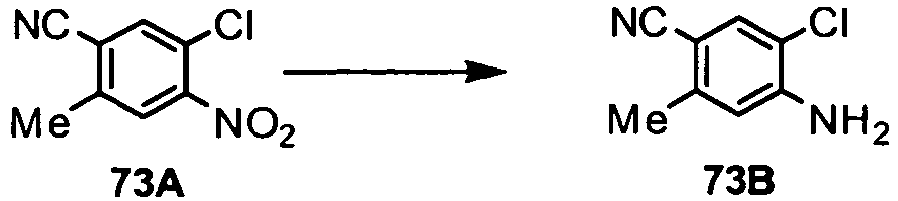
- 3-Chloro-6-methyl-4-nitrobenzonitrile (73A, 0.45g, 2.3mmol) and 10% Pd/C (0.10g) were combined in MeOH (4mL) and AcOH (3mL). The mixture was hydrogenated at atmospheric pressure for 4 hours, filtered, concentrated, and purified using PLC to provide compound 73B as a yellow solid.
-

- Compound 60F (0.113g, 0.47mmol) was dissolved in DMF (2.0 mL). 4-Chloro-5-methyl-6-(2-methyl-3-pyridinyloxy)pyrimidine (1B, 0.100g, 0.43mmol) and NaH (60% in oil, 0.020g, 0.50mmol) were added and the resulting reaction was heated to 50 °C and allowed to stir at this temperature for 5 hours. The reaction mixture was cooled to room temperature, concentrated in vacuo and the residue obtained was purified using PLC to provide compound 212 as a yellow solid.
-

- Compound 212 (0.0.024g, 0.046mmol) was treated with 4.0M HCUdioxane (2.0 mL), stirred for 2 hours and concentrated in vacuo to provide compound 213.
- To a solution of compound 213 (obtained from Step A) in CH2Cl2 (2.0 mL) was added Et3N (0.019mL, 0.14mmol) and isopropyl chloroformate (1.0M in toluene, 0.069ml, 0.069mmol). After stirring 2 hours, the reaction mixture was concentrated in vacuo and the residue obtained was purified using PLC to provide compound 214 as a yellow solid.
-

- Compound 61B (0.40g, 0.11mmol), 2-fluoro-4-(methylsulfonyl)aniline (76A, 0.27g, 0.14mmol), Pd(OAc)2, (0.003g, 0.01mmol), NaO-tBu (0.15g, 0.15mmol), and X-phos (0.005g, 0.01mmol) were taken up in dioxane (1.5 mL). The mixture was heated in a sealed tube in a microwave reactor at 130°C for 1 hour, then cooled to room temperature and concentrated in vacuo. The resulting residue was purified using PLC to provide compound 215 as a yellow solid.
- Using this method and substituting the appropriate anilines for compound 76A, the following compounds of the present invention were made:
Cpd. No. Structure 216 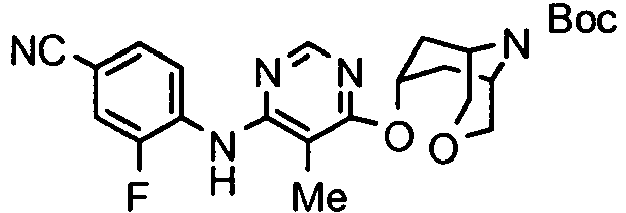
217 
218 
219 
220 
221 
222 
223 
224 
225 
226 
227 
228* 
229* 
-

- Treatment of compound 215 using the method described in Example 75 provided compound 230 as a yellow solid.
- Using this method and substituting the appropriate Boc derivatives for compound 215, the following compounds of the present invention were made:
Cpd. No. Structure 231 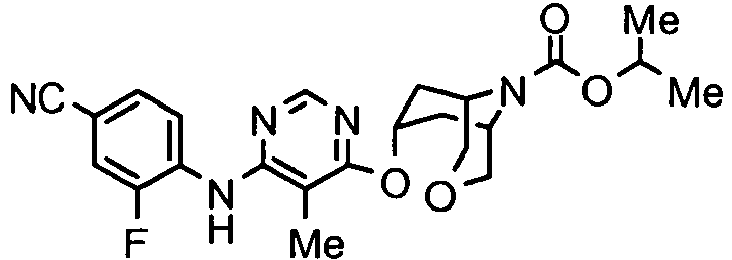
232 
233 
234 
235 
236 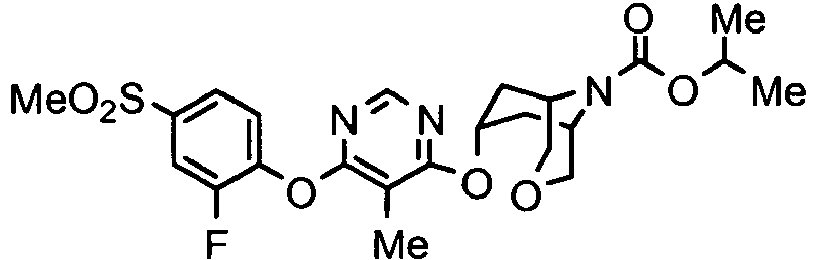
237 
238 
239* 
240 
241 
242 
243 
244 
245 
246 
247 
248 
249 
250 
-

- Compound 61B (0.40g, 0.11mmol), 2-fluoro-4-(methylsulfonyl)phenol (78A, 0.25g, 0.13mmol) and K2CO3, (0.022g, 0.16mmol) were taken up in DMF (1.0 mL). The reaction was heated in a sealed tube in a microwave reactor at 180 °C for 1 hour, then cooled to room temperature and concentrated in vacuo. The resulting residue was purified using PLC to provide compound 251 as a yellow solid.
- Using this method, and substituting the appropriate phenols for compound 78A, the following compounds of the present invention were made:
Cpd. No. Structure 252* 
53 
-

- Using the method described in Example 76, compounds 76A and 64A were coupled to provide compound 254.
- Using this method and substituting the appropriate aniline derivative for compound 76A, the following compound of the present invention was made:
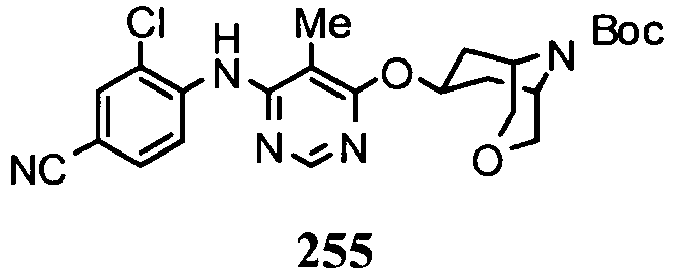
-

- Using the method described in Example 76, compounds 76A and 66B were coupled to provide compound 256.
- Using this method and substituting the appropriate aniline derivative for compound 76A, the following compounds of the present invention were made:
Cpd. No. Structure 257 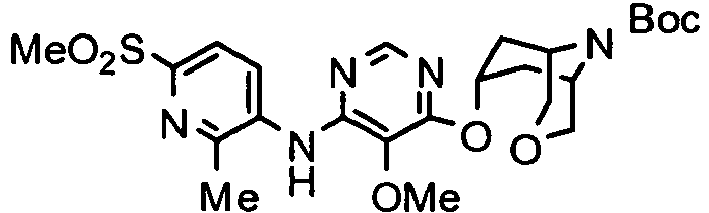
258 
259 
260 
-

- Using the method described in Example 76 at 140 °C for 1 hour, compounds 81A and 61B were coupled to provide a mixture of compounds 261 and 262.
-

- Using the method described in Example 76, compounds 76A and 67B were coupled to provide compound 263 as a yellow solid.
-

- Compound 215 was reacted using the method described in Example 75, substituting cyclopropanesulfonyl chloride for isopropyl chloroformate, to provide compound 264 as a yellow solid.
- Using this method and substituting the appropriate Boc derivative for compound 215, the following compounds of the present invention were made:
Cpd. No. Structure 265 
266 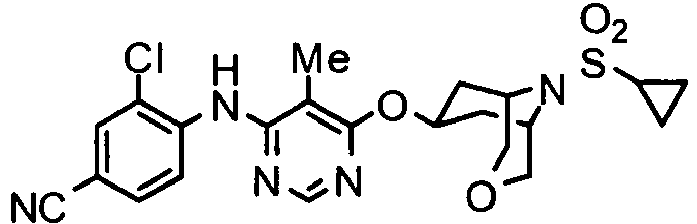
267 
268 
269 
270 
271 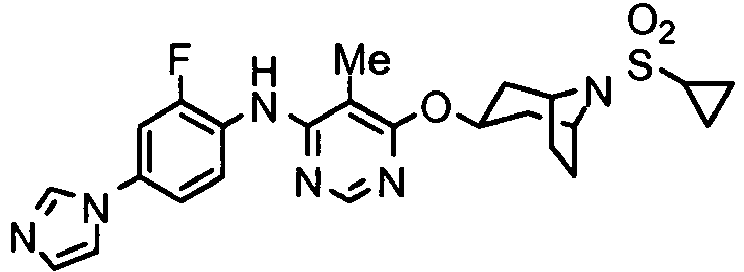
272 
273 
274 
-

- To cyclobutanol (0.013g, 0.18mmol) in CH2Cl2 (1.5mL) was added Et3N (0.024mL, 0.17mmol), followed by phosgene toluene solution (20%, 0.075mL, 0.14mmol). After 1 hour, compound 77A (0.030g, 0.71mmol) was added, followed by Et3N (0.020 mL, 0.14mmol). After being allowed to stir for an additional 2 hours, the reaction was concentrated in vacuo and the resulting residue was purified using PLC to provide compound 275 as a white solid.
- Using this method and substituting the appropriate amine derivative for compound 77A, the following compounds of the present invention were made:
Cpd. No. Structure 276 
277 
278 
279 
280 
281 
282 
283 
-

- Compound 215 was treated using the method described in Example 75 and substituting neopentyl chloroformate for isopropyl chloroformate, to provide compound 284 as a yellow solid.
- Using this method and substituting the appropriate Boc derivative for compound 215, the following compounds of the present invention were made:
Cpd. No. Structure 285 
286 
287 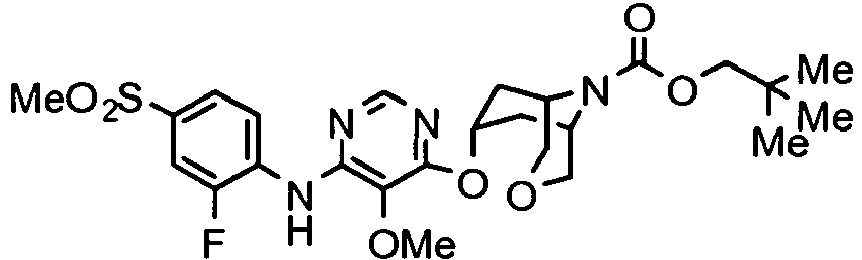
288 
289 
290 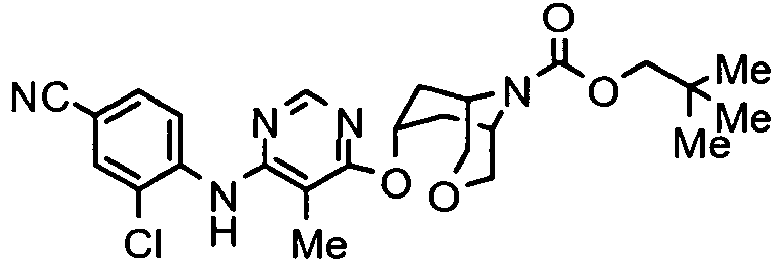
291 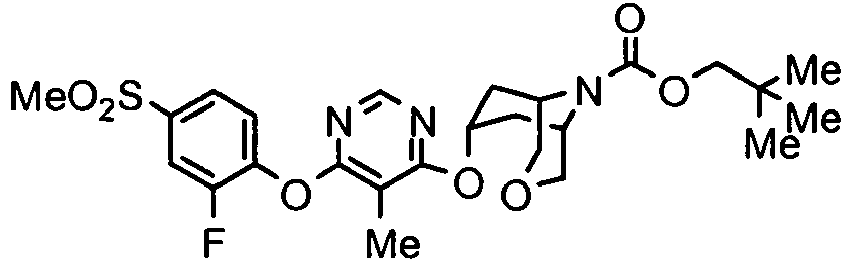
292* 
293 
294* 
295 
296 
297 
298 
299 
300* 
301 
302 
-

- To cyclobutanone (0.800g, 11.4mmol) in ether (5mL) was added dropwise MeMgBr (3.0M in ether, 5.7mL, 17.1mmol). After 0.5 hours, the reaction was quenched with saturated NH4Cl, extracted with ether, dried over MgSO4, filtered and concentrated in vacuo. The resulting residue was dissolved in CH2Cl2 (30 mL) and treated with disuccinimidyl carbonate (5.85g, 22.9mmol) and Et3N (4.77mL, 34mmol). After stirring for 24 hours, the mixture was partitioned with EtOAc and saturated NaHCO3, dried over MgSO4, and concentrated in vacuo to provide 1-methylcyclobutyl hydroxysuccinimidyl carbonate (0.048g, 0.21mmol) as a white solid intermediate, which was combined with compound 77A (0.050g, 0.12mmol) and Et3N (0.059mL, 0.43mmol) in THF (1.0 mL). After stirring for 1 hour, the reaction was concentrated in vacuo and purified using PLC to provide compound 303 as a white solid.
- Using this method and substituting the appropriate amine derivative for compound 77A, the following compounds of the present invention were made:
Cpd. No. Structure 304 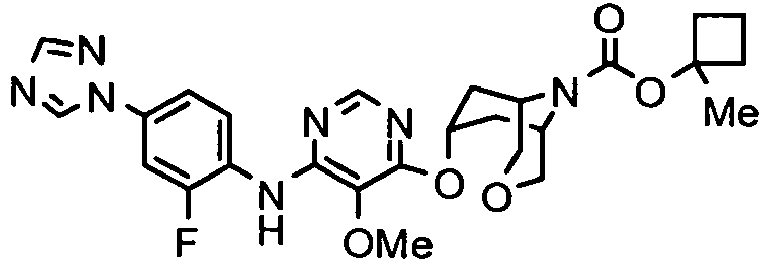
305 
307 
308 
309 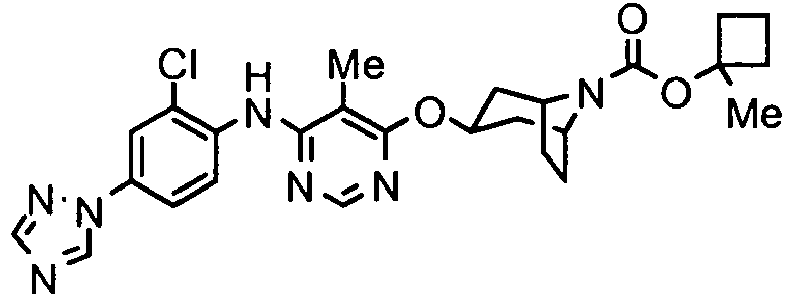
310 
-

- To methyl acetate (0.600g, 8.1mmol) and Ti(O-iPr)4 (0.15g, 0.43mmol) in ether (30 mL) was added dropwise EtMgBr (3.0M in ether, 6.0 mL, 18mmol) over a 1 hour period. After stirring for 20 minutes, the mixture was poured onto 10% H2SO4 (80 mL) and extracted with ether. The ether was dried over MgSO4 and concentrated in vacuo (0°C) to one-quarter volume. The resulting solution was diluted with MeCN (20 mL) and treated with disuccinimidyl carbonate (4.15g, 16.2mmol). After stirring for an additional 20 minutes., Et3N (3.4mL, 25mmol) was added. After stirring for an additional 24 hours, the mixture was partitioned with EtOAc and saturated NaHCO3, dried over MgSO4, filtered and concentrated in vacuo to provide 1-methylcyclopropyl hydroxysuccinimidyl carbonate as a yellow solid (0.191g, 0.90mmol) which was combined with compound 77A (0.190g, 0.45mmol) and Et3N (0.25mL, 1.8mmol) in CH2Cl2 (5mL). After stirring for 1h, the reaction was concentrated and purified using PLC to provide compound 311 as a yellow solid.
- Using this method and substituting the appropriate amine derivative for compound 77A, the following compounds of the present invention were made:
Cpd. No. Structure 312 
313 
314 
315 
316 
317 
318 
319 
320 
321 
-

- Compound 215 (0.0.030g, 0.057mmol) was diluted with 4.0M HCl/dioxane (1.0 mL), and the resulting reaction was allowed to stir for 18 hours, then concentrated in vacuo. The resulting residue was taken up in MeOH (2 mL), and treated with 7N NH3/MeOH (1.0 mL). Ether (10 mL) was then added and the mixture was filtered and concentrated in vacuo to provide a yellow solid, which was taken up in CH2Cl2 (0.5mL) and the resulting solution was added to a solution of COCl2 (20% in toluene, 0.06mL, 0.11mmmol) in CH2Cl2 (1.0 mL) at 0°C. To the resulting reaction was added Et3N (0.019mL, 0.14mmol) and the reaction was allowed to stir for 20 minutes, then concentrated in vacuo. The resulting residue was taken up in THF (1.0 mL) and treated with (CF3)2CHOH (0.029mL, 0.28mmol), followed by a solution of NaO-tBu (0.026g, 0.27mmol) in THF (1.0 mL). After stirring for 20 minutes., the reaction was concentrated in vacuo and the residue obtained was purified using PLC to provide compound 322 as a white solid.
- Using this method and substituting the appropriate Boc derivative for compound 215, the following compounds of the present invention were made:
Cpd. No. Structure 323 
324 
-

- Using the method described in Example 88, and substituting CF3(Me)CHOH for (CF3)2CHOH, compound 215 was converted to compound 325, a white solid.
-

- Using the method described in Example 88, and substituting Me(CF3)2COH for (CF3)2CHOH, compound 215 was converted to compound 325, a white solid.
- Using this method and substituting the appropriate Boc derivative for compound 215, the following compound of the present invention was made:

-

- (CH2F)2CHOH was prepared by reducing 1,3-difluoroacetone with NaBH4 in THF. Then, using the method described in Example 88, and substituting (CH2F)2CHOH for (CF3)2CHOH, compound 215 was converted to compound 328, a white solid.
- Using this method and substituting the appropriate Boc derivative for compound 215, the following compound of the present invention was made:

-

- 2-Methylpropene (10g, 0.29mol) was condensed into a -78 °C precooled volume of hexane (30 mL). To the resulting solution dichloroacetyl chloride (4.51g, 31mmol) was added dropwise, followed by Et3N (3.0g, 30mmol). The cold solution was placed in a sealed vessel and heated at 55°C for 18 hours. The solution was partitioned with ether and water, washed with saturated NaHCO3, dried over MgSO4, and concentrated in vacuo to provide a dichloroketone intermediate as a yellow oil (0.95g, 5.7mmol).
- The dichloroketone intermediate was combined with zinc powder (1.84 g, 28 mmol) and acetic acid (10 mL) and the resulting reaction was heated to 70 °C and allowed to stir at this temperature for 2 hours, then it was cooled, treated with ether (20 mL), and filtered. The filtrate was washed with water, then saturated NaHCO3, dried over MgSO4 and filtered. The filtered solution was diluted with MeOH (1.0 mL) and treated with NaBH4 (1.00g, 26mmol). The reaction mixture was heated to reflux and allowed to stir at this temperature for 1 hour, then was cooled to room temperature, washed with water, dried over MgSO4, and concentrated in vacuo to provide 3,3-dimethylcyclobutanol as a yellow oil.
- The 3,3-dimethylcyclobutanol was then subjected to the method described in Example 84, being used in place of cyclobutanol, to provide compound 332 as a white solid.
-

- Using the method described in Example 84, and substituting 1-methylcyclopropanemethanol for cyclobutanol, compound 77A was converted to compound 333, a white solid.
-

- Using the method described in Example 84, and substituting cyclobutanemethanol for cyclobutanol, compound 77A was converted to compound 335, a white solid.
-

- Using the method described in Example 84, and substituting cyclopentanol for cyclobutanol, compound 77A was converted to compound 336, a white solid.
-

- Using the method described in Example 84, and substituting cis-3-hydroxybicyclo[3.1.0]hexane for cyclobutanol, compound 77A was converted to compound 337, a white solid.
-

- Using the method described in Example 75, and substituting pivaloyl chloride for isopropyl chloroformate, compound 215 was converted to compound 339, a white solid.
- Using this method and substituting 3,3-dimethylbutyroyl chloride for pivaloyl chloride, the following compound of the present invention was made:

-

- Using the method described in Example 76, compound 68C was reacted with compound 34A to provide compound 343 as a yellow solid.
- Using this method and substituting the appropriate aniline and chloropyrimidine reactants, the following compounds of the present invention were made:
344 
345 
346 
-

- Compound 70G (0.114g, 0.53mmol), compound 1B (0.100g, 0.43mmol) and NaH (60% in oil, 0.025g, 0.63mmol) were combined in DMF (2mL) and the resulting reaction was heated to 80°C for 5 hours, then stirred 18 h at room temperature, and concentrated in vacuo. The resulting residue was purified using PLC (15% acetone/hexane) to provide compound 347 (the less polar endo-isomer) and compound 348 (the more polar exo-isomer) as yellow oils.
-

- Using the method described in Example 76, compounds 76A and 71A were coupled to provide compound 349 as a yellow solid.
- Using this method and substituting the appropriate anilines for compound 76A, compounds 71A or 71B were converted to the following compounds of the present invention:
350 
351 
352 
353 
354 
355 
356 
-

- Using the method described in Example 78, compounds 78A and 71A were coupled to provide compound 357 as a yellow solid.
- Using this method and substituting the appropriate phenol for compound 78A, the following compound of the present invention was made:
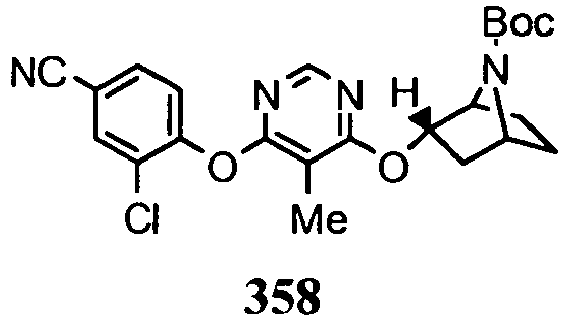
-

- To a solution of compound 228 (0.024g, 0.046mmol) in THF (2mL) was added LiAlH4(1.0M in THF, 0.139mL, 0.139mmol). The mixture was heated to 60 °C and allowed to stir at this temperature for 1 hour, then it was quenched with water, then 10% NaOH, then water three times. The mixture was filtered, dried over MgSO4 and concentrated in vacuo, and the residue obtained was purified using PLC to provide compound 359 as a white film.
-

- Compound 73B (0.035 g, 0.18 mmol) was combined with NaH (60% in oil, 0.0085g, 0.21 mmol) in THF (4 mL). The resulting solution was allowed to stir for 30 minutes, then compound 34C (0.063 g, 0.22 mmol) was added and the reaction mixture was heated to 75 °C and allowed to stir at this temperature for 20 hours. An equal amount of NaH was added and heating continued 24 hours. The reaction mixture was cooled to room temperature, concentrated in vacuo and purified using PLC to provide compound 360 as a yellow solid.
-

- Using the method described in Example 76, compound 108A was coupled with compound 71A to provide compound 361 as a yellow oil.
-

- To a mixture of 9-Azabicyclo[3.31]nonyl-endo-ol (50 mg, 0.35 mmol) in THF (3 mL) was added saturated aqueous NaHCO3 (3 mL). The reaction was cooled to 0 °C and isopropyl chloroformate (1.0 M in toluene, 0.42 mmol) was added dropwise. The reaction was warmed to room temperature and stirred. After 16 hours, the reaction was quenched with water and extracted with EtOAc. The combined organics were dried over MgSO4, filtered and concentrated in vacuo to provide the crude product 111A (58 mg, 73 %) which was used in the next reaction without further purification.

- Potassium t-butoxide (1.0 M in THF, 0.3 mL) was added to a solution of alcohol 111A (57 mg, 0.24 mmol) and compound 1B (58 mg, 0.25 mmol) in anhydrous THF (2 mL) under nitrogen at 0 °C. The reaction was gradually warmed to room temperature and stirred for 16 hours. The reaction was quenched with water and extracted with dichloromethane. The organic layer was dried over MgSO4, filtered and concentrated in vacuo. The residue was purified by preparative thin layer chromatography (50 % EtOAc/hexanes) to provide compound 360 (18 mg, 18 %). M + H = 427.
-

- Under N2 atmosphere, to a 0 °C solution of 359 (810 mg, 1.94 mmol) in anhydrous dichloromethane (30 mL) was added slowly 1-chloroethyl chloroformate (0.43 mL, 3.89 mmol). The cold bath was removed after the addition and the reaction was allowed to stir until room temperature was reached, then the reaction was heated to reflux and allowed to stir at this temperature for an additional 2 hours. The reaction mixture was then cooled to room temperature and concentrated in vacuo. The residue obtained was dissolved in methanol (30 mL), placed under N2 atmosphere, heated to reflux and allowed to stir at this temperature for 1 hour. The reaction mixture was then cooled to room temperature, concentrated in vacuo and the residue obtained was dissolved in dichloromethane (100 mL) and water (100 mL), and the resulting solution was brought to neutral pH using saturated aqueous NaHCO3. The organic phase was separated and the aqueous was extracted with dichloromethane (2× 100 mL). The combined organic layers were dried over Na2SO4, filtered and concentrated in vacuo and the resulting residue was purified using a silica gel column (ISCO) with MeOH (NH3) in dichloromethane (0→10%) to provide compound 113A (160 mg, 26% yield, not complete reaction). LCMS: 326.4
- To a solution of compound 113A (50 mg) and isopropyl chlorocarbamate (0.3 mL, 1.0 M in toluene) in dichloromethane (3 mL) at 0 °C, was added Et3N (0.1 mL). The cold water bath was then removed and the reaction was allowed to stir at room temperature for 6 hours. The reaction was quenched with saturated aqueous NaHCO3, extracted with dichloromethane (3×10 mL) and the combined organic layers were dried over Na2SO4, filtered and concentrated in vacuo. The residue obtained was purified using a silica gel column (ISCO) with MeOH (NH3) in dichloromethane (0→5%) to provide compound 363 (55 mg, 87% yield). LCMS: 412.5
- The following compounds of the present invention were made using the above method and substituting the appropriate chloroformate in Step B:
Cpd. No. Structure LCMS 493 
440.5 494 
430.5 495 
384.4 -

- To a solution of the endo alcohol 111A (170 mg, 0.75 mmol) in THF (5 mL) was added 4-nitrobenzoic acid (145 mg, 0.84 mmol), followed by triphenyl phosphine (245 mg, 0.93 mmol) and diethyl azodicarboxylate (0.15 mL, 0.90 mmol). The reaction was stirred at room temperature under nitrogen for 18 hours. The reaction was concentrated in vacuo, and then purified by preparative thin layer chromatography (25 % acetone/hexanes) to provide the nitrobenzyloxy intermediate (78 mg, 28 %).
- To a solution of the intermediate (78 mg, 0.16 mmol) in THF (3 mL) was added a solution of sodium hydroxide (4 N, 0.12 mL) under nitrogen. After stirring at room temperature for 16 hours, the reaction was diluted with water and ether and then washed with sodium hydroxide (2N) and brine. The organic layer was dried over MgSO4, filtered and concentrated in vacuo to provide the crude exo alcohol 114A (36 mg, 100 %) which was used in the next reaction without further purification.

- Alcohol 114A (32 mg, 0.15 mmol) was reacted with compound 1B (36 mg, 0.15 mmol) using the method described in Example 111 to provide compound 364 (24 mg, 38 %). M + H = 427
-

- To a mixture of 4-azabicyclo[3.3.1]nonyl-3-endo-ol (120 mg, 0.85 mmol) in dichloromethane (8 mL) was added triethylamine (0.13 mL, 0.93 mmol) under nitrogen. The reaction was cooled to 0 °C and (Boc)2O (203 mg, 0.93 mmol) was added. The reaction was warmed to room temperature and stirred for 18 hours. The reaction was quenched with water and extracted with dichloromethane. The organic layer was dried over MgSO4, filtered and concentrated to provide compound 115A (130 mg, 76 %) which was used in the next reaction without further purification.

- Alcohol 115A (170 mg, 0.71 mmol) was reacted with compound 1B (165 mg, 0.71 mmol) using the method described in Example 111 to provide compound 365 (100 mg, 32 %). M+H=441
-

- Trifluoroacetic acid (0.1 mL) was added dropwise to a solution of 116A (98 mg, 0.22 mmol) in dichloromethane (3 mL) at 0 °C under nitrogen. After 18 hours, the reaction was diluted with dichloromethane and washed with saturated aqueous NaHCO3. The organic layer was dried over MgSO4, filtered and concentrated in vacuo to provide the free amine 116B (75 mg, 100 %) which was used in next reaction without further purification.

- To a solution of compound 116B (74 mg, 0.22 mmol) in dichloromethane (3 mL) was added triethylamine (0.09 mL, 0.75 mmol) under nitrogen. The reaction was cooled to 0 °C and cyclopropanesulphonyl chloride (0.04 mL, 0.4 mmol) was added. The reaction was warmed to room temperature and stirred for 3 hours. Additional cyclopropanesulphonyl chloride (0.01 mL, 0.1 mmol) was added. After 1.5 hours, the reaction was diluted with dichloromethane and washed with saturated aqueous NaHCO3. The organic layer was dried over MgSO4, filtered and concentrated in vacuo to provide the crude product which was purified by preparative thin layer chromatography (5 % MeOH/dichloromethane) to provide compound 366 (32 mg, 33 %). M + H = 445
-

- A solution of potassium t-butoxide (1.0 M in THF, 13.3 mL) was added dropwise to a solution of 4,6-dichloro-5-methylpyrimidine (2.16 g, 13.3 mmol) and the endo alcohol 115A (3.20 g, 13.3 mmol) in THF (40 mL) at 0 °C under nitrogen. The reaction was warmed to room temperature and stirred. After 5 hours, the reaction was quenched with water and extracted with dichloromethane. The organic layer was dried over MgSO4, filtered and concentrated in vacuo. The crude material was purified by silica gel flash chromatography (0-20% EtOAc/hexanes) to provide compound 117A (4.3 g, 88 %).

- A mixture of the chloro-pyrimidine 117A (144 mg, 0.39 mmol), 2-fluoro-4-(methylsulfonyl)aniline (89 mg, 0.47 mmol), Xphos (38 mg, 0.080 mmol) and sodium t-butoxide (56 mg, 0.59 mmol) in dioxane (3.5 mL) was heated to 110 °C in a sealed tube. After 16 hours, the reaction was cooled to room temperature and the solids were filtered off. The filtrate was concentrated in vacuo and purified by preparative thin layer chromatography (50 % EtOAc/hexanes) to provide compound 367 (96 mg, 47 %). M + H = 521
-


- Compound 367 (96 mg, 0.18 mmol) was reacted according to the method described in Example 116 to provide the free amine 118A (73 mg, 96 %) which was used in the next reaction without further purification.

- The free amine 118A (35 mg, 0.083 mmol) was reacted according to the method described in Example 109 using dichloromethane as the solvent to provide compound 368 (18 mg, 43 %). M + H = 507
-

- The free amine 32 (35 mg, 0.083 mmol) was reacted according to the method described in Example 116 to provide compound 369 (18 mg, 41 %). M + H = 525
-

- 2-Methylpyridin-3-amine (51 mg, 0.47 mmol) was reacted with compound 117A (144 mg, 0.39 mmol) using the method described in Example 117 to provide compound 370 (45 mg, 26 %). M + H = 440
-

- Compound 370 (40 mg, 0.09 mmol) was reacted according to the method described in Example 116 to provide the free amine 121A (20 mg, 67 %) which was used in the next reaction without further purification.

- Compound 121A (20 mg, 0.06 mmol) was reacted according to the method described in Example 109 using dichloromethane as the solvent to provide compound 371 (24 mg, 96%). M+H = 427.
-

- To a nitrogen purged vessel containing a solution of compound 524 (6 mg, 0.01 mmol) in dimethylformamide (0.6 mL) and water (6 microliters) was added tris(dibenzylideneacetone) dipalladium (5 mg, 0.005 mmol), 1,1'-bis(diphenylphosphino)ferrocene (3 mg, 0.005 mmol), zinc acetate (2 mg, 0.01 mmol), zinc dust (0.6 mg, 0.01 mmol), and zinc cyanide (1 mg, 0.01 mmol). The resulting reaction was heated to 100 °C and allowed to stir at this temperature for 18 hours. The reaction was cooled to room temperature, concentrated in vacuo and the resulting residue was taken up in dichloromethane. The organic phase was washed with aqueous saturated ammonium chloride solution, dried over MgSO4, filtered, and concentrated in vacuo. The resulting residue was purified using preparative TLC on silica gel (hexanes/ethyl acetate - 60/40), followed by a second preparative TLC on silica gel (dichloromethane/ethyl acetate - 95/5) to provide compound 373 (2.7 mg, 56%) as an off-white solid. LCMS: 485.3 (MH+).
-

- A mixture of compound 117A (42 mg, 0.12 mmol), 2-methyl-6-(methylsulfonyl)pyridin-3-amine 124A (20 mg, 0.11 mmol), Pd(dba)2 (4.0 mg), BINAP (11 mg, 0.02 mmol) and sodium t-butoxide (19 mg, 0.20 mmol) in toluene (3.5 mL) was heated to 110 °C in a sealed tube. After 17 hours, the reaction was concentrated in vacuo and purified by preparative thin layer chromatography (50 % acetone/hexanes) to provide compound 374 (23 mg, 41%). M+H=517
-

- 4-Amino-3-chlorobenzonitrile (50 mg, 0.32 mmol) was reacted with compound 117A (163 mg, 0.44 mmol) using the method described in Example 124 to provide compound 375 (49 mg, 23 %). M + H = 484
-

- A mixture of compound 117A (153 mg, 0.41 mmol), 3-chloro-4-hydroxybenzonitrile 52 (125 mg, 0.82 mmol) and K2CO3 (113 mg, 0.82 mmol) in DMF (2.5 mL) was heated to 190 °C in the microwave for 40 min at high absorption. The reaction mixture was concentrated in vacuo. The residue was partitioned between water and ether. The organic layer was dried over MgSO4, filtered and concentred in vacuo. Purification by preparative thin layer chromatography (20 % acetone/hexanes) provided compound 376 (48 mg, 24 %). M + H = 485
-
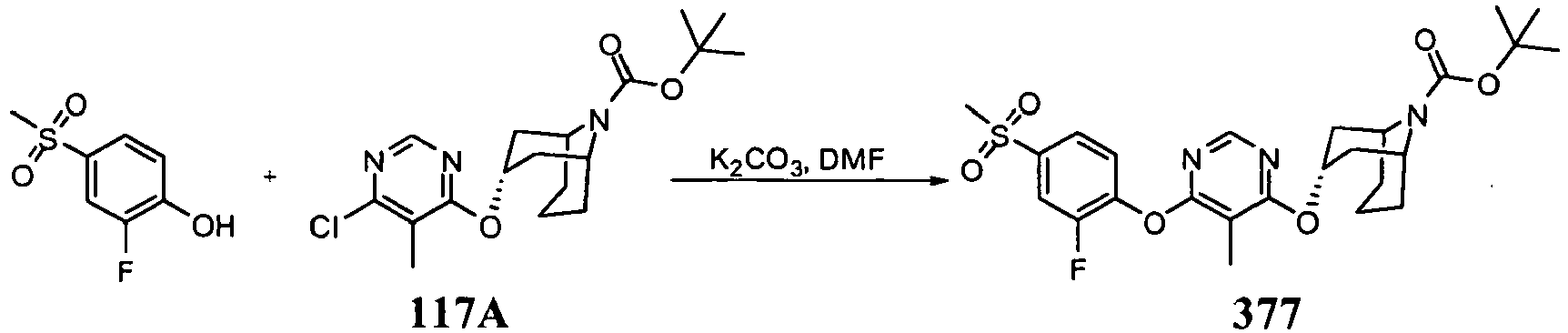
- 2-Fluoro-4-(methylsulfonyl)phenol (156 mg, 0.82 mmol) was reacted with compound 117A (150 mg, 0.41 mmol) using the method described in Example 126 to provide compound 377 (52 mg, 24 %). M + H = 522.
-

- To a solution of amine 118A (31 mg, 0.074 mmol) in dichloromethane (2 mL) was added triethylamine (0.03 mL, 0.2 mmol) under nitrogen. The reaction was cooled to 0 °C and di-tert-amyl dicarbonate (0.04 mL, 0.2 mmol) was added. The reaction was warmed to room temperature and stirred for 18 hours. The reaction mixture was diluted with dichloromethane and washed with water several times. The organic layer was dried over MgSO4, filtered and concentrated in vacuo. Purification by preparative thin flash chromatography (50 % EtOAc/hexanes) provided the desired compound 379 (25 mg, 64 %). M + H = 533
-
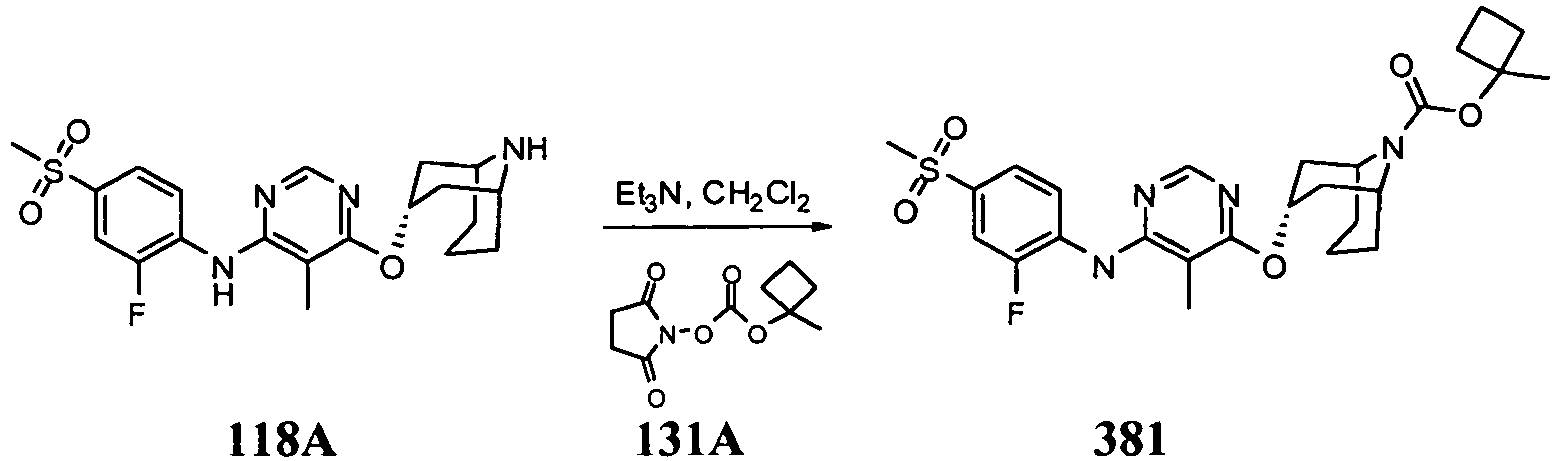
- Amine 118A (31 mg, 0.074 mmol) was reacted according to the method described in Example 130 using 2,5-dioxopyrrolidin-1-yl 1-methylcyclobutyl carbonate 131A (34 mg, 0.15 mmol) to provide the desired compound 381 (16 mg, 42 %). M + H = 535
-

- Amine 118A (25 mg, 0.06 mmol) was reacted according to the method described in Example 130 using 2,5-dioxopyrrolidin-1-yl 1-methylcyclopropyl carbonate 132A (26 mg, 0.12 mmol) to provide compound 382 (18 mg, 58 %). M + H = 519
-

- Compound 383 was prepared using the method described in Example 249, and by substituting cyclopropylsulfonyl chloride with 2-methoxyethanesulfonyl chloride (made as described in European Patent Publication No.
EP 176327 -

- Compound 270B (0.359 g, 1.42 mmol) was combined with 4,6-dichloropyrimidine (0.150 g, 1.00 mmol) and K2CO3 (0.195 g, 1.41 mmol) in dioxane (5 mL). The resulting reaction was heated to 100 °C and allowed to stir at this temperature for 22 hours, then cooled to room temperature and concentrated in vacuo. The residue obtained was purified using preparative TLC to provide compound 134A as a yellow oil.
- Compound 134A (0.080 g, 0.22 mol), 4-amino-3-chlorobenzonitrile (0.045 g, 0.29 mmol), (±)-BINAP (0.008 g, 0.01 mmol), Pd2dba3 (0.0025 g, 0.004 mmol) and NaO-tBu (0.027 g, 0.28 mmol) were combined in toluene (4 mL) and the resulting reaction was heated to 110 °C and allowed to stir at this temperature for 20 hours. The reaction mixture was allowed to cool to room temperature, then was concentrated in vacuo and the residue obtained was purified using preparative TLC to provide compound 384 as a yellow gum. MS: m/e 483, 485.
-

- Compound 586 was deprotected according to the method described in the first step of Example 116. The resulting hydrochloride salt (0.020 g, 0.047 mmol) was combined with DIPEA (0.033 mL, 0.19 mmol) and benzyl bromide (0.024 g, 0.14 mmol) in dioxane (2 mL). The mixture was heated to 90°C and allowed to stir at this temperature for 8 hours, then the reaction mixture was allowed to cool to room temperature and concentrated in vacuo. The residue obtained was then purified using preparative TLC to provide compound 385 as a yellow solid. MS: m/e 483.
-

- Compound 271B was reacted according to the method described in Example 56 to provide compound 386 as a white solid. MS: m/e 507.
- Using various methods described herein, compound 386 was deprotected and converted to the following compounds of the present invention:
Cpd. No. Structure LCMS (MH+) 496 
505 497 
491 498 
493 -

- To a solution of potassium t-butoxide (1 equivalent) in t-butanol (36 mL) was added N-Boc-nortropinone 137A (500 mg, 2.22 mmol) under nitrogen. After 5 minutes, 2-chloroethyldimethyl sulfonium iodide (1 equivalent) was added in portions over 10 minutes. 2-Chloroethyldimethyl sulfonium iodide was prepared according to Tet. Lett. 1984, 25:5501-04. After stirring for 2 hours, more potassium t-butoxide (1.1 equivalent) in t-butanol (36 mL) was added and the reaction was stirred at room temperature for 16 hours. The reaction mixture was poured onto water and extracted with EtOAc. The combined organics were dried over MgSO4, filtered and concentrated in vacuo. Purification by silica gel flash chromatography (0-40 % EtOAc/hexanes) provided compound 137B (100 mg, 18 %).
- To a solution of ketone 137B (100 mg, 0.40 mmol) in EtOH (28 mL) was added sodium borohydride (1.4 equivalent) under nitrogen at 0 °C. The reaction was warmed to room temperature and stirred for 18 hours. The reaction was quenched with water and extracted with dichloromethane. The organic layer was dried over Na2SO4, filtered and concentrated in vacuo to provide the crude product 137C (100 mg, 99 %) which was used in next reaction without further purification.

- 4-Chloro-5-methyl-6(2-methyl-pyridine-3-yloxy)pyrimidine 1B (35 mg, 0.12 mmol) was reacted with alcohol 137C (30 mg, 0.12 mmol) according to Example 1 and then purified by reverse phase HPLC to provide compound 387 (17 mg, 56 %). M + H = 453
-

- To 2-fluoro-4-iodoaniline (1.0g, 4.2 mmol) in DMSO (5 mL) were added cyclopropanesulfinic acid, sodium salt (0.65g, 5.1 mmol), copper trifluoromethanesulfonate benzene complex (106 mg, 0.21 mmol), and N,N'-dimethylethylene diamine (0.045 mL, 0.42 mmol), and the solution was stirred at 120°C for 16h. Allowed to cool, added H2O (100 mL), added EtOAc (100 mL), mixed, separated layers, extracted aqueous layer with EtOAc, combined organic layers, dried (MgSO4), filtered, and concentrated. Purified by column chromatography on silica gel using (30%EtOAc-hexanes) to provide compound 143A as a tan solid (0.9g, 99%).
-

- Using the method described in Example 143 and substituting 4-bromo-2-fluorophenol for 4-iodo-2-fluoroaniline, compound 144A was prepared.
-

- Using the method described in Example 143 and substituting 4-bromo-2-chlorophenol for 4-iodo-2-fluoroaniline, compound 145A was prepared.
-

- Using the method described in Example 143 and substituting 4-bromo-2-chloroaniline for 4-iodo-2-fluoroaniline, compound 146A was prepared.
-

- Using the method described in Example 143 and substituting 4-bromophenol for 4-iodo-2-fluoroaniline, compound 147A was prepared.
-

- Using the method described in Example 143 and substituting 4-iodoaniline for 4-iodo-2-fluoroaniline, compound 148A was prepared.
-

- Using the method described in Example 143 and substituting 4-bromo-2-methoxyphenol for 4-iodo-2-fluoroaniline, compound 149A was prepared.
-

- Using the method described in Example 143 and substituting 4-bromo-2-methylphenol for 4-iodo-2-fluoroaniline, compound 150A was prepared.
-

- Using the method described in Example 143 and substituting 4-bromo-2-methylaniline for 4-iodo-2-fluoroaniline, compound 151A was prepared.
-

- Using the method described in Example 143 and substituting 3-amino-6-chloro-2-picoline for 4-iodo-2-fluoroaniline, compound 152A was prepared.
-

- To a solution of 3-hydroxy-2-methylpyridine (2.0g, 18.3 mmol), Na2CO3 (3.9g, 36.6 mmol) in H2O (50 mL) was added I2 (4.8g, 19 mmol) and the solution was stirred for 3h. The reaction was neutralized with 1N HCl to a pH ~5. Precipitate was collected by filtration, rinsed with H2O, rinsed with aqueous 1N sodium bisulfite solution, and dried under vacuum to provide compound 153A (2.0g, 46%). Using the method described in Example 143 and substituting compound 153A for 4-iodo-2-fluoroaniline, compound 153B was prepared.
-

- Using the method described in Example 143 and substituting 5-hydroxy-2-bromopyridine for 4-iodo-2-fluoroaniline, compound 154A was prepared.
-

- Using the method described in Example 143 and substituting 5-amino-2-iodopyridine for 4-iodo-2-fluoroaniline, compound 155A was prepared.
-

- To a solution of compound 34A (300 mg, 0.80 mmol) in dioxane (2 mL) was added compound 143A (183 mg, 0.80 mmol), Pd(OAc)2 (10 mg, 0.04 mmol), di-tert-butyl-X-Phos (22 mg, 0.05 mmol) and NaOt-Bu (204 mg, 2.1 mmol). The resulting reaction heated to 110 °C and allowed to stir at this temperature for 16 hours, then allowed to cool to room temperature and concentrated in vacuo. The resulting residue was purified using preparative thin layer chromatography (35%Acetone-Hexanes) to provide compound 393 (126 mg, 30%). LCMS (M+H)+= 533.3
-

- Trifluoroacetic acid (150 µL) was added to a solution of compound 393 (105 mg, 0.20 mmol) in DCM (500µL) at room temperature and stirred for 3h. The solution was concentrated in vacuo and to the resulting crude residue of compound 157A was added DMF (650µL), TEA (110µL, 0.8 mmol), and isopropyl chloroformate (55µL, 1.0 M in toluene, 0.4 mmol) at room temperature and stirred overnight. The solution was concentrated in vacuo and purified by preparative thin layer chromatography using (25%Acetone-Hexanes) to provide compound 394 (36 mg, 35%). LCMS (M+H)+= 519.2
-

- To a solution of compound 34A (540 mg, 1.5 mmol) and compound 144A (300 mg, 1.4 mmol) in DMF (4.6 mL) was added K2CO3 (230 mg, 1.7 mmol) and the solution was stirred and heated to 120°C overnight. Allowed reaction to cool, concentrated in vacuo, and purified by preparative thin layer chromatography using (30%Acetone-Hexanes) to provide compound 395 (234 mg, 31%). LCMS (M+H)+= 534.3
-

- Using the method described in Example 157 and substituting compound 395 for compound 393, compound 396 was prepared. LCMS (M+H)+= 520.3
-

- Trifluoroacetic acid (285µL) was added to a solution of compound 395 (100 mg, 0.20 mmol) in DCM (1.5 mL) at room temperature and stirred for 2h. The solution was concentrated in vacuo to provide compound 160A. To the crude residue of compound 160A were added DCM (1.5 mL), TEA (105µL, 0.8 mmol), and cyclopropylsulfonyl chloride (35µL, 0.4 mmol) at room temperature and stirred 1.5h. The solution was concentrated in vacuo and purified by preparative thin layer chromatography using (30%Acetone-Hexanes) to provide compound 397 (61 mg, 57%). LCMS (M+H)+= 538.3
-

- Using the method of Example 1 and substituting 4,6-dichloro-5-methoxypyrimidine for 4,6-dichloro-5-methylpyrimidine, compound 161A was prepared. Using the method of Example 3, substituting compound 161A for compound 1B, compound 398 was prepared. LCMS (M+H)+= 550.3
-
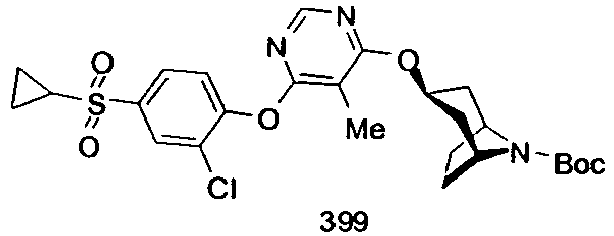
- Using the method described in Example 158 and substituting compound 145A for compound 144A, compound 399 was prepared. LCMS (M+H)+= 550.3
-

- Using the method described in Example 157 and substituting compound 399 for compound 393, compound 400 was prepared. LCMS (M+H)+= 536.3
-

- Using the method described in Example 157 and substituting compound 398 for compound 393, compound 401 was prepared. LCMS (M+H)+= 536.3
-

- Using the method described in Example 161, substituting compound 161A for compound 1B, compound 402 was prepared. LCMS (M+H)+= 549.3
-

- Using the method described in Example 160, substituting compound 398 for compound 395, compound 403 was prepared. LCMS (M+H)+= 554.3
-

- Using the method described in Example 157, substituting compound 402 for compound 393, compound 404 was prepared. LCMS (M+H)+= 535.3
-

- Using the method described in Example 160, substituting compound 402 for compound 395, compound 405 was prepared. LCMS (M+H)+= 553.3
-

- Using the method described in Example 158, substituting compound 145A for compound 144A and substituting compound 161A for compound 1B, compound 406 was prepared. LCMS (M+H)+= 566.3
-

- Using the method described in Example 156, substituting compound 146A for compound 144A, compound 407 was prepared. LCMS (M+H)+= 549.3
-

- Using the method described in Example 156, substituting compound 146A for compound 144A and substituting compound 161A for 1B, compound 408 was prepared. LCMS (M+H)+= 565.3
-

- Using the method described in Example 160, substituting compound 399 for compound 395, compound 409 was prepared. LCMS (M+H)+= 554.3
-

- Using the method described in Example 157, substituting compound 407 for compound 393, compound 410 was prepared. LCMS (M+H)+= 535.3
-

- Using the method described in Example 157, substituting compound 408 for compound 393, compound 411 was prepared. LCMS (M+H)+= 551.3
-

- Using the method described in Example 157, substituting compound 406 for compound 393, compound 412 was prepared. LCMS (M+H)+= 552.3
-

- Using the method described in Example 158, substituting compound 147A for compound 144A, compound 413 was prepared. LCMS (M+H)+= 516.3
-

- Using the method described in Example 160, substituting compound 407 for compound 395, compound 414 was prepared. LCMS (M+H)+= 553.3
-

- Using the method described in Example 160, substituting compound 413 for compound 395, compound 415 was prepared. LCMS (M+H)+= 520.3
-

- Using the method described in Example 157, substituting compound 413 for compound 393, compound 416 was prepared. LCMS (M+H)+= 502.3.
-

- Using the method described in Example 156, substituting compound 148A for the starting material in step A, compound 180A was prepared. Using the method described in Example 157, substituting compound 180A for compound 393, compound 417 was prepared. LCMS (M+H)+ = 501.3
-

- Using the method described in Example 160, substituting compound 180A for compound 395, compound 418 was prepared. LCMS (M+H)+ = 519.3
-

- Using the method described in Example 158, substituting compound 149A for compound 144A, compound 182A was prepared. Using the method described in Example 157, substituting compound 182A for compound 393, compound 419 was prepared. LCMS (M+H)+ = 532.3
-

- Using the method described in Example 160, substituting compound 182A for compound 395, compound 420 was prepared. LCMS (M+H)+ = 550.3
-

- Using the method described in Example 158, substituting compound 150A for compound 144A, compound 184A was prepared. Using the method described in Example 160, substituting compound 184A for compound 395, compound 421 was prepared. LCMS (M+H)+ = 534.3
-

- Using the method described in Example 157, substituting compound 184A for compound 393, compound 422 was prepared. LCMS (M+H)+ = 516.3
-

- Using the method described in Example 156, Step B, substituting compound 151A for compound 143A, compound 187A was prepared. Using the method described in Example 157, substituting compound 187A for compound 393, compound 424 was prepared. LCMS (M+H)+ = 515.3
-

- Using the method described in Example 157, Step A, substituting compound 399 for compound 393, compound 188A was prepared. To a solution of 188A (67 mg, 0.15 mmol) and TEA (50µL, 0.36 mmol) in DCM (0.7 mL) was added compound 188B (31 mg, 0.15 mmol, prepared as described in
WO 05/14577 to Zhu et al - Example 190
-

- To a solution of 1,4-anhdyroerythritol (5.0g, 48 mmoL) in H2O (60 mL) was added NaIO4 (5.1g, 24 mmol). The solution was allowed to stir overnight at room temperature. To the solution was added MeCN (80 mL) and the solution was stirred for 30 minutes. The white precipitate was removed by filtration and the filtrate was concentrated in vacuo to remove the MeCN. To the aqueous layer 1,3-acetonedicarboxylic acid (7.0g, 48 mmol) benzylamine (6.1 mL, 52 mmol), concentrated HCl (2.5 mL) were added and the solution was stirred at room temperature for 1h and at 50°C for 2h. Cooled to 0°C, added 1 m NaOH to a pH ~10 and extracted with EtOAc and DCM. The organic layer was dried (MgSO4) and concentrated in vacuo. The residue was purified using a silica gel cartridge (eluting with EtOAc in Hexanes 30%-100%) to provide compound 190A (3.2g, 29%).
- To a solution of compound 190A (1.5g, 6.5 mmol) in MeOH (20 mL) was added NaBH4 (320 mg, 8.4 mmol) and the solution was stirred at room temperature for 10h. Added H2O (100 mL), extracted with EtOAc, dried the organic layer (MgSO4), and concentrated in vacuo to provide compound 190B (1.4g, 98%).
- Using the method described in Example 156, Step A and usigcompound 190B as the starting material, compound 190C was prepared.
- Compound 427 was prepared by reacting compound 190C with compound 145A according to the method described in Example 158. LCMS (M+H)+ = 556.3
-

- Using the method described in Example 158, substituting compound 186D for compound 34A, compound 428 was prepared. LCMS (M+H)+ = 536.3
-

- Using the method described in Example 157, Step A and substituting compound 395 for compound 393, compound 192A was prepared. Using the method described in Example 33, substituting compound 37A for compound 33A, compound 429 was prepared. LCMS (M+H)+ = 532.3
-

- Using the method described in Example 188 and substituting compound 157A for compound 188A, compound 430 was prepared. LCMS (M+H)+ = 531.3
-

- Using the method described in Example 188, and substituting compound 194A (prepared as described in
WO 05/14577 to Zhu et. al. -

- Using the method described in Example 188, substituting compound 195A (prepared as described in
WO 05/14577 to Zhu et. al. -

- Using the method described in Example 188, substituting compound 157A for 188A and substituting compound 194A for compound 188B, compound 439 was prepared. LCMS (M+H)+ = 531.3
-

- Using the method described in Example 160 and substituting methanesulfonyl chloride for cyclpropylsulfonyl chloride, compound 440 was prepared. LCMS (M+H)+ = 512.3
-

- Using the method described in Example 160 and substituting ethylsulfonyl chloride for cyclpropylsulfonyl chloride, compound 441 was prepared. LCMS (M+H)+ = 526.3
-

- Using the method described in Example 160 and substituting 2-methylpropane-1-sulfonyl chloride for cyclpropylsulfonyl chloride, compound 442 was prepared. LCMS (M+H)+ = 554.3
-

- Using the method described in Example 160 and substituting neopentyl chloride for cyclpropylsulfonyl chloride, compound 444 was prepared. LCMS (M+H)+ = 548.3
-

- To a solution of compound 427 (100 mg, 0.18 mmol) in EtOAc (5 mL) was added 10% Pd/C (100 mg) and the reaction vessel was evacuated and re-filled with H2 from a balloon (3x). The reaction was stirred for 16h. Reaction was filtered through a pad of celite and concentrated in vacuo to provide compound 208A (70 mg, 84%).
- Using the method described in Example 157, substituting compound 208A for compound 157A, compound 445 was prepared. LCMS (M+H)+ = 552.3
-

- Using the method described in Example 195, substituting compound 157A for compound 188A, compound 445 was prepared. LCMS (M+H)+ = 534.3
-

- Using the method described in Example 158, substituting compound 190C for compound 34A, compound 447 was prepared. LCMS (M+H)+ = 540.3
-
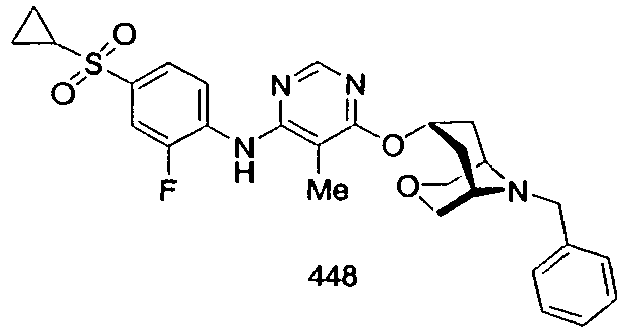
- Using the method described in Example 155, Step B, substituting compound 190C for compound 34A, compound 448 was prepared. LCMS (M+H)+ = 539.3
-

- Using the method described in Example 208, Step A, substituting compound 448 for compound 427, compound 212A was prepared.
- Using the method described in Example 157, substituting compound 212A for compound 157A, compound 449 was prepared. LCMS (M+H)+ = 535.3
-

- Using the method described in Example 195, substituting compound 212A for compound 188A, compound 451 was prepared. LCMS (M+H)+ = 561.3
-

- Using the method described in Example 194, substituting compound 212A for compound 188A, compound 452 was prepared. LCMS (M+H)+ = 547.3
-

- To a solution of compound 212A (45 mg, 0.10 mmol) and K2CO3 (21 mg, 0.15 mmol) in DMF (1 mL) was added 1-bromo-3,3-dimethylbutan-2-one (16µL, 0.12 mmol) and the solution was stirred for 6h at room temperature. The reaction was concentrated in vacuo and purified by preparative thin layer chromatography using (50%EtOAc-Hexanes) to provide compound 453 (23 mg, 42%). LCMS (M+H)+ = 547.3
-

- Using the method described in Example 160, substituting compound 406 for compound 395, compound 454 was prepared. LCMS (M+H)+ = 570.3
-

- Using the method described in Example 160, substituting compound 399 for compound 395 and substituting 2-methylpropane-1-sulfonyl chloride for cyclpropylsulfonyl chloride, compound 455 was prepared. LCMS (M+H)+ = 570.3
-

- Using the method described in Example 156, Step B and substituting compound 152A for compound 143A, compound 457 was prepared. LCMS (M+H)+ = 530.3
-

- Using the method described in Example 156, Step B and substituting compound 152A for compound 143A and compound 161A for compound 34A, compound 458 was prepared. LCMS (M+H)+ = 546.3
-

- Using the method described in Example 157 and substituting compound 458 for compound 393, compound 459 was prepared. LCMS (M+H)+ = 532.3
-

- Using the method described in Example 157, substituting compound 457 for compound 393, compound 460 was prepared. LCMS (M+H)+ = 516.3
-

- Using the method described in Example 160 and substituting compound 458 for compound 395, compound 461 was prepared. LCMS (M+H)+ = 550.3
-

- Using the method described in Example 160 and substituting compound 457 for compound 395, compound 462 was prepared. LCMS (M+H)+ = 534.3
-

- Using the method described in Example 158 and substituting compound 153B for compound 144A, compound 463 was prepared. LCMS (M+H)+ = 531.3
-

- Using the method described in Example 157, substituting compound 463 for compound 393, compound 464 was prepared. LCMS (M+H)+ = 517.3
-

- Using the method described in Example 160 and substituting compound 463 for compound 395, compound 465 was prepared. LCMS (M+H)+ = 535.3
-

- Using the method described in Example 158, substituting compound 161A for compound 34A, and substituting compound 153B for compound 144A, compound 466 was prepared. LCMS (M+H)+ = 547.3
-

- Using the method described in Example 158, substituting compound 154A for compound 144A, compound 467 was prepared. LCMS (M+H)+ = 517.3
-

- Using the method described in Example 158, substituting compound 161A for compound 34A, and substituting compound 154A for compound 144A, compound 468 was prepared. LCMS (M+H)+ = 533.3
-

- Using the method described in Example 157, substituting compound 466 for compound 393, compound 469 was prepared. LCMS (M+H)+ = 533.3
-

- Using the method described in Example 157, substituting compound 467 for compound 393, compound 470 was prepared. LCMS (M+H)+ = 503.3
-

- Using the method described in Example 157, substituting compound 468 for compound 393, compound 471 was prepared. LCMS (M+H)+ = 519.3
-

- Using the method described in Example 160 and substituting compound 466 for compound 395, compound 472 was prepared. LCMS (M+H)+ = 551.3
-

- Using the method described in Example 160 and substituting compound 467 for compound 395, compound 473 was prepared. LCMS (M+H)+ = 521.3
-

- Using the method described in Example 160 and substituting compound 468 for compound 393, compound 474 was prepared. LCMS (M+H)+ = 537.3
-

- Using the method described in Example 156, Step B and substituting compound 155A for compound 143A, compound 475 was prepared. LCMS (M+H)+ = 516.3
-

- Using the method described in Example 157, substituting compound 475 for compound 393, compound 476 was prepared. LCMS (M+H)+ = 502.3
-

- Using the method described in Example 160 and substituting compound 475 for compound 395, compound 477 was prepared. LCMS (M+H)+ = 520.3
-

- Using the method described in Example 156, Step B, substituting compound 155A for compound 143A and compound 161A for compound 1B, compound 241A was prepared.
- Using the method described in Example 157 and substituting compound 241A for compound 393, compound 478 was prepared. LCMS (M+H)+ = 518.3
-

- Using the method described in Example 160 and substituting compound 463 for compound 395 and substituting 2-methylpropane-1-sulfonyl chloride for cyclpropylsulfonyl chloride, compound 479 was prepared. LCMS (M+H)+ = 551.3
-
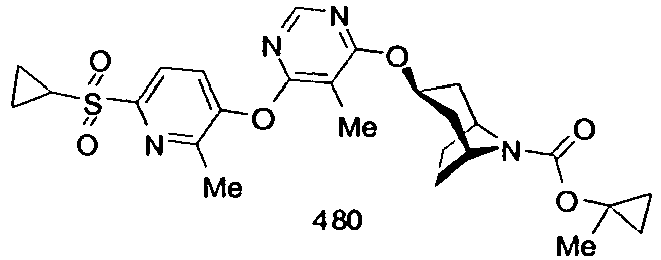
- Using the method described in Example 157, Step A, substituting compound 463 for compound 393, followed immediately by the method described in Example 194, compound 480 was prepared. LCMS (M+H)+ = 529.3
-
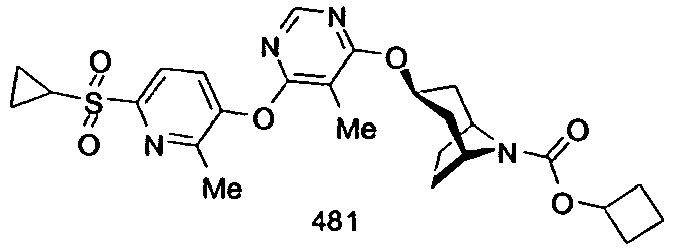
- Using the method described in Example 157, Step A, substituting compound 463 for compound 393, followed immediately by the method described in Example 188, compound 481 was prepared. LCMS (M+H)+ = 529.3
-

- Using the method described in Example 156, Step B, substituting compound 190C for compound 34A, and substituting 2-chloro-4-cyanoaniline for compound 143A, compound 482 was prepared. LCMS (M+H)+ = 476.3
-

- Using the method described in Example 156, Step B, substituting compound 190C for compound 34A, and substituting 2-fluoro-4-methylsulfonylaniline for compound 143A, compound 483 was prepared. LCMS (M+H)+ = 513.3
-

- To a cold suspension of sodium methoxide (30% solution in methanol) (1.46g, 80.83 mmol) in methanol (∼36 mL) at 5 °C was added formamidine hydrochloride (1.36 g, 16.84 mmol) and stirred for 10 minutes. This was followed by the addition of diethyl fluoromalonate (3.0g, 16.84 mmol) and the resulting reaction mixture was stirred overnight at room temperature. The reaction mixture was concentrated in vacuo to remove methanol. The solid obtained was dissolved in ice cold water (∼100 mL) and acidified to pH = 7. The white precipitate obtained was filtered, washed with water and dried to get the product 247A (1.78 g, 81%).
- Compound 247A (1.78g, 13.07 mmol) was dissolved in toluene (25 mL) and triethylamine was added to it and the mixture was heated to near refluxing. POCl3 dissolved in toluene (4 mL) was added to the mixture slowly and the resulting mixture was refluxed overnight at 110°C. The reaction mixture was poured over crushed ice, extracted 2 times with toluene and the organic layers were separated. Combined organic layers were washed with saturated NaHCO3 solution and then with brine. The organic layer was dried over anhydrous MgSO4, filtered, concentrated in vacuo to get the product 247B (0.74g, 32.5%).
- To a stirred solution ofNaH (0.44g, 11.08 mmol) in tetrahydrofuran (10 mL) was added a solution of 4-amino-3-chloro benzonitrile (0.32g, 2.08 mmol) in tetrahydrofuran (15 mL) and stirred for 30 minutes. After 30 minutes, the reaction mixture was cooled to 0 °C and a solution of starting material 247B (0.37g, 2.22 mmol) in tetrahydrofuran (15 mL) was added to it and stirred at 0 °C for 30 minutes and then overnight at room temperature. The reaction was quenched with water, extracted 2 times with ethyl acetate. The combined organic layer was dried over anhydrous Na2SO4, filtered, concentrated in vacuo, and purified using silica gel column chromatography using 1% (7N NH3 in MeOH) - 99% CH2Cl2 as a solvent system and the product 247C (0.3g, 48%) was isolated.
- The exo-alcohol 1A (0.1 1g, 0.5 mmol) was dissolved in tetrahydrofuran (3 mL) and KDBut (1 mL, 1 M in THF, 1 mmol) was added to it followed by the starting material 247C (0.14g, 0.5 mmol) dissolved in tetrahydrofuran (5 mL) and the resulting mixture was refluxed at 84 °C overnight. The reaction was quenched with water and extracted 2 times with ethyl acetate. Combined organic layers were dried over anhydrous Na2SO4, filtered, concentrated in vacuo, purified using preparative TLC using 100% CH2Cl2 as mobile phase and the product, 484 (0.075g, 32%) was isolated.
- Preparation of Compound 485

- Compound 484 (0.065g, 0.14 mmol) was added to 4N HCl in dioxane (1 mL) and stirred for an hour at room temperature. The mixture was concentrated in vacuo to remove excess acid in vacuo to get the amine hydrochloride salt, 248A (0.05g, 96%).
- Compound 248A (0.012g, 0.03 mmol) was dissolved in CH2Cl2 (2 mL) and triethylamine (0.01 mL, 0.09 mmol) was added to it and stirred for 10 minutes. This was followed by the addition of isopropyl chloroformate (0.03 mL, 0.03 mmol) and the resulting mixture was stirred for 1 hour at room temperature. The reaction was quenched with saturated ammonium chloride solution and extracted 2 times with CH2Cl2. Combined organic layers were dried over anhydrous Na2SO4, filtered, concentrated in vacuo, purified using preparative TLC using 20% acetone - 80% hexane as mobile phase and the product, 485 (0.01g, 74.6%) was isolated.
-

- Compound 248A (0.012g, 0.03 mmol) was dissolved in CH2Cl2 (2 mL), triethylamine (0.01 mL, 0.09 mmol) was added to it and stirred for 10 minutes. This was followed by the addition of cyclopropyl sulfonyl chloride (0.003ml, 0.03 mmol) and the resulting mixture was stirred for 1 hour at room temperature. The reaction was quenched with saturated ammonium chloride solution and extracted 2 times with CH2Cl2. Combined organic layer was dried over anhydrous Na2SO4, filtered, concentrated in vacuo, purified using preparative TLC using 27% acetone - 73% hexane followed by 45% EtOAc - 55% hexane and finally with CH2Cl2 (containing 4 drops of 7N NH3 in MeOH) as mobile phase and the product, 486 (0.007g, 46.7%) was isolated.
-

- Compound 487 was synthesized from the endo-alcohol 2A and compound 247C using the method described in Example 247, Step D.
- Compound 488 was synthesized from compound 487 using the method described in Example 248.
- Preparation of Compounds 489 and 490

- Compounds 489 and 490 were synthesized by coupling compounds 54B and 247C according to the method described in Example 247, Step D.
- Compounds 489 and 490 were subsequently converted to compounds 491 and 492 by first removing their BOC protecting group according to the method described in Example 8, then reacting the resulting amines according to the method described in Example 132.
Cpd. No. Structure LCMS (M+H) 491 
488 492 
488 - The following compounds of the present invention were made using the above method and substituting the appropriate reactants and reagents:
Cpd. No. Structure LCMS (M+H) 504 
504.6 505 
467.9 506 
483.9 -

- Compound 255C was prepared from compound 255A (prepared according to the method described in International Publication No.
WO 2006/035303 ) using the method described in Example 54. - Compound 524 was prepared from compound 255C using the method described in Example 56.
- The following table sets forth compounds of the present invention which were made using the method described above and substituting the appropriate reactants and reagents.
Cpd. No. Structure LCMS (M+H) 525* 
520.6 526* 
484.0 527* 
532.6 528* 
518.6 529* 
518.6 530* 
506.6 531* 
534.6 532* 
524.6 533* 
496.0 534* 
482.0 535* 
482.0 536* 
470.0 537* 
498.0 538* 
488.0 -

- Using the method described in Example 158 substituting 2-fluoro-4-methylsulfonylphenol for 4-(cyclopropylsulfonyl)-2-fluorophenol and using the method described in Example 160, compound 546 was prepared. LCMS (M+H)+ = 512.1.
-

- Compound 215 was reacted with compound 317C using the method described in Example 75 to provide compound 548 as a white gum. MS: m/e 507.
- In similar fashion, the appropriate Boc derivatives were converted to the following compounds of the present invention:
Cpd. No. Structure MS (MH+) 549 
533 550 
491 551 
491 -

- A solution of compound 264A (97 mg, 0.2 mmol, prepared starting from 66A using the method described in Examples 34 and 36) and lithium iodide (420 mg, 3.2 mmol) in o-picoline (2 mL) was heated in a microwave reactor for ten minutes set on fixed hold time, at high absorbance, at a temperature of 200 °C. The reaction was then concentrated in vacuo, the resulting residue was taken up in dichloromethane and the organic phase was washed with 10% aqueous HCl, dried over MgSO4, filtered and concentrated in vacuo to provide compound 558 (86 mg, 90 %) as a tan solid which was used without further purification. LCMS: 476.3 (MH+).
-

- 4-(Trifluoromethylsulfonyl)aniline was chlorinated according to the method described in Example 72. Extractive workup (hexane) provided compound 268A as a yellow solid.
-

- 2-Fluoro-4-iodoaniline (3.00 g, 12.7 mmol), 6-methylpyridazine-2-one (1.74 g, 15.8 mmol), 8-hydroxyquinoline (0.276 g, 1.9 mmol), CuI (0.362 g, 1.9 mmol) and K2CO3 (1.92 g, 13.9 mmol) were combined in DMSO (12 mL) and the resulting reaction was heated to 130 °C and allowed to stir at this temperature for 20 hours. The reaction mixture was cooled to room temperature, then diluted with EtOAc and water. Charcoal was added to the resulting solution and the mixture was filtered. The filtrate was transferred to a separatory funnel and the organic phase was collected and washed with brine, dried (MgSO4), filtered and concentrated in vacuo. The resulting residue was purified using flash column chromatography on silica to provide compound 269A as a yellow solid.
-

- Boc-nortropinone (2.00 g, 8.9 mmol) and toluenesulfonymethyl isocyanide (11.6 mmol) were combined in 1,2-dimethoxyethane (30 mL) and ethanol (1.0 mL) and the resulting solution was cooled to 0 °C. To the cooled solution was added potassium tert-butoxide (2.39 g, 2.13 mmol) in portions, while maintaining the reaction temperature below 10°C. The mixture was stirred for 1 hour after addition was complete, then the cold bath was removed and the reaction was allowed to stir for an additional 90 hours. The reaction mixture was then filtered and the collected solid was washed with ethyl acetate. The combined filtrates were concentrated in vacuo to provide compound 270A as a yellow oil.
- Compound 270A (0.88g, 3.7mmol) was taken up in a mixture of MeOH (5 mL) and 2.0M MeNH2 in MeOH (20 mL), and to the resulting solution was added 10% Pd/C. The mixture was hydrogenated at 50 psi for 120 hours, then filtered through a short pad of Celite. The filtrate was concentrated in vacuo to provide compound 270B as a white solid, which was used without further purification.
-

- Compound 271A was reacted according to the method described in Example 61 to provide compound 271B as a yellow oil after purification via flash chromatography on silica gel.
-

- 4-Amino-3-fluorobenzonitrile was chlorinated according to the method described in Example 72 and substituting acetic acid for DMF as solvent to provide compound 272A as an off-white solid.
-

- Bromocyclopropane (2.50 g, 20.8 mmol), benzyl alcohol (4.50 g, 41.7 mmol) and NaO-tBu (4.00 g, 41.7 mmol) were taken up in dioxane (20 mL) and the resulting reaction was heated to 100 °C and allowed to stir at this temperature for 3 hours. The reaction mixture was then allowed to cool to room temperature and was concentrated in vacuo and the residue obtained was purified using flash column chromatography on silica (0-20% CH2Cl2/hexane) to provide compound 273A as an oil.
- To a solution of compound 273A (0.60g, 4.1mmol) in ethyl acetate (5 mL) was added 10% Pd/C (0.30 g). The mixture was hydrogenated at 50 psi for 70 hours, then was filtered and the collected catalyst was washed with MeCN (2 x 10 mL). The filtrate, which contains compound 273B, was then used in the next step.
- To the solution from Step B, which contains compound 273B, was added disuccinimidyl carbonate (2.11g, 8.2 mmol) and Et3N (2.4 mL, 17 mmol) and the resulting reaction was allowed to stir for 3 hours at room temperature. The reaction mixture was then partitioned between ethyl acetate and saturated aqueous NaHCO3. The organic phase was dried (MgSO4), filtered and concentrated in vacuo to provide compound 273C as a yellow oil.
- The ability of illustrative compounds of the invention to activate GPR119 and stimulate increases in cAMP levels was determined using the LANCE™ cAMP kit (Perkin Elmer). HEK293 cells expressing human GPR119 were maintained in culture flasks at 37 °C/5% CO2 in DMEM containing 10% fetal bovine serum, 100 U/ml Pen/Strep, and 0.5 mg/ml geneticin. The media was changed to Optimem and cells were incubated overnight at 37 °C /5% CO2. The Optimem was then aspirated and the cells were removed from the flasks using room temperature Hank's balanced saline solution (HBSS). The cells were pelleted using centrifugation (1300 rpm, 7 minutes, room temperature), then resuspended in stimulation buffer (HBSS, 0.1% BSA, 5 mM HEPES, 15 µM RO-20) at 2.5 x 10⁶ cells/mL. Alexa Fluor 647-anti cAMP antibody (1:100) was then added to the cell suspension and incubated for 30 minutes. A representative Bicyclic Heterocycle Derivative (6 µl at 2X concentration) in stimulation buffer containing 2% DMSO were then added to white 384 well Matrix plates. Cell suspension mix (6 µl) was added to each well and incubated with the Bicyclic Heterocycle Derivative for 30 minutes. A cAMP standard curve was also created in each assay according to the kit protocol. Standard concentrations of cAMP in stimulation buffer (6 µl) were added to white 384 well plates. Subsequently, 6 µl of 1:100 anti-cAMP antibody was added to each well. Following the 30 minute incubation period, 12 µl of detection mix (included in kit) was added to all wells and incubated for 2-3 hours at room temperature. Fluorescence was detected on the plates using an Envision instrument. The level of cAMP in each well is determined by extrapolation from the cAMP standard curve.
- Using this assay, EC50 values for various illustrative Bicyclic Heterocycle Derivatives pf the present invention were calculated and range from about I nM to about 20 µM.
- Male C57Bl/6NCrl mice (6-8 week old) were fasted overnight and randomly dosed with either vehicle (20% hydroxypropyl-β-cyclodextrin) or a representative compound of the invention (at 3, 10 or 30 mg/kg) via oral gavage (n=8 mice/group). Glucose was administered to the animals 30 minutes post-dosing (3 g/kg p.o.). Blood glucose was measured prior to administration of test compound and glucose, and at 20 minutes after glucose administration using a hand-held glucometer (Ascensia Elite, Bayer).
- Using this protocol, the effects of various Bicyclic Heterocycle Derivatives of the present invention were measured and indicate that the Bicyclic Heterocycle Derivatives of the present invention are effective in lowering blood glucose levels after glucose challenge.
- Four week old male C57Bl/6NCrl mice can be used to generate a nongenetic model of type 2 diabetes mellitus as previously described (Metabolism 47(6): 663-668, 1998). Briefly, mice are made insulin resistant by high fat feeding (60% of kcal as fat) and hyperglycemia is then induced using a low dose of streptozotocin (100 mg/kg i.p.). Eight weeks after streptozotocin administration, the diabetic mice are placed into one of 4 groups (n = 13/gp) receiving the following treatments: vehicle (20% hydroxypropyl-β-cyclodextrin p.o.), compound to be tested (30 mg/kg p.o.), glipizide (20 mg/kg p.o.) or exendin-4 (10 ug/kg i.p.). Mice are dosed once daily for 13 consecutive days, and blood glucose levels are measured daily using, for example, a hand held glucometer, to determine the effects of the test compound(s) on glucose levels of the diabetic animals.
- The Bicyclic Heterocycle Derivatives are useful in human and veterinary medicine for treating or preventing a Condition in a patient. In accordance with the invention, the Bicyclic Heterocycle Derivatives can be administered to a patient in need of treatment or prevention of a Condition.
- The Bicyclic Heterocycle Derivatives can also be useful for treating obesity or an obesity-related disorder.
- Accordingly, in one embodiment, the invention provides treating obesity or an obesity-related disorder in a patient, wherein the treatment comprises administering to the patient an effective amount of one or more Bicyclic Heterocycle Derivatives, or a pharmaceutically acceptable salt, solvate, ester, prodrug or stereoisomer thereof.
- The Bicyclic Heterocycle Derivatives are useful for treating diabetes in a patient. Accordingly, in one embodiment, the present invention provides treating diabetes in a patient, comprising administering to the patient an effective amount of one or more Bicyclic Heterocycle Derivatives.
- Examples of diabetes treatable or preventable using the Bicyclic Heterocycle Derivatives include, but are not limted to, type I diabetes (insulin-dependent diabetes mellitus), type II diabetes (non-insulin dependent diabetes mellitus), gestational diabetes, autoimmune diabetes, insulinopathies, idiopathic type I diabetes (Type 1b), latent autoimmumne diabetes in adults, early-onset type 2 diabetes (EOD), youth-onset atypical diabetes (YOAD), maturity onset diabetes of the young (MODY), malnutrition-related diabetes, diabetes due to pancreatic disease, diabetes associated with other endocrine diseases (such as Cushing's Syndrome, acromegaly, pheochromocytoma, glucagonoma, primary aldosteronism or somatostatinoma), type A insulin resistance syndrome, type B insulin resistance syndrome, lipatrophic diabetes, diabetes induced by β-cell toxins, and diabetes induced by drug therapy (such as diabetes induced by antipsychotic agents).
- In one embodiment, the diabetes is type I diabetes.
- In another embodiment, the diabetes is type II diabetes.
- The Bicyclic Heterocycle Derivatives are also useful for treating a diabetic complication in a patient. Accordingly, in one embodiment, the present invention provides treatment of a diabetic complication in a patient, comprising administering to the patient an effective amount of one or more Bicyclic Heterocycle Derivatives.
- Examples of diabetic complications treatable or preventable using the Bicyclic Heterocycle Derivatives include, but are not limted to, diabetic cataract, glaucoma, retinopathy, aneuropathy (such as diabetic neuropathy, polyneuropathy, mononeuropathy, autonomic neuropathy, microaluminuria and progressive diabetic neuropathyl), nephropathy, gangrene of the feet, immune-complex vasculitis, systemic lupsus erythematosus (SLE), atherosclerotic coronary arterial disease, peripheral arterial disease, nonketotic hyperglycemic-hyperosmolar coma, foot ulcers, joint problems, a skin or mucous membrane complication (such as an infection, a shin spot, a candidal infection or necrobiosis lipoidica diabeticorumobesity), hyperlipidemia, cataract, hypertension, syndrome of insulin resistance, coronary artery disease, a fungal infection, a bacterial infection, and cardiomyopathy.
- The Bicyclic Heterocycle Derivatives can also be useful for treating a metabolic disorder. Examples of metabolic disorders treatable include, but are not limited to, metabolic syndrome (also known as "Syndrome X"), impaired glucose tolerance, impaired fasting glucose, hypercholesterolemia, hyperlipidemia, hypertriglyceridemia, low HDL levels, hypertension, phenylketonuria, post-prandial lipidemia, a glycogen-storage disease, Gaucher's Disease, Tay-Sachs Disease, Niemann-Pick Disease, ketosis and acidosis.
- Accordingly, in one embodiment, the invention provides treatment of a metabolic disorder in a patient, wherein the treatment comprises administering to the patient an effective amount of one or more Bicyclic Heterocycle Derivatives, or a pharmaceutically acceptable salt, solvate, ester, prodrug or stereoisomer thereof.
- In one embodiment, the metabolic disorder is hypercholesterolemia.
- In another embodiment, the metabolic disorder is hyperlipidemia.
- In another embodiment, the metabolic disorder is hypertriglyceridemia.
- In still another embodiment, the metabolic disorder is metabolic syndrome.
- In a further embodiment, the metabolic disorder is low HDL levels.
- The Bicyclic Heterocycle Derivatives are useful for treating or preventing a cardiovascular disease in a patient.
- Accordingly, in one embodiment, the present invention provides a method for treating a cardiovascular disease in a patient, comprising administering to the patient an effective amount of one or more Bicyclic Heterocycle Derivatives.
- Illustrative examples of cardiovascular diseases treatable or preventable using the present methods, include, but are not limited to atherosclerosis, congestive heart failure, cardiac arrhythmia, myocardial infarction, atrial fibrillation, atrial flutter, circulatory shock, left ventricular hypertrophy, ventricular tachycardia, supraventricular tachycardia, coronary artery disease, angina, infective endocarditis, non-infective endocarditis, cardiomyopathy, peripheral artery disease, Reynaud's phenomenon, deep venous thrombosis, aortic stenosis, mitral stenosis, pulmonic stenosis and tricuspid stenosis.
- In one embodiment, the cardiovascular disease is atherosclerosis.
- In another embodiment, the cardiovascular disease is congestive heart failure.
- In another embodiment, the cardiovascular disease is coronary artery disease.
- In one embodiment, the present invention provides treating a condition in a patient, the treatment comprising administering to the patient one or more Bicyclic Heterocycle Derivatives, or a pharmaceutically acceptable salt, solvate, ester, prodrug or stereoisomer thereof and at least one additional therapeutic agent that is not a Bicyclic Heterocycle Derivative, wherein the amounts administered are together effective to treat or prevent a Condition.
- Non-limiting examples of additional therapeutic agents useful in the treatment or prevention of a Condition include, anti-obesity agents, antidiabetic agents, any agent useful for treating metabolic syndrome, any agent useful for treating a cardiovascular disease, cholesterol biosynthesis inhibitors, cholesterol absorption inhibitors, bile acid sequestrants, probucol derivatives, IBAT inhibitors, nicotinic acid receptor (NAR) agonists, ACAT inhibitors, cholesteryl ester transfer proten (CETP) inhibitors, low-denisity lipoprotein (LDL) activators, fish oil, water-soluble fibers, plant sterols, plant stanols, fatty acid esters of plant stands, or any combination of two or more of these additional therapeutic agents.
- Non-limiting examples of anti-obesity agents useful in the treatment of a condition include CB1 antagonists or inverse agonists such as rimonabant, neuropeptide Y antagonists, MCR4 agonists, MCH receptor antagonists, histamine H3 receptor antagonists or inverse agonists, metabolic rate enhancers, nutrient absorption inhibitors, leptin, appetite suppressants and lipase inhibitors.
- Non-limiting examples of appetite suppressant agents useful in the treatment or preventon of a condition include cannabinoid receptor 1 (CB1) antagonists or inverse agonists (e.g., rimonabant); Neuropeptide Y (NPY1, NPY2, NPY4 and NPY5) antagonists; metabotropic glutamate subtype 5 receptor (mGluR5) antagonists (e.g., 2-methyl-6-(phenylethynyl)-pyridine and 3[(2-methyl-1,4-thiazol-4-yl)ethynyl]pyridine); melanin-concentrating hormone receptor (MCH1R and MCH2R) antagonists; melanocortin receptor agonists (e.g., Melanotan-II and Mc4r agonists); serotonin uptake inhibitors (e.g., dexfenfluramine and fluoxetine); serotonin (5HT) transport inhibitors (e.g., paroxetine, fluoxetine, fenfluramine, fluvoxamine, sertaline and imipramine); norepinephrine (NE) transporter inhibitors (e.g., desipramine, talsupram and nomifensine); ghrelin antagonists; leptin or derivatives thereof; opioid antagonists (e.g., nalmefene, 3-methoxynaltrexone, naloxone and nalterxone); orexin antagonists; bombesin receptor subtype 3 (BRS3) agonists; Cholecystokinin-A (CCK-A) agonists; ciliary neurotrophic factor (CNTF) or derivatives thereof (e.g., butabindide and axokine); monoamine reuptake inhibitors (e.g., sibutramine); glucagon-like peptide 1 (GLP-1) agonists; topiramate; and phytopharm compound 57.
- Non-limiting examples of metabolic rate enhancers useful in the treatment or prevention of a Condition include acetyl-CoA carboxylase-2 (ACC2) inhibitors; beta adrenergic receptor 3 (β3) agonists; diacylglycerol acyltransferase inhibitors (DGAT1 and DGAT2); fatty acid synthase (FAS) inhibitors (e.g., Cerulenin); phosphodiesterase (PDE) inhibitors (e.g., theophylline, pentoxifylline, zaprinast, sildenafil, amrinone, milrinone, cilostamide, rolipram and cilomilast); thyroid hormone β agonists; uncoupling protein activators (UCP-1,2 or 3) (e.g., phytanic acid, 4-[(E)-2-(5,6,7,8-tetramethyl-2-naphthalenyl)-1-propenyl]benzoic acid and retinoic acid); acyl-estrogens (e.g., oleoyl-estrone); glucocorticoid antagonists; 11-beta hydroxy steroid dehydrogenase type 1 (11β HSD-1) inhibitors; melanocortin-3 receptor (Mc3r) agonists; and stearoyl-CoA desaturase-1 (SCD-1) compounds.
- Non-limiting examples of nutrient absorption inhibitors useful in the treatment or prevention of a condition include lipase inhibitors (e.g., orlistat, lipstatin, tetrahydrolipstatin, teasaponin and diethylumbelliferyl phosphate); fatty acid transporter inhibitors; dicarboxylate transporter inhibitors; glucose transporter inhibitors; and phosphate transporter inhibitors.
- Non-limiting examples of cholesterol biosynthesis inhibitors useful in the treatment or prevention of a condition include HMG-CoA reductase inhibitors, squalene synthase inhibitors, squalene epoxidase inhibitors, and mixtures thereof.
- Non-limiting examples of cholesterol absorption inhibitors useful in the treatment or prevention a condition include ezetimibe. In one embodiment, the cholesterol absorption inhibitor is ezetimibe.
- HMG-CoA reductase inhibitors useful in the treatment or prevention of a condition include, but are not limited to, statins such as lovastatin, pravastatin, fluvastatin, simvastatin, atorvastatin, cerivastatin, CI-981, resuvastatin, rivastatin, pitavastatin, rosuvastatin or L-659,699 ((E,E)-11-[3'R-(hydroxy-methyl)-4'-oxo-2'R-oxetanyl]-3,5,7R-trimethyl-2,4-undecadienoic acid).
- Squalene synthesis inhibitors useful in the treatment or prevention of a condition include, but are not limited to, squalene synthetase inhibitors; squalestatin 1; and squalene epoxidase inhibitors, such as NB-598 ((E)-N-ethyl-N-(6,6-dimethyl-2-hepten-4-ynyl)-3-[(3,3'-bithiophen-5-yl)methoxy]benzene-methanamine hydrochloride).
- Bile acid sequestrants useful in the treatment or prevention of a condition include, but are not limited to, cholestyramine (a styrene-divinylbenzene copolymer containing quaternary ammonium cationic groups capable of binding bile acids, such as QUESTRAN® or QUESTRAN LIGHT® cholestyramine which are available from Bristol-Myers Squibb), colestipol (a copolymer of diethylenetriamine and 1-chloro-2,3-epoxypropane, such as COLESTID® tablets which are available from Pharmacia), colesevelam hydrochloride (such as WelChol® Tablets (poly(allylamine hydrochloride) cross-linked with epichlorohydrin and alkylated with 1-bromodecane and (6-bromohexyl)-trimethylammonium bromide) which are available from Sankyo), water soluble derivatives such as 3,3-ioene, N-(cycloalkyl) alkylamines and poliglusam, insoluble quaternized polystyrenes, saponins and mixtures thereof. Suitable inorganic cholesterol sequestrants include bismuth salicylate plus montmorillonite clay, aluminum hydroxide and calcium carbonate antacids.
- Probucol derivatives useful in the treatment or prevention of a condition include, but are not limited to, AGI-1067 and others disclosed in
U.S. Patents Nos. 6,121,319 and6,147,250 . - IBAT inhibitors useful in the treatment or prevention of a Condition include, but are not limited to, benzothiepines such as therapeutic compounds comprising a 2,3,4,5-tetrahydro-1-benzothiepine 1,1-dioxide structure such as are disclosed in International Publication No.
WO 00/38727 - Nicotinic acid receptor agonists useful in the treatment or prevention of a condition include, but are not limited to, those having a pyridine-3-carboxylate structure or a pyrazine-2-carboxylate structure, including acid forms, salts, esters, zwitterions and tautomers, where available. Other examples of nicotinic acid receptor agonists useful in the present methods include nicotinic acid, niceritrol, nicofuranose and acipimox. An example of a suitable nicotinic acid product is NIASPAN® (niacin extended-release tablets) which are available from Kos Pharmaceuticals, Inc. (Cranbury, NJ). Further nicotinic acid receptor agonists useful in the present methods for treating or preventing a Condition include, but are not limited to, the compounds disclosed in
U.S. Patent Publication Nos. 2006/0264489 and2007/0066630 , andU.S. Patent Application No 11/771538 , each of which is incorporated herein by reference. - ACAT inhibitors useful in the treatment or prevention of a condition include, but are not limited to, avasimibe, HL-004, lecimibide and CL-277082 (N-(2,4-difluorophenyl)-N-[[4-(2,2-dimethylpropyl)phenyl]-methyl]-N-heptylurea). See P. Chang et al., "Current, New and Future Treatments in Dyslipidaemia and Atherosclerosis", Drugs 2000 Jul;60(1); 55-93, which is incorporated by reference herein.
- CETP inhibitors useful in the treatment or prevention of a condition include, but are not limited to, those disclosed in International Publication No.
WO 00/38721 U.S. Patent No. 6,147,090 , which are incorporated herein by reference. - LDL-receptor activators useful in the treatment or prevention a condition include, but are not limited to, include HOE-402, an imidazolidinyl-pyrimidine derivative that directly stimulates LDL receptor activity. See M. Huettinger et al., "Hypolipidemic activity of HOE-402 is Mediated by Stimulation of the LDL Receptor Pathway", Arterioscler. Thromb. 1993; 13:1005-12.
- Natural water-soluble fibers useful in the treatment or prevention of a condition include, but are not limited to, psyllium, guar, oat and pectin.
- Fatty acid esters of plant stanols useful in the treatment or prevention of a Condition include, but are not limited to, the sitostanol ester used in BENECOL® margarine.
- Non-limiting examples of antidiabetic agents useful in the treatment of a Condition include insulin sensitizers, β-glucosidase inhibitors, DPP-IV inhibitors, insulin secretagogues, hepatic glucose output lowering compounds, antihypertensive agents, sodium glucose uptake transporter 2 (SGLT-2) inhibitors, insulin and insulin-containing compositions, and anti-obesity agents as set forth above.
- In one embodiment, the antidiabetic agent is an insulin secretagogue. In one embodiment, the insulin secretagogue is a sulfonylurea.
- Non-limiting examples of sulfonylureas useful in the treatment of a condition include glipizide, tolbutamide, glyburide, glimepiride, chlorpropamide, acetohexamide, gliamilide, gliclazide, gliquidone, glibenclamide and tolazamide.
- In another embodiment, the insulin secretagogue is a meglitinide.
- Non-limiting examples of meglitinides useful in the treatment of a Condition include repaglinide, mitiglinide, and nateglinide.
- In still another embodiment, the insulin secretagogue is GLP-1 or a GLP-1 mimetic.
- Non-limiting examples of GLP-1 mimetics useful in the treatment of a condition include Byetta-Exanatide, Liraglutinide, CJC-1131 (ConjuChem, Exanatide-LAR (Amylin), BIM-51077 (Ipsen/LaRoche), ZP-10 (Zealand Pharmaceuticals), and compounds disclosed in International Publication No.
WO 00/07617 - Other non-limiting examples of insulin secretagogues useful in the treatment of a condition include exendin, GIP and secretin.
- In another embodiment, the antidiabetic agent is an insulin sensitizer.
- Non-limiting examples of insulin sensitizers useful in the treatment of a condition include PPAR activators or agonists, such as troglitazone, rosiglitazone, pioglitazone and englitazone; biguanidines such as metformin and phenformin; PTP-1B inhibitors; and glucokinase activators.
- In another embodiment, the antidiabetic agent is a β-Glucosidase inhibitor.
- Non-limiting examples of β-Glucosidase inhibitors useful the treatment of a condition include miglitol, acarbose, and voglibose.
- In another embodiment, the antidiabetic agent is an hepatic glucose output lowering agent.
- Non-limiting examples of hepatic glucose output lowering agents useful in the present methods include Glucophage and Glucophage XR.
- In yet another embodiment, the antidiabetic agent is insulin, including all formulations of insulin, such as long acting and short acting forms of insulin.
- Non-limiting examples of orally administrable insulin and insulin containing compositions include AL-401 from AutoImmune, and the compositions disclosed in
U.S. Patent Nos. 4,579,730 ;4,849,405 ;4,963,526 ;5,642,868 ;5,763,396 ;5,824,638 ;5,843,866 ;6,153,632 ;6,191,105 ; and International Publication No.WO 85/05029 - In another embodiment, the antidiabetic agent is a DPP-IV inhibitor.
- Non-limiting examples of DPP-IV inhibitors useful in the treatment of a condition include sitagliptin, saxagliptin (Januvia™, Merck), denagliptin, vildagliptin (Galvus™, Novartis), alogliptin, alogliptin benzoate, ABT-279 and ABT-341 (Abbott), ALS-2-0426 (Alantos), ARI-2243 (Arisaph), BI-A and BI-B (Boehringer Ingelheim), SYR-322 (Takeda), MP-513 (Mitsubishi), DP-893 (Pfizer),
RO-0730699 - In a further embodiment, the antidiabetic agent is a SGLT-2 inhibitor.
- Non-limiting examples of SGLT-2 inhibitors useful in the treatment of a condition include dapagliflozin and sergliflozin, AVE2268 (Sanofi-Aventis) and T-1095 (Tanabe Seiyaku).
- Non-limiting examples of antihypertensive agents useful in the treatment of a condition include β-blockers and calcium channel blockers (for example diltiazem, verapamil, nifedipine, amlopidine, and mybefradil), ACE inhibitors (for example captopril, lisinopril, enalapril, spirapril, ceranopril, zefenopril, fosinopril, cilazopril, and quinapril), AT-1 receptor antagonists (for example losartan, irbesartan, and valsartan), renin inhibitors and endothelin receptor antagonists (for example sitaxsentan).
- In one embodiment, the antidiabetic agent is an agent that slows or blocks the breakdown of starches and certain sugars.
- Non-limiting examples of antidiabetic agents that slow or block the breakdown of starches and certain sugars and are suitable for use in the compositions and methods of the present invention include alpha-glucosidase inhibitors and certain peptides for increasing insulin production. Alpha-glucosidase inhibitors help the body to lower blood sugar by delaying the digestion of ingested carbohydrates, thereby resulting in a smaller rise in blood glucose concentration following meals. Non-limiting examples of suitable alpha-glucosidase inhibitors include acarbose; miglitol; camiglibose; certain polyamines as disclosed in
WO 01/47528 WO 00/07617 - Other specific additional therapeutic agents useful in the treatment or prevention of a condition include, but are not limited to, rimonabant, 2-methyl-6-(phenylethynyl)-pyridine, 3[(2-methyl-1,4-thiazol-4-yl)ethynyl]pyridine, Melanotan-II, dexfenfluramine, fluoxetine, paroxetine, fenfluramine, fluvoxamine, sertaline, imipramine, desipramine, talsupram, nomifensine, leptin, nalmefene, 3-methoxynaltrexone, naloxone, nalterxone, butabindide, axokine, sibutramine, topiramate, phytopharm compound 57, Cerulenin, theophylline, pentoxifylline, zaprinast, sildenafil, amrinone, milrinone, cilostamide, rolipram, cilomilast, phytanic acid, 4-[(E)-2-(5,6,7,8-tetramethyl-2-naphthalenyl)-1-propenyl]benzoic acid, retinoic acid, oleoyl-estrone, orlistat, lipstatin, tetrahydrolipstatin, teasaponin and diethylumbelliferyl phosphate.
- In one embodiment, the present combination therapies for treating or preventing diabetes comprise administering a Bicyclic Heterocycle Derivative, an antidiabetic agent and/or an antiobesity agent.
- In another embodiment, the present combination therapies for treating or preventing diabetes comprise administering a Bicyclic Heterocycle Derivative and an antidiabetic agent.
- In another embodiment, the present combination therapies for treating or preventing diabetes comprise administering a Bicyclic Heterocycle Derivative and an anti-obesity agent.
- In one embodiment, the present combination therapies for treating or preventing obesity comprise administering a Bicyclic Heterocycle Derivative, an antidiabetic agent and/or an antiobesity agent.
- In another embodiment, the present combination therapies for treating or preventing obesity comprise administering a Bicyclic Heterocycle Derivative and an antidiabetic agent.
- In another embodiment, the present combination therapies for treating or preventing obesity comprise administering a Bicyclic Heterocycle Derivative and an anti-obesity agent.
- In one embodiment, the present combination therapies for treating or preventing metabolic syndrome comprise administering a Bicyclic Heterocycle Derivative and one or more additional therapeutic agents selected from: anti-obesity agents, antidiabetic agents, any agent useful for treating metabolic syndrome, any agent useful for treating a cardiovascular disease, cholesterol biosynthesis inhibitors, sterol absorption inhibitors, bile acid sequestrants, probucol derivatives, IBAT inhibitors, nicotinic acid receptor (NAR) agonists, ACAT inhibitors, cholesteryl ester transfer proten (CETP) inhibitors, low-denisity lipoprotein (LDL) activators, fish oil, water-soluble fibers, plant sterols, plant stanols and fatty acid esters of plant stanols.
- In one embodiment, the additional therapeutic agent is a cholesterol biosynthesis inhibitor. In another embodiment, the cholesterol biosynthesis inhibitor is a squalene synthetase inhibitor. In another embodiment, the cholesterol biosynthesis inhibitor is a squalene epoxidase inhibitor. In still another embodiment, the cholesterol biosynthesis inhibitor is an HMG-CoA reductase inhibitor. In another embodiment, the HMG-CoA reductase inhibitor is a statin. In yet another embodiment, the statin is lovastatin, pravastatin, simvastatin or atorvastatin.
- In one embodiment, the additional therapeutic agent is a cholesterol absorption inhibitor. In another embodiment, the cholesterol absorption inhibitor is ezetimibe.
- In one embodiment, the additional therapeutic agent comprises a cholesterol absorption inhibitor and a cholesterol biosynthesis inhibitor. In another embodiment, the additional therapeutic agent comprises a cholesterol absorption inhibitor and a statin. In another embodiment, the additional therapeutic agent comprises ezetimibe and a statin. In another embodiment, the additional therapeutic agent comprises ezetimibe and simvastatin.
- In one embodiment, the present combination therapies for treating or preventing metabolic syndrome comprise administering a Bicyclic Heterocycle Derivative, an antidiabetic agent and/or an antiobesity agent.
- In another embodiment, the present combination therapies for treating or preventing metabolic syndrome comprise administering a Bicyclic Heterocycle Derivative and an antidiabetic agent.
- In another embodiment, the present combination therapies for treating or preventing metabolic syndrome comprise administering a Bicyclic Heterocycle Derivative and an anti-obesity agent.
- In one embodiment, the present combination therapies for treating or preventing a cardiovascular disease comprise administering one or more Bicyclic Heterocycle Derivatives, and an additional agent useful for treating or preventing a cardiovascular disease.
- When administering a combination therapy to a patient in need of such administration, the therapeutic agents in the combination, or a pharmaceutical composition or compositions comprising the therapeutic agents, may be administered in any order such as, for example, sequentially, concurrently, together, simultaneously and the like. The amounts of the various actives in such combination therapy may be different amounts (different dosage amounts) or same amounts (same dosage amounts).
- In one embodiment, the one or more Bicyclic Heterocycle Derivatives are administered during a time when the additional therapeutic agent(s) exert their prophylactic or therapeutic effect, or vice versa.
- In another embodiment, the one or more Bicyclic Heterocycle Derivatives and the additional therapeutic agent(s) are administered in doses commonly employed when such agents are used as monotherapy for treating a Condition.
- In another embodiment, the one or more Bicyclic Heterocycle Derivatives and the additional therapeutic agent(s) are administered in doses lower than the doses commonly employed when such agents are used as monotherapy for treating a Condition.
- In still another embodiment, the one or more Bicyclic Heterocycle Derivatives and the additional therapeutic agent(s) act synergistically and are administered in doses lower than the doses commonly employed when such agents are used as monotherapy for treating a Condition.
- In one embodiment, the one or more Bicyclic Heterocycle Derivatives and the additional therapeutic agent(s) are present in the same composition. In one embodiment, this composition is suitable for oral administration. In another embodiment, this composition is suitable for intravenous administration.
- The one or more Bicyclic Heterocycle Derivatives and the additional therapeutic agent(s) can act additively or synergistically. A synergistic combination may allow the use of lower dosages of one or more agents and/or less frequent administration of one or more agents of a combination therapy. A lower dosage or less frequent administration of one or more agents may lower toxicity of the therapy without reducing the efficacy of the therapy.
- In one embodiment, the administration of one or more Bicyclic Heterocycle Derivatives and the additional therapeutic agent(s) may inhibit the resistance of a Condition to these agents.
- In one embodiment, when the patient is treated for diabetes or a diabetic complication, the additional therapeutic agent is an antidiabetic agent which is not a Bicyclic Heterocycle Derivative. In another embodiment, the additional therapeutic agent is an agent useful for reducing any potential side effect of a Bicyclic Heterocycle Derivative. Such potential side effects include, but are not limited to, nausea, vomiting, headache, fever, lethargy, muscle aches, diarrhea, general pain, and pain at an injection site.
- In one embodiment, the additional therapeutic agent is used at its known therapeutically effective dose. In another embodiment, the additional therapeutic agent is used at its normally prescribed dosage. In another embodiment, the additional therapeutic agent is used at less than its normally prescribed dosage or its known therapeutically effective dose.
- The doses and dosage regimen of the other agents used in the combination therapies of the present invention for the treatment or prevention of a Condition can be determined by the attending clinician, taking into consideration the the approved doses and dosage regimen in the package insert; the age, sex and general health of the patient; and the type and severity of the viral infection or related disease or disorder. When administered in combination, the Bicyclic Heterocycle Derivative(s) and the other agent(s) for treating diseases or conditions listed above can be administered simultaneously or sequentially. This particularly useful when the components of the combination are given on different dosing schedules, e.g., one component is administered once daily and another every six hours, or when the preferred pharmaceutical compositions are different, e.g. one is a tablet and one is a capsule. A kit comprising the separate dosage forms is therefore advantageous.
- Generally, a total daily dosage of the one or more Bicyclic Heterocycle Derivatives and the additional therapeutic agent(s)can when administered as combination therapy, range from about 0.1 to about 2000 mg per day, although variations will necessarily occur depending on the target of the therapy, the patient and the route of administration. In one embodiment, the dosage is from about 0.2 to about 100 mg/day, administered in a single dose or in 2-4 divided doses. In another embodiment, the dosage is from about 1 to about 500 mg/day, administered in a single dose or in 2-4 divided doses. In another embodiment, the dosage is from about 1 to about 200 mg/day, administered in a single dose or in 2-4 divided doses. In still another embodiment, the dosage is from about 1 to about 100 mg/day, administered in a single dose or in 2-4 divided doses. In yet another embodiment, the dosage is from about 1 to about 50 mg/day, administered in a single dose or in 2-4 divided doses. In a further embodiment, the dosage is from about 1 to about 20 mg/day, administered in a single dose or in 2-4 divided doses.
- In one embodiment, the invention provides compositions comprising an effective amount of one or more Bicyclic Heterocycle Derivatives or a pharmaceutically acceptable salt, solvate or stereoisomer thereof, and a pharmaceutically acceptable carrier.
- For preparing compositions comprising one or more Bicyclic Heterocycle Derivatives, inert, pharmaceutically acceptable carriers can be either solid or liquid. Solid form preparations include powders, tablets, dispersible granules, capsules, cachets and suppositories. The powders and tablets may be comprised of from about 5 to about 95 percent active ingredient. Suitable solid carriers are known in the art, e.g. magnesium carbonate, magnesium stearate, talc, sugar or lactose. Tablets, powders, cachets and capsules can be used as solid dosage forms suitable for oral administration. Examples of pharmaceutically acceptable carriers and methods of manufacture for various compositions may be found in A. Gennaro (ed.), Remington's Pharmaceutical Sciences, 18th Edition, (1990), Mack Publishing Co., Easton, PA.
- Liquid form preparations include solutions, suspensions and emulsions. As an example may be mentioned water or water-propylene glycol solutions for parenteral injection or addition of sweeteners and opacifiers for oral solutions, suspensions and emulsions. Liquid form preparations may also include solutions for intranasal administration.
- Aerosol preparations suitable for inhalation may include solutions and solids in powder form, which may be in combination with a pharmaceutically acceptable carrier, such as an inert compressed gas, e.g. nitrogen.
- Also included are solid form preparations which are intended to be converted, shortly before use, to liquid form preparations for either oral or parenteral administration. Such liquid forms include solutions, suspensions and emulsions.
- The compounds of the invention may also be deliverable transdermally. The transdermal compositions can take the form of creams, lotions, aerosols and/or emulsions and can be included in a transdermal patch of the matrix or reservoir type as are conventional in the art for this purpose.
- In one embodiment, a Bicyclic Heterocycle Derivative is administered orally. In one embodiment, the pharmaceutical preparation is in a unit dosage form. In such form, the preparation is subdivided into suitably sized unit doses containing appropriate quantities of the active component, e.g., an effective amount to achieve the desired purpose.
- The quantity of active compound in a unit dose of preparation is from about 0.1 to about 2000 mg. Variations will necessarily occur depending on the target of the therapy, the patient and the route of administration. In one embodiment, the unit dose dosage is from about 0.2 to about 1000 mg. In another embodiment, the unit dose dosage is from about 1 to about 500 mg. In another embodiment, the unit dose dosage is from about 1 to about 100 mg/day. In still another embodiment, the unit dose dosage is from about 1 to about 50 mg. In yet another embodiment, the unit dose dosage is from about 1 to about 10 mg.
- The actual dosage employed may be varied depending upon the requirements of the patient and the severity of the condition being treated. Determination of the proper dosage regimen for a particular situation is within the skill of the art. For convenience, the total daily dosage may be divided and administered in portions during the day as required.
- The amount and frequency of administration of the compounds of the invention and/or the pharmaceutically acceptable salts thereof will be regulated according to the judgment of the attending clinician considering such factors as age, the condition and size of the patient, as well as severity of the symptoms being treated. A typical recommended daily dosage regimen for oral administration can range from about 1 mg/day to about 1000 mg/day, 1 mg/day to about 500 mg/day, 1 mg/day to about 300 mg/day, 1 mg/day to about 75 mg/day, 1 mg/day to about 50 mg/day, or 1 mg/day to about 20 mg/day, in one dose or in two to four divided doses.
- When the invention comprises a combination of one or more Bicyclic Heterocycle Derivatives and an additional therapeutic agent, the two active components may be co-administered simultaneously or sequentially, or a single composition comprising one or more Bicyclic Heterocycle Derivatives and the additional therapeutic agent(s) in a pharmaceutically acceptable carrier can be administered. The components of the combination can be administered individually or together in any conventional dosage form such as capsule, tablet, powder, cachet, suspension, solution, suppository, nasal spray, etc. The dosage of the additional therapeutic agent can be determined from published material, and may range from about 1 to about 1000 mg per dose. In one embodiment, when used in combination, the dosage levels of the individual components are lower than the recommended individual dosages because of an advantageous effect of the combination.
- In one embodiment, the components of a combination therapy regimen are to be administered simultaneously, they can be administered in a single composition with a pharmaceutically acceptable carrier.
- In another embodiment, when the components of a combination therapy regimen are to be administered separately or sequentially, they can be administered in separate compositions, each containing a pharmaceutically acceptable carrier.
- In one aspect, the present invention provides a kit comprising an effective amount of one or more Bicyclic Heterocycle Derivatives, or a pharmaceutically acceptable salt, solvate, ester, prodrug or stereoisomer thereof, and a pharmaceutically acceptable carrier.
- In another aspect the present invention provides a kit comprising an amount of one or more Bicyclic Heterocycle Derivatives, or a pharmaceutically acceptable salt, solvate, ester, prodrug or stereoisomer thereof, and an amount of one or more additional therapeutic agents listed above, wherein the combined amounts are effective for treating or preventing a Condition in a patient.
- When the components of a combination therapy regimen are to be administered in more than one composition, they can be provided in a kit comprising a single package containing one or more containers, wherein one container contains one or more Bicyclic Heterocycle Derivatives in a pharmaceutically acceptable carrier, and a second, separate container comprises an additional therapeutic agent in a pharmaceutically acceptable carrier, with the active components of each composition being present in amounts such that the combination is therapeutically effective.
Claims (13)
- A compound having the formula:
 W is a bond,-C(O)-O- or -S(O)2-;X is -O- or -NH-;Y is -O-, such that the group -Y-A-X-B can be in an exo- or endo- configuration with respect to the bicyclic ring to which variable Y is attached;Z is a bond, -CH2- or -O-;A is:
 B is pyridyl optionally substituted with up to 3 alkyl groups or B is phenyl optionally substituted with up to 3 groups, each independently selected from alkyl, -CN, - S(O)2-alkyl and -S(O)2-cycloalkyl, heteroaryl and halo;R3 is alkyl, -alkylene-aryl, -cycloalkyl, -alkylene-O-alkyl or haloalkyl, wherein a cycloalkyl group can be unsubstituted or substituted with an alkyl group;p is 0, 1 or 2;q is 0, 1 or 2;r is 0, 1 or 2;s is 0, 1 or 2; andu is 0, 1 or 2,wherein an alkyl group contains 1 to 6 carbon atoms; an aryl group contains 6 to 10 carbon atoms; a cycloalkyl group contains 3 to 7 ring atoms; a heteroaryl group is monocyclic and contains 5 to 6 ring atoms and an alkylene group has 1 to 6 carbon atoms.
 - The compound of claim 1, wherein the group B-X-A-Y- is:

- The compound of claim 1, wherein the group B-X-A-Y- is:

- The compound of claim 1, wherein the group B-X-A-Y- is:
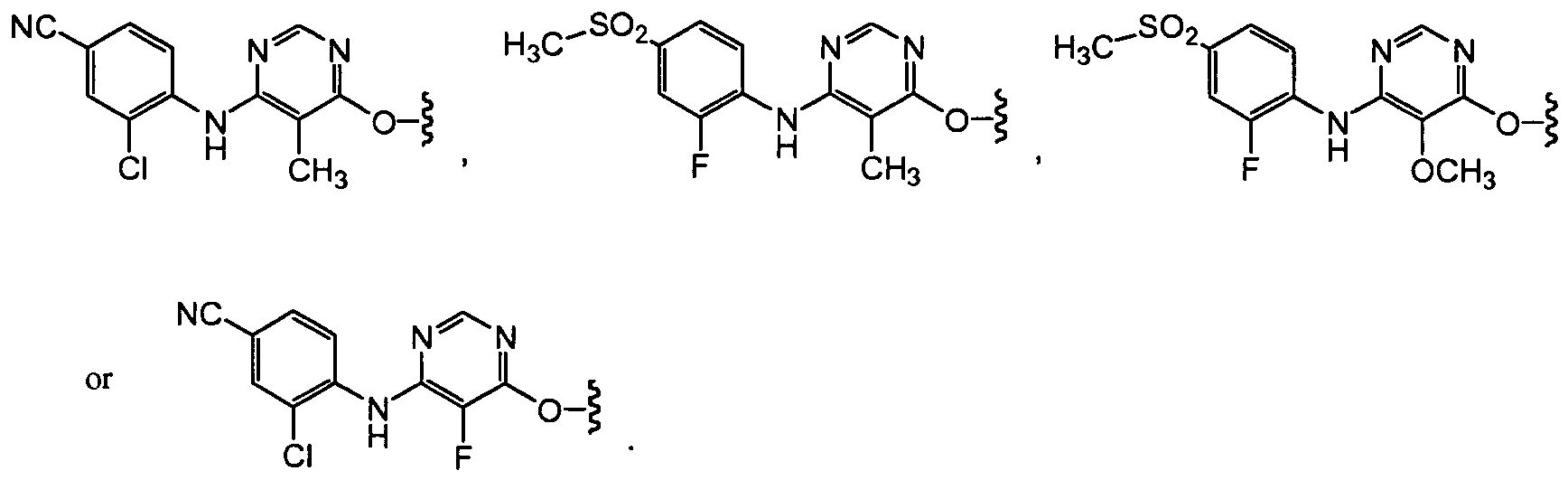
- The compound of claim 1, wherein the group B-X-A-Y- is:
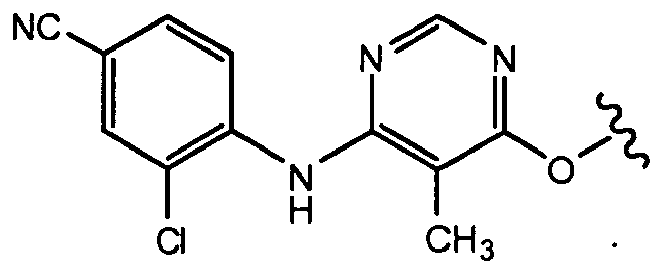
- The compound of claim 1, wherein the group B-X-A-Y- is:

- The compound of claim 1, wherein the group:


- The compound of claim 1, wherein the group


- A compound, according to claim 1, selected from:


- A composition comprising one or more compounds of claim 1 or a pharmaceutically acceptable salt, solvate or stereoisomer thereof, and at least one pharmaceutically acceptable carrier.
- The composition of claim 10 in combination with one or more additional therapeutic agents selected from an insulin sensitizer, a β-glucosidase inhibitor, a DPP-IV inhibitor, an insulin secretagogue, an hepatic glucose output lowering compound, an antihypertensive agent, a sodium glucose uptake transporter 2 (SGLT-2) inhibitor, insulin, an insulin-containing composition, and an antiobesity agent.
- A compound of claim 1 for use in therapy.
- The compound of claim 12 for use in treating diabetes, obesity or metabolic syndrome.
Applications Claiming Priority (2)
| Application Number | Priority Date | Filing Date | Title |
|---|---|---|---|
| US98167707P | 2007-10-22 | 2007-10-22 | |
| PCT/US2008/080462 WO2009055331A2 (en) | 2007-10-22 | 2008-10-20 | Bicyclic heterocycle derivatives and their use as modulators of the activity of gpr119 |
Publications (3)
| Publication Number | Publication Date |
|---|---|
| EP2217596A2 EP2217596A2 (en) | 2010-08-18 |
| EP2217596B1 true EP2217596B1 (en) | 2013-01-30 |
| EP2217596B8 EP2217596B8 (en) | 2013-11-20 |
Family
ID=40352187
Family Applications (1)
| Application Number | Title | Priority Date | Filing Date |
|---|---|---|---|
| EP08832779.6A Active EP2217596B8 (en) | 2007-10-22 | 2008-10-20 | Bicyclic heterocycle derivatives and their use as modulators of the activity of gpr119 |
Country Status (15)
| Country | Link |
|---|---|
| US (1) | US8907095B2 (en) |
| EP (1) | EP2217596B8 (en) |
| JP (2) | JP2011500727A (en) |
| KR (1) | KR20100075643A (en) |
| CN (1) | CN101910151A (en) |
| AR (1) | AR068950A1 (en) |
| AU (1) | AU2008317057B8 (en) |
| CA (1) | CA2703203C (en) |
| CL (1) | CL2008003116A1 (en) |
| IL (1) | IL205251A0 (en) |
| MX (1) | MX2010004450A (en) |
| PE (1) | PE20091343A1 (en) |
| TW (1) | TW200922578A (en) |
| WO (1) | WO2009055331A2 (en) |
| ZA (1) | ZA201002959B (en) |
Families Citing this family (56)
| Publication number | Priority date | Publication date | Assignee | Title |
|---|---|---|---|---|
| WO2010009208A1 (en) * | 2008-07-16 | 2010-01-21 | Schering Corporation | Bicyclic heterocycle derivatives and methods of use thereof |
| MX2011000664A (en) * | 2008-07-16 | 2011-02-24 | Schering Corp | Bicyclic heterocycle derivatives and use thereof as gpr119 modulators. |
| WO2010075273A1 (en) | 2008-12-23 | 2010-07-01 | Schering Corporation | Bicyclic heterocycle derivatives and methods of use thereof |
| WO2010075271A1 (en) * | 2008-12-23 | 2010-07-01 | Schering Corporation | Bicyclic heterocycle derivatives and methods of use thereof |
| WO2010106457A2 (en) * | 2009-03-20 | 2010-09-23 | Pfizer Inc. | 3-oxa-7-azabicyclo[3.3.1]nonanes |
| AR076024A1 (en) * | 2009-04-03 | 2011-05-11 | Schering Corp | DERIVATIVES OF BRIDGED BICYCLIC HETEROCICLES AND METHODS OF USE OF THE SAME |
| FR2945534B1 (en) * | 2009-05-12 | 2012-11-16 | Sanofi Aventis | CYCLOPENTAL [c] PYRROLE-2-CARBOXYLATE DERIVATIVES, THEIR PREPARATION AND THEIR THERAPEUTIC USE |
| FR2945531A1 (en) * | 2009-05-12 | 2010-11-19 | Sanofi Aventis | 7-AZA-SPIRO® 3,5-NONANE-7-CARBOXYLATE DERIVATIVES, THEIR PREPARATION AND THEIR THERAPEUTIC APPLICATION |
| SG176628A1 (en) | 2009-06-05 | 2012-01-30 | Link Medicine Corp | Aminopyrrolidinone derivatives and uses thereof |
| JP2012530758A (en) | 2009-06-24 | 2012-12-06 | ベーリンガー インゲルハイム インターナショナル ゲゼルシャフト ミット ベシュレンクテル ハフツング | Novel compounds, pharmaceutical compositions and methods relating thereto |
| NZ596445A (en) | 2009-06-24 | 2013-04-26 | Boehringer Ingelheim Int | New compounds, pharmaceutical composition and methods relating thereto |
| WO2011017296A1 (en) * | 2009-08-04 | 2011-02-10 | Schering Corporation | 4, 5, 6-trisubstituted pyrimidine derivatives as factor ixa inhibitors |
| CA2778684A1 (en) | 2009-10-29 | 2011-05-05 | Schering Corporation | Bridged bicyclic piperidine derivatives and methods of use thereof |
| US8912206B2 (en) | 2009-11-23 | 2014-12-16 | Merck Sharp & Dohme Corp. | Pyrimidine ether derivatives and methods of use thereof |
| US20120232073A1 (en) | 2009-11-23 | 2012-09-13 | Santhosh Francis Neelamkavil | Fused bicyclic pyrimidine derivatives and methods of use thereof |
| WO2011066137A1 (en) | 2009-11-24 | 2011-06-03 | Schering Corporation | Substituted biaryl derivatives and methods of use thereof |
| AR079493A1 (en) | 2009-12-21 | 2012-02-01 | Nippon Soda Co | CYCLING AND ACARICIDE AMINA COMPOUND |
| JP2013047188A (en) * | 2009-12-24 | 2013-03-07 | Nippon Chemiphar Co Ltd | Gpr119 agonist |
| AR081721A1 (en) * | 2010-02-25 | 2012-10-17 | Nippon Soda Co | CYCLING AND ACARICIDE AMINA COMPOUND |
| WO2011107494A1 (en) | 2010-03-03 | 2011-09-09 | Sanofi | Novel aromatic glycoside derivatives, medicaments containing said compounds, and the use thereof |
| EP2547339A1 (en) | 2010-03-18 | 2013-01-23 | Boehringer Ingelheim International GmbH | Combination of a gpr119 agonist and the dpp-iv inhibitor linagliptin for use in the treatment of diabetes and related conditions |
| US20130096141A1 (en) * | 2010-06-18 | 2013-04-18 | Bernard R. Neustadt | Bicyclic heterocycle derivatives and methods of use thereof |
| US8530413B2 (en) | 2010-06-21 | 2013-09-10 | Sanofi | Heterocyclically substituted methoxyphenyl derivatives with an oxo group, processes for preparation thereof and use thereof as medicaments |
| TW201221505A (en) | 2010-07-05 | 2012-06-01 | Sanofi Sa | Aryloxyalkylene-substituted hydroxyphenylhexynoic acids, process for preparation thereof and use thereof as a medicament |
| TW201215388A (en) | 2010-07-05 | 2012-04-16 | Sanofi Sa | (2-aryloxyacetylamino)phenylpropionic acid derivatives, processes for preparation thereof and use thereof as medicaments |
| TW201215387A (en) | 2010-07-05 | 2012-04-16 | Sanofi Aventis | Spirocyclically substituted 1,3-propane dioxide derivatives, processes for preparation thereof and use thereof as a medicament |
| CN102432598A (en) * | 2010-09-29 | 2012-05-02 | 江苏恒瑞医药股份有限公司 | Tricyclic compound, preparation method thereof and pharmaceutical application thereof |
| CU24152B1 (en) | 2010-12-20 | 2016-02-29 | Irm Llc | 1,2 OXAZOL-8-AZABICICLO [3,2,1] OCTANO 8 IL AS FXR MODULATORS |
| AU2012267556B9 (en) | 2011-06-09 | 2017-05-11 | Rhizen Pharmaceuticals Sa | Novel compounds as modulators of GPR-119 |
| WO2013037390A1 (en) | 2011-09-12 | 2013-03-21 | Sanofi | 6-(4-hydroxy-phenyl)-3-styryl-1h-pyrazolo[3,4-b]pyridine-4-carboxylic acid amide derivatives as kinase inhibitors |
| WO2013045413A1 (en) | 2011-09-27 | 2013-04-04 | Sanofi | 6-(4-hydroxy-phenyl)-3-alkyl-1h-pyrazolo[3,4-b]pyridine-4-carboxylic acid amide derivatives as kinase inhibitors |
| WO2013074386A2 (en) | 2011-11-15 | 2013-05-23 | Merck Sharp & Dohme Corp. | Hcv ns3 protease inhibitors |
| KR101705390B1 (en) | 2012-06-25 | 2017-02-09 | 강원대학교산학협력단 | Novel bicyclic compound as glucose-protein coupled receptor agonists |
| HK1210825A1 (en) | 2012-07-11 | 2016-05-06 | Elcelyx Therapeutics, Inc. | Compositions comprising statins, biguanides and further agents for reducing cardiometabolic risk |
| EP3461827B1 (en) | 2013-09-26 | 2022-02-23 | Cadent Therapeutics, Inc. | Selective octahydro-cyclopenta[c]pyrrole negative modulators of nr2b |
| CR20170076A (en) | 2014-08-04 | 2017-06-26 | Nuevolution As | PIRIMIDIMA DERIVATIVES REPLACED WITH OPTIONALLY CONDENSED HETEROCICLYL USEFUL FOR THE TREATMENT OF INFLAMMATORY, METABOLIC, ONCOLOGICAL AND SELF-IMMUNITY DISEASES |
| AU2015317741B2 (en) | 2014-09-17 | 2020-01-16 | Bristol-Myers Squibb Company | MK2 inhibitors and uses thereof |
| JO3579B1 (en) | 2014-09-26 | 2020-07-05 | Luc Therapeutics Inc | N-alkylaryl-5-oxyaryl- octahydro-cyclopenta[c]pyrrole negative allosteric modulators of nr2b |
| CA3081424A1 (en) | 2017-11-01 | 2019-05-09 | Bristol-Myers Squibb Company | Spirocyclic compounds as farnesoid x receptor modulators |
| WO2019089667A1 (en) | 2017-11-01 | 2019-05-09 | Bristol-Myers Squibb Company | Bridged bicyclic compounds as farnesoid x receptor modulators |
| WO2019089665A1 (en) | 2017-11-01 | 2019-05-09 | Bristol-Myers Squibb Company | Alkene spirocyclic compounds as farnesoid x receptor modulators |
| CN111511731B (en) | 2017-11-01 | 2023-05-23 | 百时美施贵宝公司 | Olefin compounds as modulators of the farnesol X receptor |
| EP3704107B1 (en) | 2017-11-01 | 2023-04-12 | Bristol-Myers Squibb Company | Multicyclic compounds as farnesoid x receptor modulators |
| US10865194B2 (en) | 2017-11-03 | 2020-12-15 | Fondazione Istituto Italiano Di Tecnologia | Therapeutically active bicyclic-sulphonamides and pharmaceutical compositions |
| AR118050A1 (en) | 2019-02-15 | 2021-09-15 | Bristol Myers Squibb Co | BICYCLIC COMPOUNDS REPLACED AS MODULATORS OF THE FARNESOID X RECEIVER |
| BR112021015930A2 (en) | 2019-02-15 | 2021-10-05 | Bristol-Myers Squibb Company | SUBSTITUTED AMIDE COMPOUNDS USEFUL AS FARNESOID X RECEPTOR MODULATORS |
| CN113727973B (en) | 2019-02-15 | 2025-08-29 | 百时美施贵宝公司 | Substituted amide compounds useful as farnesoid X receptor modulators |
| KR102905880B1 (en) | 2019-02-15 | 2025-12-29 | 브리스톨-마이어스 스큅 컴퍼니 | Substituted bicyclic compounds as farnesoid X receptor modulators |
| EP3966207B1 (en) | 2019-05-10 | 2023-11-01 | Deciphera Pharmaceuticals, LLC | Phenylaminopyrimidine amide autophagy inhibitors and methods of use thereof |
| EP3966206B1 (en) | 2019-05-10 | 2023-08-09 | Deciphera Pharmaceuticals, LLC | Heteroarylaminopyrimidine amide autophagy inhibitors and methods of use thereof |
| JP7626722B2 (en) | 2019-06-17 | 2025-02-04 | デシフェラ・ファーマシューティカルズ,エルエルシー | AMINOPYRIMIDINE AMIDE AUTOPHAGY INHIBITORS AND METHODS OF USE THEREOF - Patent application |
| AU2020405446A1 (en) | 2019-12-20 | 2022-05-26 | Nuevolution A/S | Compounds active towards nuclear receptors |
| AU2020408107B2 (en) | 2019-12-20 | 2026-04-23 | Nuevolution A/S | Compounds active towards nuclear receptors |
| EP4126874A1 (en) | 2020-03-31 | 2023-02-08 | Nuevolution A/S | Compounds active towards nuclear receptors |
| US11613532B2 (en) | 2020-03-31 | 2023-03-28 | Nuevolution A/S | Compounds active towards nuclear receptors |
| CN116082188A (en) * | 2023-02-14 | 2023-05-09 | 都创(上海)医药开发有限公司 | Method for synthesizing 4-bromo-3-chloro-5-fluorobenzonitrile by taking 3-fluoro-4-aminobenzonitrile as raw material |
Family Cites Families (33)
| Publication number | Priority date | Publication date | Assignee | Title |
|---|---|---|---|---|
| IL68769A (en) | 1983-05-23 | 1986-02-28 | Hadassah Med Org | Pharmaceutical compositions containing insulin for oral administration |
| US4849405A (en) | 1984-05-09 | 1989-07-18 | Synthetic Blood Corporation | Oral insulin and a method of making the same |
| US4963526A (en) | 1984-05-09 | 1990-10-16 | Synthetic Blood Corporation | Oral insulin and a method of making the same |
| WO1985005029A1 (en) | 1984-05-09 | 1985-11-21 | Medaphore Inc. | Oral insulin and a method of making the same |
| CA1256116A (en) | 1984-09-20 | 1989-06-20 | Joseph E. Moore | Fungicidal n-cyanoalkyl-n-haloalkylthio sulfonamides |
| US5642868A (en) | 1990-05-02 | 1997-07-01 | The United States Of America As Represented By The Secretary Of The Navy | Ceramic material |
| IL99699A (en) | 1990-10-10 | 2002-04-21 | Autoimmune Inc | Pharmaceutical oral, enteral or by-inhalation dosage form for suppressing an autoimmune response associated with type i diabetes |
| US6191105B1 (en) | 1993-05-10 | 2001-02-20 | Protein Delivery, Inc. | Hydrophilic and lipophilic balanced microemulsion formulations of free-form and/or conjugation-stabilized therapeutic agents such as insulin |
| US5843866A (en) | 1994-12-30 | 1998-12-01 | Hampshire Chemical Corp. | Pesticidal compositions comprising solutions of polyurea and/or polyurethane |
| US5824638A (en) | 1995-05-22 | 1998-10-20 | Shire Laboratories, Inc. | Oral insulin delivery |
| AU2991397A (en) | 1996-04-23 | 1997-11-12 | Eli Lilly And Company | Heterocyclic compounds |
| US5968929A (en) | 1996-10-30 | 1999-10-19 | Schering Corporation | Piperazino derivatives as neurokinin antagonists |
| BR9712720A (en) | 1996-10-30 | 1999-10-26 | Schering Corp | Piperazine derivatives as neurokinin antagonists |
| US6153632A (en) | 1997-02-24 | 2000-11-28 | Rieveley; Robert B. | Method and composition for the treatment of diabetes |
| ATE356113T1 (en) | 1997-05-14 | 2007-03-15 | Atherogenics Inc | PROBUCOLSUMRIC ACID ESTERS TO INHIBIT THE EXPRESSION OF VCAM-1 |
| AU5027299A (en) | 1998-07-31 | 2000-02-28 | Novo Nordisk A/S | Use of glp-1 and analogues for preventing type ii diabetes |
| US6147090A (en) | 1998-09-17 | 2000-11-14 | Pfizer Inc. | 4-carboxyamino-2-methyl-1,2,3,4,-tetrahydroquinolines |
| MXPA01006472A (en) | 1998-12-23 | 2004-03-10 | Searle Llc | Combinations of ileal bile acid transport inhibitors and fibric acid derivatives for cardiovascular indications. |
| DK1140184T3 (en) | 1998-12-23 | 2003-09-29 | Searle Llc | Combinations of cholesterol ester transfer protein inhibitors and nicotinic acid derivatives for cardiovascular indications |
| FR2802817B1 (en) | 1999-12-23 | 2002-10-11 | Centre Nat Rech Scient | NOVEL GLYCOSIDASE INHIBITORS AND THEIR PHARMACOLOGICAL APPLICATIONS, PARTICULARLY FOR TREATING DIABETES |
| ATE348152T1 (en) | 2000-12-01 | 2007-01-15 | Astellas Pharma Inc | METHOD FOR SCREENING DIABETES CURE |
| CN102558155A (en) | 2003-01-14 | 2012-07-11 | 阿伦纳药品公司 | Aryl and heteroaryl derivatives as modulators of metabolism and the prophylaxis and treatment of diseases related thereto, such as diabetes and hyperglycemia |
| WO2004076413A2 (en) | 2003-02-24 | 2004-09-10 | Arena Pharmaceuticals, Inc. | Phenyl- and pyridylpiperidine-derivatives as modulators of glucose metabolism |
| AR045047A1 (en) * | 2003-07-11 | 2005-10-12 | Arena Pharm Inc | ARILO AND HETEROARILO DERIVATIVES TRISUSTITUIDOS AS MODULATORS OF METABOLISM AND PROFILAXIS AND TREATMENT OF DISORDERS RELATED TO THEMSELVES |
| ATE417041T1 (en) | 2003-08-07 | 2008-12-15 | Schering Corp | NEW FARNESYL PROTEIN TRANSFERAS INHIBITORS AS ANTI-TUMOR AGENTS |
| HRP20090093T3 (en) | 2004-06-04 | 2009-03-31 | Arena Pharmaceuticals Inc. | Substituted aryl and heteroaryl derivatives as modulators of metabolism and the prophylaxis and treatment of disorders related thereto |
| WO2006035303A1 (en) | 2004-09-29 | 2006-04-06 | Ranbaxy Laboratories Limited | Muscarinic receptor antagonists |
| MY148521A (en) | 2005-01-10 | 2013-04-30 | Arena Pharm Inc | Substituted pyridinyl and pyrimidinyl derivatives as modulators of metabolism and the treatment of disorders related thereto |
| US7723342B2 (en) | 2005-05-17 | 2010-05-25 | Schering Corporation | Heterocycles as nicotinic acid receptor agonists for the treatment of dyslipidemia |
| US7750015B2 (en) | 2005-05-17 | 2010-07-06 | Schering Corporation | Nitrogen-containing heterocyclic compounds and methods of use thereof |
| GEP20104966B (en) | 2005-09-16 | 2010-04-26 | Arena Pharm Inc | Modulators of metabolism and the treatment of disorders related thereto |
| TW200806662A (en) * | 2005-12-01 | 2008-02-01 | Organon Nv | 8-azabicyclo[3.2.1]octane derivatives |
| EP1976828B1 (en) * | 2005-12-29 | 2016-12-21 | Celtaxsys, Inc. | Diamine derivatives as inhibitors of leukotriene a4 hydrolase |
-
2008
- 2008-10-20 JP JP2010530173A patent/JP2011500727A/en active Pending
- 2008-10-20 WO PCT/US2008/080462 patent/WO2009055331A2/en not_active Ceased
- 2008-10-20 MX MX2010004450A patent/MX2010004450A/en unknown
- 2008-10-20 CA CA2703203A patent/CA2703203C/en not_active Expired - Fee Related
- 2008-10-20 EP EP08832779.6A patent/EP2217596B8/en active Active
- 2008-10-20 AU AU2008317057A patent/AU2008317057B8/en not_active Ceased
- 2008-10-20 US US12/739,531 patent/US8907095B2/en active Active
- 2008-10-20 CN CN200880123287XA patent/CN101910151A/en active Pending
- 2008-10-20 KR KR1020107010766A patent/KR20100075643A/en not_active Withdrawn
- 2008-10-21 TW TW097140281A patent/TW200922578A/en unknown
- 2008-10-21 AR ARP080104586A patent/AR068950A1/en unknown
- 2008-10-21 PE PE2008001811A patent/PE20091343A1/en not_active Application Discontinuation
- 2008-10-21 CL CL2008003116A patent/CL2008003116A1/en unknown
-
2010
- 2010-04-22 IL IL205251A patent/IL205251A0/en unknown
- 2010-04-28 ZA ZA2010/02959A patent/ZA201002959B/en unknown
-
2013
- 2013-03-28 JP JP2013068780A patent/JP5568154B2/en not_active Expired - Fee Related
Also Published As
| Publication number | Publication date |
|---|---|
| EP2217596B8 (en) | 2013-11-20 |
| WO2009055331A2 (en) | 2009-04-30 |
| CN101910151A (en) | 2010-12-08 |
| AU2008317057A8 (en) | 2014-02-13 |
| KR20100075643A (en) | 2010-07-02 |
| MX2010004450A (en) | 2010-05-05 |
| ZA201002959B (en) | 2011-11-30 |
| AU2008317057B2 (en) | 2014-02-06 |
| AR068950A1 (en) | 2009-12-16 |
| US8907095B2 (en) | 2014-12-09 |
| AU2008317057B8 (en) | 2014-02-13 |
| EP2217596A2 (en) | 2010-08-18 |
| CA2703203A1 (en) | 2009-04-30 |
| CA2703203C (en) | 2015-12-15 |
| IL205251A0 (en) | 2010-12-30 |
| CL2008003116A1 (en) | 2010-02-05 |
| JP2013129675A (en) | 2013-07-04 |
| AU2008317057A1 (en) | 2009-04-30 |
| JP2011500727A (en) | 2011-01-06 |
| WO2009055331A3 (en) | 2009-07-30 |
| PE20091343A1 (en) | 2009-09-18 |
| TW200922578A (en) | 2009-06-01 |
| US20110212938A1 (en) | 2011-09-01 |
| JP5568154B2 (en) | 2014-08-06 |
Similar Documents
| Publication | Publication Date | Title |
|---|---|---|
| EP2414348B1 (en) | Bicyclic piperidine and piperazine derivatives as gpcr modulators for the treatment of obesity, diabetes and other metabolic disorders | |
| US8907095B2 (en) | Bicyclic heterocycle derivatives and their use as modulators of the activity of GPR119 | |
| EP2324036B1 (en) | Bicyclic heterocycle derivatives and methods of use thereof | |
| EP2318404B1 (en) | Bicyclic heterocycle derivatives and use thereof as gpr119 modulators | |
| EP2382203B1 (en) | Bicyclic heterocycle derivatives and methods of use thereof | |
| EP2503887B1 (en) | Substituted biaryl derivatives and methods of use thereof | |
| EP2493307B1 (en) | Bridged bicyclic piperidine derivatives and methods of use thereof | |
| US20120040975A1 (en) | Bridged bicyclic heterocycle derivatives and methods of use thereof | |
| US8722882B2 (en) | Pyrimidine derivatives as GPCR modulators for use in the treatment of obesity and diabetes | |
| WO2008130581A1 (en) | Pyrimidinone derivatives and methods of use thereof | |
| WO2010075273A1 (en) | Bicyclic heterocycle derivatives and methods of use thereof | |
| EP2503891B1 (en) | Pyrimidine ether derivatives and methods of use thereof |
Legal Events
| Date | Code | Title | Description |
|---|---|---|---|
| PUAI | Public reference made under article 153(3) epc to a published international application that has entered the european phase |
Free format text: ORIGINAL CODE: 0009012 |
|
| 17P | Request for examination filed |
Effective date: 20090331 |
|
| AK | Designated contracting states |
Kind code of ref document: A2 Designated state(s): AT BE BG CH CY CZ DE DK EE ES FI FR GB GR HR HU IE IS IT LI LT LU LV MC MT NL NO PL PT RO SE SI SK TR |
|
| AX | Request for extension of the european patent |
Extension state: AL BA MK RS |
|
| REG | Reference to a national code |
Ref country code: HK Ref legal event code: DE Ref document number: 1142327 Country of ref document: HK |
|
| 17Q | First examination report despatched |
Effective date: 20101216 |
|
| RAP1 | Party data changed (applicant data changed or rights of an application transferred) |
Owner name: MERCK SHARP & DOHME CORP. |
|
| GRAP | Despatch of communication of intention to grant a patent |
Free format text: ORIGINAL CODE: EPIDOSNIGR1 |
|
| GRAS | Grant fee paid |
Free format text: ORIGINAL CODE: EPIDOSNIGR3 |
|
| GRAA | (expected) grant |
Free format text: ORIGINAL CODE: 0009210 |
|
| AK | Designated contracting states |
Kind code of ref document: B1 Designated state(s): AT BE BG CH CY CZ DE DK EE ES FI FR GB GR HR HU IE IS IT LI LT LU LV MC MT NL NO PL PT RO SE SI SK TR |
|
| AX | Request for extension of the european patent |
Extension state: AL BA MK RS |
|
| REG | Reference to a national code |
Ref country code: GB Ref legal event code: FG4D |
|
| REG | Reference to a national code |
Ref country code: CH Ref legal event code: EP |
|
| REG | Reference to a national code |
Ref country code: AT Ref legal event code: REF Ref document number: 595689 Country of ref document: AT Kind code of ref document: T Effective date: 20130215 Ref country code: CH Ref legal event code: EP |
|
| REG | Reference to a national code |
Ref country code: IE Ref legal event code: FG4D |
|
| REG | Reference to a national code |
Ref country code: DE Ref legal event code: R096 Ref document number: 602008022021 Country of ref document: DE Effective date: 20130321 |
|
| REG | Reference to a national code |
Ref country code: CH Ref legal event code: NV Representative=s name: MARKS AND CLERK (LUXEMBOURG) LLP, CH |
|
| REG | Reference to a national code |
Ref country code: NL Ref legal event code: T3 |
|
| REG | Reference to a national code |
Ref country code: AT Ref legal event code: MK05 Ref document number: 595689 Country of ref document: AT Kind code of ref document: T Effective date: 20130130 |
|
| REG | Reference to a national code |
Ref country code: LT Ref legal event code: MG4D |
|
| PG25 | Lapsed in a contracting state [announced via postgrant information from national office to epo] |
Ref country code: LT Free format text: LAPSE BECAUSE OF FAILURE TO SUBMIT A TRANSLATION OF THE DESCRIPTION OR TO PAY THE FEE WITHIN THE PRESCRIBED TIME-LIMIT Effective date: 20130130 Ref country code: BG Free format text: LAPSE BECAUSE OF FAILURE TO SUBMIT A TRANSLATION OF THE DESCRIPTION OR TO PAY THE FEE WITHIN THE PRESCRIBED TIME-LIMIT Effective date: 20130430 Ref country code: ES Free format text: LAPSE BECAUSE OF FAILURE TO SUBMIT A TRANSLATION OF THE DESCRIPTION OR TO PAY THE FEE WITHIN THE PRESCRIBED TIME-LIMIT Effective date: 20130511 Ref country code: IS Free format text: LAPSE BECAUSE OF FAILURE TO SUBMIT A TRANSLATION OF THE DESCRIPTION OR TO PAY THE FEE WITHIN THE PRESCRIBED TIME-LIMIT Effective date: 20130530 Ref country code: BE Free format text: LAPSE BECAUSE OF FAILURE TO SUBMIT A TRANSLATION OF THE DESCRIPTION OR TO PAY THE FEE WITHIN THE PRESCRIBED TIME-LIMIT Effective date: 20130130 Ref country code: SE Free format text: LAPSE BECAUSE OF FAILURE TO SUBMIT A TRANSLATION OF THE DESCRIPTION OR TO PAY THE FEE WITHIN THE PRESCRIBED TIME-LIMIT Effective date: 20130130 Ref country code: NO Free format text: LAPSE BECAUSE OF FAILURE TO SUBMIT A TRANSLATION OF THE DESCRIPTION OR TO PAY THE FEE WITHIN THE PRESCRIBED TIME-LIMIT Effective date: 20130430 Ref country code: AT Free format text: LAPSE BECAUSE OF FAILURE TO SUBMIT A TRANSLATION OF THE DESCRIPTION OR TO PAY THE FEE WITHIN THE PRESCRIBED TIME-LIMIT Effective date: 20130130 |
|
| PG25 | Lapsed in a contracting state [announced via postgrant information from national office to epo] |
Ref country code: GR Free format text: LAPSE BECAUSE OF FAILURE TO SUBMIT A TRANSLATION OF THE DESCRIPTION OR TO PAY THE FEE WITHIN THE PRESCRIBED TIME-LIMIT Effective date: 20130501 Ref country code: PT Free format text: LAPSE BECAUSE OF FAILURE TO SUBMIT A TRANSLATION OF THE DESCRIPTION OR TO PAY THE FEE WITHIN THE PRESCRIBED TIME-LIMIT Effective date: 20130530 Ref country code: LV Free format text: LAPSE BECAUSE OF FAILURE TO SUBMIT A TRANSLATION OF THE DESCRIPTION OR TO PAY THE FEE WITHIN THE PRESCRIBED TIME-LIMIT Effective date: 20130130 Ref country code: FI Free format text: LAPSE BECAUSE OF FAILURE TO SUBMIT A TRANSLATION OF THE DESCRIPTION OR TO PAY THE FEE WITHIN THE PRESCRIBED TIME-LIMIT Effective date: 20130130 Ref country code: PL Free format text: LAPSE BECAUSE OF FAILURE TO SUBMIT A TRANSLATION OF THE DESCRIPTION OR TO PAY THE FEE WITHIN THE PRESCRIBED TIME-LIMIT Effective date: 20130130 Ref country code: SI Free format text: LAPSE BECAUSE OF FAILURE TO SUBMIT A TRANSLATION OF THE DESCRIPTION OR TO PAY THE FEE WITHIN THE PRESCRIBED TIME-LIMIT Effective date: 20130130 |
|
| PG25 | Lapsed in a contracting state [announced via postgrant information from national office to epo] |
Ref country code: HR Free format text: LAPSE BECAUSE OF FAILURE TO SUBMIT A TRANSLATION OF THE DESCRIPTION OR TO PAY THE FEE WITHIN THE PRESCRIBED TIME-LIMIT Effective date: 20130130 |
|
| GRAT | Correction requested after decision to grant or after decision to maintain patent in amended form |
Free format text: ORIGINAL CODE: EPIDOSNCDEC |
|
| PG25 | Lapsed in a contracting state [announced via postgrant information from national office to epo] |
Ref country code: SK Free format text: LAPSE BECAUSE OF FAILURE TO SUBMIT A TRANSLATION OF THE DESCRIPTION OR TO PAY THE FEE WITHIN THE PRESCRIBED TIME-LIMIT Effective date: 20130130 Ref country code: CZ Free format text: LAPSE BECAUSE OF FAILURE TO SUBMIT A TRANSLATION OF THE DESCRIPTION OR TO PAY THE FEE WITHIN THE PRESCRIBED TIME-LIMIT Effective date: 20130130 Ref country code: DK Free format text: LAPSE BECAUSE OF FAILURE TO SUBMIT A TRANSLATION OF THE DESCRIPTION OR TO PAY THE FEE WITHIN THE PRESCRIBED TIME-LIMIT Effective date: 20130130 Ref country code: EE Free format text: LAPSE BECAUSE OF FAILURE TO SUBMIT A TRANSLATION OF THE DESCRIPTION OR TO PAY THE FEE WITHIN THE PRESCRIBED TIME-LIMIT Effective date: 20130130 Ref country code: RO Free format text: LAPSE BECAUSE OF FAILURE TO SUBMIT A TRANSLATION OF THE DESCRIPTION OR TO PAY THE FEE WITHIN THE PRESCRIBED TIME-LIMIT Effective date: 20130130 |
|
| REG | Reference to a national code |
Ref country code: CH Ref legal event code: PK Free format text: DAS ANMELDEDATUM WURDE VOM EPA BERICHTIGT. DAS RICHTIGE ANMELDEDATUM IST 20.10.2008 |
|
| PG25 | Lapsed in a contracting state [announced via postgrant information from national office to epo] |
Ref country code: CY Free format text: LAPSE BECAUSE OF FAILURE TO SUBMIT A TRANSLATION OF THE DESCRIPTION OR TO PAY THE FEE WITHIN THE PRESCRIBED TIME-LIMIT Effective date: 20130130 |
|
| PLBE | No opposition filed within time limit |
Free format text: ORIGINAL CODE: 0009261 |
|
| STAA | Information on the status of an ep patent application or granted ep patent |
Free format text: STATUS: NO OPPOSITION FILED WITHIN TIME LIMIT |
|
| PG25 | Lapsed in a contracting state [announced via postgrant information from national office to epo] |
Ref country code: IT Free format text: LAPSE BECAUSE OF FAILURE TO SUBMIT A TRANSLATION OF THE DESCRIPTION OR TO PAY THE FEE WITHIN THE PRESCRIBED TIME-LIMIT Effective date: 20130130 |
|
| 26N | No opposition filed |
Effective date: 20131031 |
|
| REG | Reference to a national code |
Ref country code: DE Ref legal event code: R097 Ref document number: 602008022021 Country of ref document: DE Effective date: 20131031 |
|
| PG25 | Lapsed in a contracting state [announced via postgrant information from national office to epo] |
Ref country code: MC Free format text: LAPSE BECAUSE OF FAILURE TO SUBMIT A TRANSLATION OF THE DESCRIPTION OR TO PAY THE FEE WITHIN THE PRESCRIBED TIME-LIMIT Effective date: 20130130 |
|
| REG | Reference to a national code |
Ref country code: IE Ref legal event code: MM4A |
|
| PG25 | Lapsed in a contracting state [announced via postgrant information from national office to epo] |
Ref country code: IE Free format text: LAPSE BECAUSE OF NON-PAYMENT OF DUE FEES Effective date: 20131020 |
|
| PG25 | Lapsed in a contracting state [announced via postgrant information from national office to epo] |
Ref country code: TR Free format text: LAPSE BECAUSE OF FAILURE TO SUBMIT A TRANSLATION OF THE DESCRIPTION OR TO PAY THE FEE WITHIN THE PRESCRIBED TIME-LIMIT Effective date: 20130130 |
|
| PG25 | Lapsed in a contracting state [announced via postgrant information from national office to epo] |
Ref country code: LU Free format text: LAPSE BECAUSE OF NON-PAYMENT OF DUE FEES Effective date: 20130130 |
|
| PG25 | Lapsed in a contracting state [announced via postgrant information from national office to epo] |
Ref country code: MT Free format text: LAPSE BECAUSE OF FAILURE TO SUBMIT A TRANSLATION OF THE DESCRIPTION OR TO PAY THE FEE WITHIN THE PRESCRIBED TIME-LIMIT Effective date: 20130130 |
|
| PG25 | Lapsed in a contracting state [announced via postgrant information from national office to epo] |
Ref country code: HU Free format text: LAPSE BECAUSE OF FAILURE TO SUBMIT A TRANSLATION OF THE DESCRIPTION OR TO PAY THE FEE WITHIN THE PRESCRIBED TIME-LIMIT; INVALID AB INITIO Effective date: 20081020 |
|
| REG | Reference to a national code |
Ref country code: FR Ref legal event code: PLFP Year of fee payment: 9 |
|
| REG | Reference to a national code |
Ref country code: HK Ref legal event code: WD Ref document number: 1142327 Country of ref document: HK |
|
| REG | Reference to a national code |
Ref country code: FR Ref legal event code: PLFP Year of fee payment: 10 |
|
| REG | Reference to a national code |
Ref country code: FR Ref legal event code: PLFP Year of fee payment: 11 |
|
| PGFP | Annual fee paid to national office [announced via postgrant information from national office to epo] |
Ref country code: NL Payment date: 20190927 Year of fee payment: 12 |
|
| PGFP | Annual fee paid to national office [announced via postgrant information from national office to epo] |
Ref country code: CH Payment date: 20191028 Year of fee payment: 12 |
|
| REG | Reference to a national code |
Ref country code: CH Ref legal event code: PL |
|
| REG | Reference to a national code |
Ref country code: NL Ref legal event code: MM Effective date: 20201101 |
|
| PG25 | Lapsed in a contracting state [announced via postgrant information from national office to epo] |
Ref country code: NL Free format text: LAPSE BECAUSE OF NON-PAYMENT OF DUE FEES Effective date: 20201101 |
|
| PG25 | Lapsed in a contracting state [announced via postgrant information from national office to epo] |
Ref country code: CH Free format text: LAPSE BECAUSE OF NON-PAYMENT OF DUE FEES Effective date: 20201031 Ref country code: LI Free format text: LAPSE BECAUSE OF NON-PAYMENT OF DUE FEES Effective date: 20201031 |
|
| REG | Reference to a national code |
Ref country code: DE Ref legal event code: R081 Ref document number: 602008022021 Country of ref document: DE Owner name: MERCK SHARP & DOHME LLC, RAHWAY, US Free format text: FORMER OWNER: MERCK SHARP & DOHME CORP., RAHWAY, N.J., US |
|
| REG | Reference to a national code |
Ref country code: GB Ref legal event code: 732E Free format text: REGISTERED BETWEEN 20220908 AND 20220914 |
|
| PGFP | Annual fee paid to national office [announced via postgrant information from national office to epo] |
Ref country code: GB Payment date: 20230914 Year of fee payment: 16 |
|
| PGFP | Annual fee paid to national office [announced via postgrant information from national office to epo] |
Ref country code: FR Payment date: 20230914 Year of fee payment: 16 |
|
| PGFP | Annual fee paid to national office [announced via postgrant information from national office to epo] |
Ref country code: DE Payment date: 20230915 Year of fee payment: 16 |
|
| REG | Reference to a national code |
Ref country code: DE Ref legal event code: R119 Ref document number: 602008022021 Country of ref document: DE |
|
| GBPC | Gb: european patent ceased through non-payment of renewal fee |
Effective date: 20241020 |
|
| PG25 | Lapsed in a contracting state [announced via postgrant information from national office to epo] |
Ref country code: DE Free format text: LAPSE BECAUSE OF NON-PAYMENT OF DUE FEES Effective date: 20250501 |
|
| PG25 | Lapsed in a contracting state [announced via postgrant information from national office to epo] |
Ref country code: GB Free format text: LAPSE BECAUSE OF NON-PAYMENT OF DUE FEES Effective date: 20241020 |
|
| PG25 | Lapsed in a contracting state [announced via postgrant information from national office to epo] |
Ref country code: FR Free format text: LAPSE BECAUSE OF NON-PAYMENT OF DUE FEES Effective date: 20241031 |