EP2216869A2 - Monitor and control for a voltage supply modulator - Google Patents
Monitor and control for a voltage supply modulator Download PDFInfo
- Publication number
- EP2216869A2 EP2216869A2 EP20100152705 EP10152705A EP2216869A2 EP 2216869 A2 EP2216869 A2 EP 2216869A2 EP 20100152705 EP20100152705 EP 20100152705 EP 10152705 A EP10152705 A EP 10152705A EP 2216869 A2 EP2216869 A2 EP 2216869A2
- Authority
- EP
- European Patent Office
- Prior art keywords
- connections
- power
- detector
- timer
- accordance
- Prior art date
- Legal status (The legal status is an assumption and is not a legal conclusion. Google has not performed a legal analysis and makes no representation as to the accuracy of the status listed.)
- Granted
Links
Images






Classifications
-
- H—ELECTRICITY
- H02—GENERATION; CONVERSION OR DISTRIBUTION OF ELECTRIC POWER
- H02J—ELECTRIC POWER NETWORKS; CIRCUIT ARRANGEMENTS OR SYSTEMS FOR SUPPLYING OR DISTRIBUTING ELECTRIC POWER; SYSTEMS FOR STORING ELECTRIC ENERGY
- H02J1/00—Circuit arrangements for DC mains or DC distribution networks
- H02J1/14—Balancing load and power generation in DC networks
-
- H—ELECTRICITY
- H02—GENERATION; CONVERSION OR DISTRIBUTION OF ELECTRIC POWER
- H02J—ELECTRIC POWER NETWORKS; CIRCUIT ARRANGEMENTS OR SYSTEMS FOR SUPPLYING OR DISTRIBUTING ELECTRIC POWER; SYSTEMS FOR STORING ELECTRIC ENERGY
- H02J2105/00—Networks for supplying or distributing electric power characterised by their spatial reach or by the load
- H02J2105/30—Networks for supplying or distributing electric power characterised by their spatial reach or by the load the load networks being external to vehicles, i.e. exchanging power with vehicles
- H02J2105/32—Networks for supplying or distributing electric power characterised by their spatial reach or by the load the load networks being external to vehicles, i.e. exchanging power with vehicles for aircrafts
Definitions
- This disclosure relates to a system for monitoring and controlling loads attached to a power system, and more particularly to a system for monitoring and controlling loads where available power is limited, such as an onboard power system for an aircraft.
- a closed loop control system is often implemented to control the output voltage of a generator to ensure proper operation of devices attached to the power system.
- FIG. 1 A typical closed loop control system for power generation is shown schematically in FIG. 1 .
- the system has a generator 11 and a reference sensor 12, which senses the output 13 and provides a reference signal 14 fed back to the generator.
- the output is connected to a load 15.
- the reference signal has a finite frequency response to allow for control of the output. As the output changes, the reference sensor adjusts the generator to remain at a constant output.
- a critical point may be reached in a closed loop system where the input impedance Z in of the load 15 is lower than the output impedance Z out of the generator 11.
- the system can revert from closed loop control to open loop control and possibly into sub-harmonic oscillation or modulation of the output voltage.
- the onboard power generation system for a modem passenger aircraft must accommodate different types of loads.
- the load In the case of galleys, heaters, air conditioners, etc. the load is resistive, so that a decrease in the voltage input to the load causes a decrease in the load current.
- inflight entertainment (IFE) systems and other electronic systems generally have a reactive load with a negative impedance or constant power characteristic, so that as the generator voltage decreases the load current increases.
- the impedance Z in decreases, and may become lower than the output dynamic impedance Z out of the generator.
- the generator can go into a "hunting" mode in an attempt to regain closed loop control. This behavior typically presents itself as a voltage modulation about the mean of the voltage set point, characterized by a voltage modulation envelope.
- the power generating system may be designed to tolerate a certain modulation envelope size (maximum voltage peak to valley).
- the modulation may be successfully limited as long as the load remains within the boundaries for closed loop control. Accordingly, it is desirable to implement a modulation monitor and control system to control the load, limit the modulation envelope, and thereby ensure that the system stays within operational boundaries.
- the present disclosure provides a system and method for monitoring and controlling the voltage modulation on a power grid, in order to maintain closed-loop control of the grid.
- the power grid has a plurality of connections including unused connections to which a load is not connected and used connections to which a load is connected.
- a system which includes a detector and a controller.
- the detector is configured to detect a modulation voltage on the power grid.
- the controller is configured to receive signals from the detector, and to control connections to the power grid.
- the controller disables power to the unused connections in accordance with the detected modulation voltage exceeding a first threshold and disables power to the used connections in accordance with the detected modulation voltage exceeding a second threshold; the used connections are disabled in sequence at a first time interval each for a period given by a second time interval.
- the controller also restores power to the used connections and to the unused connections in accordance with the detected modulation voltage being less than a third threshold.
- a method for maintaining closed-loop control of a power grid includes the steps of: detecting a modulation voltage on a power grid; disabling power to the unused connections in accordance with the detected modulation voltage exceeding a first threshold; and disabling power to the used connections in accordance with the detected modulation voltage exceeding a second threshold.
- the used connections are disabled one at a time at a first time interval each for a period given by a second time interval.
- the method also includes the step of restoring power to the used connections and to the unused connections in accordance with the detected modulation voltage being less than a third threshold.
- a system which includes a detector and a timer control circuit.
- the detector is configured to detect a modulation voltage on a power grid.
- the timer control circuit is configured to receive signals from the detector and to control connections to the power grid by causing power to the unused connections to be disabled in accordance with the detected modulation voltage exceeding a first threshold, and causing power to the used connections to be disabled in accordance with the detected modulation voltage exceeding a second threshold.
- FIG. 2 illustrates a power generation system with closed loop control and including a modulation monitoring and control unit (MMCU) 20.
- Power supply 21 delivers power to grid 25 and receives feedback 22 from reference sensor 23.
- the MMCU monitors the voltage output to loads 24 (four shown in FIG. 2 , as an example), to detect voltage modulation about the voltage set point; the amount of modulation serves as an indication of degradation in performance of the system.
- the MMCU outputs a control signal 26 to either prevent a load from being added to the grid or disconnect an existing load from the grid, in order to bring the system back under control.
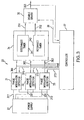
- FIG. 3 is a schematic block diagram of the MMCU 20 showing components thereof, in accordance with an embodiment of the disclosure.
- power supply 21 outputs 3-phase AC line voltage; voltage signals 311, 321, 331 of the three phases are input to phase modulation detectors 31, 32, 33 respectively, along with neutral input 312.
- Phase modulation detectors 31-33 determine the amount of voltage modulation in each phase; a signal 361-363 corresponding to the modulation is output to a timer control circuit 34.
- Timer control circuit 34 includes a disconnect timer 341 and a reconnect timer 342.
- Disconnect timer 341 has a preset timing step (e.g. between 1 and 15 seconds) defining a time interval for disabling a load. If one or more signals 361-363 indicate that any of the three phases has a modulation greater than a defined threshold, disconnect timer 341 causes a SET signal 351 to be input to a disable driver circuit 35. Disable driver circuit 35 outputs a DISABLE signal 353 to disable loads successively at the preset disconnect interval, to bring the modulation back below the threshold value.
- Reconnect timer 342 has another preset timing step (e.g. between 1 and 15 minutes) defining a time interval for reconnecting a load.
- reconnect timer 342 causes a RESET signal 352 to be input to disable driver circuit 35.
- Disable driver circuit 35 outputs a REENABLE signal to reconnect loads successively at the preset reconnect interval. In this embodiment, loads are reconnected in the reverse order of disconnection (last off, first on).
- Controller 37 is configured to perform a confidence test of the system (built-in test or BITE).
- controller 37 sends modulated voltage signals (self-test signals) 371-373 to phase modulation detectors 31-33, monitors signals 361-363, and modifies the timers 341, 342 to speed up the disconnect and reconnect processes.
- Controller 37 sends a signal 38 to reset the disable driver 35 if the test is successful.
- the BITE test may be performed when the system is turned on and/or by an external command.
- phase modulation detectors 31-33 and the timer control 34 are shown in FIGS. 4 and 5 respectively.
- each phase modulation detector (e.g. detector 31) has an AC scaling circuit having as inputs the AC phase 311, neutral 312 and self-test signal 371.
- Circuit 41 scales the AC line voltage through a voltage divider.
- the line voltage phase signal is then processed though a filter (for example, a 6th order filter 42), to effectively remove the input carrier frequency from the voltage modulation (the voltage modulation being the signal of interest).
- the voltage modulation is input to a differentiator and high gain amplifier circuit 43.
- the output of circuit 43 is connected to an absolute value amplifier 44, which is connected to a comparator circuit 45.
- the comparator circuit monitors the voltage modulation for a value greater than a reference voltage 451 (the modulation threshold); if the modulation voltage exceeds the threshold, the comparator circuit outputs signal 361 to trigger the timer control circuit 34.
- the timer control circuit 34 includes clock divider 51, trigger circuit 52, disconnect timer 341 and reconnect timer 342.
- the timer control circuit is connected to the disable driver circuit 35, which outputs DISABLE signals to remove a load from the grid and REENABLE signals to reconnect a load to the grid.
- a master clock 50 provides a clock signal (typically at 32KHz) to clock divider circuit 51. This circuit then sends a timer signal 511 corresponding to a disconnect interval (e.g. 1 second) to disconnect timer 341, and a timer signal 512 corresponding to a reconnect interval (e.g. 56 seconds) to reconnect timer 342. Signals 511 and 512 are used to control the UP/DOWN count function of timers 341, 342 respectively.
- a disconnect interval e.g. 1 second
- a reconnect interval e.g. 56 seconds
- Trigger circuit 52 receives as inputs signals 361-363 from the phase modulation detector circuits 31-33, and has outputs 521, 522 connected to timers 341, 342.
- Disconnect timer 341 includes an UP counter 54 that counts time intervals, in accordance with disconnect settings 541 and input 511 from clock divider circuit 51. When a voltage modulation greater than the threshold exists in any of the three phases, the UP counter 54 is triggered; depending on the disconnect settings, DISABLE signals 353 will be activated one at a time in steps from 1-15 seconds per step.
- Reconnect timer 342 includes a DOWN counter 55 that counts time intervals, in accordance with reconnect settings 551 and input 512 from clock divider circuit 51.
- a REENABLE signal will be activated to reconnect loads to the power grid in the opposite order (last off, first on) in approximately 1-15 minute intervals as set by the reconnect settings 551.
- the reconnect timer 342 may be viewed as an optional circuit, since a reconnect feature may not be desirable in all cases. Another embodiment, where the reconnect timer is not used, is discussed below with reference to FIG. 10 .
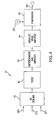
- FIGS. 6A and 6B show steps in a monitoring and control procedure and a test procedure, respectively, in accordance with an embodiment.
- a power grid on an aircraft has an IFE system with a plurality of connections, and a passenger entertainment device (PED) with a reactive load may be plugged into any of the connections.
- PED passenger entertainment device
- aircraft specifications require that one or more such loads must be disconnected if the voltage modulation exceeds a specified maximum value (in this example, 3.25 VRMS).
- the three phases are monitored for voltage modulation (step 601).
- the frequency of modulation may vary from about 1 Hz to about 20 Hz.
- the disconnect time interval is settable (via disconnect settings 541) at a time from about 1 second to about 15 seconds.
- the reconnect time interval is settable (via reconnect settings 551) at a time from about 1 minute to about 15 minutes.
- Normal operation 611 is characterized by a voltage modulation not greater than 2.6 VRMS. If the voltage modulation exceeds this value, but is less than the maximum permitted value (3.25 VRMS in this example; step 612), a RESTRICTED mode is set; this condition is communicated via a communication interface (step 622). In the restricted mode, unused connections on the grid are turned off, but connections in use are not affected (step 632).
- a DISABLED mode is set and communicated (step 623). Power to the PEDs is disabled (step 633), one connection at a time and at the set interval (between 1 and 15 seconds), for the selected period (between 1 and 15 minutes).
- step 643 When the reconnect time period expires (step 643), and if the voltage modulation has decreased to less than 2VRMS (steps 653, 663), the ENABLED mode is set and communicated (step 673).
- the disabled power connections are re-enabled in reverse order to their being disabled. Unused connections, previously turned off, are turned on again.
- Steps in a self-test (BITE) procedure performed at power on or by an external command 690 from a user of the system, are shown in FIG. 6B .
- the controller checks the voltage references, thresholds, and discrete driver output (step 691).
- the system is checked for a missing phase and for a modulation in any phase of greater than 3.25 VRMS (step 692).
- the system is held in the DISABLED mode until the test is successful.
- step 693 If the test is successful (step 693), a BITE status of PASS is communicated (step 694); signal 38 resets the disable driver circuit 35. If the test is not successful, a BITE status of FAIL is communicated (step 695), and the system continues in the DISABLED mode (step 696).
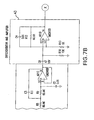
- FIGS. 7-9 are schematic circuit diagrams for a phase modulation detector, a time control circuit and disable driver, and a microprocessor for performing the self-test, in accordance with particular embodiments of the disclosure.
- FIG. 7 shows how an AC scaling circuit 41, a 6th order filter 42, differentiator/amplifier circuit 43, absolute value amplifier 44 and modulation comparator 45 may be realized.
- FIG. 8 has schematic circuit diagrams for the timer control circuit 34 (including clock divider circuit 51, trigger circuit 52, and UP/DOWN counters 54, 55) and disable driver circuit 35.
- FIG. 9 shows a schematic diagram of connections to controller 37, including modulation detection outputs 361-363, self-test signals 371-373 and BITE signal 38.
- FIG. 10 An alternative embodiment is shown schematically in FIG. 10 .
- a programmable controller is not used (compare FIG. 3 ).
- a separate SELF TEST circuit 81 coupled to the timer control circuit, sends self-test signals to the phase modulation detectors in response to a signal from a RESET circuit 82.
- the self-test procedure may also be invoked upon activation of the system or in response to a command from a user of the system.
- the MMCU may also be configured without a reconnect feature, as shown in FIG. 10 . In this embodiment, the MMCU disables (disconnects) loads successively at a preset disconnect interval to bring the modulation back below the threshold value, but does not automatically reconnect the loads..
Landscapes
- Engineering & Computer Science (AREA)
- Power Engineering (AREA)
- Inverter Devices (AREA)
- Control Of Electrical Variables (AREA)
- Direct Current Feeding And Distribution (AREA)
- Control Of Voltage And Current In General (AREA)
Abstract
Description
- This disclosure relates to a system for monitoring and controlling loads attached to a power system, and more particularly to a system for monitoring and controlling loads where available power is limited, such as an onboard power system for an aircraft.
- In limited power systems (including, but not limited to, power systems on an aircraft), a closed loop control system is often implemented to control the output voltage of a generator to ensure proper operation of devices attached to the power system.
- A typical closed loop control system for power generation is shown schematically in
FIG. 1 . The system has agenerator 11 and areference sensor 12, which senses theoutput 13 and provides areference signal 14 fed back to the generator. The output is connected to aload 15. The reference signal has a finite frequency response to allow for control of the output. As the output changes, the reference sensor adjusts the generator to remain at a constant output. - A critical point may be reached in a closed loop system where the input impedance Zin of the
load 15 is lower than the output impedance Zout of thegenerator 11. In this case, the system can revert from closed loop control to open loop control and possibly into sub-harmonic oscillation or modulation of the output voltage. - The onboard power generation system for a modem passenger aircraft must accommodate different types of loads. In the case of galleys, heaters, air conditioners, etc. the load is resistive, so that a decrease in the voltage input to the load causes a decrease in the load current. In contrast, inflight entertainment (IFE) systems and other electronic systems generally have a reactive load with a negative impedance or constant power characteristic, so that as the generator voltage decreases the load current increases. As the IFE system load increases, the impedance Zin decreases, and may become lower than the output dynamic impedance Zout of the generator. When this happens, the generator can go into a "hunting" mode in an attempt to regain closed loop control. This behavior typically presents itself as a voltage modulation about the mean of the voltage set point, characterized by a voltage modulation envelope.
- The power generating system may be designed to tolerate a certain modulation envelope size (maximum voltage peak to valley). The modulation may be successfully limited as long as the load remains within the boundaries for closed loop control. Accordingly, it is desirable to implement a modulation monitor and control system to control the load, limit the modulation envelope, and thereby ensure that the system stays within operational boundaries.
- The present disclosure provides a system and method for monitoring and controlling the voltage modulation on a power grid, in order to maintain closed-loop control of the grid. The power grid has a plurality of connections including unused connections to which a load is not connected and used connections to which a load is connected.
- According to a first aspect of the disclosure, a system is provided which includes a detector and a controller. The detector is configured to detect a modulation voltage on the power grid. The controller is configured to receive signals from the detector, and to control connections to the power grid. The controller disables power to the unused connections in accordance with the detected modulation voltage exceeding a first threshold and disables power to the used connections in accordance with the detected modulation voltage exceeding a second threshold; the used connections are disabled in sequence at a first time interval each for a period given by a second time interval. The controller also restores power to the used connections and to the unused connections in accordance with the detected modulation voltage being less than a third threshold.
- According to another aspect of the disclosure, a method for maintaining closed-loop control of a power grid includes the steps of: detecting a modulation voltage on a power grid; disabling power to the unused connections in accordance with the detected modulation voltage exceeding a first threshold; and disabling power to the used connections in accordance with the detected modulation voltage exceeding a second threshold. The used connections are disabled one at a time at a first time interval each for a period given by a second time interval. The method also includes the step of restoring power to the used connections and to the unused connections in accordance with the detected modulation voltage being less than a third threshold.
- According to an additional aspect of the disclosure, a system is provided which includes a detector and a timer control circuit. The detector is configured to detect a modulation voltage on a power grid. The timer control circuit is configured to receive signals from the detector and to control connections to the power grid by causing power to the unused connections to be disabled in accordance with the detected modulation voltage exceeding a first threshold, and causing power to the used connections to be disabled in accordance with the detected modulation voltage exceeding a second threshold.
- The foregoing has outlined, rather broadly, the preferred features of the present disclosure so that those skilled in the art may better understand the detailed description of the disclosure that follows. Additional features of the disclosure will be described hereinafter that form the subject of the claims of the disclosure. Those skilled in the art should appreciate that they can readily use the disclosed conception and specific embodiment as a basis for designing or modifying other structures for carrying out the same purposes of the present disclosure and that such other structures do not depart from the spirit and scope of the disclosure in its broadest form.
-
-
FIG 1 is a schematic illustration of a typical closed loop control system for power generation. -
FIG. 2 is a schematic block diagram of a power generation system including a power grid, loads, and a modulation monitor and control unit (MMCU), in accordance with the disclosure. -
FIG. 3 is a schematic block diagram of a modulation monitor and control unit (MMCU) in accordance with an embodiment of the disclosure. -
FIG. 4 is a schematic block diagram of a modulation detection circuit in an MMCU, in accordance with an embodiment of the disclosure. -
FIG. 5 is a schematic block diagram of a timer control circuit in an MMCU, in accordance with an embodiment of the disclosure. -
FIGS. 6A and6B are connected flowcharts showing a modulation control procedure and test procedure using an MMCU in accordance with an embodiment of the disclosure. -
FIG. 7 is a schematic circuit diagram for a modulation detection circuit in an MMCU embodying the disclosure. -
FIG. 8 is a schematic circuit diagram for a timer control circuit in an MMCU embodying the disclosure. -
FIG. 9 is a schematic circuit diagram showing connections to a controller in an MMCU embodying the disclosure. -
FIG. 10 is a schematic block diagram of a modulation monitor and control unit (MMCU) in accordance with another embodiment of the disclosure. -
FIG. 2 illustrates a power generation system with closed loop control and including a modulation monitoring and control unit (MMCU) 20.Power supply 21 delivers power togrid 25 and receivesfeedback 22 fromreference sensor 23. The MMCU monitors the voltage output to loads 24 (four shown inFIG. 2 , as an example), to detect voltage modulation about the voltage set point; the amount of modulation serves as an indication of degradation in performance of the system. The MMCU outputs acontrol signal 26 to either prevent a load from being added to the grid or disconnect an existing load from the grid, in order to bring the system back under control. -
FIG. 3 is a schematic block diagram of theMMCU 20 showing components thereof, in accordance with an embodiment of the disclosure. In this embodiment,power supply 21 outputs 3-phase AC line voltage;voltage signals phase modulation detectors neutral input 312. Phase modulation detectors 31-33 determine the amount of voltage modulation in each phase; a signal 361-363 corresponding to the modulation is output to atimer control circuit 34. -
Timer control circuit 34 includes adisconnect timer 341 and areconnect timer 342. Disconnecttimer 341 has a preset timing step (e.g. between 1 and 15 seconds) defining a time interval for disabling a load. If one or more signals 361-363 indicate that any of the three phases has a modulation greater than a defined threshold,disconnect timer 341 causes aSET signal 351 to be input to adisable driver circuit 35.Disable driver circuit 35 outputs aDISABLE signal 353 to disable loads successively at the preset disconnect interval, to bring the modulation back below the threshold value.Reconnect timer 342 has another preset timing step (e.g. between 1 and 15 minutes) defining a time interval for reconnecting a load. If signals 361-363 indicate that all of the three phases have been restored to a modulation less than the defined threshold, reconnecttimer 342 causes aRESET signal 352 to be input to disabledriver circuit 35.Disable driver circuit 35 outputs a REENABLE signal to reconnect loads successively at the preset reconnect interval. In this embodiment, loads are reconnected in the reverse order of disconnection (last off, first on). -
Controller 37 is configured to perform a confidence test of the system (built-in test or BITE). In an embodiment,controller 37 sends modulated voltage signals (self-test signals) 371-373 to phase modulation detectors 31-33, monitors signals 361-363, and modifies thetimers Controller 37 sends asignal 38 to reset the disabledriver 35 if the test is successful. The BITE test may be performed when the system is turned on and/or by an external command. - Further details of the phase modulation detectors 31-33 and the
timer control 34, according to particular embodiments of the disclosure, are shown inFIGS. 4 and5 respectively. - As shown schematically in
FIG. 4 , each phase modulation detector (e.g. detector 31) has an AC scaling circuit having as inputs theAC phase 311, neutral 312 and self-test signal 371.Circuit 41 scales the AC line voltage through a voltage divider. The line voltage phase signal is then processed though a filter (for example, a 6th order filter 42), to effectively remove the input carrier frequency from the voltage modulation (the voltage modulation being the signal of interest). The voltage modulation is input to a differentiator and highgain amplifier circuit 43. The output ofcircuit 43 is connected to anabsolute value amplifier 44, which is connected to acomparator circuit 45. The comparator circuit monitors the voltage modulation for a value greater than a reference voltage 451 (the modulation threshold); if the modulation voltage exceeds the threshold, the comparator circuit outputs signal 361 to trigger thetimer control circuit 34. - As shown schematically in
FIG. 5 , thetimer control circuit 34 includesclock divider 51,trigger circuit 52,disconnect timer 341 and reconnecttimer 342. The timer control circuit is connected to the disabledriver circuit 35, which outputs DISABLE signals to remove a load from the grid and REENABLE signals to reconnect a load to the grid. - A
master clock 50 provides a clock signal (typically at 32KHz) toclock divider circuit 51. This circuit then sends atimer signal 511 corresponding to a disconnect interval (e.g. 1 second) to disconnecttimer 341, and atimer signal 512 corresponding to a reconnect interval (e.g. 56 seconds) to reconnecttimer 342.Signals timers -
Trigger circuit 52 receives as inputs signals 361-363 from the phase modulation detector circuits 31-33, and hasoutputs timers -
Disconnect timer 341 includes anUP counter 54 that counts time intervals, in accordance withdisconnect settings 541 andinput 511 fromclock divider circuit 51. When a voltage modulation greater than the threshold exists in any of the three phases, theUP counter 54 is triggered; depending on the disconnect settings, DISABLEsignals 353 will be activated one at a time in steps from 1-15 seconds per step. - Reconnect
timer 342 includes aDOWN counter 55 that counts time intervals, in accordance with reconnectsettings 551 andinput 512 fromclock divider circuit 51. When the voltage modulation falls below the threshold for all of the phases, a REENABLE signal will be activated to reconnect loads to the power grid in the opposite order (last off, first on) in approximately 1-15 minute intervals as set by the reconnectsettings 551. - The reconnect
timer 342 may be viewed as an optional circuit, since a reconnect feature may not be desirable in all cases. Another embodiment, where the reconnect timer is not used, is discussed below with reference toFIG. 10 . -
FIGS. 6A and6B show steps in a monitoring and control procedure and a test procedure, respectively, in accordance with an embodiment. In this exemplary embodiment, a power grid on an aircraft has an IFE system with a plurality of connections, and a passenger entertainment device (PED) with a reactive load may be plugged into any of the connections. In order to maintain closed-loop control of the power grid, aircraft specifications require that one or more such loads must be disconnected if the voltage modulation exceeds a specified maximum value (in this example, 3.25 VRMS). - In the monitoring and control procedure, the three phases are monitored for voltage modulation (step 601). The frequency of modulation may vary from about 1 Hz to about 20 Hz. The disconnect time interval is settable (via disconnect settings 541) at a time from about 1 second to about 15 seconds. The reconnect time interval is settable (via reconnect settings 551) at a time from about 1 minute to about 15 minutes.
-
Normal operation 611 is characterized by a voltage modulation not greater than 2.6 VRMS. If the voltage modulation exceeds this value, but is less than the maximum permitted value (3.25 VRMS in this example; step 612), a RESTRICTED mode is set; this condition is communicated via a communication interface (step 622). In the restricted mode, unused connections on the grid are turned off, but connections in use are not affected (step 632). - If the voltage modulation increases to a value greater than 3.25 VRMS (step 613), a DISABLED mode is set and communicated (step 623). Power to the PEDs is disabled (step 633), one connection at a time and at the set interval (between 1 and 15 seconds), for the selected period (between 1 and 15 minutes).
- When the reconnect time period expires (step 643), and if the voltage modulation has decreased to less than 2VRMS (
steps 653, 663), the ENABLED mode is set and communicated (step 673). The disabled power connections are re-enabled in reverse order to their being disabled. Unused connections, previously turned off, are turned on again. - Steps in a self-test (BITE) procedure, performed at power on or by an
external command 690 from a user of the system, are shown inFIG. 6B . The controller checks the voltage references, thresholds, and discrete driver output (step 691). The system is checked for a missing phase and for a modulation in any phase of greater than 3.25 VRMS (step 692). The system is held in the DISABLED mode until the test is successful. - If the test is successful (step 693), a BITE status of PASS is communicated (step 694); signal 38 resets the disable
driver circuit 35. If the test is not successful, a BITE status of FAIL is communicated (step 695), and the system continues in the DISABLED mode (step 696). -
FIGS. 7-9 are schematic circuit diagrams for a phase modulation detector, a time control circuit and disable driver, and a microprocessor for performing the self-test, in accordance with particular embodiments of the disclosure.FIG. 7 shows how anAC scaling circuit 41, a6th order filter 42, differentiator/amplifier circuit 43,absolute value amplifier 44 andmodulation comparator 45 may be realized.FIG. 8 has schematic circuit diagrams for the timer control circuit 34 (includingclock divider circuit 51,trigger circuit 52, and UP/DOWN counters 54, 55) and disabledriver circuit 35.FIG. 9 shows a schematic diagram of connections tocontroller 37, including modulation detection outputs 361-363, self-test signals 371-373 andBITE signal 38. - An alternative embodiment is shown schematically in
FIG. 10 . In theMMCU 80 of this embodiment, a programmable controller is not used (compareFIG. 3 ). A separateSELF TEST circuit 81, coupled to the timer control circuit, sends self-test signals to the phase modulation detectors in response to a signal from aRESET circuit 82. As in the previous embodiment, the self-test procedure may also be invoked upon activation of the system or in response to a command from a user of the system. The MMCU may also be configured without a reconnect feature, as shown inFIG. 10 . In this embodiment, the MMCU disables (disconnects) loads successively at a preset disconnect interval to bring the modulation back below the threshold value, but does not automatically reconnect the loads.. - Further embodiments of the invention are set out in the following numbered paragraphs:
- 1. A system comprising:
- a detector configured to detect a modulation voltage on a power grid, the power grid having a plurality of connections including unused connections to which a load is not connected and used connections to which a load is connected; and
- a controller configured to receive signals from the detector and to control connections to the power grid by
disabling power to the unused connections in accordance with the detected modulation voltage exceeding a first threshold and disabling power to the used connections in accordance with the detected modulation voltage exceeding a second threshold, the used connections being disabled one at a time at a first time interval each for a period given by a second time interval, and
restoring power to the used connections and to the unused connections in accordance with the detected modulation voltage being less than a third threshold.
- 2. A system according to
paragraph 1, further comprising a closed-loop control device for the power grid, and wherein said controller is effective to maintain closed-loop control of the power grid by limiting the modulation voltage. - 3. A system according to
paragarph 1, wherein the controller includes- a first timer for counting time in accordance with the first time interval,
- a second timer for counting time in accordance with the second time interval, and
- a trigger for triggering the first timer and the second timer in accordance with a signal from the detector.
- 4. A system according to
paragraph 3, wherein the first time interval is in the range of 1 to 15 seconds, and the second time interval is in the range of 1 to 15 minutes. - 5. A system according to
paragraph 1, wherein the first threshold is approximately 2.6 VRMS, the second threshold is approximately 3.25 VRMS, and the third threshold is approximately 2 VRMS. - 6. A system according to
paragraph 1, wherein the system is installed on an aircraft, and the loads include resistive loads and reactive loads. - 7. A system according to
paragraph 6, wherein the controller restores power to used connections in reverse order relative to said connections having power disabled. - 8. A system according to
paragraph 1, further comprising a self-test device, connected to the detector and to the controller, for testing the system upon activation of the system or in response to a command from a user of the system. - 9. A system according to
paragraph 1, further comprising a 3-phase power supply connected to the power grid, and wherein the detector is configured to detect the modulation voltage for each of the phases. - 10. A method comprising:
- detecting a modulation voltage on a power grid, the power grid having a plurality of connections including unused connections to which a load is not connected and used connections to which a load is connected;
- disabling power to the unused connections in accordance with the detected modulation voltage exceeding a first threshold and disabling power to the used connections in accordance with the detected modulation voltage exceeding a second threshold, the used connections being disabled one at a time at a first time interval each for a period given by a second time interval, and
- restoring power to the used connections and to the unused connections in accordance with the detected modulation voltage being less than a third threshold,
- thereby maintaining closed-loop control of the power grid.
- 11. A method according to
paragraph 10, wherein the first threshold is approximately 2.6 VRMS, the second threshold is approximately 3.25 VRMS, and the third threshold is approximately 2 VRMS. - 12. A method according to
paragraph 10, wherein the first time interval is in the range of 1 to 15 seconds, and the second time interval is in the range of 1 to 15 minutes. - 13. A method according to
paragraph 10, wherein the power grid is installed on an aircraft, and the loads include resistive loads and reactive loads. - 14. A method according to
paragraph 13, wherein in said restoring step, power is restored to used connections in reverse order relative to said connections having power disabled in said disabling step. - 15. A method according to
paragraph 10, further comprising the step of performing a test procedure, using a self-test device, upon initiation of the method or in response to a command from a user. - 16. A system comprising:
- a power supply for delivering 3-phase power to a power grid, the power grid having a plurality of connections including unused connections to which a load is not connected and used connections to which a load is connected;
- a closed-loop control device for the power grid;
- a detector for detecting a modulation voltage in each of the phases, the detector receiving a voltage signal from the power supply for each of the phases and outputting a detection signal for each of the phases, the detector including a filter, an amplifier and a comparator configured to compare the modulation voltage with a threshold voltage;
- a controller connected to the detector and configured to control connections to the power grid in accordance with the detection signal, the controller including
a device for disabling power to the unused connections in accordance with the detected modulation exceeding a first threshold, for disabling power to the used connections in accordance with the detected modulation exceeding a second threshold, and for restoring power to the used connections and to the unused connections in accordance with the modulation being less than a third threshold, said device including
a first timer device for counting time in increments of a first time interval,
a second timer device for counting time that power to a used connection is disabled in increments of a second time interval, and
a disable driver, connected to the first timer device and the second timer device, the disable driver outputting a disable signal to cause power to one used connection to be disabled per first time interval and outputting a re-enable signal to cause power to be restored to a used connection upon expiration of the second time interval, and
a trigger device for triggering the first timer device and the second timer device, the trigger device receiving inputs from the detector for each of the phases.
- 17. A system according to
paragraph 16, wherein the first threshold is approximately 2.6 VRMS, the second threshold is approximately 3.25 VRMS, and the third threshold is approximately 2 VRMS. - 18. A system according to
paragraph 16, wherein the first time interval is in the range of 1 to 15 seconds, and the second time interval is in the range of 1 to 15 minutes. - 19. A system according to
paragraph 16, wherein the controller restores power to used connections in reverse order relative to said connections having power disabled. - 20. A system according to
paragraph 16, further comprising a self-test device, connected to the detector and to the controller, for testing the system upon activation of the system or in response to a command from a user of the system. - 21. A system comprising:
- a detector configured to detect a modulation voltage on a power grid, the power grid having a plurality of connections including unused connections to which a load is not connected and used connections to which a load is connected; and
- a timer control circuit configured to receive signals from the detector and to control connections to the power grid by
causing power to the unused connections to be disabled in accordance with the detected modulation voltage exceeding a first threshold and
causing power to the used connections to be disabled in accordance with the detected modulation voltage exceeding a second threshold, - the used connections being disabled one at a time at a preset time interval.
- 22. A system according to
paragraph 21, further comprising a closed-loop control device for the power grid, and wherein said controller is effective to maintain closed-loop control of the power grid by limiting the modulation voltage. - 23. A system according to
paragraph 21, wherein the timer control circuit includes
a timer for counting time in accordance with the preset time interval, and
a trigger for triggering the timer in accordance with a signal from the detector. - 24. A system according to
paragraph 23, wherein the preset time interval is in the range of 1 to 15 seconds. - 25. A system according to
paragraph 21, wherein the first threshold is approximately 2.6 VRMS, and the second threshold is approximately 3.25 VRMS. - 26. A system according to
paragraph 21, wherein the system is installed on an aircraft, and the loads include resistive loads and reactive loads. - 27. A system according to
paragraph 21, further comprising a self-test device, connected to the detector, for testing the system upon activation of the system or in response to a command from a user of the system. - 28. A system according to
paragraph 21, further comprising a 3-phase power supply connected to the power grid, and wherein the detector is configured to detect the modulation voltage for each of the phases. - While the disclosure has been described in terms of specific embodiments, it is evident in view of the foregoing description that numerous alternatives, modifications and variations will be apparent to those skilled in the art. Accordingly, the disclosure is intended to encompass all such alternatives, modifications and variations which fall within the scope and spirit of the disclosure and the following claims.
Claims (15)
- A system comprising:a detector configured to detect a modulation voltage on a power grid, the power grid having a plurality of connections including unused connections to which a load is not connected and used connections to which a load is connected; anda controller configured to receive signals from the detector and to control connections to the power grid by
disabling power to the unused connections in accordance with the detected modulation voltage exceeding a first threshold and disabling power to the used connections in accordance with the detected modulation voltage exceeding a second threshold, the used connections being disabled one at a time at a first time interval each for a period given by a second time interval, and
restoring power to the used connections and to the unused connections in accordance with the detected modulation voltage being less than a third threshold. - A system according to claim 1, further comprising a closed-loop control device for the power grid, and wherein said controller is effective to maintain closed-loop control of the power grid by limiting the modulation voltage.
- A system according to claim 1, wherein the controller includes
a first timer for counting time in accordance with the first time interval,
a second timer for counting time in accordance with the second time interval, and
a trigger for triggering the first timer and the second timer in accordance with a signal from the detector. - A system according to claim 3, wherein the first time interval is in the range of 1 to 15 seconds, and the second time interval is in the range of 1 to 15 minutes.
- A system according to claim 1, wherein the first threshold is approximately 2.6 VRMS, the second threshold is approximately 3.25 VRMS, and the third threshold is approximately 2 VRMS.
- A system according to claim 1, wherein the system is installed on an aircraft, and the loads include resistive loads and reactive loads.
- A system according to claim 6, wherein the controller restores power to used connections in reverse order relative to said connections having power disabled.
- A system according to claim 1, further comprising a self-test device, connected to the detector and to the controller, for testing the system upon activation of the system or in response to a command from a user of the system.
- A system according to claim 1, further comprising a 3-phase power supply connected to the power grid, and wherein the detector is configured to detect the modulation voltage for each of the phases.
- A system according to claim 1, further comprising
a power supply for delivering 3-phase power to the power grid, and
a closed-loop control device for the power grid, and wherein
the detector is configured to detect a modulation voltage in each of the phases, the detector receiving a voltage signal from the power supply for each of the phases and outputting a detection signal for each of the phases, the detector including a filter, an amplifier and a comparator configured to compare the modulation voltage with a threshold voltage, and
the controller further includes
a first timer device for counting time in increments of the first time interval,
a second timer device for counting time that power to a used connection is disabled in increments of the second time interval,
a disable driver, connected to the first timer device and the second timer device, the disable driver outputting a disable signal to cause power to one used connection to be disabled per first time interval and outputting a re-enable signal to cause power to be restored to a used connection upon expiration of the second time interval, and
a trigger device for triggering the first timer device and the second timer device, the trigger device receiving inputs from the detector for each of the phases. - A system according to claim 1, wherein the controller further comprises:a timer control circuit configured to receive signals from the detector and to control connections to the power grid by
causing power to the unused connections to be disabled in accordance with the detected modulation voltage exceeding the first threshold and
causing power to the used connections to be disabled in accordance with the detected modulation voltage exceeding the second threshold. - A system according to claim 11, wherein the timer control circuit includes
a timer for counting time in accordance with the preset time interval, and
a trigger for triggering the timer in accordance with a signal from the detector. - A system according to claim 11, wherein the system is installed on an aircraft, and the loads include resistive loads and reactive loads.
- A system according to claim 11, further comprising a self-test device, connected to the detector, for testing the system upon activation of the system or in response to a command from a user of the system.
- A system according to claim 11, further comprising a 3-phase power supply connected to the power grid, and wherein the detector is configured to detect the modulation voltage for each of the phases.
Applications Claiming Priority (1)
| Application Number | Priority Date | Filing Date | Title |
|---|---|---|---|
| US12/365,257 US8053925B2 (en) | 2009-02-04 | 2009-02-04 | Modulation monitor and control |
Publications (3)
| Publication Number | Publication Date |
|---|---|
| EP2216869A2 true EP2216869A2 (en) | 2010-08-11 |
| EP2216869A3 EP2216869A3 (en) | 2013-11-13 |
| EP2216869B1 EP2216869B1 (en) | 2017-08-30 |
Family
ID=42144968
Family Applications (1)
| Application Number | Title | Priority Date | Filing Date |
|---|---|---|---|
| EP10152705.9A Not-in-force EP2216869B1 (en) | 2009-02-04 | 2010-02-04 | Monitor and control for a voltage supply modulator |
Country Status (2)
| Country | Link |
|---|---|
| US (1) | US8053925B2 (en) |
| EP (1) | EP2216869B1 (en) |
Families Citing this family (9)
| Publication number | Priority date | Publication date | Assignee | Title |
|---|---|---|---|---|
| US9766676B2 (en) * | 2012-10-26 | 2017-09-19 | Intel Corporation | Computing subsystem hardware recovery via automated selective power cycling |
| WO2016182743A1 (en) | 2015-05-09 | 2016-11-17 | Medtronic, Inc. | Methods and devices that utilize hardware to move blocks of operating parameter data from memory to a register set |
| CN105470995B (en) * | 2015-12-31 | 2017-11-24 | 北京四方继保自动化股份有限公司 | A kind of double frequency shore electric power simultaneous interconnecting and power smooth transfer method |
| US9914548B1 (en) | 2017-02-22 | 2018-03-13 | Imagik International Corporation | USB power management and load distribution system |
| US10437315B2 (en) * | 2017-06-22 | 2019-10-08 | Intel Corporation | System, apparatus and method for dynamically controlling error protection features of a processor |
| CN107766649B (en) * | 2017-10-19 | 2021-05-14 | 南京国电南自电网自动化有限公司 | System protection real-time closed-loop simulation test system and operation method thereof |
| EP3480609B1 (en) * | 2017-11-02 | 2020-04-29 | Siemens Aktiengesellschaft | Modification of measuring signals for testing of protection systems for electrical power grids |
| US11216370B2 (en) * | 2018-02-20 | 2022-01-04 | Medtronic, Inc. | Methods and devices that utilize hardware to move blocks of operating parameter data from memory to a register set |
| CN112511121B (en) * | 2020-12-12 | 2024-04-02 | 江西洪都航空工业集团有限责任公司 | Airplane power grid differential pressure switching-on operation circuit |
Family Cites Families (14)
| Publication number | Priority date | Publication date | Assignee | Title |
|---|---|---|---|---|
| US4090088A (en) | 1977-02-17 | 1978-05-16 | Encon Systems, Inc. | Power management system |
| US4206443A (en) | 1978-02-17 | 1980-06-03 | Westinghouse Electric Corp. | Protective load disconnect unit for remote load control systems |
| US4868412A (en) | 1988-10-28 | 1989-09-19 | Sundstrand Corporation | Distributed control system |
| US5621627A (en) * | 1995-04-14 | 1997-04-15 | Ac International Inc. | A.C. to A.C. power converter for the adaptive correction of waveform abnormalities |
| US5754445A (en) | 1995-12-20 | 1998-05-19 | Primex Technologies, Inc. | Load distribution and management system |
| US5886422A (en) * | 1997-07-30 | 1999-03-23 | Spartec International Corporation | Universal electric power controller |
| US6188314B1 (en) * | 1999-02-03 | 2001-02-13 | Trw Inc. | Energy distribution and communication system and method utilizing a communication message frame for a multi-device vehicle occupant protection system |
| DE19906076C2 (en) | 1999-02-12 | 2002-05-08 | Kid Systeme Gmbh | Device for supplying power to electrical consumers which are connected to seats in an aircraft associated with decentralized power supply units |
| JP3747837B2 (en) * | 2001-10-30 | 2006-02-22 | 株式会社デンソー | Level judgment circuit threshold voltage setting method |
| US6762577B2 (en) * | 2001-11-14 | 2004-07-13 | General Electric Company | DC motor speed control system |
| US20040021371A1 (en) * | 2002-02-08 | 2004-02-05 | General Dynamics Ots (Aerospace), Inc. | System power control using multiple power levels |
| US7149605B2 (en) * | 2003-06-13 | 2006-12-12 | Battelle Memorial Institute | Electrical power distribution control methods, electrical energy demand monitoring methods, and power management devices |
| US20060106503A1 (en) | 2004-11-16 | 2006-05-18 | Astronics Advanced Electronic Systems Corp., A Corporation Of The State Of Washington | Method and system for thermal management |
| EP2162967B1 (en) * | 2007-06-15 | 2020-03-04 | Fisher Controls International Llc | Input regulated dc to dc converter for power scavenging |
-
2009
- 2009-02-04 US US12/365,257 patent/US8053925B2/en active Active
-
2010
- 2010-02-04 EP EP10152705.9A patent/EP2216869B1/en not_active Not-in-force
Non-Patent Citations (1)
| Title |
|---|
| None |
Also Published As
| Publication number | Publication date |
|---|---|
| US8053925B2 (en) | 2011-11-08 |
| US20100194196A1 (en) | 2010-08-05 |
| EP2216869A3 (en) | 2013-11-13 |
| EP2216869B1 (en) | 2017-08-30 |
Similar Documents
| Publication | Publication Date | Title |
|---|---|---|
| EP2216869B1 (en) | Monitor and control for a voltage supply modulator | |
| EP3226380A1 (en) | Uninterruptible power supply | |
| EP2720052A2 (en) | System and method for automated failure detection of hold-up power storage devices | |
| US9779559B2 (en) | Circuit for monitoring abnormality of ECU | |
| NZ577490A (en) | Power supply control device | |
| US20040184208A1 (en) | Power protecting device for electrical power source and load | |
| US20110266870A1 (en) | Master/slave power strip with delay mechanism | |
| WO2016134205A1 (en) | Systems of detecting ground faults in energy storage and/or generation systems that employ dc/ac power conversion systems | |
| EP2953229A1 (en) | Method of redundant monitoring and protection of ac power generation channels | |
| CN103580462B (en) | Power-supply device, processing equipment, information processing system and the method for control power supply | |
| EP2071715A2 (en) | Power supply controller and mechanical apparatus using the same | |
| TW201539001A (en) | A power supply device, a test equipment comprising a power supply device and a method for operating a power supply device | |
| CN108872746B (en) | Misjudgment prevention method and device for voltage drop test | |
| JPH0659779A (en) | Method of detecting voltage transition | |
| CN113109738B (en) | Power-down time detection circuit and power-down time detection system | |
| JPH03503833A (en) | electrical load reduction circuit | |
| EP3742595B1 (en) | Surge protection circuit with integrated surveillance | |
| KR101779943B1 (en) | Operation voltage detection circuit of MCU | |
| EP4366103A1 (en) | Power supply unit wrapper | |
| CN107818066B (en) | Data communication system | |
| US11451046B2 (en) | Single switch electronic fuses with multiple power outputs | |
| TWI532285B (en) | Protection circuit and method for electrical apparatus | |
| JP2008067518A (en) | Inverter device and air conditioner | |
| US10439386B2 (en) | Protection method for protecting a generator or power station unit and protective device for carrying out such a method | |
| KR101543381B1 (en) | Method for controlling an aviation electronic device using input and output voltage monitoring |
Legal Events
| Date | Code | Title | Description |
|---|---|---|---|
| PUAI | Public reference made under article 153(3) epc to a published international application that has entered the european phase |
Free format text: ORIGINAL CODE: 0009012 |
|
| AK | Designated contracting states |
Kind code of ref document: A2 Designated state(s): AT BE BG CH CY CZ DE DK EE ES FI FR GB GR HR HU IE IS IT LI LT LU LV MC MK MT NL NO PL PT RO SE SI SK SM TR |
|
| AX | Request for extension of the european patent |
Extension state: AL BA RS |
|
| PUAL | Search report despatched |
Free format text: ORIGINAL CODE: 0009013 |
|
| AK | Designated contracting states |
Kind code of ref document: A3 Designated state(s): AT BE BG CH CY CZ DE DK EE ES FI FR GB GR HR HU IE IS IT LI LT LU LV MC MK MT NL NO PL PT RO SE SI SK SM TR |
|
| AX | Request for extension of the european patent |
Extension state: AL BA RS |
|
| RIC1 | Information provided on ipc code assigned before grant |
Ipc: H02J 1/14 20060101AFI20131008BHEP |
|
| 17P | Request for examination filed |
Effective date: 20140513 |
|
| RBV | Designated contracting states (corrected) |
Designated state(s): AT BE BG CH CY CZ DE DK EE ES FI FR GB GR HR HU IE IS IT LI LT LU LV MC MK MT NL NO PL PT RO SE SI SK SM TR |
|
| GRAP | Despatch of communication of intention to grant a patent |
Free format text: ORIGINAL CODE: EPIDOSNIGR1 |
|
| INTG | Intention to grant announced |
Effective date: 20170314 |
|
| GRAS | Grant fee paid |
Free format text: ORIGINAL CODE: EPIDOSNIGR3 |
|
| GRAA | (expected) grant |
Free format text: ORIGINAL CODE: 0009210 |
|
| AK | Designated contracting states |
Kind code of ref document: B1 Designated state(s): AT BE BG CH CY CZ DE DK EE ES FI FR GB GR HR HU IE IS IT LI LT LU LV MC MK MT NL NO PL PT RO SE SI SK SM TR |
|
| REG | Reference to a national code |
Ref country code: GB Ref legal event code: FG4D |
|
| REG | Reference to a national code |
Ref country code: CH Ref legal event code: EP |
|
| REG | Reference to a national code |
Ref country code: AT Ref legal event code: REF Ref document number: 924492 Country of ref document: AT Kind code of ref document: T Effective date: 20170915 |
|
| REG | Reference to a national code |
Ref country code: IE Ref legal event code: FG4D |
|
| REG | Reference to a national code |
Ref country code: DE Ref legal event code: R096 Ref document number: 602010044764 Country of ref document: DE |
|
| REG | Reference to a national code |
Ref country code: NL Ref legal event code: MP Effective date: 20170830 |
|
| REG | Reference to a national code |
Ref country code: LT Ref legal event code: MG4D |
|
| REG | Reference to a national code |
Ref country code: AT Ref legal event code: MK05 Ref document number: 924492 Country of ref document: AT Kind code of ref document: T Effective date: 20170830 |
|
| PG25 | Lapsed in a contracting state [announced via postgrant information from national office to epo] |
Ref country code: SE Free format text: LAPSE BECAUSE OF FAILURE TO SUBMIT A TRANSLATION OF THE DESCRIPTION OR TO PAY THE FEE WITHIN THE PRESCRIBED TIME-LIMIT Effective date: 20170830 Ref country code: NO Free format text: LAPSE BECAUSE OF FAILURE TO SUBMIT A TRANSLATION OF THE DESCRIPTION OR TO PAY THE FEE WITHIN THE PRESCRIBED TIME-LIMIT Effective date: 20171130 Ref country code: AT Free format text: LAPSE BECAUSE OF FAILURE TO SUBMIT A TRANSLATION OF THE DESCRIPTION OR TO PAY THE FEE WITHIN THE PRESCRIBED TIME-LIMIT Effective date: 20170830 Ref country code: FI Free format text: LAPSE BECAUSE OF FAILURE TO SUBMIT A TRANSLATION OF THE DESCRIPTION OR TO PAY THE FEE WITHIN THE PRESCRIBED TIME-LIMIT Effective date: 20170830 Ref country code: HR Free format text: LAPSE BECAUSE OF FAILURE TO SUBMIT A TRANSLATION OF THE DESCRIPTION OR TO PAY THE FEE WITHIN THE PRESCRIBED TIME-LIMIT Effective date: 20170830 Ref country code: LT Free format text: LAPSE BECAUSE OF FAILURE TO SUBMIT A TRANSLATION OF THE DESCRIPTION OR TO PAY THE FEE WITHIN THE PRESCRIBED TIME-LIMIT Effective date: 20170830 |
|
| REG | Reference to a national code |
Ref country code: FR Ref legal event code: PLFP Year of fee payment: 9 |
|
| PG25 | Lapsed in a contracting state [announced via postgrant information from national office to epo] |
Ref country code: IS Free format text: LAPSE BECAUSE OF FAILURE TO SUBMIT A TRANSLATION OF THE DESCRIPTION OR TO PAY THE FEE WITHIN THE PRESCRIBED TIME-LIMIT Effective date: 20171230 Ref country code: GR Free format text: LAPSE BECAUSE OF FAILURE TO SUBMIT A TRANSLATION OF THE DESCRIPTION OR TO PAY THE FEE WITHIN THE PRESCRIBED TIME-LIMIT Effective date: 20171201 Ref country code: LV Free format text: LAPSE BECAUSE OF FAILURE TO SUBMIT A TRANSLATION OF THE DESCRIPTION OR TO PAY THE FEE WITHIN THE PRESCRIBED TIME-LIMIT Effective date: 20170830 Ref country code: ES Free format text: LAPSE BECAUSE OF FAILURE TO SUBMIT A TRANSLATION OF THE DESCRIPTION OR TO PAY THE FEE WITHIN THE PRESCRIBED TIME-LIMIT Effective date: 20170830 Ref country code: BG Free format text: LAPSE BECAUSE OF FAILURE TO SUBMIT A TRANSLATION OF THE DESCRIPTION OR TO PAY THE FEE WITHIN THE PRESCRIBED TIME-LIMIT Effective date: 20171130 |
|
| PG25 | Lapsed in a contracting state [announced via postgrant information from national office to epo] |
Ref country code: NL Free format text: LAPSE BECAUSE OF FAILURE TO SUBMIT A TRANSLATION OF THE DESCRIPTION OR TO PAY THE FEE WITHIN THE PRESCRIBED TIME-LIMIT Effective date: 20170830 |
|
| PG25 | Lapsed in a contracting state [announced via postgrant information from national office to epo] |
Ref country code: PL Free format text: LAPSE BECAUSE OF FAILURE TO SUBMIT A TRANSLATION OF THE DESCRIPTION OR TO PAY THE FEE WITHIN THE PRESCRIBED TIME-LIMIT Effective date: 20170830 Ref country code: DK Free format text: LAPSE BECAUSE OF FAILURE TO SUBMIT A TRANSLATION OF THE DESCRIPTION OR TO PAY THE FEE WITHIN THE PRESCRIBED TIME-LIMIT Effective date: 20170830 Ref country code: CZ Free format text: LAPSE BECAUSE OF FAILURE TO SUBMIT A TRANSLATION OF THE DESCRIPTION OR TO PAY THE FEE WITHIN THE PRESCRIBED TIME-LIMIT Effective date: 20170830 Ref country code: RO Free format text: LAPSE BECAUSE OF FAILURE TO SUBMIT A TRANSLATION OF THE DESCRIPTION OR TO PAY THE FEE WITHIN THE PRESCRIBED TIME-LIMIT Effective date: 20170830 |
|
| PG25 | Lapsed in a contracting state [announced via postgrant information from national office to epo] |
Ref country code: SM Free format text: LAPSE BECAUSE OF FAILURE TO SUBMIT A TRANSLATION OF THE DESCRIPTION OR TO PAY THE FEE WITHIN THE PRESCRIBED TIME-LIMIT Effective date: 20170830 Ref country code: IT Free format text: LAPSE BECAUSE OF FAILURE TO SUBMIT A TRANSLATION OF THE DESCRIPTION OR TO PAY THE FEE WITHIN THE PRESCRIBED TIME-LIMIT Effective date: 20170830 Ref country code: SK Free format text: LAPSE BECAUSE OF FAILURE TO SUBMIT A TRANSLATION OF THE DESCRIPTION OR TO PAY THE FEE WITHIN THE PRESCRIBED TIME-LIMIT Effective date: 20170830 Ref country code: EE Free format text: LAPSE BECAUSE OF FAILURE TO SUBMIT A TRANSLATION OF THE DESCRIPTION OR TO PAY THE FEE WITHIN THE PRESCRIBED TIME-LIMIT Effective date: 20170830 |
|
| REG | Reference to a national code |
Ref country code: DE Ref legal event code: R097 Ref document number: 602010044764 Country of ref document: DE |
|
| PLBE | No opposition filed within time limit |
Free format text: ORIGINAL CODE: 0009261 |
|
| STAA | Information on the status of an ep patent application or granted ep patent |
Free format text: STATUS: NO OPPOSITION FILED WITHIN TIME LIMIT |
|
| 26N | No opposition filed |
Effective date: 20180531 |
|
| PG25 | Lapsed in a contracting state [announced via postgrant information from national office to epo] |
Ref country code: SI Free format text: LAPSE BECAUSE OF FAILURE TO SUBMIT A TRANSLATION OF THE DESCRIPTION OR TO PAY THE FEE WITHIN THE PRESCRIBED TIME-LIMIT Effective date: 20170830 |
|
| REG | Reference to a national code |
Ref country code: CH Ref legal event code: PL |
|
| PG25 | Lapsed in a contracting state [announced via postgrant information from national office to epo] |
Ref country code: MC Free format text: LAPSE BECAUSE OF FAILURE TO SUBMIT A TRANSLATION OF THE DESCRIPTION OR TO PAY THE FEE WITHIN THE PRESCRIBED TIME-LIMIT Effective date: 20170830 |
|
| REG | Reference to a national code |
Ref country code: IE Ref legal event code: MM4A |
|
| REG | Reference to a national code |
Ref country code: BE Ref legal event code: MM Effective date: 20180228 |
|
| PG25 | Lapsed in a contracting state [announced via postgrant information from national office to epo] |
Ref country code: CH Free format text: LAPSE BECAUSE OF NON-PAYMENT OF DUE FEES Effective date: 20180228 Ref country code: LU Free format text: LAPSE BECAUSE OF NON-PAYMENT OF DUE FEES Effective date: 20180204 Ref country code: LI Free format text: LAPSE BECAUSE OF NON-PAYMENT OF DUE FEES Effective date: 20180228 |
|
| PG25 | Lapsed in a contracting state [announced via postgrant information from national office to epo] |
Ref country code: IE Free format text: LAPSE BECAUSE OF NON-PAYMENT OF DUE FEES Effective date: 20180204 |
|
| PG25 | Lapsed in a contracting state [announced via postgrant information from national office to epo] |
Ref country code: BE Free format text: LAPSE BECAUSE OF NON-PAYMENT OF DUE FEES Effective date: 20180228 |
|
| PG25 | Lapsed in a contracting state [announced via postgrant information from national office to epo] |
Ref country code: MT Free format text: LAPSE BECAUSE OF NON-PAYMENT OF DUE FEES Effective date: 20180204 |
|
| PG25 | Lapsed in a contracting state [announced via postgrant information from national office to epo] |
Ref country code: TR Free format text: LAPSE BECAUSE OF FAILURE TO SUBMIT A TRANSLATION OF THE DESCRIPTION OR TO PAY THE FEE WITHIN THE PRESCRIBED TIME-LIMIT Effective date: 20170830 |
|
| PGFP | Annual fee paid to national office [announced via postgrant information from national office to epo] |
Ref country code: DE Payment date: 20200227 Year of fee payment: 11 Ref country code: GB Payment date: 20200227 Year of fee payment: 11 |
|
| PG25 | Lapsed in a contracting state [announced via postgrant information from national office to epo] |
Ref country code: PT Free format text: LAPSE BECAUSE OF FAILURE TO SUBMIT A TRANSLATION OF THE DESCRIPTION OR TO PAY THE FEE WITHIN THE PRESCRIBED TIME-LIMIT Effective date: 20170830 Ref country code: HU Free format text: LAPSE BECAUSE OF FAILURE TO SUBMIT A TRANSLATION OF THE DESCRIPTION OR TO PAY THE FEE WITHIN THE PRESCRIBED TIME-LIMIT; INVALID AB INITIO Effective date: 20100204 |
|
| PG25 | Lapsed in a contracting state [announced via postgrant information from national office to epo] |
Ref country code: CY Free format text: LAPSE BECAUSE OF FAILURE TO SUBMIT A TRANSLATION OF THE DESCRIPTION OR TO PAY THE FEE WITHIN THE PRESCRIBED TIME-LIMIT Effective date: 20170830 Ref country code: MK Free format text: LAPSE BECAUSE OF NON-PAYMENT OF DUE FEES Effective date: 20170830 |
|
| PGFP | Annual fee paid to national office [announced via postgrant information from national office to epo] |
Ref country code: FR Payment date: 20200225 Year of fee payment: 11 |
|
| REG | Reference to a national code |
Ref country code: DE Ref legal event code: R119 Ref document number: 602010044764 Country of ref document: DE |
|
| GBPC | Gb: european patent ceased through non-payment of renewal fee |
Effective date: 20210204 |
|
| PG25 | Lapsed in a contracting state [announced via postgrant information from national office to epo] |
Ref country code: GB Free format text: LAPSE BECAUSE OF NON-PAYMENT OF DUE FEES Effective date: 20210204 Ref country code: FR Free format text: LAPSE BECAUSE OF NON-PAYMENT OF DUE FEES Effective date: 20210228 Ref country code: DE Free format text: LAPSE BECAUSE OF NON-PAYMENT OF DUE FEES Effective date: 20210901 |