EP2215801B1 - Method for securing a bi-directional communication channel and device for implementing said method - Google Patents
Method for securing a bi-directional communication channel and device for implementing said method Download PDFInfo
- Publication number
- EP2215801B1 EP2215801B1 EP08853480A EP08853480A EP2215801B1 EP 2215801 B1 EP2215801 B1 EP 2215801B1 EP 08853480 A EP08853480 A EP 08853480A EP 08853480 A EP08853480 A EP 08853480A EP 2215801 B1 EP2215801 B1 EP 2215801B1
- Authority
- EP
- European Patent Office
- Prior art keywords
- data
- network
- module
- towards
- filtering
- Prior art date
- Legal status (The legal status is an assumption and is not a legal conclusion. Google has not performed a legal analysis and makes no representation as to the accuracy of the status listed.)
- Not-in-force
Links
- 238000000034 method Methods 0.000 title claims abstract description 25
- 230000007175 bidirectional communication Effects 0.000 title claims description 7
- 238000001914 filtration Methods 0.000 claims abstract description 45
- 230000006854 communication Effects 0.000 claims abstract description 23
- 238000004891 communication Methods 0.000 claims abstract description 23
- 238000004458 analytical method Methods 0.000 claims description 29
- 230000005540 biological transmission Effects 0.000 claims description 10
- 230000004044 response Effects 0.000 claims description 9
- 230000008569 process Effects 0.000 claims description 7
- 230000007704 transition Effects 0.000 claims description 3
- 230000000903 blocking effect Effects 0.000 claims 1
- 238000010586 diagram Methods 0.000 description 5
- 230000035945 sensitivity Effects 0.000 description 5
- 230000003542 behavioural effect Effects 0.000 description 4
- 230000011664 signaling Effects 0.000 description 4
- 238000012795 verification Methods 0.000 description 4
- 230000008901 benefit Effects 0.000 description 3
- 238000012545 processing Methods 0.000 description 3
- 238000012546 transfer Methods 0.000 description 2
- 240000008042 Zea mays Species 0.000 description 1
- 230000002159 abnormal effect Effects 0.000 description 1
- 238000013459 approach Methods 0.000 description 1
- 238000013475 authorization Methods 0.000 description 1
- 230000001149 cognitive effect Effects 0.000 description 1
- 230000001427 coherent effect Effects 0.000 description 1
- 238000007405 data analysis Methods 0.000 description 1
- 238000011161 development Methods 0.000 description 1
- 238000003745 diagnosis Methods 0.000 description 1
- 230000005670 electromagnetic radiation Effects 0.000 description 1
- 238000012423 maintenance Methods 0.000 description 1
- 230000007257 malfunction Effects 0.000 description 1
- 239000003550 marker Substances 0.000 description 1
- 230000004043 responsiveness Effects 0.000 description 1
- 238000005070 sampling Methods 0.000 description 1
- 230000009897 systematic effect Effects 0.000 description 1
- 230000002123 temporal effect Effects 0.000 description 1
- 238000011282 treatment Methods 0.000 description 1
- 238000011144 upstream manufacturing Methods 0.000 description 1
Images
Classifications
-
- H—ELECTRICITY
- H04—ELECTRIC COMMUNICATION TECHNIQUE
- H04L—TRANSMISSION OF DIGITAL INFORMATION, e.g. TELEGRAPHIC COMMUNICATION
- H04L63/00—Network architectures or network communication protocols for network security
- H04L63/02—Network architectures or network communication protocols for network security for separating internal from external traffic, e.g. firewalls
- H04L63/0209—Architectural arrangements, e.g. perimeter networks or demilitarized zones
-
- H—ELECTRICITY
- H04—ELECTRIC COMMUNICATION TECHNIQUE
- H04L—TRANSMISSION OF DIGITAL INFORMATION, e.g. TELEGRAPHIC COMMUNICATION
- H04L63/00—Network architectures or network communication protocols for network security
- H04L63/10—Network architectures or network communication protocols for network security for controlling access to devices or network resources
- H04L63/105—Multiple levels of security
-
- H—ELECTRICITY
- H04—ELECTRIC COMMUNICATION TECHNIQUE
- H04L—TRANSMISSION OF DIGITAL INFORMATION, e.g. TELEGRAPHIC COMMUNICATION
- H04L63/00—Network architectures or network communication protocols for network security
- H04L63/04—Network architectures or network communication protocols for network security for providing a confidential data exchange among entities communicating through data packet networks
- H04L63/0428—Network architectures or network communication protocols for network security for providing a confidential data exchange among entities communicating through data packet networks wherein the data content is protected, e.g. by encrypting or encapsulating the payload
Definitions
- the present invention relates to a method of securing a bidirectional communication channel and a device for implementing the method.
- the invention notably makes it possible to establish communications between several networks of different security levels.
- an internal company network is authorized to receive certain data from an external network, but no data from the internal network must pass in the clear to the external network.
- an encryption / decryption device is placed at the output of each of these corporate networks. All data is encrypted at the output of the originating corporate network, which data is decrypted by the receiving company network, so that no data from an enterprise network passes unencrypted over the public intermediate network. .
- each network must include a domain name server, a universal time server, or any other type of service that is a priori a-confidential, essential to its operation.
- diagnosis of the state of the public network can not be done through the encryption / decryption devices. For example, it is impossible to report to a public network, an incident occurred on the protected network, a simple malfunction alarm, intrinsically non-confidential, can not be transmitted from the protected network to a network of lower protection level.
- the filtering step comprises a phase of parsing the data, said phase controlling the validity of the format of the data according to the protocol used for the transmission of this data.
- the filtering step includes a phase of semantic data analysis, said phase controlling the coherence of the responses sent from the network N2 to the network N1 with respect to requests sent by the network N1 to the network N2. .
- the filtering step includes a phase of behavioral analysis of the data, said phase evaluating the probability of safety of data exchanges between the network N1 and the network N2 with respect to predefined interconnection scenarios. between these two networks, an interconnection scenario defining, from the the PLC of the data transmission protocol, the expected transition times between these states.
- the filtering step includes a step of retranscribing data formatted by a first protocol to retranslate it into a data formatted by a second protocol.
- the invention also relates to a device for establishing a bidirectional communication channel between at least a first network N1 and a second network N2 with a security level lower than N1, the device comprising an encryption module and a decryption module, the device comprising at least a first switching module, a second switching module and a filtering module, the first switching module directing the data packets from the first network N1, either to the encryption module, or to the filtering module, the second routing module orienting the data packets from the second network N2, either to the decryption module or to the filtering module, the filtering module implementing the method as described above .
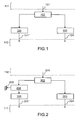
- the figure 1 presents a block diagram illustrating the steps of transit of data from a first network 111 to a second network 112 of a security level lower than the first by applying a security method according to the invention.
- a request sent by the first network 111 to a domain name server located on the second network 112 is directed to the filtering step 104 and not to the encryption step 103, because the data contained in this query may not be considered sensitive.
- the example can be extended to a multitude of services - for example, bandwidth resource reservation services, directories, universal time servers - depending, in particular, security constraints on the networks concerned.
- the method can therefore be seen as a method of encryption with controlled opacity, the opacity level being configured according to the proportion of services authorized to transmit information via the filtering step 104 and according to the context of use and the level of associated threats. Opacity is naturally maintained at a high level for networks requiring high levels of protection.
- the conventional case of the total encryption can also be obtained by not allowing any transmission via the filtering step 104, in other words by requiring the switching module 102 to orient the received data systematically to the encryption step 103 .
- each packet taken separately may not contain sensitive information, while the succession of these packets may result in the creation of a communication code.
- the presence of a more or less long time interval between each request may constitute a code that can be exploited to evade information outside the first network 111.
- an abnormal variation in the value of the quality of service marker during the issuance of a succession of packets may also constitute a hidden communication channel.
- a second step if the data is directed to an encryption step 103, the encrypted data 101 'produced by said step is transmitted to the second network 112; if the data is directed to the filtering step 104, it is processed to counteract any attempt by an attacker to create a hidden communication channel.
- the resulting data item 101 of this processing is therefore a filtered and refined data item of any resulting auxiliary channels
- the processing of the filtering step 104 includes, in the example, a parsing phase, a semantic analysis phase and a behavior analysis phase The nature of the data is first determined to initialize the parameters of each of the analysis phases.
- the parsing checks that the data to be transmitted scrupulously respects the standards, for example the RFC documents ("Request For Comments ”) or the protocol standard used, and no field is diverted from its purpose. In particular, the anomalies in the values of the fields are detected. For example, in the case of a DNS ("Domain Name System") query, it should be ensured that the host name to resolve complies with the format described by RFCs 1034 and 1035. In particular, since host name to be resolved is case-insensitive, that is, lowercase or uppercase, the filtering step 104 may then, according to one embodiment, rewrite the request in either upper or lower case, or combining the two to reduce the hidden channels on the typography used.
- the filtering step 104 may then, according to one embodiment, rewrite the request in either upper or lower case, or combining the two to reduce the hidden channels on the typography used.
- Semantic analysis fulfills several functions. On the one hand, it verifies the automaton of the possible states for a given protocol and the consistency of the sequences of said states. On the other hand, the semantic analysis detects a hidden meaning concealed in a request or an answer to this request. In addition, the semantic analysis manages the connection contexts which make it possible to guarantee that a response coming from the second network 112 of lesser sensitivity is effectively associated with an active request sent from the first network 111 of higher sensitivity.
- the analysis semantics verifies that the answer makes sense, that is, the answer corresponds to cases of probable responses at the protocol level. If one takes the example of a DNS ("Domain Name System") request sent by the first network 111 to a DNS server present on the second network 112, there is only one expected response from the part of the first network 111. In addition, this response must be consistent with the request issued. If the DNS request is to obtain the resolution of the name of a host, the semantic analysis phase must verify that the answer obtained is coherent with the requested query (if the resolution succeeds, we must obtain here the IP address of the host. solved host) and, for example, that the obtained IP address corresponds to a host actually reachable, that is to say accessible by a simple IP routing.
- DNS Domain Name System
- the time spaces between a first data transmission from the first network 111 to the second network 112 and a second data transmission between said networks can be analyzed.
- an attack index is raised.
- DHCP Dynamic Host Configuration Protocol
- the data is not transmitted to the second network 112.
- Other treatments are possible when an anomaly is detected. For example, an alarm can be raised to prohibit the data of the same nature as the data concerned by the anomaly to pass between the networks of different sensitivities. This can be done by modifying the configuration of the routing module 102.
- the filtering step 104 executes only part of the aforementioned analysis phases, for example, only the syntactic analysis and semantic analysis phases.
- the filtering step 104 also implements a step of retranscribing the data to reduce the risk of information leakage from the first network 111.
- a series of requests for example SIP requests, which is an acronym for Session Initialization Protocol
- certain requests of said series are reformulated in the format of another protocol with analogous functions (for example, SIP requests are retranslated into requests of type H.323), to eliminate redundant information and / or vary the format of the request, thereby increasing the difficulties of creating a hidden communication channel.
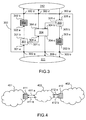
- the figure 2 presents a synoptic illustrating the stages of transit of data between the same networks as the figure 1 but in the opposite direction.
- the data 201 is transmitted from the second network 112 to the first network 111, which is of a higher security level than the second, by applying a security method according to the invention.
- the data item 201 is received by a routing module 202 that directs it either to a decryption step 203 or to a context verification step 204.
- the data item 201 is encrypted (if it is, for example, a piece of data transported by the IPSec ("Internet Protocol Security") type protocols, the data item 201 is directed to the decryption step 203. If the decryption proceeds correctly, the decrypted data 201 'resulting from this decryption step 203 is then sent to the first network 111.
- IPSec Internet Protocol Security
- the data item 201 is not encrypted, it is directed to the context verification step 204.
- This step analyzes the context of the data item with respect to the parameters of the context saved during the filtering step. 104 ( figure 1 ). Examples include Layer 3 OSI field checks, such as DSCP (Differentiated Services Code Point) field verification used for quality of service management. , or verification of a MTU (Maximum Transmission Unit) size and allowable MTU size variations. It can also be checks at the application layer (layer 7 of the OSI model), for example to analyze Resource ReSerVation Protocol (RSVP) resource requests or DNS queries. If the context is inconsistent with the context previously recorded during the filtering step 104, then the data is blocked, 206, and an alarm can be raised.
- Layer 3 OSI field checks such as DSCP (Differentiated Services Code Point) field verification used for quality of service management. , or verification of a MTU (Maximum Transmission Unit) size and allowable MTU size variations. It can also be checks at the application layer (
- the figure 3 shows an example of architecture of a device implementing the method according to the invention.
- the device 300 is installed in a cutoff between a confidential network 311 and a public network 312. It comprises a first routing module 301, an encryption module 302, a decryption module 303, a filtering module 304 and a second module. switch 305.
- the device 300 comprises a first input 300a connected to the confidential network 311, the second input 300a 'connected to the public network 312, a first output 300b and a second output 300c connected to the confidential network 311, a third output 300b 'and a fourth output 300c' connected to the public network 312.
- the figure 4 presents a block diagram illustrating the use of a device according to the invention to enable two protected networks 401, 402 to communicate with each other via an intermediate public network 403.
- a first corporate network 401 must communicate with a second corporate network 402. These two networks 401, 402 communicate via the public network 403.
- the data present on the two corporate networks 401, 402 are confidential, none of these data must not transit in clear on the public network 403.
- a secure link is established between the two corporate networks 401, 402 by placing at the output of each of them a security device 411, 412 according to the invention, such that all incoming or outgoing data of an enterprise network is either encrypted / decrypted 411a, 412a, or filtered 411b, 412b.
- the security device according to the invention therefore makes it possible to establish a communication channel parallel to the conventional encrypted communication channel, this parallel communication channel allowing controlled interoperability between an enterprise network 401, 402 and the public network 403.
Landscapes
- Engineering & Computer Science (AREA)
- Computer Security & Cryptography (AREA)
- Signal Processing (AREA)
- Computing Systems (AREA)
- General Engineering & Computer Science (AREA)
- Computer Networks & Wireless Communication (AREA)
- Computer Hardware Design (AREA)
- Data Exchanges In Wide-Area Networks (AREA)
- Small-Scale Networks (AREA)
- Communication Control (AREA)
- Computer And Data Communications (AREA)
- Mobile Radio Communication Systems (AREA)
- Transceivers (AREA)
Abstract
Description
La présente invention concerne un procédé de sécurisation d'un canal bidirectionnel de communication et un dispositif de mise en oeuvre du procédé. L'invention permet notamment d'établir des communications entre plusieurs réseaux de niveaux de sécurité différents.The present invention relates to a method of securing a bidirectional communication channel and a device for implementing the method. The invention notably makes it possible to establish communications between several networks of different security levels.
Les normes de sécurité concernant les communications entre des réseaux de niveaux de sécurité différents imposent souvent des contraintes contradictoires avec les exigences d'interopérabilité entre lesdits réseaux, mais aussi avec les performances souhaitées en termes de transport de données.The security standards for communications between networks of different security levels often impose conflicting requirements with the interoperability requirements between said networks, but also with the desired performance in terms of data transport.
A titre d'illustration, un réseau interne d'entreprise est autorisé à recevoir certaines données d'un réseau externe, mais aucune donnée du réseau interne ne doit transiter en clair vers le réseau externe. Ainsi, par exemple, lorsque deux réseaux d'entreprise communiquant via un réseau intermédiaire public - par exemple, Internet - souhaitent échanger des informations confidentielles, un dispositif de chiffrement/déchiffrement est placé en sortie de chacun de ces réseaux d'entreprise. Toutes les données sont chiffrées en sortie du réseau d'entreprise émetteur, ces données étant déchiffrées par le réseau d'entreprise récepteur, de telle sorte qu'aucune donnée issue d'un réseau d'entreprise ne transite en clair sur le réseau intermédiaire public.By way of illustration, an internal company network is authorized to receive certain data from an external network, but no data from the internal network must pass in the clear to the external network. Thus, for example, when two corporate networks communicating via a public intermediate network - for example, the Internet - wish to exchange confidential information, an encryption / decryption device is placed at the output of each of these corporate networks. All data is encrypted at the output of the originating corporate network, which data is decrypted by the receiving company network, so that no data from an enterprise network passes unencrypted over the public intermediate network. .
Or, d'une part, pour pouvoir transférer des données dans le sens montant - du réseau externe vers le réseau interne de l'entreprise, autrement dit, d'un réseau de faible sensibilité vers un réseau de niveau de sensibilité plus élevé -, les protocoles de transport de données nécessitent généralement des émissions de données dans le sens descendant - du réseau interne vers le réseau externe -. En effet, en plus des données utiles à acheminer (ensemble de données souvent qualifié de « plan de trafic utilisateur »), il existe des données de signalisation et de contrôle, inhérentes à la gestion du transport de données par le protocole, ces données devant transiter à la fois dans le sens montant et dans le sens descendant. Les données de signalisation et de contrôle, qui existent notamment pour les protocoles IP (Internet Protocol) et Ethernet, sont par exemple, des acquittements de réception ou des marqueurs de priorité afin de gérer une qualité de service sur des sessions de transmissions de données. D'autre part, le traitement appliqué aux données (un chiffrement total) est identique quelle que soit leur nature, ce qui, dans un contexte de développement des canaux de communications multimédias rassemblant voix, données ou encore vidéos, devient de plus en plus gênant.On the one hand, in order to transfer upstream data - from the external network to the internal network of the enterprise, ie from a low sensitivity network to a higher sensitivity network - Data transport protocols usually require data transmission in the downstream direction - from the internal network to the external network -. Indeed, in addition to the useful data to be routed (a data set often referred to as a "user traffic plan"), there are signaling and control data inherent in the management of data transport by the protocol, these data being transit both up and down. The signaling and control data, which exists in particular for the Internet Protocol (IP) and Ethernet, are, for example, acknowledgments or priority markers to manage quality of service on data transmission sessions. On the other hand, the processing applied to the data (a total encryption) is identical whatever their nature, which, in a context of development of multimedia communication channels gathering voice, data or videos, becomes more and more awkward. .
Aussi, pour bénéficier de certains services de base tels que la gestion de la qualité de service, il est nécessaire d'établir un canal de communication bidirectionnel, chiffré ou non, autorisant les données de signalisation et/ou de contrôle à transiter entre les réseaux protégés et le réseau intermédiaire public.Also, to benefit from certain basic services such as quality of service management, it is necessary to establish a bidirectional communication channel, encrypted or not, allowing the signaling and / or control data to be transmitted between the networks. protected areas and the public intermediary network.
Par ailleurs, l'absence de moyens permettant d'échanger de manière sécurisée des données entre des réseaux de niveaux de sécurité différents induit également des duplications d'équipements et de moyens de gestion associés. Par exemple, chaque réseau doit comprendre un serveur de noms de domaines, un serveur d'heure universelle ou tout autre type de service a priori a-confidentiel, essentiel à son fonctionnement. De plus, le diagnostic de l'état du réseau public ne peut pas être effectué à travers les dispositifs de chiffrement/déchiffrement. Par exemple, il est impossible de signaler à un réseau public, un incident survenu sur le réseau protégé, une simple alarme de dysfonctionnement, intrinsèquement non confidentielle, ne pouvant pas être transmise du réseau protégé vers un réseau de niveau de protection plus faible.Moreover, the lack of means for securely exchanging data between networks of different security levels also leads to duplication of equipment and associated management means. For example, each network must include a domain name server, a universal time server, or any other type of service that is a priori a-confidential, essential to its operation. In addition, the diagnosis of the state of the public network can not be done through the encryption / decryption devices. For example, it is impossible to report to a public network, an incident occurred on the protected network, a simple malfunction alarm, intrinsically non-confidential, can not be transmitted from the protected network to a network of lower protection level.
Une solution alternative consiste à autoriser certains types de données choisis à transiter en clair et sans contrôle à travers le réseau public, autrement dit, créer un canal de communication supplémentaire pour certains types de données. Mais cette solution comporte des risques, un attaquant pouvant exploiter ce canal pour faire fuir des informations d'un réseau protégé. Le document
Un but de l'invention est proposer des moyens pour améliorer l'interopérabilité entre des réseaux de niveaux de sécurité différents, tout en limitant les risques de compromission de données sensibles. A cet effet, l'invention a pour objet un procédé de sécurisation d'un canal de communication bidirectionnel entre au moins un réseau N1 et un réseau N2 d'un niveau de sécurité plus faible que N1, caractérisé en ce qu'il comporte au moins les étapes suivantes :
- définir un ou plusieurs types de données autorisés à transiter de N1 vers N2;
- pour une donnée transmise de N1 vers N2 :
- si la donnée est d'un type autorisé à transiter entre N1 et N2, aiguiller la donnée vers une première étape de filtrage, sinon aiguiller la donnée vers une étape de chiffrement ,
- si la donnée est aiguillée vers la première étape de filtrage :
- o sauvegarder le contexte associé à cette donnée,
- o appliquer un ou plusieurs filtres d'analyse sur la donnée pour parer la création d'un canal de communication caché,
- pour une donnée transmise de N2 vers N1 :
- si la donnée est d'un type autorisé à transiter entre N1 et N2, aiguiller la donnée vers une deuxième étape de filtrage, sinon aiguiller la donnée vers une étape de déchiffrement ;
- si la donnée est dirigée vers la deuxième étape de filtrage :
- o comparer le contexte de la donnée au contexte sauvegardé lors de la première étape de filtrage et bloquer la donnée si les contextes sont incohérents,
- o sinon, appliquer un ou plusieurs filtres d'analyse sur la donnée.
- define one or more types of data allowed to transit from N1 to N2;
- for a data transmitted from N1 to N2:
- if the data is of a type authorized to transit between N1 and N2, to direct the data to a first filtering step, otherwise to direct the data to an encryption step,
- if the data is pointed towards the first filtering step:
- o save the context associated with this data,
- o apply one or more analysis filters on the data to prevent the creation of a hidden communication channel,
- for a data transmitted from N2 to N1:
- if the data is of a type authorized to transit between N1 and N2, to direct the data to a second filtering step, otherwise to direct the data to a decryption step;
- if the data is directed to the second filtering step:
- o compare the context of the data with the context saved during the first filtering step and block the data if the contexts are inconsistent,
- o otherwise, apply one or more analysis filters on the data.
Selon un mode de réalisation, l'étape de filtrage comporte une phase d'analyse syntaxique des données, ladite phase contrôlant la validité du format de la donnée en fonction du protocole utilisé pour la transmission de cette donnée.According to one embodiment, the filtering step comprises a phase of parsing the data, said phase controlling the validity of the format of the data according to the protocol used for the transmission of this data.
Selon un mode de réalisation, l'étape de filtrage comporte une phase d'analyse sémantique des données, ladite phase contrôlant la cohérence des réponses émises du réseau N2 vers le réseau N1 vis à vis des requêtes émises par le réseau N1 vers le réseau N2.According to one embodiment, the filtering step includes a phase of semantic data analysis, said phase controlling the coherence of the responses sent from the network N2 to the network N1 with respect to requests sent by the network N1 to the network N2. .
Selon un mode de réalisation, l'étape de filtrage comporte une phase d'analyse comportementale des données, ladite phase évaluant la probabilité d'innocuité des échanges de données entre le réseau N1 et le réseau N2 vis à vis de scénarii prédéfinis d'interconnexion entre ces deux réseaux, un scénario d'interconnexion définissant, à partir des états de l'automate du protocole de transmission des données, des durées attendues de transition entre ces états.According to one embodiment, the filtering step includes a phase of behavioral analysis of the data, said phase evaluating the probability of safety of data exchanges between the network N1 and the network N2 with respect to predefined interconnection scenarios. between these two networks, an interconnection scenario defining, from the the PLC of the data transmission protocol, the expected transition times between these states.
Selon un mode de réalisation, l'étape de filtrage comporte une phase de retranscription d'une donnée formatée par un premier protocole pour la retraduire dans une donnée formatée par un deuxième protocole.According to one embodiment, the filtering step includes a step of retranscribing data formatted by a first protocol to retranslate it into a data formatted by a second protocol.
L'invention a également pour objet un dispositif pour établir un canal de communication bidirectionnel entre au moins un premier réseau N1 et un deuxième réseau N2 de niveau de sécurité plus faible que N1, le dispositif comprenant un module de chiffrement et un module de déchiffrement, le dispositif comportant au moins un premier module d'aiguillage, un deuxième module d'aiguillage et un module de filtrage, le premier module d'aiguillage orientant les paquets de données issus du premier réseau N1, soit vers le module de chiffrement, soit vers le module de filtrage, le deuxième module d'aiguillage orientant les paquets de données issus du deuxième réseau N2, soit vers le module de déchiffrement, soit vers le module de filtrage, le module de filtrage mettant en oeuvre le procédé tel que décrit plus haut.The invention also relates to a device for establishing a bidirectional communication channel between at least a first network N1 and a second network N2 with a security level lower than N1, the device comprising an encryption module and a decryption module, the device comprising at least a first switching module, a second switching module and a filtering module, the first switching module directing the data packets from the first network N1, either to the encryption module, or to the filtering module, the second routing module orienting the data packets from the second network N2, either to the decryption module or to the filtering module, the filtering module implementing the method as described above .
D'autres caractéristiques apparaîtront à la lecture de la description détaillée donnée à titre d'exemple et non limitative qui suit faite en regard de dessins annexés qui représentent :
- la
figure 1 , un synoptique illustrant les étapes de transit d'une donnée d'un premier réseau vers un deuxième réseau d'un niveau de sécurité inférieur au premier en appliquant un procédé de sécurisation selon l'invention (sens descendant) ; - la
figure 2 , un synoptique illustrant les étapes de transit d'une donnée entre les mêmes réseaux que lafigure 1 , mais dans le sens opposé, en appliquant un procédé de sécurisation selon l'invention (sens montant) ; - la
figure 3 , un exemple d'architecture d'un dispositif mettant en oeuvre le procédé de sécurisation selon l'invention ; - la
figure 4 , un synoptique illustrant l'utilisation d'un dispositif de sécurisation selon l'invention pour permettre à deux réseaux protégés de communiquer entre-eux via un réseau public intermédiaire.
- the
figure 1 a block diagram illustrating the steps of transit of data from a first network to a second network of a security level lower than the first by applying a security method according to the invention (downward direction); - the
figure 2 , a block diagram illustrating the stages of transit of data between the same networks as thefigure 1 , but in the opposite direction, by applying a securing method according to the invention (upward direction); - the
figure 3 an exemplary architecture of a device implementing the security method according to the invention; - the
figure 4 , a block diagram illustrating the use of a security device according to the invention to enable two protected networks to communicate with one another via an intermediate public network.
Par souci de clarté, les éléments portant les mêmes références dans des figures différentes sont les mêmes.For the sake of clarity, the elements bearing the same references in different figures are the same.
La
Dans un premier temps, une donnée 101 issue du premier réseau 111 est reçue par un module d'aiguillage 102, lequel oriente ladite donnée 101, soit vers une étape de chiffrement 103, soit vers une étape de filtrage 104. La décision de transmettre la donnée vers l'une ou l'autre de ces deux étapes 103, 104 est prise par le module d'aiguillage 102 en fonction de la nature de cette donnée 101. La nature de la donnée 101 est déterminée, par exemple, grâce à une analyse des métadonnées qui lui sont associées par le protocole de transport. Par exemple, les métadonnées du protocole IP relatives à la couche 3 du modèle OSI (≪ Open System Interconnection ≫), comme l'adresse IP de l'émetteur et/ou du destinataire ou le port de communication employé, sont examinées pour déterminer vers quelle étape 103, 104 le module d'aiguillage 102 doit orienter la donnée 101. En effet, dans l'exemple, certaines adresses et/ou ports de communication sont associés à des services autorisés à faire transiter des informations via un autre canal de communication à travers le deuxième réseau 112, les autres adresses et/ou ports de communication étant dédiés à des transferts d'informations sensibles, donc nécessitant un chiffrement systématique.In a first step, a
Par exemple, une requête émise par le premier réseau 111 à destination d'un serveur de noms de domaines situé sur le deuxième réseau 112 est orientée vers l'étape de filtrage 104 et non vers l'étape de chiffrement 103, car les données contenues dans cette requête peuvent ne pas être considérées comme sensibles. L'exemple peut être étendu à une multitude de services - par exemple, des services de réservation de ressources en bande passante, des annuaires, des serveurs de temps universel - en fonction, notamment, des contraintes de sécurité relatives aux réseaux concernés. Le procédé peut être donc vu comme un procédé de chiffrement à opacité contrôlée, le niveau d'opacité étant configuré selon la proportion de services autorisés à transmettre des informations via l'étape de filtrage 104 et selon le contexte d'emploi et du niveau de menaces associées. L'opacité est naturellement maintenue à un niveau élevé pour les réseaux nécessitant des niveaux de protection élevés. Le cas classique du chiffrement total peut d'ailleurs être obtenu en n'autorisant aucune transmission via l'étape de filtrage 104, autrement dit en imposant au module d'aiguillage 102 d'orienter les données reçues systématiquement vers l'étape de chiffrement 103.For example, a request sent by the
Néanmoins, l'autorisation de faire transiter des données entre des réseaux de niveaux de sécurité différents doit être accompagnée de mesures de sécurisation. En effet, il est possible de détourner une communication d'apparence anodine aux fins de création d'un canal de communication caché ou auxiliaire. Notamment, pour une série de paquets de données, chaque paquet pris séparément peut ne pas contenir d'information sensible, tandis que la succession de ces paquets peut aboutir à la création un code de communication. Par exemple, lors de l'émission d'une série de requêtes de même nature du premier réseau 111 vers le deuxième réseau 112, la présence d'un intervalle temporel plus ou moins long entre chaque requête peut constituer un code exploitable pour faire fuir des informations vers l'extérieur du premier réseau 111. Dans le cas, par exemple, d'un marquage de paquets aux fins de gérer la qualité de service dans l'acheminement desdits paquets, une variation anormale de la valeur du marqueur de qualité de service au cours de l'émission d'une succession de paquets peut également constituer un canal de communication caché.Nevertheless, the authorization to transmit data between networks of different security levels must be accompanied by security measures. Indeed, it is possible to divert an apparently innocuous communication for the purpose of creating a hidden or auxiliary communication channel. In particular, for a series of data packets, each packet taken separately may not contain sensitive information, while the succession of these packets may result in the creation of a communication code. For example, when transmitting a series of requests of the same nature from the
Dans un deuxième temps, si la donnée est orientée vers une étape de chiffrement 103, la donnée chiffrée 101' produite par la dite étape est émise vers le deuxième réseau 112 ; si la donnée est orientée vers l'étape de filtrage 104, elle subit un traitement visant à contrecarrer toute tentative de création par un attaquant d'un canal de communication caché. La donnée 101 " résultante de ce traitement est donc une donnée filtrée et épurée des éventuels canaux auxiliaires résultants. Le traitement de l'étape de filtrage 104 comporte, dans l'exemple, une phase d'analyse syntaxique, une phase d'analyse sémantique et une phase d'analyse comportementale. La nature de la donnée est tout d'abord déterminée pour initialiser les paramètres de chacune des phases d'analyse.In a second step, if the data is directed to an
L'analyse syntaxique vérifie que la donnée à transmettre respecte scrupuleusement les standards, par exemple les documents RFC (≪ Request For Comments ≫) ou la norme du protocole utilisé, et qu'aucun champ n'est détourné de son objet. Notamment, les anomalies dans les valeurs des champs sont détectées. Par exemple, dans le cas d'une requête DNS (≪ Domain Name System ≫), il convient de s'assurer que le nom d'hôte à résoudre respecte le format décrit par les RFC 1034 et 1035. En particulier, étant donné que nom d'hôte à résoudre est indépendant de la casse, c'est à dire des minuscules ou majuscules, l'étape de filtrage 104 pourra alors, selon un mode de réalisation, réécrire la requête soit en majuscule, soit en minuscule, ou encore en combinant les deux afin de réduire les canaux cachés sur la typographie utilisée.The parsing checks that the data to be transmitted scrupulously respects the standards, for example the RFC documents ("Request For Comments ") or the protocol standard used, and no field is diverted from its purpose. In particular, the anomalies in the values of the fields are detected. For example, in the case of a DNS ("Domain Name System") query, it should be ensured that the host name to resolve complies with the format described by RFCs 1034 and 1035. In particular, since host name to be resolved is case-insensitive, that is, lowercase or uppercase, the
L'analyse sémantique remplit plusieurs fonctions. D'une part, elle vérifie l'automate des états possibles pour un protocole donné et la cohérence des enchaînements desdits états. D'autre part, l'analyse sémantique détecte un éventuel sens caché dissimulé dans une requête ou une réponse à cette requête. En outre, l'analyse sémantique gère les contextes de connexion qui permettent de garantir qu'une réponse provenant du deuxième réseau 112 de moindre sensibilité est effectivement associée à une requête active émise depuis le premier réseau 111 de plus haute sensibilité.Semantic analysis fulfills several functions. On the one hand, it verifies the automaton of the possible states for a given protocol and the consistency of the sequences of said states. On the other hand, the semantic analysis detects a hidden meaning concealed in a request or an answer to this request. In addition, the semantic analysis manages the connection contexts which make it possible to guarantee that a response coming from the
Selon un mode de réalisation, en plus de s'assurer que la réponse correspond à un contexte actif qui, par exemple, peut être défini par un couple (adresse IP source - port source ; adresse IP destination - port destination), l'analyse sémantique vérifie que la réponse fait sens, c'est-à-dire que la réponse correspond à des cas de réponses vraisemblables au niveau du protocole. Si l'on prend l'exemple d'une requête DNS (« Domain Name System ») émise par le premier réseau 111 vers un serveur DNS présent sur le deuxième réseau 112, il n'y a qu'une seule réponse attendue de la part du premier réseau 111. De plus, cette réponse doit être cohérente avec la requête émise. Si la requête DNS vise à obtenir la résolution du nom d'un hôte, la phase d'analyse sémantique doit vérifier que la réponse obtenue est cohérente avec la requête posée (si la résolution réussit, on doit obtenir ici l'adresse IP de l'hôte résolu) et, par exemple, que l'adresse IP obtenue correspond à un hôte effectivement joignable, c'est-à-dire accessible par un simple routage IP.According to one embodiment, in addition to ensuring that the response corresponds to an active context which, for example, can be defined by a pair (source IP address - source port, destination IP address - destination port), the analysis semantics verifies that the answer makes sense, that is, the answer corresponds to cases of probable responses at the protocol level. If one takes the example of a DNS ("Domain Name System") request sent by the
L'analyse comportementale est, de préférence, exécutée après les phases d'analyse syntaxique et sémantique susmentionnées. La phase d'analyse comportementale s'appuie sur un schéma cognitif, c'est-à-dire sur une structure qui vise à donner un sens à un processus d'échange d'information. Pour illustrer cette nouvelle approche dans les analyses de filtrage, on peut s'appuyer sur des canevas vraisemblables de scénarii d'interconnexion, où chaque scénario pourrait correspondre à un usage prédéterminé d'un protocole donné en prenant en compte à la fois les aspects séquentiels mais aussi les aspects temporels des communications. Un échantillonnage statistique peut par exemple être exécuté pour contrôler le volume de données transitant entre le premier réseau 111 et le deuxième réseau 112, pour un protocole choisi et pendant une certaine période temporelle. Un volume de donnée anormalement élevé peut alors indiquer une attaque. De même, les espaces temporels entre une première transmission de données du premier réseau 111 vers le deuxième réseau 112 et une deuxième transmission de données entre lesdits réseaux peuvent être analysés. Ainsi, au cours d'échanges de données via un protocole, si la transition entre deux états de l'automate du protocole est d'une durée anormalement courte ou élevée par rapport aux durées attendues, un indice d'attaque est levé.Behavioral analysis is preferably performed after the aforementioned syntactical and semantic analysis phases. The behavioral analysis phase is based on a cognitive schema, that is, on a structure that aims to make sense of an information exchange process. To illustrate this new approach in filtering analyzes, one can rely on likely patterns of interconnection scenarios, where each scenario could correspond to a predetermined use of a given protocol taking into account both the sequential aspects but also the temporal aspects of the communications. For example, statistical sampling may be performed to control the volume of data passing between the
Par exemple, il est tout à fait acceptable, dans le cas d'une analyse des requêtes de type DNS, qu'un même usager envoie plusieurs fois de suite des requêtes DNS visant à résoudre plusieurs noms de domaines, même dans un laps de temps très court. Par contre, si ce même utilisateur, identifié, par exemple, par son adresse IP source, venait à envoyer plusieurs fois de suite des requêtes visant à résoudre l'adresse IP d'un même hôte DNS dans un laps de temps inférieur à la durée de son cache DNS, alors il y aurait suspicion d'acte malveillant car son poste de travail devrait normalement conserver l'adresse IP résolue pendant une durée définie paramétrable (en général quelques minutes). Pour limiter les fausses alarmes, il est conseillé de définir des seuils paramétrables à partir desquels il est recommandé de lever des alertes. Dans un autre exemple relatif à une analyse comportementale dédiée aux requêtes DHCP (≪ Dynamic Host Configuration Protocol ≫, permettant l'attribution d'une adresse IP pour un bail limité), il est tout à fait acceptable qu'un hôte client, identifié par exemple par son adresse MAC (Ethernet) envoie une requête DHCP plusieurs fois par jour pour obtenir une adresse IP (en prenant en compte, par exemple, les multiples débranchements du câble réseau), alors qu'un hôte serveur ne fera la requête qu'une seule fois, puis lors du renouvellement de son bail ou lors de son redémarrage.For example, it is perfectly acceptable, in the case of DNS type query analysis, for a single user to send multiple DNS domain name requests several times in a row, even within a certain period of time. very short. On the other hand, if the same user, identified, for example, by his source IP address, sent several requests in succession to resolve the IP address of the same DNS host in a period of time less than the duration. its DNS cache, then there would be suspicion of malicious act because his workstation should normally keep the IP address resolved for a definable set time (usually a few minutes). To limit false alarms, it is advisable to define configurable thresholds from which it is recommended to raise alerts. In another example related to a behavioral analysis dedicated to Dynamic Host Configuration Protocol (DHCP) requests, allowing the attribution of an IP address for a limited lease, it is quite acceptable that a client host, identified by example its MAC address (Ethernet) sends a DHCP request several times a day to obtain an IP address (taking into account, for example, the multiple disconnections of the network cable), while a server host will request only one only once, then when renewing his lease or when restarting.
Lorsqu'une anomalie est détectée, la donnée n'est pas transmise vers le deuxième réseau 112. D'autres traitements sont possibles lors de la détection d'une anomalie. Par exemple, une alarme peut être levée pour interdire les données de même nature que la donnée concernée par l'anomalie à transiter entre les réseaux de sensibilités différentes. Ceci peut être effectué en modifiant la configuration du module d'aiguillage 102.When an anomaly is detected, the data is not transmitted to the
Selon un autre mode de réalisation, l'étape de filtrage 104 exécute seulement une partie des phases d'analyse précitées, par exemple, uniquement les phases d'analyse syntaxique et d'analyse sémantique.According to another embodiment, the
Selon un mode de réalisation, l'étape de filtrage 104 met de plus, en oeuvre une étape de retranscription des données pour diminuer les risques de fuite d'information du premier réseau 111. Ainsi, dans le cas d'une série de requêtes (par exemple des requêtes SIP, acronyme pour « Session Initialization Protocol ≫) émises par le premier réseau 111, certaines requêtes de ladite série sont reformulées dans le format d'un autre protocole aux fonctions analogues (par exemple, les requêtes SIP sont retraduites en requêtes de type H.323), pour éliminer les informations redondantes et/ou varier le format de la requête, permettant ainsi d'augmenter les difficultés de création d'un canal de communication caché.According to one embodiment, the
La
Dans un premier temps, la donnée 201 est reçue par un module d'aiguillage 202 qui l'oriente, soit vers une étape de déchiffrement 203, soit vers une étape de vérification de contexte 204.In a first step, the
Si la donnée 201 est chiffrée (s'il s'agit, par exemple, d'une donnée transportée par les protocoles de type IPSec (≪ Internet Protocol Security ≫), la donnée 201 est orientée vers l'étape de déchiffrement 203. Si le déchiffrement se déroule correctement, la donnée déchiffrée 201' issue de cette étape de déchiffrement 203 est ensuite émise vers le premier réseau 111.If the
Dans le cas contraire, si la donnée 201 n'est pas chiffrée, elle est orientée vers l'étape de vérification de contexte 204. Cette étape analyse le contexte de la donnée en regard des paramètres du contexte sauvegardé lors de l'étape de filtrage 104 (
La
Le dispositif 300 comporte une première entrée 300a reliée au réseau confidentiel 311, deuxième entrée 300a' reliée au réseau public 312, une première sortie 300b et une deuxième sortie 300c reliées au réseau confidentiel 311, une troisième sortie 300b' et une quatrième sortie 300c' reliées au réseau public 312.The
Le premier module d'aiguillage 301 comprend une entrée 301 a et deux sorties 301 b, 301 c, son entrée 301a étant connectée à la première entrée 300a du dispositif 300. Le deuxième module d'aiguillage 305 comprend une entrée 305a et deux sorties 305b, 305c, son entrée 305a étant connectée à la deuxième entrée 300a' du dispositif 300.The
Le module de chiffrement 302 comprend une entrée 302a, connectée à la première sortie 301 b du premier module d'aiguillage 301, et une sortie 302b connectée à la troisième sortie 300b' du dispositif 300. Le module de déchiffrement 303 comprend une entrée 303a, connectée à la première sortie 305b du deuxième module d'aiguillage 305, et une sortie 303b connectée à la première sortie 300b du dispositif 300. Les modules de chiffrement 302 et de déchiffrement 303 s'appuient sur les techniques classiques de cryptographie.The
Le module de filtrage 304 comprend deux entrées 304a, 304b et deux sorties 304c, 304d, sa première entrée 304a étant connectée à la deuxième sortie 301 c du premier module d'aiguillage 301, sa deuxième entrée 304b étant connectée à la deuxième sortie 305c du deuxième module d'aiguillage 305, sa première sortie 304c étant connectée à la deuxième sortie 300c du dispositif 300, et sa deuxième sortie 304d étant connectée à la quatrième sortie 300c' du dispositif 300.The
Le module de filtrage 304 s'appuie notamment sur une base de données de filtres, chaque filtre correspondant à un type de données à contrôler. Chaque filtre met en oeuvre une ou plusieurs phases d'analyse de l'étape de filtrage 104 (
Par exemple, la base de données comprend un filtre pour contrôler les requêtes DHCP, un filtre pour les requêtes DNS, et un filtre pour les demandes de réservation de ressources du protocole RSVP (« Resource ReSerVation Protocol »). Aussi, une architecture ouverte et modulaire est fortement souhaitable, une telle architecture permettant d'intégrer un nouveau filtre et/ou de retirer un filtre de la base de données sans affecter le fonctionnement des autres filtres. Ainsi, les homologations de sécurité peuvent être opérées filtre par filtre, seul un filtre homologué étant intégré dans la base de données des filtres. Selon un autre mode de réalisation, certains filtres sont réalisés par circuits électroniques, sur composants programmables par exemple.For example, the database includes a filter for controlling DHCP requests, a filter for DNS queries, and a filter for Resource ReSerVation Protocol (RSVP) resource reservation requests. Also, an open and modular architecture is highly desirable, such architecture to integrate a new filter and / or remove a filter from the database without affecting the operation of other filters. Thus, the safety approvals can be operated filter by filter, only an approved filter being integrated in the filter database. According to another embodiment, some filters are made by electronic circuits, on programmable components for example.
Par ailleurs, le dispositif de sécurisation 300 est préférablement installé dans un espace contrôlé, par exemple dans l'enceinte du réseau confidentiel 311, afin de protéger physiquement sa deuxième entrée 300a' et sa deuxième sortie 300c contre des attaquants potentiels.Moreover, the
Avantageusement, le dispositif de sécurisation 300 est physiquement blindé, notamment, pour éviter les attaques par canaux auxiliaires, via notamment l'analyse du courant électrique consommé par le dispositif ou le rayonnement électromagnétique émis par le dispositif.Advantageously, the
La
Un premier réseau d'entreprise 401 doit communiquer avec un deuxième réseau d'entreprise 402. Ces deux réseaux 401, 402 communiquent via le réseau public 403. Les données présentes sur les deux réseaux d'entreprise 401, 402 étant confidentielles, aucune de ces données ne doit transiter en clair sur le réseau public 403. Une liaison sécurisée est donc établie entre les deux réseaux d'entreprise 401, 402 en plaçant en sortie de chacun d'entre eux un dispositif de sécurisation 411, 412 selon l'invention, de telle sorte que toutes les données entrantes ou sortantes d'un réseau d'entreprise soient soit chiffrées/déchiffrées 411 a, 412a, soit filtrées 411 b, 412b. Le dispositif de sécurisation selon l'invention permet donc d'établir un canal de communication parallèle au canal de communication chiffré classique, ce canal de communication parallèle autorisant une interopérabilité maîtrisée entre un réseau d'entreprise 401, 402 et le réseau public 403.A first
Dans le cas où les deux réseaux d'entreprise 401, 402 sont déjà liés par une liaison sécurisée classique comprenant un chiffreur en sortie de chaque réseau d'entreprise 401, 402, il suffit généralement de remplacer chaque chiffreur par un dispositif de sécurisation selon l'invention. Ainsi, un des avantages de l'invention est la facilité de sa mise en oeuvre au sein d'une architecture sécurisée déjà existante.In the case where the two
Le dispositif selon l'invention comporte plusieurs avantages. Il permet de mutualiser des équipements et de réduire les équipes ainsi que les opérations d'exploitation et de maintenance. Par ailleurs, en proposant une solution d'échanges maîtrisés de données de signalisation entre des réseaux de différents niveaux de sécurité, il permet d'offrir une plus grande réactivité des réseaux de niveaux de sécurité élevés vis-à-vis des changements de charge ou de topologie des réseaux environnants.The device according to the invention has several advantages. It makes it possible to pool equipment and reduce teams as well as operations and maintenance operations. Moreover, by proposing a solution for the controlled exchange of signaling data between networks of different security levels, it makes it possible to offer greater responsiveness of networks with high levels of security with respect to load changes or topology of the surrounding networks.
Claims (6)
- A process for securing a bidirectional communication channel between at least one network N1 and one network N2 with a security level which is lower than N1, characterised in that it comprises the following steps:- defining one or more types of data authorised to pass from N1 to N2;- for data transmitted from N1 to N2:- directing the data towards a first filtering step (104), if the data is of a type which is authorised to pass between N1 and N2, otherwise directing the data towards a ciphering step (103),- if the data is directed towards the first filtering step (104):o saving the context associated with this data,o applying one or more analysis filters to the data in order to deal with the creation of a hidden communication channel,- for data transmitted from N2 to N1:- directing the data towards a second filtering step (204, 205), if the data is of a type which is authorised to pass between N1 and N2, otherwise directing the data towards a deciphering step (203),- if the data is directed towards the second filtering step (204, 205):o comparing the context of the data with the context saved during the first filtering step (104) and blocking the data if the contexts are incoherent,ο otherwise, applying one or more analysis filters to the data.
- The securing process according to claim 1, characterised in that the filtering step (104) comprises a data syntactic analysis phase, said phase controlling the validity of the data format as a function of the protocol used for the transmission of this data.
- The securing process according to any one of the previous claims, characterised in that the filtering step (104) comprises a data semantic analysis phase, said phase controlling the coherence of the responses emitted from the network N2 to the network N1 with regard to the requests emitted from the network N1 to the network N2.
- The securing process according to any one of the previous claims, characterised in that the filtering step (104) comprises a data behavior analysis phase, said phase assessing the probability of innocuity of data exchanges between the network N1 and the network N2 with regard to predefined interconnection scenarios between these two networks, an interconnection scenario defining, from the states of the one or more controllers defined by the data transmission protocol, expected transition durations between these states.
- The securing process according to any one of the previous claims, characterised in that the filtering step (104) comprises a phase for re-writing the data formatted by a first protocol so that it can be reconverted intro data formatted by a second protocol.
- A device for establishing a bidirectional communication channel between at least one first network N1 and one second network N2 having a security level which is lower than N1, the device comprising a ciphering module (302) and a deciphering module (303), characterised in that it comprises at least one first directing module (301), one second directing module (305) and a filtering module (304), the first directing module (301) orienting the data packets originating from the first network N1 either towards the ciphering module (302) or towards the filtering module (304), the second directing module (305) orienting the data packets originating from the second network N2 either towards the deciphering module (303) or towards the filtering module (304), the filtering module (304) implementing the securing process according to any one of the previous claims.
Applications Claiming Priority (2)
| Application Number | Priority Date | Filing Date | Title |
|---|---|---|---|
| FR0708397A FR2924552B1 (en) | 2007-11-30 | 2007-11-30 | METHOD OF SECURING A BIDIRECTIONAL COMMUNICATION CHANNEL AND DEVICE FOR IMPLEMENTING THE METHOD |
| PCT/EP2008/066316 WO2009068603A2 (en) | 2007-11-30 | 2008-11-27 | Method for securing a bi-directional communication channel and device for implementing said method |
Publications (2)
| Publication Number | Publication Date |
|---|---|
| EP2215801A2 EP2215801A2 (en) | 2010-08-11 |
| EP2215801B1 true EP2215801B1 (en) | 2011-04-13 |
Family
ID=39589486
Family Applications (1)
| Application Number | Title | Priority Date | Filing Date |
|---|---|---|---|
| EP08853480A Not-in-force EP2215801B1 (en) | 2007-11-30 | 2008-11-27 | Method for securing a bi-directional communication channel and device for implementing said method |
Country Status (11)
| Country | Link |
|---|---|
| US (1) | US8443190B2 (en) |
| EP (1) | EP2215801B1 (en) |
| CN (1) | CN101911639B (en) |
| AT (1) | ATE505897T1 (en) |
| AU (1) | AU2008328833B2 (en) |
| DE (1) | DE602008006261D1 (en) |
| ES (1) | ES2364946T3 (en) |
| FR (1) | FR2924552B1 (en) |
| IL (1) | IL206067A (en) |
| NZ (1) | NZ586270A (en) |
| WO (1) | WO2009068603A2 (en) |
Cited By (18)
| Publication number | Priority date | Publication date | Assignee | Title |
|---|---|---|---|---|
| US11388072B2 (en) * | 2019-08-05 | 2022-07-12 | Extrahop Networks, Inc. | Correlating network traffic that crosses opaque endpoints |
| US11431744B2 (en) | 2018-02-09 | 2022-08-30 | Extrahop Networks, Inc. | Detection of denial of service attacks |
| US11438247B2 (en) | 2019-08-05 | 2022-09-06 | Extrahop Networks, Inc. | Correlating network traffic that crosses opaque endpoints |
| US11463299B2 (en) | 2018-02-07 | 2022-10-04 | Extrahop Networks, Inc. | Ranking alerts based on network monitoring |
| US11463466B2 (en) | 2020-09-23 | 2022-10-04 | Extrahop Networks, Inc. | Monitoring encrypted network traffic |
| US11463465B2 (en) | 2019-09-04 | 2022-10-04 | Extrahop Networks, Inc. | Automatic determination of user roles and asset types based on network monitoring |
| US11496378B2 (en) | 2018-08-09 | 2022-11-08 | Extrahop Networks, Inc. | Correlating causes and effects associated with network activity |
| US11546153B2 (en) | 2017-03-22 | 2023-01-03 | Extrahop Networks, Inc. | Managing session secrets for continuous packet capture systems |
| US11558413B2 (en) | 2020-09-23 | 2023-01-17 | Extrahop Networks, Inc. | Monitoring encrypted network traffic |
| US11665207B2 (en) | 2017-10-25 | 2023-05-30 | Extrahop Networks, Inc. | Inline secret sharing |
| US11706233B2 (en) | 2019-05-28 | 2023-07-18 | Extrahop Networks, Inc. | Detecting injection attacks using passive network monitoring |
| US11843606B2 (en) | 2022-03-30 | 2023-12-12 | Extrahop Networks, Inc. | Detecting abnormal data access based on data similarity |
| US11916771B2 (en) | 2021-09-23 | 2024-02-27 | Extrahop Networks, Inc. | Combining passive network analysis and active probing |
| US12107888B2 (en) | 2019-12-17 | 2024-10-01 | Extrahop Networks, Inc. | Automated preemptive polymorphic deception |
| US12225030B2 (en) | 2021-06-18 | 2025-02-11 | Extrahop Networks, Inc. | Identifying network entities based on beaconing activity |
| US12309192B2 (en) | 2019-07-29 | 2025-05-20 | Extrahop Networks, Inc. | Modifying triage information based on network monitoring |
| US12483384B1 (en) | 2025-04-16 | 2025-11-25 | Extrahop Networks, Inc. | Resynchronizing encrypted network traffic |
| US12587535B2 (en) | 2023-12-06 | 2026-03-24 | Extrahop Networks, Inc. | Detecting abnormal data access based on data similarity |
Families Citing this family (14)
| Publication number | Priority date | Publication date | Assignee | Title |
|---|---|---|---|---|
| CN102055733B (en) * | 2009-10-30 | 2013-08-07 | 华为技术有限公司 | Method, device and system for negotiating business bearing tunnels |
| KR101630755B1 (en) * | 2010-01-15 | 2016-06-15 | 삼성전자주식회사 | Method and apparatus for securely communicating between mobile devices |
| CN102196012B (en) | 2010-03-17 | 2013-08-07 | 华为技术有限公司 | Service opening method, system and service opening server |
| FR2962868B1 (en) * | 2010-07-13 | 2012-08-10 | Thales Sa | METHOD AND DEVICE FOR SECURING AN INTERLAYER BIDIRECTIONAL COMMUNICATION CHANNEL. |
| US9952909B2 (en) * | 2012-06-20 | 2018-04-24 | Paypal, Inc. | Multiple service classes in a shared cloud |
| US10756891B2 (en) | 2014-04-09 | 2020-08-25 | The Boeing Company | Secure data communication |
| US10171238B2 (en) * | 2014-04-09 | 2019-01-01 | The Boeing Company | Secure data transmission using quantum communication |
| RU2598337C2 (en) * | 2014-12-19 | 2016-09-20 | Закрытое акционерное общество "Лаборатория Касперского" | System and method of selecting means of interception of data transmitted over network |
| DE102015214993A1 (en) * | 2015-08-06 | 2017-02-09 | Siemens Aktiengesellschaft | Method and arrangement for the non-reactive transmission of data between networks |
| CN107295488A (en) * | 2017-06-15 | 2017-10-24 | 合肥工业大学 | A kind of short message transmission system and its method based on text important attribute labeling method |
| US12124921B2 (en) | 2021-02-02 | 2024-10-22 | Bank Of America Corporation | Information security using quantum encoding |
| CN114301693B (en) * | 2021-12-30 | 2023-03-14 | 同济大学 | A covert channel security defense system for cloud platform data |
| CN115118490B (en) * | 2022-06-24 | 2024-04-30 | 北方兵装技术(辽宁)有限公司 | Data confidentiality transmission method and system based on Internet of things |
| CN120474635A (en) * | 2025-07-17 | 2025-08-12 | 军工保密资格审查认证中心 | Electromagnetic safety communication method and system |
Family Cites Families (4)
| Publication number | Priority date | Publication date | Assignee | Title |
|---|---|---|---|---|
| US6993582B2 (en) * | 1996-07-30 | 2006-01-31 | Micron Technology Inc. | Mixed enclave operation in a computer network |
| US7191252B2 (en) * | 2000-11-13 | 2007-03-13 | Digital Doors, Inc. | Data security system and method adjunct to e-mail, browser or telecom program |
| US7318097B2 (en) * | 2003-06-17 | 2008-01-08 | International Business Machines Corporation | Security checking program for communication between networks |
| US7549162B2 (en) * | 2004-12-06 | 2009-06-16 | At&T Intellectual Property I, L.P. | Methods of providing security for data distributions in a data network and related devices, networks, and computer program products |
-
2007
- 2007-11-30 FR FR0708397A patent/FR2924552B1/en not_active Expired - Fee Related
-
2008
- 2008-11-27 WO PCT/EP2008/066316 patent/WO2009068603A2/en not_active Ceased
- 2008-11-27 ES ES08853480T patent/ES2364946T3/en active Active
- 2008-11-27 AT AT08853480T patent/ATE505897T1/en not_active IP Right Cessation
- 2008-11-27 AU AU2008328833A patent/AU2008328833B2/en not_active Ceased
- 2008-11-27 US US12/745,555 patent/US8443190B2/en not_active Expired - Fee Related
- 2008-11-27 DE DE602008006261T patent/DE602008006261D1/en active Active
- 2008-11-27 NZ NZ586270A patent/NZ586270A/en not_active IP Right Cessation
- 2008-11-27 EP EP08853480A patent/EP2215801B1/en not_active Not-in-force
- 2008-11-27 CN CN2008801235276A patent/CN101911639B/en not_active Expired - Fee Related
-
2010
- 2010-05-30 IL IL206067A patent/IL206067A/en not_active IP Right Cessation
Cited By (20)
| Publication number | Priority date | Publication date | Assignee | Title |
|---|---|---|---|---|
| US11546153B2 (en) | 2017-03-22 | 2023-01-03 | Extrahop Networks, Inc. | Managing session secrets for continuous packet capture systems |
| US11665207B2 (en) | 2017-10-25 | 2023-05-30 | Extrahop Networks, Inc. | Inline secret sharing |
| US11463299B2 (en) | 2018-02-07 | 2022-10-04 | Extrahop Networks, Inc. | Ranking alerts based on network monitoring |
| US11431744B2 (en) | 2018-02-09 | 2022-08-30 | Extrahop Networks, Inc. | Detection of denial of service attacks |
| US11496378B2 (en) | 2018-08-09 | 2022-11-08 | Extrahop Networks, Inc. | Correlating causes and effects associated with network activity |
| US11706233B2 (en) | 2019-05-28 | 2023-07-18 | Extrahop Networks, Inc. | Detecting injection attacks using passive network monitoring |
| US12309192B2 (en) | 2019-07-29 | 2025-05-20 | Extrahop Networks, Inc. | Modifying triage information based on network monitoring |
| US11438247B2 (en) | 2019-08-05 | 2022-09-06 | Extrahop Networks, Inc. | Correlating network traffic that crosses opaque endpoints |
| US11388072B2 (en) * | 2019-08-05 | 2022-07-12 | Extrahop Networks, Inc. | Correlating network traffic that crosses opaque endpoints |
| US11652714B2 (en) | 2019-08-05 | 2023-05-16 | Extrahop Networks, Inc. | Correlating network traffic that crosses opaque endpoints |
| US11463465B2 (en) | 2019-09-04 | 2022-10-04 | Extrahop Networks, Inc. | Automatic determination of user roles and asset types based on network monitoring |
| US12107888B2 (en) | 2019-12-17 | 2024-10-01 | Extrahop Networks, Inc. | Automated preemptive polymorphic deception |
| US12355816B2 (en) | 2019-12-17 | 2025-07-08 | Extrahop Networks, Inc. | Automated preemptive polymorphic deception |
| US11558413B2 (en) | 2020-09-23 | 2023-01-17 | Extrahop Networks, Inc. | Monitoring encrypted network traffic |
| US11463466B2 (en) | 2020-09-23 | 2022-10-04 | Extrahop Networks, Inc. | Monitoring encrypted network traffic |
| US12225030B2 (en) | 2021-06-18 | 2025-02-11 | Extrahop Networks, Inc. | Identifying network entities based on beaconing activity |
| US11916771B2 (en) | 2021-09-23 | 2024-02-27 | Extrahop Networks, Inc. | Combining passive network analysis and active probing |
| US11843606B2 (en) | 2022-03-30 | 2023-12-12 | Extrahop Networks, Inc. | Detecting abnormal data access based on data similarity |
| US12587535B2 (en) | 2023-12-06 | 2026-03-24 | Extrahop Networks, Inc. | Detecting abnormal data access based on data similarity |
| US12483384B1 (en) | 2025-04-16 | 2025-11-25 | Extrahop Networks, Inc. | Resynchronizing encrypted network traffic |
Also Published As
| Publication number | Publication date |
|---|---|
| FR2924552B1 (en) | 2009-11-20 |
| IL206067A0 (en) | 2010-11-30 |
| FR2924552A1 (en) | 2009-06-05 |
| CN101911639A (en) | 2010-12-08 |
| EP2215801A2 (en) | 2010-08-11 |
| US20110150220A1 (en) | 2011-06-23 |
| DE602008006261D1 (en) | 2011-05-26 |
| NZ586270A (en) | 2011-12-22 |
| WO2009068603A2 (en) | 2009-06-04 |
| US8443190B2 (en) | 2013-05-14 |
| CN101911639B (en) | 2013-04-17 |
| AU2008328833B2 (en) | 2013-01-17 |
| ATE505897T1 (en) | 2011-04-15 |
| IL206067A (en) | 2013-11-28 |
| ES2364946T3 (en) | 2011-09-19 |
| AU2008328833A1 (en) | 2009-06-04 |
| WO2009068603A3 (en) | 2009-08-13 |
Similar Documents
| Publication | Publication Date | Title |
|---|---|---|
| EP2215801B1 (en) | Method for securing a bi-directional communication channel and device for implementing said method | |
| US20240129321A1 (en) | Zero Trust System Architecture | |
| JP7250703B2 (en) | Assessment and remediation of correlation-driven threats | |
| US11032294B2 (en) | Dynamic decryption of suspicious network traffic based on certificate validation | |
| JP4955107B2 (en) | Method and unit for classifying traffic in an IP network | |
| US9832227B2 (en) | System and method for network level protection against malicious software | |
| EP1992141B1 (en) | Distributed web application firewall | |
| US20060026678A1 (en) | System and method of characterizing and managing electronic traffic | |
| US10505959B1 (en) | System and method directed to behavioral profiling services | |
| US20090313682A1 (en) | Enterprise Multi-interceptor Based Security and Auditing Method and Apparatus | |
| EP2692089B1 (en) | Incoming redirection mechanism on a reverse proxy | |
| Mani et al. | An extensive evaluation of the internet's open proxies | |
| CA2561096A1 (en) | Device and method for detecting and preventing intrusion into a computer network | |
| US20250267159A1 (en) | Active Directory Security Enforcement and Threat Insights on Zero Trust Networks | |
| WO2018065707A1 (en) | Method and device for detecting intrusions in a network using a homomorphic encryption algorithm | |
| Parsons | Deep packet inspection and its predecessors | |
| WO2012007693A1 (en) | Method and device for securing an inter-level bidirectional communication channel | |
| Banoth et al. | Technologies and Protocols and Network Security Data | |
| EP1510904B1 (en) | Method and system for evaluating the level of security of an electronic equipment and for providing conditional access to resources | |
| EP2667574B1 (en) | Method and device for securing the exchange of messages transmitted in an interconnection network |
Legal Events
| Date | Code | Title | Description |
|---|---|---|---|
| PUAI | Public reference made under article 153(3) epc to a published international application that has entered the european phase |
Free format text: ORIGINAL CODE: 0009012 |
|
| 17P | Request for examination filed |
Effective date: 20100531 |
|
| AK | Designated contracting states |
Kind code of ref document: A2 Designated state(s): AT BE BG CH CY CZ DE DK EE ES FI FR GB GR HR HU IE IS IT LI LT LU LV MC MT NL NO PL PT RO SE SI SK TR |
|
| AX | Request for extension of the european patent |
Extension state: AL BA MK RS |
|
| GRAP | Despatch of communication of intention to grant a patent |
Free format text: ORIGINAL CODE: EPIDOSNIGR1 |
|
| GRAS | Grant fee paid |
Free format text: ORIGINAL CODE: EPIDOSNIGR3 |
|
| GRAA | (expected) grant |
Free format text: ORIGINAL CODE: 0009210 |
|
| AK | Designated contracting states |
Kind code of ref document: B1 Designated state(s): AT BE BG CH CY CZ DE DK EE ES FI FR GB GR HR HU IE IS IT LI LT LU LV MC MT NL NO PL PT RO SE SI SK TR |
|
| REG | Reference to a national code |
Ref country code: GB Ref legal event code: FG4D Free format text: NOT ENGLISH |
|
| REG | Reference to a national code |
Ref country code: CH Ref legal event code: EP |
|
| REG | Reference to a national code |
Ref country code: IE Ref legal event code: FG4D Free format text: LANGUAGE OF EP DOCUMENT: FRENCH |
|
| REF | Corresponds to: |
Ref document number: 602008006261 Country of ref document: DE Date of ref document: 20110526 Kind code of ref document: P |
|
| REG | Reference to a national code |
Ref country code: DE Ref legal event code: R096 Ref document number: 602008006261 Country of ref document: DE Effective date: 20110526 |
|
| REG | Reference to a national code |
Ref country code: NL Ref legal event code: VDEP Effective date: 20110413 |
|
| REG | Reference to a national code |
Ref country code: NO Ref legal event code: T2 Effective date: 20110413 |
|
| REG | Reference to a national code |
Ref country code: ES Ref legal event code: FG2A Ref document number: 2364946 Country of ref document: ES Kind code of ref document: T3 Effective date: 20110919 |
|
| LTIE | Lt: invalidation of european patent or patent extension |
Effective date: 20110413 |
|
| PG25 | Lapsed in a contracting state [announced via postgrant information from national office to epo] |
Ref country code: PT Free format text: LAPSE BECAUSE OF FAILURE TO SUBMIT A TRANSLATION OF THE DESCRIPTION OR TO PAY THE FEE WITHIN THE PRESCRIBED TIME-LIMIT Effective date: 20110816 Ref country code: HR Free format text: LAPSE BECAUSE OF FAILURE TO SUBMIT A TRANSLATION OF THE DESCRIPTION OR TO PAY THE FEE WITHIN THE PRESCRIBED TIME-LIMIT Effective date: 20110413 Ref country code: LT Free format text: LAPSE BECAUSE OF FAILURE TO SUBMIT A TRANSLATION OF THE DESCRIPTION OR TO PAY THE FEE WITHIN THE PRESCRIBED TIME-LIMIT Effective date: 20110413 Ref country code: SE Free format text: LAPSE BECAUSE OF FAILURE TO SUBMIT A TRANSLATION OF THE DESCRIPTION OR TO PAY THE FEE WITHIN THE PRESCRIBED TIME-LIMIT Effective date: 20110413 |
|
| REG | Reference to a national code |
Ref country code: IE Ref legal event code: FD4D |
|
| PG25 | Lapsed in a contracting state [announced via postgrant information from national office to epo] |
Ref country code: CY Free format text: LAPSE BECAUSE OF FAILURE TO SUBMIT A TRANSLATION OF THE DESCRIPTION OR TO PAY THE FEE WITHIN THE PRESCRIBED TIME-LIMIT Effective date: 20110413 Ref country code: IS Free format text: LAPSE BECAUSE OF FAILURE TO SUBMIT A TRANSLATION OF THE DESCRIPTION OR TO PAY THE FEE WITHIN THE PRESCRIBED TIME-LIMIT Effective date: 20110813 Ref country code: AT Free format text: LAPSE BECAUSE OF FAILURE TO SUBMIT A TRANSLATION OF THE DESCRIPTION OR TO PAY THE FEE WITHIN THE PRESCRIBED TIME-LIMIT Effective date: 20110413 Ref country code: SI Free format text: LAPSE BECAUSE OF FAILURE TO SUBMIT A TRANSLATION OF THE DESCRIPTION OR TO PAY THE FEE WITHIN THE PRESCRIBED TIME-LIMIT Effective date: 20110413 Ref country code: GR Free format text: LAPSE BECAUSE OF FAILURE TO SUBMIT A TRANSLATION OF THE DESCRIPTION OR TO PAY THE FEE WITHIN THE PRESCRIBED TIME-LIMIT Effective date: 20110714 Ref country code: LV Free format text: LAPSE BECAUSE OF FAILURE TO SUBMIT A TRANSLATION OF THE DESCRIPTION OR TO PAY THE FEE WITHIN THE PRESCRIBED TIME-LIMIT Effective date: 20110413 Ref country code: FI Free format text: LAPSE BECAUSE OF FAILURE TO SUBMIT A TRANSLATION OF THE DESCRIPTION OR TO PAY THE FEE WITHIN THE PRESCRIBED TIME-LIMIT Effective date: 20110413 |
|
| PG25 | Lapsed in a contracting state [announced via postgrant information from national office to epo] |
Ref country code: NL Free format text: LAPSE BECAUSE OF FAILURE TO SUBMIT A TRANSLATION OF THE DESCRIPTION OR TO PAY THE FEE WITHIN THE PRESCRIBED TIME-LIMIT Effective date: 20110413 |
|
| PG25 | Lapsed in a contracting state [announced via postgrant information from national office to epo] |
Ref country code: EE Free format text: LAPSE BECAUSE OF FAILURE TO SUBMIT A TRANSLATION OF THE DESCRIPTION OR TO PAY THE FEE WITHIN THE PRESCRIBED TIME-LIMIT Effective date: 20110413 Ref country code: CZ Free format text: LAPSE BECAUSE OF FAILURE TO SUBMIT A TRANSLATION OF THE DESCRIPTION OR TO PAY THE FEE WITHIN THE PRESCRIBED TIME-LIMIT Effective date: 20110413 Ref country code: IE Free format text: LAPSE BECAUSE OF FAILURE TO SUBMIT A TRANSLATION OF THE DESCRIPTION OR TO PAY THE FEE WITHIN THE PRESCRIBED TIME-LIMIT Effective date: 20110413 |
|
| PLBE | No opposition filed within time limit |
Free format text: ORIGINAL CODE: 0009261 |
|
| STAA | Information on the status of an ep patent application or granted ep patent |
Free format text: STATUS: NO OPPOSITION FILED WITHIN TIME LIMIT |
|
| PG25 | Lapsed in a contracting state [announced via postgrant information from national office to epo] |
Ref country code: DK Free format text: LAPSE BECAUSE OF FAILURE TO SUBMIT A TRANSLATION OF THE DESCRIPTION OR TO PAY THE FEE WITHIN THE PRESCRIBED TIME-LIMIT Effective date: 20110413 Ref country code: SK Free format text: LAPSE BECAUSE OF FAILURE TO SUBMIT A TRANSLATION OF THE DESCRIPTION OR TO PAY THE FEE WITHIN THE PRESCRIBED TIME-LIMIT Effective date: 20110413 Ref country code: RO Free format text: LAPSE BECAUSE OF FAILURE TO SUBMIT A TRANSLATION OF THE DESCRIPTION OR TO PAY THE FEE WITHIN THE PRESCRIBED TIME-LIMIT Effective date: 20110413 Ref country code: PL Free format text: LAPSE BECAUSE OF FAILURE TO SUBMIT A TRANSLATION OF THE DESCRIPTION OR TO PAY THE FEE WITHIN THE PRESCRIBED TIME-LIMIT Effective date: 20110413 |
|
| 26N | No opposition filed |
Effective date: 20120116 |
|
| REG | Reference to a national code |
Ref country code: DE Ref legal event code: R097 Ref document number: 602008006261 Country of ref document: DE Effective date: 20120116 |
|
| BERE | Be: lapsed |
Owner name: THALES Effective date: 20111130 |
|
| PG25 | Lapsed in a contracting state [announced via postgrant information from national office to epo] |
Ref country code: MC Free format text: LAPSE BECAUSE OF NON-PAYMENT OF DUE FEES Effective date: 20111130 |
|
| PG25 | Lapsed in a contracting state [announced via postgrant information from national office to epo] |
Ref country code: BE Free format text: LAPSE BECAUSE OF NON-PAYMENT OF DUE FEES Effective date: 20111130 |
|
| PG25 | Lapsed in a contracting state [announced via postgrant information from national office to epo] |
Ref country code: MT Free format text: LAPSE BECAUSE OF FAILURE TO SUBMIT A TRANSLATION OF THE DESCRIPTION OR TO PAY THE FEE WITHIN THE PRESCRIBED TIME-LIMIT Effective date: 20110413 |
|
| PG25 | Lapsed in a contracting state [announced via postgrant information from national office to epo] |
Ref country code: LU Free format text: LAPSE BECAUSE OF NON-PAYMENT OF DUE FEES Effective date: 20111127 |
|
| PG25 | Lapsed in a contracting state [announced via postgrant information from national office to epo] |
Ref country code: BG Free format text: LAPSE BECAUSE OF FAILURE TO SUBMIT A TRANSLATION OF THE DESCRIPTION OR TO PAY THE FEE WITHIN THE PRESCRIBED TIME-LIMIT Effective date: 20110713 |
|
| REG | Reference to a national code |
Ref country code: CH Ref legal event code: PL |
|
| PG25 | Lapsed in a contracting state [announced via postgrant information from national office to epo] |
Ref country code: LI Free format text: LAPSE BECAUSE OF NON-PAYMENT OF DUE FEES Effective date: 20121130 Ref country code: CH Free format text: LAPSE BECAUSE OF NON-PAYMENT OF DUE FEES Effective date: 20121130 |
|
| PG25 | Lapsed in a contracting state [announced via postgrant information from national office to epo] |
Ref country code: TR Free format text: LAPSE BECAUSE OF FAILURE TO SUBMIT A TRANSLATION OF THE DESCRIPTION OR TO PAY THE FEE WITHIN THE PRESCRIBED TIME-LIMIT Effective date: 20110413 |
|
| PG25 | Lapsed in a contracting state [announced via postgrant information from national office to epo] |
Ref country code: HU Free format text: LAPSE BECAUSE OF FAILURE TO SUBMIT A TRANSLATION OF THE DESCRIPTION OR TO PAY THE FEE WITHIN THE PRESCRIBED TIME-LIMIT Effective date: 20110413 |
|
| REG | Reference to a national code |
Ref country code: FR Ref legal event code: PLFP Year of fee payment: 8 |
|
| REG | Reference to a national code |
Ref country code: FR Ref legal event code: PLFP Year of fee payment: 9 |
|
| REG | Reference to a national code |
Ref country code: FR Ref legal event code: PLFP Year of fee payment: 10 |
|
| PGFP | Annual fee paid to national office [announced via postgrant information from national office to epo] |
Ref country code: NO Payment date: 20171109 Year of fee payment: 10 Ref country code: DE Payment date: 20171121 Year of fee payment: 10 |
|
| PGFP | Annual fee paid to national office [announced via postgrant information from national office to epo] |
Ref country code: GB Payment date: 20171116 Year of fee payment: 10 Ref country code: IT Payment date: 20171123 Year of fee payment: 10 Ref country code: ES Payment date: 20171201 Year of fee payment: 10 |
|
| REG | Reference to a national code |
Ref country code: FR Ref legal event code: PLFP Year of fee payment: 11 |
|
| REG | Reference to a national code |
Ref country code: DE Ref legal event code: R119 Ref document number: 602008006261 Country of ref document: DE |
|
| REG | Reference to a national code |
Ref country code: NO Ref legal event code: MMEP |
|
| GBPC | Gb: european patent ceased through non-payment of renewal fee |
Effective date: 20181127 |
|
| PG25 | Lapsed in a contracting state [announced via postgrant information from national office to epo] |
Ref country code: NO Free format text: LAPSE BECAUSE OF NON-PAYMENT OF DUE FEES Effective date: 20181130 |
|
| PG25 | Lapsed in a contracting state [announced via postgrant information from national office to epo] |
Ref country code: DE Free format text: LAPSE BECAUSE OF NON-PAYMENT OF DUE FEES Effective date: 20190601 Ref country code: IT Free format text: LAPSE BECAUSE OF NON-PAYMENT OF DUE FEES Effective date: 20181127 |
|
| PG25 | Lapsed in a contracting state [announced via postgrant information from national office to epo] |
Ref country code: GB Free format text: LAPSE BECAUSE OF NON-PAYMENT OF DUE FEES Effective date: 20181127 |
|
| REG | Reference to a national code |
Ref country code: ES Ref legal event code: FD2A Effective date: 20200108 |
|
| PG25 | Lapsed in a contracting state [announced via postgrant information from national office to epo] |
Ref country code: ES Free format text: LAPSE BECAUSE OF NON-PAYMENT OF DUE FEES Effective date: 20181128 |
|
| PGFP | Annual fee paid to national office [announced via postgrant information from national office to epo] |
Ref country code: FR Payment date: 20191029 Year of fee payment: 12 |
|
| PG25 | Lapsed in a contracting state [announced via postgrant information from national office to epo] |
Ref country code: FR Free format text: LAPSE BECAUSE OF NON-PAYMENT OF DUE FEES Effective date: 20201130 |