EP2215534B1 - Procede de fonctionnement d'une installation domotique pour evaluer l'impact energetique d'actions d'un equipement domotique sur un local - Google Patents
Procede de fonctionnement d'une installation domotique pour evaluer l'impact energetique d'actions d'un equipement domotique sur un local Download PDFInfo
- Publication number
- EP2215534B1 EP2215534B1 EP08840295A EP08840295A EP2215534B1 EP 2215534 B1 EP2215534 B1 EP 2215534B1 EP 08840295 A EP08840295 A EP 08840295A EP 08840295 A EP08840295 A EP 08840295A EP 2215534 B1 EP2215534 B1 EP 2215534B1
- Authority
- EP
- European Patent Office
- Prior art keywords
- energy
- action
- operating method
- premises
- home automation
- Prior art date
- Legal status (The legal status is an assumption and is not a legal conclusion. Google has not performed a legal analysis and makes no representation as to the accuracy of the status listed.)
- Active
Links
Images
Classifications
-
- G—PHYSICS
- G05—CONTROLLING; REGULATING
- G05B—CONTROL OR REGULATING SYSTEMS IN GENERAL; FUNCTIONAL ELEMENTS OF SUCH SYSTEMS; MONITORING OR TESTING ARRANGEMENTS FOR SUCH SYSTEMS OR ELEMENTS
- G05B19/00—Program-control systems
- G05B19/02—Program-control systems electric
- G05B19/04—Program control other than numerical control, i.e. in sequence controllers or logic controllers
- G05B19/042—Program control other than numerical control, i.e. in sequence controllers or logic controllers using digital processors
Definitions
- the invention relates to home automation installations, particularly in residential housing.
- Such installations include various electrical equipment such as sun screens, shutters, lighting, heating, ventilation or air conditioning systems that can be controlled individually, in groups or together.
- An optimized control of certain groups of these electrical equipment makes it possible to reduce the energy consumption of a room while bringing comfort to the occupant.
- the use of devices for detecting surrounding parameters or sensors makes it possible to control the actions of each electrical equipment, on the basis of the data provided by these sensors in order to optimize comfort and to limit energy consumption to the maximum.
- sun protection is automatically closed if the light intensity detected on a façade and the interior temperature of the room are above predetermined threshold values.
- Patent is known US 5,696,695 a system for monitoring the energy consumption of devices consuming electrical energy in a network. The user can ask a program how much could have been saved by operating one of the devices in a different time slot, the calculation being based on the consumption history.
- the object of the invention is to provide a method of operating a home automation system obviating the disadvantages mentioned above and improving the known operating methods of the prior art.
- the invention proposes a method of operation for optimizing both the energy consumption of a room and the comfort of the occupants including allowing local orders while continuing to follow a control logic to optimize energy consumption and / or costs related to this consumption.
- a home automation installation according to the invention is defined by claim 14.
- a home automation installation allows the local control by the occupants and the automatic control of the electrical equipment of the installation.
- a control unit of the installation according to the invention evaluates various actions on the electrical equipment, whether on the request of a user or not, and assesses the impact (of each of the actions individually by setting conditions or any combination of these actions) on the overall energy consumption of the installation, in the event that these actions or combinations of actions are executed.
- the energy state of the local is simulated in the event that an action or a combination of actions was executed. It deduces positive impact actions that reduce energy consumption or favor environmentally friendly or financially beneficial energy and negative impact actions that have the opposite effect.
- the installation control unit does not necessarily perform these actions or combinations automatically. It can maintain a consulting function, allowing the user to decide, based on these tips, which are the most appropriate actions to implement or which are the actions he prefers to implement.
- This advisory function without automatic execution can be implemented in a manual mode as opposed to an automatic mode in which the actions are implemented automatically and in which their energy impact is also displayed automatically.
- the user decides in this manual mode to activate or not the actions recommended by the control unit.
- control unit can also evaluate and inform the user of the expected energy impact of an action he has selected, before executing it. Depending on the result of the evaluation, the user can decide, in all knowledge, to have the planned action performed or not, according to his preferences.
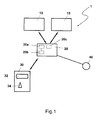
- a home automation installation 1 is represented at figure 1 . It allows to implement the logic outlined above. It comprises a plurality of domotic electrical elements or equipment 10, 15 such as for example a roller shutter, a motorized lock, a terrace awning, an internal blind with adjustable blades, a lamp, a radiator, a window actuator etc.
- domotic electrical elements or equipment 10, 15 such as for example a roller shutter, a motorized lock, a terrace awning, an internal blind with adjustable blades, a lamp, a radiator, a window actuator etc.
- These equipments are electrically controlled or can even contain a motor (we can generally speak of electro-mechanisms) so that it is possible to activate / deactivate them by using a control unit 20.
- the equipment can be powered on the mains or by separate means of supply and are then said autonomous equipment.
- the control unit 20 makes it possible to remotely control the various electrical equipment of the installation.
- it comprises a man-machine interface 30 provided with at least one display screen 32 and control keys 34.
- the display screen may consist of a liquid crystal display or backlight, allowing the display of alphanumeric characters, or a plurality of light emitting diodes.
- the human-machine interface may be that of a computer to which the control unit is connected.
- Local control of the equipment is also possible via local switches or directly from the control unit via the control keys.
- the control unit comprises a microprocessor 20a, a memory 20b and a communication unit 20c enabling it to communicate and send control commands to the different pieces of equipment, to receive information from these pieces of equipment or other elements. of the home automation system. Communications between the various elements of the home automation system can be unidirectional or bidirectional, wired or not. Bidirectional communication links between the equipment and the control unit enable the latter in particular to know the status of the different equipment.
- the control unit can also be powered from the mains or by separate power supply means.
- the man-machine interface of the control unit may also be an entity separate from the control unit, for example a portable station provided with its own power source and communicate with the control unit by means of wireless communications.
- the installation also includes detection devices 40 comprising sensors supplying the control unit and / or equipment, condition or measurement of surrounding parameters or operating parameters of electrical equipment.
- These surrounding parameters consist in particular of parameters inside and outside the premises, for example the presence of an occupant, the temperature or the rate of CO 2 in a room, the illumination of a facade or a room. a window, ambient humidity, brightness on a work surface such as a desk.
- the operating parameters of the equipment can consist of the state (open / closed, on / off, during movement) of these devices, a diagnostic information (for example in the case of a malfunction, a conflict control, the presence of an obstacle) or other information related to the activation of the equipment, such as time information from a clock.
- the communication between the detection devices and the control unit can also be unidirectional or bidirectional, wired or not. Some of the detection devices can be integrated in the control unit.
- control unit may take into account other data that may be entered at the control unit once or repeatedly. This can be achieved via the human-machine interface or via a network interface incorporated in the control unit. These data are typically data relating to the local (orientation, geographic location, insulation properties, dimensions, geometry, etc.), configuration parameters
- Climatic information received via an Internet connection are examples of parameters entered repeatedly.
- the control unit and the home automation installation comprise software means for implementing the operating method according to the invention.
- These software means include computer programs governing the operation of the control unit and the installation.
- the home automation installation comprises a calculation and / or simulation means for predicting the energy impact of at least a first action of a home automation equipment on the energy balance of the room equipped with the installation in the home. hypothesis where this action would be performed and a means of advice to recommend or discourage the user to implement the first action.
- the advisory means may comprise any signaling interface, particularly of sound or visual type. Preferably, these means are part of the control unit.
- the various energy information can be directly supplied to the control unit by certain equipment for which the manufacturer has programmed the integration and the return of such data.
- these data are readable (in the form of RFID type information or bar code) on the equipment.
- Accurate parameterization completes the configuration of the room, in particular the dimensioning and the characteristics of products with active or passive energy impact. For example, this energy impact is based on the consumptions and / or the theoretical, observed or average energy gains of the different equipment.
- the configuration of the home automation installation also includes the definition of a state of equilibrium of the room, in which optimal values of comfort are defined. These optimal comfort values are then chosen as threshold values.
- the control unit is programmed to seek to achieve this state of equilibrium by minimizing the energy consumption.
- the control unit thus configured makes it possible to estimate and calculate the energy consumption of the associated premises, and in particular, makes it possible to evaluate the energy impact of various actions of the electrical equipment.
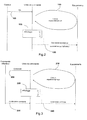
- Different stages related to the invention are schematized on the figure 2 .
- a sensor sends to the control unit information related to the parameter it measures.
- This information can be a simple indication reflecting the measurement level of the parameter or a command order associated with this level of measurement.
- a calculation step 110 is performed. This calculation step is intended to update the model used to calculate the energy impact of the execution of one or more orders. These calculations are calculations of simulation or forecast of what would be the energy impact of the order (s) in the hypothesis where these would be executed. The energy impact calculation can be limited to simple comparisons between values provided by one or more sensors and pre-recorded thresholds.
- control unit displays the type of command orders evaluated and their energy impact, in particular those having a positive impact.
- a step 130 the execution of one or more command orders is confirmed by the control unit, either because the user has validated their execution after being informed of its energy impact or automatically because the impact energy leads to a reduced energy consumption of the installation equipping the premises while remaining in predefined comfort criteria.
- a threshold energy consumption is predefined to judge the importance of this reduction in energy consumption.
- the evaluation can be generated proactively, that is without necessarily being required by the user. It can take place following an apprenticeship, during which the actions are implemented, their impact measured and memorized for the proactive management of a future situation.
- a new evaluation can be performed repeatedly, after a given period has elapsed or at the request of a user, for example an update request or a command.
- control unit By comparing these evaluations relating to various actions and / or various equipments, the control unit is able to determine the most interesting actions for the purpose of global reduction of energy consumed and / or favoring ecological and / or financially advantageous energies. . Finally, the control unit makes it possible to propose to the user a graphic and clear restitution of estimates, surveys and calculations, essentially for the purpose of informing and recommending or advising.
- the control unit can also display the various evaluations and their nature, positive, negative or neutral, depending on whether they respectively lead to an increase, decrease or stagnation of the energy performance of the installation.
- these recommendations or advice are in graphical form using the display screen of the human-machine interface of the control unit.
- Such recommendations may take the form of text and icons, for example to close such a blind in front of a window to the south, to open a window on an east facade to provide natural ventilation, to lower the thermostat of such heating or the opening a shutter combined with the extinction of an electric light in the same room.
- the visualization may simply indicate the recommended action, but it may also include an energy impact costing in terms of energy savings or even financial savings.
- the recommendations or advice can be a simple listing of actions, sorted according to their interest, or a simple action evaluated or scored so as to reveal a score to quantify or qualify the energy interest of the action.
- Recommendations or advice may also relate to the layout of the premises.
- a replacement of a device of the home automation system with another offering different characteristics can be proposed. For example, it may be proposed to replace a first sun protection device with another having other characteristics or to equip glazing not yet protected with sun protection devices.
- the user After viewing the recommended actions, the user has the opportunity to implement these actions by directly controlling the electrical equipment from the human-machine interface of the control unit.
- a particular visual or sound message can be added to the display ergonomics to inform well. the user.
- the action can be implemented automatically.
- a particular display is also provided when no particular action is specifically recommended, ie if the plant is in the equilibrium state as it has been defined.
- the control unit can also control certain actions automatically, in particular in the case of actions related to the safety of equipment and people, or actions with a strong energy impact in the absence of a user reaction.
- the use of a presence detection device can also switch the control unit to automatic mode when no one is in the room or in a room of the room, and in manual mode when an occupant is detected, the energy impact prediction function being retained in both cases.
- the control unit can also alert in case of unusual consumption compared to an average daily balance, in the case of an abnormally lit device or a product left idle among other examples.
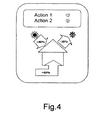
- control unit An additional use of the control unit is the visual representation of energy gains and losses on average over a given period in the local concerned. These gains and losses are calculated from system configuration information and measured data.
- An example display is shown in figure 4 .
- the inhabitant can have information on the energy balance and a quantification of it, adapted to its habitat (for example on the figure 4 in percentage saved / consumed since a certain date).
- Other parameters than those having a direct impact on the equipment can be included in this energy balance: this can be the case of water for example.
- the information provided is then a physical and financial report related to the local over a given period.
- a second embodiment, complementary to the first and can be perfectly combined with it, is described below with reference to the figure 3 .
- the control unit responds to a command from a user to operate an electrical equipment, by activating one of the control keys of the man-machine interface. For example, the user wants to open a window or put up a blind.
- control unit evaluates the energy impact of the action on the local energy consumption, that is to say, the energy consumption or conversely the energy production, for example thermal, relative to the defined equilibrium state. This calculation is a calculation of simulation or prediction of what would be the energy impact of the order in the hypothesis that this one would be executed.
- a step 220 if the impact is negative, that is to say if the estimated energy consumption resulting from this action increases with respect to the current consumption, the control unit sends a warning message on the viewing screen. The user is then informed that the action it wishes to implement is unfavorable for energy.
- the alert message may, as in the first embodiment, include an estimate of the consumption or the financial impact.
- the user must then, in a step 230, confirm his command, if he wants it to be executed anyway.
- control unit confirms the transmission of the control command in a step 240.
- This alert message and / or the order confirmation can be active for all actions resulting in an increase in energy consumption or for the only actions that result in an increase in consumption above a predefined threshold. Below this threshold, only an unfavorable message can be displayed if necessary, but the order can be taken into account from the first activation.
- control unit can also inhibit certain totally unfavorable actions and inform the user that they can not be executed because of their negative energy impact.
- evaluations of the energy impact of certain actions take into account the user's possible reactions to the recommended actions.
- the installation is readjusted dynamically, taking into account the local, its occupants and passive or energy-active elements, based on a theoretical evaluation that takes into account from configuration elements to a practical assessment that also takes into account the lifestyle of the occupants.
- the installation updates its parameters, regularly or on a particular event, to take into account, for example, the introduction of new equipment into the installation and new interactions that it creates with the rest. of the installation.
- the term local has been used and means all or part of a residential or commercial building or offices. In particular, it may refer to a single-family home, an apartment in a multi-unit residential building or a multi-unit residential building.
- An action can have several components. For example, it can be a scenario in which all the parts of the room are manipulated. Similarly, the action may relate to different equipment of different natures, in particular it may be a flaps maneuver and a change of state of a lighting system and / or heating and / or or air conditioning.
Landscapes
- Physics & Mathematics (AREA)
- General Physics & Mathematics (AREA)
- Engineering & Computer Science (AREA)
- Automation & Control Theory (AREA)
- Air Conditioning Control Device (AREA)
- Remote Monitoring And Control Of Power-Distribution Networks (AREA)
- Management, Administration, Business Operations System, And Electronic Commerce (AREA)
Priority Applications (1)
| Application Number | Priority Date | Filing Date | Title |
|---|---|---|---|
| PL08840295T PL2215534T3 (pl) | 2007-10-18 | 2008-10-17 | Sposób działania instalacji automatyki domowej do oceny skutków energetycznych działań sprzętu automatyki domowej w pomieszczeniu |
Applications Claiming Priority (2)
| Application Number | Priority Date | Filing Date | Title |
|---|---|---|---|
| FR0707316A FR2922668A1 (fr) | 2007-10-18 | 2007-10-18 | Procede de fonctionnement d'une installation domotique pour evaluer l'impact energetique d'actions d'un equipement domotique sur un local |
| PCT/IB2008/054267 WO2009050674A1 (fr) | 2007-10-18 | 2008-10-17 | Procede de fonctionnement d'une installation domotique pour evaluer l'impact energetique d'actions d'un equipement domotique sur un local. |
Publications (2)
| Publication Number | Publication Date |
|---|---|
| EP2215534A1 EP2215534A1 (fr) | 2010-08-11 |
| EP2215534B1 true EP2215534B1 (fr) | 2012-12-05 |
Family
ID=39522037
Family Applications (1)
| Application Number | Title | Priority Date | Filing Date |
|---|---|---|---|
| EP08840295A Active EP2215534B1 (fr) | 2007-10-18 | 2008-10-17 | Procede de fonctionnement d'une installation domotique pour evaluer l'impact energetique d'actions d'un equipement domotique sur un local |
Country Status (4)
| Country | Link |
|---|---|
| EP (1) | EP2215534B1 (pl) |
| FR (1) | FR2922668A1 (pl) |
| PL (1) | PL2215534T3 (pl) |
| WO (1) | WO2009050674A1 (pl) |
Families Citing this family (4)
| Publication number | Priority date | Publication date | Assignee | Title |
|---|---|---|---|---|
| EP2498152A1 (de) * | 2011-03-07 | 2012-09-12 | Siemens Aktiengesellschaft | Verfahren zur Steuerung eines Raumautomationssystems |
| US9104183B2 (en) | 2011-10-13 | 2015-08-11 | Siemens Corporation | Advanced human-machine interface for collaborative building control |
| FR2982380A1 (fr) * | 2011-11-03 | 2013-05-10 | Be Smart | Dispositif de gestion active du batiment applique au milieu residentiel modelisant et interpretant le comportement des occupants combinant automatisation et confort avec une notion energetique |
| US10805105B2 (en) | 2016-03-18 | 2020-10-13 | Nec Corporation | Method for operating a service system |
Family Cites Families (3)
| Publication number | Priority date | Publication date | Assignee | Title |
|---|---|---|---|---|
| US6108614A (en) * | 1993-01-22 | 2000-08-22 | Diablo Research Corporation | System and method for serial communication between a central unit and a plurality of remote units |
| US5572438A (en) * | 1995-01-05 | 1996-11-05 | Teco Energy Management Services | Engery management and building automation system |
| US20050090915A1 (en) * | 2002-10-22 | 2005-04-28 | Smart Systems Technologies, Inc. | Programmable and expandable building automation and control system |
-
2007
- 2007-10-18 FR FR0707316A patent/FR2922668A1/fr not_active Withdrawn
-
2008
- 2008-10-17 WO PCT/IB2008/054267 patent/WO2009050674A1/fr not_active Ceased
- 2008-10-17 PL PL08840295T patent/PL2215534T3/pl unknown
- 2008-10-17 EP EP08840295A patent/EP2215534B1/fr active Active
Also Published As
| Publication number | Publication date |
|---|---|
| PL2215534T3 (pl) | 2013-05-31 |
| EP2215534A1 (fr) | 2010-08-11 |
| WO2009050674A1 (fr) | 2009-04-23 |
| FR2922668A1 (fr) | 2009-04-24 |
Similar Documents
| Publication | Publication Date | Title |
|---|---|---|
| US10884385B2 (en) | Realization of energy savings potential through feedback | |
| AU2016257459B2 (en) | Multi-function home control system with control system hub and remote sensors | |
| JP6370870B2 (ja) | クライメートコントロールシステムおよびクライメートコントロールシステムを制御する方法 | |
| US10274914B2 (en) | Smart-home device that self-qualifies for away-state functionality | |
| EP2769277B1 (en) | Smart-home device that self-qualifies for away-state functionality | |
| US11692717B2 (en) | Hydronic floor heating systems with features | |
| KR20120107930A (ko) | 에너지 관리 방법 및 시스템 | |
| EP2215534B1 (fr) | Procede de fonctionnement d'une installation domotique pour evaluer l'impact energetique d'actions d'un equipement domotique sur un local | |
| FR3025871B1 (fr) | Equipement de controle d'au moins un appareil de regulation thermique, et ensemble de regulation et systeme de pilotage associes | |
| EP3134777B1 (fr) | Procédé de commande et/ou de contrôle d'au moins un actionneur | |
| WO2025202292A1 (en) | Energy savings prediction | |
| CA2925452A1 (fr) | Gestion de commandes d'un equipement electrique apte a etre commande par des signaux de commande infrarouges | |
| FR2967793A1 (fr) | Systeme de gestion de l'energie dans un batiment | |
| CA2945887A1 (fr) | Commande perfectionnee d'un appareil thermique | |
| EP3123255B1 (fr) | Dispositif de contrôle d'un équipement électrique | |
| EP3112972B1 (en) | Smart-home device that self-qualifies for away-state functionality | |
| CA2945017A1 (en) | Wifi vertical fan coil system |
Legal Events
| Date | Code | Title | Description |
|---|---|---|---|
| PUAI | Public reference made under article 153(3) epc to a published international application that has entered the european phase |
Free format text: ORIGINAL CODE: 0009012 |
|
| 17P | Request for examination filed |
Effective date: 20100517 |
|
| AK | Designated contracting states |
Kind code of ref document: A1 Designated state(s): AT BE BG CH CY CZ DE DK EE ES FI FR GB GR HR HU IE IS IT LI LT LU LV MC MT NL NO PL PT RO SE SI SK TR |
|
| AX | Request for extension of the european patent |
Extension state: AL BA MK RS |
|
| DAX | Request for extension of the european patent (deleted) | ||
| GRAP | Despatch of communication of intention to grant a patent |
Free format text: ORIGINAL CODE: EPIDOSNIGR1 |
|
| GRAS | Grant fee paid |
Free format text: ORIGINAL CODE: EPIDOSNIGR3 |
|
| GRAA | (expected) grant |
Free format text: ORIGINAL CODE: 0009210 |
|
| AK | Designated contracting states |
Kind code of ref document: B1 Designated state(s): AT BE BG CH CY CZ DE DK EE ES FI FR GB GR HR HU IE IS IT LI LT LU LV MC MT NL NO PL PT RO SE SI SK TR |
|
| REG | Reference to a national code |
Ref country code: GB Ref legal event code: FG4D Free format text: NOT ENGLISH |
|
| REG | Reference to a national code |
Ref country code: CH Ref legal event code: EP |
|
| REG | Reference to a national code |
Ref country code: AT Ref legal event code: REF Ref document number: 587581 Country of ref document: AT Kind code of ref document: T Effective date: 20121215 |
|
| REG | Reference to a national code |
Ref country code: IE Ref legal event code: FG4D Free format text: LANGUAGE OF EP DOCUMENT: FRENCH |
|
| REG | Reference to a national code |
Ref country code: DE Ref legal event code: R096 Ref document number: 602008020674 Country of ref document: DE Effective date: 20130131 |
|
| REG | Reference to a national code |
Ref country code: CH Ref legal event code: NV Representative=s name: BUGNION S.A., CH |
|
| REG | Reference to a national code |
Ref country code: SE Ref legal event code: TRGR |
|
| REG | Reference to a national code |
Ref country code: AT Ref legal event code: MK05 Ref document number: 587581 Country of ref document: AT Kind code of ref document: T Effective date: 20121205 |
|
| PG25 | Lapsed in a contracting state [announced via postgrant information from national office to epo] |
Ref country code: NO Free format text: LAPSE BECAUSE OF FAILURE TO SUBMIT A TRANSLATION OF THE DESCRIPTION OR TO PAY THE FEE WITHIN THE PRESCRIBED TIME-LIMIT Effective date: 20130305 Ref country code: ES Free format text: LAPSE BECAUSE OF FAILURE TO SUBMIT A TRANSLATION OF THE DESCRIPTION OR TO PAY THE FEE WITHIN THE PRESCRIBED TIME-LIMIT Effective date: 20130316 Ref country code: LT Free format text: LAPSE BECAUSE OF FAILURE TO SUBMIT A TRANSLATION OF THE DESCRIPTION OR TO PAY THE FEE WITHIN THE PRESCRIBED TIME-LIMIT Effective date: 20121205 Ref country code: FI Free format text: LAPSE BECAUSE OF FAILURE TO SUBMIT A TRANSLATION OF THE DESCRIPTION OR TO PAY THE FEE WITHIN THE PRESCRIBED TIME-LIMIT Effective date: 20121205 |
|
| REG | Reference to a national code |
Ref country code: NL Ref legal event code: VDEP Effective date: 20121205 |
|
| REG | Reference to a national code |
Ref country code: LT Ref legal event code: MG4D |
|
| PG25 | Lapsed in a contracting state [announced via postgrant information from national office to epo] |
Ref country code: SI Free format text: LAPSE BECAUSE OF FAILURE TO SUBMIT A TRANSLATION OF THE DESCRIPTION OR TO PAY THE FEE WITHIN THE PRESCRIBED TIME-LIMIT Effective date: 20121205 Ref country code: GR Free format text: LAPSE BECAUSE OF FAILURE TO SUBMIT A TRANSLATION OF THE DESCRIPTION OR TO PAY THE FEE WITHIN THE PRESCRIBED TIME-LIMIT Effective date: 20130306 Ref country code: LV Free format text: LAPSE BECAUSE OF FAILURE TO SUBMIT A TRANSLATION OF THE DESCRIPTION OR TO PAY THE FEE WITHIN THE PRESCRIBED TIME-LIMIT Effective date: 20121205 |
|
| REG | Reference to a national code |
Ref country code: PL Ref legal event code: T3 |
|
| PG25 | Lapsed in a contracting state [announced via postgrant information from national office to epo] |
Ref country code: AT Free format text: LAPSE BECAUSE OF FAILURE TO SUBMIT A TRANSLATION OF THE DESCRIPTION OR TO PAY THE FEE WITHIN THE PRESCRIBED TIME-LIMIT Effective date: 20121205 |
|
| PG25 | Lapsed in a contracting state [announced via postgrant information from national office to epo] |
Ref country code: IS Free format text: LAPSE BECAUSE OF FAILURE TO SUBMIT A TRANSLATION OF THE DESCRIPTION OR TO PAY THE FEE WITHIN THE PRESCRIBED TIME-LIMIT Effective date: 20130405 Ref country code: CZ Free format text: LAPSE BECAUSE OF FAILURE TO SUBMIT A TRANSLATION OF THE DESCRIPTION OR TO PAY THE FEE WITHIN THE PRESCRIBED TIME-LIMIT Effective date: 20121205 Ref country code: SK Free format text: LAPSE BECAUSE OF FAILURE TO SUBMIT A TRANSLATION OF THE DESCRIPTION OR TO PAY THE FEE WITHIN THE PRESCRIBED TIME-LIMIT Effective date: 20121205 Ref country code: EE Free format text: LAPSE BECAUSE OF FAILURE TO SUBMIT A TRANSLATION OF THE DESCRIPTION OR TO PAY THE FEE WITHIN THE PRESCRIBED TIME-LIMIT Effective date: 20121205 Ref country code: BG Free format text: LAPSE BECAUSE OF FAILURE TO SUBMIT A TRANSLATION OF THE DESCRIPTION OR TO PAY THE FEE WITHIN THE PRESCRIBED TIME-LIMIT Effective date: 20130305 |
|
| PG25 | Lapsed in a contracting state [announced via postgrant information from national office to epo] |
Ref country code: PT Free format text: LAPSE BECAUSE OF FAILURE TO SUBMIT A TRANSLATION OF THE DESCRIPTION OR TO PAY THE FEE WITHIN THE PRESCRIBED TIME-LIMIT Effective date: 20130405 Ref country code: NL Free format text: LAPSE BECAUSE OF FAILURE TO SUBMIT A TRANSLATION OF THE DESCRIPTION OR TO PAY THE FEE WITHIN THE PRESCRIBED TIME-LIMIT Effective date: 20121205 Ref country code: RO Free format text: LAPSE BECAUSE OF FAILURE TO SUBMIT A TRANSLATION OF THE DESCRIPTION OR TO PAY THE FEE WITHIN THE PRESCRIBED TIME-LIMIT Effective date: 20121205 |
|
| PLBE | No opposition filed within time limit |
Free format text: ORIGINAL CODE: 0009261 |
|
| STAA | Information on the status of an ep patent application or granted ep patent |
Free format text: STATUS: NO OPPOSITION FILED WITHIN TIME LIMIT |
|
| PG25 | Lapsed in a contracting state [announced via postgrant information from national office to epo] |
Ref country code: DK Free format text: LAPSE BECAUSE OF FAILURE TO SUBMIT A TRANSLATION OF THE DESCRIPTION OR TO PAY THE FEE WITHIN THE PRESCRIBED TIME-LIMIT Effective date: 20121205 |
|
| 26N | No opposition filed |
Effective date: 20130906 |
|
| PG25 | Lapsed in a contracting state [announced via postgrant information from national office to epo] |
Ref country code: CY Free format text: LAPSE BECAUSE OF FAILURE TO SUBMIT A TRANSLATION OF THE DESCRIPTION OR TO PAY THE FEE WITHIN THE PRESCRIBED TIME-LIMIT Effective date: 20121205 |
|
| PG25 | Lapsed in a contracting state [announced via postgrant information from national office to epo] |
Ref country code: IT Free format text: LAPSE BECAUSE OF FAILURE TO SUBMIT A TRANSLATION OF THE DESCRIPTION OR TO PAY THE FEE WITHIN THE PRESCRIBED TIME-LIMIT Effective date: 20121205 |
|
| REG | Reference to a national code |
Ref country code: DE Ref legal event code: R097 Ref document number: 602008020674 Country of ref document: DE Effective date: 20130906 |
|
| PG25 | Lapsed in a contracting state [announced via postgrant information from national office to epo] |
Ref country code: HR Free format text: LAPSE BECAUSE OF FAILURE TO SUBMIT A TRANSLATION OF THE DESCRIPTION OR TO PAY THE FEE WITHIN THE PRESCRIBED TIME-LIMIT Effective date: 20130731 |
|
| PG25 | Lapsed in a contracting state [announced via postgrant information from national office to epo] |
Ref country code: MC Free format text: LAPSE BECAUSE OF FAILURE TO SUBMIT A TRANSLATION OF THE DESCRIPTION OR TO PAY THE FEE WITHIN THE PRESCRIBED TIME-LIMIT Effective date: 20121205 |
|
| REG | Reference to a national code |
Ref country code: IE Ref legal event code: MM4A |
|
| PG25 | Lapsed in a contracting state [announced via postgrant information from national office to epo] |
Ref country code: IE Free format text: LAPSE BECAUSE OF NON-PAYMENT OF DUE FEES Effective date: 20131017 |
|
| PG25 | Lapsed in a contracting state [announced via postgrant information from national office to epo] |
Ref country code: TR Free format text: LAPSE BECAUSE OF FAILURE TO SUBMIT A TRANSLATION OF THE DESCRIPTION OR TO PAY THE FEE WITHIN THE PRESCRIBED TIME-LIMIT Effective date: 20121205 |
|
| PG25 | Lapsed in a contracting state [announced via postgrant information from national office to epo] |
Ref country code: HU Free format text: LAPSE BECAUSE OF FAILURE TO SUBMIT A TRANSLATION OF THE DESCRIPTION OR TO PAY THE FEE WITHIN THE PRESCRIBED TIME-LIMIT; INVALID AB INITIO Effective date: 20081017 Ref country code: LU Free format text: LAPSE BECAUSE OF NON-PAYMENT OF DUE FEES Effective date: 20131017 |
|
| PG25 | Lapsed in a contracting state [announced via postgrant information from national office to epo] |
Ref country code: MT Free format text: LAPSE BECAUSE OF FAILURE TO SUBMIT A TRANSLATION OF THE DESCRIPTION OR TO PAY THE FEE WITHIN THE PRESCRIBED TIME-LIMIT Effective date: 20121205 |
|
| REG | Reference to a national code |
Ref country code: FR Ref legal event code: PLFP Year of fee payment: 8 |
|
| REG | Reference to a national code |
Ref country code: DE Ref legal event code: R082 Ref document number: 602008020674 Country of ref document: DE |
|
| REG | Reference to a national code |
Ref country code: FR Ref legal event code: PLFP Year of fee payment: 9 |
|
| REG | Reference to a national code |
Ref country code: FR Ref legal event code: PLFP Year of fee payment: 10 |
|
| REG | Reference to a national code |
Ref country code: FR Ref legal event code: PLFP Year of fee payment: 11 |
|
| PGFP | Annual fee paid to national office [announced via postgrant information from national office to epo] |
Ref country code: SE Payment date: 20201013 Year of fee payment: 13 |
|
| REG | Reference to a national code |
Ref country code: DE Ref legal event code: R081 Ref document number: 602008020674 Country of ref document: DE Owner name: SOMFY ACTIVITES SA, FR Free format text: FORMER OWNER: SOMFY SAS, CLUSES, FR |
|
| PGFP | Annual fee paid to national office [announced via postgrant information from national office to epo] |
Ref country code: GB Payment date: 20210928 Year of fee payment: 14 |
|
| REG | Reference to a national code |
Ref country code: SE Ref legal event code: EUG |
|
| PG25 | Lapsed in a contracting state [announced via postgrant information from national office to epo] |
Ref country code: SE Free format text: LAPSE BECAUSE OF NON-PAYMENT OF DUE FEES Effective date: 20211018 |
|
| GBPC | Gb: european patent ceased through non-payment of renewal fee |
Effective date: 20221017 |
|
| PG25 | Lapsed in a contracting state [announced via postgrant information from national office to epo] |
Ref country code: GB Free format text: LAPSE BECAUSE OF NON-PAYMENT OF DUE FEES Effective date: 20221017 |
|
| PGFP | Annual fee paid to national office [announced via postgrant information from national office to epo] |
Ref country code: PL Payment date: 20250918 Year of fee payment: 18 |
|
| PGFP | Annual fee paid to national office [announced via postgrant information from national office to epo] |
Ref country code: FR Payment date: 20250811 Year of fee payment: 18 |
|
| REG | Reference to a national code |
Ref country code: CH Ref legal event code: U11 Free format text: ST27 STATUS EVENT CODE: U-0-0-U10-U11 (AS PROVIDED BY THE NATIONAL OFFICE) Effective date: 20251101 |
|
| PGFP | Annual fee paid to national office [announced via postgrant information from national office to epo] |
Ref country code: DE Payment date: 20250926 Year of fee payment: 18 |
|
| PGFP | Annual fee paid to national office [announced via postgrant information from national office to epo] |
Ref country code: BE Payment date: 20251020 Year of fee payment: 18 |
|
| PGFP | Annual fee paid to national office [announced via postgrant information from national office to epo] |
Ref country code: CH Payment date: 20251101 Year of fee payment: 18 |