EP2215096B1 - Kupfer-sauerstoff-adduktkomplexe - Google Patents
Kupfer-sauerstoff-adduktkomplexe Download PDFInfo
- Publication number
- EP2215096B1 EP2215096B1 EP08843041A EP08843041A EP2215096B1 EP 2215096 B1 EP2215096 B1 EP 2215096B1 EP 08843041 A EP08843041 A EP 08843041A EP 08843041 A EP08843041 A EP 08843041A EP 2215096 B1 EP2215096 B1 EP 2215096B1
- Authority
- EP
- European Patent Office
- Prior art keywords
- oxygen
- nitrogen
- copper
- ligand
- bar
- Prior art date
- Legal status (The legal status is an assumption and is not a legal conclusion. Google has not performed a legal analysis and makes no representation as to the accuracy of the status listed.)
- Not-in-force
Links
- QPLDLSVMHZLSFG-UHFFFAOYSA-N Copper oxide Chemical compound [Cu]=O QPLDLSVMHZLSFG-UHFFFAOYSA-N 0.000 title description 3
- -1 tetraphenylborate Chemical compound 0.000 claims description 80
- 239000003446 ligand Substances 0.000 claims description 73
- CSCPPACGZOOCGX-UHFFFAOYSA-N Acetone Chemical group CC(C)=O CSCPPACGZOOCGX-UHFFFAOYSA-N 0.000 claims description 71
- WEVYAHXRMPXWCK-UHFFFAOYSA-N Acetonitrile Chemical group CC#N WEVYAHXRMPXWCK-UHFFFAOYSA-N 0.000 claims description 43
- 229910052757 nitrogen Inorganic materials 0.000 claims description 38
- 125000004433 nitrogen atom Chemical group N* 0.000 claims description 37
- MYMOFIZGZYHOMD-UHFFFAOYSA-N Dioxygen Chemical compound O=O MYMOFIZGZYHOMD-UHFFFAOYSA-N 0.000 claims description 35
- 239000012298 atmosphere Substances 0.000 claims description 34
- 239000001301 oxygen Substances 0.000 claims description 34
- 229910052760 oxygen Inorganic materials 0.000 claims description 34
- 125000004432 carbon atom Chemical group C* 0.000 claims description 32
- UHOVQNZJYSORNB-UHFFFAOYSA-N Benzene Chemical compound C1=CC=CC=C1 UHOVQNZJYSORNB-UHFFFAOYSA-N 0.000 claims description 30
- 238000007254 oxidation reaction Methods 0.000 claims description 21
- 239000007787 solid Substances 0.000 claims description 21
- OTNFTBTWTMXVRF-UHFFFAOYSA-N copper;hydrate Chemical compound O.[Cu+2] OTNFTBTWTMXVRF-UHFFFAOYSA-N 0.000 claims description 20
- ISWSIDIOOBJBQZ-UHFFFAOYSA-N Phenol Chemical compound OC1=CC=CC=C1 ISWSIDIOOBJBQZ-UHFFFAOYSA-N 0.000 claims description 18
- 229910001882 dioxygen Inorganic materials 0.000 claims description 18
- 230000003647 oxidation Effects 0.000 claims description 18
- 125000002947 alkylene group Chemical group 0.000 claims description 17
- 238000000034 method Methods 0.000 claims description 17
- 239000003054 catalyst Substances 0.000 claims description 16
- 238000001035 drying Methods 0.000 claims description 16
- 125000002496 methyl group Chemical group [H]C([H])([H])* 0.000 claims description 15
- 125000000999 tert-butyl group Chemical group [H]C([H])([H])C(*)(C([H])([H])[H])C([H])([H])[H] 0.000 claims description 15
- 150000001450 anions Chemical class 0.000 claims description 13
- ZBCBWPMODOFKDW-UHFFFAOYSA-N diethanolamine Chemical compound OCCNCCO ZBCBWPMODOFKDW-UHFFFAOYSA-N 0.000 claims description 13
- 125000004435 hydrogen atom Chemical class [H]* 0.000 claims description 12
- 239000003880 polar aprotic solvent Substances 0.000 claims description 11
- 239000000203 mixture Substances 0.000 claims description 10
- OKKJLVBELUTLKV-UHFFFAOYSA-N Methanol Chemical compound OC OKKJLVBELUTLKV-UHFFFAOYSA-N 0.000 claims description 9
- 239000011261 inert gas Substances 0.000 claims description 9
- 125000002023 trifluoromethyl group Chemical group FC(F)(F)* 0.000 claims description 9
- 125000004429 atom Chemical group 0.000 claims description 8
- 229910052799 carbon Inorganic materials 0.000 claims description 7
- 238000006243 chemical reaction Methods 0.000 claims description 7
- 125000001495 ethyl group Chemical group [H]C([H])([H])C([H])([H])* 0.000 claims description 7
- QJGQUHMNIGDVPM-UHFFFAOYSA-N nitrogen group Chemical group [N] QJGQUHMNIGDVPM-UHFFFAOYSA-N 0.000 claims description 7
- 229910052739 hydrogen Inorganic materials 0.000 claims description 6
- 125000001449 isopropyl group Chemical group [H]C([H])([H])C([H])(*)C([H])([H])[H] 0.000 claims description 6
- 229910052751 metal Inorganic materials 0.000 claims description 6
- 239000002184 metal Substances 0.000 claims description 6
- VNWKTOKETHGBQD-UHFFFAOYSA-N methane Chemical compound C VNWKTOKETHGBQD-UHFFFAOYSA-N 0.000 claims description 6
- 125000004123 n-propyl group Chemical group [H]C([H])([H])C([H])([H])C([H])([H])* 0.000 claims description 6
- NFHFRUOZVGFOOS-UHFFFAOYSA-N palladium;triphenylphosphane Chemical compound [Pd].C1=CC=CC=C1P(C=1C=CC=CC=1)C1=CC=CC=C1.C1=CC=CC=C1P(C=1C=CC=CC=1)C1=CC=CC=C1.C1=CC=CC=C1P(C=1C=CC=CC=1)C1=CC=CC=C1.C1=CC=CC=C1P(C=1C=CC=CC=1)C1=CC=CC=C1 NFHFRUOZVGFOOS-UHFFFAOYSA-N 0.000 claims description 6
- 125000003944 tolyl group Chemical group 0.000 claims description 6
- 229910052727 yttrium Inorganic materials 0.000 claims description 6
- 125000004105 2-pyridyl group Chemical group N1=C([*])C([H])=C([H])C([H])=C1[H] 0.000 claims description 5
- 238000002955 isolation Methods 0.000 claims description 5
- VMGSQCIDWAUGLQ-UHFFFAOYSA-N n',n'-bis[2-(dimethylamino)ethyl]-n,n-dimethylethane-1,2-diamine Chemical compound CN(C)CCN(CCN(C)C)CCN(C)C VMGSQCIDWAUGLQ-UHFFFAOYSA-N 0.000 claims description 5
- 125000001931 aliphatic group Chemical group 0.000 claims description 4
- 125000003118 aryl group Chemical group 0.000 claims description 4
- 150000001875 compounds Chemical class 0.000 claims description 4
- 125000006341 heptafluoro n-propyl group Chemical group FC(F)(F)C(F)(F)C(F)(F)* 0.000 claims description 4
- 125000006340 pentafluoro ethyl group Chemical group FC(F)(F)C(F)(F)* 0.000 claims description 4
- 125000000538 pentafluorophenyl group Chemical group FC1=C(F)C(F)=C(*)C(F)=C1F 0.000 claims description 4
- VLTRZXGMWDSKGL-UHFFFAOYSA-M perchlorate Inorganic materials [O-]Cl(=O)(=O)=O VLTRZXGMWDSKGL-UHFFFAOYSA-M 0.000 claims description 4
- MDCWDBMBZLORER-UHFFFAOYSA-N triphenyl borate Chemical compound C=1C=CC=CC=1OB(OC=1C=CC=CC=1)OC1=CC=CC=C1 MDCWDBMBZLORER-UHFFFAOYSA-N 0.000 claims description 4
- 125000004174 2-benzimidazolyl group Chemical group [H]N1C(*)=NC2=C([H])C([H])=C([H])C([H])=C12 0.000 claims description 3
- CPELXLSAUQHCOX-UHFFFAOYSA-M Bromide Chemical compound [Br-] CPELXLSAUQHCOX-UHFFFAOYSA-M 0.000 claims description 3
- 230000015572 biosynthetic process Effects 0.000 claims description 3
- 150000001805 chlorine compounds Chemical group 0.000 claims description 3
- 238000010668 complexation reaction Methods 0.000 claims description 3
- 125000006342 heptafluoro i-propyl group Chemical group FC(F)(F)C(F)(*)C(F)(F)F 0.000 claims description 3
- 239000001257 hydrogen Substances 0.000 claims description 3
- XMBWDFGMSWQBCA-UHFFFAOYSA-N hydrogen iodide Chemical compound I XMBWDFGMSWQBCA-UHFFFAOYSA-N 0.000 claims description 3
- 125000001570 methylene group Chemical group [H]C([H])([*:1])[*:2] 0.000 claims description 3
- FVSKHRXBFJPNKK-UHFFFAOYSA-N propionitrile Chemical compound CCC#N FVSKHRXBFJPNKK-UHFFFAOYSA-N 0.000 claims description 3
- 150000003839 salts Chemical class 0.000 claims description 3
- 229920006395 saturated elastomer Polymers 0.000 claims description 3
- ITMCEJHCFYSIIV-UHFFFAOYSA-M triflate Chemical compound [O-]S(=O)(=O)C(F)(F)F ITMCEJHCFYSIIV-UHFFFAOYSA-M 0.000 claims description 3
- VGUWFGWZSVLROP-UHFFFAOYSA-N 1-pyridin-2-yl-n,n-bis(pyridin-2-ylmethyl)methanamine Chemical compound C=1C=CC=NC=1CN(CC=1N=CC=CC=1)CC1=CC=CC=N1 VGUWFGWZSVLROP-UHFFFAOYSA-N 0.000 claims description 2
- 125000003006 2-dimethylaminoethyl group Chemical group [H]C([H])([H])N(C([H])([H])[H])C([H])([H])C([H])([H])* 0.000 claims description 2
- 125000006615 aromatic heterocyclic group Chemical group 0.000 claims description 2
- 125000000623 heterocyclic group Chemical group 0.000 claims description 2
- 229930195734 saturated hydrocarbon Natural products 0.000 claims description 2
- 229930195735 unsaturated hydrocarbon Natural products 0.000 claims description 2
- QVGXLLKOCUKJST-UHFFFAOYSA-N atomic oxygen Chemical compound [O] QVGXLLKOCUKJST-UHFFFAOYSA-N 0.000 claims 7
- 238000004519 manufacturing process Methods 0.000 claims 5
- 150000002390 heteroarenes Chemical class 0.000 claims 2
- VWYJSWHLDKVLTL-UHFFFAOYSA-N n-[3-(dimethylamino)-1-pyridin-2-ylpropyl]-n',n'-dimethyl-1-pyridin-2-ylpropane-1,3-diamine Chemical compound C=1C=CC=NC=1C(CCN(C)C)NC(CCN(C)C)C1=CC=CC=N1 VWYJSWHLDKVLTL-UHFFFAOYSA-N 0.000 claims 1
- 239000010949 copper Substances 0.000 description 93
- 239000000243 solution Substances 0.000 description 47
- XKRFYHLGVUSROY-UHFFFAOYSA-N Argon Chemical compound [Ar] XKRFYHLGVUSROY-UHFFFAOYSA-N 0.000 description 46
- RTZKZFJDLAIYFH-UHFFFAOYSA-N Diethyl ether Chemical compound CCOCC RTZKZFJDLAIYFH-UHFFFAOYSA-N 0.000 description 40
- 229910052786 argon Inorganic materials 0.000 description 23
- IJGRMHOSHXDMSA-UHFFFAOYSA-N Atomic nitrogen Chemical compound N#N IJGRMHOSHXDMSA-UHFFFAOYSA-N 0.000 description 18
- 239000007789 gas Substances 0.000 description 17
- 238000002360 preparation method Methods 0.000 description 17
- YMWUJEATGCHHMB-UHFFFAOYSA-N Dichloromethane Chemical compound ClCCl YMWUJEATGCHHMB-UHFFFAOYSA-N 0.000 description 15
- 239000002904 solvent Substances 0.000 description 15
- LFQSCWFLJHTTHZ-UHFFFAOYSA-N Ethanol Chemical compound CCO LFQSCWFLJHTTHZ-UHFFFAOYSA-N 0.000 description 12
- 150000001412 amines Chemical class 0.000 description 12
- 239000000843 powder Substances 0.000 description 12
- 230000001681 protective effect Effects 0.000 description 10
- HEMHJVSKTPXQMS-UHFFFAOYSA-M Sodium hydroxide Chemical compound [OH-].[Na+] HEMHJVSKTPXQMS-UHFFFAOYSA-M 0.000 description 9
- 239000000047 product Substances 0.000 description 9
- OFBQJSOFQDEBGM-UHFFFAOYSA-N Pentane Chemical compound CCCCC OFBQJSOFQDEBGM-UHFFFAOYSA-N 0.000 description 8
- HEDRZPFGACZZDS-MICDWDOJSA-N Trichloro(2H)methane Chemical compound [2H]C(Cl)(Cl)Cl HEDRZPFGACZZDS-MICDWDOJSA-N 0.000 description 8
- 238000002371 ultraviolet--visible spectrum Methods 0.000 description 8
- 239000011521 glass Substances 0.000 description 7
- 239000012074 organic phase Substances 0.000 description 7
- 229910002480 Cu-O Inorganic materials 0.000 description 6
- VLKZOEOYAKHREP-UHFFFAOYSA-N n-Hexane Chemical compound CCCCCC VLKZOEOYAKHREP-UHFFFAOYSA-N 0.000 description 6
- 238000003756 stirring Methods 0.000 description 6
- 125000006479 2-pyridyl methyl group Chemical group [H]C1=C([H])C([H])=C([H])C(=N1)C([H])([H])* 0.000 description 5
- BSKHPKMHTQYZBB-UHFFFAOYSA-N Cc1ncccc1 Chemical compound Cc1ncccc1 BSKHPKMHTQYZBB-UHFFFAOYSA-N 0.000 description 5
- DGAQECJNVWCQMB-PUAWFVPOSA-M Ilexoside XXIX Chemical compound C[C@@H]1CC[C@@]2(CC[C@@]3(C(=CC[C@H]4[C@]3(CC[C@@H]5[C@@]4(CC[C@@H](C5(C)C)OS(=O)(=O)[O-])C)C)[C@@H]2[C@]1(C)O)C)C(=O)O[C@H]6[C@@H]([C@H]([C@@H]([C@H](O6)CO)O)O)O.[Na+] DGAQECJNVWCQMB-PUAWFVPOSA-M 0.000 description 5
- 239000013078 crystal Substances 0.000 description 5
- 238000001914 filtration Methods 0.000 description 5
- 239000002808 molecular sieve Substances 0.000 description 5
- 229910052708 sodium Inorganic materials 0.000 description 5
- 239000011734 sodium Substances 0.000 description 5
- URGAHOPLAPQHLN-UHFFFAOYSA-N sodium aluminosilicate Chemical compound [Na+].[Al+3].[O-][Si]([O-])=O.[O-][Si]([O-])=O URGAHOPLAPQHLN-UHFFFAOYSA-N 0.000 description 5
- 238000001228 spectrum Methods 0.000 description 5
- 238000005160 1H NMR spectroscopy Methods 0.000 description 4
- VMQMZMRVKUZKQL-UHFFFAOYSA-N Cu+ Chemical compound [Cu+] VMQMZMRVKUZKQL-UHFFFAOYSA-N 0.000 description 4
- CSNNHWWHGAXBCP-UHFFFAOYSA-L Magnesium sulfate Chemical compound [Mg+2].[O-][S+2]([O-])([O-])[O-] CSNNHWWHGAXBCP-UHFFFAOYSA-L 0.000 description 4
- IMNFDUFMRHMDMM-UHFFFAOYSA-N N-Heptane Chemical compound CCCCCCC IMNFDUFMRHMDMM-UHFFFAOYSA-N 0.000 description 4
- 238000004639 Schlenk technique Methods 0.000 description 4
- 238000010521 absorption reaction Methods 0.000 description 4
- 238000005349 anion exchange Methods 0.000 description 4
- 239000000010 aprotic solvent Substances 0.000 description 4
- 230000008033 biological extinction Effects 0.000 description 4
- 150000001721 carbon Chemical group 0.000 description 4
- ODXGUKYYNHKQBC-UHFFFAOYSA-N n-(pyrrolidin-3-ylmethyl)cyclopropanamine Chemical compound C1CNCC1CNC1CC1 ODXGUKYYNHKQBC-UHFFFAOYSA-N 0.000 description 4
- 125000001997 phenyl group Chemical group [H]C1=C([H])C([H])=C(*)C([H])=C1[H] 0.000 description 4
- 239000002244 precipitate Substances 0.000 description 4
- 230000005855 radiation Effects 0.000 description 4
- MBYLVOKEDDQJDY-UHFFFAOYSA-N tris(2-aminoethyl)amine Chemical compound NCCN(CCN)CCN MBYLVOKEDDQJDY-UHFFFAOYSA-N 0.000 description 4
- WOXFMYVTSLAQMO-UHFFFAOYSA-N 2-Pyridinemethanamine Chemical compound NCC1=CC=CC=N1 WOXFMYVTSLAQMO-UHFFFAOYSA-N 0.000 description 3
- 125000000022 2-aminoethyl group Chemical group [H]C([*])([H])C([H])([H])N([H])[H] 0.000 description 3
- CSDSSGBPEUDDEE-UHFFFAOYSA-N 2-formylpyridine Chemical compound O=CC1=CC=CC=N1 CSDSSGBPEUDDEE-UHFFFAOYSA-N 0.000 description 3
- QTBSBXVTEAMEQO-UHFFFAOYSA-N Acetic acid Chemical compound CC(O)=O QTBSBXVTEAMEQO-UHFFFAOYSA-N 0.000 description 3
- OKTJSMMVPCPJKN-UHFFFAOYSA-N Carbon Chemical compound [C] OKTJSMMVPCPJKN-UHFFFAOYSA-N 0.000 description 3
- 0 Cc1ccc[n]1C(C*)=* Chemical compound Cc1ccc[n]1C(C*)=* 0.000 description 3
- SMUQFGGVLNAIOZ-UHFFFAOYSA-N Cc1nc(cccc2)c2cc1 Chemical compound Cc1nc(cccc2)c2cc1 SMUQFGGVLNAIOZ-UHFFFAOYSA-N 0.000 description 3
- XEKOWRVHYACXOJ-UHFFFAOYSA-N Ethyl acetate Chemical compound CCOC(C)=O XEKOWRVHYACXOJ-UHFFFAOYSA-N 0.000 description 3
- 150000001298 alcohols Chemical class 0.000 description 3
- 238000004458 analytical method Methods 0.000 description 3
- 238000002290 gas chromatography-mass spectrometry Methods 0.000 description 3
- 239000010439 graphite Substances 0.000 description 3
- 229910002804 graphite Inorganic materials 0.000 description 3
- 125000001072 heteroaryl group Chemical group 0.000 description 3
- 230000014759 maintenance of location Effects 0.000 description 3
- 239000007800 oxidant agent Substances 0.000 description 3
- 238000001556 precipitation Methods 0.000 description 3
- 230000002441 reversible effect Effects 0.000 description 3
- 229910052723 transition metal Inorganic materials 0.000 description 3
- BTBUEUYNUDRHOZ-UHFFFAOYSA-N Borate Chemical compound [O-]B([O-])[O-] BTBUEUYNUDRHOZ-UHFFFAOYSA-N 0.000 description 2
- TVCXVUHHCUYLGX-UHFFFAOYSA-N Cc1ccc[nH]1 Chemical compound Cc1ccc[nH]1 TVCXVUHHCUYLGX-UHFFFAOYSA-N 0.000 description 2
- LXBGSDVWAMZHDD-UHFFFAOYSA-N Cc1ncc[nH]1 Chemical compound Cc1ncc[nH]1 LXBGSDVWAMZHDD-UHFFFAOYSA-N 0.000 description 2
- 229910020366 ClO 4 Inorganic materials 0.000 description 2
- 238000000023 Kugelrohr distillation Methods 0.000 description 2
- 239000004793 Polystyrene Substances 0.000 description 2
- JUJWROOIHBZHMG-UHFFFAOYSA-N Pyridine Chemical compound C1=CC=NC=C1 JUJWROOIHBZHMG-UHFFFAOYSA-N 0.000 description 2
- UIIMBOGNXHQVGW-UHFFFAOYSA-M Sodium bicarbonate Chemical compound [Na+].OC([O-])=O UIIMBOGNXHQVGW-UHFFFAOYSA-M 0.000 description 2
- 239000007983 Tris buffer Substances 0.000 description 2
- 229910052784 alkaline earth metal Inorganic materials 0.000 description 2
- 239000008346 aqueous phase Substances 0.000 description 2
- 150000007942 carboxylates Chemical class 0.000 description 2
- 238000006555 catalytic reaction Methods 0.000 description 2
- 238000012512 characterization method Methods 0.000 description 2
- 239000013256 coordination polymer Substances 0.000 description 2
- 150000001924 cycloalkanes Chemical class 0.000 description 2
- URSLCTBXQMKCFE-UHFFFAOYSA-N dihydrogenborate Chemical compound OB(O)[O-] URSLCTBXQMKCFE-UHFFFAOYSA-N 0.000 description 2
- 238000004821 distillation Methods 0.000 description 2
- 238000004817 gas chromatography Methods 0.000 description 2
- 229910052943 magnesium sulfate Inorganic materials 0.000 description 2
- 235000019341 magnesium sulphate Nutrition 0.000 description 2
- 239000003921 oil Substances 0.000 description 2
- VLTRZXGMWDSKGL-UHFFFAOYSA-N perchloric acid Chemical compound OCl(=O)(=O)=O VLTRZXGMWDSKGL-UHFFFAOYSA-N 0.000 description 2
- 239000003208 petroleum Substances 0.000 description 2
- 239000012071 phase Substances 0.000 description 2
- 229920002223 polystyrene Polymers 0.000 description 2
- 230000009257 reactivity Effects 0.000 description 2
- 238000003786 synthesis reaction Methods 0.000 description 2
- 239000010457 zeolite Substances 0.000 description 2
- WSLDOOZREJYCGB-UHFFFAOYSA-N 1,2-Dichloroethane Chemical compound ClCCCl WSLDOOZREJYCGB-UHFFFAOYSA-N 0.000 description 1
- OCJBOOLMMGQPQU-UHFFFAOYSA-N 1,4-dichlorobenzene Chemical compound ClC1=CC=C(Cl)C=C1 OCJBOOLMMGQPQU-UHFFFAOYSA-N 0.000 description 1
- RANCECPPZPIPNO-UHFFFAOYSA-N 2,5-dichlorophenol Chemical compound OC1=CC(Cl)=CC=C1Cl RANCECPPZPIPNO-UHFFFAOYSA-N 0.000 description 1
- ZOXJGFHDIHLPTG-UHFFFAOYSA-N Boron Chemical compound [B] ZOXJGFHDIHLPTG-UHFFFAOYSA-N 0.000 description 1
- KSRWWKHRULXOCK-UHFFFAOYSA-N CC(C)(C1F)NC(F)=C1F Chemical compound CC(C)(C1F)NC(F)=C1F KSRWWKHRULXOCK-UHFFFAOYSA-N 0.000 description 1
- BJKWMONYEBWQQF-UHFFFAOYSA-N CC(N1)=NC2C1=CC=CC2 Chemical compound CC(N1)=NC2C1=CC=CC2 BJKWMONYEBWQQF-UHFFFAOYSA-N 0.000 description 1
- AEADGCWKOLNVIH-UHFFFAOYSA-N CC1(C)C=C(C)NC=C1 Chemical compound CC1(C)C=C(C)NC=C1 AEADGCWKOLNVIH-UHFFFAOYSA-N 0.000 description 1
- JWLCCCXKYREWAP-UHFFFAOYSA-N CC1=CNC=C=N1 Chemical compound CC1=CNC=C=N1 JWLCCCXKYREWAP-UHFFFAOYSA-N 0.000 description 1
- KSSJBGNOJJETTC-UHFFFAOYSA-N COC1=C(C=CC=C1)N(C1=CC=2C3(C4=CC(=CC=C4C=2C=C1)N(C1=CC=C(C=C1)OC)C1=C(C=CC=C1)OC)C1=CC(=CC=C1C=1C=CC(=CC=13)N(C1=CC=C(C=C1)OC)C1=C(C=CC=C1)OC)N(C1=CC=C(C=C1)OC)C1=C(C=CC=C1)OC)C1=CC=C(C=C1)OC Chemical compound COC1=C(C=CC=C1)N(C1=CC=2C3(C4=CC(=CC=C4C=2C=C1)N(C1=CC=C(C=C1)OC)C1=C(C=CC=C1)OC)C1=CC(=CC=C1C=1C=CC(=CC=13)N(C1=CC=C(C=C1)OC)C1=C(C=CC=C1)OC)N(C1=CC=C(C=C1)OC)C1=C(C=CC=C1)OC)C1=CC=C(C=C1)OC KSSJBGNOJJETTC-UHFFFAOYSA-N 0.000 description 1
- KHPJLVMLJJFNRM-UHFFFAOYSA-N C[N](C)(CC1)[Cu+]2([N](C)(C)CC3)[N]13CC[N]2(C)C Chemical compound C[N](C)(CC1)[Cu+]2([N](C)(C)CC3)[N]13CC[N]2(C)C KHPJLVMLJJFNRM-UHFFFAOYSA-N 0.000 description 1
- AAEGJLOIVIYQBK-UHFFFAOYSA-N Cc([nH]1)nc(F)c1F Chemical compound Cc([nH]1)nc(F)c1F AAEGJLOIVIYQBK-UHFFFAOYSA-N 0.000 description 1
- URRWLJGJHFYVII-UHFFFAOYSA-N Cc(c(F)c1F)nc(F)c1F Chemical compound Cc(c(F)c1F)nc(F)c1F URRWLJGJHFYVII-UHFFFAOYSA-N 0.000 description 1
- MXKVORJGQTXWQO-UHFFFAOYSA-N Cc(nc([nH]1)F)c1F Chemical compound Cc(nc([nH]1)F)c1F MXKVORJGQTXWQO-UHFFFAOYSA-N 0.000 description 1
- XLSZMDLNRCVEIJ-UHFFFAOYSA-N Cc1c[nH]cn1 Chemical compound Cc1c[nH]cn1 XLSZMDLNRCVEIJ-UHFFFAOYSA-N 0.000 description 1
- LDZYRENCLPUXAX-UHFFFAOYSA-N Cc1nc2ccccc2[nH]1 Chemical compound Cc1nc2ccccc2[nH]1 LDZYRENCLPUXAX-UHFFFAOYSA-N 0.000 description 1
- RYGMFSIKBFXOCR-UHFFFAOYSA-N Copper Chemical group [Cu] RYGMFSIKBFXOCR-UHFFFAOYSA-N 0.000 description 1
- WSFSSNUMVMOOMR-UHFFFAOYSA-N Formaldehyde Chemical compound O=C WSFSSNUMVMOOMR-UHFFFAOYSA-N 0.000 description 1
- 241001274216 Naso Species 0.000 description 1
- XDLXJKIVXFRMHI-UHFFFAOYSA-N O.[Cu+3] Chemical compound O.[Cu+3] XDLXJKIVXFRMHI-UHFFFAOYSA-N 0.000 description 1
- ZLMJMSJWJFRBEC-UHFFFAOYSA-N Potassium Chemical compound [K] ZLMJMSJWJFRBEC-UHFFFAOYSA-N 0.000 description 1
- 238000001237 Raman spectrum Methods 0.000 description 1
- 229910018286 SbF 6 Inorganic materials 0.000 description 1
- 239000002253 acid Substances 0.000 description 1
- 150000007513 acids Chemical class 0.000 description 1
- 150000003926 acrylamides Chemical class 0.000 description 1
- 150000001335 aliphatic alkanes Chemical class 0.000 description 1
- 150000001338 aliphatic hydrocarbons Chemical class 0.000 description 1
- 239000003513 alkali Substances 0.000 description 1
- 229910052783 alkali metal Inorganic materials 0.000 description 1
- 150000001340 alkali metals Chemical class 0.000 description 1
- 150000001342 alkaline earth metals Chemical class 0.000 description 1
- 125000000217 alkyl group Chemical group 0.000 description 1
- 150000004945 aromatic hydrocarbons Chemical class 0.000 description 1
- 239000011324 bead Substances 0.000 description 1
- 230000003592 biomimetic effect Effects 0.000 description 1
- 229910052796 boron Inorganic materials 0.000 description 1
- 239000012267 brine Substances 0.000 description 1
- 244000309464 bull Species 0.000 description 1
- 239000012230 colorless oil Substances 0.000 description 1
- 150000001879 copper Chemical class 0.000 description 1
- 229910052802 copper Inorganic materials 0.000 description 1
- 239000012043 crude product Substances 0.000 description 1
- 238000000354 decomposition reaction Methods 0.000 description 1
- 238000001514 detection method Methods 0.000 description 1
- 230000027734 detection of oxygen Effects 0.000 description 1
- 125000002147 dimethylamino group Chemical group [H]C([H])([H])N(*)C([H])([H])[H] 0.000 description 1
- 230000005284 excitation Effects 0.000 description 1
- 239000000284 extract Substances 0.000 description 1
- 239000000706 filtrate Substances 0.000 description 1
- 239000008098 formaldehyde solution Substances 0.000 description 1
- 229910052732 germanium Inorganic materials 0.000 description 1
- GNPVGFCGXDBREM-UHFFFAOYSA-N germanium atom Chemical compound [Ge] GNPVGFCGXDBREM-UHFFFAOYSA-N 0.000 description 1
- 239000001307 helium Substances 0.000 description 1
- 229910052734 helium Inorganic materials 0.000 description 1
- SWQJXJOGLNCZEY-UHFFFAOYSA-N helium atom Chemical compound [He] SWQJXJOGLNCZEY-UHFFFAOYSA-N 0.000 description 1
- 239000002638 heterogeneous catalyst Substances 0.000 description 1
- 238000003987 high-resolution gas chromatography Methods 0.000 description 1
- OUUQCZGPVNCOIJ-UHFFFAOYSA-N hydroperoxyl Chemical group O[O] OUUQCZGPVNCOIJ-UHFFFAOYSA-N 0.000 description 1
- 150000002500 ions Chemical class 0.000 description 1
- 230000000155 isotopic effect Effects 0.000 description 1
- 239000007788 liquid Substances 0.000 description 1
- 238000005259 measurement Methods 0.000 description 1
- 150000002739 metals Chemical class 0.000 description 1
- 239000002480 mineral oil Substances 0.000 description 1
- 235000010446 mineral oil Nutrition 0.000 description 1
- DILRJUIACXKSQE-UHFFFAOYSA-N n',n'-dimethylethane-1,2-diamine Chemical compound CN(C)CCN DILRJUIACXKSQE-UHFFFAOYSA-N 0.000 description 1
- 229910052700 potassium Inorganic materials 0.000 description 1
- 239000011591 potassium Substances 0.000 description 1
- UMJSCPRVCHMLSP-UHFFFAOYSA-N pyridine Natural products COC1=CC=CN=C1 UMJSCPRVCHMLSP-UHFFFAOYSA-N 0.000 description 1
- 238000010526 radical polymerization reaction Methods 0.000 description 1
- 229910052761 rare earth metal Inorganic materials 0.000 description 1
- 150000002910 rare earth metals Chemical class 0.000 description 1
- 239000012047 saturated solution Substances 0.000 description 1
- 238000004088 simulation Methods 0.000 description 1
- 235000017557 sodium bicarbonate Nutrition 0.000 description 1
- 229910000030 sodium bicarbonate Inorganic materials 0.000 description 1
- 239000012279 sodium borohydride Substances 0.000 description 1
- 229910000033 sodium borohydride Inorganic materials 0.000 description 1
- 239000012321 sodium triacetoxyborohydride Substances 0.000 description 1
- HPALAKNZSZLMCH-UHFFFAOYSA-M sodium;chloride;hydrate Chemical compound O.[Na+].[Cl-] HPALAKNZSZLMCH-UHFFFAOYSA-M 0.000 description 1
- 239000000758 substrate Substances 0.000 description 1
- 230000007704 transition Effects 0.000 description 1
- 150000003624 transition metals Chemical class 0.000 description 1
- LENZDBCJOHFCAS-UHFFFAOYSA-N tris Chemical compound OCC(N)(CO)CO LENZDBCJOHFCAS-UHFFFAOYSA-N 0.000 description 1
- 238000005406 washing Methods 0.000 description 1
Classifications
-
- C—CHEMISTRY; METALLURGY
- C07—ORGANIC CHEMISTRY
- C07F—ACYCLIC, CARBOCYCLIC OR HETEROCYCLIC COMPOUNDS CONTAINING ELEMENTS OTHER THAN CARBON, HYDROGEN, HALOGEN, OXYGEN, NITROGEN, SULFUR, SELENIUM OR TELLURIUM
- C07F5/00—Compounds containing elements of Groups 3 or 13 of the Periodic Table
- C07F5/02—Boron compounds
- C07F5/027—Organoboranes and organoborohydrides
Definitions
- the present invention describes novel copper (III) -oxygen adduct complexes of the general type [L-Cu-OO-Cu-L] (BAr 4 ) 2 and processes for their preparation.
- L is a tetradentate tripodal ligand, whose four binding sites are represented by nitrogen atoms.
- BAr4- is a tetraaryl borate anion.
- the complexes according to the invention are stable at room temperature, in contrast to previously known Cu (II) -oxygen adduct complexes.
- the Cu (II) -oxygen adduct complexes according to the invention can be used as oxidation catalysts.
- the present invention relates to the fields of inorganic chemistry / complex chemistry, organic chemistry and redox chemistry.
- Oxidation reactions play a major role in industrial chemistry. Examples include the oxidation of benzene to phenol and the oxidation of methane to methanol. In many cases, atmospheric oxygen can not be used directly and suitable oxidants must first be prepared. For some time it has been suggested that copper-oxygen adduct complexes could be suitable oxidizing agents or catalysts for numerous large-scale oxidations, for example for the oxidation of hydrogen, aromatic and aliphatic hydrocarbons and alcohols and amines. In many of the previously known copper-oxygen adduct complexes, the copper atom is coordinated by tripodal tetradentate nitrogen-containing ligands. Commonly used ligands are, for example
- the DE 600 24 605 T2 describes processes for the controlled radical polymerization of (meth) acrylamides using a catalyst.
- the catalyst comprises a transition metal salt - for example, a copper halide -, a tripodal tetradentate nitrogen-containing compound that complexes the transition metal salt, and a counterion.
- the tripodal tetradentate nitrogen-containing compound may, for example, be Me 6 tren, tmpa or bis (2-pyridylmethyl) - (2-phenolylmethyl) amine.
- the counterion is preferably a complex onium-based anion, but in no case contains boron as the central atom. Complexes containing the functional unit [ ⁇ Cu-OO-Cu ⁇ ] are described in the DE 600 24 605 T2 also not disclosed.
- the present invention overcomes the disadvantages of the prior art by providing novel Cu (II) oxygen adduct complexes which are thermally stable, ie, are stable at room temperature and above and in an oxygen-containing atmosphere without decomposition.
- the object of the present invention is to provide novel copper (II) -oxygen adduct complexes which are stable at room temperature and to provide processes for their preparation.
- the copper (II) -oxygen adduct complexes according to the invention are thermally stable in contrast to the previously known Cu (II) -oxygen adduct complexes.
- Decisive for the thermal stability of the Cu (II) complexes according to the invention is that a tetraarylborate is chosen as the anion, since the corresponding Cu (II) -oxygen adduct complexes with other anions (for example perchlorate) are thermally unstable.
- Tetraarylborate anions according to the invention BAr 4 - are tetraphenylborate and tetrakis (3,5-trifluoromethyl) phenylborate (BARF).
- thermally stable is meant that the Cu (II) -oxygen adduct complexes according to the invention as solids at room temperature and in an oxygen-containing atmosphere are liable.
- Z 1 , Z 2 and / or Z 3 are a group according to formula III, - (CY 2 ) n - represents the bridge of one to four carbon atoms, which according to the invention is between the central nitrogen atom and the nitrogen atom of the each podal ligand is located.
- Z 1 , Z 2 and / or Z 3 are a group according to formula IV, then - (CY 2 ) m - together with that sp 2 -hybridized carbon atom of the heteroaromatic ring which is in the 2-position to at least a nitrogen atom, the bridge of one to four carbon atoms, which is according to the invention between the central nitrogen atom and the nitrogen atom of the respective podalen ligand.
- ligand denotes a tripodal tetradentate ligand, wherein each of its four binding sites is a nitrogen atom. Three nitrogen-containing ligands are attached to the central nitrogen atom. The three nitrogen-containing ligands attached to the central nitrogen atom are called "podal ligands".
- NZ 1 Z 2 Z 3 is the "ligand”
- Z 1 , Z 2 and Z 3 represent the three "podal ligands"
- those podal ligands Z 1 , Z 2 and Z 3 are preferred in which the bridge of carbon atoms located between the central nitrogen atom and the nitrogen atom of each podal ligand comprises exactly two carbon atoms, these bridging carbon atoms not are fluorinated. If such a podal ligand is an aliphatic amine, it is an amine of the formula
- a podal ligand comprises a nitrogen-containing heteroaromatic which is bonded to an alkylene group in the 2-position to at least one of its nitrogen atoms
- the alkylene group in this case represents a methylene group.
- the podal ligand comprising a nitrogen-containing heteroaromatic is described in this case through formula -CH 2 -Het (VIII)
- R 1 and R 2 in formula (VII) and Het in formula (VIII) have the meanings listed above.
- R 1 , R 2 and Het can be chosen independently of each other for each group Z 1 , Z 2 and Z 3 , wherein in the event that one of the two groups R 1 or R 2 is -C (CH 3 ) 3 or -C ( CF 3 ) 3 , the other group R 1 or R 2 selected from -H, -CH 3 and CF 3 .
- those adduct complexes are preferred in which the anion is tetraphenylborate.
- L is a ligand as defined above.
- the ligand L is reacted in a polar aprotic solvent with a salt [Cu (R 3 ) 4 ] X under a protective gas atmosphere to the corresponding [Cu (I) -L] complex.
- R 3 may be acetonitrile or no atom.
- the anion X is selected from hexafluorophosphate PF 6 - , tetrafluoroborate BF 4 - , perchlorate ClO 4 - , hexafluoroantimonate SbF 6 - , triflate SO 3 CF 3 - and tetraphenylborate BPh 4 - , tetrakis (3,5- trifluoromethyl) phenylborate, with PF 6 - , BF 4 - and ClO 4 - being preferred.
- R 3 is not an atom, then X is selected from chloride Cl - , bromide Br - and iodide I - .
- the polar aprotic solvent is preferably acetone, acetonitrile or propionitrile.
- the solution of the complex [L-Cu (I)] X obtained from step a) is reacted with a solution of a metal tetraaryl borate under a protective gas atmosphere.
- the metal tetraphenylborate is an alkali metal tetraaryl borate, for example sodium tetraarylborate or potassium tetraarylborate.
- the solvent used for the metal tetraarylborate is a polar aprotic solvent, for example acetone, acetonitrile or propionitrile.
- the same polar aprotic solvent is selected for step b) as for step a).
- the molar ratio of [L-Cu (I)] X to tetraarylborate is advantageously about 1: 1, wherein tetraarylborate can be present in a slight excess of up to 10%.
- the reaction of the ligand L with [Cu (R 3 ) 4 ] X and its subsequent reaction with tetraarylborate to [L-Cu] BAr 4 are carried out under a protective gas atmosphere.
- a protective gas atmosphere is understood to mean an oxygen-free inert gas atmosphere. This protective gas atmosphere preferably consists of argon, helium or nitrogen.
- the solution of the [L-Cu (I)] BAr 4 complex obtained from step b) is then exposed to an oxygen-containing atmosphere in step c).
- the corresponding Cu (II) peroxo adduct complex forms [L-Cu-OO-Cu-L] (BAr 4 ) 2 .
- exposing to an oxygen-containing atmosphere is meant that [L-Cu (I)] BAr 4 is exposed to air, oxygen gas or an oxygen-air mixture.
- the [L-Cu (I)] BAr 4 solution is cooled to temperatures ⁇ -70 ° C before being exposed to the oxygen-containing atmosphere.
- the resulting Cu (II) peroxo adduct complex [L-Cu-OO-Cu-L] (BAr 4 ) 2 is then precipitated by addition of an aprotic solvent, filtered off and dried. The precipitation takes place at low temperatures ⁇ -70 ° C, and the drying takes place in an oxygen stream.
- Aprotic solvents suitable for precipitation are known to the person skilled in the art and can be used without departing from the scope of the patent claims. Suitable examples are diethyl ether, pentane, hexane, heptane and cycloalkanes having 5 to 8 carbon atoms.
- the product from step b), namely [L-Cu (I)] BAr 4 can already be isolated from the solution and dried. This is done, for example, by precipitation with an aprotic solvent, filtering off the solid and drying it under a protective gas atmosphere in vacuo.
- Suitable aprotic solvents are, for example, diethyl ether, pentane, hexane, heptane and cycloalkanes having 5 to 8 carbon atoms.
- [L-Cu (I)] BAr 4 is already isolated as a solid and dried, it can likewise be exposed to an oxygen-containing atmosphere as described above in step c), whereby the Cu (II) peroxo adduct complex [L -Cu-OO-Cu-L] (BAr 4 ) 2 forms.
- the isolation of the solid [L-Cu (I)] BAr 4 can be carried out at room temperature, but the drying is carried out under a protective gas atmosphere.
- [L-Cu (I)] BAr 4 is exposed as a solid at room temperature to an oxygen-containing atmosphere to form [L-Cu-OO-Cu-L] (BAr 4 ) 2 .
- the Cu (II) -oxygen adduct complexes according to the invention can be used as oxidation catalysts, for example for the oxidation of benzene to phenol or methane to methanol, for the oxidation of hydrogen, aromatic and aliphatic, saturated and unsaturated hydrocarbons and alcohols and amines.
- the detection of the Cu (II) -oxygen adduct complexes according to the invention can be used for the detection of oxygen.
- a complex [L-Cu (I)] BAr 4 ] is presented in a device; which can be completed with the help of one or more taps from the outside atmosphere. This device is, for example, a flow line or a glass vessel.
- the gas mixture to be examined is brought into contact with the complex according to the invention. Without the presence of oxygen, the complex retains its white or yellow color while becoming deep blue in the presence of oxygen, forming [L-Cu-OO-Cu-L] (BAr 4 ) 2 .
- the Cu (II) -oxygen adduct complexes according to the invention can optionally be applied as reactive components in mesoporous phases such as molecular sieves or on zeolites or polystyrenes.
- mesoporous phases such as molecular sieves or on zeolites or polystyrenes.
- Methods for applying reactive components to mesoporous phases, zeolites and polystyrenes are known to those skilled in the art and can be applied without departing from the scope of the claims.
- the application of a Cu (II) -oxygen adduct complex according to the invention into a molecular sieve may be mentioned.
- the molecular sieve is impregnated with a solution (acetone) of the corresponding [L-Cu] BAr 4 complex under a protective gas atmosphere.
- Me 6 tren was like in Britovsek et al., Inorg Chem 2005, 44, 8125-8134 described and then purified by distillation.
- Me 4 apme was like in Britovsek et al., Inorg Chem 2005, 44, 8125-8134 described and then purified by distillation.
- the freshly prepared Cu (I) complex 10 was taken from the argon box as a colorless powder under argon in a sealed vessel. After opening the vessel, the Cu (I) complex was mixed with oxygen gas (air is also possible). Within seconds, the intense blue colored peroxo complex 14 is formed.
- a colorless solution of the Cu (I) complex 10 in acetone or acetonitrile was taken out of the argon box under argon in a sealed vessel.
- the solution was cooled down to -80 ° C in an ethanol bath and reacted with oxygen gas (air is also possible).
- oxygen gas air is also possible.
- the intense blue colored peroxo complex solution forms.
- the peroxo complex precipitates as a voluminous solid.
- the peroxo complex (14) can finally be isolated room temperature stable.
- the freshly prepared Cu (I) complex 11 was taken from the argon box as a yellow powder under argon in a sealed vessel. After opening the vessel, the Cu (I) complex was mixed with oxygen gas (air is also possible). Within seconds the intense blue colored peroxo complex 15 forms.
- FIG. 7 shows the UV-VIS spectrum of the peroxo complex 16.
- the freshly prepared Cu (I) complex 13 was taken from the argon box as a yellow powder under argon in a sealed vessel. After opening the vessel, the Cu (I) complex was mixed with oxygen gas (air is also possible). Within seconds the intense blue colored peroxo complex 17 is formed.
- the capped catalyst is reacted with benzene and oxygen at room temperature to a sealed glass.
- benzene is filled in small, open glass.
- a second, higher and closable screw-capped glass is added [Cu 2 (Me 6 trene) 2 O 2 ] (BPh 4 ) 2 .
- the smaller, benzene-containing glass is placed on the catalyst, the gas space filled with oxygen and the larger glass sealed with a screw cap.
- the benzene-filled glass is removed and the catalyst washed with diethyl ether.
- Fig. 9 shows the GC analysis of the ethereal solution.
- Fig. 10 shows the GC-MS analysis of the ethereal solution.
- FIG. 1 shows an ORTEP representation of [Cu (Me 6 trene)] BPh 4 .
- the illustration of the anion (tetraphenylborate) and the hydrogen atoms has been omitted for reasons of clarity. (thermal ellipsoids with 50% probability of residence)
- SADABS Siemens Area Detector Absorption Correction, Siemens
- SHELX97 was used for structural solution (direct methods) and refinement. The positions of all hydrogen atoms were calculated geometrically. All non-hydrogen atoms were refined anisotropically.
- the uptake of the powder was performed by capillary technique on a STOE Stadi-P diffractometer with IP-PS (image plate position sensitive) detector.
- Fig. 3 shows an ORTEP representation of [Cu (Me 2 uns-penp)] BPh 4 .
- the illustration of the anion (tetraphenylborate) and the hydrogen atoms has been omitted for reasons of clarity. (thermal ellipsoids with 50% probability of residence)
- the program package SHELX97 was used for structural solution (direct methods) and refinement. The positions of all hydrogen atoms were calculated geometrically. All non-hydrogen atoms were refined anisotropically.
- FIG. 4 shows an ORTEP representation of [Cu (tmpa)] BPh 4 .
- the illustration of the anion (tetraphenylborate) and the hydrogen atoms has been omitted for reasons of clarity. (thermal ellipsoids with 50% probability)
- the structural solution (direct methods) and refinement became the program package SHELX97 used.
- the positions of all hydrogen atoms were calculated geometrically. All non-hydrogen atoms were refined anisotropically.
- UV-VIS spectrum of the peroxo complex [Cu 2 (Me 6 trene) 2 (O 2 )] (BPh 4 ) 2 .
- the spectrum shows the typical Cu-O 2 charge transfer double band.
- UV-VIS spectrum of the peroxo complex [Cu 2 (Me 4 apme) 2 (O 2 )] (BPh 4 ) 2 .
- the spectrum shows the typical Cu-O 2 charge transfer double band.
- UV-VIS spectrum of the peroxo complex [Cu 2 (Me 2 uns-penp) 2 (O 2 )] (BPh 4 ) 2 .
- the spectrum shows the typical Cu-O 2 charge transfer double band.
- the spectrum shows the typical Cu-O 2 charge transfer double band.
- GC analysis of the ethereal solution of embodiment 13 GC device: Carlo Erba Instruments HRGC 530D Mega Series; Column: UP5: gas mixture: nitrogen / air; Gas flow: 200 ml / min The signal for phenol ( 19 ) is given at a retention time of 4.17 min. demonstrated.
- GC device HP 5890; Gas mixture: nitrogen / air; Gas flow: 200 ml / min; MS device: quadrupole MS HP MSD 5971 (EI)
Landscapes
- Chemical & Material Sciences (AREA)
- Organic Chemistry (AREA)
- Organic Low-Molecular-Weight Compounds And Preparation Thereof (AREA)
- Pyridine Compounds (AREA)
Description
- Die vorliegende Erfindung beschreibt neuartige Kupfer-(III)-Sauerstoff-Adduktkomplexe des allgemeinen Typs [L-Cu-O-O-Cu-L](BAr4)2 sowie Verfahren zu deren Herstellung. Dabei ist L ein tetradentater tripodaler Ligand, dessen vier Bindungsstellen durch Stickstoffatome repräsentiert werden. BAr4- ist ein Tetraarylboratanion. Die erfindungsgemäßen Komplexe sind im Gegensatz zu bisher bekannten Cu-(II)-Sauerstoff-Adduktkomplexen bei Raumtemperatur stabil. Die erfindungsgemäßen Cu-(II)-Sauerstoff-Adduktkomplexe können als Oxidationskatalysatoren verwendet werden.
- Die vorliegende Erfindung betrifft die Gebiete anorganische Chemie/Komplexchemie, organische Chemie und Redoxchemie.
- Oxidationsreaktionen spielen in der technischen Chemie eine große Rolle. Beispielhaft seien die Oxidation von Benzol zu Phenol und die Oxidation von Methan zu Methanol genannt.
In vielen Fällen kann Luftsauerstoff nicht direkt eingesetzt werden, und geeignete Oxidationsmittel müssen erst hergestellt werden.
Seit einiger Zeit wird vermutet, dass Kupfer-Sauerstoff-Adduktkomplexe geeignete Oxidationsmittel bzw. Katalysatoren für zahlreiche großtechnische Oxidationen darstellen könnten, beispielsweise für die Oxidation von Wasserstoff, aromatischen und aliphatischen Kohlenwasserstoffen sowie von Alkoholen und Aminen. Bei vielen der bisher bekannten Kupfer-Sauerstoff-Adduktkomplexen wird das Kupferatom durch tripodale tetradentate stickstoffhaltige Liganden koordiniert. Häufig verwendete Liganden sind beispielsweise

- Die genannten Kupfer-Sauerstoff-Adduktkomplexe, die tetradentaten, tripodalen stickstoffhaltigen Liganden sowie entsprechende Komplexe des zweiwertigen Eisens sind beispielsweise beschrieben in
- 1. RJ Jacobson et al.: "A Cu2-O2 Complex. Crystal Structure and Characterization of a Reversible Dioxygen Binding System." J Am Chem Soc 1988, 110, 3690-3692
- 2. M Becker et al.: "Reversible Binding of Dioxygen by a Copper(I) Complex with Tris(2-dimethylaminoethyl)amine (Me6tren) as a Ligand." Chem Eur J 1999, 5, 3124-3128
- 3. S Schindler: "Reactivity of Copper(I) Complexes Towards Dioxygen". Eur J Inorg Chem 2000, 2311-2326
- 4. M Weitzer et al.: "Low temperature stopped-flow studies in inorganic chemistry." J Chem Soc, Dalton Trans, 2002, 686-694
- 5. M Schatz et al.: "Syntheses and characterization of copper complexes of the ligand (2-aminoethyl)bis(2-pyridylmethyl)amine (uns-penp) and derivatives." Dalton Trans, 2003, 1480-1487
- 6. M Weitzer et al.: "Reversible Binding of Dioxygen by the Copper(I) Complex with Tris(2-dimethylaminoethyl)amine (Me6tren) Ligand." Inorg Chem 2003, 42, 1800-1806
- 7. K Komiyama et al.: "Dioxygen Reactivity of Copper(I) Complexes with Tetradentate Tripodal Ligands Having Aliphatic Nitrogen Donors: Synthesis, Structures, and Properties of Peroxo and Superoxo Complexes." Bull Chem Soc Jpn, 2004, 77, 59-72
- 8. AG Blackmann: "The coordination chemistry of tripodal tetraamine. Polyhedron 2005, 24, 1-39
- 9. GJP Britovsek et al.: "Non-heme Iron(II) Complexes Containing Tripodal Tetradentate Nitrogen Ligands and Their Application in Alkane Oxidation Catalysis." Inorg Chem 2005, 44, 8125-8134
- Alle bisher beschriebenen Cu-(I)- und Cu-(II)-Sauerstoff-Adduktkomplexe sind thermisch instabil; fast alle sind nur bei Temperaturen deutlich unter 0 °C für kurze Zeit haltbar. Durch diese Instabilität sind sie als Oxidationsmittel bwz. Katalysatoren für die Oxidation von Substraten weniger gut geeignet.
- Der Stand der Technik kennt allerdings Metall-Sauerstoff-Verbindungen, die als Katalysatoren für Oxidationsreaktionen eingesetzt werden.
So beschreibt dieUS 6,274,776 B1 ein Verfahren zur Herstellung von 2,5-Dichlorphenol durch selektive Oxidation von 1,4-Dichlorbenzol unter Verwendung von Peroxo-, Hydroperoxo-, Superoxo- oder Alkylperoxometallverbindungen als Katalysatoren. Dabei kommen alle Hauptgruppenmetalle mit Ausnahme der Alkali- und Erdalkalimetalle sowie Übergangs- und Seltenerdmetalle in Frage. Allerdings läuft die beschriebene Oxidationsreaktion nur in Gegenwart von Säuren ab, und die Katalysatoren weisen keine tripodalen tetradentaten Liganden auf. - Die
DE 600 24 605 T2 beschreibt Verfahren zur kontrollierten radikalischen Polymerisation von (Meth)acrylamiden unter Verwendung eines Katalysators. Der Katalysator umfasst ein Übergangsmetallsalz - beispielsweise ein Kupferhalogenid -, eine tripodale tetradentate stickstoffhaltige Verbindung, die das Übergangsmetallsalz komplexiert, sowie ein Gegenion. Bei der tripodalen tetradentaten stickstoffhaltigen Verbindung kann es sich beispielsweise um Me6tren, tmpa oder Bis(2-pyridylmethyl)-(2-phenolylmethyl)amin handeln. Das Gegenion ist bevorzugt ein komplexes Anion auf Onium-Basis, enthält jedoch in keinem Fall Bor als Zentralatom. Komplexe, welche die funktionelle Einheit [~Cu-O-O-Cu~] enthalten, werden in derDE 600 24 605 T2 ebenfalls nicht offenbart. - C.N.Kato et al. beschreibt in dem Artikel mit dem Titel "Oxidation catalysis of microporous metal carboxylate complexes", erschienen in Comptes Rendus Chimie 2007, 10, 284-294, mikroporöse Cu-(II)-carboxylat Komplexe, die als biomimetische heterogene Katalysatoren in Gegenwart von H2O2 zur selektiven Oxidation verschiedenster Alkohole genutzt werden können.
- Die vorliegende Erfindung überwindet die Nachteile des Standes der Technik, indem sie neuartige Cu-(II)-Sauerstoff-Adduktkomplexe bereitstellt, die thermisch stabil sind, d.h. bei Raumtemperatur und darüber sowie in sauerstoffhaltiger Atmosphäre unzersetzt haltbar sind.
- Aufgabe der vorliegenden Erfindung ist es, neuartige Kupfer-(II)-Sauerstoff-Adduktkomplexe, welche bei Raumtemperatur stabil sind, sowie Verfahren zu deren Herstellung bereitzustellen.
- Die Aufgabe der Bereitstellung neuartiger Kupfer-(II)-Sauerstoff-Adduktkomplexe wird erfindungsgemäß gelöst durch Verbindungen der allgemeinen Formel

BAr4 für einer Tetraarylboratanion steht, ausgewählt aus Tetraphenylborat und Tetrakis(3,5-trifluoromethyl)phenylborat
und
L einen tripodalen tetradentaten Liganden darstellt, wobei - a) es sich bei jedem der vier Bindungsstellen des tripodalen tetradentaten Liganden um ein Stickstoffatom handelt, und
- b) drei podale stickstoffhaltige Liganden an das zentrale Stickstoffatom gebunden sind und
- c) es sich bei dem tripodalen tetradentaten Liganden um einen Liganden der allgemeinen Formel (II)
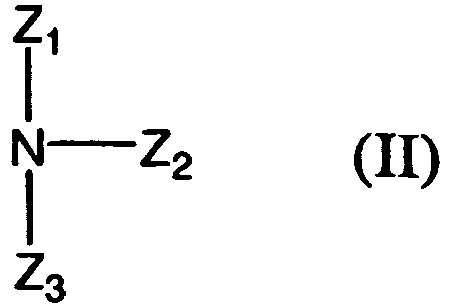
- d) sich zwischen dem zentralen Stickstoffatom und dem Stickstoffatom jedes der podalen Liganden eine Brücke aus ein bis vier Kohlenstoffatomen befindet
- falls es sich bei dem podalen Liganden um einen stickstoffhaltigen Heteroaromaten handelt, die Brücke aus ein bis vier Kohlenstoffatomen genau ein sp2-hybridisiertes Kohlenstoffatom enthält, wobei dieses sp2-hybridisierte Kohlenstoffatom Teil des heterocyclischen Aromaten ist und sich in 2-Stellung zu mindestens einem Stickstoffatom des heterocyclischen Ringes befindet, oder
- falls es sich bei einem podalen Liganden um ein aliphatisches Amin handelt, die Brücke aus ein bis vier Kohlenstoffatomen ausschließlich sp3- hybridisierte aliphatische Kohlenstoffe enthält, und das aliphatische Amin an eine Alkylengruppe aus ein bis vier Kohlenstoffatomen gebunden ist gemäß Formel (III)

- -H, -CH3, -CH2CH3, -CH2CH2CH3, -CH(CH3)2, -C(CH3)3,
- -CF3, -CF2CF3, -CF2CF2CF3, -CF(CF3)2, -C(CF3)3,
- wobei für den Fall, dass eine der beiden Gruppen R1 oder R2 -C(CH3)3 oder -C(CF3)3 darstellt, die andere Gruppe R1 oder R2 ausgewählt wird aus -H,--CH3 und -CF3
- Phenyl, Pentafluorphenyl, Methylphenyl, Dimethylphenyl, Trifluormethylphenyl, (Bis-trifluormethyl)phenyl.
- Überraschend wurde gefunden, dass die erfindungsgemäßen Kupfer-(II)-Sauerstoff-Adduktkomplexe im Gegensatz zu den bisher bekannten Cu-(II)-Sauerstoff-Adduktkomplexen thermisch stabil sind. Entscheidend für die thermische Stabilität der erfindungsgemäßen Cu-(II)-Komplexe ist, dass als Anion ein Tetraarylborat gewählt wird, da die entsprechenden Cu-(II)-Sauerstoff-Adduktkomplexe mit anderen Anionen (beispielsweise Perchlorat) thermisch instabil sind.
Erfindungsgemäße Tetraarylborat-Anionen BAr4 - sind Tetraphenylborat und Tetrakis(3,5-trifluoromethyl)phenylborat (BARF).
- Unter "thermisch stabil" wird dabei verstanden, dass die erfindungsgemäßen Cu-(II)-Sauerstoff-Adduktkomplexe als Feststoffe bei Raumtemperatur und in einer sauerstoffhaltigen Atmosphäre haftbar sind.
- In den erfindungsgemäßen Komplexen wird jedes der beiden Cu-Atome durch einen tripodalen tetradentaten Liganden koordiniert. Bei diesem tripodalen tetradentaten Liganden L handelt es sich um einen Liganden der allgemeinen Formel

- einem aliphatischen Amin, das an einen Alkylengruppe aus ein bis vier Kohlenstoffatomen gebunden ist gemäß Formel

- und einem stickstoffhaltigen Heteroaromaten, welcher in 2-Stellung zu mindestens einem seiner Stickstoffatome an eine Alkylengruppe aus null bis drei Kohlenstoffatomen gebunden ist gemäß

- Y H oder F,
- n = 1, 2, 3, 4,
- m = 0, 1, 2, 3.
- -H, -CH3, -CH2CH3, -CH2CH2CH3, -CH(CH3)2, C(CH3)3,
- -CF3, -CF2CF3, -CF2CF2CF3, -CP(CF3)2, C(CF3)3,
- wobei für den Fall, dass eine der beiden Gruppen R1 oder R2 -C(CH3)3 oder -C(CF3)3 darstellt, die andere Gruppe R1 oder R2 ausgewählt wird aus -H, -CH3 und CF3
- Phenyl, Pentafluorphenyl, Methylphenyl, Dimethylphenyl, Trifluormethylphenyl, (Bis-trifluormethyl)phenyl,
- Handelt es sich bei Z1, Z2 und / oder Z3 um eine Gruppe gemäß Formel III, so stellt -(CY2)n- die Brücke aus einem bis vier Kohlenstoffatomen dar, welche sich erfindungsgemäß zwischen dem zentralen Stickstoffatom und dem Stickstoffatom des jeweiligen podalen Liganden befindet.
- Handelt es sich bei Z1, Z2 und / oder Z3 um eine Gruppe gemäß Formel IV, so stellt -(CY2)m- gemeinsam mit demjenigen sp2-hybridisierten Kohlenstoffatom des heteroaromatischen Ringes, welches sich in 2-Stellung zu mindestens einem Stickstoffatom befindet, die Brücke aus einem bis vier Kohlenstoffatomen dar, welche sich erfindungsgemäß zwischen dem zentralen Stickstoffatom und dem Stickstoffatom des jeweiligen podalen Liganden befindet.
- Im Rahmen der vorliegenden Erfindung bezeichnet der Begriff "Ligand" einen tripodalen tetradentaten Liganden, wobei es sich bei jeder seiner vier Bindungsstellen um ein Stickstoffatom handelt. Dabei sind drei stickstoffhaltige Liganden an das zentrale Stickstoffatom gebunden. Die drei stickstoffhaltigen Liganden, welche an das zentrale Stickstoffatom gebunden sind, werden als "podale Liganden" bezeichnet.
In obiger Formel II und den nachfolgend daraus abgeleiteten Formeln III, IV, V, VI, VII und VIII ist demnach NZ1Z2Z3 der "Ligand", während Z1, Z2 und Z3 die drei "podalen Liganden" darstellen. - In einer bevorzugten Ausführungsform sind die podalen Liganden Z1, Z2 und Z3 unabhängig voneinander ausgewählt aus
- einem aliphatischen Amin, das an einen Alkylengruppe aus ein bis vier Kohlenstoffatomen gebunden ist gemäß Formel

- einem stickstoffhaltigen Heteroaromaten welcher in 2-Stellung zu mindestens einem seiner Stickstoffatome an eine Alkylengruppe aus null bis drei Kohlenstoffatomen gebunden ist gemäß Formel

- In einer weiteren Ausführungsform sind solche podalen Liganden Z1, Z2 und Z3 bevorzugt, bei denen die Brücke aus Kohlenstoffatomen, welche sich zwischen dem zentralen Stickstoffatom und dem Stickstoffatom jedes podalen Liganden befindet, genau zwei Kohlenstoffatome umfasst, wobei diese Brücken-Kohlenstoffatome nicht fluoriert sind. Handelt es sich bei einem derartigen podalen Liganden um ein aliphatisches Amin, so ist es ein Amin gemäß der Formel

- Umfasst ein derartiger podaler Ligand dagegen einen stickstoffhaltigen Heteroaromaten, welcher in 2-Stellung zu mindestens einem seiner Stickstoffatome an eine Alkylengruppe gebunden ist, so stellt die Alkylengruppe in diesem Fall eine Methylengruppe dar. Der podale, einen stickstoffhaltigen Heteroaromaten umfassende Ligand wird in diesem Falle beschrieben durch Formel
-CH2-Het (VIII)
- Dabei haben R1 und R2 in Formel (VII) sowie Het in Formel (VIII) die oben aufgeführten Bedeutungen. R1, R2 und Het können für jede Gruppe Z1, Z2 und Z3 unabhängig voneinander gewählt werden, wobei für den Fall, dass eine der beiden Gruppen R1 oder R2 -C(CH3)3 oder -C(CF3)3 darstellt, die andere Gruppe R1 oder R2 ausgewählt aus -H, -CH3 und CF3.
- Ganz besonders bevorzugt sind Liganden L,
- bei denen die Brücken zwischen dem zentralen Stickstoffatom und dem Stickstoffatom jedes der podalen Liganden genau zwei Kohlenstoffatome umfassen, und
- bei denen die Kohlenstoffatome nicht fluoriert sind,
- wobei R1 und R2 unabhängig voneinander sowie für jeden podalen Liganden unabhängig ausgewählt sind aus
-H, -CH3, -CH2CH3, -CH2CH2CH3, -CH(CH3)2, C(CH3)3, - worin für den Fall, dass eine der beiden Gruppen R1 oder R2 -C(CH3)3 darstellt, die andere Gruppe R1 oder R2 ausgewählt aus -H und -CH3
und - Het ausgewählt ist aus
2-Pyridyl, 2-Pyrryl, 2-Chinolyl, 3-Isochinolyl, 3-Pyrazyl, 5-Pyrazyl, 2-Pyrimidyl, 4-Pyrimidyl, 2-Imidazolyl, 4-Imidazolyl, 2-Benzimidazolyl. - Am meisten bevorzugt sind solche Kupfer-(II)-Sauerstoff-Adduktkomplexe der allgemeinen Formel
[L-Cu-O-O-Cu-L](BAr4)2, bei denen der tripodale tetradentate Ligand L ausgewählt ist aus Tris-(2-dimethylaminoethyl)-amin, Bis-[2-dimethylaminoethyl-(2-pyridylmethyl)]-amin, [(2-Dimethylaminoethyl)-bis-(2-pyridylmethyl)]-amin, Tris-[(2-pyridyl)-methyl]-amin. - Bei allen genannten Ausführungsformen sind solche Adduktkomplexe bevorzugt, bei denen das Anion Tetraphenylborat ist.
- Die Aufgabe, Verfahren zur Herstellung der erfindungsgemäßen Kupfer-(II)-Sauerstoffadduktkomplexe bereitzustellen, wird erfindungsgemäß gelöst durch ein Verfahren umfassend die Schritte
- a) Komplexierung des Liganden L mit einer Cu-(I)-Verbindung [eu(R3)4]X in einem polar aprotischen Lösungsmittel unter Schutzgasatmosphäre
- b) Austausch des Anions X des Cu-(I)-Komplexes in einem polar aprotischen Lösungsmittel unter Schutzgasatmosphäre,
- c) in Kontakt bringen des nach Durchführung von Schritt b) erhaltenen [Cu-L]-Tetraarylborats mit einer sauerstoffhaltigen Atmosphäre,
- d) Isolierung und Trocknung des nach Durchführung von Schritt c) erhaltenen Komplexes [L-Cu-O-O-Cu-L](BAr4)2.
- Die Herstellung der erfindungsgemäßen Cu-(II)-Sauerstoff-Adduktkomplexe erfolgt nach dem allgemeinen Reaktionsschema
- a) L + [Cu(R3)4]X → [Cu-L]X
- b) [Cu-L]X + MeBAr4 → [Cu-L]BAr4
- c) 2 [Cu-L]BAr4 + O2 → [L-Cu-O-O-Cu-L](BAr4)2
- Dabei ist L ein Ligand gemäß obiger Definition.
- Im ersten Schritt wird der Ligand L in einem polar aprotischen Lösungsmittel mit einem Salz [Cu(R3)4]X unter Schutzgasatmosphäre zum entsprechenden [Cu-(I)-L]-Komplex umgesetzt.
R3 kann dabei Acetonitril oder kein Atom sein.
Ist R3 Acetonitril, so wird das Anion X ausgewählt aus Hexafluorophosphat PF6 -, Tetrafluoroborat BF4 -, Perchlorat ClO4 - , Hexafluoroantimonat SbF6 -, Triflat SO3CF3 - und Tetraphenylborat BPh4 -, Tetrakis(3,5-trifluoromethyl)phenylborat, wobei PF6 -, BF4 - und ClO4 - bevorzugt sind.
Ist R3 kein Atom, so wird X ausgewählt aus Chlorid Cl-, Bromid Br- und Iodid I-. Bei dem polar aprotischen Lösungsmittel handelt es sich bevorzugt um Aceton, Acetonitril oder Propionitril. - Vorteilhaft werden Ligand L und (Cu(R3)4]X im Molverhältnis von etwa 1:1 eingesetzt, wobei der Ligand in einem molaren Überschuss von bis zu 10 % vorliegen kann.
- Im zweiten Schritt wird die aus Schritt a) erhaltene Lösung des Komplexes [L-Cu(I)]X mit einer Lösung eines Metall-Tetraarylborats unter Schutzgasatmosphäre umgesetzt.
Bei dem Metall-Tetraphenylborat handelt es sich um ein Alkalimetall-Tetraarylborat, beispielsweise Natrium-Tetraarylborat oder Kalium-Tetraarylborat. Als Lösungsmittel für das Metall-Tetraarylborat dient ein polar aprotisches Lösungsmittel, beispielsweise Aceton, Acetonitril oder Propionitril. Vorteilhaft wird für Schritt b) dasselbe polar aprotische Lösungsmittel gewählt wie für Schritt a).
Das Molverhältnis von [L-Cu(I)]X zu Tetraarylborat beträgt vorteilhaft etwa 1:1, wobei Tetraarylborat in einem leichten Überschuss von bis zu 10 % vorliegen kann.
Die Umsetzung des Liganden L mit [Cu(R3)4]X sowie dessen nachfolgende Reaktion mit Tetraarylborat zu [L-Cu]BAr4 werden unter Schutzgasatmosphäre durchgeführt. Unter Schutzgasatmosphäre wird eine sauerstofffreie Inertgasatmosphäre verstanden. Vorzugsweise besteht diese Schutzgasatmosphäre aus Argon, Helium oder Stickstoff. - Die Lösung des aus Schritt b) erhaltenen [L-Cu-(I)]BAr4-Komplexes wird anschließend gemäß Schritt c) einer sauerstoffhaltigen Atmosphäre ausgesetzt. Dabei bildet sich der korrespondierende Cu-(II)-Peroxo-Adduktkomplex [L-Cu-O-O-Cu-L](BAr4)2. Unter "einer sauerstoffhaltigen Atmosphäre aussetzen" wird dabei verstanden, dass [L-Cu-(I)]BAr4 Luft, Sauerstoffgas oder einem Sauerstoff-Luft-Gemisch ausgesetzt wird.
Die [L-Cu-(I)]BAr4-Lösung wird auf Temperaturen < -70 °C gekühlt, bevor sie der sauerstoffhaltigen Atmosphäre ausgesetzt wird. - Der gebildete Cu-(II)-Peroxo-Adduktkomplex [L-Cu-O-O-Cu-L](BAr4)2 wird anschließend durch Zugabe eines aprotischen Lösungsmittels ausgefällt, abfiltriert und getrocknet. Die Ausfällung erfolgt dabei bei tiefen Temperaturen < -70 °C, und die Trocknung erfolgt im Sauerstoffstrom.
- Zur Fällung geeignete aprotische Lösungsmittel sind dem Fachmann bekannt und können angewendet werden, ohne den Schutzbereich der Patentansprüche zu verlassen. Geeignet sind beispielsweise Diethylether, Pentan, Hexan, Heptan und Cycloalkane mit 5 bis 8 Kohlenstoffatomen.
- Alternativ kann bereits das Produkt aus Schritt b), nämlich [L-Cu-(I)]BAr4, aus der Lösung isoliert und getrocknet werden. Dies geschieht beispielsweise durch Ausfällen mit einem aprotischen Lösungsmittel, Abfiltrieren des Feststoffs und dessen Trocknung unter Schutzgasatmosphäre im Vakuum. Als aprotisches Lösungsmittel eignen sich beispielsweise Diethylether, Pentan, Hexan, Heptan und Cycloalkane mit 5 bis 8 Kohlenstoffatomen.
Wird bereits [L-Cu-(I)]BAr4 als Feststoff isoliert und getrocknet, so kann er ebenfalls wie oben gemäß Schritt c) beschrieben einer sauerstoffhaltigen Atmosphäre ausgesetzt werden, wodurch sich der Cu-(II)-Peroxo-Adduktkomplex [L-Cu-O-O-Cu-L](BAr4)2 bildet. Die Isolierung des Feststoffs [L-Cu-(I)]BAr4 kann bei Raumtemperatur erfolgen, wobei die Trocknung jedoch unter Schutzgasatmosphäre erfolgt. Anschließend wird [L-Cu-(I)]BAr4 als Feststoff bei Raumtemperatur einer sauerstoffhaltigen Atmosphäre ausgesetzt, wobei sich [L-Cu-O-O-Cu-L](BAr4)2 bildet. - Die erfindungsgemäßen Cu-(II)-Sauerstoff-Adduktkomplexe können als Oxidationskatalysatoren verwendet werden, beispielsweise für die Oxidation von Benzol zu Phenol oder Methan zu Methanol, für die Oxidation von Wasserstoff, aromatischen und aliphatischen, gesättigten und ungesättigten Kohlenwasserstoffen sowie Alkoholen und Aminen.
Des Weiteren kann der Nachweis der erfindungsgemäßen Cu-(II)-Sauerstoff-Adduktkomplexe für die Detektion von Sauerstoff verwendet werden. Hierzu wird ein Komplex [L-Cu(I)]BAr4] in einer Vorrichtung vorgelegt; die mit Hilfe eines oder mehrerer Hähne von der äußeren Atmosphäre abgeschlossen werden kann. Bei dieser Vorrichtung handelt es sich beispielsweise um eine Durchflussleitung oder ein Glasgefäß. Durch Öffnung des oder der Hähne der Vorrichtung wird das zu untersuchende Gasgemisch mit dem erfindungsgemäßen Komplex in Kontakt gebracht. Ohne Anwesenheit von Sauerstoff behält der Komplex seine weiße bzw. gelbe Farbe bei, während er in Gegenwart von Sauerstoff tiefblau wird, da sich [L-Cu-O-O-Cu-L](BAr4)2 bildet. - Die erfindungsgemäßen Cu-(II)-Sauerstoff-Adduktkomplexe können optional als reaktive Komponenten in mesoporöse Phasen wie Molsiebe oder auf Zeolithe oder Polystyrole aufgebracht werden. Verfahren zur Aufbringung reaktiver Komponenten in mesoporöse Phasen, Zeolithe und Polystyrole sind dem Fachmann bekannt und können angewendet werden, ohne den Schutzbereich der Patentansprüche zu verlassen.
Exemplarisch sei hier das Aufbringen eines erfindungsgemäßen Cu-(II)-Sauerstoff-Adduktkomplexes in ein Molsieb genannt: Hierzu wird das Molsieb mit einer Lösung (Aceton) des entsprechenden [L-Cu]BAr4-Komplexes unter Schutzgasatmosphäre getränkt. Das mit diesem [L-Cu]BAr4-Komplex beladene Molsieb wird anschließend wie oben beschrieben einer sauerstoffhaltigen Atmosphäre ausgesetzt, wobei sich an der Oberfläche der Molsiebkügelchen der blaue Peroxokomplex [L-Cu-O-O-Cu-L](BAr4)2 bildet. -

- Me6tren wurde wie in Britovsek et al., Inorg Chem 2005, 44, 8125-8134 beschrieben hergestellt und anschließend durch Destillation gereinigt.
- Zu 3,0 mL (19,9 mmol) tren (5), 135 mL Essigsäure und 600 mL Acetonitril wurden 49 mL einer wässrigen Formaldehylösung (37%, 660 mmol) gegeben und die Mischung eine Stunde bei Raumtemperatur gerührt. Zu der im Eisbad auf 0 °C gekühlten Lösung wurden langsam 10,0 g (13,4 mmol) Natriumborhydrid hinzugegeben. Nach 48 h rühren bei Raumtemperatur wurden das Lösungsmittel entfernt, der Rückstand mit 3 M Natronlauge stark basisch eingestellt und dreimal mit je 50 mL Dichlormethan extrahiert. Die vereinigten organischen Phasen wurden über Magnesiumsulfat getrocknet und das Lösungsmittel unter Vakuum entfernt. Der Rückstand wurde in Pentan gelöst, filtriert, und aus dem Filtrat das Lösungsmittel im Vakuum abgezogen. Die gelbliche Flüssigkeit wurde anschließend mittel Kugelrohrdestillation gereinigt. Als Produkt (1) wurde ein farbloses Öl erhalten.
1H-NMR (CDCl3): 2.55 (6H,t), 2.32 (6H,t), 2.16 (18H, s) -

- Me4apme wurde wie in Britovsek et al., Inorg Chem 2005, 44, 8125-8134 beschrieben hergestellt und anschließend durch Destillation gereinigt.
- Es wurden 1,96 g (12,3 mmol) Bis[2-(dimethylamino)ethyl]amin (7) und 3,66 g (17,22 mmol) Natriumtriacetobohydrid in 100 ml Dichlormethan vorgelegt und nach der Zugabe von 1,18 g (12,32 mmol) frisch destilliertem Pyridin-2-carboxaldehyd (6) 12 Stunden bei Raumtemperatur gerührt. Die Reaktion wurde durch Zugabe von 120 ml 3molarer NaOH-Lösung beendet. Die organische Phase wurde abgetrennt und die wässrige Phase dreimal mit je 100 ml Dichlormethan extrahiert. Die vereinigten organischen Phasen wurden über MgSO4 getrocknet und das Lösungsmittel unter Vakuum im entfernt. Der Rückstand wurde in 100 ml wasserfreiem THF gelöst, mit 0,6 g NaH (durch Waschen mit wasserfreiem Petrolether vom Mineralöl befreit) versetzt und 2 Stunden lang bei Raumtemperatur gerührt. Anschließend wurde das Lösungsmittel im Vakuum entfernt und der Rückstand dreimal mit je 50 ml Pentan extrahiert. Die Extrakte wurden vereinigt und das Lösungsmittel im Vakuum entfernt. Das gelbe viskose Rohprodukt wurde mittels Kugelrohrdestillation bei 130°C gereinigt. Als Produkt (2) wurde ein gelbliches Öl erhalten.
1H-NMR (CDCl3): 8.47 (1H,d), 7.59 (1H,t), 7.43 (1H, d), 7.09 (1H, t), 3.75 (2H, s), 2.62 (4H, t), 2.38 (4H, t), 2.15 (12H, s) -

- Zu einem Gemisch aus 0,88 g (10 mmol) N,N-dimethylethan-1,2-diamin und 2,14 g (20 mmol) frisch destillierten Pyridin-2-carboxaldehyd in 60 ml 1,2-Dichlorethan wurden unter Rühren 6,0 g (28,3 mmol) Natriumtriacetoborhydrid zugegeben und weitere 48 Stunden bei Raumtemperatur gerührt. Die Reaktion wurde durch Zugabe einer 2 molaren wässrigen Natriumhydroxid-Lösung beendet. Die organische Phase wurde abgetrennt und die wässrige Phase zweimal mit je 100 ml Dichlormethan extrahiert. Die vereinigten organischen Phasen wurden mit 100 ml gesättigter wässriger Kochsalzlösung gewaschen und anschließend über NaSO4 getrocknet. Die Lösungsmittel wurden unter Vakuum entfernt und der braune ölige Rückstand mit Diethylether extrahiert. Anschließend wurde das Lösungsmittel im Vakuum entfernt. Als Produkt (3) wurde ein rötliches Öl erhalten.
1H-NMR (CDCl3): 8.52 (2H,d), 7.65 (2H,t), 7.53 (2H, d), 7.14 (2H, m), 3.86 (4H, s), 2.71 (2H, t), 2.48 (2H, t), 2.17 (6H, s) -

- Zu einer Mischung von 2,16 g (20,0 mmol) 2-(Aminomethyl)pyridin (9) und 12,6 g (214 mmol) Natriumtriacetoxyborhydrid in 300 mL Dichlormethan wurden 4 mL (42,0 mmol) frisch destilliertes Pyridin-2-carbaldehyd (6) hinzugegeben. Nachdem die gelbliche Mischung 18 h bei Raumtemperatur gerührt wurde, wurde eine gesättigte Lösung von Natriumhydrogencarbonat zugegeben. Die Mischung wurde 15 min bei Raumtemperatur gerührt, zweimal mit Ethylacetat extrahiert und die vereinigten organischen Phasen über Magnesiumsulfat getrocknet. Das Lösungsmittel wurden im entfernt und der gelbe dickflüssige Rückstand dreimal mit Petrolether extrahiert. Die vereinigten organischen Phasen wurden im Vakuum vom Lösungsmittel befreit. Als Produkt (4) wurde ein gelbliches Feststoff erhalten.
1H-NMR (CDCl3): 8.55 (3H,d), 7.84 (3H,t), 7.79 (3H, d), 7.24 (3H, m), 3.87 (6H, s) -


- Es wurden 0,20 g (0,87 mmol) Me6tren (1) in etwa 2 ml Aceton gelöst und unter ständigem Rühren langsam mit eine Lösung von 0,30 g (0,81 mmol) [Cu(CH3CN)4]PF6 (Tetrakis(acetonitril)kupfer(I)-hexafluorophosphat) in etwa 4 ml Aceton versetzt. Die so entstandene farblose Komplexlösung wurde anschließend zum Anionenaustausch mit einer Lösung von 0,28 g (0,82 mmol) NaBPh4 (Natriumtetraphenylborat) in etwa 2 ml Aceton versetzt. Zur Darstellung des Feststoffes wurde die Komplexlösung in 20 ml Diethylether gegeben. Der entstandene voluminöse Feststoff des [Cu(Me6tren)]BPh4 (10) wurde im Vakuum getrocknet. Als Produkt wurden 0,48 g (96,6 %) eines farblosen Pulvers erhalten.
Alle Arbeiten wurden in einer Argon-Box durchgeführt. Es ist jedoch möglich alle Arbeiten auch mittels Schlenk-Technik unter Argon oder Stickstoff durchzuführen. - Der Komplex [Cu(Me6tren)]BPh4 ist in Fig. 1 gezeigt.
Die Ergebnisse der Kristallstrukturanalyse von [Cu(Me6tren)]BPh4 sind in Fig. 2 gezeigt. -


- Es wurden 0,20 g (0,80 mmol) Me4apme (2) in etwa 2 ml Aceton gelöst und unter ständigem Rühren langsam mit einer Lösung von 0,29 g (0,78 mmol) [Cu(CH3CN)4]PF6 (Tetrakis(acetonitril)kupfer(I)-hexafluorophosphat) in etwa 4 ml Aceton versetzt. Die so entstandene gelbe Komplexlösung wurde anschließend zum Anionenaustausch mit eine Lösung von 0,28 g (0,82 mmol) NaBPh4 (Natriumtetraphenylbora)in etwa 2 ml Aceton versetzt. Zur Darstellung des Feststoffes wurde die Komplexlösung in 20 ml Diethylether gegeben. Der entstanden voluminöse Feststoff des [Cu(Me4apme)]BPh4 (11) wurde im Vakuum getrocknet. Als Produkt wurden 0,44 g (89,1 %) eins gelbes Pulver erhalten.
Alle Arbeiten wurden in einer Argon-Box durchgeführt. Es ist jedoch möglich alle Arbeiten auch mittels Schlenk-Technik unter Argon oder Stickstoff durchzuführen. -



- Es wurden 0,20 g (0,74 mmol) Me2uns-penp (3) in etwa 2 ml Aceton gelöst und unter ständigem Rühren langsam mit eine Lösung von 0,27 g (0,72 mmol) [Cu(CH3CN)4]PF6 (Tetrakis(acetonitril)kupfer(I)-hexafluorophosphat) in etwa 4 ml Aceton versetzt. Die so entstandene orange Komplexlösung wurde anschließend zum Anionenaustausch mit eine Lösung von 0,28 g (0,82 mmol) NaBPh4 (Natriumtetraphenylbora) in etwa 2 ml Aceton versetzt. Zur Darstellung des Feststoffes wurde die Komplexlösung in 20 ml Diethylether gegeben. Der entstanden voluminöse Feststoff des [Cu(Me2uns-penp)]BPh4 (12) wurde im Vakuum getrocknet. Als Produkt wurden 0,46 g (97,8 %) eins gelbes Pulver erhalten.
Alle Arbeiten wurden in einer Argon-Box durchgeführt. Es ist jedoch möglich alle Arbeiten auch mittels Schlenk-Technik unter Argon oder Stickstoff durchzuführen. - Der Komplex [Cu(Me2uns-penp)]BPh4 ist in Fig. 3 gezeigt.
-


- Es wurden 0,20 g (0,69 mmol) tmpa (4) in etwa 2 ml Aceton gelöst und unter ständigem Rühren langsam mit eine Lösung von 0,25 g (0,67 mmol) [Cu(CH3CN)4]PF6 (Tetrakis(acetonitril)kupfer(I)-hexafluorophosphat) in etwa 4 ml Aceton versetzt. Die so entstandene orange Komplexlösung wurde anschließend zum Anionenaustausch mit eine Lösung von 0,28 g (0,82 mmol) NaBPh4 (Natriumtetraphenylborat) in etwa 2 ml Aceton versetzt. Zur Darstellung des Feststoffes wurde die Komplexlösung in 20 ml Diethylether gegeben. Der entstanden voluminöse Feststoff des [Cu(tmpa)]BPh4 (13) wurde im Vakuum getrocknet. Als Produkt wurden 0,41 g (90,9 %) eins gelbes Pulver erhalten.
Alle Arbeiten wurden in einer Argon-Box durchgeführt. Es ist jedoch möglich alle Arbeiten auch mittels Schlenk-Technik unter Argon oder Stickstoff durchzuführen. - Der Komplex [Cu(tmpa)]BPh4 ist in Fig. 4 gezeigt.
-

2 [Cu(Me6tren)] BPh4 + O2 → [Cu2(Me6tren)2(O2)](BPh4)2
- Der frisch hergestellte Cu(I)-Komplex 10 wurde als farbloses Pulver, unter Argon in einem verschlossenen Gefäß aus der Argon-Box geholt. Nach dem Öffnen des Gefäßes wurde der Cu(I)-Komplex mit Sauerstoffgas (Luft ist auch möglich) versetzt. Es bildet sich innerhalb Sekunden der intensiv blau gefärbte Peroxokomplex 14.
- Eine farbloses Lösung des Cu(I)-Komplex 10 in Aceton oder Acetonitril wurde, unter Argon in einem verschlossenen Gefäß, aus der Argon-Box geholt. Die Lösung wurde in einem Ethanolbad auf -80°C heruntergekühlt und mit Sauerstoffgas (Luft ist auch möglich) zur Reaktion gebracht. Es bildet sich innerhalb von Sekunden die intensiv blau gefärbte Peroxokomplex-Lösung. Durch die Zugabe von kaltem (-80°C) Diethylether fällt der Peroxokomplex als voluminöser Feststoff aus. Durch Filtration und Trocknung (mit Sauerstoffgas) bei -80°C kann der Peroxokomplex (14) schließlich raumtemperaturstabil isoliert werden.
- Fig. 5 zeigt das UV-VIS-Spektrum des Peroxokomplexes 14.
-

2 [Cu(Me4apme)] BPh4 + O2 → [Cu2(Me4apme)2(O2)](BPh4)2
- Der frisch hergestellte Cu(I)-Komplex 11 wurde als gelbes Pulver, unter Argon in einem verschlossenen Gefäß aus der Argon-Box geholt. Nach dem Öffnen des Gefäßes wurde der Cu(I)-Komplex mit Sauerstoffgas (Luft ist auch möglich) versetzt. Es bildet sich innerhalb Sekunden der intensiv blau gefärbte Peroxokomplex 15.
- Eine gelbe Lösung des Cu(I)-Komplex 11 in Aceton oder Acetonitril wurde, unter Argon in einem verschlossenen Gefäß, aus der Argon-Box geholt. Die Lösung wurde in einem Ethanolbad auf -80°C heruntergekühlt und mit Sauerstoffgas (Luft ist auch möglich) zur Reaktion gebracht. Es bildet sich innerhalb von Sekunden die intensiv blau gefärbte Peroxokomplex-Lösung. Durch die Zugabe von kaltem (-80°C) Diethylether fällt der Peroxokomplex als voluminöser Feststoff aus. Durch Filtration und Trocknung (mit Sauerstoffgas) bei -80°C kann der Peroxokomplex (15) schließlich raumtemperaturstabil isoliert werden.
- Fig. 6 zeigt das UV-VIS-Spektrum des Peroxokomplexes 15.
-

2 [Cu(Me2uns-penp)] BPh4 + O2 → [Cu2(Me2uns-penp)2(O2)](BPh4)2
- Eine gelbe Lösung des Cu(I)-Komplex 12 in Aceton oder Acetonitril wurde, unter Argon in einem verschlossenen Gefäß, aus der Argon-Box geholt. Die Lösung wurde in einem Ethanolbad auf -80°C heruntergekühlt und mit Sauerstoffgas (Luft ist auch möglich) zur Reaktion gebracht. Es bildet sich innerhalb von Sekunden die intensiv blau gefärbte Peroxokomplex-Lösung. Durch die Zugabe von kaltem (-80°C) Diethylether fällt der Peroxokomplex als voluminöser Feststoff aus. Durch Filtration und Trocknung (mit Sauerstoffgas) bei -80°C kann der Peroxokomplex (16) schließlich raumtemperaturstabil isoliert werden.
- Fig. 7 zeigt das UV-VIS-Spektrum des Peroxokomplexes 16.
-

2 [Cu(tmpa)]BPh4 + O2 → [Cu2(tmpa)2(O2)](BPh4)2
- Der frisch hergestellte Cu(I)-Komplex 13 wurde als gelbes Pulver, unter Argon in einem verschlossenen Gefäß aus der Argon-Box geholt. Nach dem Öffnen des Gefäßes wurde der Cu(I)-Komplex mit Sauerstoffgas (Luft ist auch möglich) versetzt. Es bildet sich innerhalb Sekunden der intensiv blau gefärbte Peroxokomplex 17.
- Eine gelbe Lösung des Cu(I)-Komplex 17 in Aceton oder Acetonitril wurde, unter Argon in einem verschlossenen Gefäß, aus der Argon-Box geholt. Die Lösung wurde in einem Ethanolbad auf -80°C heruntergekühlt und mit Sauerstoffgas (Luft ist auch möglich) zur Reaktion gebracht. Es bildet sich innerhalb von Sekunden die intensiv blau gefärbte Peroxokomplex-Lösung. Durch die Zugabe von kaltem (-80°C) Diethylether fällt der Peroxokomplex als voluminöser Feststoff aus. Durch Filtration und Trocknung (mit Sauerstoffgas) bei -80°C kann der Peroxokomplex (17) schließlich raumtemperaturstabil isoliert werden.
- Fig. 8 zeigt das UV-VIS-Spektrum des Peroxokomplexes 17.
-

- Für die Dauer von etwa zwei Tagen wird einem verschlossenen Glas der Katalysator mit Benzol und Sauerstoff bei Raumtemperatur zur Reaktion gebracht. Hierfür wird Benzol in kleines, offenes Glas gefüllt. In ein zweites, höheres und verschließbares Schraubdeckelglas wird [Cu2(Me6tren)2O2](BPh4)2 gegeben. Das kleinere, Benzol enthaltende Glas wird auf den Katalysator gestellt, der Gasraum mit Sauerstoff gefüllt und das größere Glas mit einem Schraubdeckel verschlossen.
Nach einiger Zeit kondensieren Benzoldämpfe an der Katalysatoroberfläche und reagieren zu Phenol. Nach zwei Tagen wird das mit Benzol gefüllte Glas entfernt und der Katalysator mit Diethylether gewaschen. In der etherischen Lösung kann mittels GC-MS Phenol nachgewiesen werden.
Fig. 9 zeigt die GC-Analyse der etherischen Lösung.
Fig. 10 zeigt die GC-MS-Analyse der etherischen Lösung. - Fig. 1 zeigt eine ORTEP-Darstellung von [Cu(Me6tren)]BPh4. Auf die Darstellung des Anions (Tetraphenylborat) und der Wasserstoffatome wurde aus Gründen der Übersichtlichkeit verzichtet. (thermische Ellipsoide mit 50% Aufenthaltswahrscheinlichkeit)
- Die Aufnahme des Einkristalls wurde mittels Omega-Scan-Technik an einem Siemens SMART CCD 1000 Diffraktometer unter Verwendung von Mo Kα- Strahlung ([α] = 0,71073 Angström) und ein Graphit Monochromator durchgeführt. Zur Absorptionskorrektur wurde das Programm SADABS (Siemens Area Detector Absorption Correction, Siemens) verwendet. Zur Strukturlösung (Direkte Methoden) und Verfeinerung wurde das Programmpacket SHELX97 verwendet. Die Positionen aller Wasserstoffatome wurden geometrisch berechnet. Alle Nichtwasserstoffatome wurden anisotrop verfeinert.
- Kristallstrukturanalyse von [Cu(Me6tren)]BPh4:
- a) zeigt das Pulverdiffraktogramm des Pulvers,
- b) zeigt das aus dem Einkristall simulierte Pulverdiffraktogramm
- Die Aufnahme des Pulvers wurde mittels Kapillarentechnik an einem STOE Stadi-P Diffraktometer mit IP-PS (image plate position sensitive) -Detektor durchgeführt. Es wurde Cu Kα-Strahlung ([a] = 1,54056 Angström) und ein Germanium-Monochromator verwendet.
- Zur Simulation des Pulverdiffraktogramms wurde der unter Fig.1 beschriebene Einkristall verwendet. Die Simulation wurde mit dem Programm PowderCell 2.4 vorgenommen.
- Fig. 3 zeigt eine ORTEP-Darstellung von [Cu(Me2uns-penp)]BPh4. Auf die Darstellung des Anions (Tetraphenylborat) und der Wasserstoffatome wurde aus Gründen der Übersichtlichkeit verzichtet. (thermische Ellipsoide mit 50% Aufenthaltswahrscheinlichkeit)
- Die Aufnahme des Einkristalls wurde mittels Mo Kα-Strahlung ([α] = 0,71096 Angström ) und ein Graphit Monochromator an einem STOE IPDS Diffraktometer mit angeschlossenem Tieftemperatursystem (Karlsruher Glastechnisches Werk) durchgeführt. Es wurde keine Absorptionskorrektur vorgenommen. Zur Strukturlösung (Direkte Methoden) und Verfeinerung wurde das Programmpacket SHELX97 verwendet. Die Positionen aller Wasserstoffatome wurde geometrisch berechnet. Alle Nichtwasserstoffatome wurden anisotrop verfeinert.
- Fig. 4 zeigt eine ORTEP-Darstellung von [Cu(tmpa)]BPh4. Auf die Darstellung des Anions (Tetraphenylborat) und der Wasserstoffatome wurde aus Gründen der Übersichtlichkeit verzichtet. (thermische Ellipsoide mit 50% Aufenthaltswahr scheinlichkeit)
- Die Aufnahme des Einkristalls wurde mittels Mo Kα-Strahlung ([α] = 0,71096 Angström ) und ein Graphit Monochromator an einem STOE IPDS Diffraktometer mit angeschlossenem Tieftemperatursystem (Karlsruher Glastechnisches Werk) durchgeführt. Es wurde keine Absorptionskorrektur vorgenommen. Zur Strukturlösung (Direkte Methoden) und Verfeinerung wurde das Programmpacket SHELX97 verwendet. Die Positionen aller Wasserstoffatome wurde geometrisch berechnet. Alle Nichtwasserstoffatome wurden anisotrop verfeinert.
- UV-VIS-Spektrum des Peroxokomplexes [Cu2(Me6tren)2(O2)](BPh4)2. Das Spektrum zeigt die typische Cu-O2-Charge-Transfer-Doppelbande.
Temperatur: -60 °C Lösungsmittel: Aceton E: Extinktion λ: Wellenlänge - UV-VIS-Spektrum des Peroxokomplexes [Cu2(Me4apme)2(O2)](BPh4)2. Das Spektrum zeigt die typische Cu-O2-Charge-Transfer-Doppelbande.
Temperatur: -60 °C Lösungsmittel: Aceton E: Extinktion λ: Wellenlänge - UV-VIS-Spektrum des Peroxokomplexes [Cu2(Me2uns-penp)2(O2)](BPh4)2. Das Spektrum zeigt die typische Cu-O2-Charge-Transfer-Doppelbande.
Temperatur: -80 °C Lösungsmittel: Aceton E: Extinktion λ: Wellenlänge - UV-VIS-Spektrum des Peroxokomplexes [Cu2(tmpa)2(O2)](BPh4)2. Das Spektrum zeigt die typische Cu-O2-Charge-Transfer-Doppelbande.
Temperatur: 25 °C Lösungsmittel: Aceton E: Extinktion λ: Wellenlänge - GC-Analyse der etherischen Lösung aus Ausführungsbeispiel 13.
GC-Gerät: Carlo Erba Instruments HRGC 530D Mega Series; Säule: UP5: Gasgemisch: Stickstoff/Luft; Gasdurchfluss: 200 ml/min
Das Signal für Phenol (19) wird bei einer Retentionszeit von 4,17 min. nachgewiesen. - GC-MS-Analyse der etherischen Lösung aus Ausführungsbeispiel 13.
GC-Gerät: HP 5890; Gasgemisch: Stickstoff/Luft; Gasdurchfluss: 200 ml/min; MS-Gerät: Quadrupol MS HP MSD 5971 (EI) - Im Gaschromatogramm wird Phenol (19) bei einer Retentionszeit von 5,98 min nachgewiesen.
t [min]: Retentionszeit in Minuten A: Abundance = Signalintensität - Die MS-Analyse des Phenolpeaks zeigt das für Phenol typische Isotopenmuster.
m/z: Quotient aus Masse durch Ladung der detektierten Ionen A: Abundance = Signalintensität - Resonanz Raman -Spektren der Peroxokomplexes
- a) [Cu2(Me6tren)2(O2)](BPh4)2
- b) [Cu2(Me4apme)2(O2)](BPh4)2
- c) [Cu2(Me2uns-penp)2(O2)](BPh4)2
- d) [Cu2(tmpa)2(O2)](BPh4)2
Y, n, R1 und R1 folgende Bedeutung haben und für jede GruppeZ1, Z2 und Z3 unabhängig voneinander ausgewählt werden können
Y = H oder F,
n = 1, 2, 3, 4
und R1 und R2 sind unabhängig voneinander ausgewählt aus
Y, n, m, R1, R2 und Het folgende Bedeutungen haben und für jede Gruppe Z1, Z2 und Z3 unabhängig voneinander ausgewählt werden können:


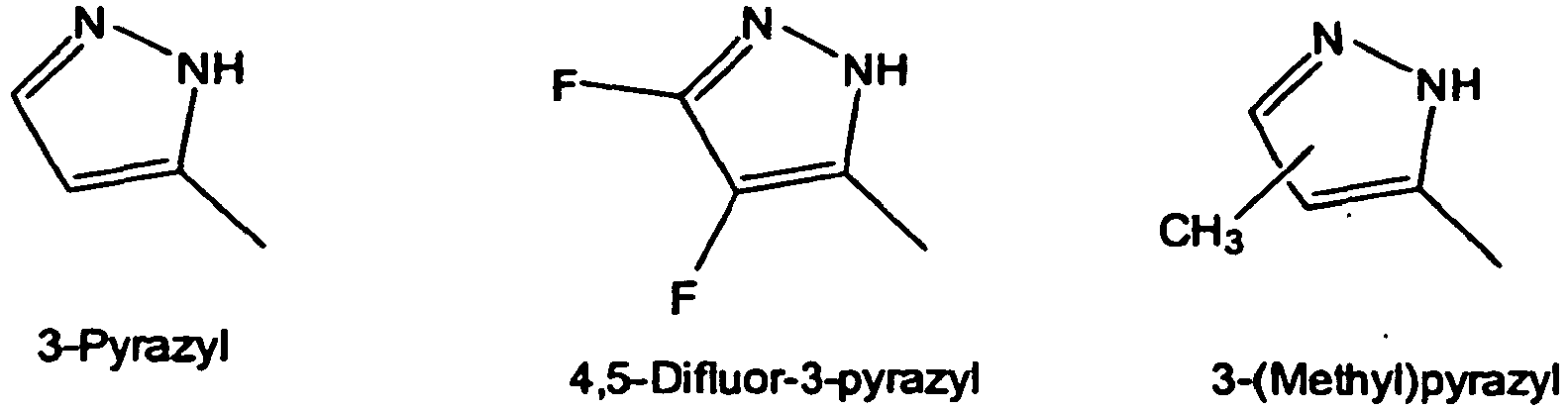


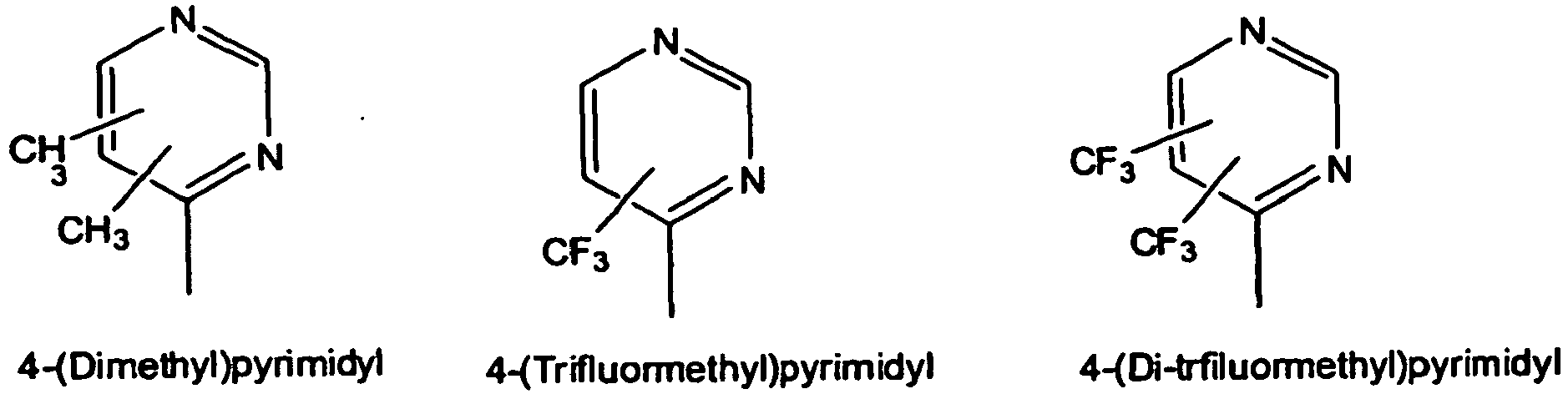


| Anregungswellenlänge: | 568,2 nm |
| cm-1: | Wellenzahlen |
Claims (15)
- Kupfer-(II)-Sauerstoff-Adduktkomplexe der allgemeinen Formel

BAr4 für ein Tetraarylboratanion steht, ausgewählt aus Tetraphenylborat und Tetrakis(3,5-trifluoromethyl)phenylborat
und
L einen tripodalen tetradentaten Liganden darstellt, wobeia) es sich bei jedem der vier Bindungsstellen des tripodalen tetradentaten Liganden um ein Stickstoffatom handelt, undb) drei podale stickstoffhaltige Liganden an das zentrale Stickstoffatom gebunden sind, undc) es sich bei dem tripodalen tetradentaten Liganden um einen Liganden der allgemeinen Formel d) sich zwischen dem zentralen Stickstoffatom und dem Stickstoffatom jedes der podalen Liganden eine Brücke aus ein bis vier Kohlenstoffatomen befindet,dadurch gekennzeichnet, dass• falls es sich bei dem podalen Liganden um einen stickstoffhaltigen Heteroaromaten handelt, die Brücke aus ein bis vier Kohlenstoffatomen genau ein sp2-hybridisiertes Kohlenstoffatom enthält, wobei dieses sp2-hybridisierte Kohlenstoffatom Teil des heterocyclischen Aromaten ist und sich in 2-Stellung zu mindestens einem Stickstoffatom des heterocyclischen Ringes befindet, oder• falls es sich bei dem podalen Liganden um ein aliphatisches Amin handelt, die Brücke aus ein bis vier Kohlenstoffatomen ausschließlich sp3-hybridisierte aliphatische Kohlenstoffatome enthält, und das aliphatische Amin an eine Alkylengruppe aus ein bis vier Kohlenstoffatomen gebunden ist gemäß Formelwobei
Y, n, R1 und R2 folgende Bedeutungen haben und für jede Gruppe Z1, Z2 und Z3 unabhängig voneinander ausgewählt werden können:Y = H oder F,n=1,2,3,4,und R1 und R2 sind unabhängig voneinander ausgewählt aus- -H, -CH3, -CH2CH3, -CH2CH2CH3, -CH(CH3)2, C(CH3)3,- -CF3, -CF2CF3, -CF2CF2CF3, -CF(CF3)2, C(CF3)3,- wobei für den Fall, dass eine der beiden Gruppen R1 oder R2 -C(CH3)3 oder -C(CF3)3 darstellt, die andere Gruppe R1 oder R2 ausgewählt wird aus -H, -CH3 und CF3- Phenyl, Pentafluorphenyl, Methylphenyl, Dimethylphenyl, Trifluormethylphenyl, (Bis-trifluormethyl)phenyl. - Kupfer-(II)-Sauerstoff-Adduktkomplexe gemäß Anspruch 1, dadurch gekennzeichnet, dass es sich bei dem tripodalen tetradentaten Liganden um einen Liganden der allgemeinen Formel
 - einem aliphatischen Amin, das an eine Alkylengruppe aus ein bis vier Kohlenstoffatomen gebunden ist gemäß Formel
 - und einem stickstoffhaltigen Heteroaromaten, welcher in 2-Stellung zu mindestens einem seiner Stickstoffatome an eine Alkylengruppe aus null bis drei Kohlenstoffatomen gebunden ist gemäß
wobei
Y, n, m, R1, R2 und Het folgende Bedeutungen haben und für jede Gruppe Z1, Z2 und Z3 unabhängig voneinander ausgewählt werden können:Y = H oder F,n = 1, 2, 3, 4,m = 0, 1, 2, 3,und R1 und R2 sind unabhängig voneinander ausgewählt aus- -H, -CH3, -CH2CH3, -CH2CH2CH3, -CH(CH3)2, C(CH3)3,- -CF3, -CF2CF3, -CF2CF2CF3, -CF(CF3)2, C(CF3)3,- wobei für den Fall, dass eine der beiden Gruppen R1 oder R2 -C(CH3)3 oder -C(CF3)3 darstellt, die andere Gruppe R1 oder R2 ausgewählt wird aus -H, -CH3 und CF3- Phenyl, Pentafluorphenyl, Methylphenyl, Dimethylphenyl, Trifluormethylphenyl, (Bis-trifluormethyl)phenyl,
und Het ist ein stickstofthaltiger Heteroaromat, ausgewählt aus


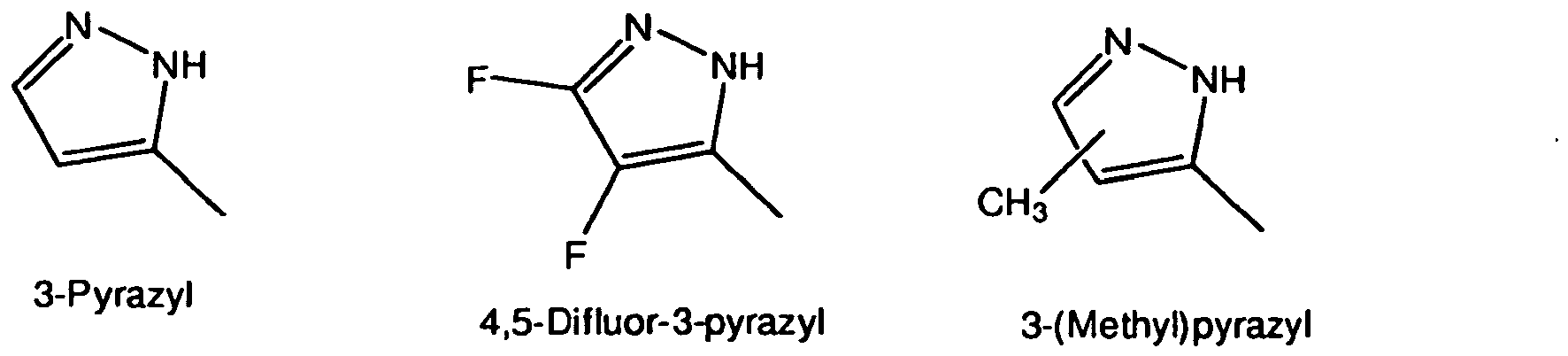


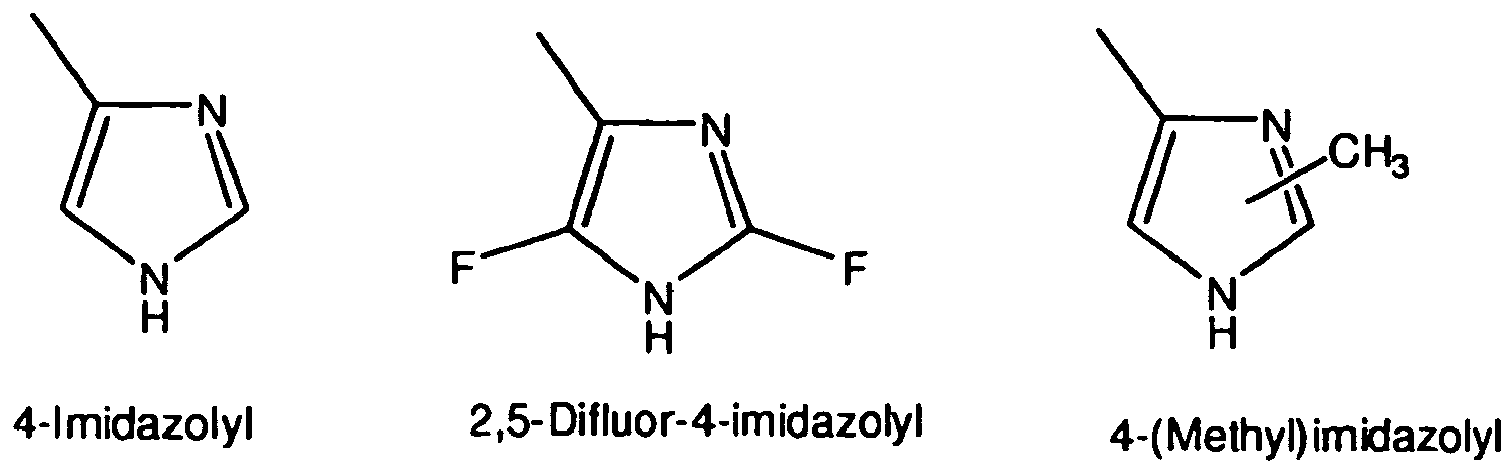


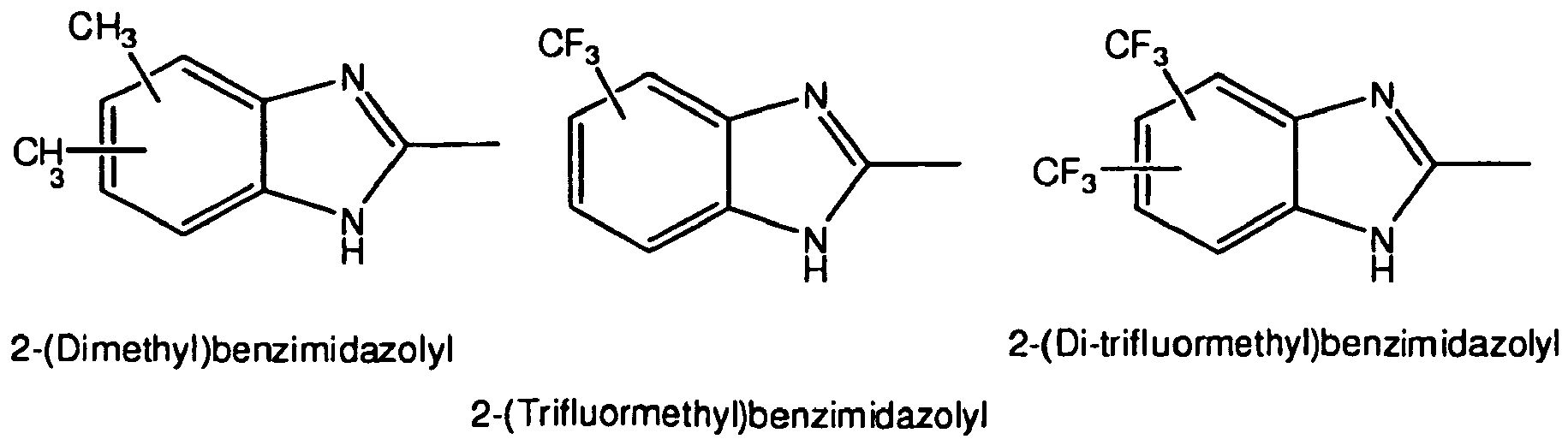
- Kupfer-(II)-Sauerstoff-Adduktkomplexe gemäß einem der Ansprüche 1 oder 2, wobei im tripodalen tetradentaten Liganden L

Z1, Z2 und Z3 unabhängig voneinander ausgewählt sind aus- einem aliphatischen Amin, das an einen Alkylengruppe aus ein bis vier Kohlenstoffatomen gebunden ist gemäß Formel - einem stickstoffhaltigen Heteroaromaten, welcher in 2-Stellung zu mindestens einem seiner Stickstoffatome an eine Alkylengruppe aus null bis drei Kohlenstoffatomen gebunden ist gemäß Formelworin n, m, R1, R2 und Het für jede Gruppe Z1, Z2 und Z3 unabhängig voneinander gewählt werden können und die in Anspruch 2 aufgeführten Bedeutungen haben, und wobei für den Fall, dass eine der beiden Gruppen R1 oder R2 -C(CH3)3 oder -C(CF3)3 darstellt, die andere Gruppe R1 oder R2 ausgewählt wird aus -H, -CH3 und CF3.
- Kupfer-(II)-Sauerstoff-Adduktkomplexe gemäß einem der Ansprüche 1 bis 3, wobei im tripodalen tetradentaten Liganden L
 - einem aliphatischen Amin, das an einen Alkylengruppe aus zwei Kohlenstoffatomen gebunden ist gemäß Formel
 - einem stickstoffhaltigen Heteroaromaten, welcher in 2-Stellung zu mindestens einem seiner Stickstoffatome an eine Methylengruppe gebunden ist gemäß Formelworin R1, R2 und Het für jede Gruppe Z1, Z2 und Z3 unabhängig voneinander gewählt werden können und die in Anspruch 2 aufgeführten Bedeutungen haben, und wobei für den Fall, dass eine der beiden Gruppen R1 oder R2 -C(CH3)3 oder -C(CF3)3 darstellt, die andere Gruppe R1 oder R2 ausgewählt wird aus -H, -CH3 und CF3.
-CH2-Het (VIII)
- Kupfer-(II)-Sauerstoff-Adduktkomplexe gemäß einem der Ansprüche 1 bis 4, wobei im tripodalen tetradentaten Liganden L
 - einem aliphatischen Amin, das an eine Alkylengruppe aus zwei Kohlenstoffatomen gebunden ist gemäß Formel
 - einem stickstoflhaltigen Heteroaromaten, welcher in 2-Stellung zu mindestens einem seiner Stickstoffatome an eine Methylengruppe gebunden ist gemäß Formelworin R1, R2 ausgewählt sind aus
-CH2-Het (VIII),
-H, -CH3, -CH2CH3, -CH2CH2CH3, -CH(CH3)2, C(CH3)3,
wobei für den Fall, dass eine der beiden Gruppen R1 oder R2 -C(CH3)3 darstellt, die andere Gruppe R1 oder R2 ausgewählt wird aus -H und -CH3,
und
Het ausgewählt ist aus
2-Pyridyl, 2-Pyrryl, 2-Chinolyl, 3-Isochinolyl, 3-Pyrazyl, 5-Pyrazyl, 2-Pyrimidyl, 4-Pyrimidyl, 2-Imidazolyl, 4-Imidazolyl, 2-Benzimidazolyl. - Kupfer-(II)-Sauerstoff-Adduktkomplexe gemäß einem der Ansprüche 1 bis 5, dadurch gekennzeichnet. dass der tripodale tetradentate Ligand L ausgewählt ist aus der Gruppe Tris-(2-dimethylaminoethyl)-amin, Bis-[2-dimethylaminoethyl-(2-pyridylmethyl)]-amin, [(2-Dimethylaminoethyl)-bis-(2-pyridylmethyl)]-amin, Tris-[(2-pyridyl)-methyl]-amin.
- Kupfer-(II)-Sauerstoff-Adduktkomplexe gemäß einem der Ansprüche 1 bis 6, dadurch gekennzeichnet, dass BAr4 für Tetraphenylborat steht.
- Verfahren zur Herstellung von Kupfer-(II)-Sauerstoff-Adduktkomplexen der allgemeinen Formel [L-Cu-O-O-Cu-L](BAr4)2 gemäß einem der Ansprüche 1 bis 7, gekennzeichnet durch die Schritte:a) Komplexierung des Liganden L mit einer Cu-(I)-Verbindung [Cu(R3)4]X zum Cu-(I)-Komplex [Cu-L]X in einem polar aprotischen Lösungsmittel unter Schutzgasatmosphäre, wobei- R3 Acetonitril oder kein Atom darstellt und- für den Fall, dass R3 Acetonitril darstellt, X ausgewählt wird aus Hexafluorophosphat PF6 -, Tetrafluoroborat BF4 -, Perchlorat ClO4 -, Hexafluoroantimonat SbF6 -, Triflat SO3CF3 -, Tetraphenylborat BPh4 - und Tetrakis(3,5-trifluoromethyl)tetraphenylborat,- sowie für den Fall, dass R3 kein Atom darstellt, X ausgewählt wird aus Chlorid Cl-, Bromid Br und Iodid I-b) Austausch des Anions X des Cu-(I)-Komplexes [Cu-L]X durch Tetraarylborat in einem polar aprotischen Lösungsmittel unter Schutzgasatmosphäre,c) in Kontakt bringen des nach Durchführung von Schritt b) erhaltenen [Cu-L]-Tetraarylborats mit einer sauerstoffhaltigen Atmosphäre,d) Isolierung und Trocknung des nach Durchführung von Schritt c) erhaltenen Komplexes [L-Cu-O-O-Cu-L](BAr4)2., wobei Isolierung und Trocknung bei tiefen Temperaturen < -70 °C erfolgen und die Trocknung im Sauerstoffstrom erfolgt.
- Verfahren zur Herstellung von Kupfer-(II)-Sauerstoff-Adduktkomplexen der allgemeinen Formel [L-Cu-O-O-Cu-L](BAr4)2 gemäß einem der Ansprüche 1 bis 7, gekennzeichnet durch die Schritte,a) Umsetzung des Liganden L in einem polar aprotischen Lösungsmittel unter Schutzgasatmosphäre mit einem Salz [Cu(R3)4]X unter Schutzgasatmosphäre zum entsprechenden [Cu-(I)-L]-Komplex, wobei- R3 Acetonitril oder kein Atom darstellt und- für den Fall, dass R3 Acetonitril darstellt, so wird das Anion X ausgewählt aus Hexafluorophosphat PF6 -, Tetrafluoroborat BF4 -, Perchlorat ClO4 - , Hexafluoroantimonat SbF6 -, Triflat SO3CF3 -, Tetraphenylborat BPh4 - und Tetrakis(3,5-trifluoromethyl)tetraphenylborat,- für den Fall, dass R3 kein Atom darstellt, so wird X ausgewählt aus Chlorid Cl-, Bromid Br- und Iodid I-b) Umsetzung der aus Schritt a) erhaltenen Lösung des Komplexes von [L-Cu-(I)]X mit einer Lösung des Metall-Tetraarylborats unter Schutzgasatmosphäre,c) isolieren und trocknen des aus Schritt b) erhaltenen Produkts [L-Cu-(I)]BAr4, wobei die Trocknung unter Schutzgasatmosphäre erfolgt,d) aussetzen des in c) isolierten und getrockneten Feststoffs gegenüber einer sauerstoffhaltigen Atmosphäre zur Bildung des Cu-(II)-Peroxo-Adduktkomplexes [L-Cu-O-O-Cu-L](BAr4)2.
- Verfahren zur Herstellung von Kupfer-(II)-Sauerstoff-Adduktkomplexen der allgemeinen Formel [L-Cu-O-O-Cu-L](BAr4)2 gemäß einem der Ansprüche 1 bis 7, dadurch gekennzeichnet, dass- der Ligand L in einem polar aprotischen Lösungsmittel unter Schutzgasatmosphäre mit einem Salz [Cu(R3)4]X zum entsprechenden [Cu-(I)-L]-Komplex komplexiert wird, wobei es sich bei der zur Komplexierung des Liganden L verwendeten Verbindung [Cu(R3)4]X um [Cu(CH3CN)4]BAr4 handelt, und- entweder das Produkt [L-Cu-(I)]BAr4 isoliert und getrocknet wird, wobei die Trocknung unter Schutzgasatmosphäre erfolgt, und der isolierte und getrocknete Feststoff anschließend gegenüber einer sauerstoffhaltigen Atmosphäre zur Bildung des Cu-(II)-Peroxo-Adduktkomplexes [L-Cu-O-0-Cu-L](BAr4)2 ausgesetzt wird,- oder, das [Cu-L]-Tetraarylborat zunächst mit einer sauerstoffhaltigen Atmosphäre in Kontakt gebracht, und anschließend der dadurch erhaltene Komplexes [L-Cu-O-O-Cu-L](BAr4)2 isoliert und getrocknet wird, wobei Isolierung und Trocknung bei tiefen Temperaturen < -70 °C erfolgen und die Trocknung im Sauerstoffstrom erfolgt.
- Verfahren zur Herstellung von Kupfer-(II)-Sauerstoff-Adduktkomplexen der allgemeinen Formel [L-Cu-O-O-Cu-L](BAr4)2 gemäß einem der Ansprüche 8 bis 10, dadurch gekennzeichnet, dass das polar aprotische Lösungsmittel ausgewählt wird aus Aceton, Acetonitril und Propionitril.
- Verfahren zur Herstellung von Kupfer-(II)-Sauerstoff-Adduktkomplexen der allgemeinen Formel [L-Cu-O-O-Cu-L](BAr4)2 gemäß einem der Ansprüche 8 bis 11, dadurch gekennzeichnet, dass die in Schritt c) verwendete sauerstoffhaltige Atmosphäre ausgewählt ist aus Sauerstoffgas, Luft oder einem Sauerstoff-Luft-Gemisch.
- Verwendung von Kupfer-(II)-Sauerstoff-Adduktkomplexen gemäß einem der Ansprüche 1 bis 7 als Oxidationskatalysatoren.
- Verwendung von Kupfer-(II)-Sauerstoff-Adduktkomplexen gemäß einem der Ansprüche 1 bis 7 als Katalysator für die Oxidation von Benzol zu Phenol, Methan zu Methanol, für die Oxidation von Wasserstoff, aromatischen und aliphatischen, gesättigten und ungesättigten Kohlenwasserstoffen.
- Verwendung von Kupfer-(II)-Sauerstoff-Adduktkomplexen gemäß einem der Ansprüche 1 bis 7 als Katalysator für die Oxidation von Benzol zu Phenol.
Applications Claiming Priority (2)
| Application Number | Priority Date | Filing Date | Title |
|---|---|---|---|
| DE102007051694A DE102007051694A1 (de) | 2007-10-26 | 2007-10-26 | Kupfer-Sauerstoff-Adduktkomplexe |
| PCT/DE2008/001741 WO2009052809A1 (de) | 2007-10-26 | 2008-10-27 | Kupfer-sauerstoff-adduktkomplexe |
Publications (2)
| Publication Number | Publication Date |
|---|---|
| EP2215096A1 EP2215096A1 (de) | 2010-08-11 |
| EP2215096B1 true EP2215096B1 (de) | 2012-09-19 |
Family
ID=40342359
Family Applications (1)
| Application Number | Title | Priority Date | Filing Date |
|---|---|---|---|
| EP08843041A Not-in-force EP2215096B1 (de) | 2007-10-26 | 2008-10-27 | Kupfer-sauerstoff-adduktkomplexe |
Country Status (4)
| Country | Link |
|---|---|
| US (1) | US8338600B2 (de) |
| EP (1) | EP2215096B1 (de) |
| DE (1) | DE102007051694A1 (de) |
| WO (1) | WO2009052809A1 (de) |
Families Citing this family (5)
| Publication number | Priority date | Publication date | Assignee | Title |
|---|---|---|---|---|
| US9593138B2 (en) | 2012-10-05 | 2017-03-14 | Wayne State University | Nitrile-containing enzyme inhibitors and ruthenium complexes thereof |
| US10005746B2 (en) | 2013-10-04 | 2018-06-26 | Academia Sinica | Molecular catalysts capable of catalyzing oxidation of hydrocarbons and method for oxidizing hydrocarbons |
| JP6681619B2 (ja) * | 2016-04-26 | 2020-04-15 | 学校法人同志社 | フェノール系化合物の製造方法 |
| JP7255850B2 (ja) * | 2019-02-28 | 2023-04-11 | 学校法人同志社 | メタン、エタン、プロパン等のガス状アルカンからアルコール及びアルデヒド誘導体の製造方法 |
| CN114768876A (zh) * | 2022-04-27 | 2022-07-22 | 东莞理工学院 | C3对称双功能催化剂及其制备方法和应用 |
Family Cites Families (4)
| Publication number | Priority date | Publication date | Assignee | Title |
|---|---|---|---|---|
| US6274776B1 (en) | 1995-12-12 | 2001-08-14 | Syngenta Participations | Oxidation process |
| JP5264030B2 (ja) | 1999-03-23 | 2013-08-14 | カーネギー−メロン ユニバーシティ | フリーラジカル的に(共)重合可能なモノマーの制御された重合のための触媒法、およびそれによって製造される官能性高分子系 |
| US6394784B1 (en) | 2000-03-08 | 2002-05-28 | Mold-Masters Limited | Compact cartridge hot runner nozzle |
| DE20215960U1 (de) | 2002-09-13 | 2003-01-16 | Türk & Hillinger GmbH, 78532 Tuttlingen | Elektrische Heizpatrone für zylindrische Körper |
-
2007
- 2007-10-26 DE DE102007051694A patent/DE102007051694A1/de not_active Withdrawn
-
2008
- 2008-10-27 US US12/739,800 patent/US8338600B2/en not_active Expired - Fee Related
- 2008-10-27 WO PCT/DE2008/001741 patent/WO2009052809A1/de not_active Ceased
- 2008-10-27 EP EP08843041A patent/EP2215096B1/de not_active Not-in-force
Also Published As
| Publication number | Publication date |
|---|---|
| US20120016127A1 (en) | 2012-01-19 |
| EP2215096A1 (de) | 2010-08-11 |
| DE102007051694A1 (de) | 2009-04-30 |
| US8338600B2 (en) | 2012-12-25 |
| WO2009052809A1 (de) | 2009-04-30 |
Similar Documents
| Publication | Publication Date | Title |
|---|---|---|
| Gribble | REGIOSELECl'IVE ORTHO-LITHIATION OF HALOPYRIDINES. SYNTHESES OF ORTHO-DISUJBSTITWED PYRIDINES AND A CONVENIENT GENERATION OF~,~-PYRIDYNE~ | |
| EP1437355B1 (de) | Kupfer-Carben-Komplexe und ihre Verwendung | |
| Baudequin et al. | Enantioselective electrophilic fluorination: a study of the fluorine-transfer from achiral N–F reagents to cinchona alkaloids | |
| WO1993015089A1 (de) | Diphosphinliganden | |
| EP1076648A1 (de) | Verfahren zur katalytischen herstellung von substituierten bipyridylderivaten | |
| Tseng et al. | Reactivity of trihexyl (tetradecyl) phosphonium chloride, a room-temperature phosphonium ionic liquid | |
| Segl’a et al. | Metal (II)-promoted hydrolysis of pyridine-2-carbonitrile to pyridine-2-carboxylic acid. The structure of [Cu (pyridine-2-carboxylate) 2]· 2H2O | |
| DE102007051694A1 (de) | Kupfer-Sauerstoff-Adduktkomplexe | |
| Schwartz et al. | Electronic influence of substitution on the pyridine ring within NNN pincer-type molecules | |
| Tomapatanaget et al. | Lower rim tetra-substituted and upper rim ferrocene amide calix [4] arenes: synthesis, conformation and anion-binding properties | |
| Gandhimathi et al. | Crystal structure, solvatochromism and estimation of ground and excited state dipole moments of an allyl arm containing Schiff base: Experimental and theoretical calculations | |
| Durmus et al. | Synthesis, characterization and electrochemical behavior of some Ni (II), Cu (II), Co (II) and Cd (II) complexes of ONS type tridentate Schiff base ligand | |
| Bolla et al. | Characterization of a slippage stopper for the 1, 2-bis (pyridinium) ethane–[24] crown-8 ether [2] pseudorotaxane motif | |
| EP0553778B1 (de) | Asymmetrische Hydrierung | |
| DE60217112T2 (de) | Fluorhaltige dreiphasen- und andere mehrphasensysteme | |
| Pfeffer et al. | Effects of Ortho-Substituents in the Synthesis and Stability of Cyclomanganated Benzylamine Derivatives. X-ray Crystal Structure of Mn {C6H2 (OCH3) 2-4, 6-CH2NMe2-2}(CO) 4 | |
| Ramesh et al. | Ru (III) mediated CH bond activation of N-(naphthyl) salicylaldimine and related Schiff base ligands: Synthesis, structure, DFT study and catalytic activity | |
| DD142883A5 (de) | Verfahren zur herstellung neuer dithienylalkylhalogenide | |
| EP3470401B1 (de) | Verfahren zur photoredoxkatalytischen addition von schwefelhexafluorid an ungesättigte kohlenstoff-kohlenstoff-bindungen | |
| Ghebreyessus et al. | Carebene and isocyanide ligation at ruthenium (II) with (η6-arene) and tethered phosphinopropylarene ligands | |
| DE102018105179B4 (de) | Organometallischer Iridiumkomplex, synthetisches Verfahren dafür und organische, lichtemittierende Vorrichtung, die ihn verwendet | |
| Rocha et al. | Synthesis and characterization of novel indole-containing half-crowns as new emissive metal probes | |
| EP3688000B1 (de) | Kohlenwasserstoff-lösliche halogen- und thiolat-/magnesium-austauschreagenzien | |
| Dickson et al. | Transition metal complexes of substituted alkynes. IV. Some bridging alkynecobalt complexes | |
| WO2011113925A2 (de) | Carbonylierung von organischen zinkverbindungen |
Legal Events
| Date | Code | Title | Description |
|---|---|---|---|
| PUAI | Public reference made under article 153(3) epc to a published international application that has entered the european phase |
Free format text: ORIGINAL CODE: 0009012 |
|
| 17P | Request for examination filed |
Effective date: 20100525 |
|
| AK | Designated contracting states |
Kind code of ref document: A1 Designated state(s): AT BE BG CH CY CZ DE DK EE ES FI FR GB GR HR HU IE IS IT LI LT LU LV MC MT NL NO PL PT RO SE SI SK TR |
|
| AX | Request for extension of the european patent |
Extension state: AL BA MK RS |
|
| 17Q | First examination report despatched |
Effective date: 20101022 |
|
| DAX | Request for extension of the european patent (deleted) | ||
| GRAP | Despatch of communication of intention to grant a patent |
Free format text: ORIGINAL CODE: EPIDOSNIGR1 |
|
| GRAS | Grant fee paid |
Free format text: ORIGINAL CODE: EPIDOSNIGR3 |
|
| GRAA | (expected) grant |
Free format text: ORIGINAL CODE: 0009210 |
|
| AK | Designated contracting states |
Kind code of ref document: B1 Designated state(s): AT BE BG CH CY CZ DE DK EE ES FI FR GB GR HR HU IE IS IT LI LT LU LV MC MT NL NO PL PT RO SE SI SK TR |
|
| REG | Reference to a national code |
Ref country code: GB Ref legal event code: FG4D Free format text: NOT ENGLISH |
|
| REG | Reference to a national code |
Ref country code: CH Ref legal event code: EP |
|
| REG | Reference to a national code |
Ref country code: IE Ref legal event code: FG4D Free format text: LANGUAGE OF EP DOCUMENT: GERMAN |
|
| REG | Reference to a national code |
Ref country code: AT Ref legal event code: REF Ref document number: 575973 Country of ref document: AT Kind code of ref document: T Effective date: 20121015 |
|
| REG | Reference to a national code |
Ref country code: DE Ref legal event code: R096 Ref document number: 502008008234 Country of ref document: DE Effective date: 20121115 |
|
| PG25 | Lapsed in a contracting state [announced via postgrant information from national office to epo] |
Ref country code: LT Free format text: LAPSE BECAUSE OF FAILURE TO SUBMIT A TRANSLATION OF THE DESCRIPTION OR TO PAY THE FEE WITHIN THE PRESCRIBED TIME-LIMIT Effective date: 20120919 Ref country code: FI Free format text: LAPSE BECAUSE OF FAILURE TO SUBMIT A TRANSLATION OF THE DESCRIPTION OR TO PAY THE FEE WITHIN THE PRESCRIBED TIME-LIMIT Effective date: 20120919 Ref country code: HR Free format text: LAPSE BECAUSE OF FAILURE TO SUBMIT A TRANSLATION OF THE DESCRIPTION OR TO PAY THE FEE WITHIN THE PRESCRIBED TIME-LIMIT Effective date: 20120919 Ref country code: NO Free format text: LAPSE BECAUSE OF FAILURE TO SUBMIT A TRANSLATION OF THE DESCRIPTION OR TO PAY THE FEE WITHIN THE PRESCRIBED TIME-LIMIT Effective date: 20121219 Ref country code: CY Free format text: LAPSE BECAUSE OF FAILURE TO SUBMIT A TRANSLATION OF THE DESCRIPTION OR TO PAY THE FEE WITHIN THE PRESCRIBED TIME-LIMIT Effective date: 20120919 |
|
| REG | Reference to a national code |
Ref country code: NL Ref legal event code: VDEP Effective date: 20120919 |
|
| REG | Reference to a national code |
Ref country code: LT Ref legal event code: MG4D Effective date: 20120919 |
|
| PG25 | Lapsed in a contracting state [announced via postgrant information from national office to epo] |
Ref country code: SE Free format text: LAPSE BECAUSE OF FAILURE TO SUBMIT A TRANSLATION OF THE DESCRIPTION OR TO PAY THE FEE WITHIN THE PRESCRIBED TIME-LIMIT Effective date: 20120919 Ref country code: LV Free format text: LAPSE BECAUSE OF FAILURE TO SUBMIT A TRANSLATION OF THE DESCRIPTION OR TO PAY THE FEE WITHIN THE PRESCRIBED TIME-LIMIT Effective date: 20120919 Ref country code: GR Free format text: LAPSE BECAUSE OF FAILURE TO SUBMIT A TRANSLATION OF THE DESCRIPTION OR TO PAY THE FEE WITHIN THE PRESCRIBED TIME-LIMIT Effective date: 20121220 Ref country code: SI Free format text: LAPSE BECAUSE OF FAILURE TO SUBMIT A TRANSLATION OF THE DESCRIPTION OR TO PAY THE FEE WITHIN THE PRESCRIBED TIME-LIMIT Effective date: 20120919 |
|
| PG25 | Lapsed in a contracting state [announced via postgrant information from national office to epo] |
Ref country code: IS Free format text: LAPSE BECAUSE OF FAILURE TO SUBMIT A TRANSLATION OF THE DESCRIPTION OR TO PAY THE FEE WITHIN THE PRESCRIBED TIME-LIMIT Effective date: 20130119 Ref country code: CZ Free format text: LAPSE BECAUSE OF FAILURE TO SUBMIT A TRANSLATION OF THE DESCRIPTION OR TO PAY THE FEE WITHIN THE PRESCRIBED TIME-LIMIT Effective date: 20120919 Ref country code: EE Free format text: LAPSE BECAUSE OF FAILURE TO SUBMIT A TRANSLATION OF THE DESCRIPTION OR TO PAY THE FEE WITHIN THE PRESCRIBED TIME-LIMIT Effective date: 20120919 Ref country code: ES Free format text: LAPSE BECAUSE OF FAILURE TO SUBMIT A TRANSLATION OF THE DESCRIPTION OR TO PAY THE FEE WITHIN THE PRESCRIBED TIME-LIMIT Effective date: 20121230 Ref country code: NL Free format text: LAPSE BECAUSE OF FAILURE TO SUBMIT A TRANSLATION OF THE DESCRIPTION OR TO PAY THE FEE WITHIN THE PRESCRIBED TIME-LIMIT Effective date: 20120919 Ref country code: RO Free format text: LAPSE BECAUSE OF FAILURE TO SUBMIT A TRANSLATION OF THE DESCRIPTION OR TO PAY THE FEE WITHIN THE PRESCRIBED TIME-LIMIT Effective date: 20120919 |
|
| PG25 | Lapsed in a contracting state [announced via postgrant information from national office to epo] |
Ref country code: SK Free format text: LAPSE BECAUSE OF FAILURE TO SUBMIT A TRANSLATION OF THE DESCRIPTION OR TO PAY THE FEE WITHIN THE PRESCRIBED TIME-LIMIT Effective date: 20120919 Ref country code: PT Free format text: LAPSE BECAUSE OF FAILURE TO SUBMIT A TRANSLATION OF THE DESCRIPTION OR TO PAY THE FEE WITHIN THE PRESCRIBED TIME-LIMIT Effective date: 20130121 Ref country code: MC Free format text: LAPSE BECAUSE OF NON-PAYMENT OF DUE FEES Effective date: 20121031 Ref country code: PL Free format text: LAPSE BECAUSE OF FAILURE TO SUBMIT A TRANSLATION OF THE DESCRIPTION OR TO PAY THE FEE WITHIN THE PRESCRIBED TIME-LIMIT Effective date: 20120919 |
|
| PLBE | No opposition filed within time limit |
Free format text: ORIGINAL CODE: 0009261 |
|
| STAA | Information on the status of an ep patent application or granted ep patent |
Free format text: STATUS: NO OPPOSITION FILED WITHIN TIME LIMIT |
|
| PG25 | Lapsed in a contracting state [announced via postgrant information from national office to epo] |
Ref country code: DK Free format text: LAPSE BECAUSE OF FAILURE TO SUBMIT A TRANSLATION OF THE DESCRIPTION OR TO PAY THE FEE WITHIN THE PRESCRIBED TIME-LIMIT Effective date: 20120919 Ref country code: BG Free format text: LAPSE BECAUSE OF FAILURE TO SUBMIT A TRANSLATION OF THE DESCRIPTION OR TO PAY THE FEE WITHIN THE PRESCRIBED TIME-LIMIT Effective date: 20121219 |
|
| REG | Reference to a national code |
Ref country code: IE Ref legal event code: MM4A |
|
| 26N | No opposition filed |
Effective date: 20130620 |
|
| PG25 | Lapsed in a contracting state [announced via postgrant information from national office to epo] |
Ref country code: IT Free format text: LAPSE BECAUSE OF FAILURE TO SUBMIT A TRANSLATION OF THE DESCRIPTION OR TO PAY THE FEE WITHIN THE PRESCRIBED TIME-LIMIT Effective date: 20120919 |
|
| REG | Reference to a national code |
Ref country code: DE Ref legal event code: R097 Ref document number: 502008008234 Country of ref document: DE Effective date: 20130620 |
|
| PG25 | Lapsed in a contracting state [announced via postgrant information from national office to epo] |
Ref country code: IE Free format text: LAPSE BECAUSE OF NON-PAYMENT OF DUE FEES Effective date: 20121027 |
|
| PG25 | Lapsed in a contracting state [announced via postgrant information from national office to epo] |
Ref country code: MT Free format text: LAPSE BECAUSE OF FAILURE TO SUBMIT A TRANSLATION OF THE DESCRIPTION OR TO PAY THE FEE WITHIN THE PRESCRIBED TIME-LIMIT Effective date: 20120919 |
|
| PG25 | Lapsed in a contracting state [announced via postgrant information from national office to epo] |
Ref country code: TR Free format text: LAPSE BECAUSE OF FAILURE TO SUBMIT A TRANSLATION OF THE DESCRIPTION OR TO PAY THE FEE WITHIN THE PRESCRIBED TIME-LIMIT Effective date: 20120919 |
|
| PG25 | Lapsed in a contracting state [announced via postgrant information from national office to epo] |
Ref country code: LU Free format text: LAPSE BECAUSE OF NON-PAYMENT OF DUE FEES Effective date: 20121027 |
|
| PG25 | Lapsed in a contracting state [announced via postgrant information from national office to epo] |
Ref country code: HU Free format text: LAPSE BECAUSE OF FAILURE TO SUBMIT A TRANSLATION OF THE DESCRIPTION OR TO PAY THE FEE WITHIN THE PRESCRIBED TIME-LIMIT Effective date: 20081027 |
|
| REG | Reference to a national code |
Ref country code: FR Ref legal event code: PLFP Year of fee payment: 8 |
|
| REG | Reference to a national code |
Ref country code: FR Ref legal event code: PLFP Year of fee payment: 9 |
|
| REG | Reference to a national code |
Ref country code: FR Ref legal event code: PLFP Year of fee payment: 10 |
|
| REG | Reference to a national code |
Ref country code: FR Ref legal event code: PLFP Year of fee payment: 11 |
|
| PGFP | Annual fee paid to national office [announced via postgrant information from national office to epo] |
Ref country code: DE Payment date: 20181019 Year of fee payment: 11 Ref country code: AT Payment date: 20181022 Year of fee payment: 11 |
|
| PGFP | Annual fee paid to national office [announced via postgrant information from national office to epo] |
Ref country code: BE Payment date: 20181019 Year of fee payment: 11 Ref country code: GB Payment date: 20181019 Year of fee payment: 11 Ref country code: FR Payment date: 20181023 Year of fee payment: 11 Ref country code: CH Payment date: 20181019 Year of fee payment: 11 |
|
| REG | Reference to a national code |
Ref country code: DE Ref legal event code: R119 Ref document number: 502008008234 Country of ref document: DE |
|
| REG | Reference to a national code |
Ref country code: CH Ref legal event code: PL |
|
| PG25 | Lapsed in a contracting state [announced via postgrant information from national office to epo] |
Ref country code: DE Free format text: LAPSE BECAUSE OF NON-PAYMENT OF DUE FEES Effective date: 20200501 Ref country code: LI Free format text: LAPSE BECAUSE OF NON-PAYMENT OF DUE FEES Effective date: 20191031 Ref country code: CH Free format text: LAPSE BECAUSE OF NON-PAYMENT OF DUE FEES Effective date: 20191031 |
|
| REG | Reference to a national code |
Ref country code: BE Ref legal event code: MM Effective date: 20191031 |
|
| REG | Reference to a national code |
Ref country code: AT Ref legal event code: MM01 Ref document number: 575973 Country of ref document: AT Kind code of ref document: T Effective date: 20191027 |
|
| PG25 | Lapsed in a contracting state [announced via postgrant information from national office to epo] |
Ref country code: BE Free format text: LAPSE BECAUSE OF NON-PAYMENT OF DUE FEES Effective date: 20191031 |
|
| GBPC | Gb: european patent ceased through non-payment of renewal fee |
Effective date: 20191027 |
|
| PG25 | Lapsed in a contracting state [announced via postgrant information from national office to epo] |
Ref country code: FR Free format text: LAPSE BECAUSE OF NON-PAYMENT OF DUE FEES Effective date: 20191031 Ref country code: GB Free format text: LAPSE BECAUSE OF NON-PAYMENT OF DUE FEES Effective date: 20191027 |
|
| PG25 | Lapsed in a contracting state [announced via postgrant information from national office to epo] |
Ref country code: AT Free format text: LAPSE BECAUSE OF NON-PAYMENT OF DUE FEES Effective date: 20191027 |