EP2214122A1 - Methods and devices for assisting a vehicle driver - Google Patents
Methods and devices for assisting a vehicle driver Download PDFInfo
- Publication number
- EP2214122A1 EP2214122A1 EP20090001443 EP09001443A EP2214122A1 EP 2214122 A1 EP2214122 A1 EP 2214122A1 EP 20090001443 EP20090001443 EP 20090001443 EP 09001443 A EP09001443 A EP 09001443A EP 2214122 A1 EP2214122 A1 EP 2214122A1
- Authority
- EP
- European Patent Office
- Prior art keywords
- vehicle
- data
- data processing
- processing resource
- feature
- Prior art date
- Legal status (The legal status is an assumption and is not a legal conclusion. Google has not performed a legal analysis and makes no representation as to the accuracy of the status listed.)
- Granted
Links
Images


Classifications
-
- G—PHYSICS
- G06—COMPUTING OR CALCULATING; COUNTING
- G06V—IMAGE OR VIDEO RECOGNITION OR UNDERSTANDING
- G06V20/00—Scenes; Scene-specific elements
- G06V20/50—Context or environment of the image
- G06V20/56—Context or environment of the image exterior to a vehicle by using sensors mounted on the vehicle
- G06V20/58—Recognition of moving objects or obstacles, e.g. vehicles or pedestrians; Recognition of traffic objects, e.g. traffic signs, traffic lights or roads
- G06V20/582—Recognition of moving objects or obstacles, e.g. vehicles or pedestrians; Recognition of traffic objects, e.g. traffic signs, traffic lights or roads of traffic signs
Definitions
- the present invention relates to methods and devices for assisting a driver of a vehicle.
- driver assist systems it is known to use image processing of a video signal of the vehicle environment so as to identify objects in the vehicle environment. On the basis of the identified objects, an indication may be provided to the driver of the vehicle so as to assist the driver in navigating or driving the vehicle.
- the indication may comprise a video image displayed to the driver and/or a sound signal such as a speech signal.
- the indication may notify the driver of the vehicle of a point of interest in the vehicle environment or of a traffic sign. Further, the indication may involve highlighting certain structures in the video signal, which is displayed to the driver, such as road edges or the like.
- the driver assist method allows for efficiently identifying objects in the vehicle environment.
- the object identification process is based on pre-computed reference features which are stored as location attributes in a map database, the high accuracy level of object detection can be obtained. Further, vehicle-based data processing resources for implementing the object identification process are reduced.
- the comparison between the extracted feature and the reference feature may be implemented outside the vehicle by the external data processing resource.
- the object identification data transmitted from the external data processing resource to the vehicle may include object data representing characteristics of the identified object. The object data may be readily used within the vehicle so as to provide the indication to the driver.
- the comparison between the extracted feature and the reference feature may be implemented within the vehicle by a vehicle-based data processing resource.
- the object identification data transmitted from the external data processing resource to the vehicle may include the reference feature which is needed by the vehicle-based data processing resource so as to accomplish the comparison.
- the second data signal transmitted from the external data processing resource to the vehicle may include video data and/or audio data to be indicated to the driver. Accordingly, vehicle-based processing resources may be saved by computing video data and/or audio data outside the vehicle.
- the object data transmitted from the external data processing resource to the vehicle may include coordinates, dimensions, and/or an identifier of the identified object.
- a suitable indication may be computed within the vehicle. In this case, tailoring the indication to the requirements of the individual driver and/or vehicle may be facilitated.
- the external data processing resource communicates with a plurality of vehicles. This may allow for an efficient use of the external data processing resource and the external map database. Further, this may allow for correlating features extracted from video signals from different vehicles, thereby further improving the accuracy of the identification process. For example, changes of certain features may be tracked by correlating features extracted from video signals of different vehicles.
- the external data processing resource communicates with the vehicle via an internet-based communication channel.
- existing communication resources of the vehicle may be reused for communicating with the external data processing resource and the external map database.
- the extracted features and the reference features correspond to a transformation-invariant feature representation.
- the features may be represented according to a SIFT-representation (SIFT: "Scale Invariant Feature Tracker") or according to a SURF-representation (SURF: “Speeded Up Robost Features”).
- SIFT Scale Invariant Feature Tracker
- SURF SURF-representation
- reliable matching between the extracted features and the reference features can be performed, irrespective of the individual perspective used for generating the video signal.
- the use of a transformation-invariant feature representation allows for efficiently storing the reference features in the map database so as to be used for future identification processes.
- a driver assist device to be mounted in a vehicle.
- the driver assist device comprises a vehicle-based video capturing device, e.g. a digital camera, configured to generate a video signal representing a vehicle environment outside the vehicle, e.g. a field of view in front of the vehicle.
- the driver assist device further comprises an indication device configured to provide an indication to a driver of the vehicle on the basis of an object identified in the vehicle environment, e.g. a traffic sign, road edges, a point-of-interest, or the like.
- the object is identified on the basis of a comparison between at least one feature extracted from the video signal and at least one reference feature selected from a plurality of pre-computed reference features which are stored as location attributes in a map database.
- the object identification process may be implemented within the vehicle-based driver assist device. Alternatively, at least a part of the object identification process may be implemented outside the vehicle, i.e. by using an external data processing resource and/or external map database.
- the driver assist device may comprise a vehicle-based transmitter for transmitting a first data signal to the external data processing resource, and a vehicle-based receiver for receiving a second data signal from the external data processing resource.
- the first data signal may include at least location data of the vehicle and the second data signal may include object identification data.
- the vehicle-based driver assist device may be configured to implement the method according to the above-mentioned first aspect.
- a driver assist system comprises a map database configured to store a plurality of pre-computed reference features as location attributes and a first data processing resource configured to compare a feature extracted from a video signal to at least one reference feature, the video signal representing a vehicle environment outside the vehicle, and the reference image feature being selected from the plurality of pre-computed reference image features.
- the first data processing resource identifies an object in the vehicle environment. The identified object may then be used as a basis for providing an indication to a driver of the vehicle.
- the driver assist system may include non-vehicle based or external components and comprise a first transmitter and a first receiver for coupling the first data processing resource, which may be an external component, to a second data processing resource within the vehicle.
- the first receiver may be configured to receive a first data signal from the second data processing resource, the first data signal including at least location data of the vehicle.
- the first transmitter may be configured to transmit a second data signal to the second data processing resource, the second data signal being generated.
- the driver assist system may further comprise vehicle-based components, such as a vehicle-based capturing device configured to generate the video signal, a vehicle-based second transmitter configured to transmit the first data signal to the first data processing resource, a vehicle-based second receiver configured to receive a second data signal from the first data processing resource, and a vehicle-based indication device configured to provide the indication to the driver of the vehicle on the basis of the identified object.
- vehicle-based components such as a vehicle-based capturing device configured to generate the video signal, a vehicle-based second transmitter configured to transmit the first data signal to the first data processing resource, a vehicle-based second receiver configured to receive a second data signal from the first data processing resource, and a vehicle-based indication device configured to provide the indication to the driver of the vehicle on the basis of the identified object.
- the driver assist system may be configured for implementing the method according to the above-mentioned first aspect.
- the exemplary driver assist systems are based on vehicle-based video capturing devices, e.g. digital cameras.
- the video capturing devices may be used for tasks such as driving-lane recognition or traffic-sign recognition.
- the exemplary driver assist systems involve high-speed data communication between vehicle-based components and external components, in particular via Internet communication channels.
- an architecture is provided in which data processing tasks are distributed between a vehicle-based data processing resource and an external data processing resource.
- the external data processing resource is coupled with a map database. Accordingly, the external data processing resource may also be referred as a map-database server.
- a vehicle-based data processing resource communicating with the map-database server may also be referred to as a vehicle-based client.
- data processing resource is intended to encompass a single data processing device, e.g. a processor, and arrangements of multiple data processing devices.
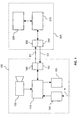
- Fig. 1 shows a driver assist system according to an embodiment of the invention.
- the driver assist system is based on a distributed architecture in which one portion is located in a vehicle 100 and the other portion is located outside the vehicle in a map-database server 200.
- the driver assist system comprises a vehicle-based data processing resource 110, a navigation receiver 120, e.g. a GPS receiver or other type of navigation receiver, a video capturing device 130, e.g. a digital camera, a vehicle-based transmitter 140, a vehicle-based receiver 150, and an indication device 160, i.e. an optical display device and/or an accoustic output device.
- a navigation system of the vehicle 100 which is configured for directing the driver of the vehicle to a specific destination by providing suitable indications.
- the navigation receiver 120 receives a navigation data signal N from a navigation satellite. On the basis of the navigation signal N, the present location of the vehicle 100 may be determined so as to obtain location data of the vehicle 100.
- the map database server 200 comprises an external data processing resource 210 and a map database 220. Further, the map database server 200 comprises a transmitter 240 and a receiver 250. By means of the transmitters 140, 240 and the receivers, 150, 250, the vehicle-based data processing resource 110 and the external data processing resource 210 are coupled to each other so as to allow for exchanging digital data in a bidirectional manner. In particular, a first data signal D1 is transmitted from the vehicle to the map database server 200, and a second data signal D2 is transmitted from the map database server 200 to the vehicle 100.
- the video capturing device 130 is positioned within the vehicle 100 so as to detect the vehicle environment, in particular a scenery in front of the vehicle 100.
- the detected scenery may substantially correspond to that as viewed by the driver of the vehicle 100.
- the vehicle capturing device 130 outputs a video signal to the data processing resource 110.
- the video signal may be processed by the data processing resource 110 and may be displayed by the indication device 160 or by other vehicle-based display devices.
- reference features are stored as location attributes. That is to say, the reference features are associated with a specific location. Further, the reference features are associated with specific objects, such as a traffic sign, a point-of-interest or the like.
- the data processing resource 210 accesses the map database 220 so as to retrieve reference features in a location-selective manner. Further, the data processing resource 210 may also access the map database 220 so as to store reference features.
- the overall driver assist system operates as to identify an object in the vehicle environment on the basis of the video signal as provided by the video capturing device 130.
- distinctive image features are extracted from the video signal and compared to reference image features, which are in turn selected from the map database 220 on the basis of the location of the vehicle 100.
- the extracted features and the reference features may correspond to local image regions and their direct surrounding, e.g. represented by a descriptor.
- the features may be distinctive image points such as corners of buildings, strongly textured image regions, lines, e.g. edges of buildings, or the like.
- the features may be represented by a SIFT-representation.
- the features may be represented by a SURF-representation.
- the process of extracting the features from the video signal as captured by the video capturing device 130 is accomplished by the data processing resource 110, whereas the comparison of the extracted feature to the selected reference features is accomplished by the data processing resource 210.
- the first data signal D1 which is transmitted from the vehicle 100 to the map database server 200, includes location data of the vehicle 100 and the extracted reference feature.
- the second data signal D2 transmitted from the map database server 200 to the vehicle 100 is generated on the basis of the comparison accomplished by the data processing resource 210 and includes object data representing characteristics of the identified object, i.e. coordinates, dimensions and/or an identifier of the identified object.
- the second data signal D2 may also comprise pre-processed indication data, such as video data and/or audio data to be output to the driver of the vehicle 100 without any significant further processings in the vehicle 100.
- the load on the vehicle-based data processing resource 110 can be further reduced.
- the identifier of the object may be a designation of the object, e.g. a name of a building, a designation of the object type, e.g. traffic sign or building.
- the object data may also include other types of useful information, e.g. the written text on the traffic sign or the like.
- the process of extracting the feature from the video signal as provided by the video capturing device 130 may be accomplished by the external data processing resource 210, thereby further reducing the load on the vehicle-based data processing resource 110.
- the vehicle-based data processing resource 110 converts the video signal into a suitable format to be transmitted to the external data processing resource 210, e.g. by applying a compression algorithm and/or by selecting only certain image frames of the video signal. In some cases, it may also be possible to transmit the full video signal to the external data processing resource 210.
- the first data signal D1 includes video data derived from the video signal as captured by the video capturing device 130.
- the driver assist system may operate as explained for the first operating scenario.
- both the process of extracting the feature from the video signal as provided by the video capturing device 130 and of comparing the extracted feature to selected reference features is accomplished by the vehicle-based data processing resource 110.
- the first data signal D1 includes the location data of the vehicle 100 and the second data signal D2 includes the reference feature from the map database 220, which are selected by the external data processing resource 210 on the basis of the received location data.
- Object data relating to the selected reference features may be transmitted in the second data signal D2 together with the reference feature.
- object data may be retrieved via the second data signal D2 once an object has been identified by the vehicle-based data processing resource 110.
- the driver assist system may operate as explained for the first operating scenario.
- the above-mentioned operating scenarios concerning the distribution of certain data processing tasks, e.g. extracting the features and comparing the features to the reference features, in different portions of the driver assist system may be selectively implemented as different modes of operation of a single driver assist system.
- a selection between the different modes of operation could be based on the load the vehicle-based data processing resource 110, on the load the external data processing resource 210, and/or on the bandwidth available for transmitting the first and second data signals D1, D2. For example, if only a low bandwidth is available for transmitting the first and the second data signals D1, D2, extracting the features from the video signal could be accomplished by the vehicle-based data processing resource 110.
- a driver assist system may also be configured to operate according to only one of the above-mentioned operating scenarios.
- Fig. 2 schematically illustrates the driver assist system as implemented with a plurality of vehicles 100.
- the map database server 200 communicates with a plurality of vehicles 100.
- Each of the vehicles 100 receives a navigation signal (illustrated by dashed arrows) from a navigation satellite 300.
- the map database server 200 may be efficiently used by a plurality of vehicles 100. Further, the accuracy of the object identification process may be improved by correlating the data signals received from different vehicles 100. For example, the data signals received from other vehicles 100 may be used to track variations of features.
- Fig. 3 shows a flow chart which illustrates method steps of a driver assist method in accordance with the above-mentioned principles.
- the method steps of Fig. 3 are intended to illustrate the process of storing the reference features in the map database 220.
- the process of Fig. 3 may also be referred to as a learning process.
- a video image of the vehicle environment is generated. This may be accomplished by any vehicle which is equipped with the driver assist system as illustrated in Figs. 1 and 2 . Alternatively, dedicated vehicles may be used for obtaining the video data.
- step 420 features are extacted from the video image. This may be accomplished by vehicle-based data processing resource. Alternatively, an external data processing resource may be used as well, e.g. if high data processing capacities are required.
- the extracted features are stored as location attributes in the map database 220.
- the extracted features are associated with a specific object or semantic unit, e.g. a point-of-interest, a specific building, or a specific traffic sign.
- the features are associated with location data, i.e. the location data corresponding to the position from which the video image with the extracted feature was detected.
- the features may be associated with a specific GPS-position.
- the reference features can then be selectively retrieved from the map database 220 on the basis of the location data. Further, object data relating to the reference features can be retrieved from the map database 220.
- the reference features may be subjected to a conditioning process and/or to a compression process before being stored in the map database. For example, certain artifacts due to noise or image faults can be removed. Further, as an alternative or in addition to generating the reference features on the basis of a video image, the reference features may be derived from a three-dimensional model of the vehicle environment.
- Fig. 4 shows a flow for illustrating method steps of a driver assist method, which correspond to a normal operation of the driver assist system according to the principles as explained above.
- step 510 a video image of the vehicle environment is generated.
- step 520 features are extracted from the video image. This may be accomplished by a vehicle-based data processing resource or by an external data processing resource.
- step 530 reference features are retrieved from the map database 220 on the basis of location data of the vehicle 100.
- step 540 the extracted features are compared to the reference features from the map database 220. This may be accomplished by a vehicle-based data processing resource or by an external data processing resource.
- step 550 an object in the vehicle environment is identified on the basis of the comparison between the extracted features and the reference features.
- Video data and/or audio data for providing the indication may be computed by vehicle-based data processing resource or by an external data processing resource.
- the object identification process as described above may not only be used to provide indications to a driver of the vehicle, but also to improve positioning accuracy of a navigation system of the vehicle.
- deviations of location data from the actual position of the vehicle may be identified by matching the identified object with the corresponding structure in the video signal.
- embodiments of the invention allow for efficiently using vehicle-based data processing resources and external data processing resources as to implement the object identification process in a video-based driver assist system.
- the process of extracting features from the video signal may be accomplished by a vehicle-based data processing resource whereas the process of comparing the extracted features to the reference features is accomplished by an external data processing resource.
- the process of extracting the features from the video signal may be accomplished by the external data processing resource thereby further saving vehicle-based data processing resources.
Landscapes
- Engineering & Computer Science (AREA)
- Physics & Mathematics (AREA)
- General Physics & Mathematics (AREA)
- Multimedia (AREA)
- Theoretical Computer Science (AREA)
- Navigation (AREA)
- Traffic Control Systems (AREA)
Abstract
Description
- The present invention relates to methods and devices for assisting a driver of a vehicle.
- In present driver assist systems, it is known to use image processing of a video signal of the vehicle environment so as to identify objects in the vehicle environment. On the basis of the identified objects, an indication may be provided to the driver of the vehicle so as to assist the driver in navigating or driving the vehicle.
- However, image processing of a video signal requires significant processing resources and therefore correspondingly designed driver assist systems require powerful processing equipment. On the other hand, even when using powerful processing resources, the object identification process may still suffer from an insufficient accuracy.
- Accordingly, there is a need for driver assist technics, which allow for a good accuracy of object recognition and for an efficient usage of processing resources.
- The above need is met by the features of the independent claims. The dependent claims define specific embodiments of the invention.
- According to a first aspect, a driver assist method is provided. The method comprises generating a video signal representing a vehicle environment outside a vehicle. For example, the video signal may be generated by a vehicle-based digital camera which detects a field of view in front of the vehicle, similar to the driver's field of view. From the video signal, at least one feature is extracted. The extracted feature is compared to at least one reference feature which is selected from a plurality of pre-computed reference features which are stored as location attributes in a map database. An object in the vehicle environment is identified on the basis of the comparison of the extracted feature and the reference feature. On the basis of the identified object, an indication is provided to a driver of the vehicle. For example, the indication may comprise a video image displayed to the driver and/or a sound signal such as a speech signal. The indication may notify the driver of the vehicle of a point of interest in the vehicle environment or of a traffic sign. Further, the indication may involve highlighting certain structures in the video signal, which is displayed to the driver, such as road edges or the like.
- In this way, the driver assist method allows for efficiently identifying objects in the vehicle environment. As the object identification process is based on pre-computed reference features which are stored as location attributes in a map database, the high accuracy level of object detection can be obtained. Further, vehicle-based data processing resources for implementing the object identification process are reduced.
- According to an embodiment, the map database is external with respect to the vehicle. In this case, the method may further comprise transmitting a first data signal from the vehicle to an external data processing resource, the first data signal including at least location data of the vehicle. A second data signal, which includes object identification data generated in response to the received location data, is then transmitted from the external data processing resource to the vehicle. In this way, a part of the object identification process may be implemented outside the vehicle, thereby saving data processing resources within the vehicle.
- For example, the comparison between the extracted feature and the reference feature may be implemented outside the vehicle by the external data processing resource. In this case, the object identification data transmitted from the external data processing resource to the vehicle may include object data representing characteristics of the identified object. The object data may be readily used within the vehicle so as to provide the indication to the driver. Alternatively, the comparison between the extracted feature and the reference feature may be implemented within the vehicle by a vehicle-based data processing resource. In this case, the object identification data transmitted from the external data processing resource to the vehicle may include the reference feature which is needed by the vehicle-based data processing resource so as to accomplish the comparison.
- According to a further embodiment, the process of extracting the feature from the video signal is implemented by a vehicle-based data processing resource. In this case, the first data signal may include feature data representing the extracted feature. In this way, a communication channel between the vehicle and the external data processing resource may be used in an efficient manner. Alternatively, the process of extracting the feature from the video signal may be accomplished by the external data processing resource. In this case, the first data signal may include video data derived from the video signal, e.g. the full video signal, a compressed version of the video signal, and/or selected frames of the video signal. The latter alternatives allow for further reducing the processing resources required within the vehicle.
- According to an embodiment, the second data signal transmitted from the external data processing resource to the vehicle may include video data and/or audio data to be indicated to the driver. Accordingly, vehicle-based processing resources may be saved by computing video data and/or audio data outside the vehicle.
- According to an embodiment, the object data transmitted from the external data processing resource to the vehicle may include coordinates, dimensions, and/or an identifier of the identified object. On the basis of this information, a suitable indication may be computed within the vehicle. In this case, tailoring the indication to the requirements of the individual driver and/or vehicle may be facilitated.
- According to an embodiment, the external data processing resource communicates with a plurality of vehicles. This may allow for an efficient use of the external data processing resource and the external map database. Further, this may allow for correlating features extracted from video signals from different vehicles, thereby further improving the accuracy of the identification process. For example, changes of certain features may be tracked by correlating features extracted from video signals of different vehicles.
- According to an embodiment, the external data processing resource communicates with the vehicle via an internet-based communication channel. In this way, existing communication resources of the vehicle may be reused for communicating with the external data processing resource and the external map database.
- According to an embodiment, the extracted features and the reference features correspond to a transformation-invariant feature representation. For example, the features may be represented according to a SIFT-representation (SIFT: "Scale Invariant Feature Tracker") or according to a SURF-representation (SURF: "Speeded Up Robost Features"). In this way, reliable matching between the extracted features and the reference features can be performed, irrespective of the individual perspective used for generating the video signal. Further, the use of a transformation-invariant feature representation allows for efficiently storing the reference features in the map database so as to be used for future identification processes.
- According to a second aspect, a driver assist device to be mounted in a vehicle is provided. The driver assist device comprises a vehicle-based video capturing device, e.g. a digital camera, configured to generate a video signal representing a vehicle environment outside the vehicle, e.g. a field of view in front of the vehicle. The driver assist device further comprises an indication device configured to provide an indication to a driver of the vehicle on the basis of an object identified in the vehicle environment, e.g. a traffic sign, road edges, a point-of-interest, or the like. The object is identified on the basis of a comparison between at least one feature extracted from the video signal and at least one reference feature selected from a plurality of pre-computed reference features which are stored as location attributes in a map database. The object identification process may be implemented within the vehicle-based driver assist device. Alternatively, at least a part of the object identification process may be implemented outside the vehicle, i.e. by using an external data processing resource and/or external map database. In the latter case, the driver assist device may comprise a vehicle-based transmitter for transmitting a first data signal to the external data processing resource, and a vehicle-based receiver for receiving a second data signal from the external data processing resource. The first data signal may include at least location data of the vehicle and the second data signal may include object identification data.
- The vehicle-based driver assist device may be configured to implement the method according to the above-mentioned first aspect.
- According to a third aspect, a driver assist system is provided. The driver assist system comprises a map database configured to store a plurality of pre-computed reference features as location attributes and a first data processing resource configured to compare a feature extracted from a video signal to at least one reference feature, the video signal representing a vehicle environment outside the vehicle, and the reference image feature being selected from the plurality of pre-computed reference image features. On the basis of the comparison, the first data processing resource identifies an object in the vehicle environment. The identified object may then be used as a basis for providing an indication to a driver of the vehicle.
- The driver assist system may include non-vehicle based or external components and comprise a first transmitter and a first receiver for coupling the first data processing resource, which may be an external component, to a second data processing resource within the vehicle. In this case, the first receiver may be configured to receive a first data signal from the second data processing resource, the first data signal including at least location data of the vehicle. The first transmitter may be configured to transmit a second data signal to the second data processing resource, the second data signal being generated.
- According to an embodiment, the driver assist system may further comprise vehicle-based components, such as a vehicle-based capturing device configured to generate the video signal, a vehicle-based second transmitter configured to transmit the first data signal to the first data processing resource, a vehicle-based second receiver configured to receive a second data signal from the first data processing resource, and a vehicle-based indication device configured to provide the indication to the driver of the vehicle on the basis of the identified object.
- The driver assist system may be configured for implementing the method according to the above-mentioned first aspect.
- In the following, embodiments of the invention will be described in more detail by referring to the accompanying drawings, in which:
-
Fig. 1 schematically illustrates a driver assist system according to an embodiment of an invention, -
Fig. 2 schematically illustrates the driver assist system as implemented with a plurality of vehicles, -
Fig. 3 shows a flow-chart for illustrating method steps in a driver assist method according to an embodiment of the invention, and -
Fig. 4 shows a flow-chart for illustrating further method steps in a driver assist method according to an embodiment of the invention. - In the following, embodiments of the invention will be explained by referring to exemplary driver assist systems and methods. The exemplary driver assist systems are based on vehicle-based video capturing devices, e.g. digital cameras. The video capturing devices may be used for tasks such as driving-lane recognition or traffic-sign recognition. Further, the exemplary driver assist systems involve high-speed data communication between vehicle-based components and external components, in particular via Internet communication channels. According to some exemplary embodiments, an architecture is provided in which data processing tasks are distributed between a vehicle-based data processing resource and an external data processing resource. In the exemplary embodiments as described in the following, the external data processing resource is coupled with a map database. Accordingly, the external data processing resource may also be referred as a map-database server. A vehicle-based data processing resource communicating with the map-database server may also be referred to as a vehicle-based client. As used herein, the term "data processing resource" is intended to encompass a single data processing device, e.g. a processor, and arrangements of multiple data processing devices.
-
Fig. 1 shows a driver assist system according to an embodiment of the invention. The driver assist system is based on a distributed architecture in which one portion is located in avehicle 100 and the other portion is located outside the vehicle in a map-database server 200. - In the
vehicle 100, the driver assist system comprises a vehicle-baseddata processing resource 110, anavigation receiver 120, e.g. a GPS receiver or other type of navigation receiver, avideo capturing device 130, e.g. a digital camera, a vehicle-basedtransmitter 140, a vehicle-basedreceiver 150, and anindication device 160, i.e. an optical display device and/or an accoustic output device. The above components may be part of or associated with a navigation system of thevehicle 100, which is configured for directing the driver of the vehicle to a specific destination by providing suitable indications. - The
navigation receiver 120 receives a navigation data signal N from a navigation satellite. On the basis of the navigation signal N, the present location of thevehicle 100 may be determined so as to obtain location data of thevehicle 100. - The
map database server 200 comprises an externaldata processing resource 210 and amap database 220. Further, themap database server 200 comprises atransmitter 240 and areceiver 250. By means of thetransmitters data processing resource 110 and the externaldata processing resource 210 are coupled to each other so as to allow for exchanging digital data in a bidirectional manner. In particular, a first data signal D1 is transmitted from the vehicle to themap database server 200, and a second data signal D2 is transmitted from themap database server 200 to thevehicle 100. - The
video capturing device 130 is positioned within thevehicle 100 so as to detect the vehicle environment, in particular a scenery in front of thevehicle 100. The detected scenery may substantially correspond to that as viewed by the driver of thevehicle 100. Thevehicle capturing device 130 outputs a video signal to thedata processing resource 110. The video signal may be processed by thedata processing resource 110 and may be displayed by theindication device 160 or by other vehicle-based display devices. - In the
map database 220 of themap database server 200, reference features are stored as location attributes. That is to say, the reference features are associated with a specific location. Further, the reference features are associated with specific objects, such as a traffic sign, a point-of-interest or the like. Thedata processing resource 210 accesses themap database 220 so as to retrieve reference features in a location-selective manner. Further, thedata processing resource 210 may also access themap database 220 so as to store reference features. - The overall driver assist system operates as to identify an object in the vehicle environment on the basis of the video signal as provided by the
video capturing device 130. For this purpose, distinctive image features are extracted from the video signal and compared to reference image features, which are in turn selected from themap database 220 on the basis of the location of thevehicle 100. In this respect, the extracted features and the reference features may correspond to local image regions and their direct surrounding, e.g. represented by a descriptor. For example, the features may be distinctive image points such as corners of buildings, strongly textured image regions, lines, e.g. edges of buildings, or the like. In one example, the features may be represented by a SIFT-representation. In another example, the features may be represented by a SURF-representation. - In a first operating scenario of the driver assist system, the process of extracting the features from the video signal as captured by the
video capturing device 130 is accomplished by thedata processing resource 110, whereas the comparison of the extracted feature to the selected reference features is accomplished by thedata processing resource 210. In this operating scenario, the first data signal D1, which is transmitted from thevehicle 100 to themap database server 200, includes location data of thevehicle 100 and the extracted reference feature. The second data signal D2 transmitted from themap database server 200 to thevehicle 100 is generated on the basis of the comparison accomplished by thedata processing resource 210 and includes object data representing characteristics of the identified object, i.e. coordinates, dimensions and/or an identifier of the identified object. In addition or as an alternative, the second data signal D2 may also comprise pre-processed indication data, such as video data and/or audio data to be output to the driver of thevehicle 100 without any significant further processings in thevehicle 100. In the latter case, the load on the vehicle-baseddata processing resource 110 can be further reduced. The identifier of the object may be a designation of the object, e.g. a name of a building, a designation of the object type, e.g. traffic sign or building. Further, the object data may also include other types of useful information, e.g. the written text on the traffic sign or the like. - In a second operating scenario of the driver assist system, the process of extracting the feature from the video signal as provided by the
video capturing device 130 may be accomplished by the externaldata processing resource 210, thereby further reducing the load on the vehicle-baseddata processing resource 110. In this case, the vehicle-baseddata processing resource 110 converts the video signal into a suitable format to be transmitted to the externaldata processing resource 210, e.g. by applying a compression algorithm and/or by selecting only certain image frames of the video signal. In some cases, it may also be possible to transmit the full video signal to the externaldata processing resource 210. Accordingly, in this operating scenario the first data signal D1 includes video data derived from the video signal as captured by thevideo capturing device 130. Otherwise, the driver assist system may operate as explained for the first operating scenario. - According to a third operating scenario, both the process of extracting the feature from the video signal as provided by the
video capturing device 130 and of comparing the extracted feature to selected reference features is accomplished by the vehicle-baseddata processing resource 110. In this operating scenario, the first data signal D1 includes the location data of thevehicle 100 and the second data signal D2 includes the reference feature from themap database 220, which are selected by the externaldata processing resource 210 on the basis of the received location data. Object data relating to the selected reference features may be transmitted in the second data signal D2 together with the reference feature. Alternatively, object data may be retrieved via the second data signal D2 once an object has been identified by the vehicle-baseddata processing resource 110. Otherwise, the driver assist system may operate as explained for the first operating scenario. - The above-mentioned operating scenarios concerning the distribution of certain data processing tasks, e.g. extracting the features and comparing the features to the reference features, in different portions of the driver assist system may be selectively implemented as different modes of operation of a single driver assist system. In such a case, a selection between the different modes of operation could be based on the load the vehicle-based
data processing resource 110, on the load the externaldata processing resource 210, and/or on the bandwidth available for transmitting the first and second data signals D1, D2. For example, if only a low bandwidth is available for transmitting the first and the second data signals D1, D2, extracting the features from the video signal could be accomplished by the vehicle-baseddata processing resource 110. If a high bandwidth is available for transmitting the first and second data signals D1, D2, the process of extracting the features from the video signal could be accomplished by the externaldata processing resource 210. Alternatively, a driver assist system may also be configured to operate according to only one of the above-mentioned operating scenarios. -
Fig. 2 schematically illustrates the driver assist system as implemented with a plurality ofvehicles 100. As illustrated by solid arrows, themap database server 200 communicates with a plurality ofvehicles 100. Each of thevehicles 100 receives a navigation signal (illustrated by dashed arrows) from anavigation satellite 300. - Accordingly, the
map database server 200 may be efficiently used by a plurality ofvehicles 100. Further, the accuracy of the object identification process may be improved by correlating the data signals received fromdifferent vehicles 100. For example, the data signals received fromother vehicles 100 may be used to track variations of features. -
Fig. 3 shows a flow chart which illustrates method steps of a driver assist method in accordance with the above-mentioned principles. The method steps ofFig. 3 are intended to illustrate the process of storing the reference features in themap database 220. The process ofFig. 3 may also be referred to as a learning process. - In
step 410, a video image of the vehicle environment is generated. This may be accomplished by any vehicle which is equipped with the driver assist system as illustrated inFigs. 1 and2 . Alternatively, dedicated vehicles may be used for obtaining the video data. - In
step 420, features are extacted from the video image. This may be accomplished by vehicle-based data processing resource. Alternatively, an external data processing resource may be used as well, e.g. if high data processing capacities are required. - In
step 430, the extracted features are stored as location attributes in themap database 220. For this purpose, the extracted features are associated with a specific object or semantic unit, e.g. a point-of-interest, a specific building, or a specific traffic sign. Further, the features are associated with location data, i.e. the location data corresponding to the position from which the video image with the extracted feature was detected. For example, the features may be associated with a specific GPS-position. The reference features can then be selectively retrieved from themap database 220 on the basis of the location data. Further, object data relating to the reference features can be retrieved from themap database 220. - In the above process, the reference features may be subjected to a conditioning process and/or to a compression process before being stored in the map database. For example, certain artifacts due to noise or image faults can be removed. Further, as an alternative or in addition to generating the reference features on the basis of a video image, the reference features may be derived from a three-dimensional model of the vehicle environment.
Fig. 4 shows a flow for illustrating method steps of a driver assist method, which correspond to a normal operation of the driver assist system according to the principles as explained above. - In
step 510, a video image of the vehicle environment is generated. - In
step 520, features are extracted from the video image. This may be accomplished by a vehicle-based data processing resource or by an external data processing resource. - In
step 530, reference features are retrieved from themap database 220 on the basis of location data of thevehicle 100. - In
step 540, the extracted features are compared to the reference features from themap database 220. This may be accomplished by a vehicle-based data processing resource or by an external data processing resource. - In
step 550, an object in the vehicle environment is identified on the basis of the comparison between the extracted features and the reference features. - The identified object may then be used as the basis for providing an indication to the driver of the
vehicle 100. Video data and/or audio data for providing the indication may be computed by vehicle-based data processing resource or by an external data processing resource. - This is to be understood that the object identification process as described above may not only be used to provide indications to a driver of the vehicle, but also to improve positioning accuracy of a navigation system of the vehicle. In particular, deviations of location data from the actual position of the vehicle may be identified by matching the identified object with the corresponding structure in the video signal.
- To summarize, embodiments of the invention as explained above allow for efficiently using vehicle-based data processing resources and external data processing resources as to implement the object identification process in a video-based driver assist system. For example, the process of extracting features from the video signal may be accomplished by a vehicle-based data processing resource whereas the process of comparing the extracted features to the reference features is accomplished by an external data processing resource. As an alternative, also the process of extracting the features from the video signal may be accomplished by the external data processing resource thereby further saving vehicle-based data processing resources.
Claims (19)
- A driver assist method, comprising:generating a video signal representing a vehicle environment outside a vehicle (100); extracting at least one feature from the video signal;comparing the extracted feature to at least one reference feature, the reference feature being selected from a plurality of precomputed reference features which are stored as location attributes in a map database (220);identifying an object in the vehicle environment on the basis of the comparison of the extracted feature and the reference feature; andproviding an indication to a driver of the vehicle (100) on the basis of the identified object.
- The method according to claim 1,
wherein said map database (220) is external with respect to the vehicle (100), and wherein the method further comprises:
transmitting a first data signal (D1) from the vehicle (100) to an external data processing resource (210), the first data signal (D1) including at least location data of the vehicle (100); and
transmitting a second data signal (D2) from the external data processing (210) resource to the vehicle (100), the second data signal (D2) including object identification data generated in response to the received location data. - The driver assist method according to claim 2,
wherein said comparison between the extracted feature and the reference feature and said identifying of the object is accomplished by a vehicle-based data processing resource (110), and
wherein the object identification data include said reference feature. - The driver assist method according to claim 2,
wherein said comparison between the extracted feature and the reference feature and said identifying of the object is accomplished by the external data processing resource (210), and
wherein the object identification data include object data representing characteristics of the identified object. - The method according to claim 4,
wherein said extracting of the feature is accomplished by a vehicle-based data processing resource (110), and
wherein the first data signal (D1) includes feature data representing the extracted feature. - The method according to claim 4,
wherein said extracting of the feature is accomplished by the external data processing resource (210), and
wherein the first data signal (D1) includes video data derived from the video signal. - The method according to any one of claims 4-6,
wherein the second data signal (D2) includes video data and/or audio data to be indicated to the driver. - The method according to any one of claims 4-7,
wherein the object data include coordinates, dimensions, and/or an identifier of the identified object. - The method according to any one of claims 2-8,
wherein the external data processing resource (210) communicates with a plurality of vehicles (100). - The method according to claim 9,
wherein the external data processing resource (210) correlates features extracted from video signals of different vehicles (100). - The method according to any one of claims 2-10,
wherein the external data processing resource (210) communicates with the vehicle via an Internet-based communication channel. - The method according to any one of the preceding claims,
wherein the extracted features and the reference features correspond to a transformation-invariant feature representation. - A driver assist device to be mounted in a vehicle (100), comprising:a vehicle-based video capturing device (130) configured to generate a video signal representing a vehicle environment outside the vehicle (100); andan indication device (160) configured to provide an indication to a driver of the vehicle (100) on the basis of an object identified in the vehicle environment,wherein said object is identified on the basis of a comparison between at least one feature extracted from the video signal and at least one reference feature, the reference feature being selected from a plurality of precomputed reference features which are stored as location attributes in a map database (220).
- The driver assist device according to claim 13, comprising:a vehicle-based transmitter (140) for transmitting a first data signal (D1) to an external data processing resource (210), the first data signal (D1) including at least location data of the vehicle (100); anda vehicle-based receiver (150) for receiving a second data signal (D2) from the external data processing resource (210), the second data signal (D2) including object identification data.
- The driver assist device according to claim 13 or 14,
wherein the driver assist device is configured for implementing the method according to any one of claims 1 to 12. - A driver assist system, comprising:a map database (220) configured to store a plurality of precomputed reference image features as location attributes; anda first data processing resource (210) configured to compare a feature extracted from a video signal to at least one reference feature, the video signal representing a vehicle environment outside a vehicle (100), and the reference feature being selected from the plurality of precomputed reference image features, and to identify an object in the vehicle environment on the basis of the comparison.
- The driver assist system according to claim 16, comprising:a first transmitter (240) and a first receiver (250) for coupling the first data processing resource (210) to a second data processing resource (110) within said vehicle (100),wherein the first receiver (250) is configured to receive a first data signal (D1) from the second data processing resource (110), the first data signal including at least location data of the vehicle (100); andwherein the first transmitter (240) is configured to transmit a second data signal (D2) to the second data processing resource (110), the second data signal (D2) being generated on the basis of the object identified by the first data processing resource (210).
- The driver assist system according to claim 16 or 17, comprising:a vehicle-based video capturing device (130) configured to generate said video signal, a vehicle-based second transmitter (140) configured to transmit the first data signal (D1) to the first data processing resource (210);a vehicle-based second receiver (150) configured to receive the second data signal (D2) from the first data processing resource (210); anda vehicle-based indication device (160) configured to provide an indication to a driver of the vehicle (100) on the basis of the identified object.
- The driver assist system according to any one of claims 16-18,
wherein the driver assist system is configured for implementing the method according to any one of claims 1 to 12.
Priority Applications (3)
| Application Number | Priority Date | Filing Date | Title |
|---|---|---|---|
| EP20090001443 EP2214122B1 (en) | 2009-02-03 | 2009-02-03 | Methods and devices for assisting a vehicle driver |
| JP2010021686A JP5657256B2 (en) | 2009-02-03 | 2010-02-02 | Method and device for assisting a vehicle driver |
| US12/699,230 US9129164B2 (en) | 2009-02-03 | 2010-02-03 | Vehicle driver assist system |
Applications Claiming Priority (1)
| Application Number | Priority Date | Filing Date | Title |
|---|---|---|---|
| EP20090001443 EP2214122B1 (en) | 2009-02-03 | 2009-02-03 | Methods and devices for assisting a vehicle driver |
Publications (2)
| Publication Number | Publication Date |
|---|---|
| EP2214122A1 true EP2214122A1 (en) | 2010-08-04 |
| EP2214122B1 EP2214122B1 (en) | 2013-07-17 |
Family
ID=40677253
Family Applications (1)
| Application Number | Title | Priority Date | Filing Date |
|---|---|---|---|
| EP20090001443 Active EP2214122B1 (en) | 2009-02-03 | 2009-02-03 | Methods and devices for assisting a vehicle driver |
Country Status (3)
| Country | Link |
|---|---|
| US (1) | US9129164B2 (en) |
| EP (1) | EP2214122B1 (en) |
| JP (1) | JP5657256B2 (en) |
Cited By (9)
| Publication number | Priority date | Publication date | Assignee | Title |
|---|---|---|---|---|
| WO2011000726A1 (en) * | 2009-06-29 | 2011-01-06 | Robert Bosch Gmbh | Image processing method for a driver assistance system in a motor vehicle for detecting and classifying at least one portion of at least one prescribed image element |
| WO2012048983A1 (en) * | 2010-10-12 | 2012-04-19 | Robert Bosch Gmbh | Improved positioning method using a navigation system and corresponding navigation system |
| WO2012048988A1 (en) * | 2010-10-12 | 2012-04-19 | Robert Bosch Gmbh | Localization method using a navigation system and corresponding navigation system |
| EP2450667A1 (en) * | 2010-11-09 | 2012-05-09 | Harman Becker Automotive Systems GmbH | Vision system and method of analyzing an image |
| EP2469230A1 (en) * | 2010-12-23 | 2012-06-27 | Research In Motion Limited | Updating map data from camera images |
| EP2601601A4 (en) * | 2010-08-06 | 2014-01-01 | Google Inc | CONTEXT-BASED ENTRY DISAMBIGUATION |
| EP2897081A1 (en) * | 2014-01-16 | 2015-07-22 | Denso Corporation | Learning system, in-vehicle device, and server |
| US9429438B2 (en) | 2010-12-23 | 2016-08-30 | Blackberry Limited | Updating map data from camera images |
| CN111461039A (en) * | 2020-04-07 | 2020-07-28 | 电子科技大学 | Landmark identification method based on multi-scale feature fusion |
Families Citing this family (10)
| Publication number | Priority date | Publication date | Assignee | Title |
|---|---|---|---|---|
| US9056395B1 (en) * | 2012-09-05 | 2015-06-16 | Google Inc. | Construction zone sign detection using light detection and ranging |
| WO2015083009A1 (en) | 2013-12-04 | 2015-06-11 | Mobileye Vision Technologies Ltd. | Systems and methods for mimicking a leading vehicle |
| KR101648032B1 (en) * | 2014-09-16 | 2016-08-12 | 현대자동차주식회사 | Drive assist device, and controlling method thereof |
| EP3109844B1 (en) * | 2015-06-23 | 2023-11-22 | Volvo Car Corporation | Object detecting arrangement |
| CN105528593B (en) * | 2016-01-22 | 2020-03-31 | 江苏大学 | Forward vehicle driver driving behavior prediction system and prediction method |
| KR20250007028A (en) * | 2016-12-09 | 2025-01-13 | 톰톰 글로벌 콘텐트 비.브이. | Method and system for video-based positioning and mapping |
| US10893281B2 (en) | 2018-10-12 | 2021-01-12 | International Business Machines Corporation | Compression of a video stream having frames with relatively heightened quality parameters on blocks on an identified point of interest (PoI) |
| US20200153926A1 (en) * | 2018-11-09 | 2020-05-14 | Toyota Motor North America, Inc. | Scalable vehicle data compression systems and methods |
| US11032370B2 (en) * | 2018-11-14 | 2021-06-08 | Toyota Jidosha Kabushiki Kaisha | Wireless communications in a vehicular macro cloud |
| DE102021111214A1 (en) | 2021-04-30 | 2022-11-03 | Bayerische Motoren Werke Aktiengesellschaft | Display system for a vehicle |
Citations (4)
| Publication number | Priority date | Publication date | Assignee | Title |
|---|---|---|---|---|
| EP0782118A1 (en) | 1995-12-26 | 1997-07-02 | Aisin Aw Co., Ltd. | Navigation system for vehicles |
| WO2006080547A1 (en) | 2005-01-28 | 2006-08-03 | Aisin Aw Co., Ltd. | Image recognizing apparatus and method, and position determining apparatus, vehicle controlling apparatus and navigation apparatus using the image recognizing apparatus or method |
| EP1711006A2 (en) | 2004-01-26 | 2006-10-11 | NEC Corporation | Video type judgment system, video processing system, video processing method, and video processing program |
| US20060244830A1 (en) | 2002-06-04 | 2006-11-02 | Davenport David M | System and method of navigation with captured images |
Family Cites Families (16)
| Publication number | Priority date | Publication date | Assignee | Title |
|---|---|---|---|---|
| JP3225882B2 (en) * | 1997-03-27 | 2001-11-05 | 日本電信電話株式会社 | Landscape labeling system |
| US6553308B1 (en) * | 1999-04-29 | 2003-04-22 | Donnelly Corporation | Vehicle-based navigation system with smart map filtering, portable unit home-base registration and multiple navigation system preferential use |
| JP2000238594A (en) * | 1998-12-25 | 2000-09-05 | Aisin Aw Co Ltd | Driving support system |
| US6477460B2 (en) * | 2001-02-27 | 2002-11-05 | Metro One Telecommunications, Inc. | Process and system for the annotation of machine-generated directions with easily recognized landmarks and other relevant information |
| US7697027B2 (en) * | 2001-07-31 | 2010-04-13 | Donnelly Corporation | Vehicular video system |
| DE10207580A1 (en) * | 2002-02-22 | 2003-09-11 | Bosch Gmbh Robert | Device for adaptive speed control of a motor vehicle |
| US7451041B2 (en) * | 2005-05-06 | 2008-11-11 | Facet Technology Corporation | Network-based navigation system having virtual drive-thru advertisements integrated with actual imagery from along a physical route |
| US7949186B2 (en) * | 2006-03-15 | 2011-05-24 | Massachusetts Institute Of Technology | Pyramid match kernel and related techniques |
| US8666661B2 (en) * | 2006-03-31 | 2014-03-04 | The Boeing Company | Video navigation |
| ATE459061T1 (en) * | 2006-11-21 | 2010-03-15 | Harman Becker Automotive Sys | DISPLAY OF VIDEO IMAGES OF A VEHICLE ENVIRONMENT |
| DE102006062061B4 (en) * | 2006-12-29 | 2010-06-10 | Fraunhofer-Gesellschaft zur Förderung der angewandten Forschung e.V. | Apparatus, method and computer program for determining a position based on a camera image from a camera |
| EP2154481B1 (en) * | 2007-05-31 | 2024-07-03 | Panasonic Intellectual Property Corporation of America | Image capturing device, additional information providing server, and additional information filtering system |
| GB2458278A (en) * | 2008-03-11 | 2009-09-16 | Geoffrey Cross | A method of recognising signs in images taken from video data |
| US20090265103A1 (en) * | 2008-04-16 | 2009-10-22 | Panasonic Automotive Systems Company Of America, Division Of Panasonic Corporation Of North America | Vehicle Navigation System with Internet Based Information Search Feature |
| US10107630B2 (en) * | 2008-07-08 | 2018-10-23 | Nuriel Hatav | Driver alert system |
| US7928905B2 (en) * | 2008-10-26 | 2011-04-19 | Mitac International Corp. | Method of using road signs to augment global positioning system (GPS) coordinate data for calculating a current position of a personal navigation device |
-
2009
- 2009-02-03 EP EP20090001443 patent/EP2214122B1/en active Active
-
2010
- 2010-02-02 JP JP2010021686A patent/JP5657256B2/en active Active
- 2010-02-03 US US12/699,230 patent/US9129164B2/en active Active
Patent Citations (4)
| Publication number | Priority date | Publication date | Assignee | Title |
|---|---|---|---|---|
| EP0782118A1 (en) | 1995-12-26 | 1997-07-02 | Aisin Aw Co., Ltd. | Navigation system for vehicles |
| US20060244830A1 (en) | 2002-06-04 | 2006-11-02 | Davenport David M | System and method of navigation with captured images |
| EP1711006A2 (en) | 2004-01-26 | 2006-10-11 | NEC Corporation | Video type judgment system, video processing system, video processing method, and video processing program |
| WO2006080547A1 (en) | 2005-01-28 | 2006-08-03 | Aisin Aw Co., Ltd. | Image recognizing apparatus and method, and position determining apparatus, vehicle controlling apparatus and navigation apparatus using the image recognizing apparatus or method |
Non-Patent Citations (5)
| Title |
|---|
| HEIMES F ET AL: "Automatic generation of intersection models from digital maps for vision-based driving on inner city intersections", INTELLIGENT VEHICLES SYMPOSIUM, 2000. IV 2000. PROCEEDINGS OF THE IEEE DEARBORN, MI, USA 3-5 OCT. 2000, PISCATAWAY, NJ, USA,IEEE, US, 3 October 2000 (2000-10-03), pages 498 - 503, XP010528986, ISBN: 978-0-7803-6363-2 * |
| HOLGER JANSSEN; WOLFGANG NIELSSEN: "IEEE Intelligent Vehicles Symposium", 2004, UNIVERSITY OF PARMA, article "Vehicle Surround Sensing Based on Information Fusion of Monocular Video and Digital Map" |
| JANSSEN H ET AL: "Vehicle surround sensing based on information fusion of monocular video and digital map", INTELLIGENT VEHICLES SYMPOSIUM, 2004 IEEE PARMA, ITALY JUNE 14-17, 2004, PISCATAWAY, NJ, USA,IEEE, 14 June 2004 (2004-06-14), pages 244 - 249, XP010727476, ISBN: 978-0-7803-8310-4 * |
| SE S ET AL: "Vision-based mobile robot localization and mapping using scale-invariant features", PROCEEDINGS OF THE 2001 IEEE INTERNATIONAL CONFERENCE ON ROBOTICS AND AUTOMATION. ICRA 2001. SEOUL, KOREA, MAY 21 - 26, 2001; [PROCEEDINGS OF THE IEEE INTERNATIONAL CONFERENCE ON ROBOTICS AND AUTOMATION], NEW YORK, NY : IEEE, US, vol. 2, 21 May 2001 (2001-05-21), pages 2051 - 2058, XP010550446, ISBN: 978-0-7803-6576-6 * |
| STEPHEN SE; DAVID LOWE; JIM LITTLE: "Vision-based Mobile Robot Localization and Mapping using Scale-Invariant Features", IEEE INTERNATIONAL CONFERENCE ON ROBOTICS & AUTOMATION, 2001 |
Cited By (17)
| Publication number | Priority date | Publication date | Assignee | Title |
|---|---|---|---|---|
| US9030558B2 (en) | 2009-06-29 | 2015-05-12 | Robert Bosch Gmbh | Image processing method for a driver assistance system of a motor vehicle for detecting and classifying at least one portion of at least one predefined image element |
| WO2011000726A1 (en) * | 2009-06-29 | 2011-01-06 | Robert Bosch Gmbh | Image processing method for a driver assistance system in a motor vehicle for detecting and classifying at least one portion of at least one prescribed image element |
| US9966071B2 (en) | 2010-08-06 | 2018-05-08 | Google Llc | Disambiguating input based on context |
| US9053706B2 (en) | 2010-08-06 | 2015-06-09 | Google Inc. | Disambiguating input based on context |
| US10839805B2 (en) | 2010-08-06 | 2020-11-17 | Google Llc | Disambiguating input based on context |
| US9401147B2 (en) | 2010-08-06 | 2016-07-26 | Google Inc. | Disambiguating input based on context |
| EP2601601A4 (en) * | 2010-08-06 | 2014-01-01 | Google Inc | CONTEXT-BASED ENTRY DISAMBIGUATION |
| WO2012048983A1 (en) * | 2010-10-12 | 2012-04-19 | Robert Bosch Gmbh | Improved positioning method using a navigation system and corresponding navigation system |
| WO2012048988A1 (en) * | 2010-10-12 | 2012-04-19 | Robert Bosch Gmbh | Localization method using a navigation system and corresponding navigation system |
| CN102567449A (en) * | 2010-11-09 | 2012-07-11 | 哈曼贝克自动系统股份有限公司 | Vision system and method of analyzing an image |
| EP2450667A1 (en) * | 2010-11-09 | 2012-05-09 | Harman Becker Automotive Systems GmbH | Vision system and method of analyzing an image |
| US9429438B2 (en) | 2010-12-23 | 2016-08-30 | Blackberry Limited | Updating map data from camera images |
| EP2469230A1 (en) * | 2010-12-23 | 2012-06-27 | Research In Motion Limited | Updating map data from camera images |
| EP2897081A1 (en) * | 2014-01-16 | 2015-07-22 | Denso Corporation | Learning system, in-vehicle device, and server |
| US11494685B2 (en) | 2014-01-16 | 2022-11-08 | Denso Corporation | Learning system, in-vehicle device, and server |
| CN111461039A (en) * | 2020-04-07 | 2020-07-28 | 电子科技大学 | Landmark identification method based on multi-scale feature fusion |
| CN111461039B (en) * | 2020-04-07 | 2022-03-25 | 电子科技大学 | Landmark identification method based on multi-scale feature fusion |
Also Published As
| Publication number | Publication date |
|---|---|
| JP2010181409A (en) | 2010-08-19 |
| EP2214122B1 (en) | 2013-07-17 |
| US9129164B2 (en) | 2015-09-08 |
| US20110090071A1 (en) | 2011-04-21 |
| JP5657256B2 (en) | 2015-01-21 |
Similar Documents
| Publication | Publication Date | Title |
|---|---|---|
| JP5657256B2 (en) | Method and device for assisting a vehicle driver | |
| CN111386563B (en) | Teacher data generation device | |
| US8929604B2 (en) | Vision system and method of analyzing an image | |
| US11410429B2 (en) | Image collection system, image collection method, image collection device, recording medium, and vehicle communication device | |
| JP2020061079A (en) | Traffic violation vehicle identification system, server, and vehicle control program | |
| CN105701458B (en) | Method and system for obtaining image and identifying vehicle external information based on vehicle-mounted equipment | |
| JP2010181409A5 (en) | ||
| US20200160715A1 (en) | Information processing system, program, and information processing method | |
| US20160217336A1 (en) | Traffic sign identification system and method | |
| CN114240816A (en) | Road environment sensing method and device, storage medium, electronic equipment and vehicle | |
| WO2019171227A1 (en) | Object identification in data relating to signals that are not human perceptible | |
| US20230109494A1 (en) | Methods and devices for building a training dataset | |
| CN112241963A (en) | Lane line identification method and system based on vehicle-mounted video and electronic equipment | |
| US20200021751A1 (en) | Image processing apparatus and computer-readable storage medium | |
| CN116541555A (en) | System, method and machine-readable storage medium for cloud processing of vehicle data | |
| CN111126336B (en) | Sample collection method, device and equipment | |
| JP2022152560A (en) | Information processing device | |
| US20240412415A1 (en) | Information management system, center, information managing method, and storage medium storing program | |
| US20260030894A1 (en) | Information processing apparatus, information processing method, and information processing system | |
| JP2019144920A (en) | Processing device, processing method and program | |
| JP2024030312A (en) | Information processing device, information processing system, and information processing method | |
| JP2009251774A (en) | Object related information providing system and object related information providing method | |
| JP2020021107A (en) | Information provision system | |
| WO2023132147A1 (en) | Information management system, center, information management method, and program | |
| CN119152472A (en) | Image recognition processing method, device, equipment and medium |
Legal Events
| Date | Code | Title | Description |
|---|---|---|---|
| PUAI | Public reference made under article 153(3) epc to a published international application that has entered the european phase |
Free format text: ORIGINAL CODE: 0009012 |
|
| AK | Designated contracting states |
Kind code of ref document: A1 Designated state(s): AT BE BG CH CY CZ DE DK EE ES FI FR GB GR HR HU IE IS IT LI LT LU LV MC MK MT NL NO PL PT RO SE SI SK TR |
|
| AX | Request for extension of the european patent |
Extension state: AL BA RS |
|
| RIN1 | Information on inventor provided before grant (corrected) |
Inventor name: KUNATH, PETER Inventor name: PRYAKHIN, ALEXEY Inventor name: PLATONOV, JURI |
|
| 17P | Request for examination filed |
Effective date: 20110204 |
|
| AKX | Designation fees paid |
Designated state(s): AT BE BG CH CY CZ DE DK EE ES FI FR GB GR HR HU IE IS IT LI LT LU LV MC MK MT NL NO PL PT RO SE SI SK TR |
|
| 17Q | First examination report despatched |
Effective date: 20110525 |
|
| GRAP | Despatch of communication of intention to grant a patent |
Free format text: ORIGINAL CODE: EPIDOSNIGR1 |
|
| GRAS | Grant fee paid |
Free format text: ORIGINAL CODE: EPIDOSNIGR3 |
|
| GRAA | (expected) grant |
Free format text: ORIGINAL CODE: 0009210 |
|
| RIN1 | Information on inventor provided before grant (corrected) |
Inventor name: PLATONOV, JURI Inventor name: PRYAKHIN, ALEXEY Inventor name: KUNATH, PETER |
|
| AK | Designated contracting states |
Kind code of ref document: B1 Designated state(s): AT BE BG CH CY CZ DE DK EE ES FI FR GB GR HR HU IE IS IT LI LT LU LV MC MK MT NL NO PL PT RO SE SI SK TR |
|
| REG | Reference to a national code |
Ref country code: GB Ref legal event code: FG4D |
|
| REG | Reference to a national code |
Ref country code: CH Ref legal event code: EP |
|
| REG | Reference to a national code |
Ref country code: IE Ref legal event code: FG4D |
|
| REG | Reference to a national code |
Ref country code: AT Ref legal event code: REF Ref document number: 622606 Country of ref document: AT Kind code of ref document: T Effective date: 20130815 |
|
| REG | Reference to a national code |
Ref country code: DE Ref legal event code: R096 Ref document number: 602009017145 Country of ref document: DE Effective date: 20130912 |
|
| REG | Reference to a national code |
Ref country code: AT Ref legal event code: MK05 Ref document number: 622606 Country of ref document: AT Kind code of ref document: T Effective date: 20130717 |
|
| REG | Reference to a national code |
Ref country code: NL Ref legal event code: VDEP Effective date: 20130717 |
|
| REG | Reference to a national code |
Ref country code: LT Ref legal event code: MG4D |
|
| PG25 | Lapsed in a contracting state [announced via postgrant information from national office to epo] |
Ref country code: SE Free format text: LAPSE BECAUSE OF FAILURE TO SUBMIT A TRANSLATION OF THE DESCRIPTION OR TO PAY THE FEE WITHIN THE PRESCRIBED TIME-LIMIT Effective date: 20130717 Ref country code: PT Free format text: LAPSE BECAUSE OF FAILURE TO SUBMIT A TRANSLATION OF THE DESCRIPTION OR TO PAY THE FEE WITHIN THE PRESCRIBED TIME-LIMIT Effective date: 20131118 Ref country code: LT Free format text: LAPSE BECAUSE OF FAILURE TO SUBMIT A TRANSLATION OF THE DESCRIPTION OR TO PAY THE FEE WITHIN THE PRESCRIBED TIME-LIMIT Effective date: 20130717 Ref country code: CY Free format text: LAPSE BECAUSE OF FAILURE TO SUBMIT A TRANSLATION OF THE DESCRIPTION OR TO PAY THE FEE WITHIN THE PRESCRIBED TIME-LIMIT Effective date: 20130904 Ref country code: BE Free format text: LAPSE BECAUSE OF FAILURE TO SUBMIT A TRANSLATION OF THE DESCRIPTION OR TO PAY THE FEE WITHIN THE PRESCRIBED TIME-LIMIT Effective date: 20130717 Ref country code: IS Free format text: LAPSE BECAUSE OF FAILURE TO SUBMIT A TRANSLATION OF THE DESCRIPTION OR TO PAY THE FEE WITHIN THE PRESCRIBED TIME-LIMIT Effective date: 20131117 Ref country code: HR Free format text: LAPSE BECAUSE OF FAILURE TO SUBMIT A TRANSLATION OF THE DESCRIPTION OR TO PAY THE FEE WITHIN THE PRESCRIBED TIME-LIMIT Effective date: 20130717 Ref country code: AT Free format text: LAPSE BECAUSE OF FAILURE TO SUBMIT A TRANSLATION OF THE DESCRIPTION OR TO PAY THE FEE WITHIN THE PRESCRIBED TIME-LIMIT Effective date: 20130717 Ref country code: NO Free format text: LAPSE BECAUSE OF FAILURE TO SUBMIT A TRANSLATION OF THE DESCRIPTION OR TO PAY THE FEE WITHIN THE PRESCRIBED TIME-LIMIT Effective date: 20131017 |
|
| PG25 | Lapsed in a contracting state [announced via postgrant information from national office to epo] |
Ref country code: SI Free format text: LAPSE BECAUSE OF FAILURE TO SUBMIT A TRANSLATION OF THE DESCRIPTION OR TO PAY THE FEE WITHIN THE PRESCRIBED TIME-LIMIT Effective date: 20130717 Ref country code: NL Free format text: LAPSE BECAUSE OF FAILURE TO SUBMIT A TRANSLATION OF THE DESCRIPTION OR TO PAY THE FEE WITHIN THE PRESCRIBED TIME-LIMIT Effective date: 20130717 Ref country code: GR Free format text: LAPSE BECAUSE OF FAILURE TO SUBMIT A TRANSLATION OF THE DESCRIPTION OR TO PAY THE FEE WITHIN THE PRESCRIBED TIME-LIMIT Effective date: 20131018 Ref country code: ES Free format text: LAPSE BECAUSE OF FAILURE TO SUBMIT A TRANSLATION OF THE DESCRIPTION OR TO PAY THE FEE WITHIN THE PRESCRIBED TIME-LIMIT Effective date: 20131028 Ref country code: PL Free format text: LAPSE BECAUSE OF FAILURE TO SUBMIT A TRANSLATION OF THE DESCRIPTION OR TO PAY THE FEE WITHIN THE PRESCRIBED TIME-LIMIT Effective date: 20130717 Ref country code: FI Free format text: LAPSE BECAUSE OF FAILURE TO SUBMIT A TRANSLATION OF THE DESCRIPTION OR TO PAY THE FEE WITHIN THE PRESCRIBED TIME-LIMIT Effective date: 20130717 Ref country code: LV Free format text: LAPSE BECAUSE OF FAILURE TO SUBMIT A TRANSLATION OF THE DESCRIPTION OR TO PAY THE FEE WITHIN THE PRESCRIBED TIME-LIMIT Effective date: 20130717 |
|
| PG25 | Lapsed in a contracting state [announced via postgrant information from national office to epo] |
Ref country code: CY Free format text: LAPSE BECAUSE OF FAILURE TO SUBMIT A TRANSLATION OF THE DESCRIPTION OR TO PAY THE FEE WITHIN THE PRESCRIBED TIME-LIMIT Effective date: 20130717 |
|
| PG25 | Lapsed in a contracting state [announced via postgrant information from national office to epo] |
Ref country code: CZ Free format text: LAPSE BECAUSE OF FAILURE TO SUBMIT A TRANSLATION OF THE DESCRIPTION OR TO PAY THE FEE WITHIN THE PRESCRIBED TIME-LIMIT Effective date: 20130717 Ref country code: SK Free format text: LAPSE BECAUSE OF FAILURE TO SUBMIT A TRANSLATION OF THE DESCRIPTION OR TO PAY THE FEE WITHIN THE PRESCRIBED TIME-LIMIT Effective date: 20130717 Ref country code: RO Free format text: LAPSE BECAUSE OF FAILURE TO SUBMIT A TRANSLATION OF THE DESCRIPTION OR TO PAY THE FEE WITHIN THE PRESCRIBED TIME-LIMIT Effective date: 20130717 Ref country code: EE Free format text: LAPSE BECAUSE OF FAILURE TO SUBMIT A TRANSLATION OF THE DESCRIPTION OR TO PAY THE FEE WITHIN THE PRESCRIBED TIME-LIMIT Effective date: 20130717 Ref country code: DK Free format text: LAPSE BECAUSE OF FAILURE TO SUBMIT A TRANSLATION OF THE DESCRIPTION OR TO PAY THE FEE WITHIN THE PRESCRIBED TIME-LIMIT Effective date: 20130717 |
|
| PLBE | No opposition filed within time limit |
Free format text: ORIGINAL CODE: 0009261 |
|
| STAA | Information on the status of an ep patent application or granted ep patent |
Free format text: STATUS: NO OPPOSITION FILED WITHIN TIME LIMIT |
|
| PG25 | Lapsed in a contracting state [announced via postgrant information from national office to epo] |
Ref country code: IT Free format text: LAPSE BECAUSE OF FAILURE TO SUBMIT A TRANSLATION OF THE DESCRIPTION OR TO PAY THE FEE WITHIN THE PRESCRIBED TIME-LIMIT Effective date: 20130717 |
|
| 26N | No opposition filed |
Effective date: 20140422 |
|
| REG | Reference to a national code |
Ref country code: DE Ref legal event code: R097 Ref document number: 602009017145 Country of ref document: DE Effective date: 20140422 |
|
| PG25 | Lapsed in a contracting state [announced via postgrant information from national office to epo] |
Ref country code: LU Free format text: LAPSE BECAUSE OF FAILURE TO SUBMIT A TRANSLATION OF THE DESCRIPTION OR TO PAY THE FEE WITHIN THE PRESCRIBED TIME-LIMIT Effective date: 20140203 Ref country code: MC Free format text: LAPSE BECAUSE OF FAILURE TO SUBMIT A TRANSLATION OF THE DESCRIPTION OR TO PAY THE FEE WITHIN THE PRESCRIBED TIME-LIMIT Effective date: 20130717 |
|
| REG | Reference to a national code |
Ref country code: CH Ref legal event code: PL |
|
| PG25 | Lapsed in a contracting state [announced via postgrant information from national office to epo] |
Ref country code: LI Free format text: LAPSE BECAUSE OF NON-PAYMENT OF DUE FEES Effective date: 20140228 Ref country code: CH Free format text: LAPSE BECAUSE OF NON-PAYMENT OF DUE FEES Effective date: 20140228 |
|
| REG | Reference to a national code |
Ref country code: IE Ref legal event code: MM4A |
|
| PG25 | Lapsed in a contracting state [announced via postgrant information from national office to epo] |
Ref country code: IE Free format text: LAPSE BECAUSE OF NON-PAYMENT OF DUE FEES Effective date: 20140203 |
|
| REG | Reference to a national code |
Ref country code: FR Ref legal event code: PLFP Year of fee payment: 8 |
|
| PG25 | Lapsed in a contracting state [announced via postgrant information from national office to epo] |
Ref country code: MT Free format text: LAPSE BECAUSE OF FAILURE TO SUBMIT A TRANSLATION OF THE DESCRIPTION OR TO PAY THE FEE WITHIN THE PRESCRIBED TIME-LIMIT Effective date: 20130717 |
|
| PG25 | Lapsed in a contracting state [announced via postgrant information from national office to epo] |
Ref country code: BG Free format text: LAPSE BECAUSE OF FAILURE TO SUBMIT A TRANSLATION OF THE DESCRIPTION OR TO PAY THE FEE WITHIN THE PRESCRIBED TIME-LIMIT Effective date: 20130717 |
|
| PG25 | Lapsed in a contracting state [announced via postgrant information from national office to epo] |
Ref country code: TR Free format text: LAPSE BECAUSE OF FAILURE TO SUBMIT A TRANSLATION OF THE DESCRIPTION OR TO PAY THE FEE WITHIN THE PRESCRIBED TIME-LIMIT Effective date: 20130717 Ref country code: HU Free format text: LAPSE BECAUSE OF FAILURE TO SUBMIT A TRANSLATION OF THE DESCRIPTION OR TO PAY THE FEE WITHIN THE PRESCRIBED TIME-LIMIT; INVALID AB INITIO Effective date: 20090203 |
|
| REG | Reference to a national code |
Ref country code: FR Ref legal event code: PLFP Year of fee payment: 9 |
|
| REG | Reference to a national code |
Ref country code: FR Ref legal event code: PLFP Year of fee payment: 10 |
|
| PG25 | Lapsed in a contracting state [announced via postgrant information from national office to epo] |
Ref country code: MK Free format text: LAPSE BECAUSE OF FAILURE TO SUBMIT A TRANSLATION OF THE DESCRIPTION OR TO PAY THE FEE WITHIN THE PRESCRIBED TIME-LIMIT Effective date: 20130717 |
|
| PGFP | Annual fee paid to national office [announced via postgrant information from national office to epo] |
Ref country code: FR Payment date: 20200122 Year of fee payment: 12 |
|
| REG | Reference to a national code |
Ref country code: DE Ref legal event code: R079 Ref document number: 602009017145 Country of ref document: DE Free format text: PREVIOUS MAIN CLASS: G06K0009000000 Ipc: G06V0010000000 |
|
| PG25 | Lapsed in a contracting state [announced via postgrant information from national office to epo] |
Ref country code: FR Free format text: LAPSE BECAUSE OF NON-PAYMENT OF DUE FEES Effective date: 20210228 |
|
| P01 | Opt-out of the competence of the unified patent court (upc) registered |
Effective date: 20230526 |
|
| PGFP | Annual fee paid to national office [announced via postgrant information from national office to epo] |
Ref country code: GB Payment date: 20260122 Year of fee payment: 18 |
|
| PGFP | Annual fee paid to national office [announced via postgrant information from national office to epo] |
Ref country code: DE Payment date: 20260121 Year of fee payment: 18 |