EP2210950B1 - Plasmid for expressing thioredoxin fusion protein and method for producing target protein using same - Google Patents
Plasmid for expressing thioredoxin fusion protein and method for producing target protein using same Download PDFInfo
- Publication number
- EP2210950B1 EP2210950B1 EP09168440.7A EP09168440A EP2210950B1 EP 2210950 B1 EP2210950 B1 EP 2210950B1 EP 09168440 A EP09168440 A EP 09168440A EP 2210950 B1 EP2210950 B1 EP 2210950B1
- Authority
- EP
- European Patent Office
- Prior art keywords
- plasmid
- pet
- target protein
- protein
- thioredoxin
- Prior art date
- Legal status (The legal status is an assumption and is not a legal conclusion. Google has not performed a legal analysis and makes no representation as to the accuracy of the status listed.)
- Not-in-force
Links
Images

Classifications
-
- C—CHEMISTRY; METALLURGY
- C12—BIOCHEMISTRY; BEER; SPIRITS; WINE; VINEGAR; MICROBIOLOGY; ENZYMOLOGY; MUTATION OR GENETIC ENGINEERING
- C12N—MICROORGANISMS OR ENZYMES; COMPOSITIONS THEREOF; PROPAGATING, PRESERVING, OR MAINTAINING MICROORGANISMS; MUTATION OR GENETIC ENGINEERING; CULTURE MEDIA
- C12N15/00—Mutation or genetic engineering; DNA or RNA concerning genetic engineering, vectors, e.g. plasmids, or their isolation, preparation or purification; Use of hosts therefor
- C12N15/09—Recombinant DNA-technology
- C12N15/63—Introduction of foreign genetic material using vectors; Vectors; Use of hosts therefor; Regulation of expression
- C12N15/70—Vectors or expression systems specially adapted for E. coli
-
- C—CHEMISTRY; METALLURGY
- C12—BIOCHEMISTRY; BEER; SPIRITS; WINE; VINEGAR; MICROBIOLOGY; ENZYMOLOGY; MUTATION OR GENETIC ENGINEERING
- C12N—MICROORGANISMS OR ENZYMES; COMPOSITIONS THEREOF; PROPAGATING, PRESERVING, OR MAINTAINING MICROORGANISMS; MUTATION OR GENETIC ENGINEERING; CULTURE MEDIA
- C12N15/00—Mutation or genetic engineering; DNA or RNA concerning genetic engineering, vectors, e.g. plasmids, or their isolation, preparation or purification; Use of hosts therefor
- C12N15/09—Recombinant DNA-technology
-
- C—CHEMISTRY; METALLURGY
- C12—BIOCHEMISTRY; BEER; SPIRITS; WINE; VINEGAR; MICROBIOLOGY; ENZYMOLOGY; MUTATION OR GENETIC ENGINEERING
- C12N—MICROORGANISMS OR ENZYMES; COMPOSITIONS THEREOF; PROPAGATING, PRESERVING, OR MAINTAINING MICROORGANISMS; MUTATION OR GENETIC ENGINEERING; CULTURE MEDIA
- C12N15/00—Mutation or genetic engineering; DNA or RNA concerning genetic engineering, vectors, e.g. plasmids, or their isolation, preparation or purification; Use of hosts therefor
- C12N15/09—Recombinant DNA-technology
- C12N15/63—Introduction of foreign genetic material using vectors; Vectors; Use of hosts therefor; Regulation of expression
-
- C—CHEMISTRY; METALLURGY
- C12—BIOCHEMISTRY; BEER; SPIRITS; WINE; VINEGAR; MICROBIOLOGY; ENZYMOLOGY; MUTATION OR GENETIC ENGINEERING
- C12N—MICROORGANISMS OR ENZYMES; COMPOSITIONS THEREOF; PROPAGATING, PRESERVING, OR MAINTAINING MICROORGANISMS; MUTATION OR GENETIC ENGINEERING; CULTURE MEDIA
- C12N15/00—Mutation or genetic engineering; DNA or RNA concerning genetic engineering, vectors, e.g. plasmids, or their isolation, preparation or purification; Use of hosts therefor
- C12N15/09—Recombinant DNA-technology
- C12N15/63—Introduction of foreign genetic material using vectors; Vectors; Use of hosts therefor; Regulation of expression
- C12N15/64—General methods for preparing the vector, for introducing it into the cell or for selecting the vector-containing host
-
- C—CHEMISTRY; METALLURGY
- C07—ORGANIC CHEMISTRY
- C07K—PEPTIDES
- C07K2319/00—Fusion polypeptide
- C07K2319/35—Fusion polypeptide containing a fusion for enhanced stability/folding during expression, e.g. fusions with chaperones or thioredoxin
Definitions
- the present invention relates to a plasmid for expressing a thioredoxin fusion protein, an Escherichia coli cell transformed with the plasmid, and a method for producing a target protein using the E. coli cell.
- fusion partners e.g., glutathione-S-transferase ( Smith, D. B. et al., Gene, 67: 31-40, 1988 ), maltose-binding protein ( Bedouelle, H. et al., Eur. J. Biochem., 171: 541-549, 1988 ), protein A ( Nilsson, B. et al., Mol. Recog., 1: 69-74, 1988 ) and thioredoxin ( Navallie, E. R. et al., Biotechnol., 11: 187-193, 1993 ), have been widely used for expressing soluble forms of biologically active heterologous proteins in E. coli cells. T hioredoxin, one of the most useful fusion partners, is a protein found in nearly all organisms, which reduces disulfide bonds in proteins into thiols.
- plasmids for expressing thioredoxin fusion proteins include p-BADM-20 (EMBL-Hamburg) having araB promoter site and pET-32 (Novagen) having T7 promoter site, the use of pET-32 plasmid being generally preferred in the art.
- the pET-32 plasmid expresses a thioredoxin fusion protein containing an S-tag protein.
- the thioredoxin fusion protein may be digested with enterokinase, whose cost is, however, high.
- enterokinase enterokinase
- the target protein may still have the S-tag protein attached thereto, which complicates the structural determination of the target protein.
- a method of placing a gene encoding a protease recognition site in the front of a heterologous protein gene which comprises inserting a gene encoding protease recognition site in a primer used for PCR amplification of the h eterologous protein gene.
- the protease recognition site is inserted between the amino acid sequence of the heterologous protein and S-tag coding sequence, to make it possible to separate thioredoxin and S-tag proteins simultaneously using a suitable protease (e.g., TEV protease) for the purpose of obtaining only the target proteins.
- TEV protease e.g., TEV protease
- thrombin recognition site another cleavage enzyme recognition site (i.e., thrombin recognition site) is present in pET-32a plasmid
- the present inventors have constructed a novel plasmid from the pET-32a plasmid by deleting S-tag coding sequence via site-specific deletion mutagenesis, and have found that thioredoxin can be easily and selectively generated by treating a fusion protein expressed by said plasmid with thrombin.
- a plasmid which is prepared by deleting the S-tag coding sequence from pET-32a(+) plasmid having the nucleotide sequence of SEQ ID NO:3 represented by the cleavage map of Fig. 1 , the pET-32a(+) plasmid comprising a thioredoxin gene, a thrombin recognition site, an S-tag coding sequence, and a multiple cloning site for the insertion of a gene encoding a target protein. Further, there is provided the plasmid having the nucleotide sequence of SEQ ID NO: 4 represented by the cleavage map of Fig.2 , and is designated pET-32-S(-) plasmid.
- the plasmid wherein the gene encoding a target protein is inserted in the multiple cloning site of the pET-32-S(-) plasmid.
- an E.coli cell transformed with the plasmid.
- a method for producing a target protein comprising i) inserting a gene encoding the target protein in the multiple cloning site of pET-32-S(-) plasmid; ii) transforming E.coli cells with the plasmid obtained in i), and culturing the transformed E.coli cells to express a thioredoxin fusion protein; and iii) treating the thioredoxin fusion protein with thrombin.
- the plasmid of the present invention which over-expresses a target protein using thioredoxin as a fusion partner, is prepared by deleting the S-tag coding sequence from pET-32a(+) plasmid having the nucleotide sequence of SEQ ID NO: 3 represented by the cleavage map of Fig. 1 , the pET-32a(+) plasmid comprising a thioredoxin gene, a thrombin recognition site, an S-tag coding sequence, and a multiple cloning site for the insertion of a gene encoding a target protein.
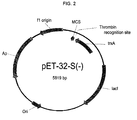
- the plasmid of the present invention has the nucleotide sequence of SEQ ID NO: 4 represented by the cleavage map of Fig. 2 and is designated pET-32-S(-) plasmid.
- the pET-32-S(-) plasmid is characterized by that a thrombin recognition site is inserted between the thioredoxin gene and multiple cloning site, and that the S-tag coding sequence does not exist.
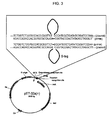
- the pET-32-S(-) plasmid is prepared by deleting the S-tag coding sequence from the pET-32a(+) plasmid (Novagen; SEQ ID NO: 3) represented by the cleavage map of Fig. 1 , through the induction of site-specific deletion mutagenesis via polymerase chain reaction(PCR) using primer pairs of SEQ ID NO: 1 and SEQ ID NO: 2 as shown in Fig 3 .
- the plasmid of the present invention comprises T7 promoter for controlling the transcription and expression of a fusion protein as pET-32a(+) plasmid does.
- the S-tag sequence does not exist and the thrombin recognition site is located in front of the multiple cloning site (5' side) for the purpose of obtaining only the target protein easily and selectively after the isolation and purification of a fusion protein.
- the present invention also provides the plasmid wherein the gene encoding a target protein is inserted in the multiple cloning site of said pET-32-S(-) plasmid.
- Said target protein is an active protein which can be easily expressed in E . coli in a soluble form when fused with thioredoxin.
- the target protein may be selected from the group consisting of human STAT6 SH2 domain, prolyl hydroxylase 2 (PHD2), human ⁇ -defensin-2 (hBD2), human interleukin-6 receptor ⁇ -chain (hIL-6R ⁇ ), mannan-binding lectin-CLR (MBL-CLR), wheat peroxisomal ascorbate peroxidase (pAPX), rhesus macaque interleukin-4(rMamu IL-4), and ⁇ -galactosidase.
- the plasmid of the present invention may comprise a histidine tag (His-tag) (e.g. six histidine tag), a polyarginine or a consensus biotinylated peptide coding sequence to be linked in the form of translational fusion, at amino terminus and/or carboxyl terminus. Accordingly, the produced fusion protein can be easily isolated and purified using various affinity chromatographies such as nickel chelation column chromatography (e.g. Ni-NTA affinity chromatography).
- the present invention also provides an E . coli cell transformed with the plasmid of the present invention.
- E . coli cell examples include E . coli DH5 ⁇ , BL21, HB101, JM109 and TH2 etc, but not limited thereto.
- the present invention also provides a method for producing a target protein, comprising: i) inserting a gene encoding the target protein in the multiple cloning site of the pET-32-S(-) plasmid; ii) transforming E . coli cells with the plasmid obtained in i), and culturing the transformed E . coli cells to express a thioredoxin fusion protein; and iii) treating the thioredoxin fusion protein with thrombin.
- the target protein is an active protein which can be easily expressed in E . coli in a soluble form when fused with thioredoxin, and may be selected from the group consisting of human STAT6 SH2 domain, prolyl hydroxylase 2 (PHD2), human ⁇ -defensin-2 (hBD2), human interleukin-6 receptor ⁇ -chain (hIL-6R ⁇ ), mannan-binding lectin-CLR (MBL-CLR), wheat peroxisomal ascorbate peroxidase (pAPX), rhesus macaque interleukin-4(rMamu IL-4), and ⁇ -galactosidase.
- PLD2 prolyl hydroxylase 2
- hBD2 human ⁇ -defensin-2
- hIL-6R ⁇ human interleukin-6 receptor ⁇ -chain
- MBL-CLR mannan-binding lectin-CLR
- pAPX wheat peroxisomal ascorbate peroxida
- the method of the present invention may further comprise steps of isolation and purification of the thioredoxin fusion protein, prior to step (iii).
- the isolation and purification steps may be carried out using an affinity column chromatography such as nickel chelation column chromatography.
- Example 1 Construction of pET-32-S(-) plasmid by site-specific deletion mutagenesis of pET-32a(+) plasmid.
- PCR Using a PCR solution composed of pET-32a(+) plasmid of SEQ ID NO: 3 (Novagen) as a template (0.5 ⁇ L, 50 ng/ ⁇ L); primers of SEQ ID NOs: 1 and 2 (in concentration of 1 ⁇ L, 10 ⁇ L); dNTP mix (1 ⁇ l, 100 mM); H 2 O (40 ⁇ L); and pfu ultra-polymerase (1 ⁇ L), PCR was performed under the following conditions: predenaturation at 95°C for 5 min; denaturation at 95°C for 30 sec, annealing at 55°C for 1 min, followed by 20 cycles of polymerization at 68°C for 7 min; and final extension at 68°C for 7 min.
- telomere sequence was digested with restriction enzyme Dpn I at 37°C for 1 hour. Then, HIT TM competent DH5 ⁇ cells (Real Biotech) was transformed with the above PCR product, and plasmid DNA was purified therefrom. The sequence analysis of the isolated DNA showed the polynucleotide sequence of SEQ ID NO: 4 (see the structure of Fig. 2 ), which lacks the S-tag sequence. This plasmid was designated as pET-32-S(-).
- Example 2 Cloning of a target gene into pET-32-S(-) and construction of a gene expression plasmid.
- STAT6 proteins are phosphorylated by the receptor-associated kinases which are activated by cytokines or growth factors, and play a central role in signal transduction pathway.
- SH domain from 523 th to 661 th amino acids in STAT6 protein
- PCR was performed under the following conditions: predenaturation at 95°C for 5 min; denaturation at 95°C for 30 sec, annealing at 58°C for 1 min, followed by 25 cycles of polymerization at 72°C for 1 min; and final extension at 72°C for 7 min.
- PCR product was digested with restriction enzymes Eco RI and XhoI, and pET-32-S(-) plasmid obtained in Example 1 was treated with same enzymes. Then, the above PCR product and pET-32-S(-) plasmid were each isolated and purified by electrophoresis on 1% agarose gel, and were ligated each other using T4 DNA ligase at room temperature for 1 hour to obtain a plasmid construct.
- HIT TM competent DH5 ⁇ cells (Real Biotech) were transformed with the plasmid construct, followed by isolating the plasmid DNA expressing STAT6 SH2 domain from the transformed cells.
- Example 3 Production and identification of a target protein.
- E.coli BL21 (DE3) cells were transformed with the plasmid DNA isolated in Example 2. Then, the transformed colonies were inoculated in LB medium (5mL) containing 50 mg/mL of ampicillin, and cultured overnight at 37°C.
- Ce lls were harvested by centrifugation at 4000 rpm for 15 min using centrifugal separator (Sorvall), and were suspended in 30 mL of PBS buffer solution. Then, lysozyme (100mg/mL, 300 ⁇ L), 2-mercaptoethanol (30 ⁇ L) and phenylmethanesulfonylfluoride (PMSF) (100 mM, 150 ⁇ L) were added thereto, and the cells were sonicated and centrifuged at 13,000 rpm.
- lysozyme 100mg/mL, 300 ⁇ L
- 2-mercaptoethanol 30 ⁇ L
- PMSF phenylmethanesulfonylfluoride
- thioredoxin fusion protein was isolated using Ni-NTA (Quiagen) resin.
- the obtained fusion protein was treated with thrombin, and cultured overnight at room temperature, to remove thioredoxin from the fusion protein.
- the obtained protein was isolated using fast protein liquid chromatography (FPLC), and was identified by 15% SDS-PAGE and Coomassie blue staining.
Landscapes
- Health & Medical Sciences (AREA)
- Genetics & Genomics (AREA)
- Life Sciences & Earth Sciences (AREA)
- Engineering & Computer Science (AREA)
- Wood Science & Technology (AREA)
- Biomedical Technology (AREA)
- Organic Chemistry (AREA)
- Biotechnology (AREA)
- General Engineering & Computer Science (AREA)
- Chemical & Material Sciences (AREA)
- Zoology (AREA)
- Bioinformatics & Cheminformatics (AREA)
- Biophysics (AREA)
- Microbiology (AREA)
- Plant Pathology (AREA)
- Molecular Biology (AREA)
- Biochemistry (AREA)
- General Health & Medical Sciences (AREA)
- Physics & Mathematics (AREA)
- Cell Biology (AREA)
- Preparation Of Compounds By Using Micro-Organisms (AREA)
- Peptides Or Proteins (AREA)
- Micro-Organisms Or Cultivation Processes Thereof (AREA)
Description
- The present invention relates to a plasmid for expressing a thioredoxin fusion protein, an Escherichia coli cell transformed with the plasmid, and a method for producing a target protein using the E. coli cell.
- A variety of fusion partners, e.g., glutathione-S-transferase (Smith, D. B. et al., Gene, 67: 31-40, 1988), maltose-binding protein (Bedouelle, H. et al., Eur. J. Biochem., 171: 541-549, 1988), protein A (Nilsson, B. et al., Mol. Recog., 1: 69-74, 1988) and thioredoxin (Navallie, E. R. et al., Biotechnol., 11: 187-193, 1993), have been widely used for expressing soluble forms of biologically active heterologous proteins in E. coli cells. T hioredoxin, one of the most useful fusion partners, is a protein found in nearly all organisms, which reduces disulfide bonds in proteins into thiols.
- Examples of plasmids for expressing thioredoxin fusion proteins include p-BADM-20 (EMBL-Hamburg) having araB promoter site and pET-32 (Novagen) having T7 promoter site, the use of pET-32 plasmid being generally preferred in the art.
- The pET-32 plasmid expresses a thioredoxin fusion protein containing an S-tag protein. To selectively obtain a target protein, the thioredoxin fusion protein may be digested with enterokinase, whose cost is, however, high. When such a thioredoxin fusion protein is digested with less expensive thrombin, the target protein may still have the S-tag protein attached thereto, which complicates the structural determination of the target protein. To circumvent this problem, there has been developed a method of placing a gene encoding a protease recognition site in the front of a heterologous protein gene, which comprises inserting a gene encoding protease recognition site in a primer used for PCR amplification of the h eterologous protein gene. In this method, the protease recognition site is inserted between the amino acid sequence of the heterologous protein and S-tag coding sequence, to make it possible to separate thioredoxin and S-tag proteins simultaneously using a suitable protease (e.g., TEV protease) for the purpose of obtaining only the target proteins. However, the method is cumbersome in that a protease recognition site must be inserted in a primer every time when a specific protein is to be expressed.
- Taking note of the fact that another cleavage enzyme recognition site (i.e., thrombin recognition site) is present in pET-32a plasmid, the present inventors have constructed a novel plasmid from the pET-32a plasmid by deleting S-tag coding sequence via site-specific deletion mutagenesis, and have found that thioredoxin can be easily and selectively generated by treating a fusion protein expressed by said plasmid with thrombin.
- Accordingly, it is an object of the present invention to provide a plasmid for expressing thioredoxin fusion proteins from which thioredoxin can be easily removed.
- It is another object of the present invention to provide a plasmid wherein a gene encoding a target protein is inserted in the multiple cloning site of the plasmid described above.
- It is a further object of the present invention to provide an E.coli cell transformed with said plasmids.
- It is a still further object of the present invention to provide a method for producing a target protein using the transformed E.coli cell.
- In accordance with one aspect of the present invention, there is provided a plasmid which is prepared by deleting the S-tag coding sequence from pET-32a(+) plasmid having the nucleotide sequence of SEQ ID NO:3 represented by the cleavage map of
Fig. 1 , the pET-32a(+) plasmid comprising a thioredoxin gene, a thrombin recognition site, an S-tag coding sequence, and a multiple cloning site for the insertion of a gene encoding a target protein. Further, there is provided the plasmid having the nucleotide sequence of SEQ ID NO: 4 represented by the cleavage map ofFig.2 , and is designated pET-32-S(-) plasmid. - In accordance with another aspect of the present invention, there is provided the plasmid wherein the gene encoding a target protein is inserted in the multiple cloning site of the pET-32-S(-) plasmid.
- In accordance with a further aspect of the present invention, there is provided an E.coli cell transformed with the plasmid.
- In accordance with a still further aspect of the present invention, there is provided a method for producing a target protein, comprising i) inserting a gene encoding the target protein in the multiple cloning site of pET-32-S(-) plasmid; ii) transforming E.coli cells with the plasmid obtained in i), and culturing the transformed E.coli cells to express a thioredoxin fusion protein; and iii) treating the thioredoxin fusion protein with thrombin.
- The above and other objects and features of the present invention will become apparent from the following description of the invention, when taken in conjunction with the accompanying drawings, which respectively show:
-
Fig. 1 : the cleavage map of pET-32a(+) plasmid available from Novagen (MCS: multiple cloning site, trxA: thioredoxin gene, lacI: lac repressor coding gene, Ori: origin for replication, Ap: ampicillin-resistance gene); -
Fig. 2 : the cleavage map of pET-32-S(-) plasmid prepared by deleting the S-tag sequence from pET-32a(+) plasmid (MCS: multiple cloning site, trxA: thioredoxin gene, lacI: lac repressor coding gene, Ori: origin for replication, Ap: ampicillin-resistance gene); -
Fig. 3 : a diagram showing bonding pairs between primers used for deleting the S-tag sequence of pET-32a(+) plasmid via site-specific deletion mutagenesis and DNAs of pET-32a(+) plasmid (MCS: multiple cloning site, trxA: thioredoxin gene, lacI: lac repressor coding gene, Ori: origin for replication, Ap: ampicillin-resistance gene); and -
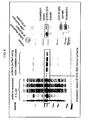
Fig. 4 : SDS-PAGE analysis results showing the removal of thrombin from a thioredoxin-fused STAT6 SH2 protein which is produced by inserting STAT6 SH2 protein coding sequence into the pET-32-S(-) plasmid and transforming E. coli cells with the plasmid. - Hereinafter, the present invention is described in detail.
- The plasmid of the present invention, which over-expresses a target protein using thioredoxin as a fusion partner, is prepared by deleting the S-tag coding sequence from pET-32a(+) plasmid having the nucleotide sequence of SEQ ID NO: 3 represented by the cleavage map of
Fig. 1 , the pET-32a(+) plasmid comprising a thioredoxin gene, a thrombin recognition site, an S-tag coding sequence, and a multiple cloning site for the insertion of a gene encoding a target protein. The plasmid of the present invention has the nucleotide sequence of SEQ ID NO: 4 represented by the cleavage map ofFig. 2 and is designated pET-32-S(-) plasmid. - Specifically, the pET-32-S(-) plasmid is characterized by that a thrombin recognition site is inserted between the thioredoxin gene and multiple cloning site, and that the S-tag coding sequence does not exist. The pET-32-S(-) plasmid is prepared by deleting the S-tag coding sequence from the pET-32a(+) plasmid (Novagen; SEQ ID NO: 3) represented by the cleavage map of
Fig. 1 , through the induction of site-specific deletion mutagenesis via polymerase chain reaction(PCR) using primer pairs of SEQ ID NO: 1 and SEQ ID NO: 2 as shown inFig 3 . - The plasmid of the present invention comprises T7 promoter for controlling the transcription and expression of a fusion protein as pET-32a(+) plasmid does. In the plasmid of the present invention, the S-tag sequence does not exist and the thrombin recognition site is located in front of the multiple cloning site (5' side) for the purpose of obtaining only the target protein easily and selectively after the isolation and purification of a fusion protein.
- The present invention also provides the plasmid wherein the gene encoding a target protein is inserted in the multiple cloning site of said pET-32-S(-) plasmid.
- Said target protein is an active protein which can be easily expressed in E. coli in a soluble form when fused with thioredoxin. The target protein may be selected from the group consisting of human STAT6 SH2 domain, prolyl hydroxylase 2 (PHD2), human β-defensin-2 (hBD2), human interleukin-6 receptor α-chain (hIL-6Rα), mannan-binding lectin-CLR (MBL-CLR), wheat peroxisomal ascorbate peroxidase (pAPX), rhesus macaque interleukin-4(rMamu IL-4), and α-galactosidase.
- The plasmid of the present invention may comprise a histidine tag (His-tag) (e.g. six histidine tag), a polyarginine or a consensus biotinylated peptide coding sequence to be linked in the form of translational fusion, at amino terminus and/or carboxyl terminus. Accordingly, the produced fusion protein can be easily isolated and purified using various affinity chromatographies such as nickel chelation column chromatography (e.g. Ni-NTA affinity chromatography).
- The present invention also provides an E. coli cell transformed with the plasmid of the present invention. Examples of the E. coli cell include E. coli DH5α, BL21, HB101, JM109 and TH2 etc, but not limited thereto.
- The present invention also provides a method for producing a target protein, comprising: i) inserting a gene encoding the target protein in the multiple cloning site of the pET-32-S(-) plasmid; ii) transforming E. coli cells with the plasmid obtained in i), and culturing the transformed E. coli cells to express a thioredoxin fusion protein; and iii) treating the thioredoxin fusion protein with thrombin.
- In the method of the present invention, the target protein is an active protein which can be easily expressed in E. coli in a soluble form when fused with thioredoxin, and may be selected from the group consisting of human STAT6 SH2 domain, prolyl hydroxylase 2 (PHD2), human β-defensin-2 (hBD2), human interleukin-6 receptor α-chain (hIL-6Rα), mannan-binding lectin-CLR (MBL-CLR), wheat peroxisomal ascorbate peroxidase (pAPX), rhesus macaque interleukin-4(rMamu IL-4), and α-galactosidase.
- The method of the present invention may further comprise steps of isolation and purification of the thioredoxin fusion protein, prior to step (iii). The isolation and purification steps may be carried out using an affinity column chromatography such as nickel chelation column chromatography.
- The following Examples are intended to further illustrate the present invention without limiting its scope.
- Using a PCR solution composed of pET-32a(+) plasmid of SEQ ID NO: 3 (Novagen) as a template (0.5 µL, 50 ng/µL); primers of SEQ ID NOs: 1 and 2 (in concentration of 1 µL, 10 µL); dNTP mix (1 µl, 100 mM); H2O (40 µL); and pfu ultra-polymerase (1 µL), PCR was performed under the following conditions: predenaturation at 95°C for 5 min; denaturation at 95°C for 30 sec, annealing at 55°C for 1 min, followed by 20 cycles of polymerization at 68°C for 7 min; and final extension at 68°C for 7 min. The resulting PCR product was digested with restriction enzyme Dpn I at 37°C for 1 hour. Then, HIT™ competent DH5α cells (Real Biotech) was transformed with the above PCR product, and plasmid DNA was purified therefrom. The sequence analysis of the isolated DNA showed the polynucleotide sequence of SEQ ID NO: 4 (see the structure of
Fig. 2 ), which lacks the S-tag sequence. This plasmid was designated as pET-32-S(-). - STAT6 proteins are phosphorylated by the receptor-associated kinases which are activated by cytokines or growth factors, and play a central role in signal transduction pathway. In order to obtain a sequence encoding SH domain (from 523th to 661th amino acids in STAT6 protein) of STAT6 proteins, using human STAT6 cDNA of SEQ ID NO: 5 (accession number: NM_003153; OriGene Technologies) as a template and primer pair of SEQ ID NOs: 6 and 7, PCR was performed under the following conditions: predenaturation at 95°C for 5 min; denaturation at 95°C for 30 sec, annealing at 58°C for 1 min, followed by 25 cycles of polymerization at 72°C for 1 min; and final extension at 72°C for 7 min.
- The resulting PCR product was digested with restriction enzymes EcoRI and XhoI, and pET-32-S(-) plasmid obtained in Example 1 was treated with same enzymes. Then, the above PCR product and pET-32-S(-) plasmid were each isolated and purified by electrophoresis on 1% agarose gel, and were ligated each other using T4 DNA ligase at room temperature for 1 hour to obtain a plasmid construct. HIT™ competent DH5α cells (Real Biotech) were transformed with the plasmid construct, followed by isolating the plasmid DNA expressing STAT6 SH2 domain from the transformed cells.
- E.coli BL21 (DE3) cells were transformed with the plasmid DNA isolated in Example 2. Then, the transformed colonies were inoculated in LB medium (5mL) containing 50 mg/mL of ampicillin, and cultured overnight at 37°C.
- The resulting culture medium was added to 800 mL of LB medium, and expression of protein was induced by addition of IPTG (0.25 mM) when the cell density reached O.D=0.6 at 600 nm. Ce lls were harvested by centrifugation at 4000 rpm for 15 min using centrifugal separator (Sorvall), and were suspended in 30 mL of PBS buffer solution. Then, lysozyme (100mg/mL, 300 µL), 2-mercaptoethanol (30 µL) and phenylmethanesulfonylfluoride (PMSF) (100 mM, 150 µL) were added thereto, and the cells were sonicated and centrifuged at 13,000 rpm. From the obtained supernatant, thioredoxin fusion protein was isolated using Ni-NTA (Quiagen) resin. The obtained fusion protein was treated with thrombin, and cultured overnight at room temperature, to remove thioredoxin from the fusion protein. The obtained protein was isolated using fast protein liquid chromatography (FPLC), and was identified by 15% SDS-PAGE and Coomassie blue staining.
- As shown in
Fig. 4 , it was confirmed that thioredoxin was easily removed by treating thrombin to a thioredoxin fusion protein, STAT6 SH2. - While the invention has been described with respect to the above specific embodiments, it should be recognized that various modifications and changes may be made to the invention by those skilled in the art which also fall within the scope of the invention as defined by the appended claims.
- <110> AHN, Hee-chul
AHN, Hyung Jun
SHIN, Dong Yun
LIM, Jong Soo
AHN, Dae-Ro - <120> PLASMID FOR EXPRESSION OF THIOREDOXIN-FUSED PROTEIN AND METHOD OF PRODUCING A TARGET PROTEIN USING SAME
- <130> EP66637HV163
- <140> not yet assigned
<141> herewith - <150> KR 10-2009-0003431
<151> 2009-01-15 - <160> 7
- <170> KopatentIn 1.71
- <210> 1
<211> 48
<212> DNA
<213> Artificial Sequence - <220>
<223> Primer for site-specific deletion mutagenesis of pET-32a(+) - <400> 1
tctggtctgg tgccacgcgg ttctgccatg gctgatatcg gatccgaa 48 - <210> 2
<211> 48
<212> DNA
<213> Artificial Sequence - <220>
<223> Primer for site-specific deletion mutagenesis of pET-32a(+) - <400> 2
ttcggatccg atatcagcca tggcagaacc gcgtggcacc agaccaga 48 - <210> 3
<211> 5900
<212> DNA
<213> Artificial Sequence - <220>
<223> synthetic pET-32a(+) plasmid - <400> 3


- <210> 4
<211> 5819
<212> DNA
<213> Artificial Sequence - <220>
<223> Synthetic pET-32-S(-) plasmid - <400> 4


- <210> 5
<211> 2544
<212> DNA
<213> Artificial Sequence - <220>
<223> Human STAT6 cDNA - <400> 5


- <210> 6
<211> 35
<212> DNA
<213> Artificial Sequence - <220>
<223> Primer for amplification of STAT6 cDNA - <400> 6
aaactcgagt cagagctctg gggtaggaag tggtt 35 - <210> 7
<211> 32
<212> DNA
<213> Artificial Sequence - <220>
<223> Primer for amplification of STAT6 cDNA - <400> 7
aaagaattcg acctcaccaa acgctgtctccg 32
Claims (8)
- A plasmid which is prepared by deleting the S-tag coding sequence from pET-32a(+) plasmid having the nucleotide sequence of SEQ ID NO: 3 represented by the cleavage map of Fig. 1, the pET-32a(+) plasmid comprising a thioredoxin gene, a thrombin recognition site, an S-tag coding sequence, and a multiple cloning site for the insertion of a gene encoding a target protein, wherein the plasmid has the nucleotide sequence of SEQ ID NO: 4 represented by the cleavage map of Fig.2 and is designated pET-32-S(-) plasmid.
- The plasmid of claim 1, wherein the gene encoding a target protein is inserted in the multiple cloning site of the pET-32-S(-) plasmid.
- The plasmid of claim 2, wherein said target protein is selected from the group consisting of human STAT6 SH2 domain, prolyl hydroxylase 2 (PHD2), human β-defensin-2 (hBD2), human interleukin-6 receptor α-chain (hIL-6Rα), mannan-binding lectin-CLR (MBL-CLR), wheat peroxisomal ascorbate peroxidase (pAPX), rhesus macaque interleukin-4 (rMamu IL-4), and α-galactosidase.
- An E. coli cell transformed with the plasmid according to any one of claims 1 to 2.
- The E. coli cell of claim 4, which is selected from the group consisting of DH5α, BL21, HB101, JM109, and TH2.
- A method for producing a target protein, comprising:i) inserting a gene encoding the target protein in the multiple cloning site of the plasmid of claim 1;ii) transforming E. coli cells with the plasmid obtained in i), and culturing the transformed E. coli cells to express a thioredoxin fusion protein; andiii) treating the thioredoxin fusion protein with thrombin.
- The method of claim 6, wherein the target protein is selected from the group consisting of human STAT6 SH2 domain, prolyl hydroxylase 2(PHD2), human β-defensin-2 (hBD2), human interleukin-6 receptor α-chain (hIL-6Rα), mannan-binding lectin-CLR (MBL-CLR), wheat peroxisomal ascorbate peroxidase (pAPX), rhesus macaque interleukin-4 (rMamu IL-4), and α-galactosidase.
- The method of claim 6, which further comprises steps of isolation and purification of the thioredoxin fusion protein prior to step (iii).
Applications Claiming Priority (1)
| Application Number | Priority Date | Filing Date | Title |
|---|---|---|---|
| KR1020090003431A KR101016766B1 (en) | 2009-01-15 | 2009-01-15 | Protein expression plasmid fused with thioredoxin and method for producing target protein using same |
Publications (2)
| Publication Number | Publication Date |
|---|---|
| EP2210950A1 EP2210950A1 (en) | 2010-07-28 |
| EP2210950B1 true EP2210950B1 (en) | 2013-08-14 |
Family
ID=42101527
Family Applications (1)
| Application Number | Title | Priority Date | Filing Date |
|---|---|---|---|
| EP09168440.7A Not-in-force EP2210950B1 (en) | 2009-01-15 | 2009-08-24 | Plasmid for expressing thioredoxin fusion protein and method for producing target protein using same |
Country Status (3)
| Country | Link |
|---|---|
| US (1) | US20100184146A1 (en) |
| EP (1) | EP2210950B1 (en) |
| KR (1) | KR101016766B1 (en) |
Families Citing this family (1)
| Publication number | Priority date | Publication date | Assignee | Title |
|---|---|---|---|---|
| CN116496916A (en) * | 2022-12-27 | 2023-07-28 | 安徽斯拜科生物科技有限公司 | A Pichia pastoris engineering strain with high HBD-2 production and its preparation method and application |
Family Cites Families (5)
| Publication number | Priority date | Publication date | Assignee | Title |
|---|---|---|---|---|
| US5270181A (en) * | 1991-02-06 | 1993-12-14 | Genetics Institute, Inc. | Peptide and protein fusions to thioredoxin and thioredoxin-like molecules |
| EP2336313A1 (en) | 1997-01-08 | 2011-06-22 | Life Technologies Corporation | Methods for production of proteins |
| US6984622B2 (en) * | 1998-03-25 | 2006-01-10 | The Regents Of The University Of California | Use of lipopolysaccharides to manage corneal infections and wounds |
| MX2007005378A (en) * | 2004-11-04 | 2008-02-14 | Genentech Inc | Polypeptides that bind baff and/or april. |
| DE602006014126D1 (en) | 2005-04-20 | 2010-06-17 | Viromed Co Ltd | COMPOSITIONS AND METHOD FOR SEPARATING FUSION PROTEINS |
-
2009
- 2009-01-15 KR KR1020090003431A patent/KR101016766B1/en not_active Expired - Fee Related
- 2009-08-24 US US12/546,367 patent/US20100184146A1/en not_active Abandoned
- 2009-08-24 EP EP09168440.7A patent/EP2210950B1/en not_active Not-in-force
Also Published As
| Publication number | Publication date |
|---|---|
| US20100184146A1 (en) | 2010-07-22 |
| EP2210950A1 (en) | 2010-07-28 |
| KR101016766B1 (en) | 2011-02-25 |
| KR20100084039A (en) | 2010-07-23 |
Similar Documents
| Publication | Publication Date | Title |
|---|---|---|
| EP0035384B1 (en) | Deoxynucleotide linkers to be attached to a cloned dna coding sequence | |
| CN111278852B (en) | Production method of recombinant Erwinia asparaginase | |
| KR20170085129A (en) | Fusion partners for peptide production | |
| CA2472477A1 (en) | Methods and compositions for protein expression and purification | |
| CN111278979B (en) | Production method of recombinant Escherichia coli asparaginase | |
| JP2005516074A6 (en) | Protein tag comprising a biotinylated domain, method for increasing solubility and method for determining folding state | |
| CN102216454A (en) | Fusion collagenase to which affinity tag is attached, and method for producing same | |
| RU2144957C1 (en) | Recombinant plasmid dna ppins07 encoding fused polypeptide containing human proinsulin and strain of bacterium escherichia coli - producer of fused polypeptide containing human proinsulin | |
| KR100961528B1 (en) | Mass production method of active human epidermal growth factor in Escherichia coli | |
| KR101659732B1 (en) | Protein Expression System Induced by Heavy Metals And Biosensor for Detecting Heavy Metals | |
| JP2004507270A (en) | Transformed yeast producing recombinant human parathyroid hormone and method for producing the hormone | |
| EP2210950A1 (en) | Plasmid for expressing thioredoxin fusion protein and method for producing target protein using same | |
| KR101184011B1 (en) | Soluble expression of the bulky folded active protein | |
| CN102776216B (en) | Application of cellulase in soluable and secretion expression of recombinant protein in escherichia coli | |
| KR20130096111A (en) | Expression vector comprising gene coding for e. coli phosphoglycerate kinase as a novel fusion partner | |
| JP2009525749A (en) | Affinity polypeptides for the purification of recombinant proteins | |
| MX2011007492A (en) | Fusion proteins the process to preparation and utilization in expression systems of recombinant proteins. | |
| JP3313083B2 (en) | DNA coding for novel fusion protein and method for producing useful polypeptide via its expression | |
| KR20200073280A (en) | Bacterial leader sequence for periplasmic protein expression | |
| KR100803095B1 (en) | A gene encoding a chitosanase derived from Bacillus subtilis CH2, an expression vector containing the gene, a transformant transformed with the expression vector and a protein produced therefrom | |
| WO2009031852A2 (en) | Preparation method of recombinant protein by use of a fusion expression partner | |
| CN118126989B (en) | Application of SP0932 signal peptide in improving secretion expression of exogenous protein | |
| KR100755727B1 (en) | Fusion fragment peptide derived from β-galactosidase and a method for producing a recombinant protein using the same as a fusion partner | |
| JP5020487B2 (en) | Novel DNA for expression of fusion protein and method for producing protein using the DNA | |
| KR20250144914A (en) | Expression vector for extracellular secretory production of the target protein and uses thereof |
Legal Events
| Date | Code | Title | Description |
|---|---|---|---|
| PUAI | Public reference made under article 153(3) epc to a published international application that has entered the european phase |
Free format text: ORIGINAL CODE: 0009012 |
|
| 17P | Request for examination filed |
Effective date: 20090824 |
|
| AK | Designated contracting states |
Kind code of ref document: A1 Designated state(s): AT BE BG CH CY CZ DE DK EE ES FI FR GB GR HR HU IE IS IT LI LT LU LV MC MK MT NL NO PL PT RO SE SI SK SM TR |
|
| AX | Request for extension of the european patent |
Extension state: AL BA RS |
|
| RIN1 | Information on inventor provided before grant (corrected) |
Inventor name: SHIN, DONG YUN Inventor name: AHN, DAE-RO Inventor name: LIM, JONG SOO Inventor name: AHN, HYUNG JUN Inventor name: AHN, HEE-CHUL |
|
| 17Q | First examination report despatched |
Effective date: 20110825 |
|
| GRAP | Despatch of communication of intention to grant a patent |
Free format text: ORIGINAL CODE: EPIDOSNIGR1 |
|
| GRAS | Grant fee paid |
Free format text: ORIGINAL CODE: EPIDOSNIGR3 |
|
| GRAA | (expected) grant |
Free format text: ORIGINAL CODE: 0009210 |
|
| AK | Designated contracting states |
Kind code of ref document: B1 Designated state(s): AT BE BG CH CY CZ DE DK EE ES FI FR GB GR HR HU IE IS IT LI LT LU LV MC MK MT NL NO PL PT RO SE SI SK SM TR |
|
| REG | Reference to a national code |
Ref country code: GB Ref legal event code: FG4D |
|
| REG | Reference to a national code |
Ref country code: AT Ref legal event code: REF Ref document number: 626905 Country of ref document: AT Kind code of ref document: T Effective date: 20130815 Ref country code: CH Ref legal event code: EP |
|
| REG | Reference to a national code |
Ref country code: IE Ref legal event code: FG4D |
|
| REG | Reference to a national code |
Ref country code: DE Ref legal event code: R096 Ref document number: 602009017930 Country of ref document: DE Effective date: 20131010 |
|
| REG | Reference to a national code |
Ref country code: NL Ref legal event code: VDEP Effective date: 20130814 Ref country code: AT Ref legal event code: MK05 Ref document number: 626905 Country of ref document: AT Kind code of ref document: T Effective date: 20130814 |
|
| REG | Reference to a national code |
Ref country code: LT Ref legal event code: MG4D |
|
| PG25 | Lapsed in a contracting state [announced via postgrant information from national office to epo] |
Ref country code: PT Free format text: LAPSE BECAUSE OF FAILURE TO SUBMIT A TRANSLATION OF THE DESCRIPTION OR TO PAY THE FEE WITHIN THE PRESCRIBED TIME-LIMIT Effective date: 20131216 Ref country code: LT Free format text: LAPSE BECAUSE OF FAILURE TO SUBMIT A TRANSLATION OF THE DESCRIPTION OR TO PAY THE FEE WITHIN THE PRESCRIBED TIME-LIMIT Effective date: 20130814 Ref country code: CY Free format text: LAPSE BECAUSE OF FAILURE TO SUBMIT A TRANSLATION OF THE DESCRIPTION OR TO PAY THE FEE WITHIN THE PRESCRIBED TIME-LIMIT Effective date: 20130904 Ref country code: IS Free format text: LAPSE BECAUSE OF FAILURE TO SUBMIT A TRANSLATION OF THE DESCRIPTION OR TO PAY THE FEE WITHIN THE PRESCRIBED TIME-LIMIT Effective date: 20131214 Ref country code: HR Free format text: LAPSE BECAUSE OF FAILURE TO SUBMIT A TRANSLATION OF THE DESCRIPTION OR TO PAY THE FEE WITHIN THE PRESCRIBED TIME-LIMIT Effective date: 20130814 Ref country code: SE Free format text: LAPSE BECAUSE OF FAILURE TO SUBMIT A TRANSLATION OF THE DESCRIPTION OR TO PAY THE FEE WITHIN THE PRESCRIBED TIME-LIMIT Effective date: 20130814 Ref country code: NO Free format text: LAPSE BECAUSE OF FAILURE TO SUBMIT A TRANSLATION OF THE DESCRIPTION OR TO PAY THE FEE WITHIN THE PRESCRIBED TIME-LIMIT Effective date: 20131114 Ref country code: AT Free format text: LAPSE BECAUSE OF FAILURE TO SUBMIT A TRANSLATION OF THE DESCRIPTION OR TO PAY THE FEE WITHIN THE PRESCRIBED TIME-LIMIT Effective date: 20130814 |
|
| PGFP | Annual fee paid to national office [announced via postgrant information from national office to epo] |
Ref country code: DE Payment date: 20131028 Year of fee payment: 5 |
|
| PG25 | Lapsed in a contracting state [announced via postgrant information from national office to epo] |
Ref country code: BE Free format text: LAPSE BECAUSE OF FAILURE TO SUBMIT A TRANSLATION OF THE DESCRIPTION OR TO PAY THE FEE WITHIN THE PRESCRIBED TIME-LIMIT Effective date: 20130814 Ref country code: GR Free format text: LAPSE BECAUSE OF FAILURE TO SUBMIT A TRANSLATION OF THE DESCRIPTION OR TO PAY THE FEE WITHIN THE PRESCRIBED TIME-LIMIT Effective date: 20131115 Ref country code: PL Free format text: LAPSE BECAUSE OF FAILURE TO SUBMIT A TRANSLATION OF THE DESCRIPTION OR TO PAY THE FEE WITHIN THE PRESCRIBED TIME-LIMIT Effective date: 20130814 Ref country code: LV Free format text: LAPSE BECAUSE OF FAILURE TO SUBMIT A TRANSLATION OF THE DESCRIPTION OR TO PAY THE FEE WITHIN THE PRESCRIBED TIME-LIMIT Effective date: 20130814 Ref country code: FI Free format text: LAPSE BECAUSE OF FAILURE TO SUBMIT A TRANSLATION OF THE DESCRIPTION OR TO PAY THE FEE WITHIN THE PRESCRIBED TIME-LIMIT Effective date: 20130814 Ref country code: SI Free format text: LAPSE BECAUSE OF FAILURE TO SUBMIT A TRANSLATION OF THE DESCRIPTION OR TO PAY THE FEE WITHIN THE PRESCRIBED TIME-LIMIT Effective date: 20130814 |
|
| PG25 | Lapsed in a contracting state [announced via postgrant information from national office to epo] |
Ref country code: CY Free format text: LAPSE BECAUSE OF FAILURE TO SUBMIT A TRANSLATION OF THE DESCRIPTION OR TO PAY THE FEE WITHIN THE PRESCRIBED TIME-LIMIT Effective date: 20130814 |
|
| REG | Reference to a national code |
Ref country code: CH Ref legal event code: PL |
|
| PG25 | Lapsed in a contracting state [announced via postgrant information from national office to epo] |
Ref country code: CH Free format text: LAPSE BECAUSE OF NON-PAYMENT OF DUE FEES Effective date: 20130831 Ref country code: DK Free format text: LAPSE BECAUSE OF FAILURE TO SUBMIT A TRANSLATION OF THE DESCRIPTION OR TO PAY THE FEE WITHIN THE PRESCRIBED TIME-LIMIT Effective date: 20130814 Ref country code: NL Free format text: LAPSE BECAUSE OF FAILURE TO SUBMIT A TRANSLATION OF THE DESCRIPTION OR TO PAY THE FEE WITHIN THE PRESCRIBED TIME-LIMIT Effective date: 20130814 Ref country code: LI Free format text: LAPSE BECAUSE OF NON-PAYMENT OF DUE FEES Effective date: 20130831 Ref country code: SK Free format text: LAPSE BECAUSE OF FAILURE TO SUBMIT A TRANSLATION OF THE DESCRIPTION OR TO PAY THE FEE WITHIN THE PRESCRIBED TIME-LIMIT Effective date: 20130814 Ref country code: EE Free format text: LAPSE BECAUSE OF FAILURE TO SUBMIT A TRANSLATION OF THE DESCRIPTION OR TO PAY THE FEE WITHIN THE PRESCRIBED TIME-LIMIT Effective date: 20130814 Ref country code: RO Free format text: LAPSE BECAUSE OF FAILURE TO SUBMIT A TRANSLATION OF THE DESCRIPTION OR TO PAY THE FEE WITHIN THE PRESCRIBED TIME-LIMIT Effective date: 20130814 Ref country code: CZ Free format text: LAPSE BECAUSE OF FAILURE TO SUBMIT A TRANSLATION OF THE DESCRIPTION OR TO PAY THE FEE WITHIN THE PRESCRIBED TIME-LIMIT Effective date: 20130814 |
|
| REG | Reference to a national code |
Ref country code: IE Ref legal event code: MM4A |
|
| PG25 | Lapsed in a contracting state [announced via postgrant information from national office to epo] |
Ref country code: IT Free format text: LAPSE BECAUSE OF FAILURE TO SUBMIT A TRANSLATION OF THE DESCRIPTION OR TO PAY THE FEE WITHIN THE PRESCRIBED TIME-LIMIT Effective date: 20130814 Ref country code: ES Free format text: LAPSE BECAUSE OF FAILURE TO SUBMIT A TRANSLATION OF THE DESCRIPTION OR TO PAY THE FEE WITHIN THE PRESCRIBED TIME-LIMIT Effective date: 20130814 Ref country code: MC Free format text: LAPSE BECAUSE OF FAILURE TO SUBMIT A TRANSLATION OF THE DESCRIPTION OR TO PAY THE FEE WITHIN THE PRESCRIBED TIME-LIMIT Effective date: 20130814 |
|
| PLBE | No opposition filed within time limit |
Free format text: ORIGINAL CODE: 0009261 |
|
| STAA | Information on the status of an ep patent application or granted ep patent |
Free format text: STATUS: NO OPPOSITION FILED WITHIN TIME LIMIT |
|
| REG | Reference to a national code |
Ref country code: FR Ref legal event code: ST Effective date: 20140619 |
|
| 26N | No opposition filed |
Effective date: 20140515 |
|
| GBPC | Gb: european patent ceased through non-payment of renewal fee |
Effective date: 20131114 |
|
| PG25 | Lapsed in a contracting state [announced via postgrant information from national office to epo] |
Ref country code: IE Free format text: LAPSE BECAUSE OF NON-PAYMENT OF DUE FEES Effective date: 20130824 |
|
| REG | Reference to a national code |
Ref country code: DE Ref legal event code: R097 Ref document number: 602009017930 Country of ref document: DE Effective date: 20140515 |
|
| PG25 | Lapsed in a contracting state [announced via postgrant information from national office to epo] |
Ref country code: FR Free format text: LAPSE BECAUSE OF NON-PAYMENT OF DUE FEES Effective date: 20131014 |
|
| PG25 | Lapsed in a contracting state [announced via postgrant information from national office to epo] |
Ref country code: GB Free format text: LAPSE BECAUSE OF NON-PAYMENT OF DUE FEES Effective date: 20131114 |
|
| REG | Reference to a national code |
Ref country code: DE Ref legal event code: R119 Ref document number: 602009017930 Country of ref document: DE |
|
| PG25 | Lapsed in a contracting state [announced via postgrant information from national office to epo] |
Ref country code: SM Free format text: LAPSE BECAUSE OF FAILURE TO SUBMIT A TRANSLATION OF THE DESCRIPTION OR TO PAY THE FEE WITHIN THE PRESCRIBED TIME-LIMIT Effective date: 20130814 |
|
| REG | Reference to a national code |
Ref country code: DE Ref legal event code: R119 Ref document number: 602009017930 Country of ref document: DE Effective date: 20150303 |
|
| PG25 | Lapsed in a contracting state [announced via postgrant information from national office to epo] |
Ref country code: TR Free format text: LAPSE BECAUSE OF FAILURE TO SUBMIT A TRANSLATION OF THE DESCRIPTION OR TO PAY THE FEE WITHIN THE PRESCRIBED TIME-LIMIT Effective date: 20130814 Ref country code: MT Free format text: LAPSE BECAUSE OF FAILURE TO SUBMIT A TRANSLATION OF THE DESCRIPTION OR TO PAY THE FEE WITHIN THE PRESCRIBED TIME-LIMIT Effective date: 20130814 |
|
| PG25 | Lapsed in a contracting state [announced via postgrant information from national office to epo] |
Ref country code: LU Free format text: LAPSE BECAUSE OF NON-PAYMENT OF DUE FEES Effective date: 20130824 Ref country code: MK Free format text: LAPSE BECAUSE OF FAILURE TO SUBMIT A TRANSLATION OF THE DESCRIPTION OR TO PAY THE FEE WITHIN THE PRESCRIBED TIME-LIMIT Effective date: 20130814 Ref country code: BG Free format text: LAPSE BECAUSE OF FAILURE TO SUBMIT A TRANSLATION OF THE DESCRIPTION OR TO PAY THE FEE WITHIN THE PRESCRIBED TIME-LIMIT Effective date: 20130814 Ref country code: HU Free format text: LAPSE BECAUSE OF FAILURE TO SUBMIT A TRANSLATION OF THE DESCRIPTION OR TO PAY THE FEE WITHIN THE PRESCRIBED TIME-LIMIT; INVALID AB INITIO Effective date: 20090824 Ref country code: DE Free format text: LAPSE BECAUSE OF NON-PAYMENT OF DUE FEES Effective date: 20150303 |