EP2208785A1 - Methods and kits to generate miRNA- and smallRNA-expressing vectors, and its application to develop lentiviral expression libraries - Google Patents
Methods and kits to generate miRNA- and smallRNA-expressing vectors, and its application to develop lentiviral expression libraries Download PDFInfo
- Publication number
- EP2208785A1 EP2208785A1 EP09382003A EP09382003A EP2208785A1 EP 2208785 A1 EP2208785 A1 EP 2208785A1 EP 09382003 A EP09382003 A EP 09382003A EP 09382003 A EP09382003 A EP 09382003A EP 2208785 A1 EP2208785 A1 EP 2208785A1
- Authority
- EP
- European Patent Office
- Prior art keywords
- adapter
- rna
- mirna
- sequence
- library
- Prior art date
- Legal status (The legal status is an assumption and is not a legal conclusion. Google has not performed a legal analysis and makes no representation as to the accuracy of the status listed.)
- Withdrawn
Links
- 239000013598 vector Substances 0.000 title claims abstract description 138
- 238000000034 method Methods 0.000 title claims abstract description 121
- 230000014509 gene expression Effects 0.000 title claims abstract description 59
- 108091032955 Bacterial small RNA Proteins 0.000 title claims abstract description 41
- 108091032973 (ribonucleotides)n+m Proteins 0.000 claims abstract description 108
- 238000002360 preparation method Methods 0.000 claims abstract description 34
- 108700039691 Genetic Promoter Regions Proteins 0.000 claims abstract description 23
- 238000010367 cloning Methods 0.000 claims abstract description 20
- 239000002679 microRNA Substances 0.000 claims description 164
- 102000040430 polynucleotide Human genes 0.000 claims description 156
- 108091033319 polynucleotide Proteins 0.000 claims description 156
- 239000002157 polynucleotide Substances 0.000 claims description 156
- 108091070501 miRNA Proteins 0.000 claims description 148
- 108090000623 proteins and genes Proteins 0.000 claims description 77
- 230000001737 promoting effect Effects 0.000 claims description 42
- 108020004414 DNA Proteins 0.000 claims description 38
- 230000033077 cellular process Effects 0.000 claims description 28
- 239000002773 nucleotide Substances 0.000 claims description 25
- 125000003729 nucleotide group Chemical group 0.000 claims description 24
- 102100034343 Integrase Human genes 0.000 claims description 22
- 230000000295 complement effect Effects 0.000 claims description 22
- 230000004075 alteration Effects 0.000 claims description 19
- 108010092799 RNA-directed DNA polymerase Proteins 0.000 claims description 18
- 238000003780 insertion Methods 0.000 claims description 18
- 230000037431 insertion Effects 0.000 claims description 18
- 230000002441 reversible effect Effects 0.000 claims description 16
- 108020004635 Complementary DNA Proteins 0.000 claims description 13
- 238000012163 sequencing technique Methods 0.000 claims description 13
- 230000000692 anti-sense effect Effects 0.000 claims description 12
- 230000031018 biological processes and functions Effects 0.000 claims description 12
- 108020005345 3' Untranslated Regions Proteins 0.000 claims description 11
- 239000002299 complementary DNA Substances 0.000 claims description 11
- 102000053602 DNA Human genes 0.000 claims description 10
- 101710086015 RNA ligase Proteins 0.000 claims description 10
- 108091081021 Sense strand Proteins 0.000 claims description 7
- 230000002452 interceptive effect Effects 0.000 claims description 7
- 108700011259 MicroRNAs Proteins 0.000 abstract description 63
- 239000002243 precursor Substances 0.000 abstract description 10
- 210000004027 cell Anatomy 0.000 description 167
- 150000007523 nucleic acids Chemical class 0.000 description 37
- 102000039446 nucleic acids Human genes 0.000 description 34
- 108020004707 nucleic acids Proteins 0.000 description 34
- 239000013612 plasmid Substances 0.000 description 21
- 230000000694 effects Effects 0.000 description 19
- 108020004999 messenger RNA Proteins 0.000 description 19
- 102000004190 Enzymes Human genes 0.000 description 17
- 108090000790 Enzymes Proteins 0.000 description 17
- 229940088598 enzyme Drugs 0.000 description 17
- 108060001084 Luciferase Proteins 0.000 description 14
- 230000003321 amplification Effects 0.000 description 13
- 239000000872 buffer Substances 0.000 description 13
- 238000003199 nucleic acid amplification method Methods 0.000 description 13
- 108091008146 restriction endonucleases Proteins 0.000 description 13
- 238000013518 transcription Methods 0.000 description 13
- 230000035897 transcription Effects 0.000 description 13
- 241000282414 Homo sapiens Species 0.000 description 12
- 238000012216 screening Methods 0.000 description 12
- 239000005089 Luciferase Substances 0.000 description 11
- 241001465754 Metazoa Species 0.000 description 11
- 238000002474 experimental method Methods 0.000 description 11
- 239000003550 marker Substances 0.000 description 11
- -1 poly-anionic amino acids Chemical class 0.000 description 11
- 102000004169 proteins and genes Human genes 0.000 description 11
- 238000001890 transfection Methods 0.000 description 11
- 238000013519 translation Methods 0.000 description 11
- 102000040650 (ribonucleotides)n+m Human genes 0.000 description 10
- 241000700605 Viruses Species 0.000 description 10
- 239000013604 expression vector Substances 0.000 description 9
- 230000008569 process Effects 0.000 description 9
- 241000196324 Embryophyta Species 0.000 description 8
- 108010042407 Endonucleases Proteins 0.000 description 8
- 238000012228 RNA interference-mediated gene silencing Methods 0.000 description 8
- 230000027455 binding Effects 0.000 description 8
- 230000006870 function Effects 0.000 description 8
- 230000009368 gene silencing by RNA Effects 0.000 description 8
- 238000003752 polymerase chain reaction Methods 0.000 description 8
- 239000000047 product Substances 0.000 description 8
- 102100031780 Endonuclease Human genes 0.000 description 7
- 108091034117 Oligonucleotide Proteins 0.000 description 7
- 238000003556 assay Methods 0.000 description 7
- 239000003795 chemical substances by application Substances 0.000 description 7
- 238000010276 construction Methods 0.000 description 7
- 239000004055 small Interfering RNA Substances 0.000 description 7
- 210000001519 tissue Anatomy 0.000 description 7
- 241000894006 Bacteria Species 0.000 description 6
- 241000588724 Escherichia coli Species 0.000 description 6
- 241001529936 Murinae Species 0.000 description 6
- 108091007412 Piwi-interacting RNA Proteins 0.000 description 6
- 108020004459 Small interfering RNA Proteins 0.000 description 6
- 238000003776 cleavage reaction Methods 0.000 description 6
- 230000007423 decrease Effects 0.000 description 6
- 238000005516 engineering process Methods 0.000 description 6
- 239000012634 fragment Substances 0.000 description 6
- RXWNCPJZOCPEPQ-NVWDDTSBSA-N puromycin Chemical compound C1=CC(OC)=CC=C1C[C@H](N)C(=O)N[C@H]1[C@@H](O)[C@H](N2C3=NC=NC(=C3N=C2)N(C)C)O[C@@H]1CO RXWNCPJZOCPEPQ-NVWDDTSBSA-N 0.000 description 6
- 230000001177 retroviral effect Effects 0.000 description 6
- 238000010839 reverse transcription Methods 0.000 description 6
- 230000007017 scission Effects 0.000 description 6
- 230000002103 transcriptional effect Effects 0.000 description 6
- 239000013603 viral vector Substances 0.000 description 6
- 241000713838 Avian myeloblastosis virus Species 0.000 description 5
- 101710203526 Integrase Proteins 0.000 description 5
- 241000713666 Lentivirus Species 0.000 description 5
- 241000713869 Moloney murine leukemia virus Species 0.000 description 5
- 241000699666 Mus <mouse, genus> Species 0.000 description 5
- 101710163270 Nuclease Proteins 0.000 description 5
- 108091028043 Nucleic acid sequence Proteins 0.000 description 5
- 241000288906 Primates Species 0.000 description 5
- 102000014450 RNA Polymerase III Human genes 0.000 description 5
- 108010078067 RNA Polymerase III Proteins 0.000 description 5
- 102000018120 Recombinases Human genes 0.000 description 5
- 108010091086 Recombinases Proteins 0.000 description 5
- 230000005764 inhibitory process Effects 0.000 description 5
- 230000010354 integration Effects 0.000 description 5
- 230000001404 mediated effect Effects 0.000 description 5
- 108091062762 miR-21 stem-loop Proteins 0.000 description 5
- 108091041631 miR-21-1 stem-loop Proteins 0.000 description 5
- 108091044442 miR-21-2 stem-loop Proteins 0.000 description 5
- 108091007428 primary miRNA Proteins 0.000 description 5
- 230000010076 replication Effects 0.000 description 5
- 230000003612 virological effect Effects 0.000 description 5
- YBJHBAHKTGYVGT-ZKWXMUAHSA-N (+)-Biotin Chemical compound N1C(=O)N[C@@H]2[C@H](CCCCC(=O)O)SC[C@@H]21 YBJHBAHKTGYVGT-ZKWXMUAHSA-N 0.000 description 4
- HEDRZPFGACZZDS-UHFFFAOYSA-N Chloroform Chemical compound ClC(Cl)Cl HEDRZPFGACZZDS-UHFFFAOYSA-N 0.000 description 4
- 108090000626 DNA-directed RNA polymerases Proteins 0.000 description 4
- 102000004163 DNA-directed RNA polymerases Human genes 0.000 description 4
- 241000238631 Hexapoda Species 0.000 description 4
- FBOZXECLQNJBKD-ZDUSSCGKSA-N L-methotrexate Chemical compound C=1N=C2N=C(N)N=C(N)C2=NC=1CN(C)C1=CC=C(C(=O)N[C@@H](CCC(O)=O)C(O)=O)C=C1 FBOZXECLQNJBKD-ZDUSSCGKSA-N 0.000 description 4
- 241000829100 Macaca mulatta polyomavirus 1 Species 0.000 description 4
- 206010028980 Neoplasm Diseases 0.000 description 4
- ISWSIDIOOBJBQZ-UHFFFAOYSA-N Phenol Chemical compound OC1=CC=CC=C1 ISWSIDIOOBJBQZ-UHFFFAOYSA-N 0.000 description 4
- 108700008625 Reporter Genes Proteins 0.000 description 4
- 241000714474 Rous sarcoma virus Species 0.000 description 4
- 238000006243 chemical reaction Methods 0.000 description 4
- 238000011161 development Methods 0.000 description 4
- 230000018109 developmental process Effects 0.000 description 4
- 238000009396 hybridization Methods 0.000 description 4
- 238000000338 in vitro Methods 0.000 description 4
- 208000015181 infectious disease Diseases 0.000 description 4
- 239000002502 liposome Substances 0.000 description 4
- 239000002609 medium Substances 0.000 description 4
- 229960000485 methotrexate Drugs 0.000 description 4
- 239000000203 mixture Substances 0.000 description 4
- 108091027963 non-coding RNA Proteins 0.000 description 4
- 102000042567 non-coding RNA Human genes 0.000 description 4
- 210000000056 organ Anatomy 0.000 description 4
- 238000004806 packaging method and process Methods 0.000 description 4
- 239000002245 particle Substances 0.000 description 4
- 230000002829 reductive effect Effects 0.000 description 4
- 239000000523 sample Substances 0.000 description 4
- 239000000126 substance Substances 0.000 description 4
- 241000701161 unidentified adenovirus Species 0.000 description 4
- 241001430294 unidentified retrovirus Species 0.000 description 4
- 238000001262 western blot Methods 0.000 description 4
- 108020004774 Alkaline Phosphatase Proteins 0.000 description 3
- 102000002260 Alkaline Phosphatase Human genes 0.000 description 3
- 108091026890 Coding region Proteins 0.000 description 3
- 108020004705 Codon Proteins 0.000 description 3
- 108010066133 D-octopine dehydrogenase Proteins 0.000 description 3
- 102000012410 DNA Ligases Human genes 0.000 description 3
- 108010061982 DNA Ligases Proteins 0.000 description 3
- 241000255581 Drosophila <fruit fly, genus> Species 0.000 description 3
- 241000233866 Fungi Species 0.000 description 3
- 108010043121 Green Fluorescent Proteins Proteins 0.000 description 3
- 102000004144 Green Fluorescent Proteins Human genes 0.000 description 3
- 241000124008 Mammalia Species 0.000 description 3
- 238000012408 PCR amplification Methods 0.000 description 3
- 240000004808 Saccharomyces cerevisiae Species 0.000 description 3
- 102000006601 Thymidine Kinase Human genes 0.000 description 3
- 108020004440 Thymidine kinase Proteins 0.000 description 3
- 230000001464 adherent effect Effects 0.000 description 3
- 150000001413 amino acids Chemical group 0.000 description 3
- 238000004458 analytical method Methods 0.000 description 3
- 238000013459 approach Methods 0.000 description 3
- 230000008901 benefit Effects 0.000 description 3
- 230000015572 biosynthetic process Effects 0.000 description 3
- 229960002685 biotin Drugs 0.000 description 3
- 239000011616 biotin Substances 0.000 description 3
- 230000001413 cellular effect Effects 0.000 description 3
- 238000013461 design Methods 0.000 description 3
- 238000001514 detection method Methods 0.000 description 3
- 230000004069 differentiation Effects 0.000 description 3
- 230000029087 digestion Effects 0.000 description 3
- 210000003527 eukaryotic cell Anatomy 0.000 description 3
- OVBPIULPVIDEAO-LBPRGKRZSA-N folic acid Chemical compound C=1N=C2NC(N)=NC(=O)C2=NC=1CNC1=CC=C(C(=O)N[C@@H](CCC(O)=O)C(O)=O)C=C1 OVBPIULPVIDEAO-LBPRGKRZSA-N 0.000 description 3
- 239000000499 gel Substances 0.000 description 3
- 230000002068 genetic effect Effects 0.000 description 3
- 239000005090 green fluorescent protein Substances 0.000 description 3
- 230000001939 inductive effect Effects 0.000 description 3
- 238000002955 isolation Methods 0.000 description 3
- 210000004962 mammalian cell Anatomy 0.000 description 3
- 108010058731 nopaline synthase Proteins 0.000 description 3
- 230000001717 pathogenic effect Effects 0.000 description 3
- 229920001184 polypeptide Polymers 0.000 description 3
- 230000001376 precipitating effect Effects 0.000 description 3
- 238000001556 precipitation Methods 0.000 description 3
- 102000004196 processed proteins & peptides Human genes 0.000 description 3
- 108090000765 processed proteins & peptides Proteins 0.000 description 3
- 230000035755 proliferation Effects 0.000 description 3
- 238000000746 purification Methods 0.000 description 3
- 229950010131 puromycin Drugs 0.000 description 3
- 108020003175 receptors Proteins 0.000 description 3
- 102000005962 receptors Human genes 0.000 description 3
- 230000006798 recombination Effects 0.000 description 3
- 238000005215 recombination Methods 0.000 description 3
- 239000006152 selective media Substances 0.000 description 3
- 238000003786 synthesis reaction Methods 0.000 description 3
- 238000012360 testing method Methods 0.000 description 3
- QKNYBSVHEMOAJP-UHFFFAOYSA-N 2-amino-2-(hydroxymethyl)propane-1,3-diol;hydron;chloride Chemical compound Cl.OCC(N)(CO)CO QKNYBSVHEMOAJP-UHFFFAOYSA-N 0.000 description 2
- LRFVTYWOQMYALW-UHFFFAOYSA-N 9H-xanthine Chemical compound O=C1NC(=O)NC2=C1NC=N2 LRFVTYWOQMYALW-UHFFFAOYSA-N 0.000 description 2
- 108010000700 Acetolactate synthase Proteins 0.000 description 2
- 241000251468 Actinopterygii Species 0.000 description 2
- 241000714197 Avian myeloblastosis-associated virus Species 0.000 description 2
- 241000283690 Bos taurus Species 0.000 description 2
- 235000011299 Brassica oleracea var botrytis Nutrition 0.000 description 2
- 240000003259 Brassica oleracea var. botrytis Species 0.000 description 2
- 108010035563 Chloramphenicol O-acetyltransferase Proteins 0.000 description 2
- 235000009854 Cucurbita moschata Nutrition 0.000 description 2
- 240000001980 Cucurbita pepo Species 0.000 description 2
- 102000016928 DNA-directed DNA polymerase Human genes 0.000 description 2
- 108010014303 DNA-directed DNA polymerase Proteins 0.000 description 2
- 241000252212 Danio rerio Species 0.000 description 2
- 229920002307 Dextran Polymers 0.000 description 2
- KCXVZYZYPLLWCC-UHFFFAOYSA-N EDTA Chemical compound OC(=O)CN(CC(O)=O)CCN(CC(O)=O)CC(O)=O KCXVZYZYPLLWCC-UHFFFAOYSA-N 0.000 description 2
- 238000002965 ELISA Methods 0.000 description 2
- YQYJSBFKSSDGFO-UHFFFAOYSA-N Epihygromycin Natural products OC1C(O)C(C(=O)C)OC1OC(C(=C1)O)=CC=C1C=C(C)C(=O)NC1C(O)C(O)C2OCOC2C1O YQYJSBFKSSDGFO-UHFFFAOYSA-N 0.000 description 2
- LFQSCWFLJHTTHZ-UHFFFAOYSA-N Ethanol Chemical compound CCO LFQSCWFLJHTTHZ-UHFFFAOYSA-N 0.000 description 2
- 241000713800 Feline immunodeficiency virus Species 0.000 description 2
- 235000010469 Glycine max Nutrition 0.000 description 2
- 244000068988 Glycine max Species 0.000 description 2
- 244000299507 Gossypium hirsutum Species 0.000 description 2
- ZRALSGWEFCBTJO-UHFFFAOYSA-N Guanidine Chemical class NC(N)=N ZRALSGWEFCBTJO-UHFFFAOYSA-N 0.000 description 2
- 229920000209 Hexadimethrine bromide Polymers 0.000 description 2
- 108010001336 Horseradish Peroxidase Proteins 0.000 description 2
- 241000701044 Human gammaherpesvirus 4 Species 0.000 description 2
- SIKJAQJRHWYJAI-UHFFFAOYSA-N Indole Chemical compound C1=CC=C2NC=CC2=C1 SIKJAQJRHWYJAI-UHFFFAOYSA-N 0.000 description 2
- 238000007397 LAMP assay Methods 0.000 description 2
- 108091046841 MiR-150 Proteins 0.000 description 2
- 241000244206 Nematoda Species 0.000 description 2
- 108091060545 Nonsense suppressor Proteins 0.000 description 2
- 108700020796 Oncogene Proteins 0.000 description 2
- 102000043276 Oncogene Human genes 0.000 description 2
- 240000007594 Oryza sativa Species 0.000 description 2
- 235000007164 Oryza sativa Nutrition 0.000 description 2
- 108010011536 PTEN Phosphohydrolase Proteins 0.000 description 2
- 102000014160 PTEN Phosphohydrolase Human genes 0.000 description 2
- 102000035195 Peptidases Human genes 0.000 description 2
- 108091005804 Peptidases Proteins 0.000 description 2
- 241001505332 Polyomavirus sp. Species 0.000 description 2
- 102000009609 Pyrophosphatases Human genes 0.000 description 2
- 108010009413 Pyrophosphatases Proteins 0.000 description 2
- 102000000574 RNA-Induced Silencing Complex Human genes 0.000 description 2
- 108010016790 RNA-Induced Silencing Complex Proteins 0.000 description 2
- 241000242739 Renilla Species 0.000 description 2
- 241000208422 Rhododendron Species 0.000 description 2
- 102000006382 Ribonucleases Human genes 0.000 description 2
- 108010083644 Ribonucleases Proteins 0.000 description 2
- 108091028664 Ribonucleotide Proteins 0.000 description 2
- 241000713824 Rous-associated virus Species 0.000 description 2
- VYPSYNLAJGMNEJ-UHFFFAOYSA-N Silicium dioxide Chemical compound O=[Si]=O VYPSYNLAJGMNEJ-UHFFFAOYSA-N 0.000 description 2
- 108091027967 Small hairpin RNA Proteins 0.000 description 2
- 240000003768 Solanum lycopersicum Species 0.000 description 2
- 240000006394 Sorghum bicolor Species 0.000 description 2
- 241000282898 Sus scrofa Species 0.000 description 2
- 108091036066 Three prime untranslated region Proteins 0.000 description 2
- 244000098338 Triticum aestivum Species 0.000 description 2
- 244000078534 Vaccinium myrtillus Species 0.000 description 2
- 241000251539 Vertebrata <Metazoa> Species 0.000 description 2
- 240000006365 Vitis vinifera Species 0.000 description 2
- 235000014787 Vitis vinifera Nutrition 0.000 description 2
- 240000008042 Zea mays Species 0.000 description 2
- 238000002835 absorbance Methods 0.000 description 2
- 239000000654 additive Substances 0.000 description 2
- OIRDTQYFTABQOQ-KQYNXXCUSA-N adenosine Chemical compound C1=NC=2C(N)=NC=NC=2N1[C@@H]1O[C@H](CO)[C@@H](O)[C@H]1O OIRDTQYFTABQOQ-KQYNXXCUSA-N 0.000 description 2
- GFFGJBXGBJISGV-UHFFFAOYSA-N adenyl group Chemical group N1=CN=C2N=CNC2=C1N GFFGJBXGBJISGV-UHFFFAOYSA-N 0.000 description 2
- 238000000246 agarose gel electrophoresis Methods 0.000 description 2
- 238000003491 array Methods 0.000 description 2
- 230000003542 behavioural effect Effects 0.000 description 2
- 102000005936 beta-Galactosidase Human genes 0.000 description 2
- 108010005774 beta-Galactosidase Proteins 0.000 description 2
- 230000003115 biocidal effect Effects 0.000 description 2
- 235000020958 biotin Nutrition 0.000 description 2
- 230000000903 blocking effect Effects 0.000 description 2
- 239000001506 calcium phosphate Substances 0.000 description 2
- 229910000389 calcium phosphate Inorganic materials 0.000 description 2
- 235000011010 calcium phosphates Nutrition 0.000 description 2
- 201000011510 cancer Diseases 0.000 description 2
- 230000015556 catabolic process Effects 0.000 description 2
- 230000003915 cell function Effects 0.000 description 2
- 239000013592 cell lysate Substances 0.000 description 2
- YPHMISFOHDHNIV-FSZOTQKASA-N cycloheximide Chemical compound C1[C@@H](C)C[C@H](C)C(=O)[C@@H]1[C@H](O)CC1CC(=O)NC(=O)C1 YPHMISFOHDHNIV-FSZOTQKASA-N 0.000 description 2
- 238000006731 degradation reaction Methods 0.000 description 2
- 229960005156 digoxin Drugs 0.000 description 2
- VLCYCQAOQCDTCN-UHFFFAOYSA-N eflornithine Chemical compound NCCCC(N)(C(F)F)C(O)=O VLCYCQAOQCDTCN-UHFFFAOYSA-N 0.000 description 2
- 238000004520 electroporation Methods 0.000 description 2
- 210000001671 embryonic stem cell Anatomy 0.000 description 2
- 230000002255 enzymatic effect Effects 0.000 description 2
- 108010021843 fluorescent protein 583 Proteins 0.000 description 2
- 235000019152 folic acid Nutrition 0.000 description 2
- 239000011724 folic acid Substances 0.000 description 2
- 230000004927 fusion Effects 0.000 description 2
- 210000004602 germ cell Anatomy 0.000 description 2
- 239000011521 glass Substances 0.000 description 2
- 230000012010 growth Effects 0.000 description 2
- UYTPUPDQBNUYGX-UHFFFAOYSA-N guanine Chemical compound O=C1NC(N)=NC2=C1N=CN2 UYTPUPDQBNUYGX-UHFFFAOYSA-N 0.000 description 2
- PHTQWCKDNZKARW-UHFFFAOYSA-N isoamylol Chemical compound CC(C)CCO PHTQWCKDNZKARW-UHFFFAOYSA-N 0.000 description 2
- 238000007834 ligase chain reaction Methods 0.000 description 2
- 230000000670 limiting effect Effects 0.000 description 2
- 238000001638 lipofection Methods 0.000 description 2
- 238000004519 manufacturing process Methods 0.000 description 2
- 239000000463 material Substances 0.000 description 2
- 230000007246 mechanism Effects 0.000 description 2
- 229910021645 metal ion Inorganic materials 0.000 description 2
- 108091057645 miR-15 stem-loop Proteins 0.000 description 2
- 108091074848 miR-19 stem-loop Proteins 0.000 description 2
- 238000002493 microarray Methods 0.000 description 2
- 238000000520 microinjection Methods 0.000 description 2
- 238000002703 mutagenesis Methods 0.000 description 2
- 231100000350 mutagenesis Toxicity 0.000 description 2
- 210000000287 oocyte Anatomy 0.000 description 2
- 230000002018 overexpression Effects 0.000 description 2
- 230000001575 pathological effect Effects 0.000 description 2
- 238000002264 polyacrylamide gel electrophoresis Methods 0.000 description 2
- 230000008488 polyadenylation Effects 0.000 description 2
- 230000001566 pro-viral effect Effects 0.000 description 2
- 235000019833 protease Nutrition 0.000 description 2
- 238000003127 radioimmunoassay Methods 0.000 description 2
- 238000011084 recovery Methods 0.000 description 2
- 239000002336 ribonucleotide Substances 0.000 description 2
- 125000002652 ribonucleotide group Chemical group 0.000 description 2
- 239000000243 solution Substances 0.000 description 2
- 230000009870 specific binding Effects 0.000 description 2
- 238000007619 statistical method Methods 0.000 description 2
- 210000000130 stem cell Anatomy 0.000 description 2
- 229930101283 tetracycline Natural products 0.000 description 2
- 238000003151 transfection method Methods 0.000 description 2
- 239000012096 transfection reagent Substances 0.000 description 2
- 230000009261 transgenic effect Effects 0.000 description 2
- QORWJWZARLRLPR-UHFFFAOYSA-H tricalcium bis(phosphate) Chemical compound [Ca+2].[Ca+2].[Ca+2].[O-]P([O-])([O-])=O.[O-]P([O-])([O-])=O QORWJWZARLRLPR-UHFFFAOYSA-H 0.000 description 2
- 238000011144 upstream manufacturing Methods 0.000 description 2
- 238000011179 visual inspection Methods 0.000 description 2
- XLYOFNOQVPJJNP-UHFFFAOYSA-N water Substances O XLYOFNOQVPJJNP-UHFFFAOYSA-N 0.000 description 2
- AUTOLBMXDDTRRT-JGVFFNPUSA-N (4R,5S)-dethiobiotin Chemical compound C[C@@H]1NC(=O)N[C@@H]1CCCCCC(O)=O AUTOLBMXDDTRRT-JGVFFNPUSA-N 0.000 description 1
- NWXMGUDVXFXRIG-WESIUVDSSA-N (4s,4as,5as,6s,12ar)-4-(dimethylamino)-1,6,10,11,12a-pentahydroxy-6-methyl-3,12-dioxo-4,4a,5,5a-tetrahydrotetracene-2-carboxamide Chemical compound C1=CC=C2[C@](O)(C)[C@H]3C[C@H]4[C@H](N(C)C)C(=O)C(C(N)=O)=C(O)[C@@]4(O)C(=O)C3=C(O)C2=C1O NWXMGUDVXFXRIG-WESIUVDSSA-N 0.000 description 1
- 101710194665 1-aminocyclopropane-1-carboxylate synthase Proteins 0.000 description 1
- TVZGACDUOSZQKY-LBPRGKRZSA-N 4-aminofolic acid Chemical compound C1=NC2=NC(N)=NC(N)=C2N=C1CNC1=CC=C(C(=O)N[C@@H](CCC(O)=O)C(O)=O)C=C1 TVZGACDUOSZQKY-LBPRGKRZSA-N 0.000 description 1
- 108020003589 5' Untranslated Regions Proteins 0.000 description 1
- 101710169336 5'-deoxyadenosine deaminase Proteins 0.000 description 1
- DEQPBRIACBATHE-FXQIFTODSA-N 5-[(3as,4s,6ar)-2-oxo-1,3,3a,4,6,6a-hexahydrothieno[3,4-d]imidazol-4-yl]-2-iminopentanoic acid Chemical compound N1C(=O)N[C@@H]2[C@H](CCCC(=N)C(=O)O)SC[C@@H]21 DEQPBRIACBATHE-FXQIFTODSA-N 0.000 description 1
- 108010011619 6-Phytase Proteins 0.000 description 1
- OIRDTQYFTABQOQ-YTXCHSKXSA-N 9β-D-Xylosyladenine Chemical compound C1=NC=2C(N)=NC=NC=2N1C1O[C@H](CO)[C@H](O)[C@H]1O OIRDTQYFTABQOQ-YTXCHSKXSA-N 0.000 description 1
- WFPZSXYXPSUOPY-ROYWQJLOSA-N ADP alpha-D-glucoside Chemical compound C([C@H]1O[C@H]([C@@H]([C@@H]1O)O)N1C=2N=CN=C(C=2N=C1)N)OP(O)(=O)OP(O)(=O)O[C@H]1O[C@H](CO)[C@@H](O)[C@H](O)[C@H]1O WFPZSXYXPSUOPY-ROYWQJLOSA-N 0.000 description 1
- WFPZSXYXPSUOPY-UHFFFAOYSA-N ADP-mannose Natural products C1=NC=2C(N)=NC=NC=2N1C(C(C1O)O)OC1COP(O)(=O)OP(O)(=O)OC1OC(CO)C(O)C(O)C1O WFPZSXYXPSUOPY-UHFFFAOYSA-N 0.000 description 1
- 108091006112 ATPases Proteins 0.000 description 1
- 240000005020 Acaciella glauca Species 0.000 description 1
- 241001133760 Acoelorraphe Species 0.000 description 1
- 235000009434 Actinidia chinensis Nutrition 0.000 description 1
- 244000298697 Actinidia deliciosa Species 0.000 description 1
- 235000009436 Actinidia deliciosa Nutrition 0.000 description 1
- 102000007469 Actins Human genes 0.000 description 1
- 108010085238 Actins Proteins 0.000 description 1
- 102000057290 Adenosine Triphosphatases Human genes 0.000 description 1
- 108010021809 Alcohol dehydrogenase Proteins 0.000 description 1
- 102000007698 Alcohol dehydrogenase Human genes 0.000 description 1
- 244000291564 Allium cepa Species 0.000 description 1
- 235000002732 Allium cepa var. cepa Nutrition 0.000 description 1
- 244000144725 Amygdalus communis Species 0.000 description 1
- 235000011437 Amygdalus communis Nutrition 0.000 description 1
- 244000144730 Amygdalus persica Species 0.000 description 1
- 108010065511 Amylases Proteins 0.000 description 1
- 102000013142 Amylases Human genes 0.000 description 1
- 244000099147 Ananas comosus Species 0.000 description 1
- 235000007119 Ananas comosus Nutrition 0.000 description 1
- 241001147657 Ancylostoma Species 0.000 description 1
- 241000256182 Anopheles gambiae Species 0.000 description 1
- 241000256844 Apis mellifera Species 0.000 description 1
- 240000007087 Apium graveolens Species 0.000 description 1
- 235000015849 Apium graveolens Dulce Group Nutrition 0.000 description 1
- 102100021569 Apoptosis regulator Bcl-2 Human genes 0.000 description 1
- 235000010591 Appio Nutrition 0.000 description 1
- 241000219194 Arabidopsis Species 0.000 description 1
- 241000219195 Arabidopsis thaliana Species 0.000 description 1
- 235000017060 Arachis glabrata Nutrition 0.000 description 1
- 244000105624 Arachis hypogaea Species 0.000 description 1
- 235000010777 Arachis hypogaea Nutrition 0.000 description 1
- 235000018262 Arachis monticola Nutrition 0.000 description 1
- 102000008682 Argonaute Proteins Human genes 0.000 description 1
- 108010088141 Argonaute Proteins Proteins 0.000 description 1
- 108091026821 Artificial microRNA Proteins 0.000 description 1
- 241000204727 Ascaridia Species 0.000 description 1
- 241000244186 Ascaris Species 0.000 description 1
- 244000003416 Asparagus officinalis Species 0.000 description 1
- 235000005340 Asparagus officinalis Nutrition 0.000 description 1
- 241000282721 Ateles geoffroyi Species 0.000 description 1
- 241000271566 Aves Species 0.000 description 1
- 241000713842 Avian sarcoma virus Species 0.000 description 1
- 108090001008 Avidin Proteins 0.000 description 1
- 235000000832 Ayote Nutrition 0.000 description 1
- 102100021631 B-cell lymphoma 6 protein Human genes 0.000 description 1
- 108091012583 BCL2 Proteins 0.000 description 1
- 102000052609 BRCA2 Human genes 0.000 description 1
- 108700020462 BRCA2 Proteins 0.000 description 1
- 235000016068 Berberis vulgaris Nutrition 0.000 description 1
- 241000335053 Beta vulgaris Species 0.000 description 1
- 108010087504 Beta-Globulins Proteins 0.000 description 1
- 235000018185 Betula X alpestris Nutrition 0.000 description 1
- 235000018212 Betula X uliginosa Nutrition 0.000 description 1
- 241000219495 Betulaceae Species 0.000 description 1
- 108010006654 Bleomycin Proteins 0.000 description 1
- 241001446316 Bohle iridovirus Species 0.000 description 1
- 241000255789 Bombyx mori Species 0.000 description 1
- 241000167854 Bourreria succulenta Species 0.000 description 1
- 240000002791 Brassica napus Species 0.000 description 1
- 235000011293 Brassica napus Nutrition 0.000 description 1
- 240000007124 Brassica oleracea Species 0.000 description 1
- 235000003899 Brassica oleracea var acephala Nutrition 0.000 description 1
- 235000011301 Brassica oleracea var capitata Nutrition 0.000 description 1
- 235000017647 Brassica oleracea var italica Nutrition 0.000 description 1
- 235000001169 Brassica oleracea var oleracea Nutrition 0.000 description 1
- 101150008921 Brca2 gene Proteins 0.000 description 1
- 206010006187 Breast cancer Diseases 0.000 description 1
- 235000004936 Bromus mango Nutrition 0.000 description 1
- 101000583080 Bunodosoma granuliferum Delta-actitoxin-Bgr2a Proteins 0.000 description 1
- 241000931178 Bunostomum Species 0.000 description 1
- FERIUCNNQQJTOY-UHFFFAOYSA-M Butyrate Chemical compound CCCC([O-])=O FERIUCNNQQJTOY-UHFFFAOYSA-M 0.000 description 1
- FERIUCNNQQJTOY-UHFFFAOYSA-N Butyric acid Natural products CCCC(O)=O FERIUCNNQQJTOY-UHFFFAOYSA-N 0.000 description 1
- 239000002126 C01EB10 - Adenosine Substances 0.000 description 1
- 241000244202 Caenorhabditis Species 0.000 description 1
- 241000244201 Caenorhabditis briggsae Species 0.000 description 1
- 241000244203 Caenorhabditis elegans Species 0.000 description 1
- 101100244725 Caenorhabditis elegans pef-1 gene Proteins 0.000 description 1
- 240000001548 Camellia japonica Species 0.000 description 1
- 241000282472 Canis lupus familiaris Species 0.000 description 1
- 241000253350 Capillaria Species 0.000 description 1
- 241000283707 Capra Species 0.000 description 1
- 241000713756 Caprine arthritis encephalitis virus Species 0.000 description 1
- 235000002566 Capsicum Nutrition 0.000 description 1
- 102000004031 Carboxy-Lyases Human genes 0.000 description 1
- 108090000489 Carboxy-Lyases Proteins 0.000 description 1
- 208000005623 Carcinogenesis Diseases 0.000 description 1
- 235000009467 Carica papaya Nutrition 0.000 description 1
- 240000006432 Carica papaya Species 0.000 description 1
- 235000003255 Carthamus tinctorius Nutrition 0.000 description 1
- 244000020518 Carthamus tinctorius Species 0.000 description 1
- 108010053835 Catalase Proteins 0.000 description 1
- 102000016938 Catalase Human genes 0.000 description 1
- 101900144306 Cauliflower mosaic virus Reverse transcriptase Proteins 0.000 description 1
- 108010084185 Cellulases Proteins 0.000 description 1
- 102000005575 Cellulases Human genes 0.000 description 1
- 241000893172 Chabertia Species 0.000 description 1
- 108030000630 Chalcone synthases Proteins 0.000 description 1
- 108010022172 Chitinases Proteins 0.000 description 1
- 102000012286 Chitinases Human genes 0.000 description 1
- 241000195597 Chlamydomonas reinhardtii Species 0.000 description 1
- 235000007516 Chrysanthemum Nutrition 0.000 description 1
- 244000189548 Chrysanthemum x morifolium Species 0.000 description 1
- 241000251571 Ciona intestinalis Species 0.000 description 1
- 241000500138 Ciona savignyi Species 0.000 description 1
- 244000241235 Citrullus lanatus Species 0.000 description 1
- 235000012828 Citrullus lanatus var citroides Nutrition 0.000 description 1
- 235000008733 Citrus aurantifolia Nutrition 0.000 description 1
- 235000005979 Citrus limon Nutrition 0.000 description 1
- 244000131522 Citrus pyriformis Species 0.000 description 1
- 241000675108 Citrus tangerina Species 0.000 description 1
- 240000000560 Citrus x paradisi Species 0.000 description 1
- 235000013162 Cocos nucifera Nutrition 0.000 description 1
- 244000060011 Cocos nucifera Species 0.000 description 1
- 241000254173 Coleoptera Species 0.000 description 1
- 102000008186 Collagen Human genes 0.000 description 1
- 108010035532 Collagen Proteins 0.000 description 1
- 235000006481 Colocasia esculenta Nutrition 0.000 description 1
- 244000205754 Colocasia esculenta Species 0.000 description 1
- 108091028732 Concatemer Proteins 0.000 description 1
- 241000218631 Coniferophyta Species 0.000 description 1
- 241001126268 Cooperia Species 0.000 description 1
- 235000007466 Corylus avellana Nutrition 0.000 description 1
- 240000003211 Corylus maxima Species 0.000 description 1
- 229920000742 Cotton Polymers 0.000 description 1
- 108010051219 Cre recombinase Proteins 0.000 description 1
- 241000699800 Cricetinae Species 0.000 description 1
- 241000219112 Cucumis Species 0.000 description 1
- 235000015510 Cucumis melo subsp melo Nutrition 0.000 description 1
- 240000008067 Cucumis sativus Species 0.000 description 1
- 235000010799 Cucumis sativus var sativus Nutrition 0.000 description 1
- 235000009852 Cucurbita pepo Nutrition 0.000 description 1
- 235000009804 Cucurbita pepo subsp pepo Nutrition 0.000 description 1
- 241000219130 Cucurbita pepo subsp. pepo Species 0.000 description 1
- 235000003954 Cucurbita pepo var melopepo Nutrition 0.000 description 1
- 102000016736 Cyclin Human genes 0.000 description 1
- 108050006400 Cyclin Proteins 0.000 description 1
- 108010076010 Cystathionine beta-lyase Proteins 0.000 description 1
- 102000004127 Cytokines Human genes 0.000 description 1
- 108090000695 Cytokines Proteins 0.000 description 1
- 241000701022 Cytomegalovirus Species 0.000 description 1
- 108010080611 Cytosine Deaminase Proteins 0.000 description 1
- 101150074155 DHFR gene Proteins 0.000 description 1
- 230000004544 DNA amplification Effects 0.000 description 1
- 238000001712 DNA sequencing Methods 0.000 description 1
- 235000002767 Daucus carota Nutrition 0.000 description 1
- 244000000626 Daucus carota Species 0.000 description 1
- 241000702421 Dependoparvovirus Species 0.000 description 1
- 108700029231 Developmental Genes Proteins 0.000 description 1
- 235000009355 Dianthus caryophyllus Nutrition 0.000 description 1
- 240000006497 Dianthus caryophyllus Species 0.000 description 1
- 241001147667 Dictyocaulus Species 0.000 description 1
- LTMHDMANZUZIPE-AMTYYWEZSA-N Digoxin Natural products O([C@H]1[C@H](C)O[C@H](O[C@@H]2C[C@@H]3[C@@](C)([C@@H]4[C@H]([C@]5(O)[C@](C)([C@H](O)C4)[C@H](C4=CC(=O)OC4)CC5)CC3)CC2)C[C@@H]1O)[C@H]1O[C@H](C)[C@@H](O[C@H]2O[C@@H](C)[C@H](O)[C@@H](O)C2)[C@@H](O)C1 LTMHDMANZUZIPE-AMTYYWEZSA-N 0.000 description 1
- 102100024746 Dihydrofolate reductase Human genes 0.000 description 1
- 241000255925 Diptera Species 0.000 description 1
- 241000006271 Discosoma sp. Species 0.000 description 1
- 208000035240 Disease Resistance Diseases 0.000 description 1
- 241000399934 Ditylenchus Species 0.000 description 1
- 241000255583 Drosophila ananassae Species 0.000 description 1
- 241000255604 Drosophila erecta Species 0.000 description 1
- 241000255605 Drosophila grimshawi Species 0.000 description 1
- 241000255601 Drosophila melanogaster Species 0.000 description 1
- 101100408379 Drosophila melanogaster piwi gene Proteins 0.000 description 1
- 241000255321 Drosophila mojavensis Species 0.000 description 1
- 241000255312 Drosophila persimilis Species 0.000 description 1
- 241000255313 Drosophila pseudoobscura Species 0.000 description 1
- 241000255317 Drosophila sechellia Species 0.000 description 1
- 241000255345 Drosophila simulans Species 0.000 description 1
- 241000255352 Drosophila virilis Species 0.000 description 1
- 241000255293 Drosophila willistoni Species 0.000 description 1
- 206010059866 Drug resistance Diseases 0.000 description 1
- 102100035813 E3 ubiquitin-protein ligase CBL Human genes 0.000 description 1
- 108050002772 E3 ubiquitin-protein ligase Mdm2 Proteins 0.000 description 1
- 102000012199 E3 ubiquitin-protein ligase Mdm2 Human genes 0.000 description 1
- 102000001301 EGF receptor Human genes 0.000 description 1
- 238000005773 Enders reaction Methods 0.000 description 1
- 101710121765 Endo-1,4-beta-xylanase Proteins 0.000 description 1
- 102000004533 Endonucleases Human genes 0.000 description 1
- 241000991587 Enterovirus C Species 0.000 description 1
- 241000713730 Equine infectious anemia virus Species 0.000 description 1
- 108700039887 Essential Genes Proteins 0.000 description 1
- 102100034169 Eukaryotic translation initiation factor 2-alpha kinase 1 Human genes 0.000 description 1
- 101710196289 Eukaryotic translation initiation factor 2-alpha kinase 1 Proteins 0.000 description 1
- 235000016623 Fragaria vesca Nutrition 0.000 description 1
- 240000009088 Fragaria x ananassa Species 0.000 description 1
- 235000011363 Fragaria x ananassa Nutrition 0.000 description 1
- 108010036558 GAAGAC-specific type II deoxyribonucleases Proteins 0.000 description 1
- 102000013446 GTP Phosphohydrolases Human genes 0.000 description 1
- 102100029974 GTPase HRas Human genes 0.000 description 1
- 102100039788 GTPase NRas Human genes 0.000 description 1
- 108091006109 GTPases Proteins 0.000 description 1
- 108010093031 Galactosidases Proteins 0.000 description 1
- 102000002464 Galactosidases Human genes 0.000 description 1
- 241000701047 Gallid alphaherpesvirus 2 Species 0.000 description 1
- 241000287828 Gallus gallus Species 0.000 description 1
- 108010010803 Gelatin Proteins 0.000 description 1
- 229930182566 Gentamicin Natural products 0.000 description 1
- CEAZRRDELHUEMR-URQXQFDESA-N Gentamicin Chemical compound O1[C@H](C(C)NC)CC[C@@H](N)[C@H]1O[C@H]1[C@H](O)[C@@H](O[C@@H]2[C@@H]([C@@H](NC)[C@@](C)(O)CO2)O)[C@H](N)C[C@@H]1N CEAZRRDELHUEMR-URQXQFDESA-N 0.000 description 1
- 241001442498 Globodera Species 0.000 description 1
- 108010073178 Glucan 1,4-alpha-Glucosidase Proteins 0.000 description 1
- 108010015776 Glucose oxidase Proteins 0.000 description 1
- 102100031181 Glyceraldehyde-3-phosphate dehydrogenase Human genes 0.000 description 1
- 241000282575 Gorilla Species 0.000 description 1
- 235000009432 Gossypium hirsutum Nutrition 0.000 description 1
- 108010051696 Growth Hormone Proteins 0.000 description 1
- 208000031886 HIV Infections Diseases 0.000 description 1
- 108010078851 HIV Reverse Transcriptase Proteins 0.000 description 1
- 241000713858 Harvey murine sarcoma virus Species 0.000 description 1
- 240000008669 Hedera helix Species 0.000 description 1
- 244000020551 Helianthus annuus Species 0.000 description 1
- 235000003222 Helianthus annuus Nutrition 0.000 description 1
- 241001148481 Helicotylenchus Species 0.000 description 1
- 241000258937 Hemiptera Species 0.000 description 1
- 241000700721 Hepatitis B virus Species 0.000 description 1
- 241000920462 Heterakis Species 0.000 description 1
- 241001480224 Heterodera Species 0.000 description 1
- 101000971234 Homo sapiens B-cell lymphoma 6 protein Proteins 0.000 description 1
- 101000851181 Homo sapiens Epidermal growth factor receptor Proteins 0.000 description 1
- 101000584633 Homo sapiens GTPase HRas Proteins 0.000 description 1
- 101000744505 Homo sapiens GTPase NRas Proteins 0.000 description 1
- 101001012669 Homo sapiens Melanoma inhibitory activity protein 2 Proteins 0.000 description 1
- 101000876829 Homo sapiens Protein C-ets-1 Proteins 0.000 description 1
- 101000573199 Homo sapiens Protein PML Proteins 0.000 description 1
- 101000861454 Homo sapiens Protein c-Fos Proteins 0.000 description 1
- 101000579425 Homo sapiens Proto-oncogene tyrosine-protein kinase receptor Ret Proteins 0.000 description 1
- 101000857677 Homo sapiens Runt-related transcription factor 1 Proteins 0.000 description 1
- 101000800488 Homo sapiens T-cell leukemia homeobox protein 1 Proteins 0.000 description 1
- 101000837626 Homo sapiens Thyroid hormone receptor alpha Proteins 0.000 description 1
- 101000813738 Homo sapiens Transcription factor ETV6 Proteins 0.000 description 1
- 101000912503 Homo sapiens Tyrosine-protein kinase Fgr Proteins 0.000 description 1
- 101001022129 Homo sapiens Tyrosine-protein kinase Fyn Proteins 0.000 description 1
- 240000005979 Hordeum vulgare Species 0.000 description 1
- 235000007340 Hordeum vulgare Nutrition 0.000 description 1
- 241000701024 Human betaherpesvirus 5 Species 0.000 description 1
- 241001502974 Human gammaherpesvirus 8 Species 0.000 description 1
- 241000725303 Human immunodeficiency virus Species 0.000 description 1
- 241000713772 Human immunodeficiency virus 1 Species 0.000 description 1
- 241000713340 Human immunodeficiency virus 2 Species 0.000 description 1
- 108060003951 Immunoglobulin Proteins 0.000 description 1
- 108010061833 Integrases Proteins 0.000 description 1
- 102000012330 Integrases Human genes 0.000 description 1
- 108091092195 Intron Proteins 0.000 description 1
- 108090000769 Isomerases Proteins 0.000 description 1
- 102000004195 Isomerases Human genes 0.000 description 1
- 235000010254 Jasminum officinale Nutrition 0.000 description 1
- 240000005385 Jasminum sambac Species 0.000 description 1
- 240000007049 Juglans regia Species 0.000 description 1
- 235000009496 Juglans regia Nutrition 0.000 description 1
- 241000721662 Juniperus Species 0.000 description 1
- 239000005909 Kieselgur Substances 0.000 description 1
- ZQISRDCJNBUVMM-UHFFFAOYSA-N L-Histidinol Natural products OCC(N)CC1=CN=CN1 ZQISRDCJNBUVMM-UHFFFAOYSA-N 0.000 description 1
- ZQISRDCJNBUVMM-YFKPBYRVSA-N L-histidinol Chemical compound OC[C@@H](N)CC1=CNC=N1 ZQISRDCJNBUVMM-YFKPBYRVSA-N 0.000 description 1
- QIVBCDIJIAJPQS-VIFPVBQESA-N L-tryptophane Chemical compound C1=CC=C2C(C[C@H](N)C(O)=O)=CNC2=C1 QIVBCDIJIAJPQS-VIFPVBQESA-N 0.000 description 1
- 235000003228 Lactuca sativa Nutrition 0.000 description 1
- 240000008415 Lactuca sativa Species 0.000 description 1
- 241000282685 Lagothrix lagotricha Species 0.000 description 1
- 108090001090 Lectins Proteins 0.000 description 1
- 102000004856 Lectins Human genes 0.000 description 1
- 241000288902 Lemur catta Species 0.000 description 1
- 241000255777 Lepidoptera Species 0.000 description 1
- 241000209510 Liliopsida Species 0.000 description 1
- OJMMVQQUTAEWLP-UHFFFAOYSA-N Lincomycin Natural products CN1CC(CCC)CC1C(=O)NC(C(C)O)C1C(O)C(O)C(O)C(SC)O1 OJMMVQQUTAEWLP-UHFFFAOYSA-N 0.000 description 1
- 235000004431 Linum usitatissimum Nutrition 0.000 description 1
- 240000006240 Linum usitatissimum Species 0.000 description 1
- 102000004882 Lipase Human genes 0.000 description 1
- 108090001060 Lipase Proteins 0.000 description 1
- 239000004367 Lipase Substances 0.000 description 1
- 102000003820 Lipoxygenases Human genes 0.000 description 1
- 108090000128 Lipoxygenases Proteins 0.000 description 1
- 241001220360 Longidorus Species 0.000 description 1
- 235000007688 Lycopersicon esculentum Nutrition 0.000 description 1
- 102000008072 Lymphokines Human genes 0.000 description 1
- 108010074338 Lymphokines Proteins 0.000 description 1
- 108091007771 MIRLET7A1 Proteins 0.000 description 1
- 108091007772 MIRLET7C Proteins 0.000 description 1
- 108700012912 MYCN Proteins 0.000 description 1
- 101150022024 MYCN gene Proteins 0.000 description 1
- 241000282560 Macaca mulatta Species 0.000 description 1
- 241000282561 Macaca nemestrina Species 0.000 description 1
- 241000191851 Macacine gammaherpesvirus 4 Species 0.000 description 1
- 241000220225 Malus Species 0.000 description 1
- 235000011430 Malus pumila Nutrition 0.000 description 1
- 235000015103 Malus silvestris Nutrition 0.000 description 1
- 235000014826 Mangifera indica Nutrition 0.000 description 1
- 240000007228 Mangifera indica Species 0.000 description 1
- 241000219823 Medicago Species 0.000 description 1
- 235000017587 Medicago sativa ssp. sativa Nutrition 0.000 description 1
- 241000219828 Medicago truncatula Species 0.000 description 1
- 102100029778 Melanoma inhibitory activity protein 2 Human genes 0.000 description 1
- 206010027476 Metastases Diseases 0.000 description 1
- 108060004795 Methyltransferase Proteins 0.000 description 1
- 108091030146 MiRBase Proteins 0.000 description 1
- 108091062170 Mir-22 Proteins 0.000 description 1
- 108010074633 Mixed Function Oxygenases Proteins 0.000 description 1
- 102000008109 Mixed Function Oxygenases Human genes 0.000 description 1
- 241000736257 Monodelphis domestica Species 0.000 description 1
- 241000699660 Mus musculus Species 0.000 description 1
- 241000699670 Mus sp. Species 0.000 description 1
- 240000005561 Musa balbisiana Species 0.000 description 1
- 235000018290 Musa x paradisiaca Nutrition 0.000 description 1
- 108700026495 N-Myc Proto-Oncogene Proteins 0.000 description 1
- OVBPIULPVIDEAO-UHFFFAOYSA-N N-Pteroyl-L-glutaminsaeure Natural products C=1N=C2NC(N)=NC(=O)C2=NC=1CNC1=CC=C(C(=O)NC(CCC(O)=O)C(O)=O)C=C1 OVBPIULPVIDEAO-UHFFFAOYSA-N 0.000 description 1
- 102100030124 N-myc proto-oncogene protein Human genes 0.000 description 1
- 241000201433 Nacobbus Species 0.000 description 1
- 241001137882 Nematodirus Species 0.000 description 1
- 229930193140 Neomycin Natural products 0.000 description 1
- 102000007530 Neurofibromin 1 Human genes 0.000 description 1
- 108010085793 Neurofibromin 1 Proteins 0.000 description 1
- 102000004108 Neurotransmitter Receptors Human genes 0.000 description 1
- 108090000590 Neurotransmitter Receptors Proteins 0.000 description 1
- 235000002637 Nicotiana tabacum Nutrition 0.000 description 1
- 244000061176 Nicotiana tabacum Species 0.000 description 1
- 101150100692 ODC gene Proteins 0.000 description 1
- 241000510960 Oesophagostomum Species 0.000 description 1
- 241001482072 Oikopleura dioica Species 0.000 description 1
- 229940122060 Ornithine decarboxylase inhibitor Drugs 0.000 description 1
- 241000289371 Ornithorhynchus anatinus Species 0.000 description 1
- 241000243795 Ostertagia Species 0.000 description 1
- 102000004316 Oxidoreductases Human genes 0.000 description 1
- 108090000854 Oxidoreductases Proteins 0.000 description 1
- 241000904715 Oxyuris Species 0.000 description 1
- 229910019142 PO4 Inorganic materials 0.000 description 1
- 241000282576 Pan paniscus Species 0.000 description 1
- 241000282577 Pan troglodytes Species 0.000 description 1
- 241001631646 Papillomaviridae Species 0.000 description 1
- 241000244187 Parascaris Species 0.000 description 1
- 241001148650 Paratylenchus Species 0.000 description 1
- 235000000370 Passiflora edulis Nutrition 0.000 description 1
- 244000288157 Passiflora edulis Species 0.000 description 1
- 208000037273 Pathologic Processes Diseases 0.000 description 1
- 241001494479 Pecora Species 0.000 description 1
- 239000006002 Pepper Substances 0.000 description 1
- 102000010292 Peptide Elongation Factor 1 Human genes 0.000 description 1
- 108010077524 Peptide Elongation Factor 1 Proteins 0.000 description 1
- 108700020962 Peroxidase Proteins 0.000 description 1
- 102000003992 Peroxidases Human genes 0.000 description 1
- 235000010627 Phaseolus vulgaris Nutrition 0.000 description 1
- 244000046052 Phaseolus vulgaris Species 0.000 description 1
- IAJOBQBIJHVGMQ-UHFFFAOYSA-N Phosphinothricin Natural products CP(O)(=O)CCC(N)C(O)=O IAJOBQBIJHVGMQ-UHFFFAOYSA-N 0.000 description 1
- 102000011755 Phosphoglycerate Kinase Human genes 0.000 description 1
- 108010064785 Phospholipases Proteins 0.000 description 1
- 102000015439 Phospholipases Human genes 0.000 description 1
- 108700019535 Phosphoprotein Phosphatases Proteins 0.000 description 1
- 102000045595 Phosphoprotein Phosphatases Human genes 0.000 description 1
- 108010073135 Phosphorylases Proteins 0.000 description 1
- 102000009097 Phosphorylases Human genes 0.000 description 1
- 241000195887 Physcomitrella patens Species 0.000 description 1
- 235000008331 Pinus X rigitaeda Nutrition 0.000 description 1
- 241000018646 Pinus brutia Species 0.000 description 1
- 235000011613 Pinus brutia Nutrition 0.000 description 1
- 241000218679 Pinus taeda Species 0.000 description 1
- 235000008566 Pinus taeda Nutrition 0.000 description 1
- 235000016761 Piper aduncum Nutrition 0.000 description 1
- 240000003889 Piper guineense Species 0.000 description 1
- 235000017804 Piper guineense Nutrition 0.000 description 1
- 235000008184 Piper nigrum Nutrition 0.000 description 1
- 235000003447 Pistacia vera Nutrition 0.000 description 1
- 240000006711 Pistacia vera Species 0.000 description 1
- 240000004713 Pisum sativum Species 0.000 description 1
- 108010059820 Polygalacturonase Proteins 0.000 description 1
- 108010039918 Polylysine Proteins 0.000 description 1
- 241000282405 Pongo abelii Species 0.000 description 1
- 241000219000 Populus Species 0.000 description 1
- 241000183024 Populus tremula Species 0.000 description 1
- 241000218976 Populus trichocarpa Species 0.000 description 1
- 241000193943 Pratylenchus Species 0.000 description 1
- 108090000459 Prostaglandin-endoperoxide synthases Proteins 0.000 description 1
- 102000004005 Prostaglandin-endoperoxide synthases Human genes 0.000 description 1
- 102100035251 Protein C-ets-1 Human genes 0.000 description 1
- 102000001253 Protein Kinase Human genes 0.000 description 1
- 102100026375 Protein PML Human genes 0.000 description 1
- 108010076504 Protein Sorting Signals Proteins 0.000 description 1
- 102100027584 Protein c-Fos Human genes 0.000 description 1
- 102100028286 Proto-oncogene tyrosine-protein kinase receptor Ret Human genes 0.000 description 1
- 235000009827 Prunus armeniaca Nutrition 0.000 description 1
- 244000018633 Prunus armeniaca Species 0.000 description 1
- 235000006029 Prunus persica var nucipersica Nutrition 0.000 description 1
- 235000006040 Prunus persica var persica Nutrition 0.000 description 1
- 244000017714 Prunus persica var. nucipersica Species 0.000 description 1
- 108091008109 Pseudogenes Proteins 0.000 description 1
- 102000057361 Pseudogenes Human genes 0.000 description 1
- 241000508269 Psidium Species 0.000 description 1
- 235000014443 Pyrus communis Nutrition 0.000 description 1
- 240000001987 Pyrus communis Species 0.000 description 1
- 108010066717 Q beta Replicase Proteins 0.000 description 1
- 241000219492 Quercus Species 0.000 description 1
- 241001026602 Quintana Species 0.000 description 1
- 102000009572 RNA Polymerase II Human genes 0.000 description 1
- 108010009460 RNA Polymerase II Proteins 0.000 description 1
- 108020004518 RNA Probes Proteins 0.000 description 1
- 239000003391 RNA probe Substances 0.000 description 1
- 239000013614 RNA sample Substances 0.000 description 1
- 241000201377 Radopholus Species 0.000 description 1
- 244000088415 Raphanus sativus Species 0.000 description 1
- 235000006140 Raphanus sativus var sativus Nutrition 0.000 description 1
- 241000700159 Rattus Species 0.000 description 1
- 241000700157 Rattus norvegicus Species 0.000 description 1
- 108091081062 Repeated sequence (DNA) Proteins 0.000 description 1
- 241000881858 Rhinopithecus bieti Species 0.000 description 1
- 108010003581 Ribulose-bisphosphate carboxylase Proteins 0.000 description 1
- 241000283984 Rodentia Species 0.000 description 1
- 241000220317 Rosa Species 0.000 description 1
- 235000017848 Rubus fruticosus Nutrition 0.000 description 1
- 240000007651 Rubus glaucus Species 0.000 description 1
- 235000011034 Rubus glaucus Nutrition 0.000 description 1
- 235000009122 Rubus idaeus Nutrition 0.000 description 1
- 102100025373 Runt-related transcription factor 1 Human genes 0.000 description 1
- 101150019443 SMAD4 gene Proteins 0.000 description 1
- 102000001332 SRC Human genes 0.000 description 1
- 108060006706 SRC Proteins 0.000 description 1
- 235000007201 Saccharum officinarum Nutrition 0.000 description 1
- 240000000111 Saccharum officinarum Species 0.000 description 1
- 241001312919 Saguinus labiatus Species 0.000 description 1
- 241001325293 Schmidtea mediterranea Species 0.000 description 1
- 241000209056 Secale Species 0.000 description 1
- 235000007238 Secale cereale Nutrition 0.000 description 1
- 241000015737 Selaginella moellendorffii Species 0.000 description 1
- 240000002751 Sideroxylon obovatum Species 0.000 description 1
- 241000700584 Simplexvirus Species 0.000 description 1
- 102000049937 Smad4 Human genes 0.000 description 1
- 108700031298 Smad4 Proteins 0.000 description 1
- 108020004688 Small Nuclear RNA Proteins 0.000 description 1
- 102000039471 Small Nuclear RNA Human genes 0.000 description 1
- 108020003224 Small Nucleolar RNA Proteins 0.000 description 1
- 102000042773 Small Nucleolar RNA Human genes 0.000 description 1
- VMHLLURERBWHNL-UHFFFAOYSA-M Sodium acetate Chemical compound [Na+].CC([O-])=O VMHLLURERBWHNL-UHFFFAOYSA-M 0.000 description 1
- 235000002560 Solanum lycopersicum Nutrition 0.000 description 1
- 235000002597 Solanum melongena Nutrition 0.000 description 1
- 244000061458 Solanum melongena Species 0.000 description 1
- 244000061456 Solanum tuberosum Species 0.000 description 1
- 235000002595 Solanum tuberosum Nutrition 0.000 description 1
- 102100038803 Somatotropin Human genes 0.000 description 1
- 235000007230 Sorghum bicolor Nutrition 0.000 description 1
- 235000011684 Sorghum saccharatum Nutrition 0.000 description 1
- 235000009337 Spinacia oleracea Nutrition 0.000 description 1
- 244000300264 Spinacia oleracea Species 0.000 description 1
- 235000009184 Spondias indica Nutrition 0.000 description 1
- 108010039811 Starch synthase Proteins 0.000 description 1
- 108010090804 Streptavidin Proteins 0.000 description 1
- 241000122932 Strongylus Species 0.000 description 1
- 241000282623 Symphalangus syndactylus Species 0.000 description 1
- 102100033111 T-cell leukemia homeobox protein 1 Human genes 0.000 description 1
- 108700026226 TATA Box Proteins 0.000 description 1
- 241001441722 Takifugu rubripes Species 0.000 description 1
- 239000004098 Tetracycline Substances 0.000 description 1
- 241000422914 Tetraodon nigroviridis Species 0.000 description 1
- 244000299461 Theobroma cacao Species 0.000 description 1
- 235000005764 Theobroma cacao ssp. cacao Nutrition 0.000 description 1
- 235000005767 Theobroma cacao ssp. sphaerocarpum Nutrition 0.000 description 1
- 101001099217 Thermotoga maritima (strain ATCC 43589 / DSM 3109 / JCM 10099 / NBRC 100826 / MSB8) Triosephosphate isomerase Proteins 0.000 description 1
- 108010022394 Threonine synthase Proteins 0.000 description 1
- IQFYYKKMVGJFEH-XLPZGREQSA-N Thymidine Chemical group O=C1NC(=O)C(C)=CN1[C@@H]1O[C@H](CO)[C@@H](O)C1 IQFYYKKMVGJFEH-XLPZGREQSA-N 0.000 description 1
- 102100028702 Thyroid hormone receptor alpha Human genes 0.000 description 1
- 235000011941 Tilia x europaea Nutrition 0.000 description 1
- 240000006909 Tilia x europaea Species 0.000 description 1
- 101710183280 Topoisomerase Proteins 0.000 description 1
- 241000607216 Toxascaris Species 0.000 description 1
- 241000244031 Toxocara Species 0.000 description 1
- 108091023040 Transcription factor Proteins 0.000 description 1
- 102000040945 Transcription factor Human genes 0.000 description 1
- 102100039580 Transcription factor ETV6 Human genes 0.000 description 1
- 108020004566 Transfer RNA Proteins 0.000 description 1
- 241000254113 Tribolium castaneum Species 0.000 description 1
- 241000243797 Trichostrongylus Species 0.000 description 1
- 241001489151 Trichuris Species 0.000 description 1
- 235000021307 Triticum Nutrition 0.000 description 1
- 239000013504 Triton X-100 Substances 0.000 description 1
- 229920004890 Triton X-100 Polymers 0.000 description 1
- QIVBCDIJIAJPQS-UHFFFAOYSA-N Tryptophan Natural products C1=CC=C2C(CC(N)C(O)=O)=CNC2=C1 QIVBCDIJIAJPQS-UHFFFAOYSA-N 0.000 description 1
- 102000044209 Tumor Suppressor Genes Human genes 0.000 description 1
- 108700025716 Tumor Suppressor Genes Proteins 0.000 description 1
- 102000015098 Tumor Suppressor Protein p53 Human genes 0.000 description 1
- 108010078814 Tumor Suppressor Protein p53 Proteins 0.000 description 1
- 241001540447 Tylenchus Species 0.000 description 1
- 102100026150 Tyrosine-protein kinase Fgr Human genes 0.000 description 1
- 102100035221 Tyrosine-protein kinase Fyn Human genes 0.000 description 1
- 241001106462 Ulmus Species 0.000 description 1
- 241000571986 Uncinaria Species 0.000 description 1
- DRTQHJPVMGBUCF-XVFCMESISA-N Uridine Chemical group O[C@@H]1[C@H](O)[C@@H](CO)O[C@H]1N1C(=O)NC(=O)C=C1 DRTQHJPVMGBUCF-XVFCMESISA-N 0.000 description 1
- 241000700618 Vaccinia virus Species 0.000 description 1
- 235000003095 Vaccinium corymbosum Nutrition 0.000 description 1
- 240000001717 Vaccinium macrocarpon Species 0.000 description 1
- 235000012545 Vaccinium macrocarpon Nutrition 0.000 description 1
- 235000017537 Vaccinium myrtillus Nutrition 0.000 description 1
- 235000002118 Vaccinium oxycoccus Nutrition 0.000 description 1
- 235000009754 Vitis X bourquina Nutrition 0.000 description 1
- 235000012333 Vitis X labruscana Nutrition 0.000 description 1
- 108010027570 Xanthine phosphoribosyltransferase Proteins 0.000 description 1
- 241000269370 Xenopus <genus> Species 0.000 description 1
- 101001001642 Xenopus laevis Serine/threonine-protein kinase pim-3 Proteins 0.000 description 1
- 235000007244 Zea mays Nutrition 0.000 description 1
- 235000005824 Zea mays ssp. parviglumis Nutrition 0.000 description 1
- 235000002017 Zea mays subsp mays Nutrition 0.000 description 1
- 108010084455 Zeocin Proteins 0.000 description 1
- JLCPHMBAVCMARE-UHFFFAOYSA-N [3-[[3-[[3-[[3-[[3-[[3-[[3-[[3-[[3-[[3-[[3-[[5-(2-amino-6-oxo-1H-purin-9-yl)-3-[[3-[[3-[[3-[[3-[[3-[[5-(2-amino-6-oxo-1H-purin-9-yl)-3-[[5-(2-amino-6-oxo-1H-purin-9-yl)-3-hydroxyoxolan-2-yl]methoxy-hydroxyphosphoryl]oxyoxolan-2-yl]methoxy-hydroxyphosphoryl]oxy-5-(5-methyl-2,4-dioxopyrimidin-1-yl)oxolan-2-yl]methoxy-hydroxyphosphoryl]oxy-5-(6-aminopurin-9-yl)oxolan-2-yl]methoxy-hydroxyphosphoryl]oxy-5-(6-aminopurin-9-yl)oxolan-2-yl]methoxy-hydroxyphosphoryl]oxy-5-(6-aminopurin-9-yl)oxolan-2-yl]methoxy-hydroxyphosphoryl]oxy-5-(6-aminopurin-9-yl)oxolan-2-yl]methoxy-hydroxyphosphoryl]oxyoxolan-2-yl]methoxy-hydroxyphosphoryl]oxy-5-(5-methyl-2,4-dioxopyrimidin-1-yl)oxolan-2-yl]methoxy-hydroxyphosphoryl]oxy-5-(4-amino-2-oxopyrimidin-1-yl)oxolan-2-yl]methoxy-hydroxyphosphoryl]oxy-5-(5-methyl-2,4-dioxopyrimidin-1-yl)oxolan-2-yl]methoxy-hydroxyphosphoryl]oxy-5-(5-methyl-2,4-dioxopyrimidin-1-yl)oxolan-2-yl]methoxy-hydroxyphosphoryl]oxy-5-(6-aminopurin-9-yl)oxolan-2-yl]methoxy-hydroxyphosphoryl]oxy-5-(6-aminopurin-9-yl)oxolan-2-yl]methoxy-hydroxyphosphoryl]oxy-5-(4-amino-2-oxopyrimidin-1-yl)oxolan-2-yl]methoxy-hydroxyphosphoryl]oxy-5-(4-amino-2-oxopyrimidin-1-yl)oxolan-2-yl]methoxy-hydroxyphosphoryl]oxy-5-(4-amino-2-oxopyrimidin-1-yl)oxolan-2-yl]methoxy-hydroxyphosphoryl]oxy-5-(6-aminopurin-9-yl)oxolan-2-yl]methoxy-hydroxyphosphoryl]oxy-5-(4-amino-2-oxopyrimidin-1-yl)oxolan-2-yl]methyl [5-(6-aminopurin-9-yl)-2-(hydroxymethyl)oxolan-3-yl] hydrogen phosphate Polymers Cc1cn(C2CC(OP(O)(=O)OCC3OC(CC3OP(O)(=O)OCC3OC(CC3O)n3cnc4c3nc(N)[nH]c4=O)n3cnc4c3nc(N)[nH]c4=O)C(COP(O)(=O)OC3CC(OC3COP(O)(=O)OC3CC(OC3COP(O)(=O)OC3CC(OC3COP(O)(=O)OC3CC(OC3COP(O)(=O)OC3CC(OC3COP(O)(=O)OC3CC(OC3COP(O)(=O)OC3CC(OC3COP(O)(=O)OC3CC(OC3COP(O)(=O)OC3CC(OC3COP(O)(=O)OC3CC(OC3COP(O)(=O)OC3CC(OC3COP(O)(=O)OC3CC(OC3COP(O)(=O)OC3CC(OC3COP(O)(=O)OC3CC(OC3COP(O)(=O)OC3CC(OC3COP(O)(=O)OC3CC(OC3COP(O)(=O)OC3CC(OC3CO)n3cnc4c(N)ncnc34)n3ccc(N)nc3=O)n3cnc4c(N)ncnc34)n3ccc(N)nc3=O)n3ccc(N)nc3=O)n3ccc(N)nc3=O)n3cnc4c(N)ncnc34)n3cnc4c(N)ncnc34)n3cc(C)c(=O)[nH]c3=O)n3cc(C)c(=O)[nH]c3=O)n3ccc(N)nc3=O)n3cc(C)c(=O)[nH]c3=O)n3cnc4c3nc(N)[nH]c4=O)n3cnc4c(N)ncnc34)n3cnc4c(N)ncnc34)n3cnc4c(N)ncnc34)n3cnc4c(N)ncnc34)O2)c(=O)[nH]c1=O JLCPHMBAVCMARE-UHFFFAOYSA-N 0.000 description 1
- FJJCIZWZNKZHII-UHFFFAOYSA-N [4,6-bis(cyanoamino)-1,3,5-triazin-2-yl]cyanamide Chemical compound N#CNC1=NC(NC#N)=NC(NC#N)=N1 FJJCIZWZNKZHII-UHFFFAOYSA-N 0.000 description 1
- 230000002159 abnormal effect Effects 0.000 description 1
- 238000009825 accumulation Methods 0.000 description 1
- 239000002253 acid Substances 0.000 description 1
- 230000002378 acidificating effect Effects 0.000 description 1
- 150000007513 acids Chemical class 0.000 description 1
- 230000004913 activation Effects 0.000 description 1
- 108010036419 acyl-(acyl-carrier-protein)desaturase Proteins 0.000 description 1
- 229960005305 adenosine Drugs 0.000 description 1
- 230000006154 adenylylation Effects 0.000 description 1
- 210000001789 adipocyte Anatomy 0.000 description 1
- 235000020224 almond Nutrition 0.000 description 1
- 229940024606 amino acid Drugs 0.000 description 1
- 229940126575 aminoglycoside Drugs 0.000 description 1
- 229960003896 aminopterin Drugs 0.000 description 1
- 229960000723 ampicillin Drugs 0.000 description 1
- AVKUERGKIZMTKX-NJBDSQKTSA-N ampicillin Chemical compound C1([C@@H](N)C(=O)N[C@H]2[C@H]3SC([C@@H](N3C2=O)C(O)=O)(C)C)=CC=CC=C1 AVKUERGKIZMTKX-NJBDSQKTSA-N 0.000 description 1
- 235000019418 amylase Nutrition 0.000 description 1
- 229940025131 amylases Drugs 0.000 description 1
- 230000003698 anagen phase Effects 0.000 description 1
- 238000010171 animal model Methods 0.000 description 1
- 230000000340 anti-metabolite Effects 0.000 description 1
- 239000000427 antigen Substances 0.000 description 1
- 230000030741 antigen processing and presentation Effects 0.000 description 1
- 108091007433 antigens Proteins 0.000 description 1
- 102000036639 antigens Human genes 0.000 description 1
- 229940100197 antimetabolite Drugs 0.000 description 1
- 239000002256 antimetabolite Substances 0.000 description 1
- 239000008346 aqueous phase Substances 0.000 description 1
- 101150024767 arnT gene Proteins 0.000 description 1
- 230000001580 bacterial effect Effects 0.000 description 1
- 210000003651 basophil Anatomy 0.000 description 1
- 239000011324 bead Substances 0.000 description 1
- 108010051210 beta-Fructofuranosidase Proteins 0.000 description 1
- 238000002306 biochemical method Methods 0.000 description 1
- 230000008436 biogenesis Effects 0.000 description 1
- 230000004071 biological effect Effects 0.000 description 1
- LWISPDYGRSGXME-YDHLFZDLSA-N biotin peg2 amine Chemical compound N1C(=O)N[C@@H]2[C@H](CCCCC(=O)NCCOCCOCCN)SC[C@@H]21 LWISPDYGRSGXME-YDHLFZDLSA-N 0.000 description 1
- 150000001615 biotins Chemical class 0.000 description 1
- 235000021029 blackberry Nutrition 0.000 description 1
- 101150038738 ble gene Proteins 0.000 description 1
- 229960001561 bleomycin Drugs 0.000 description 1
- OYVAGSVQBOHSSS-UAPAGMARSA-O bleomycin A2 Chemical compound N([C@H](C(=O)N[C@H](C)[C@@H](O)[C@H](C)C(=O)N[C@@H]([C@H](O)C)C(=O)NCCC=1SC=C(N=1)C=1SC=C(N=1)C(=O)NCCC[S+](C)C)[C@@H](O[C@H]1[C@H]([C@@H](O)[C@H](O)[C@H](CO)O1)O[C@@H]1[C@H]([C@@H](OC(N)=O)[C@H](O)[C@@H](CO)O1)O)C=1N=CNC=1)C(=O)C1=NC([C@H](CC(N)=O)NC[C@H](N)C(N)=O)=NC(N)=C1C OYVAGSVQBOHSSS-UAPAGMARSA-O 0.000 description 1
- 210000000601 blood cell Anatomy 0.000 description 1
- 235000021014 blueberries Nutrition 0.000 description 1
- 210000000481 breast Anatomy 0.000 description 1
- 235000001046 cacaotero Nutrition 0.000 description 1
- 230000036952 cancer formation Effects 0.000 description 1
- 231100000504 carcinogenesis Toxicity 0.000 description 1
- 210000004413 cardiac myocyte Anatomy 0.000 description 1
- 239000003093 cationic surfactant Substances 0.000 description 1
- 230000021164 cell adhesion Effects 0.000 description 1
- 230000008568 cell cell communication Effects 0.000 description 1
- 230000030833 cell death Effects 0.000 description 1
- 230000032823 cell division Effects 0.000 description 1
- 230000004663 cell proliferation Effects 0.000 description 1
- 108091092356 cellular DNA Proteins 0.000 description 1
- 238000005119 centrifugation Methods 0.000 description 1
- 210000002230 centromere Anatomy 0.000 description 1
- 230000008859 change Effects 0.000 description 1
- 238000012512 characterization method Methods 0.000 description 1
- 239000002738 chelating agent Substances 0.000 description 1
- 239000003153 chemical reaction reagent Substances 0.000 description 1
- 230000030643 chemotropism Effects 0.000 description 1
- 235000019693 cherries Nutrition 0.000 description 1
- 229960005091 chloramphenicol Drugs 0.000 description 1
- WIIZWVCIJKGZOK-RKDXNWHRSA-N chloramphenicol Chemical compound ClC(Cl)C(=O)N[C@H](CO)[C@H](O)C1=CC=C([N+]([O-])=O)C=C1 WIIZWVCIJKGZOK-RKDXNWHRSA-N 0.000 description 1
- 210000001612 chondrocyte Anatomy 0.000 description 1
- 230000002759 chromosomal effect Effects 0.000 description 1
- 210000000349 chromosome Anatomy 0.000 description 1
- 239000013599 cloning vector Substances 0.000 description 1
- 238000012761 co-transfection Methods 0.000 description 1
- 229920001436 collagen Polymers 0.000 description 1
- 235000018597 common camellia Nutrition 0.000 description 1
- 238000011109 contamination Methods 0.000 description 1
- 238000007796 conventional method Methods 0.000 description 1
- 235000005822 corn Nutrition 0.000 description 1
- 235000004634 cranberry Nutrition 0.000 description 1
- 230000000120 cytopathologic effect Effects 0.000 description 1
- 210000000805 cytoplasm Anatomy 0.000 description 1
- 239000007857 degradation product Substances 0.000 description 1
- 230000001419 dependent effect Effects 0.000 description 1
- 230000030609 dephosphorylation Effects 0.000 description 1
- 238000006209 dephosphorylation reaction Methods 0.000 description 1
- 230000000779 depleting effect Effects 0.000 description 1
- 239000003599 detergent Substances 0.000 description 1
- LTMHDMANZUZIPE-PUGKRICDSA-N digoxin Chemical compound C1[C@H](O)[C@H](O)[C@@H](C)O[C@H]1O[C@@H]1[C@@H](C)O[C@@H](O[C@@H]2[C@H](O[C@@H](O[C@@H]3C[C@@H]4[C@]([C@@H]5[C@H]([C@]6(CC[C@@H]([C@@]6(C)[C@H](O)C5)C=5COC(=O)C=5)O)CC4)(C)CC3)C[C@@H]2O)C)C[C@@H]1O LTMHDMANZUZIPE-PUGKRICDSA-N 0.000 description 1
- LTMHDMANZUZIPE-UHFFFAOYSA-N digoxine Natural products C1C(O)C(O)C(C)OC1OC1C(C)OC(OC2C(OC(OC3CC4C(C5C(C6(CCC(C6(C)C(O)C5)C=5COC(=O)C=5)O)CC4)(C)CC3)CC2O)C)CC1O LTMHDMANZUZIPE-UHFFFAOYSA-N 0.000 description 1
- 108020001096 dihydrofolate reductase Proteins 0.000 description 1
- 238000007865 diluting Methods 0.000 description 1
- 238000010790 dilution Methods 0.000 description 1
- 239000012895 dilution Substances 0.000 description 1
- 201000010099 disease Diseases 0.000 description 1
- 208000037265 diseases, disorders, signs and symptoms Diseases 0.000 description 1
- 235000021186 dishes Nutrition 0.000 description 1
- 238000006073 displacement reaction Methods 0.000 description 1
- 241001493065 dsRNA viruses Species 0.000 description 1
- 235000013399 edible fruits Nutrition 0.000 description 1
- 238000001962 electrophoresis Methods 0.000 description 1
- 238000010828 elution Methods 0.000 description 1
- 210000002257 embryonic structure Anatomy 0.000 description 1
- 230000002124 endocrine Effects 0.000 description 1
- 210000003372 endocrine gland Anatomy 0.000 description 1
- 230000012202 endocytosis Effects 0.000 description 1
- 210000003038 endothelium Anatomy 0.000 description 1
- 108010048367 enhanced green fluorescent protein Proteins 0.000 description 1
- 239000003623 enhancer Substances 0.000 description 1
- 210000003979 eosinophil Anatomy 0.000 description 1
- 210000000981 epithelium Anatomy 0.000 description 1
- 241001233957 eudicotyledons Species 0.000 description 1
- 230000005284 excitation Effects 0.000 description 1
- 210000003499 exocrine gland Anatomy 0.000 description 1
- 230000028023 exocytosis Effects 0.000 description 1
- 239000000284 extract Substances 0.000 description 1
- 210000002950 fibroblast Anatomy 0.000 description 1
- 244000037666 field crops Species 0.000 description 1
- 238000001917 fluorescence detection Methods 0.000 description 1
- 108091006047 fluorescent proteins Proteins 0.000 description 1
- 102000034287 fluorescent proteins Human genes 0.000 description 1
- 229940014144 folate Drugs 0.000 description 1
- 229960000304 folic acid Drugs 0.000 description 1
- 238000005194 fractionation Methods 0.000 description 1
- 238000013467 fragmentation Methods 0.000 description 1
- 238000006062 fragmentation reaction Methods 0.000 description 1
- 108020001507 fusion proteins Proteins 0.000 description 1
- 102000037865 fusion proteins Human genes 0.000 description 1
- 239000008273 gelatin Substances 0.000 description 1
- 229920000159 gelatin Polymers 0.000 description 1
- 235000019322 gelatine Nutrition 0.000 description 1
- 235000011852 gelatine desserts Nutrition 0.000 description 1
- 230000030279 gene silencing Effects 0.000 description 1
- 238000012226 gene silencing method Methods 0.000 description 1
- 235000019420 glucose oxidase Nutrition 0.000 description 1
- IAJOBQBIJHVGMQ-BYPYZUCNSA-N glufosinate-P Chemical compound CP(O)(=O)CC[C@H](N)C(O)=O IAJOBQBIJHVGMQ-BYPYZUCNSA-N 0.000 description 1
- 108020004445 glyceraldehyde-3-phosphate dehydrogenase Proteins 0.000 description 1
- 210000003714 granulocyte Anatomy 0.000 description 1
- 235000002532 grape seed extract Nutrition 0.000 description 1
- 239000000122 growth hormone Substances 0.000 description 1
- 239000001963 growth medium Substances 0.000 description 1
- ZJYYHGLJYGJLLN-UHFFFAOYSA-N guanidinium thiocyanate Chemical compound SC#N.NC(N)=N ZJYYHGLJYGJLLN-UHFFFAOYSA-N 0.000 description 1
- 108010002430 hemicellulase Proteins 0.000 description 1
- 208000002672 hepatitis B Diseases 0.000 description 1
- 210000003494 hepatocyte Anatomy 0.000 description 1
- 101150113423 hisD gene Proteins 0.000 description 1
- 210000003630 histaminocyte Anatomy 0.000 description 1
- HNDVDQJCIGZPNO-UHFFFAOYSA-N histidine Natural products OC(=O)C(N)CC1=CN=CN1 HNDVDQJCIGZPNO-UHFFFAOYSA-N 0.000 description 1
- 230000006801 homologous recombination Effects 0.000 description 1
- 238000002744 homologous recombination Methods 0.000 description 1
- 210000005260 human cell Anatomy 0.000 description 1
- 230000007062 hydrolysis Effects 0.000 description 1
- 238000006460 hydrolysis reaction Methods 0.000 description 1
- 108010002685 hygromycin-B kinase Proteins 0.000 description 1
- 238000003018 immunoassay Methods 0.000 description 1
- 102000018358 immunoglobulin Human genes 0.000 description 1
- 238000011503 in vivo imaging Methods 0.000 description 1
- 230000002779 inactivation Effects 0.000 description 1
- 238000010348 incorporation Methods 0.000 description 1
- PZOUSPYUWWUPPK-UHFFFAOYSA-N indole Natural products CC1=CC=CC2=C1C=CN2 PZOUSPYUWWUPPK-UHFFFAOYSA-N 0.000 description 1
- RKJUIXBNRJVNHR-UHFFFAOYSA-N indolenine Natural products C1=CC=C2CC=NC2=C1 RKJUIXBNRJVNHR-UHFFFAOYSA-N 0.000 description 1
- 230000002458 infectious effect Effects 0.000 description 1
- 230000002401 inhibitory effect Effects 0.000 description 1
- 102000006495 integrins Human genes 0.000 description 1
- 108010044426 integrins Proteins 0.000 description 1
- 230000003834 intracellular effect Effects 0.000 description 1
- 108010090785 inulinase Proteins 0.000 description 1
- 230000009545 invasion Effects 0.000 description 1
- 235000011073 invertase Nutrition 0.000 description 1
- 229930027917 kanamycin Natural products 0.000 description 1
- 229960000318 kanamycin Drugs 0.000 description 1
- SBUJHOSQTJFQJX-NOAMYHISSA-N kanamycin Chemical compound O[C@@H]1[C@@H](O)[C@H](O)[C@@H](CN)O[C@@H]1O[C@H]1[C@H](O)[C@@H](O[C@@H]2[C@@H]([C@@H](N)[C@H](O)[C@@H](CO)O2)O)[C@H](N)C[C@@H]1N SBUJHOSQTJFQJX-NOAMYHISSA-N 0.000 description 1
- 229930182823 kanamycin A Natural products 0.000 description 1
- 210000002510 keratinocyte Anatomy 0.000 description 1
- 229940043355 kinase inhibitor Drugs 0.000 description 1
- 239000002523 lectin Substances 0.000 description 1
- 108091047626 let-7a-2 stem-loop Proteins 0.000 description 1
- 108091047557 let-7a-3 stem-loop Proteins 0.000 description 1
- 108091007423 let-7b Proteins 0.000 description 1
- 108091033753 let-7d stem-loop Proteins 0.000 description 1
- 108091024449 let-7e stem-loop Proteins 0.000 description 1
- 108091044227 let-7e-1 stem-loop Proteins 0.000 description 1
- 108091071181 let-7e-2 stem-loop Proteins 0.000 description 1
- 108091029710 let-7f-1 stem-loop Proteins 0.000 description 1
- 108091041587 let-7f-2 stem-loop Proteins 0.000 description 1
- 108091007427 let-7g Proteins 0.000 description 1
- 108091042844 let-7i stem-loop Proteins 0.000 description 1
- 210000000265 leukocyte Anatomy 0.000 description 1
- 239000003446 ligand Substances 0.000 description 1
- 239000004571 lime Substances 0.000 description 1
- 229960005287 lincomycin Drugs 0.000 description 1
- OJMMVQQUTAEWLP-KIDUDLJLSA-N lincomycin Chemical compound CN1C[C@H](CCC)C[C@H]1C(=O)N[C@H]([C@@H](C)O)[C@@H]1[C@H](O)[C@H](O)[C@@H](O)[C@@H](SC)O1 OJMMVQQUTAEWLP-KIDUDLJLSA-N 0.000 description 1
- 235000019421 lipase Nutrition 0.000 description 1
- 150000002632 lipids Chemical class 0.000 description 1
- 230000007774 longterm Effects 0.000 description 1
- 238000003670 luciferase enzyme activity assay Methods 0.000 description 1
- 210000004698 lymphocyte Anatomy 0.000 description 1
- 239000006166 lysate Substances 0.000 description 1
- 235000010335 lysozyme Nutrition 0.000 description 1
- 210000002540 macrophage Anatomy 0.000 description 1
- 210000001161 mammalian embryo Anatomy 0.000 description 1
- 238000004949 mass spectrometry Methods 0.000 description 1
- 239000011159 matrix material Substances 0.000 description 1
- 230000035800 maturation Effects 0.000 description 1
- 210000003593 megakaryocyte Anatomy 0.000 description 1
- 239000012528 membrane Substances 0.000 description 1
- 230000004060 metabolic process Effects 0.000 description 1
- 239000002207 metabolite Substances 0.000 description 1
- 230000009401 metastasis Effects 0.000 description 1
- 108091092072 miR-100 stem-loop Proteins 0.000 description 1
- 108091064399 miR-10b stem-loop Proteins 0.000 description 1
- 108091044988 miR-125a stem-loop Proteins 0.000 description 1
- 108091049513 miR-125a-1 stem-loop Proteins 0.000 description 1
- 108091040046 miR-125a-2 stem-loop Proteins 0.000 description 1
- 108091084619 miR-125b-1 stem-loop Proteins 0.000 description 1
- 108091063409 miR-125b-2 stem-loop Proteins 0.000 description 1
- 108091032320 miR-146 stem-loop Proteins 0.000 description 1
- 108091024530 miR-146a stem-loop Proteins 0.000 description 1
- 108091052996 miR-26a-1 stem-loop Proteins 0.000 description 1
- 108091023402 miR-26a-2 stem-loop Proteins 0.000 description 1
- 108091083275 miR-26b stem-loop Proteins 0.000 description 1
- 108091025088 miR-29b-2 stem-loop Proteins 0.000 description 1
- 108091047189 miR-29c stem-loop Proteins 0.000 description 1
- 108091054490 miR-29c-2 stem-loop Proteins 0.000 description 1
- 108091055059 miR-30c stem-loop Proteins 0.000 description 1
- 108091072917 miR-30c-1 stem-loop Proteins 0.000 description 1
- 108091023108 miR-30e stem-loop Proteins 0.000 description 1
- 108091074487 miR-34 stem-loop Proteins 0.000 description 1
- 108091092493 miR-34-1 stem-loop Proteins 0.000 description 1
- 108091059780 miR-34-2 stem-loop Proteins 0.000 description 1
- 108091029119 miR-34a stem-loop Proteins 0.000 description 1
- 108091007422 miR-98 Proteins 0.000 description 1
- 108091076732 miR-99a stem-loop Proteins 0.000 description 1
- 108091064318 miR-99a-1 stem-loop Proteins 0.000 description 1
- 108091086202 miR-99a-2 stem-loop Proteins 0.000 description 1
- 108091053257 miR-99b stem-loop Proteins 0.000 description 1
- 108091007426 microRNA precursor Proteins 0.000 description 1
- 230000003278 mimic effect Effects 0.000 description 1
- 230000000394 mitotic effect Effects 0.000 description 1
- 230000004048 modification Effects 0.000 description 1
- 238000012986 modification Methods 0.000 description 1
- 238000012544 monitoring process Methods 0.000 description 1
- 230000000877 morphologic effect Effects 0.000 description 1
- 230000004660 morphological change Effects 0.000 description 1
- 210000000107 myocyte Anatomy 0.000 description 1
- 239000013642 negative control Substances 0.000 description 1
- 229960004927 neomycin Drugs 0.000 description 1
- 210000004498 neuroglial cell Anatomy 0.000 description 1
- 210000002569 neuron Anatomy 0.000 description 1
- 210000000440 neutrophil Anatomy 0.000 description 1
- 230000000683 nonmetastatic effect Effects 0.000 description 1
- 238000001668 nucleic acid synthesis Methods 0.000 description 1
- 210000004940 nucleus Anatomy 0.000 description 1
- 235000014571 nuts Nutrition 0.000 description 1
- 230000003287 optical effect Effects 0.000 description 1
- 239000002818 ornithine decarboxylase inhibitor Substances 0.000 description 1
- 210000000963 osteoblast Anatomy 0.000 description 1
- 210000002997 osteoclast Anatomy 0.000 description 1
- 210000000496 pancreas Anatomy 0.000 description 1
- 230000009054 pathological process Effects 0.000 description 1
- 235000020232 peanut Nutrition 0.000 description 1
- 108020004410 pectinesterase Proteins 0.000 description 1
- 238000005191 phase separation Methods 0.000 description 1
- CWCMIVBLVUHDHK-ZSNHEYEWSA-N phleomycin D1 Chemical compound N([C@H](C(=O)N[C@H](C)[C@@H](O)[C@H](C)C(=O)N[C@@H]([C@H](O)C)C(=O)NCCC=1SC[C@@H](N=1)C=1SC=C(N=1)C(=O)NCCCCNC(N)=N)[C@@H](O[C@H]1[C@H]([C@@H](O)[C@H](O)[C@H](CO)O1)O[C@@H]1[C@H]([C@@H](OC(N)=O)[C@H](O)[C@@H](CO)O1)O)C=1N=CNC=1)C(=O)C1=NC([C@H](CC(N)=O)NC[C@H](N)C(N)=O)=NC(N)=C1C CWCMIVBLVUHDHK-ZSNHEYEWSA-N 0.000 description 1
- NBIIXXVUZAFLBC-UHFFFAOYSA-K phosphate Chemical compound [O-]P([O-])([O-])=O NBIIXXVUZAFLBC-UHFFFAOYSA-K 0.000 description 1
- 239000010452 phosphate Substances 0.000 description 1
- 108091005981 phosphorylated proteins Proteins 0.000 description 1
- 239000003757 phosphotransferase inhibitor Substances 0.000 description 1
- 230000027870 phototropism Effects 0.000 description 1
- 235000020233 pistachio Nutrition 0.000 description 1
- 239000005648 plant growth regulator Substances 0.000 description 1
- 229920002401 polyacrylamide Polymers 0.000 description 1
- 229920000656 polylysine Polymers 0.000 description 1
- 239000011148 porous material Substances 0.000 description 1
- 239000013641 positive control Substances 0.000 description 1
- 230000001124 posttranscriptional effect Effects 0.000 description 1
- 230000037452 priming Effects 0.000 description 1
- 238000012545 processing Methods 0.000 description 1
- 125000006239 protecting group Chemical group 0.000 description 1
- 108060006633 protein kinase Proteins 0.000 description 1
- 235000015136 pumpkin Nutrition 0.000 description 1
- 108010045647 puromycin N-acetyltransferase Proteins 0.000 description 1
- 238000012175 pyrosequencing Methods 0.000 description 1
- 238000003908 quality control method Methods 0.000 description 1
- 238000011002 quantification Methods 0.000 description 1
- 230000002285 radioactive effect Effects 0.000 description 1
- 238000003753 real-time PCR Methods 0.000 description 1
- 108010054624 red fluorescent protein Proteins 0.000 description 1
- 235000003499 redwood Nutrition 0.000 description 1
- 230000004044 response Effects 0.000 description 1
- 235000009566 rice Nutrition 0.000 description 1
- 229920002477 rna polymer Polymers 0.000 description 1
- 150000003839 salts Chemical class 0.000 description 1
- 230000028327 secretion Effects 0.000 description 1
- 230000035939 shock Effects 0.000 description 1
- 230000019491 signal transduction Effects 0.000 description 1
- 238000002741 site-directed mutagenesis Methods 0.000 description 1
- 210000000813 small intestine Anatomy 0.000 description 1
- 239000001632 sodium acetate Substances 0.000 description 1
- 235000017281 sodium acetate Nutrition 0.000 description 1
- 239000007787 solid Substances 0.000 description 1
- 239000007790 solid phase Substances 0.000 description 1
- 210000001082 somatic cell Anatomy 0.000 description 1
- 230000000392 somatic effect Effects 0.000 description 1
- 235000020354 squash Nutrition 0.000 description 1
- 230000006641 stabilisation Effects 0.000 description 1
- 238000011105 stabilization Methods 0.000 description 1
- 230000010473 stable expression Effects 0.000 description 1
- 238000010561 standard procedure Methods 0.000 description 1
- 239000003270 steroid hormone Substances 0.000 description 1
- 108020003113 steroid hormone receptors Proteins 0.000 description 1
- 102000005969 steroid hormone receptors Human genes 0.000 description 1
- 238000003860 storage Methods 0.000 description 1
- 238000006467 substitution reaction Methods 0.000 description 1
- 230000001629 suppression Effects 0.000 description 1
- 239000004094 surface-active agent Substances 0.000 description 1
- 108091035539 telomere Proteins 0.000 description 1
- 102000055501 telomere Human genes 0.000 description 1
- 210000003411 telomere Anatomy 0.000 description 1
- 229960002180 tetracycline Drugs 0.000 description 1
- 235000019364 tetracycline Nutrition 0.000 description 1
- 150000003522 tetracyclines Chemical class 0.000 description 1
- 230000001225 therapeutic effect Effects 0.000 description 1
- 238000004448 titration Methods 0.000 description 1
- 231100000167 toxic agent Toxicity 0.000 description 1
- 239000003440 toxic substance Substances 0.000 description 1
- 230000002463 transducing effect Effects 0.000 description 1
- 230000009466 transformation Effects 0.000 description 1
- 230000014616 translation Effects 0.000 description 1
- 230000014621 translational initiation Effects 0.000 description 1
- 230000001960 triggered effect Effects 0.000 description 1
- 101150081616 trpB gene Proteins 0.000 description 1
- 241001529453 unidentified herpesvirus Species 0.000 description 1
- 238000010200 validation analysis Methods 0.000 description 1
- 235000013311 vegetables Nutrition 0.000 description 1
- 108700026220 vif Genes Proteins 0.000 description 1
- 235000020234 walnut Nutrition 0.000 description 1
- 229940075420 xanthine Drugs 0.000 description 1
Images


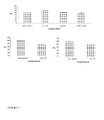

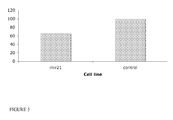

Classifications
-
- C—CHEMISTRY; METALLURGY
- C12—BIOCHEMISTRY; BEER; SPIRITS; WINE; VINEGAR; MICROBIOLOGY; ENZYMOLOGY; MUTATION OR GENETIC ENGINEERING
- C12N—MICROORGANISMS OR ENZYMES; COMPOSITIONS THEREOF; PROPAGATING, PRESERVING, OR MAINTAINING MICROORGANISMS; MUTATION OR GENETIC ENGINEERING; CULTURE MEDIA
- C12N15/00—Mutation or genetic engineering; DNA or RNA concerning genetic engineering, vectors, e.g. plasmids, or their isolation, preparation or purification; Use of hosts therefor
- C12N15/09—Recombinant DNA-technology
- C12N15/10—Processes for the isolation, preparation or purification of DNA or RNA
- C12N15/1034—Isolating an individual clone by screening libraries
- C12N15/1093—General methods of preparing gene libraries, not provided for in other subgroups
-
- C—CHEMISTRY; METALLURGY
- C12—BIOCHEMISTRY; BEER; SPIRITS; WINE; VINEGAR; MICROBIOLOGY; ENZYMOLOGY; MUTATION OR GENETIC ENGINEERING
- C12N—MICROORGANISMS OR ENZYMES; COMPOSITIONS THEREOF; PROPAGATING, PRESERVING, OR MAINTAINING MICROORGANISMS; MUTATION OR GENETIC ENGINEERING; CULTURE MEDIA
- C12N15/00—Mutation or genetic engineering; DNA or RNA concerning genetic engineering, vectors, e.g. plasmids, or their isolation, preparation or purification; Use of hosts therefor
- C12N15/09—Recombinant DNA-technology
- C12N15/10—Processes for the isolation, preparation or purification of DNA or RNA
- C12N15/1096—Processes for the isolation, preparation or purification of DNA or RNA cDNA Synthesis; Subtracted cDNA library construction, e.g. RT, RT-PCR
-
- C—CHEMISTRY; METALLURGY
- C12—BIOCHEMISTRY; BEER; SPIRITS; WINE; VINEGAR; MICROBIOLOGY; ENZYMOLOGY; MUTATION OR GENETIC ENGINEERING
- C12N—MICROORGANISMS OR ENZYMES; COMPOSITIONS THEREOF; PROPAGATING, PRESERVING, OR MAINTAINING MICROORGANISMS; MUTATION OR GENETIC ENGINEERING; CULTURE MEDIA
- C12N15/00—Mutation or genetic engineering; DNA or RNA concerning genetic engineering, vectors, e.g. plasmids, or their isolation, preparation or purification; Use of hosts therefor
- C12N15/09—Recombinant DNA-technology
- C12N15/11—DNA or RNA fragments; Modified forms thereof; Non-coding nucleic acids having a biological activity
- C12N15/111—General methods applicable to biologically active non-coding nucleic acids
-
- C—CHEMISTRY; METALLURGY
- C40—COMBINATORIAL TECHNOLOGY
- C40B—COMBINATORIAL CHEMISTRY; LIBRARIES, e.g. CHEMICAL LIBRARIES
- C40B40/00—Libraries per se, e.g. arrays, mixtures
- C40B40/04—Libraries containing only organic compounds
- C40B40/06—Libraries containing nucleotides or polynucleotides, or derivatives thereof
-
- C—CHEMISTRY; METALLURGY
- C40—COMBINATORIAL TECHNOLOGY
- C40B—COMBINATORIAL CHEMISTRY; LIBRARIES, e.g. CHEMICAL LIBRARIES
- C40B50/00—Methods of creating libraries, e.g. combinatorial synthesis
- C40B50/06—Biochemical methods, e.g. using enzymes or whole viable microorganisms
-
- C—CHEMISTRY; METALLURGY
- C12—BIOCHEMISTRY; BEER; SPIRITS; WINE; VINEGAR; MICROBIOLOGY; ENZYMOLOGY; MUTATION OR GENETIC ENGINEERING
- C12N—MICROORGANISMS OR ENZYMES; COMPOSITIONS THEREOF; PROPAGATING, PRESERVING, OR MAINTAINING MICROORGANISMS; MUTATION OR GENETIC ENGINEERING; CULTURE MEDIA
- C12N2310/00—Structure or type of the nucleic acid
- C12N2310/10—Type of nucleic acid
- C12N2310/14—Type of nucleic acid interfering nucleic acids [NA]
- C12N2310/141—MicroRNAs, miRNAs
-
- C—CHEMISTRY; METALLURGY
- C12—BIOCHEMISTRY; BEER; SPIRITS; WINE; VINEGAR; MICROBIOLOGY; ENZYMOLOGY; MUTATION OR GENETIC ENGINEERING
- C12N—MICROORGANISMS OR ENZYMES; COMPOSITIONS THEREOF; PROPAGATING, PRESERVING, OR MAINTAINING MICROORGANISMS; MUTATION OR GENETIC ENGINEERING; CULTURE MEDIA
- C12N2330/00—Production
- C12N2330/30—Production chemically synthesised
- C12N2330/31—Libraries, arrays
-
- C—CHEMISTRY; METALLURGY
- C12—BIOCHEMISTRY; BEER; SPIRITS; WINE; VINEGAR; MICROBIOLOGY; ENZYMOLOGY; MUTATION OR GENETIC ENGINEERING
- C12N—MICROORGANISMS OR ENZYMES; COMPOSITIONS THEREOF; PROPAGATING, PRESERVING, OR MAINTAINING MICROORGANISMS; MUTATION OR GENETIC ENGINEERING; CULTURE MEDIA
- C12N2330/00—Production
- C12N2330/50—Biochemical production, i.e. in a transformed host cell
- C12N2330/51—Specially adapted vectors
Definitions
- the invention relates to the field of molecular biology and, more particularly, to novel nucleic acids suitable for the expression of miRNA in a cell wherein the sense and antisense strand of the miRNA are produced by transcription of a template DNA under the control of separate and preferably convergent promoters.
- the invention also relates to libraries comprising these polynucleotides and methods to identify genes involved in cellular processes using such libraries.
- RNAi libraries have now been generated by a number of commercial and academic laboratories, and come in many formats. Fundamentally, library formats can be divided in two types: collection of vector-based shRNA expression vectors and libraries of siRNAs.
- shRNA libraries may in turn be classified by the type of vector used, such as non-viral (plasmid), retroviral, adenoviral or lentiviral.
- libraries based on retroviral or lentiviral vectors can provide long-term and stable gene silencing, as the vectors used are able to integrate into genomic DNA and are thus copied along with cellular DNA.
- Lentiviral libraries are particularly useful in studies involving cells that are difficult to transfect, such as primary cells.
- RNA interference RNA interference
- miRNAs microRNAs
- miRNAs are short non coding RNA molecules, distinct from but related to small interfering RNAs. They have been identified in the genomes of a wide range of multicellular life forms as well as viruses. Mature miRNAs are 19- to 25-nucleotide-long molecules cleaved in two steps. First, a primary transcript knows as primary - miRNA (pri-miRNA) is transcribed and processed by Drosha-DGCR8 protein complex to form 70- to 100-nucleotide hairpin pre-miRNA precursors. Pre-miRNA is transported out of the nucleus and cleaved in the cytoplasm by Dicer to form a short double-stranded miRNA duplex.
- pri-miRNA primary - miRNA
- Dicer Dicer to form a short double-stranded miRNA duplex.
- this RNA duplex is loaded into the RNA-induced silencing complex (RISC), one of the strands is degraded, and the remaining strand engages in imperfect base pairing with the 3' untranslated region (3' UTR) of target mRNAs, and causes either block of translation or, less frequently, mRNA degradation ( Bartel, 2004, Cell, 116, 281-97 ).
- RISC RNA-induced silencing complex
- This mechanism resembles the process of RNA interference triggered by double- stranded RNA and uses similar molecular machinery.
- miRNAs libraries have been used to identify miRNAs and to assay their expression pattern.
- miRNA libraries have developed miRNA libraries to obtain gain of function phenotypes in different formats such as doble strand miRNA (miRIDIAN microRNA mimic from Dharmacon), expressed as pri-miRNA in a plasmid (miR-Lib from Geneservice) or a lentiviral based vector (miRexpress Human Lentiviral microRNA library from Open biosystem).
- RNAi Codex a single database that curates publicly available RNAi resources, and provides the most complete access to this growing resource.
- lentiviral vectors carrying miRNA libraries such as the pLemiR plasmid have been described (Open Biosystems) wherein the sequence encoding the miRNA is under the control of a CMV promoter.
- these plasmids encode for the precursor form of the miRNA (the pri-miRNA) so that activation by the cellular machinery is required before the miRNA can exert its biological effects.
- the authors of the present invention provide systems for expression of miRNAs based on the transcription of both strands of a short DNA fragment flanked by two RNA polymerase III promoters, generating a duplex of RNA. This duplex is the core sequence of the full length miRNA. miRNAs produced by this system are functionally similar to the full length miRNA versions.
- the invention in a first aspect, relates to a polynucleotide construct comprising a first promoter region operatively linked to a sequence encoding the sense strand of a miRNA and a second promoter region operatively linked to a sequence encoding the antisense strand of said miRNA.
- the invention relates, respectively, to a vector comprising a polynucleotide of the invention and to a host cell comprising the polynucleotide or the vector of the invention.
- the invention relates to a library comprising a plurality of polynucleotides according to the invention.
- the invention relates to a method for expressing a miRNA in a host cell comprising using the polynucleotide, vector or the library of the invention.
- the invention relates to a method for the preparation of a vector for expressing a miRNA comprising the steps of
- the invention relates to a method for preparing a library for expressing a miRNA comprising the steps of
- the invention relates to a method for the identification of miRNAs capable of interfering in a cellular process comprising
- the invention relates to a method for the identification of genes involved in a cellular process comprising
- the invention relates to a method for the cloning of small RNAs comprising the steps of
- the invention relates to a method for the identification of genes involved in a cellular process comprising
- the invention relates to a kit for carrying out the method as defined in the invention comprising
- the authors of the present invention have developed a system for the expression of miRNA that does not require cleavage of a precursor form. This has been achieved by the separate expression of the sense and antisense strands of the mature miRNA whereby the expression of each strand is driven by a different promoter for each strand.
- the double promoter Lent-H1/U6 vector provides higher stability of RNA template inserts for propagation in E.coli which facilitates the construction of representative high complexity miRNA libraries.
- this system allows the expression of the miRNA with an efficency similar to conventional polynucleotides carrying a pre-miRNA or pri-mRNA templates.
- the system allows the direct expression of the miRNA from a vector comprising the sense and antisense strand of the miRNA without the need of expressing a cDNA encoding the miRNA precursor, thus dispensing with the requirement for intracellular maturation for obtaining the mature functional miRNA.
- An additional advantage of the system lies in the possibility of cloning miRNAs or other types of small RNA from an heterlogous RNA preparation by directly cloning the miRNA into a vector of choice using conventional cloning methods for double stranded RNA. This avoids the known procedure of first identifying the miRNA based on its sequence followed by expression form the DNA encoding the precursor.
- the cloned miRNAs obtained in this manner can be directly tested in order to identify those leading to a particular phenotype when expressed in cells.
- This expression system allows developing functional screening once small RNAs are cloned to isolate and describe new small RNAs (miRNA among others) involved in different biological events.
- the invention in a first aspect, relates to a polynucleotide construct comprising a first promoter region operatively linked to a sequence encoding the sense strand of a miRNA and a second promoter region operatively linked to a sequence encoding the antisense strand of said miRNA.
- promoter is understood as a DNA sequence recognised by the transcriptional machinery to initiate transcription a downstream polynucleotide sequence.
- any two promoters can be used in the vector of the invention.
- promoters suitable for use in the present invention include constitutive promoters such as those found in some eukaryotic viruses such as the polyoma virus, adenovirus, SV40, CMV, avian sarcoma virus, hepatitis B virus, herpes simplex virus thymidine kinase promoter, retroviral LTR regions as well as promoters present in eukaryotic genes such as the metalothioneine gene promoter, the immunoglobulin promoter, actin promoter, EF-1alpha promoter as well as inducible promoters wherein expression of the downstream gene requires addition of a substance or an exogenous signal to the culture such as the tetracycline promoter, NFKappaB/
- the promoters are RNA polymerase III promoters which function in constitutive manner.
- RNA pol III promoters appear in a limited number of genes such as the 5S ARN, ARNt, ARN 7SL and ARNsn U6 genes.
- RNA pol III promoters differ from other promoters in that they do not require an intragenic sequence but require 5' sequences comprising a TATA box at positions -34 and -24, a proximal sequence element or PSE located between -66 y -47 and, in some cases, a distal sequence element o DSE) at positions -265 and -149.
- the RNA pol III promoters are the promoters found in the H1 and U6 genes of human or murine origin.
- the promoters are two U6 promoters of human or murine origin, a murine U6 promoter and a H1 human promoter or a U6 human promoter and a murine H1 promoter.
- miRNA as used herein, is understood as a double stranded non-coding RNA sequence which is capable of interacting with the 3'-untranslated region of a mRNA thus preventing its translation.
- microRNA or “miRNA” used interchangeably herein, are endogenous RNAs, some of which are known to regulate the expression of protein-coding genes at the posttranscriptional level.
- microRNA refers to any type of micro- interfering RNA, including but not limited to, endogenous microRNA and artificial microRNA.
- endogenous microRNA are small RNAs encoded in the genome which are capable of modulating the productive utilization of mRNA.
- a mature miRNA is a single-stranded RNA molecule of about 21-23 nucleotides in length which is complementary to a target sequence, and hybridizes to the target RNA sequence to inhibit its translation.
- miRNAs themselves are encoded by genes that are transcribed from DNA but not translated into protein (non-coding RNA); instead they are processed from primary transcripts known as pri-miRNA to short stem-loop structures called pre-miRNA and finally to functional miRNA. Mature miRNA molecules are partially complementary to one or more messenger RNA (mRNA) molecules, and their main function is to down-regulate gene expression.
- mRNA messenger RNA
- the target sites in the mRNA may be in the 5' UTR, the 3' UTR or in the coding region.
- multiple miRNAs may regulate the same mRNA target by recognizing the same or multiple sites.
- the miRNA may specify cleavage of the mRNA if the mRNA has a certain degree of complementarity to the miRNA. When a miRNA guides cleavage, the cut may be between the nucleotides pairing to residues 10 and 11 of the miRNA.
- the miRNA may repress translation if the miRNA does not have the requisite degree of complementarity to the miRNA. Translational repression may be more prevalent in animals since animals may have a lower degree of complementarity between the miRNA and binding site.
- any miRNA previously known and described in the miRBase Sequence Database (described in by Griffiths-Jones S, et al., 2006, Nucleic Acids Res., 34 (Database Issue):D140-D144 ) and accessible at http://microrna.sanger.ac.uk/sequences/ can be incorporated in the polyucleotides of the invention and includes miRNA isolated from organisms such as Anopheles gambiae, Ateles geoffroyi, Apis mellifera, Arabidopsis thaliana, Bombyx mori, Brassica napus, Bos Taurus, Caenorhabditis briggsae, Caenorhabditis elegans, Canis familiaris, Ciona intestinalis, Chlamydomonas reinhardtii, Ciona savignyi,
- miRNAs can be identified using a combination of the expression and biogenesis criteria defined by Ambros et al. (RNA, 2003, 9:277-279 ) as follows:
- Preferred miRNA for use in the polynucleotides of the present invention include, without limitation, miR-22, miR-26a-1, miR-26a-2, miR- 29b-2, miR-29c, miR-30e, miR-30c-1, miR-146a, miR-150, let-7a-1, let-7f-1, let-7d, miR- 100, let-7a-2, miR-125b-1, let-7a-3, let-7b, miR-99a, let-7c, miR-125b-2, miR-99b, let-7e, miR-125a, let-7f-2, miR-98, let-7g, let-7i, miR-26b, miR-30c, miR-34a, miR-150, miR- 195/497, miR-15a/16-1.
- the polynucleotide of the invention maybe a single-stranded or a double-stranded polynucleotide.
- the polynucleotide a double stranded DNA and wherein the sequence encoding the sense strand forms a duplex with the sequence encoding the antisense strand.
- the polynucleotide would be comprised by a double stranded promoter region, a double stranded region comprising the sense and antisense strand of the miRNA and a double stranded second promoter region showing promoting the transcription of the miRNA antisense strand and wherein both promoters act convergently.
- the sequences encoding the sense strand and/or the sequence encoding the antisense strand may be followed by transcriptional termination signals.
- transcriptional terminators suitable for use in the present invention include the SV40 terminator and the growth hormone gene terminator.
- Suitable transcriptional termination signals comprise a sequence of ca. 4 adenine residues.
- the transcriptional termination signal contains a 4 thymidine residues region in the complementary strand.
- the polyadenine and polythymidine regions are preceded by a GC-rich region having palindrome symmetry. Transcription proceeds normally along the polyadenine region and terminates before the GC-rich region, thus resulting in that the transcript ends by one or more uridine residues.
- polynucleotides of the invention can be placed into suitable vectors for propagation and for further study.
- any vector known in the art may be suitable for carrying out the invention provided that suitable promoter regions and endonuclease target sites are inserted into the vectors.
- suitable vectors for the insertion of the polynucleotides of the invention include expression vectors in prokaryotes such as pUC18, pUC19, Bluescript and their derivatives, mp18, mp19, pBR322, pMB9, CoIE1, pCR1, RP4, phages and vectors "shuttle" such as pSA3 and pAT28, expression vectors in yeast such as vectors of the type of plasmids of 2 microns, integration plasmids, YEP vectors, centromeric plasmids and similar, expression vectors in insect cells such as the vectors of the pAC series and pVL series, expression vectors in plants such as vectors of the series pIBI, pEarleyGate, pAVA, pCAMBIA, pGSA, pGWB, pMDC, pMY, pORE and similar and expression vectors in eukaryotic cells either based on viral vectors (aden
- Vectors particularly appropriate for the insertion of said polynucleotides are expression vectors in superior eukaryotic cells, either based on viral vectors such as, without limitation, Moloney murine leukemia virus; Murine stem cell virus, Harvey murine sarcoma virus; murine mammary tumor virus; Rous sarcoma virus; adenovirus; adeno-associated virus; SV40-type viruses; polyoma viruses; Epstein- Barr viruses; papilloma viruses; herpes viruses; vaccinia viruses; polio viruses; lentiviruses; and RNA viruses such as any retrovirus.
- viral vectors such as, without limitation, Moloney murine leukemia virus; Murine stem cell virus, Harvey murine sarcoma virus; murine mammary tumor virus; Rous sarcoma virus; adenovirus; adeno-associated virus; SV40-type viruses; polyoma viruses; Epstein- Barr viruses; papilloma viruses
- Viral vectors are generally based on non-cytopathic eukaryotic viruses in which non-essential genes have been replaced with the nucleic acid sequence of interest.
- said expression vector is suitable for transfecting or infecting mammal cells ex vivo, particularly human cells.
- the vectors are lentiviral vectors.
- Recombinant lentiviral vectors refer to vectors with sufficient genetic information to allow packaging of an RNA genome, in the presence of packaging components, into a viral particle capable of infecting and transducing a target cell.
- a recombinant lentiviral vector is incapable of independent replication to produce infectious retroviral particles within the final target cell.
- the recombinant lentiviral vector has a minimal viral genome.
- the lentiviral-based systems are capable of integrating the proviral DNA in the genome of the cell. This feature makes possible to isolate the DNA fragment corresponding to the miRNA cloned into the lentivirus.
- Genomic DNA isolated can be amplified with the H1 (5' CTGGGAAATCACCATAAACGTGAA 3') (SEQ ID NO:7) and U6 (5' GCTTACCGTAACTTGAAAGTATTTCG 3') (SEQ ID NO:8) primers. PCR products can be subcloned and sequenced.
- Lentiviral vectors include primate lentiviral vectors such as HIV vectors (for example, HIV-I and HIV-2 vectors) and SIV vectors, and non-primate lentiviral vectors.
- Primate lentiviral vectors have a number of disadvantages which may limit their therapeutic application to certain diseases Therefore, in a particularly preferred embodiment, the lentiviral vector will be a non-primate lentiviral vector, such as EIAV, FIV, BIV, CAEV or MVV.
- the lentiviral vectors derive from the feline immunodeficiency virus.
- the vectors of the invention may comprise a reporter or marker gene that allows the identification of cells that have incorporated the vector after having been put in contact with the vector.
- Reporter genes suitable for use in the present invention include LacZ, luciferase, thymidine kinase, GFP, DsRed and the like.
- the invention provides a library comprising a plurality of the polynucleotides of the invention or of the vectors of the invention.
- a library refers to a collection of nucleic acid molecules (circular or linear).
- a library may comprise a plurality of nucleic acid molecules (e.g., two, three, four, five, seven, ten, twelve, fifteen, twenty, thirty, fifty, one hundred, two hundred, five hundred one thousand, five thousand, or more), which may or may not be from a common source organism, organ, tissue, or cell.
- a library is representative of all or a portion or a significant portion of the nucleic acid content of an organism (a "miRNA” library) in a cell, tissue, organ or organism.
- a library according to the invention can comprise at least one representative for substantially all the miRNAs present in a organism, organ, tissue or cell or defined percentages of it, e.g., at least 20, 25, 30, 35, 40, 45, 50, 55, 60, 65, 70, 75, 80, 85, 90, 95, 97, 99% or more (and values in between).
- a library may also comprise nucleic acid molecules having random sequences made by de novo synthesis, mutagenesis of one or more nucleic acid molecules, and the like. Such libraries may or may not be contained in one or more vectors (e.g., two, three, four, five, seven, ten, twelve, fifteen, twenty, thirty, fifty, etc.).
- the polynucleotides of the invention can be introduced into a cell, thus resulting in the expression of the miRNA in said host cell.
- the invention relates to a host cell comprising a polynucleotide of the invention, a vector of the invention or a library of the invention.
- the host cells of the invention can also be used in a method for expressing a miRNA in a host cell.
- the invention relates to a method for expressing a miRNA in a host cell comprising contacting the cell with a polynucleotide of the invention, with a vector of the invention or with a library of the invention under conditions adequate for entry of the polynucleotide or the vector in the cell and for the expression of said polynucleotide in the cell.
- the polynucleotide, vector or library of the invention can be introduced in the cells using any of the transfection methods known by the persons skilled in the art (see sections 9.1 to 9.5 in Ausubel, F.M. et al., Current Protocols in Molecular Biology, John Wiley & Sons Inc; ringbou edition, 2003 ).
- the cells can be transfected by means of precipitating DNA with calcium phosphate, DEAE-dextran, polybrene, electroporation, microinjection, liposome-mediated fusion, lipofection, infection by retrovirus and biolistic transfection.
- the library can be expressed in a host cell arrays.
- a host cell array can be produced according to any suitable method. For example, host cells can be distributed into multi-well plates, and then transformed with a polynucleotide according to conventional methods.
- microarrays of cells expressing polynucleotides can be created, e.g., according to Ziauddin and Sabatini (Nature, 411, 107-110, 3 May 2001 ), where cDNAs are printed on printed onto a glass slide, exposed to a transfection reagent (e.g., a lipid), and then covered with adherent mammalian cells.
- a transfection reagent e.g., a lipid
- adherent cells that can be cultured on a solid support and which remain on the support when processed to determine the presence or absence of a specific-binding partner.
- Adherent cells are well-known, and the surfaces can be treated accordingly to provide appropriate surfaces for adherence to take place.
- surfaces can be treated with poly-anionic amino acids (e.g., polylysine), collagen, integrins, gelatin, and other molecules and substances which facilitate cell adhesion.
- Any type of host cell can be utilized without limitation. These include, e.g., bacteria, yeast, eukaryotic, animal, mammalian (e.g., COS, CMV1, BHK, CHO, HeLa, LTK, NIH 3T3, 293), plant, etc., cells.
- a polynucleotide When a polynucleotide is "expressible,” it is operably linked to an expression control sequence (e.g., promoter) in such a way that facilitates transcription and translation of the polynucleotide's coding sequence.
- an expression control sequence e.g., promoter
- the invention relates to a method for the preparation of a vector for expressing a miRNA comprising the steps of
- Step (i) of the first method of the invention involves contacting a miRNA molecule with a pair of adapters wherein each adapter comprises a known region.
- the known region present in the 5' and 3' adapter may be any region which can then be used as template for the design of primers suitable for PCR amplification of the miRNA derived sequences.
- the known regions in the 5' and 3' adapter may comprise target sites for restriction endonucleasas that may be the same or different. These sites will allow the generation of cohesive ends that may be used for ligation into a vector previously treated with the same enzymes or with enzymes generating compatible cohesive ends with the ends present in the miRNA derived insert.
- the regions of known sequences in the adapter contain sequences corresponding to promoters, wherein said promoters are acting convergently, i.e. the 5' adapter comprises a promoter sequence that promotes transcription of downstream sequences and the 3' adapter comprises a promoter sequence that promotes transcription of upstream sequences.
- the regions of known sequences may contain one or more of the elements mentioned before.
- the regions contain both promoter sequences and recognitions sites for restriction endonucleasas.
- the target sites for the restriction endonucleases are located 5' with respect to the promoter regions.
- the promoter regions may serve themselves as amplification target sites.
- step (i) is carried out under conditions adequate for promoting ligation of the adapters to the 5'and 3' ends of the RNA while preventing circularization of the RNA.
- step (i) can be carried out using either the basic protocol or the alternate protocol as described by Ausubel et al. (Ausubel et al., 2003, Current Protocols in Molecular Biology, 26.4.1-26.4.18).
- the miRNA molecule is first dephosphorylated, preferably with alkaline phosphatase, to prevent circularization of the RNA.
- a 5' phosphorylated oligonucleotide with a blocked 3-hydroxyl group is attached to the small RNAs.
- the ligation product is separated from excess 3'-adapter and is subsequently 5'-phosphorylated and subjected to 5'-adapter ligation.
- ligation of the adapter molecules is carried out using an alternate protocol which comprises the steps of contacting the miRNA with a 3' adapter which carries a reactive group at the 5' terminus (preferably an adenyl group) and a protecting group at the 3' terminus (preferably a dideoxy C group).
- the ligation is carried out in the absence of ATP, which prevents recircularization of the ARN during T4 RNA ligation and thus, bypasses the need for the dephosphorylation of the miRNA.
- the ligation step is carried out in the presence of a RNA ligase (preferably T4 RNA ligase).
- the 5' adapter is then ligated to the in the presence of ATP and a RNA ligase (T4 RNA ligase).
- T4 RNA ligase RNA ligase
- the 5' adapter is a hybrid DNA/RNA sequence.
- the RNA part of the hybrid 5' adapter corresponds to the 3' region of the adapter.
- the 5'-adapter-RNA-3'adapter molecule obtained in step (i) may be purified by conventional means.
- a size fractionation is carried out in order to eliminate concatemers formed during step (i).
- Step (ii) comprises the reverse transcription of the 5'-adapter-RNA-3'adapter molecule obtained in step (i) using a primer which sequence is substantially complementary to the sequence of the 3' adapter.
- Reverse transcription is carried out using methods known to the skilled person and can be carried out isothermally as well as using thermostable RNA polymerases in the presence of a RNA-dependent DNA polymerase including, without limitation, AMV, Cloned AMV, MMLV, SuperscriptII, ReverTraAce, Tth reverse transcriptase, hepatitis B reverse transcriptase, cauliflower mosaic virus reverse transcriptase, bacterial reverse transcriptase and Thermoscript.
- An enzyme or reverse transcriptase that is used for nucleic acid synthesis may be purified from a virus or bacterium, or it may be prepared via gene recombination. Alternatively, such enzyme may be subjected to modification such as fragmentation or amino acid substitution.
- the primer used in the reverse transcription reaction is substantially complementary to the sequence of the 3' adapter.
- substantially complementary refers to a nucleic acid that will selectively hybridize to one another under particular conditions, or to an oligonucleotide analogue and a nucleic acid molecule that will selectively hybridize to one another under particular conditions, but may contain mismatched bases at one or more positions.
- the enzymes for use in the invention include those that have reduced, substantially reduced or eliminated RNase H activity.
- an enzyme “substantially reduced in RNase H activity” is meant that the enzyme has less than about 20%, more preferably less than about 15%, 10% or 5%, and most preferably less than about 2%, of the RNase H activity of the corresponding wild-type or RNase H+ enzyme such as wild-type Moloney Murine Leukemia Virus (M-MLV), Avian Myeloblastosis Virus (AMV) or Rous Sarcoma Virus (RSV) reverse transcriptases.
- M-MLV Moloney Murine Leukemia Virus
- AMV Avian Myeloblastosis Virus
- RSV Rous Sarcoma Virus reverse transcriptases.
- the RNase H activity of any enzyme may be determined by a variety of assays, such as those described, for example, in U.S. Patent No.
- polypeptides for use in the invention include, but are not limited to, M-MLV reverse transcriptase, RSV reverse transcriptase, AMV reverse transcriptase, RAV (rous-associated virus) reverse transcriptase, MAV (myeloblastosis-associated virus) reverse transcriptase and HIV reverse transcriptase. (See U.S. Patent No. 5,244,797 and WO 98/47912 ).
- the single stranded cDNA obtained in step (ii) can be treated so as to obtain a double-stranded DNA using any method known in the art.
- the conversion of the single stranded cDNA to the double stranded DNA is carried out using in vitro amplification technologies such as Polymerase Chain Reaction (PCR), Ligase Chain Reaction (LCR), Nucleic Acids Sequence Based Amplification (NASBA), Strand Displacement Amplification (SDA), Transcription Mediated Amplification (TMA), Branched DNA technology (bDNA), linker-aided DNA amplification (LADA), Q-beta replicase amplification (Q-beta), loop-mediated isothermal amplification (LAMP) and Rolling Circle Amplification Technology (RCAT), or other in vitro enzymatic amplification technologies.
- PCR Polymerase Chain Reaction
- LCR Ligase Chain Reaction
- NASBA Nucleic Acids Sequence Based Amplification
- SDA Strand Displacement Amplification
- the amplification step is carried out using primers corresponding to the sequences of the adapter regions.
- the resulting double-stranded DNA can be purified using a purification column, electromagnetic beads to which the primer is attached, or by electrophoresis through a polyacrylamide gel.
- the primers used in the PCR reaction are modified with a first member of a binding pair so that the excess of primer not incorporated into the double stranded DNA can be purified using the second member of the binding pair when coupled to an affinity matrix.
- Suitable binding pairs for the purification of the double-stranded DNA include, without limitation, hapten or antigen/antibody (e.g. digoxin and anti-digoxin antibodies), biotin or biotin analogues (e.g.
- receptor/ligand e.g., steroid hormone receptor/steroid hormone
- the primers used during the PCR-amplification step contain within their 5' regions target sites for restriction endonucleases which generate compatible ends with those present in the vector of choice.
- the endonuclease target sites allow the generation of cohesive ends that can be used for cloning the polynucleotides in appropriate vectors.
- the endonuclease target sites do not show any homology to sites within native miRNA present in the human genome.
- Adequate restriction sites can be identified using the Blast-n algorithm with the cleavage site or selecting restriction endonuclease whose target sites comprise 7 or 8 nucleotides, thus appearing in the human genome only sporadically.
- Non-limiting examples of endonuclease target sites that can be used in the adapters for use in the method of the invention include BvbII and the like.
- Non-limiting examples of enzymes having recognitions sites comprising 7, 8 or more nucleotides are described in the restriction endonuclease database REBASE ( Roberts RJ, Macelis D. (2001) REBASE--restriction enzymes and methylases. Nucleic Acids Res. 2001 Jan 1; 29: 268-9 y Roberts, R. J.
- the invention contemplates the use of restriction endonucleases sites for enzymes that cut outside said recognition sites. In this way, it is possible to obtain double stranded polynucleotides that do not contain any nucleotides of the target site.
- non-limiting examples of said enzymes includeye AlwI, BbsI, BbvI, BbvII, BceA1, BciV1, BfuAl, Brnr1, BpmI, BpuEl, BsaI, BseR1, Bsgl, BsmAl, BsmB1, BsmF1, BspM1, EarI, EciI, FauI, FokI, HgaI, HphI, NboII, MlyI, MnlI, PleI, SapI y SfaI.
- the restriction endonuclease target site consists of the sequence GAAGACN 2 /N 6 , corresponding to the recognition site for the BbvII restriction endonuclease.
- the insertion of the polynucleotides of the invention into the vectors having cohesive ends is carried out using any of the methods known in the art for preparing hybrid DNA molecules from two or more fragments and involve preferably the use of DNA ligases such as T4 or E.coli DNA ligase E.coli under the conditions recommended by the supplier. Exemplary methods for ligating DNA molecules are described in retail under sections 3.14, 3.16 y 3.17 of Ausubel,F.M. et al., (Current Protocols in Molecular Biology, John Wiley and Sons, eds. 2003 ).
- the vector may comprise promoter regions flanking the restriction endonuclease target site wherein the insert is to be placed.
- the adapters used in step (i) are preferably devoid of promoter regions themselves since these will be provided by the vector.
- the vector is a lentiviral vector.
- the invention relates to a method of preparing a library for expressing a miRNA comprising the steps of
- RNA preparation has been obtained from a cell and comprises a representative population of all the miRNA expressed in a cell as well as of any other endogenous small RNA present in the cell.
- the RNA preparation is prepared using any method known in the art for isolating RNA including treatment of the cells sequentially with 4 M guanidinium salt, sodium acetate (pH 4), phenol, and chloroform/isoamyl alcohol followed by centrifugation of the samples and RNA precipitation from the upper layer by the addition of alcohol ( P. Chomczynski, Anal.
- RNA is isolated using methods specifically designed for the isolation of low molecular weight RNA such as the method described in WO2005054466 .
- the RNA is isolated from cells harvested during their exponential growth phase. Some tissues, like pancreas or small intestine, are rich in nucleases and intrinsically difficult to handle. It is recommended that the quality of the RNA preparation be carefully examined before making the decision to start a lengthy cloning protocol. High-quality total RNA shows defined 18S and 28S rRNA bands by agarose gel electrophoresis.
- RNA obtained can be determined using any method known in the art.
- the yield of RNA can be determined by Nuclease Protection Assays (NPAs), including both ribonuclease protection assays (RPAs) and S1 nuclease assays, denaturing agarose gel electrophoresis followed by blotting the contents of these gels onto hybridization membranes and probing with radioactive oligonucleotide (RNA or DNA-based) probes and UV Absorbance wherein the concentration and purity of RNA can be determined by diluting an aliquot of the preparation (usually a 1: 50 to 1 : 100 dilution) in TE (10 mM Tris-HCl pH 8,1 mM EDTA) or water, and reading the absorbance in a spectrophotometer at 260 nm and 280 nm.
- NPAs Nuclease Protection Assays
- RPAs ribonuclease protection assays
- RNA LabChip technique may be used for analyzing the quality of the total RNA.
- LabChip technologies e.g., Agilent 2100 Bioanalyzer
- Agilent 2100 Bioanalyzer were developed for quality control of total RNA to be used for gene profile analysis on DNA arrays.
- RNA fractions often contain substantial amounts of degradation products of other abundant noncoding RNAs such as rRNAs, tRNAs, snRNAs, and snoRNAs, as well as messenger RNAs.
- the ligation of the 5' and 3' adapters (step (i)) and the generation of a cDNA from the 5' adapter-miRNA-3' adapter (step (ii)) is carried out essentially as described in the previous method of the invention.
- the library obtained using the first of the invention can be treated essentially as described in the previous method so as to obtain double-stranded DNA having cohesive ends which can then be inserted into a suitable vector having compatible cohesive ends.
- the vector used for this purpose is a lentiviral vector as previously described.
- the miRNA libraries of the present invention can be screened in order to identify miRNAs capable of interfering in a cellular process.
- the invention relates to a method (hereinafter the third method of the invention) for the identification of miRNAs capable of interfering in a cellular process comprising
- step (i) the miRNA library is introduced in the cells being studied using any of the transfection methods known by the persons skilled in the art (see sections 9.1 to 9.5 in Ausubel, F.M. et al., Current Protocols in Molecular Biology, John Wiley & Sons Inc, 2003 ).
- the cell under study may be derived from or contained in any organism (e.g., plant, animal, protozoan, virus, bacterium, or fungus).
- the cell wherein the library may be inserted may be derived from or contained in any organism.
- the organism may be a plant, animal, protozoan, bacterium, virus, or fungus.
- the plant may be a monocot, dicot or gymnosperm; the animal may be a vertebrate or invertebrate.
- Preferred microbes are those used in agriculture or by industry, and those that are pathogenic for plants or animals. Fungi include organisms in both the mold and yeast morphologies.
- Plants include arabidopsis; field crops (e.g., alfalfa, barley, bean, corn, cotton, flax, pea, rape, rice, rye, safflower, sorghum, soybean, sunflower, tobacco, and wheat); vegetable crops (e.g., asparagus, beet, broccoli, cabbage, carrot, cauliflower, celery, cucumber, eggplant, lettuce, onion, pepper, potato, pumpkin, radish, spinach, squash, taro, tomato, and zucchini); fruit and nut crops (e.g., almond, apple, apricot, banana, blackberry, blueberry, cacao, cherry, coconut, cranberry, date, fajoa, filbert, grape, grapefruit, guava, kiwi, lemon, lime, mango, melon, nectarine, orange, papaya, passion fruit, peach, peanut, pear, pineapple, pistachio, plum, raspberry, strawberry, tangerine, walnut, and watermelon); and ornamentals (e.g
- vertebrate animals examples include fish, mammal, cattle, goat, pig, sheep, rodent, hamster, mouse, rat, primate, and human.
- Invertebrate animals include nematodes, other worms, drosophila, and other insects.
- nematodes include those that infect animals (e.g., Ancylostoma, Ascaridia, Ascaris, Bunostomum, Caenorhabditis, Capillaria, Chabertia, Cooperia, Dictyocaulus, Haernonchus, Heterakis, Nematodirus, Oesophagostomum, Ostertagia, Oxyuris, Parascaris, Strongylus, Toxascaris, Trichuris, Trichostrongylus, Tflichonema, Toxocara, Uncinaria) and those that infect plants (e.g., Bursaphalenchus, Criconerriella, Diiylenchus, Ditylenchus, Globodera, Helicotylenchus, Heterodera, Longidorus, Melodoigyne, Nacobbus, Paratylenchus, Pratylenchus, Radopholus, Rotelynchus, Tyle
- the cell may be from the germ line or somatic, totipotent or pluripotent, dividing or non-dividing, parenchyma or epithelium, immortalized or transformed, or the like.
- the cell may be a stem cell or a differentiated cell.
- Cell types that are differentiated include adipocytes, fibroblasts, myocytes, cardiomyocytes, endothelium, neurons, glia, blood cells, megakaryocytes, lymphocytes, macrophages, neutrophils, eosinophils, basophils, mast cells, leukocytes, granulocytes, keratinocytes, chondrocytes, osteoblasts, osteoclasts, hepatocytes, and cells of the endocrine or exocrine glands.
- the cells can particularly be transfected by means of precipitating DNA with calcium phosphate, DEAE-dextran, polybrene, electroporation, microinjection, liposome-mediated fusion, lipofection, infection by retrovirus and biolistic transfection.
- the polynucleotides inserted in the cell can be maintained transitorily or stably.
- the gene which allows screening the cells can be provided forming part of the same vector containing the construct object of the invention or, alternatively, it can be provided separately by means of cotransfecting a second plasmid containing said resistance gene.
- the plasmid containing the DNA construct is provided to the transfection mixture in a molar excess with respect to the resistance gene, such that for each resistance gene integration event there is a high probability of integration of the gene containing the promoter being studied.
- the plasmid containing the DNA construct is preferably provided in an excess of at least 5 times with respect to the vector containing the resistance reporter.
- Suitable resistance markers for screening cell lines which have integrated the construct in the genome include positive selection markers such as, for example, the neomycin resistance gene, conferring resistance to the aminoglycoside G418, the hygromycin phosphotransferase gene conferring resistance to hygromycin, the ODC gene conferring resistance to the ornithine decarboxylase inhibitor (2-(difluoromethyl)-DL-ornithine (DFMO)), the dihydrofolate reductase gene conferring resistance to methotrexate, the puromycin-N-acetyl transferase gene conferring resistance to puromycin, the ble gene conferring resistance to zeocin, the adenosine deaminase gene conferring resistance to 9-beta-D-xylofuranosyl adenine, the cytosine deaminase gene allowing the cells to grow in the presence of N-(phosphonacetyl)-L-aspartate,
- the selection gene is incorporated in a plasmid which can additionally include a suitable promoter for the expression of said gene in eukaryotic cells, (for example the CMV or SV40 promoters), an optimized translation initiation site (for example a site following the so-called Kozak rules or an IRES), a polyadenylation site such as for example the SV40 or phosphoglycerate kinase polyadenylation site, introns such as for example the beta-globulin gene intron.
- a suitable promoter for the expression of said gene in eukaryotic cells for example the CMV or SV40 promoters
- an optimized translation initiation site for example a site following the so-called Kozak rules or an IRES
- a polyadenylation site such as for example the SV40 or phosphoglycerate kinase polyadenylation site
- introns such as for example the beta-globulin gene intron.
- the screening process of cells containing the DNA construct of interest stably integrated in the genome is carried out by means of a conventional screening process (see for example Ausubel, F.M. et al., Current Protocols in Molecular Biology (1997) 9.5.1-9.5.19 ).
- the cells are transfected with a vector or mixture of vectors and, after a recovery period, they are allowed to grow in a selective medium (either a medium containing the antibiotic against which the reporter confers resistance or a minimum medium containing the antimetabolite against which the reporter confers resistance).
- the cell colonies growing in selective medium are isolated and allowed to grow again in selective medium.
- recombinases may be used, particularly the Cre/Lox system. It is alternatively possible to amplify the number of copies of the selection marker, which results in a simultaneous amplification of the number of copies of the gene of interest, with the subsequent increase in its expression.
- the cells are grown in the presence of progressively greater concentrations of selection agent, which results in a screening of the cells which have undergone an amplification of the genes conferring resistance to such agent and normally of the adjacent or intermediate regions.
- DHFR is preferably used as a selection marker and the screening of cell lines in which there is an amplification of said gene is carried out in the presence of methotrexate.
- a cell is normally considered to stably express a marker when the expression of said marker does not decrease with successive proliferation cycles, independently of the presence of selection agent in the culture medium.
- the polynucleotide can be extra-chromosomal or integrated into a chromosome(s) of the host cell.
- the polynucleotide can be stably or transiently expressed, depending on the desired purpose.
- the cells are maintained under conditions suitable for expressing the polynucleotide introduced in the cell in step (i).
- Expression of the polynucleotide can be carried out by endogenous RNA polymerase of the cell. Suitable conditions include any culture conditions which are adequate for achieving production of the polypeptide by the host cell, including effective temperatures, pH, medium, additives to the media in which the host cell is cultured (e.g., additives which amplify or induce expression such as butyrate, or methotrexate if the coding polynucleotide is adjacent to a DHFR gene), cycloheximide, cell densities, culture dishes, etc. If desired, the cells can be tested for expression of the polynucleotides using methods widely known to the skilled person.
- step (iii) of the method cells showing a particular phenotype are selected.
- phenotype refers to any process occurring in or between one or more host cells.
- phenotypes that can be used tested using in step (iii) include, but are not limited to, signal transduction, growth, proliferation development, differentiation, metabolism, disease resistance, cell division, secretion, transcription, translation, splicing, cell-cell communication, endocytosis, exocytosis, antigen presentation, cell death, and the like.
- the phenotype may be an abnormal (mutant or pathological) process.
- the methods of the invention may be used to determine an effect on a pathological biological process, such as modifying or abolishing the pathological process.
- the term "showing a phenotype" refers to any measurable qualitative or quantitative effect on a biological process in the one or more host cells or their progeny.
- the effect may be measured, for example, as a morphological, biochemical, physiological, molecular, cellular, behavioural effect on the level of single cells, collection of cells, tissues, organs, or whole organisms.
- a phenotypic effect may be if there is an inhibition which is greater than 10%, 33%, 50%, 90%, 95% or 99% as compared to a cell not treated according to the present invention.
- Lower doses of injected material and longer times after administration of dsRNA may result in inhibition in a smaller fraction of cells (e.g., at least 10%, 20%, 50%, 75%, 90%, or 95% of targeted cells).
- the method of the invention also allows the identification of miRNAs capable of inducing phenotypic alterations in a complete organism, In this case, it is required to generate animal models capable of expressing the polynucleotide of the invention, either constitutively or inducible. Methods for the generation of transgenic mammals, fish, birds and insects are widely known to the skilled person.
- Said methods may involve contacting retroviral particles, in particular, lentiviral particles carrying the constructs comprising the polynucleotides of the invention with cells (oocytes, zygotes or early-stage embryos), transfecting embryonic stem cells followed by the incorporation of said cells in an embryo or generating oocytes or sperm cells by in vitro differentiation of embryonic stem cell carrying the polynucleotides of the invention integrated in their genome.
- cells oocytes, zygotes or early-stage embryos
- transfecting embryonic stem cells followed by the incorporation of said cells in an embryo or generating oocytes or sperm cells by in vitro differentiation of embryonic stem cell carrying the polynucleotides of the invention integrated in their genome.
- Alternative methods comprise the recombinase-mediated integration of polynucleotides.
- the construct which is to be integrated is flanked by non-identical recombinase target sites such as loxP of lox2272 which are recognised by a recombinase, such as Cre recombinase allowing the insertion of the polynucleotide of the invention by homologous recombination in a chromosomal region flanked by loxP or lox2272 sites.
- the phenotypic alteration that is to be detected will depend on the type of biological process under study.
- the phenotypic alteration to detect will be an increased resistance to said agents
- the phenotypic alterations will be, inter alia, an increase in the doubling rate, the capacity to overcome a chemically-induced mitotic block
- the process to study is the sensibility of a cell or organism to a pathogenic agent
- the phenotypic alteration to detect would be an increase or decrease of the sensibility of the cell or organism to the infection by the pathogenic agent.
- phenotypic alterations that may be used for the detection of genes involved in a given biological process varies and depends essentially of the type of biological process that is to be studied. Thus, it is possible to detect morphological changes, biochemical changes (enzymatic activity, changes in the levels of one or more metabolites, changes in protein pattern obtained by 2D-gel, phosphorylated proteins),as well as behavioural changes (chemotropism, phototropism and the like).
- the polynucleotide encoding the miRNA is necessary to rescue the polynucleotide encoding the miRNA. This can be carried out by PCR from cell DNA or by genome viral rescue if the vector used for expressing the miRNA was a viral vector.
- the screening method of the invention also allows the identification of the genes involved in cellular function since, once a miRNA has been isolated which is capable of modulating a given cellular function, the sequence derived from the sense strand of the miRNA can be used to identify sequences within the genome showing substantial sequence homology either in the 3'-UTR if the miRNA is acting canonically by blocking translation or in the ORF if the miRNA is acting in a non-canonical way by promoting cleavage of the mRNA.
- the invention relates to a method for the identification of genes involved in a cellular process (hereinafter fourth method of the invention) comprising
- Steps (i) to (iv) are carried out essentially as described for the third method of the invention.
- the region corresponding to the sense and antisense strand of the miRNA is sequenced using standard methods.
- Step (v) involves the sequence if the region of the library polynucleotide which is flanked by the promoter regions.
- the sequencing step can be carried out using any known means of sequencing such as chemical sequencing (Maxam-Gilbert), Sanger dideoxy sequencing, pyrosequencing, fluorescence detection sequencing and mass spectrometry DNA Sequencing
- Step (vi) of the fourth method of the invention involves identifying sequences showing substantial similarity with the sequences determined in step (v).
- the polynucleotide sequences flanked by the promoters are compared with miRNA databases to determine whether the different sequences are known or unknown miRNAs.
- a suitable miRNA database that can be interrogated with the sequences obtained in step (v) is, without limitation, the database located at http://microrna.sanger.ac.uk. If the sequences are not known or are not found in miRNA databases, then the sequences are compared with common polynucleotide databases. Adequate methods for determining the degree of sequence relatedness involve alignment of the sequences identified in step (v) with the sequences publicly available in the databases.
- Optimal alignment of sequences for comparison can be conducted, for example, by the local homology algorithm of Smith and Waterman (Adv. Appl. Math., 1981, 2:482 ), by the homology alignment algorithm of Needleman and Wunsch (J. MoI. Biol., 1970, 48:443-453 ), by the search for similarity method of Pearson and Lipman (Proc. Natl. Acad. Sci. USA, 1988, 85:2444-2448 ), by computerized implementations of these algorithms (e.g., GAP, BESTFIT, FASTA, and TFASTA in the Wisconsin Genetics Software Package, Genetics Computer Group, 575 Science Dr., Madison, Wis.), or by visual inspection. (See generally Ausubel et al.
- BLAST algorithm Another example of an algorithm that is suitable for determining percent sequence identity and sequence similarity is the BLAST algorithm, which is described by Altschul et al. (J. MoI. Biol., 1990, 215:403-410 ) (See also Zhang et al., Nucleic Acid Res. 26:3986-90 (1998 ); Altschul et al., Nucleic Acid Res. 25:3389-402 (1997 ), which are incorporated by reference herein). The BLAST algorithm performs a statistical analysis of the similarity between two sequences (see, e.g., Karlin and Altschul, Proc. Natl.
- nucleic acid is considered similar to a reference sequence if the smallest sum probability in a comparison of the test nucleic acid to the reference nucleic acid is less than about 0.1, more typically less than about 0.01, and most typically less than about 0.001.
- Optimal alignment of sequences for comparison can be conducted, for example, by the local homology algorithm of Smith and Waterman (Adv. Appl. Math., 1981, 2:482 ), by the homology alignment algorithm of Needleman and Wunsch (J. MoI. Biol., 1970, 48:443-453 ), by the search for similarity method of Pearson and Lipman (Proc. Natl. Acad. Sci. USA, 1988, 85:2444-2448 ), by computerized implementations of these algorithms (e.g., GAP, BESTFIT, FASTA, and TFASTA in the Wisconsin Genetics Software Package, Genetics Computer Group, 575 Science Dr., Madison, Wis.), or by visual inspection. (See generally Ausubel et al.
- BLAST algorithm Another example of an algorithm that is suitable for determining percent sequence identity and sequence similarity is the BLAST algorithm, which is described by Altschul et al. (J. MoI. Biol., 1990, 215:403-410 ) (See also Zhang et al., Nucleic Acid Res. 26:3986-90 (1998 ); Altschul et al., Nucleic Acid Res. 25:3389-402 (1997 ), which are incorporated by reference herein). The BLAST algorithm performs a statistical analysis of the similarity between two sequences (see, e.g., Karlin and Altschul, Proc. Natl.
- nucleic acid is considered similar to a reference sequence if the smallest sum probability in a comparison of the test nucleic acid to the reference nucleic acid is less than about 0.1, more typically less than about 0.01, and most typically less than about 0.001.
- the expression “Inhibition of gene expression” refers to the absence (or observable decrease) in the level of protein and/or mRNA product from a target gene. “Specificity” refers to the ability to inhibit the target gene without manifest effects on other genes of the cell. The consequences of inhibition can be confirmed by examination of the outward properties of the cell or organism (as presented below in the examples) or by biochemical techniques such as RNA solution hybridization, nuclease protection, Northern hybridization, reverse transcription, gene expression monitoring with a microarray, antibody binding, enzyme linked immunosorbent assay (ELISA), Western blotting, radioimmunoassay (RIA), other immunoassays, and fluorescence activated cell analysis (FACS).
- reporter genes include acetohydroxyacid synthase (AHAS), alkaline phosphatase (AP), beta galactosidase (LacZ), beta glucoronidase (GUS), chloramphenicol acetyltransferase (CAT), green fluorescent protein (GFP), horseradish peroxidase (HRP), luciferase (Luc), nopaline synthase (NOS), octopine synthase (OCS), and derivatives thereof.
- AHAS acetohydroxyacid synthase
- AP alkaline phosphatase
- LacZ beta galactosidase
- GUS beta glucoronidase
- CAT chloramphenicol acetyltransferase
- GFP green fluorescent protein
- HRP horseradish peroxidase
- Luc nopaline synthase
- OCS octopine synthase
- a chimeric gene is constructed wherein the coding sequence of a reporter gene is fused to a 3'-UTR comprising specific binding sites for the miRNA. If the miRNA leads to a decrease in the activity of the polypeptide encoded by the reporter gene without substantially affecting the mRNA levels, it is usually indicative that the miRNA is specific for any cellular mRNA carrying the above 3'-UTR.
- the present invention is not limited to any type of target gene or nucleotide sequence that can be identified using the method of the invention.
- the following classes of possible target genes are listed for illustrative purposes: developmental genes (e.g., adhesion molecules, cyclin kinase inhibitors, Writ family members, Pax family members, Winged helix family members, Hox family members, cytokines/lymphokines and their receptors, growth/differentiation factors and their receptors, neurotransmitters and their receptors); oncogenes (e.g., ABLI, BCLI, BCL2, BCL6, CBFA2, CBL, CSFIR, ERBA, ERBB, EBRB2, ETSI, ETS1, ETV6, FGR, FOS, FYN, HCR, HRAS, JUN, KRAS, LCK, LYN, MDM2, MLL, MYB, MYC, MYCLI, MYCN, NRAS, PIM 1, PML, RET, SRC
- the method described herein allows not only the cloning and characterization of miRNAs present in an RNA preparation, but also allows the direct expression of the cloned molecules.
- the method can be used for the cloning of small RNA molecules as well as for the identification of small RNA molecules involved in a given cellular process without the need of sequencing every potential RNA prior to its functional testing.
- the invention relates to a method (hereinafter, the fifth method of the invention) for the cloning of small RNAs comprising the steps of
- the invention relates to a method (hereinafter, the sixth method of the invention) for the identification of small RNAs involved in a biological process comprising the steps of
- RNA population relates to any collection of RNA either isolated from a natural source or obtained in vitro. While the method of the invention was initially designed for the identification of miRNAs, the authors of the invention have observed that, surprisingly, the method is also suitable for any type of endogenous double stranded RNA. This includes, without limitation:
- Steps (i) to (iv) of the fifth and sixth method of the invention are essentially carried out as described previously in the fourth method for the preparation of miRNA libraries.
- this method it is important that the initial RNA preparation has not been treated so as to remove RNA molecules different from miRNA, since it would be equally suitable for the identification of siRNA, piRNA and the like.
- the initial RNA preparation has been obtained from a cell using any of the methods previously described.
- Steps (v) to (viii) of the sixth method of the invention are then carried out essentially as described before for the methods for the identification of a miRNA relevant for a biological process and include the contacting of the library obtained in step (iv) with a target cell, allowing the small RNAs encoded by the library polynucleotides to be expressed by the cell, identifying those cells showing a phenotypic change and recovering the library polynucleotide from the phenotypically changed cell.
- the polynucleotide recovered by the fifth method of the invention is selected from the group of miRNA, endogenous siRNA, piRNA and snoRNAs-miRNA like.
- RNAs identified by the sixth method of the invention are also useful for the identification of the target genes, since it is to be expected that the small RNAs will show a certain degree of sequence identity with the target genes.
- the invention relates to a method (hereinafter the seventh method of the invention) for the identification of genes involved in a cellular process comprising
- Steps (i) to (iv) of the seventh method of the invention are carried out essentially as described in steps (i) to (iv) of the method for the preparation of a miRNA library of the invention.
- the population of miRNA molecules has been obtained from a cell.
- Steps (v) to (x) of the seventh method of the invention are carried out essentially as described in steps (i) to (vi) of the method for the identification of genes which are involved in a cellular process.
- the method described above is limited to the identification of the sequences of the library miRNAs in the 3'-UTR of a gene
- the method described herein is not limited to the identification of the relevant sequences within the 3'-UTR but can be carried out all through the length of the target gene. It will be appreciated that the method will lead to the cloning in step (iv) of any type of small RNA present in the cell.
- the method further comprises determining the type of small RNA encoded by the polynucleotides recovered in step (viii).
- the polynucleotide sequences flanked by the promoters are compared with miRNA databases to determine whether the different sequences are known or unknown miRNAs.
- a suitable miRNA database that can be interrogated with the sequences obtained in step (ix) is, without limitation, the database located at http://microrna.sanger.ac.uk.
- the 3' end of the 3' adapter used in step (i) is protected.
- the protection of the 3' end of the 3' adaptar is a dideoxy-C group.
- the 5' end of the 3' adapter is adenylated.
- the 5' adapter is an unphosphorylated sequence which 3' region comprises one or more ribonucleotides.
- the invention relates to a kit for carrying out the methods as defined previously comprising
- the adapters forming part of the kit have been defined previously and comprise, preferably, a 3' adapter protected protected at the 3'end and, more preferably, protected by a dideoxy-C group.
- the 3' adapter contains an adenylated 5' end. Suitable reverse transcriptases and RNA ligases have been described before in the context of the first method of the invention.
- the kit may also contain components needed for further processing of the cDNA obtained with components (i) to (iv).
- the kit may also contain reagents adequate for producing a second strand cDNA such as one or more primers, a DNA polymerase, dNTPs, pyrophosphatase and the like.
- the 5' and 3' adapter comprise target sites for a restriction endonuclease which is placed 5' with respect to the promoter region.
- the endonuclease target sites may be identical or different.
- the kit may also contain the endonuclease or endonucleases suitable for digesting the resulting double-stranded polynucleotides. Suitable restriction endonucleases have been described before in the context of the first method of the invention.
- the kit may also comprise a vector suitable for cloning the polynucleotides encoding the miRNA.
- the vector may be circular or may be pretreated with a restriction endonuclease to allow insertion of the digested polynucleotide. If the kit comprises a vector, then it is also convenient to supply a DNA ligase.
- Kits according to this aspect of the invention may comprise one or more containers, which may contain one or more components selected from the group consisting of one or more nucleic acid molecules or vectors, one or more primers, supports, one or more polymerases, one or more reverse transcriptases, one or more recombination proteins (or other enzymes for carrying out the methods of the invention), one or more buffers, one or more detergents, one or more restriction endonucleases, one or more nucleotides, one or more terminating agents (e.g., ddNTPs), one or more transfection reagents, pyrophosphatase, and the like.
- containers may contain one or more components selected from the group consisting of one or more nucleic acid molecules or vectors, one or more primers, supports, one or more polymerases, one or more reverse transcriptases, one or more recombination proteins (or other enzymes for carrying out the methods of the invention), one or more buffers, one or more detergents, one or more restriction end
- nucleic acid molecules or vectors of the invention can be used with the invention. Further, due to the modularity of the invention, these nucleic acid molecules and vectors can be combined in wide range of ways.
- nucleic acid molecules which can be supplied in kits of the invention include those that contain promoters, signal peptides, enhancers, repressors, selection markers, transcription signals, translation signals, primer hybridization sites (e.g., for sequencing or PCR), recombination sites, restriction sites and polylinkers, sites which suppress the termination of translation in the presence of a suppressor tRNA, suppressor tRNA coding sequences, sequences which encode domains and/or regions (e.g., 6 His tag) for the preparation of fusion proteins, origins of replication, telomeres, centromeres, and the like.
- libraries can be supplied in kits of the invention. These libraries may be in the form of replicable nucleic acid molecules or they may comprise nucleic acid molecules which are not associated with an origin of replication. As one skilled in the art would recognize, the nucleic acid molecules of libraries, as well as other nucleic acid molecules, which are not associated with an origin of replication either could be inserted into other nucleic acid molecules which have an origin of replication or would be an expendable kit components.
- the kit may also contain one or more buffers for carrying out the methods of the invention, i.e. a RNA ligation buffer for ligating the adapters, a reverse transcription buffer, a second strand syntesis buffer, a PCR buffer, a DNA ligation buffer and the like.
- buffers may be supplied at a working concentrations or may be supplied in concentrated form and then diluted to the working concentrations.
- These buffers will often contain salt, metal ions, co-factors, metal ion chelating agents, etc. for the enhancement of activities of the stabilization of either the buffer itself or molecules in the buffer.
- these buffers may be supplied in dried or aqueous forms. When buffers are supplied in a dried form, they will generally be dissolved in water prior to use.
- Kits of the invention may contain virtually any combination of the components set out above or described elsewhere herein. As one skilled in the art would recognize, the components supplied with kits of the invention will vary with the intended use for the kits. Thus, kits may be designed to perform various functions set out in this application and the components of such kits will vary accordingly.
- the kit may also contain instructions for carrying out the methods of the invention. Said instructions can be in the form of printed material or in the form of an electronic medium capable of storing instructions so that they can be read by a subject, such as electronic storage media (magnetic disks, tapes and the like), optical media (CD-ROM, DVD) and the like. Additionally or alternatively, the media can contain internet links which provide said instructions.
- the lentiviral vector The lentiviral vector
- the modified lentiviral vector Lent-H1/U6 contains two terminal RNA polymerase III sequences (T5) just upstream of the transcriptional star sites of H1 and U6 promoters.
- Figure 1 shows the map of the lentiviral vector and its digestion with Bbvll restriction enzyme, that recognizes the sequence GAAGACN2/N6.
- the appropiate marker in the lentiviral vector depends on the specific experiment. Originally, the vector contained a puromycin resistance gene, subcloned between the Xbal and SalI restriction sites. This gene has been replaced by the markers EGFP, mPlum and Luciferase, released respectively from pEGFP-N1 vector (Clontech), pmPlum vector (provided by Dr. Roger Y.Tsien) and pGL4.10 vector (Promega). mPlum encodes a mutant fluorescent protein derived from the tetrameric Discosoma sp. red fluorescent protein, DsRed. The maximal excitation and emission wavelength are 590 nm and 649 nm respectively.
- the luciferase gene from pGL4.10 vector contains a single restriction site for BbvII, and its codons have been optimized for expression in mammalian cells. Luciferase codons 18 (GAA) and 19 (GAG) contain the BbvII restriction site; this has been destroyed by mutagenesis of codon 18 (GAABAG), using the oligonucleotide 5'-GCCATTCTACCCACTCGAGGACGGGACCGCCGGCGAGCAGC-3' (SEQ ID NO:1) and the Multi Site-Directed Mutagenesis Kit (Stratagene).
- the resulting miRNA has the same structure as the "natural" double-stranded processed miRNA and does not require the cleavage steps.
- the double promoter Lent-H1/U6 vector provides higher stability of RNA template inserts for propagation in E.coli. This feature is critical for the construction of representative high complexity miRNA libraries.
- Lent-H1/U6-miRNA system was examined using the luciferase gene containing the specific miRNA binding site (BS) sequence in its 3' UTR region (pCDNA3.1::LUC::BS mir21, mir15 or mir19).
- the activity of the miRNA has been measured in luciferase assays.
- HEK 293T cell line was selected because they lack these miRNAs or express them at very low levels.
- HEK 293T cells were co-transfected with Lent-H1/U6-miRNA21, pCDNA::LUC::BSmir21 and pCMV-Renilla plasmids at 100:10:1 proportion.
- the design of the miRNAs libraries is based on the transcription of both strands of a short DNA fragment flanked by two RNA polymerase III promoters, generating a duplex of RNA.
- the generation of miRNA libraries comprises the following steps
- the synthesis scheme is summarized in figure 6 .
- the library obtained according to the previous protocol can be used directly in every specific functional screening.
- lentiviral-based systems are the integration of proviral DNA in the genome of the cell. This feature makes possible to isolate the DNA fragment corresponding to the miRNA cloned into the lentivirus. Genomic DNA isolated can be amplified with the H1 (5'-CTGGGAAATCACCATAAACGTGAA-3') (SEQ ID NO:7) and U6 (5'- GCTTACCGTAACTTGAAAGTATTTCG-3') (SEQ ID NO:8) primers. PCR products can be subcloned and sequenced.
- Identification of genes corresponding to isolated miRNAs or other types of smallRNAs is carried out as follows. Firstly, it is determined whether the isolated smallRNAs are cathaloged in the miRNA data base ( http://www.sanger.ac.uk/Software/Rfam/mirna) . In a negative case, the putative miRNA that produces a specific phenotype can be identified in the genome and flanking sequences can be analyzed. There are several softwares ( Berezikov et al, 2006, Nature Genetics, 38: S2-S7 ) to determinate whether a specific sequence can be a miRNAs. Those sequences with a high probability to be a real miRNAs, can be expressed in a full lenght version.
- miRNAs have been identified (such as mir21, mir34) from MDA-MB-231 (clone 4175) cells and others sequences that could be novel miRNAs.
- RNA sequences from 19 to 25 nucleotides were cloned into a specific vector as described before and expressed to look for specific phenotypes. Once the screening have been performed, different sequences will be associated with these phenotypes and described and novel miRNA could be identified.
- One of the advantages of this system is the possibility of isolate, by a functional screening, new miRNAs which will have to be validate using different approaches.
Landscapes
- Life Sciences & Earth Sciences (AREA)
- Health & Medical Sciences (AREA)
- Chemical & Material Sciences (AREA)
- Genetics & Genomics (AREA)
- Engineering & Computer Science (AREA)
- Organic Chemistry (AREA)
- Biomedical Technology (AREA)
- Biochemistry (AREA)
- Wood Science & Technology (AREA)
- Zoology (AREA)
- Biotechnology (AREA)
- General Engineering & Computer Science (AREA)
- Molecular Biology (AREA)
- Bioinformatics & Cheminformatics (AREA)
- Microbiology (AREA)
- Plant Pathology (AREA)
- Physics & Mathematics (AREA)
- Biophysics (AREA)
- General Health & Medical Sciences (AREA)
- Crystallography & Structural Chemistry (AREA)
- Bioinformatics & Computational Biology (AREA)
- Chemical Kinetics & Catalysis (AREA)
- General Chemical & Material Sciences (AREA)
- Medicinal Chemistry (AREA)
- Micro-Organisms Or Cultivation Processes Thereof (AREA)
- Measuring Or Testing Involving Enzymes Or Micro-Organisms (AREA)
Abstract
Description
- The invention relates to the field of molecular biology and, more particularly, to novel nucleic acids suitable for the expression of miRNA in a cell wherein the sense and antisense strand of the miRNA are produced by transcription of a template DNA under the control of separate and preferably convergent promoters. The invention also relates to libraries comprising these polynucleotides and methods to identify genes involved in cellular processes using such libraries.
- The human genome project has enabled scientists with a powerful tool to study the function of individual genes through suitable high-throughput genetic screens. Genetic screens that aim to identify gene function through inactivation of a gene by classical methods have shown severe limitations due to the high cost and the technical difficulties. Recently various approaches have been developed to study the effects of gene suppression in mammalian cells, emphasizing the RNA interference (RNAi) and the microRNAs (miRNAs) technologies. In fact, RNAi libraries have now been generated by a number of commercial and academic laboratories, and come in many formats. Fundamentally, library formats can be divided in two types: collection of vector-based shRNA expression vectors and libraries of siRNAs. shRNA libraries may in turn be classified by the type of vector used, such as non-viral (plasmid), retroviral, adenoviral or lentiviral. Libraries based on retroviral or lentiviral vectors can provide long-term and stable gene silencing, as the vectors used are able to integrate into genomic DNA and are thus copied along with cellular DNA. Lentiviral libraries are particularly useful in studies involving cells that are difficult to transfect, such as primary cells. These libraries contributed to the identification of new oncogenes (Horvath et al., 2006, Proc Natl Acad Sci USA, 103, 17402-7; Pan et al., 2005, Cancer Res, 65, 8366-71; Zhang et al., 2006, Cancer Biol Ther, 5, 1481-6) and tumour suppressors (Kolfschoten et al., 2005, Cell, 121, 849-58; Westbrook et al., 2005, Cell, 121, 837-48) and to identify the functional role of specific proteins and genes in tumorigenesis (Collins et al., 2006, Proc Natl Acad Sci U S A, 103, 3775-80; Draviam et al., 2007, Nat Cell Biol, 9, 556-64; MacKeigan et al., 2005, Nat Cell Biol, 7, 591-600; Moffat et al., 2006, Cell, 124, 1283-98; Paddison et al., 2004, Nature, 428, 427-31).
- The finding that RNA interference (RNAi) and microRNAs (miRNAs) can be exploited to suppress gene expression has led to the rapid identification of genes involved in many different biological processes through powerful loss-of function screens. While each siRNA knocks down a single gene, a miRNA may target numerous mRNAs, which could present extraordinary challenges for looking for phenotypes dependent of several genes. That means the modulation of a single miRNA could give rise to a whole complex phenotype. For instance, the overexpression of miR-10b in otherwise non-metastatic breast tumours initiates a robust invasion and metastasis (Ma et al., 2007, Nature, 449, 682-688).
- miRNAs are short non coding RNA molecules, distinct from but related to small interfering RNAs. They have been identified in the genomes of a wide range of multicellular life forms as well as viruses. Mature miRNAs are 19- to 25-nucleotide-long molecules cleaved in two steps. First, a primary transcript knows as primary - miRNA (pri-miRNA) is transcribed and processed by Drosha-DGCR8 protein complex to form 70- to 100-nucleotide hairpin pre-miRNA precursors. Pre-miRNA is transported out of the nucleus and cleaved in the cytoplasm by Dicer to form a short double-stranded miRNA duplex. In a final step, this RNA duplex is loaded into the RNA-induced silencing complex (RISC), one of the strands is degraded, and the remaining strand engages in imperfect base pairing with the 3' untranslated region (3' UTR) of target mRNAs, and causes either block of translation or, less frequently, mRNA degradation (Bartel, 2004, Cell, 116, 281-97). This mechanism resembles the process of RNA interference triggered by double- stranded RNA and uses similar molecular machinery.
- At present, miRNAs libraries have been used to identify miRNAs and to assay their expression pattern. Several companies have developed miRNA libraries to obtain gain of function phenotypes in different formats such as doble strand miRNA (miRIDIAN microRNA mimic from Dharmacon), expressed as pri-miRNA in a plasmid (miR-Lib from Geneservice) or a lentiviral based vector (miRexpress Human Lentiviral microRNA library from Open biosystem).
- It is known to express miRNAs from plasmids encoding miRNAs that are transcribed by endogenous RNA polymerases to produce specific miRNAs when transfected into cells (Zeng et al., 2002 and
W006137941A - It is also known to express miRNA in target cells by direct transfection of liposomes including synthetic miRNAs (
WO06137941A - The problem of low transfection efficenty has been overcome by the use of viral vectors. For instance, Silva et al. (Nature Genetics 37: 1281-88, 2005) have described extensive libraries of pri-miR-30- based retroviral expression vectors that can be used to down-regulate almost all known human (at least 28,000) and mouse (at least 25,000) genes (see RNAi Codex, a single database that curates publicly available RNAi resources, and provides the most complete access to this growing resource). Additionally, lentiviral vectors carrying miRNA libraries such as the pLemiR plasmid have been described (Open Biosystems) wherein the sequence encoding the miRNA is under the control of a CMV promoter. However, these plasmids encode for the precursor form of the miRNA (the pri-miRNA) so that activation by the cellular machinery is required before the miRNA can exert its biological effects.
- Thus, there is a need in the art for systems for expression of miRNA which allow the direct cloning and expression of the small RNAs and, in particular, the while overcoming the drawbacks of the methods known in the prior art.
- The authors of the present invention provide systems for expression of miRNAs based on the transcription of both strands of a short DNA fragment flanked by two RNA polymerase III promoters, generating a duplex of RNA. This duplex is the core sequence of the full length miRNA. miRNAs produced by this system are functionally similar to the full length miRNA versions.
- In a first aspect, the invention relates to a polynucleotide construct comprising a first promoter region operatively linked to a sequence encoding the sense strand of a miRNA and a second promoter region operatively linked to a sequence encoding the antisense strand of said miRNA.
- In a second and third aspect, the invention relates, respectively, to a vector comprising a polynucleotide of the invention and to a host cell comprising the polynucleotide or the vector of the invention.
- In a fourth aspect, the invention relates to a library comprising a plurality of polynucleotides according to the invention.
- In a fifth aspect, the invention relates to a method for expressing a miRNA in a host cell comprising using the polynucleotide, vector or the library of the invention.
- In a sixth aspect, the invention relates to a method for the preparation of a vector for expressing a miRNA comprising the steps of
- (i) contacting a miRNA molecule with a 5' adapter and a 3' adapter
wherein each adapter comprises a known sequence, wherein said contacting step is carried out under conditions adequate for promoting ligation of the adapters to the 5' and 3' ends of the RNA and for preventing circularization of the RNA, - (ii) reverse transcribing the 5'-adapter-RNA-3'adapter molecule obtained in step (i) using a primer which sequence is substantially complementary to the sequence of the 3' adapter,
- (iii) producing a double stranded polynucleotide using as template the cDNA obtained in step (ii) and
- (iv) inserting the polynucleotide obtained in step (iii) in a suitable vector
- In a seventh aspect, the invention relates to a method for preparing a library for expressing a miRNA comprising the steps of
- (i) contacting a RNA preparation comprising at least one miRNA molecule having about 19-25 nucleotides in length with a 5' adapter and a 3' adapter of known sequences, wherein said contacting step is carried out under conditions adequate for promoting ligation of the adapters to the 5' and 3' ends of the RNA and for preventing circularization of the RNA,
- (ii) reverse transcribing the 5'-adapter-RNA-3'adapter molecules obtained in step (i) using a primer which sequence is substantially complementary to the sequence of the 3' adapter,
- (iii) producing double stranded polynucleotides using as template the cDNAs obtained in step (ii) and
- (iv) inserting the polynucleotides obtained in step (iii) in a suitable vector
- In another aspect, the invention relates to a method for the identification of miRNAs capable of interfering in a cellular process comprising
- (i) contacting a miRNA of the invention with a cell population under conditions adequate for promoting the entry of the library polynucleotides in the cell,
- (ii) maintaining the cells under conditions adequate for promoting expression of the library-encoded miRNAs,
- (iii) selecting those cells showing an alteration in the cellular process under study and
- (iv) recovering the library polynucleotides from the cell.
- In yet another aspect, the invention relates to a method for the identification of genes involved in a cellular process comprising
- (i) contacting a miRNA library of the invention with a cell population under conditions adequate for promoting the entry of the library polynucleotides in the cell,
- (ii) maintaining the cells under conditions adequate for promoting expression of the library-encoded miRNA,
- (iii) selecting those cells showing an alteration in the cellular process under study,
- (iv) recovering the library polynucleotides from the cell,
- (v) sequencing the region of the library polynucleotide flanked by the promoter regions and
- (vi) identifying genes showing a high degree of sequence relatedness in their 3'-UTR region with the sequence determined in step (v).
- In yet another aspect, the invention relates to a method for the cloning of small RNAs comprising the steps of
- (i) contacting a RNA preparation having about 19-25 nucleotides in length with a 5' adapter and a 3' adapter of known sequences, wherein said contacting step is carried out under conditions adequate for promoting ligation of the adapters to the 5' and 3' ends of the RNA and for preventing circularization of the RNA,
- (ii) reverse transcribing the 5'-adapter-RNA-3'adapter molecules obtained in step (i) using a primer which sequence is substantially complementary to the sequence of the 3' adapter,
- (iii) producing a double stranded polynucleotides using as template the cDNAs obtained in step (ii),
- (iv) inserting the polynucleotides obtained in step (iii) in a suitable vector,
wherein convergent promoter sequences are present either within the known sequences of the 5' and 3' adapters used in step (i) or in the vector wherein the polynucleotide is inserted in step (iv) atpositions 5' or 3 with respect of the site of insertion.
In yet another aspect, the invention relates to a method for the identification of small RNAs involved in a biological process comprising the steps of - (v) contacting a RNA preparation having about 19-25 nucleotides in length with a 5' adapter and a 3' adapter of known sequences, wherein said contacting step is carried out under conditions adequate for promoting ligation of the adapters to the 5' and 3' ends of the RNA and for preventing circularization of the RNA,
- (vi) reverse transcribing the 5'-adapter-RNA-3'adapter molecules obtained in step (i) using a primer which sequence is substantially complementary to the sequence of the 3' adapter,
- (vii) producing a double stranded polynucleotides using as template the cDNAs obtained in step (ii),
- (viii) inserting the polynucleotides obtained in step (iii) in a suitable vector,
- (ix) contacting the polynucleotides obtained in step (iv) with a cell population under conditions adequate for promoting the entry of the library polynucleotides in the cell,
- (x) maintaining the cells under conditions adequate for promoting expression of the library-encoded small RNAs,
- (xi) selecting those cells showing an alteration in the cellular process under study and
- (xii) recovering the library polynucleotides from the cell
- In another aspect, the invention relates to a method for the identification of genes involved in a cellular process comprising
- (i) contacting a RNA preparation having about 19-25 nucleotides in length with a 5' adapter and a 3' adapter of known sequences,
wherein said contacting step is carried out under conditions adequate for promoting ligation of the adapters to the 5' and 3' ends of the RNA and for preventing circularization of the RNA, - (ii) reverse transcribing the 5'-adapter-RNA-3'adapter molecules obtained in step (i) using a primer which sequence is substantially complementary to the sequence of the 3' adapter,
- (iii) producing a double stranded polynucleotides using as template the cDNAs obtained in step (ii),
- (iv) inserting the polynucleotides obtained in step (iii) in a suitable vector
- (v) contacting the polynucleotides obtained in step (iv) with a cell population under conditions adequate for promoting the entry of the library polynucleotides in the cell,
- (vi) maintaining the cells under conditions adequate for promoting expression of the library-encoded small RNAs,
- (vii) selecting those cells showing an alteration in the cellular process under study,
- (viii) recovering the library polynucleotides from the cell,
- (ix) sequencing the region of the library polynucleotide flanked by the promoter regions and
- (x) identifying genes showing a high degree of sequence relatedness with the sequence determined in step (v)
- In another aspect, the invention relates to a kit for carrying out the method as defined in the invention comprising
- (i) a 5' adapter comprising a first known sequence,
- (ii) a 3' adapter comprising a second known sequence,
- (iii) a vector comprising at least a cloning site,
- (iv) a RNA ligase and
- (v) a reverse transcriptase
-
-
Figure 1 . Map and features of Lent H1/U6. Promoters H1 and U6 have been modified. The digestion of the vector with BbvII removes part of the sequence contained between the U6 and H1 promoters (shown in lower case) and generates terminal RNA polymerase III sites (T5) at both ends. -
Figure 2 . Luciferase activity (arbritary units) in cotransfection experiments using different Lent H1/U6 miRNA constructions. -
Figure 3 . mRNA levels of luciferase in the co-transfection experiment using Lent H1/U6-miRNA constructions. Renilla was used as a transfection control. -
Figure 4 . Western blot of the cotransfection experiment using Lent H1/U6 miRNA constructs. Renilla activity was used as a transfection control in order to quantify the levels of protein. -
Figure 5 . Quantification of the levels of PTEN protein in a western blot experiment GAPDH protein was used as a control. -
Figure 6 . Schematic representation of the strategy to generate a miRNAs library. - The authors of the present invention have developed a system for the expression of miRNA that does not require cleavage of a precursor form. This has been achieved by the separate expression of the sense and antisense strands of the mature miRNA whereby the expression of each strand is driven by a different promoter for each strand. Surprisingly, the double promoter Lent-H1/U6 vector provides higher stability of RNA template inserts for propagation in E.coli which facilitates the construction of representative high complexity miRNA libraries. Moreover, this system allows the expression of the miRNA with an efficency similar to conventional polynucleotides carrying a pre-miRNA or pri-mRNA templates. In addition, the system allows the direct expression of the miRNA from a vector comprising the sense and antisense strand of the miRNA without the need of expressing a cDNA encoding the miRNA precursor, thus dispensing with the requirement for intracellular maturation for obtaining the mature functional miRNA. An additional advantage of the system lies in the possibility of cloning miRNAs or other types of small RNA from an heterlogous RNA preparation by directly cloning the miRNA into a vector of choice using conventional cloning methods for double stranded RNA. This avoids the known procedure of first identifying the miRNA based on its sequence followed by expression form the DNA encoding the precursor. The cloned miRNAs obtained in this manner can be directly tested in order to identify those leading to a particular phenotype when expressed in cells. This expression system allows developing functional screening once small RNAs are cloned to isolate and describe new small RNAs (miRNA among others) involved in different biological events.
- In a first aspect, the invention relates to a polynucleotide construct comprising a first promoter region operatively linked to a sequence encoding the sense strand of a miRNA and a second promoter region operatively linked to a sequence encoding the antisense strand of said miRNA.
- As used herein, the term "promoter" is understood as a DNA sequence recognised by the transcriptional machinery to initiate transcription a downstream polynucleotide sequence. In principle, any two promoters can be used in the vector of the invention. Thus, non-limiting examples of promoters suitable for use in the present invention, include constitutive promoters such as those found in some eukaryotic viruses such as the polyoma virus, adenovirus, SV40, CMV, avian sarcoma virus, hepatitis B virus, herpes simplex virus thymidine kinase promoter, retroviral LTR regions as well as promoters present in eukaryotic genes such as the metalothioneine gene promoter, the immunoglobulin promoter, actin promoter, EF-1alpha promoter as well as inducible promoters wherein expression of the downstream gene requires addition of a substance or an exogenous signal to the culture such as the tetracycline promoter, NFKappaB/ UV light, Cre/lox, heat shock promoters, regulatable RNA polymerase II promoters described in
WO/2006/135436 as well as tissue-specific promoters, such as the PSA promoter described inWO2006012221 . In a preferred embodiment, the promoters are RNA polymerase III promoters which function in constitutive manner. RNA pol III promoters appear in a limited number of genes such as the 5S ARN, ARNt, ARN 7SL and ARNsn U6 genes. RNA pol III promoters differ from other promoters in that they do not require an intragenic sequence but require 5' sequences comprising a TATA box at positions -34 and -24, a proximal sequence element or PSE located between -66 y -47 and, in some cases, a distal sequence element o DSE) at positions -265 and -149. In a preferred embodiment, the RNA pol III promoters are the promoters found in the H1 and U6 genes of human or murine origin. In a still more preferred embodiment, the promoters are two U6 promoters of human or murine origin, a murine U6 promoter and a H1 human promoter or a U6 human promoter and a murine H1 promoter. - The term miRNA, as used herein, is understood as a double stranded non-coding RNA sequence which is capable of interacting with the 3'-untranslated region of a mRNA thus preventing its translation.
- The terms "microRNA" or "miRNA" used interchangeably herein, are endogenous RNAs, some of which are known to regulate the expression of protein-coding genes at the posttranscriptional level. As used herein, the term "microRNA" refers to any type of micro- interfering RNA, including but not limited to, endogenous microRNA and artificial microRNA. Typically, endogenous microRNA are small RNAs encoded in the genome which are capable of modulating the productive utilization of mRNA. A mature miRNA is a single-stranded RNA molecule of about 21-23 nucleotides in length which is complementary to a target sequence, and hybridizes to the target RNA sequence to inhibit its translation. miRNAs themselves are encoded by genes that are transcribed from DNA but not translated into protein (non-coding RNA); instead they are processed from primary transcripts known as pri-miRNA to short stem-loop structures called pre-miRNA and finally to functional miRNA. Mature miRNA molecules are partially complementary to one or more messenger RNA (mRNA) molecules, and their main function is to down-regulate gene expression. MicroRNA sequences have been described in publications such as, Lim, et al., Genes and Development, 17, p. 991-1008 (2003), Lim et al Science 299, 1540 (2003), Lee and Ambros Science, 294, 862 (2001), Lau et al., Science 294, 858-861 (2001), Lagos-Quintana et al, Current Biology, 12, 735-739 (2002), Lagos Quintana et al, Science 294, 853-857 (2001), and Lagos-Quintana et al, RNA, 9, 175-179 (2003), which are incorporated by reference. Multiple microRNAs can also be incorporated into the precursor molecule.
- The target sites in the mRNA may be in the 5' UTR, the 3' UTR or in the coding region. Interestingly, multiple miRNAs may regulate the same mRNA target by recognizing the same or multiple sites. The miRNA may specify cleavage of the mRNA if the mRNA has a certain degree of complementarity to the miRNA. When a miRNA guides cleavage, the cut may be between the nucleotides pairing to residues 10 and 11 of the miRNA. Alternatively, the miRNA may repress translation if the miRNA does not have the requisite degree of complementarity to the miRNA. Translational repression may be more prevalent in animals since animals may have a lower degree of complementarity between the miRNA and binding site.
- There is practically no limitation as to the nature of the miRNAs that can be incorporated in the polynucleotides of the invention. Thus, any miRNA previously known and described in the miRBase Sequence Database (described in by Griffiths-Jones S, et al., 2006, Nucleic Acids Res., 34 (Database Issue):D140-D144) and accessible at http://microrna.sanger.ac.uk/sequences/ can be incorporated in the polyucleotides of the invention and includes miRNA isolated from organisms such as Anopheles gambiae, Ateles geoffroyi, Apis mellifera, Arabidopsis thaliana, Bombyx mori, Brassica napus, Bos Taurus, Caenorhabditis briggsae, Caenorhabditis elegans, Canis familiaris, Ciona intestinalis, Chlamydomonas reinhardtii, Ciona savignyi, Drosophila ananassae, Drosophila erecta, Drosophila grimshawi, Drosophila melanogaster, Drosophila mojavensis, Drosophila persimilis, Drosophila pseudoobscura, Drosophila sechellia, Drosophila simulans, Danio rerio, Drosophila virilis, Drosophila willistoni, Drosophila yakuta, Epstein Barr virus, Fugu rubripes, Gallus gallus, Gorilla gorilla, Gossypium hirsutum, Glycine max, Human cytomegalovirus, HIV-1, Homo sapiens, Kaposi sarcoma-associated herpesvirus, Lemur catta, Lagothrix lagotricha, Mouse cytomegalovirus, Monodelphis domestica, Mareks disease virus type 1 and type 2, Mouse gammaherpesvirus, Macaca mulatta, Mus musculus, Macaca nemestrina, Medicago truncatula, Ornithorhynchus anatinus, Oikopleura dioica, Oryza sativa, Pygathrix bieti, Pan paniscus, Physcomitrella patens, Pongo pygmaeus, Pinus taeda, Populus trichocarpa, Pan troglodytes, Rhesus lymphocryptovirus, Rattus norvegicus, Sorghum bicolor, Saguinus labiatus, Solanum lycopersicum, Schmidtea mediterranea, Selaginella moellendorffii, Saccharum officinarum, Sus scrofa, Symphalangus syndactylus, Triticum aestivum, Tribolium castaneum, Tetraodon nigroviridis, Vitis vinifera, Xenopus tropicales, Zea mays,
- miRNAs can be identified using a combination of the expression and biogenesis criteria defined by Ambros et al. (RNA, 2003, 9:277-279) as follows:
- A: Detection of distinct 22 nt RNA transcript in size-fractionated RNA sample,
- B: Identification of the 22 nt sequence in a cDNA libray made from size fractionated RNA.
- C: Prediction of a potential fold-back precursor structure containing the 22 nt miRNA sequence within one arm of the hairpin.
- D: Phylogenetic conservation of the 22 nt mRNA sequence and its precited fold-back precursor secondary structure.
- E: Detection of increased precursor accumulation in organisms with reduced Dicer function.
- Preferred miRNA for use in the polynucleotides of the present invention include, without limitation, miR-22, miR-26a-1, miR-26a-2, miR- 29b-2, miR-29c, miR-30e, miR-30c-1, miR-146a, miR-150, let-7a-1, let-7f-1, let-7d, miR- 100, let-7a-2, miR-125b-1, let-7a-3, let-7b, miR-99a, let-7c, miR-125b-2, miR-99b, let-7e, miR-125a, let-7f-2, miR-98, let-7g, let-7i, miR-26b, miR-30c, miR-34a, miR-150, miR- 195/497, miR-15a/16-1.
- The polynucleotide of the invention maybe a single-stranded or a double-stranded polynucleotide. In a preferred embodiment, the polynucleotide a double stranded DNA and wherein the sequence encoding the sense strand forms a duplex with the sequence encoding the antisense strand. The polynucleotide would be comprised by a double stranded promoter region, a double stranded region comprising the sense and antisense strand of the miRNA and a double stranded second promoter region showing promoting the transcription of the miRNA antisense strand and wherein both promoters act convergently.
- The sequences encoding the sense strand and/or the sequence encoding the antisense strand may be followed by transcriptional termination signals. Non-limiting examples of transcriptional terminators suitable for use in the present invention include the SV40 terminator and the growth hormone gene terminator. Suitable transcriptional termination signals comprise a sequence of ca. 4 adenine residues. In those cases
wherein the polynucleotide of the invention is a double stranded polynucleotide, the transcriptional termination signal contains a 4 thymidine residues region in the complementary strand. The polyadenine and polythymidine regions are preceded by a GC-rich region having palindrome symmetry. Transcription proceeds normally along the polyadenine region and terminates before the GC-rich region, thus resulting in that the transcript ends by one or more uridine residues. - The polynucleotides of the invention can be placed into suitable vectors for propagation and for further study. Practically any vector known in the art may be suitable for carrying out the invention provided that suitable promoter regions and endonuclease target sites are inserted into the vectors. Thus, suitable vectors for the insertion of the polynucleotides of the invention include expression vectors in prokaryotes such as pUC18, pUC19, Bluescript and their derivatives, mp18, mp19, pBR322, pMB9, CoIE1, pCR1, RP4, phages and vectors "shuttle" such as pSA3 and pAT28, expression vectors in yeast such as vectors of the type of plasmids of 2 microns, integration plasmids, YEP vectors, centromeric plasmids and similar, expression vectors in insect cells such as the vectors of the pAC series and pVL series, expression vectors in plants such as vectors of the series pIBI, pEarleyGate, pAVA, pCAMBIA, pGSA, pGWB, pMDC, pMY, pORE and similar and expression vectors in eukaryotic cells either based on viral vectors (adenovirus, adenovirus-associated virus, as well as retrovirus and, in particular, lentivirus) as well as non-viral vectors such as pSilencer 4.1-CMV (Ambion), pcDNA3, pcDNA3.1/hyg pHCMV/Zeo, pCR3.1, pEF1/His, pIND/GS, pRc/HCMV2, pSV40/Zeo2, pTRACER-HCMV, pUB6/V5-His, pVAX1, pZeoSV2, pCI, pSVL and pKSV-10, pBPV-1, pML2d and pTDT1. Vectors particularly appropriate for the insertion of said polynucleotides are expression vectors in superior eukaryotic cells, either based on viral vectors such as, without limitation, Moloney murine leukemia virus; Murine stem cell virus, Harvey murine sarcoma virus; murine mammary tumor virus; Rous sarcoma virus; adenovirus; adeno-associated virus; SV40-type viruses; polyoma viruses; Epstein- Barr viruses; papilloma viruses; herpes viruses; vaccinia viruses; polio viruses; lentiviruses; and RNA viruses such as any retrovirus. Viral vectors are generally based on non-cytopathic eukaryotic viruses in which non-essential genes have been replaced with the nucleic acid sequence of interest. In a preferred embodiment, said expression vector is suitable for transfecting or infecting mammal cells ex vivo, particularly human cells.
- In a preferred embodiment, the vectors are lentiviral vectors. Recombinant lentiviral vectors refer to vectors with sufficient genetic information to allow packaging of an RNA genome, in the presence of packaging components, into a viral particle capable of infecting and transducing a target cell. A recombinant lentiviral vector is incapable of independent replication to produce infectious retroviral particles within the final target cell. Preferably the recombinant lentiviral vector has a minimal viral genome. Moreover, the lentiviral-based systems are capable of integrating the proviral DNA in the genome of the cell. This feature makes possible to isolate the DNA fragment corresponding to the miRNA cloned into the lentivirus. Genomic DNA isolated can be amplified with the H1 (5' CTGGGAAATCACCATAAACGTGAA 3') (SEQ ID NO:7) and U6 (5' GCTTACCGTAACTTGAAAGTATTTCG 3') (SEQ ID NO:8) primers. PCR products can be subcloned and sequenced.
- Lentiviral vectors include primate lentiviral vectors such as HIV vectors (for example, HIV-I and HIV-2 vectors) and SIV vectors, and non-primate lentiviral vectors. Primate lentiviral vectors have a number of disadvantages which may limit their therapeutic application to certain diseases Therefore, in a particularly preferred embodiment, the lentiviral vector will be a non-primate lentiviral vector, such as EIAV, FIV, BIV, CAEV or MVV. In a still more preferred embodiment, the lentiviral vectors derive from the feline immunodeficiency virus.
- The vectors of the invention may comprise a reporter or marker gene that allows the identification of cells that have incorporated the vector after having been put in contact with the vector. Reporter genes suitable for use in the present invention include LacZ, luciferase, thymidine kinase, GFP, DsRed and the like.
- In another aspect, the invention provides a library comprising a plurality of the polynucleotides of the invention or of the vectors of the invention.
- As used herein, the term "library" refers to a collection of nucleic acid molecules (circular or linear). In one embodiment, a library may comprise a plurality of nucleic acid molecules (e.g., two, three, four, five, seven, ten, twelve, fifteen, twenty, thirty, fifty, one hundred, two hundred, five hundred one thousand, five thousand, or more), which may or may not be from a common source organism, organ, tissue, or cell. In another embodiment, a library is representative of all or a portion or a significant portion of the nucleic acid content of an organism (a "miRNA" library) in a cell, tissue, organ or organism. A library according to the invention can comprise at least one representative for substantially all the miRNAs present in a organism, organ, tissue or cell or defined percentages of it, e.g., at least 20, 25, 30, 35, 40, 45, 50, 55, 60, 65, 70, 75, 80, 85, 90, 95, 97, 99% or more (and values in between). A library may also comprise nucleic acid molecules having random sequences made by de novo synthesis, mutagenesis of one or more nucleic acid molecules, and the like. Such libraries may or may not be contained in one or more vectors (e.g., two, three, four, five, seven, ten, twelve, fifteen, twenty, thirty, fifty, etc.).
- The polynucleotides of the invention can be introduced into a cell, thus resulting in the expression of the miRNA in said host cell. Thus, in another embodiment, the invention relates to a host cell comprising a polynucleotide of the invention, a vector of the invention or a library of the invention.
- The host cells of the invention can also be used in a method for expressing a miRNA in a host cell. Thus, in another embodiment, the invention relates to a method for expressing a miRNA in a host cell comprising contacting the cell with a polynucleotide of the invention, with a vector of the invention or with a library of the invention under conditions adequate for entry of the polynucleotide or the vector in the cell and for the expression of said polynucleotide in the cell.
- The polynucleotide, vector or library of the invention can be introduced in the cells using any of the transfection methods known by the persons skilled in the art (see sections 9.1 to 9.5 in Ausubel, F.M. et al., Current Protocols in Molecular Biology, John Wiley & Sons Inc; ringbou edition, 2003). The cells can be transfected by means of precipitating DNA with calcium phosphate, DEAE-dextran, polybrene, electroporation, microinjection, liposome-mediated fusion, lipofection, infection by retrovirus and biolistic transfection.
- In the particular case that the polynucleotides of the invention form a library, the library can be expressed in a host cell arrays. A host cell array can be produced according to any suitable method. For example, host cells can be distributed into multi-well plates, and then transformed with a polynucleotide according to conventional methods. In addition, microarrays of cells expressing polynucleotides can be created, e.g., according to Ziauddin and Sabatini (Nature, 411, 107-110, 3 May 2001), where cDNAs are printed on printed onto a glass slide, exposed to a transfection reagent (e.g., a lipid), and then covered with adherent mammalian cells.
- For many purposes, it may be advantageous to utilize adherent cells that can be cultured on a solid support and which remain on the support when processed to determine the presence or absence of a specific-binding partner. Adherent cells are well-known, and the surfaces can be treated accordingly to provide appropriate surfaces for adherence to take place. For instance, surfaces can be treated with poly-anionic amino acids (e.g., polylysine), collagen, integrins, gelatin, and other molecules and substances which facilitate cell adhesion.
- Any type of host cell can be utilized without limitation. These include, e.g., bacteria, yeast, eukaryotic, animal, mammalian (e.g., COS, CMV1, BHK, CHO, HeLa, LTK, NIH 3T3, 293), plant, etc., cells. When a polynucleotide is "expressible," it is operably linked to an expression control sequence (e.g., promoter) in such a way that facilitates transcription and translation of the polynucleotide's coding sequence.
- The authors of the present invention have also developed a method for the preparation of a vector for expressing a miRNA (hereinafter, first method of the invention). Thus, in another aspect, the invention relates to a method for the preparation of a vector for expressing a miRNA comprising the steps of
- (i) contacting a miRNA molecule with a 5' adapter and a 3' adapter
wherein each adapter comprises a known sequence, wherein said contacting step is carried out under conditions adequate for promoting ligation of the adapters to the 5' and 3' ends of the RNA and for preventing circularization of the RNA, - (ii) reverse transcribing the 5'-adapter-RNA-3'adapter molecule obtained in step (i) using a primer which sequence is substantially complementary to the sequence of the 3' adapter,
- (iii) producing a double stranded polynucleotide using as template the cDNA obtained in step (ii) and
- (iv) inserting the polynucleotide obtained in step (iii) in a suitable vector
- Step (i) of the first method of the invention involves contacting a miRNA molecule with a pair of adapters wherein each adapter comprises a known region. The known region present in the 5' and 3' adapter may be any region which can then be used as template for the design of primers suitable for PCR amplification of the miRNA derived sequences. Alternatively, the known regions in the 5' and 3' adapter may comprise target sites for restriction endonucleasas that may be the same or different. These sites will allow the generation of cohesive ends that may be used for ligation into a vector previously treated with the same enzymes or with enzymes generating compatible cohesive ends with the ends present in the miRNA derived insert. Alternatively, the regions of known sequences in the adapter contain sequences corresponding to promoters, wherein said promoters are acting convergently, i.e. the 5' adapter comprises a promoter sequence that promotes transcription of downstream sequences and the 3' adapter comprises a promoter sequence that promotes transcription of upstream sequences. It is to be understood that the regions of known sequences may contain one or more of the elements mentioned before. Thus, it is possible that the regions contain both promoter sequences and recognitions sites for restriction endonucleasas. In this case, the target sites for the restriction endonucleases are located 5' with respect to the promoter regions. Although it is possible to combine in the region of known sequence both a promoter sequence and a second sequence that can be used as template for the design of PCR amplification primers, the promoter regions may serve themselves as amplification target sites.
- The contacting step (i) is carried out under conditions adequate for promoting ligation of the adapters to the 5'and 3' ends of the RNA while preventing circularization of the RNA. The skilled person will appreciate that any method known in the art for ligating nucleic acid sequences to a RNA can be used in the context of the present invention. In particular, step (i) can be carried out using either the basic protocol or the alternate protocol as described by Ausubel et al. (Ausubel et al., 2003, Current Protocols in Molecular Biology, 26.4.1-26.4.18).
- In the basic protocol, the miRNA molecule is first dephosphorylated, preferably with alkaline phosphatase, to prevent circularization of the RNA. A 5' phosphorylated oligonucleotide with a blocked 3-hydroxyl group is attached to the small RNAs. The ligation product is separated from excess 3'-adapter and is subsequently 5'-phosphorylated and subjected to 5'-adapter ligation.
- In a preferred embodiment, ligation of the adapter molecules is carried out using an alternate protocol which comprises the steps of contacting the miRNA with a 3' adapter which carries a reactive group at the 5' terminus (preferably an adenyl group) and a protecting group at the 3' terminus (preferably a dideoxy C group). The ligation is carried out in the absence of ATP, which prevents recircularization of the ARN during T4 RNA ligation and thus, bypasses the need for the dephosphorylation of the miRNA. The ligation step is carried out in the presence of a RNA ligase (preferably T4 RNA ligase). The 5' adapter is then ligated to the in the presence of ATP and a RNA ligase (T4 RNA ligase). In a preferred embodiment, the 5' adapter is a hybrid DNA/RNA sequence. In a still more preferred embodiment, the RNA part of the hybrid 5' adapter corresponds to the 3' region of the adapter.
- The 5'-adapter-RNA-3'adapter molecule obtained in step (i) may be purified by conventional means. Preferably, a size fractionation is carried out in order to eliminate concatemers formed during step (i).
- Step (ii) comprises the reverse transcription of the 5'-adapter-RNA-3'adapter molecule obtained in step (i) using a primer which sequence is substantially complementary to the sequence of the 3' adapter. Reverse transcription is carried out using methods known to the skilled person and can be carried out isothermally as well as using thermostable RNA polymerases in the presence of a RNA-dependent DNA polymerase including, without limitation, AMV, Cloned AMV, MMLV, SuperscriptII, ReverTraAce, Tth reverse transcriptase, hepatitis B reverse transcriptase, cauliflower mosaic virus reverse transcriptase, bacterial reverse transcriptase and Thermoscript. An enzyme or reverse transcriptase that is used for nucleic acid synthesis may be purified from a virus or bacterium, or it may be prepared via gene recombination. Alternatively, such enzyme may be subjected to modification such as fragmentation or amino acid substitution. The primer used in the reverse transcription reaction is substantially complementary to the sequence of the 3' adapter. The term "substantially complementary", as used herein, refers to a nucleic acid that will selectively hybridize to one another under particular conditions, or to an oligonucleotide analogue and a nucleic acid molecule that will selectively hybridize to one another under particular conditions, but may contain mismatched bases at one or more positions.
- The enzymes for use in the invention include those that have reduced, substantially reduced or eliminated RNase H activity. By an enzyme "substantially reduced in RNase H activity" is meant that the enzyme has less than about 20%, more preferably less than about 15%, 10% or 5%, and most preferably less than about 2%, of the RNase H activity of the corresponding wild-type or RNase H+ enzyme such as wild-type Moloney Murine Leukemia Virus (M-MLV), Avian Myeloblastosis Virus (AMV) or Rous Sarcoma Virus (RSV) reverse transcriptases. The RNase H activity of any enzyme may be determined by a variety of assays, such as those described, for example, in
U.S. Patent No. 5,244,797 , in Kotewicz, M.L., et al., Nucl. Acids Res. 16:265 (1988) and in Gerard, G.F., et al., FOCUS 14(5):91 (1992). Particularly preferred polypeptides for use in the invention include, but are not limited to, M-MLV reverse transcriptase, RSV reverse transcriptase, AMV reverse transcriptase, RAV (rous-associated virus) reverse transcriptase, MAV (myeloblastosis-associated virus) reverse transcriptase and HIV reverse transcriptase. (SeeU.S. Patent No. 5,244,797 andWO 98/47912 - The single stranded cDNA obtained in step (ii) can be treated so as to obtain a double-stranded DNA using any method known in the art. Preferably, the conversion of the single stranded cDNA to the double stranded DNA is carried out using in vitro amplification technologies such as Polymerase Chain Reaction (PCR), Ligase Chain Reaction (LCR), Nucleic Acids Sequence Based Amplification (NASBA), Strand Displacement Amplification (SDA), Transcription Mediated Amplification (TMA), Branched DNA technology (bDNA), linker-aided DNA amplification (LADA), Q-beta replicase amplification (Q-beta), loop-mediated isothermal amplification (LAMP) and Rolling Circle Amplification Technology (RCAT), or other in vitro enzymatic amplification technologies. The amplification step is carried out using primers corresponding to the sequences of the adapter regions. The resulting double-stranded DNA can be purified using a purification column, electromagnetic beads to which the primer is attached, or by electrophoresis through a polyacrylamide gel.
- Preferably, the primers used in the PCR reaction are modified with a first member of a binding pair so that the excess of primer not incorporated into the double stranded DNA can be purified using the second member of the binding pair when coupled to an affinity matrix. Suitable binding pairs for the purification of the double-stranded DNA include, without limitation, hapten or antigen/antibody (e.g. digoxin and anti-digoxin antibodies), biotin or biotin analogues (e.g. aminobiotin, iminobiotin or desthiobiotin)/avidin or streptavidin, sugar/lectin, enzyme and cofactor, folic acid/folate, double stranded oligonucleotides that selectively bind to proteins/, transcription factors, nucleic acid or nucleic acid analogue/complementary nucleic acid, receptor/ligand (e.g., steroid hormone receptor/steroid hormone).
- The resulting double stranded DNA can then be inserted into a vector of choice using methods known in the art. In a preferred embodiment, the primers used during the PCR-amplification step contain within their 5' regions target sites for restriction endonucleases which generate compatible ends with those present in the vector of choice. The endonuclease target sites allow the generation of cohesive ends that can be used for cloning the polynucleotides in appropriate vectors. Preferably, the endonuclease target sites do not show any homology to sites within native miRNA present in the human genome. Adequate restriction sites can be identified using the Blast-n algorithm with the cleavage site or selecting restriction endonuclease whose target sites comprise 7 or 8 nucleotides, thus appearing in the human genome only sporadically. Non-limiting examples of endonuclease target sites that can be used in the adapters for use in the method of the invention include BvbII and the like. Non-limiting examples of enzymes having recognitions sites comprising 7, 8 or more nucleotides are described in the restriction endonuclease database REBASE (Roberts RJ, Macelis D. (2001) REBASE--restriction enzymes and methylases. Nucleic Acids Res. 2001 Jan 1; 29: 268-9 y Roberts, R. J. and Macelis, D. (1999) Nucleic Acids Res., 27,312-313) and incluye, without limitation, I-Ceu I, PI-Sce I, TevII, Bmol, Dmol, Fsel, Pad, Pmel, Psrl, Bcgl, BgII, Bsabl, BstXI, Drdl, EcoNI, Fsel, MaM I,
MsI 19 Mwo I, Psha I, Sfi I, Swa I, Xcm I, Xmn I and the like, as well as the so-called meganucleasas (described for instance in international patent applicationWO2003078619 ). - In a preferred embodiment, the invention contemplates the use of restriction endonucleases sites for enzymes that cut outside said recognition sites. In this way, it is possible to obtain double stranded polynucleotides that do not contain any nucleotides of the target site. non-limiting examples of said enzymes incluye AlwI, BbsI, BbvI, BbvII, BceA1, BciV1, BfuAl, Brnr1, BpmI, BpuEl, BsaI, BseR1, Bsgl, BsmAl, BsmB1, BsmF1, BspM1, EarI, EciI, FauI, FokI, HgaI, HphI, NboII, MlyI, MnlI, PleI, SapI y SfaI. In a preferred embodiment, the restriction endonuclease target site consists of the sequence GAAGACN2/N6, corresponding to the recognition site for the BbvII restriction endonuclease.
- The insertion of the polynucleotides of the invention into the vectors having cohesive ends is carried out using any of the methods known in the art for preparing hybrid DNA molecules from two or more fragments and involve preferably the use of DNA ligases such as T4 or E.coli DNA ligase E.coli under the conditions recommended by the supplier. Exemplary methods for ligating DNA molecules are described in retail under sections 3.14, 3.16 y 3.17 of Ausubel,F.M. et al., (Current Protocols in Molecular Biology, John Wiley and Sons, eds. 2003).
- Suitable vectors for inserting the polynucleotides obtained according to the method have been described previously. In a preferred embodiment, the vector may comprise promoter regions flanking the restriction endonuclease target site wherein the insert is to be placed. In this embodiment, the adapters used in step (i) are preferably devoid of promoter regions themselves since these will be provided by the vector. In a preferred embodiment, the vector is a lentiviral vector.
- The authors of the present invention have also developed a method for the preparation of a miRNA library based on the polynucleotides of the invention (hereinafter the second method of the invention). Thus, in another aspect, the invention relates to a method of preparing a library for expressing a miRNA comprising the steps of
- (i) contacting a RNA preparation comprising at least one miRNA molecule having about 19-25 nucleotides in length with a 5' adapter and a 3' adapter of known sequences, wherein said contacting step is carried out under conditions adequate for promoting ligation of the adapters to the 5' and 3' ends of the RNA and for preventing circularization of the RNA,
- (ii) reverse transcribing the 5'-adapter-RNA-3'adapter molecules obtained in step (i) using a primer which sequence is substantially complementary to the sequence of the 3' adapter,
- (iii) producing double stranded polynucleotides using as template the cDNAs obtained in step (ii) and
- (iv) inserting the polynucleotides obtained in step (iii) in a suitable vector
- The term, as used herein, is understood as any sample comprising at least one miRNA, more preferably, a plurality of miRNA molecules having 19-25 nucleotides. In a preferred embodiment, the RNA preparation has been obtained from a cell and comprises a representative population of all the miRNA expressed in a cell as well as of any other endogenous small RNA present in the cell. The RNA preparation is prepared using any method known in the art for isolating RNA including treatment of the cells sequentially with 4 M guanidinium salt, sodium acetate (pH 4), phenol, and chloroform/isoamyl alcohol followed by centrifugation of the samples and RNA precipitation from the upper layer by the addition of alcohol (P. Chomczynski, Anal. Biochem., 162, 156-159 (1987)); contacting the cell lysate with which a stable mixture of phenol and guanidinium salt at an acidic pH and, after phase separation with chloroform, recovering the RNA in the aqueous phase by precipitation with an alcohol (
US 4843155 ); binding on glass or other solid phases (US5234809 ); binding to diatomaceous earth or silica particles of nucleic acids present in lysates obtained by exposure to strong (5 M) solutions of guanidinium thiocyanate in Tris HCl (pH 8.0), containing EDTA and the surfactant Triton X-100; precipitating RNA and DNA from cell lysates in the presence of singly charged monomeric cationic surfactants (US5010183 andUS5985572 ). In another embodiment, the RNA is isolated using methods specifically designed for the isolation of low molecular weight RNA such as the method described inWO2005054466 . - Preferably, the RNA is isolated from cells harvested during their exponential growth phase. Some tissues, like pancreas or small intestine, are rich in nucleases and intrinsically difficult to handle. It is recommended that the quality of the RNA preparation be carefully examined before making the decision to start a lengthy cloning protocol. High-quality total RNA shows defined 18S and 28S rRNA bands by agarose gel electrophoresis.
- The yield of RNA obtained can be determined using any method known in the art. By way of example, the yield of RNA can be determined by Nuclease Protection Assays (NPAs), including both ribonuclease protection assays (RPAs) and S1 nuclease assays, denaturing agarose gel electrophoresis followed by blotting the contents of these gels onto hybridization membranes and probing with radioactive oligonucleotide (RNA or DNA-based) probes and UV Absorbance wherein the concentration and purity of RNA can be determined by diluting an aliquot of the preparation (usually a 1: 50 to 1 : 100 dilution) in TE (10 mM Tris-HCl pH 8,1 mM EDTA) or water, and reading the absorbance in a spectrophotometer at 260 nm and 280 nm. Alternatively, a more modern RNA LabChip technique may be used for analyzing the quality of the total RNA. LabChip technologies (e.g., Agilent 2100 Bioanalyzer) were developed for quality control of total RNA to be used for gene profile analysis on DNA arrays.
- Another difficulty is the handling of extremely low amounts of RNA products making it necessary to use surface-treated, siliconized reaction tubes. Extreme care is needed to avoid nuclease contamination throughout the protocol.
- Finally, although it is feasible to analyze the cloned sequences by hand, it is recommended that the assistance of an experienced bioinformatics specialist be sought to develop adequate analysis and archiving tools. The small RNA fractions often contain substantial amounts of degradation products of other abundant noncoding RNAs such as rRNAs, tRNAs, snRNAs, and snoRNAs, as well as messenger RNAs. A guideline to the annotation of newly identified miRNA genes has been published (Ambros et al., 2003) and a repository for miRNAs can be found at http://www.sanger.ac.uk/Software/Rfam/index.shtml.
Once a population of miRNA is available, the ligation of the 5' and 3' adapters (step (i)) and the generation of a cDNA from the 5' adapter-miRNA-3' adapter (step (ii)) is carried out essentially as described in the previous method of the invention. If desired, the library obtained using the first of the invention can be treated essentially as described in the previous method so as to obtain double-stranded DNA having cohesive ends which can then be inserted into a suitable vector having compatible cohesive ends. Preferably, the vector used for this purpose is a lentiviral vector as previously described. - The miRNA libraries of the present invention can be screened in order to identify miRNAs capable of interfering in a cellular process. Thus, in another aspect, the invention relates to a method (hereinafter the third method of the invention) for the identification of miRNAs capable of interfering in a cellular process comprising
- (i) contacting a miRNA library of the invention with a cell population under conditions adequate for promoting the entry of the library polynucleotides in the cell,
- (ii) maintaining the cells under conditions adequate for promoting expression of the library-encoded miRNAs,
- (iii) selecting those cells showing an alteration in the cellular process under study and
- (iv) recovering the library polynucleotides from the cell.
- In step (i), the miRNA library is introduced in the cells being studied using any of the transfection methods known by the persons skilled in the art (see sections 9.1 to 9.5 in Ausubel, F.M. et al., Current Protocols in Molecular Biology, John Wiley & Sons Inc, 2003).
- The cell under study may be derived from or contained in any organism (e.g., plant, animal, protozoan, virus, bacterium, or fungus). The cell wherein the library may be inserted may be derived from or contained in any organism. The organism may be a plant, animal, protozoan, bacterium, virus, or fungus. The plant may be a monocot, dicot or gymnosperm; the animal may be a vertebrate or invertebrate. Preferred microbes are those used in agriculture or by industry, and those that are pathogenic for plants or animals. Fungi include organisms in both the mold and yeast morphologies.
- Plants include arabidopsis; field crops (e.g., alfalfa, barley, bean, corn, cotton, flax, pea, rape, rice, rye, safflower, sorghum, soybean, sunflower, tobacco, and wheat); vegetable crops (e.g., asparagus, beet, broccoli, cabbage, carrot, cauliflower, celery, cucumber, eggplant, lettuce, onion, pepper, potato, pumpkin, radish, spinach, squash, taro, tomato, and zucchini); fruit and nut crops (e.g., almond, apple, apricot, banana, blackberry, blueberry, cacao, cherry, coconut, cranberry, date, fajoa, filbert, grape, grapefruit, guava, kiwi, lemon, lime, mango, melon, nectarine, orange, papaya, passion fruit, peach, peanut, pear, pineapple, pistachio, plum, raspberry, strawberry, tangerine, walnut, and watermelon); and ornamentals (e.g., alder, ash, aspen, azalea, birch, boxwood, camellia, carnation, chrysanthemum, elm, fir, ivy, jasmine, juniper, oak, palm, poplar, pine, redwood, rhododendron, rose, and rubber).
- Examples of vertebrate animals include fish, mammal, cattle, goat, pig, sheep, rodent, hamster, mouse, rat, primate, and human. Invertebrate animals include nematodes, other worms, drosophila, and other insects. Representative generae of nematodes include those that infect animals (e.g., Ancylostoma, Ascaridia, Ascaris, Bunostomum, Caenorhabditis, Capillaria, Chabertia, Cooperia, Dictyocaulus, Haernonchus, Heterakis, Nematodirus, Oesophagostomum, Ostertagia, Oxyuris, Parascaris, Strongylus, Toxascaris, Trichuris, Trichostrongylus, Tflichonema, Toxocara, Uncinaria) and those that infect plants (e.g., Bursaphalenchus, Criconerriella, Diiylenchus, Ditylenchus, Globodera, Helicotylenchus, Heterodera, Longidorus, Melodoigyne, Nacobbus, Paratylenchus, Pratylenchus, Radopholus, Rotelynchus, Tylenchus, and Xiphinerna). Representative orders of insects include Coleoptera, Diptera, Lepidoptera, and Homoptera.
- The cell may be from the germ line or somatic, totipotent or pluripotent, dividing or non-dividing, parenchyma or epithelium, immortalized or transformed, or the like. The cell may be a stem cell or a differentiated cell. Cell types that are differentiated include adipocytes, fibroblasts, myocytes, cardiomyocytes, endothelium, neurons, glia, blood cells, megakaryocytes, lymphocytes, macrophages, neutrophils, eosinophils, basophils, mast cells, leukocytes, granulocytes, keratinocytes, chondrocytes, osteoblasts, osteoclasts, hepatocytes, and cells of the endocrine or exocrine glands.
- The cells can particularly be transfected by means of precipitating DNA with calcium phosphate, DEAE-dextran, polybrene, electroporation, microinjection, liposome-mediated fusion, lipofection, infection by retrovirus and biolistic transfection.
- The polynucleotides inserted in the cell can be maintained transitorily or stably. For the purpose of obtaining stable expression of the polynucleotides of the invention, it is necessary to include in the transfection a gene encoding resistance to a certain antibiotic, such that those cell lines which have incorporated the DNA in the genome of those cell lines in which the DNA is in an extrachromosomal position can be screened. The gene which allows screening the cells can be provided forming part of the same vector containing the construct object of the invention or, alternatively, it can be provided separately by means of cotransfecting a second plasmid containing said resistance gene. In the latter case, the plasmid containing the DNA construct is provided to the transfection mixture in a molar excess with respect to the resistance gene, such that for each resistance gene integration event there is a high probability of integration of the gene containing the promoter being studied. The plasmid containing the DNA construct is preferably provided in an excess of at least 5 times with respect to the vector containing the resistance reporter.
- Suitable resistance markers for screening cell lines which have integrated the construct in the genome include positive selection markers such as, for example, the neomycin resistance gene, conferring resistance to the aminoglycoside G418, the hygromycin phosphotransferase gene conferring resistance to hygromycin, the ODC gene conferring resistance to the ornithine decarboxylase inhibitor (2-(difluoromethyl)-DL-ornithine (DFMO)), the dihydrofolate reductase gene conferring resistance to methotrexate, the puromycin-N-acetyl transferase gene conferring resistance to puromycin, the ble gene conferring resistance to zeocin, the adenosine deaminase gene conferring resistance to 9-beta-D-xylofuranosyl adenine, the cytosine deaminase gene allowing the cells to grow in the presence of N-(phosphonacetyl)-L-aspartate, thymidine kinase allowing the cells to grow in the presence of aminopterine, the Xanthine-guanine phosphoribosyltransferase gene allowing the cells to grow in the presence of xanthine and in the absence of guanine, the E.coli trpB gene allowing the cells to grow in the presence of indole instead of tryptophan, the E.coli hisD gene allowing the cells to use histidinol instead of histidine. The selection gene is incorporated in a plasmid which can additionally include a suitable promoter for the expression of said gene in eukaryotic cells, (for example the CMV or SV40 promoters), an optimized translation initiation site (for example a site following the so-called Kozak rules or an IRES), a polyadenylation site such as for example the SV40 or phosphoglycerate kinase polyadenylation site, introns such as for example the beta-globulin gene intron.
- The screening process of cells containing the DNA construct of interest stably integrated in the genome is carried out by means of a conventional screening process (see for example Ausubel, F.M. et al., Current Protocols in Molecular Biology (1997) 9.5.1-9.5.19). To that end, the cells are transfected with a vector or mixture of vectors and, after a recovery period, they are allowed to grow in a selective medium (either a medium containing the antibiotic against which the reporter confers resistance or a minimum medium containing the antimetabolite against which the reporter confers resistance). The cell colonies growing in selective medium are isolated and allowed to grow again in selective medium. Once cells have been obtained which can grow during repeated proliferation cycles in the presence of the selection marker, it may be convenient to eliminate said marker from the cells, particularly if the cells are to be transfected with another selection marker. To that end, recombinases may be used, particularly the Cre/Lox system. It is alternatively possible to amplify the number of copies of the selection marker, which results in a simultaneous amplification of the number of copies of the gene of interest, with the subsequent increase in its expression.
- To that end, the cells are grown in the presence of progressively greater concentrations of selection agent, which results in a screening of the cells which have undergone an amplification of the genes conferring resistance to such agent and normally of the adjacent or intermediate regions. DHFR is preferably used as a selection marker and the screening of cell lines in which there is an amplification of said gene is carried out in the presence of methotrexate.
- A cell is normally considered to stably express a marker when the expression of said marker does not decrease with successive proliferation cycles, independently of the presence of selection agent in the culture medium.
- Once present in a host cell, the polynucleotide can be extra-chromosomal or integrated into a chromosome(s) of the host cell. The polynucleotide can be stably or transiently expressed, depending on the desired purpose.
- In step (ii), the cells are maintained under conditions suitable for expressing the polynucleotide introduced in the cell in step (i). Expression of the polynucleotide can be carried out by endogenous RNA polymerase of the cell. Suitable conditions include any culture conditions which are adequate for achieving production of the polypeptide by the host cell, including effective temperatures, pH, medium, additives to the media in which the host cell is cultured (e.g., additives which amplify or induce expression such as butyrate, or methotrexate if the coding polynucleotide is adjacent to a DHFR gene), cycloheximide, cell densities, culture dishes, etc. If desired, the cells can be tested for expression of the polynucleotides using methods widely known to the skilled person.
- In step (iii) of the method, cells showing a particular phenotype are selected. The term "phenotype" refers to any process occurring in or between one or more host cells. Thus, phenotypes that can be used tested using in step (iii) include, but are not limited to, signal transduction, growth, proliferation development, differentiation, metabolism, disease resistance, cell division, secretion, transcription, translation, splicing, cell-cell communication, endocytosis, exocytosis, antigen presentation, cell death, and the like.
- The phenotype may be an abnormal (mutant or pathological) process. For example, the methods of the invention may be used to determine an effect on a pathological biological process, such as modifying or abolishing the pathological process.
- The term "showing a phenotype" refers to any measurable qualitative or quantitative effect on a biological process in the one or more host cells or their progeny. The effect may be measured, for example, as a morphological, biochemical, physiological, molecular, cellular, behavioural effect on the level of single cells, collection of cells, tissues, organs, or whole organisms. Depending on the assay, a phenotypic effect may be if there is an inhibition which is greater than 10%, 33%, 50%, 90%, 95% or 99% as compared to a cell not treated according to the present invention. Lower doses of injected material and longer times after administration of dsRNA may result in inhibition in a smaller fraction of cells (e.g., at least 10%, 20%, 50%, 75%, 90%, or 95% of targeted cells).
- The method of the invention also allows the identification of miRNAs capable of inducing phenotypic alterations in a complete organism, In this case, it is required to generate animal models capable of expressing the polynucleotide of the invention, either constitutively or inducible. Methods for the generation of transgenic mammals, fish, birds and insects are widely known to the skilled person. Said methods may involve contacting retroviral particles, in particular, lentiviral particles carrying the constructs comprising the polynucleotides of the invention with cells (oocytes, zygotes or early-stage embryos), transfecting embryonic stem cells followed by the incorporation of said cells in an embryo or generating oocytes or sperm cells by in vitro differentiation of embryonic stem cell carrying the polynucleotides of the invention integrated in their genome.
- Alternative methods comprise the recombinase-mediated integration of polynucleotides. For this purpose, the construct which is to be integrated is flanked by non-identical recombinase target sites such as loxP of lox2272 which are recognised by a recombinase, such as Cre recombinase allowing the insertion of the polynucleotide of the invention by homologous recombination in a chromosomal region flanked by loxP or lox2272 sites. Once the non-human transgenic animals carrying the constructs of the invention are obtained, it is necessary to identify those cells wherein a phenotypic alteration takes place. The expert will appreciate that the phenotypic alteration that is to be detected will depend on the type of biological process under study. Thus, if the process under study is the response to toxic agents, the phenotypic alteration to detect will be an increased resistance to said agents, if the process under study is cell proliferation, the phenotypic alterations will be, inter alia, an increase in the doubling rate, the capacity to overcome a chemically-induced mitotic block; if the process to study is the sensibility of a cell or organism to a pathogenic agent, the phenotypic alteration to detect would be an increase or decrease of the sensibility of the cell or organism to the infection by the pathogenic agent.
- The type of phenotypic alterations that may be used for the detection of genes involved in a given biological process varies and depends essentially of the type of biological process that is to be studied. Thus, it is possible to detect morphological changes, biochemical changes (enzymatic activity, changes in the levels of one or more metabolites, changes in protein pattern obtained by 2D-gel, phosphorylated proteins),as well as behavioural changes (chemotropism, phototropism and the like).
- Once the cells or organisms showing the desired phenotype have been identified, it is necessary to rescue the polynucleotide encoding the miRNA. This can be carried out by PCR from cell DNA or by genome viral rescue if the vector used for expressing the miRNA was a viral vector.
- The screening method of the invention also allows the identification of the genes involved in cellular function since, once a miRNA has been isolated which is capable of modulating a given cellular function, the sequence derived from the sense strand of the miRNA can be used to identify sequences within the genome showing substantial sequence homology either in the 3'-UTR if the miRNA is acting canonically by blocking translation or in the ORF if the miRNA is acting in a non-canonical way by promoting cleavage of the mRNA. Thus, in another aspect, the invention relates to a method for the identification of genes involved in a cellular process (hereinafter fourth method of the invention) comprising
- (i) contacting a miRNA library as of the invention with a cell population under conditions adequate for promoting the entry of the library polynucleotides in the cell,
- (ii) maintaining the cells under conditions adequate for promoting expression of the library-encoded miRNA,
- (iii) selecting those cells showing an alteration in the cellular process under study,
- (iv) recovering the library polynucleotides from the cell,
- (v) sequencing the region of the library polynucleotide flanked by the promoter regions and
- (vi) identifying genes showing a high degree of sequence relatedness in their 3'-UTR region with the sequence determined in step (v).
- Steps (i) to (iv) are carried out essentially as described for the third method of the invention. Once the polynucleotide is recovered from the cell, the region corresponding to the sense and antisense strand of the miRNA is sequenced using standard methods.
- Step (v) involves the sequence if the region of the library polynucleotide which is flanked by the promoter regions. The sequencing step can be carried out using any known means of sequencing such as chemical sequencing (Maxam-Gilbert), Sanger dideoxy sequencing, pyrosequencing, fluorescence detection sequencing and mass spectrometry DNA Sequencing
- Step (vi) of the fourth method of the invention involves identifying sequences showing substantial similarity with the sequences determined in step (v). Preferably, the polynucleotide sequences flanked by the promoters are compared with miRNA databases to determine whether the different sequences are known or unknown miRNAs. A suitable miRNA database that can be interrogated with the sequences obtained in step (v) is, without limitation, the database located at http://microrna.sanger.ac.uk. If the sequences are not known or are not found in miRNA databases, then the sequences are compared with common polynucleotide databases. Adequate methods for determining the degree of sequence relatedness involve alignment of the sequences identified in step (v) with the sequences publicly available in the databases. Optimal alignment of sequences for comparison can be conducted, for example, by the local homology algorithm of Smith and Waterman (Adv. Appl. Math., 1981, 2:482), by the homology alignment algorithm of Needleman and Wunsch (J. MoI. Biol., 1970, 48:443-453), by the search for similarity method of Pearson and Lipman (Proc. Natl. Acad. Sci. USA, 1988, 85:2444-2448), by computerized implementations of these algorithms (e.g., GAP, BESTFIT, FASTA, and TFASTA in the Wisconsin Genetics Software Package, Genetics Computer Group, 575 Science Dr., Madison, Wis.), or by visual inspection. (See generally Ausubel et al. (eds.), Current Protocols in Molecular Biology, 4th ed., John Wiley and Sons, New York (1999)). Another example of an algorithm that is suitable for determining percent sequence identity and sequence similarity is the BLAST algorithm, which is described by Altschul et al. (J. MoI. Biol., 1990, 215:403-410) (See also Zhang et al., Nucleic Acid Res. 26:3986-90 (1998); Altschul et al., Nucleic Acid Res. 25:3389-402 (1997), which are incorporated by reference herein). The BLAST algorithm performs a statistical analysis of the similarity between two sequences (see, e.g., Karlin and Altschul, Proc. Natl. Acad. Sci. USA 90:5873-77 (1993), which is incorporated by reference herein). One measure of similarity provided by the BLAST algorithm is the smallest sum probability (P(N)), which provides an indication of the probability by which a match between two nucleotide or amino acid sequences would occur by chance. For example, a nucleic acid is considered similar to a reference sequence if the smallest sum probability in a comparison of the test nucleic acid to the reference nucleic acid is less than about 0.1, more typically less than about 0.01, and most typically less than about 0.001.
- Optimal alignment of sequences for comparison can be conducted, for example, by the local homology algorithm of Smith and Waterman (Adv. Appl. Math., 1981, 2:482), by the homology alignment algorithm of Needleman and Wunsch (J. MoI. Biol., 1970, 48:443-453), by the search for similarity method of Pearson and Lipman (Proc. Natl. Acad. Sci. USA, 1988, 85:2444-2448), by computerized implementations of these algorithms (e.g., GAP, BESTFIT, FASTA, and TFASTA in the Wisconsin Genetics Software Package, Genetics Computer Group, 575 Science Dr., Madison, Wis.), or by visual inspection. (See generally Ausubel et al. (eds.), Current Protocols in Molecular Biology, 4th ed., John Wiley and Sons, New York (1999)). Another example of an algorithm that is suitable for determining percent sequence identity and sequence similarity is the BLAST algorithm, which is described by Altschul et al. (J. MoI. Biol., 1990, 215:403-410) (See also Zhang et al., Nucleic Acid Res. 26:3986-90 (1998); Altschul et al., Nucleic Acid Res. 25:3389-402 (1997), which are incorporated by reference herein). The BLAST algorithm performs a statistical analysis of the similarity between two sequences (see, e.g., Karlin and Altschul, Proc. Natl. Acad. Sci. USA 90:5873-77 (1993), which is incorporated by reference herein). One measure of similarity provided by the BLAST algorithm is the smallest sum probability (P(N)), which provides an indication of the probability by which a match between two nucleotide or amino acid sequences would occur by chance. For example, a nucleic acid is considered similar to a reference sequence if the smallest sum probability in a comparison of the test nucleic acid to the reference nucleic acid is less than about 0.1, more typically less than about 0.01, and most typically less than about 0.001.
- Once a gene showing substantial homology to the miRNA has been identified, it is possible to confirm whether the miRNA is actually capable of inhibiting its expression.
- The expression "Inhibition of gene expression" refers to the absence (or observable decrease) in the level of protein and/or mRNA product from a target gene. "Specificity" refers to the ability to inhibit the target gene without manifest effects on other genes of the cell. The consequences of inhibition can be confirmed by examination of the outward properties of the cell or organism (as presented below in the examples) or by biochemical techniques such as RNA solution hybridization, nuclease protection, Northern hybridization, reverse transcription, gene expression monitoring with a microarray, antibody binding, enzyme linked immunosorbent assay (ELISA), Western blotting, radioimmunoassay (RIA), other immunoassays, and fluorescence activated cell analysis (FACS). For RNA-mediated inhibition in a cell line or whole organism, gene expression is conveniently assayed by use of a reporter or drug resistance gene whose protein product is easily assayed. Such reporter genes include acetohydroxyacid synthase (AHAS), alkaline phosphatase (AP), beta galactosidase (LacZ), beta glucoronidase (GUS), chloramphenicol acetyltransferase (CAT), green fluorescent protein (GFP), horseradish peroxidase (HRP), luciferase (Luc), nopaline synthase (NOS), octopine synthase (OCS), and derivatives thereof. Multiple selectable markers are available that confer resistance to ampicillin, bleomycin, chloramphenicol, gentamycin, hygromycin, kanamycin, lincomycin, methotrexate, phosphinothricin, puromycin, and tetracyclin. In a preferred embodiment, a chimeric gene is constructed
wherein the coding sequence of a reporter gene is fused to a 3'-UTR comprising specific binding sites for the miRNA. If the miRNA leads to a decrease in the activity of the polypeptide encoded by the reporter gene without substantially affecting the mRNA levels, it is usually indicative that the miRNA is specific for any cellular mRNA carrying the above 3'-UTR. - The present invention is not limited to any type of target gene or nucleotide sequence that can be identified using the method of the invention. The following classes of possible target genes are listed for illustrative purposes: developmental genes (e.g., adhesion molecules, cyclin kinase inhibitors, Writ family members, Pax family members, Winged helix family members, Hox family members, cytokines/lymphokines and their receptors, growth/differentiation factors and their receptors, neurotransmitters and their receptors); oncogenes (e.g., ABLI, BCLI, BCL2, BCL6, CBFA2, CBL, CSFIR, ERBA, ERBB, EBRB2, ETSI, ETS1, ETV6, FGR, FOS, FYN, HCR, HRAS, JUN, KRAS, LCK, LYN, MDM2, MLL, MYB, MYC, MYCLI, MYCN, NRAS, PIM 1, PML, RET, SRC, TALI, TCL3, and YES); tumor suppressor genes (e.g., APC, BRCA 1, BRCA2, MADH4, MCC, NF 1, NF2, RB 1, TP53, and WTI); and enzymes (e.g., ACC synthases and oxidases, ACP desaturases and hydroxylases, ADP-glucose pyrophorylases, ATPases, alcohol dehydrogenases, amylases, amyloglucosidases, catalases, cellulases, chalcone synthases, chitinases, cyclooxygenases, decarboxylases, dextrinases, DNA and RNA polymerases, galactosidases, glucanases, glucose oxidases, granule-bound starch synthases, GTPases, helicases, hemicellulases, integrases, inulinases, invertases, isomerases, kinases, lactases, lipases, lipoxygenases, lysozymes, nopaline synthases, octopine synthases, pectinesterases, peroxidases, phosphatases, phospholipases, phosphorylases, phytases, plant growth regulator synthases, polygalacturonases, proteinases and peptidases, pullanases, recombinases, reverse transcriptases, RUBISCOs, topoisomerases, and xylanases).
- The authors of the present invention have also observed that the method described herein allows not only the cloning and characterization of miRNAs present in an RNA preparation, but also allows the direct expression of the cloned molecules. In the methods known in the prior art, once the small RNA was identified, it had to be sequenced and, once the sequence was available, the corresponding cDNA had to be obtained so that it could be used as template for producing the small RNA from a single promoter. The inventors have found that it is possible to express functional miRNAs from the vectors wherein they are cloned if convergent promoter regions are conveniently placed in the cloning vector. While this observation is particularly interesting for miRNAs, it is equally suitable to any double stranded RNA. Thus, the method can be used for the cloning of small RNA molecules as well as for the identification of small RNA molecules involved in a given cellular process without the need of sequencing every potential RNA prior to its functional testing.
- Thus, in another aspect, the invention relates to a method (hereinafter, the fifth method of the invention) for the cloning of small RNAs comprising the steps of
- (i) contacting a RNA preparation having about 19-25 nucleotides in length with a 5' adapter and a 3' adapter of known sequences, wherein said contacting step is carried out under conditions adequate for promoting ligation of the adapters to the 5' and 3' ends of the RNA and for preventing circularization of the RNA,
- (ii) reverse transcribing the 5'-adapter-RNA-3'adapter molecules obtained in step (i) using a primer which sequence is substantially complementary to the sequence of the 3' adapter,
- (iii) producing a double stranded polynucleotides using as template the cDNAs obtained in step (ii) and
- (iv) inserting the polynucleotides obtained in step (iii) in a suitable vector
- In yet another aspect, the invention relates to a method (hereinafter, the sixth method of the invention) for the identification of small RNAs involved in a biological process comprising the steps of
- (i) contacting a RNA preparation having about 19-25 nucleotides in length with a 5' adapter and a 3' adapter of known sequences, wherein said contacting step is carried out under conditions adequate for promoting ligation of the adapters to the 5' and 3' ends of the RNA and for preventing circularization of the RNA,
- (ii) reverse transcribing the 5'-adapter-RNA-3'adapter molecules obtained in step (i) using a primer which sequence is substantially complementary to the sequence of the 3' adapter,
- (iii) producing a double stranded polynucleotides using as template the cDNAs obtained in step (ii),
- (iv) inserting the polynucleotides obtained in step (iii) in a suitable vector,
- (v) contacting the polynucleotides obtained in step (iv) with a cell population under conditions adequate for promoting the entry of the library polynucleotides in the cell,
- (vi) maintaining the cells under conditions adequate for promoting expression of the library-encoded small RNAs,
- (vii) selecting those cells showing an alteration in the cellular process under study and
- (viii) recovering the library polynucleotides from the cell.
- The term "RNA population", as used herein, relates to any collection of RNA either isolated from a natural source or obtained in vitro. While the method of the invention was initially designed for the identification of miRNAs, the authors of the invention have observed that, surprisingly, the method is also suitable for any type of endogenous double stranded RNA. This includes, without limitation:
- miRNAs,
- the recently identified mouse siRNAs which are generated from dsRNAs derived from repeat sequences most of them from retrotrasposons and pseudogenes (Watanabe et al, 2008, Nature, 453:539-43 and Tam et al, 2008,. Nature, 453:534-8),
- piRNA or Piwi interacting RNA are 24- to 30-nt RNAs that are generated by a Dicer-independent mechanism and that interact with a subset of Argonaute proteins related to Piwi (Klattenhof & Theurkauf, 2008, Development, 135:3-9). Different studies in mice, Drosophila and Zebrafish have demonstrated that these piRNAs are involved in germline development. In addition, proteins engaged in piRNA production have been related to the control of gene expression in somatic cells, suggesting a broad range impact in several biological processes.
- snoRNAs-miRNA like (Ender et al, 2008, Mol Cell 32:519-528), which have become important in different biological processes.
- Steps (i) to (iv) of the fifth and sixth method of the invention are essentially carried out as described previously in the fourth method for the preparation of miRNA libraries. In this method, it is important that the initial RNA preparation has not been treated so as to remove RNA molecules different from miRNA, since it would be equally suitable for the identification of siRNA, piRNA and the like. Preferably, the initial RNA preparation has been obtained from a cell using any of the methods previously described.
- Steps (v) to (viii) of the sixth method of the invention are then carried out essentially as described before for the methods for the identification of a miRNA relevant for a biological process and include the contacting of the library obtained in step (iv) with a target cell, allowing the small RNAs encoded by the library polynucleotides to be expressed by the cell, identifying those cells showing a phenotypic change and recovering the library polynucleotide from the phenotypically changed cell.
- In a preferred embodiment, the polynucleotide recovered by the fifth method of the invention is selected from the group of miRNA, endogenous siRNA, piRNA and snoRNAs-miRNA like.
- The RNAs identified by the sixth method of the invention are also useful for the identification of the target genes, since it is to be expected that the small RNAs will show a certain degree of sequence identity with the target genes. Thus, in another aspect, the invention relates to a method (hereinafter the seventh method of the invention) for the identification of genes involved in a cellular process comprising
- (i) contacting a RNA preparation having about 19-25 nucleotides in length with a 5' adapter and a 3' adapter of known sequences,
wherein said contacting step is carried out under conditions adequate for promoting ligation of the adapters to the 5' and 3' ends of the RNA and for preventing circularization of the RNA, - (ii) reverse transcribing the 5'-adapter-RNA-3'adapter molecules obtained in step (i) using a primer which sequence is substantially complementary to the sequence of the 3' adapter,
- (iii) producing a double stranded polynucleotides using as template the cDNAs obtained in step (ii),
- (iv) inserting the polynucleotides obtained in step (iii) in a suitable vector
- (v) contacting the polynucleotides obtained in step (iv) with a cell population under conditions adequate for promoting the entry of the library polynucleotides in the cell,
- (vi) maintaining the cells under conditions adequate for promoting expression of the library-encoded small RNAs,
- (vii) selecting those cells showing an alteration in the cellular process under study,
- (viii) recovering the library polynucleotides from the cell,
- (ix) sequencing the region of the library polynucleotide flanked by the promoter regions and
- (x) identifying genes showing a high degree of sequence relatedness with the sequence determined in step (v)
- Steps (i) to (iv) of the seventh method of the invention are carried out essentially as described in steps (i) to (iv) of the method for the preparation of a miRNA library of the invention. In a preferred embodiment, the population of miRNA molecules has been obtained from a cell.
- Steps (v) to (x) of the seventh method of the invention are carried out essentially as described in steps (i) to (vi) of the method for the identification of genes which are involved in a cellular process. However, whereas the method described above is limited to the identification of the sequences of the library miRNAs in the 3'-UTR of a gene, the method described herein is not limited to the identification of the relevant sequences within the 3'-UTR but can be carried out all through the length of the target gene. It will be appreciated that the method will lead to the cloning in step (iv) of any type of small RNA present in the cell. Thus, in a preferred embodiment, the method further comprises determining the type of small RNA encoded by the polynucleotides recovered in step (viii). Preferably, the polynucleotide sequences flanked by the promoters are compared with miRNA databases to determine whether the different sequences are known or unknown miRNAs. A suitable miRNA database that can be interrogated with the sequences obtained in step (ix) is, without limitation, the database located at http://microrna.sanger.ac.uk.
- In a preferred embodiment, the 3' end of the 3' adapter used in step (i) is protected. In a more preferred embodiement, the protection of the 3' end of the 3' adaptar is a dideoxy-C group. In another preferred embodiment, the 5' end of the 3' adapter is adenylated. In a still more preferred embodiment, the 5' adapter is an unphosphorylated sequence which 3' region comprises one or more ribonucleotides.
- In yet another aspect, the invention relates to a kit for carrying out the methods as defined previously comprising
- (i) a 5' adapter comprising a first known sequence,
- (ii) a 3' adapter comprising a second known sequence,
- (iii) a vector comprising at least a cloning site,
- (iv) a RNA ligase and
- (v) a reverse transcriptase
- The adapters forming part of the kit have been defined previously and comprise, preferably, a 3' adapter protected protected at the 3'end and, more preferably, protected by a dideoxy-C group. In yet another embodiment, the 3' adapter contains an adenylated 5' end. Suitable reverse transcriptases and RNA ligases have been described before in the context of the first method of the invention.
- The kit may also contain components needed for further processing of the cDNA obtained with components (i) to (iv). Thus, the kit may also contain reagents adequate for producing a second strand cDNA such as one or more primers, a DNA polymerase, dNTPs, pyrophosphatase and the like.
- In a preferred embodiment, the 5' and 3' adapter comprise target sites for a restriction endonuclease which is placed 5' with respect to the promoter region. The endonuclease target sites may be identical or different. If the adapters contain endonuclease target sites, the kit may also contain the endonuclease or endonucleases suitable for digesting the resulting double-stranded polynucleotides. Suitable restriction endonucleases have been described before in the context of the first method of the invention.
- Moreover, the kit may also comprise a vector suitable for cloning the polynucleotides encoding the miRNA. The vector may be circular or may be pretreated with a restriction endonuclease to allow insertion of the digested polynucleotide. If the kit comprises a vector, then it is also convenient to supply a DNA ligase.
- Kits according to this aspect of the invention may comprise one or more containers, which may contain one or more components selected from the group consisting of one or more nucleic acid molecules or vectors, one or more primers, supports, one or more polymerases, one or more reverse transcriptases, one or more recombination proteins (or other enzymes for carrying out the methods of the invention), one or more buffers, one or more detergents, one or more restriction endonucleases, one or more nucleotides, one or more terminating agents (e.g., ddNTPs), one or more transfection reagents, pyrophosphatase, and the like.
- A wide variety of nucleic acid molecules or vectors of the invention can be used with the invention. Further, due to the modularity of the invention, these nucleic acid molecules and vectors can be combined in wide range of ways. Examples of nucleic acid molecules which can be supplied in kits of the invention include those that contain promoters, signal peptides, enhancers, repressors, selection markers, transcription signals, translation signals, primer hybridization sites (e.g., for sequencing or PCR), recombination sites, restriction sites and polylinkers, sites which suppress the termination of translation in the presence of a suppressor tRNA, suppressor tRNA coding sequences, sequences which encode domains and/or regions (e.g., 6 His tag) for the preparation of fusion proteins, origins of replication, telomeres, centromeres, and the like. Similarly, libraries can be supplied in kits of the invention. These libraries may be in the form of replicable nucleic acid molecules or they may comprise nucleic acid molecules which are not associated with an origin of replication. As one skilled in the art would recognize, the nucleic acid molecules of libraries, as well as other nucleic acid molecules, which are not associated with an origin of replication either could be inserted into other nucleic acid molecules which have an origin of replication or would be an expendable kit components.
- It will be appreciated that the kit may also contain one or more buffers for carrying out the methods of the invention, i.e. a RNA ligation buffer for ligating the adapters, a reverse transcription buffer, a second strand syntesis buffer, a PCR buffer, a DNA ligation buffer and the like. These buffers may be supplied at a working concentrations or may be supplied in concentrated form and then diluted to the working concentrations. These buffers will often contain salt, metal ions, co-factors, metal ion chelating agents, etc. for the enhancement of activities of the stabilization of either the buffer itself or molecules in the buffer. Further, these buffers may be supplied in dried or aqueous forms. When buffers are supplied in a dried form, they will generally be dissolved in water prior to use.
- Kits of the invention may contain virtually any combination of the components set out above or described elsewhere herein. As one skilled in the art would recognize, the components supplied with kits of the invention will vary with the intended use for the kits. Thus, kits may be designed to perform various functions set out in this application and the components of such kits will vary accordingly. The kit may also contain instructions for carrying out the methods of the invention. Said instructions can be in the form of printed material or in the form of an electronic medium capable of storing instructions so that they can be read by a subject, such as electronic storage media (magnetic disks, tapes and the like), optical media (CD-ROM, DVD) and the like. Additionally or alternatively, the media can contain internet links which provide said instructions.
- The invention is explained below by the following examples which are to be construed as merely illustrative and not limitative of the scope of the invention.
- The modified lentiviral vector Lent-H1/U6 contains two terminal RNA polymerase III sequences (T5) just upstream of the transcriptional star sites of H1 and U6 promoters.
Figure 1 shows the map of the lentiviral vector and its digestion with Bbvll restriction enzyme, that recognizes the sequence GAAGACN2/N6. - The appropiate marker in the lentiviral vector depends on the specific experiment. Originally, the vector contained a puromycin resistance gene, subcloned between the Xbal and SalI restriction sites. This gene has been replaced by the markers EGFP, mPlum and Luciferase, released respectively from pEGFP-N1 vector (Clontech), pmPlum vector (provided by Dr. Roger Y.Tsien) and pGL4.10 vector (Promega). mPlum encodes a mutant fluorescent protein derived from the tetrameric Discosoma sp. red fluorescent protein, DsRed. The maximal excitation and emission wavelength are 590 nm and 649 nm respectively. This makes this protein suitable as a marker for in vivo imaging, because animal tissues absorb poorly this fluorescence emission. The luciferase gene from pGL4.10 vector contains a single restriction site for BbvII, and its codons have been optimized for expression in mammalian cells. Luciferase codons 18 (GAA) and 19 (GAG) contain the BbvII restriction site; this has been destroyed by mutagenesis of codon 18 (GAABAG), using the oligonucleotide 5'-GCCATTCTACCCACTCGAGGACGGGACCGCCGGCGAGCAGC-3' (SEQ ID NO:1) and the Multi Site-Directed Mutagenesis Kit (Stratagene).
- After transcription, the resulting miRNA has the same structure as the "natural" double-stranded processed miRNA and does not require the cleavage steps. Moreover, the double promoter Lent-H1/U6 vector provides higher stability of RNA template inserts for propagation in E.coli. This feature is critical for the construction of representative high complexity miRNA libraries.
- Experiments were carried out to demonstrate that the expression of short miRNAs is functionally similart to the full lenght versions. For this purpose, processed sequences of the miRNA-21 (mir-21), miRNA-19 (mir-19) and miRNA-15 (mir-15) were cloned into the Lent-H1/U6 vector.
- The functionality of the Lent-H1/U6-miRNA system to suppress gene expression was examined using the luciferase gene containing the specific miRNA binding site (BS) sequence in its 3' UTR region (pCDNA3.1::LUC::BS mir21, mir15 or mir19). The activity of the miRNA has been measured in luciferase assays. HEK 293T cell line was selected because they lack these miRNAs or express them at very low levels. HEK 293T cells were co-transfected with Lent-H1/U6-miRNA21, pCDNA::LUC::BSmir21 and pCMV-Renilla plasmids at 100:10:1 proportion. Moreover, a Lent-H1/U6random (with a random sequence) was used as negative control. pCMV::mir21 full length plasmid was used as a positive control of the experiment. When processed or full length version of mir21 was used, very similar results were observed and depletion of 35-40% of luciferase activity could be measured (
figure 2A ). Moreover, this luciferase activity depletion was observed in similar experiments using Lent-H1/U6- miRNA19 or 15 plasmids (figure 2B ). These experiments demonstrate the general applicability of Lent-H1/U6-miRNA to drive functional miRNA expression experiments. - Because miRNAs work depleting translation, a Real Time RT-PCR experiment was performed to demonstrate that Lent constructions produce a decrease of luciferase activity by blocking the translation instead degradation of RNA (
Figure 3 ). - In fact, a decrease of luciferase protein levels (30-35%) could be observed in cells transfected with Lent-miR constructions when cell extracts were analysed by Western blot using luciferase-specific antiboies (
figure 4 ). All these results demonstrate that the expression system of mature miRNA is functionally similar to the full length miRNA expression system. - On the other hand, expression of these proccesed miRNAs has been determined using an RNase protection assay with probes designed to identify both transcripts. Radiolabeled RNA probes was generated with the "mirVana mRNA probe construction kit" (Ambion) and it was demonstrated that only sense transcripts were expressed and responsible for the luciferase depletion (data not shown). Moreover, the processed miRNA-21 knocked down a natural target of the full length version, PTEN protein (
figure 5 ) (Meng et al., 2007, Gastroenterology, 133:647-58). All these results demonstrate that the system of expression of processed miRNAs are functionally similar to the full length and can be employed to different applications. - As previously mentioned, the design of the miRNAs libraries is based on the transcription of both strands of a short DNA fragment flanked by two RNA polymerase III promoters, generating a duplex of RNA.
- The generation of miRNA libraries comprises the following steps
- 1) Isolation of small RNAs of a size of 19-25 nucleotides by polyacrylamide gel electrophoresis.
- 2) Synthesis of the 5' phophorimidazolide of adenosine (ImpA), followed by chemical adenylation of the 5' phosphate of the 3'-adapter oligonucleotide using ImpA. As described by Lohrmann and Orgel (Lohrmann & Orgel, 1978, J Mol Evol, 11:17-23).
- 3) Adding a 3'-terminal dideoxy-C to the adenylated 3' adapter to obtain an adapter having the sequence AppTTTTTTGTCTTCCGCCCGTCGCCATAddC (SEQ ID NO:2)
- 4) Syntehsis of the 5'Adapter as a hybrid unphosphorylated sequence having the sequence 5'-CGGCTCAACTCTCTGGAAGActcaaag-3' (SEQ ID NO:3), wherein lower-cases represent ribonucleotides. Both adapters contain a Bbv11 restriction site and were obtained for priming reverse transcription and for defining the orientation of the cloned small RNA.
- 5) Ligation of the adenylated 3' adapter to small RNAs by T4 RNA ligase in the absence of ATP. This condition prevents circularization of the 5' phosphorylated small RNAs.
- 6) Ligation of the 5' adapter in presence of ATP and T4 RNA ligase
- 7) Reverse transcripion of the final ligation product using the primer 5'-GTATGCCCGCTCAGTGAA-3' (SEQ ID NO:4) which corresponds to a sequence found in the adapters
- 8) RNA hydrolysis followed by amplification of the oligonucleotide using the biotinylated primers 5'-GTATGCCCGCTCAGTGAA-3' (SEQ ID NO;5) and 5' CGGCTCAACTCTCTGGAA-3' (SEQ ID NO:6).
- 9) Purification of the amplified product in a polyacrylamide gel electrophoresis and digestion with BbvII endonuclease.
- 10)Elution and precipitation of DNA without biotin the using a Streptavidin-biotin affinity system
- 11)Ligation of the purified fragments to the BbvII-digested Lent-H1/U6 vector.
- 12)Transformation of electro competent DH5a bacteria
- 13)Recovery of the Lent-H1/U6 plasmids Lent-H1/U6 from recombinant colonies.
- 14)Preparation of high titer viral preparation by cotransfection of the Lent-H1/U6 plasmid with the packaging vectors Lent-34N and pVSV-G into the packaging cells HEK293T.
- 15) Titration of the lentivirus in HEK 293T cells using the specific selection marker.
- The synthesis scheme is summarized in
figure 6 . The library obtained according to the previous protocol can be used directly in every specific functional screening. - One of the advantages of lentiviral-based systems is the integration of proviral DNA in the genome of the cell. This feature makes possible to isolate the DNA fragment corresponding to the miRNA cloned into the lentivirus. Genomic DNA isolated can be amplified with the H1 (5'-CTGGGAAATCACCATAAACGTGAA-3') (SEQ ID NO:7) and U6 (5'- GCTTACCGTAACTTGAAAGTATTTCG-3') (SEQ ID NO:8) primers. PCR products can be subcloned and sequenced.
- Identification of genes corresponding to isolated miRNAs or other types of smallRNAs is carried out as follows. Firstly, it is determined whether the isolated smallRNAs are cathaloged in the miRNA data base (http://www.sanger.ac.uk/Software/Rfam/mirna). In a negative case, the putative miRNA that produces a specific phenotype can be identified in the genome and flanking sequences can be analyzed. There are several softwares (Berezikov et al, 2006, Nature Genetics, 38: S2-S7) to determinate whether a specific sequence can be a miRNAs. Those sequences with a high probability to be a real miRNAs, can be expressed in a full lenght version. If the overexpression of full length putative miRNA produces the same phenotype of proccesed version, a novel miRNA could be identified. Others methods and approaches to validate predicted candidate miRNAs are described (Berezikov et al, 2006, supra.) and all of them can be used to confirm that the results obtained in the screening are correct.
- Using this system of isolation of miRNAs, several miRNA have been identified (such as mir21, mir34) from MDA-MB-231 (clone 4175) cells and others sequences that could be novel miRNAs.
- RNA sequences from 19 to 25 nucleotides were cloned into a specific vector as described before and expressed to look for specific phenotypes. Once the screening have been performed, different sequences will be associated with these phenotypes and described and novels miRNA could be identified. One of the advantages of this system is the possibility of isolate, by a functional screening, new miRNAs which will have to be validate using different approaches.


Claims (17)
- A polynucleotide construct comprising a first promoter region operatively linked to a sequence encoding the sense strand of a miRNA and a second promoter region operatively linked to a sequence encoding the antisense strand of said miRNA.
- A polynucleotide as defined in claim 1 wherein the polynucleotide is a double stranded DNA and wherein the sequence encoding the sense strand forms a duplex with the sequence encoding the antisense strand.
- A vector comprising a polynucleotide as defined in claims 1 or 2.
- A library comprising a plurality of polynucleotides as defined in claims 1 or 2 or a plurality of vectors as defined in claim 3.
- A host cell comprising a polynucleotide as defined in claims 1 or 2, a vector as defined in claim 3 or a library as defined in claim 4.
- A method for expressing a miRNA in a host cell comprising contacting the cell with a polynucleotide as defined in claims 1 or 2, with a vector as defined in claim3 or with a library as defined in claim 4 under conditions adequate for entry of the polynucleotide or the vector in the cell and for the expression of said polynucleotide in the cell.
- A method for the preparation of a vector for expressing a miRNA comprising the steps of(i) contacting a miRNA molecule with a 5' adapter and a 3' adapter
wherein each adapter comprises a known sequence, wherein said contacting step is carried out under conditions adequate for promoting ligation of the adapters to the 5' and 3' ends of the RNA and for preventing circularization of the RNA and(ii) reverse transcribing the 5'-adapter-RNA-3'adapter molecule obtained in step (i) using a primer which sequence is substantially complementary to the sequence of the 3' adapter and(iii) producing a double stranded polynucleotide using as template the cDNA obtained in step (ii) and(iv) inserting the polynucleotide obtained in step (iii) in a suitable vectorwherein convergent promoter sequences are present either within the known sequences of the 5' and 3' adapters or in the vector wherein the polynucleotide is inserted in step (iv) at positions 5' or 3 with respect of the site of the insertion. - A method for preparing a library for expressing a miRNA comprising the steps of(i) contacting a RNA preparation comprising at least one miRNA molecule having about 19-25 nucleotides in length with a 5' adapter and a 3' adapter of known sequences, wherein said contacting step is carried out under conditions adequate for promoting ligation of the adapters to the 5' and 3' ends of the RNA and for preventing circularization of the RNA and(ii) reverse transcribing the 5'-adapter-RNA-3'adapter molecules obtained in step (i) using a primer which sequence is substantially complementary to the sequence of the 3' adapter,(iii) producing a double stranded polynucleotides using as template the cDNAs obtained in step (ii) and(iv) inserting the polynucleotide obtained in step (iii) in a suitable vectorwherein convergent promoter sequences are present either within the known sequences of the 5' and 3' adapters or the vector wherein the polynucleotide is inserted in step (iv) at positions 5' or 3 with respect of the site of insertion.
- A method as defined in claim 8 wherein the population of miRNA molecules has been obtained from a cell.
- A method for the identification of miRNAs capable of interfering in a cellular process comprising(i) contacting a miRNA library as defined in claim 8 with a cell population under conditions adequate for promoting the entry of the library polynucleotides in the cell,(ii) maintaining the cells under conditions adequate for promoting expression of the library-encoded miRNAs(iii) selecting those cells showing an alteration in the cellular process under study and(iv) recovering the library polynucleotides from the cell.
- A method for the identification of genes involved in a cellular process comprising(i) contacting a miRNA library as defined in claim 8 with a cell population under conditions adequate for promoting the entry of the library polynucleotides in the cell,(ii) maintaining the cells under conditions adequate for promoting expression of the library-encoded miRNA(iii) selecting those cells showing an alteration in the cellular process under study,(iv) recovering the library polynucleotides from the cell(v) sequencing the region of the library polynucleotide flanked by the promoter regions and(vi) identifying genes showing a high degree of sequence relatedness in their 3'-UTR region with the sequence determined in step (v).
- A method for the cloning of small RNAs comprising the steps of(i) contacting a RNA preparation having about 19-25 nucleotides in length with a 5' adapter and a 3' adapter of known sequences, wherein said contacting step is carried out under conditions adequate for promoting ligation of the adapters to the 5' and 3' ends of the RNA and for preventing circularization of the RNA,(ii) reverse transcribing the 5'-adapter-RNA-3'adapter molecules obtained in step (i) using a primer which sequence is substantially complementary to the sequence of the 3' adapter,(iii) producing a double stranded polynucleotides using as template the cDNAs obtained in step (ii) and(iv) inserting the polynucleotides obtained in step (iii) in a suitable vectorwherein convergent promoter sequences are present either within the known sequences of the 5' and 3' adapters used in step (i) or in the vector wherein the polynucleotide is inserted in step (iv) at positions 5' or 3 with respect of the site of insertion.
- A method for the identification of small RNAs involved in a biological process comprising the steps of(i) contacting a RNA preparation having about 19-25 nucleotides in length with a 5' adapter and a 3' adapter of known sequences, wherein said contacting step is carried out under conditions adequate for promoting ligation of the adapters to the 5' and 3' ends of the RNA and for preventing circularization of the RNA,(ii) reverse transcribing the 5'-adapter-RNA-3'adapter molecules obtained in step (i) using a primer which sequence is substantially complementary to the sequence of the 3' adapter,(iii) producing a double stranded polynucleotides using as template the cDNAs obtained in step (ii),(iv) inserting the polynucleotides obtained in step (iii) in a suitable vector,(v) contacting the polynucleotides obtained in step (iv) with a cell population under conditions adequate for promoting the entry of the library polynucleotides in the cell,(vi) maintaining the cells under conditions adequate for promoting expression of the library-encoded small RNAs,(vii) selecting those cells showing an alteration in the cellular process under study and(viii) recovering the library polynucleotides from the cell.wherein convergent promoter sequences are present either within the known sequences of the 5' and 3' adapters used in step (i) or in the vector wherein the polynucleotide is inserted in step (iv) at positions 5' or 3 with respect of the site of insertion.
- A method for the identification of genes involved in a cellular process comprising(i) contacting a RNA preparation having about 19-25 nucleotides in length with a 5' adapter and a 3' adapter of known sequences,
wherein said contacting step is carried out under conditions adequate for promoting ligation of the adapters to the 5' and 3' ends of the RNA and for preventing circularization of the RNA,(ii) reverse transcribing the 5'-adapter-RNA-3'adapter molecules obtained in step (i) using a primer which sequence is substantially complementary to the sequence of the 3' adapter,(iii) producing a double stranded polynucleotides using as template the cDNAs obtained in step (ii),(iv) inserting the polynucleotides obtained in step (iii) in a suitable vector(v) contacting the polynucleotides obtained in step (iv) with a cell population under conditions adequate for promoting the entry of the library polynucleotides in the cell,(vi) maintaining the cells under conditions adequate for promoting expression of the library-encoded small RNAs,(vii) selecting those cells showing an alteration in the cellular process under study,(viii) recovering the library polynucleotides from the cell,(ix) sequencing the region of the library polynucleotide flanked by the promoter regions and(x) identifying genes showing a high degree of sequence relatedness with the sequence determined in step (v)wherein convergent promoter sequences are present either within the known sequences of the 5' and 3' adapters used in step (i) or in the vector wherein the polynucleotide is inserted in step (iv) at positions 5' or 3 with respect of the site of insertion. - A method as defined in any of claims 12 to 14 wherein the population of miRNA molecules has been obtained from a cell.
- A method as defined in any of claims 12 to 15 further comprising determining the type of small RNA encoded by the polynucleotides recovered in step (viii).
- A kit for carrying out the method as defined in any of claims 10 to 16 comprising(i) a 5' adapter comprising a first known sequence,(ii) a 3' adapter comprising a second known sequence,(iii) a vector comprising at least a cloning site,(iv) a RNA ligase and(v) a reverse transcriptasewherein promoter sequences are present either within the first and second known sequences of the adapters or in the vector 5' and 3' with respect to the cloning site.
Priority Applications (4)
| Application Number | Priority Date | Filing Date | Title |
|---|---|---|---|
| EP09382003A EP2208785A1 (en) | 2009-01-15 | 2009-01-15 | Methods and kits to generate miRNA- and smallRNA-expressing vectors, and its application to develop lentiviral expression libraries |
| PCT/EP2010/050370 WO2010081842A2 (en) | 2009-01-15 | 2010-01-14 | METHODS AND KITS TO GENERATE miRNA- AND small RNA-EXPRESSING VECTORS, AND ITS APPLICATION TO DEVELOP LENTIVIRAL EXPRESSION LIBRARIES |
| US13/144,924 US20120122203A1 (en) | 2009-01-15 | 2010-01-14 | METHODS AND KITS TO GENERATE miRNA- AND SMALL RNA-EXPRESSING VECTORS, AND ITS APPLICATION TO DEVELOP LENTIVIRAL EXPRESSION LIBRARIES |
| EP10700180A EP2387610A2 (en) | 2009-01-15 | 2010-01-14 | METHODS AND KITS TO GENERATE miRNA- AND small RNA-EXPRESSING VECTORS, AND ITS APPLICATION TO DEVELOP LENTIVIRAL EXPRESSION LIBRARIES |
Applications Claiming Priority (1)
| Application Number | Priority Date | Filing Date | Title |
|---|---|---|---|
| EP09382003A EP2208785A1 (en) | 2009-01-15 | 2009-01-15 | Methods and kits to generate miRNA- and smallRNA-expressing vectors, and its application to develop lentiviral expression libraries |
Publications (1)
| Publication Number | Publication Date |
|---|---|
| EP2208785A1 true EP2208785A1 (en) | 2010-07-21 |
Family
ID=40550227
Family Applications (2)
| Application Number | Title | Priority Date | Filing Date |
|---|---|---|---|
| EP09382003A Withdrawn EP2208785A1 (en) | 2009-01-15 | 2009-01-15 | Methods and kits to generate miRNA- and smallRNA-expressing vectors, and its application to develop lentiviral expression libraries |
| EP10700180A Withdrawn EP2387610A2 (en) | 2009-01-15 | 2010-01-14 | METHODS AND KITS TO GENERATE miRNA- AND small RNA-EXPRESSING VECTORS, AND ITS APPLICATION TO DEVELOP LENTIVIRAL EXPRESSION LIBRARIES |
Family Applications After (1)
| Application Number | Title | Priority Date | Filing Date |
|---|---|---|---|
| EP10700180A Withdrawn EP2387610A2 (en) | 2009-01-15 | 2010-01-14 | METHODS AND KITS TO GENERATE miRNA- AND small RNA-EXPRESSING VECTORS, AND ITS APPLICATION TO DEVELOP LENTIVIRAL EXPRESSION LIBRARIES |
Country Status (3)
| Country | Link |
|---|---|
| US (1) | US20120122203A1 (en) |
| EP (2) | EP2208785A1 (en) |
| WO (1) | WO2010081842A2 (en) |
Cited By (1)
| Publication number | Priority date | Publication date | Assignee | Title |
|---|---|---|---|---|
| EP2847351A4 (en) * | 2012-05-08 | 2015-11-11 | Cellecta Inc | CLONAL ANALYSIS OF FUNCTIONAL GENOMIC ASSAYS AND COMPOSITIONS FOR IMPLEMENTING THE SAME |
Families Citing this family (5)
| Publication number | Priority date | Publication date | Assignee | Title |
|---|---|---|---|---|
| WO2012033687A1 (en) * | 2010-09-10 | 2012-03-15 | New England Biolabs, Inc. | Method for reducing adapter-dimer formation |
| GB201103167D0 (en) * | 2011-02-24 | 2011-04-06 | Isis Innovation | Gene silencing |
| ITRM20110685A1 (en) | 2011-12-23 | 2013-06-24 | Internat Ct For Genetic En Gineering And | MICRORNA FOR CARDIAC REGENERATION THROUGH THE INDUCTION OF THE PROLIFERATION OF CARDIAC MYCYCLES |
| US20240200229A1 (en) * | 2021-04-26 | 2024-06-20 | Gordian Biotechnology, Inc. | Compositions and methods for in vivo screening of therapeutics |
| WO2024137857A1 (en) * | 2022-12-22 | 2024-06-27 | Tevard Biosciences, Inc. | Conditional expression of a gene of interest by convergent promoters and uses thereof |
Citations (15)
| Publication number | Priority date | Publication date | Assignee | Title |
|---|---|---|---|---|
| US4843155A (en) | 1987-11-19 | 1989-06-27 | Piotr Chomczynski | Product and process for isolating RNA |
| US5010183A (en) | 1989-07-07 | 1991-04-23 | Macfarlane Donald E | Process for purifying DNA and RNA using cationic detergents |
| US5234809A (en) | 1989-03-23 | 1993-08-10 | Akzo N.V. | Process for isolating nucleic acid |
| US5244797A (en) | 1988-01-13 | 1993-09-14 | Life Technologies, Inc. | Cloned genes encoding reverse transcriptase lacking RNase H activity |
| WO1998047912A1 (en) | 1997-04-22 | 1998-10-29 | Life Technologies, Inc. | Methods for the production of aslv reverse transcriptases composed of multiple subunits |
| US5985572A (en) | 1993-02-01 | 1999-11-16 | Qiagen N.V. | Quaternary amine surfactant and methods of using same in isolation of RNA |
| WO2000068374A1 (en) * | 1999-05-10 | 2000-11-16 | Syngenta Participations Ag | Regulation of viral gene expression |
| WO2003078619A1 (en) | 2002-03-15 | 2003-09-25 | Cellectis | Hybrid and single chain meganucleases and use thereof |
| US20040053876A1 (en) * | 2002-03-26 | 2004-03-18 | The Regents Of The University Of Michigan | siRNAs and uses therof |
| WO2005054466A2 (en) | 2003-07-25 | 2005-06-16 | Ambion, Inc. | Methods and compositions for preparing rna from a fixed sample |
| WO2005056761A2 (en) * | 2003-12-05 | 2005-06-23 | Massachusetts Institute Of Technology | REAGENTS AND METHODS FOR IDENTIFICATION OF RNAi PATHWAY GENES AND CHEMICAL MODULATORS OF RNAi |
| WO2006012221A2 (en) | 2004-06-25 | 2006-02-02 | The Regents Of The University Of California | Target cell-specific short interfering rna and methods of use thereof |
| US7019195B1 (en) * | 1998-05-26 | 2006-03-28 | Syngenta Participations Ag | Method for conferring resistance or tolerance aganist furovirus, potyvirus, tospovirus, and cucomovirus to plant cells |
| WO2006135436A2 (en) | 2004-10-22 | 2006-12-21 | University Of Florida Research Foundation, Inc. | Inhibition of gene expression and therapeutic uses thereof |
| WO2006137941A2 (en) | 2004-11-12 | 2006-12-28 | Ambion, Inc. | Methods and compositions involving mirna and mirna inhibitor molecules |
Family Cites Families (1)
| Publication number | Priority date | Publication date | Assignee | Title |
|---|---|---|---|---|
| US20050019927A1 (en) * | 2003-07-13 | 2005-01-27 | Markus Hildinger | DECREASING GENE EXPRESSION IN A MAMMALIAN SUBJECT IN VIVO VIA AAV-MEDIATED RNAi EXPRESSION CASSETTE TRANSFER |
-
2009
- 2009-01-15 EP EP09382003A patent/EP2208785A1/en not_active Withdrawn
-
2010
- 2010-01-14 US US13/144,924 patent/US20120122203A1/en not_active Abandoned
- 2010-01-14 WO PCT/EP2010/050370 patent/WO2010081842A2/en not_active Ceased
- 2010-01-14 EP EP10700180A patent/EP2387610A2/en not_active Withdrawn
Patent Citations (16)
| Publication number | Priority date | Publication date | Assignee | Title |
|---|---|---|---|---|
| US4843155A (en) | 1987-11-19 | 1989-06-27 | Piotr Chomczynski | Product and process for isolating RNA |
| US5244797A (en) | 1988-01-13 | 1993-09-14 | Life Technologies, Inc. | Cloned genes encoding reverse transcriptase lacking RNase H activity |
| US5244797B1 (en) | 1988-01-13 | 1998-08-25 | Life Technologies Inc | Cloned genes encoding reverse transcriptase lacking rnase h activity |
| US5234809A (en) | 1989-03-23 | 1993-08-10 | Akzo N.V. | Process for isolating nucleic acid |
| US5010183A (en) | 1989-07-07 | 1991-04-23 | Macfarlane Donald E | Process for purifying DNA and RNA using cationic detergents |
| US5985572A (en) | 1993-02-01 | 1999-11-16 | Qiagen N.V. | Quaternary amine surfactant and methods of using same in isolation of RNA |
| WO1998047912A1 (en) | 1997-04-22 | 1998-10-29 | Life Technologies, Inc. | Methods for the production of aslv reverse transcriptases composed of multiple subunits |
| US7019195B1 (en) * | 1998-05-26 | 2006-03-28 | Syngenta Participations Ag | Method for conferring resistance or tolerance aganist furovirus, potyvirus, tospovirus, and cucomovirus to plant cells |
| WO2000068374A1 (en) * | 1999-05-10 | 2000-11-16 | Syngenta Participations Ag | Regulation of viral gene expression |
| WO2003078619A1 (en) | 2002-03-15 | 2003-09-25 | Cellectis | Hybrid and single chain meganucleases and use thereof |
| US20040053876A1 (en) * | 2002-03-26 | 2004-03-18 | The Regents Of The University Of Michigan | siRNAs and uses therof |
| WO2005054466A2 (en) | 2003-07-25 | 2005-06-16 | Ambion, Inc. | Methods and compositions for preparing rna from a fixed sample |
| WO2005056761A2 (en) * | 2003-12-05 | 2005-06-23 | Massachusetts Institute Of Technology | REAGENTS AND METHODS FOR IDENTIFICATION OF RNAi PATHWAY GENES AND CHEMICAL MODULATORS OF RNAi |
| WO2006012221A2 (en) | 2004-06-25 | 2006-02-02 | The Regents Of The University Of California | Target cell-specific short interfering rna and methods of use thereof |
| WO2006135436A2 (en) | 2004-10-22 | 2006-12-21 | University Of Florida Research Foundation, Inc. | Inhibition of gene expression and therapeutic uses thereof |
| WO2006137941A2 (en) | 2004-11-12 | 2006-12-28 | Ambion, Inc. | Methods and compositions involving mirna and mirna inhibitor molecules |
Non-Patent Citations (48)
| Title |
|---|
| "Current Protocols in Molecular Biology", 1999, JOHN WILEY AND SONS |
| ALTSCHUL ET AL., J. MOL. BIOL., vol. 215, 1990, pages 403 - 410 |
| ALTSCHUL ET AL., NUCLEIC ACID RES., vol. 25, 1997, pages 3389 - 402 |
| AMBROS ET AL., RNA, vol. 9, 2003, pages 277 - 279 |
| AUSUBEL ET AL., CURRENT PROTOCOLS IN MOLECULAR BIOLOGY, 2003, pages 26.4.1 - 26.4.18 |
| AUSUBEL, F.M. ET AL., CURRENT PROTOCOLS IN MOLECULAR BIOLOGY, 1997, pages 9.5.1 - 9.5.19 |
| AUSUBEL, F.M. ET AL.: "Current Protocols in Molecular Biology", 2003, JOHN WILEY & SONS |
| AUSUBEL, F.M. ET AL.: "Current Protocols in Molecular Biology", 2003, JOHN WILEY & SONS INC |
| AUSUBEL,F.M. ET AL.: "Current Protocols in Molecular Biology", 2003, JOHN WILEY AND SONS |
| BARTEL, CELL, vol. 116, 2004, pages 281 - 97 |
| BEREZIKOV ET AL., NATURE GENETICS, vol. 38, 2006, pages S2 - S7 |
| COLLINS ET AL., PROC NATL ACAD SCI U S A, vol. 103, 2006, pages 3775 - 80 |
| DRAVIAM ET AL., NAT CELL BIOL, vol. 9, 2007, pages 556 - 64 |
| ENDER ET AL., MOL CELL, vol. 32, 2008, pages 519 - 528 |
| GERARD, G.F. ET AL., FOCUS, vol. 14, no. 5, 1992, pages 91 |
| GRIFFITHS-JONES S ET AL., NUCLEIC ACIDS RES., vol. 34, 2006, pages D140 - D144 |
| HORVATH ET AL., PROC NATL ACAD SCI USA, vol. 103, 2006, pages 17402 - 7 |
| KARLIN; ALTSCHUL, PROC. NATL. ACAD. SCI. USA, vol. 90, 1993, pages 5873 - 77 |
| KLATTENHOF; THEURKAUF, DEVELOPMENT, vol. 135, 2008, pages 3 - 9 |
| KOLFSCHOTEN ET AL., CELL, vol. 121, 2005, pages 849 - 58 |
| KOTEWICZ, M.L. ET AL., NUCL. ACIDS RES., vol. 16, 1988, pages 265 |
| LAGOS QUINTANA ET AL., SCIENCE, vol. 294, 2001, pages 853 - 857 |
| LAGOS-QUINTANA ET AL., CURRENT BIOLOGY, vol. 12, 2002, pages 735 - 739 |
| LAGOS-QUINTANA ET AL., RNA, vol. 9, 2003, pages 175 - 179 |
| LAU ET AL., SCIENCE, vol. 294, 2001, pages 858 - 861 |
| LEE; AMBROS, SCIENCE, vol. 294, 2001, pages 862 |
| LIM ET AL., GENES AND DEVELOPMENT, vol. 17, 2003, pages 991 - 1008 |
| LIM ET AL., SCIENCE, vol. 299, 2003, pages 1540 |
| LOHRMANN; ORGEL, J MOL EVOL, vol. 11, 1978, pages 17 - 23 |
| MA ET AL., NATURE, vol. 449, 2007, pages 682 - 688 |
| MACKEIGAN ET AL., NAT CELL BIOL, vol. 7, 2005, pages 591 - 600 |
| MENG ET AL., GASTROENTEROLOGY, vol. 133, 2007, pages 647 - 58 |
| MOFFAT ET AL., CELL, vol. 124, 2006, pages 1283 - 98 |
| NEEDLEMAN; WUNSCH, J. MOL. BIOL., vol. 48, 1970, pages 443 - 453 |
| P. CHOMCZYNSKI, ANAL. BIOCHEM., vol. 162, 1987, pages 156 - 159 |
| PADDISON ET AL., NATURE, vol. 428, 2004, pages 427 - 31 |
| PAN ET AL., CANCER RES, vol. 65, 2005, pages 8366 - 71 |
| PEARSON; LIPMAN, PROC. NATL. ACAD. SCI. USA, vol. 85, 1988, pages 2444 - 2448 |
| ROBERTS RJ; MACELIS D.: "REBASE--restriction enzymes and methylases", NUCLEIC ACIDS RES., vol. 29, 1 January 2001 (2001-01-01), pages 268 - 9 |
| ROBERTS, R. J.; MACELIS, D., NUCLEIC ACIDS RES., vol. 27, 1999, pages 312 - 313 |
| SILVA ET AL., NATURE GENETICS, vol. 37, 2005, pages 1281 - 88 |
| SMITH; WATERMAN, ADV. APPL. MATH., vol. 2, 1981, pages 482 |
| TAM ET AL., NATURE, vol. 453, 2008, pages 534 - 8 |
| WATANABE ET AL., NATURE, vol. 453, 2008, pages 539 - 43 |
| WESTBROOK ET AL., CELL, vol. 121, 2005, pages 837 - 48 |
| ZHANG ET AL., CANCER BIOL THER, vol. 5, 2006, pages 1481 - 6 |
| ZHANG ET AL., NUCLEIC ACID RES., vol. 26, 1998, pages 3986 - 90 |
| ZIAUDDIN; SABATINI, NATURE, vol. 411, 3 May 2001 (2001-05-03), pages 107 - 110 |
Cited By (3)
| Publication number | Priority date | Publication date | Assignee | Title |
|---|---|---|---|---|
| EP2847351A4 (en) * | 2012-05-08 | 2015-11-11 | Cellecta Inc | CLONAL ANALYSIS OF FUNCTIONAL GENOMIC ASSAYS AND COMPOSITIONS FOR IMPLEMENTING THE SAME |
| US9429565B2 (en) | 2012-05-08 | 2016-08-30 | Cellecta, Inc. | Clonal analysis of functional genomic assays and compositions for practicing same |
| US10196634B2 (en) | 2012-05-08 | 2019-02-05 | Cellecta, Inc. | Clonal analysis of functional genomic assays and compositions for practicing same |
Also Published As
| Publication number | Publication date |
|---|---|
| WO2010081842A3 (en) | 2010-10-28 |
| WO2010081842A2 (en) | 2010-07-22 |
| US20120122203A1 (en) | 2012-05-17 |
| EP2387610A2 (en) | 2011-11-23 |
Similar Documents
| Publication | Publication Date | Title |
|---|---|---|
| Haraguchi et al. | Vectors expressing efficient RNA decoys achieve the long-term suppression of specific microRNA activity in mammalian cells | |
| US9388466B2 (en) | Precursor miRNA loop-modulated target regulation | |
| US9267145B2 (en) | Method of regulating gene expression | |
| US20120122203A1 (en) | METHODS AND KITS TO GENERATE miRNA- AND SMALL RNA-EXPRESSING VECTORS, AND ITS APPLICATION TO DEVELOP LENTIVIRAL EXPRESSION LIBRARIES | |
| EP3342868A1 (en) | Constructs and screening methods | |
| JP2015212310A (en) | Random RNAi library, method for generating the same, and screening method using the same | |
| US20060078902A1 (en) | Method and compositions for RNA interference | |
| Lee et al. | Promiscuous splicing-derived hairpins are dominant substrates of tailing-mediated defense of miRNA biogenesis in mammals | |
| WO2005038054A1 (en) | METHOD OF MEASURING THE EFFICACY OF siRNA MOLECULES | |
| EP1644499B1 (en) | siRNA EXPRESSION SYSTEM | |
| Sun et al. | Problems associated with reporter assays in RNAi studies | |
| Pintor-Toro et al. | Methods and kits to generate mirna-and small RNA-expressing vectors, and its application to develop lentiviral expression libraries | |
| US20050233994A1 (en) | Methods and vectors for expressing siRNA | |
| WO2011001965A1 (en) | Method for designing small rna duplex and hairpin rna | |
| US8795988B2 (en) | Primer-extension based method for the generation of siRNA/miRNA expression vectors | |
| JP2017528151A (en) | Method for screening interfering molecules | |
| Riley | The regulatory potential of splicing 3’untranslated regions in cancer and stem cell differentiation | |
| Barrick et al. | Discovery and Design of an Optimal microRNA Loop Substrate | |
| Nguyen | The Internal Loops Stimulate Single Cleavage of Human Microprocessor on Primary MicroRNAs | |
| Van den Berg | Optimisation of expressed RNA interference mimics using predicted stem length | |
| Ramadas | Identification of modulators of chemotherapeutic resistance using a random shRNA library | |
| WO2005111219A1 (en) | METHODS AND VECTORS FOR EXPRESSING siRNA | |
| Calabrese | Dicer deletion and short RNA expression analysis in mouse embryonic stem cells | |
| Peart | Interrogating Dux4 Mrna 3′ End Processing | |
| Alemán | Exploring the specificity and mechanisms of siRNA-mediated gene silencing in mammalian cells |
Legal Events
| Date | Code | Title | Description |
|---|---|---|---|
| PUAI | Public reference made under article 153(3) epc to a published international application that has entered the european phase |
Free format text: ORIGINAL CODE: 0009012 |
|
| AK | Designated contracting states |
Kind code of ref document: A1 Designated state(s): AT BE BG CH CY CZ DE DK EE ES FI FR GB GR HR HU IE IS IT LI LT LU LV MC MK MT NL NO PL PT RO SE SI SK TR |
|
| AX | Request for extension of the european patent |
Extension state: AL BA RS |
|
| AKY | No designation fees paid | ||
| REG | Reference to a national code |
Ref country code: DE Ref legal event code: R108 Effective date: 20110301 Ref country code: DE Ref legal event code: 8566 |
|
| STAA | Information on the status of an ep patent application or granted ep patent |
Free format text: STATUS: THE APPLICATION IS DEEMED TO BE WITHDRAWN |
|
| 18D | Application deemed to be withdrawn |
Effective date: 20110122 |