EP2206029B1 - Unmanned vehicle route management system - Google Patents
Unmanned vehicle route management system Download PDFInfo
- Publication number
- EP2206029B1 EP2206029B1 EP08845282.6A EP08845282A EP2206029B1 EP 2206029 B1 EP2206029 B1 EP 2206029B1 EP 08845282 A EP08845282 A EP 08845282A EP 2206029 B1 EP2206029 B1 EP 2206029B1
- Authority
- EP
- European Patent Office
- Prior art keywords
- waypoints
- unmanned vehicle
- route
- flight
- initial
- Prior art date
- Legal status (The legal status is an assumption and is not a legal conclusion. Google has not performed a legal analysis and makes no representation as to the accuracy of the status listed.)
- Active
Links
Images


Classifications
-
- G—PHYSICS
- G05—CONTROLLING; REGULATING
- G05D—SYSTEMS FOR CONTROLLING OR REGULATING NON-ELECTRIC VARIABLES
- G05D1/00—Control of position, course, altitude or attitude of land, water, air or space vehicles, e.g. using automatic pilots
- G05D1/0011—Control of position, course, altitude or attitude of land, water, air or space vehicles, e.g. using automatic pilots associated with a remote control arrangement
- G05D1/0022—Control of position, course, altitude or attitude of land, water, air or space vehicles, e.g. using automatic pilots associated with a remote control arrangement characterised by the communication link
Definitions
- This disclosure generally relates to unmanned vehicles, and more particularly, to an unmanned vehicle route management system and method of operating the same.
- An unmanned vehicle generally refers to a type of vehicle that is configured to operate without an onboard pilot or driver. Control of the unmanned vehicle may be provided by a remotely configured vehicle control system that transmits commands to the unmanned vehicle for manipulating the unmanned vehicle's operation. The vehicle control system may receive visual or various types of telemetry information from the unmanned vehicle to enable responsive actions from the vehicle control system by a human user.
- Unmanned vehicles that travel through the air are generally referred to as unmanned aerial vehicles (UAVs) and those that travel over the ground or water are generally referred to unmanned surface vehicles (USVs).
- UAVs unmanned aerial vehicles
- USVs unmanned surface vehicles
- Unmanned vehicle systems integrating the JAUS and STANAG 4586 protocols are known from PEDERSEN, J: "A Practical View and Future Look at JAUS",RE2, INC., May 2006 .
- Route management systems transmitting waypoints defining a route during operation of an unmanned vehicle are known from US5,5155,683 .
- the present invention relates to a route management system for an unmanned vehicle according to claim 1, which includes a network node in communication with an unmanned vehicle control system and an unmanned vehicle.
- the network node is operable to transmit a number of initial waypoints to the unmanned vehicle, transmit one or more in-flight waypoints to the unmanned vehicle after the unmanned vehicle has arrived at a corresponding one or more of the initial waypoints, and replace the one or more of the initial waypoints with the one or more in-flight waypoints in the unmanned vehicle such that the total quantity waypoints stored in the unmanned vehicle does not exceed a specified quantity.
- the route management system enables implementation of routes having a greater number of the waypoints than natively provided by the unmanned vehicle.
- Known unmanned vehicles are designed to store up to a specified quantity of waypoints. By replacement of previously arrived at waypoints with additional waypoints during flight, the number of waypoints that may be administered to the unmanned vehicle by the unmanned vehicle control system may be extended to virtually any quantity.
- SMS STANdardization AGreement
- STANAG STANdardization AGreement
- AGT North Atlantic Treaty Organization
- JUS joint architecture for unmanned systems
- numerous unmanned vehicles have been developed for use with both of these protocols, significant variations exist in either messaging protocol such that unmanned vehicles configured for use with one protocol is generally incompatible with a system using the other protocol.
- a route generally refers to course or path taken by an unmanned vehicle during any particular mission and may include a number of waypoints that each indicates a particular destination along this course.
- Unmanned vehicles using a joint architecture for unmanned systems protocol typically utilize relatively fewer waypoints than unmanned vehicles having a STANdardization AGreement 4586 interface and therefore may be unsuitable for use with vehicle control systems using a STANdardization AGreement 4586 protocol. That is, attempts to control a joint architecture for unmanned systems compliant unmanned vehicle using a STANdardization AGreement 4586 compliant vehicle control system may be prohibited due to an excessive quantity of waypoints administered by the vehicle control system.
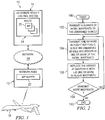
- FIGURE 1 shows one embodiment of an unmanned vehicle route management system 10 that may provide a solution to this problem as well as other problems.
- Unmanned vehicle route management system 10 generally includes a network node 12 coupled to an unmanned vehicle control system 14 and in communication with an unmanned vehicle 16.
- the unmanned vehicle control system 14 is configured to control the course that unmanned vehicle 16 travels using a route 18 having a number of waypoints 20.
- the network node 12 may incorporate a waypoint buffer 22 for temporarily storing waypoints 20 such that the number of waypoints 20 stored in the unmanned vehicle 16 does not exceed a specified quantity.
- Unmanned vehicle control system 14 may be implemented on any suitable computing system that executes program instructions stored in a memory.
- unmanned vehicle control system 14 has a STANdardization AGreement 4586 compliant interface in which network 24 is a user datagram protocol (UDP) type network.
- the unmanned vehicle control system 14 having a STANdardization AGreement 4586 interface may provide a common interface for controlling differing types of unmanned vehicles 16.
- the network node 12 may be implemented with a processor executing computer instructions stored in a memory.
- the network node 12 may incorporate any suitable protocol for communication with the unmanned vehicle control system 14 and the unmanned vehicle 16.
- the network node 12 may be implemented as a vehicle specific module (VSM) that communicates with the unmanned vehicle control system 14 using a STANdardization AGreement 4586 compliant protocol.
- VSM vehicle specific module
- the network node 12 may communicate with the unmanned vehicle control system 14 through a network 24, such as a UDP/IP network.
- the network node 12 may communicate with the unmanned vehicle 16 using any suitable wireless protocol.
- the protocol used by the unmanned vehicle 16 may be different from the native protocol of the unmanned vehicle control system 14.
- the unmanned vehicle 16 may be configured to communicate with the network node 12 using a joint architecture for unmanned systems protocol.
- the unmanned vehicle 16 using a joint architecture for unmanned systems protocol may be configured to store a specified quantity of waypoints that may be used during any particular mission.
- a network node 12 incorporating a waypoint buffer 22 may provide an advantage in that unmanned vehicles 16 that are configured to store a specified quantity of waypoints may be able to conduct missions using a greater quantity of waypoints than its specified quantity of waypoints. Because vehicle control systems 14 implemented with a STANdardization AGreement 4586 interface typically manage routes of unmanned vehicles 16 using a greater quantity of waypoints than those using joint architecture for unmanned systems interfaces, unmanned vehicles 16 using a joint architecture for unmanned systems interface may be configured for use with vehicle control systems 14 using the network node 12 with waypoint buffering capability.
- FIGURE 2 is a flowchart showing one embodiment of a series of actions that may be taken by the network node 12 to manage a route 18 of unmanned vehicle 16.
- act 100 the process is initiated.
- the process may be initiated by applying power to and performing any pertinent bootstrapping operations to the unmanned vehicle control system 14, network node 12, and unmanned vehicle 16.
- the network node 12 may also receive a route 18 having a number of waypoints 20 from the unmanned vehicle control system 14 and temporarily store this route 18 in the waypoint buffer 22.
- the network node 12 may transmit a number of initial waypoints 20 to the unmanned vehicle 16.
- the waypoints 20 may be an initial portion of a route 18 to be taken by the unmanned vehicle 16 during its mission and may be any quantity that does not exceed the specified quantity of the unmanned vehicle 16.
- the network node 12 may transmit one or more in-flight waypoints 20 to the unmanned vehicle 16 after the unmanned vehicle 16 has reached a corresponding one or more of the previously transmitted waypoints 20. That is, the in-flight waypoints 20 may be transmitted to the unmanned vehicle 16 while conducting its mission. The number of in-flight waypoints 20 transmitted may be less than or equal to the number of waypoints 20 in which the unmanned vehicle 16 has arrived at since initiation of its mission.
- the unmanned vehicle 16 may replace the previously transmitted waypoints 20 with the in-flight waypoints 20. By replacing waypoints 20 that have been previously arrived at, the total quantity of waypoints 20 temporarily stored in the unmanned vehicle 16 does not exceed its specified quantity.
- the network node 12 may choose to transmit more waypoints 20 or cease transmitting waypoints 20 to the unmanned vehicle 16. If the network node 12 chooses to tranmit more waypoints 20, processing continues at act 104 in which one or more waypoints 20 are again transmitted to the unmanned vehicle 16 for replacement of previsously transmitted waypoints 20. In this manner, the route 18 of the unmanned vehicle 16 may be managed with an indefinite number of waypoints 20. The previously described process continues for the extent of the unmanned vehicle's 16 mission. The mission is complete once the unmanned vehicle 16 reaches the final waypoint 20 transmitted by the network node 12 in which the process is ended in act 110.
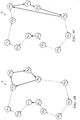
- FIGURES 3A through 3C shows one example of a geographical layout of a route 18 that may be managed by the unmanned vehicle control system 14 on the unmanned vehicle 16.
- This particular route 18 has a quantity of twelve waypoints 20 in which the unmanned vehicle 16 may sequentially travel towards during its mission.
- the unmanned vehicle 16, however, has a maximum specified quantity of eight waypoints 20 that may be stored at any one time.
- waypoints 20 1 through 20 8 comprise a group 26a of initial waypoints 20 that may be transmitted to the unmanned vehicle 16 just prior to or shortly after initiation of the unmanned vehicle's 16 mission.
- waypoint 20 8 which is the last in the sequence of the initial waypoints, is a loiter waypoint.
- a loiter waypoint generally refers to a type of waypoint in which the unmanned vehicle 16 is instructed to remain at until given further instruction by the unmanned vehicle control system 14.
- the unmanned vehicle 16 may conduct a circling pattern in order to remain at loiter waypoint 20 8 .
- Waypoint 20 9 through waypoint 20 12 indicate other waypoints along the route 18 that are not initially stored in the unmanned vehicle 16 because they would exceed the specified quantity of waypoints in the unmanned vehicle 16. That is, because storage of waypoint 20 9 through 20 12 in the unmanned vehicle 16 would exceed its specified quantity of waypoints, these waypoints may not be transmitted to the unmanned vehicle simultaneously with the initial waypoints 20 1 through 20 8 .
- waypoints 20 5 through 20 12 comprise a group 26b of in-flight waypoints that may be transmitted to the unmanned vehicle 16 during its mission.
- waypoints 20 1 through 20 4 represent waypoints that have been previously arrived at prior to receipt of the group 26b of in-flight waypoints by the unmanned vehicle 16. Because waypoint 20 1 through 20 4 have already been arrived at by the unmanned vehicle 16, they are no longer needed for the mission and may be removed from the unmanned vehicle 16 to accommodate the new waypoints 20 9 through 20 12 .
- the group 26b of in-flight waypoints may include new waypoints in addition to recursive waypoints.
- waypoints 20 9 through 20 12 are new waypoints in that they have not been previously transmitted to the unmanned vehicle 16.
- the network node 12 may also transmit recursive waypoints 20 5 through 20 8 to the unmanned vehicle 16.
- Recursive waypoints generally refer to waypoints 20 transmitted to the unmanned vehicle 16 that have been previously received.
- incorporating the transmission of recursive waypoints 20 may enable enhanced reliability by providing redundant transmission of waypoints 20 along route 18. Thus, occasional network outages or missed transmissions may not unduly impair the ability of the unmanned vehicle 16 to complete its mission.
- the unmanned vehicle route management system 10 may enable management of routes 18 having a greater number of waypoints 20 than natively allowed using the specified quantity of the unmanned vehicle 16.
- the in-flight waypoints 20 transmitted to the unmanned vehicle 16 may be a sub-route that implements a particular maneuver for the unmanned vehicle 16 to perform.
- a sub-route may be a particular non-circular loiter pattern, such as a figure-eight loiter pattern or a racetrack loiter pattern to be performed by the unmanned vehicle 16.
- the sub-route may be an approach route that provides a detailed landing trajectory or a vector route that instructs the unmanned vehicle 16 to approach a waypoint 20 from a desired direction.
- FIGURE 3C shows another group 26c of in-flight waypoints that may be transmitted to the unmanned vehicle 16.
- This particular group 26c of in-flight waypoints may include waypoints 20 9 through 20 12 and 20 1 through 20 4 such that the unmanned vehicle 16 is instructed to repeatedly travel along the previously defined route 18.
- These waypoints 20 may be transmitted to the unmanned vehicle 16 at any time after the unmanned vehicle 16 has arrived at waypoint 20 9 and before the unmanned vehicle 16 is scheduled to arrive at waypoint 20 4 .
- the unmanned vehicle route management system 10 may manage a route having any number of waypoints 20 on an unmanned vehicle 16 that is configured to store a finite specified quantity of waypoints.
- FIGURES 4A through 4C shows another embodiment in which the route 18 may be managed by the network node 12.
- a single waypoint 20 may be transmitted to the unmanned vehicle 16 following arrival at each subsequent waypoint 20.
- route 18 has twelve waypoints 20 1 through 20 12 that each indicate twelve corresponding locations to be sequentially arrived at by the unmanned vehicle 16 and the unmanned vehicle 16 has a specified quantity of four waypoints 20 that may be stored at any one time.
- waypoints 20 1 through 20 4 comprise a number of initial waypoints 20 that may be transmitted to the unmanned vehicle 16 just prior to or shortly after initiation of the unmanned vehicle's 16 mission.
- the unmanned vehicle 16 has previously arrived at waypoint 20 1 in which this particular waypoint is no longer needed.
- the network node 12 may transmit a new waypoint 20 5 to the unmanned vehicle 16 that subsequently replaces waypoint 20 1 .
- waypoint 20 5 may be transmitted to the unmanned vehicle 16 at any time between arrival of the unmanned vehicle 16 at waypoints 20 1 through 20 4 .
- the unmanned vehicle 16 has previously arrived at waypoint 20 2 . That is, the unmanned vehicle 16 may be progressing towards either waypoints 20 3 , waypoint 20 4 , or waypoint 20 5 . In this scenario, the network node 12 may then transmit waypoint 20 6 to the unmanned vehicle 16 such that waypoint 20 2 is replaced with waypoint 20 6 . The previously described process may continue until all twelve waypoints 20 are arrived at by the unmanned vehicle 16.
- a unmanned vehicle route management system 10 has been described that may enable enhanced route management by network node 12.
- the network node 12 may be a vehicle specific module configured in a STANdardization AGreement 4586 compliant unmanned vehicle control system 14 that is operable to administer the transmission and receipt of messages to and from the unmanned vehicle 16.
- a STANdardization AGreement 4586 compliant unmanned vehicle control system 14 may be operable to manage routes 18 of unmanned vehicles that communicate using other protocols, such as the joint architecture for unmanned systems protocol.
Landscapes
- Engineering & Computer Science (AREA)
- Aviation & Aerospace Engineering (AREA)
- Radar, Positioning & Navigation (AREA)
- Remote Sensing (AREA)
- Physics & Mathematics (AREA)
- General Physics & Mathematics (AREA)
- Automation & Control Theory (AREA)
- Navigation (AREA)
- Traffic Control Systems (AREA)
- Control Of Position, Course, Altitude, Or Attitude Of Moving Bodies (AREA)
Description
- This disclosure generally relates to unmanned vehicles, and more particularly, to an unmanned vehicle route management system and method of operating the same.
- An unmanned vehicle generally refers to a type of vehicle that is configured to operate without an onboard pilot or driver. Control of the unmanned vehicle may be provided by a remotely configured vehicle control system that transmits commands to the unmanned vehicle for manipulating the unmanned vehicle's operation. The vehicle control system may receive visual or various types of telemetry information from the unmanned vehicle to enable responsive actions from the vehicle control system by a human user. Unmanned vehicles that travel through the air are generally referred to as unmanned aerial vehicles (UAVs) and those that travel over the ground or water are generally referred to unmanned surface vehicles (USVs).
- Unmanned vehicle systems integrating the JAUS and STANAG 4586 protocols are known from PEDERSEN, J: "A Practical View and Future Look at JAUS",RE2, INC., May 2006.
- Route management systems transmitting waypoints defining a route during operation of an unmanned vehicle are known from
US5,5155,683 - The present invention relates to a route management system for an unmanned vehicle according to claim 1, which includes a network node in communication with an unmanned vehicle control system and an unmanned vehicle. The network node is operable to transmit a number of initial waypoints to the unmanned vehicle, transmit one or more in-flight waypoints to the unmanned vehicle after the unmanned vehicle has arrived at a corresponding one or more of the initial waypoints, and replace the one or more of the initial waypoints with the one or more in-flight waypoints in the unmanned vehicle such that the total quantity waypoints stored in the unmanned vehicle does not exceed a specified quantity.
- The route management system enables implementation of routes having a greater number of the waypoints than natively provided by the unmanned vehicle. Known unmanned vehicles are designed to store up to a specified quantity of waypoints. By replacement of previously arrived at waypoints with additional waypoints during flight, the number of waypoints that may be administered to the unmanned vehicle by the unmanned vehicle control system may be extended to virtually any quantity.
- Other technical advantages may be readily ascertained by one of ordinary skill in the art.
- A more complete understanding of embodiments of the disclosure will be apparent from the detailed description taken in conjunction with the accompanying drawings in which:
-
FIGURE 1 is a block diagram showing one embodiment of a route management system according to the teachings of the present disclosure; -
FIGURE 2 is a flowchart showing a series of actions that may be performed by the route management system ofFIGURE 1 ; -
FIGURES 3A through 3C shows one example of a geographical layout of a route that may be managed by the route management system ofFIGURE 1 in which in-flight waypoints are transmitted to the unmanned vehicle in groups; and -
FIGURES 4A through 4C shows another example of a geographical layout of a route that may be managed by the route management system ofFIGURE 1 in which in-flight waypoints are transmitted to the unmanned vehicle one at a time. - To enable communication between the vehicle control system and unmanned vehicle, a number of messaging protocols have been developed. One particular messaging protocol is a STANdardization AGreement (STANAG) 4586 protocol. The STANdardization AGreement 4586 protocol has been developed by the North Atlantic Treaty Organization (NATO) to promote unmanned vehicle interoperability among member nations. Another type of messaging protocol is the joint architecture for unmanned systems (JAUS) developed by the United States Department of Defense. Although numerous unmanned vehicles have been developed for use with both of these protocols, significant variations exist in either messaging protocol such that unmanned vehicles configured for use with one protocol is generally incompatible with a system using the other protocol.
- One difference between the two protocols may be the manner in which routes are managed by the vehicle control system. A route generally refers to course or path taken by an unmanned vehicle during any particular mission and may include a number of waypoints that each indicates a particular destination along this course. Unmanned vehicles using a joint architecture for unmanned systems protocol typically utilize relatively fewer waypoints than unmanned vehicles having a STANdardization AGreement 4586 interface and therefore may be unsuitable for use with vehicle control systems using a STANdardization AGreement 4586 protocol. That is, attempts to control a joint architecture for unmanned systems compliant unmanned vehicle using a STANdardization AGreement 4586 compliant vehicle control system may be prohibited due to an excessive quantity of waypoints administered by the vehicle control system.
-
FIGURE 1 shows one embodiment of an unmanned vehicleroute management system 10 that may provide a solution to this problem as well as other problems. Unmanned vehicleroute management system 10 generally includes anetwork node 12 coupled to an unmannedvehicle control system 14 and in communication with anunmanned vehicle 16. The unmannedvehicle control system 14 is configured to control the course thatunmanned vehicle 16 travels using aroute 18 having a number ofwaypoints 20. As will be described in greater detail below, thenetwork node 12 may incorporate awaypoint buffer 22 for temporarily storingwaypoints 20 such that the number ofwaypoints 20 stored in theunmanned vehicle 16 does not exceed a specified quantity. - Unmanned
vehicle control system 14 may be implemented on any suitable computing system that executes program instructions stored in a memory. In one embodiment, unmannedvehicle control system 14 has a STANdardization AGreement 4586 compliant interface in whichnetwork 24 is a user datagram protocol (UDP) type network. The unmannedvehicle control system 14 having a STANdardization AGreement 4586 interface may provide a common interface for controlling differing types ofunmanned vehicles 16. - The
network node 12 may be implemented with a processor executing computer instructions stored in a memory. Thenetwork node 12 may incorporate any suitable protocol for communication with the unmannedvehicle control system 14 and theunmanned vehicle 16. In one embodiment, thenetwork node 12 may be implemented as a vehicle specific module (VSM) that communicates with the unmannedvehicle control system 14 using a STANdardization AGreement 4586 compliant protocol. In another embodiment thenetwork node 12 may communicate with the unmannedvehicle control system 14 through anetwork 24, such as a UDP/IP network. - The
network node 12 may communicate with theunmanned vehicle 16 using any suitable wireless protocol. In one embodiment, the protocol used by theunmanned vehicle 16 may be different from the native protocol of the unmannedvehicle control system 14. In another embodiment, theunmanned vehicle 16 may be configured to communicate with thenetwork node 12 using a joint architecture for unmanned systems protocol. Theunmanned vehicle 16 using a joint architecture for unmanned systems protocol may be configured to store a specified quantity of waypoints that may be used during any particular mission. - Certain embodiments of a
network node 12 incorporating awaypoint buffer 22 may provide an advantage in thatunmanned vehicles 16 that are configured to store a specified quantity of waypoints may be able to conduct missions using a greater quantity of waypoints than its specified quantity of waypoints. Becausevehicle control systems 14 implemented with a STANdardization AGreement 4586 interface typically manage routes ofunmanned vehicles 16 using a greater quantity of waypoints than those using joint architecture for unmanned systems interfaces,unmanned vehicles 16 using a joint architecture for unmanned systems interface may be configured for use withvehicle control systems 14 using thenetwork node 12 with waypoint buffering capability. -
FIGURE 2 is a flowchart showing one embodiment of a series of actions that may be taken by thenetwork node 12 to manage aroute 18 ofunmanned vehicle 16. Inact 100, the process is initiated. The process may be initiated by applying power to and performing any pertinent bootstrapping operations to the unmannedvehicle control system 14,network node 12, andunmanned vehicle 16. Thenetwork node 12 may also receive aroute 18 having a number ofwaypoints 20 from the unmannedvehicle control system 14 and temporarily store thisroute 18 in thewaypoint buffer 22. - In
act 102, thenetwork node 12 may transmit a number ofinitial waypoints 20 to theunmanned vehicle 16. Thewaypoints 20 may be an initial portion of aroute 18 to be taken by theunmanned vehicle 16 during its mission and may be any quantity that does not exceed the specified quantity of theunmanned vehicle 16. - In
act 104, thenetwork node 12 may transmit one or more in-flight waypoints 20 to theunmanned vehicle 16 after theunmanned vehicle 16 has reached a corresponding one or more of the previously transmittedwaypoints 20. That is, the in-flight waypoints 20 may be transmitted to theunmanned vehicle 16 while conducting its mission. The number of in-flight waypoints 20 transmitted may be less than or equal to the number ofwaypoints 20 in which theunmanned vehicle 16 has arrived at since initiation of its mission. Inact 106, theunmanned vehicle 16 may replace the previously transmittedwaypoints 20 with the in-flight waypoints 20. By replacingwaypoints 20 that have been previously arrived at, the total quantity ofwaypoints 20 temporarily stored in theunmanned vehicle 16 does not exceed its specified quantity. - In
act 108, thenetwork node 12 may choose to transmitmore waypoints 20 or cease transmittingwaypoints 20 to theunmanned vehicle 16. If thenetwork node 12 chooses to tranmitmore waypoints 20, processing continues atact 104 in which one ormore waypoints 20 are again transmitted to theunmanned vehicle 16 for replacement of previsously transmittedwaypoints 20. In this manner, theroute 18 of theunmanned vehicle 16 may be managed with an indefinite number ofwaypoints 20. The previously described process continues for the extent of the unmanned vehicle's 16 mission. The mission is complete once theunmanned vehicle 16 reaches thefinal waypoint 20 transmitted by thenetwork node 12 in which the process is ended inact 110. -
FIGURES 3A through 3C shows one example of a geographical layout of aroute 18 that may be managed by the unmannedvehicle control system 14 on theunmanned vehicle 16. Thisparticular route 18 has a quantity of twelvewaypoints 20 in which theunmanned vehicle 16 may sequentially travel towards during its mission. Theunmanned vehicle 16, however, has a maximum specified quantity of eightwaypoints 20 that may be stored at any one time. - As shown in
FIGURE 3A ,waypoints 201 through 208 comprise agroup 26a ofinitial waypoints 20 that may be transmitted to theunmanned vehicle 16 just prior to or shortly after initiation of the unmanned vehicle's 16 mission. In one embodiment,waypoint 208, which is the last in the sequence of the initial waypoints, is a loiter waypoint. A loiter waypoint generally refers to a type of waypoint in which theunmanned vehicle 16 is instructed to remain at until given further instruction by the unmannedvehicle control system 14. For example, theunmanned vehicle 16 may conduct a circling pattern in order to remain atloiter waypoint 208. -
Waypoint 209 throughwaypoint 2012 indicate other waypoints along theroute 18 that are not initially stored in theunmanned vehicle 16 because they would exceed the specified quantity of waypoints in theunmanned vehicle 16. That is, because storage ofwaypoint 209 through 2012 in theunmanned vehicle 16 would exceed its specified quantity of waypoints, these waypoints may not be transmitted to the unmanned vehicle simultaneously with theinitial waypoints 201 through 208. - In
FIGURE 3B ,waypoints 205 through 2012 comprise agroup 26b of in-flight waypoints that may be transmitted to theunmanned vehicle 16 during its mission. In this figure,waypoints 201 through 204 represent waypoints that have been previously arrived at prior to receipt of thegroup 26b of in-flight waypoints by theunmanned vehicle 16. Becausewaypoint 201 through 204 have already been arrived at by theunmanned vehicle 16, they are no longer needed for the mission and may be removed from theunmanned vehicle 16 to accommodate thenew waypoints 209 through 2012. - The
group 26b of in-flight waypoints may include new waypoints in addition to recursive waypoints. In this particular embodiment,waypoints 209 through 2012 are new waypoints in that they have not been previously transmitted to theunmanned vehicle 16. In one embodiment, thenetwork node 12 may also transmitrecursive waypoints 205 through 208 to theunmanned vehicle 16. Recursive waypoints generally refer towaypoints 20 transmitted to theunmanned vehicle 16 that have been previously received. Certain embodiments, incorporating the transmission ofrecursive waypoints 20 may enable enhanced reliability by providing redundant transmission ofwaypoints 20 alongroute 18. Thus, occasional network outages or missed transmissions may not unduly impair the ability of theunmanned vehicle 16 to complete its mission. - The unmanned vehicle
route management system 10 may enable management ofroutes 18 having a greater number ofwaypoints 20 than natively allowed using the specified quantity of theunmanned vehicle 16. In one embodiment, the in-flight waypoints 20 transmitted to theunmanned vehicle 16 may be a sub-route that implements a particular maneuver for theunmanned vehicle 16 to perform. For example, a sub-route may be a particular non-circular loiter pattern, such as a figure-eight loiter pattern or a racetrack loiter pattern to be performed by theunmanned vehicle 16. In other examples, the sub-route may be an approach route that provides a detailed landing trajectory or a vector route that instructs theunmanned vehicle 16 to approach awaypoint 20 from a desired direction. -
FIGURE 3C shows anothergroup 26c of in-flight waypoints that may be transmitted to theunmanned vehicle 16. Thisparticular group 26c of in-flight waypoints may includewaypoints 209 through 2012 and 201 through 204 such that theunmanned vehicle 16 is instructed to repeatedly travel along the previously definedroute 18. Thesewaypoints 20 may be transmitted to theunmanned vehicle 16 at any time after theunmanned vehicle 16 has arrived atwaypoint 209 and before theunmanned vehicle 16 is scheduled to arrive atwaypoint 204. As can be seen, the unmanned vehicleroute management system 10 may manage a route having any number ofwaypoints 20 on anunmanned vehicle 16 that is configured to store a finite specified quantity of waypoints. -
FIGURES 4A through 4C shows another embodiment in which theroute 18 may be managed by thenetwork node 12. In this particular embodiment, asingle waypoint 20 may be transmitted to theunmanned vehicle 16 following arrival at eachsubsequent waypoint 20. As described previously,route 18 has twelvewaypoints 201 through 2012 that each indicate twelve corresponding locations to be sequentially arrived at by theunmanned vehicle 16 and theunmanned vehicle 16 has a specified quantity of fourwaypoints 20 that may be stored at any one time. InFIGURE 4A ,waypoints 201 through 204 comprise a number ofinitial waypoints 20 that may be transmitted to theunmanned vehicle 16 just prior to or shortly after initiation of the unmanned vehicle's 16 mission. - In
FIGURE 4B , theunmanned vehicle 16 has previously arrived atwaypoint 201 in which this particular waypoint is no longer needed. Thus, thenetwork node 12 may transmit anew waypoint 205 to theunmanned vehicle 16 that subsequently replaceswaypoint 201. In one embodiment,waypoint 205 may be transmitted to theunmanned vehicle 16 at any time between arrival of theunmanned vehicle 16 atwaypoints 201 through 204. - In
FIGURE 4C , theunmanned vehicle 16 has previously arrived atwaypoint 202. That is, theunmanned vehicle 16 may be progressing towards eitherwaypoints 203,waypoint 204, orwaypoint 205. In this scenario, thenetwork node 12 may then transmitwaypoint 206 to theunmanned vehicle 16 such thatwaypoint 202 is replaced withwaypoint 206. The previously described process may continue until all twelvewaypoints 20 are arrived at by theunmanned vehicle 16. - A unmanned vehicle
route management system 10 has been described that may enable enhanced route management bynetwork node 12. In one embodiment, thenetwork node 12 may be a vehicle specific module configured in a STANdardization AGreement 4586 compliant unmannedvehicle control system 14 that is operable to administer the transmission and receipt of messages to and from theunmanned vehicle 16. Using the unmanned vehicleroute management system 10, a STANdardization AGreement 4586 compliant unmannedvehicle control system 14 may be operable to manageroutes 18 of unmanned vehicles that communicate using other protocols, such as the joint architecture for unmanned systems protocol.
Claims (15)
- A route management system (10) comprising a network node (12) in communication with an unmanned vehicle control system (14) and an unmanned vehicle (16), wherein:the unmanned vehicle control system (14) is arranged to communicate using a first communication protocol;the unmanned vehicle (16) is arranged to communicate using a second communication protocol, different to the first communication protocol;the first and second communication protocols are arranged to define a route which the unmanned vehicle (16) is to travel using a number of waypoints (20), and the second communication protocol is arranged to define the route using fewer waypoints (20) than the first communication protocol, such that the unmanned vehicle has an interface capable of receiving a specified quantity of waypoints;characterised in thatthe network node (12) is located remotely from the unmanned vehicle control system and is operable to:receive a quantity of waypoints that exceeds the specified quantity;transmit (102) a plurality of initial waypoints (20) to the unmanned vehicle (16), the quantity of initial waypoints (20) less than or equal to the specified quantity, and the plurality of initial waypoints (20) comprising a portion of a predetermined route (18) by which the unmanned vehicle (16) is to sequentially travel;transmit (104) one or more in-flight waypoints (20) to the unmanned vehicle (16) after the unmanned vehicle (16) has arrived at one or more of the plurality of initial waypoints (20); andreplace (106) the one or more of the plurality of initial waypoints (20) where the unmanned vehicle (16) has previously arrived with the one or more in-flight waypoints (20) in the unmanned vehicle (16) such that the total quantity of waypoints stored in the unmanned vehicle (16) does not exceed the specified quantity.
- The route management system (10) of Claim 1, wherein the one or more initial or in-flight waypoints (20) comprise a single waypoint.
- The route management system (10) of Claim 1, wherein the one or more in-flight waypoints (20) is a group of in-flight waypoints comprising one or more new waypoints and one or more recursive waypoints, the one or more new waypoints having a quantity that is less than or equal to the quantity of the plurality of initial waypoints (20) where the unmanned vehicle (16) has previously arrived.
- The route management system (10) of Claim 2, wherein the group of in-flight waypoints (20) is a sub-route.
- The route management system of Claim 4, wherein the sub-route is selected from the group consisting of an approach route, a loiter route, and a vector route.
- The route management system of Claim 2, wherein a final waypoint of the group of in-flight waypoints (20) is a loiter waypoint.
- The route management system of Claim 1, wherein the network node (12) is a vehicle specific module and operable to receive the plurality of initial waypoints (20) and the one or more in-flight waypoints (20) from the unmanned vehicle control system (14) using a STANdardization AGreement 4586 protocol.
- The route management system (10) of Claim 1, wherein the network node (12) is configured to transmit (104) the plurality of initial waypoints (20) and the one or more in-flight waypoints (20) using a joint architecture for unmanned systems protocol.
- A method comprising:receiving at a network node (12), a quantity of waypoints (20) that exceeds a specified quantity of waypoints, the quantity of waypoints (20) being received using a first communication protocol;transmitting (102) a plurality of initial waypoints (20) to an unmanned vehicle (16) located remotely from the network node, the quantity of initial waypoints (20) being less than or equal to the specified quantity, and the plurality of initial waypoints comprising a portion of a predetermined route (18) by which the unmanned vehicle (16) sequentially travels, wherein the initial waypoints (20) are transmitted using a second communication protocol, different to the first communication protocol, and wherein the first and second communication protocols define a route which the unmanned vehicle (16) is to travel using a number of waypoints (20), and the second communication protocol defines the route using fewer waypoints (20) than the first communication protocol, such that the unmanned vehicle (16) is capable of receiving the specified quantity of waypoints;transmitting (104) one or more in-flight waypoints (20) to the unmanned vehicle (16) after the unmanned vehicle (16) has arrived at one or more of the plurality of initial waypoints; andreplacing (106) the one or more of the plurality of initial waypoints (20) where the unmanned vehicle (16) has previously arrived with the one or more in-flight waypoints (20) in the unmanned vehicle (16) such that the total quantity of waypoints stored in the unmanned vehicle (16) does not exceed the specified quantity.
- The method of Claim 9, wherein transmitting (104) one or more in-flight waypoints to the unmanned vehicle (16) after the unmanned vehicle (16) has arrived at one or more of the plurality of initial waypoints further comprises transmitting one in-flight waypoint to the unmanned vehicle (16) after the unmanned vehicle (16) has arrived at one of the plurality of initial waypoints.
- The method of Claim 9, wherein transmitting (104) one or more in-flight waypoints (20) to the unmanned vehicle (16) after the unmanned vehicle (16) has arrived at one or more of the plurality of initial waypoints (20) further comprises transmitting a group of in-flight waypoints (20) to the unmanned vehicle (16), the group of in-flight waypoints (20) having a quantity being less than or equal to the quantity of the plurality of initial waypoints in which the unmanned vehicle (16) has previously arrived.
- The method of Claim 11, wherein transmitting a group of in-flight waypoints (20) to the unmanned vehicle (16) further comprises transmitting a group of in-flight waypoints comprising at least one recursive waypoint and at least one new waypoint.
- The method of Claim 11, wherein transmitting a group of in-flight waypoints to the unmanned vehicle (16) further comprises transmitting a sub-route to the unmanned vehicle (16).
- The method of Claim 13, wherein transmitting a sub-route to the unmanned vehicle (16) further comprises transmitting a sub-route that is selected from the group consisting of an approach route, a loiter route, and a vector route to the unmanned vehicle.
- The method of Claim 9, wherein transmitting (102) a plurality of initial waypoints (20) and one or more in-flight waypoints further comprises transmitting a plurality of initial waypoints and one or more in-flight waypoints using a STANdardization AGreement 4586 protocol.
Applications Claiming Priority (2)
| Application Number | Priority Date | Filing Date | Title |
|---|---|---|---|
| US11/929,555 US8948932B2 (en) | 2007-10-30 | 2007-10-30 | Unmanned vehicle route management system |
| PCT/US2008/081247 WO2009058697A1 (en) | 2007-10-30 | 2008-10-27 | Unmanned vehicle route management system |
Publications (2)
| Publication Number | Publication Date |
|---|---|
| EP2206029A1 EP2206029A1 (en) | 2010-07-14 |
| EP2206029B1 true EP2206029B1 (en) | 2018-11-28 |
Family
ID=40262305
Family Applications (1)
| Application Number | Title | Priority Date | Filing Date |
|---|---|---|---|
| EP08845282.6A Active EP2206029B1 (en) | 2007-10-30 | 2008-10-27 | Unmanned vehicle route management system |
Country Status (9)
| Country | Link |
|---|---|
| US (1) | US8948932B2 (en) |
| EP (1) | EP2206029B1 (en) |
| JP (1) | JP5266329B2 (en) |
| CN (1) | CN101842758B (en) |
| AU (1) | AU2008318929B2 (en) |
| CA (1) | CA2702426C (en) |
| ES (1) | ES2710382T3 (en) |
| IL (1) | IL205027A (en) |
| WO (1) | WO2009058697A1 (en) |
Families Citing this family (29)
| Publication number | Priority date | Publication date | Assignee | Title |
|---|---|---|---|---|
| US8948932B2 (en) | 2007-10-30 | 2015-02-03 | Raytheon Company | Unmanned vehicle route management system |
| US10999696B1 (en) * | 2008-12-23 | 2021-05-04 | U.S. Government As Represented By The Secretary Of The Army | Distributed geospatial communications system for UAV monitoring |
| US8478455B2 (en) | 2010-04-01 | 2013-07-02 | Raytheon Company | Vehicle control station with back-up VSM for remotely controlling an unmanned vehicle, and method |
| KR101325401B1 (en) | 2011-12-02 | 2013-11-04 | 건국대학교 산학협력단 | Apparatus and method for generating moving information of virtual object |
| AU2013204965B2 (en) | 2012-11-12 | 2016-07-28 | C2 Systems Limited | A system, method, computer program and data signal for the registration, monitoring and control of machines and devices |
| EP2781980B2 (en) * | 2013-03-19 | 2021-12-08 | The Boeing Company | A method of flying an unmanned aerial vehicle |
| US9996364B2 (en) * | 2013-08-30 | 2018-06-12 | Insitu, Inc. | Vehicle user interface adaptation |
| US10250821B2 (en) * | 2013-11-27 | 2019-04-02 | Honeywell International Inc. | Generating a three-dimensional model of an industrial plant using an unmanned aerial vehicle |
| US9405533B2 (en) * | 2014-01-07 | 2016-08-02 | Schlumberger Technology Corporation | Unmanned vehicle systems and methods of operation |
| US9881022B2 (en) * | 2014-05-20 | 2018-01-30 | Verizon Patent And Licensing Inc. | Selection of networks for communicating with unmanned aerial vehicles |
| US9409644B2 (en) * | 2014-07-16 | 2016-08-09 | Ford Global Technologies, Llc | Automotive drone deployment system |
| JP6469487B2 (en) * | 2015-03-17 | 2019-02-13 | セコム株式会社 | Flying robot control system and flying robot |
| US10322787B2 (en) | 2016-03-01 | 2019-06-18 | Brunswick Corporation | Marine vessel station keeping systems and methods |
| US10198005B2 (en) * | 2016-03-01 | 2019-02-05 | Brunswick Corporation | Station keeping and waypoint tracking methods |
| US10640190B1 (en) | 2016-03-01 | 2020-05-05 | Brunswick Corporation | System and method for controlling course of a marine vessel |
| US11226619B2 (en) | 2016-04-24 | 2022-01-18 | Flytrex Aviation Ltd. | Dynamically arming a safety mechanism on a delivery drone |
| US11762384B2 (en) | 2016-04-24 | 2023-09-19 | Flytrex Aviation Ltd. | System and method for dynamically arming a failsafe on a delivery drone |
| US10191485B2 (en) | 2016-04-24 | 2019-01-29 | Flytrex Aviation Ltd. | Apparatus and method for centralized control of vehicles |
| US12007764B2 (en) | 2016-04-24 | 2024-06-11 | Flytrex Aviation Ltd. | System and method for aerial traffic management of unmanned aerial vehicles |
| US10719086B2 (en) | 2016-07-13 | 2020-07-21 | Flytrex Aviation Ltd. | System and method for dynamically updated unmanned vehicle navigation planning |
| EP3459062B1 (en) * | 2016-07-13 | 2022-09-07 | Flytrex Aviation Ltd. | Apparatus and method for centralized control of vehicles |
| US10671073B2 (en) | 2017-02-15 | 2020-06-02 | Brunswick Corporation | Station keeping system and method |
| US11048277B1 (en) | 2018-01-24 | 2021-06-29 | Skydio, Inc. | Objective-based control of an autonomous unmanned aerial vehicle |
| US10633072B1 (en) | 2018-07-05 | 2020-04-28 | Brunswick Corporation | Methods for positioning marine vessels |
| US12333799B2 (en) | 2018-07-20 | 2025-06-17 | Schlumberger Technology Corporation | Optimized multi-stage intermittent fugitive emission detection |
| US11307584B2 (en) | 2018-09-04 | 2022-04-19 | Skydio, Inc. | Applications and skills for an autonomous unmanned aerial vehicle |
| CN110929911B (en) * | 2018-09-20 | 2025-01-17 | 北京京东尚科信息技术有限公司 | Unmanned equipment path planning method and device |
| CN111308523B (en) * | 2020-03-31 | 2020-12-29 | 北京航空航天大学 | A collaborative navigation method for unmanned aerial vehicles and unmanned ships |
| TWI909185B (en) * | 2023-08-02 | 2025-12-21 | 緯創資通股份有限公司 | Method, apparatus and non-transitory computer-readable storage medium for route planning for aerial vehicle |
Family Cites Families (4)
| Publication number | Priority date | Publication date | Assignee | Title |
|---|---|---|---|---|
| US5155683A (en) * | 1991-04-11 | 1992-10-13 | Wadiatur Rahim | Vehicle remote guidance with path control |
| EP1612632B1 (en) | 2004-07-03 | 2009-01-07 | Saab Ab | A system and method for in-flight control of an aerial vehicle |
| US9053638B2 (en) * | 2007-10-30 | 2015-06-09 | Raytheon Company | Unmanned vehicle simulation system |
| US8948932B2 (en) | 2007-10-30 | 2015-02-03 | Raytheon Company | Unmanned vehicle route management system |
-
2007
- 2007-10-30 US US11/929,555 patent/US8948932B2/en active Active
-
2008
- 2008-10-27 JP JP2010531307A patent/JP5266329B2/en active Active
- 2008-10-27 CA CA2702426A patent/CA2702426C/en active Active
- 2008-10-27 ES ES08845282T patent/ES2710382T3/en active Active
- 2008-10-27 CN CN200880114258.7A patent/CN101842758B/en not_active Expired - Fee Related
- 2008-10-27 EP EP08845282.6A patent/EP2206029B1/en active Active
- 2008-10-27 AU AU2008318929A patent/AU2008318929B2/en active Active
- 2008-10-27 WO PCT/US2008/081247 patent/WO2009058697A1/en not_active Ceased
-
2010
- 2010-04-12 IL IL205027A patent/IL205027A/en active IP Right Grant
Non-Patent Citations (1)
| Title |
|---|
| None * |
Also Published As
| Publication number | Publication date |
|---|---|
| CN101842758A (en) | 2010-09-22 |
| JP5266329B2 (en) | 2013-08-21 |
| US8948932B2 (en) | 2015-02-03 |
| IL205027A0 (en) | 2010-11-30 |
| AU2008318929B2 (en) | 2013-01-17 |
| US20100070124A1 (en) | 2010-03-18 |
| CA2702426A1 (en) | 2009-05-07 |
| JP2011502310A (en) | 2011-01-20 |
| WO2009058697A1 (en) | 2009-05-07 |
| ES2710382T3 (en) | 2019-04-24 |
| EP2206029A1 (en) | 2010-07-14 |
| CN101842758B (en) | 2014-07-16 |
| CA2702426C (en) | 2015-10-06 |
| AU2008318929A1 (en) | 2009-05-07 |
| IL205027A (en) | 2014-03-31 |
Similar Documents
| Publication | Publication Date | Title |
|---|---|---|
| CA2702426C (en) | Unmanned vehicle route management system | |
| CN107831783B (en) | A ground station control system supporting autonomous flight of multiple UAVs | |
| US10384779B2 (en) | System and method for commanding a payload of an aircraft | |
| US20110245997A1 (en) | Flight Management System of an Unmanned Aircraft | |
| KR20200013436A (en) | Multi-drone system and operating method thereof | |
| KR101720157B1 (en) | Communication apparatus and method for unmanned aerial vehicle | |
| KR101818232B1 (en) | Apparatus for controlling emergency, drone having the same and method for controlling drone having the same | |
| EP3130877B1 (en) | Method and system for planning and launching a plurality of missiles to be included in the same mission | |
| EP2651082A2 (en) | Method and apparatus for providing a communications pathway with high reliability | |
| KR20140137826A (en) | Ground Control standard working system of Unmanned Aerial Vehicles | |
| WO2009061540A2 (en) | Unmanned vehicle message conversion system | |
| US11809176B2 (en) | Formation management and guidance system and method for automated formation flight | |
| CN110739992A (en) | unmanned aerial vehicle data transmission system based on radio-laser dual-mode communication | |
| KR20110101602A (en) | System and method for smart GPS control and video transmission platform for WLAN based on distributed network | |
| KR20150137524A (en) | Dual ground control system and duplex control method for drone using this system | |
| CN113552896A (en) | Unmanned aerial vehicle relay communication-based unmanned platform remote control system and method | |
| US10795552B2 (en) | Avionics device and method for sending a data message to at least one receiving electronic device, receiving electronic device, associated receiving method and computer program | |
| US12205478B1 (en) | Uploading a mission plan to a remote vehicle | |
| WO2022249832A1 (en) | Communication satellite, satellite constellation, inter-satellite communication method, artificial satellite, and ground facility | |
| US12432221B2 (en) | Datalink arbitration with framed broadcast | |
| US12205475B2 (en) | Method and apparatus for managing missions of a vehicle | |
| US12452136B1 (en) | Smart radio-based tasking allocation for edge networks | |
| EP3293922A1 (en) | Intelligent data node for satellites | |
| KR102333448B1 (en) | Apparatus and method for updating software of guided weapon embedded devices | |
| CN109147309A (en) | More remote control systems based on unmanned plane |
Legal Events
| Date | Code | Title | Description |
|---|---|---|---|
| PUAI | Public reference made under article 153(3) epc to a published international application that has entered the european phase |
Free format text: ORIGINAL CODE: 0009012 |
|
| 17P | Request for examination filed |
Effective date: 20100506 |
|
| AK | Designated contracting states |
Kind code of ref document: A1 Designated state(s): AT BE BG CH CY CZ DE DK EE ES FI FR GB GR HR HU IE IS IT LI LT LU LV MC MT NL NO PL PT RO SE SI SK TR |
|
| AX | Request for extension of the european patent |
Extension state: AL BA MK RS |
|
| DAX | Request for extension of the european patent (deleted) | ||
| 17Q | First examination report despatched |
Effective date: 20120510 |
|
| STAA | Information on the status of an ep patent application or granted ep patent |
Free format text: STATUS: EXAMINATION IS IN PROGRESS |
|
| GRAP | Despatch of communication of intention to grant a patent |
Free format text: ORIGINAL CODE: EPIDOSNIGR1 |
|
| STAA | Information on the status of an ep patent application or granted ep patent |
Free format text: STATUS: GRANT OF PATENT IS INTENDED |
|
| INTG | Intention to grant announced |
Effective date: 20180628 |
|
| GRAS | Grant fee paid |
Free format text: ORIGINAL CODE: EPIDOSNIGR3 |
|
| GRAA | (expected) grant |
Free format text: ORIGINAL CODE: 0009210 |
|
| STAA | Information on the status of an ep patent application or granted ep patent |
Free format text: STATUS: THE PATENT HAS BEEN GRANTED |
|
| AK | Designated contracting states |
Kind code of ref document: B1 Designated state(s): AT BE BG CH CY CZ DE DK EE ES FI FR GB GR HR HU IE IS IT LI LT LU LV MC MT NL NO PL PT RO SE SI SK TR |
|
| REG | Reference to a national code |
Ref country code: GB Ref legal event code: FG4D |
|
| REG | Reference to a national code |
Ref country code: CH Ref legal event code: EP |
|
| REG | Reference to a national code |
Ref country code: AT Ref legal event code: REF Ref document number: 1070964 Country of ref document: AT Kind code of ref document: T Effective date: 20181215 |
|
| REG | Reference to a national code |
Ref country code: DE Ref legal event code: R096 Ref document number: 602008058135 Country of ref document: DE |
|
| REG | Reference to a national code |
Ref country code: IE Ref legal event code: FG4D |
|
| REG | Reference to a national code |
Ref country code: NL Ref legal event code: MP Effective date: 20181128 |
|
| REG | Reference to a national code |
Ref country code: LT Ref legal event code: MG4D |
|
| REG | Reference to a national code |
Ref country code: AT Ref legal event code: MK05 Ref document number: 1070964 Country of ref document: AT Kind code of ref document: T Effective date: 20181128 |
|
| REG | Reference to a national code |
Ref country code: ES Ref legal event code: FG2A Ref document number: 2710382 Country of ref document: ES Kind code of ref document: T3 Effective date: 20190424 |
|
| PG25 | Lapsed in a contracting state [announced via postgrant information from national office to epo] |
Ref country code: LV Free format text: LAPSE BECAUSE OF FAILURE TO SUBMIT A TRANSLATION OF THE DESCRIPTION OR TO PAY THE FEE WITHIN THE PRESCRIBED TIME-LIMIT Effective date: 20181128 Ref country code: HR Free format text: LAPSE BECAUSE OF FAILURE TO SUBMIT A TRANSLATION OF THE DESCRIPTION OR TO PAY THE FEE WITHIN THE PRESCRIBED TIME-LIMIT Effective date: 20181128 Ref country code: LT Free format text: LAPSE BECAUSE OF FAILURE TO SUBMIT A TRANSLATION OF THE DESCRIPTION OR TO PAY THE FEE WITHIN THE PRESCRIBED TIME-LIMIT Effective date: 20181128 Ref country code: BG Free format text: LAPSE BECAUSE OF FAILURE TO SUBMIT A TRANSLATION OF THE DESCRIPTION OR TO PAY THE FEE WITHIN THE PRESCRIBED TIME-LIMIT Effective date: 20190228 Ref country code: FI Free format text: LAPSE BECAUSE OF FAILURE TO SUBMIT A TRANSLATION OF THE DESCRIPTION OR TO PAY THE FEE WITHIN THE PRESCRIBED TIME-LIMIT Effective date: 20181128 Ref country code: NO Free format text: LAPSE BECAUSE OF FAILURE TO SUBMIT A TRANSLATION OF THE DESCRIPTION OR TO PAY THE FEE WITHIN THE PRESCRIBED TIME-LIMIT Effective date: 20190228 Ref country code: IS Free format text: LAPSE BECAUSE OF FAILURE TO SUBMIT A TRANSLATION OF THE DESCRIPTION OR TO PAY THE FEE WITHIN THE PRESCRIBED TIME-LIMIT Effective date: 20190328 Ref country code: AT Free format text: LAPSE BECAUSE OF FAILURE TO SUBMIT A TRANSLATION OF THE DESCRIPTION OR TO PAY THE FEE WITHIN THE PRESCRIBED TIME-LIMIT Effective date: 20181128 |
|
| PG25 | Lapsed in a contracting state [announced via postgrant information from national office to epo] |
Ref country code: SE Free format text: LAPSE BECAUSE OF FAILURE TO SUBMIT A TRANSLATION OF THE DESCRIPTION OR TO PAY THE FEE WITHIN THE PRESCRIBED TIME-LIMIT Effective date: 20181128 Ref country code: GR Free format text: LAPSE BECAUSE OF FAILURE TO SUBMIT A TRANSLATION OF THE DESCRIPTION OR TO PAY THE FEE WITHIN THE PRESCRIBED TIME-LIMIT Effective date: 20190301 Ref country code: PT Free format text: LAPSE BECAUSE OF FAILURE TO SUBMIT A TRANSLATION OF THE DESCRIPTION OR TO PAY THE FEE WITHIN THE PRESCRIBED TIME-LIMIT Effective date: 20190328 |
|
| PG25 | Lapsed in a contracting state [announced via postgrant information from national office to epo] |
Ref country code: NL Free format text: LAPSE BECAUSE OF FAILURE TO SUBMIT A TRANSLATION OF THE DESCRIPTION OR TO PAY THE FEE WITHIN THE PRESCRIBED TIME-LIMIT Effective date: 20181128 |
|
| PG25 | Lapsed in a contracting state [announced via postgrant information from national office to epo] |
Ref country code: DK Free format text: LAPSE BECAUSE OF FAILURE TO SUBMIT A TRANSLATION OF THE DESCRIPTION OR TO PAY THE FEE WITHIN THE PRESCRIBED TIME-LIMIT Effective date: 20181128 Ref country code: CZ Free format text: LAPSE BECAUSE OF FAILURE TO SUBMIT A TRANSLATION OF THE DESCRIPTION OR TO PAY THE FEE WITHIN THE PRESCRIBED TIME-LIMIT Effective date: 20181128 Ref country code: PL Free format text: LAPSE BECAUSE OF FAILURE TO SUBMIT A TRANSLATION OF THE DESCRIPTION OR TO PAY THE FEE WITHIN THE PRESCRIBED TIME-LIMIT Effective date: 20181128 |
|
| REG | Reference to a national code |
Ref country code: DE Ref legal event code: R097 Ref document number: 602008058135 Country of ref document: DE |
|
| PG25 | Lapsed in a contracting state [announced via postgrant information from national office to epo] |
Ref country code: SK Free format text: LAPSE BECAUSE OF FAILURE TO SUBMIT A TRANSLATION OF THE DESCRIPTION OR TO PAY THE FEE WITHIN THE PRESCRIBED TIME-LIMIT Effective date: 20181128 Ref country code: RO Free format text: LAPSE BECAUSE OF FAILURE TO SUBMIT A TRANSLATION OF THE DESCRIPTION OR TO PAY THE FEE WITHIN THE PRESCRIBED TIME-LIMIT Effective date: 20181128 Ref country code: EE Free format text: LAPSE BECAUSE OF FAILURE TO SUBMIT A TRANSLATION OF THE DESCRIPTION OR TO PAY THE FEE WITHIN THE PRESCRIBED TIME-LIMIT Effective date: 20181128 |
|
| PLBE | No opposition filed within time limit |
Free format text: ORIGINAL CODE: 0009261 |
|
| STAA | Information on the status of an ep patent application or granted ep patent |
Free format text: STATUS: NO OPPOSITION FILED WITHIN TIME LIMIT |
|
| PG25 | Lapsed in a contracting state [announced via postgrant information from national office to epo] |
Ref country code: SI Free format text: LAPSE BECAUSE OF FAILURE TO SUBMIT A TRANSLATION OF THE DESCRIPTION OR TO PAY THE FEE WITHIN THE PRESCRIBED TIME-LIMIT Effective date: 20181128 |
|
| 26N | No opposition filed |
Effective date: 20190829 |
|
| PG25 | Lapsed in a contracting state [announced via postgrant information from national office to epo] |
Ref country code: TR Free format text: LAPSE BECAUSE OF FAILURE TO SUBMIT A TRANSLATION OF THE DESCRIPTION OR TO PAY THE FEE WITHIN THE PRESCRIBED TIME-LIMIT Effective date: 20181128 |
|
| PG25 | Lapsed in a contracting state [announced via postgrant information from national office to epo] |
Ref country code: MC Free format text: LAPSE BECAUSE OF FAILURE TO SUBMIT A TRANSLATION OF THE DESCRIPTION OR TO PAY THE FEE WITHIN THE PRESCRIBED TIME-LIMIT Effective date: 20181128 |
|
| REG | Reference to a national code |
Ref country code: CH Ref legal event code: PL |
|
| PG25 | Lapsed in a contracting state [announced via postgrant information from national office to epo] |
Ref country code: LU Free format text: LAPSE BECAUSE OF NON-PAYMENT OF DUE FEES Effective date: 20191027 Ref country code: CH Free format text: LAPSE BECAUSE OF NON-PAYMENT OF DUE FEES Effective date: 20191031 Ref country code: LI Free format text: LAPSE BECAUSE OF NON-PAYMENT OF DUE FEES Effective date: 20191031 |
|
| REG | Reference to a national code |
Ref country code: BE Ref legal event code: MM Effective date: 20191031 |
|
| PG25 | Lapsed in a contracting state [announced via postgrant information from national office to epo] |
Ref country code: BE Free format text: LAPSE BECAUSE OF NON-PAYMENT OF DUE FEES Effective date: 20191031 |
|
| PG25 | Lapsed in a contracting state [announced via postgrant information from national office to epo] |
Ref country code: IE Free format text: LAPSE BECAUSE OF NON-PAYMENT OF DUE FEES Effective date: 20191027 |
|
| PG25 | Lapsed in a contracting state [announced via postgrant information from national office to epo] |
Ref country code: CY Free format text: LAPSE BECAUSE OF FAILURE TO SUBMIT A TRANSLATION OF THE DESCRIPTION OR TO PAY THE FEE WITHIN THE PRESCRIBED TIME-LIMIT Effective date: 20181128 |
|
| PG25 | Lapsed in a contracting state [announced via postgrant information from national office to epo] |
Ref country code: MT Free format text: LAPSE BECAUSE OF FAILURE TO SUBMIT A TRANSLATION OF THE DESCRIPTION OR TO PAY THE FEE WITHIN THE PRESCRIBED TIME-LIMIT Effective date: 20181128 Ref country code: HU Free format text: LAPSE BECAUSE OF FAILURE TO SUBMIT A TRANSLATION OF THE DESCRIPTION OR TO PAY THE FEE WITHIN THE PRESCRIBED TIME-LIMIT; INVALID AB INITIO Effective date: 20081027 |
|
| P01 | Opt-out of the competence of the unified patent court (upc) registered |
Effective date: 20230530 |
|
| PGFP | Annual fee paid to national office [announced via postgrant information from national office to epo] |
Ref country code: IT Payment date: 20250923 Year of fee payment: 18 |
|
| PGFP | Annual fee paid to national office [announced via postgrant information from national office to epo] |
Ref country code: GB Payment date: 20250923 Year of fee payment: 18 |
|
| PGFP | Annual fee paid to national office [announced via postgrant information from national office to epo] |
Ref country code: FR Payment date: 20250925 Year of fee payment: 18 |
|
| PGFP | Annual fee paid to national office [announced via postgrant information from national office to epo] |
Ref country code: DE Payment date: 20250923 Year of fee payment: 18 |
|
| PGFP | Annual fee paid to national office [announced via postgrant information from national office to epo] |
Ref country code: ES Payment date: 20251103 Year of fee payment: 18 |