EP2205498B1 - Packaging system with an overcap - Google Patents
Packaging system with an overcap Download PDFInfo
- Publication number
- EP2205498B1 EP2205498B1 EP08837101A EP08837101A EP2205498B1 EP 2205498 B1 EP2205498 B1 EP 2205498B1 EP 08837101 A EP08837101 A EP 08837101A EP 08837101 A EP08837101 A EP 08837101A EP 2205498 B1 EP2205498 B1 EP 2205498B1
- Authority
- EP
- European Patent Office
- Prior art keywords
- container
- overcap
- gasket
- packaging system
- outer portion
- Prior art date
- Legal status (The legal status is an assumption and is not a legal conclusion. Google has not performed a legal analysis and makes no representation as to the accuracy of the status listed.)
- Active
Links
Images







Classifications
-
- B—PERFORMING OPERATIONS; TRANSPORTING
- B65—CONVEYING; PACKING; STORING; HANDLING THIN OR FILAMENTARY MATERIAL
- B65D—CONTAINERS FOR STORAGE OR TRANSPORT OF ARTICLES OR MATERIALS, e.g. BAGS, BARRELS, BOTTLES, BOXES, CANS, CARTONS, CRATES, DRUMS, JARS, TANKS, HOPPERS, FORWARDING CONTAINERS; ACCESSORIES, CLOSURES, OR FITTINGS THEREFOR; PACKAGING ELEMENTS; PACKAGES
- B65D43/00—Lids or covers for rigid or semi-rigid containers
- B65D43/02—Removable lids or covers
- B65D43/0202—Removable lids or covers without integral tamper element
- B65D43/0204—Removable lids or covers without integral tamper element secured by snapping over beads or projections
- B65D43/0212—Removable lids or covers without integral tamper element secured by snapping over beads or projections only on the outside, or a part turned to the outside, of the mouth
-
- B—PERFORMING OPERATIONS; TRANSPORTING
- B65—CONVEYING; PACKING; STORING; HANDLING THIN OR FILAMENTARY MATERIAL
- B65D—CONTAINERS FOR STORAGE OR TRANSPORT OF ARTICLES OR MATERIALS, e.g. BAGS, BARRELS, BOTTLES, BOXES, CANS, CARTONS, CRATES, DRUMS, JARS, TANKS, HOPPERS, FORWARDING CONTAINERS; ACCESSORIES, CLOSURES, OR FITTINGS THEREFOR; PACKAGING ELEMENTS; PACKAGES
- B65D51/00—Closures not otherwise provided for
- B65D51/16—Closures not otherwise provided for with means for venting air or gas
- B65D51/1672—Closures not otherwise provided for with means for venting air or gas whereby venting occurs by manual actuation of the closure or other element
- B65D51/1683—Closures not otherwise provided for with means for venting air or gas whereby venting occurs by manual actuation of the closure or other element by actuating a separate element in the container or closure
-
- B—PERFORMING OPERATIONS; TRANSPORTING
- B65—CONVEYING; PACKING; STORING; HANDLING THIN OR FILAMENTARY MATERIAL
- B65D—CONTAINERS FOR STORAGE OR TRANSPORT OF ARTICLES OR MATERIALS, e.g. BAGS, BARRELS, BOTTLES, BOXES, CANS, CARTONS, CRATES, DRUMS, JARS, TANKS, HOPPERS, FORWARDING CONTAINERS; ACCESSORIES, CLOSURES, OR FITTINGS THEREFOR; PACKAGING ELEMENTS; PACKAGES
- B65D51/00—Closures not otherwise provided for
- B65D51/18—Arrangements of closures with protective outer cap-like covers or of two or more co-operating closures
- B65D51/20—Caps, lids, or covers co-operating with an inner closure arranged to be opened by piercing, cutting, or tearing
-
- B—PERFORMING OPERATIONS; TRANSPORTING
- B65—CONVEYING; PACKING; STORING; HANDLING THIN OR FILAMENTARY MATERIAL
- B65D—CONTAINERS FOR STORAGE OR TRANSPORT OF ARTICLES OR MATERIALS, e.g. BAGS, BARRELS, BOTTLES, BOXES, CANS, CARTONS, CRATES, DRUMS, JARS, TANKS, HOPPERS, FORWARDING CONTAINERS; ACCESSORIES, CLOSURES, OR FITTINGS THEREFOR; PACKAGING ELEMENTS; PACKAGES
- B65D79/00—Kinds or details of packages, not otherwise provided for
- B65D79/005—Packages having deformable parts for indicating or neutralizing internal pressure-variations by other means than venting
- B65D79/0087—Packages having deformable parts for indicating or neutralizing internal pressure-variations by other means than venting the deformable part being located in a closure, e.g. in caps or lids
-
- B—PERFORMING OPERATIONS; TRANSPORTING
- B29—WORKING OF PLASTICS; WORKING OF SUBSTANCES IN A PLASTIC STATE IN GENERAL
- B29C—SHAPING OR JOINING OF PLASTICS; SHAPING OF MATERIAL IN A PLASTIC STATE, NOT OTHERWISE PROVIDED FOR; AFTER-TREATMENT OF THE SHAPED PRODUCTS, e.g. REPAIRING
- B29C45/00—Injection moulding, i.e. forcing the required volume of moulding material through a nozzle into a closed mould; Apparatus therefor
- B29C45/16—Making multilayered or multicoloured articles
- B29C45/1615—The materials being injected at different moulding stations
- B29C45/1628—The materials being injected at different moulding stations using a mould carrier rotatable about an axis perpendicular to the opening and closing axis of the moulding stations
-
- B—PERFORMING OPERATIONS; TRANSPORTING
- B29—WORKING OF PLASTICS; WORKING OF SUBSTANCES IN A PLASTIC STATE IN GENERAL
- B29C—SHAPING OR JOINING OF PLASTICS; SHAPING OF MATERIAL IN A PLASTIC STATE, NOT OTHERWISE PROVIDED FOR; AFTER-TREATMENT OF THE SHAPED PRODUCTS, e.g. REPAIRING
- B29C45/00—Injection moulding, i.e. forcing the required volume of moulding material through a nozzle into a closed mould; Apparatus therefor
- B29C45/16—Making multilayered or multicoloured articles
- B29C45/1676—Making multilayered or multicoloured articles using a soft material and a rigid material, e.g. making articles with a sealing part
-
- B—PERFORMING OPERATIONS; TRANSPORTING
- B29—WORKING OF PLASTICS; WORKING OF SUBSTANCES IN A PLASTIC STATE IN GENERAL
- B29L—INDEXING SCHEME ASSOCIATED WITH SUBCLASS B29C, RELATING TO PARTICULAR ARTICLES
- B29L2031/00—Other particular articles
- B29L2031/26—Sealing devices, e.g. packaging for pistons or pipe joints
- B29L2031/265—Packings, Gaskets
-
- B—PERFORMING OPERATIONS; TRANSPORTING
- B29—WORKING OF PLASTICS; WORKING OF SUBSTANCES IN A PLASTIC STATE IN GENERAL
- B29L—INDEXING SCHEME ASSOCIATED WITH SUBCLASS B29C, RELATING TO PARTICULAR ARTICLES
- B29L2031/00—Other particular articles
- B29L2031/56—Stoppers or lids for bottles, jars, or the like, e.g. closures
-
- B—PERFORMING OPERATIONS; TRANSPORTING
- B29—WORKING OF PLASTICS; WORKING OF SUBSTANCES IN A PLASTIC STATE IN GENERAL
- B29L—INDEXING SCHEME ASSOCIATED WITH SUBCLASS B29C, RELATING TO PARTICULAR ARTICLES
- B29L2031/00—Other particular articles
- B29L2031/56—Stoppers or lids for bottles, jars, or the like, e.g. closures
- B29L2031/565—Stoppers or lids for bottles, jars, or the like, e.g. closures for containers
-
- B—PERFORMING OPERATIONS; TRANSPORTING
- B65—CONVEYING; PACKING; STORING; HANDLING THIN OR FILAMENTARY MATERIAL
- B65D—CONTAINERS FOR STORAGE OR TRANSPORT OF ARTICLES OR MATERIALS, e.g. BAGS, BARRELS, BOTTLES, BOXES, CANS, CARTONS, CRATES, DRUMS, JARS, TANKS, HOPPERS, FORWARDING CONTAINERS; ACCESSORIES, CLOSURES, OR FITTINGS THEREFOR; PACKAGING ELEMENTS; PACKAGES
- B65D2203/00—Decoration means, markings, information elements, contents indicators
- B65D2203/12—Audible, olfactory or visual signalling means
-
- B—PERFORMING OPERATIONS; TRANSPORTING
- B65—CONVEYING; PACKING; STORING; HANDLING THIN OR FILAMENTARY MATERIAL
- B65D—CONTAINERS FOR STORAGE OR TRANSPORT OF ARTICLES OR MATERIALS, e.g. BAGS, BARRELS, BOTTLES, BOXES, CANS, CARTONS, CRATES, DRUMS, JARS, TANKS, HOPPERS, FORWARDING CONTAINERS; ACCESSORIES, CLOSURES, OR FITTINGS THEREFOR; PACKAGING ELEMENTS; PACKAGES
- B65D2251/00—Details relating to container closures
- B65D2251/0003—Two or more closures
- B65D2251/0006—Upper closure
- B65D2251/0018—Upper closure of the 43-type
-
- B—PERFORMING OPERATIONS; TRANSPORTING
- B65—CONVEYING; PACKING; STORING; HANDLING THIN OR FILAMENTARY MATERIAL
- B65D—CONTAINERS FOR STORAGE OR TRANSPORT OF ARTICLES OR MATERIALS, e.g. BAGS, BARRELS, BOTTLES, BOXES, CANS, CARTONS, CRATES, DRUMS, JARS, TANKS, HOPPERS, FORWARDING CONTAINERS; ACCESSORIES, CLOSURES, OR FITTINGS THEREFOR; PACKAGING ELEMENTS; PACKAGES
- B65D2251/00—Details relating to container closures
- B65D2251/0003—Two or more closures
- B65D2251/0068—Lower closure
- B65D2251/0093—Membrane
-
- B—PERFORMING OPERATIONS; TRANSPORTING
- B65—CONVEYING; PACKING; STORING; HANDLING THIN OR FILAMENTARY MATERIAL
- B65D—CONTAINERS FOR STORAGE OR TRANSPORT OF ARTICLES OR MATERIALS, e.g. BAGS, BARRELS, BOTTLES, BOXES, CANS, CARTONS, CRATES, DRUMS, JARS, TANKS, HOPPERS, FORWARDING CONTAINERS; ACCESSORIES, CLOSURES, OR FITTINGS THEREFOR; PACKAGING ELEMENTS; PACKAGES
- B65D2543/00—Lids or covers essentially for box-like containers
- B65D2543/00009—Details of lids or covers for rigid or semi-rigid containers
- B65D2543/00018—Overall construction of the lid
- B65D2543/00064—Shape of the outer periphery
- B65D2543/00074—Shape of the outer periphery curved
- B65D2543/00092—Shape of the outer periphery curved circular
-
- B—PERFORMING OPERATIONS; TRANSPORTING
- B65—CONVEYING; PACKING; STORING; HANDLING THIN OR FILAMENTARY MATERIAL
- B65D—CONTAINERS FOR STORAGE OR TRANSPORT OF ARTICLES OR MATERIALS, e.g. BAGS, BARRELS, BOTTLES, BOXES, CANS, CARTONS, CRATES, DRUMS, JARS, TANKS, HOPPERS, FORWARDING CONTAINERS; ACCESSORIES, CLOSURES, OR FITTINGS THEREFOR; PACKAGING ELEMENTS; PACKAGES
- B65D2543/00—Lids or covers essentially for box-like containers
- B65D2543/00009—Details of lids or covers for rigid or semi-rigid containers
- B65D2543/00018—Overall construction of the lid
- B65D2543/00231—Overall construction of the lid made of several pieces
-
- B—PERFORMING OPERATIONS; TRANSPORTING
- B65—CONVEYING; PACKING; STORING; HANDLING THIN OR FILAMENTARY MATERIAL
- B65D—CONTAINERS FOR STORAGE OR TRANSPORT OF ARTICLES OR MATERIALS, e.g. BAGS, BARRELS, BOTTLES, BOXES, CANS, CARTONS, CRATES, DRUMS, JARS, TANKS, HOPPERS, FORWARDING CONTAINERS; ACCESSORIES, CLOSURES, OR FITTINGS THEREFOR; PACKAGING ELEMENTS; PACKAGES
- B65D2543/00—Lids or covers essentially for box-like containers
- B65D2543/00009—Details of lids or covers for rigid or semi-rigid containers
- B65D2543/00018—Overall construction of the lid
- B65D2543/00259—Materials used
- B65D2543/00296—Plastic
-
- B—PERFORMING OPERATIONS; TRANSPORTING
- B65—CONVEYING; PACKING; STORING; HANDLING THIN OR FILAMENTARY MATERIAL
- B65D—CONTAINERS FOR STORAGE OR TRANSPORT OF ARTICLES OR MATERIALS, e.g. BAGS, BARRELS, BOTTLES, BOXES, CANS, CARTONS, CRATES, DRUMS, JARS, TANKS, HOPPERS, FORWARDING CONTAINERS; ACCESSORIES, CLOSURES, OR FITTINGS THEREFOR; PACKAGING ELEMENTS; PACKAGES
- B65D2543/00—Lids or covers essentially for box-like containers
- B65D2543/00009—Details of lids or covers for rigid or semi-rigid containers
- B65D2543/00342—Central part of the lid
- B65D2543/00351—Dome-like
-
- B—PERFORMING OPERATIONS; TRANSPORTING
- B65—CONVEYING; PACKING; STORING; HANDLING THIN OR FILAMENTARY MATERIAL
- B65D—CONTAINERS FOR STORAGE OR TRANSPORT OF ARTICLES OR MATERIALS, e.g. BAGS, BARRELS, BOTTLES, BOXES, CANS, CARTONS, CRATES, DRUMS, JARS, TANKS, HOPPERS, FORWARDING CONTAINERS; ACCESSORIES, CLOSURES, OR FITTINGS THEREFOR; PACKAGING ELEMENTS; PACKAGES
- B65D2543/00—Lids or covers essentially for box-like containers
- B65D2543/00009—Details of lids or covers for rigid or semi-rigid containers
- B65D2543/00342—Central part of the lid
- B65D2543/00398—Reinforcing ribs in the central part of the closure
- B65D2543/00407—Reinforcing ribs in the central part of the closure radial
-
- B—PERFORMING OPERATIONS; TRANSPORTING
- B65—CONVEYING; PACKING; STORING; HANDLING THIN OR FILAMENTARY MATERIAL
- B65D—CONTAINERS FOR STORAGE OR TRANSPORT OF ARTICLES OR MATERIALS, e.g. BAGS, BARRELS, BOTTLES, BOXES, CANS, CARTONS, CRATES, DRUMS, JARS, TANKS, HOPPERS, FORWARDING CONTAINERS; ACCESSORIES, CLOSURES, OR FITTINGS THEREFOR; PACKAGING ELEMENTS; PACKAGES
- B65D2543/00—Lids or covers essentially for box-like containers
- B65D2543/00009—Details of lids or covers for rigid or semi-rigid containers
- B65D2543/00444—Contact between the container and the lid
- B65D2543/00481—Contact between the container and the lid on the inside or the outside of the container
- B65D2543/00537—Contact between the container and the lid on the inside or the outside of the container on the outside, or a part turned to the outside of the mouth of the container
-
- B—PERFORMING OPERATIONS; TRANSPORTING
- B65—CONVEYING; PACKING; STORING; HANDLING THIN OR FILAMENTARY MATERIAL
- B65D—CONTAINERS FOR STORAGE OR TRANSPORT OF ARTICLES OR MATERIALS, e.g. BAGS, BARRELS, BOTTLES, BOXES, CANS, CARTONS, CRATES, DRUMS, JARS, TANKS, HOPPERS, FORWARDING CONTAINERS; ACCESSORIES, CLOSURES, OR FITTINGS THEREFOR; PACKAGING ELEMENTS; PACKAGES
- B65D2543/00—Lids or covers essentially for box-like containers
- B65D2543/00009—Details of lids or covers for rigid or semi-rigid containers
- B65D2543/00444—Contact between the container and the lid
- B65D2543/00592—Snapping means
- B65D2543/00601—Snapping means on the container
- B65D2543/00611—Profiles
- B65D2543/0062—Groove or hollow bead
-
- B—PERFORMING OPERATIONS; TRANSPORTING
- B65—CONVEYING; PACKING; STORING; HANDLING THIN OR FILAMENTARY MATERIAL
- B65D—CONTAINERS FOR STORAGE OR TRANSPORT OF ARTICLES OR MATERIALS, e.g. BAGS, BARRELS, BOTTLES, BOXES, CANS, CARTONS, CRATES, DRUMS, JARS, TANKS, HOPPERS, FORWARDING CONTAINERS; ACCESSORIES, CLOSURES, OR FITTINGS THEREFOR; PACKAGING ELEMENTS; PACKAGES
- B65D2543/00—Lids or covers essentially for box-like containers
- B65D2543/00009—Details of lids or covers for rigid or semi-rigid containers
- B65D2543/00444—Contact between the container and the lid
- B65D2543/00592—Snapping means
- B65D2543/00601—Snapping means on the container
- B65D2543/00675—Periphery concerned
- B65D2543/00685—Totality
-
- B—PERFORMING OPERATIONS; TRANSPORTING
- B65—CONVEYING; PACKING; STORING; HANDLING THIN OR FILAMENTARY MATERIAL
- B65D—CONTAINERS FOR STORAGE OR TRANSPORT OF ARTICLES OR MATERIALS, e.g. BAGS, BARRELS, BOTTLES, BOXES, CANS, CARTONS, CRATES, DRUMS, JARS, TANKS, HOPPERS, FORWARDING CONTAINERS; ACCESSORIES, CLOSURES, OR FITTINGS THEREFOR; PACKAGING ELEMENTS; PACKAGES
- B65D2543/00—Lids or covers essentially for box-like containers
- B65D2543/00009—Details of lids or covers for rigid or semi-rigid containers
- B65D2543/00444—Contact between the container and the lid
- B65D2543/00592—Snapping means
- B65D2543/00712—Snapping means on the lid
- B65D2543/00722—Profiles
- B65D2543/00731—Groove or hollow bead
-
- B—PERFORMING OPERATIONS; TRANSPORTING
- B65—CONVEYING; PACKING; STORING; HANDLING THIN OR FILAMENTARY MATERIAL
- B65D—CONTAINERS FOR STORAGE OR TRANSPORT OF ARTICLES OR MATERIALS, e.g. BAGS, BARRELS, BOTTLES, BOXES, CANS, CARTONS, CRATES, DRUMS, JARS, TANKS, HOPPERS, FORWARDING CONTAINERS; ACCESSORIES, CLOSURES, OR FITTINGS THEREFOR; PACKAGING ELEMENTS; PACKAGES
- B65D2543/00—Lids or covers essentially for box-like containers
- B65D2543/00009—Details of lids or covers for rigid or semi-rigid containers
- B65D2543/00444—Contact between the container and the lid
- B65D2543/00592—Snapping means
- B65D2543/00712—Snapping means on the lid
- B65D2543/00787—Periphery concerned
- B65D2543/00796—Totality
-
- B—PERFORMING OPERATIONS; TRANSPORTING
- B65—CONVEYING; PACKING; STORING; HANDLING THIN OR FILAMENTARY MATERIAL
- B65D—CONTAINERS FOR STORAGE OR TRANSPORT OF ARTICLES OR MATERIALS, e.g. BAGS, BARRELS, BOTTLES, BOXES, CANS, CARTONS, CRATES, DRUMS, JARS, TANKS, HOPPERS, FORWARDING CONTAINERS; ACCESSORIES, CLOSURES, OR FITTINGS THEREFOR; PACKAGING ELEMENTS; PACKAGES
- B65D2543/00—Lids or covers essentially for box-like containers
- B65D2543/00009—Details of lids or covers for rigid or semi-rigid containers
- B65D2543/00953—Sealing means
- B65D2543/00962—Sealing means inserted
- B65D2543/00972—Collars or rings
Definitions
- the present invention generally relates to a packaging system useful for packing food products and more particularly relates to a roast and ground coffee packaging system having a gasket as an airtight seal between the overcap and the container that preserves a clicking sound upon closure by an end user and an outer portion that gives an end user a visual and touchable stimulus.
- EP-A-1 767 463 and US-A-3 514 004 disclose container closures provided with soft material portion attached onto rigid overcap, so that the container closure is more easily grasped by the user's fingers for opening or closing the closures, or for reducing and substantially eliminating injury to anyone opening the container by hand.
- Packaging systems such as coffee containers, and in more particular plastic coffee containers such as those described in U.S. Patent No. 7,169,418 , assigned to The Vietnamese Coffe Company, are being used more and more to deliver coffee to consumers.
- plastic coffee containers such as those described in U.S. Patent No. 7,169,418 , assigned to The Vietnamese Coffe Company.
- a consumer demand exists for indications that the coffee inside the container remains fresh.
- Consumers are aware that external environmental factors, such as air, including oxygen, affect the freshness and thus the taste of the roast and ground coffee.
- Current containers do not present these visual indicators to consumers to communicate to them that the container is providing not only a way to transport the roast and ground coffee but an indication that the roast and ground coffee is protected from these environmental factors.
- freshness is a critical consumer need in the coffee marketplace.
- fresh coffee equates to a great tasting cup of coffee.
- methods are used to process and pack coffee to ensure that the coffee is still fresh by the time the consumer buys it at a store. Once the coffee is purchased and taken to the place of storage and consumption, typically a consumer's home, the consumer still desires for the coffee to stay fresh in the container over the length of time that it takes to consume the entire amount of coffee.
- the fit between the overcap and the container has not been tight enough to effectively "seal in” freshness by way of an airtight seal or even to "burp" the package, i.e.
- airtight containers are comprised of a soft, usually thermoplastic, seal or gasket for sealing. Having this soft seal provides a generally airtight seal.
- a soft thermoplastic for the seal results in loss of a clicking sound that occurs when an end user "burps" a container.
- the lid when constructed of a rigid plastic material, "clicks” when it is snapped onto the container and becomes fully attached to the container.
- the clicking sound is lost, resulting in the end user being unsure whether they have truly tightly closed and sealed the container.
- the present invention contemplates a packaging system for roast and ground coffee, having the features of claim 1.
- An audible sound can be produced by the physical contacting of the middle portion with the container and can be capable of being perceived by a person when the overcap is applied to the container. Multiple color arrangements are also envisioned.
- thermoplastic elastomer as used and described herein may be useful and advantageous for any product where it is valuable, or at least desirable, for a packaging system to have an airtight seal that preserves a clicking sound upon closure by an end user.
- burp or "burping" of the packaging system is defined as when an end user or consumer pushes on the top of an overcap of a packaging system in accordance with one embodiment of the present invention to force air out of a container and then subsequently sealing or attaching of the overcap to the container so that a slight vacuum is created within the packaging system.
- burping results in excess atmospheric gas being discharged from the container and thereby reduces the amount of air, and thus oxygen, present inside the container.
- clicking means to create an audible sound that is capable of being perceived, and can be perceived, by a consumer during the ordinary and customary application of an overcap to a container.
- the present invention is related to a packaging system for roast and ground coffee.
- the packaging system comprises container, an overcap, a gasket for sealing between the overcap and the container, and an outer portion adhered to the perimeter of the overcap.
- the overcap can generally be made of a polyolefin material so that during "burping" of the packaging system by an end user, the overcap snaps into place with a snapping, or clicking, sound.
- Polyolefins include any linear low density polyethylene or polypropylene, or their functional equivalents that can be used to preserve the snapping sound of the overcap. This snapping sound verifies to the end user that a tight seal has been created.
- the gasket can generally be made of a thermoplastic elastomer so that effectively 100% sealing can occur between the overcap and the container.
- the outer portion can generally be made of a thermoplastic elastomer as well.
- the outer portion can be adhered to the perimeter of the overcap so that it can be at least partially visible to a consumer. Since it is visible to the consumer, the consumer is able to touch the outer portion. Being visible as well as touchable to the consumer means that the consumer can visibly see and touch this thermoplastic elastomer, which communicates and signals to the consumer sealing confidence and thus freshness of the roast and ground coffee insider the packaging system. Therefore, outer portion can provide a simple yet strong visual signal to consumers that the container is one which presents an airtight seal.
- thermoplastic elastomer (TPE) is used as a gasket or seal in at least one embodiment.
- TPE which is generally known to those skilled in the art as a soft touch material, is used to create a 100%, or nearly 100%, airtight seal between the container and the overcap.
- the TPE deforms and conforms to the container when the overcap is placed on the container, and this arrangement forms a seal to block air from entering the packaging system.
- Thermoplastic elastomers are used in accordance with multiple embodiments of the present invention. Selection of the correct and best thermoplastic elastomer is based on a number of factors. Among those factors are the ability to effectively seal between the overcap and the container, having the proper friction and structural properties to ride over the container during application of the overcap to the container for closing of the container, and a lack of attraction and detainment of roast and ground coffee grounds. Thus, embodiments of the present invention will be hereinafter described in light of these factors.
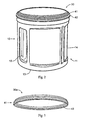
- FIG. 1 details a packaging system 10 in accordance with one embodiment of the present invention.
- Packaging system 10 generally comprises a container 11 made from a plastic, for example, polyolefin.
- Packaging system 10 is in general accordance with those disclosed in U.S. Patent Nos. 7,169,418 and 7,169,419 .
- container 11 can take any number of shapes, non-limiting examples including round, square, parallelepiped, and including with or without handles, grips, or pass-through handles, and can be made of any number of suitable materials.
- Container 11 generally comprises an open top 12, a closed bottom 13, and a body portion 14. Open top 12, closed bottom 13, and body portion 14 define an inner volume in which a product, such as roast and ground coffee, is contained.
- container 11 can be cylindrically shaped with substantially smooth sides. In another embodiment, the container is parallelepiped shaped. Handle portions 15 can be respectively formed in container body portion 14 at arcuate positions. Additionally, container 11 has a protuberance 17 in the form of a rim like structure disposed at the open end of container 11. Protuberance 17 provides a surface with which to removeably attach a closure 18 and provide a locking surface for skirt portion 32 of overcap 30.
- protuberance 17, in the form of a rim like structure disposed at the open end of container 11, may have textured surfaces disposed thereon.
- Textured surfaces disposed on protuberance 17 can comprise raised surfaces in the form of protuberances, annular features, and/or cross-hatching to facilitate better sealing of removable closure 19.
- Annular features may include a single bead or a series of beads as concentric rings protruding from the seal surface of protuberance 17. While not wishing to be bound by theory, it is believed that a textured surface on protuberance 17 can allow for the application of a more uniform and/or concentrated pressure during a sealing process.
- Textured surfaces can provide increased sealing capability between protuberance 17 and removeable closure 19 due to any irregularities introduced during molding, trimming, shipping processes, and the like during manufacture of container 11. It should be understood that while FIG. 1 and other embodiments disclose a protuberance 17, packaging systems without a protuberance are contemplated and within the scope of this invention.
- packaging system 10 comprises a closure 18.
- Closure 18 can be a laminated, peelable seal 19 that can be removeably attached and sealed to container 11.
- Peelable seal 19 can have a hole beneath, can be applied were a degassing valve, represented by reference number 20.
- One-way valve 20 can be heat welded or glued to peelable seal 19.
- Closure 18 can be sealed to container 11 along the rim or protuberance 17 of container 11.
- Methods of sealing include a heat sealing method incorporating a hot metal plate to apply pressure and heat through the closure material and the container rim, to cause a fused bond.
- the peel strength achieved is generally a result of the applied pressure, temperature, and dwell time of the sealing process.
- other types of seals and seal methods could be used to achieve a bond with sufficient and effective seal strength, including, but not limited to, a plurality of annular sealing beads disposed on rim 17.
- packaging system 10 comprises an overcap 30.
- Overcap 30 comprises a dome portion 31, skirt portion 32, and rib 33.
- Overcap 30 is configured to be removeably attached to container 11.
- overcap 30 is generally manufactured from a plastic with a low flexural modulus, for example, linear low-density polyethylene (LLDPE), low-density polyethylene (LDPE), high-density polyethylene (HDPE), polyethylene (PE), polypropylene (PP), linear low-density polyethylene (LLDPE), polycarbonate, polyethylene terephthalate (PET), polystyrene, polyvinyl chloride (PVC), copolymers thereof, and combinations thereof.
- LLDPE linear low-density polyethylene
- LDPE low-density polyethylene
- HDPE high-density polyethylene
- PE polyethylene
- PP polypropylene
- LLDPE linear low-density polyethylene
- PVC polyvinyl chloride
- overcap 30 that has a high degree of flexibility yet can still provide sufficient rigidity to allow stacking of successive containers.
- mechanical application during packaging as well as re-application of overcap 30 to container 11 after opening by the consumer is facilitated.
- a feature of flexible overcap 30, especially a flexible overcap 30 made from a plastic selected from above, although not exclusively, is the ability of the end user to "burp" excess atmospheric gas from container 11 thereby reducing the amount of oxygen present inside the container 11.
- the desired balance of flexibility and rigidity exhibited by overcap 30 is to vary the thickness profile of the overcap 30.
- the dome portion 31 can be manufactured to be thinner than skirt portion 32 and rib 33.
- Dome portion 31 can generally be designed with a curvature and, hence, heigh; to accommodate for an outward displacement of closure 18 from container 11 as a packaged product, such as roast and ground coffee, off gases.
- the amount of curvature needed in dome portion 31 can be mathematically determined as a prediction of displacement of closure 18.
- a nominal height of dome portion 31 can be 0.242 inches (0.61cm) with an internal pressure on closure 18 of 15 millibars for a nominal 6-inch (15.25 cm) diameter overcap.
- the dome portion 31 can also generally displaceable beyond its original height as internal pressure rises in container 11, causing closure 18 to rise prior to the release of any off gas by a one-way valve 20. While dome portion 31 has been described as designed with a curvature, other embodiments are envisioned that do not have a curvature. A simple flat design may also be appropriate.
- FIG. 2 shows a perspective view of packaging system 10 in accordance with one embodiment of the present invention.
- packaging system 10 includes a container 11 comprising a closed bottom 13, body portion 14, and handle portions 15.
- FIG. 2 further details an overcap 30 applied to the container 11, collar 41 of the overcap, and an outer portion 42 of the overcap.
- Outer portion 42 in this particular embodiment, is adhered to the perimeter of the overcap 30 at collar 41 and has a first portion for adhering to the overcap (not shown in this figure but shown in FIG. 4 ) and a second portion for visual and touching stimulus to an end user, as hereinbefore described.
- FIG. 3 details a perspective view of a partial view of the side and underside of an overcap 30a in accordance with one embodiment of the present invention.
- overcap 30a has a collar 41.
- Gasket 43 is further shown on the underside of the overcap 30a.
- Gasket 43 is situated on the interior of overcap 30a.
- Gasket 43 is for sealing between the overcap 30a and the container 11. It can form a 100% airtight, or nearly airtight, seal between the overcap 30a and the container 11 so that air cannot enter the container.
- the gasket can be made from a thermoplastic elastomer (TPE).
- TPE which is generally known to those skilled in the art as a soft touch material, is used to create a 100%, or nearly 100%, airtight seal between the container and the overcap.
- the TPE When attached to the overcap, the TPE deforms and conforms to the container when the overcap is placed on the container, and this arrangement forms a seal to block air from entering the packaging system.
- FIG. 3A details a perspective view of the underside of one embodiment of the overcap 30b.
- overcap 30b includes a visual indicator 39, in the form of a bubble that is concave outwardly away from the inside of the container or concave inwardly towards the inside of the container, depending on whether a vacuum exists inside the packaging system. It indicates a pressure differential between the inside of the container and the outside of the container after the container has been "burped" by a consumer.
- the visual indicator 39 is inwardly concave.
- the visual indicator 39 is outwardly concave.
- a gasket 43c is also shown.
- gasket 43c is formed from four runner spokes 35, 36, 37, and 38.
- These runner spokes 35, 36, 37, and 38 represent areas in which an injection molding core is inserting the thermoplastic material to form the gasket 43c.
- no middle portion which is explained subsequently, is present.
- the middle portion is not contiguously disposed around the perimeter of the overcap in this embodiment since the four runner spokes touch the perimeter of the overcap 30b at the points 35a, 36a, 37a, and 38a.
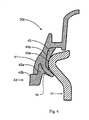
- FIG. 4 details a close up view one embodiment of an overcap 30c attached to a container 11.
- overcap 30c includes a collar 41.
- Collar 41 includes a middle portion 44.
- a gasket 43 is included and adhered to the underside of the overcap 30c.
- Gasket 43 includes a first surface 43a and a second surface 43b.
- an outer portion 42 is included and adhered to the overcap 30c.
- Outer portion 42 includes a first portion 42a and a second portion 42b.
- Middle portion 44 in FIG. 4 is part of the collar 41 and is positioned to separate the gasket 43 and the outer portion 42 so that physical contact between the gasket 43 and outer portion 42 does not take place. Furthermore, middle portion 44 is situated so that it does make physical contact with the container 11 upon application of the overcap 30c to the container 11. Upon application of the overcap 30c to the container 11, a clicking sound or snapping sound is produced, which is the physical contacting of the middle portion 44 with the container 11. Such an audible clicking or snapping sound is perceived by the end user such that it gives them confidence that indeed the overcap 30c has been properly applied to container 11 such that it has been applied and sealed to the container well enough to create an airtight, or nearly airtight seal.
- gasket 43 comprises a first surface 43a and a second surface 43b.
- First surface 43a can be for sealing to the container to prevent air from entering the container.
- Second surface 43b can be for adhering the gasket 43 to the overcap 30c.
- first surface 43a and second surface 43b can be integral with gasket 43 such that all three are one piece.
- Outer portion 42 can also be included. It comprises the first portion 42a and the second portion 42b. First portion 42a is for adhering to the overcap. Second portion 42b is for visual and touching stimulus to an end user. As shown in FIG. 4 , first portion 42a and second portion 42b can be integral such that they together form one piece as outer portion 42.
- coloring of the gasket, the outer portion, the collar, and the middle portion is contemplated. Such coloring would include differing colors such that the outer portion and the gasket are of the same color but of different color than the collar and middle portion. Further, the outer portion and the gasket could be of differing colors while the outer portion, the collar, and the middle portion are of differing colors as well. Differing colors between the collar and the outer portion allows an end user to visually notice that a distinguishing characteristic is present, that of a different material adhered to the overcap in the form of the outer portion.
- the outer portion and gasket are generally made of elastic polymers, which include rubbers and thermoplastic elastomers.
- thermoplastic elastomers are used for the outer portion and the gasket.
- Thermoplastic elastomers provide a soft touch material that also allows for an airtight seal.
- the overcap including the collar and middle portion, is generally made of rigid plastic materials, such as polyolefins.
- the overcap can be made of polypropylene. It should be understood that other similar types of plastics are within the scope of this invention and can be used to make the components of the packaging system.
- the TPE material can be at least partially or completely translucent, such that it can be used to create a color changing seal.
- the seal at the interface between the container and the overcap can change colors. In one embodiment, for example, wherein the TPE material is blue and the container portion touching the TPE material is yellow, the seal can turn to a resulting green color.
- Other color arrangements can be envisioned using any colors for the TPE material and the container such that any resulting color can be formed.
- the end user or consumer pushes on the top of overcap 30 of the packaging system 10 to force air out of the container 11, then subsequently seals or presses on the overcap 30 to the container 11 so that a slight vacuum is maintained within the packaging system 10 over time.
- the consumer Upon the performance of "burping" by the consumer, he or she then knows that they have removed at least some air, and thus oxygen, from the container and thus have prepared a friendlier environment for the coffee. Since some oxygen has been removed from the container, and oxygen is prevented by the airtight gasket from entering into the container, less oxidizing of the coffee will occur and, thus, a fresher coffee will be maintained.
- the gasket 43 gives to the consumer the benefit of knowing that an airtight, or nearly airtight, seal has been made.
- container 11 With respect to manufacturing, container 11, as shown in FIG. 1 , can be produced by blow molding a polyolefinic compound.
- Polyethylene and polypropylene for example, are relative low cost resins suitable for food contact and provide an excellent water vapor barrier.
- ethylene vinyl alcohol (EVOH) can provide such an excellent barrier.
- EVOH ethylene vinyl alcohol
- a thin layer of EVOH sandwiched between two or more polyolefinic layers can solve this problem. Therefore, the blow-molding process can be used with multi-layered structures by incorporating additional extruders for each resin used.
- the container can be manufactured using other methods, including injection molding and stretch blow molding.
- Overcap 30 with gasket 43 and outer portion 42 can be manufactured using injection molding.
- the mold design uses a rotating tube stack mold configuration.
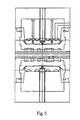
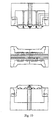
- FIGs. 5-14 detail a molding process that can be used to manufacture an overcap in accordance with at least one embodiment of the present invention.
Landscapes
- Engineering & Computer Science (AREA)
- Mechanical Engineering (AREA)
- Closures For Containers (AREA)
- Packages (AREA)
- Packging For Living Organisms, Food Or Medicinal Products That Are Sensitive To Environmental Conditiond (AREA)
- Details Of Rigid Or Semi-Rigid Containers (AREA)
Description
- The present invention generally relates to a packaging system useful for packing food products and more particularly relates to a roast and ground coffee packaging system having a gasket as an airtight seal between the overcap and the container that preserves a clicking sound upon closure by an end user and an outer portion that gives an end user a visual and touchable stimulus.
- Consumers generally want the appearance that food products, in particular roast and ground coffee, are fresh upon consuming.
-
US-A-2002/11303 discloses the features of the preamble ofclaim 1. -
EP-A-1 767 463 andUS-A-3 514 004 disclose container closures provided with soft material portion attached onto rigid overcap, so that the container closure is more easily grasped by the user's fingers for opening or closing the closures, or for reducing and substantially eliminating injury to anyone opening the container by hand. - Packaging systems such as coffee containers, and in more particular plastic coffee containers such as those described in
U.S. Patent No. 7,169,418 , assigned to The Folger Coffe Company, are being used more and more to deliver coffee to consumers. With the increase of coffee sold to consumers in plastic containers, a consumer demand exists for indications that the coffee inside the container remains fresh. Consumers are aware that external environmental factors, such as air, including oxygen, affect the freshness and thus the taste of the roast and ground coffee. Current containers do not present these visual indicators to consumers to communicate to them that the container is providing not only a way to transport the roast and ground coffee but an indication that the roast and ground coffee is protected from these environmental factors. - Further, it is known from consumer research that freshness is a critical consumer need in the coffee marketplace. In other words, fresh coffee equates to a great tasting cup of coffee. Currently, methods are used to process and pack coffee to ensure that the coffee is still fresh by the time the consumer buys it at a store. Once the coffee is purchased and taken to the place of storage and consumption, typically a consumer's home, the consumer still desires for the coffee to stay fresh in the container over the length of time that it takes to consume the entire amount of coffee. Unfortunately, the fit between the overcap and the container has not been tight enough to effectively "seal in" freshness by way of an airtight seal or even to "burp" the package, i.e. to push on the top of the overcap to force air out of the container and then seal the overcap to the container so that a slight vacuum is maintained over time, indicating that no air is coming into the container. Even if the fit had been tight enough, it would have been difficult for the consumer to see the depressed overcap (due to the pressure differential, i.e. vacuum) because the pressure differential was small, and the surface area of the cap was large, thus resulting in a small deflection of the overcap.
- Even more so, airtight containers are comprised of a soft, usually thermoplastic, seal or gasket for sealing. Having this soft seal provides a generally airtight seal. However, using a soft thermoplastic for the seal results in loss of a clicking sound that occurs when an end user "burps" a container. During "burping" of a container, the lid, when constructed of a rigid plastic material, "clicks" when it is snapped onto the container and becomes fully attached to the container. However, when using a soft, thermoplastic seal on the container, the clicking sound is lost, resulting in the end user being unsure whether they have truly tightly closed and sealed the container. Thus, a need exists for a container that has an airtight seal but preserves the clicking sound when "burping" of the container is desired by the end user.
- Emphasizing this problem is the use of visual indicators, in the form of vacuum-indicating buttons or bubbles. These bubbles generally operate when a pressure difference exists between the inside of the container and the outside of the container, which results when an end user "burps" the container. The bubble transforms from concave outwardly to concave inwardly to indicate that a partial vacuum exists inside the container. In order for the bubble to operate properly, at desired pressures, a soft, thermoplastic material is needed to form the airtight seal between the lid and the container. However, as above, the clicking sound needs to be preserved to assure the end user and to provide confidence to them that the container has been completely -to sealed.
- Thus, a need exists for a packaging system having an airtight seal that preserves a clicking sound upon closure by an end user. Further, it is desired to give the end user a visual and touchable stimulus by way of an outer portion.
- To address the current needs, the present invention contemplates a packaging system for roast and ground coffee, having the features of
claim 1. - An audible sound can be produced by the physical contacting of the middle portion with the container and can be capable of being perceived by a person when the overcap is applied to the container. Multiple color arrangements are also envisioned.
- Numerous advantages and additional aspects of the present invention will be apparent from the dependent claims and from the description of the preferred embodiments and drawings that follow.
- While this specification includes a description of the present invention and concludes with claims that define the invention, it is believed that both will be better understood by reference to the drawings wherein:
-
FIG. 1 is an exploded perspective view of a packaging system. -
FIG. 2 is a perspective view of the packaging system including an overcap with an outer portion. -
FIG. 3 is a perspective view of the overcap including a gasket. -
FIG. 3A is a perspective view of the underside of the overcap. -
FIG. 4 is a close up view of the container with an applied overcap. -
FIG. 5 is a mold sequence for a first step of the manufacturing process associated with at least one embodiment of the present invention. -
FIG. 6 is a mold sequence for a subsequent step of the manufacturing process associated with at least one embodiment of the present invention. -
FIG. 7 is a mold sequence for a subsequent step of the manufacturing process associated with at least one embodiment of the present invention. -
FIG. 8 is a mold sequence for a subsequent step of the manufacturing process associated with at least one embodiment of the present invention. -
FIG. 9 is a mold sequence for a subsequent step of the manufacturing process associated with at least one embodiment of the present invention. -
FIG. 10 is a mold sequence for a subsequent step of the manufacturing process associated with at least one embodiment of the present invention. -
FIG. 11 is a mold sequence for a subsequent step of the manufacturing process associated with at least one embodiment of the present invention. -
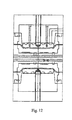
FIG. 12 is a mold sequence for a subsequent step of the manufacturing process associated with at least one embodiment of the present invention. -
FIG. 13 is a mold sequence for a subsequent step of the manufacturing process associated with at least one embodiment of the present invention. -
FIG. 14 is a mold sequence for a subsequent step of the manufacturing process associated with at least one embodiment of the present invention. - For the purpose of promoting an understanding of the principles of the invention, reference will now be made to the embodiments illustrated in the drawings and specific language will be used to describe the same. It will nevertheless be understood that no limitation of the scope of the invention is thereby intended. Such alterations and further modifications in the illustrated device and such further applications of the principles of the invention as illustrated therein as would normally occur to one skilled in the art to which the invention relates are contemplated as within the scope of the invention.
- Although the invention herein will generally be described in terms of a package for a food product, it should be understood that any suitable packaging system for a food product is within the scope of the present invention. A double shot molding of thermoplastic elastomer as used and described herein may be useful and advantageous for any product where it is valuable, or at least desirable, for a packaging system to have an airtight seal that preserves a clicking sound upon closure by an end user.
- As used herein, the articles including "the", "a" and "an" when used in a claim or in the specification, are understood to mean one or more of what is claimed or described.
- As used herein, the terms "include", "includes" and "including" are meant to be non-limiting.
- As used herein the term "burp" or "burping" of the packaging system is defined as when an end user or consumer pushes on the top of an overcap of a packaging system in accordance with one embodiment of the present invention to force air out of a container and then subsequently sealing or attaching of the overcap to the container so that a slight vacuum is created within the packaging system. Thus, "burping" results in excess atmospheric gas being discharged from the container and thereby reduces the amount of air, and thus oxygen, present inside the container.
- As used herein the term "clicking" or "snapping" means to create an audible sound that is capable of being perceived, and can be perceived, by a consumer during the ordinary and customary application of an overcap to a container.
- The present invention is related to a packaging system for roast and ground coffee. The packaging system comprises container, an overcap, a gasket for sealing between the overcap and the container, and an outer portion adhered to the perimeter of the overcap. The overcap can generally be made of a polyolefin material so that during "burping" of the packaging system by an end user, the overcap snaps into place with a snapping, or clicking, sound. Polyolefins include any linear low density polyethylene or polypropylene, or their functional equivalents that can be used to preserve the snapping sound of the overcap. This snapping sound verifies to the end user that a tight seal has been created. The gasket can generally be made of a thermoplastic elastomer so that effectively 100% sealing can occur between the overcap and the container. The outer portion can generally be made of a thermoplastic elastomer as well. The outer portion can be adhered to the perimeter of the overcap so that it can be at least partially visible to a consumer. Since it is visible to the consumer, the consumer is able to touch the outer portion. Being visible as well as touchable to the consumer means that the consumer can visibly see and touch this thermoplastic elastomer, which communicates and signals to the consumer sealing confidence and thus freshness of the roast and ground coffee insider the packaging system. Therefore, outer portion can provide a simple yet strong visual signal to consumers that the container is one which presents an airtight seal.
- To create an airtight seal between the overcap and the container, and thus to allow a vacuum to form when the
packaging system 10 is "burped," a thermoplastic elastomer (TPE) is used as a gasket or seal in at least one embodiment. TPE, which is generally known to those skilled in the art as a soft touch material, is used to create a 100%, or nearly 100%, airtight seal between the container and the overcap. When attached to the overcap, the TPE deforms and conforms to the container when the overcap is placed on the container, and this arrangement forms a seal to block air from entering the packaging system. - Thermoplastic elastomers are used in accordance with multiple embodiments of the present invention. Selection of the correct and best thermoplastic elastomer is based on a number of factors. Among those factors are the ability to effectively seal between the overcap and the container, having the proper friction and structural properties to ride over the container during application of the overcap to the container for closing of the container, and a lack of attraction and detainment of roast and ground coffee grounds. Thus, embodiments of the present invention will be hereinafter described in light of these factors.
-
FIG. 1 details apackaging system 10 in accordance with one embodiment of the present invention.Packaging system 10 generally comprises acontainer 11 made from a plastic, for example, polyolefin.Packaging system 10 is in general accordance with those disclosed inU.S. Patent Nos. 7,169,418 and7,169,419 . It should be realized thatcontainer 11 can take any number of shapes, non-limiting examples including round, square, parallelepiped, and including with or without handles, grips, or pass-through handles, and can be made of any number of suitable materials.Container 11 generally comprises an open top 12, a closed bottom 13, and abody portion 14. Open top 12, closed bottom 13, andbody portion 14 define an inner volume in which a product, such as roast and ground coffee, is contained. - With further reference to
FIG. 1 ,container 11 can be cylindrically shaped with substantially smooth sides. In another embodiment, the container is parallelepiped shaped. Handleportions 15 can be respectively formed incontainer body portion 14 at arcuate positions. Additionally,container 11 has aprotuberance 17 in the form of a rim like structure disposed at the open end ofcontainer 11.Protuberance 17 provides a surface with which to removeably attach aclosure 18 and provide a locking surface forskirt portion 32 ofovercap 30. - Again referring to
FIG. 1 ,protuberance 17, in the form of a rim like structure disposed at the open end ofcontainer 11, may have textured surfaces disposed thereon. Textured surfaces disposed onprotuberance 17 can comprise raised surfaces in the form of protuberances, annular features, and/or cross-hatching to facilitate better sealing ofremovable closure 19. Annular features may include a single bead or a series of beads as concentric rings protruding from the seal surface ofprotuberance 17. While not wishing to be bound by theory, it is believed that a textured surface onprotuberance 17 can allow for the application of a more uniform and/or concentrated pressure during a sealing process. Textured surfaces can provide increased sealing capability betweenprotuberance 17 andremoveable closure 19 due to any irregularities introduced during molding, trimming, shipping processes, and the like during manufacture ofcontainer 11. It should be understood that whileFIG. 1 and other embodiments disclose aprotuberance 17, packaging systems without a protuberance are contemplated and within the scope of this invention. - Further in
FIG. 1 ,packaging system 10 comprises aclosure 18.Closure 18 can be a laminated,peelable seal 19 that can be removeably attached and sealed tocontainer 11.Peelable seal 19 can have a hole beneath, can be applied were a degassing valve, represented byreference number 20. One-way valve 20 can be heat welded or glued topeelable seal 19. -
Closure 18 can be sealed tocontainer 11 along the rim orprotuberance 17 ofcontainer 11. Methods of sealing include a heat sealing method incorporating a hot metal plate to apply pressure and heat through the closure material and the container rim, to cause a fused bond. The peel strength achieved is generally a result of the applied pressure, temperature, and dwell time of the sealing process. However, it should be known to one skilled in the an that other types of seals and seal methods could be used to achieve a bond with sufficient and effective seal strength, including, but not limited to, a plurality of annular sealing beads disposed onrim 17. - Referring again to
FIG. 1 ,packaging system 10 comprises anovercap 30.Overcap 30 comprises adome portion 31,skirt portion 32, andrib 33.Overcap 30 is configured to be removeably attached tocontainer 11. As a non-limiting example, overcap 30 is generally manufactured from a plastic with a low flexural modulus, for example, linear low-density polyethylene (LLDPE), low-density polyethylene (LDPE), high-density polyethylene (HDPE), polyethylene (PE), polypropylene (PP), linear low-density polyethylene (LLDPE), polycarbonate, polyethylene terephthalate (PET), polystyrene, polyvinyl chloride (PVC), copolymers thereof, and combinations thereof. This allows for anovercap 30 that has a high degree of flexibility yet can still provide sufficient rigidity to allow stacking of successive containers. By using aflexible overcap 30, mechanical application during packaging as well as re-application ofovercap 30 tocontainer 11 after opening by the consumer is facilitated. A feature offlexible overcap 30, especially aflexible overcap 30 made from a plastic selected from above, although not exclusively, is the ability of the end user to "burp" excess atmospheric gas fromcontainer 11 thereby reducing the amount of oxygen present inside thecontainer 11. Additionally, the desired balance of flexibility and rigidity exhibited byovercap 30 is to vary the thickness profile of theovercap 30. For example, thedome portion 31 can be manufactured to be thinner thanskirt portion 32 andrib 33. -
Dome portion 31 can generally be designed with a curvature and, hence, heigh; to accommodate for an outward displacement ofclosure 18 fromcontainer 11 as a packaged product, such as roast and ground coffee, off gases. The amount of curvature needed indome portion 31 can be mathematically determined as a prediction of displacement ofclosure 18. As a non-limiting example, a nominal height ofdome portion 31 can be 0.242 inches (0.61cm) with an internal pressure onclosure 18 of 15 millibars for a nominal 6-inch (15.25 cm) diameter overcap. Further, thedome portion 31 can also generally displaceable beyond its original height as internal pressure rises incontainer 11, causingclosure 18 to rise prior to the release of any off gas by a one-way valve 20. Whiledome portion 31 has been described as designed with a curvature, other embodiments are envisioned that do not have a curvature. A simple flat design may also be appropriate. -
FIG. 2 shows a perspective view ofpackaging system 10 in accordance with one embodiment of the present invention. In this embodiment,packaging system 10 includes acontainer 11 comprising a closed bottom 13,body portion 14, and handleportions 15.FIG. 2 further details anovercap 30 applied to thecontainer 11,collar 41 of the overcap, and anouter portion 42 of the overcap.Outer portion 42, in this particular embodiment, is adhered to the perimeter of theovercap 30 atcollar 41 and has a first portion for adhering to the overcap (not shown in this figure but shown inFIG. 4 ) and a second portion for visual and touching stimulus to an end user, as hereinbefore described. -
FIG. 3 details a perspective view of a partial view of the side and underside of anovercap 30a in accordance with one embodiment of the present invention. In this embodiment,overcap 30a has acollar 41.Gasket 43 is further shown on the underside of theovercap 30a.Gasket 43 is situated on the interior ofovercap 30a.Gasket 43 is for sealing between theovercap 30a and thecontainer 11. It can form a 100% airtight, or nearly airtight, seal between theovercap 30a and thecontainer 11 so that air cannot enter the container. As described before, the gasket can be made from a thermoplastic elastomer (TPE). TPE, which is generally known to those skilled in the art as a soft touch material, is used to create a 100%, or nearly 100%, airtight seal between the container and the overcap. When attached to the overcap, the TPE deforms and conforms to the container when the overcap is placed on the container, and this arrangement forms a seal to block air from entering the packaging system. -
FIG. 3A details a perspective view of the underside of one embodiment of theovercap 30b. In this embodiment,overcap 30b includes avisual indicator 39, in the form of a bubble that is concave outwardly away from the inside of the container or concave inwardly towards the inside of the container, depending on whether a vacuum exists inside the packaging system. It indicates a pressure differential between the inside of the container and the outside of the container after the container has been "burped" by a consumer. When the packaging system is under vacuum, thevisual indicator 39 is inwardly concave. When the packaging system is not under vacuum, thevisual indicator 39 is outwardly concave. One embodiment of agasket 43c is also shown. In this embodiment,gasket 43c is formed from fourrunner spokes runner spokes gasket 43c. Thus, at the points where the runner spokes touch the perimeter of the overcap, such as atpoints overcap 30b at thepoints -
FIG. 4 details a close up view one embodiment of anovercap 30c attached to acontainer 11. In this embodiment,overcap 30c includes acollar 41.Collar 41 includes amiddle portion 44. In this embodiment, agasket 43 is included and adhered to the underside of theovercap 30c.Gasket 43 includes afirst surface 43a and asecond surface 43b. Also in this embodiment, anouter portion 42 is included and adhered to theovercap 30c.Outer portion 42 includes afirst portion 42a and asecond portion 42b. -
Middle portion 44 inFIG. 4 is part of thecollar 41 and is positioned to separate thegasket 43 and theouter portion 42 so that physical contact between thegasket 43 andouter portion 42 does not take place. Furthermore,middle portion 44 is situated so that it does make physical contact with thecontainer 11 upon application of theovercap 30c to thecontainer 11. Upon application of theovercap 30c to thecontainer 11, a clicking sound or snapping sound is produced, which is the physical contacting of themiddle portion 44 with thecontainer 11. Such an audible clicking or snapping sound is perceived by the end user such that it gives them confidence that indeed theovercap 30c has been properly applied tocontainer 11 such that it has been applied and sealed to the container well enough to create an airtight, or nearly airtight seal. - In
FIG. 4 ,gasket 43 comprises afirst surface 43a and asecond surface 43b.First surface 43a can be for sealing to the container to prevent air from entering the container.Second surface 43b can be for adhering thegasket 43 to theovercap 30c. As shown inFIG. 4 ,first surface 43a andsecond surface 43b can be integral withgasket 43 such that all three are one piece. -
Outer portion 42 can also be included. It comprises thefirst portion 42a and thesecond portion 42b.First portion 42a is for adhering to the overcap.Second portion 42b is for visual and touching stimulus to an end user. As shown inFIG. 4 ,first portion 42a andsecond portion 42b can be integral such that they together form one piece asouter portion 42. - Other embodiments of the present invention are also included within the scope of this invention. For example, coloring of the gasket, the outer portion, the collar, and the middle portion is contemplated. Such coloring would include differing colors such that the outer portion and the gasket are of the same color but of different color than the collar and middle portion. Further, the outer portion and the gasket could be of differing colors while the outer portion, the collar, and the middle portion are of differing colors as well. Differing colors between the collar and the outer portion allows an end user to visually notice that a distinguishing characteristic is present, that of a different material adhered to the overcap in the form of the outer portion.
- As discussed above, the outer portion and gasket are generally made of elastic polymers, which include rubbers and thermoplastic elastomers. Preferably, thermoplastic elastomers are used for the outer portion and the gasket. Thermoplastic elastomers provide a soft touch material that also allows for an airtight seal. Further, the overcap, including the collar and middle portion, is generally made of rigid plastic materials, such as polyolefins. The overcap can be made of polypropylene. It should be understood that other similar types of plastics are within the scope of this invention and can be used to make the components of the packaging system.
- In other embodiments, the TPE material can be at least partially or completely translucent, such that it can be used to create a color changing seal. In these embodiments, when intimate contact between the container and overcap exists, the seal at the interface between the container and the overcap can change colors. In one embodiment, for example, wherein the TPE material is blue and the container portion touching the TPE material is yellow, the seal can turn to a resulting green color. Other color arrangements can be envisioned using any colors for the TPE material and the container such that any resulting color can be formed.
- In usage of the overcap, during "burping" of the
packaging system 10, the end user or consumer pushes on the top ofovercap 30 of thepackaging system 10 to force air out of thecontainer 11, then subsequently seals or presses on theovercap 30 to thecontainer 11 so that a slight vacuum is maintained within thepackaging system 10 over time. Upon the performance of "burping" by the consumer, he or she then knows that they have removed at least some air, and thus oxygen, from the container and thus have prepared a friendlier environment for the coffee. Since some oxygen has been removed from the container, and oxygen is prevented by the airtight gasket from entering into the container, less oxidizing of the coffee will occur and, thus, a fresher coffee will be maintained. Thegasket 43 gives to the consumer the benefit of knowing that an airtight, or nearly airtight, seal has been made. - With respect to manufacturing,
container 11, as shown inFIG. 1 , can be produced by blow molding a polyolefinic compound. Polyethylene and polypropylene, for example, are relative low cost resins suitable for food contact and provide an excellent water vapor barrier. However, it is known in the art that these materials are not well suited for packaging oxygen-sensitive foods requiring a long shelf life. As a non-limiting example, ethylene vinyl alcohol (EVOH) can provide such an excellent barrier. Thus, a thin layer of EVOH sandwiched between two or more polyolefinic layers can solve this problem. Therefore, the blow-molding process can be used with multi-layered structures by incorporating additional extruders for each resin used. Additionally, the container can be manufactured using other methods, including injection molding and stretch blow molding. -
Overcap 30 withgasket 43 andouter portion 42 can be manufactured using injection molding. In at least one embodiment of manufacture, the mold design uses a rotating tube stack mold configuration.FIGs. 5-14 detail a molding process that can be used to manufacture an overcap in accordance with at least one embodiment of the present invention. - The dimensions and values disclosed herein are not to be understood as being strictly limited to the exact numerical values recited. Instead, unless otherwise specified, each such dimension is intended to mean both the recited value and a functionally equivalent range surrounding that value. For example, a dimension disclosed as "40 mm" is intended to mean "about 40 mm".
- To the extent that any meaning or definition of a term in this document conflicts with any meaning or definition of the same term in a prior art document, the meaning or definition assigned to that term in this document shall govern.
- While particular embodiments of the present invention have been illustrated and described, it would be obvious to those skilled in the art that various other changes and modifications can be made without departing from the scope of the invention. It is therefore intended to cover in the appended claims all such changes and modifications
Claims (8)
- A packaging system, comprising:a container (11); anda flexible overcap (30, 30a, 30b, 30c) for attaching to the container;wherein the flexible overcap (30, 30a, 30b, 30c) includes a gasket (43) for sealing the flexible overcap (30, 30a, 30b, 30c) to the container (11), the gasket (43) comprising a first surface (43a) for sealing to the container (11) and a second surface (43b) for adhering to the flexible overcap (30, 30a, 30b, 30c); andan outer portion (42), wherein the outer portion is adhered to the perimeter of the flexible overcap (30, 30a, 30b, 30c), the outer portion (42) comprising a first portion (42a) for adhering to the flexible overcap (30, 30a, 30b, 30c) and a second portion (42b) for visual and touching stimulus to an end user;characterized in that the flexible overcap (30, 30a, 30b, 30c) comprises a middle portion (44) positioned to separate the gasket (43) and the outer portion (42) such that the gasket (43) and the outer portion (42) which is below the flexible overcap (30, 30a, 30b, 30c) do not contact one another and in that the middle portion (44) physically contacts the container (11) when the flexible overcap (30, 30a, 30b, 30c) is snap- attached to the container.
- The packaging system of claim 1, wherein the middle portion (44) and the gasket (43) are arranged such that an audible sound is produced by the physical contacting of the middle portion (44) and the container (11) and is capable of being perceived by a person when the flexible overcap (30, 30a, 30b, 30c) is snap- applied to the container (11).
- The packaging system of claim 1, wherein the gasket (43) is made from a thermoplastic elastomer and wherein the outer portion (42) is made from a thermoplastic elastomer.
- The packaging system of claim 1 further comprising a visual indicator (39), wherein the visual indicator (39) indicates a pressure differential between the inside of the container and the outside of the container.
- The packaging system of claim 1, wherein the gasket (43) comprises a plurality of runner spokes (35, 36, 37, and 38) ; and wherein the plurality of runner spokes (35, 36, 37, and 38) permit the injection of material for the forming of the gasket (43).
- The packaging system of claim 5, wherein at points (35a, 36a, 37a, and 38a), where runner spokes (35, 36, 37, and 38) touch the perimeter of the overcap no middle portion (44) is present.
- The packaging system of claim 1, wherein the flexible overcap (30, 30a, 30b, 30c) is made from a rigid plastic material.
- The packaging system of claim 1, wherein the outer portion (42) and the gasket (43) are made from a soft touch material.
Applications Claiming Priority (3)
| Application Number | Priority Date | Filing Date | Title |
|---|---|---|---|
| US99809107P | 2007-10-09 | 2007-10-09 | |
| US99819507P | 2007-10-09 | 2007-10-09 | |
| PCT/IB2008/054142 WO2009047724A2 (en) | 2007-10-09 | 2008-10-09 | Packaging system with an overcap |
Publications (2)
| Publication Number | Publication Date |
|---|---|
| EP2205498A2 EP2205498A2 (en) | 2010-07-14 |
| EP2205498B1 true EP2205498B1 (en) | 2012-12-05 |
Family
ID=40269769
Family Applications (2)
| Application Number | Title | Priority Date | Filing Date |
|---|---|---|---|
| EP08837744A Active EP2205499B1 (en) | 2007-10-09 | 2008-10-09 | Packaging system with visual vacuum indication |
| EP08837101A Active EP2205498B1 (en) | 2007-10-09 | 2008-10-09 | Packaging system with an overcap |
Family Applications Before (1)
| Application Number | Title | Priority Date | Filing Date |
|---|---|---|---|
| EP08837744A Active EP2205499B1 (en) | 2007-10-09 | 2008-10-09 | Packaging system with visual vacuum indication |
Country Status (8)
| Country | Link |
|---|---|
| US (2) | US9242782B2 (en) |
| EP (2) | EP2205499B1 (en) |
| JP (2) | JP5513393B2 (en) |
| CN (2) | CN101821170B (en) |
| BR (2) | BRPI0818604A2 (en) |
| CA (2) | CA2702004C (en) |
| MX (2) | MX2010003910A (en) |
| WO (2) | WO2009047724A2 (en) |
Families Citing this family (24)
| Publication number | Priority date | Publication date | Assignee | Title |
|---|---|---|---|---|
| US20080236104A1 (en) * | 2007-03-13 | 2008-10-02 | Christopher Robert Howard | Protection and storage of collectables |
| BRPI0818604A2 (en) | 2007-10-09 | 2015-04-22 | Folgers Cooffee Company | OVER-MAP PACKAGING SYSTEM |
| US8205415B2 (en) * | 2009-01-16 | 2012-06-26 | Kraft Foods Global Brands Llc | Method of packaging and shipping roast and ground coffee |
| US20130041351A1 (en) * | 2009-08-24 | 2013-02-14 | Clinton Frederick Shahim | Closed wound drainage system |
| JP5412224B2 (en) * | 2009-09-30 | 2014-02-12 | ゼブラ株式会社 | Cap and cap-type writing instrument having the cap |
| US8387822B2 (en) | 2010-07-08 | 2013-03-05 | Sonoco Development, Inc. | Sealing lid for a container |
| US20160152360A1 (en) * | 2011-07-07 | 2016-06-02 | Berry Plastics Corporation | Lid sealing system |
| USD722885S1 (en) | 2012-06-22 | 2015-02-24 | Kraft Foods Group Brands Llc | Container |
| CN104797504B (en) | 2012-09-21 | 2018-02-02 | 德科有限公司 | The improvement of resealable container |
| US9346610B2 (en) | 2013-03-14 | 2016-05-24 | James Nelson | Variable volume container |
| WO2014158526A1 (en) * | 2013-03-14 | 2014-10-02 | Kci Licensing, Inc. | Negative pressure therapy with dynamic profile capability |
| FR3004426B1 (en) * | 2013-04-16 | 2015-05-15 | Neolid | CONTAINER, IN PARTICULAR FOR FOOD USE |
| WO2015126404A1 (en) * | 2014-02-20 | 2015-08-27 | Amcor Limited | Vacuum base for container |
| GB2526053B (en) * | 2014-03-31 | 2017-10-18 | William Say And Company Ltd | Improvements or relating to containers |
| US20150283335A1 (en) * | 2014-04-07 | 2015-10-08 | Medtronic Minimed, Inc. | Waterproof indicator and method of use thereof |
| KR101554107B1 (en) | 2014-08-19 | 2015-09-30 | 김진란 | Lid of container for storing food |
| WO2017012115A1 (en) | 2015-07-23 | 2017-01-26 | Kuo Tse Huang | Injection molded lid |
| CN106428973B (en) * | 2016-12-06 | 2019-01-18 | 赵烈 | Bottle cap, the die device of bottle and bottle cap and manufacture assembly method |
| WO2019238920A2 (en) | 2018-06-15 | 2019-12-19 | Andocksysteme G. Untch Gmbh | Device for storing and transporting bulk material, in particular pharmaceutical bulk material, and a method for filling a device of this kind with said bulk material and for emptying a device filled with said bulk material |
| FR3082834B1 (en) * | 2018-06-25 | 2021-12-10 | Etablissements Lechevestrier | DEFORMABLE LID, MANUFACTURING PROCESS AND ASSEMBLY INCLUDING A CONTAINER AND A DEFORMABLE LID |
| WO2021007205A1 (en) | 2019-07-08 | 2021-01-14 | Sonoco Development, Inc. | Container construction with flexible liner and one-way valve |
| EP3997000B1 (en) | 2019-07-08 | 2025-09-03 | Sonoco Development Inc. | Container with removable end |
| EP4210778A4 (en) | 2020-09-14 | 2024-10-16 | Merit Medical Systems, Inc. | Vacuum drainage collection bottle |
| WO2022212409A1 (en) * | 2021-03-30 | 2022-10-06 | Merit Medical Systems, Inc. | Vacuum drainage collection bottle with vacuum indicator |
Citations (2)
| Publication number | Priority date | Publication date | Assignee | Title |
|---|---|---|---|---|
| US3514004A (en) * | 1969-01-09 | 1970-05-26 | Falstaff Brewing Corp | Crown closure having protective edge means |
| EP1767463A1 (en) * | 2005-09-27 | 2007-03-28 | Kraft Foods Holdings, Inc. | Grippable lid |
Family Cites Families (134)
| Publication number | Priority date | Publication date | Assignee | Title |
|---|---|---|---|---|
| US682995A (en) * | 1901-06-11 | 1901-09-17 | Rufus L Patterson | Closure for containing vessels. |
| US770751A (en) | 1903-11-25 | 1904-09-27 | Dorothea C Hull | Closure for bottles, jars, or other receptacles. |
| US1134067A (en) | 1912-03-06 | 1915-03-30 | Anchor Cap & Closure Corp | Closure. |
| US1109484A (en) * | 1913-06-04 | 1914-09-01 | Phoenix Hermetic Company | Sheet-metal cover for receptacles. |
| US1242510A (en) * | 1916-08-07 | 1917-10-09 | Frederick E Andersen | Sealing-cap for bottles. |
| US1413257A (en) | 1920-03-19 | 1922-04-18 | Leslie R N Carvalho | Receptacle closure |
| US1671903A (en) | 1921-06-10 | 1928-05-29 | Anchor Cap & Closure Corp | Hermetic seal and method |
| US1463360A (en) * | 1922-04-19 | 1923-07-31 | Foote Leonard | Sealing ring |
| US1488567A (en) | 1922-06-19 | 1924-04-01 | Thomas L Taliaferro | Hermetic closure for jars |
| US1625963A (en) | 1925-05-14 | 1927-04-26 | Theodore J Snyder | Sealing gasket |
| US1909406A (en) | 1929-12-14 | 1933-05-16 | Anchor Cap & Closure Corp | Sealed package |
| US1908245A (en) * | 1930-11-25 | 1933-05-09 | Aluminum Co Of America | Tamperproof seal |
| US2079813A (en) | 1931-02-27 | 1937-05-11 | Anchor Cap & Closure Corp | Sealed package and method of sealing |
| US2074830A (en) * | 1934-11-27 | 1937-03-23 | Colt S Mfg Co | Container closure |
| US2238105A (en) * | 1938-03-26 | 1941-04-15 | Chivers & Sons Ltd | Closure for jars or similar containers |
| US2308126A (en) | 1941-04-15 | 1943-01-12 | Anchor Hocking Glass Corp | Sealing packages |
| US2365737A (en) * | 1941-07-24 | 1944-12-26 | White Cap Co | Package and closure |
| US2394135A (en) * | 1942-12-24 | 1946-02-05 | Max E Baar | Container closure |
| US2348014A (en) * | 1943-05-06 | 1944-05-02 | Logan L Mallard | Combined bottle closure and dispenser |
| US2492144A (en) * | 1944-12-30 | 1949-12-27 | Gora Lee Corp | Cap for containers |
| US2406568A (en) * | 1945-03-05 | 1946-08-27 | Sebell Harry | Container |
| US2700186A (en) | 1949-06-15 | 1955-01-25 | Anchor Hocking Glass Corp | Method of making closure caps |
| US2670868A (en) | 1951-03-26 | 1954-03-02 | Anchor Hocking Glass Corp | Sealed glass container |
| US3004298A (en) * | 1957-02-11 | 1961-10-17 | Federal Mogul Bower Bearings | Method for making fluid seals |
| US3077409A (en) * | 1958-07-02 | 1963-02-12 | American Can Co | Coffee package |
| US3004297A (en) * | 1958-08-12 | 1961-10-17 | Anchor Hocking Glass Corp | Method for forming a gasket |
| US3067899A (en) | 1961-08-22 | 1962-12-11 | James C Everett | Safety cap or closure |
| US3216601A (en) | 1964-04-13 | 1965-11-09 | Owens Illinois Glass Co | Closure |
| US3305119A (en) * | 1965-02-12 | 1967-02-21 | Frank J Reynolds | Reclosure caps |
| US3269141A (en) * | 1965-02-26 | 1966-08-30 | Joseph F Weiss | Beverage container |
| US3305120A (en) * | 1965-06-04 | 1967-02-21 | Continental Can Co | Deep slip-on cap |
| US3490139A (en) * | 1965-10-01 | 1970-01-20 | Chicago Rawhide Mfg Co | Seal and method of forming the same |
| US3286868A (en) * | 1965-10-06 | 1966-11-22 | Owens Illinois Inc | Container and closure for same |
| US3360153A (en) * | 1966-01-19 | 1967-12-26 | Wheaton Glass Company | Container assembly |
| US3612547A (en) | 1969-01-09 | 1971-10-12 | Nippon Seiko Kk | Lubricant seal having casing and its holding means |
| US3603472A (en) * | 1969-03-05 | 1971-09-07 | Continental Can Co | Transferable finish ring and container and closure for use therewith |
| CA956606A (en) * | 1970-02-02 | 1974-10-22 | American Flange And Manufacturing Co. Inc. | Infant feeding package |
| BE758265A (en) | 1970-02-21 | 1971-04-01 | Mauser Kg | BARREL OR DRUM WITH LID |
| US3851794A (en) * | 1970-09-01 | 1974-12-03 | Itw Ateco Gmbh | An expansible holeplug with seal |
| US3687334A (en) * | 1970-09-23 | 1972-08-29 | Del Monte Corp | Metal container with removable closure |
| US3746199A (en) * | 1971-06-14 | 1973-07-17 | Anchor Hocking Corp | Closure cap and sealed package |
| JPS5124057B2 (en) | 1971-09-04 | 1976-07-21 | ||
| US3842574A (en) * | 1971-12-27 | 1974-10-22 | Aluminum Co Of America | Method for applying a container closure |
| US3731834A (en) * | 1972-03-27 | 1973-05-08 | Procter & Gamble | Tear-open closure |
| US3913771A (en) * | 1973-06-01 | 1975-10-21 | Anchor Hocking Corp | Closure cap with tamper indicator |
| US3892351A (en) * | 1974-07-12 | 1975-07-01 | Procter & Gamble | Container subassembly having a membrane-type closure |
| US3973719A (en) * | 1974-07-12 | 1976-08-10 | The Procter & Gamble Company | Container having a membrane-type closure |
| US4094436A (en) * | 1975-01-22 | 1978-06-13 | Trw Inc. | Aperture plug |
| US3960287A (en) * | 1975-05-05 | 1976-06-01 | Vermont Marble Company | Easy-open ecology crown cap |
| US4206499A (en) * | 1977-08-11 | 1980-06-03 | Dominion Auto Accessories Limited | Vehicle marker lamp |
| SE414752B (en) | 1978-01-02 | 1980-08-18 | Plm Ab | CONTAINER WITH LID |
| US4301941A (en) * | 1978-04-07 | 1981-11-24 | Phillips Petroleum Company | Container closure |
| JPS5553022U (en) * | 1978-10-05 | 1980-04-09 | ||
| US4227618A (en) | 1979-06-21 | 1980-10-14 | The Continental Group, Inc. | Expansion section for tamper-indicating ring of squeeze-off closure |
| US4223800A (en) * | 1979-08-17 | 1980-09-23 | Apl Corporation | Refrigerator container |
| GB2067253A (en) * | 1980-01-11 | 1981-07-22 | United Carr Ltd | Aperture plug |
| EP0086970B1 (en) * | 1982-02-20 | 1987-05-06 | Alcoa Deutschland GmbH | Construction and mounting process for a cap and cap for a container neck provided with a screw-thread or a bead |
| US4423822A (en) * | 1982-04-01 | 1984-01-03 | Continental White Cap. Inc. | Closure cap with thumb actuated removal assisting tab |
| US4489844A (en) * | 1982-12-14 | 1984-12-25 | Charles A. Breskin Assoc. Inc. | Crew-type all plastic closure |
| EP0155329B1 (en) * | 1984-03-13 | 1987-12-02 | VAW Folien-Verarbeitung GmbH | Protection ring of protecting metallic closures for bottles, wide-recked or similar containers |
| US4560076A (en) * | 1984-04-17 | 1985-12-24 | Continental White Cap, Inc. | Tamper indicating band for use in low rise cam-off application |
| FR2563500B1 (en) | 1984-04-26 | 1986-11-28 | Astra Plastique | CONTAINER FOR DISPOSAL AFTER USE AND INTENDED PARTICULARLY FOR FEEDING INFANTS |
| DE3427626C1 (en) * | 1984-07-26 | 1985-10-17 | TRW United-Carr GmbH, 6000 Frankfurt | Sealing cover |
| US4562936A (en) * | 1985-02-12 | 1986-01-07 | The Procter & Gamble Company | Easy-open laminated container with optional reclosing means and method of making |
| US4607757A (en) * | 1985-04-02 | 1986-08-26 | Continental White Cap, Inc. | Anti-spin interference fit of press-seal insert and method of assembly |
| US4616759A (en) * | 1985-11-08 | 1986-10-14 | Darrell Mahler | Liquid-dispensing container assembly |
| US4694970A (en) * | 1986-06-16 | 1987-09-22 | Anchor Hocking Corporation | Tamper evident composite closure |
| US4702384A (en) * | 1986-09-10 | 1987-10-27 | Weiser Sylvan W | Screw threaded closure with elastomeric grip band |
| US4851176A (en) | 1986-11-24 | 1989-07-25 | Chicago Rawhide Mfg. Co. | Method of forming a fluid seal |
| US4787530A (en) * | 1987-10-16 | 1988-11-29 | Bryant Edwards | Tamper-evident lid |
| JPH0757500B2 (en) | 1987-10-31 | 1995-06-21 | 日精エー・エス・ビー機械株式会社 | How to insert a piece into a preform mouth mold |
| US4813561A (en) * | 1988-02-29 | 1989-03-21 | Anchor Hocking Corporation | Composite retortable closure |
| US4865209A (en) * | 1988-07-25 | 1989-09-12 | Sunbeam Plastics Corporation | Child resistant closure |
| WO1990003924A1 (en) | 1988-10-05 | 1990-04-19 | Alcoa Deutschland Gmbh Verpackungswerke | Screw top |
| US4978016A (en) * | 1989-09-01 | 1990-12-18 | Anchor Hocking Corporation | Tamper indicating closure having retaining hoop with relief windows |
| US4993572A (en) * | 1989-09-01 | 1991-02-19 | Anchor Hocking Corporation | Pressure venting closure |
| US5035798A (en) * | 1990-03-16 | 1991-07-30 | Lawrence Stenger | Filtration vessel and end cap lock by a flexible rod |
| AU653334B2 (en) * | 1990-04-06 | 1994-09-29 | Carnaudmetalbox Plc | Metal screw closures for packaging containers |
| US5217133A (en) | 1990-10-31 | 1993-06-08 | Wellesley Research Associates, Inc. | Can construction with wall indentation |
| CN1066037A (en) * | 1991-04-22 | 1992-11-11 | 天龙化学工业株式会社 | The lid arrangement of large container |
| CA2107508C (en) * | 1992-10-07 | 1996-10-01 | Wade Keith Daniel | Pressurized package for a particulate material employing a venting member |
| US5356026A (en) * | 1993-03-22 | 1994-10-18 | Plastics, Inc. | Double seal container |
| DE4317269C1 (en) | 1993-05-24 | 1994-08-11 | Innocos Gmbh | Tamper-indicating securing device for container closures |
| US5395003A (en) * | 1994-01-04 | 1995-03-07 | Kabushiki Kaisha Maruwa Seisakusho | Covered airtight container |
| US5458252A (en) | 1994-06-03 | 1995-10-17 | American Precision Plastics Corporation | Invertible, pressure-responsive sealing cap |
| US5443172A (en) * | 1994-09-21 | 1995-08-22 | Gabriele; Joseph F. | Non-slip closure grip for jar lids and the like |
| US5685443A (en) | 1995-03-06 | 1997-11-11 | White Cap, Inc. | Composite closure and method of making same |
| US5791506A (en) * | 1996-07-02 | 1998-08-11 | Charles Chang | Sealing container which includes a two-part cap for displaying a cosmetic product |
| US5868273A (en) * | 1996-10-11 | 1999-02-09 | Dart Industries Inc. | Canister with pressure resistant sealing lid |
| US5839881A (en) * | 1997-04-10 | 1998-11-24 | Yu; Jack | Ceiling fan having a shock absorbing member |
| US6371319B2 (en) * | 1997-09-22 | 2002-04-16 | Abbott Laboratories | Closure system for containers |
| US5992660A (en) * | 1997-10-15 | 1999-11-30 | Taisei Kako Company, Limited | Closure for vial container |
| US5911334A (en) * | 1997-11-03 | 1999-06-15 | Double "H" Plastics, Inc. | Closable arrangement including resealable lid |
| US6142325A (en) * | 1998-10-19 | 2000-11-07 | Playtex Products, Inc. | Container assembly and bottom cap therefor |
| JP3070008B2 (en) | 1998-11-20 | 2000-07-24 | 株式会社アイホー | Side dish container |
| JP3055018B1 (en) | 1999-02-05 | 2000-06-19 | 株式会社サントク | Side dish storage container and seal sheet |
| US6053353A (en) * | 1999-02-19 | 2000-04-25 | Double "H" Plastics, Inc. | Composite container closure |
| US6196451B1 (en) * | 1999-10-13 | 2001-03-06 | Double “H” Plastics, Inc. | Paper-sided composite lid |
| AU4717801A (en) * | 1999-12-14 | 2001-06-25 | Double "H" Plastics, Inc. | Stackable hinged container lid having detents |
| US6364152B1 (en) * | 2000-04-12 | 2002-04-02 | Dart Industries Inc. | Food storage container |
| JP2001315825A (en) | 2000-05-09 | 2001-11-13 | Santoku:Kk | Liquid storage container |
| EP1155966A1 (en) | 2000-05-16 | 2001-11-21 | Crown Cork & Seal Technologies Corporation | Closure insert |
| US6460720B1 (en) | 2000-08-03 | 2002-10-08 | Creative Foods, Llc | Container with improved lid seal and lid sealing method |
| US6581939B1 (en) * | 2000-11-22 | 2003-06-24 | Emerson Power Transmission Manufacturing, L.P. | Bearing end cap with integrated seal |
| US7131550B2 (en) | 2000-12-08 | 2006-11-07 | Braun Gmbh | Food storage containers |
| US7134565B1 (en) * | 2001-02-22 | 2006-11-14 | Crown Cork & Seal Technologies | Closure having band with internal thread formed by impression |
| US6481589B2 (en) | 2001-02-22 | 2002-11-19 | Seaquist Closures Foreign, Inc. | Non-dispensing closure |
| US7169419B2 (en) | 2001-06-04 | 2007-01-30 | The Procter And Gamble Company | Packaging system to provide fresh packed coffee |
| US7169418B2 (en) | 2001-06-04 | 2007-01-30 | The Procter And Gamble Company | Packaging system to provide fresh packed coffee |
| US6691468B2 (en) * | 2001-11-19 | 2004-02-17 | Sika Automotive | Orifice sealing physical barrier |
| US7168581B2 (en) | 2001-12-21 | 2007-01-30 | Rexam Medical Packaging Inc. | Closure for a retort processed container having a peelable seal |
| US6662958B2 (en) | 2002-01-31 | 2003-12-16 | Crown Cork & Seal Technologies Corporation | Composite closure having disk tightening feature |
| US6974046B2 (en) | 2002-02-14 | 2005-12-13 | Crown Cork & Seal Technologies Corporation | Tamper evident closure with integrated venting and method of manufacturing |
| DE20209514U1 (en) * | 2002-06-19 | 2002-08-29 | TRW Automotive Electronics & Components GmbH & Co. KG, 78315 Radolfzell | cap |
| US20040011759A1 (en) * | 2002-07-17 | 2004-01-22 | Hahn John J. | Grip cap |
| US7083058B2 (en) * | 2003-01-31 | 2006-08-01 | Abbott Laboratories | Linerless sealing closure for a container |
| DE20304994U1 (en) * | 2003-03-27 | 2003-07-31 | TRW Automotive Electronics & Components GmbH & Co.KG, 67677 Enkenbach-Alsenborn | Blanking plug |
| US7007817B2 (en) * | 2003-09-24 | 2006-03-07 | Berry Plastics Corporation | Container closure |
| US7097790B2 (en) * | 2003-09-24 | 2006-08-29 | Berry Plastics Corporation | Method of producing a container closure |
| US20050145593A1 (en) | 2003-12-30 | 2005-07-07 | Unilever Home & Personal Care Usa | Closure with soft feel grip |
| DE102004038144B4 (en) | 2004-07-30 | 2007-05-10 | Silgan Holdings Inc.(n.d.Ges.d.Staates Delaware), Stamford | Closure device for containers |
| US7455192B2 (en) * | 2004-11-03 | 2008-11-25 | Illinois Tool Works Inc. | Overmolded adhesive hole plug |
| US7527161B2 (en) * | 2004-12-01 | 2009-05-05 | Fisher Scientific Company L.L.C. | Cap closure |
| DE102005014297A1 (en) | 2005-03-24 | 2006-10-05 | Endress + Hauser Gmbh + Co. Kg | Housing for an electronic device and sealing ring for a housing |
| JP2009522179A (en) * | 2005-12-28 | 2009-06-11 | シルガン・ホワイト・キャップ・アメリカズ・エルエルシー | Retort package with plastic closure cap |
| US20100200588A1 (en) * | 2006-03-14 | 2010-08-12 | The Glad Products Company | Vacuum storage container |
| US8109396B1 (en) | 2006-03-31 | 2012-02-07 | Rexam Healthcare Packaging Inc. | Slide rails and friction surfaces for closure |
| US7815061B1 (en) * | 2006-03-31 | 2010-10-19 | Rexam Closures And Containers | Friction surface for push and turn child resistant closure |
| US20070289936A1 (en) | 2006-06-15 | 2007-12-20 | Owens-Illinois Closure Inc. | Dispensing closure, package and method of manufacture |
| US20080073312A1 (en) * | 2006-09-06 | 2008-03-27 | Alcoa Closure Systems International, Inc. | Composite closure with outer gripping layer |
| BRPI0818604A2 (en) | 2007-10-09 | 2015-04-22 | Folgers Cooffee Company | OVER-MAP PACKAGING SYSTEM |
| US7909204B2 (en) * | 2008-03-03 | 2011-03-22 | Sonoco Development, Inc. | Resealing overcap for a container |
| US20090232947A1 (en) * | 2008-03-14 | 2009-09-17 | Gerard Laurent Buisson | Packaging system to provide fresh packed coffee |
| US8844764B2 (en) | 2009-02-11 | 2014-09-30 | Progressive International Corporation | Baked goods carrier |
-
2008
- 2008-10-09 BR BRPI0818604 patent/BRPI0818604A2/en not_active IP Right Cessation
- 2008-10-09 EP EP08837744A patent/EP2205499B1/en active Active
- 2008-10-09 CN CN200880111618.8A patent/CN101821170B/en active Active
- 2008-10-09 WO PCT/IB2008/054142 patent/WO2009047724A2/en not_active Ceased
- 2008-10-09 CA CA2702004A patent/CA2702004C/en active Active
- 2008-10-09 US US12/248,061 patent/US9242782B2/en active Active
- 2008-10-09 EP EP08837101A patent/EP2205498B1/en active Active
- 2008-10-09 JP JP2010528517A patent/JP5513393B2/en not_active Expired - Fee Related
- 2008-10-09 MX MX2010003910A patent/MX2010003910A/en active IP Right Grant
- 2008-10-09 US US12/248,058 patent/US10081475B2/en active Active
- 2008-10-09 MX MX2010003908A patent/MX2010003908A/en active IP Right Grant
- 2008-10-09 JP JP2010528516A patent/JP5432157B2/en not_active Expired - Fee Related
- 2008-10-09 CN CN2008801209445A patent/CN101896405B/en active Active
- 2008-10-09 CA CA2702003A patent/CA2702003C/en active Active
- 2008-10-09 BR BRPI0818655A patent/BRPI0818655A2/en not_active IP Right Cessation
- 2008-10-09 WO PCT/IB2008/054143 patent/WO2009047725A1/en not_active Ceased
Patent Citations (2)
| Publication number | Priority date | Publication date | Assignee | Title |
|---|---|---|---|---|
| US3514004A (en) * | 1969-01-09 | 1970-05-26 | Falstaff Brewing Corp | Crown closure having protective edge means |
| EP1767463A1 (en) * | 2005-09-27 | 2007-03-28 | Kraft Foods Holdings, Inc. | Grippable lid |
Also Published As
| Publication number | Publication date |
|---|---|
| US10081475B2 (en) | 2018-09-25 |
| WO2009047724A2 (en) | 2009-04-16 |
| CN101821170B (en) | 2014-06-18 |
| MX2010003910A (en) | 2010-08-02 |
| CA2702004A1 (en) | 2009-04-16 |
| CA2702003C (en) | 2016-06-07 |
| US20090090721A1 (en) | 2009-04-09 |
| CA2702003A1 (en) | 2009-04-16 |
| CN101821170A (en) | 2010-09-01 |
| MX2010003908A (en) | 2010-09-07 |
| JP5432157B2 (en) | 2014-03-05 |
| CN101896405B (en) | 2013-10-30 |
| CN101896405A (en) | 2010-11-24 |
| WO2009047725A1 (en) | 2009-04-16 |
| US9242782B2 (en) | 2016-01-26 |
| JP5513393B2 (en) | 2014-06-04 |
| BRPI0818604A2 (en) | 2015-04-22 |
| EP2205499B1 (en) | 2012-06-27 |
| WO2009047724A3 (en) | 2009-10-29 |
| WO2009047725A9 (en) | 2009-07-23 |
| BRPI0818655A2 (en) | 2018-04-24 |
| JP2011500460A (en) | 2011-01-06 |
| EP2205498A2 (en) | 2010-07-14 |
| EP2205499A1 (en) | 2010-07-14 |
| JP2011500459A (en) | 2011-01-06 |
| US20090110777A1 (en) | 2009-04-30 |
| CA2702004C (en) | 2015-11-24 |
Similar Documents
| Publication | Publication Date | Title |
|---|---|---|
| CA2702003C (en) | Packaging system with an overcap | |
| US6910599B2 (en) | Sealing container | |
| US6170696B1 (en) | Sealing container | |
| US7097066B2 (en) | Plate container with detachable cover | |
| US7097063B2 (en) | Plate container with detachable cover | |
| US20120138608A1 (en) | Storage device having an articulated cover fitting inner and outer containers | |
| US20080041850A1 (en) | Container | |
| AU2005267371B2 (en) | Container | |
| US20110180543A1 (en) | Container Having Adjustable Vented Cover | |
| US20090114650A1 (en) | Compartment container | |
| CA2597665A1 (en) | A container | |
| US20160347518A1 (en) | Container having multiple compartments | |
| JPH074164Y2 (en) | Multi-layer container | |
| CA2425353C (en) | Plate container with detachable cover | |
| HK1114592B (en) | Container, cover thereof and container cover systems |
Legal Events
| Date | Code | Title | Description |
|---|---|---|---|
| PUAI | Public reference made under article 153(3) epc to a published international application that has entered the european phase |
Free format text: ORIGINAL CODE: 0009012 |
|
| 17P | Request for examination filed |
Effective date: 20100426 |
|
| AK | Designated contracting states |
Kind code of ref document: A2 Designated state(s): AT BE BG CH CY CZ DE DK EE ES FI FR GB GR HR HU IE IS IT LI LT LU LV MC MT NL NO PL PT RO SE SI SK TR |
|
| AX | Request for extension of the european patent |
Extension state: AL BA MK RS |
|
| DAX | Request for extension of the european patent (deleted) | ||
| RAP1 | Party data changed (applicant data changed or rights of an application transferred) |
Owner name: THE FOLGERS COFFEE COMPANY |
|
| 17Q | First examination report despatched |
Effective date: 20111005 |
|
| GRAP | Despatch of communication of intention to grant a patent |
Free format text: ORIGINAL CODE: EPIDOSNIGR1 |
|
| RIC1 | Information provided on ipc code assigned before grant |
Ipc: B65D 43/02 20060101AFI20120319BHEP Ipc: B65D 81/20 20060101ALN20120319BHEP Ipc: B65D 51/16 20060101ALI20120319BHEP Ipc: B65D 51/20 20060101ALI20120319BHEP |
|
| RAP1 | Party data changed (applicant data changed or rights of an application transferred) |
Owner name: THE FOLGER COFFEE COMPANY |
|
| GRAJ | Information related to disapproval of communication of intention to grant by the applicant or resumption of examination proceedings by the epo deleted |
Free format text: ORIGINAL CODE: EPIDOSDIGR1 |
|
| GRAS | Grant fee paid |
Free format text: ORIGINAL CODE: EPIDOSNIGR3 |
|
| GRAP | Despatch of communication of intention to grant a patent |
Free format text: ORIGINAL CODE: EPIDOSNIGR1 |
|
| RIC1 | Information provided on ipc code assigned before grant |
Ipc: B65D 51/20 20060101ALI20120823BHEP Ipc: B65D 51/16 20060101ALI20120823BHEP Ipc: B65D 81/20 20060101ALN20120823BHEP Ipc: B65D 43/02 20060101AFI20120823BHEP |
|
| GRAA | (expected) grant |
Free format text: ORIGINAL CODE: 0009210 |
|
| AK | Designated contracting states |
Kind code of ref document: B1 Designated state(s): AT BE BG CH CY CZ DE DK EE ES FI FR GB GR HR HU IE IS IT LI LT LU LV MC MT NL NO PL PT RO SE SI SK TR |
|
| REG | Reference to a national code |
Ref country code: GB Ref legal event code: FG4D |
|
| REG | Reference to a national code |
Ref country code: CH Ref legal event code: EP |
|
| REG | Reference to a national code |
Ref country code: AT Ref legal event code: REF Ref document number: 587147 Country of ref document: AT Kind code of ref document: T Effective date: 20121215 |
|
| REG | Reference to a national code |
Ref country code: IE Ref legal event code: FG4D |
|
| REG | Reference to a national code |
Ref country code: DE Ref legal event code: R096 Ref document number: 602008020666 Country of ref document: DE Effective date: 20130131 |
|
| REG | Reference to a national code |
Ref country code: NL Ref legal event code: T3 |
|
| REG | Reference to a national code |
Ref country code: AT Ref legal event code: MK05 Ref document number: 587147 Country of ref document: AT Kind code of ref document: T Effective date: 20121205 |
|
| PG25 | Lapsed in a contracting state [announced via postgrant information from national office to epo] |
Ref country code: LT Free format text: LAPSE BECAUSE OF FAILURE TO SUBMIT A TRANSLATION OF THE DESCRIPTION OR TO PAY THE FEE WITHIN THE PRESCRIBED TIME-LIMIT Effective date: 20121205 Ref country code: ES Free format text: LAPSE BECAUSE OF FAILURE TO SUBMIT A TRANSLATION OF THE DESCRIPTION OR TO PAY THE FEE WITHIN THE PRESCRIBED TIME-LIMIT Effective date: 20130316 Ref country code: FI Free format text: LAPSE BECAUSE OF FAILURE TO SUBMIT A TRANSLATION OF THE DESCRIPTION OR TO PAY THE FEE WITHIN THE PRESCRIBED TIME-LIMIT Effective date: 20121205 Ref country code: SE Free format text: LAPSE BECAUSE OF FAILURE TO SUBMIT A TRANSLATION OF THE DESCRIPTION OR TO PAY THE FEE WITHIN THE PRESCRIBED TIME-LIMIT Effective date: 20121205 Ref country code: NO Free format text: LAPSE BECAUSE OF FAILURE TO SUBMIT A TRANSLATION OF THE DESCRIPTION OR TO PAY THE FEE WITHIN THE PRESCRIBED TIME-LIMIT Effective date: 20130305 |
|
| REG | Reference to a national code |
Ref country code: LT Ref legal event code: MG4D |
|
| PG25 | Lapsed in a contracting state [announced via postgrant information from national office to epo] |
Ref country code: GR Free format text: LAPSE BECAUSE OF FAILURE TO SUBMIT A TRANSLATION OF THE DESCRIPTION OR TO PAY THE FEE WITHIN THE PRESCRIBED TIME-LIMIT Effective date: 20130306 Ref country code: LV Free format text: LAPSE BECAUSE OF FAILURE TO SUBMIT A TRANSLATION OF THE DESCRIPTION OR TO PAY THE FEE WITHIN THE PRESCRIBED TIME-LIMIT Effective date: 20121205 Ref country code: SI Free format text: LAPSE BECAUSE OF FAILURE TO SUBMIT A TRANSLATION OF THE DESCRIPTION OR TO PAY THE FEE WITHIN THE PRESCRIBED TIME-LIMIT Effective date: 20121205 Ref country code: PL Free format text: LAPSE BECAUSE OF FAILURE TO SUBMIT A TRANSLATION OF THE DESCRIPTION OR TO PAY THE FEE WITHIN THE PRESCRIBED TIME-LIMIT Effective date: 20121205 |
|
| PG25 | Lapsed in a contracting state [announced via postgrant information from national office to epo] |
Ref country code: AT Free format text: LAPSE BECAUSE OF FAILURE TO SUBMIT A TRANSLATION OF THE DESCRIPTION OR TO PAY THE FEE WITHIN THE PRESCRIBED TIME-LIMIT Effective date: 20121205 |
|
| PG25 | Lapsed in a contracting state [announced via postgrant information from national office to epo] |
Ref country code: BE Free format text: LAPSE BECAUSE OF FAILURE TO SUBMIT A TRANSLATION OF THE DESCRIPTION OR TO PAY THE FEE WITHIN THE PRESCRIBED TIME-LIMIT Effective date: 20121205 Ref country code: CZ Free format text: LAPSE BECAUSE OF FAILURE TO SUBMIT A TRANSLATION OF THE DESCRIPTION OR TO PAY THE FEE WITHIN THE PRESCRIBED TIME-LIMIT Effective date: 20121205 Ref country code: EE Free format text: LAPSE BECAUSE OF FAILURE TO SUBMIT A TRANSLATION OF THE DESCRIPTION OR TO PAY THE FEE WITHIN THE PRESCRIBED TIME-LIMIT Effective date: 20121205 Ref country code: BG Free format text: LAPSE BECAUSE OF FAILURE TO SUBMIT A TRANSLATION OF THE DESCRIPTION OR TO PAY THE FEE WITHIN THE PRESCRIBED TIME-LIMIT Effective date: 20130305 Ref country code: IS Free format text: LAPSE BECAUSE OF FAILURE TO SUBMIT A TRANSLATION OF THE DESCRIPTION OR TO PAY THE FEE WITHIN THE PRESCRIBED TIME-LIMIT Effective date: 20130405 Ref country code: SK Free format text: LAPSE BECAUSE OF FAILURE TO SUBMIT A TRANSLATION OF THE DESCRIPTION OR TO PAY THE FEE WITHIN THE PRESCRIBED TIME-LIMIT Effective date: 20121205 |
|
| PG25 | Lapsed in a contracting state [announced via postgrant information from national office to epo] |
Ref country code: PT Free format text: LAPSE BECAUSE OF FAILURE TO SUBMIT A TRANSLATION OF THE DESCRIPTION OR TO PAY THE FEE WITHIN THE PRESCRIBED TIME-LIMIT Effective date: 20130405 Ref country code: RO Free format text: LAPSE BECAUSE OF FAILURE TO SUBMIT A TRANSLATION OF THE DESCRIPTION OR TO PAY THE FEE WITHIN THE PRESCRIBED TIME-LIMIT Effective date: 20121205 |
|
| PLBE | No opposition filed within time limit |
Free format text: ORIGINAL CODE: 0009261 |
|
| STAA | Information on the status of an ep patent application or granted ep patent |
Free format text: STATUS: NO OPPOSITION FILED WITHIN TIME LIMIT |
|
| PG25 | Lapsed in a contracting state [announced via postgrant information from national office to epo] |
Ref country code: DK Free format text: LAPSE BECAUSE OF FAILURE TO SUBMIT A TRANSLATION OF THE DESCRIPTION OR TO PAY THE FEE WITHIN THE PRESCRIBED TIME-LIMIT Effective date: 20121205 |
|
| 26N | No opposition filed |
Effective date: 20130906 |
|
| PG25 | Lapsed in a contracting state [announced via postgrant information from national office to epo] |
Ref country code: CY Free format text: LAPSE BECAUSE OF FAILURE TO SUBMIT A TRANSLATION OF THE DESCRIPTION OR TO PAY THE FEE WITHIN THE PRESCRIBED TIME-LIMIT Effective date: 20121205 |
|
| PG25 | Lapsed in a contracting state [announced via postgrant information from national office to epo] |
Ref country code: IT Free format text: LAPSE BECAUSE OF FAILURE TO SUBMIT A TRANSLATION OF THE DESCRIPTION OR TO PAY THE FEE WITHIN THE PRESCRIBED TIME-LIMIT Effective date: 20121205 |
|
| REG | Reference to a national code |
Ref country code: DE Ref legal event code: R097 Ref document number: 602008020666 Country of ref document: DE Effective date: 20130906 |
|
| PG25 | Lapsed in a contracting state [announced via postgrant information from national office to epo] |
Ref country code: HR Free format text: LAPSE BECAUSE OF FAILURE TO SUBMIT A TRANSLATION OF THE DESCRIPTION OR TO PAY THE FEE WITHIN THE PRESCRIBED TIME-LIMIT Effective date: 20130731 |
|
| PG25 | Lapsed in a contracting state [announced via postgrant information from national office to epo] |
Ref country code: MC Free format text: LAPSE BECAUSE OF FAILURE TO SUBMIT A TRANSLATION OF THE DESCRIPTION OR TO PAY THE FEE WITHIN THE PRESCRIBED TIME-LIMIT Effective date: 20121205 |
|
| REG | Reference to a national code |
Ref country code: CH Ref legal event code: PL |
|
| REG | Reference to a national code |
Ref country code: IE Ref legal event code: MM4A |
|
| PG25 | Lapsed in a contracting state [announced via postgrant information from national office to epo] |
Ref country code: LI Free format text: LAPSE BECAUSE OF NON-PAYMENT OF DUE FEES Effective date: 20131031 Ref country code: CH Free format text: LAPSE BECAUSE OF NON-PAYMENT OF DUE FEES Effective date: 20131031 |
|
| PG25 | Lapsed in a contracting state [announced via postgrant information from national office to epo] |
Ref country code: IE Free format text: LAPSE BECAUSE OF NON-PAYMENT OF DUE FEES Effective date: 20131009 |
|
| PG25 | Lapsed in a contracting state [announced via postgrant information from national office to epo] |
Ref country code: TR Free format text: LAPSE BECAUSE OF FAILURE TO SUBMIT A TRANSLATION OF THE DESCRIPTION OR TO PAY THE FEE WITHIN THE PRESCRIBED TIME-LIMIT Effective date: 20121205 |
|
| PG25 | Lapsed in a contracting state [announced via postgrant information from national office to epo] |
Ref country code: HU Free format text: LAPSE BECAUSE OF FAILURE TO SUBMIT A TRANSLATION OF THE DESCRIPTION OR TO PAY THE FEE WITHIN THE PRESCRIBED TIME-LIMIT; INVALID AB INITIO Effective date: 20081009 Ref country code: LU Free format text: LAPSE BECAUSE OF NON-PAYMENT OF DUE FEES Effective date: 20131009 |
|
| PG25 | Lapsed in a contracting state [announced via postgrant information from national office to epo] |
Ref country code: MT Free format text: LAPSE BECAUSE OF FAILURE TO SUBMIT A TRANSLATION OF THE DESCRIPTION OR TO PAY THE FEE WITHIN THE PRESCRIBED TIME-LIMIT Effective date: 20121205 |
|
| REG | Reference to a national code |
Ref country code: FR Ref legal event code: PLFP Year of fee payment: 8 |
|
| PGFP | Annual fee paid to national office [announced via postgrant information from national office to epo] |
Ref country code: DE Payment date: 20151028 Year of fee payment: 8 |
|
| PGFP | Annual fee paid to national office [announced via postgrant information from national office to epo] |
Ref country code: FR Payment date: 20151019 Year of fee payment: 8 |
|
| REG | Reference to a national code |
Ref country code: DE Ref legal event code: R119 Ref document number: 602008020666 Country of ref document: DE |
|
| REG | Reference to a national code |
Ref country code: FR Ref legal event code: ST Effective date: 20170630 |
|
| PG25 | Lapsed in a contracting state [announced via postgrant information from national office to epo] |
Ref country code: DE Free format text: LAPSE BECAUSE OF NON-PAYMENT OF DUE FEES Effective date: 20170503 Ref country code: FR Free format text: LAPSE BECAUSE OF NON-PAYMENT OF DUE FEES Effective date: 20161102 |
|
| PGFP | Annual fee paid to national office [announced via postgrant information from national office to epo] |
Ref country code: NL Payment date: 20251026 Year of fee payment: 18 |
|
| PGFP | Annual fee paid to national office [announced via postgrant information from national office to epo] |
Ref country code: GB Payment date: 20251027 Year of fee payment: 18 |