EP2204014B1 - Kommunikationsverfahren und Master-Slave-System für einen nach dem AS-Interface Standard ausgeführten Feldbus - Google Patents
Kommunikationsverfahren und Master-Slave-System für einen nach dem AS-Interface Standard ausgeführten Feldbus Download PDFInfo
- Publication number
- EP2204014B1 EP2204014B1 EP08803670.2A EP08803670A EP2204014B1 EP 2204014 B1 EP2204014 B1 EP 2204014B1 EP 08803670 A EP08803670 A EP 08803670A EP 2204014 B1 EP2204014 B1 EP 2204014B1
- Authority
- EP
- European Patent Office
- Prior art keywords
- master
- communication channel
- communication
- slaves
- slave
- Prior art date
- Legal status (The legal status is an assumption and is not a legal conclusion. Google has not performed a legal analysis and makes no representation as to the accuracy of the status listed.)
- Not-in-force
Links
- 238000000034 method Methods 0.000 title claims description 14
- 230000005540 biological transmission Effects 0.000 claims description 16
- 101100337414 Mus musculus Golga3 gene Proteins 0.000 claims description 7
- 101150000378 IML1 gene Proteins 0.000 claims 1
- 230000036039 immunity Effects 0.000 description 4
- 101100041193 Saccharomyces cerevisiae (strain ATCC 204508 / S288c) RTC1 gene Proteins 0.000 description 1
- 238000010586 diagram Methods 0.000 description 1
- 238000009434 installation Methods 0.000 description 1
Images

Classifications
-
- H—ELECTRICITY
- H04—ELECTRIC COMMUNICATION TECHNIQUE
- H04L—TRANSMISSION OF DIGITAL INFORMATION, e.g. TELEGRAPHIC COMMUNICATION
- H04L12/00—Data switching networks
- H04L12/28—Data switching networks characterised by path configuration, e.g. LAN [Local Area Networks] or WAN [Wide Area Networks]
- H04L12/40—Bus networks
- H04L12/40169—Flexible bus arrangements
- H04L12/40176—Flexible bus arrangements involving redundancy
- H04L12/40182—Flexible bus arrangements involving redundancy by using a plurality of communication lines
-
- H—ELECTRICITY
- H04—ELECTRIC COMMUNICATION TECHNIQUE
- H04L—TRANSMISSION OF DIGITAL INFORMATION, e.g. TELEGRAPHIC COMMUNICATION
- H04L12/00—Data switching networks
- H04L12/28—Data switching networks characterised by path configuration, e.g. LAN [Local Area Networks] or WAN [Wide Area Networks]
- H04L12/40—Bus networks
- H04L2012/40208—Bus networks characterized by the use of a particular bus standard
- H04L2012/40254—Actuator Sensor Interface ASI
Definitions
- the invention relates to a communication method for a running according to the AS-Interface standard fieldbus according to the preamble of claim 1. Furthermore, the invention relates to a master-slave system for such a fieldbus according to the preamble of claim 7, and an associated control, actuator - or sensor unit.
- a fieldbus is an industrial communication system at the lowest control level of an automation system, which connects a large number of field devices such as sensors, actuators and actuators to a control device.
- AS-Interface Actuator Sensor Interface
- AS-I Actuator Sensor Interface
- the master In the case of a fieldbus designed according to the AS-Interface specifications, the master is the only one authorized to access the fieldbus without being requested to do so.
- the master polls all slaves cyclically and exchanges the input and output data with them via a serial transmission protocol.
- the slaves are not allowed to access the fieldbus and have to wait until they are asked by the master.
- Each of the slaves is assigned a unique address.
- AS-Interface according to the current specification (Vers. 2.11), a maximum of 62 subscribers can be connected to one master.
- a transmission medium for the fieldbus is preferably designed as a ribbon cable
- unshielded two-wire cable is used at the same time as a power supply for Slaves can serve.
- the transmission protocol is modulated onto the power supply. It uses the Manchester coding and an alternating pulse modulation coding (APM coding) are used. So bit times of 6 ⁇ s can be realized.
- a telegram via which a slave after which it was addressed communicates with the master, consists of 4-bit user data. This results in extremely short master call and slave response times in the ⁇ s range for the communication between master and slave.
- AS-Interface fulfills the immunity requirements for communication in industrial plants by repeating the telegrams up to 6 times according to the AS-Interface specifications before an error message or a standstill of the system occurs.
- a second communication channel could be set up parallel to the fieldbus via which the same telegrams are sent again as via the fieldbus.
- a redundant communication it is sufficient if the respective addressed subscriber receives at least one of the two telegrams.
- Such redundant systems increase the plant availability due to the lower probability of failure.
- they have the disadvantage that the same demands on the amount of data and the transmission speed to be transmitted have to be placed on this second communication channel as on the AS-Interface fieldbus itself. This makes such a solution complicated and thus expensive.
- the DE 103 28 707 A1 discloses a fail-silent data bus with data communication running between every two or more bus nodes on two parallel data lines.
- the data bus has a bus driver for each data line in each bus node.
- the object of the invention is to provide a communication method and a master-slave system, as well as corresponding devices for a fieldbus designed according to the AS-Interface standard, which reduce the probability of failure of a system configured in this way.
- a field bus executed according to the AS-Interface standard serves as a first communication channel via which a master connected to the fieldbus communicates serially with a number of slaves connected to the fieldbus in one cycle, with the master communicating in one cycle the slaves successively via telegrams, each of which is uniquely associated with a slave occurs, and a telegram is repeated on the first communication channel and on a second communication channel between master and slave when the communication of this telegram has failed over the first communication channel.
- this transmission medium does not have to be like the fieldbus meet the AS-Interface specifications, but can be wired more cost-effectively.
- the invention thus allows to improve the immunity to interference of communication between the master and slaves with little effort. This reduces the probability of failure of the system and thus increases the availability of the configured system.
- the timing requirements for this second communication channel are less high than those for the first communication channel.
- control units as master and actuators or sensors as slaves of a master-slave system can thus also be connected to one another by means of wireless communication connections, such as W-LAN or Bluetooth etc., as the second communication channel.
- the duration of the telegrams on the second communication channel is twice as long as the duration of the telegrams on the first communication channel. This can also be used to correct multiple errors, ie errors in consecutive telegrams ( FIG. 6 ), which further reduces the probability of failure of the system.
- the master call in the repetition of one of the telegrams, is started in parallel and thus at least at the same time via the first and second communication channel.
- the time available for a slave response on the second communication channel is maximized.
- a number of sensors and actuators of an industrial installation are connected to one another as slaves S1, S2,... Sn with a control unit as master M via a bus system F.
- a bus system F Such a system defined according to the AS-Interface specifications is also referred to as a single-master system.
- the master M communicates in recurring cycles in succession with all configured and thus associated with slaves S1, S2, ..., Sn so as to exchange input and output data with these.
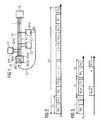
- the basic structure of such a master-slave system is in FIG. 1 shown.
- the fieldbus F is designed as a two-core cable which simultaneously serves for the communication and the power supply of the communication electronics and slaves with low power consumption.
- FIG. 1 indicated next to this field bus F as the first communication channel K1
- a second communication channel K2 between master M and the slaves S1, S2, ..., Sn provided via the master M can communicate with the slaves in case of failure. This reduces the likelihood of a communication interruption between master and slaves and thus the failure of individual control units and actuators or sensors of a system and thus significantly increase the system availability of a system designed in this way.
- the master M has, in addition to the first input / output interface MEA1 for the connection of the fieldbus F, further input / output interfaces MEA2, MEA3 for connecting at least one second communication connection K2.
- This communication connection can, for example, as in FIG. 1 a wired connection connected to the input / output interface MEA2 may be parallel to the fieldbus F, or a wireless communication connection connected to the input / output interface MEA3 via an antenna.
- a control device MS in the master M then sends a message to be repeated on the first (MEA1) and the other (MEA2 or MEA3) input / output interface and thus on both communication channels K1 and K2, if previously the communication of this message between master M and the associated slave has failed over the first communication channel K1.
- the communication of the master with the slaves via this second communication channel K2 then takes place via these further input / output interfaces MEA2 and MEA3 of the master and the corresponding further input / output interfaces SEA2 of the slaves S1, S2,..., Sn.
- FIG. 2 shows the communication between a master M and slaves S1, S2, ..., Sn, as currently defined in the AS-Interface specifications.
- the master M speaks one after the other, that is with one serial transmission protocol, the individual slaves S1, S2, ..., Sn in telegrams T1, T2, ..., Tn with a fixed time duration.
- the system is configured in such a way that each of the telegrams T1, T2,..., Tn contains an address which is uniquely assigned to one of the slaves S1, S2,..., Sn.
- the master then communicates exactly with the slave specified by the address, while the other slaves ignore this telegram.
- a telegram T1, T2,..., Tn consists of a so-called master call MA and a slave response SA and, according to the current AS-Interface specification, has a length of typically slightly more than 150 ⁇ s.
- the master call MA the master can transmit a maximum of 14 bits at the respective slave specified by the address of the telegram for a duration of 84 ⁇ s.
- the slave must then have sent a slave response SA back to the master within these 150 ⁇ s, which begin with the start of the master call MA. With this slave answer SA has the. Slave then has the possibility to send a maximum of 7 bits of information back to the master within 42 ⁇ s. The time of approx.
- the master M will first send a first master call MA1 to the first slave S1 and then wait for a slave response SA1 from this. Thereafter, in the next telegram T2, it sends a master call MA2 to the second slave S2 and waits for a slave answer SA2 from this within the time duration of the telegram T2.
- the individual slaves S1, S2,..., Sn are polled by the master M with a master request MA1, MA2,..., Man and from these corresponding responses as slave responses SA1, SA2, ... , SAn expected.
- FIG. 3 shows the time course on the two communication channels K1 and K2, in which the communication with the first slave S1 is disturbed.
- the master M in the first telegram T1 on the first communication channel K1 receives no slave response SA1 from the slave S1 to its transmitted master call MA1. This could be due to the fact that the communication between the two is so disturbed that the slave has not already received the master call MA1 or even that the master does not receive a slave response SA1.
- the master will assume a communication fault and thus repeat the master call MA1W to the same slave S1 in the next telegram T1.
- the master M will then send this repeated master call MA1W again via the first communication channel K1 and additionally via the second communication channel K2.
- the master will either expect on the first communication channel K1 a slave SA1 response within the period of the telegram T or on the second communication channel K2 within a period that may be greater than the time on the first Communication channel K1.
- the slave response SA1 could arrive on the second communication channel K2 immediately after the repeated master call MA1W or also at a much later point in time but within the cycle Z at the master. This is in FIG. 3 indicated by the arrows around SA1.
- the best performance can be achieved, however, if the slave response SA1 arrives on the second communication channel K2 within a period of time that is twice as long as the duration of the messages on the first communication channel K1.
- telegrams T is the duration of a slave response SA1 via the second communication channel K2 the same size as that of a slave response SA1 via the first communication channel K1.
- the slave must send a slave response SA1 on both communication channels K1 and K2 with the same gross data rate.
- the pause times between repeated master call MA1W and slave response SA1 on the second communication channel K2 are thereby increased.
- the time duration for the slave response SA1 itself be significantly extended on the second communication channel K2.
- the actual time duration for the repeated master call MA1W on K2 could be greater than on K1, which in turn lowers the data rate on the second communication channel K2.
- Both embodiments or any hybrid form thereof thus allow that the second communication channel K2 can be made more cost-effective due to the lower demands on the transmission quality, as the first communication channel K1.
- a communication is shown via the first (K1) and second (K2) communication channel, in which not only the slave response SA1 has failed the first master call MA1 but also its repeated master call MA1W.
- the master will expect a slave response SA1 on the second communication channel K2 only for the duration 2T.
- a slave response SA1 as in FIG. 4 indicated, received at the latest at the end of the expected slave response SA2 on the first communication channel K1 on the second communication channel K2, the master will detect no error and proceed easily with his communication. But he has, as in FIG.
- FIG. 6 a severely disturbed first communication channel K1 is shown in which the master receives no salvage response from any of the addressed slaves.
- the master With the condition that the telegram period on the second communication channel K2 is twice as long as on the first communication channel K1, the best possible performance results for this situation. That is, the master has within each of the dashed areas, the possibility of a slave response SA1, SA2, ... SA (n-1) to the repeated master calls MA1, MA2, ... Ma (n-1) via the second communication channel K1 and thus to improve the interference immunity of the communication between the master and the slaves configured for this purpose.
- the invention has been described above by way of example for a master-slave system according to the current state of verse 2.11 of the AS-Interface specifications, it should not be limited to these.
- the inventive concept in addition to the known AS-Interface fieldbus as the first communication channel to provide a second communication channel with lower transmission quality in the event of faulty communication on the first communication channel is applicable to any other AS-Interface specification or similar specifications. It is essential that with the communication method according to the invention and the corresponding devices with the least possible effort, the interference immunity of the master-slave system and thus the projected system is increased, without the specified by the AS-Interface specifications communication is affected via the first channel.
Landscapes
- Engineering & Computer Science (AREA)
- Computer Networks & Wireless Communication (AREA)
- Signal Processing (AREA)
- Selective Calling Equipment (AREA)
- Small-Scale Networks (AREA)
Description
- Die Erfindung betrifft ein Kommunikationsverfahren für einen nach dem AS-Interface Standard ausgeführten Feldbus gemäß dem Oberbegriff des Anspruch 1. Ferner betrifft die Erfindung ein Master-Slave-System für einen solchen Feldbus gemäß dem Oberbegriff des Anspruchs 7, sowie eine dazugehörige Steuerungs-, Aktor- oder Sensoreinheit.
- Ein Feldbus ist ein industrielles Kommunikationssystem auf der untersten Steuerungsebene eines Automatisierungssystems, das eine Vielzahl von Feldgeräten wie Messfühler (Sensoren), Stellglieder und Antriebe (Aktoren) mit einem Steuerungsgerät verbindet.
- AS-Interface (AS-I = Aktor-Sensor-Interface) ist ein möglicher Kommunikationsstandard zur Kommunikation zwischen dem Steuerungsgerät (Master) und den Feldgeräten (Slaves) über einen solchen Feldbus.
- Bei einem nach den AS-Interface Spezifikationen ausgebildeten Feldbus hat der Master als einziger das Recht, unaufgefordert auf den Feldbus zuzugreifen. Der Master fragt dabei zyklisch alle Slaves ab und tauscht mit ihnen die Ein- und Ausgangsdaten über ein serielles Übertragungsprotokoll aus. Die Slaves dürfen und können von sich aus nicht auf den Feldbus zugreifen und müssen warten, bis sie vom Master gefragt werden. Jedem der Slaves ist dazu eine eindeutige Adresse zugewiesen. In einem AS-Interface können nach derzeitiger Spezifikation (Vers. 2.11) so maximal 62 Teilnehmer an einen Master angeschlossen werden.
- Als Übertragungsmedium für den Feldbus wird eine bevorzugt als Flachbandkabel ausgeführte, ungeschirmte zweiadrige Leitung verwendet, die gleichzeitig auch als Stromversorgung für Slaves dienen kann. Das Übertragungsprotokoll wird dazu auf die Spannungsversorgung aufmoduliert. Es kommen dabei die Manchester-Codierung und eine Alternierende Puls Modulation Codierung (APM-Codierung) zum Einsatz. So können Bit-Zeiten von 6µs verwirklicht werden.
- Je Slave benötigt der Master etwa 150 µs zum Abfragen. Eine längere Zeitspanne ist derzeit bei AS-Interface nicht vorgesehen, da ansonsten der Zyklus zwischen zwei Abfragen, in denen der Master immer alle 62 Slaves nacheinander abfragt, zu lange dauern würde. Ein Telegramm, über das ein Slave nach dem er angesprochen wurde mit dem Master kommuniziert, besteht dabei aus 4-Bit Nutzdaten. Hieraus ergeben sich bei der Kommunikation zwischen Master und Slave extrem kurze Masteraufruf- und Slaveantwort- Zeiten im µs-Bereich.
- AS-Interface erfüllt die Störfestigkeitsanforderungen für die Kommunikation in industriellen Anlagen unter anderem dadurch, dass gemäß der AS-Interface Spezifikationen die Telegramme bis zu 6 mal wiederholt werden können, bevor es zu einer Fehlermeldung bzw. einem Stillstand der Anlage kommt.
- Um die Verfügbarkeit der Anlage auch bei starken Störpegeln zu erhöhen, könnte parallel zu dem Feldbus ein zweiter Kommunikationskanal aufgebaut werden über den nochmals die gleichen Telegramme wie über den Feldbus gesendet werden. Bei einer solchen redundanten Kommunikation genügt es dann, wenn der jeweils angesprochene Teilnehmer zumindest eines der beiden Telegramme erhält. Solche redundante Systeme erhöhen durch die geringere Ausfallwahrscheinlichkeit dann zwar die Anlagenverfügbarkeit. Sie haben aber den Nachteil, dass an diesen zweiten Kommunikationskanal die gleichen Anforderungen an zu übertragene Datenmenge und Übertragungsgeschwindigkeit gestellt werden müssen, wie an den AS-Interface Feldbus selbst. Dies macht eine solche Lösung aufwändig und damit teuer.
- Die
DE 103 28 707 A1 offenbart einen Fail-Silent-Datenbus mit zwischen jeweils zwei oder mehreren Busknoten ablaufender Datenkommunikation auf zwei parallelen Datenleitungen. Der Datenbus weist in jedem Busknoten einen Bustreiber für jede Datenleitung auf. - Aufgabe der Erfindung ist es, ein Kommunikationsverfahren und ein Master-Slave-System, sowie entsprechende Einrichtungen für einen nach dem AS-Interface Standard ausgeführten Feldbus zur Verfügung zu stellen, die die Ausfallwahrscheinlichkeit einer so projektierten Anlage verringern.
- Diese Aufgabe wird mit dem Kommunikationsverfahren mit den Merkmalen des Anspruchs 1 sowie dem Master-Slave-System mit den Merkmalen des Anspruchs 7 gelöst.
- Erfindungsgemäß ist dazu vorgesehen, dass ein nach dem AS-Interface Standard ausgeführter Feldbus als ein erster Kommunikationskanal dient, über den ein am Feldbus angebundener Master in einem Zyklus seriell mit einer Anzahl am Feldbus angebundener Slaves kommuniziert, wobei in einem Zyklus die Kommunikation des Masters mit den Slaves nacheinander über Telegramme, die jeweils eindeutig einem Slave zugeordnet sind, erfolgt und ein Telegramm auf dem ersten Kommunikationskanal und auf einem zweiten Kommunikationskanal zwischen Master und Slave wiederholt wird, wenn die Kommunikation dieses Telegramms über den ersten Kommunikationskanal fehlgeschlagen ist.
- Somit erfolgt im Fehlerfall eine Wiederholung des fehlerhaften Telegramms nicht nur über diesen ersten Kommunikationskanal, sondern redundant über zwei voneinander getrennte Kommunikationskanäle. Durch diese redundante Kommunikation steigt dann die Wahrscheinlichkeit, dass das Telegramm trotz Störung auf dem ersten Kommunikation erfolgreich zwischen Master und Slave ausgetauscht wird.
- Dadurch, dass aber nur dann eine Kommunikation über den zweiten Kanal notwendig ist, wenn der Fehlerfall eintritt, das heißt ein Telegramm nicht übertragen wurde, sind an das Übertragungsmedium dieses zweiten Kommunikationskanals geringere Anforderungen bezüglich Übertragungsqualität (z.B. Datenrate oder Timing) zu stellen. Somit muss dieses Übertragungsmedium, bzw. diese Kommunikationsverbindung, nicht wie der Feldbus die AS-Interface Spezifikationen erfüllen, sondern kann kostengünstiger verdrahtet werden. Die Erfindung erlaubt damit mit geringem Aufwand die Störfestigkeit der Kommunikation zwischen Master und Slaves zu verbessern. Somit kann die Ausfallwahrscheinlichkeit der Anlage verringert und damit die Verfügbarkeit der projektierten Anlage erhöht werden.
- Wird die, meist im voraus, festgelegte Zeitdauer der Telegramme für die Kommunikation des Masters mit den Slaves auf dem zweiten Kommunikationskanal größer ausgelegt als die Zeitdauer des ersten Kommunikationskanal, sind die Timinganforderungen an diesen zweiten Kommunikationskanal weniger hoch als die an den ersten Kommunikationskanal.
- Erfindungsgemäß können somit die Steuerungseinheiten als Master und Aktoren oder Sensoren als Slaves eines Master-Slaves Systems auch zusätzlich mittels drahtloser Kommunikationsverbindungen, wie zum Beispiel W-LAN oder Bluetooth usw., als zweiten Kommunikationskanal miteinander verbunden werden.
- Wird nur die Wiederholung eines fehlgeschlagenen Telegramms über den zweiten Kommunikationskanal übertragen und im Falle eines weiteren Fehlschlagens mit dem nächsten Telegramm für den nächsten Slave fortgefahren, ist die Zeitdauer der Telegramme auf dem zweiten Kommunikationskanal maximal doppelt lang wie die Zeitdauer der Telegramme auf dem ersten Kommunikationskanal. Dadurch lassen sich auch Mehrfachfehler, das heißt Fehler in aufeinander folgenden Telegrammen, korrigieren (
FIG 6 ), was die Ausfallwahrscheinlichkeit der Anlage weiter verringert. - Gemäß einer vorteilhaften Ausgestaltung der Erfindung wird bei der Wiederholung eines der Telegramme der Masteraufruf parallel und somit zumindest zum gleichen Zeitpunkt über den ersten und zweiten Kommunikationskanal gestartet. Damit ist die für eine Slaveantwort auf dem zweiten Kommunikationskanal zur Verfügung stehende Zeitspanne maximiert.
- Erfindungsgemäß ergeben sich so eine Reihe von Merkmalen, die Einzeln oder in Kombination auf einfache Art und Weise und damit kostengünstig, die Zuverlässigkeit der Kommunikation zwischen der Steuerungseinheit als Master und den Aktor- oder Sensoreinheiten als Slaves in einer projektierten Anlage erhöhen und damit die Anlagenverfügbarkeit deutlich erhöhen.
- Die Erfindung wird nun anhand von Ausführungsbeispielen näher erläutert. Es zeigen:
- FIG 1
- Blockschaltbild des AS-I-Systems,
- FIG 2
- zeitlicher Ablauf eines Zyklus für die Kommunikation des Masters mit den Slaves entsprechend der AS-Interface Spezifikation,
- FIG 3-6
- vier mögliche Szenarien einer Kommunikation entsprechend der vorliegenden Erfindung.
- In einem als Master-Slave-System projektierten Feldbussystem werden eine Anzahl von Sensoren und Aktoren einer industriellen Anlage als Slaves S1, S2, ..., Sn mit einer Steuerungseinheit als Master M über ein Bussystem F miteinander verbunden. Ein solches, entsprechend den AS-Interface Spezifikationen festgelegtes System bezeichnet man auch als Single-Master System. Der Master M kommuniziert in wiederkehrenden Zyklen nacheinander mit allen projektierten und damit ihm zugeordneten Slaves S1, S2, ..., Sn um so Ein- und Ausgangsdaten mit diesen auszutauschen. Mit der derzeit festgelegten Spezifikation Version 2.11 des AS-Interface ist es somit möglich, dass der Master M mit bis zu n=62 Teilnehmern (Slaves) in Telegrammen mit 4 Bit Nutzdaten kommuniziert. Der prinzipielle Aufbau eines solchen Master-Slave Systems ist in
FIG 1 dargestellt. Der Feldbus F ist als zweiadrige Leitung ausgebildet die gleichzeitig für die Kommunikation und die Spannungsversorgung der Kommunikationselektronik und Slaves mit niedrigem Strombedarf dient. - Solche projektierten Anlagen befinden sich häufig in industriellen Umgebungen, die hohe Störpegel aufweisen, die die Kommunikation zwischen Master und Slaves stören können. Erfindungsgemäß ist daher, wie in
FIG 1 angedeutet, neben diesem Feldbus F als ersten Kommunikationskanal K1 ein zweiter Kommunikationskanal K2 zwischen Master M und den Slaves S1, S2, ..., Sn vorgesehen über den der Master M im Fehlerfall mit den Slaves kommunizieren kann. Dadurch wird die Wahrscheinlichkeit einer Kommunikationsunterbrechung zwischen Master und Slaves und damit den Ausfall einzelner Steuerungseinheiten und Aktoren bzw. Sensoren einer Anlage verringert und damit die Anlagenverfügbarkeit einer so projektierten Anlage deutlich erhöhen. - Erfindungsgemäß weist dazu der Master M neben der ersten Ein-/Ausgabeschnittstelle MEA1 für die Anbindung des Feldbusses F weitere Ein-/Ausgabeschnittstellen MEA2, MEA3 zur Anbindung wenigstens einer zweiten Kommunikationsverbindung K2 auf. Diese Kommunikationsverbindung kann dabei beispielsweise, wie in
FIG 1 angedeutet, eine an die Ein-Ausgabeschnittstelle MEA2 angeschlossene drahtgebundene Verbindung parallel neben dem Feldbus F sein, oder eine and die Ein-/Ausgabeschnittstelle MEA3 über eine Antenne angeschlossene drahtlose Kommunikationsverbindung sein. Eine Steuervorrichtung MS im Master M versendet dann ein zu wiederholendes Telegramm über die erste (MEA1) und die weitere (MEA2 oder MEA3) Ein-/Ausgabeschnittstelle und damit über beide Kommunikationskanäle K1 und K2, wenn zuvor die Kommunikation dieses Telegramms zwischen Master M und dem dazugehörigen Slave über den erste Kommunikationskanal K1 fehlgeschlagen ist. Die Kommunikation des Master mit den Slaves über diesen zweiten Kommunikationskanal K2 erfolgt dann über diese weiteren Ein-/Ausgabeschnittstellen MEA2 und MEA3 des Masters und den entsprechenden weiteren Ein-Ausgabeschnittstellen SEA2 der Slaves S1, S2,..., Sn. -
FIG 2 zeigt die Kommunikation zwischen einem Master M und Slaves S1, S2, ..., Sn, so wie sie derzeit in den AS-Interface Spezifikationen festgelegt ist. Innerhalb eines Zyklus Z spricht der Master M dabei nacheinander, das heißt mit einem seriellen Übertragungsprotokoll, die einzelnen Slaves S1, S2, ..., Sn in Telegrammen T1, T2, ..., Tn mit fest definierter Zeitdauer an. Die Anlage wird so projektiert, dass jedes der Telegramme T1, T2, ..., Tn eine Adresse enthält, die eindeutig einem der Slaves S1, S2, ..., Sn zugeordnet ist. Innerhalb einer Zeitdauer eines Telegramms kommuniziert der Master dann genau mit dem durch die Adresse festgelegten Slave, während die übrigen Slaves dieses Telegramm ignorieren. Wurden innerhalb eines Zyklus Z(i) so alle n mögliche Slaves (n= max. 62 Slaves für AS-Interface Spezifikation Version. 2.11, bzw. n= max. 31 Slaves für Vers. 2.0) S1, S2, ..., Sn mit den entsprechenden Telegrammen T1, T2, ..., Tn nacheinander angesprochen, wird diese Prozedur im nächsten Zyklus Z(i+1) wiederholt. Dazu werden, basierend auf einer nach den AS-Interface Spezifikationen festgelegten Managementphase zwischen den zwei Zyklen, die einzelnen Slaves wiederum nacheinander durch den Master angesprochen. - Ein Telegramm T1, T2, ..., Tn besteht dabei aus einem sogenannten Masteraufruf MA und einer Slaveantwort SA und hat nach der derzeitigen AS-Interface Spezifikation eine Länge von typischerweise geringfügig mehr als 150µs. Mit dem Masteraufruf MA kann der Master während einer Dauer von 84µs maximal 14 Bit an den, jeweiligen durch die Adresse des Telegramms festgelegten, Slave senden. Auf diesen Masteraufruf MA muss der Slave dann innerhalb dieser 150µs, die mit dem Start des Masteraufrufs MA beginnen, eine Slaveantwort SA an den Master zurück geschickt haben. Mit dieser Slaveantwort SA hat der. Slave dann die Möglichkeit innerhalb von 42µs maximal 7 Bit an Informationen an den Master zurückzuschicken. Die neben diesem Masteraufruf MA und Slaveantwort SA in einem Telegramm mit einer Zeitdauer von 150µs verbleibende Zeit von ca. 28µs wird als Pausenzeit für den Master und Slave benötigt. Diese Pausenzeiten werden benötigt, damit der Master bzw. der Slave den nächsten Masteraufruf bzw. die nächste Slaveantwort vorbereiten bzw. empfangene Masteraufrufe bzw. Slaveantworten aufbereiten kann. Zudem werden durch diese Pausenzeiten Signallaufzeiten und Verzögerungszeiten des Feldbusses und möglicher im Feldbus angeordneter Repeater ausgeglichen.
- Wie in
FIG 2 dargestellt, wird der Master M so innerhalb eines Zyklus Z beginnend mit einem Telegramm T1 der Zeitdauer von 150µs zuerst einen ersten Masteraufruf MA1 an den ersten Slave S1 schicken und dann auf eine Slaveantwort SA1 von diesem warten. Danach wird er im nächsten Telegramm T2 einen Masteraufruf MA2 an den zweiten Slave S2 geschickt und innerhalb der Zeitdauer des Telegramms T2 auf eine Slaveantwort SA2 von diesem warten. So werden nacheinander, das heißt seriell, die einzelnen Slaves S1, S2, ..., Sn vom Master M mit einer Masteranfrage MA1, MA2, ..., Man abgefragt und von diesen entsprechende Rückmeldungen als Slaveantwort SA1, SA2, ..., SAn erwartet. - Treten nun bei der Übertragung innerhalb einzelner Telegramme zu viele Fehler auf, kann es zur Anlagenstörung kommen. Wie diese vermieden werden können, soll nachfolgend beispielhaft an den vier in
FIG 3 bis FIG 6 dargestellten Szenarien beschrieben werden. -
FIG 3 zeigt den zeitlichen Verlauf auf den beiden Kommunikationskanälen K1 und K2, bei dem die Kommunikation mit dem ersten Slave S1 gestört ist. Hier empfängt der Master M im ersten Telegramm T1 auf dem ersten Kommunikationskanal K1 auf seinen gesendeten Masteraufruf MA1 keine Slaveantwort SA1 vom Slave S1. Dies könnte zum einen daran liegen, dass die Kommunikation zwischen beiden so gestört ist, dass der Slave bereits den Masteraufruf MA1 nicht erhalten hat oder auch das der Master keine Slaveantwort SA1 erhält. In beiden Fällen, wird der Master aber von einer Kommunikationsstörung ausgehen und somit im nächsten Telegramm T1 den Masteraufruf MA1W an denselben Slave S1 nochmals wiederholen. Erfindungsgemäß wird der Master M diesen wiederholten Masteraufruf MA1W dann nochmals über den ersten Kommunikationskanal K1 und zusätzlich über den zweiten Kommunikationskanal K2 versenden. Ist entsprechend der derzeit gültigen AS-Interface Spezifikation nur eine einmalige Wiederholung eines fehlerhaften Telegramms in einem Zyklus Z vorgesehen, wird der Master entweder auf dem ersten Kommunikationskanal K1 eine Slaveantwort SA1 innerhalb der Zeitdauer des Telegramms T erwarten oder auf dem zweiten Kommunikationskanal K2 innerhalb einer Zeitdauer die größer sein kann als die Zeitdauer auf dem ersten Kommunikationskanal K1. So könnte die Slaveantwort SA1 auf dem zweiten Kommunikationskanal K2 unmittelbar nach dem wiederholten Masteraufruf MA1W oder auch zu einem viel späteren Zeitpunkt aber innerhalb des Zyklus Z beim Master eingehen. Dies ist inFIG 3 durch die Pfeile um SA1 angedeutet. Die beste Performance lässt sich aber erreichen, wenn die Slaveantwort SA1 auf dem zweiten Kommunikationskanal K2 innerhalb einer Zeitdauer eingeht, die doppelt so groß ist wie die Zeitdauer der Telegramme auf dem ersten Kommunikationskanal K1. - Bei den in
FIG 3 dargestellt Telegrammen T ist die Zeitdauer einer Slaveantwort SA1 über den zweiten Kommunikationskanal K2 gleich groß wie die einer Slaveantwort SA1 über den ersten Kommunikationskanal K1. Das bedeutet zwar, dass der Slave auf beiden Kommunikationskanälen K1 und K2 mit der gleichen Bruttodatenrate eine Slaveantwort SA1 senden muss. Gleichzeitig werden damit aber die Pausenzeiten zwischen wiederholtem Masteraufruf MA1W und Slaveantwort SA1 auf dem zweiten Kommunikationskanal K2 erhöht. Somit können an den zweiten Kommunikationskanal K2 geringere Anforderungen an das Timing und damit an die Übertragungsqualität gestellt werden als an den ersten Kommunikationskanal K1. Andererseits könnte aber auch, wie inFIG 4 strichliert angedeutet, die Zeitdauer für die Slaveantwort SA1 selbst auf dem zweiten Kommunikationskanal K2 wesentlich verlängert werden. Dadurch werden geringere Anforderungen an die zu übertragende Datenrate und damit wieder an die Übertragungsqualität dieses zweiten Kommunikationskanals K2 gestellt. Zudem könnte, nicht dargestellt, auch die eigentliche Zeitdauer für den wiederholten Masteraufruf MA1W auf K2 größer sein als auf K1, was wiederum die Datenrate auf dem zweiten Kommunikationskanal K2 senkt. Beide Ausführungsbeispiele oder jede Mischform davon erlauben somit, dass der zweite Kommunikationskanal K2 aufgrund der niedrigeren Anforderungen an die Übertragungsqualität kostengünstiger ausgebildet sein kann, als der erste Kommunikationskanal K1. - In
FIG 4 und 5 ist eine Kommunikation über den ersten (K1) und zweiten (K2) Kommunikationskanal gezeigt, bei dem nicht nur die Slaveantwort SA1 auf den ersten Masteraufruf MA1 sondern auch auf dessen wiederholten Masteraufruf MA1W ausgeblieben ist. Ist festgelegt, dass die Zeitdauer des Telegramms T auf dem zweiten Kommunikationskanal K2 doppelt so groß ist wie auf dem ersten Kommunikationskanal K1, wird der Master auf dem zweiten Kommunikationskanal K2 nur für die Dauer 2T eine Slaveantwort SA1 erwarten. Ist eine Slaveantwort SA1, wie inFIG 4 angedeutet, spätestens mit Ende der erwarteten Slaveantwort SA2 auf dem ersten Kommunikationskanal K1 auf dem zweiten Kommunikationskanal K2 eingegangen, wird der Master keinen Fehler detektieren und ohne weiteres mit seiner Kommunikation fortfahren. Hat er aber, wie inFIG 5 angedeutet, im ersten Zyklus Z(i) über den zweiten Kommunikationskanal K2 auch dann noch keine Slaveantwort SA1 auf den wiederholten Masteraufruf MA1 erhalten, wird er zwar in seiner Kommunikation fortfahren, diesen Fehler aber auch als fehlgeschlagene Kommunikation mit dem Slave S1 speichern. Im nächsten Zyklus Z(i+1) wird der Master dann sofort über den ersten (K1) und zweiten (K2) Kommunikationskanal diesen Slave S1 nochmals versuchen mit einem Masteraufruf MA1 anzusprechen und eine Slaveantwort SA1 zu erhalten. - In
FIG 6 ist ein stark gestörter erster Kommunikationskanal K1 gezeigt, bei dem der Master von keinem der angesprochenen Slaves eine Salveantwort erhält. Mit der Bedingung, dass die Telegrammzeitdauer auf dem zweiten Kommunikationskanal K2 doppelt so lange ist wie auf dem ersten Kommunikationskanal K1, ergibt sich für diese Situation die bestmögliche Performance. Das heißt, der Master hat jeweils innerhalb der gestrichelt dargestellten Bereichen, die Möglichkeit eine Slaveantwort SA1, SA2, ... SA(n-1) auf die wiederholten Masteraufrufe MA1, MA2, ... Ma(n-1) über den zweiten Kommunikationskanal K1 zu erhalten und damit die Störfestigkeit der Kommunikation zwischen Master und den dazu projektierten Slaves zu verbessern. - Auch wenn die Erfindung zuvor beispielhaft für ein Master-Slave-System entsprechend dem heutigen Stand Vers. 2.11 der AS-Interface Spezifikationen beschrieben wurde, soll sie nicht auf diese begrenzt sein. Der erfindungsgemäße Gedanken, neben dem bekannten AS-Interface Feldbus als ersten Kommunikationskanal einen zweiten Kommunikationskanal mit niedrigerer Übertragungsqualität für den Fall einer fehlerhaften Kommunikation auf dem ersten Kommunikationskanal bereitzustellen, ist auf jede weitere AS-Interface Spezifikation oder dieser ähnlichen Spezifikationen anwendbar. Wesentlich ist, dass mit dem erfindungsgemäßen Kommunikationsverfahren und den entsprechenden Vorrichtungen mit möglichst wenig Aufwand die Störsicherheit des Master-Slave-Systems und damit der projektierten Anlage erhöht wird, ohne dass die durch die AS-Interface Spezifikationen festgelegte Kommunikation über den ersten Kanal beeinflusst wird.
Claims (13)
- Kommunikationsverfahren für einen nach dem AS-Interface Standard ausgeführten Feldbus (F) als ein erster Kommunikationskanal (K1), über den ein am Feldbus angebundener Master (M) in einem Zyklus (Z(i),Z(i+1)) seriell mit einer Anzahl am Feldbus (F) angebundener Slaves (S1, S2,..., Sn) kommuniziert, wobei in einem Zyklus (Z(i),Z(i+1)) die Kommunikation des Masters mit den Slaves nacheinander über Telegramme (T1, T2, ...,Tn), die jeweils eindeutig einem der Slaves (S1, S2, ..., Sn) zugeordnet sind, erfolgt
dadurch gekennzeichnet, dass eines der Telegramme (T1, T2, ..., Tn) auf dem ersten Kommunikationskanal (K1) und auf einem zweiten Kommunikationskanal (K2) zwischen Master (M) und Slave (S) wiederholt wird, wenn die Kommunikation dieses Telegramms (T1, T2, ...,Tn) über den ersten Kommunikationskanal (K1) fehlgeschlagen ist. - Kommunikationsverfahren nach Anspruch 1
dadurch gekennzeichnet, dass eine festgelegte Zeitdauer der Telegramme (T1, T2,..., Tn) für die Kommunikation des Masters (M) mit den Slaves (S1, S2, ...Sn) auf dem zweiten Kommunikationskanal (K2) größer als auf dem ersten Kommunikationskanal (K1) ist. - Kommunikationsverfahren nach Anspruch 2
dadurch gekennzeichnet, dass die Zeitdauer der Telegramme (T1, T2,..., Tn) auf dem zweiten Kommunikationskanal (K2) doppelt so groß wie die Zeitdauer auf dem ersten Kommunikationskanal (K1) ist. - Kommunikationsverfahren nach einem der Ansprüche 1 - 3
dadurch gekennzeichnet, dass ein Telegramm (T1, T2,..., Tn) einen Masteraufruf (MA), bei dem Daten vom Master (M) zu dem jeweiligen Slave (S1, S2, ...,Sn) übertragen werden, und eine Slaveantwort (SA), bei dem Daten des aufgerufenen Slaves (S1, S2,..., Sn) auf den Master (M) übertragen werden, umfasst. - Kommunikationsverfahren nach Anspruch 4
dadurch gekennzeichnet, dass bei der Wiederholung eines der Telegramme (T1, T2,..., Tn) der Masteraufruf (MA1W,MA2W,MA3W) parallel über den ersten (K1) und zweiten (K2) Kommunikationskanal gestartet wird. - Kommunikationsverfahren nach einem der vorherigen Ansprüche 1 bis 5
dadurch gekennzeichnet, dass im Falle dass auch die Wiederholung eines der Telegramme (T1, T2,..., Tn) fehlschlägt, eine weitere Wiederholung dieses Telegramms (T1, T2,..., Tn) im nächsten Zyklus (Z) sofort über den ersten (K1) und zweiten (K2) Kommunikationskanal erfolgt. - Master-Slave-System für einen nach dem AS-Interface Standard ausgeführten Feldbus (F), der einen Master (M) mit einer Anzahl von Slaves (S1,S2,...,Sn) verbindet, und der für den Master (M) und die Slaves (S1,S2,...,Sn) einen ersten Kommunikationskanal (K1) bildet, über den der Master in einem Zyklus (Z) seriell mit den Slaves (s1,S2,...,Sn) kommuniziert, wobei in einem Zyklus (Z) der Master mit den Slaves (S1,S2, ...,Sn) nacheinander über Telegramme (T1,T2,...,Tn) kommuniziert, die jeweils eindeutig einem der Slaves (S1,S2,...,Sn) zugeordnet sind,
dadurch gekennzeichnet, dass ein zweiter Kommunikationskanal (K2) zwischen Master (M) und Slaves (S) vorgesehen ist, über den zusätzlich zum ersten Kommunikationskanal (K1) eines der Telegramme (T1,T2,...,Tn) wiederholt wird, wenn die Kommunikation dieses Telegramms (T1, T2,..., Tn) über den ersten Kommunikationskanal (K1) fehlgeschlagen ist. - Master-Slave-System nach Anspruch 7
dadurch gekennzeichnet, dass der zweite Kommunikationskanal (K2) eine niedrigere Übertragungsqualität aufweist als der erste Kommunikationskanal (K1). - Master-Slave-System nach Anspruch 7 oder 8
dadurch gekennzeichnet, dass der Feldbus (F) als erster Kommunikationskanal (K1) eine drahtgebundene Kommunikationsverbindung und der zweite Kommunikationskanal (K2) eine drahtlose Kommunikationsverbindung zwischen Master (M) und Slaves (S1,S2,...,Sn) ist. - Steuerungseinheit als Master (M) für ein Master-Slave-System nach einem der Ansprüche 7 bis 9, mit einer ersten Ein-/Ausgabeschnittstelle (MEA1) zur Anbindung des Feldbus (F) als ersten Kommunikationskanal (K1) und eine weitere Ein-/Ausgabeschnittstelle (MEA2,MEA3) zur Anbindung einer weiteren Übertragungsverbindung als zweiten Kommunikationskanal (K2) und einer Steuervorrichtung (MS) die eines der Telegramme (T1, T2,..., Tn) wiederholt über die erste (MEA1) und die weitere (MEA2) Ein-/Ausgabeschnittstelle versendet, wenn zuvor die Kommunikation dieses Telegramms (T1, T2,..., Tn) zwischen Master (M) und dem dazugehörigen Slave (S1,S2,...,Sn) über den ersten Kommunikationskanal (K1) fehlgeschlagen ist.
- Steuerungseinheit nach Anspruch 10
dadurch gekennzeichnet, dass die zweite Ein-/Ausgabeschnittstelle (MEA2) und die weitere Übertragungsverbindung für eine drahtlose Kommunikation ausgebildet sind. - Aktor- oder Sensoreinheit als Slave (S1,S2,...,Sn) für ein Master-Slave System nach einem der Ansprüche 7 bis 9 mit einer ersten Ein-/Ausgabeschnittstelle (SEA1) zur Anbindung des Feldbus (F) als ersten Kommunikationskanal (K1) und einer weiteren Ein-/Ausgabeschnittstelle (SEA2) zur Anbindung einer weiteren Kommunikationsverbindung als zweiten Kommunikationskanal (K2), wobei die weitere Ein-/Ausgabeschnittstelle (SEA2) und die weitere Kommunikationsverbindung für eine drahtlose Kommunikation ausgebildet sind.
- Master-Slave-System mit einer Steuerungseinheit als Master (M), der unter Verwendung des Kommunikationsverfahren nach einem der Ansprüche 1-6 mit einer Anzahl ihm zugeordneter Slaves (S1,S2,...,Sn) kommuniziert.
Applications Claiming Priority (2)
| Application Number | Priority Date | Filing Date | Title |
|---|---|---|---|
| DE102007046440A DE102007046440B3 (de) | 2007-09-28 | 2007-09-28 | Kommunikationsverfahren und Master-Slave-System für einen nach dem AS-Interface Standard ausgeführten Feldbus |
| PCT/EP2008/061700 WO2009043675A1 (de) | 2007-09-28 | 2008-09-04 | Kommunikationsverfahren und master-slave-system für einen nach dem as-interface standard ausgeführten feldbus |
Publications (2)
| Publication Number | Publication Date |
|---|---|
| EP2204014A1 EP2204014A1 (de) | 2010-07-07 |
| EP2204014B1 true EP2204014B1 (de) | 2014-10-29 |
Family
ID=40099554
Family Applications (1)
| Application Number | Title | Priority Date | Filing Date |
|---|---|---|---|
| EP08803670.2A Not-in-force EP2204014B1 (de) | 2007-09-28 | 2008-09-04 | Kommunikationsverfahren und Master-Slave-System für einen nach dem AS-Interface Standard ausgeführten Feldbus |
Country Status (4)
| Country | Link |
|---|---|
| US (1) | US8230146B2 (de) |
| EP (1) | EP2204014B1 (de) |
| DE (1) | DE102007046440B3 (de) |
| WO (1) | WO2009043675A1 (de) |
Families Citing this family (11)
| Publication number | Priority date | Publication date | Assignee | Title |
|---|---|---|---|---|
| US8661171B1 (en) * | 2010-06-07 | 2014-02-25 | Qualcomm Incorporated | Host-slave interface for wireless communication circuit |
| EP2642811B1 (de) * | 2012-03-23 | 2014-11-26 | Siemens Aktiengesellschaft | Vorrichtung sowie Verfahren zum Festlegen eines Übertragungskanals eines Slaves |
| EP2712124B1 (de) * | 2012-09-24 | 2015-04-01 | Siemens Aktiengesellschaft | Redundant betreibbares industrielles Kommunikationssystem und Verfahren zu dessen Betrieb |
| US8909833B2 (en) * | 2012-09-26 | 2014-12-09 | The United States Of America As Represented By The Secretary Of The Navy | Systems, methods, and articles of manufacture to stream data |
| CN104685834B (zh) * | 2012-09-27 | 2018-02-06 | 京瓷株式会社 | 管理系统、管理方法和设备 |
| EP2731298A1 (de) * | 2012-11-07 | 2014-05-14 | Siemens Aktiengesellschaft | Kommunikationssystem |
| WO2014093162A1 (en) * | 2012-12-12 | 2014-06-19 | Electro Technology Holdings, Inc. | Battery charging system and method for an energy system |
| US10756857B2 (en) | 2013-01-25 | 2020-08-25 | Infineon Technologies Ag | Method, apparatus and computer program for digital transmission of messages |
| DE102016120668A1 (de) * | 2016-10-28 | 2018-05-03 | Infineon Technologies Ag | Datenkommunikationssystem |
| DE102017128239B3 (de) | 2017-11-29 | 2018-10-25 | Ifm Electronic Gmbh | Aktuator-Sensor Interface Feldbus (AS-Interface) mit einem Buskoppler |
| DE102024203951B4 (de) * | 2024-04-26 | 2025-12-04 | Aumovio Autonomous Mobility Germany Gmbh | Verfahren zur Positionserkennung eines Busteilnehmers, Bussystem sowie Steuereinrichtung |
Family Cites Families (12)
| Publication number | Priority date | Publication date | Assignee | Title |
|---|---|---|---|---|
| US4745597A (en) * | 1986-05-14 | 1988-05-17 | Doug Morgan | Reconfigurable local area network |
| DE4339046C2 (de) | 1993-11-16 | 2003-04-30 | Siemens Ag | Verfahren und Einrichtung zur Steuerung des Zugriffs auf mehrere redundant ausgeführte Übertragungskanäle |
| US6952396B1 (en) * | 1999-09-27 | 2005-10-04 | Nortel Networks Limited | Enhanced dual counter rotating ring network control system |
| US6888792B2 (en) * | 2000-12-07 | 2005-05-03 | Intel Corporation | Technique to provide automatic failover for channel-based communications |
| US6961306B2 (en) * | 2002-07-10 | 2005-11-01 | I/O Controls Corporation | Fiber optic control network and related method |
| DE10240669A1 (de) | 2002-09-04 | 2004-03-18 | Wabco Gmbh & Co. Ohg | Verfahren und Einrichtung zur Übertragung von Botschaften |
| DE10328707B4 (de) | 2003-06-26 | 2013-10-02 | Bayerische Motoren Werke Aktiengesellschaft | Fail-Silent-Datenbus |
| JP2005031928A (ja) * | 2003-07-11 | 2005-02-03 | Hitachi Ltd | 記憶システム及び記憶システムの障害特定方法 |
| US7684167B2 (en) * | 2003-09-30 | 2010-03-23 | Fisher-Rosemount Systems, Inc. | Communication bus suitable for use in a hazardous area of a process plant |
| US20060077917A1 (en) * | 2004-10-07 | 2006-04-13 | Honeywell International Inc. | Architecture and method for enabling use of wireless devices in industrial control |
| US20060101184A1 (en) * | 2004-11-09 | 2006-05-11 | Data Device Corporation | Dual speed/dual redundant bus system |
| DE102005059012B4 (de) * | 2005-12-08 | 2017-12-21 | Ifm Electronic Gmbh | ASI-Sytem zum Anschluß mehrerer Sensoren und/oder Aktuatoren an eine Steuerung |
-
2007
- 2007-09-28 DE DE102007046440A patent/DE102007046440B3/de not_active Expired - Fee Related
-
2008
- 2008-09-04 WO PCT/EP2008/061700 patent/WO2009043675A1/de not_active Ceased
- 2008-09-04 EP EP08803670.2A patent/EP2204014B1/de not_active Not-in-force
- 2008-09-04 US US12/679,977 patent/US8230146B2/en not_active Expired - Fee Related
Also Published As
| Publication number | Publication date |
|---|---|
| US8230146B2 (en) | 2012-07-24 |
| EP2204014A1 (de) | 2010-07-07 |
| US20100262736A1 (en) | 2010-10-14 |
| WO2009043675A1 (de) | 2009-04-09 |
| DE102007046440B3 (de) | 2009-01-15 |
Similar Documents
| Publication | Publication Date | Title |
|---|---|---|
| DE102007046440B3 (de) | Kommunikationsverfahren und Master-Slave-System für einen nach dem AS-Interface Standard ausgeführten Feldbus | |
| EP2443797B1 (de) | Medienzugriffssteuerverfahren für ein bussystem und kommunikationseinrichtung | |
| EP2443557B1 (de) | Verfahren zum übertragen von daten zwischen teilnehmerstationen eines bussystems | |
| EP2421203B1 (de) | AS-i Kommunikationsbauteil | |
| EP2000866B1 (de) | Überwachungseinrichtung zur Erkennung einer fehlerhaften Adressierung eines Slaves in einem Feldbus-System | |
| WO2010058008A1 (de) | Datenübertragungsprotokoll | |
| WO2016020155A1 (de) | Teilnehmerstation für ein bussystem und verfahren zur breitbandigen can-kommunikation | |
| DE102007058267B4 (de) | Verfahren zur Übertragung von Daten zwischen einer Steuereinheit und einer Vielzahl von abgesetzten E/A-Einheiten einer automatisierten Anlage | |
| EP1193926A2 (de) | Verfahren und System zur Echtzeitkommunikation in einem Netz mit Ethernet-Physik | |
| EP2759096A1 (de) | Verfahren und vorrichtung zum koppeln eines ersten sensors mit zumindest einem zweiten sensor | |
| EP1943570A1 (de) | Verfahren sowie system zur übertragung von zyklischen und azyklischen daten | |
| EP3970324A1 (de) | Sende-/empfangseinrichtung und kommunikationssteuereinrichtung für eine teilnehmerstation eines seriellen bussystems und verfahren zur kommunikation in einem seriellen bussystem | |
| EP3669527B1 (de) | Verfahren zum betreiben einer sensoranordnung in einem kraftfahrzeug auf basis eines dsi-protokolls | |
| DE102013227059A1 (de) | Verfahren zur deterministischen datenübertragung in einem bussystem und bussystem | |
| EP0395739B1 (de) | Verfahren zur steuerung und/oder überwachung und schaltungsanordnung zur durchführung des verfahrens | |
| EP3439245A1 (de) | Datenübertragungsverfahren zwischen einem drehwinkelgeber und einer motorsteuereinrichtung oder einer auswerteeinheit | |
| EP2345209B1 (de) | Verfahren und Vorrichtung zum Übertragen von Daten über Netzwerk-Knoten eines Netzwerkes | |
| DE102013216564A1 (de) | Verfahren zur Erkennung einer Doppeladressierung von Slaves in einem Master-Slave-Bussystem | |
| EP3632054B1 (de) | Bestimmung von datenbusteilnehmern eines lokalbusses | |
| EP1334589B1 (de) | Datenübertragung | |
| DE102008043622B4 (de) | Verfahren und Vorrichtung zum Übertragen von Daten über Netzwerk-Knoten eines Netzwerkes | |
| DE102017117225B3 (de) | Kommunikationssystem mit Bus und Codierleitung | |
| EP2418551B1 (de) | Diagnoseverfahren für ein nach dem AS-Interface Standard ausgeführtes Feldbussystem | |
| WO2026093040A1 (de) | Commander-teilnehmerstation für ein serielles bussystem und verfahren zur kommunikation in einem seriellen bussystem | |
| EP3915227A1 (de) | Sende-/empfangseinrichtung für eine teilnehmerstation eines seriellen bussystems und verfahren zur kommunikation in einem seriellen bussystem |
Legal Events
| Date | Code | Title | Description |
|---|---|---|---|
| PUAI | Public reference made under article 153(3) epc to a published international application that has entered the european phase |
Free format text: ORIGINAL CODE: 0009012 |
|
| 17P | Request for examination filed |
Effective date: 20100108 |
|
| AK | Designated contracting states |
Kind code of ref document: A1 Designated state(s): AT BE BG CH CY CZ DE DK EE ES FI FR GB GR HR HU IE IS IT LI LT LU LV MC MT NL NO PL PT RO SE SI SK TR |
|
| AX | Request for extension of the european patent |
Extension state: AL BA MK RS |
|
| DAX | Request for extension of the european patent (deleted) | ||
| RAP1 | Party data changed (applicant data changed or rights of an application transferred) |
Owner name: SIEMENS AKTIENGESELLSCHAFT |
|
| GRAP | Despatch of communication of intention to grant a patent |
Free format text: ORIGINAL CODE: EPIDOSNIGR1 |
|
| INTG | Intention to grant announced |
Effective date: 20140522 |
|
| GRAS | Grant fee paid |
Free format text: ORIGINAL CODE: EPIDOSNIGR3 |
|
| GRAA | (expected) grant |
Free format text: ORIGINAL CODE: 0009210 |
|
| AK | Designated contracting states |
Kind code of ref document: B1 Designated state(s): AT BE BG CH CY CZ DE DK EE ES FI FR GB GR HR HU IE IS IT LI LT LU LV MC MT NL NO PL PT RO SE SI SK TR |
|
| REG | Reference to a national code |
Ref country code: GB Ref legal event code: FG4D Free format text: NOT ENGLISH |
|
| REG | Reference to a national code |
Ref country code: CH Ref legal event code: EP |
|
| REG | Reference to a national code |
Ref country code: AT Ref legal event code: REF Ref document number: 694012 Country of ref document: AT Kind code of ref document: T Effective date: 20141115 |
|
| REG | Reference to a national code |
Ref country code: IE Ref legal event code: FG4D Free format text: LANGUAGE OF EP DOCUMENT: GERMAN |
|
| REG | Reference to a national code |
Ref country code: DE Ref legal event code: R096 Ref document number: 502008012357 Country of ref document: DE Effective date: 20141211 |
|
| REG | Reference to a national code |
Ref country code: NL Ref legal event code: VDEP Effective date: 20141029 |
|
| REG | Reference to a national code |
Ref country code: LT Ref legal event code: MG4D |
|
| PG25 | Lapsed in a contracting state [announced via postgrant information from national office to epo] |
Ref country code: NO Free format text: LAPSE BECAUSE OF FAILURE TO SUBMIT A TRANSLATION OF THE DESCRIPTION OR TO PAY THE FEE WITHIN THE PRESCRIBED TIME-LIMIT Effective date: 20150129 Ref country code: PT Free format text: LAPSE BECAUSE OF FAILURE TO SUBMIT A TRANSLATION OF THE DESCRIPTION OR TO PAY THE FEE WITHIN THE PRESCRIBED TIME-LIMIT Effective date: 20150302 Ref country code: FI Free format text: LAPSE BECAUSE OF FAILURE TO SUBMIT A TRANSLATION OF THE DESCRIPTION OR TO PAY THE FEE WITHIN THE PRESCRIBED TIME-LIMIT Effective date: 20141029 Ref country code: NL Free format text: LAPSE BECAUSE OF FAILURE TO SUBMIT A TRANSLATION OF THE DESCRIPTION OR TO PAY THE FEE WITHIN THE PRESCRIBED TIME-LIMIT Effective date: 20141029 Ref country code: LT Free format text: LAPSE BECAUSE OF FAILURE TO SUBMIT A TRANSLATION OF THE DESCRIPTION OR TO PAY THE FEE WITHIN THE PRESCRIBED TIME-LIMIT Effective date: 20141029 Ref country code: ES Free format text: LAPSE BECAUSE OF FAILURE TO SUBMIT A TRANSLATION OF THE DESCRIPTION OR TO PAY THE FEE WITHIN THE PRESCRIBED TIME-LIMIT Effective date: 20141029 Ref country code: IS Free format text: LAPSE BECAUSE OF FAILURE TO SUBMIT A TRANSLATION OF THE DESCRIPTION OR TO PAY THE FEE WITHIN THE PRESCRIBED TIME-LIMIT Effective date: 20150228 |
|
| PG25 | Lapsed in a contracting state [announced via postgrant information from national office to epo] |
Ref country code: LV Free format text: LAPSE BECAUSE OF FAILURE TO SUBMIT A TRANSLATION OF THE DESCRIPTION OR TO PAY THE FEE WITHIN THE PRESCRIBED TIME-LIMIT Effective date: 20141029 Ref country code: GR Free format text: LAPSE BECAUSE OF FAILURE TO SUBMIT A TRANSLATION OF THE DESCRIPTION OR TO PAY THE FEE WITHIN THE PRESCRIBED TIME-LIMIT Effective date: 20150130 Ref country code: CY Free format text: LAPSE BECAUSE OF FAILURE TO SUBMIT A TRANSLATION OF THE DESCRIPTION OR TO PAY THE FEE WITHIN THE PRESCRIBED TIME-LIMIT Effective date: 20141029 Ref country code: SE Free format text: LAPSE BECAUSE OF FAILURE TO SUBMIT A TRANSLATION OF THE DESCRIPTION OR TO PAY THE FEE WITHIN THE PRESCRIBED TIME-LIMIT Effective date: 20141029 Ref country code: HR Free format text: LAPSE BECAUSE OF FAILURE TO SUBMIT A TRANSLATION OF THE DESCRIPTION OR TO PAY THE FEE WITHIN THE PRESCRIBED TIME-LIMIT Effective date: 20141029 Ref country code: PL Free format text: LAPSE BECAUSE OF FAILURE TO SUBMIT A TRANSLATION OF THE DESCRIPTION OR TO PAY THE FEE WITHIN THE PRESCRIBED TIME-LIMIT Effective date: 20141029 |
|
| REG | Reference to a national code |
Ref country code: DE Ref legal event code: R097 Ref document number: 502008012357 Country of ref document: DE |
|
| PG25 | Lapsed in a contracting state [announced via postgrant information from national office to epo] |
Ref country code: CZ Free format text: LAPSE BECAUSE OF FAILURE TO SUBMIT A TRANSLATION OF THE DESCRIPTION OR TO PAY THE FEE WITHIN THE PRESCRIBED TIME-LIMIT Effective date: 20141029 Ref country code: DK Free format text: LAPSE BECAUSE OF FAILURE TO SUBMIT A TRANSLATION OF THE DESCRIPTION OR TO PAY THE FEE WITHIN THE PRESCRIBED TIME-LIMIT Effective date: 20141029 Ref country code: RO Free format text: LAPSE BECAUSE OF FAILURE TO SUBMIT A TRANSLATION OF THE DESCRIPTION OR TO PAY THE FEE WITHIN THE PRESCRIBED TIME-LIMIT Effective date: 20141029 Ref country code: EE Free format text: LAPSE BECAUSE OF FAILURE TO SUBMIT A TRANSLATION OF THE DESCRIPTION OR TO PAY THE FEE WITHIN THE PRESCRIBED TIME-LIMIT Effective date: 20141029 Ref country code: SK Free format text: LAPSE BECAUSE OF FAILURE TO SUBMIT A TRANSLATION OF THE DESCRIPTION OR TO PAY THE FEE WITHIN THE PRESCRIBED TIME-LIMIT Effective date: 20141029 |
|
| PLBE | No opposition filed within time limit |
Free format text: ORIGINAL CODE: 0009261 |
|
| STAA | Information on the status of an ep patent application or granted ep patent |
Free format text: STATUS: NO OPPOSITION FILED WITHIN TIME LIMIT |
|
| 26N | No opposition filed |
Effective date: 20150730 |
|
| PG25 | Lapsed in a contracting state [announced via postgrant information from national office to epo] |
Ref country code: SI Free format text: LAPSE BECAUSE OF FAILURE TO SUBMIT A TRANSLATION OF THE DESCRIPTION OR TO PAY THE FEE WITHIN THE PRESCRIBED TIME-LIMIT Effective date: 20141029 |
|
| PG25 | Lapsed in a contracting state [announced via postgrant information from national office to epo] |
Ref country code: MC Free format text: LAPSE BECAUSE OF FAILURE TO SUBMIT A TRANSLATION OF THE DESCRIPTION OR TO PAY THE FEE WITHIN THE PRESCRIBED TIME-LIMIT Effective date: 20141029 Ref country code: LU Free format text: LAPSE BECAUSE OF FAILURE TO SUBMIT A TRANSLATION OF THE DESCRIPTION OR TO PAY THE FEE WITHIN THE PRESCRIBED TIME-LIMIT Effective date: 20150904 |
|
| REG | Reference to a national code |
Ref country code: CH Ref legal event code: PL |
|
| REG | Reference to a national code |
Ref country code: IE Ref legal event code: MM4A |
|
| PG25 | Lapsed in a contracting state [announced via postgrant information from national office to epo] |
Ref country code: IE Free format text: LAPSE BECAUSE OF NON-PAYMENT OF DUE FEES Effective date: 20150904 Ref country code: LI Free format text: LAPSE BECAUSE OF NON-PAYMENT OF DUE FEES Effective date: 20150930 Ref country code: CH Free format text: LAPSE BECAUSE OF NON-PAYMENT OF DUE FEES Effective date: 20150930 |
|
| REG | Reference to a national code |
Ref country code: FR Ref legal event code: PLFP Year of fee payment: 9 |
|
| PGFP | Annual fee paid to national office [announced via postgrant information from national office to epo] |
Ref country code: GB Payment date: 20160914 Year of fee payment: 9 |
|
| REG | Reference to a national code |
Ref country code: AT Ref legal event code: MM01 Ref document number: 694012 Country of ref document: AT Kind code of ref document: T Effective date: 20150904 |
|
| PGFP | Annual fee paid to national office [announced via postgrant information from national office to epo] |
Ref country code: FR Payment date: 20160914 Year of fee payment: 9 |
|
| PGFP | Annual fee paid to national office [announced via postgrant information from national office to epo] |
Ref country code: DE Payment date: 20161121 Year of fee payment: 9 |
|
| PG25 | Lapsed in a contracting state [announced via postgrant information from national office to epo] |
Ref country code: AT Free format text: LAPSE BECAUSE OF NON-PAYMENT OF DUE FEES Effective date: 20150904 |
|
| PGFP | Annual fee paid to national office [announced via postgrant information from national office to epo] |
Ref country code: IT Payment date: 20160928 Year of fee payment: 9 |
|
| PG25 | Lapsed in a contracting state [announced via postgrant information from national office to epo] |
Ref country code: MT Free format text: LAPSE BECAUSE OF FAILURE TO SUBMIT A TRANSLATION OF THE DESCRIPTION OR TO PAY THE FEE WITHIN THE PRESCRIBED TIME-LIMIT Effective date: 20141029 |
|
| PG25 | Lapsed in a contracting state [announced via postgrant information from national office to epo] |
Ref country code: HU Free format text: LAPSE BECAUSE OF FAILURE TO SUBMIT A TRANSLATION OF THE DESCRIPTION OR TO PAY THE FEE WITHIN THE PRESCRIBED TIME-LIMIT; INVALID AB INITIO Effective date: 20080904 Ref country code: BG Free format text: LAPSE BECAUSE OF FAILURE TO SUBMIT A TRANSLATION OF THE DESCRIPTION OR TO PAY THE FEE WITHIN THE PRESCRIBED TIME-LIMIT Effective date: 20141029 |
|
| PG25 | Lapsed in a contracting state [announced via postgrant information from national office to epo] |
Ref country code: BE Free format text: LAPSE BECAUSE OF NON-PAYMENT OF DUE FEES Effective date: 20150930 |
|
| PG25 | Lapsed in a contracting state [announced via postgrant information from national office to epo] |
Ref country code: TR Free format text: LAPSE BECAUSE OF FAILURE TO SUBMIT A TRANSLATION OF THE DESCRIPTION OR TO PAY THE FEE WITHIN THE PRESCRIBED TIME-LIMIT Effective date: 20141029 |
|
| REG | Reference to a national code |
Ref country code: DE Ref legal event code: R119 Ref document number: 502008012357 Country of ref document: DE |
|
| GBPC | Gb: european patent ceased through non-payment of renewal fee |
Effective date: 20170904 |
|
| REG | Reference to a national code |
Ref country code: FR Ref legal event code: ST Effective date: 20180531 |
|
| PG25 | Lapsed in a contracting state [announced via postgrant information from national office to epo] |
Ref country code: GB Free format text: LAPSE BECAUSE OF NON-PAYMENT OF DUE FEES Effective date: 20170904 Ref country code: DE Free format text: LAPSE BECAUSE OF NON-PAYMENT OF DUE FEES Effective date: 20180404 |
|
| PG25 | Lapsed in a contracting state [announced via postgrant information from national office to epo] |
Ref country code: IT Free format text: LAPSE BECAUSE OF NON-PAYMENT OF DUE FEES Effective date: 20170904 Ref country code: FR Free format text: LAPSE BECAUSE OF NON-PAYMENT OF DUE FEES Effective date: 20171002 |