EP2201745B1 - Procédés et appareils pour la gestion de niveaux de confiance dans un réseau de communications d'un sous-système multimédia - Google Patents
Procédés et appareils pour la gestion de niveaux de confiance dans un réseau de communications d'un sous-système multimédia Download PDFInfo
- Publication number
- EP2201745B1 EP2201745B1 EP07820199.3A EP07820199A EP2201745B1 EP 2201745 B1 EP2201745 B1 EP 2201745B1 EP 07820199 A EP07820199 A EP 07820199A EP 2201745 B1 EP2201745 B1 EP 2201745B1
- Authority
- EP
- European Patent Office
- Prior art keywords
- trust
- node
- message
- trust level
- network
- Prior art date
- Legal status (The legal status is an assumption and is not a legal conclusion. Google has not performed a legal analysis and makes no representation as to the accuracy of the status listed.)
- Not-in-force
Links
- 238000004891 communication Methods 0.000 title claims description 26
- 238000000034 method Methods 0.000 title claims description 15
- 230000011664 signaling Effects 0.000 claims description 25
- 230000007246 mechanism Effects 0.000 claims description 22
- 230000000977 initiatory effect Effects 0.000 claims description 20
- 238000013507 mapping Methods 0.000 claims description 11
- 238000001914 filtration Methods 0.000 claims description 5
- 238000001514 detection method Methods 0.000 claims description 3
- 230000004048 modification Effects 0.000 claims description 2
- 238000012986 modification Methods 0.000 claims description 2
- 238000005516 engineering process Methods 0.000 description 13
- 230000006870 function Effects 0.000 description 9
- 238000010586 diagram Methods 0.000 description 7
- 230000008901 benefit Effects 0.000 description 4
- 230000009286 beneficial effect Effects 0.000 description 3
- 238000010295 mobile communication Methods 0.000 description 3
- 230000009471 action Effects 0.000 description 2
- 230000010354 integration Effects 0.000 description 2
- 230000003068 static effect Effects 0.000 description 2
- 241000700605 Viruses Species 0.000 description 1
- 238000013475 authorization Methods 0.000 description 1
- 230000005540 biological transmission Effects 0.000 description 1
- 239000012092 media component Substances 0.000 description 1
- 230000008447 perception Effects 0.000 description 1
- 238000012502 risk assessment Methods 0.000 description 1
- 238000000682 scanning probe acoustic microscopy Methods 0.000 description 1
Images

Classifications
-
- H—ELECTRICITY
- H04—ELECTRIC COMMUNICATION TECHNIQUE
- H04L—TRANSMISSION OF DIGITAL INFORMATION, e.g. TELEGRAPHIC COMMUNICATION
- H04L63/00—Network architectures or network communication protocols for network security
- H04L63/10—Network architectures or network communication protocols for network security for controlling access to devices or network resources
- H04L63/102—Entity profiles
-
- H—ELECTRICITY
- H04—ELECTRIC COMMUNICATION TECHNIQUE
- H04L—TRANSMISSION OF DIGITAL INFORMATION, e.g. TELEGRAPHIC COMMUNICATION
- H04L67/00—Network arrangements or protocols for supporting network services or applications
- H04L67/14—Session management
-
- H—ELECTRICITY
- H04—ELECTRIC COMMUNICATION TECHNIQUE
- H04L—TRANSMISSION OF DIGITAL INFORMATION, e.g. TELEGRAPHIC COMMUNICATION
- H04L67/00—Network arrangements or protocols for supporting network services or applications
- H04L67/14—Session management
- H04L67/147—Signalling methods or messages providing extensions to protocols defined by standardisation
-
- H—ELECTRICITY
- H04—ELECTRIC COMMUNICATION TECHNIQUE
- H04L—TRANSMISSION OF DIGITAL INFORMATION, e.g. TELEGRAPHIC COMMUNICATION
- H04L65/00—Network arrangements, protocols or services for supporting real-time applications in data packet communication
- H04L65/10—Architectures or entities
- H04L65/1016—IP multimedia subsystem [IMS]
-
- H—ELECTRICITY
- H04—ELECTRIC COMMUNICATION TECHNIQUE
- H04L—TRANSMISSION OF DIGITAL INFORMATION, e.g. TELEGRAPHIC COMMUNICATION
- H04L65/00—Network arrangements, protocols or services for supporting real-time applications in data packet communication
- H04L65/1066—Session management
- H04L65/1076—Screening of IP real time communications, e.g. spam over Internet telephony [SPIT]
- H04L65/1079—Screening of IP real time communications, e.g. spam over Internet telephony [SPIT] of unsolicited session attempts, e.g. SPIT
-
- H—ELECTRICITY
- H04—ELECTRIC COMMUNICATION TECHNIQUE
- H04L—TRANSMISSION OF DIGITAL INFORMATION, e.g. TELEGRAPHIC COMMUNICATION
- H04L65/00—Network arrangements, protocols or services for supporting real-time applications in data packet communication
- H04L65/1066—Session management
- H04L65/1101—Session protocols
- H04L65/1104—Session initiation protocol [SIP]
Definitions
- the invention relates to the field of handling trust in an IP Multimedia Subsystem Communication Network.
- IP Multimedia services provide a dynamic combination of voice, video, messaging, data, etc. within the same session.
- the number of services offered to the end users will grow, and the inter-personal communication experience will be enriched. This will lead to a new generation of personalised, rich multimedia communication services.
- IMS IP Multimedia Subsystem
- 3GPP Third Generation Partnership Project
- IMS IP Multimedia Subsystem
- 3GPP Third Generation Partnership Project
- IMS provides key features to enrich the end-user person-to-person communication experience through the use of standardised IMS Service Enablers, which facilitate new rich person-to-person (client-to-client) communication services as well as person-to-content (client-to-server) services over IP-based networks.
- the IMS makes use of the Session Initiation Protocol (SIP) to set up and control calls or sessions between user terminals (or user terminals and application servers).
- SIP Session Initiation Protocol
- SDP Session Description Protocol
- SIP was created as a user-to-user protocol
- IMS allows operators and service providers to control user access to services and to charge users accordingly.
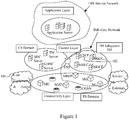
- IP Multimedia Subsystem into a 3G mobile communications system is illustrated schematically in Figure 1 .
- IMS Authentication and Key Agreement is used to establish shared keys between a User Equipment (UE) 101 such as a mobile telephone, and a Proxy-Call Session Control Function (P-CSCF) 102 in an IMS network 103.
- UE User Equipment
- P-CSCF Proxy-Call Session Control Function
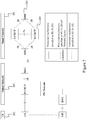
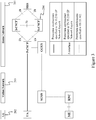
- the P-CSCF 101 may be located either in a Home Public Land Mobile Network (PLMN), as illustrated in Figure 2 , or in a Visited PLMN, as illustrated in Figure 3 .
- the Home PLMN 201 is a network in which a UE 202 is registered, and the Visited PLMN 203 is a network to which the UE 202 may be attached.
- a Serving-Session Control Function (S-CSCF) 204 is located in the Home PLMN 201, and controls authentication and authorization of the UE 202 when the UE joins the network, see, for example, TS 33.203.
- S-CSCF Serving-Session Control
- IMS will not only apply to 3GPP IMS networks but to non-3GPP IMS networks such as Telecoms & Internet converged Services & Protocols for Advanced Networks (ETSI TISPAN) and PacketCable, see, for example ETSI ES 282 007 and PKT-SP-23.228-I02-061013.
- ETSI TISPAN and PacketCable deployments of IMS do not only use IMS AKA, as used by 3GPP IMS networks.
- Authorising a Universal Subscriber Identity Module (USIM) or an IP Multimedia Services Identity Module (ISIM) in a TISPAN or PacketCable terminal to access a 3GPP IMS network is, in certain scenarios, an obstacle for these access technologies.
- USIM Universal Subscriber Identity Module
- ISIM IP Multimedia Services Identity Module
- TISPAN and PacketCable have introduced other security solutions as HTTP Digest for SIP, Network Attachment Subsystem (NASS)-IMS bundled authentication, and Transport Layer Security (TLS).
- NSS Network Attachment Subsystem
- TLS Transport Layer Security
- 3GPP IMS networks it is desirable for 3GPP IMS networks to be capable of inter-working with TISPAN and PacketCable networks, to improve the options available to users of the networks.
- the S-CSCF in an IMS network must be able to handle and support inter-working between different access technologies. This would allow terminals using different access technologies to communicate with each other.
- IMS networks may also be accessible using interconnect technologies such as PSTN inter connect (see, for example, 3GPP TS 23.002), IMS interconnect (see, for example, 3GPP TS 23.228), and Internet Interconnect.
- PSTN inter connect see, for example, 3GPP TS 23.002
- IMS interconnect see, for example, 3GPP TS 23.228
- Internet Interconnect is not a specified protocol or system, and tends to be based on proprietary implementations. These allow terminals accessing a non-IMS network to access IMS services from an IMS network.
- the different types of network and access technologies expose an IMS network to signalling from terminals or network nodes from different networks, that may have different trust levels to other nodes within the same IMS network. This is a particular problem for IMS interconnect, as it is not possible for an interconnecting network to have any knowledge about different trust levels used in another network with which it is interconnected. The interconnecting network will therefore treat all incoming traffic equally.
- US 2007/0113086 describes a method by which a network can choose an authentication mode, in which a field may be added to a register request to denote a request for Early-IMS-based authentication vector.
- IMS provides very strong security, but as interoperability with other access technologies and networks increases then the security applied to IMS communications may be lowered. This leads to an increased risk of unsolicited communications to each IMS user, which is unsatisfactory. It can also reduce the likelihood of IMS being adopted for services requiring a strong security architecture, such as IPTV where media streams may be encrypted to individual users or groups of users.
- US 2007/0186101 discloses a network element for handling a trust relationship in an IP multimedia subsystem.
- the inventors have realised the problems associated with the trust levels in current IMS networks, and have devised a solution to indicate to nodes in an IMS network the level of trust that should be accorded to signalling.
- the SIP protocol is extended by including additional information in SIP messages, the additional information relating to a level of trust of the message. This allows for flexible handling of trust in IMS sessions between networks. Information elements may be added, verified, and enforced by different entities in the network.
- a node in the IP Multimedia Subsystem network receives a Session Initiation Protocol message from a remote node disposed in another network.
- the message includes an indicator indicating the level of trust of a communication sent from the remote node to the IP Multimedia Subsystem node, wherein the indicator is a number or a description, and the node comprises a mapping of the number or the description to a security policy.
- the method further comprises determining how much trust should be accorded to the SIP message or an associated message. On the basis of the indicator, the node applies a security policy to the message.
- SIP messages are normally used to set up communications sessions, and so as an option, the security policy is applied to all signalling, such as media, associated with the Session Initiation Protocol message.
- the indicator is a number, in which case the number can be mapped directly to a security policy.
- the indicator is a description, in which case the description is mapped to a security policy.
- the indicator comprises as an option a plurality of indicator elements, each indicator element relating to a level of trust of a different node in a signalling path between the remote node and the node.
- This allows a trust level indicator to be built up as a SIP message traverses different nodes along a path to its destination, and trust information relating to the traversed nodes can be included in the trust level indicator.
- An indicator element may comprise an indication of a network from which the SIP message was received.
- a trust level indicator is optionally derived from any information that could have a bearing on the trust level that should be accorded the message. Such information includes user terminal type, encryption type, network type, node type, end user authentication mechanism, and intra-domain security mechanism.
- the applied security policy is selected from any of removing a P-Asserted Identity header, applying topology hiding, disallowing the communication, allowing the communication with no modification, filtering the message in accordance with a database of allowable message sources, and applying malware detection on incoming signalling relating to the SIP message.
- the security policy is optionally applied at any node where it is relevant to apply such a policy.
- nodes include a border element, an Application Server, User Equipment, and a Call Session Control Function.
- a node for use in an IP Multimedia subsystem network.
- the node includes a receiver for receiving a Session Initiation Protocol message from a remote node disposed in another network.
- the message includes an indicator indicating the level of trust of a communication sent from the remote node to the node the level of trust being an extent to which such a communication can be relied upon.
- the indicator is a number or a description, and the node comprises a mapping of the number or the description to a security policy.
- the node further comprises a processor for applying a security policy to the message. The security policy is determined from information contained in the indicator.
- Such a node is used to apply a security policy to a message on the basis of the information contained in the indicator. This has the advantage of allowing flexible application of security policies to messages depending on the level of trust that the node accords the message.
- the node is optionally selected from one of User Equipment, a Call Session Control Function, a border element, and an Application Server.
- a node for use in a communications network.
- the node comprises means for collecting trust level information, and a processor for generating a trust level indicator on the basis of the trust level information.
- the processor is also for modifying a Session Initiation Protocol message such that the Session Initiation Protocol message includes the trust level indicator.
- the indicator comprises a number or a description.
- the node further comprises a transmitter for sending the Session Initiation Protocol message, wherein the trust level indicator allows entities handling the SIP message or associated message to be aware of the extent to which they can rely on information received in the SIP message or associated message.
- a security policy is applied based upon a mapping between the number or description and a security policy.
- Such a node has the advantage of allowing a SIP message containing a trust level indicator to be sent.
- the trust level indicator can be used to determine a security policy that is applied to the message, and allows flexibility in applying different security policies to messages depending on the degree of trust accorded to the message by the network.
- the processor is preferably arranged to modify an existing trust level indicator in a SIP message by adding a trust level indicator element to the existing trust level indicator, the trust level indicator element relating to a trust level of the node or a network in which the node is disposed.
- the node is preferably selected from one of User Equipment, a Call Session Control Function, border element, and an Application Server.
- a method of handling trust in an IP Multimedia Subsystem network is provided.
- Trust level information is collected at a network node, and a trust level indicator is created on the basis of the trust level information.
- the trust level indicator is then added to a Session Initiation Protocol message, wherein the trust level indicator allows entities handling the SIP message or associated message to be aware of the extent to which they can rely on information received in the SIP message or associated message.
- the indicator comprising a number or a description.
- a security policy is applied based upon a mapping between the number or description and a security policy.
- the advantage of creating or modifying a SIP message to include a trust level indicator is that other nodes can, on the basis of the trust level indicator, determine how much trust should be accorded to a SIP message or associated message, and provides flexibility in the types of security policy that can be applied to the message.
- the trust level indicator is, as an option, either added to a new Session Initiation Protocol message created by the network node, or added to an existing Session Initiation Protocol received by the network node.
- the trust level information is optionally based on any of database information, user terminal type, encryption type, network type, node type, end user authentication mechanism, and intra-domain security mechanism.
- a node in an IMS network can ascertain what level of trust is accorded to signalling from a remote node such as User Equipment (UE).
- UE User Equipment
- the level of trust may depend upon various factors, such as the security at the UE, and the security at different nodes in the transmission path from the UE to the node in the IMS network.
- a first way to indicate trust is numerical; for example, a new trust level could lie within a certain range such as 1 to 10, where an indicated trust level of 10 is allocated to an access technology or security mechanism which is fully trusted, and an indicated trust level of 1 is allocated to an access technology which is not trusted by the IMS node receiving the signalling.
- Table 1 is an example of trust level accorded to different access technologies and security mechanisms.
- the trust level indicator is simply a numeral.
- the trust indicator is descriptive rather than numerical.
- the trust indicator comprises a description of factors that may affect the level of trust that should be accorded to a message. The description is standardized, and can be mapped by each network operator to a trust level that that network operator perceives is correct. Accordingly, signalling having exactly a given descriptive trust level indicator may be accorded different levels of trust by different IMS network operators, but the trust level indicator is standardized so that each network operator can take there own view on the level of trust to be accorded.
- the signalling sent to the IMS network might also include the following information, if it is available:
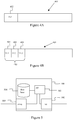
- FIG. 4A there is illustrated schematically an example of a SIP message 401, that has a trust level indicator 402 as part of the message.
- a trust level indicator need not be a single indicator for the signalling.
- a trust level indicator may be made up of trust level indicator elements, which determined and added to the trust level indicator by different nodes as the SIP message traverses those nodes to its destination in the IMS network.
- a trust level indicator 403 may be added to by a P-CSCF including a trust level indicator element TL1 404 describing what type of Confidentiality and Integrity protection is used.
- a S-CSCF may add a trust level indictor element TL2 405 describing the authentication mechanism that has been successfully applied.
- Interconnect functions may add a trust level indictor element TL3 406 identifying the network from which the SIP message was received. In this way, the trust level indicator 403 is built up as the SIP message 401 traverses different nodes before terminating in the IMS network network.
- the node 501 comprises a receiver 502, for receiving SIP messages a processor 503 for analysing a received SIP message and modifying it to include a trust level indicator.
- the processor may access a database 504 to obtain information to include in the trust level indicator.
- This database may be located remotely or may be disposed within the node.
- the information for the trust level indicator may also be received from other collected sources not shown in Figure 5 .
- the database 504 may also include a mapping database that maps a trust level indicator to a security policy to be applied in the event that the SIP message contains a given trust level indicator.
- the node 501 further comprises a transmitter 505 for forwarding the modified SIP message.
- the functions of the node may be at any or all nodes that handle the message, including User Equipment, Application Servers, Call Session Control Functions, and Border or Interconnect elements.
- the trust level indicator in the SIP message may be used by a node in an IMS network to apply a security policy to any signalling associated with the SIP message.
- a SIP message may be used to set up a media stream between two UEs, and a security policy may be applied to the media stream on the basis of the trust level indicator in the SIP message.
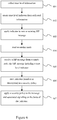
- FIG. 6 A flow diagram of the basic steps of an embodiment of the invention is illustrated in Figure 6 .
- trust level information is collected 601 at a node.
- the node creates 602 a trust level indicatoron the basis of the collected information.
- the trust level indicator is applied 603 to either a new SIP message or added to an existing SIP message, before the message is sent 604 to an IMS node.
- the IMS node receives 605 the SIP message from the node, which may be in a different network to the node.
- the SIP message contains the trust level indicator, and the IMS node maps 606 the indicator (which may be a number or a description, and may be made up of a plurality of trust level indicator elements) to a security policy.
- the security policy is then applied 607 to the message and associated signalling, the security policy being determined by the trust level indicator.
- IMS network operators have roaming and interconnect agreements with other IMS operators.
- an IMS operator agrees a trust level with another IMS operator, such that any traffic received from or via that operator would have at most the agreed trust level, or in other words a guarantee that a certain defined set of security mechanisms has been applied.
- the other operator network may not support the same security mechanisms.
- users when roaming they may be in a network that is accorded a lower trust level than their home network.
- the user may be roaming in a visited network that accords the user's home network a low level of trust.
- either or both of the visited and home network may apply security policies to signalling passing between the visited and home networks.
- the additional information elements included in the trust level indicator by different network entities are used in the negotiation and enforcement of a correct trust level and a consistent security policy.
- an "originating IMS network” 701 and a “terminating IMS network” 702 the routed to domain takes a static decision for all SIP requests received from a certain domain. If the trust level falls below a certain level, which has previously been negotiated and is defined in roaming and interconnect agreements, appropriate action is required. For a SIP message that doesn't have a sufficiently trusted trust level indicator, appropriate action may be the removal of the P-Asserted-Identity header, or topology hiding may be applied, or the SIP message may simply be disallowed. This requires that the border entities are provisioned with the agreements between the domains e.g. agreed when signing roaming and/or interconnect agreement between operators.
- the originating IMS network 701 When a SIP request is authorized by the originating IMS network 701, the originating IMS network 701 adds a trust level indicator to the SIP request. When the SIP request is sent to another a terminating IMS network 702, the terminating IMS network 702 checks the trust level indicator and ensures that it is at the same or higher than the minimum trust level agreed between the two networks. A terminating IMS network border element may also add additional trust information, such as from which network it received the message. The SIP request is then routed towards User Equipment (UE) 703 and other entities (e.g. Application Servers, AS) 704 that use the trust level indictor to decide whether to trust the information included in the SIP request (e.g. the P-Asserted-Identity header).
- UE User Equipment
- AS Application Servers
- the SIP request sent to the terminating IMS network 702 will not include any trust information.
- the terminating IMS network 702 then takes a static decision to which trust level the SIP request should be accorded based on the roaming or interconnect agreements with the originating IMS network.
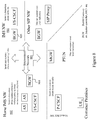
- a special interconnect network 801, as illustrated in Figure 8 may be used between two or more operators to route traffic to the correct terminating network (this is often to avoid bi-lateral agreements between every operator in the world).
- the two operators may be the operator of the Home network 802 and a separate operator of another IMS network 803.
- Application Servers can also make use of the trust level indicator.
- a special subscription for a service based on the trust level indicator can be applied, for example if a user only wishes to receive SIP messages that are accorded a certain level of trust.
- Such a service could be implemented in an AS.
- the AS can retrieve the subscription information from the HSS 205 (alternatively the trust level indicator is sent via the Ut interface from the UE) and if a SIP request has a lower trust level indicator than the trust level required by the user, the SIP request may be accorded special treatment, such as being ignored, logged, rejected, forwarded to voicemail etc.
- a UE can also make different use of the trust level indicator. Examples of such use include the following:
- the trust level indicator can be used to decide which entity in the private network that should get the incoming request.
- IMS networks are homogeneous and completely bi-lateral and where a minimum security level is the least secure security mechanisms allowed in IMS networks.
- a trust level indicator into IMS networks, entities handling the IMS communication can be aware of the extent to which they can rely on information received in a SIP messages. This limits the risk of unsolicited communication; giving a higher probability that services requiring security architecture will adopt IMS because of its inbuilt security. This also ensures that the current bi-lateral security level (i.e., that two communicating parties must trust each other to the same level) can be avoided.
Landscapes
- Engineering & Computer Science (AREA)
- Computer Networks & Wireless Communication (AREA)
- Signal Processing (AREA)
- Computer Hardware Design (AREA)
- Computer Security & Cryptography (AREA)
- Computing Systems (AREA)
- General Engineering & Computer Science (AREA)
- Data Exchanges In Wide-Area Networks (AREA)
- Telephonic Communication Services (AREA)
- Mobile Radio Communication Systems (AREA)
Claims (13)
- Procédé de gestion de confiance, le procédé étant effectué dans un réseau de Sous-système Multimédia IP et étant caractérisé en ce qu'il comprend :au niveau d'un noeud dans le réseau de Sous-système Multimédia IP, la réception (605) en provenance d'un noeud distant disposé dans un autre réseau, d'un message de Protocole d'Ouverture de Session, le message incluant un indicateur (402) indiquant le niveau de confiance d'une communication envoyée en provenance du noeud distant à destination du noeud de Sous-système Multimédia IP, dans lequel l'indicateur est un nombre ou une description, qui est composée d'une pluralité d'éléments indicateurs de niveau de confiance, qui sont déterminés et ajoutés à l'indicateur de niveau de confiance par des noeuds différents lorsque le message SIP traverse ces noeuds jusqu'à sa destination dans le réseau IMS;et le noeud mettant en correspondance le nombre ou la description avec une politique de sécurité ;la détermination de la quantité de confiance qui devrait être accordée au message SIP ou à un message associé ; etl'application (607) d'une politique de sécurité au message, la politique de sécurité étant déterminée par la mise en correspondance.
- Procédé de gestion de confiance dans un réseau de Sous-système Multimédia IP selon la revendication 1, comprenant en outre l'application de la politique de sécurité à toute la signalisation associée au message de Protocole d'Ouverture de Session.
- Procédé de gestion de confiance dans un réseau de Sous-système Multimédia IP selon la revendication 2, dans lequel l'indicateur comprend une pluralité d'éléments indicateurs, chaque élément indicateur se rapportant à un niveau de confiance d'un noeud différent dans un chemin de signalisation entre le noeud distant et le noeud, et de préférence dans lequel un élément indicateur comprend une indication d'un réseau en provenance duquel le message SIP a été reçu.
- Procédé de gestion de confiance dans un réseau de Sous-système Multimédia IP selon l'une quelconque des revendications 1 à 3, dans lequel l'indicateur de niveau de confiance est déterminé selon des informations sélectionnées à partir de n'importe quel type de terminal utilisateur, type de chiffrage, type de réseau, type de noeud, mécanisme d'authentification d'utilisateur final et mécanisme de sécurité intradomaine.
- Procédé de gestion de confiance dans un réseau de Sous-système Multimédia IP selon l'une quelconque des revendications précédentes, dans lequel la politique de sécurité appliquée est sélectionnée à partir de n'importe lequel de l'enlèvement d'un en-tête d'Identité à affirmation de type P, de l'application de dissimulation de topologie, du rejet de la communication, de l'autorisation de la communication sans modification, du filtrage du message selon une base de données de sources de messages permis, et de l'application d'une détection de logiciel malveillant sur la signalisation entrante se rapportant au message SIP.
- Procédé de gestion de confiance dans un réseau de Sous-système Multimédia IP selon l'une quelconque des revendications précédentes, dans lequel la politique de sécurité est appliquée à l'un d'un élément de frontière, d'un Serveur d'Applications, d'un Équipement Utilisateur et d'une Fonction de Commande de Session d'Appel.
- Noeud à utiliser dans un réseau de sous-système Multimédia IP, le noeud étant caractérisé en ce qu'il comprend :un récepteur pour recevoir, en provenance d'un noeud distant disposé dans un autre réseau, un message de Protocole d'Ouverture de Session, le message incluant un indicateur indiquant le niveau de confiance d'une communication envoyée en provenance du noeud distant à destination du noeud de Sous-système Multimédia IP, dans lequel l'indicateur est un nombre ou une description, qui est composée d'une pluralité d'éléments indicateurs de niveau de confiance, qui sont déterminés et ajoutés à l'indicateur de niveau de confiance par des noeuds différents lorsque le message SIP traverse ces noeuds jusqu'à sa destination dans le réseau IMS; et le noeud étant configuré pour mettre en correspondance le nombre ou la description avec une politique de sécurité ; etun processeur pour déterminer la quantité de confiance qui devrait être accordée au message SIP ou à un message associé ; etpour appliquer une politique de sécurité au message, la politique de sécurité étant déterminée par la mise en correspondance.
- Noeud selon la revendication 7, dans lequel le noeud est sélectionné à partir d'un d'Équipement Utilisateur, d'une Fonction de Commande de Session d'Appel, d'un élément de frontière et d'un Serveur d'Applications.
- Noeud (501) à utiliser dans un réseau de communication, le noeud étant caractérisé en ce qu'il comprend
un moyen pour collecter des informations de niveau de confiance,
un processeur (503) pour produire un indicateur de niveau de confiance sur la base des informations de niveau de confiance et pour modifier un message de Protocole d'Ouverture de Session de sorte que le message de Protocole d'Ouverture de Session inclut l'indicateur de niveau de confiance, dans lequel l'indicateur comprend un nombre ou une description, qui est composée d'une pluralité d'éléments indicateurs de niveau de confiance, qui sont déterminés et ajoutés à l'indicateur de niveau de confiance par des noeuds différents lorsque le message SIP traverse ces noeuds jusqu'à sa destination dans le réseau IMS;
un émetteur (505) pour envoyer le message de Protocole d'Ouverture de Session, dans lequel l'indicateur de niveau de confiance permet à des entités gérant le message SIP ou le message associé de déterminer la quantité de confiance qui devrait être accordée au message SIP ou au message associé,
et pour appliquer une politique de sécurité au message sur la base d'une mise en correspondance entre le nombre ou la description avec la politique de sécurité. - Noeud selon la revendication 9, dans lequel le processeur est agencé pour modifier un indicateur de niveau de confiance existant dans un message de Protocole d'Ouverture de Session en ajoutant un élément indicateur de niveau de confiance à l'indicateur de niveau de confiance existant, l'élément indicateur de niveau de confiance se rapportant à un niveau de confiance du noeud ou d'un réseau dans lequel le noeud est disposé.
- Noeud selon la revendication 9 et la revendication 10, dans lequel le noeud est sélectionné à partir de l'un d'un Équipement Utilisateur, d'une Fonction de Commande de Session d'Appel, d'un élément de frontière et d'un Serveur d'Applications.
- Procédé de gestion de confiance, le procédé étant effectué dans un réseau de Sous-système Multimédia IP et étant caractérisé en ce qu'il comprend :au niveau d'un noeud de réseau, la collecte d'informations de niveau de confiance ;à partir des informations de niveau de confiance collectées, la création d'un indicateur de niveau de confiance, l'indicateur comprenant un nombre ou une description, qui est composée d'une pluralité d'éléments indicateurs de niveau de confiance, qui sont déterminés et ajoutés à l'indicateur de niveau de confiance par des noeuds différents lorsque le message SIP traverse ces noeuds jusqu'à sa destination dans le réseau IMS; etl'ajout de l'indicateur de niveau de confiance à un message de Protocole d'Ouverture de Session ; dans lequel l'indicateur de niveau de confiance permet à des entités gérant le message SIP ou le message associé de déterminer la quantité de confiance qui devrait être accordée au message SIP ou au message associé et pour appliquer une politique de sécurité au message sur la base d'une mise en correspondance entre le nombre ou la description avec la politique de sécurité.
- Procédé de gestion de confiance dans un réseau de Sous-système Multimédia IP selon la revendication 12, dans lequel l'indicateur de niveau de confiance est ajouté à l'un d'un nouveau Protocole d'Ouverture de Session créé par le noeud de réseau et un Protocole d'Ouverture de Session existant reçu par le noeud de réseau, et de préférence dans lequel les informations de niveau de confiance sont basées sur n'importe lesquelles d'informations de base de données, de type de terminal utilisateur, de type de chiffrage, de type de réseau, de type de noeud, de mécanisme d'authentification d'utilisateur final et de mécanisme de sécurité intradomaine.
Applications Claiming Priority (1)
| Application Number | Priority Date | Filing Date | Title |
|---|---|---|---|
| PCT/EP2007/059680 WO2009033504A1 (fr) | 2007-09-14 | 2007-09-14 | Procédés et appareils pour la gestion de niveaux de confiance dans un réseau de communications d'un sous-système multimédia |
Publications (2)
| Publication Number | Publication Date |
|---|---|
| EP2201745A1 EP2201745A1 (fr) | 2010-06-30 |
| EP2201745B1 true EP2201745B1 (fr) | 2018-06-13 |
Family
ID=39731267
Family Applications (1)
| Application Number | Title | Priority Date | Filing Date |
|---|---|---|---|
| EP07820199.3A Not-in-force EP2201745B1 (fr) | 2007-09-14 | 2007-09-14 | Procédés et appareils pour la gestion de niveaux de confiance dans un réseau de communications d'un sous-système multimédia |
Country Status (6)
| Country | Link |
|---|---|
| EP (1) | EP2201745B1 (fr) |
| JP (1) | JP5069353B2 (fr) |
| CN (1) | CN101796797A (fr) |
| BR (1) | BRPI0721903A2 (fr) |
| CA (1) | CA2699441A1 (fr) |
| WO (1) | WO2009033504A1 (fr) |
Cited By (1)
| Publication number | Priority date | Publication date | Assignee | Title |
|---|---|---|---|---|
| US11057775B2 (en) | 2016-07-01 | 2021-07-06 | Huawei Technologies Co., Ltd. | Key configuration method, security policy determining method, and apparatus |
Families Citing this family (3)
| Publication number | Priority date | Publication date | Assignee | Title |
|---|---|---|---|---|
| JP5313395B2 (ja) | 2009-04-13 | 2013-10-09 | リサーチ イン モーション リミテッド | Sipメッセージに対する信用を決定するシステムおよび方法 |
| EP3259893A1 (fr) * | 2015-02-17 | 2017-12-27 | Telefonaktiebolaget LM Ericsson (publ) | Fourniture d'informations d'emplacement dans un réseau de sous-système multimédia ip |
| CN109587680B (zh) * | 2017-09-29 | 2021-11-30 | 华为技术有限公司 | 参数的保护方法、设备和系统 |
Citations (1)
| Publication number | Priority date | Publication date | Assignee | Title |
|---|---|---|---|---|
| US20070186101A1 (en) * | 2006-02-06 | 2007-08-09 | Nokia Corporation | Trust concept for the SIP reason header |
Family Cites Families (3)
| Publication number | Priority date | Publication date | Assignee | Title |
|---|---|---|---|---|
| JP4101215B2 (ja) * | 2004-08-06 | 2008-06-18 | キヤノン株式会社 | セキュリティポリシー設定方法 |
| CN1642083A (zh) * | 2004-09-23 | 2005-07-20 | 华为技术有限公司 | 网络侧选择鉴权方式的方法 |
| CN100369430C (zh) * | 2005-06-21 | 2008-02-13 | 中兴通讯股份有限公司 | 一种ip多媒体子系统接入安全的保护方法 |
-
2007
- 2007-09-14 EP EP07820199.3A patent/EP2201745B1/fr not_active Not-in-force
- 2007-09-14 WO PCT/EP2007/059680 patent/WO2009033504A1/fr not_active Ceased
- 2007-09-14 JP JP2010524359A patent/JP5069353B2/ja not_active Expired - Fee Related
- 2007-09-14 CN CN200780100638A patent/CN101796797A/zh active Pending
- 2007-09-14 BR BRPI0721903-2A patent/BRPI0721903A2/pt active Search and Examination
- 2007-09-14 CA CA2699441A patent/CA2699441A1/fr not_active Abandoned
Patent Citations (1)
| Publication number | Priority date | Publication date | Assignee | Title |
|---|---|---|---|---|
| US20070186101A1 (en) * | 2006-02-06 | 2007-08-09 | Nokia Corporation | Trust concept for the SIP reason header |
Cited By (1)
| Publication number | Priority date | Publication date | Assignee | Title |
|---|---|---|---|---|
| US11057775B2 (en) | 2016-07-01 | 2021-07-06 | Huawei Technologies Co., Ltd. | Key configuration method, security policy determining method, and apparatus |
Also Published As
| Publication number | Publication date |
|---|---|
| CA2699441A1 (fr) | 2009-03-19 |
| JP5069353B2 (ja) | 2012-11-07 |
| JP2010539761A (ja) | 2010-12-16 |
| WO2009033504A1 (fr) | 2009-03-19 |
| CN101796797A (zh) | 2010-08-04 |
| EP2201745A1 (fr) | 2010-06-30 |
| BRPI0721903A2 (pt) | 2014-05-20 |
Similar Documents
| Publication | Publication Date | Title |
|---|---|---|
| US9900347B2 (en) | Handling trust in an IP multimedia subsystem communication network | |
| US9967348B2 (en) | Methods and apparatus for providing session policy during a registration of a device | |
| EP1743449B1 (fr) | Gestion d'identites dans un domaine de confiance d'un reseau ip | |
| US9420018B2 (en) | End-to-end address transfer | |
| KR20060060045A (ko) | 통신 네트워크들 간의 보안 통신을 제공하기 위한 방법 및시스템 | |
| EP2201745B1 (fr) | Procédés et appareils pour la gestion de niveaux de confiance dans un réseau de communications d'un sous-système multimédia | |
| Copeland | Converging NGN wireline and mobile 3G networks with IMS: converging NGN and 3G mobile | |
| EP2011299B1 (fr) | Methode et appareils de securisation des communications entre un terminal utilisateur et un proxy sip utilisant une association de securite ipsec | |
| KR100908275B1 (ko) | Ims 기반의 네트워크 시스템 및 사업자에 따른 능동 호연동 방법 | |
| Fox et al. | IP Multimedia Subsystem (IMS) Security: A Review and Testbed Implementation | |
| Traynor et al. | Vulnerabilities in Voice over IP | |
| Kong | Security system for passive IP devices on SIP-based networks | |
| Kalaglarski et al. | IMS Interworking | |
| WO2010054695A1 (fr) | Procédé et appareil à utiliser dans un réseau de communications |
Legal Events
| Date | Code | Title | Description |
|---|---|---|---|
| PUAI | Public reference made under article 153(3) epc to a published international application that has entered the european phase |
Free format text: ORIGINAL CODE: 0009012 |
|
| 17P | Request for examination filed |
Effective date: 20100408 |
|
| AK | Designated contracting states |
Kind code of ref document: A1 Designated state(s): AT BE BG CH CY CZ DE DK EE ES FI FR GB GR HU IE IS IT LI LT LU LV MC MT NL PL PT RO SE SI SK TR |
|
| AX | Request for extension of the european patent |
Extension state: AL BA HR MK RS |
|
| 17Q | First examination report despatched |
Effective date: 20100730 |
|
| DAX | Request for extension of the european patent (deleted) | ||
| RIN1 | Information on inventor provided before grant (corrected) |
Inventor name: HEDMAN, PETER Inventor name: LINDHOLM, FREDRIK Inventor name: WIFVESSON, MONICA |
|
| RIN1 | Information on inventor provided before grant (corrected) |
Inventor name: WIFVESSON, MONICA Inventor name: HEDMAN, PETER Inventor name: LINDHOLM, FREDRIK |
|
| RAP1 | Party data changed (applicant data changed or rights of an application transferred) |
Owner name: TELEFONAKTIEBOLAGET L M ERICSSON (PUBL) |
|
| GRAP | Despatch of communication of intention to grant a patent |
Free format text: ORIGINAL CODE: EPIDOSNIGR1 |
|
| INTG | Intention to grant announced |
Effective date: 20180319 |
|
| RIN1 | Information on inventor provided before grant (corrected) |
Inventor name: WIFVESSON, MONICA Inventor name: HEDMAN, PETER Inventor name: LINDHOLM, FREDRIK |
|
| GRAS | Grant fee paid |
Free format text: ORIGINAL CODE: EPIDOSNIGR3 |
|
| GRAA | (expected) grant |
Free format text: ORIGINAL CODE: 0009210 |
|
| AK | Designated contracting states |
Kind code of ref document: B1 Designated state(s): AT BE BG CH CY CZ DE DK EE ES FI FR GB GR HU IE IS IT LI LT LU LV MC MT NL PL PT RO SE SI SK TR |
|
| REG | Reference to a national code |
Ref country code: GB Ref legal event code: FG4D |
|
| REG | Reference to a national code |
Ref country code: CH Ref legal event code: EP Ref country code: AT Ref legal event code: REF Ref document number: 1009677 Country of ref document: AT Kind code of ref document: T Effective date: 20180615 |
|
| REG | Reference to a national code |
Ref country code: IE Ref legal event code: FG4D |
|
| REG | Reference to a national code |
Ref country code: DE Ref legal event code: R096 Ref document number: 602007055115 Country of ref document: DE |
|
| REG | Reference to a national code |
Ref country code: NL Ref legal event code: FP |
|
| REG | Reference to a national code |
Ref country code: LT Ref legal event code: MG4D |
|
| PG25 | Lapsed in a contracting state [announced via postgrant information from national office to epo] |
Ref country code: BG Free format text: LAPSE BECAUSE OF FAILURE TO SUBMIT A TRANSLATION OF THE DESCRIPTION OR TO PAY THE FEE WITHIN THE PRESCRIBED TIME-LIMIT Effective date: 20180913 Ref country code: FI Free format text: LAPSE BECAUSE OF FAILURE TO SUBMIT A TRANSLATION OF THE DESCRIPTION OR TO PAY THE FEE WITHIN THE PRESCRIBED TIME-LIMIT Effective date: 20180613 Ref country code: SE Free format text: LAPSE BECAUSE OF FAILURE TO SUBMIT A TRANSLATION OF THE DESCRIPTION OR TO PAY THE FEE WITHIN THE PRESCRIBED TIME-LIMIT Effective date: 20180613 Ref country code: CY Free format text: LAPSE BECAUSE OF FAILURE TO SUBMIT A TRANSLATION OF THE DESCRIPTION OR TO PAY THE FEE WITHIN THE PRESCRIBED TIME-LIMIT Effective date: 20180613 Ref country code: LT Free format text: LAPSE BECAUSE OF FAILURE TO SUBMIT A TRANSLATION OF THE DESCRIPTION OR TO PAY THE FEE WITHIN THE PRESCRIBED TIME-LIMIT Effective date: 20180613 Ref country code: ES Free format text: LAPSE BECAUSE OF FAILURE TO SUBMIT A TRANSLATION OF THE DESCRIPTION OR TO PAY THE FEE WITHIN THE PRESCRIBED TIME-LIMIT Effective date: 20180613 |
|
| PG25 | Lapsed in a contracting state [announced via postgrant information from national office to epo] |
Ref country code: LV Free format text: LAPSE BECAUSE OF FAILURE TO SUBMIT A TRANSLATION OF THE DESCRIPTION OR TO PAY THE FEE WITHIN THE PRESCRIBED TIME-LIMIT Effective date: 20180613 Ref country code: GR Free format text: LAPSE BECAUSE OF FAILURE TO SUBMIT A TRANSLATION OF THE DESCRIPTION OR TO PAY THE FEE WITHIN THE PRESCRIBED TIME-LIMIT Effective date: 20180914 |
|
| REG | Reference to a national code |
Ref country code: AT Ref legal event code: MK05 Ref document number: 1009677 Country of ref document: AT Kind code of ref document: T Effective date: 20180613 |
|
| PG25 | Lapsed in a contracting state [announced via postgrant information from national office to epo] |
Ref country code: CZ Free format text: LAPSE BECAUSE OF FAILURE TO SUBMIT A TRANSLATION OF THE DESCRIPTION OR TO PAY THE FEE WITHIN THE PRESCRIBED TIME-LIMIT Effective date: 20180613 Ref country code: AT Free format text: LAPSE BECAUSE OF FAILURE TO SUBMIT A TRANSLATION OF THE DESCRIPTION OR TO PAY THE FEE WITHIN THE PRESCRIBED TIME-LIMIT Effective date: 20180613 Ref country code: RO Free format text: LAPSE BECAUSE OF FAILURE TO SUBMIT A TRANSLATION OF THE DESCRIPTION OR TO PAY THE FEE WITHIN THE PRESCRIBED TIME-LIMIT Effective date: 20180613 Ref country code: IS Free format text: LAPSE BECAUSE OF FAILURE TO SUBMIT A TRANSLATION OF THE DESCRIPTION OR TO PAY THE FEE WITHIN THE PRESCRIBED TIME-LIMIT Effective date: 20181013 Ref country code: EE Free format text: LAPSE BECAUSE OF FAILURE TO SUBMIT A TRANSLATION OF THE DESCRIPTION OR TO PAY THE FEE WITHIN THE PRESCRIBED TIME-LIMIT Effective date: 20180613 Ref country code: PL Free format text: LAPSE BECAUSE OF FAILURE TO SUBMIT A TRANSLATION OF THE DESCRIPTION OR TO PAY THE FEE WITHIN THE PRESCRIBED TIME-LIMIT Effective date: 20180613 Ref country code: SK Free format text: LAPSE BECAUSE OF FAILURE TO SUBMIT A TRANSLATION OF THE DESCRIPTION OR TO PAY THE FEE WITHIN THE PRESCRIBED TIME-LIMIT Effective date: 20180613 |
|
| PG25 | Lapsed in a contracting state [announced via postgrant information from national office to epo] |
Ref country code: IT Free format text: LAPSE BECAUSE OF FAILURE TO SUBMIT A TRANSLATION OF THE DESCRIPTION OR TO PAY THE FEE WITHIN THE PRESCRIBED TIME-LIMIT Effective date: 20180613 |
|
| REG | Reference to a national code |
Ref country code: DE Ref legal event code: R097 Ref document number: 602007055115 Country of ref document: DE |
|
| PLBE | No opposition filed within time limit |
Free format text: ORIGINAL CODE: 0009261 |
|
| STAA | Information on the status of an ep patent application or granted ep patent |
Free format text: STATUS: NO OPPOSITION FILED WITHIN TIME LIMIT |
|
| PG25 | Lapsed in a contracting state [announced via postgrant information from national office to epo] |
Ref country code: MC Free format text: LAPSE BECAUSE OF FAILURE TO SUBMIT A TRANSLATION OF THE DESCRIPTION OR TO PAY THE FEE WITHIN THE PRESCRIBED TIME-LIMIT Effective date: 20180613 |
|
| REG | Reference to a national code |
Ref country code: CH Ref legal event code: PL |
|
| 26N | No opposition filed |
Effective date: 20190314 |
|
| PG25 | Lapsed in a contracting state [announced via postgrant information from national office to epo] |
Ref country code: DK Free format text: LAPSE BECAUSE OF FAILURE TO SUBMIT A TRANSLATION OF THE DESCRIPTION OR TO PAY THE FEE WITHIN THE PRESCRIBED TIME-LIMIT Effective date: 20180613 Ref country code: SI Free format text: LAPSE BECAUSE OF FAILURE TO SUBMIT A TRANSLATION OF THE DESCRIPTION OR TO PAY THE FEE WITHIN THE PRESCRIBED TIME-LIMIT Effective date: 20180613 |
|
| REG | Reference to a national code |
Ref country code: BE Ref legal event code: MM Effective date: 20180930 |
|
| REG | Reference to a national code |
Ref country code: IE Ref legal event code: MM4A |
|
| PG25 | Lapsed in a contracting state [announced via postgrant information from national office to epo] |
Ref country code: LU Free format text: LAPSE BECAUSE OF NON-PAYMENT OF DUE FEES Effective date: 20180914 |
|
| PG25 | Lapsed in a contracting state [announced via postgrant information from national office to epo] |
Ref country code: IE Free format text: LAPSE BECAUSE OF NON-PAYMENT OF DUE FEES Effective date: 20180914 |
|
| PG25 | Lapsed in a contracting state [announced via postgrant information from national office to epo] |
Ref country code: BE Free format text: LAPSE BECAUSE OF NON-PAYMENT OF DUE FEES Effective date: 20180930 Ref country code: FR Free format text: LAPSE BECAUSE OF NON-PAYMENT OF DUE FEES Effective date: 20180930 Ref country code: LI Free format text: LAPSE BECAUSE OF NON-PAYMENT OF DUE FEES Effective date: 20180930 Ref country code: CH Free format text: LAPSE BECAUSE OF NON-PAYMENT OF DUE FEES Effective date: 20180930 |
|
| PG25 | Lapsed in a contracting state [announced via postgrant information from national office to epo] |
Ref country code: MT Free format text: LAPSE BECAUSE OF NON-PAYMENT OF DUE FEES Effective date: 20180914 |
|
| PG25 | Lapsed in a contracting state [announced via postgrant information from national office to epo] |
Ref country code: TR Free format text: LAPSE BECAUSE OF FAILURE TO SUBMIT A TRANSLATION OF THE DESCRIPTION OR TO PAY THE FEE WITHIN THE PRESCRIBED TIME-LIMIT Effective date: 20180613 |
|
| PG25 | Lapsed in a contracting state [announced via postgrant information from national office to epo] |
Ref country code: PT Free format text: LAPSE BECAUSE OF FAILURE TO SUBMIT A TRANSLATION OF THE DESCRIPTION OR TO PAY THE FEE WITHIN THE PRESCRIBED TIME-LIMIT Effective date: 20180613 Ref country code: HU Free format text: LAPSE BECAUSE OF FAILURE TO SUBMIT A TRANSLATION OF THE DESCRIPTION OR TO PAY THE FEE WITHIN THE PRESCRIBED TIME-LIMIT; INVALID AB INITIO Effective date: 20070914 |
|
| REG | Reference to a national code |
Ref country code: DE Ref legal event code: R079 Ref document number: 602007055115 Country of ref document: DE Free format text: PREVIOUS MAIN CLASS: H04L0029080000 Ipc: H04L0065000000 |
|
| PGFP | Annual fee paid to national office [announced via postgrant information from national office to epo] |
Ref country code: NL Payment date: 20220926 Year of fee payment: 16 Ref country code: GB Payment date: 20220927 Year of fee payment: 16 Ref country code: DE Payment date: 20220629 Year of fee payment: 16 |
|
| REG | Reference to a national code |
Ref country code: DE Ref legal event code: R119 Ref document number: 602007055115 Country of ref document: DE |
|
| REG | Reference to a national code |
Ref country code: NL Ref legal event code: MM Effective date: 20231001 |
|
| GBPC | Gb: european patent ceased through non-payment of renewal fee |
Effective date: 20230914 |
|
| PG25 | Lapsed in a contracting state [announced via postgrant information from national office to epo] |
Ref country code: NL Free format text: LAPSE BECAUSE OF NON-PAYMENT OF DUE FEES Effective date: 20231001 |
|
| PG25 | Lapsed in a contracting state [announced via postgrant information from national office to epo] |
Ref country code: NL Free format text: LAPSE BECAUSE OF NON-PAYMENT OF DUE FEES Effective date: 20231001 |
|
| PG25 | Lapsed in a contracting state [announced via postgrant information from national office to epo] |
Ref country code: GB Free format text: LAPSE BECAUSE OF NON-PAYMENT OF DUE FEES Effective date: 20230914 |
|
| PG25 | Lapsed in a contracting state [announced via postgrant information from national office to epo] |
Ref country code: GB Free format text: LAPSE BECAUSE OF NON-PAYMENT OF DUE FEES Effective date: 20230914 Ref country code: DE Free format text: LAPSE BECAUSE OF NON-PAYMENT OF DUE FEES Effective date: 20240403 |