EP2194671B1 - Effiziente Schlüsselableitung für End-to-End-Netzwerksicherheit mit Verkehrssichtbarkeit - Google Patents
Effiziente Schlüsselableitung für End-to-End-Netzwerksicherheit mit Verkehrssichtbarkeit Download PDFInfo
- Publication number
- EP2194671B1 EP2194671B1 EP09252688.8A EP09252688A EP2194671B1 EP 2194671 B1 EP2194671 B1 EP 2194671B1 EP 09252688 A EP09252688 A EP 09252688A EP 2194671 B1 EP2194671 B1 EP 2194671B1
- Authority
- EP
- European Patent Office
- Prior art keywords
- client
- key
- bit
- base
- lsb
- Prior art date
- Legal status (The legal status is an assumption and is not a legal conclusion. Google has not performed a legal analysis and makes no representation as to the accuracy of the status listed.)
- Not-in-force
Links
- 238000009795 derivation Methods 0.000 title claims description 37
- 238000000034 method Methods 0.000 claims description 12
- 238000012545 processing Methods 0.000 claims description 11
- 238000012806 monitoring device Methods 0.000 claims description 9
- 238000005516 engineering process Methods 0.000 claims description 5
- 238000005259 measurement Methods 0.000 claims 1
- 230000006870 function Effects 0.000 description 6
- 230000005540 biological transmission Effects 0.000 description 4
- 238000010586 diagram Methods 0.000 description 4
- 229910003460 diamond Inorganic materials 0.000 description 4
- 239000010432 diamond Substances 0.000 description 4
- XUIMIQQOPSSXEZ-UHFFFAOYSA-N Silicon Chemical compound [Si] XUIMIQQOPSSXEZ-UHFFFAOYSA-N 0.000 description 2
- 238000011156 evaluation Methods 0.000 description 2
- 238000012986 modification Methods 0.000 description 2
- 230000004048 modification Effects 0.000 description 2
- 238000012544 monitoring process Methods 0.000 description 2
- 229910052710 silicon Inorganic materials 0.000 description 2
- 239000010703 silicon Substances 0.000 description 2
- 230000002159 abnormal effect Effects 0.000 description 1
- 238000013459 approach Methods 0.000 description 1
- 238000013475 authorization Methods 0.000 description 1
- 238000004891 communication Methods 0.000 description 1
- 230000001419 dependent effect Effects 0.000 description 1
- 238000009826 distribution Methods 0.000 description 1
- 239000000284 extract Substances 0.000 description 1
- 239000000835 fiber Substances 0.000 description 1
- 238000004519 manufacturing process Methods 0.000 description 1
- 239000000463 material Substances 0.000 description 1
- 230000003287 optical effect Effects 0.000 description 1
- 239000013307 optical fiber Substances 0.000 description 1
- 239000004065 semiconductor Substances 0.000 description 1
- 238000003860 storage Methods 0.000 description 1
- 239000000126 substance Substances 0.000 description 1
- 238000012546 transfer Methods 0.000 description 1
Images



Classifications
-
- H—ELECTRICITY
- H04—ELECTRIC COMMUNICATION TECHNIQUE
- H04L—TRANSMISSION OF DIGITAL INFORMATION, e.g. TELEGRAPHIC COMMUNICATION
- H04L9/00—Cryptographic mechanisms or cryptographic arrangements for secret or secure communications; Network security protocols
- H04L9/08—Key distribution or management, e.g. generation, sharing or updating, of cryptographic keys or passwords
- H04L9/0861—Generation of secret information including derivation or calculation of cryptographic keys or passwords
- H04L9/0866—Generation of secret information including derivation or calculation of cryptographic keys or passwords involving user or device identifiers, e.g. serial number, physical or biometrical information, DNA, hand-signature or measurable physical characteristics
-
- H—ELECTRICITY
- H04—ELECTRIC COMMUNICATION TECHNIQUE
- H04L—TRANSMISSION OF DIGITAL INFORMATION, e.g. TELEGRAPHIC COMMUNICATION
- H04L63/00—Network architectures or network communication protocols for network security
- H04L63/04—Network architectures or network communication protocols for network security for providing a confidential data exchange among entities communicating through data packet networks
- H04L63/0428—Network architectures or network communication protocols for network security for providing a confidential data exchange among entities communicating through data packet networks wherein the data content is protected, e.g. by encrypting or encapsulating the payload
-
- H—ELECTRICITY
- H04—ELECTRIC COMMUNICATION TECHNIQUE
- H04L—TRANSMISSION OF DIGITAL INFORMATION, e.g. TELEGRAPHIC COMMUNICATION
- H04L63/00—Network architectures or network communication protocols for network security
- H04L63/06—Network architectures or network communication protocols for network security for supporting key management in a packet data network
-
- H—ELECTRICITY
- H04—ELECTRIC COMMUNICATION TECHNIQUE
- H04L—TRANSMISSION OF DIGITAL INFORMATION, e.g. TELEGRAPHIC COMMUNICATION
- H04L9/00—Cryptographic mechanisms or cryptographic arrangements for secret or secure communications; Network security protocols
- H04L9/06—Cryptographic mechanisms or cryptographic arrangements for secret or secure communications; Network security protocols the encryption apparatus using shift registers or memories for block-wise or stream coding, e.g. DES systems or RC4; Hash functions; Pseudorandom sequence generators
- H04L9/0618—Block ciphers, i.e. encrypting groups of characters of a plain text message using fixed encryption transformation
- H04L9/0631—Substitution permutation network [SPN], i.e. cipher composed of a number of stages or rounds each involving linear and nonlinear transformations, e.g. AES algorithms
-
- H—ELECTRICITY
- H04—ELECTRIC COMMUNICATION TECHNIQUE
- H04L—TRANSMISSION OF DIGITAL INFORMATION, e.g. TELEGRAPHIC COMMUNICATION
- H04L2209/00—Additional information or applications relating to cryptographic mechanisms or cryptographic arrangements for secret or secure communication H04L9/00
- H04L2209/12—Details relating to cryptographic hardware or logic circuitry
- H04L2209/125—Parallelization or pipelining, e.g. for accelerating processing of cryptographic operations
Definitions
- End-to-end security means that there is data authenticity and/or confidentiality of data from one side of a communication in the network all the way to the other side, e.g., client-to-server and server-to-client.
- Traffic visibility means that servers and information technology (IT) monitoring devices can view the secured traffic. To some degree, these two goals oppose one another, but both are important for network security.
- End-to-end security is important for both clients and servers in order to exclude third parties from tampering with traffic between the client and server, where the client is the most exposed to direct manipulation or tampering.
- the uniqueness of the client's secrets is paramount to prevent the compromise of one client from gaining access to the traffic of other clients.
- Traffic visibility is vital to the IT administration and requires the IT administration to observe traffic to detect abnormal phenomenon.
- Many current major security protocols only provide end-to-end security without concern for traffic visibility.
- AES Advanced Encryption Standard
- US NIST is the de facto method for most network security protocols.
- AES-GCM Galois-field and Counter Mode
- US NIST and NSA provide guidance for the choice of key sizes.
- a 128-bit key with AES 128 operation is used.
- a 256-bit key with AES256 operation might be required.
- a traditional method of key derivation is a serial operation by iterative the one-way hash function, which is slower in hardware.
- Embodiments of the present invention provide for efficient key derivation for end-to-end network security with traffic visibility by authorized IT devices.
- Hardware-based, wire speed end-to-end encryption and authentication is achieved on a frame-by-frame basis using an efficient derived key mechanism for both small and large key sizes to address different security associations.
- embodiments of the invention use the AES 128 operation to derive the key, which has the advantage of shorter latency due to only 10-round operations in AES128.
- embodiments of the invention propose derivation formulas that enable the parallel execution of key derivation using the AES128 operation which can significantly speed up the key derivation of large keys (e.g., 256-bit key).
- Clients and server communicate with a domain controller that grants derived keys and their associated derivation information to authenticated clients and derivation keys to authenticated servers.
- server hardware Upon receiving a frame from a particular client, server hardware extracts the key derivation information from the frame, applies the derivation key to this information, and thus, derives the cryptographic key used for the frame without having to lookup or negotiate a session key.
- the derived key granted to one client will not be known to, and cannot be computed by, any other client. Only servers can derive the associated client keys.
- the domain controller may also send the derivation key to authorized IT network appliances, such as, for example, an IT monitoring device/host. With the authorized IT network appliances having the same derivation key mechanism as the servers, the authorized IT network appliances are able to decrypt the encrypted pass-thru traffic at full wire speed, thus, enabling traffic visibility by the authorized IT network appliances.
- FIG. 1 illustrates an enterprise network security diagram 10 in accordance with various embodiments of the invention.
- an enterprise network 14 may be leveraged to communicate a plurality of clients 12 with one or more servers 16.
- An enterprise domain controller 20 is responsible for maintaining both end-to-end security for the entire enterprise and for maintaining traffic visibility for the server 16 and the IT monitoring devices 18.
- the domain controller 20 may be, for example, an authentication, authorization, and auditing (AAA) server, a key distribution server, or a policy server, to mention a few examples.
- AAA authentication, authorization, and auditing
- the enterprise domain controller 20 distributes derived keys (as indicated by arrows 22) to clients 12 and sends their derivation keys to server 16 and IT network monitoring host 18.
- derived keys as indicated by arrows 22
- embodiments of the invention provide for an efficient derived key mechanism for both small and large key sizes to address different security associations.
- the client key or the derived key is derived based on the key size.
- client_key AES128(base_key, client_ID), where the base_key is of size 128-bit; the client_ID is of size 128-bit; and the client_key is of size 128-bit.
- the packet payload will undergo the 128-bit AES operation (i.e., 10 round AES operation) by the client_key.
- the client_ID is the identifier of clients, such as the client's Internet Protocol address or other designated identifier by the enterprise domain controller 20 or a combination of different attributes in the packet. This unique client_ID is communicated with each secure packet and is used as the secure session identifier. Therefore, each client 12 has different and independent keys and identifiers.
- base_key is stored in hardware.
- embodiments of the invention use the following optional derivation formulas:
- the client_ID with Options I and 2 is the identifier of clients, such as the client's Internet Protocol address or other designated identifier by the enterprise domain controller 20 or a combination of different attributes in the packet.
- This unique client_ID is communicated with each secure packet and is used as the secure session identifier. Therefore, each client 12 has different and independent keys and identifiers.
- base_key_1 and base_key_2 are stored in hardware.
- embodiments of the invention provide for an efficient derived key mechanism for both small and large key sizes to address different security associations (as opposed to traditional usage models of key derivation that involves a seed for a session to derive the keys for the session, for example).
- small keys e.g. 128-bit key
- embodiments of the invention use the AES 128 operation to derive the key, which has the advantage of shorter latency due to only 10-round operations in AES 128.
- embodiments of the invention propose derivation formulas that enable the parallel execution of key derivation using the AES 128 operation which can significantly speed up the key derivation of large keys (e.g., 256-bit key).
- the key is split into two halves and then combined back together to get back to the same value. Accordingly, the security of 256-bit entropy is preserved. Options 1 and 2 above is based on this same analogy.
- the 256-bit key is split into two halves, and then a good pseudorandom function (e.g., AES 128) is applied to get two good derived keys. For example, base_key_1 And base_key_2 have 128-bit entropy, respectively. Then the two are combined together to obtain a strong key of 256-bit.
- a good pseudorandom function e.g., AES 128
- Options 1 and 2 above are efficient for even large key sizes because steps (1) and (2) in both Options 1 and 2 can be executed in parallel on hardware silicon.
- the latency of the key derivation is 10-round AES128 operations. For example, if 1-round operation costs 1 cycle of clock in hardware implementation, this will be 10 cycles. This is the best known method.
- the timing cost of the derivation for either small size or large size keys are the same.
- the increase of the silicon area is graceful for the large size key derivation, as embodiments of the invention only need the circuit of two rounds AES operation.
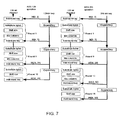
- Figure 7 illustrates a block diagram for the AES128 and AES256 operations based on the NIST specification.
- AES256 requires a large key size as well as more rounds for the operation.
- W[...] in the diagram specify the each round key of 128-bit.
- embodiments of the invention use the AES128 operation to save 4 cycles in key derivation, as compared to the AES256 operation.
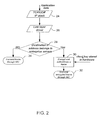
- FIG. 2 a sequence of storing and applying one or more client_keys distributed by the domain controller 20 ( Figure 1 ) is depicted, according to embodiments. All of the outgoing frames to an enterprise server are encrypted and authenticated by the client_key.
- application data comes into a Transmission Control Protocol (TCP)/User Datagram Protocol (UDP)/Internet Protocol (IP) stack as indicated at 24.
- TCP Transmission Control Protocol
- UDP User Datagram Protocol
- IP Internet Protocol
- the Internet Protocol packets are distributed to a server by the stack.
- the link layer driver forms the layer-2 frame, as indicated at 26.
- a check at diamond 28 determines whether the destination Internet Protocol address belongs to enterprise servers. If not, the frame is transmitted through a network interface card as indicated at 34. If so, the frame is encrypted and authenticated, as indicated at 30, using the appropriate client_key stored in hardware. Then the encrypted frame is transmitted through the network interface card as indicated at 32.
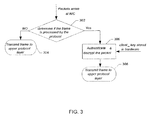
- Embodiments of the invention are further depicted in Figure 3 .
- a client platform receives a frame, indicated as packets arrive at network interface card, a check at diamond 302, in Figure 3 , determines if the frame is processed by the protocol described herein. If not, the frame is transmitted to an upper protocol layer, as indicated at 304. If the frame is processed by the protocol at diamond 302, then the packet is authenticated and the packet is decrypted using the appropriate client_key stored in hardware, as indicated at block 306. The selection of the correct key can be done via leveraging the session ID and/or some other unique identifier or address within the packet. The frame is then transmitted to the upper protocol layer as indicated at 308.
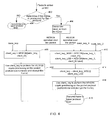
- Embodiments of the invention are further depicted in Figure 4 .
- the server 16 ( Figure 1 ) receives a frame, indicated as packets arriving in a network interface card
- a check at diamond 402 determines if the frame is processed by the protocol described herein. If not, the frame is transmitted to the upper protocol layer as indicated at 404. If so, the client_ID is extracted from the frame at 406 and may be used to select the appropriate derivation key, if more than one derivation key exists.
- client_key AES 128(base _key, client_ID) at 408.
- the client_key is used to perform the AES128 cryptographic processing on the packet payload to authenticate and decrypt the frame at 410.
- the frame is transmitted to an upper protocol layer at 418.
- the client_ID is the identifier for secure association for the given session.
- these two derivation operations may be done in parallel using the AES128 operation which can significantly speed up the key derivation of large keys (e.g., 256-bit key).
- 412 represents both Option 1 and Option 2, described above.
- the "pad" value for computing client_key_LSB can be null (Option 1), or a simple integer counter (Option 2), or a prescribed string (Option 2).
- Client_key client_key_MSB ⁇ client_key_LSB at 414.
- the client_key is used to perform the AES256 cryptographic processing on the packet payload to authenticate and decrypt the frame at 416.
- the frame is transmitted to an upper protocol layer at 418.
- the client_ID is the identifier for secure association for the given session.
- the server 16 may transmit a frame using the sequence shown in Figure 5 , according to embodiments.
- application data is received in the Internet Protocol stack at 502.
- the packets are distributed to various clients and a client_ID is attached to each frame at 504.
- a link layer driver then receives a frame at 505.
- the client_ID is extracted from the frame.
- client_key AES 128(base_key, client_ID) at 508.
- the client_key is used to perform the AES128 cryptographic processing on the packet payload to authenticate and encrypt the frame at 510.
- the frame is transmitted to the network at 518.
- the client_ID is the identifier for secure association for the given session.
- these two derivation operations may be done in parallel using the AES128 operation which can significantly speed up the key derivation of large keys (e.g., 256-bit key).
- 512 represents both Option 1 and Option 2, described above.
- the "pad" value for computing client_key_LSB can be null (Option 1), or a simple integer counter (Option 2), or a prescribed string (Option 2).
- Client_key client_key_MSB ⁇ client_key_LSB at 514.
- the client_key is used to perform the AES256 cryptographic processing on the packet payload to authenticate and encrypt the frame at 516. Finally, the frame is transmitted to the network at 518.
- the client_ID is the identifier for secure association for the given session.
- the IT network monitoring devices 18 ( Figure 1 ) operate similarly to the server 16.
- the server 16 and the monitoring host 18 only need to maintain a few keys to handle many different security associations from clients. An adversary compromising one client host is not able to impersonate another client because the keys for distinct clients/sessions are different and independent.
- a frame format may piggyback the Internet Protocol security (IPSEC) frames.
- IPSEC Internet Protocol security
- a client_ID is piggybacked on the security parameter index (SPI) field of an IPSEC header.
- SPI security parameter index
- a sequence number may also be piggybacked in the IPSEC header. Otherwise, the frame may be the same as a standard IPSEC frame.
- the client_ID may be assigned by the domain controller and is independent from medium access control (MAC) or IP addresses, or all or part of the client_ID may also be provided by the client.
- the client_ID can contain the host and user information, which can be mapped to an associated access control policy. Therefore, the client_ID enables the IT administrator to better know where a packet originated.
- both end-to-end security and traffic visibility for an enterprise network are provided.
- the mechanism may be implemented entirely in hardware, in some embodiments, which achieves full wire speed performance at lower cost in some cases.
- the generation of the client_ID and the client_key may be directly or indirectly bound to a prior evaluation of the device for conformance with a given administrative policy called a role.
- This evaluation may take various forms and in general speaks to a known configuration/state of the device. This allows the recipient of the data to make fine grained network access control decisions based on the last known/current state of the device.
- the client_ID may be linked to a security level that defines the client's role and indicates what the client is authorized to access. The client_ID is linked to the client's role so that once the key and identifier are bound, additional access control and security functions are possible.
- a hardware solution 100 includes a cryptographic engine 70 coupled to a bridge 72, according to embodiments.
- the bridge 72 is coupled to a direct memory access module 74, which, in turn, is coupled to a MAC processing unit 76.
- the processing unit 76 communicates with incoming and outgoing packets 80 through a buffer 78.
- the packets 80 may include the client_ID (CID) 82.
- CID client_ID
- the hardware solution 100 may be part of a network interface card or part of an integrated MAC within a processor/chipset. As such, the burden of end-to-end security may be removed from the server 16, increasing the possible scale of the network 14 in some embodiments. This allows a seamless employment of the solution, without affecting higher layer protocols/applications, in some cases.
- An embodiment may be implemented by hardware, software, firmware, microcode, or any combination thereof.
- the elements of an embodiment are the program code or code segments to perform the necessary tasks.
- the code may be the actual code that carries out the operations, or code that emulates or simulates the operations.
- a code segment may represent a procedure, a function, a subprogram, a program, a routine, a subroutine, a module, a software package, a class, or any combination of instructions, data structures, or program statements.
- a code segment may be coupled to another code segment or a hardware circuit by passing and/or receiving information, data, arguments, parameters, or memory contents. Information, arguments, parameters, data, etc.
- the program or code segments may be stored in a processor readable medium or transmitted by a computer data signal embodied in a carrier wave, or a signal modulated by a carrier, over a transmission medium.
- the "processor readable or accessible medium” or “machine readable or accessible medium” may include any medium that can store, transmit, or transfer information.
- Examples of the processor/machine readable/accessible medium include an electronic circuit, a semiconductor memory device, a read only memory (ROM), a flash memory, an erasable ROM (EROM), a floppy diskette, a compact disk (CD-ROM), an optical disk, a hard disk, a fiber optic medium, a radio frequency (RF) link, etc.
- the computer data signal may include any signal that can propagate over a transmission medium such as electronic network channels, optical fibers, air electromagnetic, RF links, etc.
- the code segments may be downloaded via computer networks such as the Internet, Intranet, etc.
- the machine accessible medium may be embodied in an article of manufacture.
- the machine accessible medium may include data that, when accessed by a machine, cause the machine to perform the operations described in the following.
- the term "data” here refers to any type of information that is encoded for machine-readable purposes. Therefore, it may include program, code, data, file, etc.
- references throughout this specification to "one embodiment” or “an embodiment” mean that a particular feature, structure, or characteristic described in connection with the embodiment is included in at least one implementation encompassed within the present invention. Thus, appearances of the phrase “one embodiment” or “in an embodiment” are not necessarily referring to the same embodiment. Furthermore, the particular features, structures, or characteristics may be instituted in other suitable forms other than the particular embodiment illustrated and all such forms may be encompassed within the claims of the present application.
Landscapes
- Engineering & Computer Science (AREA)
- Computer Security & Cryptography (AREA)
- Computer Networks & Wireless Communication (AREA)
- Signal Processing (AREA)
- Computer Hardware Design (AREA)
- Computing Systems (AREA)
- General Engineering & Computer Science (AREA)
- Data Exchanges In Wide-Area Networks (AREA)
- Computer And Data Communications (AREA)
Claims (9)
- System (100) aufweisend:eine kryptografische Maschine (70), die zum Ableiten eines kryptografischen Client-Sitzungsschlüssels für jeden von mehreren Clients unter Verwendung einer Ableitungsformel wie folgt:


und
wobei Operationen (1) und (2) parallel ausgeführt werden, konfiguriert ist undeine Mediumzugriffssteuerungs- (Medium Access Control - MAC) Verarbeitungseinheit (76), die an die kryptografische Maschine (70) gekoppelt ist,
wobei:"AES128" eine kryptografische Advanced Encryption Standard Operation ist, die einen 128-Bit Schlüssel verwendet und einen 128-Bit Ausgang hat;"client_key_MSB" und "client_key_LSB" 128-Bit Ausgänge von AES128 sind;"base_key_1" und "base_key_2" Ableitungsschlüssel sind;"client ID" 128 Bit von Daten sind, die einen Client identifizieren;"pad" eines von einem Nullwert, einem Wert eines Zählers oder einem vorgeschriebenen String ist;"∥" eine Verknüpfungsoperation (Konkatenation) ist; und"client_key" ein 256-Bit Client-Sitzungsschlüssel ist, der sich aus der Verknüpfung von client_key_MSB und client_key_LSB ergibt. - System nach Anspruch 1, umfassend eine Domänensteuerung (20) zum Senden des client_key zu einer Informationstechnologieüberwachungsvorrichtung (18), so dass die Informationstechnologieüberwachungsvorrichtung (18) imstande ist, verschlüsselten Verkehr zu entschlüsseln, um eine Verkehrssichtbarkeit bereitzustellen, während eine End-to-End-Sicherheit bewahrt bleibt.
- System nach Anspruch 1, das in einer Netzwerkschnittstellenkarte eingegliedert ist.
- Verfahren, umfassend:Bereitstellen einer Netzwerksicherheit zwischen Clients (12) und einem Server (16) unter Verwendung einer Domänensteuerung (20) zum Ableiten eines kryptografischen oder mehrerer kryptografischer Client-Sitzungsschlüssel(s) für jeden Client (12) unter Verwendung einer Ableitungsformel wie folgt:


und
wobei Operationen (1) und (2) parallel ausgeführt werden; undErmöglichen der Domänensteuerung (20), um die Client-Sitzungsschlüssel zu einem Client (12) zu verteilen, während ein Ableitungsschlüssel zu mindestens einem von einer Informationstechnologieüberwachungsvorrichtung (18) und dem Server (16) geliefert wird; wobei:"AES128" eine kryptografische Advanced Encryption Standard Operation ist, die einen 128-Bit Schlüssel verwendet und einen 128-Bit Ausgang hat;"client_key_MSB" und "client_key_LSB" 128-Bit Ausgänge von AES128 sind;"base_key_1" und "base_key_2" Ableitungsschlüssel sind, die von der Domänensteuerung (20) bereitgestellt werden;"client_ID" 128 Bit von Daten sind, die einen Client identifizieren;"pad" eines von einem Nullwert, einem Wert eines Zählers oder einem vorgeschriebenen String ist;"∥" eine Verknüpfungsoperation (Konkatenation) ist; und"client_key" ein 256-Bit Client-Sitzungsschlüssel ist, der sich aus der Verknüpfung von client_key_MSB und client_key_LSB ergibt. - Verfahren nach Anspruch 4, des Weiteren umfassend:Extrahieren der client_ID aus einem Frame, der von einem Client (12) empfangen wird.
- Verfahren nach Anspruch 5, des Weiteren umfassend:Senden des client_key zu einer Informationstechnologieüberwachungsvorrichtung (18), um der Vorrichtung zu ermöglichen verschlüsselten Verkehr zu entschlüsseln, um eine Verkehrssichtbarkeit bereitzustellen, während eine End-to-End-Sicherheit bewahrt bleibt.
- Verfahren nach Anspruch 6, des Weiteren umfassend:Verwenden der client_ID eines bestimmten Sitzungsschlüssels zur Steuerung eines Netzwerkzugangs.
- Verfahren nach Anspruch 4, des Weiteren umfassend:Binden der client_ID an eine Sicherheitsmessung zur Netzwerkzugangskontrolle.
- Maschinenlesbares Medium, das Anweisungen enthält, die, wenn sie von einem Verarbeitungssystem ausgeführt werden, das Verarbeitungssystem veranlassen, das Verfahren nach einem der Ansprüche 4-8 auszuführen.
Applications Claiming Priority (1)
| Application Number | Priority Date | Filing Date | Title |
|---|---|---|---|
| US12/327,137 US8467527B2 (en) | 2008-12-03 | 2008-12-03 | Efficient key derivation for end-to-end network security with traffic visibility |
Publications (3)
| Publication Number | Publication Date |
|---|---|
| EP2194671A2 EP2194671A2 (de) | 2010-06-09 |
| EP2194671A3 EP2194671A3 (de) | 2011-06-01 |
| EP2194671B1 true EP2194671B1 (de) | 2014-10-22 |
Family
ID=42106003
Family Applications (1)
| Application Number | Title | Priority Date | Filing Date |
|---|---|---|---|
| EP09252688.8A Not-in-force EP2194671B1 (de) | 2008-12-03 | 2009-11-27 | Effiziente Schlüsselableitung für End-to-End-Netzwerksicherheit mit Verkehrssichtbarkeit |
Country Status (4)
| Country | Link |
|---|---|
| US (3) | US8467527B2 (de) |
| EP (1) | EP2194671B1 (de) |
| JP (1) | JP5116752B2 (de) |
| CN (1) | CN101834840B (de) |
Families Citing this family (47)
| Publication number | Priority date | Publication date | Assignee | Title |
|---|---|---|---|---|
| US8467527B2 (en) | 2008-12-03 | 2013-06-18 | Intel Corporation | Efficient key derivation for end-to-end network security with traffic visibility |
| US10748146B2 (en) * | 2009-06-16 | 2020-08-18 | Heartland Payment Systems, Llc | Tamper-resistant secure methods, systems and apparatuses for credit and debit transactions |
| JP5451445B2 (ja) * | 2010-02-18 | 2014-03-26 | 株式会社東海理化電機製作所 | 認証システム及び認証方法 |
| US10482254B2 (en) * | 2010-07-14 | 2019-11-19 | Intel Corporation | Domain-authenticated control of platform resources |
| US9137214B2 (en) | 2010-12-15 | 2015-09-15 | Microsoft Technology Licensing, Llc | Encrypted content streaming |
| JP5435513B2 (ja) * | 2012-01-27 | 2014-03-05 | トヨタ自動車株式会社 | 暗号通信システム、鍵配布装置、暗号通信方法 |
| DE102012209408A1 (de) * | 2012-06-04 | 2013-12-05 | Siemens Aktiengesellschaft | Sichere Übertragung einer Nachricht |
| US9176838B2 (en) | 2012-10-19 | 2015-11-03 | Intel Corporation | Encrypted data inspection in a network environment |
| EP3017581A4 (de) * | 2013-07-02 | 2016-06-22 | Ericsson Telefon Ab L M | Schlüsselerzeugung für eingeschränkte ressourcenvorrichtungen |
| US9485091B2 (en) | 2014-05-01 | 2016-11-01 | International Business Machines Corporation | Dual-party session key derivation |
| US9460567B2 (en) * | 2014-07-29 | 2016-10-04 | GM Global Technology Operations LLC | Establishing secure communication for vehicle diagnostic data |
| US10726162B2 (en) * | 2014-12-19 | 2020-07-28 | Intel Corporation | Security plugin for a system-on-a-chip platform |
| JP2018518854A (ja) | 2015-03-16 | 2018-07-12 | コンヴィーダ ワイヤレス, エルエルシー | 公開キー機構を用いたサービス層におけるエンドツーエンド認証 |
| US9338147B1 (en) * | 2015-04-24 | 2016-05-10 | Extrahop Networks, Inc. | Secure communication secret sharing |
| JP6178390B2 (ja) * | 2015-08-05 | 2017-08-09 | Kddi株式会社 | 管理装置、管理システム、車両、管理方法、及びコンピュータプログラム |
| WO2017022821A1 (ja) * | 2015-08-05 | 2017-02-09 | Kddi株式会社 | 管理装置、管理システム、鍵生成装置、鍵生成システム、鍵管理システム、車両、管理方法、鍵生成方法、及びコンピュータプログラム |
| JP6238939B2 (ja) * | 2015-08-24 | 2017-11-29 | Kddi株式会社 | 車載コンピュータシステム、車両、管理方法、及びコンピュータプログラム |
| US10469260B2 (en) | 2016-07-08 | 2019-11-05 | Microsoft Technology Licensing, Llc | Multiple cryptographic key generation for two-way communication |
| US10411888B2 (en) * | 2016-07-08 | 2019-09-10 | Microsoft Technology Licensing, Llc | Cryptography method |
| US10433166B2 (en) * | 2016-07-08 | 2019-10-01 | Microsoft Technology Licensing, Llc | Cryptography using RF power measurement |
| US10419215B2 (en) * | 2016-11-04 | 2019-09-17 | Microsoft Technology Licensing, Llc | Use of error information to generate encryption keys |
| US10560264B2 (en) | 2016-11-08 | 2020-02-11 | Microsoft Technology Licensing, Llc | Cryptographic key creation using optical parameters |
| CN113630773B (zh) * | 2017-01-24 | 2023-02-14 | 华为技术有限公司 | 安全实现方法、设备以及系统 |
| US10476673B2 (en) | 2017-03-22 | 2019-11-12 | Extrahop Networks, Inc. | Managing session secrets for continuous packet capture systems |
| US9967292B1 (en) | 2017-10-25 | 2018-05-08 | Extrahop Networks, Inc. | Inline secret sharing |
| US10389574B1 (en) | 2018-02-07 | 2019-08-20 | Extrahop Networks, Inc. | Ranking alerts based on network monitoring |
| US10038611B1 (en) | 2018-02-08 | 2018-07-31 | Extrahop Networks, Inc. | Personalization of alerts based on network monitoring |
| US10270794B1 (en) | 2018-02-09 | 2019-04-23 | Extrahop Networks, Inc. | Detection of denial of service attacks |
| US10411978B1 (en) | 2018-08-09 | 2019-09-10 | Extrahop Networks, Inc. | Correlating causes and effects associated with network activity |
| US10594718B1 (en) | 2018-08-21 | 2020-03-17 | Extrahop Networks, Inc. | Managing incident response operations based on monitored network activity |
| US10965702B2 (en) | 2019-05-28 | 2021-03-30 | Extrahop Networks, Inc. | Detecting injection attacks using passive network monitoring |
| US11165814B2 (en) | 2019-07-29 | 2021-11-02 | Extrahop Networks, Inc. | Modifying triage information based on network monitoring |
| US10742530B1 (en) | 2019-08-05 | 2020-08-11 | Extrahop Networks, Inc. | Correlating network traffic that crosses opaque endpoints |
| US11388072B2 (en) | 2019-08-05 | 2022-07-12 | Extrahop Networks, Inc. | Correlating network traffic that crosses opaque endpoints |
| US10742677B1 (en) | 2019-09-04 | 2020-08-11 | Extrahop Networks, Inc. | Automatic determination of user roles and asset types based on network monitoring |
| WO2021056069A1 (en) * | 2019-09-25 | 2021-04-01 | Commonwealth Scientific And Industrial Research Organisation | Cryptographic services for browser applications |
| US11165823B2 (en) | 2019-12-17 | 2021-11-02 | Extrahop Networks, Inc. | Automated preemptive polymorphic deception |
| EP4468659B1 (de) * | 2020-02-13 | 2026-01-21 | InterDigital Patent Holdings, Inc. | Verfahren, vorrichtung und systeme mit vehicle-to-everything (v2x)-verbesserungen zur unterstützung von fahrzeug-to-fussgänger (v2p)-kommunikation |
| WO2021207219A1 (en) | 2020-04-08 | 2021-10-14 | Idac Holdings, Inc. | Methods, apparatuses and systems directed to a change of wtru to wtru relay |
| US11463466B2 (en) | 2020-09-23 | 2022-10-04 | Extrahop Networks, Inc. | Monitoring encrypted network traffic |
| WO2022066910A1 (en) | 2020-09-23 | 2022-03-31 | Extrahop Networks, Inc. | Monitoring encrypted network traffic |
| US11349861B1 (en) | 2021-06-18 | 2022-05-31 | Extrahop Networks, Inc. | Identifying network entities based on beaconing activity |
| US11296967B1 (en) | 2021-09-23 | 2022-04-05 | Extrahop Networks, Inc. | Combining passive network analysis and active probing |
| US11843606B2 (en) | 2022-03-30 | 2023-12-12 | Extrahop Networks, Inc. | Detecting abnormal data access based on data similarity |
| EP4483602B1 (de) | 2023-04-04 | 2025-10-01 | InterDigital Patent Holdings, Inc. | Datenschutz unter verwendung von verknüpfungsmodifikationsoperationen während einer relaisneuauswahl |
| CN120018114A (zh) | 2023-04-04 | 2025-05-16 | 交互数字专利控股公司 | 用于在中继重选期间使用初始连接释放的协调的隐私保护的方法 |
| US12483384B1 (en) | 2025-04-16 | 2025-11-25 | Extrahop Networks, Inc. | Resynchronizing encrypted network traffic |
Family Cites Families (58)
| Publication number | Priority date | Publication date | Assignee | Title |
|---|---|---|---|---|
| JPH08204702A (ja) | 1995-01-30 | 1996-08-09 | Nec Corp | 暗号鍵管理装置 |
| US6167136A (en) | 1997-05-16 | 2000-12-26 | Software Security, Inc. | Method for preventing copying of digital video disks |
| US6754820B1 (en) * | 2001-01-30 | 2004-06-22 | Tecsec, Inc. | Multiple level access system |
| US7055027B1 (en) | 1999-03-22 | 2006-05-30 | Microsoft Corporation | System and method for trusted inspection of a data stream |
| US20080192928A1 (en) * | 2000-01-06 | 2008-08-14 | Super Talent Electronics, Inc. | Portable Electronic Storage Devices with Hardware Security Based on Advanced Encryption Standard |
| US6983366B1 (en) | 2000-02-14 | 2006-01-03 | Safenet, Inc. | Packet Processor |
| US7231517B1 (en) | 2000-03-03 | 2007-06-12 | Novell, Inc. | Apparatus and method for automatically authenticating a network client |
| JP3864675B2 (ja) | 2000-03-09 | 2007-01-10 | 株式会社日立製作所 | 共通鍵暗号装置 |
| US7093126B1 (en) | 2000-04-14 | 2006-08-15 | International Business Machines Corporation | Encryption schemes with almost free integrity awareness |
| US6963976B1 (en) | 2000-11-03 | 2005-11-08 | International Business Machines Corporation | Symmetric key authenticated encryption schemes |
| US7266703B2 (en) | 2001-06-13 | 2007-09-04 | Itt Manufacturing Enterprises, Inc. | Single-pass cryptographic processor and method |
| US7900042B2 (en) * | 2001-06-26 | 2011-03-01 | Ncipher Corporation Limited | Encrypted packet inspection |
| US20030097409A1 (en) | 2001-10-05 | 2003-05-22 | Hungchou Tsai | Systems and methods for securing computers |
| US7281128B2 (en) | 2001-10-22 | 2007-10-09 | Extended Systems, Inc. | One pass security |
| JP4086782B2 (ja) * | 2001-12-10 | 2008-05-14 | インターナショナル・ビジネス・マシーンズ・コーポレーション | ブロードキャスト・コンテンツへのアクセス |
| US20030131245A1 (en) | 2002-01-04 | 2003-07-10 | Michael Linderman | Communication security system |
| US7188365B2 (en) | 2002-04-04 | 2007-03-06 | At&T Corp. | Method and system for securely scanning network traffic |
| US7487365B2 (en) | 2002-04-17 | 2009-02-03 | Microsoft Corporation | Saving and retrieving data based on symmetric key encryption |
| US20030200463A1 (en) | 2002-04-23 | 2003-10-23 | Mccabe Alan Jason | Inter-autonomous system weighstation |
| US7007163B2 (en) * | 2002-05-31 | 2006-02-28 | Broadcom Corporation | Methods and apparatus for accelerating secure session processing |
| US7475241B2 (en) | 2002-11-22 | 2009-01-06 | Cisco Technology, Inc. | Methods and apparatus for dynamic session key generation and rekeying in mobile IP |
| US20040202317A1 (en) * | 2002-12-20 | 2004-10-14 | Victor Demjanenko | Advanced encryption standard (AES) implementation as an instruction set extension |
| US6954450B2 (en) * | 2003-11-26 | 2005-10-11 | Cisco Technology, Inc. | Method and apparatus to provide data streaming over a network connection in a wireless MAC processor |
| US7543142B2 (en) | 2003-12-19 | 2009-06-02 | Intel Corporation | Method and apparatus for performing an authentication after cipher operation in a network processor |
| US7346773B2 (en) | 2004-01-12 | 2008-03-18 | Cisco Technology, Inc. | Enabling stateless server-based pre-shared secrets |
| US7685434B2 (en) | 2004-03-02 | 2010-03-23 | Advanced Micro Devices, Inc. | Two parallel engines for high speed transmit IPsec processing |
| US7490350B1 (en) | 2004-03-12 | 2009-02-10 | Sca Technica, Inc. | Achieving high assurance connectivity on computing devices and defeating blended hacking attacks |
| US8015211B2 (en) | 2004-04-21 | 2011-09-06 | Architecture Technology Corporation | Secure peer-to-peer object storage system |
| JPWO2005109797A1 (ja) | 2004-05-12 | 2008-03-21 | 日本電信電話株式会社 | ネットワーク攻撃対策方法、ネットワーク攻撃対策装置及びネットワーク攻撃対策プログラム |
| US7797745B2 (en) | 2004-12-22 | 2010-09-14 | Electronics And Telecommunications Research Institute | MAC security entity for link security entity and transmitting and receiving method therefor |
| US20070180227A1 (en) | 2005-03-01 | 2007-08-02 | Matsushita Electric Works, Ltd. | Decryption apparatus for use in encrypted communications |
| CN100550725C (zh) | 2005-06-17 | 2009-10-14 | 中兴通讯股份有限公司 | 一种用户与应用服务器协商共享密钥的方法 |
| US7725719B2 (en) | 2005-11-08 | 2010-05-25 | International Business Machines Corporation | Method and system for generating ciphertext and message authentication codes utilizing shared hardware |
| DE102006008752B4 (de) | 2006-02-24 | 2012-11-29 | Smiths Medical Deutschland Gmbh | Verfahren zum Herstellen einer Komponente einer Fluiddruckmesseinheit, Verfahren zum Herstellen einer Fluiddruckmesseinheit, Komponente zum Einsatz in einer Fluiddruckmesseinheit sowie Fluiddruckmesseinheit |
| WO2007108651A1 (en) | 2006-03-22 | 2007-09-27 | Lg Electronics Inc. | Security considerations for the lte of umts |
| JP4810289B2 (ja) | 2006-04-17 | 2011-11-09 | ルネサスエレクトロニクス株式会社 | メッセージ認証子生成装置、メッセージ認証子検証装置、及びメッセージ認証システム |
| US7913084B2 (en) | 2006-05-26 | 2011-03-22 | Microsoft Corporation | Policy driven, credential delegation for single sign on and secure access to network resources |
| US8107397B1 (en) | 2006-06-05 | 2012-01-31 | Purdue Research Foundation | Protocol for secure and energy-efficient reprogramming of wireless multi-hop sensor networks |
| JP4863777B2 (ja) | 2006-06-07 | 2012-01-25 | 富士通株式会社 | 通信処理方法及びコンピュータ・システム |
| JP4994741B2 (ja) | 2006-08-08 | 2012-08-08 | キヤノン株式会社 | 通信暗号化処理装置 |
| JP2008219454A (ja) | 2007-03-05 | 2008-09-18 | Hitachi Ltd | 通信内容監査支援システム |
| US9209967B2 (en) | 2007-03-12 | 2015-12-08 | Exelis, Inc. | Precalculated encryption key |
| CN101043335A (zh) | 2007-03-12 | 2007-09-26 | 中国建设银行股份有限公司 | 一种信息安全控制系统 |
| US20080244268A1 (en) * | 2007-03-30 | 2008-10-02 | David Durham | End-to-end network security with traffic visibility |
| US9319220B2 (en) * | 2007-03-30 | 2016-04-19 | Intel Corporation | Method and apparatus for secure network enclaves |
| US20090119510A1 (en) | 2007-11-06 | 2009-05-07 | Men Long | End-to-end network security with traffic visibility |
| US8467527B2 (en) | 2008-12-03 | 2013-06-18 | Intel Corporation | Efficient key derivation for end-to-end network security with traffic visibility |
| CN101335621B (zh) | 2007-06-26 | 2011-03-16 | 中国科学院声学研究所 | 一种802.11i密钥管理方法 |
| US8194854B2 (en) * | 2008-02-27 | 2012-06-05 | Intel Corporation | Method and apparatus for optimizing advanced encryption standard (AES) encryption and decryption in parallel modes of operation |
| WO2010010430A2 (en) * | 2008-07-25 | 2010-01-28 | Lee Kok-Wah | Methods and systems to create big memorizable secrets and their applications in information engineering |
| US8051287B2 (en) | 2008-10-15 | 2011-11-01 | Adobe Systems Incorporated | Imparting real-time priority-based network communications in an encrypted communication session |
| CN101807998A (zh) | 2009-02-13 | 2010-08-18 | 英飞凌科技股份有限公司 | 认证 |
| US8914878B2 (en) | 2009-04-29 | 2014-12-16 | Juniper Networks, Inc. | Detecting malicious network software agents |
| US8856317B2 (en) | 2010-07-15 | 2014-10-07 | Cisco Technology, Inc. | Secure data transfer in a virtual environment |
| US8694779B2 (en) | 2010-08-13 | 2014-04-08 | Bmc Software, Inc. | Monitoring based on client perspective |
| US8649275B2 (en) | 2011-01-19 | 2014-02-11 | Ixia | Fast SSL testing using precalculated cryptographyc data |
| US8800024B2 (en) | 2011-10-17 | 2014-08-05 | Mcafee, Inc. | System and method for host-initiated firewall discovery in a network environment |
| US9176838B2 (en) | 2012-10-19 | 2015-11-03 | Intel Corporation | Encrypted data inspection in a network environment |
-
2008
- 2008-12-03 US US12/327,137 patent/US8467527B2/en not_active Expired - Fee Related
-
2009
- 2009-11-27 EP EP09252688.8A patent/EP2194671B1/de not_active Not-in-force
- 2009-11-30 JP JP2009271249A patent/JP5116752B2/ja not_active Expired - Fee Related
- 2009-12-02 CN CN200910259050.0A patent/CN101834840B/zh not_active Expired - Fee Related
-
2013
- 2013-06-12 US US13/916,027 patent/US8903084B2/en active Active
-
2014
- 2014-12-01 US US14/557,125 patent/US9832015B2/en not_active Expired - Fee Related
Also Published As
| Publication number | Publication date |
|---|---|
| JP2010157998A (ja) | 2010-07-15 |
| CN101834840A (zh) | 2010-09-15 |
| US20150188702A1 (en) | 2015-07-02 |
| US20140032905A1 (en) | 2014-01-30 |
| CN101834840B (zh) | 2016-02-17 |
| US8903084B2 (en) | 2014-12-02 |
| EP2194671A2 (de) | 2010-06-09 |
| JP5116752B2 (ja) | 2013-01-09 |
| US8467527B2 (en) | 2013-06-18 |
| US9832015B2 (en) | 2017-11-28 |
| EP2194671A3 (de) | 2011-06-01 |
| US20100135498A1 (en) | 2010-06-03 |
Similar Documents
| Publication | Publication Date | Title |
|---|---|---|
| EP2194671B1 (de) | Effiziente Schlüsselableitung für End-to-End-Netzwerksicherheit mit Verkehrssichtbarkeit | |
| Hasan et al. | Lightweight cryptographic algorithms for guessing attack protection in complex internet of things applications | |
| EP2068526B1 (de) | End-to-End-Netzwerksicherheit mit Verkehrssichtbarkeit | |
| Raza et al. | Secure communication for the Internet of Things—a comparison of link‐layer security and IPsec for 6LoWPAN | |
| US8468337B2 (en) | Secure data transfer over a network | |
| CN109428867B (zh) | 一种报文加解密方法、网路设备及系统 | |
| US7483423B2 (en) | Authenticity of communications traffic | |
| Granjal et al. | Network‐layer security for the Internet of Things using TinyOS and BLIP | |
| JP5640226B2 (ja) | 第1ドメインのクライアントと第2ドメインのサーバとの間でセキュアな通信チャネルを確立するための装置、方法およびプログラム | |
| CN107251476A (zh) | 保密通信管理 | |
| CN1323507C (zh) | 分组加密算法中对短分组的处理方法 | |
| WO2025118789A1 (zh) | 基于ipsec和量子密钥的双重加密方法、加密网关 | |
| US20080244268A1 (en) | End-to-end network security with traffic visibility | |
| US6920556B2 (en) | Methods, systems and computer program products for multi-packet message authentication for secured SSL-based communication sessions | |
| Kofuji | Performance analysis of encryption algorithms on mobile devices | |
| Ji et al. | Security analysis of shadowsocks (r) protocol | |
| CN116456335A (zh) | 集成可信度量的通信方法和装置 | |
| Pacheco et al. | Enhancing and evaluating an architecture for privacy in the integration of Internet of Things and cloud computing | |
| WO2014137351A1 (en) | Routing a data packet to a shared security engine | |
| Ghosal et al. | μ Sec: A Security Protocol for Unicast Communication in Wireless Sensor Networks | |
| Easttom | Information assurance/encryption | |
| Hao et al. | WB-GWS: An IoT-Oriented Lightweight Gateway System Based on White-Box Cryptography | |
| Da-Yuan et al. | Implementation and performance evaluation of IPSec VPN based on netfilter | |
| Cornett et al. | NETWORK SECURITY: CHALLENGES AND SOLUTIONS. | |
| Liu | Research on network security based on IPSec |
Legal Events
| Date | Code | Title | Description |
|---|---|---|---|
| PUAI | Public reference made under article 153(3) epc to a published international application that has entered the european phase |
Free format text: ORIGINAL CODE: 0009012 |
|
| 17P | Request for examination filed |
Effective date: 20091221 |
|
| AK | Designated contracting states |
Kind code of ref document: A2 Designated state(s): AT BE BG CH CY CZ DE DK EE ES FI FR GB GR HR HU IE IS IT LI LT LU LV MC MK MT NL NO PL PT RO SE SI SK SM TR |
|
| AX | Request for extension of the european patent |
Extension state: AL BA RS |
|
| PUAL | Search report despatched |
Free format text: ORIGINAL CODE: 0009013 |
|
| AK | Designated contracting states |
Kind code of ref document: A3 Designated state(s): AT BE BG CH CY CZ DE DK EE ES FI FR GB GR HR HU IE IS IT LI LT LU LV MC MK MT NL NO PL PT RO SE SI SK SM TR |
|
| AX | Request for extension of the european patent |
Extension state: AL BA RS |
|
| 17Q | First examination report despatched |
Effective date: 20110510 |
|
| GRAP | Despatch of communication of intention to grant a patent |
Free format text: ORIGINAL CODE: EPIDOSNIGR1 |
|
| INTG | Intention to grant announced |
Effective date: 20140429 |
|
| GRAS | Grant fee paid |
Free format text: ORIGINAL CODE: EPIDOSNIGR3 |
|
| GRAA | (expected) grant |
Free format text: ORIGINAL CODE: 0009210 |
|
| AK | Designated contracting states |
Kind code of ref document: B1 Designated state(s): AT BE BG CH CY CZ DE DK EE ES FI FR GB GR HR HU IE IS IT LI LT LU LV MC MK MT NL NO PL PT RO SE SI SK SM TR |
|
| REG | Reference to a national code |
Ref country code: GB Ref legal event code: FG4D |
|
| REG | Reference to a national code |
Ref country code: CH Ref legal event code: EP |
|
| REG | Reference to a national code |
Ref country code: AT Ref legal event code: REF Ref document number: 693036 Country of ref document: AT Kind code of ref document: T Effective date: 20141115 |
|
| REG | Reference to a national code |
Ref country code: IE Ref legal event code: FG4D |
|
| REG | Reference to a national code |
Ref country code: DE Ref legal event code: R096 Ref document number: 602009027301 Country of ref document: DE Effective date: 20141204 |
|
| REG | Reference to a national code |
Ref country code: NL Ref legal event code: VDEP Effective date: 20141022 |
|
| REG | Reference to a national code |
Ref country code: AT Ref legal event code: MK05 Ref document number: 693036 Country of ref document: AT Kind code of ref document: T Effective date: 20141022 |
|
| REG | Reference to a national code |
Ref country code: LT Ref legal event code: MG4D |
|
| PG25 | Lapsed in a contracting state [announced via postgrant information from national office to epo] |
Ref country code: NL Free format text: LAPSE BECAUSE OF FAILURE TO SUBMIT A TRANSLATION OF THE DESCRIPTION OR TO PAY THE FEE WITHIN THE PRESCRIBED TIME-LIMIT Effective date: 20141022 Ref country code: IS Free format text: LAPSE BECAUSE OF FAILURE TO SUBMIT A TRANSLATION OF THE DESCRIPTION OR TO PAY THE FEE WITHIN THE PRESCRIBED TIME-LIMIT Effective date: 20150222 Ref country code: FI Free format text: LAPSE BECAUSE OF FAILURE TO SUBMIT A TRANSLATION OF THE DESCRIPTION OR TO PAY THE FEE WITHIN THE PRESCRIBED TIME-LIMIT Effective date: 20141022 Ref country code: NO Free format text: LAPSE BECAUSE OF FAILURE TO SUBMIT A TRANSLATION OF THE DESCRIPTION OR TO PAY THE FEE WITHIN THE PRESCRIBED TIME-LIMIT Effective date: 20150122 Ref country code: ES Free format text: LAPSE BECAUSE OF FAILURE TO SUBMIT A TRANSLATION OF THE DESCRIPTION OR TO PAY THE FEE WITHIN THE PRESCRIBED TIME-LIMIT Effective date: 20141022 Ref country code: LT Free format text: LAPSE BECAUSE OF FAILURE TO SUBMIT A TRANSLATION OF THE DESCRIPTION OR TO PAY THE FEE WITHIN THE PRESCRIBED TIME-LIMIT Effective date: 20141022 Ref country code: PT Free format text: LAPSE BECAUSE OF FAILURE TO SUBMIT A TRANSLATION OF THE DESCRIPTION OR TO PAY THE FEE WITHIN THE PRESCRIBED TIME-LIMIT Effective date: 20150223 |
|
| PG25 | Lapsed in a contracting state [announced via postgrant information from national office to epo] |
Ref country code: SE Free format text: LAPSE BECAUSE OF FAILURE TO SUBMIT A TRANSLATION OF THE DESCRIPTION OR TO PAY THE FEE WITHIN THE PRESCRIBED TIME-LIMIT Effective date: 20141022 Ref country code: PL Free format text: LAPSE BECAUSE OF FAILURE TO SUBMIT A TRANSLATION OF THE DESCRIPTION OR TO PAY THE FEE WITHIN THE PRESCRIBED TIME-LIMIT Effective date: 20141022 Ref country code: AT Free format text: LAPSE BECAUSE OF FAILURE TO SUBMIT A TRANSLATION OF THE DESCRIPTION OR TO PAY THE FEE WITHIN THE PRESCRIBED TIME-LIMIT Effective date: 20141022 Ref country code: HR Free format text: LAPSE BECAUSE OF FAILURE TO SUBMIT A TRANSLATION OF THE DESCRIPTION OR TO PAY THE FEE WITHIN THE PRESCRIBED TIME-LIMIT Effective date: 20141022 Ref country code: GR Free format text: LAPSE BECAUSE OF FAILURE TO SUBMIT A TRANSLATION OF THE DESCRIPTION OR TO PAY THE FEE WITHIN THE PRESCRIBED TIME-LIMIT Effective date: 20150123 Ref country code: LV Free format text: LAPSE BECAUSE OF FAILURE TO SUBMIT A TRANSLATION OF THE DESCRIPTION OR TO PAY THE FEE WITHIN THE PRESCRIBED TIME-LIMIT Effective date: 20141022 Ref country code: CY Free format text: LAPSE BECAUSE OF FAILURE TO SUBMIT A TRANSLATION OF THE DESCRIPTION OR TO PAY THE FEE WITHIN THE PRESCRIBED TIME-LIMIT Effective date: 20141022 |
|
| PG25 | Lapsed in a contracting state [announced via postgrant information from national office to epo] |
Ref country code: BE Free format text: LAPSE BECAUSE OF NON-PAYMENT OF DUE FEES Effective date: 20141130 |
|
| REG | Reference to a national code |
Ref country code: CH Ref legal event code: PL |
|
| REG | Reference to a national code |
Ref country code: DE Ref legal event code: R097 Ref document number: 602009027301 Country of ref document: DE |
|
| PG25 | Lapsed in a contracting state [announced via postgrant information from national office to epo] |
Ref country code: MC Free format text: LAPSE BECAUSE OF FAILURE TO SUBMIT A TRANSLATION OF THE DESCRIPTION OR TO PAY THE FEE WITHIN THE PRESCRIBED TIME-LIMIT Effective date: 20141022 Ref country code: CH Free format text: LAPSE BECAUSE OF NON-PAYMENT OF DUE FEES Effective date: 20141130 Ref country code: EE Free format text: LAPSE BECAUSE OF FAILURE TO SUBMIT A TRANSLATION OF THE DESCRIPTION OR TO PAY THE FEE WITHIN THE PRESCRIBED TIME-LIMIT Effective date: 20141022 Ref country code: DK Free format text: LAPSE BECAUSE OF FAILURE TO SUBMIT A TRANSLATION OF THE DESCRIPTION OR TO PAY THE FEE WITHIN THE PRESCRIBED TIME-LIMIT Effective date: 20141022 Ref country code: CZ Free format text: LAPSE BECAUSE OF FAILURE TO SUBMIT A TRANSLATION OF THE DESCRIPTION OR TO PAY THE FEE WITHIN THE PRESCRIBED TIME-LIMIT Effective date: 20141022 Ref country code: RO Free format text: LAPSE BECAUSE OF FAILURE TO SUBMIT A TRANSLATION OF THE DESCRIPTION OR TO PAY THE FEE WITHIN THE PRESCRIBED TIME-LIMIT Effective date: 20141022 Ref country code: LI Free format text: LAPSE BECAUSE OF NON-PAYMENT OF DUE FEES Effective date: 20141130 Ref country code: SK Free format text: LAPSE BECAUSE OF FAILURE TO SUBMIT A TRANSLATION OF THE DESCRIPTION OR TO PAY THE FEE WITHIN THE PRESCRIBED TIME-LIMIT Effective date: 20141022 |
|
| REG | Reference to a national code |
Ref country code: IE Ref legal event code: MM4A |
|
| PLBE | No opposition filed within time limit |
Free format text: ORIGINAL CODE: 0009261 |
|
| REG | Reference to a national code |
Ref country code: FR Ref legal event code: ST Effective date: 20150731 |
|
| STAA | Information on the status of an ep patent application or granted ep patent |
Free format text: STATUS: NO OPPOSITION FILED WITHIN TIME LIMIT |
|
| PG25 | Lapsed in a contracting state [announced via postgrant information from national office to epo] |
Ref country code: IT Free format text: LAPSE BECAUSE OF FAILURE TO SUBMIT A TRANSLATION OF THE DESCRIPTION OR TO PAY THE FEE WITHIN THE PRESCRIBED TIME-LIMIT Effective date: 20141022 |
|
| 26N | No opposition filed |
Effective date: 20150723 |
|
| PG25 | Lapsed in a contracting state [announced via postgrant information from national office to epo] |
Ref country code: IE Free format text: LAPSE BECAUSE OF NON-PAYMENT OF DUE FEES Effective date: 20141127 |
|
| PG25 | Lapsed in a contracting state [announced via postgrant information from national office to epo] |
Ref country code: FR Free format text: LAPSE BECAUSE OF NON-PAYMENT OF DUE FEES Effective date: 20141222 |
|
| PG25 | Lapsed in a contracting state [announced via postgrant information from national office to epo] |
Ref country code: SI Free format text: LAPSE BECAUSE OF FAILURE TO SUBMIT A TRANSLATION OF THE DESCRIPTION OR TO PAY THE FEE WITHIN THE PRESCRIBED TIME-LIMIT Effective date: 20141022 |
|
| PG25 | Lapsed in a contracting state [announced via postgrant information from national office to epo] |
Ref country code: SM Free format text: LAPSE BECAUSE OF FAILURE TO SUBMIT A TRANSLATION OF THE DESCRIPTION OR TO PAY THE FEE WITHIN THE PRESCRIBED TIME-LIMIT Effective date: 20141022 |
|
| PG25 | Lapsed in a contracting state [announced via postgrant information from national office to epo] |
Ref country code: BG Free format text: LAPSE BECAUSE OF FAILURE TO SUBMIT A TRANSLATION OF THE DESCRIPTION OR TO PAY THE FEE WITHIN THE PRESCRIBED TIME-LIMIT Effective date: 20141022 |
|
| PG25 | Lapsed in a contracting state [announced via postgrant information from national office to epo] |
Ref country code: HU Free format text: LAPSE BECAUSE OF FAILURE TO SUBMIT A TRANSLATION OF THE DESCRIPTION OR TO PAY THE FEE WITHIN THE PRESCRIBED TIME-LIMIT; INVALID AB INITIO Effective date: 20091127 Ref country code: LU Free format text: LAPSE BECAUSE OF NON-PAYMENT OF DUE FEES Effective date: 20141127 Ref country code: TR Free format text: LAPSE BECAUSE OF FAILURE TO SUBMIT A TRANSLATION OF THE DESCRIPTION OR TO PAY THE FEE WITHIN THE PRESCRIBED TIME-LIMIT Effective date: 20141022 Ref country code: MT Free format text: LAPSE BECAUSE OF FAILURE TO SUBMIT A TRANSLATION OF THE DESCRIPTION OR TO PAY THE FEE WITHIN THE PRESCRIBED TIME-LIMIT Effective date: 20141022 |
|
| PG25 | Lapsed in a contracting state [announced via postgrant information from national office to epo] |
Ref country code: MK Free format text: LAPSE BECAUSE OF FAILURE TO SUBMIT A TRANSLATION OF THE DESCRIPTION OR TO PAY THE FEE WITHIN THE PRESCRIBED TIME-LIMIT Effective date: 20141022 |
|
| PGFP | Annual fee paid to national office [announced via postgrant information from national office to epo] |
Ref country code: DE Payment date: 20181113 Year of fee payment: 10 |
|
| PGFP | Annual fee paid to national office [announced via postgrant information from national office to epo] |
Ref country code: GB Payment date: 20181121 Year of fee payment: 10 |
|
| REG | Reference to a national code |
Ref country code: DE Ref legal event code: R119 Ref document number: 602009027301 Country of ref document: DE |
|
| GBPC | Gb: european patent ceased through non-payment of renewal fee |
Effective date: 20191127 |
|
| PG25 | Lapsed in a contracting state [announced via postgrant information from national office to epo] |
Ref country code: GB Free format text: LAPSE BECAUSE OF NON-PAYMENT OF DUE FEES Effective date: 20191127 Ref country code: DE Free format text: LAPSE BECAUSE OF NON-PAYMENT OF DUE FEES Effective date: 20200603 |