EP2192012B1 - Behälter für hydraulische Flüssigkeit - Google Patents
Behälter für hydraulische Flüssigkeit Download PDFInfo
- Publication number
- EP2192012B1 EP2192012B1 EP09176983.6A EP09176983A EP2192012B1 EP 2192012 B1 EP2192012 B1 EP 2192012B1 EP 09176983 A EP09176983 A EP 09176983A EP 2192012 B1 EP2192012 B1 EP 2192012B1
- Authority
- EP
- European Patent Office
- Prior art keywords
- pipe
- duct
- wall
- orifice
- reservoir
- Prior art date
- Legal status (The legal status is an assumption and is not a legal conclusion. Google has not performed a legal analysis and makes no representation as to the accuracy of the status listed.)
- Not-in-force
Links
- 239000012530 fluid Substances 0.000 title claims description 56
- 239000002245 particle Substances 0.000 claims description 45
- 238000000926 separation method Methods 0.000 claims description 24
- 230000014759 maintenance of location Effects 0.000 claims description 14
- 238000005192 partition Methods 0.000 claims description 12
- 238000007789 sealing Methods 0.000 description 8
- 239000003344 environmental pollutant Substances 0.000 description 4
- 238000001914 filtration Methods 0.000 description 4
- 231100000719 pollutant Toxicity 0.000 description 4
- 230000015556 catabolic process Effects 0.000 description 3
- 238000006731 degradation reaction Methods 0.000 description 3
- 230000004907 flux Effects 0.000 description 2
- 230000000717 retained effect Effects 0.000 description 2
- 238000010908 decantation Methods 0.000 description 1
- 238000007599 discharging Methods 0.000 description 1
- 230000000694 effects Effects 0.000 description 1
- 235000021183 entrée Nutrition 0.000 description 1
- 238000003780 insertion Methods 0.000 description 1
- 230000037431 insertion Effects 0.000 description 1
- 230000003993 interaction Effects 0.000 description 1
- 239000007788 liquid Substances 0.000 description 1
- 230000007257 malfunction Effects 0.000 description 1
Images

Classifications
-
- B—PERFORMING OPERATIONS; TRANSPORTING
- B60—VEHICLES IN GENERAL
- B60T—VEHICLE BRAKE CONTROL SYSTEMS OR PARTS THEREOF; BRAKE CONTROL SYSTEMS OR PARTS THEREOF, IN GENERAL; ARRANGEMENT OF BRAKING ELEMENTS ON VEHICLES IN GENERAL; PORTABLE DEVICES FOR PREVENTING UNWANTED MOVEMENT OF VEHICLES; VEHICLE MODIFICATIONS TO FACILITATE COOLING OF BRAKES
- B60T11/00—Transmitting braking action from initiating means to ultimate brake actuator without power assistance or drive or where such assistance or drive is irrelevant
- B60T11/10—Transmitting braking action from initiating means to ultimate brake actuator without power assistance or drive or where such assistance or drive is irrelevant transmitting by fluid means, e.g. hydraulic
- B60T11/26—Reservoirs
Definitions
- the present invention relates to a hydraulic fluid reservoir. More particularly, the invention relates to a hydraulic fluid reservoir simultaneously supplying several hydraulic circuits.
- a hydraulic circuit must be supplied with hydraulic fluid.
- a device comprises one or more hydraulic circuits, it generally comprises one or more hydraulic fluid reservoirs of which examples are described in DE 10 2007 035840 or in EP-A-1,570,890 .
- the brake fluid reservoirs include a reserve of brake fluid for a hydraulic brake circuit and a hydraulic clutch circuit. The brake fluid is then used for both the hydraulic brake system and the hydraulic clutch system.
- the invention provides for preventing the polluting particles discharged by a hydraulic circuit from polluting another hydraulic circuit fed by the same tank, by preventing said particles from entering an internal part of the tank.
- the internal part of the tank serves as a storage area for the hydraulic fluid supplying the hydraulic circuits.
- the device according to the invention provides for pollutant particles and the hydraulic fluid, during a discharge, turbulence for discharging the hydraulic fluid while preventing polluting particles from entering an internal portion of the reservoir. For example, by creating a vortex during the discharge, the weight of the polluting particles prevents them from entering the internal part of the tank.
- Deflectors may be provided to ensure more turbulence. Such baffles spread the particles of the path taken by the fluid. The polluting particles can then be retained in a retention zone while the fluid is discharged into the internal part of the reservoir.
- the subject of the invention is therefore a hydraulic fluid reservoir comprising a feed pipe and an internal reservoir part, the feed pipe comprising a cylindrical circulation conduit placing in communication a hydraulic circuit and the internal part of the tank, characterized in that it comprises a separation device provided with means for creating turbulence and separation means for separating particles of different weights in fluid swirls thus caused.
- the separation device comprises a settling zone and a collection zone located in the reservoir, the collection zone and the settling zone being separated by a wall;
- the supply pipe develops in the settling zone against the wall separating the collection zone and the settling zone;
- the pipe has an outlet opposite an inlet located outside the internal part of the tank, said outlet opening into the settling zone;
- the pipe has a deflector located near the outlet of the pipe in the circulation duct;
- the pipe has an orifice, said orifice being located between the baffle and the inlet of the pipe and opening into the collection zone.
- a particular embodiment of the invention provides that the reservoir comprises in the flow conduit a baffle in the form of insert.
- a particular embodiment of the invention provides that a first insert, inserted in the pipe, comprises at least two similar plates developing in planes parallel to the base of the cylindrical conduit, a periphery of the plate is in sealing contact with an inner surface of the pipe, the trays have passage orifices which are not in direct opposite of the generatrix of the cylindrical circulation conduit, thus forming two by two the baffle.
- a particular embodiment of the invention provides that an inner wall of the pipe separates the cylindrical circulation duct into two parts, a retention part and a circulation part, the inner wall develops on a plane parallel to the generator.
- a second insert having an inlet orifice and a passage duct is inserted into the circulation duct, the inlet orifice is delimited by a wall of the second insert, said expanding wall in a plane parallel to the cylindrical base of the circulation duct, the wall of the second insert is in sealing contact with the inner surface of the pipe at any point on said inner surface situated on the plane of development of said wall, the duct passageway is partially introduced into the retention portion, an outlet of the passageway being located in the retention portion, a gap is present between the inner wall of the pipe and the second insert on an entire surface of the inner wall of the pipe.
- a particular embodiment of the invention provides that a third insert is inserted into the pipe, the third insert is in sealing contact with the inner surface of the pipe, the third insert has a frusto-conical portion, an end of the frustoconical portion having a filtration orifice, said filtration orifice forming the inlet of a filtration duct, the filtration duct develops along the axis of the generatrix of the circulation duct.
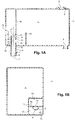
- the figure 1.A represents a sectional view along a first section of a hydraulic fluid reservoir according to a first embodiment of the invention.
- a tank 1 of hydraulic fluid serves as a storage area to a hydraulic fluid.
- Such storage has the function of ensuring the supply of hydraulic fluid, continuously, a hydraulic circuit.
- Hydraulic circuits of different nature but requiring the same hydraulic fluid can be fed by the same reservoir 1.
- a brake fluid reservoir can supply both one or more hydraulic braking circuits and a hydraulic clutch circuit.
- such a tank 1 comprises a clutch pipe 2 and at least one hydraulic braking system supply outlet 3.
- the clutch pipe 2 serves as an interface for supplying hydraulic fluid, typically brake fluid, to the hydraulic clutch circuit.
- the brake hydraulic power supply output 3 serves as a brake fluid supply interface to the hydraulic braking circuit.
- the clutch pipe 2 comprises a generally cylindrical flow conduit 4.
- the circulation duct 4 puts the hydraulic clutch circuit into communication with an inner part 5 of the tank 1.
- the circulation duct 4 comprises a circular base 6 and a generator 7 such that the generator 7 is perpendicular to the base 6 .
- the inner part 5 of the tank 1 serves as a storage area for the brake fluid in the tank 1.
- the filling of the inner part 5 with brake fluid is done through a filling hole 8.
- the filling hole 8 is generally located on the top of the tank 1.
- a cap 9 is generally fixed, for example by screwing, in a sealed manner on the filling hole 8.
- a clutch hydraulic circuit delivers brake fluid which may comprise polluting particles 10.
- the clutch pipe 2 opens directly into the inner part 5 of the tank 1.
- the pipe 2 opens into a chamber of the tank 1, said chamber being in direct contact with the rest of the inner part 5 of the tank 1.
- the polluting particles 10 discharged with the brake fluid by the hydraulic clutch circuit are directly mixed with the rest of the contents of the inner part 5 of the tank 1. These polluting particles 10 can then be introduced into the hydraulic brake circuit during use of said hydraulic brake circuit and cause a decrease in the performance of the hydraulic braking circuit or its degradation.
- the device according to the invention provides for the use of a separation device 11.
- the separation device 11 is provided with means for creating turbulences and separation means for separating into fluid swirls thus caused. particles of different weights.
- turbulence swirls the fluid and polluting particles so that the polluting particles have a movement that does not allow them to enter the inner portion of the reservoir.
- the weight of the polluting particles 10 separates them from the fluid entering the inner part 5 of the tank.
- the brake fluid and the polluting particles 10 move in the pipe in a direction parallel to the generator 7 of the circulation duct 4.
- the liquid The discharge brake is deflected from its trajectory by turbulences created by the separation device 11.
- the polluting particles 10 can then either be stored directly in the clutch pipe 2, or in a area provided for this purpose in the tank.
- the separation device 11 comprises a settling zone 13 and a collection zone 14.
- the settling zone 13 and the collection zone 14 are separated by a wall 16.
- the zone of separation Decantation 13 forms a closed space inside the tank 1.
- the brake fluid contained in the settling zone 13 has no direct contact with the brake fluid present in the inner part 5 of the tank 1.
- One end 15 of the clutch pipe 2 develops inside the settling zone 13.
- the end 15 of the pipe 2 is developed against the wall 16. More particularly, the wall 16 constitutes both a wall for the settling area 13 and for the pipe 2 as seen on the figure 1.B .
- An internal outlet 17 of the pipe 2 is located at the end 15 of the clutch pipe 2, typically in the settling zone 13.
- a circulation orifice 18 is formed on the wall 16.
- the orifice 18 is such that it puts in contact the circulation duct 4 of the pipe 2 and the zone of collection 14 only.
- the circulation of the brake fluid between the settling zone 13 and the collection zone 14 is via the circulation conduit 4 and the orifice 18.
- the circulation orifice 18 is located on the wall 16 between the internal outlet 17 and an intersection 22 between the pipe 2 and the reservoir 1.
- the orifice 18 located the wall 16 is developed parallel to the generatrix 7 of the circulation duct 4.
- the pollutant particles 10 repressed moving in the duct 4 in a direction parallel to the Generator 7, the polluting particles 10 do not pass through the orifice 18 during a discharge.
- an orifice situated on the wall 16 can serve as an overflow communication orifice between the settling zone 13 and the collection zone 14.
- the pipe 2 comprises a deflector 21, located in the circulation duct 4, close to the outlet 17.
- the deflector 21 forms an inclined wall 23 with respect to the generator 7 of the circulation duct 4.
- the internal outlet 17 forms an opening, in a plane parallel to the base 6 of the circulation duct 4, lower than the surface of said cylindrical base 6.
- the inclination of the inclined wall 23 is such that a first end 24 of the inclined wall 23 close to the wall 16 is closer to the orifice 18 than a second end 25 remote from the wall 16.
- the deflector 21 is located above the orifice 18. It is understood that the implementation of a deflector 21 disposed below the orifice 18 is not beyond the scope of the present invention.
- Partitions, inclined walls, baffles or the like break the laminar and general flow of turbulence.
- the inclined wall 23 creates turbulence by modifying the trajectory of the discharged fluid as well as polluting particles 10. This turbulence prevents the pollutant particles 10 pushed back from the pipe 2 to fall directly into the pipe and pass through the orifice 18 to enter the collection zone 14. If, despite these turbulences, the polluting particles 10 pass through the orifice 18, these polluting particles 10 then enter the collection zone 14 without having sufficient momentum to enable them to from the collection zone 14 to the inner part 5 of the tank 1. The polluting particles 10 then remain at the bottom of the collection zone 14 by their weight. These polluting particles 10 are therefore not in contact with the supply outlet 3 of the hydraulic braking circuit.
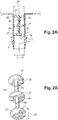
- FIG.A represents a sectional view of a hydraulic fluid reservoir clutch pipe according to a second embodiment of the invention.
- Another embodiment provides for the presence of inserts in the pipe 2. These inserts can be retained by various fastening means, for example heads provided with reliefs (grooves, firs ...) fitting into orifices located in the inner wall of the pipe 2. These inserts have the function of creating baffles. These baffles create the turbulence necessary to prevent polluting particles from entering the inner part of the tank. Such an embodiment is particularly suitable in the case of tanks 1 in which the clutch pipe 2 opens directly into the inner part 5 of the tank 1 and not into a chamber 14.
- the device according to the invention provides for the insertion into the circulation duct 4 of a first insert 26.
- the first insert 26 according to the invention comprises a plate 27.
- the plate 27 develops in a plane parallel to the cylindrical base 6 of the circulation duct 4.
- a periphery 28 of the plate 27 is in sealing contact with an inner surface 30 of the pipe 2.
- the plate 27 has a diameter 29 smaller than and close to an internal diameter 31 This sealing is such that the brake fluid and the polluting particles 10 can not pass between the plate 27 and the inner surface 30.
- the plate 27 has a through-hole 32.
- the presence of the plate 27 and the orifice 32 creates turbulences, the fluid and the pollutant particles being unable to This turbulence causes a swirling of the polluting particles 10.
- This swirling gives the polluting particles 10 a movement that does not allow them to pass through the orifice 33 and thus to penetrate into the inner part 5 of the reservoir. .
- turbulence aimed at "ejecting" any particles from the main stream entering the reservoir.
- turbulence is meant the generation of an indirect-type or vortex-type flux induced by the type 35 deflector, and preferably at each plateau type 27 - the partition effect creates a flow oriented contrario of the main flow.
- FIG.B is a schematic perspective view of a first insert according to the second embodiment of the invention.
- the first insert 26 comprises three plates 27. These three plates 27 are interconnected by a rod 33.
- the rod 33 is fixed to a center 34 of each plate 27.
- the plates 27 are similar.
- each plate 27 develops in a plane parallel to the cylindrical base 6 of the circulation duct 4.
- each plate 27 is in sealing contact with the inner surface 30 of the pipe 2.
- each plate 27 comprises a passage opening 32.
- the passage holes 32 present on the plates 27 are not in direct contact, along the axis of the generator 7 of the circulation duct 4, two by two. Such direct absences create even greater turbulence.
- the polluting particles 10 swirl even more between each plate 27. The polluting particles 10 are then blocked by the successive plates 27 and do not pollute the inner part 5 of the tank 1 and thus the hydraulic braking circuit.
- a deflector 35 may be installed on the entire periphery of one or more through-holes 32.
- Such deflectors 35 are in the form of form of flanges 35 extending in a direction parallel to the generator 7.
- the polluting particles 10 abut against the flanges 35. This stop further increases turbulence.
- These flanges, as well as these passage orifices 32 do not interfere with the passage of the brake fluid, because of its fluidity.
- the insert forms a baffle in the circulation duct 4 causing turbulence preventing the intrusion of the polluting particles 10 into the inner part of the tank.
- the figure 3 is a sectional view of a clutch pipe having a second insert according to a third embodiment of the invention.
- the pipe 2 comprises an internal partition 37.
- the internal partition 37 separates the circulation duct 4 in two parts, a first portion 36, said retention portion 36, and a second portion 38, said circulation portion 38.
- the internal partition 37 develops in a plane parallel to the generator 7 of the circulation duct 4
- the retention portion 36 has a bottom which does not allow the direct passage of the fluid in the inner part 5 from the circulation duct 5 through the retention portion 36.
- a second hollow insert 39 is inserted into the circulation duct 4.
- the second insert 39 has an inlet orifice 40 and a passage duct 41.
- the inlet orifice 40 is delimited by a wall 42 of the second insert 39.
- the wall 42 of the second insert 39 develops in a plane parallel to the cylindrical base 6 of the circulation duct 4.
- a periphery 43 of the wall 42 is in sealing contact with the inner surface 30 of the pipe 2 at any point of said inner surface 30 located in the plane of development of said wall 42.
- the brake fluid and polluting particles 10 can pass only through the inlet port 40 of the second insert 39 to flow through the pipe 2.
- the passage duct 41 is partially introduced into the retention portion 36.
- An outlet 44 of the passage duct 41 is located in the retention portion 36.
- the passage duct 41 partially fills the retention portion 36.
- a gap 45 is present between the internal partition 37 of the pipe 2 and the second insert 39 at any point of a surface 46 of said internal partition 37.
- the surface 46 is opposite the second insert 39.
- This gap 45 allows the passage of the brake fluid between the retention portion 36 and the circulation portion 38.
- the form as well as the complementarity of the second insert 39 and the circulation duct 4 form the baffle creating the turbulence preventing the polluting particles 10 from entering the chamber. the inner part 5 of the tank.
- a deflector 35 extends downwardly the passage conduit 41. On the figure 3 illustrated by arrows 54, turbulence and arrows 55 the main flow.
- the figure 4 is a sectional view of a clutch pipe having a third insert according to a fourth embodiment of the invention.
- a third insert 47 is introduced into the circulation duct 4.
- the third insert 47 is in sealing contact with the inner surface 30 of the pipe 2.
- the brake fluid and the polluting particles 10 can not penetrate the part internal 5 of the tank 1 passing between the third insert 47 and the inner surface 30 of the pipe 2.
- the third insert 47 has a frustoconical portion 48.
- the frustoconical portion 48 develops along an axis parallel to the generator 7 of the circulation duct 4.
- a lower diameter 49 of the frustoconical portion 48 is further away from the inner portion 5 of the reservoir 1 an upper diameter 50 of the frustoconical portion 48.
- the lower diameter 49 is smaller than the upper diameter 50.
- the upper diameter 50 is close to the inner diameter 31 of the pipe 2.
- One end 51 of the frustoconical portion 48 has a separating orifice 52.
- the end 51 is the end of the frustoconical portion 48 furthest from the inner part 5 of the tank 1, ie the part having the most small diameter.
- the separation orifice 52 constitutes the inlet of a separation duct 53.
- the separation duct 53 develops along the axis of the generator 7 of the circulation duct 4.
- the frustoconical portion 48 of the third insert 47 blocks the polluting particles 10 between the inner surface 30 of the pipe 2 and the third insert 47.
- the brake fluid is discharged into the inner portion 5 of the tank 1 through the separation pipe 53.
- the polluting particles 10 which abut against the frustoconical portion 48 are blocked between the third insert 47 and the inner surface 30 by the turbulences created by this narrowing of the circulation duct 4.
- An insert 47 can be molded with the pipe 2. Furthermore it is quite possible to combine various embodiments described above with each other to ensure no pollution of the hydraulic braking circuit optimally .
Landscapes
- Engineering & Computer Science (AREA)
- Transportation (AREA)
- Mechanical Engineering (AREA)
- Transmission Of Braking Force In Braking Systems (AREA)
Claims (7)
- Hydraulikfluid-Vorratsbehälter (1), der Folgendes umfasst:- ein Versorgungsrohr (2),- einen Vorratsbehälterinnenteil (5),- wobei das Versorgungsrohr eine zylindrische Zirkulationsleitung (4) aufweist, die eine Kommunikation zwischen einem Hydraulikkreis und dem Vorratsbehälterinnenteil (5) herstellt, und- eine Trennvorrichtung (11), die mit Mitteln zum Erzeugen von Turbulenzen und mit Trennmitteln, um in den dadurch hervorgerufenen Fluidwirbeln Partikel mit unterschiedlichem Gewicht zu trennen, versehen ist, dadurch gekennzeichnet, dass- die Trennvorrichtung eine Ausfällzone (13) und eine Sammelzone (14) aufweist, wobei die Sammelzone und die Ausfällzone durch eine Wand (16) getrennt sind,- das Versorgungsrohr in der Ausfällzone (13) an der Wand (16) verläuft, die die Sammelzone (14) und die Ausfällzone (13) trennt,- das Rohr (2) einen Auslass (17) aufweist, der in die Ausfällzone mündet,- das Rohr (2) eine Ablenkungseinrichtung (21) aufweist, die sich in der Zirkulationsleitung (4) in der Nähe des Auslasses (17) des Rohrs (2) befindet,- das Rohr eine Öffnung (18) aufweist, wobei sich die Öffnung zwischen der Ablenkungseinrichtung (21) und dem Schnittpunkt (22) des Rohrs (2) mit dem Vorratsbehälter (1) befindet und in die Sammelzone (14) mündet.
- Vorratsbehälter nach Anspruch 1, dadurch gekennzeichnet, dass er in der Zirkulationsleitung (4) ein Hindernis in Form eines angefügten Teils aufweist.
- Vorratsbehälter nach Anspruch 2, dadurch gekennzeichnet, dass- ein erstes angefügtes Teil (26), das in das Rohr (2) eingesetzt ist, wenigstens zwei ähnliche Platten (27) aufweist, die sich in Ebenen, die zu der Basis der zylindrischen Leitung (4) parallel sind, befinden,- ein Umfang (28) der Platte in dichtem Kontakt mit einer inneren Oberfläche (30) des Rohrs ist,- die Platten Durchlassöffnungen (32) aufweisen,- die Durchlassöffnungen (32) sich längs der Erzeugenden der zylindrischen Zirkulationsleitung (4) nicht direkt einander gegenüber befinden und somit paarweise das Hindernis bilden.
- Vorratsbehälter nach einem der Ansprüche 2 bis 3, dadurch gekennzeichnet, dass sich auf dem gesamten Umfang der Öffnung eine Ablenkungseinrichtung oder ein Rand (35) befindet.
- Vorratsbehälter nach einem der Ansprüche 1 bis 3, dadurch gekennzeichnet, dass- eine innere Trennwand (37) des Rohrs die zylindrische Zirkulationsleitung in zwei Teile trennt, nämlich in einen Halteteil (36) und einen Zirkulationsteil (38),- die innere Wand sich in einer Ebene erstreckt, die zu der Erzeugenden der zylindrischen Zirkulationsleitung parallel ist,- ein zweites angefügtes Teil (39), dass eine Einlassöffnung (40) und eine Durchlassleitung (41) aufweist, in die Zirkulationsleitung eingesetzt ist,- die Einlassöffnung durch eine Wand (42) des zweiten angefügten Teils begrenzt ist, wobei sich die Wand in einer Ebene parallel zu der zylindrischen Basis der Zirkulationsleitung erstreckt,- die Wand (42) des zweiten angefügten Teils an jedem Punkt der inneren Oberfläche, die sich in der Ebene erstreckt, in der sich die Wand befindet, in dichtem Kontakt mit der inneren Oberfläche des Rohrs ist,- die Durchlassleitung teilweise in den Halteteil eingeführt ist, wobei sich ein Auslass (44) der Durchlassleitung in dem Halteteil befindet,- zwischen der inneren Trennwand des Rohrs und dem zweiten angefügten Teil auf einer gesamten Oberfläche (46) der inneren Trennwand des Rohrs ein Abstand (45) vorhanden ist.
- Vorratsbehälter nach Anspruch 1, dadurch gekennzeichnet, dass- ein drittes angefügtes Teil (47) in das Rohr eingesetzt ist,- das dritte angefügte Teil mit der inneren Oberfläche des Rohrs in dichtem Kontakt ist,- das dritte angefügte Teil einen kegelstumpfförmigen Teil (48) aufweist, wobei ein Ende (51) des kegelstumpfförmigen Teils eine Trennöffnung (52) aufweist, wobei die Trennöffnung den Einlass einer Trennleitung (53) bildet,- die Trennleitung sich längs der Achse der Erzeugenden der Zirkulationsleitung erstreckt.
- Vorratsbehälter nach einem der Ansprüche 1 bis 5, dadurch gekennzeichnet, dass die Trendvorrichtung mit dem Vorratsbehälter gegossen ist.
Applications Claiming Priority (1)
| Application Number | Priority Date | Filing Date | Title |
|---|---|---|---|
| FR0806687A FR2938811B1 (fr) | 2008-11-27 | 2008-11-27 | Reservoir de fluide hydraulique. |
Publications (2)
| Publication Number | Publication Date |
|---|---|
| EP2192012A1 EP2192012A1 (de) | 2010-06-02 |
| EP2192012B1 true EP2192012B1 (de) | 2017-10-18 |
Family
ID=41152207
Family Applications (1)
| Application Number | Title | Priority Date | Filing Date |
|---|---|---|---|
| EP09176983.6A Not-in-force EP2192012B1 (de) | 2008-11-27 | 2009-11-25 | Behälter für hydraulische Flüssigkeit |
Country Status (2)
| Country | Link |
|---|---|
| EP (1) | EP2192012B1 (de) |
| FR (1) | FR2938811B1 (de) |
Family Cites Families (3)
| Publication number | Priority date | Publication date | Assignee | Title |
|---|---|---|---|---|
| DE10217619B4 (de) * | 2002-01-12 | 2005-08-18 | Geiger Technik Gmbh | Behälter wie Kühlwasserausgleichsbehälter oder Bremsflüssigkeitsbehälter oder dergleichen |
| FR2867133B1 (fr) * | 2004-03-02 | 2006-06-23 | Bosch Gmbh Robert | Dispositif de decantation et de filtrage pour reservoir de liquide de frein |
| DE102007035840A1 (de) * | 2007-02-02 | 2008-09-11 | Continental Teves Ag & Co. Ohg | Ausgleichsbehälter insbesondere für eine hydraulische Kraftfahrzeugbremsanlage |
-
2008
- 2008-11-27 FR FR0806687A patent/FR2938811B1/fr not_active Expired - Fee Related
-
2009
- 2009-11-25 EP EP09176983.6A patent/EP2192012B1/de not_active Not-in-force
Non-Patent Citations (1)
| Title |
|---|
| None * |
Also Published As
| Publication number | Publication date |
|---|---|
| FR2938811B1 (fr) | 2014-09-26 |
| EP2192012A1 (de) | 2010-06-02 |
| FR2938811A1 (fr) | 2010-05-28 |
Similar Documents
| Publication | Publication Date | Title |
|---|---|---|
| EP2809999A1 (de) | Am wassereinlass eines warmwasserspeichers positionierter strahlhemmer | |
| EP3194670B1 (de) | Vorrichtung für toiletten | |
| EP1968870B1 (de) | Aerosolspender | |
| FR2694215A1 (fr) | Appareil pour générer un brouillard à partir d'un liquide, notamment un médicament. | |
| EP0726386A1 (de) | Behälter für Expansionen und Entlüftung für einen Kühlungskreis einer Brennkraftmaschine | |
| EP2192012B1 (de) | Behälter für hydraulische Flüssigkeit | |
| FR2831875A1 (fr) | Bouchon de reservoir | |
| EP2953724B1 (de) | Abgabevorrichtung eines fluids sowie herstellungsverfahrens einer solchen abgabevorrichtung | |
| EP2980509B1 (de) | Einlassverteiler für einen verdampfer, herstellungsverfahren eines solchen verteilers, verdampfer, der einen solchen verteiler umfasst, und thermische anlage mit zweiphasen-wärmeübertragungsmittel | |
| EP0434554B1 (de) | Behälter mit Kapillareffekt der Gehäuseschale | |
| EP2705889B1 (de) | Kraftstofffilter zur Abscheidung von Wasser, und Verwendung zweier Wasserabscheideelemente in einem Kraftstofffilter | |
| WO2020020794A1 (fr) | Dispositif de filtration pour un reacteur a co-courant descendant de fluide | |
| EP2042704B1 (de) | Entgasungsgehäuse, das mit einem Steigrohr und einer Beruhigungskammer ausgestattet ist | |
| EP2775142A1 (de) | Vorrichtung für die Ejection von körnigen Material durch das Venturi-Prinzip | |
| WO2018172685A1 (fr) | Echangeur de chaleur avec dispositif melangeur liquide/gaz a orifices de forme amelioree | |
| EP2938562B1 (de) | Vorrichtung zur vermeidung von flüssigkeitsüberlauf von einer externen flüssigen lagereinrichtung, lagereinrichtung, verwendung, verfahren | |
| JP2008038714A (ja) | 気液分離器 | |
| FR2881737A1 (fr) | Cuve de traitement d'eaux de ruissellement | |
| EP1914177A1 (de) | Verteilungsvorrichtung für ein flüssiges Produkt | |
| EP1797963B1 (de) | Mischkammer und Sprühvorrichtung mit einer ähnlichen Mischkammer | |
| FR2820372A1 (fr) | Dispositif anti-siphonnage | |
| CA3144907A1 (en) | Fuel injector with a purge circuit for an aircraft turbine engine | |
| EP1626180A1 (de) | Flüssigkeitsreservoir mit Aussenluftverbindung | |
| FR3085719A1 (fr) | Boitier d'alimentation en air sous pression d'un dispositif de refroidissement par jets d'air | |
| FR2918159A1 (fr) | Dispositif de ventilation etanche pour bloc optique de vehicule. |
Legal Events
| Date | Code | Title | Description |
|---|---|---|---|
| PUAI | Public reference made under article 153(3) epc to a published international application that has entered the european phase |
Free format text: ORIGINAL CODE: 0009012 |
|
| AK | Designated contracting states |
Kind code of ref document: A1 Designated state(s): AT BE BG CH CY CZ DE DK EE ES FI FR GB GR HR HU IE IS IT LI LT LU LV MC MK MT NL NO PL PT RO SE SI SK SM TR |
|
| AX | Request for extension of the european patent |
Extension state: AL BA RS |
|
| RIN1 | Information on inventor provided before grant (corrected) |
Inventor name: L'AOT, JEAN-MICHEL Inventor name: BEAURE- D'AUGERES, OLIVIER Inventor name: LENCZNER, SYLVAIN Inventor name: GAFFE, FRANCOIS |
|
| RIN1 | Information on inventor provided before grant (corrected) |
Inventor name: L'AOT, JEAN-MICHEL Inventor name: BEAURE- D'AUGERES, OLIVIER Inventor name: LENCZNER, SYLVAIN Inventor name: GAFFE, FRANCOIS |
|
| 17P | Request for examination filed |
Effective date: 20101202 |
|
| 17Q | First examination report despatched |
Effective date: 20170426 |
|
| GRAP | Despatch of communication of intention to grant a patent |
Free format text: ORIGINAL CODE: EPIDOSNIGR1 |
|
| INTG | Intention to grant announced |
Effective date: 20170714 |
|
| GRAS | Grant fee paid |
Free format text: ORIGINAL CODE: EPIDOSNIGR3 |
|
| GRAA | (expected) grant |
Free format text: ORIGINAL CODE: 0009210 |
|
| AK | Designated contracting states |
Kind code of ref document: B1 Designated state(s): AT BE BG CH CY CZ DE DK EE ES FI FR GB GR HR HU IE IS IT LI LT LU LV MC MK MT NL NO PL PT RO SE SI SK SM TR |
|
| REG | Reference to a national code |
Ref country code: GB Ref legal event code: FG4D Free format text: NOT ENGLISH |
|
| REG | Reference to a national code |
Ref country code: CH Ref legal event code: EP |
|
| REG | Reference to a national code |
Ref country code: AT Ref legal event code: REF Ref document number: 937647 Country of ref document: AT Kind code of ref document: T Effective date: 20171115 Ref country code: IE Ref legal event code: FG4D Free format text: LANGUAGE OF EP DOCUMENT: FRENCH |
|
| REG | Reference to a national code |
Ref country code: FR Ref legal event code: PLFP Year of fee payment: 9 |
|
| REG | Reference to a national code |
Ref country code: DE Ref legal event code: R096 Ref document number: 602009048894 Country of ref document: DE |
|
| REG | Reference to a national code |
Ref country code: NL Ref legal event code: MP Effective date: 20171018 |
|
| REG | Reference to a national code |
Ref country code: LT Ref legal event code: MG4D |
|
| REG | Reference to a national code |
Ref country code: AT Ref legal event code: MK05 Ref document number: 937647 Country of ref document: AT Kind code of ref document: T Effective date: 20171018 |
|
| PG25 | Lapsed in a contracting state [announced via postgrant information from national office to epo] |
Ref country code: NL Free format text: LAPSE BECAUSE OF FAILURE TO SUBMIT A TRANSLATION OF THE DESCRIPTION OR TO PAY THE FEE WITHIN THE PRESCRIBED TIME-LIMIT Effective date: 20171018 |
|
| PG25 | Lapsed in a contracting state [announced via postgrant information from national office to epo] |
Ref country code: FI Free format text: LAPSE BECAUSE OF FAILURE TO SUBMIT A TRANSLATION OF THE DESCRIPTION OR TO PAY THE FEE WITHIN THE PRESCRIBED TIME-LIMIT Effective date: 20171018 Ref country code: ES Free format text: LAPSE BECAUSE OF FAILURE TO SUBMIT A TRANSLATION OF THE DESCRIPTION OR TO PAY THE FEE WITHIN THE PRESCRIBED TIME-LIMIT Effective date: 20171018 Ref country code: NO Free format text: LAPSE BECAUSE OF FAILURE TO SUBMIT A TRANSLATION OF THE DESCRIPTION OR TO PAY THE FEE WITHIN THE PRESCRIBED TIME-LIMIT Effective date: 20180118 Ref country code: SE Free format text: LAPSE BECAUSE OF FAILURE TO SUBMIT A TRANSLATION OF THE DESCRIPTION OR TO PAY THE FEE WITHIN THE PRESCRIBED TIME-LIMIT Effective date: 20171018 Ref country code: LT Free format text: LAPSE BECAUSE OF FAILURE TO SUBMIT A TRANSLATION OF THE DESCRIPTION OR TO PAY THE FEE WITHIN THE PRESCRIBED TIME-LIMIT Effective date: 20171018 |
|
| PG25 | Lapsed in a contracting state [announced via postgrant information from national office to epo] |
Ref country code: IS Free format text: LAPSE BECAUSE OF FAILURE TO SUBMIT A TRANSLATION OF THE DESCRIPTION OR TO PAY THE FEE WITHIN THE PRESCRIBED TIME-LIMIT Effective date: 20180218 Ref country code: BG Free format text: LAPSE BECAUSE OF FAILURE TO SUBMIT A TRANSLATION OF THE DESCRIPTION OR TO PAY THE FEE WITHIN THE PRESCRIBED TIME-LIMIT Effective date: 20180118 Ref country code: LV Free format text: LAPSE BECAUSE OF FAILURE TO SUBMIT A TRANSLATION OF THE DESCRIPTION OR TO PAY THE FEE WITHIN THE PRESCRIBED TIME-LIMIT Effective date: 20171018 Ref country code: GR Free format text: LAPSE BECAUSE OF FAILURE TO SUBMIT A TRANSLATION OF THE DESCRIPTION OR TO PAY THE FEE WITHIN THE PRESCRIBED TIME-LIMIT Effective date: 20180119 Ref country code: AT Free format text: LAPSE BECAUSE OF FAILURE TO SUBMIT A TRANSLATION OF THE DESCRIPTION OR TO PAY THE FEE WITHIN THE PRESCRIBED TIME-LIMIT Effective date: 20171018 Ref country code: HR Free format text: LAPSE BECAUSE OF FAILURE TO SUBMIT A TRANSLATION OF THE DESCRIPTION OR TO PAY THE FEE WITHIN THE PRESCRIBED TIME-LIMIT Effective date: 20171018 |
|
| REG | Reference to a national code |
Ref country code: DE Ref legal event code: R097 Ref document number: 602009048894 Country of ref document: DE |
|
| PG25 | Lapsed in a contracting state [announced via postgrant information from national office to epo] |
Ref country code: CH Free format text: LAPSE BECAUSE OF NON-PAYMENT OF DUE FEES Effective date: 20171130 Ref country code: DK Free format text: LAPSE BECAUSE OF FAILURE TO SUBMIT A TRANSLATION OF THE DESCRIPTION OR TO PAY THE FEE WITHIN THE PRESCRIBED TIME-LIMIT Effective date: 20171018 Ref country code: LI Free format text: LAPSE BECAUSE OF NON-PAYMENT OF DUE FEES Effective date: 20171130 Ref country code: EE Free format text: LAPSE BECAUSE OF FAILURE TO SUBMIT A TRANSLATION OF THE DESCRIPTION OR TO PAY THE FEE WITHIN THE PRESCRIBED TIME-LIMIT Effective date: 20171018 Ref country code: CZ Free format text: LAPSE BECAUSE OF FAILURE TO SUBMIT A TRANSLATION OF THE DESCRIPTION OR TO PAY THE FEE WITHIN THE PRESCRIBED TIME-LIMIT Effective date: 20171018 Ref country code: SK Free format text: LAPSE BECAUSE OF FAILURE TO SUBMIT A TRANSLATION OF THE DESCRIPTION OR TO PAY THE FEE WITHIN THE PRESCRIBED TIME-LIMIT Effective date: 20171018 Ref country code: MC Free format text: LAPSE BECAUSE OF FAILURE TO SUBMIT A TRANSLATION OF THE DESCRIPTION OR TO PAY THE FEE WITHIN THE PRESCRIBED TIME-LIMIT Effective date: 20171018 |
|
| PLBE | No opposition filed within time limit |
Free format text: ORIGINAL CODE: 0009261 |
|
| STAA | Information on the status of an ep patent application or granted ep patent |
Free format text: STATUS: NO OPPOSITION FILED WITHIN TIME LIMIT |
|
| PG25 | Lapsed in a contracting state [announced via postgrant information from national office to epo] |
Ref country code: SM Free format text: LAPSE BECAUSE OF FAILURE TO SUBMIT A TRANSLATION OF THE DESCRIPTION OR TO PAY THE FEE WITHIN THE PRESCRIBED TIME-LIMIT Effective date: 20171018 Ref country code: IT Free format text: LAPSE BECAUSE OF FAILURE TO SUBMIT A TRANSLATION OF THE DESCRIPTION OR TO PAY THE FEE WITHIN THE PRESCRIBED TIME-LIMIT Effective date: 20171018 Ref country code: LU Free format text: LAPSE BECAUSE OF NON-PAYMENT OF DUE FEES Effective date: 20171125 Ref country code: RO Free format text: LAPSE BECAUSE OF FAILURE TO SUBMIT A TRANSLATION OF THE DESCRIPTION OR TO PAY THE FEE WITHIN THE PRESCRIBED TIME-LIMIT Effective date: 20171018 Ref country code: PL Free format text: LAPSE BECAUSE OF FAILURE TO SUBMIT A TRANSLATION OF THE DESCRIPTION OR TO PAY THE FEE WITHIN THE PRESCRIBED TIME-LIMIT Effective date: 20171018 |
|
| REG | Reference to a national code |
Ref country code: BE Ref legal event code: MM Effective date: 20171130 |
|
| REG | Reference to a national code |
Ref country code: IE Ref legal event code: MM4A |
|
| 26N | No opposition filed |
Effective date: 20180719 |
|
| PG25 | Lapsed in a contracting state [announced via postgrant information from national office to epo] |
Ref country code: MT Free format text: LAPSE BECAUSE OF FAILURE TO SUBMIT A TRANSLATION OF THE DESCRIPTION OR TO PAY THE FEE WITHIN THE PRESCRIBED TIME-LIMIT Effective date: 20171018 |
|
| PG25 | Lapsed in a contracting state [announced via postgrant information from national office to epo] |
Ref country code: IE Free format text: LAPSE BECAUSE OF NON-PAYMENT OF DUE FEES Effective date: 20171125 |
|
| PG25 | Lapsed in a contracting state [announced via postgrant information from national office to epo] |
Ref country code: BE Free format text: LAPSE BECAUSE OF NON-PAYMENT OF DUE FEES Effective date: 20171130 Ref country code: SI Free format text: LAPSE BECAUSE OF FAILURE TO SUBMIT A TRANSLATION OF THE DESCRIPTION OR TO PAY THE FEE WITHIN THE PRESCRIBED TIME-LIMIT Effective date: 20171018 |
|
| PGFP | Annual fee paid to national office [announced via postgrant information from national office to epo] |
Ref country code: FR Payment date: 20181127 Year of fee payment: 10 Ref country code: GB Payment date: 20181126 Year of fee payment: 10 |
|
| PGFP | Annual fee paid to national office [announced via postgrant information from national office to epo] |
Ref country code: DE Payment date: 20190124 Year of fee payment: 10 |
|
| PG25 | Lapsed in a contracting state [announced via postgrant information from national office to epo] |
Ref country code: HU Free format text: LAPSE BECAUSE OF FAILURE TO SUBMIT A TRANSLATION OF THE DESCRIPTION OR TO PAY THE FEE WITHIN THE PRESCRIBED TIME-LIMIT; INVALID AB INITIO Effective date: 20091125 |
|
| PG25 | Lapsed in a contracting state [announced via postgrant information from national office to epo] |
Ref country code: CY Free format text: LAPSE BECAUSE OF NON-PAYMENT OF DUE FEES Effective date: 20171018 |
|
| PG25 | Lapsed in a contracting state [announced via postgrant information from national office to epo] |
Ref country code: MK Free format text: LAPSE BECAUSE OF FAILURE TO SUBMIT A TRANSLATION OF THE DESCRIPTION OR TO PAY THE FEE WITHIN THE PRESCRIBED TIME-LIMIT Effective date: 20171018 |
|
| PG25 | Lapsed in a contracting state [announced via postgrant information from national office to epo] |
Ref country code: TR Free format text: LAPSE BECAUSE OF FAILURE TO SUBMIT A TRANSLATION OF THE DESCRIPTION OR TO PAY THE FEE WITHIN THE PRESCRIBED TIME-LIMIT Effective date: 20171018 |
|
| PG25 | Lapsed in a contracting state [announced via postgrant information from national office to epo] |
Ref country code: PT Free format text: LAPSE BECAUSE OF FAILURE TO SUBMIT A TRANSLATION OF THE DESCRIPTION OR TO PAY THE FEE WITHIN THE PRESCRIBED TIME-LIMIT Effective date: 20171018 |
|
| REG | Reference to a national code |
Ref country code: DE Ref legal event code: R119 Ref document number: 602009048894 Country of ref document: DE |
|
| GBPC | Gb: european patent ceased through non-payment of renewal fee |
Effective date: 20191125 |
|
| PG25 | Lapsed in a contracting state [announced via postgrant information from national office to epo] |
Ref country code: DE Free format text: LAPSE BECAUSE OF NON-PAYMENT OF DUE FEES Effective date: 20200603 Ref country code: FR Free format text: LAPSE BECAUSE OF NON-PAYMENT OF DUE FEES Effective date: 20191130 Ref country code: GB Free format text: LAPSE BECAUSE OF NON-PAYMENT OF DUE FEES Effective date: 20191125 |