EP2190232B1 - Method for providing data on at least one area of a chip card - Google Patents
Method for providing data on at least one area of a chip card Download PDFInfo
- Publication number
- EP2190232B1 EP2190232B1 EP09175772.4A EP09175772A EP2190232B1 EP 2190232 B1 EP2190232 B1 EP 2190232B1 EP 09175772 A EP09175772 A EP 09175772A EP 2190232 B1 EP2190232 B1 EP 2190232B1
- Authority
- EP
- European Patent Office
- Prior art keywords
- location
- area
- code
- chip card
- access
- Prior art date
- Legal status (The legal status is an assumption and is not a legal conclusion. Google has not performed a legal analysis and makes no representation as to the accuracy of the status listed.)
- Active
Links
Images
Classifications
-
- H—ELECTRICITY
- H04—ELECTRIC COMMUNICATION TECHNIQUE
- H04W—WIRELESS COMMUNICATION NETWORKS
- H04W12/00—Security arrangements; Authentication; Protecting privacy or anonymity
- H04W12/02—Protecting privacy or anonymity, e.g. protecting personally identifiable information [PII]
-
- G—PHYSICS
- G06—COMPUTING OR CALCULATING; COUNTING
- G06Q—INFORMATION AND COMMUNICATION TECHNOLOGY [ICT] SPECIALLY ADAPTED FOR ADMINISTRATIVE, COMMERCIAL, FINANCIAL, MANAGERIAL OR SUPERVISORY PURPOSES; SYSTEMS OR METHODS SPECIALLY ADAPTED FOR ADMINISTRATIVE, COMMERCIAL, FINANCIAL, MANAGERIAL OR SUPERVISORY PURPOSES, NOT OTHERWISE PROVIDED FOR
- G06Q20/00—Payment architectures, schemes or protocols
- G06Q20/30—Payment architectures, schemes or protocols characterised by the use of specific devices or networks
- G06Q20/32—Payment architectures, schemes or protocols characterised by the use of specific devices or networks using wireless devices
- G06Q20/322—Aspects of commerce using mobile devices [M-devices]
- G06Q20/3229—Use of the SIM of a M-device as secure element
-
- G—PHYSICS
- G06—COMPUTING OR CALCULATING; COUNTING
- G06Q—INFORMATION AND COMMUNICATION TECHNOLOGY [ICT] SPECIALLY ADAPTED FOR ADMINISTRATIVE, COMMERCIAL, FINANCIAL, MANAGERIAL OR SUPERVISORY PURPOSES; SYSTEMS OR METHODS SPECIALLY ADAPTED FOR ADMINISTRATIVE, COMMERCIAL, FINANCIAL, MANAGERIAL OR SUPERVISORY PURPOSES, NOT OTHERWISE PROVIDED FOR
- G06Q20/00—Payment architectures, schemes or protocols
- G06Q20/30—Payment architectures, schemes or protocols characterised by the use of specific devices or networks
- G06Q20/34—Payment architectures, schemes or protocols characterised by the use of specific devices or networks using cards, e.g. integrated circuit [IC] cards or magnetic cards
- G06Q20/341—Active cards, i.e. cards including their own processing means, e.g. including an IC or chip
-
- G—PHYSICS
- G06—COMPUTING OR CALCULATING; COUNTING
- G06Q—INFORMATION AND COMMUNICATION TECHNOLOGY [ICT] SPECIALLY ADAPTED FOR ADMINISTRATIVE, COMMERCIAL, FINANCIAL, MANAGERIAL OR SUPERVISORY PURPOSES; SYSTEMS OR METHODS SPECIALLY ADAPTED FOR ADMINISTRATIVE, COMMERCIAL, FINANCIAL, MANAGERIAL OR SUPERVISORY PURPOSES, NOT OTHERWISE PROVIDED FOR
- G06Q20/00—Payment architectures, schemes or protocols
- G06Q20/30—Payment architectures, schemes or protocols characterised by the use of specific devices or networks
- G06Q20/34—Payment architectures, schemes or protocols characterised by the use of specific devices or networks using cards, e.g. integrated circuit [IC] cards or magnetic cards
- G06Q20/357—Cards having a plurality of specified features
- G06Q20/3576—Multiple memory zones on card
- G06Q20/35765—Access rights to memory zones
-
- G—PHYSICS
- G07—CHECKING-DEVICES
- G07F—COIN-FREED OR LIKE APPARATUS
- G07F7/00—Mechanisms actuated by objects other than coins to free or to actuate vending, hiring, coin or paper currency dispensing or refunding apparatus
- G07F7/08—Mechanisms actuated by objects other than coins to free or to actuate vending, hiring, coin or paper currency dispensing or refunding apparatus by coded identity card or credit card or other personal identification means
- G07F7/10—Mechanisms actuated by objects other than coins to free or to actuate vending, hiring, coin or paper currency dispensing or refunding apparatus by coded identity card or credit card or other personal identification means together with a coded signal, e.g. in the form of personal identification information, like personal identification number [PIN] or biometric data
- G07F7/1008—Active credit-cards provided with means to personalise their use, e.g. with PIN-introduction/comparison system
-
- H—ELECTRICITY
- H04—ELECTRIC COMMUNICATION TECHNIQUE
- H04L—TRANSMISSION OF DIGITAL INFORMATION, e.g. TELEGRAPHIC COMMUNICATION
- H04L63/00—Network architectures or network communication protocols for network security
- H04L63/04—Network architectures or network communication protocols for network security for providing a confidential data exchange among entities communicating through data packet networks
- H04L63/0428—Network architectures or network communication protocols for network security for providing a confidential data exchange among entities communicating through data packet networks wherein the data content is protected, e.g. by encrypting or encapsulating the payload
-
- H—ELECTRICITY
- H04—ELECTRIC COMMUNICATION TECHNIQUE
- H04L—TRANSMISSION OF DIGITAL INFORMATION, e.g. TELEGRAPHIC COMMUNICATION
- H04L63/00—Network architectures or network communication protocols for network security
- H04L63/06—Network architectures or network communication protocols for network security for supporting key management in a packet data network
-
- H—ELECTRICITY
- H04—ELECTRIC COMMUNICATION TECHNIQUE
- H04W—WIRELESS COMMUNICATION NETWORKS
- H04W12/00—Security arrangements; Authentication; Protecting privacy or anonymity
- H04W12/04—Key management, e.g. using generic bootstrapping architecture [GBA]
-
- H—ELECTRICITY
- H04—ELECTRIC COMMUNICATION TECHNIQUE
- H04W—WIRELESS COMMUNICATION NETWORKS
- H04W12/00—Security arrangements; Authentication; Protecting privacy or anonymity
- H04W12/08—Access security
- H04W12/086—Access security using security domains
-
- H—ELECTRICITY
- H04—ELECTRIC COMMUNICATION TECHNIQUE
- H04W—WIRELESS COMMUNICATION NETWORKS
- H04W8/00—Network data management
- H04W8/18—Processing of user or subscriber data, e.g. subscribed services, user preferences or user profiles; Transfer of user or subscriber data
- H04W8/20—Transfer of user or subscriber data
- H04W8/205—Transfer to or from user equipment or user record carrier
Definitions
- the present invention relates to a method for providing data on at least one, preferably secured, area of a chip card, preferably a SIM card.
- SIM Subscriber Identity Module
- GSM GSM Association
- GSM GSM Association
- Various standardization bodies such as the GSM Association (GSM)
- GSM GSM Association
- GSMA GSM Association
- each party receives a key directly from a SIM manufacturer that allows them to access their assigned area.
- SIM manufacturer would have to maintain other interfaces to the TTPs and the service providers in addition to the existing interface to the network operator.
- the documents show US 2008/0162715 and EP 1 860 840 A2 Procedure for personalizing a backup module.
- the essence of the method according to the invention consists in that an encryption code is transmitted from the first location exclusively to a second location, which thus encrypts a data record.
- the transmission of the so encrypted record on the chip card is then performed by the third party. There is thus a separation between the encryption and the transmission of the encrypted data to the chip card.
- the term "encryption code” is intended to designate an arbitrarily configured cryptographic key.
- Decryption code can be a cryptographic decryption rule.
- By means of the decryption code is z from the record. B. generated using a mathematical function or an algorithm of the encrypted record.
- an inverse transformation of the encrypted data record into the data record takes place, which can then be read by a user and / or processed on the chip card.
- a first point such as a chip card manufacturer
- a second location such as a service provider
- This encryption code enables the second digit to encrypt information which it would like to have stored on the chip card.
- the third party such as a trusted third party and / or a network operator, to modify and / or read this data record. Rather, the third digit is primarily used for transmitting the encrypted data record to the at least one area of the chip card.
- the chip card may in particular be a SIM card (SIM: Subscriber Identity Module). It has been found to be particularly advantageous if the inventive method for SIM cards used by mobile phones.
- the second location is provided with a second access key. Again, like the first access key, it is not an encryption key.
- the second access key with the data record is transferred into the encrypted data record using the encryption code.
- the encrypted record thus no longer contains only the record, but also the second access key.
- the encrypted data set thus obtained can be transferred from the third location to the chip card.
- the second access key transmitted to the chip card by means of the encrypted data record thus serves to access the second secure area of the chip card.
- This second secured area can be arranged in the first secured area and / or the area of the chip card. It thus requires the first access key, so that the third digit can transfer the encrypted record in the first secure area.
- a decryption of the encrypted data record can take place by means of the decryption code.
- the unpacked second access key allows the second secure area to be opened in order to transfer the data record to this second secure area. After decrypting the encrypted record on the chip card, it is the third place despite the possession of the first access key not possible to penetrate into the second secure area and obtain the record in unencrypted form.
- This method step has the advantage that the number of encryption codes and / or the decryption codes can be significantly reduced. It requires only a single or a very small number of encryption codes that are transmitted to the second location and / or deposited on the chip card. This reduces the total number of data available Significantly, at least one, preferably secure area of a smart card used encryption codes and decryption codes. Now, an individual pair of encryption codes and decryption codes need not be provided for each chip card.
- the first and / or the second access key are each assigned individually to a chip card. Thus, it is only possible for those parties to access the chip card or secure areas that are in possession of the appropriate access key.
- An advantageous embodiment of the invention is characterized in that the chip card is a SIM card.
- the method according to the invention serves to provide data on at least one, preferably secured, area of a chip card.
- the chip card is a SIM card (SIM: Subscriber Identity Module). Consequently, the terms chip card and SIM card are used synonymously. However, this should not be regarded as a limitation, but rather serves only to illustrate the invention.
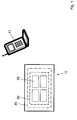
- FIG. 1 a SIM card 10 according to the invention is shown.
- a SIM card (10) may, for. B. be used in a mobile phone 11.
- the SIM card 10 serves to identify the user of the mobile phone 11 in a mobile network.
- the SIM card 10 has an area 45 in which data and / or codes can be stored and / or retrieved. A part of this area 45 has a first secured area 50 and four second secured areas 55.
- data is to be provided in the first secured area 50 and / or in the second secured area 55.
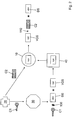
- the method used according to the invention is disclosed in FIG. 2 clarified.
- a first digit 20 provides an encryption code c1 to a second digit 30.
- the first digit 20 may be, for example, a SIM card manufacturer delivering the encryption key c1 to the second digit 30.
- This second location 30 may be a service provider who wishes to offer defined services via the SIM card 11. So it is z. B. conceivable that the second body 30 is a credit card manufacturer and / or a railway company, which would like to deposit their application on the SIM card 10 and submit appropriate data on this.
- the key c1 is now transmitted to this second location 30.
- the first digit 20 can transmit an appropriate decryption code c2 to the SIM card 10. Is it in the first place 20 to the SIM card manufacturer, this is a direct integration of the decryption code c2 in the SIM card 10 possible.
- the second location 30 can perform an encryption 100 of a data set DS.
- the data record DS may, for example, be information that the second location 30 requires for its application on the chip card 10.
- the encryption 100 of the data record DS with the encryption code c1 generates an encrypted data record VDS.
- This encrypted data record VDS is transmitted to a third location 40.
- the third location 40 can be a network operator or another trusted authority that is used to transmit the encrypted data record VDS from the second location 30 to the chip card 10. As part of the in FIG. 2
- the third point 30 thus serves only to transmit the encrypted data record VDS to the at least one area 45 of the chip card 10.
- a decryption 110 of the encrypted data record can now be automatically and / or excited by an external signal on the chip card 10 VDS held by the key c2. After the application of the decryption code c2 is thus on the chip card 10 of the record DS in its decrypted form.
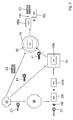
- a further advantageous embodiment of the method according to the invention is in the FIG. 3 shown.
- the first location 20 transmits to the second location 30 the encryption code c1. This serves to encrypt 100 of the data set DS.
- the encrypted data set VDS thus generated is transmitted to the third location 40.
- the first location 20 transmits a first access key k1 to the third location 40.
- This first access key k1 allows the third location 40 to access a first secured area 50 of the chip card 10.
- This first secured area 50 may be the same as or part of the area 45. In the illustrated example, the first secured area 50 encompasses the entire area 45 of the SIM card 10. Without the first access key k1, it is therefore not possible to transmit the encrypted data record VDS to the chip card 10.
- the third location 40 access the first secured area 50.
- a decryption 110 of the encrypted data record VDS takes place with the aid of the decryption code c2.
- the resulting decrypted data set DS can then be stored in the first secure area 50.
- This embodiment variant is characterized in that on the one hand the second digit 30, although the encryption 100 of the data set DS by means of the encryption code c1 is possible, but on the other hand, no integration of the encrypted record VDS in the first secure area 50.
- the third digit Although it is possible to transfer the encrypted data record VDS into the first secure area 50 with the aid of the first access key k1.
- the third digit 40 is, however, denied to decrypt the encrypted data set VDS since the third digit 40 is not in possession of the decryption code c2.
Landscapes
- Engineering & Computer Science (AREA)
- Computer Networks & Wireless Communication (AREA)
- Computer Security & Cryptography (AREA)
- Business, Economics & Management (AREA)
- Signal Processing (AREA)
- General Physics & Mathematics (AREA)
- Physics & Mathematics (AREA)
- Theoretical Computer Science (AREA)
- General Business, Economics & Management (AREA)
- Strategic Management (AREA)
- Accounting & Taxation (AREA)
- Microelectronics & Electronic Packaging (AREA)
- Computer Hardware Design (AREA)
- Computing Systems (AREA)
- General Engineering & Computer Science (AREA)
- Storage Device Security (AREA)
Description
Die vorliegende Erfindung betrifft ein Verfahren zum Bereitstellen von Daten auf mindestens einen, vorzugsweise gesicherten, Bereich einer Chip-Karte, vorzugsweise einer SIM-Karte.The present invention relates to a method for providing data on at least one, preferably secured, area of a chip card, preferably a SIM card.
In modernen Telekommunikationssystemen werden die Zugriffe auf verfügbare Kommunikationsressourcen durch unterschiedliche Benutzer in unterschiedlichen Kommunikationsnetzen unter Verwendung von SIM-Karten (SIM: Subscriber Identity Module) verwaltet. Sollen mehrere Drittparteien, z.B. unterschiedliche Netzbetreiber, auf die SIM-Karte zugreifen können, so müssen jedoch Mechanismen bereitgestellt werden, durch welche die Abhörsicherheit gewährleistet wird. Die nächste SIM-Karten Generation sieht daher unterschiedliche Bereiche auf der SIM-Karte vor.In modern telecommunication systems, accesses to available communication resources are managed by different users in different communication networks using SIM (Subscriber Identity Module) cards. If several third parties, for example different network operators, are to be able to access the SIM card, mechanisms must be provided which ensure the security against eavesdropping. The next generation of SIM cards therefore provides different areas on the SIM card.
Eine möglich Aufteilung könnte die folgende Form aufweisen: Ein erster Bereich ist der so genannte TSD-Bereich (Trusted Third Party Security Domain). Auf diesen Bereich können so genannte Trusted Third Parties (TTPs) zugreifen, also beispielsweise Unternehmen, welche mit einem Netzbetreiber einen entsprechenden Vertrag geschlossen haben und dadurch Zugriffsrechte erlangt haben. Ein zweiter Bereich ist der so genannte ISD-Bereich (Issuer Security Domain), auf den nur der Netzbetreiber zugreifen darf. Es ist davon auszugehen, dass künftig mehrere TSDs auf einer SIM-Karte vorhanden sein werden, so dass mehrere TTPs nebeneinander existieren können. Der TSD-Bereich kann ferner in SPSD-Unterbereiche (Service Provider Security Domain) innerhalb einer TSD unterteilt sein, wobei mehrere derartige Unterbereiche pro TSD existieren können. Die SPSD ist für Service-Provider, also Unternehmen, welche Ihre Applikationen, wie beispielsweise das sog. Electronic Banking auf der SIM-Karte ablegen, vorgesehen. Hierbei sind jedoch besondere Sicherheitsanforderungen zu erfüllen.A possible breakdown could have the following form: A first area is the so-called TSD area (Trusted Third Party Security Domain). So-called Trusted Third Parties (TTPs) can access this area, for example companies that have signed a corresponding contract with a network operator and have thus gained access rights. A second area is the so-called ISD area (Issuer Security Domain), which only the network operator is allowed to access. It can be assumed that in the future several TSDs will be present on one SIM card, so that several TTPs can coexist. The TSD area may also be subdivided into Service Provider Security Domain (SPSD) subareas within a TSD, where several such subareas may exist per TSD. The SPSD is intended for service providers, ie companies that store their applications, such as the so-called electronic banking on the SIM card. However, special safety requirements have to be fulfilled.
Verschiedene Standardisierungsgremien wie beispielsweise die GSMA (GSM Association) geben Empfehlungen aus, wie der Zugriff auf die einzelnen Bereiche in einer sicheren Weise erfolgen soll. Wenn eine der Parteien in ihren Bereich, beispielsweise ein Netzbetreiber in den ISD-Bereich oder eine TTP in den TSD-Bereich oder ein Service-Provider in den SPSD-Bereich, etwas aufspielen möchte, dann muss gewährleistet werden, dass sich die Parteien gegenseitig nicht abhören können. Der Vorschlag der GSMA hierzu ist, dass jede Partei direkt von einem SIM-Hersteller einen entsprechenden Schlüssel erhält, mit dem diese auf den ihr zugewiesenen Bereich zugreifen kann. Dies bedeutet technisch jedoch, dass der SIM-Hersteller neben der heute existierenden Schnittstelle zum Netzbetreiber noch weitere Schnittstellen zu den TTPs und zu den Service Providern unterhalten müsste. Da jede SIM-Karte mit einem Schlüssel versehen ist, müssten beispielsweise bei einem ISD, 5 TSDs und 10 SPSDs pro TSD etwa 56 Schlüssel pro SIM-Karte bereitgestellt werden. Bei geschätzten 30 Millionen Benutzern müssten daher 1,68 Milliarden voneinander unabhängige Schlüssel zentral bereitgestellt, verwaltet und verteilt werden, was mit sehr hohen Kosten verbunden ist.Various standardization bodies, such as the GSM Association (GSM), provide recommendations on how to access the individual areas in a secure manner. If one of the parties wants to play something in their area, such as a network operator in the ISD area or a TTP in the TSD area or a service provider in the SPSD area, then it must be ensured that the parties are not mutually exclusive can listen. The proposal of the GSMA is that each party receives a key directly from a SIM manufacturer that allows them to access their assigned area. However, this means technically that the SIM manufacturer would have to maintain other interfaces to the TTPs and the service providers in addition to the existing interface to the network operator. For example, with each SIM card provided with a key, one ISD, 5 TSDs and 10 SPSDs per TSD would require about 56 keys per SIM card. With an estimated 30 million users, 1.68 billion independent keys would need to be centrally provisioned, managed, and distributed, at a very high cost.
Zum Beispiel zeigen die Dokumente
Es ist daher die Aufgabe der Erfindung, ein Verfahren zur Bereitstellung von Daten auf mindestens einen Bereich einer Chip-Karte, vorzugsweise einer SIM-Karte zu offenbaren, welches die oben genannten Nachteile überwindet, insbesondere effizient, einfach und mit einer geringeren Anzahl an unabhängigen Schlüsseln zu betreiben ist.It is therefore the object of the invention to disclose a method for providing data to at least one area of a chip card, preferably a SIM card, which overcomes the disadvantages mentioned above, in particular efficient, simple and with a lower number of independent keys to operate.
Diese Aufgabe wird durch die Merkmale des unabhängigen Anspruches 1 gelöst. Vorteilhafte Weiterbildungsformen der Erfindung sind in den abhängigen Ansprüchen wiedergegeben.This object is solved by the features of independent claim 1. Advantageous developments of the invention are set forth in the dependent claims.
Das erfindungsgemäße Verfahren zum Bereitstellen von Daten auf mindestens einen, vorzugsweise gesicherten, Bereich einer Chip-Karte, vorzugsweise einer SIM-Karte, ist durch die folgenden Verfahrensschritte gekennzeichnet:
- Bereitstellen eines Verschlüsselungs-Codes seitens einer ersten Stelle an eine zweite Stelle,
- Bereitstellen eines dem Verschlüsselungs-Codes entsprechenden Entschlüsselungs-Codes seitens der ersten Stelle auf die Chip-Karte,
- Anwenden des Verschlüsselungs-Codes zum Erzeugen eines verschlüsselten Datensatzes aus einem Datensatz,
- Bereitstellen des verschlüsselten Datensatzes an eine dritte Stelle,
- Übertragen des verschlüsselten Datensatzes auf den mindestens einen Bereich einer Chip-Karte,
- Anwenden des Entschlüsselungs-Codes zum Entschlüsseln des verschlüsselten Datensatzes zu dem Datensatz auf der Chip-Karte.
- Providing an encryption code from a first location to a second location,
- Providing a decryption code corresponding to the encryption code from the first location on the chip card,
- Applying the encryption code to generate an encrypted record from a data set,
- Providing the encrypted record to a third party,
- Transmitting the encrypted data record to the at least one area of a chip card,
- Applying the decryption code to decrypt the encrypted record to the record on the chip card.
Der Kern des erfindungsgemäßen Verfahrens besteht darin, dass von der ersten Stelle ein Verschlüsselungs-Code ausschließlich an eine zweite Stelle übermittelt wird, die damit einen Datensatz verschlüsselt. Die Übertragung des so verschlüsselten Datensatzes auf die Chip-Karte wird dann seitens der dritten Stelle durchgeführt. Es findet folglich eine Trennung zwischen der Verschlüsselung und der Übermittlung der verschlüsselten Daten auf die Chip-Karte statt. Im Rahmen der Erfindung soll der Begriff "Verschlüsselungs-Code" einen beliebig ausgestalteten kryptografischen Schlüssel bezeichnen. Bei dem Entschlüsselungs-Code kann es sich um eine kryptografische Entschlüsselungsregel handeln. Mittels des Entschlüsselungs-Codes wird aus dem Datensatz z. B. mit Hilfe einer mathematischen Funktion oder eines Algorithmus der verschlüsselte Datensatz generiert. Unter Zuhilfenahme des Entschlüsselungs-Codes findet eine Rücktransformation des verschlüsselten Datensatzes in den Datensatz statt, welcher dann von einem Benutzer gelesen und/oder auf der Chip-Karte verarbeitet werden kann. Durch das erfindungsgemäße Verfahren ist es der ersten Stelle, wie etwa einem Chip-Karten-Hersteller, möglich eine zweite Stelle, wie etwa einen Service Provider, mit dem Verschlüsselungs-Code zu versorgen. Dieser Verschlüsselungs-Code versetzt die zweite Stelle in die Lage, Informationen, welche diese gerne auf der Chip-Karte gespeichert haben möchte, zu verschlüsseln. Durch die Übergabe des verschlüsselten Datensatzes ist es der dritten Stelle, wie etwa einer Trusted Third Party und/oder einem Netzwerkbetreiber nicht möglich, diesen Datensatz zu verändern und/oder zu lesen. Vielmehr dient die dritte Stelle vorrangig zum Übertragen des verschlüsselten Datensatzes auf den mindestens einen Bereich der Chip-Karte. Der dritten Stelle ist es somit möglich auf die Chip-Karte zuzugreifen, nicht allerdings auf den Datensatz. Im Gegensatz dazu ist es der zweiten Stelle möglich den Datensatz mittels des Verschlüsselungs-Codes zu verschlüsseln, nicht allerdings auf die Chip-Karte zuzugreifen. Dadurch findet eine erfindungsgemäße Reduktion der Anzahl jener Schlüssel statt. Bei der Chip-Karte kann es sich insbesondere um eine SIM-Karten (SIM: Subscriber Identity Module) handeln. Dabei hat es sich als besonders vorteilhaft herausgestellt, wenn das erfindungsgemäße Verfahren für SIM-Karten von Mobilfunktelefonen Verwendung findet.The essence of the method according to the invention consists in that an encryption code is transmitted from the first location exclusively to a second location, which thus encrypts a data record. The transmission of the so encrypted record on the chip card is then performed by the third party. There is thus a separation between the encryption and the transmission of the encrypted data to the chip card. In the context of the invention, the term "encryption code" is intended to designate an arbitrarily configured cryptographic key. In which Decryption code can be a cryptographic decryption rule. By means of the decryption code is z from the record. B. generated using a mathematical function or an algorithm of the encrypted record. With the aid of the decryption code, an inverse transformation of the encrypted data record into the data record takes place, which can then be read by a user and / or processed on the chip card. By the method according to the invention, it is the first point, such as a chip card manufacturer, possible to provide a second location, such as a service provider, with the encryption code. This encryption code enables the second digit to encrypt information which it would like to have stored on the chip card. By transferring the encrypted data set, it is impossible for the third party, such as a trusted third party and / or a network operator, to modify and / or read this data record. Rather, the third digit is primarily used for transmitting the encrypted data record to the at least one area of the chip card. The third place is thus possible to access the chip card, but not on the record. In contrast, it is the second place possible to encrypt the record by means of the encryption code, but not to access the chip card. As a result, a reduction according to the invention of the number of those keys takes place. The chip card may in particular be a SIM card (SIM: Subscriber Identity Module). It has been found to be particularly advantageous if the inventive method for SIM cards used by mobile phones.
Eine vorteilhafte Ausgestaltung des erfindungsgemäßen Verfahrens zeichnet sich durch den folgenden Schritt aus:
- Bereitstellen eines ersten Zugangsschlüssels seitens der ersten Stelle an die dritte Stelle.
- Providing a first access key from the first location to the third location.
Im Rahmen dieses Verfahrensanspruches wird von der ersten Stelle an die dritte Stelle ein Schlüssel übergeben. Im Gegensatz zu dem Verschlüsselungs-Code handelt es sich um einen Zugangsschlüssel. Dieser Zugangsschlüssel dient folglich nicht dazu einen Datensatz zu verschlüsseln. Vorteilhafter Weise wird dieser Zugangsschlüssel für folgenden Verfahrensschritt genutzt:
- Anwenden des ersten Zugangsschlüssels zum Zugreifen auf einen ersten gesicherten Bereich der Chip-Karte beim Übertragen des verschlüsselten Datensatzes.
- Applying the first access key to access a first secure area of the smart card when transmitting the encrypted data set.
Der Zugangsschlüssel ermöglicht es der dritten Stelle den verschlüsselten Datensatz auf einen ersten gesicherten Bereich der Chip-Karte zu überspielen. Dieser erste gesicherte Bereich kann nur mittels des Zugangsschlüssels geöffnet werden. Somit ist es insbesondere der zweiten Stelle nicht möglich, den verschlüsselten Datensatz direkt auf die Chip-Karte aufzuspielen. Es bedarf vielmehr der dritten Stelle, die in Besitzt des ersten Zugangsschlüssels ist, um den verschlüsselten Datensatz in den ersten gesicherten Bereich zu spielen. Der erste gesicherte Bereich kann Teil jenes Bereiches der Chip-Karte sein, auf dem erfindungsgemäß die Daten hinterlegt werden.The access key allows the third party to copy the encrypted data set to a first secure area of the chip card. This first secured area can only be opened by means of the access key. Thus, it is in particular the second place not possible to play the encrypted record directly on the chip card. Rather, it requires the third location in possession of the first access key to play the encrypted record in the first secure area. The first secured area may be part of that area of the chip card on which the data are stored according to the invention.
Eine weitere vorteilhafte Ausführungsvariante des erfindungsgemäßen Verfahrens zeichnet sich durch den folgenden Schritt aus:
- Bereitstellen eines zweiten Zugangsschlüssels seitens der ersten Stelle an die zweite Stelle.
- Providing a second access key from the first location to the second location.
Im Rahmen dieses Verfahrensschrittes wird der zweiten Stelle ein zweiter Zugangsschlüssel bereitgestellt. Wiederum handelt es sich wie bei dem ersten Zugangsschlüssel nicht um einen Verschlüsselungs-Code.In the context of this method step, the second location is provided with a second access key. Again, like the first access key, it is not an encryption key.
Im Rahmen einer weiteren vorteilhaften Ausgestaltung ist der folgende Verfahrensschritt vorgesehen:
- Hinzufügen des zweiten Zugangsschlüssels zu dem Datensatz vor Anwenden des Verschlüsselungs-Codes zum Erzeugen eines verschlüsselten Datensatzes.
- Add the second access key to the record before applying the encryption key to generate an encrypted record.
Im Rahmen dieses Schrittes wird der zweite Zugangsschlüssel mit dem Datensatz unter Verwendung des Verschlüsselungs-Codes in den verschlüsselten Datensatz überführt. Der verschlüsselte Datensatz enthält somit nicht mehr ausschließlich den Datensatz, sondern auch den zweiten Zugangsschlüssel. Der so erzielte verschlüsselte Datensatz kann von der dritten Stelle auf die Chip-Karte übertragen werden. Durch die Verschlüsselung mit dem Verschlüsselungs-Code ist es der dritten Stelle allerdings nicht möglich, auf den zweiten Zugangsschlüssel zuzugreifen.In the course of this step, the second access key with the data record is transferred into the encrypted data record using the encryption code. The encrypted record thus no longer contains only the record, but also the second access key. The encrypted data set thus obtained can be transferred from the third location to the chip card. By the However, encryption with the encryption code does not allow the third party to access the second access key.
Im Rahmen einer weiteren vorteilhaften Ausgestaltung ist folgender Verfahrensschritt vorgesehen:
- Anwenden des zweiten Zugangsschlüssels zum Zugreifen auf einen zweiten gesicherten Bereich der Chip-Karte nach Anwenden des Entschlüsselungs-Codes zum Entschlüsseln des verschlüsselten Datensatzes zu dem Datensatz auf der Chip-Karte.
- Applying the second access key for accessing a second secure area of the chip card after applying the decryption code to decrypt the encrypted data set to the data record on the chip card.
Der mittels des verschlüsselten Datensatzes an die Chip-Karte übermittelte zweite Zugangsschlüssel dient folglich zum Zugriff auf den zweiten gesicherten Bereich der Chip-Karte. Dieser zweite gesicherte Bereich kann in den ersten gesicherten Bereich und/oder dem Bereich der Chip-Karte angeordnet sein. Es bedarf somit des ersten Zugangsschlüssels, damit die dritte Stelle den verschlüsselten Datensatz in den ersten gesicherten Bereich überführen kann. Dort kann mittels des Entschlüsselungs-Codes eine Entschlüsselung des verschlüsselten Datensatzes stattfinden. Der entpackte zweite Zugangsschlüssel ermöglicht ein Öffnen des zweiten gesicherten Bereiches, um den Datensatz in diesen zweiten gesicherten Bereich zu überführen. Nach dem Entschlüsseln des verschlüsselten Datensatzes auf der Chip-Karte ist es der dritten Stelle trotz des Besitzes des ersten Zugangsschlüssels nicht möglich in den zweiten gesicherten Bereich einzudringen und den Datensatz in unverschlüsselter Form zu erlangen.The second access key transmitted to the chip card by means of the encrypted data record thus serves to access the second secure area of the chip card. This second secured area can be arranged in the first secured area and / or the area of the chip card. It thus requires the first access key, so that the third digit can transfer the encrypted record in the first secure area. There, a decryption of the encrypted data record can take place by means of the decryption code. The unpacked second access key allows the second secure area to be opened in order to transfer the data record to this second secure area. After decrypting the encrypted record on the chip card, it is the third place despite the possession of the first access key not possible to penetrate into the second secure area and obtain the record in unencrypted form.
Eine weitere vorteilhafte Ausgestaltung des erfindungsgemäßen Verfahrens zeichnet sich durch den folgenden Schritt aus:
- Bereitstellen eines einzigen Verschlüsselungs-Codes und eines dem Verschlüsselungs-Codes entsprechenden einzigen Entschlüsselungs-Codes für eine Mehrzahl von Chip-Karten.
- Providing a single encryption code and a single decryption code corresponding to the encryption code for a plurality of chip cards.
Dieser Verfahrensschritt weist den Vorteil auf, dass die Anzahl der Verschlüsselungs-Codes und/oder der Entschlüsselungs-Codes deutlich reduziert werden können. Es bedarf nur noch eines einzigen oder einer sehr geringen Zahl von Verschlüsselungs-Codes, die an die zweite Stelle übermittelt werden und/oder auf der Chip-Karte hinterlegt werden. Somit reduziert sich die Gesamtzahl der für die Bereitstellung von Daten auf mindestens einen, vorzugsweise gesicherten Bereich einer Chip-Karte genutzten Verschlüsselungs-Codes und Entschlüsselungs-Codes signifikant. Nunmehr muss nicht für jede Chip-Karte ein individuelles Paar von Verschlüsselungs-Codes und Entschlüsselungs-Codes bereit gestellt werden.This method step has the advantage that the number of encryption codes and / or the decryption codes can be significantly reduced. It requires only a single or a very small number of encryption codes that are transmitted to the second location and / or deposited on the chip card. This reduces the total number of data available Significantly, at least one, preferably secure area of a smart card used encryption codes and decryption codes. Now, an individual pair of encryption codes and decryption codes need not be provided for each chip card.
Zur Erhöhung der Sicherheit des erfindungsgemäßen Verfahrens hat sich folgender Verfahrensschritt als Vorteilhaft herausgestellt:
- Bereitstellen von einem jeweils einer Chip-Karte eindeutig zugeordneten ersten Zugangsschlüssel und/oder einem einer Chip-Karte eindeutig zugeordneten zweiten Zugangsschlüssel.
- Providing a respective first access key uniquely assigned to a chip card and / or a second access key uniquely assigned to a chip card.
Im Gegensatz zu den Verschlüsselungs-Codes werden der erste und/oder der zweite Zugangsschlüssel jeweils individuell einer Chip-Karte zugeordnet. Somit ist es nur jenen Parteien möglich auf die Chip-Karte bzw. die gesicherten Bereiche zuzugreifen, die im Besitz des jeweils passenden Zugangsschlüssels sind.In contrast to the encryption codes, the first and / or the second access key are each assigned individually to a chip card. Thus, it is only possible for those parties to access the chip card or secure areas that are in possession of the appropriate access key.
Eine vorteilhafte Ausgestaltung der Erfindung zeichnet sich dadurch aus, dass die Chip-Karte eine SIM-Karte ist.An advantageous embodiment of the invention is characterized in that the chip card is a SIM card.
Weitere Vorteile, Merkmale oder Einzelheiten der Erfindung sind in der nachfolgenden Beschreibung, in der unter Bezugnahme auf die Zeichnungen Ausführungsbeispiele der Erfindung im Einzelnen erläutert werden, beschrieben. Dabei können die in den Ansprüchen und in der Beschreibung erwähnten Merkmale jeweils einzeln für sich oder in beliebiger Kombination erfindungswesentlich sein. Es zeigen:
- Figur 1
- eine schematische Darstellung einer Chip-Karte,
- Figur 2
- eine schematische Darstellung der Verfahrensschritte zur Bereitstellung von Daten auf die Chip-Karte,
- Figur 3
- eine weitere Ausführungsvariante des erfindungsgemäßen Verfahrens und
- Figur 4
- eine zusätzliche Ausführungsvariante des erfindungsgemäßen Verfahrens.
- FIG. 1
- a schematic representation of a chip card,
- FIG. 2
- a schematic representation of the method steps for providing data to the chip card,
- FIG. 3
- a further embodiment of the method according to the invention and
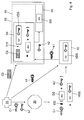
- FIG. 4
- an additional embodiment of the method according to the invention.
Das erfindungsgemäße Verfahren dient dazu um Daten auf mindestens einem, vorzugsweise gesicherten, Bereich einer Chip-Karte, bereit zu stellen. Im Rahmen der folgenden Beschreibung wird angenommen, dass es sich bei der Chip-Karte um eine SIM-Karte (SIM: Subscriber Identity Module) handelt. Folglich werden die Bezeichnungen Chip-Karte und SIM-Karte als Synonym verwendet. Dieses soll allerdings nicht als eine Beschränkung angesehen werden, sondern dient vielmehr nur der Verdeutlichung der Erfindung.The method according to the invention serves to provide data on at least one, preferably secured, area of a chip card. In the following description, it is assumed that the chip card is a SIM card (SIM: Subscriber Identity Module). Consequently, the terms chip card and SIM card are used synonymously. However, this should not be regarded as a limitation, but rather serves only to illustrate the invention.
In
Eine erste Stelle 20 stellt einen Verschlüsselungs-Code c1 einer zweiten Stelle 30 zur Verfügung. Bei der ersten Stelle 20 kann es sich etwa um einen SIM-Karten-Hersteller handeln, der den Verschlüsselungs-Code c1 der zweiten Stelle 30 zustellt. Bei dieser zweiten Stelle 30 kann es sich um einen Service Provider handeln, der definierte Dienste über die SIM-Karte 11 anbieten möchte. So ist es z. B. denkbar, dass die zweite Stelle 30 ein Kreditkarten-Hersteller und/oder eine Eisenbahn-Gesellschaft ist, die ihre Applikation auf der SIM-Karte 10 ablegen und entsprechende Daten auf diese übermitteln möchte. Im Rahmen des ersten Verfahrensschrittes wird nun dieser zweiten Stelle 30 der Schlüssel c1 übermittelt. Parallel dazu kann die erste Stelle 20 einen passenden Entschlüsselungs-Code c2 an die SIM-Karte 10 übermitteln. Handelt es sich bei der ersten Stelle 20 um den SIM-Karten-Hersteller, ist diesem eine direkte Integration des Entschlüsselungs-Codes c2 in der SIM-Karte 10 möglich.A
Unter Zuhilfenahme des Verschlüsselungs-Codes c1 kann die zweite Stelle 30 eine Verschlüsselung 100 eines Datensatzes DS vornehmen. Bei dem Datensatz DS kann es sich beispielweise um Informationen handeln, die die zweite Stelle 30 für ihre Applikation auf der Chip-Karte 10 benötigt. Durch die Verschlüsselung 100 des Datensatzes DS mit dem Verschlüsselungs-Code c1 wird ein verschlüsselter Datensatz VDS generiert. Dieser verschlüsselte Datensatz VDS wird an eine dritte Stelle 40 übermittelt. Bei der dritten Stelle 40 kann es sich um einen Netzwerkbetreiber oder eine sonstige vertrauenswürdige Stelle handeln, die zur Übermittlung des verschlüsselten Datensatzes VDS von der zweiten Stelle 30 an die Chip-Karte 10 genutzt wird. Im Rahmen des in
Eine weitere vorteilhafte Ausführungsvariante des erfindungsgemäßen Verfahrens ist in der
In
- 1010
- Chip-Karte, SIM-KarteChip card, SIM card
- 1111
- Mobilfunkgerätmobile device
- 2020
- ersten Stellefirst place
- 3030
- zweite Stellesecond place
- 4040
- dritte Stellethird place
- 4545
-
Bereich der Chip-Karte 10Area of the
chip card 10 - 5050
- erste gesicherte Bereichfirst secured area
- 5555
- zweite gesicherte Bereichsecond secured area
- c1c1
- Verschlüsselungs-CodesEncryption codes
- c2c2
- Entschlüsselungs-CodesDecryption code
- k1k1
- ersten Zugangsschlüsselsfirst access key
- k2k2
- zweiten Zugangsschlüsselssecond access key
- DSDS
- Datensatzrecord
- VDSVDS
- verschlüsselten Datensatzesencrypted record
- 100100
- Verschlüsselnencode
- 110110
- Entschlüsselndecipher
Claims (7)
- A method for providing data on at least one secure area (45) of a SIM card (10), with the following steps:- providing an encryption code (c1) from a first location (20) to a second location (30),- providing a decryption code (c2) corresponding to the encryption code (c1) from the first location (20) to the SIM card (10),
characterised by- applying the encryption code (c1) to produce an encrypted data set (VDS) from a data set (DS) using the second location (30),- providing the encrypted data set (VDS) from the second location (30) to a third location (40),- transmitting the encrypted data set (VDS) from the third location (40) to the at least one area (45) of the SIM card (10),- applying the decryption code (c2) to decode the encrypted data set (VDS) to the data set (DS) on the SIM card (10),- providing a first access code (k1) from the first location (20) to the third location (40) and transmitting the first access code (k1) from the third location (40) to the SIM card (10). - The method according to claim 1, characterised by- applying the first access code (k1) to gain access to a first secure area (50) of the SIM card (10) during transmission of the encrypted data set (VDS).
- The method according to one of the preceding claims, characterised by- providing a second access code (k2) from the first location (20) to the second location (30).
- The method according to claim 3, characterised by- adding the second access code (k2) to the data set (DS) before applying the encryption code (c1) to create an encrypted data set (VDS).
- The method according to claim 4, characterised by- applying the second access code (k2) to gain access to a second secure area (55) of the SIM card (10) after applying the decryption code (c2) to decode the encrypted data set (VDS) to the data set (DS) on the SIM card (10).
- The method according to one of the preceding claims, characterised by- providing a single encryption code (c1) and a single decryption code (c2) corresponding to the encryption code (c1) for a plurality of SIM cards (10).
- The method according to one of claims 3 to 6, characterised by- providing a first access code (k1) uniquely assigned to a SIM card (10) and/or a second access code (k2) uniquely assigned to a SIM card (10).
Applications Claiming Priority (1)
| Application Number | Priority Date | Filing Date | Title |
|---|---|---|---|
| DE102008057464A DE102008057464A1 (en) | 2008-11-14 | 2008-11-14 | Method for providing data to at least one area of a chip card |
Publications (2)
| Publication Number | Publication Date |
|---|---|
| EP2190232A1 EP2190232A1 (en) | 2010-05-26 |
| EP2190232B1 true EP2190232B1 (en) | 2015-07-01 |
Family
ID=42077386
Family Applications (1)
| Application Number | Title | Priority Date | Filing Date |
|---|---|---|---|
| EP09175772.4A Active EP2190232B1 (en) | 2008-11-14 | 2009-11-12 | Method for providing data on at least one area of a chip card |
Country Status (3)
| Country | Link |
|---|---|
| EP (1) | EP2190232B1 (en) |
| DE (1) | DE102008057464A1 (en) |
| ES (1) | ES2550366T3 (en) |
Family Cites Families (2)
| Publication number | Priority date | Publication date | Assignee | Title |
|---|---|---|---|---|
| DE102006024041B4 (en) * | 2006-05-23 | 2016-04-07 | Giesecke & Devrient Gmbh | Method for personalizing a security module of a telecommunication terminal |
| FR2911023B1 (en) * | 2006-12-29 | 2009-04-17 | Radiotelephone Sfr | METHOD FOR SECURING A DATA STREAM |
-
2008
- 2008-11-14 DE DE102008057464A patent/DE102008057464A1/en not_active Withdrawn
-
2009
- 2009-11-12 ES ES09175772.4T patent/ES2550366T3/en active Active
- 2009-11-12 EP EP09175772.4A patent/EP2190232B1/en active Active
Also Published As
| Publication number | Publication date |
|---|---|
| DE102008057464A1 (en) | 2010-05-20 |
| EP2190232A1 (en) | 2010-05-26 |
| ES2550366T3 (en) | 2015-11-06 |
Similar Documents
| Publication | Publication Date | Title |
|---|---|---|
| DE69730712T2 (en) | COMMUNICATION SYSTEM WITH SECURE, INDEPENDENT MANAGEMENT OF SEVERAL APPLICATIONS PER USER CARD, USER CARD AND ADMINISTRATIVE PROCEDURE THEREFOR | |
| DE19823532C2 (en) | Method for controlling a subscriber identity module (SIM) in mobile radio systems | |
| DE69736384T2 (en) | ADMINISTRATION OF AUTHENTICATION KEYS IN A MOBILE COMMUNICATION SYSTEM | |
| DE102010027586B4 (en) | Method for the cryptographic protection of an application | |
| EP2289225B1 (en) | Method for personalizing a safety element of a mobile terminal device | |
| EP0283432A1 (en) | Method and apparatus for protecting secret elements in a cryptographic devices network with open key management | |
| EP2595085A2 (en) | Method for protecting a chip card against unauthorised use, chip card and chip cards terminal | |
| EP2779722B1 (en) | Method for personalisation of a security module of a telecommunication end device | |
| EP3596709A1 (en) | Method for access control | |
| EP1010146A2 (en) | Method for mutual authentication between two units | |
| EP2575385B1 (en) | Method for initializing and/or activation of at least one user account, for carrying out a transaction, and terminal | |
| EP1425723B1 (en) | Initialization of a chip card | |
| EP2098039A1 (en) | Method for transferring encoded messages | |
| EP3319003B1 (en) | Method and system for authenticating a mobile telecommunication terminal on a service computer system and mobile telecommunication terminal | |
| EP2399218B1 (en) | Method for generating an identifier | |
| EP2590357B1 (en) | Method and system for identifying an RFID tag by means of a reader | |
| DE102014212443A1 (en) | Reduction of memory requirements for cryptographic keys | |
| EP2190232A1 (en) | Method for providing data on at least one area of a chip card | |
| EP2481183A1 (en) | Method for establishing a secure communication channel | |
| EP4242890B1 (en) | Method for secure identification of a person by a verification instance | |
| WO2002102103A2 (en) | Authentication method | |
| DE102011122874B4 (en) | Method for carrying out a transaction, as well as terminal device | |
| EP0777356B1 (en) | Arrangement for encryptyed data transmission between two different systems | |
| WO2025224104A1 (en) | Method for encrypted communication in an institutional request system with a view to retrieving personal data | |
| DE102016000324A1 (en) | Method for managing identification data of multiple applications |
Legal Events
| Date | Code | Title | Description |
|---|---|---|---|
| PUAI | Public reference made under article 153(3) epc to a published international application that has entered the european phase |
Free format text: ORIGINAL CODE: 0009012 |
|
| AK | Designated contracting states |
Kind code of ref document: A1 Designated state(s): AT BE BG CH CY CZ DE DK EE ES FI FR GB GR HR HU IE IS IT LI LT LU LV MC MK MT NL NO PL PT RO SE SI SK SM TR |
|
| AX | Request for extension of the european patent |
Extension state: AL BA RS |
|
| 17P | Request for examination filed |
Effective date: 20100813 |
|
| 17Q | First examination report despatched |
Effective date: 20111124 |
|
| GRAP | Despatch of communication of intention to grant a patent |
Free format text: ORIGINAL CODE: EPIDOSNIGR1 |
|
| RIC1 | Information provided on ipc code assigned before grant |
Ipc: H04W 12/04 20090101ALI20150114BHEP Ipc: H04L 29/06 20060101ALI20150114BHEP Ipc: G06Q 20/34 20120101ALI20150114BHEP Ipc: G06Q 20/32 20120101ALI20150114BHEP Ipc: H04W 12/02 20090101AFI20150114BHEP Ipc: H04W 8/20 20090101ALN20150114BHEP Ipc: G07F 7/10 20060101ALI20150114BHEP |
|
| RIC1 | Information provided on ipc code assigned before grant |
Ipc: G07F 7/10 20060101ALI20150122BHEP Ipc: H04W 12/02 20090101AFI20150122BHEP Ipc: H04W 8/20 20090101ALN20150122BHEP Ipc: H04W 12/04 20090101ALI20150122BHEP Ipc: H04L 29/06 20060101ALI20150122BHEP Ipc: G06Q 20/34 20120101ALI20150122BHEP Ipc: G06Q 20/32 20120101ALI20150122BHEP |
|
| INTG | Intention to grant announced |
Effective date: 20150212 |
|
| GRAS | Grant fee paid |
Free format text: ORIGINAL CODE: EPIDOSNIGR3 |
|
| GRAA | (expected) grant |
Free format text: ORIGINAL CODE: 0009210 |
|
| AK | Designated contracting states |
Kind code of ref document: B1 Designated state(s): AT BE BG CH CY CZ DE DK EE ES FI FR GB GR HR HU IE IS IT LI LT LU LV MC MK MT NL NO PL PT RO SE SI SK SM TR |
|
| REG | Reference to a national code |
Ref country code: GB Ref legal event code: FG4D Free format text: NOT ENGLISH |
|
| REG | Reference to a national code |
Ref country code: AT Ref legal event code: REF Ref document number: 734576 Country of ref document: AT Kind code of ref document: T Effective date: 20150715 Ref country code: CH Ref legal event code: EP |
|
| REG | Reference to a national code |
Ref country code: IE Ref legal event code: FG4D Free format text: LANGUAGE OF EP DOCUMENT: GERMAN |
|
| REG | Reference to a national code |
Ref country code: DE Ref legal event code: R096 Ref document number: 502009011187 Country of ref document: DE |
|
| REG | Reference to a national code |
Ref country code: ES Ref legal event code: FG2A Ref document number: 2550366 Country of ref document: ES Kind code of ref document: T3 Effective date: 20151106 |
|
| REG | Reference to a national code |
Ref country code: NL Ref legal event code: FP |
|
| REG | Reference to a national code |
Ref country code: LT Ref legal event code: MG4D |
|
| REG | Reference to a national code |
Ref country code: FR Ref legal event code: PLFP Year of fee payment: 7 |
|
| PG25 | Lapsed in a contracting state [announced via postgrant information from national office to epo] |
Ref country code: LT Free format text: LAPSE BECAUSE OF FAILURE TO SUBMIT A TRANSLATION OF THE DESCRIPTION OR TO PAY THE FEE WITHIN THE PRESCRIBED TIME-LIMIT Effective date: 20150701 Ref country code: FI Free format text: LAPSE BECAUSE OF FAILURE TO SUBMIT A TRANSLATION OF THE DESCRIPTION OR TO PAY THE FEE WITHIN THE PRESCRIBED TIME-LIMIT Effective date: 20150701 Ref country code: NO Free format text: LAPSE BECAUSE OF FAILURE TO SUBMIT A TRANSLATION OF THE DESCRIPTION OR TO PAY THE FEE WITHIN THE PRESCRIBED TIME-LIMIT Effective date: 20151001 Ref country code: LV Free format text: LAPSE BECAUSE OF FAILURE TO SUBMIT A TRANSLATION OF THE DESCRIPTION OR TO PAY THE FEE WITHIN THE PRESCRIBED TIME-LIMIT Effective date: 20150701 Ref country code: GR Free format text: LAPSE BECAUSE OF FAILURE TO SUBMIT A TRANSLATION OF THE DESCRIPTION OR TO PAY THE FEE WITHIN THE PRESCRIBED TIME-LIMIT Effective date: 20151002 |
|
| PG25 | Lapsed in a contracting state [announced via postgrant information from national office to epo] |
Ref country code: PT Free format text: LAPSE BECAUSE OF FAILURE TO SUBMIT A TRANSLATION OF THE DESCRIPTION OR TO PAY THE FEE WITHIN THE PRESCRIBED TIME-LIMIT Effective date: 20151102 Ref country code: HR Free format text: LAPSE BECAUSE OF FAILURE TO SUBMIT A TRANSLATION OF THE DESCRIPTION OR TO PAY THE FEE WITHIN THE PRESCRIBED TIME-LIMIT Effective date: 20150701 Ref country code: IS Free format text: LAPSE BECAUSE OF FAILURE TO SUBMIT A TRANSLATION OF THE DESCRIPTION OR TO PAY THE FEE WITHIN THE PRESCRIBED TIME-LIMIT Effective date: 20151101 Ref country code: PL Free format text: LAPSE BECAUSE OF FAILURE TO SUBMIT A TRANSLATION OF THE DESCRIPTION OR TO PAY THE FEE WITHIN THE PRESCRIBED TIME-LIMIT Effective date: 20150701 Ref country code: SE Free format text: LAPSE BECAUSE OF FAILURE TO SUBMIT A TRANSLATION OF THE DESCRIPTION OR TO PAY THE FEE WITHIN THE PRESCRIBED TIME-LIMIT Effective date: 20150701 |
|
| REG | Reference to a national code |
Ref country code: DE Ref legal event code: R097 Ref document number: 502009011187 Country of ref document: DE |
|
| PG25 | Lapsed in a contracting state [announced via postgrant information from national office to epo] |
Ref country code: EE Free format text: LAPSE BECAUSE OF FAILURE TO SUBMIT A TRANSLATION OF THE DESCRIPTION OR TO PAY THE FEE WITHIN THE PRESCRIBED TIME-LIMIT Effective date: 20150701 Ref country code: SK Free format text: LAPSE BECAUSE OF FAILURE TO SUBMIT A TRANSLATION OF THE DESCRIPTION OR TO PAY THE FEE WITHIN THE PRESCRIBED TIME-LIMIT Effective date: 20150701 Ref country code: DK Free format text: LAPSE BECAUSE OF FAILURE TO SUBMIT A TRANSLATION OF THE DESCRIPTION OR TO PAY THE FEE WITHIN THE PRESCRIBED TIME-LIMIT Effective date: 20150701 Ref country code: CZ Free format text: LAPSE BECAUSE OF FAILURE TO SUBMIT A TRANSLATION OF THE DESCRIPTION OR TO PAY THE FEE WITHIN THE PRESCRIBED TIME-LIMIT Effective date: 20150701 |
|
| PLBE | No opposition filed within time limit |
Free format text: ORIGINAL CODE: 0009261 |
|
| STAA | Information on the status of an ep patent application or granted ep patent |
Free format text: STATUS: NO OPPOSITION FILED WITHIN TIME LIMIT |
|
| PG25 | Lapsed in a contracting state [announced via postgrant information from national office to epo] |
Ref country code: RO Free format text: LAPSE BECAUSE OF FAILURE TO SUBMIT A TRANSLATION OF THE DESCRIPTION OR TO PAY THE FEE WITHIN THE PRESCRIBED TIME-LIMIT Effective date: 20150701 |
|
| 26N | No opposition filed |
Effective date: 20160404 |
|
| PG25 | Lapsed in a contracting state [announced via postgrant information from national office to epo] |
Ref country code: LU Free format text: LAPSE BECAUSE OF FAILURE TO SUBMIT A TRANSLATION OF THE DESCRIPTION OR TO PAY THE FEE WITHIN THE PRESCRIBED TIME-LIMIT Effective date: 20151112 Ref country code: MC Free format text: LAPSE BECAUSE OF FAILURE TO SUBMIT A TRANSLATION OF THE DESCRIPTION OR TO PAY THE FEE WITHIN THE PRESCRIBED TIME-LIMIT Effective date: 20150701 |
|
| REG | Reference to a national code |
Ref country code: CH Ref legal event code: PL |
|
| PG25 | Lapsed in a contracting state [announced via postgrant information from national office to epo] |
Ref country code: CH Free format text: LAPSE BECAUSE OF NON-PAYMENT OF DUE FEES Effective date: 20151130 Ref country code: LI Free format text: LAPSE BECAUSE OF NON-PAYMENT OF DUE FEES Effective date: 20151130 |
|
| REG | Reference to a national code |
Ref country code: IE Ref legal event code: MM4A |
|
| PG25 | Lapsed in a contracting state [announced via postgrant information from national office to epo] |
Ref country code: SI Free format text: LAPSE BECAUSE OF FAILURE TO SUBMIT A TRANSLATION OF THE DESCRIPTION OR TO PAY THE FEE WITHIN THE PRESCRIBED TIME-LIMIT Effective date: 20150701 |
|
| PG25 | Lapsed in a contracting state [announced via postgrant information from national office to epo] |
Ref country code: IE Free format text: LAPSE BECAUSE OF NON-PAYMENT OF DUE FEES Effective date: 20151112 |
|
| REG | Reference to a national code |
Ref country code: FR Ref legal event code: PLFP Year of fee payment: 8 |
|
| REG | Reference to a national code |
Ref country code: AT Ref legal event code: MM01 Ref document number: 734576 Country of ref document: AT Kind code of ref document: T Effective date: 20151112 |
|
| PG25 | Lapsed in a contracting state [announced via postgrant information from national office to epo] |
Ref country code: AT Free format text: LAPSE BECAUSE OF NON-PAYMENT OF DUE FEES Effective date: 20151112 |
|
| PG25 | Lapsed in a contracting state [announced via postgrant information from national office to epo] |
Ref country code: BG Free format text: LAPSE BECAUSE OF FAILURE TO SUBMIT A TRANSLATION OF THE DESCRIPTION OR TO PAY THE FEE WITHIN THE PRESCRIBED TIME-LIMIT Effective date: 20150701 Ref country code: SM Free format text: LAPSE BECAUSE OF FAILURE TO SUBMIT A TRANSLATION OF THE DESCRIPTION OR TO PAY THE FEE WITHIN THE PRESCRIBED TIME-LIMIT Effective date: 20150701 Ref country code: HU Free format text: LAPSE BECAUSE OF FAILURE TO SUBMIT A TRANSLATION OF THE DESCRIPTION OR TO PAY THE FEE WITHIN THE PRESCRIBED TIME-LIMIT; INVALID AB INITIO Effective date: 20091112 |
|
| PG25 | Lapsed in a contracting state [announced via postgrant information from national office to epo] |
Ref country code: CY Free format text: LAPSE BECAUSE OF FAILURE TO SUBMIT A TRANSLATION OF THE DESCRIPTION OR TO PAY THE FEE WITHIN THE PRESCRIBED TIME-LIMIT Effective date: 20150701 |
|
| PG25 | Lapsed in a contracting state [announced via postgrant information from national office to epo] |
Ref country code: BE Free format text: LAPSE BECAUSE OF NON-PAYMENT OF DUE FEES Effective date: 20151130 |
|
| PG25 | Lapsed in a contracting state [announced via postgrant information from national office to epo] |
Ref country code: TR Free format text: LAPSE BECAUSE OF FAILURE TO SUBMIT A TRANSLATION OF THE DESCRIPTION OR TO PAY THE FEE WITHIN THE PRESCRIBED TIME-LIMIT Effective date: 20150701 Ref country code: MT Free format text: LAPSE BECAUSE OF FAILURE TO SUBMIT A TRANSLATION OF THE DESCRIPTION OR TO PAY THE FEE WITHIN THE PRESCRIBED TIME-LIMIT Effective date: 20150701 |
|
| REG | Reference to a national code |
Ref country code: FR Ref legal event code: PLFP Year of fee payment: 9 |
|
| PG25 | Lapsed in a contracting state [announced via postgrant information from national office to epo] |
Ref country code: MK Free format text: LAPSE BECAUSE OF FAILURE TO SUBMIT A TRANSLATION OF THE DESCRIPTION OR TO PAY THE FEE WITHIN THE PRESCRIBED TIME-LIMIT Effective date: 20150701 |
|
| P01 | Opt-out of the competence of the unified patent court (upc) registered |
Effective date: 20230519 |
|
| PGFP | Annual fee paid to national office [announced via postgrant information from national office to epo] |
Ref country code: NL Payment date: 20251119 Year of fee payment: 17 |
|
| PGFP | Annual fee paid to national office [announced via postgrant information from national office to epo] |
Ref country code: DE Payment date: 20251119 Year of fee payment: 17 |
|
| PGFP | Annual fee paid to national office [announced via postgrant information from national office to epo] |
Ref country code: GB Payment date: 20251121 Year of fee payment: 17 |
|
| PGFP | Annual fee paid to national office [announced via postgrant information from national office to epo] |
Ref country code: IT Payment date: 20251125 Year of fee payment: 17 |
|
| PGFP | Annual fee paid to national office [announced via postgrant information from national office to epo] |
Ref country code: FR Payment date: 20251121 Year of fee payment: 17 |
|
| PGFP | Annual fee paid to national office [announced via postgrant information from national office to epo] |
Ref country code: ES Payment date: 20251229 Year of fee payment: 17 |