EP2190149A1 - Method and device for indicating data re-transmission when area switching in lte system - Google Patents
Method and device for indicating data re-transmission when area switching in lte system Download PDFInfo
- Publication number
- EP2190149A1 EP2190149A1 EP08800743A EP08800743A EP2190149A1 EP 2190149 A1 EP2190149 A1 EP 2190149A1 EP 08800743 A EP08800743 A EP 08800743A EP 08800743 A EP08800743 A EP 08800743A EP 2190149 A1 EP2190149 A1 EP 2190149A1
- Authority
- EP
- European Patent Office
- Prior art keywords
- enb
- pdcp
- sdu
- message
- received
- Prior art date
- Legal status (The legal status is an assumption and is not a legal conclusion. Google has not performed a legal analysis and makes no representation as to the accuracy of the status listed.)
- Granted
Links
Images






Classifications
-
- H—ELECTRICITY
- H04—ELECTRIC COMMUNICATION TECHNIQUE
- H04W—WIRELESS COMMUNICATION NETWORKS
- H04W36/00—Hand-off or reselection arrangements
- H04W36/02—Buffering or recovering information during reselection ; Modification of the traffic flow during hand-off
- H04W36/023—Buffering or recovering information during reselection
- H04W36/0235—Buffering or recovering information during reselection by transmitting sequence numbers, e.g. SN status transfer
-
- H—ELECTRICITY
- H04—ELECTRIC COMMUNICATION TECHNIQUE
- H04L—TRANSMISSION OF DIGITAL INFORMATION, e.g. TELEGRAPHIC COMMUNICATION
- H04L1/00—Arrangements for detecting or preventing errors in the information received
- H04L1/12—Arrangements for detecting or preventing errors in the information received by using return channel
- H04L1/16—Arrangements for detecting or preventing errors in the information received by using return channel in which the return channel carries supervisory signals, e.g. repetition request signals
- H04L1/1607—Details of the supervisory signal
- H04L1/1642—Formats specially adapted for sequence numbers
-
- H—ELECTRICITY
- H04—ELECTRIC COMMUNICATION TECHNIQUE
- H04L—TRANSMISSION OF DIGITAL INFORMATION, e.g. TELEGRAPHIC COMMUNICATION
- H04L1/00—Arrangements for detecting or preventing errors in the information received
- H04L1/12—Arrangements for detecting or preventing errors in the information received by using return channel
- H04L1/16—Arrangements for detecting or preventing errors in the information received by using return channel in which the return channel carries supervisory signals, e.g. repetition request signals
- H04L1/18—Automatic repetition systems, e.g. Van Duuren systems
- H04L1/1829—Arrangements specially adapted for the receiver end
-
- H—ELECTRICITY
- H04—ELECTRIC COMMUNICATION TECHNIQUE
- H04L—TRANSMISSION OF DIGITAL INFORMATION, e.g. TELEGRAPHIC COMMUNICATION
- H04L1/00—Arrangements for detecting or preventing errors in the information received
- H04L1/12—Arrangements for detecting or preventing errors in the information received by using return channel
- H04L1/16—Arrangements for detecting or preventing errors in the information received by using return channel in which the return channel carries supervisory signals, e.g. repetition request signals
- H04L1/18—Automatic repetition systems, e.g. Van Duuren systems
- H04L1/1867—Arrangements specially adapted for the transmitter end
- H04L1/1874—Buffer management
-
- H—ELECTRICITY
- H04—ELECTRIC COMMUNICATION TECHNIQUE
- H04W—WIRELESS COMMUNICATION NETWORKS
- H04W36/00—Hand-off or reselection arrangements
- H04W36/0005—Control or signalling for completing the hand-off
- H04W36/0055—Transmission or use of information for re-establishing the radio link
- H04W36/0072—Transmission or use of information for re-establishing the radio link of resource information of target access point
-
- H—ELECTRICITY
- H04—ELECTRIC COMMUNICATION TECHNIQUE
- H04W—WIRELESS COMMUNICATION NETWORKS
- H04W36/00—Hand-off or reselection arrangements
- H04W36/02—Buffering or recovering information during reselection ; Modification of the traffic flow during hand-off
-
- H—ELECTRICITY
- H04—ELECTRIC COMMUNICATION TECHNIQUE
- H04W—WIRELESS COMMUNICATION NETWORKS
- H04W36/00—Hand-off or reselection arrangements
- H04W36/08—Reselecting an access point
Definitions
- the present invention relates to the technical field of the Long Time Evolution (LTE) system in mobile communications, and particularly to a method for indicating data re-transmission during cell handover in the LTE system and a device thereof.
- LTE Long Time Evolution
- the idea of User Equipment (UE) assistant to network control i.e., the steps of "measure-report-decide-execute", is still adopted.
- the S_eNB When the Source Evolved Node B (S_eNB) decides that the UE shall handover to the Target Evolved Node B (T_eNB) according to measurement reports from the UE and the T_eNB, the S_eNB exchanges information with the T_eNB directly via an X2 interface, to complete resource preparation in the target cell; then, the S_eNB instructs the UE to handover to the target cell; after a successful handover, the T_eNB informs the S_eNB to release radio resource of the original cell. In addition, the S_eNB transmits data that is not transmitted yet to the T_eNB and updates relation of nodes between a user plane and a control plane.
- a flowchart of cell handover in the LTE system in the prior art mainly includes:
- an uplink data forwarding solution is adopted, which is performed between step [7] and step [8] of Figure 1 (as illustrated by dotted lines).
- the data forwarding refers to that: the S_eNB forwards received disordered Packet Data Convergence Protocol-Service Data Units (PDCP-SDUs) to the T_eNB, and the PDCP-SDUs are attached with Sequence Numbers (SNs), then the T_eNB sends the received PDCP-SDUs to the Service Gateway (S-GW).
- PDCP-SDUs Packet Data Convergence Protocol-Service Data Units
- SNs Sequence Numbers
- ordered transmission of upper layer PDUs is based on continuous PDCP-SNs and a re-order function provided by the PDCP layer.
- the re-order function of the PDCP layer of the T_eNB ensures the ordered transmission of the uplink PDCP-SDUs.
- the air interface is based on the Automatic Repeat Request/Hybrid Automatic Repeat Request (ARQ/HARQ) mechanism.
- the S_eNB feeds ACKs back to the UE on successfully receiving ordered PDCP-SDUs.
- the UE re-transmits to the T_eNB those PDCP-SDUs whose ACKs are not received at the UE.
- the UE does not receive any ACK to a PDCP in two cases: in the first case, the S_eNB does not receive the PDCPs due to reasons such as network, etc., and does not feed ACKs back to the UE accordingly; in the second case, the S_eNB has received ordered PDCPs successfully, however, ACKs are not fed back to the UE successfully due to network reasons.
- the above second case may result in insignificant re-transmission from the UE to the T_eNB and a waste of precious radio resource. Examples are described hereinafter with reference to the two cases.
- Figure 2 illustrates a fact in which re-transmission of PDCP-SDUs from the UE results in an insignificant waste.
- the S_eNB receives data 1, 2 and 3 from the UE successfully and transmits the data 1, 2 and 3 to the S-GW via an S1 interface. It is assumed that the UE receives only an ACK to the data 1 fed back from the network side and does not receive ACKs to the data 2 and 3.
- the UE continues to send the data 2 and 3 to the T_eNB, the T_eNB receives the data 2 and 3 and sends the re-transmitted data 2 and 3 to the S-GW, which results in reception of repeated data in the Evolved Packet Core (EPC) system and a waste of precious radio resource at the air interface.
- EPC Evolved Packet Core
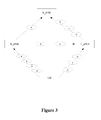
- Figure 3 illustrates another fact in which re-transmission of PDCP-SDUs from the UE results in an insignificant waste.
- the UE sends data a, b, c and d to the S_eNB, however, the data b fails during transmission and the S_eNB receives only the data a, c and d, and the data c and d becomes disordered.
- the S_eNB sends the ordered data a to the S-GW, buffers the disordered data c and d in a buffer, and then sends the data c and d to the T_eNB which delivers the data c and d to the S-GW.
- the UE does not receive any ACK to the data c and d.
- the UE receives only an ACK to the data a, and re-transmits the data b, c and d to the T_eNB because the UE does not receive any ACK to the data b, c and d.
- the data c and d is re-transmitted.
- the S_eNB sends the buffered data c and d to the T_eNB; on the other hand, the UE re-transmits the data c and d to the T_eNB due to no reception of any ACK, thereby resulting in a waste of resource.
- the present invention provides a method for indicating data re-transmission during cell handover in a Long Time Evolution (LTE) system, so as to solve the problem of waste of radio resource due to re-transmission of redundant PDCP-SDUs in the conventional solution.
- LTE Long Time Evolution
- the present invention further provides a device for indicating data re-transmission during cell handover in a Long Time Evolution (LTE) system, i.e., an eNB, and a UE.
- LTE Long Time Evolution
- the method further includes: discarding, by the UE, PDCP-SDUs that have been received by the S_eNB from a re-transmission queue according to the received PDCP-SDU SNs, and re-transmitting only the rest of PDCP-SDUs in the queue to the T_eNB.
- the T_eNB informs the UE of the PDCP-SDU SNs received by the S_eNB through a synchronization reply message, a Radio Resource Control (RRC) message, a Radio Link Control (RLC) message or a Media Access Control (MAC) message.
- RRC Radio Resource Control
- RLC Radio Link Control
- MAC Media Access Control
- the T_eNB determines whether the T_eNB has received the PDCP-SDU SN report; the T_eNB sends to the UE the synchronization reply message carrying the PDCP-SDU SNs that have been received by the S_eNB if the T_eNB has received the PDCP-SDU SN report; and the T_eNB sends to the UE the synchronization reply message carrying no PDCP-SDU SN if the T_eNB has not received the PDCP-SDU SN report.
- the T_eNB determines whether the T_eNB has received the PDCP-SDU SN report; the T_eNB sends to the UE the synchronization reply message carrying the PDCP-SDU SNs that have been received by the S_eNB if the T_eNB has received the PDCP-SDU SN report; and if the T_eNB has not received the PDCP-SDU SN report, the T_eNB waits for a preset period of time, and sends to the UE the synchronization reply message carrying no PDCP-SDU SN if the T_eNB does not receive the PDCP-SDU SN report within the preset period of time; and the T_eNB sends to the UE the synchronization reply message carrying the PDCP-SDU SNs that have been received by the S_eNB if the T_eNB receives the PDCP-SDU SN report within the preset period of time
- the T_eNB determines whether the T_eNB has received the PDCP-SDU SN report; the T_eNB sends to the UE the synchronization reply message carrying the PDCP-SDU SNs that have been received by the S_eNB if the T_eNB has received the PDCP-SDU SN report; and if the T_eNB has not received the PDCP-SDU SN report, the T_eNB sends to the UE the synchronization reply message carrying no PDCP-SDU SN; and the T_eNB sends to the UE the RRC message, the RLC message or the MAC message immediately to inform the UE of the PDCP-SDU SNs that have been received by the S_eNB.
- the time when the S_eNB sends the PDCP-SDU SN report to the T_eNB is when the S_eNB receives an acknowledge message to a handover command message fed back from the UE, or when a preset time arrives from the time of sending the handover command message from the UE if the S_eNB does not receive any acknowledge message to the handover command message.
- An Evolved Node B (eNB) for indicating data re-transmission during cell handover in a Long Time Evolution (LTE) system includes: an X2 interface unit, a User Equipment (UE) interface unit communicated with UE, where the eNB further includes: a report assembling unit and a message assembling unit; the report assembling unit is adapted to assemble a Packet Data Convergence Protocol-Service Data Unit Sequence Number (PDCP-SDU SN) report including SNs of PDCP-SDUs received at the UE interface, the report being sent to the T_eNB via the X2 interface unit; the message assembling unit is adapted to assemble a message including PDCP-SDU SNs that have been received at the S_eNB according to the PDCP-SDU SN report received at the X2 interface unit, and send the message to the UE via the UE interface unit.
- PDCP-SDU SN Packet Data Convergence Protocol-Service Data Unit Sequence Number
- the message assembled by the message assembling unit is a synchronization reply message, a Radio Resource Control (RRC) message, a Radio Link Control (RLC) message or a Media Access Control (MAC) message.
- RRC Radio Resource Control
- RLC Radio Link Control
- MAC Media Access Control
- a User Equipment (UE) for controlling data re-transmission during cell handover in a Long Time Evolution (LTE) system includes: an Evolved Node B (eNB) interface unit communicated with a Source Evolved Node B (S_eNB) or a Target Evolved Node B (T_eNB) and a re-transmission queue in which Packet Data Convergence Protocol-Service Data Units (PDCP-SDUs) are buffered, where the UE further includes: a message parsing unit and a queue adjustment unit; where the eNB interface unit is adapted to receive from the T_eNB a message indicating PDCP-SDU Sequence Numbers (SNs) that have been received by the S_eNB; the message parsing unit is adapted to parse the message to obtain the PDCP-SDU SNs that have been received by the S_eNB; the queue adjustment unit is adapted to discard the PDCP-SDU SNs that have been received by the S_e
- the message indicating PDCP-SDU SNs that have been received by the S_eNB is a synchronization reply message, a Radio Resource Control (RRC) message, a Radio Link Control (RLC) message or a Media Access Control (MAC) message.
- RRC Radio Resource Control
- RLC Radio Link Control
- MAC Media Access Control
- the UE re-transmits a PDCP to the T_eNB if only the UE does not receive an ACK to the PDCP.
- the UE further determines whether the UE has received from the T_eNB a PDCP-SN indicating that the S_eNB has received the PDCP. If the UE does not receive the ACK to the PDCP but receives the PDCP-SN indicating that the S_eNB has received the PDCP, the UE does not re-transmit the PDCP, thereby avoiding re-transmission of redundant PDCPs and resulting in effective saving of radio resource compared with the conventional solution.
- the core of the present invention lies in that a process is added during cell handover of the UE, i.e., the S_eNB informs the UE via the T_eNB that which PDCP-SDUs have been received by the S_eNB successfully and the UE does not need to re-transmit the PDCP-SDUs even if the UE does not receive ACKs to the PDCP-SDUs.
- the UE re-transmits a PDCP-SDU to the T_eNB if only the UE does not receive an ACK to the PDCP-SDU.
- the UE further determines whether the UE has received from the T_eNB the SN indicating that the S_eNB has received the PDCP-SDU.
- the UE does not receive an ACK to a PDCP-SDU but receives a PDCP-SDU SN indicating reception of the PDCP-SDU, the UE does not re-transmit the PDCP-SDU, thereby avoiding re-transmission of duplicate PDCP-SDU and resulting in effective saving of radio resource compared with the conventional solution.
- FIG. 4 is a diagram of cell handover in the LTE system according to the first embodiment.
- the cell handover includes the following steps:
- the measurement information provided by the S_eNB may be of assistance to control the connection mobility function of the UE.
- step 402 the UE sends a measurement report to the S_eNB.
- the S_eNB makes a handover decision to perform cell handover of the UE according to the measurement report from the UE and RRM information.
- the S_eNB sends to the T_eNB a Handover Request message carrying necessary information so that the T_eNB prepares handover resource.
- the Handover Request message also indicates whether the system supports DL/UL data forwarding, and the Handover Request message further includes a SAE bearer context.
- the SAE bearer context includes Transport Network Layer (TNL) information of the S-GW for transmitting upper layer data, QoS information born by SAE, etc.
- TNL Transport Network Layer
- step 405 the T_eNB performs an admission control procedure based on the received QoS information born by SAE.
- step 406 the T_eNB sends a Handover Request Acknowledge message to the S_eNB while preparing the handover resource.
- the Handover Request Acknowledge message includes a Tunnel End Point Identifier (TEID) and an address of TNL supporting DL/UL data forwarding allocated by the T_eNB.
- TEID Tunnel End Point Identifier
- the S_eNB sends a Handover Command message to the UE to instruct the UE to perform handover on receiving the Handover Request Acknowledge message from the T_eNB.
- the Handover Command message includes a new Radio Network Temporary Identity (RNTI), a possible starting time, a System Information Block (SIB) of the T_eNB, etc.
- RNTI Radio Network Temporary Identity
- SIB System Information Block
- the UE On receiving the Handover Command message from the S_eNB, the UE ceases sending PDCP-SDUs to the S_eNB.
- the UE may utilize a Radio Link Control (RLC) Acknowledge procedure or other mechanisms to ensure proper reception of the Handover Command message.
- RLC Radio Link Control
- the S_eNB After sending the Handover Command message, the S_eNB commences performing the UL/DL data forwarding, i.e., buffers the PDCP-SDUs received from the UE in the Buffer and sends the PDCP-SDUs to the T_eNB.
- the S_eNB sends a "PDCP-SN report" to the T_eNB via an X2 interface to inform the T_eNB of SNs of all received PDCP-SDUs on receiving the RLC layer Acknowledge message in response to the Handover Command message or after the S_eNB waits for a period of time in case of receiving no RLC layer Acknowledge message.
- the above-mentioned period of time in case of receiving no RLC layer Acknowledge message depends on the possible starting time of the Handover Command message.
- step 409 the UE sends a Synchronization message to the T_eNB to request synchronization with the T_eNB once the possible starting time of the Handover Command message arrives. Then, the T_eNB begins to obtain the time advance of the UE.
- step 410 after the UE is synchronized with the T_eNB, the T_eNB sends to the UE a Synchronization Reply message including UL resource allocation information, the time advance, the PDCP-SNs of the PDCP-SN report, etc.
- the T_eNB may possibly not receive the PDCP-SN report from the S_eNB in time due to the delay of the X2 interface after the UE is synchronized with the T_eNB. If the T_eNB has not received the PDCP-SN report when replying to the UE, the Synchronization Reply message does not include the PDCP-SNs; otherwise the Synchronization Reply message includes the PDCP-SNs.
- the UE discards corresponding PDCPs from the re-transmission queue according to the indication of PDCP-SNs for the purpose of saving rare resource of the air interface.
- the UE proceeds as the prior art in case of no PDCP-SNs. It can be seen that the solution according to the present invention is easy to be compatible with the prior art.
- step 411 the UE sends a Handover Confirm message to the T_eNB after the UE accesses the target cell successfully, to inform of the completion of handover procedure.
- step 408 emphasizes on addition of step 408, modification to step 410, and subsequent re-transmission of PDCPs at the UE.
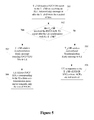
- FIG. 5 is a flowchart of the first embodiment, in which:
- the UE sends data a, b, c and d to the S_eNB, however, the data b fails during transmission, and the UE does not receive any ACK to the data b according.
- the S_eNB receives only the data a, c and d, and the data c and d becomes disordered. It is assumed that the UE does not receive any ACK to the data c and d.
- the S_eNB adds a step of assembling the PDCP-SDU SN report for the received PDCP-SDUs based on the conventional procedure.
- the PDCP-SDU SN report includes SNs of the data a, c and d.
- the S_eNB delivers the PDCP-SDU SN report to the T_eNB at an appropriate time (on receiving the RLC Acknowledge message, or after the S_eNB waits for a period of time).
- the T_eNB informs the UE that which PDCP-SDUs have been received by the S_eNB successfully through a Synchronization Reply message, i.e., the data a, c and d has been received, which need not to be re-transmitted.
- the UE receives only an ACK to the data a, and puts the data b, c and d to the re-transmission queue for re-transmission.
- the UE discards the data c and d from the re-transmission queue because the UE knows from the Synchronization Reply message that the data c and d has been received by the S_eNB. That is, the UE re-transmits only the failed data b to the T_eNB.
- re-transmission of the data c and d (the S_eNB forwards the data c and d to the T_eNB by data forwarding) can be avoided, saving precious radio resource of the air interface.
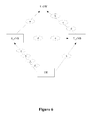
- a diagram of processing the scenario of Figure 3 by using this embodiment is illustrated in Figure 6 .
- the T_eNB sends a Reply message including no PDCP-SDU SN to the UE in a conventional manner after the synchronization of the UE in case of receiving no PDCP-SDU SN.
- the T_eNB sends a Reply message to the UE after receiving PDCP-SDU SNs within a preset period of time in the second embodiment, delivering the PDCP-SDU SNs to the UE as far as possible and ensuring no re-transmission of redundant PDCP-SDUs from the UE.
- FIG. 7 is a flowchart of the second embodiment, in which:
- step 703 the T_eNB sends a Synchronization Reply message carrying PDCP-SDU SNs to the UE.
- step 704 the UE discards PDCP-SDUs corresponding to the PDCP-SDU SNs from the PDCP re-transmission queue in which corresponding ACKs are not received, and re-transmits only the rest of PDCP-SDUs in the re-transmission queue to the T_eNB.
- step 705 it is determined whether the PDCP-SN report is received within a preset period of time.
- Step 703 is executed if the PDCP-SN report is received within a preset period of time.
- Step 706 is executed if the waiting time exceeds the period of time.
- step 706 is executed.
- the T_eNB sends a Synchronization Reply message to the UE.
- the Synchronization Reply message includes only UL resource allocation information and a time advance.
- step 707 the UE re-transmits all PDCP-SDUs whose ACKs are not received to the T_eNB.
- the T_eNB does not send the Synchronization Reply message immediately in case of not receiving the PDCP-SDU SN report but waits for a period of time according to the second embodiment, further ensuring the reception of the Synchronization Reply message including PDCP-SDU SNs and further effectively ensuring saving of radio resource.
- the third embodiment differs from the above two embodiments in that the processing of T_eNB after step 408.
- the T_eNB carries the PDCP-SDU SNs in the Reply message to the UE if the T_eNB has received the PDCP-SDU SN report from the S_eNB before the synchronization of UE.
- the T_eNB does not carry the PDCP-SDU SNs in the Reply message to the UE if the T_eNB has not received the PDCP-SDU SN report from the S_eNB after the synchronization of UE, but sends an RRC message, an RLC message or a MAC message to the UE carrying the PDCP-SDU SNs immediately once the T_eNB receives the PDCP-SDU SN report.
- the UE discards PDCP-SDUs corresponding to the PDCP-SDU SNs carried in the RRC message, the RLC message or the MAC message from the re-transmission queue, and re-transmits the rest of PDCP-SDUs of the queue to the T_eNB .
- FIG. 8 is flowchart of the third embodiment, in which:
- the T_eNB still sends the Synchronization Reply message to the UE in the prior art in case of receiving no PDCP-SN report, which is well compatible with the prior art.
- the T_eNB sends to the UE the RRC message, the RLC message or the MAC message immediately so that the possibility of re-transmitting redundant PDCP-SDUs is reduced to the least extent, ensuring effective and reasonable utilization of radio resource.
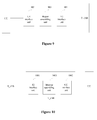
- FIG. 9 A diagram of a structure of an S_eNB according to the present invention is illustrated in Figure 9 .
- the S_eNB includes a report assembling unit 903.
- the report assembling unit 903 is mainly responsible for assembling a PDCP-SDU SN report including SNs of PDCP-SDUs received at the UE interface unit 802.
- the PDCP-SDU SN report is sent to the T_eNB at an appropriate time (on receiving an RLC Acknowledge message, or after the report assembling unit 903 waits for a period of time) via the X2 interface unit 901.
- FIG. 10 A diagram of a structure of a T_eNB according to the present invention is illustrated in Figure 10 .
- the T_eNB includes a message assembling unit 1003.
- the message assembling unit 1003 is mainly responsible for assembling a message including the PDCP-SDU SNs received at the S_eNB.
- the X2 interface unit 1001 is further adapted to receive the PDCP-SDU SN report sent from the S_eNB, the report including the PDCP-SDU SNs received at the S_eNB.
- the UE interface unit 1002 is further adapted to send the message assembled by the message assembling unit 1003 to the UE.
- the message assembled by the message assembling unit 1003 may be a Synchronization Reply message, an RRC message, an RLC message, or a MAC message.
- FIG. 11 A diagram of a structure of a UE according to the present invention is illustrated in Figure 11 .
- the UE includes a message parsing unit 1103 and a queue adjustment unit 1104.
- the eNB interface unit 1101 is further adapted to receive from the T_eNB a message indicating PDCP-SDU SNs that have been received by the S_eNB.
- the message parsing unit 1103 is mainly responsible for parsing the message to obtain the PDCP-SDU SNs that have been received by the S_eNB.
- the queue adjustment unit 1104 is mainly responsible for discarding the PDCP-SDU SNs that have been received by the S_eNB from the re-transmission queue 1102. Accordingly, the eNB interface unit 1101 re-transmits the rest of PDCP-SDUs in the re-transmission queue 1102 to the T_eNB.
- the message indicating the PDCP-SDU SNs that have been received by the S_eNB may be a Synchronization Reply message, an RRC message, an RLC message, or a MAC message.
Landscapes
- Engineering & Computer Science (AREA)
- Computer Networks & Wireless Communication (AREA)
- Signal Processing (AREA)
- Mobile Radio Communication Systems (AREA)
Abstract
Description
- The present application claims priority to Chinese Patent Application No.
200710121647 - The present invention relates to the technical field of the Long Time Evolution (LTE) system in mobile communications, and particularly to a method for indicating data re-transmission during cell handover in the LTE system and a device thereof.
- During the cell handover in the LTE system, the idea of User Equipment (UE) assistant to network control, i.e., the steps of "measure-report-decide-execute", is still adopted. When the Source Evolved Node B (S_eNB) decides that the UE shall handover to the Target Evolved Node B (T_eNB) according to measurement reports from the UE and the T_eNB, the S_eNB exchanges information with the T_eNB directly via an X2 interface, to complete resource preparation in the target cell; then, the S_eNB instructs the UE to handover to the target cell; after a successful handover, the T_eNB informs the S_eNB to release radio resource of the original cell. In addition, the S_eNB transmits data that is not transmitted yet to the T_eNB and updates relation of nodes between a user plane and a control plane.
- Referring to
Figure 1 , a flowchart of cell handover in the LTE system in the prior art mainly includes: - [1] The S_eNB configures the UE with a measurement procedure;
- [2] The UE sends a measurement report to the S_eNB;
- [3] The S_eNB makes a UE handover decision according to the measurement report and Radio Resource Management (RRM) information;
- [4] The S_eNB sends a handover request to the T_eNB;
- [5] On receiving the handover request from the S_eNB, the T_eNB performs an admission control procedure according to Quality of Service (QoS) information received from a System Architecture Evolution (SAE) entity;
- [6] The T_eNB sends a Handover Request Acknowledge message to the S_eNB;
- [7] The S_eNB sends a Handover Command message to the UE, to instruct the UE to perform a handover;
- [8] The UE sends a Synchronization message to the T_eNB;
- [9] The T_eNB feeds a Synchronization Reply message back to the UE, the Synchronization Reply message including UL resource allocation information, a time advance, etc.;
- [10] The UE sends a Handover Complete Acknowledge message to the T_eNB after the UE accesses the target cell successfully.
- On the user plane, in order to avoid loss of uplink data from the UE and to maintain ordered transmission of the uplink data during the handover, an uplink data forwarding solution is adopted, which is performed between step [7] and step [8] of
Figure 1 (as illustrated by dotted lines). Generally, the data forwarding refers to that: the S_eNB forwards received disordered Packet Data Convergence Protocol-Service Data Units (PDCP-SDUs) to the T_eNB, and the PDCP-SDUs are attached with Sequence Numbers (SNs), then the T_eNB sends the received PDCP-SDUs to the Service Gateway (S-GW). During the handover, ordered transmission of upper layer PDUs is based on continuous PDCP-SNs and a re-order function provided by the PDCP layer. In the uplink, the re-order function of the PDCP layer of the T_eNB ensures the ordered transmission of the uplink PDCP-SDUs. - In the present LTE system, the air interface is based on the Automatic Repeat Request/Hybrid Automatic Repeat Request (ARQ/HARQ) mechanism. The S_eNB feeds ACKs back to the UE on successfully receiving ordered PDCP-SDUs. The UE re-transmits to the T_eNB those PDCP-SDUs whose ACKs are not received at the UE. It is not difficult to understand that the UE does not receive any ACK to a PDCP in two cases: in the first case, the S_eNB does not receive the PDCPs due to reasons such as network, etc., and does not feed ACKs back to the UE accordingly; in the second case, the S_eNB has received ordered PDCPs successfully, however, ACKs are not fed back to the UE successfully due to network reasons. The above second case may result in insignificant re-transmission from the UE to the T_eNB and a waste of precious radio resource. Examples are described hereinafter with reference to the two cases.
-
Figure 2 illustrates a fact in which re-transmission of PDCP-SDUs from the UE results in an insignificant waste. The S_eNB receivesdata data data 1 fed back from the network side and does not receive ACKs to thedata data data re-transmitted data -
Figure 3 illustrates another fact in which re-transmission of PDCP-SDUs from the UE results in an insignificant waste. The UE sends data a, b, c and d to the S_eNB, however, the data b fails during transmission and the S_eNB receives only the data a, c and d, and the data c and d becomes disordered. According to the conventional solution of data forwarding, the S_eNB sends the ordered data a to the S-GW, buffers the disordered data c and d in a buffer, and then sends the data c and d to the T_eNB which delivers the data c and d to the S-GW. It is assumed that the UE does not receive any ACK to the data c and d. In this case, the UE receives only an ACK to the data a, and re-transmits the data b, c and d to the T_eNB because the UE does not receive any ACK to the data b, c and d. Apparently, the data c and d is re-transmitted. On one hand, the S_eNB sends the buffered data c and d to the T_eNB; on the other hand, the UE re-transmits the data c and d to the T_eNB due to no reception of any ACK, thereby resulting in a waste of resource. - In view of this, the present invention provides a method for indicating data re-transmission during cell handover in a Long Time Evolution (LTE) system, so as to solve the problem of waste of radio resource due to re-transmission of redundant PDCP-SDUs in the conventional solution.
- Corresponding to the method, the present invention further provides a device for indicating data re-transmission during cell handover in a Long Time Evolution (LTE) system, i.e., an eNB, and a UE.
- The technical solution of the present invention is described as follows:
- A method for indicating data re-transmission during cell handover in a Long Time Evolution (LTE) system includes:
- sending, by a Source Evolved Node B (S_eNB), a Packet Data Convergence Protocol-Service Data Unit Sequence Number (PDCP-SDU SN) report to a Target Evolved Node B (T_eNB), for informing of PDCP-SDU SNs that have been received by the S_eNB; and informing, by the T_eNB, User Equipment (UE) the PDCP-SDU SNs that have been received by the S_eNB.
- The method further includes: discarding, by the UE, PDCP-SDUs that have been received by the S_eNB from a re-transmission queue according to the received PDCP-SDU SNs, and re-transmitting only the rest of PDCP-SDUs in the queue to the T_eNB.
- The T_eNB informs the UE of the PDCP-SDU SNs received by the S_eNB through a synchronization reply message, a Radio Resource Control (RRC) message, a Radio Link Control (RLC) message or a Media Access Control (MAC) message.
- Preferably, after the UE is synchronized with the T_eNB, the T_eNB determines whether the T_eNB has received the PDCP-SDU SN report; the T_eNB sends to the UE the synchronization reply message carrying the PDCP-SDU SNs that have been received by the S_eNB if the T_eNB has received the PDCP-SDU SN report; and the T_eNB sends to the UE the synchronization reply message carrying no PDCP-SDU SN if the T_eNB has not received the PDCP-SDU SN report.
- Or, after the UE is synchronized with the T_eNB, the T_eNB determines whether the T_eNB has received the PDCP-SDU SN report; the T_eNB sends to the UE the synchronization reply message carrying the PDCP-SDU SNs that have been received by the S_eNB if the T_eNB has received the PDCP-SDU SN report; and if the T_eNB has not received the PDCP-SDU SN report, the T_eNB waits for a preset period of time, and sends to the UE the synchronization reply message carrying no PDCP-SDU SN if the T_eNB does not receive the PDCP-SDU SN report within the preset period of time; and the T_eNB sends to the UE the synchronization reply message carrying the PDCP-SDU SNs that have been received by the S_eNB if the T_eNB receives the PDCP-SDU SN report within the preset period of time.
- Or, after the UE is synchronized with the T_eNB, the T_eNB determines whether the T_eNB has received the PDCP-SDU SN report; the T_eNB sends to the UE the synchronization reply message carrying the PDCP-SDU SNs that have been received by the S_eNB if the T_eNB has received the PDCP-SDU SN report; and if the T_eNB has not received the PDCP-SDU SN report, the T_eNB sends to the UE the synchronization reply message carrying no PDCP-SDU SN; and the T_eNB sends to the UE the RRC message, the RLC message or the MAC message immediately to inform the UE of the PDCP-SDU SNs that have been received by the S_eNB.
- The time when the S_eNB sends the PDCP-SDU SN report to the T_eNB is when the S_eNB receives an acknowledge message to a handover command message fed back from the UE, or when a preset time arrives from the time of sending the handover command message from the UE if the S_eNB does not receive any acknowledge message to the handover command message.
- An Evolved Node B (eNB) for indicating data re-transmission during cell handover in a Long Time Evolution (LTE) system includes: an X2 interface unit, a User Equipment (UE) interface unit communicated with UE, where the eNB further includes: a report assembling unit and a message assembling unit; the report assembling unit is adapted to assemble a Packet Data Convergence Protocol-Service Data Unit Sequence Number (PDCP-SDU SN) report including SNs of PDCP-SDUs received at the UE interface, the report being sent to the T_eNB via the X2 interface unit; the message assembling unit is adapted to assemble a message including PDCP-SDU SNs that have been received at the S_eNB according to the PDCP-SDU SN report received at the X2 interface unit, and send the message to the UE via the UE interface unit.
- The message assembled by the message assembling unit is a synchronization reply message, a Radio Resource Control (RRC) message, a Radio Link Control (RLC) message or a Media Access Control (MAC) message.
- A User Equipment (UE) for controlling data re-transmission during cell handover in a Long Time Evolution (LTE) system includes: an Evolved Node B (eNB) interface unit communicated with a Source Evolved Node B (S_eNB) or a Target Evolved Node B (T_eNB) and a re-transmission queue in which Packet Data Convergence Protocol-Service Data Units (PDCP-SDUs) are buffered, where the UE further includes: a message parsing unit and a queue adjustment unit; where the eNB interface unit is adapted to receive from the T_eNB a message indicating PDCP-SDU Sequence Numbers (SNs) that have been received by the S_eNB; the message parsing unit is adapted to parse the message to obtain the PDCP-SDU SNs that have been received by the S_eNB; the queue adjustment unit is adapted to discard the PDCP-SDU SNs that have been received by the S_eNB from the re-transmission queue, and the eNB interface unit re-transmits the rest of PDCP-SDUs in the re-transmission queue to the T_eNB.
- The message indicating PDCP-SDU SNs that have been received by the S_eNB is a synchronization reply message, a Radio Resource Control (RRC) message, a Radio Link Control (RLC) message or a Media Access Control (MAC) message.
- The above technical solution includes the following technical effects:
- In the solution of cell handover in the LTE system according to the prior art, the UE re-transmits a PDCP to the T_eNB if only the UE does not receive an ACK to the PDCP. However, in the present invention, the UE further determines whether the UE has received from the T_eNB a PDCP-SN indicating that the S_eNB has received the PDCP. If the UE does not receive the ACK to the PDCP but receives the PDCP-SN indicating that the S_eNB has received the PDCP, the UE does not re-transmit the PDCP, thereby avoiding re-transmission of redundant PDCPs and resulting in effective saving of radio resource compared with the conventional solution.
-
-
Figure 1 is a diagram of cell handover in the LTE system in the prior art; -
Figure 2 is a first diagram of resending data from the UE in the prior art; -
Figure 3 is a second diagram of resending data from the UE in the prior art; -
Figure 4 is a diagram of a first embodiment of the method according to the present invention; -
Figure 5 is a flowchart of the first embodiment of the method according to the present invention; -
Figure 6 is an exemplary diagram of the first embodiment of the method according to the present invention; -
Figure 7 is a flowchart of a second embodiment of the method according to the present invention; -
Figure 8 is a flowchart of a third embodiment of the method according to the present invention; -
Figure 9 is a diagram of a structure of an S_eNB device according to the present invention; -
Figure 10 is a diagram of a structure of a T_eNB device according to the present invention; and -
Figure 11 is a diagram of a structure of a UE device according to the present invention. - The core of the present invention lies in that a process is added during cell handover of the UE, i.e., the S_eNB informs the UE via the T_eNB that which PDCP-SDUs have been received by the S_eNB successfully and the UE does not need to re-transmit the PDCP-SDUs even if the UE does not receive ACKs to the PDCP-SDUs.
- Further, the present invention is implemented in the following manner:
- 1 The S_eNB sends a PDCP-SDU SN report to the T_eNB, to inform the T_eNB of PDCP-SDU SNs (including SNs of all ordered and unordered PDCP-SDUs) that have been received by the S_eNB;
- 2] The T_eNB re-transmits the PDCP-SDU SNs to the UE according to the report, to inform the UE which PDCP-SDUs have been received;
- 3] The UE does not re-transmit the PDCP-SDUs according to the received PDCP-SDU SNs.
- In the solution of cell handover in the LTE system in the prior art, the UE re-transmits a PDCP-SDU to the T_eNB if only the UE does not receive an ACK to the PDCP-SDU. However, in the present invention, the UE further determines whether the UE has received from the T_eNB the SN indicating that the S_eNB has received the PDCP-SDU. If the UE does not receive an ACK to a PDCP-SDU but receives a PDCP-SDU SN indicating reception of the PDCP-SDU, the UE does not re-transmit the PDCP-SDU, thereby avoiding re-transmission of duplicate PDCP-SDU and resulting in effective saving of radio resource compared with the conventional solution.
- Embodiments of the present invention are described in detail hereinafter with reference to the accompanying drawings.
- It is not difficult to understand that a signaling is added in cell handover according to the present invention, so as to transmit the PDCP-SDU SNs that have been received by the S_eNB. The UE does not re-transmit the PDCP-SDUs. In order to make the whole procedure more clear, the procedure of cell handover in the LTE system, i.e., a modified solution based on the cell handover described in the background of the invention, is described hereinafter.
-
Figure 4 is a diagram of cell handover in the LTE system according to the first embodiment. The cell handover includes the following steps: - In step 401, the S_eNB configures the UE with a measurement procedure according to roaming restriction information.
- The measurement information provided by the S_eNB may be of assistance to control the connection mobility function of the UE.
- In step 402, the UE sends a measurement report to the S_eNB.
- In
step 403, the S_eNB makes a handover decision to perform cell handover of the UE according to the measurement report from the UE and RRM information. - In
step 404, the S_eNB sends to the T_eNB a Handover Request message carrying necessary information so that the T_eNB prepares handover resource. The Handover Request message also indicates whether the system supports DL/UL data forwarding, and the Handover Request message further includes a SAE bearer context. - The SAE bearer context includes Transport Network Layer (TNL) information of the S-GW for transmitting upper layer data, QoS information born by SAE, etc.
- In
step 405, the T_eNB performs an admission control procedure based on the received QoS information born by SAE. - In
step 406, the T_eNB sends a Handover Request Acknowledge message to the S_eNB while preparing the handover resource. - The Handover Request Acknowledge message includes a Tunnel End Point Identifier (TEID) and an address of TNL supporting DL/UL data forwarding allocated by the T_eNB.
- In
step 407, the S_eNB sends a Handover Command message to the UE to instruct the UE to perform handover on receiving the Handover Request Acknowledge message from the T_eNB. - The Handover Command message includes a new Radio Network Temporary Identity (RNTI), a possible starting time, a System Information Block (SIB) of the T_eNB, etc.
- On receiving the Handover Command message from the S_eNB, the UE ceases sending PDCP-SDUs to the S_eNB. The UE may utilize a Radio Link Control (RLC) Acknowledge procedure or other mechanisms to ensure proper reception of the Handover Command message.
- After sending the Handover Command message, the S_eNB commences performing the UL/DL data forwarding, i.e., buffers the PDCP-SDUs received from the UE in the Buffer and sends the PDCP-SDUs to the T_eNB.
- In step 408, the S_eNB sends a "PDCP-SN report" to the T_eNB via an X2 interface to inform the T_eNB of SNs of all received PDCP-SDUs on receiving the RLC layer Acknowledge message in response to the Handover Command message or after the S_eNB waits for a period of time in case of receiving no RLC layer Acknowledge message.
- The above-mentioned period of time in case of receiving no RLC layer Acknowledge message depends on the possible starting time of the Handover Command message.
- In
step 409, the UE sends a Synchronization message to the T_eNB to request synchronization with the T_eNB once the possible starting time of the Handover Command message arrives. Then, the T_eNB begins to obtain the time advance of the UE. - In
step 410, after the UE is synchronized with the T_eNB, the T_eNB sends to the UE a Synchronization Reply message including UL resource allocation information, the time advance, the PDCP-SNs of the PDCP-SN report, etc. - The T_eNB may possibly not receive the PDCP-SN report from the S_eNB in time due to the delay of the X2 interface after the UE is synchronized with the T_eNB. If the T_eNB has not received the PDCP-SN report when replying to the UE, the Synchronization Reply message does not include the PDCP-SNs; otherwise the Synchronization Reply message includes the PDCP-SNs.
- The UE discards corresponding PDCPs from the re-transmission queue according to the indication of PDCP-SNs for the purpose of saving rare resource of the air interface. The UE proceeds as the prior art in case of no PDCP-SNs. It can be seen that the solution according to the present invention is easy to be compatible with the prior art.
- In
step 411, the UE sends a Handover Confirm message to the T_eNB after the UE accesses the target cell successfully, to inform of the completion of handover procedure. - Therefore, the present invention emphasizes on addition of step 408, modification to step 410, and subsequent re-transmission of PDCPs at the UE.
-
Figure 5 is a flowchart of the first embodiment, in which: - In
step 501, after the S_eNB sends the Handover Command message to the UE, the S_eNB sends a PDCP-SN report to the T_eNB on receiving an RLC Acknowledge message or after the S_eNB waits for a period of time. - In
step 502, it is determined whether the T_eNB has received the PDCP-SN report from the S_eNB after the UE synchronizes with the T_eNB. The branch ofstep 503 is executed if the T_eNB has received the PDCP-SN report from the S_eNB. The branch ofstep 505 is executed if the T_eNB has not received the PDCP-SN report from the S_eNB. - In
step 503, the T_eNB sends a Synchronization Reply message carrying PDCP-SNs to the UE. - In
step 504, the UE discards PDCP SDUs corresponding to the PDCP-SNs from a PDCP re-transmission queue in which corresponding ACKs are not received, and re-transmits only the rest of PDCP-SDUs in the re-transmission queue to the T_eNB. - In
step 505, the T_eNB sends a Synchronization Reply message to the UE. Being the same as that in the conventional solution, the Synchronization Reply message includes UL resource allocation information and a time advance. - In
step 506, the UE re-transmits to the T_eNB all PDCP-SDUs whose ACKs are not received. - With the present invention, insignificant re-transmission of PDCP-SDUs from the UE to the T_eNB can be avoided.
- Also taking the scenario as illustrated in
Figure 3 as an example, the UE sends data a, b, c and d to the S_eNB, however, the data b fails during transmission, and the UE does not receive any ACK to the data b according. The S_eNB receives only the data a, c and d, and the data c and d becomes disordered. It is assumed that the UE does not receive any ACK to the data c and d. According to the solution of this embodiment, the S_eNB adds a step of assembling the PDCP-SDU SN report for the received PDCP-SDUs based on the conventional procedure. The PDCP-SDU SN report includes SNs of the data a, c and d. The S_eNB delivers the PDCP-SDU SN report to the T_eNB at an appropriate time (on receiving the RLC Acknowledge message, or after the S_eNB waits for a period of time). The T_eNB informs the UE that which PDCP-SDUs have been received by the S_eNB successfully through a Synchronization Reply message, i.e., the data a, c and d has been received, which need not to be re-transmitted. The UE receives only an ACK to the data a, and puts the data b, c and d to the re-transmission queue for re-transmission. However, the UE discards the data c and d from the re-transmission queue because the UE knows from the Synchronization Reply message that the data c and d has been received by the S_eNB. That is, the UE re-transmits only the failed data b to the T_eNB. Compared with the conventional solution, re-transmission of the data c and d (the S_eNB forwards the data c and d to the T_eNB by data forwarding) can be avoided, saving precious radio resource of the air interface. A diagram of processing the scenario ofFigure 3 by using this embodiment is illustrated inFigure 6 . - The second embodiment of the method according to the present invention is described hereinafter.
- In the above first embodiment, the T_eNB sends a Reply message including no PDCP-SDU SN to the UE in a conventional manner after the synchronization of the UE in case of receiving no PDCP-SDU SN. In contrast, the T_eNB sends a Reply message to the UE after receiving PDCP-SDU SNs within a preset period of time in the second embodiment, delivering the PDCP-SDU SNs to the UE as far as possible and ensuring no re-transmission of redundant PDCP-SDUs from the UE.
-
Figure 7 is a flowchart of the second embodiment, in which: - In
step 701, after the S_eNB sends a Handover Command message to the UE, the S_eNB sends a PDCP-SDU SN report to the T_eNB on receiving an RLC Acknowledge message or after the S_eNB waits for a period of time. - In
step 702, it is determined whether the T_eNB has received the PDCP-SDU SN report from the S_eNB after the UE is synchronized with the T_eNB. The branch ofstep 703 is executed if the T_eNB has received the PDCP- SDU SN report from the S_eNB. The branch ofstep 705 is executed if the T_eNB has not received the PDCP- SDU SN report from the S_eNB. - In
step 703, the T_eNB sends a Synchronization Reply message carrying PDCP-SDU SNs to the UE. - In
step 704, the UE discards PDCP-SDUs corresponding to the PDCP-SDU SNs from the PDCP re-transmission queue in which corresponding ACKs are not received, and re-transmits only the rest of PDCP-SDUs in the re-transmission queue to the T_eNB. - In
step 705, it is determined whether the PDCP-SN report is received within a preset period of time. Step 703 is executed if the PDCP-SN report is received within a preset period of time. Step 706 is executed if the waiting time exceeds the period of time. - There is a plurality of reasons for failing to receive the PDCP-SN report, such as the delay of the X2 interface, or the network transmission congestion, or improper parsing of the received PDCP-SDU SNs at the T_eNB, in this case,
step 706 is executed. - In
step 706, the T_eNB sends a Synchronization Reply message to the UE. As being the same as that in the conventional solution, the Synchronization Reply message includes only UL resource allocation information and a time advance. - In
step 707, the UE re-transmits all PDCP-SDUs whose ACKs are not received to the T_eNB. - Based on the first embodiment, the T_eNB does not send the Synchronization Reply message immediately in case of not receiving the PDCP-SDU SN report but waits for a period of time according to the second embodiment, further ensuring the reception of the Synchronization Reply message including PDCP-SDU SNs and further effectively ensuring saving of radio resource.
- The third embodiment of the present invention is described hereinafter.
- The third embodiment differs from the above two embodiments in that the processing of T_eNB after step 408. In the third embodiment, the T_eNB carries the PDCP-SDU SNs in the Reply message to the UE if the T_eNB has received the PDCP-SDU SN report from the S_eNB before the synchronization of UE. The T_eNB does not carry the PDCP-SDU SNs in the Reply message to the UE if the T_eNB has not received the PDCP-SDU SN report from the S_eNB after the synchronization of UE, but sends an RRC message, an RLC message or a MAC message to the UE carrying the PDCP-SDU SNs immediately once the T_eNB receives the PDCP-SDU SN report. Accordingly, the UE discards PDCP-SDUs corresponding to the PDCP-SDU SNs carried in the RRC message, the RLC message or the MAC message from the re-transmission queue, and re-transmits the rest of PDCP-SDUs of the queue to the T_eNB .
-
Figure 8 is flowchart of the third embodiment, in which: - In step 801, after the S_eNB sends a Handover Command message to the UE, the S_eNB sends a PDCP-SDU SN report to the T_eNB on receiving an RLC Acknowledge message or after the S_eNB waits for a period of time.
- In
step 802, it is determined whether the T_eNB has received the PDCP-SDU SN report sent from the S_eNB after the UE is synchronized with the T_eNB. The branch ofstep 803 is executed if the T_eNB has received the PDCP-SDU SN report sent from the S_eNB, otherwise the branch ofstep 805 is executed. - In
step 803, the T_eNB sends to the UE a Synchronizaiton Reply message carrying PDCP-SDU SNs. - In
step 804, the UE discards PDCP-SDUs corresponding to the PDCP-SDU SNs from the PDCP-SDU re-transmission queue in which corresponding ACKs are not received, and re-transmits only the rest of PDCP-SDUs in the re-transmission queue to the T_eNB. - In
step 805, the T_eNB sends a Synchronization Reply message to the UE. As being the same as that in the conventional solution, the Synchronization Reply message includes only UL resource allocation information and a time advance. - In
step 806, the T_eNB receives the PDCP-SDU SN report sent from the S_eNB. - In
step 807, the T_eNB sends to the UE an RRC message, an RLC message or a MAC message carrying the PDCP-SDU SNs immediately. - In
step 808, the UE discards PDCP-SDUs corresponding to the PDCP-SDU SNs carried in the RRC message, the RLC message or the MAC message from the re-transmission queue, and re-transmits only the rest of PDCP-SDUs in the queue to the T_eNB. - In this embodiment, the T_eNB still sends the Synchronization Reply message to the UE in the prior art in case of receiving no PDCP-SN report, which is well compatible with the prior art. The T_eNB sends to the UE the RRC message, the RLC message or the MAC message immediately so that the possibility of re-transmitting redundant PDCP-SDUs is reduced to the least extent, ensuring effective and reasonable utilization of radio resource.
- A diagram of a structure of an S_eNB according to the present invention is illustrated in
Figure 9 . Besides anX2 interface unit 901 communicated with the T_eNB and aUE interface unit 902 communicated with the UE, the S_eNB includes areport assembling unit 903. - The
report assembling unit 903 is mainly responsible for assembling a PDCP-SDU SN report including SNs of PDCP-SDUs received at theUE interface unit 802. The PDCP-SDU SN report is sent to the T_eNB at an appropriate time (on receiving an RLC Acknowledge message, or after thereport assembling unit 903 waits for a period of time) via theX2 interface unit 901. - A diagram of a structure of a T_eNB according to the present invention is illustrated in
Figure 10 . Besides anX2 interface unit 1001 communicated with the S_eNB and aUE interface unit 1002 communicated with the UE, the T_eNB includes amessage assembling unit 1003. - The
message assembling unit 1003 is mainly responsible for assembling a message including the PDCP-SDU SNs received at the S_eNB. Based on the functions of respective untis of the conventional T_eNB, theX2 interface unit 1001 is further adapted to receive the PDCP-SDU SN report sent from the S_eNB, the report including the PDCP-SDU SNs received at the S_eNB. TheUE interface unit 1002 is further adapted to send the message assembled by themessage assembling unit 1003 to the UE. The message assembled by themessage assembling unit 1003 may be a Synchronization Reply message, an RRC message, an RLC message, or a MAC message. - A diagram of a structure of a UE according to the present invention is illustrated in
Figure 11 . Besides aneNB interface unit 1101 communicated with the S_eNB or the T_eNB and are-transmission queue 1102 in which PDCP-SDUs are buffered, the UE includes amessage parsing unit 1103 and aqueue adjustment unit 1104. - Based on conventional functions, the
eNB interface unit 1101 is further adapted to receive from the T_eNB a message indicating PDCP-SDU SNs that have been received by the S_eNB. Themessage parsing unit 1103 is mainly responsible for parsing the message to obtain the PDCP-SDU SNs that have been received by the S_eNB. Thequeue adjustment unit 1104 is mainly responsible for discarding the PDCP-SDU SNs that have been received by the S_eNB from there-transmission queue 1102. Accordingly, theeNB interface unit 1101 re-transmits the rest of PDCP-SDUs in there-transmission queue 1102 to the T_eNB. The message indicating the PDCP-SDU SNs that have been received by the S_eNB may be a Synchronization Reply message, an RRC message, an RLC message, or a MAC message. - Reference can be made to the aforementioned method embodiments for specific implementations of the S_eNB, the T_eNB and the UE according to the present invention, which is not repeated here.
- The above description is merely for preferred embodiments of the present invention. It should be noted that an ordinary skill in the art without departing from the scope of the present invention can make a plurality of changes and modifications, which shall be encompassed in the protection scope of the present invention.
Claims (11)
- A method for indicating data re-transmission during cell handover in a Long Time Evolution (LTE) system, comprising:sending, by a Source Evolved Node B (S_eNB), a Packet Data Convergence Protocol-Service Data Unit Sequence Number (PDCP-SDU SN) report to a Target Evolved Node B (T_eNB), for informing of PDCP-SDU SNs that have been received by the S_eNB; andinforming, by the T_eNB, User Equipment (UE) the PDCP-SDU SNs that have been received by the S_eNB.
- The method according to claim 1, further comprising:discarding, by the UE, PDCP-SDUs that have been received by the S_eNB from a re-transmission queue according to the received PDCP-SDU SNs, and re-transmitting only the rest of PDCP-SDUs in the queue to the T_eNB.
- The method according to claim 1 or 2, wherein the T_eNB informs the UE of the PDCP-SDU SNs received by the S_eNB through a synchronization reply message, a Radio Resource Control (RRC) message, a Radio Link Control (RLC) message or a Media Access Control (MAC) message.
- The method according to claim 3, wherein
after the UE is synchronized with the T_eNB, the T_eNB determines whether the T_eNB has received the PDCP-SDU SN report,
the T_eNB sends to the UE the synchronization reply message carrying the PDCP-SDU SNs that have been received by the S_eNB if the T_eNB has received the PDCP-SDU SN report, and
the T_eNB sends to the UE the synchronization reply message carrying no PDCP-SDU SN if the T_eNB has not received the PDCP-SDU SN report. - The method according to claim 3, wherein
after the UE is synchronized with the T_eNB, the T_eNB determines whether the T_eNB has received the PDCP-SDU SN report,
the T_eNB sends to the UE the synchronization reply message carrying the PDCP-SDU SNs that have been received by the S_eNB if the T_eNB has received the PDCP-SDU SN report, and
if the T_eNB has not received the PDCP-SDU SN report, the T_eNB waits for a preset period of time, and sends to the UE the synchronization reply message carrying no PDCP-SDU SN if the T_eNB does not receive the PDCP-SDU SN report within the preset period of time; and the T_eNB sends to the UE the synchronization reply message carrying the PDCP-SDU SNs that have been received by the S_eNB if the T_eNB receives the PDCP-SDU SN report within the preset period of time. - The method according to claim 3, wherein
after the UE is synchronized with the T_eNB, the T_eNB determines whether the T_eNB has received the PDCP-SDU SN report,
the T_eNB sends to the UE the synchronization reply message carrying the PDCP-SDU SNs that have been received by the S_eNB if the T_eNB has received the PDCP-SDU SN report, and
if the T_eNB has not received the PDCP-SDU SN report, the T_eNB sends to the UE the synchronization reply message carrying no PDCP-SDU SN; and the T_eNB sends to the UE the RRC message, the RLC message or the MAC message immediately to inform the UE of the PDCP-SDU SNs that have been received by the S_eNB. - The method according to claim 1 or 2, wherein
the time when the S_eNB sends the PDCP-SDU SN report to the T_eNB is when the S_eNB receives an acknowledge message to a handover command message fed back from the UE, or when a preset time arrives from the time of sending the handover command message from the UE if the S_eNB does not receive any acknowledge message to the handover command message. - An Evolved Node B (eNB) for indicating data re-transmission during cell handover in a Long Time Evolution (LTE) system, comprising: an X2 interface unit, a User Equipment (UE) interface unit communicated with UE, wherein the eNB further comprises: a report assembling unit and a message assembling unit;
the report assembling unit is adapted to assemble a Packet Data Convergence Protocol-Service Data Unit Sequence Number (PDCP-SDU SN) report including SNs of PDCP-SDUs received at the UE interface, the report being sent to a T_eNB via the X2 interface unit;
the message assembling unit is adapted to assemble a message including PDCP-SDU SNs that have been received at an S_eNB according to the PDCP-SDU SN report received at the X2 interface unit, and send the message to the UE via the UE interface unit. - The eNB according to claim 8, wherein the message assembled by the message assembling unit is a synchronization reply message, a Radio Resource Control (RRC) message, a Radio Link Control (RLC) message or a Media Access Control (MAC) message.
- A User Equipment (UE) for controlling data re-transmission during cell handover in a Long Time Evolution (LTE) system, comprising: an Evolved Node B (eNB) interface unit communicated with a Source Evolved Node B (S_eNB) or a Target Evolved Node B (T_eNB) and a re-transmission queue in which Packet Data Convergence Protocol-Service Data Units (PDCP-SDUs) are buffered, wherein the UE further comprises: a message parsing unit and a queue adjustment unit;
wherein the eNB interface unit is adapted to receive from the T_eNB a message indicating PDCP-SDU Sequence Numbers (SNs) that have been received by the S_eNB;
the message parsing unit is adapted to parse the message to obtain the PDCP-SDU SNs that have been received by the S_eNB;
the queue adjustment unit is adapted to discard the PDCP-SDU SNs that have been received by the S_eNB from the re-transmission queue, and the eNB interface unit re-transmits only the rest of PDCP-SDUs in the re-transmission queue to the T_eNB. - The UE according to claim 10, wherein the message indicating PDCP-SDU SNs that have been received by the S_eNB is a synchronization reply message, a Radio Resource Control (RRC) message, a Radio Link Control (RLC) message or a Media Access Control (MAC) message.
Applications Claiming Priority (2)
| Application Number | Priority Date | Filing Date | Title |
|---|---|---|---|
| CN200710121647A CN101389119B (en) | 2007-09-11 | 2007-09-11 | Data retransmission method and device in process of LTE system cell switching |
| PCT/CN2008/072231 WO2009033400A1 (en) | 2007-09-11 | 2008-09-02 | Method and device for indicating data re-transmission when area switching in lte system |
Publications (3)
| Publication Number | Publication Date |
|---|---|
| EP2190149A1 true EP2190149A1 (en) | 2010-05-26 |
| EP2190149A4 EP2190149A4 (en) | 2014-03-12 |
| EP2190149B1 EP2190149B1 (en) | 2019-10-02 |
Family
ID=40451583
Family Applications (1)
| Application Number | Title | Priority Date | Filing Date |
|---|---|---|---|
| EP08800743.0A Active EP2190149B1 (en) | 2007-09-11 | 2008-09-02 | Method and device for indicating data re-transmission when area switching in lte system |
Country Status (6)
| Country | Link |
|---|---|
| US (2) | US8797998B2 (en) |
| EP (1) | EP2190149B1 (en) |
| JP (1) | JP5034081B2 (en) |
| KR (1) | KR101141124B1 (en) |
| CN (1) | CN101389119B (en) |
| WO (1) | WO2009033400A1 (en) |
Cited By (6)
| Publication number | Priority date | Publication date | Assignee | Title |
|---|---|---|---|---|
| EP2375815A1 (en) * | 2010-03-30 | 2011-10-12 | Mitsubishi Electric R&D Centre Europe B.V. | Handover in a home network where data is buffered in a routing module |
| CN103731891A (en) * | 2013-12-27 | 2014-04-16 | 上海华为技术有限公司 | Control method and device |
| GB2520923A (en) * | 2013-11-01 | 2015-06-10 | Samsung Electronics Co Ltd | Bearer reconfiguration |
| US10172179B2 (en) | 2013-11-01 | 2019-01-01 | Samsung Electronics Co., Ltd. | Method and apparatus for reconfiguring a bearer |
| WO2022154740A1 (en) * | 2021-01-14 | 2022-07-21 | Telefonaktiebolaget Lm Ericsson (Publ) | Handover during quality of experience reporting |
| US20230118291A1 (en) * | 2020-03-09 | 2023-04-20 | Zte Corporation | Data packet transmission method and apparatus, communication node, and storage medium |
Families Citing this family (32)
| Publication number | Priority date | Publication date | Assignee | Title |
|---|---|---|---|---|
| WO2010082803A2 (en) * | 2009-01-19 | 2010-07-22 | Lg Electronics Inc. | Method for delivering message based on cpm service and server thereof |
| WO2010085913A1 (en) * | 2009-02-02 | 2010-08-05 | 华为技术有限公司 | Method, device and system for multi-carrier cell handover |
| CN101841852B (en) * | 2009-03-20 | 2013-01-16 | 中兴通讯股份有限公司 | Method, device and system for transmitting uplink data in cross-base station handover |
| BRPI0925339A2 (en) | 2009-04-27 | 2016-04-26 | Huawei Tech Co Ltd | information processing method, system and equipment |
| WO2011017850A1 (en) * | 2009-08-14 | 2011-02-17 | 华为技术有限公司 | Control method for data processing, service node and terminal equipment |
| US9166677B2 (en) * | 2010-01-19 | 2015-10-20 | Qualcomm Incorporated | Method and apparatus for associating a relay in wireless communications |
| CN102143538B (en) * | 2010-01-29 | 2013-08-14 | 电信科学技术研究院 | Method for switching radio access network (RAN) and base station |
| KR20110101403A (en) * | 2010-03-08 | 2011-09-16 | 삼성전자주식회사 | Packet forwarding apparatus and method of base station in wireless communication system |
| CN103098515B (en) * | 2010-03-31 | 2016-05-04 | 诺基亚技术有限公司 | During being redirected, adopt the method and apparatus of the instruction of the temporary information of storing |
| WO2012070048A1 (en) * | 2010-11-24 | 2012-05-31 | Elta Systems Ltd. | Handover initiation methods and systems for improvement of cellular network performance |
| US9125087B2 (en) * | 2011-10-22 | 2015-09-01 | Qualcomm Incorporated | Systems and methods for header compression |
| CN103313325B (en) * | 2012-03-09 | 2018-04-27 | 中兴通讯股份有限公司 | Switching method and device, data processing method and device |
| GB2502954B (en) * | 2012-05-23 | 2014-10-15 | Nvidia Corp | Processing data units |
| US9072027B2 (en) | 2012-12-07 | 2015-06-30 | Alcatel Lucent | Methods and apparatuses for facilitating D2D bearer switching |
| CN109275152B (en) | 2013-02-01 | 2024-04-26 | 华为技术有限公司 | Data interaction method and device |
| US9357580B2 (en) | 2013-02-07 | 2016-05-31 | Industrial Technology Research Institute | Method for switching communication connection mode, communication system, base station, transmitter and receiver |
| EP2830352A1 (en) | 2013-07-24 | 2015-01-28 | Panasonic Intellectual Property Corporation of America | Efficient discard mechanism in small cell deployment |
| CN105379342B (en) * | 2014-02-28 | 2019-11-29 | 华为技术有限公司 | A kind of method and apparatus that data retransmit |
| CN106105308B (en) * | 2014-03-20 | 2019-12-20 | 富士通株式会社 | Wireless communication device and wireless communication method |
| CN111954266B (en) | 2014-06-23 | 2024-04-09 | 北京三星通信技术研究有限公司 | A method and device for allocating data of split bearer in dual connection |
| CN105472681B (en) * | 2014-09-03 | 2020-03-03 | 上海诺基亚贝尔股份有限公司 | Method and device for dynamic migration of virtual base station |
| CN106686673B (en) * | 2015-11-11 | 2020-07-17 | 大唐移动通信设备有限公司 | Method and device for processing SN switching failure in UE switching process |
| US11146993B2 (en) * | 2015-11-27 | 2021-10-12 | Nokia Technologies Oy | Handover with postponed path switch |
| CN108282824B (en) * | 2017-01-05 | 2020-03-06 | 电信科学技术研究院 | State updating method, node and user terminal |
| US10512004B2 (en) * | 2017-04-26 | 2019-12-17 | Motorola Mobility Llc | Indicating status of forwarded data |
| CN107241164B (en) * | 2017-05-05 | 2021-10-22 | 大唐移动通信设备有限公司 | Method and device for processing repeated transmission of radio bearer |
| JP6509950B2 (en) * | 2017-06-08 | 2019-05-08 | ▲ホア▼▲ウェイ▼技術有限公司Huawei Technologies Co.,Ltd. | Data exchange method and apparatus |
| WO2019090730A1 (en) * | 2017-11-10 | 2019-05-16 | Oppo广东移动通信有限公司 | Processing method in data replication and related device |
| WO2019170028A1 (en) | 2018-03-03 | 2019-09-12 | Guangdong Oppo Mobile Telecommunications Corp., Ltd. | User equipment and method for controlling transmission of same in a wireless communication system |
| CN110958090B (en) * | 2018-09-27 | 2021-09-14 | 维沃移动通信有限公司 | Configuration method of PDCP (packet data convergence protocol) duplicate and terminal equipment |
| CN111585723B (en) * | 2019-02-15 | 2022-05-13 | 华为技术有限公司 | Auxiliary information and method and device for transmitting auxiliary information |
| CN111866969B (en) * | 2019-04-30 | 2021-10-26 | 华为技术有限公司 | Data processing method, communication device and system |
Family Cites Families (19)
| Publication number | Priority date | Publication date | Assignee | Title |
|---|---|---|---|---|
| US5978679A (en) * | 1996-02-23 | 1999-11-02 | Qualcomm Inc. | Coexisting GSM and CDMA wireless telecommunications networks |
| US6725040B2 (en) * | 2001-07-09 | 2004-04-20 | Asustek Computer Inc. | Lossless SRNS relocation procedure in a wireless communications system |
| KR100595583B1 (en) | 2001-07-09 | 2006-07-03 | 엘지전자 주식회사 | Packet Data Transmission Method According to Handover in Mobile Communication System |
| KR100765123B1 (en) * | 2002-02-16 | 2007-10-11 | 엘지전자 주식회사 | How to reassign the SRS |
| US6717927B2 (en) | 2002-04-05 | 2004-04-06 | Interdigital Technology Corporation | System for efficient recovery of node B buffered data following serving high speed downlink shared channel cell change |
| FI20031779A0 (en) | 2003-12-05 | 2003-12-05 | Nokia Corp | The method, system and transmitted side protocol unit for transmitting the data packets of the unacknowledged mode services |
| KR20060090191A (en) * | 2005-02-07 | 2006-08-10 | 삼성전자주식회사 | Method and device for requesting / transmission of status report for retransmission control in mobile communication system |
| CN1933664A (en) | 2005-09-14 | 2007-03-21 | 北京三星通信技术研究有限公司 | Method for supporting user equipment transferability in LTE system |
| CN1949925A (en) | 2005-10-10 | 2007-04-18 | 华为技术有限公司 | Smooth switching method for use in LTE technique |
| WO2007052922A1 (en) * | 2005-10-31 | 2007-05-10 | Lg Electronics Inc. | Data transfer management in a radio communications network |
| EP1972079A4 (en) | 2005-12-23 | 2015-07-08 | Lg Electronics Inc | Method and procedures for unsynchronized, synchronized and synchronization stand by communications in e-utra systems |
| CN100502588C (en) | 2005-12-31 | 2009-06-17 | 华为技术有限公司 | Cell switching method of cross-evolving node B in the long-evolving mobile communication network |
| CN101379858A (en) * | 2006-01-31 | 2009-03-04 | 交互数字技术公司 | Method and system for performing cell update and routing area update procedures while a wireless transmit/receive unit is in an idle state |
| WO2007095966A1 (en) * | 2006-02-24 | 2007-08-30 | Telefonaktiebolaget Lm Ericsson (Publ) | Technique for configuring link layer entities for a handover |
| WO2007103369A2 (en) * | 2006-03-07 | 2007-09-13 | Interdigital Technology Corporation | Method and apparatus for supporting handoff in an lte gtp based wireless communication system |
| JP4858690B2 (en) * | 2006-06-14 | 2012-01-18 | 日本電気株式会社 | Mobile communication system and data transmission method during handover |
| US20070293227A1 (en) | 2006-06-19 | 2007-12-20 | Innovative Sonic Limited | Method and apparatus for handling downlink data upon handover in a wireless communications system |
| NZ580223A (en) | 2007-04-25 | 2011-12-22 | Ericsson Telefon Ab L M | A method and apparatus for seamless handover in a wireless communication network |
| US8437306B2 (en) * | 2007-08-08 | 2013-05-07 | Qualcomm Incorporated | Layer 2 tunneling of data during handover in a wireless communication system |
-
2007
- 2007-09-11 CN CN200710121647A patent/CN101389119B/en active Active
-
2008
- 2008-09-02 KR KR1020107007440A patent/KR101141124B1/en active Active
- 2008-09-02 WO PCT/CN2008/072231 patent/WO2009033400A1/en not_active Ceased
- 2008-09-02 US US12/677,502 patent/US8797998B2/en active Active
- 2008-09-02 JP JP2010524337A patent/JP5034081B2/en active Active
- 2008-09-02 EP EP08800743.0A patent/EP2190149B1/en active Active
-
2014
- 2014-06-18 US US14/308,568 patent/US20140301367A1/en not_active Abandoned
Cited By (10)
| Publication number | Priority date | Publication date | Assignee | Title |
|---|---|---|---|---|
| EP2375815A1 (en) * | 2010-03-30 | 2011-10-12 | Mitsubishi Electric R&D Centre Europe B.V. | Handover in a home network where data is buffered in a routing module |
| GB2520923A (en) * | 2013-11-01 | 2015-06-10 | Samsung Electronics Co Ltd | Bearer reconfiguration |
| GB2520923B (en) * | 2013-11-01 | 2017-07-26 | Samsung Electronics Co Ltd | Bearer reconfiguration |
| US10172179B2 (en) | 2013-11-01 | 2019-01-01 | Samsung Electronics Co., Ltd. | Method and apparatus for reconfiguring a bearer |
| US10805977B2 (en) | 2013-11-01 | 2020-10-13 | Samsung Electronics Co., Ltd. | Method and apparatus for reconfiguring a bearer |
| US11490446B2 (en) | 2013-11-01 | 2022-11-01 | Samsung Electronics Co., Ltd. | Method and apparatus for reconfiguring a bearer |
| CN103731891A (en) * | 2013-12-27 | 2014-04-16 | 上海华为技术有限公司 | Control method and device |
| US20230118291A1 (en) * | 2020-03-09 | 2023-04-20 | Zte Corporation | Data packet transmission method and apparatus, communication node, and storage medium |
| US12604347B2 (en) * | 2020-03-09 | 2026-04-14 | Zte Corporation | Data transmission and reception techniques for handover scenarios |
| WO2022154740A1 (en) * | 2021-01-14 | 2022-07-21 | Telefonaktiebolaget Lm Ericsson (Publ) | Handover during quality of experience reporting |
Also Published As
| Publication number | Publication date |
|---|---|
| KR20100063788A (en) | 2010-06-11 |
| JP5034081B2 (en) | 2012-09-26 |
| CN101389119B (en) | 2012-09-05 |
| KR101141124B1 (en) | 2012-05-02 |
| EP2190149B1 (en) | 2019-10-02 |
| US8797998B2 (en) | 2014-08-05 |
| US20140301367A1 (en) | 2014-10-09 |
| EP2190149A4 (en) | 2014-03-12 |
| WO2009033400A1 (en) | 2009-03-19 |
| CN101389119A (en) | 2009-03-18 |
| US20100177736A1 (en) | 2010-07-15 |
| JP2010539757A (en) | 2010-12-16 |
Similar Documents
| Publication | Publication Date | Title |
|---|---|---|
| US8797998B2 (en) | Method and device for indicating data re-transmission when area switching in LTE system | |
| US10129795B2 (en) | Data transfer management in a radio communications network | |
| TWI342139B (en) | Method and network node for data transfer management in a radio communications network | |
| KR100972261B1 (en) | Data Management Method in Mobile Communication System | |
| KR101387475B1 (en) | method of processing data in mobile communication system having a plurality of network entities | |
| US8570998B2 (en) | Facilitating method for handover of a mobile communication device | |
| US8588784B2 (en) | Mobile communication system, wireless base station and hand over reconnection method for use therewith including an accumulation portion for holding data | |
| EP1946460B1 (en) | Data transfer management in a radio communications network | |
| CN102090087B (en) | Method,system and equipment for processing information | |
| JP2013513988A (en) | Relay handover control | |
| EP2448318B1 (en) | Method and system for determining uplink back propagation finish time | |
| CN102246555B (en) | Method, base station and relay node for processing handover | |
| WO2022151297A1 (en) | Data transmission method and apparatus | |
| CN102474337B (en) | Method and related equipment for processing data on relay link | |
| CN101364934B (en) | Method and apparatus for non-access message processing in switching | |
| KR100969765B1 (en) | Handover method and apparatus in mobile communication system | |
| CN102246554B (en) | Switching process method, relay node and target node |
Legal Events
| Date | Code | Title | Description |
|---|---|---|---|
| PUAI | Public reference made under article 153(3) epc to a published international application that has entered the european phase |
Free format text: ORIGINAL CODE: 0009012 |
|
| 17P | Request for examination filed |
Effective date: 20100325 |
|
| AK | Designated contracting states |
Kind code of ref document: A1 Designated state(s): AT BE BG CH CY CZ DE DK EE ES FI FR GB GR HR HU IE IS IT LI LT LU LV MC MT NL NO PL PT RO SE SI SK TR |
|
| AX | Request for extension of the european patent |
Extension state: AL BA MK RS |
|
| RIC1 | Information provided on ipc code assigned before grant |
Ipc: H04L 29/10 20060101ALI20100702BHEP Ipc: H04L 12/56 20060101ALI20100702BHEP Ipc: H04W 4/00 20090101AFI20100702BHEP |
|
| DAX | Request for extension of the european patent (deleted) | ||
| RAP1 | Party data changed (applicant data changed or rights of an application transferred) |
Owner name: CHINA ACADEMY OF TELECOMMUNICATIONS TECHNOLOGY |
|
| A4 | Supplementary search report drawn up and despatched |
Effective date: 20140212 |
|
| RIC1 | Information provided on ipc code assigned before grant |
Ipc: H04W 4/00 20090101AFI20140210BHEP Ipc: H04L 29/10 20060101ALI20140210BHEP |
|
| 17Q | First examination report despatched |
Effective date: 20160527 |
|
| REG | Reference to a national code |
Ref country code: DE Ref legal event code: R079 Ref document number: 602008061340 Country of ref document: DE Free format text: PREVIOUS MAIN CLASS: H04W0004000000 Ipc: H04L0001180000 |
|
| GRAJ | Information related to disapproval of communication of intention to grant by the applicant or resumption of examination proceedings by the epo deleted |
Free format text: ORIGINAL CODE: EPIDOSDIGR1 |
|
| STAA | Information on the status of an ep patent application or granted ep patent |
Free format text: STATUS: GRANT OF PATENT IS INTENDED |
|
| GRAP | Despatch of communication of intention to grant a patent |
Free format text: ORIGINAL CODE: EPIDOSNIGR1 |
|
| RIC1 | Information provided on ipc code assigned before grant |
Ipc: H04W 36/02 20090101ALI20190402BHEP Ipc: H04L 29/10 20060101ALI20190402BHEP Ipc: H04W 4/00 20180101ALI20190402BHEP Ipc: H04L 1/18 20060101AFI20190402BHEP |
|
| INTG | Intention to grant announced |
Effective date: 20190423 |
|
| RIN1 | Information on inventor provided before grant (corrected) |
Inventor name: ZHAO, GUOSHENG Inventor name: JIANG, YIHUA Inventor name: WANG, YING Inventor name: HU, HAIJING Inventor name: ZHAO, XUNWEI |
|
| GRAS | Grant fee paid |
Free format text: ORIGINAL CODE: EPIDOSNIGR3 |
|
| GRAA | (expected) grant |
Free format text: ORIGINAL CODE: 0009210 |
|
| STAA | Information on the status of an ep patent application or granted ep patent |
Free format text: STATUS: THE PATENT HAS BEEN GRANTED |
|
| AK | Designated contracting states |
Kind code of ref document: B1 Designated state(s): AT BE BG CH CY CZ DE DK EE ES FI FR GB GR HR HU IE IS IT LI LT LU LV MC MT NL NO PL PT RO SE SI SK TR |
|
| REG | Reference to a national code |
Ref country code: GB Ref legal event code: FG4D |
|
| REG | Reference to a national code |
Ref country code: AT Ref legal event code: REF Ref document number: 1187389 Country of ref document: AT Kind code of ref document: T Effective date: 20191015 Ref country code: CH Ref legal event code: EP |
|
| REG | Reference to a national code |
Ref country code: DE Ref legal event code: R096 Ref document number: 602008061340 Country of ref document: DE |
|
| REG | Reference to a national code |
Ref country code: IE Ref legal event code: FG4D |
|
| REG | Reference to a national code |
Ref country code: NL Ref legal event code: MP Effective date: 20191002 |
|
| REG | Reference to a national code |
Ref country code: LT Ref legal event code: MG4D |
|
| REG | Reference to a national code |
Ref country code: AT Ref legal event code: MK05 Ref document number: 1187389 Country of ref document: AT Kind code of ref document: T Effective date: 20191002 |
|
| PG25 | Lapsed in a contracting state [announced via postgrant information from national office to epo] |
Ref country code: NL Free format text: LAPSE BECAUSE OF FAILURE TO SUBMIT A TRANSLATION OF THE DESCRIPTION OR TO PAY THE FEE WITHIN THE PRESCRIBED TIME-LIMIT Effective date: 20191002 Ref country code: ES Free format text: LAPSE BECAUSE OF FAILURE TO SUBMIT A TRANSLATION OF THE DESCRIPTION OR TO PAY THE FEE WITHIN THE PRESCRIBED TIME-LIMIT Effective date: 20191002 Ref country code: LT Free format text: LAPSE BECAUSE OF FAILURE TO SUBMIT A TRANSLATION OF THE DESCRIPTION OR TO PAY THE FEE WITHIN THE PRESCRIBED TIME-LIMIT Effective date: 20191002 Ref country code: PT Free format text: LAPSE BECAUSE OF FAILURE TO SUBMIT A TRANSLATION OF THE DESCRIPTION OR TO PAY THE FEE WITHIN THE PRESCRIBED TIME-LIMIT Effective date: 20200203 Ref country code: BG Free format text: LAPSE BECAUSE OF FAILURE TO SUBMIT A TRANSLATION OF THE DESCRIPTION OR TO PAY THE FEE WITHIN THE PRESCRIBED TIME-LIMIT Effective date: 20200102 Ref country code: FI Free format text: LAPSE BECAUSE OF FAILURE TO SUBMIT A TRANSLATION OF THE DESCRIPTION OR TO PAY THE FEE WITHIN THE PRESCRIBED TIME-LIMIT Effective date: 20191002 Ref country code: LV Free format text: LAPSE BECAUSE OF FAILURE TO SUBMIT A TRANSLATION OF THE DESCRIPTION OR TO PAY THE FEE WITHIN THE PRESCRIBED TIME-LIMIT Effective date: 20191002 Ref country code: SE Free format text: LAPSE BECAUSE OF FAILURE TO SUBMIT A TRANSLATION OF THE DESCRIPTION OR TO PAY THE FEE WITHIN THE PRESCRIBED TIME-LIMIT Effective date: 20191002 Ref country code: AT Free format text: LAPSE BECAUSE OF FAILURE TO SUBMIT A TRANSLATION OF THE DESCRIPTION OR TO PAY THE FEE WITHIN THE PRESCRIBED TIME-LIMIT Effective date: 20191002 Ref country code: PL Free format text: LAPSE BECAUSE OF FAILURE TO SUBMIT A TRANSLATION OF THE DESCRIPTION OR TO PAY THE FEE WITHIN THE PRESCRIBED TIME-LIMIT Effective date: 20191002 Ref country code: NO Free format text: LAPSE BECAUSE OF FAILURE TO SUBMIT A TRANSLATION OF THE DESCRIPTION OR TO PAY THE FEE WITHIN THE PRESCRIBED TIME-LIMIT Effective date: 20200102 Ref country code: GR Free format text: LAPSE BECAUSE OF FAILURE TO SUBMIT A TRANSLATION OF THE DESCRIPTION OR TO PAY THE FEE WITHIN THE PRESCRIBED TIME-LIMIT Effective date: 20200103 |
|
| PG25 | Lapsed in a contracting state [announced via postgrant information from national office to epo] |
Ref country code: HR Free format text: LAPSE BECAUSE OF FAILURE TO SUBMIT A TRANSLATION OF THE DESCRIPTION OR TO PAY THE FEE WITHIN THE PRESCRIBED TIME-LIMIT Effective date: 20191002 Ref country code: CZ Free format text: LAPSE BECAUSE OF FAILURE TO SUBMIT A TRANSLATION OF THE DESCRIPTION OR TO PAY THE FEE WITHIN THE PRESCRIBED TIME-LIMIT Effective date: 20191002 Ref country code: IS Free format text: LAPSE BECAUSE OF FAILURE TO SUBMIT A TRANSLATION OF THE DESCRIPTION OR TO PAY THE FEE WITHIN THE PRESCRIBED TIME-LIMIT Effective date: 20200224 |
|
| REG | Reference to a national code |
Ref country code: DE Ref legal event code: R097 Ref document number: 602008061340 Country of ref document: DE |
|
| PG2D | Information on lapse in contracting state deleted |
Ref country code: IS |
|
| PG25 | Lapsed in a contracting state [announced via postgrant information from national office to epo] |
Ref country code: IS Free format text: LAPSE BECAUSE OF FAILURE TO SUBMIT A TRANSLATION OF THE DESCRIPTION OR TO PAY THE FEE WITHIN THE PRESCRIBED TIME-LIMIT Effective date: 20200202 Ref country code: RO Free format text: LAPSE BECAUSE OF FAILURE TO SUBMIT A TRANSLATION OF THE DESCRIPTION OR TO PAY THE FEE WITHIN THE PRESCRIBED TIME-LIMIT Effective date: 20191002 Ref country code: EE Free format text: LAPSE BECAUSE OF FAILURE TO SUBMIT A TRANSLATION OF THE DESCRIPTION OR TO PAY THE FEE WITHIN THE PRESCRIBED TIME-LIMIT Effective date: 20191002 Ref country code: DK Free format text: LAPSE BECAUSE OF FAILURE TO SUBMIT A TRANSLATION OF THE DESCRIPTION OR TO PAY THE FEE WITHIN THE PRESCRIBED TIME-LIMIT Effective date: 20191002 |
|
| PLBE | No opposition filed within time limit |
Free format text: ORIGINAL CODE: 0009261 |
|
| STAA | Information on the status of an ep patent application or granted ep patent |
Free format text: STATUS: NO OPPOSITION FILED WITHIN TIME LIMIT |
|
| PG25 | Lapsed in a contracting state [announced via postgrant information from national office to epo] |
Ref country code: SK Free format text: LAPSE BECAUSE OF FAILURE TO SUBMIT A TRANSLATION OF THE DESCRIPTION OR TO PAY THE FEE WITHIN THE PRESCRIBED TIME-LIMIT Effective date: 20191002 Ref country code: IT Free format text: LAPSE BECAUSE OF FAILURE TO SUBMIT A TRANSLATION OF THE DESCRIPTION OR TO PAY THE FEE WITHIN THE PRESCRIBED TIME-LIMIT Effective date: 20191002 |
|
| 26N | No opposition filed |
Effective date: 20200703 |
|
| PG25 | Lapsed in a contracting state [announced via postgrant information from national office to epo] |
Ref country code: SI Free format text: LAPSE BECAUSE OF FAILURE TO SUBMIT A TRANSLATION OF THE DESCRIPTION OR TO PAY THE FEE WITHIN THE PRESCRIBED TIME-LIMIT Effective date: 20191002 |
|
| PG25 | Lapsed in a contracting state [announced via postgrant information from national office to epo] |
Ref country code: MC Free format text: LAPSE BECAUSE OF FAILURE TO SUBMIT A TRANSLATION OF THE DESCRIPTION OR TO PAY THE FEE WITHIN THE PRESCRIBED TIME-LIMIT Effective date: 20191002 |
|
| REG | Reference to a national code |
Ref country code: CH Ref legal event code: PL |
|
| REG | Reference to a national code |
Ref country code: BE Ref legal event code: MM Effective date: 20200930 |
|
| PG25 | Lapsed in a contracting state [announced via postgrant information from national office to epo] |
Ref country code: LU Free format text: LAPSE BECAUSE OF NON-PAYMENT OF DUE FEES Effective date: 20200902 |
|
| REG | Reference to a national code |
Ref country code: DE Ref legal event code: R081 Ref document number: 602008061340 Country of ref document: DE Owner name: DATANG MOBILE COMMUNICATIONS EQUIPMENT CO., LT, CN Free format text: FORMER OWNER: CHINA ACADEMY OF TELECOMMUNICATIONS TECHNOLOGY, BEIJING, CN |
|
| REG | Reference to a national code |
Ref country code: GB Ref legal event code: 732E Free format text: REGISTERED BETWEEN 20210729 AND 20210804 |
|
| PG25 | Lapsed in a contracting state [announced via postgrant information from national office to epo] |
Ref country code: BE Free format text: LAPSE BECAUSE OF NON-PAYMENT OF DUE FEES Effective date: 20200930 Ref country code: CH Free format text: LAPSE BECAUSE OF NON-PAYMENT OF DUE FEES Effective date: 20200930 Ref country code: LI Free format text: LAPSE BECAUSE OF NON-PAYMENT OF DUE FEES Effective date: 20200930 Ref country code: IE Free format text: LAPSE BECAUSE OF NON-PAYMENT OF DUE FEES Effective date: 20200902 |
|
| REG | Reference to a national code |
Ref country code: DE Ref legal event code: R082 Ref document number: 602008061340 Country of ref document: DE Representative=s name: DOMPATENT VON KREISLER SELTING WERNER - PARTNE, DE Ref country code: DE Ref legal event code: R082 Ref document number: 602008061340 Country of ref document: DE Representative=s name: DOMPATENT - PARTNERSCHAFT VON PATENTANWAELTEN , DE |
|
| PG25 | Lapsed in a contracting state [announced via postgrant information from national office to epo] |
Ref country code: TR Free format text: LAPSE BECAUSE OF FAILURE TO SUBMIT A TRANSLATION OF THE DESCRIPTION OR TO PAY THE FEE WITHIN THE PRESCRIBED TIME-LIMIT Effective date: 20191002 Ref country code: MT Free format text: LAPSE BECAUSE OF FAILURE TO SUBMIT A TRANSLATION OF THE DESCRIPTION OR TO PAY THE FEE WITHIN THE PRESCRIBED TIME-LIMIT Effective date: 20191002 Ref country code: CY Free format text: LAPSE BECAUSE OF FAILURE TO SUBMIT A TRANSLATION OF THE DESCRIPTION OR TO PAY THE FEE WITHIN THE PRESCRIBED TIME-LIMIT Effective date: 20191002 |
|
| P01 | Opt-out of the competence of the unified patent court (upc) registered |
Effective date: 20230512 |
|
| PGFP | Annual fee paid to national office [announced via postgrant information from national office to epo] |
Ref country code: DE Payment date: 20250919 Year of fee payment: 18 |
|
| PGFP | Annual fee paid to national office [announced via postgrant information from national office to epo] |
Ref country code: GB Payment date: 20250918 Year of fee payment: 18 |
|
| PGFP | Annual fee paid to national office [announced via postgrant information from national office to epo] |
Ref country code: FR Payment date: 20250919 Year of fee payment: 18 |