EP2187321A1 - Procédé et dispositif d'édition d'un objet représenté dans une page web - Google Patents
Procédé et dispositif d'édition d'un objet représenté dans une page web Download PDFInfo
- Publication number
- EP2187321A1 EP2187321A1 EP09175584A EP09175584A EP2187321A1 EP 2187321 A1 EP2187321 A1 EP 2187321A1 EP 09175584 A EP09175584 A EP 09175584A EP 09175584 A EP09175584 A EP 09175584A EP 2187321 A1 EP2187321 A1 EP 2187321A1
- Authority
- EP
- European Patent Office
- Prior art keywords
- application
- server
- data
- category
- editing
- Prior art date
- Legal status (The legal status is an assumption and is not a legal conclusion. Google has not performed a legal analysis and makes no representation as to the accuracy of the status listed.)
- Granted
Links
Images


Classifications
-
- G—PHYSICS
- G06—COMPUTING OR CALCULATING; COUNTING
- G06F—ELECTRIC DIGITAL DATA PROCESSING
- G06F16/00—Information retrieval; Database structures therefor; File system structures therefor
- G06F16/90—Details of database functions independent of the retrieved data types
- G06F16/95—Retrieval from the web
- G06F16/958—Organisation or management of web site content, e.g. publishing, maintaining pages or automatic linking
- G06F16/972—Access to data in other repository systems, e.g. legacy data or dynamic Web page generation
-
- G—PHYSICS
- G06—COMPUTING OR CALCULATING; COUNTING
- G06F—ELECTRIC DIGITAL DATA PROCESSING
- G06F16/00—Information retrieval; Database structures therefor; File system structures therefor
- G06F16/90—Details of database functions independent of the retrieved data types
- G06F16/95—Retrieval from the web
- G06F16/957—Browsing optimisation, e.g. caching or content distillation
Definitions
- the invention relates to the field of telecommunications and more particularly to a method and device for editing an object represented in a web page accessible via a client application connected to a server.
- a "Wiki” is an editable web page.
- a wiki site includes at least one editable web page. Wiki software allows users to create, edit, delete and publish the content of an article as text and to add links to other relevant articles. This software allows users to collaborate on writing a text.
- Wiki software it is also possible to create or modify a table containing text or to enrich the content by inserting an image or graphic object (for example diagram, vector image, graphical representation of a sound content, etc) or insertion of a hypertext link to such an object.
- an image or graphic object for example diagram, vector image, graphical representation of a sound content, etc
- One of the aims of the invention is to remedy problems and disadvantages of the state of the art and / or to make improvements.
- object class editing functions are designed for editing a multimedia object belonging to this category so that it can be executed by the application used to navigate the website.
- the data is transmitted through the established link to navigate the website.
- the process of editing an object from its graphical representation can be fully integrated into a navigation application, such as a web browser, notably by respecting the mechanisms of requests and protocols. specific to this type of application.
- the method according to the invention comprises a step of reception via said link, by the server coming from the application, of second description data relating to said object and generated by means of said program instructions following a performing at least one editing function of said object triggered by a user of said terminal.
- a step of reception via said link by the server coming from the application, of second description data relating to said object and generated by means of said program instructions following a performing at least one editing function of said object triggered by a user of said terminal.
- the method according to the invention comprises a step of identifying an object category to which said object belongs from a category identification stored in association with said descriptive data, a game of program instructions specific to the identified object category being transmitted during said sending step.
- the server of the category of an object makes it possible to treat each category of object in a manner adapted to this category; in particular, the set of transmitted program instructions is specific to an object category and thus designed to allow the editing of an object of this category. It is therefore not necessary for the user to search for himself software capable of editing such an object: the editing functions are automatically selected and provided by the server on the basis of the memorized object category.
- the various steps of the method according to the invention are implemented by a software or computer program, this software comprising software instructions intended to be executed by a data processor of a device according to the invention. and being adapted to control the execution of the different steps of this process.
- the invention is also directed to a program that can be executed by a computer or a data processor, which program includes instructions for controlling the execution of the steps of a method as mentioned above.
- This program can use any programming language, and be in the form of source code, object code, or intermediate code between source code and object code, such as in a partially compiled form, or in any other form desirable shape.
- the invention also relates to a data carrier readable by a computer or data processor, and comprising instructions of a program as mentioned above.
- the information carrier may be any entity or device capable of storing the program.
- the medium may include storage means, such as a ROM, for example a CD ROM or a circuit ROM microelectronics, or a magnetic recording means, for example a diskette (floppy disc) or a hard disk.
- the information medium may be a transmissible medium such as an electrical or optical signal, which may be conveyed via an electrical or optical cable, by radio or by other means.
- the program according to the invention can be downloaded in particular on an Internet type network.
- the information carrier may be an integrated circuit in which the program is incorporated, the circuit being adapted to execute or to be used in the execution of the method in question.
- the invention is implemented by means of software and / or hardware components.
- the term module may correspond in this document to a software component as well as a hardware component or a programmable hardware component, with or without integrated processor.
- a software component corresponds to one or more computer programs, one or more subroutines of a program, or more generally to any element of a program or software capable of implementing a function or a program. set of functions, as described for the module concerned.
- a hardware component corresponds to any element of a hardware set (or hardware) able to implement a function or a set of functions, as described for the module concerned.
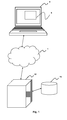
- the figure 1 schematically represents a telecommunication system implementing a wiki site according to the state of the art.
- the web pages to be displayed include static information: texts, images, graphics, etc.) which are intended to be displayed on the terminal 5 so that the user can consult them. These pages include hyperlinks to trigger the execution of one or more functions for editing the content of a text as well as save the modified text after editing.
- the editing functions can be more or less rich: drop-down menus, toolbar, etc.
- the program instructions are intended to be interpreted and executed by the application of the terminal 5, according to determined actions of the user at the user interface of this application.
- the application of the terminal 5 has a browser-like operation: it displays the web pages received, activates the user's hyperlinks by executing the actions associated with these links and interprets and executes the program instructions.
- the server implements a module for processing published text files.
- the processing module of the server 10 transmits to the browser a page in HTML (HyperText Markup Language) containing the text to edit.
- HTML HyperText Markup Language
- the text is presented to the user in an editable form, that is to say allowing the modification of the alphanumeric content of this text.
- the HTML page also makes it possible to carry out formatting operations of the text (font to be used, format of the paragraphs, etc.).
- the alphanumeric content (unformatted content) entered by the user, with any formatting options required by the user is sent to the processing module 10 following an action by the user to validate his input.
- the server processing module 10 then generates an HTML page containing the text as modified by the user and formatted in accordance with the formatting options required by this user, in order to transmit this page to a terminal when a connection to the Wiki site.
- This HTML page is also transmitted to the terminal of the user having requested its modification so that it can view the result of the modifications made to this text, and if necessary, require a new modification of this content or the formatting of the text.
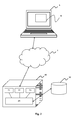
- the figure 2 schematically represents a telecommunication system implementing one or more Wiki sites according to the invention.
- the navigation application 6 includes basic communications functions of a web browser: it sends requests to the server 20 and receives a web page to interpret and display on the terminal 5. In the following description, one assumes that the application 6 is a web browser. The application 6 is also designed to interpret and execute program code instructions received from a server.
- the invention provides an object editing mechanism applicable to different categories of objects.
- the server 20 comprises a plurality of processing modules 21 to 23, each processing module being associated with an editable object category and being designed to process the data exchanges between the server 20 and the browser 6 that are carried out. when editing and / or consulting an object belonging to this category.
- the database 30 is adapted to store, for each editable object, a description DDESC of this object in association with a DTYPE identification of the category to which this object belongs.
- the description of an editable object is stored in the database in a description format adapted to each object category.
- the description format preferably consists of a description in text language, for example using the Extensible Mark-up Language (XML).
- XML Extensible Mark-up Language
- Such a description is advantageously usable for different categories of structured objects: not only texts, technical diagrams, but also vector images. Other suitable languages can also be used.
- a navigation application Web browser
- the use of a language that a navigation application (Web browser) is capable of interpreting allows the implementation of the invention without modifying such an application.
- a binary representation format is used and stored in an appropriate file format (JPEG, TIF, WAV. .).
- An XML format including the data of this binary representation is also usable.
- the description stored in the database 30 is a description in XML language.
- a description of this object in a proprietary format is converted into a description in XML, the latter being that stored in the database 30 for publication via the Wiki site.
- each of the modules 21 to 23 is able to convert a description of an object of a given category from the XML format to one or more other formats commonly used for this object category and vice versa.
- the module 21 is associated with the object category comprising the graphic process descriptions conforming to the BPMN (Business Process Modeling Notation) standard, this module is able to convert a BPMN description into an XML description and / or, conversely, a XML description in BPMN description.
- BPMN Business Process Modeling Notation
- These conversion functions can also be activated on request of a user connected to the server 20 to import an object in a proprietary format so that it is registered in the database 30 or, conversely, to export to a proprietary format a stored object. in the database 30, so that it can be edited using a proprietary software of the terminal 5, independent of the navigation application 6.
- the server 20 also comprises a processing module 25, called a common module, serving as an interface between the database 30 and the processing modules 21 to 23, called specific modules, each module being specific to a specific module. editable object category.
- the module 25 is aware of the category of object associated with each of the specific modules, each specific module 21 to 23 being referenced to the common module 25. The common module is thus able to determine which is the appropriate processing module for each object according to the object category to which this object belongs.
- the common module 25 implements the usual functions of managing access to the Wiki site, in particular the reception and processing of access requests to the pages of the site.
- the common module 25 also implements security functions (identification and / or authentication of users in particular) necessary for controlling these accesses.
- the common module receives requests for editing or viewing a DOBJ object from the applications implemented on the terminals.
- the common module is designed to, on receipt of such a request, identify, according to the category of DTYPE object stored in the database 30 in association with a DDESC description of a DOBJ object, what is, among the modules 21 to 23, the processing module adapted to process the data exchanges relating to this object: the identified processing module 21 to 23 is then activated by the common module 25 for the implementation, on the server side, of necessary operations for editing or consulting this object.
- the management of a new editable object category is possible simply by integrating a new processing module, associated with this object category and able to process data exchanges for editing and / or consulting objects. of this category. It is then sufficient for this new module to be referenced to the common module 25 so that the common module can activate the new module in the event of a request relating to an object belonging to the category associated with the new module.
- Each processing module 21 to 23 is designed to implement data processing functions for editing and viewing an object of an object category. Alternatively, two separate modules are provided: the first to implement the functions for editing, the second to implement the functions for viewing an object of this category.
- the DINST program instructions are designed to download from the server 20 and interpret a description DDESC1 of the object DOBJ to edit to produce a graphical representation DREPR1 of said object, intended to be displayed in the user interface of the application 6.
- the DINST program instructions are also designed to implement one or more editing and lookup functions of the object DOBJ, which may cause a modification of the object DOBJ.
- the description DDESC1 of the object DOBJ to be edited is a description in text language (for example XML) or binary code. It is transmitted to the application 6 either in the format (for example XML) in which this description is stored in the database 30, or in an optimized format (for example JSON) allowing a quick interpretation of this description by the application 6.
- the graphic representation DREPR1 of the object obtained after interpretation of the description DDESC1 is combined with the presentation data received from the server to produce the web page that will be displayed in the user interface of the application 6.
- the displayed web page for example, has the appearance of the web page 200B shown in FIG. figure 4 .
- This web page includes at least one user interface element (menu, button, hyperlink, or other) for, in case of an action predefined user on this element, trigger the execution of a process of editing an object shown in this web page 200B.
- menu, button, hyperlink, or other for, in case of an action predefined user on this element, trigger the execution of a process of editing an object shown in this web page 200B.
- the user interface used for editing an object has for example the appearance of the web page 200C shown in FIG. figure 4 It includes menus, buttons, links, or other user interface elements that enable the available editing functions.
- the web page 200C results from a partial local modification of the web page 200B: in this case the DINST program instructions include only the user interface data intended to be interpreted by the browser to modify the page. Web200B as required.
- the editing functions defined in the DINST program instructions are suitable for editing an object of a given category.
- the object of the invention is to propose an editing solution (creation, modification, etc.) of a graphic object, that is to say of the graphic representation of any object (for example , the graphic representation of a sound content).
- This function causes a modification of the graphical representation of the object displayed on the screen, by activating plotting functions ("moveTo”, “lineTo”, “fillStyle” and “fill” functions).
- the DINST program instructions include user interface data defining user interface elements necessary for editing an object. These user interface elements are presented to the user in a web page is displayed by the application 6, so as to respect the browser-specific user interface management mechanism.
- the figure 4 includes a representation of a web page 200C presenting to the user a palette of tools, in the form of icons, menus and buttons, etc., to activate different editing functions of a graphic object.
- the received DINST program instructions and the web page 200C are designed such that the browser triggers the execution of an edit function in the case of user action performed at the user interface on an element graph associated with this function.
- this modification is materialized by displaying in the browser user interface a modified graphic representation of the object as modified.
- the DINST program instructions are designed to manage all the inputs / outputs at the user interface of the application 6: that is to say both the taking into account of the actions of the user (data entry in a text field, activation of particular keys of the keyboard, actions entered by means of a pointing organ of mouse type or other, etc.) that the setting implementing display modifications - in particular of the DREPR1 graphic representation of the object DOBJ - provided in response to these actions. All inputs / outputs are managed by application 6 using the DINST program instructions without the need for another software application.
- the program instructions DINST are designed to, after the execution of at least one editing function having caused at least one modification of the object DOBJ, cause the update by the application 6 of the DREPR1 graphical representation of the object DOBJ as displayed in the user interface of the application 6 on the terminal 5.
- the operation of updating the graphical representation DREPR1 is preferably performed after each execution of a function editing that caused the object to change. This results in a modified graphical representation DREPR2.
- the DINST program instructions are designed to update and / or save the DDESC1 descriptive data of the DOBJ object as modified after editing.
- the update of the descriptive data DDESC1 of the object DOBJ is preferably performed at the request of the user, when the user requests a backup of the object he has just edited, but can also be done automatically and either periodically or at each modification.
- the update is performed by the application 6.
- the program instructions DINST include for this purpose instructions for updating the description DDESC1 of the modified object DOBJ after editing by data conversion. Description of the displayed DREPR2 graphic representation for the modified DOBJ object and generation of modified DDESC2 description data, the DDESC2 data being in the same format as the initial descriptive data DDESC1 (XML format, for example).
- the DINST program instructions also include instructions for transmitting, in accordance with the protocol used during the navigation on the website, to the processing module 21 to 23 considered, the updated descriptive data DDESC2 as generated by the application 6.
- the processing module considered is designed to, on receiving descriptive data DDESC2 of a modified object, transfer these descriptive data DDESC2 received to the common module 25 for updating the descriptive data DDESC1 stored in the database 30, so that these updated data are those transmitted to a terminal during a subsequent request for access to this object issued by this terminal.
- the update is performed by the processing module 21 to 24 of the server 20 which is associated with the object category to which the modified object DOBJ belongs.
- data describing some of the graphic elements constituting the graphic representation DREPR2 of the object DOBJ, as displayed in the user interface of the application 6 after modification of the object DOBJ, are transmitted to the module of treatment considered.
- the coordinates of the arrow drawn are transmitted to the server accompanied by a code identifying the graphic element of "arrow" type and formatting parameters. of this graphic element.
- the data describing the other graphic elements composing the modified graphic representation DREPR2 of the object DOBJ are preferably transmitted simultaneously.
- the processing module under consideration is designed to convert the description data of the modified graphical representation DREPR2 into DDESC2 description data of the object DOBJ.
- the DDESC2 data is also in the same format as the initial descriptive data DDESC1 (XML format, for example)
- the processing module in question is designed to transfer these modified descriptive data DDESC2 to the common module 25 for updating the descriptive data DDESC1 stored in the database 30, so that these updated data are those transmitted to a data module. terminal during a subsequent request for access to this object issued by this terminal.
- any application 6 comprising features of a Web browser may be used to communicate with the server 20 without it being necessary to modify or supplement it with a complementary software module of "plug-in" type.
- the management of the different categories of objects is implemented by the server by means of the modules 21 to 25 and the functions of editing and consulting an object executed by the application are executed from the DINST program instructions received from the processing module 21 to 23 associated with the object category under consideration, without the need to load or install another program or to perform a program. any configuration.
- a software update of the application 6 will be performed from the server 20, by installing an application plug-in 6 or a Flash application allowing the execution of functions. identical to those described for transmitted and interpreted program instructions.
- step 100 a user establishes, between his terminal 5 and the server 20, by means of an application a communication link suitable for browsing the Web, and in particular on the Web site managed by the server 20.
- application is typically an internet browser.
- a web page of a wiki site is displayed in the browser user interface. This page has the example of the appearance of page 200A shown in figure 4 : In the example described here, the page contains a descriptive summary of a process, according to the BPMN standard.
- step 110 the user requests to view a complete graphical representation of the process and click on the descriptive card.
- a new web page having the appearance of page 200B is displayed by the browser from descriptive data in XML language provided by the common module 25 of the server 20 and interpreted by the browser to produce a displayable graphic representation of the process.
- this page contains an expanded graphical representation of the process that conforms to the BPMN standard.
- step 110 the user, by clicking on this graphic representation, requests to edit the graphic object constituted by the developed graphical representation of the process, which causes the sending of an editing request to the common module 25. the server 20.
- step 120 the common module 25 determines from the information stored in the database 30 what is the category of the object for which an edit request has been received and whether there is among the processing modules 21 to 23 a module that is associated with that category of object. If so, step 130 is executed. Otherwise, no processing module for editing this category of object is available, step 125 is executed.
- the common module 25 triggers the processing module associated with the category of object to be edited, for example the module 21.
- the module 21 then sends the browser a Web page to display, having the appearance of the page 200C represented at figure 4 and already described, comprising DDESC1 descriptive data of said object, as well as DINST program instructions for execution by the browser of editing functions of the object under consideration, that is to say of the graphic object constituted by the graphical representation of the process.
- step 140 the user proceeds to the editing of the graphic object. Then, when the user has finished editing this graphic object, he clicks on an icon, a menu box or a hyperlink or uses a combination of keyboard keys (for example CTRL-S or ALT-S) for trigger the backup of the graphic object.
- This causes the browser to send to the module 21 descriptive data in XML language of the modified object (either a modified description DDESC2, replacing the description DDESC1, or data describing some of the graphic elements composing the graphical representation DREPR2 of the object DOBJ).
- a new web page is displayed, having the appearance of the page 200B shown in the figure 4 and comprising a representation of the object as modified.
- step 150 the processing module 21, upon receiving the descriptive data of the modified object, transfers them to the common module 25 for archiving in the database 30.
- step 125 executed following step 120, the common module 25 returns a response in the form of a web page including information as to the impossibility of editing the object in the browser and proposing to the user to download a description file of this object. If the user agrees a description, not in XML, but in a file format, specific to the category of object to which this object belongs, is offered for download.
- the user can then modify this file if he has the appropriate software and proceed to update the Wiki site by uploading to the Wiki site of the modified file.
- the associated module Upon receipt of the file modified by the server 20, the associated module performs the reverse conversion, that is to say from the format specific to the object category to the XML format for updating the database 30 with a description modified in XML format.
- Step 110 is executed again after step 125 or after step 150, with steps 110 through 150 being repeated for each request to edit an object.
- the invention is applicable both to the updating of an existing object and the creation of a new object: in the latter case the object edited according to the invention is a "blank" object or a new object created from an object model, according to the known logic for the creation of a new document.
Landscapes
- Engineering & Computer Science (AREA)
- Databases & Information Systems (AREA)
- Theoretical Computer Science (AREA)
- Data Mining & Analysis (AREA)
- Physics & Mathematics (AREA)
- General Engineering & Computer Science (AREA)
- General Physics & Mathematics (AREA)
- Information Transfer Between Computers (AREA)
Abstract
Description
- L'invention concerne le domaine des télécommunications et plus particulièrement, un procédé et dispositif d'édition d'un objet représenté dans une page Web accessible via une application cliente connectée à un serveur.
- Avec l'apparition des technologies dites Web 2.0, les internautes deviennent actifs sur l'Internet, en ce qu'ils sont susceptible de contribuer, grâce à des outils logiciels appropriés, à l'enrichissement d'un contenu accessible via les sites Internet.
- Un "Wiki" est une page Web éditable. Un site Wiki comprend au moins une page Web éditable. Un logiciel Wiki permet aux utilisateurs de créer, modifier, supprimer et publier le contenu d'un article sous forme de texte et de rajouter des liens vers d'autres articles pertinents. Ce logiciel permet donc aux internautes de collaborer à l'écriture d'un texte.
- Avec les logiciels Wiki disponibles, il est également possible de créer ou modifier un tableau comprenant du texte ou d'enrichir le contenu par insertion d'une image ou objet graphique (par exemple diagramme, image vectorielle, représentation graphique d'un contenu sonore, etc) ou insertion d'un lien hypertexte vers un tel objet.
- S'il est aussi possible de faire référence à un objet graphique, il n'est cependant pas possible de modifier un tel objet graphique au moyen d'un simple navigateur Internet: la seule solution consiste à enregistrer une version de cet objet graphique, de la modifier au moyen d'un outil logiciel adapté au format de fichier utilisé pour représenter cet objet, d'enregistrer cet objet graphique après modification puis de mettre à jour le site Wiki par téléchargement de l'objet graphique modifié. Ces opérations sont donc fastidieuses et souvent mal maîtrisées par un utilisateur non averti.
- En outre, cette solution ne fonctionne que si le terminal de l'utilisateur est équipé d'un logiciel permettant d'éditer l'objet graphique dans le format dans lequel il est disponible.
- Il apparaît donc un besoin pour une solution technique permettant aux membres d'une communauté de partager des pages via un site Wiki, avec possibilités de création, édition, gestion et publication d'un objet multimédia contenu dans ces pages, notamment d'un objet graphique.
- Un des buts de l'invention est de remédier à des problèmes et inconvénients de l'état de la technique et/ou d'y apporter des améliorations.
- L'invention concerne un procédé d'édition d'un objet représenté dans une page d'un site Web, le procédé comprenant,
- une étape d'établissement, entre un serveur et une application mise en oeuvre par un terminal, d'une liaison de communication pour une navigation sur ledit site Web,
- une étape d'envoi, par le serveur à destination de ladite application, via ladite liaison,
- de premières données de description dudit objet pour un affichage d'une représentation graphique dudit objet dans une interface utilisateur de ladite application et
- d'un jeu d'instructions de programme, propre à une catégorie d'objet à laquelle ledit objet appartient, lesdites instructions étant conçues pour une exécution par ladite application de fonctions d'édition de ladite représentation graphique.
- Selon l'invention, des fonctions d'éditions propres à une catégorie d'objet sont conçues pour l'édition d'un objet multimédia appartenant à cette catégorie de manière à pouvoir être exécutée par l'application utilisée pour naviguer sur le site Web. En outre, les données sont transmises à travers la liaison établie pour naviguer sur le site Web.
- Les instructions étant conçues pour être exécutées par ladite application, le processus d'édition d'un objet à partir de sa représentation graphique peut être entièrement intégré dans une application de navigation, de type navigateur Web, notamment en respectant les mécanismes de requêtes et protocoles de communication propres à ce type d'application.
- Selon un mode de réalisation, le procédé selon l'invention comprend une étape de réception via ladite liaison, par le serveur en provenance de l'application, de deuxièmes données de description relatives audit objet et générées au moyen desdites instructions de programme suite à une exécution d'au moins une fonction d'édition dudit objet déclenchée par un utilisateur dudit terminal. De cette manière, une mise à jour d'une description de l'objet mémorisée par ledit serveur est prise en charge par l'application et ne nécessite pas d'intervention de l'utilisateur.
- Selon un mode de réalisation, le procédé selon l'invention comprend une étape d'identification d'une catégorie d'objet à laquelle ledit objet appartient à partir d'une identification de catégorie mémorisée en association avec lesdites données descriptives, un jeu d'instructions de programme propre à la catégorie d'objet identifiée étant transmis lors de ladite étape d'envoi.
- La prise en compte et la gestion, par le serveur, de la catégorie d'un objet permet de traiter chaque catégorie d'objet de manière adaptée à cette catégorie; en particulier le jeu d'instructions de programmes transmis est propre à une catégorie d'objet et ainsi conçu pour permettre l'édition d'un objet de cette catégorie. Il n'est donc pas nécessaire que l'utilisateur recherche par lui-même un logiciel capable d'éditer un tel objet: les fonctions d'éditions sont automatiquement sélectionnées et fournies par le serveur sur la base de la catégorie d'objet mémorisée.
- L'invention concerne également un serveur pour la mise en oeuvre d'un procédé d'édition d'un objet représenté dans une page d'un site Web, le serveur comprenant:
- des moyens d'établissement, avec une application mise en oeuvre par un terminal, d'une liaison de communication pour une navigation sur ledit site Web,
- des moyens d'envoi à l'application, via ladite liaison,
- de premières données de description dudit objet pour un affichage d'une représentation graphique dudit objet dans une interface utilisateur de ladite application et
- d'un jeu d'instructions de programme, propre à une catégorie d'objet à laquelle ledit objet appartient, lesdites instructions étant conçues pour une exécution par ladite application de fonctions d'édition de ladite représentation graphique,
- Les avantages énoncés pour le procédé selon l'invention sont transposables directement au dispositif selon l'invention.
- L'invention concerne également un procédé d'édition d'un objet représenté dans une page d'un site Web, le procédé comprenant,
- une étape d'établissement, entre un serveur et une application mise en oeuvre par un terminal, d'une liaison de communication pour une navigation sur ledit site Web,
- une étape d'envoi, par le serveur à destination de ladite application, via ladite liaison,
- de premières données de description dudit objet pour un affichage d'une représentation dudit objet dans une interface utilisateur de ladite application et
- d'un jeu d'instructions de programme, propre à une catégorie d'objet à laquelle ledit objet appartient, lesdites instructions étant conçues pour une exécution par ladite application de fonctions d'édition dudit objet entrainant une modification de ladite représentation,
- une étape de réception via ladite liaison, par le serveur en provenance de l'application, de deuxièmes données de description relatives audit objet et générées au moyen desdites instructions de programme suite à une exécution d'au moins une fonction d'édition dudit objet déclenchée par un utilisateur dudit terminal.
- Selon une implémentation préférée, les différentes étapes du procédé selon l'invention sont mises en oeuvre par un logiciel ou programme d'ordinateur, ce logiciel comprenant des instructions logicielles destinées à être exécutées par un processeur de données d'un dispositif selon l'invention et étant conçu pour commander l'exécution des différentes étapes de ce procédé.
- En conséquence, l'invention vise aussi un programme, susceptible d'être exécuté par un ordinateur ou par un processeur de données, ce programme comportant des instructions pour commander l'exécution des étapes d'un procédé tel que mentionné ci-dessus.
- Ce programme peut utiliser n'importe quel langage de programmation, et être sous la forme de code source, code objet, ou de code intermédiaire entre code source et code objet, tel que dans une forme partiellement compilée, ou dans n'importe quelle autre forme souhaitable.
- L'invention vise aussi un support d'informations lisible par un ordinateur ou processeur de données, et comportant des instructions d'un programme tel que mentionné ci-dessus.
- Le support d'informations peut être n'importe quelle entité ou dispositif capable de stocker le programme. Par exemple, le support peut comporter un moyen de stockage, tel qu'une ROM, par exemple un CD ROM ou une ROM de circuit microélectronique, ou encore un moyen d'enregistrement magnétique, par exemple une disquette (floppy disc) ou un disque dur.
- D'autre part, le support d'informations peut être un support transmissible tel qu'un signal électrique ou optique, qui peut être acheminé via un câble électrique ou optique, par radio ou par d'autres moyens. Le programme selon l'invention peut être en particulier téléchargé sur un réseau de type Internet.
- Alternativement, le support d'informations peut être un circuit intégré dans lequel le programme est incorporé, le circuit étant adapté pour exécuter ou pour être utilisé dans l'exécution du procédé en question.
- Selon une autre implémentation, l'invention est mise en oeuvre au moyen de composants logiciels et/ou matériels. Dans cette optique, le terme module peut correspondre dans ce document aussi bien à un composant logiciel qu'à un composant matériel ou encore à un composant matériel programmable, avec ou sans processeur intégré. Un composant logiciel correspond à un ou plusieurs programmes d'ordinateur, un ou plusieurs sous-programmes d'un programme, ou de manière plus générale à tout élément d'un programme ou d'un logiciel apte à mettre en oeuvre une fonction ou un ensemble de fonctions, selon ce qui est décrit pour le module concerné. De la même manière, un composant matériel correspond à tout élément d'un ensemble matériel (ou hardware) apte à mettre en oeuvre une fonction ou un ensemble de fonctions, selon ce qui est décrit pour le module concerné.
- D'autres buts, caractéristiques et avantages de l'invention apparaîtront à travers la description qui va suivre, donnée uniquement à titre d'exemple non limitatif, et faite par référence aux dessins annexés dans lesquels:
- la
figure 1 représente de manière schématique un système d'édition d'un objet de type texte connu dans l'état de la technique; - la
figure 2 représente de manière schématique un système d'édition d'objet intégrant un dispositif selon l'invention; - la
figure 3 représente un organigramme d'un mode de réalisation d'un procédé selon l'invention; - la
figure 4 représente des interfaces utilisateurs utilisées dans un mode de réalisation du procédé selon l'invention. - La
figure 1 représente de manière schématique un système de télécommunication mettant en oeuvre un site Wiki selon l'état de la technique. - Ce système comprend:
- un serveur 10,
- une base de données 15 associée au serveur,
- un terminal 5, comprenant une application de communication apte à établir une connexion avec le serveur 10.
- Après établissement d'une connexion entre le terminal 5 et le serveur 10 et réception d'une requête d'édition d'un contenu accessible via ce serveur, le serveur 10 envoie à l'application:
- des données de présentation, comprenant une représentation au format HTML d'une page Web, ces données étant destinées à être interprétées par l'application de communication du terminal 5 afin d'afficher cette page Web dans l'interface utilisateur de cette application,
- des instructions de programme (par exemple en langage JavaScript)
- ainsi que des données décrivant la mise en forme des pages Web à afficher (par exemple au format CSS, Cascading Style Sheets).
- Les pages Web à afficher comprennent des informations statiques : textes, images, graphique, etc) qui sont destinées à être affichées sur le terminal 5 afin que l'utilisateur puisse les consulter. Ces pages comprennent des liens hypertexte permettant de déclencher l'exécution d'une ou de plusieurs fonctions d'édition du contenu d'un texte ainsi que de sauvegarder le texte modifié après édition. Les fonctions d'édition peuvent être plus ou moins riches: menus déroulants, barre d'outils, etc.
- Les instructions de programme sont destinées à être interprétées et exécutées par l'application du terminal 5, en fonction d'actions déterminées de l'utilisateur au niveau de l'interface utilisateur de cette application.
- L'application du terminal 5 présente un fonctionnement de type navigateur : elle affiche les pages Web reçues, active sur commande de l'utilisateur les liens hypertexte en exécutant les actions associées à ces liens et interprète et exécute les instructions de programme.
- Le serveur met en oeuvre un module de traitement des fichiers textes publiés. Sur requête d'édition d'un texte en provenance d'un terminal d'un utilisateur, le module de traitement du serveur 10 transmet au navigateur une page au format HTML (HyperTexte Markup Language) contenant le texte à éditer. Le texte est présenté à l'utilisateur sous une forme éditable, c'est-à-dire permettant la modification du contenu alphanumérique de ce texte. Selon les modes de réalisation, la page HTML permet également d'effectuer des opérations de formatage du texte (police de caractères à utiliser, format des paragraphes, etc). Le contenu alphanumérique (contenu non formaté) saisi par l'utilisateur, avec les éventuelles options de mise en forme requises par l'utilisateur, est envoyé au module 10 de traitement suite à une action de l'utilisateur pour valider sa saisie.
- Le module de traitement du serveur 10 génère ensuite une page HTML contenant le texte tel que modifié par l'utilisateur et mis en forme conformément aux options de mise en forme requises par cet utilisateur, en vue de la transmission de cette page à un terminal lors d'une connexion au site Wiki. Cette page HTML est également transmise au terminal de l'utilisateur ayant requis sa modification de manière à ce qu'il puisse visualiser le résultat des modifications apportées à ce texte, et le cas échéant, requérir une nouvelle modification de ce contenu ou du formatage du texte.
- La
figure 2 représente de manière schématique un système de télécommunication mettant en oeuvre un ou plusieurs sites Wiki selon l'invention. - Ce système comprend:
- un réseau 1;
- un serveur 20;
- une base de données 30 associée au serveur et gérée par ce serveur 20;
- un terminal 5, comprenant une application 6 de navigation apte à établir une connexion avec le serveur 20 à travers le réseau 1.
- L'application 6 de navigation comprend des fonctionnalités de communication de base d'un navigateur Web: elle envoie des requêtes au serveur 20 et reçoit en retour une page Web à interpréter et afficher sur le terminal 5. Dans la suite de la description, on suppose que l'application 6 est un navigateur Web. L'application 6 est également conçue pour interpréter et exécuter des instructions de code de programme reçue en provenance d'un serveur.
- L'invention propose un mécanisme d'édition d'objet applicable à différentes catégories d'objet. Le serveur 20 comprend dans ce but une pluralité de modules de traitement 21 à 23, chaque module de traitement étant associé à une catégorie d'objet éditable et étant conçu pour traiter les échanges de données entre le serveur 20 et le navigateur 6 qui sont effectués lors d'opérations d'édition et/ou de consultation d'un objet appartenant à cette catégorie.
- Une catégorie de contenu est identifiée par exemple au moyen du standard MIME (Multipurpose Internet Mail Extensions). Ce standard définit des types d'objets (texte, image, graphique, application, ...) et des sous-types pour chaque type d'objet, un sous-type correspondant le plus souvent à un format particulier de représentation de ce type d'objet. Par exemple:
- lorsqu'un objet de type texte est au format texte brut (i.e. format alphanumérique), sa catégorie selon le standard MIME est "text/plain";
- lorsqu'un objet de type texte est au format HTML, sa catégorie selon le standard MIME est "text/html";
- lorsqu'un objet de type son est au format "Wav", sa catégorie selon le standard MIME est "audio/wav";
- lorsqu'un objet de type son est au format " MP3", sa catégorie selon le standard MIME est "audio/mpeg";
- lorsqu'un objet de graphique est au format BPMN, sa catégorie selon le standard MIME est par exemple nommée "application/processpedia", afin d'indiquer l'utilisation d'un format de description propriétaire basé sur XML;
- etc.
- La base de données 30 est conçue pour mémoriser, pour chaque objet éditable, une description DDESC de cet objet en association avec une identification DTYPE de la catégorie à laquelle appartient cet objet.
- La description d'un objet éditable est stockée dans la base de données sous un format de description adapté à chaque catégorie d'objet.
- Dans le cas d'un objet structuré (un objet ayant une structure, par exemple un diagramme connectant différents éléments graphiques entre eux: un organigramme ou schéma d'architecture ou schéma relationnel entre entités, etc), le format de description consiste de préférence en une description en langage texte, faite par exemple au moyen du langage XML (Extensible Mark-up Langage). Une telle description est avantageusement utilisable pour différentes catégories d'objets structurés: non seulement des textes, diagrammes techniques, mais également des images vectorielles. D'autres langages appropriés sont également utilisables. Avantageusement, l'utilisation d'un langage qu'une application de navigation (navigateur Web) est capable d'interpréter permet de mettre en oeuvre l'invention sans modifier une telle application.
- Dans le cas d'un objet non structuré, par exemple dans le cas d'un contenu audio ou d'une image pixel, un format de représentation binaire est utilisé et stocké dans un format de fichier approprié (JPEG, TIF, WAV...). Un format XML comprenant les données de cette représentation binaire est également utilisable.
- On suppose que la description stockée dans la base de données 30 est une description en language XML. Lorsque, pour un objet structuré à intégrer dans un site Wiki, aucune représentation en langage XML n'est disponible, une description de cet objet sous un format propriétaire est convertie en description en langage XML, cette dernière étant celle stockée en base de données 30 pour publication via le site Wiki.
- Dans ce but, chacun des modules 21 à 23 est apte à convertir une description d'un objet d'une catégorie donnée, du format XML vers un ou plusieurs autres formats couramment utilisés pour cette catégorie d'objet et vice-versa.
- Si par exemple le module 21 est associé à la catégorie d'objet comprenant les descriptions graphiques de processus conformes au standard BPMN (Business Process Modeling Notation), ce module est apte à convertir une description BPMN en description XML et/ou, inversement, une description XML en description BPMN.
- Ces fonctions de conversion sont activables également sur requête d'un utilisateur connecté au serveur 20 pour importer un objet sous un format propriétaire afin qu'il soit enregistré dans la base de données 30 ou, inversement, pour exporter vers un format propriétaire un objet stocké dans la base de données 30, afin qu'il soit éditable au moyen d'un logiciel propriétaire du terminal 5, indépendant de l'application de navigation 6.
- Le serveur 20 comprend également un module 25 de traitement, dit module commun, servant d'interface entre la base de données 30 et les modules de traitement 21 à 23, dits modules spécifiques, chaque module étant propre à une catégorie d'objet éditable. Le module 25 a connaissance de la catégorie d'objet associée à chacun des modules spécifiques, chaque module spécifique 21 à 23 étant référencé auprès du module commun 25. Le module commun est ainsi en mesure de déterminer quel est le module de traitement approprié pour chaque objet selon la catégorie d'objet à laquelle cet objet appartient.
- Le module commun 25 met en oeuvre les fonctions usuelles de gestion d'accès au site Wiki, notamment la réception et le traitement des requêtes d'accès aux pages du site. Le module commun 25 met également en oeuvre des fonctions de sécurité (identification et/ou authentification des utilisateurs notamment) nécessaires au contrôle de ces accès.
- En outre, le module commun selon l'invention reçoit les requêtes d'édition ou de consultation d'un objet DOBJ en provenance des applications mises en oeuvre sur les terminaux. Le module commun est conçu pour, en cas de réception d'une telle requête, identifier, en fonction de la catégorie d'objet DTYPE enregistré dans la base de données 30 en association avec une description DDESC d'un objet DOBJ, quel est, parmi les modules 21 à 23, le module de traitement apte à traiter les échanges de données concernant cet objet: le module de traitement 21 à 23 identifié est alors activé par le module commun 25 en vue de la mise en oeuvre, côté serveur, des opérations nécessaires à l'édition ou la consultation de cet objet.
- La gestion d'une nouvelle catégorie d'objet éditable est possible simplement par intégration d'un nouveau module de traitement, associé à cette catégorie d'objet et apte à traiter les échanges de données pour l'édition et/ou la consultation des objets de cette catégorie. Il suffit alors que ce nouveau module soit référencé auprès du module commun 25 pour que le module commun puisse activer le nouveau module en cas de requête relative à un objet appartenant à la catégorie associée au nouveau module.
- Chaque module de traitement 21 à 23 est conçu pour mettre en oeuvre des fonctions de traitement de données permettant l'édition et la consultation d'un objet d'une catégorie d'objet. En alternative, deux modules distincts sont prévus: le premier pour mettre en oeuvre les fonctions permettant l'édition, le deuxième pour mettre en oeuvre les fonctions permettant la consultation d'un objet de cette catégorie.
- Ces fonctions de traitement sont mises en oeuvre de la manière décrite ci-dessous.
- Après établissement d'une connexion entre le terminal 5 et le serveur 20 et réception d'une requête d'édition ou de consultation d'un objet DOBJ d'une catégorie DTYPE accessible via ce serveur, le module de traitement 21 à 23 associé à la catégorie DTYPE est activé par le module commun. Le module de traitement 21 à 23 est alors conçu pour envoyer à l'application, conformément au protocole utilisé lors de la navigation sur le site Web, les données suivantes:
- des données de présentation, comprenant une représentation au format HTML d'une page Web;
- des données (par exemple au format CSS) définissant une mise en forme de page Web à appliquer lors de l'affichage de la page Web fournie; et
- des instructions de programme DINST (par exemple au format JavaScript) destinées à être interprétées et exécutées par ladite application 6.
- Les instructions de programme DINST sont conçues pour télécharger à partir du serveur 20 et interpréter une description DDESC1 de l'objet DOBJ à éditer pour produire une représentation graphique DREPR1 dudit objet, destinée à être affichée dans l'interface utilisateur de l'application 6.
- Les instructions de programme DINST sont également conçues pour mettre en oeuvre une ou plusieurs fonctions d'édition et de consultation de l'objet DOBJ, susceptibles d'entraîner une modification de l'objet DOBJ.
- La description DDESC1 de l'objet DOBJ à éditer est une description en langage texte (par exemple XML) ou bien code binaire. Elle est transmise à l'application 6 soit dans le format (par exemple XML) dans laquelle cette description est stockée dans la base de données 30, soit dans un format optimisé (par exemple JSON) permettant une interprétation rapide de cette description par l'application 6. La représentation graphique DREPR1 de l'objet obtenue après interprétation de la description DDESC1 est combinée aux données de présentation reçues du serveur afin de produire la page Web qui sera affichée dans l'interface utilisateur de l'application 6.
- La page Web affichée a par exemple l'apparence de la page Web 200B représentée à la
figure 4 . Cette page Web comprend au moins un élément d'interface utilisateur (menu, bouton, lien hypertexte ou autre) pour, en cas d'action prédéfinie de l'utilisateur sur cet élément, déclencher l'exécution d'un processus d'édition d'un objet représenté dans cette page Web 200B. - Les éléments d'interface utilisateur permettant l'édition d'un objet proviennent de deux sources possibles :
- soit ils sont créés au moyen des instructions de programme DINST, qui, dans ce cas comprennent des instructions de création d'éléments d'interface utilisateur,
- soit les données de présentation initialement reçues du serveur comprennent des données destinées à être interprétées par le navigateur pour présenter à l'utilisateur ces éléments d'interface utilisateur.
- L'interface utilisateur utilisée pour l'édition d'un objet a par exemple l'apparence de la page Web 200C représentée à la
figure 4 : elle comprend des menus, boutons, liens ou autres éléments d'interface utilisateur permettant l'activation des fonctions d'édition disponibles. - Selon un mode de réalisation, la page Web 200C résulte d'une modification partielle locale de la page Web 200B : dans ce cas les instructions de programme DINST comprennent uniquement les données d'interface utilisateur destinées à être interprétées par le navigateur pour modifier la page Web200B de la manière requise.
- Les fonctions d'édition définies dans les instructions de programme DINST sont adaptées à l'édition d'un objet d'une catégorie donnée. Comme indiqué en introduction, l'invention a pour but de proposer une solution d'édition (création, modification, etc) d'un objet graphique, c'est-à-dire de la représentation graphique d'un objet quelconque (par exemple, la représentation graphique d'un contenu sonore).
- Par exemple, lorsque l'objet est un diagramme représentant sous forme graphique un processus technique, les fonctions d'édition incluses dans les instructions de programme DINST transmises par le module de traitement correspondant sont par exemple:
- des fonctions de dessin de nouveaux éléments graphiques du diagramme;
- des fonctions d'édition d'un élément graphique du diagramme, par exemple changement de la forme de cet élément, de sa taille, de sa couleur;
- des fonctions de déplacement ou de suppression d'un élément graphique du diagramme;
- des fonctions d'ajout de texte ou de correction d'un texte associé à un élément graphique du diagramme;
- des fonctions d'ajout de texte ou de correction d'un texte associé au diagramme, par exemple de sa version;
- etc;
- Dans le cas d'exemple d'un objet sous forme de diagramme représentatif d'un processus technique (au format BPMN, par exemple), une fonction de dessin d'un élément est par exemple le tracé d'une flèche entre deux points du diagramme. Les instructions de programme DINST correspondantes sont par exemple les suivantes (cas du langage JavaScript):
            {
           var canvas = document.createElement('canvas');
           if (canvas.getContext){
              var ctx=canvas.getContext("2d");
              //first part
              ctx.beginPath();
              ctx.moveTo(mx,y1);
              ctx.lineTo(mx+thickness,y1);
              ctx.lineTo(mx+thickness,y2+20);
              ctx.lineTo(mx,y2+20);
              ctx.fillStyle = color;
              ctx.fill();
              // Arrow
              ctx.moveTo(mx+(thickness/2),y2-thickness);
              ctx.lineTo(mx+(thickness/2)+(3+thickness),y2+20);
              ctx.lineTo(mx+(thickness/2)-(3+thickness),y2+20);
              ctx.fillStyle = color;
              ctx.fill();
           }
- des fonctions de création de nouveaux éléments graphiques de la représentation graphique;
- des fonctions d'édition d'un élément graphique de la représentation graphique, par exemple changement de la forme de cet élément, de sa taille, de sa couleur;
- des fonctions de déplacement ou de suppression d'un élément graphique de de la représentation graphique;
- des fonctions d'ajout de texte ou de correction d'un texte associé à un élément graphique de la représentation graphique;
- des fonctions d'ajout de texte ou de correction d'un texte associé à la représentation graphique, par exemple de sa version;
- etc;
- une composition collaborative d'un objet graphique représentant une partition musicale, chaque utilisateur compositeur pouvant modifier les éléments graphiques de cette partition (note, clef, accord...) et sauvegarder la nouvelle partition graphique au sein de l'espace de stockage associé à un site Wiki;
- une édition d'un document technique comprenant un diagramme conforme à BPMN, UML ou autre standard de description de processus;
- une édition partagée d'un objet graphique représentant une carte routière par différents acteurs ayant accès à des informations sur un des lieux géographiques représentés par cette carte.
Claims (12)
- Procédé d'édition d'un objet (DOBJT) représenté dans une page d'un site Web, le procédé comprenant,- une étape d'établissement, entre un serveur et une application mise en oeuvre par un terminal, d'une liaison de communication pour une navigation sur ledit site Web,- une étape d'envoi, par le serveur à destination de ladite application, via ladite liaison,- de premières données (DDESC1) de description dudit objet pour un affichage d'une représentation graphique (DREPR1) dudit objet dans une interface utilisateur de ladite application et- d'un jeu d'instructions de programme (DINST), propre à une catégorie d'objet à laquelle ledit objet appartient, lesdites instructions étant conçues pour une exécution par ladite application de fonctions d'édition de ladite représentation graphique,
- Procédé selon la revendication 1, comprenant une étape de réception via ladite liaison, par le serveur en provenance de l'application, de deuxièmes données de description relatives audit objet et générées au moyen desdites instructions de programme suite à une exécution d'au moins une fonction d'édition dudit objet déclenchée par un utilisateur dudit terminal.
- Procédé selon la revendication 1, dans lequel les deuxièmes données de description sont des données de description (DDESC2) dudit objet ou des données de description d'éléments graphiques constituant la représentation (DREPR2) dudit objet.
- Procédé selon la revendication 1, comprenant- une étape de stockage de données descriptives dudit objet, destinées à être transmises à un terminal requérant un affichage d'une page Web comprenant une représentation dudit objet,- une étape de mise à jour, des données descriptives stockées par ledit serveur à partir des deuxièmes données de description.
- Procédé selon la revendication 1, comprenant une étape d'identification d'une catégorie d'objet à laquelle ledit objet appartient à partir d'une identification de catégorie mémorisée par ledit serveur en association avec des données de description dudit objet, un jeu d'instructions de programme propre à la catégorie d'objet identifiée étant transmis lors de ladite étape d'envoi.
- Procédé selon la revendication 1, dans lequel lesdites premières données de description sont dans un format interprétable par une application convenant pour une navigation sur le Web.
- Serveur (20) pour la mise en oeuvre d'un procédé d'édition d'un objet (DOBJT) représenté dans une page d'un site Web, le serveur comprenant:- des moyens d'établissement, avec une application mise en oeuvre par un terminal, d'une liaison de communication pour une navigation sur ledit site Web,- des moyens d'envoi à l'application, via ladite liaison,- de premières données (DDESC1) de description dudit objet pour un affichage d'une représentation graphique (DREPR1) dudit objet dans une interface utilisateur de ladite application et- d'un jeu d'instructions de programme (DINST), propre à une catégorie d'objet à laquelle ledit objet appartient, lesdites instructions étant conçues pour une exécution par ladite application de fonctions d'édition de ladite représentation graphique,
- Serveur (20) selon la revendication 7, comprenant des moyens de réception en provenance de l'application, via ladite liaison, de deuxièmes données de description relatives audit objet et générées au moyen desdites instructions de programme suite à une exécution d'au moins une fonction d'édition dudit objet déclenchée par un utilisateur dudit terminal.
- Serveur (20) selon la revendication 7, comprenant- des moyens de stockage de données descriptives (DDESC1) dudit objet destinées à être transmises à un terminal (5) requérant un affichage d'une page Web comprenant une représentation dudit objet,- des moyens de mise à jour, des données descriptives stockées par ledit serveur à partir des deuxièmes données de description reçues.
- Serveur (20) selon la revendication 7, comprenant des moyens d'identification d'une catégorie d'objet à laquelle ledit objet appartient à partir d'une identification de catégorie mémorisée en association avec lesdites données descriptives, un jeu d'instructions de programme propre à la catégorie d'objet identifiée étant transmis par lesdits moyens d'envoi.
- Programme informatique comprenant des instructions logicielles pour la mise en oeuvre d'un procédé selon l'une des revendications 1 à 6 lorsque ledit programme est exécuté par un processeur de données.
- Support d'enregistrement lisible par un processeur de données sur lequel est enregistré un programme comprenant des instructions de code de programme pour l'exécution des étapes d'un procédé selon l'une des revendications 1 à 6.
Applications Claiming Priority (1)
| Application Number | Priority Date | Filing Date | Title |
|---|---|---|---|
| FR0857717 | 2008-11-13 |
Publications (2)
| Publication Number | Publication Date |
|---|---|
| EP2187321A1 true EP2187321A1 (fr) | 2010-05-19 |
| EP2187321B1 EP2187321B1 (fr) | 2018-09-12 |
Family
ID=40591966
Family Applications (1)
| Application Number | Title | Priority Date | Filing Date |
|---|---|---|---|
| EP09175584.3A Active EP2187321B1 (fr) | 2008-11-13 | 2009-11-10 | Procédé et dispositif d'édition d'un objet représenté dans une page web |
Country Status (2)
| Country | Link |
|---|---|
| US (1) | US9075891B2 (fr) |
| EP (1) | EP2187321B1 (fr) |
Families Citing this family (5)
| Publication number | Priority date | Publication date | Assignee | Title |
|---|---|---|---|---|
| US9356991B2 (en) * | 2010-05-10 | 2016-05-31 | Litera Technology Llc | Systems and methods for a bidirectional multi-function communication module |
| US20130179773A1 (en) * | 2011-12-12 | 2013-07-11 | Yu-Tai Lee | Method for online editing and publishing and device thereof |
| JP5982962B2 (ja) | 2012-03-30 | 2016-08-31 | 富士ゼロックス株式会社 | データ処理装置、データ処理システム及びプログラム |
| US20160179767A1 (en) * | 2014-12-22 | 2016-06-23 | Prasanna Bhat Mavinakuli | Architecture for an application with integrated dynamic content |
| US10733562B2 (en) * | 2016-06-03 | 2020-08-04 | Arkadiusz Binder | Method, device, system of model-driven engineering of efficient industrial automation process and business process modeling with BPMN using native computation of XML schemas and objects |
Citations (1)
| Publication number | Priority date | Publication date | Assignee | Title |
|---|---|---|---|---|
| WO2008067621A2 (fr) * | 2006-12-04 | 2008-06-12 | Tassent E. Corporation Belgium Bvba | Procédé et appareil pour représenter la mise en page d'un site internet |
Family Cites Families (12)
| Publication number | Priority date | Publication date | Assignee | Title |
|---|---|---|---|---|
| US6999101B1 (en) * | 2000-06-06 | 2006-02-14 | Microsoft Corporation | System and method for providing vector editing of bitmap images |
| US7197531B2 (en) * | 2000-12-29 | 2007-03-27 | Fotomedia Technologies, Llc | Meta-application architecture for integrating photo-service websites for browser-enabled devices |
| US20030105795A1 (en) * | 2001-11-30 | 2003-06-05 | Anderson Jeff M. | Image editing via batch commands |
| GB2388002B (en) * | 2002-04-26 | 2004-05-12 | Oracle Int Corp | Graphical modelling system |
| FR2860315A1 (fr) * | 2003-09-30 | 2005-04-01 | Canon Kk | Procede et dispositif d'edition de documents graphiques numeriques du type svg notamment a partir d'un butineur |
| US7667862B2 (en) * | 2004-10-05 | 2010-02-23 | Isee Media Inc. | Method and system for streaming images to wireless devices |
| KR101392166B1 (ko) * | 2006-12-18 | 2014-05-08 | 삼성전자주식회사 | 휴대용 디스플레이 장치의 이미지 편집 방법, 편집 이미지생성 방법 및 편집된 이미지 저장 방법 및 장치 |
| US20080209311A1 (en) * | 2006-12-29 | 2008-08-28 | Alex Agronik | On-line digital image editing with wysiwyg transparency |
| JP4521417B2 (ja) * | 2007-03-16 | 2010-08-11 | インターナショナル・ビジネス・マシーンズ・コーポレーション | コンピュータの処理対象のオブジェクトが各ノードを成す、木構造により表現される、構造化電子文書を編集するためのコンピュータプログラム、方法及び装置 |
| JP4085123B1 (ja) * | 2007-03-29 | 2008-05-14 | 株式会社サピエンス | 画像表示更新方法およびサーバ・クライアントシステム並びに描画操作エコーバックスクリプト |
| US9594731B2 (en) * | 2007-06-29 | 2017-03-14 | Microsoft Technology Licensing, Llc | WYSIWYG, browser-based XML editor |
| US20090063998A1 (en) * | 2007-09-05 | 2009-03-05 | Jinchao Huang | Method, system, and program product for collaborative diagram editing |
-
2009
- 2009-11-10 EP EP09175584.3A patent/EP2187321B1/fr active Active
- 2009-11-11 US US12/616,264 patent/US9075891B2/en active Active
Patent Citations (1)
| Publication number | Priority date | Publication date | Assignee | Title |
|---|---|---|---|---|
| WO2008067621A2 (fr) * | 2006-12-04 | 2008-06-12 | Tassent E. Corporation Belgium Bvba | Procédé et appareil pour représenter la mise en page d'un site internet |
Non-Patent Citations (3)
| Title |
|---|
| SABINE CIKIC ET AL: "Concepts for Cooperative Knowledge Spaces in Mathematics and Natural Sciences", CYBERWORLDS, 2006. CW '06. INTERNATIONAL CONFERENCE ON, IEEE, PI, 1 November 2006 (2006-11-01), pages 99 - 106, XP031030565, ISBN: 978-0-7695-2671-3 * |
| YOSHIKI OHSHIMA ET AL.: "TinLizzie WysiWiki and WikiPhone : Alternative approaches to asynchronous and synchronous collaboration en the Web", FIFTH INTERNATIONAL CONFERENCE ON CREATING CONNECTING AND COLLABORATING THROUGH COMPUTING, IEEE, 2007 |
| YOSHIKI OHSHIMA ET AL: "TinLizzieWysiWiki andWikiPhone: Alternative approaches to asynchronous and synchronous collaboration on the Web", CREATING, CONNECTING AND COLLABORATING THROUGH COMPUTING, 2007. C5 &AP OS;07. THE FIFTH INTERNATIONAL CONFERENCE ON, IEEE, PI, 1 January 2007 (2007-01-01), pages 36 - 46, XP002527933, ISBN: 978-0-7695-2806-9 * |
Also Published As
| Publication number | Publication date |
|---|---|
| US20100122188A1 (en) | 2010-05-13 |
| US9075891B2 (en) | 2015-07-07 |
| EP2187321B1 (fr) | 2018-09-12 |
Similar Documents
| Publication | Publication Date | Title |
|---|---|---|
| US11829186B2 (en) | System and methods for integration of an application runtime environment into a user computing environment | |
| US9430193B2 (en) | Interface for a computer platform | |
| US8341531B2 (en) | Content formatting and installation techniques | |
| US7886221B1 (en) | Method and apparatus for storing web site data by web site dimensions and generating a web site having complementary elements | |
| US6697825B1 (en) | Method and apparatus for generating and modifying multiple instances of element of a web site | |
| US8136027B2 (en) | Method and apparatus for providing conditional customization for generating a web site | |
| CN101373431B (zh) | 增强型小组件合成平台 | |
| US20170103050A9 (en) | Method and apparatus for generating a web site with dynamic content data from an external data source integrated therein | |
| WO2002005065A2 (fr) | Systeme et procede pour l'integration de fonctions de reseau en applications de productivite | |
| WO2014160107A2 (fr) | Systèmes et procédés pour créer ou mettre à jour une application à l'aide d'une application préexistante | |
| WO2013140076A2 (fr) | Procede et systeme de developpement d'applications de consultation de contenus et services sur un reseau de telecommunciation | |
| EP2187321B1 (fr) | Procédé et dispositif d'édition d'un objet représenté dans une page web | |
| EP2169569B1 (fr) | Procédé et système de communication entre applications web distinctes | |
| WO2007141446A1 (fr) | Système de gestion d'un service interactif multimodal | |
| US8245221B2 (en) | Content formatting and installation techniques | |
| EP1441294A1 (fr) | Procédé en ligne de publication de documents informatiques sur l'internet | |
| WO2017006066A1 (fr) | Systeme et procede pour l'adaptation d'une interface d'utilisateur |
Legal Events
| Date | Code | Title | Description |
|---|---|---|---|
| PUAI | Public reference made under article 153(3) epc to a published international application that has entered the european phase |
Free format text: ORIGINAL CODE: 0009012 |
|
| AK | Designated contracting states |
Kind code of ref document: A1 Designated state(s): AT BE BG CH CY CZ DE DK EE ES FI FR GB GR HR HU IE IS IT LI LT LU LV MC MK MT NL NO PL PT RO SE SI SK SM TR |
|
| AX | Request for extension of the european patent |
Extension state: AL BA RS |
|
| 17P | Request for examination filed |
Effective date: 20101013 |
|
| 17Q | First examination report despatched |
Effective date: 20101109 |
|
| RAP1 | Party data changed (applicant data changed or rights of an application transferred) |
Owner name: ORANGE |
|
| GRAP | Despatch of communication of intention to grant a patent |
Free format text: ORIGINAL CODE: EPIDOSNIGR1 |
|
| INTG | Intention to grant announced |
Effective date: 20180329 |
|
| GRAJ | Information related to disapproval of communication of intention to grant by the applicant or resumption of examination proceedings by the epo deleted |
Free format text: ORIGINAL CODE: EPIDOSDIGR1 |
|
| GRAR | Information related to intention to grant a patent recorded |
Free format text: ORIGINAL CODE: EPIDOSNIGR71 |
|
| GRAS | Grant fee paid |
Free format text: ORIGINAL CODE: EPIDOSNIGR3 |
|
| INTC | Intention to grant announced (deleted) | ||
| GRAA | (expected) grant |
Free format text: ORIGINAL CODE: 0009210 |
|
| AK | Designated contracting states |
Kind code of ref document: B1 Designated state(s): AT BE BG CH CY CZ DE DK EE ES FI FR GB GR HR HU IE IS IT LI LT LU LV MC MK MT NL NO PL PT RO SE SI SK SM TR |
|
| INTG | Intention to grant announced |
Effective date: 20180807 |
|
| REG | Reference to a national code |
Ref country code: GB Ref legal event code: FG4D Free format text: NOT ENGLISH |
|
| REG | Reference to a national code |
Ref country code: CH Ref legal event code: EP |
|
| REG | Reference to a national code |
Ref country code: IE Ref legal event code: FG4D Free format text: LANGUAGE OF EP DOCUMENT: FRENCH |
|
| REG | Reference to a national code |
Ref country code: DE Ref legal event code: R096 Ref document number: 602009054444 Country of ref document: DE |
|
| REG | Reference to a national code |
Ref country code: AT Ref legal event code: REF Ref document number: 1041422 Country of ref document: AT Kind code of ref document: T Effective date: 20181015 |
|
| REG | Reference to a national code |
Ref country code: FR Ref legal event code: PLFP Year of fee payment: 10 |
|
| REG | Reference to a national code |
Ref country code: DE Ref legal event code: R079 Ref document number: 602009054444 Country of ref document: DE Free format text: PREVIOUS MAIN CLASS: G06F0017300000 Ipc: G06F0016000000 |
|
| REG | Reference to a national code |
Ref country code: NL Ref legal event code: MP Effective date: 20180912 |
|
| REG | Reference to a national code |
Ref country code: LT Ref legal event code: MG4D |
|
| PG25 | Lapsed in a contracting state [announced via postgrant information from national office to epo] |
Ref country code: SE Free format text: LAPSE BECAUSE OF FAILURE TO SUBMIT A TRANSLATION OF THE DESCRIPTION OR TO PAY THE FEE WITHIN THE PRESCRIBED TIME-LIMIT Effective date: 20180912 Ref country code: BG Free format text: LAPSE BECAUSE OF FAILURE TO SUBMIT A TRANSLATION OF THE DESCRIPTION OR TO PAY THE FEE WITHIN THE PRESCRIBED TIME-LIMIT Effective date: 20181212 Ref country code: NO Free format text: LAPSE BECAUSE OF FAILURE TO SUBMIT A TRANSLATION OF THE DESCRIPTION OR TO PAY THE FEE WITHIN THE PRESCRIBED TIME-LIMIT Effective date: 20181212 Ref country code: GR Free format text: LAPSE BECAUSE OF FAILURE TO SUBMIT A TRANSLATION OF THE DESCRIPTION OR TO PAY THE FEE WITHIN THE PRESCRIBED TIME-LIMIT Effective date: 20181213 Ref country code: FI Free format text: LAPSE BECAUSE OF FAILURE TO SUBMIT A TRANSLATION OF THE DESCRIPTION OR TO PAY THE FEE WITHIN THE PRESCRIBED TIME-LIMIT Effective date: 20180912 Ref country code: LT Free format text: LAPSE BECAUSE OF FAILURE TO SUBMIT A TRANSLATION OF THE DESCRIPTION OR TO PAY THE FEE WITHIN THE PRESCRIBED TIME-LIMIT Effective date: 20180912 |
|
| PG25 | Lapsed in a contracting state [announced via postgrant information from national office to epo] |
Ref country code: HR Free format text: LAPSE BECAUSE OF FAILURE TO SUBMIT A TRANSLATION OF THE DESCRIPTION OR TO PAY THE FEE WITHIN THE PRESCRIBED TIME-LIMIT Effective date: 20180912 Ref country code: ES Free format text: LAPSE BECAUSE OF FAILURE TO SUBMIT A TRANSLATION OF THE DESCRIPTION OR TO PAY THE FEE WITHIN THE PRESCRIBED TIME-LIMIT Effective date: 20180912 Ref country code: LV Free format text: LAPSE BECAUSE OF FAILURE TO SUBMIT A TRANSLATION OF THE DESCRIPTION OR TO PAY THE FEE WITHIN THE PRESCRIBED TIME-LIMIT Effective date: 20180912 |
|
| REG | Reference to a national code |
Ref country code: AT Ref legal event code: MK05 Ref document number: 1041422 Country of ref document: AT Kind code of ref document: T Effective date: 20180912 |
|
| PG25 | Lapsed in a contracting state [announced via postgrant information from national office to epo] |
Ref country code: IT Free format text: LAPSE BECAUSE OF FAILURE TO SUBMIT A TRANSLATION OF THE DESCRIPTION OR TO PAY THE FEE WITHIN THE PRESCRIBED TIME-LIMIT Effective date: 20180912 Ref country code: RO Free format text: LAPSE BECAUSE OF FAILURE TO SUBMIT A TRANSLATION OF THE DESCRIPTION OR TO PAY THE FEE WITHIN THE PRESCRIBED TIME-LIMIT Effective date: 20180912 Ref country code: PL Free format text: LAPSE BECAUSE OF FAILURE TO SUBMIT A TRANSLATION OF THE DESCRIPTION OR TO PAY THE FEE WITHIN THE PRESCRIBED TIME-LIMIT Effective date: 20180912 Ref country code: CZ Free format text: LAPSE BECAUSE OF FAILURE TO SUBMIT A TRANSLATION OF THE DESCRIPTION OR TO PAY THE FEE WITHIN THE PRESCRIBED TIME-LIMIT Effective date: 20180912 Ref country code: AT Free format text: LAPSE BECAUSE OF FAILURE TO SUBMIT A TRANSLATION OF THE DESCRIPTION OR TO PAY THE FEE WITHIN THE PRESCRIBED TIME-LIMIT Effective date: 20180912 Ref country code: IS Free format text: LAPSE BECAUSE OF FAILURE TO SUBMIT A TRANSLATION OF THE DESCRIPTION OR TO PAY THE FEE WITHIN THE PRESCRIBED TIME-LIMIT Effective date: 20190112 Ref country code: NL Free format text: LAPSE BECAUSE OF FAILURE TO SUBMIT A TRANSLATION OF THE DESCRIPTION OR TO PAY THE FEE WITHIN THE PRESCRIBED TIME-LIMIT Effective date: 20180912 Ref country code: EE Free format text: LAPSE BECAUSE OF FAILURE TO SUBMIT A TRANSLATION OF THE DESCRIPTION OR TO PAY THE FEE WITHIN THE PRESCRIBED TIME-LIMIT Effective date: 20180912 |
|
| PG25 | Lapsed in a contracting state [announced via postgrant information from national office to epo] |
Ref country code: SK Free format text: LAPSE BECAUSE OF FAILURE TO SUBMIT A TRANSLATION OF THE DESCRIPTION OR TO PAY THE FEE WITHIN THE PRESCRIBED TIME-LIMIT Effective date: 20180912 Ref country code: SM Free format text: LAPSE BECAUSE OF FAILURE TO SUBMIT A TRANSLATION OF THE DESCRIPTION OR TO PAY THE FEE WITHIN THE PRESCRIBED TIME-LIMIT Effective date: 20180912 Ref country code: PT Free format text: LAPSE BECAUSE OF FAILURE TO SUBMIT A TRANSLATION OF THE DESCRIPTION OR TO PAY THE FEE WITHIN THE PRESCRIBED TIME-LIMIT Effective date: 20190112 |
|
| REG | Reference to a national code |
Ref country code: DE Ref legal event code: R097 Ref document number: 602009054444 Country of ref document: DE |
|
| REG | Reference to a national code |
Ref country code: CH Ref legal event code: PL |
|
| PLBE | No opposition filed within time limit |
Free format text: ORIGINAL CODE: 0009261 |
|
| STAA | Information on the status of an ep patent application or granted ep patent |
Free format text: STATUS: NO OPPOSITION FILED WITHIN TIME LIMIT |
|
| PG25 | Lapsed in a contracting state [announced via postgrant information from national office to epo] |
Ref country code: DK Free format text: LAPSE BECAUSE OF FAILURE TO SUBMIT A TRANSLATION OF THE DESCRIPTION OR TO PAY THE FEE WITHIN THE PRESCRIBED TIME-LIMIT Effective date: 20180912 Ref country code: MC Free format text: LAPSE BECAUSE OF FAILURE TO SUBMIT A TRANSLATION OF THE DESCRIPTION OR TO PAY THE FEE WITHIN THE PRESCRIBED TIME-LIMIT Effective date: 20180912 Ref country code: LU Free format text: LAPSE BECAUSE OF NON-PAYMENT OF DUE FEES Effective date: 20181110 |
|
| REG | Reference to a national code |
Ref country code: BE Ref legal event code: MM Effective date: 20181130 |
|
| 26N | No opposition filed |
Effective date: 20190613 |
|
| REG | Reference to a national code |
Ref country code: IE Ref legal event code: MM4A |
|
| PG25 | Lapsed in a contracting state [announced via postgrant information from national office to epo] |
Ref country code: LI Free format text: LAPSE BECAUSE OF NON-PAYMENT OF DUE FEES Effective date: 20181130 Ref country code: CH Free format text: LAPSE BECAUSE OF NON-PAYMENT OF DUE FEES Effective date: 20181130 Ref country code: SI Free format text: LAPSE BECAUSE OF FAILURE TO SUBMIT A TRANSLATION OF THE DESCRIPTION OR TO PAY THE FEE WITHIN THE PRESCRIBED TIME-LIMIT Effective date: 20180912 |
|
| PG25 | Lapsed in a contracting state [announced via postgrant information from national office to epo] |
Ref country code: IE Free format text: LAPSE BECAUSE OF NON-PAYMENT OF DUE FEES Effective date: 20181110 |
|
| PG25 | Lapsed in a contracting state [announced via postgrant information from national office to epo] |
Ref country code: BE Free format text: LAPSE BECAUSE OF NON-PAYMENT OF DUE FEES Effective date: 20181130 |
|
| PG25 | Lapsed in a contracting state [announced via postgrant information from national office to epo] |
Ref country code: MT Free format text: LAPSE BECAUSE OF FAILURE TO SUBMIT A TRANSLATION OF THE DESCRIPTION OR TO PAY THE FEE WITHIN THE PRESCRIBED TIME-LIMIT Effective date: 20180912 |
|
| PG25 | Lapsed in a contracting state [announced via postgrant information from national office to epo] |
Ref country code: TR Free format text: LAPSE BECAUSE OF FAILURE TO SUBMIT A TRANSLATION OF THE DESCRIPTION OR TO PAY THE FEE WITHIN THE PRESCRIBED TIME-LIMIT Effective date: 20180912 |
|
| PG25 | Lapsed in a contracting state [announced via postgrant information from national office to epo] |
Ref country code: MK Free format text: LAPSE BECAUSE OF NON-PAYMENT OF DUE FEES Effective date: 20180912 Ref country code: CY Free format text: LAPSE BECAUSE OF FAILURE TO SUBMIT A TRANSLATION OF THE DESCRIPTION OR TO PAY THE FEE WITHIN THE PRESCRIBED TIME-LIMIT Effective date: 20180912 Ref country code: HU Free format text: LAPSE BECAUSE OF FAILURE TO SUBMIT A TRANSLATION OF THE DESCRIPTION OR TO PAY THE FEE WITHIN THE PRESCRIBED TIME-LIMIT; INVALID AB INITIO Effective date: 20091110 |
|
| PGFP | Annual fee paid to national office [announced via postgrant information from national office to epo] |
Ref country code: DE Payment date: 20251022 Year of fee payment: 17 |
|
| PGFP | Annual fee paid to national office [announced via postgrant information from national office to epo] |
Ref country code: GB Payment date: 20251023 Year of fee payment: 17 |
|
| PGFP | Annual fee paid to national office [announced via postgrant information from national office to epo] |
Ref country code: FR Payment date: 20251022 Year of fee payment: 17 |