EP2186915A1 - Method and kit for detecting genetic predisposition for crooked tail syndrome (CTS) in bovine individuals - Google Patents
Method and kit for detecting genetic predisposition for crooked tail syndrome (CTS) in bovine individuals Download PDFInfo
- Publication number
- EP2186915A1 EP2186915A1 EP08168537A EP08168537A EP2186915A1 EP 2186915 A1 EP2186915 A1 EP 2186915A1 EP 08168537 A EP08168537 A EP 08168537A EP 08168537 A EP08168537 A EP 08168537A EP 2186915 A1 EP2186915 A1 EP 2186915A1
- Authority
- EP
- European Patent Office
- Prior art keywords
- sequence
- mrc2
- seq
- gene
- cts
- Prior art date
- Legal status (The legal status is an assumption and is not a legal conclusion. Google has not performed a legal analysis and makes no representation as to the accuracy of the status listed.)
- Granted
Links
- 241000283690 Bos taurus Species 0.000 title claims abstract description 47
- 238000000034 method Methods 0.000 title claims abstract description 37
- 208000011580 syndromic disease Diseases 0.000 title claims abstract description 31
- 208000034826 Genetic Predisposition to Disease Diseases 0.000 title 1
- 101000576898 Homo sapiens C-type mannose receptor 2 Proteins 0.000 claims abstract description 78
- 108010013050 Endo180 Proteins 0.000 claims abstract description 46
- 238000003556 assay Methods 0.000 claims abstract description 27
- 238000000338 in vitro Methods 0.000 claims abstract description 4
- 239000003550 marker Substances 0.000 claims abstract description 4
- 108700028369 Alleles Proteins 0.000 claims description 38
- 102100025351 C-type mannose receptor 2 Human genes 0.000 claims description 28
- 239000002773 nucleotide Substances 0.000 claims description 23
- 125000003729 nucleotide group Chemical group 0.000 claims description 23
- 208000037265 diseases, disorders, signs and symptoms Diseases 0.000 claims description 19
- 201000010099 disease Diseases 0.000 claims description 18
- 230000035772 mutation Effects 0.000 claims description 18
- 241001465754 Metazoa Species 0.000 claims description 16
- 108091026890 Coding region Proteins 0.000 claims description 15
- 238000012217 deletion Methods 0.000 claims description 14
- 230000037430 deletion Effects 0.000 claims description 14
- 230000000295 complement effect Effects 0.000 claims description 13
- 108020004414 DNA Proteins 0.000 claims description 12
- 108090000342 C-Type Lectins Proteins 0.000 claims description 11
- 102000003930 C-Type Lectins Human genes 0.000 claims description 11
- 239000002299 complementary DNA Substances 0.000 claims description 11
- 230000001086 cytosolic effect Effects 0.000 claims description 10
- 239000003795 chemical substances by application Substances 0.000 claims description 8
- 230000037433 frameshift Effects 0.000 claims description 7
- FWMNVWWHGCHHJJ-SKKKGAJSSA-N 4-amino-1-[(2r)-6-amino-2-[[(2r)-2-[[(2r)-2-[[(2r)-2-amino-3-phenylpropanoyl]amino]-3-phenylpropanoyl]amino]-4-methylpentanoyl]amino]hexanoyl]piperidine-4-carboxylic acid Chemical compound C([C@H](C(=O)N[C@H](CC(C)C)C(=O)N[C@H](CCCCN)C(=O)N1CCC(N)(CC1)C(O)=O)NC(=O)[C@H](N)CC=1C=CC=CC=1)C1=CC=CC=C1 FWMNVWWHGCHHJJ-SKKKGAJSSA-N 0.000 claims description 6
- 230000003321 amplification Effects 0.000 claims description 6
- 239000000463 material Substances 0.000 claims description 6
- 238000003199 nucleic acid amplification method Methods 0.000 claims description 6
- 239000008280 blood Substances 0.000 claims description 5
- 210000004369 blood Anatomy 0.000 claims description 5
- 210000004209 hair Anatomy 0.000 claims description 4
- 235000013336 milk Nutrition 0.000 claims description 4
- 210000004080 milk Anatomy 0.000 claims description 4
- 239000008267 milk Substances 0.000 claims description 4
- 239000003153 chemical reaction reagent Substances 0.000 claims description 3
- 238000009877 rendering Methods 0.000 claims description 3
- 238000010839 reverse transcription Methods 0.000 claims description 3
- 108090000623 proteins and genes Proteins 0.000 description 20
- 239000000523 sample Substances 0.000 description 15
- 230000007547 defect Effects 0.000 description 9
- 235000018102 proteins Nutrition 0.000 description 8
- 102000004169 proteins and genes Human genes 0.000 description 8
- 230000000875 corresponding effect Effects 0.000 description 7
- 102000008186 Collagen Human genes 0.000 description 6
- 108010035532 Collagen Proteins 0.000 description 6
- 206010053759 Growth retardation Diseases 0.000 description 6
- 235000001014 amino acid Nutrition 0.000 description 6
- 229920001436 collagen Polymers 0.000 description 6
- 231100000001 growth retardation Toxicity 0.000 description 6
- 108091032973 (ribonucleotides)n+m Proteins 0.000 description 5
- 230000027455 binding Effects 0.000 description 5
- 239000000969 carrier Substances 0.000 description 5
- 210000004027 cell Anatomy 0.000 description 5
- 108020004707 nucleic acids Proteins 0.000 description 5
- 102000039446 nucleic acids Human genes 0.000 description 5
- 150000007523 nucleic acids Chemical class 0.000 description 5
- 238000009015 Human TaqMan MicroRNA Assay kit Methods 0.000 description 4
- 108091028043 Nucleic acid sequence Proteins 0.000 description 4
- 150000001413 amino acids Chemical class 0.000 description 4
- 238000004458 analytical method Methods 0.000 description 4
- 244000309466 calf Species 0.000 description 4
- 238000003205 genotyping method Methods 0.000 description 4
- 230000036973 muscularity Effects 0.000 description 4
- 210000001519 tissue Anatomy 0.000 description 4
- 108020004711 Nucleic Acid Probes Proteins 0.000 description 3
- 108700026244 Open Reading Frames Proteins 0.000 description 3
- 208000007542 Paresis Diseases 0.000 description 3
- 210000004899 c-terminal region Anatomy 0.000 description 3
- 230000002759 chromosomal effect Effects 0.000 description 3
- 238000002405 diagnostic procedure Methods 0.000 description 3
- 230000009395 genetic defect Effects 0.000 description 3
- 210000003141 lower extremity Anatomy 0.000 description 3
- 238000013507 mapping Methods 0.000 description 3
- 210000003205 muscle Anatomy 0.000 description 3
- 239000002853 nucleic acid probe Substances 0.000 description 3
- 108020003175 receptors Proteins 0.000 description 3
- 102000005962 receptors Human genes 0.000 description 3
- 206010039722 scoliosis Diseases 0.000 description 3
- 241000283697 Boselaphus tragocamelus Species 0.000 description 2
- 206010015548 Euthanasia Diseases 0.000 description 2
- 206010020880 Hypertrophy Diseases 0.000 description 2
- 108010031099 Mannose Receptor Proteins 0.000 description 2
- 238000012408 PCR amplification Methods 0.000 description 2
- 108010010677 Phosphodiesterase I Proteins 0.000 description 2
- 102100023935 Transmembrane glycoprotein NMB Human genes 0.000 description 2
- 230000005856 abnormality Effects 0.000 description 2
- 125000003275 alpha amino acid group Chemical group 0.000 description 2
- 210000001612 chondrocyte Anatomy 0.000 description 2
- 239000000975 dye Substances 0.000 description 2
- 230000002121 endocytic effect Effects 0.000 description 2
- 230000001939 inductive effect Effects 0.000 description 2
- 231100000518 lethal Toxicity 0.000 description 2
- 230000001665 lethal effect Effects 0.000 description 2
- 244000144972 livestock Species 0.000 description 2
- 230000013011 mating Effects 0.000 description 2
- 230000003387 muscular Effects 0.000 description 2
- 238000003752 polymerase chain reaction Methods 0.000 description 2
- 230000001144 postural effect Effects 0.000 description 2
- 238000012163 sequencing technique Methods 0.000 description 2
- 208000024891 symptom Diseases 0.000 description 2
- 238000012360 testing method Methods 0.000 description 2
- 108091007466 transmembrane glycoproteins Proteins 0.000 description 2
- 108020004705 Codon Proteins 0.000 description 1
- 206010010356 Congenital anomaly Diseases 0.000 description 1
- SHZGCJCMOBCMKK-UHFFFAOYSA-N D-mannomethylose Natural products CC1OC(O)C(O)C(O)C1O SHZGCJCMOBCMKK-UHFFFAOYSA-N 0.000 description 1
- WQZGKKKJIJFFOK-QTVWNMPRSA-N D-mannopyranose Chemical compound OC[C@H]1OC(O)[C@@H](O)[C@@H](O)[C@@H]1O WQZGKKKJIJFFOK-QTVWNMPRSA-N 0.000 description 1
- 108700024394 Exon Proteins 0.000 description 1
- 108010067306 Fibronectins Proteins 0.000 description 1
- 102000016359 Fibronectins Human genes 0.000 description 1
- PNNNRSAQSRJVSB-SLPGGIOYSA-N Fucose Natural products C[C@H](O)[C@@H](O)[C@H](O)[C@H](O)C=O PNNNRSAQSRJVSB-SLPGGIOYSA-N 0.000 description 1
- 208000028782 Hereditary disease Diseases 0.000 description 1
- 101000829171 Hypocrea virens (strain Gv29-8 / FGSC 10586) Effector TSP1 Proteins 0.000 description 1
- 102100034343 Integrase Human genes 0.000 description 1
- SHZGCJCMOBCMKK-DHVFOXMCSA-N L-fucopyranose Chemical compound C[C@@H]1OC(O)[C@@H](O)[C@H](O)[C@@H]1O SHZGCJCMOBCMKK-DHVFOXMCSA-N 0.000 description 1
- 208000024556 Mendelian disease Diseases 0.000 description 1
- OVRNDRQMDRJTHS-UHFFFAOYSA-N N-acelyl-D-glucosamine Natural products CC(=O)NC1C(O)OC(CO)C(O)C1O OVRNDRQMDRJTHS-UHFFFAOYSA-N 0.000 description 1
- OVRNDRQMDRJTHS-FMDGEEDCSA-N N-acetyl-beta-D-glucosamine Chemical compound CC(=O)N[C@H]1[C@H](O)O[C@H](CO)[C@@H](O)[C@@H]1O OVRNDRQMDRJTHS-FMDGEEDCSA-N 0.000 description 1
- MBLBDJOUHNCFQT-LXGUWJNJSA-N N-acetylglucosamine Natural products CC(=O)N[C@@H](C=O)[C@@H](O)[C@H](O)[C@H](O)CO MBLBDJOUHNCFQT-LXGUWJNJSA-N 0.000 description 1
- 108091034117 Oligonucleotide Proteins 0.000 description 1
- 108020005187 Oligonucleotide Probes Proteins 0.000 description 1
- 239000013614 RNA sample Substances 0.000 description 1
- 108010092799 RNA-directed DNA polymerase Proteins 0.000 description 1
- 108010006785 Taq Polymerase Proteins 0.000 description 1
- 230000002159 abnormal effect Effects 0.000 description 1
- 239000011230 binding agent Substances 0.000 description 1
- 239000012472 biological sample Substances 0.000 description 1
- 238000009395 breeding Methods 0.000 description 1
- 230000001488 breeding effect Effects 0.000 description 1
- 230000001364 causal effect Effects 0.000 description 1
- 238000012512 characterization method Methods 0.000 description 1
- 238000006243 chemical reaction Methods 0.000 description 1
- 210000000349 chromosome Anatomy 0.000 description 1
- 238000003776 cleavage reaction Methods 0.000 description 1
- 238000010367 cloning Methods 0.000 description 1
- 230000000052 comparative effect Effects 0.000 description 1
- 230000002596 correlated effect Effects 0.000 description 1
- 235000018417 cysteine Nutrition 0.000 description 1
- XUJNEKJLAYXESH-UHFFFAOYSA-N cysteine Natural products SCC(N)C(O)=O XUJNEKJLAYXESH-UHFFFAOYSA-N 0.000 description 1
- 125000000151 cysteine group Chemical group N[C@@H](CS)C(=O)* 0.000 description 1
- 230000007812 deficiency Effects 0.000 description 1
- 230000002950 deficient Effects 0.000 description 1
- 230000001419 dependent effect Effects 0.000 description 1
- 238000001514 detection method Methods 0.000 description 1
- 238000011161 development Methods 0.000 description 1
- 230000018109 developmental process Effects 0.000 description 1
- 208000035475 disorder Diseases 0.000 description 1
- 230000000694 effects Effects 0.000 description 1
- 230000008029 eradication Effects 0.000 description 1
- 239000007850 fluorescent dye Substances 0.000 description 1
- 230000002068 genetic effect Effects 0.000 description 1
- 102000054766 genetic haplotypes Human genes 0.000 description 1
- 210000004124 hock Anatomy 0.000 description 1
- 238000009396 hybridization Methods 0.000 description 1
- 238000002513 implantation Methods 0.000 description 1
- 238000009399 inbreeding Methods 0.000 description 1
- 238000002955 isolation Methods 0.000 description 1
- 230000036244 malformation Effects 0.000 description 1
- 238000004519 manufacturing process Methods 0.000 description 1
- 239000011159 matrix material Substances 0.000 description 1
- 238000002493 microarray Methods 0.000 description 1
- 238000001823 molecular biology technique Methods 0.000 description 1
- 229950006780 n-acetylglucosamine Drugs 0.000 description 1
- 239000002751 oligonucleotide probe Substances 0.000 description 1
- 230000008520 organization Effects 0.000 description 1
- 229920001184 polypeptide Polymers 0.000 description 1
- 102000004196 processed proteins & peptides Human genes 0.000 description 1
- 108090000765 processed proteins & peptides Proteins 0.000 description 1
- 238000012175 pyrosequencing Methods 0.000 description 1
- 239000011541 reaction mixture Substances 0.000 description 1
- 230000000306 recurrent effect Effects 0.000 description 1
- 108091008146 restriction endonucleases Proteins 0.000 description 1
- 230000007017 scission Effects 0.000 description 1
- 238000000926 separation method Methods 0.000 description 1
- 238000004904 shortening Methods 0.000 description 1
- 210000003491 skin Anatomy 0.000 description 1
- 230000025366 tissue development Effects 0.000 description 1
- 230000030968 tissue homeostasis Effects 0.000 description 1
- 210000001364 upper extremity Anatomy 0.000 description 1
- 102000009816 urokinase plasminogen activator receptor activity proteins Human genes 0.000 description 1
- 108040001269 urokinase plasminogen activator receptor activity proteins Proteins 0.000 description 1
Images

Classifications
-
- C—CHEMISTRY; METALLURGY
- C12—BIOCHEMISTRY; BEER; SPIRITS; WINE; VINEGAR; MICROBIOLOGY; ENZYMOLOGY; MUTATION OR GENETIC ENGINEERING
- C12Q—MEASURING OR TESTING PROCESSES INVOLVING ENZYMES, NUCLEIC ACIDS OR MICROORGANISMS; COMPOSITIONS OR TEST PAPERS THEREFOR; PROCESSES OF PREPARING SUCH COMPOSITIONS; CONDITION-RESPONSIVE CONTROL IN MICROBIOLOGICAL OR ENZYMOLOGICAL PROCESSES
- C12Q1/00—Measuring or testing processes involving enzymes, nucleic acids or microorganisms; Compositions therefor; Processes of preparing such compositions
- C12Q1/68—Measuring or testing processes involving enzymes, nucleic acids or microorganisms; Compositions therefor; Processes of preparing such compositions involving nucleic acids
- C12Q1/6876—Nucleic acid products used in the analysis of nucleic acids, e.g. primers or probes
- C12Q1/6883—Nucleic acid products used in the analysis of nucleic acids, e.g. primers or probes for diseases caused by alterations of genetic material
-
- C—CHEMISTRY; METALLURGY
- C12—BIOCHEMISTRY; BEER; SPIRITS; WINE; VINEGAR; MICROBIOLOGY; ENZYMOLOGY; MUTATION OR GENETIC ENGINEERING
- C12Q—MEASURING OR TESTING PROCESSES INVOLVING ENZYMES, NUCLEIC ACIDS OR MICROORGANISMS; COMPOSITIONS OR TEST PAPERS THEREFOR; PROCESSES OF PREPARING SUCH COMPOSITIONS; CONDITION-RESPONSIVE CONTROL IN MICROBIOLOGICAL OR ENZYMOLOGICAL PROCESSES
- C12Q2600/00—Oligonucleotides characterized by their use
- C12Q2600/156—Polymorphic or mutational markers
Definitions
- This invention relates to methods, assay and kit for the detection of animals that are carriers of Crooked Tail Syndrome (CTS) or "pig-like calves”.
- CTS Crooked Tail Syndrome
- Intense selection for desired production traits in livestock often results in an increase of the rate of inbreeding. This causes the frequent emergence of inherited defects which can affect such a high proportion of the population that they become a major problem.
- Examples of genetic defects that have caused major problems in livestock are bovine leucocyte adhesion deficiency (BLAD), congenital vertebral malformation (CVM) and others.
- animals can be homozygous for the normal allele (+/+), homozygous for the defective allele (D/D), or heterozygous (+/D).
- D/D animals are afflicted by the disease, while +/+ and +/D animals are generally healthy.
- +/D animals are said to be "carriers" and will transmit the D allele to half of their offspring. The mating between two carrier animals will produce one fourth of affected D/D offspring.
- the object of the present invention was to provide a diagnostic method, assay and kit for detecting whether or not a bovine individual is carrier of Crooked Tail Syndrome or is suffering from or will develop said disease.
- the present invention provides the use of the MRC2 gene locus coding for the Endo180 protein as marker for detecting whether or not a bovine individual is carrier of Crooked Tail Syndrome (CTS).
- CTS Crooked Tail Syndrome
- the present invention further provides an in-vitro method for detecting whether or not a bovine individual is carrier of Crooked Tail Syndrome (CTS), by analyzing the MRC2 gene locus coding for the Endo180 protein.
- CTS Crooked Tail Syndrome
- the present invention provides an assay for detecting whether or not a bovine individual is carrier of Crooked Tail Syndrome (CTS), wherein the MRC2 gene locus coding for the Endo180 protein is analyzed.
- CTS Crooked Tail Syndrome
- the present invention revealed that a mutated allele of MRC2 gene is responsible for Crooked tail, growth retardation and muscular hypertrophy syndrome (CTS) in bovine individuals.
- CTS muscular hypertrophy syndrome
- the analysis of the bovine MRC2 gene locus includes amplifying the DNA in the presence of primers hybridizing either with a nucleic acid molecule having the sequence identified as SEQ ID N°1 or 3 or with a nucleic acid molecule having the sequence identified as SEQ ID N°2 or 4.
- a bovine individual having a mutated MRC2 gene is judged to have carrier status for Crooked Tail Syndrome (CTS).
- a mutated MRC2 gene represents the disease-causing allele which is responsible for Crooked Tail Syndrome (CTS) in cattle.
- This mutation may be of any type as long as the mutation of said MRC2 gene is rendering inactive or removing any one or more of the transmembrane domain, the cytoplasmic domain or one or more of the C-type lectin domains of the Endo180 protein.
- the disease-causing mutation of the MRC2 gene removes at least three out of eight C-type lectin domains, the transmembrane domain and the cytoplasmic domain of the Endo180 protein.
- a bovine individual having a truncated MRC2 gene coding for a truncated Endo180 protein is judged to have carrier status for Crooked Tail Syndrome (CTS).
- CTS Crooked Tail Syndrome
- a bovine individual having an allele of the MRC2 gene which is truncated in that way that any one or more of the transmembrane domain, the cytoplasmic domain or one or more of the C-type lectin domains of the Endo180 protein is rendered inactive or removed is judged to have carrier status for Crooked Tail Syndrome (CTS).
- CTS Crooked Tail Syndrome
- the disease-causing truncation of the MRC2 gene removes at least three out of eight C-type lectin domains, the transmembrane domain and the cytoplasmic domain of the Endo180 protein.
- the presence of an allele of the MRC2 sequence which is characterized by a two base pair deletion at nucleotide positions 2904 and 2905 of the coding sequence resulting in a frame-shift of the reading frame and resulting in a truncation of the Endo180 protein, indicates carrier status.
- an allele of the MRC2 sequence which is characterized by the nucleotides AG at nucleotide positions 2904 and 2905 of the coding sequence and corresponds to the wild-type Endo180 protein, indicates non-carrier status.
- the genomic DNA is analyzed and the presence of the sequence SEQ ID NO: 2 indicates carrier status. Whereas the presence of the sequence SEQ ID NO: 1 indicates non-carrier status.
- RNA is transcribed into cDNA by reverse transcription and said cDNA is analyzed and the presence of the sequence SEQ ID NO: 4 indicates carrier status. Whereas the presence of the sequence SEQ ID NO: 3 indicates non-carrier status.
- the analysis of the bovine MRC2 gene locus includes the use of a nucleic acid probe hybridizing with a nucleic acid molecule having the sequence identified as SEQ ID N°1 or 3 for determining that the MRC2 sequence is characterized by AG residues at nucleotide positions 2904 and 2905 of the coding sequence, corresponding to a wild-type Endo180 protein.
- the analysis of the bovine MRC2 gene locus or includes the use of a nucleic acid probe hybridizing with a nucleic acid molecule having the sequence identified as SEQ ID N°2 or 4 for determining that the MRC2 sequence is characterized by a two bp deletion at nucleotide positions 2904 and 2905 of the coding sequence corresponding to truncated Endo180 protein.
- method and assay primers are used which allow the amplification of a sequence selected from SEQ ID NO: 1, SEQ ID NO: 2, SEQ ID NO: 3 and SEQ ID NO: 4 or a partial sequence thereof, wherein the partial sequence comprises at least the nucleotide positions 2904 and 2905 of the coding sequence.
- the use, method and assay make use of forward and reverse primers SEQ ID NO:9 and ID NO:10, respectively.
- Said primers are used for the amplification of a sequence selected from SEQ ID NO: 1, SEQ ID NO: 2, SEQ ID NO: 3 and SEQ ID NO: 4 or a partial sequence thereof as mentioned above, before the step of analyzing if or if not the disease-causing allele of MRC2 is present.
- the present invention makes use of a primer comprising the sequence 5'-CTG CCG CCC AC[ * * ] GGG-3' (SEQ ID NO: 7) or its complementary sequence for detecting the disease-causing allele of the MRC2 gene and thus indicating the carrier status.
- the present invention makes use of a primer having the sequence 5'-CTG CCG CCC AC[ * * ] GGG-3' (SEQ ID NO: 7) or its complementary sequence for detecting the disease-causing allele of the MRC2 gene and thus indicating the carrier status
- a primer comprising the sequence 5'-CTG CCG CCC AC A G G-3' (SEQ ID NO: 8) or its complementary sequence is used for detecting the wild-type allele of the MRC2 gene and thus indicating the non-carrier status.
- a primer having the sequence 5'-CTG CCG CCC AC A G G-3' (SEQ ID NO: 8) or its complementary sequence is used for detecting the wild-type allele of the MRC2 gene and thus indicating the non-carrier status.
- a bovine individual which is revealed by the use, method and assay according to the present invention as being homozygous in respect to the disease-causing allele in the MRC2 gene locus is judged to have or to develop Crooked Tail Syndrome (CTS).
- CTS Crooked Tail Syndrome
- the use, the method or the assay according to the present invention for detecting whether or not a bovine individual is carrier of Crooked Tail Syndrome involves the isolation of a sample from the bovine individual to be tested, wherein the sample may be any material containing nucleated cells from said animal including blood, sperm, hair, milk, tissues.
- the tissues may be selected from chondrocytes, muscle, skin and others.
- the present invention also provides a reagent kit for detecting whether or not a bovine individual is carrier of Crooked Tail Syndrome (CTS), comprising
- the present invention also provides a reagent kit for detecting whether or not a bovine individual is carrier of Crooked Tail Syndrome (CTS), comprising
- nucleotides in the sequence SEQ ID NO: 8 (5'-CTG CCG CCC AC A G G-3') indicate the two base pairs of the wild-type at the nucleotide position 2904 and 2905 of the coding region of the MRC2 gene, which in the disease-causing allele are deleted.
- the two asterisk in brackets in the sequence SEQ ID NO: 7 (5'-CTG CCG CCC AC[ * * ] GGG-3') indicate the two base pair deletion at position 2904 and 2905 of the coding region of the mutant MRC2 gene.
- kit primers are included which allow the amplification of a sequence selected from SEQ ID NO: 1, SEQ ID NO: 2, SEQ ID NO: 3 and SEQ ID NO: 4 or a partial sequence thereof, wherein the partial sequence comprises at least the nucleotide positions 2904 and 2905 of the coding sequence.
- the kit comprises forward and reverse primers SEQ ID NO:9 and primer SEQ ID NO:10, respectively.
- the present invention is based on the identification of a gene and its mutation, the latter causing Crooked Tail Syndrome (CTS) in cattle.
- CTS Crooked Tail Syndrome
- Endo180 is the fourth member of the mannose receptor family.
- the protein Endo180 functions in cells as a collagen binding and internalization receptor and plays a physiological role in mediating collagen matrix remodelling during tissue development and homeostasis (3)(Wienke et al., 2003).
- Endo180 has been demonstrated to have two other binding activities. Firstly, Endo180 can form a trimolecular cell surface complex with prouPA and uPAR (4)(Behrendt et al., 2000).
- Endo180 is a functional C-type lectin showing Ca 2+ -dependent binding to mannose, fucose, and N-acetylglucosamine (5)(East et al., 2002).
- Endo180 contains an N-terminal cysteine-rich or ricin-type domain, a fibronectin type II (FNII) domain, 8 C-type-lectin domains, a single transmembrane domain, and a short cytoplasmic domain.
- FNII fibronectin type II
- the mutation identified in Belgian Blue cattle is a two base pair deletion in exon 20 of the MRC2 gene inducing a frame-shift in the open reading frame resulting in a truncated protein, which is about 30% shorter than the wild-type Endo180 protein, missing 3 C-type lectin domains and, more importantly, the transmembrane domain as well as the cytoplasmic domain ( Figure 2B ., C., D., E.). In consequence, this truncated protein will be unable to uptake and internalize the collagen or to play any receptor function.
- the present invention provides a diagnostic method for detecting whether or not a bovine individual is carrier of Crooked Tail Syndrome.
- the present invention also provides the use of the MRC2 gene locus coding for the Endo180 protein as marker for detecting whether or not a bovine individual is carrier of Crooked Tail Syndrome.
- the present invention further provides an in-vitro method for detecting whether or not a bovine individual is carrier of Crooked Tail Syndrome (CTS), by analyzing the MRC2 gene locus coding for the Endo180 protein.
- CTS Crooked Tail Syndrome
- the present invention provides a method for determining whether a bovine is carrier of CTS by analyzing its genomic DNA.
- the method includes obtaining a sample of material containing genomic DNA from the bovine and ascertaining (i) whether a DNA sequence corresponding to the bovine MRC2 coding for the Endo180 protein is present in the sample, and (ii) whether this MRC2 sequence is characterized by a two bp deletion at position 2904-2905 of the cDNA (c.2904_2905delAG), leading to a truncated Endo180 protein (L970fsX1002).
- the sample can be any material containing nucleated cells from said animal including blood, sperm, hair, milk as well as any other tissues.
- the gene sequence and mutation can be ascertained by means of allele specific PCRs using primers that are specific for either the AG or the deleted allele.
- This list of methods is not meant to be exclusive, but just to illustrate the diversity of available methods. Some of these methods can be performed in microarray format.
- the present invention provides a method for determining whether a bovine is carrier of CTS by analyzing its RNA.
- the method includes obtaining a sample of material containing RNA from the bovine, optionally converting the RNA to cDNA by reverse transcription; and ascertaining (i) whether a DNA sequence corresponding to the bovine MRC2 coding for the Endo180 protein is present in the sample, and (ii) whether this MRC2 sequence is characterized by an AG or a 2 pb deletion at position c.2904_2905 of the coding region, corresponding to respectively a functional wild-type Endo180 protein or a non functional truncated protein missing 509 amino acids at its C-terminal part.
- the sample can be any material containing nucleated cells from said animal including blood, sperm, hair, milk as well as any other tissue, especially chondrocytes.
- RNA sample There are several methods known by those skilled in the art for determining whether a particular nucleotide sequence is present in a RNA sample. These include the conversion of the RNA in cDNA by means of a reverse transcriptase, and the application of the methods mentioned above or variants thereof that are known by those skilled in the art to ascertain the presence of the AG or the 2 bp deletion at position c.2904_2905.
- the method thus includes the nucleic acid probes, including oligonucleotide probes, that are complementary to the "+” (MRC2 c.2904_2905 AG) and / or “D” (MRC2 c.2904_2905 ⁇ ; "D” corresponds to "defect” or “delta”) allele of the bovine MRC2 gene, i.e. that have the ability to hybridize to the corresponding sequences either in genomic DNA, or in cDNA or in a PCR product derived from either of these.
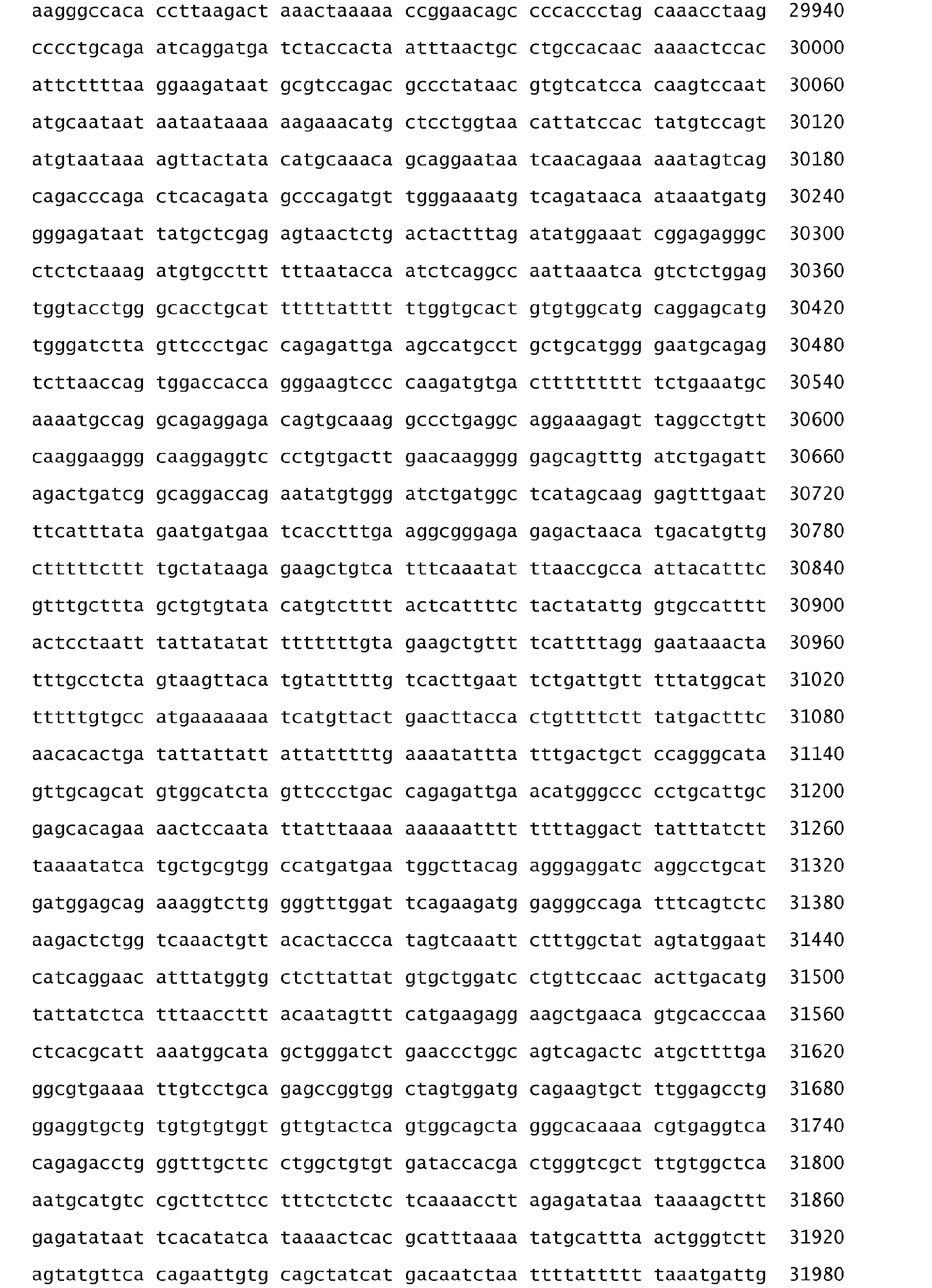
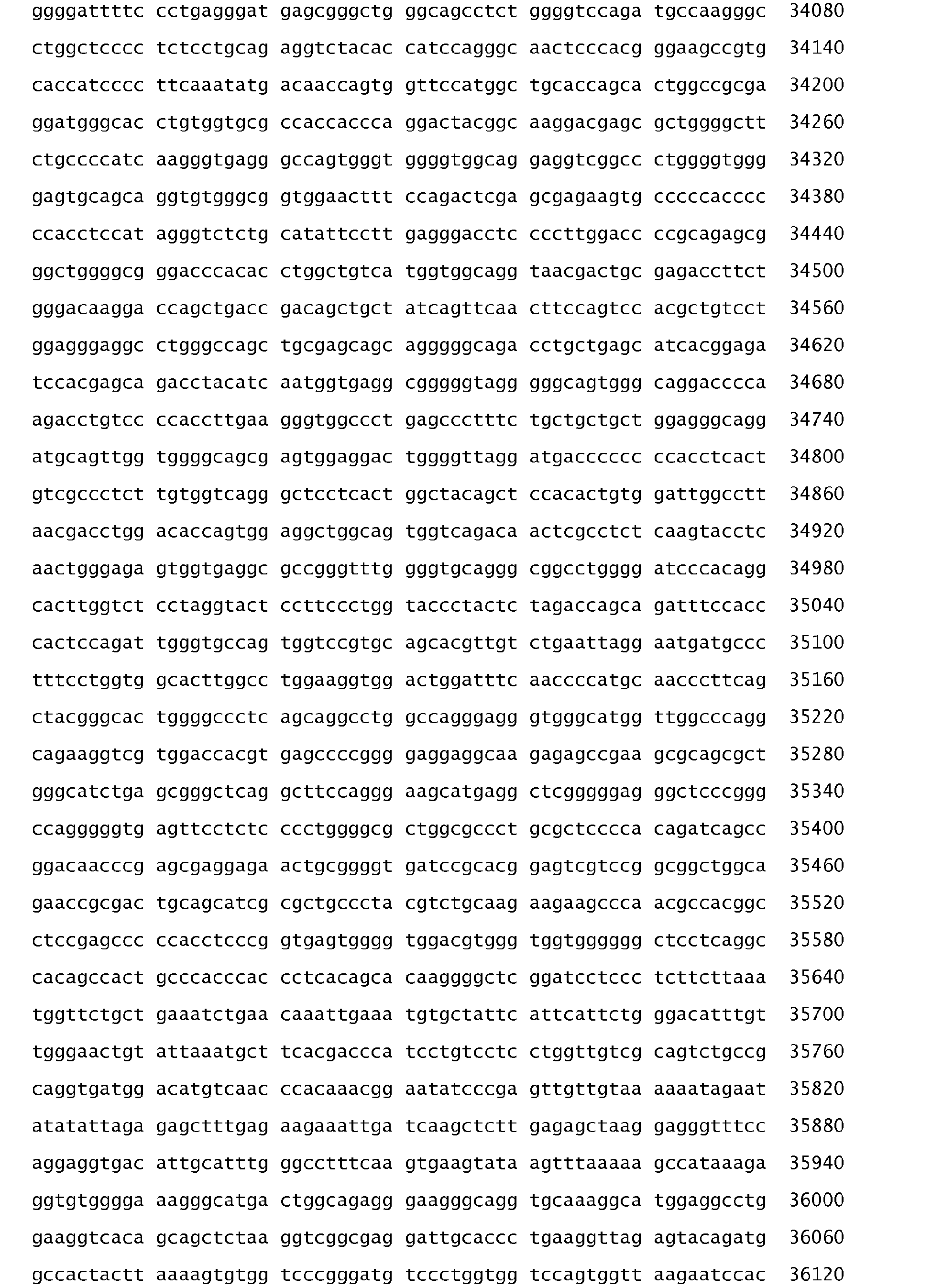
- sequence SEQ ID N°1 which represents the wild-type MRC2 genomic sequence.
- sequence SEQ ID N°2 represents the mutated MRC2 genomic sequence.
- sequence SEQ ID N°3 represents the wild-type MRC2 cDNA sequence.
- the coding region starts with the nucleotide position 45.
- the nucleotide positions 2904 and 2905 of the coding region therefore is in position 2948 and 2949 of this sequence.
- the sequence SEQ ID N°4 represents the mutated MRC2 cDNA sequence.
- the coding region starts with the nucleotide position 45.
- the nucleotide positions 2904 and 2905 of the coding region which are deleted in this sequence therefore are beyond the nucleotide position 2947.
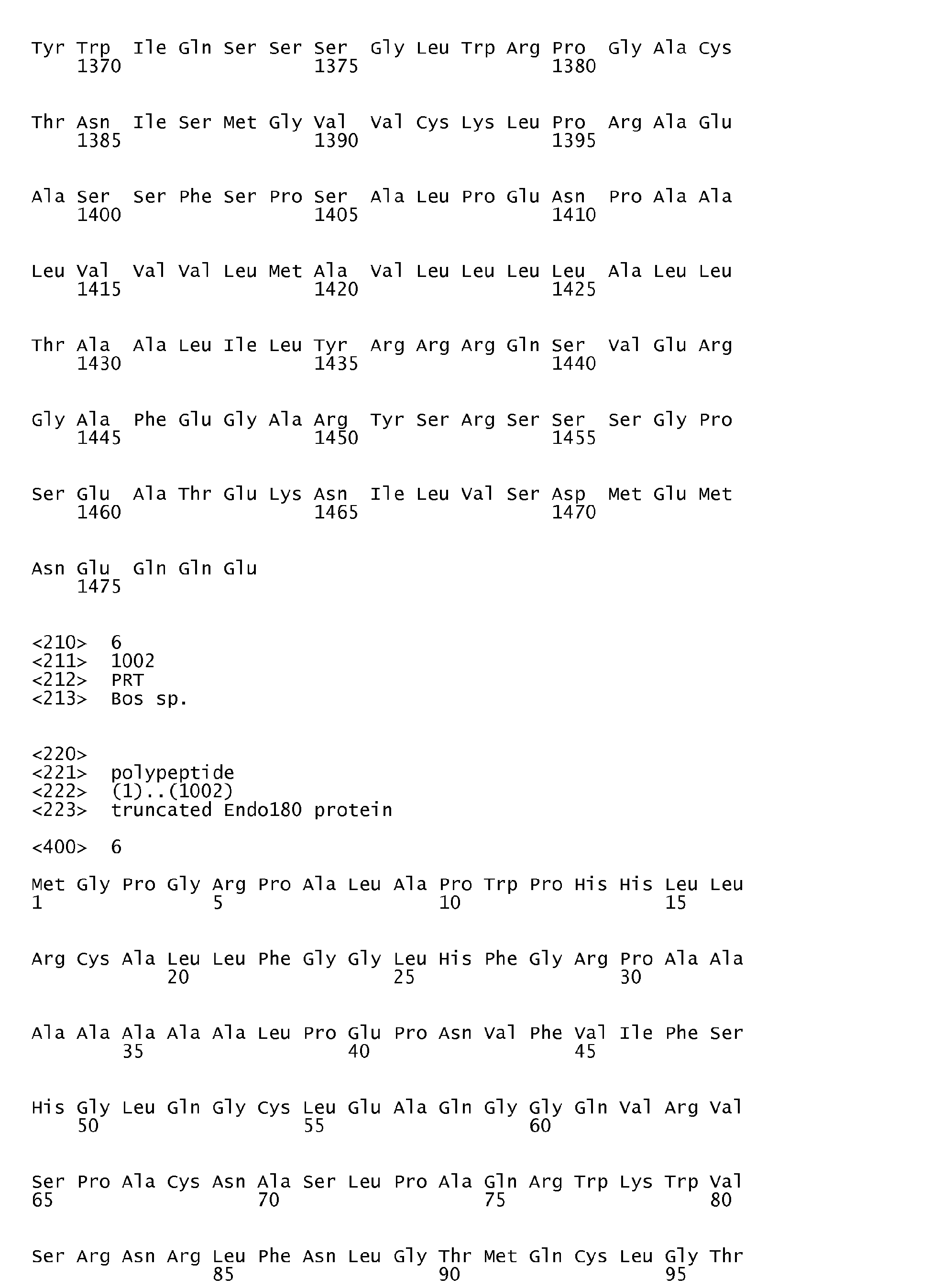
- the polypeptide sequence SEQ ID N°5 represents the wild-type Endo180 protein having 1478 amino acids in length.
- the sequence SEQ ID N°6 represents the truncated Endo180 protein having 1002 amino acids in length. Due to the frame-shift in the mutated gene MRC2 the truncated Endo180 protein differs in its sequence from the wild-type protein in amino acid positions 970 to 1002, while amino acid positions 1003 to 1478 of the wild-type are completely missing.
- sequence SEQ ID NO: 7 is used for detecting the disease-causing allele of the MRC2 gene and thus indicating the carrier status.
- sequence SEQ ID NO: 8 is used for detecting the wild-type allele of the MRC2 gene and thus indicating the non-carrier status.
- sequences SEQ ID NO: 9 and 10 represent forward and reverse primers for the PCR amplification of the template DNA sequence.
- Figure 1 illustrates the phenotypic details of CTS.
- Four main clinical features were observed in more than 90% of the cases: (i) clear growth retardation, (ii) a shortening and enlargement of the head, (iii) an extreme muscular hypertrophy well visible for back muscles (ilio-spinal) with a characteristic lombo-sacral stair at the gluteus maxims anchor, (iv) a tail with high implantation, deviated from the root.
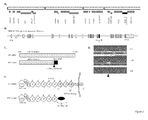
- FIG. 2 shows that CTS is due to a 2bp deletion in MRC2.
- A Gene content of the 2.42Mb identical-by-descent chromosomal segment; the MRC2 gene is highlighted in black.
- B Intron-exon organization of the MRC2 gene; mutated exon 20 is highlighted in black.
- C Schematic representation of the wild-type and the mutated MRC2 cDNA indicating the respective position of the deletion and the new stop codon. Due to the frame-shift the C-terminal sequence of the mutated Endo180 protein differs from the wild-type sequence (highlighted in black).
- D D .
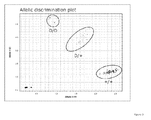
- Figure 3 summarizes the results of the Taqman assay for genotyping of the 2bp deletion in the bovine MRC2 gene.
- the graph illustrates allelic discrimination of the wild-type and the mutated alleles, allowing clear separation between the three groups: homozygous wild-types (+/+), carriers (D/+) and affected animals (D/D).
- Example 1 Autozygosity mapping localized the CTS gene in a 2.42 Mb interval on BTA19.
- IBD identical-by-descent
- Example 2 A two base-pair deletion in the Mannose Receptor C type 2 gene coding for the Endocytic Transmembrane Glycoprotein Endo180 causes the CTS ( Figure 2)
- Comparative mapping allowed the identification of the HSA17q23.2 human genome segment orthologous to part of the corresponding bovine interval. Nineteen positional candidate genes were lying in this interval. The candidate genes were screened for mutation by re-sequencing coding exons from genomic DNA or cDNA and comparing sequences from affected individuals to wild-type sequences.
- Example 3 Taqman assay for genotyping the c.2904_2905delAG mutation in the bovine ( Figure 3 )
- a genotyping test was developed using the TaqMan assay for allelic discrimination of SNPs, on an AB17900HT instrument (Applied Biosystems, Foster City, CA). PCR amplification of the template DNA sequence was carried out with unlabeled forward and reverse primers (forward primer: 5'-GCG CAA CAG CAC CAG AGA-3', SEQ ID NO:9 and reverse primer: 5'-CTC CCT ACC TTG TTC AGG AAC TG-3', SEQ ID NO:10) following the recommendations of the manufacturer.
- the TaqMan probes had a non fluorescent quencher plus a minor groove binder attached to the 3' end and a reporter fluorescent label (Fam or Vic) attached to their 5' end.
- Each reaction mixture contained two probes having two nucleotide difference (mutated probe: 5'-CTG CCG CCC AC[ * * ] GGG-3', SEQ ID NO:7 and wild-type probe: 5'-CTG CCG CCC AC[ A G ]G-3', SEQ ID NO:8) and respectively Fam or Vic labels.
Landscapes
- Chemical & Material Sciences (AREA)
- Life Sciences & Earth Sciences (AREA)
- Proteomics, Peptides & Aminoacids (AREA)
- Health & Medical Sciences (AREA)
- Organic Chemistry (AREA)
- Wood Science & Technology (AREA)
- Analytical Chemistry (AREA)
- Zoology (AREA)
- Genetics & Genomics (AREA)
- Engineering & Computer Science (AREA)
- Pathology (AREA)
- Immunology (AREA)
- Microbiology (AREA)
- Molecular Biology (AREA)
- Biotechnology (AREA)
- Biophysics (AREA)
- Physics & Mathematics (AREA)
- Biochemistry (AREA)
- Bioinformatics & Cheminformatics (AREA)
- General Engineering & Computer Science (AREA)
- General Health & Medical Sciences (AREA)
- Measuring Or Testing Involving Enzymes Or Micro-Organisms (AREA)
Abstract
Description
- This invention relates to methods, assay and kit for the detection of animals that are carriers of Crooked Tail Syndrome (CTS) or "pig-like calves".
- Intense selection for desired production traits in livestock often results in an increase of the rate of inbreeding. This causes the frequent emergence of inherited defects which can affect such a high proportion of the population that they become a major problem. Examples of genetic defects that have caused major problems in livestock are bovine leucocyte adhesion deficiency (BLAD), congenital vertebral malformation (CVM) and others.
- Most of these disorders are characterized by a recessive mode of inheritance: animals can be homozygous for the normal allele (+/+), homozygous for the defective allele (D/D), or heterozygous (+/D). D/D animals are afflicted by the disease, while +/+ and +/D animals are generally healthy. +/D animals, however, are said to be "carriers" and will transmit the D allele to half of their offspring. The mating between two carrier animals will produce one fourth of affected D/D offspring.
- If one could identify +/D animals despite the fact that they don't exhibit the symptoms of the disease, it would be possible to eliminate them from breeding programs or at least avoid mating between carriers. This would allow immediate eradication of the genetic defect from the population and avoid the economic losses associated with it.
- It has recently become possible to identify the genes underlying genetic defects and the mutations in them which cause an allele to be D(efective). It has also recently become possible to use molecular biology techniques to rapidly analyze a DNA sample from an individual and to determine whether it contains a D allele, i.e. it is now possible to detect carriers if the gene and causal mutation underlying the defect are known.
- End of the year 2006 field veterinarians become very concerned by an emerging defect in Belgian Blue cattle, a breed well known for its extreme muscularity. In many farms, 3-4% of calves were affected by a inherited disease causing Crooked Tail Syndrome (CTS). The main clinical signs are extreme muscularity, growth retardation, postural abnormality, shortened head and crooked tail. In addition, a few cases exhibit scoliosis, joint rigidity, and spastic paresis of the hind limbs (
Figure 1 ). Even if the defect was not lethal, euthanasia is sometimes necessary and economic losses due to growth retardation and clinical complications is of importance. - The object of the present invention was to provide a diagnostic method, assay and kit for detecting whether or not a bovine individual is carrier of Crooked Tail Syndrome or is suffering from or will develop said disease.
- In order to solve the object the present invention provides the use of the MRC2 gene locus coding for the Endo180 protein as marker for detecting whether or not a bovine individual is carrier of Crooked Tail Syndrome (CTS).
- The present invention further provides an in-vitro method for detecting whether or not a bovine individual is carrier of Crooked Tail Syndrome (CTS), by analyzing the MRC2 gene locus coding for the Endo180 protein.
- In addition the present invention provides an assay for detecting whether or not a bovine individual is carrier of Crooked Tail Syndrome (CTS), wherein the MRC2 gene locus coding for the Endo180 protein is analyzed.
- In particular, the present invention revealed that a mutated allele of MRC2 gene is responsible for Crooked tail, growth retardation and muscular hypertrophy syndrome (CTS) in bovine individuals.
- In a preferred embodiment the analysis of the bovine MRC2 gene locus includes amplifying the DNA in the presence of primers hybridizing either with a nucleic acid molecule having the sequence identified as SEQ ID N°1 or 3 or with a nucleic acid molecule having the sequence identified as SEQ ID N°2 or 4.
- In a preferred embodiment of the present invention a bovine individual having a mutated MRC2 gene is judged to have carrier status for Crooked Tail Syndrome (CTS). A mutated MRC2 gene represents the disease-causing allele which is responsible for Crooked Tail Syndrome (CTS) in cattle. This mutation may be of any type as long as the mutation of said MRC2 gene is rendering inactive or removing any one or more of the transmembrane domain, the cytoplasmic domain or one or more of the C-type lectin domains of the Endo180 protein. In particular, the disease-causing mutation of the MRC2 gene removes at least three out of eight C-type lectin domains, the transmembrane domain and the cytoplasmic domain of the Endo180 protein.
- Preferably, a bovine individual having a truncated MRC2 gene coding for a truncated Endo180 protein is judged to have carrier status for Crooked Tail Syndrome (CTS). Further preferred, a bovine individual having an allele of the MRC2 gene which is truncated in that way that any one or more of the transmembrane domain, the cytoplasmic domain or one or more of the C-type lectin domains of the Endo180 protein is rendered inactive or removed, is judged to have carrier status for Crooked Tail Syndrome (CTS). In particular, the the disease-causing truncation of the MRC2 gene removes at least three out of eight C-type lectin domains, the transmembrane domain and the cytoplasmic domain of the Endo180 protein.
- In a further preferred embodiment of the present invention the presence of an allele of the MRC2 sequence, which is characterized by a two base pair deletion at nucleotide positions 2904 and 2905 of the coding sequence resulting in a frame-shift of the reading frame and resulting in a truncation of the Endo180 protein, indicates carrier status.
- Further preferred, the presence of an allele of the MRC2 sequence, which is characterized by the nucleotides AG at nucleotide positions 2904 and 2905 of the coding sequence and corresponds to the wild-type Endo180 protein, indicates non-carrier status.
- In a further preferred embodiment the genomic DNA is analyzed and the presence of the sequence SEQ ID NO: 2 indicates carrier status. Whereas the presence of the sequence SEQ ID NO: 1 indicates non-carrier status.
- Further preferred, the RNA is transcribed into cDNA by reverse transcription and said cDNA is analyzed and the presence of the sequence SEQ ID NO: 4 indicates carrier status. Whereas the presence of the sequence SEQ ID NO: 3 indicates non-carrier status.
- In a particularly preferred embodiment of the present invention the analysis of the bovine MRC2 gene locus includes the use of a nucleic acid probe hybridizing with a nucleic acid molecule having the sequence identified as SEQ ID N°1 or 3 for determining that the MRC2 sequence is characterized by AG residues at nucleotide positions 2904 and 2905 of the coding sequence, corresponding to a wild-type Endo180 protein. In a further preferred embodiment of the present invention the analysis of the bovine MRC2 gene locus or includes the use of a nucleic acid probe hybridizing with a nucleic acid molecule having the sequence identified as SEQ ID N°2 or 4 for determining that the MRC2 sequence is
characterized by a two bp deletion at nucleotide positions 2904 and 2905 of the coding sequence corresponding to truncated Endo180 protein. - In preferred embodiments of the use, method and assay primers are used which allow the amplification of a sequence selected from SEQ ID NO: 1, SEQ ID NO: 2, SEQ ID NO: 3 and SEQ ID NO: 4 or a partial sequence thereof, wherein the partial sequence comprises at least the nucleotide positions 2904 and 2905 of the coding sequence. Further preferred, the use, method and assay make use of forward and reverse primers SEQ ID NO:9 and ID NO:10, respectively. Said primers are used for the amplification of a sequence selected from SEQ ID NO: 1, SEQ ID NO: 2, SEQ ID NO: 3 and SEQ ID NO: 4 or a partial sequence thereof as mentioned above, before the step of analyzing if or if not the disease-causing allele of MRC2 is present.
- In another preferred embodiment, the present invention makes use of a primer comprising the sequence 5'-CTG CCG CCC AC[* *] GGG-3' (SEQ ID NO: 7) or its complementary sequence for detecting the disease-causing allele of the MRC2 gene and thus indicating the carrier status. In particularly preferred embodiment, the present invention makes use of a primer having the sequence 5'-CTG CCG CCC AC[* *] GGG-3' (SEQ ID NO: 7) or its complementary sequence for detecting the disease-causing allele of the MRC2 gene and thus indicating the carrier status
- Further preferred, in the present invention a primer comprising the sequence 5'-CTG CCG CCC AC A G G-3' (SEQ ID NO: 8) or its complementary sequence is used for detecting the wild-type allele of the MRC2 gene and thus indicating the non-carrier status. In particularly preferred embodiment, in the present invention a primer having the sequence 5'-CTG CCG CCC AC A G G-3' (SEQ ID NO: 8) or its complementary sequence is used for detecting the wild-type allele of the MRC2 gene and thus indicating the non-carrier status.
- In a still further preferred embodiment, a bovine individual which is revealed by the use, method and assay according to the present invention as being homozygous in respect to the disease-causing allele in the MRC2 gene locus is judged to have or to develop Crooked Tail Syndrome (CTS).
- The use, the method or the assay according to the present invention for detecting whether or not a bovine individual is carrier of Crooked Tail Syndrome involves the isolation of a sample from the bovine individual to be tested, wherein the sample may be any material containing nucleated cells from said animal including blood, sperm, hair, milk, tissues. The tissues may be selected from chondrocytes, muscle, skin and others.
- The present invention also provides a reagent kit for detecting whether or not a bovine individual is carrier of Crooked Tail Syndrome (CTS), comprising
- a) a primer comprising the sequence 5'-CTG CCG CCC AC[* *] GGG-3' (SEQ ID NO: 7) or its complementary sequence for detecting the disease-causing allele of the MRC2 gene and thus indicating the carrier status; and/or
- b) a primer comprising the sequence 5'-CTG CCG CCC AC A G G-3' (SEQ ID NO: 8) or its complementary sequence for detecting the wild-type allele of the MRC2 gene and thus indicating the non-carrier status.
- The present invention also provides a reagent kit for detecting whether or not a bovine individual is carrier of Crooked Tail Syndrome (CTS), comprising
- a) a primer having the sequence 5'-CTG CCG CCC AC[* *] GGG-3' (SEQ ID NO: 7) or its complementary sequence for detecting the disease-causing allele of the MRC2 gene and thus indicating the carrier status; and/or
- b) a primer having the sequence 5'-CTG CCG CCC AC A G G-3' (SEQ ID NO: 8) or its complementary sequence for detecting the wild-type allele of the MRC2 gene and thus indicating the non-carrier status.
- The highlighted "AG" nucleotides in the sequence SEQ ID NO: 8 (5'-CTG CCG CCC AC A G G-3') indicate the two base pairs of the wild-type at the nucleotide position 2904 and 2905 of the coding region of the MRC2 gene, which in the disease-causing allele are deleted. The two asterisk in brackets in the sequence SEQ ID NO: 7 (5'-CTG CCG CCC AC[* *] GGG-3') indicate the two base pair deletion at position 2904 and 2905 of the coding region of the mutant MRC2 gene.
- In preferred embodiments of the kit primers are included which allow the amplification of a sequence selected from SEQ ID NO: 1, SEQ ID NO: 2, SEQ ID NO: 3 and SEQ ID NO: 4 or a partial sequence thereof, wherein the partial sequence comprises at least the nucleotide positions 2904 and 2905 of the coding sequence. Further preferred, the kit comprises forward and reverse primers SEQ ID NO:9 and primer SEQ ID NO:10, respectively.
- The present invention is based on the identification of a gene and its mutation, the latter causing Crooked Tail Syndrome (CTS) in cattle. As mentioned above, in 2006 field veterinarians become very concerned by an emerging defect in Belgian Blue cattle, a breed well known for its extreme muscularity. In many farms 3-4% of calves were affected. Such a high incidence leads the present inventors to perform a detailed clinical study to characterize the defect and try to determine its precise aetiology. About fifty affected calves were clinically examined, blood samples collected and their pedigrees scrutinized. Pedigree analysis revealed that CTS is in agreement with an autosomal recessive mode of inheritance of the defect. The main clinical signs were extreme muscularity, growth retardation, postural abnormality, shortened head and crooked tail. In addition, a few cases exhibited scoliosis, joint rigidity, and spastic paresis of the hind limbs (
Figure 1 ). Expressivity of these last signs was variable. Even if the defect was not lethal, euthanasia was sometimes necessary and economic losses due to growth retardation and clinical complications was important. - By using a technique called positional cloning (1) (Strachan and Read, 2004) the gene causing CTS could be identified. Genome scans were performed using DNA samples from affected individuals and controls using a custom made 60K Illumina SNP panel. A unique identical-by-descent (IBD) chromosomal segment of 2.42 Mb, shared by all affected individuals, was mapped on bovine chromosome 19, proving the hereditary aetiology of this new syndrome (2) (Charlier et al., 2008). Candidate genes in this interval were analyzed in order to identify the causative mutation to be able to develop a diagnostic test (
Figure 2A .). - During the studies for the present invention a mutation in the MRC2 (Mannose Receptor C type 2) gene coding for the Endocytic Transmembrane Glycoprotein Endo180 was identified. The Endo180 protein is the fourth member of the mannose receptor family. The protein Endo180 functions in cells as a collagen binding and internalization receptor and plays a physiological role in mediating collagen matrix remodelling during tissue development and homeostasis (3)(Wienke et al., 2003). In addition to collagens, Endo180 has been demonstrated to have two other binding activities. Firstly, Endo180 can form a trimolecular cell surface complex with prouPA and uPAR (4)(Behrendt et al., 2000). Secondly, Endo180 is a functional C-type lectin showing Ca2+-dependent binding to mannose, fucose, and N-acetylglucosamine (5)(East et al., 2002). Endo180 contains an N-terminal cysteine-rich or ricin-type domain, a fibronectin type II (FNII) domain, 8 C-type-lectin domains, a single transmembrane domain, and a short cytoplasmic domain.
- The mutation identified in Belgian Blue cattle is a two base pair deletion in exon 20 of the MRC2 gene inducing a frame-shift in the open reading frame resulting in a truncated protein, which is about 30% shorter than the wild-type Endo180 protein, missing 3 C-type lectin domains and, more importantly, the transmembrane domain as well as the cytoplasmic domain (
Figure 2B ., C., D., E.). In consequence, this truncated protein will be unable to uptake and internalize the collagen or to play any receptor function. - As a result of this invention, it is now possible to detect +/D carrier animals by means of simple genetic tests performed on a nucleic acid extracted from biological samples originating from said animals.
- Detailed description of the preferred embodiments
- The present invention provides a diagnostic method for detecting whether or not a bovine individual is carrier of Crooked Tail Syndrome.
- The present invention also provides the use of the MRC2 gene locus coding for the Endo180 protein as marker for detecting whether or not a bovine individual is carrier of Crooked Tail Syndrome.
- The present invention further provides an in-vitro method for detecting whether or not a bovine individual is carrier of Crooked Tail Syndrome (CTS), by analyzing the MRC2 gene locus coding for the Endo180 protein.
- In one aspect, the present invention provides a method for determining whether a bovine is carrier of CTS by analyzing its genomic DNA. The method includes obtaining a sample of material containing genomic DNA from the bovine and ascertaining (i) whether a DNA sequence corresponding to the bovine MRC2 coding for the Endo180 protein is present in the sample, and (ii) whether this MRC2 sequence is characterized by a two bp deletion at position 2904-2905 of the cDNA (c.2904_2905delAG), leading to a truncated Endo180 protein (L970fsX1002).
- The sample can be any material containing nucleated cells from said animal including blood, sperm, hair, milk as well as any other tissues.
- There are several methods known by those skilled in the art (6) for determining whether a particular nucleotide sequence is present in a DNA sample. These include the amplification of a DNA segment encompassing the MRC2 c.2904_2905delAG mutation by means of the polymerase chain reaction and interrogate the MRC2 c.2904_2905delAG nucleotide positions by means of allele specific hybridization, or the 5'exonuclease assay (Taqman assay), or the use of allele-specific restriction enzymes, or direct sequencing, or the oligonucleotide ligation assay, or pyrosequencing, or the invader assay, or minisequencing, or DHPLC, or SSCP, or combinations of these methods. Alternatively the gene sequence and mutation can be ascertained by means of allele specific PCRs using primers that are specific for either the AG or the deleted allele. This list of methods is not meant to be exclusive, but just to illustrate the diversity of available methods. Some of these methods can be performed in microarray format.
- In another aspect, the present invention provides a method for determining whether a bovine is carrier of CTS by analyzing its RNA. The method includes obtaining a sample of material containing RNA from the bovine, optionally converting the RNA to cDNA by reverse transcription; and ascertaining (i) whether a DNA sequence corresponding to the bovine MRC2 coding for the Endo180 protein is present in the sample, and (ii) whether this MRC2 sequence is characterized by an AG or a 2 pb deletion at position c.2904_2905 of the coding region, corresponding to respectively a functional wild-type Endo180 protein or a non functional truncated protein missing 509 amino acids at its C-terminal part.
- The sample can be any material containing nucleated cells from said animal including blood, sperm, hair, milk as well as any other tissue, especially chondrocytes.
- There are several methods known by those skilled in the art for determining whether a particular nucleotide sequence is present in a RNA sample. These include the conversion of the RNA in cDNA by means of a reverse transcriptase, and the application of the methods mentioned above or variants thereof that are known by those skilled in the art to ascertain the presence of the AG or the 2 bp deletion at position c.2904_2905.
- The method thus includes the nucleic acid probes, including oligonucleotide probes, that are complementary to the "+" (MRC2 c.2904_2905 AG) and / or "D" (MRC2 c.2904_2905 Δ; "D" corresponds to "defect" or "delta") allele of the bovine MRC2 gene, i.e. that have the ability to hybridize to the corresponding sequences either in genomic DNA, or in cDNA or in a PCR product derived from either of these.
- The sequence listings show the sequence SEQ ID N°1 which represents the wild-type MRC2 genomic sequence. The sequence SEQ ID N°2 represents the mutated MRC2 genomic sequence. The sequence SEQ ID N°3 represents the wild-type MRC2 cDNA sequence. In the given sequence the coding region starts with the nucleotide position 45. The nucleotide positions 2904 and 2905 of the coding region therefore is in position 2948 and 2949 of this sequence. The sequence SEQ ID N°4 represents the mutated MRC2 cDNA sequence. Here again the coding region starts with the nucleotide position 45. The nucleotide positions 2904 and 2905 of the coding region which are deleted in this sequence therefore are beyond the nucleotide position 2947.
- The polypeptide sequence SEQ ID N°5 represents the wild-type Endo180 protein having 1478 amino acids in length. The sequence SEQ ID N°6 represents the truncated Endo180 protein having 1002 amino acids in length. Due to the frame-shift in the mutated gene MRC2 the truncated Endo180 protein differs in its sequence from the wild-type protein in amino acid positions 970 to 1002, while amino acid positions 1003 to 1478 of the wild-type are completely missing.
- The sequence SEQ ID NO: 7 is used for detecting the disease-causing allele of the MRC2 gene and thus indicating the carrier status. Whereas the sequence SEQ ID NO: 8 is used for detecting the wild-type allele of the MRC2 gene and thus indicating the non-carrier status. The sequences SEQ ID NO: 9 and 10 represent forward and reverse primers for the PCR amplification of the template DNA sequence.
-
Figure 1 illustrates the phenotypic details of CTS. Four main clinical features were observed in more than 90% of the cases: (i) clear growth retardation, (ii) a shortening and enlargement of the head, (iii) an extreme muscular hypertrophy well visible for back muscles (ilio-spinal) with a characteristic lombo-sacral stair at the gluteus medius anchor, (iv) a tail with high implantation, deviated from the root. In addition, other symptoms were recurrent in a substantial fraction of the cases: (i) spastic paresis of the hind limbs (in 36%), often associated with straight hock (63%), (ii) a third showed abnormal fore limbs (too short, straight, in extension) and finally, (iii) a fifth was more severely affected and exhibited a pronounced scoliosis with asymmetric back muscle development. -
Figure 2 shows that CTS is due to a 2bp deletion in MRC2. A. Gene content of the 2.42Mb identical-by-descent chromosomal segment; the MRC2 gene is highlighted in black. B. Intron-exon organization of the MRC2 gene; mutated exon 20 is highlighted in black. C. Schematic representation of the wild-type and the mutated MRC2 cDNA indicating the respective position of the deletion and the new stop codon. Due to the frame-shift the C-terminal sequence of the mutated Endo180 protein differs from the wild-type sequence (highlighted in black). D. Sequence traces for animals of the three MRC2 genotypes (+/+; D/+ and D/D); the black triangle pinpoints the precise position of the 2bp deletion. E. Schematic representation of wild-type and truncated Endo180 proteins showing the lack of three C-type lectin domains (CTLD), the transmembrane domain and the cytoplasmic domain in the mutated form. Due to the frame-shift the C-terminal sequence of the mutated Endo180 protein contains 33 amino acids which differs from the wild-type sequence (highlighted in black). -
Figure 3 summarizes the results of the Taqman assay for genotyping of the 2bp deletion in the bovine MRC2 gene. The graph illustrates allelic discrimination of the wild-type and the mutated alleles, allowing clear separation between the three groups: homozygous wild-types (+/+), carriers (D/+) and affected animals (D/D). - The present invention will be further described in more detail in the following examples, which however shall not be understood to limit the scope of the present invention in any way.
- In order to map putative susceptibility gene for CTS, samples from 10 affected individuals were collected. The samples were obtained from farms and diagnosed as CTS affected individuals. Ten healthy contemporary animals were included in the study in order to estimate allelic frequency at each SNP locus.
- Genomic DNA was extracted from all samples and genotyped for a battery of 53000 autosomal SNPs (Single Nucleotide Polymorphismes). The present inventors searched for shared homozygous identical-by-descent (IBD) haplotypes amongst cases (autozygosity mapping). A 2.42 MB chromosomal segment, on BTA19, between the SNP markers [SNP_ULGR_BTA-45661] and [SNP_ULGR_AAFC03117912_21237], responded to those criteria.
- Comparative mapping allowed the identification of the HSA17q23.2 human genome segment orthologous to part of the corresponding bovine interval. Nineteen positional candidate genes were lying in this interval. The candidate genes were screened for mutation by re-sequencing coding exons from genomic DNA or cDNA and comparing sequences from affected individuals to wild-type sequences.
- A two base pair deletion in exon 20 of the Mannose
Receptor C type 2 gene (MRC2) inducing a frame-shift in the open reading frame was identified which is resulting in a truncated protein which is about 30% shorter than the wild-type protein. The truncated protein is missing 3 C-type lectin domains and, more importantly, the transmembrane domain as well as the cytoplasmic domain. In consequence, this truncated protein will be unable to uptake and internalize the collagen or to play any receptor function. - During the studies for the present invention a 5'exonuclease assay was developed in order to facilitate genotyping of the mutation. During the studies fifty CTS cases were genotyped. As result it was found that all CTS cases were homozygous for the identified mutation as expected. Next, more than 3,000 healthy Belgian Blue bulls were genotyped. The MRC2 c.2904_2905delAG mutation was found at a frequency of 25 % in the Belgian Blue bulls, with however no homyzygotes amongst unaffected individuals. Altogether these results allowed the incriminate of the Endo180 L970fsX1002 mutation as being responsible for CTS.
- Example 3: Taqman assay for genotyping the c.2904_2905delAG mutation in the bovine (
Figure 3 ) - A genotyping test was developed using the TaqMan assay for allelic discrimination of SNPs, on an AB17900HT instrument (Applied Biosystems, Foster City, CA). PCR amplification of the template DNA sequence was carried out with unlabeled forward and reverse primers (forward primer: 5'-GCG CAA CAG CAC CAG AGA-3', SEQ ID NO:9 and reverse primer: 5'-CTC CCT ACC TTG TTC AGG AAC TG-3', SEQ ID NO:10) following the recommendations of the manufacturer. The TaqMan probes had a non fluorescent quencher plus a minor groove binder attached to the 3' end and a reporter fluorescent label (Fam or Vic) attached to their 5' end. Each reaction mixture contained two probes having two nucleotide difference (mutated probe: 5'-CTG CCG CCC AC[* *] GGG-3', SEQ ID NO:7 and wild-type probe: 5'-CTG CCG CCC AC[ A G ]G-3', SEQ ID NO:8) and respectively Fam or Vic labels.
- During strand replacement, fully hybridized probes remained bound, resulting in a cleavage of the reporter dye by the 5'-nuclease activity of Taq polymerase. The release of the reporter dyes correlated with the proportion of the matching alleles and resulted in a good discrimination between homozygous and heterozygous states.
-
- 1. Strachan, T.; Read, A.P. (2004). Human Molecular Genetics 3. Garland Science.
- 2. Charlier C, Coppieters W, Rollin F, Desmecht D, Agerholm JS, Cambisano N, Carta E, Dardano S, Dive M, Fasquelle C, Frennet JC, Hanset R, Hubin X, Jorgensen C, Karim L, Kent M, Harvey K, Pearce BR, Simon P, Tamma N, Nie H, Vandeputte S, Lien S, Longeri M, Fredholm M, Harvey RJ, Georges M.Highly effective SNP-based association mapping and management of recessive defects in livestock.Nat Genet. 2008 Apr;40(4):449-54. Epub 2008 Mar 16.
- 3. Wienke D, MacFadyen JR, Isacke CM. Identification and characterization of the endocytic transmembrane glycoprotein Endo180 as a novel collagen receptor.Mol Biol Cell. 2003 Sep;14(9):3592-604. Epub 2003
Jul 25. - 4. Behrendt N, Jensen ON, Engelholm LH, Mortz E, Mann M, Danø K.A urokinase receptor-associated protein with specific collagen binding properties. J Biol Chem. 2000 Jan 21;275(3):1993-2002.
- 5. East L, Rushton S, Taylor ME, Isacke CM. Characterization of sugar binding by the mannose receptor family member, Endo180.J Biol Chem. 2002 Dec 27;277(52):50469-75. Epub 2002
- 6. Syvanen, A.C. (2001) Accessing genetic variation: genotyping single nucleotide polymorphisms. Nature Reviews Genetics 2: 930-942.











Claims (18)
- Use of the MRC2 gene locus coding for the Endo180 protein as marker for detecting whether or not a bovine individual is carrier of Crooked Tail Syndrome (CTS).
- An in-vitro method for detecting whether or not a bovine individual is carrier of Crooked Tail Syndrome (CTS), by analyzing the MRC2 gene locus coding for the Endo180 protein.
- An assay for detecting whether or not a bovine individual is carrier of Crooked Tail Syndrome (CTS), wherein the MRC2 gene locus coding for the Endo180 protein is analyzed.
- The use, the method or the assay according to any one of claims 1 to 3, wherein a bovine individual having a mutated MRC2 gene is judged to have carrier status for Crooked Tail Syndrome (CTS).
- The use, the method or the assay according to claim 4, wherein the mutation is rendering inactive or removing any one or more of the transmembrane domain, the cytoplasmic domain or one or more of the C-type lectin domains of the Endo180 protein.
- The use, the method or the assay according to any one of claims 1 to 3, wherein a bovine individual having a truncated MRC2 gene coding for a truncated Endo180 protein is judged to have carrier status for Crooked Tail Syndrome (CTS).
- The use, the method or the assay according to claim 6, wherein the truncation is rendering inactive or removing any one or more of the transmembrane domain, the cytoplasmic domain or one or more of the C-type lectin domains of the Endo180 protein.
- The use, the method or the assay according to any one of claims 1 to 7, wherein the presence of an allele of the MRC2 sequence, which is characterized by a two base pair deletion at nucleotide positions 2904 and 2905 of the coding sequence resulting in a frame-shift of the reading frame and in a truncation of the Endo180 protein, indicates carrier status.
- The use, the method or the assay according to any one of claims 1 to 8, wherein the presence of an allele of the MRC2 sequence, which is characterized by the nucleotides AG at nucleotide positions 2904 and 2905 of the coding sequence and corresponds to the wild-type Endo180 protein, indicates non-carrier status.
- The use, the method or the assay according to any one of claims 1 to 9, wherein the genomic DNA is analyzed and wherein the presence of the sequence SEQ ID NO: 2 indicates carrier status.
- The use, the method or the assay according to any one of claims 1 to 9, wherein the RNA is transcribed into cDNA by reverse transcription and analyzed and wherein the presence of the sequence SEQ ID NO: 4 indicates carrier status.
- The use, the method or the assay according to any one of claims 1 to 11, wherein the primer comprising the sequence 5'-CTG CCG CCC AC[**] GGG-3' (SEQ ID NO: 7) or its complementary sequence is used for detecting the disease-causing allele of the MRC2 gene and thus indicating the carrier status.
- The use, the method or the assay according to any one of claims 1 to 12, wherein the primer comprising the sequence 5'-CTG CCG CCC AC A G G-3' (SEQ ID NO: 8) or its complementary sequence is used for detecting the wild-type allele of the MRC2 gene and thus indicating the non-carrier status.
- The use, the method or the assay according to any one of claims 1 to 13, wherein primers are used for the amplification of a sequence selected from SEQ ID NO: 1, SEQ ID NO: 2, SEQ ID NO: 3 and SEQ ID NO: 4 or a partial sequence thereof, wherein the partial sequence comprises at least the nucleotide positions 2904 and 2905 of the coding sequence.
- The use, the method or the assay according to claim 14, wherein the amplification is carried out before the step of analyzing if or if not the disease-causing allele of MRC2 is present.
- The use, the method or the assay according to any one of claims 1 to 15, wherein a bovine individual being homozygous in respect to the disease-causing allele in the MRC2 gene locus is judged to have or to develop Crooked Tail Syndrome (CTS).
- The use, the method or the assay according to any one of claims 1 to 16, wherein the sample can be any material containing nucleated cells from said animal including blood, sperm, hair, milk, tissues.
- A reagent kit for detecting whether or not a bovine individual is carrier of Crooked Tail Syndrome (CTS), comprisinga) a primer comprising the sequence 5'-CTG CCG CCC AC[**] GGG-3' (SEQ ID NO: 7) or its complementary sequence for detecting the disease-causing allele of the MRC2 gene and thus indicating the carrier status; and/orb) a primer comprising the sequence 5'-CTG CCG CCC AC A G G-3' (SEQ ID NO: 8) or its complementary sequence for detecting the wild-type allele of the MRC2 gene and thus indicating the non-carrier status.
Priority Applications (2)
| Application Number | Priority Date | Filing Date | Title |
|---|---|---|---|
| AT08168537T ATE526422T1 (en) | 2008-11-06 | 2008-11-06 | METHOD AND KIT FOR DETECTING THE GENETIC SUSPENSION TO CTS IN BOVINE INDIVIDUALS |
| EP08168537A EP2186915B1 (en) | 2008-11-06 | 2008-11-06 | Method and kit for detecting genetic predisposition for crooked tail syndrome (CTS) in bovine individuals |
Applications Claiming Priority (1)
| Application Number | Priority Date | Filing Date | Title |
|---|---|---|---|
| EP08168537A EP2186915B1 (en) | 2008-11-06 | 2008-11-06 | Method and kit for detecting genetic predisposition for crooked tail syndrome (CTS) in bovine individuals |
Publications (2)
| Publication Number | Publication Date |
|---|---|
| EP2186915A1 true EP2186915A1 (en) | 2010-05-19 |
| EP2186915B1 EP2186915B1 (en) | 2011-09-28 |
Family
ID=40403993
Family Applications (1)
| Application Number | Title | Priority Date | Filing Date |
|---|---|---|---|
| EP08168537A Not-in-force EP2186915B1 (en) | 2008-11-06 | 2008-11-06 | Method and kit for detecting genetic predisposition for crooked tail syndrome (CTS) in bovine individuals |
Country Status (2)
| Country | Link |
|---|---|
| EP (1) | EP2186915B1 (en) |
| AT (1) | ATE526422T1 (en) |
-
2008
- 2008-11-06 AT AT08168537T patent/ATE526422T1/en not_active IP Right Cessation
- 2008-11-06 EP EP08168537A patent/EP2186915B1/en not_active Not-in-force
Non-Patent Citations (10)
| Title |
|---|
| BEHRENDT N ET AL.: "A urokinase receptor-associated protein with specific collagen binding properties", J BIOL CHEM., vol. 275, no. 3, 21 January 2000 (2000-01-21), pages 1993 - 2002, XP008107809, DOI: doi:10.1074/jbc.275.3.1993 |
| CHARLIER C ET AL.: "Highly effective SNP-based association mapping and management of recessive defects in livestock", NAT GENET., vol. 40, no. 4, 16 March 2008 (2008-03-16), pages 449 - 54, XP002507256, DOI: doi:10.1038/NG.96 |
| CHARLIER CAROLE ET AL: "Highly effective SNP-based association mapping and management of recessive defects in livestock", NATURE GENETICS, NATURE PUBLISHING GROUP, NEW YORK, US, vol. 40, no. 4, 1 April 2008 (2008-04-01), pages 449 - 454, XP002507256, ISSN: 1061-4036, [retrieved on 20080316] * |
| DATABASE EMBL [online] 19 March 2008 (2008-03-19), "Bos taurus clone CH240-283B3, WORKING DRAFT SEQUENCE, 8 unordered pieces.", XP002518831, retrieved from EBI accession no. EMBL:AC218425 Database accession no. AC218425 * |
| DATABASE GENBANK [online] 29 July 2008 (2008-07-29), "PREDICTED: Bos taurus similar to mannose receptor, C type 2 (MRC2), mRNA", XP002518832, Database accession no. XM_607489 * |
| EAST L ET AL.: "Characterization of sugar binding by the mannose receptor family member, Endo180", J BIOL CHEM., vol. 277, no. 52, 23 October 2002 (2002-10-23), pages 50469 - 75, XP055127255, DOI: doi:10.1074/jbc.M208985200 |
| ENGELHOLM L H ET AL: "The urikonase receptor associated protein (uPARAP/Endo180): A novel internalization receptor connected to the plasminogen activation system", TRENDS IN CARDIOVASCULAR MEDICINE, ELSEVIER SCIENCE, NEW YORK, NY, US, vol. 11, no. 1, 1 January 2001 (2001-01-01), pages 7 - 13, XP002976375, ISSN: 1050-1738 * |
| STRACHAN, T.; READ, A.P.: "Human Molecular Genetics", vol. 3, 2004, GARLAND SCIENCE |
| SYVANEN, A.C.: "Accessing genetic variation: genotyping single nucleotide polymorphisms", NATURE REVIEWS GENETICS, vol. 2, 2001, pages 930 - 942, XP002462591 |
| WIENKE D; MACFADYEN JR; ISACKE CM.: "Identification and characterization of the endocytic transmembrane glycoprotein Endo180 as a novel collagen receptor", MOL BIOL CELL., vol. 14, no. 9, 25 July 2003 (2003-07-25), pages 3592 - 604 |
Also Published As
| Publication number | Publication date |
|---|---|
| ATE526422T1 (en) | 2011-10-15 |
| EP2186915B1 (en) | 2011-09-28 |
Similar Documents
| Publication | Publication Date | Title |
|---|---|---|
| KR102235340B1 (en) | SNP marker set for predicting growth traits of Korean native chicken and uses thereof | |
| US8206911B2 (en) | Identification of the gene and mutation responsible for progressive rod-cone degeneration in dog and a method for testing same | |
| AU2009275988B2 (en) | A genetic marker test for Brachyspina and fertility in cattle | |
| Johnson et al. | Platinum coat color in red fox (V ulpes vulpes) is caused by a mutation in an autosomal copy of KIT | |
| Puck et al. | Female germ line mosaicism as the origin of a unique IL-2 receptor gamma-chain mutation causing X-linked severe combined immunodeficiency. | |
| KR20050049430A (en) | Animal genotyping method | |
| US20090260095A1 (en) | Gene Marker for Evaluating Genetic Ability for Carcass Weight in Bovine and Method for Evaluating Genetic Ability for Carcass Weight Using the Same | |
| US20170058362A1 (en) | Method of identifying the presence of foreign alleles in a desired haplotype | |
| US6458531B1 (en) | Leptin receptor gene as a genetic marker for leanness in pigs | |
| EP2186915B1 (en) | Method and kit for detecting genetic predisposition for crooked tail syndrome (CTS) in bovine individuals | |
| WO2008014550A1 (en) | Markers for pigmentation | |
| EP2707497B1 (en) | Detecting the brachyspina mutation | |
| WO2009134226A1 (en) | Canine coat color prediction | |
| JP2004529649A (en) | Method | |
| CA2647224C (en) | Identification of a novel gene underlying familial spastic paraplegia | |
| EP2132337B1 (en) | Method of detecting canine exercise-induced collapse | |
| HUE025558T2 (en) | A method for determining the genotype associated with hereditary nasal paraquatosis (HNPK) and nucleic acids useful in said method. | |
| AU2007281024B2 (en) | Markers for pigmentation | |
| Evans et al. | The role of molecular genetics in the prenatal diagnosis of retinal dystrophies | |
| Whittock et al. | SECTION 14 Mutation analysis | |
| WO2003000890A1 (en) | Genetic vasculopathy |
Legal Events
| Date | Code | Title | Description |
|---|---|---|---|
| PUAI | Public reference made under article 153(3) epc to a published international application that has entered the european phase |
Free format text: ORIGINAL CODE: 0009012 |
|
| AK | Designated contracting states |
Kind code of ref document: A1 Designated state(s): AT BE BG CH CY CZ DE DK EE ES FI FR GB GR HR HU IE IS IT LI LT LU LV MC MT NL NO PL PT RO SE SI SK TR |
|
| AX | Request for extension of the european patent |
Extension state: AL BA MK RS |
|
| 17P | Request for examination filed |
Effective date: 20100727 |
|
| 17Q | First examination report despatched |
Effective date: 20100820 |
|
| AKX | Designation fees paid |
Designated state(s): AT BE BG CH CY CZ DE DK EE ES FI FR GB GR HR HU IE IS IT LI LT LU LV MC MT NL NO PL PT RO SE SI SK TR |
|
| GRAP | Despatch of communication of intention to grant a patent |
Free format text: ORIGINAL CODE: EPIDOSNIGR1 |
|
| GRAS | Grant fee paid |
Free format text: ORIGINAL CODE: EPIDOSNIGR3 |
|
| GRAA | (expected) grant |
Free format text: ORIGINAL CODE: 0009210 |
|
| AK | Designated contracting states |
Kind code of ref document: B1 Designated state(s): AT BE BG CH CY CZ DE DK EE ES FI FR GB GR HR HU IE IS IT LI LT LU LV MC MT NL NO PL PT RO SE SI SK TR |
|
| REG | Reference to a national code |
Ref country code: GB Ref legal event code: FG4D |
|
| REG | Reference to a national code |
Ref country code: CH Ref legal event code: EP |
|
| REG | Reference to a national code |
Ref country code: IE Ref legal event code: FG4D |
|
| REG | Reference to a national code |
Ref country code: DE Ref legal event code: R096 Ref document number: 602008010104 Country of ref document: DE Effective date: 20111124 |
|
| REG | Reference to a national code |
Ref country code: NL Ref legal event code: VDEP Effective date: 20110928 |
|
| PG25 | Lapsed in a contracting state [announced via postgrant information from national office to epo] |
Ref country code: LT Free format text: LAPSE BECAUSE OF FAILURE TO SUBMIT A TRANSLATION OF THE DESCRIPTION OR TO PAY THE FEE WITHIN THE PRESCRIBED TIME-LIMIT Effective date: 20110928 Ref country code: NO Free format text: LAPSE BECAUSE OF FAILURE TO SUBMIT A TRANSLATION OF THE DESCRIPTION OR TO PAY THE FEE WITHIN THE PRESCRIBED TIME-LIMIT Effective date: 20111228 Ref country code: SE Free format text: LAPSE BECAUSE OF FAILURE TO SUBMIT A TRANSLATION OF THE DESCRIPTION OR TO PAY THE FEE WITHIN THE PRESCRIBED TIME-LIMIT Effective date: 20110928 Ref country code: HR Free format text: LAPSE BECAUSE OF FAILURE TO SUBMIT A TRANSLATION OF THE DESCRIPTION OR TO PAY THE FEE WITHIN THE PRESCRIBED TIME-LIMIT Effective date: 20110928 Ref country code: FI Free format text: LAPSE BECAUSE OF FAILURE TO SUBMIT A TRANSLATION OF THE DESCRIPTION OR TO PAY THE FEE WITHIN THE PRESCRIBED TIME-LIMIT Effective date: 20110928 |
|
| LTIE | Lt: invalidation of european patent or patent extension |
Effective date: 20110928 |
|
| PG25 | Lapsed in a contracting state [announced via postgrant information from national office to epo] |
Ref country code: AT Free format text: LAPSE BECAUSE OF FAILURE TO SUBMIT A TRANSLATION OF THE DESCRIPTION OR TO PAY THE FEE WITHIN THE PRESCRIBED TIME-LIMIT Effective date: 20110928 Ref country code: SI Free format text: LAPSE BECAUSE OF FAILURE TO SUBMIT A TRANSLATION OF THE DESCRIPTION OR TO PAY THE FEE WITHIN THE PRESCRIBED TIME-LIMIT Effective date: 20110928 Ref country code: GR Free format text: LAPSE BECAUSE OF FAILURE TO SUBMIT A TRANSLATION OF THE DESCRIPTION OR TO PAY THE FEE WITHIN THE PRESCRIBED TIME-LIMIT Effective date: 20111229 Ref country code: LV Free format text: LAPSE BECAUSE OF FAILURE TO SUBMIT A TRANSLATION OF THE DESCRIPTION OR TO PAY THE FEE WITHIN THE PRESCRIBED TIME-LIMIT Effective date: 20110928 Ref country code: CY Free format text: LAPSE BECAUSE OF FAILURE TO SUBMIT A TRANSLATION OF THE DESCRIPTION OR TO PAY THE FEE WITHIN THE PRESCRIBED TIME-LIMIT Effective date: 20110928 |
|
| REG | Reference to a national code |
Ref country code: AT Ref legal event code: MK05 Ref document number: 526422 Country of ref document: AT Kind code of ref document: T Effective date: 20110928 |
|
| PG25 | Lapsed in a contracting state [announced via postgrant information from national office to epo] |
Ref country code: SK Free format text: LAPSE BECAUSE OF FAILURE TO SUBMIT A TRANSLATION OF THE DESCRIPTION OR TO PAY THE FEE WITHIN THE PRESCRIBED TIME-LIMIT Effective date: 20110928 Ref country code: CZ Free format text: LAPSE BECAUSE OF FAILURE TO SUBMIT A TRANSLATION OF THE DESCRIPTION OR TO PAY THE FEE WITHIN THE PRESCRIBED TIME-LIMIT Effective date: 20110928 Ref country code: IS Free format text: LAPSE BECAUSE OF FAILURE TO SUBMIT A TRANSLATION OF THE DESCRIPTION OR TO PAY THE FEE WITHIN THE PRESCRIBED TIME-LIMIT Effective date: 20120128 |
|
| PG25 | Lapsed in a contracting state [announced via postgrant information from national office to epo] |
Ref country code: RO Free format text: LAPSE BECAUSE OF FAILURE TO SUBMIT A TRANSLATION OF THE DESCRIPTION OR TO PAY THE FEE WITHIN THE PRESCRIBED TIME-LIMIT Effective date: 20110928 Ref country code: PT Free format text: LAPSE BECAUSE OF FAILURE TO SUBMIT A TRANSLATION OF THE DESCRIPTION OR TO PAY THE FEE WITHIN THE PRESCRIBED TIME-LIMIT Effective date: 20120130 Ref country code: EE Free format text: LAPSE BECAUSE OF FAILURE TO SUBMIT A TRANSLATION OF THE DESCRIPTION OR TO PAY THE FEE WITHIN THE PRESCRIBED TIME-LIMIT Effective date: 20110928 Ref country code: IT Free format text: LAPSE BECAUSE OF FAILURE TO SUBMIT A TRANSLATION OF THE DESCRIPTION OR TO PAY THE FEE WITHIN THE PRESCRIBED TIME-LIMIT Effective date: 20110928 Ref country code: NL Free format text: LAPSE BECAUSE OF FAILURE TO SUBMIT A TRANSLATION OF THE DESCRIPTION OR TO PAY THE FEE WITHIN THE PRESCRIBED TIME-LIMIT Effective date: 20110928 |
|
| PG25 | Lapsed in a contracting state [announced via postgrant information from national office to epo] |
Ref country code: MC Free format text: LAPSE BECAUSE OF NON-PAYMENT OF DUE FEES Effective date: 20111130 |
|
| PG25 | Lapsed in a contracting state [announced via postgrant information from national office to epo] |
Ref country code: DK Free format text: LAPSE BECAUSE OF FAILURE TO SUBMIT A TRANSLATION OF THE DESCRIPTION OR TO PAY THE FEE WITHIN THE PRESCRIBED TIME-LIMIT Effective date: 20110928 |
|
| PLBE | No opposition filed within time limit |
Free format text: ORIGINAL CODE: 0009261 |
|
| STAA | Information on the status of an ep patent application or granted ep patent |
Free format text: STATUS: NO OPPOSITION FILED WITHIN TIME LIMIT |
|
| REG | Reference to a national code |
Ref country code: FR Ref legal event code: ST Effective date: 20120731 |
|
| REG | Reference to a national code |
Ref country code: IE Ref legal event code: MM4A |
|
| PG25 | Lapsed in a contracting state [announced via postgrant information from national office to epo] |
Ref country code: PL Free format text: LAPSE BECAUSE OF FAILURE TO SUBMIT A TRANSLATION OF THE DESCRIPTION OR TO PAY THE FEE WITHIN THE PRESCRIBED TIME-LIMIT Effective date: 20110928 |
|
| 26N | No opposition filed |
Effective date: 20120629 |
|
| REG | Reference to a national code |
Ref country code: DE Ref legal event code: R119 Ref document number: 602008010104 Country of ref document: DE Effective date: 20120601 |
|
| PG25 | Lapsed in a contracting state [announced via postgrant information from national office to epo] |
Ref country code: IE Free format text: LAPSE BECAUSE OF NON-PAYMENT OF DUE FEES Effective date: 20111106 |
|
| PG25 | Lapsed in a contracting state [announced via postgrant information from national office to epo] |
Ref country code: FR Free format text: LAPSE BECAUSE OF NON-PAYMENT OF DUE FEES Effective date: 20111130 |
|
| PG25 | Lapsed in a contracting state [announced via postgrant information from national office to epo] |
Ref country code: MT Free format text: LAPSE BECAUSE OF FAILURE TO SUBMIT A TRANSLATION OF THE DESCRIPTION OR TO PAY THE FEE WITHIN THE PRESCRIBED TIME-LIMIT Effective date: 20110928 |
|
| PG25 | Lapsed in a contracting state [announced via postgrant information from national office to epo] |
Ref country code: ES Free format text: LAPSE BECAUSE OF FAILURE TO SUBMIT A TRANSLATION OF THE DESCRIPTION OR TO PAY THE FEE WITHIN THE PRESCRIBED TIME-LIMIT Effective date: 20120108 |
|
| PG25 | Lapsed in a contracting state [announced via postgrant information from national office to epo] |
Ref country code: LU Free format text: LAPSE BECAUSE OF NON-PAYMENT OF DUE FEES Effective date: 20111106 |
|
| PG25 | Lapsed in a contracting state [announced via postgrant information from national office to epo] |
Ref country code: DE Free format text: LAPSE BECAUSE OF NON-PAYMENT OF DUE FEES Effective date: 20120601 Ref country code: BG Free format text: LAPSE BECAUSE OF FAILURE TO SUBMIT A TRANSLATION OF THE DESCRIPTION OR TO PAY THE FEE WITHIN THE PRESCRIBED TIME-LIMIT Effective date: 20111228 |
|
| REG | Reference to a national code |
Ref country code: CH Ref legal event code: PL |
|
| GBPC | Gb: european patent ceased through non-payment of renewal fee |
Effective date: 20121106 |
|
| PG25 | Lapsed in a contracting state [announced via postgrant information from national office to epo] |
Ref country code: LI Free format text: LAPSE BECAUSE OF NON-PAYMENT OF DUE FEES Effective date: 20121130 Ref country code: CH Free format text: LAPSE BECAUSE OF NON-PAYMENT OF DUE FEES Effective date: 20121130 |
|
| PG25 | Lapsed in a contracting state [announced via postgrant information from national office to epo] |
Ref country code: TR Free format text: LAPSE BECAUSE OF FAILURE TO SUBMIT A TRANSLATION OF THE DESCRIPTION OR TO PAY THE FEE WITHIN THE PRESCRIBED TIME-LIMIT Effective date: 20110928 |
|
| PG25 | Lapsed in a contracting state [announced via postgrant information from national office to epo] |
Ref country code: HU Free format text: LAPSE BECAUSE OF FAILURE TO SUBMIT A TRANSLATION OF THE DESCRIPTION OR TO PAY THE FEE WITHIN THE PRESCRIBED TIME-LIMIT Effective date: 20110928 |
|
| PG25 | Lapsed in a contracting state [announced via postgrant information from national office to epo] |
Ref country code: GB Free format text: LAPSE BECAUSE OF NON-PAYMENT OF DUE FEES Effective date: 20121106 |
|
| PGFP | Annual fee paid to national office [announced via postgrant information from national office to epo] |
Ref country code: BE Payment date: 20181120 Year of fee payment: 11 |
|
| REG | Reference to a national code |
Ref country code: BE Ref legal event code: MM Effective date: 20191130 |
|
| PG25 | Lapsed in a contracting state [announced via postgrant information from national office to epo] |
Ref country code: BE Free format text: LAPSE BECAUSE OF NON-PAYMENT OF DUE FEES Effective date: 20191130 |