EP2186259B1 - Teilnehmerverwaltungssystem für ein kommunikationsnetz - Google Patents
Teilnehmerverwaltungssystem für ein kommunikationsnetz Download PDFInfo
- Publication number
- EP2186259B1 EP2186259B1 EP08827005.3A EP08827005A EP2186259B1 EP 2186259 B1 EP2186259 B1 EP 2186259B1 EP 08827005 A EP08827005 A EP 08827005A EP 2186259 B1 EP2186259 B1 EP 2186259B1
- Authority
- EP
- European Patent Office
- Prior art keywords
- accounting
- dpi
- network
- service
- over
- Prior art date
- Legal status (The legal status is an assumption and is not a legal conclusion. Google has not performed a legal analysis and makes no representation as to the accuracy of the status listed.)
- Not-in-force
Links
- 238000004891 communication Methods 0.000 title claims description 52
- 238000013475 authorization Methods 0.000 claims description 11
- 238000007689 inspection Methods 0.000 claims description 7
- 238000011156 evaluation Methods 0.000 claims 3
- 230000006870 function Effects 0.000 description 69
- 238000007726 management method Methods 0.000 description 38
- 238000000034 method Methods 0.000 description 15
- 238000005516 engineering process Methods 0.000 description 11
- 238000010586 diagram Methods 0.000 description 6
- 230000008569 process Effects 0.000 description 6
- 238000013459 approach Methods 0.000 description 5
- 230000001413 cellular effect Effects 0.000 description 4
- 230000005641 tunneling Effects 0.000 description 4
- 241001077823 Calea Species 0.000 description 3
- 238000004458 analytical method Methods 0.000 description 3
- 238000007596 consolidation process Methods 0.000 description 3
- 238000012986 modification Methods 0.000 description 3
- 230000004048 modification Effects 0.000 description 3
- 238000012545 processing Methods 0.000 description 3
- 239000008186 active pharmaceutical agent Substances 0.000 description 2
- 230000000903 blocking effect Effects 0.000 description 2
- 230000008859 change Effects 0.000 description 2
- 230000000977 initiatory effect Effects 0.000 description 2
- 230000009467 reduction Effects 0.000 description 2
- 201000009032 substance abuse Diseases 0.000 description 2
- 238000012546 transfer Methods 0.000 description 2
- 230000002411 adverse Effects 0.000 description 1
- 230000005540 biological transmission Effects 0.000 description 1
- 150000001875 compounds Chemical class 0.000 description 1
- 230000001419 dependent effect Effects 0.000 description 1
- 238000013461 design Methods 0.000 description 1
- 238000001514 detection method Methods 0.000 description 1
- 238000005538 encapsulation Methods 0.000 description 1
- 238000001914 filtration Methods 0.000 description 1
- 238000013507 mapping Methods 0.000 description 1
- 230000007246 mechanism Effects 0.000 description 1
- 239000003607 modifier Substances 0.000 description 1
- 238000012544 monitoring process Methods 0.000 description 1
- 230000006855 networking Effects 0.000 description 1
- 230000003287 optical effect Effects 0.000 description 1
- 238000012913 prioritisation Methods 0.000 description 1
- 230000000644 propagated effect Effects 0.000 description 1
- 230000001105 regulatory effect Effects 0.000 description 1
- 238000007493 shaping process Methods 0.000 description 1
- 238000012360 testing method Methods 0.000 description 1
- 230000001960 triggered effect Effects 0.000 description 1
- 230000000007 visual effect Effects 0.000 description 1
Images


Classifications
-
- H—ELECTRICITY
- H04—ELECTRIC COMMUNICATION TECHNIQUE
- H04L—TRANSMISSION OF DIGITAL INFORMATION, e.g. TELEGRAPHIC COMMUNICATION
- H04L12/00—Data switching networks
- H04L12/02—Details
- H04L12/14—Charging, metering or billing arrangements for data wireline or wireless communications
-
- H—ELECTRICITY
- H04—ELECTRIC COMMUNICATION TECHNIQUE
- H04L—TRANSMISSION OF DIGITAL INFORMATION, e.g. TELEGRAPHIC COMMUNICATION
- H04L12/00—Data switching networks
- H04L12/02—Details
- H04L12/14—Charging, metering or billing arrangements for data wireline or wireless communications
- H04L12/1403—Architecture for metering, charging or billing
-
- H—ELECTRICITY
- H04—ELECTRIC COMMUNICATION TECHNIQUE
- H04L—TRANSMISSION OF DIGITAL INFORMATION, e.g. TELEGRAPHIC COMMUNICATION
- H04L12/00—Data switching networks
- H04L12/02—Details
- H04L12/14—Charging, metering or billing arrangements for data wireline or wireless communications
- H04L12/1425—Charging, metering or billing arrangements for data wireline or wireless communications involving dedicated fields in the data packet for billing purposes
-
- H—ELECTRICITY
- H04—ELECTRIC COMMUNICATION TECHNIQUE
- H04L—TRANSMISSION OF DIGITAL INFORMATION, e.g. TELEGRAPHIC COMMUNICATION
- H04L12/00—Data switching networks
- H04L12/02—Details
- H04L12/14—Charging, metering or billing arrangements for data wireline or wireless communications
- H04L12/1428—Invoice generation, e.g. customization, lay-out, database processing, algorithms for calculating the bill or formatting invoices as WWW pages
-
- H—ELECTRICITY
- H04—ELECTRIC COMMUNICATION TECHNIQUE
- H04L—TRANSMISSION OF DIGITAL INFORMATION, e.g. TELEGRAPHIC COMMUNICATION
- H04L47/00—Traffic control in data switching networks
- H04L47/10—Flow control; Congestion control
- H04L47/24—Traffic characterised by specific attributes, e.g. priority or QoS
- H04L47/2491—Mapping quality of service [QoS] requirements between different networks
-
- H—ELECTRICITY
- H04—ELECTRIC COMMUNICATION TECHNIQUE
- H04L—TRANSMISSION OF DIGITAL INFORMATION, e.g. TELEGRAPHIC COMMUNICATION
- H04L41/00—Arrangements for maintenance, administration or management of data switching networks, e.g. of packet switching networks
- H04L41/50—Network service management, e.g. ensuring proper service fulfilment according to agreements
- H04L41/5003—Managing SLA; Interaction between SLA and QoS
Definitions
- the present invention is directed generally to a subscriber management system for a communication network and more particularly to a subscriber management system for a wireless communication network.
- the communications network 10 includes an architecture that is common in existing 3G cellular and some emerging WiMAX technologies.
- the communications network 10 includes a radio access network ("RAN") 14 in which one or more Access-Service-Networks (“ASN") 12A and 12B are coupled to a core Switch/Router platform 13.
- the core Switch/Router platform 13 is also coupled to a packet-switched network 16, such as the Internet, external to the RAN 14.
- the communications network 10 communicates wirelessly with one or more mobile stations ("MS”) 18 each operated by a user.
- MS mobile stations
- Each of the one or more Access-Service-Networks (“ASN") 12A and 12B includes one or more base-stations ("BS") coupled to an Access-Service-Network-Gateway (“ASN-GW”) node.
- the ASN 12A includes a BS 22A and a BS 22B coupled to the ASN-GW node 20A and the ASN 12B includes a BS 22C and a BS 22D coupled to the ASN-GW node 20B.
- the BS 22C and BS 22D are coupled also to a Base Station Controller (“BSC”) 26B.
- BSC Base Station Controller
- ASN-GW node e.g., ASN-GW node 20A or ASN-GW node 20B
- PDSN Packet-Data-Serving-Node
- the communications network 10 includes a packet switched portion 24 (e.g., the components and connections connecting the BS 22A-22D to the external packet-switched network 16) that is tightly coupled with the elements communicating using radio signals (e.g., the BS 22A-22D).
- a packet switched portion 24 e.g., the components and connections connecting the BS 22A-22D to the external packet-switched network 16
- radio signals e.g., the BS 22A-22D.
- the BSs and ASN-GW are often provided by the same equipment vendor.
- This paradigm is actually a holdover from legacy circuit-switched cellular architectures in which BSs and base-station-controller(s) (“BSC") (e.g., the BS 22C, the BS 22D, and the BSC 26B) were almost always provided by the same vendor.
- BSC base-station-controller
- the subscriber management functions performed by the communications network 10 typically include accounting, hotlining, Quality of Service (“QoS”), and Deep Packet Inspection (“DPI”).
- QoS Quality of Service
- DPI Deep Packet Inspection
- arrows depict control plane interfaces related to these subscriber management functions.
- Arrows "A” show Accounting interfaces
- arrows "B” show hotlining interfaces
- arrows "C” show QoS policy management interfaces.
- the bold black lines “D” show the data plane traffic interfaces.
- Accounting functionality includes accounting, charging, and reconciliation.
- the communication network 10 will include an Authentication/Authorization/Accounting ("AAA") server 30 configured to interact with accounting functionality incorporated into other network elements that process subscriber traffic.
- AAA Authentication/Authorization/Accounting
- each of the ASN-GWs 20A and 20B includes an Accounting client 34A and 34B, respectively, configured to interact with the AAA server 30.
- An example of very simple accounting method includes using communication session Start and Stop triggers generated by one or more components of the network (such as the ASN-GW 20A). These triggers are communicated to the AAA server 30, which uses them to determine when the user used the communications network 10 and/or the total amount of time the user used the communications network 10 during a communication session.
- Emerging technologies allow the network operator to determine application level details about communication traffic flows. This creates a very rich and flexible accounting environment in which the network operator can bill the customer based on the utilization of services by type, such as movies, shopping, chat, email, etc. As a general rule, the more detailed information a network operator has about its customers and their usage of the communication network 10, the more accurately the network operator can manage its bandwidth.
- Hotlining allows the network operator to provide services to a user who is not authorized to access packet data services.
- a user who was previously authorized to use such services may became unauthorized as a result of a problem or issue, such as nonpayment, inability to pay because of a depleted prepaid account, expiration of a credit card, suspected of fraudulent use, and the like.
- Such a user may wish to seek reinstatement of data packet services.
- the unauthorized user may wish to subscribe to such services for the first time (i.e., initial provisioning of a subscribers service.).
- the network operator may "hotline" the user for resolution of the problem/issue or to subscribe the new user to data packet services.
- Hotline Application (“HLA") (not shown) that notifies the user of the reason(s) that they have been hotlined and offers them a means to address the reason(s) while blocking access to packet data services.
- HLA Hotline Application
- QoS Quality of Service
- QoS refers to service policies applied to subscriber data traffic in the communications network. These policies reference user-specific profiles that tell the network to what type of service-level-agreement the user has subscribed and/or which service(s) the subscriber is authorized to access on the network. These policies are propagated to network elements, which manage service flows and network bandwidth among all subscribers.
- QoS elements in prior art communication networks typically include a QoS Policy Manager 40 (which is also frequently referred to as a Policy Function) that manages a centralized QoS Policy Server database (not shown) and related administrative functions pertaining to user-specific QoS policies and rules.
- the QoS Policy Manager 40 typically interacts with other QoS aware network entities that implement or enforce QoS for subscriber traffic in some portion(s) of the network.
- the QoS Policy Manager 40 interacts with an Application Manager 28, which manages communications with non-IMS application servers 29, and an IMS/Application service framework 31.
- non-IMS application servers include servers configured to provide location based services (“LBS"). Such servers are typically internally developed application servers using proprietary interfaces and APIs.
- an IMS server provides an IMS application, such as VoIP, using standard IMS/SIP interfaces and APIs.
- the QoS Policy Manager 40 typically interacts closely with AAA server 30, which usually houses the primary user-specific profile definitions and service authorizations. The QoS Policy Manager 40 translates these profiles into more granular QoS policies that will be applied in the network.
- the QoS Policy Manager 40 typically talks to Service-Flow-Authorization (“SFA”) logical entities, such as a QoS SFA function 44A in the ASN-GW 20A of the ASN 12A and a QoS SFA function 44B in the ASN-GW 20B of the ASN 12B.
- SFA Service-Flow-Authorization
- These logical entities typically reside in router/gateway network nodes that process (and terminate) a user's data session.
- this typically means managing the QoS service flows that will be authorized and enabled on the radio links between a BS (e.g., the BS 22A and 22B) and mobile subscribers each operating a MS 18.
- a BS e.g., the BS 22A and 22B
- DPI Deep Packet Inspection
- the communications network 10 includes a DPI device 50 configured to identify and classify the traffic based on a rules database (not shown) that includes information extracted from the data part of a packet.
- DPI is normally in the bearer (data) path, and is "transparent" to other network functions.
- a rules database not shown
- DPI is normally in the bearer (data) path, and is "transparent" to other network functions.
- DPI is illustrated as having a dashed line boarder.
- DPI is typically considered an essential function and is present in virtually every commercial service provider network today.
- DPI is being used increasingly by network operators for security analysis and bandwidth abuse purposes.
- network devices can analyze flows, compare them against policy, and then treat the traffic appropriately (i.e., block, allow, rate limit, tag for priority, mirror to another device for more analysis or reporting, and the like).
- the DPI device 50 also identifies flows, enabling control actions to be based on accumulated flow information rather than packet-by-packet analysis.
- control interfaces illustrate the excessive number of control plane interfaces which impose resource limitations on their respective network elements.
- Many of these interfaces may have a completely different mapping from the primary bearer or data plane traffic flow, which may create network inefficiencies. In other words, packets traveling across the control plane interfaces may travel across different network nodes than the packets traveling across the data plane traffic interfaces.
- the system is complex because each of the Accounting Client 34, Hotlining function 36, and QoS SFA function 44 of the ASN-GW 20 has an interface to another network element (e.g., AAA Server 30, QoS Policy Manager 40, and Core Switch/Router platform 13). Having multiple interfaces from many functions within the ASN-GW to multiple elements in the network creates complexity, and increases the processing requirements and memory requirements in both the ASN-GW and the other network elements.
- AAA Server 30 e.g., AAA Server 30, QoS Policy Manager 40, and Core Switch/Router platform 13
- a RAN vendor "A” may own the components of the ASN 12A which are illustrated shaded gray (i.e., the BS and ASN-GW shaded gray) and a RAN vendor “B” may own the components of the ASN 12B which are unshaded (i.e., the unshaded BS 22C and 22D and the ASN-GW 20B).
- the components shaded gray are assumed to have been manufactured by a different company and use a different protocol than the unshaded components.
- the Accounting Client 34, Hotlining function 36, and QoS SFA function 44 and their associated interfaces to the other network entities are all duplicated. This is an inefficient use of system resources, significantly increases the number of interfaces, further compounds the complexity, processing, and memory requirements of the network.
- the RAN vendor “A” may implement a RAN with only the BS 22A, the BS 22B, and the ASN-GW 20A.
- the RAN vendor “B” may implement the BS 22C, the BS 22D, the BSC 26B, and the ASN-GW 20B.
- Certain subscriber management functions may be incorporated into the BSC 26B instead of the ASN-GW 20B, necessitating additional interfaces within the network 10, which as described above causes related issues.
- the prior art conventional architectures manage the QoS Policy Manager 40, the DPI device 50, and the Application Manager 28 functions separately and each resides on a separate component (e.g., computer). Also, each of the QoS Policy Manager 40, the DPI device 50, and the Application Manager 28 includes computer hardware and software platforms which must be scaled with growth, each with separate reliability and redundancy factors. All of which further complicate the communication network 10 and the management thereof.
- US 2007/153798 A1 relates to a system and method for prioritization of traffic through internet access network.
- a method is provided for ensuring that specific traffic flows are adequately prioritized in a public packet communication network even when the network is heavily congested.
- Per-flow QoS capability is added to VPN tunnels. Connection requests are routed through a specific port in an access provider's network to designated VPN gateway. Deep packet inspection is performed on traffic through the port in an attempt to determine whether the connection request was accepted. If the connection request was accepted, the traffic flows associated with that session may be given a specific priority of QoS level when transiting a packet access network.
- aspects of the present invention relate to a communication system. Further aspects relate to a subscriber management system for the communication system.
- the architecture of the inventive communication system is based in part on pragmatic considerations related to real world network deployments and emerging technologies. The following list of abbreviations may be useful in understanding the technology discussed below:
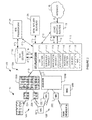
- an exemplary embodiment of an inventive communication system 100 may be viewed in Figure 2 .
- the system 100 includes the RAN 14 coupled to a packet switched portion 124 of the system 100, which may be coupled to one or more external packet switched networks, such as the packet switched network 16.
- the prior art subscriber management system discussed in the Background Section includes the AAA Server 30, the QoS Policy Manager 40, the DPI device 50, and the Application Manager 28, as well as components implemented on the ASN-GWs 20A and 20B (i.e., the Accounting Client 34, Hotlining function 36, and QoS SFA function 44).
- the core Switch/Router platform 13, IMS/Application service framework 31, and non-IMS application servers 29, are not generally considered part of the prior art subscriber management system.
- the subscriber management system of the communication system 100 relocates or consolidates functionality that is distributed amongst several components in prior art systems into a single component referred to as a DPI platform 110.
- the DPI platform 110 incorporates the functionality of the DPI device 50, and further provides the functionality of the QoS Policy Manager 40, the Application Manager 28, the Accounting Client 34, the Hotlining function 36, and the QoS SFA function 44.
- the DPI platform 110 includes a DPI function 111, a QoS Policy Manager function 112, an Application Manager function 113, an Accounting Client function 114, a Hotlining function 115, and a QoS SFA function 116.
- the platform 110 may include a Network-Access-Server ("NAS") 118 described below.
- the DPI platform 110 may also include the QoS Policy Server database (not shown) managed by the QoS Policy Manager 40 in the prior art.
- this consolidation eliminates the need for two network components (e.g. computers coupled to the network), the QoS Policy Manager 40 and Application Manager 28.
- the consolidation also relocates the Accounting Client 34, the Hotlining function 36, and the QoS SFA function 44 from the individual ASN-GWs 20A and 20B to the DPI platform 110.
- the communication system 100 includes ASN-GWs 120A and 120B, which, unlike in the ASN-GWs 20A and 20B of the prior art system 10, do not include the Accounting Client 34, the Hotlining function 36, and the QoS SFA function 44.
- DPI is usually an essential function in any commercial communication network, such as a wireless broadband network. Because in the prior art illustrated in Figure 1 , the DPI device 50 sits "in-line" with both the bearer plane traffic and the control plane traffic, and is inspecting every packet in the network 10, the DPI device 50 is well positioned to perform virtually any type of subscriber management function. Further, because of the volume of packets inspected by the DPI device 50, it is typically subject to demanding performance requirements and typically includes high performance hardware/software components designed for more robust scaling.
- the DPI platform 110 is a scalable, powerful network resource that may be modified to perform the broad array of functions performed by the DPI device 50, the QoS Policy Manager 40, the Application Manager 28, the Accounting Client 34, the Hotlining function 36, and the QoS SFA function 44 in prior art systems.
- the QoS Policy (including both the QoS Policy Manager function 40 and QoS SFA function 44), the Accounting Client 34, the Hotlining function 36, and the Application Manager 28 are all closely related functions that may all be implemented by inspection of control and bearer plane packets. They all interface with AAA Server 30 and the Core Switch/Router platform 13, and IMS/Application service framework 31. Thus, by centralizing these functions into the DPI platform 110, the number of interfaces and associated complexities in the system 100 is reduced.
- arrows depict control plane interfaces related to these subscriber management functions.
- Arrows "A” show Accounting interfaces
- arrows "B” show hotlining interfaces
- arrows "C” show QoS policy management interfaces.
- the bold black lines “D” show the data plane traffic interfaces.
- the DPI platform 110 which implements the subscriber management system, sits "in-line” inspecting all control plane and bearer plane traffic. This configuration removes the need for control plane interfaces and related traffic routing on the "southbound side" of the DPI platform 110. Therefore, the DPI platform 110 imposes no consideration to traffic routing in the system 100.
- relocating and consolidating the DPI device 50, the QoS Policy Manager 40, the Application Manager 28, the Accounting Client 34, the Hotlining function 36, and the QoS SFA function 44 may require modification of the one or more of these components and/or the methods they perform.
- the MS 18 is communicating with the ASN-GW 20A via the BS 22B. While a single MS is depicted in Figures 1 and 2 , those of ordinary skill in the art appreciate that plural MS may be coupled to the RAN 14 concurrently.
- the Accounting Client 34A in the ASN-GW 20A initiates an accounting message based on certain triggering events associated with the interface between an ASN-GW 20A and the BS 22B.
- the ASN-GW 20A is aware of only a limited set of triggering events related to the session between itself and the BS 22B and consequently, can generate only a limited number of accounting messages.
- the Accounting Client 34A subsequently sends the accounting message to the AAA server 30.
- the triggering events may include a communication Start Trigger and a communication Stop Trigger.
- well defined protocol messages related to the initiation and termination of the session, respectively are communicated between the BS 22B and ASN-GW 20A. These protocol messages function as triggering events (or accounting triggers) that are typically used by the Accounting Client 34A to generate start/stop type accounting messages.
- the DPI platform 110 may be used to detect the same well-defined protocol messages related to the initiation and termination of the session.
- the Accounting Client function 114 incorporated in the DPI platform 110 achieves the same functionality as the Accounting Client 34A incorporated in the ASN-GW 20A of the prior art network 10 without having any awareness of the session details between the BS 22B and the ASN-GW 120A.
- the DPI platform 110 is inspecting all packets, it is capable of detecting more billing triggering events or accounting triggers, which its Accounting Client function 114 can use to generate accounting messages to the AAA server 30. Because the ASN-GW 20A is aware of only a limited set of triggering events related to the session between itself and the BS 22B, the prior art Accounting Client 34A incorporated into the ASN-GW 20A cannot provide accounting messages using this packet inspection technique.
- the DPI platform 110 may be configured to measure how many and what size packets a user has sent to or received from the system 100 over a predetermined time period. Using this information, the accounting client function 114 may generate a bandwidth usage report for transmission thereby to the AAA server 30. Such reports may be generated for each subscriber or MS using the system 100.
- the DPI platform 110 may be configured to detect the type of packets (e.g., a particular type of video packets) and may inform the AAA server 30 how many minutes or bytes of each type of packets a subscriber consumed over a predetermined time period. Such information may be provided by the DPI platform 110 to the AAA server 30 for each subscriber or MS using the system 100.
- the AAA server 30 may be configured to generate billing information for one or more MS (or subscriber) based on any of the above pieces of information communicated to the AAA server 30.
- the hotlining function 115 many be implemented in many ways and the following non-limiting example is provided merely for illustrative purposes.
- the DPI platform 110 includes the optional NAS 118 that functions as an accounting client and brokers security authentication for the session between the MS 18 and the AAA server 30.
- the DPI function 111 is located between the AAA server 30 and the NAS 118.
- the example also assumes a Layer 2 network connection between network elements. Using this configuration, the hotlining function 115 is performed without the MS 18 and the NAS 118 being aware that it is occurring.
- the MS sends an Access-Request message.
- the message is routed by the ASN-GW 120 to the NAS 118, which forwards the message to the AAA server 30.
- the AAA server 30 performs authentication of the request and determines the authorization level. If the authorization of the MS 18 results in something like "new device, never before seen on the network,” or "delinquent account” the user is "hotlined.”
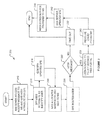
- FIG. 3 A flow diagram illustrating an exemplary hotlining process 200 described below is provided in Figure 3 .
- an Access-Accept message is triggered in the AAA server 30 and sent to the NAS 118 and the MS 18.
- the Access-Accept message instructs the NAS 118 to allocate an amount of bandwidth and a QoS level to the MS 18 that will provide reasonable service levels without adversely affecting paying subscribers.
- an attribute that the NAS 118 does not understand is included in the Access-Accept message. This attribute is intended to be seen by the DPI function 111, which sits between the AAA server 30 and the NAS 118.
- the DPI function 111 reads the attribute from the Access-Accept message and uses that attribute to identify the MS 18.
- the DPI function 111 is configured to use this attribute to extract the MAC address (e.g., username field).
- the DPI platform 110 may perform a look up in its QoS Policy Server database (not shown) to determine what this code means as far as permissible IP destinations (e.g., a policy-defined portal web page).
- the QoS SFA function 116 sends a message to the Core Switch/Router platform 13 for Service Flow Enforcement ("SFE").
- SFE Service Flow Enforcement
- the NAS 118 will discard the attribute in the message as superfluous and allow the MS 18 access restricted only by bandwidth, not by packet data service.
- the NAS 118 allocates bandwidth and a QoS to the MS 18.
- the SFE routes the user based on whether the MS 18 has provided a Hypertext Transfer Protocol ("HTTP") request. If the MS 18 attempts to access an IP address (e.g., a website), the decision in decision block 222 is "YES," and at block 230, the SFE follows the instructions of the DPI platform 110 and redirects the HTTP request to the policy-defined portal web page. If the request is anything other than an HTTP request, at block 232, the request will time out and the process 200 will terminate.
- the network element e.g., Core Switch/Router platform 13
- the portal web page allows the customer to sign up for service or address problem/issues with his/her account.
- the AAA server 30 is provisioned by the billing system to allow this user access.
- the AAA server 30 sends a Change of Authorization message to the QoS SFA function 116 for SFE indicating that the username (MAC Address) is now allowed on the network.
- the QoS SFA function 116 communicates this SFE information to the relevant network elements (e.g., the core Switch/Router platform 13) and the user's service flows are enabled.
- the services requested by the MS 18 are provided by the network 10 and the process 200 terminates.
- a radio controller such as the BSC 26B
- the message is sent to the radio controller so that the RAN 14 can be configured to match the service level purchased. Otherwise, the original service level will remain on the RAN 14 until the MS 18 times out and must re-authenticate to the system 100.
- QoS flow related messages are communicated between the QoS Policy Manager 40 and the QoS SFA function 44A which resides in the ASN-GW 20A.
- the functionality of the QoS Policy Manager 40 and the QoS SFA function 44 may be merged together. In other words, the lines separating the roles of these components may blur.
- This aspect of the communication system 100 simplifies the overall implementation of QoS Policy Management because implementing QoS SFA function 116 in the centralized DPI platform 110 essentially enables the DPI platform to perform the role of QoS Policy Manager 40 as well.
- the QoS SFA function 116 incorporated into the DPI platform 110 is configured to download a user's QoS profile from the AAA server 30 at subscriber network entry phase (i.e., upon connection of the MS 18 to the system 100.) During the network entry phase, the MS 18 initiates a session with the packet switched portion 124 of the system 100.
- the AAA server 30 may include a separate user profile associated with each of a plurality of MS authorized to use the system 100. Then, the QoS SFA function 116 uses the user's QoS profile to evaluate any service request made by the user (which the QoS SFA function can detect using the DPI function 111).
- the QoS SFA function 116 of the DPI platform 110 may optionally enforce QoS locally on the service flows because the DPI platform is inspecting each packet/flow. Managing QoS using this service flow local to the DPI platform 110 may be the most efficient location in the system 100 to enforce the QoS policy.
- the DPI platform 110 may be configured to implement the SFA and/or SFE by selectively allowing or disallowing service flows between the mobile stations and other components of the system 100 (e.g., the non-IMS application servers 29).
- the AAA server 30 and/or the QoS SFA function 116 may inform the Application Manager function 113 of information related to SFA and/or SFE allowing the Application Manager function 113 to authorize one or more service flows and apply the appropriate QoS to the one or more service flows associated with a service request.
- the Application Manager function 113 may determine the appropriate QoS to apply to other service flows associated with other mobile stations based on a particular service request received from a particular mobile station. For example, if the user of the particular mobile station has purchased a premium service, the Application Manager function 113 may reduce the QoS of other users to improve the QoS provided to the particular mobile station.
- the inventive system 100 is flexible and may operate at either Layer 2 or Layer 3. However, the choice is implementation specific and may depend on the actual network topologies and design choices. DPI platforms by definition peer into all protocol layers of every packet.
- the connection between the ASN-GW 120A and Core Switch/Router platform 13 may be a switched Layer 2 Ethernet, a routed IP connection, and the like. If either a switched Layer 2 Ethernet or a routed IP connection are used, all traffic will flow through the DPI platform 110 which may inspect past both levels of protocol headers. In some cases, these connections could be tunneled, in which case the DPI platform 110 would have to be aware of the tunneling protocol.
- Tunneling is simply the encapsulation of a higher-level protocol into the data payload portion of a lower level. Most tunneling methods are well-defined industry protocols.
- the DPI platform 110 may be configured to decode the tunneling protocols using simple programmable rules well known in the art.
- the inventive subscriber management system may be incorporated into an existing network or a new network. As discussed above, the subscriber management system may expand and/or improve subscriber management capabilities.
- EULA End-User-Licensing-Agreements
- SLA Service Level-Agreement
- DPI and various security detection technologies have advanced, network operators have increasing visibility and capability in these areas, however most typical architectures are limited to either allowing or blocking, or shaping a users service. In other words, these policies tend to be reactive in nature.
- the network provider may create new approaches to managing subscriber traffic abuses, or other issues. For example, if a user is violating a term of his/her SLA (e.g., operating an unauthorized web server from their home, creating very large uplink traffic load on the network), the subscriber management system, which is monitoring usage, would determine if/when the user has reached a level that impacts other customers (e.g., customers who have paid for better service) and direct that user (using hotlining) to a web page that may offer to sell the user better service (e.g., a higher grade SLA).
- a level that impacts other customers e.g., customers who have paid for better service
- a web page e.g., a higher grade SLA
- CALEA Network operators are subject to increasing legal and regulatory requirements, such as CALEA.
- the subscriber management system may be incorporated into simple, efficient, and/or cost effective CALEA compliant communications systems.
- Prior art technologies and policies tend to focus on packet data and transport level aspects of network traffic.
- the subscriber management system disclosed herein allows for the novel creation, management, and enforcement of application aware policies. Hotlining and accounting are two aspects of prior art systems that can be enhanced significantly by application aware policies and which may create increase revenue for network operators.
- LBS Location Based Service
- inventive system including inspecting various aspects of packet headers and data content and using pre-defined rule sets to determine the user's location.
- system 100 may be readily scalable.
- the functionality of the system 100 uses existing DPI technologies and may be extended through simple rules and web interfaces to address virtually any type of dynamic subscriber management requirements, including applications level policies, while maximizing overall efficiencies of the Core Switch/Router platform 13.
- These strategies may be implemented at either Layer 2 or Layer 3, with various tradeoffs. This strategy may result in lower cost deployments both in term of, increased performance, and enhanced flexibility for an operator to manage network architecture evolution requirements.
- FIG 4 is a block diagram of an exemplary computing device 300 configured to implement the DPI platform 110 (see Figure 2 ).
- the functionality of the DPI platform 110 may be implemented using a single computing device 300 or distributed across several computing devices having substantially the same functionality as the computing device 300.
- the DPI function 111, the QoS Policy Manager function 112, the Application Manager function 113, the Accounting Client function 114, the Hotlining function 115, the QoS SFA function 116, and the optional NAS 118 are each implemented on separate computing devices having substantially the same functionality as the computing device 300.
- the computing device 300 may include a programmable central processing unit (CPU) 160 which may be implemented by any known technology, such as a microprocessor, microcontroller, application-specific integrated circuit (ASIC), digital signal processor (DSP), or the like.
- the CPU 310 may be integrated into an electrical circuit, such as a conventional circuit board, that supplies power to the CPU 310.
- the CPU 310 may include internal memory or memory 320 may be coupled thereto.
- the memory 320 is a computer readable medium that includes instructions or computer executable components that are executed by the CPU 310.
- the memory 320 may be coupled to the CPU 310 by an internal bus 322.
- the memory 320 may comprise random access memory (RAM) and read-only memory (ROM).
- the memory 320 contains instructions and data that control the operation of the CPU 310.
- the memory 320 may also include a basic input/output system (BIOS), which contains the basic routines that help transfer information between elements within the computing device 300.
- BIOS basic input/output system
- the present invention is not limited by the specific hardware component(s) used to implement the CPU 310 or memory 320 components of the computing device 300.
- the memory 320 may include internal and/or external memory devices such as hard disk drives, floppy disk drives, and optical storage devices (e.g., CD-ROM, R/W CD-ROM, DVD, and the like).
- the computing device 300 may also include one or more I/O interfaces (not shown) such as a serial interface (e.g., RS-232, RS-432, and the like), an IEEE-488 interface, a universal serial bus (USB) interface, a parallel interface, and the like, for the communication with removable memory devices such as flash memory drives, external floppy disk drives, and the like.
- the computing device 300 may also include an optional user interface 330 having a computing display, such as a standard computer monitor, LCD, or other visual display.
- a display driver may provide an interface between the CPU 310 and the user interface 330.
- the user interface 330 may include an input device, such as a standard keyboard, mouse, track ball, buttons, touch sensitive screen, wireless user input device, and the like.
- the user interface 330 may be coupled to the CPU 310 by an internal bus 332.
- the computing device 300 also includes a network interface 340 configured to couple the computing device 300 to the network 100 (see Figure 2 ).
- the network interface 340 may be coupled to the CPU 310 by an internal bus 342.
- the network interface 340 is configured to communicate (directly or via one or more intermediate interfaces) with the other components of the network 100 implemented using separate computing devices (e.g., the AAA server 30, the ASN-GW 120A, the ASN-GW 120B, the core Switch/Router platform 13, the IMS/Application service framework 31, the non-IMS application servers 29, and the like).
- the various components of the computing device 300 may be coupled together by the internal buses 322, 332, and 342.
- Each of the internal buses 322, 332, and 342 may be constructed using a data bus, control bus, power bus, I/O bus, and the like.
- computer executable instructions 350 implementing the DPI platform 110 reside in the memory 320 as illustrated in Figure 4 .
- the computer executable instructions 350 may include instructions implementing the DPI function 111, the QoS Policy Manager function 112, the Application Manager function 113, the Accounting Client function 114, the Hotlining function 115, the QoS SFA function 116, and/or the optional NAS 118.
- the instructions implementing the DPI function 111, the QoS Policy Manager function 112, the Application Manager function 113, the Accounting Client function 114, the Hotlining function 115, the QoS SFA function 116, and/or the optional NAS 118 may reside in a memory of one more computing devices having substantially the same functionality as the computing device 300.
- any two components herein combined to achieve a particular functionality can be seen as “associated with” each other such that the desired functionality is achieved, irrespective of architectures or intermedial components.
- any two components so associated can also be viewed as being “operably connected,” or “operably coupled,” to each other to achieve the desired functionality.
Landscapes
- Engineering & Computer Science (AREA)
- Computer Networks & Wireless Communication (AREA)
- Signal Processing (AREA)
- Quality & Reliability (AREA)
- Databases & Information Systems (AREA)
- Mobile Radio Communication Systems (AREA)
- Data Exchanges In Wide-Area Networks (AREA)
Claims (15)
- Kommunikationssystem (100), das umfasst:ein paketvermitteltes Netz (124), das einen Abrechnungs-Server (30) sowie eine DPI-Plattform (deep packet inspection platform) (110) umfasst, wobei das paketvermittelte Netz so konfiguriert ist, dass es eine Abrechnungs-Schnittstelle zwischen dem Abrechnungs-Server und der DPI-Plattform bereitstellt; undein Funkzugangsnetz (14), das über einen Gateway-Knoten (120A) mit dem paketvermittelten Netz gekoppelt ist, wobei das Funkzugangsnetz so konfiguriert ist, dass es einer Vielzahl von Mobilstationen (18) drahtlosen Zugang zu dem paketvermittelten Netz bereitstellt, und das paketvermittelte Netz eine erste Daten-Schnittstelle zwischen dem Gateway-Knoten und der DPI-Plattform umfasst,wobei die DPI-Plattform eine DPI-Funktion (111) umfasst, die so konfiguriert ist, dass sie von dem Gateway-Knoten über die erste Daten-Schnittstelle empfangene Datenpakete prüft und Abrechnungs-Trigger in den geprüften Datenpaketen erfasst, die DPI-Plattform des Weiteren eine Abrechungs-Client-Funktion (114) umfasst, die so konfiguriert ist, dass sie Abrechnungs-Nachrichten auf Basis der erfassten Abrechnungs-Trigger über die Abrechnungs-Schnittstelle zu dem Abrechnungs-Server sendet, und der Abrechnungs-Server so konfiguriert ist, dass er die über die Abrechnungs-Schnittstelle gesendeten Abrechnungs-Nachrichten empfängt und auf Basis der empfangenen Abrechungs-Nachrichten Rechnungsstellungs-Informationen erzeugt.
- System nach Anspruch 1, wobei die Abrechungs-Client-Funktion (114) des Weiteren so konfiguriert ist, dass sie einen Bandbreitennutzungs-Bericht erzeugt und den Bandbreitennutzungs-Bericht zu dem Abrechnungs-Server (30) sendet.
- System nach Anspruch 2, wobei der Bandbreitennutzungs-Bericht für jede der Vielzahl von Mobilstationen (18) basierend darauf erzeugt wird, wie viele Datenpakete durch die Mobilstation über die erste Daten-Schnittstelle zwischen dem Gateway-Knoten (120A) und der DPI-Plattform (110) gesendet wurden.
- System nach Anspruch 1, 2 oder 3, wobei jedes der über die erste Daten-Schnittstelle gesendeten Datenpakete einen Typ aufweist und die Abrechnungs-Client-Funktion (114) des Weiteren so konfiguriert ist, dass sie für jede der Vielzahl von Mobilstationen (18) eine über die erste Daten-Schnittstelle über einen vorgegebenen Zeitraum gesendete Menge jedes Typs von Paket bestimmt und den Abrechnungs-Server (30) über die Abrechnungs-Schnittstelle über die bestimmte Menge jedes Typs von Paket informiert.
- System nach Anspruch 4, wobei der Abrechnungs-Server (30) des Weiteren so konfiguriert ist, dass er Rechnungsstellungs-Informationen für jede der Vielzahl von Mobilstationen (18) auf Basis der über die erste Daten-Schnittstelle über den vorgegebenen Zeitraum gesendeten Menge jedes Typs von Paket erzeugt.
- System nach Anspruch 1 oder 2, wobei eine Zeitdauer erforderlich ist, um jedes der Datenpakete über die erste Daten-Schnittstelle zu senden, jedes der Datenpakete einen Typ aufweist und die Abrechnungs-Client-Funktion (114) des Weiteren so konfiguriert ist, dass sie für jede der Vielzahl von Mobilstationen (18) eine Gesamt-Zeitdauer bestimmt, die zum Senden der Pakete jedes Typs über die erste Daten-Schnittstelle über einen vorgegebenen Zeitraum erforderlich ist, und den Abrechnungs-Server (30) über die Abrechnungs-Schnittstelle über die zum Senden der Pakete jedes Typs erforderliche Gesamt-Zeitdauer informiert.
- System nach Anspruch 6, wobei der Abrechnungs-Server (30) des Weiteren so konfiguriert ist, dass er Rechnungsstellungs-Informationen für jede der Vielzahl von Mobilstationen (18) auf Basis der zum Senden der Pakete jedes Typs über die erste Daten-Schnittstelle erforderlichen Gesamt-Zeitdauer erzeugt.
- System nach Anspruch 1, 2, 3, 4, 5, 6 oder 7, wobei die Abrechnungs-Trigger Abrechnungs-Nachrichten umfassen, die von dem Gateway-Knoten (120A) erzeugt und von ihm in Datenpaketen über die erste Daten-Schnittstelle gesendet werden.
- System nach Anspruch 1, 2, 3, 4, 5, 6, 7 oder 8, wobei das Kommunikationssystem (100) mit einem externen paketvermittelten Netz (16) über eine zweite Daten-Schnittstelle gekoppelt ist, die zwischen das externe paketvermittelte Netz und die DPI-Plattform (110) gekoppelt ist, und
die DPI-Funktion (111) so konfiguriert ist, dass sie über die zweite Datenschnittstelle gesendete Datenpakete prüft. - System nach Anspruch 1, wobei der Abrechnungs-Server (30) ein mit einer bestimmten der Vielzahl von Mobilstationen (18) verknüpftes Benutzerprofil umfasst, die DPI-Funktion (111) so konfiguriert ist, dass sie in den geprüften Datenpaketen eine durch die bestimmte Mobilstation über den Gateway-Knoten (120A) gesendete Dienstanforderung identifiziert, und die DPI-Plattform (110) einen QoS-Richtlinien-Manager (Quality of Service Policy Manager) (112) umfasst, der so konfiguriert ist, dass er das mit der bestimmten Mobilstation verknüpfte Benutzerprofil von dem Abrechnungs-Server empfängt, das Benutzerprofil verwendet, um die Dienstanforderung zu bewerten, und auf Basis der Bewertung Dienstfluss-Autorisierung (service flow authorization) in Bezug auf die Dienstanforderung implementiert.
- System nach Anspruch 10, wobei der QoS-Richtlinien-Manager (112) so konfiguriert ist, dass er das mit der bestimmten Mobilstation (18) verknüpfte Benutzerprofil von dem Abrechnungs-Server empfängt, indem er das Benutzerprofil von dem Abrechnungs-Server herunterlädt, wenn die bestimmte Mobilstation eine Sitzung mit dem paketvermittelten Netz (124) einleitet.
- System nach Anspruch 10 oder 11, wobei der QoS-Richtlinien-Manager (112) des Weiteren so konfiguriert ist, dass er auf Basis der Bewertung des Benutzerprofils ein Dienstniveau (level of service) zum Implementieren in Bezug auf die Dienstanforderung bestimmt.
- System nach Anspruch 12, wobei der QoS-Richtlinien-Manager (112) so konfiguriert ist, dass er das Dienstniveau in Bezug auf die Dienstanforderung implementiert.
- System nach Anspruch 13, wobei der QoS-Richtlinien-Manager (112) so konfiguriert ist, dass er das Dienstniveau in Bezug auf die Dienstanforderung lokal auf der DPI-Plattform (110) implementiert.
- System nach Anspruch 10, wobei der QoS-Richtlinien-Manager (112) des Weiteren so konfiguriert ist, dass er auf Basis der Bewertung des Benutzerprofils ein Dienstniveau zum Implementieren in Bezug auf die Dienstanforderung bestimmt,
das paketvermittelte Netz (124) des Weiteren eine Vielzahl von Anwendungs-Servern (29) umfasst, und
die DPI-Plattform (110) des Weiteren einen Anwendungs-Manager (113) umfasst, der so konfiguriert ist, dass er das in Bezug auf die Dienstanforderung bestimmte Dienstniveau implementiert, indem er Übertragungsverbindungen zwischen der bestimmten Mobilstation (18) und der Vielzahl von Anwendungs-Servern verwaltet.
Applications Claiming Priority (2)
| Application Number | Priority Date | Filing Date | Title |
|---|---|---|---|
| US95453707P | 2007-08-07 | 2007-08-07 | |
| PCT/US2008/072350 WO2009021049A2 (en) | 2007-08-07 | 2008-08-06 | Subscriber management system for a communication network |
Publications (3)
| Publication Number | Publication Date |
|---|---|
| EP2186259A2 EP2186259A2 (de) | 2010-05-19 |
| EP2186259A4 EP2186259A4 (de) | 2013-10-23 |
| EP2186259B1 true EP2186259B1 (de) | 2015-03-25 |
Family
ID=40342019
Family Applications (1)
| Application Number | Title | Priority Date | Filing Date |
|---|---|---|---|
| EP08827005.3A Not-in-force EP2186259B1 (de) | 2007-08-07 | 2008-08-06 | Teilnehmerverwaltungssystem für ein kommunikationsnetz |
Country Status (3)
| Country | Link |
|---|---|
| US (1) | US8126428B2 (de) |
| EP (1) | EP2186259B1 (de) |
| WO (1) | WO2009021049A2 (de) |
Families Citing this family (44)
| Publication number | Priority date | Publication date | Assignee | Title |
|---|---|---|---|---|
| US8885644B2 (en) * | 2008-02-28 | 2014-11-11 | Alcatel Lucent | Compressed IP flow recognition for in-line, integrated mobile DPI |
| US20080243536A1 (en) * | 2008-06-10 | 2008-10-02 | The Go Daddy Group, Inc. | Providing website hosting overage protection by storage on an independent data server |
| US7904345B2 (en) * | 2008-06-10 | 2011-03-08 | The Go Daddy Group, Inc. | Providing website hosting overage protection by transference to an overflow server |
| US8345595B1 (en) * | 2008-08-08 | 2013-01-01 | Sprint Communications Company L.P. | Sector-based quality-of-service enforcement |
| US8159941B2 (en) * | 2008-08-28 | 2012-04-17 | Alcatel Lucent | In-band DPI media reservation modifications to RFC 3313 |
| EP2415226A1 (de) * | 2009-03-31 | 2012-02-08 | Nokia Siemens Networks OY | Mechanismus zur authentifikation und autorisierung für netzwerk- und dienstzugang |
| CN101873220B (zh) * | 2009-04-21 | 2014-08-20 | 中兴通讯股份有限公司 | 一种深度报文检测联动设备组的信息收集装置和方法 |
| US9491055B1 (en) * | 2010-04-21 | 2016-11-08 | Sprint Communications Company L.P. | Determining user communities in communication networks |
| US8719223B2 (en) | 2010-05-06 | 2014-05-06 | Go Daddy Operating Company, LLC | Cloud storage solution for reading and writing files |
| CN102256311B (zh) | 2010-05-20 | 2016-06-15 | 中兴通讯股份有限公司 | 非资源预留型业务的处理方法、装置及系统 |
| US8774760B2 (en) * | 2010-07-19 | 2014-07-08 | Infosys Limited | Method and system for providing real-time alert notification |
| US8352630B2 (en) * | 2010-09-01 | 2013-01-08 | Sonus Networks, Inc. | Dynamic classification and grouping of network traffic for service application across multiple nodes |
| US8787875B2 (en) * | 2010-10-22 | 2014-07-22 | Affirmed Networks, Inc. | Aggregating multiple functions into a single platform |
| US8522147B2 (en) | 2011-09-20 | 2013-08-27 | Go Daddy Operating Company, LLC | Methods for verifying person's identity through person's social circle using person's photograph |
| US8538065B2 (en) | 2011-09-20 | 2013-09-17 | Go Daddy Operating Company, LLC | Systems for verifying person's identity through person's social circle using person's photograph |
| US9161225B2 (en) | 2011-09-23 | 2015-10-13 | Blackberry Limited | Authentication procedures for managing mobile device applications |
| US8554175B2 (en) | 2011-09-23 | 2013-10-08 | Blackberry Limited | Managing mobile device applications on a mobile device |
| US8554179B2 (en) | 2011-09-23 | 2013-10-08 | Blackberry Limited | Managing mobile device applications |
| US9497688B2 (en) | 2011-09-23 | 2016-11-15 | Certicom Corp. | Managing mobile device applications in a wireless network |
| CN103117951B (zh) * | 2011-11-16 | 2016-02-24 | 中国电信股份有限公司 | 实现ip网络中端到端差异化服务的方法和系统 |
| CN102752792B (zh) | 2011-12-26 | 2015-08-19 | 华为技术有限公司 | 监测移动终端上网业务质量的方法、设备及系统 |
| US8738605B2 (en) | 2012-03-30 | 2014-05-27 | Go Daddy Operating Company, LLC | Systems for discovering sensitive information on computer networks |
| US8738604B2 (en) | 2012-03-30 | 2014-05-27 | Go Daddy Operating Company, LLC | Methods for discovering sensitive information on computer networks |
| US9438659B2 (en) | 2012-06-21 | 2016-09-06 | Go Daddy Operating Company, LLC | Systems for serving website content according to user status |
| CN102752218A (zh) * | 2012-07-16 | 2012-10-24 | 北京国创富盛通信股份有限公司 | 网络优化系统和网络优化方法 |
| EP2890062B1 (de) * | 2012-08-23 | 2019-06-05 | Huawei Technologies Co., Ltd. | Paketverarbeitungsverfahren, tiefe paketuntersuchung mit anforderung eines netzwerkelements sowie vorrichtung für tiefe paketuntersuchung |
| US9160809B2 (en) | 2012-11-26 | 2015-10-13 | Go Daddy Operating Company, LLC | DNS overriding-based methods of accelerating content delivery |
| US9141669B2 (en) | 2013-01-22 | 2015-09-22 | Go Daddy Operating Company, LLC | Configuring an origin server content delivery using a pulled data list |
| US9384208B2 (en) | 2013-01-22 | 2016-07-05 | Go Daddy Operating Company, LLC | Configuring a cached website file removal using a pulled data list |
| US8910250B2 (en) * | 2013-01-24 | 2014-12-09 | Cisco Technology, Inc. | User notifications during computing network access |
| US9438493B2 (en) | 2013-01-31 | 2016-09-06 | Go Daddy Operating Company, LLC | Monitoring network entities via a central monitoring system |
| US9276863B2 (en) * | 2013-06-28 | 2016-03-01 | Alcatel Lucent | Traffic detection function based on usage based thresholds |
| US9141789B1 (en) | 2013-07-16 | 2015-09-22 | Go Daddy Operating Company, LLC | Mitigating denial of service attacks |
| US9693232B2 (en) * | 2014-02-20 | 2017-06-27 | Aselsan Elektronik Sanayi Ve Ticaret Anonim Sirketi | High security system and method used in radio systems |
| CN105634846B (zh) * | 2014-10-31 | 2019-01-22 | 任子行网络技术股份有限公司 | 一种通用dpi平台及其构建方法 |
| US10855645B2 (en) | 2015-01-09 | 2020-12-01 | Microsoft Technology Licensing, Llc | EPC node selection using custom service types |
| CN106815112B (zh) * | 2015-11-27 | 2020-03-24 | 大唐软件技术股份有限公司 | 一种基于深度包检测的海量数据监控系统及方法 |
| US11038841B2 (en) | 2017-05-05 | 2021-06-15 | Microsoft Technology Licensing, Llc | Methods of and systems of service capabilities exposure function (SCEF) based internet-of-things (IOT) communications |
| US11032378B2 (en) | 2017-05-31 | 2021-06-08 | Microsoft Technology Licensing, Llc | Decoupled control and data plane synchronization for IPSEC geographic redundancy |
| US10856134B2 (en) | 2017-09-19 | 2020-12-01 | Microsoft Technolgy Licensing, LLC | SMS messaging using a service capability exposure function |
| CN111742581B (zh) | 2018-02-20 | 2023-04-28 | 微软技术许可有限责任公司 | 网络元件的动态选择 |
| CA3092370A1 (en) | 2018-03-20 | 2019-09-26 | Affirmed Networks, Inc. | Systems and methods for network slicing |
| WO2020023511A1 (en) | 2018-07-23 | 2020-01-30 | Affirmed Networks, Inc. | System and method for intelligently managing sessions in a mobile network |
| WO2020150315A1 (en) | 2019-01-15 | 2020-07-23 | Affirmed Networks, Inc. | Dynamic auto-configuration of multi-tenant paas components |
Family Cites Families (7)
| Publication number | Priority date | Publication date | Assignee | Title |
|---|---|---|---|---|
| US7181493B2 (en) | 2003-12-23 | 2007-02-20 | Unisys Corporation | Platform independent model-based framework for exchanging information in the justice system |
| KR20060009775A (ko) | 2004-07-26 | 2006-02-01 | 삼성전자주식회사 | 멀티미디어 패킷 전송 장치 및 그 방법 |
| US7881199B2 (en) * | 2006-01-04 | 2011-02-01 | Alcatel Lucent | System and method for prioritization of traffic through internet access network |
| WO2007081727A2 (en) * | 2006-01-04 | 2007-07-19 | Starent Networks Corporation | Selecting application session services to process packet data streams based on profile information |
| CN101496387B (zh) * | 2006-03-06 | 2012-09-05 | 思科技术公司 | 用于移动无线网络中的接入认证的系统和方法 |
| US8681779B2 (en) * | 2006-09-01 | 2014-03-25 | Alcatel Lucent | Triple play subscriber and policy management system and method of providing same |
| US7831489B2 (en) * | 2007-07-23 | 2010-11-09 | Cisco Technology, Inc. | Correlation of billing information by a network element |
-
2008
- 2008-08-05 US US12/186,451 patent/US8126428B2/en active Active
- 2008-08-06 EP EP08827005.3A patent/EP2186259B1/de not_active Not-in-force
- 2008-08-06 WO PCT/US2008/072350 patent/WO2009021049A2/en not_active Ceased
Also Published As
| Publication number | Publication date |
|---|---|
| US20090042537A1 (en) | 2009-02-12 |
| WO2009021049A3 (en) | 2009-03-26 |
| US8126428B2 (en) | 2012-02-28 |
| EP2186259A2 (de) | 2010-05-19 |
| EP2186259A4 (de) | 2013-10-23 |
| WO2009021049A2 (en) | 2009-02-12 |
Similar Documents
| Publication | Publication Date | Title |
|---|---|---|
| EP2186259B1 (de) | Teilnehmerverwaltungssystem für ein kommunikationsnetz | |
| US7805127B2 (en) | System and method for generating a unified accounting record for a communication session | |
| US9967348B2 (en) | Methods and apparatus for providing session policy during a registration of a device | |
| US10244463B2 (en) | System and method for application based selection of a radio network | |
| EP1735983B1 (de) | Eine methode und ein system zur bedienung der zustellung eines inhalts in computernetzen | |
| EP3300303B1 (de) | Flussmarkierung zur dienstrichtlinienimplementierung | |
| KR102072622B1 (ko) | 네트워크 용량을 보호하기 위한 디바이스-보조 서비스들 | |
| CN101390432B (zh) | 基于简档信息选择应用会话服务以处理包数据流 | |
| EP2406928B1 (de) | Verkehrssteuerung durch ip-multimedia-subsystem | |
| US9131071B2 (en) | Binding of SD messages with radius messages | |
| AU2012209513A1 (en) | Flow tagging for service policy implementation | |
| CN101772981A (zh) | 网络接入选择信息的简单检索的方法 | |
| JP5850473B2 (ja) | 装置のサービスプロセッサ構成に基づくネットワークポリシの適合 | |
| CN103718508B (zh) | 通信网络中的高级确定、处理和控制 | |
| US9749476B2 (en) | System and method for providing toll-free application data access | |
| WO2014044304A1 (en) | Method and node for controlling resources for a media service as well as a corresponding system and computer program | |
| WO2016091294A1 (en) | Estimating data traffic composition of a communication network through extrapolation |
Legal Events
| Date | Code | Title | Description |
|---|---|---|---|
| PUAI | Public reference made under article 153(3) epc to a published international application that has entered the european phase |
Free format text: ORIGINAL CODE: 0009012 |
|
| 17P | Request for examination filed |
Effective date: 20100304 |
|
| AK | Designated contracting states |
Kind code of ref document: A2 Designated state(s): AT BE BG CH CY CZ DE DK EE ES FI FR GB GR HR HU IE IS IT LI LT LU LV MC MT NL NO PL PT RO SE SI SK TR |
|
| AX | Request for extension of the european patent |
Extension state: AL BA MK RS |
|
| DAX | Request for extension of the european patent (deleted) | ||
| A4 | Supplementary search report drawn up and despatched |
Effective date: 20130920 |
|
| RIC1 | Information provided on ipc code assigned before grant |
Ipc: H04L 12/24 20060101AFI20130916BHEP Ipc: H04L 12/14 20060101ALI20130916BHEP Ipc: H04L 12/857 20130101ALI20130916BHEP |
|
| GRAP | Despatch of communication of intention to grant a patent |
Free format text: ORIGINAL CODE: EPIDOSNIGR1 |
|
| INTG | Intention to grant announced |
Effective date: 20141014 |
|
| GRAS | Grant fee paid |
Free format text: ORIGINAL CODE: EPIDOSNIGR3 |
|
| GRAA | (expected) grant |
Free format text: ORIGINAL CODE: 0009210 |
|
| AK | Designated contracting states |
Kind code of ref document: B1 Designated state(s): AT BE BG CH CY CZ DE DK EE ES FI FR GB GR HR HU IE IS IT LI LT LU LV MC MT NL NO PL PT RO SE SI SK TR |
|
| REG | Reference to a national code |
Ref country code: GB Ref legal event code: FG4D |
|
| REG | Reference to a national code |
Ref country code: CH Ref legal event code: EP |
|
| REG | Reference to a national code |
Ref country code: IE Ref legal event code: FG4D |
|
| REG | Reference to a national code |
Ref country code: DE Ref legal event code: R096 Ref document number: 602008037352 Country of ref document: DE Effective date: 20150507 |
|
| REG | Reference to a national code |
Ref country code: AT Ref legal event code: REF Ref document number: 718426 Country of ref document: AT Kind code of ref document: T Effective date: 20150515 |
|
| PG25 | Lapsed in a contracting state [announced via postgrant information from national office to epo] |
Ref country code: FI Free format text: LAPSE BECAUSE OF FAILURE TO SUBMIT A TRANSLATION OF THE DESCRIPTION OR TO PAY THE FEE WITHIN THE PRESCRIBED TIME-LIMIT Effective date: 20150325 Ref country code: LT Free format text: LAPSE BECAUSE OF FAILURE TO SUBMIT A TRANSLATION OF THE DESCRIPTION OR TO PAY THE FEE WITHIN THE PRESCRIBED TIME-LIMIT Effective date: 20150325 Ref country code: SE Free format text: LAPSE BECAUSE OF FAILURE TO SUBMIT A TRANSLATION OF THE DESCRIPTION OR TO PAY THE FEE WITHIN THE PRESCRIBED TIME-LIMIT Effective date: 20150325 Ref country code: HR Free format text: LAPSE BECAUSE OF FAILURE TO SUBMIT A TRANSLATION OF THE DESCRIPTION OR TO PAY THE FEE WITHIN THE PRESCRIBED TIME-LIMIT Effective date: 20150325 |
|
| REG | Reference to a national code |
Ref country code: AT Ref legal event code: MK05 Ref document number: 718426 Country of ref document: AT Kind code of ref document: T Effective date: 20150325 |
|
| REG | Reference to a national code |
Ref country code: FR Ref legal event code: PLFP Year of fee payment: 8 |
|
| REG | Reference to a national code |
Ref country code: LT Ref legal event code: MG4D |
|
| PG25 | Lapsed in a contracting state [announced via postgrant information from national office to epo] |
Ref country code: LV Free format text: LAPSE BECAUSE OF FAILURE TO SUBMIT A TRANSLATION OF THE DESCRIPTION OR TO PAY THE FEE WITHIN THE PRESCRIBED TIME-LIMIT Effective date: 20150325 Ref country code: GR Free format text: LAPSE BECAUSE OF FAILURE TO SUBMIT A TRANSLATION OF THE DESCRIPTION OR TO PAY THE FEE WITHIN THE PRESCRIBED TIME-LIMIT Effective date: 20150626 |
|
| PG25 | Lapsed in a contracting state [announced via postgrant information from national office to epo] |
Ref country code: NL Free format text: LAPSE BECAUSE OF FAILURE TO SUBMIT A TRANSLATION OF THE DESCRIPTION OR TO PAY THE FEE WITHIN THE PRESCRIBED TIME-LIMIT Effective date: 20150325 |
|
| PG25 | Lapsed in a contracting state [announced via postgrant information from national office to epo] |
Ref country code: ES Free format text: LAPSE BECAUSE OF FAILURE TO SUBMIT A TRANSLATION OF THE DESCRIPTION OR TO PAY THE FEE WITHIN THE PRESCRIBED TIME-LIMIT Effective date: 20150325 Ref country code: RO Free format text: LAPSE BECAUSE OF FAILURE TO SUBMIT A TRANSLATION OF THE DESCRIPTION OR TO PAY THE FEE WITHIN THE PRESCRIBED TIME-LIMIT Effective date: 20150325 Ref country code: CZ Free format text: LAPSE BECAUSE OF FAILURE TO SUBMIT A TRANSLATION OF THE DESCRIPTION OR TO PAY THE FEE WITHIN THE PRESCRIBED TIME-LIMIT Effective date: 20150325 Ref country code: PT Free format text: LAPSE BECAUSE OF FAILURE TO SUBMIT A TRANSLATION OF THE DESCRIPTION OR TO PAY THE FEE WITHIN THE PRESCRIBED TIME-LIMIT Effective date: 20150727 Ref country code: SK Free format text: LAPSE BECAUSE OF FAILURE TO SUBMIT A TRANSLATION OF THE DESCRIPTION OR TO PAY THE FEE WITHIN THE PRESCRIBED TIME-LIMIT Effective date: 20150325 Ref country code: EE Free format text: LAPSE BECAUSE OF FAILURE TO SUBMIT A TRANSLATION OF THE DESCRIPTION OR TO PAY THE FEE WITHIN THE PRESCRIBED TIME-LIMIT Effective date: 20150325 |
|
| PGFP | Annual fee paid to national office [announced via postgrant information from national office to epo] |
Ref country code: GB Payment date: 20150827 Year of fee payment: 8 Ref country code: DE Payment date: 20150827 Year of fee payment: 8 |
|
| PG25 | Lapsed in a contracting state [announced via postgrant information from national office to epo] |
Ref country code: AT Free format text: LAPSE BECAUSE OF FAILURE TO SUBMIT A TRANSLATION OF THE DESCRIPTION OR TO PAY THE FEE WITHIN THE PRESCRIBED TIME-LIMIT Effective date: 20150325 Ref country code: IS Free format text: LAPSE BECAUSE OF FAILURE TO SUBMIT A TRANSLATION OF THE DESCRIPTION OR TO PAY THE FEE WITHIN THE PRESCRIBED TIME-LIMIT Effective date: 20150725 Ref country code: PL Free format text: LAPSE BECAUSE OF FAILURE TO SUBMIT A TRANSLATION OF THE DESCRIPTION OR TO PAY THE FEE WITHIN THE PRESCRIBED TIME-LIMIT Effective date: 20150325 |
|
| PGFP | Annual fee paid to national office [announced via postgrant information from national office to epo] |
Ref country code: FR Payment date: 20150817 Year of fee payment: 8 |
|
| REG | Reference to a national code |
Ref country code: DE Ref legal event code: R097 Ref document number: 602008037352 Country of ref document: DE |
|
| PG25 | Lapsed in a contracting state [announced via postgrant information from national office to epo] |
Ref country code: DK Free format text: LAPSE BECAUSE OF FAILURE TO SUBMIT A TRANSLATION OF THE DESCRIPTION OR TO PAY THE FEE WITHIN THE PRESCRIBED TIME-LIMIT Effective date: 20150325 |
|
| PLBE | No opposition filed within time limit |
Free format text: ORIGINAL CODE: 0009261 |
|
| STAA | Information on the status of an ep patent application or granted ep patent |
Free format text: STATUS: NO OPPOSITION FILED WITHIN TIME LIMIT |
|
| 26N | No opposition filed |
Effective date: 20160105 |
|
| PG25 | Lapsed in a contracting state [announced via postgrant information from national office to epo] |
Ref country code: LU Free format text: LAPSE BECAUSE OF FAILURE TO SUBMIT A TRANSLATION OF THE DESCRIPTION OR TO PAY THE FEE WITHIN THE PRESCRIBED TIME-LIMIT Effective date: 20150806 Ref country code: MC Free format text: LAPSE BECAUSE OF FAILURE TO SUBMIT A TRANSLATION OF THE DESCRIPTION OR TO PAY THE FEE WITHIN THE PRESCRIBED TIME-LIMIT Effective date: 20150325 |
|
| REG | Reference to a national code |
Ref country code: CH Ref legal event code: PL |
|
| PG25 | Lapsed in a contracting state [announced via postgrant information from national office to epo] |
Ref country code: LI Free format text: LAPSE BECAUSE OF NON-PAYMENT OF DUE FEES Effective date: 20150831 Ref country code: IT Free format text: LAPSE BECAUSE OF FAILURE TO SUBMIT A TRANSLATION OF THE DESCRIPTION OR TO PAY THE FEE WITHIN THE PRESCRIBED TIME-LIMIT Effective date: 20150325 Ref country code: CH Free format text: LAPSE BECAUSE OF NON-PAYMENT OF DUE FEES Effective date: 20150831 |
|
| PG25 | Lapsed in a contracting state [announced via postgrant information from national office to epo] |
Ref country code: SI Free format text: LAPSE BECAUSE OF FAILURE TO SUBMIT A TRANSLATION OF THE DESCRIPTION OR TO PAY THE FEE WITHIN THE PRESCRIBED TIME-LIMIT Effective date: 20150325 |
|
| REG | Reference to a national code |
Ref country code: IE Ref legal event code: MM4A |
|
| PG25 | Lapsed in a contracting state [announced via postgrant information from national office to epo] |
Ref country code: IE Free format text: LAPSE BECAUSE OF NON-PAYMENT OF DUE FEES Effective date: 20150806 |
|
| PG25 | Lapsed in a contracting state [announced via postgrant information from national office to epo] |
Ref country code: BE Free format text: LAPSE BECAUSE OF FAILURE TO SUBMIT A TRANSLATION OF THE DESCRIPTION OR TO PAY THE FEE WITHIN THE PRESCRIBED TIME-LIMIT Effective date: 20150325 |
|
| REG | Reference to a national code |
Ref country code: DE Ref legal event code: R119 Ref document number: 602008037352 Country of ref document: DE |
|
| PG25 | Lapsed in a contracting state [announced via postgrant information from national office to epo] |
Ref country code: MT Free format text: LAPSE BECAUSE OF FAILURE TO SUBMIT A TRANSLATION OF THE DESCRIPTION OR TO PAY THE FEE WITHIN THE PRESCRIBED TIME-LIMIT Effective date: 20150325 |
|
| GBPC | Gb: european patent ceased through non-payment of renewal fee |
Effective date: 20160806 |
|
| REG | Reference to a national code |
Ref country code: FR Ref legal event code: ST Effective date: 20170428 |
|
| PG25 | Lapsed in a contracting state [announced via postgrant information from national office to epo] |
Ref country code: BG Free format text: LAPSE BECAUSE OF FAILURE TO SUBMIT A TRANSLATION OF THE DESCRIPTION OR TO PAY THE FEE WITHIN THE PRESCRIBED TIME-LIMIT Effective date: 20150325 Ref country code: HU Free format text: LAPSE BECAUSE OF FAILURE TO SUBMIT A TRANSLATION OF THE DESCRIPTION OR TO PAY THE FEE WITHIN THE PRESCRIBED TIME-LIMIT; INVALID AB INITIO Effective date: 20080806 Ref country code: NO Free format text: LAPSE BECAUSE OF FAILURE TO SUBMIT A TRANSLATION OF THE DESCRIPTION OR TO PAY THE FEE WITHIN THE PRESCRIBED TIME-LIMIT Effective date: 20150625 |
|
| PG25 | Lapsed in a contracting state [announced via postgrant information from national office to epo] |
Ref country code: CY Free format text: LAPSE BECAUSE OF FAILURE TO SUBMIT A TRANSLATION OF THE DESCRIPTION OR TO PAY THE FEE WITHIN THE PRESCRIBED TIME-LIMIT Effective date: 20150325 |
|
| PG25 | Lapsed in a contracting state [announced via postgrant information from national office to epo] |
Ref country code: DE Free format text: LAPSE BECAUSE OF NON-PAYMENT OF DUE FEES Effective date: 20170301 Ref country code: FR Free format text: LAPSE BECAUSE OF NON-PAYMENT OF DUE FEES Effective date: 20160831 Ref country code: GB Free format text: LAPSE BECAUSE OF NON-PAYMENT OF DUE FEES Effective date: 20160806 |
|
| PG25 | Lapsed in a contracting state [announced via postgrant information from national office to epo] |
Ref country code: TR Free format text: LAPSE BECAUSE OF FAILURE TO SUBMIT A TRANSLATION OF THE DESCRIPTION OR TO PAY THE FEE WITHIN THE PRESCRIBED TIME-LIMIT Effective date: 20150325 |