EP2173383B1 - Hydrolysable polymeric fmoc-linker - Google Patents
Hydrolysable polymeric fmoc-linker Download PDFInfo
- Publication number
- EP2173383B1 EP2173383B1 EP08759334.9A EP08759334A EP2173383B1 EP 2173383 B1 EP2173383 B1 EP 2173383B1 EP 08759334 A EP08759334 A EP 08759334A EP 2173383 B1 EP2173383 B1 EP 2173383B1
- Authority
- EP
- European Patent Office
- Prior art keywords
- alkyl
- protein
- compound
- psa
- group
- Prior art date
- Legal status (The legal status is an assumption and is not a legal conclusion. Google has not performed a legal analysis and makes no representation as to the accuracy of the status listed.)
- Active
Links
- 0 C*C(CC1C)C=CC1=* Chemical compound C*C(CC1C)C=CC1=* 0.000 description 1
Images


Classifications
-
- C—CHEMISTRY; METALLURGY
- C07—ORGANIC CHEMISTRY
- C07D—HETEROCYCLIC COMPOUNDS
- C07D207/00—Heterocyclic compounds containing five-membered rings not condensed with other rings, with one nitrogen atom as the only ring hetero atom
- C07D207/02—Heterocyclic compounds containing five-membered rings not condensed with other rings, with one nitrogen atom as the only ring hetero atom with only hydrogen or carbon atoms directly attached to the ring nitrogen atom
- C07D207/44—Heterocyclic compounds containing five-membered rings not condensed with other rings, with one nitrogen atom as the only ring hetero atom with only hydrogen or carbon atoms directly attached to the ring nitrogen atom having three double bonds between ring members or between ring members and non-ring members
- C07D207/444—Heterocyclic compounds containing five-membered rings not condensed with other rings, with one nitrogen atom as the only ring hetero atom with only hydrogen or carbon atoms directly attached to the ring nitrogen atom having three double bonds between ring members or between ring members and non-ring members having two doubly-bound oxygen atoms directly attached in positions 2 and 5
-
- A—HUMAN NECESSITIES
- A61—MEDICAL OR VETERINARY SCIENCE; HYGIENE
- A61K—PREPARATIONS FOR MEDICAL, DENTAL OR TOILETRY PURPOSES
- A61K47/00—Medicinal preparations characterised by the non-active ingredients used, e.g. carriers or inert additives; Targeting or modifying agents chemically bound to the active ingredient
- A61K47/50—Medicinal preparations characterised by the non-active ingredients used, e.g. carriers or inert additives; Targeting or modifying agents chemically bound to the active ingredient the non-active ingredient being chemically bound to the active ingredient, e.g. polymer-drug conjugates
- A61K47/51—Medicinal preparations characterised by the non-active ingredients used, e.g. carriers or inert additives; Targeting or modifying agents chemically bound to the active ingredient the non-active ingredient being chemically bound to the active ingredient, e.g. polymer-drug conjugates the non-active ingredient being a modifying agent
- A61K47/56—Medicinal preparations characterised by the non-active ingredients used, e.g. carriers or inert additives; Targeting or modifying agents chemically bound to the active ingredient the non-active ingredient being chemically bound to the active ingredient, e.g. polymer-drug conjugates the non-active ingredient being a modifying agent the modifying agent being an organic macromolecular compound, e.g. an oligomeric, polymeric or dendrimeric molecule
- A61K47/61—Medicinal preparations characterised by the non-active ingredients used, e.g. carriers or inert additives; Targeting or modifying agents chemically bound to the active ingredient the non-active ingredient being chemically bound to the active ingredient, e.g. polymer-drug conjugates the non-active ingredient being a modifying agent the modifying agent being an organic macromolecular compound, e.g. an oligomeric, polymeric or dendrimeric molecule the organic macromolecular compound being a polysaccharide or a derivative thereof
-
- A—HUMAN NECESSITIES
- A61—MEDICAL OR VETERINARY SCIENCE; HYGIENE
- A61K—PREPARATIONS FOR MEDICAL, DENTAL OR TOILETRY PURPOSES
- A61K31/00—Medicinal preparations containing organic active ingredients
- A61K31/33—Heterocyclic compounds
- A61K31/395—Heterocyclic compounds having nitrogen as a ring hetero atom, e.g. guanethidine or rifamycins
- A61K31/40—Heterocyclic compounds having nitrogen as a ring hetero atom, e.g. guanethidine or rifamycins having five-membered rings with one nitrogen as the only ring hetero atom, e.g. sulpiride, succinimide, tolmetin, buflomedil
- A61K31/4015—Heterocyclic compounds having nitrogen as a ring hetero atom, e.g. guanethidine or rifamycins having five-membered rings with one nitrogen as the only ring hetero atom, e.g. sulpiride, succinimide, tolmetin, buflomedil having oxo groups directly attached to the heterocyclic ring, e.g. piracetam, ethosuximide
-
- A—HUMAN NECESSITIES
- A61—MEDICAL OR VETERINARY SCIENCE; HYGIENE
- A61K—PREPARATIONS FOR MEDICAL, DENTAL OR TOILETRY PURPOSES
- A61K38/00—Medicinal preparations containing peptides
- A61K38/16—Peptides having more than 20 amino acids; Gastrins; Somatostatins; Melanotropins; Derivatives thereof
- A61K38/17—Peptides having more than 20 amino acids; Gastrins; Somatostatins; Melanotropins; Derivatives thereof from animals; from humans
- A61K38/39—Connective tissue peptides, e.g. collagen, elastin, laminin, fibronectin, vitronectin, cold insoluble globulin [CIG]
-
- C—CHEMISTRY; METALLURGY
- C07—ORGANIC CHEMISTRY
- C07C—ACYCLIC OR CARBOCYCLIC COMPOUNDS
- C07C43/00—Ethers; Compounds having groups, groups or groups
- C07C43/02—Ethers
- C07C43/03—Ethers having all ether-oxygen atoms bound to acyclic carbon atoms
- C07C43/14—Unsaturated ethers
- C07C43/164—Unsaturated ethers containing six-membered aromatic rings
- C07C43/168—Unsaturated ethers containing six-membered aromatic rings containing six-membered aromatic rings and other rings
Definitions
- the present invention relates to the preparation of a hydrolysable linker, which is bound to at least one carbohydrate. These hydrolysable linkers are useful for extending the in-vivo circulation of protein and peptide drugs.
- protein or peptide drugs are short-lived and have often a short circulatory half-life in vivo. Considering that protein or peptide drugs are not absorbed orally, prolonged maintenance or therapeutically active drugs in the circulation is a desirable feature of obvious clinical importance.
- polymers e.g. polyalkylene-oxides ( Roberts et al., Advan. Drug Rev. 54, 459-476 (2002 )) or polysaccharides like polysialic acid ( Fernandes et al., Biochim. Biophys. Acta 1341, 26-34 (1997 )), dextranes or hydroxyl alkyl starch.
- Polysialic acid also known as colominic acid (CA) is a natural occurring polysaccharide. It is a homopolymer of N-acetylneuraminic acid with a(2 ⁇ 8) ketosidic linkage and contains vicinal diol groups at its non-reducing end. PSA is negatively charged and is a natural constituent of the human body. It can easily be produced from bacteria in large quantities with pre-determined physical characteristics ( U.S. 5,846,951 ). Being chemically and immunologically identical to polysialic. acid in the human body, bacterial polysialic acid is non-immunogenic even when coupled to proteins. Unlike other polymers (e.g.; PEG), polysialic acid is biodegradable.
- Short PSA polymeric chains with only 1-4 sialic acid units have also been synthesized ( Kang et al., Chem. Commun., 227-228 (2000 ); Ress et al., Current Organic Synthesis 1, 31-46 (2004 )).
- U.S. 7,122,189 describes releasable PEG-linkers based on bis-N-2-hydroxyethyl glycine groups (bicine).
- WO 04/089280 and WO 06/138572 describe hydrolysable fluorene-based PEG constructs.
- the protein-polymer conjugate can be regarded as a prodrug and the activity of the protein can be released from the conjugate via a controlled release mechanism.
- improved pharmacokinetic properties of the drug can be obtained ( Zhao et al., Bioconjugate Chem. 17, 341-351 (2006 )).
- the present invention provides a hydrolysable linker, which is bound to at least one carbohydrate, wherein the hydrolysable linker is conjugated to a protein or peptide drug in order to improve its in-vivo properties such as the in-vivo circulation.
- the present invention provides a compound of the general formula 1:
- the present invention provides a hydrolysable linker, which is bound to at least one carbohydrate, wherein the hydrolysable linker can be further conjugated to a protein or peptide drug in order to improve their in-vivo properties such as in-vivo circulation.
- the activity of the protein or peptide drug can be released from the conjugate via a controlled release mechanism.
- C 1 -C 8 -alkyl refers to monovalent alkyl groups having 1 to 8 carbon atoms. This term is exemplified by groups such as methyl, ethyl, propyl, butyl, hexyl and the like. Linear and branched alkyls are included.
- Leaving groups refers to groups, which are capable of reacting with a nucleophile present on the protein or peptide drug that forms the conjugate. This term is exemplified by groups such as N-hydroxysuccimimidyl, N-hydroxybenzotriazolyl, halogen, N-hydroxyphthalimidyl, p-nitrophenoxy, imidazolyl, thiazolidinyl thione, O-acyl ureas or other suitable leaving groups will be apparent to those of ordinary skill.
- the protein or peptide drug thus contains one or more groups for displacement, such as an amine.
- Protein or peptide drug are plasma proteins or blood coagulation factors such as FVIII, VWF, FVIIa and FIX.
- a “semi-synthetic biopolymer” refers to a manufactured organic polymer, which is based on a naturally occurring polymer.
- a semi-synthetic biopolymer may also be functionalized by reactive groups in order to conjugate these functionalized semi-synthetic biopolymers to other compounds.
- This term "semi-synthetic biopolymer” is exemplified by linear or branched polymers such as carbohydrates, specifically such as polysaccharides. Examples of polysaccharides are PSA (polysialic acid) and HAS (hydroxyalkylstarch).
- Hydrolysable linker refers to a linker system, in which the protein is released in native form. The protein is released and the linker is split off completely. Synonyms for hydrolysable are “degradable” or “releasable” linkers.
- the present invention provides a compound of the general formula 1:
- the carbohydrate is a polysaccharide, preferably comprising at least 3 units of a monosaccharide.
- said polysaccharide comprises between 2-200 units, preferably between 10-100 units of a monosaccharide.
- the polysaccharide is a PSA derivative.
- carbohydrate is bound to the succinimidyl moiety via a thioether linkage.
- R 1 is at each occurrence independently a (C 1 -C 8 )-alkyl.
- R 1 is at each occurrence independently selected from the group consisting of methyl, ethyl, propyl, butyl, and hexyl.
- R 2 is independently selected from the group consisting of -C(O)NR-, -C(O)NR-(C 1 -C 8 )-alkyl-NR-, -NRC(O)- and -NRC(O)-(C 1 -C 8 )-alkyl-NR, wherein R is independently either hydrogen or (C 1 -C 8 )-alkyl.
- R 2 is -C(O)NH-.
- R 2 is -NHC(O)-.
- the compound of formula 1 is bound to radical Y in at least one of position 1, 2, 3, 4, 5, 6, 7, or 8.
- the compound of formula 1 is bound to radical Y in positions 2 and 7.
- the invention relates to the preparation of a compound of formula 2.
- HS-POLYMER is a thiol-derivatized semi-synthetic biopolymer, such as or also described herein, PSA-SH
- a compound of formula 2 can be easily reacted with a protein or peptide drug containing one or more groups for displacement, such as amines.
- Preferred protein or peptide drug are blood coagulation factors such as FVIII, VWF, FVIIa, FIX.
- Protein and peptide drugs modified according to the above protocol have a significantly increased in-vivo circulation.
- the hydrolysability of the linker allows that the activity can be regained after hydrolysis, by release of the protein in its native form.
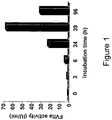
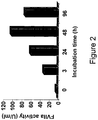
- An example is shown in FIGS. 1 and 2 .
- the restoration of the biological activity of a protein conjugate is shown in FIGS. 3 and 4 .
- HSA Human Serum Albumin
- Mal-FMS-OSU linker prepared as outlined by Tsubery et al., J Biol Chem. 279, 38118-38124 (2004 )
- 25 mM sodium acetate buffer, pH 6.2 for 1 hour.
- the excess linker is separated by gelfiltration using Sephadex G-25 (GE-Healthcare) using the same buffer system
- PSA-SH prepared according to Example 1 is added.
- the mixture is incubated for 2 hours at R.T.
- the conjugate is purified by anion-exchange chromatography using DEAE-Sepharose FF (GE Healthcare).
- the Protein-PSA conjugate is eluted with 25 mM sodium acetate buffer pH 4.5.
- the conjugate containing fractions are pooled and concentrated by ultrafiltration using a 10K membrane. Then the solution is diafiltrated against 25 mM sodium acetate buffer, pH 6.2.
- a rFVIIa-PSA conjugate was prepared according to Example 2 using a concentration of MAL-FMS-OSU of 0.05 mg/mg protein.
- 8 normal rats (4 male, 4 female) were anaesthetized and the rFVIIa-PSA-conjugate in buffer (1.3 g/L glycylglycine, 3 g/L sodium chloride, 30 g/L mannitol, 1.5 g/L CaCl 2 x 2H 2 O, 0.1 g/L Tween 80, pH 5.5) was applied by intravenous injection into the tail vein in a volume dose of 10 ml per kg (1200 ⁇ g protein/kg).
- Unmodified rFVIIa in a dose of 1200 ⁇ g protein/kg was used as control in 8 normal rats (4 male, 4 female). Blood samples were taken from the tail artery 5 minutes, 1 hour, 2, 4, 7, 10 and 24 hours after substance application and citrated plasma was prepared and frozen for further analysis.
- FVIIa activity in plasma was measured with a clotting assay (Staclot, Diagnostica Stago, Asimbas, France), FVII antigen was determined with an ELISA (polyclonal anti-human FVII antibody). The results were evaluated statistically.
- FVIIa clotting activity the dose adjusted area under curve (AUC) was 0.014 for unmodified rFVIIa and increased to 0.015 for rFVIIa - conjugate (0 - infinity).
- the terminal half-life increased from 2.3 to 4.4 hours and the mean residence time (MRT) from 1.4 to 2.4 hours.
- rFVIIa-trimer-PSA conjugate was prepared according to Example 3 using a MAL-FMS-OSU concentration of 0.05 mg/mg protein.
- 6 normal rats (3 male, 3 female) were anaesthetized and the rFVIIa-trimer-PSA-conjugate in buffer (1.3 g/L glycylglycine, 3 g/L sodium chloride, 30 g/L mannitol, 1.5 g/L CaCl 2 x 2H 2 O, 0.1 g/L Tween 80, pH 5.5) was applied by intravenous injection into the tail vein in a volume dose of 10 ml per kg (1200 ⁇ g protein/kg).
- buffer 1.3 g/L glycylglycine, 3 g/L sodium chloride, 30 g/L mannitol, 1.5 g/L CaCl 2 x 2H 2 O, 0.1 g/L Tween 80, pH 5.5
- Unmodified rFVIIa in a dose of 1200 ⁇ g protein/kg was used as a control in 6 normal rats (3 male, 3 female). Blood samples were taken from the tail artery 5 minutes, 1 hour, 2, 4, 7, 10 and 24 hours after substance application and citrated plasma was prepared and frozen for further analysis.
- FVIIa activity in plasma was measured with a clotting assay (Staclot, Diagnostica Stago, Asimbas, France) and the elimination curve was constructed.
- the improved pharmacokinetic of the rFVIIa-trimer-PSA conjugate is illustrated in Figure 5 .
- the reaction was stopped by adding an aqueous solution of 0.1 M glycine (final concentration 10 mM) and 5 mM cysteine (end concentration 0.5 mM).
- the free reagents were separated from the rFIX-PSA conjugate by Hydrophobic Interaction Chromatography using a prepacked Butyl Sepharose column (HiTrap Butyl FF 5 ml, GE Healthcare).
- a buffer containing 5 M NaCl 50 mM Hepes-buffer, 5M NaCl, 0.01% Tween 80, 6.7 mM CaCl 2 , pH 6.9 was added to the PSA-rFIX containing solution to give a final concentration of 3M NaCl.
- the eluate contained 0.24 mg/ml protein as measured by the BCA-assay, the evidence of bound PSA in the conjugate was proven by the resorcinol assay ( Svennerholm, Biochim Biophys Acta 24, 604-611 (1957 )).
- the eluate was concentrated 10 fold by ultrafiltration/diafiltration (UF/DF) using a 30 kD membrane (regenerated cellulose/ Millipore) against 20 mM Hepes, 50 mM NaCl, 1mM CaCl 2 , pH 7.4.
- the PSA derivative was added to the mixture (concentration: 27.8 mg PSA-SH / mg protein - 450 fold molar excess) and incubated for additional 2 hours at R.T.
- the reaction was stopped by adding an aqueous solution of 0.1 M glycine (final concentration 10 mM) and 5 mM cysteine (end concentration 0.5 mM).
- the free reagents were separated from the rFVIII-PSA conjugate by Hydrophobic Interaction Chromatography using a prepacked Butyl Sepharose column (HiTrap Butyl FF 5 ml, GE Healthcare).
- a buffer containing 5 M NaCl 50 mM Hepes-buffer, 5M NaCl, 0.01% Tween 80, 6.7 mM CaCl 2 , pH 6.9 was added to the PSA-rFVIII containing solution to give a final concentration of 3M NaCl.
Landscapes
- Health & Medical Sciences (AREA)
- Chemical & Material Sciences (AREA)
- Life Sciences & Earth Sciences (AREA)
- Organic Chemistry (AREA)
- General Health & Medical Sciences (AREA)
- Medicinal Chemistry (AREA)
- Pharmacology & Pharmacy (AREA)
- Epidemiology (AREA)
- Animal Behavior & Ethology (AREA)
- Engineering & Computer Science (AREA)
- Public Health (AREA)
- Veterinary Medicine (AREA)
- Bioinformatics & Cheminformatics (AREA)
- Biomedical Technology (AREA)
- Zoology (AREA)
- Gastroenterology & Hepatology (AREA)
- Immunology (AREA)
- Proteomics, Peptides & Aminoacids (AREA)
- Peptides Or Proteins (AREA)
- Medicinal Preparation (AREA)
- Polysaccharides And Polysaccharide Derivatives (AREA)
Description
- The present invention relates to the preparation of a hydrolysable linker, which is bound to at least one carbohydrate. These hydrolysable linkers are useful for extending the in-vivo circulation of protein and peptide drugs.
- Most protein or peptide drugs are short-lived and have often a short circulatory half-life in vivo. Considering that protein or peptide drugs are not absorbed orally, prolonged maintenance or therapeutically active drugs in the circulation is a desirable feature of obvious clinical importance.
- An attractive strategy for improving clinical properties of protein or peptide drugs is a modification of the drugs with polymers e.g. polyalkylene-oxides (Roberts et al., Advan. Drug Rev. 54, 459-476 (2002)) or polysaccharides like polysialic acid (Fernandes et al., Biochim. Biophys. Acta 1341, 26-34 (1997)), dextranes or hydroxyl alkyl starch.
- The modification with poly(ethylene glycol) (PEG) has been known for a while. However, modification of proteins with PEG often leads to reduction of the activity of the protein.
- Polysialic acid (PSA), also known as colominic acid (CA), is a natural occurring polysaccharide. It is a homopolymer of N-acetylneuraminic acid with a(2→8) ketosidic linkage and contains vicinal diol groups at its non-reducing end. PSA is negatively charged and is a natural constituent of the human body. It can easily be produced from bacteria in large quantities with pre-determined physical characteristics (
U.S. 5,846,951 ). Being chemically and immunologically identical to polysialic.
acid in the human body, bacterial polysialic acid is non-immunogenic even when coupled to proteins. Unlike other polymers (e.g.; PEG), polysialic acid is biodegradable. - However, to date no therapeutic compound comprising a polypeptide conjugated to an acidic monosaccharide such as PSA is commercially available.
- Short PSA polymeric chains with only 1-4 sialic acid units have also been synthesized (Kang et al., Chem. Commun., 227-228 (2000); Ress et al., Current )).
- Several hydrolysable or degradable linkers comprising PEG moieties have been suggested.
-
U.S. 6,515,100 , describes PEG and related polymer derivatives, having weak, hydrolytically unstable linkages -
U.S. 7,122,189 describes releasable PEG-linkers based on bis-N-2-hydroxyethyl glycine groups (bicine). -
WO 04/089280 WO 06/138572 - After conjugation of these linkers to protein drugs, the protein-polymer conjugate can be regarded as a prodrug and the activity of the protein can be released from the conjugate via a controlled release mechanism. Using this concept improved pharmacokinetic properties of the drug can be obtained (Zhao et al., Bioconjugate Chem. 17, 341-351 (2006)).
- According to the present invention there is provided a compound of the
formula 1 according toClaim 1, a process for the preparation of a compound of formula (2) according to Claim 9; and a conjugate according to Claim 13. - The present invention provides a hydrolysable linker, which is bound to at least one carbohydrate, wherein the hydrolysable linker is conjugated to a protein or peptide drug in order to improve its in-vivo properties such as the in-vivo circulation.
- The present invention provides a compound of the general formula 1:

- wherein Z is a leaving group and at least one of
position - Y is

- R1 is at each occurrence independently a (C1-C8)-alkyl;
- R2 is independently selected from the group consisting of-C(O)NR-, -C(O)NR-(C1-C8)-alkyl-NR-, -NRC(O)- and -NRC(O)-(C1-C8)-alkyl-NR;
- R is independently either hydrogen or (C1-C8)-alkyl;
- at least one of an
available position - X is -SO3-R3;
- R3 is independently selected from the group consisting of hydrogen, (C1-C8)-alkyl and (C1-C8)-alkyl-R4; and
- R4 is a polymer.
-
-
FIG. 1 shows the in-vitro hydrolysis of a FVIIa-PSA conjugate at pH 8.3. The release of the FVIIa activity was measured with the Staclot-assay (Diagnostica Stago, Asnières, France). -
FIG. 2 shows the shows the in-vitro hydrolysis of a FVIIa-trimer PSA conjugate at pH 8.3. The release of the FVIIa activity was measured with the Staclot-assay (Diagnostica Stago, Asnières, France). -
FIG. 3 shows FVIIa activity in plasma measured with a clotting assay (Staclot, Diagnostica Stago, Asnières, France). For FVIIa clotting activity the dose adjusted area under curve (AUC) was 0.014 for unmodified rFVIIa and increased to 0.015 for rFVIIa-conjugate (0-infinity). The terminal half-life increased from 2.3 to 4.4 hours and the mean residence time (MRT) from 1.4 to 2.4 hours. -
FIG. 4 shows the determination of the FVIIa antigen by ELISA with a polyclonal anti-human FVII antibody. For the antigen the dose adjusted AUC (0-infinity) increased from 0.010 (unmodified rFVIIa) to 0.014 (rFVIIa-conjugate), the terminal half life increased from 1.4 to 2.3 hours and the MRT from 1.5 to 2.2 hours. -
FIG. 5 shows FVIIa activity in plasma, measured with a clotting assay (Staclot, Diagnostica Stago, Asnières, France). The pharmacokinetic of rFVIIa-trimer-PSA conjugates is improved (-o-) compared to native rFVIIa (--Δ--). - The present invention provides a hydrolysable linker, which is bound to at least one carbohydrate, wherein the hydrolysable linker can be further conjugated to a protein or peptide drug in order to improve their in-vivo properties such as in-vivo circulation. The activity of the protein or peptide drug can be released from the conjugate via a controlled release mechanism.
- The following paragraphs provide general definitions and definition of various chemical moieties that make up the compounds according to the invention and are intended to apply uniformly through-out the specification and claims unless an otherwise expressly set out definition provides a broader definition.
- "C1-C8-alkyl" refers to monovalent alkyl groups having 1 to 8 carbon atoms. This term is exemplified by groups such as methyl, ethyl, propyl, butyl, hexyl and the like. Linear and branched alkyls are included.
- "Leaving groups" refers to groups, which are capable of reacting with a nucleophile present on the protein or peptide drug that forms the conjugate. This term is exemplified by groups such as N-hydroxysuccimimidyl, N-hydroxybenzotriazolyl, halogen, N-hydroxyphthalimidyl, p-nitrophenoxy, imidazolyl, thiazolidinyl thione, O-acyl ureas or other suitable leaving groups will be apparent to those of ordinary skill. For the purpose of the present invention, the protein or peptide drug thus contains one or more groups for displacement, such as an amine. Protein or peptide drug are plasma proteins or blood coagulation factors such as FVIII, VWF, FVIIa and FIX.
- A "semi-synthetic biopolymer" refers to a manufactured organic polymer, which is based on a naturally occurring polymer. A semi-synthetic biopolymer may also be functionalized by reactive groups in order to conjugate these functionalized semi-synthetic biopolymers to other compounds. This term "semi-synthetic biopolymer" is exemplified by linear or branched polymers such as carbohydrates, specifically such as polysaccharides. Examples of polysaccharides are PSA (polysialic acid) and HAS (hydroxyalkylstarch).
- "Hydrolysable" linker refers to a linker system, in which the protein is released in native form. The protein is released and the linker is split off completely. Synonyms for hydrolysable are "degradable" or "releasable" linkers.
- The present invention provides a compound of the general formula 1:
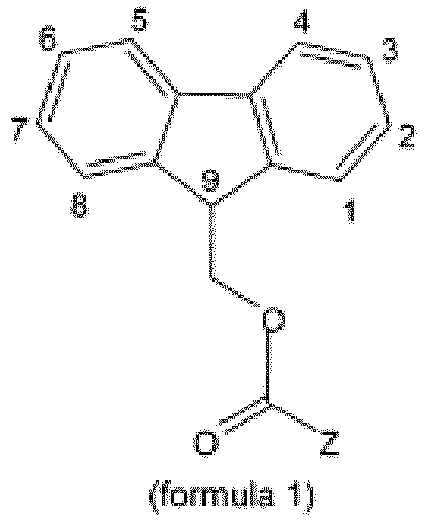
- wherein Z is a leaving group and at least one of
position - Y is

- R1 is at each occurrence independently a (C1-C8)-alkyl;
- R2 is independently selected from the group consisting of-C(O)NR-, -C(O)NR-(C1-C8)-alkyl-NR-, -NRC(O)- and -NRC(O)-(C1-C8)-alkyl-NR;
- R is independently either hydrogen or (C1-C8)-alkyl;
- at least one of an
available position - X is -SO3-R3;
- R3 is independently selected from the group consisting of hydrogen, (C1-C8)-alkyl and (C1-C8)-alkyl-R4; and
- R4 is a polymer.
- In an embodiment the carbohydrate is a polysaccharide, preferably comprising at least 3 units of a monosaccharide.
- In one embodiment said polysaccharide comprises between 2-200 units, preferably between 10-100 units of a monosaccharide.
- In one embodiment the polysaccharide is a PSA derivative.
- In another embodiment the carbohydrate is bound to the succinimidyl moiety via a thioether linkage.
- R1 is at each occurrence independently a (C1-C8)-alkyl.
- In one embodiment R1 is at each occurrence independently selected from the group consisting of methyl, ethyl, propyl, butyl, and hexyl.
- R2 is independently selected from the group consisting of -C(O)NR-, -C(O)NR-(C1-C8)-alkyl-NR-, -NRC(O)- and -NRC(O)-(C1-C8)-alkyl-NR, wherein R is independently either hydrogen or (C1-C8)-alkyl.
- In one embodiment R2 is -C(O)NH-.
- In another embodiment R2 is -NHC(O)-.
- In accordance with the present invention the compound of
formula 1, is bound to radical Y in at least one ofposition - In another embodiment the compound of
formula 1 is bound to radical Y in positions 2 and 7. - In another embodiment the compound of
formula 1 is:


- In a further embodiment, the invention relates to the preparation of a compound of formula 2.
- Tsubery et al., J Biol. Chem. 279, 38118-38124 (2004) described the synthesis of a hydrolysable PEG-linker for derivatization of proteins based on the Fmoc (9-fluorenylmethoxycarbonyl)-moiety. The synthesis of MAL-FMS-OSU (9-Hydroxymethyl-2-(amino-3-maleimido-propionate)-7-sulfo fluorene N-hydroxysuccinimidyl carbonate) is described. The synthetic scheme below illustrates the synthetic steps for the preparation of a compound of formula 2 starting from a MAL-FMS-OSU derivative.

- POLYMER is a semi-synthetic biopolymer;
- R1 is at each occurrence independently a (C1-C8)-alkyl;
- R2 is independently selected from the group consisting of -C(O)NR-, -C(O)NR-(C1-C8)-alkyl-NR-, -NRC(O)- and -NRC(O)-(C1-C8)-alkyl-NR, wherein R is independently either hydrogen or C1-C8-alkyl.
- R is independently either hydrogen or (C1-C8)-alkyl;
- X is -SO3-R3;
- R3 is independently selected from the group consisting of hydrogen, (C1-C8)-alkyl and (C1-C8)-alkyl-R4;
- R4 is a polymer;
- n is an integer selected from 0, 1, 2, 3, or 4; and
- m is an integer selected from 1, 2, 3, or 4.
- In an embodiment, HS-POLYMER is a thiol-derivatized semi-synthetic biopolymer, such as

- A compound of formula 2 can be easily reacted with a protein or peptide drug containing one or more groups for displacement, such as amines. Preferred protein or peptide drug are blood coagulation factors such as FVIII, VWF, FVIIa, FIX.
- Protein and peptide drugs modified according to the above protocol have a significantly increased in-vivo circulation. The hydrolysability of the linker allows that the activity can be regained after hydrolysis, by release of the protein in its native form. An example is shown in
FIGS. 1 and2 . The restoration of the biological activity of a protein conjugate is shown inFIGS. 3 and4 . - The present invention is illustrated by the following examples.
- Polysialic acid (Sigma) was oxidized with NaIO4 (Fernandes et al., Biochim Biophys Acta 1341, 26-34 (1997)), and a terminal aldehyde group was formed. Then a reductive amination step with NH4Cl was carried out as described in
WO 05/016973 - To 15 ml of a solution of rFVIIa (0.7 mg/ml) in 50 mM phosphate buffer pH 7.2 the bifunctional linker MAL-FMS-OSU (prepared as outlined by Tsubery et al., J Biol Chem. 279, 38118-38124 (2004)) was added (concentration: 0.5 mg/mg protein) and incubated at R.T. for 30 min. Then derivatized PSA containing a terminal SH group was prepared according to Example 1. The PSA derivative was added to the mixture (concentration: 10 mg PSA-SH / mg protein) and incubated for additional 2 hours. Then the reaction was stopped by adding an aqueous solution of 0.1 M glycine (
final concentration 10 mM) and 5 mM cysteine (end concentration 0.5 mM). The free reagents were separated from the rFVIIa-PSA conjugate by ion exchange chromatography using a QHyperD F 50µm resin (BioSepra) and a Pharmacia XK-10 column (Pharmacia XK 10; h=10 cm). The PSA-rFVIIa containing solution was applied to the column, which was subsequently washed with 10 CV equilibration buffer (20 mM sodium citrate, 20 mM NaCl, pH 6.5). Then the polysialylated rFVIIa was eluted with elution buffer (20 mM sodium citrate, 500 mM NaCl, pH 6.1). The eluate contained 0.06 mg/ml protein, the evidence of bound PSA in the conjugate was proven by the resorcinol assay (Svennerholm; Biochim Biophys Acta 24: 604-11 (1957)). For release of the activity of rFVIIa in the conjugate 450µl of the eluate was added to 50 µl 1 M TRIS - buffer pH 8.3 and the release of the FVIIa activity was measured (Staclot, Diagnostica Stago, Asnières, France). The results are illustrated inFig. 2 . - To 15 ml of a solution of rFVIIa (0.7 mg/ml) in 50 mM phosphate buffer pH 7.2 the bifunctional linker MAL-FMS-OSU (prepared as outlined by Tsubery et al., J Biol Chem. 279, 38118-38124 (2004)) was added (concentration: 0.07 mg/mg protein) and incubated at R.T. for 30 min. Then trimer PSA (TimTec, LLC, Newark, USA) was derivatized as described in Example 1 to introduce a free SH-group. The trimer PSA-SH derivative was added to the mixture (concentration: 0.43 mg trimer PSA -SH / mg protein) and incubated for additional 2 hours. Then the reaction was stopped by adding an aqueous solution of 0.1 M glycine (
final concentration 10 mM) and 5 mM cysteine (end concentration 0.5 mM). The free reagents were separated from the rFVIIa-PSA conjugate by ion exchange chromatography using a QHyperD F 50µm resin (BioSepra) and a Pharmacia XK-10 column (Pharmacia XK 10; h=10 cm). The PSA-rFVIIa containing solution was applied to the column, which was subsequently washed with 10 CV equilibration buffer (20 mM sodium citrate, 20 mM NaCl, pH 6.5). Then the polysialylated rFVIIa was eluted with elution buffer (20 mM sodium citrate, 500 mM NaCl, pH 6.1). The eluate contained 0.06 mg/ml protein, the evidence of bound PSA in the conjugate was proven by the resorcinol assay (Svennerholm et al., )). For release of the activity of rFVIIa in the conjugate 450µl of the eluate was added to 50 µl 1 M TRIS - buffer pH 8.3 and the release of the FVIIa activity was measured (Staclot, Diagnostica Stago, Asnières, France). The results are illustrated inFig. 1 . - Human Serum Albumin (HSA) is incubated with the bifunctional linker Mal-FMS-OSU linker (prepared as outlined by Tsubery et al., J Biol Chem. 279, 38118-38124 (2004)) in 25 mM sodium acetate buffer, pH 6.2 for 1 hour. Then the excess linker is separated by gelfiltration using Sephadex G-25 (GE-Healthcare) using the same buffer system The protein containing fractions are collected and PSA-SH (prepared according to Example 1) is added. The mixture is incubated for 2 hours at R.T. Then the conjugate is purified by anion-exchange chromatography using DEAE-Sepharose FF (GE Healthcare). The Protein-PSA conjugate is eluted with 25 mM sodium acetate buffer pH 4.5. The conjugate containing fractions are pooled and concentrated by ultrafiltration using a 10K membrane. Then the solution is diafiltrated against 25 mM sodium acetate buffer, pH 6.2.
- A rFVIIa-PSA conjugate was prepared according to Example 2 using a concentration of MAL-FMS-OSU of 0.05 mg/mg protein. 8 normal rats (4 male, 4 female) were anaesthetized and the rFVIIa-PSA-conjugate in buffer (1.3 g/L glycylglycine, 3 g/L sodium chloride, 30 g/L mannitol, 1.5 g/L CaCl2 x 2H2O, 0.1 g/
L Tween 80, pH 5.5) was applied by intravenous injection into the tail vein in a volume dose of 10 ml per kg (1200 µg protein/kg). Unmodified rFVIIa in a dose of 1200 µg protein/kg was used as control in 8 normal rats (4 male, 4 female). Blood samples were taken from thetail artery 5 minutes, 1 hour, 2, 4, 7, 10 and 24 hours after substance application and citrated plasma was prepared and frozen for further analysis. - FVIIa activity in plasma was measured with a clotting assay (Staclot, Diagnostica Stago, Asnières, France), FVII antigen was determined with an ELISA (polyclonal anti-human FVII antibody). The results were evaluated statistically. For FVIIa clotting activity the dose adjusted area under curve (AUC) was 0.014 for unmodified rFVIIa and increased to 0.015 for rFVIIa - conjugate (0 - infinity). The terminal half-life increased from 2.3 to 4.4 hours and the mean residence time (MRT) from 1.4 to 2.4 hours. For the antigen the dose adjusted AUC (0 - infinity) increased from 0.010 (unmodified rFVIIa) to 0.014 (rFVlla - conjugate), the terminal half life increased from 1.4 to 2.3 hours and the MRT from 1.5 to 2.2 hours. All calculations were carried out by use of a statistical program (program R: A language and environment for statistical computing. R Foundation for Statistical Computing, Vienna, Austria, ISBN 3-900051-07-0, URL http://www.R-project.org). The pharmacokinetic results are illustrated in
Figures 3 and4 . - rFVIIa-trimer-PSA conjugate was prepared according to Example 3 using a MAL-FMS-OSU concentration of 0.05 mg/mg protein. 6 normal rats (3 male, 3 female) were anaesthetized and the rFVIIa-trimer-PSA-conjugate in buffer (1.3 g/L glycylglycine, 3 g/L sodium chloride, 30 g/L mannitol, 1.5 g/L CaCl2 x 2H2O, 0.1 g/
L Tween 80, pH 5.5) was applied by intravenous injection into the tail vein in a volume dose of 10 ml per kg (1200 µg protein/kg). Unmodified rFVIIa in a dose of 1200 µg protein/kg was used as a control in 6 normal rats (3 male, 3 female). Blood samples were taken from thetail artery 5 minutes, 1 hour, 2, 4, 7, 10 and 24 hours after substance application and citrated plasma was prepared and frozen for further analysis. - FVIIa activity in plasma was measured with a clotting assay (Staclot, Diagnostica Stago, Asnières, France) and the elimination curve was constructed. The improved pharmacokinetic of the rFVIIa-trimer-PSA conjugate is illustrated in
Figure 5 . - To 0.6 ml of a solution of recombinant FIX (8 mg/ml) in 20 mM Hepes buffer, pH 7.4 the bifunctional linker MAL-FMS-OSU (prepared as outlined by Tsubery et al., J Biol Chem. 279, 38118-38124 (2004)) was added (concentration: 0.07 mg/mg protein) and incubated at R.T. for 30 min. Derivatized PSA containing a terminal SH group was prepared according to Example 1. The PSA derivative was added to the mixture (concentration: 32 mg PSA-SH / mg protein - 100 fold molar excess) and incubated for additional 2 hours at R.T. The reaction was stopped by adding an aqueous solution of 0.1 M glycine (
final concentration 10 mM) and 5 mM cysteine (end concentration 0.5 mM). The free reagents were separated from the rFIX-PSA conjugate by Hydrophobic Interaction Chromatography using a prepacked Butyl Sepharose column (HiTrap Butyl FF 5 ml, GE Healthcare). A buffer containing 5 M NaCl (50 mM Hepes-buffer, 5M NaCl, 0.01% Tween 80, 6.7 mM CaCl2, pH 6.9) was added to the PSA-rFIX containing solution to give a final concentration of 3M NaCl. This mixture was applied to the column, which was subsequently washed with 10 CV equilibration buffer (50 mM Hepes-buffer, 3M NaCl, 0.01% Tween 80, 6.7 mM CaCl2, pH 6.9) and the elution of the rFIX-PSA conjugate was carried out with 50 mM Hepes-buffer, pH 7.4, containing 6.7 mM CaCl2. After elution of the conjugate the pH was adjusted to pH 6.9. The eluate contained 0.24 mg/ml protein as measured by the BCA-assay, the evidence of bound PSA in the conjugate was proven by the resorcinol assay (Svennerholm, )). In a final step the eluate was concentrated 10 fold by ultrafiltration/diafiltration (UF/DF) using a 30 kD membrane (regenerated cellulose/ Millipore) against 20 mM Hepes, 50 mM NaCl, 1mM CaCl2, pH 7.4. - For the preparation of rFVIII-
PSA conjugate 6 ml of a solution of recombinant FVIII (4.5 mg/ml), derived from the Advate manufacturing process, in 20 mM Hepes buffer, pH 7.4 the bifunctional linker MAL-FMS-OSU (prepared as outlined by Tsubery et al., J Biol Chem. 279, 38118-38124 (2004)) was added (concentration: 0.315 mg/mg protein) and incubated at R.T. for 30 min. Derivatized PSA containing a terminal SH group was prepared according to Example 1. The PSA derivative was added to the mixture (concentration: 27.8 mg PSA-SH / mg protein - 450 fold molar excess) and incubated for additional 2 hours at R.T. The reaction was stopped by adding an aqueous solution of 0.1 M glycine (final concentration 10 mM) and 5 mM cysteine (end concentration 0.5 mM). The free reagents were separated from the rFVIII-PSA conjugate by Hydrophobic Interaction Chromatography using a prepacked Butyl Sepharose column (HiTrap Butyl FF 5 ml, GE Healthcare). A buffer containing 5 M NaCl (50 mM Hepes-buffer, 5M NaCl, 0.01% Tween 80, 6.7 mM CaCl2, pH 6.9) was added to the PSA-rFVIII containing solution to give a final concentration of 3M NaCl. This mixture is applied to the column, which was subsequently washed with 10 CV equilibration buffer (50 mM Hepes-buffer, 3M NaCl, 0.1% Tween
Claims (14)
- A compound of the formula 1
 wherein Z is a leaving group and at least one of position 1, 2, 3, 4, 5, 6, 7 or 8 is bound to radical Y;Y is
 R1 is at each occurrence independently a (C1-C8)-alkyl;R2 is independently selected from the group consisting of-C(O)NR-, -C(O)NR-(C1-C8)-alkyl-NR-, -NRC(O)- and -NRC(O)-(C1-C8)-alkyl-NR;R is independently either hydrogen or (C1-C8)-alkyl;at least one of an available position 1, 2, 3, 4, 5, 6, 7 or 8 is optionally bound to radical X;X is -SO3-R3;R3 is independently selected from the group consisting of hydrogen, (C1-C8)-alkyl and (C1-C8)-alkyl-R4; andR4 is a polymer.
 - The compound according to claim 1, wherein Z is N-hydroxysuccimimidyl, N-hydroxybenzotriazolyl, halogen, N-hydroxphthalimidyl, p-nitrophenoxy, imidazolyl, thiazolidinyl thione, or O-acyl urea.
- The compound according to claim 2, wherein R2 is either -C(O)NR- or -NRC(O)- and wherein R is independently either hydrogen or (C1-C8)-alkyl.
- The compound according to claim 1, wherein said carbohydrate is bound via a thioether linkage.
- The compound according to any one of claims 1 to 4, wherein said carbohydrate is a polysaccharide.
- The compound according to claim 5, wherein said polysaccharide is polysialic acid (PSA).
- The compound according to claim 5, wherein said polysaccharide comprises at least 3 units of a monosaccharide.
- A compound according to claim 1, wherein said compound is selected from the group consisting of I, II, III, IV, V, VI, VII, VIII, IX, X and XI;


- A process for the preparation of a compound of formula (2),


whereinPOLYMER is a carbohydrate;R1 is at each occurrence independently a (C1-C8)-alkyl;R2 is independently selected from the group consisting of -C(O)NR-, -C(O)NR-(C1-C8)-alkyl-NR-, -NRC(O)- and -NRC(O)-(C1-C8)-alkyl-NR;R is independently either hydrogen or (C1-C8)-alkyl.X is -SO3-R3;R3 is independently selected from the group consisting of hydrogen, (C1-C8)-alkyl and (C1-C8)-alkyl-R4;R4 is a polymer;n is an integer selected from 0, 1, 2, 3, or 4; andm is an integer selected from 1, 2, 3, or 4. - The process according to claim 9, wherein HS-POLYMER is

- The process according to claim 9, wherein R2 is either-C(O)NR- or -NRC(O)- and wherein R is independently either hydrogen or C1-C8-alkyl.
- The process according to claim 9, further comprising reacting the compound of formula (2) and a protein or peptide drug.
- A conjugate comprising the compound of any one of claims 1 to 6 and a protein or peptide drug.
- The conjugate of claim 13, wherein the protein or peptide drug is a plasma protein or blood coagulation factor.
Applications Claiming Priority (3)
| Application Number | Priority Date | Filing Date | Title |
|---|---|---|---|
| US93716907P | 2007-06-26 | 2007-06-26 | |
| US12326308P | 2008-04-07 | 2008-04-07 | |
| PCT/EP2008/005155 WO2009000522A1 (en) | 2007-06-26 | 2008-06-25 | Hydrolysable polymeric fmoc-linker |
Publications (2)
| Publication Number | Publication Date |
|---|---|
| EP2173383A1 EP2173383A1 (en) | 2010-04-14 |
| EP2173383B1 true EP2173383B1 (en) | 2017-08-09 |
Family
ID=39855055
Family Applications (1)
| Application Number | Title | Priority Date | Filing Date |
|---|---|---|---|
| EP08759334.9A Active EP2173383B1 (en) | 2007-06-26 | 2008-06-25 | Hydrolysable polymeric fmoc-linker |
Country Status (15)
| Country | Link |
|---|---|
| US (3) | US7700551B2 (en) |
| EP (1) | EP2173383B1 (en) |
| JP (1) | JP5622569B2 (en) |
| KR (1) | KR101654375B1 (en) |
| CN (1) | CN101687048B (en) |
| AR (1) | AR067627A1 (en) |
| AU (1) | AU2008267360B2 (en) |
| BR (1) | BRPI0813772A2 (en) |
| CA (1) | CA2690554C (en) |
| DK (1) | DK2173383T3 (en) |
| ES (1) | ES2644453T3 (en) |
| MX (1) | MX2009013682A (en) |
| NZ (1) | NZ582669A (en) |
| TW (1) | TWI569810B (en) |
| WO (1) | WO2009000522A1 (en) |
Families Citing this family (11)
| Publication number | Priority date | Publication date | Assignee | Title |
|---|---|---|---|---|
| AU2007333049B2 (en) | 2006-12-15 | 2014-02-20 | Takeda Pharmaceutical Company Limited | Factor VIIa-(poly)sialic acid conjugate having prolonged in vivo half-life |
| KR101654375B1 (en) * | 2007-06-26 | 2016-09-05 | 박스알타 인코퍼레이티드 | Hydrolysable polymeric fmoc-linker |
| RU2744370C2 (en) | 2009-07-27 | 2021-03-05 | Баксалта Инкорпорейтед | Blood coagulation protein conjugates |
| US8637640B2 (en) | 2009-07-27 | 2014-01-28 | Baxter International Inc. | Blood coagulation protein conjugates |
| US8642737B2 (en) | 2010-07-26 | 2014-02-04 | Baxter International Inc. | Nucleophilic catalysts for oxime linkage |
| WO2011012850A2 (en) | 2009-07-27 | 2011-02-03 | Lipoxen Technologies Limited | Glycopolysialylation of non-blood coagulation proteins |
| US8809501B2 (en) | 2009-07-27 | 2014-08-19 | Baxter International Inc. | Nucleophilic catalysts for oxime linkage |
| PL2654794T3 (en) | 2010-12-22 | 2020-07-27 | Baxalta GmbH | Materials and methods for conjugating a water soluble fatty acid derivative to a protein |
| BR112014001274A2 (en) | 2011-07-18 | 2017-04-18 | Arts Biologics As | luteinizing hormone compound and pharmaceutical composition |
| US20150133383A1 (en) | 2012-05-11 | 2015-05-14 | Prorec Bio Ab | Method for diagnosis and treatment of prolactin associated disorders |
| CN103933575B (en) * | 2013-01-23 | 2017-09-29 | 上海新理念生物医药科技有限公司 | A kind of three flute profile connexons and its application |
Family Cites Families (11)
| Publication number | Priority date | Publication date | Assignee | Title |
|---|---|---|---|---|
| US6680295B1 (en) * | 1994-09-22 | 2004-01-20 | The Administrators Of The Tulane Educational Fund | Method and pharmaceutical composition for prevention and treatment of brain damage |
| US6368814B1 (en) * | 2000-12-22 | 2002-04-09 | Roche Diagnostics Corporation | Tricyclic antidepressant derivatives and immunoassay |
| CA2521784C (en) * | 2003-04-08 | 2012-03-27 | Yeda Research And Development Co. Ltd. | Reversible pegylated drugs |
| WO2005014655A2 (en) * | 2003-08-08 | 2005-02-17 | Fresenius Kabi Deutschland Gmbh | Conjugates of hydroxyalkyl starch and a protein |
| JP2007501888A (en) * | 2003-08-12 | 2007-02-01 | リポクセン テクノロジーズ リミテッド | Polysialic acid derivatives |
| JP4942014B2 (en) * | 2004-09-14 | 2012-05-30 | 独立行政法人産業技術総合研究所 | O-linked sugar amino acids |
| BRPI0519562A2 (en) * | 2004-12-27 | 2009-01-27 | Baxter Int | proteinaceous construct, complex, method for prolonging the in vivo half-life of factor viii (fviii) or a biologically active derivative of the same pharmaceutical composition, and method for forming a proteinaceous construct |
| PT2279758E (en) * | 2005-06-16 | 2015-05-27 | Nektar Therapeutics | Conjugates having a degradable linkage and polymeric reagents useful in preparing such conjugates |
| AU2007333049B2 (en) * | 2006-12-15 | 2014-02-20 | Takeda Pharmaceutical Company Limited | Factor VIIa-(poly)sialic acid conjugate having prolonged in vivo half-life |
| MX2009007145A (en) * | 2006-12-27 | 2009-08-27 | Nektar Therapeutics Al Corp | Von willebrand factor- and factor viii-polymer conjugates having a releasable linkage. |
| KR101654375B1 (en) * | 2007-06-26 | 2016-09-05 | 박스알타 인코퍼레이티드 | Hydrolysable polymeric fmoc-linker |
-
2008
- 2008-06-25 KR KR1020107001646A patent/KR101654375B1/en active Active
- 2008-06-25 CA CA2690554A patent/CA2690554C/en active Active
- 2008-06-25 BR BRPI0813772-2A2A patent/BRPI0813772A2/en not_active Application Discontinuation
- 2008-06-25 MX MX2009013682A patent/MX2009013682A/en active IP Right Grant
- 2008-06-25 WO PCT/EP2008/005155 patent/WO2009000522A1/en not_active Ceased
- 2008-06-25 CN CN2008800218771A patent/CN101687048B/en active Active
- 2008-06-25 DK DK08759334.9T patent/DK2173383T3/en active
- 2008-06-25 AU AU2008267360A patent/AU2008267360B2/en active Active
- 2008-06-25 ES ES08759334.9T patent/ES2644453T3/en active Active
- 2008-06-25 AR ARP080102744A patent/AR067627A1/en unknown
- 2008-06-25 EP EP08759334.9A patent/EP2173383B1/en active Active
- 2008-06-25 US US12/215,218 patent/US7700551B2/en active Active
- 2008-06-25 JP JP2010513749A patent/JP5622569B2/en active Active
- 2008-06-25 TW TW097123653A patent/TWI569810B/en active
- 2008-06-25 NZ NZ582669A patent/NZ582669A/en unknown
-
2010
- 2010-01-15 US US12/688,461 patent/US8445544B2/en active Active
- 2010-01-18 US US12/689,096 patent/US20100121028A1/en not_active Abandoned
Also Published As
| Publication number | Publication date |
|---|---|
| JP2010531371A (en) | 2010-09-24 |
| WO2009000522A1 (en) | 2008-12-31 |
| US20090005542A1 (en) | 2009-01-01 |
| AU2008267360A1 (en) | 2008-12-31 |
| EP2173383A1 (en) | 2010-04-14 |
| US20100121034A1 (en) | 2010-05-13 |
| TW200908996A (en) | 2009-03-01 |
| KR20100039854A (en) | 2010-04-16 |
| JP5622569B2 (en) | 2014-11-12 |
| TWI569810B (en) | 2017-02-11 |
| HK1142828A1 (en) | 2010-12-17 |
| AU2008267360B2 (en) | 2013-09-12 |
| CN101687048A (en) | 2010-03-31 |
| BRPI0813772A2 (en) | 2014-12-30 |
| KR101654375B1 (en) | 2016-09-05 |
| ES2644453T3 (en) | 2017-11-29 |
| US20100121028A1 (en) | 2010-05-13 |
| US7700551B2 (en) | 2010-04-20 |
| DK2173383T3 (en) | 2017-09-25 |
| US8445544B2 (en) | 2013-05-21 |
| CN101687048B (en) | 2013-02-27 |
| CA2690554A1 (en) | 2008-12-31 |
| NZ582669A (en) | 2011-07-29 |
| CA2690554C (en) | 2016-08-16 |
| AR067627A1 (en) | 2009-10-21 |
| MX2009013682A (en) | 2010-08-31 |
Similar Documents
| Publication | Publication Date | Title |
|---|---|---|
| US8445544B2 (en) | Hydrolysable polymeric FMOC-linker | |
| JP5909755B2 (en) | Glycopolysial oxidation of non-blood clotting proteins | |
| JP5096466B2 (en) | N-terminal polysialylation | |
| JP6208269B2 (en) | Glycopolysial oxidation of non-blood clotting proteins | |
| EP3019515B1 (en) | Lysine-specific chemoenzymatic protein modifications using microbial transglutaminase | |
| HK1142828B (en) | Hydrolysable polymeric fmoc-linker | |
| EP3383895A1 (en) | Factor viii with extended half-life and reduced ligand-binding properties | |
| HK1229229A (en) | Blood coagulation protein conjugates |
Legal Events
| Date | Code | Title | Description |
|---|---|---|---|
| PUAI | Public reference made under article 153(3) epc to a published international application that has entered the european phase |
Free format text: ORIGINAL CODE: 0009012 |
|
| 17P | Request for examination filed |
Effective date: 20100121 |
|
| AK | Designated contracting states |
Kind code of ref document: A1 Designated state(s): AT BE BG CH CY CZ DE DK EE ES FI FR GB GR HR HU IE IS IT LI LT LU LV MC MT NL NO PL PT RO SE SI SK TR |
|
| AX | Request for extension of the european patent |
Extension state: AL BA MK RS |
|
| DAX | Request for extension of the european patent (deleted) | ||
| 17Q | First examination report despatched |
Effective date: 20101126 |
|
| RAP1 | Party data changed (applicant data changed or rights of an application transferred) |
Owner name: BAXALTA GMBH Owner name: BAXALTA INCORPORATED |
|
| GRAP | Despatch of communication of intention to grant a patent |
Free format text: ORIGINAL CODE: EPIDOSNIGR1 |
|
| INTG | Intention to grant announced |
Effective date: 20160831 |
|
| GRAJ | Information related to disapproval of communication of intention to grant by the applicant or resumption of examination proceedings by the epo deleted |
Free format text: ORIGINAL CODE: EPIDOSDIGR1 |
|
| STAA | Information on the status of an ep patent application or granted ep patent |
Free format text: STATUS: EXAMINATION IS IN PROGRESS |
|
| REG | Reference to a national code |
Ref country code: DE Ref legal event code: R079 Ref document number: 602008051527 Country of ref document: DE Free format text: PREVIOUS MAIN CLASS: A61K0047480000 Ipc: A61K0047610000 |
|
| GRAP | Despatch of communication of intention to grant a patent |
Free format text: ORIGINAL CODE: EPIDOSNIGR1 |
|
| STAA | Information on the status of an ep patent application or granted ep patent |
Free format text: STATUS: GRANT OF PATENT IS INTENDED |
|
| INTC | Intention to grant announced (deleted) | ||
| RIC1 | Information provided on ipc code assigned before grant |
Ipc: A61K 47/61 20170101AFI20170105BHEP |
|
| INTG | Intention to grant announced |
Effective date: 20170125 |
|
| GRAS | Grant fee paid |
Free format text: ORIGINAL CODE: EPIDOSNIGR3 |
|
| GRAA | (expected) grant |
Free format text: ORIGINAL CODE: 0009210 |
|
| STAA | Information on the status of an ep patent application or granted ep patent |
Free format text: STATUS: THE PATENT HAS BEEN GRANTED |
|
| AK | Designated contracting states |
Kind code of ref document: B1 Designated state(s): AT BE BG CH CY CZ DE DK EE ES FI FR GB GR HR HU IE IS IT LI LT LU LV MC MT NL NO PL PT RO SE SI SK TR |
|
| REG | Reference to a national code |
Ref country code: GB Ref legal event code: FG4D |
|
| REG | Reference to a national code |
Ref country code: CH Ref legal event code: EP Ref country code: AT Ref legal event code: REF Ref document number: 916112 Country of ref document: AT Kind code of ref document: T Effective date: 20170815 |
|
| REG | Reference to a national code |
Ref country code: IE Ref legal event code: FG4D |
|
| REG | Reference to a national code |
Ref country code: NL Ref legal event code: FP |
|
| REG | Reference to a national code |
Ref country code: DE Ref legal event code: R096 Ref document number: 602008051527 Country of ref document: DE |
|
| REG | Reference to a national code |
Ref country code: DK Ref legal event code: T3 Effective date: 20170918 |
|
| RAP2 | Party data changed (patent owner data changed or rights of a patent transferred) |
Owner name: BAXALTA INCORPORATED Owner name: BAXALTA GMBH |
|
| REG | Reference to a national code |
Ref country code: LT Ref legal event code: MG4D |
|
| PG25 | Lapsed in a contracting state [announced via postgrant information from national office to epo] |
Ref country code: LT Free format text: LAPSE BECAUSE OF FAILURE TO SUBMIT A TRANSLATION OF THE DESCRIPTION OR TO PAY THE FEE WITHIN THE PRESCRIBED TIME-LIMIT Effective date: 20170809 Ref country code: NO Free format text: LAPSE BECAUSE OF FAILURE TO SUBMIT A TRANSLATION OF THE DESCRIPTION OR TO PAY THE FEE WITHIN THE PRESCRIBED TIME-LIMIT Effective date: 20171109 Ref country code: HR Free format text: LAPSE BECAUSE OF FAILURE TO SUBMIT A TRANSLATION OF THE DESCRIPTION OR TO PAY THE FEE WITHIN THE PRESCRIBED TIME-LIMIT Effective date: 20170809 Ref country code: SE Free format text: LAPSE BECAUSE OF FAILURE TO SUBMIT A TRANSLATION OF THE DESCRIPTION OR TO PAY THE FEE WITHIN THE PRESCRIBED TIME-LIMIT Effective date: 20170809 |
|
| PG25 | Lapsed in a contracting state [announced via postgrant information from national office to epo] |
Ref country code: LV Free format text: LAPSE BECAUSE OF FAILURE TO SUBMIT A TRANSLATION OF THE DESCRIPTION OR TO PAY THE FEE WITHIN THE PRESCRIBED TIME-LIMIT Effective date: 20170809 Ref country code: IS Free format text: LAPSE BECAUSE OF FAILURE TO SUBMIT A TRANSLATION OF THE DESCRIPTION OR TO PAY THE FEE WITHIN THE PRESCRIBED TIME-LIMIT Effective date: 20171209 Ref country code: GR Free format text: LAPSE BECAUSE OF FAILURE TO SUBMIT A TRANSLATION OF THE DESCRIPTION OR TO PAY THE FEE WITHIN THE PRESCRIBED TIME-LIMIT Effective date: 20171110 Ref country code: PL Free format text: LAPSE BECAUSE OF FAILURE TO SUBMIT A TRANSLATION OF THE DESCRIPTION OR TO PAY THE FEE WITHIN THE PRESCRIBED TIME-LIMIT Effective date: 20170809 Ref country code: BG Free format text: LAPSE BECAUSE OF FAILURE TO SUBMIT A TRANSLATION OF THE DESCRIPTION OR TO PAY THE FEE WITHIN THE PRESCRIBED TIME-LIMIT Effective date: 20171109 |
|
| PG25 | Lapsed in a contracting state [announced via postgrant information from national office to epo] |
Ref country code: CZ Free format text: LAPSE BECAUSE OF FAILURE TO SUBMIT A TRANSLATION OF THE DESCRIPTION OR TO PAY THE FEE WITHIN THE PRESCRIBED TIME-LIMIT Effective date: 20170809 Ref country code: RO Free format text: LAPSE BECAUSE OF FAILURE TO SUBMIT A TRANSLATION OF THE DESCRIPTION OR TO PAY THE FEE WITHIN THE PRESCRIBED TIME-LIMIT Effective date: 20170809 |
|
| REG | Reference to a national code |
Ref country code: DE Ref legal event code: R097 Ref document number: 602008051527 Country of ref document: DE |
|
| PG25 | Lapsed in a contracting state [announced via postgrant information from national office to epo] |
Ref country code: SK Free format text: LAPSE BECAUSE OF FAILURE TO SUBMIT A TRANSLATION OF THE DESCRIPTION OR TO PAY THE FEE WITHIN THE PRESCRIBED TIME-LIMIT Effective date: 20170809 Ref country code: EE Free format text: LAPSE BECAUSE OF FAILURE TO SUBMIT A TRANSLATION OF THE DESCRIPTION OR TO PAY THE FEE WITHIN THE PRESCRIBED TIME-LIMIT Effective date: 20170809 |
|
| REG | Reference to a national code |
Ref country code: FR Ref legal event code: PLFP Year of fee payment: 11 |
|
| PLBE | No opposition filed within time limit |
Free format text: ORIGINAL CODE: 0009261 |
|
| STAA | Information on the status of an ep patent application or granted ep patent |
Free format text: STATUS: NO OPPOSITION FILED WITHIN TIME LIMIT |
|
| 26N | No opposition filed |
Effective date: 20180511 |
|
| PG25 | Lapsed in a contracting state [announced via postgrant information from national office to epo] |
Ref country code: SI Free format text: LAPSE BECAUSE OF FAILURE TO SUBMIT A TRANSLATION OF THE DESCRIPTION OR TO PAY THE FEE WITHIN THE PRESCRIBED TIME-LIMIT Effective date: 20170809 |
|
| PG25 | Lapsed in a contracting state [announced via postgrant information from national office to epo] |
Ref country code: MC Free format text: LAPSE BECAUSE OF FAILURE TO SUBMIT A TRANSLATION OF THE DESCRIPTION OR TO PAY THE FEE WITHIN THE PRESCRIBED TIME-LIMIT Effective date: 20170809 Ref country code: LU Free format text: LAPSE BECAUSE OF NON-PAYMENT OF DUE FEES Effective date: 20180625 |
|
| PG25 | Lapsed in a contracting state [announced via postgrant information from national office to epo] |
Ref country code: MT Free format text: LAPSE BECAUSE OF NON-PAYMENT OF DUE FEES Effective date: 20180625 |
|
| PG25 | Lapsed in a contracting state [announced via postgrant information from national office to epo] |
Ref country code: TR Free format text: LAPSE BECAUSE OF FAILURE TO SUBMIT A TRANSLATION OF THE DESCRIPTION OR TO PAY THE FEE WITHIN THE PRESCRIBED TIME-LIMIT Effective date: 20170809 |
|
| PG25 | Lapsed in a contracting state [announced via postgrant information from national office to epo] |
Ref country code: HU Free format text: LAPSE BECAUSE OF FAILURE TO SUBMIT A TRANSLATION OF THE DESCRIPTION OR TO PAY THE FEE WITHIN THE PRESCRIBED TIME-LIMIT; INVALID AB INITIO Effective date: 20080625 Ref country code: PT Free format text: LAPSE BECAUSE OF FAILURE TO SUBMIT A TRANSLATION OF THE DESCRIPTION OR TO PAY THE FEE WITHIN THE PRESCRIBED TIME-LIMIT Effective date: 20170809 |
|
| PG25 | Lapsed in a contracting state [announced via postgrant information from national office to epo] |
Ref country code: CY Free format text: LAPSE BECAUSE OF FAILURE TO SUBMIT A TRANSLATION OF THE DESCRIPTION OR TO PAY THE FEE WITHIN THE PRESCRIBED TIME-LIMIT Effective date: 20170809 |
|
| REG | Reference to a national code |
Ref country code: CH Ref legal event code: PUE Owner name: TAKEDA PHARMACEUTICAL COMPANY LIMITED, JP Free format text: FORMER OWNER: BAXALTA INCORPORATED, CH |
|
| REG | Reference to a national code |
Ref country code: FI Ref legal event code: PCE Owner name: TAKEDA PHARMACEUTICAL COMPANY LIMITED |
|
| REG | Reference to a national code |
Ref country code: AT Ref legal event code: UEP Ref document number: 916112 Country of ref document: AT Kind code of ref document: T Effective date: 20170809 |
|
| REG | Reference to a national code |
Ref country code: DE Ref legal event code: R081 Ref document number: 602008051527 Country of ref document: DE Owner name: TAKEDA PHARMACEUTICAL COMPANY LIMITED, OSAKA-S, JP Free format text: FORMER OWNERS: BAXALTA GMBH, GLATTPARK, OPFIKON, CH; BAXALTA INCORPORATED, BANNOCKBURN, ILL., US Ref country code: DE Ref legal event code: R082 Ref document number: 602008051527 Country of ref document: DE Representative=s name: HOFFMANN - EITLE PATENT- UND RECHTSANWAELTE PA, DE Ref country code: DE Ref legal event code: R081 Ref document number: 602008051527 Country of ref document: DE Owner name: TAKEDA PHARMACEUTICAL CO. LTD., JP Free format text: FORMER OWNERS: BAXALTA GMBH, GLATTPARK, OPFIKON, CH; BAXALTA INCORPORATED, BANNOCKBURN, ILL., US |
|
| REG | Reference to a national code |
Ref country code: NL Ref legal event code: PD Owner name: TAKEDA PHARMACEUTICAL COMPANY LIMITED; JP Free format text: DETAILS ASSIGNMENT: CHANGE OF OWNER(S), ASSIGNMENT; FORMER OWNER NAME: BAXALTA INCORPORATED Effective date: 20210617 |
|
| REG | Reference to a national code |
Ref country code: AT Ref legal event code: PC Ref document number: 916112 Country of ref document: AT Kind code of ref document: T Owner name: TAKEDA PHARMACEUTICAL COMPANY LIMITED, JP Effective date: 20210719 |
|
| REG | Reference to a national code |
Ref country code: BE Ref legal event code: PD Owner name: TAKEDA PHARMACEUTICAL COMPANY LIMITED; JP Free format text: DETAILS ASSIGNMENT: CHANGE OF OWNER(S), ASSIGNMENT; FORMER OWNER NAME: BAXALTA INCORPORATED Effective date: 20210401 |
|
| REG | Reference to a national code |
Ref country code: GB Ref legal event code: 732E Free format text: REGISTERED BETWEEN 20220210 AND 20220216 |
|
| REG | Reference to a national code |
Ref country code: ES Ref legal event code: PC2A Owner name: TAKEDA PHARMACEUTICAL COMPANY LIMITED Effective date: 20220418 |
|
| REG | Reference to a national code |
Ref country code: DE Ref legal event code: R081 Ref document number: 602008051527 Country of ref document: DE Owner name: TAKEDA PHARMACEUTICAL COMPANY LIMITED, OSAKA-S, JP Free format text: FORMER OWNER: TAKEDA PHARMACEUTICAL CO. LTD., OSAKA, JP |
|
| PGFP | Annual fee paid to national office [announced via postgrant information from national office to epo] |
Ref country code: NL Payment date: 20250520 Year of fee payment: 18 |
|
| PGFP | Annual fee paid to national office [announced via postgrant information from national office to epo] |
Ref country code: FI Payment date: 20250520 Year of fee payment: 18 |
|
| PGFP | Annual fee paid to national office [announced via postgrant information from national office to epo] |
Ref country code: DE Payment date: 20250520 Year of fee payment: 18 |
|
| PGFP | Annual fee paid to national office [announced via postgrant information from national office to epo] |
Ref country code: GB Payment date: 20250520 Year of fee payment: 18 Ref country code: DK Payment date: 20250520 Year of fee payment: 18 |
|
| PGFP | Annual fee paid to national office [announced via postgrant information from national office to epo] |
Ref country code: BE Payment date: 20250520 Year of fee payment: 18 Ref country code: IT Payment date: 20250526 Year of fee payment: 18 |
|
| PGFP | Annual fee paid to national office [announced via postgrant information from national office to epo] |
Ref country code: FR Payment date: 20250520 Year of fee payment: 18 |
|
| PGFP | Annual fee paid to national office [announced via postgrant information from national office to epo] |
Ref country code: AT Payment date: 20250522 Year of fee payment: 18 |
|
| PGFP | Annual fee paid to national office [announced via postgrant information from national office to epo] |
Ref country code: IE Payment date: 20250522 Year of fee payment: 18 |
|
| PGFP | Annual fee paid to national office [announced via postgrant information from national office to epo] |
Ref country code: ES Payment date: 20250701 Year of fee payment: 18 |
|
| PGFP | Annual fee paid to national office [announced via postgrant information from national office to epo] |
Ref country code: CH Payment date: 20250701 Year of fee payment: 18 |