EP2172218A1 - Verfahren zum screenen eines patienten zur verabreichung eines pharmazeutischen mittels mit einem anti-krebs-antikörper als wirkstoff - Google Patents
Verfahren zum screenen eines patienten zur verabreichung eines pharmazeutischen mittels mit einem anti-krebs-antikörper als wirkstoff Download PDFInfo
- Publication number
- EP2172218A1 EP2172218A1 EP08777634A EP08777634A EP2172218A1 EP 2172218 A1 EP2172218 A1 EP 2172218A1 EP 08777634 A EP08777634 A EP 08777634A EP 08777634 A EP08777634 A EP 08777634A EP 2172218 A1 EP2172218 A1 EP 2172218A1
- Authority
- EP
- European Patent Office
- Prior art keywords
- antibody
- cadherin
- cancer
- patient
- antigen
- Prior art date
- Legal status (The legal status is an assumption and is not a legal conclusion. Google has not performed a legal analysis and makes no representation as to the accuracy of the status listed.)
- Granted
Links
Images

Classifications
-
- G—PHYSICS
- G01—MEASURING; TESTING
- G01N—INVESTIGATING OR ANALYSING MATERIALS BY DETERMINING THEIR CHEMICAL OR PHYSICAL PROPERTIES
- G01N33/00—Investigating or analysing materials by specific methods not covered by groups G01N1/00 - G01N31/00
- G01N33/48—Biological material, e.g. blood, urine; Haemocytometers
- G01N33/50—Chemical analysis of biological material, e.g. blood, urine; Testing involving biospecific ligand binding methods; Immunological testing
- G01N33/53—Immunoassay; Biospecific binding assay; Materials therefor
- G01N33/575—Immunoassay; Biospecific binding assay; Materials therefor for cancer
- G01N33/5758—Immunoassay; Biospecific binding assay; Materials therefor for cancer involving compounds serving as markers for tumours, cancers or neoplasias, e.g. cellular determinants, receptors, heat shock/stress proteins, A-protein, oligosaccharides or metabolites
- G01N33/57585—Immunoassay; Biospecific binding assay; Materials therefor for cancer involving compounds serving as markers for tumours, cancers or neoplasias, e.g. cellular determinants, receptors, heat shock/stress proteins, A-protein, oligosaccharides or metabolites involving compounds identifiable in body fluids
-
- A—HUMAN NECESSITIES
- A61—MEDICAL OR VETERINARY SCIENCE; HYGIENE
- A61P—SPECIFIC THERAPEUTIC ACTIVITY OF CHEMICAL COMPOUNDS OR MEDICINAL PREPARATIONS
- A61P35/00—Antineoplastic agents
-
- A—HUMAN NECESSITIES
- A61—MEDICAL OR VETERINARY SCIENCE; HYGIENE
- A61P—SPECIFIC THERAPEUTIC ACTIVITY OF CHEMICAL COMPOUNDS OR MEDICINAL PREPARATIONS
- A61P43/00—Drugs for specific purposes, not provided for in groups A61P1/00-A61P41/00
-
- C—CHEMISTRY; METALLURGY
- C07—ORGANIC CHEMISTRY
- C07K—PEPTIDES
- C07K16/00—Immunoglobulins [IG], e.g. monoclonal or polyclonal antibodies
- C07K16/18—Immunoglobulins [IG], e.g. monoclonal or polyclonal antibodies against material from animals or humans
- C07K16/28—Immunoglobulins [IG], e.g. monoclonal or polyclonal antibodies against material from animals or humans against receptors, cell surface antigens or cell surface determinants
-
- A—HUMAN NECESSITIES
- A61—MEDICAL OR VETERINARY SCIENCE; HYGIENE
- A61K—PREPARATIONS FOR MEDICAL, DENTAL OR TOILETRY PURPOSES
- A61K39/00—Medicinal preparations containing antigens or antibodies
- A61K2039/505—Medicinal preparations containing antigens or antibodies comprising antibodies
-
- G—PHYSICS
- G01—MEASURING; TESTING
- G01N—INVESTIGATING OR ANALYSING MATERIALS BY DETERMINING THEIR CHEMICAL OR PHYSICAL PROPERTIES
- G01N2800/00—Detection or diagnosis of diseases
- G01N2800/52—Predicting or monitoring the response to treatment, e.g. for selection of therapy based on assay results in personalised medicine; Prognosis
Definitions
- This invention relates to a method for screening a patient to be administered with a pharmaceutical composition which comprises an anti-cancer antibody as an active ingredient, a method for screening a patient who has a high efficacy ratio for a pharmaceutical composition which comprises an anti-cancer antibody as an active ingredient, a method for improving an efficacy ratio for a pharmaceutical composition which comprises an anti-cancer antibody as an active ingredient, and a method for administering a pharmaceutical composition which comprises an anti-cancer antibody as an active ingredient.
- a therapeutic antibody is an agent which comprises an antibody as an active ingredient.
- An antibody has the property to specifically bind to a specific molecule (antigen) (Non-patent Reference 1).
- the therapeutic antibody is useful in treating cancer patients.
- an anti-HER 2 antibody Trastuzumab Herceptin: registered trademark
- an anti-EGFR antibody Cetuximab Erbitux: registered trademark
- Non-patent Reference 1 Non-patent Reference 1
- Non-patent Reference 1 When a therapeutic antibody is administered to a patient, expression of an antigen on cancer cells is analyzed before administration of the anti-cancer antibody. For the therapeutic antibody to show its effect, it is necessary that the antibody molecule binds to the antigen of cancer cells (Non-patent Reference 1). Accordingly, there are carried out by selecting a patient in which expression of antigen on cancer cells is observed screening, and the therapeutic antibody is administered to the selected patients (Non-patent Reference 2). As a specific example, Hercep Test (registered trademark) before administration of Trastuzumab can be cited.
- HER 2 as the antigen of Trastuzumab
- expression level of HER 2 in a cancer tissue of a patient is measured by an immunohistological staining method (Non-patent Reference 2).
- Trastuzumab is administered only to the patient whose expression of HER 2 was found by the Hercep Test (Non-patent Reference 3).
- Non-patent Reference 4 Cardiac toxicity has been reported as a side effect of Trastuzumab (Non-patent Reference 4), and pimple-like skin erythema or the like has been reported as a side effect of Cetuximab (Non-patent Reference 5).
- E-cadherin is localized on the surface cell membrane, and is involved in the formation and maintenance of cell adhesion (Non-patent Reference 7). E-cadherin does not function by the E-cadherin alone but functions by co-operating with certain molecules (Non-patent Reference 7). Catenin connects E-cadherin with cytoskeleton by binding to the intracellular domain of E-cadherin (Non-patent Reference 7).
- E-cadherin function Deletion of E-cadherin function is known in cancer patients.
- deletion of E-cadherin function a case in which the expression level of E-cadherin protein is decreased, a case in which the expression level of a molecule which cooperates with E-cadherin protein is decreased, and the like are known (Non-patent Reference 8). It is known that deletion of expression of E-cadherin protein was found in 14% of gastric cancer patients and, in addition, E-cadherin was not localized on the cell membrane in 48% of patients among the patients in which expression of E-cadherin was found (Non-patent Reference 9).
- Non-patent Reference 10 It has been reported that there is a relation between deletion of E-cadherin function and prognosis of patients. For example, there is a report stating that, among prostatic cancer patients to whom radiotherapy or hormone therapy was applied, patients who have low expression level of E-cadherin protein are poor in prognosis in comparison with the patients having normal expression level of E-cadherin protein (Non-patent Reference 10).
- Non-patent Reference 11 It has been reported that survival effect of anti-HLA antibody is enhanced in a mouse model to which a human colon cancer cell line was transplanted, as a result of the neutralization of cadherin function due to administration of an anti-cadherin antibody (Non-patent Reference 11). A possibility was suggested in this report that a medicament which neutralizes cadherin function is useful as an agent for enhancing the effect of therapeutic antibody (Non-patent Reference 11). However, it is not known that a patient to whom anti-cancer therapeutic antibody is effective can be screened by examining conditions of the original cadherin function in cancer cells.
- an anti-cancer therapeutic antibody When an anti-cancer therapeutic antibody is administered to a patient, expression of the antigen on cancer cells, which is recognized by the anti-cancer antibody, is analyzed before the administration, in order to estimate an efficacy of the therapeutic antibody.
- the therapeutic antibody is administered by screening patients expressing the antigen, the therapeutic antibody is not always successful in such patients.
- the therapeutic antibody since the therapeutic antibody is expensive, it is necessary to administer it by screening, in advance, the patients predicting in its effectiveness. Based on the above, there is a demand for a method for screening a patient predicting in effectiveness of anti-cancer therapeutic antibody, before administration of the anti-cancer therapeutic antibody.
- the present invention relates to the following (1) to (22):
- the present invention provides a method for screening a patient to be administered with a pharmaceutical composition which comprises an anti-cancer antibody as an active ingredient, said method comprising collecting samples from patients who expresses an antigen which is recognized by the anti-cancer antibody, measuring a cadherin function in the samples, and selecting a patient whose the cadherin function is decreased or deleted; a method for screening a patient who has a high efficacy ratio for a pharmaceutical composition which comprises an anti-cancer antibody as an active ingredient; and a method for improving an efficacy ratio for a pharmaceutical composition which comprises an anti-cancer antibody as an active ingredient.
- the present invention provides a method for screening a patient for whom an anti-cancer antibody is more effective due to higher efficacy ratio for the anti-cancer antibody than the conventional cases, by collecting samples from patients who expresses an antigen which is recognized by the anti-cancer antibody, measuring a cadherin function in the samples and selecting a patient whose the original cadherin function in the cancer cell is decreased or deleted.
- the cancer according to the present invention is a malignant tumor which develops on the hematopoietic organ, epithelial tissue or non-epithelial tissue, and the cancers that develop on the epithelial tissue or non-epithelial tissue is called solid carcinoma.
- the cadherin means a group of molecules having a characteristic amino acid repeating sequence that is called cadherin motif, and a group of molecules having the cadherin motif is called cadherin superfamily.
- Cadherin is a functional molecule which is involved in cell-cell adhesion and bonding of cells. Accordingly, the term decrease or deletion of cadherin function as used herein means that the cell-cell adhesion is decreased or deleted as a result of decreasing or deleting the ability of cell adhesion of cadherin.
- Examples of the modes of cell-cell adhesion and binding of cells include tight junction, anchoring junction, communicating junction and the like, and examples of the anchoring junction further include adherens junction, desmosome, hemi-desmosome and the like ( Molecular Biology of Cells (written in Japanese) 3rd edition, edited by Bruce Alberts et al., Tokyo, Kyoikusha (1996), p. 949 - 1009 ).
- cadherin superfamily examples include a cadherin which functions in the adherens junction, or a cadherin which functions in the desmosome, and the like.
- Examples of the cadherin superfamily include E-cadherin (other name cadherin 1), cadherin 2 (N-cadherin), cadherin 3 (P-cadherin), cadherin 4 (R-cadherin), cadherin 5 (VE-cadherin), cadherin 6 (K-cadherin), cadherin 7, cadherin 8, cadherin 9 (T1-cadherin), cadherin 10 (T2-cadherin), cadherin 11 (OB-cadherin), cadherin 12 (N-cadherin 2), cadherin 13 (H-cadherin), cadherin 15 (M-cadherin), cadherin 16 (KSP-cadherin), cadherin 17 (LI-cadherin), cadher
- E-cadherin is preferred.
- the cadherin which functions in the desmosome include desmoglein-1, desmoglein-2, desmoglein-3, desmoglein-4, desmocollin and the like.
- a patient whose the cadherin function is decreased or deleted is firstly screened before administering the anti-cancer antibody, by collecting samples from patients who expresses an antigen which is recognized by the anti-cancer antibody and measuring the cadherin function.
- a body fluid, blood, a frozen tissue section, a formalin fixation/paraffin embedding section, a tissue extract and the like can be cited, and DNA and mRNA and the like extracted from these tissues are also included.
- the patient according to the present invention is not particularly limited but is preferably a patient having a possibility of generating a cancer, more preferably a patient having a possibility of generating a solid carcinoma.
- solid carcinoma examples include breast cancer, endometrial cancer, cervical cancer, ovarian cancer, prostatic cancer, bladder cancer, renal carcinoma, gastric cancer, esophageal carcinoma, liver cancer, biliary tract cancer, colon cancer, rectal cancer, pancreatic cancer, lung cancer, laryngeal cancer, head and neck cancer, osteosarcoma, thymoma, mesothelioma, melanoma, brain cancer and the like, and metastases accompanied by these primary focal cancers are also included.
- cadherin function decrease or deletion of cadherin function due to abnormality of expression level of a cadherin molecule
- a molecule which cooperates with cadherin or a molecule which controls expression of cadherin or due to substitution or deletion of amino acids of these protein molecules or abnormality of genes of these molecules, can be cited.
- a molecule which cooperates with cadherin or a molecule which controls expression of cadherin decrease of expression of cadherin protein, decrease of expression of a protein which cooperates with cadherin, as a result of the increase or decrease of the protein, and the like can be cited, and the cell adhesion function of cadherin molecules is decreased or deleted by this.
- the abnormality of genes of a cadherin molecule a molecule which cooperates with cadherin or a molecule which controls expression of cadherin, it includes a case in which expression of the genes is not controlled normally because of the generation of substitution, deletion, or insertion in the sequences of promoter, enhancer, non-translation region and the like on the DNA which is involved in the transcription of mRNA, and the like, and as a result, abnormality of a cadherin molecule, a molecule which cooperates with cadherin or a molecule which controls expression of cadherin is generated.
- a method for measuring expression level, intracellular localization or mutation of the cadherin itself or a molecule which cooperates with cadherin, or abnormality of chromosome coding for the genes of these proteins, and the like can be cited.
- Examples of the molecule which cooperates with cadherin include ⁇ catenin, ⁇ catenin, ⁇ catenin, vinculin, ⁇ -actin, plakoglobin, plakophilin, desmoplakin, actin, keratin and the like.
- Examples of the molecule which controls expression of cadherin include Slug/Snail family, SIP 1 (survival of motor neuron protein interacting protein 1), Twist, ZEB 1 (Zinc finger E-box binding homeobox 1) and the like.
- the measuring method may be any method so long as it is a method for measuring the cadherin function in samples of patients, but specifically, the examples of the measuring method include a method in which the cell adhesion ability of cadherin is measured based on whether or not an aggregation mass of cells is formed when a cancer cell is rotation-cultured using a calcium-containing medium ( Science, 251, 1451 - 4155, 1991 ).
- the method for analyzing the protein or gene of cadherin or a molecule which cooperates with cadherin include an immunological method, a genetic engineering technique and the like, and preferably an immunological method can be used.
- an immunological method an immunohistochemical method in which an antibody which recognizes cadherin is allowed to react with a sample of a patient and its reactivity is measured is preferably used.
- any methods can be included so long as methods which use antigen-antibody reactions, such as an immunoassay, an immunoblotting, an immunoprecipitation reaction aggregation reaction, a complement binding reaction, a hemolysis reaction, an immune gold method, a chromatographic method, or an immunohistochemical method.
- an immunohistochemical method can be preferably cited.
- the genetic engineering technique include a RT-PCR method, northern blot method, an in situ hybridization method, a DNA microarray method and the like.
- the immunoassay is a method for detecting or determining an antibody or antigen using an antigen or antibody to which certain labeling was applied, and examples include radioimmunoassay (RIA), enzyme immunoassay (EIA or ELISA), fluoroimmunoassay (FIA), luminescent immunoassay, physicochemical detection method, flow cytometry and the like depending on the labeling methods of the antigen or antibody.
- RIA radioimmunoassay
- EIA or ELISA enzyme immunoassay
- FIA fluoroimmunoassay
- luminescent immunoassay physicochemical detection method
- flow cytometry and the like depending on the labeling methods of the antigen or antibody.
- radioactive label to be used in the radioimmunoassay any known radioisotope ( Koso Men-eki Sokutei Ho (written in Japanese, Enzyme Immunoassay), edited by Eiji Ishikawa et al., published by Igaku Shoin, 1987 ) can be used.
- 32 P, 125 I, 131 I and the like can be used.
- enzyme label used in the enzyme immunoassay any known enzymes ( Enzyme Immunoassay edited by Eiji Ishikawa, et al., published by Igaku Shoin ) can be used. Examples include alkaline phosphatase, peroxidase, luciferase and the like.
- any known luminescents [ Bioluminescence and Chemical Luminescence, edited by Kazuhiro Imai, published by Hirokawa Shoten; Rinsho Kensa, 42 (1998 )] can be used. Examples include acridinium ester, lophine or the like.
- a fluorescence labeling used in the luminescent immunoassay or flow cytometry any known fluorescence substances [ Immunofluorescent Method, edited by Akira Kawao, published by Soft Science Inc., 1983 ] can be used. Examples include fluorescence substances, such as FITC, TRITC, PE, Cy5, PC5, rhodamine and the like.
- the detection method to be used in the immuno-histochemical method a detection method which uses an enzyme label or fluorescent label to be used in the enzyme immunoassay or fluoroimmunoassay, a peroxidase-anti-peroxidase complex method, an immune gold method and the like can be cited.
- a detection method which uses an enzyme label or fluorescent label to be used in the enzyme immunoassay or fluoroimmunoassay, a peroxidase-anti-peroxidase complex method, an immune gold method and the like can be cited.
- PCIA particle counting immuno assay
- TIA turbidimetric immuno assay
- a specific method of the immunohistochemical method is shown in the following.
- An antibody which specifically reacts with cadherin (primary antibody) is allowed to react with a sample of a patient.
- expression of cadherin is measured using an antibody (secondary antibody) that specifically reacts with the above-mentioned primary antibody labeled with an enzyme, fluorescence, radioisotope or the like as described above.
- a patient to be administered with a pharmaceutical composition which comprises an anti-cancer antibody as an active ingredient is screened by selecting a patient in which expression of cadherin is decreased or deleted. More specifically, the patient is screened by the following method.
- a cell line or xenograft which shows positive or negative reaction by a cadherin antibody is prepared as a standard sample, and immunohistological staining is carried out on the standard sample and samples obtained from patients.
- immunohistological staining is carried out on the standard sample and samples obtained from patients.
- a patient having weakly positive or negative staining image in comparison with the standard samples may be selected as a patient having decreased or deleted cadherin expression.
- a patient whose cadherin expression level is decreased in comparison with the standard samples may be regarded as a patient having decreased or deleted cadherin expression.
- the antibody of the present invention includes an antibody, a fragment of the antibody and derivatives thereof, and forms and action mechanisms of the molecules are not limited.
- the antibody of the present invention includes a polyclonal antibody and a monoclonal antibody, and preferably a monoclonal antibody is used.
- the monoclonal antibody includes an antibody produced by a hybridoma and a recombinant antibody produced by a transformant transfected with an expression vector containing a gene encoding an antibody.
- the recombinant antibody includes antibodies prepared by gene recombination, such as a humanized antibody, a human antibody or an antibody fragment.
- the humanized antibody of the present invention includes a human chimeric antibody and a human CDR-grafted antibody.
- the human chimeric antibody is an antibody comprising a heavy chain variable region (hereinafter referred to as "VH") and a light chain variable region (hereinafter referred to as "VL”) from a non-human animal, and a heavy chain constant region (hereinafter referred to as "CH”) and a light chain constant region (hereinafter referred to as "CL”) from a human antibody.
- VH heavy chain variable region
- VL light chain variable region
- CH heavy chain constant region
- CL light chain constant region
- a human antibody is originally an antibody naturally existing in the human body, but it also includes antibodies obtained from a human antibody phage library, a human antibody-producing transgenic animal, which are prepared based on the recent advance in genetic engineering, cell engineering and developmental engineering techniques.
- the antibody naturally existing in the human body can be prepared, for example, by isolating a human peripheral blood lymphocyte, immortalizing by infecting with EB virus or the like and then cloning it to thereby obtain lymphocytes capable of producing the antibody, culturing the lymphocytes thus obtained, and purifying the antibody from the culture.
- the human antibody phage library is a library in which antibody fragments such as Fab and scFv are expressed on the phage surface by inserting a gene encoding an antibody gene prepared from a human B cell into a phage gene.
- a phage expressing an antibody fragment having the desired antigen binding activity on the surface can be recovered from the library, using the binding activity to an antigen-immobilized substrate as the index.
- the antibody fragment can be converted further into a human antibody molecule comprising two full length H chains and two full length L chains by genetic engineering techniques.
- a human antibody-producing transgenic animal is an animal in which a human antibody gene is integrated into its cells.
- a human antibody-producing transgenic mouse can be prepared by introducing a human antibody gene into ES cell of a mouse, transplanting the ES cell into an early stage embryo of other mouse and then developing it.
- a method for producing a human antibody from a human antibody-producing transgenic animal comprises obtaining a human antibody-producing hybridoma by a hybridoma preparation method usually carried out in non-human animals, culturing the obtained hybridoma and accumulating the human antibody in the culture supernatant.
- the antibody fragment of the present invention includes Fab, F(ab') 2 , Fab', scFv, diabody, dsFv, a peptide comprising CDR, and the like.
- An Fab is an antibody fragment having a molecular weight of about 50,000 and having antigen binding activity, in which about a half of the N-terminal side of H chain and the entire L chain, among fragments obtained by treating IgG with a protease, papain (cleaving an amino acid residue at the 224th position of the H chain), are bound together through a disulfide bond.
- An F(ab') 2 is an antibody fragment having a molecular weight of about 100,000, having antigen binding activity and comprising two Fab regions which are bound in the hinge position obtained by digesting the lower part of two disulfide bonds in the hinge region of IgG, with enzyme, pepsin.
- An Fab' is an antibody fragment having a molecular weight of about 50,000 and having antigen binding activity, which is obtained by cleaving a disulfide bond at the hinge region of the F(ab') 2 .
- An scFv is a VH-P-VL or VL-P-VH polypeptide in which one chain VH and one chain VL are linked using an appropriate peptide linker (hereinafter referred to as "P") and is an antibody fragment having antigen binding activity.
- a diabody is an antibody fragment in which scFv's forms a dimer, and has divalent antigen binding activity. In the divalent antigen binding activity, two antigens may be the same or different.
- a dsFv is obtained by binding polypeptides in which one amino acid residue of each of VH and VL is substituted with a cysteine residue via a disulfide bond between the cysteine residues.
- the amino acid residue to be substituted with a cysteine residue can be selected based on a three-dimensional structure estimation of the antibody in accordance with the method shown by Reiter et al. (Protein Engineering, 7, 697 (1994 )).
- a peptide comprising CDR is constituted by including one region or more of CDRs of VH or VL.
- Plural peptide comprising CDRs can be bound directly or via an appropriate peptide linker.
- the peptide comprising CDR can also be produced by a chemical synthesis method such as an Fmoc method (fluorenylmethoxycarbonyl method) or a tBoc method (t-butyloxycarbonyl method), or the like.
- the anti-cancer antibody according to the present invention is not limited to a specific action mechanism so long as it is an antibody against a cancer.
- As the action mechanism of an anti-cancer antibody antibody-dependent cellular cytotoxicity (hereinafter referred to as ADCC activity), complement-dependent cytotoxicity (hereinafter referred to as CDC activity) and the like can be cited.
- ADCC activity is the activity to antibody-dependently cause damage on cancer cells via immunocyte in the living body.
- CDC activity is the activity to cause damage on cancer cells via a complement in the living body.
- the action mechanism of the anti-cancer antibody of the present invention may be an activity to modify function of an antigen by binding of the antibody against the antigen.
- the anti-cancer antibody having the activity to modify function of an antigen by binding of the antibody against the antigen includes an antibody which inhibits proliferation and survival of a cancer cell by modifying the natural physiological activity of the antigen through the antigen-antibody reaction, and the like.
- the derivatives of the antibody of the present invention or a fragment of the antibody may be derivatives in which a substance having cytotoxicity is covalently bound to the antibody, derivatives in which a molecule which binds to a substance having cytotoxicity by intermolecular force bond is covalently bound to the antibody, derivatives in which a prodrug having cytotoxicity is covalently bound and the like.
- the substance having cytotoxicity may be any substance so long as it is a substance which has the ability to injure a cancer cell.
- a radioisotope, a protein, a chemotherapeutic and the like can be cited.
- Examples of the radioisotope having potential ability to injure a cancer cell include 131 I, 125 I, 90 Y, 64 Cu, 99 Tc , 77 Lu, 211 At and the like.
- a cytokine that activates immunocompetent cells examples include human interleukin 2 (hIL-2), human granulocyte macrophage colony-stimulating factor (hGM-CSF), human macrophage colony-stimulating factor (hM-CSF), human interleukin 12 (hIL-12) and the like.
- hIL-2 human interleukin 2
- hGM-CSF human granulocyte macrophage colony-stimulating factor
- hM-CSF human macrophage colony-stimulating factor
- hIL-12 human interleukin 12
- ricin, auristatin, diphtheria toxin and the like toxins which directly injure cancer cells can also be used.
- chemotherapeutic having the ability to injure cancer cells
- anticancer agents for example, alkylating agents, such as nitrogen mustard, and cyclophosphamide; metabolic antagonists, such as 5-fluorouracil, methotrexate; antibiotics, such as daunomycin, bleomycin, mitomycin C, daunorubicin, and doxorubicin; plant alkaloids, such as vincristine, vinblastine, and vindesine; hormones, such as tamoxifen, and dexamethasone; platinum preparations, such as cisplatin; Maytansinoid and derivatives thereof, and the like [ Rinsho Shuyo Gaku (written in Japanese, Clinical Tumor Science), edited by Japan Society of Clinical Tumor, published by Gan to Kagaku Ryoho (1982 )], anti-inflammatory agents, for example, non-steroidal preparations, such as hydrocortisone, and prednisone; steroidal preparations, such as aspirin, and in
- MX-DTPA methylbenzyldiethylene-triaminepentaacetic acid
- prodrug having cytotoxic activity examples include valganciclovir, aciclovir, irinotecan, tegafur and the like.
- the antigen which is recognized by the anti-cancer antibody may be any antigen and not limited to a specific antigen, so long as it is expressed on the surface of cancer cell.
- examples include a four-transmembrane membrane protein, a cytokine which is expressed on the cell membrane, a growth factor, a receptor of a cytokine or chemokine, a cluster of differentiation antigen (CD antigen), an immune regulatory protein, a transporter, an adhesion-related molecule, a carcinoembryonic antigen, a sugar chain, a membrane protein, a ganglioside, a cytokine or chemokine bound to a sugar chain or glycoprotein on the surface of a cancer cell membrane.
- CD antigen cluster of differentiation antigen
- the four-transmembrane protein expressing on a cancer cell membrane may be any molecule which has a characteristic of being expressed on the surface of a cancer cell, and the molecule may be a molecule of any function.
- Specific examples of the molecule include CD20, CD81, D6.1A/CO-029/TM4SF3, CD63 (HOP-26, LAMP-3), tetraspanin-5 (Tspan-5, Tm4sf9), CD82 (KAI1), CD151 (PETA-3/SFA-1), CD9 (MRP-1), SDTM4SF, peripherin-2 (peripherin/rds), CD53 (panleukocyte Ag), OSP/claudin-11 (OAP-1,Tspan-3), KAI1 COOH-terminal interacting tetraspanin (KITENIN), CD37, T-cell acute lymphoblastic leukemia antigen-1 (TALLA-1), CO-029, TM4SF5 (transmembrane 4 superfamily, member 5), ROM
- Examples of the cytokine which expresses on a cell membrane include a cytokine which is synthesized as transmembrane protein, a cytokine in which its Latent type before undergoing posttranslational modification of protein is bound to the surface of a cell, and the like.
- Examples of the cytokine which expresses on a cell membrane include TNF ⁇ (tumor necrosis factor alpha), HB-EGF (heparin binding-EGF like growth factor), TNF ⁇ , CD40 ligand, OX40 ligand, CD70, RANKL (receptor activator of nuclear factor kappa B ligand), TRAIL (TNF-related apoptosis-inducing ligand receptor), FAS ligand, TWEAK, IL-1 ⁇ , IL-1 ⁇ , lymphotactin, CD30 ligand, 4-1BB ligand and the like.
- Examples of the cytokine having a property in which its Latent type before undergoing posttranslational modification of protein binds to the surface of a cell include TGF ⁇ family and the like.
- the receptor of a growth factor may be any substance so long as it is a protein on the surface of a cell membrane, which receives a signal of the growth factor.
- the receptor of a growth factor include human EGF receptor 1 (HER1), HER2, HER3, HER4, insulin receptor, insulin-like growth factor I receptor (IGF-IR), IGF-IIR, insulin receptor related receptor, platelet derived growth factor receptor (PDGFR) a, PDGFRss, CSFIR, c-kit, c-fms, fetus liver kinase receptor, VEGFR1 (Flt-1), VEGFR2 (KDR), VEGFR3 (Flt-4), fibroblast growth factor (FGF) receptor group, FGFR1, FGFR2, FGFR3, FGFR4 and the like.
- HER1 human EGF receptor 1
- HER2 HER2, HER3, HER4, insulin receptor, insulin-like growth factor I receptor (IGF-IR), IGF-IIR, insulin receptor related receptor
- the receptor of a cytokine may be any substance so long as it is a protein on the surface of a cell membrane, which receives a signal of the cytokine.
- the receptor of a cytokine include Epo (erythropoietin), IL-2, IL-3, IL-4, IL-5, IL-6, IL-7, IL-9, IL-11, IL-13, G-CSF (granulocyte colony stimulating factor), IL-15, GM-CSF (granulocyte-macrophage colony stimulating factor), OSM (oncostatin M), LIF (leukemia inhibitory factor), IFN ⁇ (interferon-gamma), IFN ⁇ , IFN ⁇ , INF ⁇ , TGF ⁇ (transforming growth factor beta), IL-1 ⁇ , IL-1 ⁇ , IL-1RA, IL-10, IL-12, MIF (macrophage migration inhibitory factor), IL-16, IL-17, IL-18, IL-23 and the like.
- the receptor of a chemokine may be any substance so long as it is a protein on the surface of a cell membrane, which receives a signal of the chemokine.
- Examples of the receptor of a chemokine include CCR1 (chemokine (C-C motif) receptor 1), CCR2, CCR3, CCR4, CCR5, CCR6, CCR7, CCR8, CCR9, CCR10, CXCR1 (chemokine (C-X-C motif) receptor), CXCR2, CXCR3, CXCR4, CXCR5, CXCR6, XCR1 (chemokine (C motif) receptor 1), CX3CR1 (chemokine (C-X3-C) receptor 1) and the like.
- the CD antigen may be any substance so long as it is expressed in a cancer cell, and for example, a CD antigen which is expressed in an epithelial-like cell can be cited.
- the CD antigen include CD1, CD9, CD10, CD13, CDw17, CD21, CD24, CD26, CD29, CD39, CD40, CD44, CD46, CD47, CD52, CD55, CD58, CD60, CD66, CD73, CD74, CD75, CD77, CD81, CD88, CD91, CD92, CD98, CD99, CD104, CD109, CD110, CD 111, CD112, CD113, CD116, CD118, CD120, CD124, CD129, CD133, CDw136, CDw137, CD138, CD142, CD143, CDw145, CD151, CD164, CD165, CD166, CD167, CD174, CD175, CD176, CD178, CD224, CD227, CD234, CD239, CD249, CD295, CD296, CD324, CD32
- the immune regulatory protein may be any substance so long as it is a protein on the surface of a cancer cell membrane, which regulates immunity. Examples include are a protein which transmits a signal directly to a cell involved in immunity and thereby regulates function of the cell and a protein that indirectly regulates function of an immunocyte by acting upon a microenvironment in the living body.
- the immune regulatory protein examples include HLA-A (human leukocyte antigen-A), HLA-B, HLA-C, HLA-DP, HLA-DQ, HLA-DR, HLA-E, HLA-F, HLA-G, MIC-A, MIC-B, HLA-DO, B7.1, B7.2, B7-H1, B7-H2, B7-DC, B7-H3, B7-H4, Adenosin deaminase, dipeptidyl peptidase IV, ADAM (a disintegrin and metalloproteinase domain) family, fibroblast activationprotein (FAP), RCAS-1, Thioredoxin and the like.
- HLA-A human leukocyte antigen-A
- HLA-B human leukocyte antigen-B
- HLA-C human leukocyte antigen-C
- HLA-DP human leukocyte antigen-DQ
- HLA-DR HLA-E
- HLA-F HLA-G
- the transporter may be any substance so long as it is a protein on the surface of a cell membrane, which carries out transportation of intracellular and extracellular ions and organic substances via cell membrane.
- Examples include two transporters of the ABC (ATP binding cassette) family which carries out transportation making use of the energy of ATP and the SLC (Solute carrier) family that carries out transportation without using the energy of ATP, and either one may be the transporter of the present invention.
- Examples of the ABC transporter include MRP1 (Multidrug resistance-associated protein 1, other name: ATP-binding cassette sub-family C member 1 (ABCC1)), MRP2 (ABCC2), MRP3 (ABCC3), MRP4 (ABCC4), MRP5 (ABCC5), MRP6 (ABCC6), MRP8 (ABCC8), MRP9 (ABCC9), MRP10 (ABCC10), MRP11 (ABCC11), MRP12 (ABCC12), MRP13 (ABCC13), MXR, MDR1 (Multidrug resistance protein 1, other name: ATP-binding cassette sub-family B member 1 (ABCB1)), MDR4 (ABCB4), MDR5 (ABCB5), MDR6 (ABCB6), MDR7 (ABCB7), MDR8 (ABCB8), MDR9 (ABCB9), MDR10 (ABCB10), MDR11 (ABCB11) and the like.
- MRP1 Multidrug resistance-associated protein 1, other name:
- SLC transporter examples include SLC1A1, SLC1A2, SLC1A3, SLC1A4, SLC1A5, SLC1A6, SLC1A7, SLC7A1, SLC7A2, SLC7A3, SLC7A4, SLC7A5, SLC7A6, SLC7A7, SLC7A8, SLC7A9, SLC7A10, SLC7A11, SLC7A12, SLC7A13, SLC7A14 and the like.
- the antigen of adhesion-related molecule may be any molecule so long as it is a molecule which expresses on the surface of a cancer cell and is involved in cell adhesion.
- the antigen of adhesion-related molecule include collagen family molecule, fibronectin, vitronectin, selectin family molecule, integrin family molecule, laminin, tenascin, VCAM (vascular cell adhesion molecule), EpCAM, ICAM, IgCAM, ALCAM, MAdCAM, NCAM, GlyCAM, CEA and the like.
- the sugar chain antigen may be any substance so long as it is a sugar chain which is specifically high-expressed in a cancer cell.
- the sugar chain antigen include T antigen, Tn antigen, sialyl T antigen, sialyl Tn antigen, GalNAc-T1, GalNAc-T2, GalNAc-T3, GalNAc-T4, Le a antigen, sialyl-Le a antigen, Le x antigen, sialyl-Le x antigen, Le y antigen and the like.
- the ganglioside include GD 1a, GD1b, GD2, GD3, GM 1, GM2, GM3, GT1b, GQ1b and the like.
- the sugar protein include mucin-1, mucin-2, mucin-3, mucin-4, mucin-5AC, mucin-5B, mucin-6, mucin-11/12, mucin-16, mucin-17 and the like.
- the cytokine or chemokine which binds to a sugar chain or glycoprotein on the surface of a cancer cell membrane may be any substance so long as the cytokine or chemokine can be recognized as an antigen of the cell surface by binding to the sugar chain or glycoprotein on the surface of cancer cell membrane.
- Examples of the cytokine or chemokine which binds to a sugar chain or glycoprotein on the surface of a cancer cell membrane include FGF family molecule, PDGF, BMP (bone morphogenetic protein), GM-CSF, HGF (hepatocyte growth factor), HB-EGF, neuregulin-1, amphiregulin and the like.
- Examples of the chemokine which binds to a sugar chain or glycoprotein on a cancer cell membrane include a chemokine which has an amino acid sequence BBXB or BXBXXB as a glycosaminoglycan binding motif on the surface of a cell membrane.
- the B of BBXB represents a basic amino acid, and X may be any amino acid.
- Examples of the chemokine which has the above glycosaminoglycan binding motif include CXCL12, CCL3, CCL4, CCL5, CXCL8, CCL2, XCL1 and the like.
- a pharmaceutical composition which comprises the above-described anti-cancer antibody as an active ingredient
- those which are most effective in carrying out the treatment such as oral administration or buccal, nasal, tracheal, rectal, subcutaneous, intramuscular, intraperitoneal, intravenous and the like parenteral administration, and in the case of an antibody or peptide preparation, intravenous administration can be desirably cited.
- the dosage form includes sprays, capsules, tablets, granules, syrups, emulsions, suppositories, injections, ointments, tapes and the like.
- the pharmaceutical preparation suitable for oral administration includes emulsions, syrups, capsules, tablets, powders, granules and the like.
- Liquid preparations such as emulsions and syrups can be produced using, as additives, water; sugars such as sucrose, sorbitol and fructose; glycols such as polyethylene glycol and propylene glycol; oils such as sesame oil, olive oil and soybean oil; antiseptics such as p-hydroxybenzoic acid esters; flavors such as strawberry flavor and peppermint; and the like.
- Capsules, tablets, powders, granules and the like can be produced using, as additives, excipients such as lactose, glucose, sucrose and mannitol; disintegrating agents such as starch and sodium alginate; lubricants such as magnesium stearate and talc; binders such as polyvinyl alcohol, hydroxypropylcellulose and gelatin; surfactants such as fatty acid ester; plasticizers such as glycerin; and the like.
- excipients such as lactose, glucose, sucrose and mannitol
- disintegrating agents such as starch and sodium alginate
- lubricants such as magnesium stearate and talc
- binders such as polyvinyl alcohol, hydroxypropylcellulose and gelatin
- surfactants such as fatty acid ester
- plasticizers such as glycerin; and the like.
- the pharmaceutical preparation suitable for parenteral administration includes injections, suppositories, sprays and the like.
- Injections can be prepared using a carrier such as a salt solution, a glucose solution or a mixture of both thereof.
- Suppositories can be prepared using a carrier such as cacao butter, hydrogenated fat or carboxylic acid.
- Sprays can be prepared using the antibody or antibody fragment as such or using it together with a carrier which does not stimulate the buccal or airway mucous membrane of the patient and can facilitate absorption of the compound by dispersing it as fine particles.
- the carrier includes lactose, glycerol and the like. Depending on the properties of the antibody and the carrier, it is possible to produce pharmaceutical preparations such as aerosols and dry powders.
- the components exemplified as additives for oral preparations can also be added to the parenteral preparations.
- the dose or the frequency of administration varies depending on the objective therapeutic effect, administration method, treating period, age, body weight and the like, it is usually 10 ⁇ g/kg to 8 mg/kg per day and per adult.
- the present invention is explained below in detail based on Examples; however, the present invention is not limited to the following Examples.
- mice in vivo model In order to examine the antitumor activity of an anti-cancer antibody, effect of the anti-cancer antibody in a mouse in vivo model was examined.
- a mouse in vivo model a mouse in which a human cancer cell was subcutaneously transplanted was used and the effect was judged using the volume of the tumor grown subcutaneously as the index.
- HB-8065 HB-8065
- Calu-3 ATCC No. HTB-55
- MEC TKG 0629, Cell resource Center for Biomedical Research attached to Institute of Development, Aging and Cancer, Tohoku University
- IHGGK TKG 0623, Cell resource Center for Biomedical Research attached to Institute of Development, Aging and Cancer, Tohoku University
- a tumor tissue section of a human cancer cell PANC-1 ATCC No. CRL-1469
- Li-7 Central Institute for Experimental Animal
- mice were subjected to an intraperitoneal pretreatment with 20 ⁇ l per animal of anti-Asialo GM1 antibody (manufactured by by Wako Pure Chemical Industries) or to a pretreatment of whole body irradiation of X-rays (250 Rad), 3 to 4 days before the cancer cell transplantation.
- anti-Asialo GM1 antibody manufactured by by Wako Pure Chemical Industries
- X-rays 250 Rad
- the tumor volume was measured on the day of the antibody administration.
- the length and breadth of the tumor were measured and substituted for Formula 1 to calculate the tumor volume.
- the tumor volume on the day of the commencement of administration was regarded as V0, and the tumor volume on the day of each measurement as V, and the ratio of V and V0 (V/V0) was calculated for each individual.
- V/V0 the ratio of V and V0
- the statistical analysis was carried out using a statistical analysis software SAS (SAS Institute). When the P value was 0.05 or less, it was judged that the difference was significant.
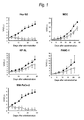
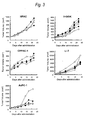
- tumor volume of the group to which the anti-PERP antibody KM3481 was administered was statistically significantly small in comparison with the group to which saline was administered. Accordingly, it was found that the anti-PERP antibody has antitumor activity for the tumors of MIA PaCa-2, PANC-1, KP-3L, MEC and Hep G2 ( Fig. 1 ). On the other hand, no antitumor activity of KM3481 for Calu-3 and Capan-2 ( Fig. 2 ) and HPAC, CFPAC-1, AsPC-1, IHGGK and Li-7 ( Fig. 3 ) was found.
- PERP staining specimens were prepared using biotin-labeled ant-PERP antibody KM3481 and streptavidin HRP (manufactured by by DAKO). Also, E-cadherin staining specimens were prepared using anti-E-cadherin antibody (manufactured by by DAKO) and ENVISION + (manufactured by by DAKO). The prepared samples were observed under a light microscope and the reactivity of the antibody was evaluated based on the four grades of negative (-), weakly positive ( ⁇ ), moderately positive (+) and strongly positive (++), with the results shown in Table 1.
- Table 1 Expression of PERP and Cadherin Cell PEEP* E-cadherin* AsPC-1 ++ ++ Capan-2 ++ ++ OFPAC-1 ++ ++ HPAC ++ ++ KP-3L ++ ++ MIAPaCa-2 ⁇ - Hep G2 + + Calu-3 ++ ++ MEC + - IHGGK ++ ++ PANC-1 ++ - Li-7 + + * ++ strongly positive, + moderately positive, ⁇ weakly positive, - negative
- the probability of confirming the efficacy of the anti-PERP antibody against E-cadherin negative cell lines was 100%, and on the other hand, the probability of confirming the efficacy of the anti-PERP antibody against E-cadherin positive cell lines was 22%. That is, the efficacy of the anti-PERP antibody was found in all of the E-cadherin negative 3/3 cell lines, and the efficacy of anti-PERP antibody was found in the E-cadherin positive 2/9 cell lines. Accordingly, since the P value calculated by the Fisher's direct probability calculation method was 0.455, it was revealed that the difference in probability of finding the efficacy of the anti-PERP antibody is a significant difference.
- the present invention provides a method for screening a patient to be administered with a pharmaceutical composition which comprises an anti-cancer antibody as an active ingredient, said method comprising collecting samples from patients who expresses an antigen which is recognized by the anti-cancer antibody, measuring cadherin function in the samples, and selecting a patient whose the cadherin function is decreased or deleted; a method for screening a patient who has a high efficacy ratio for a pharmaceutical composition which comprises an anti-cancer antibody as an active ingredient; and a method for improving an efficacy ratio for a pharmaceutical composition which comprises an anti-cancer antibody as an active ingredient.
Landscapes
- Health & Medical Sciences (AREA)
- Life Sciences & Earth Sciences (AREA)
- Chemical & Material Sciences (AREA)
- Immunology (AREA)
- Engineering & Computer Science (AREA)
- Molecular Biology (AREA)
- Medicinal Chemistry (AREA)
- General Health & Medical Sciences (AREA)
- Organic Chemistry (AREA)
- Biochemistry (AREA)
- Biomedical Technology (AREA)
- Urology & Nephrology (AREA)
- Hematology (AREA)
- Biotechnology (AREA)
- Analytical Chemistry (AREA)
- General Chemical & Material Sciences (AREA)
- Chemical Kinetics & Catalysis (AREA)
- Biophysics (AREA)
- Genetics & Genomics (AREA)
- Pathology (AREA)
- Proteomics, Peptides & Aminoacids (AREA)
- Public Health (AREA)
- Pharmacology & Pharmacy (AREA)
- Cell Biology (AREA)
- Nuclear Medicine, Radiotherapy & Molecular Imaging (AREA)
- Microbiology (AREA)
- Animal Behavior & Ethology (AREA)
- Food Science & Technology (AREA)
- Physics & Mathematics (AREA)
- Veterinary Medicine (AREA)
- General Physics & Mathematics (AREA)
- Bioinformatics & Cheminformatics (AREA)
- Medicines Containing Antibodies Or Antigens For Use As Internal Diagnostic Agents (AREA)
- Investigating Or Analysing Biological Materials (AREA)
- Peptides Or Proteins (AREA)
Applications Claiming Priority (2)
| Application Number | Priority Date | Filing Date | Title |
|---|---|---|---|
| US94627807P | 2007-06-26 | 2007-06-26 | |
| PCT/JP2008/061669 WO2009001904A1 (ja) | 2007-06-26 | 2008-06-26 | 抗癌抗体を有効成分とする医薬を投与する患者のスクリーニング方法 |
Publications (3)
| Publication Number | Publication Date |
|---|---|
| EP2172218A1 true EP2172218A1 (de) | 2010-04-07 |
| EP2172218A4 EP2172218A4 (de) | 2010-08-18 |
| EP2172218B1 EP2172218B1 (de) | 2013-01-09 |
Family
ID=40185717
Family Applications (1)
| Application Number | Title | Priority Date | Filing Date |
|---|---|---|---|
| EP08777634A Not-in-force EP2172218B1 (de) | 2007-06-26 | 2008-06-26 | Verfahren zum screenen eines patienten zur verabreichung eines pharmazeutischen mittels mit einem anti-krebs-antikörper als wirkstoff |
Country Status (4)
| Country | Link |
|---|---|
| US (1) | US8642032B2 (de) |
| EP (1) | EP2172218B1 (de) |
| JP (1) | JP5464698B2 (de) |
| WO (1) | WO2009001904A1 (de) |
Families Citing this family (3)
| Publication number | Priority date | Publication date | Assignee | Title |
|---|---|---|---|---|
| WO2010099364A2 (en) | 2009-02-27 | 2010-09-02 | Osi Pharmaceuticals, Inc. | Methods for the identification of agents that inhibit mesenchymal-like tumor cells or their formation |
| WO2010099363A1 (en) * | 2009-02-27 | 2010-09-02 | Osi Pharmaceuticals, Inc. | Methods for the identification of agents that inhibit mesenchymal-like tumor cells or their formation |
| EP3202419A1 (de) * | 2012-06-06 | 2017-08-09 | OncoMed Pharmaceuticals, Inc. | Pvrig bindungsmittel zur modulation des hippo-pfads und verwendungen davon |
Family Cites Families (4)
| Publication number | Priority date | Publication date | Assignee | Title |
|---|---|---|---|---|
| DE4110405A1 (de) * | 1991-03-28 | 1992-10-01 | Birchmeier Walter Prof Dr | Verfahren zum nachweis der differenzierung und der invasivitaet von karzinomzellen |
| WO1994011401A1 (en) * | 1992-11-17 | 1994-05-26 | Yale University | Human homolog of the e-cadherin gene and methods based thereon |
| DE19629938C1 (de) * | 1996-07-24 | 1997-11-27 | Gsf Forschungszentrum Umwelt | E-Cadherin-Mutationen als Grundlage zur Diagnostik und Therapie humaner maligner Tumoren |
| EP1767625A4 (de) | 2004-06-11 | 2007-12-05 | Ginkgo Biomedical Res Inst Co | Aktivitätsregulator für interferonproduzierende zelle |
-
2008
- 2008-06-26 US US12/666,716 patent/US8642032B2/en not_active Expired - Fee Related
- 2008-06-26 WO PCT/JP2008/061669 patent/WO2009001904A1/ja not_active Ceased
- 2008-06-26 EP EP08777634A patent/EP2172218B1/de not_active Not-in-force
- 2008-06-26 JP JP2009520639A patent/JP5464698B2/ja not_active Expired - Fee Related
Also Published As
| Publication number | Publication date |
|---|---|
| US8642032B2 (en) | 2014-02-04 |
| US20100189724A1 (en) | 2010-07-29 |
| EP2172218B1 (de) | 2013-01-09 |
| JP5464698B2 (ja) | 2014-04-09 |
| EP2172218A4 (de) | 2010-08-18 |
| JPWO2009001904A1 (ja) | 2010-08-26 |
| WO2009001904A1 (ja) | 2008-12-31 |
Similar Documents
| Publication | Publication Date | Title |
|---|---|---|
| KR102429747B1 (ko) | B 세포 성숙화 항원 결합 단백질 | |
| Zanvit et al. | Antitumor activity of AZD0754, a dnTGFβRII-armored, STEAP2-targeted CAR-T cell therapy, in prostate cancer | |
| EP2271673B1 (de) | Mit myelogenen hämatologischen proliferativen erkrankungen assoziierte cytokinrezeptoren und anwendungen davon | |
| JP7564122B2 (ja) | 光免疫療法のための方法および関連バイオマーカー | |
| US11667700B2 (en) | Anti-PCNA monoclonal antibodies and use thereof | |
| US11220543B2 (en) | Antibody binding specifically to CD66c and use thereof | |
| Kashima et al. | High serum OX40 and OX40 ligand (OX40L) levels correlate with reduced survival in patients with advanced lung adenocarcinoma | |
| US12091457B2 (en) | Use for preventing and treating myeloid-derived suppressor cell-related diseases | |
| Harper Jr et al. | Characterization of an anti-CD70 half-life extended bispecific t-cell engager (HLE-BiTE) and associated on-target toxicity in cynomolgus monkeys | |
| EP2172218B1 (de) | Verfahren zum screenen eines patienten zur verabreichung eines pharmazeutischen mittels mit einem anti-krebs-antikörper als wirkstoff | |
| Meng et al. | The prognostic value of CD39 as a marker of tumor-specific T cells in triple-negative breast cancer in Asian women | |
| JP4297689B2 (ja) | 抗原の発現量を定量する方法 | |
| Tanaka et al. | Antitumor activities by a humanized cancer‐specific anti‐podoplanin monoclonal antibody humPMab‐117 against human tumors | |
| JP2022539038A5 (de) | ||
| EP1870456A1 (de) | Verfahren zur herstellung eines gegen ein zellmembranoberflächenantigenepitop gerichteten antikörpers und testverfahren | |
| Yoneda et al. | Antipodoplanin antibody enhances the antitumor effects of CTLA‐4 blockade against malignant mesothelioma by natural killer cells | |
| Abayasiriwardana et al. | A Novel B7-H4xCD3 Bispecific T-cell Engager (PF-07260437) Synergizes with Breast Cancer Standard of Care and Immune Checkpoint Therapies | |
| EP4729544A1 (de) | Verwendung von claudin-3 als ziel für die diagnose und behandlung von kleinzelligem lungenkrebs | |
| EP3660052B1 (de) | Spezifisch an pauf-protein bindende antikörper und verwendungen davon | |
| CN116407629A (zh) | 抗-pd-1抗体及其在制备治疗肝癌患者的药物中的用途 | |
| JP2021056045A (ja) | 新規大腸がんマーカー及び可溶型ox40を標的とする新規大腸がん治療薬 | |
| JP2026510915A (ja) | 免疫療法の有効性に対する腫瘍微小環境の影響 | |
| EA043081B1 (ru) | Белки, связывающие антиген созревания в-клеток |
Legal Events
| Date | Code | Title | Description |
|---|---|---|---|
| PUAI | Public reference made under article 153(3) epc to a published international application that has entered the european phase |
Free format text: ORIGINAL CODE: 0009012 |
|
| 17P | Request for examination filed |
Effective date: 20100118 |
|
| AK | Designated contracting states |
Kind code of ref document: A1 Designated state(s): AT BE BG CH CY CZ DE DK EE ES FI FR GB GR HR HU IE IS IT LI LT LU LV MC MT NL NO PL PT RO SE SI SK TR |
|
| AX | Request for extension of the european patent |
Extension state: AL BA MK RS |
|
| A4 | Supplementary search report drawn up and despatched |
Effective date: 20100720 |
|
| RIC1 | Information provided on ipc code assigned before grant |
Ipc: G01N 33/574 20060101AFI20100709BHEP |
|
| DAX | Request for extension of the european patent (deleted) | ||
| 17Q | First examination report despatched |
Effective date: 20110916 |
|
| GRAP | Despatch of communication of intention to grant a patent |
Free format text: ORIGINAL CODE: EPIDOSNIGR1 |
|
| GRAS | Grant fee paid |
Free format text: ORIGINAL CODE: EPIDOSNIGR3 |
|
| GRAA | (expected) grant |
Free format text: ORIGINAL CODE: 0009210 |
|
| AK | Designated contracting states |
Kind code of ref document: B1 Designated state(s): AT BE BG CH CY CZ DE DK EE ES FI FR GB GR HR HU IE IS IT LI LT LU LV MC MT NL NO PL PT RO SE SI SK TR |
|
| REG | Reference to a national code |
Ref country code: GB Ref legal event code: FG4D |
|
| REG | Reference to a national code |
Ref country code: CH Ref legal event code: EP Ref country code: AT Ref legal event code: REF Ref document number: 593038 Country of ref document: AT Kind code of ref document: T Effective date: 20130115 |
|
| REG | Reference to a national code |
Ref country code: IE Ref legal event code: FG4D |
|
| REG | Reference to a national code |
Ref country code: DE Ref legal event code: R096 Ref document number: 602008021567 Country of ref document: DE Effective date: 20130307 |
|
| PG25 | Lapsed in a contracting state [announced via postgrant information from national office to epo] |
Ref country code: SI Free format text: LAPSE BECAUSE OF FAILURE TO SUBMIT A TRANSLATION OF THE DESCRIPTION OR TO PAY THE FEE WITHIN THE PRESCRIBED TIME-LIMIT Effective date: 20130109 |
|
| REG | Reference to a national code |
Ref country code: NL Ref legal event code: VDEP Effective date: 20130109 |
|
| REG | Reference to a national code |
Ref country code: AT Ref legal event code: MK05 Ref document number: 593038 Country of ref document: AT Kind code of ref document: T Effective date: 20130109 |
|
| REG | Reference to a national code |
Ref country code: LT Ref legal event code: MG4D |
|
| PG25 | Lapsed in a contracting state [announced via postgrant information from national office to epo] |
Ref country code: SE Free format text: LAPSE BECAUSE OF FAILURE TO SUBMIT A TRANSLATION OF THE DESCRIPTION OR TO PAY THE FEE WITHIN THE PRESCRIBED TIME-LIMIT Effective date: 20130109 Ref country code: IS Free format text: LAPSE BECAUSE OF FAILURE TO SUBMIT A TRANSLATION OF THE DESCRIPTION OR TO PAY THE FEE WITHIN THE PRESCRIBED TIME-LIMIT Effective date: 20130509 Ref country code: BG Free format text: LAPSE BECAUSE OF FAILURE TO SUBMIT A TRANSLATION OF THE DESCRIPTION OR TO PAY THE FEE WITHIN THE PRESCRIBED TIME-LIMIT Effective date: 20130409 Ref country code: LT Free format text: LAPSE BECAUSE OF FAILURE TO SUBMIT A TRANSLATION OF THE DESCRIPTION OR TO PAY THE FEE WITHIN THE PRESCRIBED TIME-LIMIT Effective date: 20130109 Ref country code: BE Free format text: LAPSE BECAUSE OF FAILURE TO SUBMIT A TRANSLATION OF THE DESCRIPTION OR TO PAY THE FEE WITHIN THE PRESCRIBED TIME-LIMIT Effective date: 20130109 Ref country code: AT Free format text: LAPSE BECAUSE OF FAILURE TO SUBMIT A TRANSLATION OF THE DESCRIPTION OR TO PAY THE FEE WITHIN THE PRESCRIBED TIME-LIMIT Effective date: 20130109 Ref country code: ES Free format text: LAPSE BECAUSE OF FAILURE TO SUBMIT A TRANSLATION OF THE DESCRIPTION OR TO PAY THE FEE WITHIN THE PRESCRIBED TIME-LIMIT Effective date: 20130420 Ref country code: NO Free format text: LAPSE BECAUSE OF FAILURE TO SUBMIT A TRANSLATION OF THE DESCRIPTION OR TO PAY THE FEE WITHIN THE PRESCRIBED TIME-LIMIT Effective date: 20130409 |
|
| PG25 | Lapsed in a contracting state [announced via postgrant information from national office to epo] |
Ref country code: LV Free format text: LAPSE BECAUSE OF FAILURE TO SUBMIT A TRANSLATION OF THE DESCRIPTION OR TO PAY THE FEE WITHIN THE PRESCRIBED TIME-LIMIT Effective date: 20130109 Ref country code: PL Free format text: LAPSE BECAUSE OF FAILURE TO SUBMIT A TRANSLATION OF THE DESCRIPTION OR TO PAY THE FEE WITHIN THE PRESCRIBED TIME-LIMIT Effective date: 20130109 Ref country code: FI Free format text: LAPSE BECAUSE OF FAILURE TO SUBMIT A TRANSLATION OF THE DESCRIPTION OR TO PAY THE FEE WITHIN THE PRESCRIBED TIME-LIMIT Effective date: 20130109 Ref country code: NL Free format text: LAPSE BECAUSE OF FAILURE TO SUBMIT A TRANSLATION OF THE DESCRIPTION OR TO PAY THE FEE WITHIN THE PRESCRIBED TIME-LIMIT Effective date: 20130109 Ref country code: GR Free format text: LAPSE BECAUSE OF FAILURE TO SUBMIT A TRANSLATION OF THE DESCRIPTION OR TO PAY THE FEE WITHIN THE PRESCRIBED TIME-LIMIT Effective date: 20130410 Ref country code: PT Free format text: LAPSE BECAUSE OF FAILURE TO SUBMIT A TRANSLATION OF THE DESCRIPTION OR TO PAY THE FEE WITHIN THE PRESCRIBED TIME-LIMIT Effective date: 20130509 |
|
| PG25 | Lapsed in a contracting state [announced via postgrant information from national office to epo] |
Ref country code: HR Free format text: LAPSE BECAUSE OF FAILURE TO SUBMIT A TRANSLATION OF THE DESCRIPTION OR TO PAY THE FEE WITHIN THE PRESCRIBED TIME-LIMIT Effective date: 20130109 |
|
| PG25 | Lapsed in a contracting state [announced via postgrant information from national office to epo] |
Ref country code: SK Free format text: LAPSE BECAUSE OF FAILURE TO SUBMIT A TRANSLATION OF THE DESCRIPTION OR TO PAY THE FEE WITHIN THE PRESCRIBED TIME-LIMIT Effective date: 20130109 Ref country code: EE Free format text: LAPSE BECAUSE OF FAILURE TO SUBMIT A TRANSLATION OF THE DESCRIPTION OR TO PAY THE FEE WITHIN THE PRESCRIBED TIME-LIMIT Effective date: 20130109 Ref country code: RO Free format text: LAPSE BECAUSE OF FAILURE TO SUBMIT A TRANSLATION OF THE DESCRIPTION OR TO PAY THE FEE WITHIN THE PRESCRIBED TIME-LIMIT Effective date: 20130109 Ref country code: DK Free format text: LAPSE BECAUSE OF FAILURE TO SUBMIT A TRANSLATION OF THE DESCRIPTION OR TO PAY THE FEE WITHIN THE PRESCRIBED TIME-LIMIT Effective date: 20130109 Ref country code: CZ Free format text: LAPSE BECAUSE OF FAILURE TO SUBMIT A TRANSLATION OF THE DESCRIPTION OR TO PAY THE FEE WITHIN THE PRESCRIBED TIME-LIMIT Effective date: 20130109 |
|
| PLBE | No opposition filed within time limit |
Free format text: ORIGINAL CODE: 0009261 |
|
| STAA | Information on the status of an ep patent application or granted ep patent |
Free format text: STATUS: NO OPPOSITION FILED WITHIN TIME LIMIT |
|
| PG25 | Lapsed in a contracting state [announced via postgrant information from national office to epo] |
Ref country code: CY Free format text: LAPSE BECAUSE OF FAILURE TO SUBMIT A TRANSLATION OF THE DESCRIPTION OR TO PAY THE FEE WITHIN THE PRESCRIBED TIME-LIMIT Effective date: 20130109 |
|
| 26N | No opposition filed |
Effective date: 20131010 |
|
| PG25 | Lapsed in a contracting state [announced via postgrant information from national office to epo] |
Ref country code: IT Free format text: LAPSE BECAUSE OF FAILURE TO SUBMIT A TRANSLATION OF THE DESCRIPTION OR TO PAY THE FEE WITHIN THE PRESCRIBED TIME-LIMIT Effective date: 20130109 |
|
| REG | Reference to a national code |
Ref country code: DE Ref legal event code: R097 Ref document number: 602008021567 Country of ref document: DE Effective date: 20131010 |
|
| PG25 | Lapsed in a contracting state [announced via postgrant information from national office to epo] |
Ref country code: MC Free format text: LAPSE BECAUSE OF FAILURE TO SUBMIT A TRANSLATION OF THE DESCRIPTION OR TO PAY THE FEE WITHIN THE PRESCRIBED TIME-LIMIT Effective date: 20130109 |
|
| REG | Reference to a national code |
Ref country code: CH Ref legal event code: PL |
|
| REG | Reference to a national code |
Ref country code: IE Ref legal event code: MM4A |
|
| PG25 | Lapsed in a contracting state [announced via postgrant information from national office to epo] |
Ref country code: CH Free format text: LAPSE BECAUSE OF NON-PAYMENT OF DUE FEES Effective date: 20130630 Ref country code: LI Free format text: LAPSE BECAUSE OF NON-PAYMENT OF DUE FEES Effective date: 20130630 Ref country code: IE Free format text: LAPSE BECAUSE OF NON-PAYMENT OF DUE FEES Effective date: 20130626 |
|
| PG25 | Lapsed in a contracting state [announced via postgrant information from national office to epo] |
Ref country code: MT Free format text: LAPSE BECAUSE OF FAILURE TO SUBMIT A TRANSLATION OF THE DESCRIPTION OR TO PAY THE FEE WITHIN THE PRESCRIBED TIME-LIMIT Effective date: 20130109 |
|
| PG25 | Lapsed in a contracting state [announced via postgrant information from national office to epo] |
Ref country code: TR Free format text: LAPSE BECAUSE OF FAILURE TO SUBMIT A TRANSLATION OF THE DESCRIPTION OR TO PAY THE FEE WITHIN THE PRESCRIBED TIME-LIMIT Effective date: 20130109 |
|
| PG25 | Lapsed in a contracting state [announced via postgrant information from national office to epo] |
Ref country code: LU Free format text: LAPSE BECAUSE OF NON-PAYMENT OF DUE FEES Effective date: 20130626 Ref country code: HU Free format text: LAPSE BECAUSE OF FAILURE TO SUBMIT A TRANSLATION OF THE DESCRIPTION OR TO PAY THE FEE WITHIN THE PRESCRIBED TIME-LIMIT; INVALID AB INITIO Effective date: 20080626 |
|
| REG | Reference to a national code |
Ref country code: FR Ref legal event code: PLFP Year of fee payment: 9 |
|
| REG | Reference to a national code |
Ref country code: FR Ref legal event code: PLFP Year of fee payment: 10 |
|
| REG | Reference to a national code |
Ref country code: FR Ref legal event code: PLFP Year of fee payment: 11 |
|
| PGFP | Annual fee paid to national office [announced via postgrant information from national office to epo] |
Ref country code: DE Payment date: 20180612 Year of fee payment: 11 |
|
| PGFP | Annual fee paid to national office [announced via postgrant information from national office to epo] |
Ref country code: FR Payment date: 20180511 Year of fee payment: 11 |
|
| PGFP | Annual fee paid to national office [announced via postgrant information from national office to epo] |
Ref country code: GB Payment date: 20180620 Year of fee payment: 11 |
|
| REG | Reference to a national code |
Ref country code: DE Ref legal event code: R082 Ref document number: 602008021567 Country of ref document: DE Representative=s name: HOFFMANN - EITLE PATENT- UND RECHTSANWAELTE PA, DE |
|
| REG | Reference to a national code |
Ref country code: DE Ref legal event code: R119 Ref document number: 602008021567 Country of ref document: DE |
|
| GBPC | Gb: european patent ceased through non-payment of renewal fee |
Effective date: 20190626 |
|
| PG25 | Lapsed in a contracting state [announced via postgrant information from national office to epo] |
Ref country code: GB Free format text: LAPSE BECAUSE OF NON-PAYMENT OF DUE FEES Effective date: 20190626 Ref country code: DE Free format text: LAPSE BECAUSE OF NON-PAYMENT OF DUE FEES Effective date: 20200101 |
|
| PG25 | Lapsed in a contracting state [announced via postgrant information from national office to epo] |
Ref country code: FR Free format text: LAPSE BECAUSE OF NON-PAYMENT OF DUE FEES Effective date: 20190630 |