EP2169823A1 - Combined multi-path high-efficiency power amplifier - Google Patents
Combined multi-path high-efficiency power amplifier Download PDFInfo
- Publication number
- EP2169823A1 EP2169823A1 EP08290904A EP08290904A EP2169823A1 EP 2169823 A1 EP2169823 A1 EP 2169823A1 EP 08290904 A EP08290904 A EP 08290904A EP 08290904 A EP08290904 A EP 08290904A EP 2169823 A1 EP2169823 A1 EP 2169823A1
- Authority
- EP
- European Patent Office
- Prior art keywords
- terminal
- power
- quadrature hybrid
- high power
- output
- Prior art date
- Legal status (The legal status is an assumption and is not a legal conclusion. Google has not performed a legal analysis and makes no representation as to the accuracy of the status listed.)
- Granted
Links
- 230000010363 phase shift Effects 0.000 claims description 6
- 102100032918 Chromobox protein homolog 5 Human genes 0.000 description 11
- 101100339522 Drosophila virilis HP1A gene Proteins 0.000 description 11
- 101100327120 Homo sapiens CBX5 gene Proteins 0.000 description 11
- 230000005540 biological transmission Effects 0.000 description 4
- 238000004891 communication Methods 0.000 description 3
- 230000000295 complement effect Effects 0.000 description 2
- 238000000034 method Methods 0.000 description 2
- 238000010295 mobile communication Methods 0.000 description 2
- 229910000577 Silicon-germanium Inorganic materials 0.000 description 1
Images


Classifications
-
- H—ELECTRICITY
- H03—ELECTRONIC CIRCUITRY
- H03F—AMPLIFIERS
- H03F1/00—Details of amplifiers with only discharge tubes, only semiconductor devices or only unspecified devices as amplifying elements
- H03F1/02—Modifications of amplifiers to raise the efficiency, e.g. gliding Class A stages, use of an auxiliary oscillation
- H03F1/0205—Modifications of amplifiers to raise the efficiency, e.g. gliding Class A stages, use of an auxiliary oscillation in transistor amplifiers
- H03F1/0277—Selecting one or more amplifiers from a plurality of amplifiers
-
- H—ELECTRICITY
- H03—ELECTRONIC CIRCUITRY
- H03F—AMPLIFIERS
- H03F3/00—Amplifiers with only discharge tubes or only semiconductor devices as amplifying elements
- H03F3/60—Amplifiers in which coupling networks have distributed constants, e.g. with waveguide resonators
- H03F3/602—Combinations of several amplifiers
-
- H—ELECTRICITY
- H03—ELECTRONIC CIRCUITRY
- H03F—AMPLIFIERS
- H03F2200/00—Indexing scheme relating to amplifiers
- H03F2200/192—A hybrid coupler being used at the input of an amplifier circuit
-
- H—ELECTRICITY
- H03—ELECTRONIC CIRCUITRY
- H03F—AMPLIFIERS
- H03F2200/00—Indexing scheme relating to amplifiers
- H03F2200/198—A hybrid coupler being used as coupling circuit between stages of an amplifier circuit
-
- H—ELECTRICITY
- H03—ELECTRONIC CIRCUITRY
- H03F—AMPLIFIERS
- H03F2200/00—Indexing scheme relating to amplifiers
- H03F2200/204—A hybrid coupler being used at the output of an amplifier circuit
-
- H—ELECTRICITY
- H03—ELECTRONIC CIRCUITRY
- H03F—AMPLIFIERS
- H03F2200/00—Indexing scheme relating to amplifiers
- H03F2200/451—Indexing scheme relating to amplifiers the amplifier being a radio frequency amplifier
Definitions
- the present invention relates to a power amplifier structure having, between a main input and a main output, a circuit architecture comprising a first quadrature hybrid of which a first terminal is connected to said main input and a second quadrature hybrid of which a first terminal is connected to said main output, the circuit architecture of said power amplifier structure comprising a balanced pair of high power paths, a first high power path comprising a first high power amplifier structure having a power input coupled to a second terminal of said first quadrature hybrid and a power output coupled to a second terminal of said second quadrature hybrid, and a second high power path comprising a second high power amplifier structure having a power input coupled to a third terminal of said first quadrature hybrid and a power output coupled to a third terminal of said second quadrature hybrid, the circuit architecture of said power amplifier structure also comprising a low power amplifying path constituted by a low power amplifier having an input connected to a fourth terminal of said first quadrature hybrid and an output connected to a fourth terminal of said second quadrature hybrid.
- This known power amplifier structure incorporates an additional separate low power amplifying path connected between the fourth terminals or isolated ports of the first quadrature hybrid that is a 90-degree input hybrid power divider or input quadrature hybrid power divider, and the second quadrature hybrid that is a 90-degree output hybrid power combiner or output quadrature hybrid power combiner.
- the output powers from both balanced high power paths combine in the output hybrid power combiner and the low power path is isolated from them (bias is turned off), thus providing high efficiency at high output power.
- bias when all ports are matched for a hybrid branch-line combiner, power entering first terminal, i.e. main input, is divided between the second and third terminals with a 90-degree phase shift between these terminals and no power is delivered to the fourth terminal or isolated port.
- a quadrature hybrid has an important advantage compared to in-phase dividers that at equal values of reflection coefficients from loads connected to the second and thrid terminals, the reflection wave is lacking at the first or input terminal and, consequently, input Voltage Standing Wave Ratio VSWR of a quadrature hybrid does not depend on the equal load mismatch level.
- all reflected power is dissipated in 50-Ohm ballast resistor connected to the fourth terminal or isolated port.
- the isolated port of the input hybrid becomes the input for a low power amplifying path when bias for high power amplifying paths are turned off, while the isolated port of the output hybrid works as its output 50-Ohm port.
- the high efficiency at lower output power levels can be achieved and no need to include additional power switches to isolate high power balanced paths and low power path.
- the maximum efficiency can be achieved at two output power levels only (maximum and one backoff level, for example, ideally 3-dB backoff power if all power amplifiers have similar structure).
- An object of the present invention is to provide a power amplifier structure of the above known type but which can provide multiple peak efficiencies at different backoff powers.
- this object is achieved due to the fact that the internal circuit architecture of said first high power path and the internal circuit architecture of said second high power path are both identical to the circuit architecture of said power amplifier structure.
- each high power amplifier structure of the balanced pair of high power paths is no longer constituted by a single high power amplifier but is now advantageously replaced by a more complex structure similar to that of the power amplifier structure itself.
- This circuit architecture allows obtaining the maximum efficiency at more than two output power levels.
- the present invention is characterized in that said first high power path has an internal circuit architecture comprising a third quadrature hybrid of which a first terminal is connected to the power input of said first high power path and a fourth quadrature hybrid of which a first terminal is connected to the power output of said first high power path, the internal circuit architecture of said first high power path further comprising a balanced pair of internal high power paths, a first internal high power path comprising a first high power amplifier having an amplifier input connected to a second terminal of said third quadrature hybrid and an amplifier output connected to a second terminal of said fourth quadrature hybrid, and a second internal high power path comprising a second high power amplifier having an amplifier input connected to a third terminal of said third quadrature hybrid and an amplifier output connected to a third terminal of said fourth quadrature hybrid, the internal circuit architecture of said first high power path also comprising an internal low power amplifying path constituted by a second low power amplifier having an input connected to a fourth terminal of said third quadrature hybrid and an output connected to a fourth terminal
- Another characterizing feature of the present invention is that the circuit architecture of each of the internal high power paths is identical to the circuit architecture of said power amplifier structure.
- each internal high power path inside another high power path, of a higher level has a circuit architecture similar to that of the power amplifier structure itself.
- a kind of nested power amplifier structures is created to achieve the maximum efficiency at even more output power levels.
- the present power amplifier structure provides high efficiency for RF power amplifiers at different levels of backoff output powers depending on the number of amplifying paths only. There is no need to use additional lossy switches at the output of the power amplifier to switch amplifying paths with different output powers unlike in a conventional case. In addition, there is no need to use DPD (digital predistorter) to linearize power amplifier at the backoff output powers compared to inherently nonlinear Doherty technique.
- DPD digital predistorter
- the term 'coupled' should not be interpreted as being restricted to direct connections only.
- the scope of the expression 'a device A coupled to a device B' should not be limited to devices or systems wherein an output of device A is directly connected to an input of device B. It means that there exists a path between an output of A and an input of B which may be a path including other devices or means.
- the power amplifier structure shown at Fig. 1 is known from the prior art and is used in wireless communications systems, such as Global System for Mobile communications/ Enhanced Data rates for GSM Evolution GSM/EDGE, Code-Division Multiple-Access CDMA2000 or Wide-band Code-Division Multiple-Access W-CDMA to deliver a wide range of output powers with high efficiency and high linearity simultaneously.
- wireless communications systems such as Global System for Mobile communications/ Enhanced Data rates for GSM Evolution GSM/EDGE, Code-Division Multiple-Access CDMA2000 or Wide-band Code-Division Multiple-Access W-CDMA to deliver a wide range of output powers with high efficiency and high linearity simultaneously.
- the known power amplifier structure includes, between a main Radio Frequency input RFin and a main Radio Frequency output RFout, a circuit architecture comprising an input quadrature hybrid power divider HDI of which a first terminal I1 is connected to the main input RFin and an output quadrature hybrid power combiner HDO of which a first terminal 01 is connected to the main output RFout.
- the circuit architecture of the known power amplifier structure further comprises a balanced pair of high power paths HP1A, HP1B of which:
- the circuit architecture of the known power amplifier structure is completed with a low power amplifying path constituted by a low power amplifier LP1 having an input connected to a fourth terminal I4 of the input quadrature hybrid power divider HDI and an output connected to a fourth terminal 04 of the input quadrature hybrid power combiner HDO.
- each high power amplifier structure of the balanced pair of high power paths HP1A and HP1B is constituted by a single high power amplifier P1A and P1B respectively.
- each quadrature hybrid is, for instance, as known from the document "Quadrature Hybrids 90° Power Dividers/ Combiners 10 KHz To 40 GHz General Information" available on the Internet at ⁇ www.merrimacind.com/rfmw/05intro_quadhybrids.pdf >
- the 90° Power Dividers/Combiners are four port networks capable of operating from 10 kHz to 40 GHz and available in a wide variety of package options. These devices can perform two complementary functions:
- the power entering input port 1 referred above as first terminal O1 is divided between the output port 2 that is an in-phase port or In-Phase Output referred above as second terminal 02, and port 3 that is a 90° phase shift port or Out-of-Phase Output referred above as third terminal 03, with a 90° phase shift between these outputs 2 and 3, and no power is delivered to the Isolated port 4 referred above as fourth terminal 04.
- the quadrature hybrid can generally be implemented with any lumped or quarter-wavelength ⁇ /4 transmission-line elements.
- a first quarter-wavelength ⁇ /4 transmission line having a characteristic impedance Zo / 2 is connected between the ports 1 and 2.
- a second quarter-wavelength ⁇ /4 transmission line also having a characteristic impedance Zo / 2 is connected between the ports 4 and 3.
- a third quarter-wavelength ⁇ /4 transmission line having characteristic impedance Zo is connected between the ports 1 and 4.
- a fourth quarter-wavelength ⁇ /4 transmission line also having characteristic impedance Zo is connected between the ports 2 and 3
- the architecture proposed by the present invention and shown at Fig. 3 is a highly efficient multi-path power amplifier that can provide multiple peak efficiencies at different backoff powers.
- each high power path HP1A and HP1B is no longer a conventional single-stage high power amplifier P1A and P1B as at Fig. 1 , but is replaced by a circuit of which the architecture is similar to that of the power amplifier structure itself.
- Fig. 3 shows a power amplifier structure with seven power amplifiers P2A, P2B, LP2, LP1, LP3, P3B and P3A which can provide peak efficiencies at three powers levels, as shown at Fig. 4 .
- the present power amplifier structure has a main Radio Frequency input RFin connected to a first terminal 11 of an input quadrature hybrid power divider HDI and a main Radio Frequency output RFout connected to a first terminal O1 of an output quadrature hybrid power combiner HDO.
- the power amplifier structure comprises a low power amplifying path constituted by a single low power amplifier LP1 having an input connected to a fourth terminal I4 of the input quadrature hybrid power divider HDI and an output connected to a fourth terminal 04 of the input quadrature hybrid power combiner HDO.
- the power amplifier structure further comprises a balanced pair of high power paths HP1A and HP1B of which:
- the internal circuit architecture of the first high power path HP1A includes a second input quadrature hybrid power divider HDIA, a second output quadrature hybrid power combiner HDOA, a balanced pair of two internal high power paths P2A and P2B, and an internal low power amplifier LP2, whilst the internal circuit architecture of the second high power path HP1B includes a third input quadrature hybrid power divider HDIB, a third output quadrature hybrid power combiner HDOB, a balanced pair of two internal high power paths P3A and P3B, and an internal low power amplifier LP3.
- the power input of the first high power path HP1A is connected to a first terminal I1A of the second input quadrature hybrid power divider HDIA and a first terminal O1A of the second output quadrature hybrid power combiner HDOA is connected to the power output of the first high power path HP1A.
- a first internal high power path of the balanced pair of the first high power path HP1A comprises a first high power amplifier P2A having an amplifier input connected to a second terminal I2A of the second input quadrature hybrid power divider HDIA and an amplifier output connected to a second terminal O2A of the second output quadrature hybrid power combiner HDOA, whilst the second internal high power path of this balanced pair comprises a second high power amplifier P2B having an amplifier input connected to a third terminal I3A of the second input quadrature hybrid power divider HDIA and an amplifier output connected to a third terminal O3A of the second output quadrature hybrid power combiner HDOA.
- the internal circuit architecture of the first high power path HP1A further comprises a low power amplifying path constituted by the internal low power amplifier LP2 having an input connected to a fourth terminal I4A of the second input quadrature hybrid power divider HDIA and an output connected to a fourth terminal O4A of the second output quadrature hybrid power combiner HDOA.
- the power input of the second high power path HP1B is connected to a first terminal I1B of the third input quadrature hybrid power divider HDIB and a first terminal O1B of the third output quadrature hybrid power combiner HDOB is connected to the power output of this second high power path HP1B.
- a first internal high power path of the balanced pair of the second high power path HP1B comprises a first high power amplifier P3A having an amplifier input connected to a second terminal I2B of the third input quadrature hybrid power divider HDIB and an amplifier output connected to a second terminal O2B of the third output quadrature hybrid power combiner HDOB, whilst the second internal high power path of this balanced pair comprises a second high power amplifier P3B having an amplifier input connected to a third terminal I3B of the third input quadrature hybrid power divider HDIB and an amplifier output connected to a third terminal O3B of the third output quadrature hybrid power combiner HDOB.
- the internal circuit architecture of the second high power path HP1B further comprises a low power amplifying path constituted by the internal low power amplifier LP3 having an input connected to a fourth terminal I4B of the third input quadrature hybrid power divider HDIB and an output connected to a fourth terminal O4B of the third output quadrature hybrid power combiner HDOB.
- Fig. 4 The overall dependence of the efficiency versus output power (solid line with three peaks) is shown at Fig. 4 , where also the efficiency of the conventional power amplifier is shown (dashed line).
- the presence of the output quadrature hybrid power combiners or quadrature hybrid couplers HDOA and HDOB at the output can improve the linearity performance over different values of the load Voltage Standing Wave Ratio VSWR compared to the conventional single-stage power amplifier P1A and P1B at Fig. 1 . This is because each of the two amplifiers in a balanced power amplifier pair sees opposite impedances (high impedance and low impedance) because of 90-degree phase shift between their outputs.
- each quadrature hybrid can generally be implemented with any lumped or transmission-line elements.
- the principle of the present invention can be further set out by creating a kind of "nested" power amplifier structures whereby each single high power amplifier of each high power path can be again replaced by a more complex circuit of which the architecture is again similar to that of the power amplifier structure itself.
- This allows achieving the maximum efficiency at even more output power levels.
Landscapes
- Engineering & Computer Science (AREA)
- Power Engineering (AREA)
- Amplifiers (AREA)
Abstract
Description
- The present invention relates to a power amplifier structure having, between a main input and a main output, a circuit architecture comprising a first quadrature hybrid of which a first terminal is connected to said main input and a second quadrature hybrid of which a first terminal is connected to said main output, the circuit architecture of said power amplifier structure comprising a balanced pair of high power paths, a first high power path comprising a first high power amplifier structure having a power input coupled to a second terminal of said first quadrature hybrid and a power output coupled to a second terminal of said second quadrature hybrid, and a second high power path comprising a second high power amplifier structure having a power input coupled to a third terminal of said first quadrature hybrid and a power output coupled to a third terminal of said second quadrature hybrid, the circuit architecture of said power amplifier structure also comprising a low power amplifying path constituted by a low power amplifier having an input connected to a fourth terminal of said first quadrature hybrid and an output connected to a fourth terminal of said second quadrature hybrid.
- In most communication systems it is required that the power amplifier structure could operate with high efficiency and high linearity simultaneously. However, there is a tradeoff between efficiency and linearity with improvement in one coming at the expense of another. Besides, many wireless communications systems, such as Global System for Mobile communications/ Enhanced Data rates for GSM Evolution GSM/EDGE, Code-Division Multiple-Access CDMA2000 or Wide-band Code-Division Multiple-Access W-CDMA require that the power amplifier could deliver a wide range of output powers. As a result, being designed for the highest power level with maximum available efficiency, the power amplifier both in base stations and handsets tends to operate less efficiently at lower power levels consuming a lot of extra dc power. In addition, it is very important to keep a high linearity at high output power with variation of the load impedance.
- The article "High-Efficiency Balanced Switched-Path Monolithic SiGe HBT Power Amplifiers for Wireless Applications" of A. Grebennikov et al. published in the Proc. 37th Europ. Microwave Conf., pp. 1189-1192, 2007, discloses such a highly efficient power amplifier structure having high efficiency at different output power levels. Therein, each high power amplifier structure of the balanced pair of high power paths is constituted by a single high power amplifier.
- This known power amplifier structure incorporates an additional separate low power amplifying path connected between the fourth terminals or isolated ports of the first quadrature hybrid that is a 90-degree input hybrid power divider or input quadrature hybrid power divider, and the second quadrature hybrid that is a 90-degree output hybrid power combiner or output quadrature hybrid power combiner.
- In a high power mode, the output powers from both balanced high power paths (bias is turned on) combine in the output hybrid power combiner and the low power path is isolated from them (bias is turned off), thus providing high efficiency at high output power. As an example, when all ports are matched for a hybrid branch-line combiner, power entering first terminal, i.e. main input, is divided between the second and third terminals with a 90-degree phase shift between these terminals and no power is delivered to the fourth terminal or isolated port. A quadrature hybrid has an important advantage compared to in-phase dividers that at equal values of reflection coefficients from loads connected to the second and thrid terminals, the reflection wave is lacking at the first or input terminal and, consequently, input Voltage Standing Wave Ratio VSWR of a quadrature hybrid does not depend on the equal load mismatch level. In this case, all reflected power is dissipated in 50-Ohm ballast resistor connected to the fourth terminal or isolated port. As a result, the isolated port of the input hybrid becomes the input for a low power amplifying path when bias for high power amplifying paths are turned off, while the isolated port of the output hybrid works as its output 50-Ohm port. Hence, the high efficiency at lower output power levels can be achieved and no need to include additional power switches to isolate high power balanced paths and low power path.
- However, in this configuration, the maximum efficiency can be achieved at two output power levels only (maximum and one backoff level, for example, ideally 3-dB backoff power if all power amplifiers have similar structure).
- An object of the present invention is to provide a power amplifier structure of the above known type but which can provide multiple peak efficiencies at different backoff powers.
- According to the invention, this object is achieved due to the fact that the internal circuit architecture of said first high power path and the internal circuit architecture of said second high power path are both identical to the circuit architecture of said power amplifier structure.
- In this way, each high power amplifier structure of the balanced pair of high power paths is no longer constituted by a single high power amplifier but is now advantageously replaced by a more complex structure similar to that of the power amplifier structure itself. This circuit architecture allows obtaining the maximum efficiency at more than two output power levels.
- In more detail, the present invention is characterized in that said first high power path has an internal circuit architecture comprising a third quadrature hybrid of which a first terminal is connected to the power input of said first high power path and a fourth quadrature hybrid of which a first terminal is connected to the power output of said first high power path,
the internal circuit architecture of said first high power path further comprising a balanced pair of internal high power paths, a first internal high power path comprising a first high power amplifier having an amplifier input connected to a second terminal of said third quadrature hybrid and an amplifier output connected to a second terminal of said fourth quadrature hybrid, and a second internal high power path comprising a second high power amplifier having an amplifier input connected to a third terminal of said third quadrature hybrid and an amplifier output connected to a third terminal of said fourth quadrature hybrid,
the internal circuit architecture of said first high power path also comprising an internal low power amplifying path constituted by a second low power amplifier having an input connected to a fourth terminal of said third quadrature hybrid and an output connected to a fourth terminal of said fourth quadrature hybrid,
and in that said second high power path has an internal circuit architecture comprising a fifth quadrature hybrid of which a first terminal is connected to the power input of said second high power path and a sixth quadrature hybrid of which a first terminal is connected to the power output of said second high power path,
the internal circuit architecture of said second high power path further comprising a balanced pair of internal high power paths, a first internal high power path comprising a third high power amplifier having an amplifier input connected to a second terminal of said fifth quadrature hybrid and an amplifier output connected to a second terminal of said sixth quadrature hybrid, and a second internal high power path comprising a fourth high power amplifier having an amplifier input connected to a third terminal of said fifth quadrature hybrid and an amplifier output connected to a third terminal of said sixth quadrature hybrid,
the internal circuit architecture of said second high power path also comprising an internal low power amplifying path constituted by a third low power amplifier having an input connected to a fourth terminal of said fifth quadrature hybrid and an output connected to a fourth terminal of said sixth quadrature hybrid. - In this way, significantly higher efficiency is obtained for the same linearity at different backoff output powers without need in additional switching or linearization technique.
- Another characterizing feature of the present invention is that the circuit architecture of each of the internal high power paths is identical to the circuit architecture of said power amplifier structure.
- In this way, each internal high power path inside another high power path, of a higher level, has a circuit architecture similar to that of the power amplifier structure itself. In other words, a kind of nested power amplifier structures is created to achieve the maximum efficiency at even more output power levels.
- The present power amplifier structure provides high efficiency for RF power amplifiers at different levels of backoff output powers depending on the number of amplifying paths only. There is no need to use additional lossy switches at the output of the power amplifier to switch amplifying paths with different output powers unlike in a conventional case. In addition, there is no need to use DPD (digital predistorter) to linearize power amplifier at the backoff output powers compared to inherently nonlinear Doherty technique.
- This highly efficient multi-path power amplifier structure can thus provide multiple peak efficiencies at different backoff powers. For example, n (n = 2, 3, ...) levels of the output powers with peak efficiencies beginning from maximum can be obtained with 2m + 1 power amplifiers, where m is the number of power amplifiers for previous number of levels, for example, m = 3 for n = 2 levels, m = 7 for n = 3 levels, m = 15 for n = 4 levels,
- It is to be noticed that the term 'comprising', used in the claims, should not be interpreted as being restricted to the means listed thereafter. Thus, the scope of the expression 'a device comprising means A and B' should not be limited to devices consisting only of components A and B. It means that with respect to the present invention, the only relevant components of the device are A and B.
- Similarly, it is to be noticed that the term 'coupled', also used in the claims, should not be interpreted as being restricted to direct connections only. Thus, the scope of the expression 'a device A coupled to a device B' should not be limited to devices or systems wherein an output of device A is directly connected to an input of device B. It means that there exists a path between an output of A and an input of B which may be a path including other devices or means.
- The above and other objects and features of the invention will become more apparent and the invention itself will be best understood by referring to the following description of an embodiment taken in conjunction with the accompanying drawings wherein:
-
Fig. 1 represents a power amplifier structure as known from the prior art; -
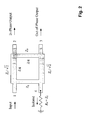
Fig. 2 is a block schematic of a quadrature hybrid used in the present power amplifier structure; -
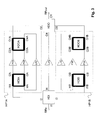
Fig.3 represents a power amplifier structure according to the invention; and -
Fig. 4 shows the overall dependence of the efficiency versus output power of the present power amplifier structure. - The power amplifier structure shown at
Fig. 1 is known from the prior art and is used in wireless communications systems, such as Global System for Mobile communications/ Enhanced Data rates for GSM Evolution GSM/EDGE, Code-Division Multiple-Access CDMA2000 or Wide-band Code-Division Multiple-Access W-CDMA to deliver a wide range of output powers with high efficiency and high linearity simultaneously. - To this end, the known power amplifier structure includes, between a main Radio Frequency input RFin and a main Radio Frequency output RFout, a circuit architecture comprising an input quadrature hybrid power divider HDI of which a first terminal I1 is connected to the main input RFin and an output quadrature hybrid power combiner HDO of which a
first terminal 01 is connected to the main output RFout. - The circuit architecture of the known power amplifier structure further comprises a balanced pair of high power paths HP1A, HP1B of which:
- a first high power path HP1A comprises a first high power amplifier structure having a power input coupled to a second terminal I2 of the input quadrature hybrid power divider HDI and a power output coupled to a
second terminal 02 of the output quadrature hybrid power combiner HDO, and - the second high power path HP1B comprises a second high power amplifier structure having a power input coupled to a third terminal I3 of input quadrature hybrid power divider HDI and a power output coupled to a
third terminal 03 of said second quadrature hybrid power combiner HDO. - The circuit architecture of the known power amplifier structure is completed with a low power amplifying path constituted by a low power amplifier LP1 having an input connected to a fourth terminal I4 of the input quadrature hybrid power divider HDI and an output connected to a
fourth terminal 04 of the input quadrature hybrid power combiner HDO. - Therein, each high power amplifier structure of the balanced pair of high power paths HP1A and HP1B is constituted by a single high power amplifier P1A and P1B respectively.
- In this known power amplifier structure, each quadrature hybrid is, for instance, as known from the document "Quadrature Hybrids 90° Power Dividers/ Combiners 10 KHz To 40 GHz General Information" available on the Internet at
< www.merrimacind.com/rfmw/05intro_quadhybrids.pdf > - Therein is mentioned that the 90° Power Dividers/Combiners are four port networks capable of operating from 10 kHz to 40 GHz and available in a wide variety of package options. These devices can perform two complementary functions:
- a) Power Divider: One function is to equally divide an input signal into two output signals while imparting to one of the outputs a 90° phase shift with respect to the phase of the other output. Thus, the outputs exhibit a quadrature relationship meaning their respective phases differ by one "quadrant" or simply 90°; and
- b) Power Combiner: The complementary function is to combine two equal amplitude, quadrature-phased input signals into a single output signal.
- As an example, when all ports are matched for a hybrid branch-line combiner as shown at
Fig. 2 , the power enteringinput port 1 referred above as first terminal O1, is divided between theoutput port 2 that is an in-phase port or In-Phase Output referred above assecond terminal 02, andport 3 that is a 90° phase shift port or Out-of-Phase Output referred above asthird terminal 03, with a 90° phase shift between theseoutputs fourth terminal 04. - The quadrature hybrid can generally be implemented with any lumped or quarter-wavelength λ/4 transmission-line elements. A first quarter-wavelength λ/4 transmission line having a characteristic impedance

ports 
ports 4 and 3. A third quarter-wavelength λ/4 transmission line having characteristic impedance Zo is connected between theports 1 and 4. A fourth quarter-wavelength λ/4 transmission line also having characteristic impedance Zo is connected between theports - In the above example, all reflected power is dissipated in 50 Ω ballast resistor R0 = Zo connected to the isolated port 4.
- Although this known power amplifier structure is adapted to achieve high efficiency at lower output power levels without the need of additional power switches to isolate high power balanced paths and low power path, the maximum efficiency can be achieved at two output power levels only (maximum and one backoff level, for example, ideally 3-dB backoff power if all power amplifiers have similar structure).
- The architecture proposed by the present invention and shown at
Fig. 3 is a highly efficient multi-path power amplifier that can provide multiple peak efficiencies at different backoff powers. - In the present power amplifier structure, each high power path HP1A and HP1B is no longer a conventional single-stage high power amplifier P1A and P1B as at
Fig. 1 , but is replaced by a circuit of which the architecture is similar to that of the power amplifier structure itself. - In more detail,
Fig. 3 shows a power amplifier structure with seven power amplifiers P2A, P2B, LP2, LP1, LP3, P3B and P3A which can provide peak efficiencies at three powers levels, as shown atFig. 4 . - The present power amplifier structure has a main Radio Frequency input RFin connected to a
first terminal 11 of an input quadrature hybrid power divider HDI and a main Radio Frequency output RFout connected to a first terminal O1 of an output quadrature hybrid power combiner HDO. - The power amplifier structure comprises a low power amplifying path constituted by a single low power amplifier LP1 having an input connected to a fourth terminal I4 of the input quadrature hybrid power divider HDI and an output connected to a
fourth terminal 04 of the input quadrature hybrid power combiner HDO. - The power amplifier structure further comprises a balanced pair of high power paths HP1A and HP1B of which:
- a first high power path HP1A has a first high power amplifier structure with a power input coupled to a second terminal I2 of the input quadrature hybrid power divider HDI and a power output coupled to a
second terminal 02 of the output quadrature hybrid power combiner HDO, and - the second high power path HP1B has a second high power amplifier structure with a power input coupled to a third terminal I3 of input quadrature hybrid power divider HDI and a power output coupled to a
third terminal 03 of said second quadrature hybrid power combiner HDO. - The internal circuit architecture of the first high power path HP1A includes a second input quadrature hybrid power divider HDIA, a second output quadrature hybrid power combiner HDOA, a balanced pair of two internal high power paths P2A and P2B, and an internal low power amplifier LP2, whilst the internal circuit architecture of the second high power path HP1B includes a third input quadrature hybrid power divider HDIB, a third output quadrature hybrid power combiner HDOB, a balanced pair of two internal high power paths P3A and P3B, and an internal low power amplifier LP3.
- In more detail, the power input of the first high power path HP1A is connected to a first terminal I1A of the second input quadrature hybrid power divider HDIA and a first terminal O1A of the second output quadrature hybrid power combiner HDOA is connected to the power output of the first high power path HP1A.
- A first internal high power path of the balanced pair of the first high power path HP1A comprises a first high power amplifier P2A having an amplifier input connected to a second terminal I2A of the second input quadrature hybrid power divider HDIA and an amplifier output connected to a second terminal O2A of the second output quadrature hybrid power combiner HDOA, whilst the second internal high power path of this balanced pair comprises a second high power amplifier P2B having an amplifier input connected to a third terminal I3A of the second input quadrature hybrid power divider HDIA and an amplifier output connected to a third terminal O3A of the second output quadrature hybrid power combiner HDOA.
- The internal circuit architecture of the first high power path HP1A further comprises a low power amplifying path constituted by the internal low power amplifier LP2 having an input connected to a fourth terminal I4A of the second input quadrature hybrid power divider HDIA and an output connected to a fourth terminal O4A of the second output quadrature hybrid power combiner HDOA.
- Similarly, the power input of the second high power path HP1B is connected to a first terminal I1B of the third input quadrature hybrid power divider HDIB and a first terminal O1B of the third output quadrature hybrid power combiner HDOB is connected to the power output of this second high power path HP1B.
- A first internal high power path of the balanced pair of the second high power path HP1B comprises a first high power amplifier P3A having an amplifier input connected to a second terminal I2B of the third input quadrature hybrid power divider HDIB and an amplifier output connected to a second terminal O2B of the third output quadrature hybrid power combiner HDOB, whilst the second internal high power path of this balanced pair comprises a second high power amplifier P3B having an amplifier input connected to a third terminal I3B of the third input quadrature hybrid power divider HDIB and an amplifier output connected to a third terminal O3B of the third output quadrature hybrid power combiner HDOB.
- The internal circuit architecture of the second high power path HP1B further comprises a low power amplifying path constituted by the internal low power amplifier LP3 having an input connected to a fourth terminal I4B of the third input quadrature hybrid power divider HDIB and an output connected to a fourth terminal O4B of the third output quadrature hybrid power combiner HDOB.
- Owing to the three input hybrid quadrature dividers HDI, HDIA, HDIB and three output hybrid quadrature combiners HDO, HDOA, HDOB used in this power amplifier structure, the following is achieved:
- Maximum power at maximum efficiency is realized when power amplifiers P2A, P2B and P3B, P3A are switched on (bias is turned on), and the others LP2, LP1, LP3 connected to the isolated ports of quadrature hybrids are switched off (bias is turned off);
- The maximum efficiency at 3 dB backoff power is achieved when power amplifiers P2A, P2B, LP1, P3B, P3A are switched off, and power amplifiers LP2 and LP3 connected to the isolated ports of top and bottom quadrature hybrids, respectively, are biased on; and
- Finally, maximum efficiency at 6 dB backoff power can be obtained when the only power amplifier LP1 connected between the isolated ports of input and output quadrature couplers is switched on, and the other power amplifiers P2A, P2B, LP2, LP3, P3B, P3A are switched off.
- The overall dependence of the efficiency versus output power (solid line with three peaks) is shown at
Fig. 4 , where also the efficiency of the conventional power amplifier is shown (dashed line). In addition, the presence of the output quadrature hybrid power combiners or quadrature hybrid couplers HDOA and HDOB at the output can improve the linearity performance over different values of the load Voltage Standing Wave Ratio VSWR compared to the conventional single-stage power amplifier P1A and P1B atFig. 1 . This is because each of the two amplifiers in a balanced power amplifier pair sees opposite impedances (high impedance and low impedance) because of 90-degree phase shift between their outputs. Since the linear requirements remain for low impedance with some increase in the output power, the only half an output signal has worse linearity performance compared to a conventional case where this is a concern for a total output signal. As already mentioned above, each quadrature hybrid can generally be implemented with any lumped or transmission-line elements. - The principle of the present invention can be further set out by creating a kind of "nested" power amplifier structures whereby each single high power amplifier of each high power path can be again replaced by a more complex circuit of which the architecture is again similar to that of the power amplifier structure itself. This allows achieving the maximum efficiency at even more output power levels. For example, n (n = 2, 3, ...) levels of the output powers with peak efficiencies beginning from maximum can be obtained with 2m + 1 power amplifiers, where m is the number of power amplifiers for previous number of levels, for example, m = 3 for n = 2 levels, m = 7 for n = 3 levels, m = 15 for n = 4 levels, ....
- A final remark is that embodiments of the present invention are described above in terms of functional blocks. From the functional description of these blocks, given above, it will be apparent for a person skilled in the art of designing electronic devices how embodiments of these blocks can be manufactured with well-known electronic components. A detailed architecture of the contents of the functional blocks hence is not given.
- While the principles of the invention have been described above in connection with specific apparatus, it is to be clearly understood that this description is merely made by way of example and not as a limitation on the scope of the invention, as defined in the appended claims.
Claims (6)
- A power amplifier structure having, between a main input (RFin) and a main output (RFout), a circuit architecture comprising a first quadrature hybrid (HDI) of which a first terminal (I1) is connected to said main input and a second quadrature hybrid (HDO) of which a first terminal (O1) is connected to said main output,
the circuit architecture of said power amplifier structure comprising a balanced pair of high power paths (HP1A, HP1B), a first high power path (HP1A) comprising a first high power amplifier structure having a power input coupled to a second terminal (I2) of said first quadrature hybrid (HDI) and a power output coupled to a second terminal (02) of said second quadrature hybrid (HDO), and a second high power path (HP1B) comprising a second high power amplifier structure having a power input coupled to a third terminal (I3) of said first quadrature hybrid (HDI) and a power output coupled to a third terminal (03) of said second quadrature hybrid (HDO),
the circuit architecture of said power amplifier structure also comprising a low power amplifying path constituted by a low power amplifier (LP1) having an input connected to a fourth terminal (I4) of said first quadrature hybrid (HDI) and an output connected to a fourth terminal (04) of said second quadrature hybrid (HDO),
characterized in that the internal circuit architecture of said first high power path (HP1A) and the internal circuit architecture of said second high power path (HP1B) are both identical to the circuit architecture of said power amplifier structure. - The power amplifier structure according to claim 1, characterized in that said first high power path (HP1A) has an internal circuit architecture comprising a third quadrature hybrid (HDIA) of which a first terminal (I1A) is connected to the power input of said first high power path and a fourth quadrature hybrid (HDOA) of which a first terminal (O1A) is connected to the power output of said first high power path,
the internal circuit architecture of said first high power path (HP1A) further comprising a balanced pair of internal high power paths, a first internal high power path comprising a first high power amplifier (P2A) having an amplifier input connected to a second terminal (I2A) of said third quadrature hybrid (HDIA) and an amplifier output connected to a second terminal (O2A) of said fourth quadrature hybrid (HDOA), and a second internal high power path comprising a second high power amplifier (P2B) having an amplifier input connected to a third terminal (I3A) of said third quadrature hybrid (HDIA) and an amplifier output connected to a third terminal (O3A) of said fourth quadrature hybrid (HDOA),
the internal circuit architecture of said first high power path (HP1A) also comprising an internal low power amplifying path constituted by a second low power amplifier (LP2) having an input connected to a fourth terminal (I4A) of said third quadrature hybrid (HDIA) and an output connected to a fourth terminal (O4A) of said fourth quadrature hybrid (HDOA). - The power amplifier structure according to any of the claims 1 or 2, characterized in that said second high power path (HP1B) has an internal circuit architecture comprising a fifth quadrature hybrid (HDIB) of which a first terminal (I1B) is connected to the power input of said second high power path and a sixth quadrature hybrid (HDOB) of which a first terminal (O1B) is connected to the power output of said second high power path,
the internal circuit architecture of said second high power path (HP1B) further comprising a balanced pair of internal high power paths, a first internal high power path comprising a third high power amplifier (P3A) having an amplifier input connected to a second terminal (I2B) of said fifth quadrature hybrid (HDIB) and an amplifier output connected to a second terminal (O2B) of said sixth quadrature hybrid (HDOB), and a second internal high power path comprising a fourth high power amplifier (P3B) having an amplifier input connected to a third terminal (I3B) of said fifth quadrature hybrid (HDIB) and an amplifier output connected to a third terminal (O3B) of said sixth quadrature hybrid (HDOB),
the internal circuit architecture of said second high power path (HP1B) also comprising an internal low power amplifying path constituted by a third low power amplifier (LP3) having an input connected to a fourth terminal (I4B) of said fifth quadrature hybrid (HDIB) and an output connected to a fourth terminal (O4B) of said sixth quadrature hybrid (HDOA). - The power amplifier structure according to any of the previous claims, characterized in that the circuit architecture of each of the internal high power paths (P2A, P2B, P3A, P3B) is identical to the circuit architecture of said power amplifier structure.
- The power amplifier structure according to any of the previous claims, characterized in that said quadrature hybrid is a four port network of which the first terminal is an input port, the second terminal is an In-Phase Output port, the third terminal is an Out-of-Phase Output port, with a 90° phase shift between the second and the third terminals, and the fourth terminal is an isolated port.
- The power amplifier structure according to claim 5,
characterized in that said first (HDI), third (HDIA) and fifth (HDIB) quadrature hybrids are input quadrature hybrid power dividers,
and in that said second (HDO), fourth (HDOA) and sixth (HDOB) quadrature hybrids are output quadrature hybrid power combiners.
Priority Applications (3)
| Application Number | Priority Date | Filing Date | Title |
|---|---|---|---|
| AT08290904T ATE508530T1 (en) | 2008-09-24 | 2008-09-24 | HIGH EFFICIENCY COMBINED MULTIPATH POWER AMPLIFIER |
| EP08290904A EP2169823B1 (en) | 2008-09-24 | 2008-09-24 | Combined multi-path high-efficiency power amplifier |
| DE602008006728T DE602008006728D1 (en) | 2008-09-24 | 2008-09-24 | Combined multi-path power amplifier with high efficiency |
Applications Claiming Priority (1)
| Application Number | Priority Date | Filing Date | Title |
|---|---|---|---|
| EP08290904A EP2169823B1 (en) | 2008-09-24 | 2008-09-24 | Combined multi-path high-efficiency power amplifier |
Publications (2)
| Publication Number | Publication Date |
|---|---|
| EP2169823A1 true EP2169823A1 (en) | 2010-03-31 |
| EP2169823B1 EP2169823B1 (en) | 2011-05-04 |
Family
ID=40276025
Family Applications (1)
| Application Number | Title | Priority Date | Filing Date |
|---|---|---|---|
| EP08290904A Not-in-force EP2169823B1 (en) | 2008-09-24 | 2008-09-24 | Combined multi-path high-efficiency power amplifier |
Country Status (3)
| Country | Link |
|---|---|
| EP (1) | EP2169823B1 (en) |
| AT (1) | ATE508530T1 (en) |
| DE (1) | DE602008006728D1 (en) |
Cited By (10)
| Publication number | Priority date | Publication date | Assignee | Title |
|---|---|---|---|---|
| EP2418769A1 (en) * | 2010-07-20 | 2012-02-15 | Alcatel Lucent | Power amplifier for mobile telecommunications |
| WO2013055615A3 (en) * | 2011-10-12 | 2013-06-20 | Harris Corporation | Hybrid coupler |
| US8670732B2 (en) | 2011-11-11 | 2014-03-11 | Hbc Solutions, Inc. | Broadband amplifier system using a 3dB quadrature combiner to dynamically modulate load impedance |
| US8718580B2 (en) | 2011-11-11 | 2014-05-06 | Hbc Solutions, Inc. | Broadband high efficiency amplifier system incorporating dynamic modulation of load impedance |
| EP2804318A1 (en) * | 2013-05-16 | 2014-11-19 | Kabushiki Kaisha Toshiba | Semiconductor power amplifier |
| US8948306B2 (en) | 2013-01-11 | 2015-02-03 | Gatesair, Inc. | Broadband high efficiency amplifier system |
| US8952754B2 (en) | 2013-03-15 | 2015-02-10 | Imagine Communications Corp. | Linearization of heterogeneous power amplifier systems |
| US9219444B2 (en) | 2012-08-02 | 2015-12-22 | Imagine Communications Corp. | Broadband high efficiency amplifier system and a method of constructing high power amplitude modulated RF signal |
| CN105229921A (en) * | 2013-08-21 | 2016-01-06 | 华为技术有限公司 | Balanced Doherty Power Amplifier Circuit and Wireless Transmitter |
| US9246447B2 (en) | 2013-03-29 | 2016-01-26 | Avago Technologies General Ip (Singapore) Pte. Ltd. | Multipath power amplifier device with low power path isolation |
Citations (3)
| Publication number | Priority date | Publication date | Assignee | Title |
|---|---|---|---|---|
| WO1997024800A1 (en) * | 1995-12-27 | 1997-07-10 | Qualcomm Incorporated | Efficient parallel-stage power amplifier |
| US5793253A (en) * | 1995-04-28 | 1998-08-11 | Unisys Corporation | High power solid state microwave transmitter |
| DE102005058039A1 (en) * | 2005-12-05 | 2007-06-06 | Siemens Ag | Circuit arrangement and method for amplification of an electrical input signal |
-
2008
- 2008-09-24 EP EP08290904A patent/EP2169823B1/en not_active Not-in-force
- 2008-09-24 AT AT08290904T patent/ATE508530T1/en not_active IP Right Cessation
- 2008-09-24 DE DE602008006728T patent/DE602008006728D1/en active Active
Patent Citations (3)
| Publication number | Priority date | Publication date | Assignee | Title |
|---|---|---|---|---|
| US5793253A (en) * | 1995-04-28 | 1998-08-11 | Unisys Corporation | High power solid state microwave transmitter |
| WO1997024800A1 (en) * | 1995-12-27 | 1997-07-10 | Qualcomm Incorporated | Efficient parallel-stage power amplifier |
| DE102005058039A1 (en) * | 2005-12-05 | 2007-06-06 | Siemens Ag | Circuit arrangement and method for amplification of an electrical input signal |
Non-Patent Citations (2)
| Title |
|---|
| A. GREBENNIKOV ET AL.: "High-Efficiency Balanced Switched Path Monolithic SiGe HBT Power Amplifiers for Wireless Applications", PROC. 37TH EUROP. MICROWAVE CONF., 2007, pages 1189 - 1192 |
| ANDREI GREBENNIKOV ET AL: "High-efficiency balanced switched-path monolithic SiGe HBT power amplifiers for wireless applications", MICROWAVE INTEGRATED CIRCUIT CONFERENCE, 20007. EUMIC 2007. EUROPEAN, IEEE, PI, 1 October 2007 (2007-10-01), pages 391 - 394, XP031197697, ISBN: 978-2-87487-002-6 * |
Cited By (14)
| Publication number | Priority date | Publication date | Assignee | Title |
|---|---|---|---|---|
| EP2418769A1 (en) * | 2010-07-20 | 2012-02-15 | Alcatel Lucent | Power amplifier for mobile telecommunications |
| WO2013055615A3 (en) * | 2011-10-12 | 2013-06-20 | Harris Corporation | Hybrid coupler |
| CN103999362A (en) * | 2011-10-12 | 2014-08-20 | 盖茨埃尔有限公司 | hybrid coupler |
| CN103999362B (en) * | 2011-10-12 | 2017-11-07 | 盖茨埃尔有限公司 | hybrid coupler |
| US8670732B2 (en) | 2011-11-11 | 2014-03-11 | Hbc Solutions, Inc. | Broadband amplifier system using a 3dB quadrature combiner to dynamically modulate load impedance |
| US8718580B2 (en) | 2011-11-11 | 2014-05-06 | Hbc Solutions, Inc. | Broadband high efficiency amplifier system incorporating dynamic modulation of load impedance |
| US9219444B2 (en) | 2012-08-02 | 2015-12-22 | Imagine Communications Corp. | Broadband high efficiency amplifier system and a method of constructing high power amplitude modulated RF signal |
| EP2880760A4 (en) * | 2012-08-02 | 2016-04-27 | Imagine Comm Corp | Broadband high efficiency amplifier system and a method of constructing high power amplitude modulated rf signal |
| US8948306B2 (en) | 2013-01-11 | 2015-02-03 | Gatesair, Inc. | Broadband high efficiency amplifier system |
| US8952754B2 (en) | 2013-03-15 | 2015-02-10 | Imagine Communications Corp. | Linearization of heterogeneous power amplifier systems |
| US9246447B2 (en) | 2013-03-29 | 2016-01-26 | Avago Technologies General Ip (Singapore) Pte. Ltd. | Multipath power amplifier device with low power path isolation |
| US9112454B2 (en) | 2013-05-16 | 2015-08-18 | Kabushiki Kaisha Toshiba | Semiconductor power amplifier |
| EP2804318A1 (en) * | 2013-05-16 | 2014-11-19 | Kabushiki Kaisha Toshiba | Semiconductor power amplifier |
| CN105229921A (en) * | 2013-08-21 | 2016-01-06 | 华为技术有限公司 | Balanced Doherty Power Amplifier Circuit and Wireless Transmitter |
Also Published As
| Publication number | Publication date |
|---|---|
| DE602008006728D1 (en) | 2011-06-16 |
| EP2169823B1 (en) | 2011-05-04 |
| ATE508530T1 (en) | 2011-05-15 |
Similar Documents
| Publication | Publication Date | Title |
|---|---|---|
| EP2169823B1 (en) | Combined multi-path high-efficiency power amplifier | |
| EP2579457B1 (en) | Power amplifier for mobile telecommunications | |
| US8290453B2 (en) | Power combiner, amplifier, and transmitter | |
| EP2161832B1 (en) | Power amplifier linearization using RF feedback | |
| US7656249B2 (en) | Matching circuit | |
| EP2403135B1 (en) | Power amplifier for mobile telecommunications | |
| EP3939161A1 (en) | Power amplifier arrangement | |
| US12537484B2 (en) | RF amplifier and electronic device comprising the same | |
| Choi et al. | A 6–18-GHz switchless reconfigurable dual-band dual-mode PA MMIC using coupled-line-based diplexer | |
| JP2008125044A (en) | amplifier | |
| US5966059A (en) | Phase shifting power coupler with three signals of equal amplitude | |
| US10418947B2 (en) | Doherty amplifier | |
| Grebennikov et al. | High-power high-efficiency GaN HEMT Doherty amplifiers for base station applications | |
| KR101094067B1 (en) | Class F and Inverse Class F Doherty Amplifiers | |
| US10601375B2 (en) | Modified three-stage doherty amplifier | |
| EP1521360A1 (en) | Parallel amplifier arrangement | |
| EP1829154B1 (en) | Low-loss, asymmetrical combiner for phase differential systems and adaptive rf amplifier comprising an asymmetrical combiner | |
| EP2418769B1 (en) | Power amplifier for mobile telecommunications | |
| CN120642208A (en) | Power amplifier arrangement with enhanced bandwidth | |
| CN110380691A (en) | A kind of power amplification circuit and device based on Doherty power amplifier | |
| US12620948B2 (en) | RF amplifier circuit arrangement and electronic device | |
| CN119768969A (en) | Power splitters and power amplifiers | |
| US20230370028A1 (en) | RF amplifier circuit arrangement and electronic device | |
| US12620949B2 (en) | Amplifier circuit arrangement and electronic device | |
| EP2169825B1 (en) | High-efficiency dual-state power amplifier |
Legal Events
| Date | Code | Title | Description |
|---|---|---|---|
| PUAI | Public reference made under article 153(3) epc to a published international application that has entered the european phase |
Free format text: ORIGINAL CODE: 0009012 |
|
| AK | Designated contracting states |
Kind code of ref document: A1 Designated state(s): AT BE BG CH CY CZ DE DK EE ES FI FR GB GR HR HU IE IS IT LI LT LU LV MC MT NL NO PL PT RO SE SI SK TR |
|
| AX | Request for extension of the european patent |
Extension state: AL BA MK RS |
|
| 17P | Request for examination filed |
Effective date: 20100930 |
|
| GRAP | Despatch of communication of intention to grant a patent |
Free format text: ORIGINAL CODE: EPIDOSNIGR1 |
|
| AKX | Designation fees paid |
Designated state(s): AT BE BG CH CY CZ DE DK EE ES FI FR GB GR HR HU IE IS IT LI LT LU LV MC MT NL NO PL PT RO SE SI SK TR |
|
| GRAS | Grant fee paid |
Free format text: ORIGINAL CODE: EPIDOSNIGR3 |
|
| GRAA | (expected) grant |
Free format text: ORIGINAL CODE: 0009210 |
|
| AK | Designated contracting states |
Kind code of ref document: B1 Designated state(s): AT BE BG CH CY CZ DE DK EE ES FI FR GB GR HR HU IE IS IT LI LT LU LV MC MT NL NO PL PT RO SE SI SK TR |
|
| REG | Reference to a national code |
Ref country code: GB Ref legal event code: FG4D |
|
| REG | Reference to a national code |
Ref country code: CH Ref legal event code: EP |
|
| REG | Reference to a national code |
Ref country code: IE Ref legal event code: FG4D |
|
| REF | Corresponds to: |
Ref document number: 602008006728 Country of ref document: DE Date of ref document: 20110616 Kind code of ref document: P |
|
| REG | Reference to a national code |
Ref country code: DE Ref legal event code: R096 Ref document number: 602008006728 Country of ref document: DE Effective date: 20110616 |
|
| REG | Reference to a national code |
Ref country code: NL Ref legal event code: VDEP Effective date: 20110504 |
|
| PG25 | Lapsed in a contracting state [announced via postgrant information from national office to epo] |
Ref country code: SE Free format text: LAPSE BECAUSE OF FAILURE TO SUBMIT A TRANSLATION OF THE DESCRIPTION OR TO PAY THE FEE WITHIN THE PRESCRIBED TIME-LIMIT Effective date: 20110504 Ref country code: PT Free format text: LAPSE BECAUSE OF FAILURE TO SUBMIT A TRANSLATION OF THE DESCRIPTION OR TO PAY THE FEE WITHIN THE PRESCRIBED TIME-LIMIT Effective date: 20110905 Ref country code: LT Free format text: LAPSE BECAUSE OF FAILURE TO SUBMIT A TRANSLATION OF THE DESCRIPTION OR TO PAY THE FEE WITHIN THE PRESCRIBED TIME-LIMIT Effective date: 20110504 Ref country code: NO Free format text: LAPSE BECAUSE OF FAILURE TO SUBMIT A TRANSLATION OF THE DESCRIPTION OR TO PAY THE FEE WITHIN THE PRESCRIBED TIME-LIMIT Effective date: 20110804 |
|
| PG25 | Lapsed in a contracting state [announced via postgrant information from national office to epo] |
Ref country code: SI Free format text: LAPSE BECAUSE OF FAILURE TO SUBMIT A TRANSLATION OF THE DESCRIPTION OR TO PAY THE FEE WITHIN THE PRESCRIBED TIME-LIMIT Effective date: 20110504 Ref country code: LV Free format text: LAPSE BECAUSE OF FAILURE TO SUBMIT A TRANSLATION OF THE DESCRIPTION OR TO PAY THE FEE WITHIN THE PRESCRIBED TIME-LIMIT Effective date: 20110504 Ref country code: AT Free format text: LAPSE BECAUSE OF FAILURE TO SUBMIT A TRANSLATION OF THE DESCRIPTION OR TO PAY THE FEE WITHIN THE PRESCRIBED TIME-LIMIT Effective date: 20110504 Ref country code: CY Free format text: LAPSE BECAUSE OF FAILURE TO SUBMIT A TRANSLATION OF THE DESCRIPTION OR TO PAY THE FEE WITHIN THE PRESCRIBED TIME-LIMIT Effective date: 20110504 Ref country code: IS Free format text: LAPSE BECAUSE OF FAILURE TO SUBMIT A TRANSLATION OF THE DESCRIPTION OR TO PAY THE FEE WITHIN THE PRESCRIBED TIME-LIMIT Effective date: 20110904 Ref country code: FI Free format text: LAPSE BECAUSE OF FAILURE TO SUBMIT A TRANSLATION OF THE DESCRIPTION OR TO PAY THE FEE WITHIN THE PRESCRIBED TIME-LIMIT Effective date: 20110504 Ref country code: BE Free format text: LAPSE BECAUSE OF FAILURE TO SUBMIT A TRANSLATION OF THE DESCRIPTION OR TO PAY THE FEE WITHIN THE PRESCRIBED TIME-LIMIT Effective date: 20110504 Ref country code: GR Free format text: LAPSE BECAUSE OF FAILURE TO SUBMIT A TRANSLATION OF THE DESCRIPTION OR TO PAY THE FEE WITHIN THE PRESCRIBED TIME-LIMIT Effective date: 20110805 Ref country code: ES Free format text: LAPSE BECAUSE OF FAILURE TO SUBMIT A TRANSLATION OF THE DESCRIPTION OR TO PAY THE FEE WITHIN THE PRESCRIBED TIME-LIMIT Effective date: 20110815 |
|
| PG25 | Lapsed in a contracting state [announced via postgrant information from national office to epo] |
Ref country code: NL Free format text: LAPSE BECAUSE OF FAILURE TO SUBMIT A TRANSLATION OF THE DESCRIPTION OR TO PAY THE FEE WITHIN THE PRESCRIBED TIME-LIMIT Effective date: 20110504 |
|
| PG25 | Lapsed in a contracting state [announced via postgrant information from national office to epo] |
Ref country code: EE Free format text: LAPSE BECAUSE OF FAILURE TO SUBMIT A TRANSLATION OF THE DESCRIPTION OR TO PAY THE FEE WITHIN THE PRESCRIBED TIME-LIMIT Effective date: 20110504 Ref country code: CZ Free format text: LAPSE BECAUSE OF FAILURE TO SUBMIT A TRANSLATION OF THE DESCRIPTION OR TO PAY THE FEE WITHIN THE PRESCRIBED TIME-LIMIT Effective date: 20110504 |
|
| RAP2 | Party data changed (patent owner data changed or rights of a patent transferred) |
Owner name: ALCATEL LUCENT |
|
| PG25 | Lapsed in a contracting state [announced via postgrant information from national office to epo] |
Ref country code: RO Free format text: LAPSE BECAUSE OF FAILURE TO SUBMIT A TRANSLATION OF THE DESCRIPTION OR TO PAY THE FEE WITHIN THE PRESCRIBED TIME-LIMIT Effective date: 20110504 Ref country code: SK Free format text: LAPSE BECAUSE OF FAILURE TO SUBMIT A TRANSLATION OF THE DESCRIPTION OR TO PAY THE FEE WITHIN THE PRESCRIBED TIME-LIMIT Effective date: 20110504 Ref country code: PL Free format text: LAPSE BECAUSE OF FAILURE TO SUBMIT A TRANSLATION OF THE DESCRIPTION OR TO PAY THE FEE WITHIN THE PRESCRIBED TIME-LIMIT Effective date: 20110504 Ref country code: DK Free format text: LAPSE BECAUSE OF FAILURE TO SUBMIT A TRANSLATION OF THE DESCRIPTION OR TO PAY THE FEE WITHIN THE PRESCRIBED TIME-LIMIT Effective date: 20110504 |
|
| REG | Reference to a national code |
Ref country code: CH Ref legal event code: PCOW Free format text: ALCATEL LUCENT;3, AVENUE OCTAVE GREARD;75007 PARIS (FR) |
|
| PLBE | No opposition filed within time limit |
Free format text: ORIGINAL CODE: 0009261 |
|
| STAA | Information on the status of an ep patent application or granted ep patent |
Free format text: STATUS: NO OPPOSITION FILED WITHIN TIME LIMIT |
|
| 26N | No opposition filed |
Effective date: 20120207 |
|
| PG25 | Lapsed in a contracting state [announced via postgrant information from national office to epo] |
Ref country code: MC Free format text: LAPSE BECAUSE OF NON-PAYMENT OF DUE FEES Effective date: 20110930 |
|
| PG25 | Lapsed in a contracting state [announced via postgrant information from national office to epo] |
Ref country code: HR Free format text: LAPSE BECAUSE OF FAILURE TO SUBMIT A TRANSLATION OF THE DESCRIPTION OR TO PAY THE FEE WITHIN THE PRESCRIBED TIME-LIMIT Effective date: 20111123 Ref country code: IT Free format text: LAPSE BECAUSE OF FAILURE TO SUBMIT A TRANSLATION OF THE DESCRIPTION OR TO PAY THE FEE WITHIN THE PRESCRIBED TIME-LIMIT Effective date: 20110504 |
|
| REG | Reference to a national code |
Ref country code: DE Ref legal event code: R097 Ref document number: 602008006728 Country of ref document: DE Effective date: 20120207 |
|
| REG | Reference to a national code |
Ref country code: IE Ref legal event code: MM4A |
|
| PG25 | Lapsed in a contracting state [announced via postgrant information from national office to epo] |
Ref country code: IE Free format text: LAPSE BECAUSE OF NON-PAYMENT OF DUE FEES Effective date: 20110924 |
|
| PG25 | Lapsed in a contracting state [announced via postgrant information from national office to epo] |
Ref country code: MT Free format text: LAPSE BECAUSE OF FAILURE TO SUBMIT A TRANSLATION OF THE DESCRIPTION OR TO PAY THE FEE WITHIN THE PRESCRIBED TIME-LIMIT Effective date: 20110504 |
|
| REG | Reference to a national code |
Ref country code: CH Ref legal event code: PL |
|
| PG25 | Lapsed in a contracting state [announced via postgrant information from national office to epo] |
Ref country code: LU Free format text: LAPSE BECAUSE OF NON-PAYMENT OF DUE FEES Effective date: 20110924 |
|
| PG25 | Lapsed in a contracting state [announced via postgrant information from national office to epo] |
Ref country code: BG Free format text: LAPSE BECAUSE OF FAILURE TO SUBMIT A TRANSLATION OF THE DESCRIPTION OR TO PAY THE FEE WITHIN THE PRESCRIBED TIME-LIMIT Effective date: 20110804 |
|
| PG25 | Lapsed in a contracting state [announced via postgrant information from national office to epo] |
Ref country code: CH Free format text: LAPSE BECAUSE OF NON-PAYMENT OF DUE FEES Effective date: 20120930 Ref country code: LI Free format text: LAPSE BECAUSE OF NON-PAYMENT OF DUE FEES Effective date: 20120930 |
|
| PG25 | Lapsed in a contracting state [announced via postgrant information from national office to epo] |
Ref country code: TR Free format text: LAPSE BECAUSE OF FAILURE TO SUBMIT A TRANSLATION OF THE DESCRIPTION OR TO PAY THE FEE WITHIN THE PRESCRIBED TIME-LIMIT Effective date: 20110504 |
|
| PG25 | Lapsed in a contracting state [announced via postgrant information from national office to epo] |
Ref country code: HU Free format text: LAPSE BECAUSE OF FAILURE TO SUBMIT A TRANSLATION OF THE DESCRIPTION OR TO PAY THE FEE WITHIN THE PRESCRIBED TIME-LIMIT Effective date: 20110504 |
|
| REG | Reference to a national code |
Ref country code: FR Ref legal event code: GC Effective date: 20131018 |
|
| PG25 | Lapsed in a contracting state [announced via postgrant information from national office to epo] |
Ref country code: HR Free format text: LAPSE BECAUSE OF FAILURE TO SUBMIT A TRANSLATION OF THE DESCRIPTION OR TO PAY THE FEE WITHIN THE PRESCRIBED TIME-LIMIT Effective date: 20110504 |
|
| REG | Reference to a national code |
Ref country code: FR Ref legal event code: RG Effective date: 20141016 |
|
| REG | Reference to a national code |
Ref country code: FR Ref legal event code: PLFP Year of fee payment: 8 |
|
| REG | Reference to a national code |
Ref country code: FR Ref legal event code: PLFP Year of fee payment: 9 |
|
| PGFP | Annual fee paid to national office [announced via postgrant information from national office to epo] |
Ref country code: GB Payment date: 20160920 Year of fee payment: 9 |
|
| REG | Reference to a national code |
Ref country code: FR Ref legal event code: PLFP Year of fee payment: 10 |
|
| GBPC | Gb: european patent ceased through non-payment of renewal fee |
Effective date: 20170924 |
|
| PGFP | Annual fee paid to national office [announced via postgrant information from national office to epo] |
Ref country code: FR Payment date: 20180329 Year of fee payment: 10 |
|
| PG25 | Lapsed in a contracting state [announced via postgrant information from national office to epo] |
Ref country code: GB Free format text: LAPSE BECAUSE OF NON-PAYMENT OF DUE FEES Effective date: 20170924 |
|
| PGFP | Annual fee paid to national office [announced via postgrant information from national office to epo] |
Ref country code: DE Payment date: 20180328 Year of fee payment: 10 |
|
| REG | Reference to a national code |
Ref country code: DE Ref legal event code: R119 Ref document number: 602008006728 Country of ref document: DE |
|
| PG25 | Lapsed in a contracting state [announced via postgrant information from national office to epo] |
Ref country code: DE Free format text: LAPSE BECAUSE OF NON-PAYMENT OF DUE FEES Effective date: 20190402 |
|
| PG25 | Lapsed in a contracting state [announced via postgrant information from national office to epo] |
Ref country code: FR Free format text: LAPSE BECAUSE OF NON-PAYMENT OF DUE FEES Effective date: 20180930 |
|
| REG | Reference to a national code |
Ref country code: DE Ref legal event code: R081 Ref document number: 602008006728 Country of ref document: DE Owner name: WSOU INVESTMENTS, LLC, LOS ANGELES, US Free format text: FORMER OWNER: ALCATEL LUCENT, PARIS, FR Ref country code: DE Ref legal event code: R082 Ref document number: 602008006728 Country of ref document: DE Representative=s name: BARKHOFF REIMANN VOSSIUS, DE |
|
| REG | Reference to a national code |
Ref country code: GB Ref legal event code: 732E Free format text: REGISTERED BETWEEN 20200820 AND 20200826 |